The Must‑Have Portable Power Station Setup Every Household Should Own For Storms And Blackouts

This is not a normal cold snap. The polar vortex that usually stays locked over the Arctic has split and sagged south, dragging temperatures in parts of the Midwest and East Coast to levels that feel closer to the Far North than to cities where millions live. Across affected regions, the results have been immediate and severe. Hypothermia deaths in Louisiana. Rolling blackouts. Ice storms that shatter tree limbs and bury power infrastructure under frozen weight. Nearly 250,000 people in Tennessee alone woke up this week without electricity, and utilities are warning that repairs could take days.

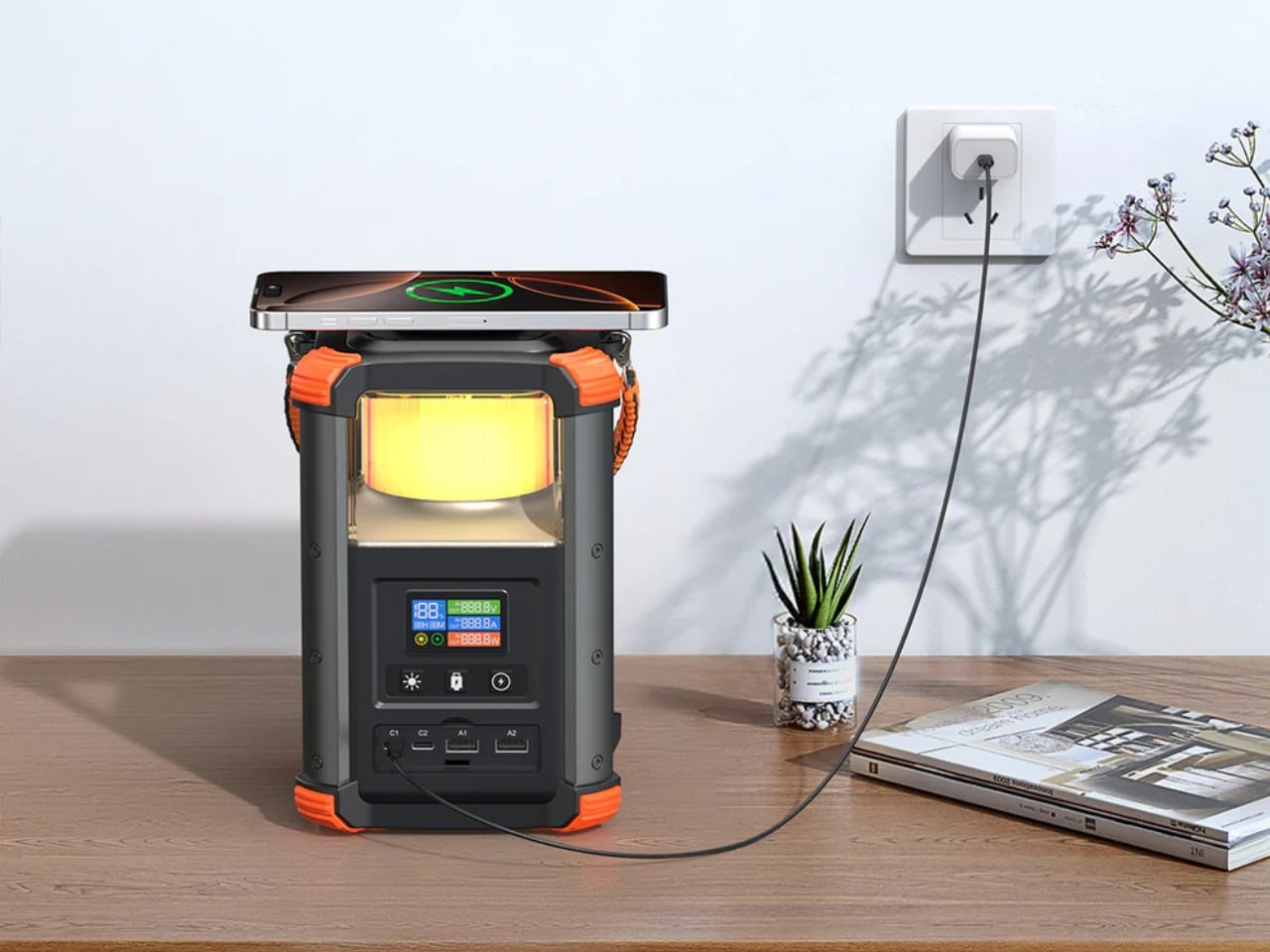
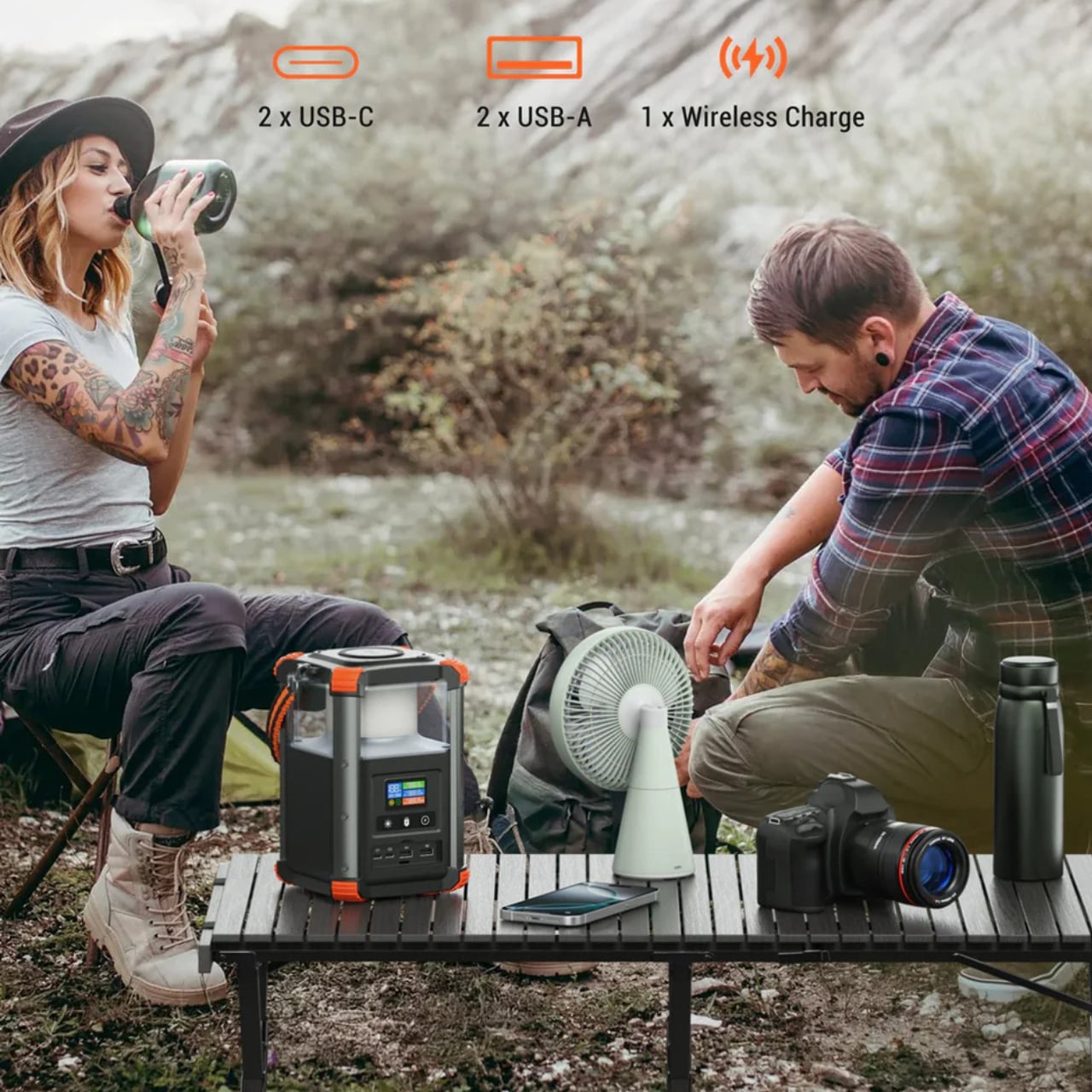
If you are watching the forecast from a warm, lit room, it is worth asking what happens if your block goes dark. Your thermostat stops, your phone begins to drain, your internet dies, and you lose access to weather updates and family check‑ins just when you need them most. For people in small apartments or older homes without backup systems, this is not a thought experiment, it is the reality playing out at this moment. A compact, indoor‑safe power station is one of the few tools that can soften that blow, quietly keeping phones, medical devices, and a few essential lights running while the grid catches up.

Click Here to Buy Now

Why the Mid‑Size Power Station Makes Sense for Most Households

Portable power stations fall along a spectrum, and most of them do not fit the use case of a typical household facing a winter outage. The small units, typically in the 200 to 300 watt‑hour range, are barely larger than heavy‑duty power banks. They can charge phones and tablets, maybe run a laptop for a few hours, but they lack the capacity and output to keep anything more demanding alive. A router pulls too much. A CPAP machine drains them in a single night. A small electric blanket finishes them off in two or three hours. They are fine for a day hike or an overnight car trip, but in a multi‑day blackout during freezing weather, they run dry too quickly to matter.

On the other end, the large systems in the 2,000 to 4,000 watt‑hour class are designed for off‑grid living, RV installations, or whole‑home backup with automatic transfer switches. They can run refrigerators, sump pumps, and multiple high‑draw appliances at once, but they weigh 50 to 100 pounds, cost as much as a used car, and take up serious floor space. For someone in a studio apartment or a rented house, they are impractical both financially and logistically.

The mid‑size tier, roughly 700 to 1,000 watt‑hours with 800 watts of continuous output, occupies the useful middle ground. These units are light enough to move with one hand, affordable enough to justify as a one‑time purchase rather than a major investment, and powerful enough to keep the essentials running for several days if used carefully. They are not designed to replace the grid. They are designed to bridge the gap between when the grid fails and when it comes back online, which is exactly the scenario playing out across the East Coast right now.

What the River 2 Pro Brings Over Its Predecessor

We reviewed the standard EcoFlow River 2 a couple of years back and liked it for what it was: a genuinely portable, well‑designed 256 watt‑hour unit that charged fast and looked good doing it. The dual‑tone design was sharp, the handle redesign made it easier to store, and the price was right for weekend adventurers. But 256 watt‑hours is just not enough capacity to be useful in a real emergency. You could maybe get through one cold night if you were very, very careful.

The Pro triples that to 768 watt‑hours and bumps the continuous AC output from 300 watts to 800 watts, all while adding only about 11 pounds to the overall weight. That capacity jump is not incremental, it is transformational. Now you are talking about running a CPAP for multiple nights, keeping a router alive for over a week of intermittent use, and still having juice left for phone charging and LED lights. The original River 2 was a nice‑to‑have for camping trips. The Pro is something you can actually rely on when the infrastructure around you stops working.

EcoFlow also stuck with LiFePO₄ chemistry, which is the right call here. These cells handle temperature swings better than standard lithium‑ion, they are safer, and they are rated for over 3,000 cycles before they start losing capacity. If you are buying this as a piece of emergency gear that might sit unused for months or years at a time, that longevity matters. This is not a gadget you replace every couple of years. It is something you buy once and forget about until the lights go out.

70 Minutes from Empty to Fully Charged

EcoFlow has been pushing fast charging as a selling point across their lineup for a while now, and in the River 2 Pro it is not just a spec sheet flex, it is genuinely useful. The unit goes from dead to full in about 70 minutes off a standard wall outlet. In normal times, that is convenient. During a rolling blackout, it is the difference between a functional backup and a paperweight.

Think about how most grid failures actually play out in populated areas. Power does not just drop and stay off for three days straight. It flickers. It comes back for an hour, goes out again, comes back for two hours overnight. If your power station takes five or six hours to charge, you are constantly playing catch‑up and never actually filling the tank. With the River 2 Pro, every time the grid comes back on, you have a realistic shot at getting back to 100 percent before it drops again. That changes the whole strategy of how you manage an outage.

The unit also takes up to 220 watts of solar input, so a pair of decent folding panels can top it off in four or five hours under good sun. Winter solar is sketchy, clouds and short days mean you are not going to get reliable full charges, but even partial sun can stretch your runtime by enough to matter. It is not a primary charging method in January, but it is a useful fallback if the outage drags on longer than expected.

What It Costs and How That Compares

Online pricing on the River 2 Pro right now is hovering around the $315 mark, depending on where you shop. The MSRP is technically $549, but there’s almost always a discount running somewhere.

Compare that to a Jackery Explorer 1000 V2, which offers about 1,070 watt‑hours and usually runs $500 to $600. Or the Bluetti AC180, which is in the same ballpark for capacity and price. The River 2 Pro is giving you about 70 percent of the capacity at roughly half the cost, which for most apartment and small‑home use cases is the right tradeoff. You are not powering a refrigerator for a week either way, so the extra 300 watt‑hours does not fundamentally change what you can do. What changes is whether you can justify the expense as a one‑time purchase or if it feels like a luxury you will never pull the trigger on.

The really small units, the 200 to 300 watt‑hour boxes, run $150 to $250. So you are paying maybe $100 to $150 more to triple your capacity and double your output. That is an obvious upgrade if you are serious about emergency preparedness. The giant 2,000+ watt‑hour systems start north of $1,200 and climb fast from there, which is a completely different budget conversation.

What It Can Actually Power During an Outage

The numbers on a spec sheet do not always translate clearly to real‑world use, so it helps to think in concrete scenarios. A fully charged River 2 Pro, used carefully, can sustain:

Communication and information: A smartphone pulls maybe 10 to 15 watt‑hours per full charge. You could recharge your phone 50 times off a full River 2 Pro. A typical Wi‑Fi router and modem together draw 15 to 25 watts while they are on. Run them three hours a day to pull weather updates, check news, coordinate with family, and you are using about 60 watt‑hours daily. That gives you a week and change of intermittent connectivity from a single charge.

Medical devices: A CPAP machine is slightly trickier because the power draw varies wildly depending on your model and settings. If you are running a basic unit without the heated humidifier, you might pull 30 to 40 watts. With the humidifier cranked, that can jump to 60 watts or more. Let us say you are at 40 watts for eight hours a night. That is 320 watt‑hours per night, so you get two full nights of sleep therapy before you need to recharge. Not great if the power is out for a week, but enough runway to get through the worst of a storm without ending up in an ER.

Targeted warmth: Low‑wattage electric blankets and heated throws usually run 50 to 100 watts. A 75‑watt throw for three hours in the evening is 225 watt‑hours. Combine that with CPAP and phone charging and you are looking at maybe 600 watt‑hours total per day, which gives you a full day of decent comfort before you need to think about recharging.

Lighting: LED lighting is almost free by comparison. A 10‑watt bulb for five hours a night is 50 watt‑hours. You could light up a small apartment every night for a week and barely dent the battery.

The key here is prioritization. You shouldn’t be running everything at once. Keep the critical stuff alive, lights, communication, medical devices, and use targeted warmth instead of trying to heat the whole space. That is what makes a mid‑size unit like this viable, and truly accessible to the vast population who can divert sub-$500 on a moment’s notice. The power station might be tiny, but it forces you to be smart about power – which is exactly what you need to do in a real outage anyway.

Need More Power? Just Buy A Second One And Connect Them

One feature that does not get talked about enough is that you can actually chain two River 2 Pro units together for expanded capacity. EcoFlow builds this into their ecosystem, so if you find yourself consistently running up against the limits of a single 768 watt‑hour unit, you are not stuck buying a completely different, more expensive system. You just add a second River 2 Pro and suddenly you are working with over 1,500 watt‑hours of usable capacity. That is enough to stretch a multi‑day outage without obsessively rationing every watt, or to run slightly higher‑draw appliances that a single unit would struggle with.

The math here is quite interesting because it gives you a more flexible upgrade path than most power station ecosystems offer. Instead of dropping $1,200 to $1,500 on a single large unit right out of the gate, you can start with one River 2 Pro, see how it performs in real‑world use, and then add a second one later if you need the extra capacity. You end up spending around $630 total for a combined system that gives you more modularity than a single giant battery box. If one unit dies or needs servicing, you still have backup power. If you only need light capacity for a short trip, you take one and leave the other at home. That kind of flexibility is genuinely underrated.

It also means the River 2 Pro scales better for different household sizes and needs. A single person in a studio apartment might never need more than one unit. A family of four in a larger house might find that two units let them cover essentials in multiple rooms without running extension cords everywhere or constantly shuffling devices between outlets. The ability to grow the system incrementally, rather than making one big all‑or‑nothing purchase decision, makes it a lot easier to justify the initial investment and adapt as your needs change.

How to Use It Effectively in Cold Weather

Store and operate it indoors. LiFePO₄ cells can discharge in cold temperatures, but they should not be re-charged when the internal temperature is below freezing.

Most modern power stations, including the River 2 Pro, have battery management systems that will flat‑out refuse to charge if the cells are too cold. So keep the unit inside, away from exterior walls and drafty windows, and you will be fine.

Turn things off when you are not using them. That sounds obvious, but in the chaos of a blackout it is easy to leave the router on all day or forget a phone plugged in after it hits 100 percent. The River 2 Pro has a small parasitic draw just from being powered on, so if you are not actively using an outlet, shut it down and save every ounce of power you can.

And for the love of all that is holy, do not try to heat your apartment with this thing. Yes, the 800‑watt continuous output can technically run a small space heater. Yes, the X‑Boost mode can push that to 1600 watts for short bursts. But a 1,500‑watt space heater will drain the entire battery in about 30 minutes. That is not a strategy, that is just lighting your stored energy on fire. Layer up, use blankets, deploy a low‑watt heated throw for targeted warmth if you need it, but resistive heating is a losing game with battery power.

What It Cannot Do

The River 2 Pro is not a whole‑home backup system. It will not keep your refrigerator running for days, it will not power your furnace, and it definitely will not run a sump pump if your basement starts flooding. If those are your needs, you are shopping in the wrong category. You want a 2,000+ watt‑hour system, probably with a transfer switch and professional installation, and you are going to spend a lot more money.

The usable capacity is also not quite the advertised 768 watt‑hours. Independent testing puts the real‑world output closer to 620 watt‑hours, which is about 81 percent of the rated capacity. That is normal for the industry, battery management systems always hold back some reserve to protect longevity, but it is worth knowing so you do not plan your runtime calculations around the full number.

And while the unit is rated for 3,000+ cycles, that assumes you are not constantly hammering it from zero to 100 percent under extreme conditions. If you want to maximize lifespan, try to keep the charge between 20 and 80 percent when you can, and store it at around 50 percent if it is going to sit unused for months. Treat it like a piece of infrastructure, not a toy, and it will last you a decade.

Preparing Before the Next Storm

Hundreds of thousands of people are sitting in the dark tonight while the cold keeps piling on. More are watching the forecast and realizing their block could be next. The grid is not built for this. It was not designed to handle ice storms in places that rarely freeze, or sustained cold snaps in cities where winter is usually mild. And when it fails, the gap between “uncomfortable” and “dangerous” closes fast.

A power station like the River 2 Pro does not fix the underlying problem. It does not make the grid more resilient, and it does not replace the need for serious infrastructure investment. What it does is give you a buffer. A way to keep the essentials running while you wait for the repair crews to get the lines back up. A way to avoid the kinds of decisions that turn a bad night into a genuine emergency.

For $315, that is not a bad insurance policy to have sitting in your closet, charged and ready, before the next storm rolls in.

Click Here to Buy Now

The post The Must‑Have Portable Power Station Setup Every Household Should Own For Storms And Blackouts first appeared on Yanko Design.

This $129 Bag Lets You Play Music Without Opening It

There’s something fascinating about watching a tech company obsess over the mundane. While most electronics brands treat bags as afterthoughts (slap a logo on generic nylon, call it a day), Teenage Engineering went ahead and designed a shoulder bag that’s as thoughtful as their cult-favorite synthesizers. The Field OB-4 shoulder bag isn’t trying to be your everything bag, and that specificity is precisely what makes it interesting.

Built primarily to carry the OB-4 Magic Radio, this $129 shoulder bag features a mesh front panel that lets you play music while your device stays tucked inside. Think about that for a second. Most bags are designed to protect and conceal. This one wants you to use what’s inside without ever taking it out. It’s the kind of detail that separates product design from problem-solving.

Designer: Teenage Engineering

The construction tells you everything about Teenage Engineering’s priorities. The shell uses tear and abrasion-resistant nylon 66 with a fire retardant treatment and PU backing for water repellency (1500 mm rating on the black version, 3000 mm on the white). These aren’t vanity specs. They’re the materials you’d find on technical outdoor gear, applied to something that’ll probably spend more time on subway cars than mountain trails. It’s overbuilt in the best possible way.

The bag features a roll-down covered opening that gives you variable capacity depending on what you’re carrying. There’s an internal pocket for your everyday small items (keys, wallet, that tangle of earbuds you swear you’ll organize someday). The back pocket uses hook-and-loop closure and is specifically sized for cables and the Ortho remote. Again, that specificity. Teenage Engineering could have made generic pockets, but they measured their own accessories and built compartments around them. You can wear it crossbody style or grab the side handle for hand-carry mode. The adjustability matters because context shifts throughout your day. Crossbody when you’re navigating crowds, hand-carry when you’re sitting at a cafe. The bag adapts rather than forcing you to commit to one carrying style.

What’s compelling here is how Teenage Engineering approaches accessories. This isn’t merchandising. It’s extension of philosophy. The same company that makes the OP-1 synthesizer (a device that prioritizes tactile joy and visual clarity) isn’t going to phone in a bag design. They’re known for products that look like nothing else on the market, that Dieter Rams-meets-Nintendo aesthetic that either clicks with you immediately or leaves you cold. The Field OB-4 shoulder bag comes in black or white, maintaining that minimal color palette Teenage Engineering loves. Custom-made aluminum hardware and YKK EXCELLA zippers keep everything smooth and reliable. These are components you’d find on high-end luggage, the kind of details most people won’t notice until they’ve used cheaper alternatives.

Is this bag essential? Absolutely not. You could carry an OB-4 in any number of generic shoulder bags. But you’d lose the mesh front functionality. You’d lose the precise pocket sizing. You’d lose that feeling of using a complete system where everything has been considered. Teenage Engineering has always existed in this interesting space where consumer electronics meet design objects. Their products cost more than alternatives because they’re selling coherence, not just capability. The Field OB-4 shoulder bag extends that logic into accessories. It’s designed for people who already bought into the ecosystem, who appreciate when someone sweats the details nobody asked them to perfect.

At $129, it’s positioned as a premium accessory, not an impulse add-on. That pricing filters for the audience who gets it, who understands why you’d spend serious money on a bag for a portable speaker. It’s the same crowd that bought the OB-4 in the first place, people who could’ve gotten a Bluetooth speaker for fifty bucks but wanted something with personality instead. Whether you need this bag depends entirely on whether you value design specificity over universal functionality. For the right person, this is exactly what they’ve been looking for. For everyone else, it’s an interesting case study in how far product design can go when companies refuse to take shortcuts.

The post This $129 Bag Lets You Play Music Without Opening It first appeared on Yanko Design.

CW&T Machined a Mortar into a 1.31kg Spherical Steel Object

Grabbing a jar of pre-ground spice happens because the mortar and pestle are buried in a cabinet, or it feels like too much work. Most mortars are big, porous bowls that live in the back of a cupboard, coming out only for special recipes. CW&T’s Spicy is a different take, a mortar and pestle small and sculptural enough to live on the counter all the time, making it easier to reach for when you need it.

Spicy is a ball-and-socket style mortar and pestle machined from stainless steel. It is only about 66mm across and 60mm tall, but it weighs around 1.31kg, with a glass bead-blasted exterior and a rough interior surface. It holds about a tablespoon of spices, just enough for finishing a dish or grinding a small batch of seeds without pulling out the full kitchen arsenal.

Designer: CW&T

Dropping a pinch of peppercorns or cardamom into the cup and wrapping your hand around the spherical pestle, you roll and twist the ball against the rough interior, feeling the resistance and the way the spices break down under the weight. The continuous contact between ball and bowl makes the motion more like drawing circles than hammering, which is easier on the wrist and oddly satisfying.

The rather hefty mass keeps the mortar planted while you grind, so you are not chasing it around the counter. The glass bead exterior feels soft and matte in the hand, while the rough interior bites into seeds and dried herbs. A cork base cushions the action and protects the table but still lets the piece slide slightly if you want to reposition it mid-session.

1

Spicy is machined from food- and dishwasher-safe stainless steel, so cleanup is as simple as rinsing or tossing both parts into the dishwasher. There is no porous stone to stain or absorb flavors, and no wooden handle to baby. That durability, combined with the compact footprint, makes it easy to justify leaving it on the counter next to oil and salt instead of packing it away.

Spicy is designed to pair with Salty, CW&T’s minimalist salt cellar, sharing the same cylindrical geometry and machined metal finish. Together, they turn a corner of the kitchen into a small landscape of dense, precise objects that invite touch. It fits into CW&T’s habit of over-building simple tools, so they feel like permanent fixtures rather than disposable gadgets.

Spicy is not trying to reinvent cooking; it is just making one small part of it feel more intentional. By compressing a mortar and pestle into a heavy, palm-sized ball and cup, it turns grinding spices into a quick, tactile ritual you might actually look forward to. Kitchens full of plastic grinders and pre-ground jars make freshly crushed spices feel like too much effort, but a tiny stainless-steel weight that lives on the counter is a quiet argument for doing one thing properly.

The post CW&T Machined a Mortar into a 1.31kg Spherical Steel Object first appeared on Yanko Design.

Someone Built the PS4 Portable Sony Never Made with a 7-Inch OLED

The PS4 era is over, but the library is still incredible, and the only way to enjoy it portably has been streaming or emulation with compromises in latency, compatibility, and control. The fantasy of a true PS4 handheld that runs games natively has floated around for years, but Sony never built one. Reddit user wewillmakeitnow decided to stop waiting and built it himself instead.

This is not a Raspberry Pi or a cloud device but a heavily modified PS4 Slim motherboard, cut and re-laid to be as compact as possible while keeping full functionality. The builder redesigned the layout for better power efficiency and thermals, then wrapped it in a custom ABS enclosure with full controls and a 7-inch 1080p OLED screen, turning a console into something that looks and plays like a handheld from an alternate timeline.

Designer: wewillmakeitnow

The cooling story is where most of the work lives. A new airflow path, custom heatsinks, and a large rear fan are managed by an onboard ESP32 microcontroller. The ESP32 runs custom firmware to watch temperatures in real time, enforce thermal thresholds, trigger emergency shutdowns, and supervise power draw and battery charging. It is the safety brain that makes running a console-class APU in your hands viable instead of a thermal disaster.

The power system uses six 21700 cells at 6,000 mAh each in a 3S2P configuration, roughly 130 Wh of energy. Under lighter loads, the system pulls around 44W for about three hours of play. In demanding games, it can draw close to 88W and land closer to an hour and a half before shutdown, at around 10V, which protects the pack. There is also a dedicated port for playing on AC.

The handheld still behaves like a PS4 when you want it to. There is HDMI out for plugging into a TV, multiple USB-C ports for charging, configuration, and connection to controllers or external drives, plus a USB 3.0 port for storage. In that mode, it stops being a handheld and becomes a very small PS4 Slim you can drop next to a hotel TV.

All of this comes at a cost. The enclosure is about 113mm x 270mm x 57mm, with sharp edges and no sculpted grips, and the weight is likely well north of a kilogram once you add the board, cooling, and batteries. The builder chose to let the shell hug the motherboard as tightly as possible, sacrificing rounded comfort to keep the footprint from ballooning further.

This one-off build shows both the promise and limits of turning a living-room console into a handheld. It proves that a native PS4 portable is technically possible if you accept thickness, weight, and fan noise. It also quietly asks what might happen if a company with Sony’s resources took the idea seriously. Until then, it stands as someone picking up their favorite console and refusing to put it down.

The post Someone Built the PS4 Portable Sony Never Made with a 7-Inch OLED first appeared on Yanko Design.

Apple unveils Gen 2 AirTag with louder speaker and 50% more tracking range

Apple has just launched a new AirTag, an update to its item-tracking accessory that has been around since 2021. The second-generation device is, as you would expect, better and bolder. It carries two primary distinctions: a better speaker and a wider range, which we will (in addition to other new features) discuss in detail below.

Apple AirTag has been on the market for five years now. It is still the most reliable and go-to device for most people looking to secure their belongings, including, but not limited to, luggage, keys, wallets, and bags. Dubbed the second-generation AirTag, the new item-tracker is powered by the same second-generation Ultra Wideband Chip that Apple has previously outfitted the iPhone 17 and the Watch Ultra 3 with.

Designer: Apple

Courtesy of an upgraded Bluetooth chip, the Gen 2 AirTag expands its range of Precision Finding by a good 50 percent and adds more reliable directional guidance to it, which means users will now be able to track their lost items from a much further distance. In addition to the range, the new AirTag features a much louder speaker. Users can get audio cues up to almost 50 percent louder than the original AirTag. The device also delivers haptic feedback and features directional arrows to lead you more conveniently to your lost but tagged item.

According to the reports released in the run-up to the launch of the second-gen AirTag, it was mulled that Apple would introduce a new design for its device. Apple has, however, stayed true to its original design and has instead focused on improving the features of the item tracker.

The Cupertino tech giant has put user privacy at the core of the development of its new AirTag. Within the associated Find My network, the device protects against unwanted tracking, and it comes with end-to-end encryption. A new feature within the Find My network is Share My Location. The feature allows users to temporarily share the location of any accessory tagged with the AirTag with a select group of people of their choosing. This can be particularly beneficial in case of misplaced luggage, for instance, a person can share the location of their tagged item with the airline staff and help recover faster.

Even though the look and feel, as well as the battery size of the AirTag haven’t changed, the device is now made from recycled materials. The casing comprises 85 percent recycled plastic, and it features 100 percent recycled rare-earth magnets and 100 percent recycled gold-plated circuits. Apple informs that the second-generation AirTag will require iPhones running iOS 26 or later, while the Precision Finding will be usable on Apple Watch Series 9 or Apple Watch Ultra 2 or later. Despite the upgrades, the second-gen AirTag, like its predecessor, costs $29 in the U.S. A pack of four will retail for $99.

The post Apple unveils Gen 2 AirTag with louder speaker and 50% more tracking range first appeared on Yanko Design.

10 Best Pocket-Worthy Valentine’s Day Gifts for Men Who Love EDC

Valentine’s Day gifts for men don’t have to mean another wallet or generic watch. For the guy who lives by the everyday carry philosophy, the perfect gift slips into his pocket and earns its place through daily use. These aren’t decorative tokens that live in a drawer. They’re precision tools that become extensions of his routine, carried with intention and reached for without thinking.

The best EDC gear strikes a balance between form and function, proving that thoughtful design doesn’t sacrifice practicality. This Valentine’s Day, skip the predictable and opt for something he’ll actually treasure. These pocket-worthy essentials combine craftsmanship with genuine utility, turning everyday moments into opportunities to appreciate both smart engineering and the person who knew exactly what he needed. Each piece here fits the EDC lifestyle without compromise.

1. Cubik

The Cubik rewrites pocket knife conventions by eliminating the mechanisms that typically complicate blade deployment. Press the trigger, hold it upside down, and gravity does the work. The blade emerges smoothly, locks securely with trigger release, and requires zero maintenance for springs, ball bearings, or complex internal parts that eventually fail. This simplicity translates to reliability that outlasts flashier alternatives, making it the kind of tool that becomes indispensable precisely because it never demands attention or special care.

Beyond its gravity-powered elegance, the Cubik delivers genuine heavy-duty performance. That secure lock isn’t just for show—it holds firm enough for piercing hardwood without blade wobble or mechanism stress. The tungsten carbide glass-breaker integrated into the rear end transforms this gentleman’s EDC into genuine emergency equipment. It’s the kind of thoughtful design detail that matters most when situations turn serious, proving that innovation doesn’t require complexity, just smarter thinking about fundamental mechanics.

What We Like

  • The gravity deployment system eliminates failure-prone mechanisms entirely
  • Tungsten carbide glass-breaker adds genuine emergency utility
  • Simple design requires zero maintenance or special care
  • Secure locking mechanism handles heavy-duty tasks confidently

What We Dislike

  • Gravity deployment requires a specific orientation to operate
  • An unconventional mechanism might confuse first-time users

2. 8-in-1 EDC Scissors

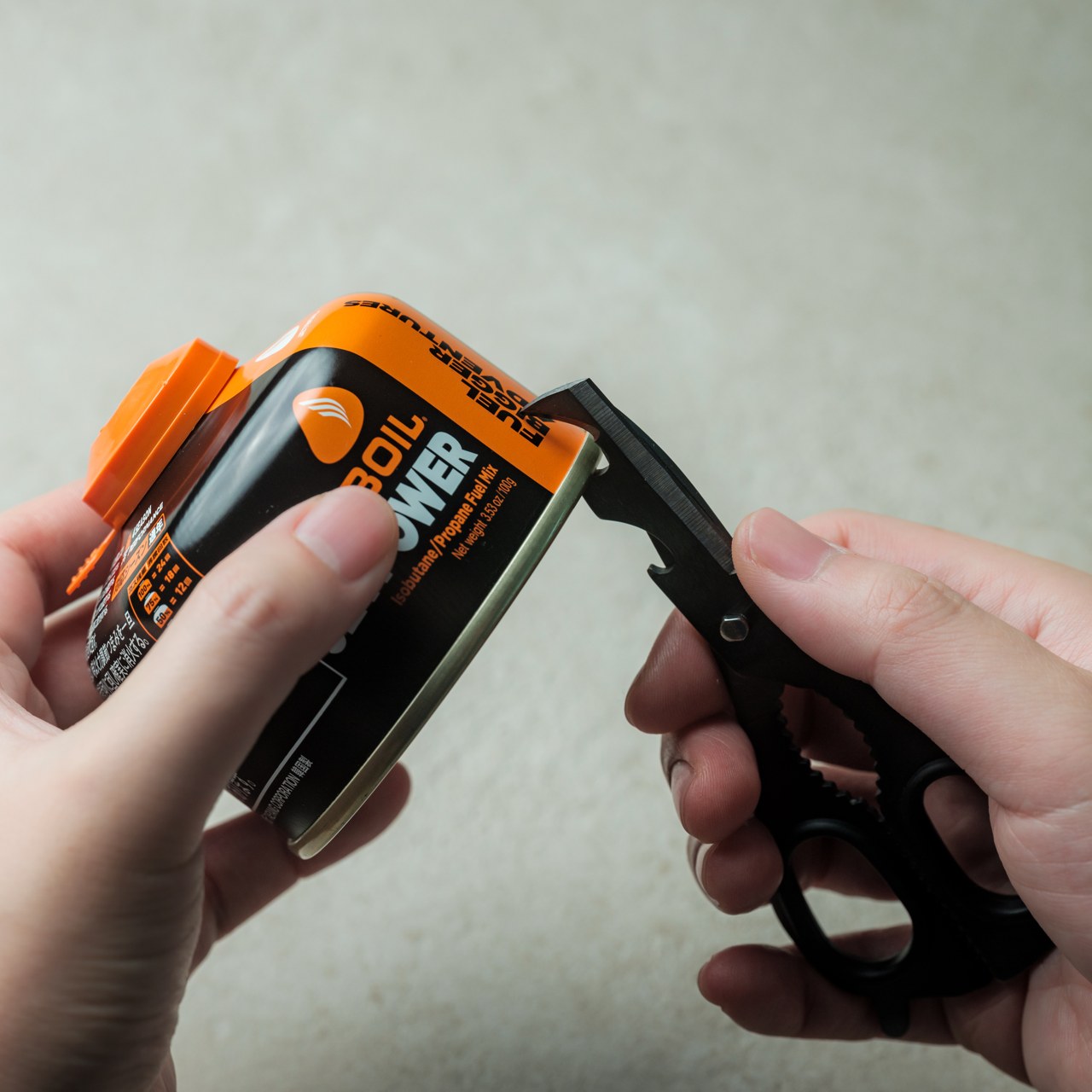
Multitool skepticism usually comes from bloated designs that sacrifice usability for feature counts, but these palm-sized scissors prove compactness doesn’t limit capability. Eight distinct functions—scissors, knife, lid opener, can opener, cap opener, bottle opener, shell splitter, and degasser—fit into a 13cm package that disappears into pockets without bulk. The oxidation film treatment delivers rust resistance while creating that handsome matte black finish that ages gracefully rather than showing wear as a weakness.

The real genius lies in how frequently these tools get reached for. Scissors alone justify pocket space, but having a proper knife blade and multiple opening mechanisms means this compact EDC solves problems before they escalate into frustrations. Package delivery, impromptu picnics, daily tasks that demand the right tool—this unassuming multi-tool handles them without ceremony. It’s the kind of gift that generates quiet appreciation every time it proves useful, which for EDC enthusiasts happens more often than most people realize.

Click Here to Buy Now: $59.00

What We Like

  • Eight functions in genuinely pocket-sized form factor
  • Oxidation film provides rust resistance and attractive finish
  • The function of scissors alone justifies an everyday carry
  • Multiple opener types handle various bottle and can styles

What We Dislike

  • Small size might feel awkward for larger hands during extended use
  • Individual tools sacrifice some leverage compared to dedicated versions

3. BlackoutBeam Tactical Flashlight

Tactical flashlights often promise military-grade performance while delivering consumer-grade disappointment, but the BlackoutBeam backs its claims with 2300 lumens that cut through darkness with surgical precision. That 300-meter throw distance isn’t marketing fluff—it genuinely illuminates distant targets with clarity that transforms nighttime navigation or emergency response. The 0.2-second response time eliminates lag entirely, delivering instant illumination exactly when situations demand immediate light without hesitation or warm-up delays that compromise effectiveness.

The IP68 waterproof rating and durable aluminum construction mean this flashlight survives submersion, impact, and weather conditions that would kill lesser lights. It’s serious durability packaged in a form that never feels excessive or tactical-cosplay ridiculous. Power outages, roadside emergencies, wildlife encounters, or simply navigating dark spaces—the BlackoutBeam handles varied scenarios without requiring different gear. For the EDC enthusiast who values preparedness, this flashlight delivers professional capability in everyday-appropriate packaging that justifies its presence whether clipped to a pocket or stored in a go-bag.

Click Here to Buy Now: $89.00

What We Like

  • 2300 lumens provide genuinely blinding brightness when needed
  • 0.2-second instant-on response eliminates dangerous delays
  • IP68 waterproof rating survives submersion and harsh conditions
  • 300-meter throw distance handles long-range illumination needs

What We Dislike

  • Maximum brightness drains batteries quickly during extended use
  • Premium performance comes with a premium price point

4. AirTag Carabiner

Forgetting where you left your bag, or keys, transforms from mild frustration to a genuine problem surprisingly quickly, but this Duralumin composite alloy carabiner harnesses Apple AirTag technology to eliminate that anxiety. The same material used in aircraft, spaceships, and boats delivers strength that contradicts its lightweight feel, creating a clip that’s tough enough for serious use yet comfortable for everyday carry. Each carabiner is crafted by hand, bringing artisan quality to functional hardware that typically gets treated as a disposable commodity.

The genius here lies in making tracking invisible. Snap this onto bags, bikes, umbrellas, or anything that tends to wander, and Apple’s Find My network provides location awareness without requiring dedicated attention. It’s passive security that works silently until the moment you need it, then delivers precise location data that transforms panic into calm retrieval. For the EDC enthusiast who carries multiple bags or frequently moves between locations, this carabiner provides peace of mind that scales across possessions without cluttering pockets with separate trackers.

Click Here to Buy Now: $149.00

What We Like

  • Duralumin alloy provides aircraft-grade strength at minimal weight
  • Hand-crafted quality elevates functional hardware to premium status
  • Works with Apple AirTag for seamless location tracking
  • Available in multiple metal finishes including brass and stainless steel

What We Dislike

  • Requires separate Apple AirTag purchase for tracking functionality
  • Limited to Apple ecosystem users for Find My network benefits

5. ScytheBlade

The scythe blade profile seems impractical for pocket carry until you actually handle the ScytheBlade and realize how that aggressive curve concentrates cutting force in ways straight edges can’t replicate. At just 46mm deployed length and weighing only 8 grams, this titanium folder achieves what most manufacturers consider impossible—a genuinely effective blade in micro format. The curved profile resembles a tiger claw, looking dangerous because the geometry delivers cutting performance that exceeds expectations set by conventional blade shapes.

Titanium construction brings natural corrosion resistance that requires zero maintenance while delivering strength that feels disproportionate to the minimal weight. You genuinely forget this knife clips to your pocket until the specific moment demands that curved blade’s unique capabilities. The ScytheBlade proves unconventional designs can work at miniature scales when engineering supports the ambition. For the EDC enthusiast who appreciates distinctive tools that perform despite—or perhaps because of—their radical departure from standard designs, this tiny scythe represents exactly the kind of pocket-worthy innovation that sparks conversation and delivers results.

What We Like

  • Titanium construction keeps the weight at a mere 8 grams
  • Curved blade profile concentrates cutting force effectively
  • Natural corrosion resistance requires zero maintenance
  • Radical miniaturization proves unconventional shapes can work at the micro scale

What We Dislike

  • Aggressive blade profile might face legal restrictions in some jurisdictions
  • Tiny size requires precision handling during use

6. DraftPro Top Can Opener

Drinking beer or sparkling water straight from the can robs you of aroma and a full flavor experience, but the DraftPro Top Can Opener transforms any can into a glass-like drinking vessel by removing the entire top. Designed by award-winning Japanese designer Shu Kanno, this compact tool creates smooth-edged, wide-mouth openings that let you catch scent notes and taste complexity brewers intended. That first crisp snap becomes prelude to genuinely elevated drinking experience that honors the beverage rather than compromising it through narrow can apertures.

The utility extends beyond refined sipping. Add ice cubes directly into summer beers for rapid chilling when the fridge fails. Mix cocktails directly in the can without shakers, glasses, or cleanup that transforms simple drinks into production events. The DraftPro fits domestic and international can formats, making it universally useful whether you’re enjoying local craft brews or imported specialties. For the EDC enthusiast who appreciates how small tools can upgrade daily rituals, this opener proves intentional design can transform mundane moments into something worth savoring properly.

Click Here to Buy Now: $59.00

What We Like

  • Removes entire top for draft-style drinking experience
  • Designed by award-winning Japanese designer Shu Kanno
  • Enables direct ice addition for quick drink chilling
  • Universal fit works with domestic and international can formats

What We Dislike

  • Requires practice to achieve a perfectly smooth edge removal
  • A single-purpose tool might not justify pocket space for minimalists

7. Painless Key Ring

Breaking fingernails or bending rings just to add a single key represents exactly the kind of daily friction that accumulates into genuine frustration over time. This wave spring key ring borrows its mechanism design from aerospace equipment and automotive engineering to eliminate that stress. The innovative coil design makes adding and removing keys genuinely effortless while maintaining lighter weight and superior durability compared to standard pressed rings that deform under pressure from thicker keys.

The engineering elegance lives in how something this simple solves a problem most people accept as inevitable. Keys slide on smoothly, stay secure during carry, and come off without requiring tools, damaged nails, or muttered curses. Available in silver and black finishes, the wave spring ring delivers both aesthetic options and functional superiority that proves sometimes the best innovations target overlooked frustrations. For the EDC enthusiast who organizes multiple key sets or frequently rotates keys based on needs, this ring transforms key management from minor irritation into satisfying precision.

Click Here to Buy Now: $29.00

What We Like

  • Wave coil design makes key addition and removal effortless
  • Lighter weight yet more durable than conventional key rings
  • Inspired by aerospace and automotive engineering principles
  • Available in silver and black color options

What We Dislike

  • Premium pricing for what remains fundamentally a key ring
  • Wave design might catch on fabric in shallow pockets

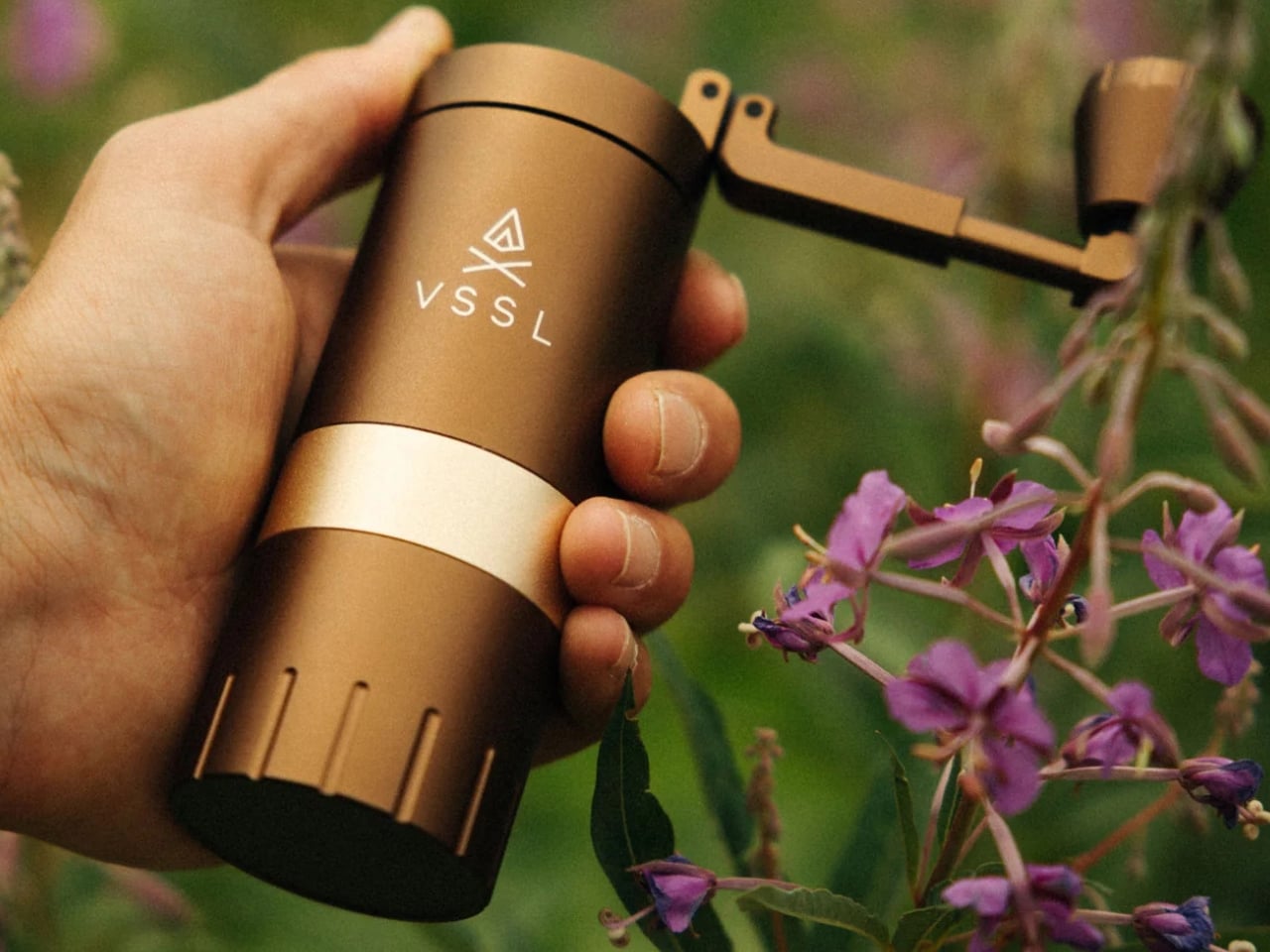
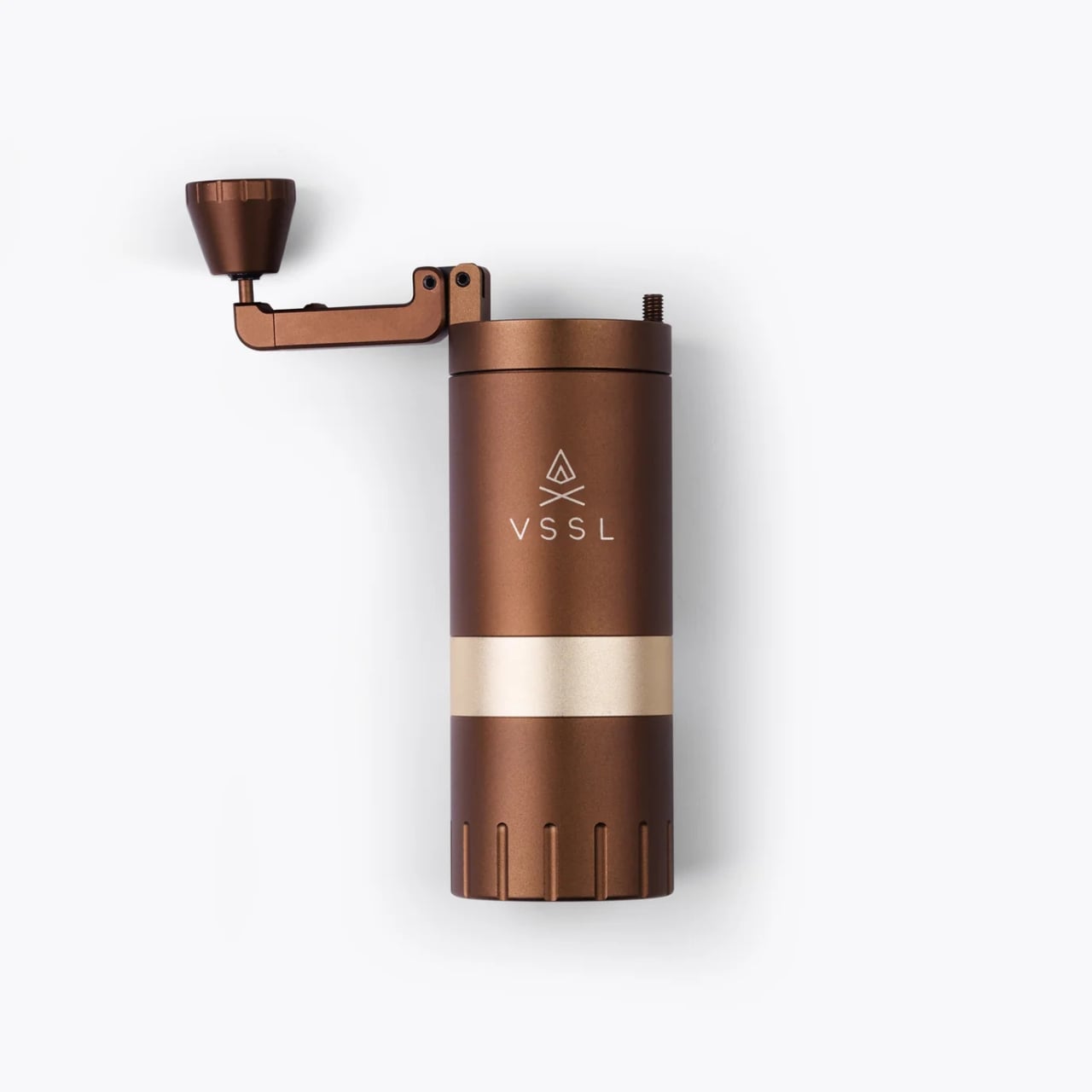
8. VSSL Java G25 Manual Coffee Grinder

Manual coffee grinders traditionally demanded choosing between bulky plastic contraptions or fragile glass-and-wood designs that felt like a compromise rather than a choice. The VSSL Java G25 rewrites that narrative entirely, delivering rugged construction and refined aesthetics that transform grinding from a tedious chore into an enjoyable tactile ritual. The 25 distinct grind settings provide a range from espresso-fine to French press coarse, but the real achievement lies in making that adjustment feel intuitive rather than requiring an engineering degree to comprehend dials and knobs.

Fresh-ground coffee delivers flavor complexity that re-ground bags can’t match, and the G25 makes that quality accessible anywhere. The durable construction survives travel conditions that would destroy lesser grinders, while the compact form fits bags without dominating pack space. For the EDC enthusiast who refuses to compromise on morning coffee quality regardless of location, this grinder represents exactly the kind of refined tool that enhances daily rituals. The learning curve becomes part of the adventure rather than a barrier to entry, mastering a finely tuned instrument that rewards attention with consistently excellent results.

What We Like

  • Rugged construction survives travel and outdoor conditions
  • 25 grind settings cover full range from espresso to French press
  • Transforms grinding into an enjoyable tactile ritual
  • Compact form factor fits bags without excessive bulk

What We Dislike

  • Manual grinding requires effort compared to electric alternatives
  • Premium pricing reflects high-quality construction and materials

9. Craftmaster EDC Utility Knife

Utility knives typically sacrifice aesthetics for pure function, but the Craftmaster proves that clean, minimalist design can coexist with genuine utility. The metallic form measures just 0.3 inches thick and 4.72 inches long, disappearing into pockets while housing an OLFA blade deployed via a satisfying tactile rotating knob. The magnetic back serves a dual purpose—docking the knife to any metal surface and securing its companion metal scale that sports both metric and imperial markings for precision measuring during cutting tasks.

That included scale brings unexpected utility through thoughtful details. The raised edge makes lifting from flat surfaces effortless, while the integrated blade-breaker lets you snap off dulled OLFA blade edges to restore sharpness instantly. The 15-degree curvature prevents finger cuts during extended cutting sessions, and the 45-degree inclination protects box contents during package opening. For the EDC enthusiast who values tools that combine form with layered functionality, this utility knife represents exactly the kind of refined everyday carry that solves problems before they register as problems.

Click Here to Buy Now: $79.00

What We Like

  • Mere 0.3-inch thickness enables effortless pocket carry
  • The OLFA blade can be easily replaced when dull
  • Magnetic back docks on metal surfaces conveniently
  • The included scale provides a measurement tool with a blade-breaking function

What We Dislike

  • The rotating deployment mechanism is slower than quick-release alternatives
  • Small companion scale easy to misplace separately

10. Fingertip-Sized Rechargeable Flashlight

World’s smallest claims usually mean compromised functionality, but this fingertip-sized rechargeable torch by Gadget Industry pushes miniaturization to an obsessive extreme without sacrificing core capability. A lithium-polymer battery, charging circuit, touch-based control system, and white LED all seal into a compact resin shell that sits comfortably on a fingertip. It’s innovation through subtraction rather than addition, stripping everything down to absolute essentials and proving presence and accessibility can matter more than raw lumens.

The scale alone challenges assumptions about minimum viable flashlight dimensions. This micro torch takes the opposite route from bulky EDC lights, promising extreme brightness and endless modes, prioritizing availability over power. It’s the flashlight you actually have when you unexpectedly need light, precisely because you forget you’re carrying it. For the EDC enthusiast who believes the best tool is the one you actually carry, this rechargeable micro light represents the logical conclusion of pocket-worthy philosophy—making the tool so unobtrusive that excuses for leaving it behind simply don’t exist.

What We Like

  • Genuinely fingertip-sized form factor enables ubiquitous carry
  • Rechargeable design eliminates battery replacement hassles
  • A touch-based control system requires no mechanical switches
  • Sealed resin construction provides durability at minimal size

What We Dislike

  • Limited brightness compared to full-sized flashlight alternatives
  • Tiny form factor makes it easy to misplace when not clipped

Finding the Right Pocket-Worthy Gift

Valentine’s Day gifts work best when they demonstrate understanding of how someone actually lives their daily life. For the EDC enthusiast, that means tools that earn permanent pocket placement through consistent utility rather than novelty that fades. These ten designs represent that philosophy—gear refined enough to appreciate yet practical enough to justify carrying every single day without exception or second thought.

The best EDC gifts become invisible through constant presence, noticed only when they solve problems or make tasks slightly smoother. These pocket-worthy essentials transform Valentine’s Day from an obligatory gesture into a genuine expression of knowing what matters to him. Choose tools that match his carry style, and you’re giving something more valuable than objects—you’re showing you understand the intention behind his everyday choices. That recognition resonates long after Valentine’s Day passes.

The post 10 Best Pocket-Worthy Valentine’s Day Gifts for Men Who Love EDC first appeared on Yanko Design.

RitFit Buffalo Wild: Dual Cables, Weight Stacks in 2,200lb Smith Rack

Many home gyms grow sideways, a basic rack here, a cable tower there, a bench in the corner, and plates leaning against walls. That patchwork setup works for a while, but that also makes it hard to move smoothly from warm-up to heavy work, especially if more than one person trains. A single, well-equipped frame can simplify that without feeling like a commercial monster dropped into a spare room, turning scattered gear into a system that actually flows.

The RitFit Buffalo Wild Smith Machine with Adjustable Dual Cable System is that backbone, a rack that combines a Smith machine, dual adjustable cables, hybrid weight resistance, and storage into one footprint. It is meant to feel like a compact commercial station, with a frame capacity around 2,200lb, 2.5mm uprights, and reinforced joints, so it does not flinch when you actually load it the way you would in a gym that sees hundreds of sessions per week.

Designer: RITFIT

Click Here to Buy Now: $2610 $2899.99 (10% off, use coupon code “YANKO”). Hurry, deal ends in 48-hours!

Each side of the rack runs on independent dual cable tracks, giving true unilateral control and smoother, more natural movement. The adjustable 1:1 and 2:1 pulley ratios let you switch between lighter, longer-range motion and heavier, more direct resistance without changing machines. That means you can move from precision control work to strength-focused sets by changing the ratio, not the equipment, which keeps sessions flowing and makes the rack useful for everyone from beginners to strong lifters.

The Smith side offers a taller frame, closer hole spacing, and a lowered Smith bar engineered for greater depth. That extra space opens up rows, hip thrusts, deadlifts, and crossovers with better form and deeper ranges, instead of forcing you to work around awkward start positions. The Smith has a capacity of about 352lb with 12 adjustable positions per side, enough for serious pressing and squatting while still giving you the guided path many people want when pushing near limits.

The hybrid weight system combines weight stacks with plate-loaded options, making it easy to change resistance quickly and safely. Single-side pulley load capacity is around 450lb, including a 70kg stack, while the frame itself is rated to 2,200lb. That mix gives you fine-tuned isolation work on the stacks and raw power for compound lifts on the plates, without feeling like you are outgrowing the machine as your numbers climb over months.

Rounded, de-burred J-hooks and spotter arms protect bars and hands during heavy racking, and the thicker uprights and reinforced rear cross-beam keep the rack steady under load. Built-in barbell holders, plate pegs, and accessory hooks keep everything organized, and the Smith bar can park on a top hanger to free space inside the frame. With four plate storage bars rated around 330lb each, the rack keeps weight where it belongs instead of scattered on the floor or tucked into corners.

Buffalo Wild makes sense in a shared space, where one person is running cable rows on one side while another sets up for Smith squats or pull-ups, and the transition between movements is a matter of moving a handle, not walking across the room. Instead of a garage full of mismatched stations, you get a single frame that can handle warm-ups, accessory work, and heavy lifts, and that feels stable and organized enough to be worth building the rest of the room around, whether that room is a dedicated gym or a garage that still needs to park a car on weekends.

Click Here to Buy Now: $2610 $2899.99 (10% off, use coupon code “YANKO”). Hurry, deal ends in 48-hours!

The post RitFit Buffalo Wild: Dual Cables, Weight Stacks in 2,200lb Smith Rack first appeared on Yanko Design.

Korg Phase8 Is a Cyberpunk Kalimba for Producers Who Are Bored of Regular Synths

On first glance, Korg’s Phase8 looks like something Love Hultén might have dreamt up after a late night with a kalimba and a soldering iron. It has that same altar like presence, where every screw and surface feels intentional, and the exposed steel bars read more like a kinetic sculpture than a row of notes. You do not just see an instrument, you see a machine that wants to be played, prodded, and prepared with whatever objects are lying around your studio.

The result is a tabletop artifact that feels half lab instrument, half folk relic. Phase8 invites the same sort of ritualistic interaction Hultén builds into his one off consoles and synth shrines. You can sequence it like a modern groovebox, but it really comes alive when your hands, a pencil, or even a river stone start interfering with those vibrating tines.

Designer: Korg

This whole thing runs on what Korg is calling “Acoustic Synthesis,” which is a fancy way of saying it hits stuff. Under each of those eight steel resonators sits an electromagnetic hammer that physically strikes the bar when triggered. A capacitive pickup then captures the resulting acoustic vibration and sends it back into the synth engine for shaping. It is a completely different path from the usual oscillator-filter-amp chain. The entire unit weighs a solid 1.71kg and measures just 231mm wide, giving it the dense, purposeful feel of a piece of lab equipment, not a lightweight music toy.

That physical interaction model is the entire point. Korg explicitly tells you to pluck, mute, and strum the resonators. They even encourage placing found objects on them to create new textures. An “AIR” slider on the side lets you boost or dampen the raw acoustic response, effectively mixing between the pure electronic signal and the sound of the physical object vibrating in the room. This haptic approach is a clever rebellion against the menu-diving and screen-staring that defines so much modern gear. It demands your physical attention.

Of course, this is a Tatsuya Takahashi project, so the experimental nature is backed by serious engineering. It has a polymetric sequencer, full MIDI and USB-C implementation, and even CV input for talking to modular rigs. At $1,150, it is not an impulse buy, but it also signals that Korg sees this as a proper studio centerpiece. They built an instrument that feels alive because, in a very real sense, its sound generation depends on physical, vibrating matter.

The post Korg Phase8 Is a Cyberpunk Kalimba for Producers Who Are Bored of Regular Synths first appeared on Yanko Design.

This Smart Charging Adapter Finally Flexes So Your Cables Don’t Have To

Charging phones and portable devices has become one of the most routine actions of modern life. From the moment we wake up to the time we go to sleep, our devices depend on reliable power. We charge at home, in offices, cafés, airports, hotels, libraries, and public transportation spaces. Despite how frequently charging occurs, the physical environments designed to support it often feel like an afterthought. Wall sockets are commonly placed low to the ground, behind furniture, under desks, or in narrow corners that were never designed with daily device use in mind.

As a result, charging cables are routinely forced into uncomfortable positions. They are bent sharply against walls, twisted sideways, or compressed between furniture and outlets. Over time, this repeated stress causes visible wear. The outer insulation begins to tear, internal wiring weakens, and charging reliability declines. Many users replace cables not because they stop working suddenly, but because gradual damage makes them unsafe or frustrating to use. This cycle creates unnecessary waste, financial cost, and ongoing inconvenience.

Designer: Berkan Sunayol

Beyond annoyance, damaged charging accessories raise genuine safety concerns. Continuous pressure on the adapter and cable can degrade electrical contact points, increasing the risk of overheating, inconsistent power delivery, or short circuits. In public and shared environments, where users may not notice early signs of damage, this becomes an overlooked safety issue.

Charging cables are intentionally designed to be flexible. They allow users to route them around objects, across surfaces, and through tight gaps. Charging adapters, however, remain rigid and stiff. This mismatch creates a critical point of failure. When a rigid adapter is plugged into an awkwardly placed socket, it locks the cable into a fixed angle. The cable is forced to bend sharply at the connector, which is often the weakest part of the entire system.

Over time, this rigidity undermines the durability of both the cable and the adapter. Despite widespread awareness of cable damage, most existing solutions focus on reinforcing the cable itself rather than addressing the adapter that causes the stress.

The Flexible Charge Adapter addresses this issue by rethinking the adapter as an adaptive component rather than a static block. A stretchable silicone structure is integrated into a specific section of the adapter, allowing controlled flexibility where it matters most. This design introduces a small but meaningful bend that aligns naturally with the direction of the cable.

In tight or awkward spaces, this flexibility reduces sharp angles, minimizes pressure at the connection point, and allows the cable to rest in a safer, more natural position. The adapter responds to real-world conditions instead of resisting them, helping preserve the integrity of the cable and the safety of the charging process.

In addition to improving durability and safety, the adapter also supports modern usage patterns. With two charging ports, users can charge multiple devices at the same time, even in confined environments. Phones, earbuds, power banks, and other accessories can be powered simultaneously without crowding the socket or straining cables.

The Flexible Charge Adapter demonstrates how thoughtful design can address everyday frustrations that are often overlooked. By introducing flexibility into a traditionally rigid object, it extends the life of charging accessories, reduces safety risks, and improves the overall charging experience. In a world where charging is constant and unavoidable, this design makes a simple act safer, smarter, and more sustainable.

The post This Smart Charging Adapter Finally Flexes So Your Cables Don’t Have To first appeared on Yanko Design.

This Smart Charging Adapter Finally Flexes So Your Cables Don’t Have To

Charging phones and portable devices has become one of the most routine actions of modern life. From the moment we wake up to the time we go to sleep, our devices depend on reliable power. We charge at home, in offices, cafés, airports, hotels, libraries, and public transportation spaces. Despite how frequently charging occurs, the physical environments designed to support it often feel like an afterthought. Wall sockets are commonly placed low to the ground, behind furniture, under desks, or in narrow corners that were never designed with daily device use in mind.

As a result, charging cables are routinely forced into uncomfortable positions. They are bent sharply against walls, twisted sideways, or compressed between furniture and outlets. Over time, this repeated stress causes visible wear. The outer insulation begins to tear, internal wiring weakens, and charging reliability declines. Many users replace cables not because they stop working suddenly, but because gradual damage makes them unsafe or frustrating to use. This cycle creates unnecessary waste, financial cost, and ongoing inconvenience.

Designer: Berkan Sunayol

Beyond annoyance, damaged charging accessories raise genuine safety concerns. Continuous pressure on the adapter and cable can degrade electrical contact points, increasing the risk of overheating, inconsistent power delivery, or short circuits. In public and shared environments, where users may not notice early signs of damage, this becomes an overlooked safety issue.

Charging cables are intentionally designed to be flexible. They allow users to route them around objects, across surfaces, and through tight gaps. Charging adapters, however, remain rigid and stiff. This mismatch creates a critical point of failure. When a rigid adapter is plugged into an awkwardly placed socket, it locks the cable into a fixed angle. The cable is forced to bend sharply at the connector, which is often the weakest part of the entire system.

Over time, this rigidity undermines the durability of both the cable and the adapter. Despite widespread awareness of cable damage, most existing solutions focus on reinforcing the cable itself rather than addressing the adapter that causes the stress.

The Flexible Charge Adapter addresses this issue by rethinking the adapter as an adaptive component rather than a static block. A stretchable silicone structure is integrated into a specific section of the adapter, allowing controlled flexibility where it matters most. This design introduces a small but meaningful bend that aligns naturally with the direction of the cable.

In tight or awkward spaces, this flexibility reduces sharp angles, minimizes pressure at the connection point, and allows the cable to rest in a safer, more natural position. The adapter responds to real-world conditions instead of resisting them, helping preserve the integrity of the cable and the safety of the charging process.

In addition to improving durability and safety, the adapter also supports modern usage patterns. With two charging ports, users can charge multiple devices at the same time, even in confined environments. Phones, earbuds, power banks, and other accessories can be powered simultaneously without crowding the socket or straining cables.

The Flexible Charge Adapter demonstrates how thoughtful design can address everyday frustrations that are often overlooked. By introducing flexibility into a traditionally rigid object, it extends the life of charging accessories, reduces safety risks, and improves the overall charging experience. In a world where charging is constant and unavoidable, this design makes a simple act safer, smarter, and more sustainable.

The post This Smart Charging Adapter Finally Flexes So Your Cables Don’t Have To first appeared on Yanko Design.