Industrial Design Trends: From Past Innovations to Future Possibilities

The field of Industrial Design (ID) revolves around crafting products and services that are intuitive for users worldwide. Industrial designers prioritize aesthetics, functionality, and ease of manufacture, striving to enrich daily interactions. Whether for personal or commercial use, every item undergoes this transformative process, aimed at enhancing lives through thoughtful design.

Designer: Tamarit Motorcycles

Lets delve into the history of Industrial Design:

What historical factors and practices contributed to the evolution of industrial design as a distinct field?

Designer: Allbirds

• Before industrialization, product design was primarily determined by individual craftsmen’s skills, client requirements, and experience.
• The division of labor was evident in pre-industrial times, with specialized workshops producing standardized goods.
• In the 16th century, pattern books emerged, providing decorative designs for a variety of products, and fostering competition.
• Drawing became a method for specifying construction details during the Italian Renaissance.
• By the 17th century, centralized monarchies like France were backing large government-operated manufacturing facilities such as the Gobelins Manufactory. This patronage extended to court porcelain factories in the 18th century, but with the scale of production increasing, individual craftsmanship often suffered.

Who is the founding father of Industrial Design?

Image courtesy of: Linnean Society of London

Christopher Dresser (1834-1904) is considered the pioneer of industrial design. He was the first independent industrial designer, recognizing the potential of the Industrial Revolution before his German counterparts in the Modern Movement. Dresser’s groundbreaking journey to Japan, appointed by the British Government, reshaped his design approach and inspired the Anglo-Japanesque style in England. His diverse portfolio spanned furniture, textiles, ceramics, glassware, and metalwork, showcasing his versatility and forward-thinking mindset. Despite the conservative Victorian society, Dresser’s courage and vision propelled him to success, establishing him as a design icon with tastes beyond his time.

This silver teapot was created by Christopher Dresser and crafted by Hukin & Heath in Birmingham, with its design registered on May 6, 1878, and the production took place between 1878 and 1879.

Images courtesy of: Daniella on Design

The teapot, designed by Christopher Dresser and produced by James Dixon & Sons in Sheffield, South Yorkshire. Created around 1879, it features electroplated nickel silver and ebonized wood.

The glazed earthernware bowl, envisioned by Christopher Dresser and crafted by the Linthorpe Art Pottery in Middlesbrough, North Yorkshire was produced between 1879 to 1882.

What is the history of Industrial Design?

Industrial design’s roots stretch to the early 1900s amid the industrial revolution’s onset. The 1920s witnessed flourishing design across sectors like automotive engineering and electrical appliances, with artists enlisted to elevate aesthetics. The term “industrial design” may have originated in The Art Union journal in 1839. Make a note that the Industrial Revolution, originating in late 18th century Britain, rapidly spread worldwide, transforming agrarian societies into industrialized economies marked by mechanization and urbanization

Designer: Ludwig Mies van der Rohe (Weissenhof Estate)

The Deutscher Werkbund, founded in Munich in 1907, united architects, artists, industrialists, and designers. It aimed to boost German companies’ global competitiveness by integrating mass-production techniques with traditional craftsmanship. Hermann Muthesius, a German architect, is credited with conceiving the idea.

Designer: Walter Gropius (Bauhaus building, Dessau)

The Bauhaus, founded by Walter Gropius in 1919, was a pioneering school in Germany that fused fine arts and crafts education. It significantly influenced industrial design, typography, interior design, and architecture, emerging as a dominant force in modern design. Operating in Weimar (1919-1925), Dessau (1925-1932), and Berlin (1932-1933), it left an indelible mark on creative disciplines.

Amidst the Great Depression of 1929, industrial designers seized an unforeseen chance to demonstrate their abilities. This severe global economic downturn, spanning the late 1920s to the 1930s, brought widespread unemployment, poverty, and a drastic decline in industrial output, along with major disruptions in global trade. In this challenging era, Frederick W. Taylor, a mechanical engineer, played a pivotal role in bolstering industrial efficiency.

What are the current trends of Industrial Design?

The top industrial design trends include:

1. Sustainable Industrial Design

Designer: Ikea

Sustainable design encompasses developing products or services based on economic, ecological, and social sustainability principles. This E3 variable, emphasizing Equity, Economy, and Ecology, sets it apart from eco-design, which focuses solely on environmental sustainability. It involves responsibly using natural resources to meet present needs without compromising those of future generations. Sustainable design plays a crucial role in achieving design strategies that support a high quality of life, sustainable production, and environmental awareness.

2. Technology and Innovation

Advancing technologies like 3D printing, virtual and augmented reality, generative design, and the Internet of Things (IoT) are revolutionizing industrial design. 3D printing enables rapid prototyping and complex designs, while VR and AR enhance visualization and collaboration. Generative design leverages algorithms for innovative solutions, and IoT embeds smart functionality into products. These technologies not only streamline the design process but also foster creativity, efficiency, and sustainability, shaping the future of industrial design across diverse sectors.

3. Human-Centered Design

Designer: Stan Deng

Human-centered design (HCD) is an approach to problem-solving utilized in process, product, service, and system design, focusing on involving the human perspective in all stages of the problem-solving process. It aims to make systems usable and beneficial by prioritizing user needs, and requirements, and applying human factors/ergonomics, as well as usability knowledge and techniques. HCD enhances effectiveness, efficiency, human well-being, user satisfaction, accessibility, and sustainability while mitigating potential adverse effects on human health, safety, and performance. It involves stages like observing the problem within its context, brainstorming, conceptualizing, and implementing solutions.

4. Minimalism

Designer: BKID co

Minimalism has become increasingly popular in industrial design, emphasizing the removal of excess elements to focus on essentials, resulting in intuitive, efficient, and aesthetically pleasing products and spaces. This approach resonates with consumers drawn to the sleek, uncluttered aesthetic. Simplicity defines minimalist designs, making them easy to use and understand. By stripping down designs to their core features, minimalism maximizes impact while reducing clutter and improving functionality. Additionally, this design concept can reduce costs and production time by eliminating unnecessary features.

5. Inclusive Design

Designer: Quantum

Inclusive product experiences are shaped by a thorough understanding of user backgrounds and abilities, promoting a sense of belonging. Inclusive design methodologies aim to cater to diverse user needs, considering factors like accessibility, age, culture, economic situation, education, gender, geographic location, and language. By empathizing with users and adapting interfaces accordingly, inclusive design generates inclusive design patterns, ensuring a more accommodating user experience.

6. Biomimicry

Designer: John Mauriello

Nature serves as a rich source of inspiration for many designers, offering evolved intelligence and innovative solutions. Biomimicry in industrial design involves emulating characteristics or strategies from nature to address various challenges. From materials to systems and technologies, nature provides valuable insights for creating sustainable and efficient designs. By studying natural forms and processes, designers can develop innovative solutions that mimic the efficiency and effectiveness of biological systems. This approach not only offers aesthetically pleasing designs but also promotes sustainability and resilience.

7. AI in Industrial Design

Designer: Shail Patel

AI-generated product design involves leveraging artificial intelligence (AI) to generate novel product designs, presenting a transformative opportunity for designers by streamlining the process of conceptualization. While current technology has its limitations, it proves most beneficial in the initial stages of innovation, enabling rapid visualization and testing of new concepts, thereby expediting the design process.

Industrial design encompasses a transformative process wherein design principles are utilized to conceive products, subsequently manufactured through specific procedures. This multifaceted career field involves crafting a diverse array of globally utilized items, spanning from equipment to objects and services, fostering creativity in the creation and production of goods.

The post Industrial Design Trends: From Past Innovations to Future Possibilities first appeared on Yanko Design.

Baluchon’s Tiny ‘House Of Happiness’ Doubles Up As A Play Area With A Climbing Wall

Named La Maison du Bonheur or House of Happiness, this charming little home is designed by Baluchon. It is unique, and a little different from the typical tiny homes, as it not only serves as a wholly functional house but also as a fascinating play area. This play area is amped with a slide and climbing wall. The tiny home was commissioned by the homeowner Siana as she wanted a playroom for her daughter and her friends, that could be converted into a traditional tiny home once she grew up.

Designer: Baluchon

Measuring 20 feet in length, and based on a double-axle trailer, La Maison du Bonheur has a finishing of red cedar with aluminum cladding. It is powered by a standard RV-style hookup. What would have typically been the living room of the home series functions as the play area? It includes a slide, a small playhouse, a climbing wall as well as a mat. There is also some space to store toys and books. The room is amped with generous glazing to ensure it is light-filled and serves as a spacious and fun space for young kids.

The rest of the home functions as a typical tiny house. It includes a dining table with seating space for three people and a small wood-burning stove. The kitchen is pretty compact, and it includes a two-burner propane-powered stove, sink, fridge, and cabinetry. This space is connected to the bathroom which also includes a shower and a toilet.

La Maison du Bonheur contains one bedroom which can be accessed via a staircase, that is integrated into the slide and dining area. The bedroom is a traditional loft-style bedroom which is typically seen in tiny homes. It contains a low ceiling, storage space, and a bed. The home has been delivered to its owner, and it is located in southeast France. We aren’t sure of the pricing of the home, but Baluchon tiny homes usually start at around US$85,000.

The post Baluchon’s Tiny ‘House Of Happiness’ Doubles Up As A Play Area With A Climbing Wall first appeared on Yanko Design.

This Unique Crystal-Shaped Cabin Is As Easy To Assemble As A ‘Game Of LEGO’

Dubbed the Sprite Cabin, this sustainable cabin in the Fragrant Lake of Huanggang City, China is located next to the Inner Lake Peninsula in the midst of a charming bamboo forest. The cabin was designed by Wiki World and it intends to minimize the impact on the environment. The cabin is essentially a crystal-like structure amped with three peaked volumes which form a cozy yet modern hut-like appearance. “The design of the Sprite Cabin is inspired by the idea of crystals,”  said Mu Wei, Founder of Wiki World “In nature normally we can’t find artificial-like shaped geometries. But crystals are very special.”

Designer: Wiki World & Advanced Architecture Lab

The Sprite Cabin was constructed quite sustainably, and an effort was made to preserve the trees and vegetation on the site. The cabin was constructed without causing any kind of damage to the woodland. The different components of the chain were custom-designed utilizing digital technology. It is prefabricated off-site, and once it is delivered to the location, it can be constructed using an easy-to-follow assembly kit. The kit enables anyone to construct the structure even if they dont’ have any experience or building expertise.

The prefabricated laminated timber structure can be assembled on the site itself. It includes a hexagonal floor plan and has a light wood foundation, which is raised above the ground, to ensure a reduced footprint and impact. “It’s like making a full-scale LEGO game,” said Wei. “We numbered each part and workers can easily connect the metal profiles in the right way.”

The Sprite Cabin features a unique rustic patterned aesthetic, and irregular window openings accompanied by exterior wooden shingles which look like fish skin! The cabin also includes a single aluminum-plated facade which creates a reflection of the surrounding plants and vegetation, allowing the structure to harmoniously merge with the landscape. The cabin contains a master bedroom, bathroom, living area, combustion wood stove, and timber outdoor decking. Triangular openings in the cabin offer beautiful views of the river. An additional elevated bedroom is included in the highest structure of the three crystal-shaped buildings. This space can be accessed via a timber ladder and is an excellent space for the kids to play in.

The post This Unique Crystal-Shaped Cabin Is As Easy To Assemble As A ‘Game Of LEGO’ first appeared on Yanko Design.

This Off-Grid Eco-Cabin In The Woods Is An Exploration In Sustainable Building Practices

Designed by Architect Micheal Quirk, this quaint little micro-cabin is designed to display the efficiency of sustainable building practices. Dubbed the Magnolia Eco-Cabin, this dwelling is built using locally sourced and recycled materials. It runs off the grid using solar power. The cabin occupies 11 square meters and is located in a forest in Nederland, Colorado. The architect thought of the cabin while he was serving on the Colorado Green Building Guild Board.

Designer: Micheal Quirk

“The carbon-negative, eco tiny home was an idea that I came up with while on the Colorado Green Building Guild board, to highlight some of our members who are building material suppliers and also carbon negative/net zero energy building techniques,” said Quirk. “The cabin is successful in sequestering carbon through the organic nature of the materials used to build it.”

The Magnolia Eco-Cabin has a finishing of locally sourced birch plywood mixed with reused treated cedar shiplap siding, and pine wood siding. The mixture was charred using the Japanese technique Shou Sugi Ban to protect and preserve the exterior of the cabin. Metal panels are also incorporated, which were the leftovers from Quirk’s other architectural projects. In fact, the windows and doors are reused as well. The insulation comprises a mixture of hempcrete and hemp wool.

As you enter the cabin, you are welcomed by a space that is simple and basic. It includes two rooms which span over two floors. The ground level is occupied by a firewood storage area, a wood-burning stove, as well as a dining/work table with a chair. The table and chair are positioned next to a window, which offers a lovely view of the forest. Storage-integrated stairs and a small ladder lead you to the bedroom. The bedroom is like most typical tiny house bedrooms. It is equipped with a low ceiling, a double bed, and some glazing. The house seems quite comfortable and cozy, even though it is pretty simple.

The home also includes a roof-based solar panel array, which is attached to batteries, to power the home when the sun is not out. The cabin does have a few drawbacks as it doesn’t feature a bathroom or a kitchen. And it also lacks running water. So it is definitely an inconvenient space to stay in for longer than a day in my opinion.

The post This Off-Grid Eco-Cabin In The Woods Is An Exploration In Sustainable Building Practices first appeared on Yanko Design.

This Hexagonal-Shaped Apartment Building Transforms Communal Living In Germany

Nestled in the city of Munich, Germany is an innovative architectural structure that intends to transform communal living. Designed by German architectural firm Peter Haimerl Architektur, the building is known as the Clusterwohnen Wabenhaus or the Honeycomb House. This interesting house is a representation of communal harmony and efficiency. The Honeycomb House features an ingenious apartment layout which is a far cry from traditional homes. Every apartment has hexagon-framed rooms, which seem to give the impression of spaciousness, even more than they are. Sloping ceilings and usable floor area mark the apartments, allowing residents to fully utilize storage along the interior walls.

Designer: Peter Haimerl Architektur

The sloping walls of the apartments incorporate space-saving furniture designs like shelves, sofas, floating beds, seating, dining tables, and wardrobes. The apartments also include European wall kitchens, spacious outdoor balconies, and hidden bathrooms. The unique honeycomb shape of the homes not only elevates the spatial orientation but also leads to optimum natural light diffusion. The primary spatial axis is aligned longitudinally to the facade, which allows daylight to flow in freely.

The Honeycomb House is designed to create a whole new communal living space, with a central hub serving as the center of life. This ideology merges the boundaries between individual 1, 2, 3, and 4-room apartments, creating a sense of harmony and community between the residents. It allows the residents to have a shared living experience, with privacy as well. The shared gathering zone helps facilitate a sense of harmony. This space is anchored by a staircase that connects all the apartments, and the common areas.

The Honeycomb House is not only a beautiful example of communal living, but it also has a lot of economic and sustainable benefits to it. The apartments reduce down on walls and instead incorporate sloping planes, which have more economic value, without compromising on the quality of life. The modules are prefabricated hence making them even more economically viable, cutting down on construction waste, and streamlining the entire building process. The House features rooftop gardens and communal kitchens which fosters an attitude of sustainability.

The post This Hexagonal-Shaped Apartment Building Transforms Communal Living In Germany first appeared on Yanko Design.
This Skinny Apartment Was Smartly Fitted Into A Super Narrow & Awkward Plot

This skinny apartment building in Philadelphia’s Fishtown neighborhood is proof that with a little thoughtful thinking and intelligence, even the most cramped or awkward area can be used to build housing. Designed by ISA (Interface Studio Architects), this skinny apartment building is called the Signal House. The building features a width of 26 feet, with a depth of 32 feet. The height measures around 70 feet.

Designer: ISA (Interface Studio Architects)

It’s finished in metal and slotted between two neighboring structures. Its location proved a real puzzle for the architects to solve – not just because of the obvious lack of space, but the issue of where to put the windows while ensuring both natural light and privacy from nearby buildings.

The Signal House is finished in metal and is positioned between two neighboring structures. The unusual location was something the architects had to put deep thought into since installing the windows seemed to be an issue. They needed to place the windows in an ideal location, wherein both natural light and privacy are provided to the residents. The building is stuffed between a rowhouse and a corner store, and the site is quite tight and chaotic, hence the windows needed to be properly placed to offer light and air.

“Openings are stacked within a playful series of multi-story slots along the vertical seams between massing projections, setback from internal property lines, and washing room interiors with daylight at inner corners. This window organization creates a series of edited views that emphasize urban streets and sky vistas rather than immediately adjacent nearby structures, acting almost like framed artwork,” said ISA.

The house features a single staircase which is as long as its height. The interior is placed on 3500 square feet of floor space. The building includes three apartments, and each apartment is spread over two floors. The apartment building is smartly arranged and looks quite cozy and comfy. It is marked by high ceilings and generous glazing. A muted color palette and minimal furniture create a living space that is neutral and comforting.

The post This Skinny Apartment Was Smartly Fitted Into A Super Narrow & Awkward Plot first appeared on Yanko Design.
Japanese-Inspired Tiny Home Redefines Spaciousness and Light-Filled Living in Micro-Housing

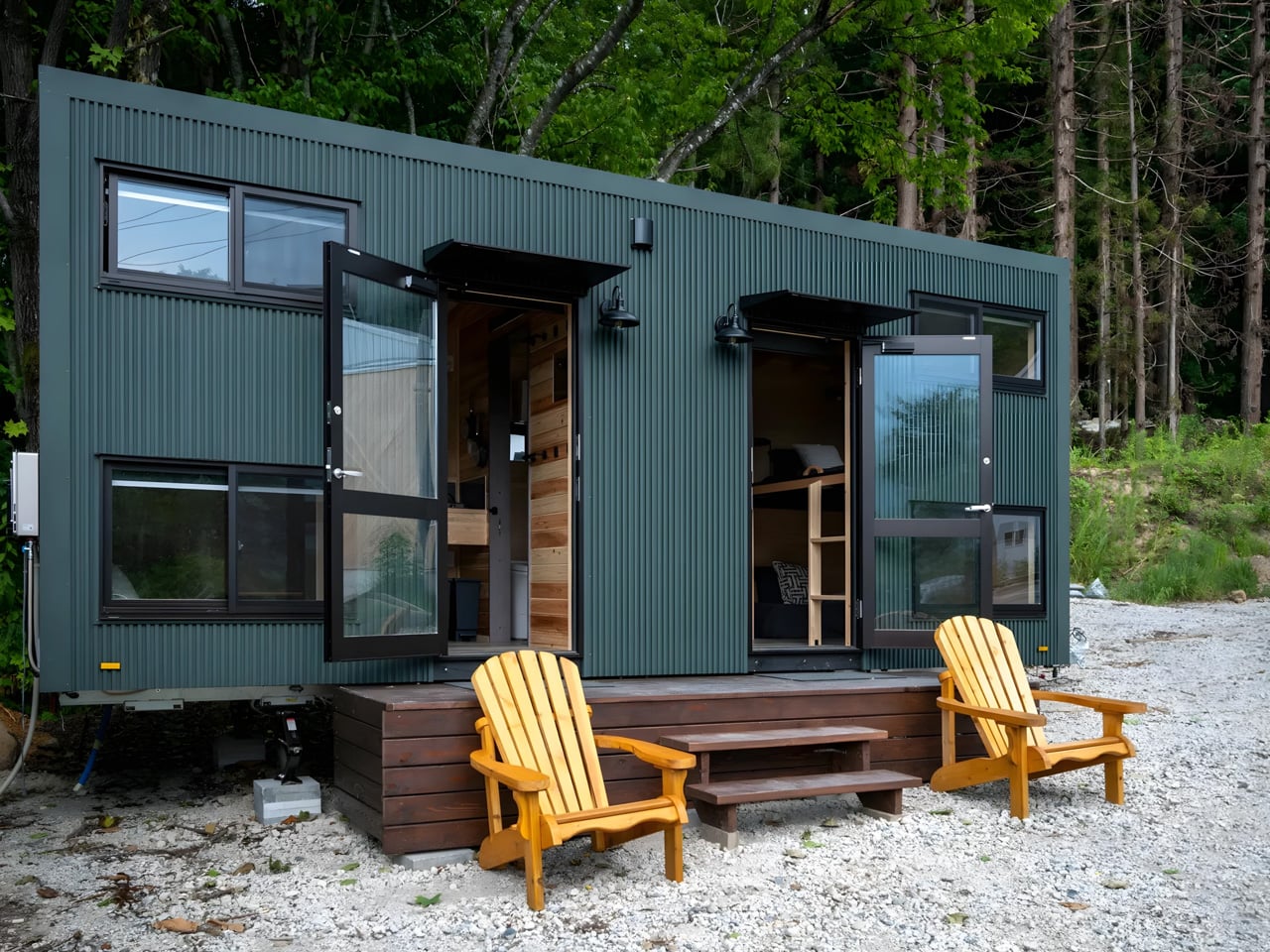
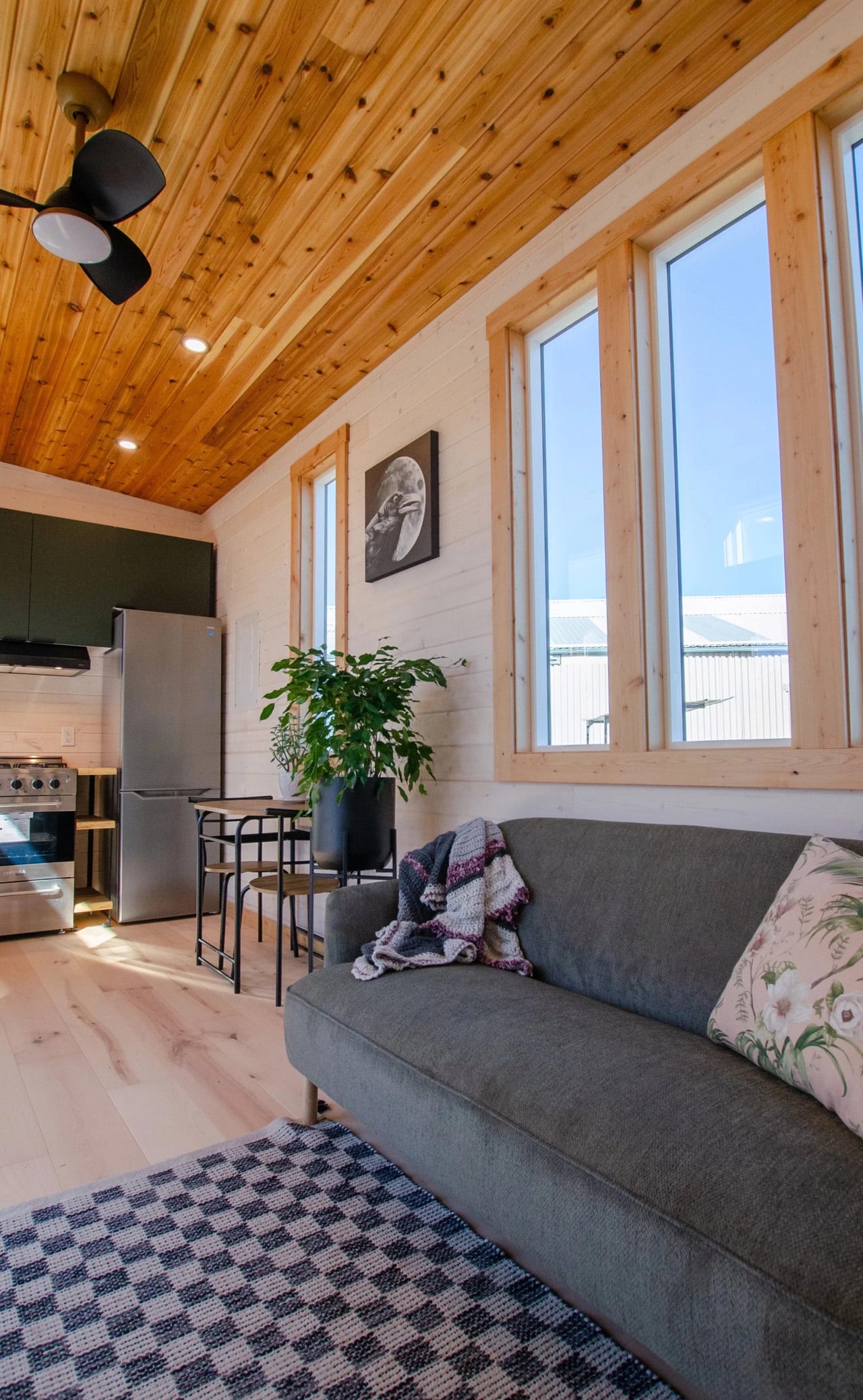
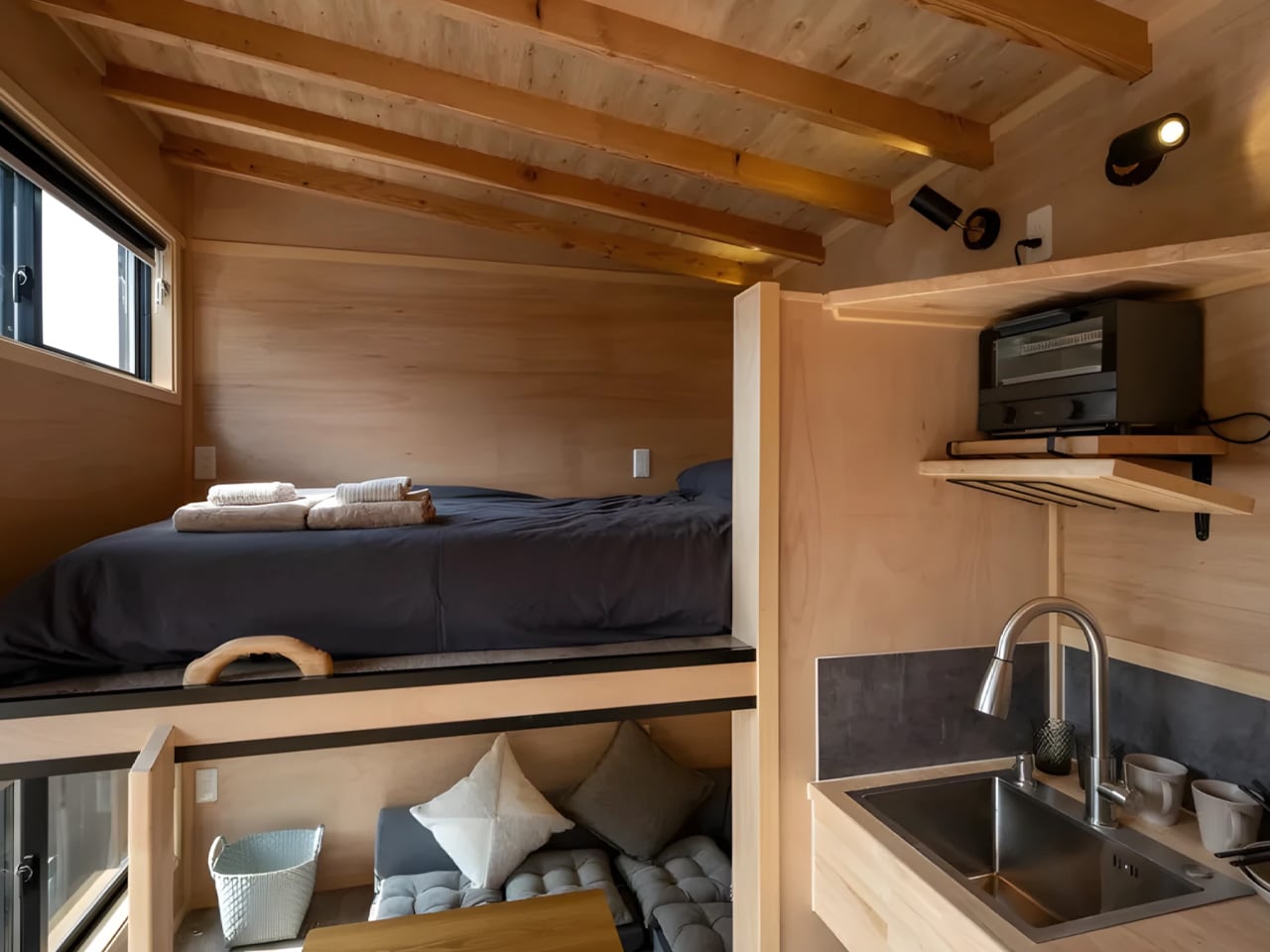
When it comes to tiny homes, Escape has established its dominance and expertise, and it tends to recreate various variations of its popular and most-loved models. Recently, it created the eONE XL – a rejuvenated take on its One and One XL model. The eONE XL is designed to be a more spacious, free-flowing, and light-filled home in comparison to its predecessors. Based on a double-axle trailer, the eONE XL has a distinguished Japanese-style charred wood exterior, which helps to protect the wood from decay and bugs. It features a length of 30 feet and a width of 8.6 feet, the same as the One XL. But there are a lot of other differences, ensuring that the eONE XL offers an upgraded micr0-living experience.

Designer: Escape

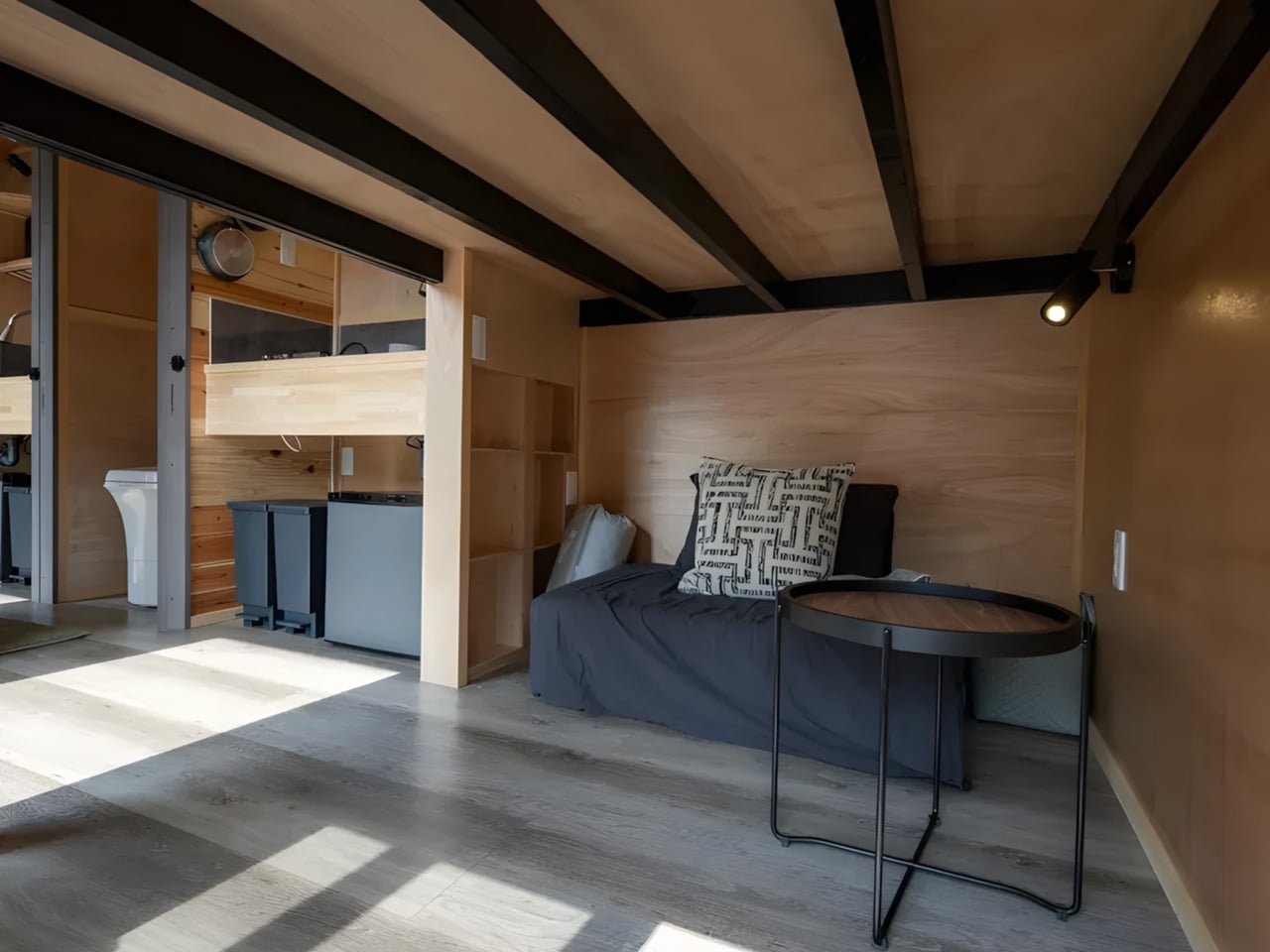
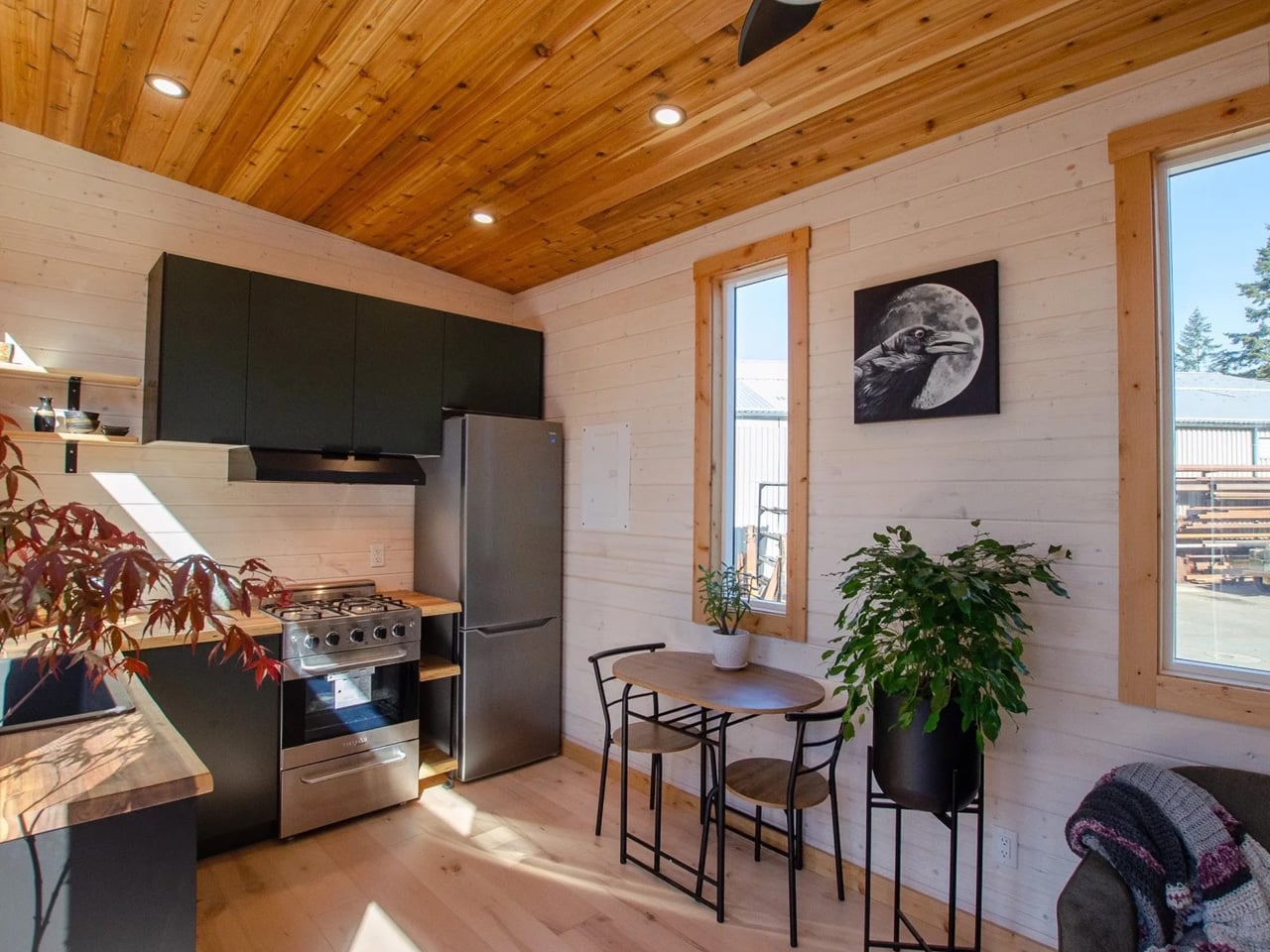
The eONE XL consists of large windows, which allow natural light to stream in freely throughout the day. This creates an interior that is quite light-filled and warm. As the ‘e’ in its name signifies, the home includes all-electric appliances. Besides these additional benefits, the home also offers more storage space and floor space. As you enter the home, you are welcomed by a spacious and well-designed kitchen. It is quite well-equipped for a tiny home. It contains a pantry storage area, fridge/freezer, microwave, an induction cooktop, electric oven, and sink. The kitchen also includes generous cabinetry and a washer/dryer.

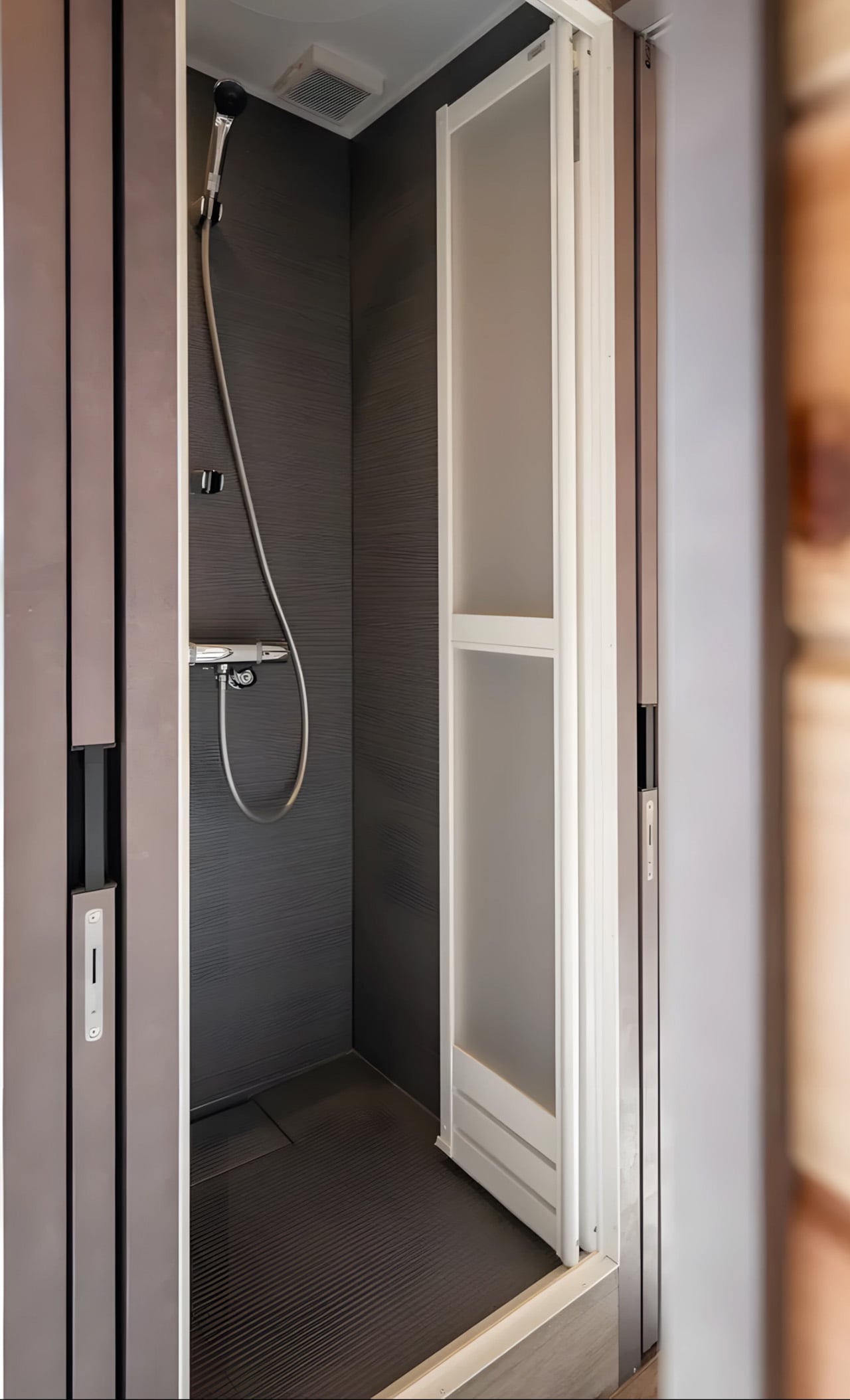
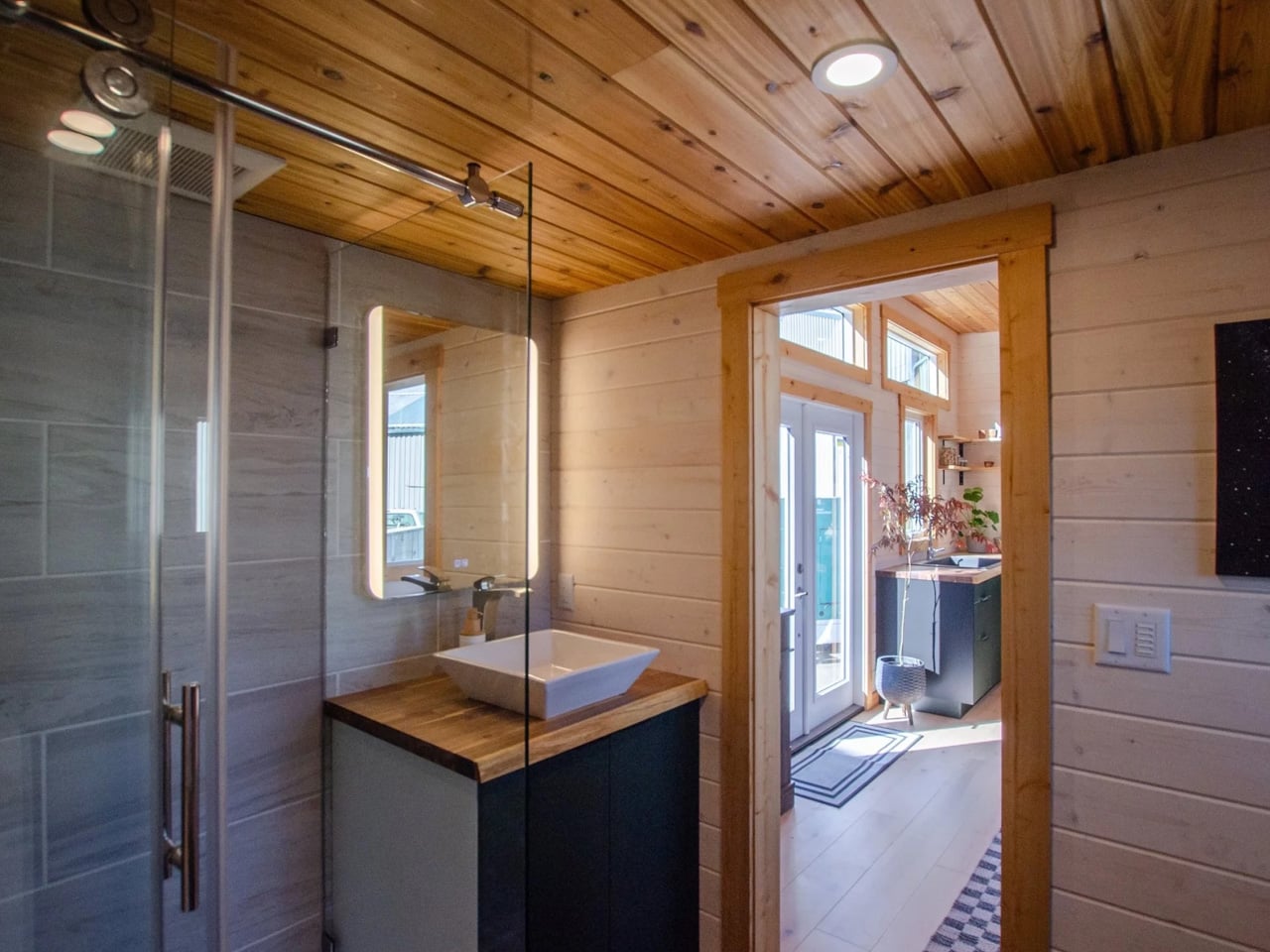
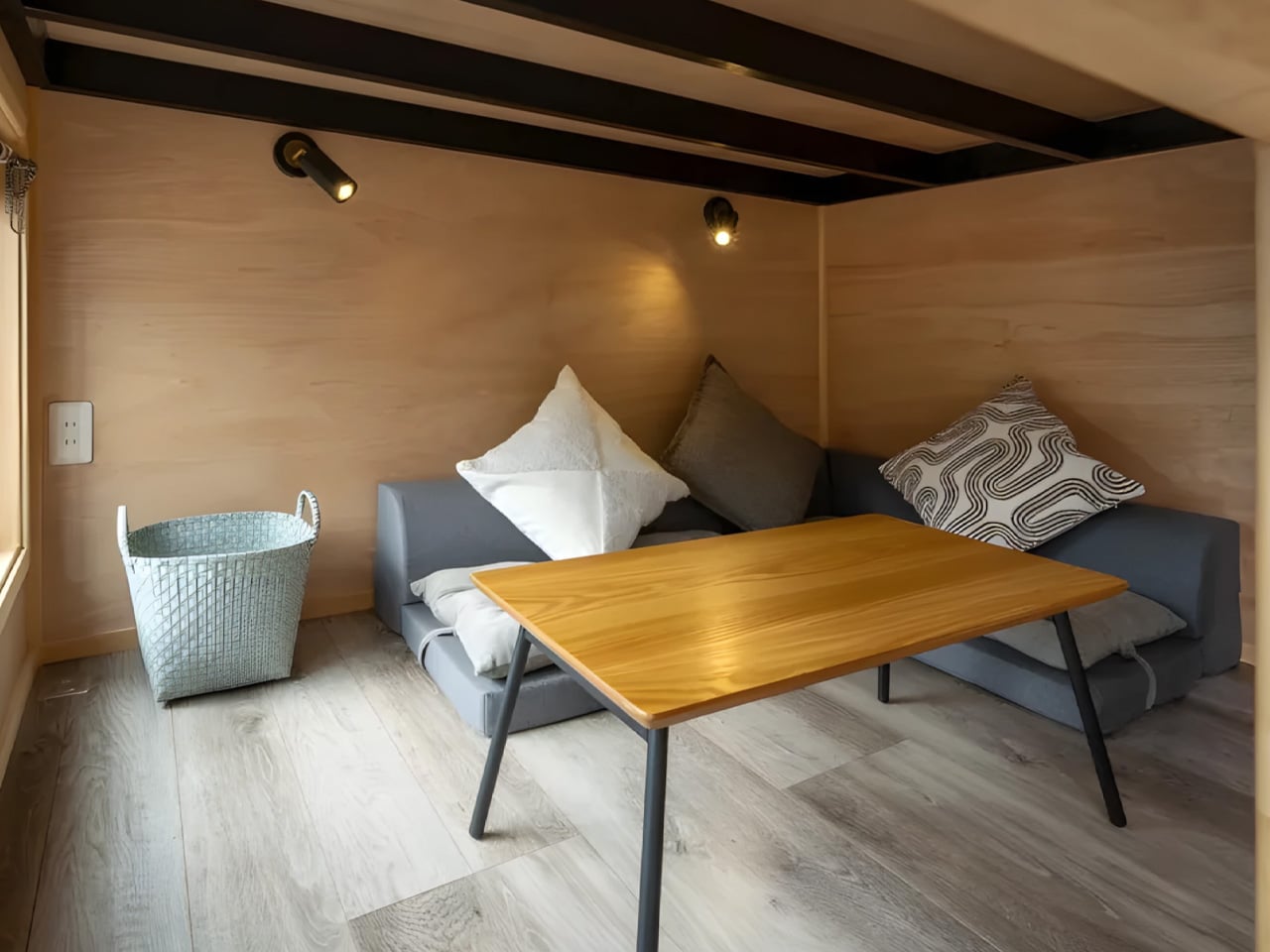
The living room is located next to the kitchen, and it seems to be quite spacious. The images don’t show any furniture in the living room though. The bathroom is placed on the opposite end of the home, and it features a flushing toilet, a sink with storage space, as well as a shower and a bathtub – which is something we never get to see in tiny homes. How cool!

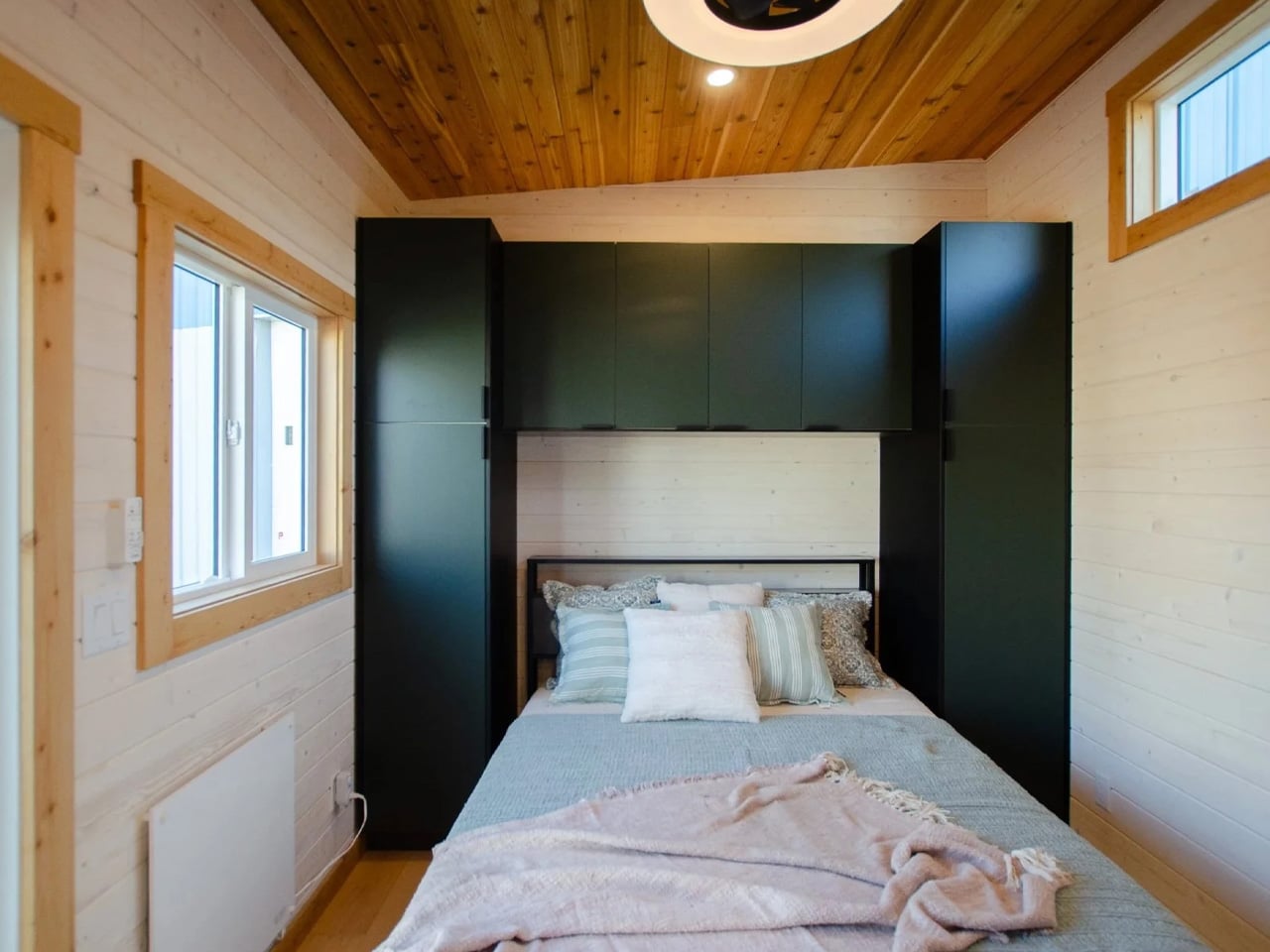
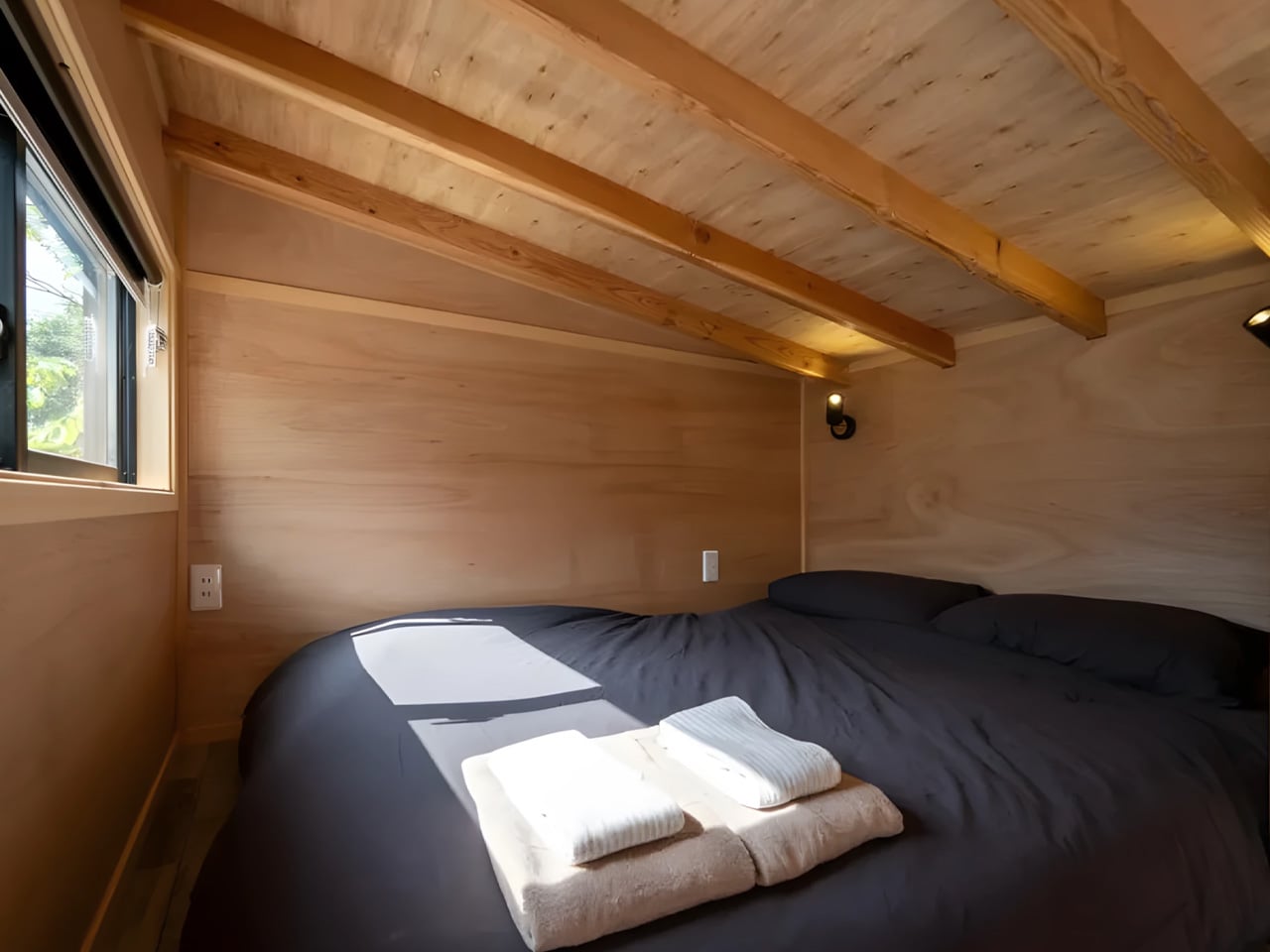
The eONE XL tiny home includes two bedrooms, both of which are placed upstairs, and are quite spacious. You can access the master bedroom via a storage-integrated staircase. The staircase is equipped with large windows, offering views as you climb up to the bedrooms. You can enter the second bedroom via a gangway, although this room could also be utilized as a home office.

The post Japanese-Inspired Tiny Home Redefines Spaciousness and Light-Filled Living in Micro-Housing first appeared on Yanko Design.
Max Space Is Revolutionizing Balloon-Like Scalable Space Habitats for a New Era in Space Exploration

Isn’t it ironic when we say space is infinite, yet it has the same housing problem we face on Earth of not having enough room? The challenge for builders of space habitats is not the vastness of space itself but the constraints of shipping capacity. Despite the increased frequency and reduced cost of rocket launches, the amount of building material that can be sent into orbit remains limited. The International Space Station (ISS), for example, required over 40 flights and cost more than $100 billion to construct. In contrast, Max Space is giving more in less! A bargain that can never go wrong. It is a company revolutionizing space habitation by offering equivalent cubic volume to the ISS for just $200 million, including launch, slashing costs by over a hundred-fold.

Designer: Max Space

Max Space was founded by Maxim de Jong, a pioneer in “soft system space architecture.” De Jong is globally recognized as the foremost expert in utilizing expandable materials for space. His early designs, Genesis I and Genesis II, have been orbiting Earth since 2006 and 2007. Max Space’s approach is distinguished by its use of ‘isotensoid’ architecture. This innovative design ensures that every structural fiber remains unencumbered, allowing it to assume an ideal geometry for optimal load-bearing capability. This results in the lowest possible mass and cost while offering unsurpassed predictability and unlimited scalability.

A significant advantage of Max Space’s inflatable modules is their enhanced resilience against space debris. Unlike traditional hard modules made of aluminum and titanium, Max Space’s expandable modules feature a multi-layered system of fiber-based ballistic shielding. This design provides greater resilience, making the material safer and stronger.

The Max Space 20, the company’s initial module, provides 20 cubic meters (706 cubic feet) of interior space. Though smaller than the ISS’s habitable volume of 388 cubic meters (13,696 cubic feet), it marks a significant step towards larger structures. The company plans to launch the Max Space 20 units in 2026, followed by the Max Space 100 and Max Space 1000 within the next four years. The Max Space 1000 will dwarf the ISS in volume, illustrating the company’s commitment to scalability.

“More volume, less cost” is Max Space’s motto. Their first expandable module, scheduled to launch on a SpaceX rideshare mission in 2025, will be compacted into two cubic meters for launch and expand to 20 cubic meters after deployment. This will make it the largest expandable module flown to date. Aaron Kemmer, co-founder and CEO of Max Space, drew on his experience at Made In Space, a company that developed 3-D printers for the ISS, to address the volume bottleneck in space habitats. His vision is to overcome the limitations of confined space, which often hinder meaningful projects.

Max Space’s expandable module technology builds on the legacy of Bigelow Aerospace’s Genesis 1 and 2 and BEAM. However, Max Space’s approach differs significantly. Instead of a bi-directional “basket weave” fabric structure, which distributes load unpredictably, Max Space employs a technology that distributes loads in one direction. This ultra-high-performance vessel, a serendipitous discovery by de Jong, ensures more precise safety margins and scalability. Tests have shown that the modules can burst at pressures within 10% of predicted levels, demonstrating excellent predictability.

Recently, Max Space showcased a test version of the Max Space 20 module at the MARS Conference, hosted by Jeff Bezos. The company is now developing a flight version with enhanced debris shielding. The scalability of this design will enable Max Space to quickly advance to modules with volumes of 100 to 1,000 cubic meters, equivalent to the entire ISS volume, at a fraction of the cost.

Max Space does not intend to build its own space station but aims to supply modules to other commercial space station developers, including those involved in NASA’s Commercial Low Earth Orbit Development (CLD) program. The company remains focused on its core technology, contracting out other elements like power, propulsion, and life support systems.

Having raised a “sub-$10 million” seed round, Max Space is developing its first module and preparing for its rideshare launch. With a small team of less than a dozen employees, the company is committed to scaling up efficiently and cost-effectively.

Future commercial space stations are a prime application for Max Space’s modules. Aaron Kemmer emphasized the potential for these space habitats to revolutionize fields such as in-space manufacturing, biosciences, and pharmaceuticals by providing affordable and scalable solutions. Initially, the modules may serve government agencies as in-space propellant depots or storage facilities, with the company prioritizing the demonstration of safety and functionality before accommodating human habitation.

The potential applications for Max Space’s habitats are vast, ranging from orbiting research and manufacturing facilities to lunar surface installations. Imaginative possibilities include space tourism and zero-G sports. Additionally, these habitats could enable nations without a domestic space program to establish an orbital presence, significantly broadening global participation in space exploration and utilization.

The post Max Space Is Revolutionizing Balloon-Like Scalable Space Habitats for a New Era in Space Exploration first appeared on Yanko Design.
The Orb At Google’s Charleston East Campus Offers A Moment Of ‘Productive Distraction’

Dubbed the Orb, this fascinating structure was designed by the computational design experts of New York’s The Very Many. Located in Google’s Charleston East Campus, and perched at the entrance of Google’s Mountain View complex in California, the structure is designed to be a truly captivating junction, where you witness a convergence of public and private spaces. The Orb has a height of 10 meters, and it features an impressive curved shape that instantly grabs your attention. It is built using a lightweight aluminum shell, with an elegant white shade. The structure features sophisticated folds and intricate perforations which create a mesmerizing play of light and shadows.

Designer: The Very Many

The Orb was constructed during the pandemic, and there were several issues that needed to be dealt with. The ‘puzzle structure’ is made up of delicate pieces which were laser cut and powder coated in Europe, and then shipped to California. Even though there were certain logistical issues, the Orb was built perfectly according to the vision the team had in mind. The Orb was placed in the open plaza, and it intends to offer a moment of ” productive distraction”.

The Orb serves as a place of rest from the fast-paced hectic world we live in. It allows visitors to slow down, and relax for a minute, putting aside their devices and gadgets. The interior of the orb features interesting surfaces and a non-linear environment which distract the visitors from their phones and encourage them to gaze at the detailed work.

The Orb was also described as a “visual wandering” by the studio. It is a fascinating challenge that encourages the viewer to understand and dive into an unfamiliar yet super interesting world. As visitors revisit the Orb, they notice newer details and refreshing perspectives, which builds a sense of wonder in them. The mesmerizing building shows how art and design can be utilized to inspire onlookers, captivating them, and helping them disconnect from technology. Placed in Google’s Charleston East Campus, the Orb elevates the space by adding elegance, a creative touch, and intricate beauty to it.

The post The Orb At Google’s Charleston East Campus Offers A Moment Of ‘Productive Distraction’ first appeared on Yanko Design.
Exclusive LEGO sets depicting Ukraine’s iconic landmarks raise funds for rebuilding the nation

Ukraine is having a long haul with the ongoing war that has changed lives, altered the city’s visual landscape and left behind scars that’ll take centuries to heal. Every effort to help the country revive and keep afloat is appreciated. In this noble effort, the United24 charity has launched a second wave of raising money to help rebuild the nation that’s dealing with the invasion by Russia.
Last year’s initiative raised nearly $375,000 and the second wave of charity should be even better. This time, United24 has launched five sets created by LEGO builders from four countries across the globe. These include Eric Law and Mark Segedie from the US, Daniel Seidl from Germany, Maciej Kocot from Poland, and Aleksander Yermolaev from Ukraine.

Designer: United24

The passionate creators of these LEGO sets were all humbled by the opportunity of this endeavor. Maciej who created The Khan Palace replica is proud of the Crimean culture, while Segedie from the USA chose the Pidhirtsi Castle for its balanced mix of Ukrainian history and his passion for building castles. According to Yaroslava Gres, UNITED24 Coordinator, “We are very grateful to these LEGO creators, who not only responded to UNITED24’s appeal but also took the initiative in choosing architectural objects. Despite the fact that some of them had never been to Ukraine, everyone managed to recreate each of the five landmarks in great detail. We will continue to keep the focus of international audiences on Ukraine.”

The hashtag fuelling this initiative is “UKRAINEinLEGOBricks. These exclusive sets are based on famous landmarks from all over Ukraine. These include Lviv in the west, the capital Kyiv in central Ukraine, and Odesa, Mykolaiv, and Crimea in the south on the Black Sea. The limited edition sets are not for sale but lucky users can win one of them by donating $24 or more towards reconstruction of a school in Dnipropetrovsk Oblast. Mind you, only 15 of these are in total – three of each model – slated to be raffled out through the fundraiser till June 20.

The post Exclusive LEGO sets depicting Ukraine’s iconic landmarks raise funds for rebuilding the nation first appeared on Yanko Design.