It’s been quite a while since we visited Middle-Earth on the big screen (anime prequels aside), but it looks like Lord of the Rings fans have plenty to look forward to in the coming years. We already knew that Andy Serkis’ The Hunt for Gollumwas in the works — and by all accounts is progressing nicely — but another Rings-related film is in development too, and it’s being co-written by none other than Stephen Colbert.
The announcement came from Peter Jackson himself, in a video posted by Warner Bros. to coincide with Tolkien Reading Day. The director of the Lord of the Rings trilogy provided a quick update on Serkis’ film (the British actor is both directing and reprising his role as Gollum), before introducing "very special partner" and diehard Tolkien fan Colbert on a video call.
With The Late Show nearing its end, its host was seemingly going to be out of work in the summer. Colbert is working with his son Peter as well as screenwriter Philippa Boyens (who co-wrote the original film trilogy). They'll adapt some early chapters of Fellowship of the Ring that never made it into Jackson’s 2001 film. The Lord of the Rings: Shadow of the Past is actually set 14 years after the events of Return of the King, and will see Sam, Merry and Pippin retrace the first steps of their famous adventure.
So while the new film is inspired specifically by Fellowship chapters III (‘Three is Company’) through VIII (‘Fog On The Barrow-Downs’), it sounds like we’re actually getting a sequel of sorts, in which we’ll also see Sam’s daughter Elanor make a huge discovery that puts her on her own quest.
Colbert and his son had been scribbling away at their idea for several years before plucking up the courage to show what they had come up with to Jackson, but the legendary 64-year-old filmmaker was clearly a fan. And given the timing of the announcement, Colbert will soon be able to commit all of his energy to the project, which has not yet named any cast members. Will Sean Astin, Billy Boyd and Dominic Monaghan be dusting off their hobbit attire? Only time will tell, but the time jump would presumably make it possible.
The Lord of the Rings: Shadow of the Past doesn’t have a release date, but its announcement coincides with the 25th anniversary of Fellowship of the Ring, which has already been marked by the whole trilogy returning to theaters earlier this year.
This article originally appeared on Engadget at https://www.engadget.com/entertainment/tv-movies/stephen-colbert-is-writing-a-new-lord-of-the-rings-movie-143004743.html?src=rss
Anthropic has begun previewing "auto mode" inside of Claude Code. The company describes the new feature as a middle path between the app's default behavior, which sees Claude request approval for every file write and bash command, and the "dangerously-skip-premissions" command some coders use to make the chatbot function more autonomously.
With auto mode enabled, a classifier system guides Claude, giving it permission to carry out actions it deems safe, while redirecting the chatbot to take a different approach when it determines Claude might do something risky. In designing the system, Anthropic's goal was to reduce the likelihood of Claude carrying out mass file deletions, extracting sensitive data or executing malicious code.
Of course, no system is perfect, and Anthropic warns as such. "The classifier may still allow some risky actions: for example, if user intent is ambiguous, or if Claude doesn't have enough context about your environment to know an action might create additional risk," the company writes.
Anthropic doesn't mention a specific incident as inspiration for auto mode, but the recent 13-hour AWS outage Amazon suffered after one of the company's AI tools reportedly deleted a hosting environment, was probably front of mind for the company. Amazon blamed that specific incident on human error, saying the staffer involved in the incident had "broader permissions than expected."
Team plan users can preview auto mode starting today, with the feature set to roll out to Enterprise and API users in the coming days.
This article originally appeared on Engadget at https://www.engadget.com/ai/anthropic-releases-safer-claude-code-auto-mode-to-avoid-mass-file-deletions-and-other-ai-snafus-142500615.html?src=rss
Ring has today announced a spec bump to its battery-powered video doorbells for all those folks who can’t wire their units to power. The flagship Battery Doorbell Pro (2nd gen) gets 4K video, with 10x zoom and the promise of far longer time between recharges than the previous model. At the same time, it’s bringing 2K imaging to its lower-end battery doorbells, the Battery Doorbell Plus and Battery Doorbell (2nd gen). The former, as fitting its higher price, gets a quick-release battery pack, while both models get 2K video and 6x zoom. Naturally, these features are already available on Ring’s wired products, the bulk of which were announced back in September 2025.
The company is also aware that swapping out batteries isn’t ideal if you really need a doorbell to work all of the time. That’s why it’s also launching a new Solar Charger which integrates into the mount, keeping your doorbell running for longer between trips to the wall outlet. There’s also a bigger Solar Panel, which pumps out more juice than its smaller sibling, and can be mounted in a wider variety of places. All of the above are available to pre-order from today, and are priced as follows: Pro ($250), Plus ($180), Battery Doorbell ($100), Solar Charger ($50), Solar Panel ($60).
This article originally appeared on Engadget at https://www.engadget.com/home/ring-adds-4k-to-its-battery-powered-video-doorbells-130021181.html?src=rss
Hearing aid company Sonova has put its Sennheiser consumer audio division on the auction block less than five years after acquiring it, the company announced on Reddit. "Today Sonova announced they intend to divest the business and will focus on Hearing Care," Sonova wrote, adding it intends to find "the right new owner."
Sennheiser's consumer audio division mainly manufactures high-end headphones like the HD 400, HD 500, HD 600 and HD 800 series and recently launched the HDB 630, $500 wireless headphones aimed at audiophiles. The company's most (in)famous lineup is the HE series, which includes the $55,000 HE 90 and €89,990 HE 1.
Sonova originally purchased Sennheiser with the intent of expanding its demographic to younger customers. At the time, it said "even if [young people] don't have hearing loss, most of them will gradually get hearing loss with age, and devices like Sennheiser's allow us to have earlier consumer access to such people." For its part, Sennheiser said it wanted to relinquish its consumer business in order to focus on its pro audio, business and Neumann (high-end microphone) divisions that it still owns.
Things apparently didn't go to plan, though. Sonova's Sennheiser division's sales in the last half-year declined significantly year-over-year and the company was hit with a €6 million fine over its retail pricing practices (that occurred prior to the acquisition). However, the company's recent products have been praised by the audiophile community as a return to previous form, with Engadget's audio reviewer Billy Steele calling the HDB 630 "a sonic marvel."
This article originally appeared on Engadget at https://www.engadget.com/audio/sennheisers-owners-want-to-sell-its-consumer-headphone-business-121830441.html?src=rss
Late last year, Samsung launched its newest generation of affordable A-series phones, starting with the entry-level A17. Following the arrival of the flagship Galaxy S26 line, the company has returned to flesh out the rest of its midrange portfolio. The more affordable Galaxy A37 and Galaxy A57 sport some interesting upgrades, even when compared to some of their pricier siblings.
Core specs and features
Before we dive into my hands-on impressions, I want to do a quick rundown of each phone's specs as that should help set up (or temper) expectations. As you'd expect based on their numbering, the A37 is the more affordable of the two with a base price of $450 for 6GB of RAM and 128GB of storage. You can also choose 8GB RAM and 256GB of storage for $540. Notably, when compared to the A17, the A37 features a much more recent and more powerful Exynos 1480 chip that brings a big jump in NPU performance and helps unlock much of the phone's newfound AI capabilities. It also comes with a large 6.7-inch AMOLED display, a 5,000mAh battery and three rear cameras. However, two of those will likely get more use than the other as the A37 packs a 50-megapixel main camera and an 8MP ultra-wide, along with a 5MP macro shooter.
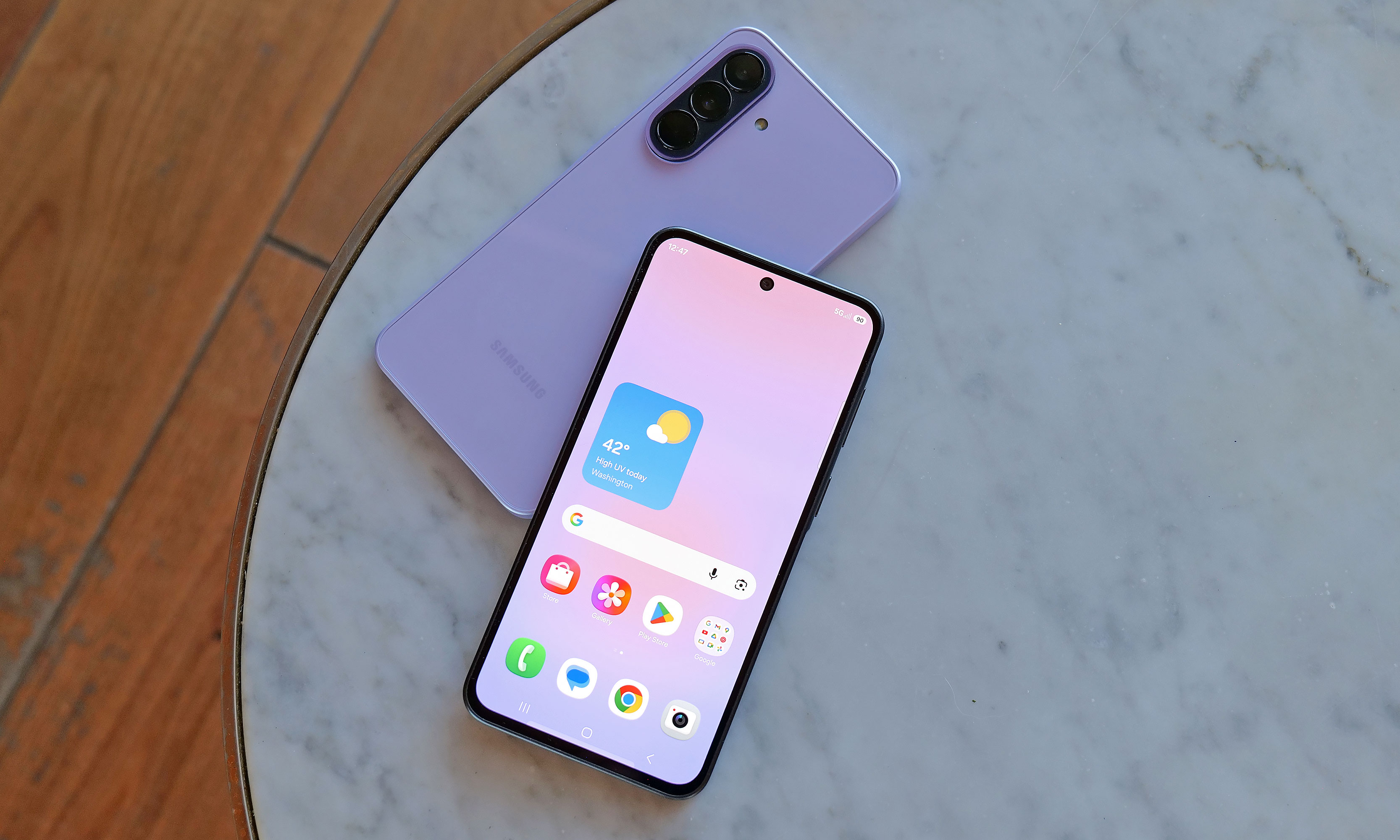
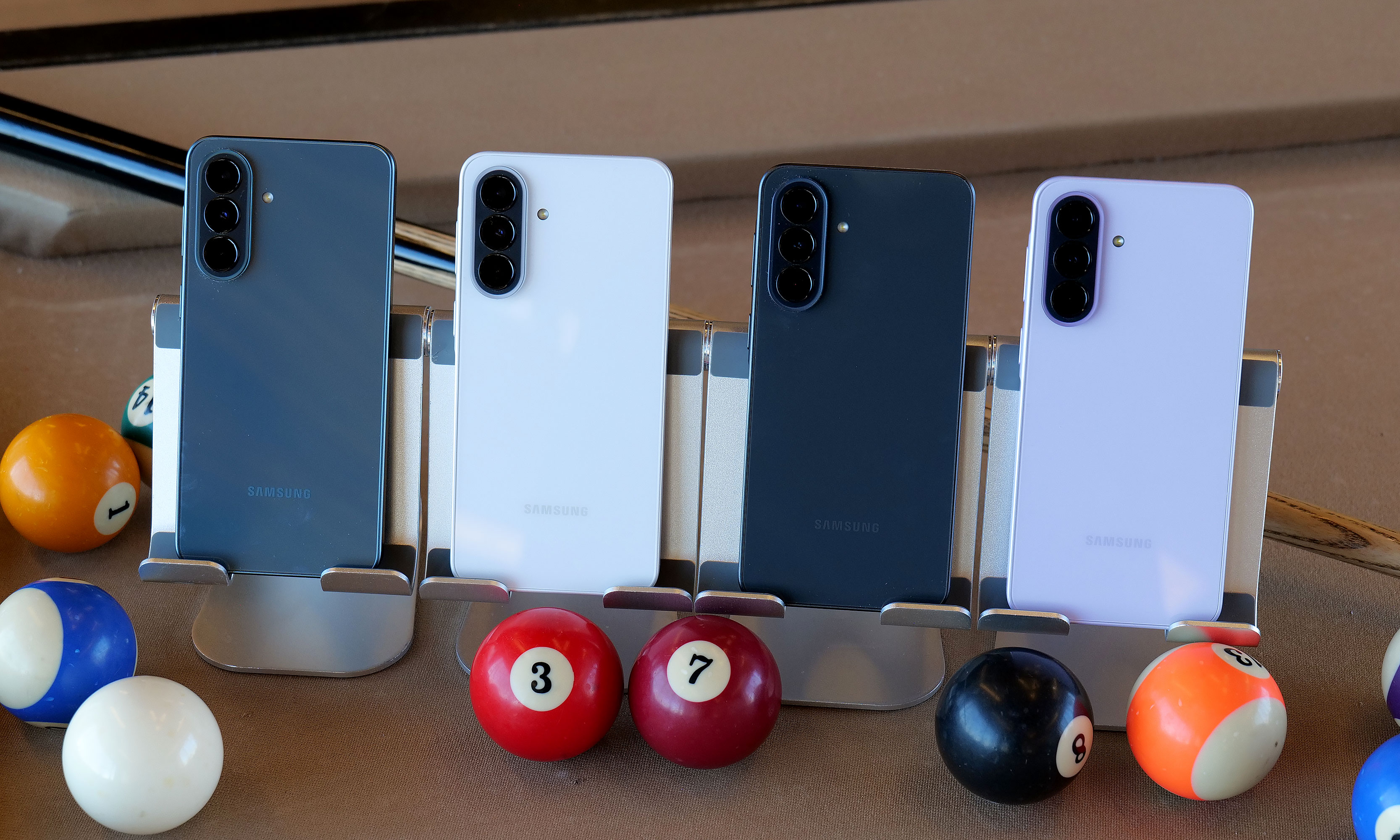
The Galaxy A37 will be available in four colors: charcoal, white, lavender and graygreen. However, the middle two are Samsung.com exclusives and the last one is only available from Best Buy.
Sam Rutherford for Engadget
Meanwhile, the Galaxy A57 is a bit more expensive, starting at $550 for 8GB of RAM and 128GB of storage, or $610 for the 8GB/256GB version. It also features a slightly more powerful Exynos 1680 processor and a higher-res 12MP sensor for its ultra-wide lens, but aside from that, it has the same general camera setup as A37 and the same size battery. One small difference is that the A57 has Bluetooth 6 connectivity and Wi-Fi 6E, but the A37 is still stuck with BT 5.3 and basic Wi-Fi 6.
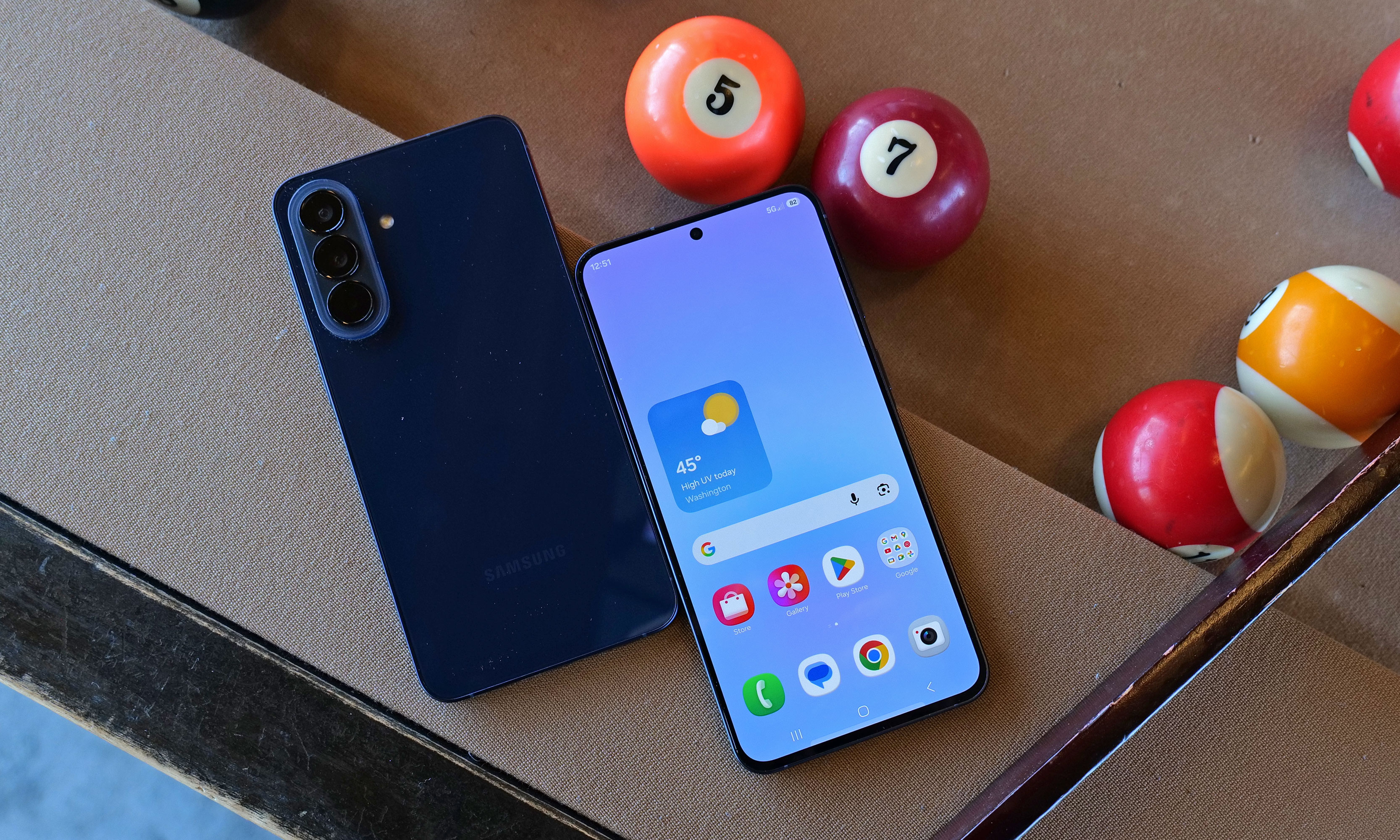
For some reason, the A57 is only available in one color: navy.
Sam Rutherford for Engadget
Both phones come with IP68 ratings for dust and water resistance (which is an upgrade from IP67 on the A36) and 120Hz refresh rates. However, the most important shared trait is that while neither supports wireless charging, they can both take wired power at up to 45 watts, which is actually faster than a base Galaxy S26's limit of just 25 watts. Finally, in addition to six years of OS and security updates, the A37 and A57 are getting some trickle-down AI features from its flagship siblings. Those include improved support for Google's Circle to Search, Object Eraser and better transcription and translation capabilities in the Samsung Voice Recorder app.
Galaxy A37 impressions
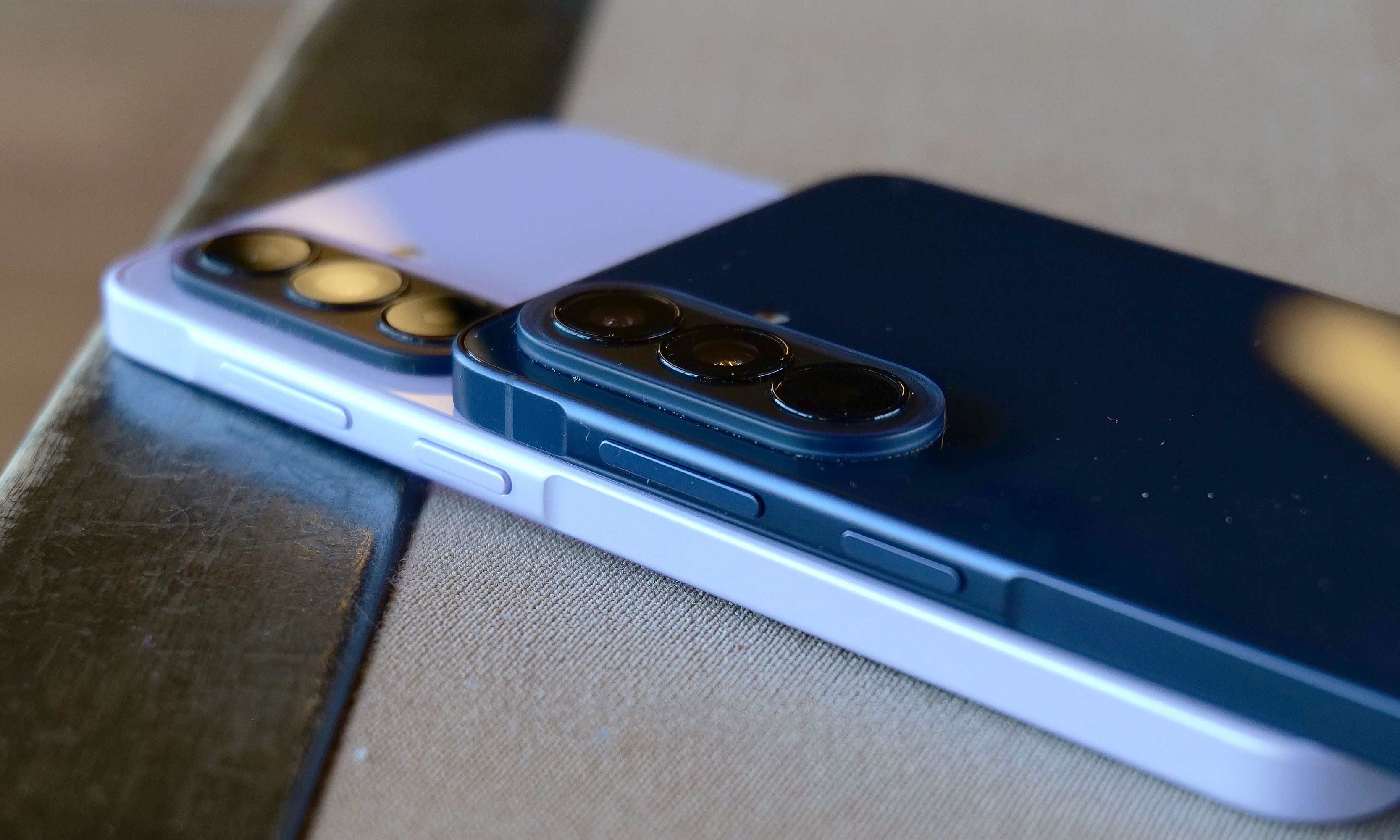
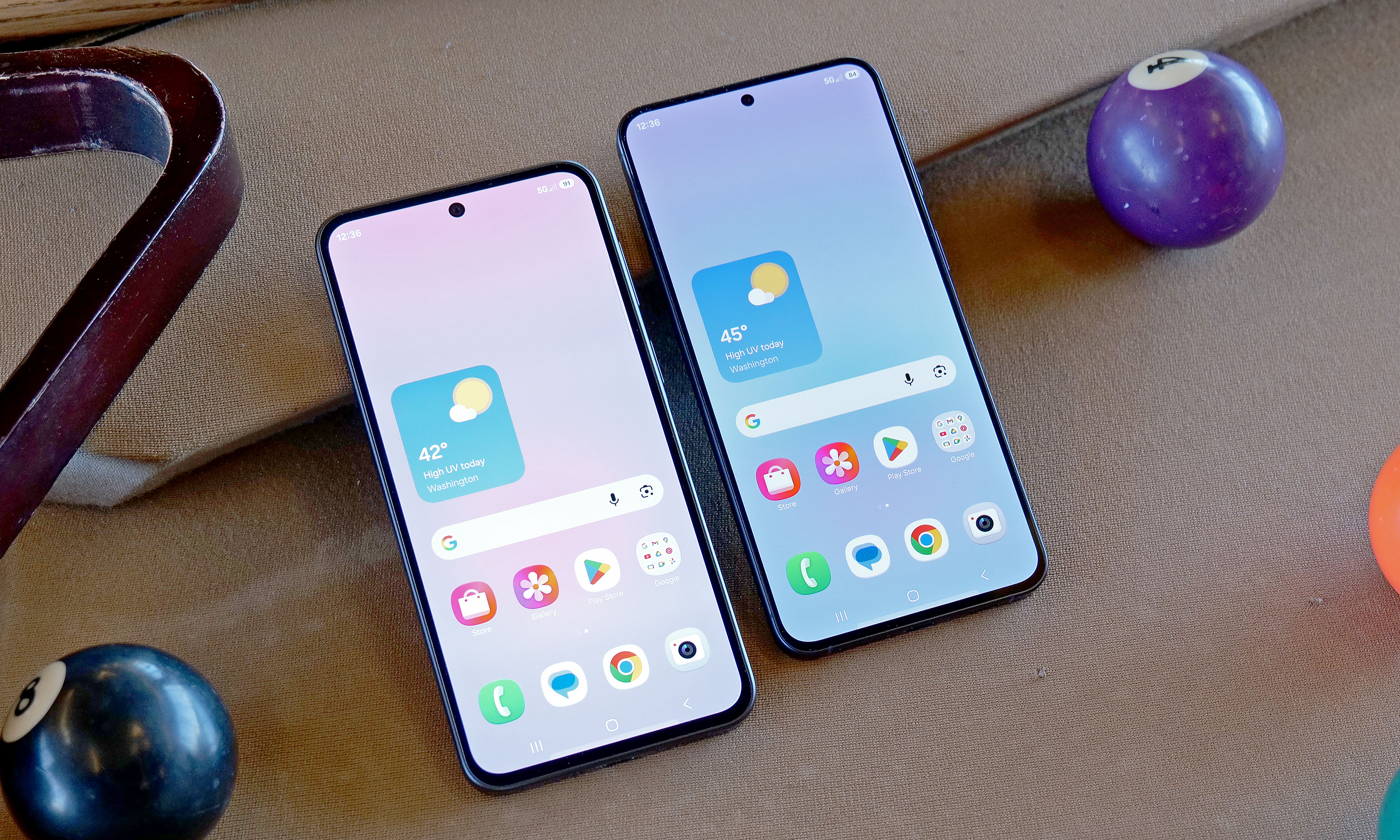
Both phones have nearly identical designs, right down to the same screen size and number of cameras. That said, one area where Samsung cut corners on A37 is that it features a plastic frame instead of the A57’s aluminum. But even when you hold them side by side, it's rather difficult to discern between the two. There's no obvious difference in appearance or button layout, so the main way to tell the two apart is by feeling for the cooler touch you typically get from a metal chassis. Alternatively, if you look closely, you'll notice that the A37 has slightly thicker bezels around the outside of its screen.
Here's a closer look at the A37's color options.
Sam Rutherford for Engadget
Compared to the Galaxy A17, the A37's Exynos 1480 felt significantly snappier and much better equipped for multitasking or AI-based tasks like removing unwanted objects from photos. Regardless, as the less expensive of Samsung's new midrange phone options, the company did a really good job disguising the major differences between the two new models.
Galaxy A57 impressions
To be honest, the A57 wasn't quite as appealing as the A37 due to its higher price and no additional features. The main tool it has that isn't available on its more affordable sibling is Samsung's Best Face camera tool, which allows the phone to analyze people's expressions so you can select your favorite reaction and put it in the photo you want. On paper, its Exynos 1680 chip should be a bit faster, but in normal use, it's really hard to tell. And unlike the A37, which comes in four colors (white, charcoal, lavender and gray/green, depending on the retailer), the A57 is only available in navy.
Early thoughts
While they look the same, the A57 features an aluminum chassis instead of plastic like on the A37, which should be better for long term durability.
Sam Rutherford for Engadget
As a more powerful and more premium alternative to the $200 A17, the A37 feels like a worthy upgrade for the money. It offers noticeably smoother performance along with a more elegant hole-punch selfie cam (instead of a waterdrop) and stereo speakers (instead of mono). Starting at $450, the A37 can also undercut the Pixel 10a while offering a larger 6.7-inch AMOLED display (versus 6.3 inches for the Pixel) and a smattering of equivalent AI features. And in some ways, the wider selection of colors just reinforces that Samsung is probably placing bigger bets on the A37's market prospects. If I were looking for an affordable Android phone with a big screen, I'd give more consideration to this new middle child in Samsung's A-series lineup.
Aside from bezels that are a tiny bit bigger, the Galaxy A37 (left) looks almost exactly the same as the more expensive Galaxy A57 (right).
Sam Rutherford for Engadget
As for the A57, it's certainly not a bad phone, but starting at $550, it suffers from being in a much more competitive price bracket. For those who prefer smaller devices, the $500 Pixel 10a is cheaper while offering even better AI tools, a cleaner UI, wireless charging, a slightly larger battery and unmatched photo quality. However, the A57's biggest rival is arguably another Samsung phone: the Galaxy S25 FE. Aside from slower wired charging, it has an even nicer design, an extra year of software and security updates (seven total) and a proper telephoto camera instead of a macro lens. And while its MSRP is a bit higher at $650, it's regularly on sale for under $600 (or less), which effectively sidesteps the A57's biggest advantage.
That said, no matter which one you prefer, more options for affordable gadgets are always welcome — especially with the price of smartphones and PCs increasing due to the global RAM shortage.
The Galaxy A37 and A57 will officially go on sale April 9.
This article originally appeared on Engadget at https://www.engadget.com/mobile/smartphones/samsung-galaxy-a37-and-a57-hands-on-the-cheaper-phone-might-be-a-winner-120000965.html?src=rss
Apple has introduced more than just new features, like an AI playlist generator, with iOS 26.4 in the UK. The company now requires users in the region to verify their ages and to prove they’re 18 years old or above before they can access “certain services or features, or take certain actions on their account.” Users can verify their ages in Settings by linking a credit card to their account or scanning an ID. For people who’ve had an Apple account for a while, the company will check if they already have a payment method on file that can prove they’re of age.
The company says it will automatically switch on its Web Content Filter and Communication Safety features for everyone under 18 and for those who haven’t verified their ages. These tools are integrated into Apple’s operating systems and can restrict users from accessing specific websites on Safari and third-party browsers, as well as warn users when they’re receiving or sending images and videos containing nudity.
Ofcom, the UK’s communications regulator, praised Apple for the decision, especially since it’s not required to implement age verification for the iOS or its App Store under the region’s Online Safety Act. “Apple’s decision that the UK will be one of the first countries in the world to receive new child safety protections on devices is a real win for children and families,” the regulator said. “Our rules are flexible and designed to encourage innovation, particularly in age assurance. We've worked closely with Apple and other services to ensure they can be applied in a variety of contexts in order to ensure users are protected. This will build on the strong foundations of the Online Safety Act, from widespread age checks that keep young people away from harmful content, to blocking high-risk sites and stepping up action against child sexual abuse material.”
This article originally appeared on Engadget at https://www.engadget.com/big-tech/apple-introduces-age-verification-for-icloud-accounts-in-the-uk-115340237.html?src=rss
Sony Honda Mobility, the automotive venture from two of Japan’s most storied companies, has swung the axe on its EV project. In a statement, it said it would “discontinue the development and launch” of the Afeela 1 and 2, its long-in-development electric cars. The company added it would review its “business direction,” and announce its future plans “at the earliest possible opportunity.” Which, if we’re honest, probably means the whole thing is going to be shut down, or scaled back so much it’s no longer worth talking about.
2026 has not been a great year for Honda. On March 12, it posted an up-to $15.7 billion loss as it wrote off a big chunk of its investment in EVs. The US’ pivot toward fossil fuels, removal of federal EV tax credits and the imposition of tariffs has hit its business pretty hard. Not to mention the high-profile embarrassment of its current F1 engine project with Aston Martin, which promised so much and has delivered less than nothing.
Sony’s journey into the automotive world began six years ago with the announcement of the Vision-S, the car which would eventually be re-christened Afeela. But while the product looked good on trade show stands, it stood still while the rest of the car world sprinted ahead. In January, Tim Stevens said Afeela 1 looked a little dated, and a little lacking in emotion, and a lot more expensive than comparable models from rivals. It’s also worth noting Sony and Honda’s vision of a smart device on wheels is hardly a novel concept these days.
Not to mention that Afeela 1 is a sedan, being sold to a world that’s increasingly fallen out of love with the type in favor of higher-riding SUVs. In Sony's statement, however, the SUV-aping Afeela 2 didn't even get a mention by name, which hints that it was as much an afterthought for the company as we might have guessed when it was announced.
This article originally appeared on Engadget at https://www.engadget.com/transportation/evs/sony-and-honda-kill-its-afeela-evs-100426852.html?src=rss
Sony Honda Mobility, the automotive venture from two of Japan’s most storied companies, has swung the axe on its EV project. In a statement, it said it would “discontinue the development and launch” of the Afeela 1 and 2, its long-in-development electric cars. The company added it would review its “business direction,” and announce its future plans “at the earliest possible opportunity.” Which, if we’re honest, probably means the whole thing is going to be shut down, or scaled back so much it’s no longer worth talking about.
2026 has not been a great year for Honda. On March 12, it posted an up-to $15.7 billion loss as it wrote off a big chunk of its investment in EVs. The US’ pivot toward fossil fuels, removal of federal EV tax credits and the imposition of tariffs has hit its business pretty hard. Not to mention the high-profile embarrassment of its current F1 engine project with Aston Martin, which promised so much and has delivered less than nothing.
Sony’s journey into the automotive world began six years ago with the announcement of the Vision-S, the car which would eventually be re-christened Afeela. But while the product looked good on trade show stands, it stood still while the rest of the car world sprinted ahead. In January, Tim Stevens said Afeela 1 looked a little dated, and a little lacking in emotion, and a lot more expensive than comparable models from rivals. It’s also worth noting Sony and Honda’s vision of a smart device on wheels is hardly a novel concept these days.
Not to mention that Afeela 1 is a sedan, being sold to a world that’s increasingly fallen out of love with the type in favor of higher-riding SUVs. In Sony's statement, however, the SUV-aping Afeela 2 didn't even get a mention by name, which hints that it was as much an afterthought for the company as we might have guessed when it was announced.
This article originally appeared on Engadget at https://www.engadget.com/transportation/evs/sony-and-honda-kill-its-afeela-evs-100426852.html?src=rss
Sony Honda Mobility, the automotive venture from two of Japan’s most storied companies, has swung the axe on its EV project. In a statement, it said it would “discontinue the development and launch” of the Afeela 1 and 2, its long-in-development electric cars. The company added it would review its “business direction,” and announce its future plans “at the earliest possible opportunity.” Which, if we’re honest, probably means the whole thing is going to be shut down, or scaled back so much it’s no longer worth talking about.
2026 has not been a great year for Honda. On March 12, it posted an up-to $15.7 billion loss as it wrote off a big chunk of its investment in EVs. The US’ pivot toward fossil fuels, removal of federal EV tax credits and the imposition of tariffs has hit its business pretty hard. Not to mention the high-profile embarrassment of its current F1 engine project with Aston Martin, which promised so much and has delivered less than nothing.
Sony’s journey into the automotive world began six years ago with the announcement of the Vision-S, the car which would eventually be re-christened Afeela. But while the product looked good on trade show stands, it stood still while the rest of the car world sprinted ahead. In January, Tim Stevens said Afeela 1 looked a little dated, and a little lacking in emotion, and a lot more expensive than comparable models from rivals. It’s also worth noting Sony and Honda’s vision of a smart device on wheels is hardly a novel concept these days.
Not to mention that Afeela 1 is a sedan, being sold to a world that’s increasingly fallen out of love with the type in favor of higher-riding SUVs. In Sony's statement, however, the SUV-aping Afeela 2 didn't even get a mention by name, which hints that it was as much an afterthought for the company as we might have guessed when it was announced.
This article originally appeared on Engadget at https://www.engadget.com/transportation/evs/sony-and-honda-kill-its-afeela-evs-100426852.html?src=rss
X is updating its revenue-sharing incentives to give more weight to engagement from a user’s home region, Nikita Bier, the company’s Head of Product has announced. Bier said the change in policy was to “encourage content that resonates with people in [the user’s] country, in neighboring countries and people who speak [their] language.”
Bier continued that while X appreciates everyone’s opinion on US politics, the company is hoping the new policy can “disincentivize gaming the attention of US or Japanese accounts.” The US and Japan have the largest number of users on X. Bier didn’t mention it outright, but dozens of popular accounts tweeting pro-Trump sentiments and commentaries focusing on US politics in general were revealed to be based outside the US late last year, when X rolled out a transparency feature that exposed users’ locations. Those accounts, which pretended to be from the US and garnered millions of likes, views and reposts, turned out to be based in countries like India, Kenya and Nigeria.
“X will be a much richer community when there's relevant posts for people in all parts of the world,” Bier said. When one user responded to his post that some countries barely have any users, making it hard to earn money from the website, Bier just suggested that they should write about their day-to-day experiences. “Of course, you’re welcome to continue chiming in on America politics. We just won’t send money overseas for that content,” he said. X’s new policy will start taking effect on Thursday, March 26.
We’ve love to hear your thoughts about living in Portugal. I’m sure you have plenty of great stories about your day to day experience there.
Of course, you’re welcome to continue chiming in on America politics. We just won’t send money overseas for that content.
Update, March 25 2026, 11:30AM ET: According to a tweet from Musk, X "will pause moving forward with this until further consideration."
This article originally appeared on Engadget at https://www.engadget.com/social-media/x-is-changing-its-revenue-sharing-policy-to-deter-users-pretending-to-be-americans-090701729.html?src=rss