Board Game Concept Teaches Toddlers Before Anyone Rolls a Die

Most children’s board games follow the same unspoken contract: open the box, unfold the board, arrange the pieces, and then, finally, play. The setup is just a chore you get through before the real experience begins. Toddler Plus, a concept by designer Adesh Jadhav, breaks that contract entirely. Here, the game begins the moment you pick it up.

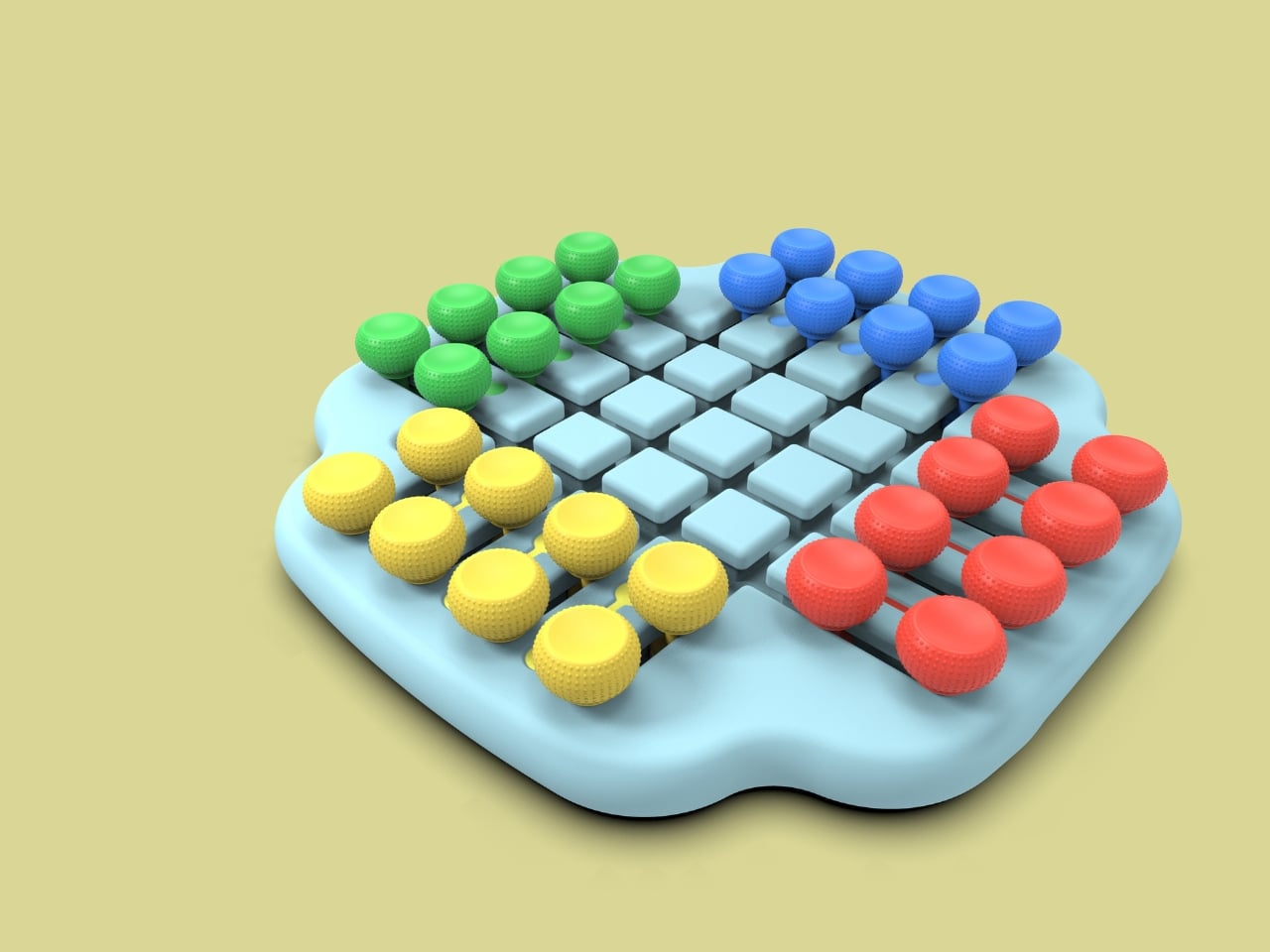
The idea is deceptively simple but genuinely clever. Before any piece slides along a pathway, a player lifts the board using its sculpted in-scoop grip and gives it a gentle oscillating motion. That motion randomizes the colored pegs across the surface, scrambling what was once an orderly arrangement into a colorful puzzle waiting to be solved. What would normally be a mundane setup step becomes a physical ritual, a small moment of anticipation before the challenge even starts. I find it refreshing that the designer thought to make that moment matter.

Designer: Adesh Jadhav
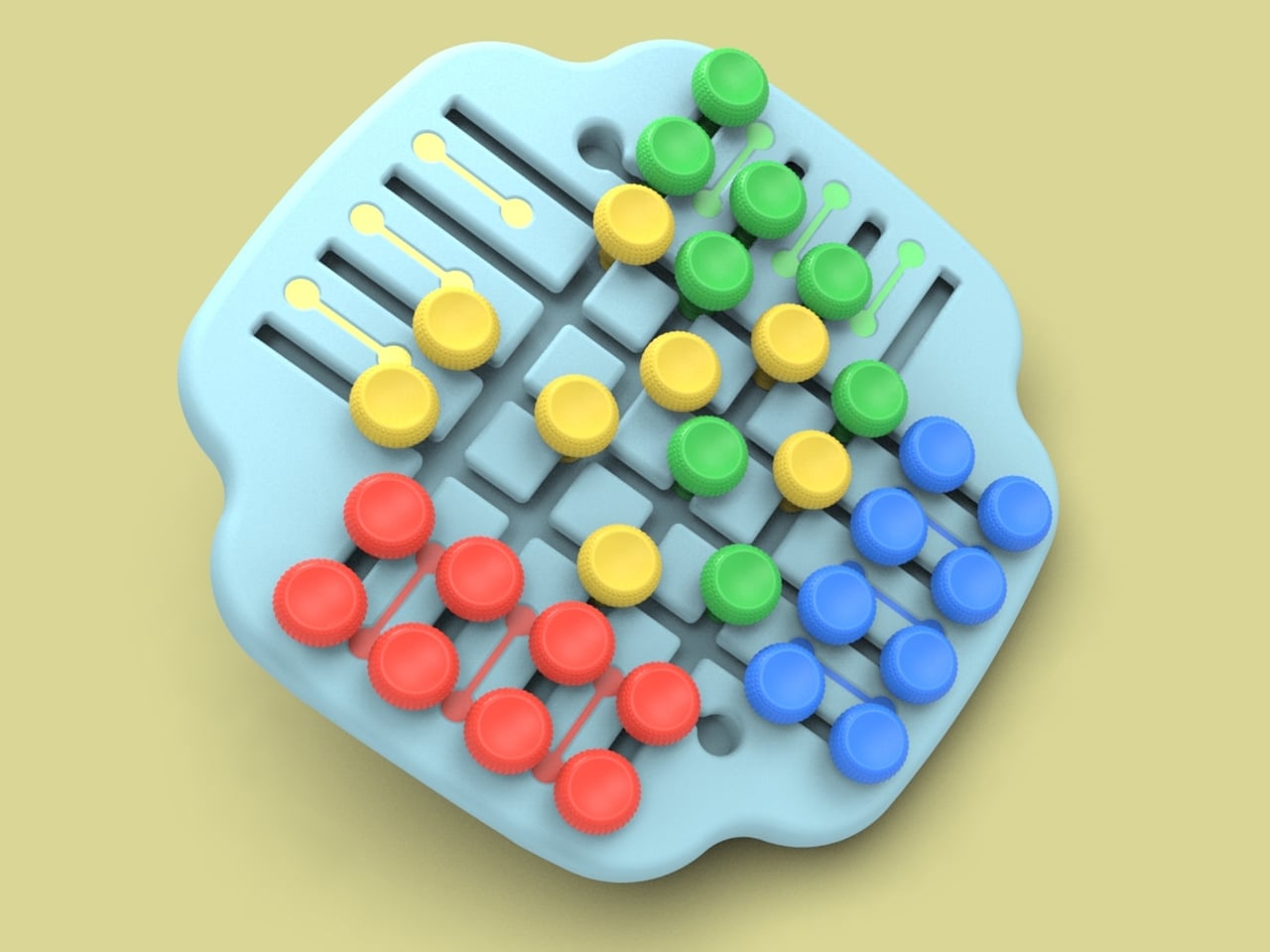
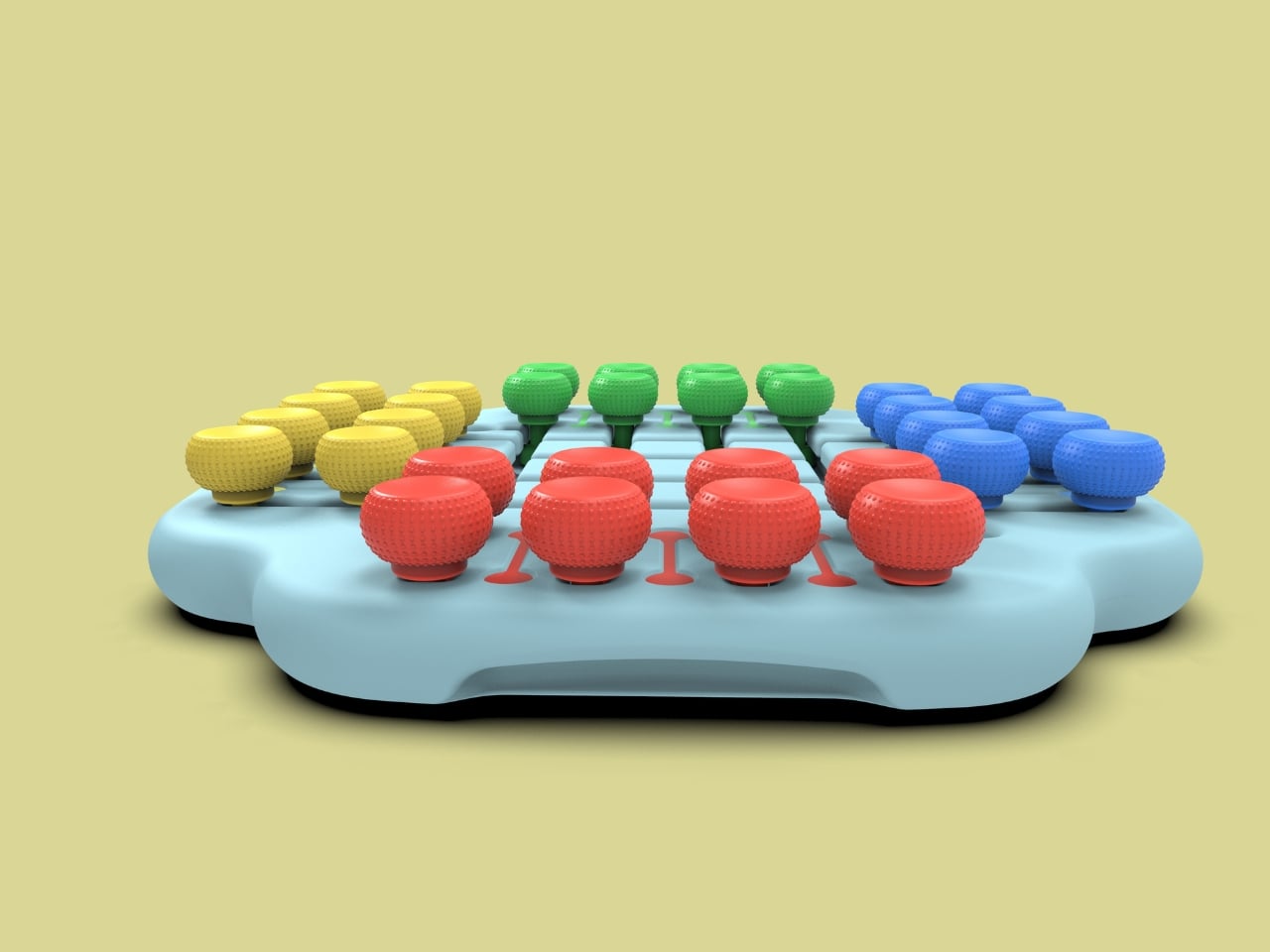
Designed for children aged four to six, Toddler Plus is built around a developmental sweet spot. Kids at this stage are refining their hand coordination, starting to understand basic rules, and learning that actions have consequences. The game speaks directly to all of that. Players slide colored pegs along guided pathways on the board, navigating around obstacles to return each color to its designated corner. When a route is blocked, another piece has to move first. It is a gentle, tactile introduction to sequencing and cause-and-effect thinking, and it teaches these things through movement rather than instruction.
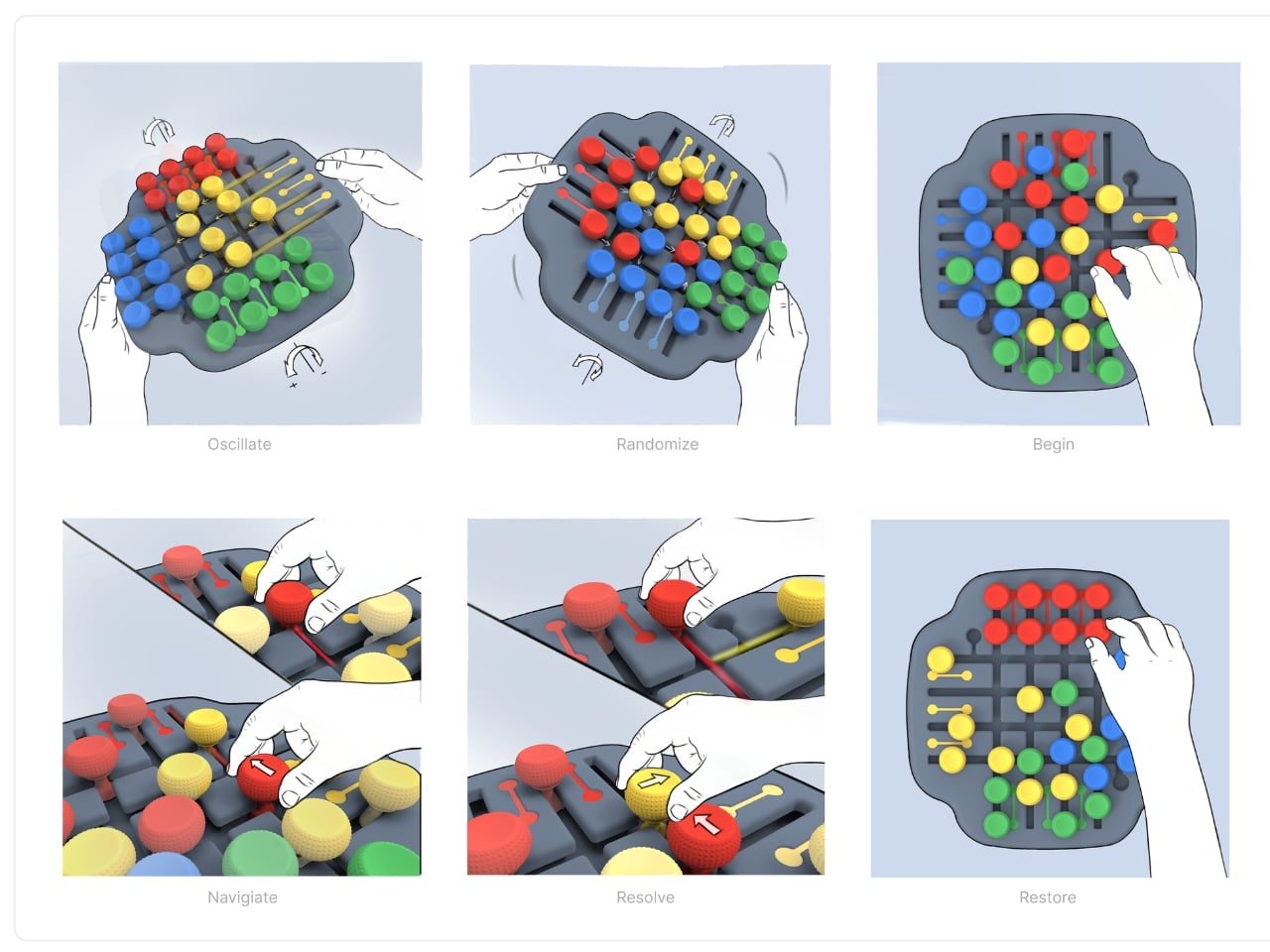
That distinction matters more than it might seem. A lot of educational toys announce their purpose a little too loudly. You can sense the lesson underneath the fun, and kids sense it too. Toddler Plus feels like it trusts children more than that. The learning is embedded in the mechanics, not layered on top of them. A four-year-old working through a blocked path is doing real problem-solving, but they are not being tested. They are just playing.

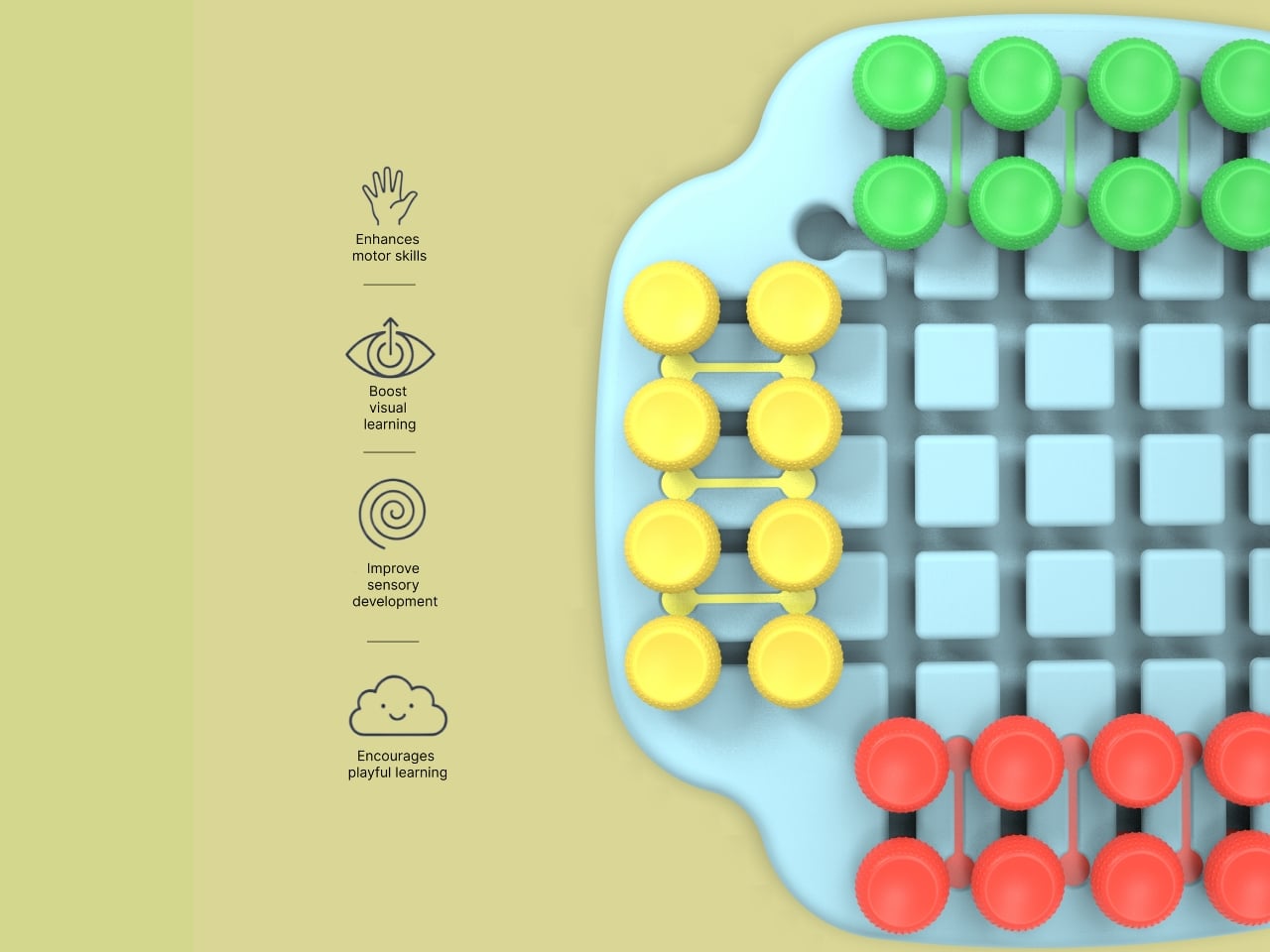
The structure also adapts to how children actually exist in the world, which is sometimes alone and sometimes not. A single player can work through the puzzle independently, restoring all four colors to their corners at their own pace. With two or four players, the board becomes a shared space where turns are taken and strategies have to account for what everyone else is doing. Both modes feel natural rather than forced, which is harder to achieve than it sounds in a single object.
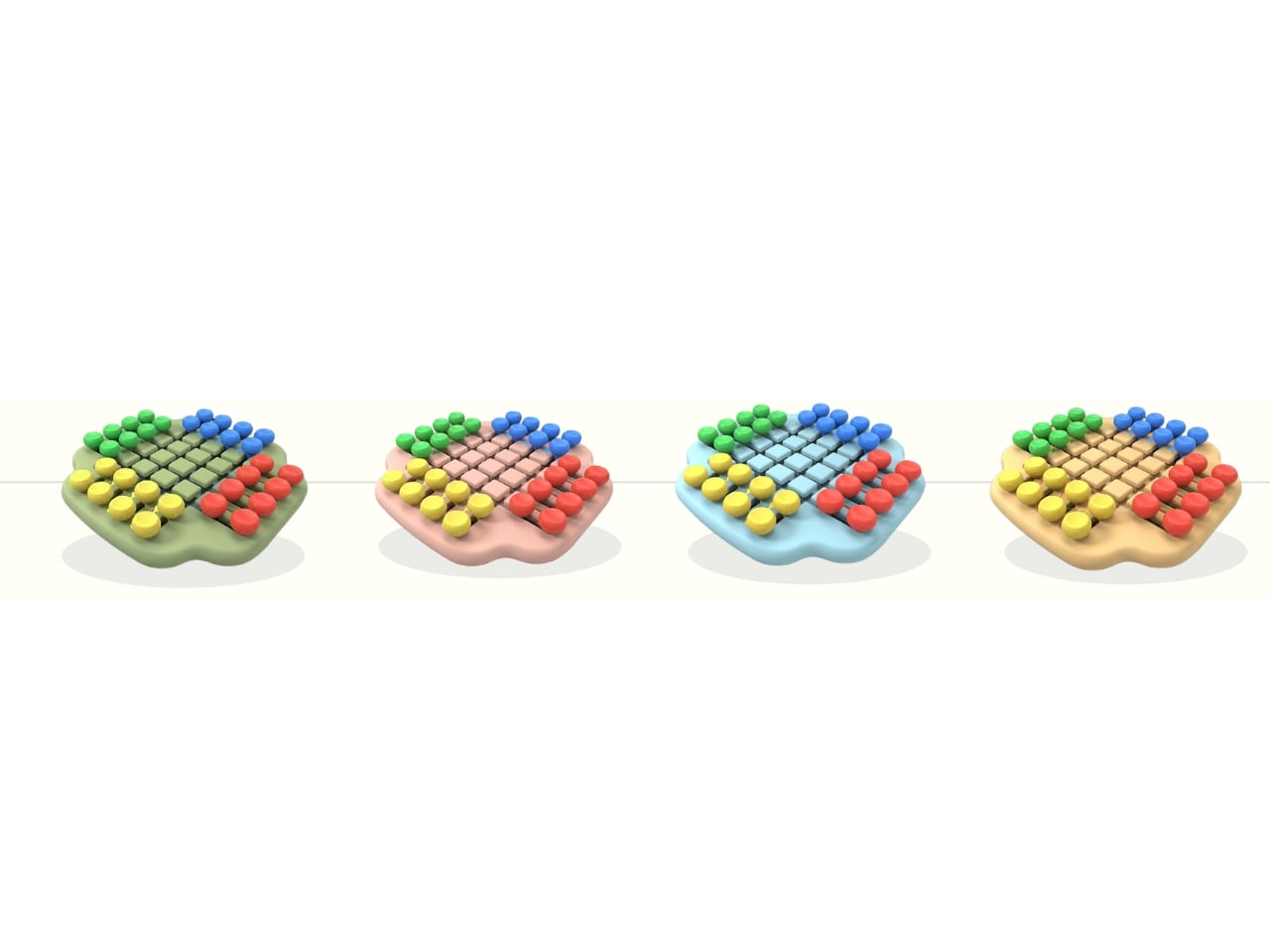
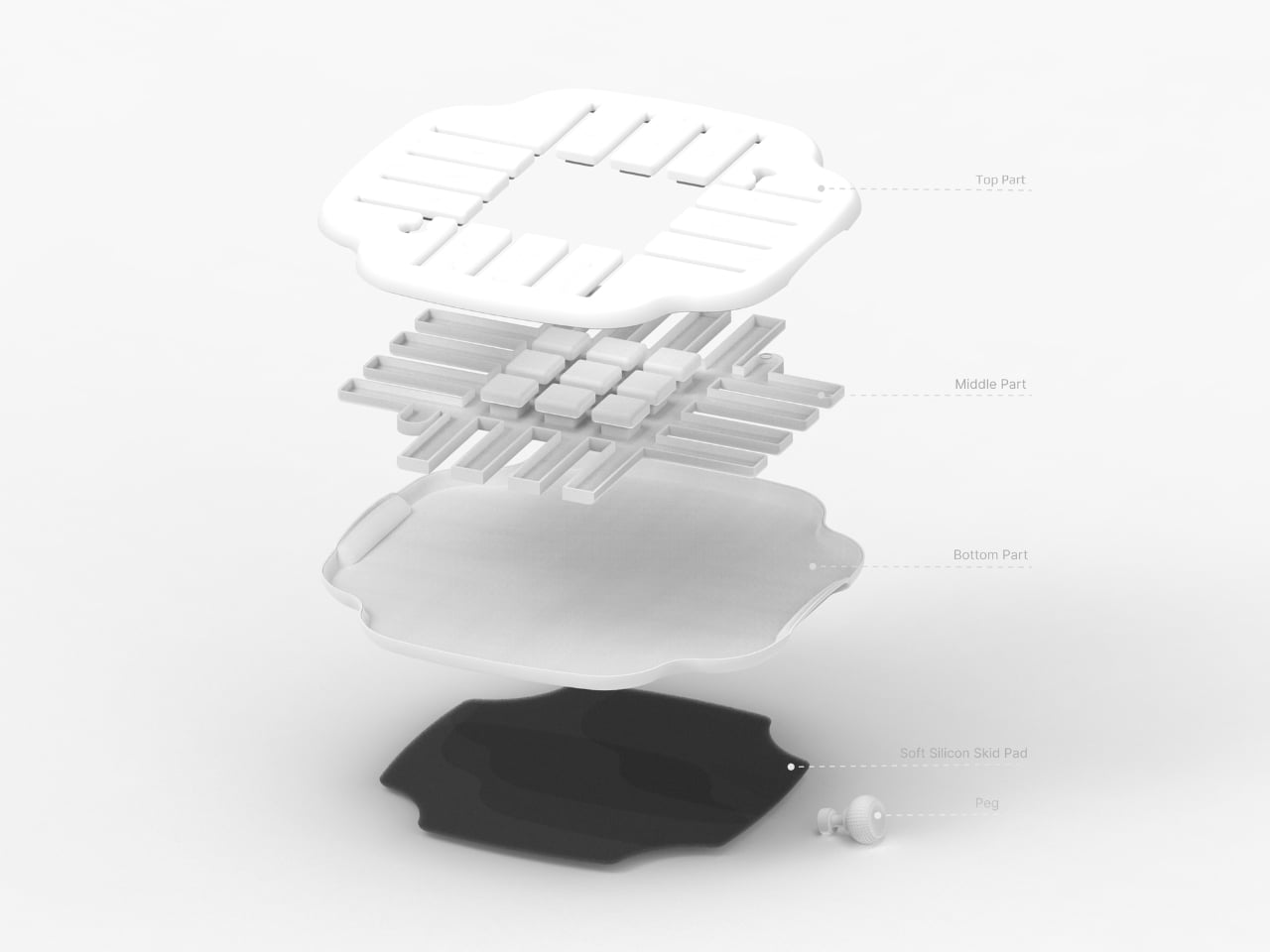
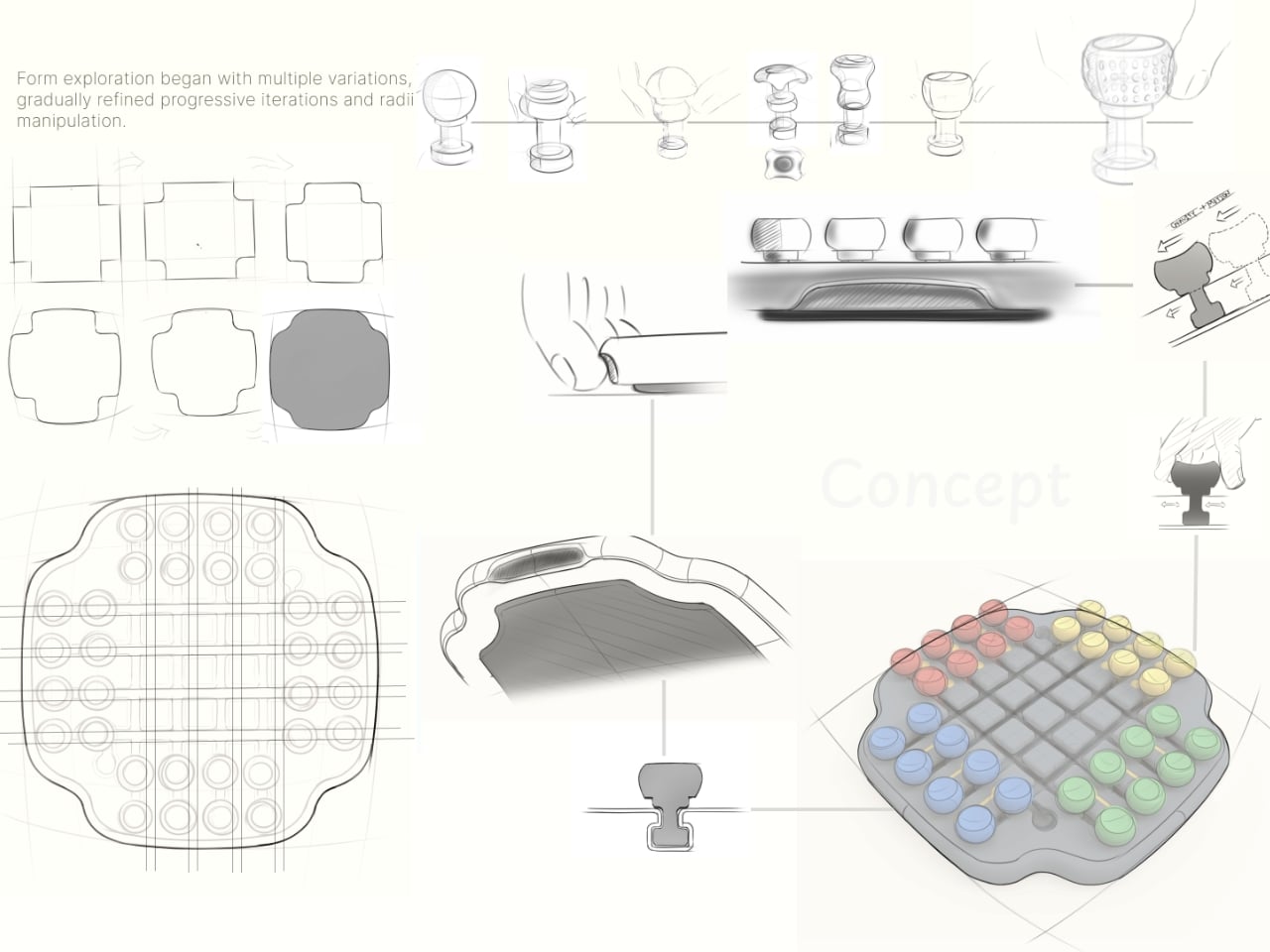
Visually, the design earns its place on a coffee table, not just a playroom floor. The board’s organic, softly rounded form sits somewhere between a pebble and a pillow. The vibrant pegs in red, yellow, green, and blue sit against a muted body in sage, blush, sky blue, or sand, depending on the colorway. It is a palette that manages to feel cheerful without being overstimulating, which is a genuine design achievement in the children’s product space. Looking at the exploded view of the construction, it is also clearly considered from a structural standpoint, with layered components and a soft silicone skid pad on the base that keeps the board grounded during play.
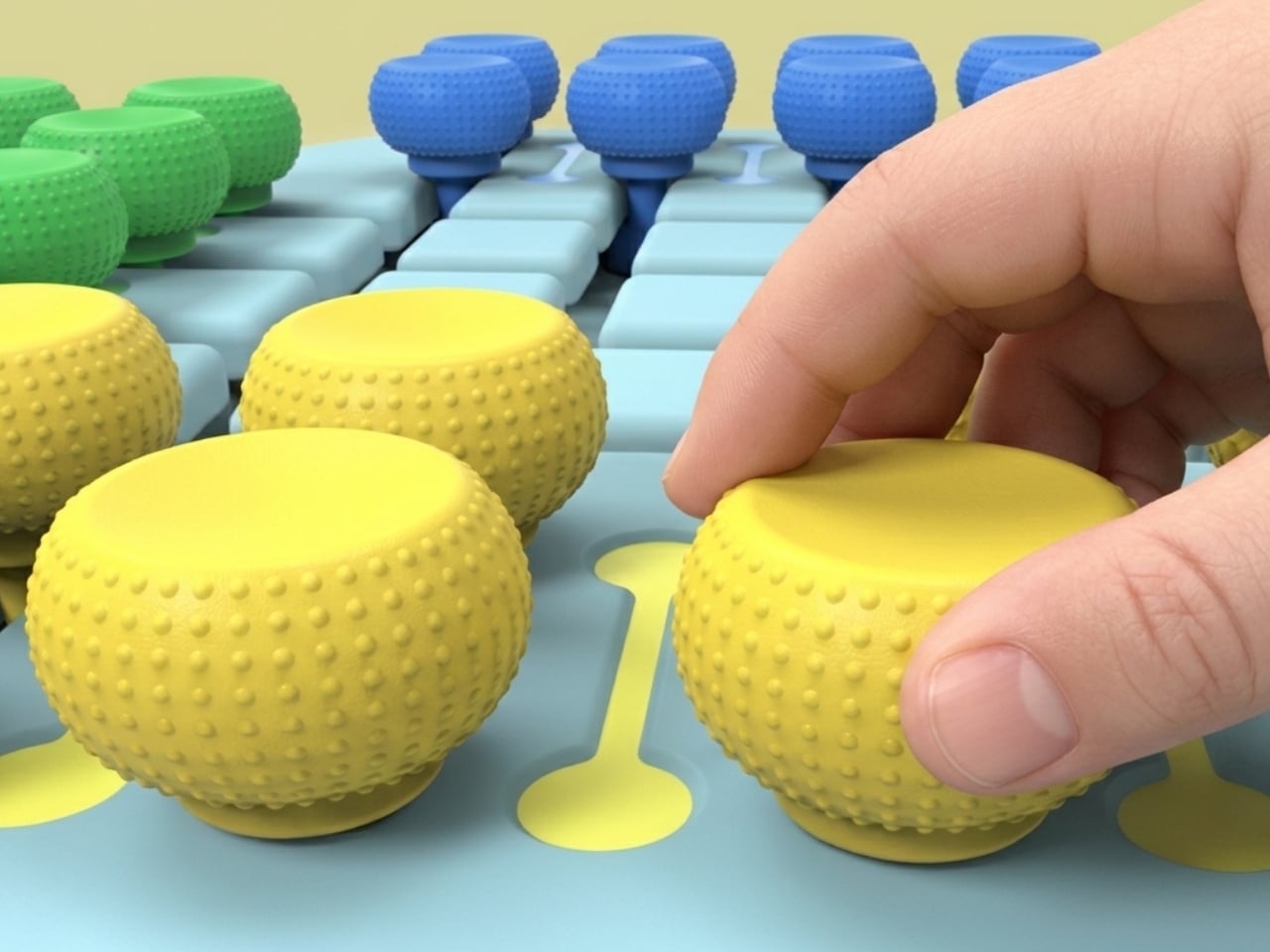
What I appreciate most about Toddler Plus is that it does not try to compete with screens. It does not need to. It offers something fundamentally different: a physical, tactile, repeatable experience that changes every single round because the starting position is always randomized. The oscillation step is not a gimmick. It is the reason each game feels fresh.
Good toy design tends to look obvious in retrospect, as if the idea was always there waiting to be found. Toddler Plus has that quality. The moment you understand that shaking the board is part of the game, the whole concept clicks into place. It is intuitive, it is physical, and it is thoughtfully designed for the age group it serves. I would genuinely love to see this one make it to production.

The post Board Game Concept Teaches Toddlers Before Anyone Rolls a Die first appeared on Yanko Design.


11″ vs 13″ iPad Air (2026): Which Size is Actually Better for Your Workflow?

11″ vs 13″ iPad Air (2026): Which Size is Actually Better for Your Workflow? Close-up of the Liquid Retina display showing anti-reflective coating and bright 600-nit panel under indoor light.

Apple’s 2026 iPad Air lineup introduces two distinct models: the 11-inch and 13-inch variants, both powered by the advanced M4 chip. While the external design remains consistent with the 2025 M3 model, the internal upgrades bring significant improvements in performance, connectivity, and efficiency. This guide explores the key differences between the two models, helping you […]

The post 11″ vs 13″ iPad Air (2026): Which Size is Actually Better for Your Workflow? appeared first on Geeky Gadgets.

Posted in Uncategorized

Defense Department says Anthropic poses ‘unacceptable risk’ to national security

The Department of Defense said giving Anthropic continued access to its warfighting infrastructure would “introduce unacceptable risk” to its supply chains in a court filing submitted in response to the AI company’s lawsuit. If you’ll recall, Anthropic sued the government to challenge the supply chain risk designation it received for refusing to allow its model to be used for mass surveillance and the development of autonomous weapons.

In its filing, the department explained that its secretary, Pete Hegseth, had a provision incorporated into AI service contracts, allowing the agency to use their technologies for any lawful purpose. Anthropic refused its terms and apparently, the company’s behavior caused the Pentagon to question whether it truly was a “trusted partner” that it could work with when it comes to “highly sensitive” initiatives. “After all, AI systems are acutely vulnerable to manipulation, and Anthropic could attempt to disable its technology or preemptively alter the behavior of its model either before or during ongoing warfighting operations, if Anthropic — in its discretion — feels that its corporate “red lines” are being crossed,” the Pentagon wrote in its filing. “DoW deemed that an unacceptable risk to national security,” it added, referring to the agency as the Department of War, which is the Trump administration’s preferred name for it.

It was due to those concerns that President Trump ordered federal agencies to stop using its technology, the filing reads. The company is asking the court to issue a preliminary injunction and put a pause on a ban while it’s challenging its supply chain risk designation in court. While Anthropic’s clients could continue working with the company on non-defense-related projects, it says the label could cause it to lose billions of dollars in revenue. It’s not quite clear if Anthropic is still trying to reach a new deal with the government, as was reported before it filed its lawsuit. As The New York Times notes, Microsoft, Google and OpenAI had filed friend-of-the-court briefs in support of Anthropic since then.

This article originally appeared on Engadget at https://www.engadget.com/ai/defense-department-says-anthropic-poses-unacceptable-risk-to-national-security-094328717.html?src=rss

Living with Meta Ray-Ban Displays Smart Glasses : 6 Month Review

Living with Meta Ray-Ban Displays Smart Glasses : 6 Month Review User wearing Meta Ray-Ban Displays outdoors, highlighting screen brightness and visibility in daytime conditions.

Six months after their release, the Meta Ray-Ban smart glasses have shown both promise and limitations in the wearable tech space. Phones & Drones examines their performance, noting features like the handwriting recognition system, which provides a straightforward way to interact with the device. Despite this, the glasses’ bulkier frame and limited adaptability make them […]

The post Living with Meta Ray-Ban Displays Smart Glasses : 6 Month Review appeared first on Geeky Gadgets.

Posted in Uncategorized

iOS 27 to Finally Deliver the "Smarter Siri” We’ve Been Waiting For

iOS 27 to Finally Deliver the Featured image for iOS 27 - It’s Actually Happening !

Apple’s iOS 27 is set to deliver a thoughtful blend of design refinements, productivity enhancements, and system optimizations. Building on the foundation of iOS 26, this update reflects Apple’s commitment to addressing user feedback while introducing features that align with the latest technological advancements. Below is a detailed look at what iOS 27 has to […]

The post iOS 27 to Finally Deliver the “Smarter Siri” We’ve Been Waiting For appeared first on Geeky Gadgets.

Posted in Uncategorized

OpenAI’s ChatGPT 5.4 Mini & Nano Launch : Pricing & Benchmarks

OpenAI’s ChatGPT 5.4 Mini & Nano Launch : Pricing & Benchmarks OpenAI API screen showing ChatGPT 5.4 Nano selected for fast classification and data extraction jobs.

OpenAI has introduced two new AI models, ChatGPT 5.4 Mini and ChatGPT 5.4 Nano, aimed at providing more accessible and cost-efficient options for developers and businesses. As highlighted by Universe of AI, these models are tailored for specific workloads where full-scale capabilities of GPT 5.4 may not be necessary. For instance, ChatGPT 5.4 Mini is […]

The post OpenAI’s ChatGPT 5.4 Mini & Nano Launch : Pricing & Benchmarks appeared first on Geeky Gadgets.

Posted in Uncategorized

ROG Strix G16 vs G18 (2026): Specs, Display, Performance

ASUS Republic of Gamers is back again with its 2026 refresh of the ROG Strix lineup, introducing the Strix G16 and G18 powered by Intel Core Ultra 9 290HX Plus and NVIDIA GeForce RTX 5080 Laptop GPU. Designed for gamers and creators who apparently never close their apps, these machines aim to push high-performance computing […]

Apple Ring Release Date Rumors: Will We See a 2026 or 2027 Launch?

Apple Ring Release Date Rumors: Will We See a 2026 or 2027 Launch? Apple Ring

Apple is rumored to be developing a new wearable device known as the “Apple Ring.” This compact, screen-free smart ring could transform how you interact with technology. With features like advanced health tracking, gesture detection, and seamless integration into the Apple ecosystem, the Apple Ring may serve as a discreet alternative or complement to the […]

The post Apple Ring Release Date Rumors: Will We See a 2026 or 2027 Launch? appeared first on Geeky Gadgets.

Posted in Uncategorized

A Net-Zero Research Building That Actually Respects Its Landscape

Most university research facilities share a certain visual language. You know the one: utilitarian, slightly apologetic in appearance, the kind of building that exists to check boxes and contain equipment rather than inspire the people who work inside it. The University of Toronto’s Koffler Scientific Reserve is not that building.

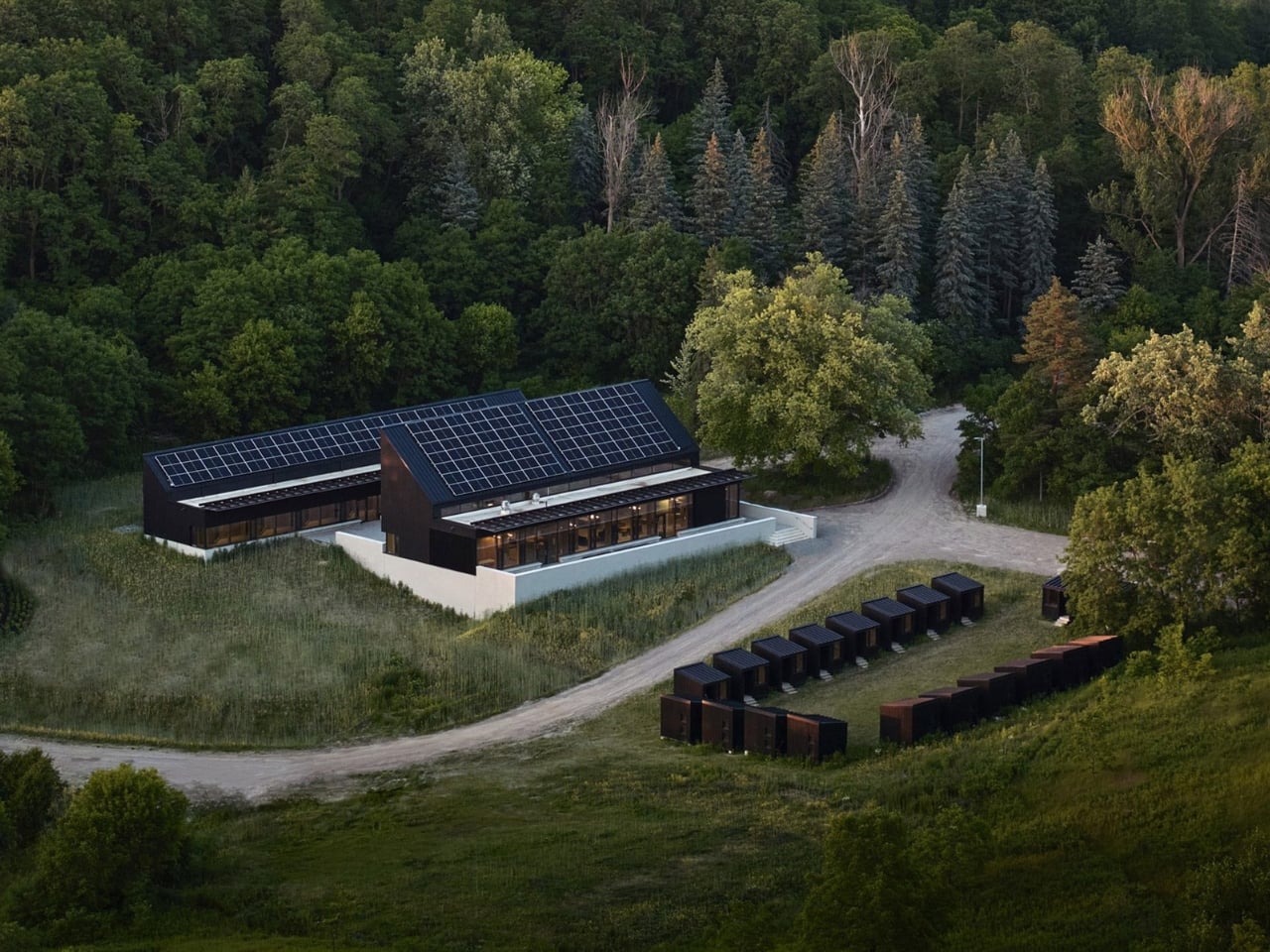
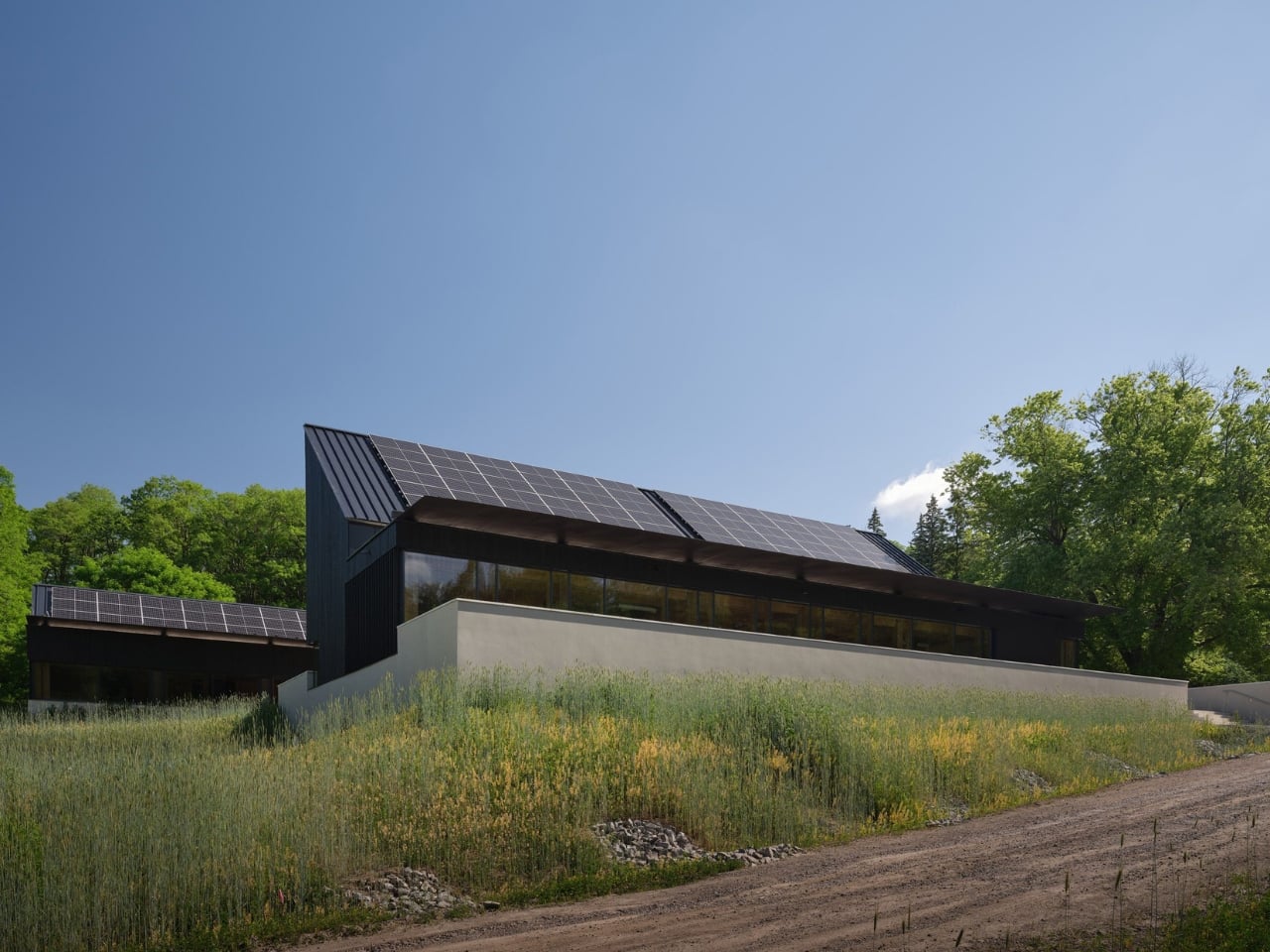
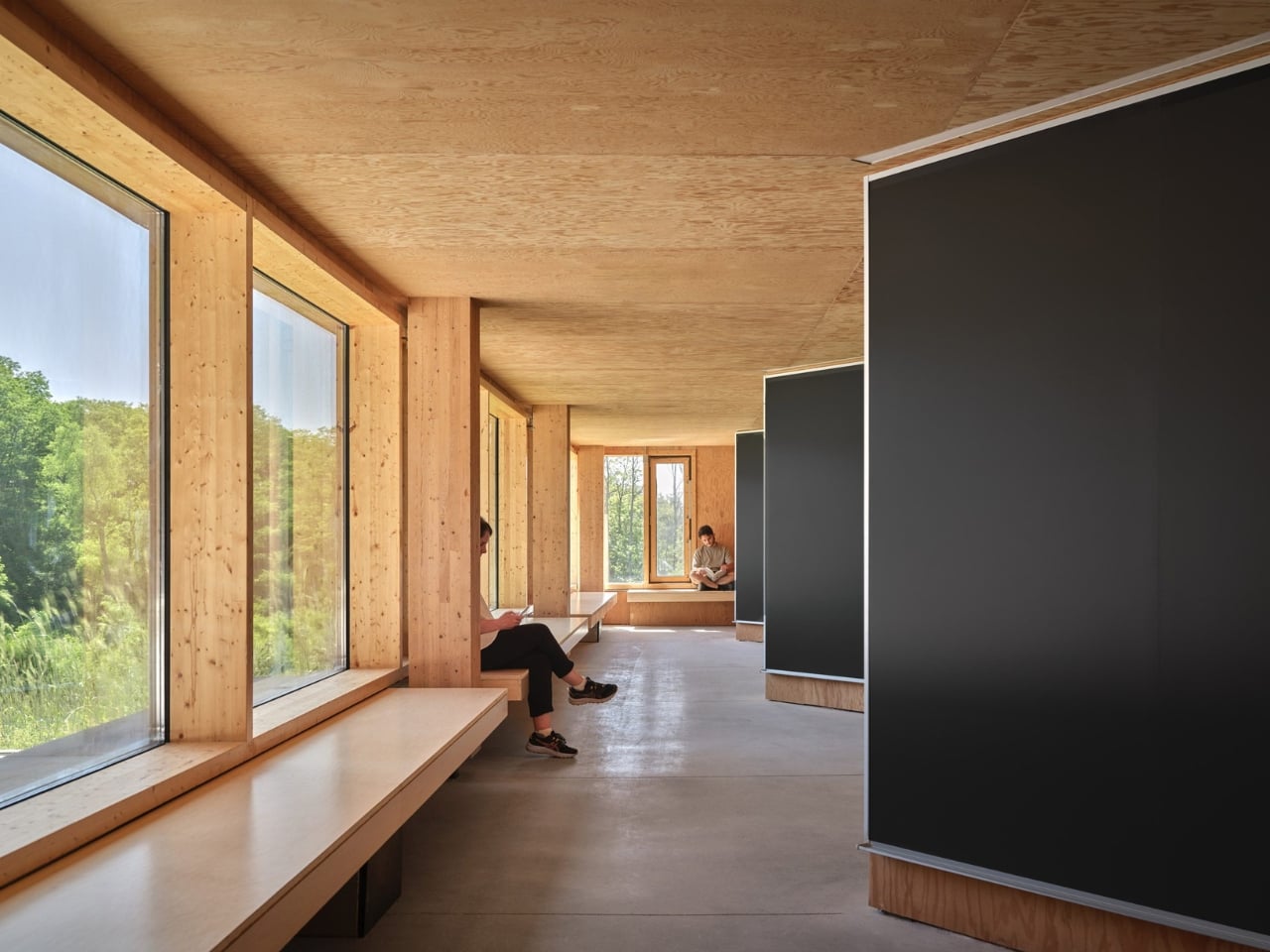
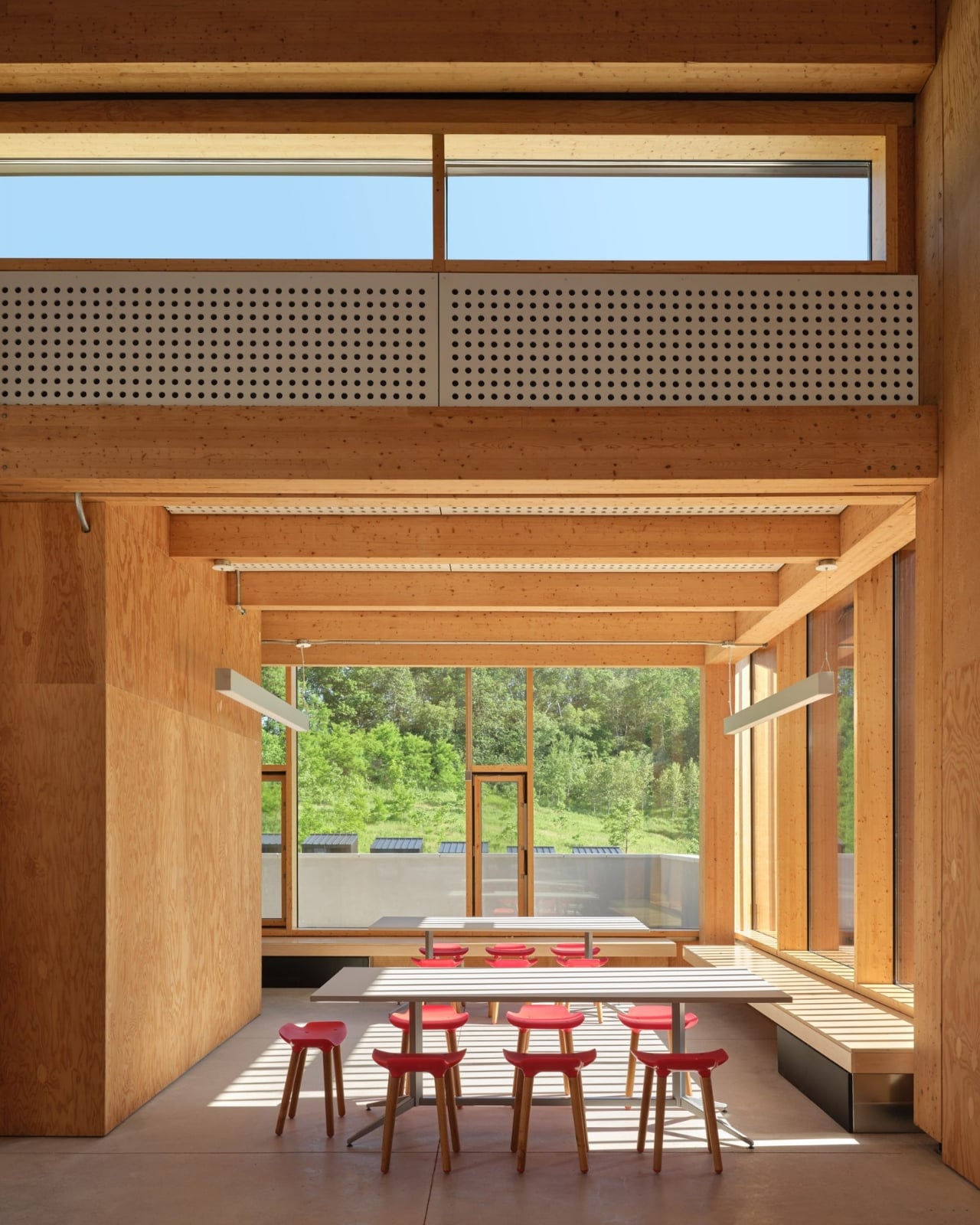
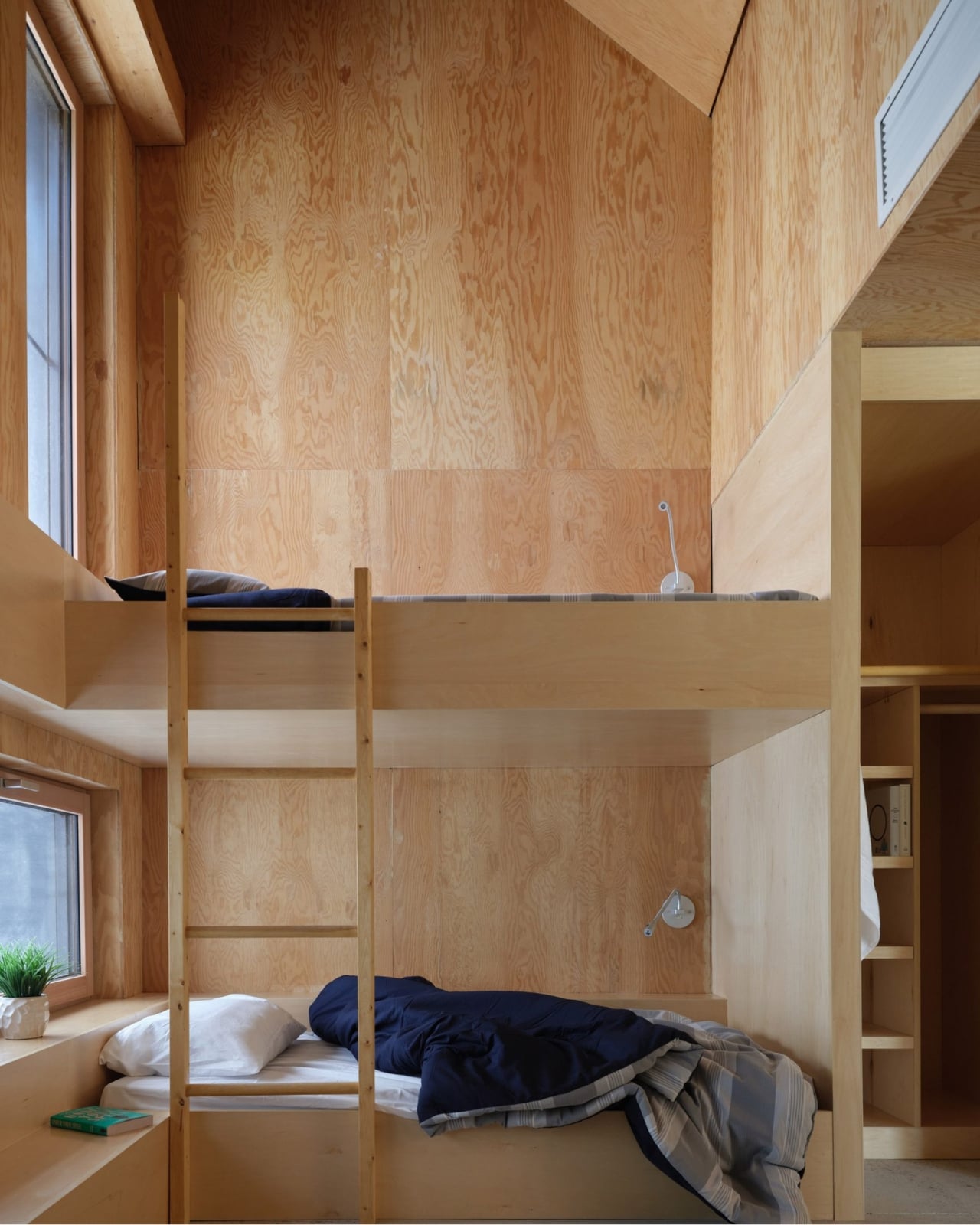
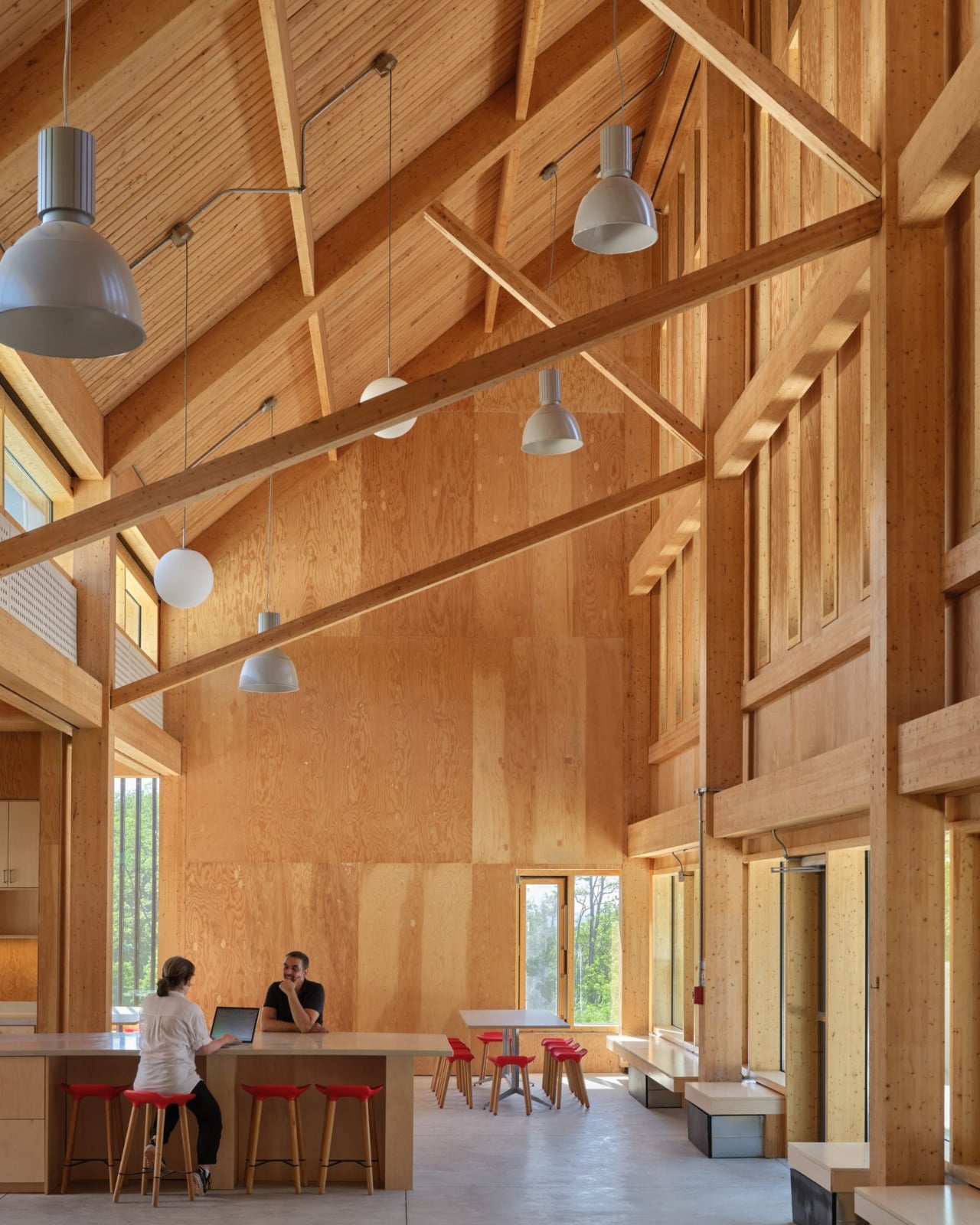
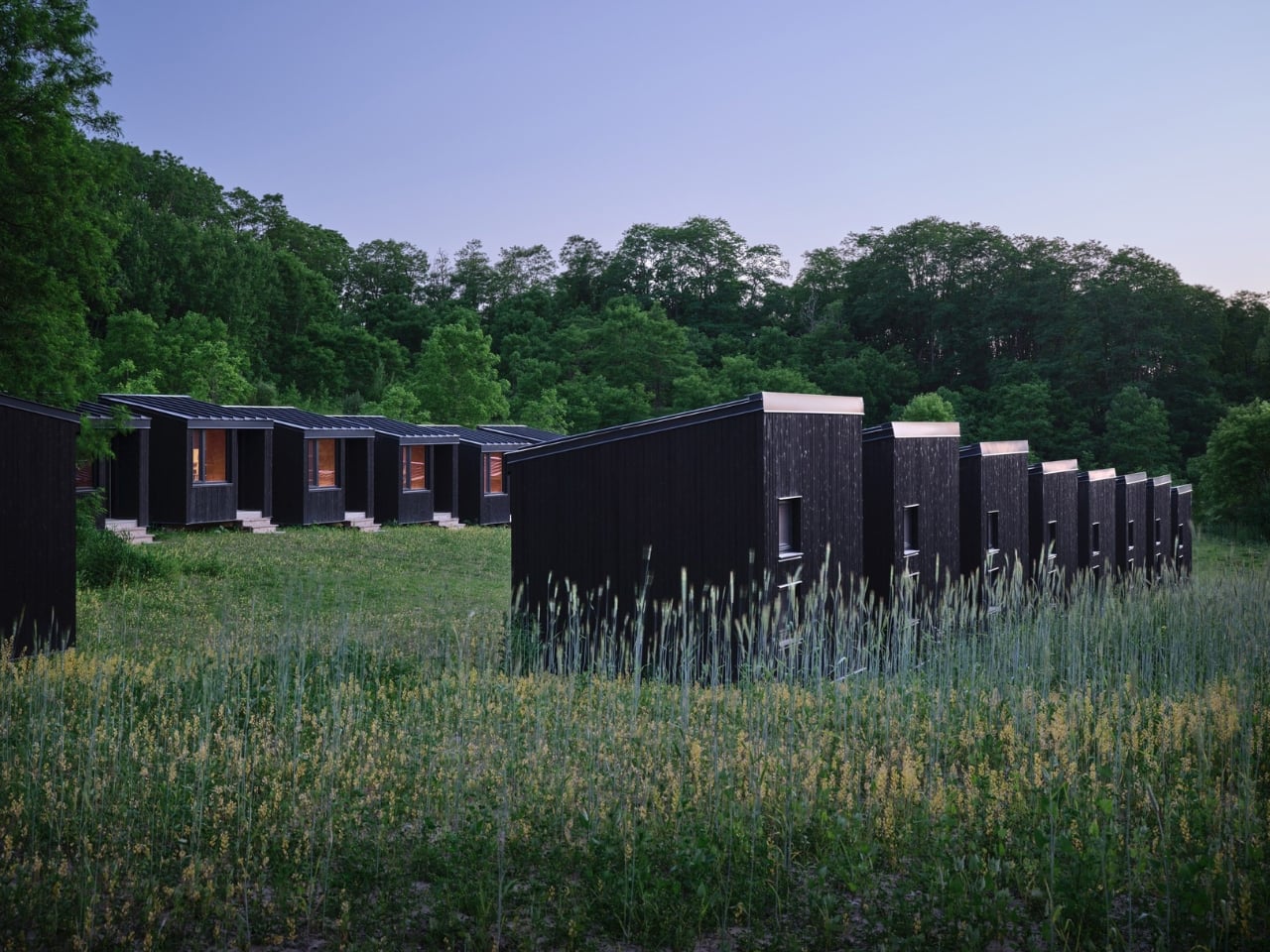
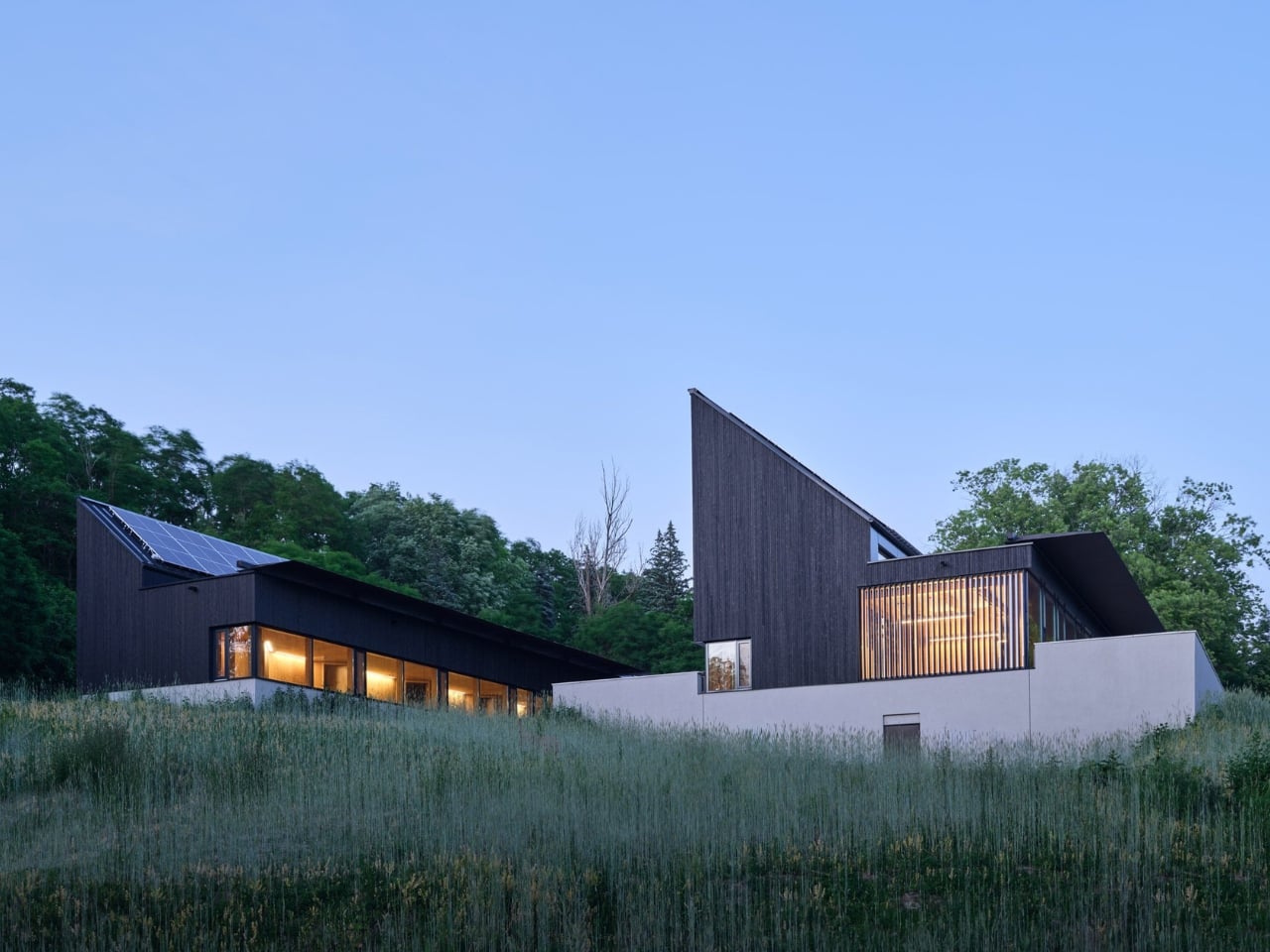
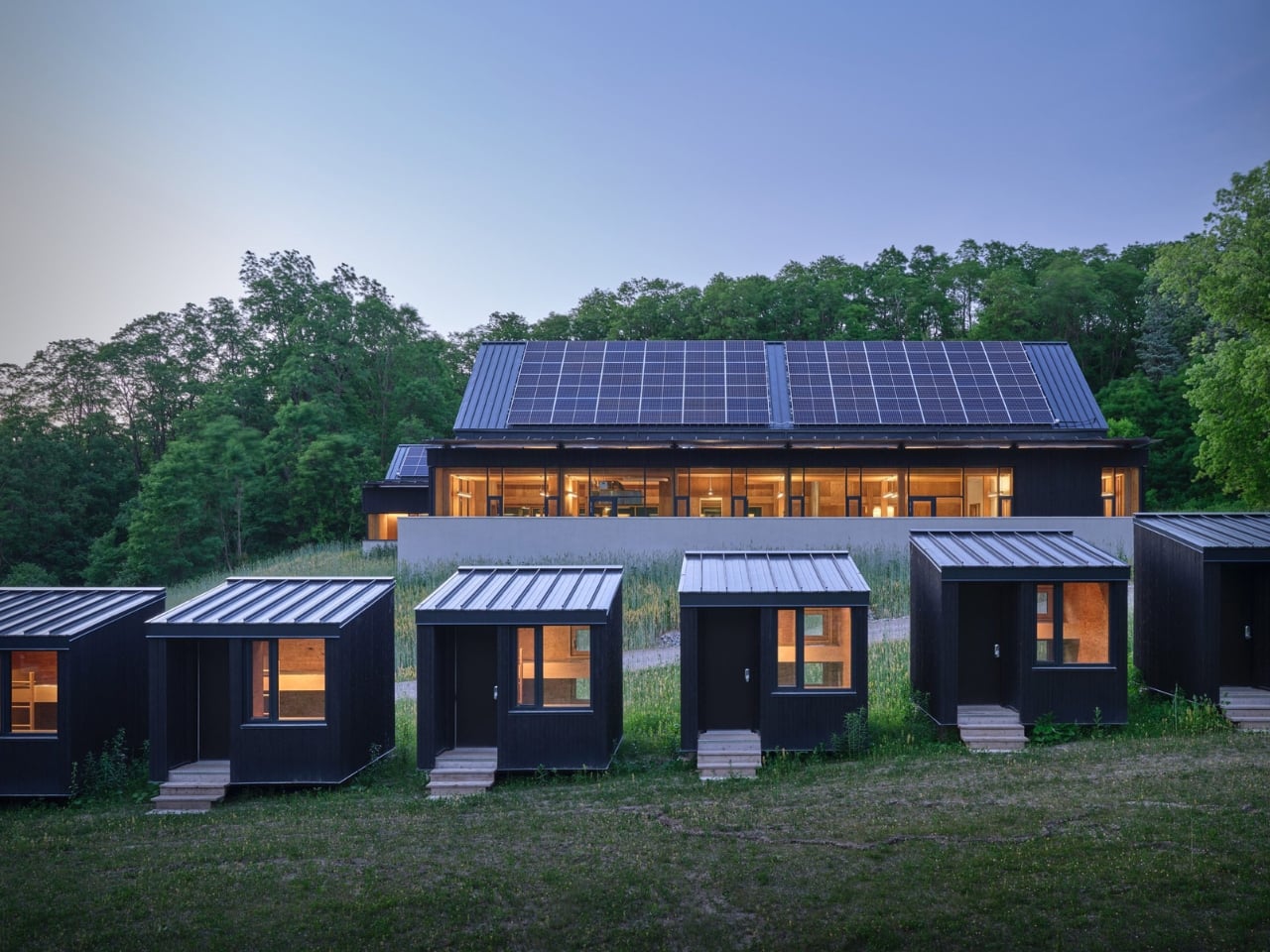
Completed in May 2025 and designed by Toronto-based Montgomery Sisam Architects, the 2,680-square-metre facility sits on 350 hectares in the Oak Ridges Moraine in King Township, Ontario, about an hour north of the city. It serves as a research and teaching base for ecology and environmental biology students and faculty, combining dormitory space, a dining hall, a classroom, and a common room into a single, beautifully considered structure. On paper, that sounds modest. In execution, it’s one of the more thoughtful buildings to come out of Canada recently.

Designer: Montgomery Sisam Architects

What makes the Koffler Reserve stand out is how deliberate its design philosophy is. Principal Robert Davies put it plainly: “Researchers there study the smallest changes in organisms to understand systems at a global scale, and that relationship between the micro and the macro became the lens through which we evaluated every design decision.” That’s not just a nice quote for a press release. You can actually feel that thinking in the architecture.

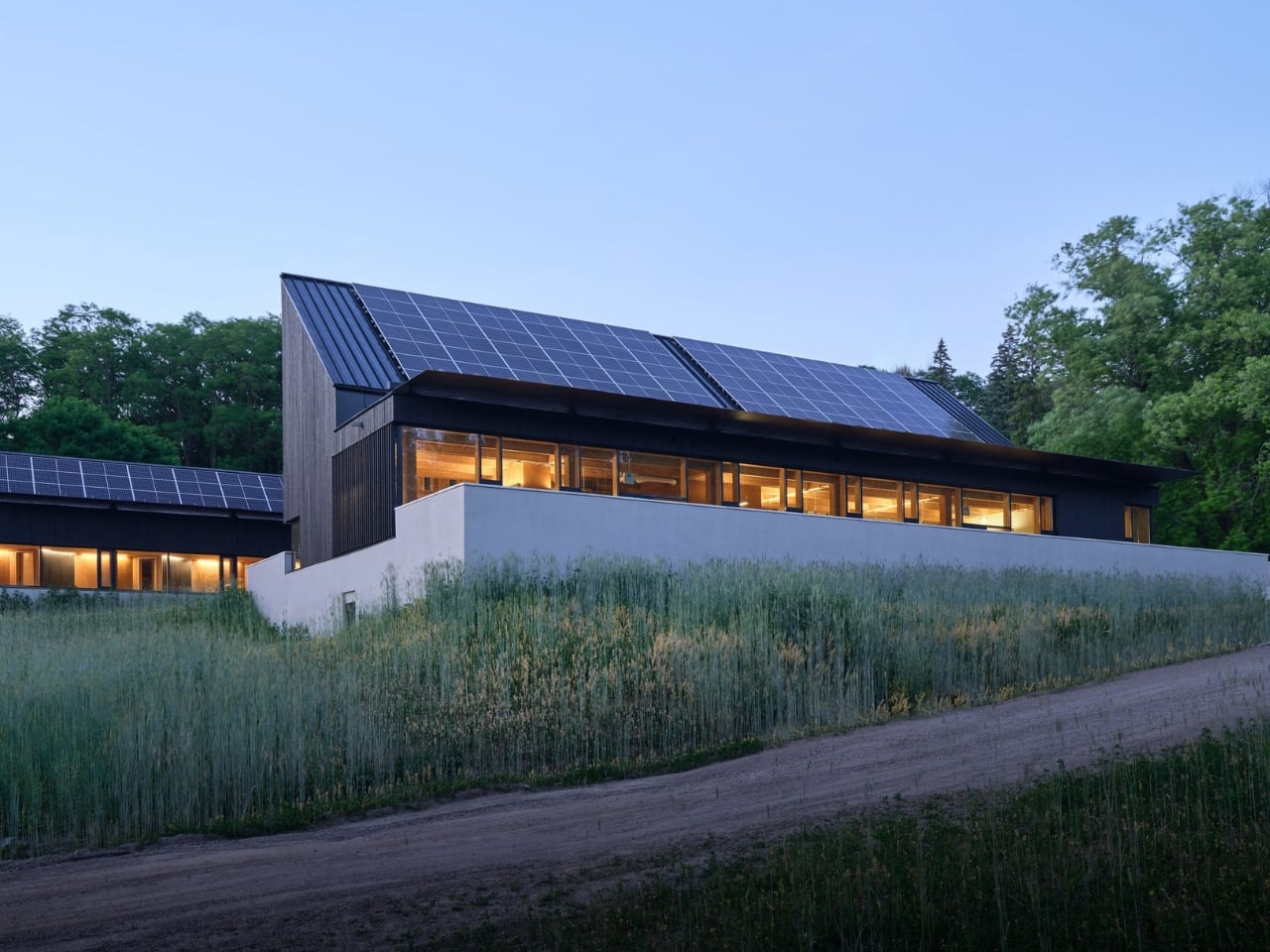
The building’s two prominent shed roofs, for instance, aren’t purely aesthetic choices. They’re angled precisely to optimize solar panel placement based on the site’s latitude, which in turn informed the entire formal expression of the structure. The flat roof and sunshade over the common room’s pitched elevation are carefully positioned to welcome the warming winter sun while blocking the uncomfortable heat of summer rays. Every element earns its place, and that’s exactly the kind of intentional design thinking that makes a building worth talking about.

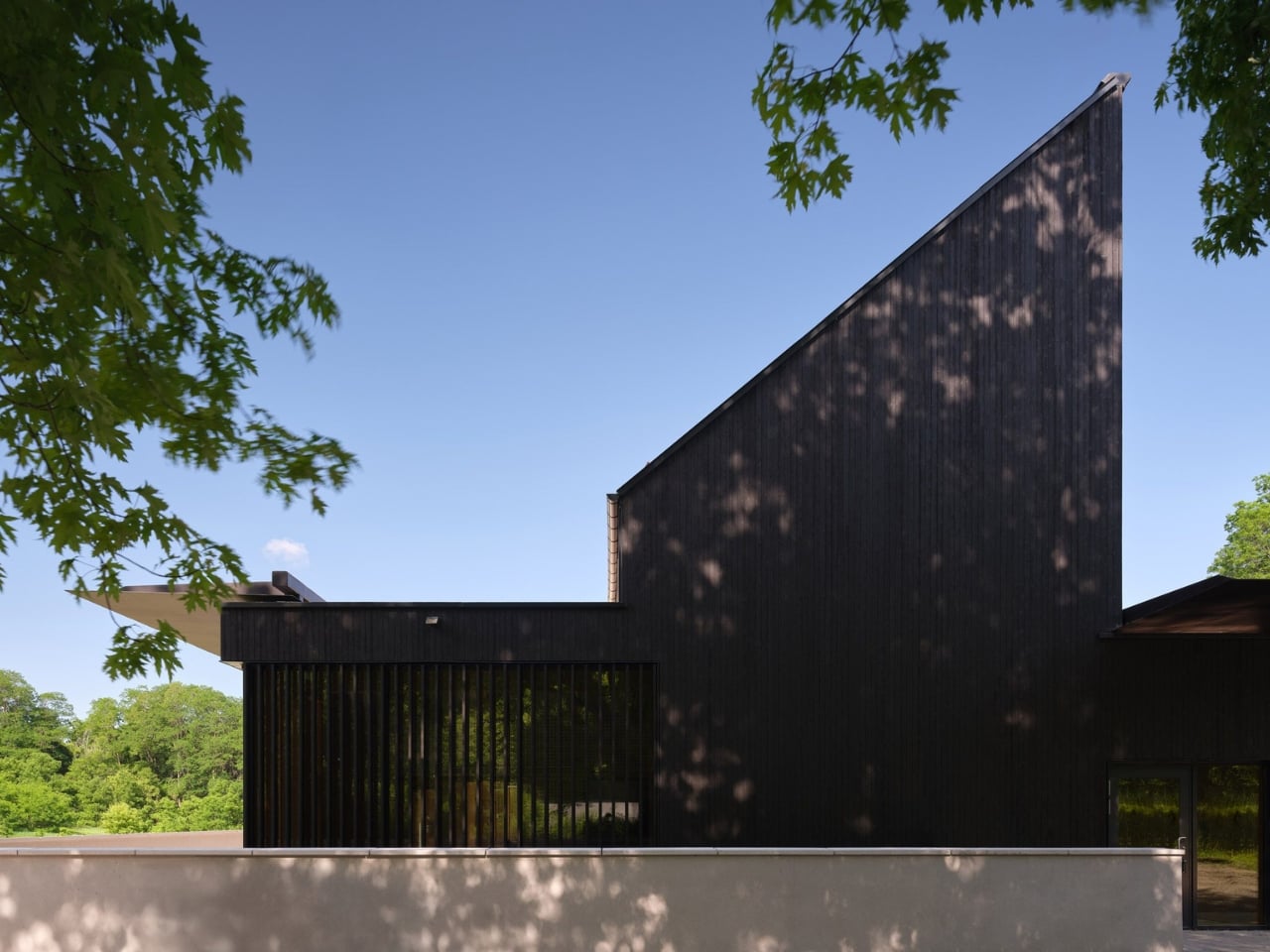
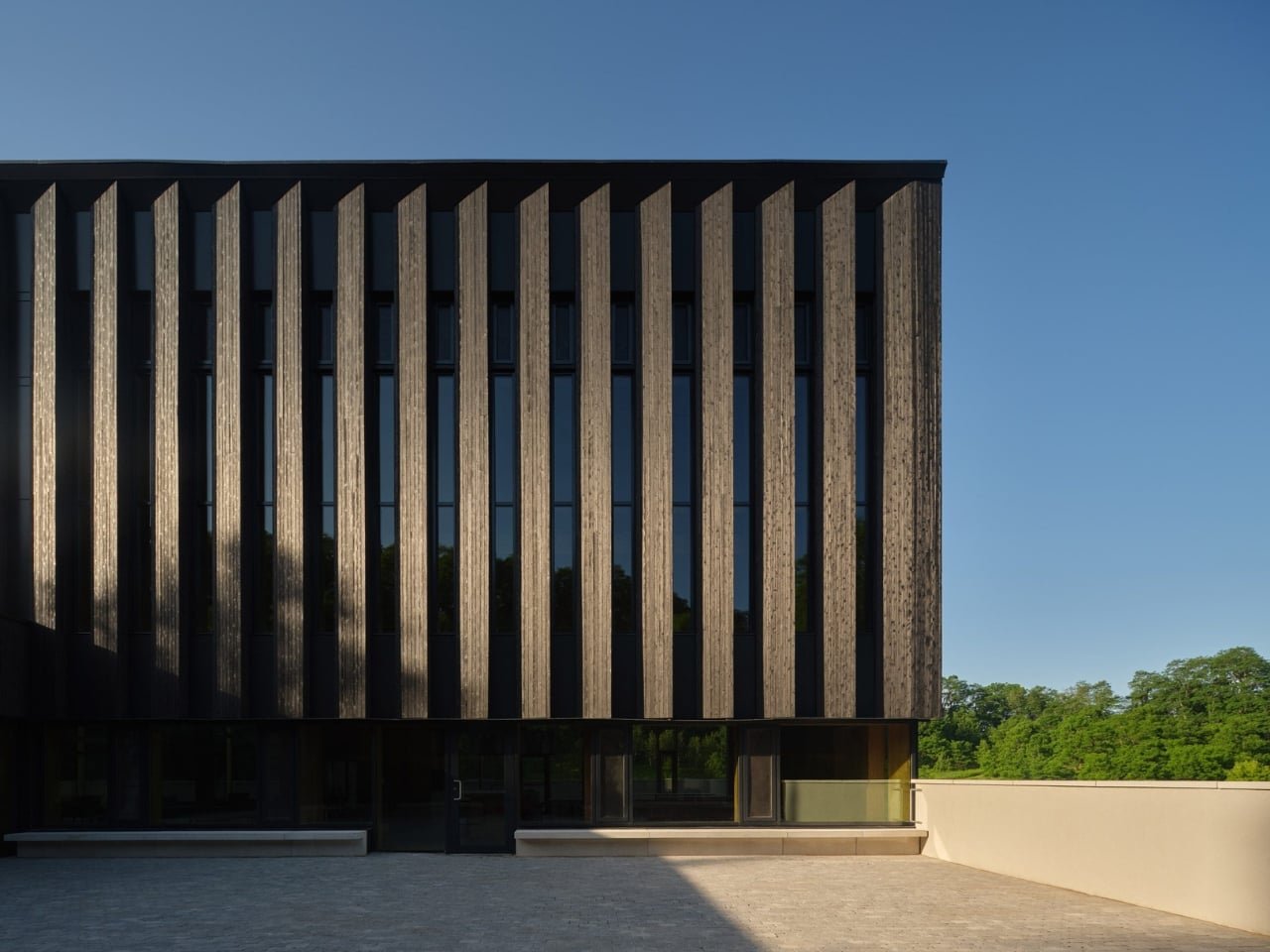
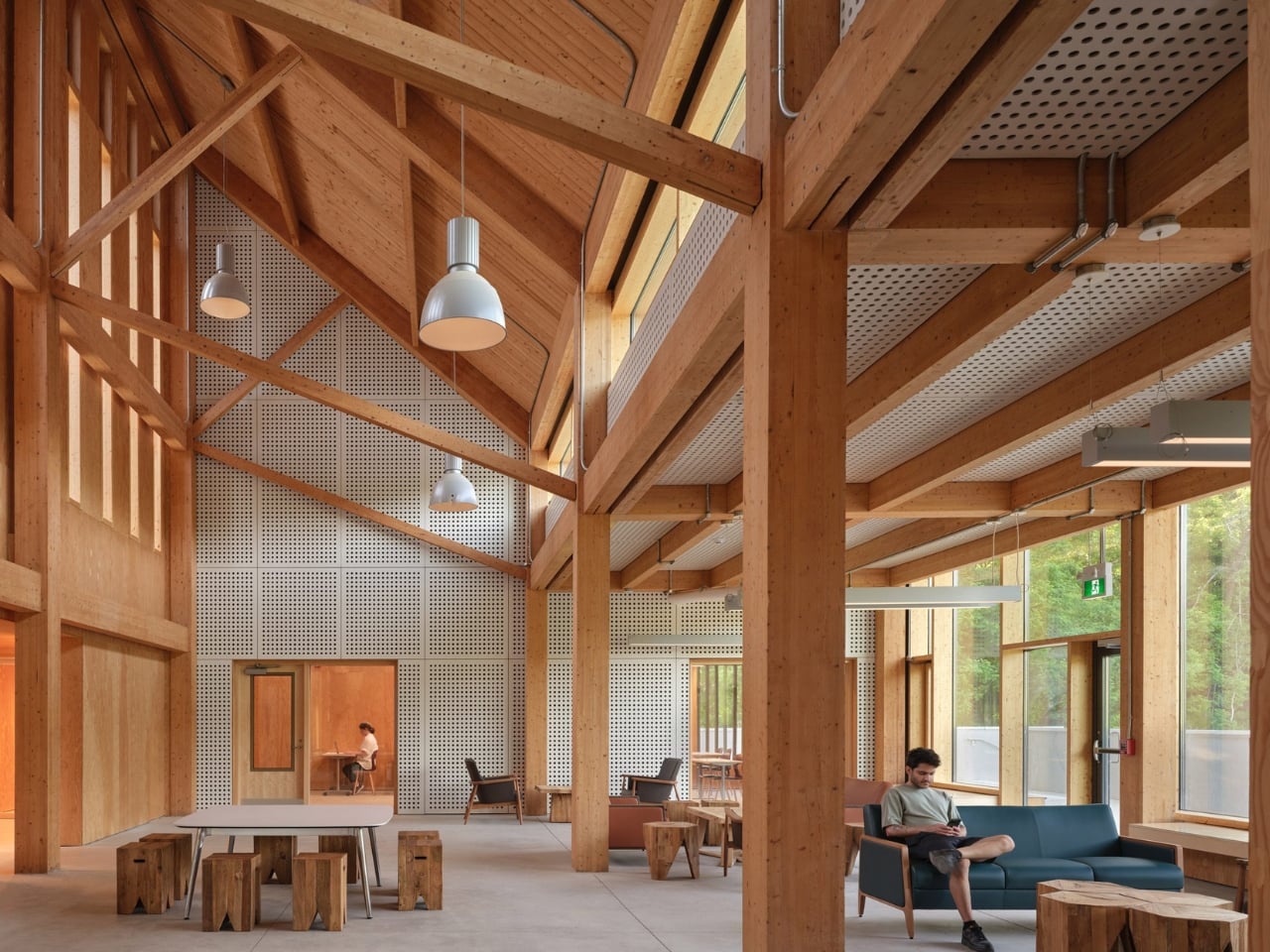
The material choices reinforce this sensibility. The structure is a hybrid of mass timber and conventional light-frame wood construction, using glulam columns and beams with a tongue-and-groove roof. The exterior is clad in shou sugi ban wood, the Japanese technique of partially charring wood to increase its water-resistance and durability. It’s a material that ages honestly and fits the agrarian character of the site, which started life as a series of agricultural plots, became an equestrian centre in the 1950s, and was donated to the university by philanthropists Murray and Marvelle Koffler in 1995. The building knows where it is, and that’s a quality that is rarer than it should be.

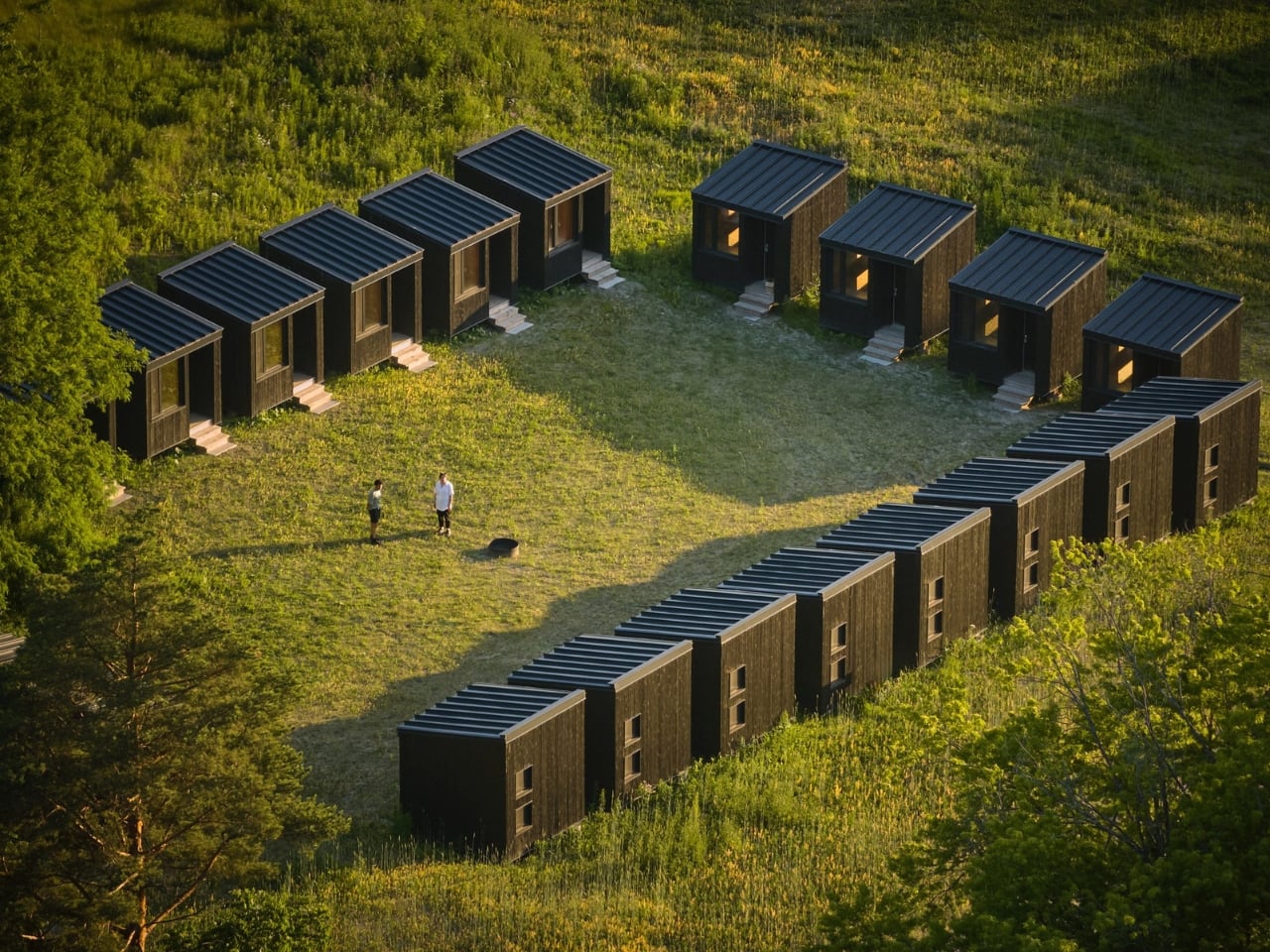
The Reserve’s C-shaped main building houses 20 students, while a cluster of 20 separate bunkies accommodates up to 40 more. The shared amenities, including the kitchen, bathrooms, and living spaces, are deliberately oversized to support larger summer populations and to encourage the kind of informal gathering that actually makes collaborative research work. The design is thinking about people, not just program. That distinction matters more than most architects will admit.

Below grade, a ground source heat pump circulates fluid through deep underground pipes to warm the building in winter and cool it in summer. Paired with the solar panels and passive design strategies, the project is working toward net-zero carbon and energy goals. I’ll be honest: sustainability claims in architecture have become so reflexive and routine that they’ve started to lose meaning. But at Koffler, the sustainable systems are so deeply woven into the structure’s formal logic that they feel like genuine convictions rather than marketing additions.

The Reserve sits within a landscape of wetlands, forests, and grasslands that scientists there study every single day. The building respects that by not trying to compete with it. It settles into the site rather than announcing itself, which takes real confidence for an architect to pull off. Confidence, and a genuine understanding of why the building exists in the first place. It would be easy to overlook this project because it doesn’t carry the dramatic scale or cultural visibility of a museum or a concert hall. But the Koffler Scientific Reserve is the kind of work that quietly raises the bar for what institutional architecture can be, and it deserves attention for exactly that reason.

The post A Net-Zero Research Building That Actually Respects Its Landscape first appeared on Yanko Design.
Quickly Build Apps, Games & Dashboards Fast With Gemini Canvas

Quickly Build Apps, Games & Dashboards Fast With Gemini Canvas D solar system model rendered in Gemini Canvas, letting users rotate planets and adjust viewing angles.

Gemini Canvas, powered by Google’s Gemini AI, provides a structured platform for creating applications, dashboards and even games without requiring coding knowledge. According to Teacher’s Tech, users can generate up to eight functional apps in just 15 minutes, thanks to features like its interactive workspace. For example, users can create and customize outputs such as […]

The post Quickly Build Apps, Games & Dashboards Fast With Gemini Canvas appeared first on Geeky Gadgets.

Posted in Uncategorized