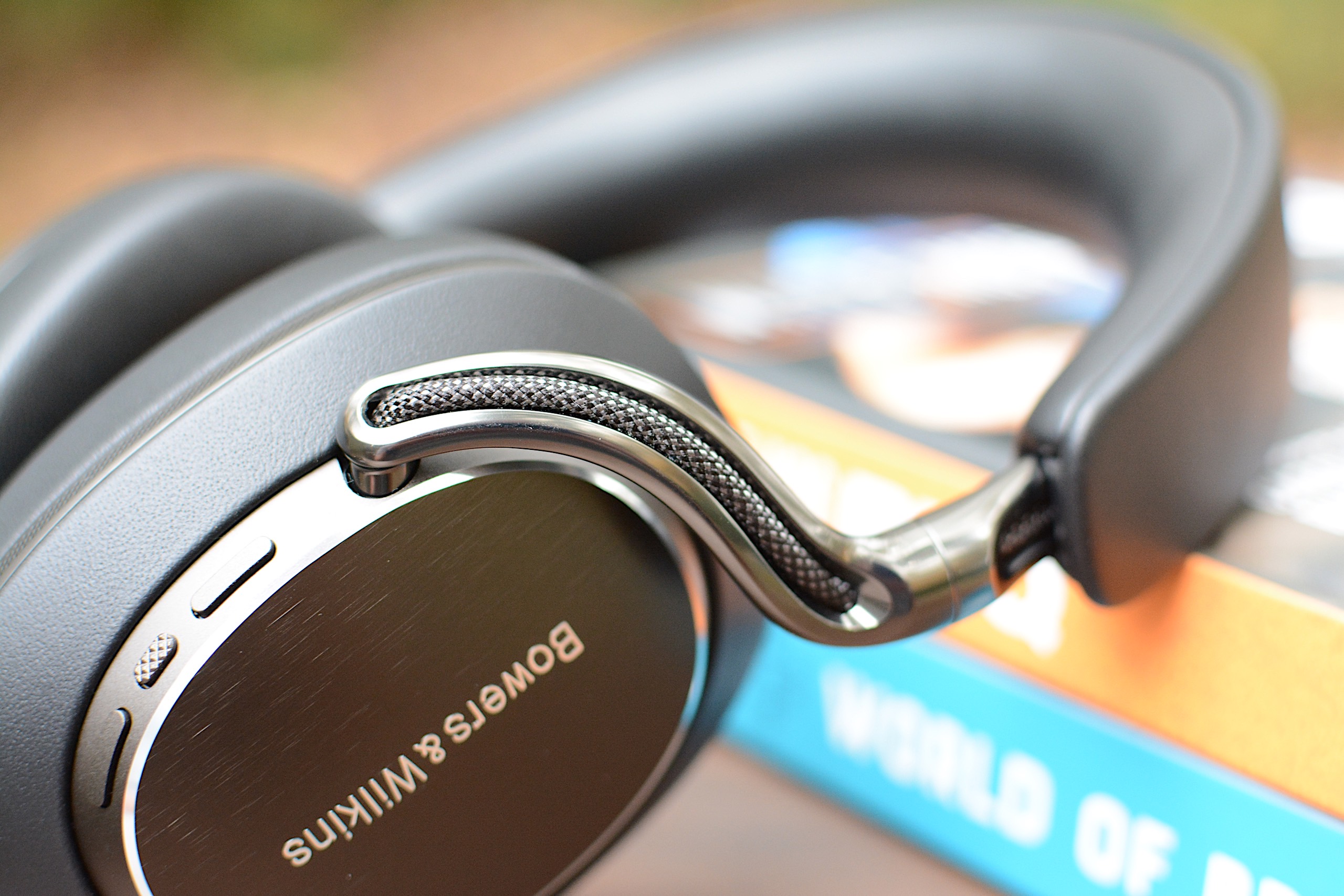
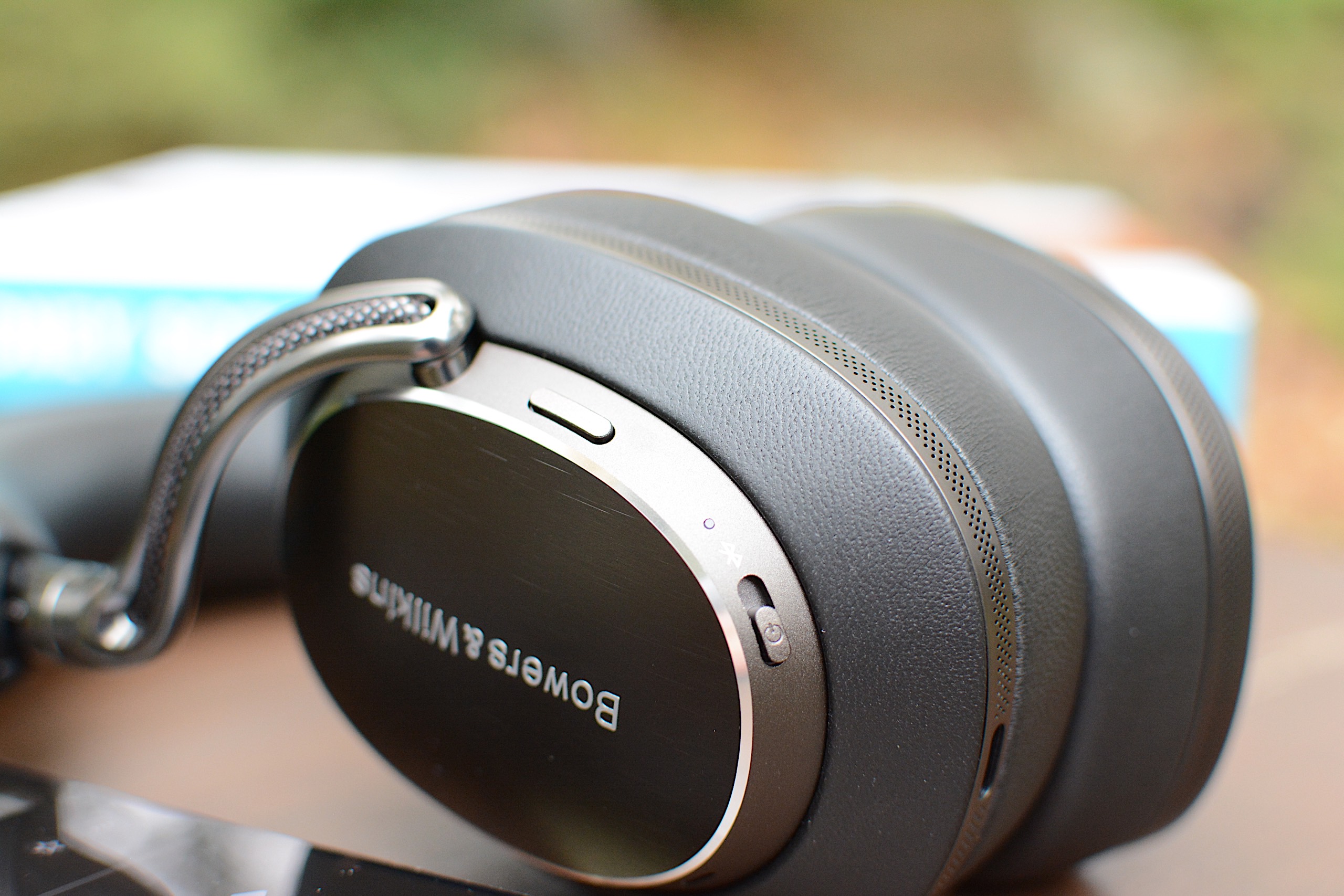
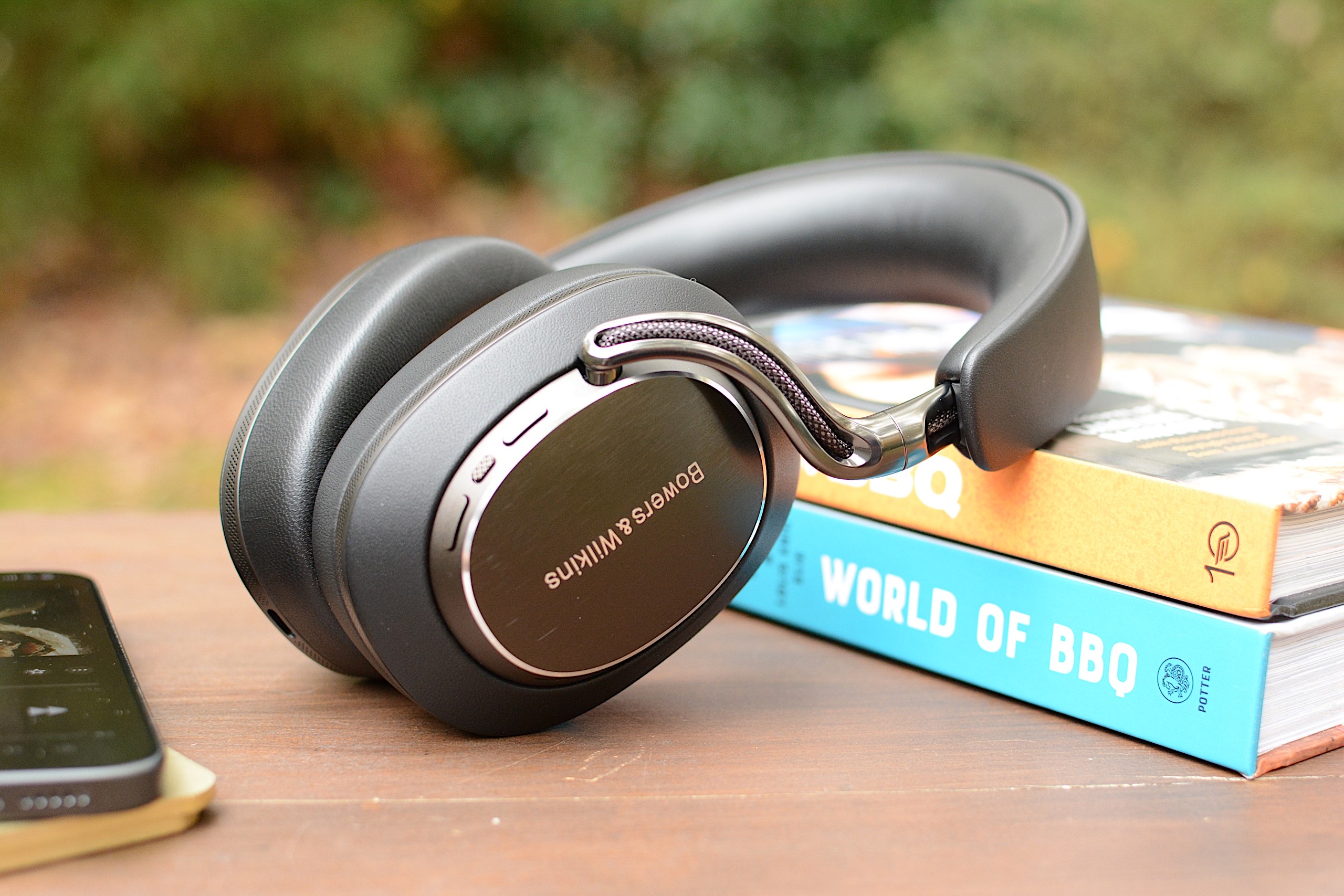
The previous generation of Sony's wireless headphones, the excellent WH-1000XM5, are available for as low as $248 for Cyber Monday. That's nearly equal to the record low the headphones hit on Prime Day, and $152 off their normal $400 price. Sony's flagship noise-canceling headphones are now the WH-1000XM6, but if you're on a budget, you'll still get a fantastic audio experience from the older model, especially at this heavily discounted price.
We awarded the WH-1000XM5 a score of 95 in our 2022 review, praising the supremely comfortable redesign, sound quality and powerful ANC. Battery life is also very respectable at 30 hours. We found the punchy bass an improvement over their predecessors, and the overall sound deeper and more immersive than the M4 headphones. As for noise-canceling, Sony’s decision to double the number of microphones and processors used for ANC means an improvement in blocking higher frequency sounds, such as human voices. They aren’t entirely baby scream-proof, but then few headphones are.
Naturally, the WH-1000XM6 that this year replaced the M5 as Sony’s flagship model offers even better sound quality and noise cancellation, while remaining extremely comfortable throughout long listening sessions. But they’re also a lot more expensive at $450 — they're on sale now for $398 for Cyber Monday, so you have the option to upgrade to the latest flagship if you're willing to spend a bit more. However, we still think the XM5 deal is the best value for most people here.
This article originally appeared on Engadget at https://www.engadget.com/deals/cyber-monday-deals-include-sonys-wh-1000xm5-headphones-for-an-all-time-low-154524430.html?src=rss
If you've ever wanted to know what you're missing in your favorite songs and shows, now is the time to upgrade: Black Friday and Cyber Monday have some of the best speakers on the market down to their lowest prices of the year. We've dug up savings on everything from tiny portable speakers like the JBL Go 3 to behemoths like the UE Hyperboom, not to mention soundbars and smart speakers. Everything on the list is an investment you won't regret if you ever listen to anything digital — those who can afford to hire a string quartet for their kitchen can keep scrolling.
Best Black Friday speaker deals under $50
Amazon Echo Pop for $22 (45 percent off): If you're excited about the more conversational and capable Alexa+ but have been holding off for budget reasons, breathe a sigh of relief. The latest Echo Pop is Amazon's smallest, cheapest smart speaker that still comes with Alexa+ early access. It may not fill a whole house, but it's great for listening to music or podcasts in a bedroom, office or small kitchen.
Anker Soundcore 2 for $28 (38 percent off): This is the absolute cheapest you'll probably see a full-size Bluetooth speaker go for in 2025 — the Soundcore 2, the latest effort by Anker to expand from charging components into portable audio. This model gets you 24 hours of battery and 12 watts of output, with bass ports designed to heavily boost the low ranges. It all works through a simple set of highly visible and tactile buttons on top of the speaker box.
JBL Go 3 for $30 (25 percent off): The Go 3 is JBL's most affordable bluetooth speaker, but it comes with the same IP67-rated ruggedness as the more expensive models. It's waterproof, dustproof, lasts for five hours and can easily clip onto a bag, bike or belt. It also sounds good and comes in lots of different colors.
Amazon Echo Dot 5th Gen for $32 (36 percent off): The fifth-generation Echo Dot is cheaper than ever, and it was already the best smart speaker under $50. Its genius spherical design lets it pack a lot of audio into a compact space, and it can be controlled with both hands-free Alexa commands and on-device buttons. The latest release comes with early access to the Alexa+ AI upgrade.
JBL Go 4 for $40 (20 percent off): You might expect a speaker as small and portable as the Go 4 to sound tinny at the higher frequencies and weak at the lower ones, but JBL has worked its magic to make this model sound great at both ranges. Weighing less than half a pound, made partly from recycled materials and including a convenient carabiner hoop, this is one of our favorite speakers to take on treks.
Tribit StormBox Micro 2 for $50 (29 percent off): The StormBox Micro 2 gets you the two things you need out of a portable speaker — it's light (weighing about a pound), and it's loud. Tribit hasn't changed the game on portable sound quality here, but with this on your bike or in your backyard, you'll be having so much fun you won't care. And the fact that you only spent 50 bucks will definitely help your mood.
Amazon Echo Spot for $50 (38 percent off): The Echo Spot looks like an Echo Dot sawed in half, which is a surprisingly effective design. It's designed to work best as a bedside alarm clock, but you can customize the screen to show things other than time, including a weather forecast, smart home controls or the current song on your playlist. It's Alexa-capable, and like the latest Echo Dot, will let you give Alexa+ AI a try.
Best Black Friday speaker deals for $50 to $100
Roku Streambar SE for $75 (25 percent off): This is the least you'll pay for a worthwhile soundbar this Black Friday season. We had a great experience with the Roku Streambar in our hands-on review, finding it to be compact and affordable while blowing built-in TV speakers out of the water. If you're looking to make an upgrade, this is the best economy choice, especially if you're already a Roku user.
JBL Flip 5 for $80 (20 percent off): We've loved almost every entry in the JBL Flip line (you'll see the Flip 7 highlighted in the next section). While the Flip 5 is a bit dated at this point, it's still extremely solid. The battery lasts for 12 hours, it's IPX7 waterproof and it weighs about 1.2 pounds so you can take it anywhere. The sound quality is as consistently high as we've come to expect from JBL, though it does have the standard limitations of a portable unit.
Amazon Fire TV Soundbar for $85 (29 percent off): Amazon's soundbar supports Dolby surround sound, works straightforwardly through a single HDMI cable and can be upgraded with an optional Alexa voice assistant. It works with more than just Amazon products, too, being compatible with all smart TVs. It's even capable of pulling double duty as a bluetooth speaker.
Marshall Emberton II for $90 (50 percent off): We're huge fans of the Emberton II, Marshall's affordable new-age retro speaker. It looks great, but it's much more than a visual throwback, featuring 360-degree sound, IP67 proofing and 30 hours of battery life. Since the deal cuts the price in half, you can even by two and chain them together for a surround sound setup.
Amazon Echo Dot Max for $90 (10 percent off): The Echo Dot Max just dropped this month, and our reaction was mixed, but there's no denying the leaps forward in this brand-new addition. Not only does it feature better sound than the vanilla Echo Dot, but Alexa+ makes is a much more equal conversation partner. The Echo Dot Max features a similar spherical design to the Dot, but with forward-facing physical buttons on the surface of the sphere.
Bose SoundLink Micro for $99 (17 percent off): If the Home isn't small or cheap enough for you, Bose has gone even smaller and cheaper with the SoundLink Micro, a tiny, portable speaker in the vein of the JBL Clip. It's waterproof, dustproof and surprisingly good at taking hits, all while staying charged for around six hours. The sound quality isn't intense, but it's cleaner than it has any right to be.
Beats Pill for $100 (33 percent off): Beats jumping back into portable bluetooth was one of the happiest surprises of 2024. As we noted in our full review at the time, the Beats Pill isn't content to coast on its brand name or luxurious design. Its re-engineering speaker improves volume while reducing distortion, it can survive dropping into three feet of water and it even works extremely well as a speakerphone. We found that mid-to-high range music showcases its potential best, though the bass also hits hard.
Best Black Friday speaker deals for $100 to $200
Bose SoundLink Flex for $119 (20 percent off): Of all the Bose on this list, the SoundLink Flex may be the most balanced, much cheaper than the Home and a lot more powerful than the Micro. Other speakers may be louder, but few have such good range; we've yet to find a track that sounds muddy or tinny coming through the Flex's speakers. The design is also outdoor-friendly, with a light-but-tough exterior and 30-foot bluetooth range.
JBL Charge 6 for $130 (35 percent off): It's a little more expensive than the Flip line, but the extra cost of the Charge 6 pays off — it boasts almost twice the battery life of the Flip 7, with the same convenient design, built-in USB-C charger and wide sound range. If you're looking for a speaker that balances sturdiness with portability and will last you a while, the Charge 6 is a very good investment.
Ultimate Ears Megaboom 4 for $150 (25 percent off): The UE Megaboom line is venerable at this point, dropping first in 2015, but its fourth iteration still tops our audiophile lists. It puts out 360-degree sound with an emphasis on bass, can work up to 147 feet away from the music source, and literally floats in water (though you probably shouldn't leave it in the pool all night). It can even pair with any other UE speaker through PartyUp — combining it with a couple of Wonderbooms pays off in spades.
Sonos Era 100 for $169 (15 percent off): Two years after launch, the Era 100 is still a smart speaker more than worth your time. It's sleek and simply designed, making it clear Sonos's engineers put their work into sound quality and features rather than just looking the part. Touch controls have never worked better, and setup takes five minutes, though you will have to use the Sonos app. Once you start playing music, the Era 100 can get as loud as you like, while never sacrificing audio quality.
Bose SoundLink Home for $179 (18 percent off): The SoundLink Home is small for a high-quality speaker, but it packs everything it needs into two pounds and about 10 square inches. Nothing about the sound is diminished thanks to two passive radiators. Though we haven't gotten to test it directly, given Bose's record with other compact speakers like the Flex, we're confident it'll be loud enough to satisfy anyone.
Marshall Acton III for $180 (40 percent off): The Acton III is one of the speakers Marshall redesigned and updated in 2022, and it still sounds great today (and looks it too). It's less portable at 6.3 pounds, but can hit high volumes with little or no distortion. The upgrade angled Acton III's tweeters outward so the soundscape is wider, making this one speaker very capable of filling a room with sound on its own.
Sony ULT Field 5 for $195 (44 percent off): Sony's recently rebranded ULT lineup has impressed us so far, especially their 90s-style bass boost buttons. The ULT Field 5 is a pretty traditional bluetooth speaker with a ton of options, including Party Connect to link multiple speakers together, a 10-band equalizer for finding the exact sound balance you want and even a shoulder strap that makes it way more portable.
Bose TV Speaker soundbar for $199 (29 percent off): Bose's entry into the world of soundbars does not disappoint. For a price lower than some Bluetooth speakers, you'll get a compact two-foot speaker bar that amplifies dialogue while conjuring a balanced, realistic soundscape from any movie or show. It's suitable for audio neophytes, too, with no complex adjustments necessary — just plug in the HDMI and start watching.
Ultimate Ears Everboom for $200 (26 percent off): We gave the Everboom a full review when it first dropped last year, and found it stuck to the general Ultimate Ears plan — nothing earth-shattering in the audio quality, but rugged reliability and fantastic extra features. Everboom users can connect it to the UE Boom app, which lets you control the volume remotely, use the speaker as a megaphone to make announcements, import your playlists and pair Everbooms through the PartyUp chaining feature.
Best Black Friday speaker deals over $200
JBL Xtreme 4 for $280 (26 percent off): Xtreme is the largest and highest-end that JBL goes, and the Xtreme 4 is a luminary of the line. At 4.6 pounds, it's on the outside edge of portability, but that weight means it puts out appropriately heavy bass, along with clear treble. It's fully weatherproof and — unless it's in a completely open space — can get loud enough that all your party guests will enjoy the full effect.
Bose SoundLink Max for $299 (25 percent off): The SoundLink Max, Bose's biggest speaker that isn't a soundbar, is more affordable for Black Friday than we've seen for a while. Frankly, it's worth more than this, with two radiators and three transducers that make it sound larger than it is. Indoors or outdoors, it's great for anyone who wants to be able to pick out individual elements of their favorite music.
Sonos Era 300 for $378 (21 percent off): The Era 300 is Sonos's big (and largely successful) swing at a truly space-filling smart speaker, combining spatial audio with support for both Alexa and its own assistant. The Trueplay feature detects the environment around the speaker and adjusts its setup to reach every corner. Spatial audio can be hit-or-miss on older tracks, but it's transcendent with modern ones.
Sonos Move 2 for $399 (20 percent off): Move is Sonos's high-end portable smart speaker, with more heft, power and features than the smaller Roam line. With the Move 2, Sonos improved the Move's sound quality, boosted its battery life to well over 24 hours, jacked up the volume and redesigned the outer hardware for greater durability. It also works with both Alexa and the Sonos assistant, but it's more portable than the Era 300.
Sony Bravia Theater Bar 8 for $798 (20 percent off): In our review of the Bravia 6 this year, we called out its full sound and special talent for enhancing dialogue, but were frustrated that it didn't support AirPlay or Spotify Connect. The Bravia 8 works with both services, making it a clear choice for your next premium soundbar. It's got a tight, low-footprint design that fits any aesthetic, and hits a maximum output power of 495 watts.
Sonos Arc Ultra for $879 (20 percent off): The Sonos Arc Ultra is the best premium soundbar, bar none (pun intended). As we cover in our full review, it delivers full-throated bass without needing an extra sub, and has added more mid-range drivers and tweeters to make dialogue pop. Its software features are also solid, with Trueplay sound tuning, Speech Enhancement and a new Night Sound mode to tone down the boom for your roommates' sake.
JBL Bar 1300XMK2 for $1,200 (29 percent off): If you're going to drop $1200 on a soundbar, you need to know it's going to deliver — and the 1300XMK2 does. Its key design element is two detachable speakers that recharge when plugged into the main unit, but can spend up to 10 hours unplugged. The audioscape does an excellent job of separating and clarifying details, which really enhances the sense of a theatrical experience.
This article originally appeared on Engadget at https://www.engadget.com/deals/black-friday-speaker-deals-for-2025-are-still-live-save-up-to-50-percent-on-bluetooth-speakers-smart-speakers-and-soundbars-091904782.html?src=rss
Portable Bluetooth speakers have become an easy default for listening away from your desk or living room. They’re the kind of tech you grab without thinking, whether you’re heading outside, cleaning the house or packing for a weekend away. The best portable options manage to sound bigger than they look, delivering clear audio without weighing down your bag.
Battery life and durability matter just as much as sound quality now. Many modern speakers are built to survive splashes, dust and the occasional drop, while still offering quick pairing and stable connections. Some are designed for solo listening, others are meant to fill a space with music and keep going for hours.
We’ve tested a wide mix of portable Bluetooth speakers to see which ones are actually worth carrying around. Whether you want something small and simple or a speaker that can anchor a get-together, these are the models that stood out.
Best portable Bluetooth speakers: $50 to $200
Best portable Bluetooth speakers: $200 to $450
Best portable Bluetooth speakers: $450 and higher
Factors to consider in a portable Bluetooth speaker
Weather-proofing
IP ratings (Ingress Protection) are the alphanumeric indicators you often see in a product’s spec sheet that define water and dust resistance. It’s usually a combo of two numbers with the first indicating solid object ingress and the second being water. The former goes from 0 (no protection) to 6 (dustproof). The water-resistance rating goes from 0 (no protection) to 9 (protected against immersion and high pressure jets). When an X is used instead of a number, that means the product wasn’t tested for resistance. If it’s a waterproof speaker, it may have some innate resistance to solids, but there’s no guarantee.
IP67 is a common rating these days indicating highly resistant and potentially rugged speakers often featured in audio products like outdoor speakers. These are safe for quick dunks in the pool or tub and should be more than OK in the rain or in the shower. They’re also good options for the beach, playground and other rough environs.
Additionally, speakers with ports and a high rating will often include a tight-fitting cover over the charging or auxiliary ports. If you plan on using the ports, that may limit the product's rated ability to fend off the elements.
When looking for the best portable Bluetooth speaker, consider the IP rating and also how you plan to use your Bluetooth speaker when making your decision. It may be worth splurging on a better sounding model with a lower IP rating if you’ll mostly be using it indoors, for instance.
Battery life
The focus of this guide is on the best portable speakers, and while “portable” can be a relative term, these devices are generally for people who are likely to find themselves far from a power outlet. These days, around 12 hours of playtime seems to be the baseline but obviously, the more battery life you can get out of a speaker, the better, especially if you plan to listen to podcasts or music on the go.
That said, be careful when looking at battery specs, as they frequently list a maximum runtime (“up to” x amount of hours). This usually means they tested at a low to mid volume. If you like your tunes loud with punchy bass, it can often end up cutting the expected usage time in half or more. Luckily, some manufacturers also list the expected hours of battery life when used at full volume and that transparency is appreciated. Bear in mind, however, that not all of the best Bluetooth speakers use the same charging port. Some support USB-C charging, while others use micro-USB, and some may even come with an adapter for added convenience.
Additionally, if your audio system or mini Bluetooth speaker also happens to have Wi-Fi connectivity, they're usually designed for always-on functionality. Unlike normal Bluetooth speakers that go to sleep after a short period without use, these will usually stay awake (to listen for your commands) and slowly run down the battery. If you're out and about, you'll want to remember to turn these speakers off manually when not in use to maximize battery life.
Range
Bluetooth 5 offers better range and more reliable connectivity than its predecessors, making it a great feature to look for in the best Bluetooth speaker. That said, Bluetooth range can still be tricky. Some companies list their product’s longest possible range, usually outdoors and in an unobstructed line-of-sight test environment. Other companies stick with a 30-foot range on the spec sheet and leave it at that, even though they may be running Bluetooth 4.x or 5.x. That’s likely underselling the speaker's potential, but unpredictable environments can affect range and there’s little point in promising the moon only to get complaints.
I’ve seen signal drop issues when crouching down, with my phone in the front pocket of my jeans, and barely 30 feet away from a speaker inside my apartment. I ran into this issue across several devices regardless of their listed Bluetooth connectivity range.
If you’re hosting a patio party and duck inside, it’s wise to keep any wireless Bluetooth speakers relatively close by just in case. It’s hard to gauge what aspects of any environment may interfere with a Bluetooth signal. In general, take range specs around 100 feet or more as a perfect-world scenario.
Latency
This is a minor mention for those out there who use a speaker for their computer output, or as a mini Bluetooth soundbar solution for setups like a monitor and streaming box. It’s annoying to find that your speaker’s latency isn’t low enough to avoid lip sync issues. Luckily, it seems that most speakers these days don’t often have these problems. Only a handful of the few dozen speakers I tried had persistent, noticeable lip-sync issues. Aside from occasional blips, all of our picks worked well in this regard.
If you plan to frequently use a speaker for video playback, look for devices with the most recent Bluetooth 5 technology and lower latency codecs like aptX. Also make sure the speaker is close to the source device as distance can be a factor. To avoid the issue altogether, though, consider getting one with a wired auxiliary input.
Extra features
Some speakers don’t just play music — they bring the party to life with built-in LED light effects and a full-on light show that syncs to your music. If you love a bit of visual flair with your tunes, it’s worth checking out models that offer LED light customization options.
Sound quality also plays a huge role in picking the right speaker. The best Bluetooth speaker should deliver a balanced mix of punchy bass, clear highs and strong vocals. Many models also include customizable sound modes that let you tweak the EQ to better suit different genres — whether you’re blasting EDM, listening to a podcast, or just want a more immersive experience that would impress even an audiophile.
If aesthetics matter, many models come in a tiny size that makes them extra portable, with plenty of color options to match your personal style. Whether you want a sleek black speaker or a vibrant eye-catching design, there are plenty of choices to fit your vibe.
Other portable Bluetooth speakers we tested
Sonos Roam
While there's a lot to like about the Sonos Roam, there are plenty of other Bluetooth speakers with more features and better battery life. In our review, we gave the Roam a score of 87, praising it for its good sound quality, durable waterproof design and ability to work well within an existing Sonos speaker ecosystem. But the price is just fine at $180, and we found Bluetooth speakers that offer more at lower price points. Plus, the Roam taps out at 10 hours of battery life, and all of our top picks can run for longer than that on a single charge.
Monoprice Soundstage3
The Monoprice Soundstage3 offers relatively big sound at a midrange $250 price, with a variety of inputs rarely found on a portable Bluetooth speaker. The boxy, minimalist design is no nonsense, even if it's more of a less-rugged, bookshelf-styled homebody. While the speaker puts out crisp highs alongside booming lows, we found the bass can overpower the rest of the output, so it's not for everyone. And after using the speaker for many months, we also found the low-slung, poorly labeled button panel along the top can be a bit annoying to use. If you want a speaker for road trips, favor mids and highs, and plan on using physical buttons for volume control and input selections, there are better options out there.
JBL Boombox 3
Fans of JBL’s bluetooth speaker sound profile who want to crank up the volume, but also want a rugged and portable option, may enjoy the JBL Boombox 3. It’s a decent grab-and-go speaker with a very loud output, although it's not as good as some of the loud-speaker styled options for long-throw sound and big outdoor areas. However, the price for this speaker line remains prohibitively expensive compared to other options with big sound that cover a bit more ground. If the JBL brand is your thing and you like the rugged, portable form factor, we recommend looking for discounts, or shopping around and exploring the available options including the (less portable) JBL PartyBox series.
Soundcore Motion X500
Soundcore speakers have generally been good and often reasonably priced. The Motion X500 loosely falls into that category. It has a tall, metallic lunchbox vibe with a fixed handle and pumps out a respectable 40 watts of crisp, clear sound for its size. It can get pretty loud and serves up a good dose of bass, although its primarily a front-facing speaker.
There’s LDAC hi-res audio support for Android users, but the main selling point on this is spatial audio. This is done through an EQ change and the activation of a small, up-firing driver. There’s a slight benefit from this if you’re up close and directly in front of it, but it’s not a total game changer for your listening experience. The original pre-order price of $130 made it a decent option in terms of bang for your buck. But it went up to $170 at launch, making it less appealing even if it’s still a good middle-of-the-road option if you want small-ish, clear and loud. If you can find one on sale for the lower price, it’s definitely worth considering. There’s also the larger and louder X600 ($200) if the overall concept is working for you.
Portable Bluetooth speaker FAQs
How does a Bluetooth speaker work?
Bluetooth technology lets devices connect and exchange data over short distances using ultra high frequency (UHF) radio waves. It’s the frequency range that’s carved out for industrial, scientific and medical purposes, called the 2.4GHz ISM spectrum band. This range is available worldwide, making it easy for companies to use with devices for global markets.
Bluetooth speakers include this tech, which lets them communicate with source devices like smartphones, tablets or computers in order to exchange data. The two devices pair by sharing a unique code and will work within the proscribed range for the device and Bluetooth version.
Ever since Bluetooth 4.0 was released over a decade ago, new iterations usually improve on range, use less power and offer expanded connectivity with features like multipoint (allowing more than one device to be connected at the same time, for instance).
Who should buy a Portable Bluetooth speaker?
If you want to play music while you’re out-and-about on something other than headphones, a portable Bluetooth speaker is probably what you want. There’s a broad range of devices for all types of circumstances. Many adventurous people will want a relatively lightweight portable that’s rugged enough to handle the elements while also packing enough charge to play for hours on end. Others may simply need a speaker they can move around the house or use in the backyard. In this case, you can choose larger less rugged models that may offer better sound.
This article originally appeared on Engadget at https://www.engadget.com/audio/speakers/best-portable-bluetooth-speakers-133004551.html?src=rss
Wireless earbuds are now the default option for everyday listening, whether you’re heading out for a commute, fitting in a workout or just watching videos at home. The best wireless earbuds combine reliable connectivity, comfortable fits and sound quality that holds up across music, calls and podcasts, all without the hassle of cables. Most are small enough to disappear into a pocket and pair quickly with phones, tablets and laptops.
What sets one pair apart from another often comes down to priorities. Some earbuds lean heavily on active noise cancellation, while others focus on long battery life, compact charging cases or lower prices. Features like water resistance, customizable controls and app support can also make a real difference day to day. This guide breaks down the best wireless earbuds available now to help you find the right match for how you listen.
Best wireless earbuds of 2026
What to look for in the best wireless earbuds
When it comes to shopping for earphones, the first thing to consider is design or wear style. Do you prefer a semi-open fit like AirPods or do you want something that completely closes off your ears? If you’re shopping for earbuds with active noise cancellation, you'll want the latter, but a case can be made for the former if you want to wear them all day or frequent places where you need to be tuned in to the ambient sounds. The overall shape of earbuds can determine whether you get a comfortable fit, so can the size and weight, so you’ll want to consider all that before deciding. And remember: audio companies aren’t perfect, so despite lots of research, the earbud shape they decided on may not fit you well. Don’t be afraid to return ill-fitting earbuds for something that’s more comfortable.
As wireless earbuds have become the norm, they’re now more reliable for basic things like consistent Bluetooth connectivity. Companies are still in a race to pack as much as they can into increasingly smaller designs. This typically means a longer list of features on the more premium sets of earbuds with basic functionality on the cheapest models. Carefully consider what you can’t live without when selecting your next earbuds, and make sure key items like automatic pausing and multipoint connectivity are on the spec sheet. You’ll also want to investigate the volume and touch controls as you’ll often have to sacrifice access to something else to make that adjustment via on-board taps or swipes. Some earbuds even offer app settings to tweak the audio profiles or firmware updates to improve performance over time.
For those in the Apple ecosystem, features like auto-pairing with devices, especially with AirPods Pro 3, can be an added advantage, while Android users may want to look for models that offer similar cross-device functionality.
When it comes to battery life, the average set of earbuds lasts about five hours on a single charge. You can find sets that last longer, but this is likely enough to get you through a work day if you’re docking the buds during lunch or the occasional meeting. You’ll want to check on how many extra charges are available via the case and if it supports wireless charging.
Companies will also make lofty claims about call quality on wireless earbuds. Despite lots of promises, the reality is most earbuds still leave you sounding like you’re on speakerphone. There are some sets that deliver, but don’t get your hopes up unless reviews confirm the claims.
Sound can be subjective, so we recommend trying before you buy if at all possible. This is especially true if you're an audiophile. We understand this isn’t easy when most of us do a lot of shopping online, but trying on a set of earbuds and listening to them for a few minutes can save you from an expensive case of buyer's remorse. If a store doesn’t allow a quick demo, most retailers have return policies that will let you take earbuds back you don’t like. Of course, you have to be willing to temporarily part with funds in order to do this.
We also recommend paying attention to things like Spatial Audio, Dolby Atmos, 360 Reality Audio and other immersive formats. Not all earbuds support them, so you’ll want to make sure a perspective pair does if that sort of thing excites you, especially if you plan to use them for playback of high-quality audio.
How we test wireless earbuds
The primary way we test earbuds is to wear them as much as possible. We prefer to do this over a one- to two-week period, but sometimes embargoes don’t allow it. During this time, we listen to a mix of music and podcasts, while also using the earbuds to take both voice and video calls. Since battery life for earbuds is typically less than a full day, we drain the battery with looping music and the volume set at a comfortable level (usually around 75 percent).
To judge audio quality, we listen to a range of genres, noting any differences in the sound profile across the styles. We also test at both low and high volumes to check for consistency in the tuning. To assess call quality, we’ll record audio samples with the earbuds’ microphones as well as have third parties call us.
When it comes to features, we do a thorough review of companion apps, testing each feature as we work through the software. Any holdovers from previous models are double checked for improvements or regression. If the earbuds we’re testing are an updated version of a previous model, we’ll spend time getting reacquainted with the older buds. Ditto for the closest competition for each new set of earbuds that we review.
Other wireless Bluetooth earbuds we tested
Sony WF-1000XM6
Since we established this best wireless earbuds guide, Sony’s current 1000X model has consistently been the top pick. However, with the WF-1000XM6, there are two key areas where the company’s latest flagship set doesn’t measure up well versus the competition. Overall ANC performance lags behind Bose, and even Sony’s own WF-1000XM5. Speaking of the M5, the company did well there to address the issues I had with fit when it switched to foam ear tips on the WF-1000XM4, but it regressed in that area on the M6. There’s still plenty to like in terms of features and sound quality, but there are also caveats to consider now that could be dealbreakers.
Sony WF-C710N
The WF-C710N is a set of compact and comfy earbuds that offer several of Sony’s best features. While the ANC performance is above average for this price ($120), sound quality isn’t as good as the company’s slightly more expensive options. Battery life fell below stated figures and call performance isn’t good enough to use these buds for work.
Beats Powerbeats Pro 2
The newest version of the Powerbeats Pro have an improved, comfortable design, balanced bass and new H2 chips and a heart rate sensor inside. But heart rate support is currently limited on iOS.
Samsung Galaxy Buds 3
The Galaxy Buds 3 combine ANC with an open-type design, which renders the noise-blocking abilities of the earbuds mostly useless. Still, there’s great low-end tone with ample bass when a track demands it. There are also lots of handy features, most of which require a Samsung phone. But at this price, there are better options from Google, Beats and Sony
Sennheiser Momentum Sport
I really like the overall shape of the Momentum Sport earbuds. They’re more comfortable than the Momentum True Wireless 4 and fit in my ears better. What’s more, the body temperature and heart rate sensors work well, sending those stats to a variety of apps. However, that sport-tracking feature works best with Polar’s app and devices, so there’s that consideration. Also, the audio quality and ANC performance isn’t as good as the MTW4, and these earbuds are pricey.
Beats Solo Buds
There’s a lot to like about the Solo Buds for $80. For me, the primary perk is they’re very comfortable to wear for long periods of time thanks to some thoughtful design considerations. You only get the basics here in terms of features and, as expected, the overall sound quality isn’t as good as the pricier models in the Beats lineup. You will get 18 hours of battery life though, since the company nixed the battery in the case and beefed up the listening time in the buds themselves.
Bose Ultra Open Earbuds
Bose created something very unique for this set of earbuds that allows you to stay in-tune with the world while listening to audio content. The clip-on design is very comfortable, but sound quality suffers due to the open-type fit, especially when it comes to bass and spatial audio.
Audio-Technica ATH-TWX7
These stick buds have a compact design that’s comfortable to wear and the warm sound profile is great at times. However, overall audio performance is inconsistent and there’s no automatic pausing.
Master & Dynamic MW09
Retooled audio, better ambient sound mode and reliable multipoint Bluetooth are the best things the MW09 has to offer. They’re expensive though, and you can find better ANC performance elsewhere.
Wireless earbud FAQs
What is considered good battery life for true wireless earbuds?
Most wireless earbuds will last five hours on a single charge, at the least. You can find some pairs that have even better battery life, lasting between six and eight hours before they need more juice. All of the best wireless earbuds come with a charging case, which will provide additional hours of battery life — but you'll have to return each bud to the case in order to charge them up.
Is sound quality better on headphones or earbuds?
Comparing sound quality on earbuds and headphones is a bit like comparing apples and oranges. There are a lot of variables to consider and the differences in components make a direct comparison difficult. Personally, I prefer the audio quality from over-ear headphones, but I can tell you the sound from earbuds like Sennheiser’s Momentum True Wireless 3 is also outstanding.
Which wireless earbuds have the longest battery life?
With new models coming out all the time, tracking the hours of battery life for each this can be difficult to keep tabs on. The longest-lasting earbuds we’ve reviewed are Audio-Technica’s ATH-CKS5TW. The company states they last 15 hours, but the app was still showing 40 percent at that mark during our tests. The only downside is these earbuds debuted in 2019 and both technology and features have improved since. In terms of current models, Master & Dynamic’s MW08 offers 12 hours of use on a charge with ANC off (10 with ANC on) and JBL has multiple options with 10-hour batteries.
What wireless earbuds are waterproof?
There are plenty of options these days when it comes to increased water resistance. To determine the level of protection, you’ll want to look for an IP (ingress protection) rating. The first number indicates intrusion protection from things like dust. The second number is the level of moisture protection and you’ll want to make sure that figure is 7 or higher. At this water-resistance rating, earbuds can withstand full immersion for up to 30 minutes in depths up to one meter (3.28 feet). If either of the IP numbers is an X, that means it doesn’t have any special protection. For example, a pair of wireless earbuds that are IPX7 wouldn’t be built to avoid dust intrusion, but they would be ok if you dropped them in shallow water.
Which earbuds stay in ears the best?
A secure fit can vary wildly from person to person. All of our ears are different, so audio companies are designing their products to fit the most people they can with a single shape. This is why AirPods will easily fall out for some but stay put for others. Design touches like wing tips or fins typically come on fitness models and those elements can help keep things in place. You’ll likely just have to try earbuds on, and if they don’t fit well return them.
What wireless earbuds work with PS5?
PlayStation 5 doesn’t support Bluetooth audio without an adapter or dongle. Even Sony’s own gaming headsets come with a transmitter that connects to the console. There are universal options that allow you to use any headphones, headset or earbuds with a PS5. Once you have one, plug it into a USB port on the console and pair your earbuds with it.
Recent updates
February 2026: Updated to include new top picks.
January 2026: Updated to ensure our top picks have remained the same.
September 2025: Updated to add AirPods Pro 3 to our top picks.
May 2025: Updated to ensure top picks and buying advice remain accurate.
March 2025: Updated the top pick for the best sounding wireless earbuds - runner up.
January 2025: Updated the top pick for best sounding wireless earbuds.
This article originally appeared on Engadget at https://www.engadget.com/audio/headphones/best-wireless-earbuds-120058222.html?src=rss
The best soundbars can completely transform your TV setup, turning flat, lifeless audio into something that actually sounds cinematic. Whether you're watching blockbuster movies, listening to music or gaming, a good soundbar delivers clearer vocals, deep bass and better overall playback than most built-in TV speakers ever could.
In 2025, there’s a soundbar for every kind of home entertainment setup — from compact all-in-one units to full surround systems with subwoofers and rear speakers. Some prioritize simplicity and sleek design, while others are packed with immersive features like Dolby Atmos and smart voice controls. No matter your budget or your space, we’ve picked the best soundbars you can buy right now to help elevate your audio experience.
I typically come out of CES with a pretty clear understanding of the new soundbars that are coming for the year, but that wasn’t exactly the case in 2025. LG decided to carry over its most premium soundbars from 2024, but it will add the compact S20A this year. The company only previewed the model at CES, so full specs are still forthcoming.
Samsung will once again keep the same overall design and features for its top-end Q990 soundbar. However, the company is adding a few new tools and it drastically reduced the size of the wireless subwoofer that comes in the box. Samsung does have one new model for 2025, the QS700F, that’s designed to sit on a table or automatically adjust to being mounted flat on a wall. Details are scarce on that soundbar for now and I anticipate a full spec sheet when the company is really to sell it.
Of the big three TV companies, Sony is the only one that didn’t announce any home theater gear at CES. The company has decided to focus mainly on its automotive efforts at the show recently, leaving TV and audio announcements for later in the year. The company debuted multiple soundbar options in 2024 and a four-speaker setup for the living room in the Bravia Quad. That said, it wouldn’t surprise me if Sony released new soundbars later in the year since its most recent models were only announced last April.
One company I would keep an eye on is Sennheiser. The original Ambeo model is nearly six years old and could use a refresh. The company has added medium and mini options to the Ambeo lineup since then, but it would be nice to see a refined version of the largest model too. The original Ambeo soundbar is huge, so no matter how good it sounds, it will always be a tough sell for some people.
Although I think it’s less likely, it’s also possible that Sonos has new soundbars this year. While the company’s next device will likely be the rumored set-top streaming box, the Sound Motion tech inside the Arc Ultra would offer a big improvement to bass performance in compact models like the Beam and Ray. The company may bring Sound Motion to standalone speakers first, but it’s destined for those smaller soundbars eventually.
The best soundbars for 2025
What to look for in a soundbar
Features
When it comes to features, the more you pay the more you're going to get in your new audio system. Most affordable options ($150 or less) will improve your television's audio quality, but that's about it. Step into the $300 to $400 range and you'll find all-in-one soundbars with things like built-in voice control, wireless connectivity, Google Chromecast, AirPlay 2 and even Android TV. They're all helpful when you want to avoid looking for the remote control, but the best playback quality is usually only in the top tier and the formats those premium soundbar systems support. I’m talking about things like Dolby Atmos, DTS:X and other high-resolution audio standards — essentials if you’re building a truly cinematic home entertainment setup. And not all Atmos soundbars are equal, so you'll need to look at the finer details carefully before you break into the savings account. If you're looking for one of the best Dolby Atmos soundbars, size, channels and subwoofer options will be important factors to consider. Some models even include a dedicated subwoofer to enhance bass performance, bringing an extra punch to action scenes and soundtracks.
Ports
This is a big one. A lot of the more affordable soundbars are limited when it comes to connectivity options. They either offer an optical port or one HDMI jack and, if you're lucky, both. Things get slightly better in the mid-range section, but that's not always the case. The Sonos Beam, for example, is $449, but only has a single HDMI port. Even at the higher-end, the $899 Sonos Arc still only has one HDMI port. If you plan to connect multiple devices like a set-top box, gaming laptop or console directly to your soundbar for the best audio experience, you’ll want an option with at least two HDMI (eARC) inputs. HDMI connections are critical for supporting Dolby Atmos and Dolby Digital audio formats, as well as high-res passthrough for HDR and 8K/4K content.
Channels
Another big thing you’ll want to pay attention to when looking for the best soundbar is channels. That’s the 2.1, 7.1.2 or other decimal number that companies include in product descriptions. The first figure corresponds to the number of channels. A two would just be left and right while a more robust Atmos system, especially one with rear surround speakers, could be five or seven (left, right, center and upward). The second number refers to the dedicated subwoofer, so if your new soundbar comes with one or has them built in, you’ll see one here. The third numeral is up-firing speakers, important for the immersive effect of Dolby Atmos. Not all Atmos-enabled units have them, but if they do, the third number will tell you how many are in play and how they contribute to the overall soundstage.
Wireless
Most soundbars these days offer either Bluetooth, Wi-Fi or both. When it comes to Wi-Fi, that connectivity affords you luxuries like voice control (either built-in or with a separate device), Chromecast, Spotify Connect and AirPlay 2. Depending on your preferences, you might be able to live without some of these. For me, AirPlay 2 and Chromecast are essentials, but the rest I can live without. Those two give me the ability to beam music and podcasts from my go-to apps without having to settle for — or struggle with — a Bluetooth connection. For instance, Sonos speakers often offer seamless integration with iOS devices, making it easy to connect and stream music wirelessly. If you’re looking for a wireless speaker that can enhance your TV setup while also offering flexibility for audio throughout the house, it's worth considering a multi-room system.
Size
This one might seem obvious but humor me for a minute. Nothing is more soul-crushing than getting a pricey soundbar in your living room only to discover you have to rearrange everything to find a spot for it. This was my plight when the Sennheiser Ambeo Soundbar arrived at my door. Yes, that speaker is absurdly large (and heavy), and most soundbars aren't nearly as big. I learned a valuable lesson: Make sure the space where you want to put a soundbar will accommodate the thing you're about to spend hundreds (if not thousands) of dollars on.
Basically, it all comes down to the TV you have (or are planning to get) and what the primary goal is for your living-room audio. Is it ease of use? Do you want the best possible sound from a single speaker or speaker/sub combo? Do you just want to be able to actually hear your TV better? Or do you want a full home entertainment experience with crisp vocals, thunderous deep bass, and immersive surround system audio?
By paying attention to each of those areas, you should have a good idea of what to look for in a soundbar, soundbar/subwoofer combo, Dolby Digital system or a more robust setup. With that said, we've put numerous products through their paces at Engadget and have a few favorites for best soundbar at various price points to get you started.
Other soundbars we tested
Sony Bravia Theater Bar 6
There’s a lot to like about the Bravia Theater Bar 6, Sony’s new midrange option in its soundbar lineup. Sound quality is the speaker’s best attribute, even though it’s limited by its 3.1.2-channel configuration. The biggest two issues with this model are the lack of Wi-Fi connectivity — which means no AirPlay, Chromecast or Spotify Connect — and the need to use your computer and a thumb drive to install firmware updates. Neither of those should be things you have to consider on a $650 soundbar in 2025.
Sonos Arc
There’s no doubt that the Arc is Sonos’ best-sounding soundbar, but it’s also the company’s most expensive. With a new model based on the Arc rumored to be on the way, it’s difficult to recommend this product over the likes of Samsung and Sony. The Arc works well as both a soundbar and a speaker, and the device will fit in nicely with other Sonos gear you might already have for a multiroom setup. It only has one HDMI port though, where much of the competition allows you to connect streaming and gaming devices directly to their soundbars.
Sennheiser Ambeo Soundbar Plus
I don’t think Sennheiser’s medium-sized model offers enough to stand out from the more powerful Ambeo Soundbar Max or the Ambeo Soundbar Mini. The Mini is more affordable and does a solid job with immersive audio in its own right. Like the rest of the Ambeo lineup, there’s no option for satellite speakers as you can only add a subwoofer to the soundbars. However, the Ambeo Soundbar Plus does have RCA input, so you can use it with a turntable if you’re into vinyl.
Best soundbar FAQs
Is a soundbar better than speakers?
It really depends on what you’re after. A soundbar is definitely a simpler, more compact solution compared to a full speaker setup. If you want better sound than your TV’s built-in setup but don’t want to deal with multiple speakers and wires everywhere, a soundbar is probably the way to go. Some soundbars can even deliver impressive surround sound effects, thanks to features like Dolby Atmos and virtual audio technology.
However, if you’re an audiophile or want true surround sound for an at-home theater experience, a multi-speaker setup with a receiver, surround speakers and subwoofer will give you a richer soundstage and more control over your experience.
What connection do I need for a soundbar?
Most modern soundbars connect to your TV via HDMI ARC or eARC, which is the easiest and best option for achieving high-quality audio. If your TV supports this, all you need is an HDMI cable, and you’ll get not only great sound but also some extra features like controlling the soundbar with your TV remote.
If HDMI ARC isn’t an option on your TV, you can use an optical cable, which also delivers solid audio quality. Some soundbars even offer Bluetooth or Wi-Fi connections for streaming music, and a few still have a 3.5mm aux jack for connecting to older devices.
Do all soundbars come with subwoofers?
Not all soundbars come with subwoofers, but many do or at least offer one as an optional add-on that you can purchase separately. A subwoofer is what gives you that deep, booming bass, so if you like action movies or want a fuller sound for music, having one can make a big difference. Some soundbars have a built-in subwoofer, but these generally don’t provide the same punch as a separate one.
This article originally appeared on Engadget at https://www.engadget.com/audio/speakers/best-soundbars-143041791.html?src=rss
Sometimes, the best gaming headset doesn’t have to be a “gaming headset” at all. While many people view these devices as their own category, they’re ultimately still headphones, just with a boom mic and some fancy branding attached. While the overall quality of dedicated headsets has improved over time, they still tend to cost extra compared to a good pair of wired headphones (which, yes, still exist). If you need to chat with friends, you can always buy a microphone separately and get superior sound quality there as well.
That said, we completely understand that many people just want the simplicity of a headset with a built-in mic. So after testing dozens of contenders over the past couple of years, we’ve rounded up a few commendable gaming headsets and headphones that work well for gaming — which aren’t quite the same thing. Whichever way you go, all of our picks should make your game time more enjoyable, whether you play competitively or just for fun.
Note: This is a selection of noteworthy gaming headsets and headphones we’ve put through their paces, not a comprehensive list of everything we’ve ever tried.
PlayStation Pulse Elite
The PlayStation Pulse Elite is a reasonable alternative to the Turtle Beach Atlas Air for PS5 owners, as it allows you to change volume, swap between different EQ presets, adjust the game-to-chat mix and mute the mic right from the console’s native UI. It’s similar to the way AirPods integrate with iPhones. This pair also lets you connect to a second device over Bluetooth at the same time, and the planar magnetic drivers — a rarity for $150 headphones — do a decent job of reproducing smaller details. The sound profile as a whole is narrower and more uneven in the bass and treble than the Atlas Air, however, while the all-plastic design is comfortable but flimsy-feeling. It also doesn’t do much to block outside noise, despite being closed-back, and the control buttons are awkward to reach.
PlayStation Pulse Expore
We also tested the in-ear equivalent to the Pulse Elite, the PlayStation Pulse Explore, but found it too uncomfortable to wear over extended sessions. This one is limited to roughly five hours of battery life, too.
Astro A50 (Gen 5)
The Astro A50 (Gen 5) is effectively the same headset as the A50X, just without any HDMI ports on its base station. It costs $100 less, so it’s a worthy alternative to the Audeze Maxwell if you mainly play on one platform and want a superior microphone. But the ability to automatically switch between consoles is the thing that makes the A50X worth buying in the first place, so that convenience is still worth paying for if you game on multiple devices.
The Corsair Virtuoso Pro.
Photo by Jeff Dunn / Engadget
Corsair Virtuoso Pro
The Corsair Virtuoso Pro is another one of the few dedicated gaming headsets with an open-back design. It has a relatively dark sound with mostly underemphasized treble and elevated upper-bass, though the highs are clearer here than they are on the Astro A40 — a former top pick that's now discontinued — and it still delivers a wider soundstage than most gaming headsets. We preferred this signature over Astro’s pair with some games, though in others it felt less balanced. The Virtuoso Pro’s mic still sounds fairly thin as well, so it’s merely decent compared to the wider headset market. Its headband adjustment mechanism feels cheap, too, and you can’t detach the mic without swapping cables out entirely. Its round, breathable ear cups and manageable weight do make it easy to wear, though, and it comes with a sturdy travel case for protection. Ultimately, it’s a decent buy, but it’s hard to justify over the more featured and easier-sounding Atlas Air.
HyperX Cloud Alpha Wireless
The HyperX Cloud Alpha Wireless can last well over 300 hours at moderate volumes, which is remarkable and by far the best of any wireless model we’ve tested. It’s light and not too snug on the head, and its powerful bass lends a real sense of excitement to in-game action. But it blunts more detail than the Atlas Air, Maxwell and A50 X, and its mic isn’t as good. Several users have also reported latency issues when using the headset with HyperX’s Ngenuity software, and there’s no Xbox, Bluetooth or wired audio support. Still, if battery life is paramount, you may be able to look past all of that.
The HyperX Cloud Alpha Wireless.
Photo by Jeff Dunn / Engadget
Logitech G Pro X 2 Lightspeed
If the Audeze Maxwell is out of stock, the Logitech G Pro X 2 Lightspeed is another quality wireless headset worth considering. It sounds better than something like the HyperX Cloud Alpha Wireless, with satisfying but more controlled bass and more accurate mids. It’s also lighter on the head than the Maxwell. Logitech rates its battery life at 50 hours, but we found it to last much longer at moderate volumes.
However, similar to the Astro A50 X, a dip in the treble makes it sound darker and more veiled than the Maxwell, and it doesn’t have any HDMI-switching tricks to fall back on. Its mic also sounds less natural than those of the Maxwell and A50 X. Plus, while it can connect over a USB dongle, Bluetooth or a 3.5mm cable, it can’t pair to two devices at once like Audeze’s and Astro’s pairs. Our biggest issue is the price: Value-wise, it’s in something of a no man’s land at its MSRP of $280. It’s a fine choice if it ever dips around $200, though.
Razer BlackShark V2 Pro
The wireless Razer BlackShark V2 Pro is tremendously comfortable and has a good mic, but its boomy sound is less refined and detailed than the Audeze Maxwell. As a closed-back headset, it also lacks the width of the Atlas Air. There’s no support for wired audio either.
It's worth noting that Razer has released a new BlackShark V3 Pro model that adds active noise cancellation, wired audio support and the ability to listen to multiple audio sources simultaneously, among other tweaks. We haven't tested it yet, but it also costs $50 more at $250.
Logitech G535 Lightspeed
The Logitech G535 is an impressively light (0.52 pounds) and comfy wireless headset that’s often available for $100 or less. It has a relatively neutral sound signature: not flat, but not beholden to big, thumping bass. It can make details in the mids sound thin, and if anything it could use a little more sub-bass, but it’s an agreeable listen overall. However, its mic isn't especially full, and its 35-or-so-hour battery life is a significant drop from our top recommendations. It doesn’t work with Xbox’s wireless protocol or Bluetooth either, and it forces you to crank the volume to reach a listenable level. But if you don’t want to spend a ton on a wireless headset, it’s a fine value.
The Logitech G535 Lightspeed.
Photo by Jeff Dunn / Engadget
SteelSeries Arctis Nova 7X
Xbox owners who want a more affordable wireless headset than the Audeze Maxwell could do worse than the SteelSeries Arctis Nova 7X. It’s another bass-forward pair, and its mic is comparable to that of the Cloud Alpha Wireless. It offers multiple connectivity options, including Bluetooth and a 3.5mm cable. While it's marketed for Xbox, it can also connect to PCs and PS5s. Its 30-ish-hour battery life is well short of the Maxwell and Cloud Alpha Wireless, however, and its uneven treble can cause things like in-game dialogue to sound masked in certain titles.
SteelSeries sells a cheaper Arctis Nova 5X model with longer battery life, though we haven't been able to test that one yet, and it doesn't support wired connections.
HyperX Cloud Alpha
The wired HyperX Cloud Alpha often goes for $80 or less, and at that price it’s fine as a mild step-up from the Cloud Stinger 2 if you really want a closed-back gaming headset. It’s old, but its plush earpads and headband are comfy, and its detachable mic, while not superb, is still serviceable. Its treble is underemphasized, however, and again it sounds more “in your head” than our open-back picks.
SteelSeries Arctis Nova Pro
The SteelSeries Arctis Nova Pro is a comfortable wired-only headset with a good mic and a useful DAC that makes it easy to adjust the headset’s EQ and game-to-chat mix on the fly. However, its closed-back design can’t provide the same enveloping sense of width, and its default sound can sound piercing in the treble. It’s also pricier, typically fluctuating between $200 to $280 these days.
SteelSeries Arctis Nova Pro Wireless
The SteelSeries Arctis Nova Pro Wireless is largely similar to its wired counterpart but adds a passable level of active noise cancellation. Being able to hot-swap battery packs and connect to multiple devices at once is also nice. It’s not as convenient for multi-console play as the Astro A50 X, though, and it's usually not much cheaper than the Audeze Maxwell, which sounds better, has a superior mic and lasts longer on a charge.
The Beyerdynamic MMX 200 (left) and HyperX Cloud III Wireless (right).
Photo by Jeff Dunn / Engadget
Beyerdynamic MMX 300 Pro
There’s nothing particularly bad about the Beyerdynamic MMX 300 Pro: It uses the same drivers as the DT 900 Pro X, its velour earpads are comfy and its mic works well. It’s just hard to recommend spending $380 on a wired-only headset when the Audeze Maxwell offers wireless functionality and similarly excellent sound — with slightly less spiky treble and more even bass — for $80 less. The MMX 300 Pro’s mic isn’t detachable either, and the closed-back design keeps it from sounding as wide as the DT 900 Pro X.
HyperX Cloud III Wireless
The HyperX Cloud III Wireless is comfy and can last up to 120 hours per charge, but it sounds less dynamic than the older Cloud Alpha Wireless, with weaker bass response. Like that pair, it also lacks a 3.5mm jack, Bluetooth audio support and Xbox compatibility. The Cloud Alpha Wireless still gets nearly three times the battery life, too, so it remains a better buy if you want a wireless headset for PS5 or PC gaming in the $150 range. The Cloud III Wireless has also become harder to find in stock in recent months.
Sennheiser HD 490 Pro
The Sennheiser HD 490 Pro are studio-focused open-back headphones that also work well for gaming. They come with two sets of ear pads, one that slightly elevates the bass and another that bumps the midrange, though they deliver impressive width and detail either way without pushing too hard in one direction. They’re also a pleasure to wear over long periods, both lighter than the DT 900 Pro X and less stiff than the HD 560S. That said, they're often priced around $400, and their sound profile is more of a nice alternative to our top picks than something clearly more natural or resolving. Most people don’t need to pay the premium.
Best gaming headsets and headphones: What to look for
The HyperX Cloud Stinger 2.
Photo by Jeff Dunn / Engadget
Evaluating headphones is a particularly subjective exercise, so calling one pair the absolute “best” is something of a fool’s errand. At a certain point, whether you're an audiophile or not, everything becomes a matter of taste. For most, a headphone with a wide soundscape and strong imaging performance — i.e., the ability to position sounds correctly, so you can more precisely tell where footsteps and other gameplay effects are coming from — will provide the most immersive gaming experience, the kind that makes you feel like your head is within a given scene.
For that, you want a high-quality pair of open-back headphones. That is to say, an over-ear pair whose ear cups do not completely seal off the ear from air and outside noise. These are inherently terrible at isolating you from external sound and preventing others from hearing what you’re playing, so if you often play games in a noisy environment, their benefits will be blunted. But in a quiet room, the best open-back pairs sound significantly wider and more precise than more common closed-back models.
More up for debate is how a good gaming headphone should sound. If you want something that’ll help you in competitive multiplayer games, you may prefer a headphone with a flatter sound signature, which'll keep a game’s mix from being overly boosted in one direction and is less likely to mask the smaller details of what’s happening around you. A slightly brighter sound, one that pushes the upper frequencies a tad, may also work. Open-back headphones almost never have huge sub-bass, so you rarely have to worry about low-end sounds muddying up the rest of the signature. In this light, the fact that an overwhelming amount of gaming headsets are closed-back and bass-heavy seems counterintuitive.
Lots of people love bass, though. And if you don't really care about competitive play, some extra low-end can add a touch of excitement to action scenes or rousing soundtracks. You still don’t want a pair that boosts the low-end too hard — as many gaming headsets do — but the point is that what makes a pair “immersive” to one person may sound dull to another.
Recent updates
November 2025: We’ve updated this guide for clarity and made sure all pricing and availability details are accurate. We’ve also removed the Astro A40 TR, our longtime favorite wired headset, as it appears to have been discontinued (and since our top wireless pick comes with a cable in the box anyway).
April 2025: We’ve updated this guide to ensure our recommendations are still accurate and removed our testing notes for the Beyerdynamic MMX 200, which is no longer available.
January 2025: We’ve looked over this guide to ensure our picks are still accurate and added notes on a few more headsets we’ve recently tested, including the PlayStation Pulse Elite, Astro A50 (Gen 5) and Beyerdynamic MMX 300 Pro.
November 2024: We've updated this guide with a new recommendation for the best dedicated gaming headset, the Turtle Beach Atlas Air, and reorganized our picks accordingly. We've also added notes on other gaming-friendly headphones we've tested, including the Sennheiser HD 490 Pro and Razer BlackShark V2 Pro, and removed a couple of write-ups on headsets that are no longer available.
This article originally appeared on Engadget at https://www.engadget.com/audio/headphones/best-gaming-headset-130006477.html?src=rss
Black Friday is as good a time as any to upgrade your home audio setup. You can get the Sonos Era 300, the company's only standalone speaker with spatial audio, for $379. That's $100 off what Engadget's Nathan Ingraham called "a great speaker, whether or not it is playing songs in Dolby Atmos."
That Dolby reference points to the Era 300's core novelty. It produces spatial audio without requiring additional speakers. (You can use Apple Music or Amazon Music to stream compatible tracks.) Expect those Dolby Atmos tracks to sound better with newer music than older songs remixed for Dolby's tech.
Even if you don't bother with its spatial tricks, the Era 300 is a terrific-sounding speaker. It delivers rich, detailed and balanced audio that can hang with just about anything else Sonos offers.
The speaker supports voice control via Alexa or Sonos Voice Control. It also offers Trueplay tuning, which listens to how your room shapes the sound and adjusts accordingly. In this model, you don't need to use your phone: Its built-in mics scan your room for you. That's especially handy for Android users, since phone-based Trueplay (from other models) is iOS-only.
If the Era 300 is a bit out of your budget, Sonos has loads of other products on sale for Black Friday. You can get the smaller — but still mighty — Era 100 for $169 (23 percent off). The portable Move 2 is down to $399 (20 percent off). Even the company's headphones, Sonos Ace, are on sale for $279 (30 percent off).
Sonos home theater products are discounted, too. You can get the Arc Ultra soundbar for $879 (20 percent off), or the Sub 4 subwoofer for $719 (also 20 percent off). Or, if you're in the market for both and have the budget, save even more on a bundle: Get the Arc Ultra and Sub 4 for $1,499 (25 percent off).
This article originally appeared on Engadget at https://www.engadget.com/deals/sonos-black-friday-deals-get-the-era-300-speaker-on-sale-for-100-off-120048024.html?src=rss
Holiday travel is getting closer and that means a lot of babies, crowds and nosey seat neighbors to contend with through it. Fortunately, Black Friday comes first and, with it, sales on a bunch of tech products that can make your journey a lot more enjoyable.
Take the second-generation Bose QuietComfort Ultra Earbuds, which are 17 percent off in an early Black Friday sale. Our choice of best noise-canceling earbuds for 2025 are currently available for $249, down from $299. The deal brings these new Bose Earbuds to a record-low price in all colors.
We gave the second-gen Bose QuietComfort Ultra Earbuds an 88 in our review when they launched in early fall. We called them the best option for "blocking distractions" and that "Bose’s tweaks make its best earbuds even better." The earbuds have enhanced call quality and further improved ANC filters than their predecessors. They also offer improved comfort and a new guard designed to prevent wax build up — something that all earbud users know is very important.
However, the newer model offers the same six hours of battery life per charge — four when using Immersive Audio — as the originals. Plus, despite the improved comfort, they still have the bulkier design that's not going to be everyone's cup of tea.
With that said, the original Bose QuietComfort Ultra Bluetooth Earbuds are also down to an all-time low price. You can grab them for $199, down from $299 — a 33 percent discount. Notably, this deal is only available in the White Smoke model. We also gave these earbuds an 88 when they debuted in 2023, so they're still a great option for $50 less than the second-gen model.
This article originally appeared on Engadget at https://www.engadget.com/deals/boses-second-generation-quietcomfort-ultra-earbuds-are-50-off-for-black-friday-130007879.html?src=rss
Vinyl records are firmly back in rotation, but getting started does not have to mean spending a fortune or building a complicated hi-fi stack from day one. Whether you want a simple, all-in-one setup with built-in speakers or you are piecing together a more traditional system with a separate amplifier, the best record player is the one that fits how you listen at home.
For this guide, we focused on high-quality turntables under $600 that deliver a satisfying listening experience without unnecessary complexity. These picks cover everything from beginner-friendly automatic models to more audiophile-leaning decks that prioritize sound quality and upgrade potential, proving you do not need to jump into the high-end to enjoy vinyl properly.
Best record players for 2026
Other record players we tested
Audio-Technica AT-LP60XBT
This is about as basic as it gets, unless you opt for the AT-LP60X which ditches the Bluetooth connectivity. This is a perfectly decent option for someone just getting into vinyl, but if you spend a little more for the AT-LP70X, you won’t be in quite as big of a hurry to upgrade once you surrender to the obsession.
Cambridge Audio Alva ST
The Alva ST has a refined design that made me want to keep it out in my living room longer than many of the models on this list. The controls are limited on the top to power and individual options for 33 and 45 RPM speeds. Everything else is on the back panel, including Bluetooth pairing and preamp buttons. To complete the look, Cambridge Audio opted for a 1mm aluminium top plate, which sits on an MDF plinth with a layer of EVA to absorb vibrations in between.
While the overall audio performance on the Alva ST is warm and inviting, there is a lack of detail across genres. I’ve noticed albums don’t have a particularly wide soundstage, and songs lack their normal punch at times, so some sound compressed compared to when they’re played on other turntables. Additionally, the free swinging tone arm needs more resistance so it’s not so prone to dropping on a record immediately if it slips out of your fingers when you have the cueing lever down. Since this turntable is fully manual operation, I felt a bit of peril every time I went to lower the needle. (The price increased during testing for this guide.)
Sony PS-LX3BT
Sony hasn’t announced new turntables in years, relying on its PS-LX310BT as the lone option in its audio lineup. The PS-LX3BT is a fully automatic, belt drive turntable with built-in pre-amp and Bluetooth connectivity. There are easy-to-use controls for speed and vinyl sizes, as well as a gain selector to help you dial in the sound. I was also smitten by the minimal yet sophisticated design that offers a decidedly modern look.
If the LX3BT was $100 cheaper, it would probably replace Audio-Technica as the best option for beginners. But at $400, I simply can’t recommend someone new to vinyl spend that much. What’s more, the RCA cable is fixed and the included mat is very thin. Sony also doesn’t disclose what type of cartridge it uses, other than it being a moving magnet (MM) type, nor does it mention if you can upgrade that component. The upcoming PS-LX5BT should remedy some of these issues, but it’s also more expensive at $500.
Denon DP-300F
Denon’s DP-300F is a mixed bag. On one hand, you get the convenience of fully automatic operation, dedicated speed and record size buttons and somewhat refined design. There are also some confounding decisions though, like the permanently affixed cables, the preamp switch being under the platter and the overall midrange build quality for a $500 turntable. The sound from the preamp and Denon’s cartridge has a clear lack of depth and detail that almost any model at this price should offer.
How to shop for a turntable
The first question you’ll need to ask yourself when looking for a turntable is how you plan to use it. Are you into vinyl for the ritual? If you simply like the concept of physical media, having to flip a record to finish it or the need to intentionally swap out an album when it’s done, that’s just fine. You probably can make do with a more affordable turntable since overall sound quality may not be a main concern. If you crave the warmth of analog sound, and you want the collection you’ve invested in to sound its best, you’ll need to consider something with better specs.
You’ll also need to account for where and how you’re going to listen to vinyl. Are you planning to connect this turntable to headphones or Bluetooth speakers? Do you have shelf or tower speakers you’re going to use? Are you willing to invest in a dedicated preamp or would you rather a new turntable come with one built in? All of these questions will impact your buying decision — even the Bluetooth codecs, if you’re going the wireless route.
Best record players
Billy Steele for Engadget
Automatic, semi-auto and manual operation
If you’re just getting into vinyl, an automatic turntable will save you a lot of stress. These are the models that place the stylus for you — all you have to do is push a button. When you get to the end of the record, the turntable will also return the tonearm to its resting spot automatically. Or, if you need to stop your session mid-side, there’s a button for that too.
Some turntables have semi-automatic operation. Maybe they can’t place the needle for you, but they do have an automatic stop when a side of a record is complete. This auto stop, which sometimes comes with an on/off switch, can prevent unnecessary wear on your stylus and vinyl. Plus, many turntables with automatic operation allow you to take control if you need to drop the stylus in a certain place (that’s not the beginning of the record) or if you have a die-cut vinyl (like the It's the Great Pumpkin, Charlie Brown soundtrack).
Then there’s the fully manual option. Here, you’re solely responsible for placing the tonearm and taking it off when the music stops. A lot of turntables have a cue lever to assist with the process, and a lot of tonearms have a mechanism that lowers them slowly rather than violently dropping them on a record. This adds one more step to the ritual, and it’s one many purists prefer.
Preamp
The biggest decision you’ll need to make in terms of a preamp is to decide if you want one built into your turntable or if you’d rather use a separate one. It can be very convenient, especially for beginners, to use a built-in component to amplify the signal from the turntable before it hits any speakers or headphones. The downside is that you’re left with what the company provides from the factory, so if you’re looking to upgrade, you’ll have to disable the preamp inside. On most turntables, there’s a switch that allows you to do this, so it’s no trouble. But, opting to skip the preamp on some models could save you money that could be invested elsewhere.
A dedicated preamp typically uses higher-quality components and reduces noise by keeping internal parts properly separated. More robust models may even provide controls for things like tone or multiple inputs, while the basic options will simply allow you to plug in, play and forget it. If you’re after the best possible clarity and realism from your record collection, we’d recommend a dedicated preamp right from the start.
Best record players
Billy Steele for Engadget
Removable cartridge/headshell
The next item you’ll want to consider is if the turntable you’re eyeing can be upgraded in the future. The best way to do this is by swapping out the cartridge. Most turntables allow you to do this but there are some that don’t, so you’ll need to pay attention to this detail. Upgrading the cartridge down the road is a great way to improve overall sound quality without having to buy a new turntable, new speakers or a new amp.
Belt drive vs. direct drive
There are two main types of turntables: belt drive and direct drive. All of the models we tested for this guide are belt drive, which means there’s a thin belt that connects the platter to the motor to make the thing spin. Direct drive turntables are widely used by DJs and Technics was the first to make them. Here, the motor is directly under the platter and connected to it directly so the setup is less prone to wearing out. This is especially key when you’re doing things like scratching. Direct-drive turntables tend to be more expensive than their belt-driven counterparts.
Counterweight and anti-skate control
Most turntables will include a counterweight on the tonearm and some form of anti-skate control. Both of these help keep the stylus in place with the correct amount of pressure, all to ensure proper operation with minimal wear on your records. Sometimes the anti-skate elements are built into the tonearm while other models offer a dedicated dial on the surface of the plinth. The ability to adjust both of these can help you fine-tune the performance of your turntable over time, which may be necessary after upgrading the cartridge or other components.
Other components to consider
Some final items you’ll want to evaluate on a prospective turntable purchase include the materials used for the base (plinth), platter and even the feet. Cheaper turntables may be mostly plastic affairs while more expensive models can use solid MDF (medium-density fibreboard) for the plinth. A lot of turntables have aluminum platters with a felt pad while others may feature a thick acrylic version. And while entry-level turntables may have small, plastic feet, premium models come with larger, adjustable, rubberized feet for better vibration isolation. While some of these come down to personal preference — a frosted acrylic platter looks really nice — there are some performance boosts to be gained depending on how the company uses the components.
How we test turntables
Since most turntables under $600 meet the criteria for entry-level through midrange, we tested every model with a set of Audio-Technica AT-SP3X powered speakers. These offer balanced sound for turntables with a 1.1-inch tweeter and 3-inch woofer in each unit. And at $269, they won’t break the bank if you need speakers for your new turntable and they’ll provide ample sound performance even if you spend more than our budget on a new deck.
For all of our test units that didn’t have a built-in preamp, we used the Fluance PA-10. At $100, it’s an affordable upgrade if you’re looking to bypass a turntable’s included components or if you’re looking to go more analog with your turntable purchase. There are no buttons or controls, just connect your turntable, speakers and ground wire (if you’re using one) and you’re ready to go. It’s simple, straightforward and inexpensive, so it’s a great option for beginners and more experienced vinyl collectors alike.
In terms of performance testing, we play a variety of genres on each turntable to evaluate sound quality. We also carefully examine the overall experience of putting a record on, setting the speed, placing the tonearm and more, which allows us to judge how well each turntable will work for users at different experience levels. Lastly, we take notes on design and components, comparing those elements from each turntable with our other test subjects to make our recommendations.
This article originally appeared on Engadget at https://www.engadget.com/audio/best-record-player-120000239.html?src=rss
There’s a fine line between luxurious and ludicrous. When you’re talking about a pair of $799 headphones, that line begins to blur. Bowers & Wilkins has been on an excellent run of form over the past few years, consistently offering some of the best sound quality you’ll find on any headphones. It doesn’t load its models down with features — sometimes it could use a few more — but there’s always a great blend of design, audio performance and capable active noise cancellation (ANC) that make for well-rounded products.
And then there’s the Px8 S2. At $799, it’s $100 more expensive than its predecessor (the Px8) was at launch, which puts them even further out of reach for most. Bowers & Wilkins did change up its familiar design slightly, and there’s a big improvement to audio performance, the addition of high-res music over USB-C and improved call quality. There’s no doubt the Px8 S2 is beyond premium, but did the company go too far?
What’s new on the Px8 S2?
After several generations of the Px7 and Px8 that had pretty much the same design, Bowers & Wilkins changed things up a bit with the Px8 S2. There isn't a comprehensive redesign here, but the slimmer ear cup silhouette and the exposed cabling on the headband yokes are notable improvements to the overall look. Once again, the company opted for a mix of soft leather and die-cast aluminum, both of which give the Px8 S2 a decidedly high-end aesthetic.
Inside, new 40mm carbon cone dynamic drivers were updated with a new chassis and motor. Those components are powered by 24-bit DSP (digital signal processing) with a dedicated amplifier and digital-to-analog converter (DAC). There’s also a more robust five-band EQ with True Sound bypass, which allows you to disable any equalizer tweaks to quickly return to Bowers & Wilkins’ stock tuning. The company added aptX Lossless support on top of the existing aptX Adaptive availability, and you can get “true” lossless — 24-bit/96kHz — sound quality over USB-C.
Compared to the previous model, the Px8 S2 has two more microphones, bringing the total to eight. Six of those are used for external monitoring for ANC while two keep tabs on noise inside the headphones. All eight are used during calls, in addition to an upgraded “pure voice” algorithm to improve performance there. You can also hear yourself better in transparency mode, which is the biggest boost to calls.
What’s still good on the Px8 S2?
The Px8 S2 has some subtle, but welcome design changes.
Billy Steele for Engadget
Bowers & Wilkins has excelled at crafting a warm, inviting and immersive sound profile across its headphones for a while now. That’s still the case on the Px8 S2 as the audio quality is rich and detailed, with a wide soundstage that envelops you — almost to the point of bombarding your ears. While I don’t think the bass tuning is well-suited for mellow genres, there’s plenty to like here. On albums like Jason Isbell’s Foxes in the Snow, for example, the amount of texture and subtle nuance where the only instruments are the singer’s voice and a single acoustic guitar is incredible.
Reliable battery life has been a strong point for the company in the past, and that remains true on the Px8 S2. The 30-hour battery figure (ANC on) is the same as the previous model, and I was able to easily achieve that longevity during my testing. With a mix of active noise cancellation, high-res tunes and transparency mode for work calls, the headphones easily kept up with Bowers & Wilkins’ promised numbers.
What’s not so good about the Px8 S2?
The Px8 S2's controls are tiny buttons in awkward locations.
Billy Steele for Engadget
The biggest knock against the Px8 S2 is the price. These headphones are way more expensive than what most companies charge for their top-of-the-line models, which is around $500 these days. Sure, $799 is only $50 more than the tariff-adjusted rate for the Px8 (which was originally $699), and there are several upgrades here, but that price will be prohibitively expensive for many, thus making the S2 harder to recommend despite their strengths.
Even with the upgraded sound, I feel like Bowers & Wilkins may have gone too far with the bass tuning. There is some absolutely booming low-end tone on display here, especially for bass-heavy genres like rock, metal, EDM and hip-hop. On Spiritbox’s “Perfect Soul,” as one example, the kick drum edges dangerously close to drowning out the lead and bass guitars. A bit more restraint here would’ve provided ample thump and depth that isn’t almost exhausting to listen to. At times, the enhanced bass is great, but at others, like on Ruston Kelly’s Pale, Through the Window, it can really be too much for the style of music.
On its recent headphones, Bowers & Wilkins relocated the physical controls from sitting on the edge of their ear cups to a ridge on the outside. In the process, the company also made the buttons much smaller. As I said when I reviewed the Px7 S3, this makes the controls harder to find with your thumbs, and you also have to be more accurate with your presses. That’s especially true for the three-button array on the right side that handles volume changes and playback controls.
Like it did with its previous headphone models, Bowers & Wilkins hasn’t packed the Px8 S2’s spec sheet with advanced features. You do get a couple of basic items — multipoint Bluetooth and wear detection/automatic pausing — but things like speech recognition, hands-free assistants or automatic sound profiles aren’t here. This is an area where the likes of Sony, Bose and Sennheiser surpass Bowers & Wilkins, even though products like the Px8 S2 typically offer superior sound quality.
Wrap-up
The Px8 S2 offers a few notable upgrades over the Px8.
Billy Steele for Engadget
So how well does Bowers & Wilkins straddle that line between luxury and ludicrousness? I’d say the Px8 S2 is a luxurious set of headphones with a ludicrous price. I fully understand that Bowers & Wilkins is a high-end audio brand and that its products typically demand a premium over most of the competition. But like I already said, the price puts these excellent headphones out of reach. When you consider the price tag alongside the lack of advanced features, the Px8 S2 becomes hard to recommend. But for those who can afford them, a tantalizing symphony of sound awaits.
This article originally appeared on Engadget at https://www.engadget.com/audio/headphones/bowers--wilkins-px8-s2-review-headphone-extravagance-193000794.html?src=rss