Somehow, Apple made a $599 laptop that's actually a joy to use. In this episode, Devindra and Deputy Editor Nathan Ingraham chat about what makes the MacBook Neo so great. And they also dive into the new M4 iPad Air, M5 MacBook Air and M5 Pro/Max MacBook Pros. Also, Roberto Baldwin, SAE International's Sustainability Editor, joins us to chat about the state of EVs today as gas prices explode.
MacBook Neo review: Apple puts $600 Windows PCs to shame – 1:47
iPad Air M4 remains Apple’s best overall tablet – 18:05
Whistleblower claims ex-DOGE employee illegally took social security info on 500 million Americans to their new job – 33:37
Valve clarifies their outlook on the Steam Machine, it’ll launch in 2026, still no word on price – 36:08
Grammerly hit with a class action lawsuit for using reporters’ names in an editing ‘expert’ tool – 40:29
A new study claims every major AI chatbot will help users plan a hate attack or political assassination – 44:03
What to look for in a used EV with SAE International sustainability editor Roberto Baldwin – 48:31
Around Engadget – 1:21:04
Credits
Hosts: Devindra Hardawar and Nathan Ingraham Guest: Roberto Baldwin Producer: Ben Ellman Music: Dale North and Terrence O’Brien
This article originally appeared on Engadget at https://www.engadget.com/computing/laptops/engadget-podcast-apples-599-macbook-neo-is-astounding-140402521.html?src=rss
Apple is lowering its developer fees in China following discussions with the Chinese regulator. From March 15, the commission rate for standard in-app purchases (IAPs) will be reduced from 30 percent to 25 percent on its mainland China App Store storefront for both iOS and iPadOS.
In a Developer blog, Apple also said that developers belonging to its App Store Small Business or Mini Apps programmes will also have their fees reduced by 3 percent, from 15 to 12 percent. This applies to the commission rate for IAPs and in-app subscription renewals after the first year.
"We strive for iOS and iPadOS to be the best app ecosystem and a great business opportunity for developers in China," Apple said in the post. "We are committed to terms that remain fair and transparent to all developers, and to always offering competitive App Store rates to developers distributing apps in China that are no higher than overall rates in other markets."
Apple says developers are not required to agree to the terms by March 15 to start receiving their benefits, seemingly making the transition as smooth as possible to avoid further regulatory intervention. It will no doubt be taken as a significant win for Chinese businesses, and comes a year after reports that a state watchdog was investigating the fees Apple enforces on developers it hosts on the App Store.
This article originally appeared on Engadget at https://www.engadget.com/apps/apple-is-reducing-its-app-store-commission-fees-in-china-131221192.html?src=rss
Apple's new family of laptops might have a cringeworthy name, but don't let it fool you. Despite the MacBook Neo running on a built-for-iPhone A-series processor and being limited to 8GB of RAM, it delivers on what Macs do best. It has a capable screen, keyboardand trackpadand its overall build quality should embarrass other laptop-making rivals that have compromised on those areas with their $600 laptops.
Don't expect a gaming rig – it struggled predictably to run Lies of P, but for most of the things you need a laptop for – especially for students and desk workers – it handles them with aplomb. Yeah, I said aplomb.
Check out our full Neo review by Devindra Hardawar – surely you're intrigued by the idea of a $600 MacBook?
Project Cyberdeck is Rabbit's attempt to make a PC tailored for vibe coding. The company began working on Project Cyberdeck after its CEO, Jesse Lyu, saw how extensively his software engineers were using Claude Code. Unfortunately, existing cheap, lightweight machines had bad keyboards and other limitations. So Rabbit is making its ownand it's taking a big serving of inspiration from the tiny, almost pocket-sized laptops that VAIO made back in the late '00s and early 2010s.
In a bid to distract from corporate reshuffles, fears of generative AI game slop and a pretty poor showing against the PS5, Microsoft is getting ahead of its rival. At GDC 2026, the company said that it planned to get Project Helix dev consoles in the hands of game devs as soon as 2027.
Jason Ronald, vice-president of next generation for Xbox, reiterated that the new system would be capable of playing both Xbox console games and PC games. (Sony's decision to halt porting its games across to PC makes more sense. ) Ronald said it would incorporate a custom AMD-made system-on-a-chip, offering "a magnitude leap in ray tracing performance and capability".
The owners of Facebook are buying Moltbook, the hyped Reddit-like social network for AI agents that has only been around since January. The company hasn't disclosed the terms of the deal, but Moltbook and its creators will be joining Meta Superintelligence Labs (MSL) when the deal closes.
And that definitely doesn't sound like a cabal of comic book villains that fights the Justice League.
Uber’s and Motional's Hyundai Ioniq 5 autonomous EVs will start appearing as an option for riders in Las Vegas. Passengers requesting for an UberX, Uber Electric, Uber Comfort or Uber Comfort Electric ride may be matched with a Motional robotaxi. They will not be forced to take it, though, and will be notified and given the option to decline and choose a regular ride instead. But if they want to try it, they can boost their chances of getting matched with a robotaxi ride by opting in via the Ride Preferences section under Settings.
Riders who get on autonomous rides will be able to unlock the vehicle through the Uber app. Inside, they’ll hear audio cues reminding them to close the door and fasten their seatbelt. They’ll also be able to access human support through the Uber app in case they need help. The companies started piloting the robotaxi service in Las Vegas in 2022 after establishing a 10-year partnership. Motional’s Hyundai AVs were also tested by Uber Eats for autonomous deliveries in the same year.
The first autonomous rides under the partnership will still have safety drivers behind the wheel to monitor the roads. They will also be only available, for now, at designated locations along Las Vegas Boulevard, “including rideshare zones at the Resorts World Las Vegas and Encore at the Wynn Las Vegas — plus Westgate Las Vegas Resort & Casino and curbside in Downtown Las Vegas and throughout the Town Square shopping district near the airport.” By the end of the year, the companies expect to start offering fully autonomous rides with no human operators. They have plans to expand the rides’ availability throughout the city, as well.
Uber has also just announced that it’s piloting a robotaxi service in Tokyo in late 2026 in partnership with UK self-driving car startup Wayve and Nissan. In addition, the Uber-backed Nuro will test its own autonomous vehicles in the Japanese metropolis soon.
This article originally appeared on Engadget at https://www.engadget.com/transportation/uber-robotaxi-rides-are-now-available-for-passengers-in-las-vegas-120030395.html?src=rss
It’s hard to believe that it’s been almost four years since Apple gave the MacBook Air a serious glow-up. The 2022 model was a total redesign that bumped its performance with the M2 chip and also improved a number of key components. It was also the first MacBook Air to drop the signature tapered design, and Apple added a 15-inch model one year later to boot. Since then, Apple’s primarily focused on making sure it has a new chip every year — we’re already up to the M5, if you can believe it.
As such, the latest MacBook Air is an expected update that doesn’t change the game. Not that it needed changing: it’s been our favorite ultraportable laptop for years now. But the Air’s place in Apple’s lineup has changed with the simultaneous introduction of the $599 MacBook Neo. And unfortunately, Apple didn’t keep the $999 price that last year’s M4 MacBook Air hit; it’s back up to $1,099, the same price as the M2 and M3 models. Now that there’s the new, inexpensive MacBook Neo out there, who is the MacBook Air for? While I haven’t used the Neo yet, I’m pretty comfortable answering that question: it’s still for almost anyone.
The essentials haven’t changed
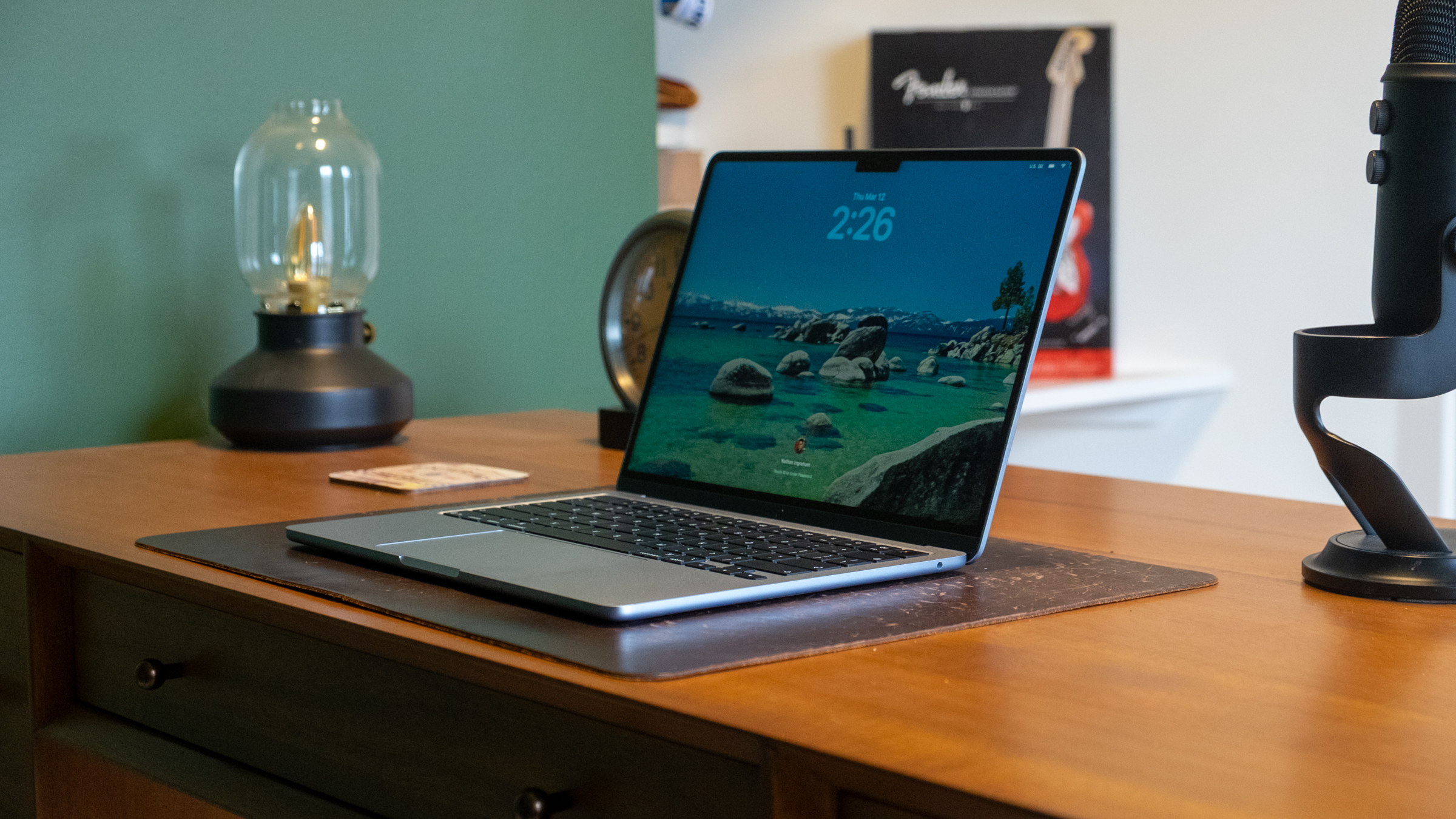
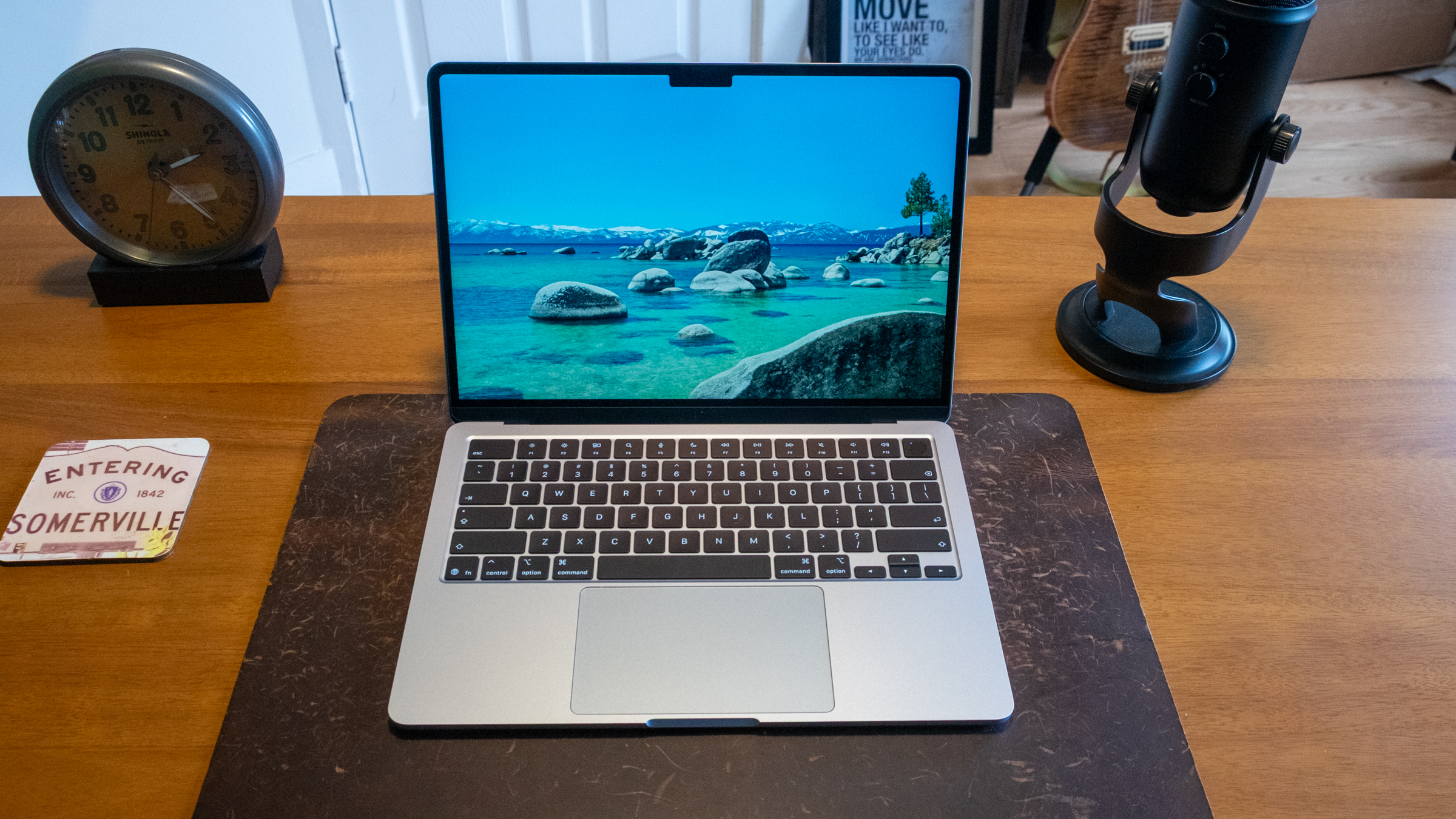
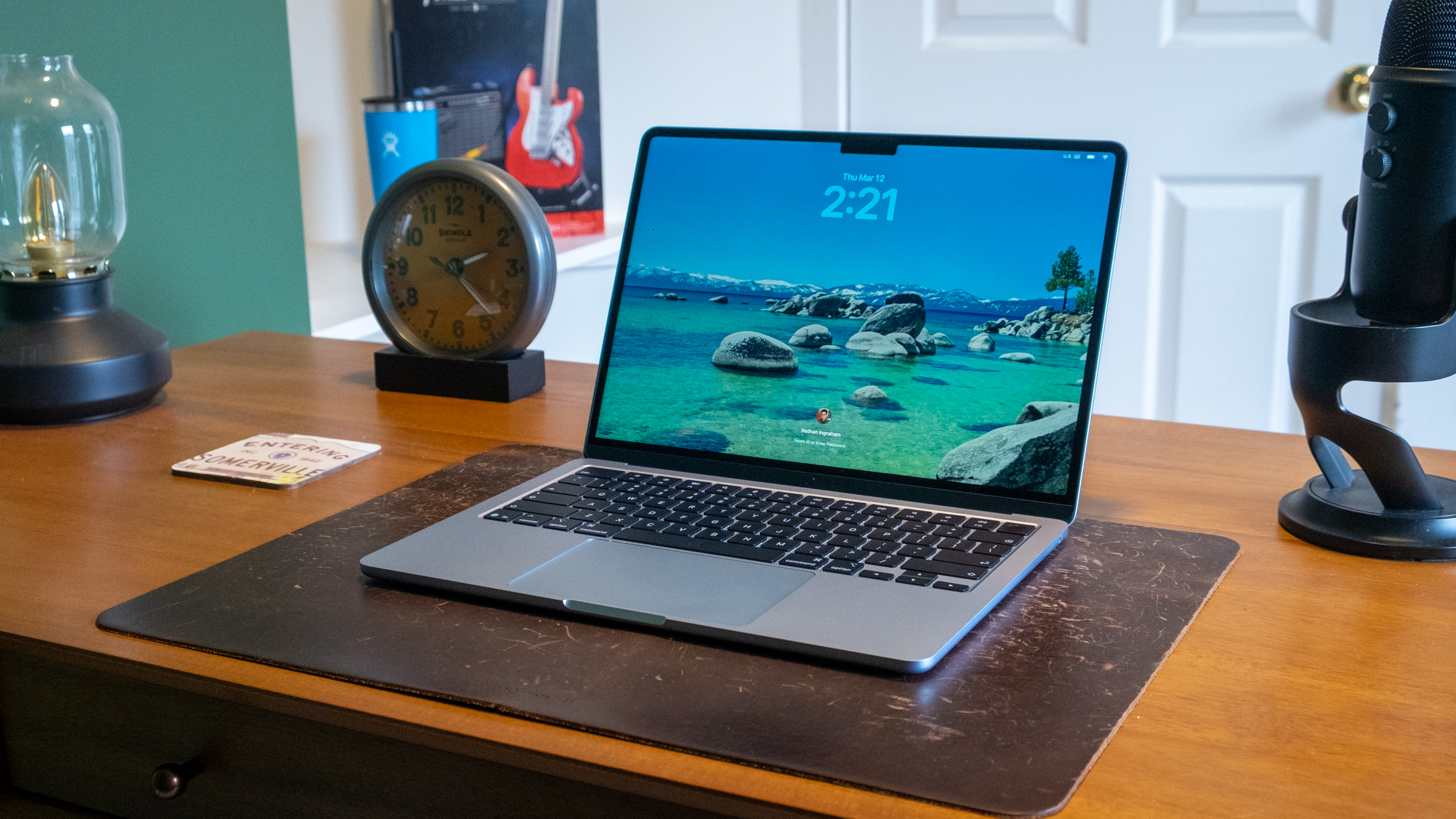
While the latest MacBook Air is physically unchanged from its 2022 revision, I don’t have a problem with that. I find the Air to be the Platonic ideal of a laptop that most people will be hard-pressed to find issues with. The 13.6-inch (or 15.3-inch, if you opt for the bigger size) display isn’t the most cutting edge screen out there, but it’s still sharp, bright and colorful. It’s stuck at a 60Hz refresh rate at a time when many PC manufacturers are using faster screens, but for the Air’s audience I don’t think that’s a problem. I may be miffed that the iPad Air similarly only has a pedestrian 60Hz refresh rate — but I think it’s less crucial on a Mac, where you’re not literally touching the screen (at least for now).
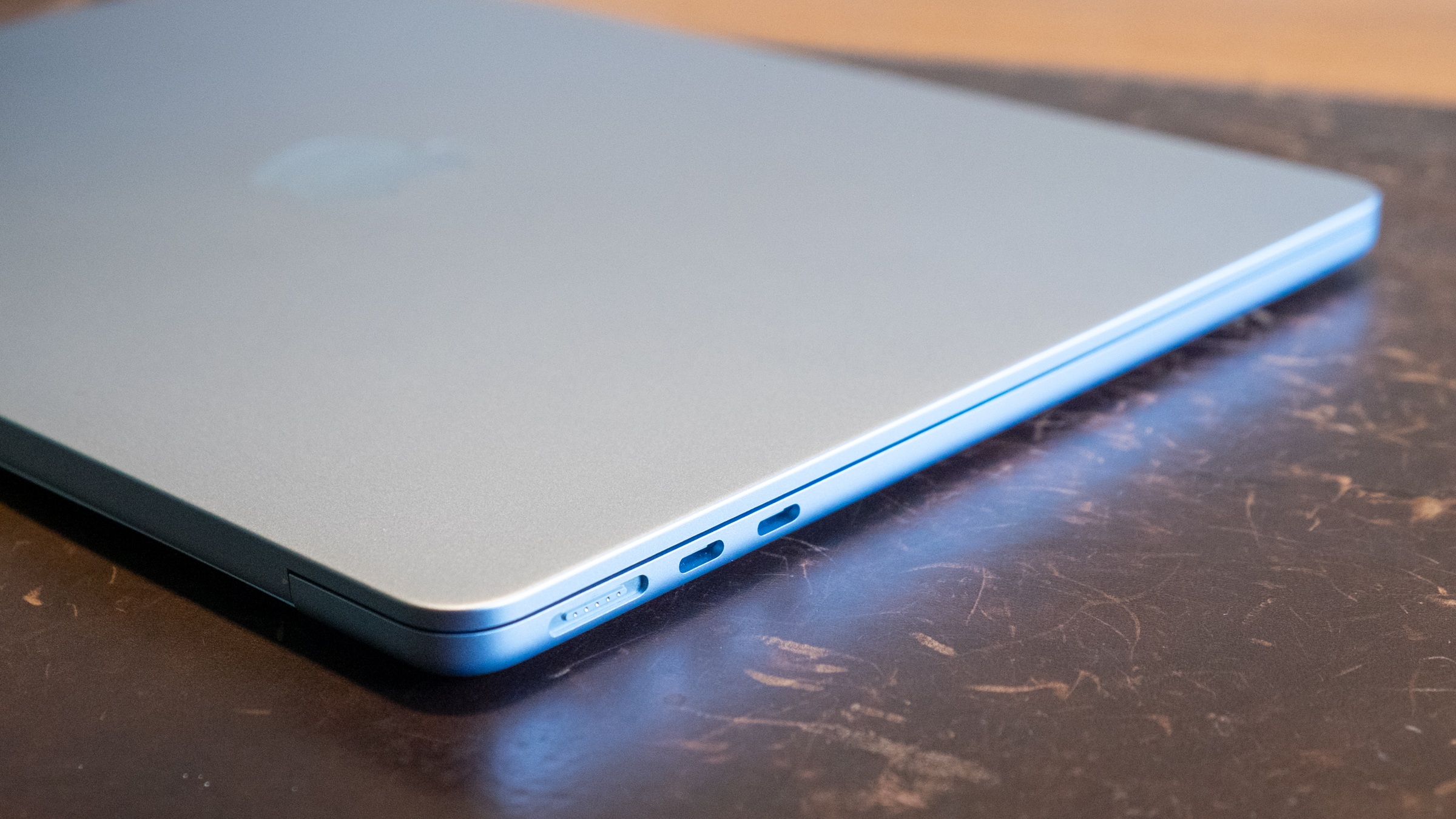
Other minor quibbles include the fact that Apple still hasn’t put a USB-C port on the right side of the computer in addition to those on the left, and the screen notch is still weird if you focus on it too much. But other than that, I can’t really come up with any issues here. At 2.7 pounds, the Air isn’t the lightest laptop out there, but I’ll take the extremely solid feel of the unibody aluminum case over a lighter and possibly flimsier plastic.
MacBook Air M5
Nathan Ingraham for Engadget
The keyboard and trackpad remain delightful, as well. My main laptop is a 14-inch MacBook Pro, and I can perceive the Air’s comparatively thinner case when typing on it. It’s not bad at all, it just feels slightly different. But after a short adjustment period, I really didn’t think about it and typed away without a care in the world. It’s baffling to me that a company that made a keyboard this good also made the horrific butterfly keyboards of yore, but fortunately that era is far in the past. The haptic-powered trackpad is huge, smooth and responsive, just like the ones on all other recent Mac laptops. Altogether, the input experience is great, and I rarely find myself really feeling like I need an external keyboard or mouse. I know people have strong feelings about that, so do as you wish, but it’s not really something I think about anymore.
The MacBook Air’s speakers and webcam are also still excellent. Last year, Apple upgraded the 1080p webcam in the Air to a 12-megapixel Center Stage model that can follow your movements to keep you in frame or switch to a “desk view” that shows a top-down viewpoint of the area in front of the laptop. The old 1080p webcam was already pretty solid, and while this one doesn’t magically repair your wrinkles, it’s definitely more versatile and detailed. The speakers, meanwhile, remain one of those things that Apple has absolutely nailed with this generation of its laptops. They’re relatively loud and well-balanced, providing far better sound than I’d expect from such a thin enclosure.
MacBook Air M5
Nathan Ingraham for Engadget
Enough power to last for years
All of this is well-known, though. The big change this year is the M5 chip, which has been available for a while already in the MacBook Pro and iPad Pro. So, we have a good idea of what to expect here as well. I’m testing the 13-inch model with 16GB of RAM and 1TB of storage that costs $1,299. It’s hard to perceive a difference between the M5 and last year’s M4 in my normal routine (dozens of tabs, Slack, Lightroom, Apple Music streaming and a bunch of lightweight apps like Bear notes, Todoist and so on). And based on my history with Apple’s M-series chips, the M5 will be a great performer for years to come. My work-issued MacBook Pro with an M1 Pro chip still runs like a champ almost five years after it was released, for example.
That said, users who do more than the basics with their laptop and have one with a chip older than 2022’s M2 will likely find the M5 Air to be a nice upgrade. Geekbench 6 benchmarks show the M5 is 11 percent and 17 percent faster than the M4 Air in single-core and multi-core tests (both with 16GB of RAM and 1TB SSDs). There were bigger GPU gains this year, with the M5 scoring 31 percent higher than the M4.
Few people out there are likely looking to upgrade from an M4 Air. But the M5 could be a noteworthy upgrade from the M3, depending of course on your workload. The M5 is 31 percent and 43 percent faster than the M3 in single- and multi-core testing. And the GPU is a whopping 56 percent faster as well. If you’re interested in doing things like video editing, music creation, gaming or AI tasks, you’ll definitely appreciate these performance gains.
MacBook Air M5
Nathan Ingraham for Engadget
Finally, these benchmarks illustrate the gap between the MacBook Neo and the Air. The M5 is about 24 percent faster than the A18 Pro in the single-core test, but it demolishes the Neo’s chip in multi-core (105 percent) and GPU (144 percent) performance. This just reiterates what we already know — the Neo is best-suited for basic tasks, while the Air should have more than enough power until you get into more specialized use cases.
And while no one will mistake the MacBook Air for a gaming laptop, Apple has had increasing success at getting developers to bring big titles to the Mac. Games like Assassin’s Creed Shadows, Cyberpunk 2077, Lies of P, Control and Resident Evil Village, along with indies like Neva, Stray and Balatro, are available here. That’s not to mention the many quality games worth checking out on Apple Arcade. All this is to say that Macs may still not be the premiere gaming platform, but people who don’t have access to a PlayStation, Xbox or more powerful gaming PC can still try a lot of great games on the platform.
Thanks to the M5, these games play pretty well to boot. I tried Cyberpunk 2077, one of the more notoriously demanding games out there, and had a stutter-free experience. Most graphically intense Mac games default to a “for this Mac” setting so you don’t really need to worry about optimizing settings. Cyberpunk 2077 stayed pretty well locked at 30 fps in my experience — obviously not as good as what you’ll get on a high-end PC or PlayStation 5, but I never felt like I was having a degraded experience. It was smooth, responsive and looked gorgeous. Getting that kind of performance from an ultraportable like the MacBook Air is hard to complain about.
Finally, battery life was close to Apple’s expectations. The company promises 18 hours of streaming video playback or 15 hours of web browsing. In my test, I looped a locally-stored 4K video file with my screen at half brightness and got… exactly 18 hours of playback before the laptop died. I’m sure it would have been less if I was streaming the video, but still. Under my usual working conditions running a variety of apps, I got more in the 10-hour range, which is more than good enough for me.
MacBook Air M5
Nathan Ingraham for Engadget
Wrap-up
Even with the MacBook Neo showing its chops despite its relatively humble hardware, I think the MacBook Air is by far the best Apple laptop for most people. Sure, Apple’s continued insistence on limiting screens with higher refresh rates to its most expensive hardware is increasingly frustrating. But other than that, the MacBook Air punches above its weight in just about every aspect — particularly when it comes to performance. The M5 is extremely powerful now and should make this year’s Air a useful computer for five years or even longer, depending on what you do with it. The MacBook Air is so mature and well-engineered at this point that it’s not the most exciting thing to review. But if you use one for a bit, it’s easy to appreciate just how good of a laptop it is.
This article originally appeared on Engadget at https://www.engadget.com/computing/laptops/macbook-air-m5-review-same-but-faster-120000685.html?src=rss
Apple's exclusive deal for US broadcast rights of Formula 1 was a big shift to streaming from ESPN's cable coverage of the past, but after the first race (the Australian Grand Prix), it seems to be going well. "The 2026 Formula 1 season on Apple TV is off to a strong start, with fans responding positively and viewership up year over year for the first weekend, exceeding both F1 and Apple expectations," Apple VP Eddy Cue told The Hollywood Reporter.
Apple didn't give any ratings or other details, but we can glean some clues from previous data. Last year, ESPN said the Australian GP averaged 1.1 million viewers, way up from the previous record of 659,000 in 2019. If Cue's comments were accurate, that means Apple TV's audience was above that, which would be impressive considering that it's a streaming-only service.
When Apple's Formula streaming deal was first announced, F1 CEO Stefano Domenicali was bullish on the deal. "It will allow us to enter in the houses of other people in a different way, in great quality that is very important for us," he told Racer. Indeed, Apple is pouring resources into it in a way that ESPN never did. That includes advanced tech that offers multiple ways for fans to watch, including Multiview, Podium Viewer, driver cams and 4K Dolby Vision coverage, Cue noted.
Apple has jumped into Formula 1 racing in other other ways as well, taking advantage of a surge in the sport's popularity aided by Netflix's series Formula 1: Drive to Survive. The streaming service's F1 movie starring Brad Pitt did huge box office numbers and is likely to see a sequel. Apple also struck a deal with Netflix on the aforementioned Drive to Survive series to share streaming of the current season eight (which details the F1 2025 championship). That agreement will also allow Netflix to stream the F1 Canadian Grand Prix live, along with Apple TV.
This article originally appeared on Engadget at https://www.engadget.com/entertainment/streaming/apple-says-f1-streaming-already-exceeds-everyones-expectations-111028328.html?src=rss
Bandai Namco has announced a new Little Nightmares game, this time for virtual reality. Little Nightmares VR: Altered Echoes is developed by Iconik and not by Tarsier Studios, but it’s still connected to the beloved titles Little Nightmares I and II. Remember Dark Six, the protagonist Six’s dark doppelganger from the previous games? Well, in this installment, you will control her as she goes on a journey to reunite with the actual Six in order to reunited with her and become whole.
The adventure horror puzzle game promises an “eerie, atmospheric universe” with an immersive first-person perspective. It features new locations within Nowhere, a nightmarish world only accessible through dreams filled with dangerous creatures, such as the human-like Residents. The Thin Man, the antagonist of the franchise’s second installment, is also back.
Little Nightmares VR: Altered Echoes is optimized for the PSVR2, the Meta Quest 2, 3 and 3s, the Oculus Rift and Rift S, the Pico 4, the Valve Index and the HTC Vive. However, it also works with other PC VR headsets. It will be available on April 24, 2026, and you can add it to your Wishlist right now on the PlayStation, Steam and Meta stores.
This article originally appeared on Engadget at https://www.engadget.com/gaming/little-nightmares-vr-altered-echoes-arrives-in-april-101626370.html?src=rss
Many of us remember the halcyon days of being a kid in the ‘90s, spending a weekend afternoon with remote control in hand and a seemingly endless well of stuff to watch on TV. Now you can relive the experience thanks to the appropriately named Channel Surfer web app. It's essentially a YouTube discovery tool that surfaces interesting videos, but presented in a retro homage to the cable channel screen.
Channel Surfer is the work of developer Steven Irby. He has 40 channels on the app right now, mostly grouping content by theme. There are channels for typical cable fare like news and sports, but also music, movies and a number of more tailored tech subjects like AI, gaming, gadgets and space.
"I built Channel Surfer because I’m tired of the algorithms and indecision fatigue," he told TechCrunch, which is where we discovered the app. "I miss channel surfing and not having to decide what to watch. I want to just sit and tune into what’s on and not think about what to watch next."
It seems Irby isn't alone, because he posted on X that the number of views he's getting for Channel Surfer already broke 10,000 on its first day.
This article originally appeared on Engadget at https://www.engadget.com/entertainment/youtube/this-web-app-lets-you-channel-surf-youtube-like-a-90s-kid-watching-cable-220651107.html?src=rss
The International Brotherhood of Teamsters, the union that covers warehouse workers, drivers and a diverse collection of other laborers, has come out against Paramount Skydance's merger with Warner Bros. Discovery. In a press release, the Teamsters announced that it has submitted a report to the US Department of Justice's Antitrust Division outlining its concerns about the impact of the deal, and is urging the DOJ to intervene in the merger.
"This merger threatens the livelihoods of the very workers who built these studios into industry giants," Teamsters General President Sean M. O’Brien said in a statement. "We've seen what happens when corporations consolidate power: jobs disappear, production leaves American communities and workers pay the price. The DOJ has a responsibility to stop deals that eliminate competition and harm working families. Unless Paramount and Warner Bros. can guarantee enforceable protections for domestic production and labor standards, this merger can’t be allowed to move forward."
The Teamsters are primarily concerned with how merging the two companies will consolidate power, and eliminate jobs in the process. "Previous mergers have a well-documented track record of harming workers — Disney’s 2019 acquisition of 20th Century Fox resulted in eliminated production units, significant job losses and canceled projects," the union says. Motion Picture Teamsters, the division of the union concentrated in Hollywood that transports the equipment, props and crew members that make productions possible, stand to be most impacted.
The high likelihood the merger impacts competition in the market is why the Teamsters expect the DOJ to step in, or in the case Paramount and Warner Bros. aren't able to provide "enforceable commitments to increasing and maintaining domestic production, strong labor standards and guarantees against layoffs and erosion of union jobs," block the deal entirely.
Engadget has asked the Teamsters union what it plans to do if the Department of Justice doesn't intervene. We'll update this article if we hear back.
If it's allowed to eat Warner Bros., Paramount Skydance has committed to producing 30 theatrical films annually, evenly split across the two studios’ slates. The larger issue is that the company's offer to acquire the studio is predicated on the idea it will quickly pass the muster of government regulators. Paramount Skydance CEO David Ellison is the son of Oracle co-founder Larry Ellison, who's known to have close ties with President Donald Trump, and has already benefited from favorable treatment from the administration. There's a real possibility that Paramount's new merger could similarly sail through, regardless of the Teamsters' concerns.
This article originally appeared on Engadget at https://www.engadget.com/entertainment/teamsters-urge-doj-to-block-paramounts-warner-bros-merger-215115721.html?src=rss
The newly verified X account for Iran's supreme leader could be putting the company on the wrong side of US sanctions, according to a watchdog group. The Tech Transparency Project, which last month published a report on X granting premium perks to sanctioned officials in Iran, now says that the verified account for the country's new leader raises fresh questions about the issue.
The TTP notes that the X account for Iran's new supreme leader, Mojtaba Khamenei, appears to be paying for an X premium subscription despite being on the US government's list of sanctioned individuals since 2019. As the group points out, the Iran-based account was created this month and currently bears a blue checkmark, which typically indicates the account holder is paying for a subscription.
Last month, TTP found that X was providing premium subscriptions to Iranian officials sanctioned by @USTreasury, a transaction that may violate sanctions.
It didn't end there.
An account for Iran's new supreme leader created this month also carries the blue premium checkmark.🧵 pic.twitter.com/5K9Ss1Sex8
— Tech Transparency Project (@TTP_updates) March 12, 2026
The account belonging to Mojtaba Khamenei has been boosted by other state-linked accounts in Iran, including the one that previously belonged to Khamenei's father. That account has had a gray checkmark, which indicates it belongs to a verified government official. Verified accounts on X are rewarded with extra visibility on the platform, along with other perks. The younger Khamenei's verified account has already gained more than 20,000 new followers in the hours since TTP first posted about it.
"The new Supreme Leader's account is just the latest account for a sanctioned entity apparently paying X for premium services," TTP director Katie Paul said in a statement to Engadget. "TTP has identified dozens of accounts, many linked to designated terrorists, that subscribed to X premium over the past three years. What's more concerning than the blatant disregard for U.S. sanctions law is the fact that Musk's companies have a contract with the Pentagon while X is actively profiting from U.S. adversaries."
As Paul notes, this isn't the first time TTP has raised questions about whether X is running afoul of US sanctions via its premium service. In 2024, the group published a report noting that X was accepting paid verification from more than two dozen sanctioned individuals and groups. The company said at the time that it had a "a robust and secure approach in place for our monetization features."
X didn't respond to a request for comment. But in the hours after Engadget reached out about Khamenei’s account, the blue checkmark was removed. The company also removed blue checks from a handful of Iran-based accounts flagged by TTP last month following reporting from Wired.
Update, March 13, 2026, 9:08AM PT: This story was updated to reflect changes made to Khamenei’s account following publication.
This article originally appeared on Engadget at https://www.engadget.com/social-media/x-could-be-breaching-us-sanctions-on-iran-watchdog-warns-213550284.html?src=rss