A Bookrack That Started as a Rectangle and Refused to Stay One

Most furniture design starts with a question about function and ends there. Deniz Aktay, the designer behind the studio @dezinobjects, apparently decided to start with geometry instead, and the result is one of the most quietly clever storage pieces I’ve come across in a while: the Barrow Bookrack.

The concept is almost laughably simple to explain, which is exactly why it works. Take a rectangle. Extend each of its lines on one side only. That’s it. That’s the whole idea. And yet, what comes out the other end of that single decision is a bookrack that feels caught mid-motion, leaning into itself, its proportions oddly satisfying in a way that’s difficult to immediately place. On paper, it barely sounds like a design at all. In person, it’s all you notice.

Designer: Deniz Aktay
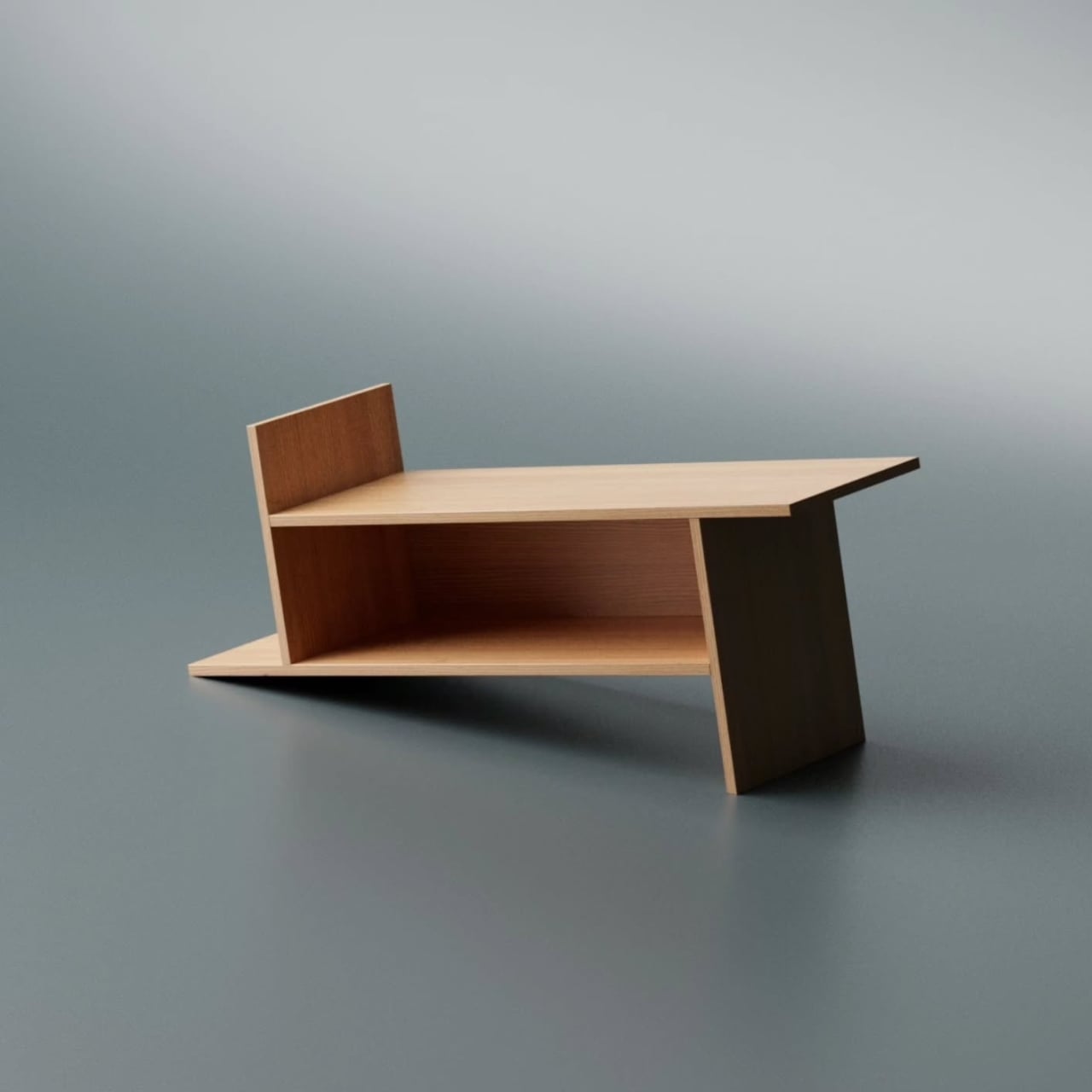
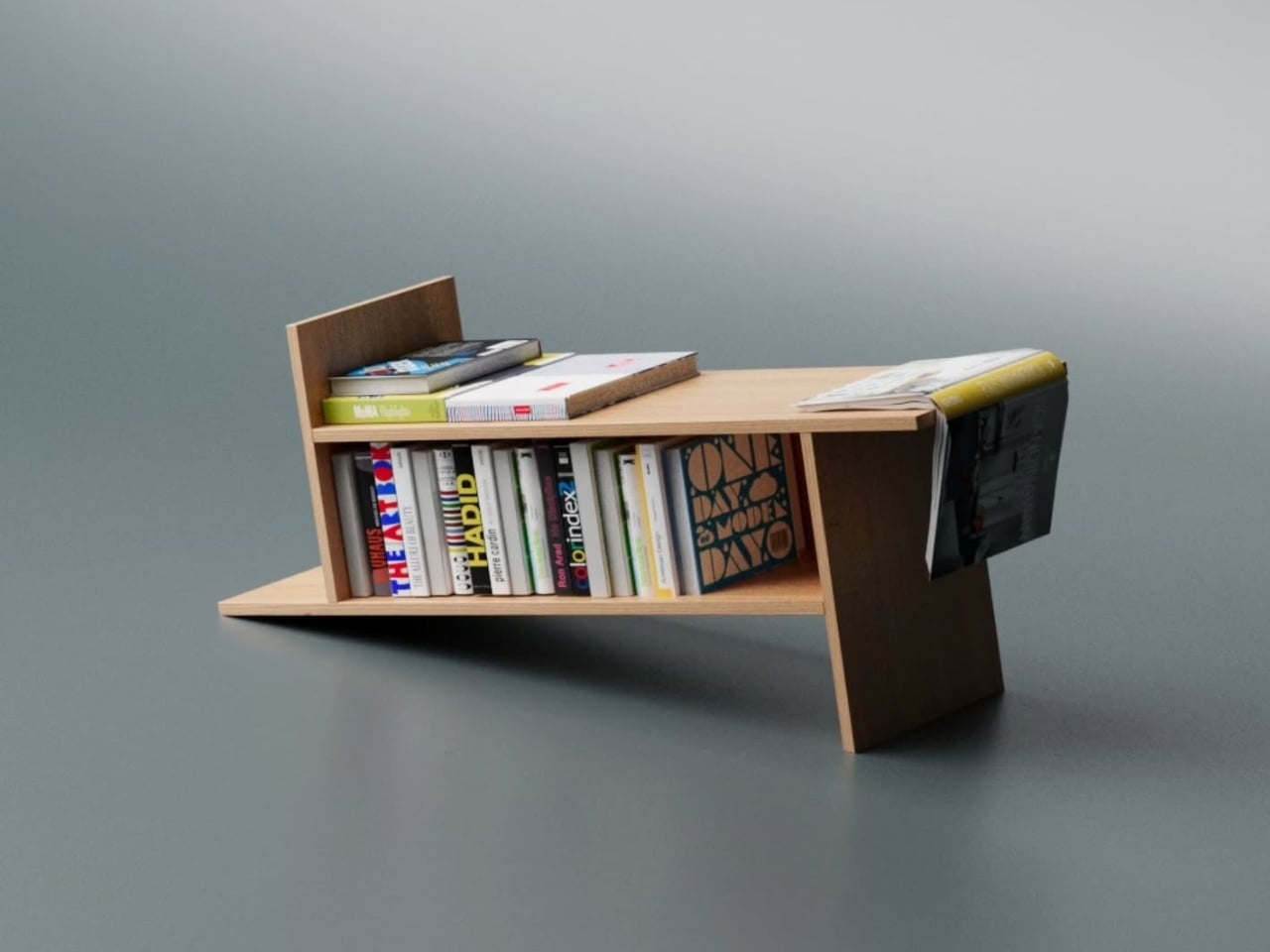
Looking at it from a distance, the Barrow tilts at an angle that initially reads as precarious. It looks like it could tip at any moment, like a shelf that forgot to stand up straight. But it doesn’t. The asymmetry is intentional and controlled, and that’s exactly the kind of design choice that separates a well-considered piece from something that only looks interesting in renders. The structure holds, both physically and visually. The angular feet, the jutting top ledge, the open body sitting between them: everything is doing something.

The name is worth pausing on. A barrow, the traditional kind, is a simple carrying frame stripped back to its essential parts. Nothing extra, nothing decorative, just the minimum structure required to move something from one place to another. Aktay’s Barrow carries that same philosophy. Every extended edge and protruding surface earns its place. The result is a range of storage spots, each with its own character. Books stand upright in the central cavity. Larger volumes or stacked titles settle onto the flat extended surfaces. A magazine slipped sideways into one of the outer ledges feels like it was always meant to sit there.
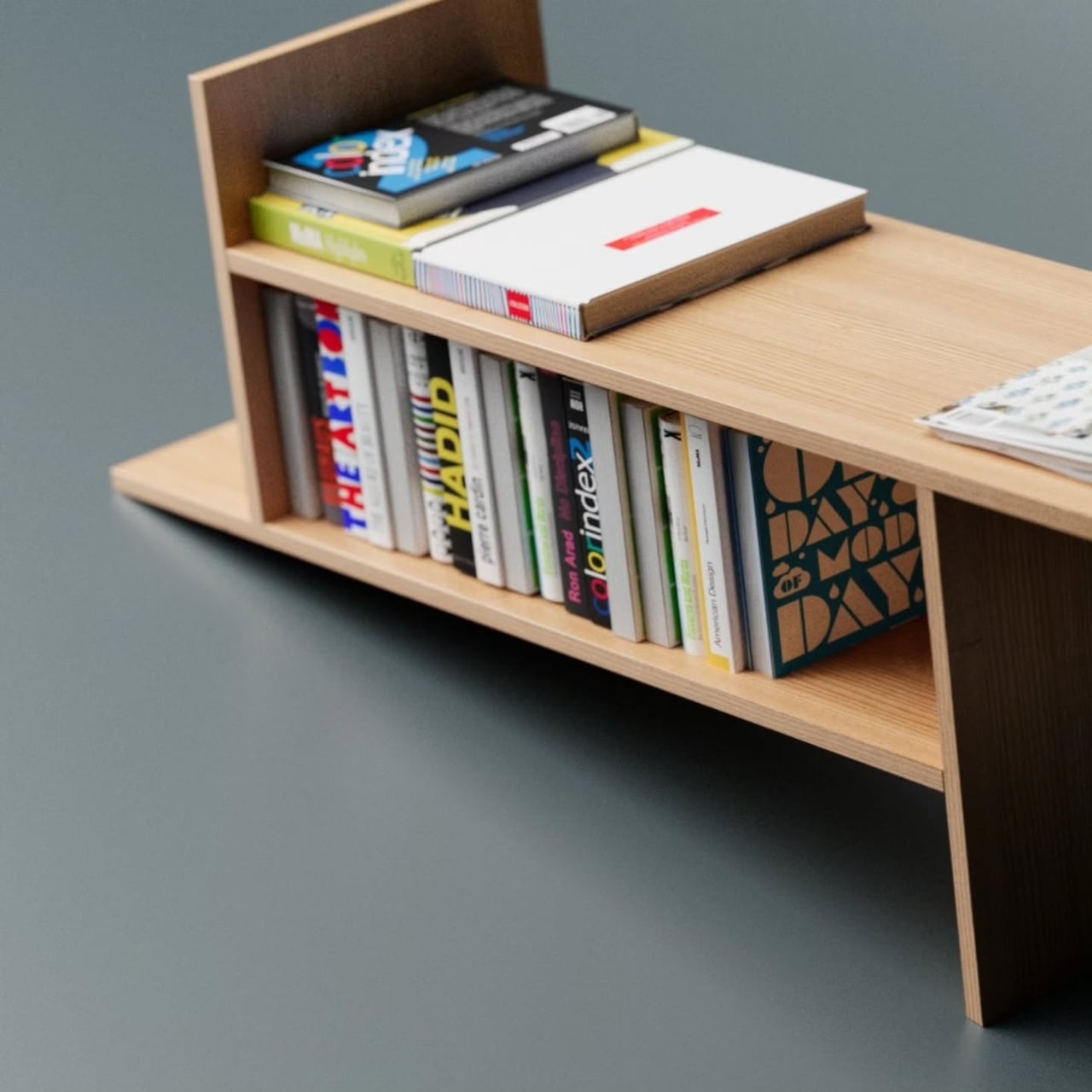
This is the kind of piece that rewards being actually used. A lot of beautiful storage objects suffer from what I’d call the trophy problem: they look better empty than full. Barrow is the opposite. Load it with design books, art monographs, a worn paperback or two, and it genuinely improves. The varying heights, the mix of orientations, the textures of spines pressed against pale wood, it all adds up into something that feels lived in rather than staged. The structure becomes a frame for your reading life rather than something competing with it.

Aktay has explored this kind of thinking before. His earlier Bookgroove piece was a sculptural bookrack-table hybrid that played with the idea of furniture as form. Barrow feels like a sharper, more edited version of that same instinct: fewer moves, more precision. There’s less drama in the silhouette, but the restraint makes it more liveable. A piece like this can sit in a living room, a studio, or a bedroom and feel contextually right without demanding too much visual real estate from the room around it. It has presence without insistence, which is a harder balance to strike than it sounds.
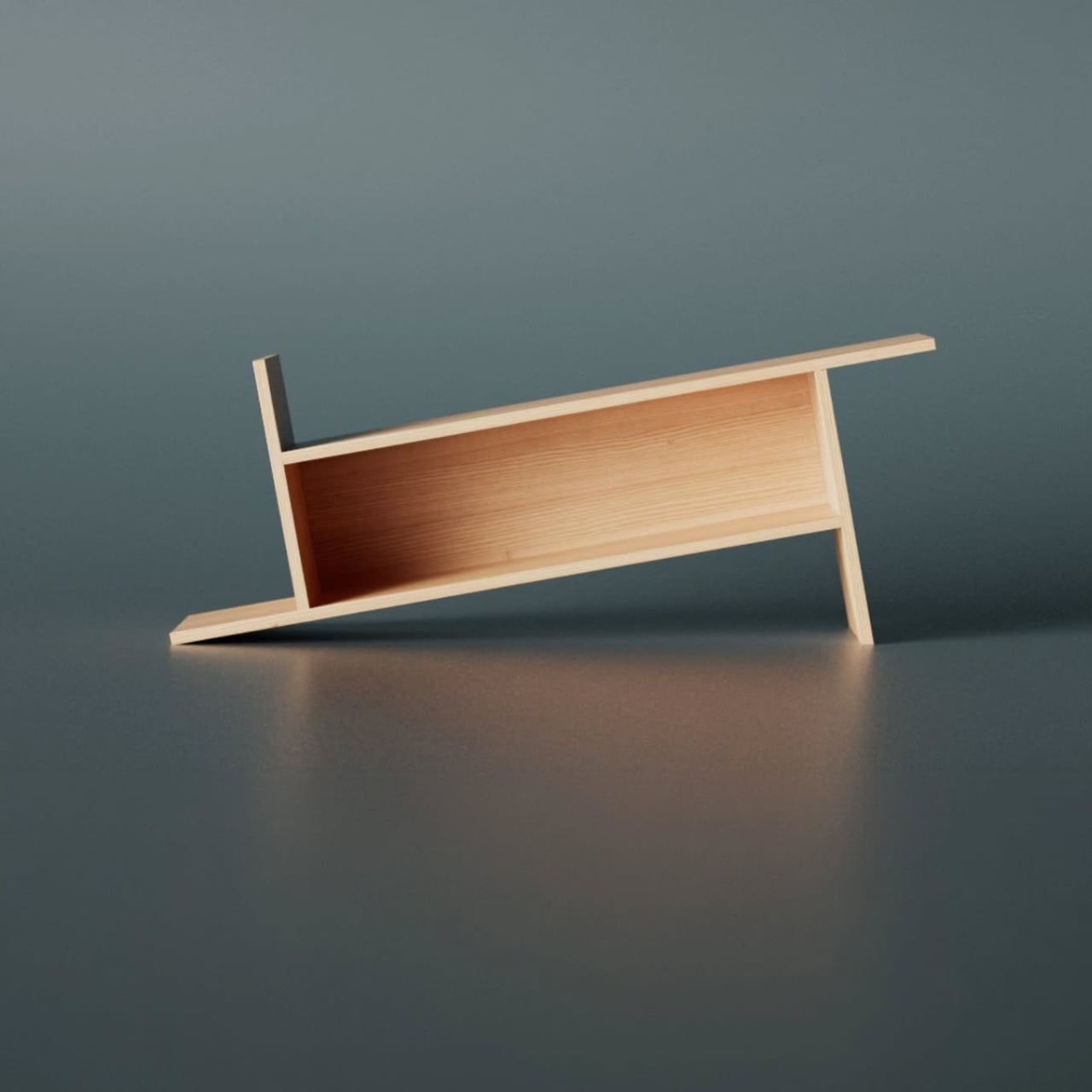
The part that keeps pulling me back to this design is how naturally it moves from a flat idea to a physical one. The Barrow is essentially a graphic concept made tangible, a line drawing that decided to become furniture. The form evolved directly from extending lines on a flat surface before anything was actually built, and seeing that logic translated so cleanly into wood makes the whole thing click. The render and the physical piece are telling the same story, which is rarer in furniture design than it ought to be.

Furniture, at its best, makes you reconsider something you assumed was already settled. You’ve seen hundreds of bookshelves. You’ve probably owned a few. The Barrow doesn’t try to be revolutionary. It just extends a line a little further than expected, and somehow that’s enough to change the whole conversation.
The post A Bookrack That Started as a Rectangle and Refused to Stay One first appeared on Yanko Design.
A Bookrack That Started as a Rectangle and Refused to Stay One

Most furniture design starts with a question about function and ends there. Deniz Aktay, the designer behind the studio @dezinobjects, apparently decided to start with geometry instead, and the result is one of the most quietly clever storage pieces I’ve come across in a while: the Barrow Bookrack.

The concept is almost laughably simple to explain, which is exactly why it works. Take a rectangle. Extend each of its lines on one side only. That’s it. That’s the whole idea. And yet, what comes out the other end of that single decision is a bookrack that feels caught mid-motion, leaning into itself, its proportions oddly satisfying in a way that’s difficult to immediately place. On paper, it barely sounds like a design at all. In person, it’s all you notice.

Designer: Deniz Aktay

Looking at it from a distance, the Barrow tilts at an angle that initially reads as precarious. It looks like it could tip at any moment, like a shelf that forgot to stand up straight. But it doesn’t. The asymmetry is intentional and controlled, and that’s exactly the kind of design choice that separates a well-considered piece from something that only looks interesting in renders. The structure holds, both physically and visually. The angular feet, the jutting top ledge, the open body sitting between them: everything is doing something.

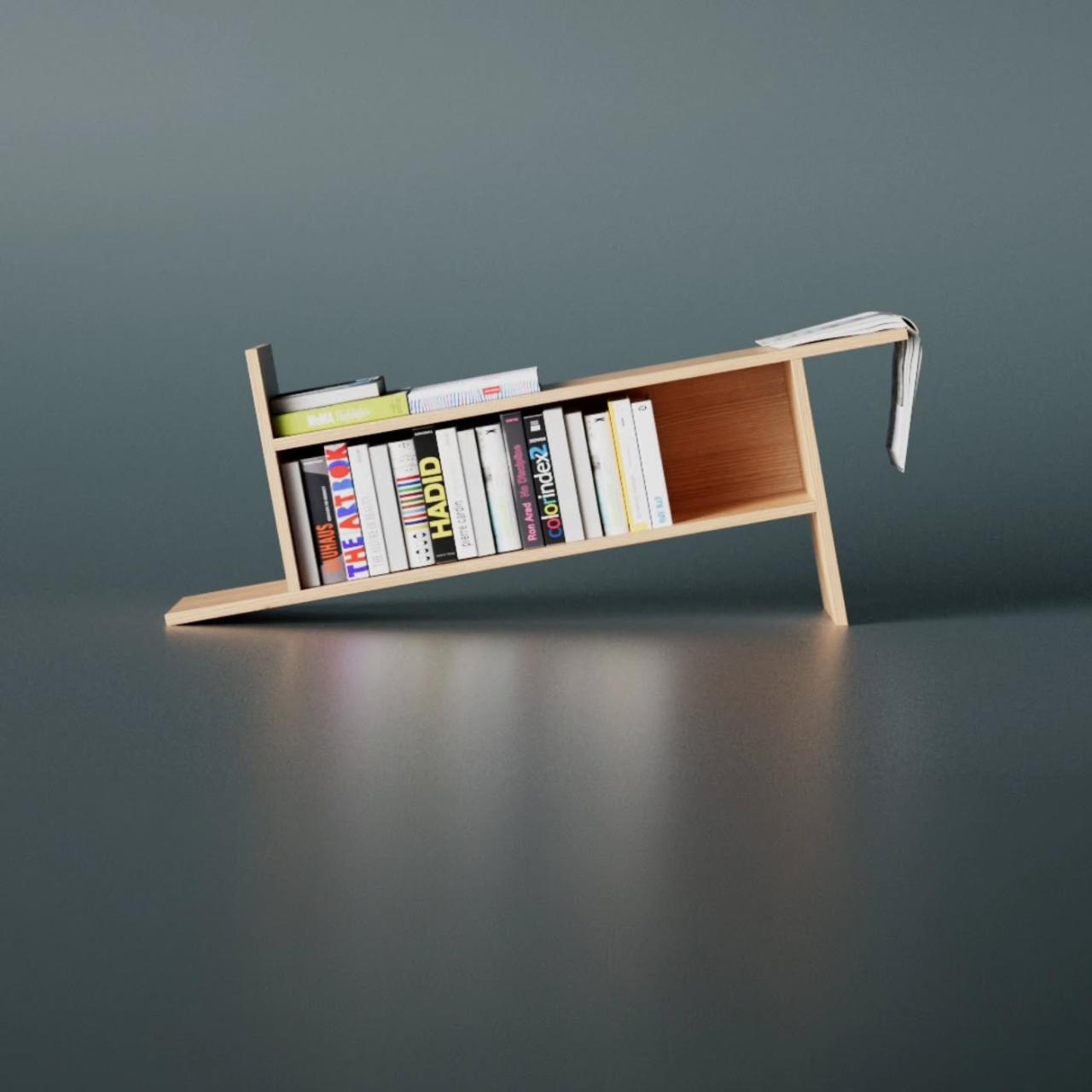
The name is worth pausing on. A barrow, the traditional kind, is a simple carrying frame stripped back to its essential parts. Nothing extra, nothing decorative, just the minimum structure required to move something from one place to another. Aktay’s Barrow carries that same philosophy. Every extended edge and protruding surface earns its place. The result is a range of storage spots, each with its own character. Books stand upright in the central cavity. Larger volumes or stacked titles settle onto the flat extended surfaces. A magazine slipped sideways into one of the outer ledges feels like it was always meant to sit there.

This is the kind of piece that rewards being actually used. A lot of beautiful storage objects suffer from what I’d call the trophy problem: they look better empty than full. Barrow is the opposite. Load it with design books, art monographs, a worn paperback or two, and it genuinely improves. The varying heights, the mix of orientations, the textures of spines pressed against pale wood, it all adds up into something that feels lived in rather than staged. The structure becomes a frame for your reading life rather than something competing with it.

Aktay has explored this kind of thinking before. His earlier Bookgroove piece was a sculptural bookrack-table hybrid that played with the idea of furniture as form. Barrow feels like a sharper, more edited version of that same instinct: fewer moves, more precision. There’s less drama in the silhouette, but the restraint makes it more liveable. A piece like this can sit in a living room, a studio, or a bedroom and feel contextually right without demanding too much visual real estate from the room around it. It has presence without insistence, which is a harder balance to strike than it sounds.

The part that keeps pulling me back to this design is how naturally it moves from a flat idea to a physical one. The Barrow is essentially a graphic concept made tangible, a line drawing that decided to become furniture. The form evolved directly from extending lines on a flat surface before anything was actually built, and seeing that logic translated so cleanly into wood makes the whole thing click. The render and the physical piece are telling the same story, which is rarer in furniture design than it ought to be.

Furniture, at its best, makes you reconsider something you assumed was already settled. You’ve seen hundreds of bookshelves. You’ve probably owned a few. The Barrow doesn’t try to be revolutionary. It just extends a line a little further than expected, and somehow that’s enough to change the whole conversation.

The post A Bookrack That Started as a Rectangle and Refused to Stay One first appeared on Yanko Design.
This €289 Add-On Turns Your €49 Billy Bookcase Into a Standing Desk

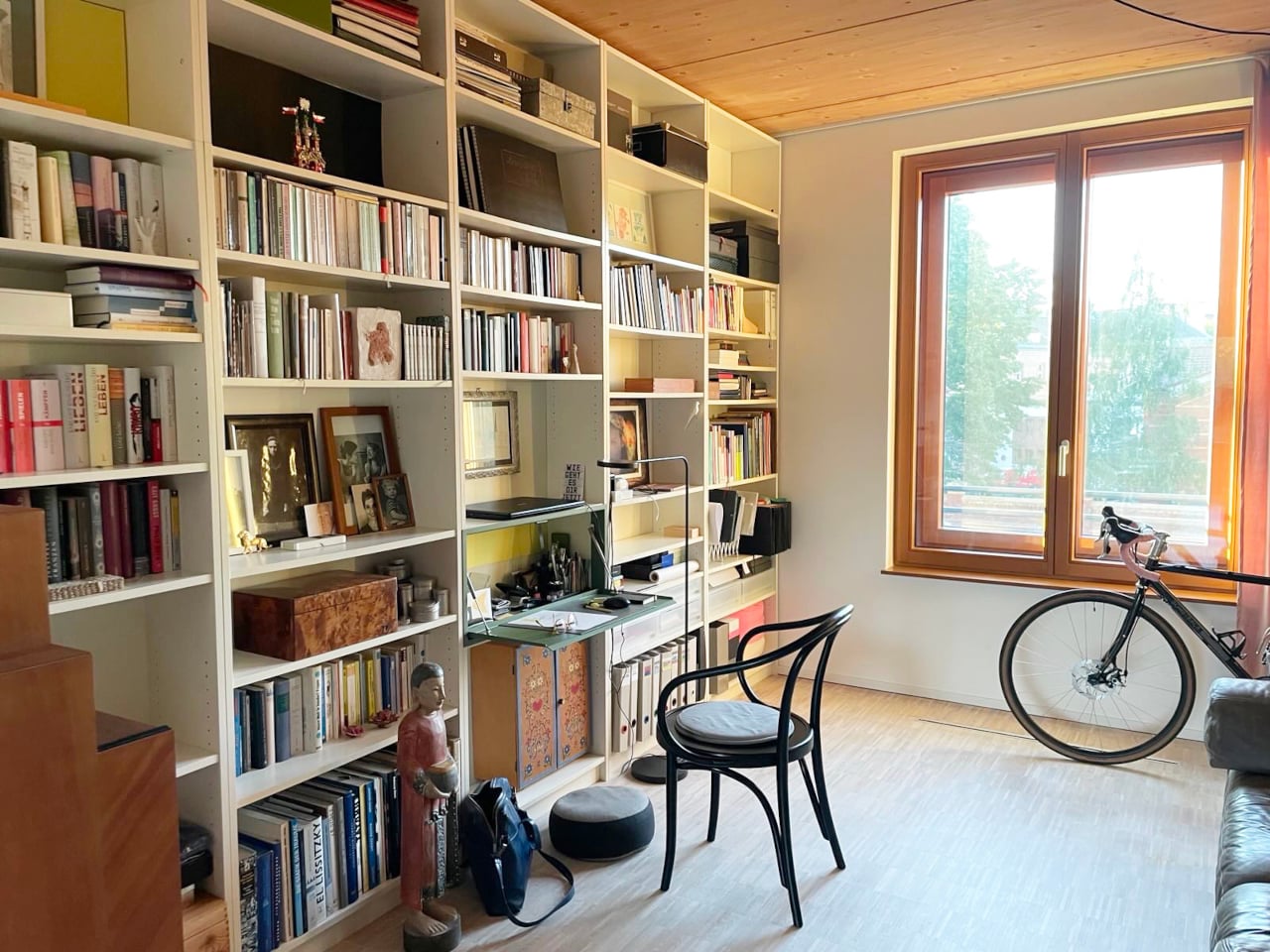
Over 120 million IKEA Billy bookcases have been sold since 1979, according to the famed brand. One rolls off the line every five seconds, and at least one is probably within arm’s reach of wherever you’re sitting right now. For most of its 46-year existence, the Billy has been a passive piece of furniture, a storage object that holds books, plants, and the occasional decorative object nobody remembers buying.

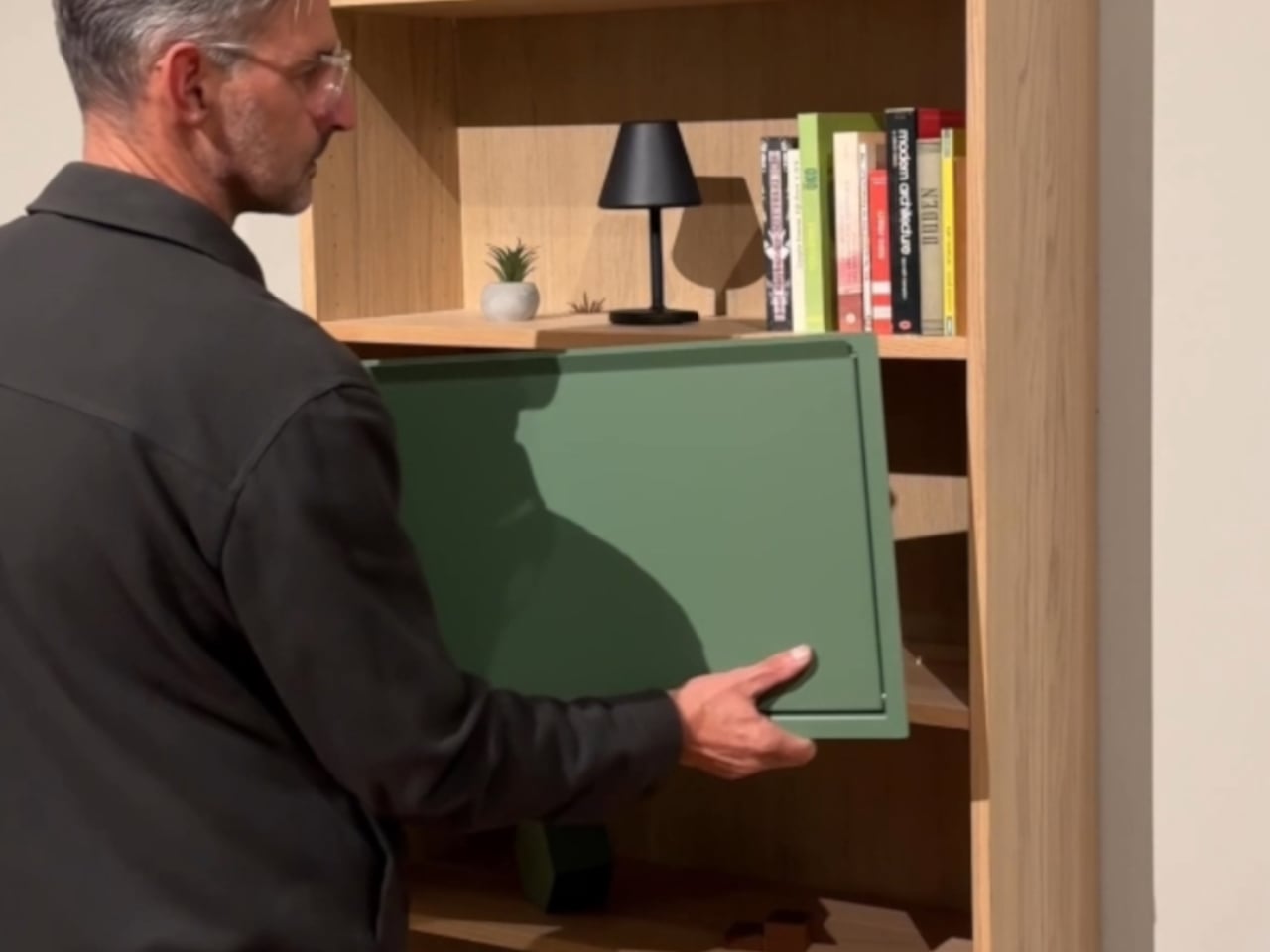
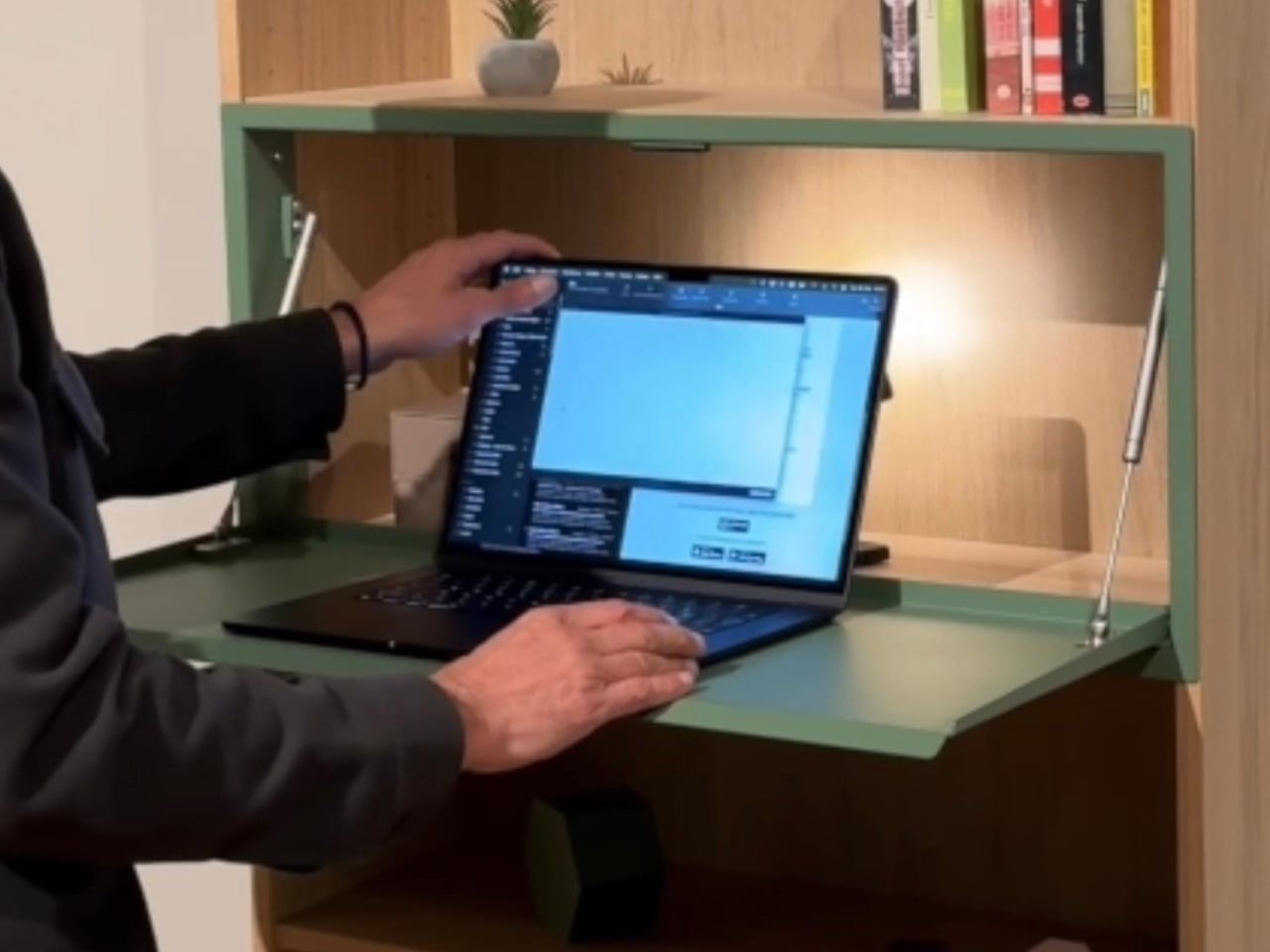
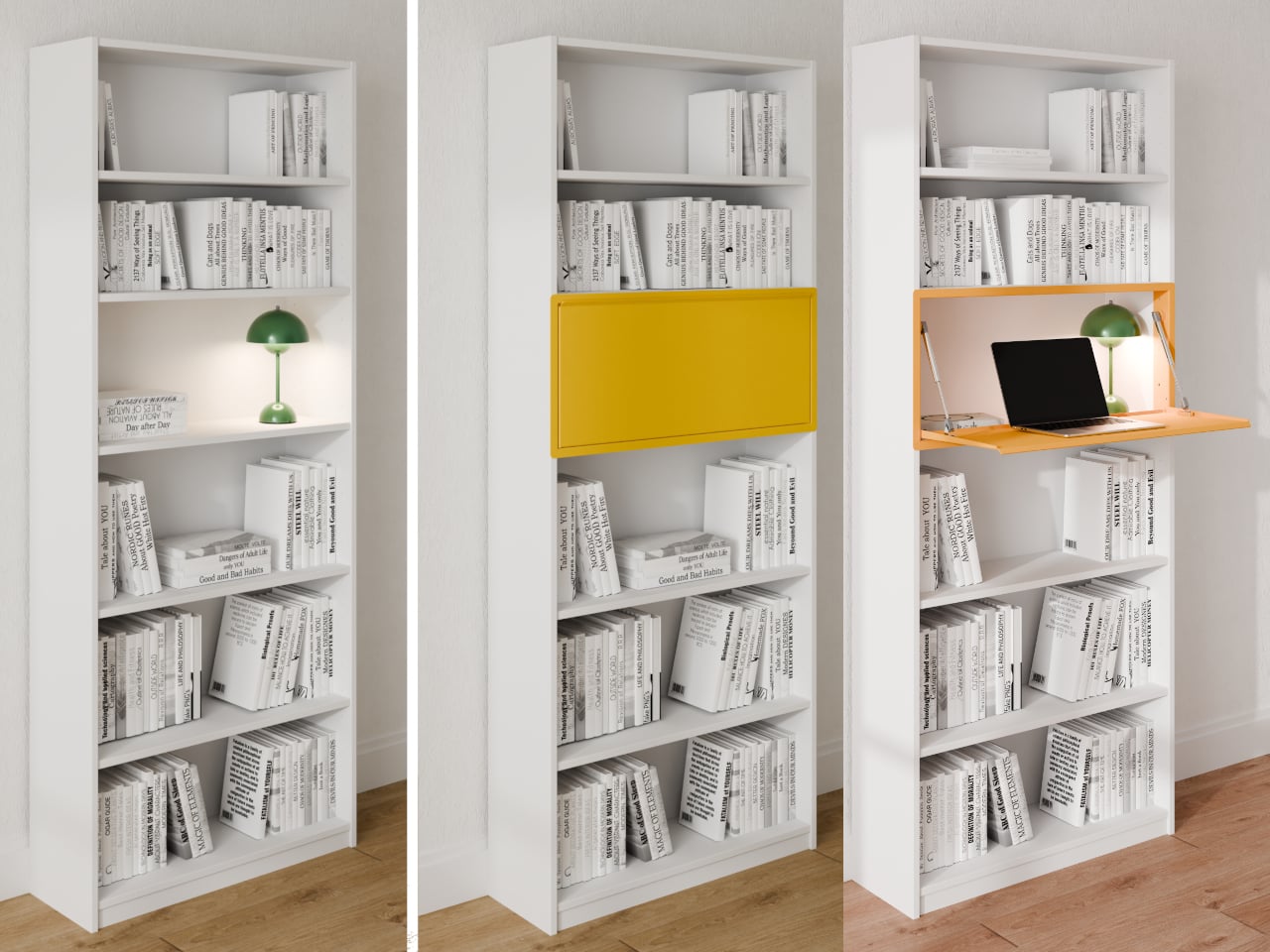
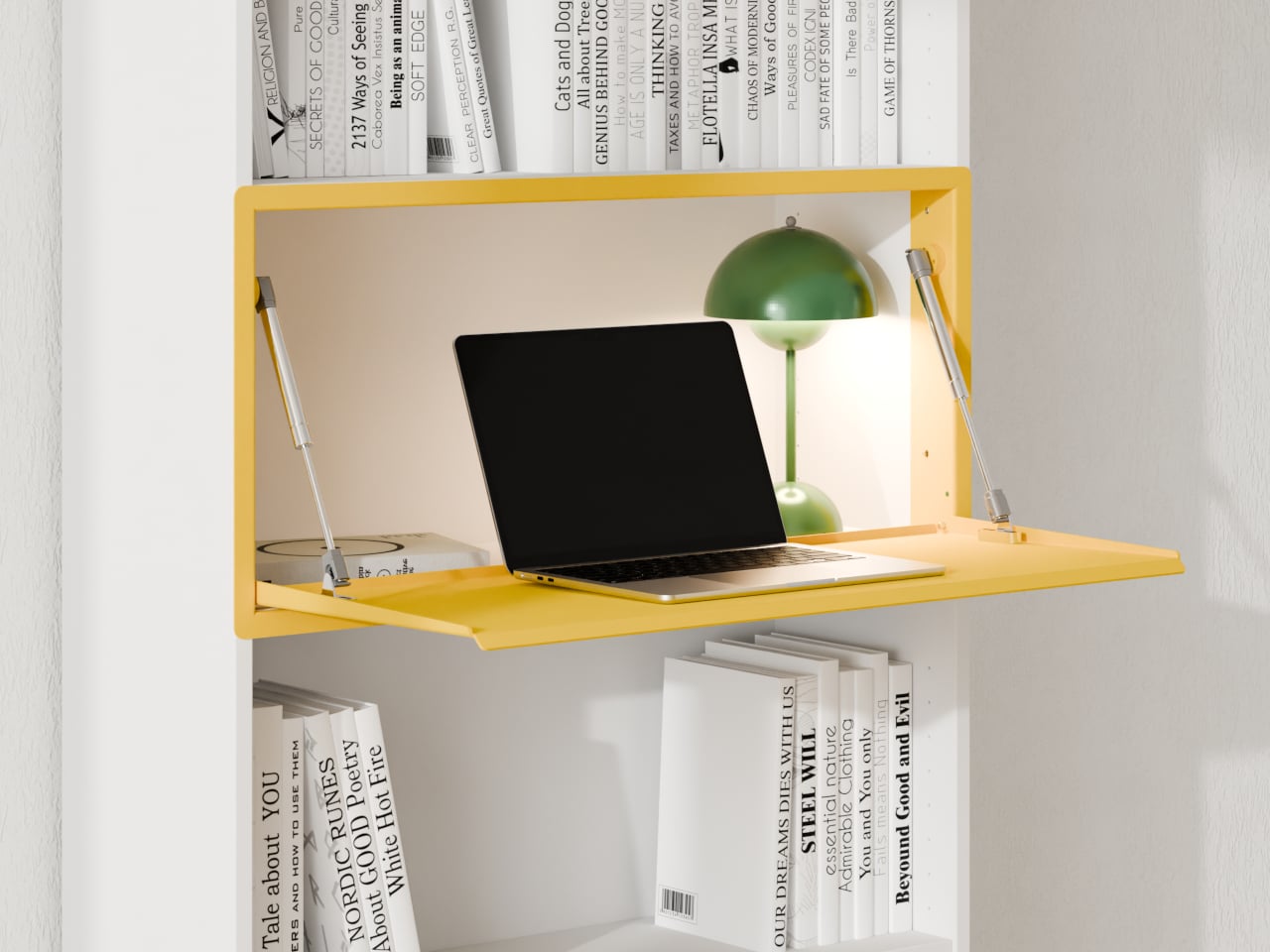
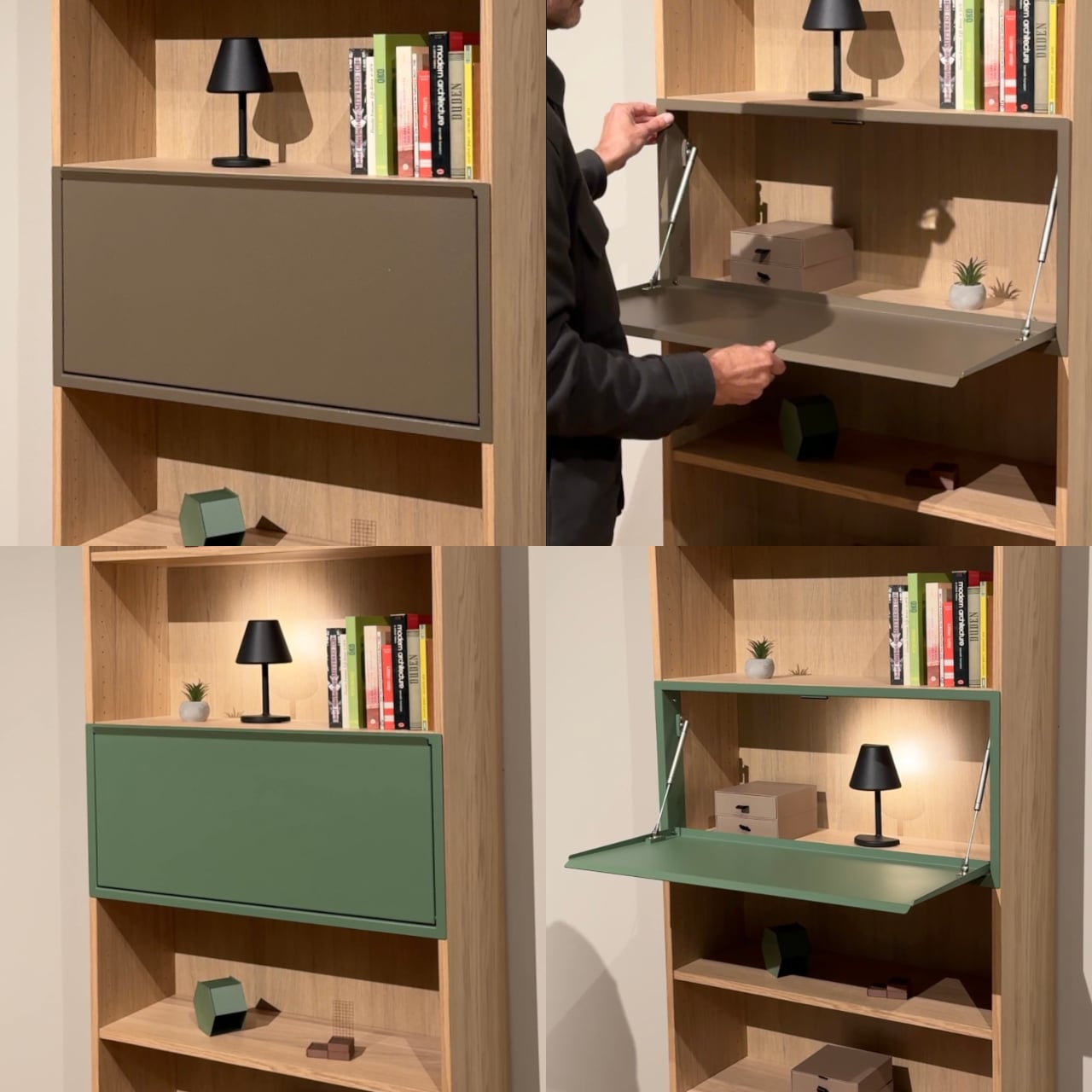
Berlin-based designer Michael Hilgers, however, looked at that same bookcase and saw a workspace hiding in plain sight. This gave birth to the STECKRETÄR, a folded steel panel that plugs directly into the Billy’s existing shelf pin holes and folds down into a compact standing desk. No tools, no drilling, no hardware. The name is a portmanteau of the German words for “plug in” and “secretary desk,” which sums up the interaction neatly.

Designer: Michael Hilgers

Made from 2mm recyclable steel, the STECKRETÄR arrives powder-coated in a fine-texture finish across colors like reseda green, mustard, nougat, and rust red. These aren’t neutral tones that blend into the Billy’s usual white or birch exterior but deliberate accents, meant to be seen. The work surface measures roughly 750mm x 330mm, enough for a laptop and perhaps a notebook beside it, though a mouse would be pushing the boundaries of the available real estate.

The scenario where this makes the most sense is familiar to anyone living in a compact apartment. You probably already own a Billy because almost everyone owns a Billy. You need a workspace that doesn’t permanently eat into your floor plan. The STECKRETÄR folds flat against the bookcase when not in use and swings down when you need to answer emails, sketch something out, or take a quick video call while standing.

A few practical considerations temper the appeal. The Billy must be wall-anchored before installation, a step many owners skip and one that involves actual drilling. The work surface offers no integrated power outlet or lighting. And standing is the only option here, since the desk height depends on which row of shelf pin holes you choose along the Billy’s tall frame. IKEA itself now sells a pull-out desk add-on for the Billy, but that version is particleboard and a different interaction entirely, one that slides out rather than folding down.

Hilgers frames the product as a reflection on “the blurring of work and private life” and “the creative reinterpretation of the everyday,” which is a lot of conceptual weight for a folding desk. Whether the STECKRETÄR is a functional home office solution or a limited-edition design statement about mass production probably depends on how you feel about paying €289 to transform something you bought for €49. Either way, it might be the first time anyone has looked at a Billy bookcase and seen potential beyond storage.

The post This €289 Add-On Turns Your €49 Billy Bookcase Into a Standing Desk first appeared on Yanko Design.
Beautiful amorphous chair is also a side table, bookcase, and art object in one

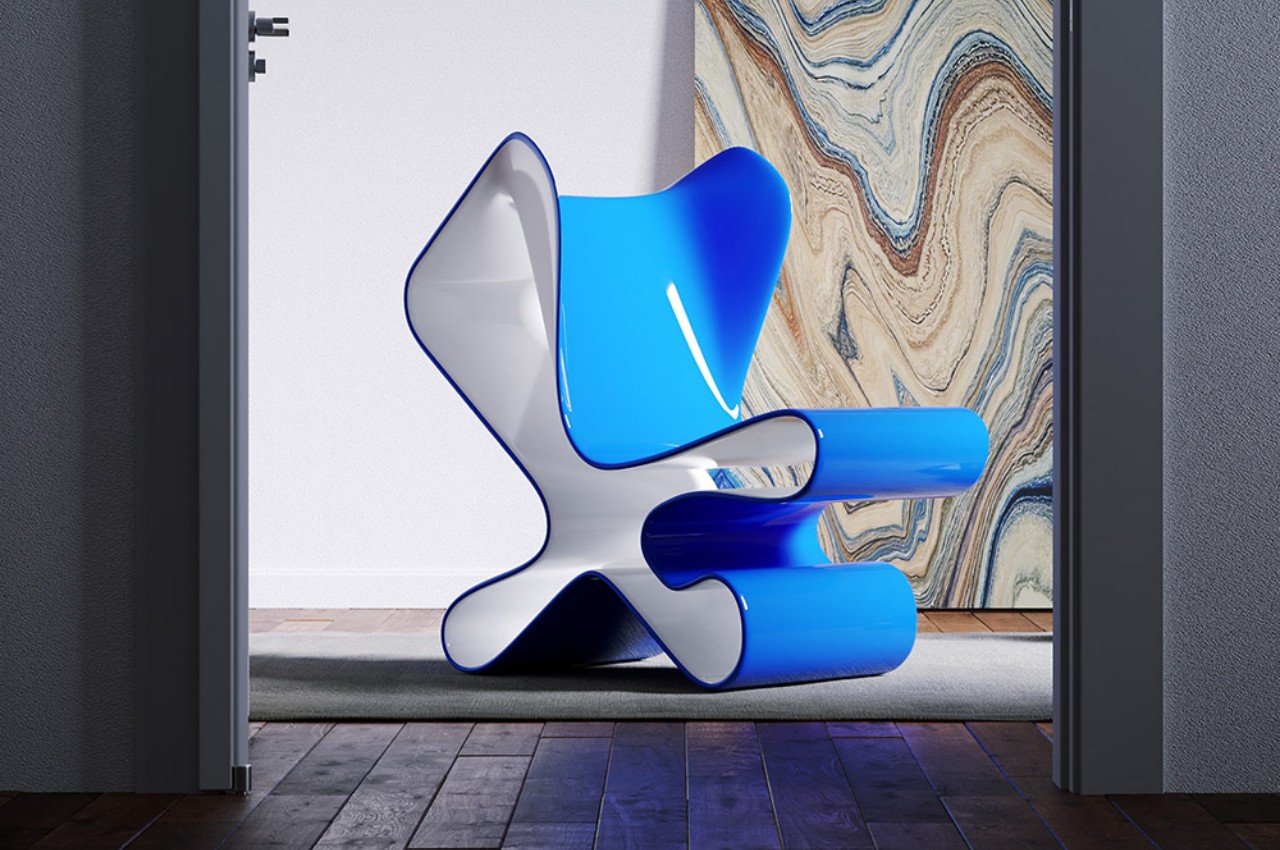
Chairs are always a necessity in any living space, but that doesn’t mean they’re always in use. In fact, some chairs have become makeshift shelves for holding stuff either because the owner has run out of space for an actual shelf or because that chair has sat unused for months. While that’s a practical solution for an underutilized piece of furniture, it’s also unaesthetic, messy, and inefficient. If only you could have a chair that is also a shelf or table when it’s not in use. That’s precisely the multi-functional design that this rather distinctive chair has to offer, and it looks like a stunning art design object as well, no matter which way you use it.

Designer: Mavimatt

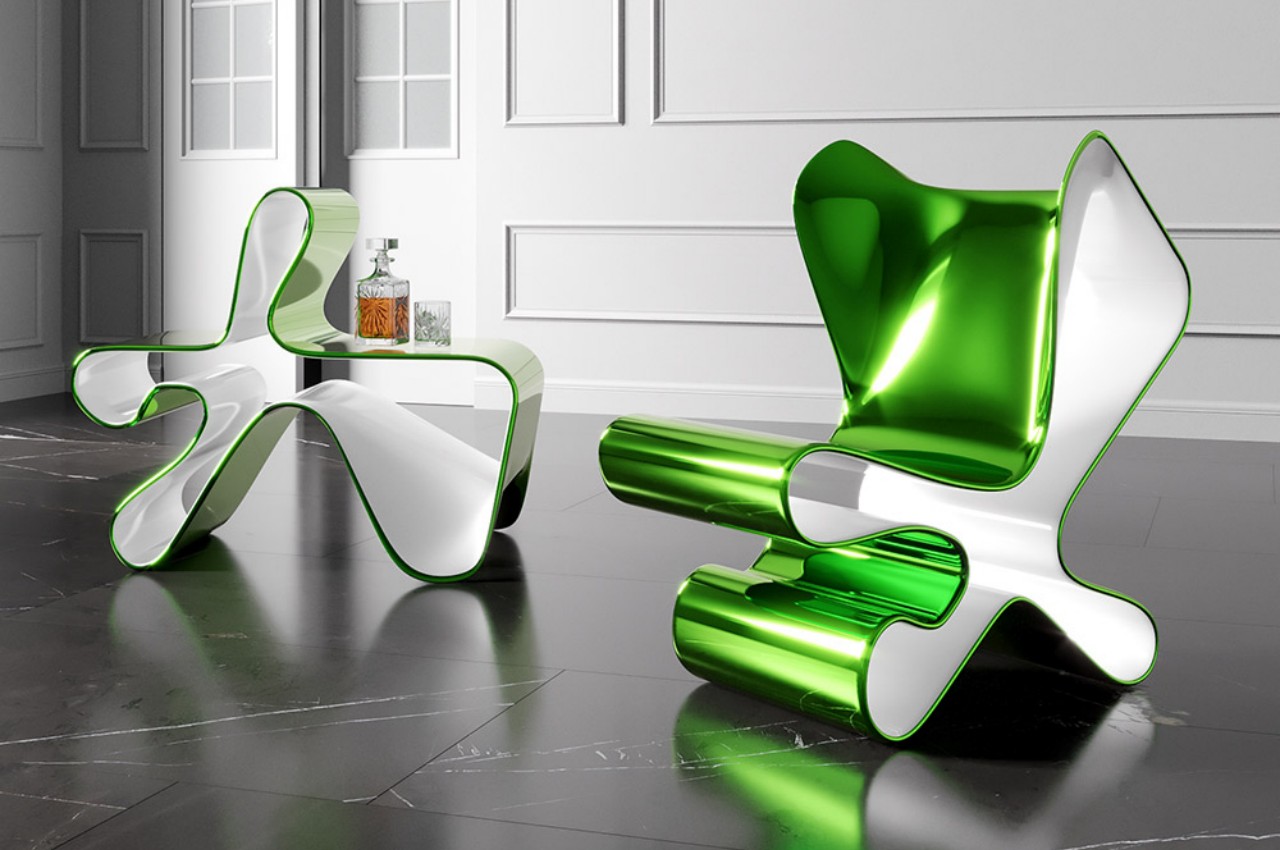
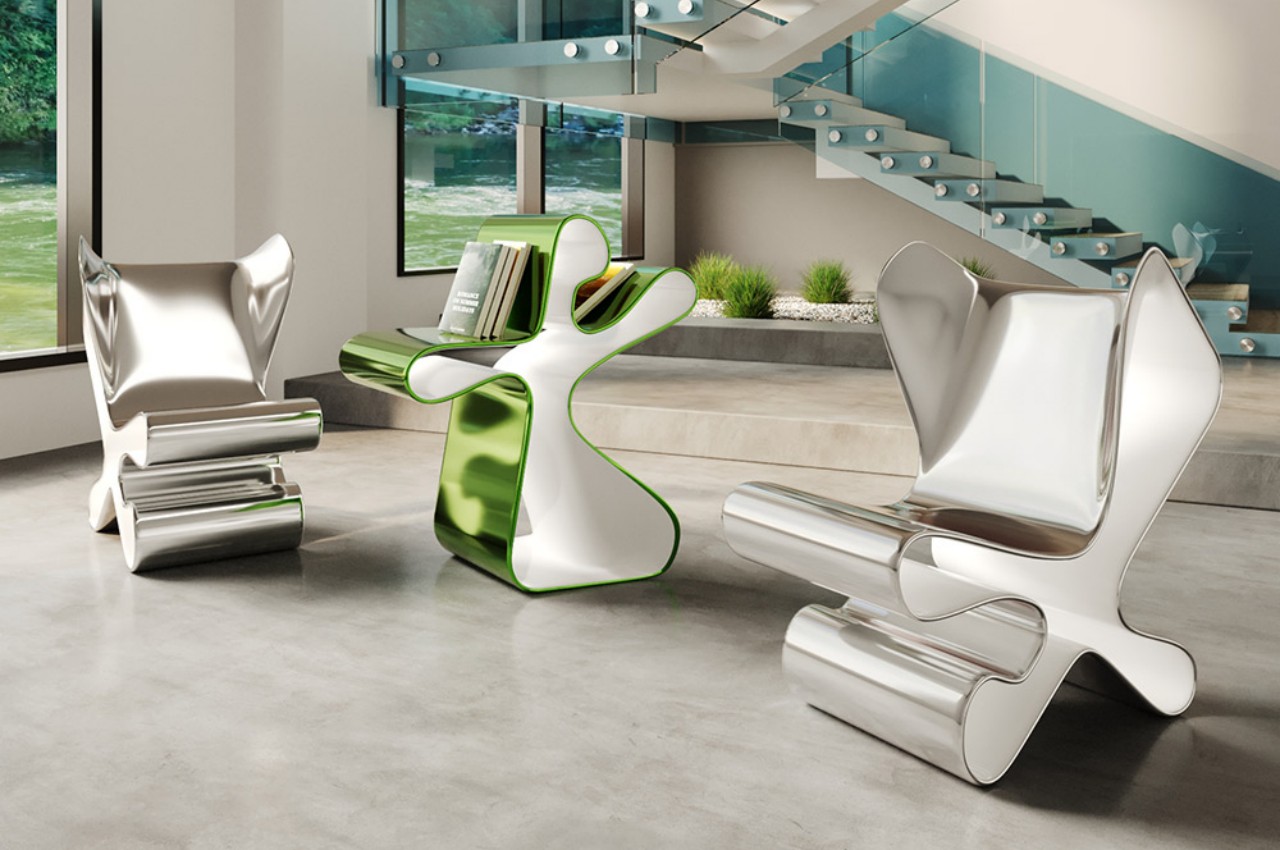
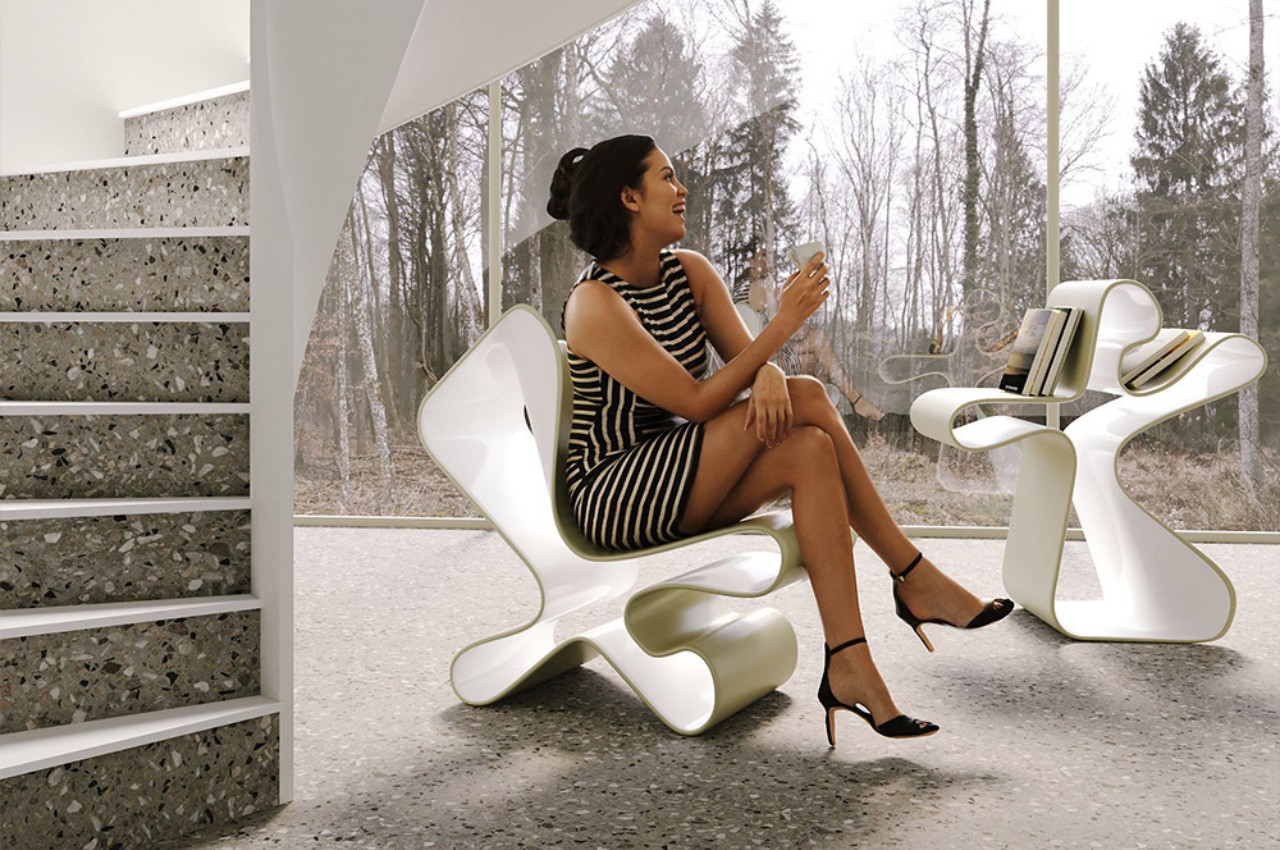
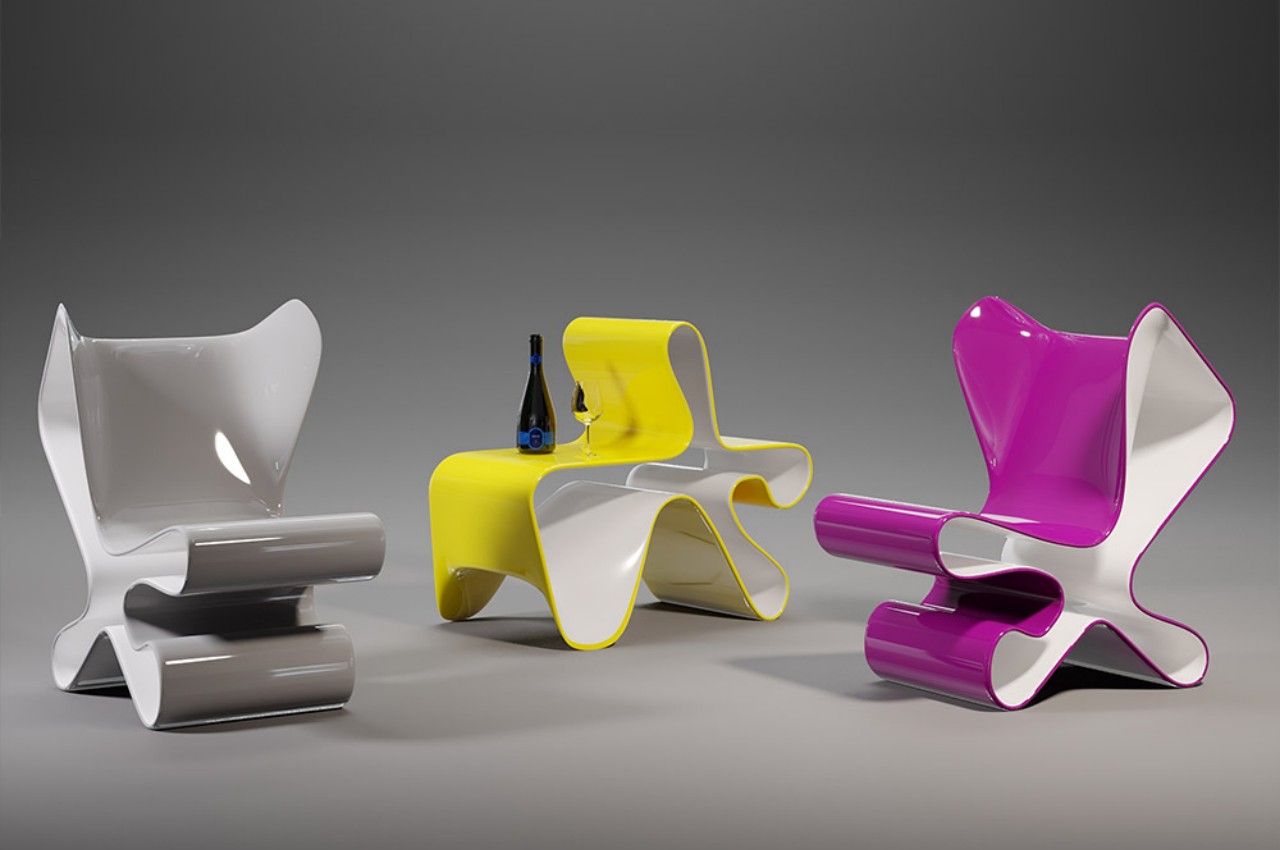
Multifunctional furniture often involves moving or modular parts, requiring some action that can be cumbersome to undertake. Given human nature, owners are less likely to take advantage of these features, so a chair or table remains as they are throughout their lifetime. Metamorfosi, in contrast, is just a single piece with no moving or removable parts. It’s a single, hollow shape that simply looks like the outline of a splat or puddle from the side, but this seemingly random shape is actually what gives the chair its three functions.

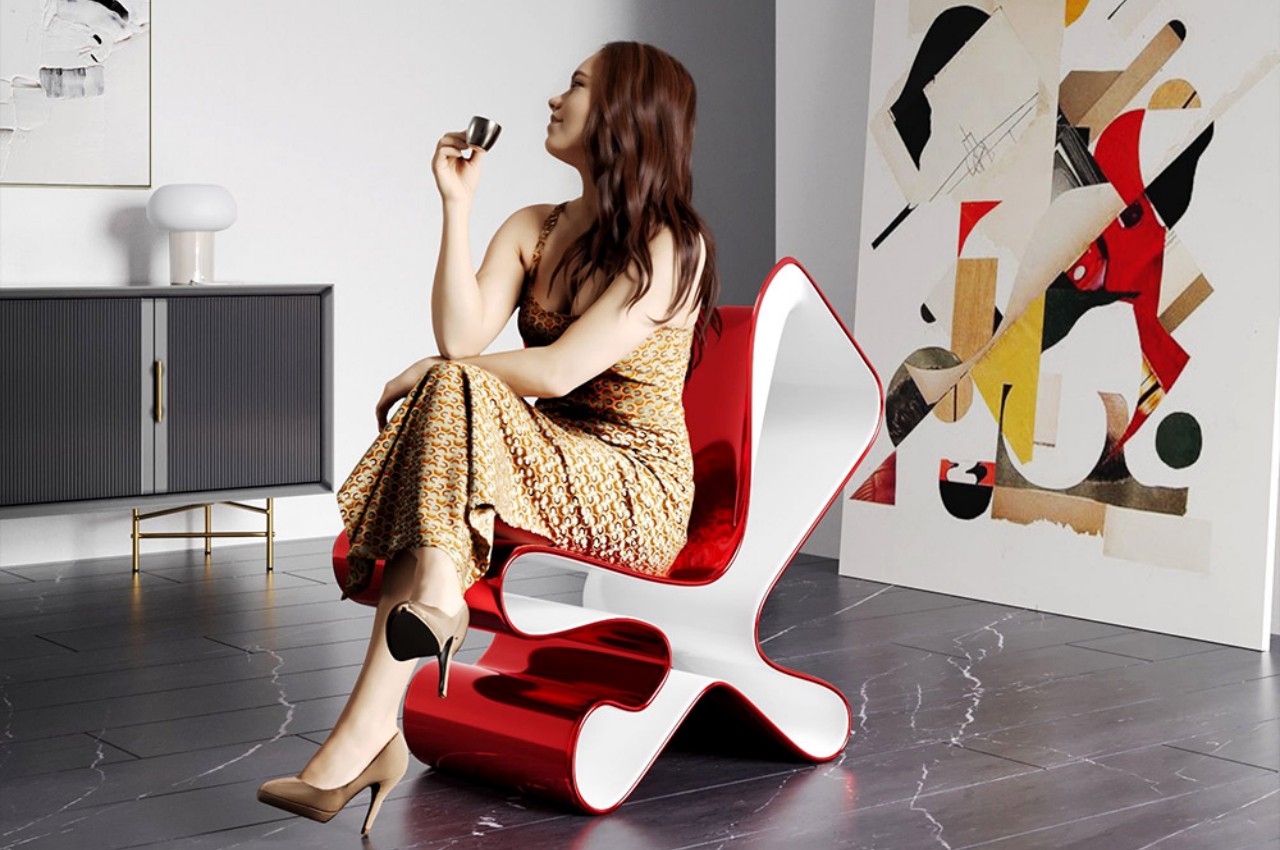
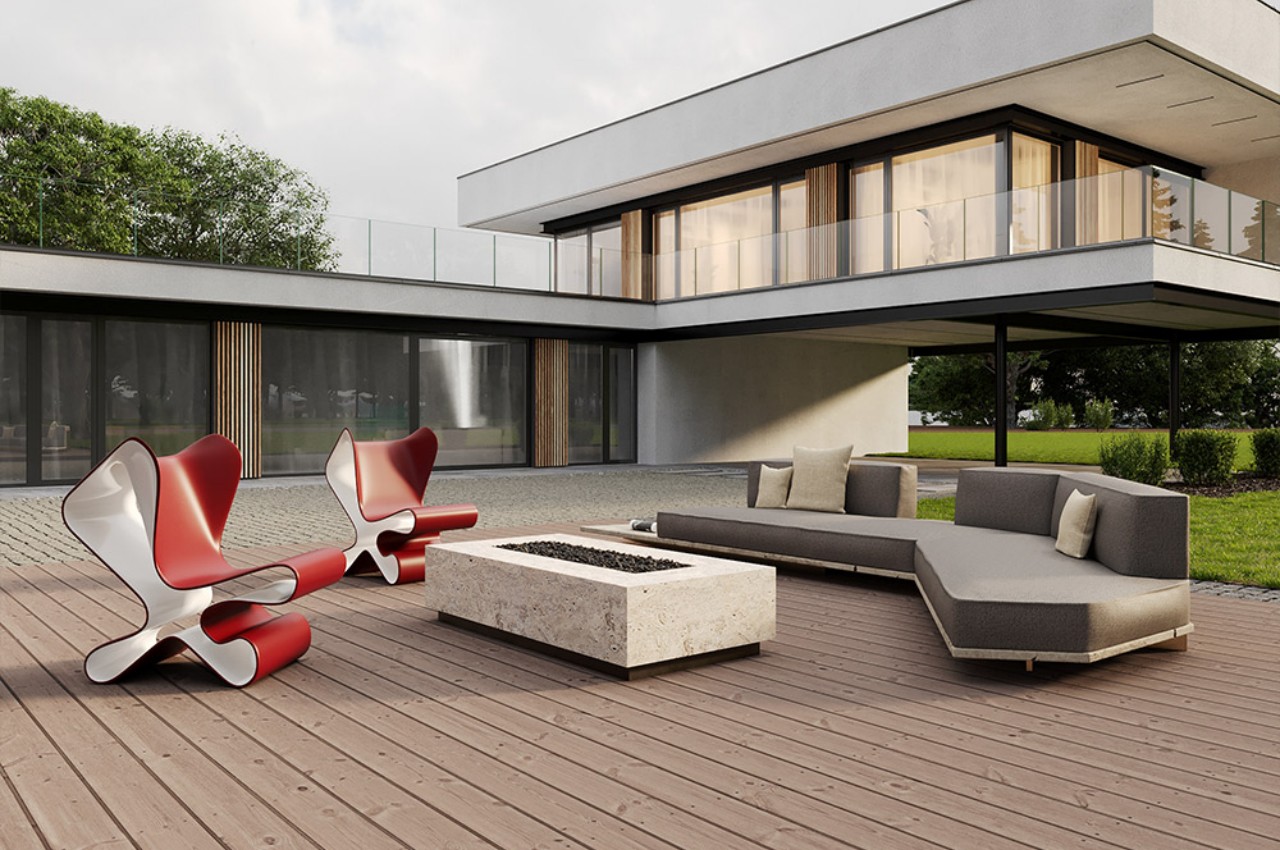
It is, of course, first and foremost a chair, though one that seems to be more of an artistic interpretation of a chair. There’s room for only a single person, and the absence of armrests might make it feel less secure and comfortable. Despite its appearance, however, it’s still a table seat, and its creative design lets you lean back with confidence, knowing that it won’t flip over on its own.

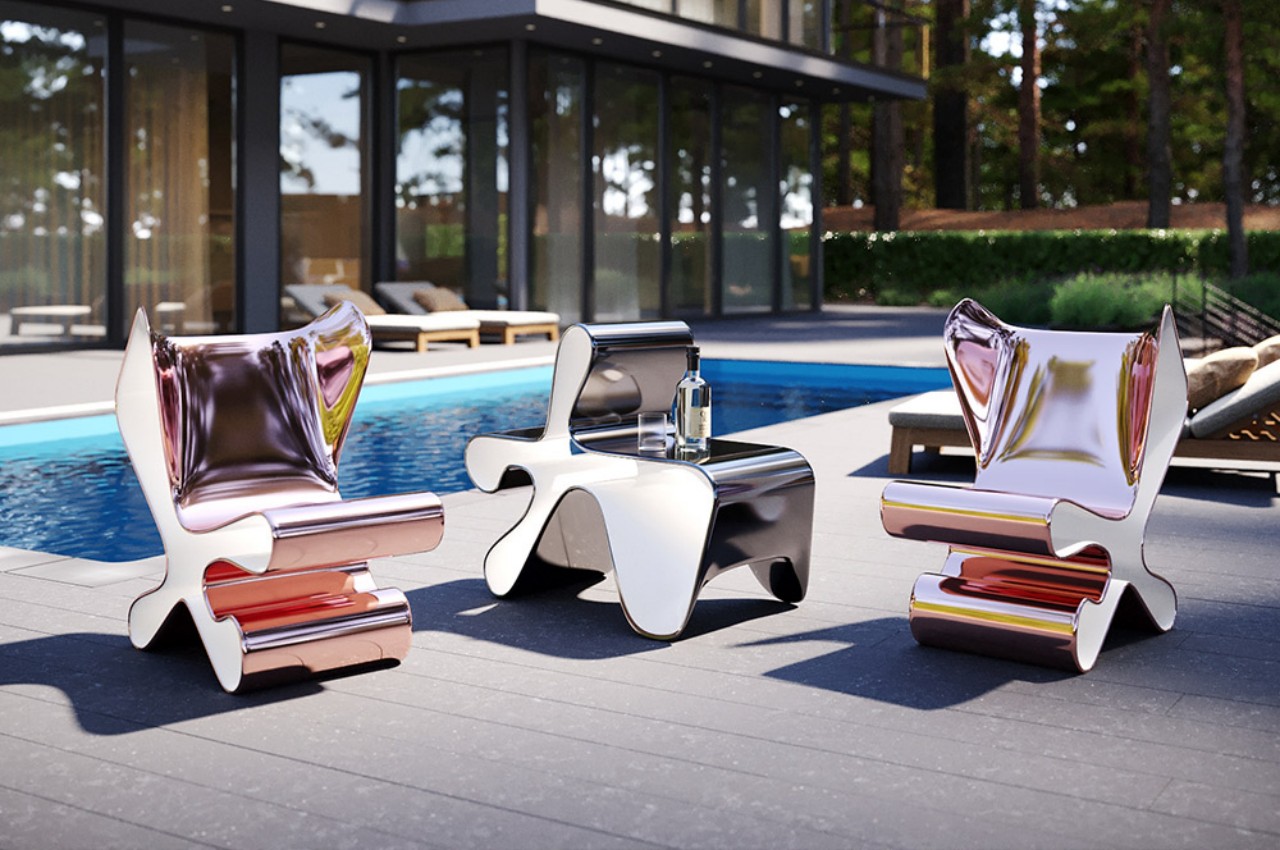
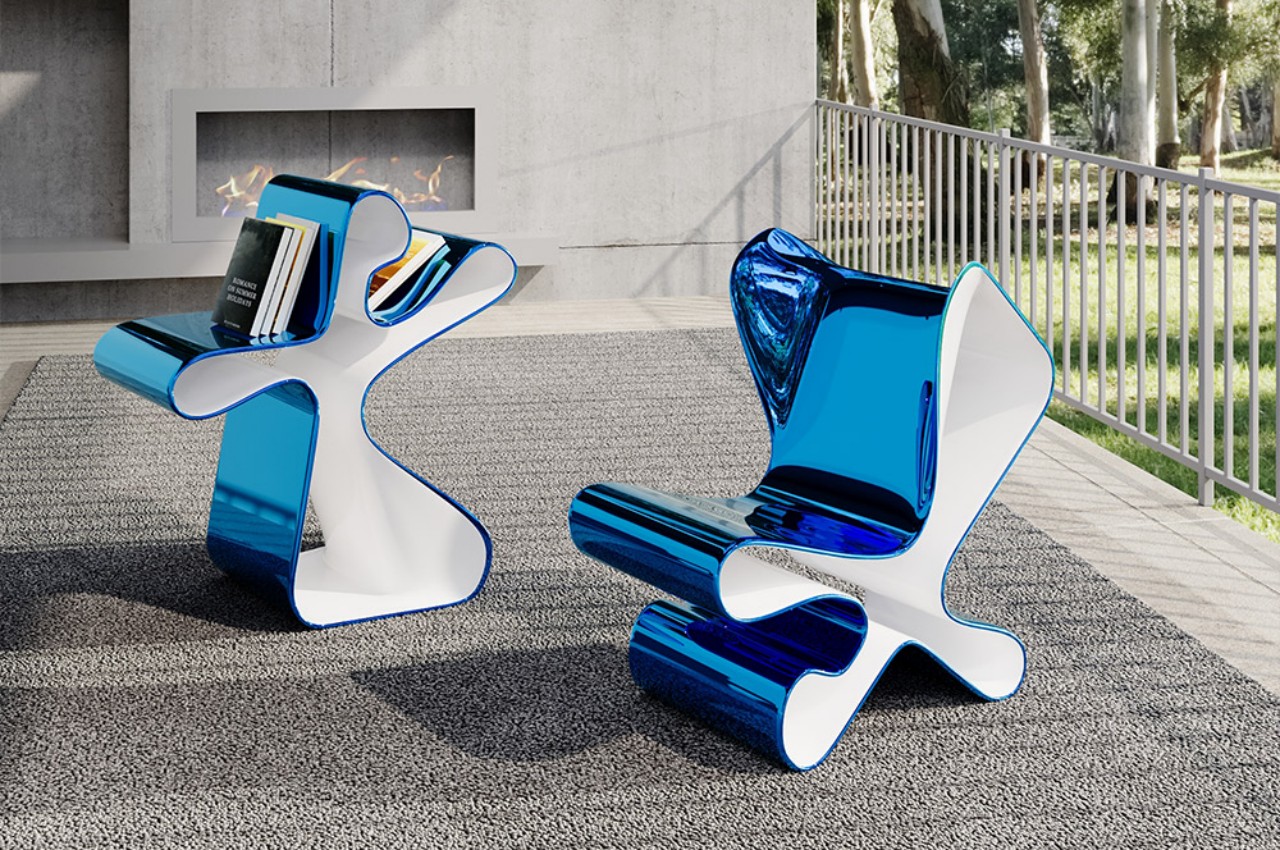
If you do flip it over, it transforms into a low side table, one with a larger flat area in front and a smaller space on its back. It definitely boggles the mind how a chair with plenty of curves on its body in one moment can become a stable table the next. And if you flip it again, it becomes a makeshift bookcase whose corners prevent the books from sliding off.

The Metamorfosi, however, has a fourth function: enhancing the ambiance of a space with its unique beauty. These handmade chairs have a certain charm to them with their dynamic shapes and glossy hues. They’re as much a work of art as they are multi-purpose pieces of furniture, shattering expectations that multifunctional furniture needs to look technical and complex.

The post Beautiful amorphous chair is also a side table, bookcase, and art object in one first appeared on Yanko Design.