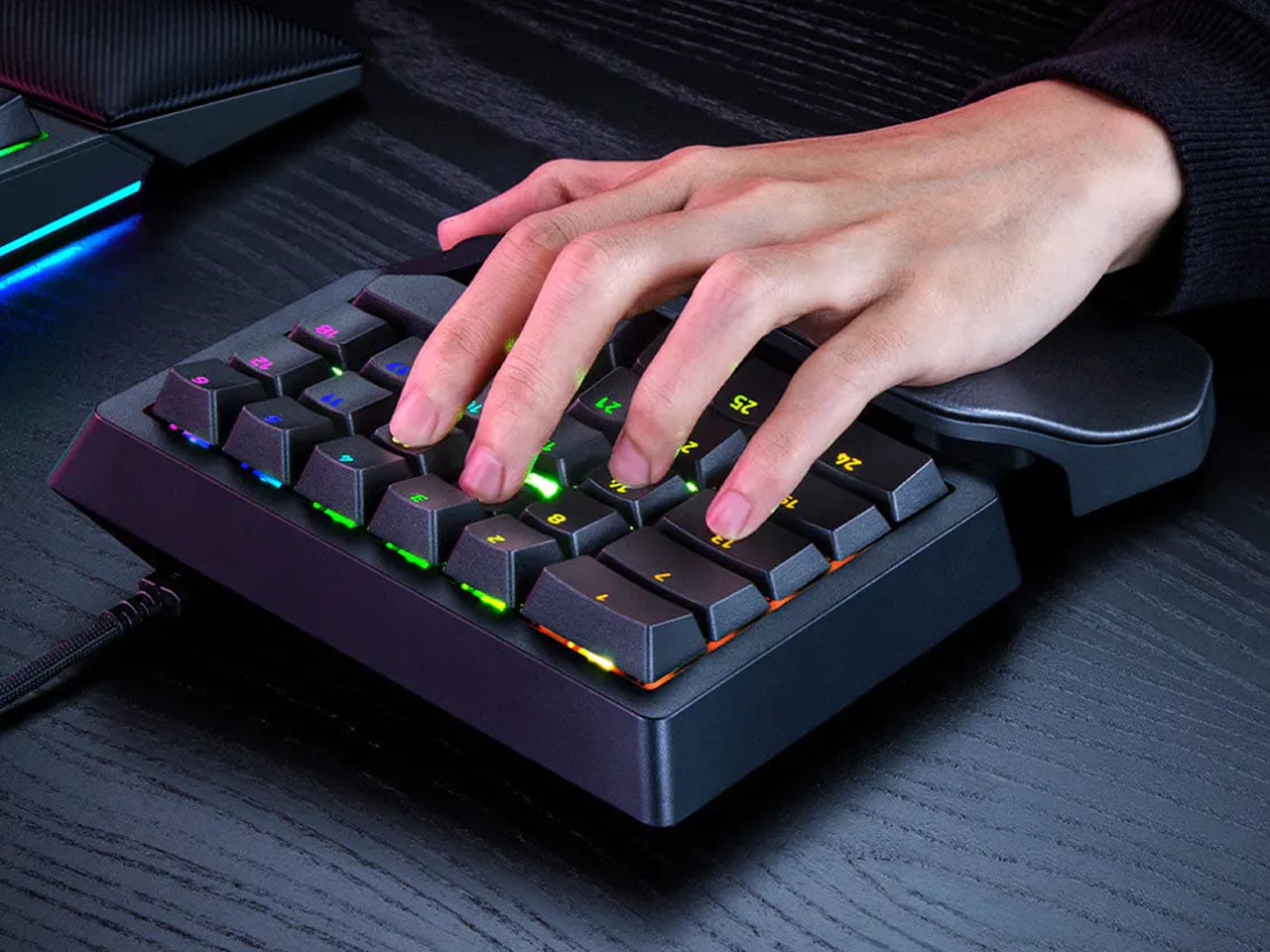
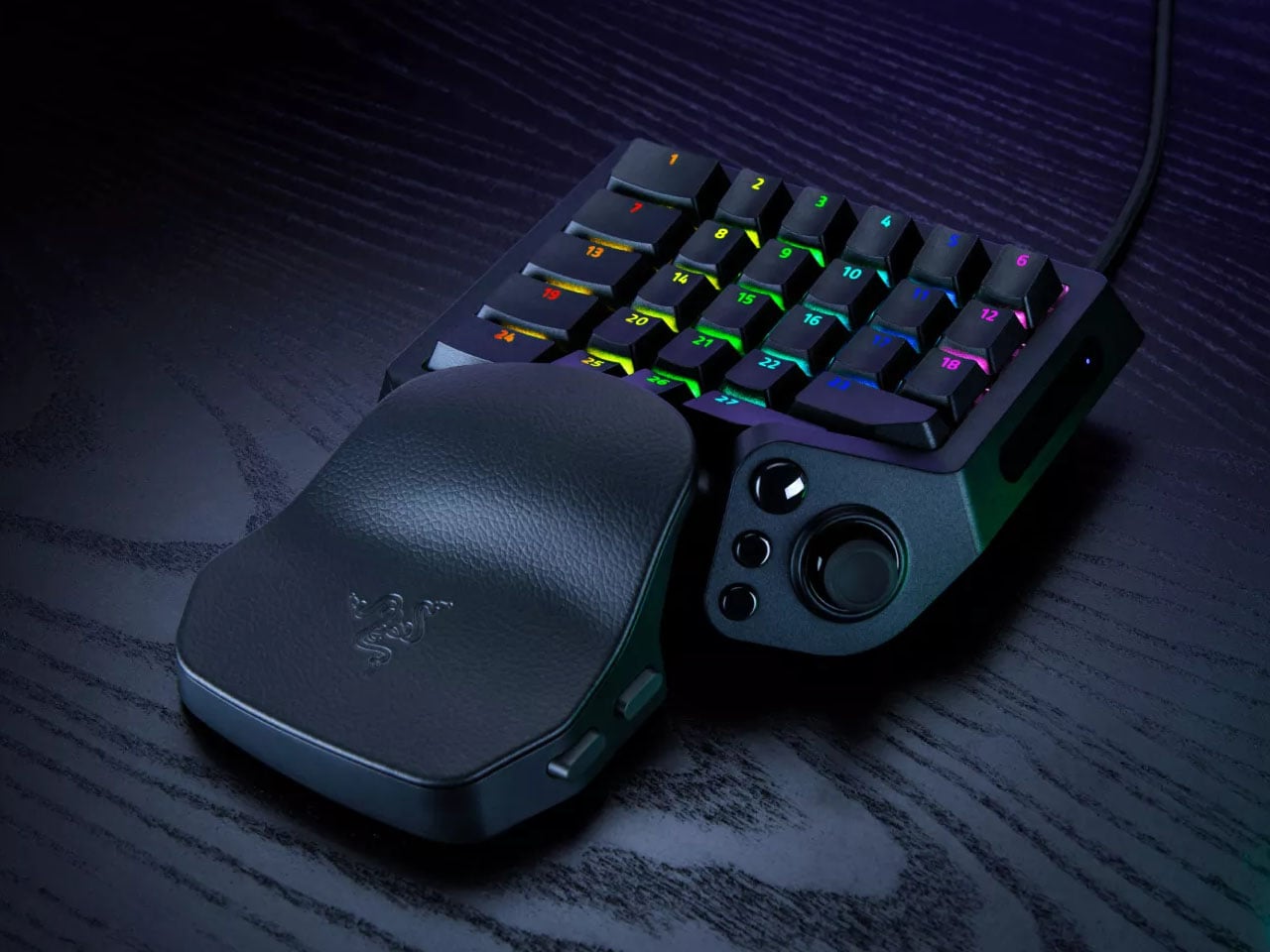
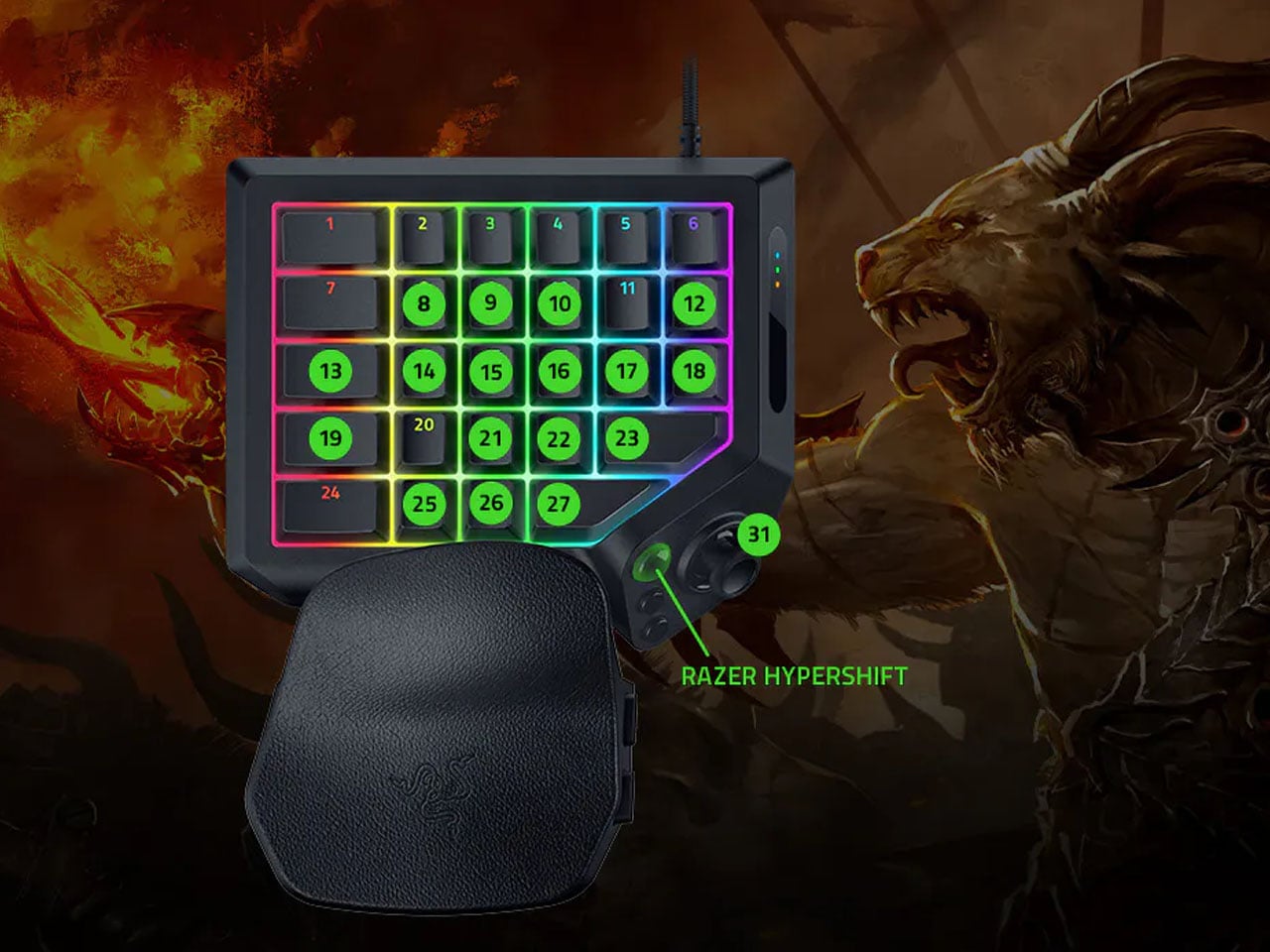
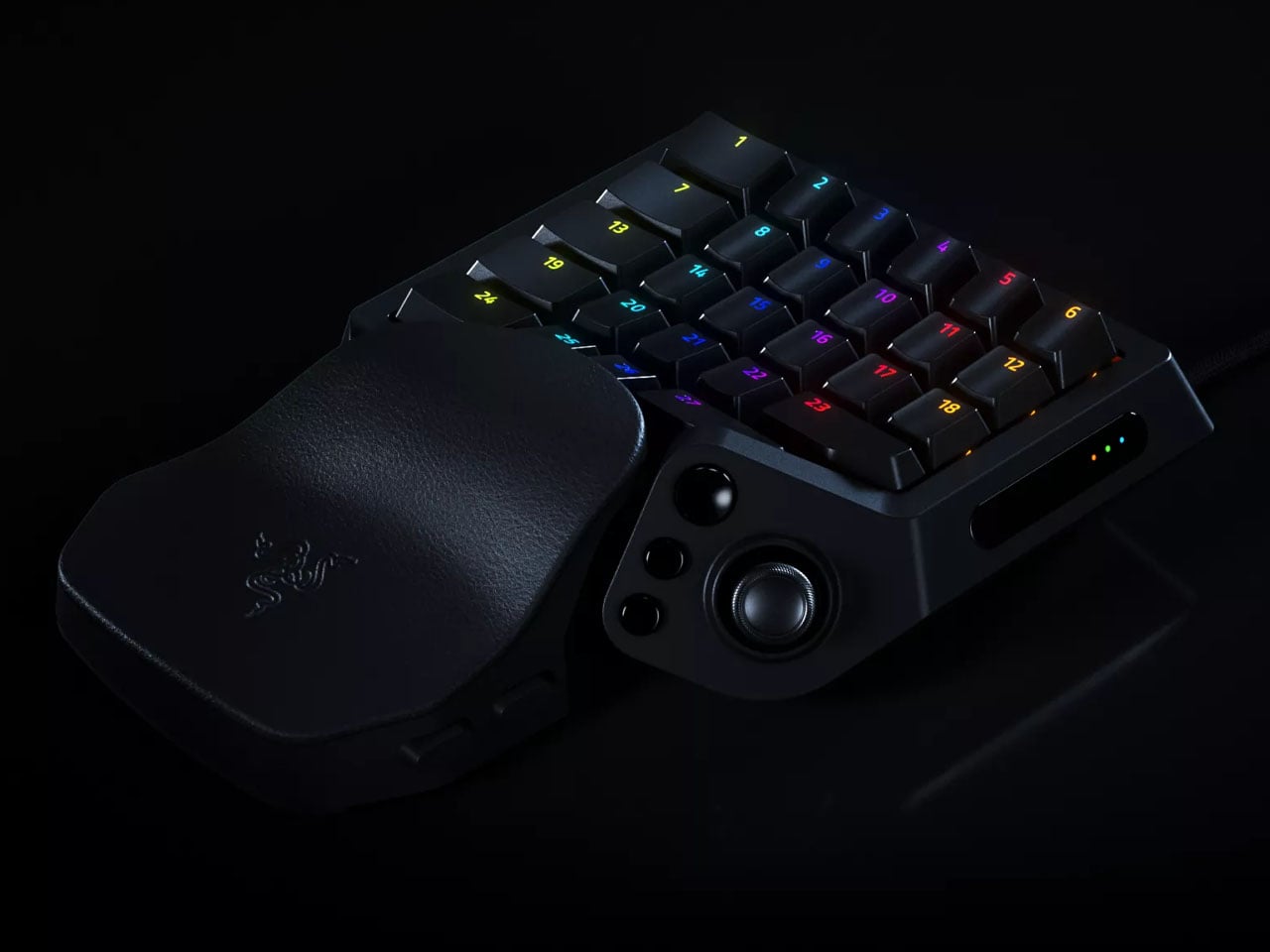
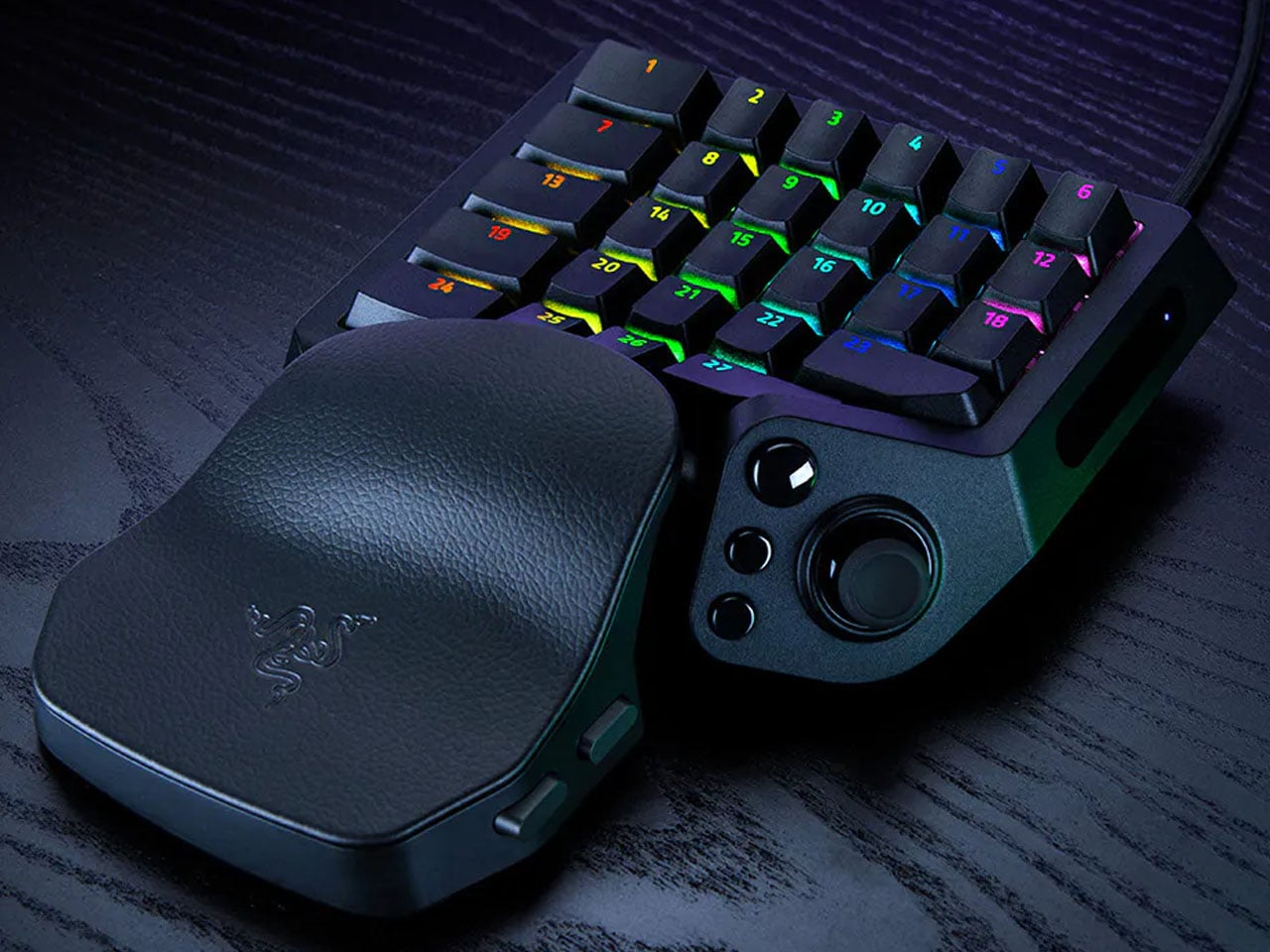
A keyboard can give you plenty of keys, but when you’re gaming, you rarely use all of them. What matters is having the right controls exactly where your hand needs them. That is the idea behind Razer’s new Tartarus V2 Pro, a one-handed gaming keypad that packs 31 programmable controls into a much smaller footprint while adding a proper analog thumbstick, something most keypads don’t have.
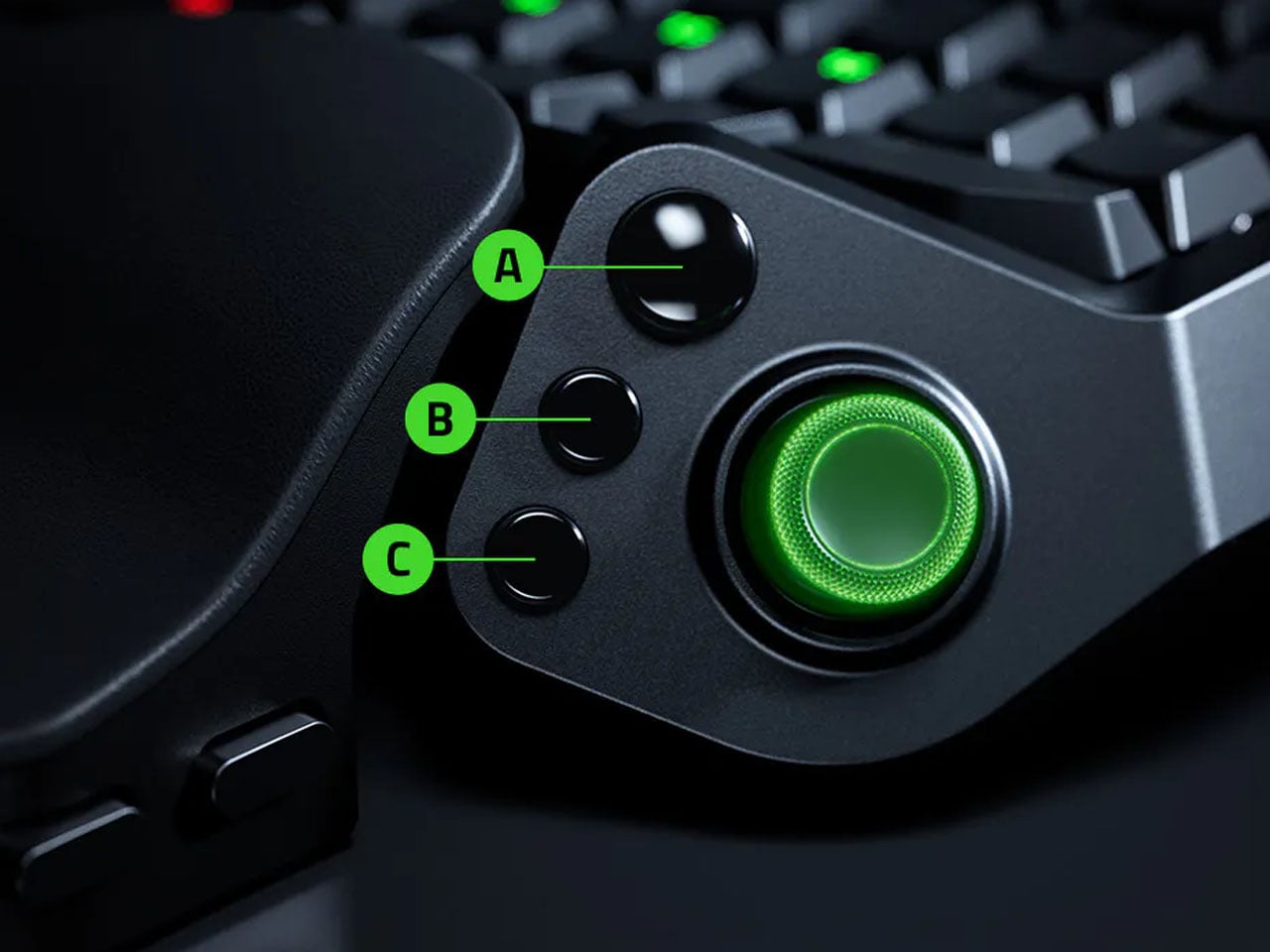
The thumbstick is one of the more interesting bits of the accessory. It uses TMR technology with anti-drift positioning and sits alongside three dedicated thumb buttons, giving the left hand a combination of keyboard and controller-style controls. The stick can handle movement, but it can also be assigned to other commands, making it useful for games that rely heavily on shortcuts, radial menus, or multiple simultaneous inputs.
Razer has also moved beyond the usual mechanical-switch approach, as Tartarus V2 Pro uses second-generation Analog Optical Switches that can recognize how far a key is pressed. Their actuation point can be adjusted anywhere between 0.1 and 4.0 mm, allowing the keys to be tuned for either quick, light presses or a more deliberate response. Rapid Trigger goes further by detecting upward movement as small as 0.1 mm, which can make repeated inputs feel considerably more immediate. Razer rates the switches for up to 100 million keystrokes.
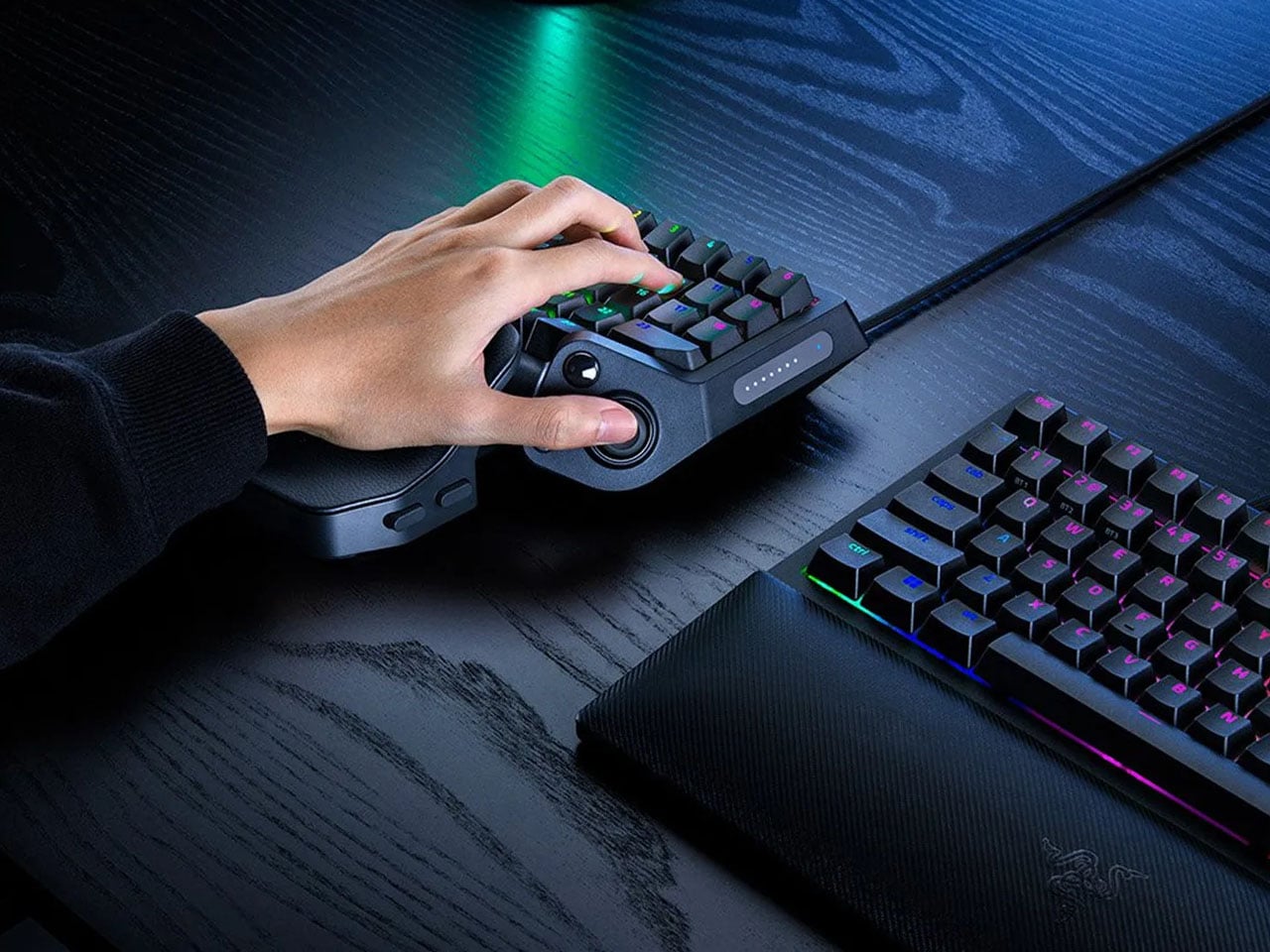
There is plenty of control over how those inputs behave as well. Razer’s Advanced Input Control features include Snap Tap, Snap Flex, Dual-Keypress Priority, and Dynamic Keystroke. These allow players to change the way directional inputs work, prioritize simultaneous key presses, or assign different actions depending on how far a key is pressed. The wrist rest can slide outward and rotate from side to side, so the position of the hand can be adjusted instead of forcing it into one fixed angle. The keypad uses textured doubleshot PBT keycaps and a 5052 aluminum alloy top plate, with Chroma RGB lighting adding the familiar Razer touch.
True 8000 Hz HyperPolling is built in, while Razer Synapse handles deeper customization. Players can create up to 24 keymaps across three onboard profiles, with actuation and Rapid Trigger settings adjustable to suit different games. An onboard LED array also provides visual feedback without needing the software open.
At 211 × 159 × 49 mm and 486 grams, Tartarus V2 Pro takes up far less desk space than a conventional keyboard. Priced at $199.99, the gaming accessory changes how the player’s hand interacts with a game. Instead of reaching across a keyboard for commands, movement, and shortcuts, the controls are gathered into one compact surface designed specifically around that hand.
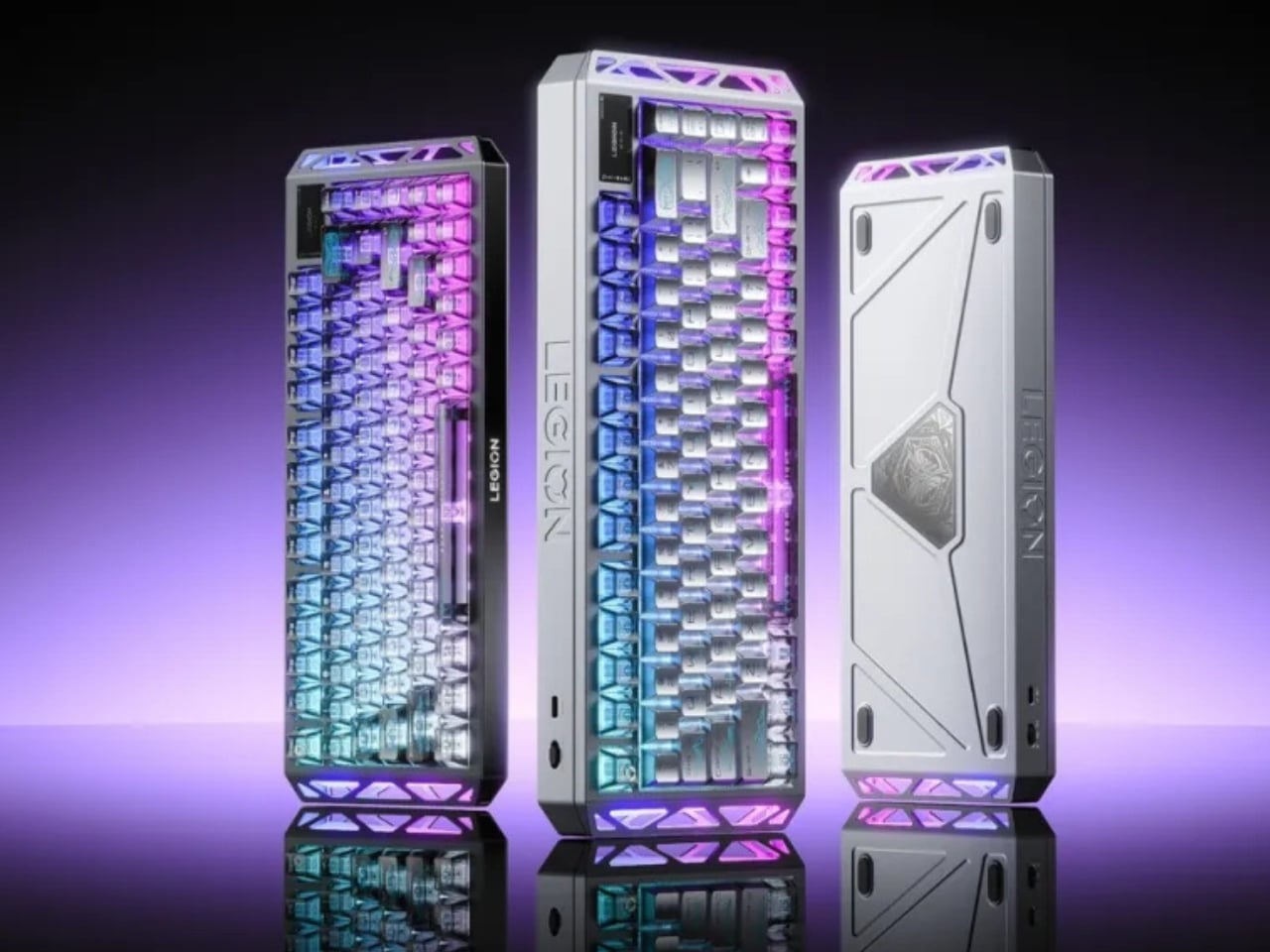
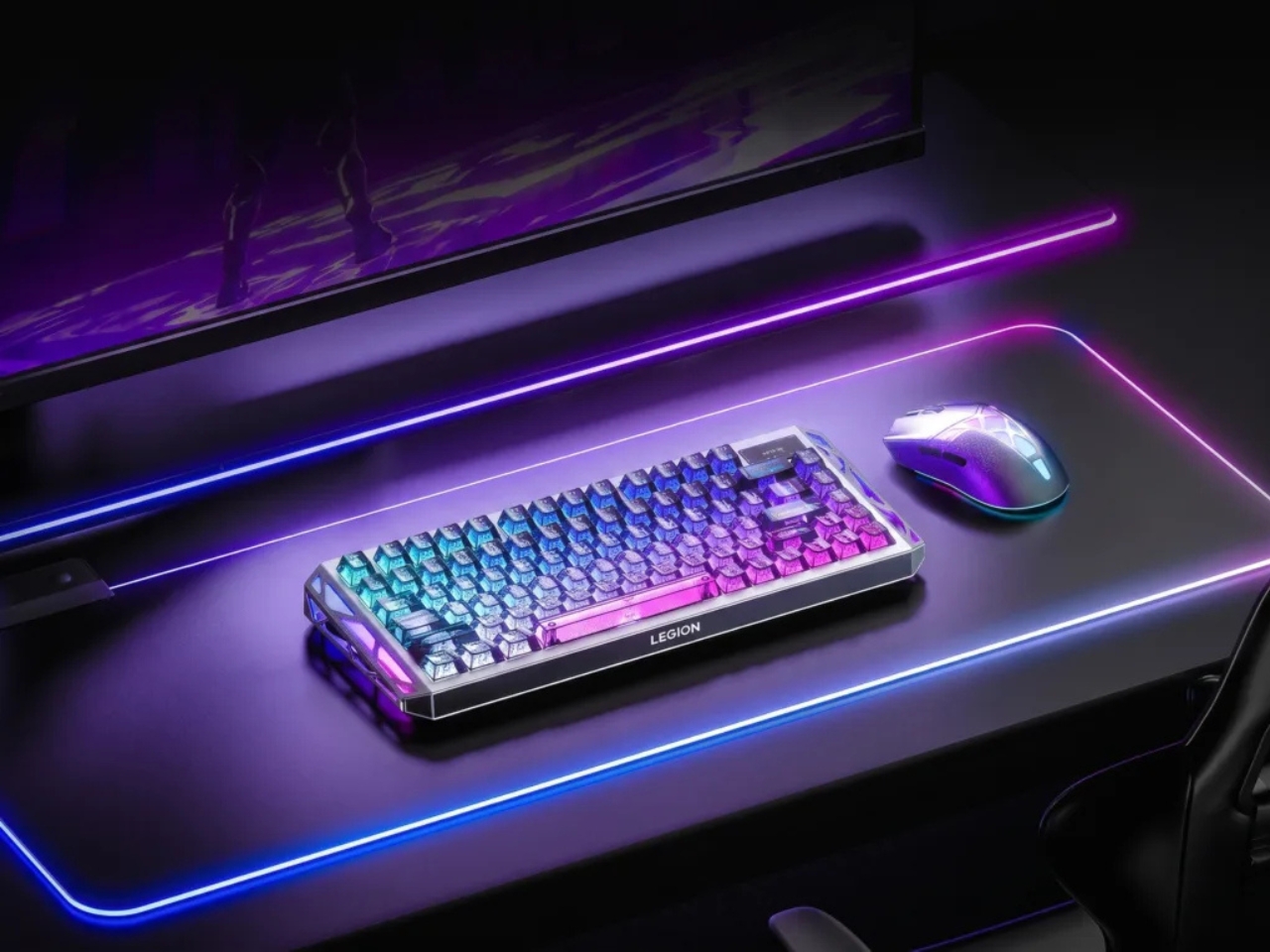
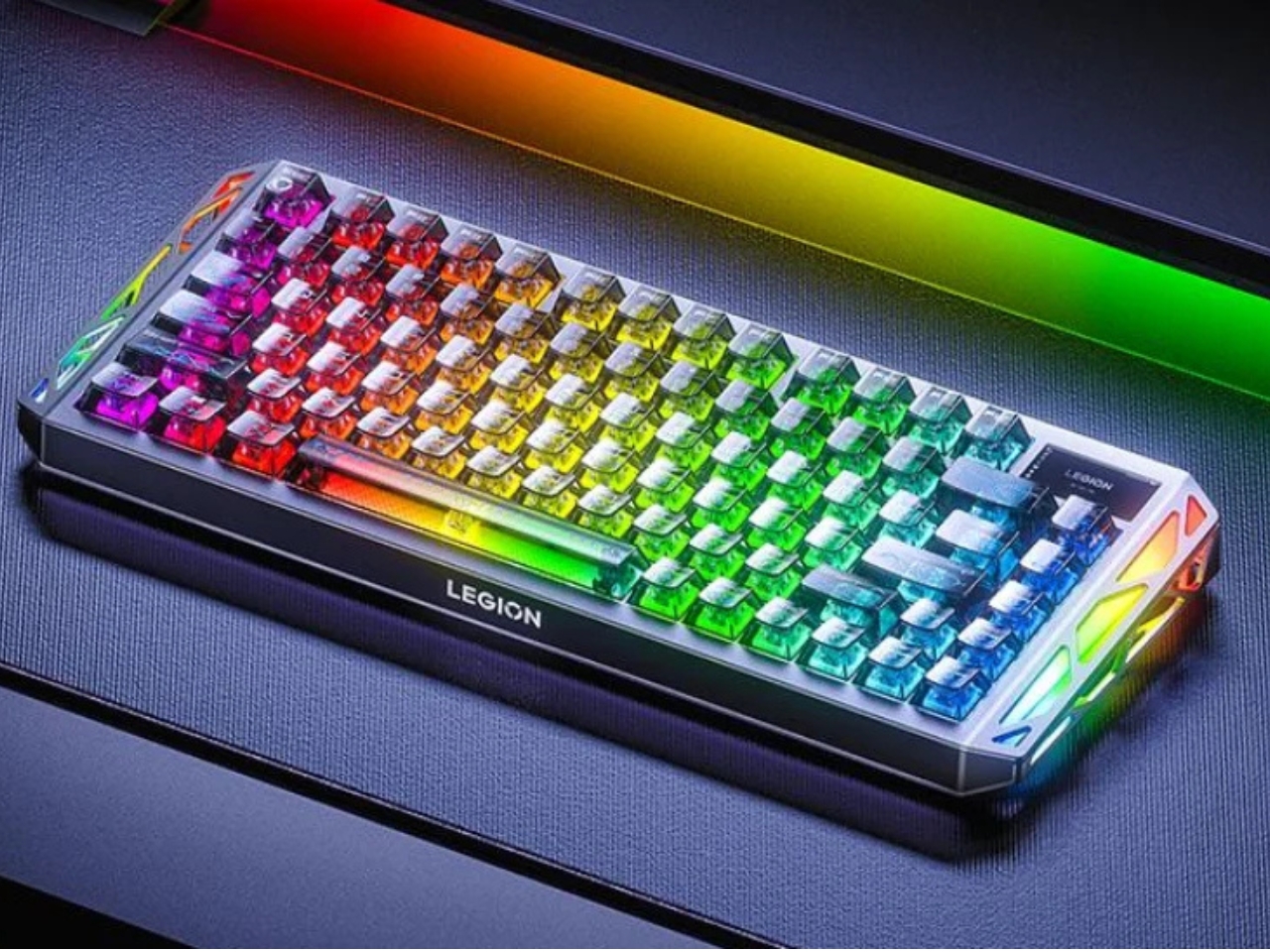
The spec sheet for Lenovo’s new Legion R7 RT75 reads less like a keyboard listing and more like an arms race announcement. Eight thousand hertz polling rate. An internal battery bigger than most flagship smartphones. A tiny built-in screen that can play your GIFs. A CNC-machined aluminum chassis that tips the scale at nearly 1.5 kilograms. At some point, you stop and ask whether we are still talking about a keyboard. Yes. And it is genuinely fascinating.
The R7 RT75 is a 75% layout gaming keyboard, which means it trims the numpad and a few function keys to keep the footprint relatively compact. Lenovo built it around their own Aurora Hall-effect magnetic switches, which allow you to adjust the actuation point anywhere from 0.01mm to 3.4mm. For comparison, most standard mechanical keyboards operate at a fixed 2mm actuation, and you live with it. The Rapid Trigger precision here goes down to 0.01mm, meaning the keyboard registers the smallest detectable physical movement as an input. That matters enormously in competitive gaming where a few milliseconds separate a clean play from a missed one. Lenovo also claims the 32,000Hz scan rate keeps full-key latency fluctuation down to 0.125ms, and the 8K polling rate holds across both USB-C wired and 2.4GHz wireless. That second part deserves attention. Maintaining 8,000Hz wirelessly is not a given, and the fact that Lenovo achieved it here brings the R7 RT75 into a very specific and increasingly competitive tier of peripherals.
Designer: Lenovo
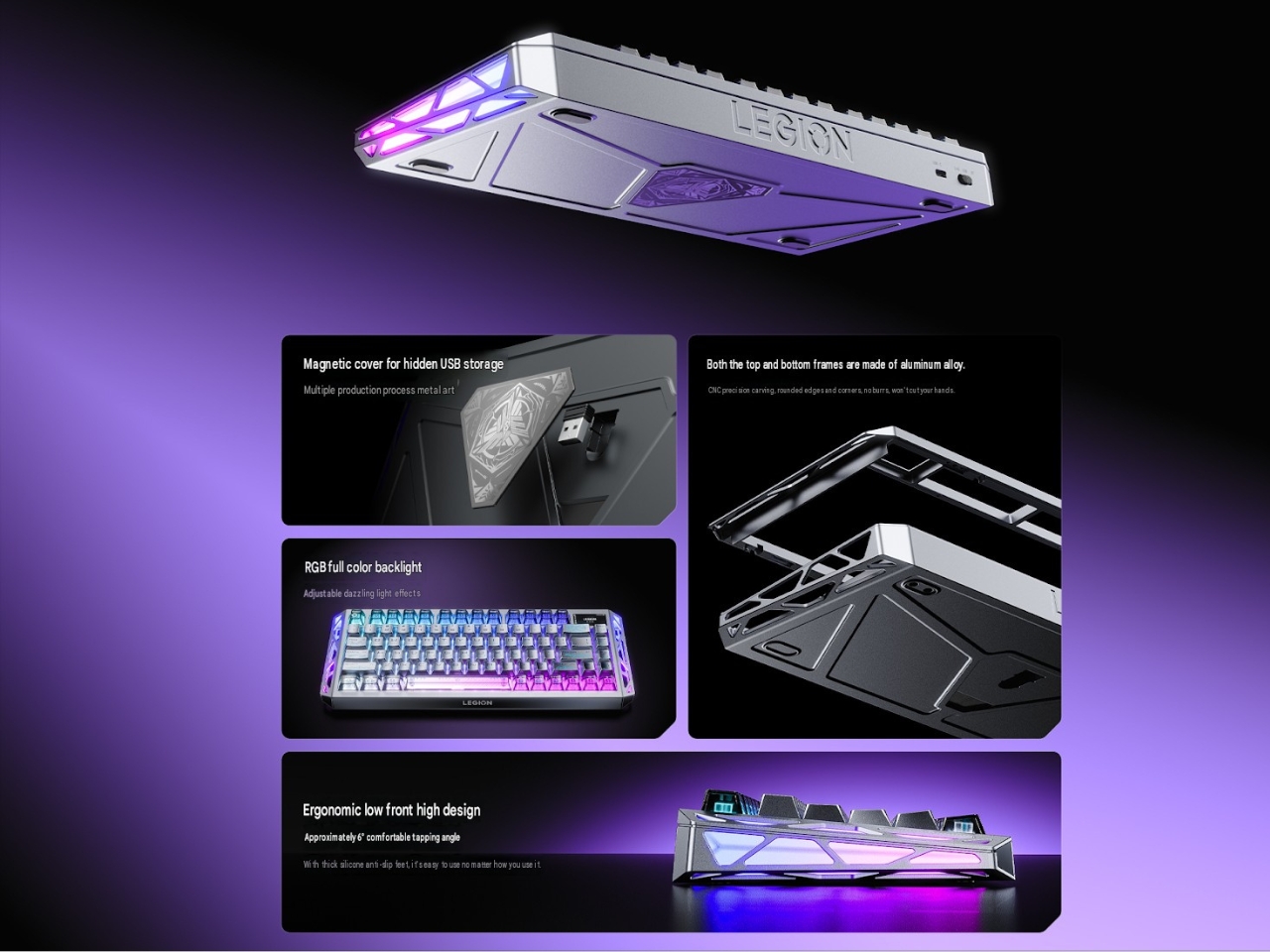
The 8,000mAh battery is the number that stops people in their tracks, and it should. That is the same capacity you would find inside many mid-range smartphones. Lenovo wants the R7 RT75 to be fully usable wirelessly for extended sessions, which is a reasonable goal. The side effect is a keyboard that weighs 1,490 grams, which is more than most laptops you could comfortably carry around. Picking this up and setting it on your desk feels like placing a slab of machined architecture. The build supports that impression: gasket-mounted structure, a carbon fiber positioning plate, five layers of sound-dampening material, and factory-lubricated stabilizers all come standard. It sounds and feels like a product that was built with care rather than just filled with specifications.
The 1.47-inch TFT display in the top right corner will divide opinions, and I think that is half the fun. On a practical level, it shows battery life, connection mode, and real-time system information. On the other hand, it also displays user-uploaded GIFs, which is either a lovable piece of personality or a feature that makes no functional sense at all. I fall on the side of lovable. Keyboards have always been the most utilitarian and least expressive element of any setup. A small screen where you can loop your favorite animation is a minor thing, but it is the kind of minor thing that makes a product feel like it was designed by people who actually enjoy it. Back on the practical side, a magnetic cover on the back of the board hides a storage slot for the 2.4GHz wireless receiver, which is exactly the kind of detail that signals someone paid attention during the design process.
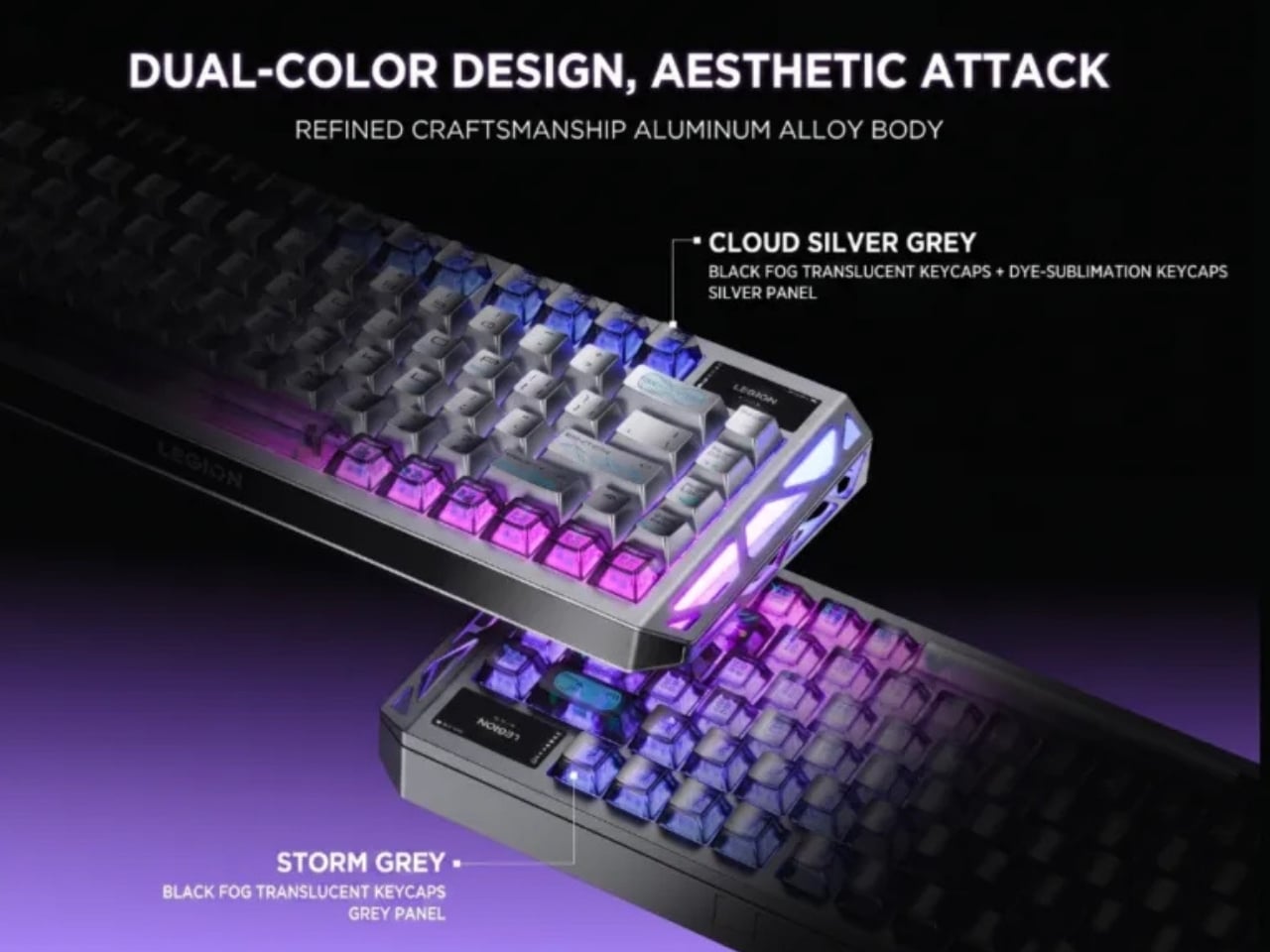
The R7 RT75 comes in Cloud Silver Grey and Storm Grey, and the pricing sits at 1,299 yuan, around $192. That number feels honest given what you are getting: premium CNC aluminum construction, competitive Hall-effect switches, 8K wireless polling, hot-swappable magnetic switch support, and a build quality that rivals keyboards costing considerably more.
Gaming peripherals have been slowly redefining what a consumer-grade input device even means, and the R7 RT75 is a clear example of that direction. The specs are not padding. They are things serious players request, packaged into a product that any buyer can access. Whether your gaming sessions demand 0.01mm Rapid Trigger precision is a conversation worth having with yourself before spending $192. But the ambition behind this keyboard is hard to argue with, and the execution appears to match.
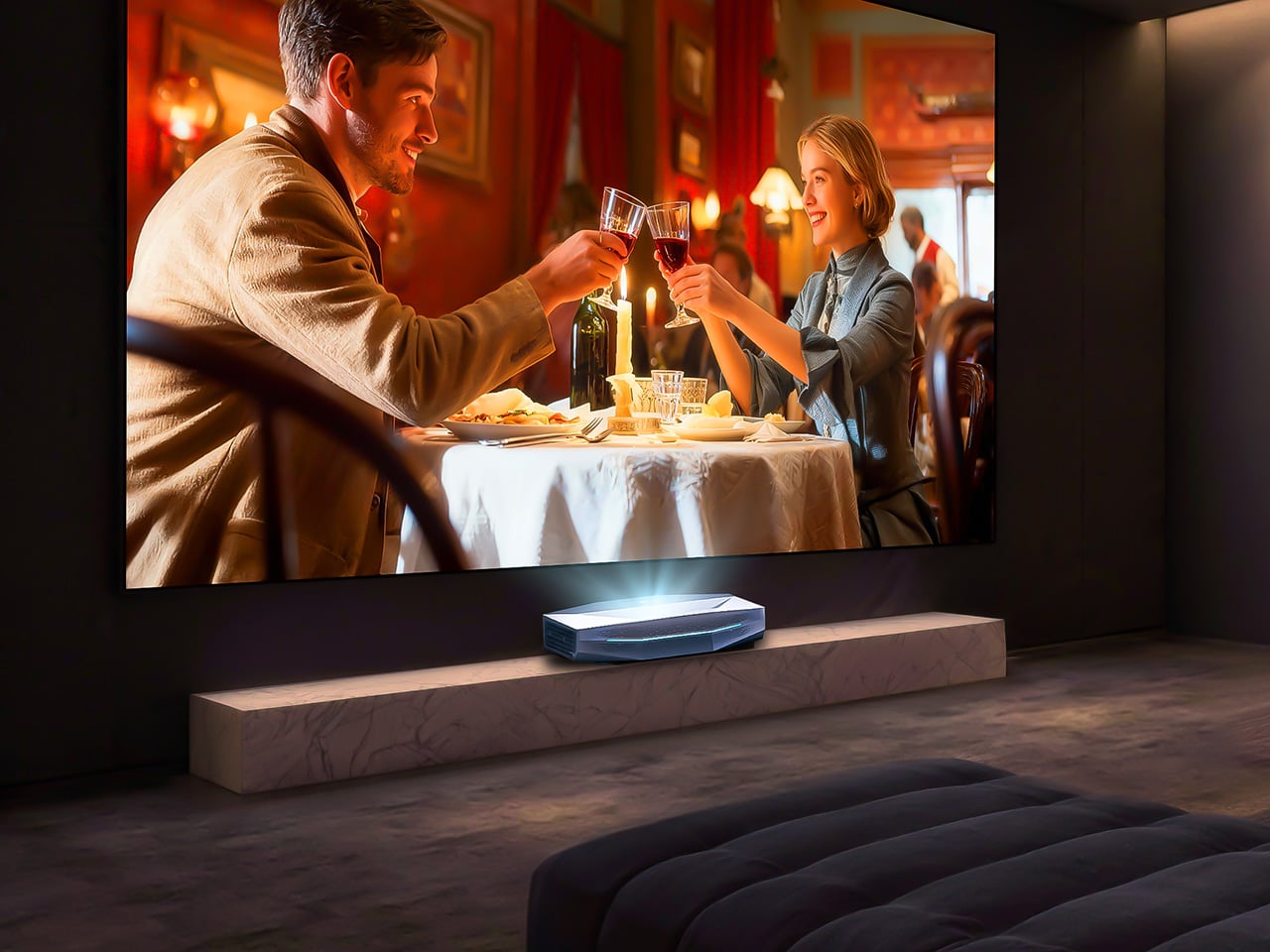
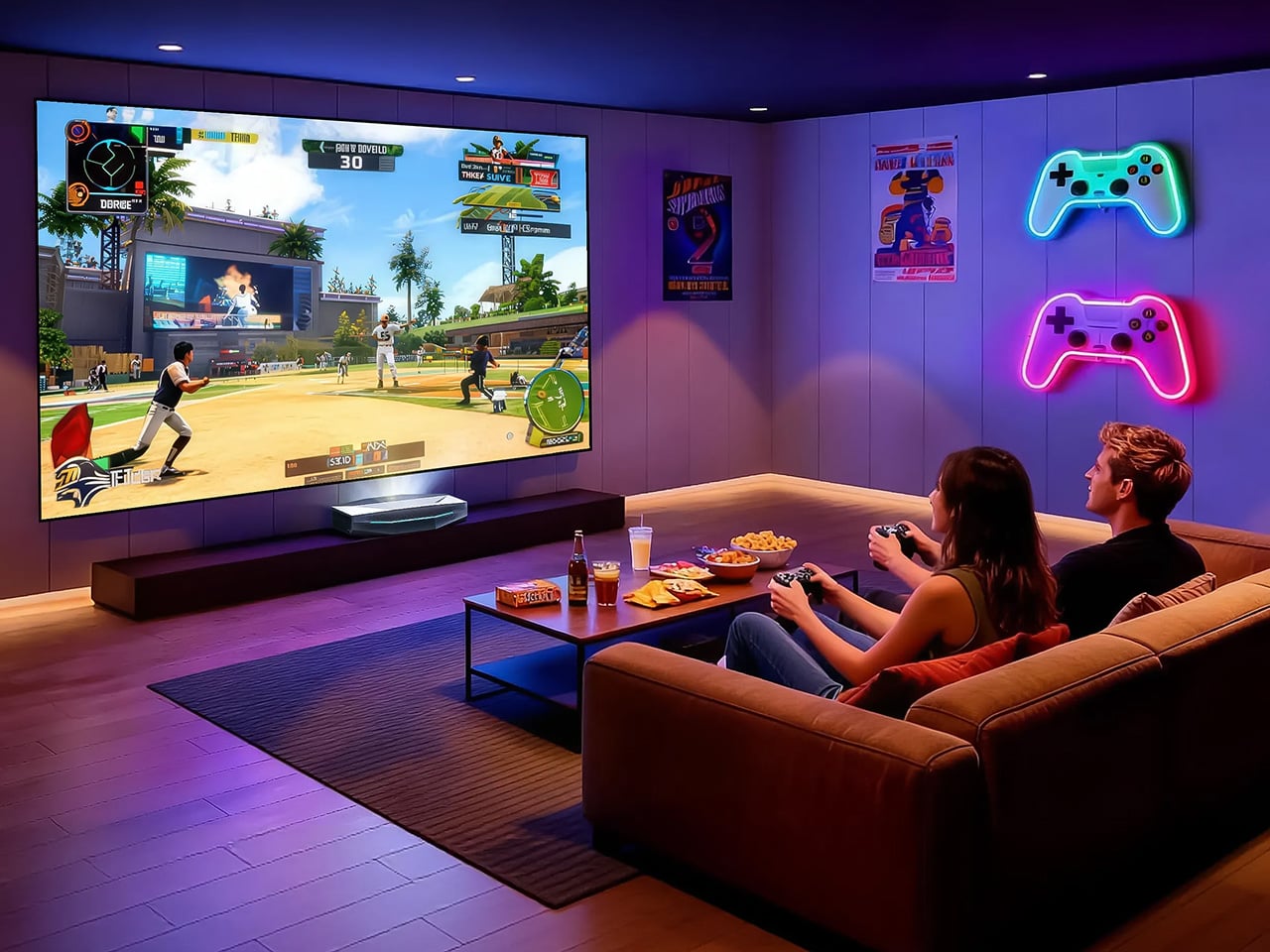
Gaming displays speak in hertz and milliseconds, while most projectors still talk like it’s Blu-ray season. AWOL Vision’s Aetherion series tries to bridge that gap with something ultra-short-throws have simply never had: true Variable Refresh Rate. It negotiates frame timing from 0.1Hz up to 240Hz, syncing its output to whatever your console or PC is throwing at it. Paired with Auto Low Latency Mode and a claimed 1ms-class response, this is a projector that stands as a legitimate contender to high-end gaming monitors, not just a living room appliance for Netflix and chilling.
The rest of the stack backs that ambition. Dolby Vision Gaming support pushes scene-by-scene tone mapping, while an RGB triple-laser light engine and anti-RBE system tackle motion and color artifacts that usually show up the moment you swing a camera in a fast-paced title. Under the hood, a MT9655 chipset with 8 GB of RAM and 2.5G Ethernet handling 1000 Mbps throughput signals that this is not a token “game mode” toggle. It is an attempt to make the projector a first-class citizen in the modern gaming ecosystem.
This whole approach feels like a direct response to years of compromise. For too long, you had to choose: the immersive scale of a projector or the responsive precision of a gaming monitor. Aetherion’s spec sheet suggests that choice is becoming obsolete. The VRR implementation alone is a statement, acknowledging that game frame rates are not a static 60fps target anymore. They dip, they spike, and a display that cannot follow that cadence will produce tearing and judder. By building a system that can track that chaotic dance, AWOL is demonstrating a fundamental understanding of what interactive content actually demands from a display.
The underlying hardware seems robust enough to support these claims. The MT9655 is a capable flagship SoC, and pairing it with 8GB of RAM is generous for a projector. That 2.5G Ethernet port is another one of those quiet tells; it signals an understanding that streaming high-bitrate 4K content, or cloud gaming, requires serious bandwidth that standard 100Mbps ports just cannot handle reliably. This is future-proofing, but it is also a practical necessity for the kind of high-performance use cases Aetherion is built for. The entire platform is engineered to remove bottlenecks between the source and the screen.
Of course, a fast projector with poor color is just a fast way to see a bad image. That is where the triple-laser RGB light engine comes in. By ditching the spinning color wheel found in most DLP projectors, AWOL hit an impressive 110% of the Rec. 2020 color gamut, delivering the kind of vivid, saturated colors that single-laser systems struggle to reproduce. To push the boundaries of visual performance, Aetherion adopts the company’s proprietary Anti-RBE (Rainbow Effect) technology, eliminating the rainbow effect that distracts many viewers during fast motion. Their anti-RBE technology claims to cut these artifacts by 99.99% in both 2D and 3D content.
That obsession with image fidelity extends to how the Aetherion handles darkness. Instead of just blasting lumens, the projector uses a 7-level mechanical IRIS to achieve a 6000:1 native contrast ratio. Its proprietary EBL algorithm analyzes every single frame in real time, tweaking the laser output and image parameters to deepen blacks and pull out shadow detail, boosting the contrast ratio to 60,000:1. This dynamic, scene-adaptive approach is far more sophisticated than a simple brightness setting. It is the difference between a flat, washed-out night scene and one with genuine depth and texture.
From a user experience perspective, running on Google Android TV 14.0 is a significant and welcome choice. It brings a 4K user interface and broad app support without needing an external streaming stick. The integration with Apple HomeKit, Google Home, and Alexa ecosystems also positions the Aetherion as a proper smart home device, not just an isolated piece of AV hardware. Little touches, like the motorized lens cover that protects the optics from dust, show a thoughtful approach to the daily realities of owning a high-end piece of equipment.
AWOL is also building out the world around the projector, offering a curated ecosystem to support their tech. The launch includes a new 150-inch Fresnel Daylight ALR screen, a seamless one-piece design with a 1.5 gain for brighter images in ambient light. There is also a redesigned Vanish Cabinet made with stainless steel and leather, featuring integrated cooling fans and a hidden bay for a soundbar. This ecosystem approach recognizes that a projector’s performance is heavily dependent on the screen and its placement, offering a complete, aesthetically coherent solution.
The Aetherion is available in two versions on its Kickstarter campaign. The Aetherion Pro offers 2,600 ISO lumens, while the Aetherion Max boosts that to 3,300 ISO lumens for rooms with more ambient light; both share the same 6000:1 contrast ratio and core technologies. Super Early Bird pricing puts the Pro at $1,999 and the Max at $2,199, which is a substantial 42-51% discount from their eventual MSRPs. If you’re committed to the entire kit, $3,999 gets you the Ultimate Cinematic Immersion Bundle, which includes the Max projector along with a 132″ cinematic ALR screen, and a 4.1.2 ThunderBeat audio system to give the projector its audio oomph. Each projector ships globally with a 2-year hassle-free warranty starting April 2026.