Artificial lighting has come a long way, but most of it still operates on the same basic logic. You plug something in, it stays where you put it, and you arrange your life around it. The growing understanding that light quality directly affects mood, sleep, and well-being has pushed designers to rethink what a lamp should do, but rarely where it should go.
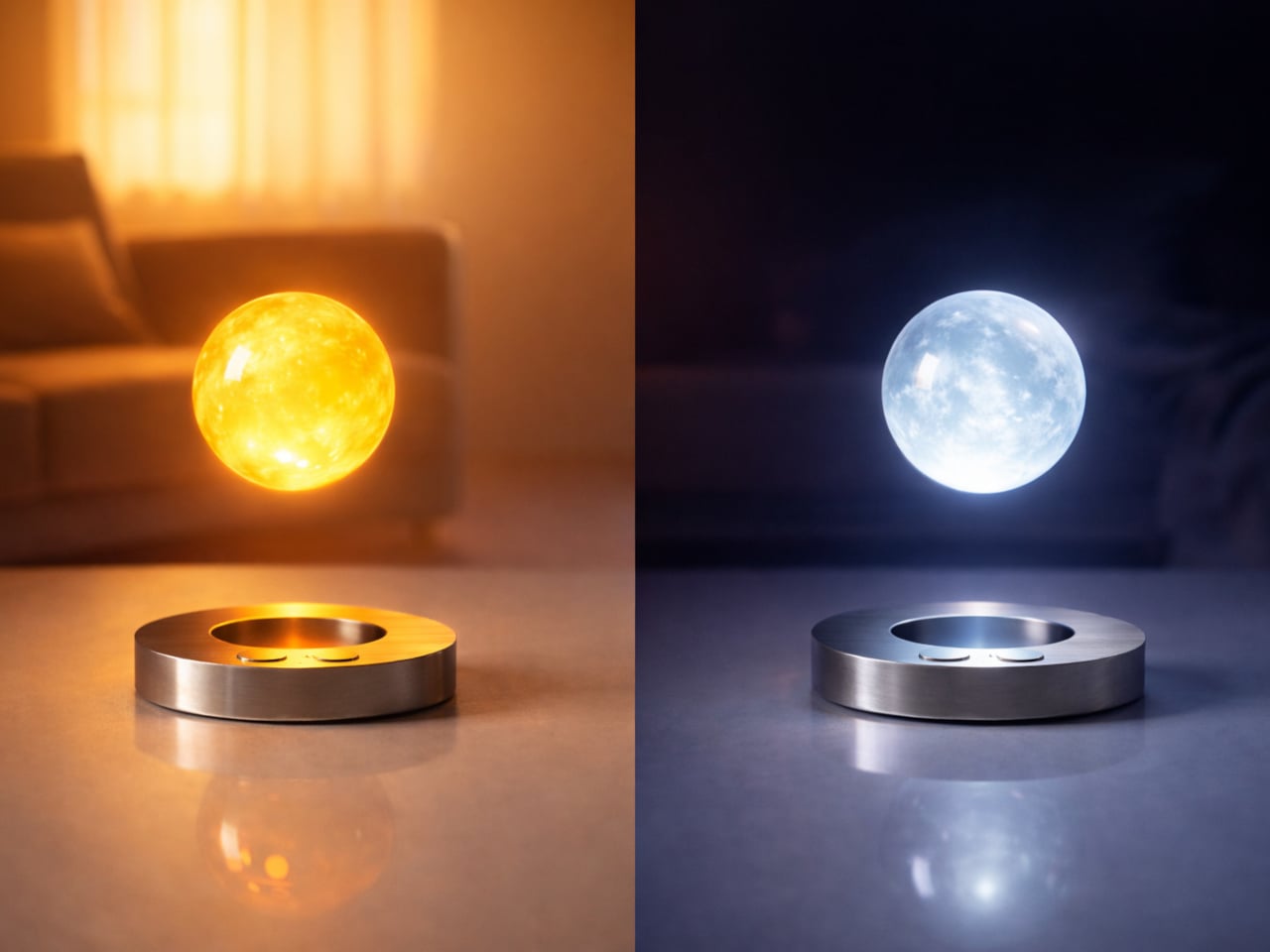
Ivana Nedeljkovska’s Flying Moon & Sun takes a different position on that. Her conceptual design doesn’t ask you to move toward the light; it imagines the light moving toward you. Drawn from the natural rhythms of the sun and moon, it proposes a mobile, levitating lamp that follows you through your home and adapts to whoever it’s meant to illuminate.
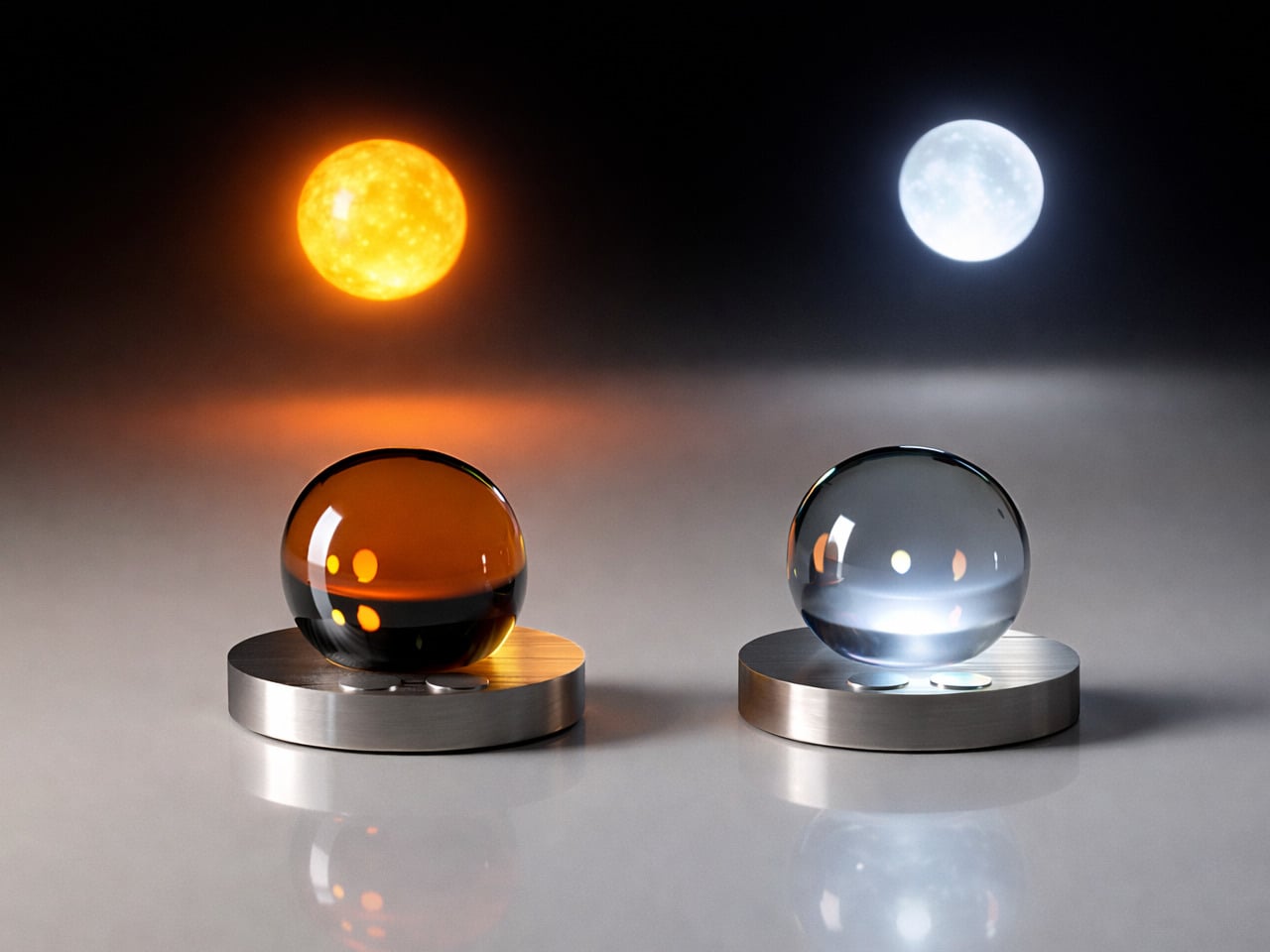
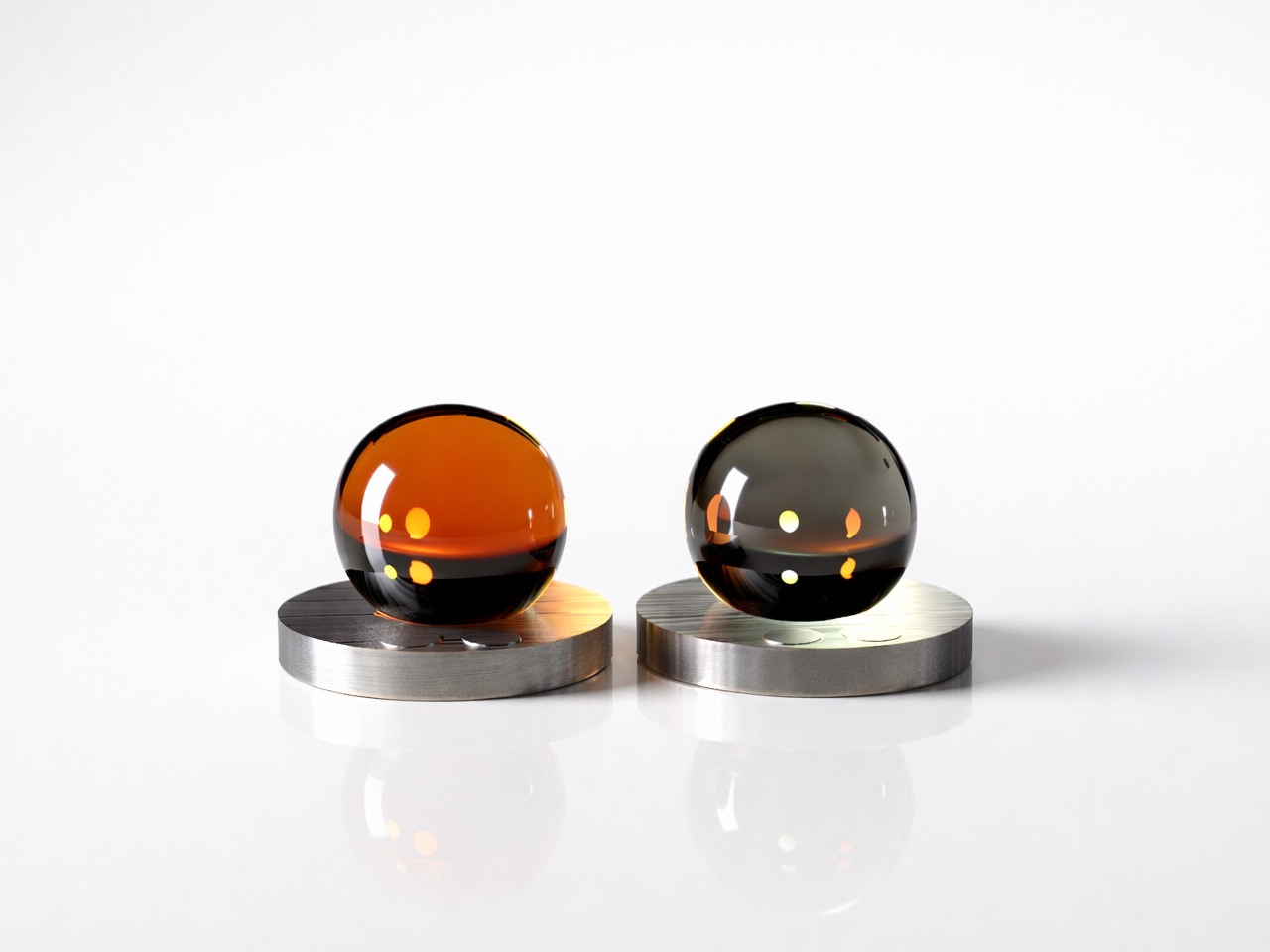
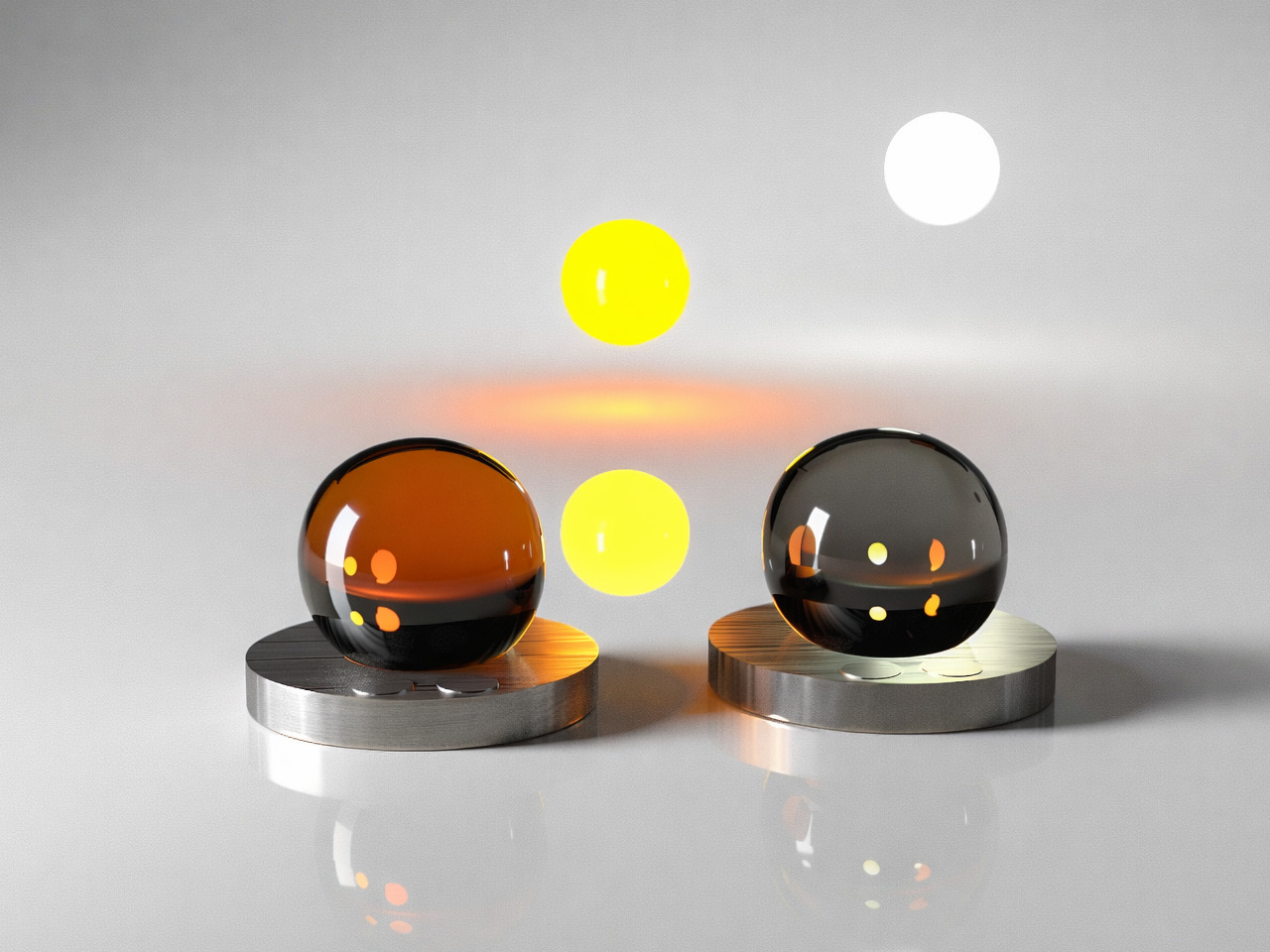
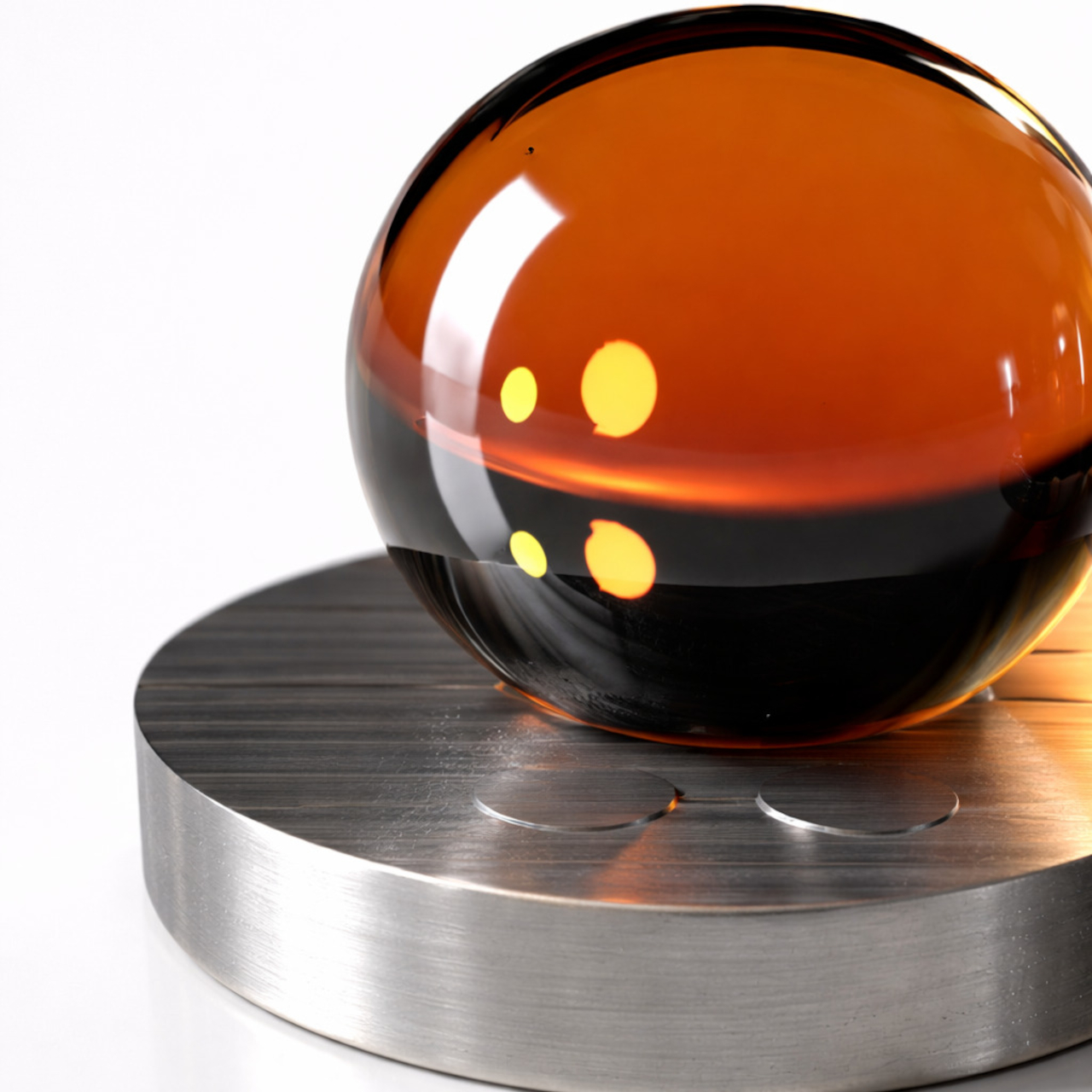
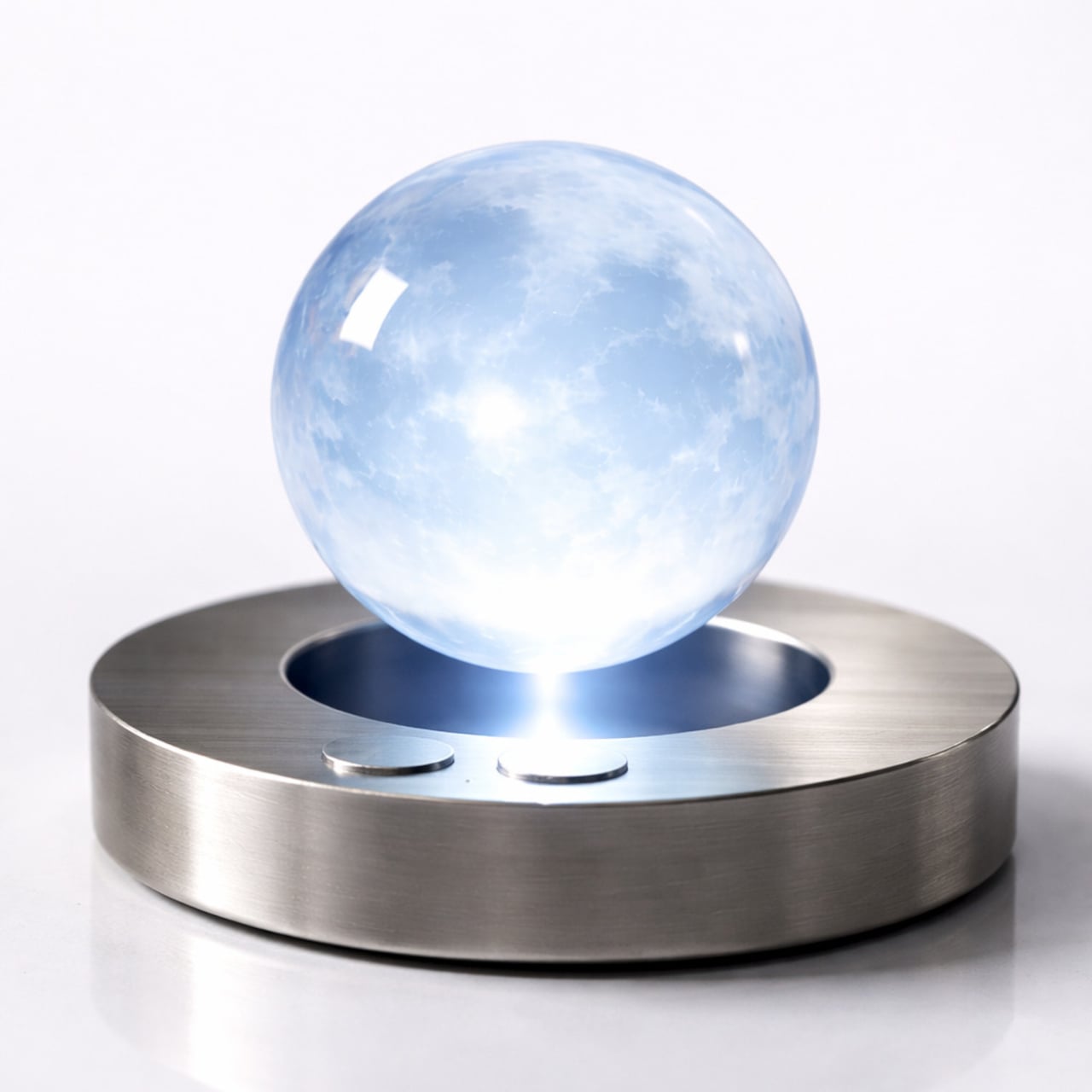
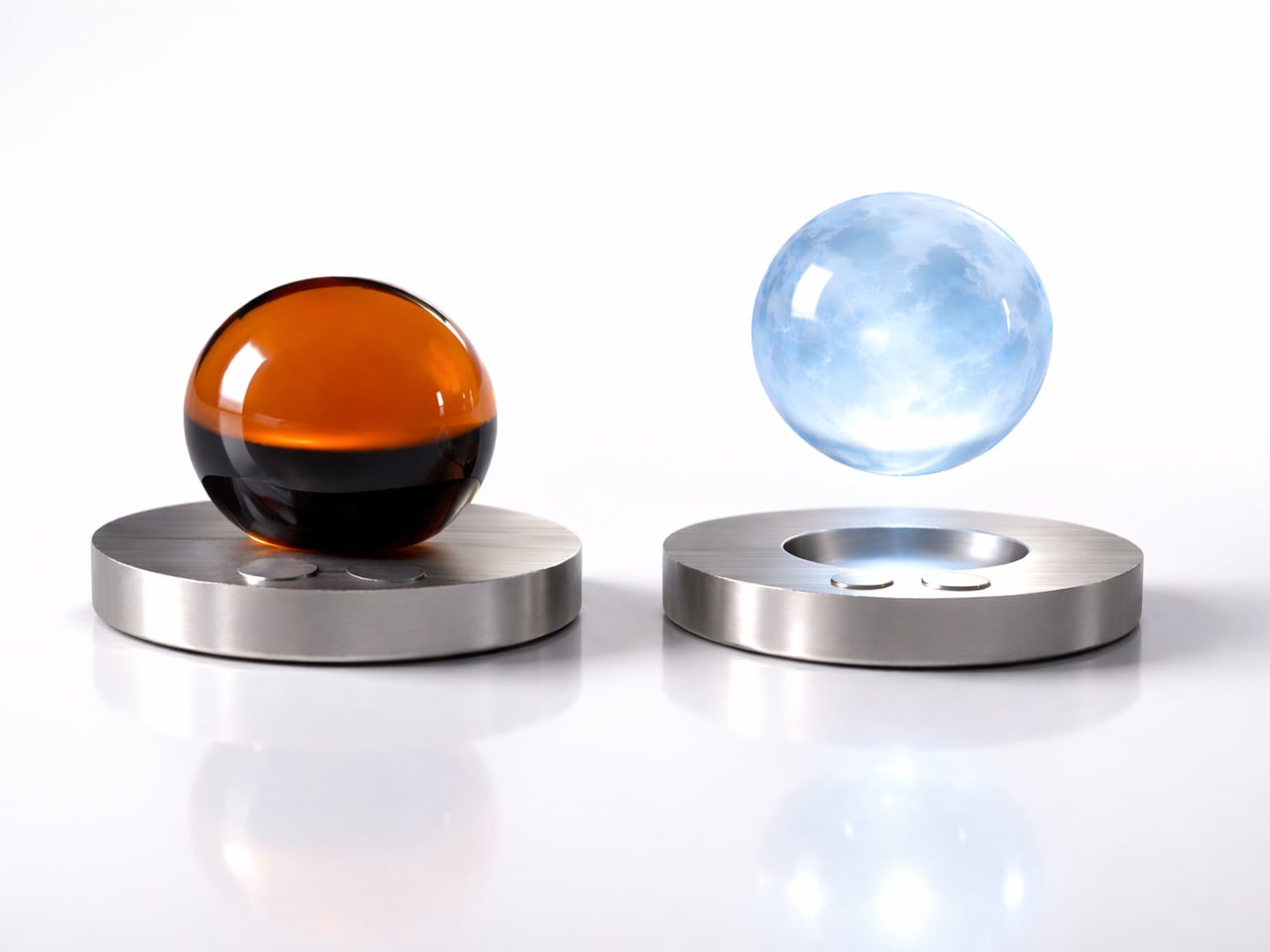
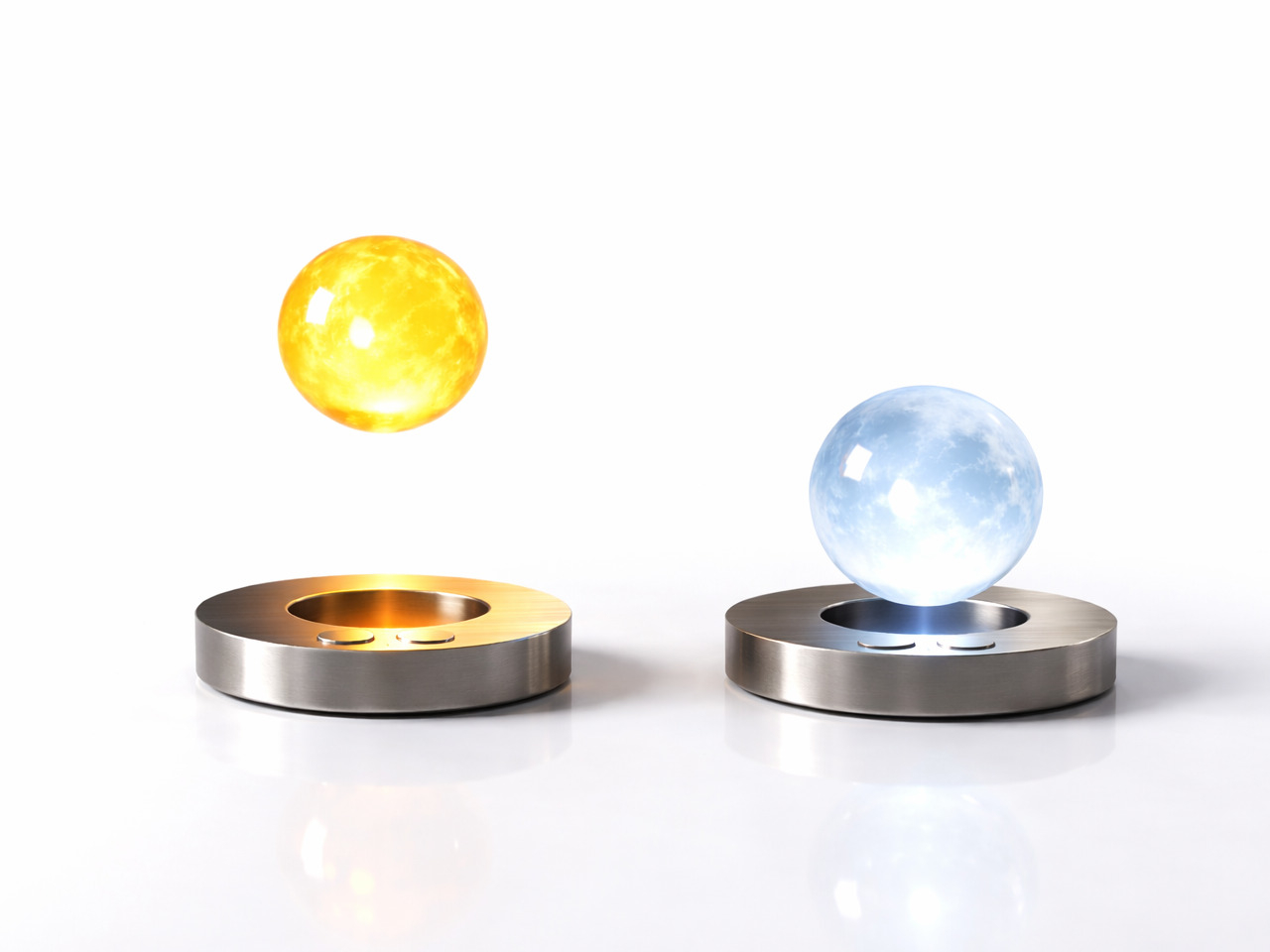
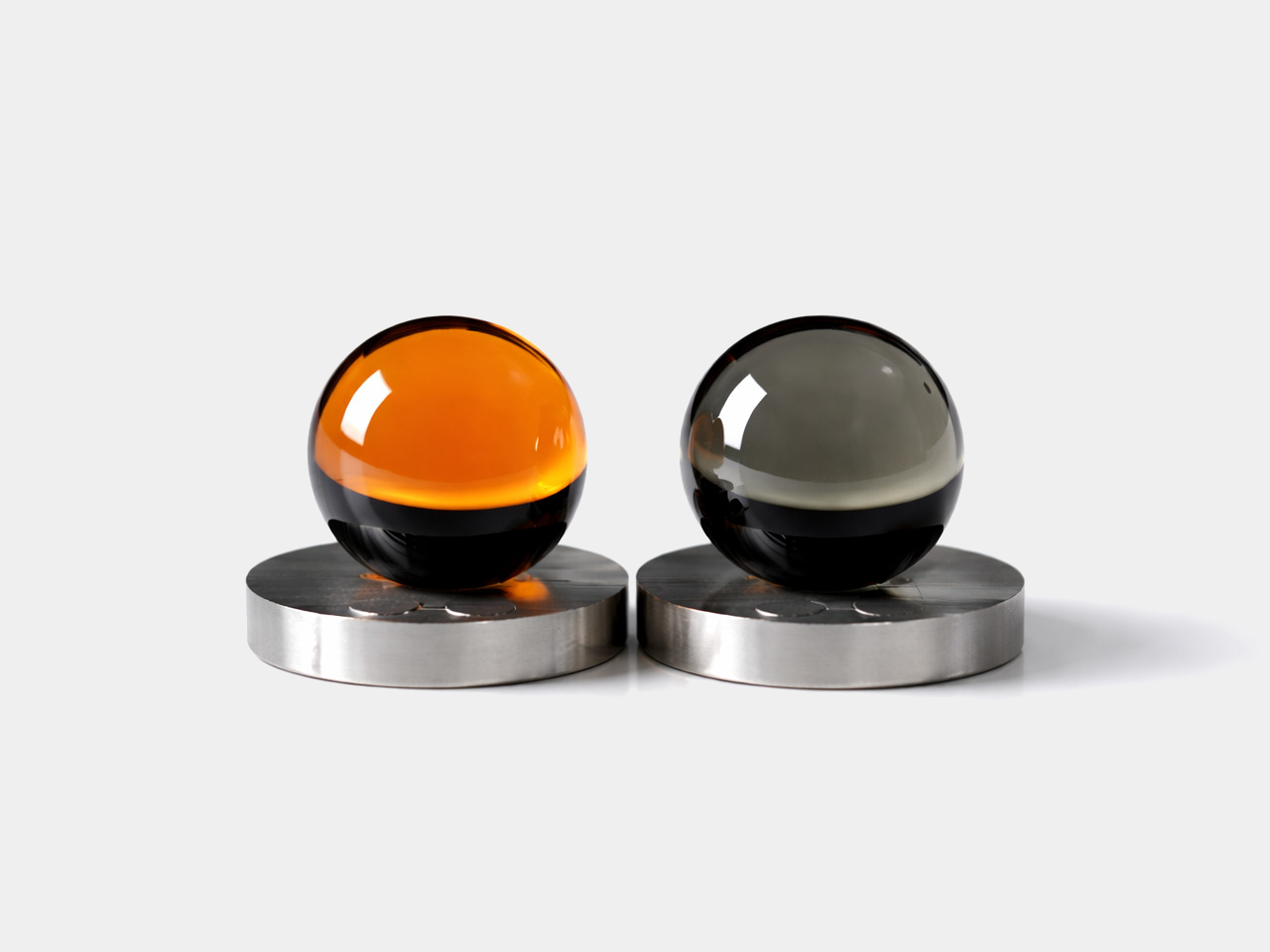
The concept takes shape as two glass orbs, one in warm amber that channels the sun’s energy, and one in cool frosted blue that mirrors the moon’s quieter character. Each rests on a brushed circular metal base, capable of levitating above it through magnetic force. That floating quality physically expresses the central idea, that this is a light that doesn’t feel tied to any single spot.
The two orbs aren’t just stylistically distinct; each serves a purpose tied to the body’s natural cycles. The warm, sun-toned orb supports alertness and activity, while its cool lunar counterpart eases the body into rest. By mapping its light to the gradual arc from sunrise to sunset, the design draws on circadian science, offering something that most smart bulbs attempt through apps but rarely manage to make feel genuinely natural.
Nedeljkovska was thinking about people who don’t always have the option of adjusting their environment easily. For someone with visual or sensory challenges, a light that moves toward them rather than waiting to be repositioned carries real value. The concept doesn’t frame this as a special accommodation; it simply makes intuitive, responsive behavior the default, which is what good inclusive design tends to do.
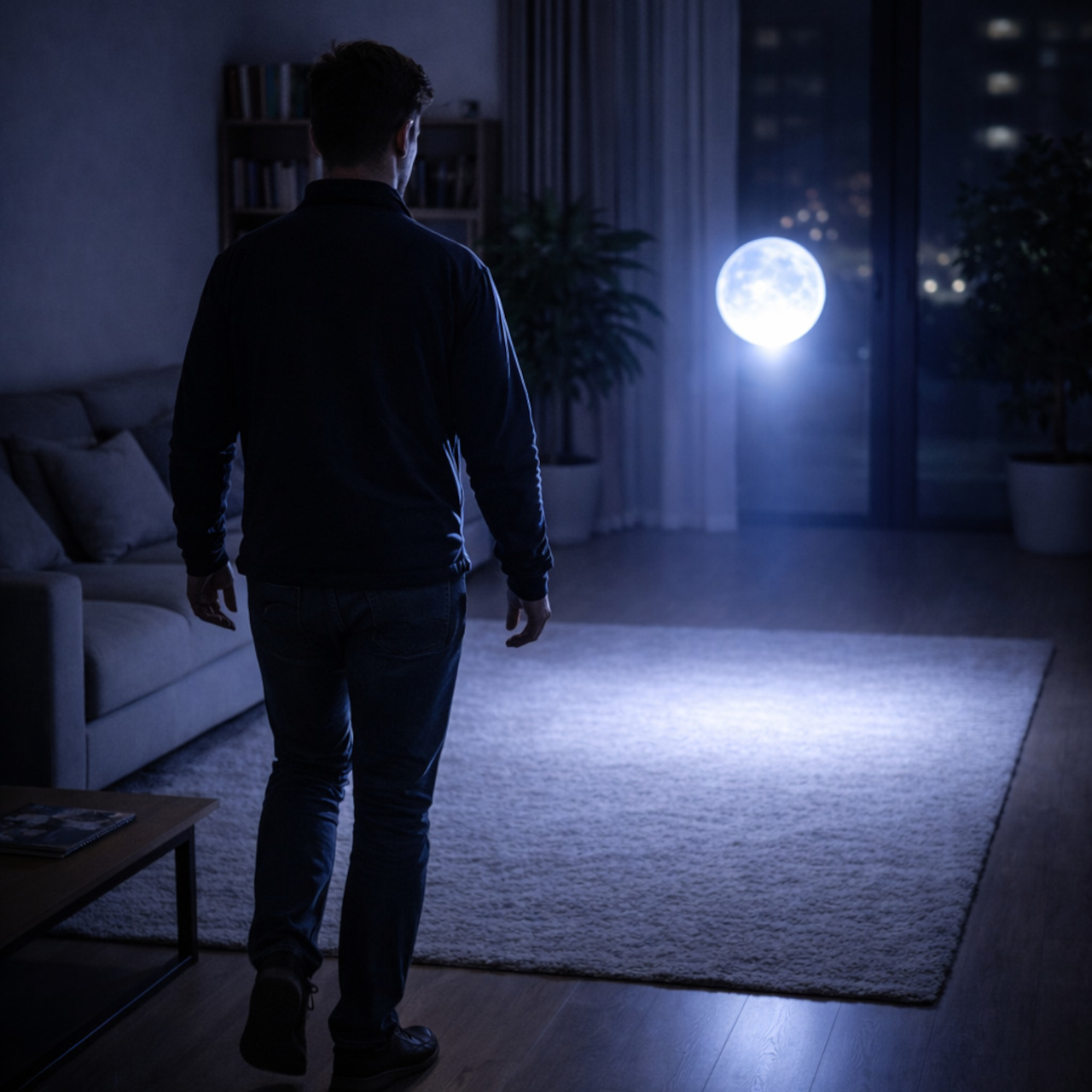
That mobility is perhaps the most striking aspect of the idea. Imagine waking at night and finding a glowing orb already near a doorway, having drifted to where you’ll likely need it next. For older users, or anyone navigating in the dark, that kind of preemptive illumination offers a quiet, practical benefit that no ceiling fixture or bedside lamp can really replicate.
The form reinforces the emotional ambition. There are no buttons, no menus, no settings to configure. The smooth glass surfaces and soft inner glow make the orbs feel more like objects found in nature than anything in a typical lighting store. That’s a deliberate choice, one that tries to make a lamp feel comforting rather than functional, which is a harder design problem than it sounds.
Flying Moon & Sun is still a concept, but the questions it raises are genuine. How much of our discomfort with artificial light comes from having to work around it, rather than having it work around us? A lamp that floats, follows, and shifts with the hour is ambitious, but the premise that light should serve the person rather than the room is hard to argue with.
Floating design is a product-led architectural approach that prioritizes spatial freedom and visual continuity. By lifting elements from the ground, spatial and product design achieves clarity, allowing products, surfaces, and volumes to read as lighter, more refined interventions within the space.
In contemporary interior architecture, this language of suspension reflects a precise balance between engineering and design intent. The absence of visible support elevates furniture, fixtures, and architectural components into sculptural products. Let’s understand how the structure recedes or the void gains value in interiors and product design, making the design feel effortless, modern, and intelligently resolved.
1. Cantilevered Design
Cantilevered architecture embodies structural bravery, transforming engineering into a bold tectonic statement. By extending built forms beyond conventional supports, you create a sense of controlled tension that redefines how stability is perceived. In interior and product architecture, this approach expresses confidence, precision, and mastery, where structure becomes an intentional design language rather than a hidden necessity.
Beyond its visual impact, the cantilever delivers measurable spatial and functional value. You preserve ground permeability, reduce visual mass, and form shaded, usable outdoor zones beneath the structure. This apparent levitation elevates aesthetic currency, enhancing experiential quality and market appeal. Homes that seem to float project innovation, command attention, and achieve a higher return through architectural distinction.
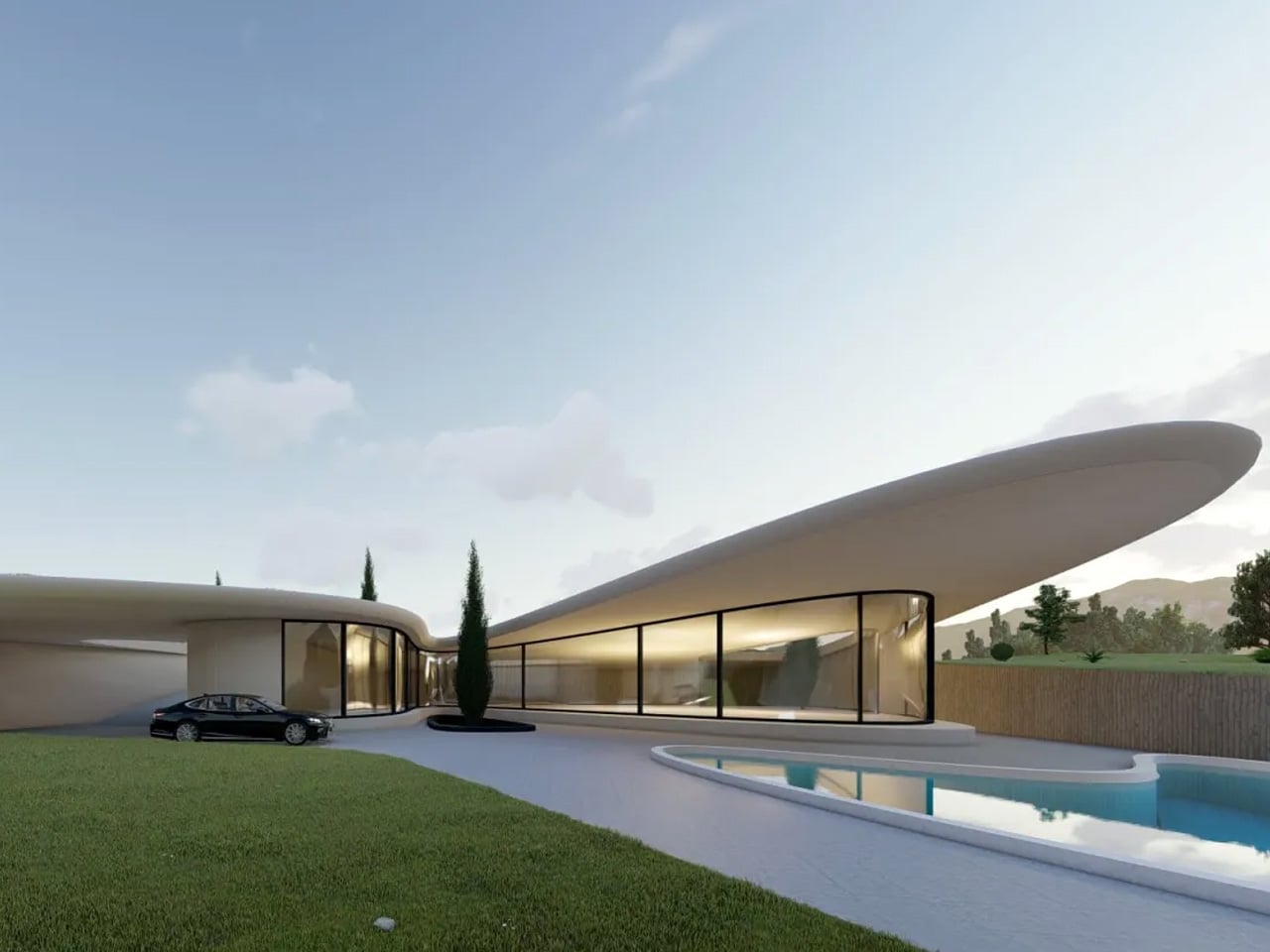
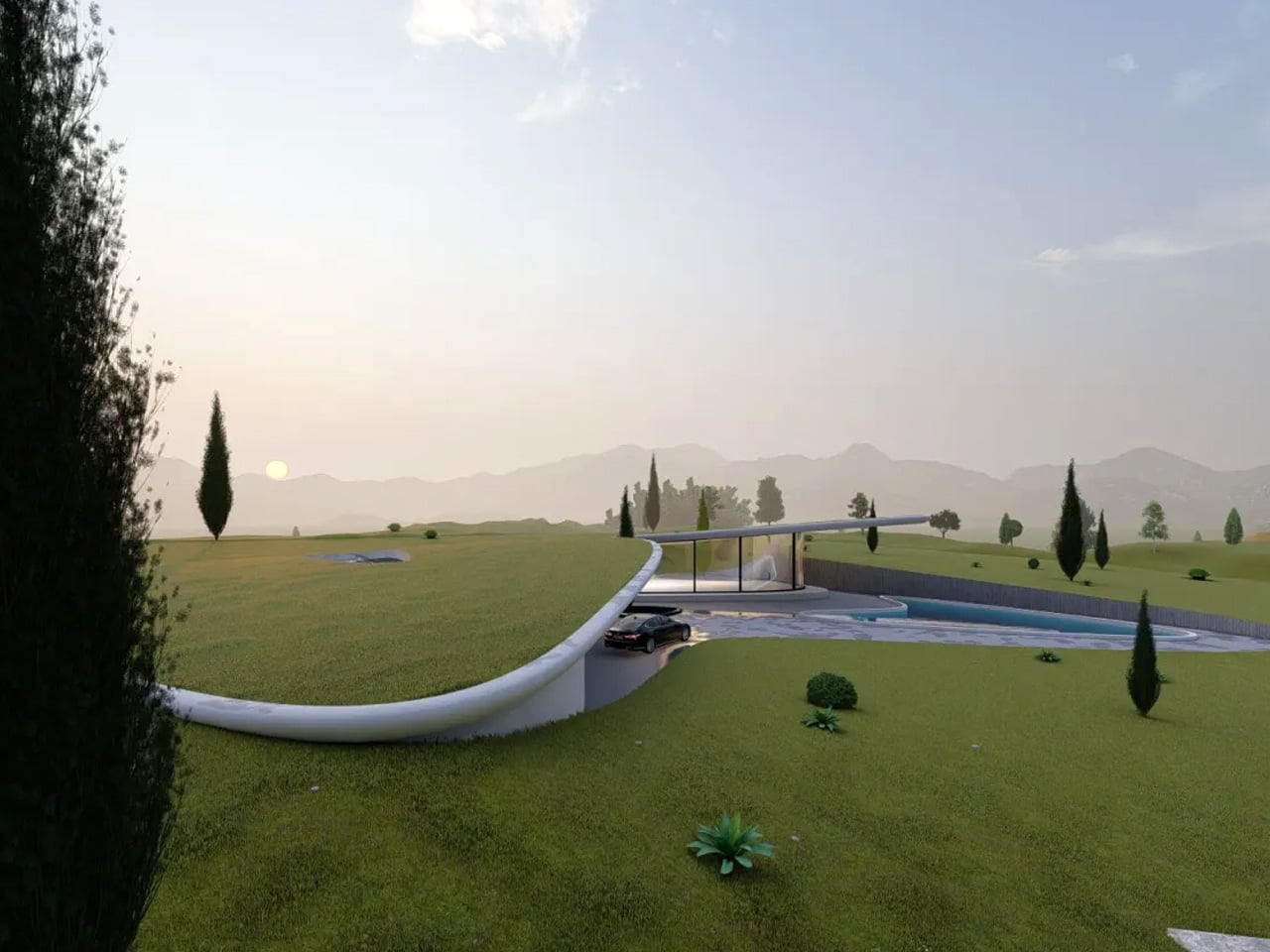
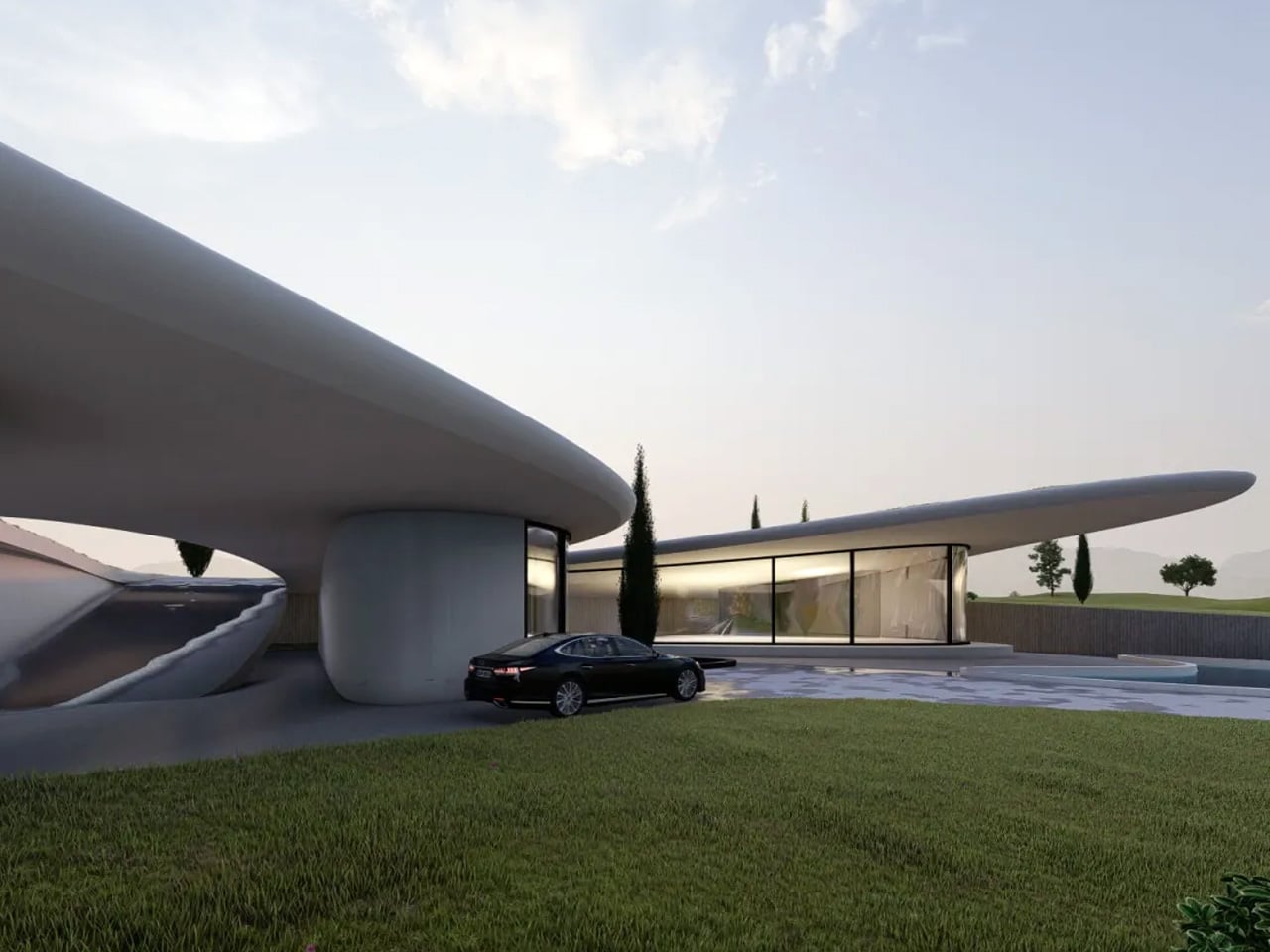
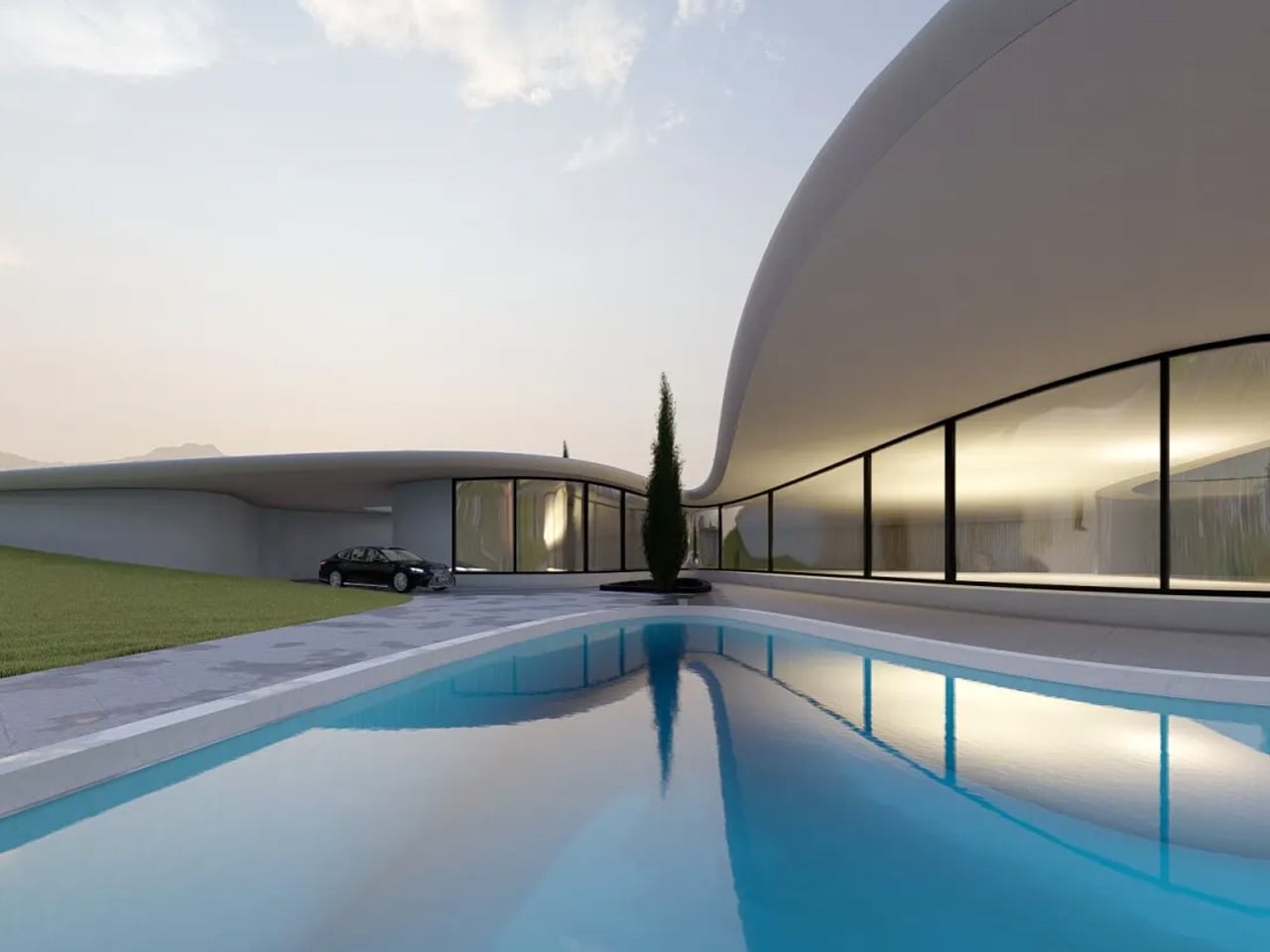
Set against the rolling green hills of Nashtarood, House Under the Hill creates a striking illusion of floating within the landscape. Although much of the structure is embedded into the terrain, the exposed edges appear to hover lightly above the ground, with curved forms extending outward as if suspended over the hillside. The living roof blends seamlessly with the earth, allowing the architecture to visually dissolve while selected volumes seem to glide above the terrain. This careful balance between concealment and elevation gives the home a weightless presence despite its substantial form.
Inside, expansive glass panels enhance the floating effect by erasing clear boundaries between floor, wall, and horizon. Living spaces open toward the pool and surrounding hills, creating the sensation of hovering within nature rather than sitting firmly on it. Open-plan interiors, restrained materials, and soft transitions between levels reinforce this sense of suspension, resulting in a home that feels light, fluid, and quietly detached from the ground.
2. Floating Forms
In product design-led interiors, floating elements are conceived as precision objects rather than static fixtures. Vanities, cabinetry, and platform beds are elevated using controlled shadow gaps, allowing each product to appear lighter and more intentional. You emphasize form, detailing, and material junctions while maintaining uninterrupted floor planes that visually expand the interior.
This sense of lift enhances both experience and energy. Light passing beneath products reduces visual weight and creates a soft, ambient glow that highlights craftsmanship. Elevated products prevent the feeling of heaviness, and the result is an interior where product design, spatial clarity, and well-being coexist.
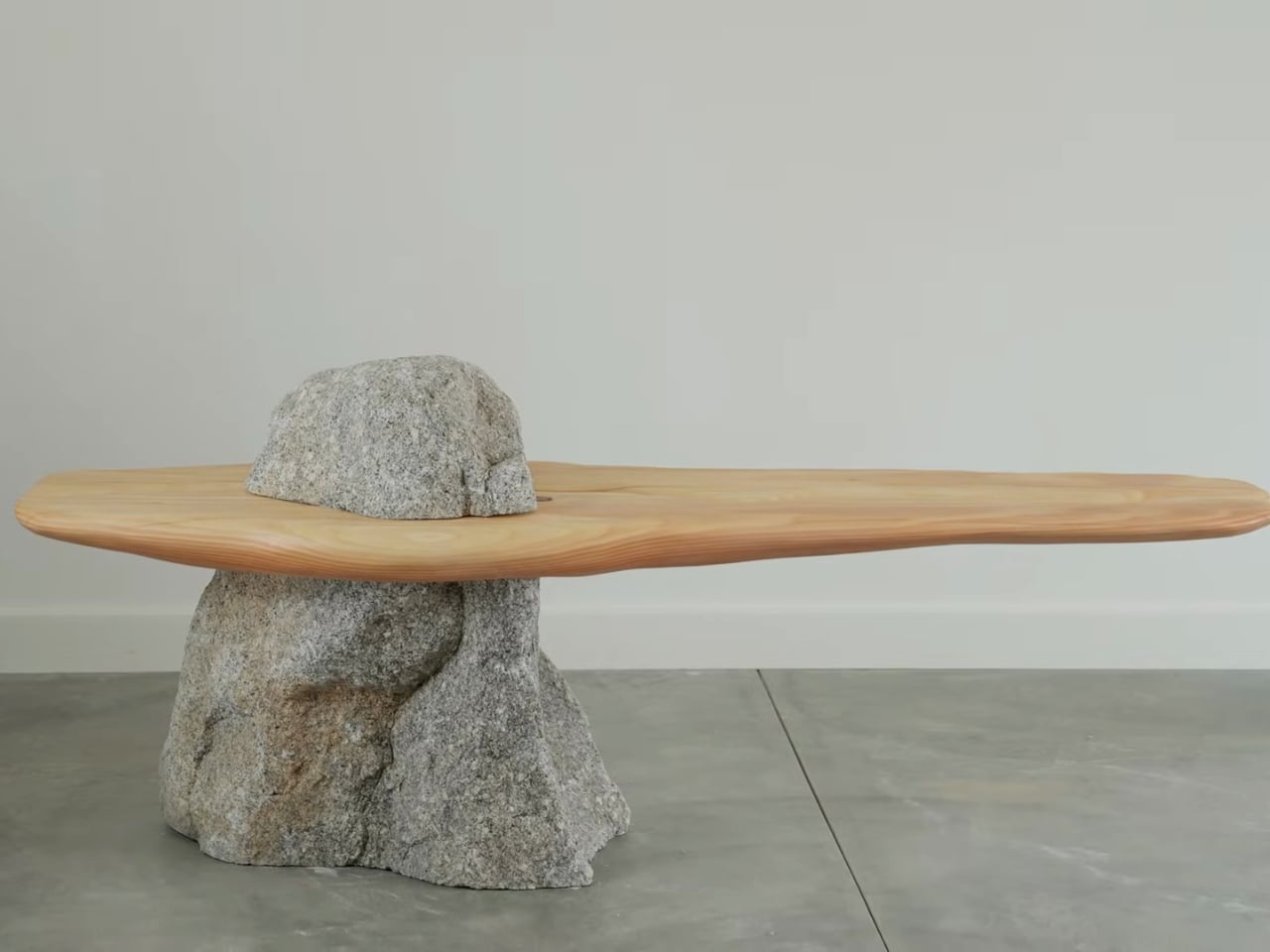
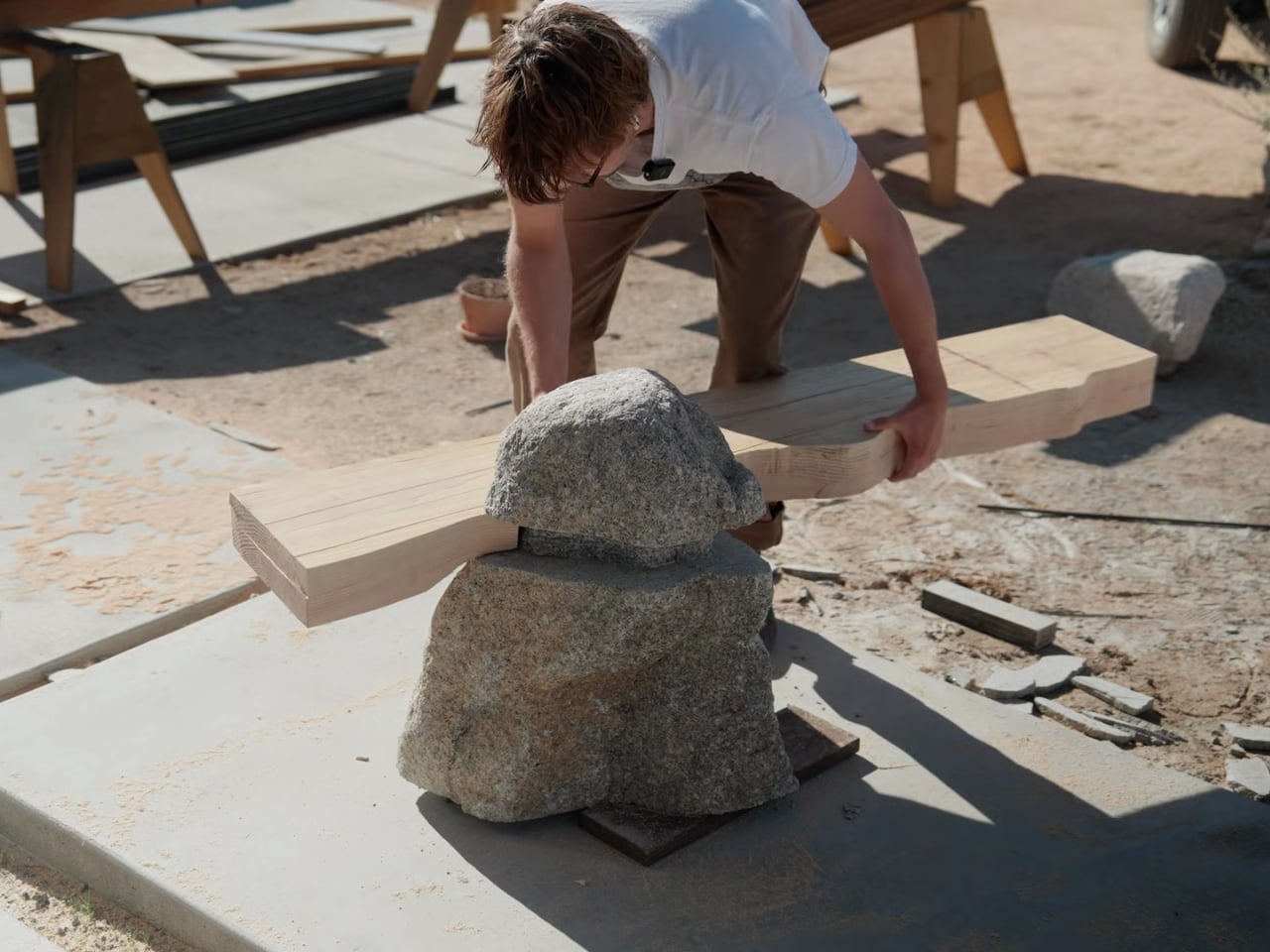
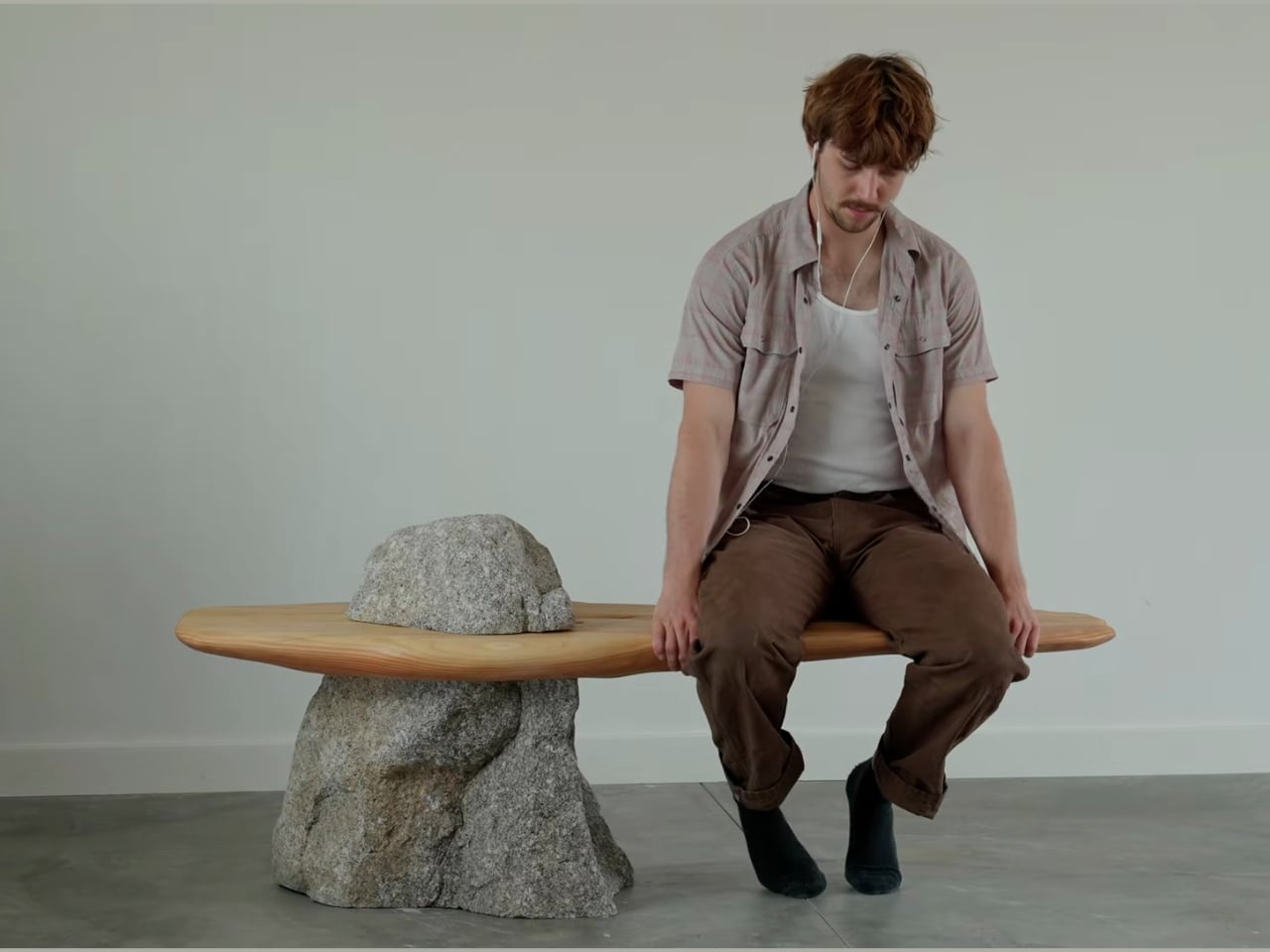
The idea of sitting atop a cloud-cutting mountain peak feels almost fantastical, so maker Miles Hass of Make With Miles has translated that vision into a striking piece of functional furniture. The bench appears as a solid rock emerging from the floor, with a slender wooden seat passing cleanly through it, creating the illusion of levitation. At first glance, the composition feels impossible, prompting a pause as the eye tries to reconcile weight, balance, and form. Inspired by mountaintops breaking through clouds, the piece captures an ethereal moment and grounds it within a contemporary domestic setting.
Behind its effortless appearance lies precise engineering and craftsmanship. Created in collaboration with Ben Uyeda in Joshua Tree, the bench balances structural integrity with sculptural elegance. The stone supports real weight, the wood remains functional, and together they form a dialogue between nature and modern design. Both artwork and seating, the bench exemplifies how furniture can be expressive, purposeful, and quietly provocative.
3. Use of Lightweight Materials
In advanced product design, material veracity defines visual ease. You increasingly rely on high-strength-to-weight materials such as carbon fiber, tempered glass, and performance polymers to achieve ultra-slender profiles. These materials enable products to appear almost weightless while retaining precision, durability, and structural confidence within contemporary interiors.
This material intelligence serves performance and responsibility. Slender, high-tensile legs and translucent supports visually recede, allowing products to blend seamlessly into space. By reducing material volume without compromising strength, you lower embodied carbon and reinforce a refined “less is more” philosophy—where sustainability, efficiency, and aesthetic clarity converge through thoughtful product engineering.
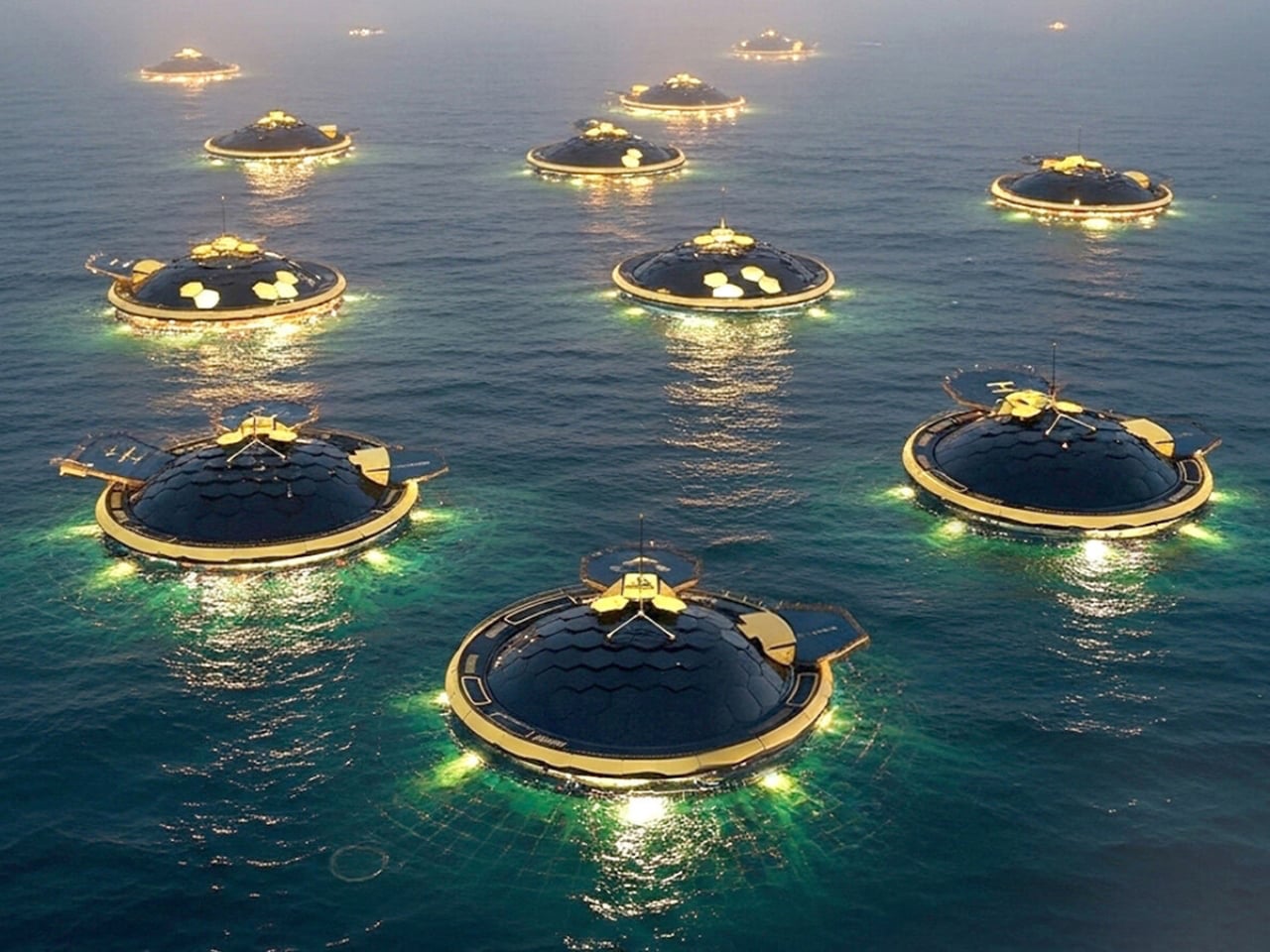
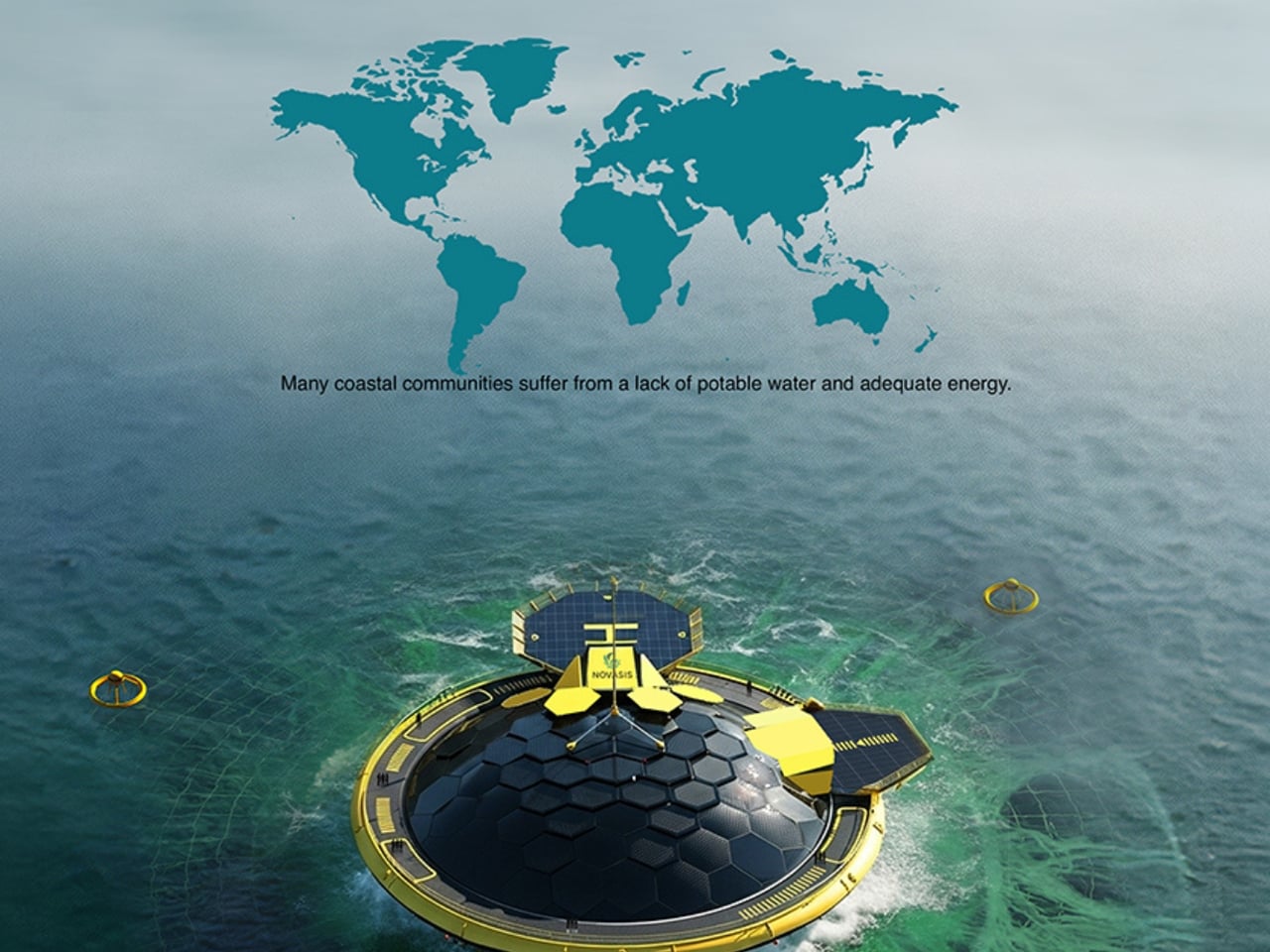
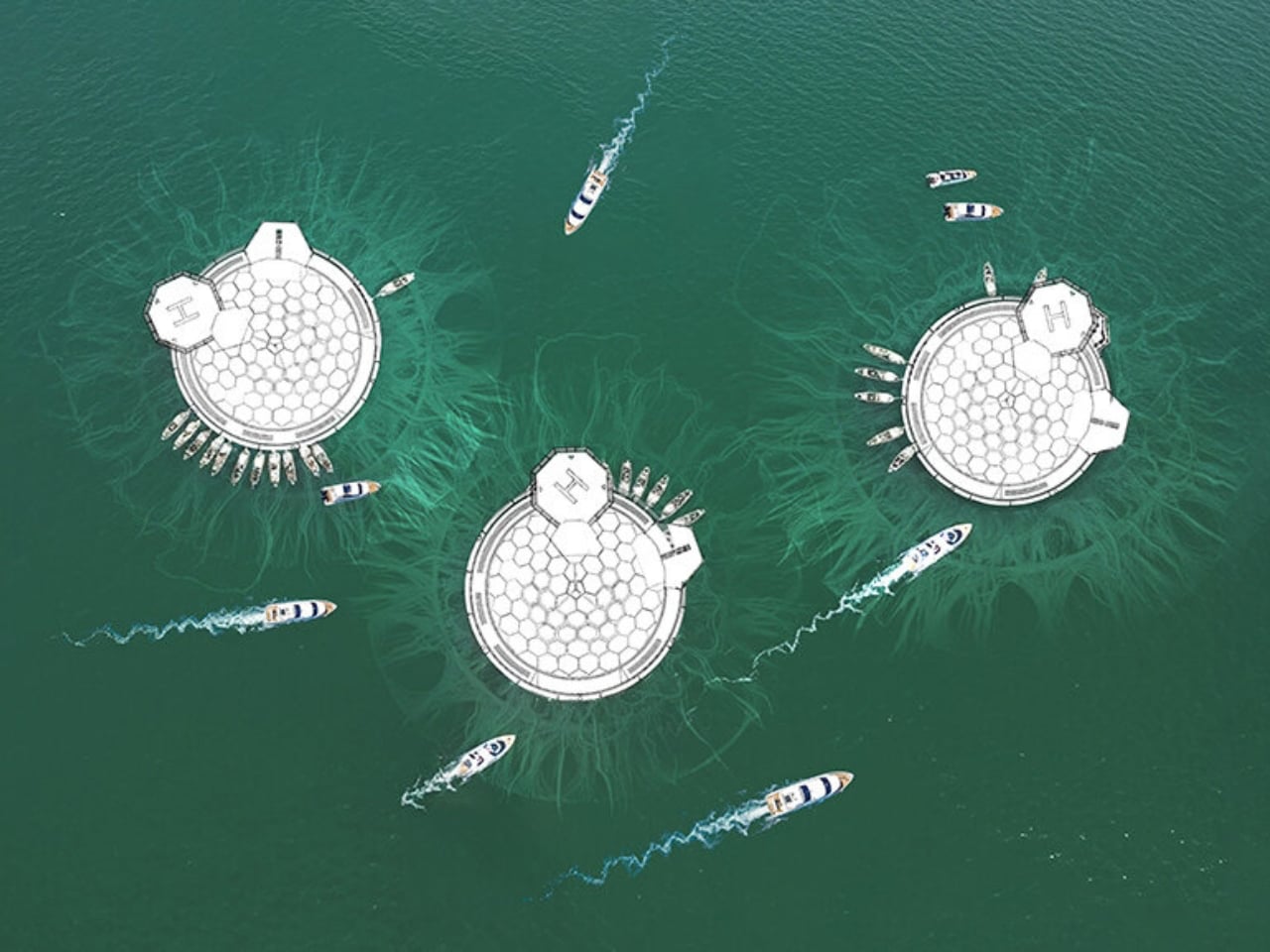
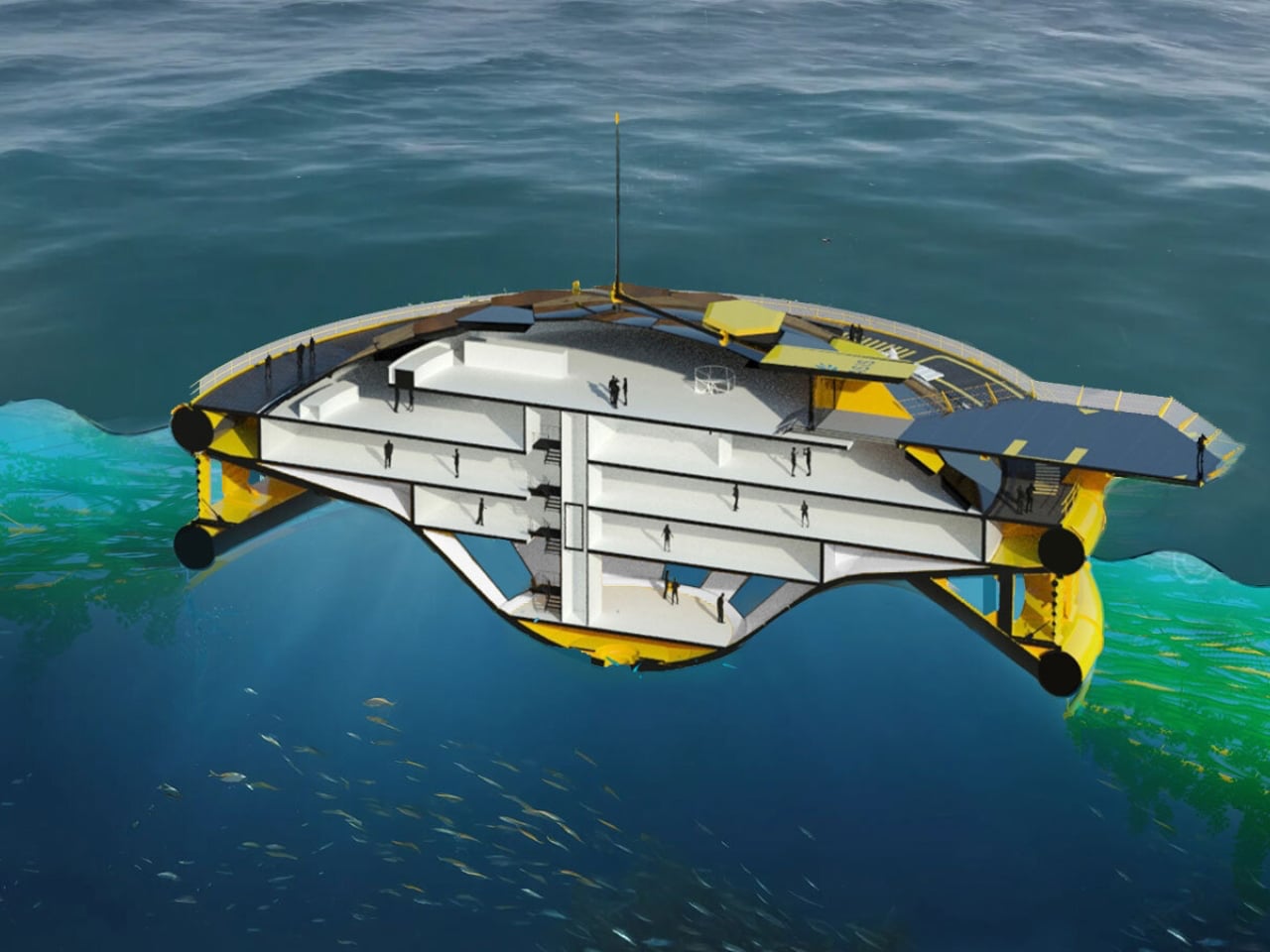
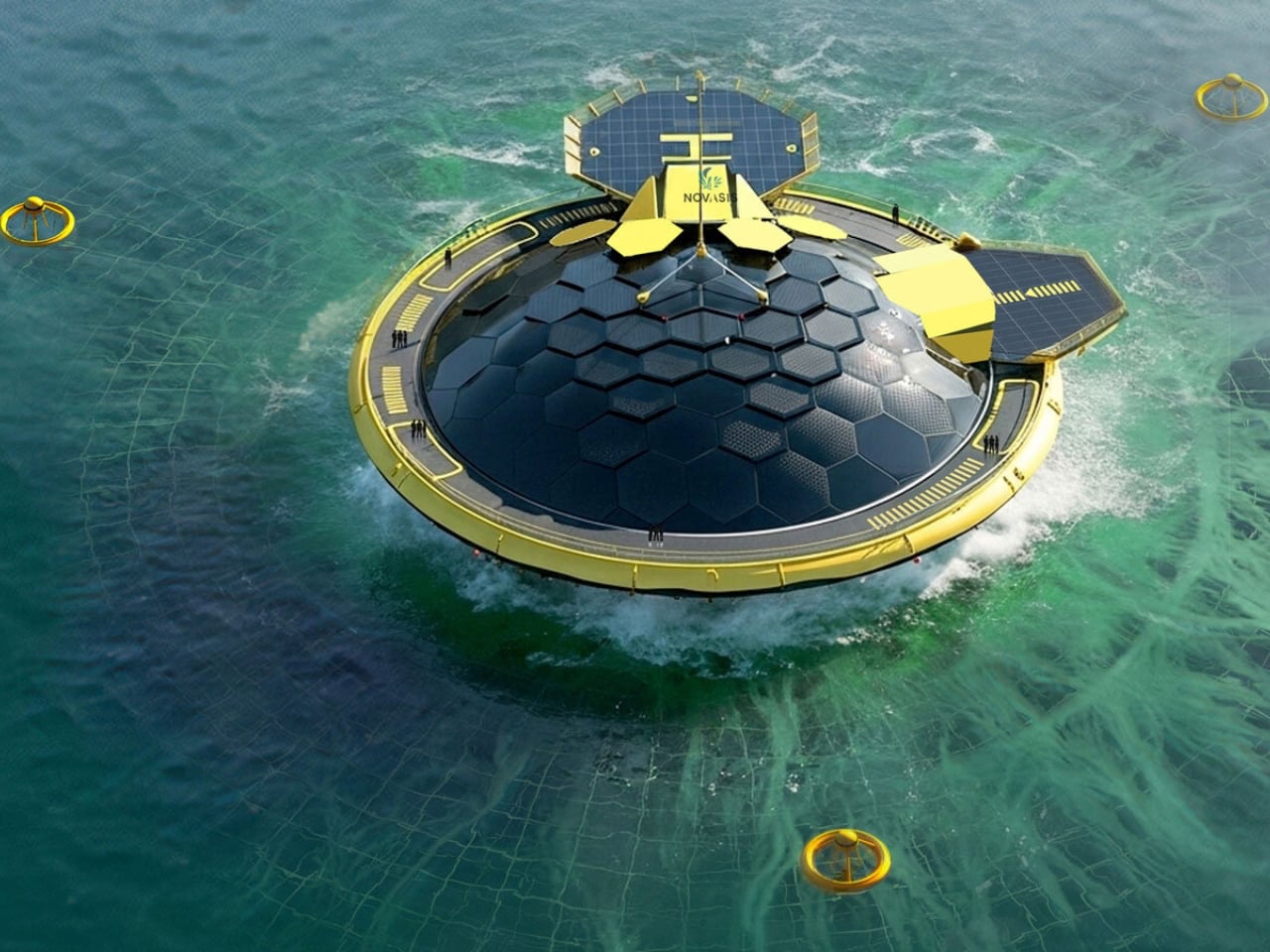
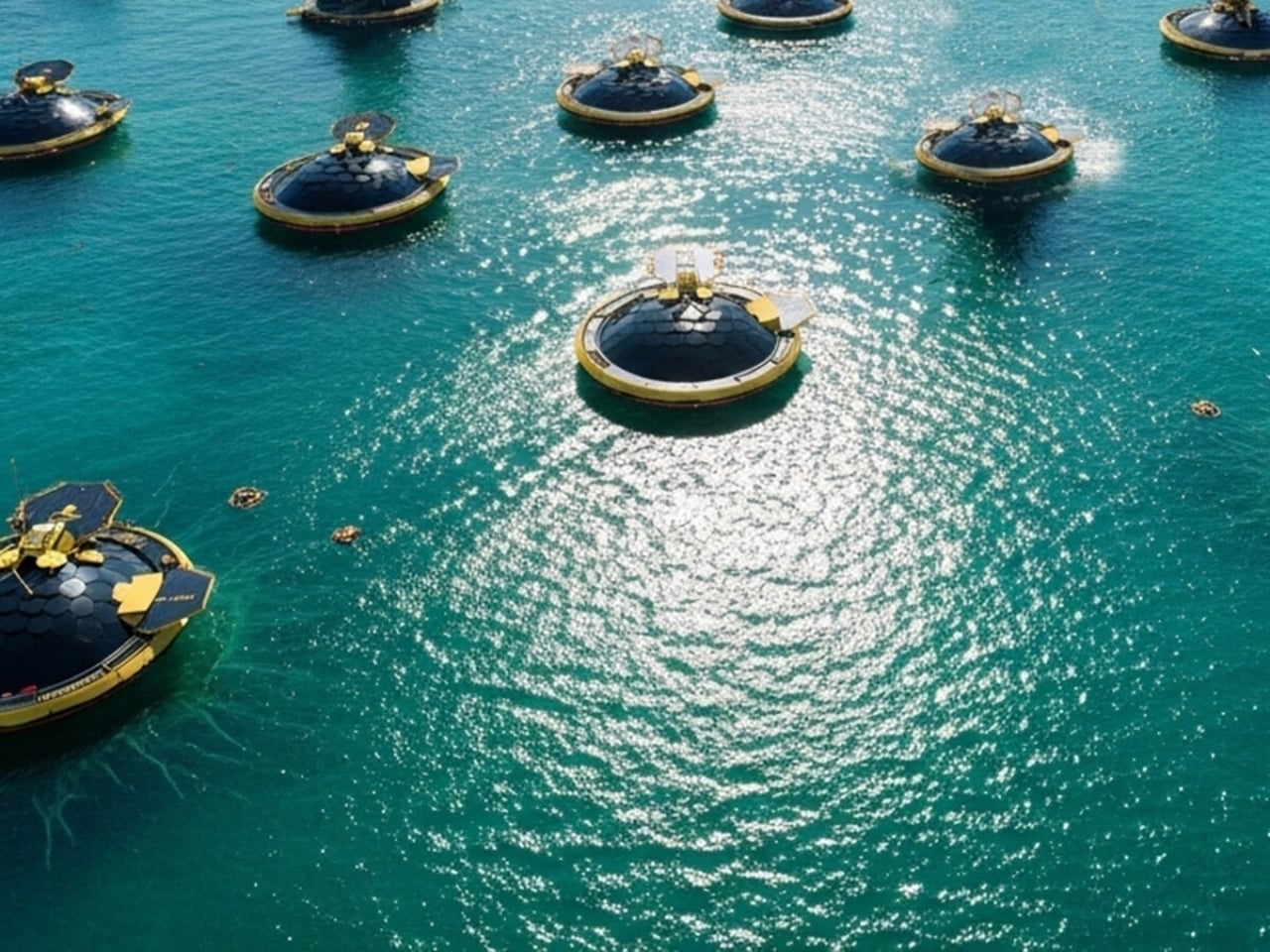
Novasis is a compelling floating design concept that redefines how architecture can exist on water. Conceived by designer Mohsen Laei and recognised with the Grand Prix Architecture and Innovation Award for the Sea, the project centres on a scalable floating platform engineered to operate entirely at sea. Rather than treating the ocean as a passive surface, Novasis is designed to float as an active, adaptive system—one that responds to marine conditions while remaining structurally stable, modular, and self-sufficient.
The floating platform integrates multiple functions into a single marine-based ecosystem. Its buoyant structure supports algae cultivation, renewable energy systems, and freshwater production without relying on land-based infrastructure. Floating and submerged recycled PET nets enable large-scale algae growth, while solar, wave, and desalination technologies operate directly on the platform. Modular by design, Novasis can exist as a standalone floating unit or connect with others to form larger networks, offering a flexible model for sustainable, ocean-based living and research.
4. Technological Product Levitation
In next-generation product design, levitation moves from illusion to reality through magnetic and electromagnetic integration. You now encounter products—speakers, lighting, and conceptual seating—that physically hover, dissolving the traditional relationship between object and surface. This marks a shift toward interiors where technology enables true visual freedom and heightened biophilic engagement.
While energy demand remains a technical consideration, the experiential return is exceptional. A floating product becomes an innovation statement, delivering sensory delight and intellectual intrigue. By suspending objects in mid-air, you interrupt habitual spatial perception, creating a moment of pause that redefines interaction, value, and the future language of design.
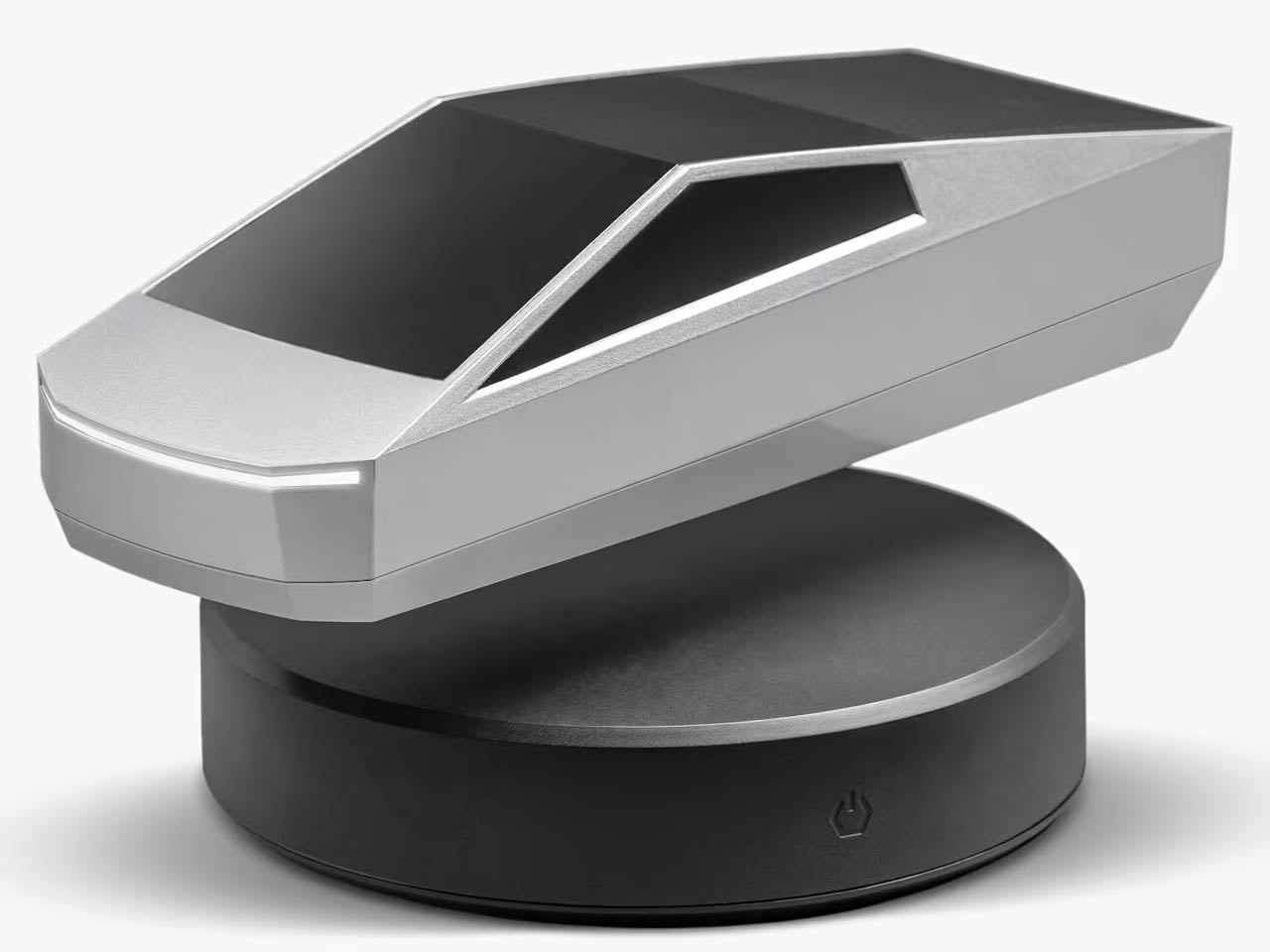
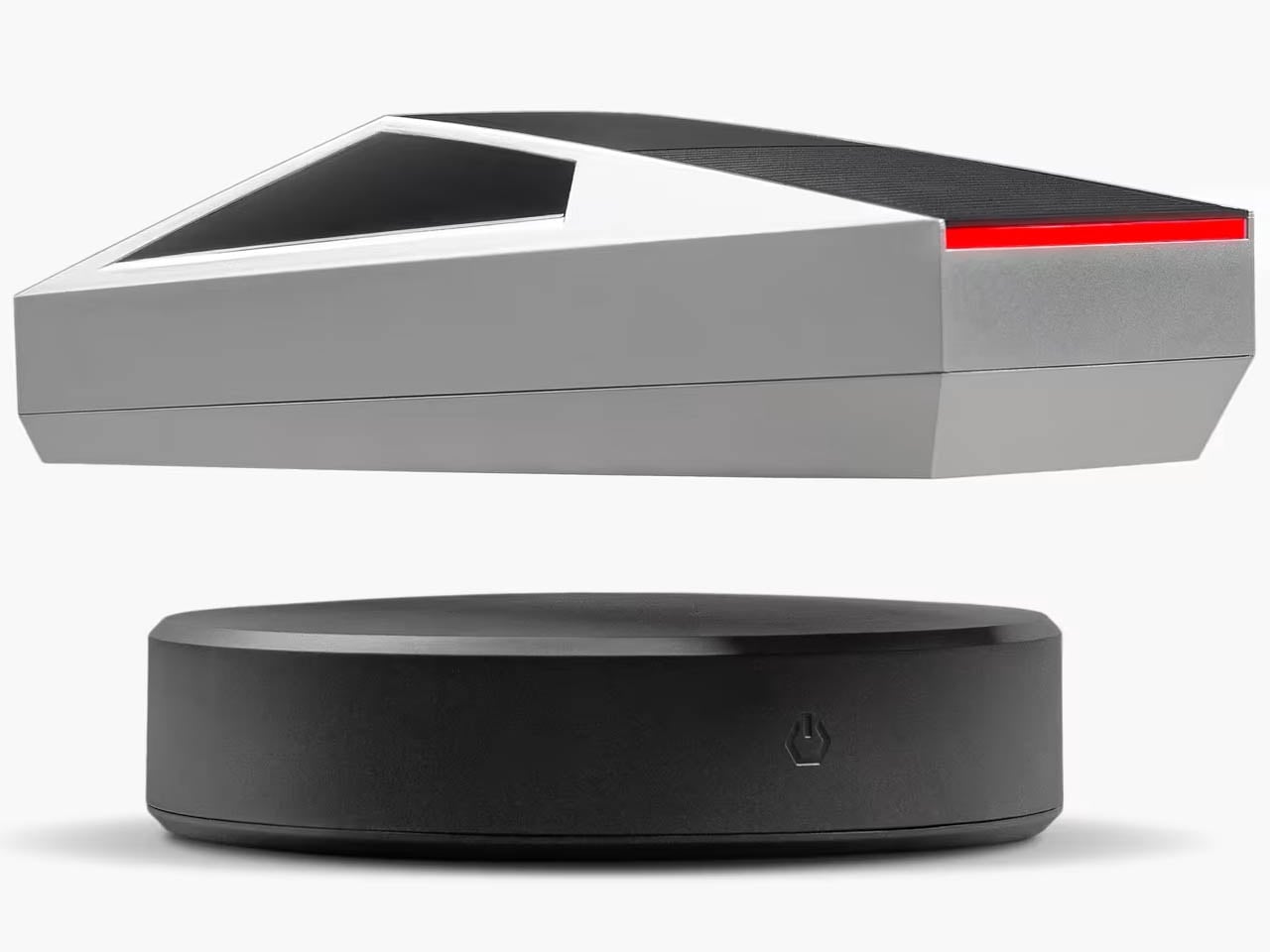
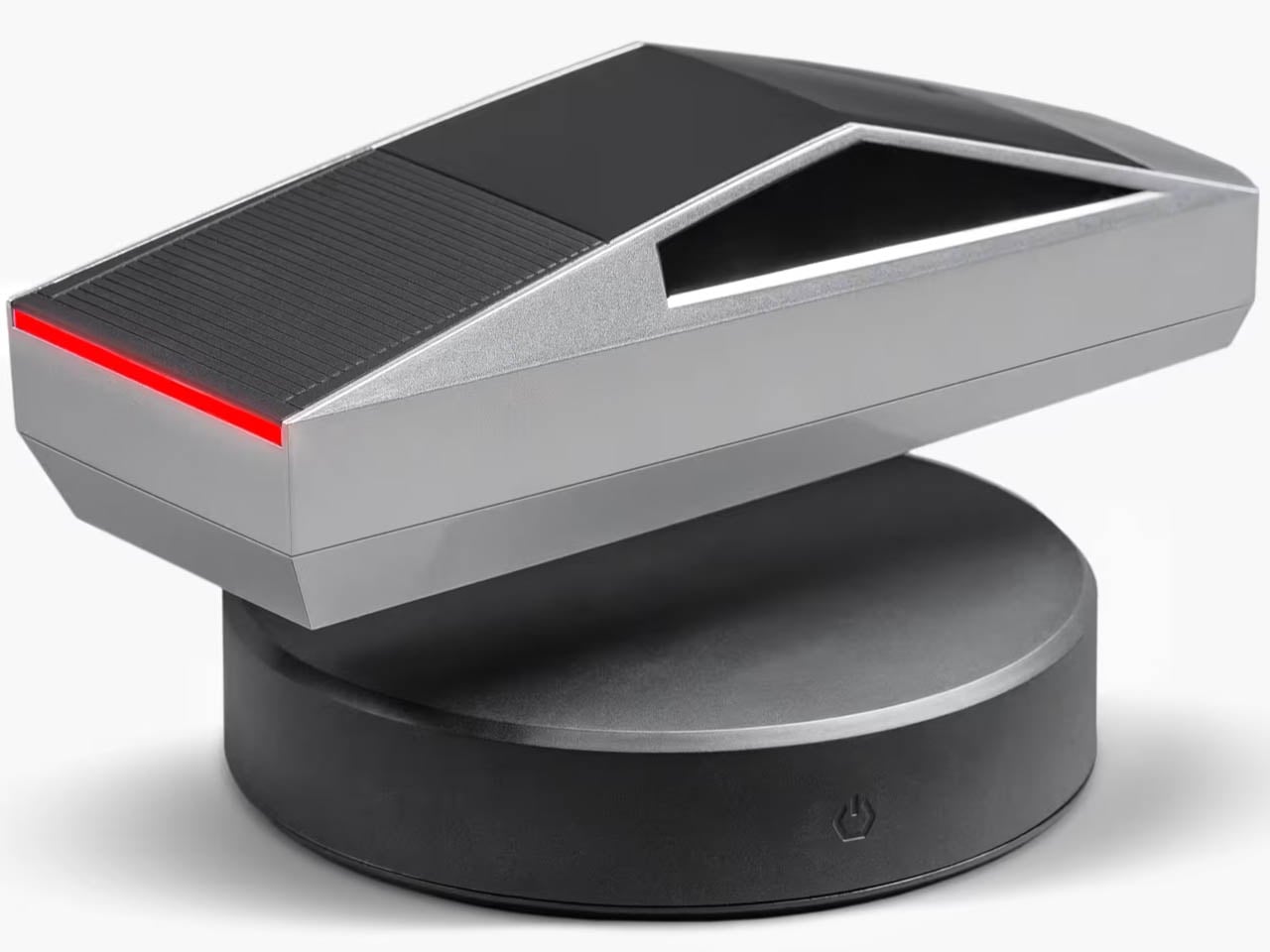
Levitating objects have a universal appeal, captivating attention with their illusion of defying gravity. Whether it is a lamp, planter, speaker, or mug, the floating effect instantly elevates everyday accessories into conversation pieces for desks, offices, or living spaces. Tesla extends this fascination into the automotive realm with a levitating version of its much-discussed Cybertruck. Known for its polarising, futuristic design, the all-electric pickup has dominated headlines, making a gravity-defying replica an unsurprising yet highly desirable collectible.
The 1:24 scale Levitating Cybertruck floats above a magnetic base using precisely calibrated electromagnetic levitation. Finished in a silver coating reminiscent of the original, it features functional headlights with 14 LED lights and realistic taillights. Measuring just under nine inches long, it can be gently spun while hovering, doubling as a kinetic desk object.
5. Form – Void Equilibrium
In future-forward architecture, product and interior design, visual ease emerges from a conscious dialogue between form and void. You achieve weightlessness when empty space is designed with the same intent as the object itself. By shaping and protecting these voids, products appear lighter, interiors feel breathable, and spatial perception expands beyond physical boundaries.
Technology sharpens this equilibrium. Subtle LED integration beneath floating products accentuates lift without visual noise, reinforcing clarity and precision. The result is a deliberate reduction of clutter and cognitive load. Spaces settle into a state of quiet balance delivering calm, focused, and mentally restorative – where design supports clarity of thought as much as visual refinement.
In the dense forests of Wakefield, Quebec, the MORE Cabin emerges as a striking architectural intervention, resembling a vision drawn from science fiction. Designed by Ottawa-based Kariouk Architects, this 900-square-foot retreat is dramatically elevated 60 feet above the forest floor on a single steel mast. Rather than disrupting its setting, the structure appears to hover lightly over the landscape, cantilevering over a cliff with uninterrupted views of a pristine lake. Architect Paul Kariouk positions the cabin as both a residential retreat and a critical exploration of how architecture can coexist sensitively with nature.
The cabin employs a refined hybrid structure of cross-laminated timber, glulam beams, and discreet steel reinforcements, allowing it to touch the ground at only one point. Fully off-grid, it generates its own power, manages water independently, and even integrates bat habitats within its steel framework. Internally, exposed timber and expansive glazing reinforce warmth and openness, underscoring a design philosophy that balances environmental responsibility with bold architectural ambition.
Floating design expresses architectural and product design poetry through precision and restraint. You balance form, void, material, and light to create spatial clarity and visual calm. For discerning homeowners, the return lies in interiors and products that feel lighter, breathable, and emotionally refined, where modern elegance is defined by effortless levitation and lasting visual ease.
Most aroma diffusers behave like small plastic towers or pods that sit in a corner, quietly bubbling or misting away. They do their job, but they rarely feel like part of the room’s character, more like humidifiers with better marketing. It’s strange that scent and light are both mood tools, but the hardware behind them often looks forgettable enough to hide behind a plant or book.
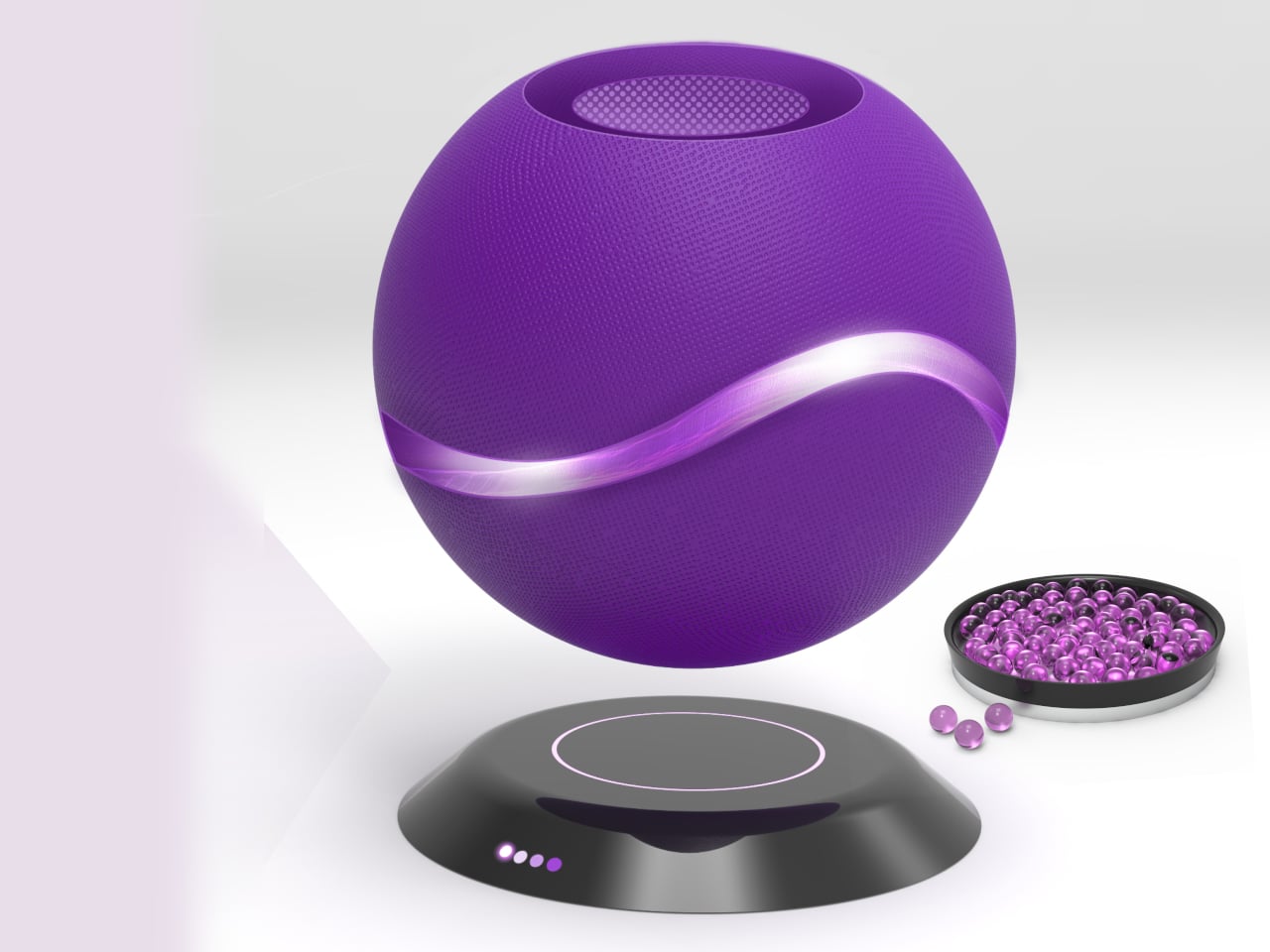
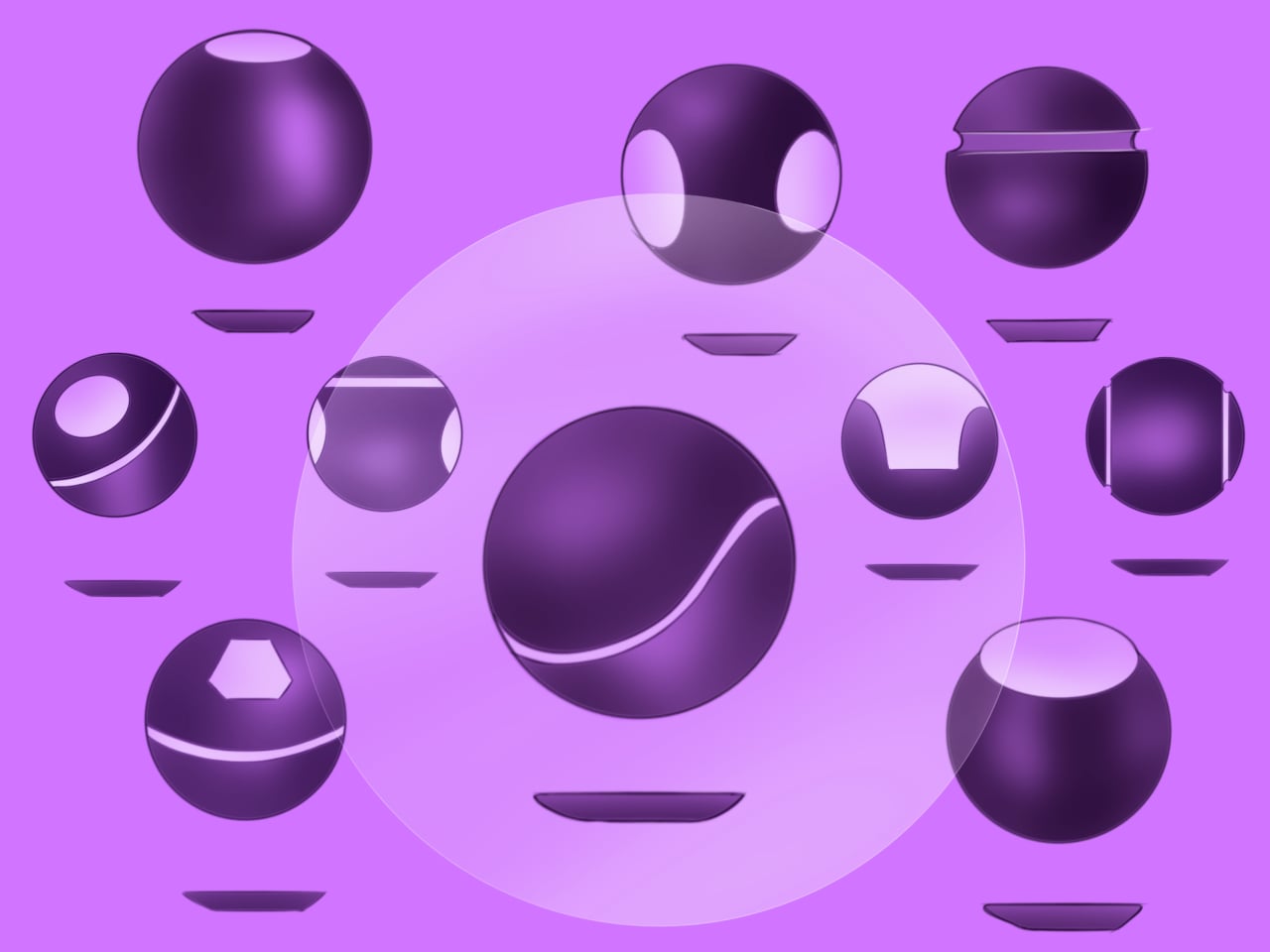
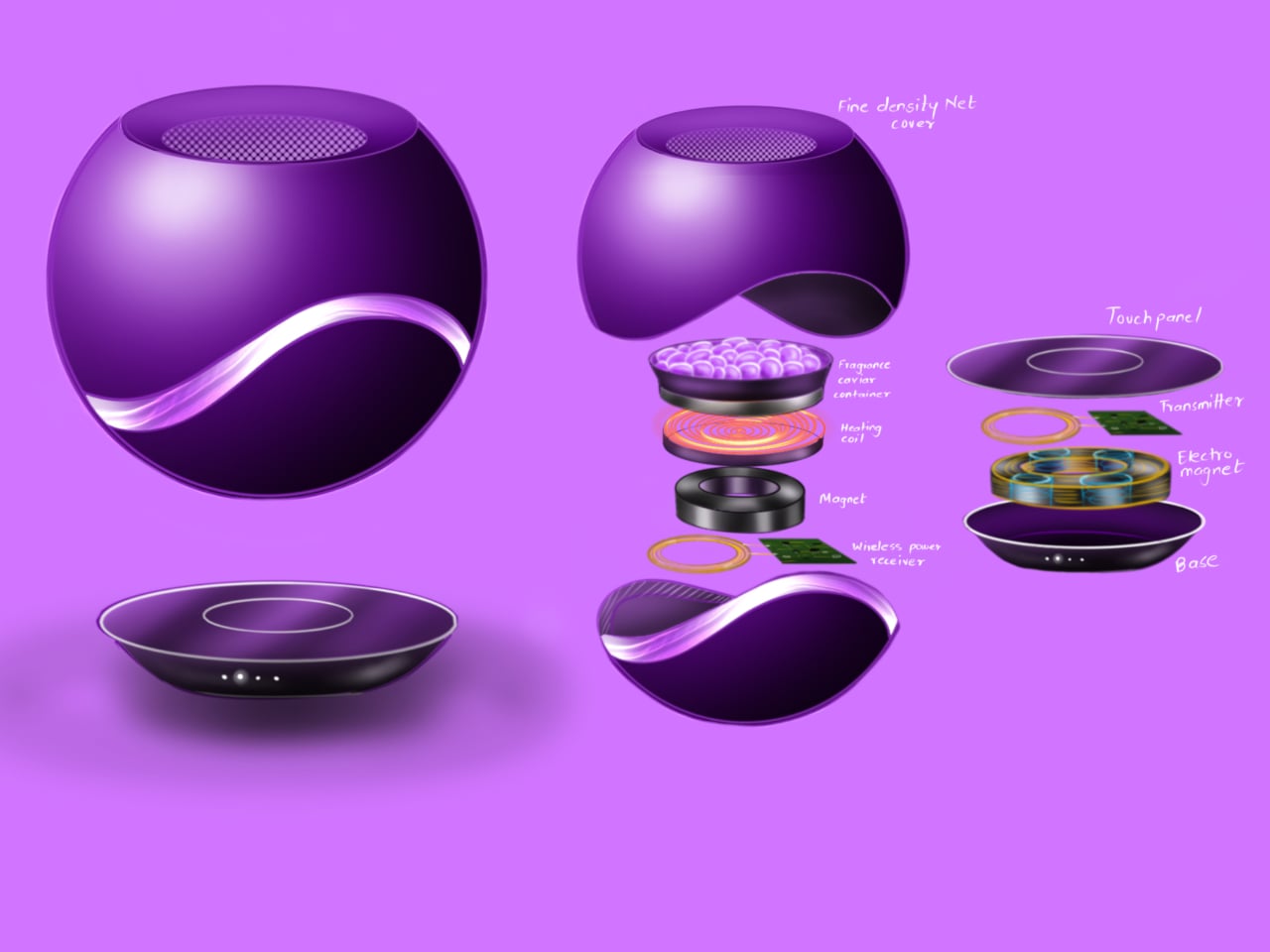
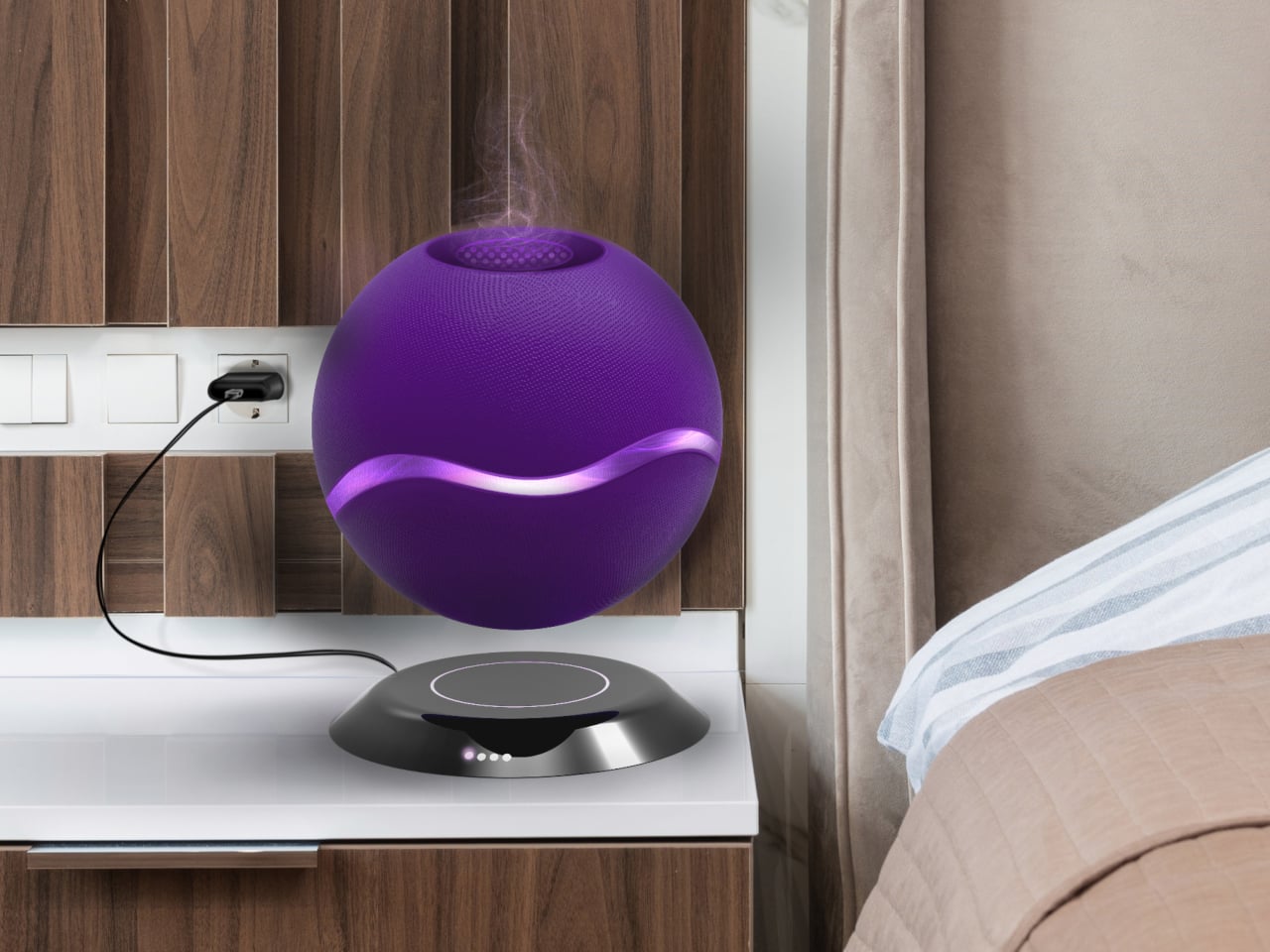
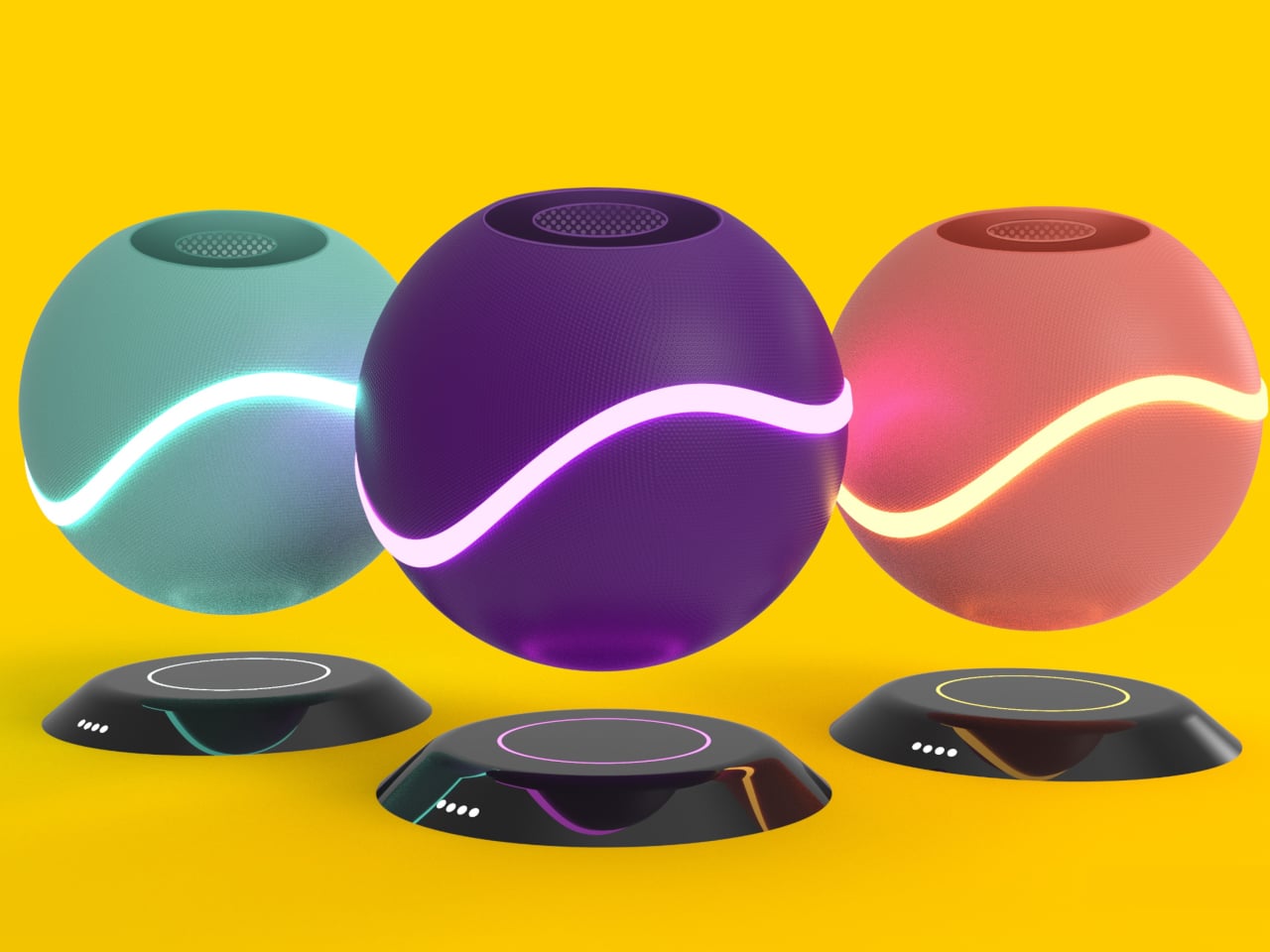
AER OMA is a magnetic levitating aroma diffuser concept that tries to make the act of scenting a room feel more deliberate. It uses a smooth spherical pod that hovers above a base, wrapped in a glowing band of light. The designer calls it a way to enhance room fragrance with a “futuristic feel,” which is rare copy that actually matches what the object looks like it wants to do.
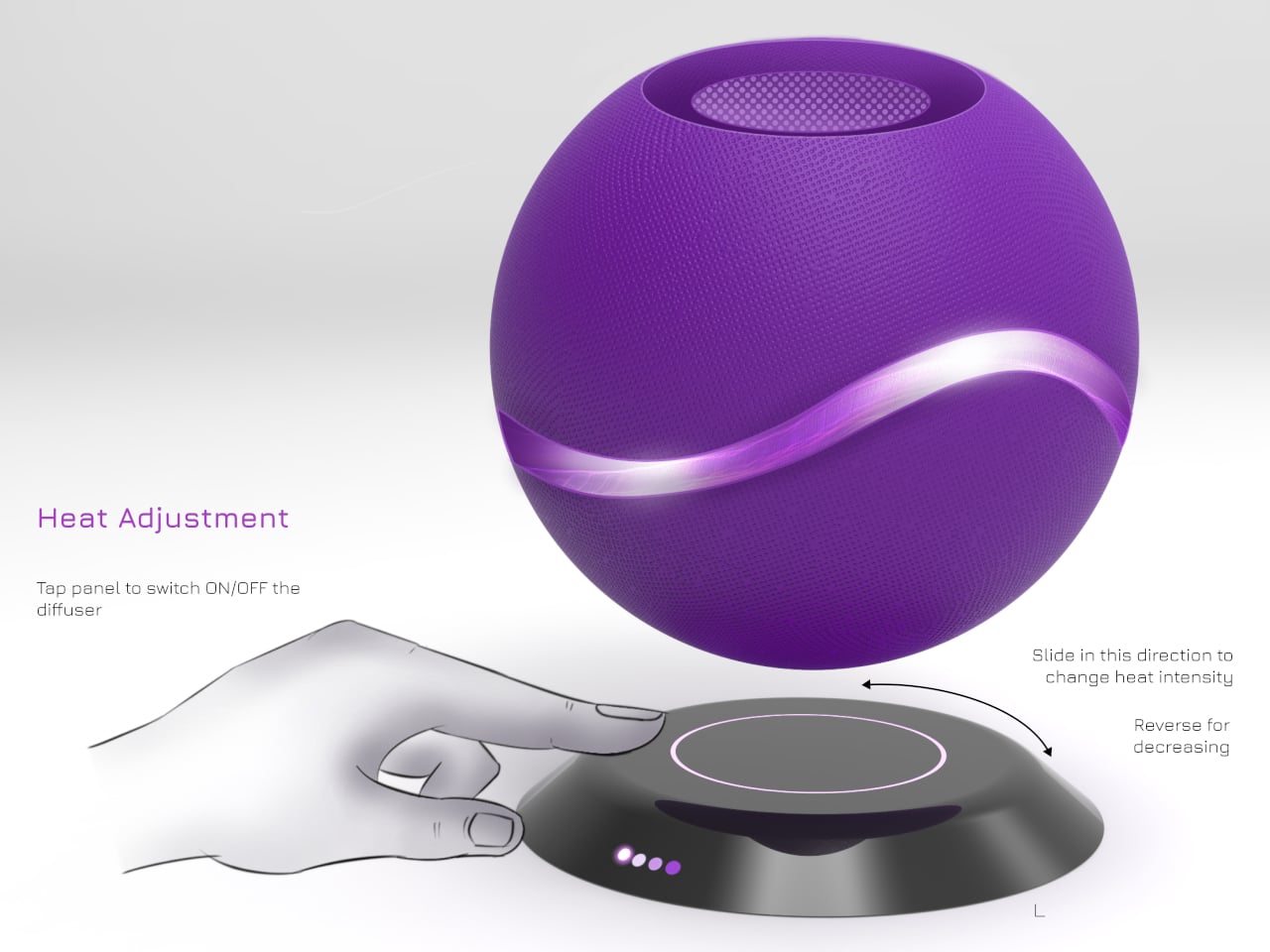
Coming home in the evening, you tap the touch panel on the base to wake the diffuser, and the ring light comes up as the sphere steadies in mid-air. Sliding a finger along the control changes heat and aroma intensity, with the light ring quietly reflecting those changes. It feels less like fiddling with a dial and more like setting a scene before you sit down and let the day catch up.
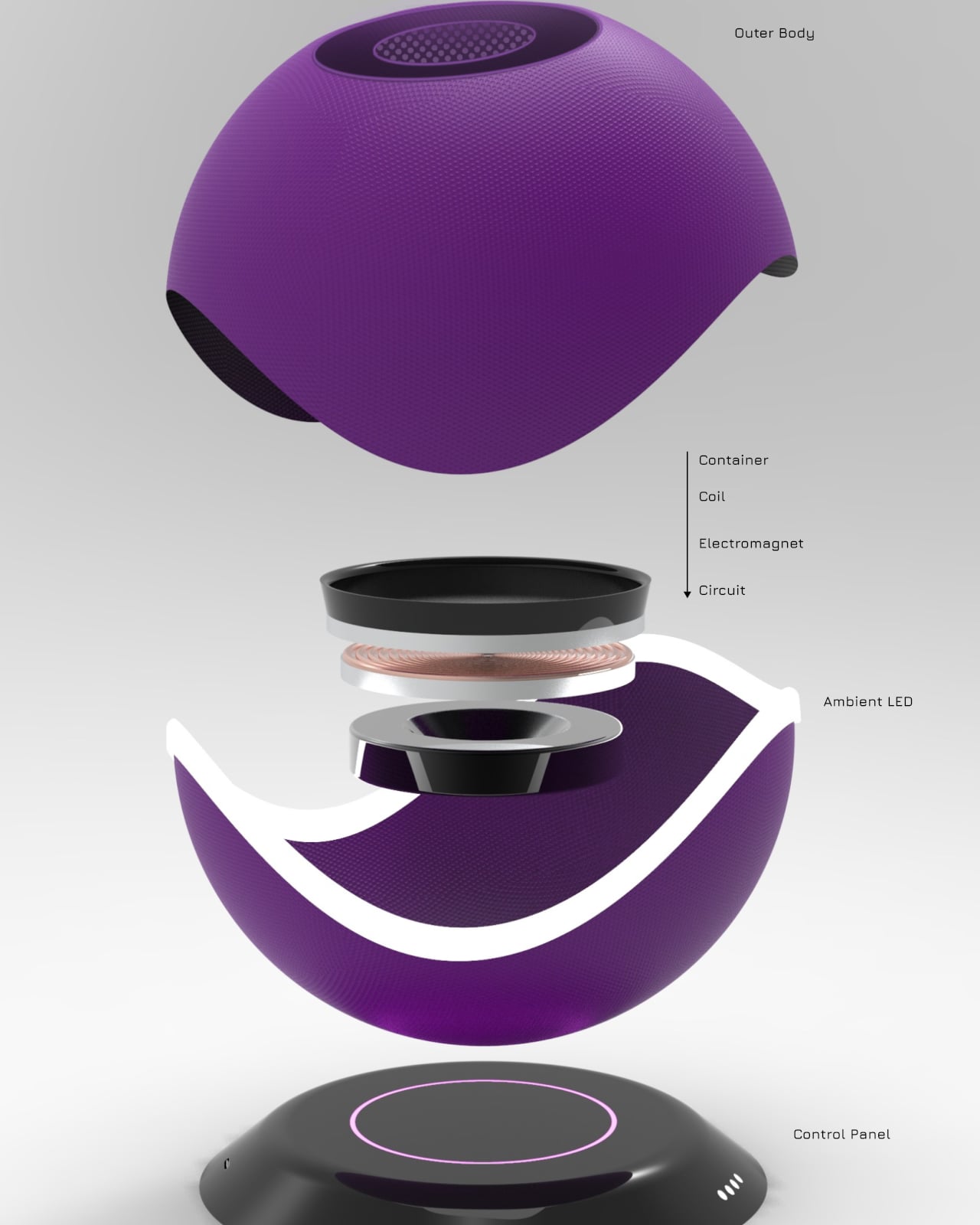
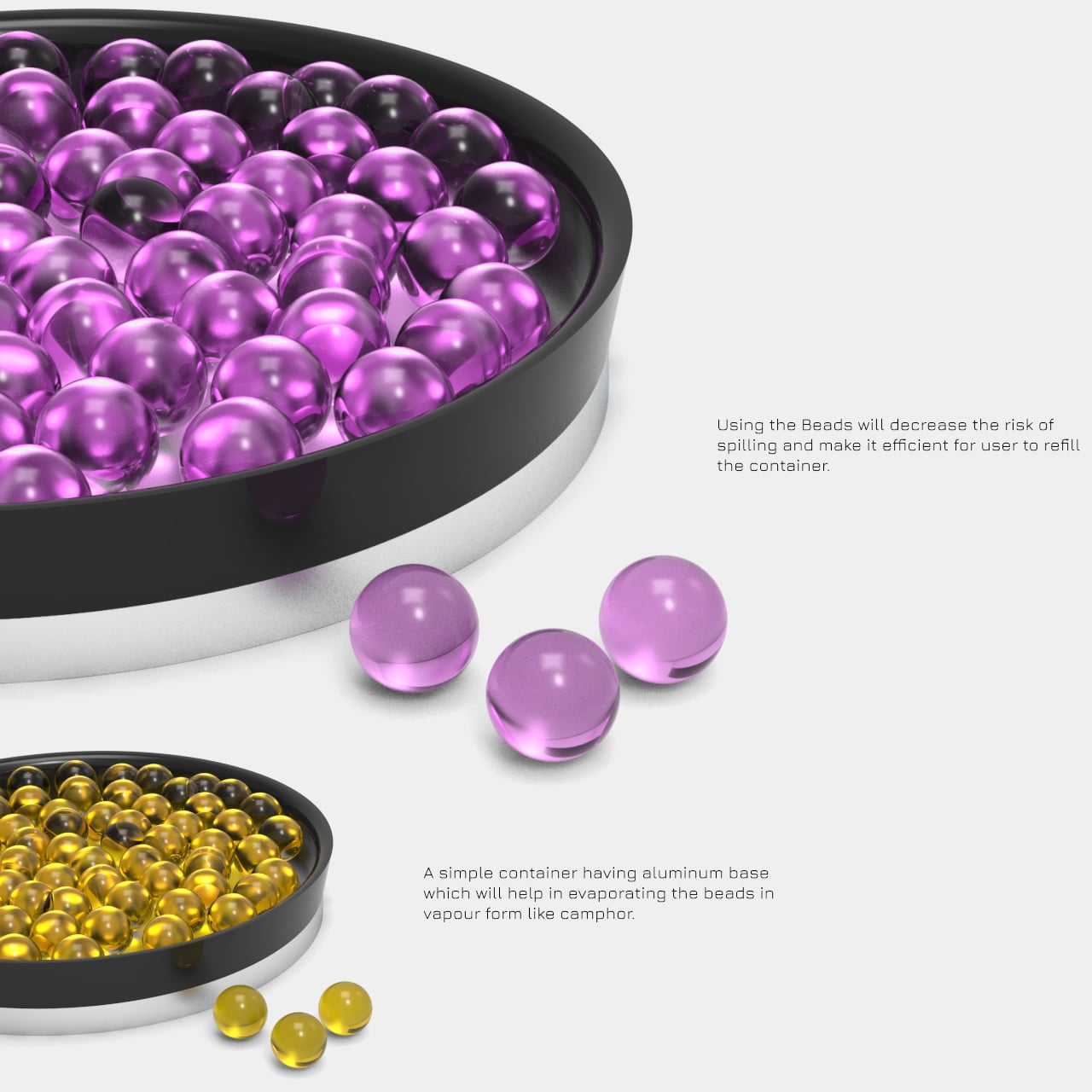
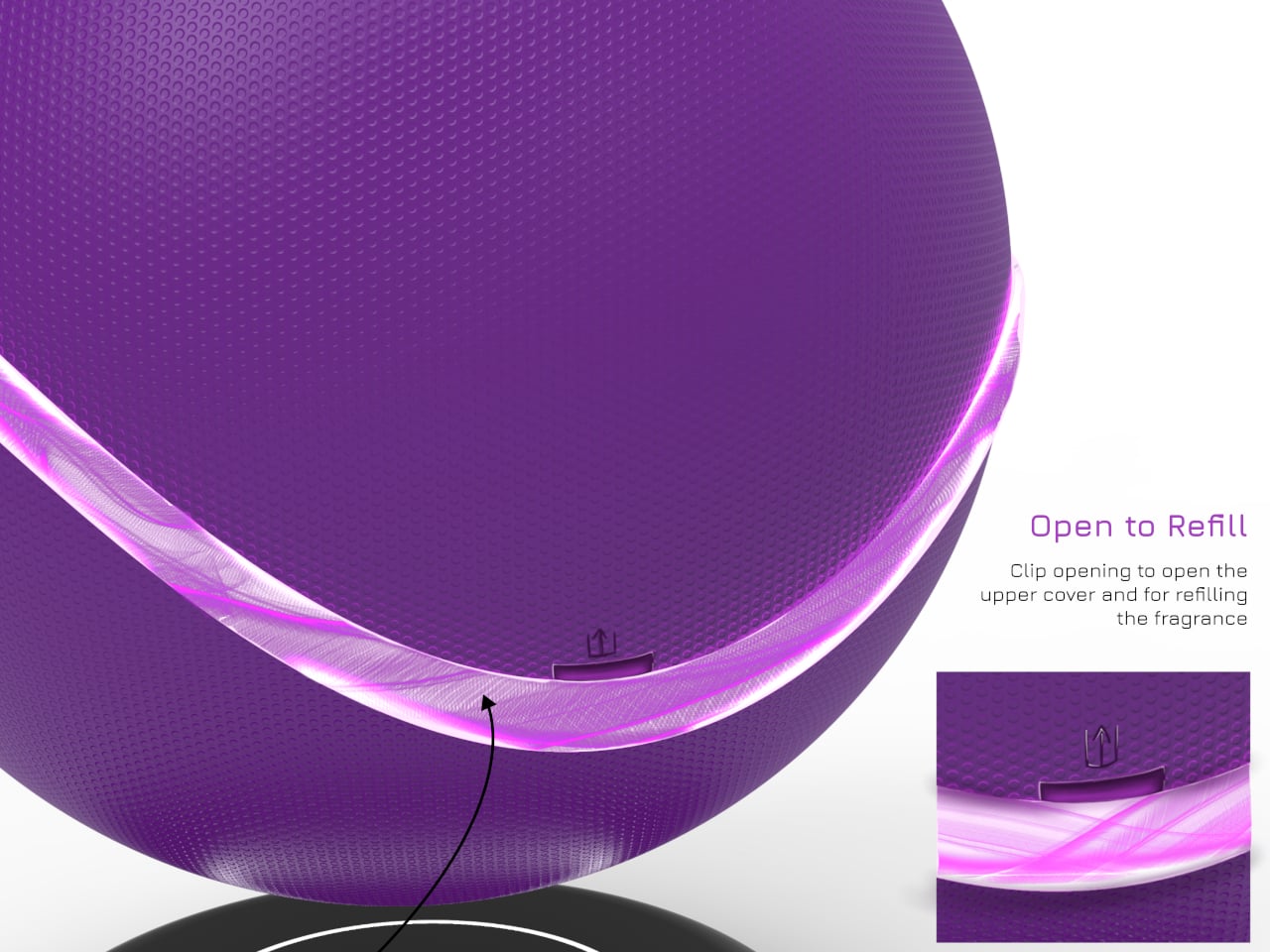
Instead of a water tank and essential oil puddles, AER OMA uses polymer aroma beads held in a small metal and mesh container. Heat from a roughly 12W element releases fragrance without spill risk, and refilling is as simple as swapping beads. You can choose a handful for a light scent or more for a stronger presence, making the ritual more tactile than just dripping liquid into a reservoir.
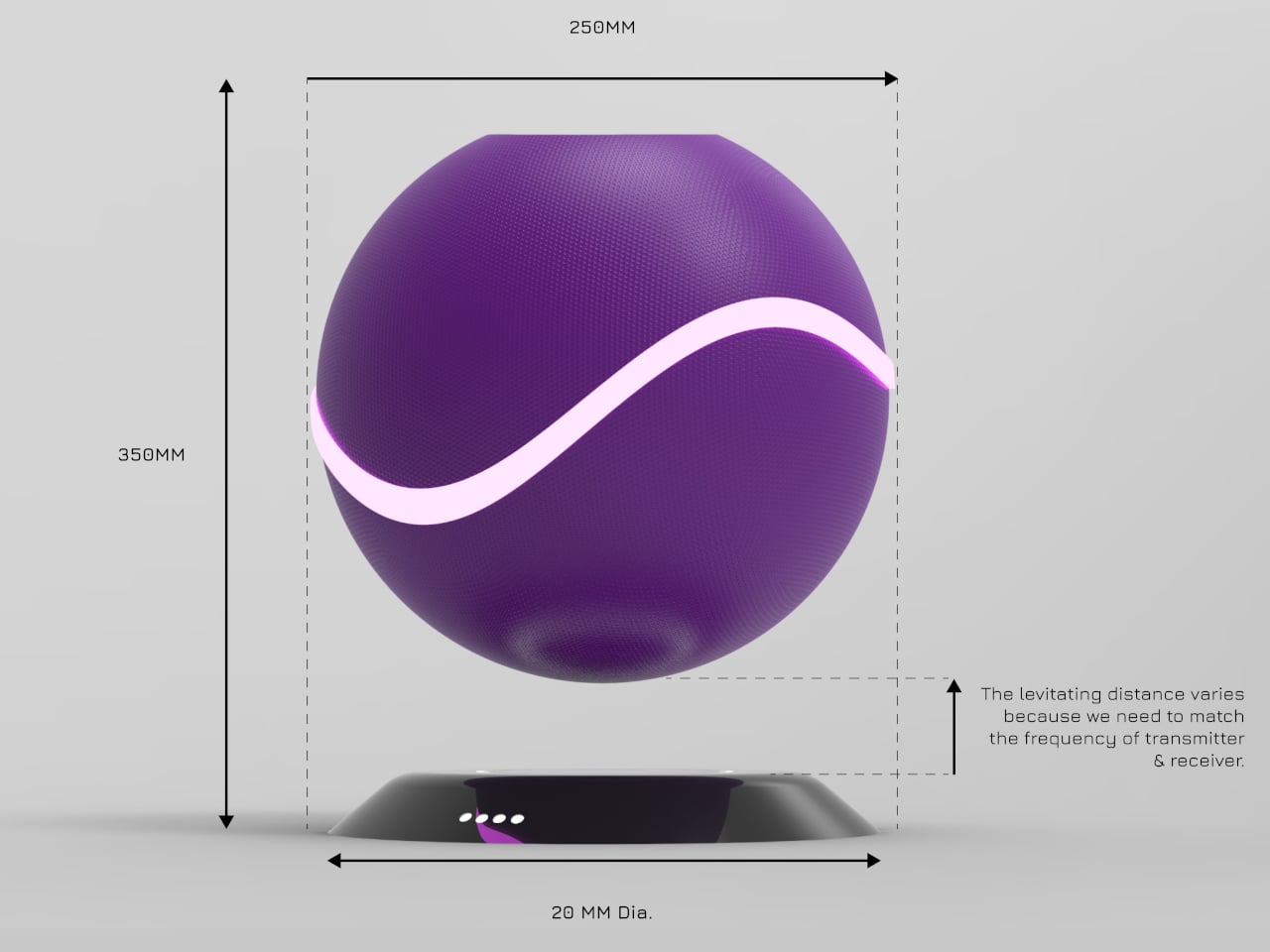
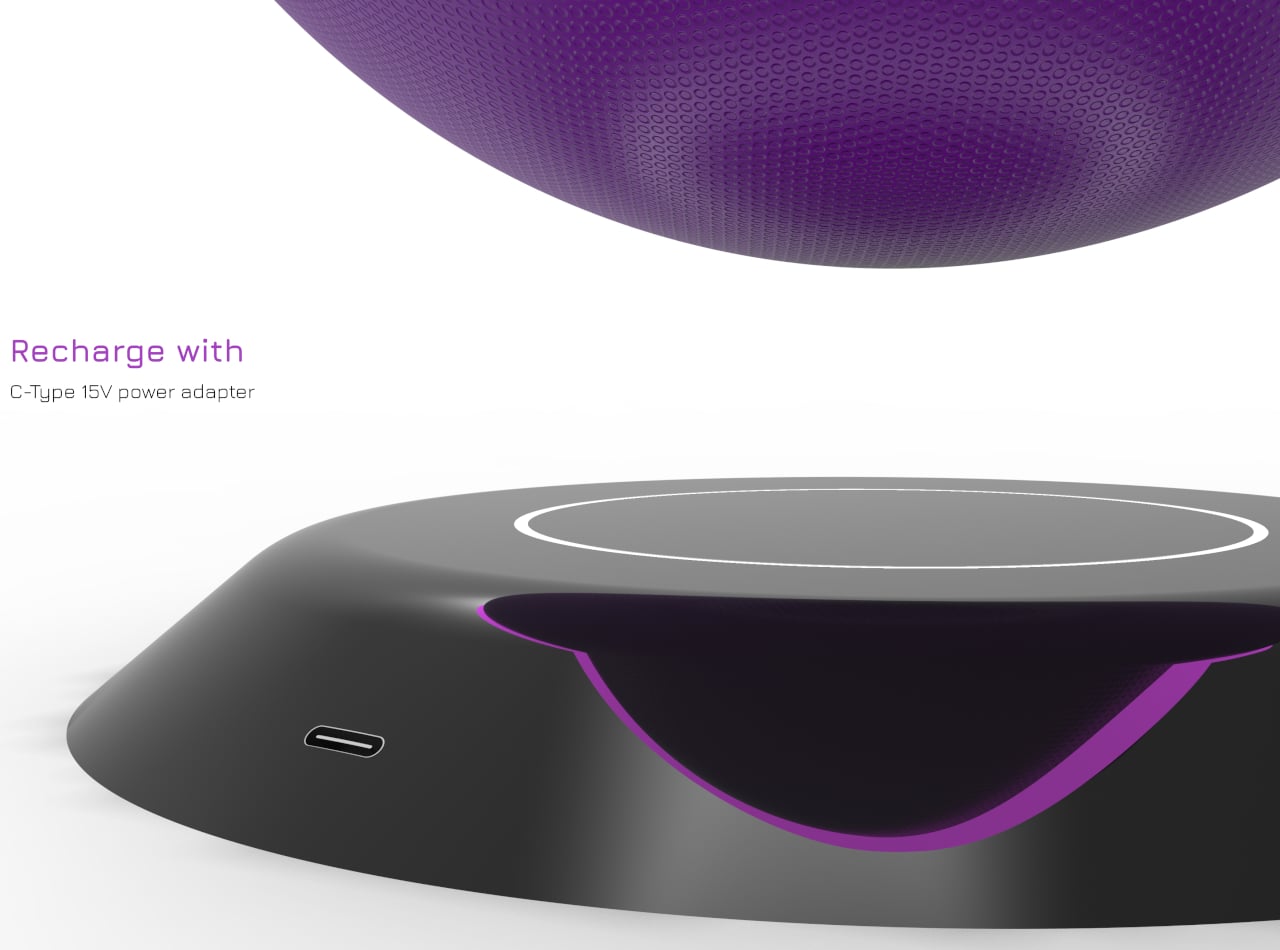
Magnets and coils in the base and sphere handle the hovering act, powered by a 12-15 V USB-C adapter, while ambient LEDs in the base ring and the band around the sphere handle the glow. The floating form and soft light sell the idea that scent is something weightless moving through the room, not just vapor coming out of a nozzle buried in plastic.
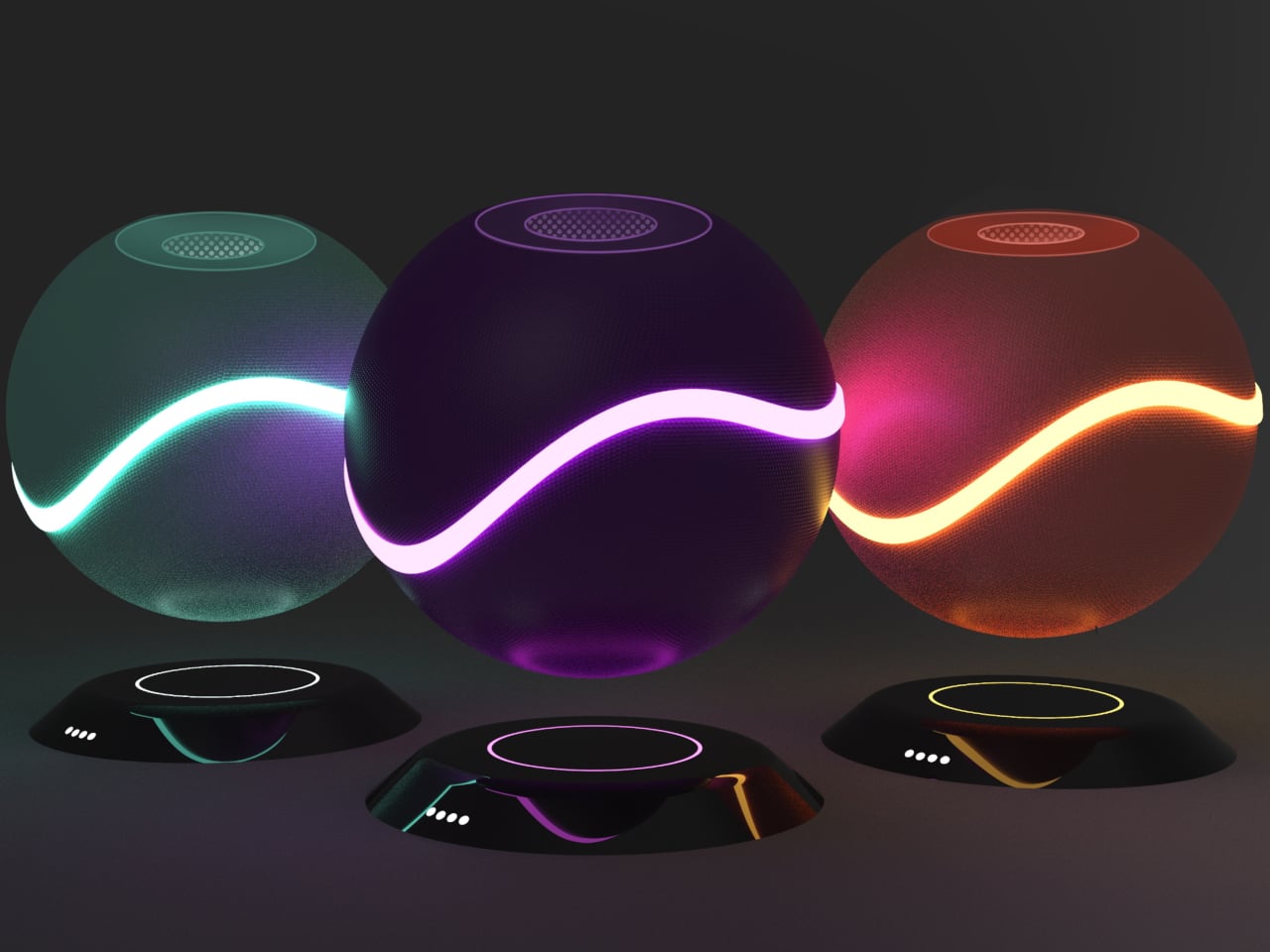
The sphere is about 250mm across, the base around 200mm, with a polypropylene or ABS shell molded into smooth curves. Color options range from deep purple to teal and warm orange, each with matching light accents. It’s big enough to be a focal object on a sideboard or bedside table, but still reads as a single, calm shape rather than tech bristling with vents.
AER OMA treats scent diffusion as a small performance instead of a background process. By floating the diffuser, hiding the mechanics, and giving you a simple touch strip and a bowl of beads to work with, it reframes a functional task as a quiet ritual. It’s a reminder that even making a room smell nice can feel different when the object doing it looks like it belongs in the future instead of the back corner of a shelf.
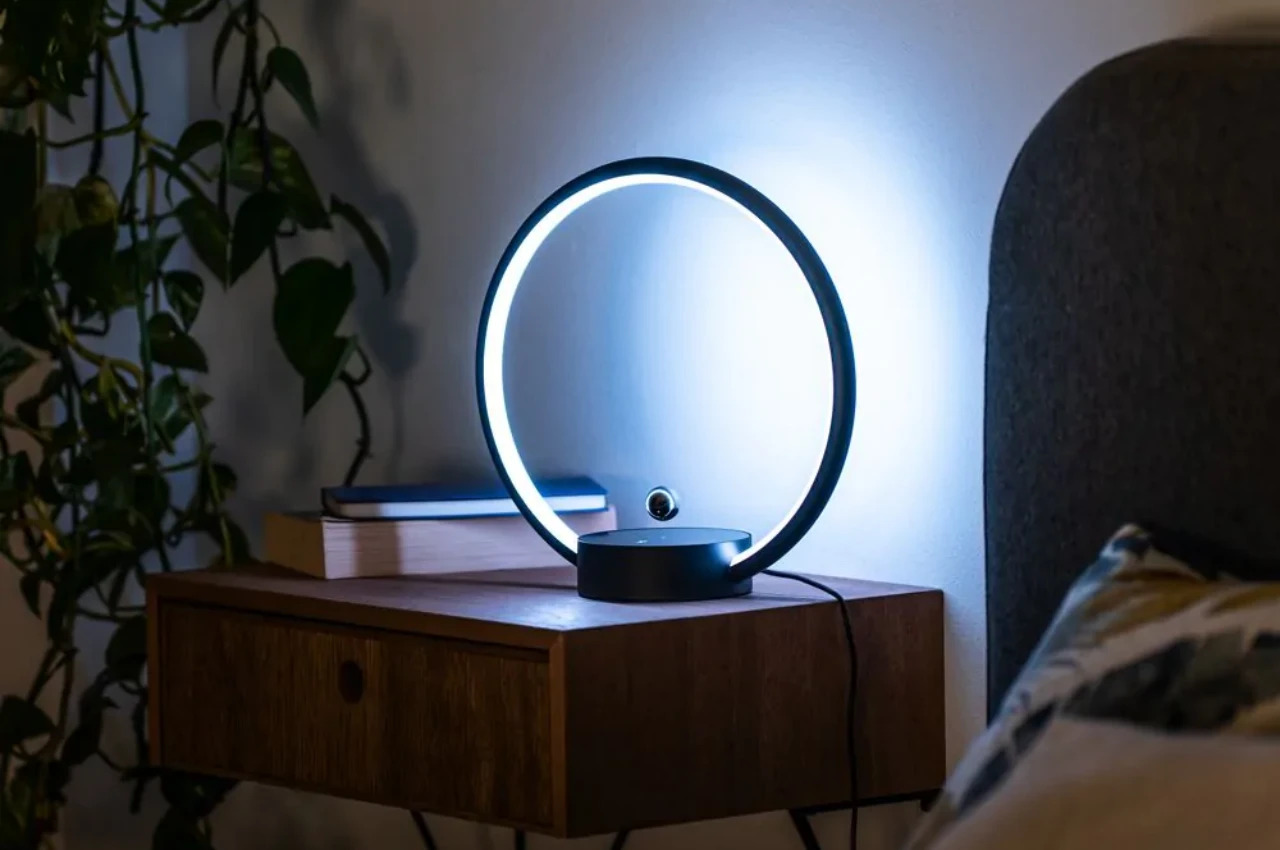
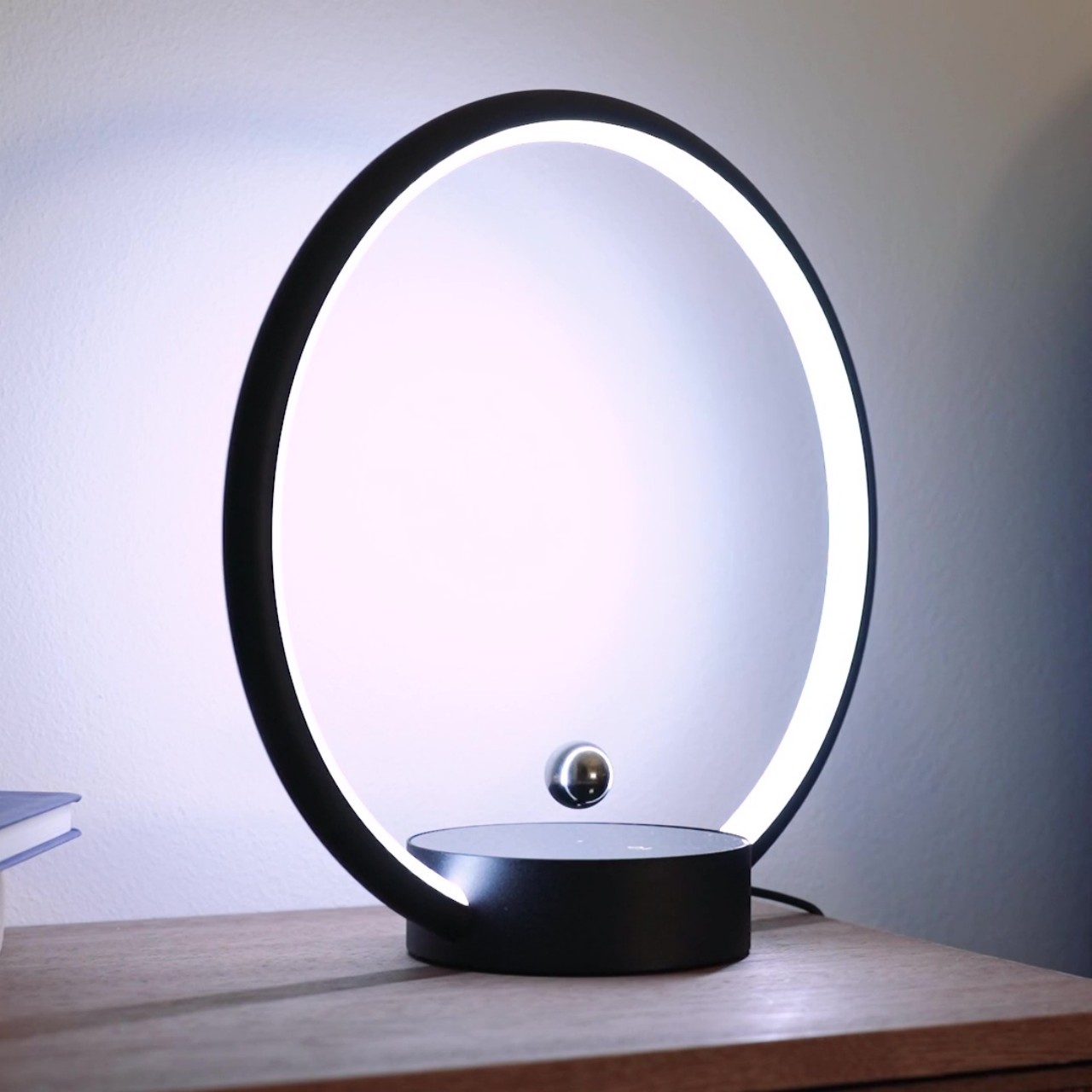
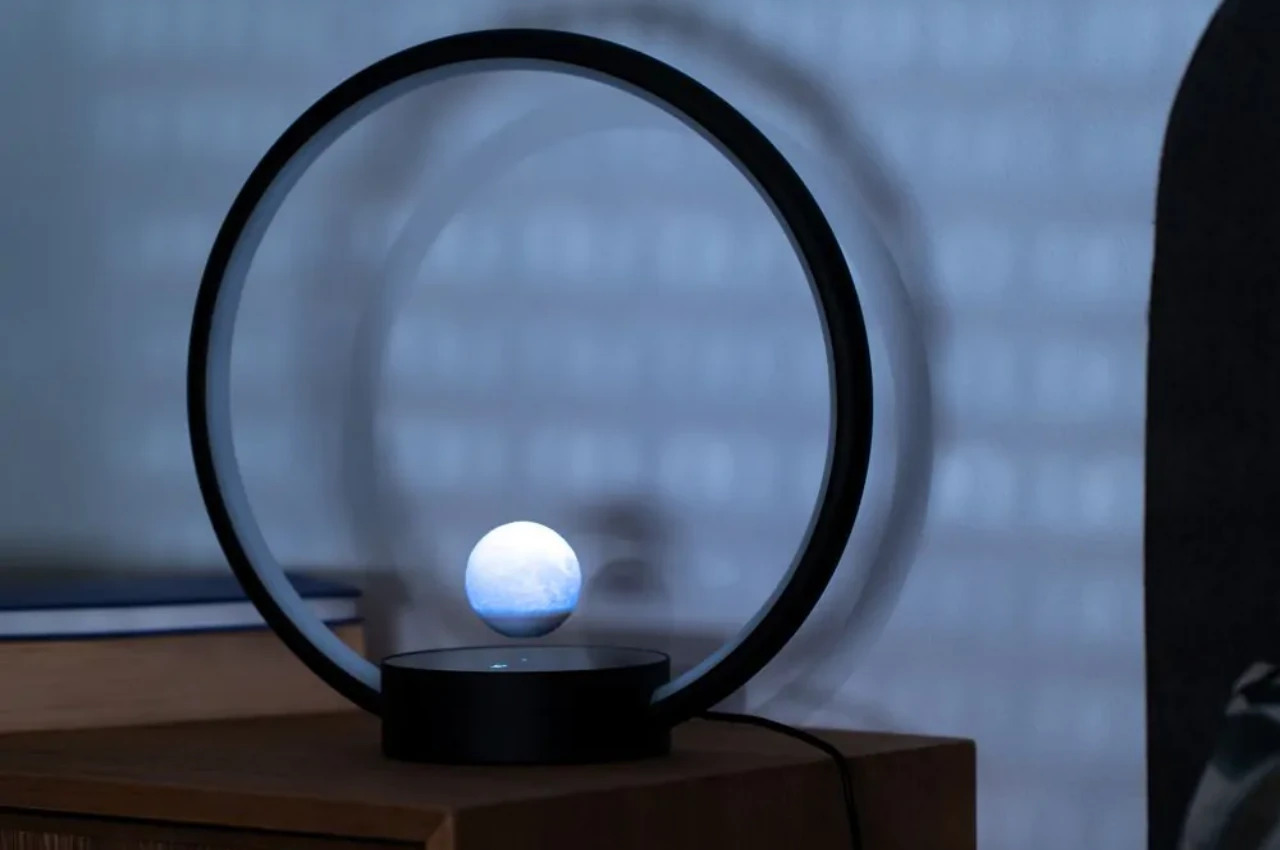
Most of the lamps we have on desks and shelves take on a mostly vertical form to save space. If that isn’t an issue, however, then there’s ample opportunity for more memorable and mind-blowing designs. This ring lamp, for example, looks like a Dyson-esque product that turns the hollow space inside a circle into something like an art form. That, however, isn’t its main feature, which is a unique design that eschews almost all kinds of traditional physical controls and instead employs a seemingly magical levitating orb that not only adds an air of mystery to the product but also brings a more satisfying form of interaction every time you push down that ball to control the lamp.
Designer: Inovaxion
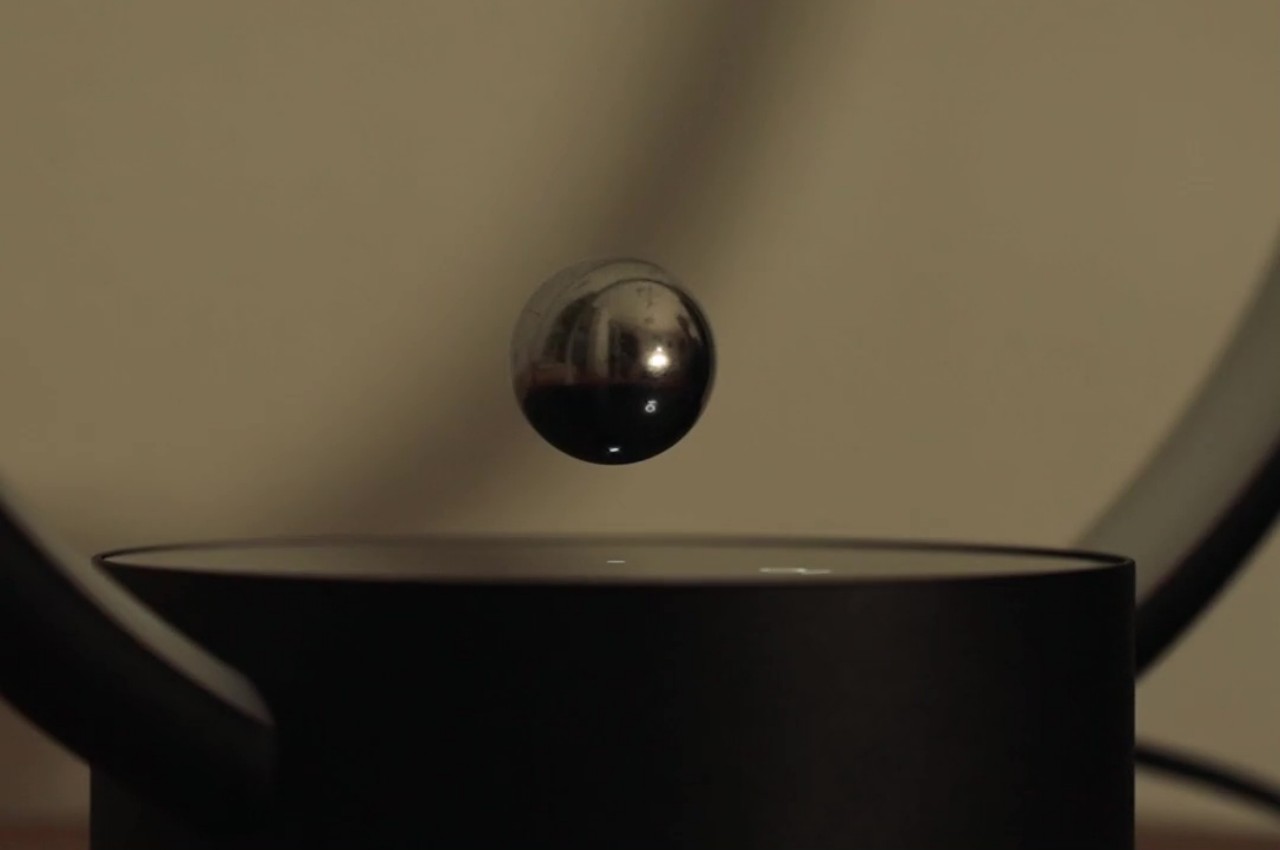
Levitating spheres are, of course, nothing new, and truth be told, they can be unreliable once the magnetism starts to weaken or, worse, wear off. It is still a source of fascination and the simple technology has been used to great effect in producing designs like a levitating Death Star, the Moon, or even a 360-degree speaker. The Levitos Ring Lamp isn’t as complicated as those, however, but it is able to utilize that gimmick in a more practical yet still delightful manner.
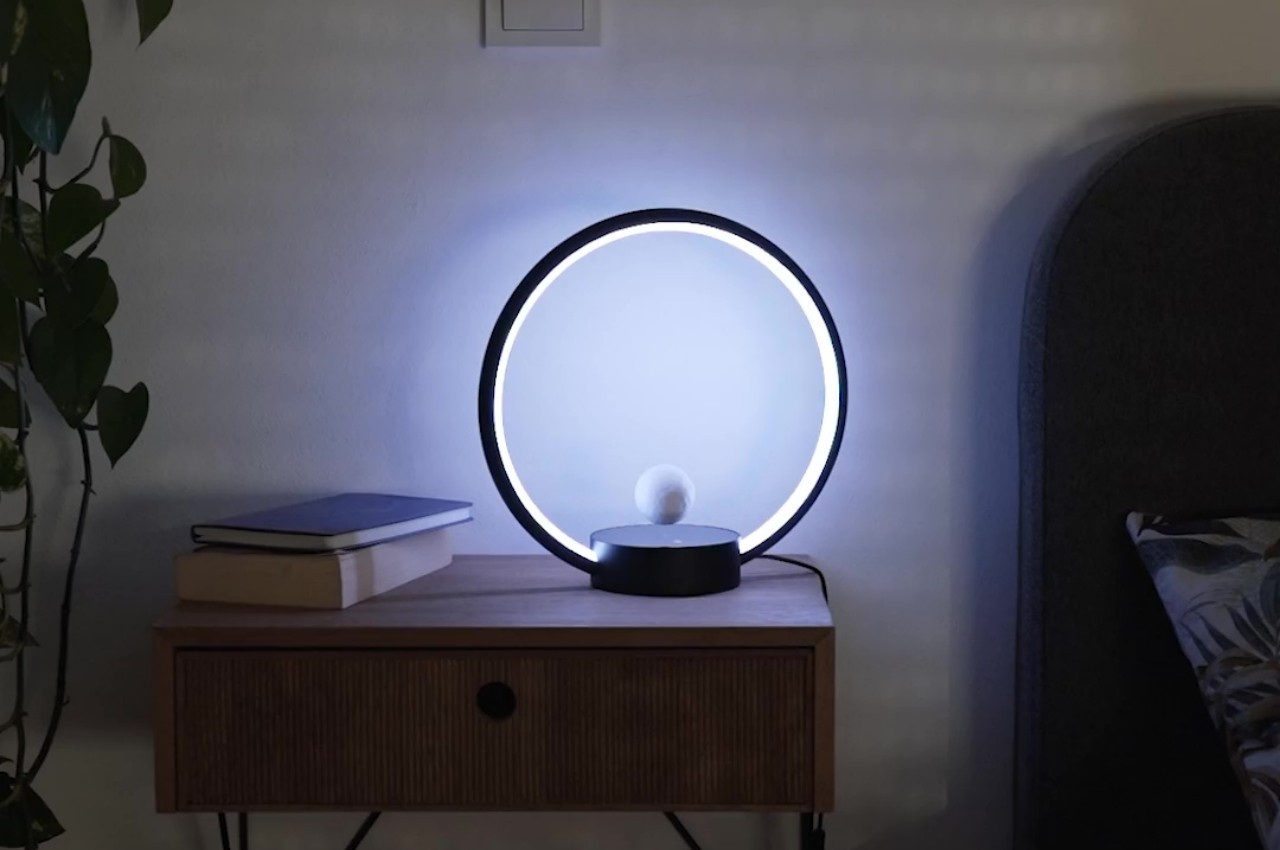
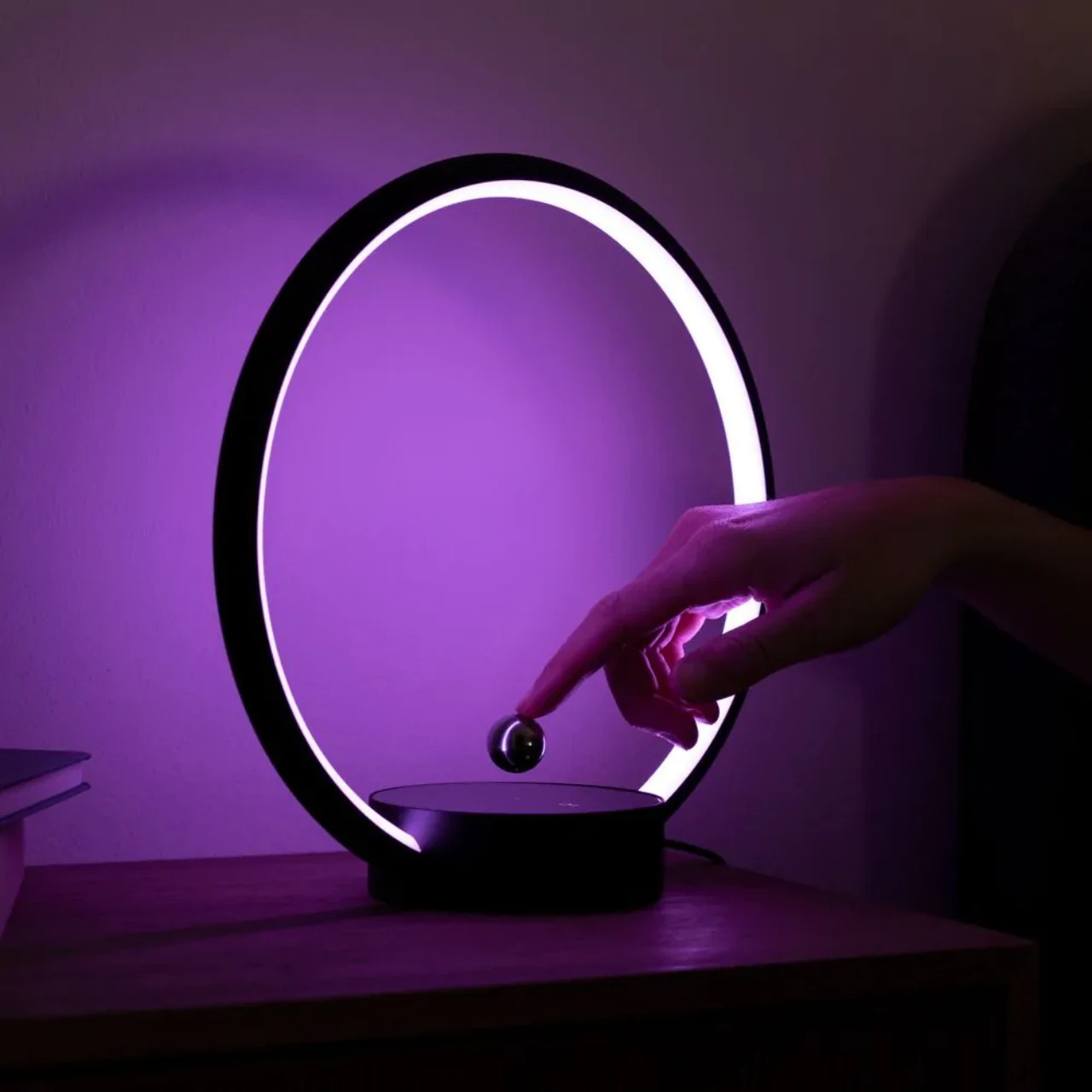
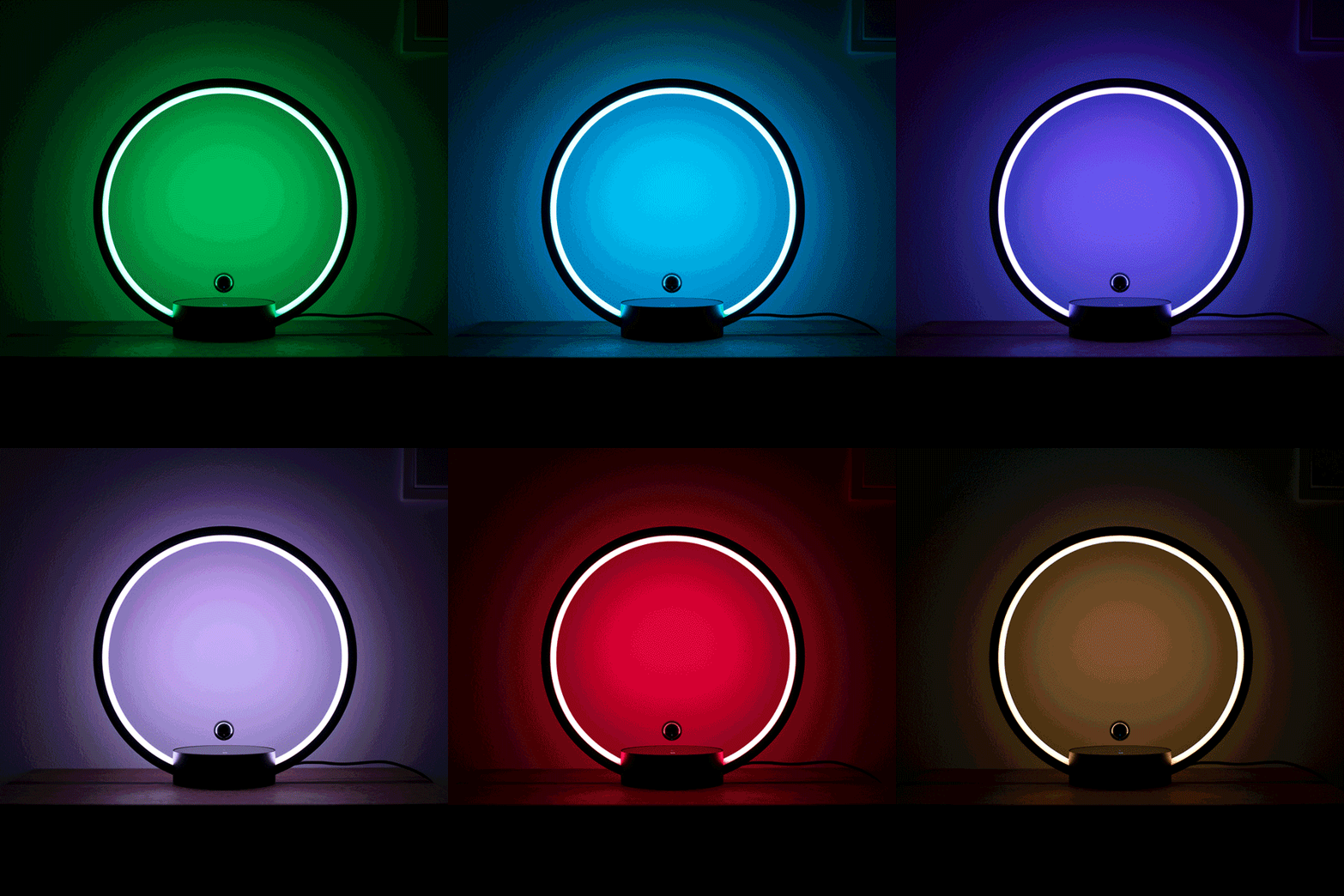
As a ring lamp, Levitos isn’t exactly that remarkable. In fact, some might feel that it’s rather limited since it only has two modes. One gives a soft yet steady white glow, while the other mode slowly cycles through different colors. The ring itself is pretty bare, connected to a similarly simple circular base, and its light is bright yet just as plain. In fact, the design is so simple that you won’t find any button, switch, or dial, and the only way you can control it is through its biggest trick.
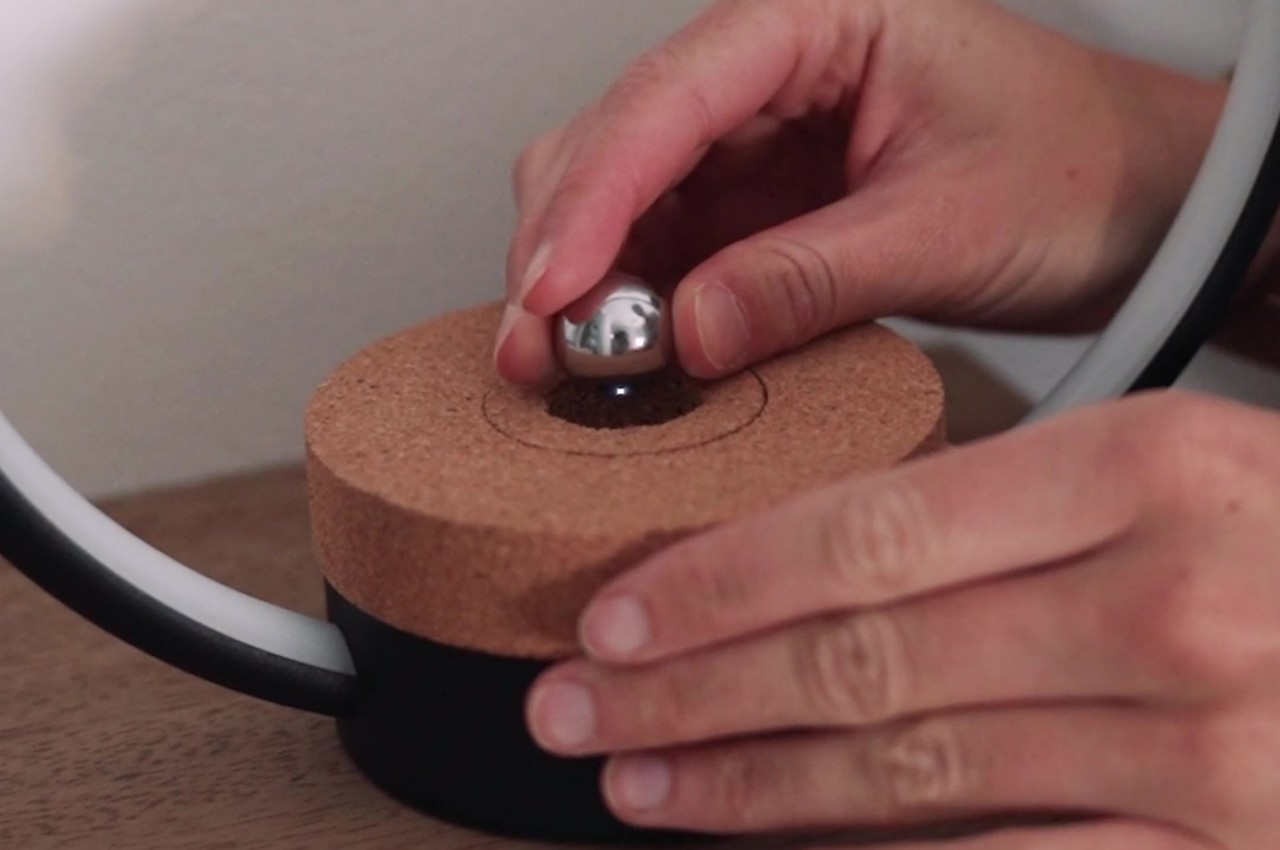
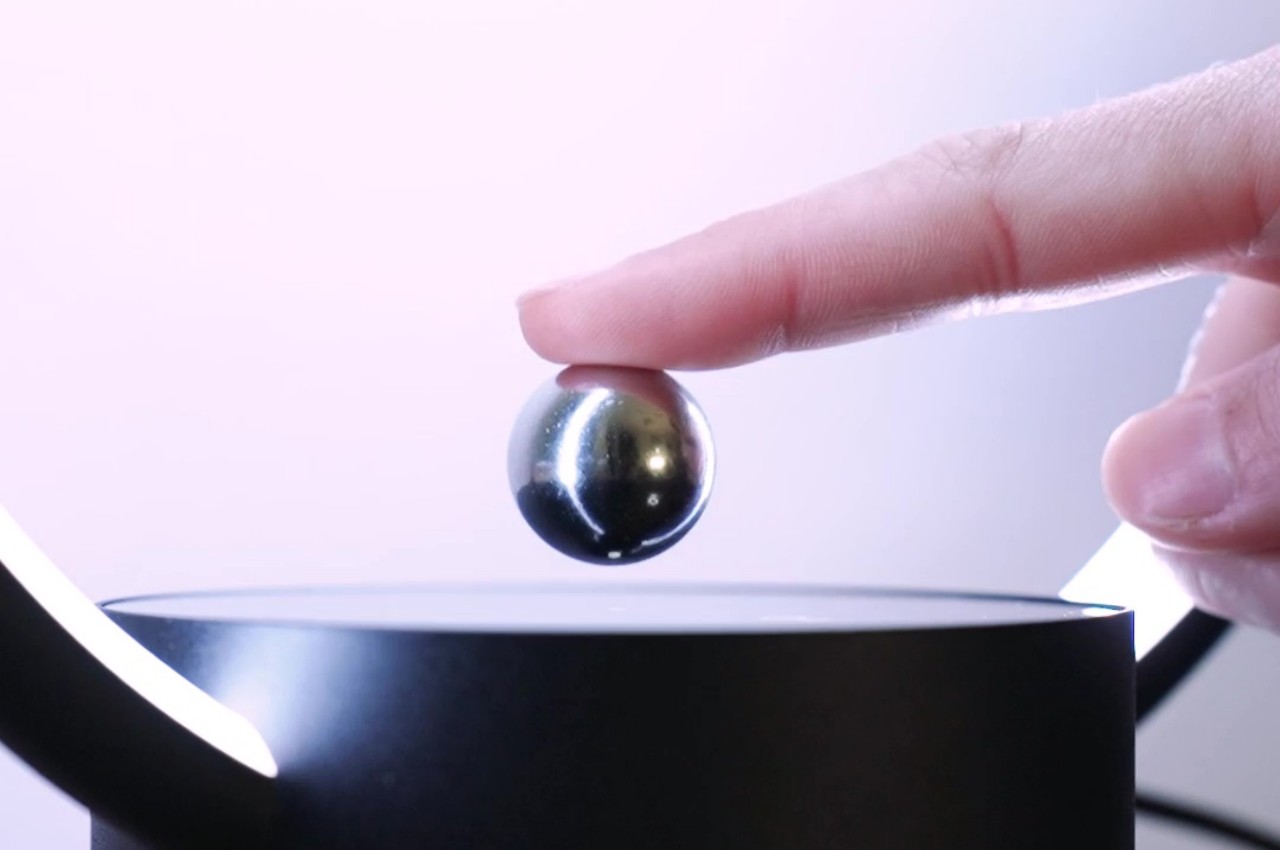
The Assembly comes with a small metal orb that you carefully place in the middle of that base using a specially designed cork disc. Once properly oriented, you simply lift the cork and behold the metal sphere hovering and spinning in place. To turn the lamp on, you push the ball down lightly. Another light push switches the lamp to the multicolor cycling mode. Another tap switches the mode again, so you have to double-tap the ball to turn it off.
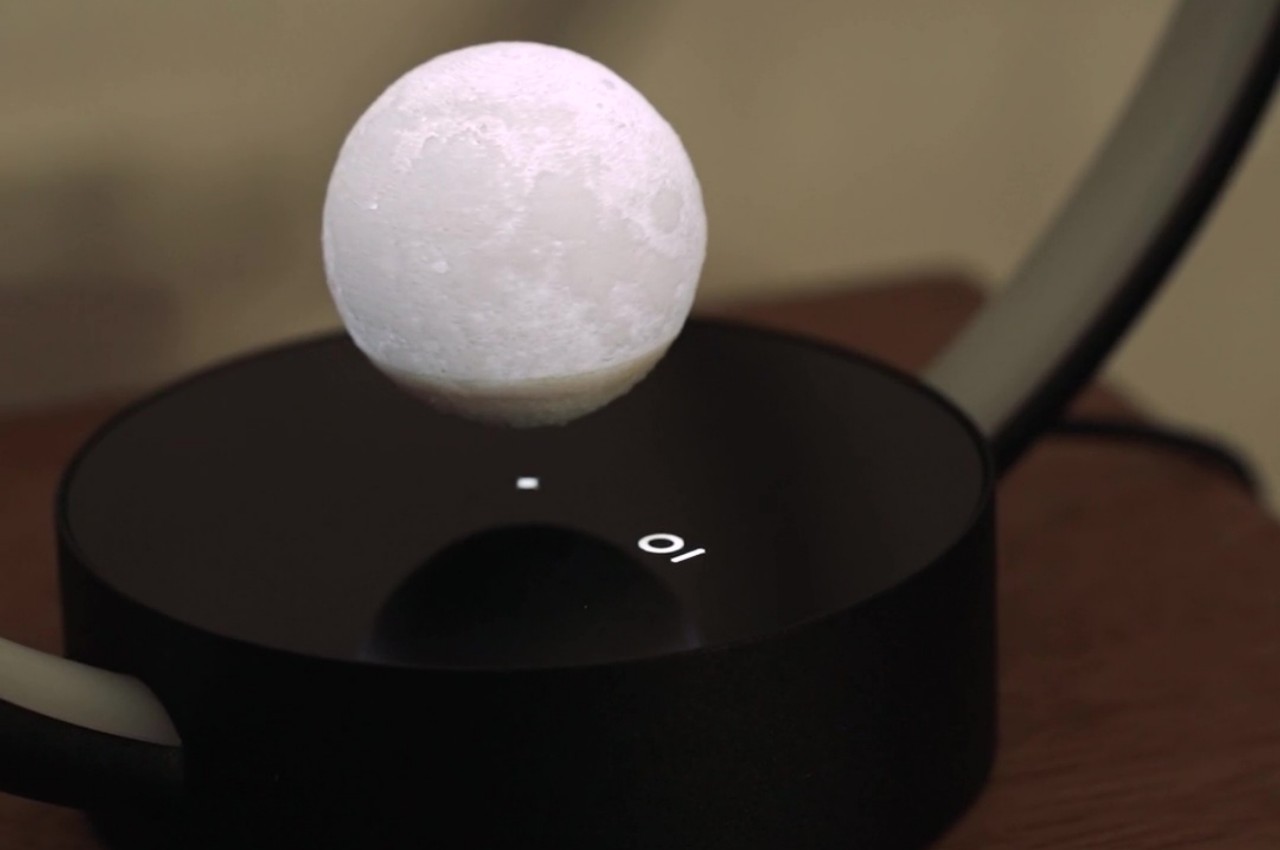
The ring lamp comes with a much larger metal ball as an alternative, one that mimics the appearance of the moon. It has the exact same function but gives the lamp a different flavor, especially when the light bounces off the small moon. The design is admittedly gimmicky and probably not that reliable in the long run, as there will be no easy way to control the lamp when the magnet starts to fail, but it’s definitely fun and mesmerizing while it lasts.
Most of the lamps we have on desks and shelves take on a mostly vertical form to save space. If that isn’t an issue, however, then there’s ample opportunity for more memorable and mind-blowing designs. This ring lamp, for example, looks like a Dyson-esque product that turns the hollow space inside a circle into something like an art form. That, however, isn’t its main feature, which is a unique design that eschews almost all kinds of traditional physical controls and instead employs a seemingly magical levitating orb that not only adds an air of mystery to the product but also brings a more satisfying form of interaction every time you push down that ball to control the lamp.
Designer: Inovaxion
Levitating spheres are, of course, nothing new, and truth be told, they can be unreliable once the magnetism starts to weaken or, worse, wear off. It is still a source of fascination and the simple technology has been used to great effect in producing designs like a levitating Death Star, the Moon, or even a 360-degree speaker. The Levitos Ring Lamp isn’t as complicated as those, however, but it is able to utilize that gimmick in a more practical yet still delightful manner.
As a ring lamp, Levitos isn’t exactly that remarkable. In fact, some might feel that it’s rather limited since it only has two modes. One gives a soft yet steady white glow, while the other mode slowly cycles through different colors. The ring itself is pretty bare, connected to a similarly simple circular base, and its light is bright yet just as plain. In fact, the design is so simple that you won’t find any button, switch, or dial, and the only way you can control it is through its biggest trick.
The Assembly comes with a small metal orb that you carefully place in the middle of that base using a specially designed cork disc. Once properly oriented, you simply lift the cork and behold the metal sphere hovering and spinning in place. To turn the lamp on, you push the ball down lightly. Another light push switches the lamp to the multicolor cycling mode. Another tap switches the mode again, so you have to double-tap the ball to turn it off.
The ring lamp comes with a much larger metal ball as an alternative, one that mimics the appearance of the moon. It has the exact same function but gives the lamp a different flavor, especially when the light bounces off the small moon. The design is admittedly gimmicky and probably not that reliable in the long run, as there will be no easy way to control the lamp when the magnet starts to fail, but it’s definitely fun and mesmerizing while it lasts.