This $125 Glowing Pay Phone Charges the Smartphone That Killed It

The pay phone had a specific place in the urban landscape, usually on a corner, usually a little battered, and always surrounded by some combination of stickers and street art that turned it into an unintentional canvas. Cities spent decades pulling them out, convinced that no one needed them anymore now that everyone had a phone in their pocket. That logic was correct, of course, but it didn’t make the pay phone any less iconic.

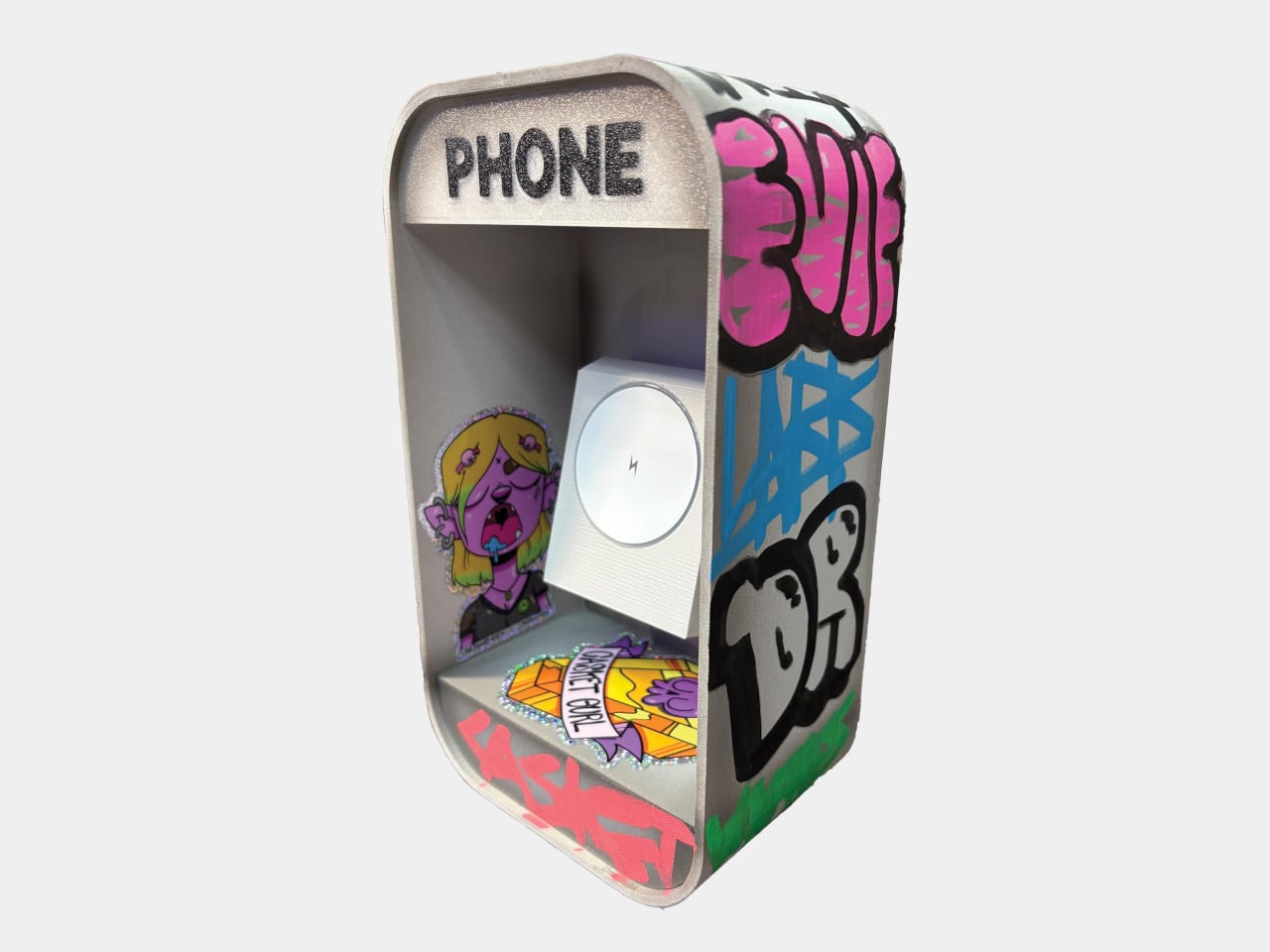
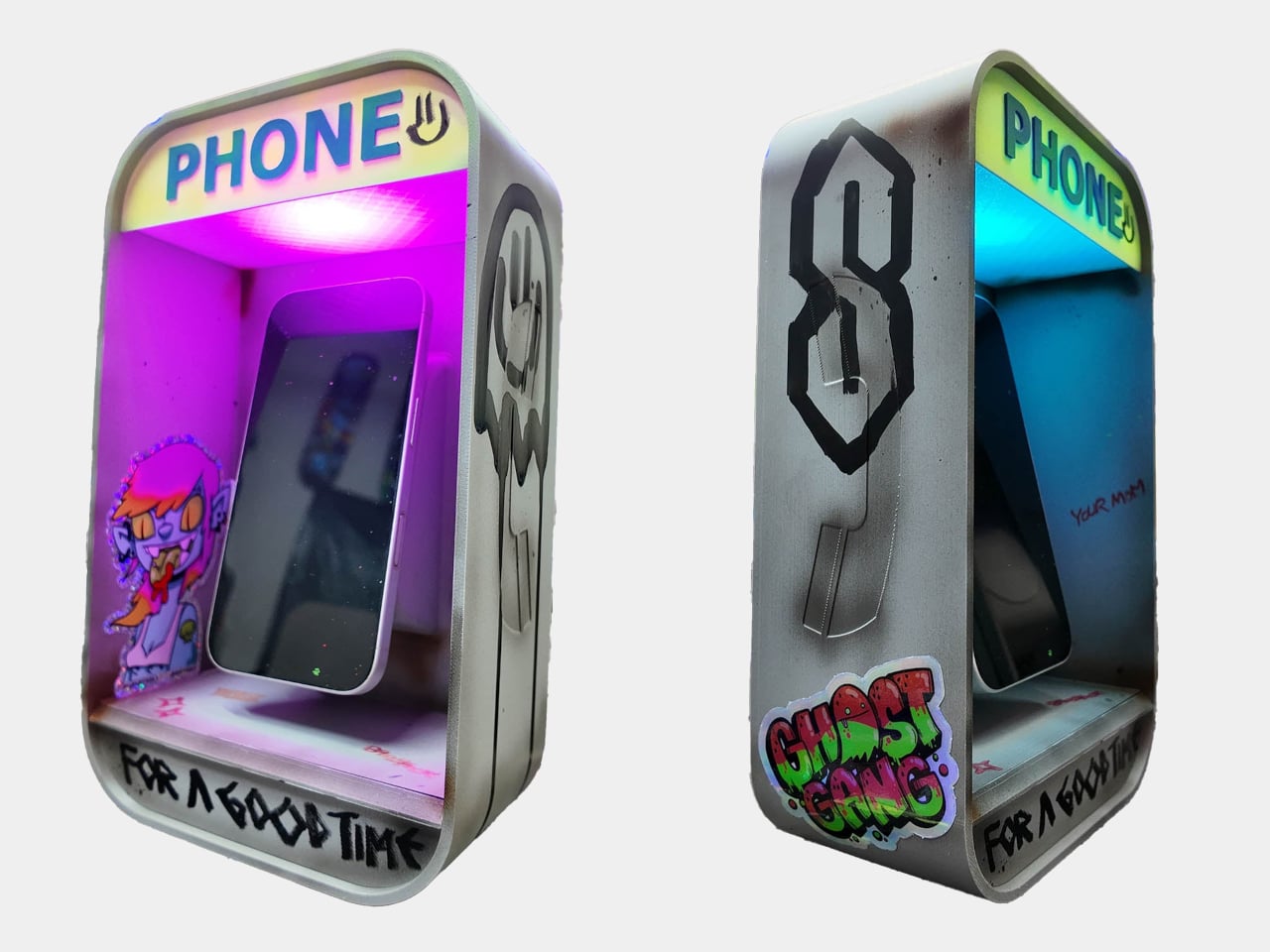
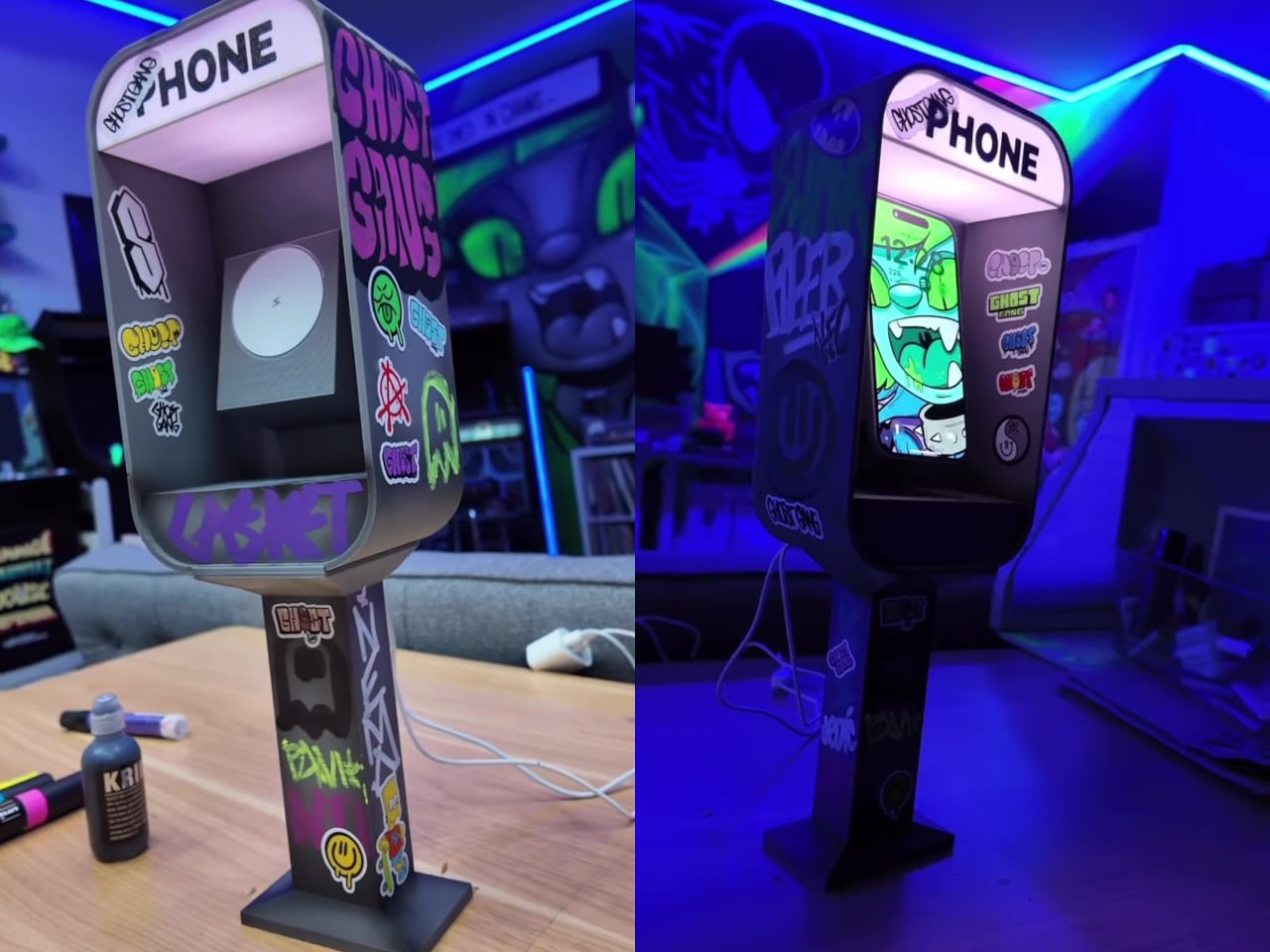
The Pay Phone Charger takes that object out of storage and puts it back on the desk, this time doing the one job the original never could: charging the very devices that replaced it. It’s a 3D-printed miniature pay phone booth with a built-in MagSafe-compatible wireless charger and RGB LED lights that illuminate the “PHONE” sign. Set your phone inside it, and it charges, while the lit-up booth sits on your nightstand or desk looking thoroughly unapologetic about the whole thing.

Designer: Nicky Davis
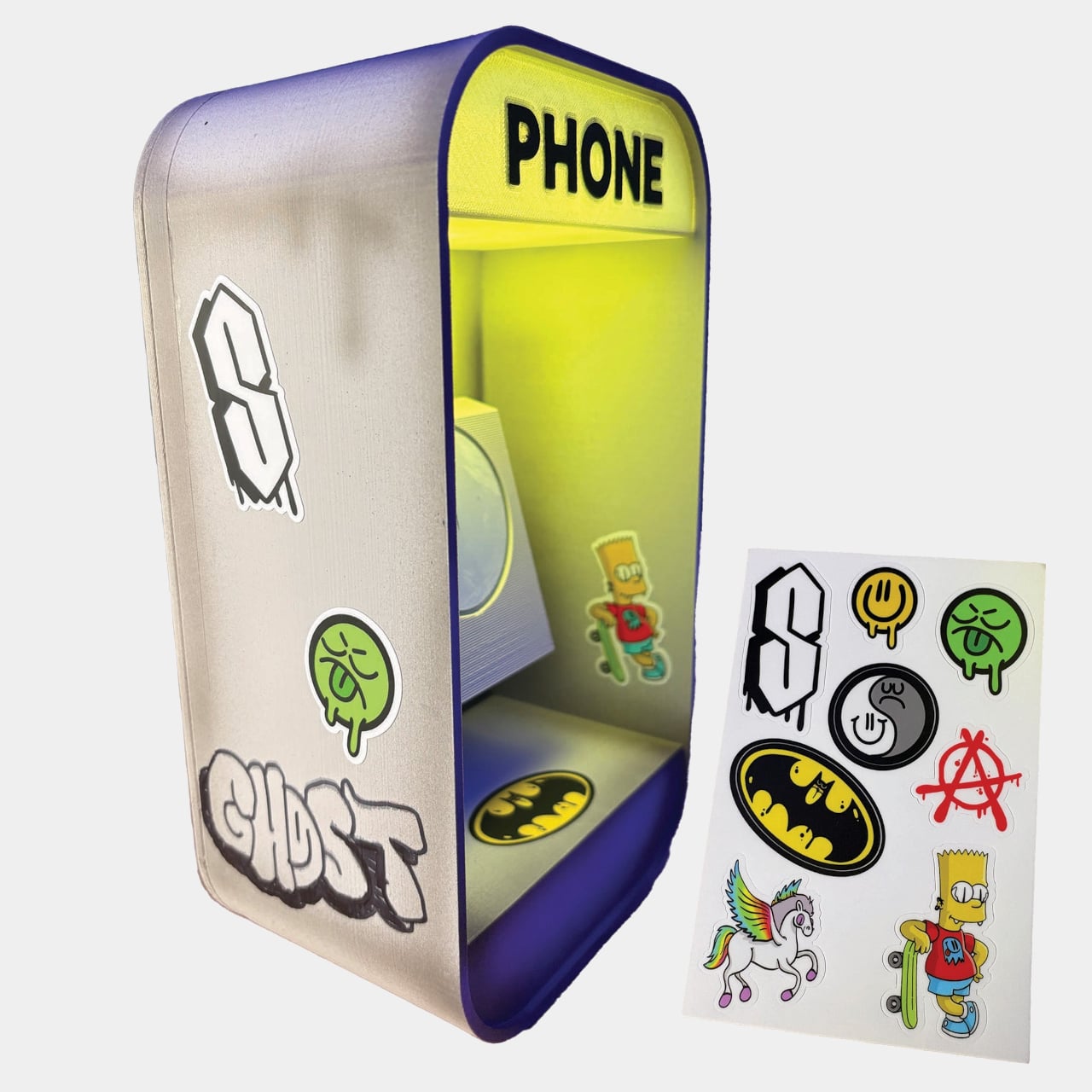
The version you receive depends on which style you choose at purchase. The DIY option arrives as a blank, undecorated body, with the MagSafe charger and LED lights included alongside a retro sticker sheet that lets you decorate it yourself. For anyone who’d rather skip that step, the Hand Painted and Graff version comes fully decorated with original artwork applied by hand before it ships.
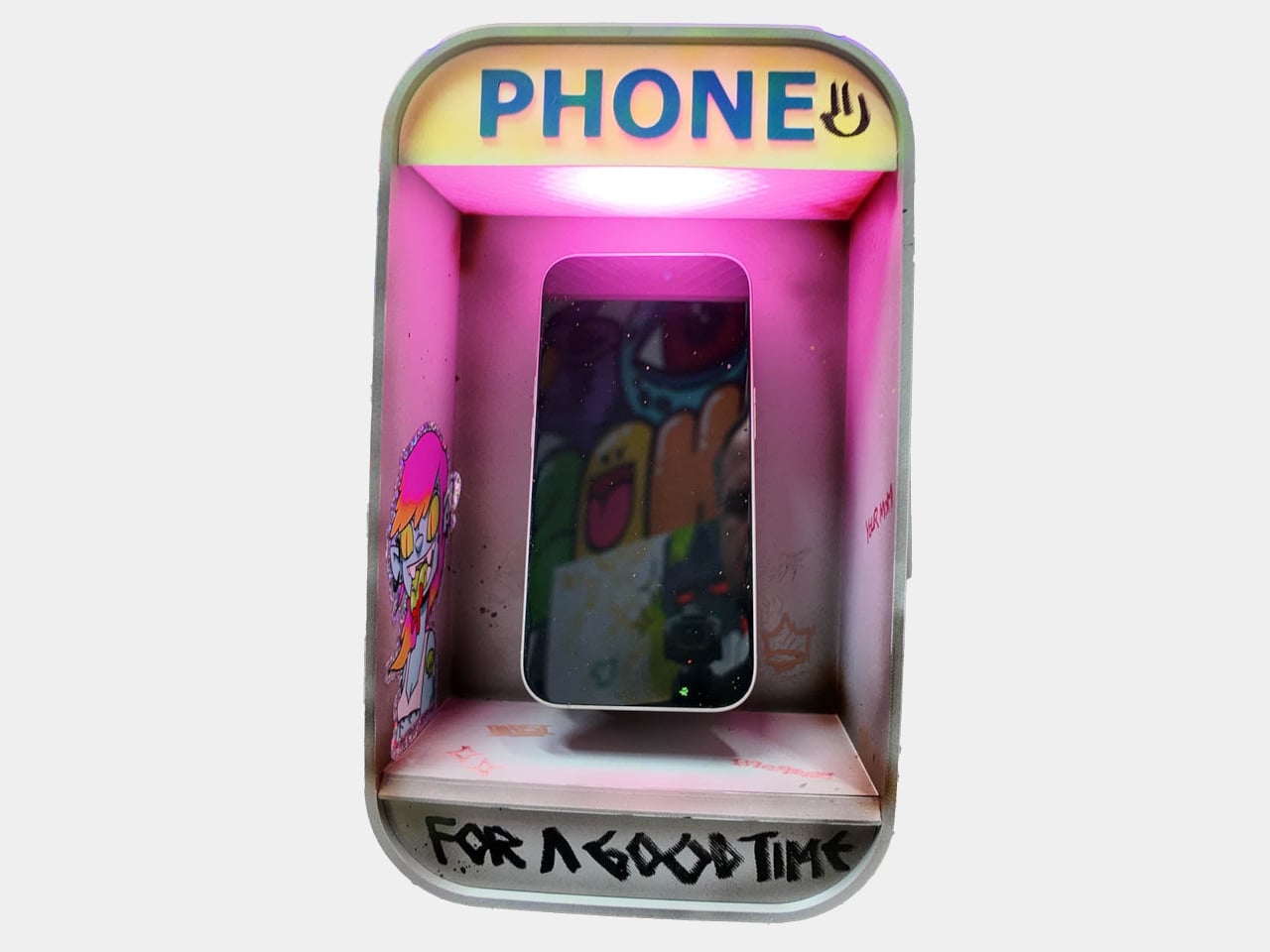
Two more options lean into the aesthetic of pay phones in their natural habitat. The Graffiti Covered version is fully tagged across the body, the kind of treatment any phone booth in a city block would accumulate over a few years. The 90’s Worn Looking version takes a different approach, styled to look genuinely aged and battered, as if it survived decades of street corners before ending up on your desk. Custom designs are also available on request for anyone with a specific vision.
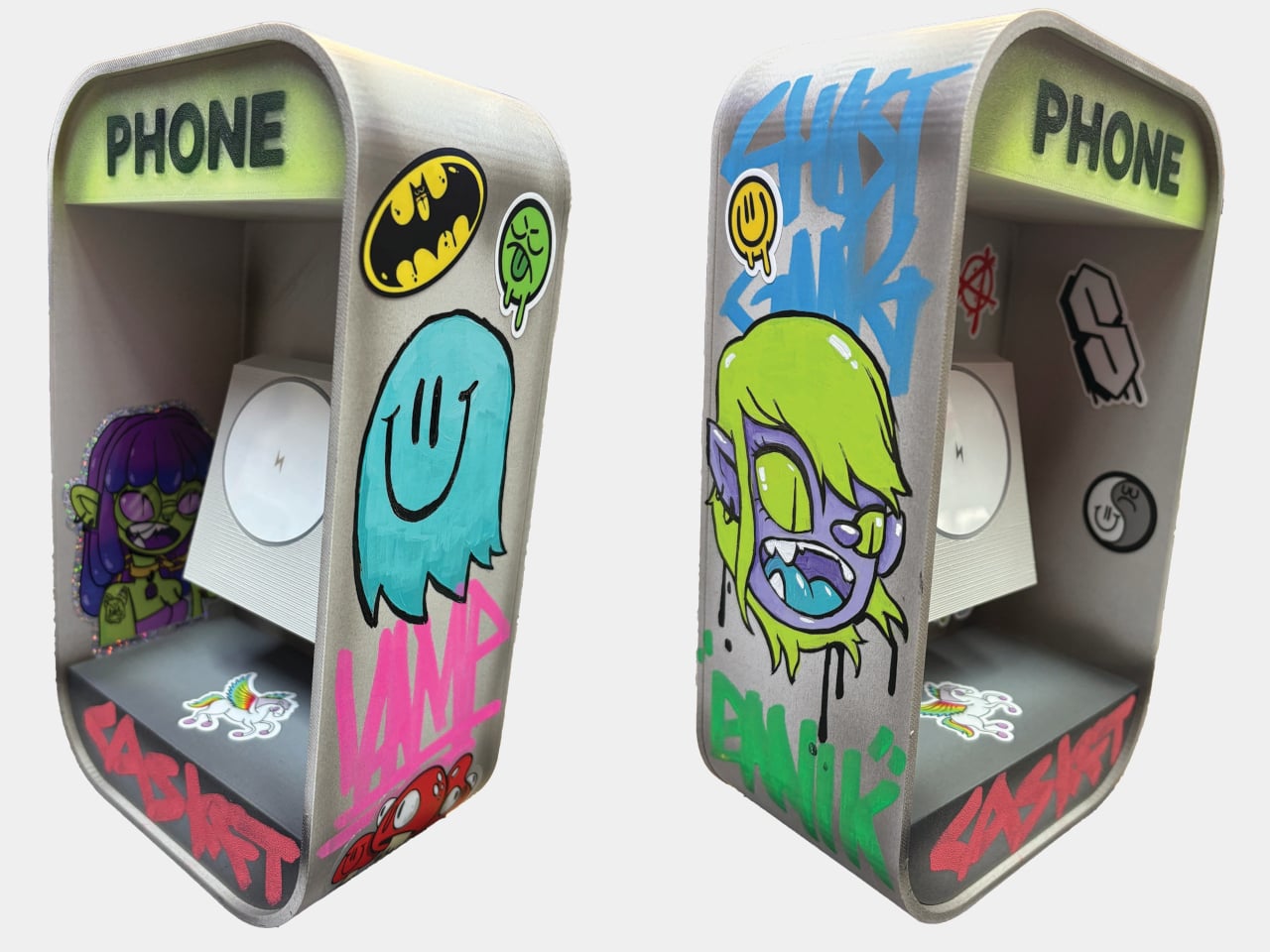
Graffiti Covered

Each piece is made individually, not manufactured in batches, which is a detail that matters when you’re looking at something styled after hand-tagged street furniture. The LED-lit “PHONE” sign is a small but exactly right touch, nodding to the illuminated panels that real pay phones used to make themselves visible at night. Placed on a nightstand, it gives the charger a presence that a flat wireless pad simply doesn’t.
90s Worn Looking

The irony at the center of the design doesn’t need to be overstated. A miniature pay phone charging a smartphone is a visual joke that explains itself the moment anyone sees it, and that’s part of why the product went viral before most people had even had a chance to order one. The waitlist that followed was long enough that the creator switched to a preorder system just to manage demand, making units one at a time as an independent artist.
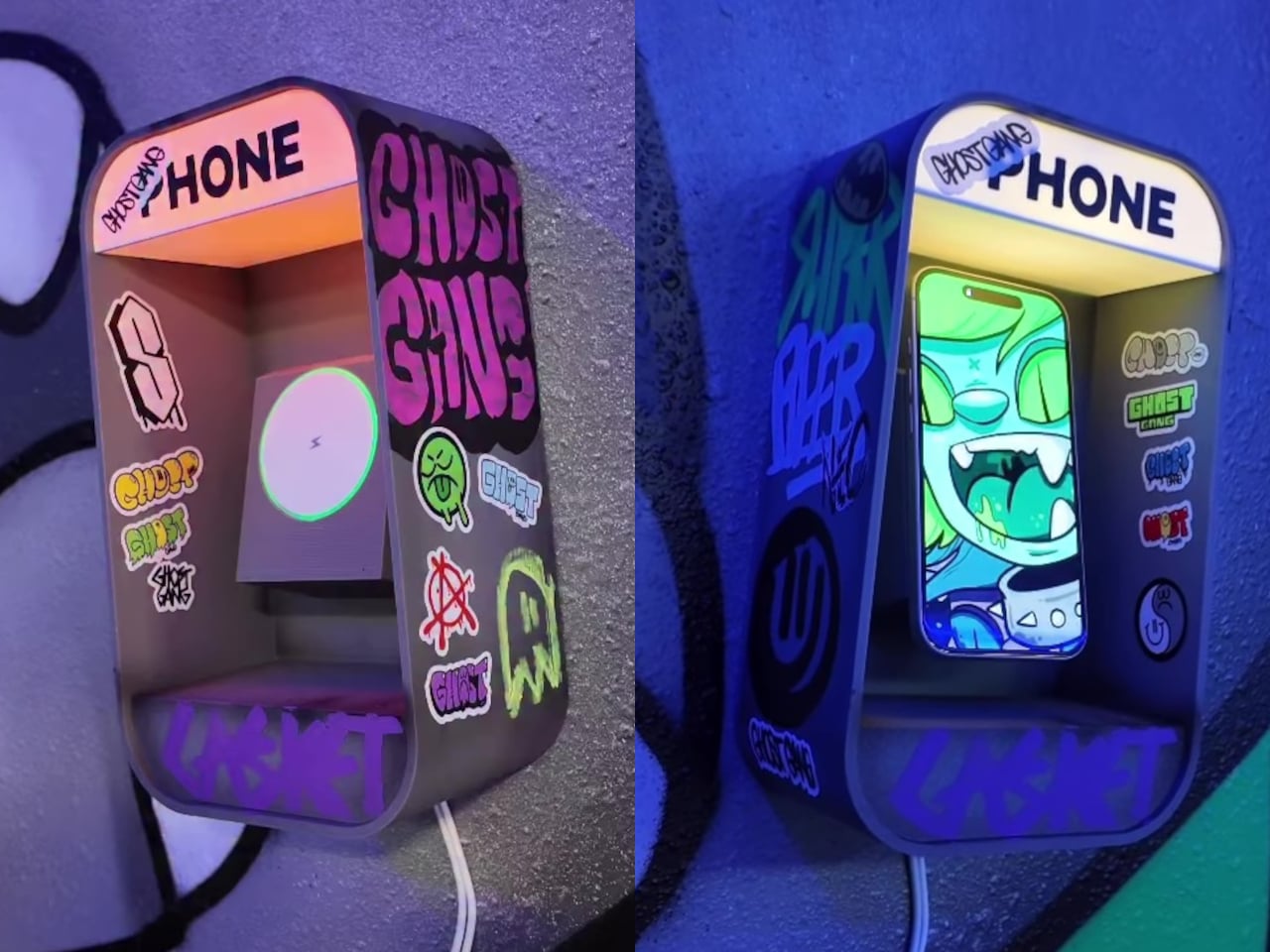
The charging function works on any MagSafe-compatible device, which covers a broad range of current iPhones without needing an adapter. The 3D-printed body is compact enough for a bedside table or desk corner without demanding too much space, and the sticker-ready surface of the DIY version makes it something of a collaboration between the maker and whoever ends up with it.

Pay phones disappeared because they were replaced by something more convenient. The Pay Phone Charger acknowledges that fully, charges it anyway, and glows while it does it. Starting at $125, it’s the kind of object that usually needs a lot more explaining than this one does.
The post This $125 Glowing Pay Phone Charges the Smartphone That Killed It first appeared on Yanko Design.
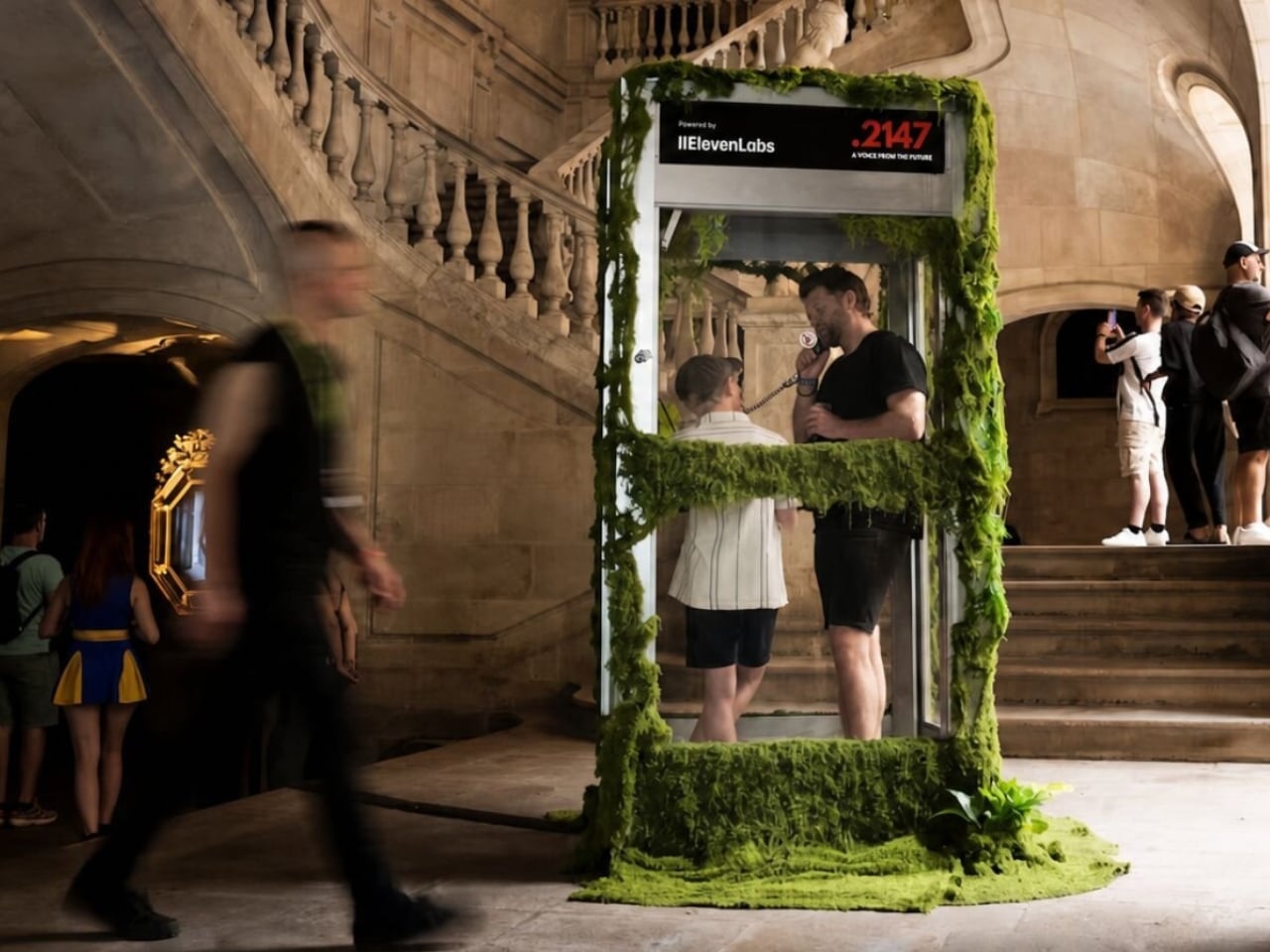
A Moss-Covered Payphone Just Became the Voice of 2147

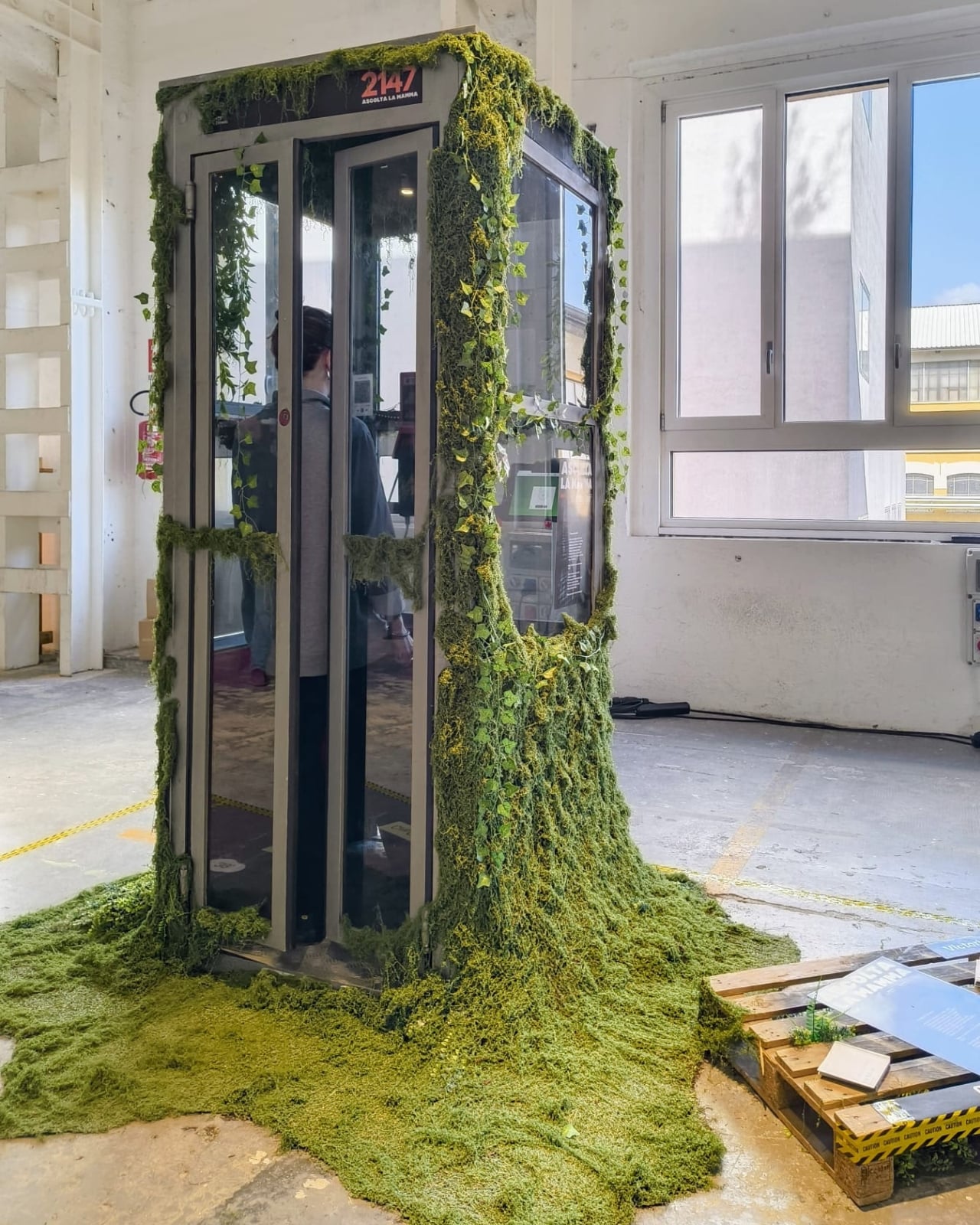
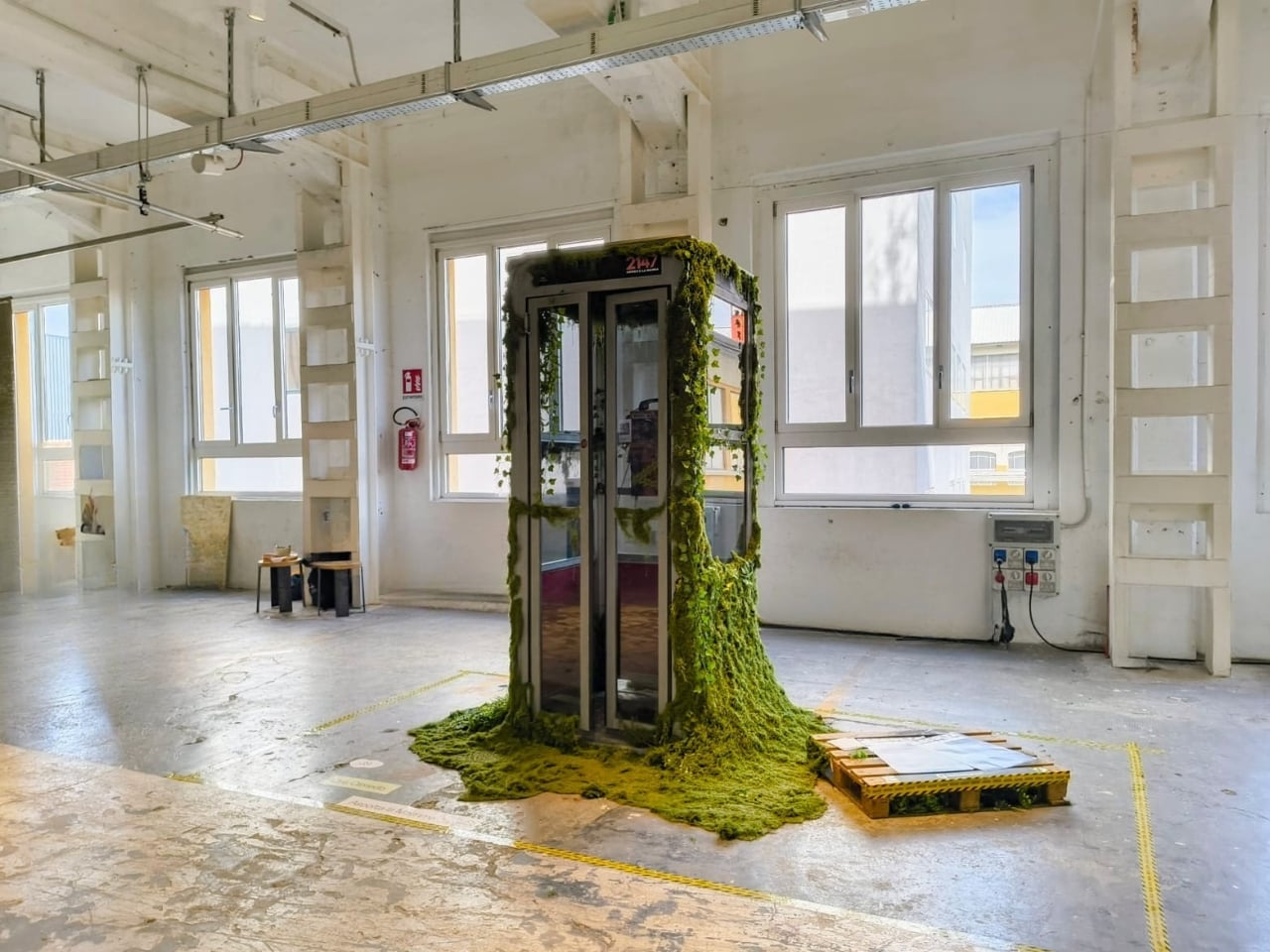
Picture a payphone. Not a sleek, reimagined version, just an actual, beat-up Telefónica booth, the kind you might walk past on a Barcelona street without a second glance. Except this one is overtaken by moss. And if you pick up the handset, the Earth answers.

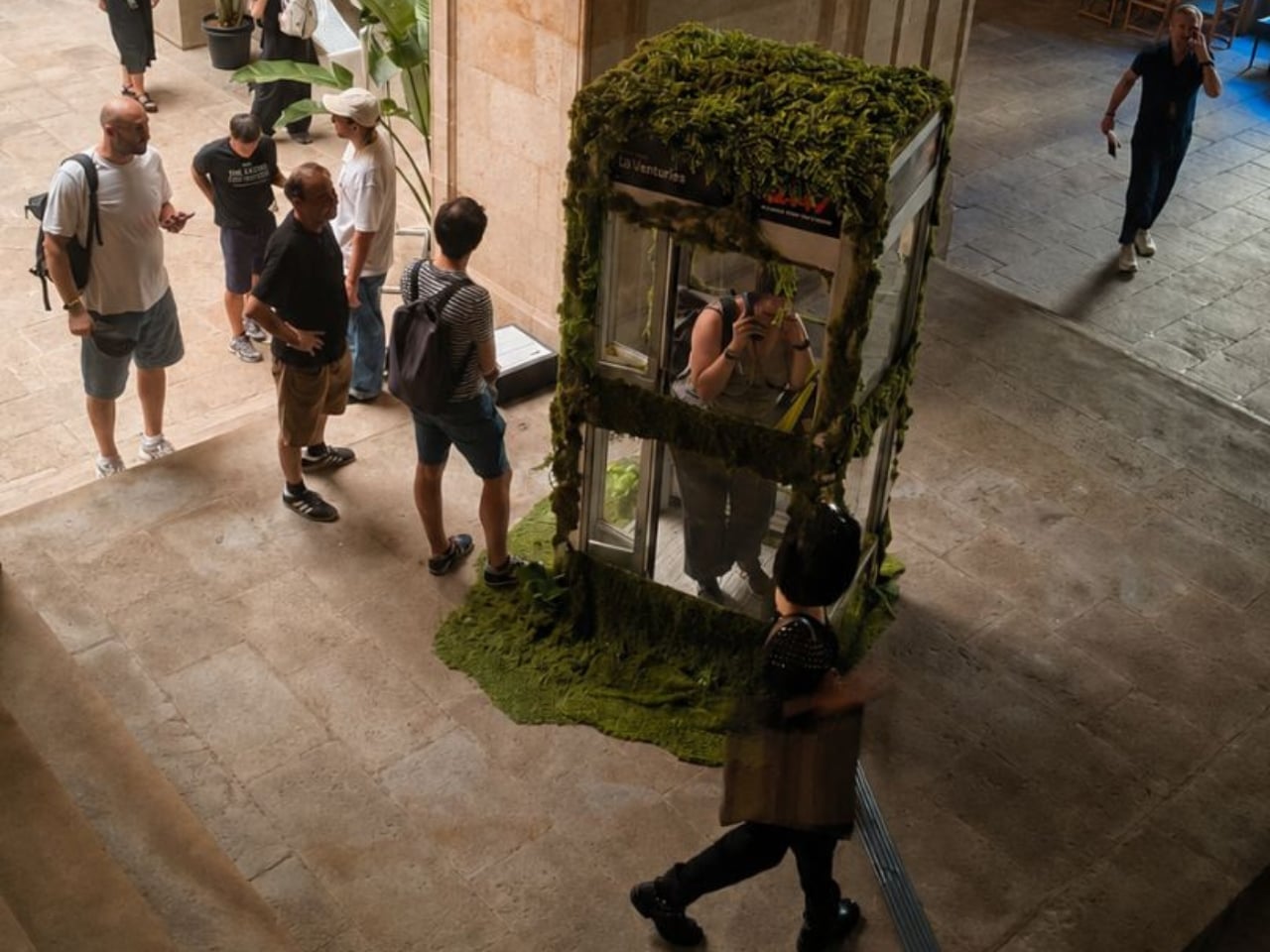
That’s the premise of 2147: A Voice from the Future, an interactive installation by Cris Olmedo of Divina Machina, the digital art branch of creative innovation studio QS Ventures. The piece was presented at Sónar+D, set against the medieval backdrop of the Llotja de Mar in Barcelona. That pairing alone says something: one of the oldest commercial buildings in the city, hosting an open-ended conversation with an AI that speaks on behalf of a future planet.

Designer: Cris Olmedo (Divina Machina)

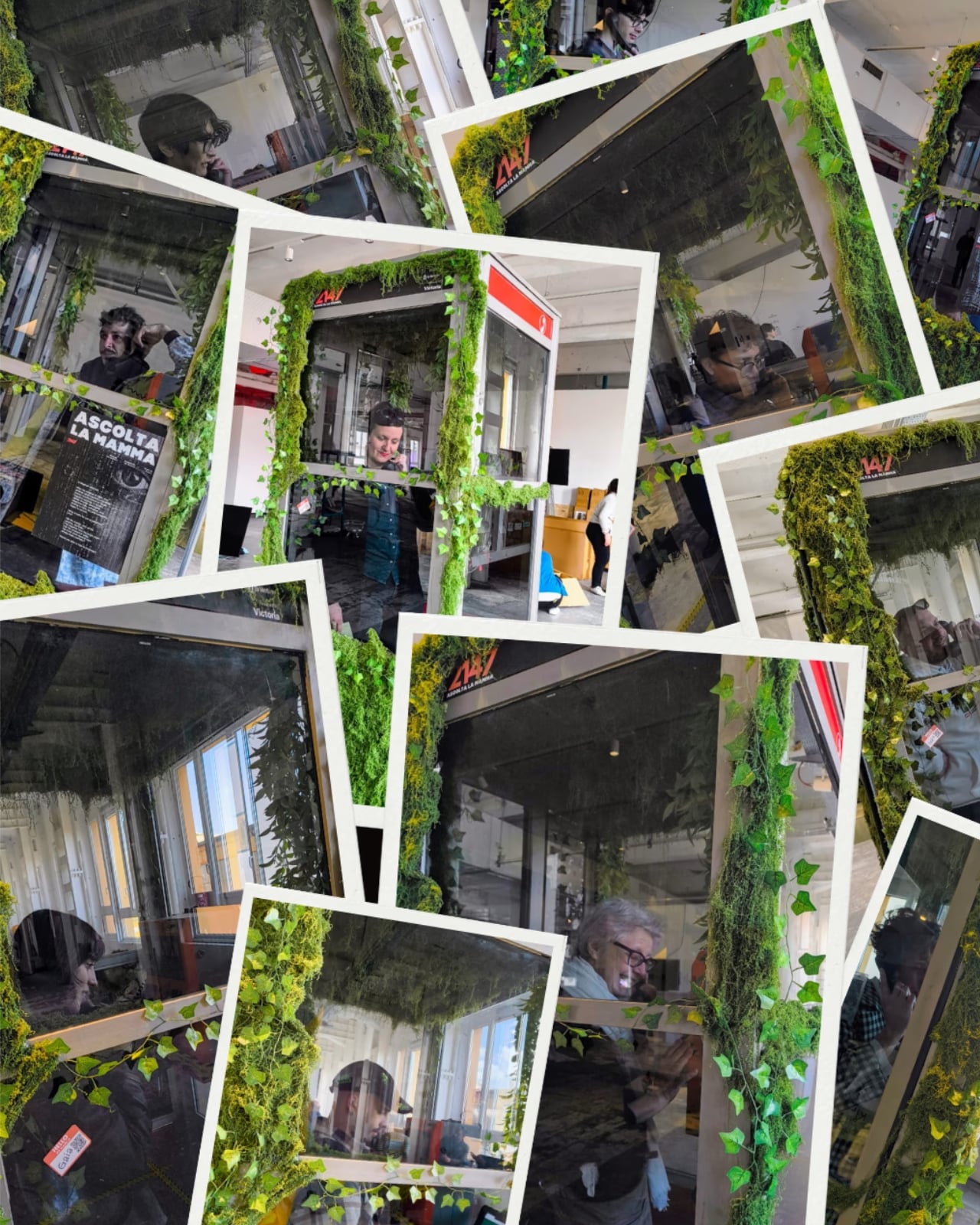
The concept is disarmingly simple. You pick up the handset. The AI, voiced through an ElevenLabs system and powered by a Raspberry Pi 5 tucked inside the original booth, responds in real time as a fictional representation of the Earth. No scripts, no predefined dialogue paths, no multiple-choice menus. You take the conversation wherever you want, whether that’s climate, survival, memory, or grief. The Earth, imagined 121 years from now, has things to say. Whether you do is another matter.

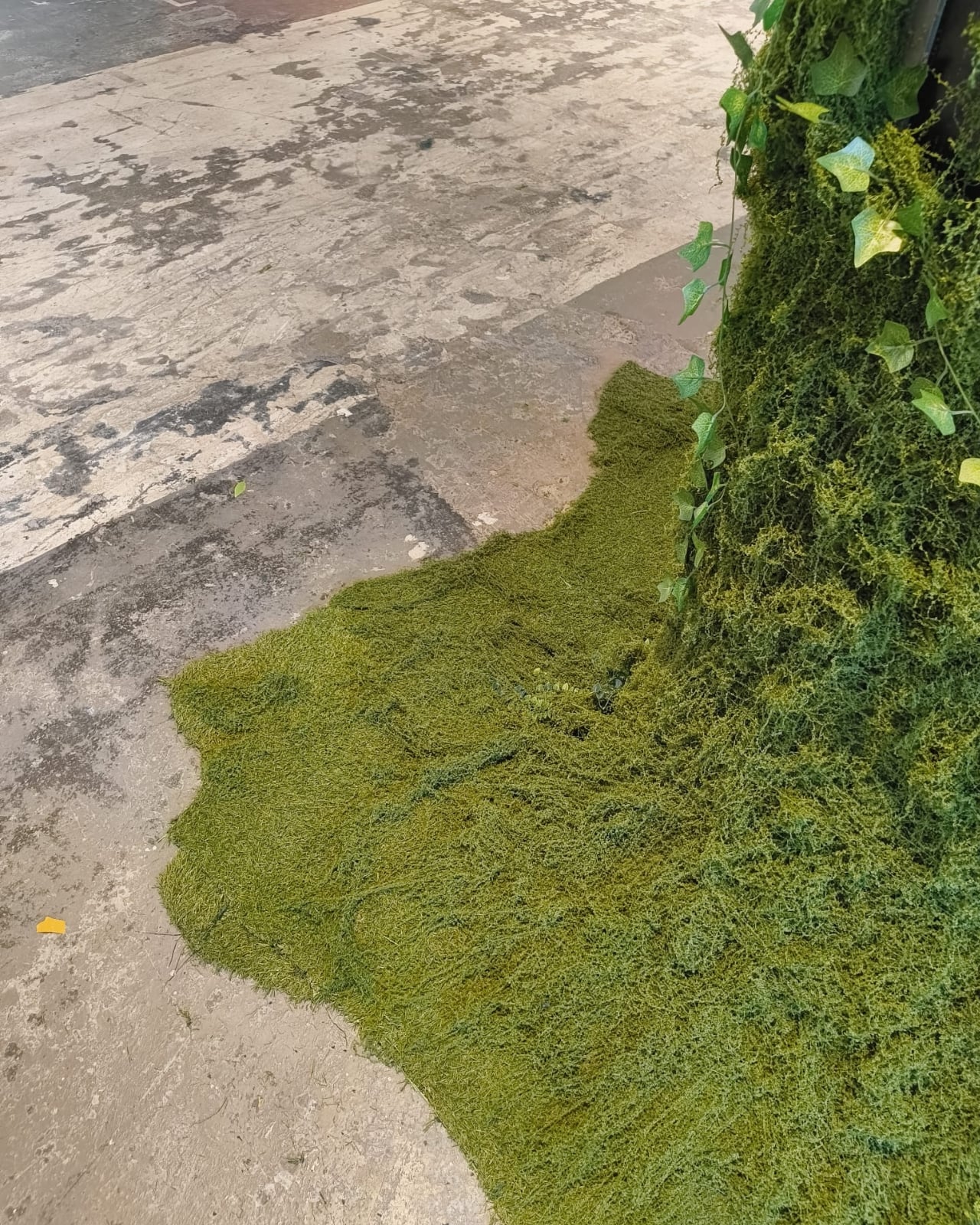
What makes this work is the object itself. Olmedo didn’t design something new and purposefully futuristic. The booth kept its original Telefónica structure, its original signage, its unmistakably analog bones. Only what’s hidden inside changed. The moss slowly consuming the exterior reads like nature quietly reclaiming something that people gave up on. That tension between the obsolete and the alive does a lot of the emotional heavy lifting here, and it’s a smarter choice than any glowing interface could have been.

We tend to think of design as a forward-moving discipline, always chasing newer, faster, more capable. But 2147 asks a different question: what happens when you take something we’ve already discarded and give it a new reason to exist? The payphone is a perfect vessel for that question, precisely because it was once the most public, most democratic form of long-distance communication we had. You didn’t need an account, a plan, or a device you owned outright. Just a coin and a number to dial.

Now that infrastructure is largely gone. Olmedo took what’s left of it and filled it with something else entirely. That’s not just clever art direction. It’s a genuinely pointed observation about how we build things, discard them, and eventually recognize that the shell still has something to offer. The fact that this installation lives inside an actual retired Telefónica booth, rather than a replica, matters more than it might seem.

The year 2147 gives me pause, in the best way. It’s far enough to feel like science fiction, but close enough to feel like a countdown. It’s the kind of temporal framing that shakes you out of the comfortable haze of “we’ll deal with it later.” The Earth speaking through this installation isn’t a distant abstraction. It’s speaking through a receiver you’ve held before, in a language you already understand, about problems you’ve already heard about.

The moss is the detail I can’t stop thinking about. It reads as both beautiful and quietly alarming, the natural world slowly spreading over a structure that once represented human connection. As if the planet didn’t wait for us to sort things out. It also turns a mundane artifact into something you actually want to stop and stare at, which is half the job of any good installation. It communicates instantly and without explanation, which is exactly what good design is supposed to do.

2147: A Voice from the Future earns its concept. It’s not a payphone with AI bolted on. It’s a meditation on time, obsolescence, and the conversations we keep putting off. And the most compelling thing about it is that it asks you to start one, right now, handset in hand, with a planet that’s been waiting for you to pick up.

The post A Moss-Covered Payphone Just Became the Voice of 2147 first appeared on Yanko Design.