A Pour-Over Dripper Inspired One of Beijing’s Best Pop-Ups

Pop-ups have become one of the more interesting testing grounds for design ambition. They exist long enough to make a statement but not so long that they have to compromise on boldness. And Atelier L seems to understand that assignment completely.

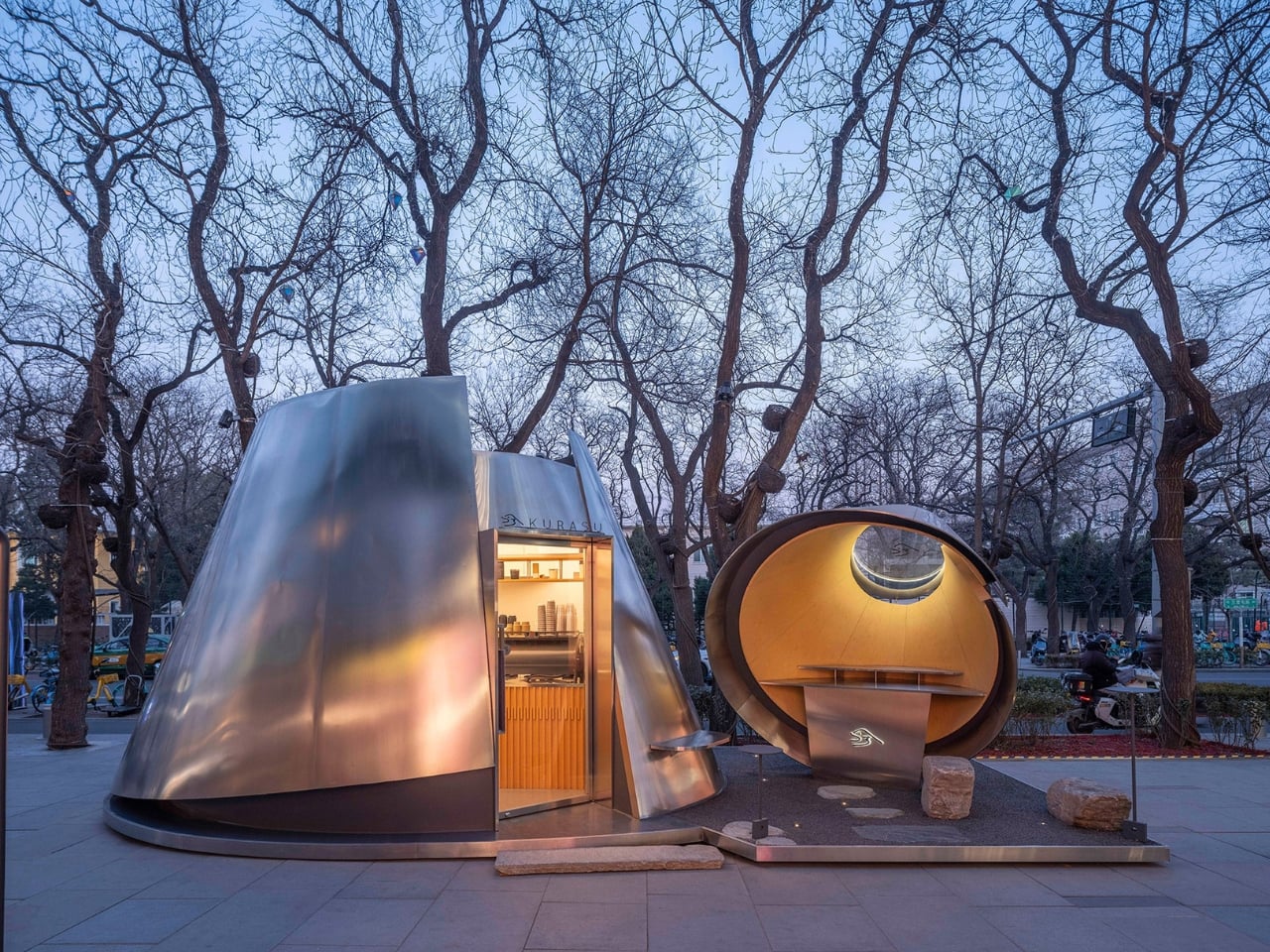
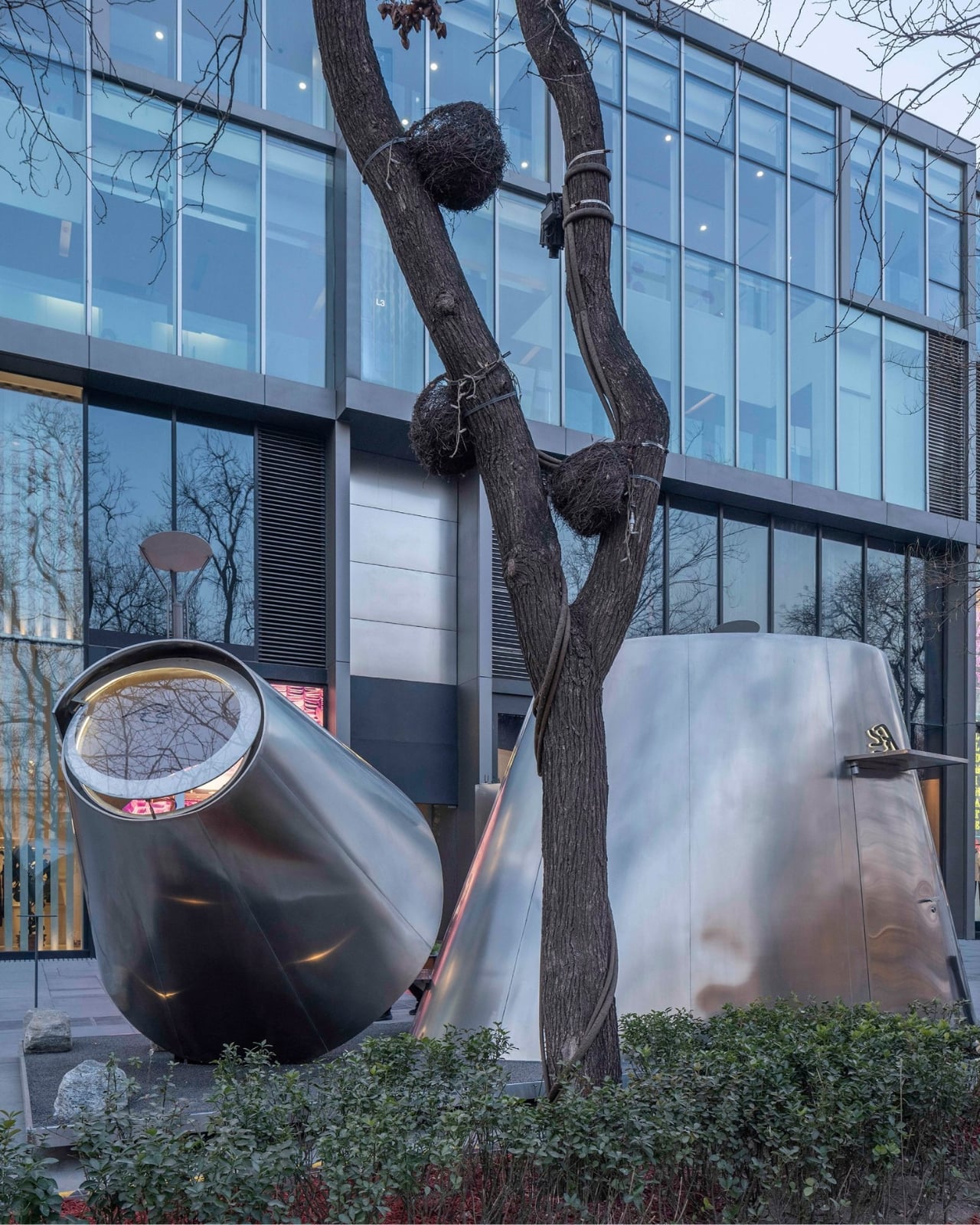
The studio’s latest project is a temporary coffee pavilion for Kurasu, the Kyoto-based specialty coffee brand, installed at Taikoo Li Sanlitun, one of Beijing’s most high-traffic outdoor retail districts. On the surface, it’s a pop-up kiosk. But spend a few seconds looking at it, and you realize it’s a fully considered piece of architecture that draws its entire form from a pour-over coffee dripper.

Designer: Atelier L
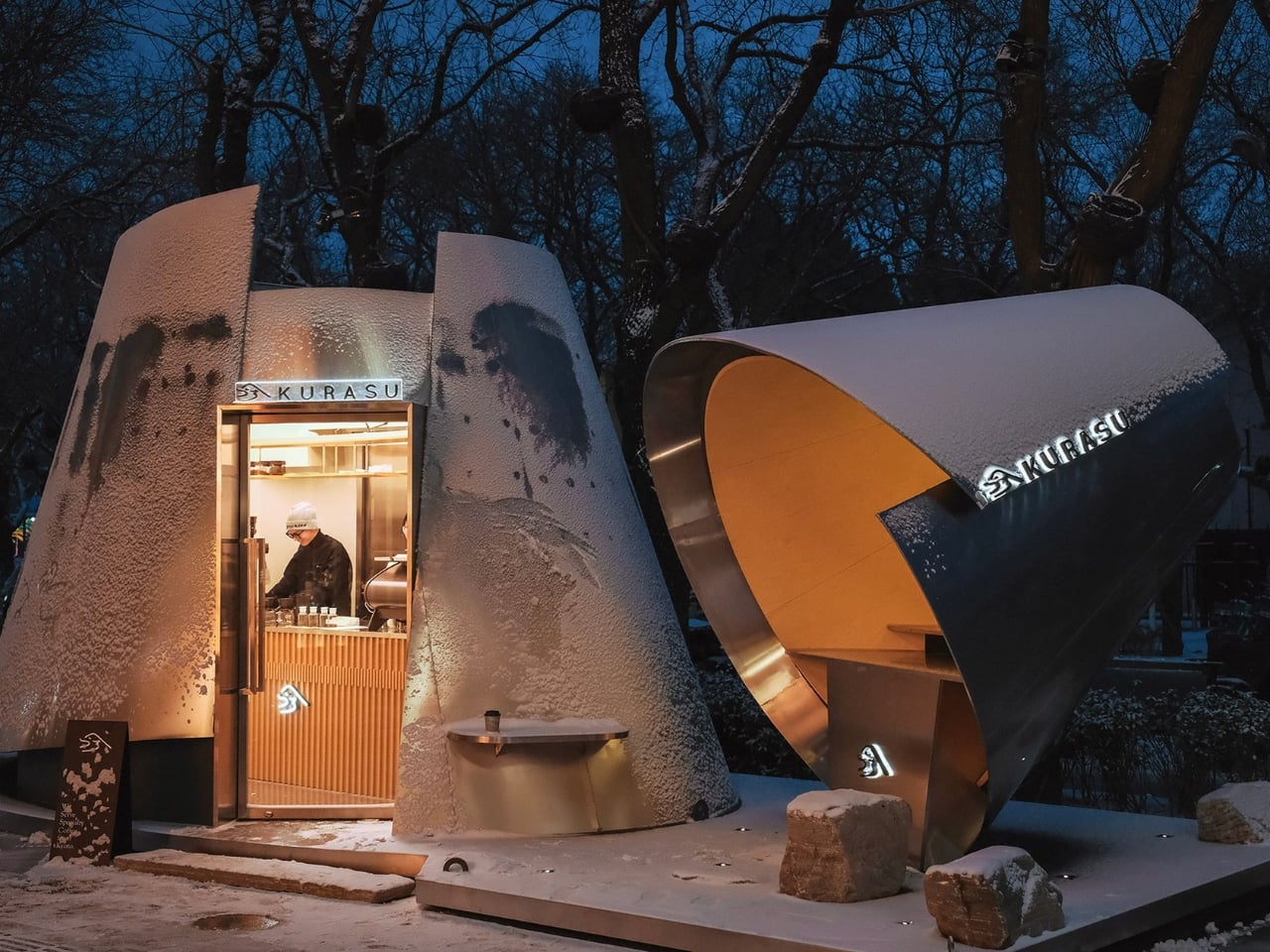
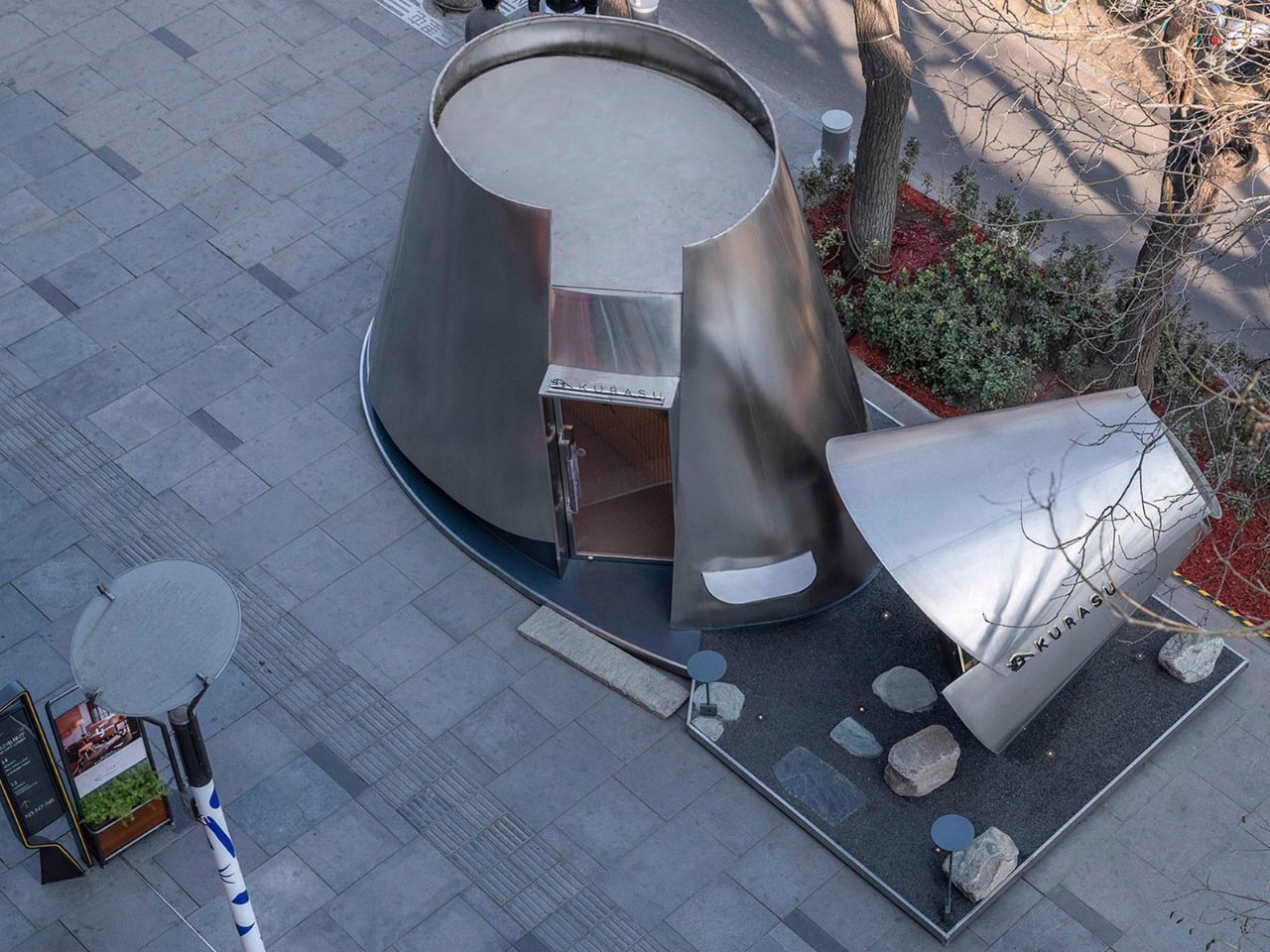
That’s the concept at the core of it: the geometry of a pour-over dripper, translated directly into architectural form. Atelier L scaled up the familiar conical vessel into two interconnected volumes, each clad in reflective stainless steel that mirrors the movement and light of the city around it. The inspiration nods to origami, which tracks visually. The structure reads as almost folded into place, light and precise rather than heavy or monolithic.
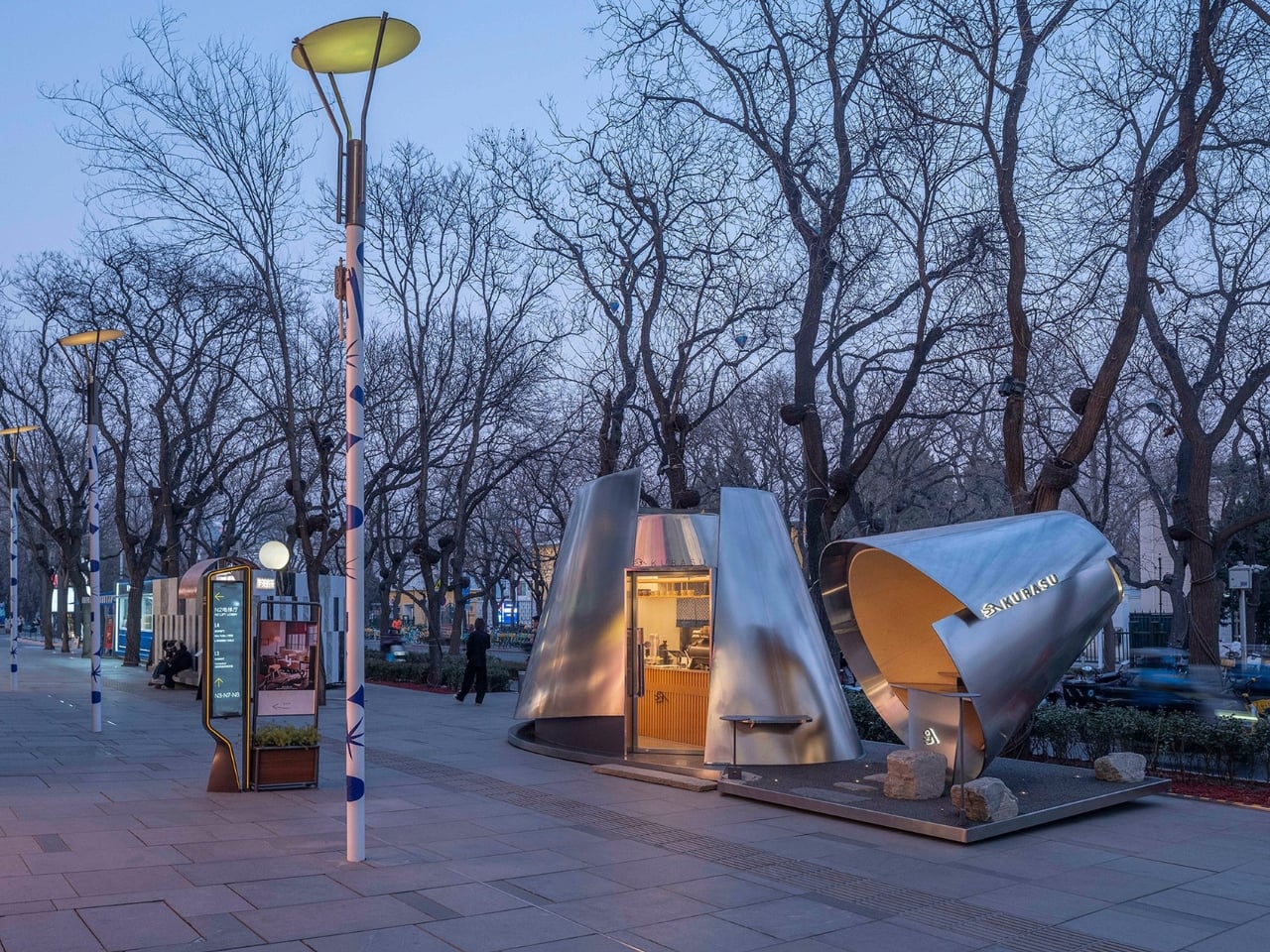
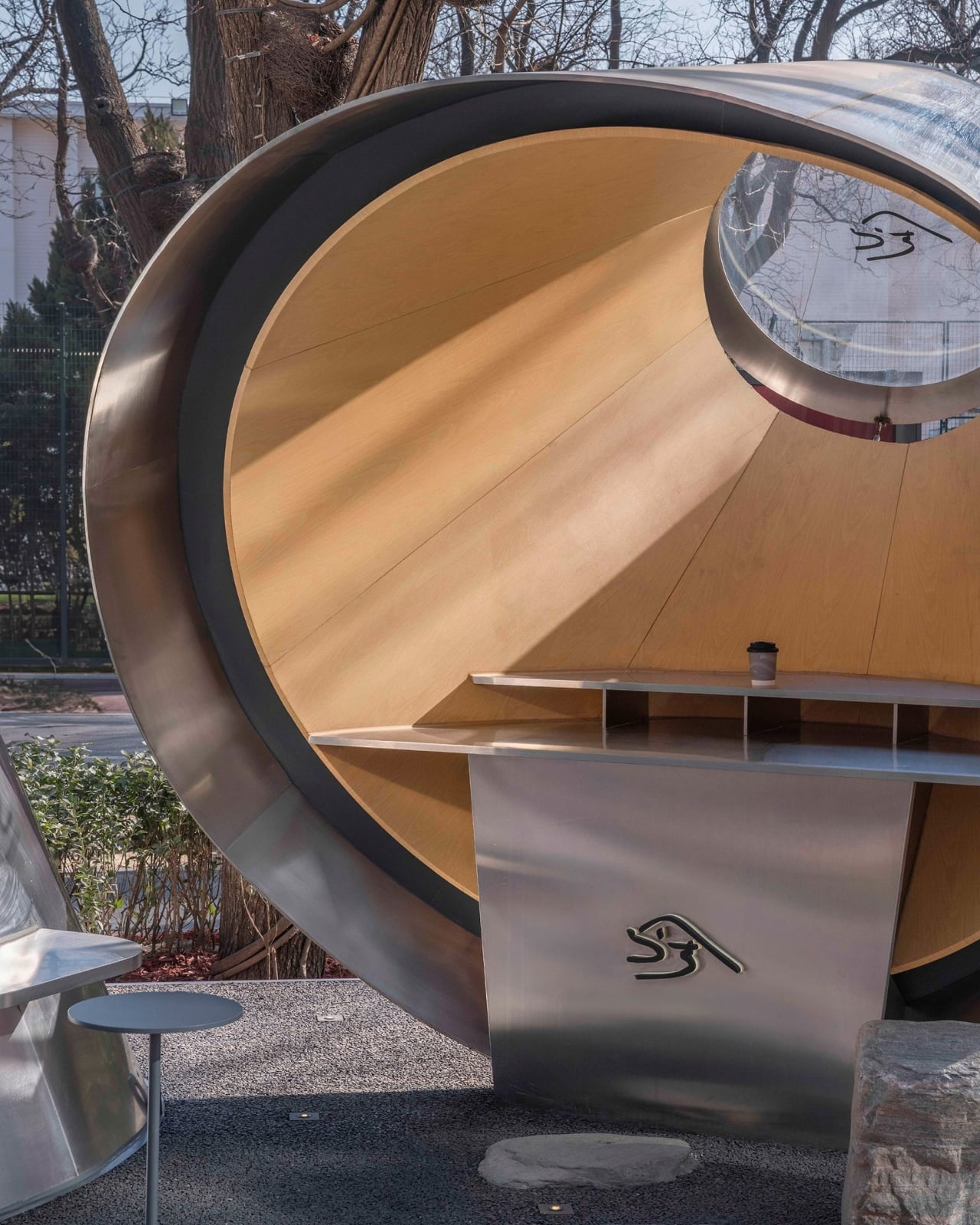
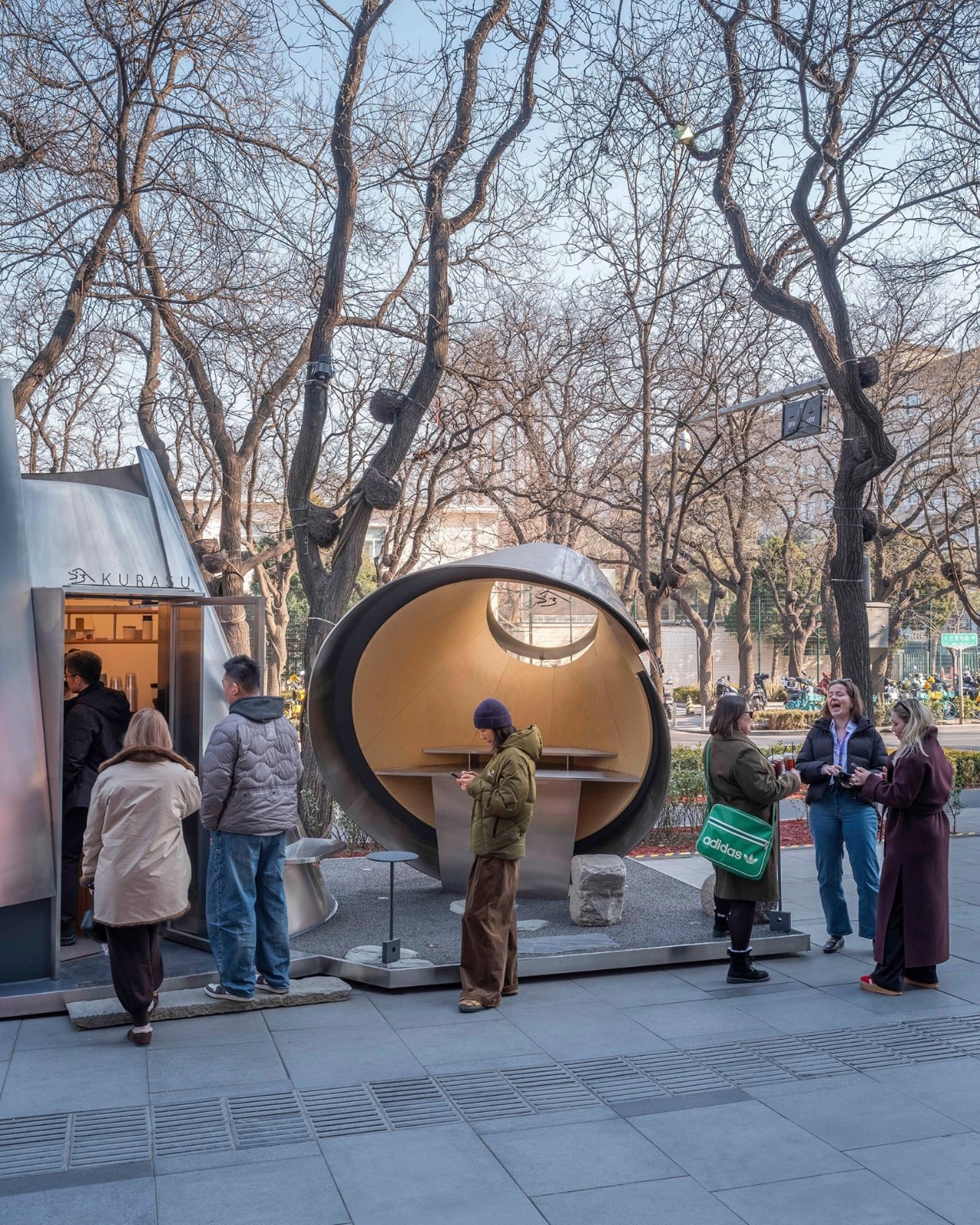
What makes the design smart rather than just clever is how the two volumes work separately but together. The larger one faces inward, creating a contained environment for the coffee ritual itself. A central linear bar clearly divides the space between barista and customer, and the wall inclinations, subtle as they are, actually serve a functional purpose: they create more movement space behind the counter while making the customer-facing side feel more expansive than its actual square footage. That kind of spatial sleight of hand is hard to achieve in a compact footprint, and Atelier L manages it without making you feel like you’ve noticed it.
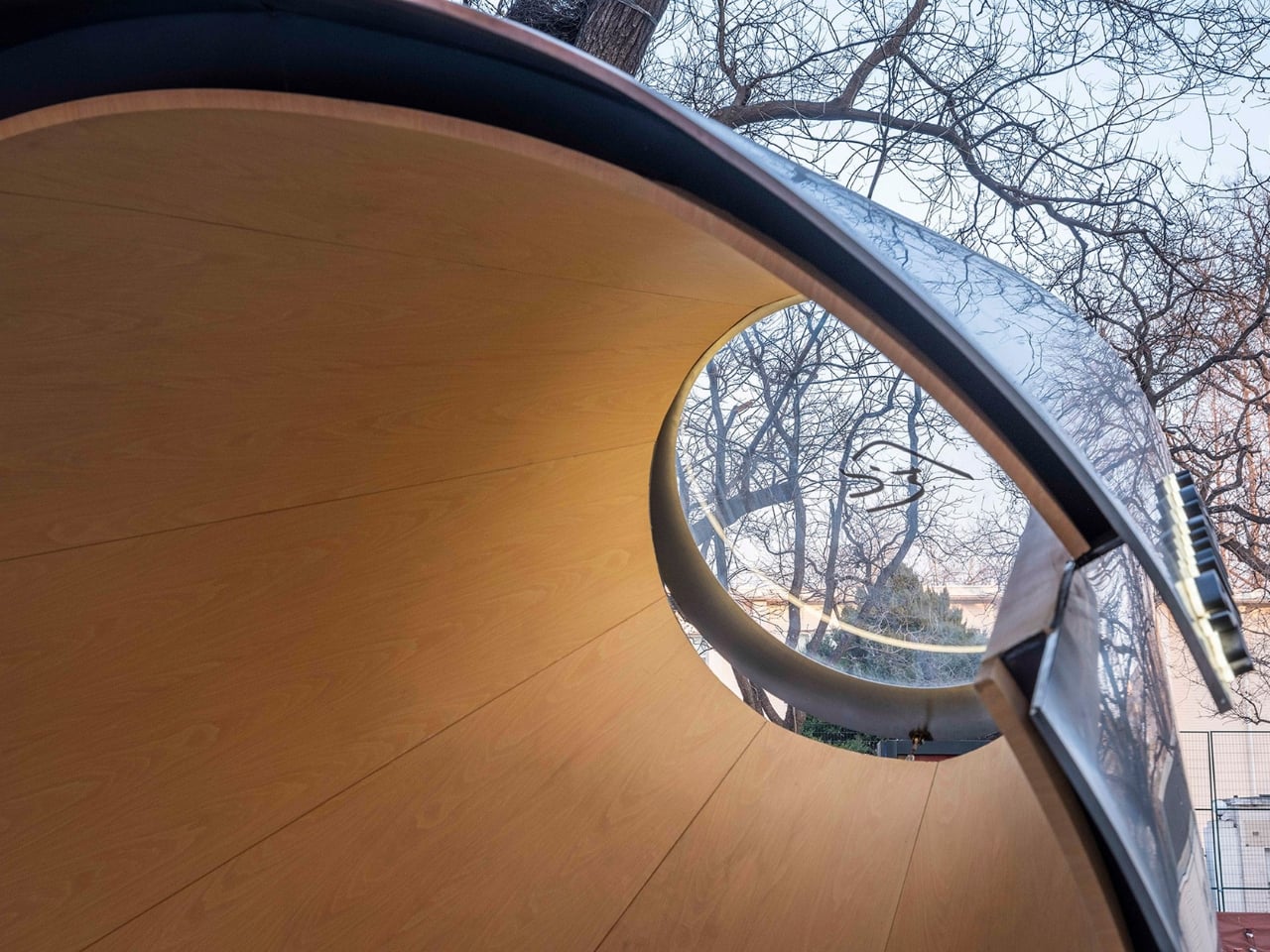
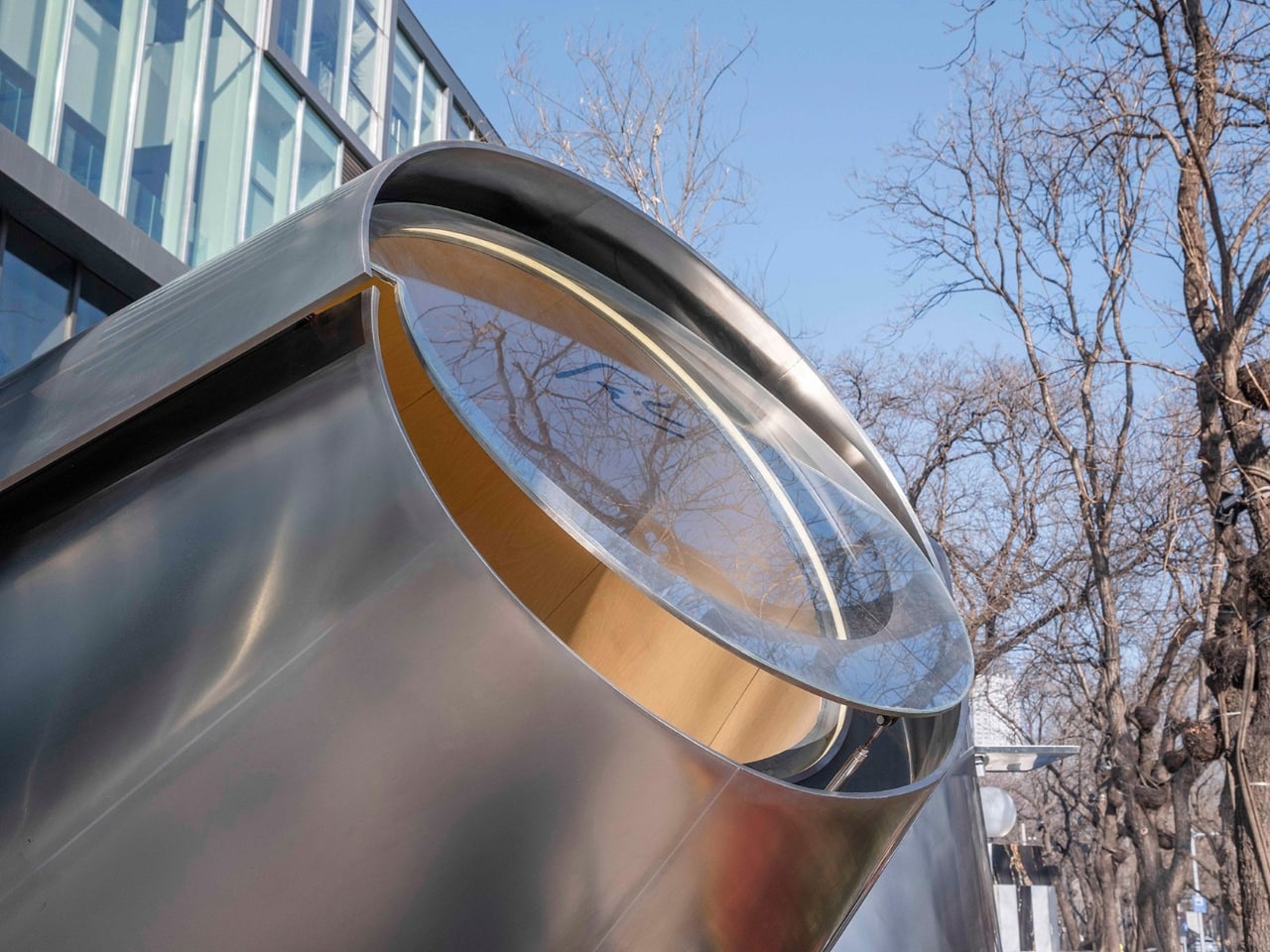
The smaller volume does something entirely different. It cantilevers outward toward the street and functions as a display structure and micro gallery, which is an elegant answer to the challenge every pop-up faces: how do you engage passers-by without resorting to signage? Here, the architecture itself becomes the invitation.
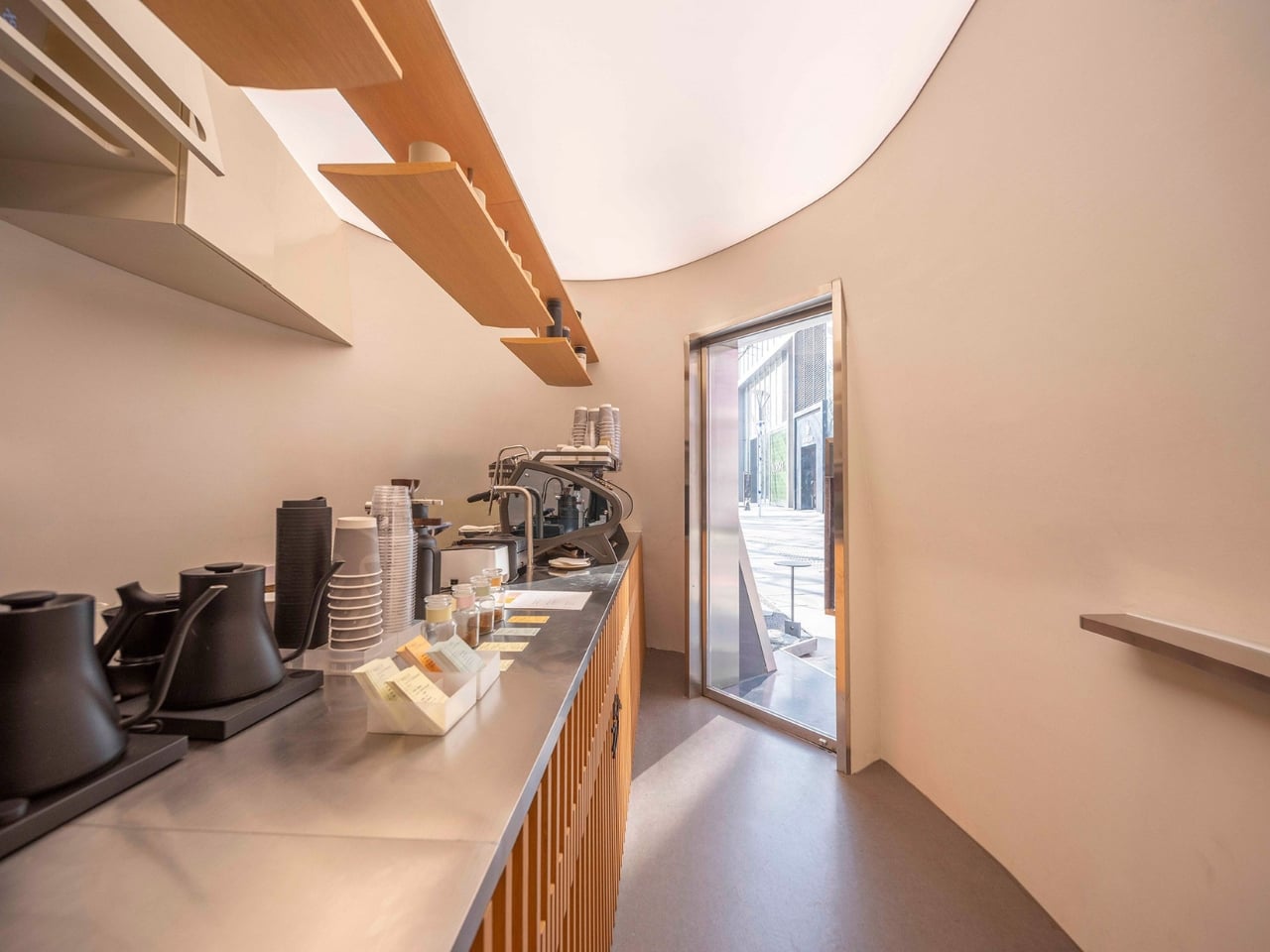
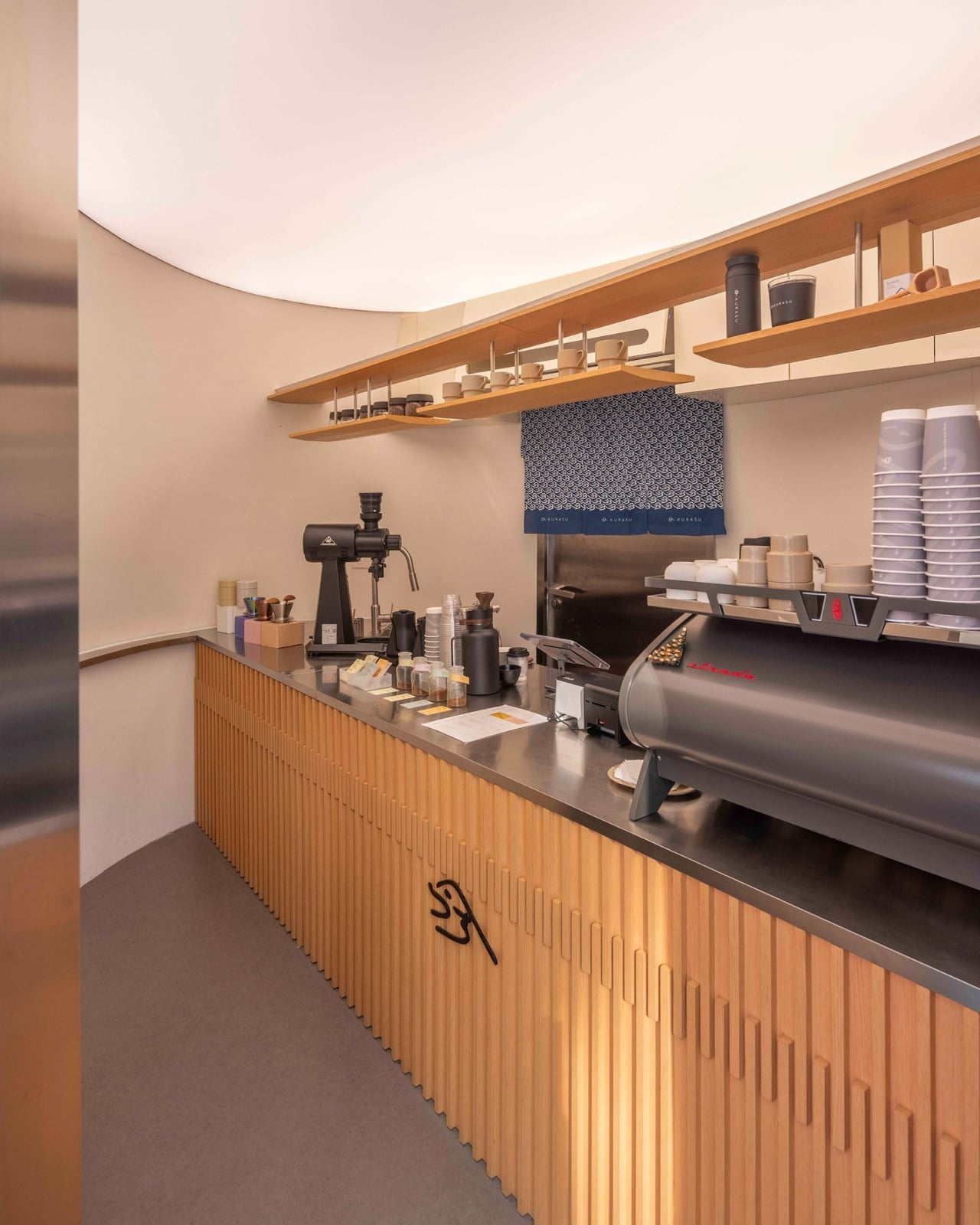
Materials are where my personal preferences become part of the read. The stainless steel exterior is striking without trying too hard. It catches the light, reflects the surrounding winter trees, and at dusk, the entire pavilion takes on the quality of a glowing lantern. But the interior feels more considered to me. Wood-grain aluminum brings warmth into what could easily have been a cold, overly minimal space, and the curved surfaces soften light across the small interior rather than bouncing it. The contrast between the pavilion’s cool, almost industrial exterior and its warmer interior is a deliberate design choice, and it works. The outside sets an expectation; the inside quietly revises it.
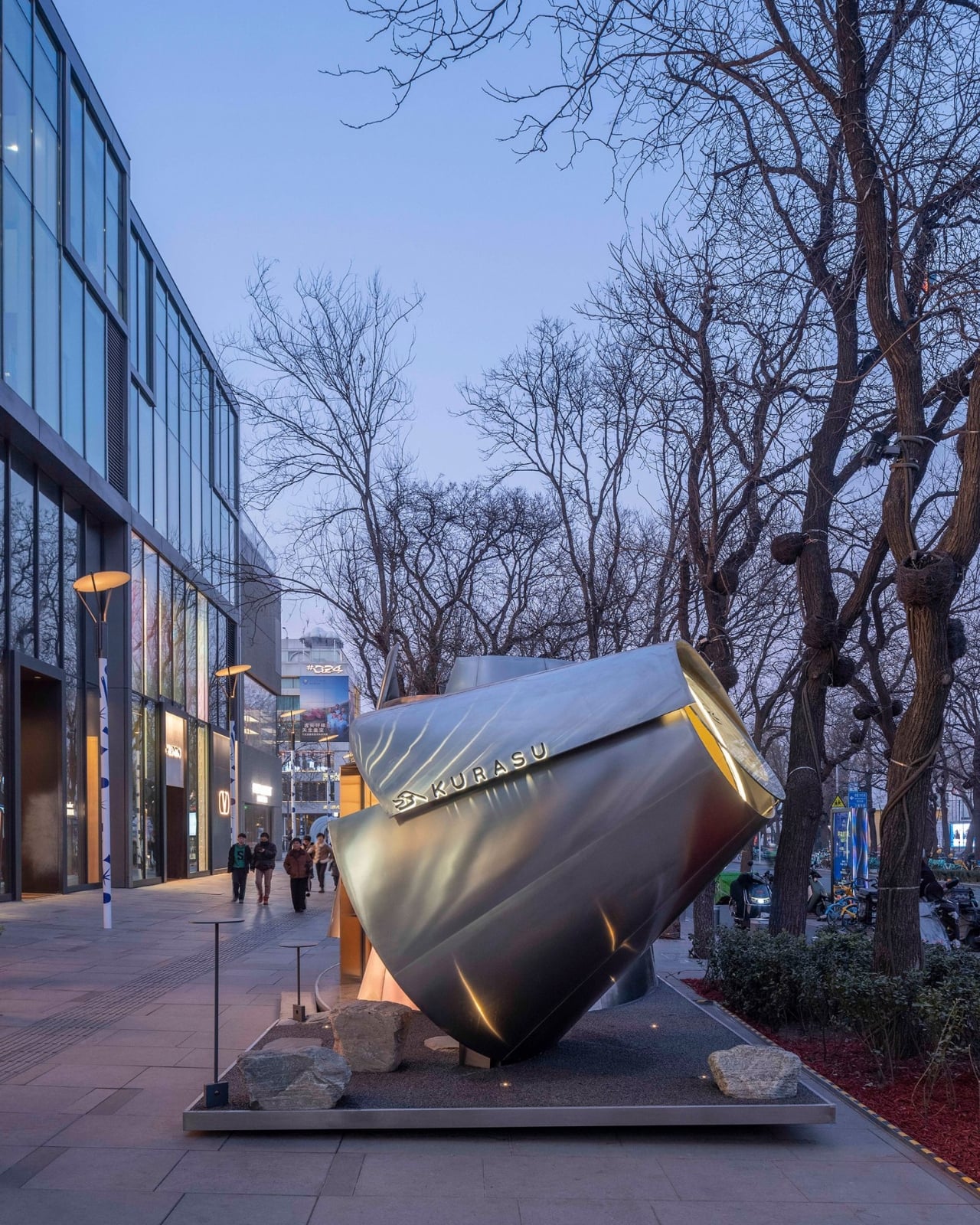
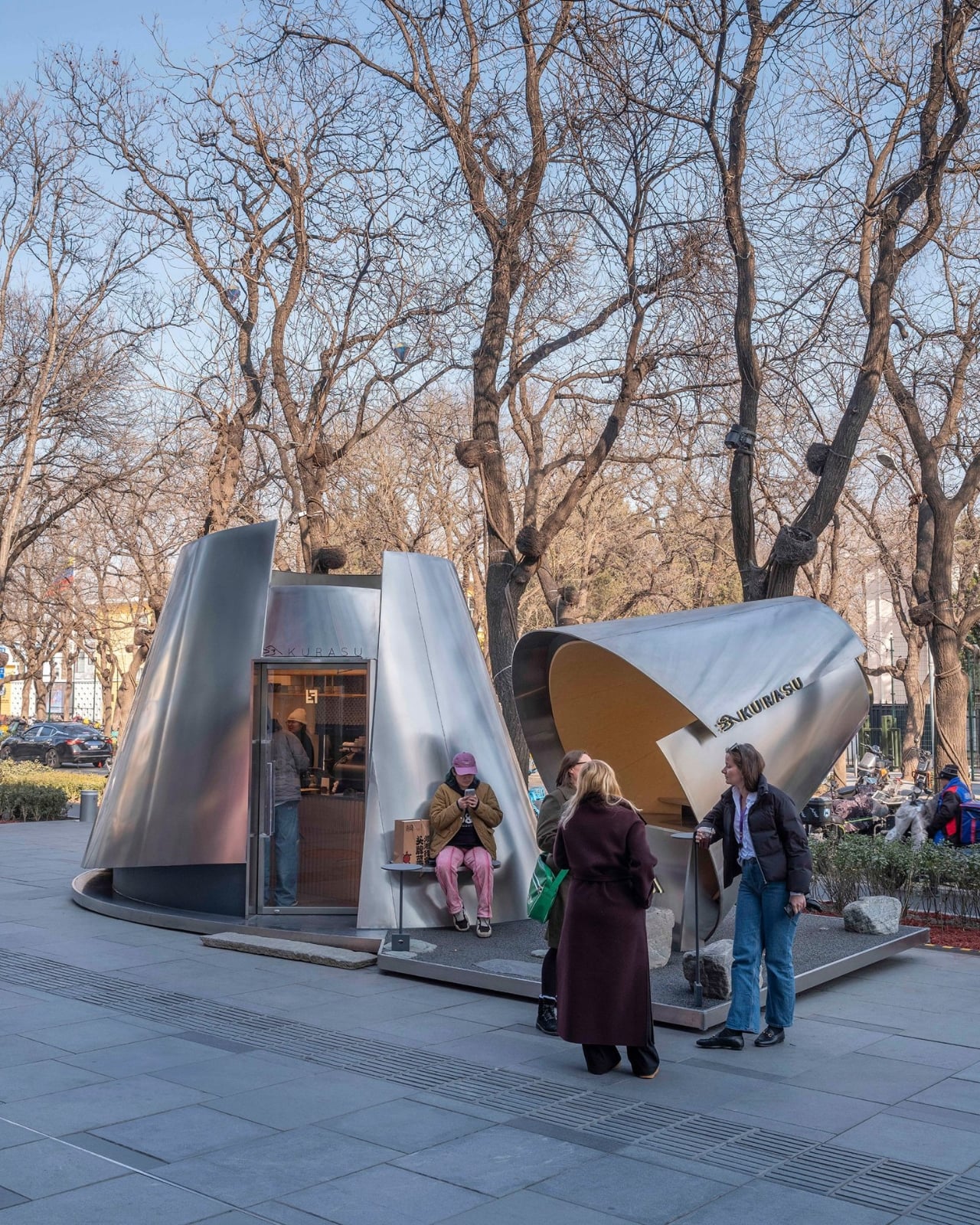
A steel base anchors both volumes, with its corners slightly lifted to maintain the illusion of paper-thin lightness. Dark gravel and natural stone slabs compose the ground plane. An operable glass roof keeps the interior connected to the sky, allowing the space to shift with the light and the movement of trees above. Those details matter. They’re what separate a thoughtful installation from a kiosk.
For a brand like Kurasu, whose identity has always been rooted in the quiet rituals of specialty coffee, a pavilion that architecturally embodies the act of brewing makes complete sense. The pour-over method is slow, precise, and intentional. The pavilion mirrors all of that. Whether the alignment between concept and experience was always the plan or sharpened through the process, it reads as completely resolved.
Pop-ups tend to get treated as design’s sketchpad, too temporary to be taken seriously. The Kurasu pavilion in Beijing is a case against that assumption. When the brief is specific and the constraints are real, a temporary structure can be as fully realized as anything permanent. Sometimes more so, because there’s no room to defer decisions or soften edges. You build it, it lands, and people either feel it or they don’t. This one lands.
The post A Pour-Over Dripper Inspired One of Beijing’s Best Pop-Ups first appeared on Yanko Design.

Aman’s Latest Pop-Up Store In Thailand Is An Eco-Friendly, Modular Alternative To Heavy Construction

The hospitality brand Aman commissioned an architectural firm called Luxury Frontiers to design an eco-friendly and sophisticated mobile retail concept to celebrate its 35th anniversary. Designed as a part of the anniversary celebrations, the Aman cabana pop-up shop will be opening up at Amanpuri, in Phuket, Thailand.  The resultant design is classic, elegant, and a subtle structure that can be assembled and disassembled at will.

Designer: Luxury Frontiers

The mobile pop-up shop is designed to be moved around in various Aman properties while capturing and representing the brand’s lovely and distinguished identity. Designed to look luxe, the cabana is pre-manufactured and can be easily and efficiently assembled and disassembled without 12 hours. No specialized equipment or niche skills are required to set up the store. This allows the store to be an easy project that can be shifted amongst different locations. As a trial, the store is first being set up in Amanpuri, and will then be moved to Amangiri in spring 2024, and Amanzoe in 2025. The roof design is interchangeable and will be swapped according to the varied geographical settings.

This exciting project enables Aman to display its product from a particular region in the same space, giving a unique experience that feels true to the brand. It will include items from Aman Essentials – luxurious skincare products, accessories, fragrances, and Italian leather bags. The cabana will offer the guests a one-of-a-kind experience that is special to the location they are visiting. It will give guests an opportunity to shop in the sun next to the water.

Besides being sophisticated and a true testament to Aman’s identity, the pop-up store is a modular project that is eco-friendly and non-invasive. It does not employ heavy construction, and in fact, minimizes the effects on its surroundings. This is a revolutionary and transformative solution targeted especially for accommodations such as resorts, camps, and lodges. The impact on the environment is reduced, while also paying attention to flexibility and modularity. Once the cabana is done being utilized as a store, it will be converted into a children’s play area or a dining pavilion.

The post Aman’s Latest Pop-Up Store In Thailand Is An Eco-Friendly, Modular Alternative To Heavy Construction first appeared on Yanko Design.
Aman’s Latest Pop-Up Store In Thailand Is An Eco-Friendly, Modular Alternative To Heavy Construction

The hospitality brand Aman commissioned an architectural firm called Luxury Frontiers to design an eco-friendly and sophisticated mobile retail concept to celebrate its 35th anniversary. Designed as a part of the anniversary celebrations, the Aman cabana pop-up shop will be opening up at Amanpuri, in Phuket, Thailand.  The resultant design is classic, elegant, and a subtle structure that can be assembled and disassembled at will.

Designer: Luxury Frontiers

The mobile pop-up shop is designed to be moved around in various Aman properties while capturing and representing the brand’s lovely and distinguished identity. Designed to look luxe, the cabana is pre-manufactured and can be easily and efficiently assembled and disassembled without 12 hours. No specialized equipment or niche skills are required to set up the store. This allows the store to be an easy project that can be shifted amongst different locations. As a trial, the store is first being set up in Amanpuri, and will then be moved to Amangiri in spring 2024, and Amanzoe in 2025. The roof design is interchangeable and will be swapped according to the varied geographical settings.

This exciting project enables Aman to display its product from a particular region in the same space, giving a unique experience that feels true to the brand. It will include items from Aman Essentials – luxurious skincare products, accessories, fragrances, and Italian leather bags. The cabana will offer the guests a one-of-a-kind experience that is special to the location they are visiting. It will give guests an opportunity to shop in the sun next to the water.

Besides being sophisticated and a true testament to Aman’s identity, the pop-up store is a modular project that is eco-friendly and non-invasive. It does not employ heavy construction, and in fact, minimizes the effects on its surroundings. This is a revolutionary and transformative solution targeted especially for accommodations such as resorts, camps, and lodges. The impact on the environment is reduced, while also paying attention to flexibility and modularity. Once the cabana is done being utilized as a store, it will be converted into a children’s play area or a dining pavilion.

The post Aman’s Latest Pop-Up Store In Thailand Is An Eco-Friendly, Modular Alternative To Heavy Construction first appeared on Yanko Design.
3D vases pop up from this book to add some minimal geometric designs to your home decor

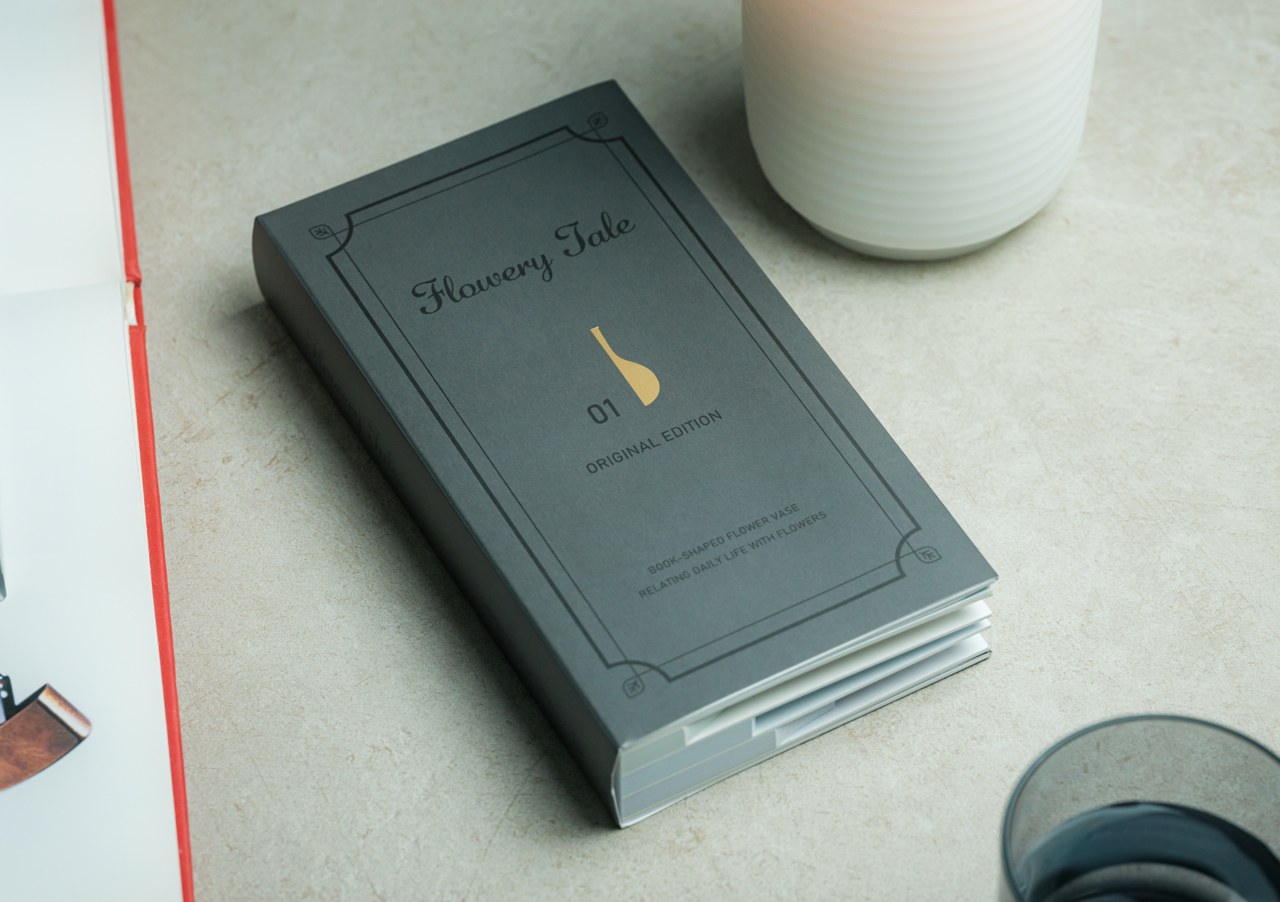
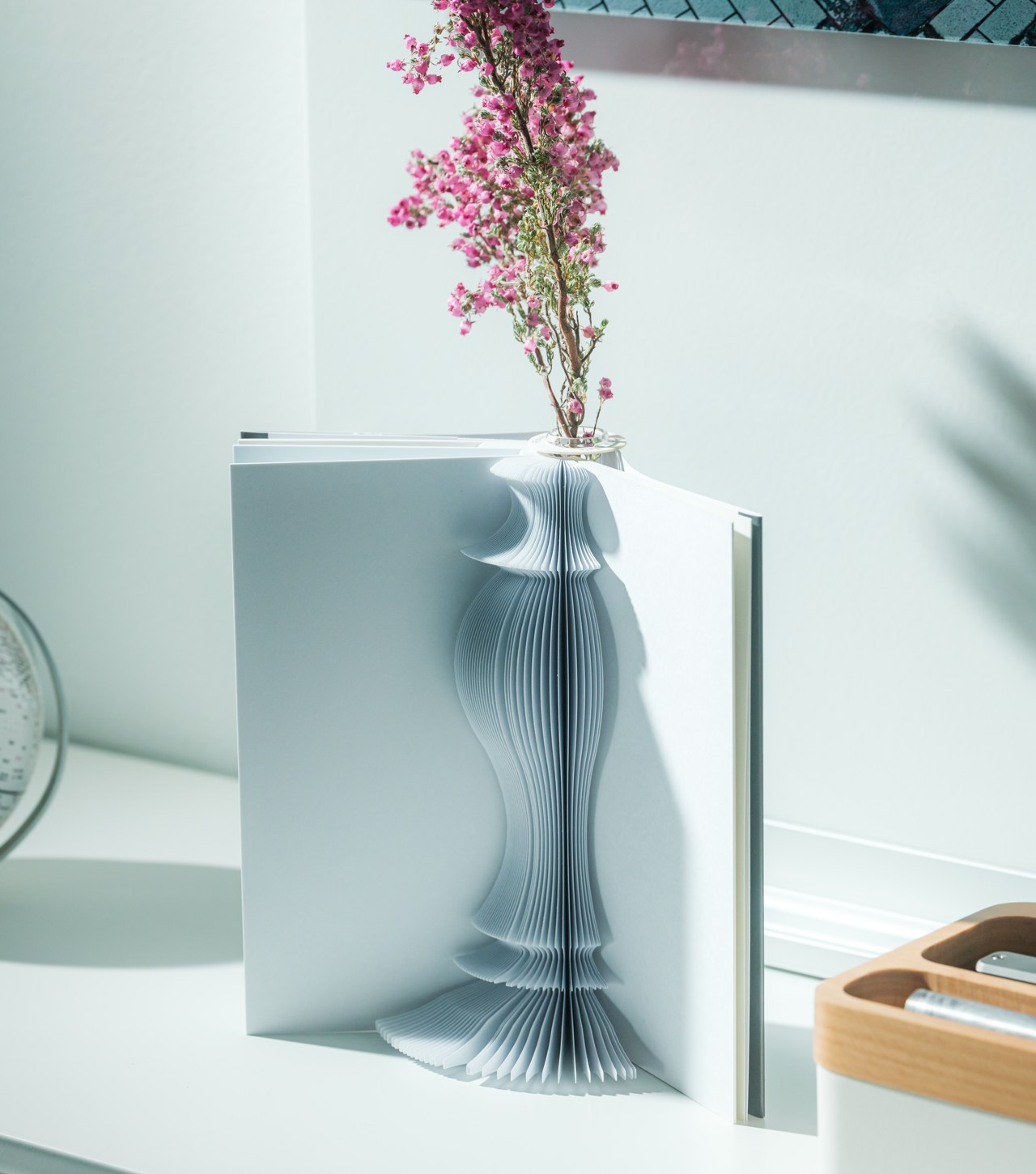
Flowers are things of beauty, whether it’s a single stem or a dozen heads. They have a naturally enchanting appearance that almost makes them feel like they come from a different world, one that’s filled with color, magic, and dreams. Those are the things that fairy tales are made of, so it’s not surprising that flowers often play an important role in these literally fantastic stories, even if just to create that mystical atmosphere. It may just be fiction, but you can bring a bit of that magic to your home with this elegant book that transforms into an enchanting pop-up vase that makes it look like your flowers are magically growing from the book, creating an atmosphere of awe and wonder at every turn of the page.

Designer: Hideaki Miyauchi

Click Here to Buy Now: $39

A vase is traditionally made of glass, ceramic, clay, or even plastic, basically any rigid material that creates a stable vessel for flowers to stand in. These are also naturally water-resistant since the plants will need water to survive longer. The last thing you’d expect is for a vase to be made out of paper, let alone one that pops out from a book like one of those kids’ fairy tale books, but that’s exactly the enchanting story that this Flowery Tale vase wants to tell.

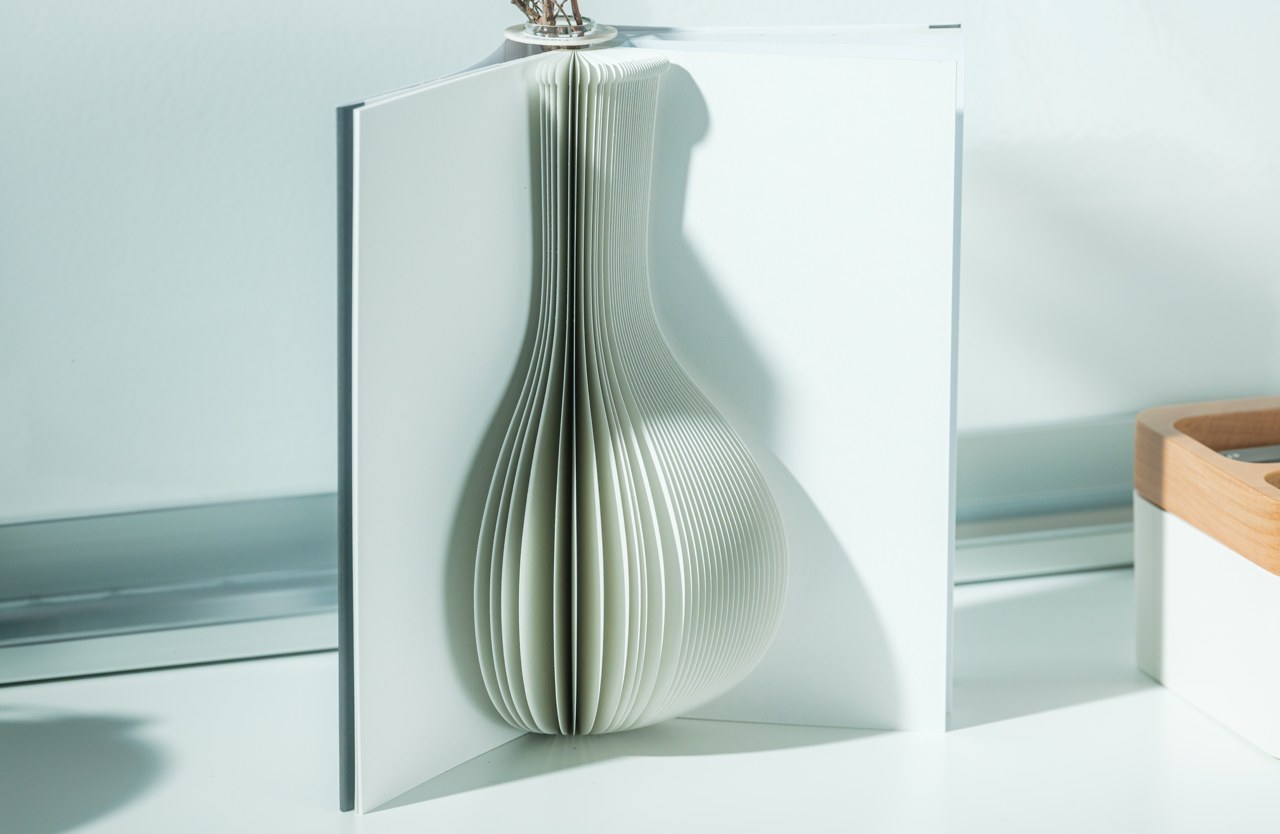
When you turn over the cover, you’re immediately greeted by a 3D silhouette of a vase cut out from the pages of the book. Turn the page and you’ll behold yet another vase design, equally graceful and beautiful as the first. A third design awaits you on another page, giving you the power to choose how you’d like the day’s floral arrangement to be. Even better, you can turn the book upside and it will still work as a proper vase, which means you have six possible variations to choose from.

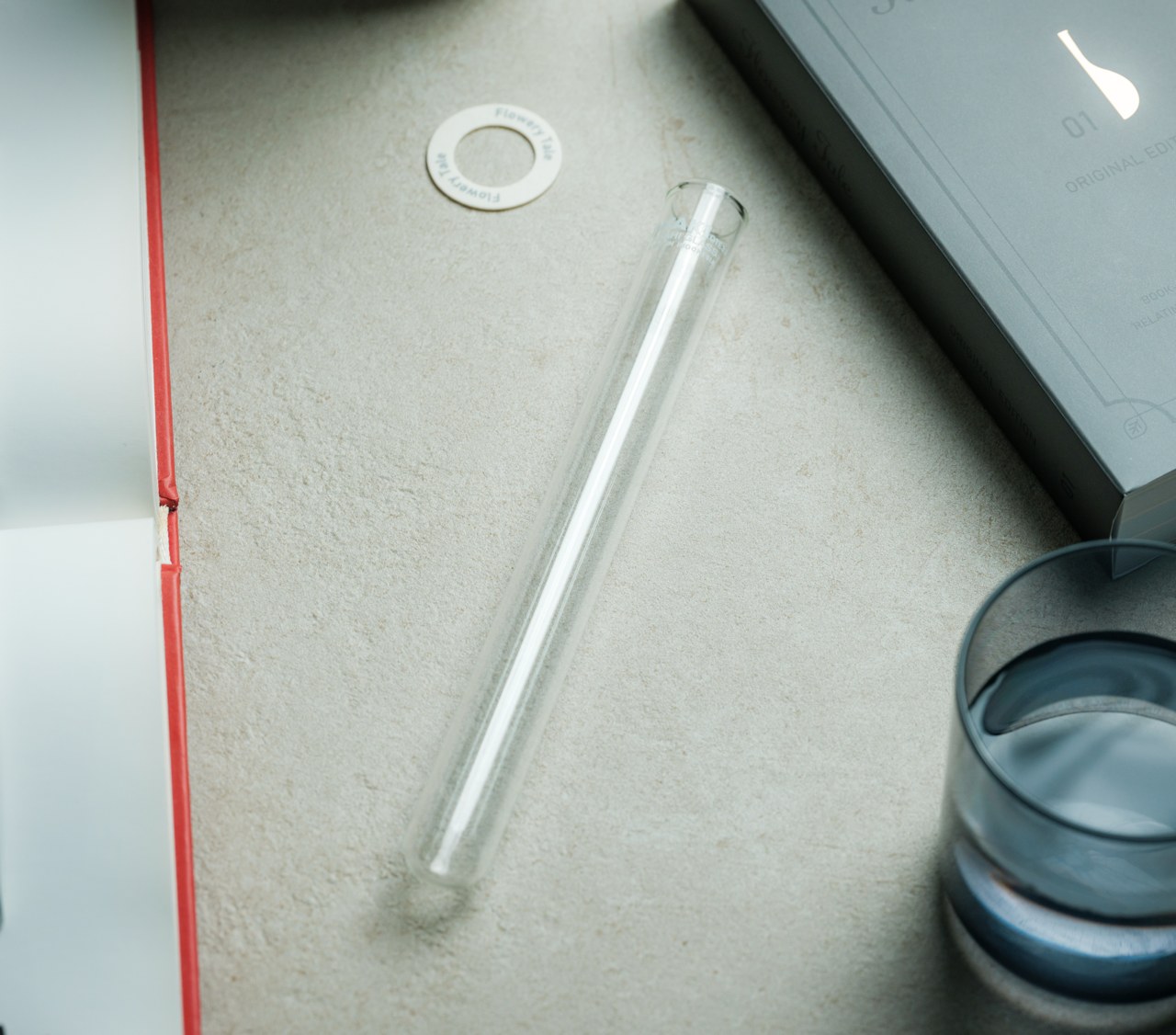
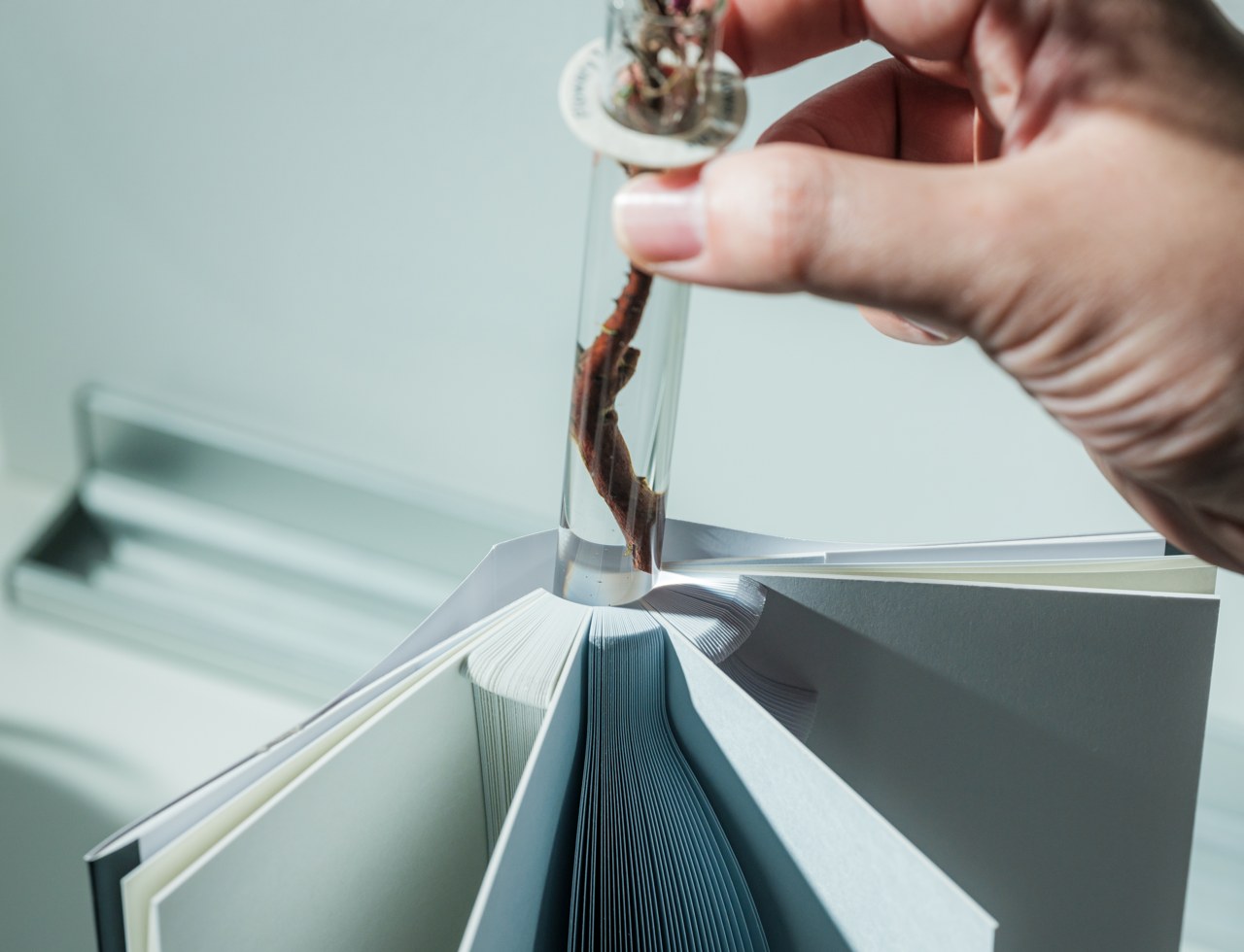
The magic behind it is actually the glass tube that you insert into the spine of the book to hold the flower and the bit of water to keep the plant alive for a few more days. The tube can be inserted right side up or upside down and it will work just fine. All vase designs, however, have a narrow silhouette on the “top” and a larger shape at the “bottom,” so you can choose which side to use depending on the volume of the flowers you intend to place.

The pages of the book are made from 100% natural pulp paper, but you don’t have to fret about accidentally splashing it with water thanks to the “OK Rain Guard” water-resistant coating applied to the material. Whether you want to highlight a single flower or impress with a bouquet, this creative Pop-up Book Vase will set the perfect stage for your design and the epic story that is your life.

Click Here to Buy Now: $39

The post 3D vases pop up from this book to add some minimal geometric designs to your home decor first appeared on Yanko Design.