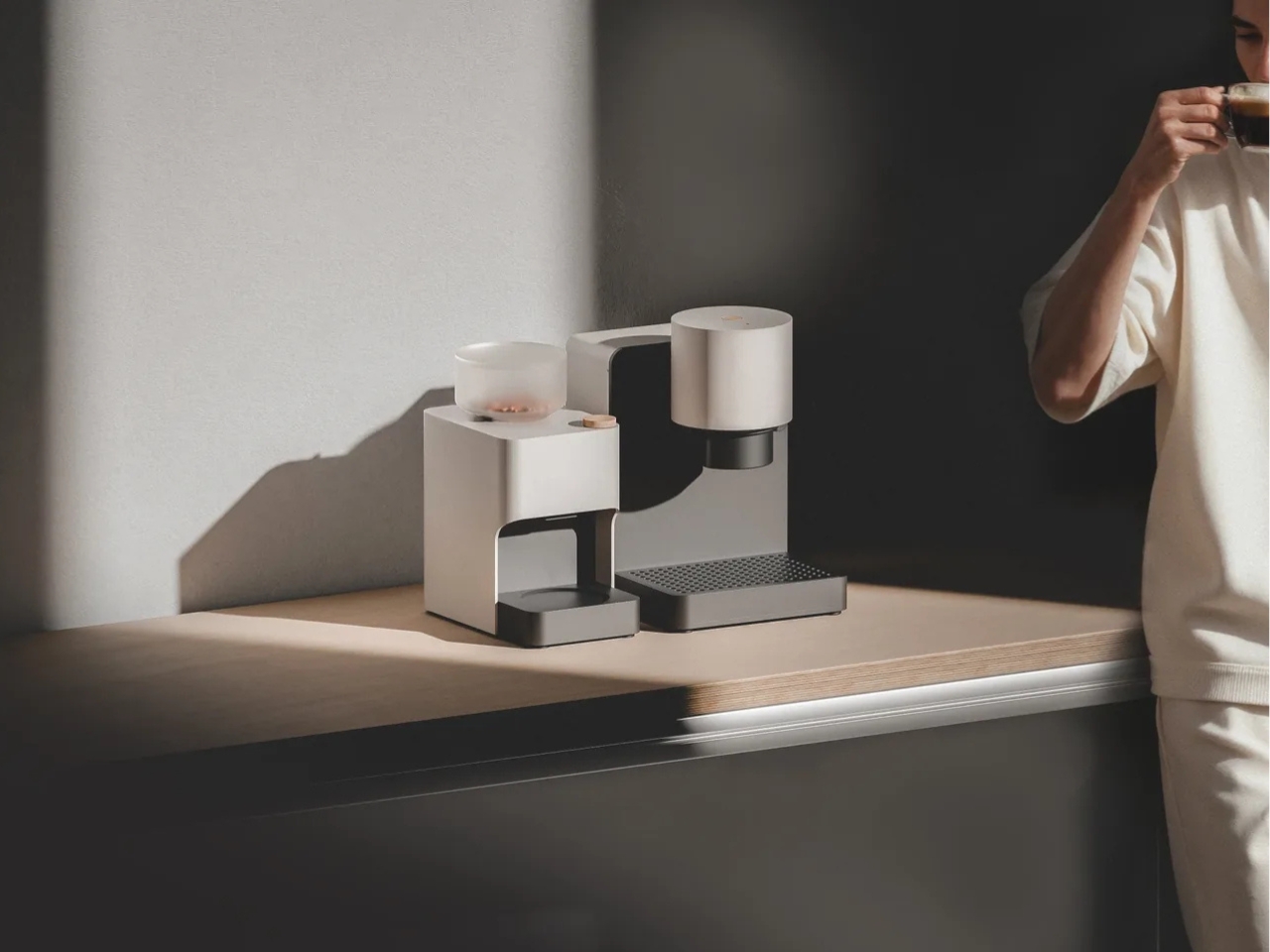
If you’ve ever spent twenty minutes dialing in your grinder before 8am, you already understand the particular madness of home espresso. It’s a hobby disguised as a morning routine, and a punishing one at that. Somewhere between the tamping pressure, the grind size, and the extraction time, the actual coffee gets lost. Datum is betting that most people are over it, and they might be right.
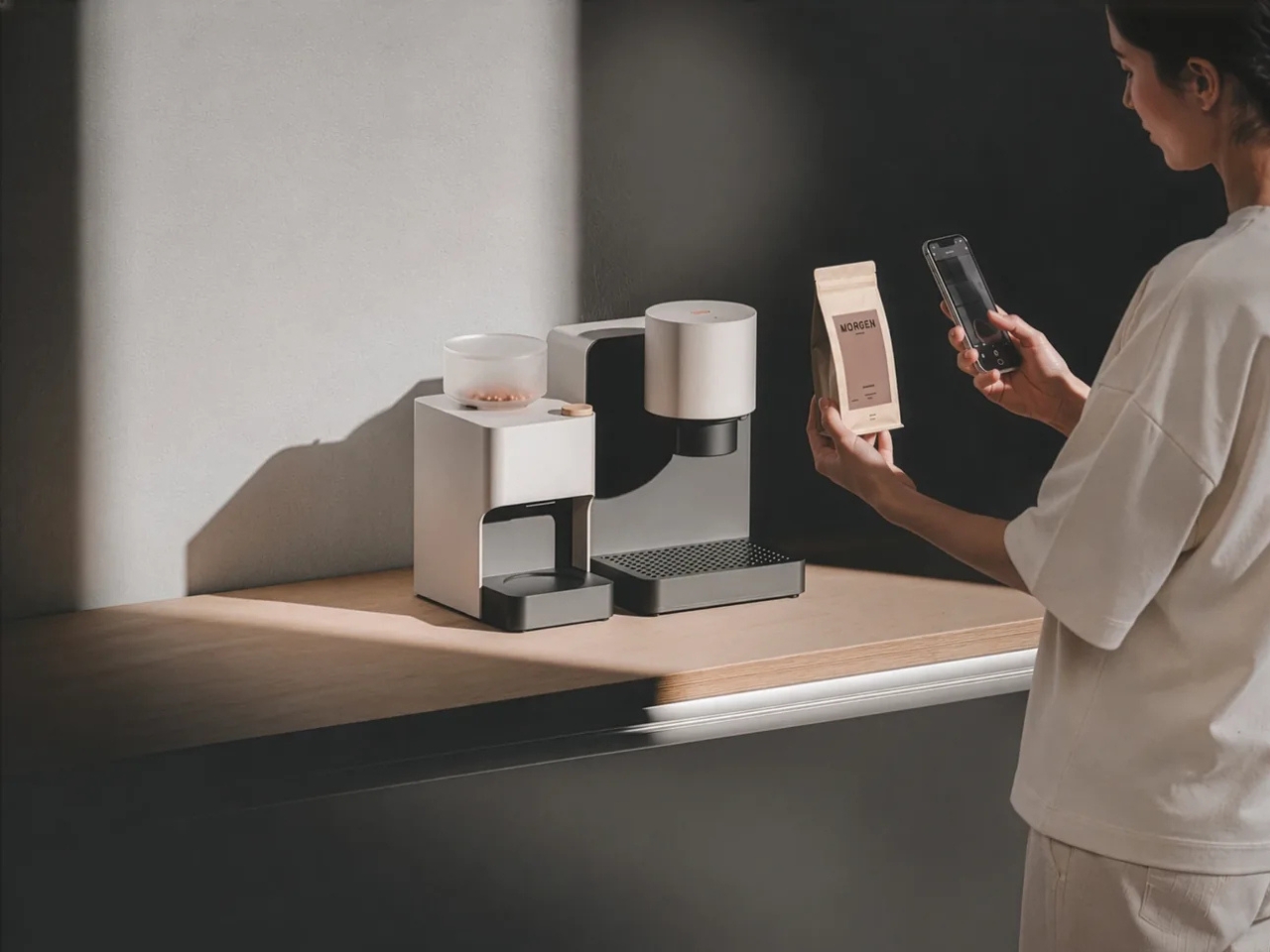
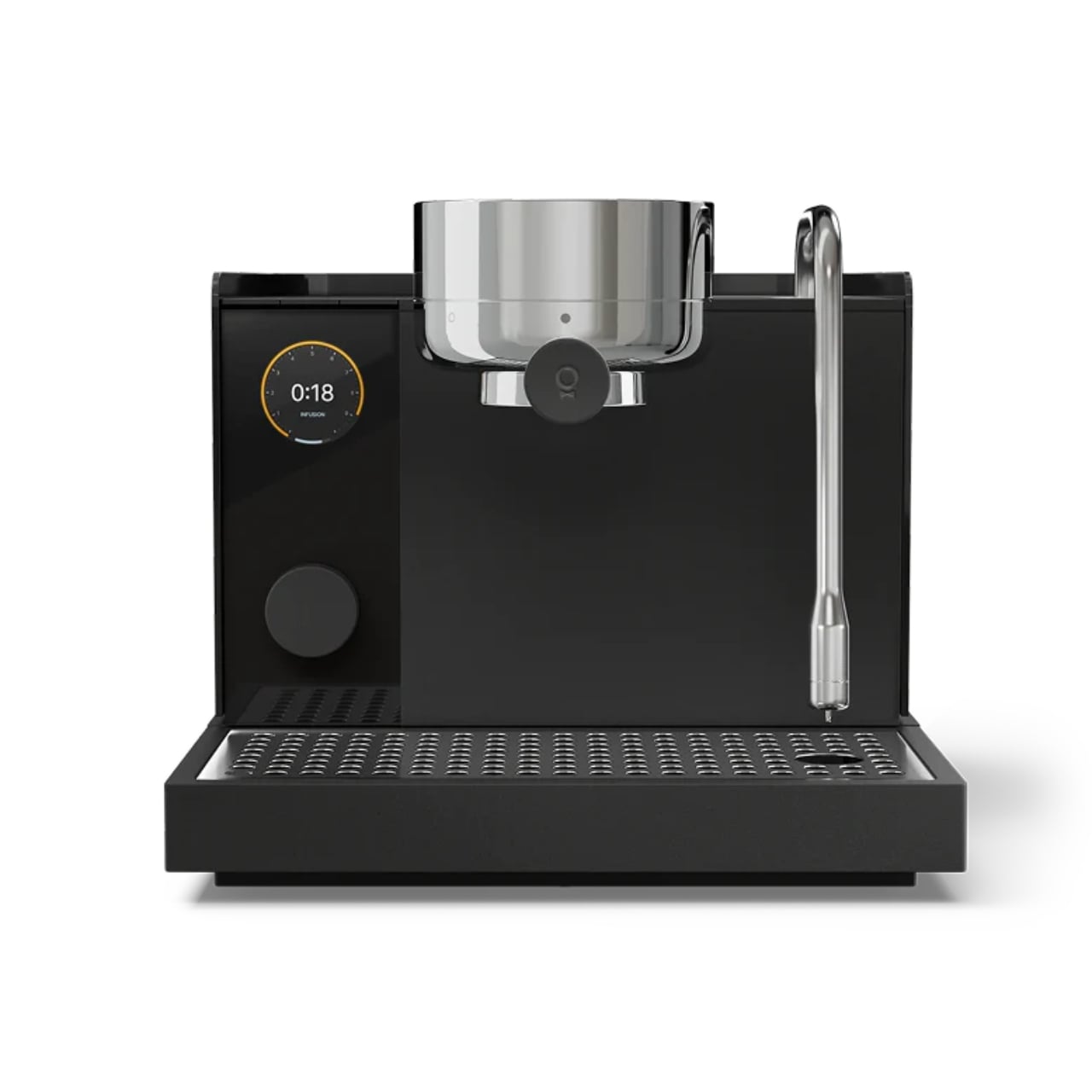
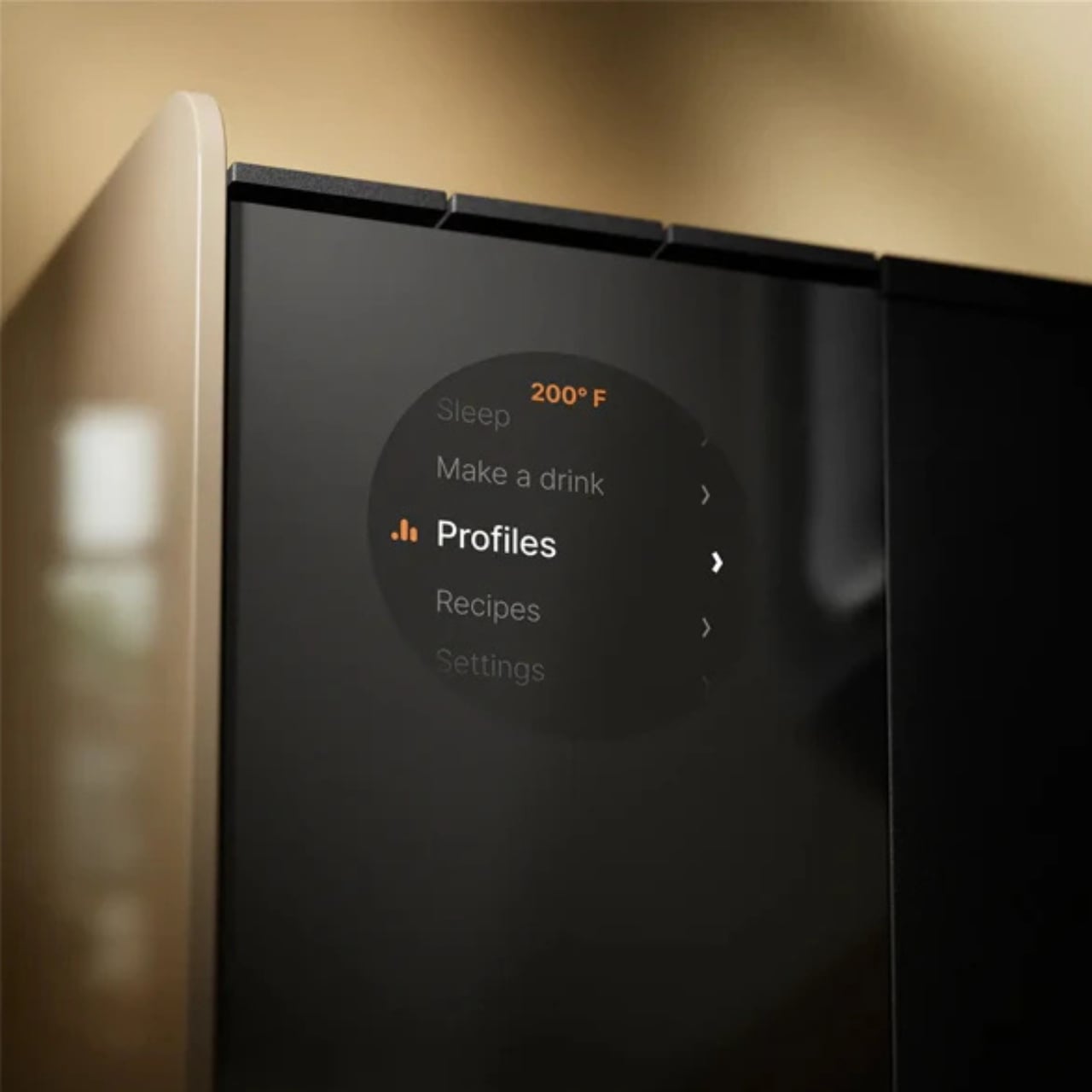
Datum is an Austrian startup founded by two 28-year-old mechanical engineers and designers, Christoph Konheisner and Nikolaus Potapow, out of Innsbruck. What they’ve built, or rather what they’re building, is an espresso machine and grinder designed as one cohesive system, paired with an open recipe platform that connects the machine directly to the roaster’s knowledge. The concept is deceptively simple: scan your coffee bag once, and the machine sets itself up to brew it exactly the way the roaster intended. No guesswork, no wasted shots.
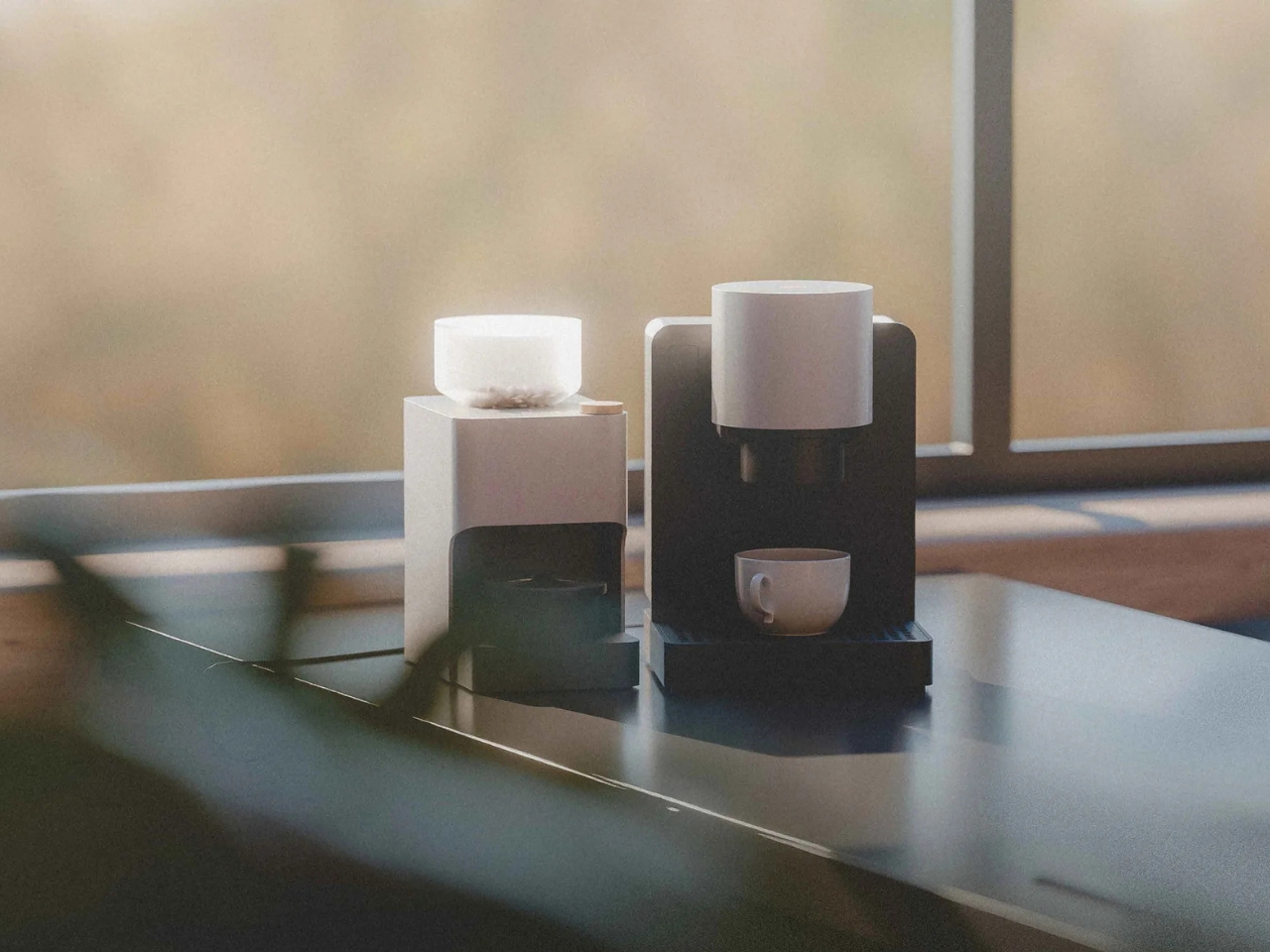
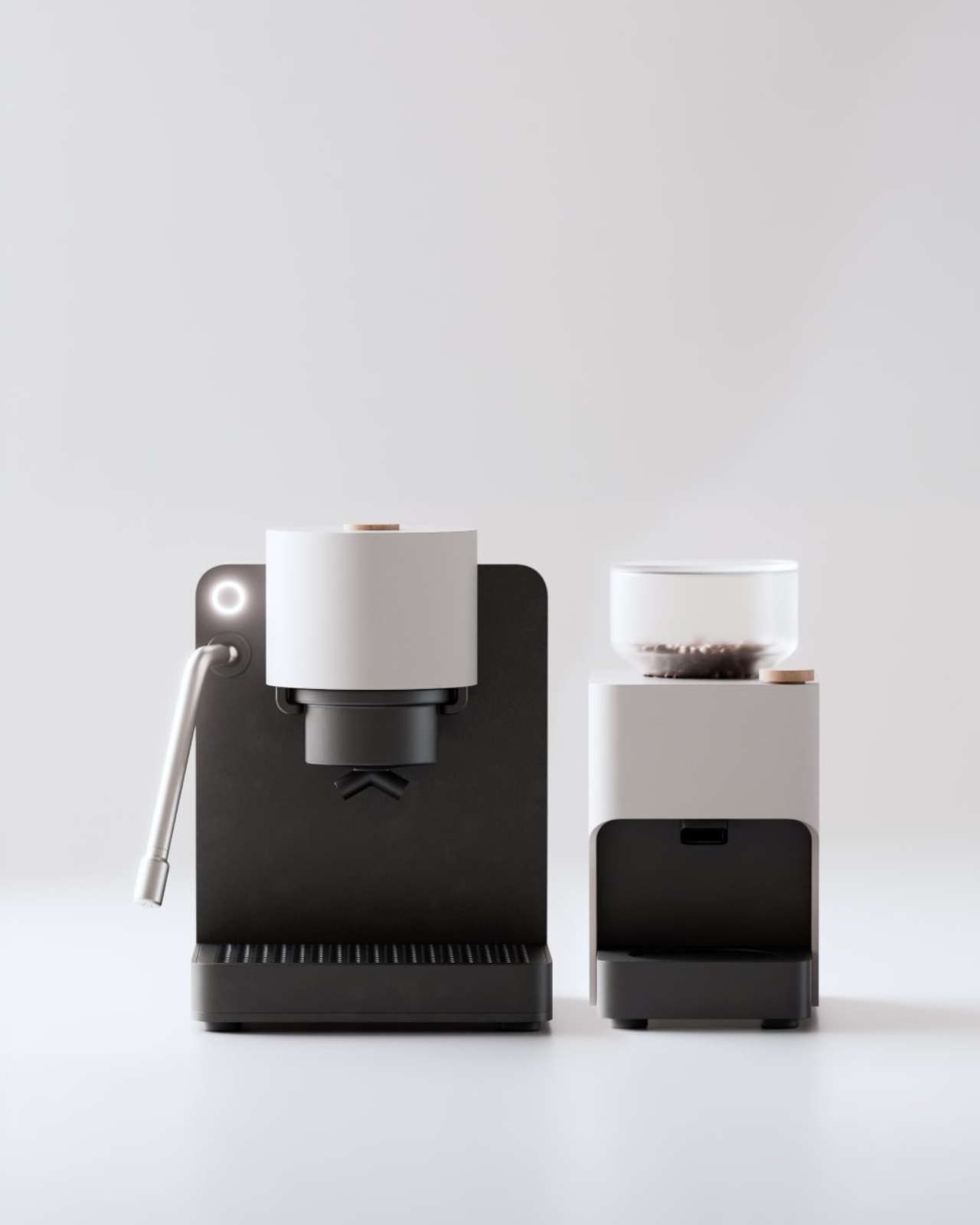
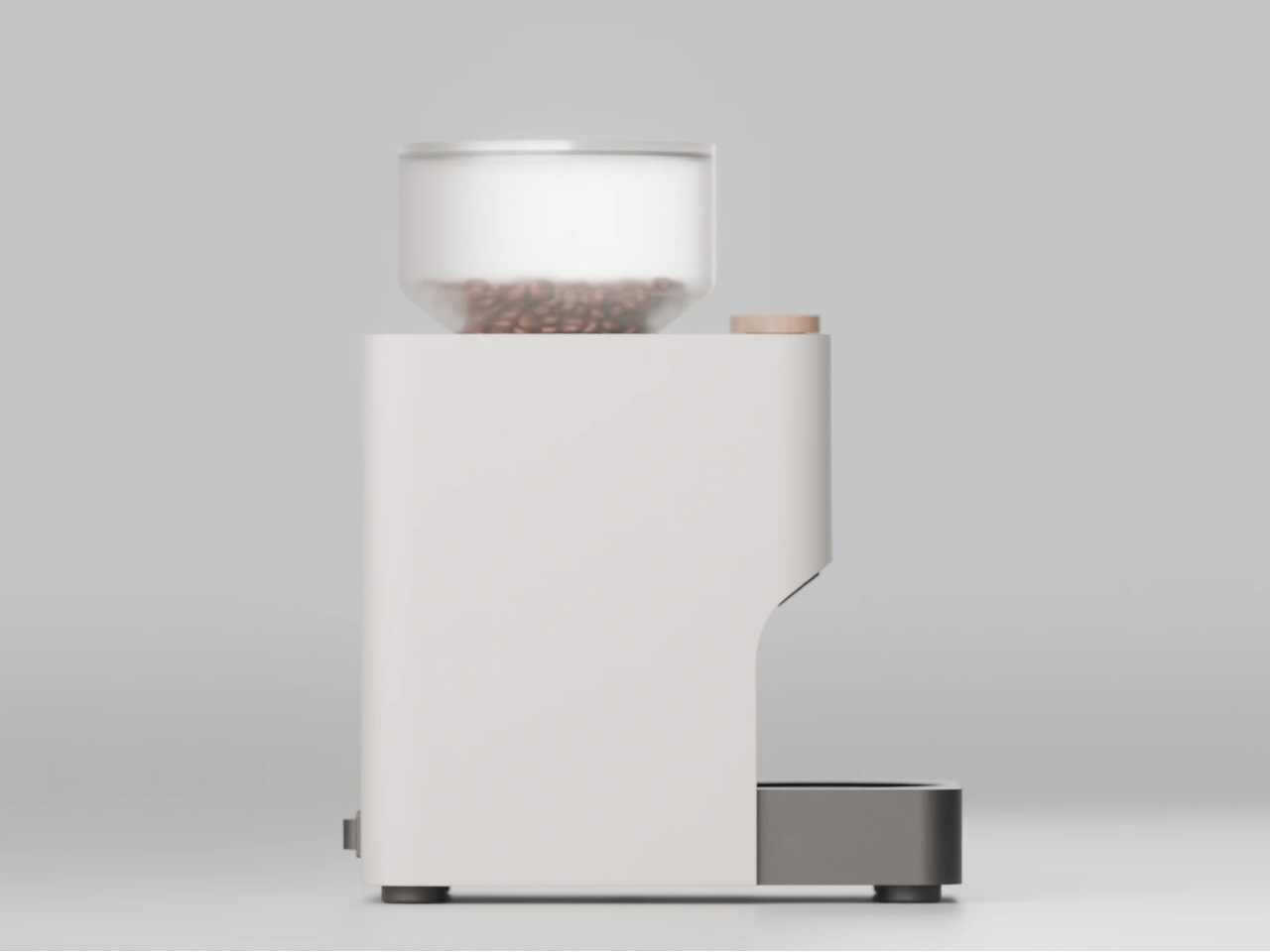
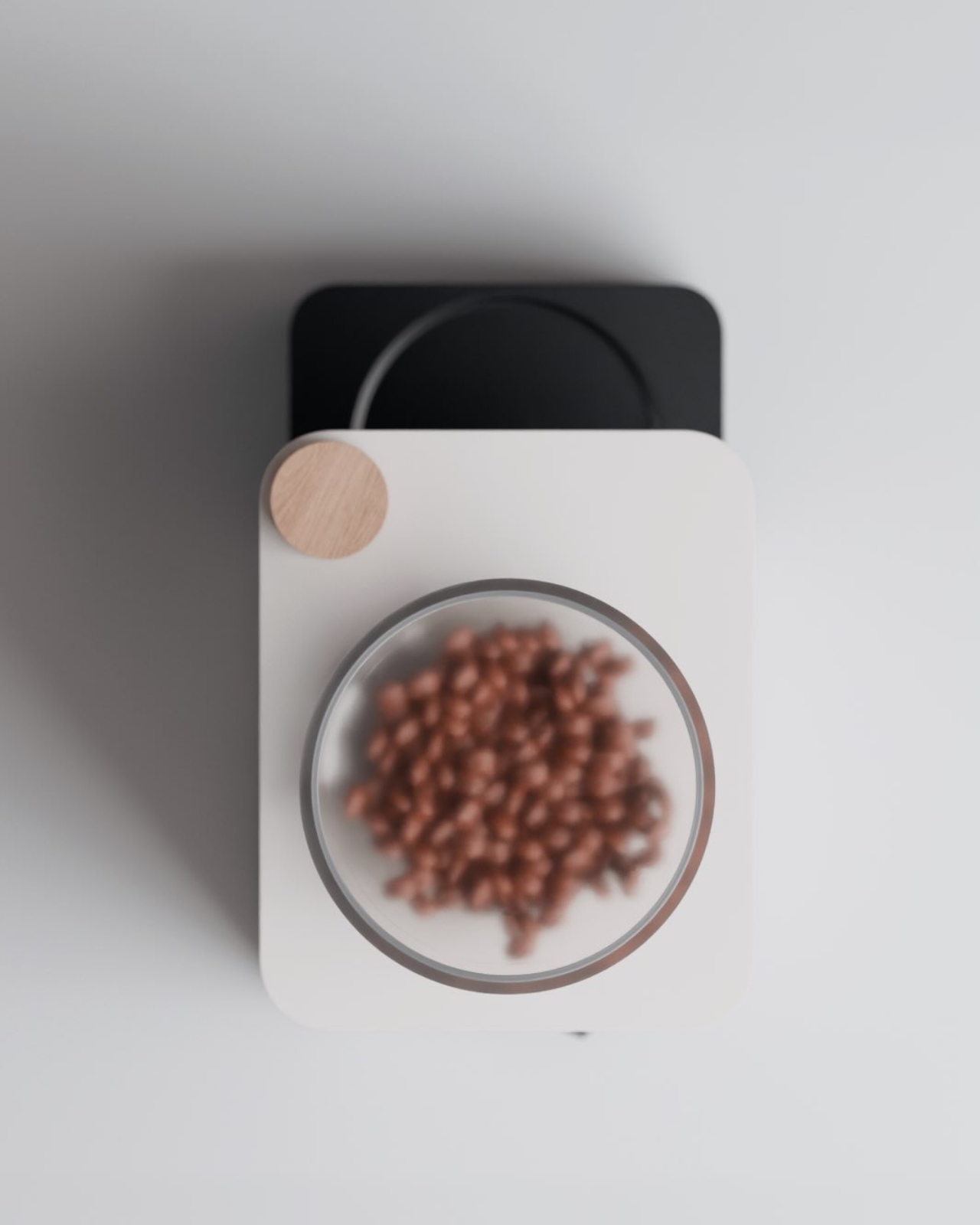
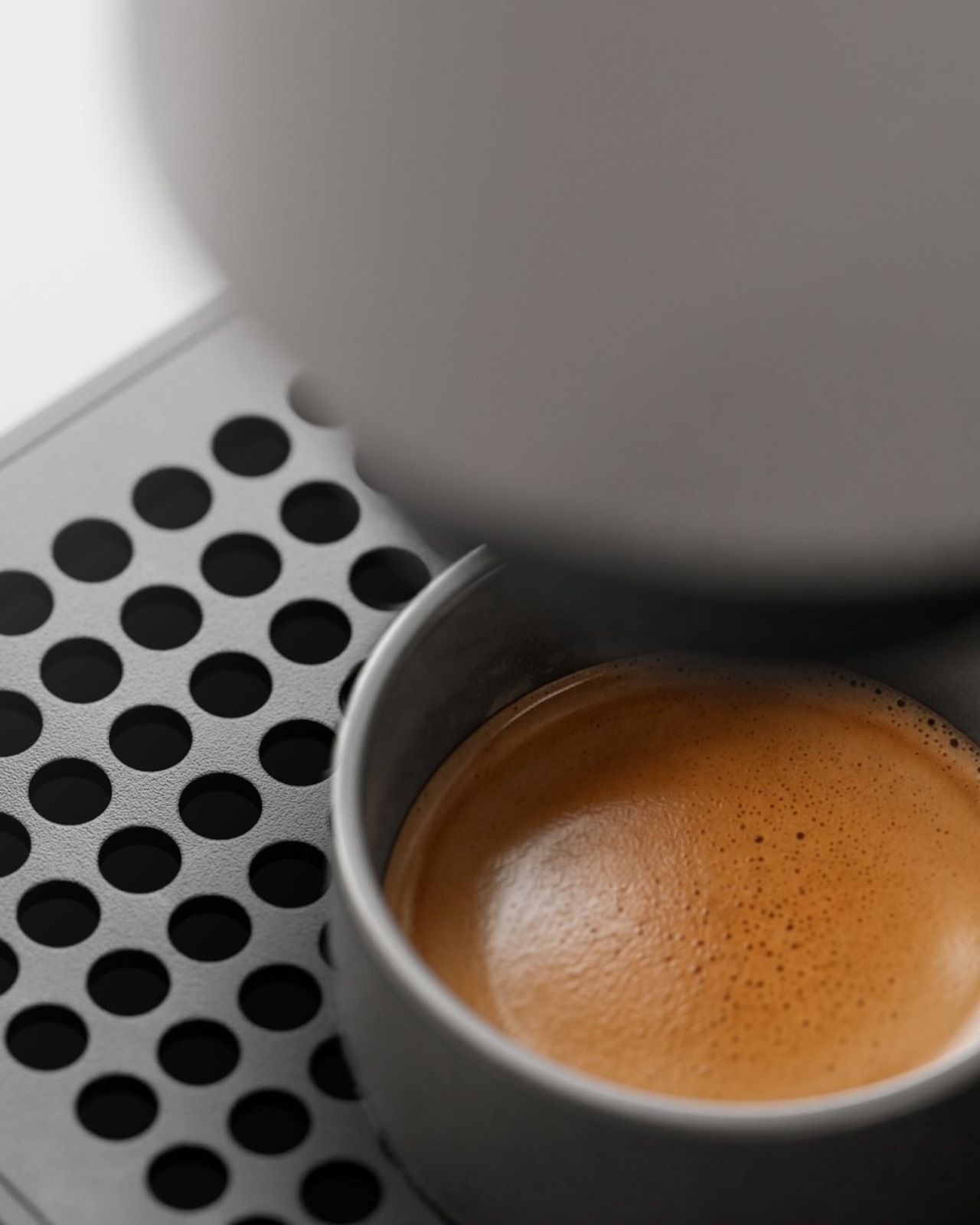
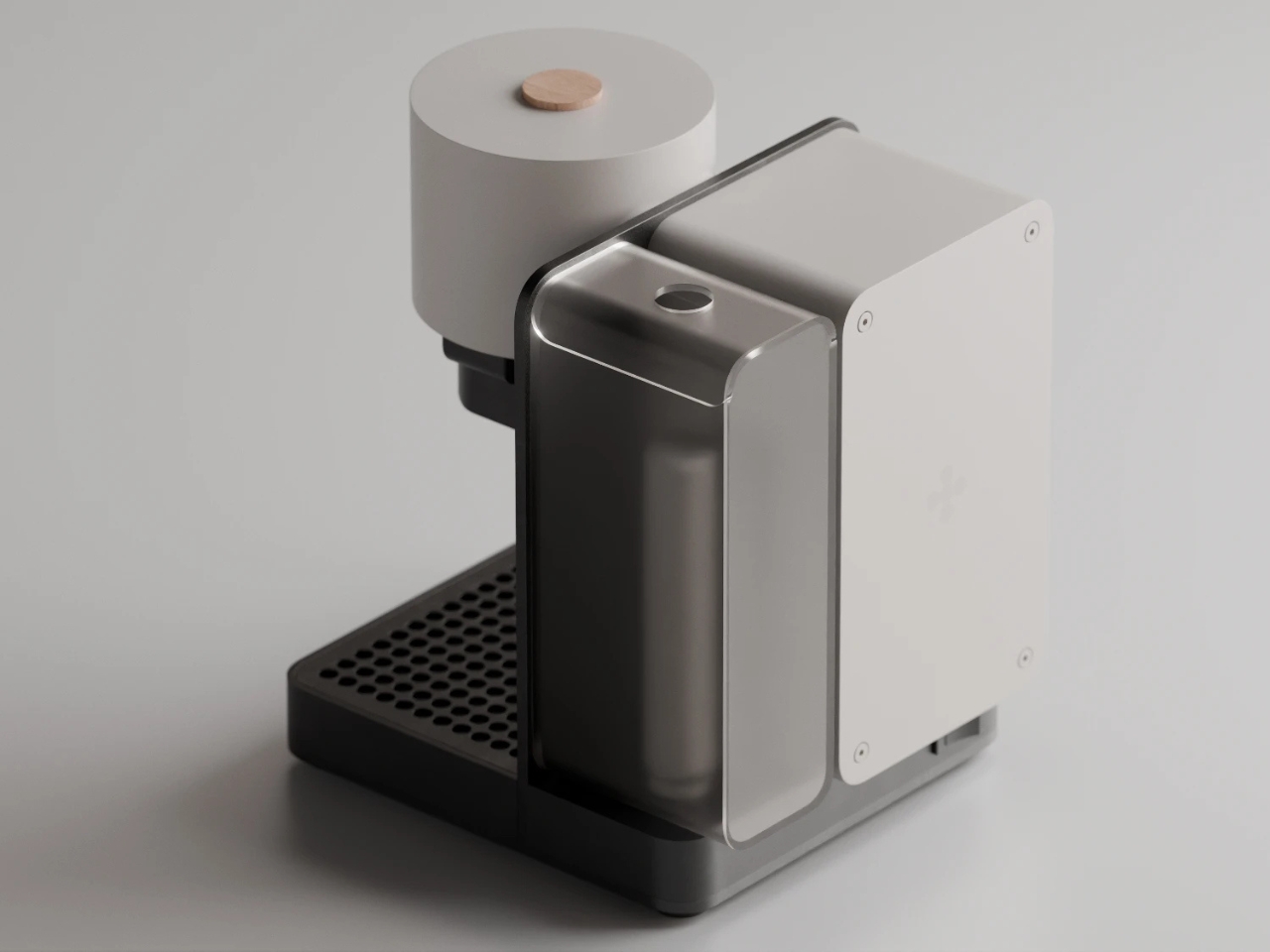
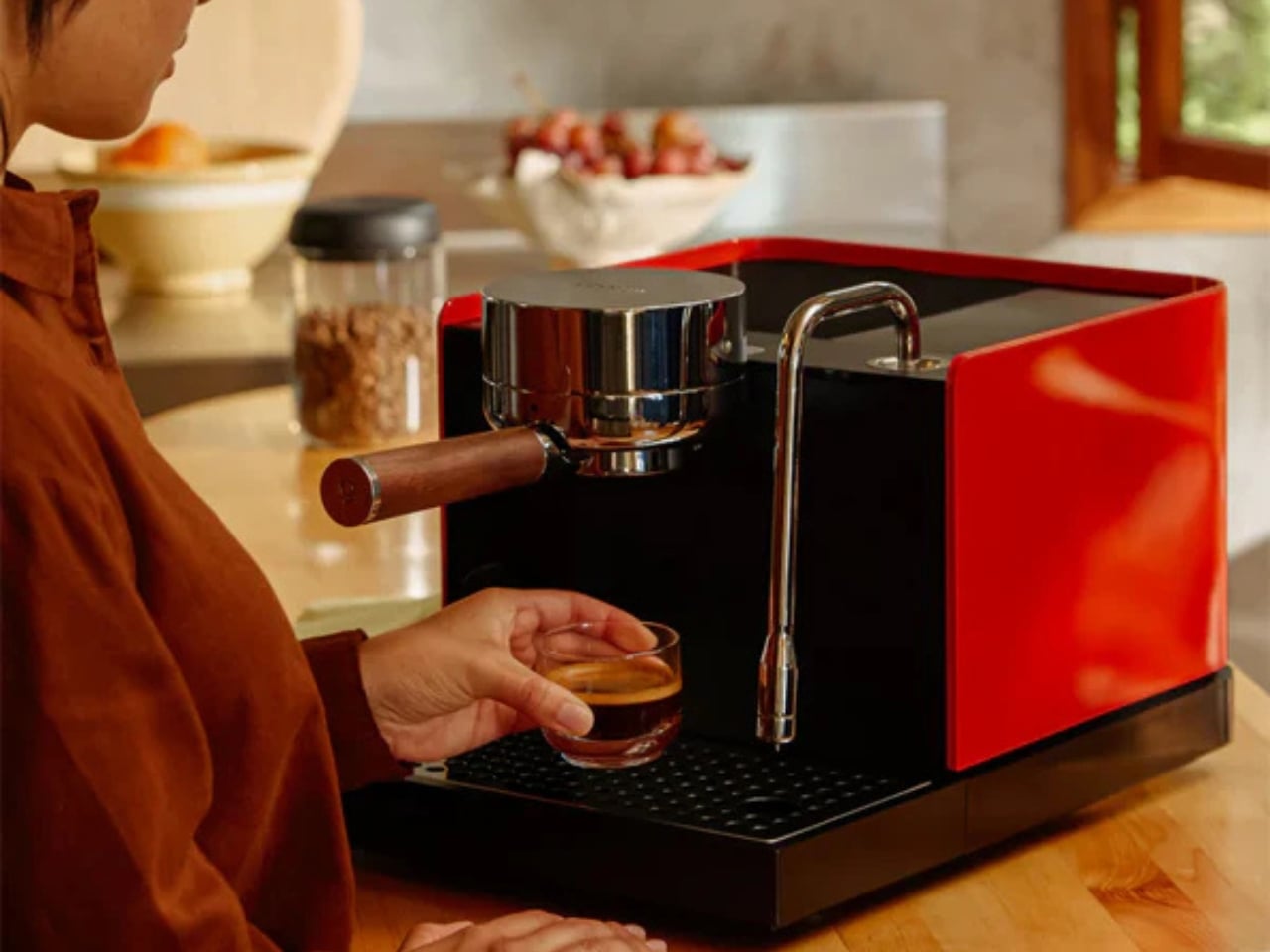
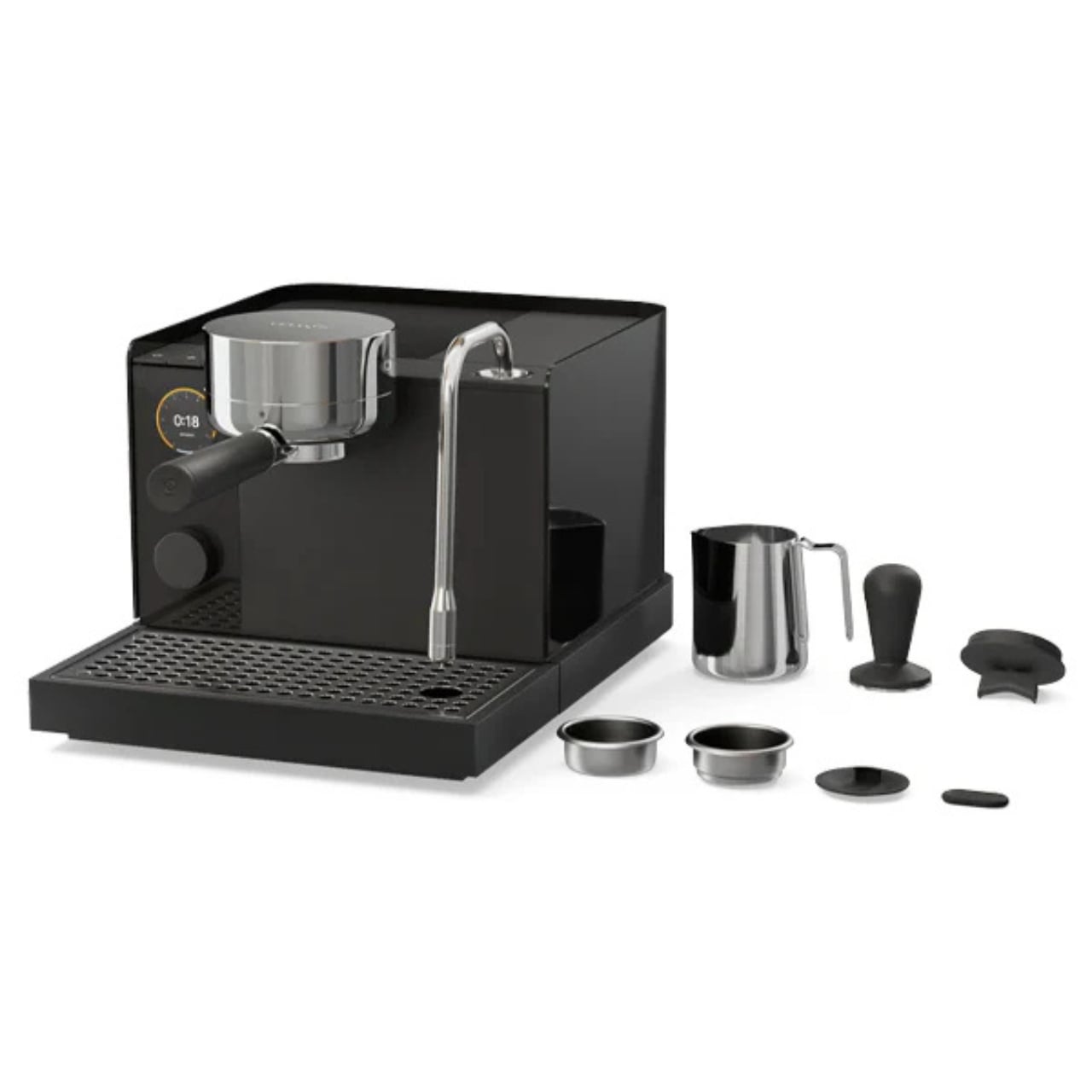
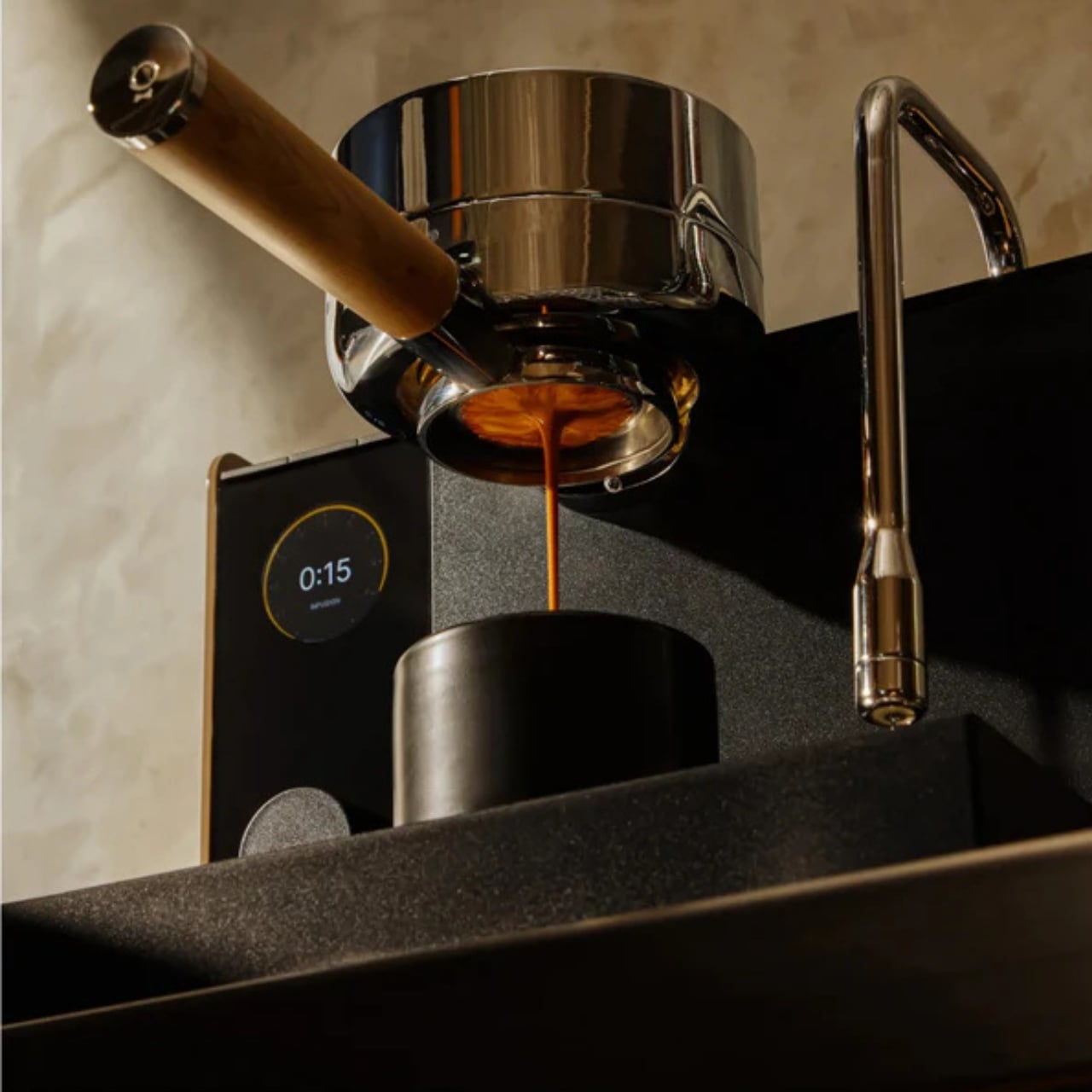
The hardware is where Datum earns its design credibility. The espresso machine and grinder aren’t just sold together; they’re built to talk to each other. The machine heats up while the grinder is running, which means no standing around waiting for it to get up to temperature. The grinder itself uses 64mm flat burrs with digital grind size adjustment at micrometer precision, which on paper sounds like specialty coffee jargon and in practice means your grind is never accidentally off. The portafilter basket is a standard 58mm, which coffee purists will appreciate, but the real conversation-starter is the integrated auto-tamp function built directly into the brew head. Insert your portafilter, press start, and the machine takes care of tamping before brewing. Pressure, flow, and temperature are all handled automatically.
I’ll be honest: the auto-tamp alone feels slightly revolutionary to anyone who has ever pulled a bad shot because their tamp was uneven on a Monday morning. It’s such an obvious pain point in the home espresso experience that it’s almost surprising no one has tackled it this elegantly before.
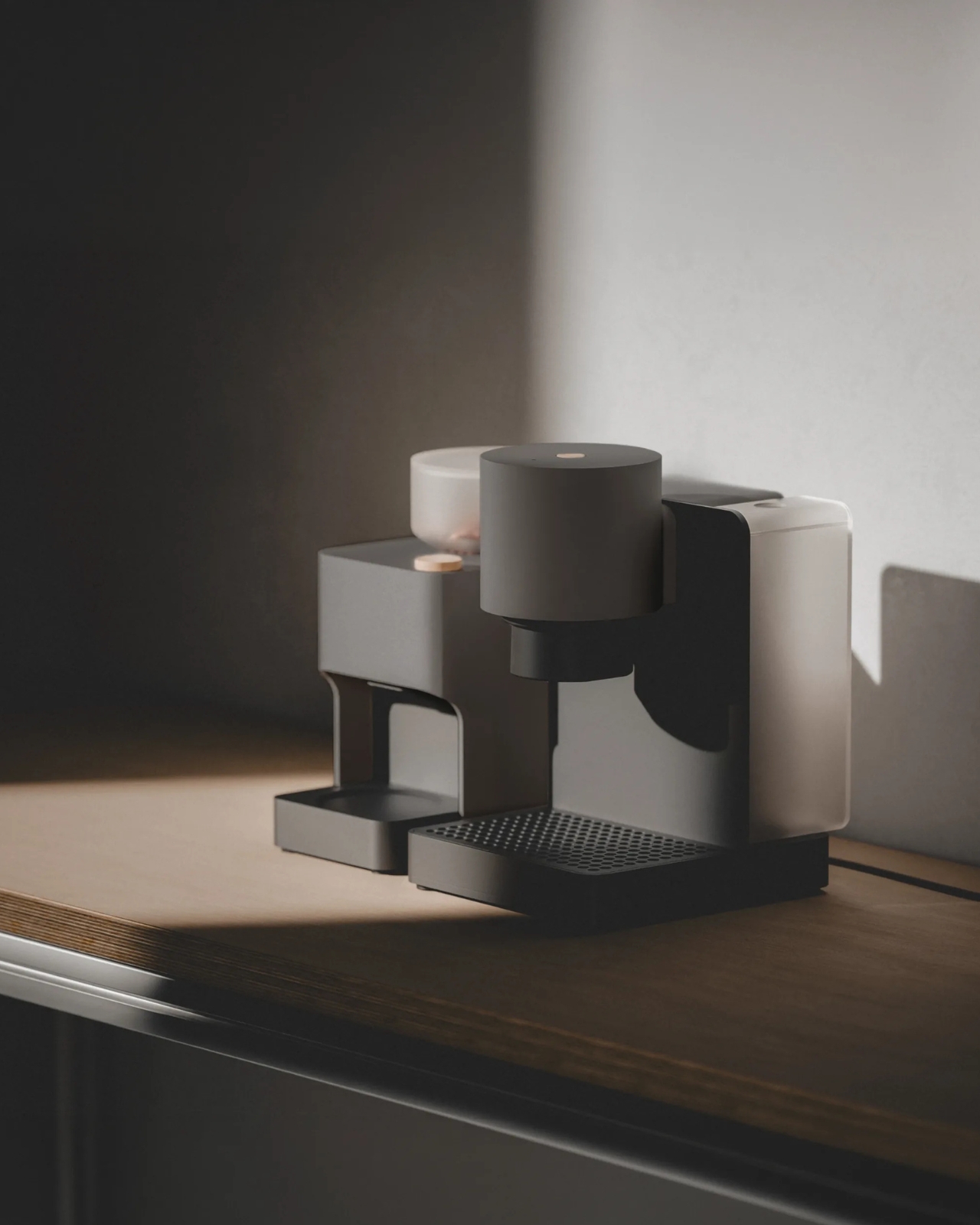
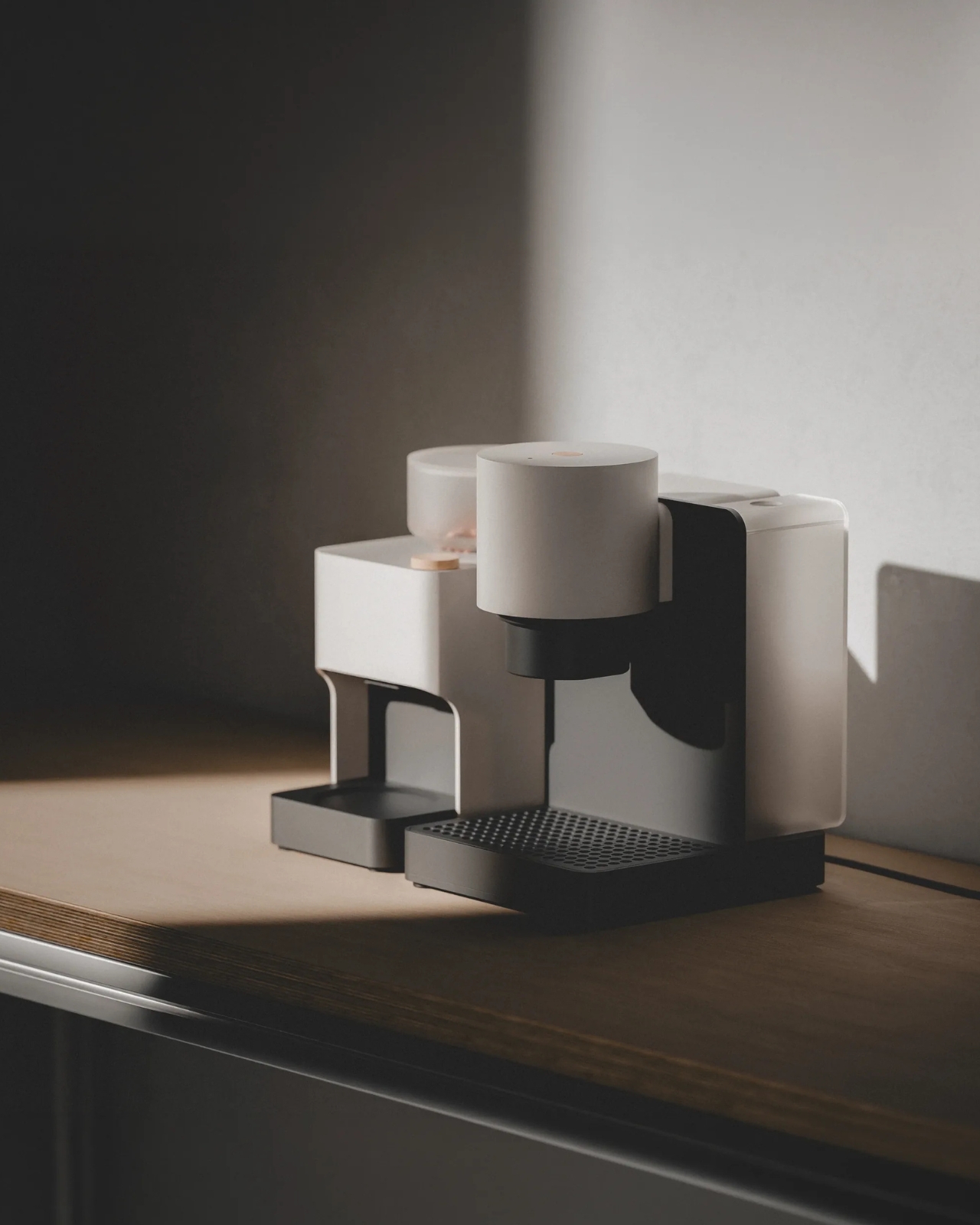
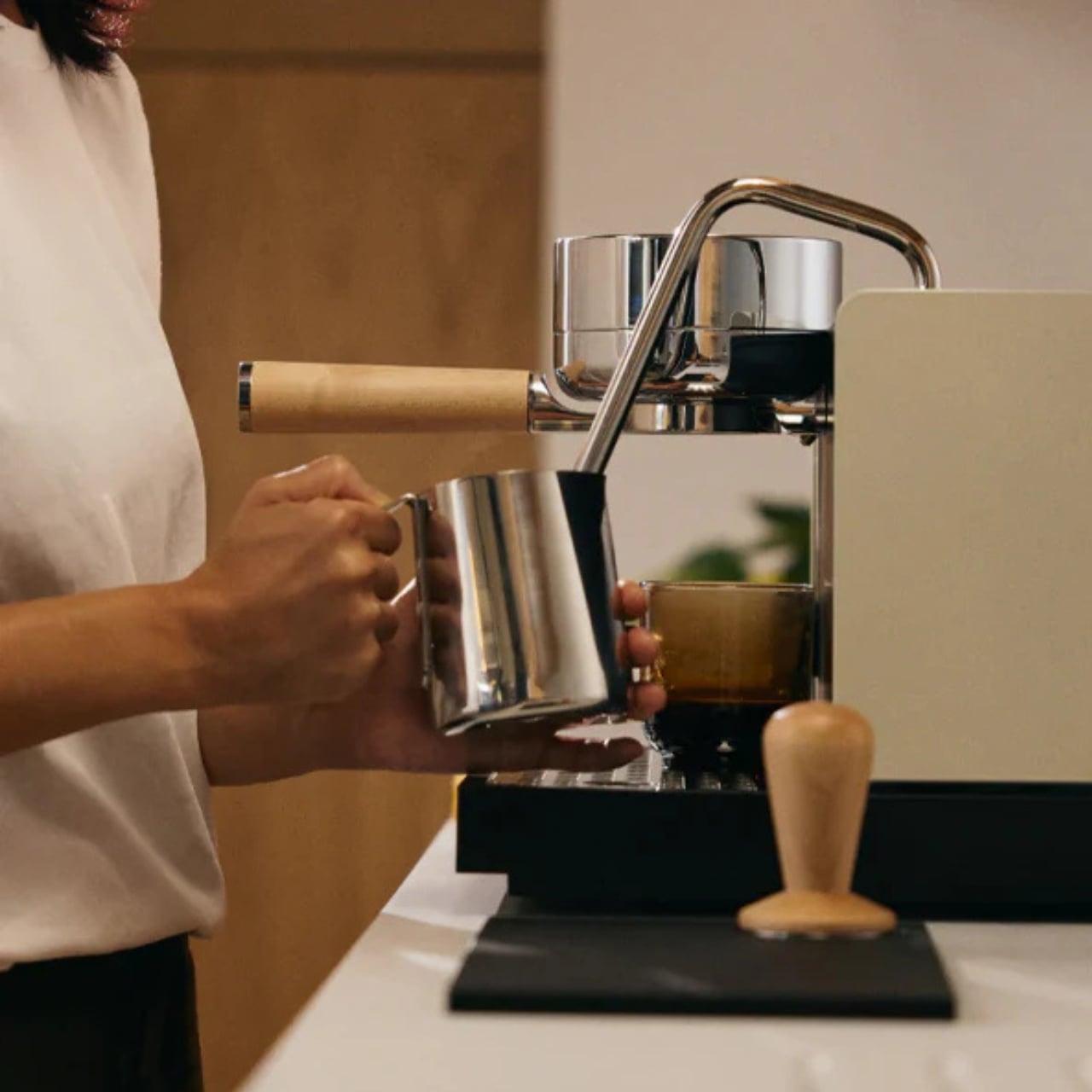
Aesthetically, Datum is very much a product of its design moment. The palette is stark and monochromatic, a matte off-white and deep charcoal that reads more Scandinavian architecture than countertop appliance. Soft surfaces, clean geometry, and what the team describes as “small natural details” give it a quietly confident look. It photographs beautifully, which is not an accident when your target audience lives on Instagram and Pinterest, but it also seems to be built with intention beyond surface beauty. The machine is designed around circular economy principles: modular, dismantlable, and repairable. The continuous flow heating system reduces energy consumption, and even the compact footprint is deliberate, minimizing material use in the build.
The third layer of Datum, and arguably the most ambitious, is the platform. Datum wants to create an open ecosystem where roasters upload their ideal recipes and home brewers simply access them through a scan. Every coffee bag becomes a kind of instruction set. For roasters, it’s a way to extend their craft directly into a customer’s kitchen. For drinkers, it removes the barrier between buying excellent coffee and actually doing it justice. It’s the kind of idea that sounds almost too sensible, and it genuinely changes the relationship between the person who sources the bean and the person who drinks the cup.
Datum is still a prototype. The Kickstarter is planned for late 2026, with delivery expected sometime in 2027. The early bird price sits at €1,199 for the machine and grinder as a set, which, for what’s on offer, is actually competitive in a market where serious espresso setups regularly cost double that before you even account for the grinder. Whether it delivers on its promises at that price point remains to be seen.
But the concept is genuinely worth paying attention to. Coffee culture has spent years pushing consumers toward either expensive, complicated setups or oversimplified pod machines with no soul. Datum is reaching for the middle ground, and doing it with real design intelligence. That’s harder to pull off than it looks.
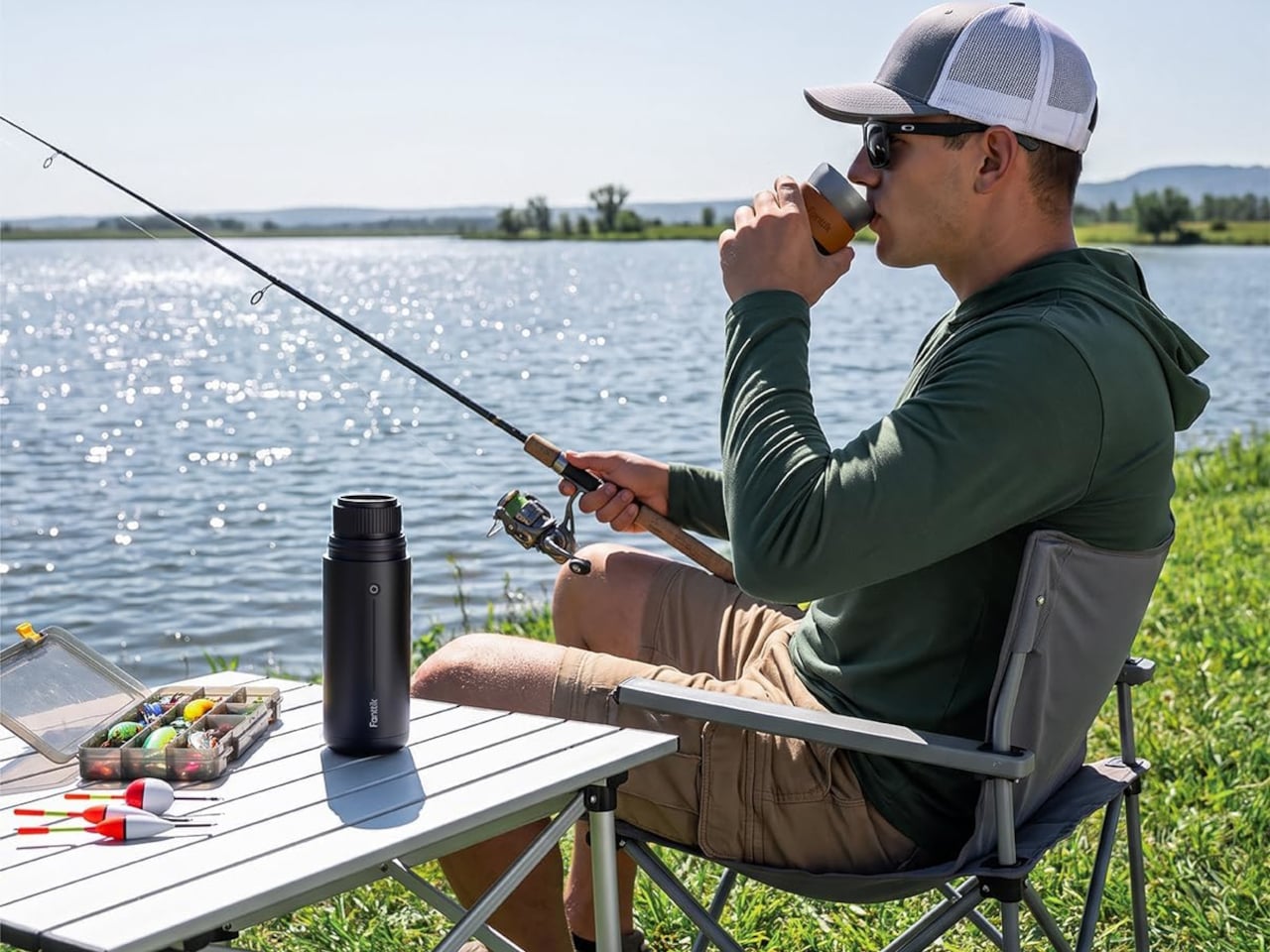
Good coffee and travel have never really gotten along. At the hotel, there’s that sad drip machine on the counter producing something closer to warm brown water than an actual espresso. At the campsite, it’s instant granules and lukewarm hope. Even for commuters, the office coffee situation rarely inspires confidence. The demand for a proper cup of espresso away from home has always been real; the solutions, less so.
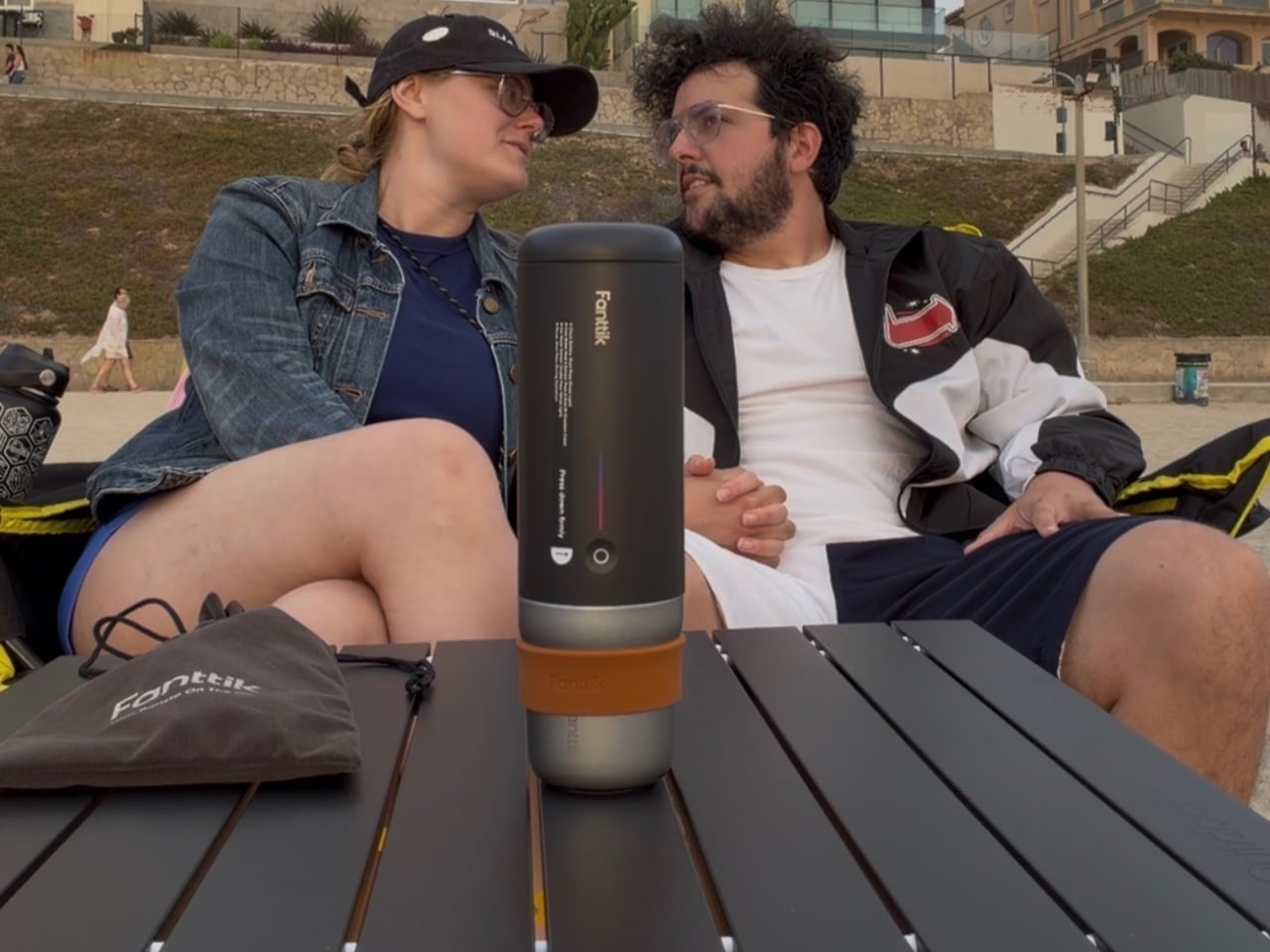
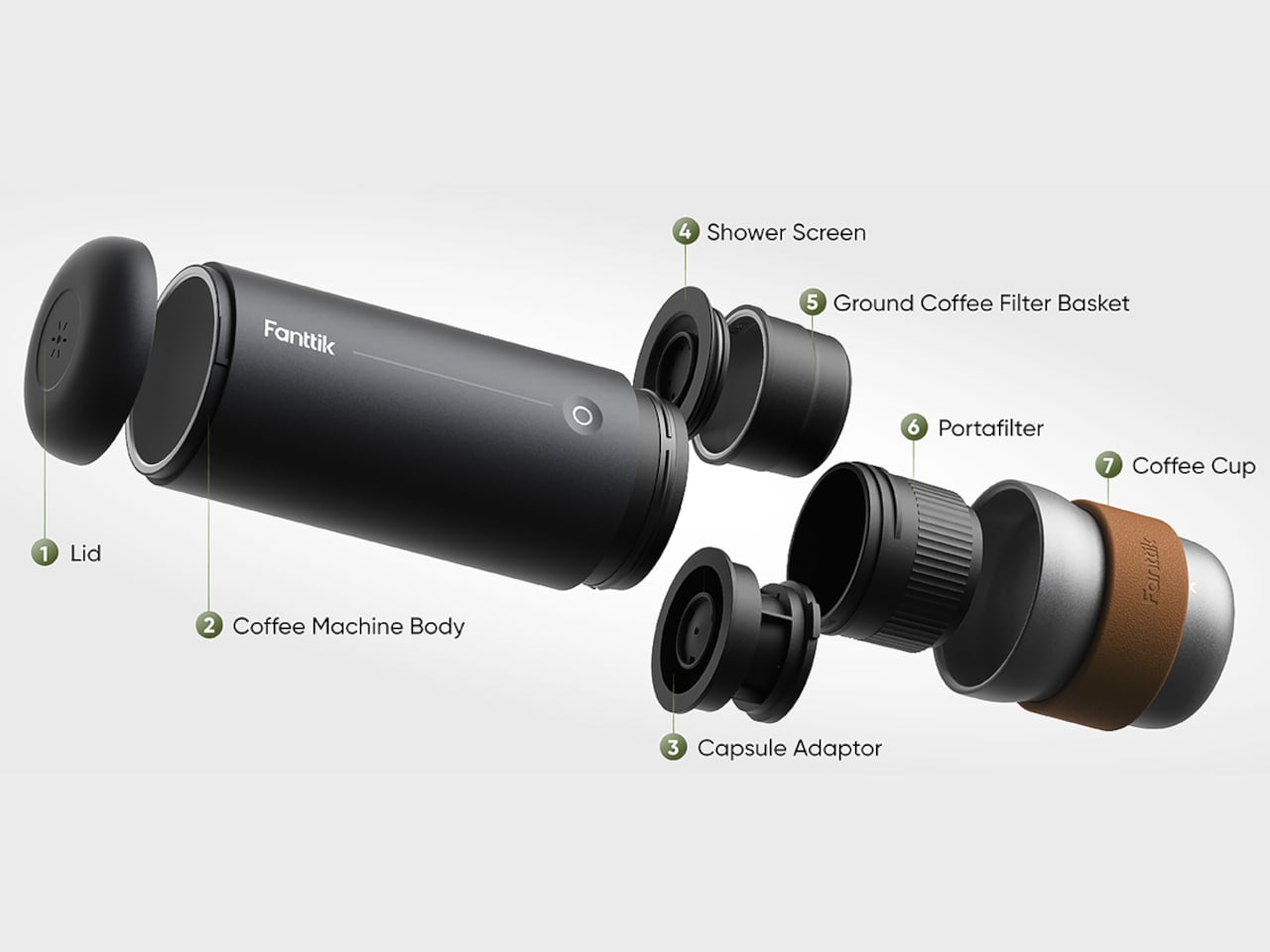
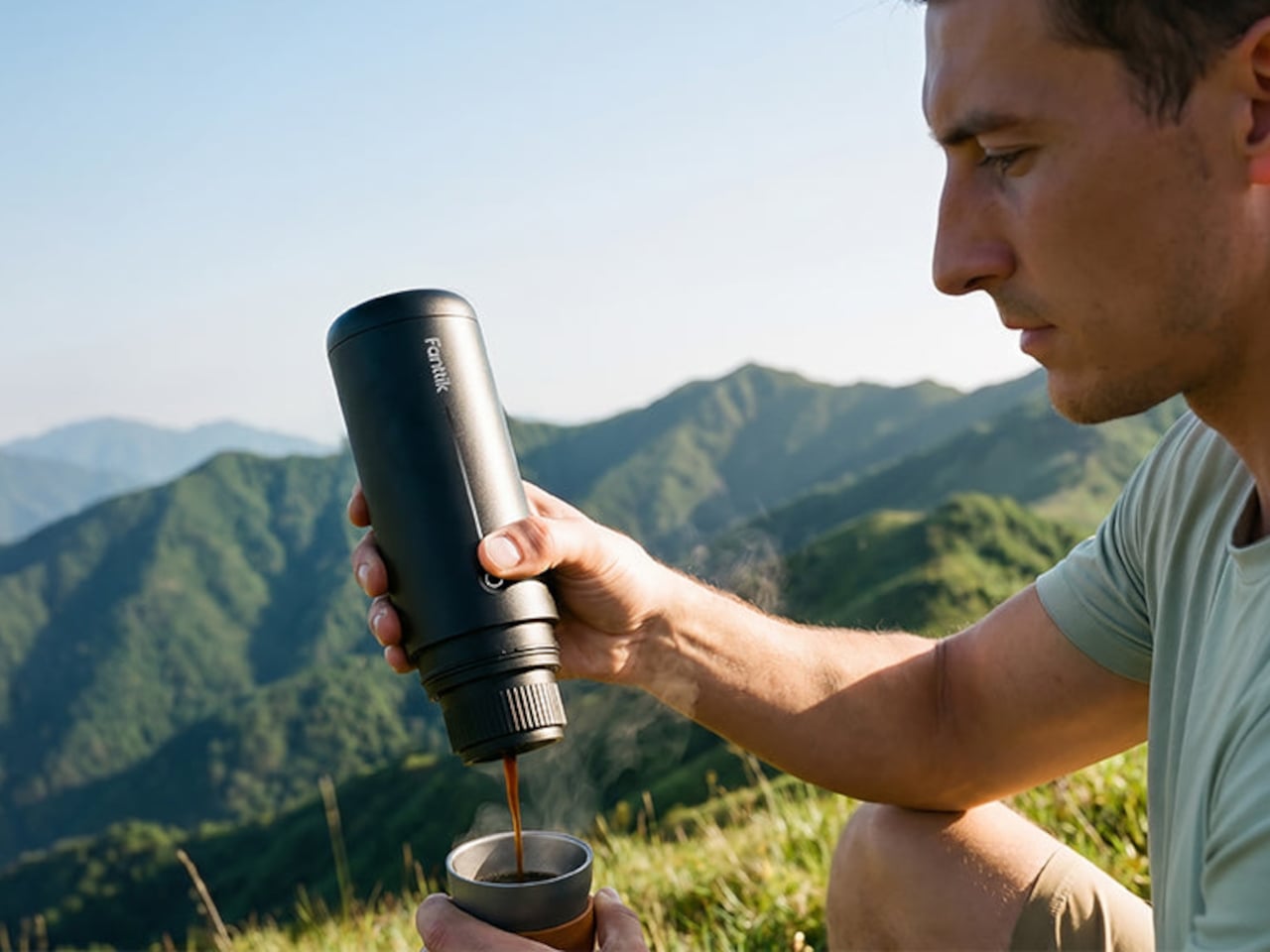
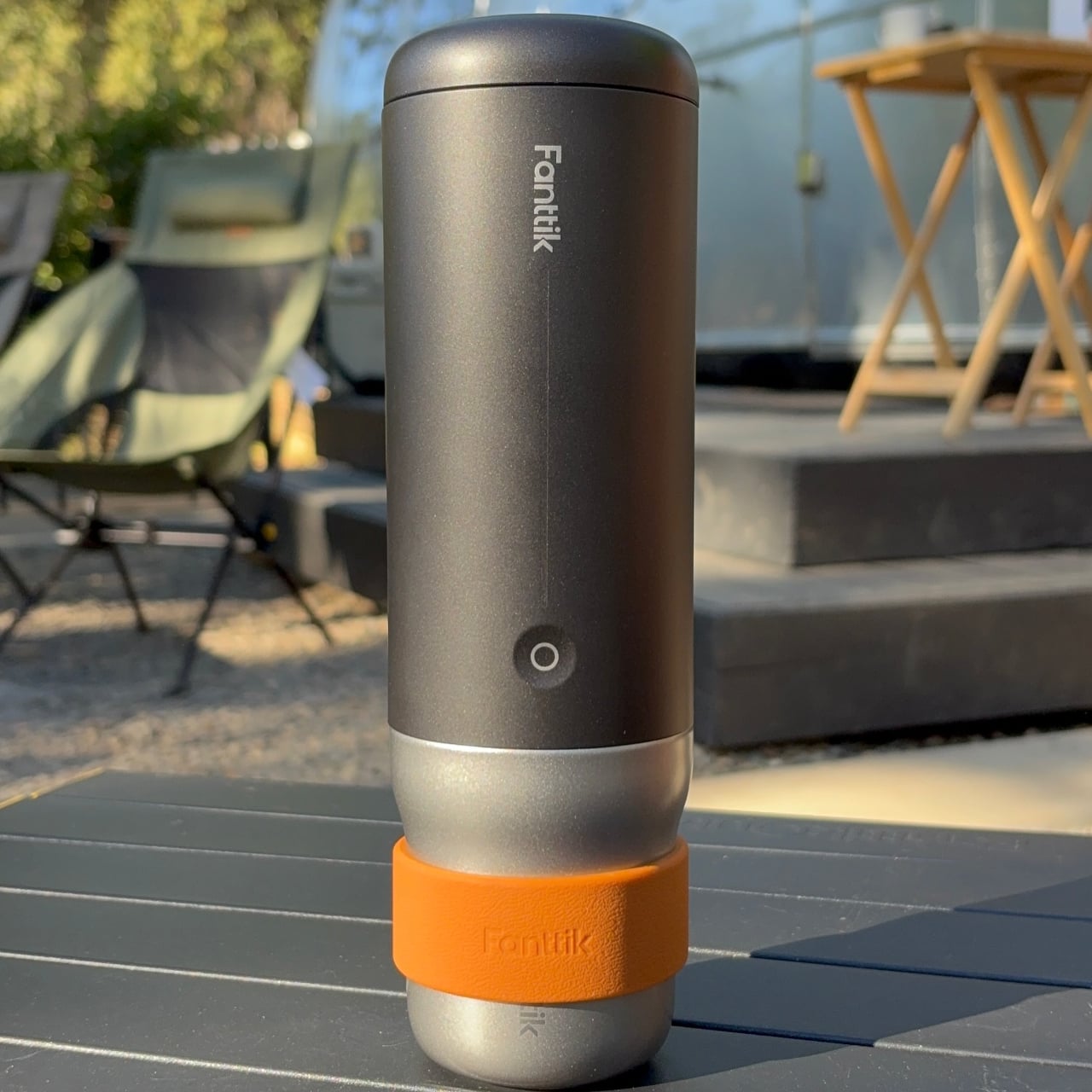
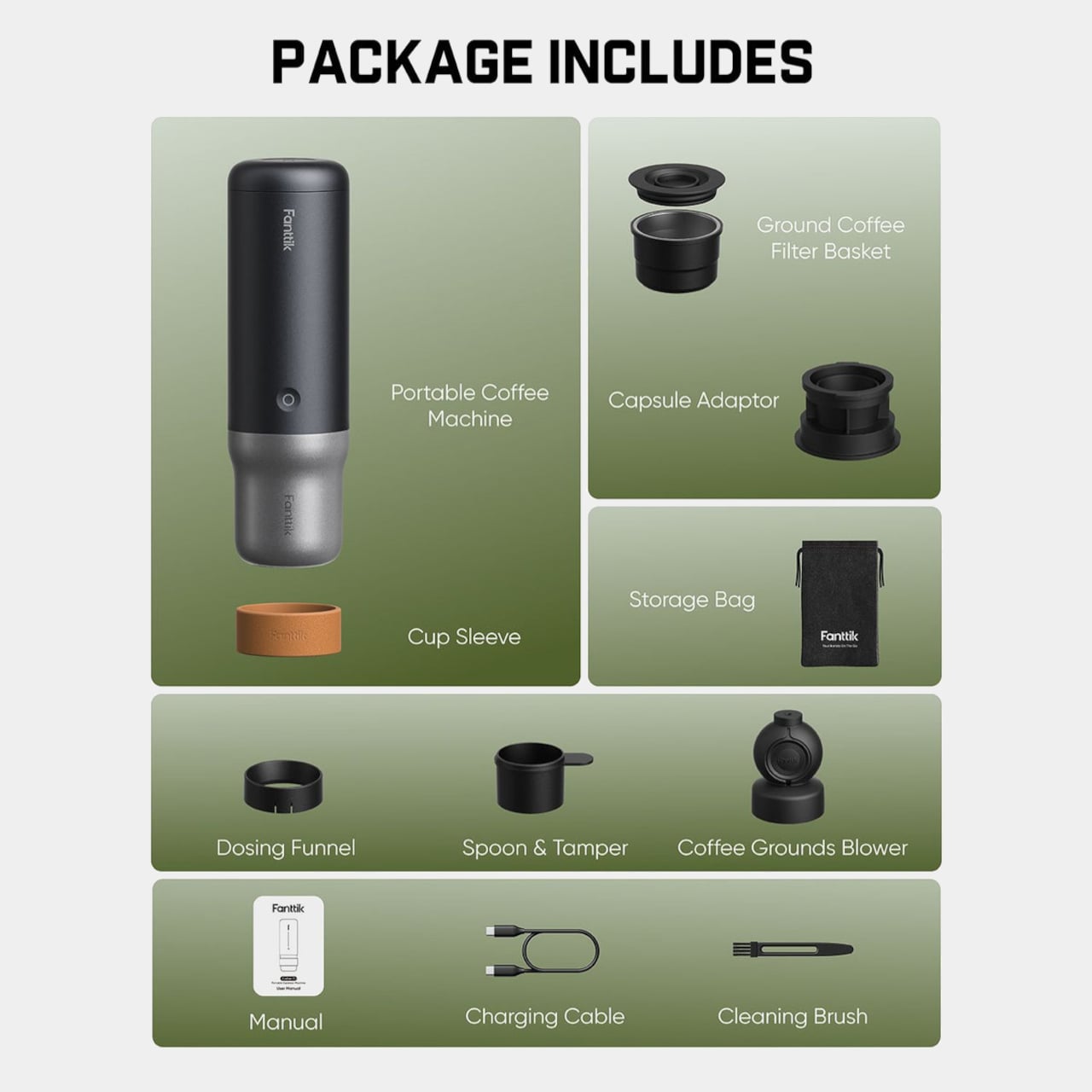
Fanttik’s Cafein 11 is the kind of portable coffee machine that takes that problem seriously. Rather than asking you to pack a separate kettle or hunt for an outlet, it handles heating, pressure, and extraction entirely on its own, running off a built-in rechargeable battery. Fanttik, a brand behind over 40 product design awards, including multiple iF Design Awards, didn’t approach this as a novelty gadget.
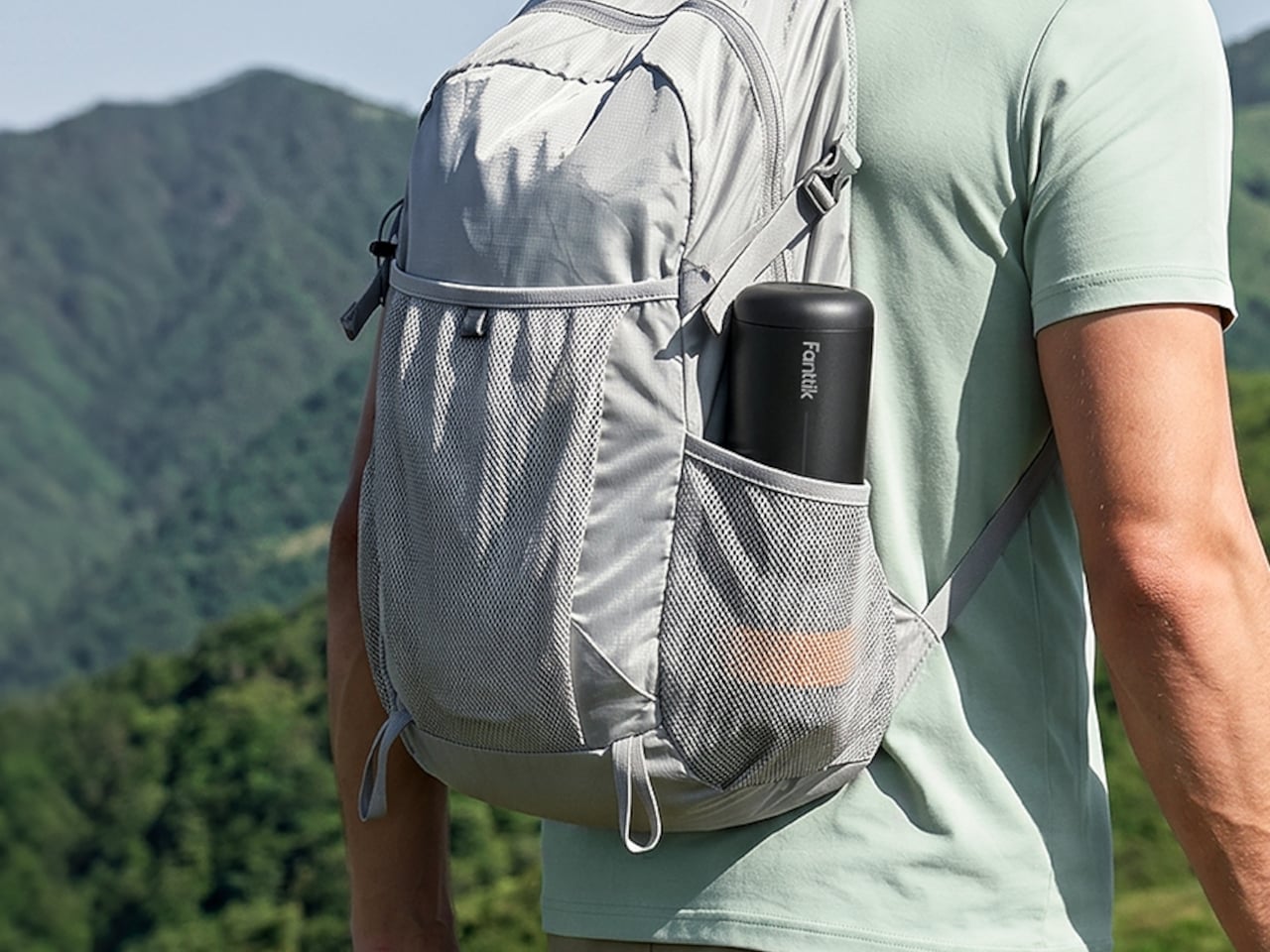
Weighing 825g, the Cafein 11 sits comfortably in the same mental category as a travel thermos, which makes packing it feel like a non-decision. It’s built from food-grade stainless steel, which keeps it durable and easy to clean, and its cylindrical silhouette slips neatly into a backpack without fuss. The machine doesn’t look or feel like a compromise, and that’s actually a harder design goal to hit than it sounds.
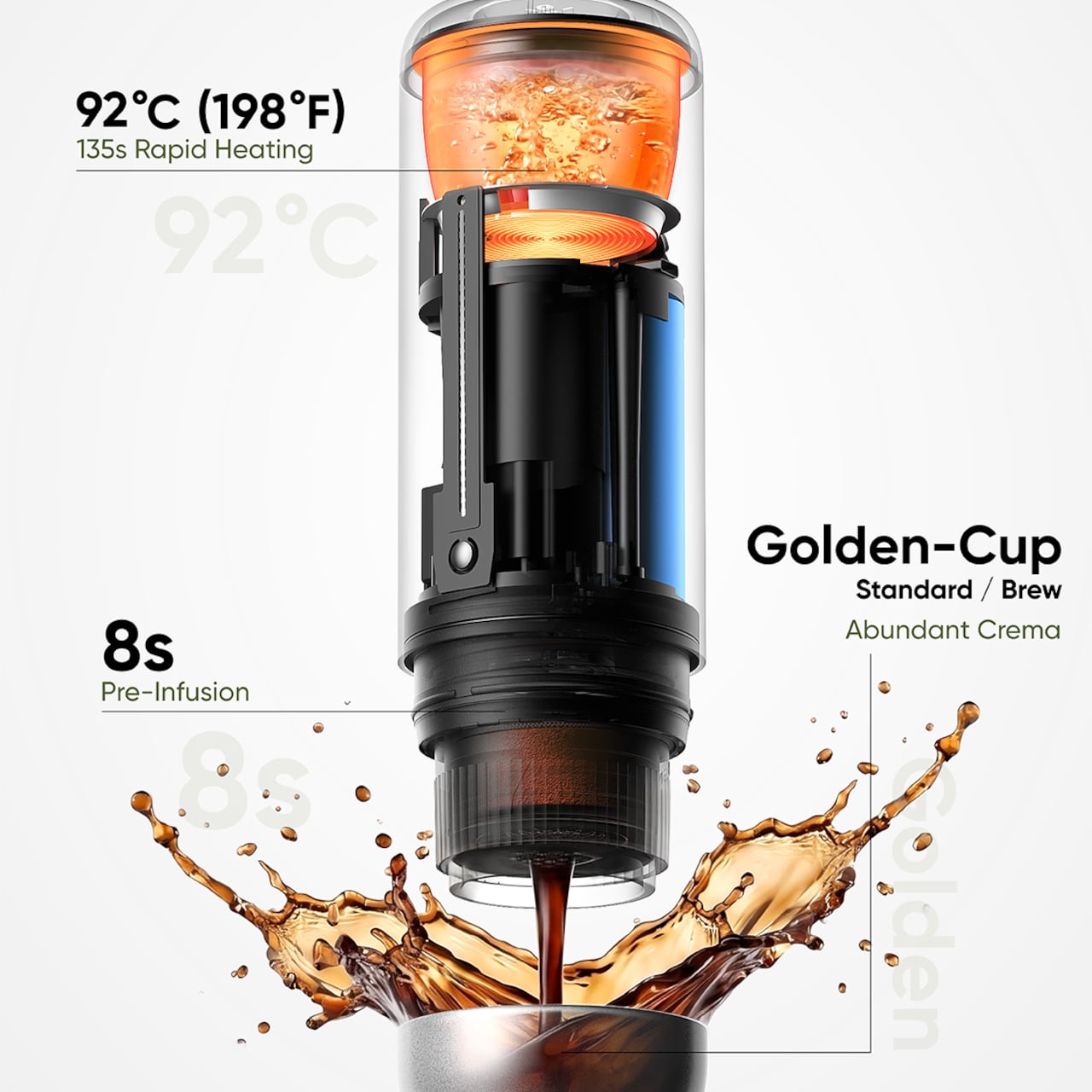
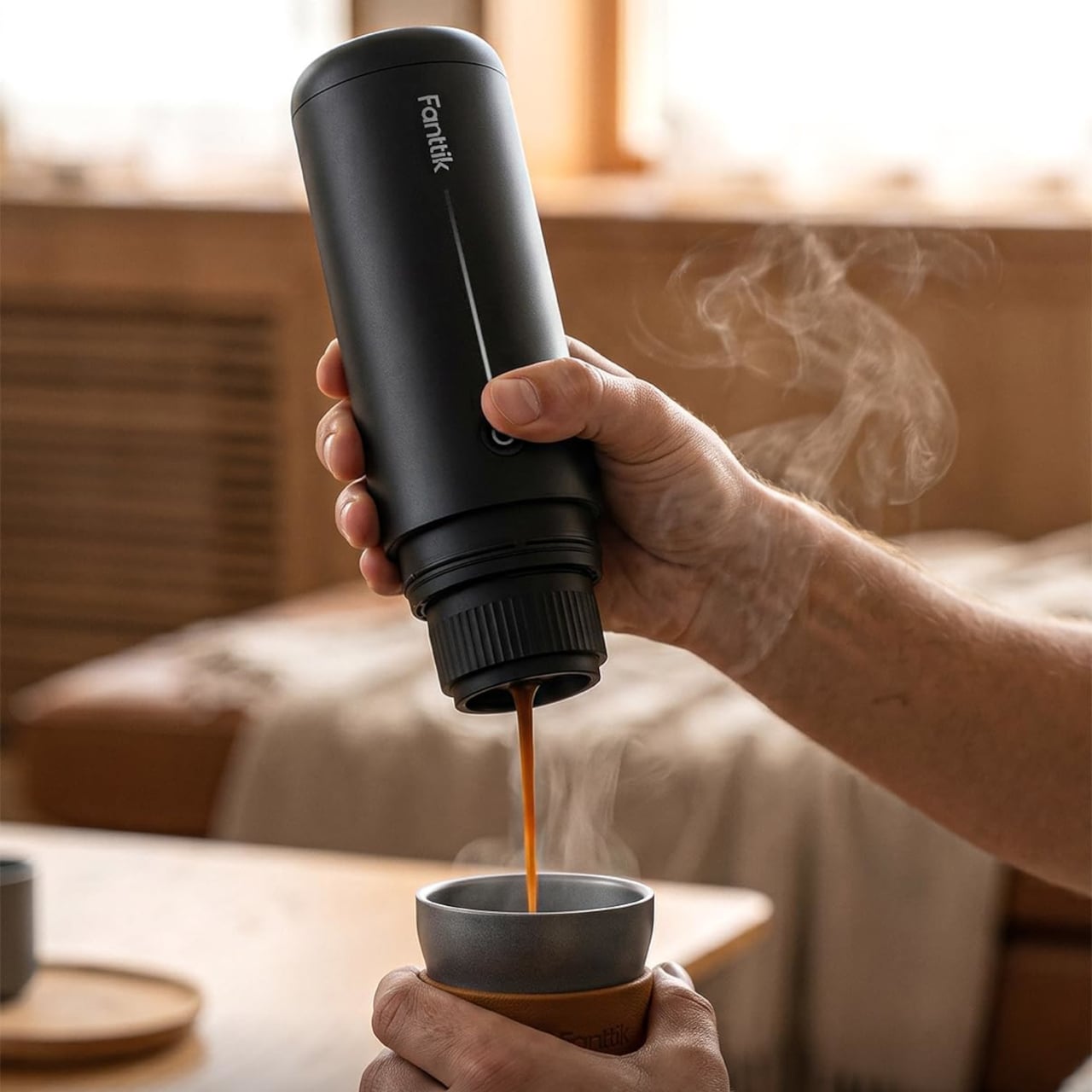
The most meaningful thing the Cafein 11 does is heat its own water. That might sound basic, but it’s the feature that separates a genuinely portable espresso machine from one that’s merely small. From room temperature, it reaches brewing heat in about 135 seconds, meaning a proper shot is ready before a campsite morning gets going, or before the next highway stretch begins. No kettle required.
On the extraction side, the Cafein 11 operates at 20 bar of pressure and runs an 8-second pre-infusion cycle before the main brew begins. Pre-infusion saturates the grounds before full pressure is applied, which generally leads to a more even extraction and a richer cup. It’s a detail that suggests Fanttik was thinking as much about what ends up in the cup as about how compact the machine could be.
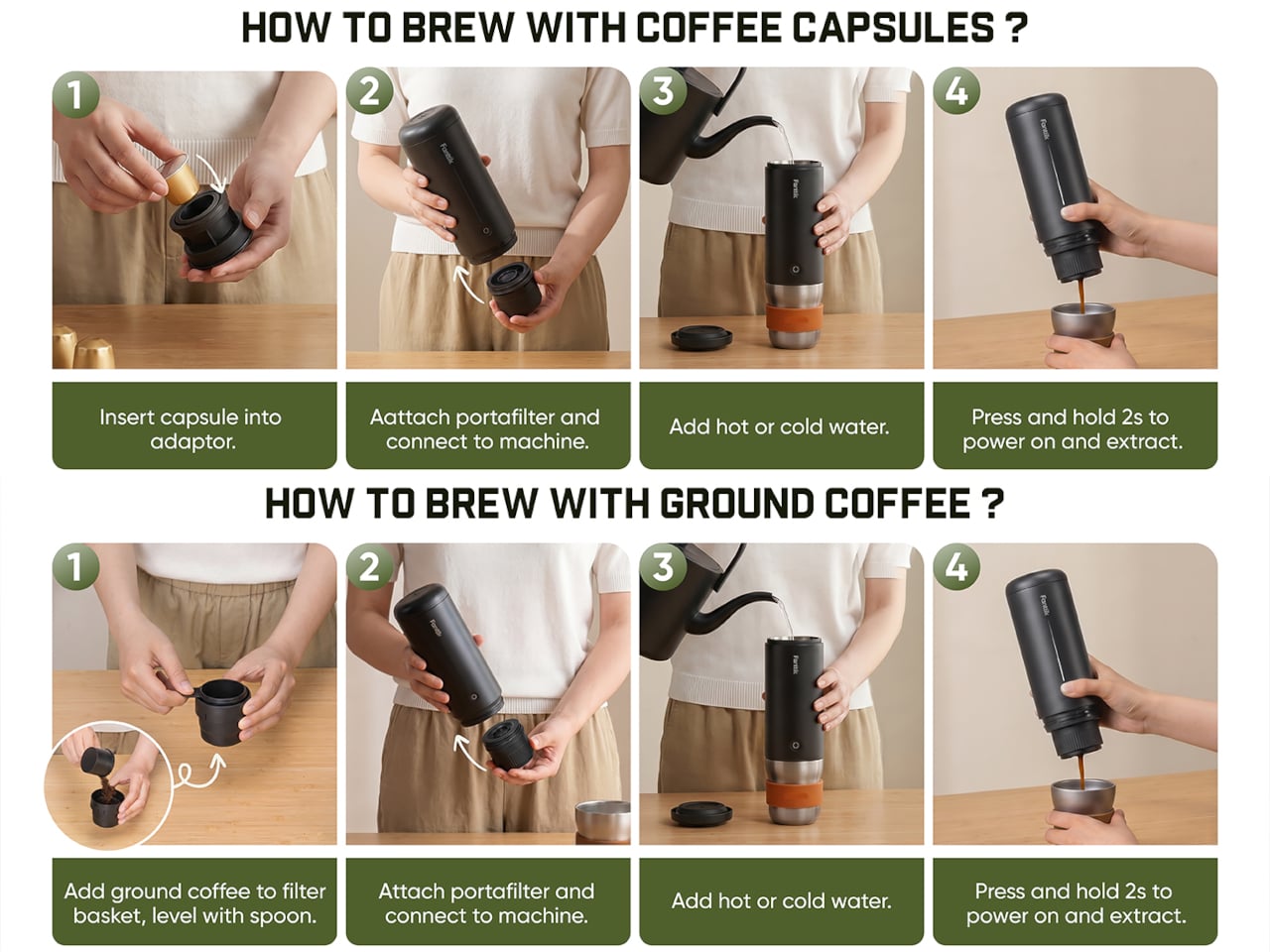
What also helps is that the Cafein 11 works with both capsules and ground coffee. On a rushed office morning, a capsule is in and out in seconds with no measuring or cleanup required. On a slower weekend trip, freshly ground beans are equally welcome. Either way, the machine adapts to how you feel rather than asking you to commit to one kind of coffee ritual.
Charging works through USB-C, which sounds like a small detail but matters more in practice than you’d think. There’s no proprietary cable to track down or forget at home, since the cord you’re already using for your phone or laptop does the job. A triple 4,500 mAh battery configuration handles multiple shots per charge, so the machine doesn’t run out of steam faster than the average traveler’s patience does.
At $149.99, the Cafein 11 isn’t the cheapest addition to a bag, but the math shifts when you consider what it replaces: hunting for a decent café in unfamiliar places, hotel drip machines that have seen better days, and the persistent compromise between going somewhere and having a good espresso while you’re there. It’s the kind of thing you don’t realize you want until you’re somewhere without a decent cup.
Every morning, millions of people grab a coffee to go and toss the paper sleeve into the trash without a second thought. It is a tiny object, easy to overlook. But that tiny object is part of a system that produces an estimated 16 billion disposable cups every year, sleeves included, and nearly none of it gets recycled. In the UK alone, cup sleeve recycling sits at roughly 2.8%, which is a polite way of saying almost everything ends up in a landfill.
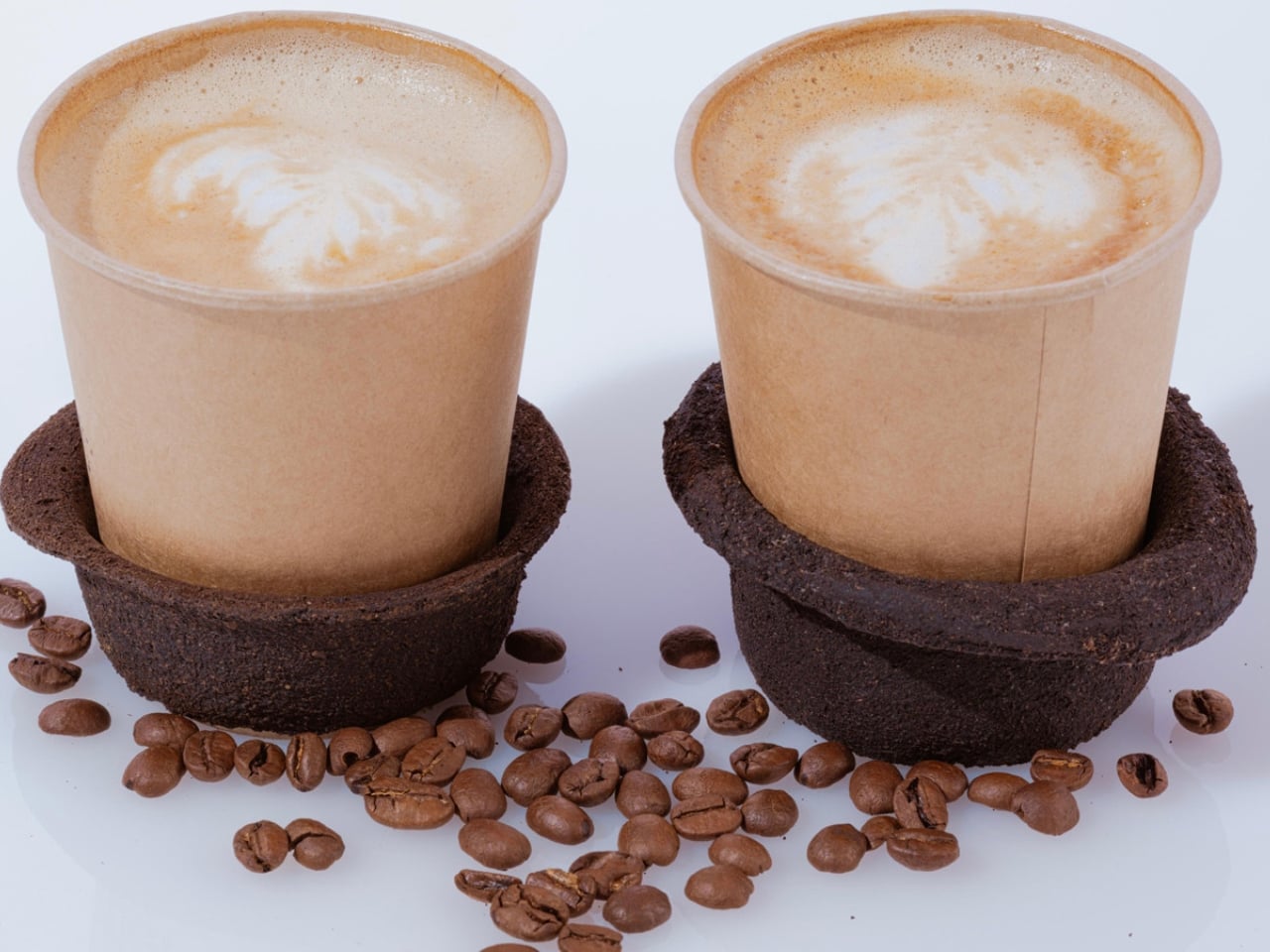
That number has been sitting in the back of my mind ever since I came across GoBean, a design concept by Aranza V. Sanchez and Song Yeon Lee, two design students from Hochschule für Gestaltung Offenbach in Germany. The project recently earned a nomination for the Green Product Award, and when you look at what they have actually built, you understand why.
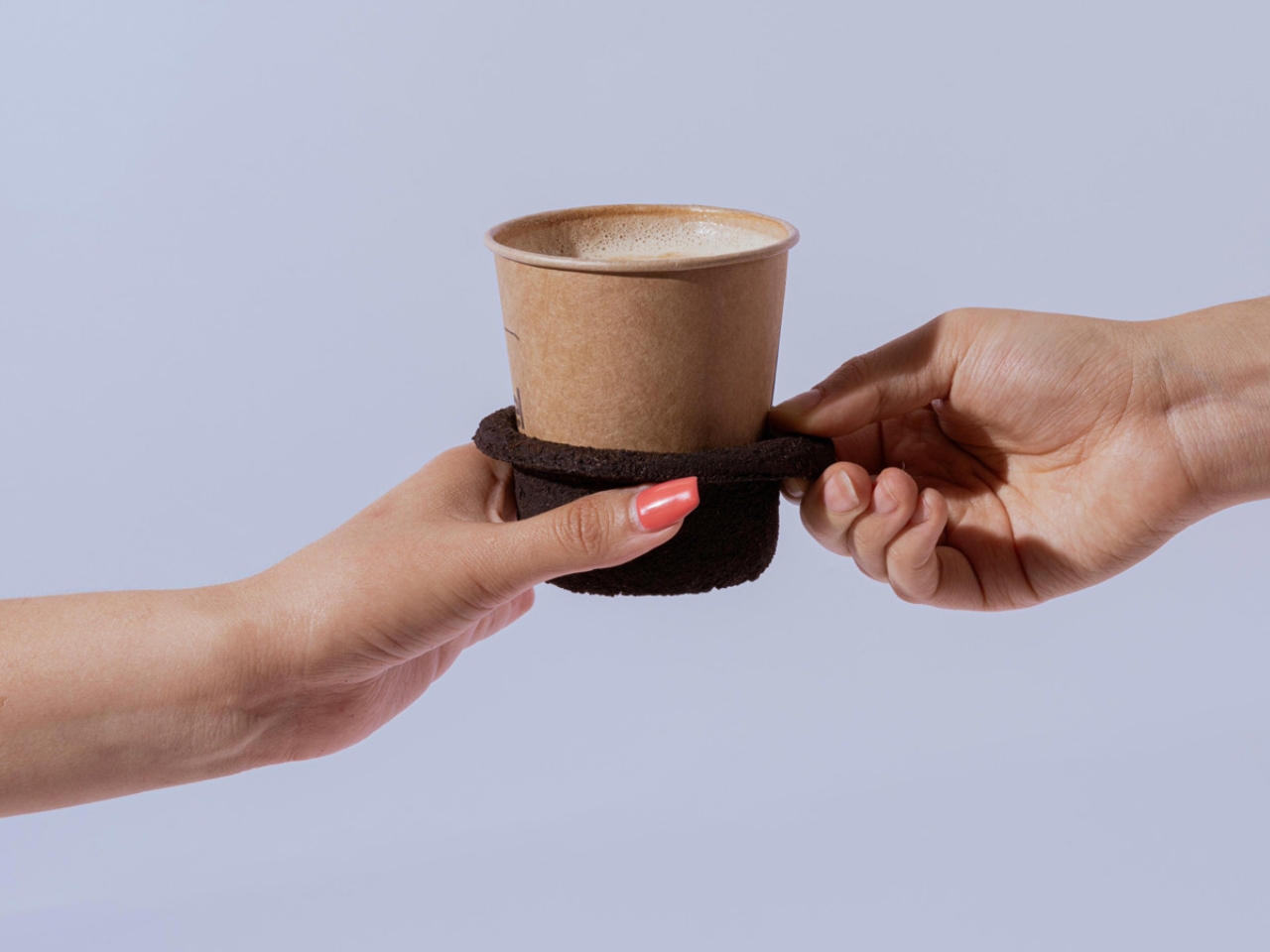
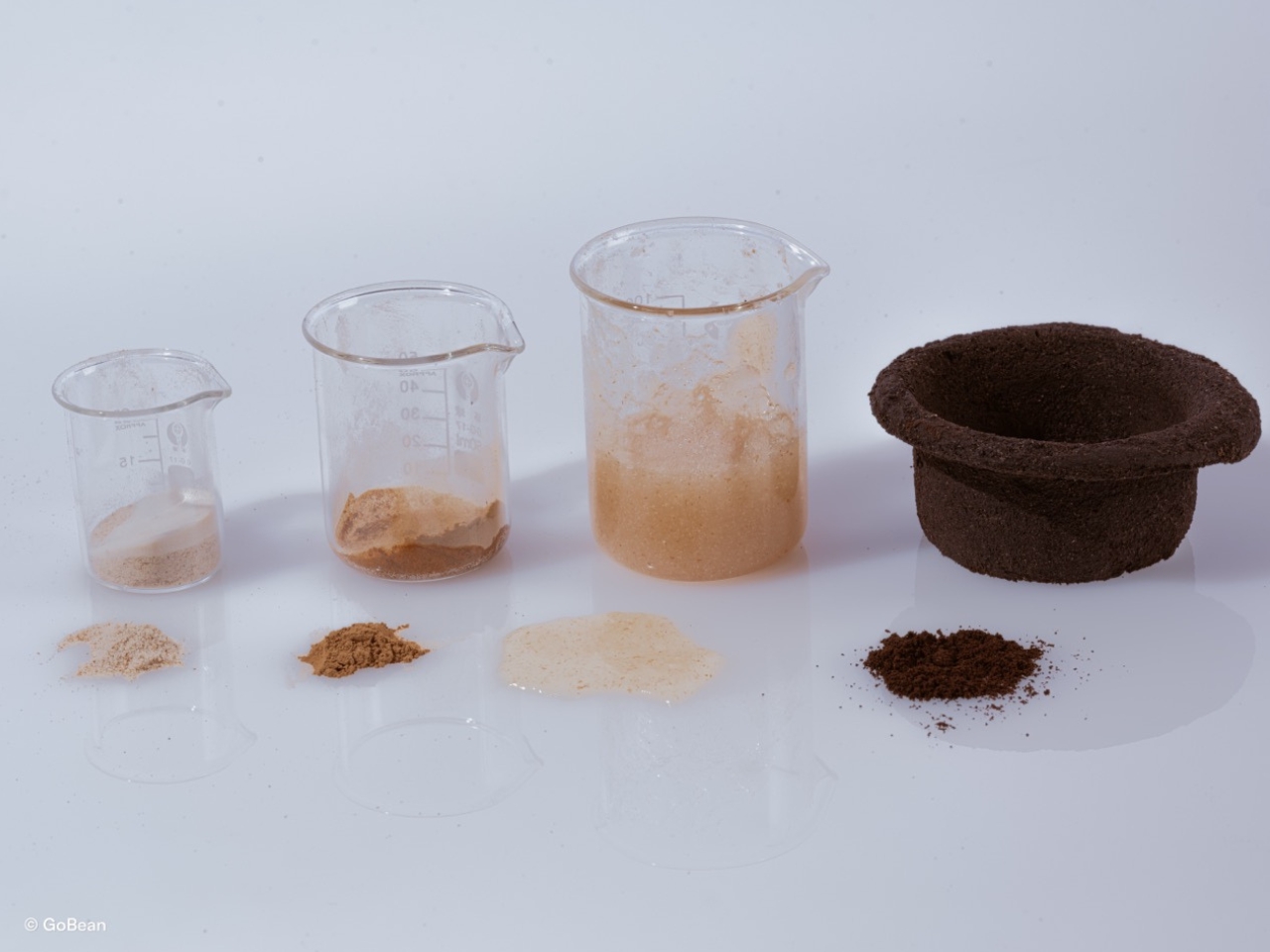
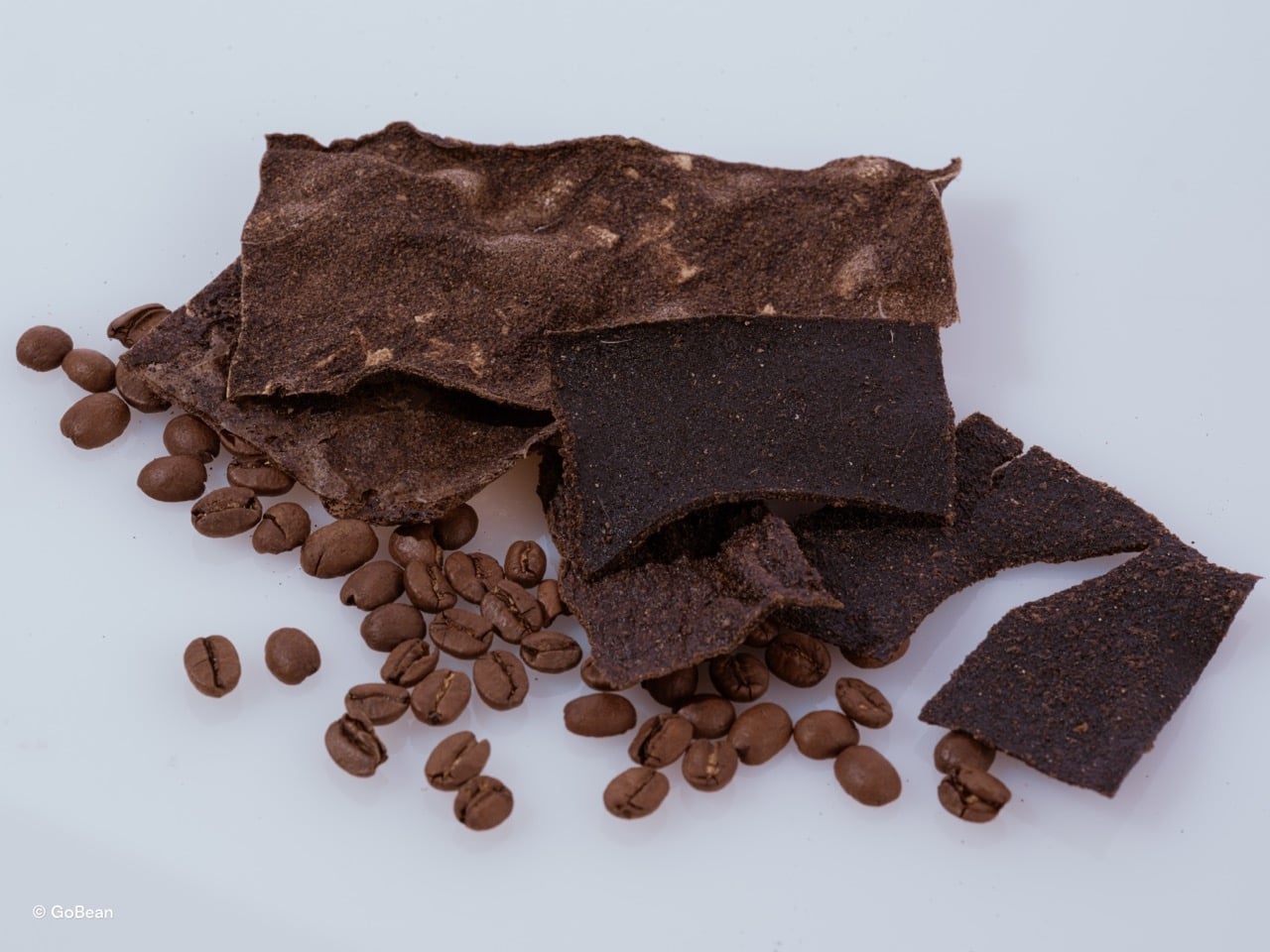
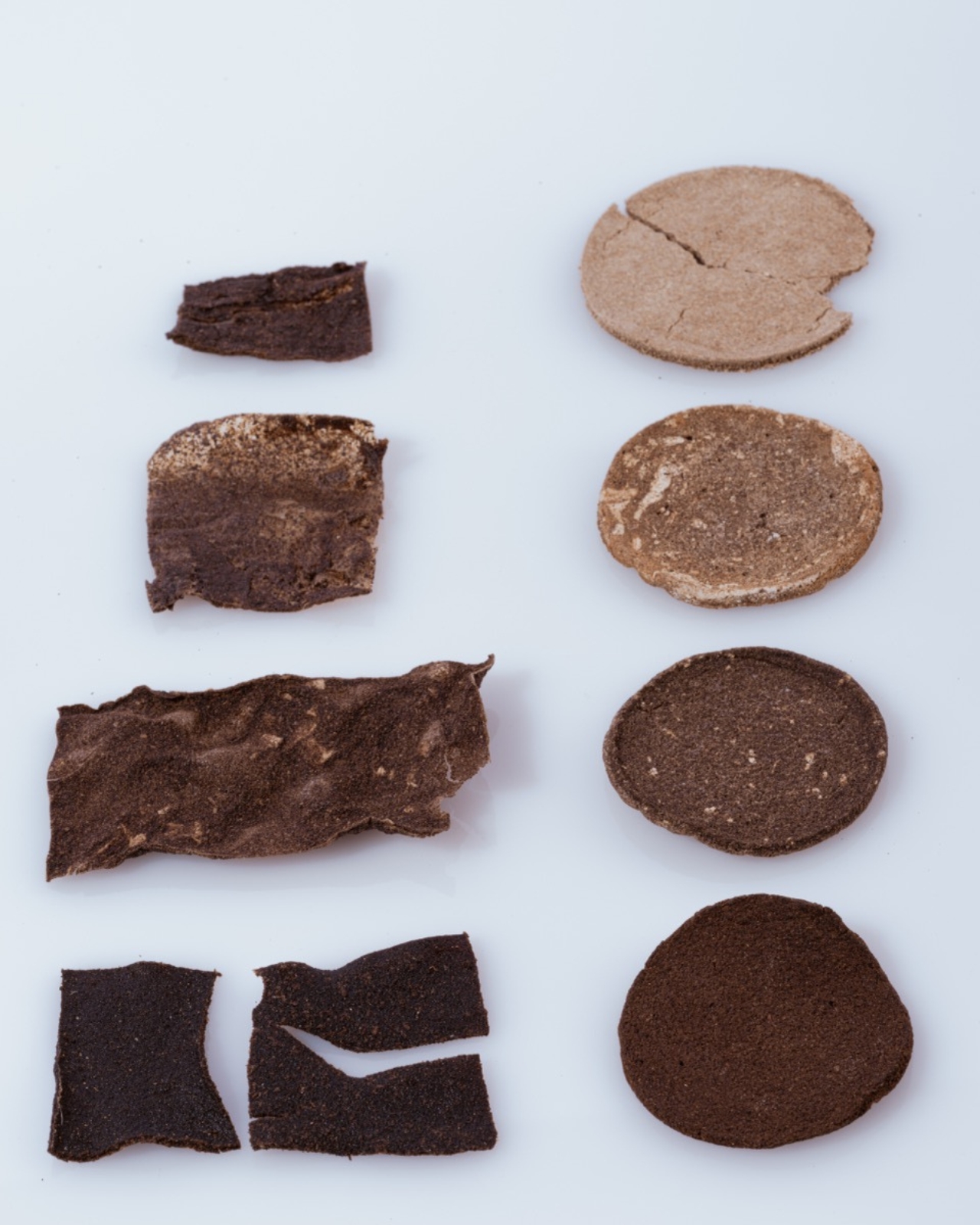
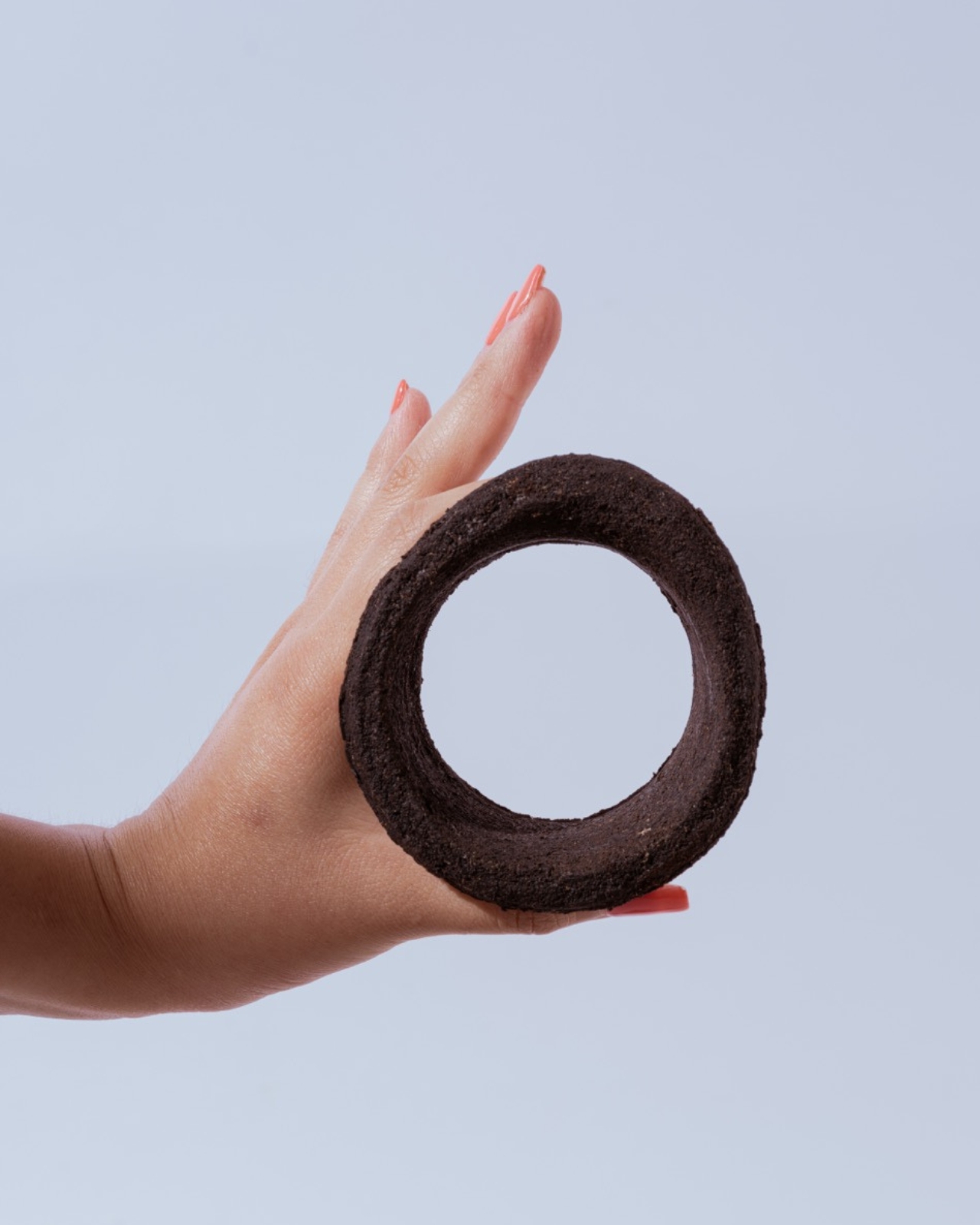
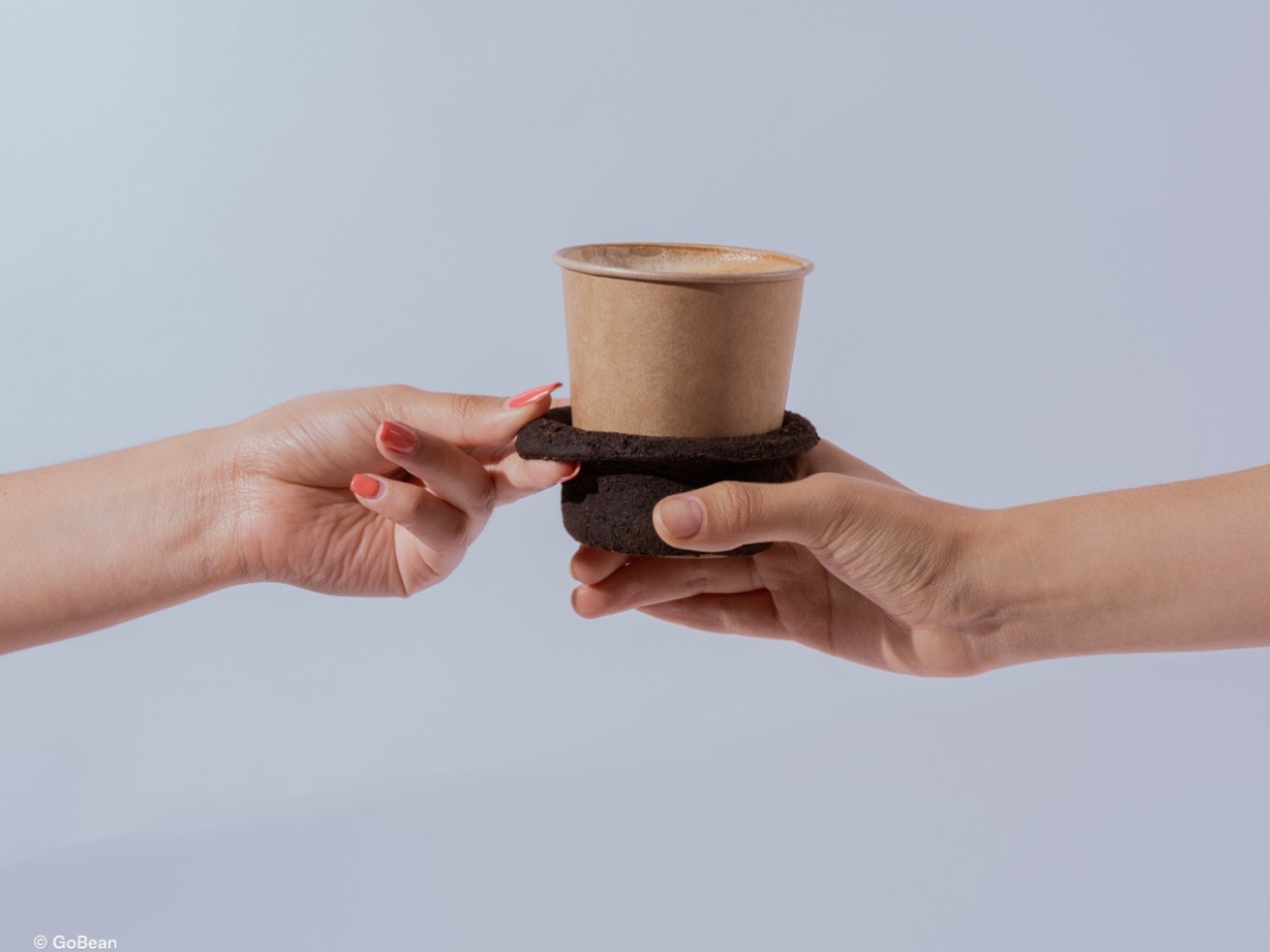
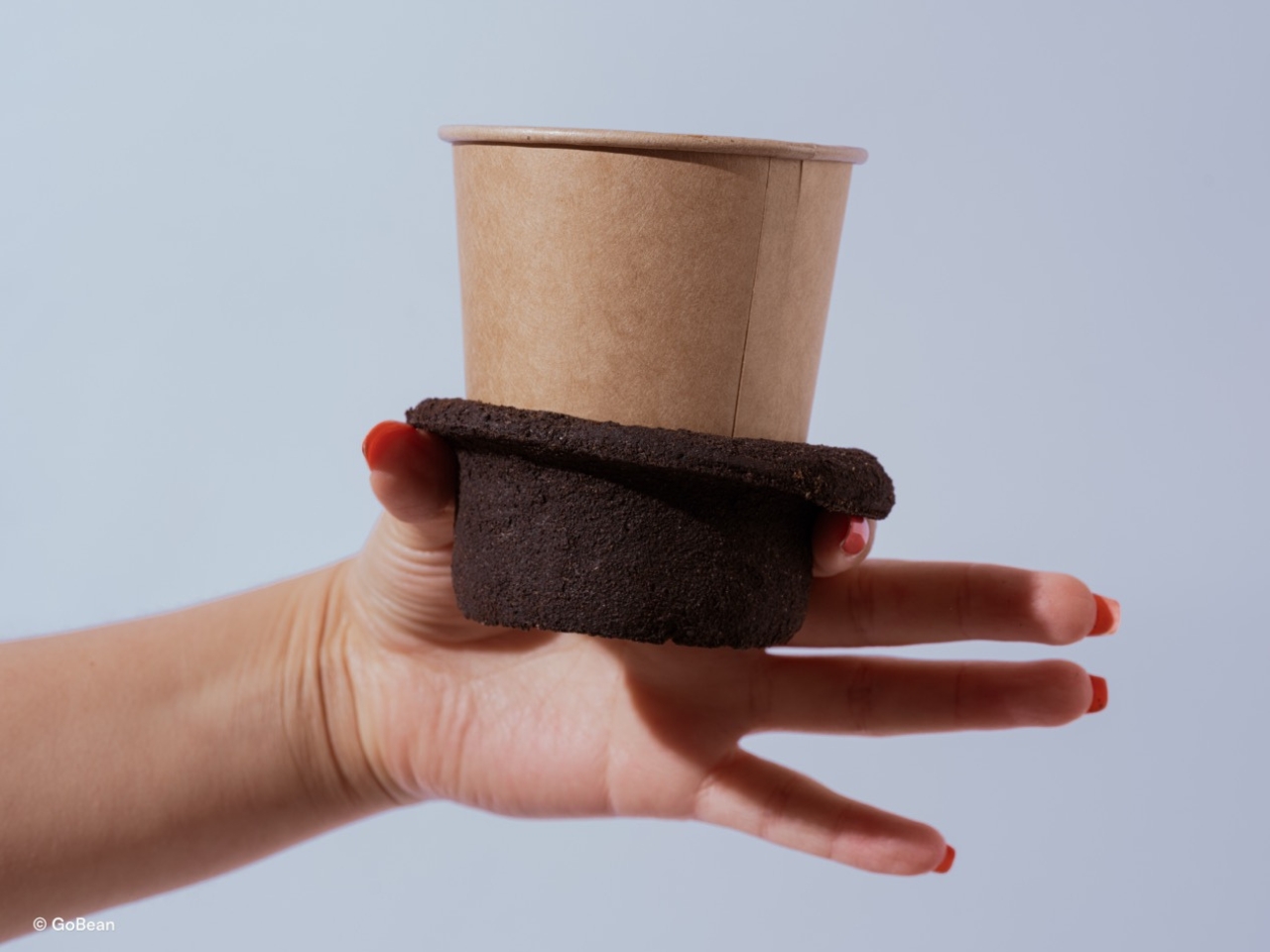
GoBean is a coffee cup sleeve made from coffee grounds. Not coffee-inspired, not coffee-colored. Actually made from the used, spent, leftover grounds that cafés collect and typically throw away. Combined with natural binders, the material becomes water and heat resistant, which matters quite a bit when your job is to wrap around a hot cup. It feels like a design idea so obvious that you wonder why it took this long to exist.
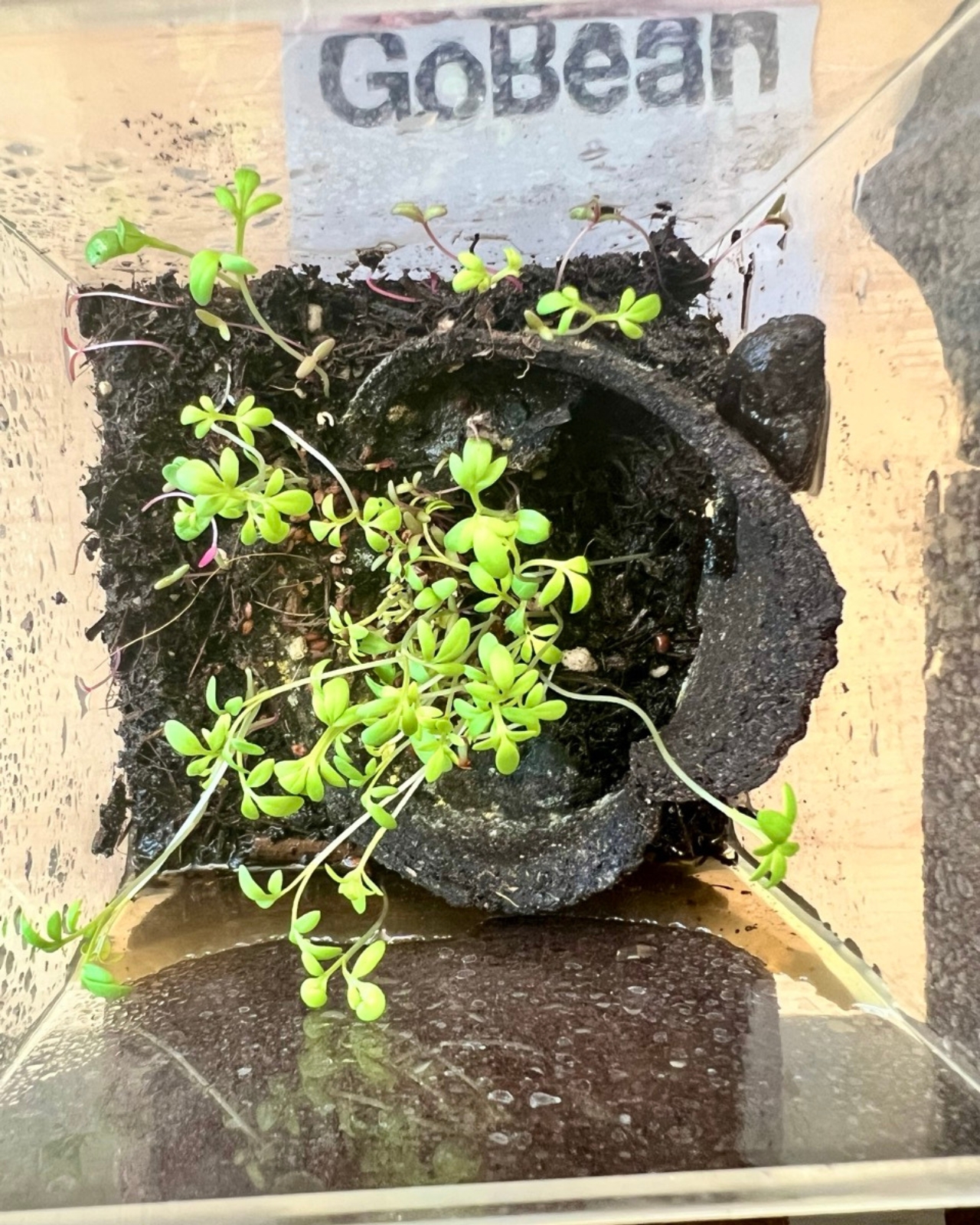
The material is 100% compostable and breaks down completely in about three weeks. If you would rather not compost it, you can plant it directly into soil. The sleeve, the thing that kept your fingers from burning on a Tuesday morning, becomes part of your herb garden by Friday. That circularity is not just a marketing point. It is genuinely elegant design logic.
What makes GoBean feel more serious than a typical student concept is the business model built around it. The idea is that cafés supply their own spent coffee grounds as the raw material for production. This turns waste into a resource, gives cafés a reason to participate, and keeps the material loop local. Designers often get credited for solving the object, but solving the system is harder, and Sanchez and Lee are clearly thinking about both.
I will admit, I have a complicated relationship with sustainable packaging projects. A lot of them promise a lot and deliver something that either does not perform as well, costs too much, or requires consumer behavior change that just is not going to happen at scale. GoBean avoids most of those traps by meeting the product exactly where it already exists. The sleeve still looks like a sleeve, fits like a sleeve, works like a sleeve. The only difference is where it comes from and where it goes afterward.
The Green Product Award tends to surface work that is genuinely trying to move the needle on material innovation rather than just putting a green label on something old. A nomination here carries a bit of weight, and GoBean fits the ethos of that kind of recognition.
It is also worth noting that this is a concept still in development, not something you can order from a café supplier today. That distinction matters. Student projects are exactly where this kind of thinking should live, unencumbered by the commercial pressures that usually flatten ideas before they can fully form. Whether GoBean eventually makes it to mass production will depend on all the less exciting stuff: manufacturing cost, supply chain logistics, regulatory approvals. None of which are guaranteed.
But as a vision of what disposable packaging could be, it is hard to argue with. The sleeve you use for ten minutes does not need to exist for a hundred years. That mismatch has always been the problem, and GoBean is one of the more elegant answers I have seen to it. Design does not always save the world, but sometimes it asks the right question. In this case, the question is simple: if your coffee sleeve is made from coffee grounds, has it ever really left the café?
The world’s most-watched sporting event is about to kick off in less than a month. This means that World Cup watch parties are probably being set up in various households for football fans who won’t actually be able to make it to the stadiums in the U.S., Canada, or Mexico. While beer is probably the drink of choice for most of these events, NESCAFÉ wants to begin a new tradition for those who want to have a livelier, but probably safer, discussion amongst family and friends.
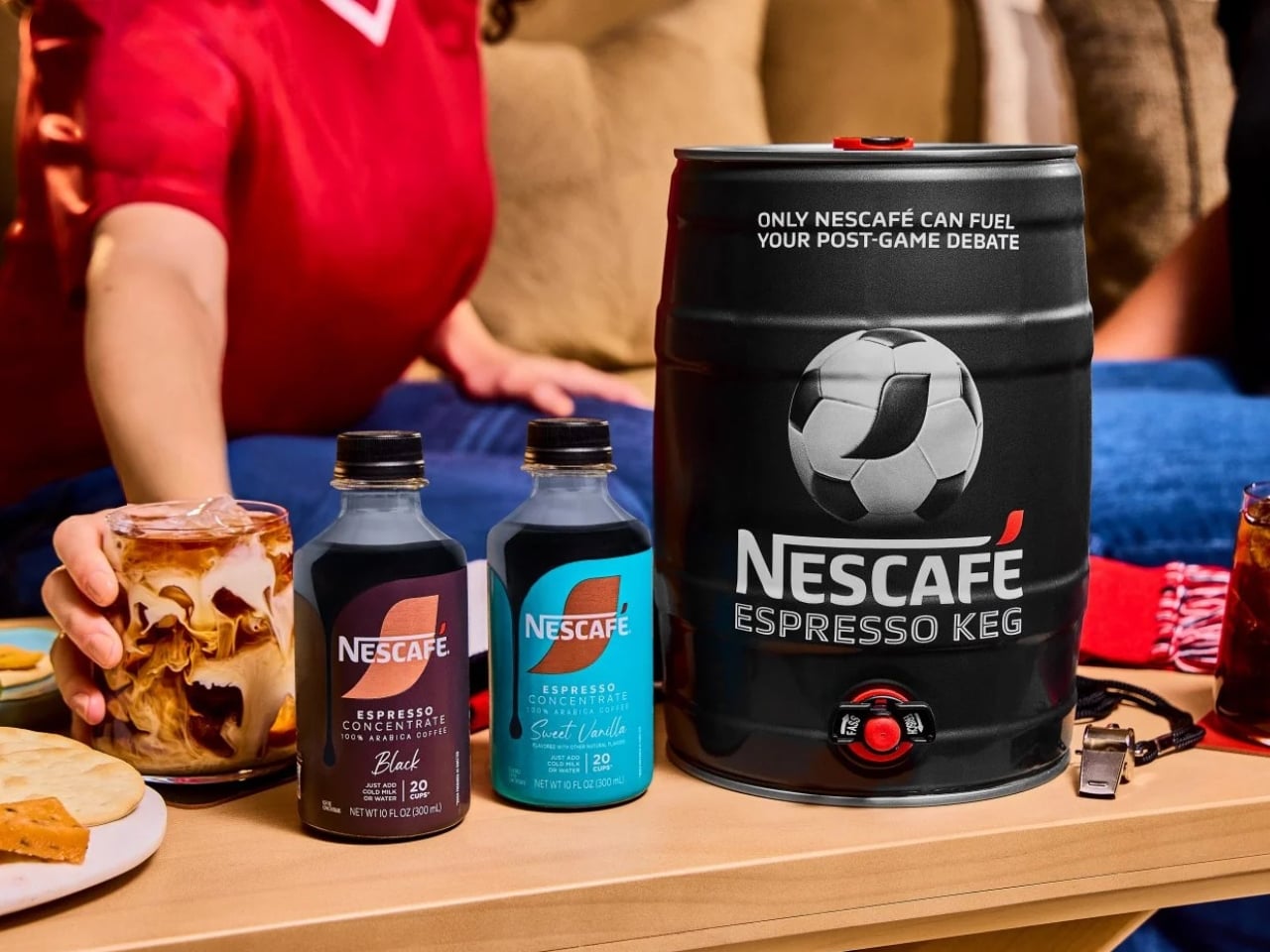
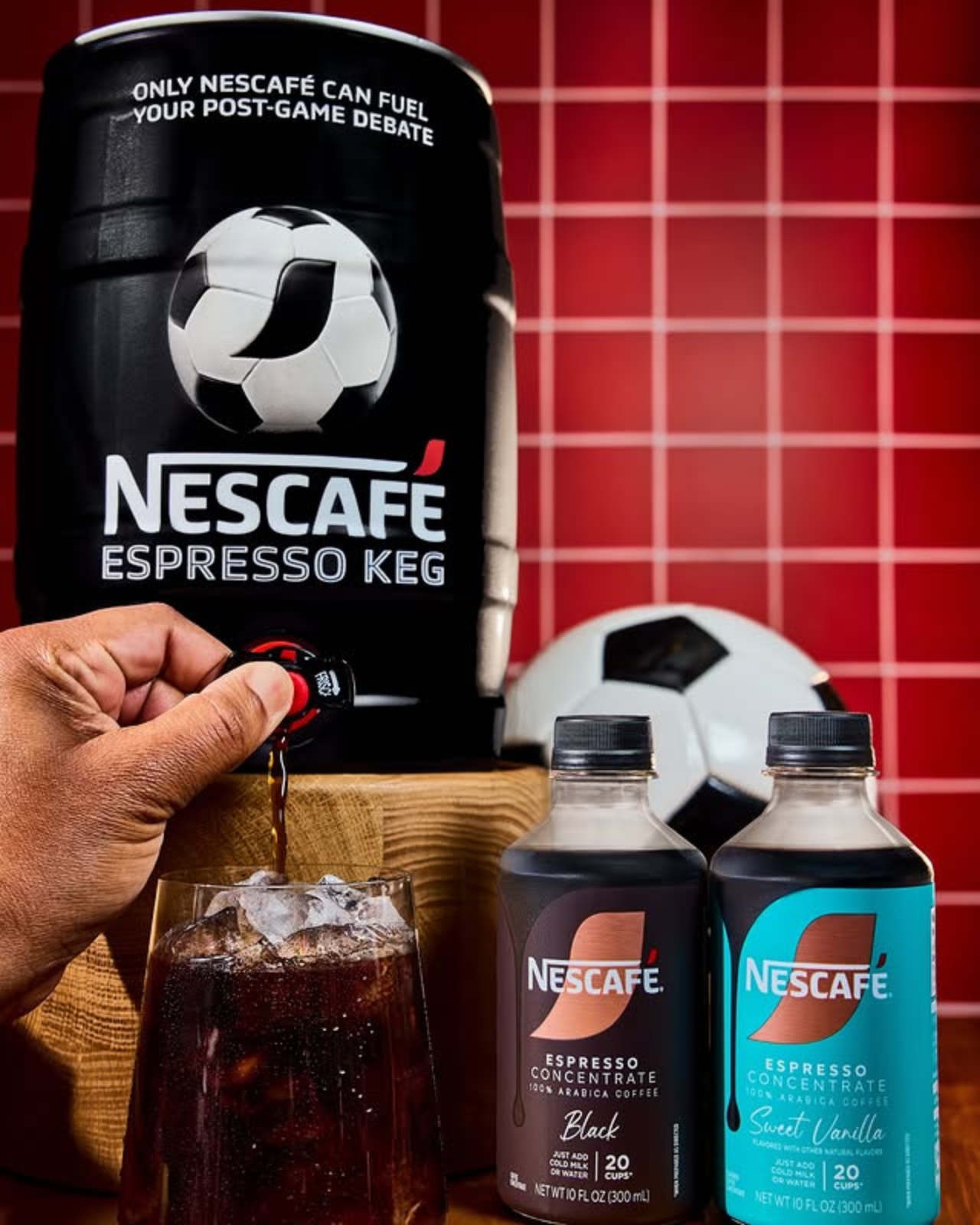
The coffee brand is introducing the NESCAFÉ Espresso Keg, a limited-edition World Cup special designed to help you get into the “Third Half.” This is a ritual they want to start, and caffeine may be the perfect companion as you get talking about the 90-minute-and-change match you just finished watching. They believe that “the conversation doesn’t end after the game,” and it should be helped along over a cup of coffee.
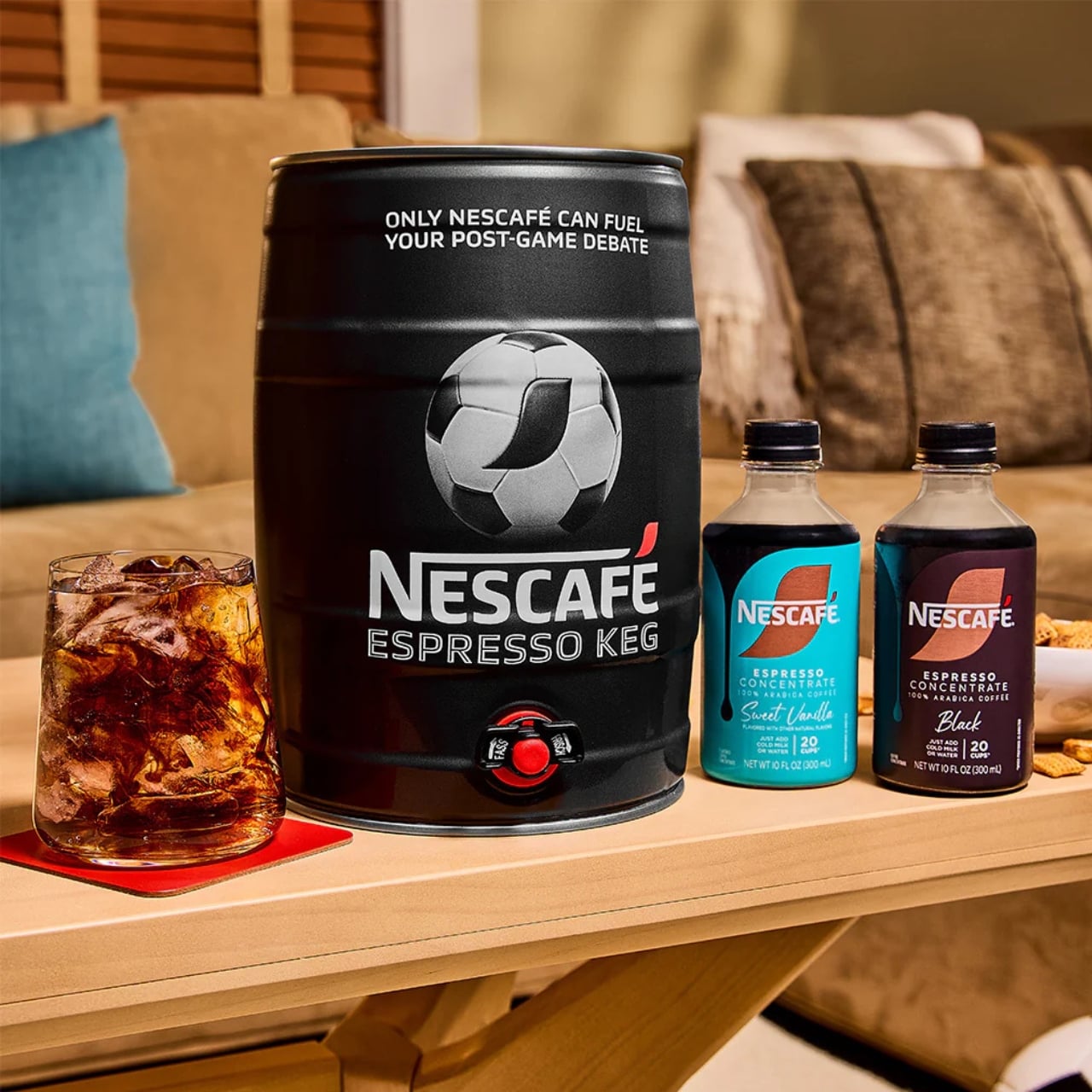
The keg actually looks like your usual beer keg, but instead of dispensing beer, you’ll have coffee pouring out of it as you discuss every goal, call (or non-call), and every exciting and controversial thing that happened during the match. Each package comes with a 5L keg and two 10oz bottles of NESCAFÉ Espresso Concentrate in Black and Sweet Vanilla flavors. In case you don’t know how to mix it up, it also comes with instructions and recipes so you can “brew” the perfect cup for your Third Half. You’ll be able to serve around 20 cups with the package, so you may need to stock up on more concentrate if you have a larger crowd attending your watch party.
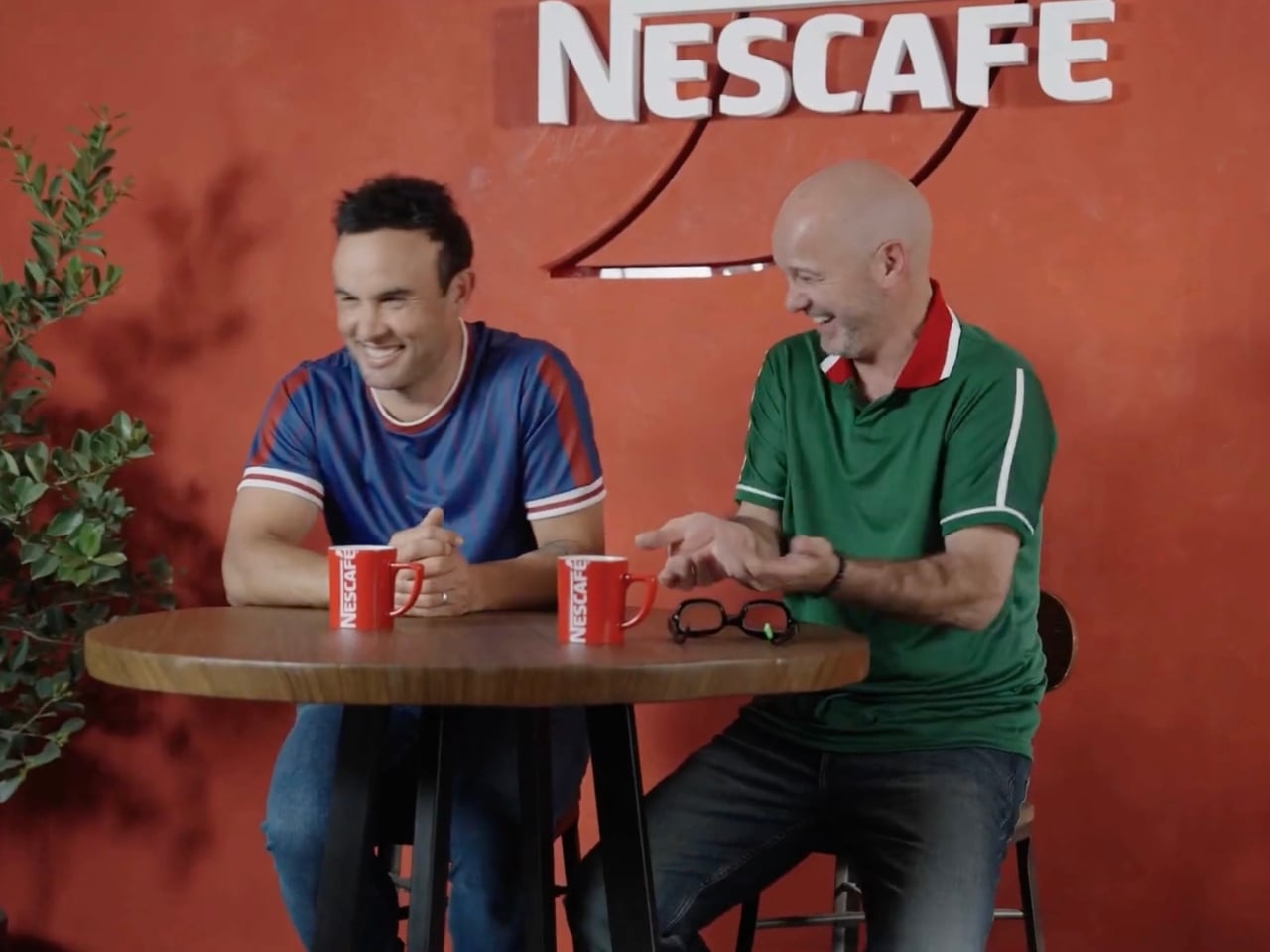
There is a special bi-cultural campaign to promote this limited-edition keg. We’re not sure why Canada was left out of the equation, but U.S. soccer legend Landon Donovan and Mexican fútbol icon Luis García are the faces of the campaign, representing their two countries. It’s priced at $10 as a tribute to Donovan’s jersey number, the iconic number 10 he wore while bringing glory to the U.S. Men’s National Team. To make it even more of a must-have item, there will be three separate drops, and the last one is this coming June 10, just a few days before the start of the World Cup.
And it turns out the concept isn’t just a clever marketing angle, as the numbers actually back it up. According to NESCAFÉ, 73% of soccer fans already drink coffee during game time, making it a surprisingly natural fit at any watch party table. Rob Marsh, NESCAFÉ’s Marketing Director, summed it up well: “We’ve coined a new half, ‘The Third Half,’ to represent the moments after and in-between games when passionate debates peak. Like any good conversation, these often take place over a beverage, making our coffee and the Nescafé Espresso Keg the perfect fuel to keep things flowing.”
It’s a fun and genuinely refreshing idea, especially for watch parties where not everyone is reaching for a beer, particularly during those early-morning kick-offs that come with a global tournament spanning multiple time zones. The Espresso Keg gives you that same communal, tap-style energy of a classic keg party, just with a serious caffeine boost instead of a headache waiting to happen. Whether you’re a black coffee purist or someone who loves a touch of Sweet Vanilla in their cup, there’s a flavor to match every personality and every strongly-held opinion about the offside rule.
The limited-edition nature of this release makes it all the more exciting. With earlier drops reportedly selling out quickly, demand has clearly been there. If you missed the first rounds, don’t sleep on that final June 10 drop. It’s the kind of collectible that doubles as a genuinely useful party accessory, a rare combination at any price point, let alone $10.
If you’re serious about hosting the ultimate World Cup watch party this summer, the NESCAFÉ Espresso Keg might just be the most unexpected and delightful centerpiece you didn’t know you needed. So mark the date, set up those fold-out chairs, hang your team’s flag, and get ready to debate every single moment of the beautiful game, one perfectly poured cup at a time.
Pop-ups have become one of the more interesting testing grounds for design ambition. They exist long enough to make a statement but not so long that they have to compromise on boldness. And Atelier L seems to understand that assignment completely.
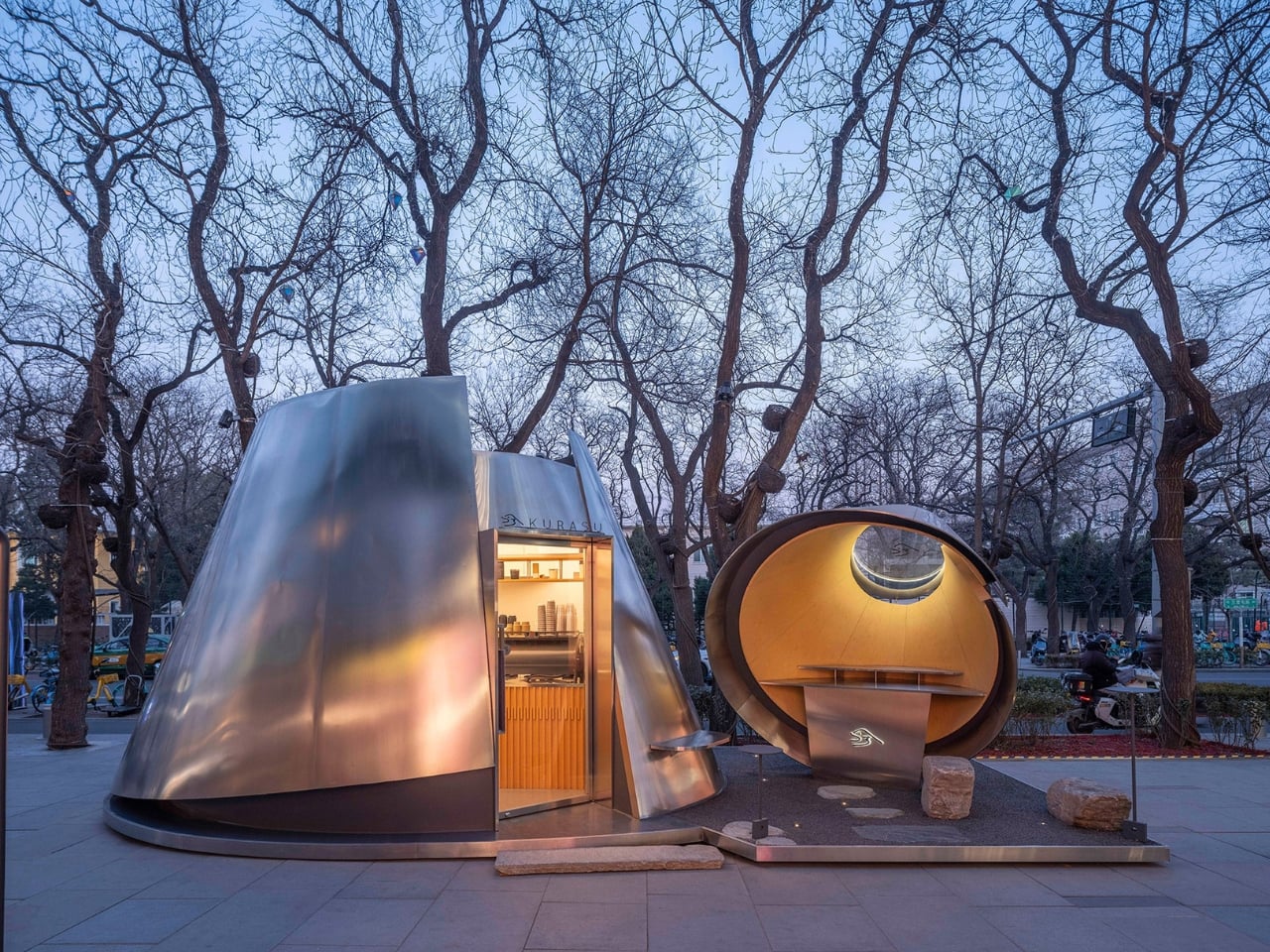
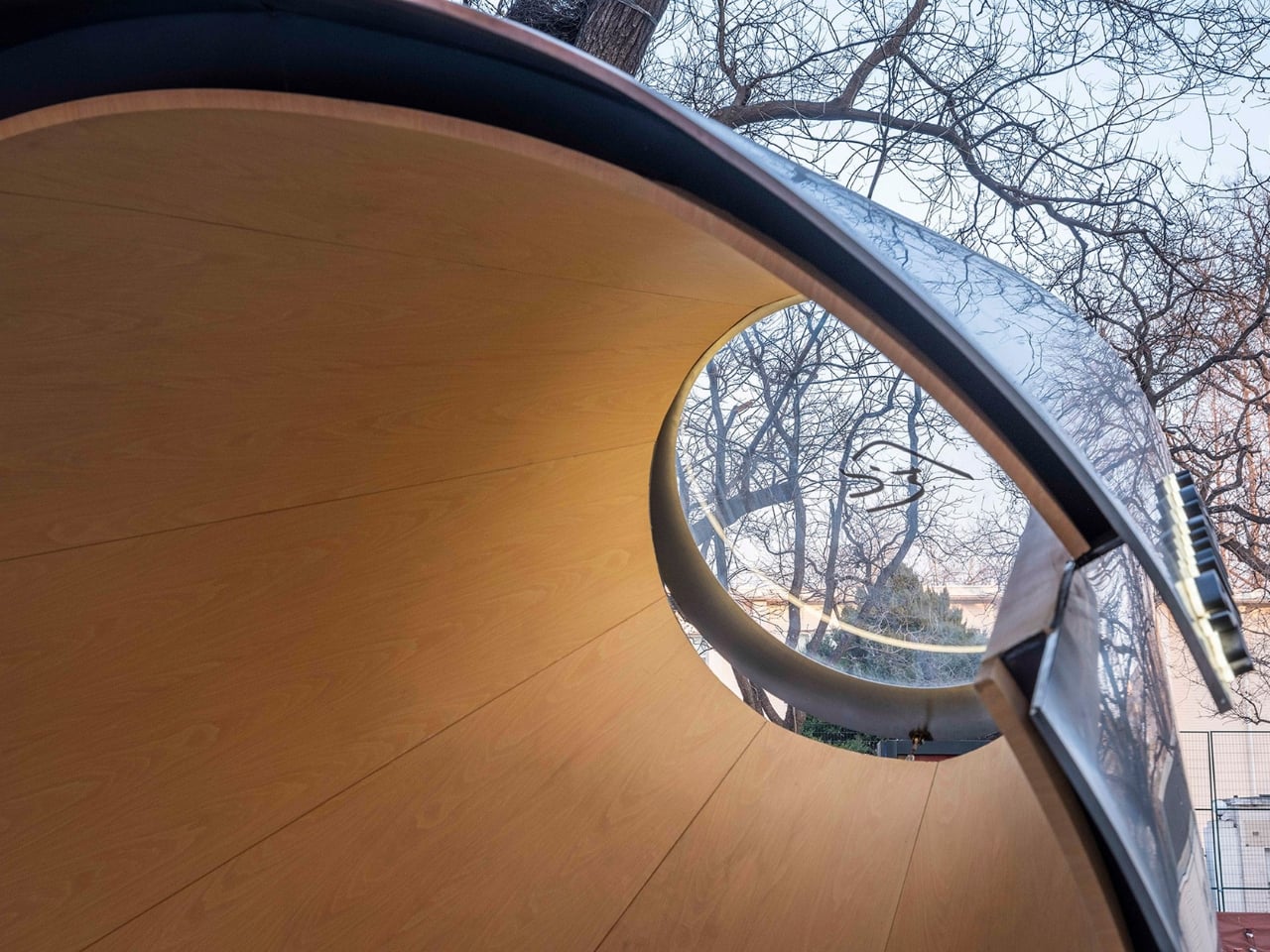
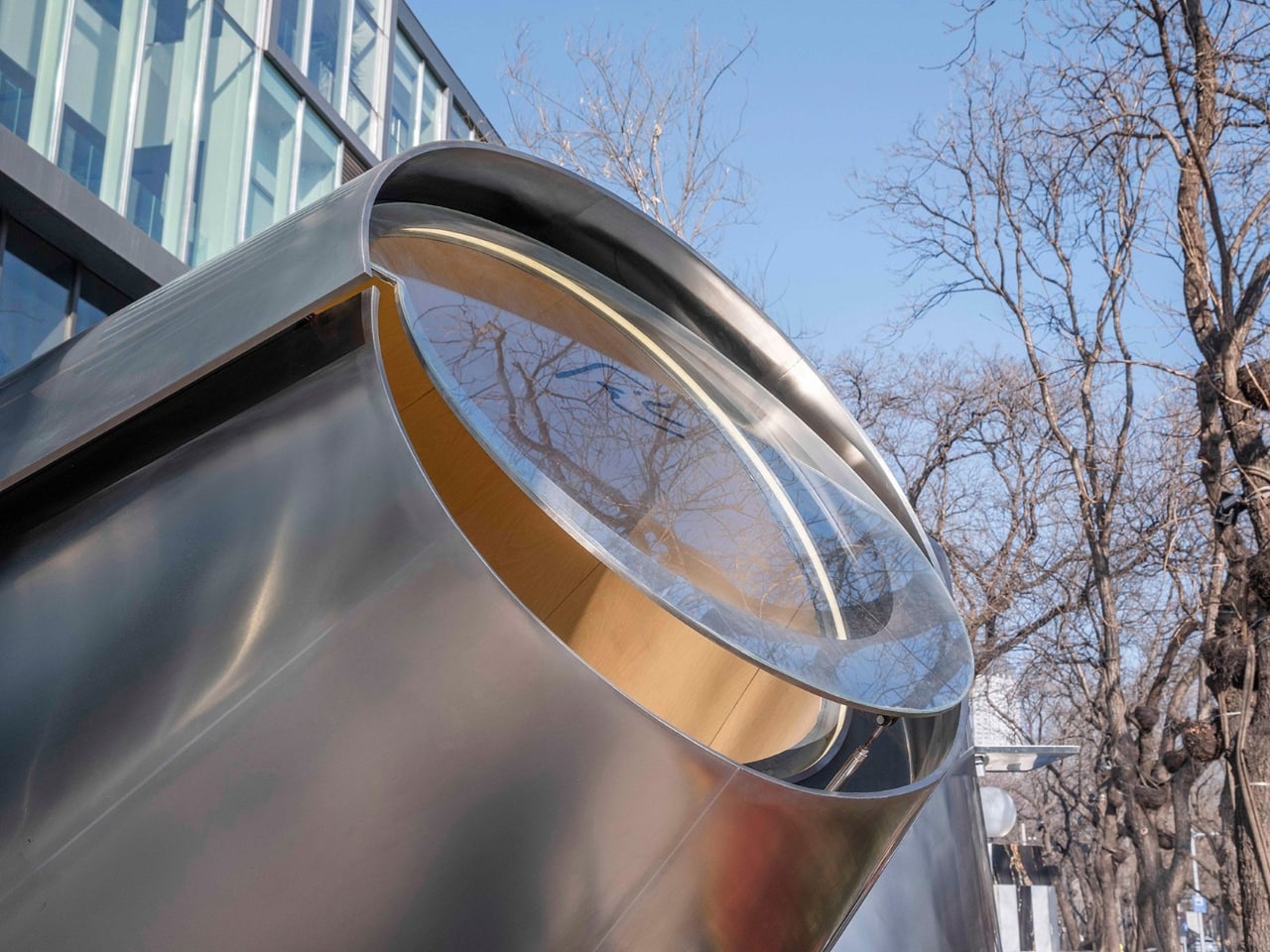
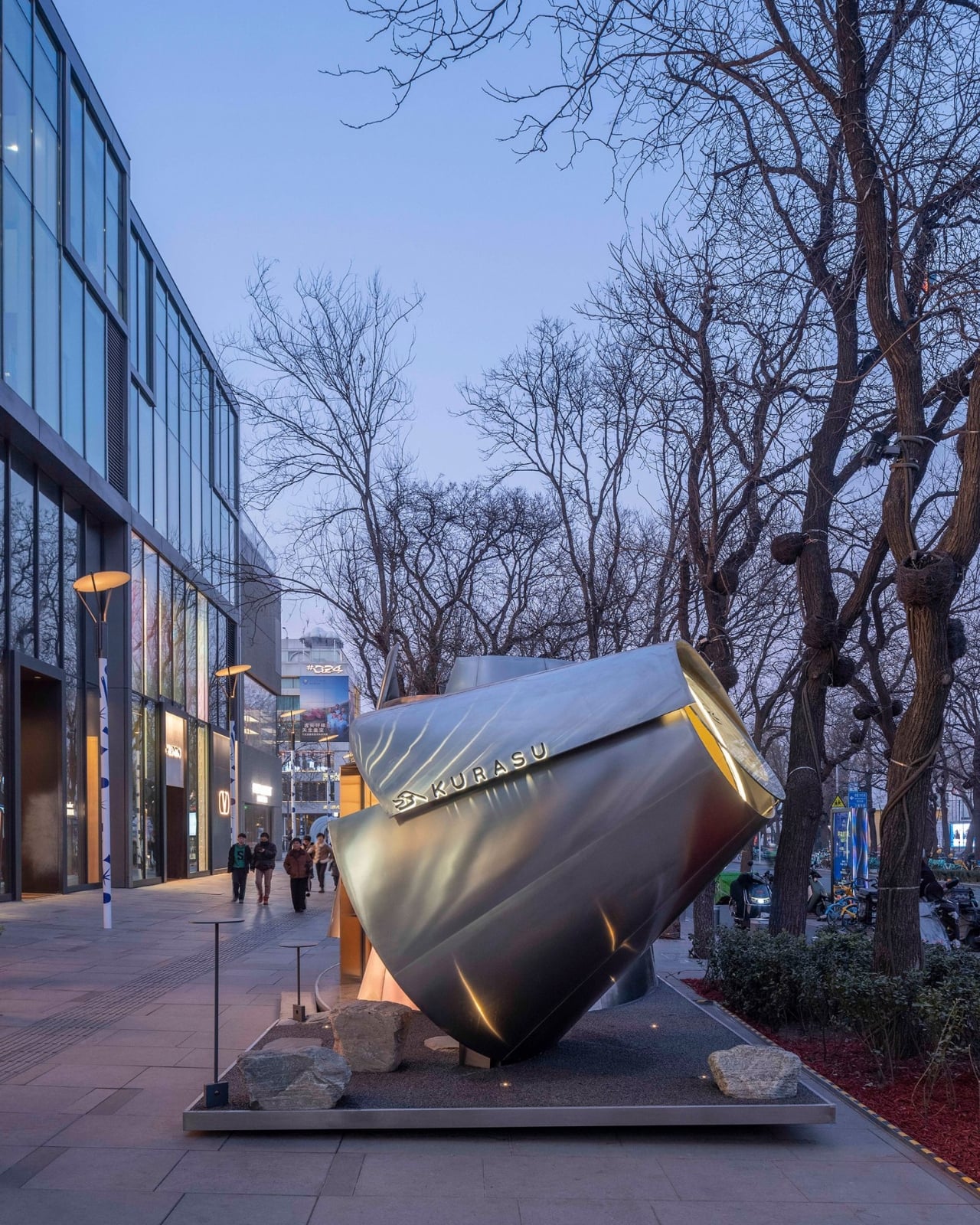
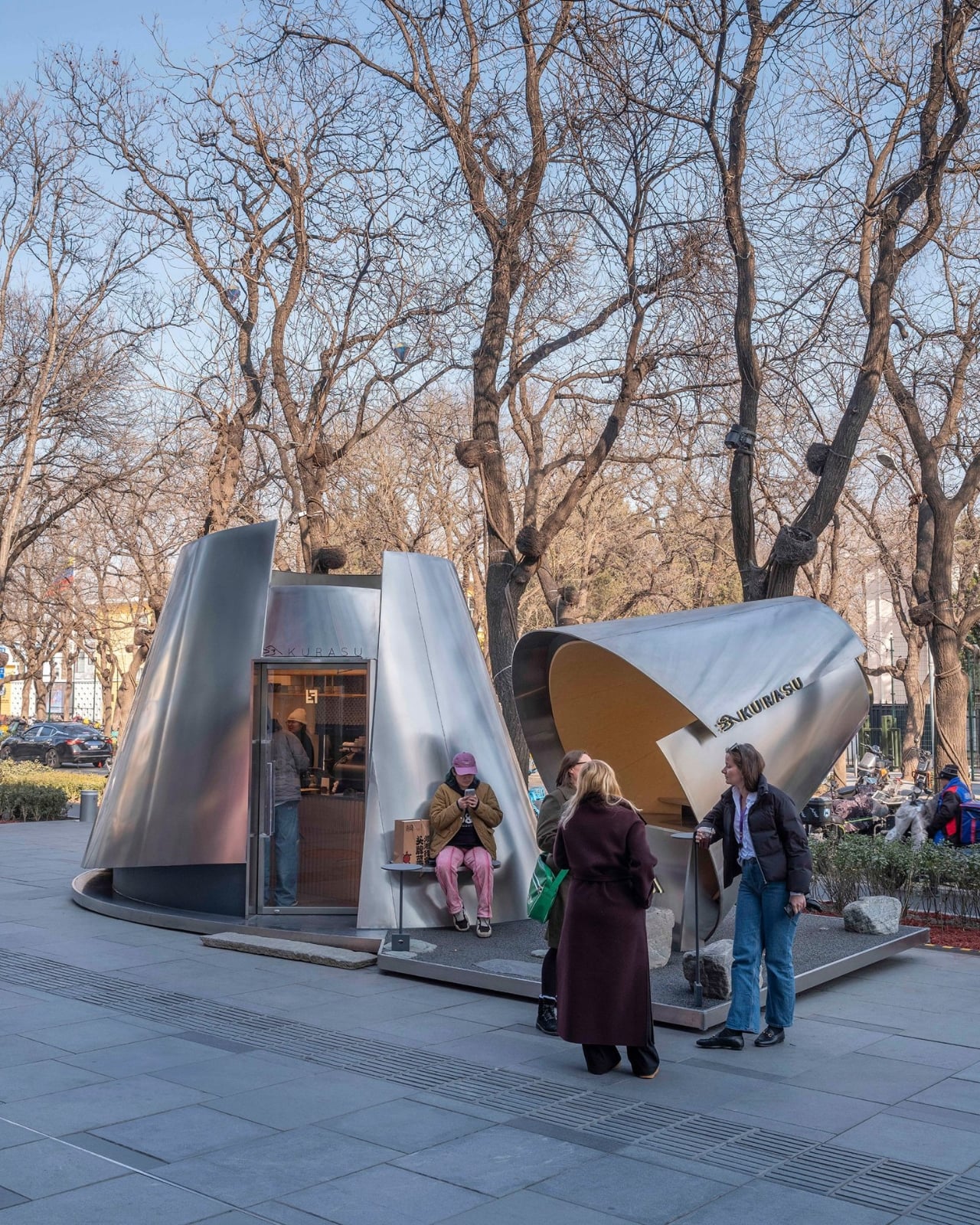
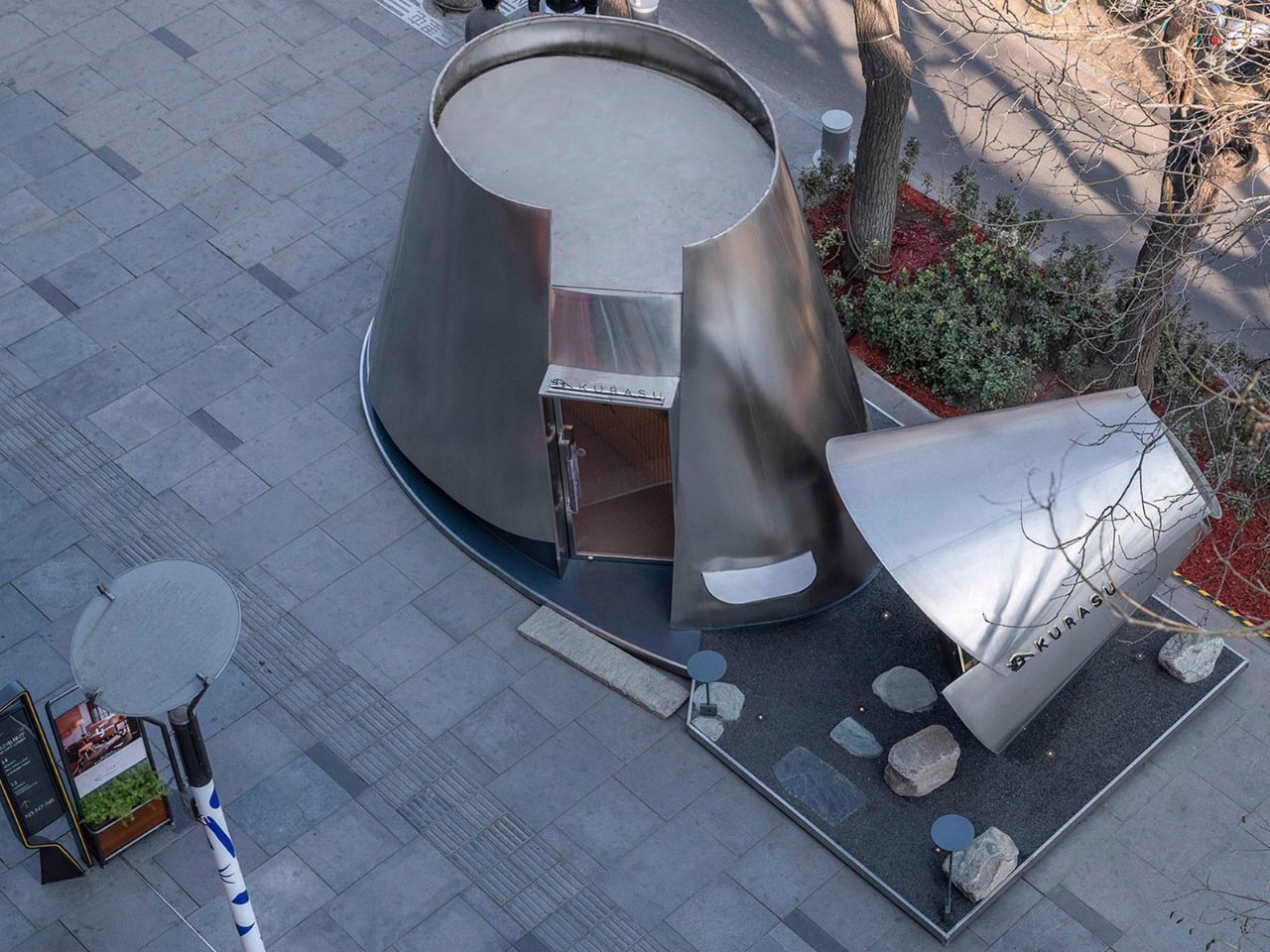
The studio’s latest project is a temporary coffee pavilion for Kurasu, the Kyoto-based specialty coffee brand, installed at Taikoo Li Sanlitun, one of Beijing’s most high-traffic outdoor retail districts. On the surface, it’s a pop-up kiosk. But spend a few seconds looking at it, and you realize it’s a fully considered piece of architecture that draws its entire form from a pour-over coffee dripper.
That’s the concept at the core of it: the geometry of a pour-over dripper, translated directly into architectural form. Atelier L scaled up the familiar conical vessel into two interconnected volumes, each clad in reflective stainless steel that mirrors the movement and light of the city around it. The inspiration nods to origami, which tracks visually. The structure reads as almost folded into place, light and precise rather than heavy or monolithic.
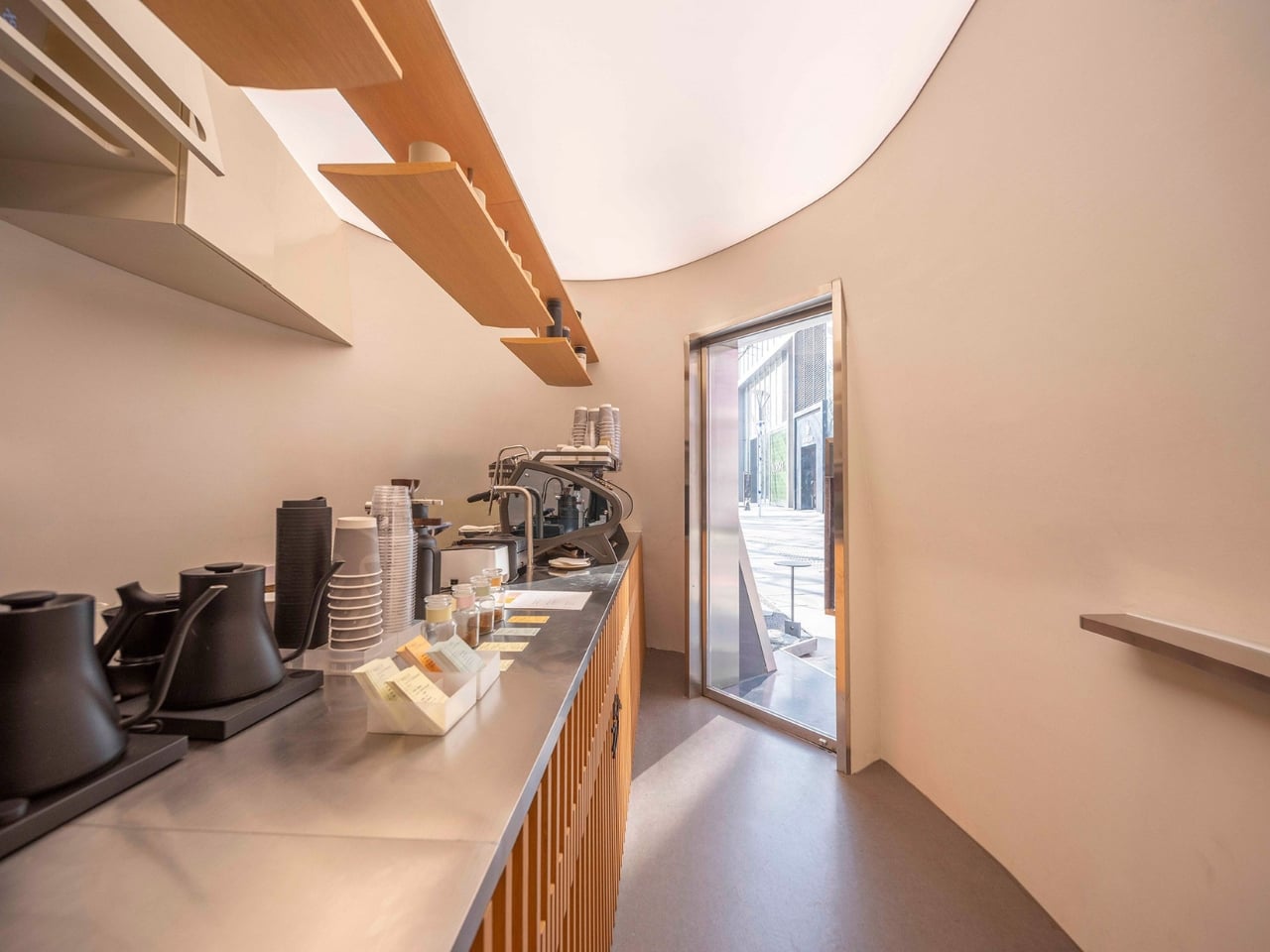
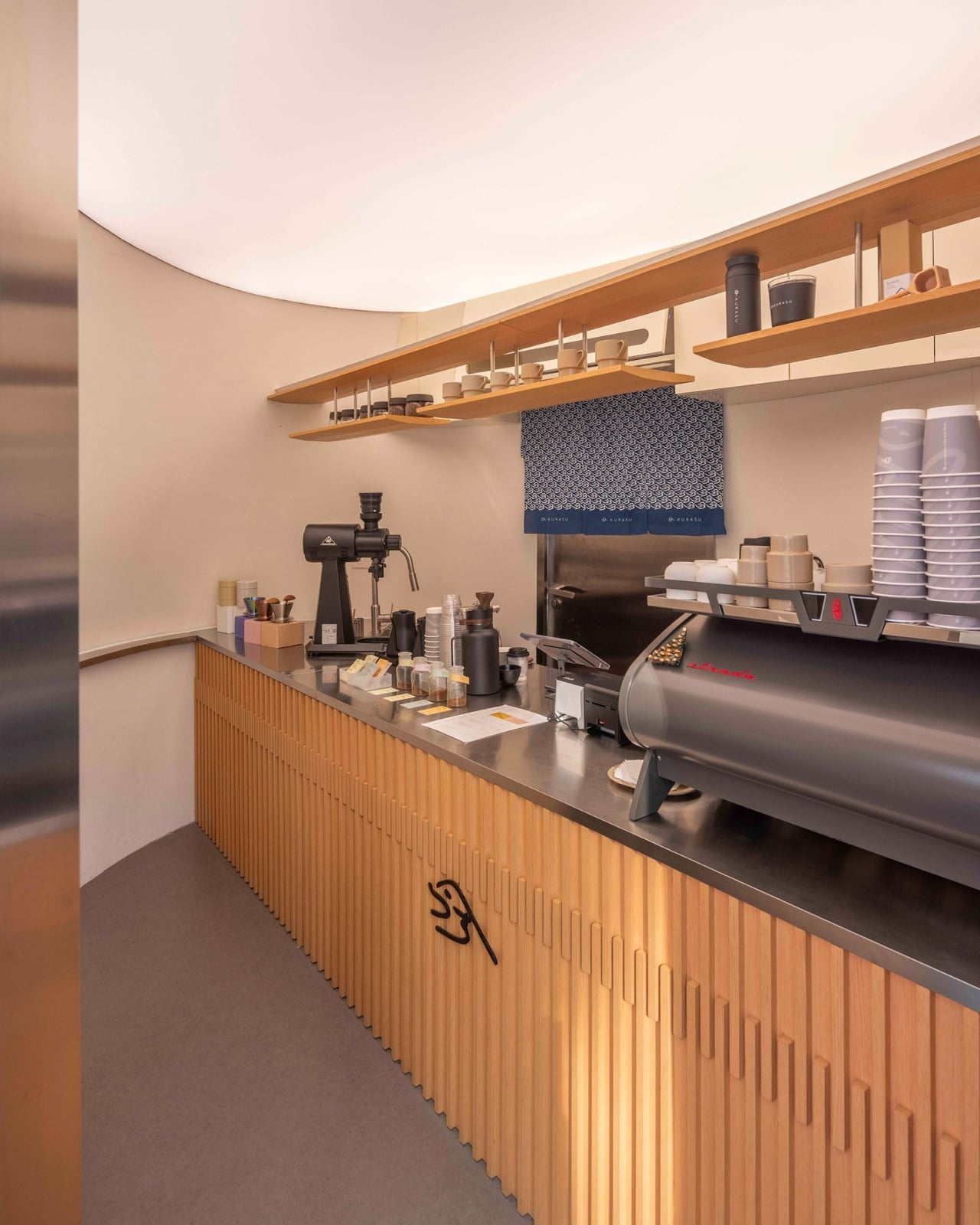
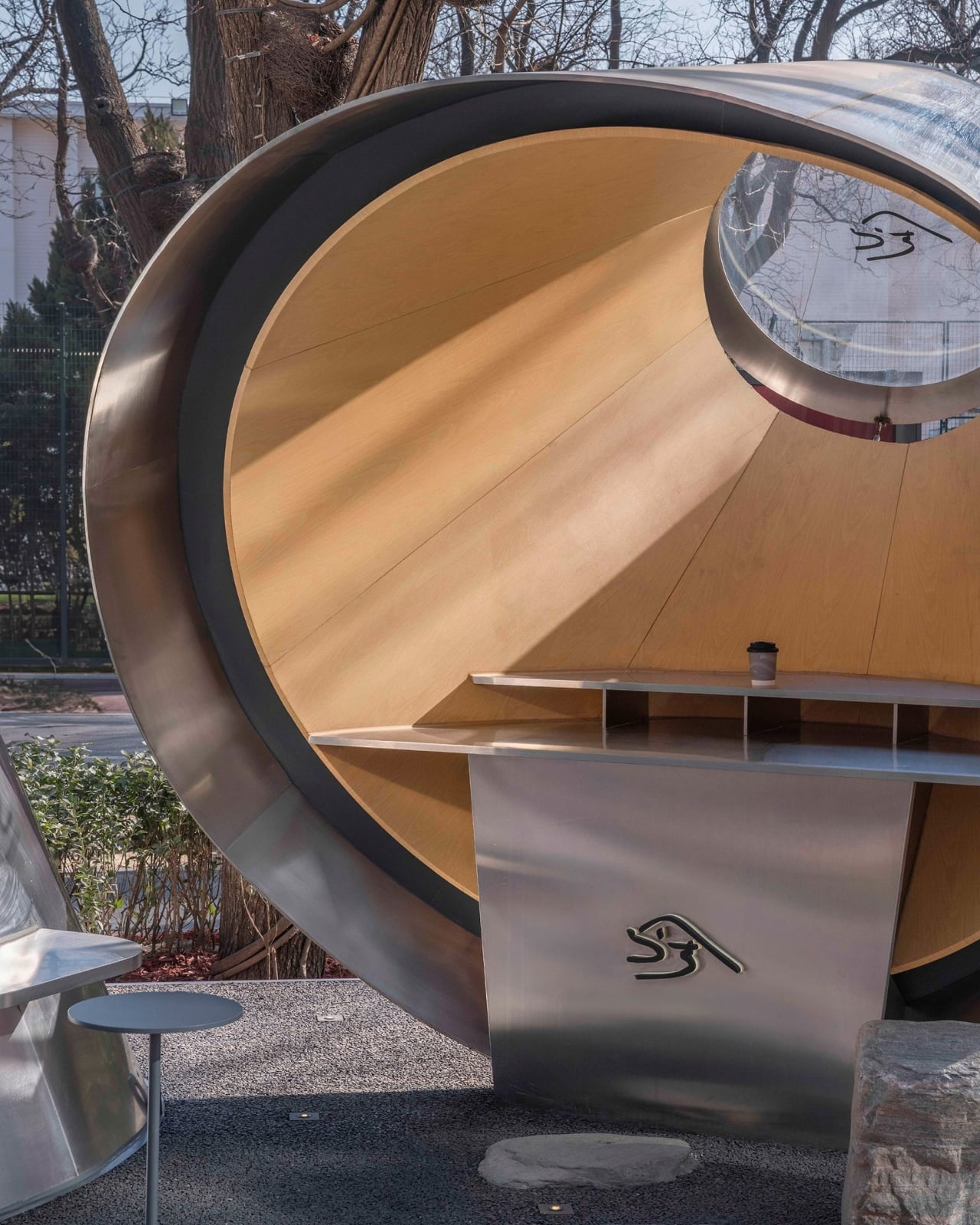
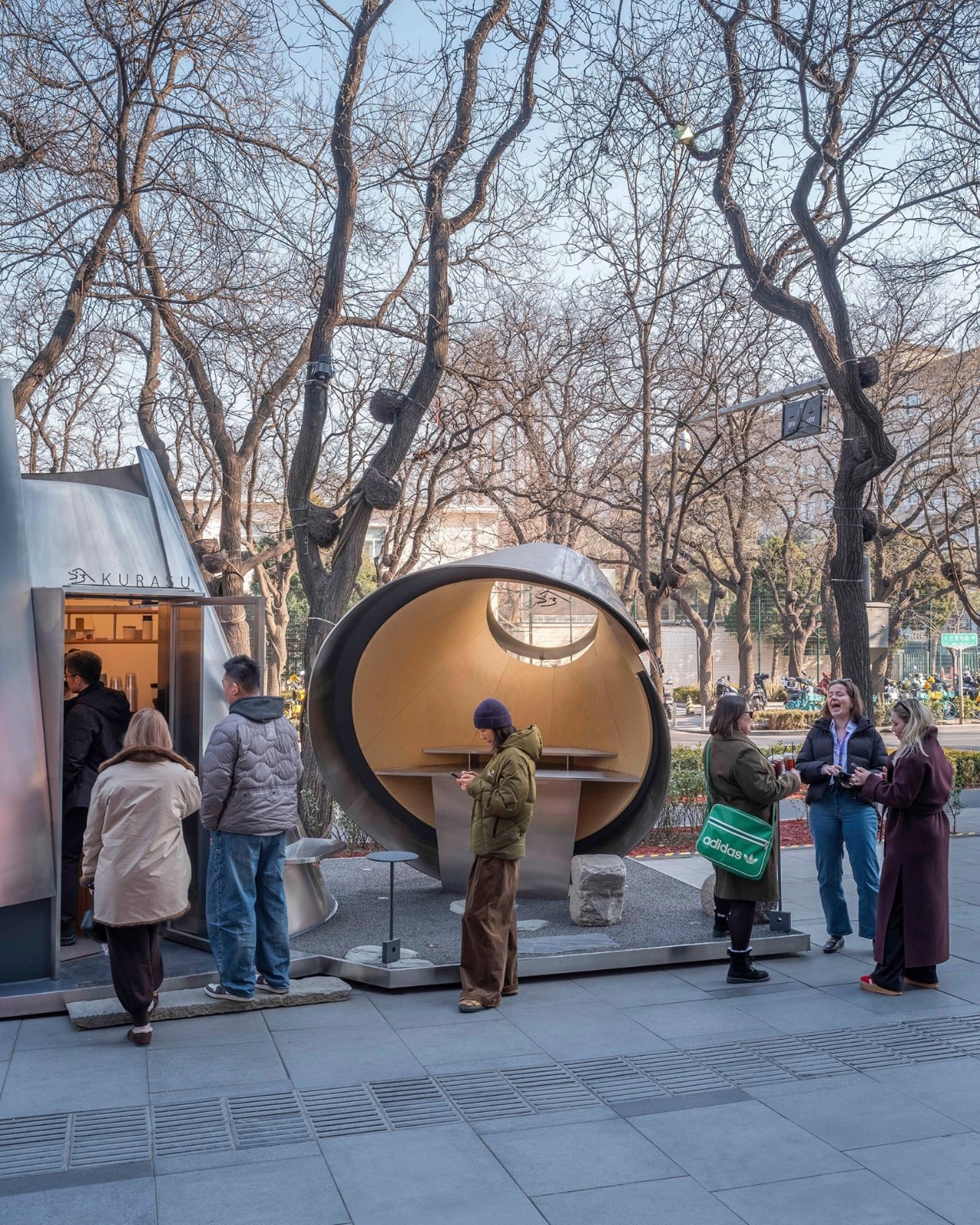
What makes the design smart rather than just clever is how the two volumes work separately but together. The larger one faces inward, creating a contained environment for the coffee ritual itself. A central linear bar clearly divides the space between barista and customer, and the wall inclinations, subtle as they are, actually serve a functional purpose: they create more movement space behind the counter while making the customer-facing side feel more expansive than its actual square footage. That kind of spatial sleight of hand is hard to achieve in a compact footprint, and Atelier L manages it without making you feel like you’ve noticed it.
The smaller volume does something entirely different. It cantilevers outward toward the street and functions as a display structure and micro gallery, which is an elegant answer to the challenge every pop-up faces: how do you engage passers-by without resorting to signage? Here, the architecture itself becomes the invitation.
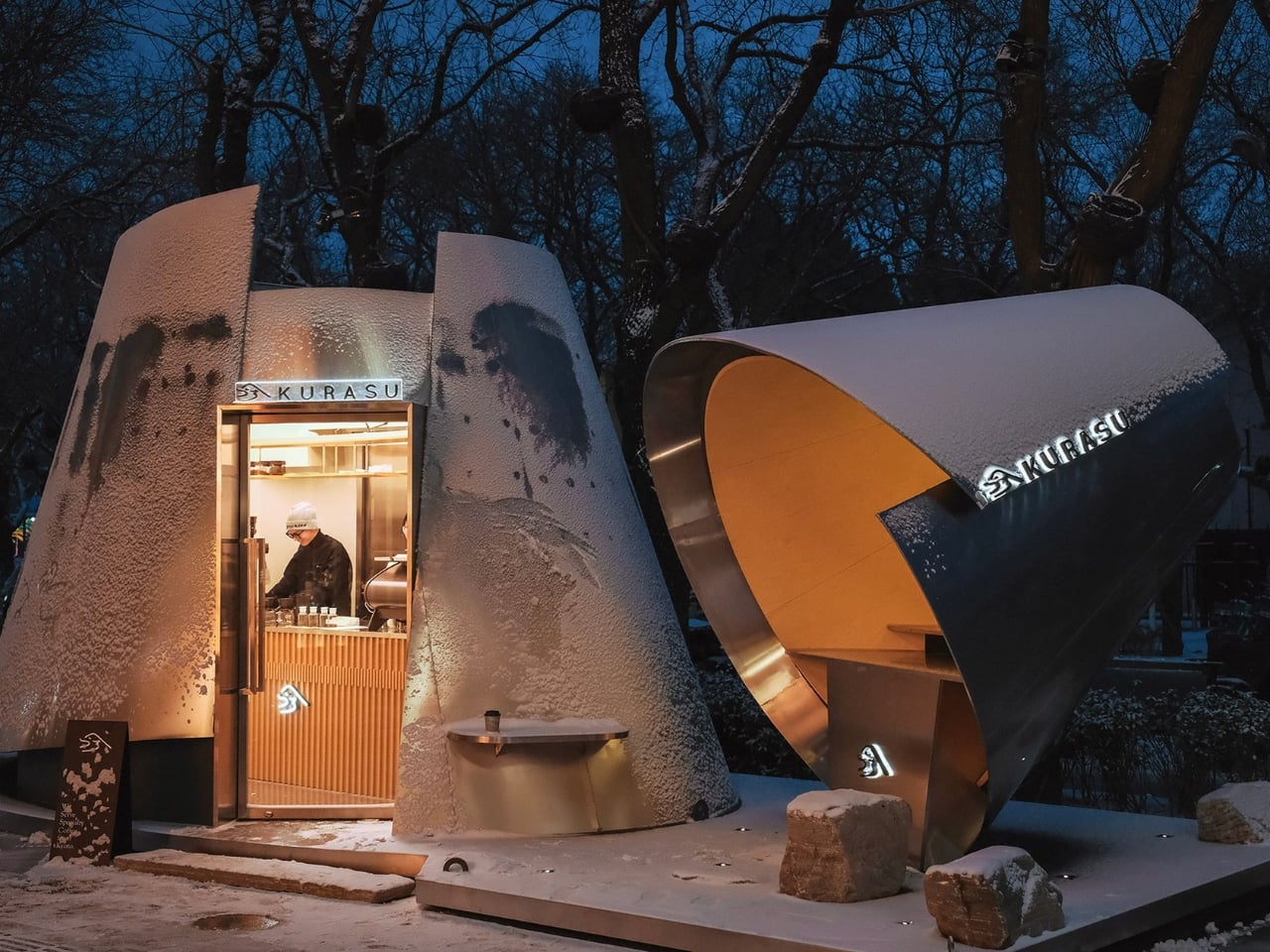
Materials are where my personal preferences become part of the read. The stainless steel exterior is striking without trying too hard. It catches the light, reflects the surrounding winter trees, and at dusk, the entire pavilion takes on the quality of a glowing lantern. But the interior feels more considered to me. Wood-grain aluminum brings warmth into what could easily have been a cold, overly minimal space, and the curved surfaces soften light across the small interior rather than bouncing it. The contrast between the pavilion’s cool, almost industrial exterior and its warmer interior is a deliberate design choice, and it works. The outside sets an expectation; the inside quietly revises it.
A steel base anchors both volumes, with its corners slightly lifted to maintain the illusion of paper-thin lightness. Dark gravel and natural stone slabs compose the ground plane. An operable glass roof keeps the interior connected to the sky, allowing the space to shift with the light and the movement of trees above. Those details matter. They’re what separate a thoughtful installation from a kiosk.
For a brand like Kurasu, whose identity has always been rooted in the quiet rituals of specialty coffee, a pavilion that architecturally embodies the act of brewing makes complete sense. The pour-over method is slow, precise, and intentional. The pavilion mirrors all of that. Whether the alignment between concept and experience was always the plan or sharpened through the process, it reads as completely resolved.
Pop-ups tend to get treated as design’s sketchpad, too temporary to be taken seriously. The Kurasu pavilion in Beijing is a case against that assumption. When the brief is specific and the constraints are real, a temporary structure can be as fully realized as anything permanent. Sometimes more so, because there’s no room to defer decisions or soften edges. You build it, it lands, and people either feel it or they don’t. This one lands.
The original Hario V60 is the kind of object that earns its own mythology. Released in 2004, it became the face of the third-wave coffee movement: a simple cone of heat-resistant glass (or ceramic, or plastic, depending on how serious you are) that turned the morning cup into a ritual of patience and precision. Baristas loved it. Coffee nerds obsessed over it. And somewhere along the way, it became as recognizable as a kitchen object can get without appearing on a museum shelf.
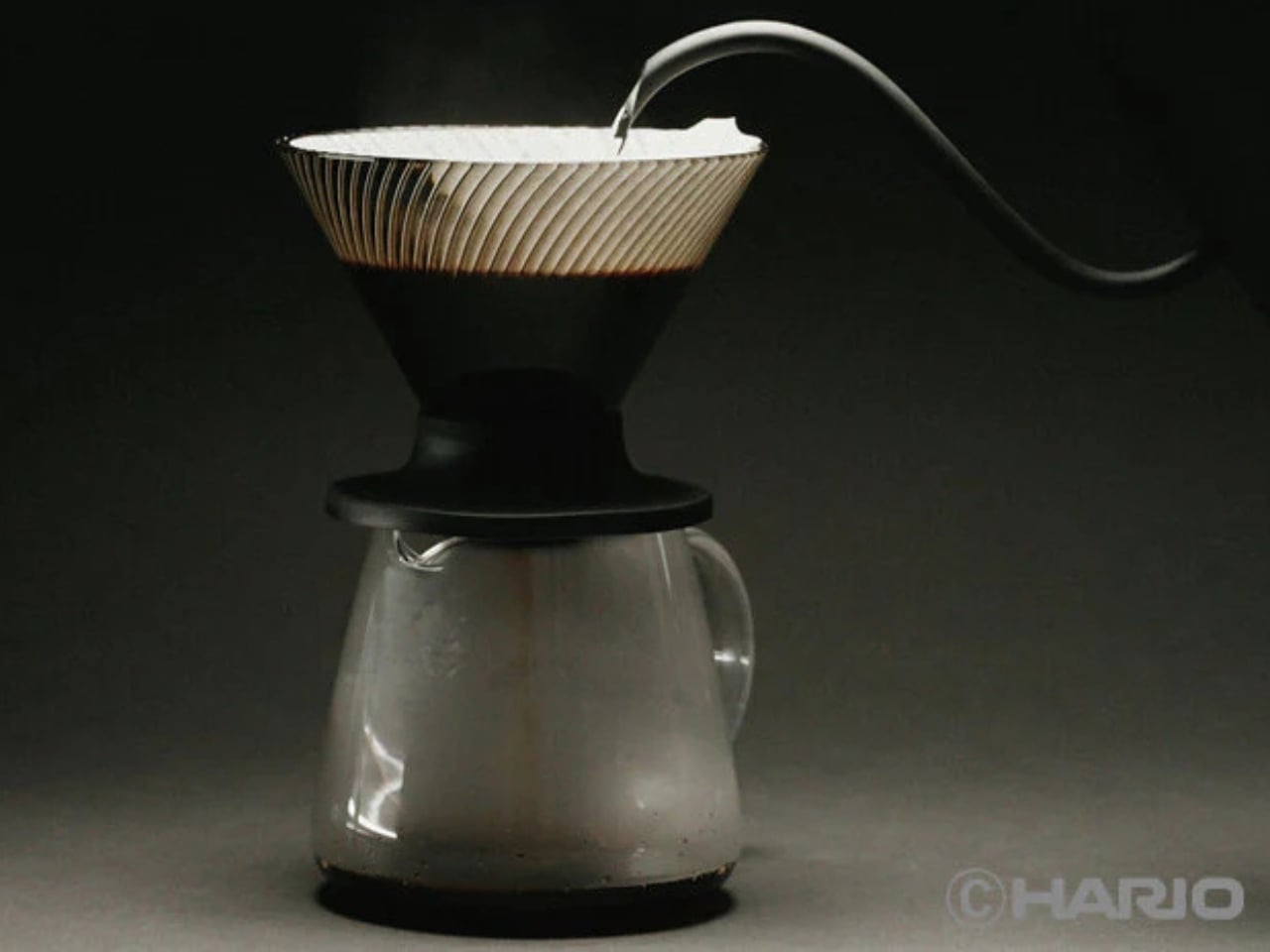
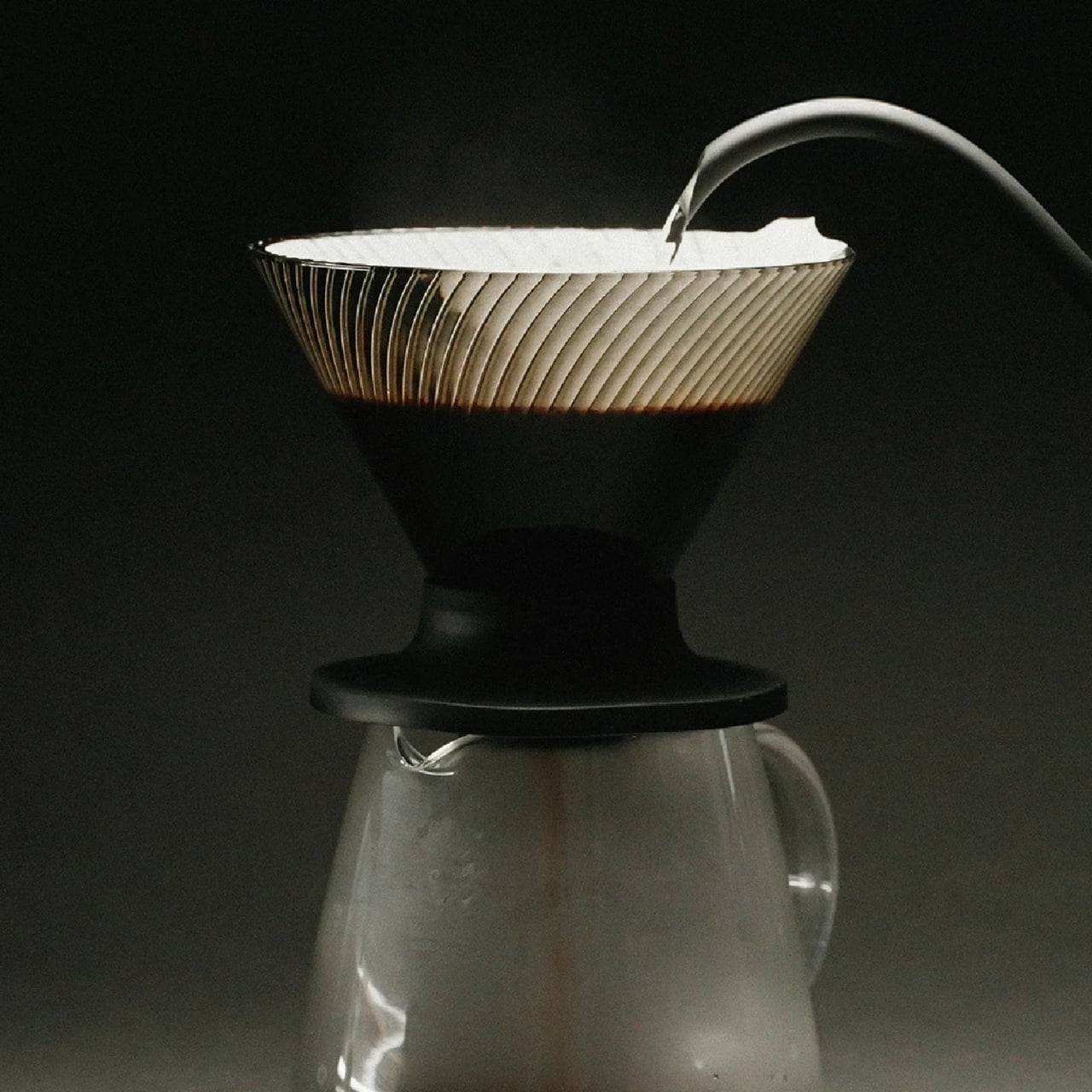
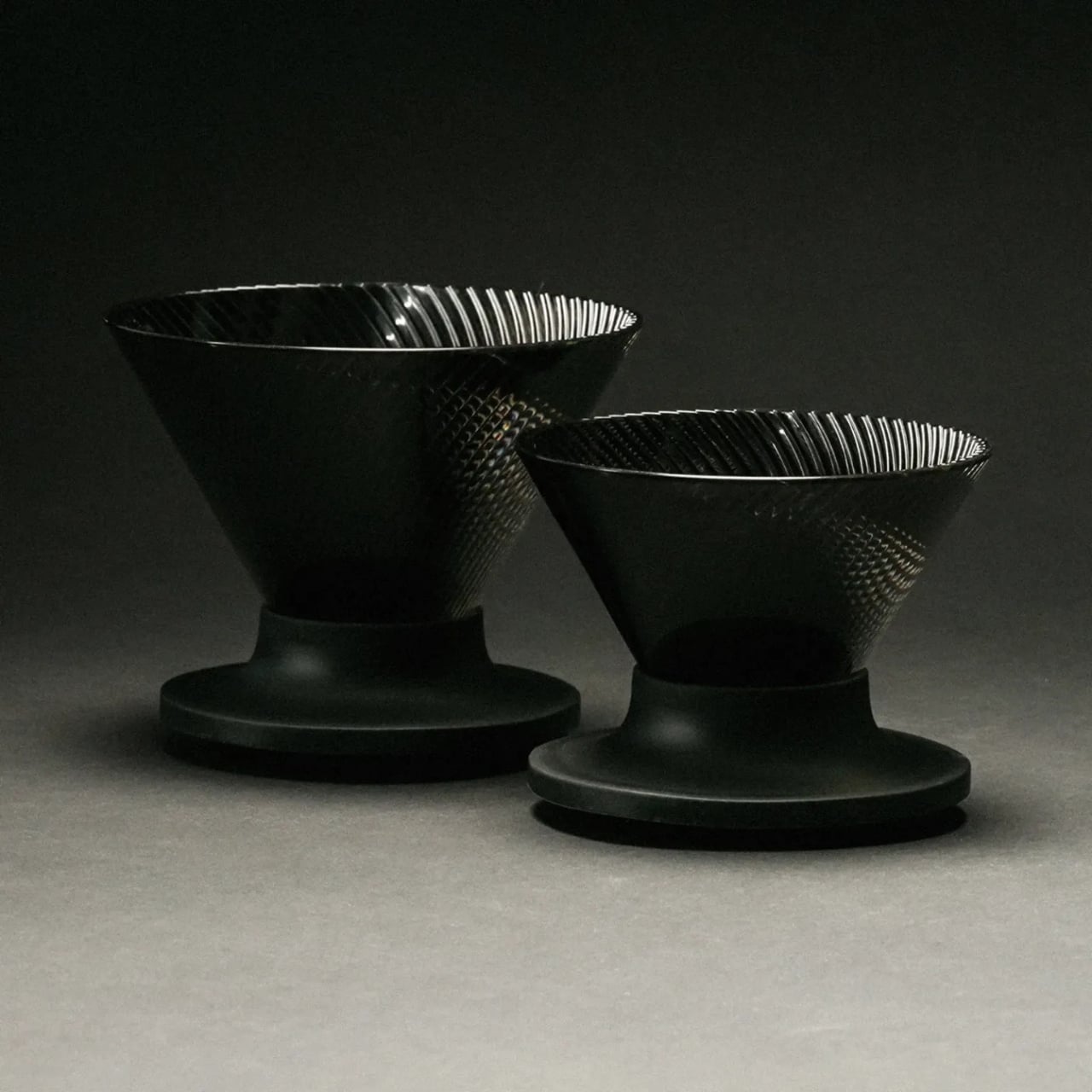
That legacy makes the V60 Dripper NEO an interesting proposition. Hario could have left well enough alone. Instead, they spent two years quietly engineering a redesign that touches the one part of the V60 nobody talks about but everyone deals with: the ribs.
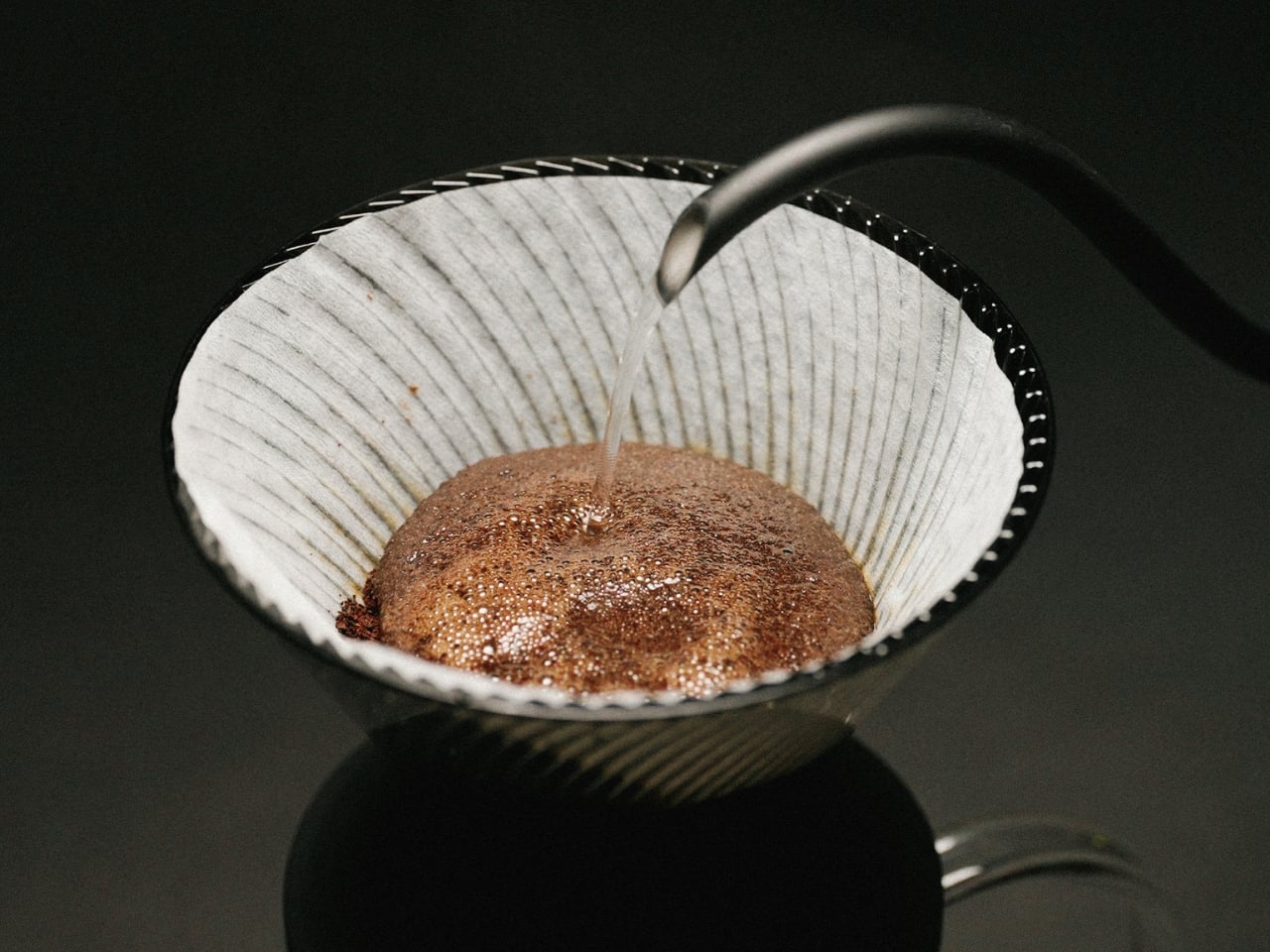
The original V60’s spiral ribs are the reason it works the way it does. They create space between the paper filter and the cone wall, allowing air to escape as water flows through. The result is a controlled extraction, but one that demands attention. Get your grind wrong, pour too fast, let your focus wander, and the brew either stalls or races past the point of no return. The V60 has always been a beautiful, slightly unforgiving thing.
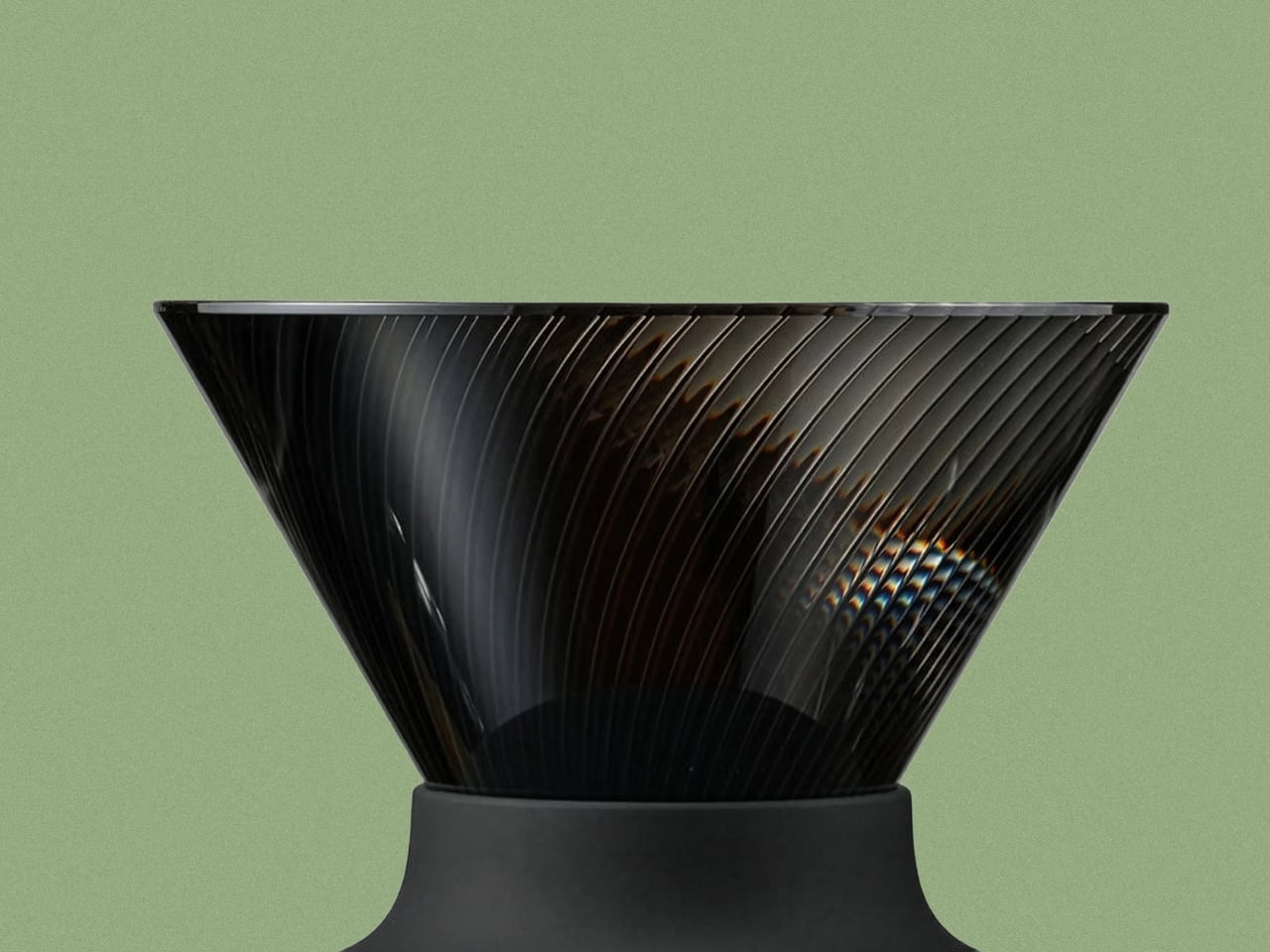
The NEO changes that equation with a genuinely clever structural update. Instead of a single spiral rib pattern, it introduces 72 ultra-fine vertical ribs along the upper walls of the cone, which then converge into 9 deeper ribs near the base. This dual-zone design guides water evenly down the entire wall before accelerating it through the outlet. The effect is a faster, more uniform extraction that minimizes bitterness from water lingering too long in contact with the grounds. The cup you get out the other end is cleaner, sweeter, and more vibrant, with a balanced acidity that doesn’t tip into sourness.
Two years of testing went into getting this right. Hario’s engineers ran exhaustive trials on rib counts, angles, and flow dynamics before landing on this configuration. The fact that they filed a utility model patent on the structure suggests they believe it is genuinely novel, not just cosmetically different.
The material choice is also worth noting. The NEO is made from Tritan resin, a lightweight, high-clarity plastic that handles heat retention better than standard plastic alternatives. It keeps the brewing temperature more stable from the first pour to the last, which matters more than people think. Temperature consistency is one of those variables that separates a good cup from a great one, and the NEO addresses it without requiring you to do anything differently.
For anyone already embedded in the V60 ecosystem, the compatibility factor is a quiet win. The NEO works with all existing V60 switch bases, so you don’t have to rebuild your setup from scratch. It comes in two sizes, both made in Japan, and retails for around $23.50, which is an accessible price point for a piece of equipment that functions this thoughtfully.
Not everyone is convinced, though. Since hitting the market, the NEO has sparked a genuinely divided response from the coffee community. Users describe the brew as cleaner and more tea-like, which sounds appealing until you realize that some people loved the original V60 precisely for its acidic punch and intensity. One Reddit user put it plainly: the NEO presents coffee “differently,” not necessarily better. For experienced brewers who spent years dialing in their pour technique to coax specific flavors from the classic cone, the NEO’s smoother, more forgiving nature feels less like an upgrade and more like a personality change. That’s a fair criticism. Hario didn’t make a bad V60. They made a different one, and that distinction is exactly what has the coffee internet divided.
Pour-over coffee has always had a slight gatekeeping problem. The ritual appeals to people who love it precisely because it requires care, but that same learning curve turns off anyone who just wants a good cup without turning their kitchen into a science experiment. The V60 NEO doesn’t eliminate that ritual. It just makes the margin for error a little more forgiving, which means more people get to enjoy the result without years of practice behind them.
The original V60 deserved its legacy. The NEO earns its own, just a slightly different one.
While I really do love coffee, I do not have the tools at home to experiment with different espresso pulls and make my own espresso-based drinks. So I always end up just buying drinks from my favorite coffee shops. Every time I get the urge to actually buy my own machine, the fact that machines seem so complicated stops me from building my own home coffee bar.
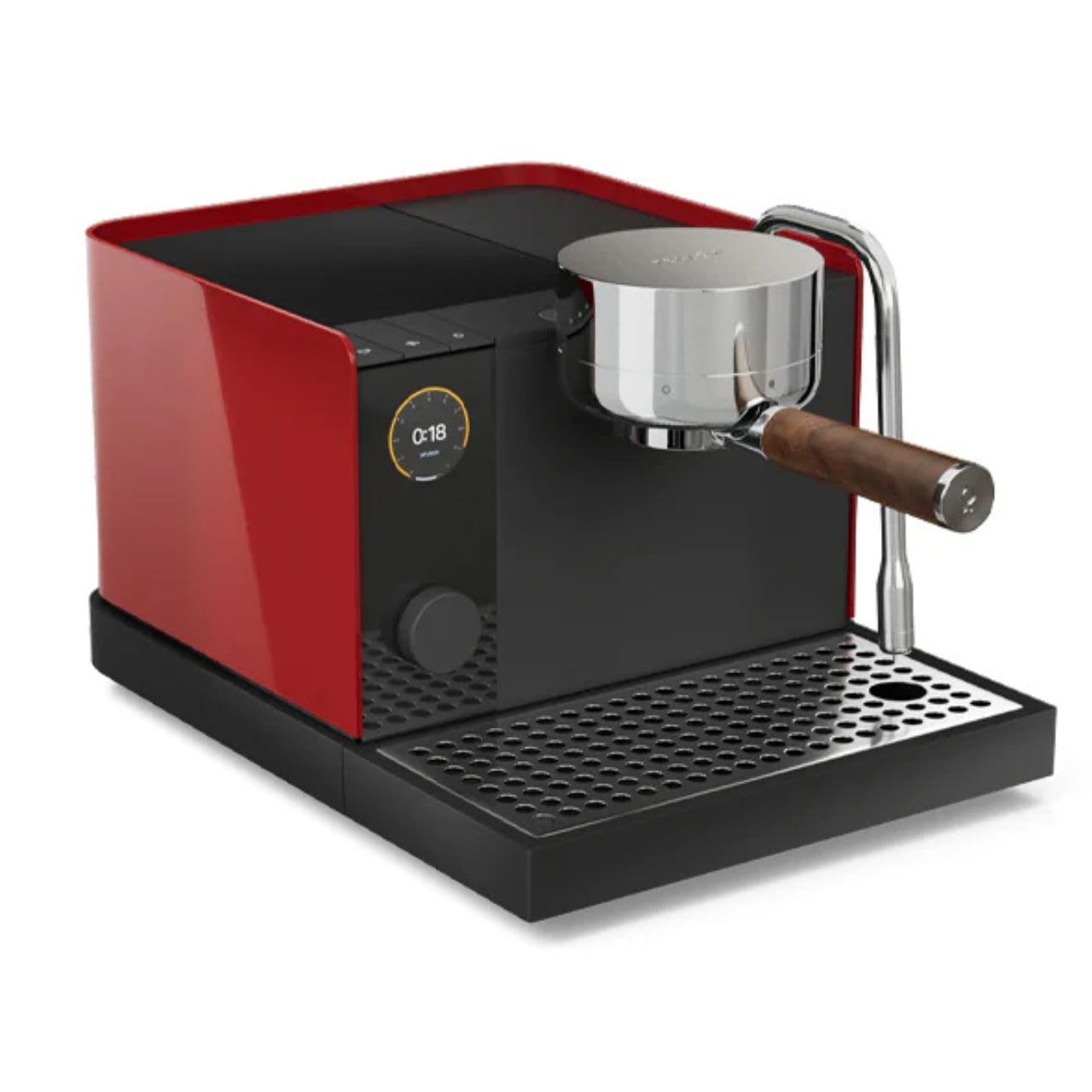
The Espresso Series 1 by Fellow, the first home espresso machine from the coffee equipment brand, is positioned as a premium semi-automatic machine that bridges the gap between professional-level performance and approachability. This means that whether you are a beginner in the home coffee game or you are an expert, you will be able to appreciate the features that this machine brings.
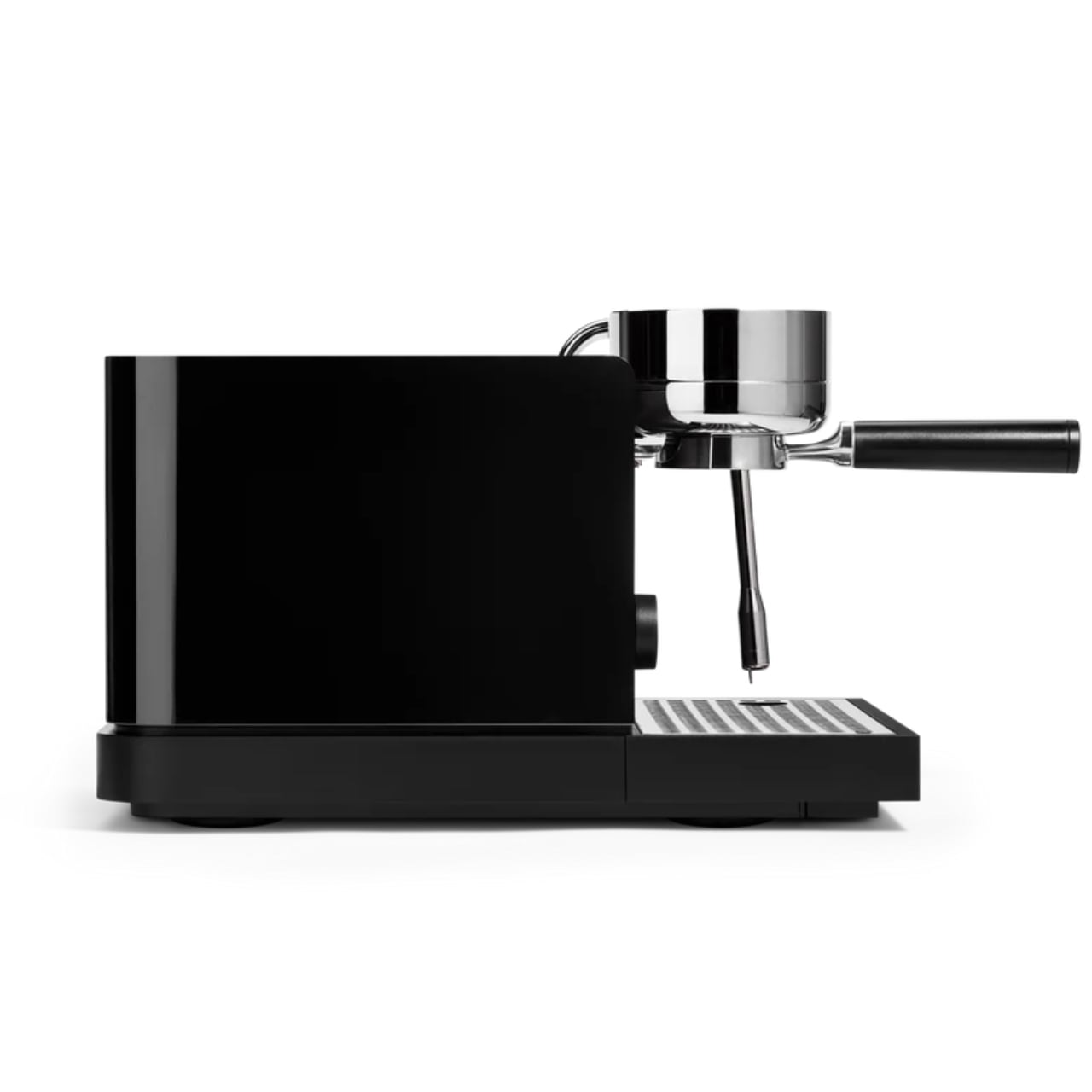
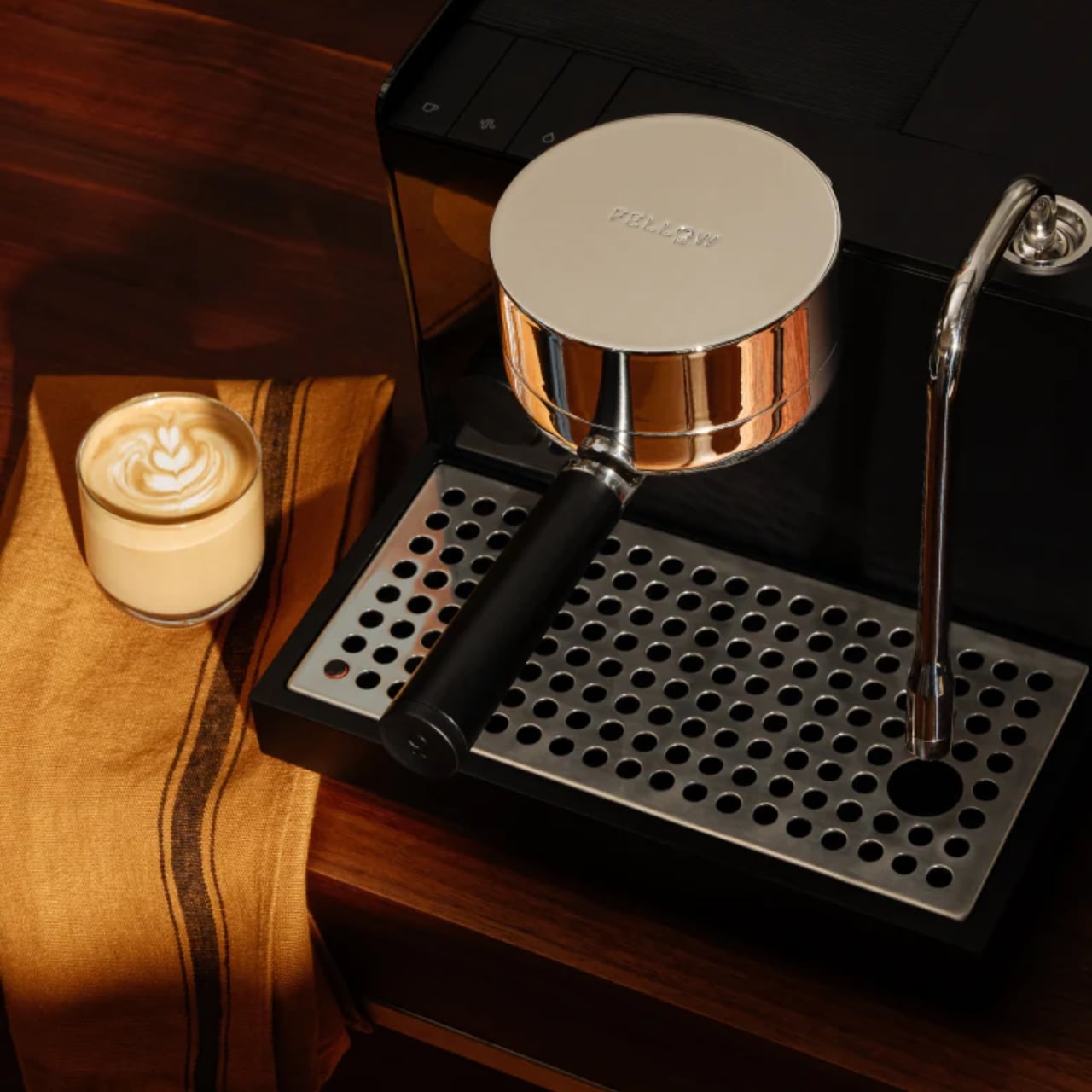
Before we even talk about what it does, let’s talk about what it looks like, because this machine is genuinely beautiful. Fellow has always been known for its clean, minimal aesthetic, and the Espresso Series 1 is no different. It comes in a sleek matte black finish with a painted ABS outer wrap, and the portafilter features a real wood accent that gives it a warm, premium feel. The three piano-style buttons for brew, steam, and hot water sit flush against the front panel, keeping things looking uncluttered and intentional. There is also a rubberized cup-warming mat on top, which is a small but thoughtful detail that makes it feel more like a café machine than a home appliance. With dimensions of 12.4 inches wide, 11 inches tall, and 17.25 inches deep, it has a compact footprint that would sit beautifully on any countertop without overwhelming the space.
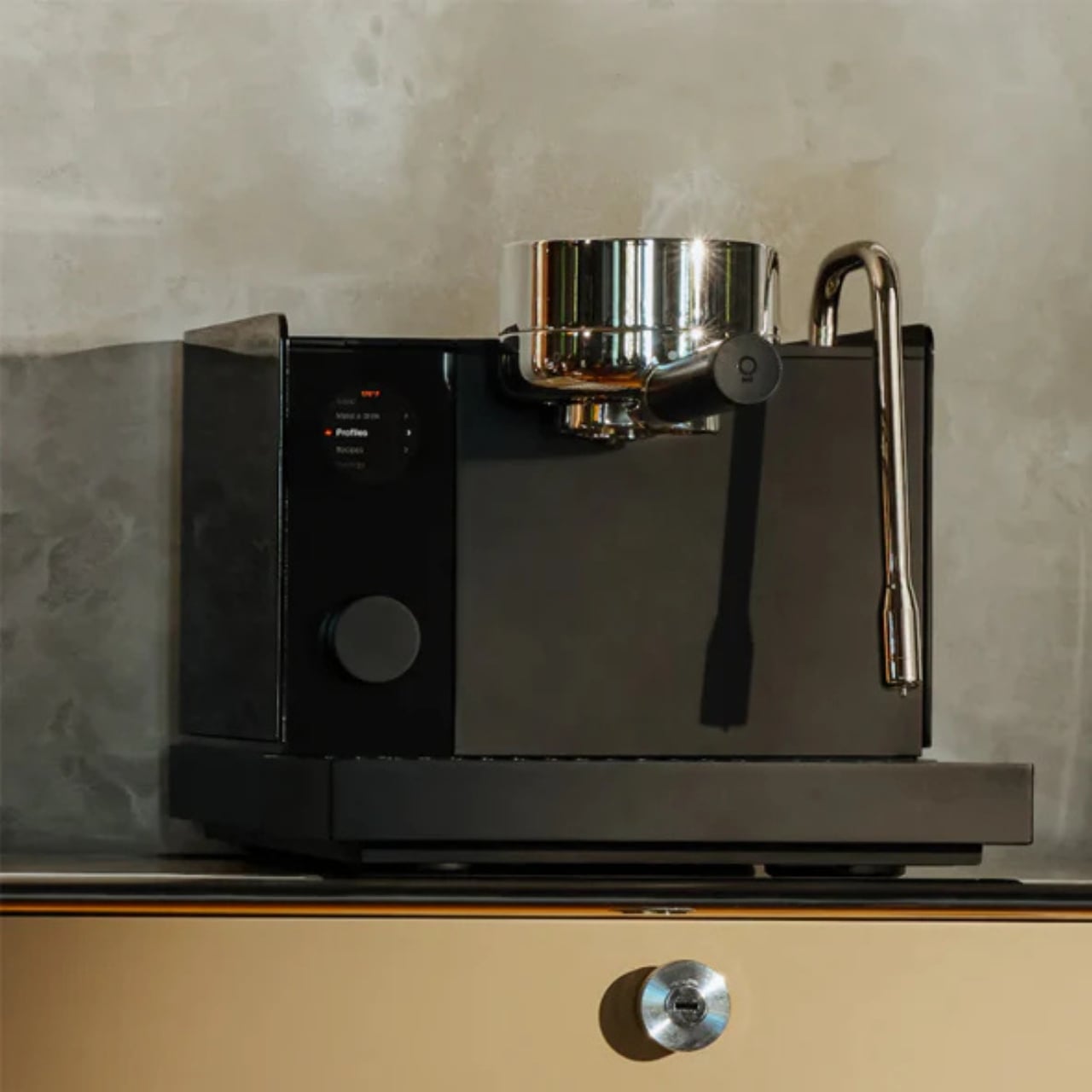
One thing that I appreciate about this machine is that the full-color LCD display will walk you through your entire brewing process. It can tell you if your shot ran too fast or too slow and can even suggest grind adjustments you can make. As a noob, this would be truly helpful if I ever got something like this. It also gives you customizable profiling including pressure, pre-infusion, brew temperature, and steam pressure, so as your skills grow, the machine grows with you.
Another feature worth highlighting is its patented Boosted Boiler system. It has a three-part heating system: a flow-through heater, a 225ml boiler, and a dedicated group head heater. This system works together to give you to-the-degree temperature stability and near-instant transitions between brewing and steaming. The warm-up time is also impressively fast at under two minutes, so you are not standing around waiting for your machine to be ready before your first morning cup.
Speaking of steaming, the steam wand comes with auto-purge and auto-stop functions, which are features typically found in high-end café machines. This takes a lot of the guesswork out of steaming milk, which is something that intimidates a lot of beginners (myself very much included). Whether you are going for a flat white, a latte, or a cappuccino, having a wand that practically guides you through the process is a huge plus.
The Espresso Series 1 also connects to Wi-Fi and syncs with the Fellow app, where you can save, download, and share espresso profiles with other users. You can download brewing profiles built specifically for certain coffee roasts, which is incredibly useful when you are still learning how different variables affect your shot. It turns espresso-making into something closer to a community experience, where you can learn from other home baristas and experiment with profiles without having to start from scratch every time.
From a materials standpoint, Fellow did not cut any corners. The boiler, portafilter, and baskets are all food-grade stainless steel, the water lines are reinforced silicone, and the entire machine is BPA and PFAS-free throughout. For anyone who is conscious about what their beverages come into contact with, this is a meaningful detail that is genuinely worth calling out. The machine also uses a commercial-standard 58mm portafilter, which means it is compatible with a wide range of third-party baskets, tampers, and accessories. So as you go deeper down the espresso rabbit hole, you have the freedom to upgrade and personalize your setup without being locked into proprietary parts.
Priced at $1,499, the Fellow Espresso Series 1 is definitely an investment. But for everything it offers, from guided brewing and app connectivity to professional-grade temperature control and a genuinely beautiful design, it makes a compelling case for itself. If you have been putting off building your home coffee bar because espresso machines have always felt too intimidating or too technical, this might just be the one that finally changes your mind. It certainly has me reconsidering my morning coffee shop run.
The coffee table is the hardest surface in the living room to get right. Put too much on it, and it looks like a staging mistake. Put too little and the room reads unfinished. The minimalist approach settles this by demanding each object justify its place twice — once as something useful, once as something worth looking at. Every product on this list earns on its own terms.
These five objects were chosen because they share a logic rather than a matching aesthetic. A kinetic toy, a modular ceramic, a structural tray, a floating mobile, a handpoured candle vessel — different categories, different price points, one consistent standard. Each one does more than its category suggests, and none of them requires anything around it to look complete. That is the whole point of a surface that does more by doing less.
1. ClearMind Kendama
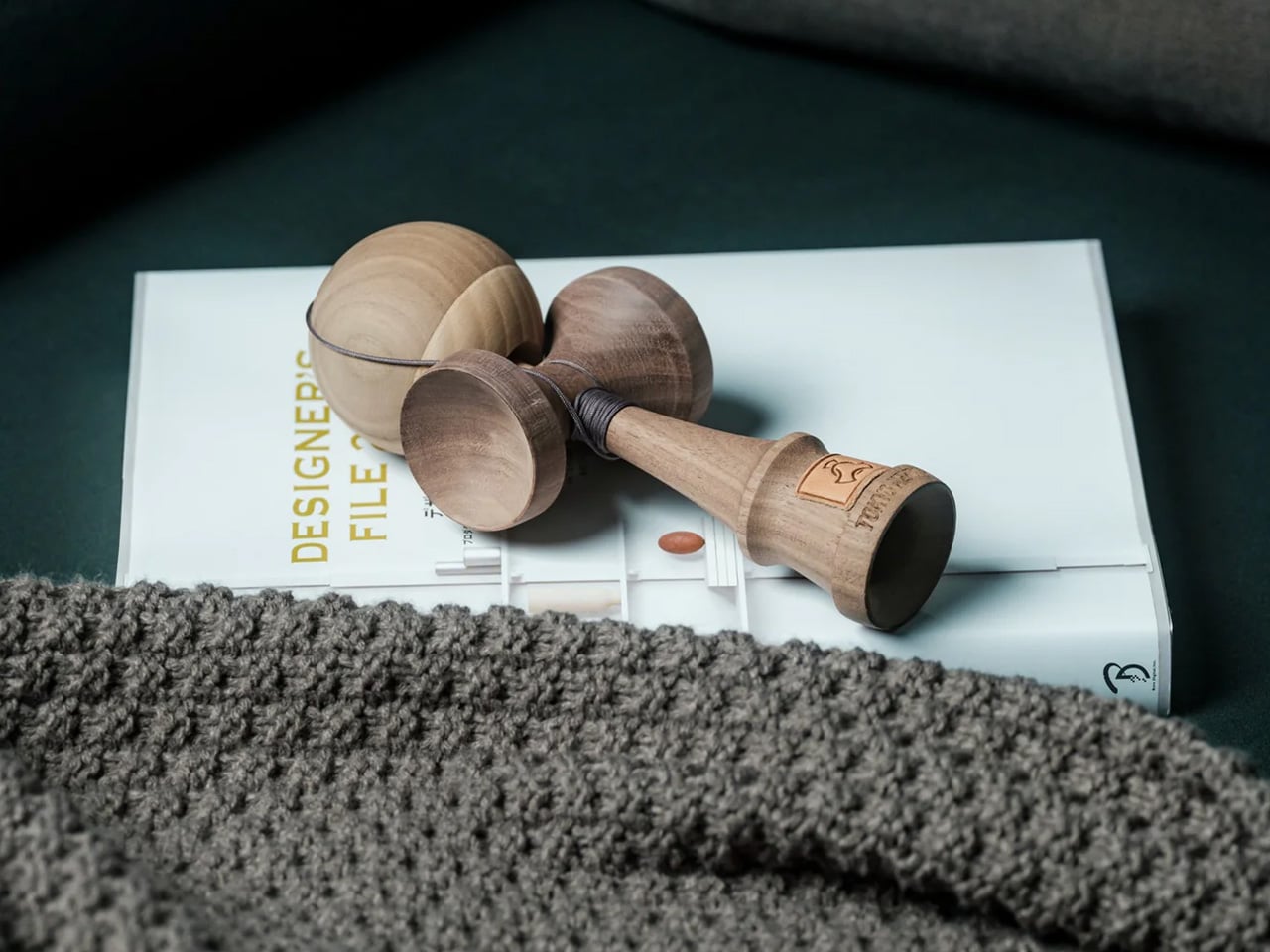
The ClearMind Kendama is the object on this list that will raise the most eyebrows and earn the most genuine conversation. Crafted in Tokyo from solid, unpainted walnut and maple, it’s a Japanese skill toy that sits on a minimalist coffee table the way a chess set sits on a side table — quietly suggesting a way of spending time that isn’t a screen. The two-tone wood grain reads as sculpture when it’s at rest, and the proportions are tight enough that it occupies almost no footprint while contributing significant material presence and warmth to the surrounding surface.
What makes the Kendama work as a coffee table object rather than just a novelty is the quality of its materials and the honesty of its finish. Walnut and maple at this weight don’t look like toys — they look like considered objects, which is exactly what they are. The practice itself is deliberately simple: the ball catches on the cup, the spike, the base plate. Each successful catch requires a small act of focus that pulls you out of passive consumption and toward something genuinely present. On a minimalist table, it functions as an invitation — to pick up, play, put down — and every time it rests, it returns to being a beautiful wooden form that needs no explanation.
The unpainted natural wood reads as a sculpture at rest
The meditative play pattern offers something no other object on this list provides
What we dislike:
The cup-and-ball proportions are an acquired taste for anyone who associates kendamas with children’s toys
The string can feel visually busy if left extended rather than gathered
2. Torre Modular Ceramic Vase
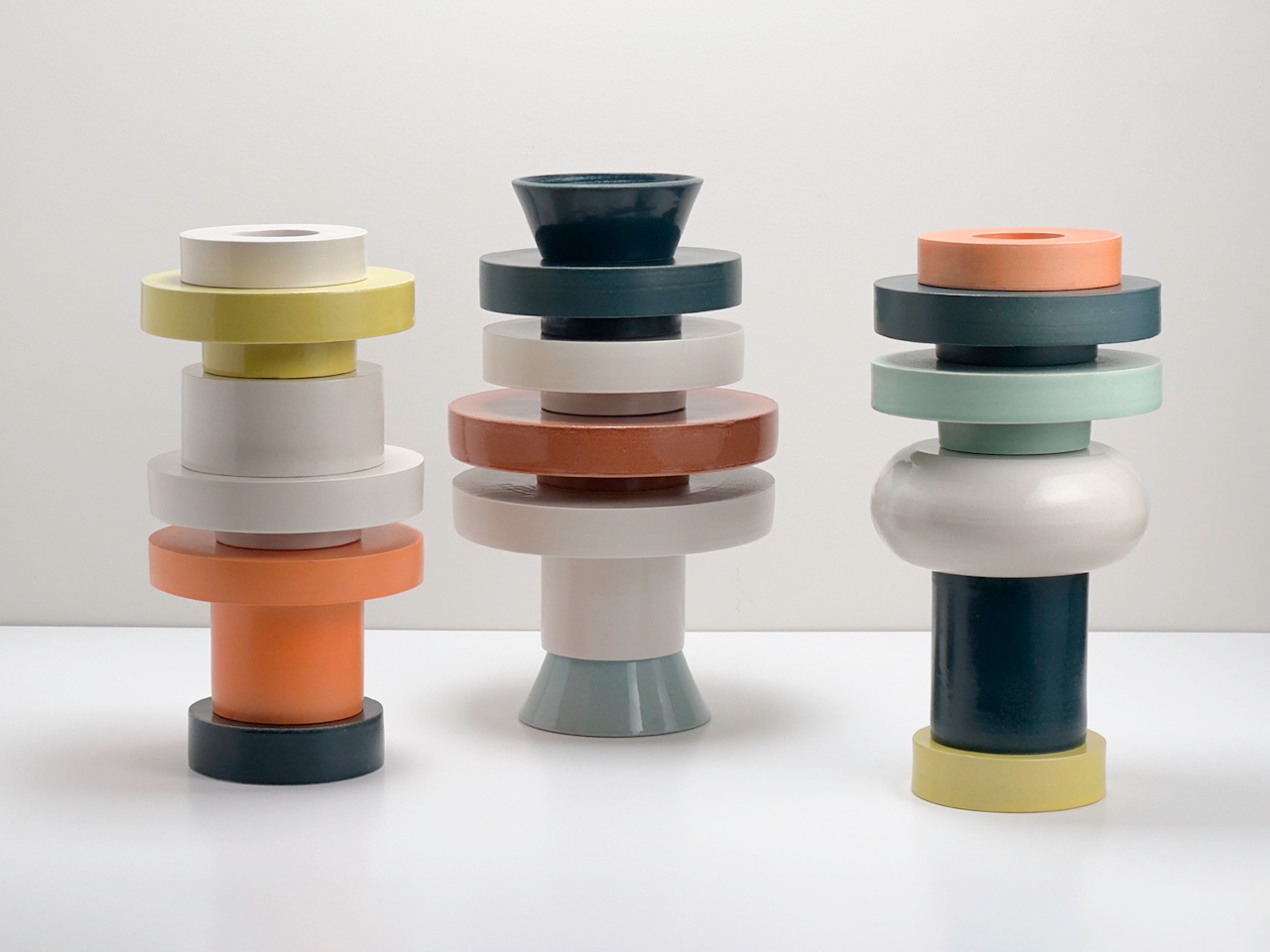
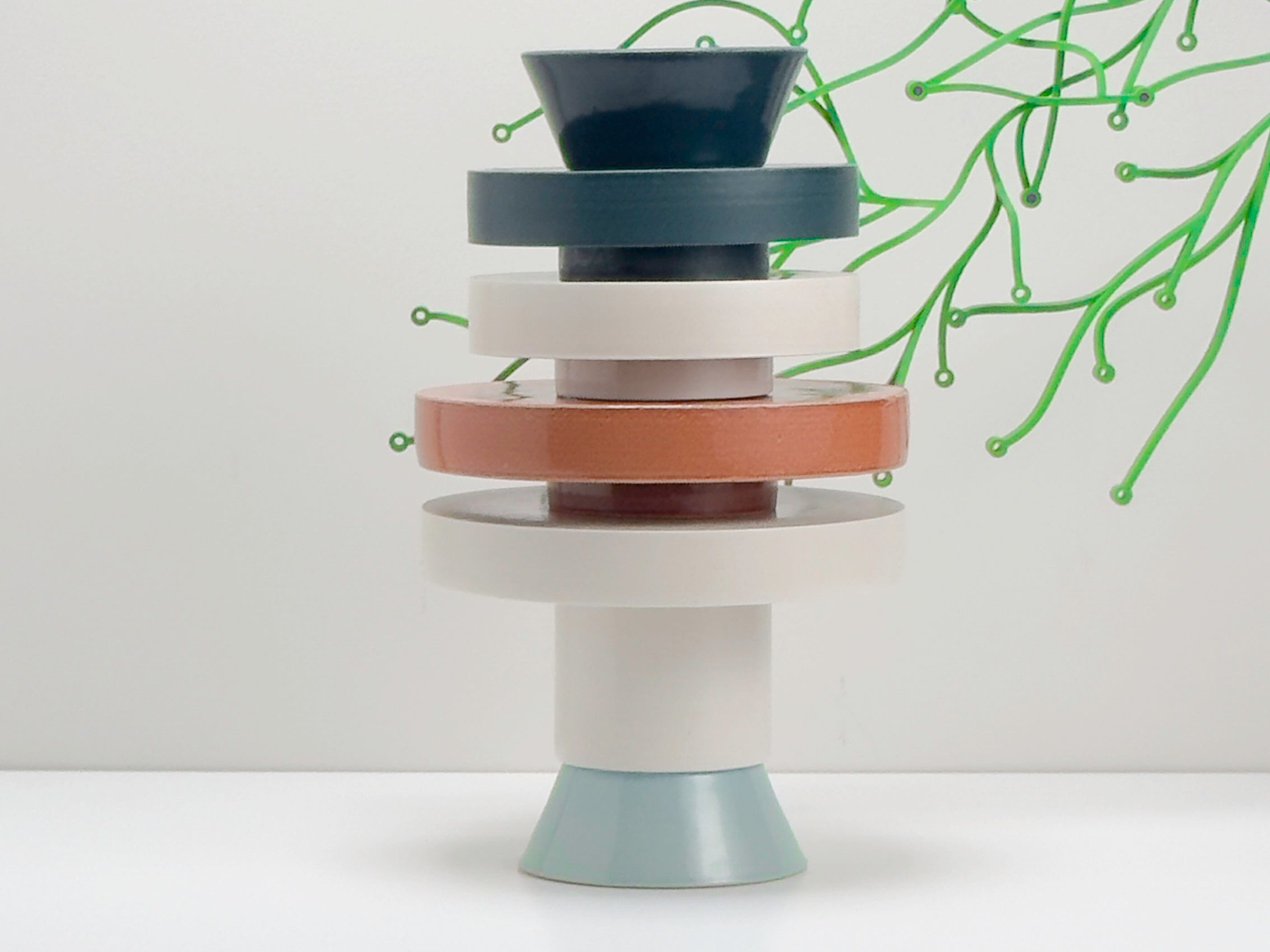
The Torre Modular Ceramic Vase by Scott Newlin for Dudd Haus is the most expensive object on this list by a significant margin, and the one that earns that price most transparently. Each piece is hand-thrown at Powerhouse Arts in Brooklyn and arrives as a set of stackable ceramic modules — two, three, or four components depending on the configuration — that interlock through consistent diameters and lipped rims. The forms are architectural, muted, and deliberately quiet: off-white, sand, stone. On a coffee table, they read as a composed sculpture from any angle, at any height.
What sets the Torre apart from a standard ceramic vase is that it offers a choice every time you approach the table. Stack the modules high for a vertical moment, separate them into a low cluster, or pull one aside entirely and set a dried stem inside the remaining piece. The act of rearranging them is part of the object’s value — it rewards attention in a way that static objects never can. For a minimalist surface, the price demands justification, and it finds it here: the Torre is three objects in one, each configuration as resolved as the last, none of them requiring anything around them to look finished. It is the closest thing on this table to pure design.
What we like:
Each reconfiguration creates a genuinely different visual read
The hand-thrown ceramic carries natural variation that improves with close attention
What we dislike:
At $1,200, it is a significant commitment for a surface object
The off-white and sand palette, while intentional, can disappear on lighter table materials
3. Sail Away Tranquility Mobile
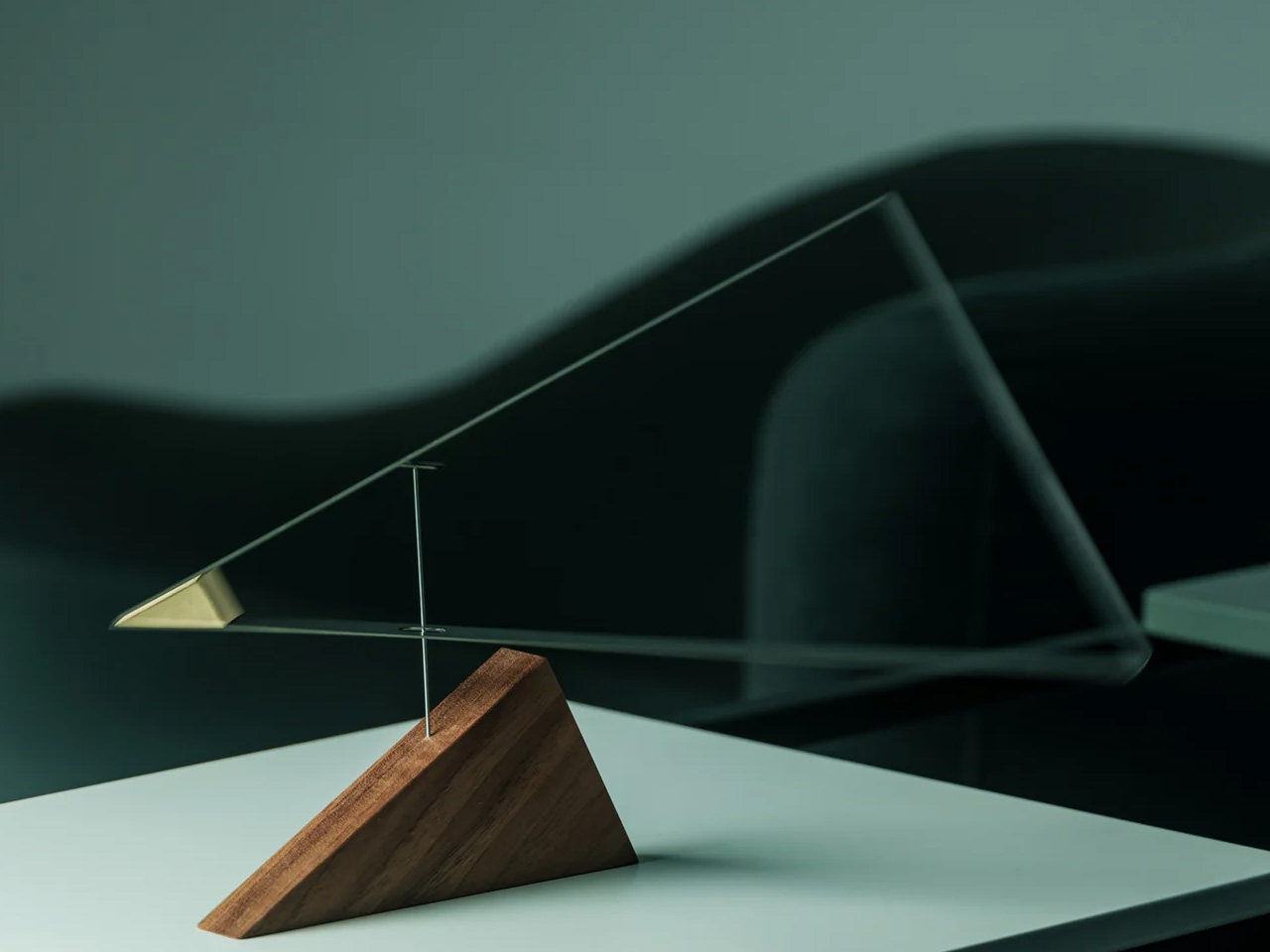
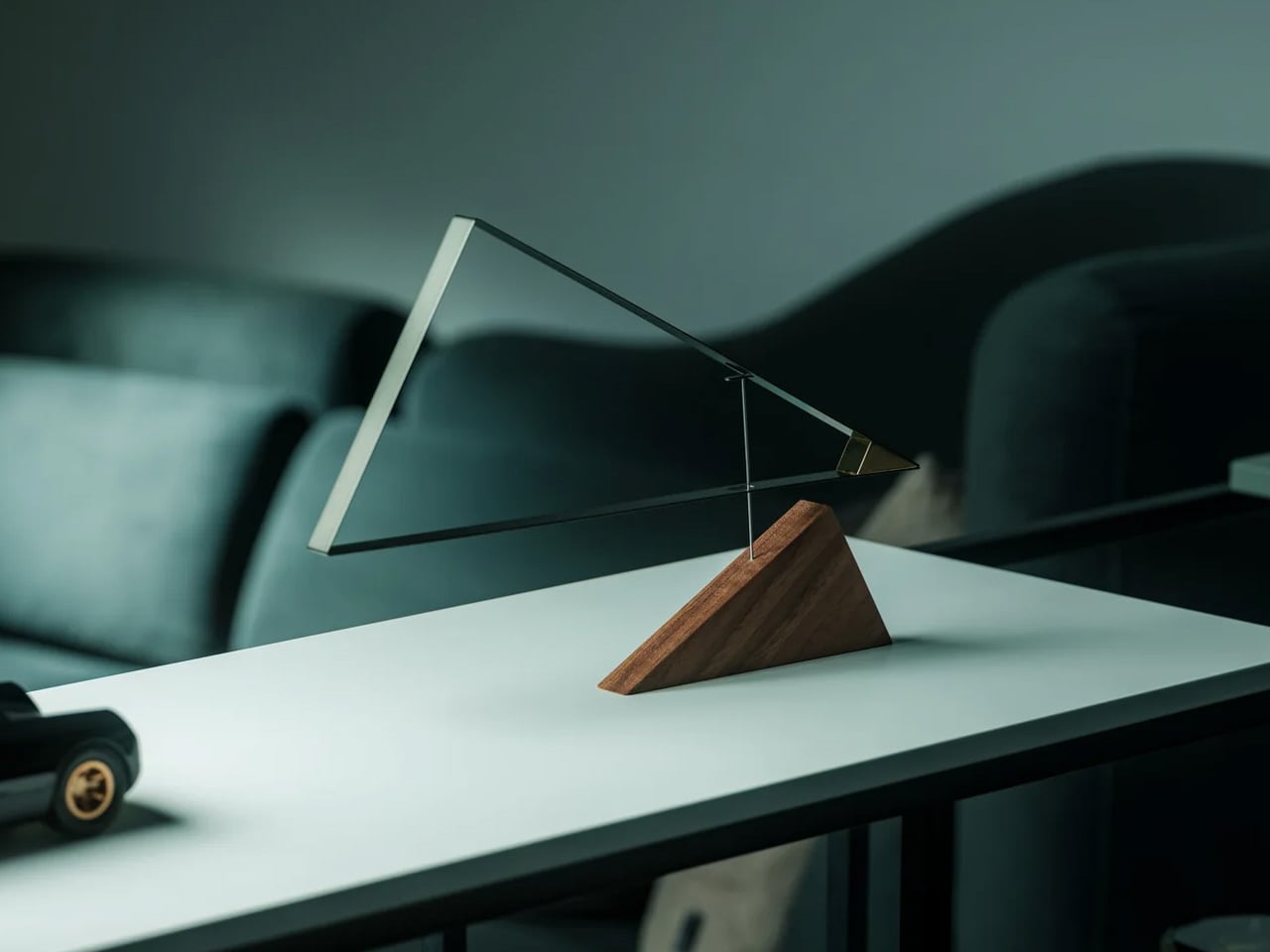
The Sail Away Tranquility Mobile is the only object on this list that moves, and movement is precisely why it belongs here. Three balanced triangular forms — drawn from the geometry of sailboats — hang in calibrated tension and respond to the slightest air current in the room. On a coffee table, it introduces a kinetic quality that no static object can replicate: the table becomes the most animated surface in the living room without adding any visual weight. The proportions are compact enough for a tabletop, the construction is clean, and the physics are genuinely surprising the first time you see it shift in still air.
What makes the Sail Away work as a minimalist object is its restraint. The movement is subtle rather than theatrical — a slow drift rather than a spin — and it never demands attention so much as rewards it, which is the correct register for a surface meant to feel considered rather than performed. At $145, it occupies a different design category from every other object on this list: not sculpture exactly, not functional exactly, but somewhere between the two that feels honest rather than decorative. Set at the far edge of the Platform Tray, it creates a vertical moment that anchors the whole composition without competing with anything around it.
The kinetic movement brings a living quality to the table that no static object can match
The geometric forms hold their visual logic from any angle
What we dislike:
The mobile requires a stable surface — consistent vibrations from foot traffic or sound can overanimate it
The string suspension looks considered but feels delicate in a high-use living room
4. Simple Candle Co. Concrete Vessel
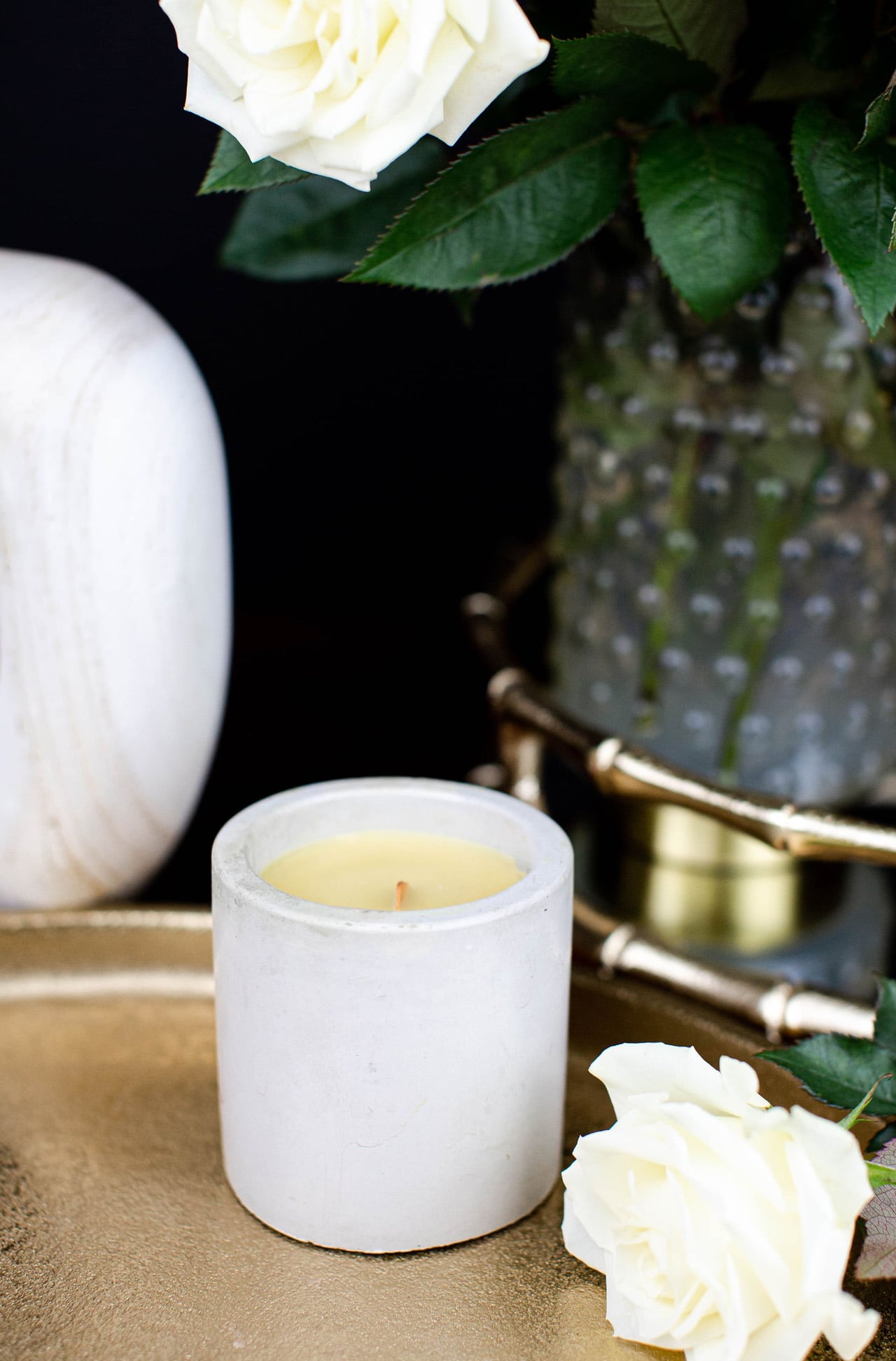
The Simple Candle Co. Concrete Vessel is the most affordable object on this list and the one that punches furthest above its price. Each vessel is hand-poured in small batches from a grey concrete body with a short soy wax wick and no label. The scent runs deliberately clean — white linen, cashmere cedar, or unscented — and the vessel itself is the product as much as the candle inside it. At $20, it brings concrete’s material seriousness to the table at a price that makes it easy to keep two: one lit, one resting, both earning their place on the surface.
The concrete body doesn’t get hot to the touch during burning, which is a practical advantage that most candle vessels at three times the price can’t claim. Burn time runs approximately 25 to 30 hours, and when the wax is finished, the bowl stays. Rinse it out, and it becomes a catch-all for a matchbox, a small stone, a ring. That second life is built into the object from the first glance — the vessel was always the point, and the candle is what justifies buying it for $20 rather than considerably more. Alongside the Kendama’s natural wood and the Torre’s matte ceramic, the concrete introduces a third material that completes the tactile range without competing for visual dominance.
What we like:
The vessel earns its place before and after the candle burns
The concrete stays cool during use, which is a genuine functional advantage over glass and ceramic alternatives
What we dislike:
The scent throw is intentionally subtle and reads as ambient rather than strongly aromatic
The hand-pour process means each vessel varies slightly, so a replacement may not match an existing piece exactly
5. Muuto Platform Tray — Grey
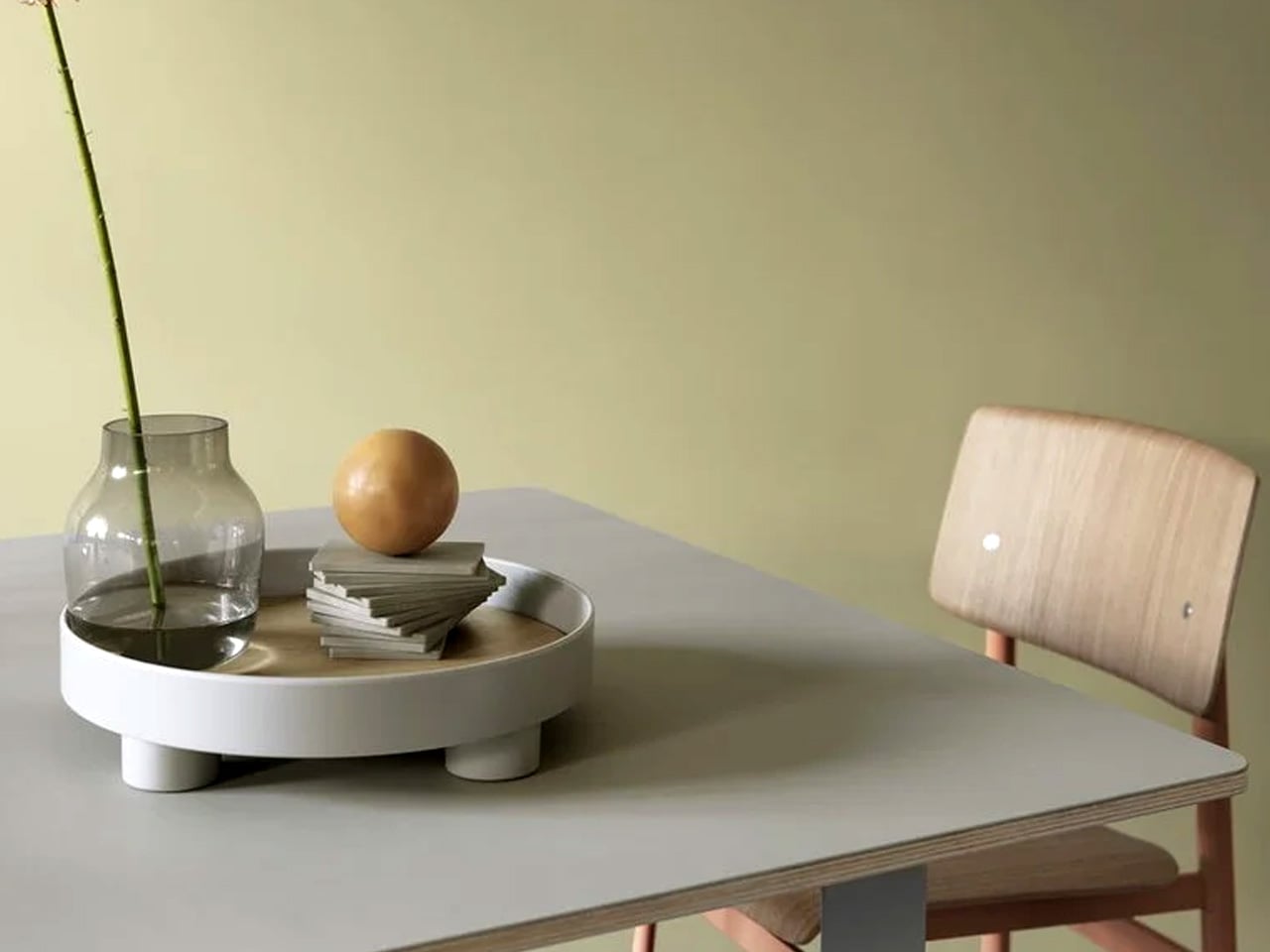
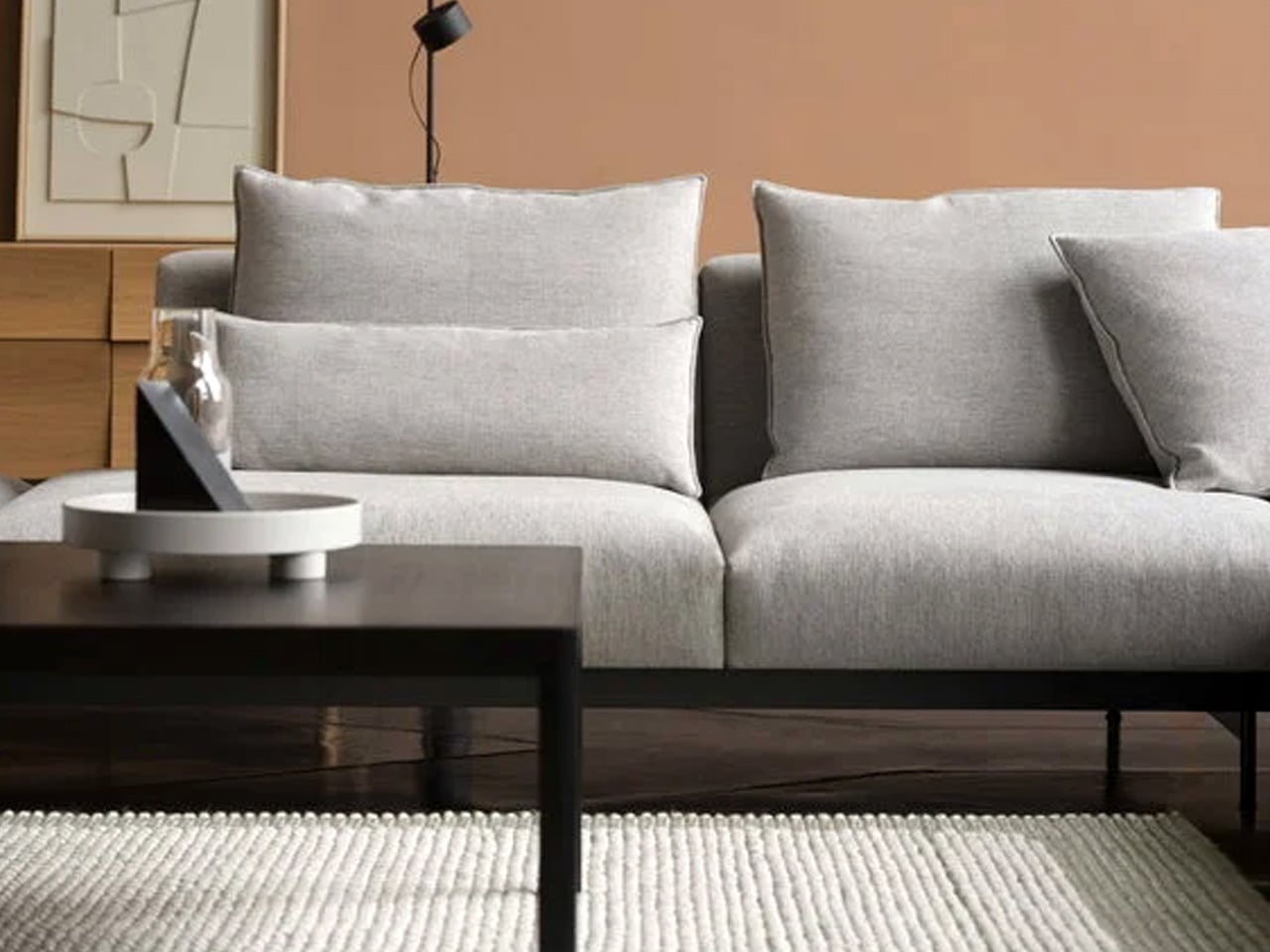
The Muuto Platform Tray is the object that makes every other object on this list look better. Available at Finnish Design Shop for $109 in grey, it’s a round tray with an oak veneer surface and small metal legs that lift it just enough off the table to create a clear visual boundary between the objects inside and the surface beneath. That boundary does more compositional work than it should — it turns a group of objects into a considered arrangement rather than a collection of things that happen to be sitting on the same surface. The grey metal and warm oak read well together, and the form is simple enough to disappear.
In practical terms, the Platform Tray is the anchor. The candle vessel sits inside it. The Kendama rests at its edge. The mobile grounds one end. The tray doesn’t organize these objects so much as it frames them, and the difference between a frame and a container is the difference between editorial and domestic. The oak veneer surface develops warmth over time, and the small legs mean it can be lifted off the table intact when the surface needs to be cleared without disturbing the composition it holds. At $109, it is the least visually dramatic piece on this list and almost certainly the most indispensable one.
What we like:
The oak veneer surface brings warmth to a mixed material setup
The raised legs separate the composition from the table surface with minimal visual noise
What we dislike:
The round form can feel restrictive on a narrow or strongly rectangular table
It comes in one size, so there’s no option to scale up for a larger surface
The Only Five Objects Your Coffee Table Needs
Five objects, five categories, one shared logic. The tray frames. The candle grounds. The mobile moves. The Kendama invites you to participate. The Torre rewrites what a vase can be. Together they fill a coffee table without crowding it, and none of them needs the others to look resolved. That is the discipline a minimalist surface asks for, and these five meet it.
The full build comes to $1,444, with the Torre carrying most of that weight. Buy the other four first — at $344 combined, they build one of the strongest minimalist coffee table setups available at that price — and treat the Torre as the object you earn over time. Start with the Platform Tray. Everything else finds its place from there.
If you’re a coffee lover, chances are you’re also a fan of going to coffee shops. While most die-hard connoisseurs would probably prefer to make a cup for themselves, apparently 72% of consumers still believe that the best coffee can only be made in a café, by actual experts who trained for it (well, unless you did train as an actual barista and have the complete equipment at home).
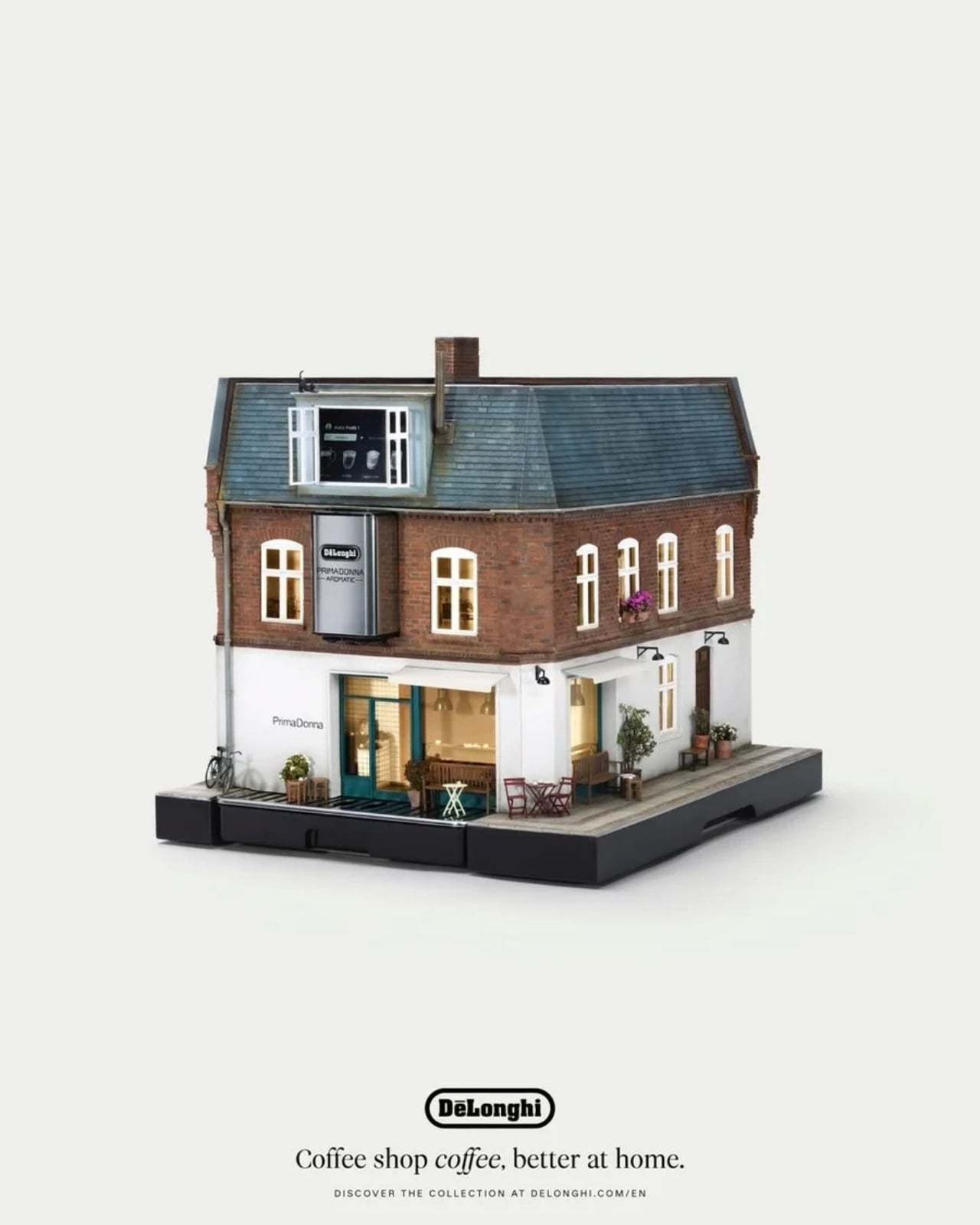
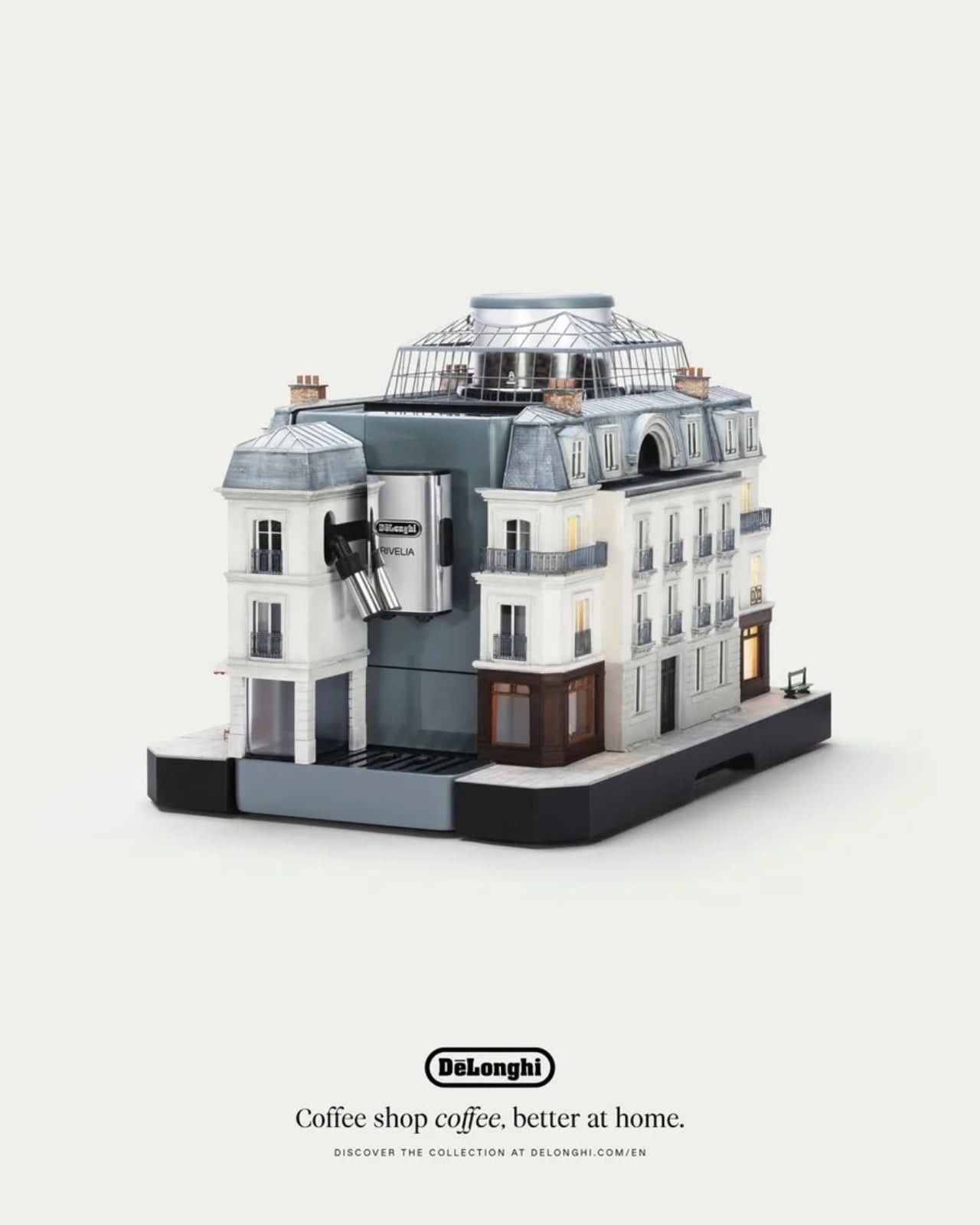
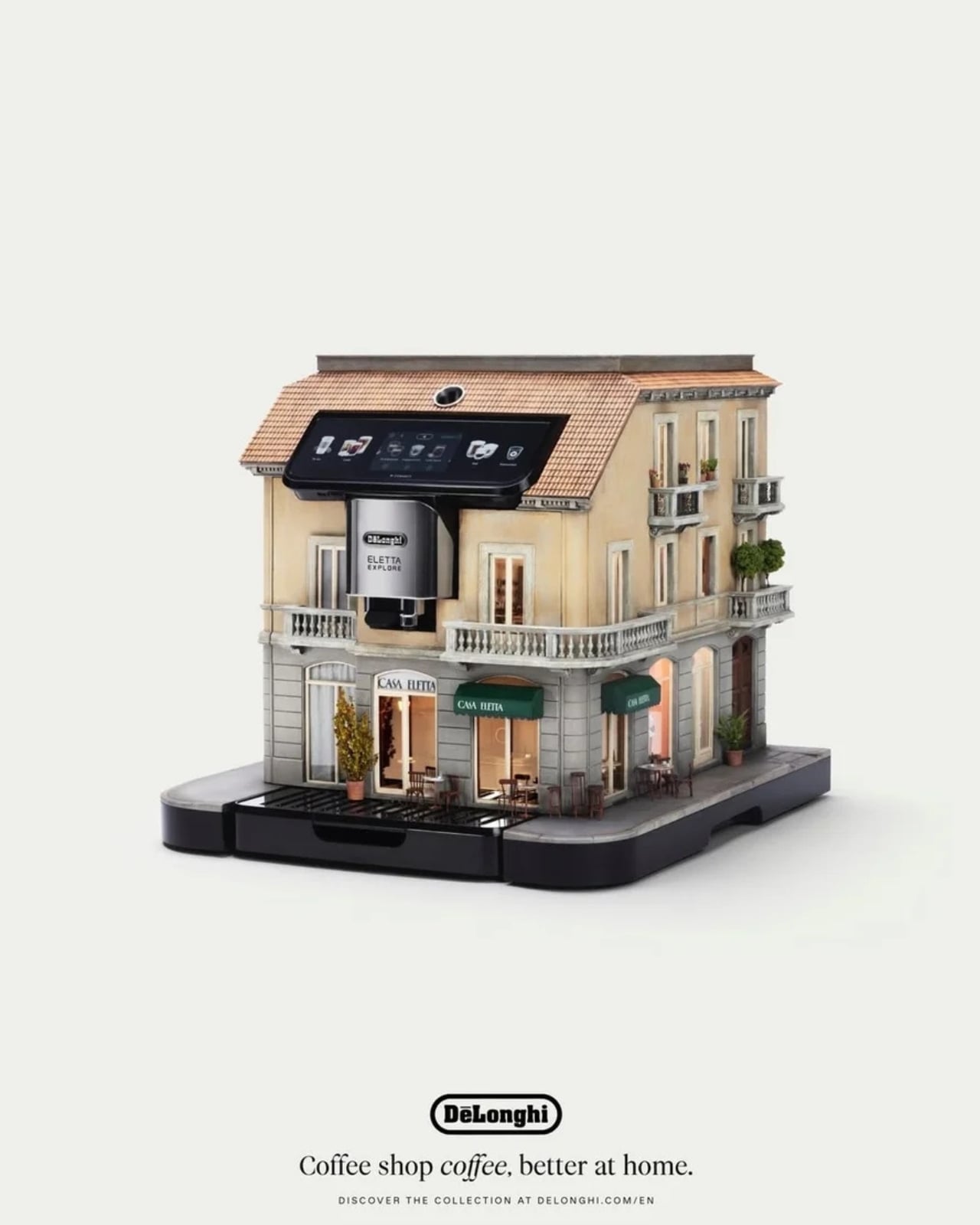
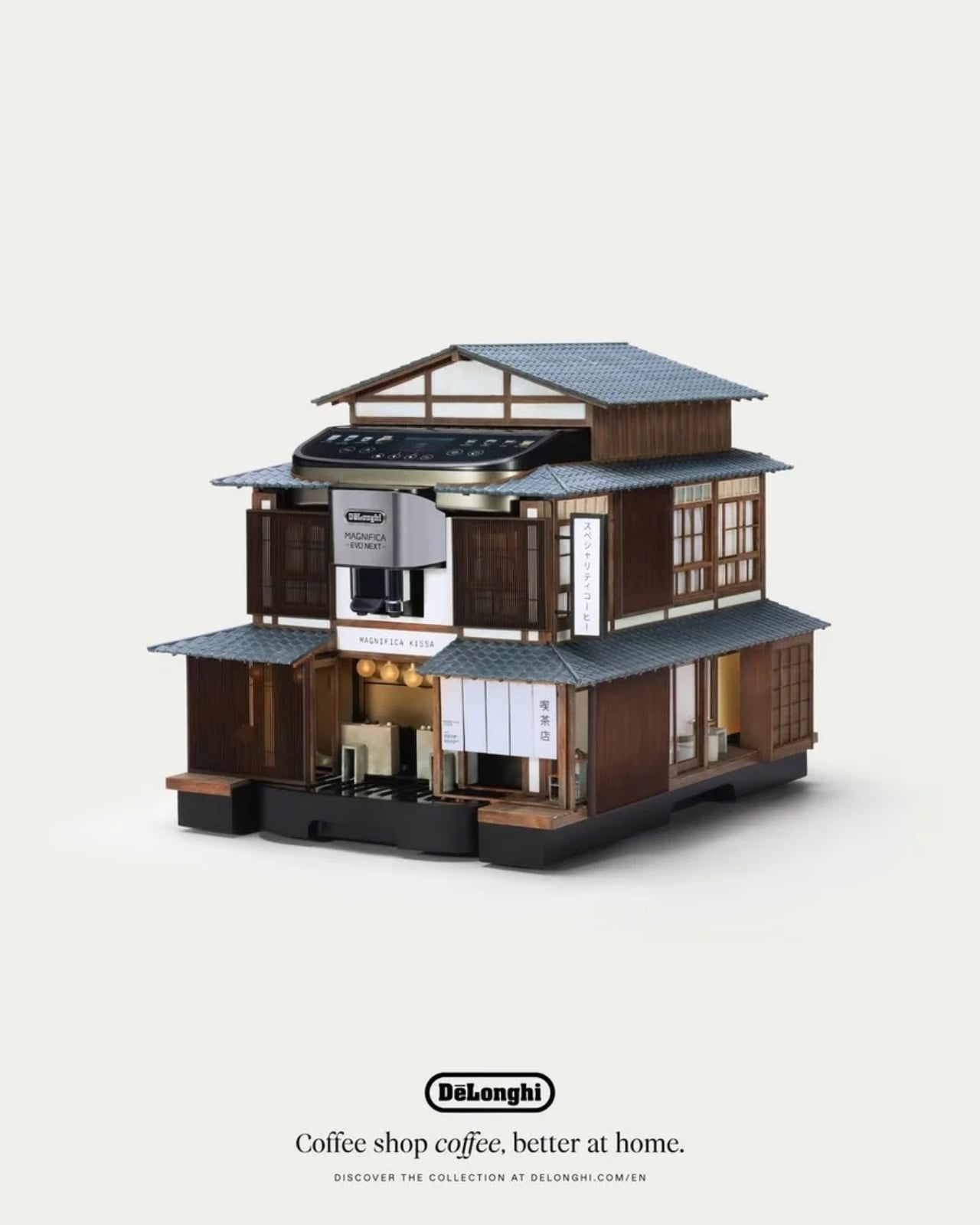
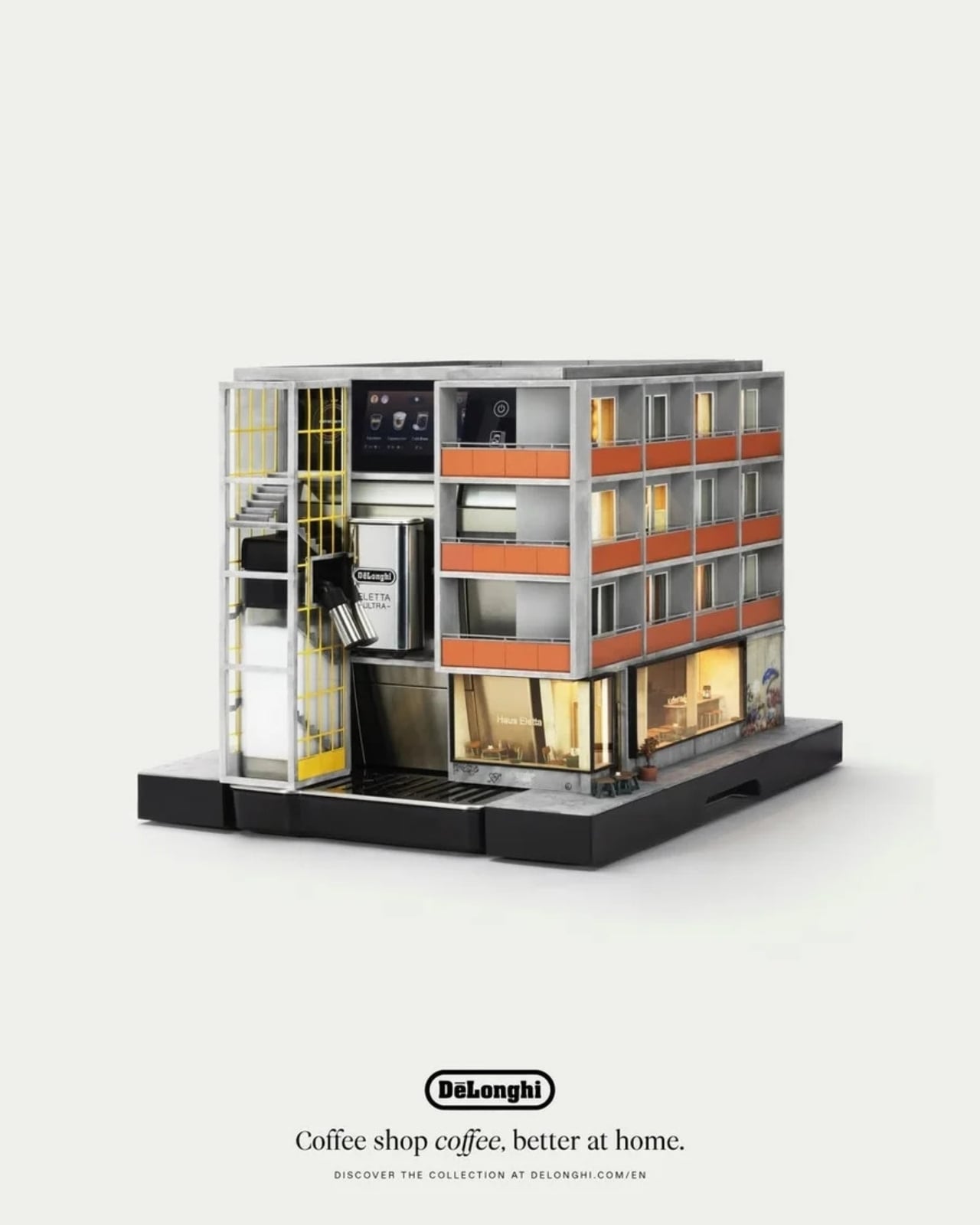
De’Longhi wanted to show that you can have café-quality coffee at home, and they did it in the most charming, unexpected way possible: by turning their machines into miniature versions of the world’s most iconic cafés. The campaign is called “The World’s Smallest Coffee Shop,” developed in partnership with creative agency LOLA Madrid and brought to life by master miniaturist Simon Weisse and his collaborator Cindy Schnitter. Weisse is no stranger to creating miniature movie magic; he is best known for his work with director Wes Anderson on films like The Grand Budapest Hotel and Asteroid City, where his tiny, hand-crafted worlds became just as iconic as the stories themselves.
Designer: Simon Weisse and Cindy Schnitter for De’Longhi
The idea was simple yet brilliant: create five intricate, handcrafted miniature café façades and mount them directly onto De’Longhi’s bean-to-cup coffee machines. Each of these five miniature coffee shops is inspired by an iconic global coffee culture city and paired with an elite De’Longhi machine:
Paris mounted on the Rivelia Tokyo mounted on the Magnifica Evo Next Milan mounted on the Eletta Ultra Copenhagen mounted on the Eletta Explore Berlin mounted on the Primadonna Aromatic
It’s not just a simple miniature, of course, given the credentials of the designers and their team. Each piece was hand-built over 1,500 hours total using traditional model-making techniques by specialist model makers. They incorporated architectural textures, aged finishes, and intricate detailing, including tiny windows and miniature signage, just as if they were crafting a set for a major film production. The level of care poured into every surface and every tiny detail is nothing short of extraordinary.
What makes this campaign particularly compelling is the signature technique Weisse’s studio brings to the table: “forced perspective,” the same cinematic method used on film sets to make miniature environments appear life-sized and completely believable. When De’Longhi approached the studio, Weisse immediately recognized an opportunity to apply this storytelling craft to something most of us interact with every single morning: a coffee machine. The goal wasn’t just to create something beautiful to look at, but to shift the way we think about where great coffee truly comes from.
The result is nothing short of a collector’s dream. Looking at each machine, it’s hard not to imagine yourself sitting at a tiny cobblestoned café in Paris, warming your hands around a bowl of café au lait, or perched on a Tokyo street corner, breathing in the scent of a perfectly pulled espresso. The detail is so immersive and so deliberate that the machine stops being an appliance and becomes an experience, or rather, an entire world in miniature.
The campaign made its stunning debut at Milan Design Week 2026, one of the most prestigious design events in the world, where all five machines were showcased together for the very first time. And the timing couldn’t be more fitting: in a world where home has become our office, our restaurant, and our gym, why shouldn’t it also be our favorite café?
De’Longhi CMO Aparna Sundaresh summed it up beautifully: “The café hasn’t just been miniaturised; it has been brought home.” Whether you’re a collector drawn to the artistry, a coffee lover chasing the perfect cup, or simply someone who appreciates craftsmanship that makes you stop and stare, The World’s Smallest Coffee Shop is a masterclass in how great design can transform the everyday into something truly extraordinary, one tiny façade at a time.
Pour-over coffee has never been a casual pursuit. It asks attention, patience, and a genuine interest in the variables between a bag of beans and a great cup. That commitment tends to attract a certain kind of person: someone who reads grinder reviews the way others read menus and talks freely about bloom times and water ratios. For that person, the morning ritual isn’t just caffeine. It’s a practice.
What makes that practice worth exploring right now is the quality of tools available to support it. Design and technology have both raised the bar considerably, making it easier to get consistently excellent results at home without sacrificing the ritualistic qualities that make pour-over worth pursuing in the first place. These five gadgets represent the best of what’s quietly finding its way into the routines of pour-over devotees right now.
1. xBloom Coffee Machine
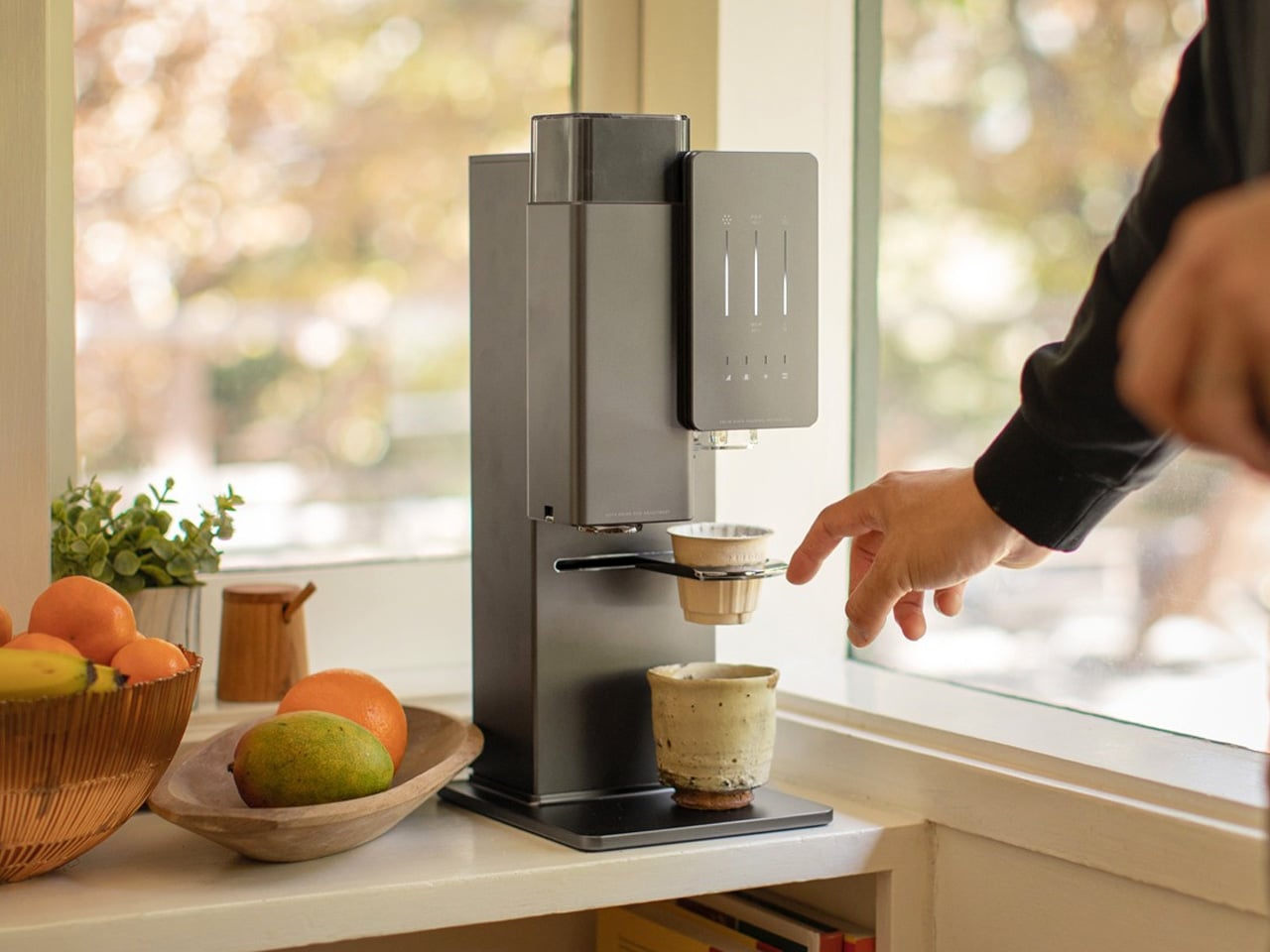
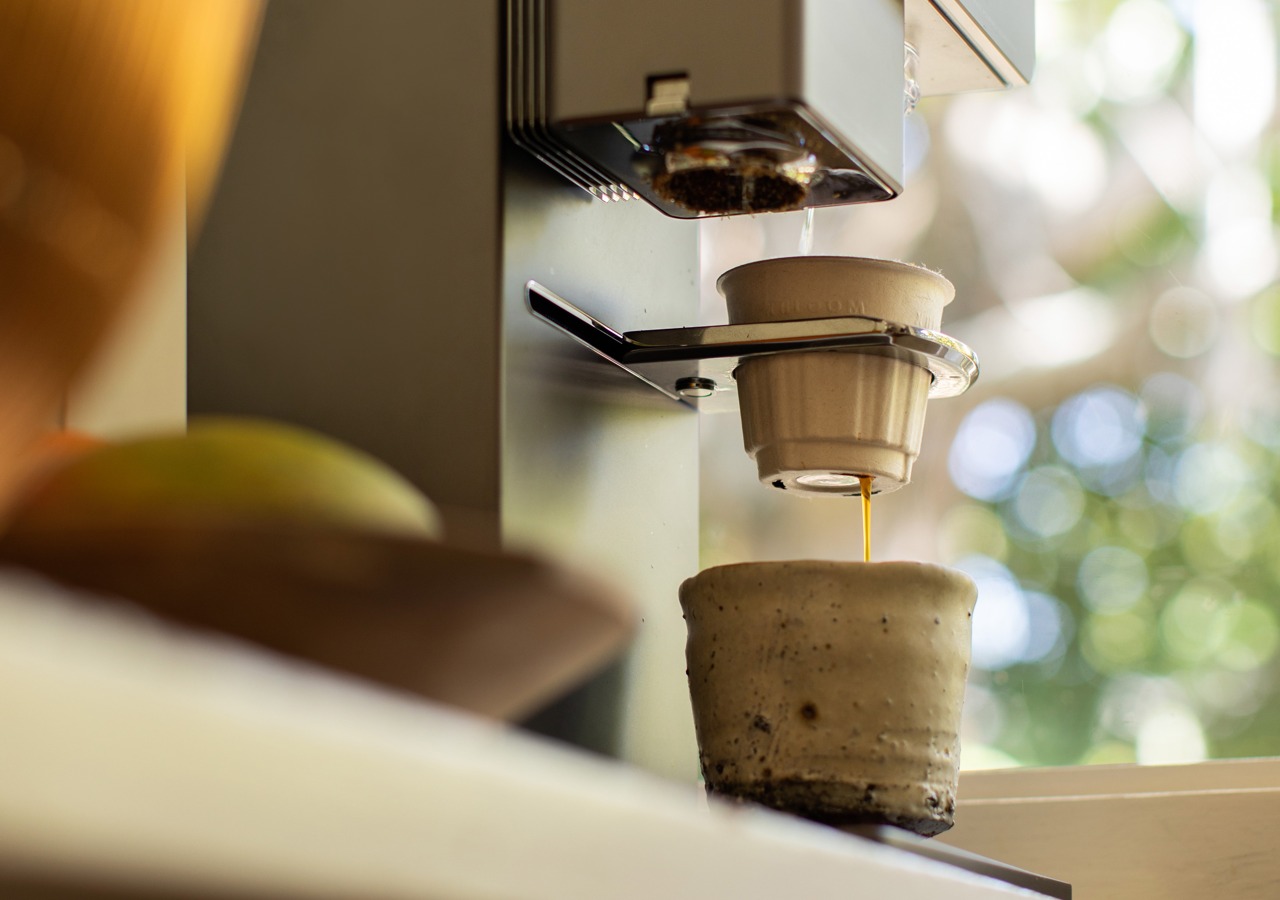
No coffee machine on the market right now does more to close the gap between home brewing and the work of a trained barista than the xBloom. Designed by former Apple employees and dubbed the “Tesla of Coffee Machines,” it identifies, grinds, dispenses, brews, and pours your coffee entirely on its own. It uses RFID-tagged xPods, sourced from top roasters around the world, to recognize each bean’s specific profile and apply the exact grind size, water temperature, and spiral pour pattern required to extract it properly. The nanofilm instant heater brings water to temperature with precision, and the kinematic spout delivers it in a controlled, consistent flow onto the coffee bed. The result is a pour-over calibrated not just to your taste but to the specific character of the bean in your pod, every single time.
The machine operates across three distinct modes: Autopilot, which handles the entire process hands-free from scan to serve; Copilot, which lets you use your own beans and customize every variable through the companion app; and FreeSolo, which gives you complete manual control via the onboard dials. Inside, it packs a 48mm conical burr grinder, an integrated scale with 0.1g resolution, and a 700ml water reservoir alongside direct plumbing support for higher-volume use. The build is metal throughout, with a compact footprint that sits comfortably alongside high-end kitchen equipment. For a pour-over devotee who wants the precision of craft without the daily labor of pulling it off manually, the xBloom doesn’t feel like a shortcut. It feels like the most intelligent version of the ritual available.
What we like:
Fully automated pour-over with RFID bean recognition that adjusts grind, water temperature, and spiral pour pattern to the specific coffee in the pod
Three distinct brewing modes accommodate everything from total hands-free automation to fully manual pour-over control for when you want to stay involved
What we dislike:
The premium price point is a significant investment that will give casual or budget-conscious drinkers pause before committing
The Autopilot mode performs best within the proprietary xPod ecosystem, which adds a recurring cost to the overall experience
2. Ceramic Cup
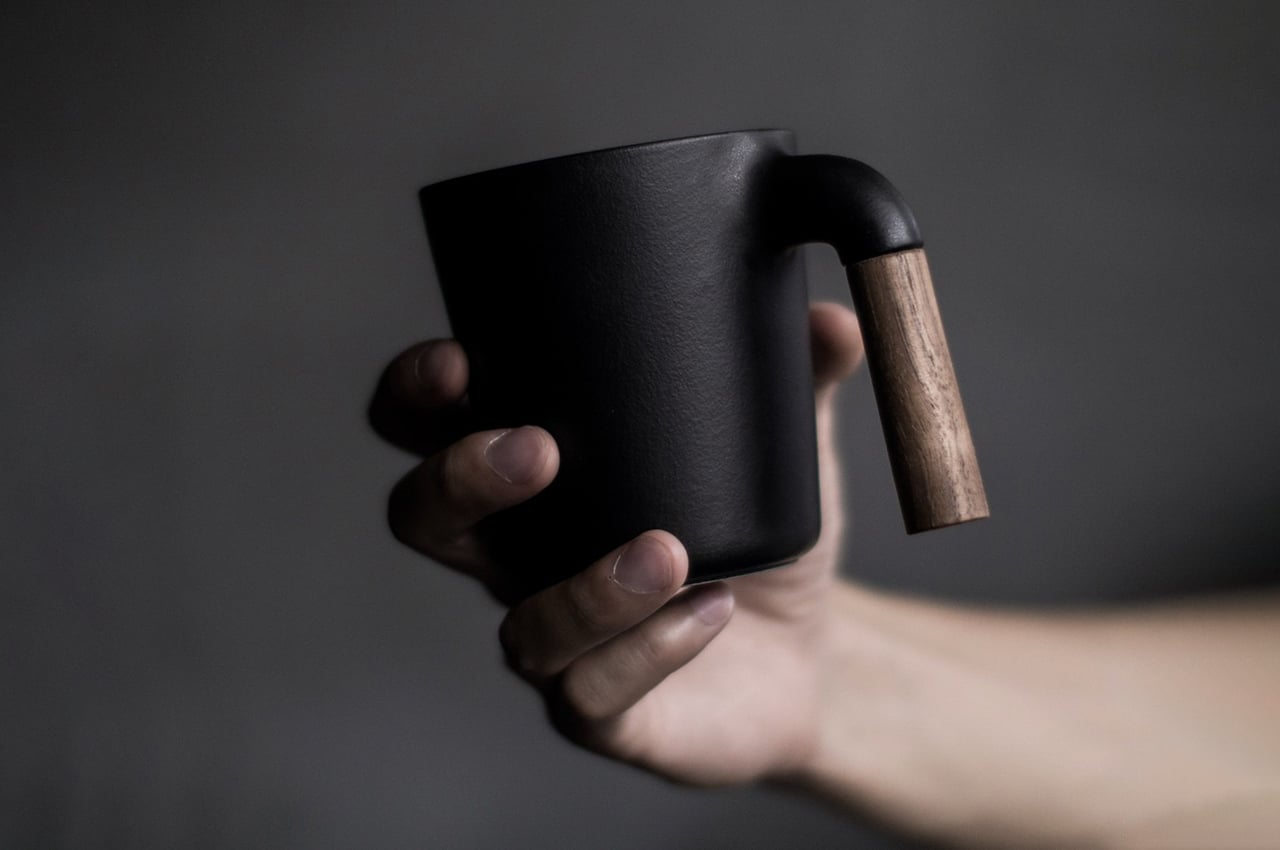
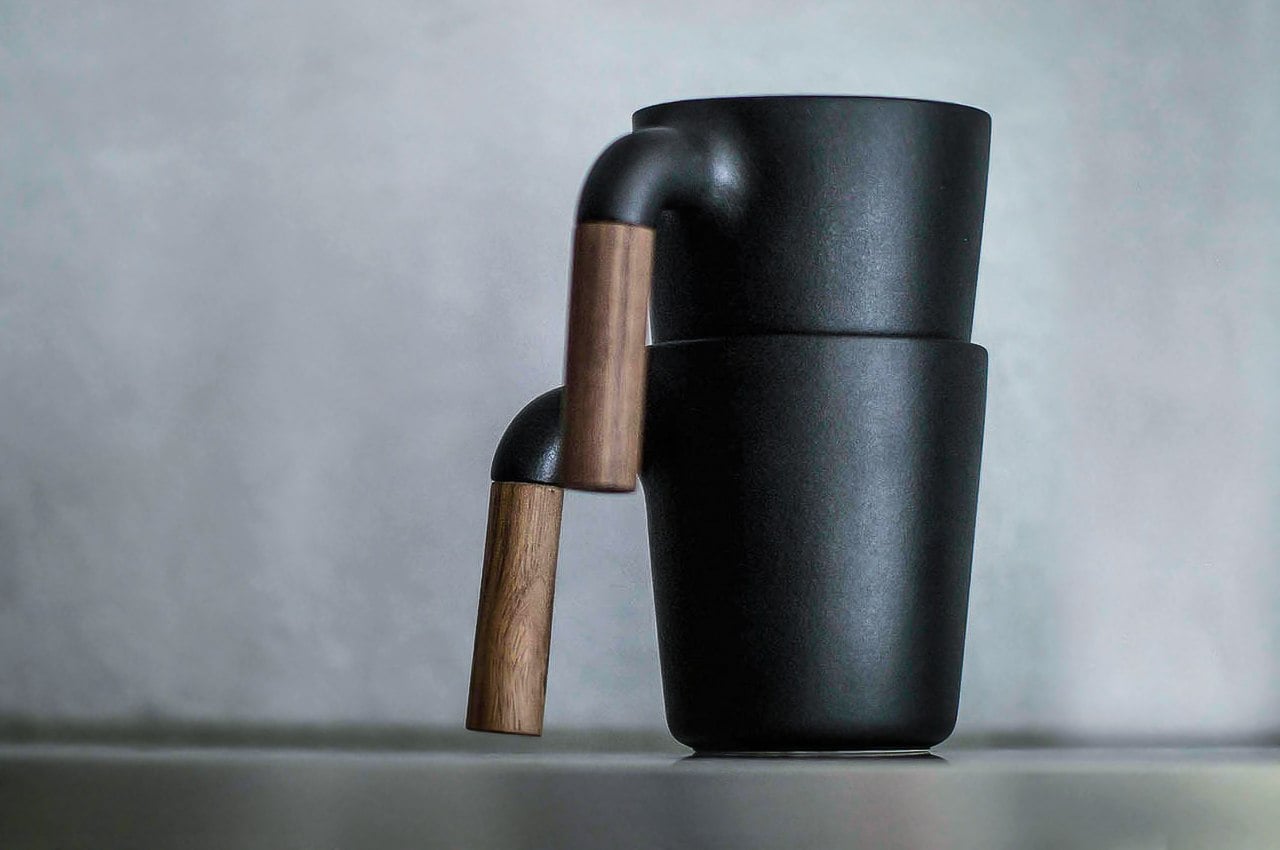
The mug you drink from is part of the experience, and the MUGR Ceramic Cup understands that in a way most drinkware simply doesn’t. Its exterior takes visual cues from cast iron, giving it a quiet, grounded presence on any surface. At closer range, the Japanese ceramic body reveals itself as something far more refined: smooth against the lips, satisfying in the hand, and carrying the kind of material honesty that sets it apart from the ceramic mugs most people have stacked in their cabinets. At 350ml, the capacity is precisely right for a focused pour-over serving. The wooden handle adds warmth without visual noise, and the overall silhouette carries enough restraint to make the coffee it holds the clear focal point of the moment.
There’s something worth considering in the choice of vessel for pour-over coffee. The process itself is intentional: you’re measuring, timing, and pouring with care, so the cup receiving that work should reflect some of that seriousness. Ceramic is the ideal material here. It retains heat at a measured rate, doesn’t absorb or impart flavor, and rewards the kind of slow, present drinking that pour-over tends to inspire. The MUGR occupies a space that generic mugs can’t. It’s an object with enough considered design to elevate the experience without becoming precious or impractical. The earthy tones and Japanese ceramic texture create a visual and tactile language that feels cohesive, unhurried, and completely right when paired with a freshly brewed cup.
Japanese ceramic construction delivers a satisfying tactile quality with a cast iron-inspired aesthetic that complements any thoughtfully designed brew station
At 350ml, the capacity is ideally sized for a single deliberate pour-over serving, making every cup feel properly portioned
What we dislike:
Hand wash only care instructions make it a more demanding choice for anyone who relies on a dishwasher for daily cleanup
It cannot be microwaved, which narrows its functional range to its primary role as a dedicated coffee vessel
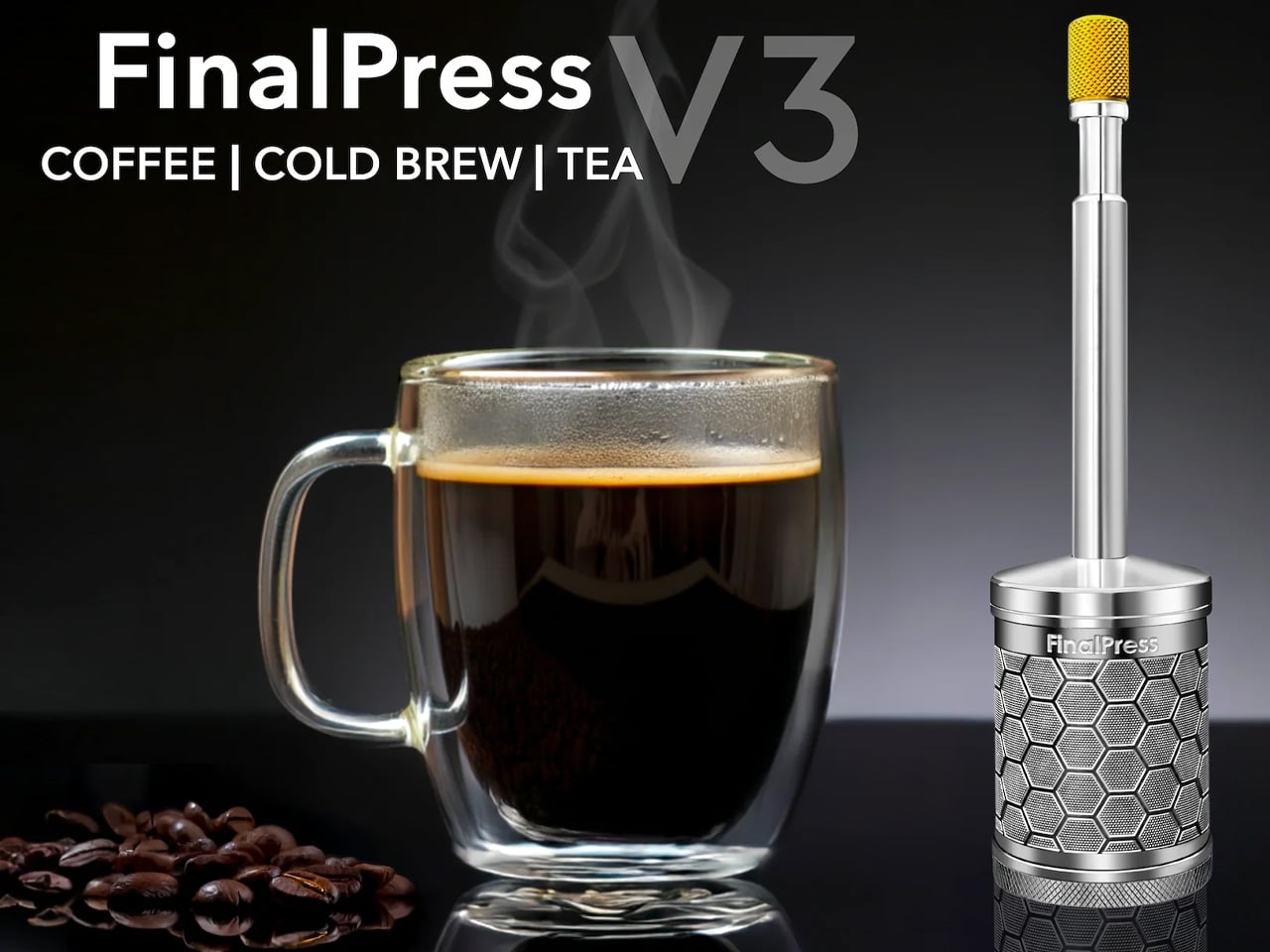
3. FinalPress V3
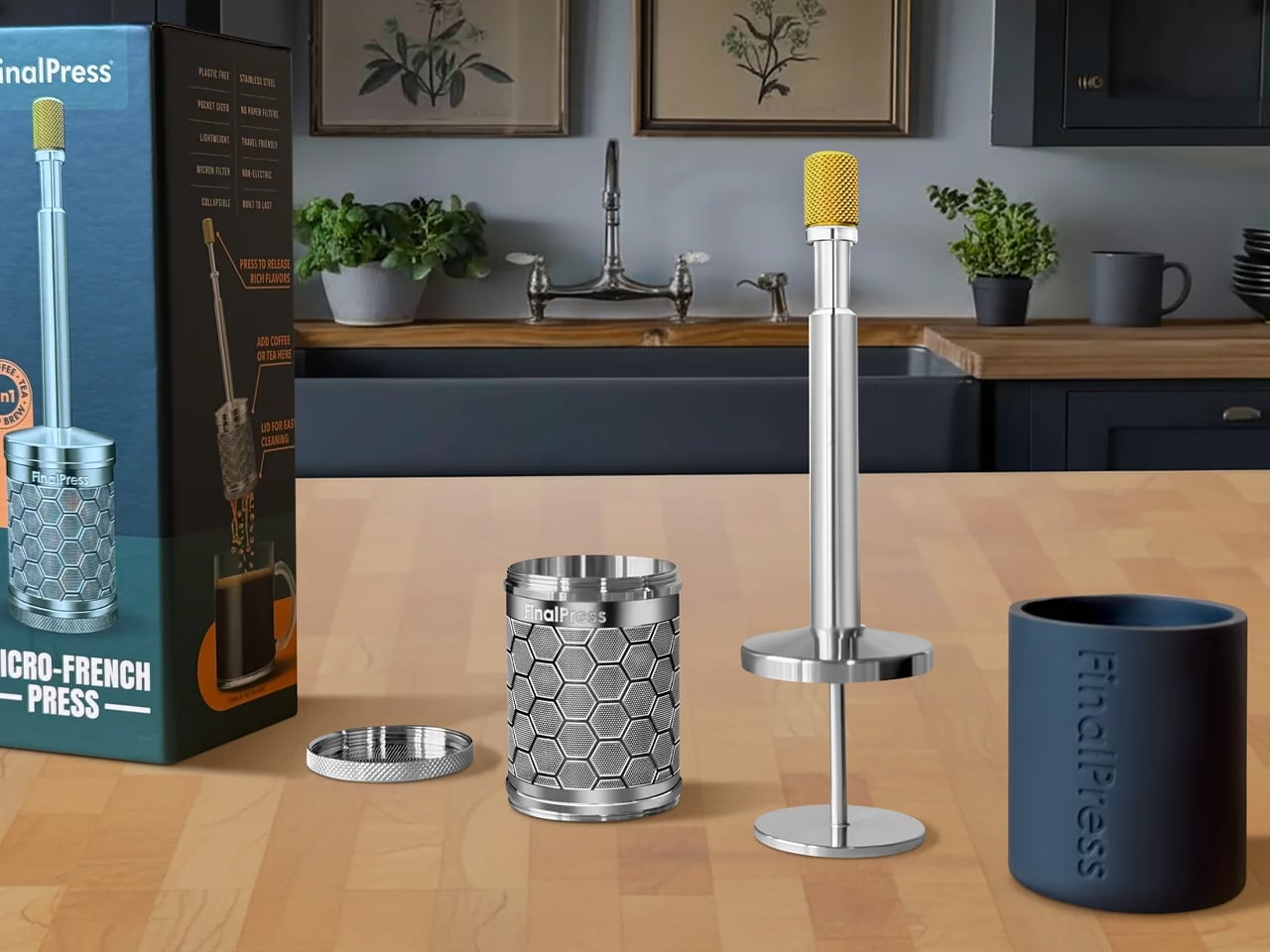
The FinalPress V3 proves that great coffee doesn’t require an elaborate setup, just a well-engineered one. It measures 1.3 x 6.5 inches, weighs 3.6 oz, and brews a full-flavored cup in under two minutes. CNC machined from solid 304 stainless steel, it’s plastic-free and built to resist rust, warping, bending, and cracking indefinitely. The brewing process is stripped back to its essentials: add grounds, stir, wait, then press. A patented plunger system pushes water through a 200-micron super-fine filter, extracting flavor with more nuance and clarity than any other portable brewer in its size range. There are no paper filters to buy, no pods to source, and no capsules to discard. What you end up with is a tool that respects your coffee and your time in equal measure.
Where the FinalPress becomes genuinely impressive is in its 3-in-1 brew capability. Hot, iced, and cold brews are all achievable with the same compact tool, making it as relevant at a hotel room desk as it is at a campsite or your home counter between longer brewing sessions. The plastic-free stainless steel construction means no material compromise and no flavor contamination from plastic contact with your brew. For pour-over devotees who travel and refuse to accept substandard coffee as the cost of mobility, the FinalPress compresses a real brewing philosophy into its smallest and most portable form yet, without sacrificing any of the quality that made the practice worth caring about in the first place.
What we like:
Ultra-portable at just 3.6 oz and entirely plastic-free, with solid 304 stainless steel construction built to last indefinitely without rust or warping
Brews hot, iced, and cold coffee using the same tool with no paper filters, pods, or capsules required
What we dislike:
There is a short learning curve in getting the press technique right to avoid over-extraction, especially when starting out
The single-serve capacity makes it less practical when you need to brew for more than one person at a time
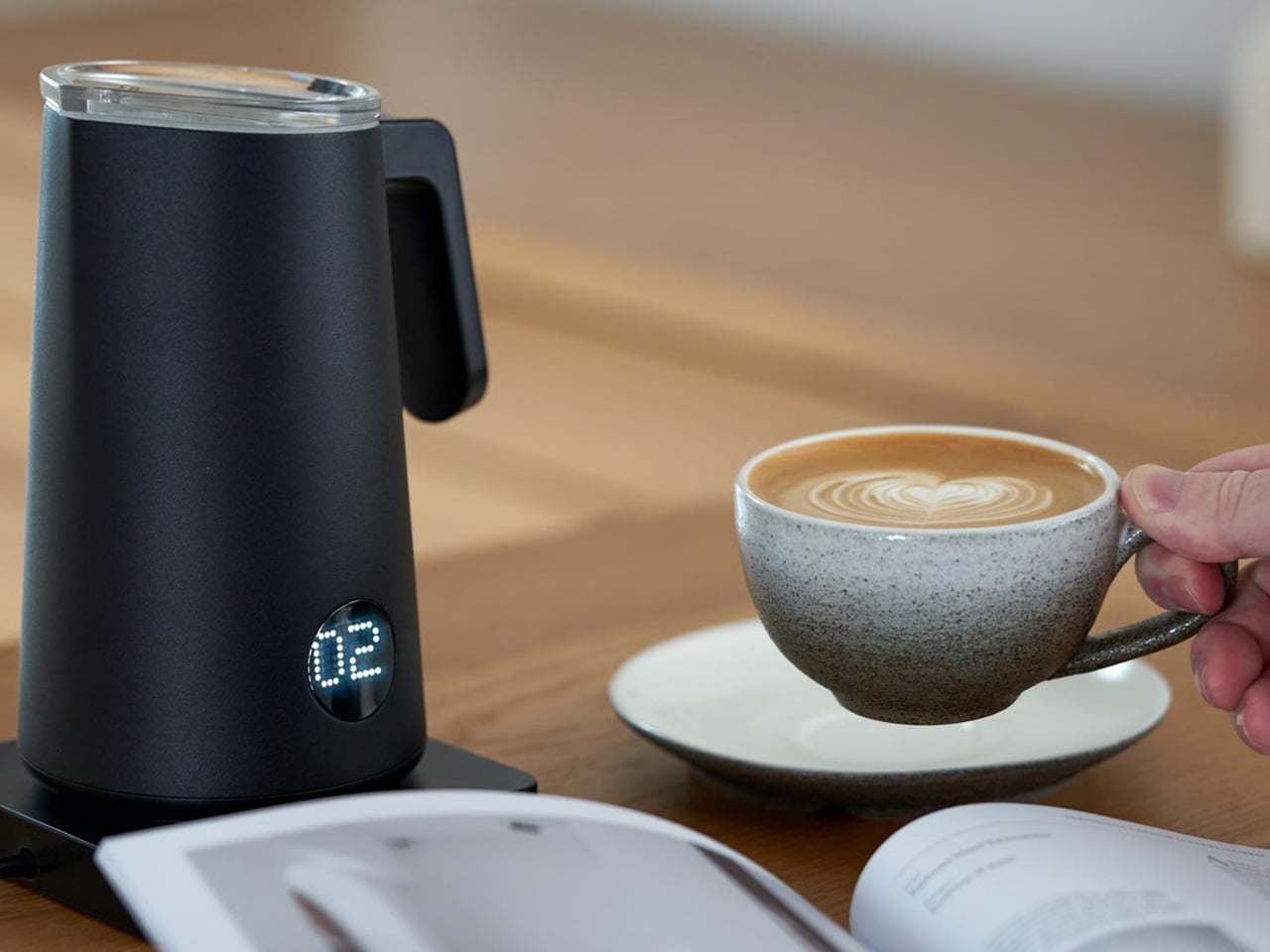
4. NanoFoamer PRO
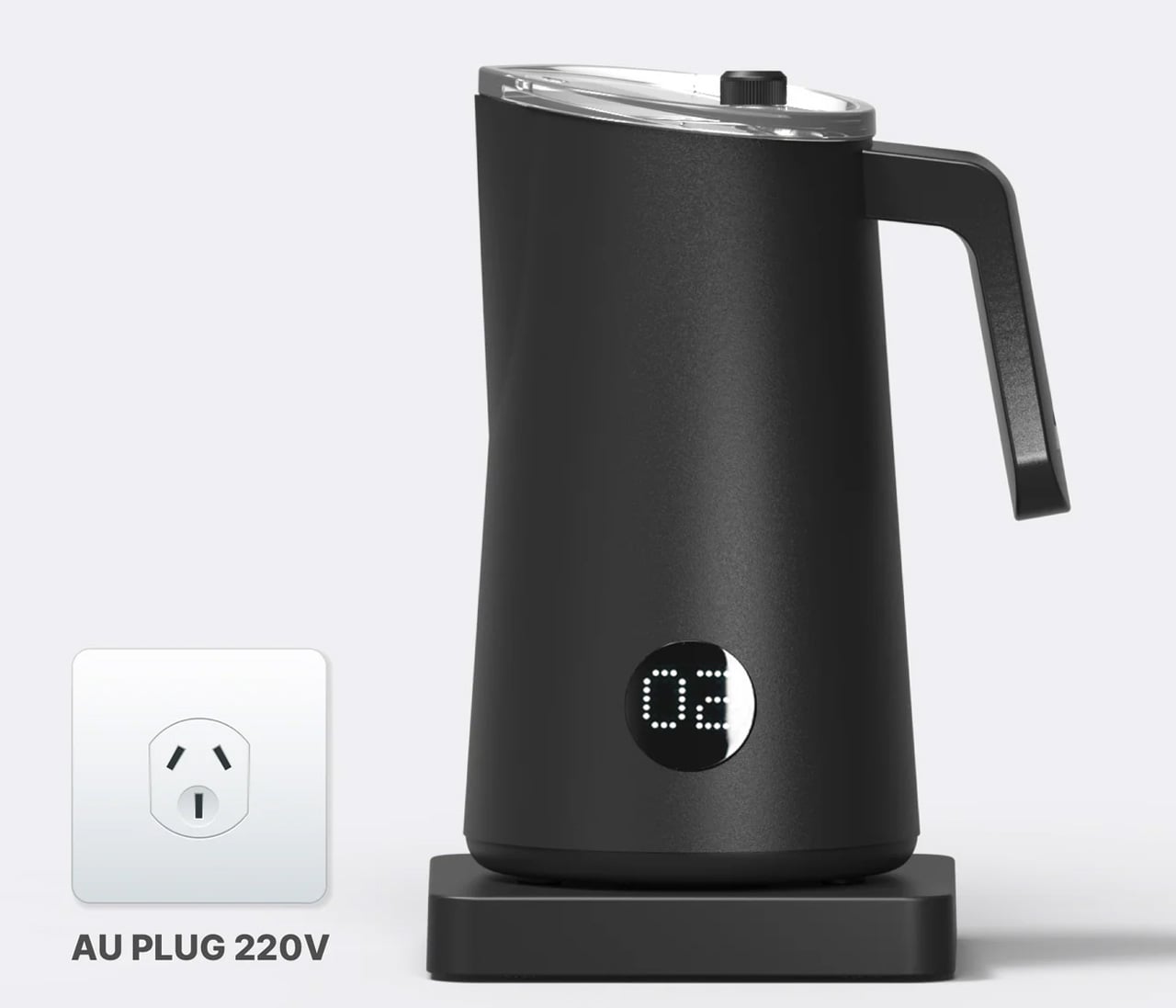
The NanoFoamer PRO addresses a very specific problem with a very precise solution: producing genuine microfoam at home without the equipment, training, or noise of a commercial espresso setup. For pour-over drinkers who want to occasionally cross into latte territory without compromising on quality, it removes every barrier to doing it properly. The appliance heats and foams milk simultaneously, timing its process to sync with an espresso pull so that your shot and your foam arrive ready at the same moment. The crema stays intact, the foam is fine and velvety rather than large and airy, and the result looks and tastes like something a trained barista handed you. For a home setup, this is a notable achievement, and it happens without requiring any of the manual skills that professional foaming normally demands.
The distinction between microfoam and standard frothed milk matters more than it may first appear. Conventional frothers create large, unstable bubbles that float above the espresso rather than integrating with it. The NanoFoamer PRO produces the fine-textured, glossy foam that makes latte art achievable and milk-based drinks genuinely enjoyable rather than merely acceptable. For a pour-over obsessive with an espresso machine already sitting on the counter, this is the component that completes the home setup in a way it couldn’t before. The workflow is clean, both elements finish at the same time, and the pour goes exactly as intended. The NanoFoamer PRO earns its counter space not by demanding attention but by quietly doing the most technically demanding part of the job better than anything else available.
What we like:
Produces professional-grade microfoam by heating and foaming milk simultaneously, timed to sync perfectly with an espresso pull
The streamlined workflow ensures espresso crema and milk foam are ready at the same moment, with no compromise to either element
What we dislike:
Designed as a companion to an espresso machine rather than a standalone appliance, which limits its role in a strict pour-over-only setup
Pour-over purists who never incorporate milk will find minimal daily utility in adding this to an otherwise black-coffee-focused morning routine
5. Three-Cup Handblown CHEMEX
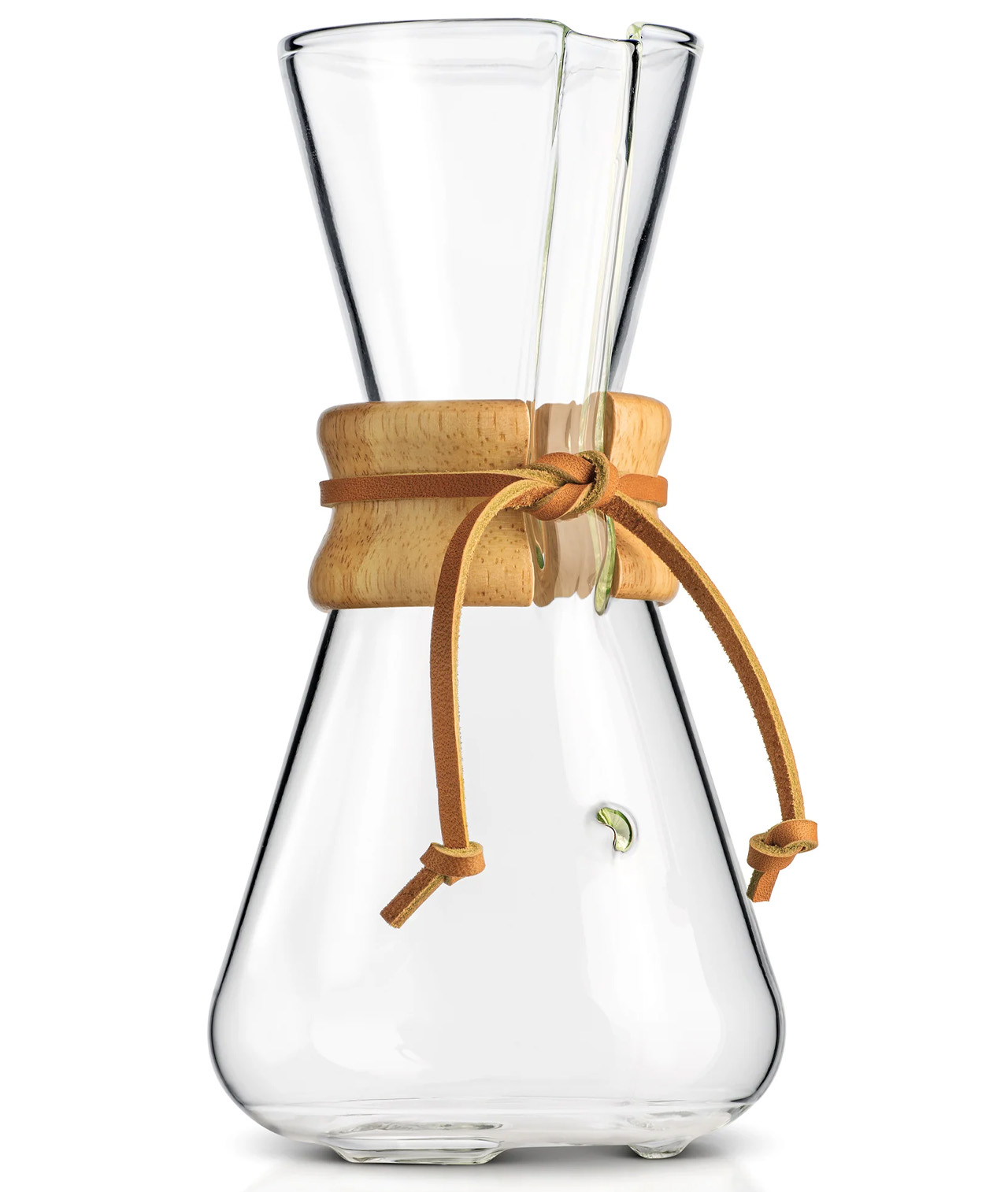
The handblown CHEMEX occupies a rare category among coffee equipment: it’s a brewing tool that also qualifies as a genuine work of art. Each piece is individually crafted by skilled glassblowers in Croatia using traditional European techniques, meaning no two are exactly alike. The borosilicate glass construction meets laboratory-grade standards, delivering complete flavor neutrality while comfortably withstanding the thermal shock of repeated hot water pours. Paired with CHEMEX Bonded filters, the system removes oils, bitterness, acidity, and sediment to produce a coffee with clarity and cleanliness that neither a French press nor a standard drip machine can approach. The result is a cup that lets the bean speak for itself, completely unobstructed by the residual compounds that other brewing methods leave behind.
Beyond its brewing performance, this CHEMEX invites a different kind of relationship with the ritual. The polished wood collar and leather tie are both functional and beautiful: they insulate the vessel during handling and add a warm material contrast to the cool transparency of the glass. Brewing with it is a slow, deliberate process, and the object rewards that pace. Each pour looks considered, each session takes on a ceremonial quality that machine-made glass simply doesn’t generate. The small-batch production behind each handblown piece adds to that sense: this is not mass-market equipment, and it doesn’t feel like it. For pour-over devotees who want their brew station to reflect the same level of care they bring to every cup, the handblown CHEMEX is the most visually and functionally complete answer available.
What we like:
Individually handblown by skilled glassblowers in Croatia, combining borosilicate precision with a one-of-a-kind artisan aesthetic that makes each piece genuinely unique
The polished wood collar and leather tie provide practical heat protection while adding a considered, elegant material contrast to the glass body
What we dislike:
The glass construction is inherently fragile and requires thoughtful handling and careful storage to avoid breakage over time
The three-cup capacity may feel limiting for households where multiple people want coffee from the same vessel at the same time.
The Ritual Is Only as Good as the Tools Behind It
The morning ritual of a pour-over devotee is, at its core, a commitment to paying attention. Every gadget on this list honors that commitment in a different way: some by removing friction, some by elevating the sensory experience, and others by making excellence achievable in the places and moments where it matters most. Pour-over culture has moved beyond a niche. It’s a serious practice, and these are the tools reflecting how seriously people are choosing to take it.
Building a great brew station doesn’t happen in one purchase. It happens gradually, through the accumulation of objects that each serves a real purpose and earn their place. Whether the xBloom’s automated precision speaks to you, or the quiet beauty of a handblown CHEMEX does, the principle is the same: start with what resonates, use it well, and let the ritual build from there. The best cup you’ve ever made is probably still ahead of you.
















 Paris mounted on the Rivelia
 Tokyo mounted on the Magnifica Evo Next
 Milan mounted on the Eletta Ultra
 Copenhagen mounted on the Eletta Explore
 Berlin mounted on the Primadonna Aromatic