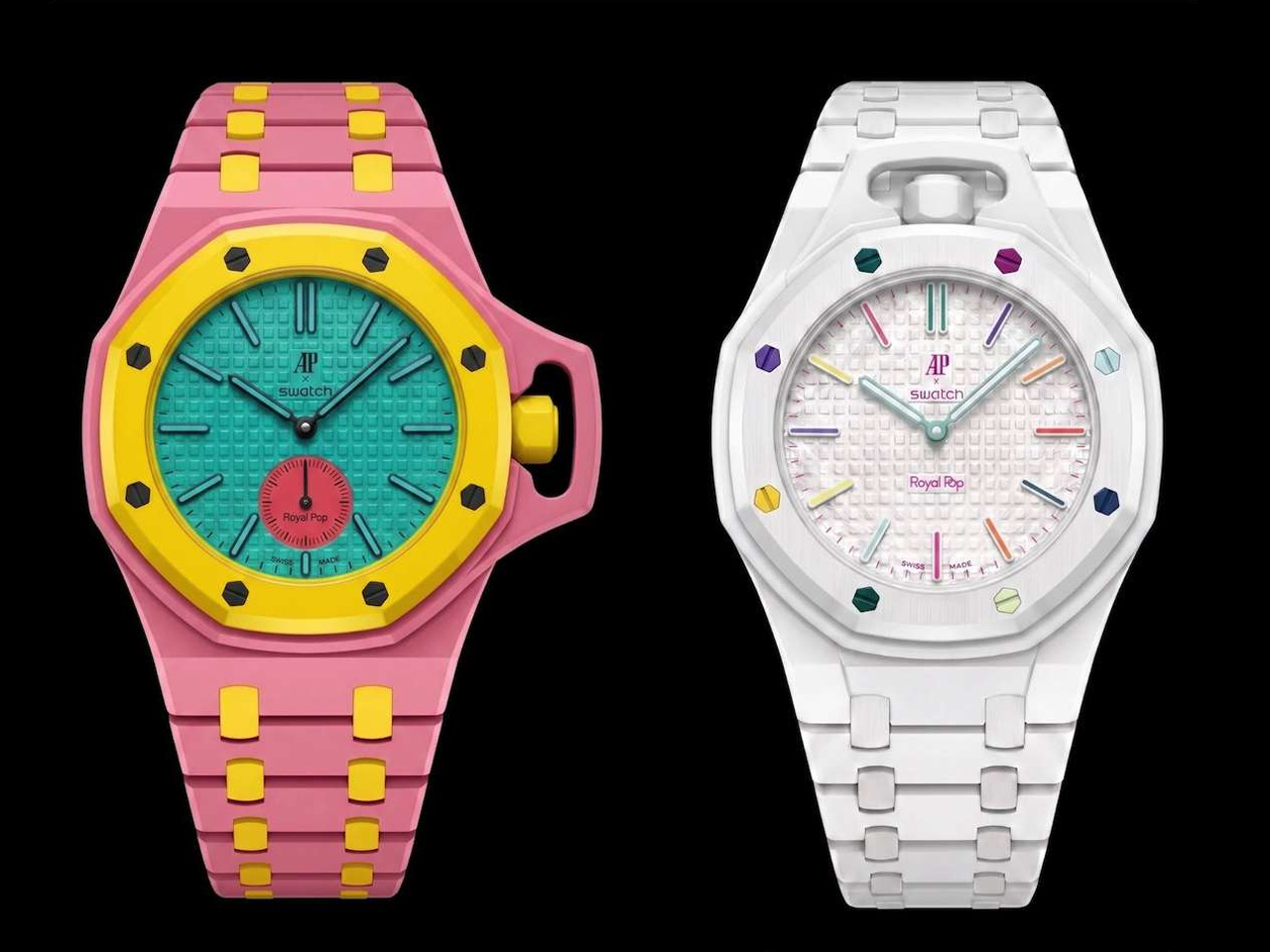
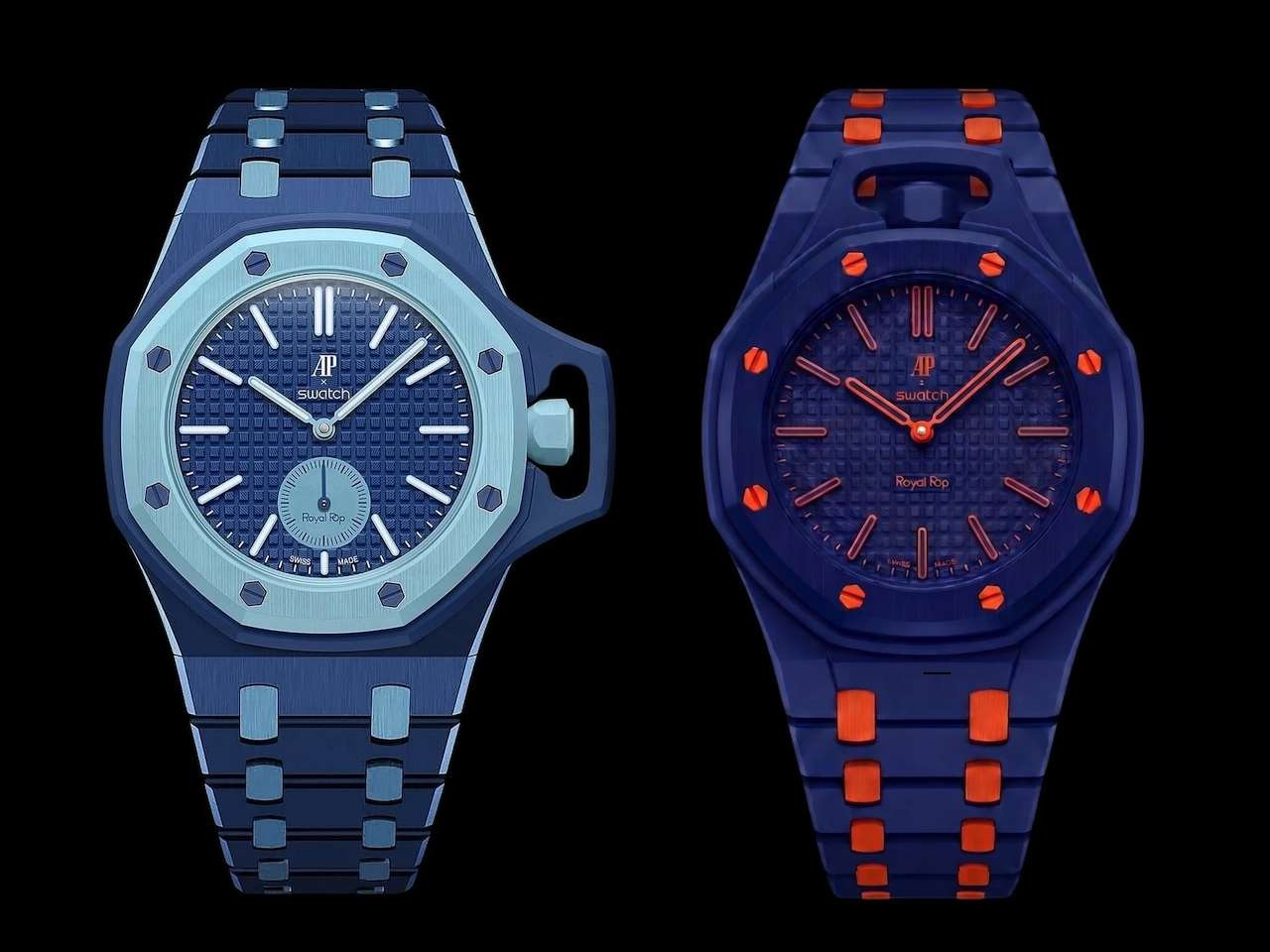
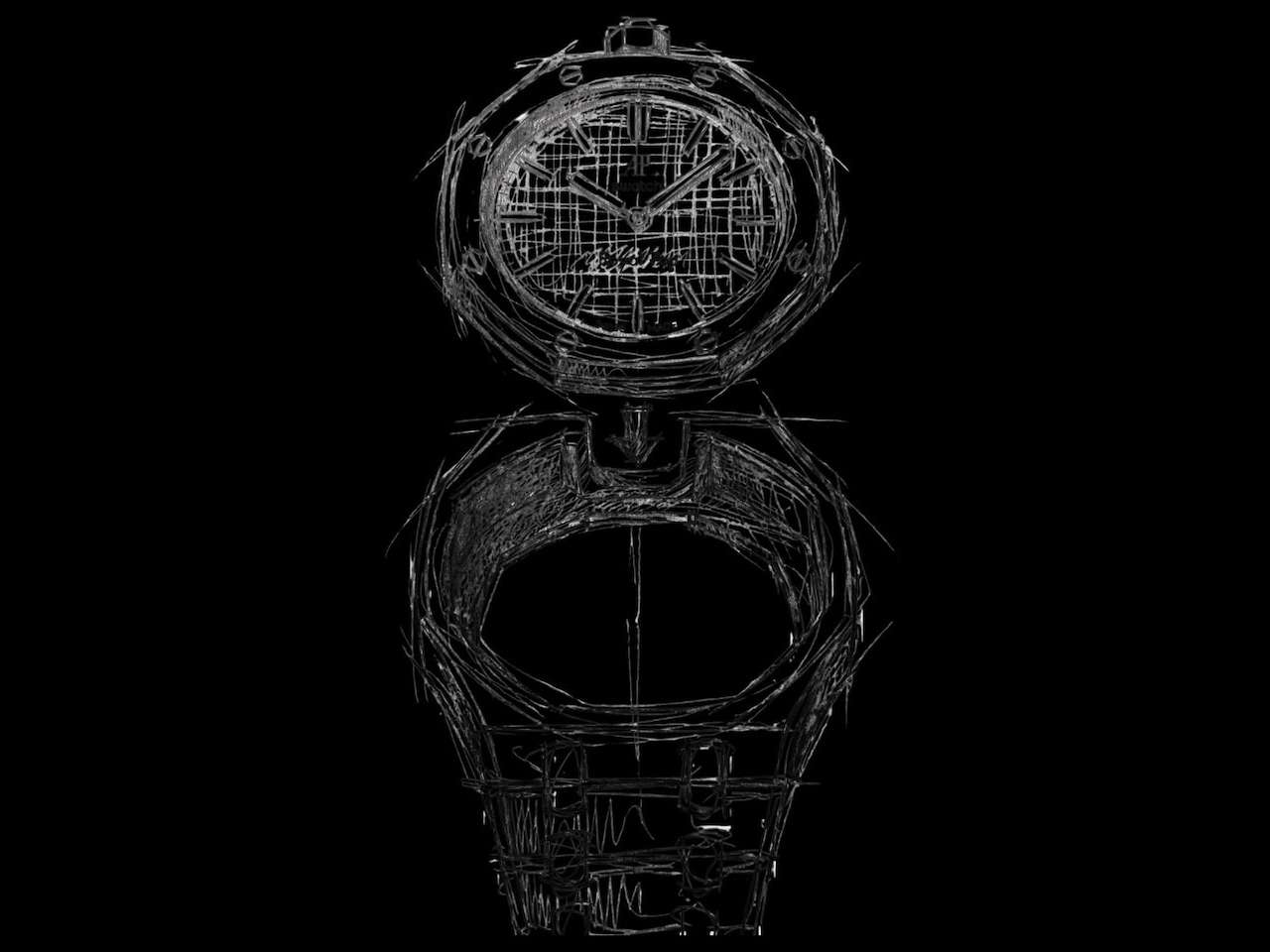
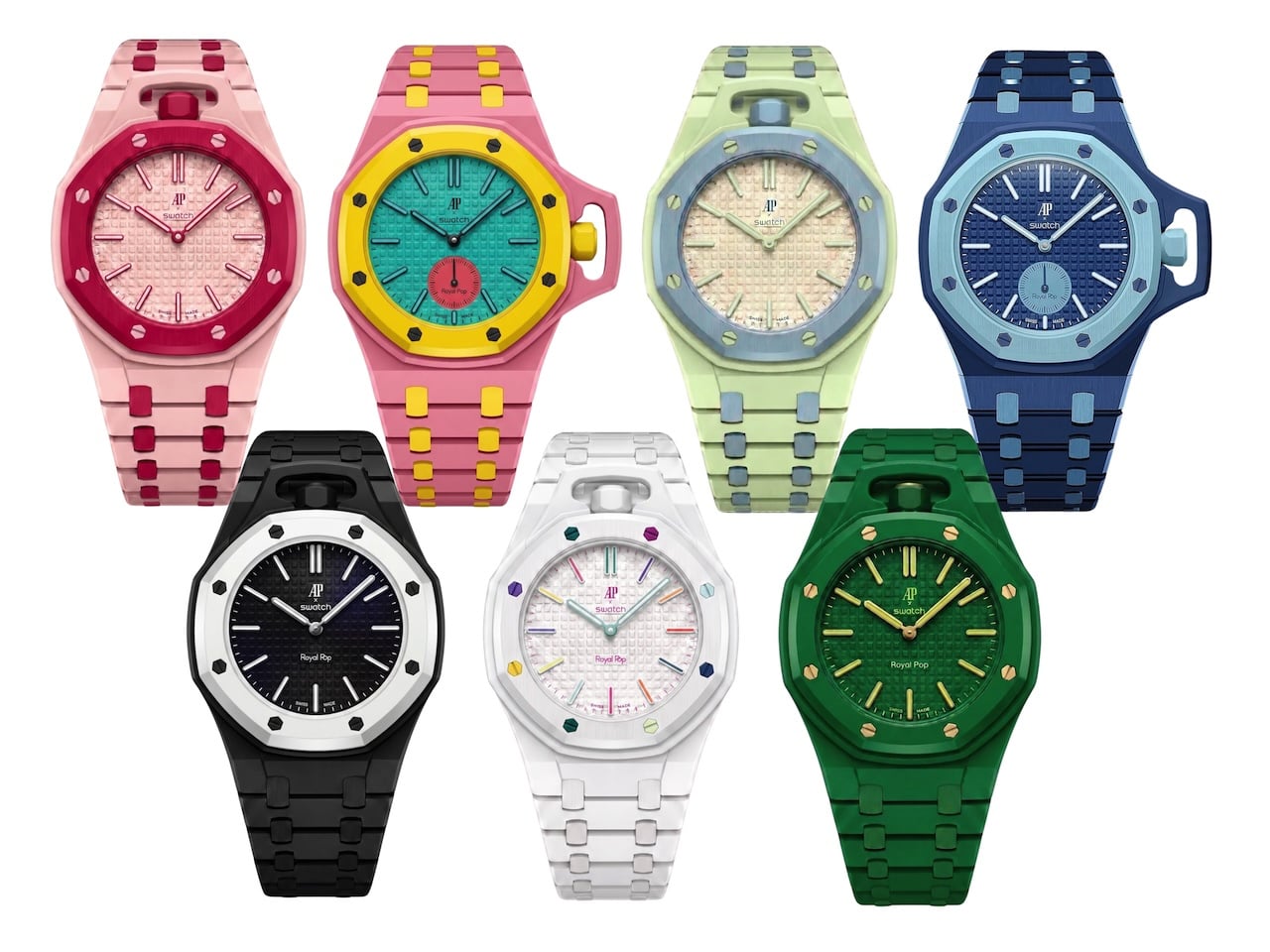
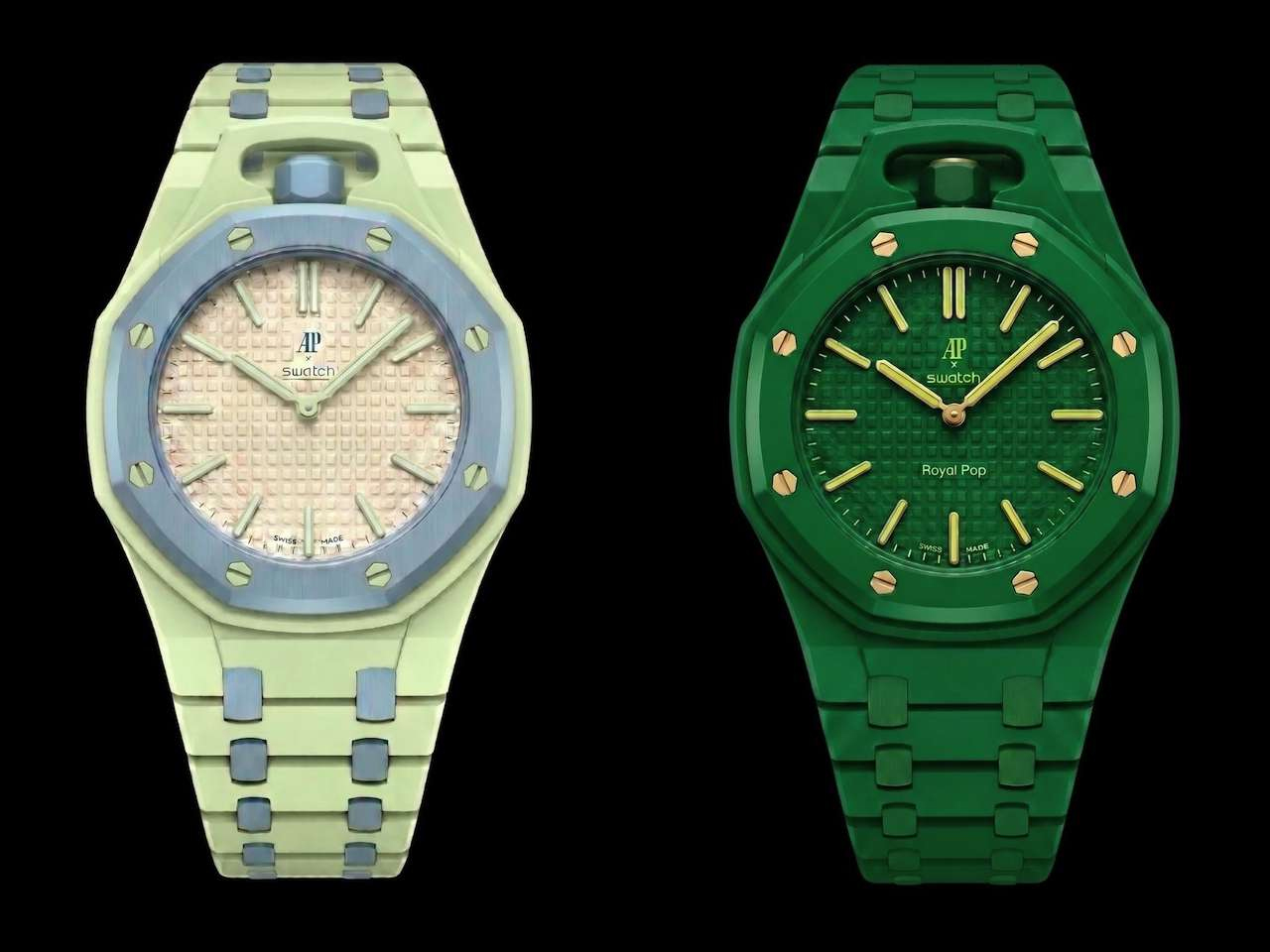
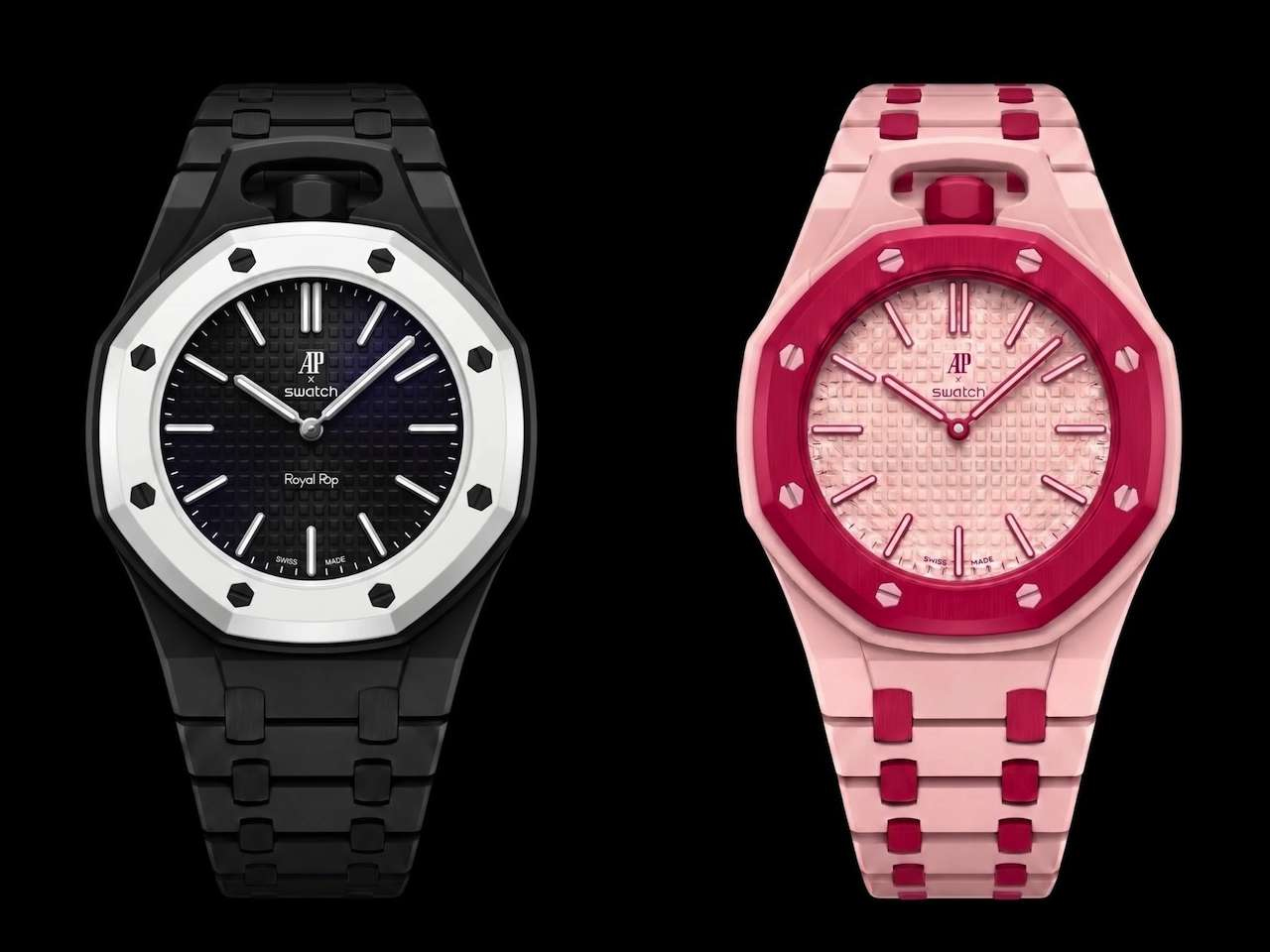
High-end collaborations, at times, give us meaningful outcomes that no matter how hard you try, you cannot sidestep. In my recent memory, Audemars Piguet x Swatch Royal Pop – a mindboggling amalgamation of the Royal Oak and the Swatch Pop – is definitely one such example. While everything is a Pop of color and high-end horology, what remains missing is the fact that this collaborative model is not meant to be worn on the wrist; it’s designed as a pocket watch, but one you’d definitely fall for even in 2026.
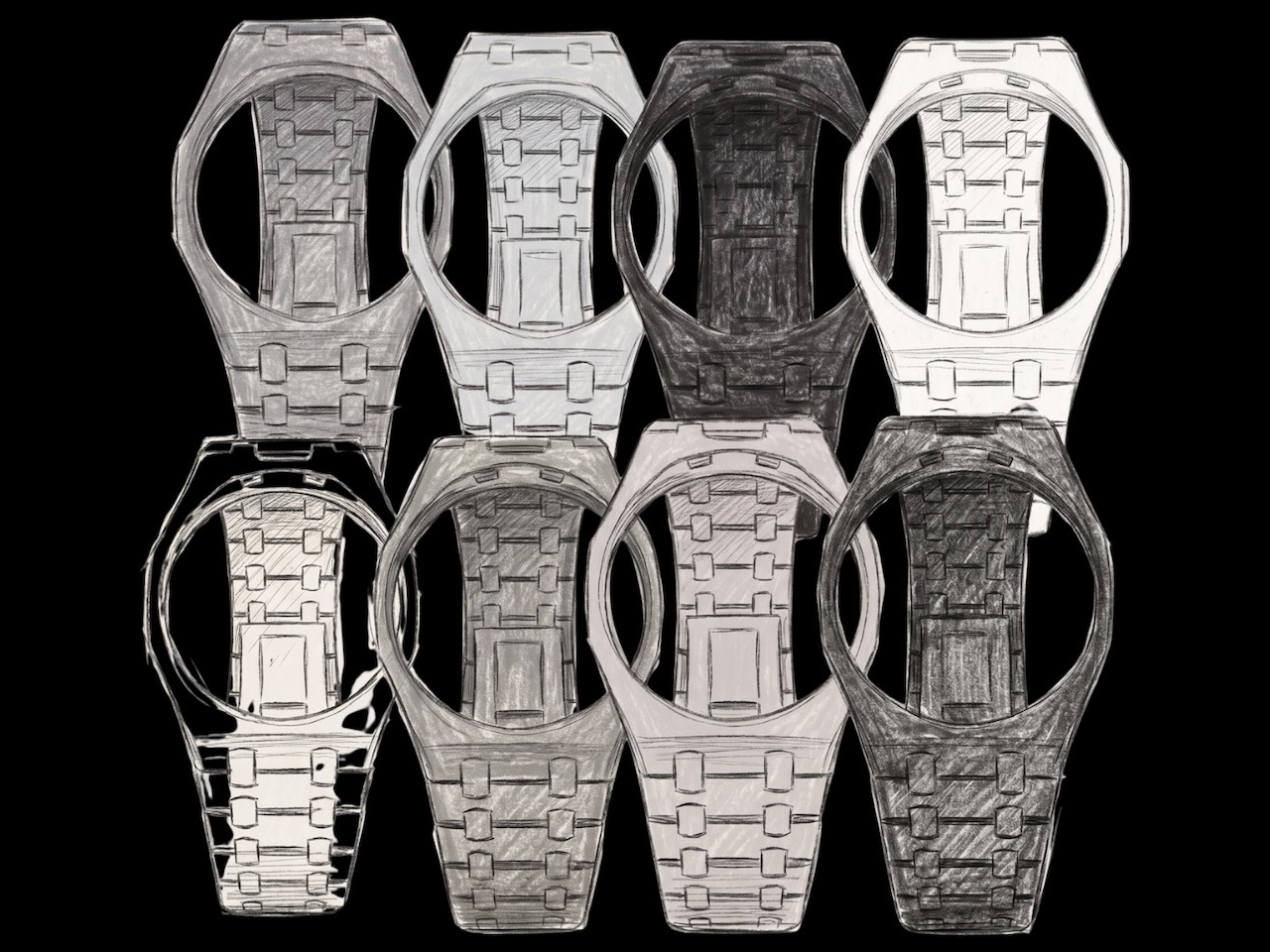
However, there is a school of thought comprising watch enthusiasts that believes the Royal Pop deserves to rest on the wrist. While the creators themselves don’t believe it, Lambertus, an independent maison, is a firm advocate that it should, and is therefore creating case-straps for the Audemars Piguet x Swatch Royal Pop, now going on pre-order, in whole, for $95 through the Royal Pop Wrist Bands website.
That amount will reserve a case-strap for you, but there’s a caveat. The creation of these straps has not kicked off the blocks at the time of writing. For the reservation price of $95, therefore, you are banking on Lambertus to carry out all the phases of development i.e., the roadmap from R&D, prototyping, final design, to manufacturing, with no clear deadline for assurance.
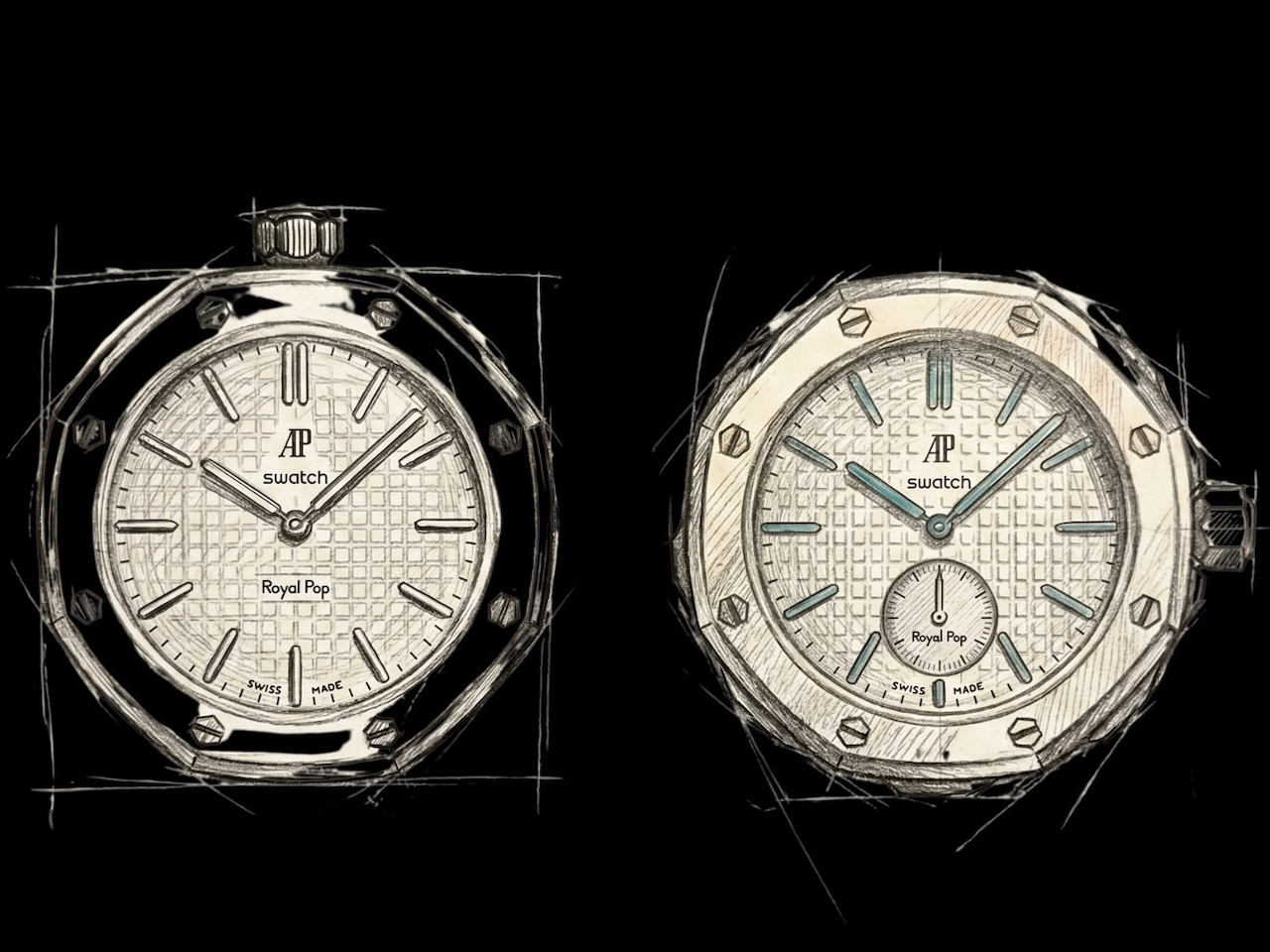
The Lambertus creation is called Chapter I. It’s now in the R&D, and should present, on development, as an excellent accessory to the AP × Swatch Royal Pop. The cult timepiece comes in eight different colorways and two design iterations: the Lépine and the Savonnette. The Lépine pocket watch is designed with hour and minute hands and a crown at 12 o’clock. It comes in six color options. Available in two colorways, the Savonnette Royal Pop, features a crown at 3 o’clock and along with the hour and minutes, also has a small second hand at 6 o’clock.
Since Lambertus has a vision to match everything in the Royal Pop portfolio to the T. It will also tailor the straps to match the eight colors of your pocket watch. Even commendable – or you may say requisite – is that the case-straps will be split in two models, like the AP x Swatch collaborative pocket watch itself. The Strap I of the Chapter I will come in six Lépine-style models and the Strap II in two options for the Savonnette-style watches.
Of course, from how it appears as of now, the machined, octagonal watch holder straps from Lambertus will let you snap in the AP x Swatch Royal Pop and flaunt it with passion. But how well the strap material (which remains unclear as I write), of the eight luxury designs in two crown orientations, complements the Bioceramic case of the actual watch is anybody’s guess. And if that’s not as premium as you would like to trust with your AP, we know where the $95 you put in is headed. To ensure the backers have little legal ground to confront, the Royal Pop Wrist Bands website puts out “Our Royal POP compatible straps and wristbands are not affiliated with, endorsed by, or sponsored by Audemars Piguet or Swatch Group,” in fine print.
Your wrist might be the most underutilized piece of real estate you own. Most smartwatches promise everything at your fingertips, tracking steps and heart rate while delivering notifications in real time. But what happens when you need to fix something physical, tighten an actual screw, or open a stubborn bottle? That digital magic suddenly feels pretty limited. Remember that bonkers Smartlet concept from CES that tried cramming an Apple Watch AND a Rolex on your wrist? Weird execution, brilliant insight. The watch strap has serious potential as a wrist-borne utility belt, and Woods Design seems to have cracked the code with something actually wearable.
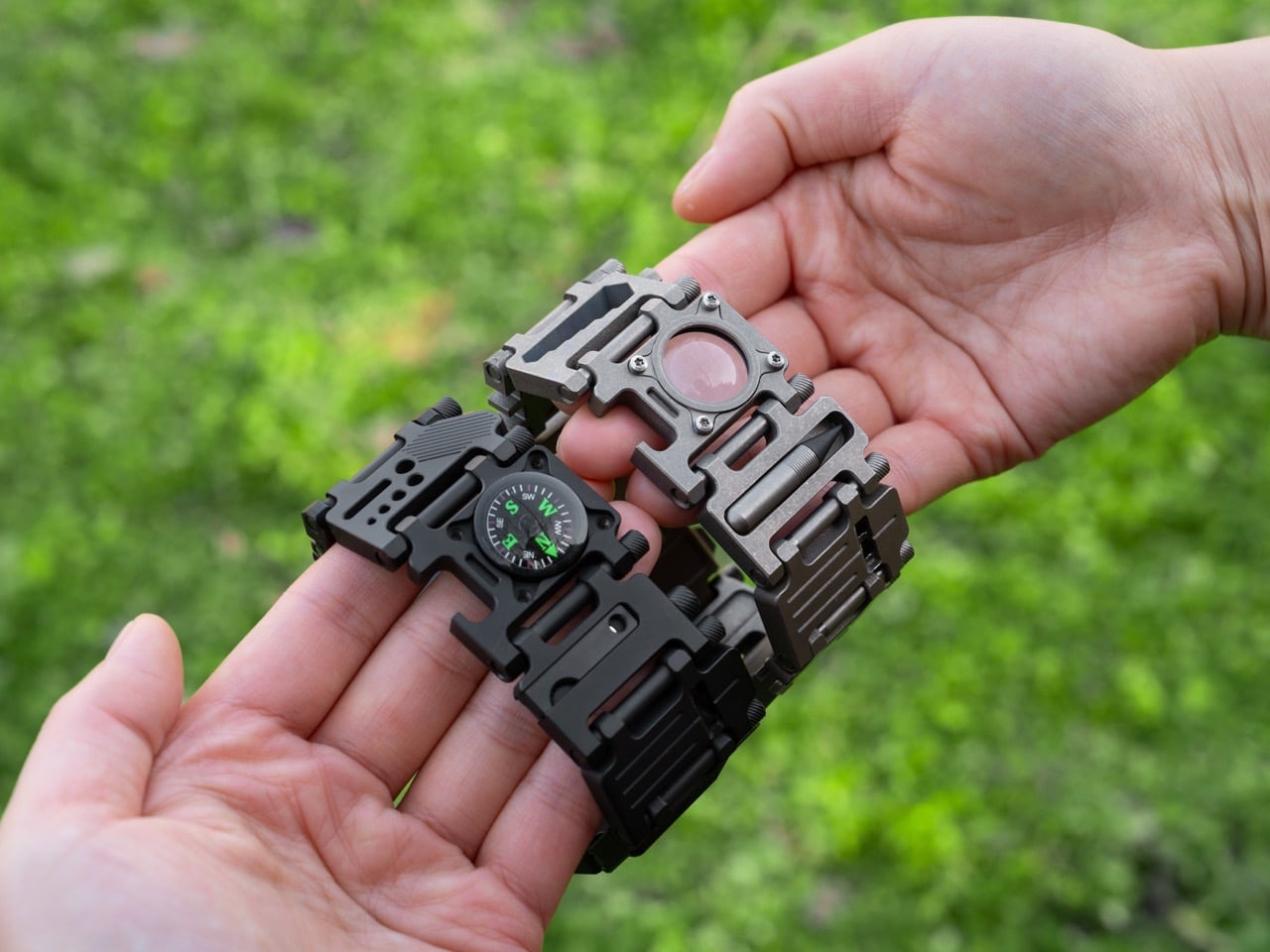
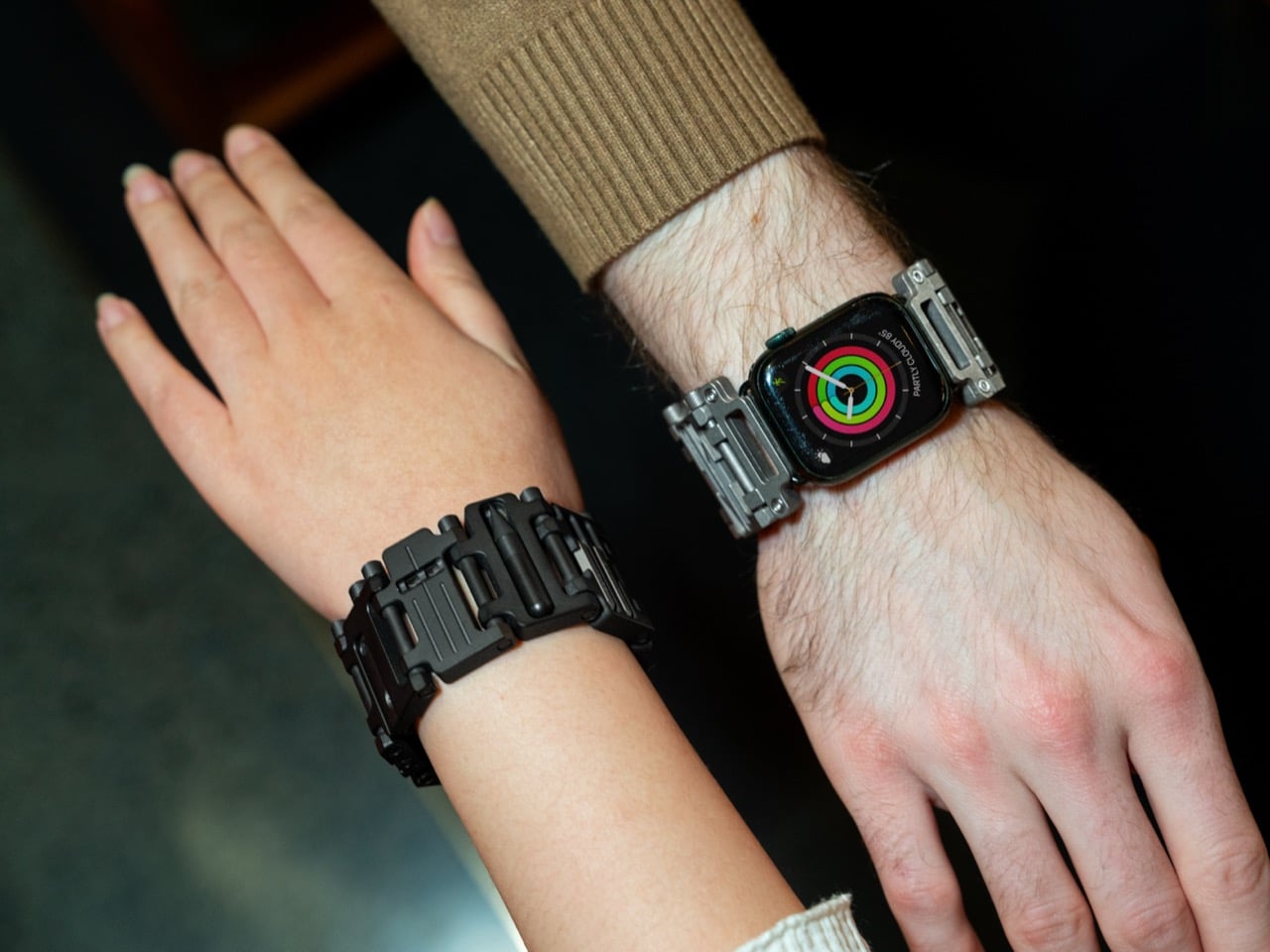
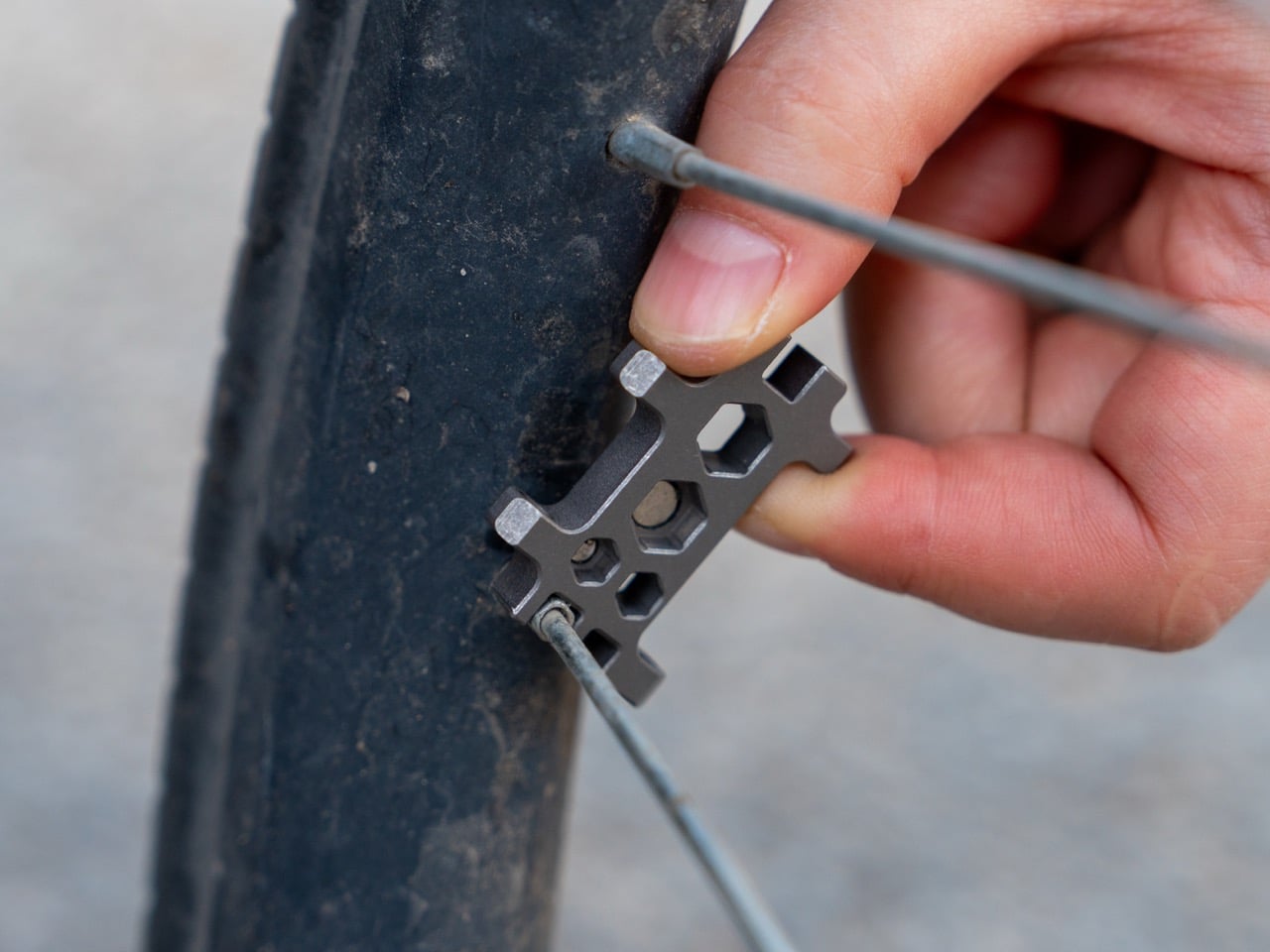
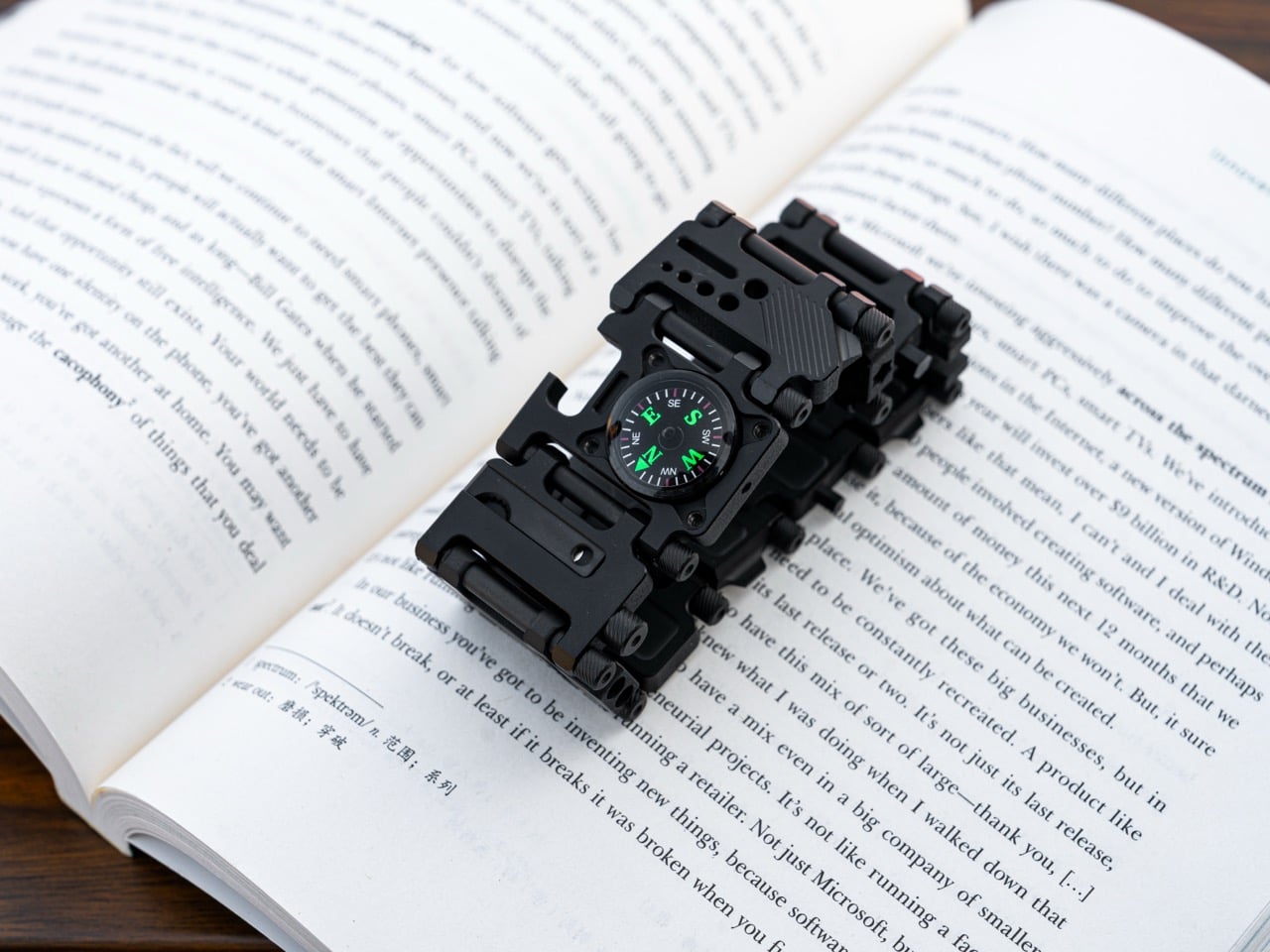
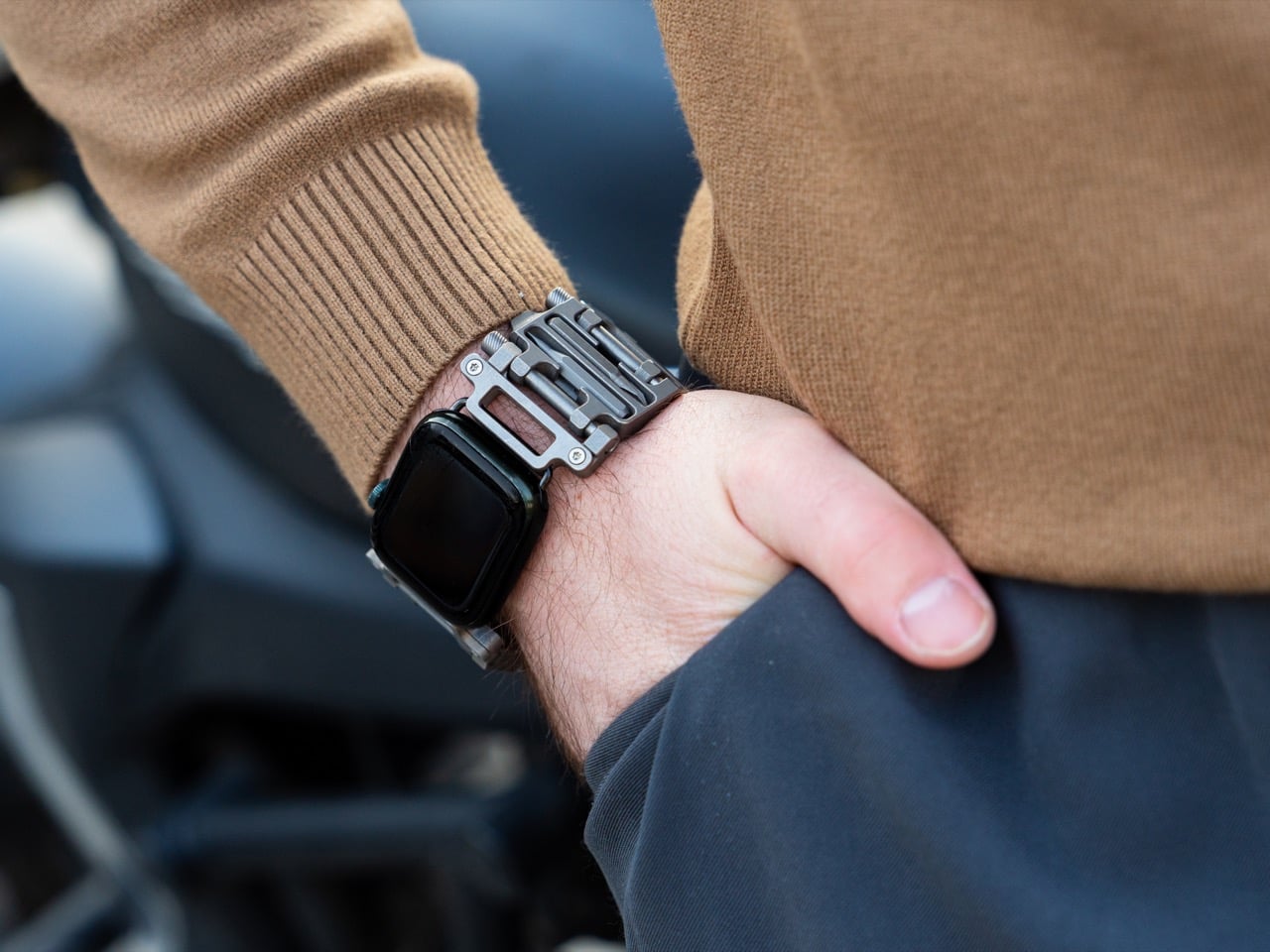
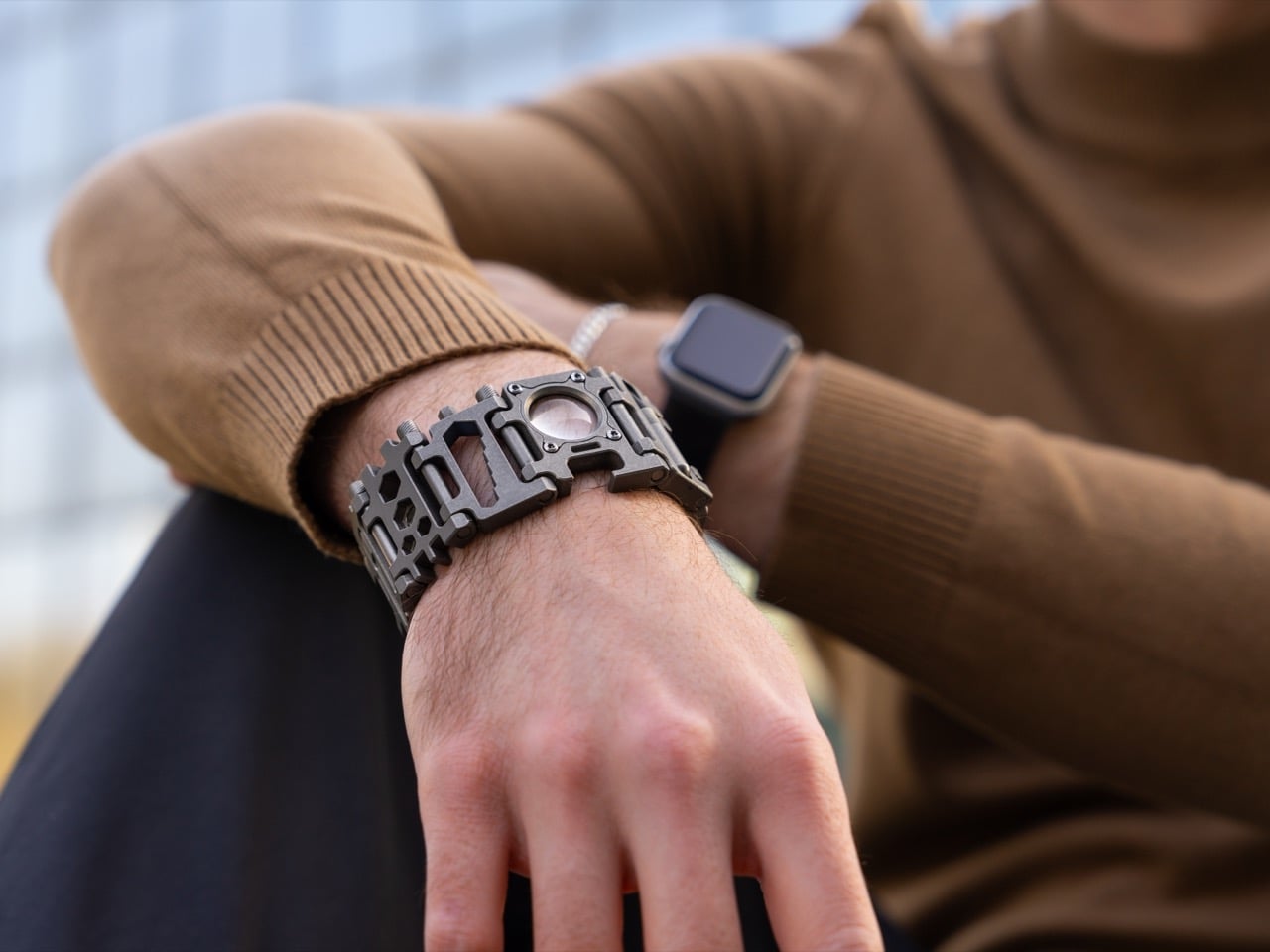
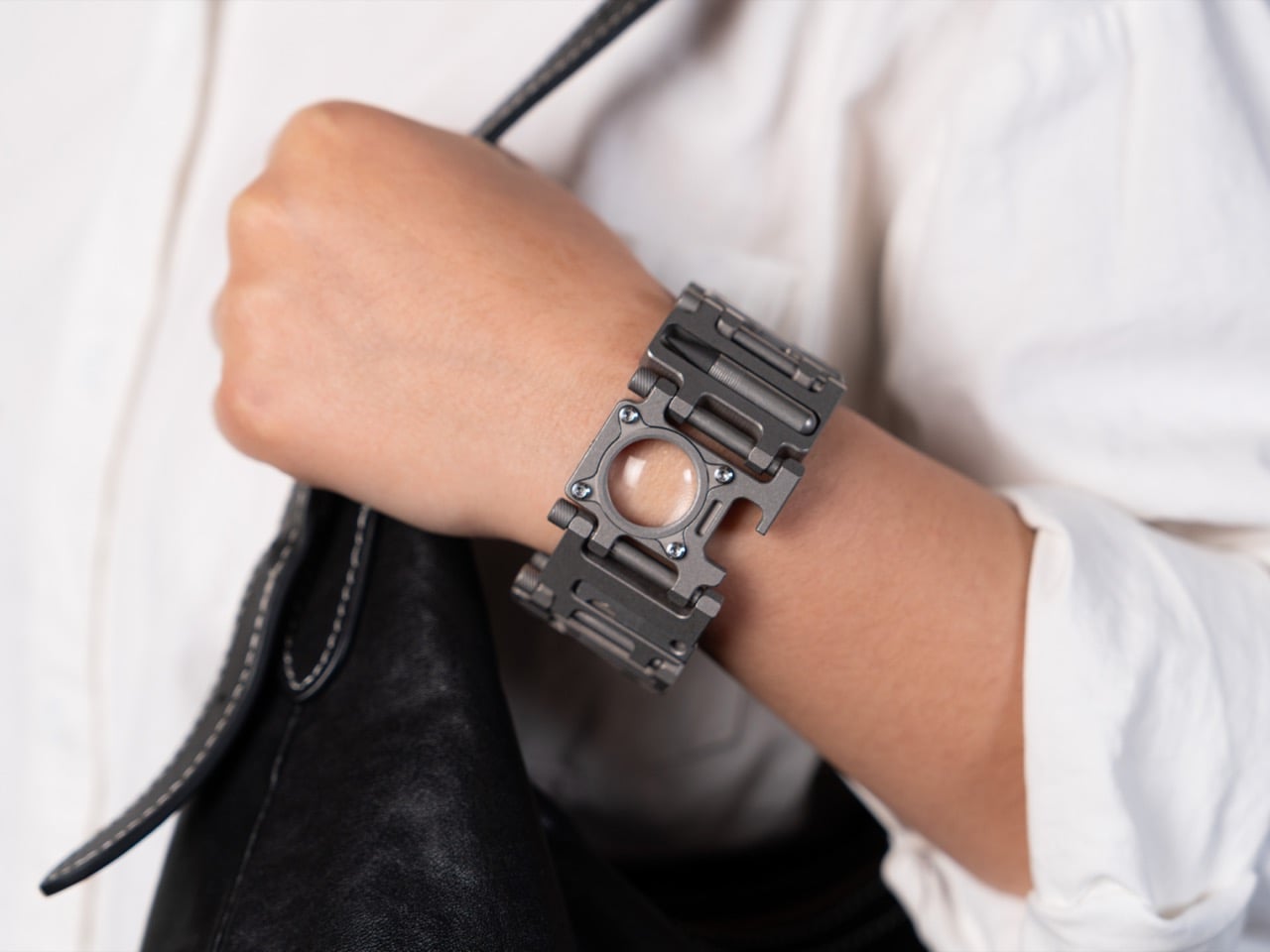
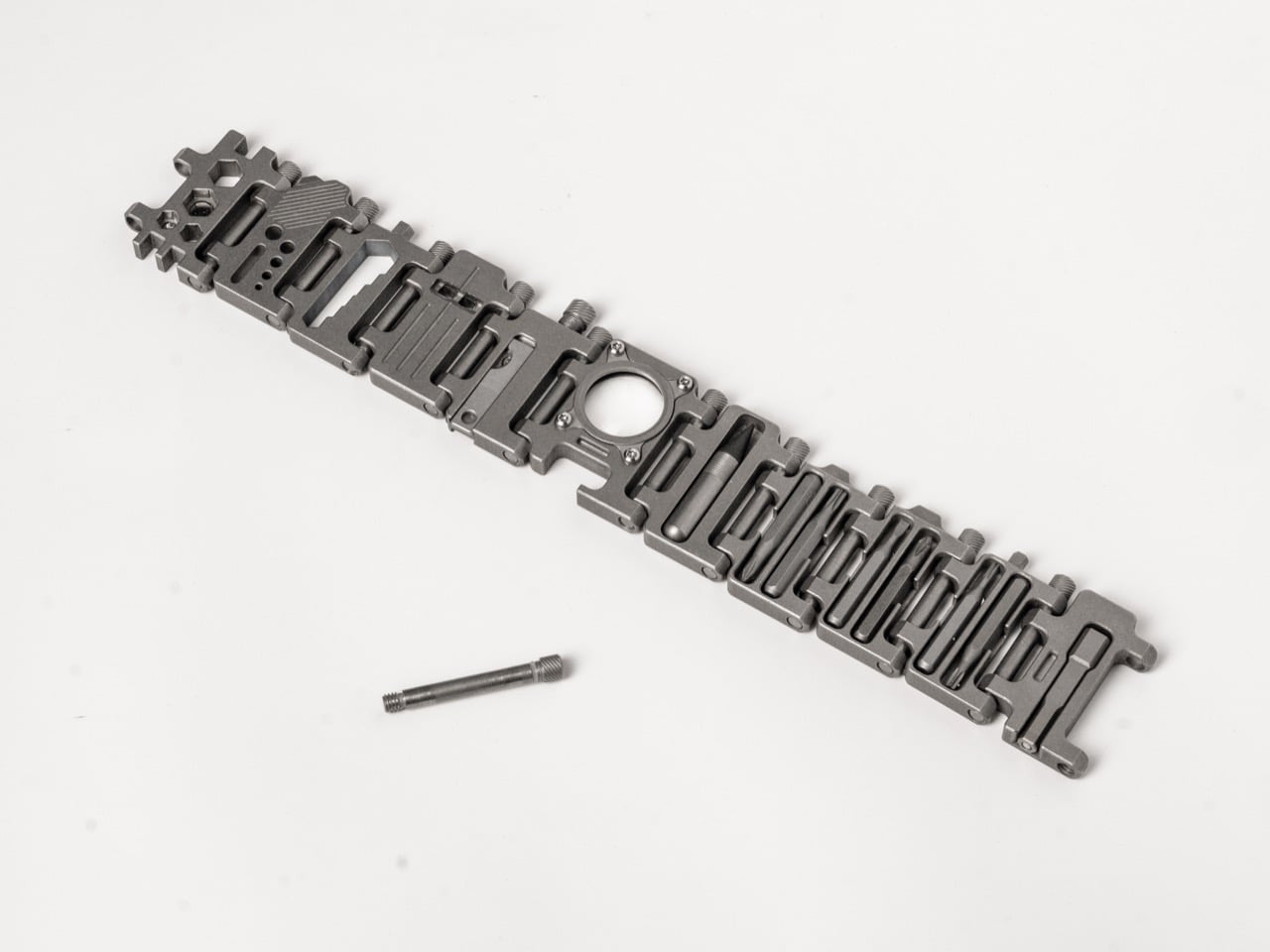
The TiLink is a 24-in-1 titanium bracelet that doubles as a watch strap, creating this interesting yin-yang of capabilities. Compatibility spans across all watches with lug widths between 18-26mm, which means the TiLink can attach to the Apple Watch as well as Garmin, Samsung, Google Pixel, and analog watches. One side tracks your biometrics and messages, the other has screwdrivers, wrenches, a magnifier, and a fire starter machined from aerospace-grade titanium. Full transparency: you’re probably not getting through airport security without some explaining, and this definitely isn’t for minimalists. But for EDC enthusiasts who love flaunting their gear, or anyone who believes in being prepared for whatever life throws at them, this bracelet does something clever. Instead of just holding your device, the strap itself becomes the utility belt, merging analog preparedness with digital functionality in one surprisingly balanced package.
Woods Design chose GR5 titanium, the aerospace-grade stuff that shows up in aircraft components and surgical implants. The entire bracelet weighs just 138.8 grams despite packing 24 tools across 230.5mm of length. That’s lighter than most steel watches while being significantly stronger and completely corrosion-resistant. Every link gets CNC-machined for precision, which means tight tolerances and smooth articulation that stays consistent over time. The 35mm width sounds chunky on paper but makes sense once you see how the tools integrate into each module. Your Apple Watch will become obsolete e-waste in five years while this thing keeps working indefinitely.
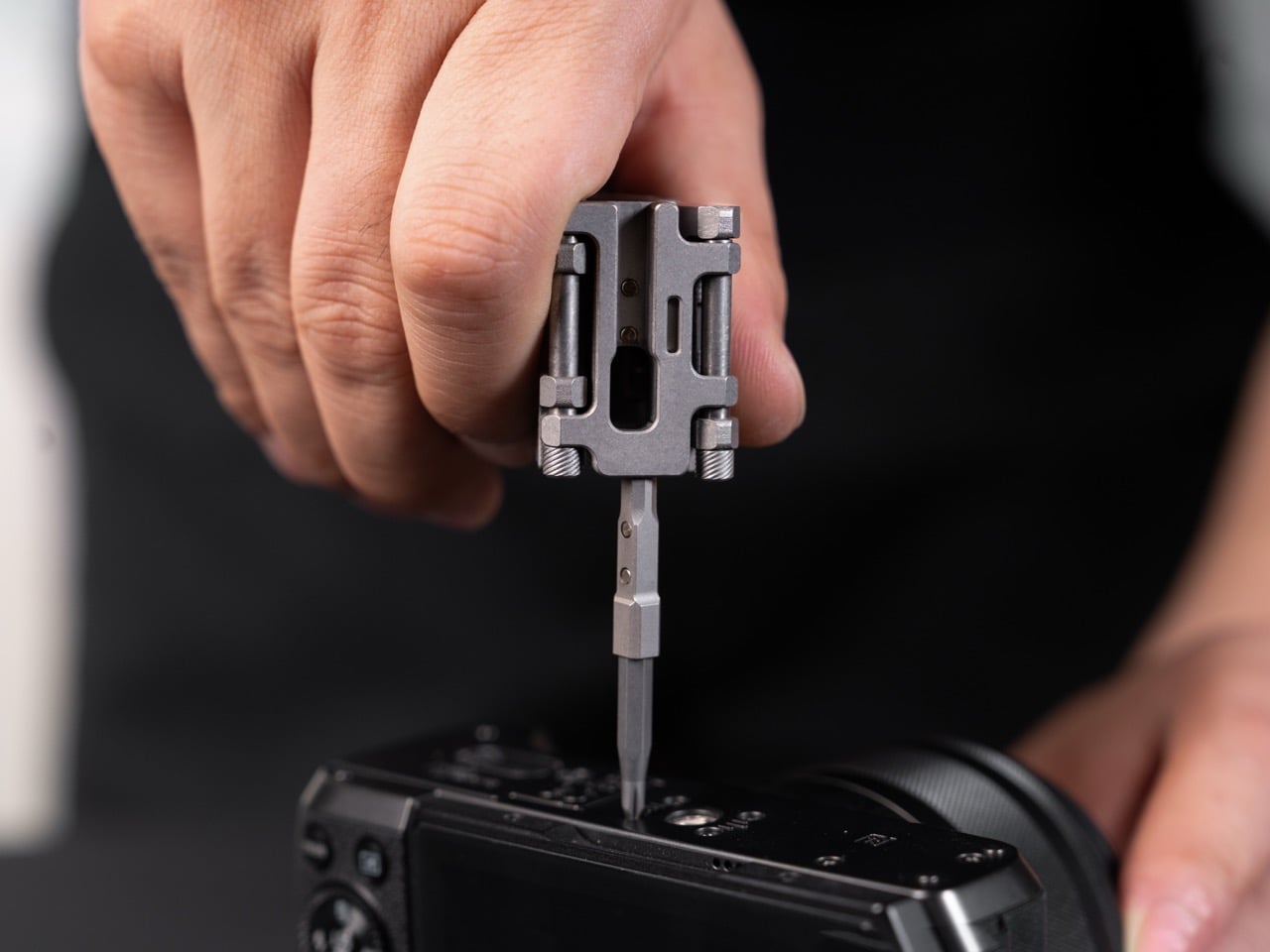
Three flathead screwdriver sizes (SL3, SL4, SL5) integrate directly into the bracelet structure, covering everything from eyeglass screws to home appliance panels. Hex bit holders accept both 4mm precision bits and 6.35mm standard bits, giving you genuine versatility instead of that fake multi-tool marketing where one size supposedly handles everything. The 4mm bit extension bar reaches recessed screws in tight positions without needing adapters or workarounds. You can swap bits on the fly, choosing configurations based on what you actually need that day. Eyeglass adjustments, toy repairs, electronics tinkering, small hardware fixes, all the annoying little tasks that require tools you never have handy.
An adjustable wrench covers M4 to M8 nuts and bolts, replacing an entire wrench set with one modular link. Traditional hex wrenches deliver solid torque but disappear into drawers and take up pocket space. Mini versions fit on keychains but lack leverage and get lost in couch cushions within days. This integration gives you proper wrench functionality without the carry hassle. The spoke wrench includes three sizes (3.6mm, 3.9mm, 4.4mm) for common spoke nipples, which tells me they actually consulted cyclists during design. Roadside wheel truing without carrying a separate tool bag changes the calculation for anyone who rides regularly and has dealt with wonky spokes mid-ride.
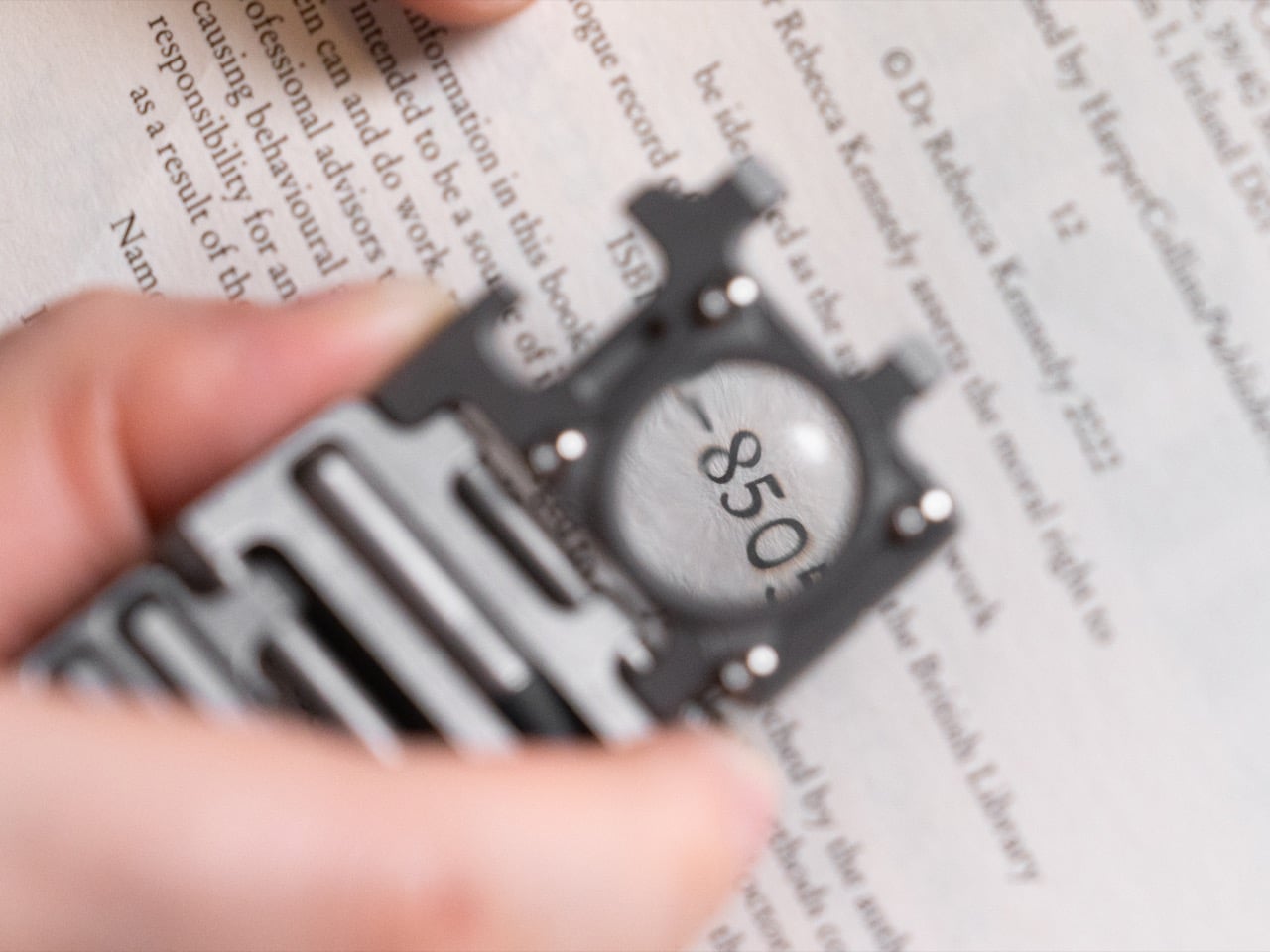
A built-in magnifier handles small text, component inspection, or marking verification without pulling out your phone and fumbling with zoom controls. The eternal pen requires zero refills, won’t leak ink all over your stuff, and stays permanently attached so it can’t vanish. I’m honestly uncertain how often I’d write with a bracelet pen, but jotting quick notes or reminders beats typing on a phone screen when your hands are already busy. The double-hole survival whistle produces louder, sharper sound than standard single-hole designs, making it effective for emergencies, signaling in crowds, or outdoor scenarios. Being permanently integrated means you can’t lose it, unlike those keychain whistles that fall off within a week.
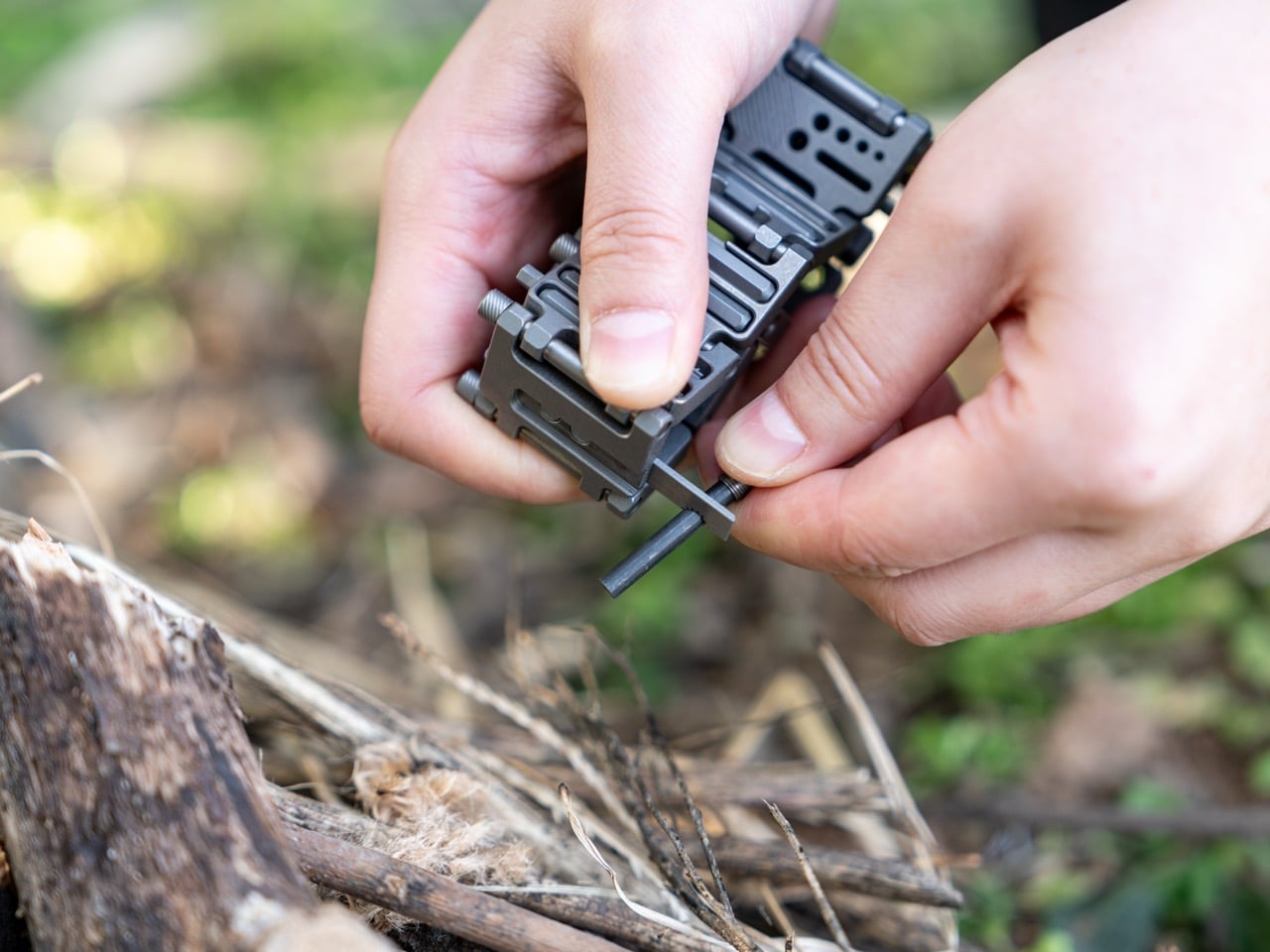
Fire starting capability feels niche for urban carry but makes perfect sense for actual preparedness. The striker produces sparks without fuel or batteries, and a rubber o-ring seals the compartment against moisture. For camping, hiking, emergency kits, or survival situations, having a fire starter that physically cannot run out of fuel beats carrying lighters or matches. For everyday city life, you’ll probably never use it. Here’s where the modular design earns its keep: remove the links you don’t need, keep what you actually use. The bracelet adapts to your reality instead of forcing you to carry someone else’s idea of essential tools.
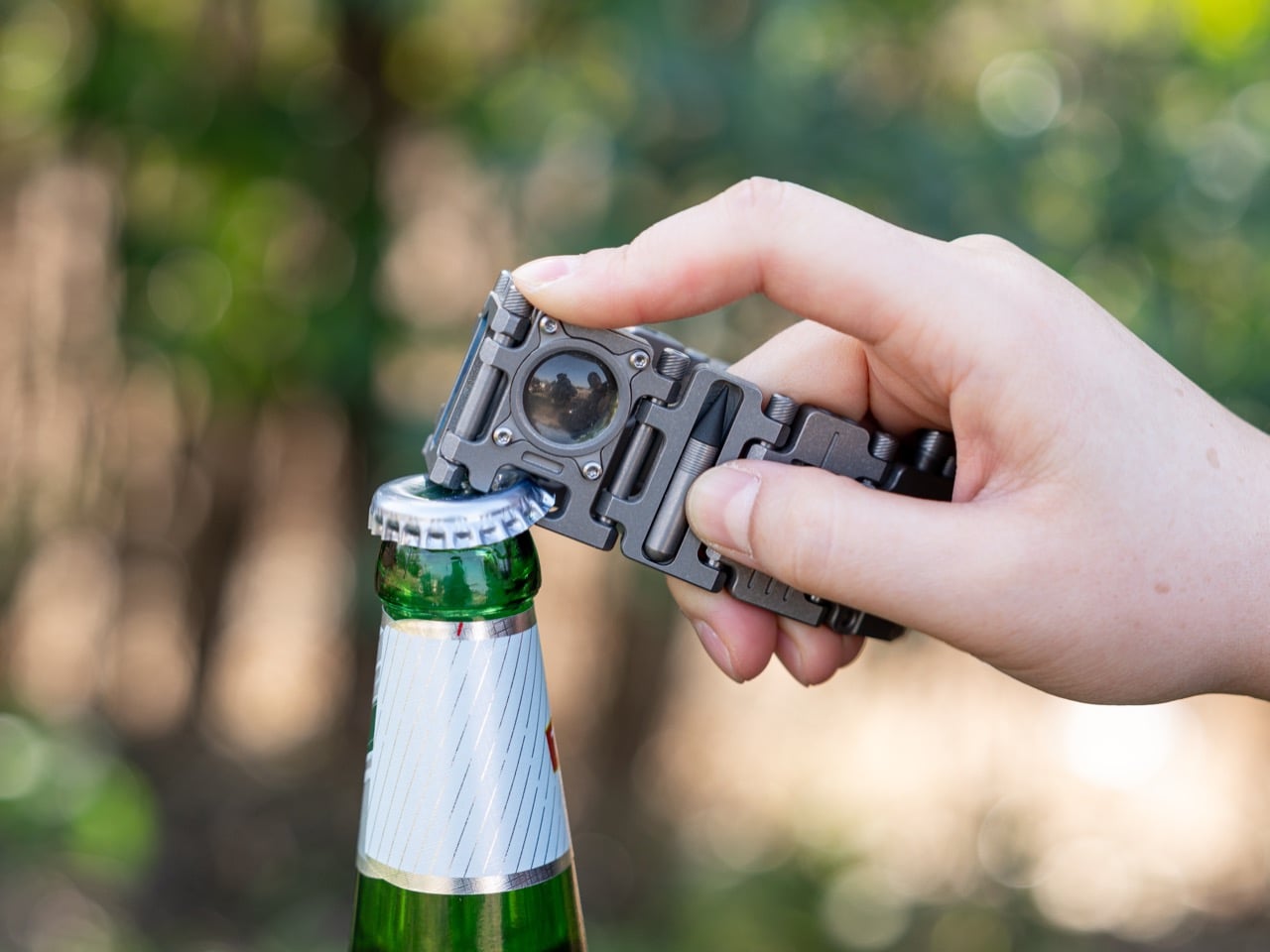
A nail file smooths rough edges or tidies nails when needed. Wire gauge holes measure five common sizes (3.5mm, 3mm, 2.5mm, 2mm, 1.5mm) accurately without needing dedicated calipers. The bottle opener works exactly as expected, which sounds mundane until you need one and realize your entire keychain, wallet, and pockets contain zero bottle-opening capability. These small inclusions prevent those specific frustrating moments where you’re almost prepared but missing one crucial thing. They fill the gaps between major tools without adding bulk or complexity.
Two optional modules extend the system further. A liquid compass uses premium white mineral oil for smooth operation and minimal temperature sensitivity, staying functional across a wide range of conditions. Sliding it off the bracelet and placing it on the ground eliminates magnetic interference from other tools, giving you accurate readings. When GPS satellites become unreliable or your phone battery dies at the worst possible moment, having mechanical directional finding matters. Tritium tube slots (1.5mm x 6mm) accept glow inserts that work continuously for 25 years without batteries, charging, or external light exposure. That’s legitimate low-light visibility plus understated aesthetic appeal for people who appreciate functional details.
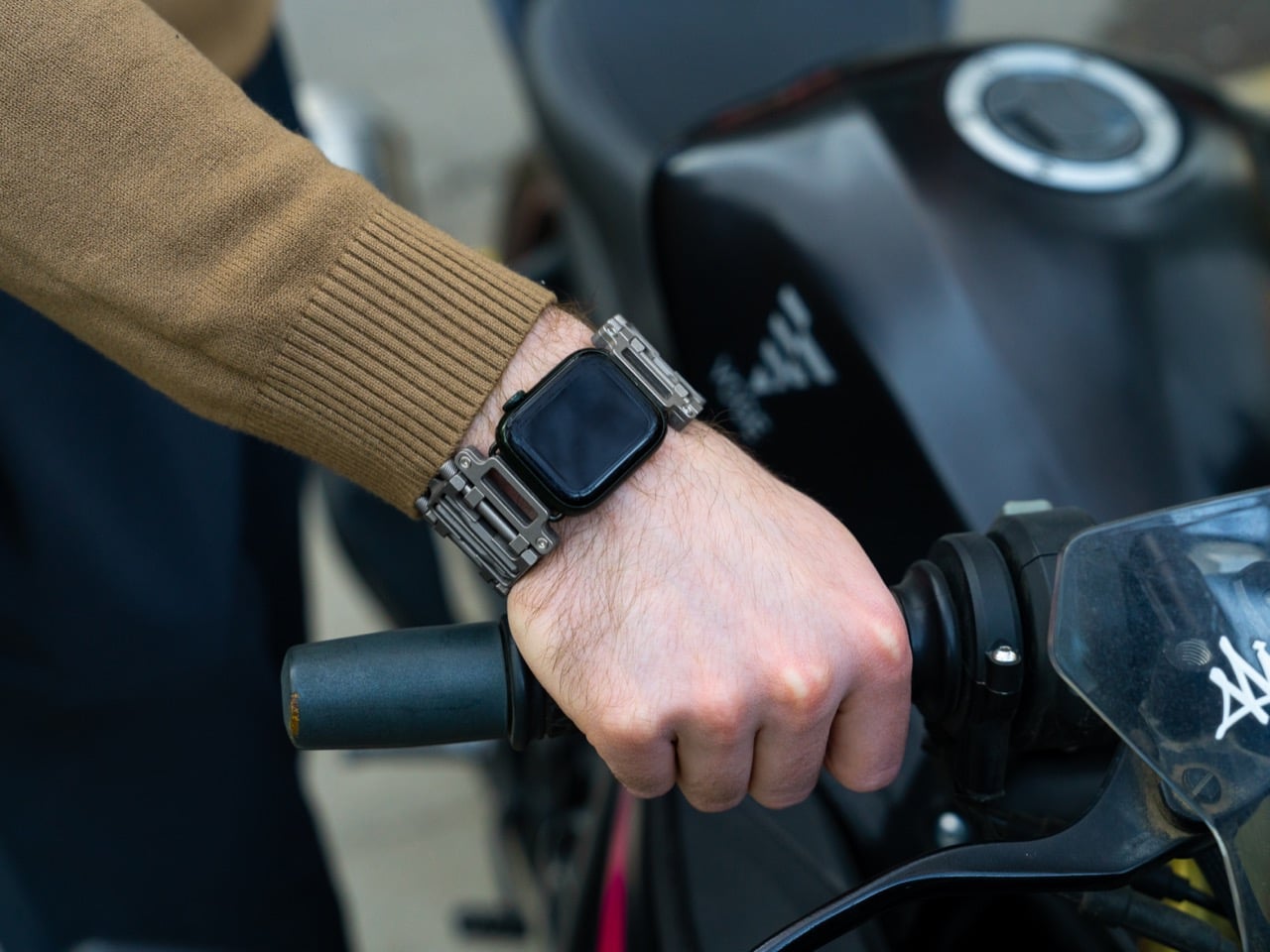
Apple Watch connectors transform the entire premise. Any Apple Watch model attaches and locks securely into place without extra tools or complicated procedures. This creates a genuine hybrid: your watch handles notifications, fitness tracking, payments, and connectivity while your band contains physical tools for fixing actual things. Digital and analog utility coexist on the same wrist, each handling what it does best. When you need to check your heart rate and tighten a loose screw within the same five minutes, having both capabilities right there makes a surprising amount of sense. That being said, the Watch integration isn’t mandatory – you can still wear the TiLink as a regular bracelet too, keeping your smartwatch unencumbered by these massive new responsibilities.
Each link connects and disconnects cleanly for tool-free size adjustment. Add links for a looser fit, remove them for tighter wear, customize tool selection while you’re at it. The precision machining ensures every link articulates smoothly and maintains consistent tolerances, which matters for something rubbing against your wrist all day. You’re essentially building a custom toolkit that also happens to be a watch band, selecting exactly the modules you’ll actually use instead of carrying a pre-configured set that includes stuff you’ll never touch.
As with every EDC, this watch strap has a time and place, and I’m not entirely sure if wearing this universally would work (the same way carrying a Swiss Army Knife everywhere is a tad risky). For example, airport security will absolutely flag this. TSA agents see a metal bracelet with integrated tools and fire-starting capability, they’re pulling you aside for additional screening. Office environments, malls, and public transit systems might consider it too tactical depending on where you live. But for EDC enthusiasts, makers, cyclists, outdoor types, or anyone who regularly encounters small problems requiring tools, wrist-mounted organization beats pocket clutter or carrying bags just for gear. Woods Design built something that respects both form and function, achieving a balance that’s surprisingly rare in products that usually sacrifice one for the other.
Pricing starts at $179 for early backers, hitting $199 at standard retail for the titanium version. Quality titanium watch bands that do nothing except hold your watch regularly cost $150 to $300, so you’re paying a comparable rate for the band itself while getting 24 integrated tools as a bonus. An aluminum version exists at $89 for people who want the functionality without premium material costs. Individual modules run $19 each if you prefer building your configuration gradually or testing the concept before committing to a full bracelet. Single modules come with paracord so you can wear them immediately as standalone pieces.
Look, we all know someone who wears a beautiful vintage Rolex or Omega but keeps glancing at their phone every five minutes to check their step count. Or maybe you’re that person. There’s this weird tension happening right now between watch lovers who appreciate the craft and heritage of mechanical timepieces and those of us who genuinely need the convenience of a smartwatch to get through the day. Enter Smartlet, a Paris-based startup that’s decided this whole either-or situation is kind of ridiculous.
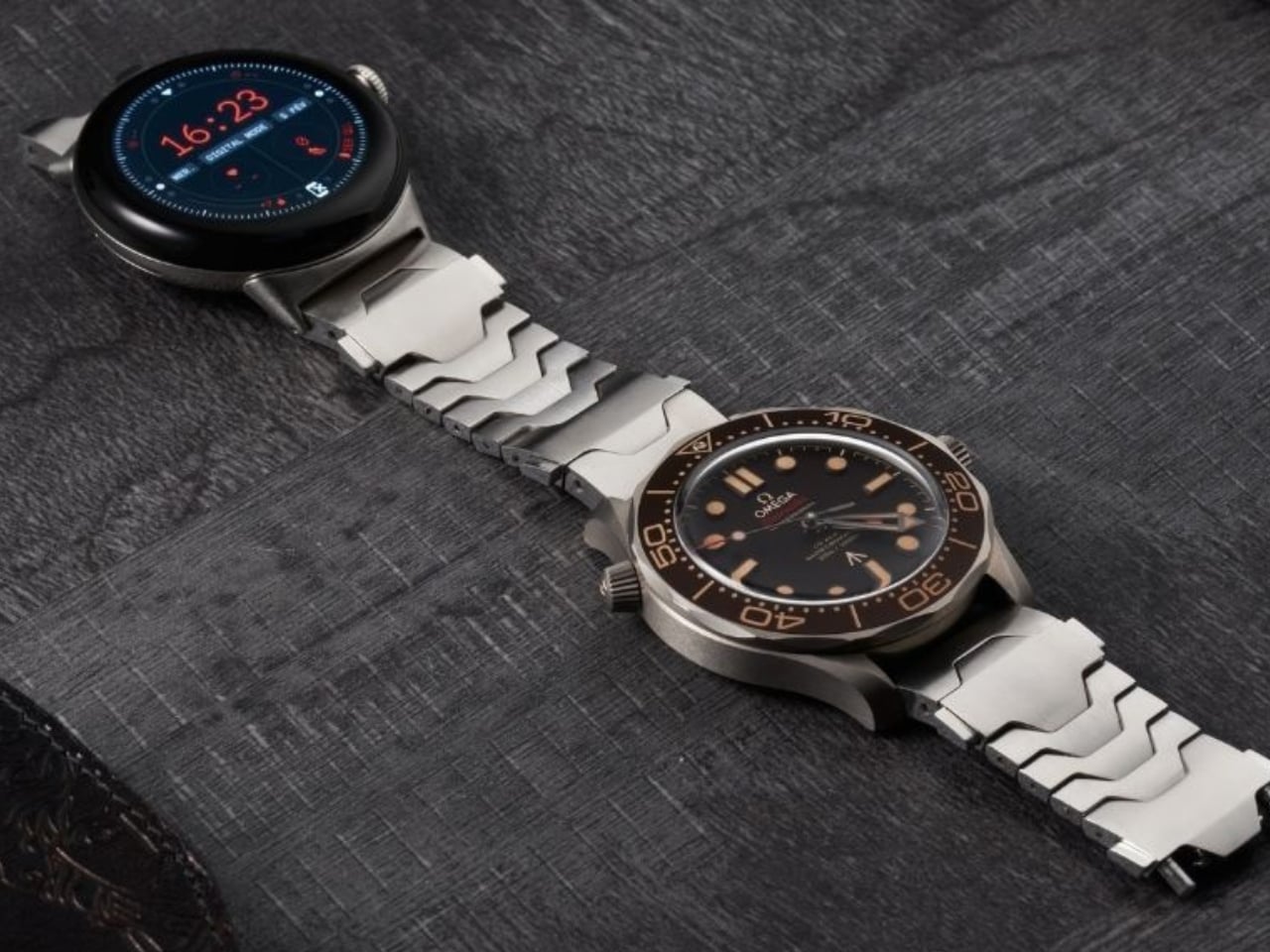
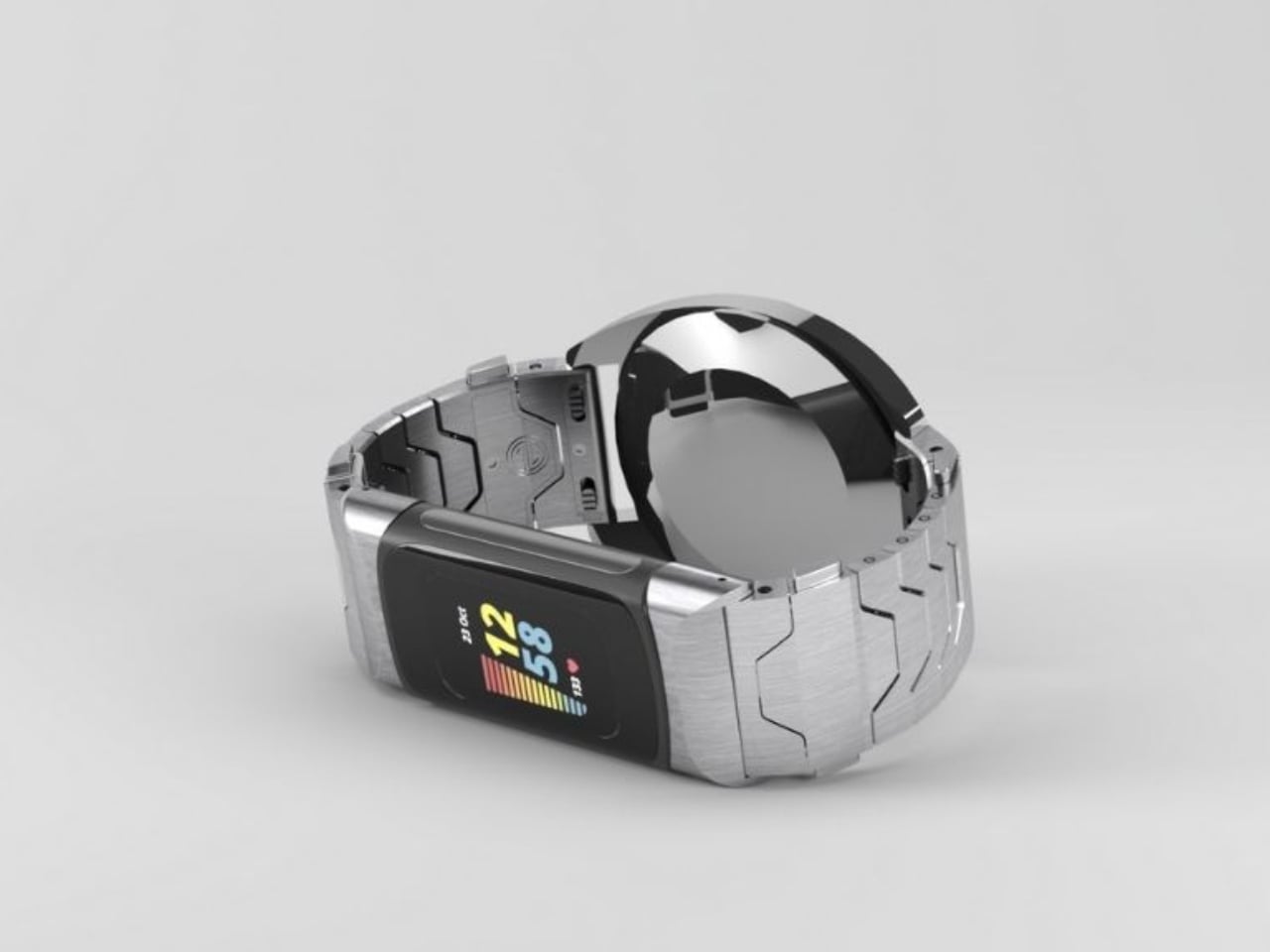
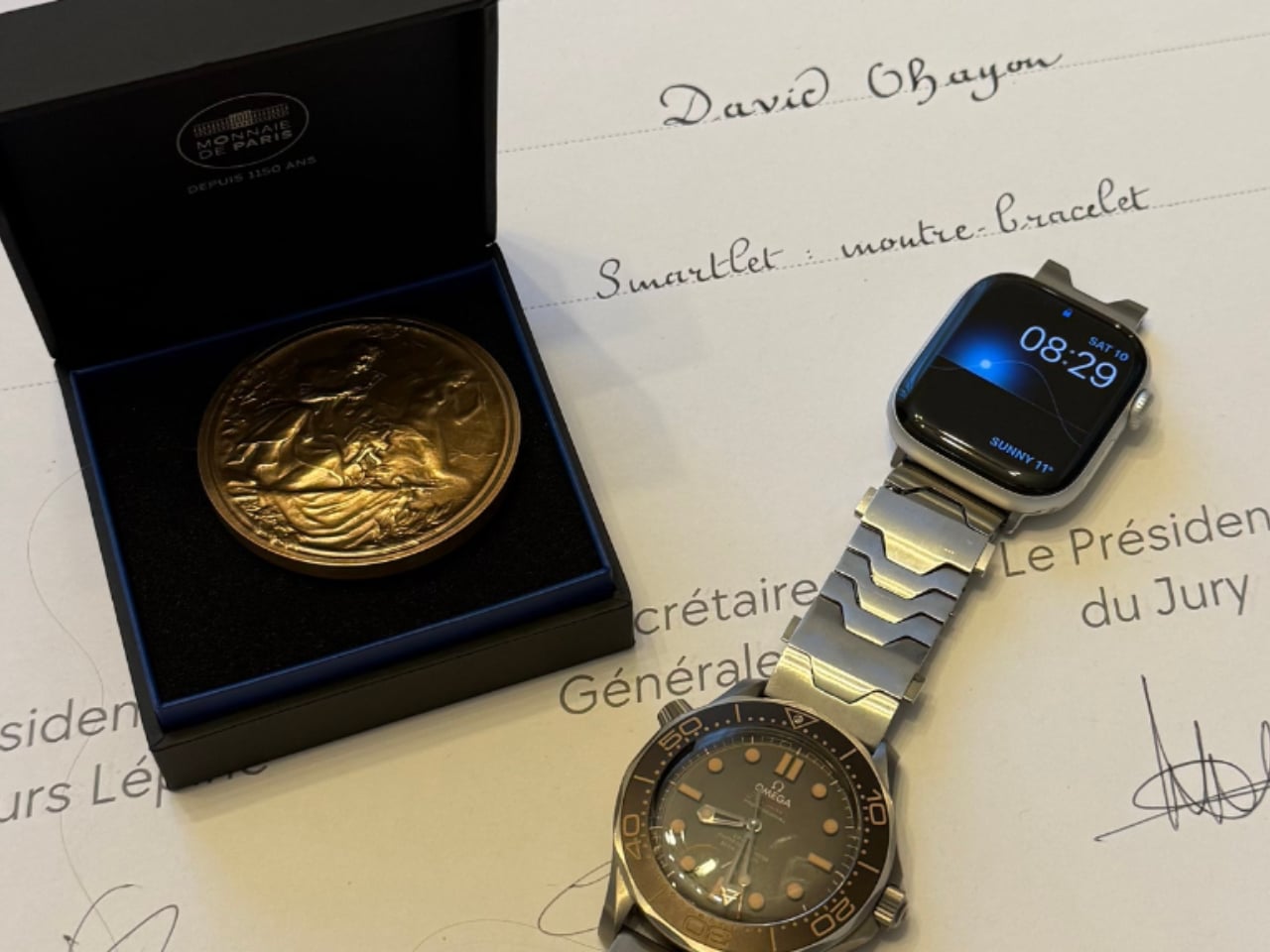
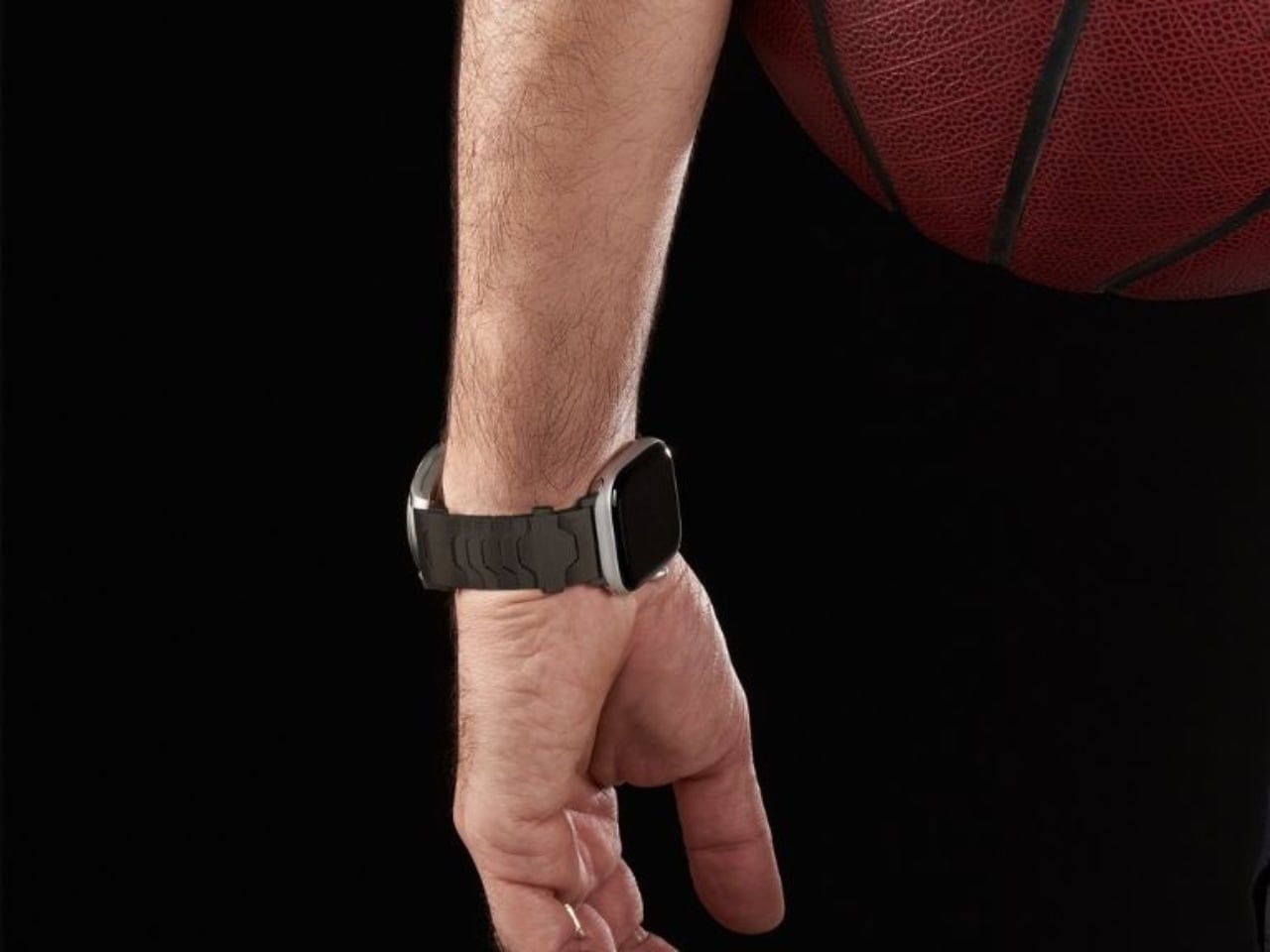
The Smartlet dual-watch strap does exactly what it sounds like. It lets you wear both a traditional watch and a smartwatch on the same wrist, simultaneously. One sits on top of your wrist like normal, the other hides underneath. Flip your wrist one way to check the time on your classic timepiece, flip it the other way to see your notifications, heart rate, or whether you’ve hit your daily movement goal.
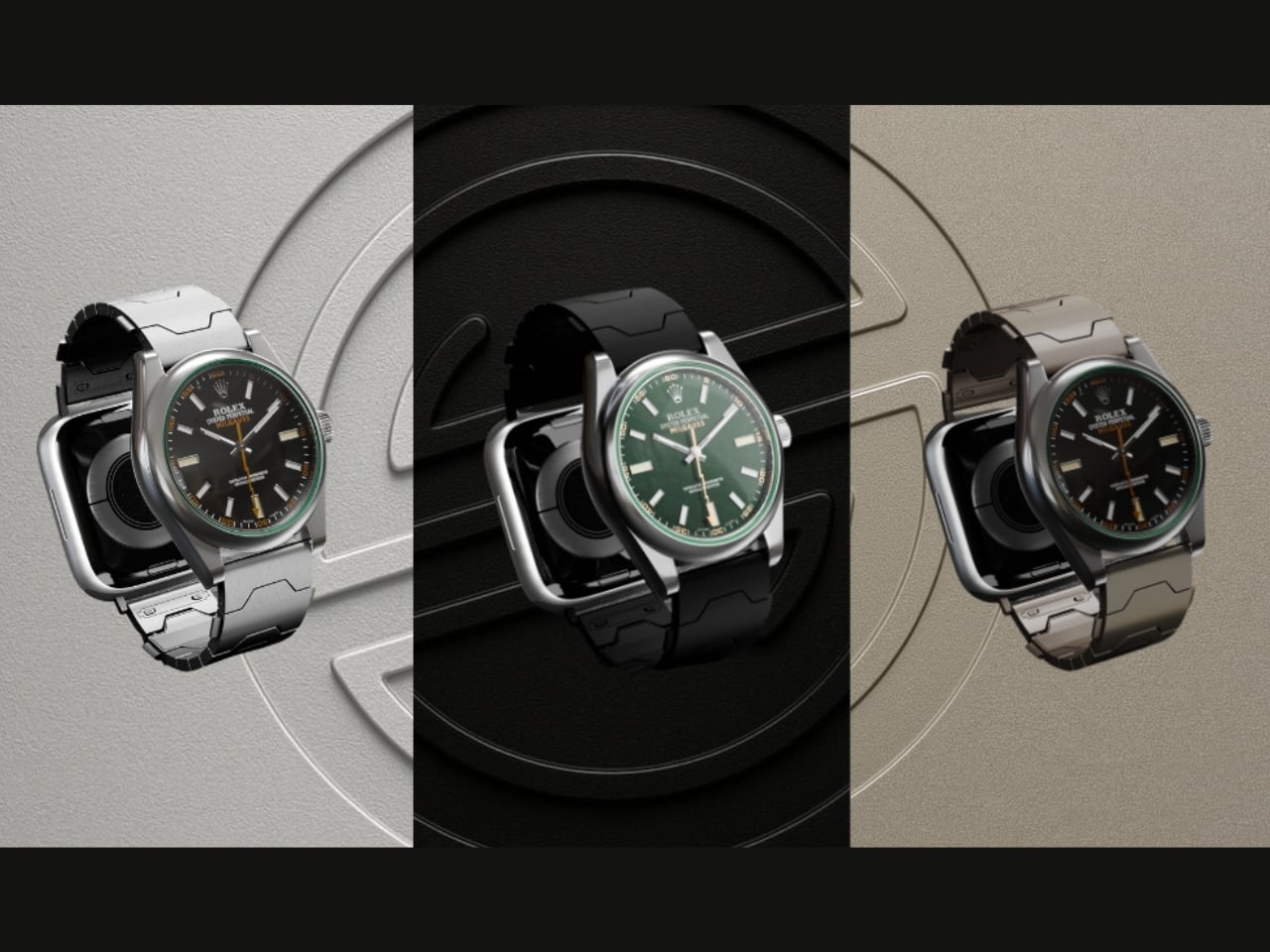
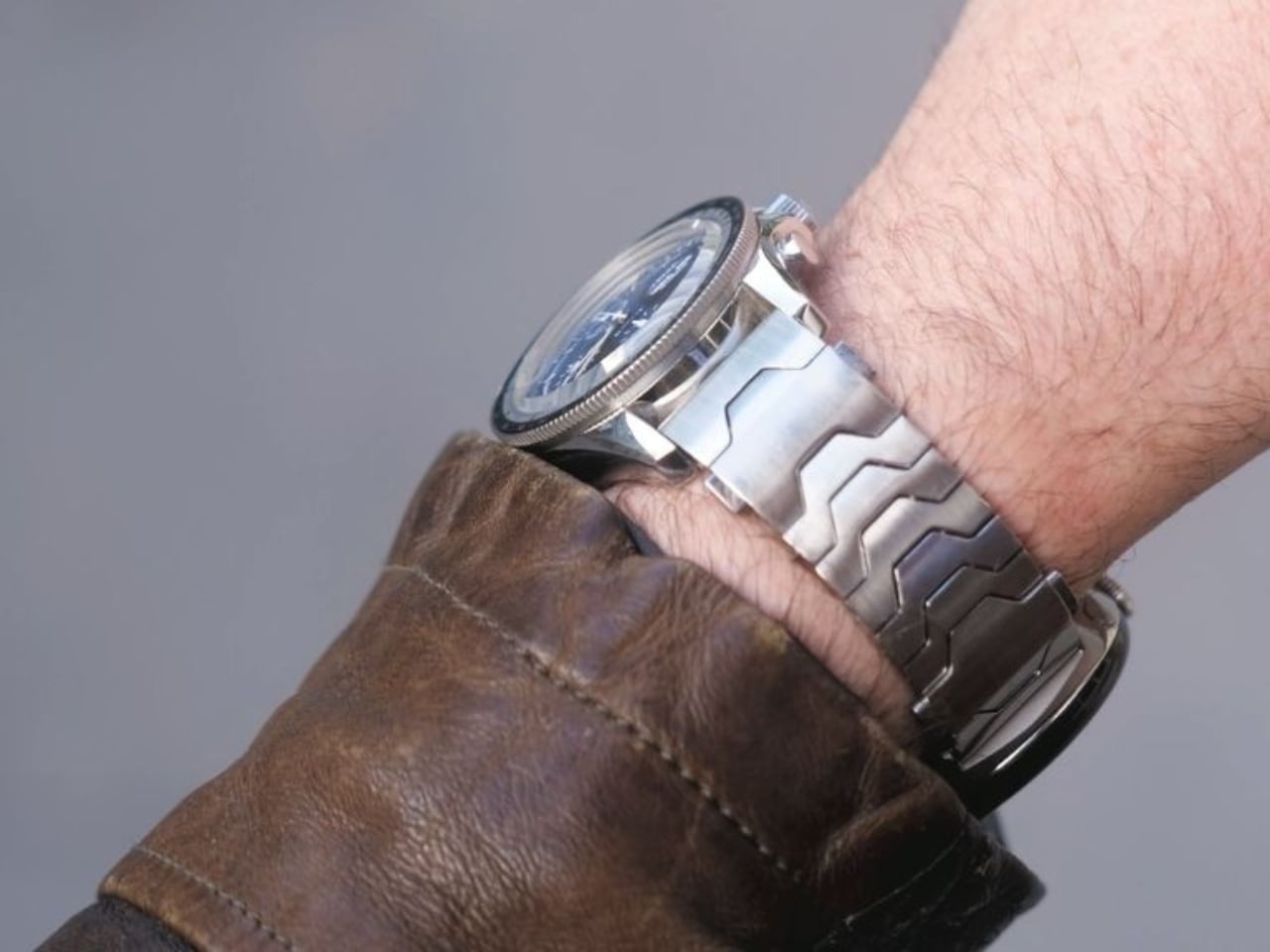
Created by engineer David Ohayon, who himself couldn’t decide between his beloved mechanical watches and the practical features of modern smartwatches, the Smartlet system uses a patented modular design that lets you clip and unclip watches in seconds without any tools. The strap itself is made from stainless steel and comes in different finishes (Classic, Shadow, and Titanium), so it’s not trying to look like some weird tech gadget. It actually resembles a regular metal watch bracelet, which means it won’t clash with the aesthetic of luxury timepieces.
Now, before you start imagining some clunky contraption, the total weight of the setup sits between 60 and 100 grams with both watches attached, which is comparable to most steel bracelets already on the market. The thickness is between 9 and 12mm, compared to 4 to 8mm for classic watches, so yes, it’s noticeably thicker but not absurdly so.
The system is compatible with watches that have 20mm or 22mm lug widths, which includes iconic brands like Omega, Tudor, Tag Heuer, Rolex, Breitling, and Zenith. On the smartwatch side, it works with Apple Watch, 41mm Google Pixel Watch, various Samsung Galaxy Watch models, and even fitness trackers like Whoop 4 and Fitbit Charge. So whether you’re Team Apple or Team Android, there’s room for you here.
But here’s the thing about Smartlet that gets interesting. It’s not just about convenience, it’s about something deeper that watch enthusiasts understand. There’s emotional value in wearing a watch your grandfather gave you, or a piece you saved up for years to buy. These watches tell stories and carry memories. Yet in 2025, we’re also living in a world where contactless payments, fitness tracking, and instant notifications have become genuinely useful features we don’t want to give up.
The Smartlet has already won a bronze medal at the prestigious Concours Lépine 2025, a French innovation competition that’s been recognizing inventions since 1901. It’s also been featured across major watch publications and tech outlets, with some calling it a potential game-changer for the industry.
Of course, there are practical considerations. Wearing a smartwatch on the underside of your wrist means it’s in regular contact with desks, armrests, and tables, which could lead to scratches or damage. And aesthetically, this is clearly designed for people who want the best of both worlds without compromise, which admittedly might not be everyone. The marketing does lean heavily into “modern gentleman” territory, but honestly, the concept itself is pretty gender-neutral. Anyone who loves watches and also wants smart features could find this useful, whether you’re tracking workouts, managing notifications during meetings, or just want your health data without sacrificing style.
What makes Smartlet genuinely clever is that it doesn’t ask you to choose. It recognizes that technology and tradition aren’t enemies, they’re just different tools for different needs. You can protect your luxury watch from daily wear by keeping it underneath while your smartwatch handles the heavy lifting on top. Or you can showcase your mechanical masterpiece while discreetly monitoring your fitness data from below.
Is it for everyone? Probably not. But for the growing number of people caught between worlds, wanting both the soul of traditional watchmaking and the brains of modern tech, Smartlet offers something genuinely new. It’s a design solution that says you don’t have to pick a side anymore. Your wrist, your rules.