Apple’s decision to integrate Google’s Gemini AI into Siri and Apple Intelligence reflects a calculated strategy rather than a surprising shift. By focusing on user experience and forming strategic partnerships, Apple demonstrates its ability to adapt and innovate while maintaining its leadership in the technology sector. This approach, combined with advancements in hardware and AI […]
What if you could bring the power of AI to your Raspberry Pi without relying on the cloud? That’s exactly what the new Raspberry Pi AI HAT+ 2 promises to deliver. Jeff Geerling takes a closer look at how this $130 add-on transforms Raspberry Pi devices into localized AI workhorses, capable of handling tasks like […]
For years, the Apple TV 4K has occupied a curious space in the Cupertino ecosystem. It was the “hobby” that grew into the gold standard for streaming boxes, but then—unexpectedly—it fell silent. After the 2022 refresh, Apple enthusiasts expected a 2024 update that never came. As we detailed in our previous report on the 2026 […]
Have you ever wondered how some people seem to effortlessly produce professional-grade research, presentations, or overviews while the rest of us struggle to keep up? Parker Prompts walks through how NotebookLM can transform your approach to research and content creation, turning even the most complex projects into streamlined, high-quality outputs. Imagine having a system that […]
Ever feel like creating custom columns in Power Query is more frustrating than it should be? The process can often feel overwhelming, especially when you’re juggling null values, complex calculations, or unexpected errors. In this walkthrough, Excel Off The Grid shows how a few simple yet powerful techniques can transform the way you approach data […]
Apple has rolled out firmware update 8B34 for the AirPods Pro 3, introducing a range of bug fixes and performance enhancements aimed at refining the user experience. This update primarily focuses on improving connectivity, audio quality, and auto-switching while addressing specific issues such as static sounds during active noise cancellation (ANC). Although Apple has not […]
Staying connected in today’s fast-paced world is essential, yet it can be challenging when cellular data is limited or unavailable. InstaBridge, a free app designed for iPhone users, offers a practical and efficient solution by providing access to a global database of free Wi-Fi networks. With its user-friendly interface and location-based functionality, InstaBridge simplifies the […]
Most screwdrivers and multi-tools do their job but feel generic, with rubbery handles, loud colors, stamped metal, and no reason to carry them unless you have to. Modern life involves low-level tension, loose screws on glasses, small repairs, idle hands in long meetings, and the constant search for something to occupy fingers without annoying everyone nearby. MAGICDRIVE is aimed at people who want a tool that matches their EDC mindset rather than just filling a slot in a toolbox they rarely open.
MAGICDRIVE is a precision-machined titanium ratchet screwdriver that tries to be a tool, a toy, and a small piece of mechanical art in one body. It is engineered for real performance, with a CNC-machined ratchet, foldable angles, and modular bit holders, but also designed for lifelong delight, something you might leave on a desk or carry in a pocket organizer because you enjoy using it, not just because you need it when something breaks.
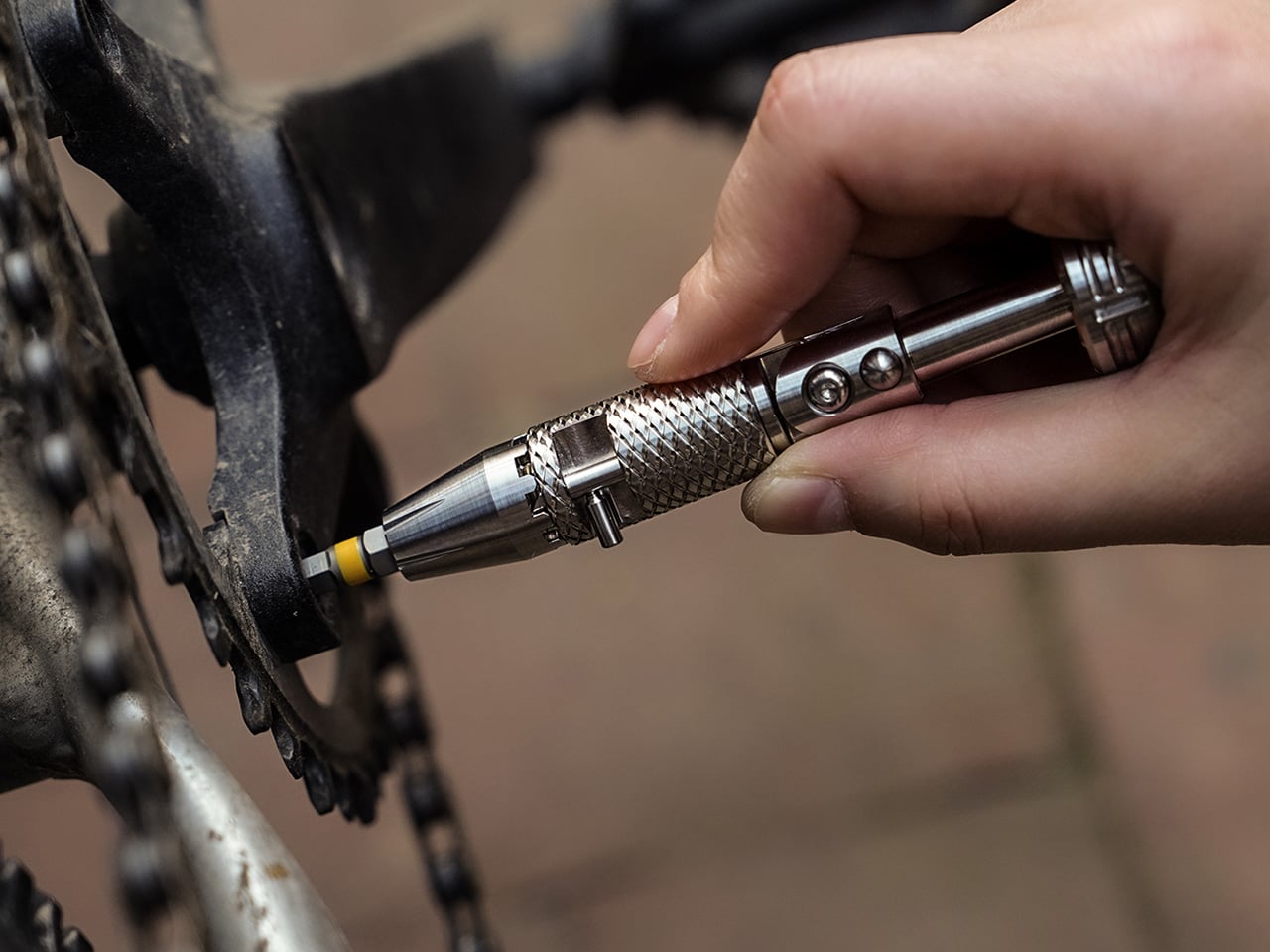
The ratchet mechanism is a fully CNC-machined assembly in titanium, brass, and ceramic bearings, with no injection-molded or stamped parts, built around a classic mechanical design. Every component is individually machined and mechanically interlocked, delivering smooth, solid clicks, strong torque transfer, and the promise of zero wobble and long-term reliability. The knurling is also CNC-machined, grooves cut rather than pressed, giving a confident grip that feels secure without being abrasive during longer sessions or repeated use.
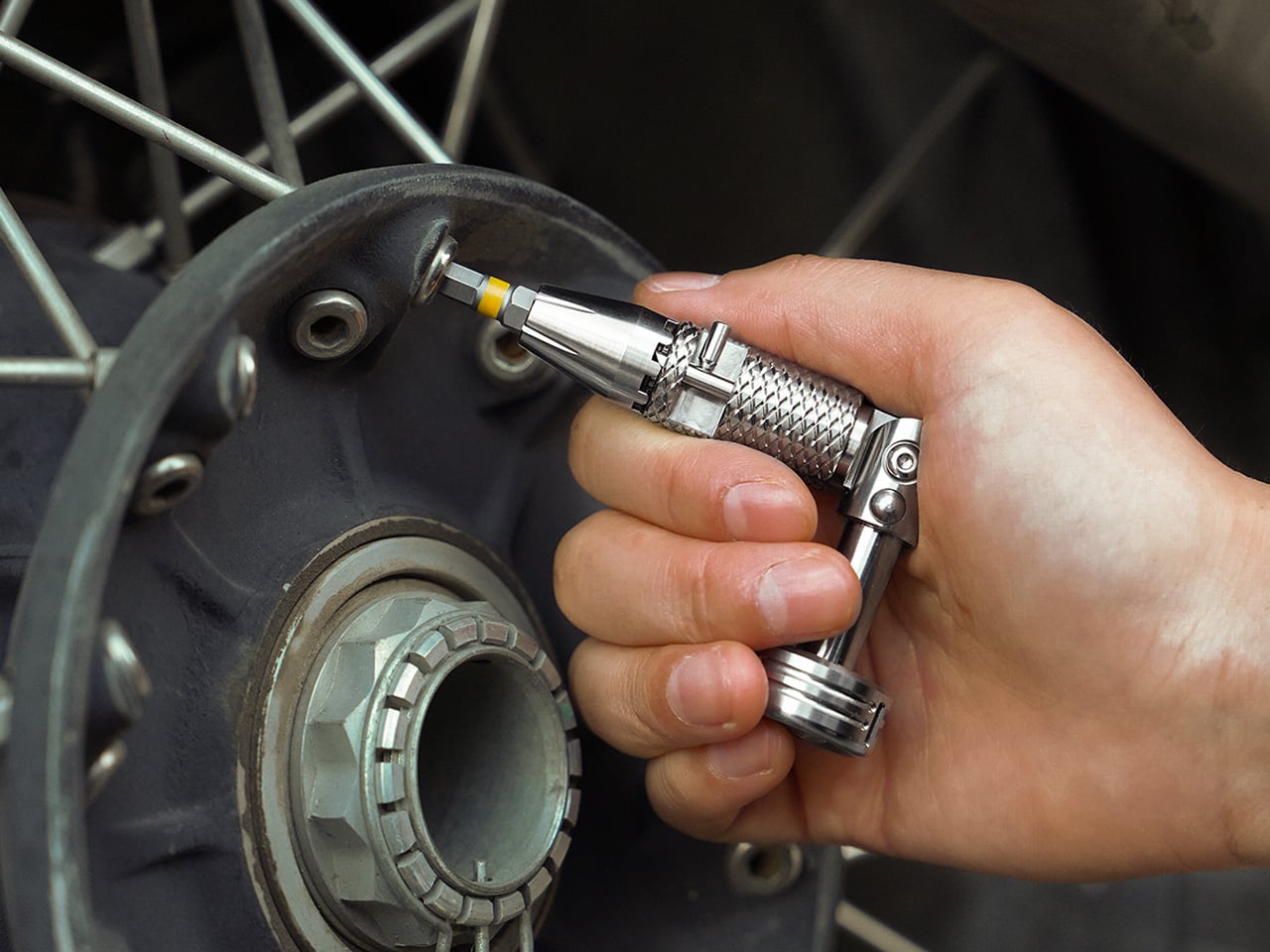
The foldable body locks into 0°, 45°, and 90° positions with a push-button system. Straight-line mode is for rapid spinning and quick turns, 45° mode adds control and comfort, and 90° mode turns the compact driver into a small lever for stubborn screws and awkward angles. Torque testing measured up to 7.9 N·m in 90-degree mode with the 1/4-inch holder installed, which is more than most screws can take before they strip or fail.
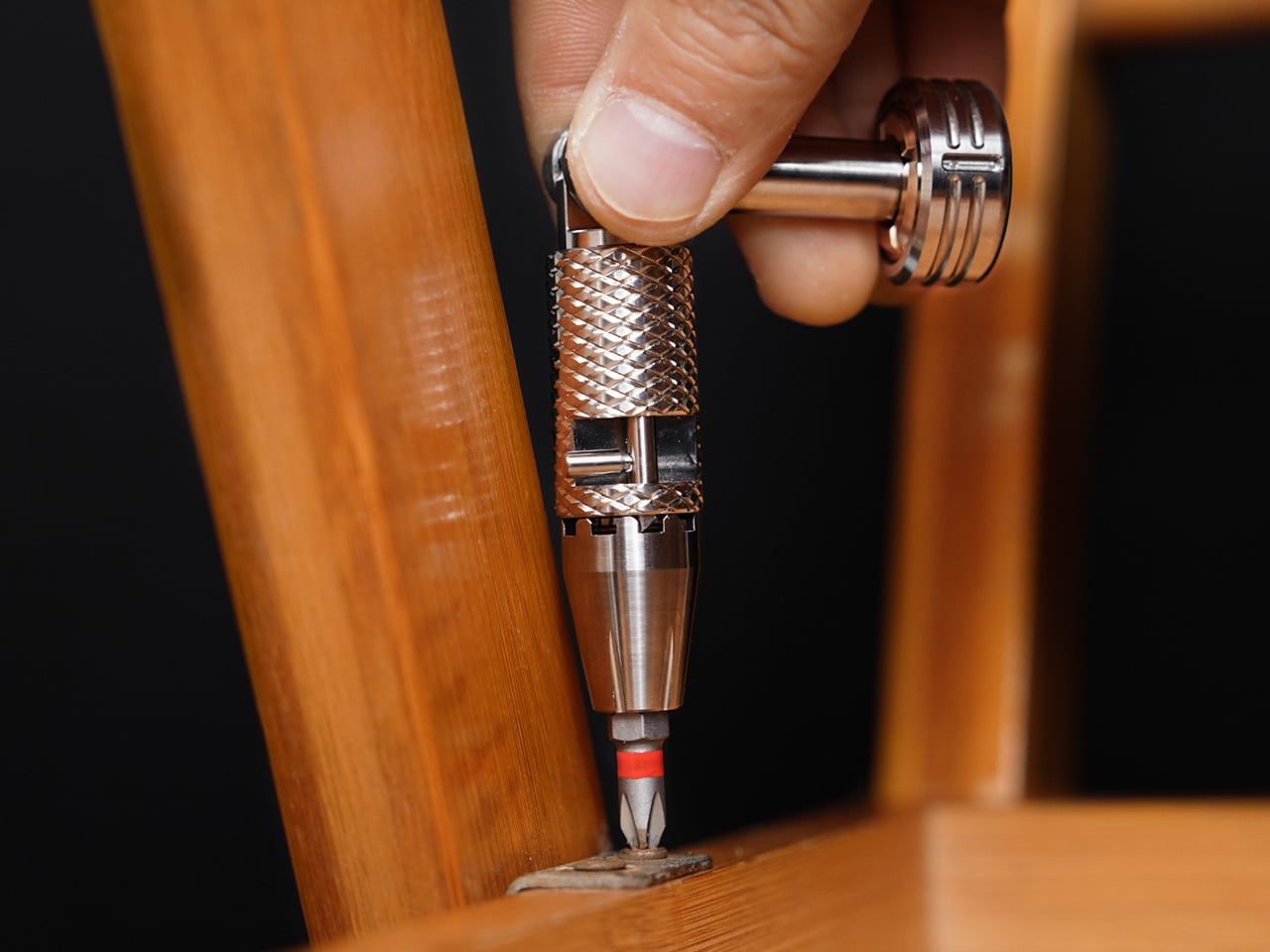
The modular bit system lets you swap between a standard 6.35mm (1/4-inch) bit holder and a 4mm precision bit holder using a magnetic quick-swap interface. The 1/4-inch mode is the workhorse, fully compatible with common bits, extension bars, and socket adapters, likely the configuration you use most for everyday screws, small repairs, and workshop tasks where full ratchet engagement and smooth mechanical feedback matter during tightening or loosening.
The 4mm module is for micro jobs and delicate hardware, eyeglasses, small electronics, cameras, watches, keyboards, and calibration tasks where control is more important than torque. This mode intentionally skips the ratchet to give fingertip finesse, and MAGICDRIVE’s compact form makes it feel closer to a surgical instrument than a bulky driver when you are working on tiny fasteners that need gentle, precise turns without stripping delicate threads.
The quick-swap bit holder is held by a strong magnetic interface designed to avoid accidental separation or rattling during carry. The magnets are mechanically sealed by CNC-machined caps instead of just glued, preventing glue fatigue and loose parts over time. This reinforces the theme that the tool is built for long-term reliability, not just initial impressions or the first few months of use before parts start failing.
The balanced spinner top with a brass core is designed for silent, satisfying spins when there is nothing to fix. It offers a moment of focus without clicks or noise, and three tritium slots in the top make the driver easy to find in low light while adding a subtle glow when it spins. It is a small piece of kinetic art that turns idle moments into something more intentional, quieter than clicking a pen and more deliberate than scrolling through a phone.
The Grade 5 titanium body, brass spinner core, and N56 magnets avoid coatings pretending to be metal. Three finishes are available: satin silver, beadblast matte grey, and PVD black, and the brass develops patina over time. The hex-based modular ecosystem includes pen and knife modules and an aluminum bit-holder magazine with a ruler and storage, framing MAGICDRIVE as a platform that can grow with an EDC setup rather than a single-purpose tool that sits in a drawer.
MAGICDRIVE is meant to live beside a favorite knife, pen, or watch, not buried in a drawer. Sometimes you pick it up to fix something, sometimes just to feel the machining under your thumb or spin the top during a long call. It is a screwdriver that treats function and feeling as equally important, turning small interruptions and small repairs into chances to enjoy a beautifully made object. For people who care about the tools they carry and the rituals that fill the gaps between bigger tasks, MAGICDRIVE reads less like a gadget and more like a small, well-resolved piece of everyday gear that earns its place in a pocket or on a desk.
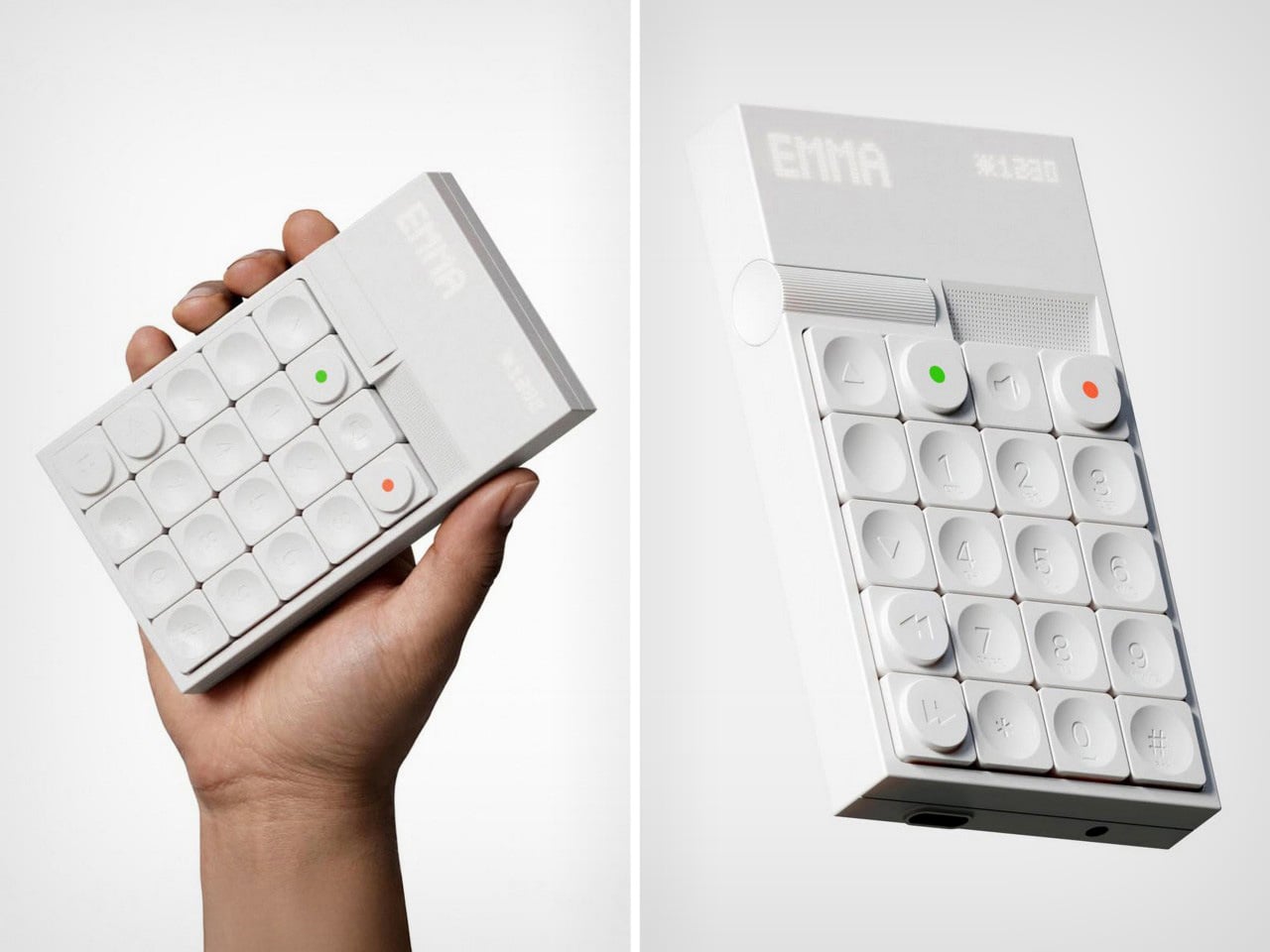
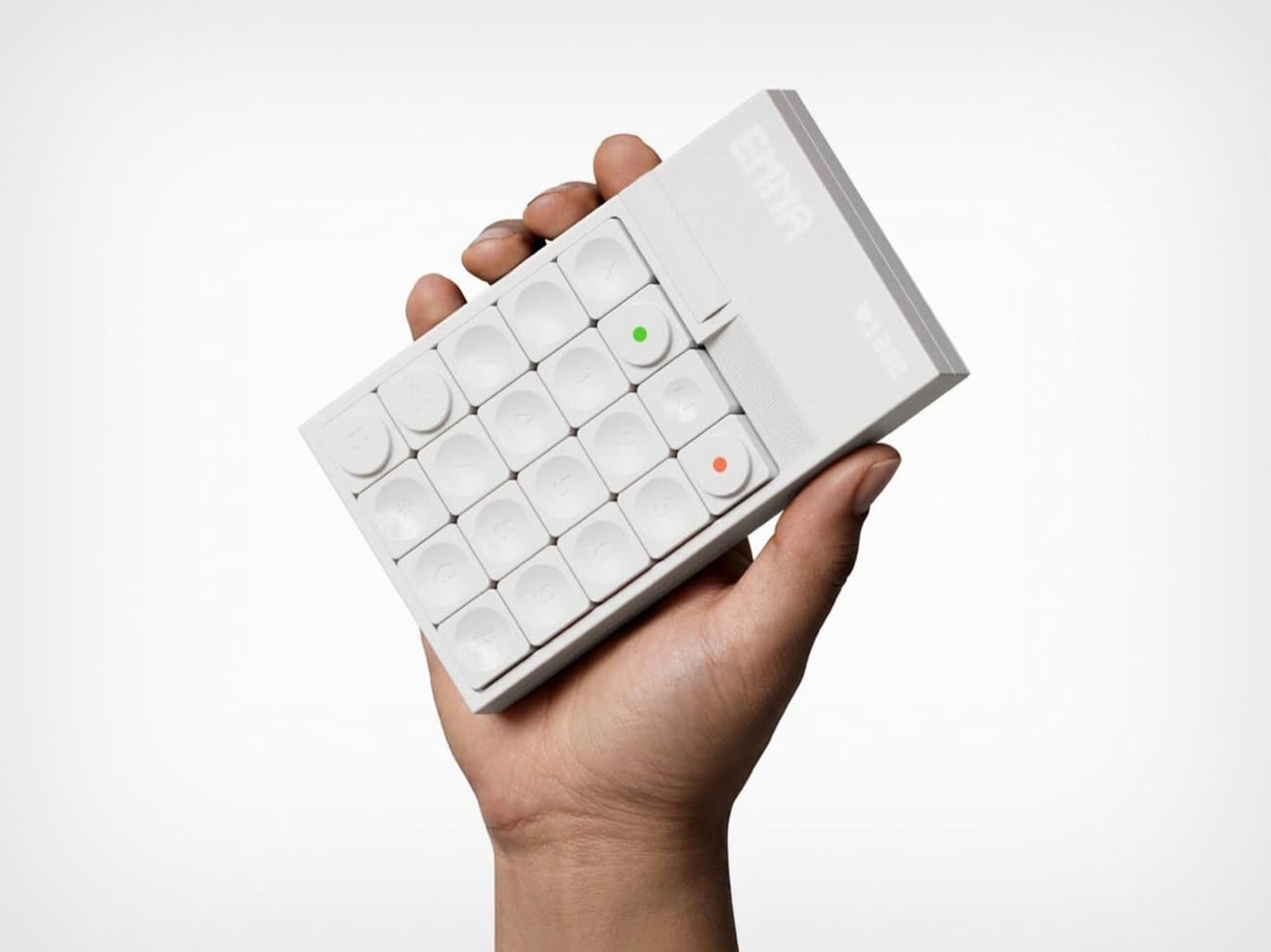
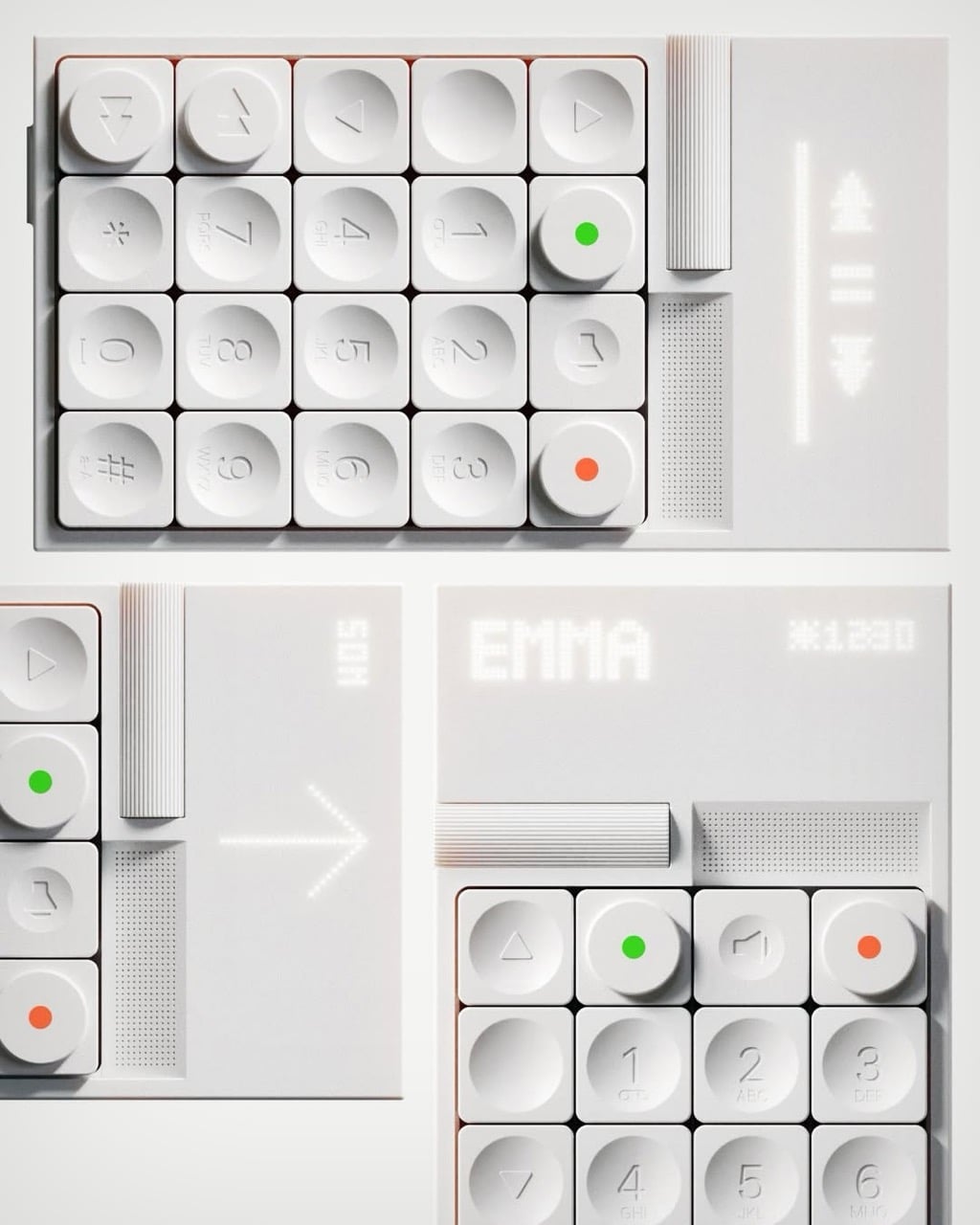
This phone is so minimal it doesn’t even have a name. This brick-ish beauty comes from the mind of Keziah Mendjisky, an industrial design student out of Paris. The idea is simple, how much can you take away from current phones to give you something that feels like a phone and performs like a phone, but doesn’t have any of the distractions? Mendjisky’s attempt at re-envisioning a connectivity device is gorgeously risqué, resulting in something that you’d first think was a calculator.
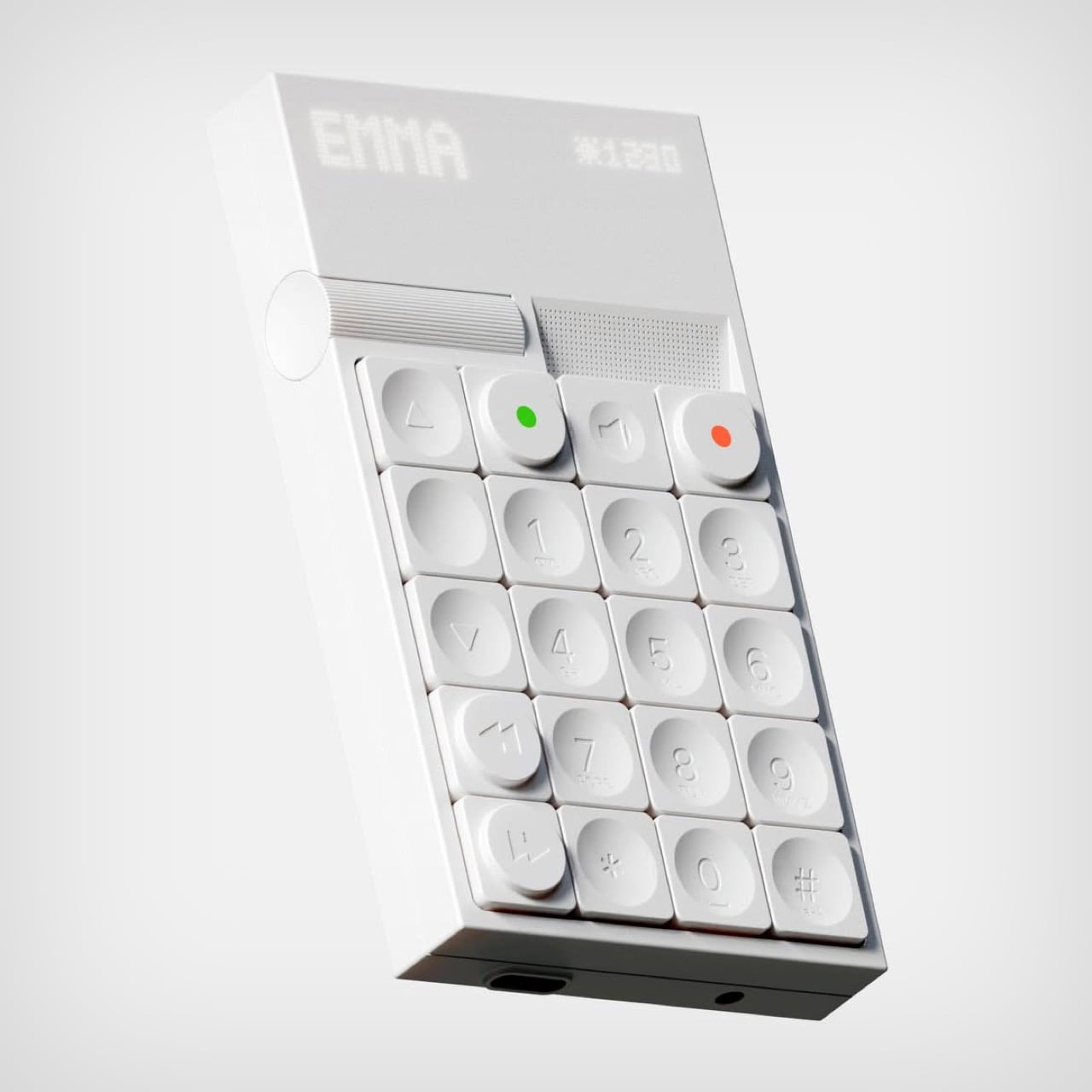
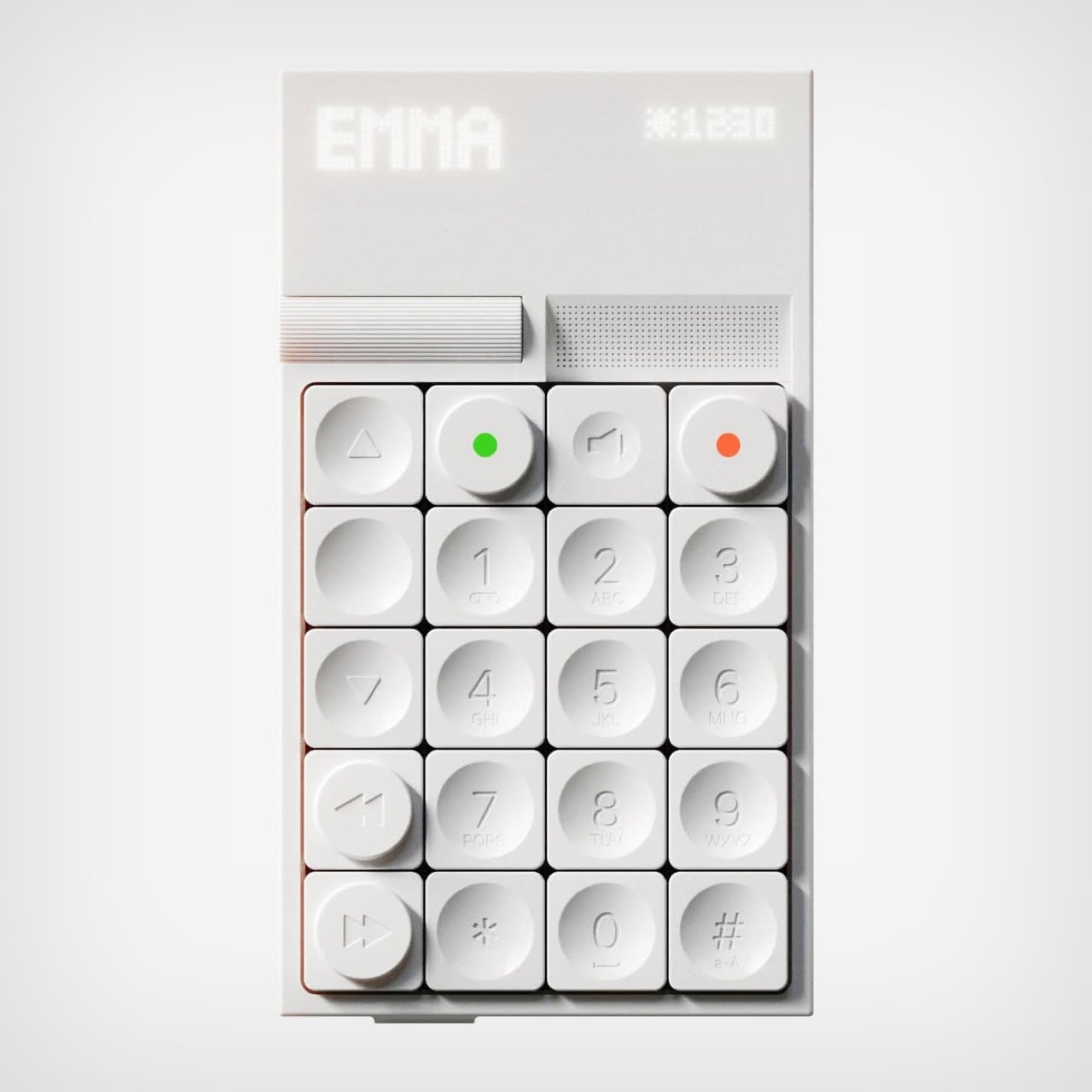
Grab it, however, and you’ll realize it doesn’t have your calculator’s layout. The numbers are laid out like a phone, starting from the top unlike a calculator (which starts from the bottom), there are volume and playback keys, and two conspicuous buttons marked green and red, which become obvious once you realize they’re for answering or rejecting calls. Everything gets packaged in a design format that would make folks at Braun or Teenage Engineering very happy – the use of white, the employment of tactile surfaces, and just the right amount of fun without making the device look like an unserious toy.
Designer: Keziah Mendjisky
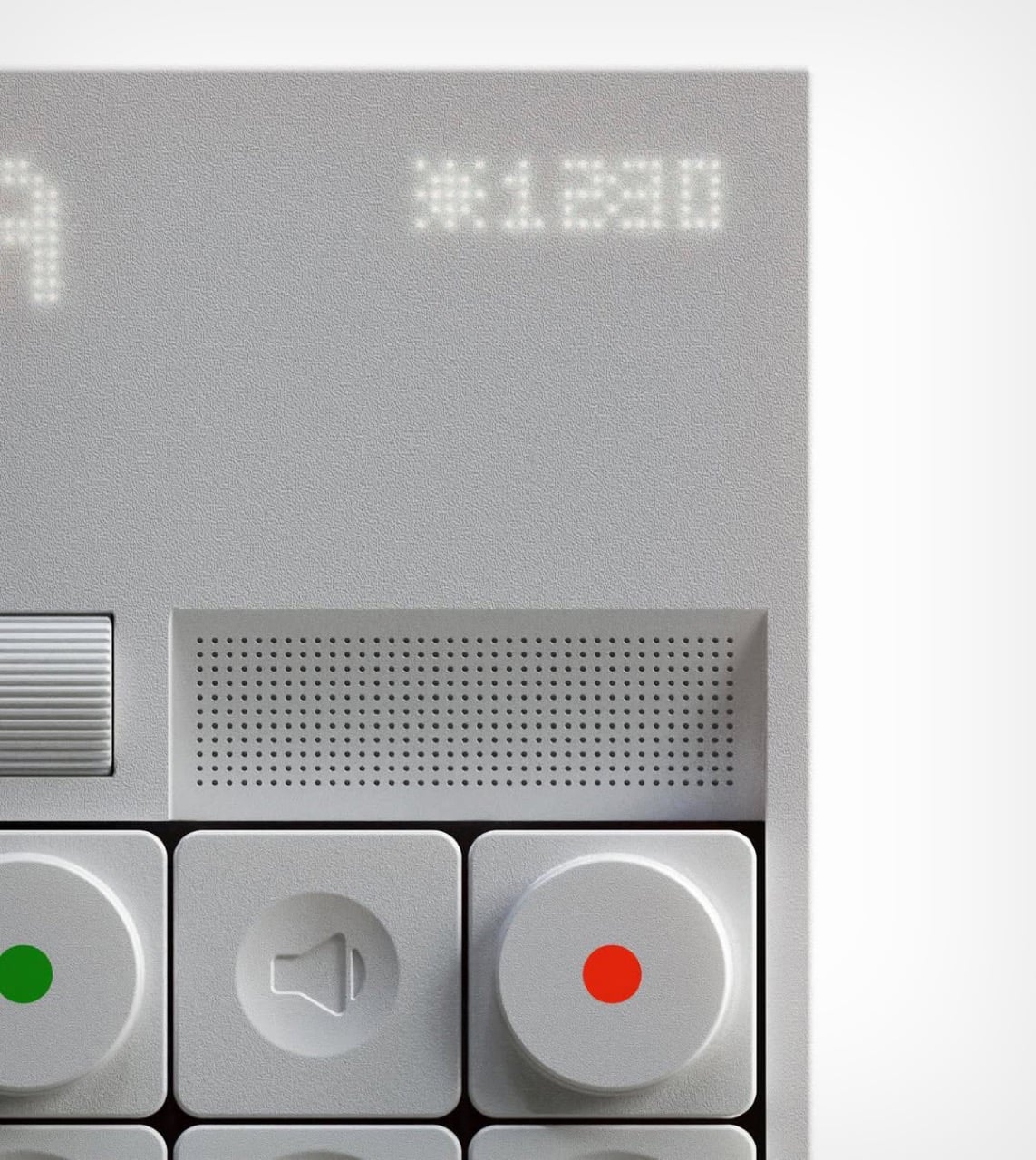
“This concept rethinks what a phone should be in a world of constant distraction. No glass screen. No endless scrolling,” says Mendjisky. One could argue that ‘no glass screen’ might be pushing things a little too far, but the minimal phone he designed with this very constraint still feels ‘cool’. The screen is replaced by a backlit plastic panel with a dot-matrix light-up display – think screen on your Ember thermos or the Mui Board Gen 2.
The top right corner of the display is dedicated to the time and weather. The left, however, is where the main elements are visible, A very tactile scroll wheel lets you quickly jump through functions or contacts, while a green or red button lets you call or disconnect. In the middle, a speaker key lets you activate the loudspeaker mode while on calls, with the speaker unit itself right above the button array.
The rest of the buttons lack a concrete explanation, but it’s easy to infer what they could be for. Numbers dial numbers, obviously, but there’s a T9 keyboard underneath too, presumably for searching contacts or texting. Forward and rewind buttons could possibly hint at voicemail playback, although the phone apparently handles media too. Most buttons are concave, making them reliable to press, although a few critical buttons have an embossed/extruded design, probably hinting at more core functionality.
Phoning is arguably the most important aspect to this minimalist gadget, although Mendjisky’s visuals hint at a few core tools like music playback, navigation, and maybe even an alarm. Plus, given its calculator-esque aesthetic, I’d probably expect a calculator function to be built-in too, but the lack of addition/subtraction/etc buttons does tend to worry me!