In a move that should surprise nobody, Google is stuffing more Gemini AI into Gmail. A host of new features, some of which are already familiar to Workspace users, are rolling out today for Gmail users in the US. Some are free, while others require a Google AI Pro or Ultra subscription.
The first premium feature is AI Overviews, the same name as a similar feature in Google Search. Gmail’s version lets you ask questions about your messages in the search bar, using natural language. Google uses the example of, "Who was the plumber that gave me a quote for the bathroom renovation last year?" It’s hard to imagine that saving much time over a basic search for "plumber quote" or “plumbing estimate,” but maybe it could help in some situations.
There's also a free portion of AI Overviews that summarizes mail threads for easy catch-ups. However, the ability to ask your inbox questions requires a subscription.
Meanwhile, Proofread is a subscription-only feature that's essentially Grammarly for Gmail. As you'd guess, it suggests improvements in grammar, word choice, conciseness, voice and sentence structure.
AI Inbox
Google
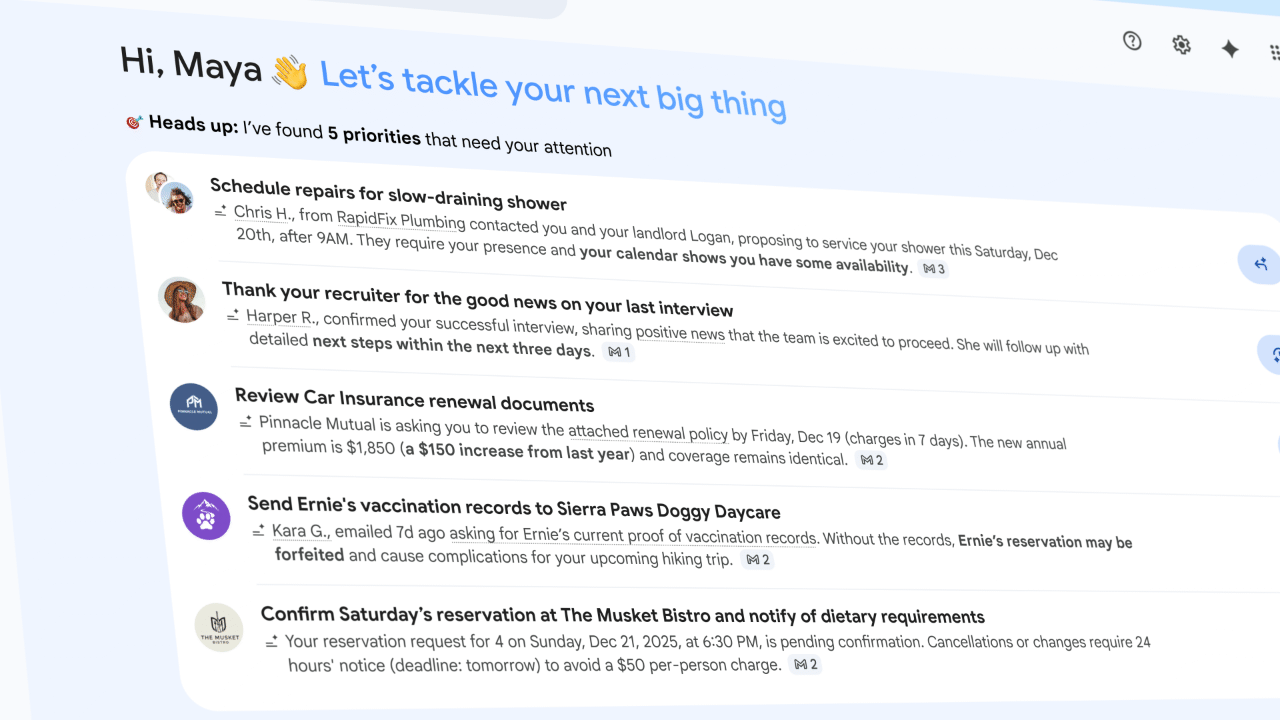
Finally, there's the AI Inbox, a feature that "filters out the clutter so you can focus on what's most important." Google says it's like a personal briefing that flags to-dos and catches you up on what it thinks is most important. (It identifies VIPs based on frequent contacts, your contact list, and inferred relationships.) The company claims, without adding further detail, that this all "happens securely with the privacy protections you expect from Google." AI Inbox is another subscription-only feature.
Now onto the free stuff. Help Me Write is a tool for all Gmail users that generates email copy from a prompt. This kind of thing should be well-familiar by now, as Big Tech increasingly encourages users to avoid drafting anything from scratch. And Suggested Replies can draft replies for you that mimic your tone and style. (Google describes it as a next-gen version of Smart Replies.) Help Me Write and Suggested Replies are rolling out to everyone (no subscription required) today.
The new Gemini-powered features begin rolling out to Gmail today. Although they're starting with English speakers in the US, Google says they'll arrive in more languages and regions "in the coming months."
This article originally appeared on Engadget at https://www.engadget.com/ai/gmail-is-getting-a-gemini-ai-overhaul-130000422.html?src=rss
CES 2026 has been a big event for screens of all sizes: TVs, laptops and everything in between. New PC monitors are among the CES announcements, with several companies are using the trade show as an opportunity to update their gaming monitor lineups. Some companies are showing off expanded OLED panels with improved refresh rates, brightness and color production, while others are showing off weirder ideas like a glasses-free 3D monitor. The collection below are some of our favorite gaming monitors that have already been announced:
LG UltraGear GX7
LG's latest QHD OLED gaming monitor is its brightest to date
LG
The LG UltraGear GX7 is the fastest and brightest gaming monitor LG has offered so far and a gaming-focused showcase for LG Display's 4th-gen RGB Tandem 2.0 OLED technology. The new display tech splits up the yellow layer of the company's 3rd-gen OLED tech into distinct red and green layers that, when stacked with blue layers, create brighter, more energy-efficient screens.
In the case of the UltraGear GX7, the new 27-inch monitor reaches a typical brightness of 335 nits, and is VES DisplayHDR True Black 500 certified, for deeper contrast between the dark and bright parts of the screen. LG touts the display's Dual Mode, which lets discerning gamers switch between two distinct settings: a 540Hz refresh rate mode at QHD resolution, when image quality is what you care about most, or a 720Hz refresh rate mode at HD resolution, when speed is your priority.
Whichever mode you choose, LG promises the monitor will offer a smooth and stutter free experience. It has a 0.02ms response time and supports both NVIDIA G-Sync and AMD FreeSYNC Premium Pro, so you should be set, regardless of what your computer's specialty is. For $1,000, the LG UltraGear GX7 seems like a high watermark for OLED gaming monitors.
Samsung Odyssey 3D and Odyssey OLED G8
Samsung's new Odyssey 3D monitor is the "world's first 6K display with glasses-free 3D," with a 6,144 x 3,456 resolution, and the ability to take games "beyond 2D" by tracking the position of your eyes, and enhancing terrain, distance and object separation. Even if you're not interested in playing formerly 2D games like Lies of P: Overture with an added sense of depth, a 32-inch LCD screen with a 165Hz refresh rate that's capable of being boosted to 330Hz through Samsung's Dual Mode is nothing to sneeze at, especially with a 1ms response time.
On top of its big 3D monitor, Samsung is also pushing its own updated OLED tech at CES. The company's new 32-inch Odyssey OLED G8 uses a 4K QD-OLED panel with a 240Hz refresh rate and a glare-free treatment for added visibility. The monitor has a VESA DisplayHDR True Black 500 certification, but unlike LG's display, its brightness is capped at 300 nits.
ASUS ROG Swift OLED PG27UCWM and ROG Strix Pulsar XG27AQNGV
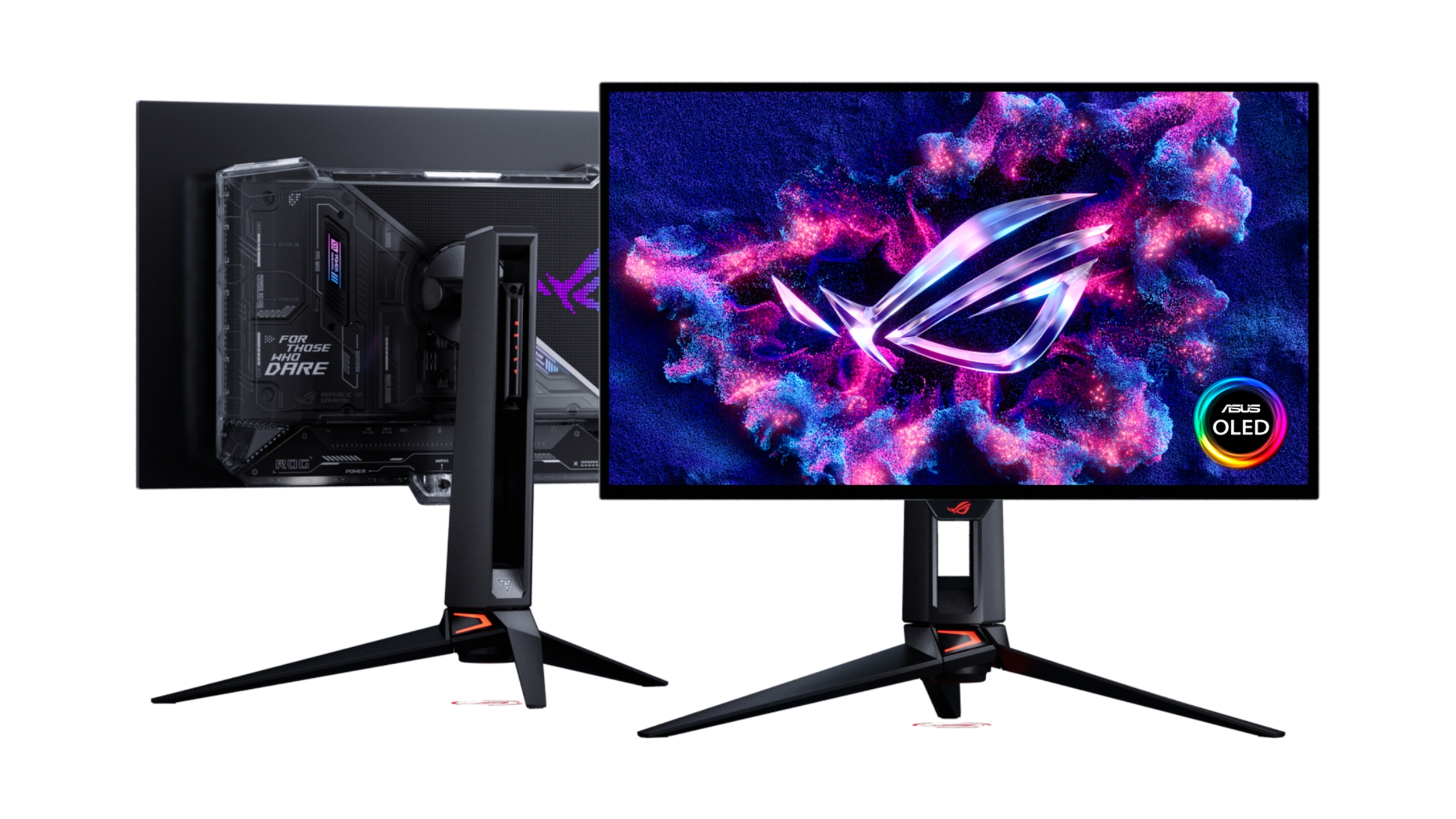
The back and front of ASUS' new ROG Swift monitor with a Tandem OLED panel.
ASUS
While the ASUS ROG Swift OLED PG27UCWM uses a Tandem OLED panel – a panel with two light-emitting layers, like the Ultra XDR Retina display on Apple's recent iPad Pros – the big change ASUS is focused on at CES 2026 is its new RGB Stripe OLED layout, technology LG helped pioneer. These updated panels use "a full RGB sub-pixel arrangement" to produce sharper text and more accurate color reproduction when compared to the QD-OLED panels the company has used in the past.
The 27-inch ROG Swift OLED PG27UCWM can be run at 4K with a 240Hz refresh rate or at FHD with a 480Hz refresh rate. The display also has a 0.03ms minimum response time for smooth and clear action, and 99 percent DCI-P3 color gamut coverage for more vibrant and accurate color reproduction. The OLED monitor also includes a "Neo PRoximity Sensor" which automatically turns the screen off when you're not looking at it, to prevent burn-in.
NVIDIA's new G-Sync Pulsar tech, which uses variable backlighting to reduce blur, is specifically meant for competitive gamers, and ASUS' new ROG Strix Pulsar XG27AQNGV monitor is one of the first to support the new tech. The monitor features a 27-inch, 1440p panel with a 360Hz refresh rate and "the fastest response time" ASUS has ever achieved in a 1440p LCD display. The monitor also includes DisplayPort, HDMI 2.1 and multiple USB 3.2 Gen 1 Type-A ports for whatever devices you want to connect to it.
MSI MPG 314CQR QD-OLED X36
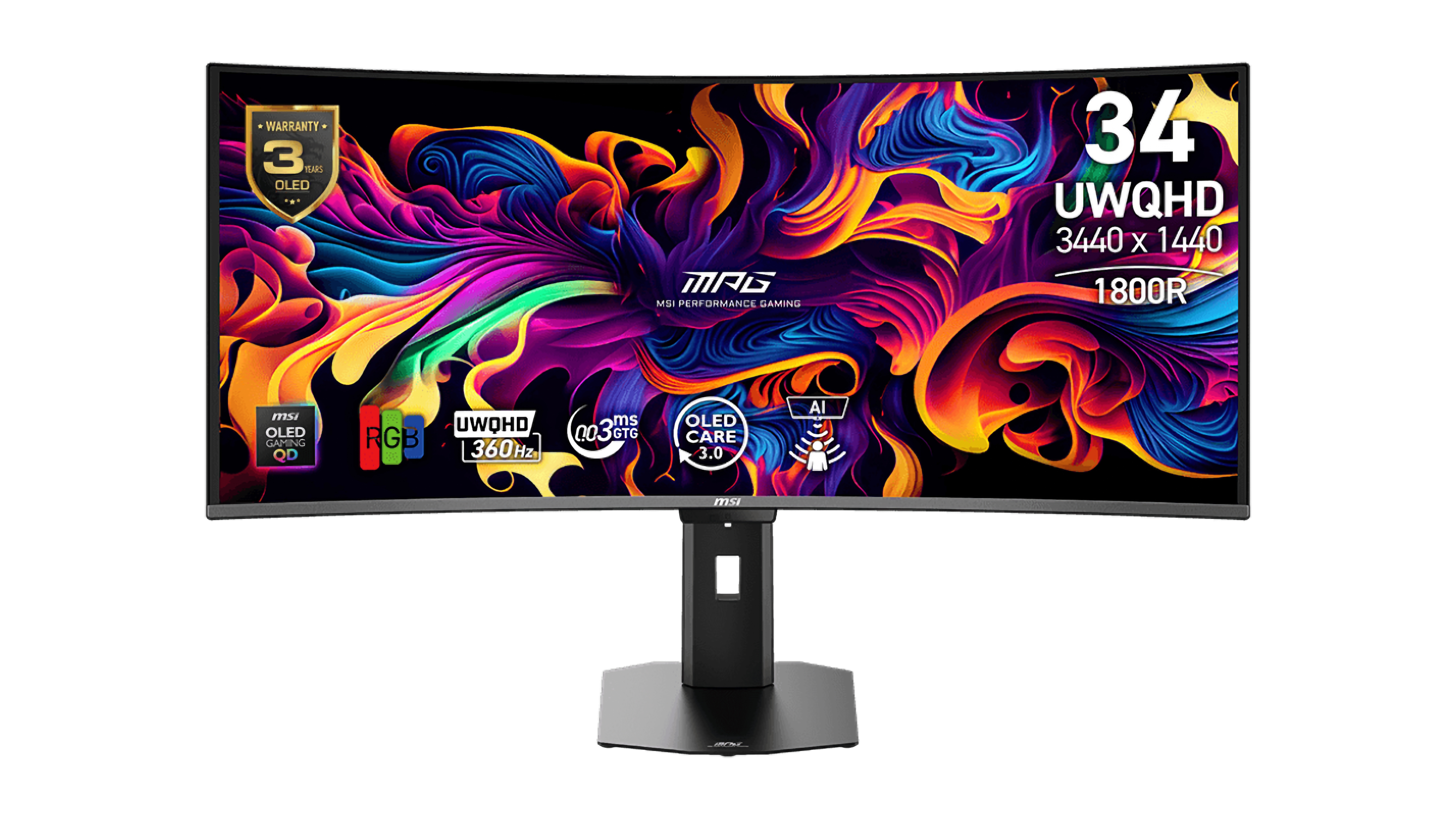
MSI's new curved MPG monitor with a QD-OLED panel.
MSI
The star monitor of MSI's new products at CES 2026 is the wordily titled MSI MPG 341CQR QD-OLED X36, a curved, 34-inch ultrawide monitor, with new OLED panel. Like Asus, MSI is mixing different OLED display technologies for better results. This new monitor uses a 5th-gen Tandem QD-OLED panel with an "RGB Stripe sub-pixel layout" for sharper visuals. MSI also applies what it calls "DarkArmor Film" to "enhance light absorption," eliminate the reddish tint some QD-OLED panels have under ambient light, and boost black levels by "up to 40 percent."
As an ultrawide, the MPG 341CQR QD-OLED X36 has a resolution of 3,440 x 1,440, an aspect ratio of 21:9 and a refresh rate of 360Hz. MSI says the monitor can reach a peak brightness of 1,300 nits, and the company provides multiple HDR modes to switch between depending on your needs. Similar to ASUS, the monitor also includes a sensor for detecting whether a human is in front of the screen – MSI calls it an AI Care Sensor – so that the monitor can power-off or enter standby mode when not in active use.
ViewSonic VX2738 2K OLED Gaming Monitor
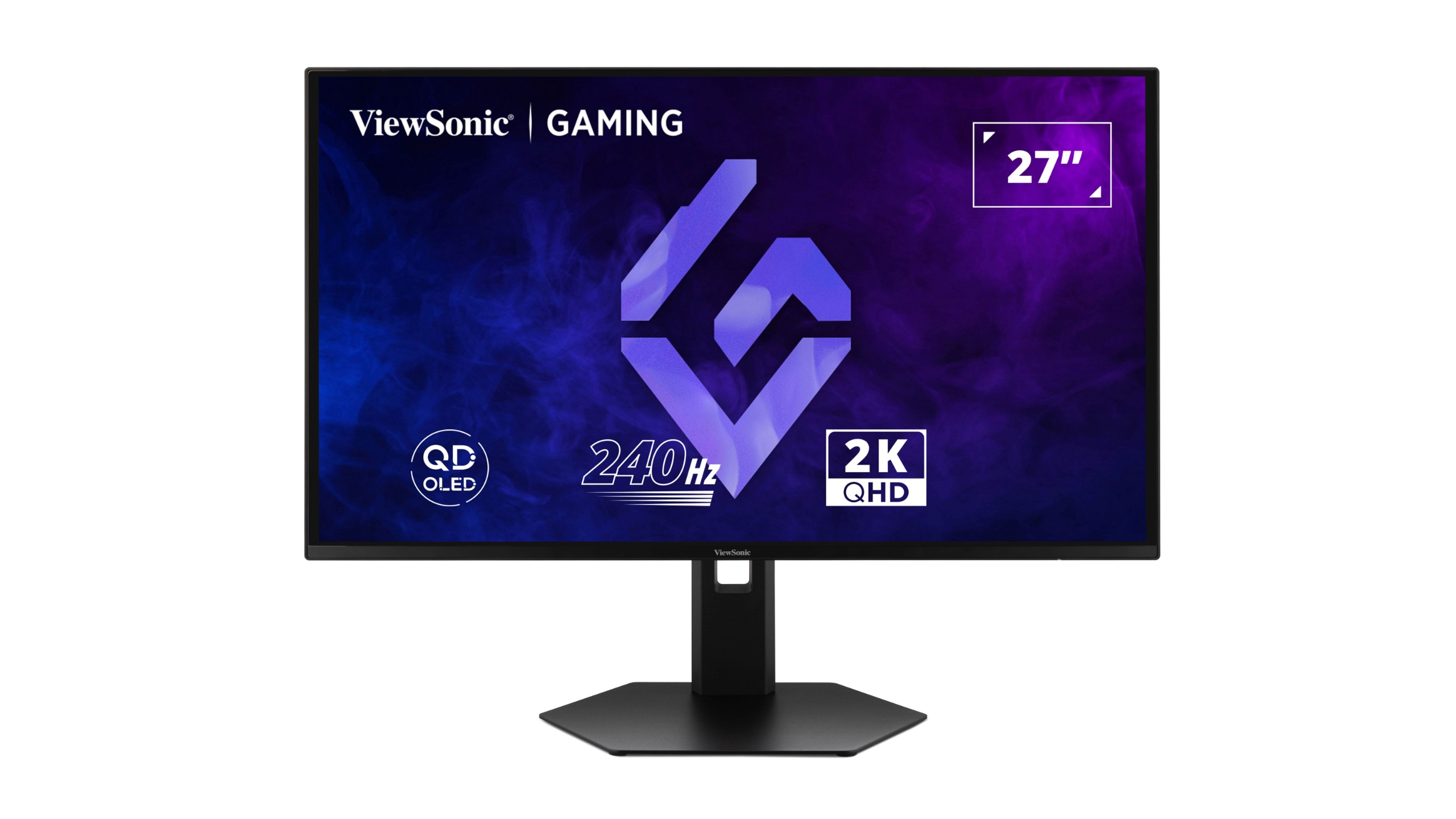
ViewSonic's new 24-inch OLED monitor.
ViewSonic
ViewSonic's new gaming monitors are more approachable and (presumably) more affordable than the options from competitors, but not necessarily less performant. The company top-of-the-line model, the ViewSonic VX2738 2K OLED Gaming Monitor has a 27-inch 2K QHD QD-OLED panel with a 240Hz refresh rate and up to 0.03ms response time.
The monitor supports AMD FreeSync Premium and NVIDIA G-Sync for smoother gameplay. The VX2738 also has the ability to scale down its image via a 24.5-inch "esports mode" for competitive settings. ViewSonic says the monitor will include HDMI 2.1 and DisplayPort 1.4 ports and be available for $500.
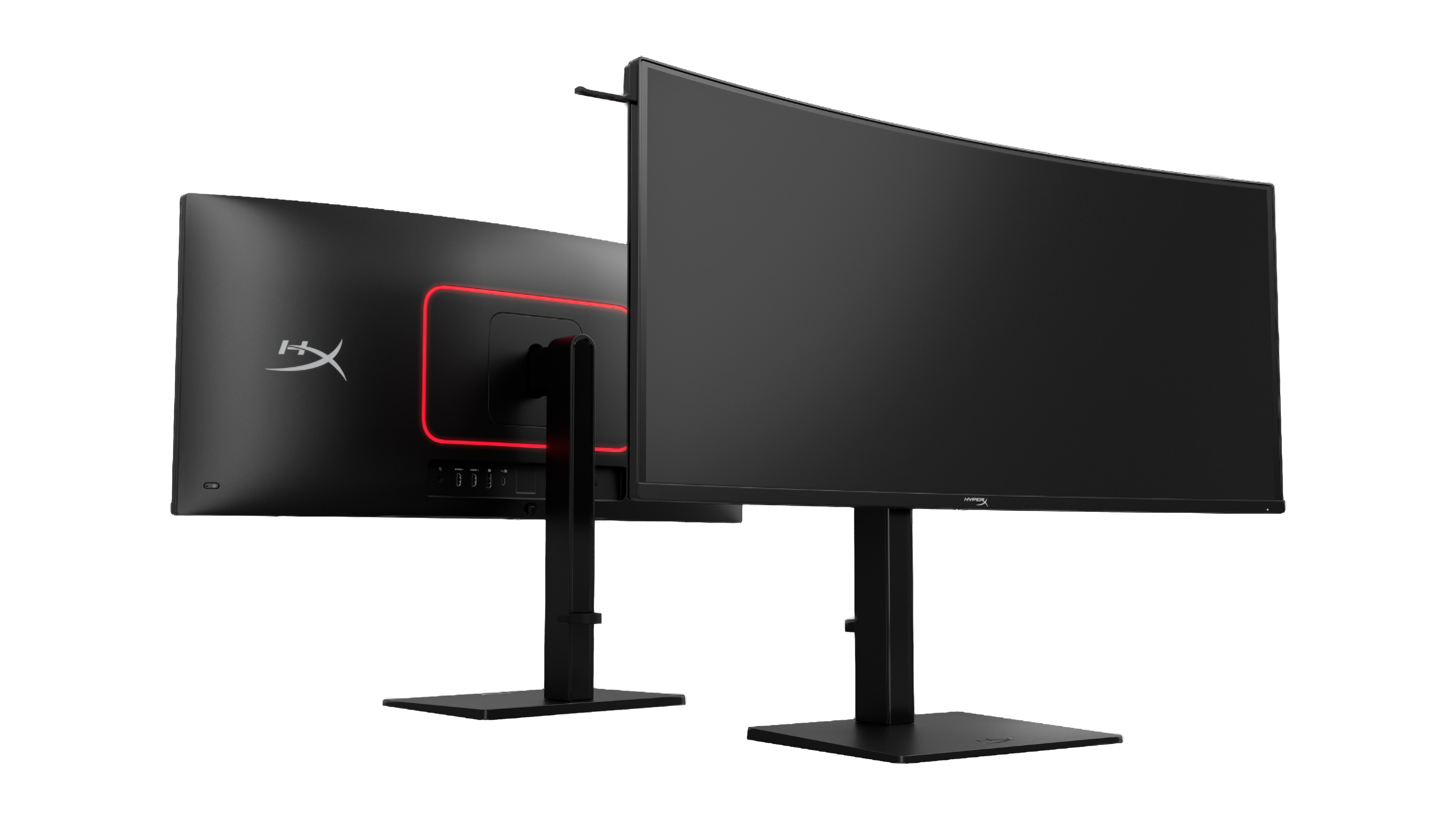
HP HyperX Omen OLED 34
HP's new curved OLED monitor with a headphone hook.
HP
HP's newest monitor under its unified HyperX Omen gaming brand is the HyperX Omen OLED 34, a curved 34-inch monitor with a QD-OLED panel. HP says the monitor uses V-stripe QD-OLED tech, which like in MSI and ASUS' monitors, means sharper text and better color accuracy. The HyperX Omen OLEd 34 has an aspect ratio of 21:9, a 360Hz refresh rate and a 0.03ms response time.
The monitor has 100W USB-C power delivery for whichever laptop you decide to connect to it, and a built-in KVM switch, HP says. Plus, the company is offering a customizable, 3D-printable headphone hook, if you want to store your accessories nearby.
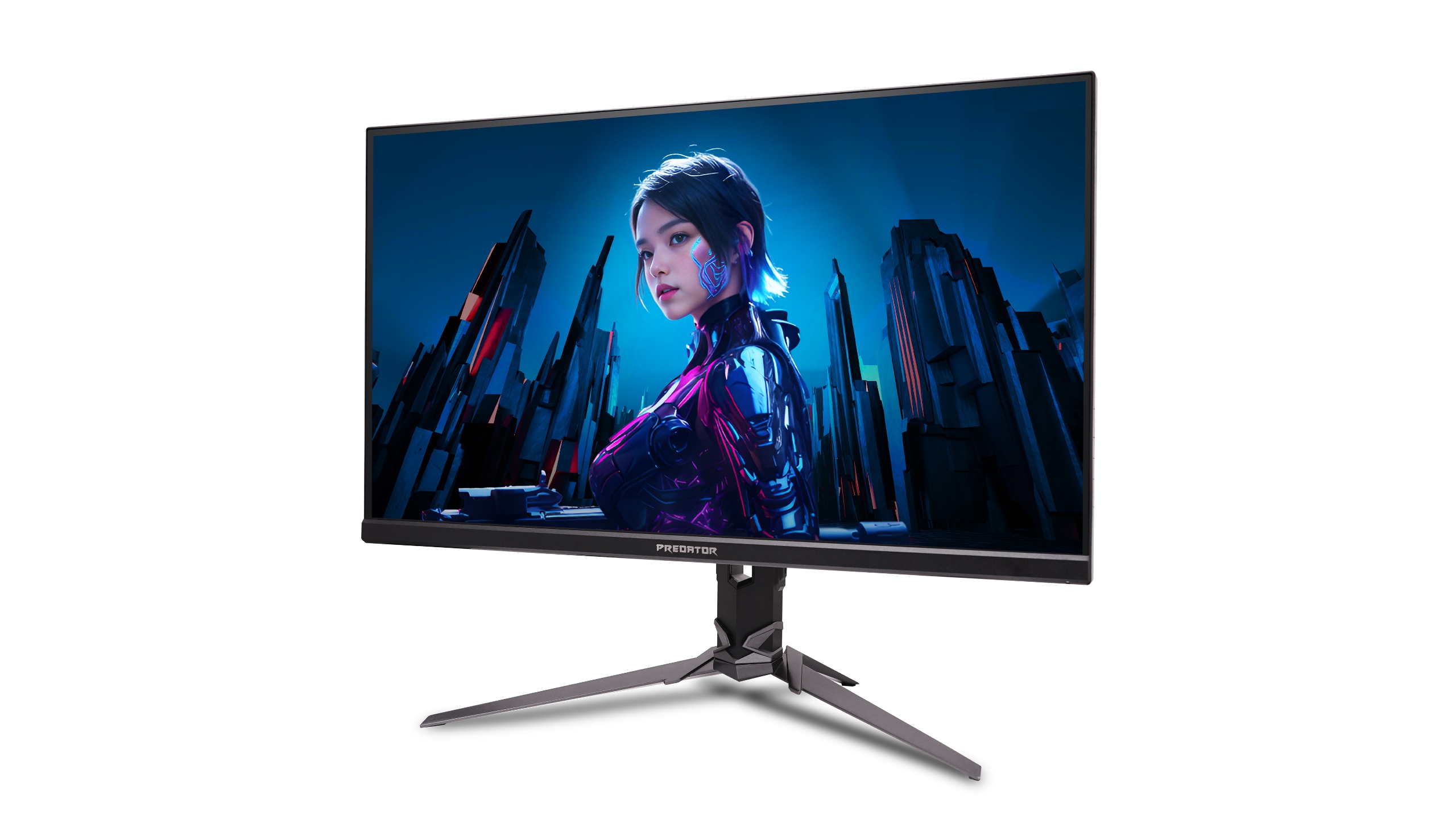
Acer Predator XB273U F6 Gaming Monitor
An Acer Predator monitor on a white background.
Acer
Acer is showing off multiple new monitors at CES 2026, but the Predator XB273U F6 Gaming Monitor stands out for its ridiculously fast refresh rate. Acer says the 27-inch screen has a 500Hz refresh rate by default, that can be boosted to 1000Hz at a 1,280 x 720 resolution if you use the company's Dynamic Frequency and Resolution (DFR) mode.
The Predator XB273U F6 otherwise features a 2,560 x 1,440 IPS panel with a brightness of 350 nits, that's calibrated to cover 95 percent of the DCI-P3 and 99 percent of the sRGB color gamut. The monitor also has 2-watt speakers built-in, and includes HDMI2.1, DisplayPort 1.4 and audio out ports for connecting to the rest of your PC gaming setup. Acer says the Predator XB273U F6 will be available for $800 when it launches in Q2 2026 in North America.
This article originally appeared on Engadget at https://www.engadget.com/computing/accessories/the-gaming-monitors-that-caught-our-eye-at-ces-2026-130000433.html?src=rss
Is the Arduino Uno Q the missing piece in your next project? With its hybrid design that fuses the precision of a microcontroller with the flexibility of a Linux-based single-board computer, this development board is stirring up excitement among makers and engineers alike. Core Electronics takes a closer look at how this innovative platform bridges […]
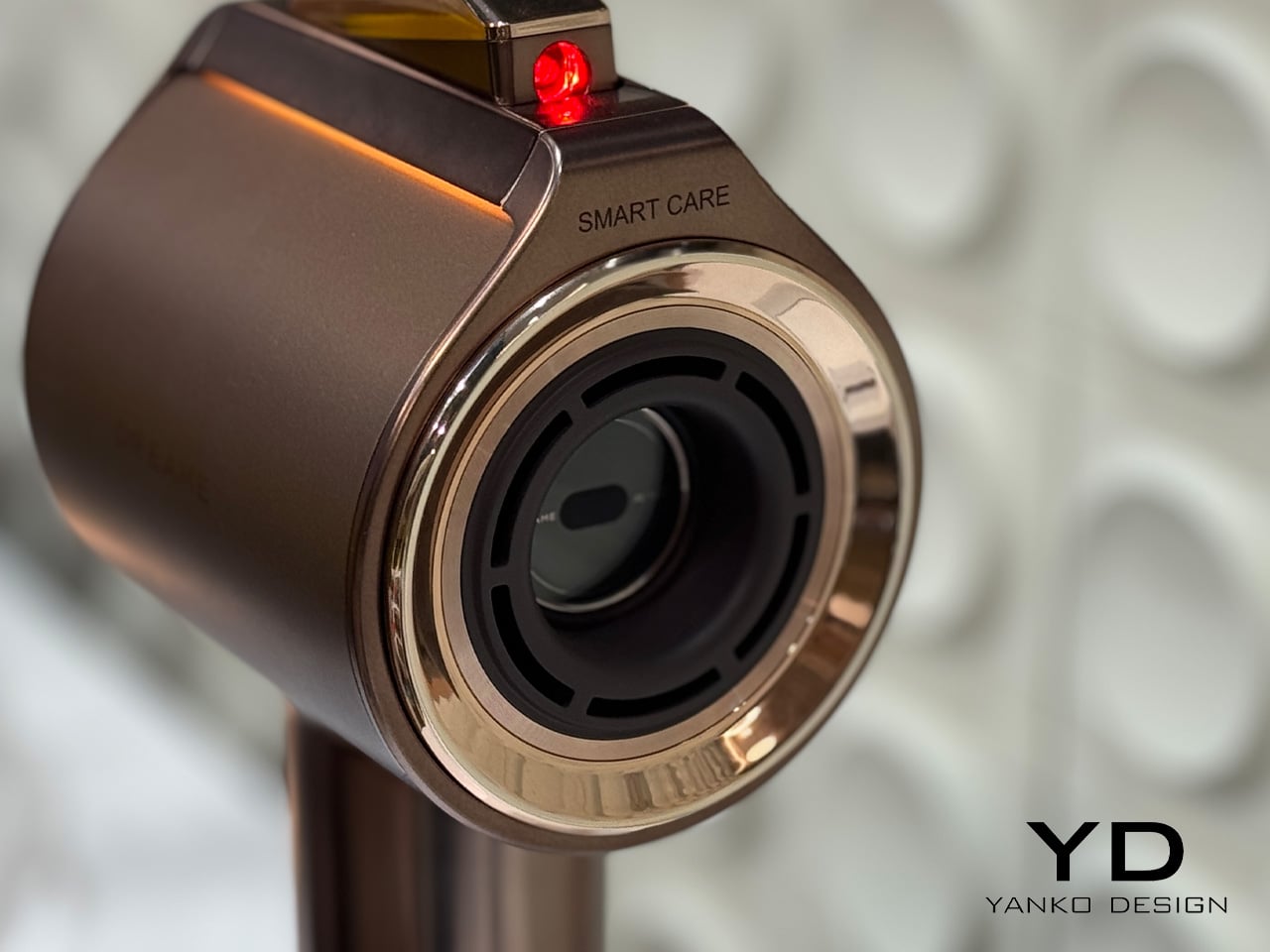
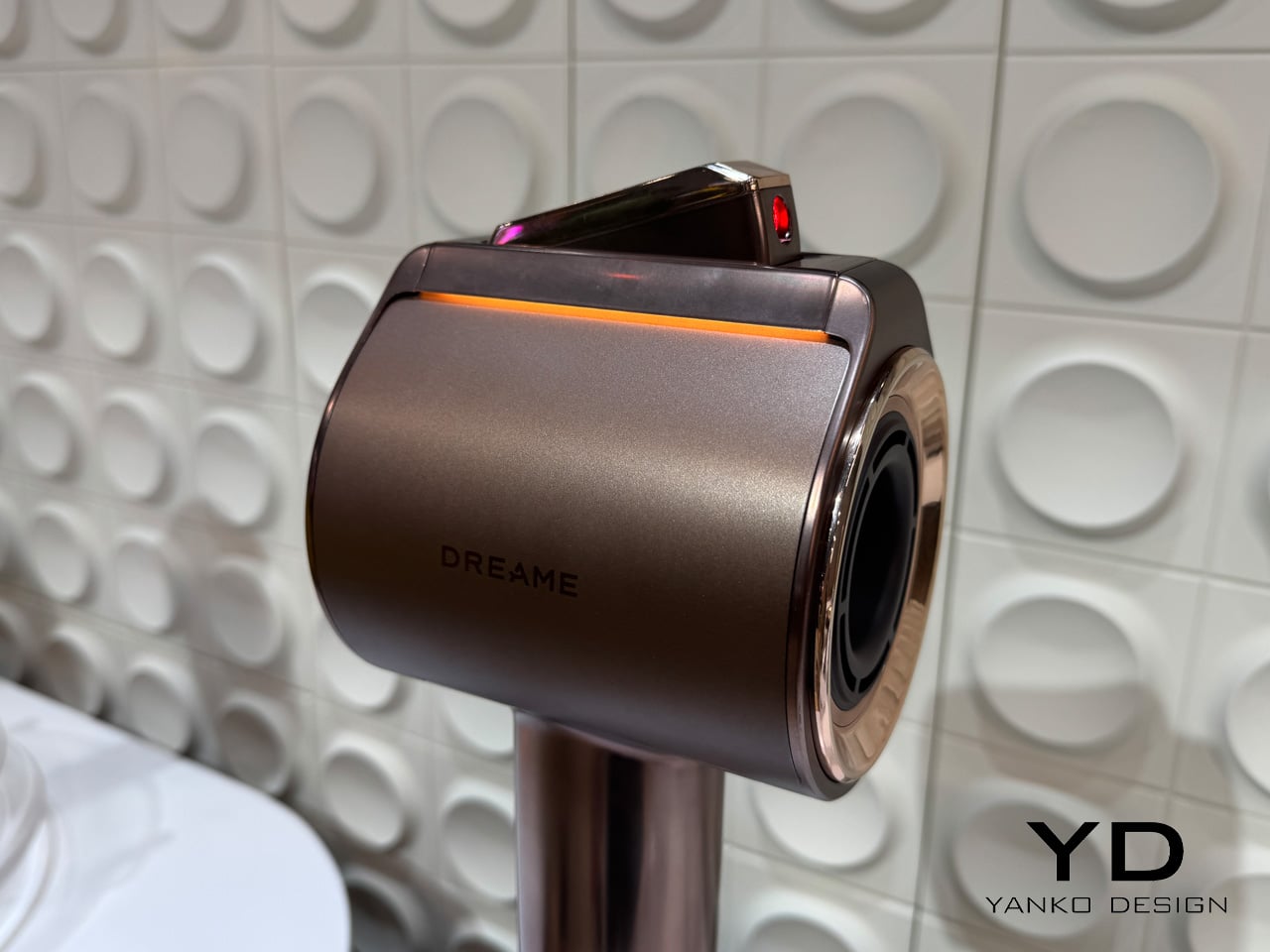
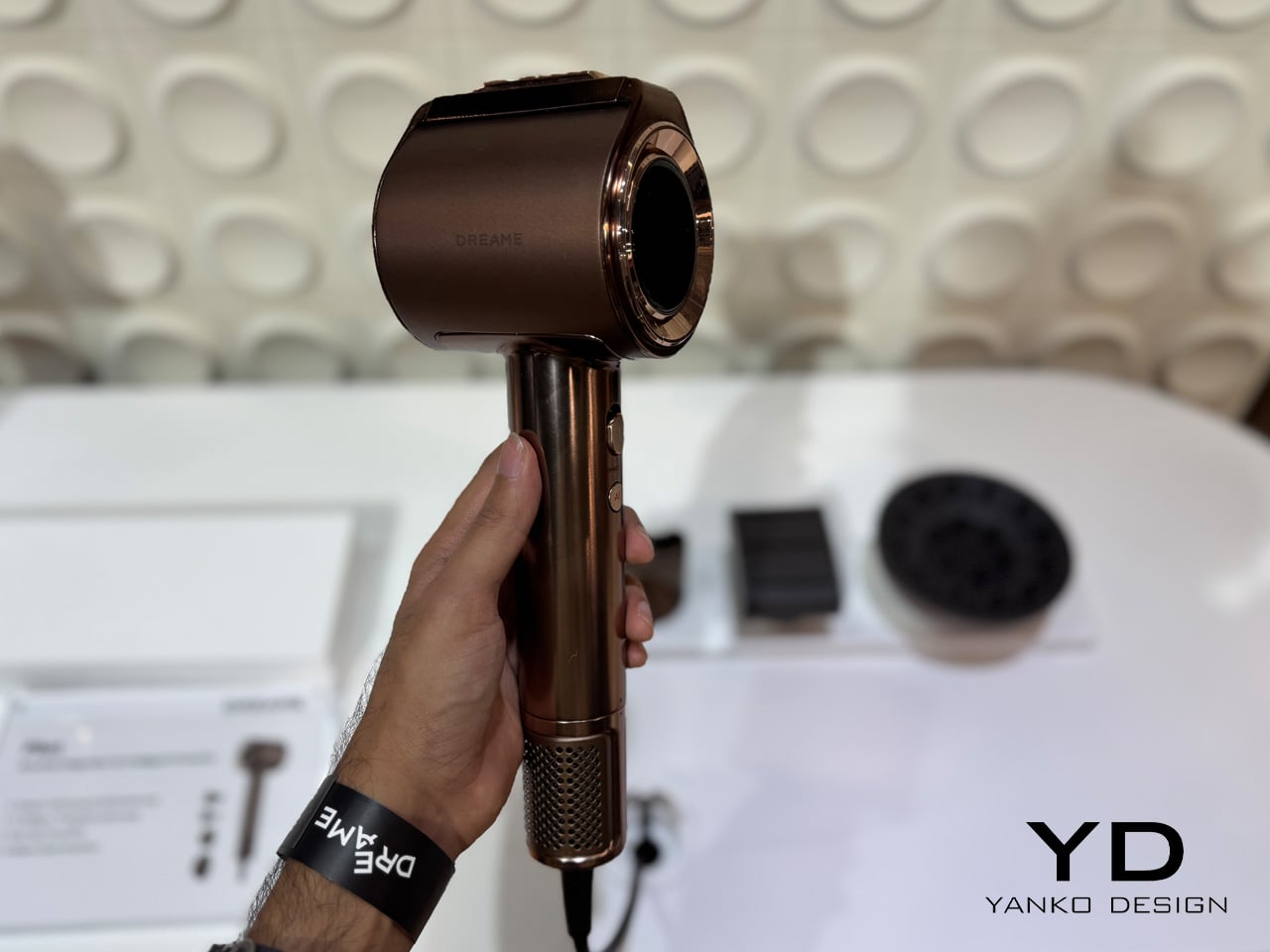
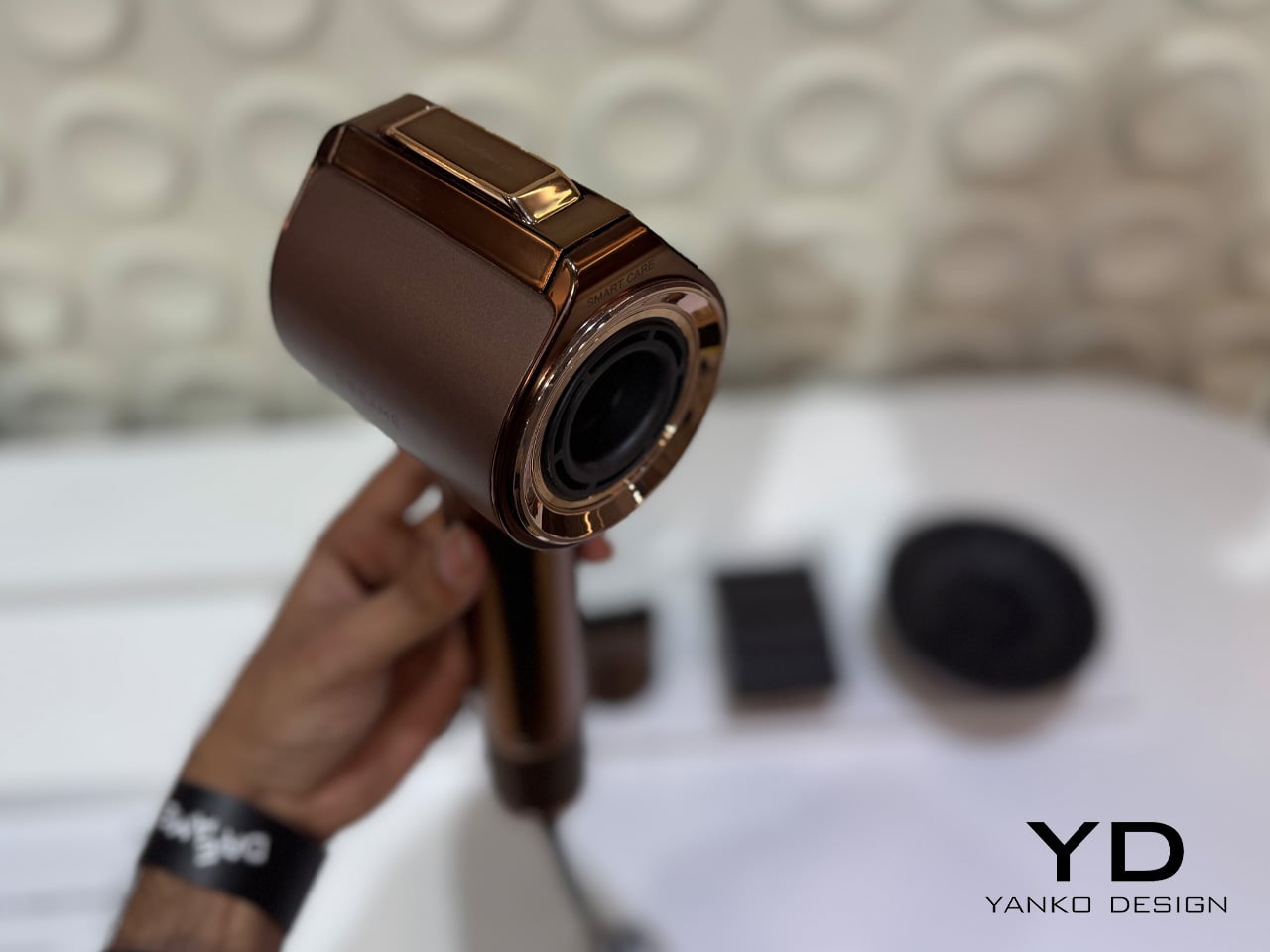
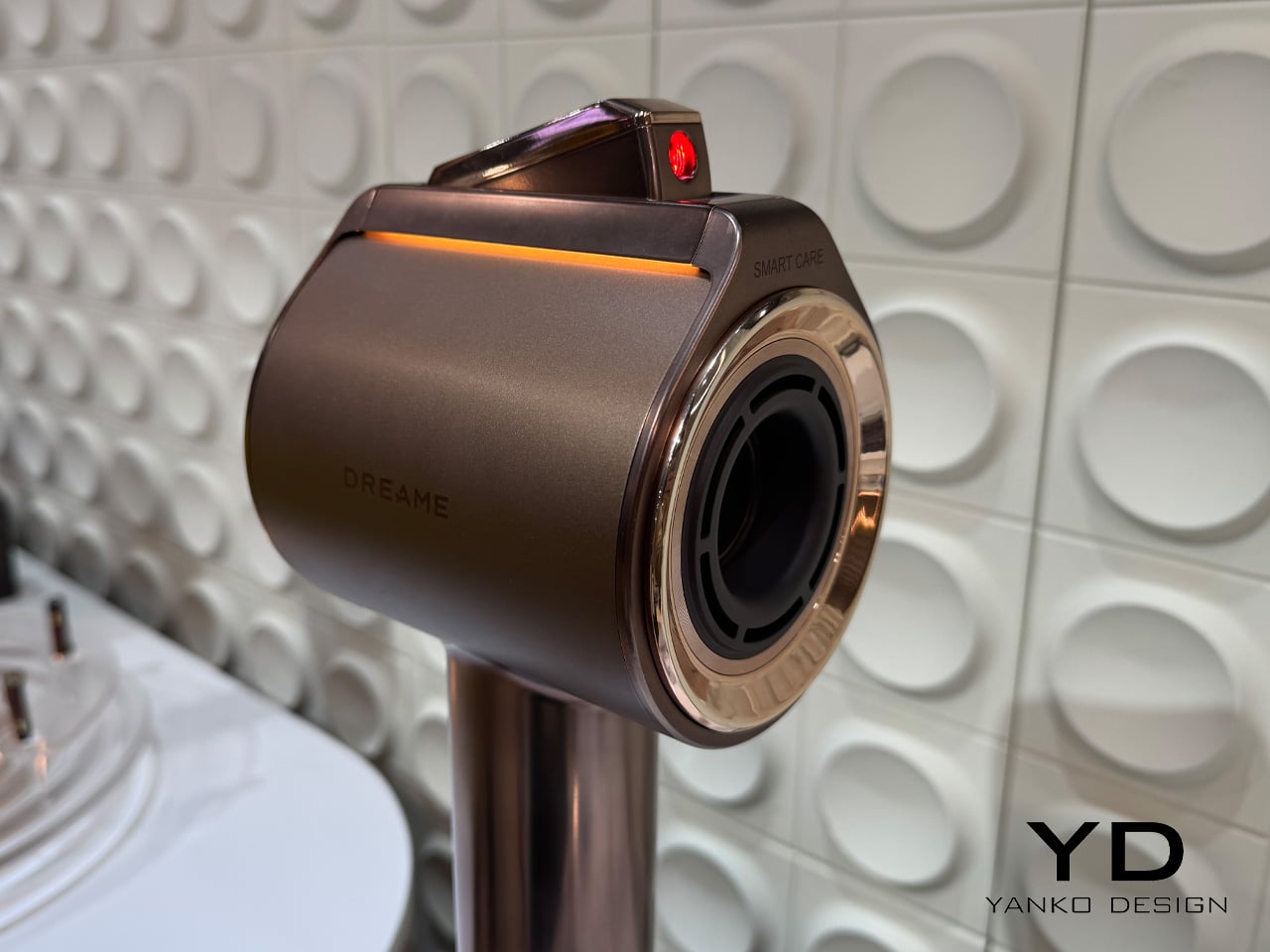
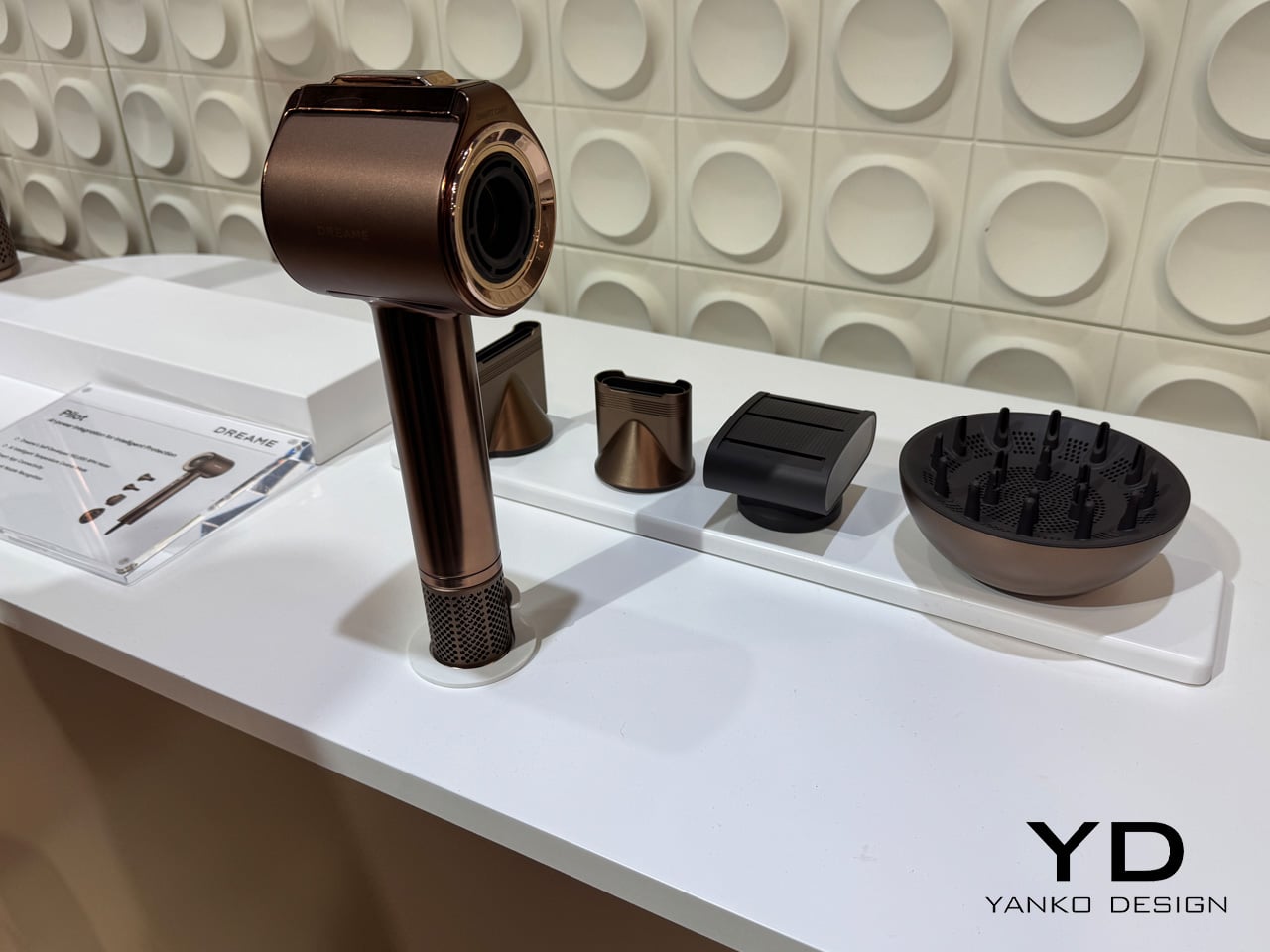
Hair dryers have come a long way from the bulky, one-speed models our parents used. The Dreame Pilot Smart AI Hair Dryer represents a leap forward in personalized hair care, combining artificial intelligence with professional-grade performance to deliver a drying experience that’s both fast and gentle. This isn’t just another styling tool with a digital screen. The Pilot uses advanced sensors, machine learning, and intelligent connectivity to create a truly adaptive hair care system that responds to your unique needs.
At the heart of the Pilot is a 150,000 RPM ultra-high-speed motor that generates airflow speeds reaching up to 70 m/s. This isn’t just about raw power. Built-in sensors continuously monitor hair temperature and distance in real time, intelligently adjusting heat output to maintain stable airflow at the scalp. The result is remarkably fast-drying, without compromising hair or scalp health. No more choosing between speed and safety. The 600-million negative ion generator works continuously alongside this system to reduce frizz and enhance shine, giving hair a salon-quality finish while the intelligent heat regulation protects against damage.
The AI integration sets this dryer apart from conventional models. A simple press of the AI button activates Personalized AI Mode, which learns and adapts to the needs of up to three different users. VIP I mode caters to children or those with sensitive scalps, offering gentle, safe drying. VIP II focuses on efficient daily drying while maintaining hair health for typical routines. VIP III delivers ultra-fast drying for people who need to get out the door quickly without sacrificing results. Each profile remembers individual preferences, creating a customized experience every time you pick up the dryer.
Connectivity extends the Pilot’s capabilities beyond the device itself. Through Wi-Fi and the companion app, users gain access to personalized tutorials, real-time device updates, and maintenance reminders. The app also provides AI-powered hair analytics designed to optimize hair health over time, turning your hair dryer into a smart tool that understands your unique needs. This connected ecosystem means your dryer gets smarter with use, learning patterns, and suggesting adjustments for better results.
The intelligent nozzle recognition system brings another layer of convenience. Each styling nozzle comes with preset parameters that the dryer automatically detects when attached. The system recalls individual user preferences for each nozzle, eliminating the need to manually adjust settings every time you switch attachments. Whether you’re diffusing curls or creating sleek styles, the Pilot remembers what works best for you. The dynamic smart display provides clear, real-time information about settings and modes, making it easy to see exactly what’s happening at a glance.
Despite its advanced technology, the Pilot maintains practical usability. Auto idle detection helps conserve energy when the dryer isn’t actively in use. At 420g without the wire, it’s lightweight enough for comfortable extended use. The 2.8m wire length provides plenty of freedom to move while styling. The Dreame Pilot Smart AI Hair Dryer reimagines what a hair dryer can be. It’s not just a styling tool but an intelligent system that learns, adapts, and evolves with your hair care routine. For anyone seeking professional results with personalized care, the Pilot delivers technology that truly makes a difference.
The Samsung Galaxy S26 Ultra introduces a series of thoughtful updates that blend innovation with practicality. From material changes to charging enhancements and refined design elements, this flagship device is designed to meet the evolving needs of users while maintaining its competitive edge. By focusing on meaningful improvements, Samsung continues to solidify its position as […]
What if your coding assistant could not only understand your tasks but also adapt to them with precision, like a skilled teammate? In this overview, World of AI explores how the latest Gemini CLI v0.23 update is redefining what’s possible with AI-powered coding. At the heart of this release is the new “Agent Skills” feature, […]
As technology continues to advance, the tools available to Mac users are becoming increasingly sophisticated. In 2026, a range of innovative apps which are designed to enhance productivity, simplify daily tasks, and improve your overall Mac experience. Whether you’re a professional managing complex projects or a casual user seeking efficiency, these ten apps can significantly […]
Disney+ will add vertical videos to its service in the US sometime this year, in hopes that they can entice viewers to engage with its app every day. The company has made the announcement at its Tech + Data Showcase event at CES 2026. Disney first dabbled in vertical content with Verts, which launched for the ESPN app in August 2025, giving it the insight it needed on how its users respond to the video format.
Erin Teague, Disney Entertainment’s EVP of Product Management, told Deadline that the company will use the format for all kinds of content. The service isn’t just planning to use it as a vehicle for movie and series teasers, but also for original short-form programming. She didn’t say what kinds of original programming Disney+ will be adding as vertical videos to its app, but vertical micro-dramas have become incredibly popular over the past year.
“We’re obviously thinking about integrating vertical video in ways that are native to core user behaviors,” Teague said. “So, it won’t be a kind of a disjointed, random experience.” The company is targeting Gen Z and Gen Alpha users, in particular, since they’re not inclined to sit and watch long-form content on their phones for hours. Disney said in a statement that the experience will “evolve as it expands across news and entertainment” and will be personalized for users, with making the service “a must-visit daily destination” as its goal. After all, if a user is already in the app, they’re more likely to explore and watch the service’s programming.
This article originally appeared on Engadget at https://www.engadget.com/entertainment/streaming/disney-is-launching-vertical-videos-this-year-120000776.html?src=rss
What if you could turn scattered notes, dense research, and endless PDFs into a single, cohesive resource that works like an extension of your own mind? Teacher’s Tech takes a closer look at how Google’s NotebookLM, powered by the innovative Gemini 3 model, is redefining the way we interact with information. Imagine effortlessly organizing everything […]
At CES 2026, Samsung introduced a significant advancement in foldable smartphone technology: a nearly crease-free OLED panel. This innovation addresses one of the most persistent challenges in foldable devices—visible screen creases—while setting a new benchmark for durability and design. The Galaxy Z Fold 8 is expected to be the first device to feature this innovative […]