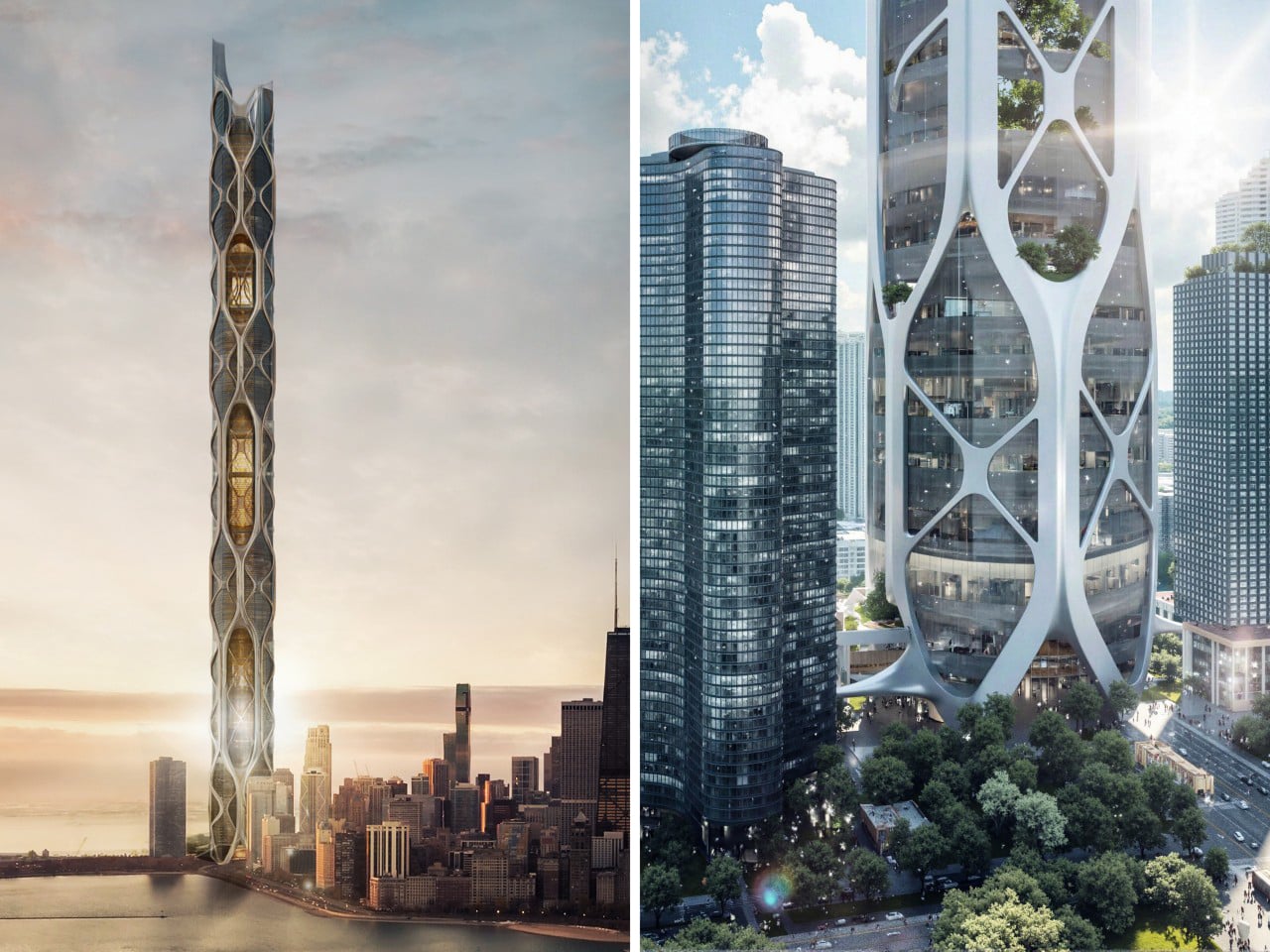
A Vertical Farm Skyscraper Reimagines Chicago’s Skyline as a Living Food Ecosystem

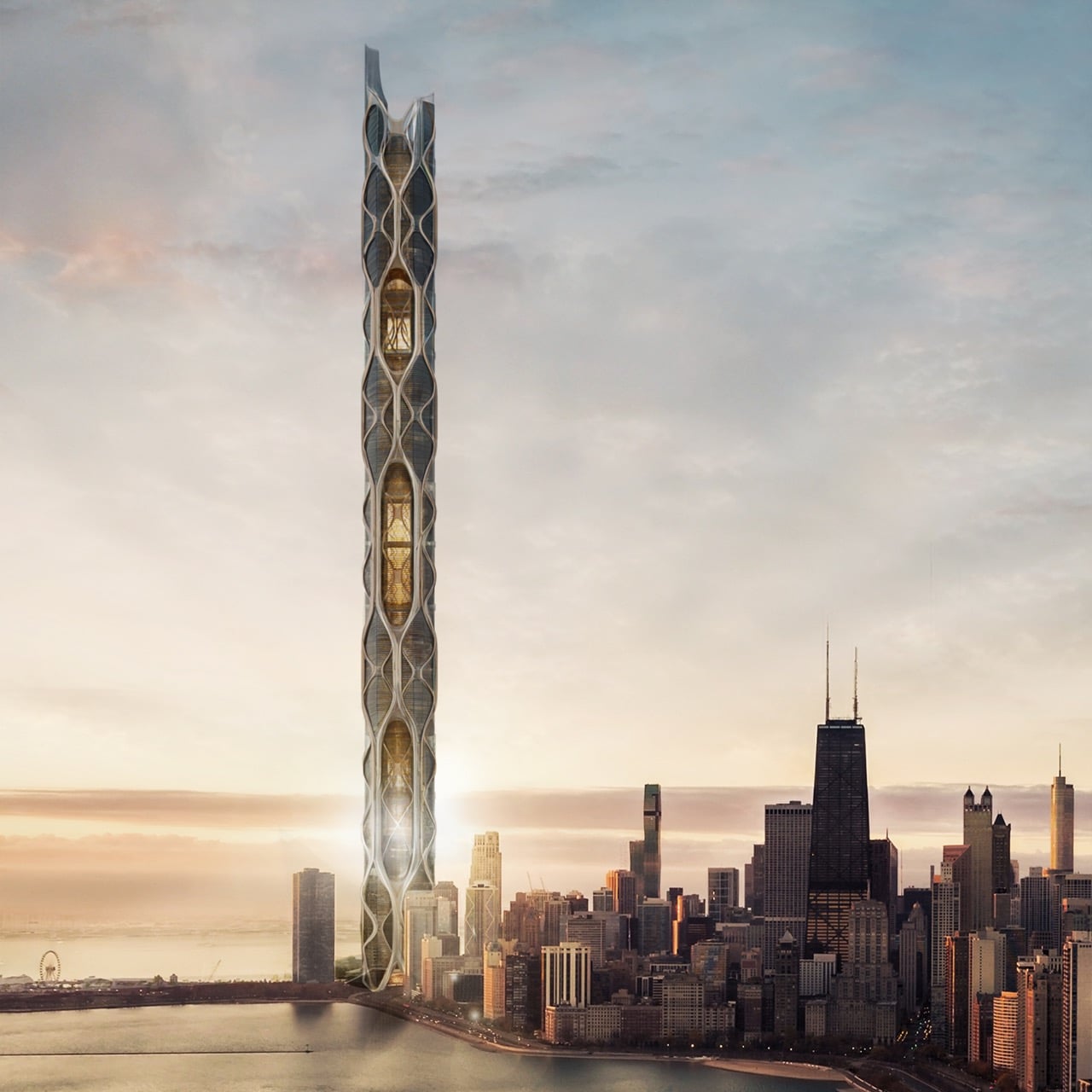
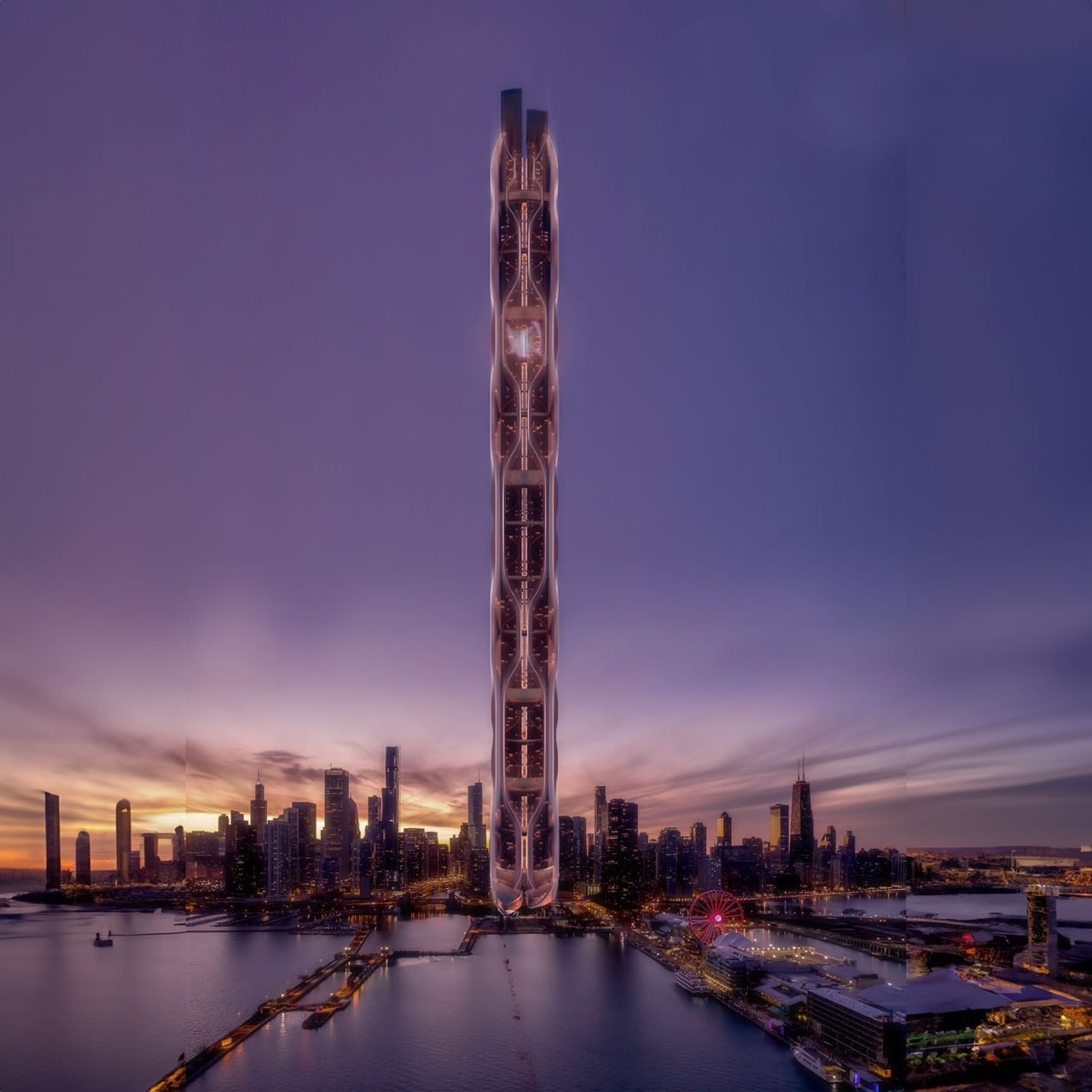
Imagine standing in Chicago, looking up at a skyline that does not just symbolize power and progress, but nourishment. A skyline where fresh lettuce grows a few floors above your head, rainwater is harvested from the clouds, and the architecture itself works quietly to heal long standing urban inequities. This project dares to ask a radical question. What if skyscrapers did not just house people, but fed them?

At the heart of this proposal lies a deeply human problem. Food deserts. Across Chicago, many low income neighborhoods struggle to access affordable, nutritious food. Grocery stores are scarce, fresh produce is often out of reach, and fast food becomes the default not by choice, but by circumstance. These conditions have fueled health disparities and reinforced socio economic divides for decades. Rather than treating this as a policy issue alone, the project reframes it as an architectural opportunity.

Designers: Yuhan Zhang and Dreama Simeng Lin

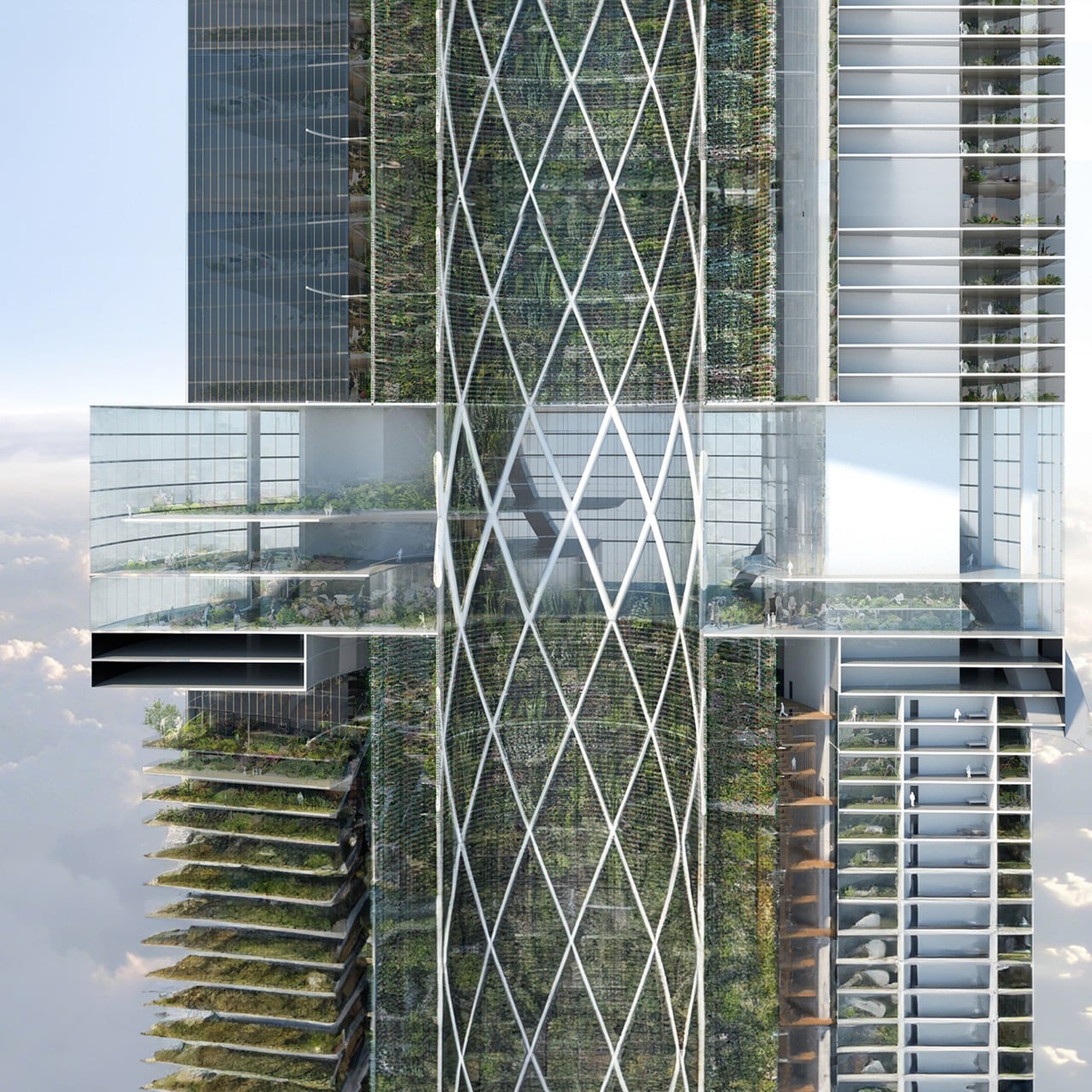
Programmatically, the tower integrates vertical farming directly into its core, transforming food production into an essential urban utility. Instead of transporting produce from distant rural farms, food is grown locally within the city, within the building, and within reach. The skyscraper becomes a self sustaining ecosystem, drastically reducing carbon footprints while restoring food access to the communities that need it most.

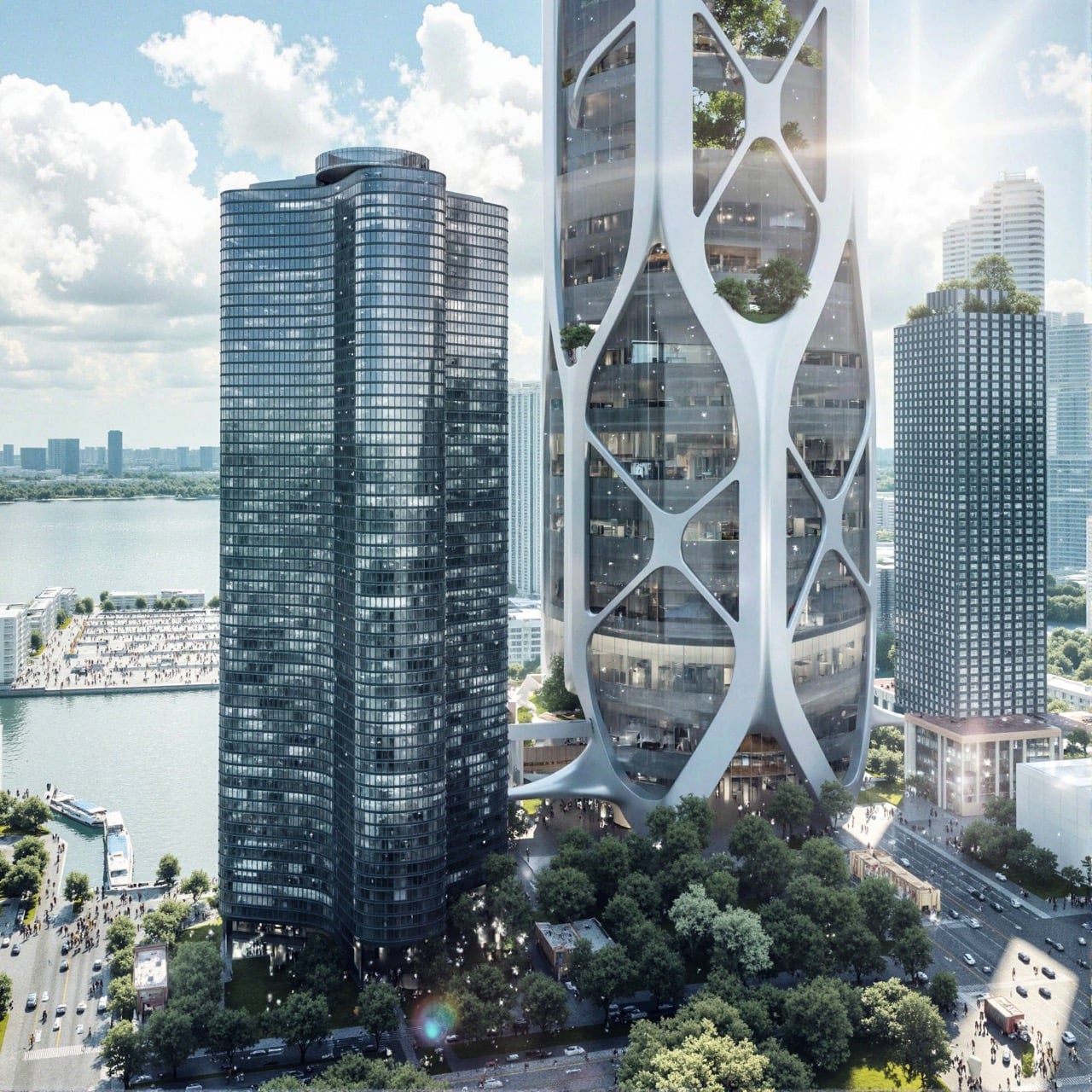
Formally, the building draws inspiration from one of Chicago’s most defining natural elements. Water. The tower’s fluid, organic silhouette mirrors the geometry of a water droplet, symbolizing renewal, continuity, and resilience. This form is not just poetic. It extends Chicago’s green belt upward, turning the skyline into a vertical landscape. Nature is no longer pushed to the city’s edges. It rises with it.

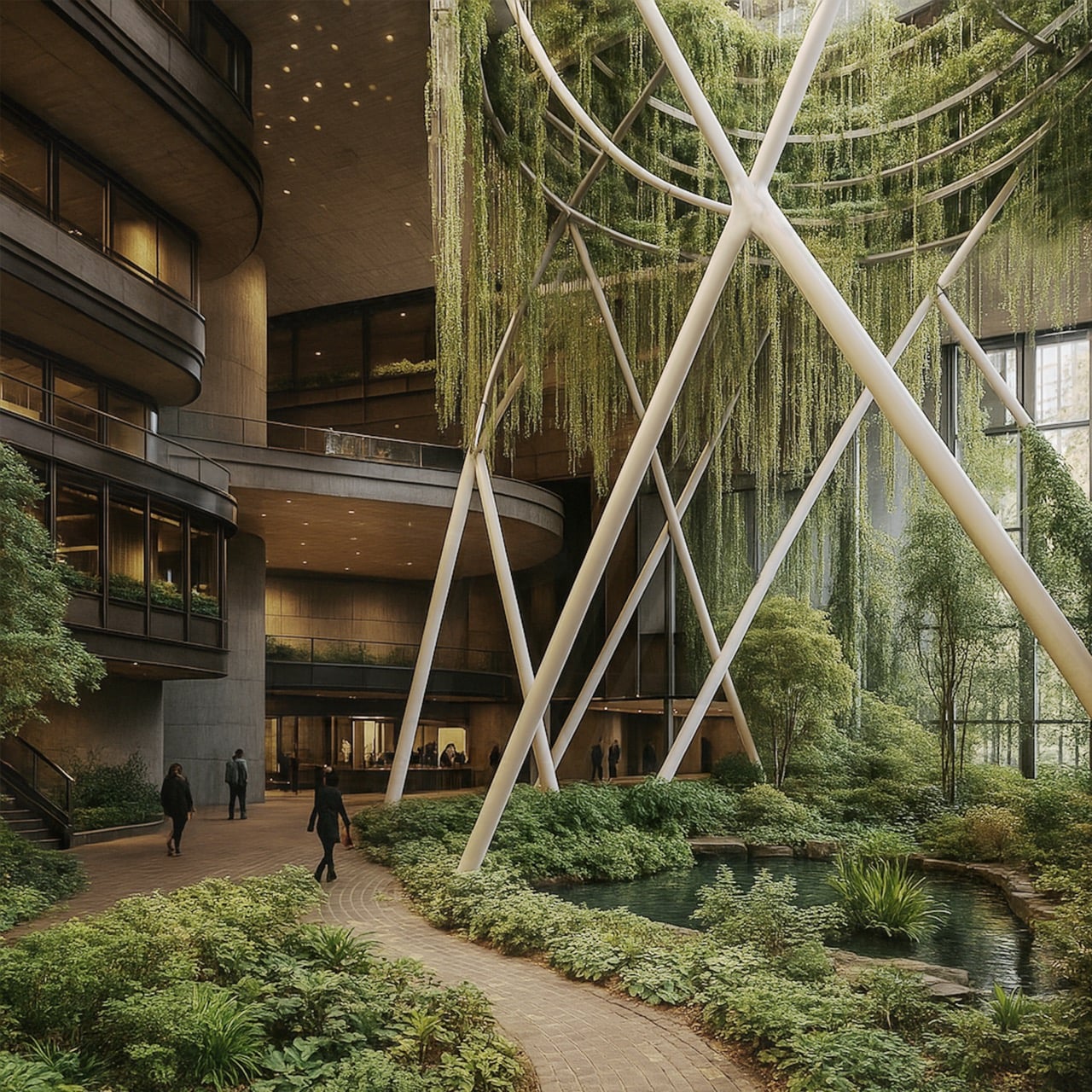
Life inside the tower unfolds as a fully integrated vertical community. Residential units sit alongside commercial spaces, allowing people to live, work, and socialize without leaving the structure. Hotels offer short term stays and panoramic views, contributing to both cultural exchange and economic vitality. Schools are embedded throughout the tower, weaving education into daily life rather than isolating it at ground level. Sky terraces appear at multiple heights, acting as social lungs. Green, open spaces where residents gather, relax, and reconnect with nature. These terraces sustain every function of the tower, fostering interaction, wellness, and a sense of shared ownership.

Sustainability is not an add on here. It is the backbone. Vertical farms housed within the core supply fresh produce. Cloud harvesting and rainwater collection systems are seamlessly integrated into the façade, ensuring efficient water reuse. Wind turbines embedded along the exoskeleton generate renewable energy, while a breathable atrium and natural ventilation system enhanced by a diagrid structural framework maximize airflow and daylight. The result is a building that does not merely coexist with nature, but actively collaborates with it.

Structurally, the tower is composed of four conjoined vertical volumes, laterally supported by two layers of bracing that increase depth and resilience. A diagrid exoskeleton spans 25 story modules, weaving fluid structural lines that integrate mega bracing with lateral stability. This strategy allows for a generous inner void, flooding the tower with light and air while reinforcing its architectural clarity.

The project also represents an ambitious research endeavor. Integrating agriculture into a mile high skyscraper demanded innovative thinking around energy efficiency, water cycles, and food systems. Balancing extreme structural demands with green technologies like cloud harvesting and passive ventilation pushed engineering boundaries. Most importantly, research into food deserts grounded the project in real social needs, ensuring that sustainability here is not symbolic, but equitable.

Positioned as a future icon for the next fifty years, this tower reimagines what urban architecture can be. It suggests a future where buildings do not just shelter cities. They sustain them. Where the skyline does not just inspire awe. It feeds the body, the community, and the planet.

The post A Vertical Farm Skyscraper Reimagines Chicago’s Skyline as a Living Food Ecosystem first appeared on Yanko Design.
3D-Printed Tiny Home Cuts Build Time in Half and Challenges Luxembourg’s Housing Crisis

In Niederanven, a quiet commune east of Luxembourg City, a small concrete dwelling is rewriting expectations for housing innovation. Designed by ODA Architects in collaboration with Coral Construction Technologies, Tiny House LUX is the nation’s first fully 3D-printed residence, a test case in using robotic fabrication to deliver faster, cheaper, and more energy-efficient homes. At just 47 square meters of usable space, the structure is modest, but the architectural ambitions behind it are anything but small.

Created to address Luxembourg’s ongoing housing shortage, the home was printed in less than 28 hours per phase, an extraordinary reduction in build time compared to conventional masonry or timber construction. The speed is significant in a country where demand vastly outpaces supply: Luxembourg needs approximately 7,000 new apartments each year, yet only under 4,000 are completed. This imbalance fuels some of the highest housing costs in Europe. A 47 m² apartment in the capital can exceed €560,000, while the estimated price of the 3D-printed prototype is roughly one-third less, a difference that begins to make entry-level housing more attainable.

Designer: ODA Architects

Energy performance is central to the project’s value. Solar panels on the roof generate enough electricity to power daily usage, while a film-based underfloor heating system removes the need for water pipes, radiators, or boilers. After printing, the walls are packed with insulation made from low-impact materials to minimize long-term energy consumption. The architects emphasize simplicity: systems that are easy to run, maintain, and repair over the life of the home rather than engineering complexity that becomes costly later.

Inside, the layout is intentionally straightforward for efficient living. A small south-facing entrance leads into a corridor that connects every major room, from a technical area and bathroom to a bedroom at the end of the plan. To the left of the entrance, an open living, dining, and kitchen zone forms a single continuous space. A door opens to a terrace on the south side, linking the interior to outdoor space and the surrounding garden. Openings facing north and northeast bring light into the home, reinforcing the idea that a compact footprint can still be bright, breathable, and connected to nature.

Beyond design considerations, 3D printing reduces construction waste, limits the use of heavy machinery, and lowers labor needs by following precise digital instructions. The municipality of Niederanven is leasing the home to a young resident for ten years under its Hei wunne bleiwen initiative, which supports community engagement and starter housing. To offset construction emissions, the project also includes a commitment to plant 21 trees.

For now, Tiny House LUX remains a prototype. But its promise is clear: a new building method that pairs architectural intelligence with urgency, offering a practical, scalable model for affordable, low-energy housing in Luxembourg, and possibly beyond.

The post 3D-Printed Tiny Home Cuts Build Time in Half and Challenges Luxembourg’s Housing Crisis first appeared on Yanko Design.
Handcrafted Porcelain Dinnerware Redefines Everyday Dining Through Craft, Light, and Ritual

Porcelain dinnerware has long been shaped by the logic of industrial production. Uniform forms, limited color palettes, and standardized finishes dominate the contemporary table, reducing porcelain to a neutral backdrop rather than an active part of the dining experience. This porcelain dinner set positions itself in deliberate contrast to that reality. It proposes a quieter, more thoughtful vision in which craft, material honesty, and visual sensitivity redefine how everyday meals are experienced.

At the core of the design lies a simple but powerful idea: food presentation should be as engaging as flavor. Dining is not only an act of nourishment, but also one of attention, rhythm, and atmosphere. By merging handcrafted processes with functional versatility, the set bridges modern living and nostalgic familiarity. It feels contemporary in its restraint, yet warm in its tactile and visual language.

Designer: Monte Porcelain

The collection consists of four pieces designed as a cohesive system: a glass, a bowl, a deep plate known as the Saturn plate, and a service or supla plate. Rather than assigning each object a single rigid purpose, the designer embraced multi-use functionality. This approach reflects evolving dining habits, where objects are expected to adapt fluidly across meals, occasions, and spaces.

The glass is conceived as more than a vessel for drinks. Its form allows it to function equally well as a dessert or snack bowl, encouraging informal and flexible use. The bowl supports a wide range of meals, from soup and salad to breakfast cereal and hot appetizers. Along its upper edge, engraved firefly patterns introduce a subtle decorative layer. These motifs are filled with glaze, ensuring a smooth, sealed surface that interacts gently with light, adding depth without distracting from the food itself.

The Saturn plate is designed for both sauced and non-sauced dishes, such as pasta and main courses. Its flat-edged form frames the food cleanly, while the patterned base enriches the visual composition of the plate. The service plate anchors the set, offering generous proportions suitable for main course presentations or layered pasta services. Together, the four pieces create a table setting that is expressive yet balanced.

Material integrity and production ethics play a central role in the project. White porcelain, often referred to as bone porcelain, was selected for its suitability for food contact, durability, and timeless visual quality. Each piece was cast using high-quality porcelain clay in plaster molds, then fired at 1230 degrees with transparent glaze. The firefly patterns were engraved using a special technique and selectively colored or left transparent, allowing light to pass through while remaining fully sealed and hygienic.

The project was developed over an eight-month period, beginning in June 2024 and completed in February 2025 at the Monte Porcelain Ayvalık Workshop. Every stage of production was carried out by hand, including molding, casting, glazing, and painting. Throughout the process, a fair production approach was maintained, with careful consideration for environmental responsibility and respect for nature. No living creatures were harmed at any stage.

Dishwasher safe, food safe, and designed for long-term daily use, the set demonstrates that handcrafted objects can be both poetic and practical. Recognized within international design contexts such as the A’ Design Award & Competition, this dinnerware collection repositions porcelain as an active participant in the dining ritual. It invites users to slow down, notice light and texture, and rediscover the quiet pleasure of thoughtfully designed everyday objects.

The post Handcrafted Porcelain Dinnerware Redefines Everyday Dining Through Craft, Light, and Ritual first appeared on Yanko Design.
This Dinosaur-Shaped Cat Bowl Reimagines Feeding as a Thoughtful Daily Ritual

In a market saturated with look-alike pet products, the Decopark Dino Bowl stands out by asking a deceptively simple question: What does feeding actually look like, for both cats and their humans? From that question emerges a ceramic object that blends ergonomics, storytelling, and quiet functional innovation into a single, memorable form.

At first glance, the Dino Bowl reads as charming and whimsical. Its silhouette resembles a small dinosaur mid-stride, with its neck arched forward and its spine visible along the back. However, this visual identity is not decorative excess; it is a design serving multiple purposes simultaneously. The bowl’s cylindrical form is bent at the center to create a slanted feeding surface, improving a cat’s eating posture. The “spine” at the back, meanwhile, is not just an aesthetic flourish: it is a fully integrated stir stick, transforming a playful metaphor into a practical tool.

Designer: Xueyong Liang

The designers behind the Dino Bowl began with observation. Research revealed two critical gaps in existing ceramic pet bowls: visual homogeneity and a lack of consideration for real feeding routines. Many cat owners regularly feed canned food, which requires mixing, yet most bowls offer no solution for this step. The result? Extra tools, cluttered countertops, and frequently misplaced stir sticks.

The Dino Bowl addresses this head-on by merging bowl and tool into one cohesive unit. The attached stir stick slots neatly into an insertion hole at the rear of the bowl, always returning to the correct orientation regardless of how it is placed. During feeding, it assists with mixing; afterward, it wipes clean and stores seamlessly back into the form. No extra parts, no visual disruption.

This integration is where the project’s core innovation lies: recognizing that usability is not just about the primary function (holding food), but about the entire micro-ritual surrounding it. Material choice plays a crucial role in translating this idea into a durable object. The bowl itself is made from high-temperature fired ceramic, giving it weight, stability, and a premium tactile quality. At 1kg, the bowl resists sliding during use, another subtle nod to feline behavior. The stir stick, crafted from PP, balances durability with ease of cleaning.

Designing a slanted ceramic rim, however, introduced a technical challenge. During firing, asymmetrical forms are prone to deformation. To counter this, the designers engineered a double-layer rim structure, reinforcing the edge while preserving the intended silhouette. Multiple iterations were required to refine both the curvature of the bowl and the fit between the stir stick and its housing, ensuring harmony not only in appearance but also in manufacturing reliability. The result is a one-piece ceramic form that feels intentional from every angle, cute, yes, but also structurally resolved.

Pet products occupy a unique space in design: they must satisfy animals ergonomically while appealing emotionally to humans. The Dino Bowl leans into this duality. User research indicated that owners are strongly drawn to playful shapes, especially in objects that live openly in the home. By referencing a dinosaur, an instantly recognizable, almost universally beloved figure, the bowl becomes more than a utility item. It becomes a character.

Yet the designers were careful not to let novelty overpower function. Every line, proportion, and junction was calibrated to maintain unity between bowl and stir stick, ensuring the product reads as a single, holistic object rather than an accessory-laden gimmick. With overall dimensions of 168 × 140 × 164 mm and a bowl capacity of 115 ml, the Dino Bowl is compact yet substantial, suited to everyday feeding without overwhelming a space. More importantly, it demonstrates how even the most ordinary household objects can be reimagined through careful attention to behavior, context, and form.

The post This Dinosaur-Shaped Cat Bowl Reimagines Feeding as a Thoughtful Daily Ritual first appeared on Yanko Design.
This Wooden Aromatherapy Piece Turns Cultural Memory Into a Multisensory Sanctuary

In contemporary product design, a growing interest in cultural memory, sensory ritual, and emotional well-being is shifting the way objects are conceived for domestic space. This aromatherapy piece stands as a compelling exploration of that movement, drawing from traditional Chinese aesthetics while speaking fluently to a modern lifestyle. Rather than merely referencing visual motifs, it attempts to translate centuries-old spatial philosophies into a multisensory experience.

At the heart of the design is the orchid, a motif deeply embedded in Chinese literati culture. Beyond botanical elegance, orchids in classical painting and poetry symbolize moral integrity, modesty, and quiet refinement. They are often depicted growing in mountains or hidden valleys, admired not for spectacle but for restraint. By embedding orchid elements into the interior of the object, the designer is not simply decorating; they are activating a cultural code. The orchid becomes a messenger of ideals, humility, introspection, and the pursuit of spiritual clarity, values increasingly resonant in a world overwhelmed by speed and digital noise.

Designer: Chris233

The silhouette draws inspiration from the “flower window” of traditional Chinese gardens and classical architecture. These windows, often carved in quatrefoil or geometric forms, frame selective views: a corridor leading to a bamboo grove, a sliver of sky reflected in water, or the blurred outline of stones. The design adopts a four-petal window motif, re-engraving that elegant architectural language into a compact household object. This is an intentional exercise in spatial thinking, borrowing scenery into the device. In miniature, it replicates the feeling of standing before a classical garden window, where sight, imagination, and interpretation all meet.

Materiality plays a central role. The use of wood deliberately mimics the warmth, softness, and moisture of traditional furniture and artifacts. In a design world dominated by polished metal and synthetic finishes, the choice of wood feels almost meditative. Its texture has historical memory; its scent, even before aromatherapy is added, suggests calm. It carries the tactile familiarity of objects that age with time, inviting touch, presence, and slowness.

What differentiates this product from typical aromatherapy diffusers is its philosophical approach to light. The designer uses a soft, light-transmitting structure, allowing illumination to filter through the flower window and orchid shapes. The result is a choreography of shadow, a gentle diffusion that transforms functional lighting into ambience. When fragrance begins to rise, scent interacts with this shadow play, creating a layered sensory environment. The visual quietness enhances olfactory comfort, offering a subtle ritual of healing for body and mind.

In this way, the design functions as both an object and an atmosphere. It reinvents oriental aesthetics in a distinctly contemporary voice, neither imitative nor nostalgic. It chooses not to replicate historical forms, but to reinterpret them through lifestyle relevance: how people seek serenity at home, how scent supports emotional well-being, and how small objects can shape mental space.

More broadly, this project reflects a movement in design toward cultural integration rather than symbolic quotation. It suggests that traditional Chinese culture can coexist with modern sensibilities when approached through meaning rather than ornament. The piece becomes a device of calm, introspection, and everyday spirituality, a quiet reminder that design does not need to shout to be profound. In a time when wellness routines are increasingly commodified, this aromatherapy object offers something different: a return to thoughtful ritual, poetic simplicity, and the ancient art of living with beauty.

The post This Wooden Aromatherapy Piece Turns Cultural Memory Into a Multisensory Sanctuary first appeared on Yanko Design.
This Amazon Rainforest Pavilion Uses Bamboo and Biomimicry to Reconnect Humans With Nature

As technology accelerates and daily life becomes increasingly disconnected from the natural environment, the Amazon Immersion Pavilion offers a quiet counterpoint grounded in presence, atmosphere, and ecological respect. Conceived as a conceptual project for Iquitos, Peru, the pavilion proposes a gentle architectural intervention that allows visitors to experience the rainforest through sound, texture, light, and movement. It approaches the Amazon as a living partner rather than a backdrop, inviting visitors to rediscover a relationship with nature through deliberate sensory engagement.

The pavilion centers on the idea that architecture can heighten awareness when it blends into the rhythms of a landscape. The design seeks to create a space that listens to the environment and responds through form, materiality, and environmental intelligence.

Designer: Nathalia Cristina de Souza Vilela Telis

The project began with a desire to create deeper dialogue between humans and the forest. The Amazon provides constant motion and sound, and the design team wanted a structure that would reveal these qualities rather than compete with them. The result is an organically composed pavilion shaped by biomimicry, sustainable material thinking, and an understanding of local ecosystems. Bamboo was selected as the primary material because it is strong, flexible, and deeply rooted in regional construction traditions. Its use affirms the project’s commitment to low-impact building and ecological responsibility.

The sensory experience is structured as a gradual unfolding across two levels; the first floor establishes a calm and introspective atmosphere. The circular base, measuring 31,500 mm in diameter, creates a grounded platform for the structure. A partially enclosed volume captures natural light from an overhead opening, allowing soft illumination to guide the visitor. Water flows gently along the walls, creating a rhythmic soundscape similar to a small waterfall. Lush plantings soften the edges of the space, allowing architecture and vegetation to blend into one continuous environment. Humidity, aroma, and sound work together to create a cocoon-like experience.

As visitors move upward to the second floor, the atmosphere changes. The space opens outward and offers a wide view of the Amazon River as it stretches toward the horizon. The architecture recedes to make room for the scale of the landscape. The main body, with a diameter of 17,000 mm and a height of 14,000 mm, supports natural ventilation and introduces a sense of elevation within the forest canopy. The contrast between enclosure and openness creates a clear emotional arc: grounding, expansion, and renewed connection.

Sustainability shapes every design decision. The pavilion uses a biomimetic approach informed by natural growth patterns and the fluid movement of the river. Bamboo construction reduces environmental disruption and reflects local building culture. Passive ventilation works with the natural breezes of the rainforest, while carefully directed natural light reduces reliance on artificial systems. Low-impact assembly techniques help protect the forest floor and the delicate ecosystems surrounding the site. Together, these strategies allow the pavilion to behave like a companion to the landscape, quietly aligning itself with the rhythms of the forest.

The project draws from research on environmental design, indigenous construction knowledge, sensory behavior, and Amazonian ecology. The methodology included a bibliographic study, environmental impact evaluation, and an examination of the social context surrounding Iquitos. The goal was to create an architectural experience that supports ecological understanding and deepens a sense of environmental awareness.

Although the pavilion remains fictional, the design process revealed the challenges of creating architecture for remote natural settings. The limits of bamboo in large spans, the logistics of transporting sustainable materials, and the need for construction methods that respect ecological cycles were key considerations. Crafting an immersive sensory environment within such constraints required careful problem-solving and adaptation.

The post This Amazon Rainforest Pavilion Uses Bamboo and Biomimicry to Reconnect Humans With Nature first appeared on Yanko Design.
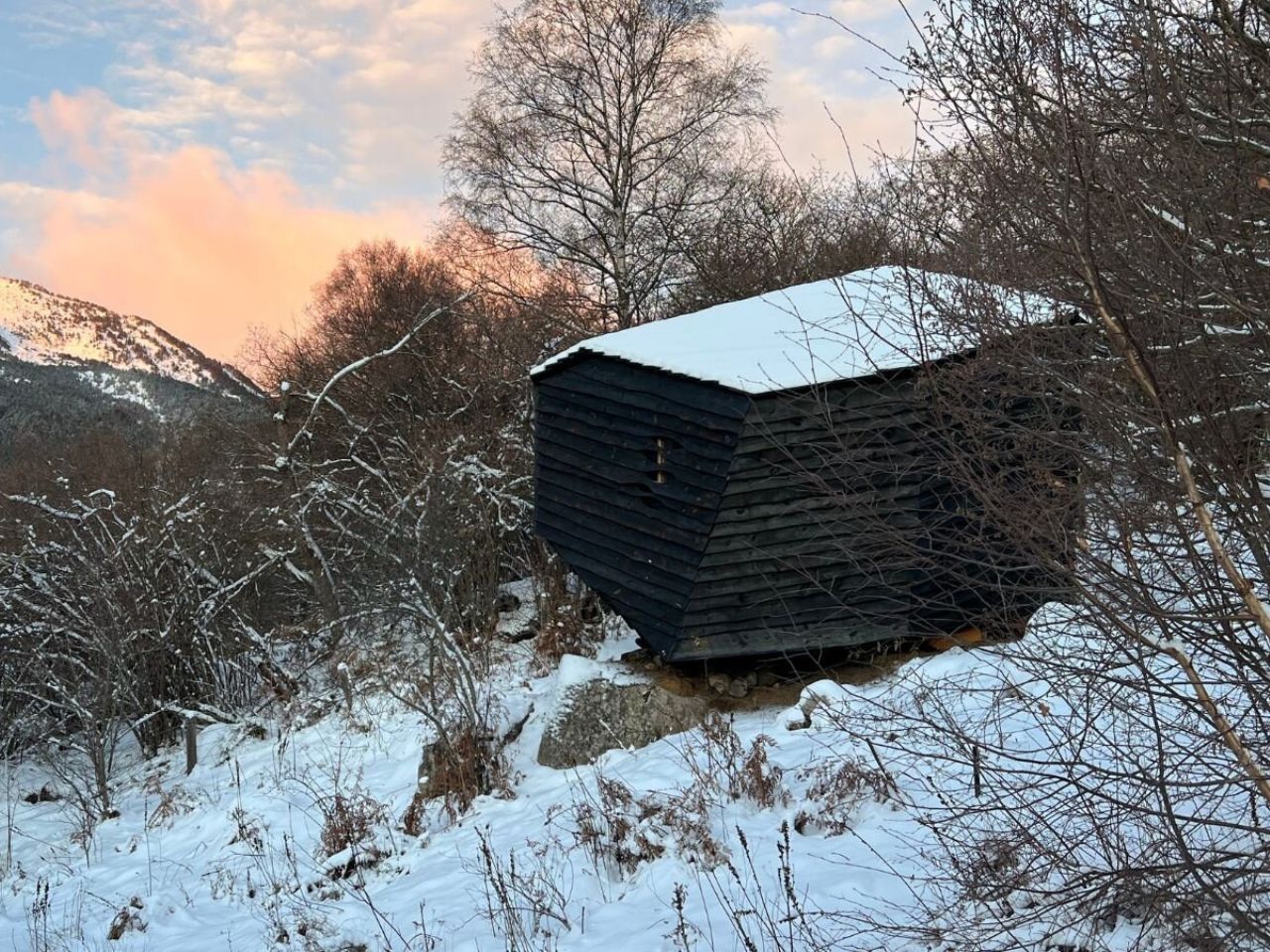
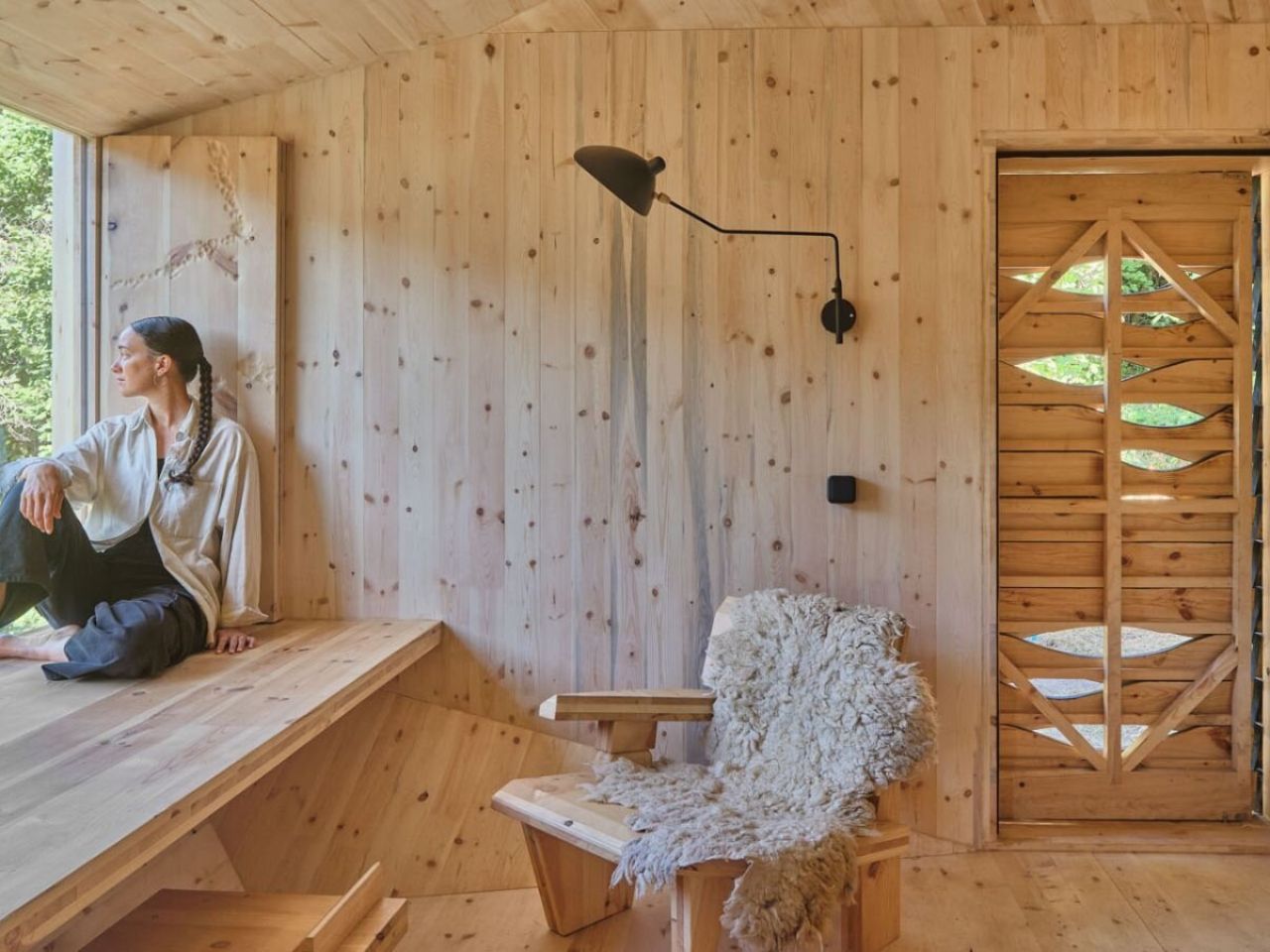
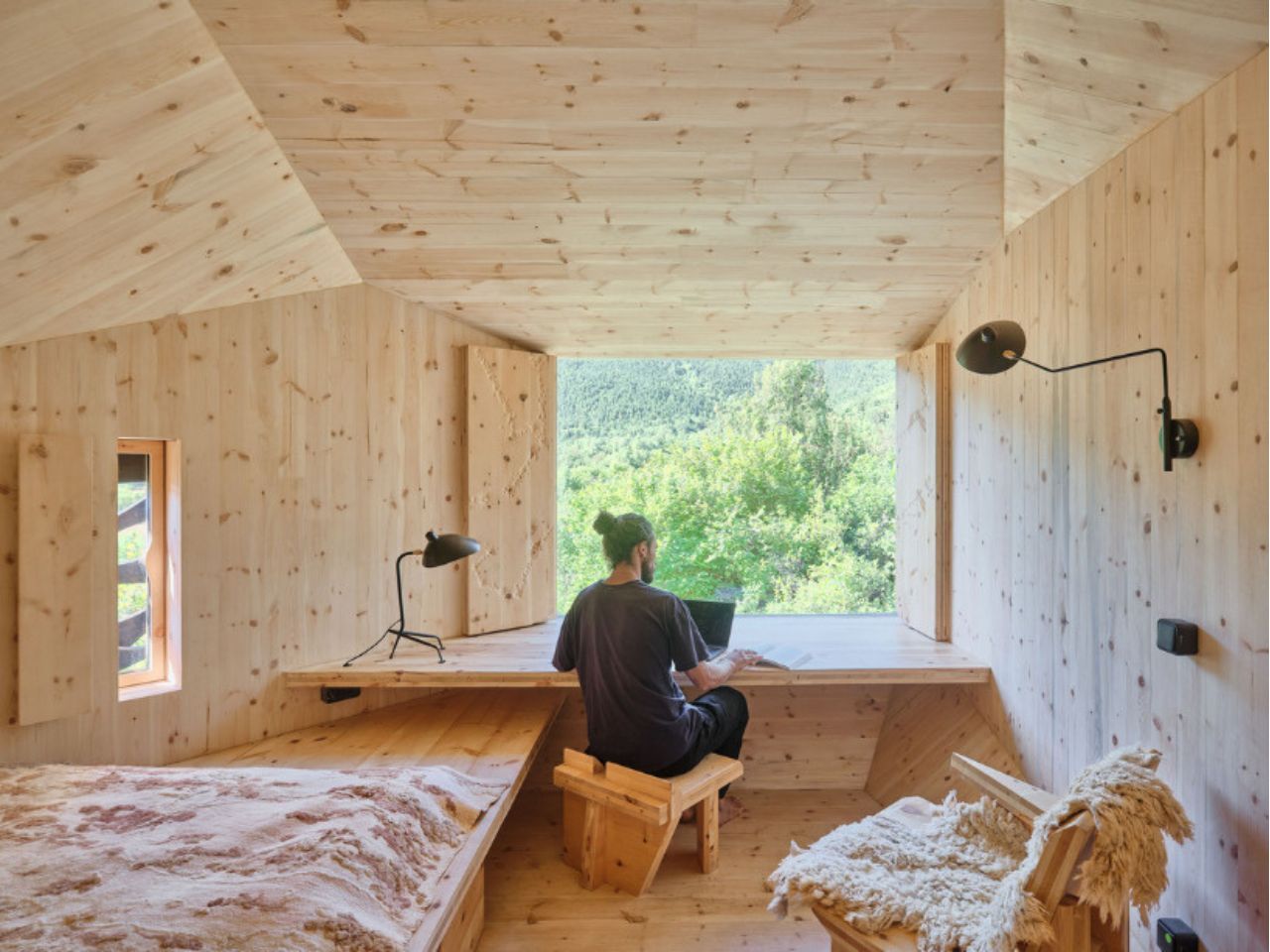
This 3D-Scanned Wooden Shelter Blends Into the Alps and Powers Itself Off the Grid

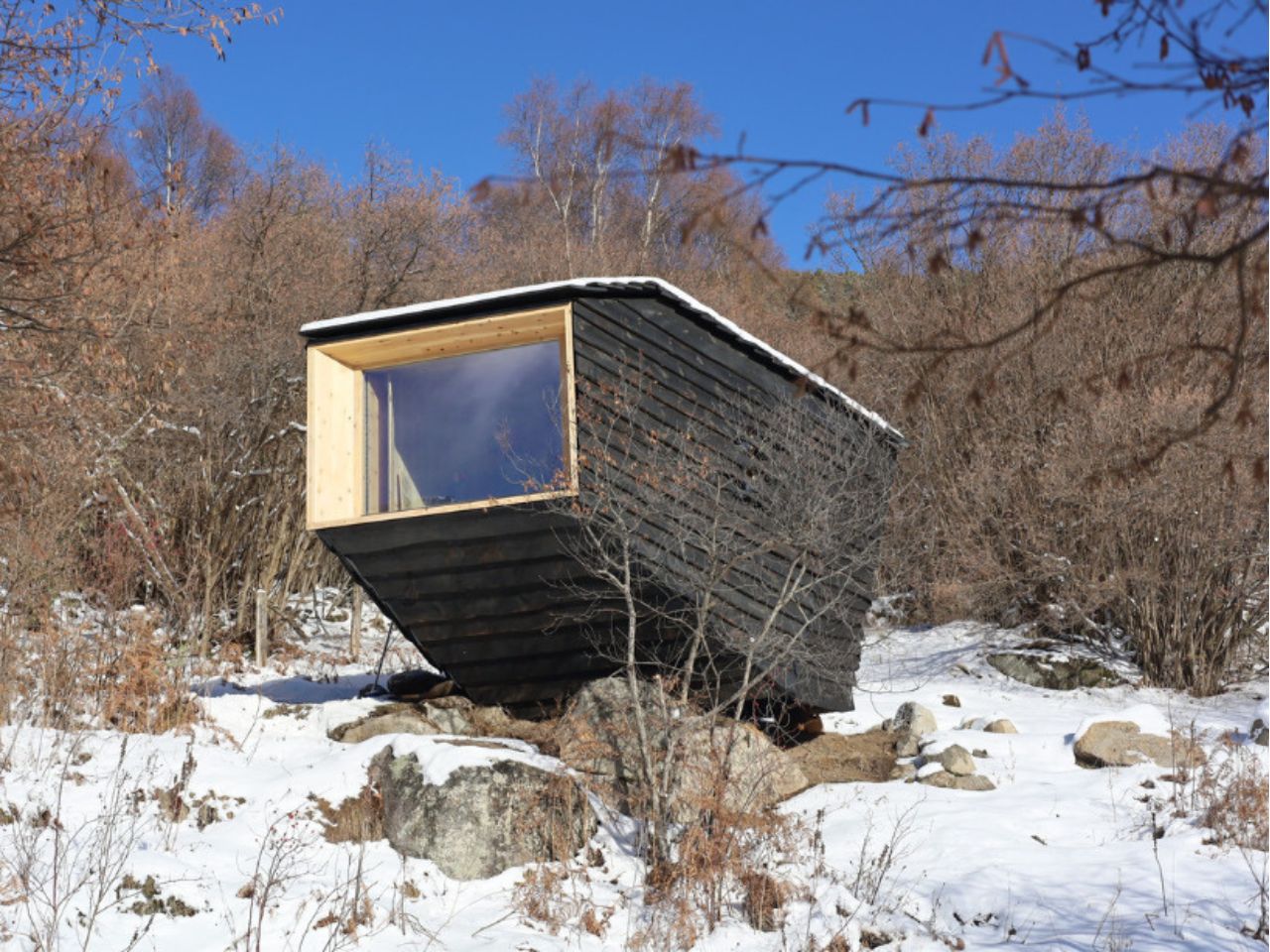
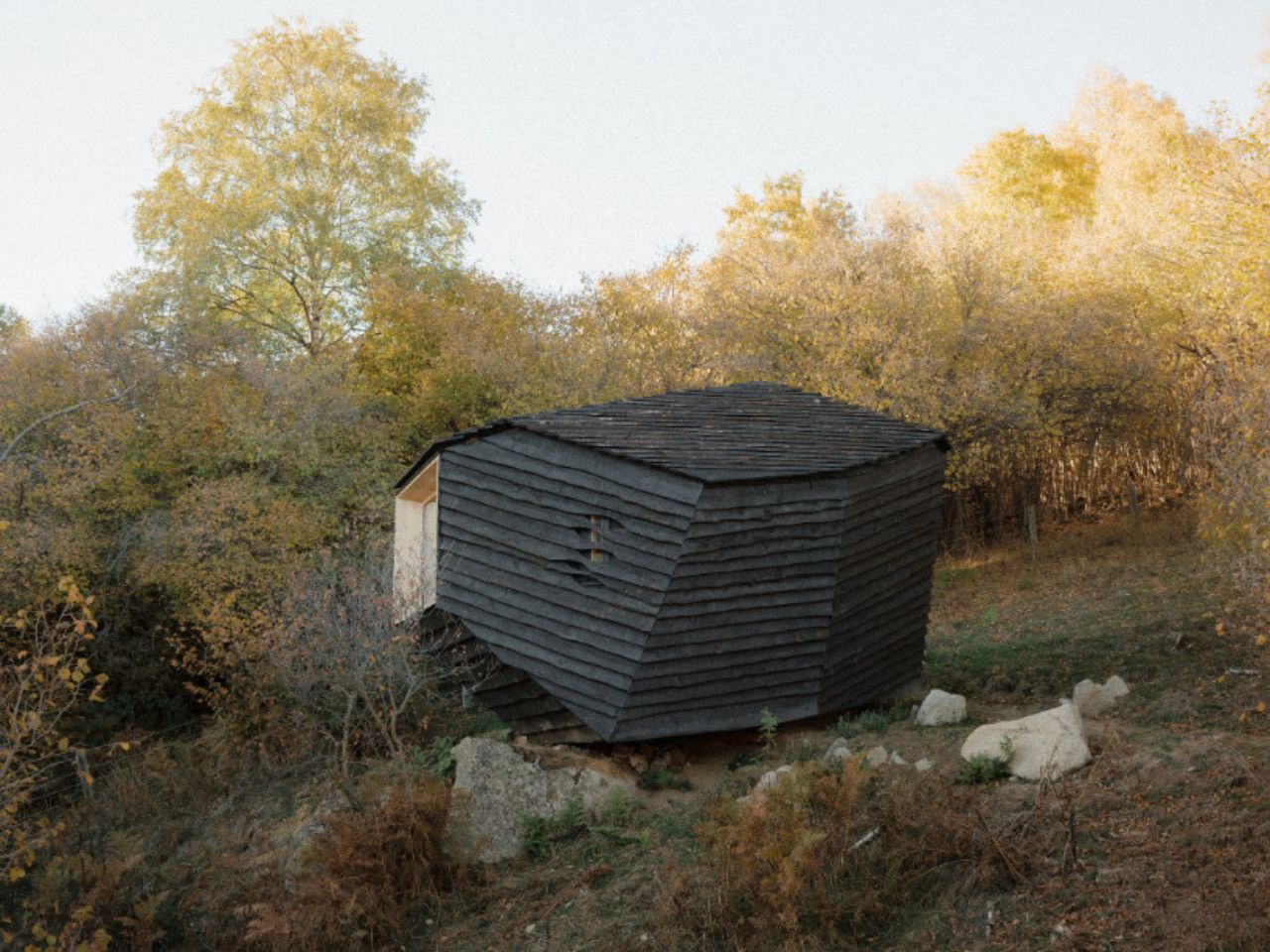
CRA–Carlo Ratti Associati, in collaboration with Salone del Mobile.Milano, has revealed a striking new architectural experiment for the 2026 Milano Cortina Winter Olympics, a digitally fabricated, self-sufficient wooden bivouac that blurs the boundaries between natural terrain and human ingenuity. What begins as a temporary urban pavilion in Milan will later embark on a second life high above the clouds, airlifted by helicopter to the Italian Alps, where it will stand as a permanent mountain refuge for adventurers and climbers.

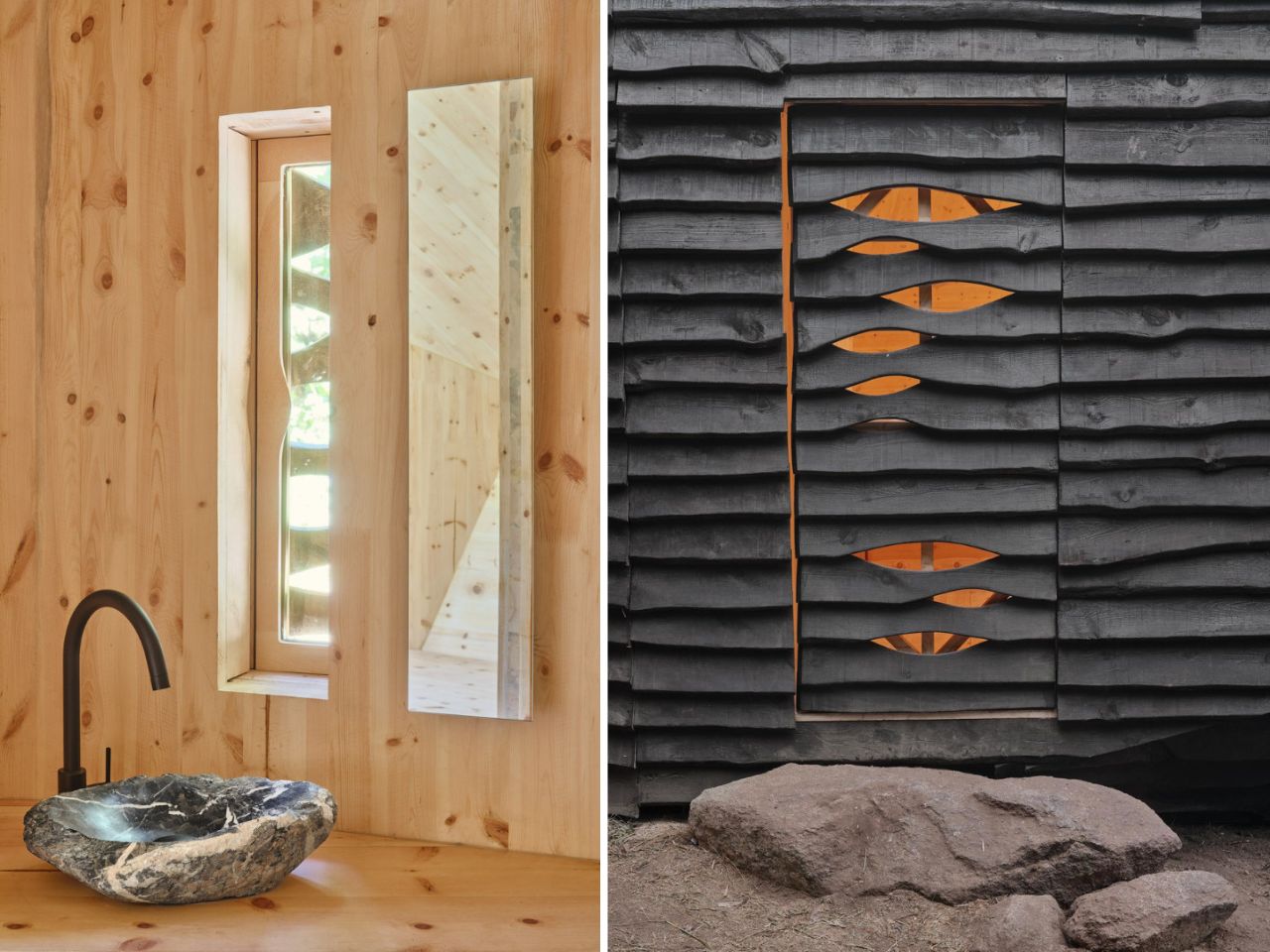
The pavilion’s design is guided by the philosophy of harmonizing with the landscape rather than dominating it. The process started with a 3D scan of Alpine rock formations, capturing their raw geometry to inform the pavilion’s organic structure. Every angle, curve, and edge of the shelter echoes the crystalline formations of the surrounding peaks. The result is a sculptural wooden structure that appears to have grown from the rock itself, modern technology molded by nature’s blueprint.

Designer: CRA–Carlo Ratti Associati and Salone del Mobile.Milano

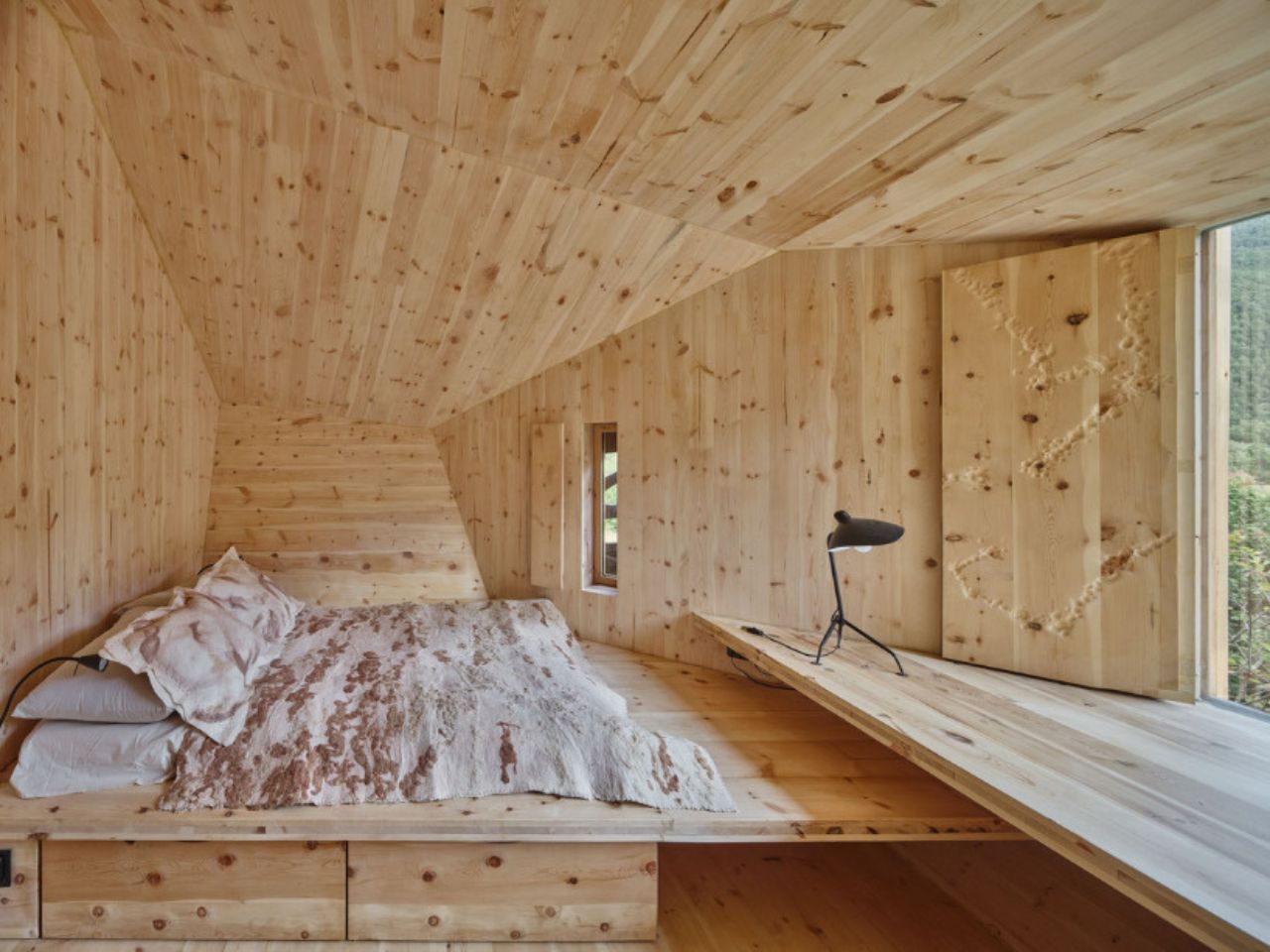
Built primarily from cross-laminated timber (CLT), enhanced with aerogel insulation and metal reinforcements, the pavilion merges craftsmanship with digital precision. It integrates a 5 kW photovoltaic system for renewable power generation and an energy storage system that enables off-grid operation. Complementing its energy independence, an air condensation mechanism extracts humidity from the atmosphere, generating fresh drinking water each day. Together, these features make the structure entirely self-reliant, capable of supporting life in remote alpine conditions.

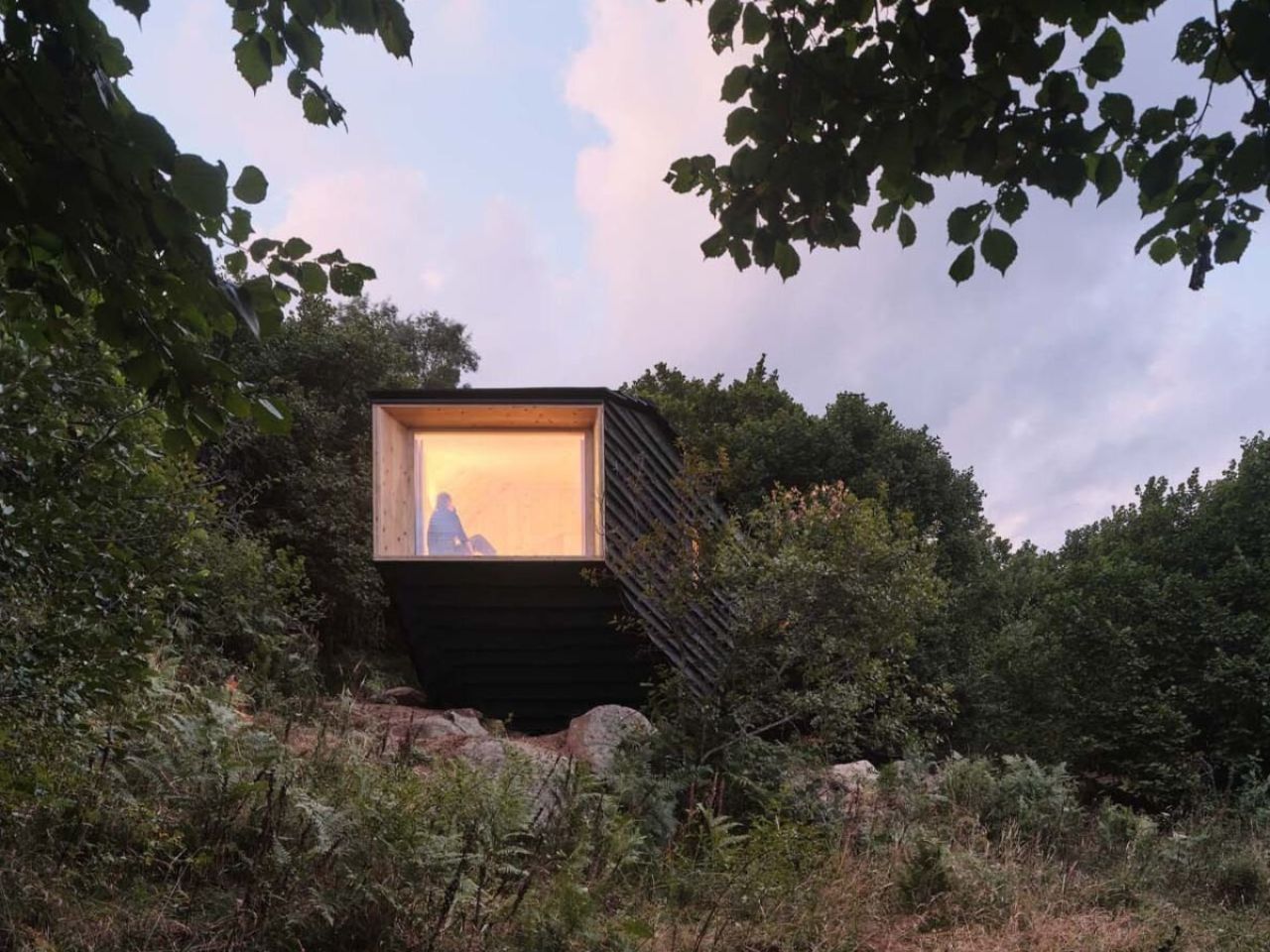
The design also breaks from the conventional visual language of mountain shelters. Rather than adopting high-visibility colors that disrupt the natural setting, CRA’s bivouac is designed to blend seamlessly with its environment. The wooden surfaces are left exposed, weathering naturally over time to mirror the tones of the landscape. A subtle red light beacon activates only in fog or low-light conditions, ensuring safety while preserving the bivouac’s minimal visual footprint. Inside, a panoramic glass wall frames sweeping Alpine views, transforming the compact interior into a tranquil observatory for reflection and rest amid nature’s grandeur.

Beyond its architectural form, the bivouac embodies circular design thinking, a structure that adapts, relocates, and endures. Its ability to function both as an urban pavilion and a high-altitude shelter showcases a flexible design model that can evolve across contexts without waste or redundancy.

This innovative pavilion joins CRA’s broader contributions to Milano Cortina 2026, which include the Olympic torch design, reflecting the same minimalist ethos and focus on elemental beauty. The 2026 Winter Olympics, running from February 6 to 22, will mark the most geographically diverse Games in history, spanning multiple cities, regions, and provinces while relying heavily on existing and repurposed infrastructure.

CRA–Carlo Ratti Associati’s bivouac stands as a symbol of architecture’s evolving dialogue with nature, a structure that not only shelters but also breathes, harvests, and adapts. In a world seeking balance between innovation and environment, it represents a poetic fusion of technology, sustainability, and Alpine serenity, where architecture doesn’t conquer the landscape but becomes part of it.

The post This 3D-Scanned Wooden Shelter Blends Into the Alps and Powers Itself Off the Grid first appeared on Yanko Design.
This Shape-Shifting Bed Care Device Uses Airbags to Protect Patients Around the Clock

For elderly individuals or patients confined to bed for extended periods, whether due to surgery, chronic illness, immobility, or long-term care, pressure ulcers are among the most serious and persistent complications. Also known as bedsores, these injuries develop when constant pressure restricts blood flow to vulnerable areas of the body, particularly the back, hips, and buttocks. Over time, the skin and underlying tissue break down, leading not only to pain and infection but also to a significant decline in overall quality of life. Traditional care relies heavily on manual repositioning by caregivers, which can be physically demanding, inconsistent, and sometimes insufficient in fully preventing tissue damage.

Flipcare emerges as a transformative solution to this longstanding medical challenge. Designed with both patients and caregivers in mind, Flipcare integrates smart engineering, ergonomic support, and automation into a single, seamless care system. At its core, the device is built around a network of adjustable airbags strategically positioned to minimize prolonged pressure on any one part of the body. These airbags expand and deflate in timed intervals, gently shifting the user’s weight and redistributing pressure without causing discomfort or disturbing rest. This dynamic support system mimics the natural micro-movements healthy individuals make during sleep, movements that bedridden patients may no longer be able to perform on their own.

Designer: suosi designBoyuan Pan, and Jianshen Yuan

Complementing the airbag system is Flipcare’s ergonomic back support design, crafted to follow the natural contours of the spine. Instead of forcing the user into a flat or rigid posture, the structure provides stable yet adaptive lumbar support that aligns with the body’s natural curvature. This not only enhances comfort but also reduces the risk of musculoskeletal strain, targeting one of the lesser-discussed but equally important consequences of long-term bed rest.

The hallmark of the device is its automated turning function, a clinically proven method for preventing pressure ulcers. Flipcare periodically shifts the patient from side to side using controlled, gentle rotations. These movements are precise and consistent, providing a level of care difficult to replicate manually over long hours. By automating this process, caregivers are relieved of repetitive physical labor, enabling them to focus on other essential tasks while ensuring that the patient receives uninterrupted pressure redistribution throughout the day and night.

What sets Flipcare apart is not just its technology but its human-centric approach. Every feature aims to enhance the patient’s dignity, comfort, and autonomy, while also reducing caregiver burden. With more consistent pressure management, patients experience improved skin health, better sleep, and reduced pain, critical factors that collectively elevate their overall well-being.

As the demand for long-term care rises and populations continue to age, Flipcare stands as a vital advancement in patient support. By merging intelligent design with compassionate engineering, it offers a safer, more comfortable, and more dignified care experience for those who need it most.

The post This Shape-Shifting Bed Care Device Uses Airbags to Protect Patients Around the Clock first appeared on Yanko Design.
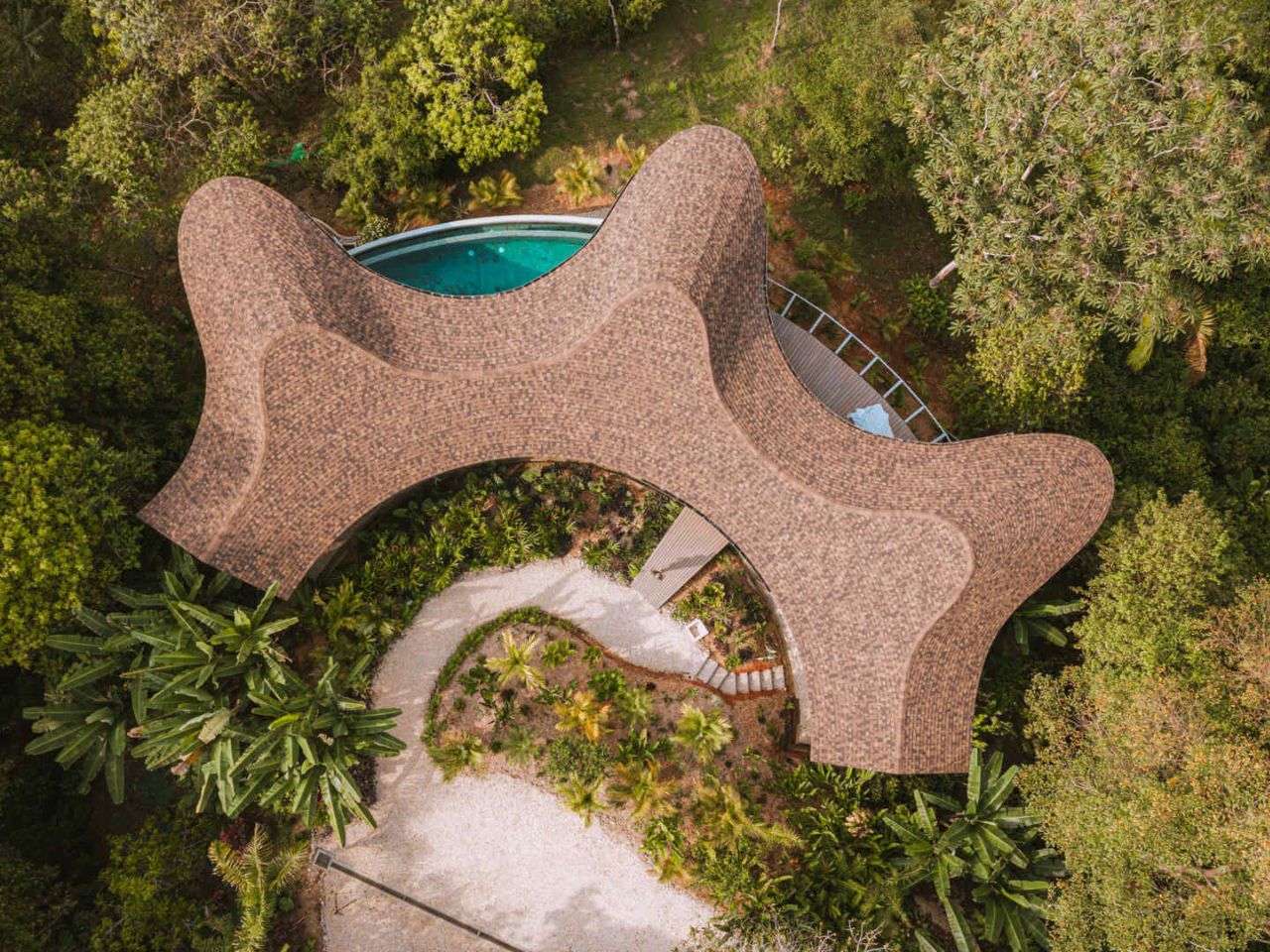
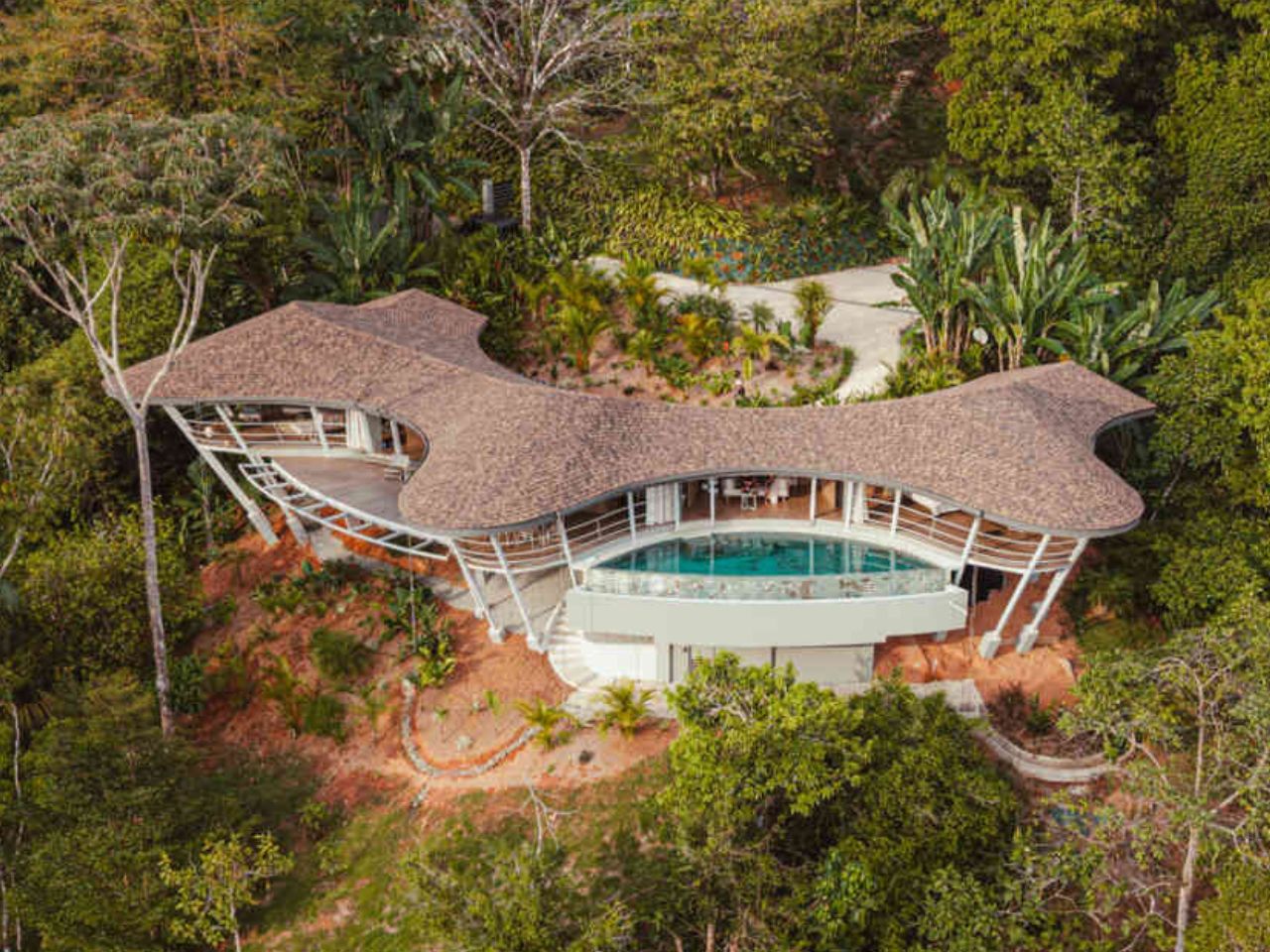
A Wave-Inspired Villa That Redefines Organic Living in Brisbane

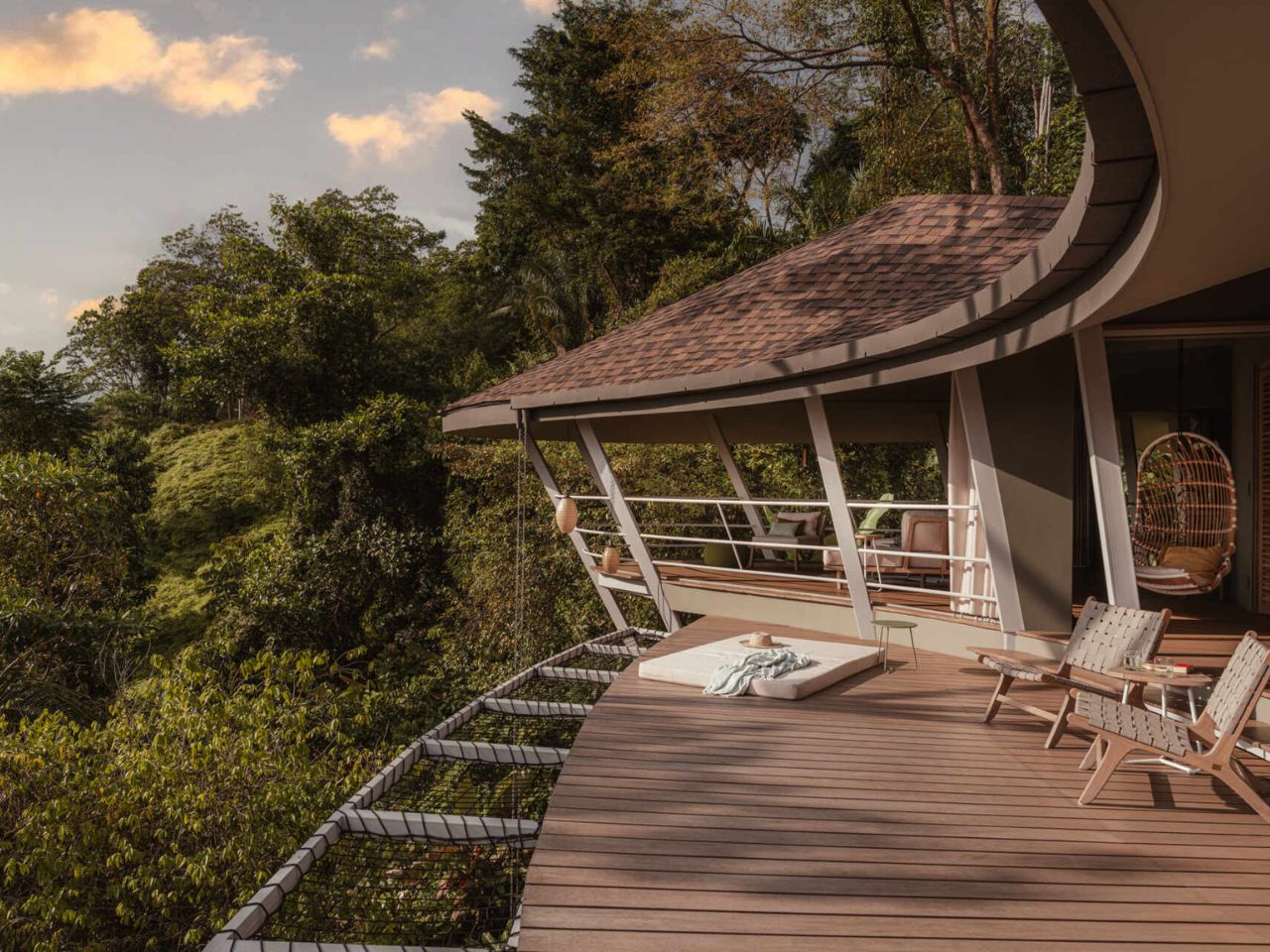
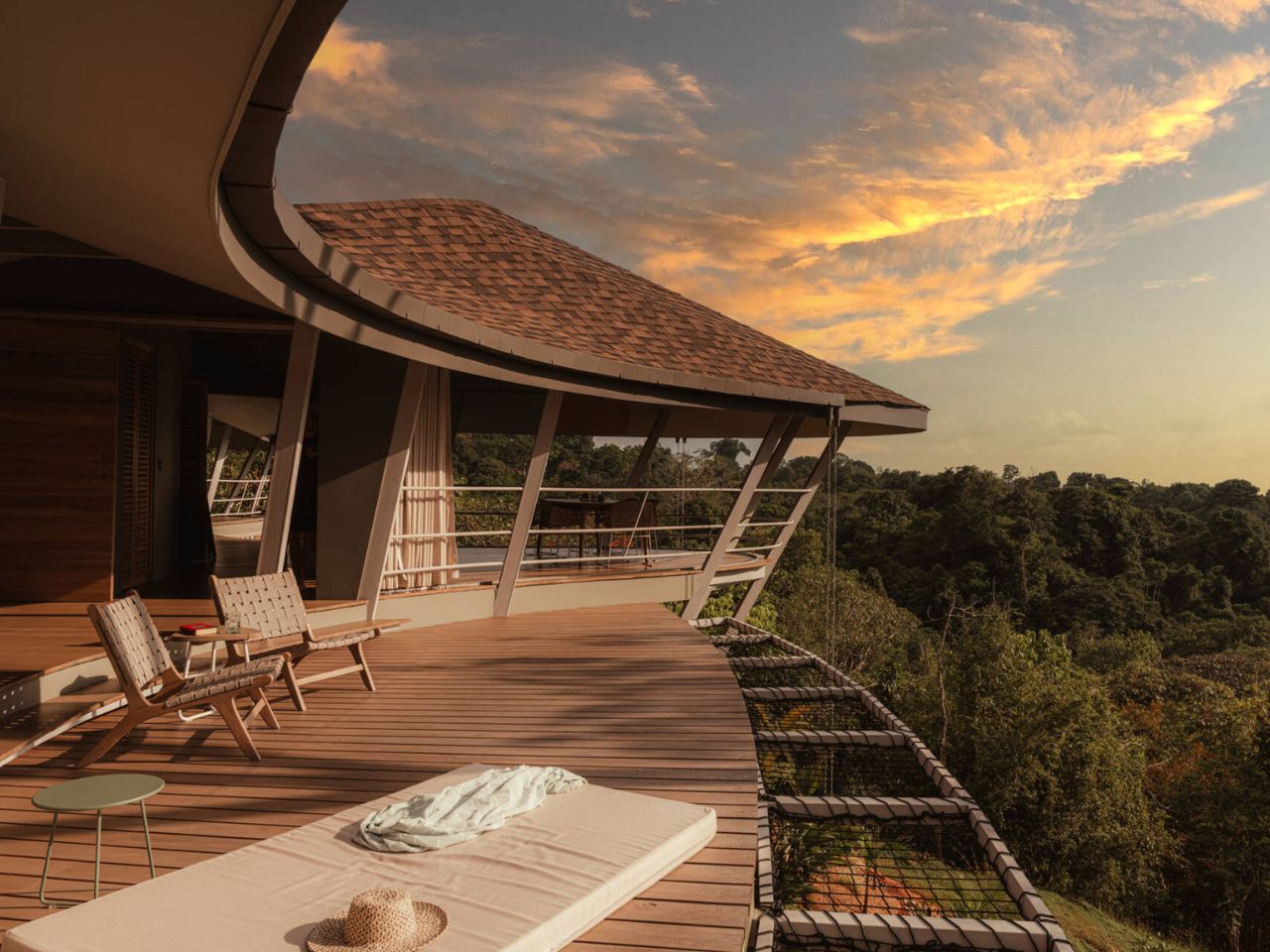
In contemporary architecture, few projects manage to break free from the familiar constraints of rigid geometry and strict structural logic. This Brisbane-based villa, whose construction began in February 2024, does exactly that, reimagining the home not as a static object, but as a living, breathing extension of nature itself. Inspired by the fluidity of landscapes and the organic movement found in oceans and sand dunes, the design embraces form as a medium for emotion, comfort, and connection. It proposes a radical yet deeply intuitive idea: that architecture, like nature, is at its best when it flows.

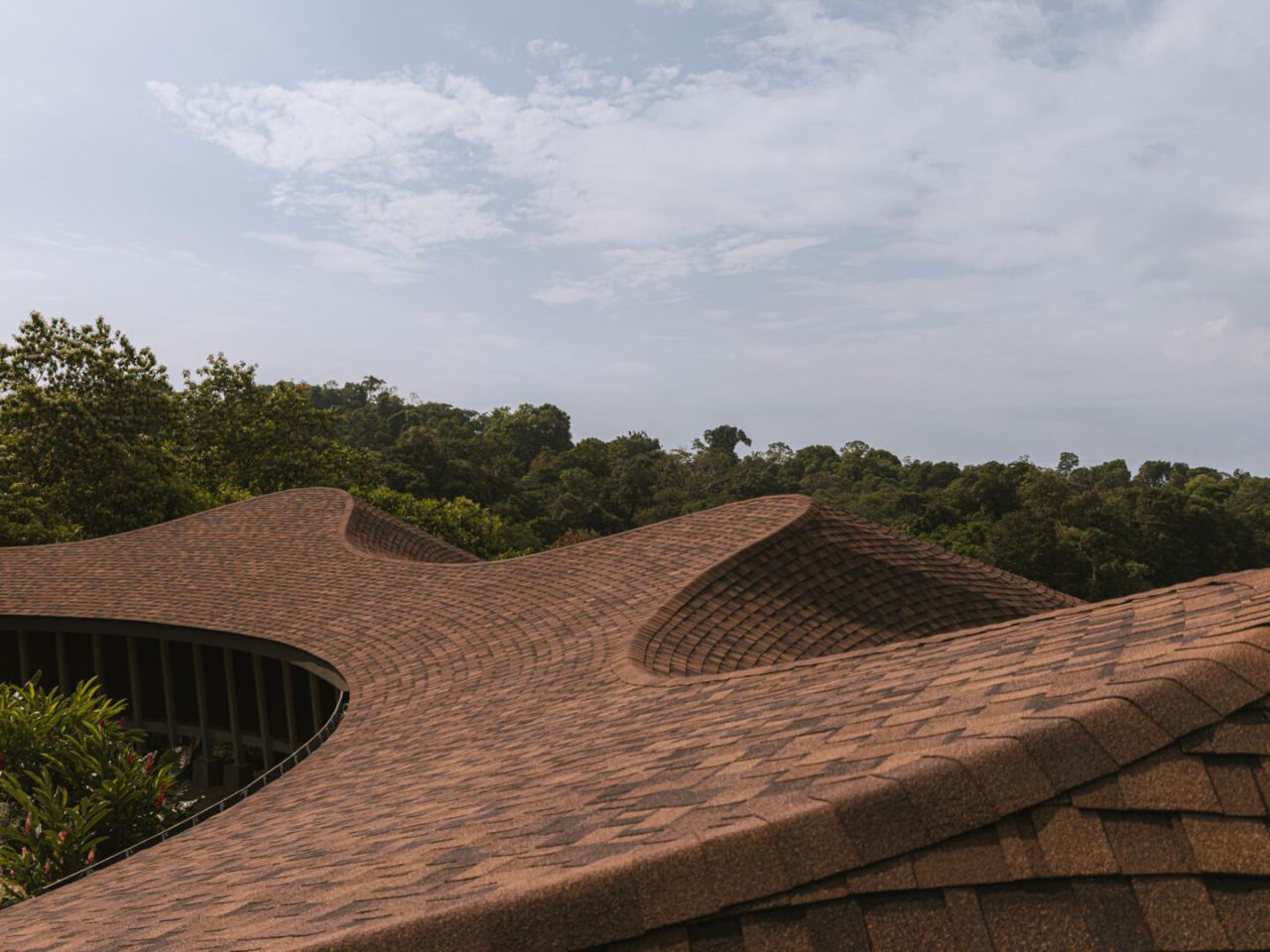
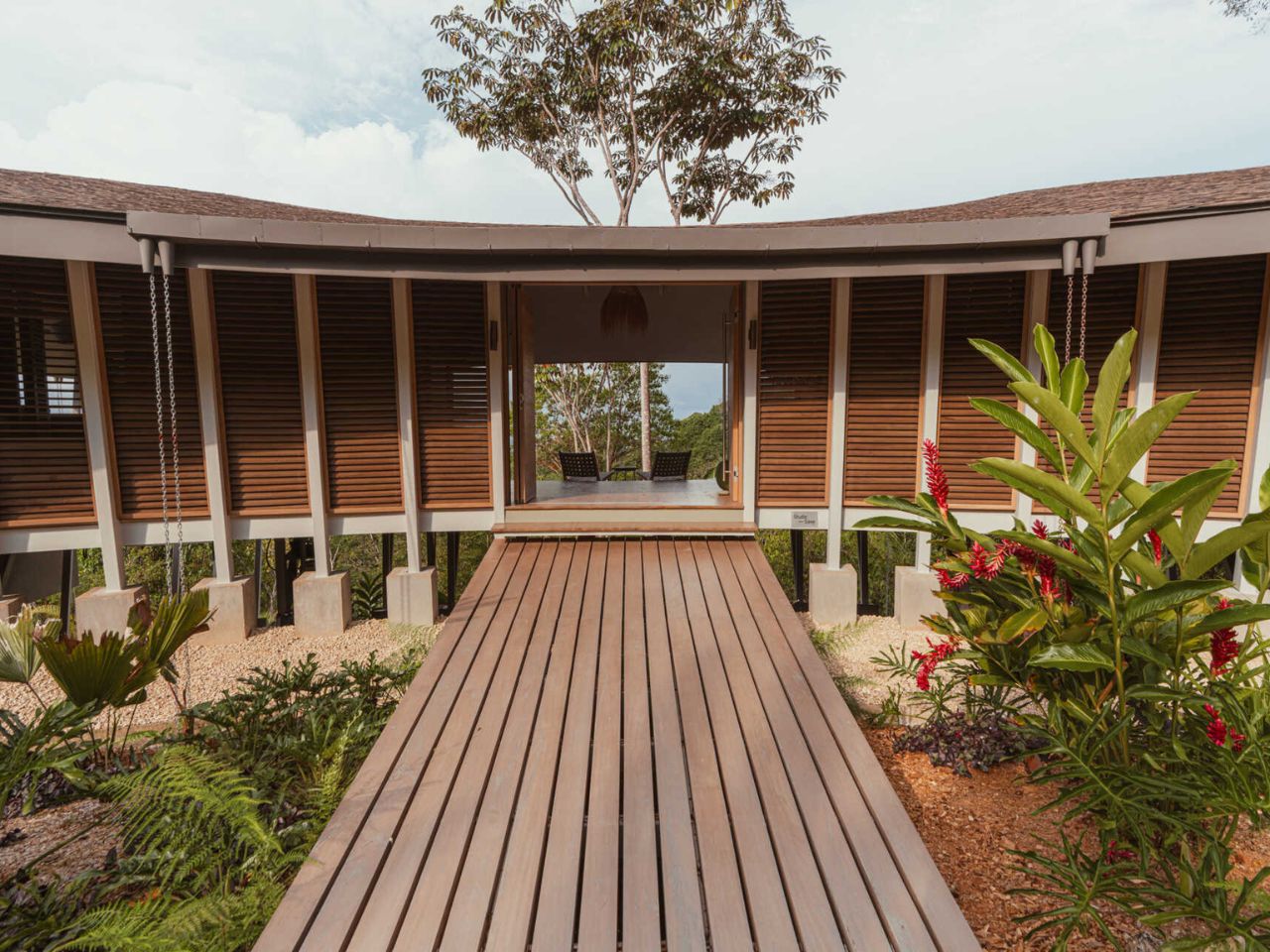
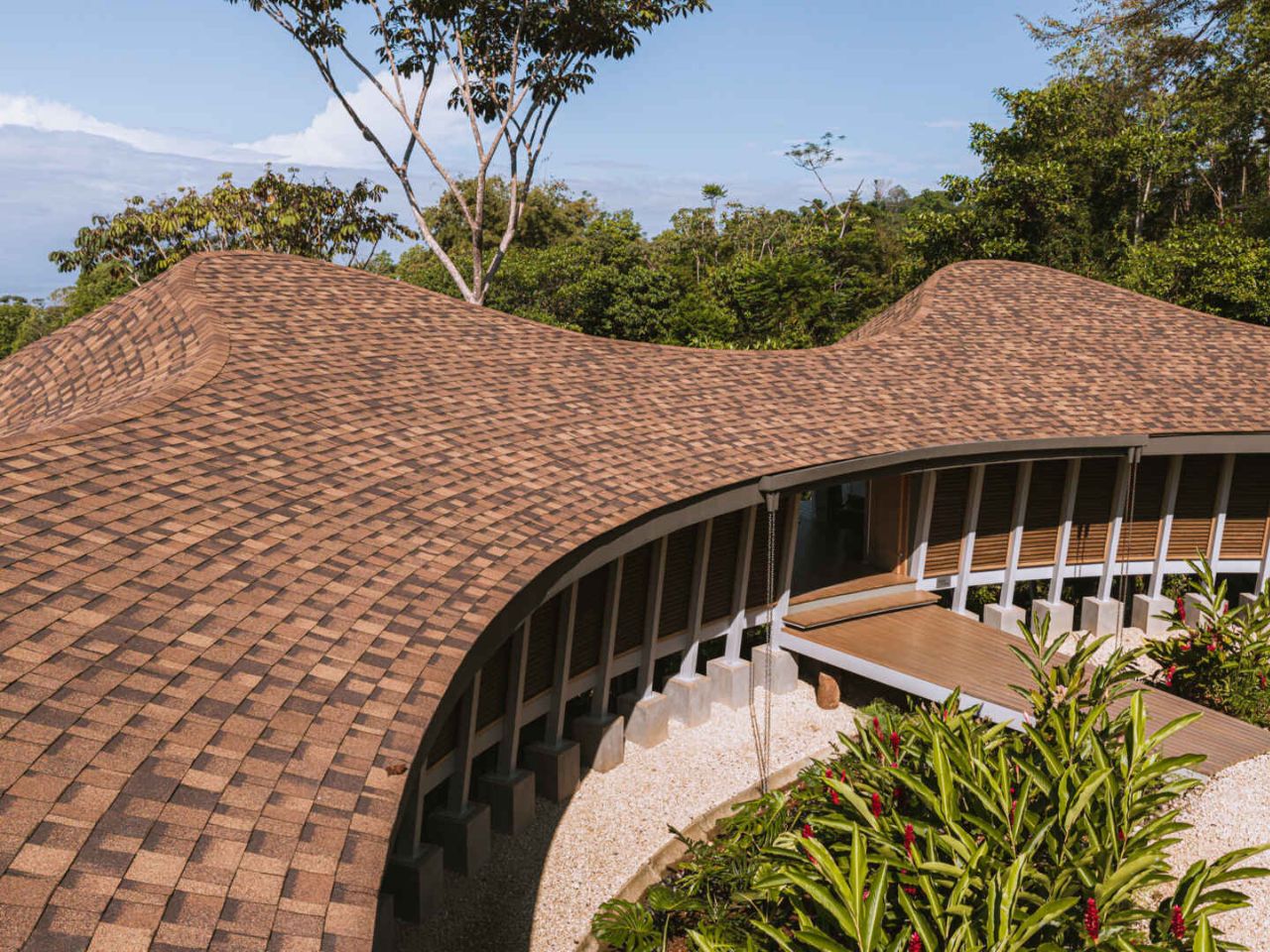
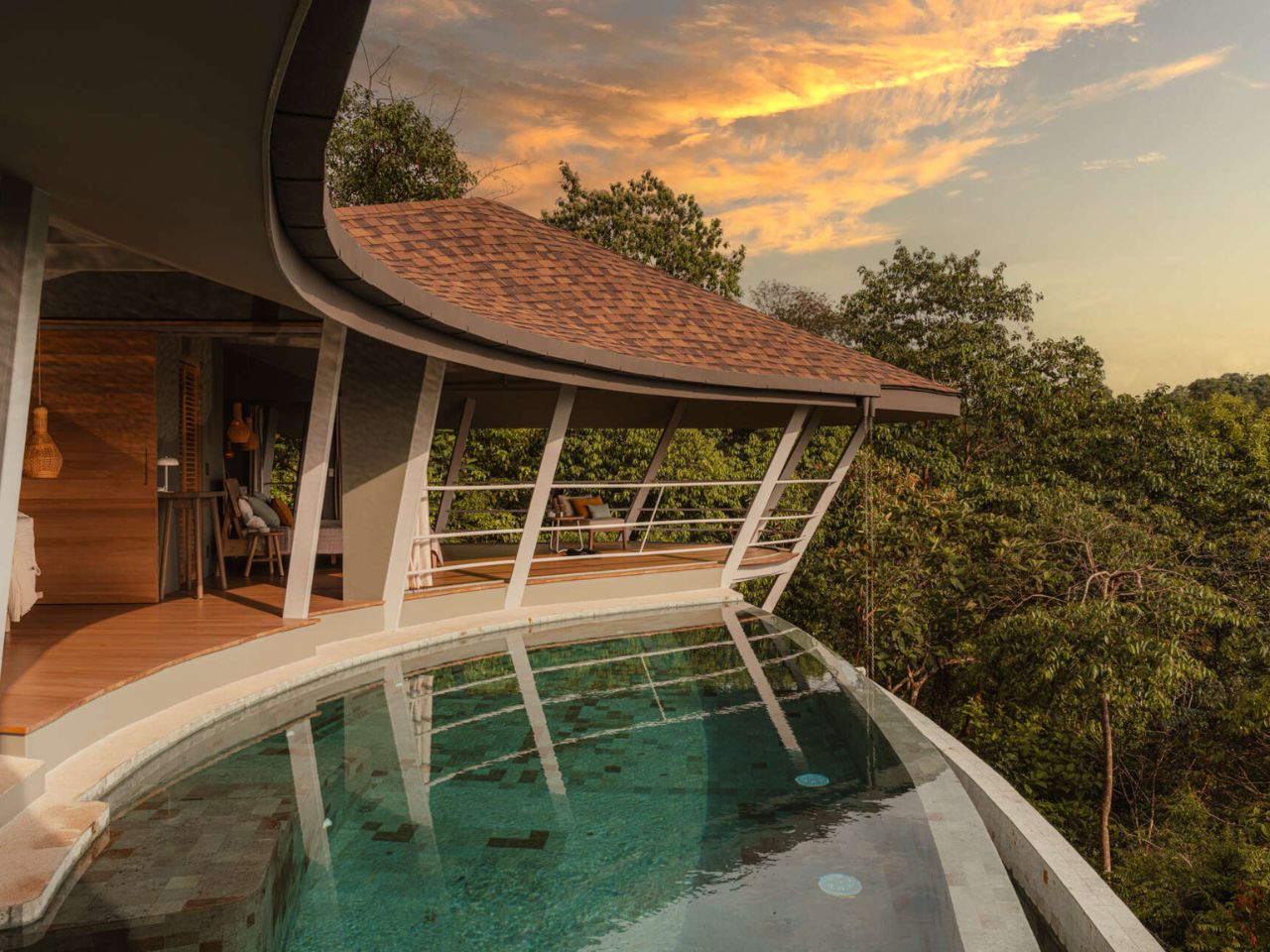
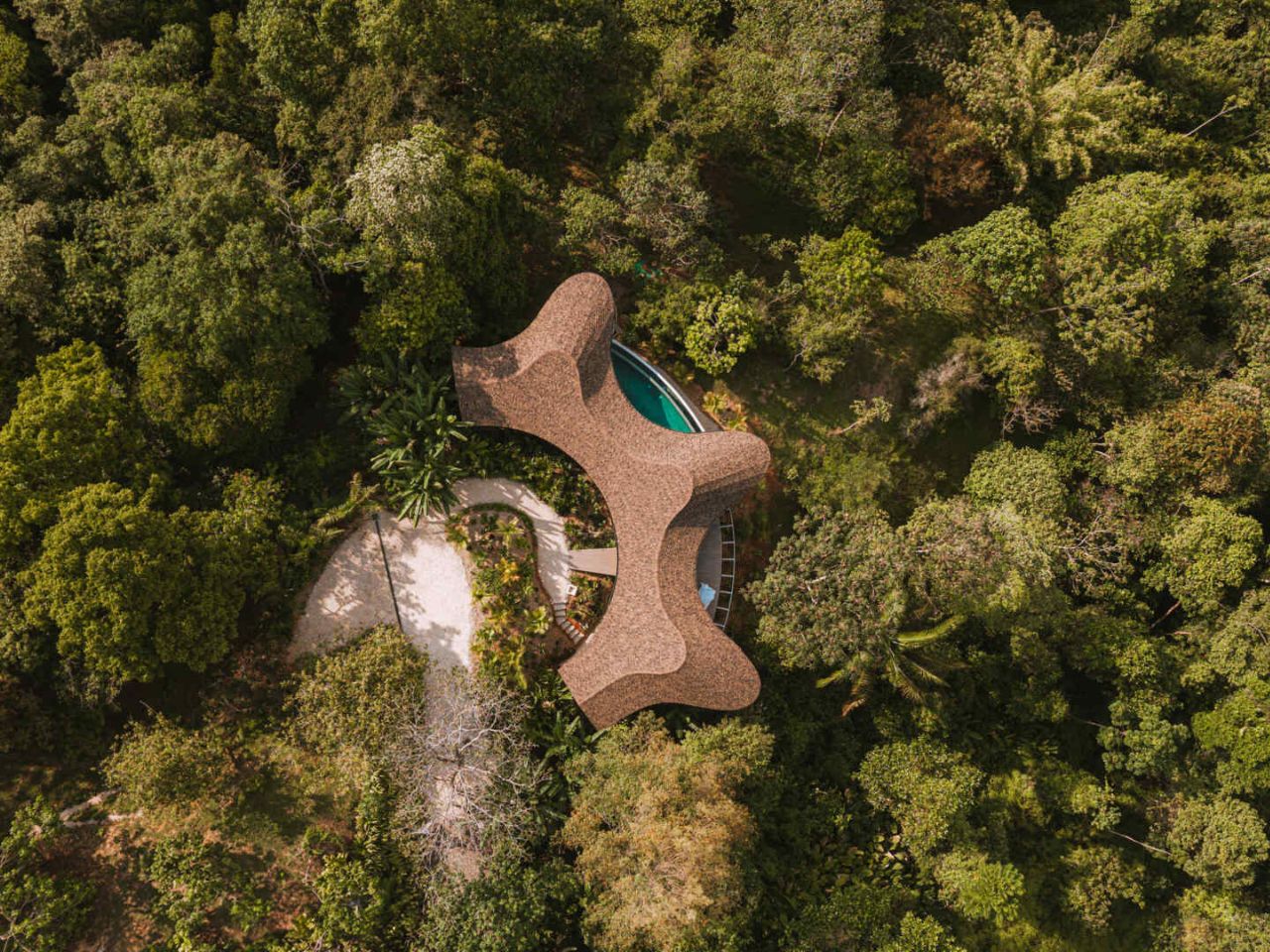
The villa’s sculptural identity emerges from its soft contours, sweeping rooflines, and a massing strategy built around gentle cantilevers. Instead of relying on hard angles or stacked boxes, the structure bends and curves gracefully, with overhanging planes that create depth, shade, and a sense of subtle motion. These fluid moves mimic the lines of beaches and the undulating rhythm of waves. More importantly, they soften the architecture’s presence, allowing it to settle into its environment with an ease rarely achieved in modern residential design. The elongated arcs, layered terraces, and floating edges generate a serene, almost meditative rhythm, evoking the sensations of walking along a coastline or watching sands shift in the wind.

Designer: Diachok Architects

Nature integration is not an added layer here; it is the foundation. While many contemporary homes treat greenery as decorative framing, this villa builds it directly into the architecture. Lush tropical vegetation cascades from terrace edges, wraps around curved walls, and spills into carved-out voids. Every balcony, softened corner, and transitional pathway carries some interaction with nature. This biophilic approach restores harmony between the built and natural worlds, allowing residents to experience the psychological uplift that comes from living in close dialogue with greenery, daylight, and open air. Inside and outside dissolve into one continuous, breathing environment.

Materiality plays a quiet but powerful role in reinforcing this softness. A palette of natural stone, warm-toned plaster, and timber accents grounds the building in a tactile, organic warmth. These earthy materials echo the villa’s coastal inspiration, ensuring the fluid geometry is complemented by surfaces that feel calm, timeless, and deeply human. The interiors continue this language with light tones, subtle textures, and a focus on atmosphere, making the home feel like a sanctuary shaped by nature rather than imposed upon it.

Behind the villa’s sculptural poetry lies precise technical execution. Achieving its flowing geometry required advanced computational modeling, allowing the design team to test, refine, and optimize every curve. Each sweep of the façade and every bend of the roof is calibrated not only for spatial harmony, but also for structural performance, natural lighting, and thermal comfort. High-efficiency materials and sustainable construction methods further support the design’s environmental goals, while handcrafted detailing ensures that even the most futuristic elements retain a sense of human workmanship.

A key design challenge was balancing luxurious aesthetics with sustainable principles, a tension that defines much of contemporary architecture. Here, luxury expresses itself not through excess, but through experience: passive cooling, abundant cross-ventilation, strategic shading, and nature-integrated thermal mass work together to create comfort without waste. Every design decision aims to reduce the environmental footprint while elevating sensory richness. It proves that luxury and sustainability do not need to compete; they can, when thoughtfully combined, heighten one another.

Beyond its architectural achievements, the villa carries a deeply human-centered philosophy. Every curve, every transition, every opening has been shaped by an understanding of how environments influence mood and well-being. Generous glazing, sheer curtains, and arched interior frames draw soft daylight into the home, encouraging calmness and connection. This is not simply a house; it is a vessel that nurtures creativity, mindfulness, and emotional balance.

As construction continues in Brisbane, this villa is already setting a standard for what future homes can aspire to be: sculptural yet functional, expressive yet sustainable, luxurious yet profoundly connected to nature. It demonstrates that innovation does not require abandoning humanity, and that beauty can coexist with environmental responsibility. Most importantly, it reaffirms that homes can be more than structures, they can be sanctuaries that hold us gently, inspire us daily, and bring us closer to the world that shapes us.

The post A Wave-Inspired Villa That Redefines Organic Living in Brisbane first appeared on Yanko Design.
This Curved-Light Overhaul Rewrites How a Taiwanese Apartment Breathes and Feels

In the dense fabric of Taichung City, where many apartments follow a predictable rhythm of boxed rooms and tight circulation, one home has been quietly re-scripted into something far more uplifting. Very Studio | Che Wang Architects took a standard Taiwanese unit – one that had long conformed to the typical formula of interior-facing public spaces – and reimagined it as a sanctuary of white light, flowing curves, and subtle sensory cues. The transformation is not dramatic in gesture, but in ethos. The designers approached the project as an opportunity to create a gentler way of inhabiting space.

Before renovation, the apartment suffered from a condition that many urban Taiwanese homes share: the living and dining spaces sat deep in the centre, encircled by rooms that blocked natural light and ventilation. Only one opening on the south side offered sunlight, creating an uneven distribution of brightness and a general feeling of being enclosed. The home wasn’t dysfunctional, but it lacked the openness and warmth that contemporary living often requires.
Designer: Very Studio | Che Wang Architects

The architects began by overturning the logic that kept the apartment so compartmentalised. Instead of adhering to a rectilinear grid, they introduced a pentagon-shaped spatial order—an entirely new geometry that subtly reshaped the experience of moving through the home. By replacing rigid corners with angled walls, they created sightlines that extend rather than stop, and movement paths that feel organic instead of imposed. Light, travelling across these oblique surfaces, gains softness; shadows no longer cut sharply but instead drift gradually, as if sliding across curved paper.

This new spatial framework allowed the team to reorganise the shared spaces more effectively. By opening up the north, west, and south sides, the apartment no longer depends on a single window for illumination. Sunlight now enters from multiple directions, diffusing evenly through the white interior. Air moves more naturally, creating a cross-ventilation pattern that makes the home feel physically lighter and far more comfortable. What used to be the darkest portion of the unit is now the most breathable—an airy core shaped by light rather than walls.

A particularly thoughtful move was the architects’ decision to use sound as a spatial differentiator. Instead of carving the open area into smaller segments, they gave each pentagonal zone a dome-shaped ceiling. These domes alter acoustics subtly: a soft concentration of sound in one zone hints at gathering space; a more diffused quality in another suggests circulation or transition. This sensory layering allows the home to maintain openness while still creating distinct functional pockets. Lighting concealed around the curves of each dome adds a floating glow that enhances this sense of layered depth.

The result is a home that feels both minimal and richly atmospheric. Arches lead sunlight inward; curves erase the harshness of structural edges; air movement becomes part of the spatial choreography. Nothing is loud, yet everything is intentional. The apartment no longer behaves like a series of rooms; it behaves like an environment.

What this project ultimately demonstrates is the power of reframing the basics. With a few bold shifts in geometry and a heightened sensitivity to light, air, and sound, even an unremarkable apartment can become an unexpectedly serene refuge. Good design doesn’t always announce itself; sometimes it simply makes living feel quieter, clearer, and more considered.

The post This Curved-Light Overhaul Rewrites How a Taiwanese Apartment Breathes and Feels first appeared on Yanko Design.