Researchers at Cornell University have developed a wearable with batlike sonar that could improve upper-body tracking in virtual reality and other applications. The Cornell team fitted a generic pair of eyeglasses with a tiny sonar system, demonstrating how acoustic signals can be used instead of cameras to capture the body’s movement.
Not only would sonar be more efficient in terms of battery consumption, the team told the Cornell Chronicle, but it would also do away with the privacy risks that come with headsets’ externally facing cameras. The system, dubbed PoseSonic, uses two pairs of microphones and speakers to send and receive acoustic signals, according to a recently published paper. With help from their deep learning model, it can then estimate 3D poses at nine different points — the shoulders, elbows, wrists, hips and nose — as these signals bounce off the upper body.
The team tested it both in the lab and “semi-in-the-wild,” and found it wasn’t negatively affected by environmental noise in any significant way. With this technique, “we use less instrumentation on the body, which is more practical, and battery performance is significantly better for everyday use,” senior author Cheng Zhang told the Cornell Chronicle.
In addition to its potential use in augmented and virtual reality, the researchers say sonar could make for better health tracking by capturing more detailed information on the body’s movements. They’ve only got the upper-body covered at the moment, though — VR legs continue to elude us.
This article originally appeared on Engadget at https://www.engadget.com/these-sonar-equipped-glasses-could-pave-the-way-for-better-vr-body-tracking-201958516.html?src=rss
Researchers at Cornell University have developed a wearable with batlike sonar that could improve upper-body tracking in virtual reality and other applications. The Cornell team fitted a generic pair of eyeglasses with a tiny sonar system, demonstrating how acoustic signals can be used instead of cameras to capture the body’s movement.
Not only would sonar be more efficient in terms of battery consumption, the team told the Cornell Chronicle, but it would also do away with the privacy risks that come with headsets’ externally facing cameras. The system, dubbed PoseSonic, uses two pairs of microphones and speakers to send and receive acoustic signals, according to a recently published paper. With help from their deep learning model, it can then estimate 3D poses at nine different points — the shoulders, elbows, wrists, hips and nose — as these signals bounce off the upper body.
The team tested it both in the lab and “semi-in-the-wild,” and found it wasn’t negatively affected by environmental noise in any significant way. With this technique, “we use less instrumentation on the body, which is more practical, and battery performance is significantly better for everyday use,” senior author Cheng Zhang told the Cornell Chronicle.
In addition to its potential use in augmented and virtual reality, the researchers say sonar could make for better health tracking by capturing more detailed information on the body’s movements. They’ve only got the upper-body covered at the moment, though — VR legs continue to elude us.
This article originally appeared on Engadget at https://www.engadget.com/these-sonar-equipped-glasses-could-pave-the-way-for-better-vr-body-tracking-201958516.html?src=rss
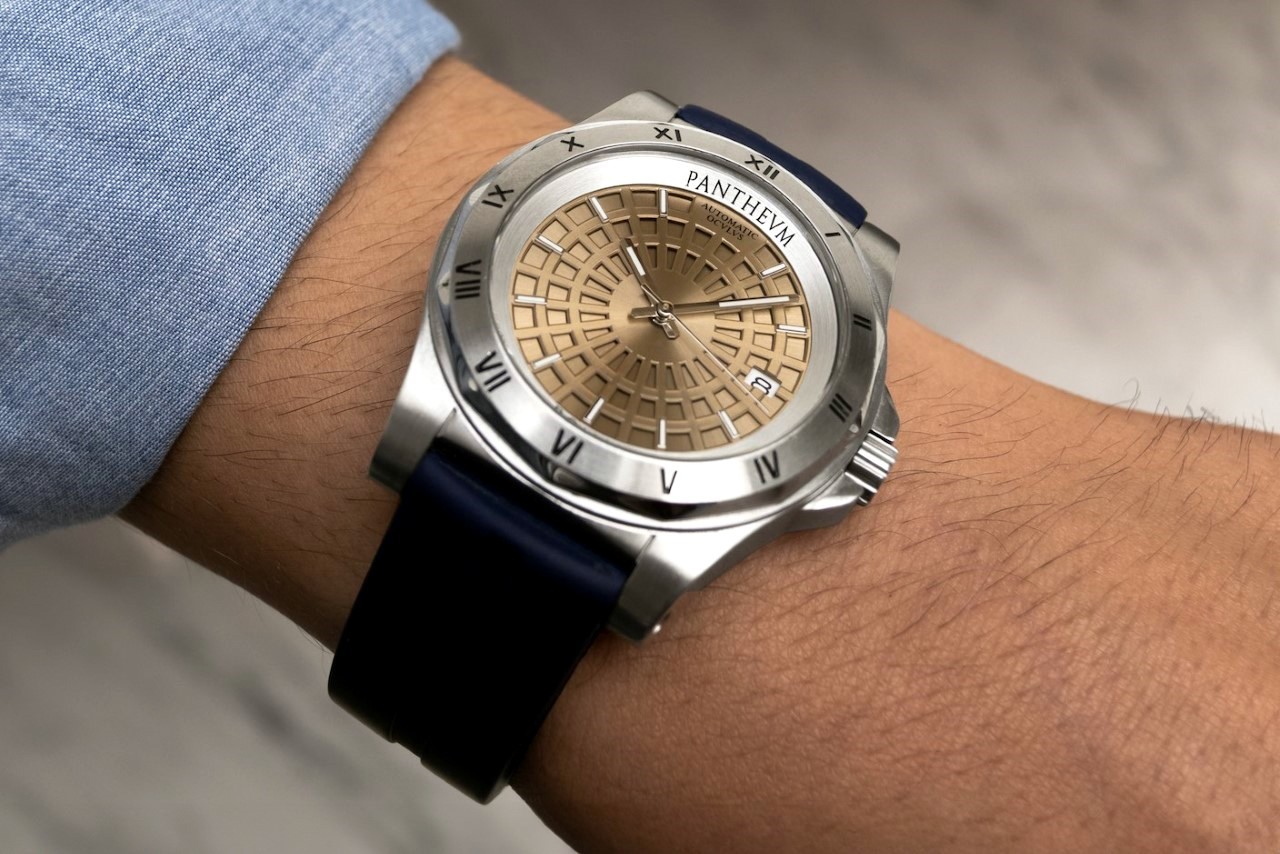
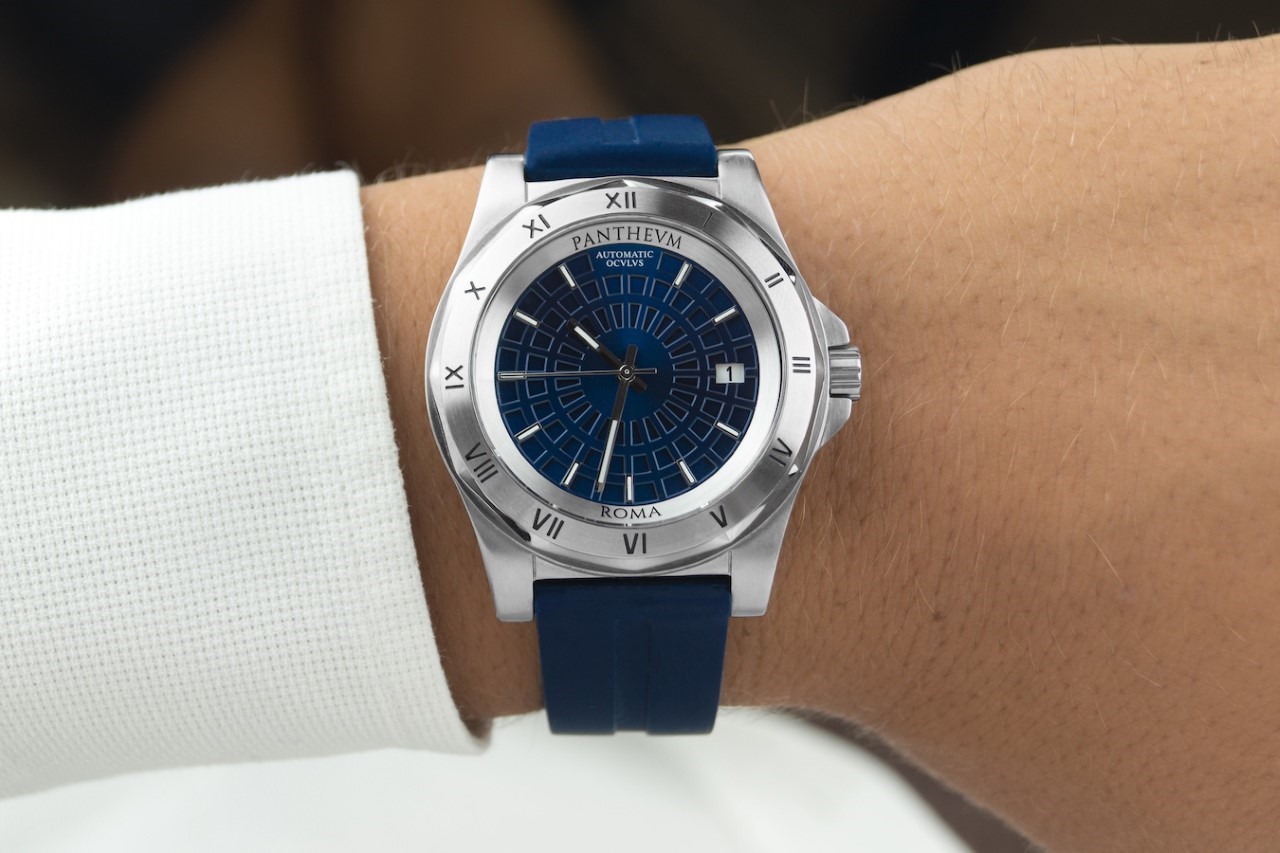
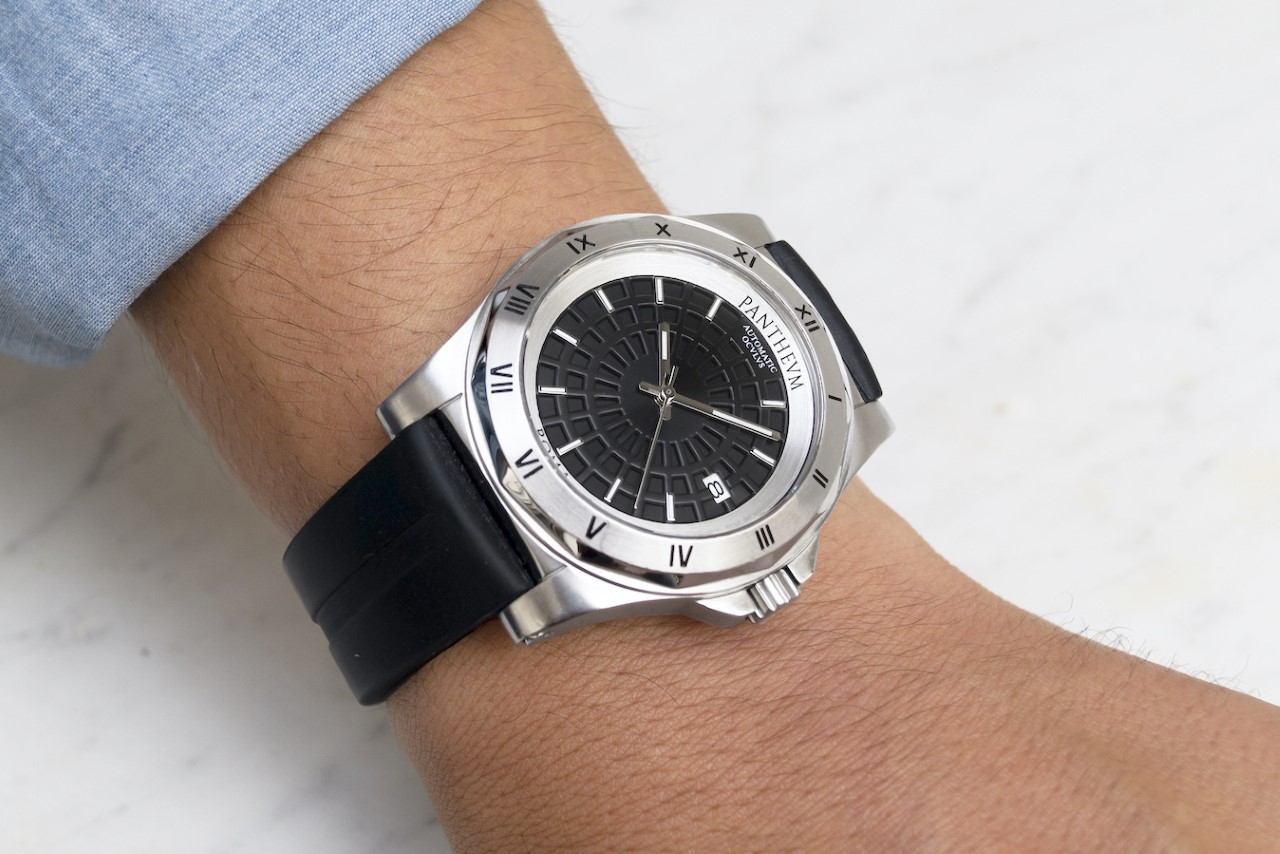
If you aren’t one of the many American men on TikTok who think about the Roman Empire on a daily basis, the Panthevm Roma definitely will get you there. Inspired by the timeless design of the Pantheon dome, the Roma watch comes with a gorgeous 3D dial featuring the radial design seen on the underside of the dome that was constructed back in 125 AD.
The Pantheon in Rome, Italy has a dome that is 142 feet (43.30 meters) in diameter and 71 feet (22 meters) high. It was the world’s largest dome for 1,300 years and still remains the world’s largest unreinforced concrete dome. The trick lies in the fact that it was made in a staggered manner, with heavier materials like travertine used at the base of the dome, and lighter ones like porous volcanic rock on the top. A signature element of the dome remains its oculus, a 27-foot-wide hole on the top that lets a shaft of light in, illuminating the entire chamber naturally, along with the different pockets in the dome’s radial inner concavity. It’s these pockets that find themselves on the Panthevm Roma’s dial, with the oculus being where the watch hands emanate from.
The Roma collection features a classic design that goes well with the timeless nature of the Italian aesthetic. In short, it’s got a bit of history and modern times imbued in it, much like how Italian architecture and automobiles co-exist and complement each other on the streets of the bustling city of Rome.
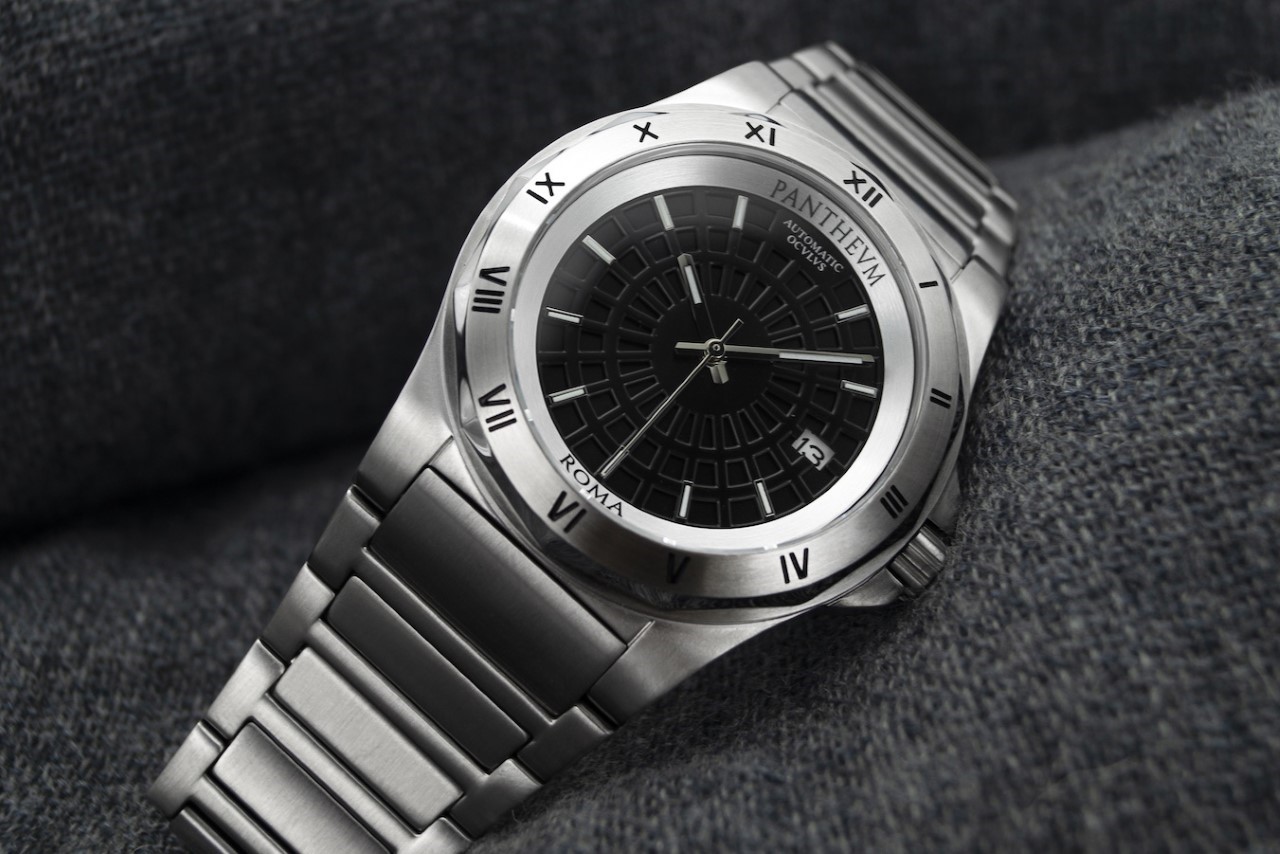
The Roma watch comes with a body crafted from 316L Stainless Steel, with that 3D dial in the middle surrounded by linear markings lined with Superluminova (along with the hour and minute hands). There’s a date window at the 3 o’clock position that unfortunately doesn’t line up with the 3D Pantheon dome design on the dial and it’s making my eyelid twitch but that might be the only glaring OCD-triggering part of this otherwise elegant timepiece. Finally, a sapphire crystal sits on the top of the watch, offering a clear view of the dial while also rendering the Roma 20ATM water-resistant.
Although the watch is rather unapologetically Roman, with the Pantheon detail, Roman numerals around the bezel, and the word Panthevm written in the Latin style, its heart is Japanese. Underneath the surface lies the Panthevm Roma’s Seiko Automatic movement, a 24-jewel movement with a 41-hour power reserve.
The watch debuted on Kickstarter and Indiegogo back in 2020, unveiled in 5 different colored variants. Patrons can also choose between metal, leather, or rubber straps to customize their timepiece.
Early editions of the watch were marked with a serial number counting down from 753 B.C. – the year Rome was founded.
Amazon reportedly plans to remove the Android core from future Fire TVs, smart displays and other devices. Writing for Lowpass, veteran journalist Janko Roettgers cites “multiple sources with knowledge of these plans” along with job listings and other materials supporting Amazon’s alleged move to a new Linux-based operating system. The OS supposedly uses the internal codename “Vega” and runs on devices like Fire TV Sticks, TVs, and other connected devices.
Roettgers says Amazon has been working on the idea for years, with the company supposedly floating the idea to chipmakers as far back as 2017. “Hundreds of people” in Amazon’s Device OS group have reportedly worked on the software, including Zibi Braniecki, a former Mozilla engineer who joined Amazon in 2022. Earlier this year, he allegedly posted on LinkedIn (a comment that appears to have since been deleted) that he was “working on a next generation Operating System for Smart Home, Automotive, and other Amazon Devices product lines.”
The report doesn’t list a release timeline but mentions that “most of the OS development is already done.” Amazon is now apparently focusing on readying an SDK and planning perks to convince developers to invest their time and money.
The alleged move would allow Amazon to cut ties with Google’s Android Open Source Project, which lies at the heart of the current Fire OS. That dependence has led to Amazon’s software falling several generations behind the most recent Android versions. For example, the current-gen Fire TV software is based on Android 9, Google’s big software update from five years ago. Switching to Vega could also let Amazon cut underlying bloat from its OS; Android contains code enabling it to work on many different devices stretching far beyond the relatively minimal needs of Amazon’s smart-home gear.
Lowpass claims the Linux-based Vega would use React Native for app development. The Meta-created framework uses a single codebase for iOS and Android, and Amazon likely hopes that will help with cross-platform development. The report doesn’t specifically address whether the OS will eventually run on Fire tablets, which become much more versatile when users sideload the Google Play Store to run a wider variety of Android apps.
Roettgers’s report says Amazon plans to eventually make a clean break with Android on all new devices. The company allegedly designed Vega to run on systems as diverse as car infotainment systems and “other future hardware products.”
This article originally appeared on Engadget at https://www.engadget.com/amazon-reportedly-plans-to-dump-android-for-a-homemade-fire-os-replacement-200144781.html?src=rss
Amazon reportedly plans to remove the Android core from future Fire TVs, smart displays and other devices. Writing for Lowpass, veteran journalist Janko Roettgers cites “multiple sources with knowledge of these plans” along with job listings and other materials supporting Amazon’s alleged move to a new Linux-based operating system. The OS supposedly uses the internal codename “Vega” and runs on devices like Fire TV Sticks, TVs, and other connected devices.
Roettgers says Amazon has been working on the idea for years, with the company supposedly floating the idea to chipmakers as far back as 2017. “Hundreds of people” in Amazon’s Device OS group have reportedly worked on the software, including Zibi Braniecki, a former Mozilla engineer who joined Amazon in 2022. Earlier this year, he allegedly posted on LinkedIn (a comment that appears to have since been deleted) that he was “working on a next generation Operating System for Smart Home, Automotive, and other Amazon Devices product lines.”
The report doesn’t list a release timeline but mentions that “most of the OS development is already done.” Amazon is now apparently focusing on readying an SDK and planning perks to convince developers to invest their time and money.
The alleged move would allow Amazon to cut ties with Google’s Android Open Source Project, which lies at the heart of the current Fire OS. That dependence has led to Amazon’s software falling several generations behind the most recent Android versions. For example, the current-gen Fire TV software is based on Android 9, Google’s big software update from five years ago. Switching to Vega could also let Amazon cut underlying bloat from its OS; Android contains code enabling it to work on many different devices stretching far beyond the relatively minimal needs of Amazon’s smart-home gear.
Lowpass claims the Linux-based Vega would use React Native for app development. The Meta-created framework uses a single codebase for iOS and Android, and Amazon likely hopes that will help with cross-platform development. The report doesn’t specifically address whether the OS will eventually run on Fire tablets, which become much more versatile when users sideload the Google Play Store to run a wider variety of Android apps.
Roettgers’s report says Amazon plans to eventually make a clean break with Android on all new devices. The company allegedly designed Vega to run on systems as diverse as car infotainment systems and “other future hardware products.”
This article originally appeared on Engadget at https://www.engadget.com/amazon-reportedly-plans-to-dump-android-for-a-homemade-fire-os-replacement-200144781.html?src=rss
The Spotify TV app has been revamped to make the big-screen app experience resemble the popular mobile version of the digital music and podcast streaming service. The home page will have a “Now Playing View” and feature shortcuts to recently played content. The TV app will also recommend new songs and podcasts based on your listening history on the main screen, similar to what you might get on the mobile app.
The TV app home page doesn't just look different. You can now more easily switch between different Spotify accounts. The most recently active profile will always appear in the top right corner of a screen. Say you share a TV in the living room and you want to stop listening to your mom’s playlist – now you can select the profile image of a paired account when you want to switch.
In the past, if you listened to music on your TV through the app, you could only see the next song that was lined up. But now you can use the “Playback Queue” tool to select what you want to play next. Also, you can now turn on dark mode on your TV, meaning you can stream a curated playlist during your next house party and minimize the visuals and screen brightness.
The new Spotify TV app updates are available to free and premium subscribers using the app on supported Smart TVs, gaming consoles and media streaming devices. The effort to revitalize the user experience on the big screen isn't a huge shocker. Spotify rolled out similar updates for its Desktop app earlier this year in an effort to make streaming more enjoyable when you’re not using your phone.
This article originally appeared on Engadget at https://www.engadget.com/spotify-for-tvs-gets-a-new-look-and-features-to-match-the-mobile-app-195050535.html?src=rss
The Spotify TV app has been revamped to make the big-screen app experience resemble the popular mobile version of the digital music and podcast streaming service. The home page will have a “Now Playing View” and feature shortcuts to recently played content. The TV app will also recommend new songs and podcasts based on your listening history on the main screen, similar to what you might get on the mobile app.
The TV app home page doesn't just look different. You can now more easily switch between different Spotify accounts. The most recently active profile will always appear in the top right corner of a screen. Say you share a TV in the living room and you want to stop listening to your mom’s playlist – now you can select the profile image of a paired account when you want to switch.
In the past, if you listened to music on your TV through the app, you could only see the next song that was lined up. But now you can use the “Playback Queue” tool to select what you want to play next. Also, you can now turn on dark mode on your TV, meaning you can stream a curated playlist during your next house party and minimize the visuals and screen brightness.
The new Spotify TV app updates are available to free and premium subscribers using the app on supported Smart TVs, gaming consoles and media streaming devices. The effort to revitalize the user experience on the big screen isn't a huge shocker. Spotify rolled out similar updates for its Desktop app earlier this year in an effort to make streaming more enjoyable when you’re not using your phone.
This article originally appeared on Engadget at https://www.engadget.com/spotify-for-tvs-gets-a-new-look-and-features-to-match-the-mobile-app-195050535.html?src=rss
The Sonos Beam has been our top pick for compact soundbars for a while now. It offers a lot in a small package and the second-gen version also supports more immersive Dolby Atmos audio. The Beam doesn’t have any upfiring drivers though, so the impact of that spatial sound is limited. That’s not an issue with the Ambeo Soundbar Mini ($799.95), Sennheiser’s smallest soundbar yet to feature its impressive Ambeo 3D audio technology. It cranks out more sonic oomph with dual upfiring woofers on top of all of its virtualization tricks, in a unit roughly the same size as the Beam. The bigger sound comes at a significantly higher price, though.
The design
While the overall shape of the Ambeo Soundbar Mini is similar to the Sonos Beam, there are differences in the details. Most notably, Sennheiser has opted for illuminated (dimmable) Ambeo branding on the front right corner. The top panel of the mini also slopes back to front and the sides are wrapped in a fabric all the way around. Up top, there are controls for volume, playback, Bluetooth, input selection and muting the microphone. There’s also a white light that gets longer from left to right as you increase the volume.
The Ambeo Mini is about an inch and a half wider than the Beam at around 27.25 inches, but the height and depth are nearly identical. Not that you’ll be moving the speaker around much, but the Mini is also almost a pound heavier than its primary competition. Still, this is a compact unit that’s perfectly sized for smaller living rooms and spaces where you don’t have the real estate for a bigger soundbar.
Inside, there are four 1.6-inch full-range drivers. Two of them are front facing while two more are at the ends, angled slightly outward. A pair of four-inch woofers are positioned near the middle of the soundbar, but they face upward. Sennheiser has also included six class D amplifiers capable of 250 watts of power. Four far-field microphones handle the room calibration and you’ll need to make sure they’re unmuted before that process can be completed.
Sound quality
Sennheiser
It’s impressive what Sennheiser has managed to get out of a small speaker. When listening to music, there’s great bass that provides plenty of low-end thump to the driving drum beats of TesseracT’s prog metal and the hip-hop musings of Kaytraminé. Even if a soundbar has woofers, most of the living room speakers can’t muster enough bass for them to be useful as a music setup without an additional sub. That’s not the case here. Still, you’ll want to consider an Ambeo Sub if you’re planning to use it in a medium-to-large room as the bass tends to get lost in bigger spaces. The Mini also supports Sony’s 360 Reality Audio and MPEG-H if you’re into them, but the Ambeo does a great job upscaling stereo content.
The Ambeo Soundbar Mini’s key feature is Sennheiser’s 3D audio tech. It has been a staple of the company’s soundbars since the first Ambeo model in 2019. Both of the larger, pricier Sennheiser soundbars have more drivers, including two upfiring units in addition to the two upwards facing woofers inside the Ambeo Soundbar Plus. The Mini does a solid job with Dolby Atmos and DTS:X content, but the effect isn’t as enveloping since it’s more reliant on virtualization. I particularly enjoyed the immersive, directional audio in quidditch matches during my annual fall viewing of the Harry Potter series.This soundbar still gives you a 7.1.4 setup after the room calibration places virtual speakers around. That’s the same channel layout as the Plus, though that bigger unit has seven total drivers and two woofers for a fuller sound and more immersive experience.
Software and features
Like a lot of smaller soundbars these days, the Ambeo Mini connects to your TV via HDMI eARC. It supports HDMI 2.1, which is the latest spec that allows higher resolution (up to 10K) and higher frame rates (up to 120fps) thanks to increased bandwidth. Most new TVs have at least one HDMI 2.1 port and both PS5 and Xbox Series X support it.
All of the settings for the Ambeo Soundbar Mini are accessible in Sennheiser’s Smart Control app. This includes the initial setup and room calibration, the latter of which takes about three minutes to complete. First, you have the ability to change the sources between HDMI, Bluetooth or Spotify Connect. There’s a volume slider here too and just below reside the Ambeo 3D audio on/off buttons. The company offers a few sound presets next, with Adaptive, Music, Movie, News, Neutral and Sports as the choices. During my tests, I found Adaptive best suited for most viewing and listening, so I kept it locked there. Lastly, the app’s main interface provides access to Night Mode and Voice Enhancement features should you need those.
Photo by Billy Steele/Engadget
There’s a more detailed settings menu, but I’ll only point out one item. Under both Audio and System is where you’ll need to go to add an Ambeo Subwoofer to the Mini (the same stuff is available from both places). Once you do, you’ll have the ability to adjust the additional speaker’s volume and enable a tool called Phase 180. This balances out the low-end from the sub when it's positioned close to the soundbar. Sennheiser says otherwise the bass can have a hollow character and this helps correct that. You’ll also need to recalibrate the system once you add a sub, which you can do from this menu.
The Mini runs Sennheiser’s Ambeo OS, which allows a whole host of connectivity options. You’ll primarily connect via Wi-Fi, but as I’ve already mentioned Bluetooth is here as well. Wi-Fi gives you the choice of Apple AirPlay 2, Spotify Connect and Tidal Connect, in addition to Alexa built-in and Google Chromecast. The wireless connectivity allows you to easily use the Mini as part of a multiroom setup too. I was able to select it and a HomePod from the connections menu in Apple Music with no additional setup required. The company promises “a future-proof experience” thanks to “regular” Ambeo OS updates as well.
The competition
Photo by Billy Steele/Engadget
As you’ve probably guessed, the Ambeo Mini’s primary competition is the Sonos Beam. The second-generation version of which debuted in 2021, most notably delivering Dolby Atmos and a new cover. While the speaker sounds great and does an admirable job with Atmos, it doesn’t have any upfiring drivers, so the effect of the immersive audio is limited. However, Sonos still achieves a level of immersiveness through some virtualization tricks with extra height and surround channels. Plus, it’s $300 cheaper than the Mini, even after Sonos raised the price to $499. You’ll probably want a sub for the Beam too, which is another $429 or $799 depending on which model you choose (there is a Beam and Sub Mini bundle that saves you $45).
If you’re sold on the Ambeo tech no matter the cost, the Plus and Max soundbars are worth a look. Sennheiser has dropped the prices since their debuts as the Plus is now $1,119.95 and the Max is $1,999.95. Like the Mini, neither of those come with an Ambeo Sub which is an additional $599.95 and the only one these soundbars are compatible with. There’s no denying these Ambeo models can muster some amazing audio, but you’ll pay a premium for the tech.
Wrap-up
With its smallest soundbar yet, Sennheiser continues to show how good its 3D audio tech is. The Ambeo Soundbar Mini offers impressive sound in a small package, including great low-end thump without a dedicated wireless sub. It does an admirable job with Dolby Atmos content, though the Mini does its best work in smaller rooms. There’s no denying this is a very good home entertainment speaker for the size, but the company makes you pay dearly for its fancy technology.
This article originally appeared on Engadget at https://www.engadget.com/sennheiser-ambeo-soundbar-mini-review-excellent-and-expensive-183045244.html?src=rss
The Sonos Beam has been our top pick for compact soundbars for a while now. It offers a lot in a small package and the second-gen version also supports more immersive Dolby Atmos audio. The Beam doesn’t have any upfiring drivers though, so the impact of that spatial sound is limited. That’s not an issue with the Ambeo Soundbar Mini ($799.95), Sennheiser’s smallest soundbar yet to feature its impressive Ambeo 3D audio technology. It cranks out more sonic oomph with dual upfiring woofers on top of all of its virtualization tricks, in a unit roughly the same size as the Beam. The bigger sound comes at a significantly higher price, though.
The design
While the overall shape of the Ambeo Soundbar Mini is similar to the Sonos Beam, there are differences in the details. Most notably, Sennheiser has opted for illuminated (dimmable) Ambeo branding on the front right corner. The top panel of the mini also slopes back to front and the sides are wrapped in a fabric all the way around. Up top, there are controls for volume, playback, Bluetooth, input selection and muting the microphone. There’s also a white light that gets longer from left to right as you increase the volume.
The Ambeo Mini is about an inch and a half wider than the Beam at around 27.25 inches, but the height and depth are nearly identical. Not that you’ll be moving the speaker around much, but the Mini is also almost a pound heavier than its primary competition. Still, this is a compact unit that’s perfectly sized for smaller living rooms and spaces where you don’t have the real estate for a bigger soundbar.
Inside, there are four 1.6-inch full-range drivers. Two of them are front facing while two more are at the ends, angled slightly outward. A pair of four-inch woofers are positioned near the middle of the soundbar, but they face upward. Sennheiser has also included six class D amplifiers capable of 250 watts of power. Four far-field microphones handle the room calibration and you’ll need to make sure they’re unmuted before that process can be completed.
Sound quality
Sennheiser
It’s impressive what Sennheiser has managed to get out of a small speaker. When listening to music, there’s great bass that provides plenty of low-end thump to the driving drum beats of TesseracT’s prog metal and the hip-hop musings of Kaytraminé. Even if a soundbar has woofers, most of the living room speakers can’t muster enough bass for them to be useful as a music setup without an additional sub. That’s not the case here. Still, you’ll want to consider an Ambeo Sub if you’re planning to use it in a medium-to-large room as the bass tends to get lost in bigger spaces. The Mini also supports Sony’s 360 Reality Audio and MPEG-H if you’re into them, but the Ambeo does a great job upscaling stereo content.
The Ambeo Soundbar Mini’s key feature is Sennheiser’s 3D audio tech. It has been a staple of the company’s soundbars since the first Ambeo model in 2019. Both of the larger, pricier Sennheiser soundbars have more drivers, including two upfiring units in addition to the two upwards facing woofers inside the Ambeo Soundbar Plus. The Mini does a solid job with Dolby Atmos and DTS:X content, but the effect isn’t as enveloping since it’s more reliant on virtualization. I particularly enjoyed the immersive, directional audio in quidditch matches during my annual fall viewing of the Harry Potter series.This soundbar still gives you a 7.1.4 setup after the room calibration places virtual speakers around. That’s the same channel layout as the Plus, though that bigger unit has seven total drivers and two woofers for a fuller sound and more immersive experience.
Software and features
Like a lot of smaller soundbars these days, the Ambeo Mini connects to your TV via HDMI eARC. It supports HDMI 2.1, which is the latest spec that allows higher resolution (up to 10K) and higher frame rates (up to 120fps) thanks to increased bandwidth. Most new TVs have at least one HDMI 2.1 port and both PS5 and Xbox Series X support it.
All of the settings for the Ambeo Soundbar Mini are accessible in Sennheiser’s Smart Control app. This includes the initial setup and room calibration, the latter of which takes about three minutes to complete. First, you have the ability to change the sources between HDMI, Bluetooth or Spotify Connect. There’s a volume slider here too and just below reside the Ambeo 3D audio on/off buttons. The company offers a few sound presets next, with Adaptive, Music, Movie, News, Neutral and Sports as the choices. During my tests, I found Adaptive best suited for most viewing and listening, so I kept it locked there. Lastly, the app’s main interface provides access to Night Mode and Voice Enhancement features should you need those.
Photo by Billy Steele/Engadget
There’s a more detailed settings menu, but I’ll only point out one item. Under both Audio and System is where you’ll need to go to add an Ambeo Subwoofer to the Mini (the same stuff is available from both places). Once you do, you’ll have the ability to adjust the additional speaker’s volume and enable a tool called Phase 180. This balances out the low-end from the sub when it's positioned close to the soundbar. Sennheiser says otherwise the bass can have a hollow character and this helps correct that. You’ll also need to recalibrate the system once you add a sub, which you can do from this menu.
The Mini runs Sennheiser’s Ambeo OS, which allows a whole host of connectivity options. You’ll primarily connect via Wi-Fi, but as I’ve already mentioned Bluetooth is here as well. Wi-Fi gives you the choice of Apple AirPlay 2, Spotify Connect and Tidal Connect, in addition to Alexa built-in and Google Chromecast. The wireless connectivity allows you to easily use the Mini as part of a multiroom setup too. I was able to select it and a HomePod from the connections menu in Apple Music with no additional setup required. The company promises “a future-proof experience” thanks to “regular” Ambeo OS updates as well.
The competition
Photo by Billy Steele/Engadget
As you’ve probably guessed, the Ambeo Mini’s primary competition is the Sonos Beam. The second-generation version of which debuted in 2021, most notably delivering Dolby Atmos and a new cover. While the speaker sounds great and does an admirable job with Atmos, it doesn’t have any upfiring drivers, so the effect of the immersive audio is limited. However, Sonos still achieves a level of immersiveness through some virtualization tricks with extra height and surround channels. Plus, it’s $300 cheaper than the Mini, even after Sonos raised the price to $499. You’ll probably want a sub for the Beam too, which is another $429 or $799 depending on which model you choose (there is a Beam and Sub Mini bundle that saves you $45).
If you’re sold on the Ambeo tech no matter the cost, the Plus and Max soundbars are worth a look. Sennheiser has dropped the prices since their debuts as the Plus is now $1,119.95 and the Max is $1,999.95. Like the Mini, neither of those come with an Ambeo Sub which is an additional $599.95 and the only one these soundbars are compatible with. There’s no denying these Ambeo models can muster some amazing audio, but you’ll pay a premium for the tech.
Wrap-up
With its smallest soundbar yet, Sennheiser continues to show how good its 3D audio tech is. The Ambeo Soundbar Mini offers impressive sound in a small package, including great low-end thump without a dedicated wireless sub. It does an admirable job with Dolby Atmos content, though the Mini does its best work in smaller rooms. There’s no denying this is a very good home entertainment speaker for the size, but the company makes you pay dearly for its fancy technology.
This article originally appeared on Engadget at https://www.engadget.com/sennheiser-ambeo-soundbar-mini-review-excellent-and-expensive-183045244.html?src=rss
Reverb has refurbished Native Instruments Maschine MK3 units on sale now for half off the sticker price in an early Black Friday sale. The device’s interface is friendly to beginner and advanced beatmakers, providing music-making software and hardware in one package. Typically costing $599 new, Reverb’s “great quality” refurbs of the standalone groovebox cost $299 and come with a 90-day warranty.
NI describes the Maschine line as “whatever you want it to be — a standalone groovebox, a compact drum machine, a versatile synthesiser, or a fully fledged production system.” It can create entire songs on the device or pair it with a desktop DAW like Logic Pro or Ableton for finer tuning after laying down a foundation on the all-in-one controller.
The standalone system includes a sampler, arranger, mixer and “pro-quality” FX like a filter, EQ, delay, reverb and compressor. Its built-in sounds include thousands of drum kits, synth presets and loops, and it supports up to 12 expansions. On the device’s face are 16 “ultra-sensitive” drum pads, two color displays, touch-sensitive knobs, a smart strip, and more.
The Maschine MK3 is compatible with Mac (10.13 or higher) and Windows (7 and up) using a bundled USB 2.0 cable.
Reverb says its refurbished models are cleaned and tested as fully operational, and they include a 90-day warranty in case you run into any problems. The online retailer also accepts returns within seven days of delivery — but only if it’s “lost, damaged, or doesn’t match its description.” (So don’t expect Reverb to accept a buyer’s remorse return if the Maschine MK3 works as advertised but doesn’t quite do it for you.)
This article originally appeared on Engadget at https://www.engadget.com/take-half-off-a-refurbished-native-instruments-maschine-mk3-for-black-friday-182541536.html?src=rss