Drones that charge on power lines may not be the best idea

Battery life has long been a key limiting factor in drone use. Although there are commercial models that can stay aloft for 45 minutes or longer on a single charge, being able to keep drones in the air for longer would be helpful for many purposes. Researchers at the University of Southern Denmark have been working on that issue for several years by developing drones that can recharge directly from power lines.

This time around, the scientists attached a gripper system to a Tarot 650 Sport drone, which they customized with a electric quadcopter propulsion system, an autopilot module and other components. When the drone's systems detect that the battery is running low, the device employs its camera and millimeter-wave radar system to pinpoint the closest power line, as New Atlas notes.

The drone then flies up to the power line from underneath, using a pair of inward-sloping arms to guide the cable into the gripper. An inductive charger pulls current from the power line. When the battery is full, the gripper opens and the drone continues on its way.

At the outset, the idea is for drones that inspect power lines to use this charging system. The researchers first showed off a self-charging drone that tops up its battery from power lines in 2022. This time around, they improved the gripper system and demonstrated a real-world use case for the tech.

In a paper they're presenting at next month's IEEE International Conference on Robotics and Automation, the team described the project as "to the best of our knowledge, a first-in-the-world system with the ability to sustain operation throughout many inspection/charging cycles powered by energy harvesting from power lines in a real outdoor environment." In arguably the most successful test, the drone stayed aloft for over two hours through five cycles of power line inspection and charging.

Drones have been used for years to monitor and inspect power lines. They're particularly useful in remote areas, such as mountain tops, where examining power lines manually is a tough ask. Still, it's hard not to feel a little uneasy about drones clamping onto power lines. If anything goes wrong and a drone somehow ends up damaging a power line, an entire region could lose electricity. Charging pads for drone exist and may be a safer option, but they'd require extra space for infrastructure.

This article originally appeared on Engadget at https://www.engadget.com/drones-that-charge-on-power-lines-may-not-be-the-best-idea-163942109.html?src=rss
Drones that charge on power lines may not be the best idea

Battery life has long been a key limiting factor in drone use. Although there are commercial models that can stay aloft for 45 minutes or longer on a single charge, being able to keep drones in the air for longer would be helpful for many purposes. Researchers at the University of Southern Denmark have been working on that issue for several years by developing drones that can recharge directly from power lines.

This time around, the scientists attached a gripper system to a Tarot 650 Sport drone, which they customized with a electric quadcopter propulsion system, an autopilot module and other components. When the drone's systems detect that the battery is running low, the device employs its camera and millimeter-wave radar system to pinpoint the closest power line, as New Atlas notes.

The drone then flies up to the power line from underneath, using a pair of inward-sloping arms to guide the cable into the gripper. An inductive charger pulls current from the power line. When the battery is full, the gripper opens and the drone continues on its way.

At the outset, the idea is for drones that inspect power lines to use this charging system. The researchers first showed off a self-charging drone that tops up its battery from power lines in 2022. This time around, they improved the gripper system and demonstrated a real-world use case for the tech.

In a paper they're presenting at next month's IEEE International Conference on Robotics and Automation, the team described the project as "to the best of our knowledge, a first-in-the-world system with the ability to sustain operation throughout many inspection/charging cycles powered by energy harvesting from power lines in a real outdoor environment." In arguably the most successful test, the drone stayed aloft for over two hours through five cycles of power line inspection and charging.

Drones have been used for years to monitor and inspect power lines. They're particularly useful in remote areas, such as mountain tops, where examining power lines manually is a tough ask. Still, it's hard not to feel a little uneasy about drones clamping onto power lines. If anything goes wrong and a drone somehow ends up damaging a power line, an entire region could lose electricity. Charging pads for drone exist and may be a safer option, but they'd require extra space for infrastructure.

This article originally appeared on Engadget at https://www.engadget.com/drones-that-charge-on-power-lines-may-not-be-the-best-idea-163942109.html?src=rss
Google’s long-awaited Find My Device network launches today

Google has finally launched its long-awaited Find My Device network after teasing it at last year’s I/O event. The technology leverages a crowdsourced network of over a billion Android devices to help people locate lost gadgets, with a basic functionality in line with similar offerings from Apple and Tile. It’s rolling out today to Android users in the US and Canada, with a global release coming soon.

Once installed, people can use the app to locate compatible Android phones and tablets. The tool will cause them to ring at your command and their location will pop up on a map. This map data works even if the items are offline. Pixel 8 and Pixel 8 Pro smartphones will appear on the map if they’re powered off or if the battery is completely dead. That sounds pretty handy.

The technology isn’t yet available for everyday items, but that’s coming soon. Bluetooth tracker tags from Chipolo and Pebblebee will get integrated into the Find My Device app in May. This will let users locate just about anything, including car keys, purses, wallets and, hopefully, wandering felines. The upcoming tags are being built specifically for the network.

An image of three new Pebblebee trackers.
Google

The Pebblebee offerings include tags, clips and slim cards for wallets. They hit store shelves in late May or early June. Chipolo is making versions of its One Point and Card Point trackers for Android devices, which will arrive in May. Google says more trackers are coming later this year, including products made by Motorola and eufy.

Google’s Find My Device service also integrates with Nest smart home gadgets. If you lose something in the home, the Find My Device app will show you the location of the item in relation to pre-existing Nest devices. This should help provide an “easy reference point” to snatch them back up.

Finally, there’s a nifty feature that lets you share the location of an item with other people, so friends and family can keep an eye on precious belongings. Google says it’ll let folks “easily divide and conquer if something goes missing.” 

The new Find My Device tracking technology works on devices running Android 9 and above. That OS came out in 2018, so it means a whole lot of people will have access to this service. As for compatible products beyond Android devices and Bluetooth tags, the company says future software updates will allow integration with a full range of headphones from JBL and Sony.

Of course, there are the usual privacy concerns with this kind of thing. Google says that users can opt out of the service via a web portal if they feel uncomfortable, according to a story by The Verge. Reports indicate that the technology has been ready for a while, but Google delayed it until Apple implemented tracking protections into iOS to address stalking concerns. To that end, both companies announced a partnership last year to develop industry standards to fight the misuse of tracking devices. Apple applied updated protections against stalking in iOS 17.5, which is still in beta. 

This article originally appeared on Engadget at https://www.engadget.com/googles-long-awaited-find-my-device-network-launches-today-160014930.html?src=rss

Google’s long-awaited Find My Device network launches today

Google has finally launched its long-awaited Find My Device network after teasing it at last year’s I/O event. The technology leverages a crowdsourced network of over a billion Android devices to help people locate lost gadgets, with a basic functionality in line with similar offerings from Apple and Tile. It’s rolling out today to Android users in the US and Canada, with a global release coming soon.

Once installed, people can use the app to locate compatible Android phones and tablets. The tool will cause them to ring at your command and their location will pop up on a map. This map data works even if the items are offline. Pixel 8 and Pixel 8 Pro smartphones will appear on the map if they’re powered off or if the battery is completely dead. That sounds pretty handy.

The technology isn’t yet available for everyday items, but that’s coming soon. Bluetooth tracker tags from Chipolo and Pebblebee will get integrated into the Find My Device app in May. This will let users locate just about anything, including car keys, purses, wallets and, hopefully, wandering felines. The upcoming tags are being built specifically for the network.

An image of three new Pebblebee trackers.
Google

The Pebblebee offerings include tags, clips and slim cards for wallets. They hit store shelves in late May or early June. Chipolo is making versions of its One Point and Card Point trackers for Android devices, which will arrive in May. Google says more trackers are coming later this year, including products made by Motorola and eufy.

Google’s Find My Device service also integrates with Nest smart home gadgets. If you lose something in the home, the Find My Device app will show you the location of the item in relation to pre-existing Nest devices. This should help provide an “easy reference point” to snatch them back up.

Finally, there’s a nifty feature that lets you share the location of an item with other people, so friends and family can keep an eye on precious belongings. Google says it’ll let folks “easily divide and conquer if something goes missing.” 

The new Find My Device tracking technology works on devices running Android 9 and above. That OS came out in 2018, so it means a whole lot of people will have access to this service. As for compatible products beyond Android devices and Bluetooth tags, the company says future software updates will allow integration with a full range of headphones from JBL and Sony.

Of course, there are the usual privacy concerns with this kind of thing. Google says that users can opt out of the service via a web portal if they feel uncomfortable, according to a story by The Verge. Reports indicate that the technology has been ready for a while, but Google delayed it until Apple implemented tracking protections into iOS to address stalking concerns. To that end, both companies announced a partnership last year to develop industry standards to fight the misuse of tracking devices. Apple applied updated protections against stalking in iOS 17.5, which is still in beta. 

This article originally appeared on Engadget at https://www.engadget.com/googles-long-awaited-find-my-device-network-launches-today-160014930.html?src=rss

Cubicle-like urban car concept envisions commuting havens of the future

Everyone travels, whether alone or with others, for work, school, or even leisure. Not everyone, however, enjoys traveling in the same way, especially those who prefer some quiet, solitary time during commutes. Unfortunately, most of the self-driving vehicle concepts seem to focus on turning cars into social spaces, practically removing boundaries between passengers. That’s probably fine for families and friends on their way to a vacation destination, but some people going to and from the office might prefer a bit of quiet downtime on the road. In contrast, this forward-looking design offers an alternative experience, one that envelopes the passenger in their own private space, and it seems to take inspiration from one of the most isolating designs man has ever made: the office cubicle.

Designer: Chloe Gao

The idea of self-driving cars is for people to spare themselves the drudgery and exhaustion of driving so that they can spend more time on more important things. For some people, that might be making connections with other people in the vehicle, but others might prefer some “me time” instead. It’s for these people, especially the “Gen Z” group who value independence and personal immersion, that this urban commuting concept was designed.

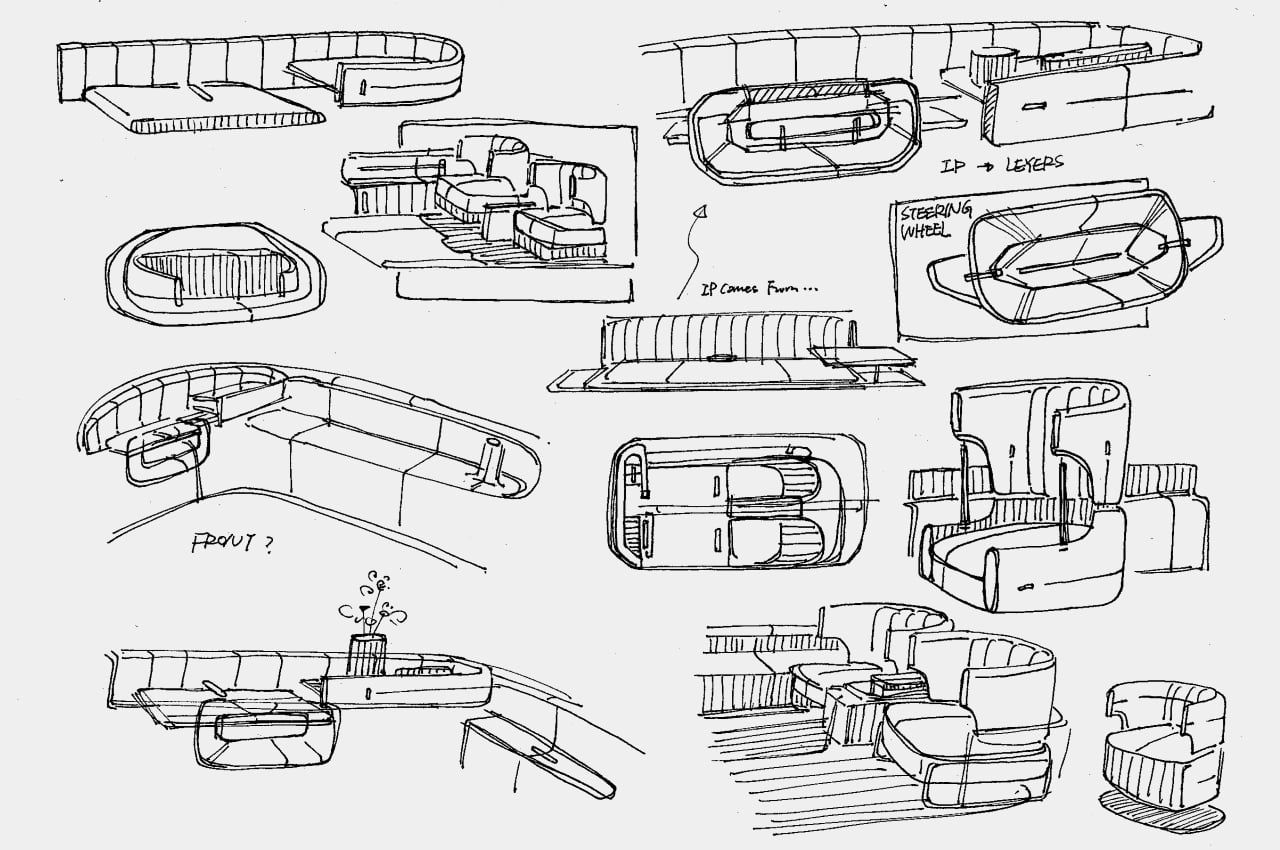
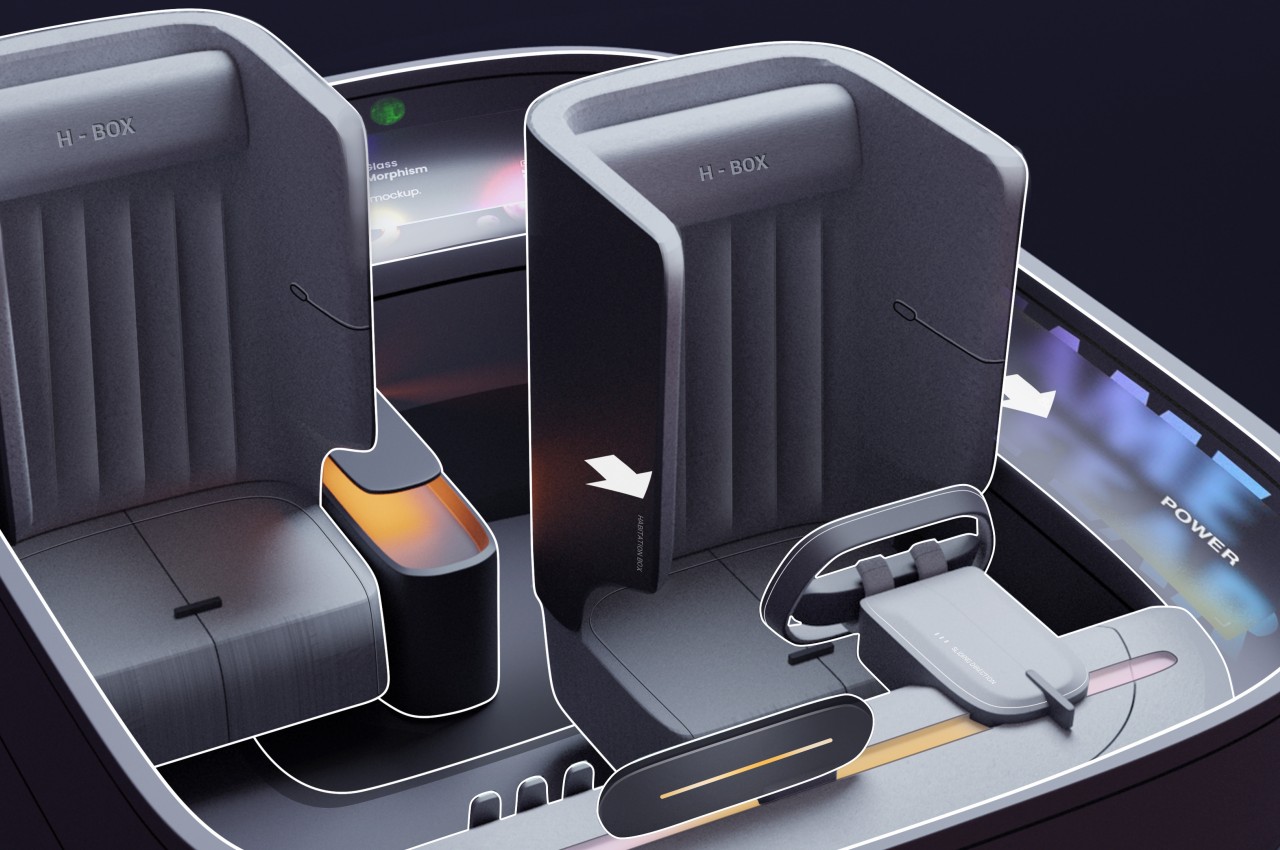
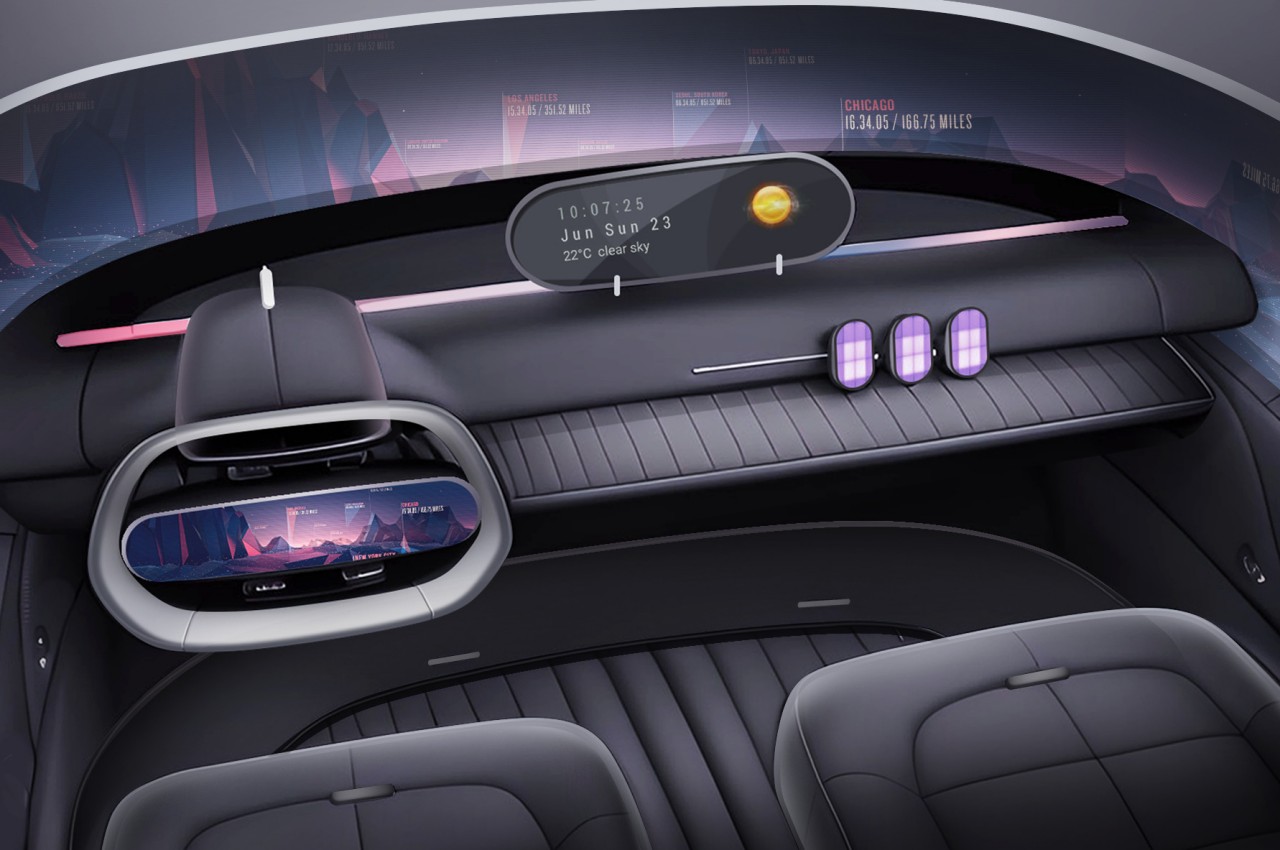
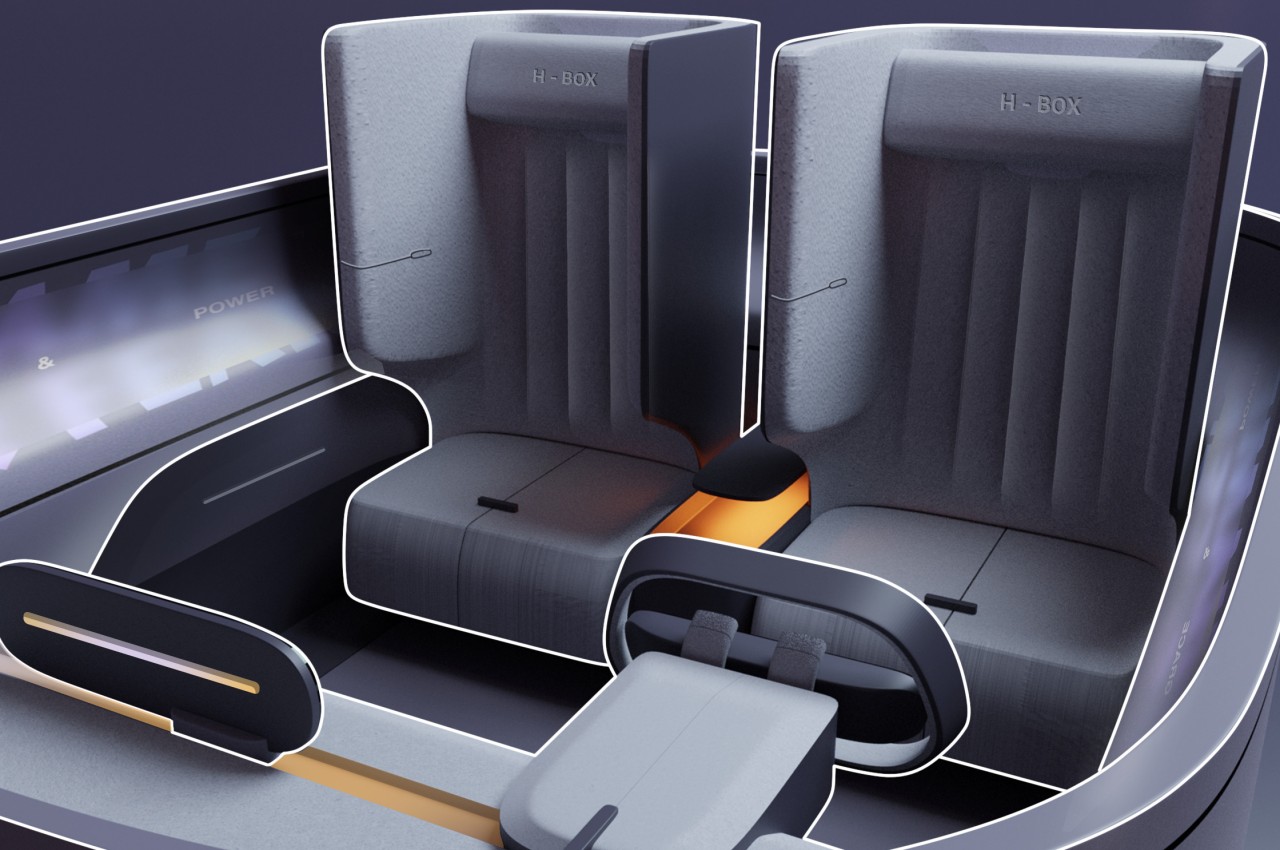
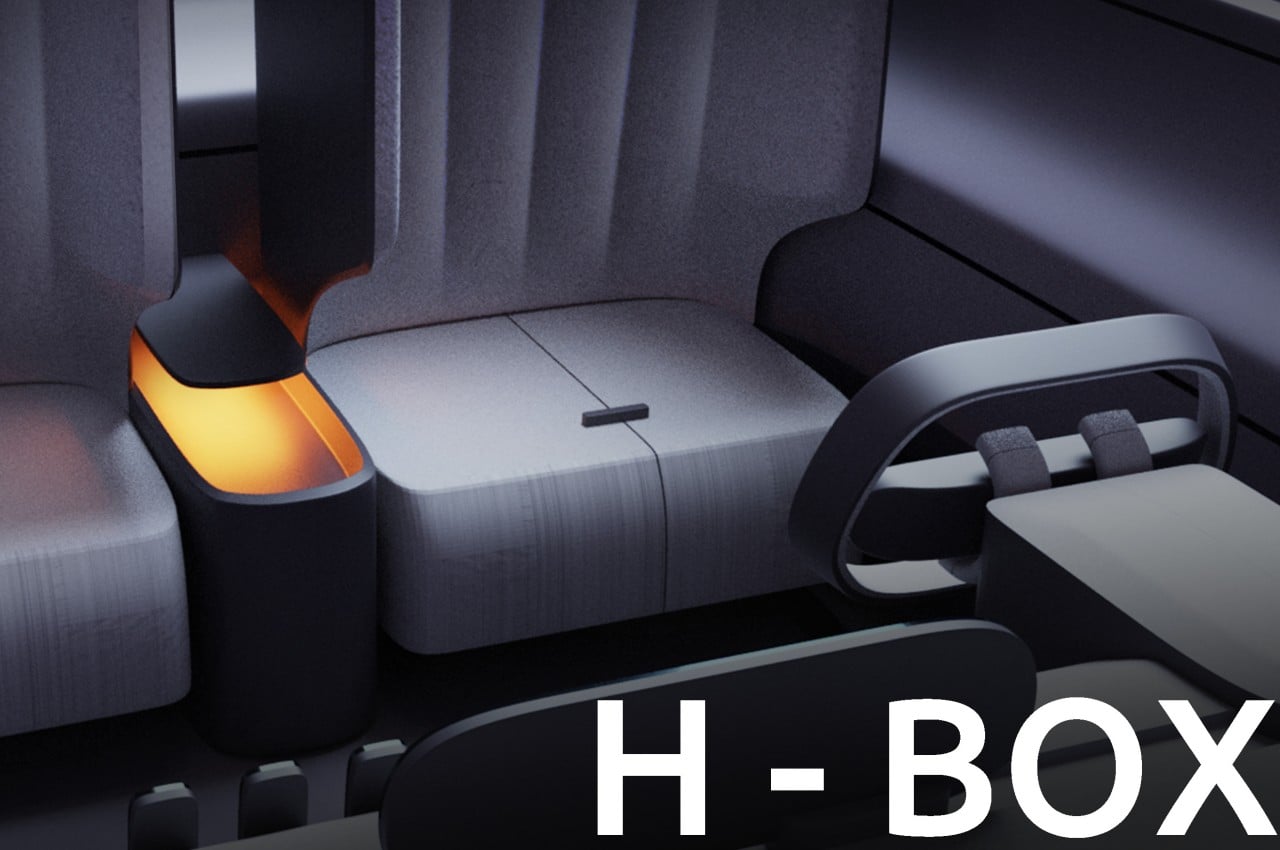
As its name suggests, the H-BOX concept turns the car into a box-like machine, and the two-seater model the chairs set to the back of the cabin. Unlike most self-driving automobile concepts, however, this seems to still pay heed to the need for manual control from time to time, so the “driver’s seat” can slide forward to take hold of the futuristic steering well if needed. That further widens the separation between the two seats, which might be a preferred configuration for two people who really want to be immersed in their own little corners.

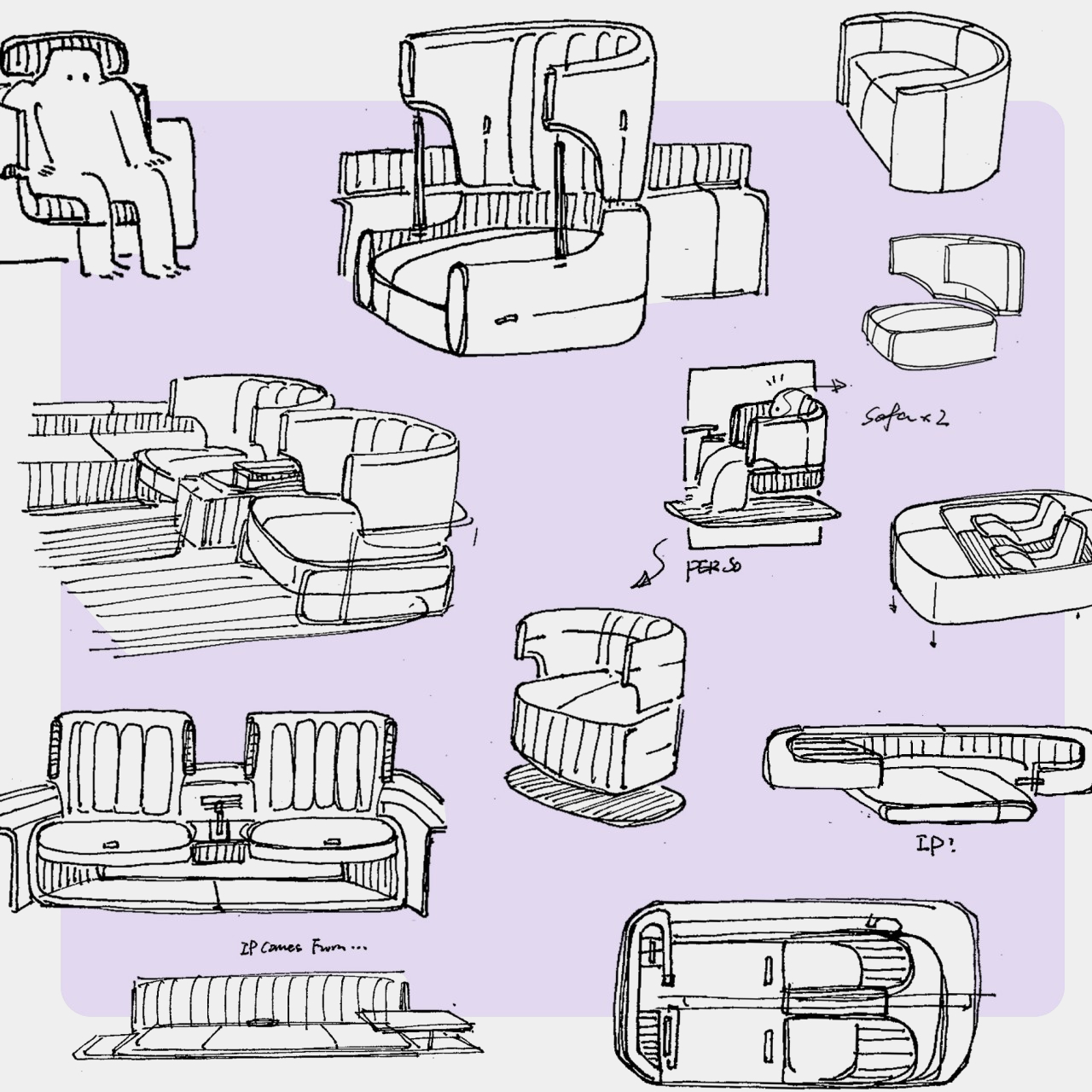
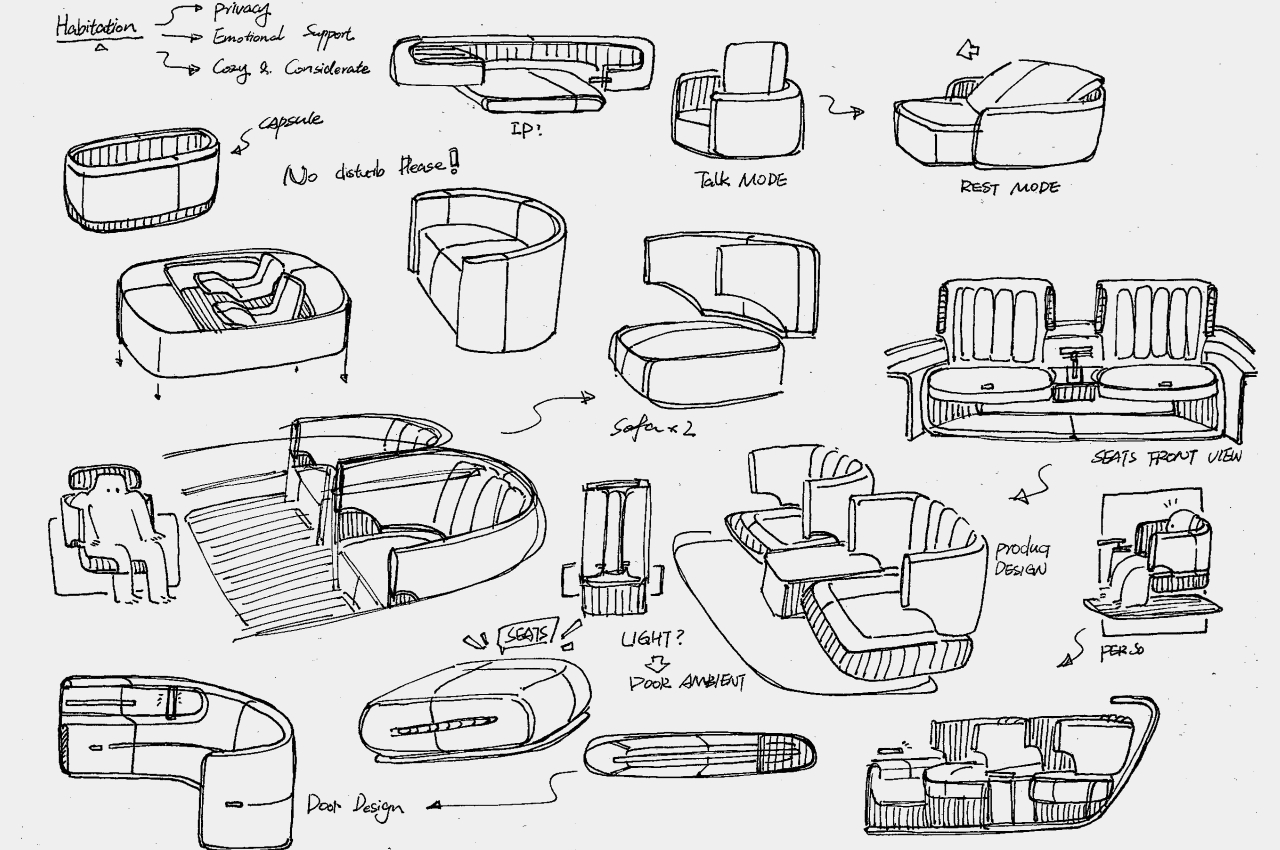
What makes the H-BOX distinctive, however, are the seats themselves. Where most designs would feature reclining seats that seem to offer the ultimate comfort, these surround the passenger from almost all sides except the front. In other words, it boxes them in, shielding them from the other person in the vehicle while still giving them a clear view of their surroundings. Admittedly, it doesn’t look like the most comfortable design, though it wouldn’t be impossible to have the seat move forward and the backrest lean backward for that same reclining effect.

Then again, the purpose of this self-driving vehicle is to quickly get commuters to their destinations with minimum fuss and perhaps minimum interactions. At the same time, however, the interior of the vehicle still offers a convenient and advanced experience complete with a display that wraps around the interior of the cabin. It does seem to cater to a very niche audience, a generation that might no longer even be around by the time self-driving cars fully take root, but it could offer a more solitary experience for people who prefer to travel in peace and quiet.

The post Cubicle-like urban car concept envisions commuting havens of the future first appeared on Yanko Design.

A GoPro Hero 12 bundle with a battery grip is $100 off

The GoPro Hero 12 already had the promise of a better battery life than its predecessors. When you toss a battery grip into the mix, the company says you'll get over five hours of continuous 4K recording at 30 frames per second (depending on conditions). That's bound to be pretty enticing for those who like to capture as much footage as they can during a day of action sports or travel vlogging. What's even better is that a bundle of the camera and battery grip is on sale for $499 at Amazon and GoPro directly. The bundle is $100 off the regular price and a record low.

Along with 4K footage, you can film in HDR at a resolution of 5.3K at up to 60 frames per second. You can shoot in 4K at up to 120 fps too, while there's 10-bit color support. A vertical capture feature makes it a cinch to shoot footage for apps like TikTok even while the camera is in a horizontal orientation.

GoPro's stabilization tech is in full force here as well, with the company claiming HyperSmooth 6.0 can give you "impossibly smooth footage no matter how rough it gets." A horizon lock option should keep the horizon steady as you move the camera.

There's directional audio support thanks to the microphone on the included Media Mod, which has a 3.5mm mic port and micro HDMI port too. You can also connect AirPods, Bluetooth earbuds and wireless microphones to the camera and even use voice commands..

The battery grip affords you single-hand control over the camera. It has a built-in tripod and you can remove it to operate the GoPro Hero 12 remotely from up to 30 meters (98 feet) away. Along with the battery grip and Media Mod, the bundle includes a self-explanatory Light Mod and Enduro Battery.

Follow @EngadgetDeals on Twitter and subscribe to the Engadget Deals newsletter for the latest tech deals and buying advice.

This article originally appeared on Engadget at https://www.engadget.com/a-gopro-hero-12-bundle-with-a-battery-grip-is-100-off-142645942.html?src=rss

A GoPro Hero 12 bundle with a battery grip is $100 off

The GoPro Hero 12 already had the promise of a better battery life than its predecessors. When you toss a battery grip into the mix, the company says you'll get over five hours of continuous 4K recording at 30 frames per second (depending on conditions). That's bound to be pretty enticing for those who like to capture as much footage as they can during a day of action sports or travel vlogging. What's even better is that a bundle of the camera and battery grip is on sale for $499 at Amazon and GoPro directly. The bundle is $100 off the regular price and a record low.

Along with 4K footage, you can film in HDR at a resolution of 5.3K at up to 60 frames per second. You can shoot in 4K at up to 120 fps too, while there's 10-bit color support. A vertical capture feature makes it a cinch to shoot footage for apps like TikTok even while the camera is in a horizontal orientation.

GoPro's stabilization tech is in full force here as well, with the company claiming HyperSmooth 6.0 can give you "impossibly smooth footage no matter how rough it gets." A horizon lock option should keep the horizon steady as you move the camera.

There's directional audio support thanks to the microphone on the included Media Mod, which has a 3.5mm mic port and micro HDMI port too. You can also connect AirPods, Bluetooth earbuds and wireless microphones to the camera and even use voice commands..

The battery grip affords you single-hand control over the camera. It has a built-in tripod and you can remove it to operate the GoPro Hero 12 remotely from up to 30 meters (98 feet) away. Along with the battery grip and Media Mod, the bundle includes a self-explanatory Light Mod and Enduro Battery.

Follow @EngadgetDeals on Twitter and subscribe to the Engadget Deals newsletter for the latest tech deals and buying advice.

This article originally appeared on Engadget at https://www.engadget.com/a-gopro-hero-12-bundle-with-a-battery-grip-is-100-off-142645942.html?src=rss

Top 10 iOS 18 Features Revealed

iOS 18

If you’ve been eagerly anticipating what’s next for your iPhone, you will be pleased to know that iOS 18 is on the horizon, promising to be the most transformative update since the days of iOS 7. This iteration is poised to enhance the way we interact with our devices, integrating cutting-edge AI technology and offering […]

The post Top 10 iOS 18 Features Revealed appeared first on Geeky Gadgets.

Vauxhall Mokka Electric Griffin Special Edition unveiled

Vauxhall Mokka Electric Griffin

Get ready to experience the future of driving with the Vauxhall Mokka Electric Griffin, a special edition car that combines style, efficiency, and advanced technology. By choosing this eco-friendly vehicle, you’ll not only enjoy significant savings but also contribute to a greener planet. The Mokka Electric Griffin is designed to turn heads with its contrasting […]

The post Vauxhall Mokka Electric Griffin Special Edition unveiled appeared first on Geeky Gadgets.

3D printed recycled wood could kickstart another design industry revolution

3D printing blasted the doors of creativity wide open by allowing almost anyone and everyone to create complex designs on demand. That market started with different kinds of plastic but soon supported other materials as well, including metal and even chocolate. The popularity of this style of design and production, however, also meant a surge in material waste, especially different kinds of non-recyclable plastics. There is a greater need for more sustainable alternatives, one that can perhaps even support a fully circular lifecycle. There is perhaps no better material that meets those requirements than wood, which is why this new 3D printed wooden partition screens and window coverings could very well represent the breakthrough that the design industry needs.

Designer: Aectual

Designers have a soft spot for natural, sustainable materials and wood is perhaps one of if not the most favored one. It is easily sourced, though not quickly replenished, has unique aesthetics and textures, and can decompose safely. That said, it’s not easy to form wood into complex shapes and structures, even if you carve out the design, and the material isn’t exactly easily reusable even after being recycled. This new 3D printed wood addresses all those shortcomings, offering an almost perfect material for bringing intricate, sustainable designs to life.

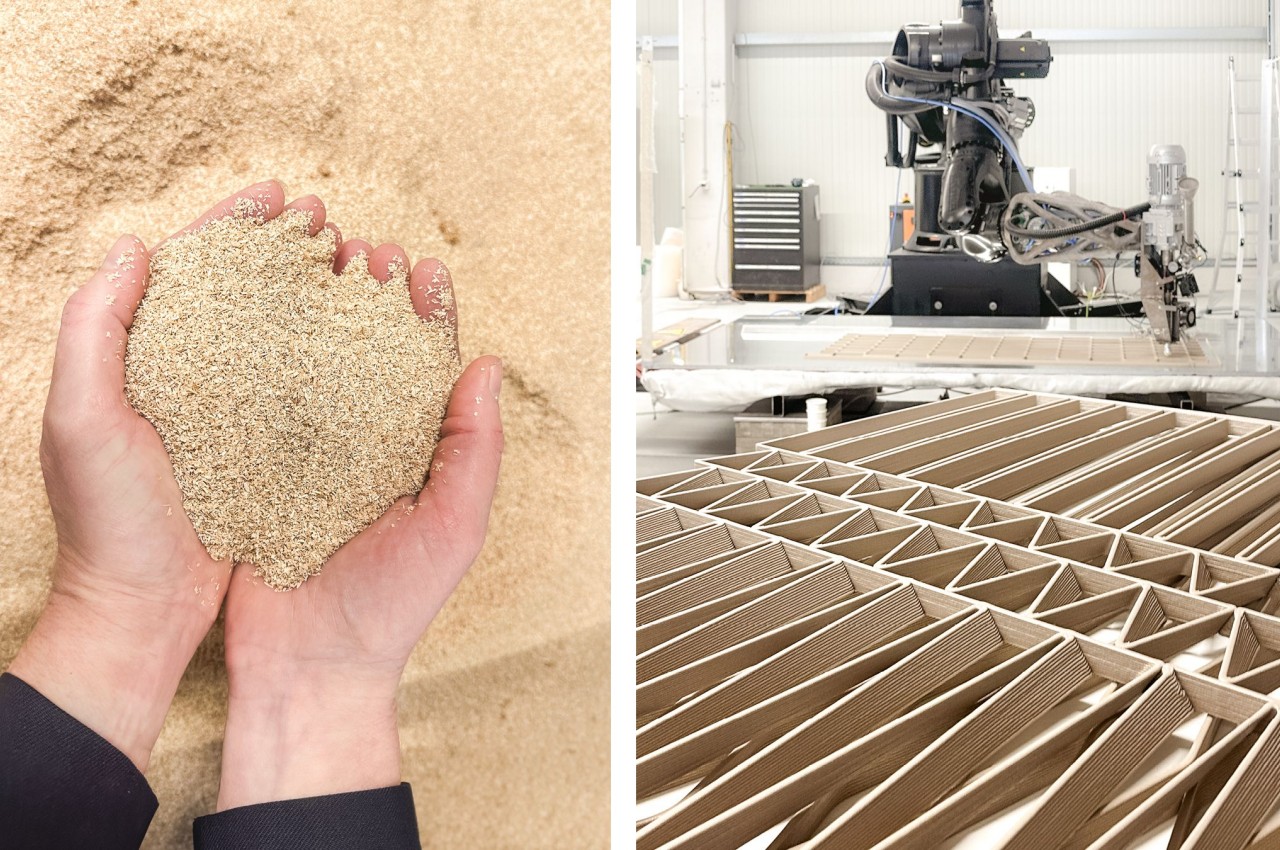
This sustainable new material is itself made from wood waste blended with some natural ingredients such as lignin and cellulose. It is then reinforced using vegetable fibers like flax or hemp to give it the same durability you’d expect from wood. The result is a composition that doesn’t just look like wood but also feels like the real thing. In fact, it even smells like real wood, a trait that’s hard to reproduce on other synthetic wood alternatives.

Aectual’s material, however, does something even better than wood. After a 3D printed wooden product reaches the end of its life, it can be shredded and then reprinted into some other or the same form. This creates a truly circular lifecycle where the material is reborn again and again as long as it retains its integrity and stability. And when it can no longer be reused, it still degrades and decomposes safely just like ordinary wood.

Of course, it’s a 3D printed material, so it’s almost trivial to create structures and shapes that would be extremely difficult if not impossible with regular wood. You can have intricate repeating patterns that join together with no visible seams, or alternating shapes that are made as a whole rather than composed piece by piece. It might be too early to claim a complete victory, as the process of creating this 3D printed wooden material might still be too involved and too costly, but it’s definitely a great start in producing a viable alternative to designers’ most-loved material.

The post 3D printed recycled wood could kickstart another design industry revolution first appeared on Yanko Design.