Meta CEO Mark Zuckerberg just announced some new features coming to Threads that should make it easier for creators and businesses to build followings and connect with fans. The biggest tool is something called Insights, which is basically an analytics platform.
Insights gives users a zoom-in view on traffic, with data on the age, gender and location of people who view and engage with content. This information can also be split up into followers and non-followers, to help with conversion.
Meta
Meta has been testing Insights for a few days now and it looks fairly useful, particularly for folks with large followings. I’m talking about brands, creators and power users. However, it should be fun for the rest of us to tinker with.
Threads will also now allow for simultaneous multiple drafts. Before this move, a new draft would replace the old one, so people just had one chance to jot something down for later. To that end, Meta’s working on a post scheduling feature, but it’s not ready yet.
Meta
Finally, there’s now a way to drag and drop pinned columns for reorganization purposes. This is only for the desktop client, but it does work with the Insights page.
Threads has some serious momentum right now. It just passed the 200 million user threshold after just a year of operation and CEO Zuckerberg has plans to bring that number up to one billion.
“We've been building this company for 20 years, and there just are not that many opportunities that come around to grow a billion-person app,” Zuckerberg said in a recent earnings call. “Obviously, there's a ton of work between now and there.”
I’m a fairly regular Threads user. The vibes are immaculate, especially when compared to that other app, but it still needs some work. The “For You” algorithm is incredibly slow, sometimes showing posts that are days old. The platform also has a bizarre aversion to politics and news, throwing it all under the umbrella of “potentially sensitive” content. This is a social media app that wants to be the public town square, like the bird app once was, so stop throttling news.
This article originally appeared on Engadget at https://www.engadget.com/social-media/threads-introduces-a-new-analytics-platform-and-the-option-for-multiple-drafts-170033443.html?src=rss
The Plucky Squire has been one of my most anticipated games ever since it started popping up in showcases a couple of years ago. It was delayed out of 2023 and into this year, unfortunately, but the long wait to play it is almost over. Publisher Devolver Digital and developer All Possible Futures have revealed that The Plucky Squire is coming to PC, PlayStation 5, Xbox Series X/S and Nintendo Switch on September 17. It'll be available in the PlayStation Plus Game Catalog for Extra and Premium members at no additional cost on day one.
The action centers around a storybook. After the evil Humgrump realizes he's the villain of his own tale, he removes the titular squire (aka Jot) from the pages to try and change the narrative. Jot has to navigate 3D and 2D environments as he leaps between planes on his journey to save his friends and make sure there's a happy ending to the saga.
The visuals look absolutely adorable in both 2D and 3D formats. It looks like a mashup of top-down Zelda games, modern Mario and LittleBigPlanet. The first project from All Possible Futures (one of the heads of which is a former Pokémon artist) is an absurdly promising one. I can't wait to check it out next month.
Meanwhile, Sony has unveiled some new details about a couple of other indie games. A new version of the first point-and-click Broken Sword game, The Shadow of the Templars, is coming to PS5 on September 19, 28 years after the original incarnation debuted. Revolution Software has reanimated the game in 4K with over 50 times the resolution of the original PlayStation version.
Last but not least, Sulfur is a stylized first-person shooter with a lot of playstyle flexibility. There are said to be more than 35 million weapon and modification combos available. The next project from developer Perfect Random is coming to to PS4 and PS5 in 2025.
This article originally appeared on Engadget at https://www.engadget.com/gaming/cute-adventure-game-the-plucky-squire-arrives-on-september-17-163651349.html?src=rss
Dragon Age: The Veilguard will be released on October 31. The BioWare action RPG is the first installment in the franchise since 2014’s Dragon Age: Inquisition. That’s right. We’ve been waiting ten long years for this game and now it’s almost here. Check out the release date trailer below.
This is the fourth major game in the franchise and there’s a lot of hype around it, despite the (relatively) lukewarm response to Inquisition. We had a chance to see the game in action back in June and came away impressed, though cautious. The character creation tool is, as expected, robust and the various landscapes are easy on the eyes.
We actually watched a playthrough of the entire opening chapter of the game and immediately noticed a more cartoonish style when compared to its predecessors. It’s not quite Fable, but it’s getting there. The game does, however, bring back fan favorite characters like Varric and Solas. The latter looks to be the primary antagonist this time around.
It also looks to play a bit faster than the earlier titles, though you can still pause the game to consider tactics. There’s a quick launch menu for activating hotkeys and, of course, a decision wheel for making narrative and dialogue choices that will no doubt come back to bite you in the butt at a later part of the game.
Like previous entries, this is an action RPG. Parries seem to make up the core defense mechanic and party members will work to strip away armor and magical protections before going in to do actual damage. There will be a diverse array of accessibility options, including standard difficulty modes but also custom settings to make select aspects of the game more forgiving.
As for the “caution” mentioned above, we only got a brief look at the game in action, so there are still plenty of unknowns. In any event, we don’t have long to find out. Dragon Age: The Veilguard will be available for PS5, Xbox Series X/S and PC. Preorders are available right now.
This article originally appeared on Engadget at https://www.engadget.com/gaming/dragon-age-the-veilguard-comes-out-on-october-31-161317701.html?src=rss
Cooler Master and AMD’s new collaboration integrates Ryzen™ 9000 Series CPUs into products like Sneaker X and Ncore 1 Pro, blending style with performance.
A good soundbar is one of the easiest ways to improve the audio quality of your home theater set up. As it happens the Sonos Beam (Gen 2), which is one of our favorite mid-range soundbars, is currently available for its best price to date (at least for a new and not refurbished model). It has dropped by $110 to $389 at Woot. That's 22 percent off the regular price, but bear in mind that the offer only applies to the white version.
The Sonos Beam does a bang-up job of delivering solid audio from your TV (or music or podcast service). It delivers impressive sound for its size, even if it lacks upward-firing speakers. While the first Beam lacked Dolby Atmos support, Sonos made sure to include it this time around. That makes a world of difference, even if Sony is relying on audio processing tech to simulate the Dolby Atmos experience, which traditionally requires upward-firing speakers.
We gave the Sonos Beam (Gen 2) a score of 88 in our review. One of the main downsides is that it only has one HDMI port. That means you won't be able to connect a games console or set-top box to the soundbar directly. You'll also need an adapter to use it with an older TV that has an optical jack.
Otherwise, the Beam is a great soundbar option. It's a cinch to set up and, as you might imagine, it connects to other Sonos speakers to easily help you build out a whole-home audio setup.
The soundbar works with many major music streaming services too, such as Spotify, Apple Music and Amazon Music. It also works with Alexa and Google Assistant. Annoyingly, the latter doesn't play nicely with Apple Music on the soundbar, but Sonos' own voice assistant supports the streaming service. Despite the trade-offs, you should be able to find some kind of voice assistant and music streaming service that works.
When you hear the words "Dyson headphones," the first thing that comes to mind is likely the Bane-like Zone. The company debuted its air-purifying wearable in 2022, but woefully short battery life kept the product from being useful on a daily basis. Now Dyson is back with another version, and its sole purpose is to provide audio and active noise cancellation (ANC) for “normal” use. The OnTrac headphones ($500) have a classic Dyson color scheme and build with long battery life, but the lack of advanced features keep this premium set of cans from competing with the best.
Design
I’d wager if you fed an AI image generator the prompt “Dyson headphones” you’d get something similar to the OnTrac. There’s no doubt what company made these cans, with clear nods to things like vacuums, air purifiers and hair care devices. That’s especially true of the copper, navy and silver color combo on my review unit, a trio of hues that has appeared on previous products from Dyson.
To maintain the premium look for these very high-end headphones, the company used a combination of metals and ceramics for the outer shells of the ear cups. Depending on your color preference, the options include copper, aluminum, black nickel, blue, green, gray or red. Then there are the micro-suede, cloth-wrapped ear pads in another seven hues. Dyson says it will sell additional sets of the outer caps and cushions with over 2,000 possible combinations across all of the components. That is a high degree of customization, if you’re willing to pay even more than the initial $500.
Those interchangeable materials accompany a segmented headband and rotating, gimbal-esque construction that once again recalls previous Dyson gear. The company says it put the two battery cells in the headband for better weight distribution, which is why the two side sections of that component are rigid and only the center one is plush and cushiony. Along the back edges of the ear cups are controls for power/pairing on the left with a playback “joystick” on the right. That latter option allows you to play/pause, skip tracks and adjust volume, in addition to activating a voice assistant.
Billy Steele for Engadget
While I praise Dyson for using mostly physical controls here, the joystick does take some getting used to. You have to be very precise, so you don’t press down whatsoever when you’re actually trying to move up, down or to the side. I still regularly pause the music when I’m trying to change the volume, even after a few weeks of use. The outside of both ear cups are touch-enabled, allowing you to cycle through ANC and transparency mode with a double tap. This works well, reliably accepting inputs even when I only get the edge of the panel.
Dyson’s decision to stick the battery in the headband does help with overall comfort. The OnTrac headphones remained plenty cozy for hours at a time and never felt heavy despite their size. My only gripe here is that the ear cups are round instead of oval. I don’t mind them from an aesthetic standpoint, but when I go to put them on my oval-shaped ears, I have to adjust the headphones with a few wiggles for a good fit. It’s not like most sets where I just put them on and my ears are in the sweet spot. Plus, the OnTrac is big and bulky. So even if they are comfortable, you’ll want to take that into account if you plan to use these for travel.
Features and software
The OnTrac headphones work with the MyDyson app, but there aren’t a lot of features there. You get the usual battery percentage, noise controls, EQ options and on-board control tutorial right up front. The EQ menu is limited to three presets – Enhanced, Bass Boost and Neutral – with the first being the default (and the best). Diving into the settings menu via the gear icon lets you disable automatic head detection and keep listening volume under 80dB.
One unique thing that Dyson puts in the main app interface for OnTrac is a real-time sound exposure graph. This displays both in-ear sound level and external noise over the last 30 seconds. Staying below 85dB for in-ear measurements will keep you out of the red here. That corresponds with about 75 percent volume, which is almost painfully loud on these headphones.
The OnTrac doesn’t have any advanced features like automatic speech detection or adaptive ANC, both of which you’ll find on Sony’s 1000XM5. There’s also no spatial audio option, which has become a core element of most flagship headphones and earbuds in recent years. Not only does Dyson lag behind the competition in this area, but it’s also significantly pricier than most alternatives. The basics are well-covered in terms of features, but that’s about it.
Sound quality
Billy Steele for Engadget
The real measure of headphones, after all, is sound quality. Dyson packs in 40mm drivers capable of a frequency range of 6Hz to 21kHz. And while this provides great clarity, the OnTrac headphones lack the immersiveness most high-end models offer these days.
The OnTrac headphones are pleasant to listen to in terms of overall detail, but the stock tuning is void of the depth that a lot of flagship models offer. The likes of Sony, Bose, Sennheiser and Bowers & Wilkins all provide a deeper, richer sound that tends to envelope you, even if you aren’t listening to spatial audio.
Killer Mike’s Songs For Sinners & Saints lack the low-end thump that the album provides on other headphones like the 1000XM5. There is nice detail for some genres though, like you’ll hear with Koe Wetzel’s 9 Lives. With the OnTrac, I could pick up clear texture in the song’s drums and guitars, while the country singer’s vocals cut through the mix. Billy Strings’ recent bluegrass live album also sounds nice on the OnTrac, but when you venture to something like Jack White’s No Name, there’s an airy-ness that’s missing from the overall sound profile. Things that would soar on other sets, like White’s guitar riffs, are a bit muted, and the overall sonic effect is subdued, when it would blanket you with sound on a competing device.
ANC performance
Dyson says the OnTrac’s ANC setup uses eight mics to detect unwanted sounds 384,000 times per second. Combined with the passive noise isolation from the ear pads, the headphones can block up to 40dB of distracting sounds. That looks pretty good on paper, but in the end, the OnTrac does only an average job with constant rumbles from fans and white noise machines. It struggles mightily with human voices and TV sounds. These headphones will be OK in certain situations, but the one-size-fits-all approach to noise-blocking doesn’t silence the world the way Sony, Bose and others can.
Call quality
The OnTrac headphones do a solid job of blocking background noise on calls, but the overall voice quality falls behind comparable flagship headphones. My voice sounded compressed and lacked any energy you’d want on a call. Dyson may have dedicated eight microphones to ANC, but only one is afforded to calls. And, well, you can certainly tell.
Battery life
Billy Steele for Engadget
Dyson promises up to 55 hours of listening with ANC on, a figure that’s only surpassed by Sennheiser’s Momentum 4 (60 hours) among headphones I’ve reviewed. What’s more, that’s 25 hours longer than Sony’s WH-1000XM5, which is our current top pick for best wireless headphones. I managed 48 hours of use with noise cancellation on at a comfortable 50 percent volume. If you need it, a quick-charge option gives you two and a half hours of ANC-enabled playback in 10 minutes or nine and a half hours in 30 minutes .
The competition
At $500, Dyson is competing with the likes of Apple and Master & Dynamic, which both sell premium over-ear headphones for more than the OnTrac. However, only M&D’s MW75 made our best wireless headphones list, mostly due to the company’s premium design and natural sound profile. Unlike Dyson, Master & Dynamic combines metal and leather finishes in a way that looks like headphones and less like a piece of machinery.
If you’re looking for a better value, my advice is to save yourself a lot of money and go for Sony’s WH-1000XM5. For significantly less, you’ll get excellent sound quality, powerful ANC and a host of advanced features that will make your life easier. Those include automatic speech detection that will pause your music when you need to have a quick chat and the ability to switch sound settings based on activity or location without having to futz with an app. They’re more comfortable and are a better travel companion, plus you’ll get 360 Reality Audio where supported and DSEE Extreme upscaling to reclaim detail in songs that’s otherwise lost to compression.
Wrap-up
If you’re a fan of Dyson’s design, you might be inclined to spend big on the OnTrac headphones. With a less-than-stellar audio profile and average ANC performance, the lack of advanced features means you’re settling for a decent set of headphones when better options are available for much less. The customizable design is a plus, as is the impressive battery life and hearing health feature, but you can get the long runtime elsewhere. At the end of the day, I’m not sure the design is enough to make these headphones stand out from the crowd.
This article originally appeared on Engadget at https://www.engadget.com/audio/headphones/dyson-ontrac-headphones-review-when-the-basics-arent-enough-151518312.html?src=rss
Meta’s latest round of account takedowns includes a fake political group that ran dozens of dummy accounts in an attempt to recruit Americans to run for office. The social network detailed the scheme in its latest report on coordinated inauthentic behavior on its platform.
According to Meta, the fake accounts, pages and Facebook groups were trying to prop up a fictitious political group called “Patriots Run Project,” that encouraged people to challenge Republican and Democratic “elites” by running for office. In all, Meta uncovered 124 Facebook accounts, pages and groups as well as three Instagram accounts. The group primarily targeted people in Arizona, Michigan, Nevada, Ohio, Pennsylvania, Wisconsin, and North Carolina, and spent $50,000 in Facebook ads.
The Institute for Strategic Dialogue, a nonprofit that researches disinformation and extremism previously shared details about the Patriots Run Project and their Facebook presence. The group, they said, “called for followers to run for office on a pro-Trump, anti-establishment platform focused on many of the same issues that motivate the right-wing movement: gun rights, border security, ‘traditional values’ and combatting election fraud.”
It’s not clear exactly who was behind the bizarre campaign. Meta said in its report they “found links to individuals associated with a US-based on-platform entity called RT Group,” but didn’t elaborate. The company’s researchers noted the group was relatively adept at disguising themselves. They used fake accounts they “acquired” from Bangladesh, and relied on proxies to make it appear as if they lived in the states they targeted.
While Meta’s researchers said they were able to disrupt the group before it was able to establish a large audience on its platform, Politico has reported that the group was successful in recruiting one Montana man to run for Congress, though it’s unclear if he interacted with the group on Facebook. During a briefing with reporters, Meta noted that Patriots Run Project was also active on X and that its websites are still online.
The company’s researchers also shared more about what they are tracking ahead of the US presidential election. As with other recent elections, Russia-based groups are likely to target US audiences on Facebook, according to David Agranovich, Meta’s security policy director for threat disruption. “I think we should expect to see Russian attempts to target election-related debates, particularly when they touch on support for Ukraine,” Agranovich said. “We expect Russia-based campaigns to promote supportive commentary about candidates opposing aid to Ukraine, and criticize those who advocate for aiding Ukraine's defenses.”
This article originally appeared on Engadget at https://www.engadget.com/social-media/a-fake-political-group-that-recruited-a-real-candidate-in-montana-got-banned-on-facebook-150048558.html?src=rss
Google is expanding AI Overviews, the feature that summarizes answers to complex questions from the web and presents them at the top of traditional search results, to six more countries — India, Japan, Mexico, Indonesia, Brazil and the United Kingdom — from Thursday with support for local languages as well as English.
That’s less than three months after AI Overviews launched in the United States and promptly told people to eat rocks and put glue on their pizzas. Bringing them to millions more people begs the question: How do you prevent another glue pizza fiasco in a foreign country?
“It’s a challenging space,” Hema Budaraju, senior director of product management for Search at Google, told Engadget in an interview. “Understanding quality at the scale of the web across all these languages is a hard problem, and integrating LLMs (large language models) is not easy to do. Using AI to better understand languages is pretty critical.”
To prevent a glue pizza situation in, say, Hindi or Japanese, Google said it has done language-specific testing of AI Overviews as well as red-teaming, a technique used by the tech industry to stress-test how systems might behave under attack from bad actors. “We are focused on addressing potential issues and we are committed to listening and acting quickly,” Budaraju said. In May, Google put additional guardrails on AI Overviews after its outlandish responses, such as limiting the inclusion of satire and humor content and restricting the types of queries that triggered the feature to begin with.
In addition to expanding the feature to more countries, Google is also making one more big change to AI Overviews: it will now prominently display links to sources on the right-hand side of each AI-generated answer, making it easier for people to click through to the actual website where the answer came from. And for a small percentage of users, it will also add links directly within the text of AI Overviews. If this move is rolled out more broadly, it could allay concerns from publishers about losing traffic to AI that reads the internet for people and reduces the need to click through to actual web pages.
"This experiment has shown early positive results and we are able to drive more traffic with links directly in the text,” Budaraju said.
Users who opt in to Search Labs, the company’s platform for trying out upcoming features ahead of their general release also get to play with a couple of additional features — the ability to “save” a specific AI Overview for future reference, as well as an option to simplify the language of an AI-generated answer, something that Google previewed earlier this year.
Update, August 15 2024, 12:50 PM ET: This story has been updated to clarify that links within the text of AI Overviews are available for a small percentage of users, not just those signed up for Search Labs.
This article originally appeared on Engadget at https://www.engadget.com/ai/google-brings-the-ai-feature-that-told-americans-to-eat-rocks-to-six-more-countries-160025221.html?src=rss
The second season of The Lord of the Rings: The Rings of Power is just around the corner. If you haven't watched the first batch of episodes or want to refresh your memory and have let your Prime subscription lapse, there's a way you can do that for free. From today until August 28, you can stream season one at no cost on Samsung TVs and other devices where the Samsung TV Plus app is available.
It's the first time that the show has legally been available to stream for free (unless you had access to Prime Videogratis). Samsung is offering the show to its users in the US, UK, Canada, Brazil and Germany on Samsung TVs and Galaxy devices. The company says that the eight-episode season "will also be available within Samsung TV Plus’ channel offering in select regions globally."
It's worth noting that Samsung TV Plus is ad-supported, so if you opt to watch The Rings of Power there, the episodes will include commercials. And, along with Samsung TVs and mobile devices, the Samsung TV Plus app is available on some of the company's refrigerators, so that could be an interesting way to catch up on or rewatch the first season.
Meanwhile, Amazon has dropped the final trailer for season two of The Rings of Power. "War has come to Middle-Earth," says one character (who I might recognize if I had watched the first season) before we briefly see an army of orcs march on what looks like Minas Tirith as Sauron exerts his authority. There are plenty of eye-popping visuals in the trailer, which shouldn't come as too much of a surprise considering this is slated to be the most expensive TV show of all time. Season two will debut on Prime Video on August 29.
This article originally appeared on Engadget at https://www.engadget.com/entertainment/tv-movies/the-lord-of-the-rings-the-rings-of-power-season-one-is-streaming-for-free-on-samsung-devices-142930211.html?src=rss
Brutalist architecture and interior design, popular from the 1950s to the mid-1970s, prioritize function over decoration, showcasing the raw beauty of materials like concrete. The term “Brutalism” comes from “béton brut,” French for “raw concrete,” emphasizing its minimalist approach. Bold elements, exposed materials, and functionality define this style, which emerged as a reaction to sleek mid-century designs. Architects and designers reveal the innate beauty of materials such as concrete and steel by exposing structural elements. Recently Brutalism is not only a part of architecture but also product design.
Brutalist architecture has an industrial aesthetic and became famous not just for how it looked or what it meant culturally, but also because it was used in rebuilding projects after a big war and when the economy was unstable. Additionally, it is based on the idea of designing buildings that prioritize functionality, honesty in materials and social structure, and the avoidance of unnecessary decoration. Some of the most well-known brutalist architects include Le Corbusier from Switzerland and France, Paul Rudolph from Kentucky, and Kenzo Tange from Japan, among others.
What are the characteristics of Brutalist design?
1. Use of Exposed Concrete
Brutalist buildings feature exposed concrete on walls, floors, and ceilings, creating a raw ambiance and monochromatic palette with its rough texture and grey hues. Concrete’s affordability, versatility, and durability make it a staple in Brutalist architecture, often complemented by untreated steel, wood, and glass.
The Maadi Villa by Badie Architects is a striking fusion of brutalist architecture and contemporary warmth. Nestled in a tranquil oasis away from the Egyptian bustle, this urban gem redefines residential living. Featuring sleek concrete, steel, and wood accents, it harmonizes cool minimalism with inviting comfort. Expansive windows frame breathtaking views while a luxurious pool beckons relaxation. Step inside to find modern elegance accentuated by a captivating spiral staircase and abundant natural light. With Mohamed Badie’s visionary touch, Maadi Villa transcends convention to embody timeless sophistication.
2. Geometrical Shapes
Brutalist design frequently integrates bold geometric shapes, including angular forms and sharp edges, to establish a cohesive and organized atmosphere, enhancing the structured essence of the space.
In MeshH, it’s the vibrant colors meet brutalist design. This unique seating solution features a light wireframe seat atop a sturdy concrete base, creating a striking contrast of aesthetics and materials. Designed for outdoor use, MESH combines toughness with inviting comfort, making it perfect for any space. With its minimalist construction and eye-catching colors, MESH adds a touch of playful sophistication to any environment.
CONECTO is a modular concrete stool which is a bold fusion of brutalist design and innovative functionality. Despite concrete’s typical rigidity, this stool redefines expectations with its customizable shapes and vibrant acrylic tops. Whether as a solitary piece or configured into benches, CONECTO offers versatility without compromising on style. Designed with sustainability in mind, it utilizes high-strength UHPC concrete and plans for future eco-friendly materials. These stools are the perfect balance of form, function, and environmental consciousness.
3. Minimalism
Brutalist interiors keep it simple, focusing on what’s essential and avoiding extra decorations. Furniture with clean lines adds to the practical design, keeping things straightforward and purposeful.
Brutalist design embraces imperfections, finding charm in raw and unfinished surfaces. This approach infuses character and authenticity into the space.
The Brute Chair and Table is a bold reinterpretation of outdoor furniture with a raw, brutalist aesthetic. Crafted from sturdy concrete, these modular pieces combine form and function in a strikingly minimalist design. The chair features a unique plywood backrest for added comfort and warmth, while the table’s versatile configuration options allow for flexible seating arrangements. With holes for connecting rods, the Brute collection offers endless possibilities for outdoor gatherings.
Brutalist interiors frequently showcase substantial, imposing forms that command attention within the space. These monolithic structures lack ornamentation and convey a feeling of mass, and strength, and create a heavy presence.
The Black House by AR Arquitectos is a stunning testament to modern brutalist design nestled in the mountains of Córdoba. This residence, crafted from black-stained concrete, redefines traditional architecture with its bold aesthetic and innovative use of materials. Featuring an open-concept layout, panoramic views of the surrounding mountains, and seamless integration with the outdoors, The Black House offers a unique living experience. With its sleek design and attention to detail, this home exemplifies contemporary elegance while providing a serene retreat from city life.
Villa KD45 by Studio Symbiosis is a striking concrete residence nestled in the vibrant city of New Delhi, India. This imposing villa stands out with its majestic terraced roof and distinctive brutalist-inspired aesthetic. Surrounded by landscaped grounds and lush greenery, Villa KD45 offers a tranquil urban oasis amidst the hustle and bustle of the city. With thoughtful design elements like lowered ground floors, cantilevered upper levels, and angular windows to combat the city’s heat, this home seamlessly blends comfort with sustainability. Brutalist structures often aim to blend in with their environment, whether it’s an urban setting or a natural landscape.
6. Functional Furniture
In Brutalist interiors, furniture tends to be straightforward and practical, featuring clean lines and minimal adornments. Make sure to choose functional pieces of furniture equipped with built-in storage solutions for different areas of the home.
7. Industrial Aesthetics
Choose fixtures that blend seamlessly with the industrial and utilitarian atmosphere found in Brutalist interiors, like lighting installations that highlight exposed bulbs or metal pendants.
8. Use of Bold Colors
Although Brutalist design typically favors neutral hues, bursts of vibrant, contrasting colors are frequently employed to introduce visual intrigue and focal points amidst the subdued palette.
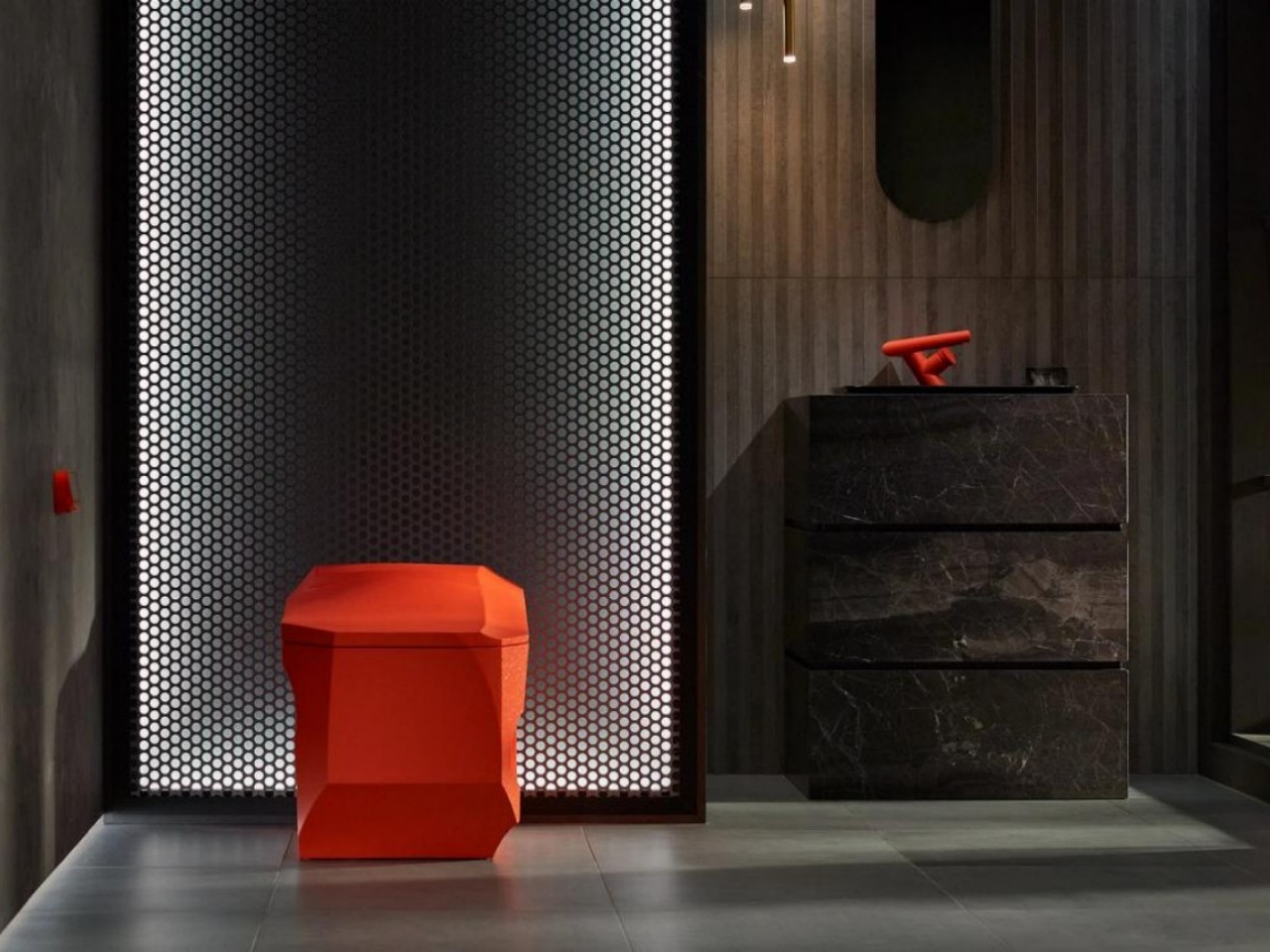
The Kohler Brutalist Smart Toilet reimagines conventional bathroom design with its bold aesthetic and innovative features. Inspired by the transformative power of water, this unique toilet combines a blocky, faceted form with a rugged texture, reminiscent of brutalist architecture. Despite its unconventional appearance, the Formation 02 remains a fully functional and comfortable toilet, equipped with smart features such as a heated seat and customizable bidet cleansing. With its distinctive design and advanced technology, the Kohler Brutalist Smart Toilet offers a one-of-a-kind bathroom experience that seamlessly blends style and functionality.
9. Play of Textures
Brutalist design embraces texture play, blending rough and smooth surfaces to evoke a tactile experience. This can be achieved by introducing materials like leather, metal, and textured fabrics.
Designer: Rich Holland
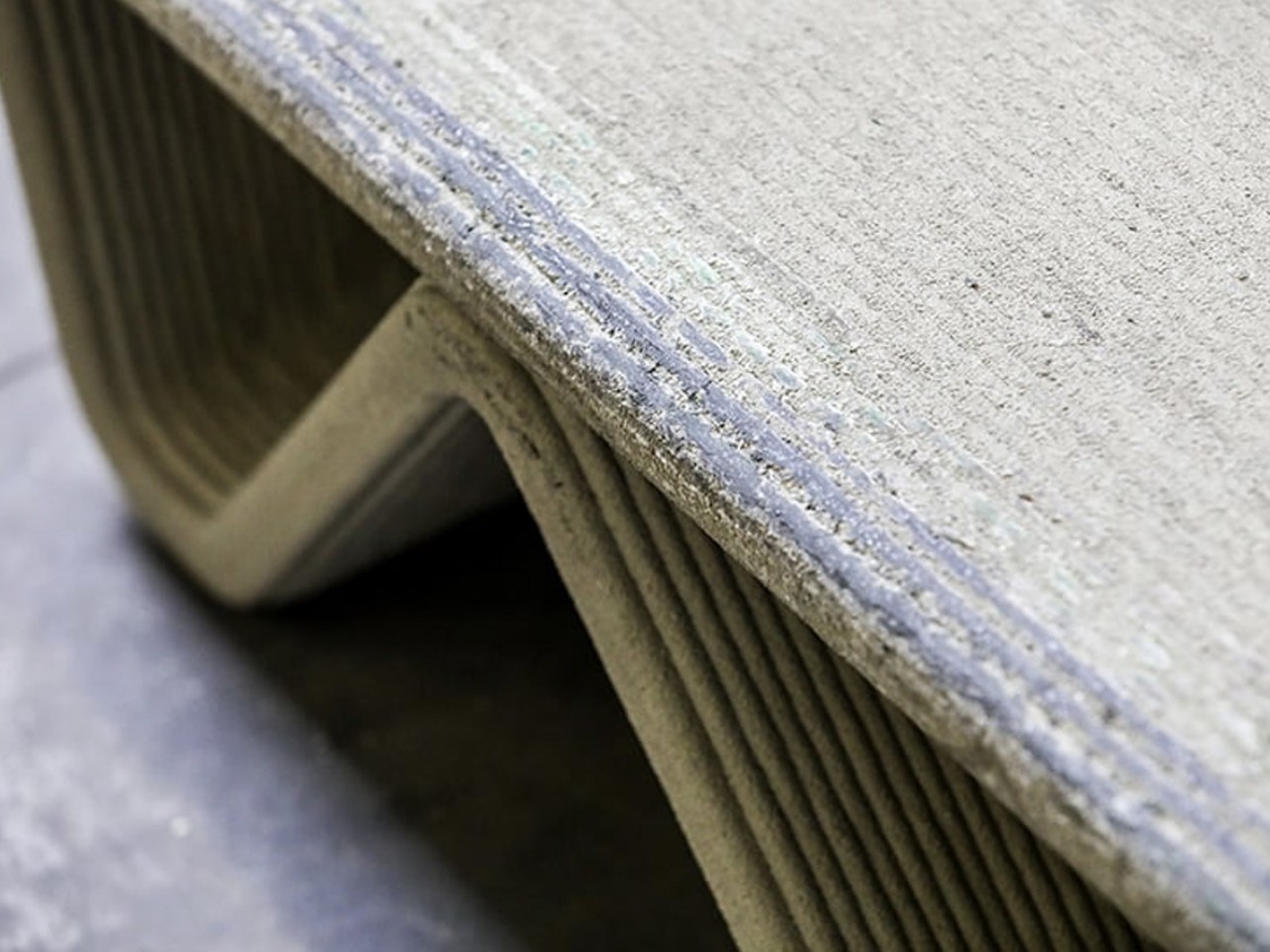
Rich Holland’s revolutionary skatepark endeavor in Southampton introduces groundbreaking 3D-printed concrete furniture to Guildhall Square. The PSFF Bench, a remarkable prototype, seamlessly combines sculptural grace with sports-centric utility. Prioritizing minimalism and longevity, these distinctive pieces redefine skate furniture on a global scale. Immerse yourself in the intersection of avant-garde design and skate culture through Holland’s iconic innovations.
10. Celebrates Imperfections
The Brutalist design aesthetic embraces imperfections and the natural aging of materials, enhancing the space’s character and authenticity by allowing materials to evolve and reveal their wear and patina over time.
Brutalist architecture declined in the 1980s due to shifting perceptions and concrete deterioration, but it is now making a comeback, influencing contemporary products and residential interiors, and being recognized for its unique contribution to architectural heritage. However, Brutalist design continues to find its place in graphic design, web design, and product design.