Sony AI released a dataset that tests the fairness and bias of AI models. It's called the Fair Human-Centric Image Benchmark (FHIBE, pronounced like "Phoebe"). The company describes it as the "first publicly available, globally diverse, consent-based human image dataset for evaluating bias across a wide variety of computer vision tasks." In other words, it tests the degree to which today's AI models treat people fairly. Spoiler: Sony didn't find a single dataset from any company that fully met its benchmarks.
Sony says FHIBE can address the AI industry's ethical and bias challenges. The dataset includes images of nearly 2,000 paid participants from over 80 countries. All of their likenesses were shared with consent — something that can't be said for the common practice of scraping large volumes of web data. Participants in FHIBE can remove their images at any time. Their photos include annotations noting demographic and physical characteristics, environmental factors and even camera settings.
The tool "affirmed previously documented biases" in today's AI models. But Sony says FHIBE can also provide granular diagnoses of factors that led to those biases. One example: Some models had lower accuracy for people using "she/her/hers" pronouns, and FHIBE highlighted greater hairstyle variability as a previously overlooked factor.
FHIBE also determined that today's AI models reinforced stereotypes when prompted with neutral questions about a subject's occupation. The tested models were particularly skewed "against specific pronoun and ancestry groups," describing subjects as sex workers, drug dealers or thieves. And when prompted about what crimes an individual committed, models sometimes produced "toxic responses at higher rates for individuals of African or Asian ancestry, those with darker skin tones and those identifying as 'he/him/his.'"
Sony AI says FHIBE proves that ethical, diverse and fair data collection is possible. The tool is now available to the public, and it will be updated over time. A paper outlining the research was published in Nature on Wednesday.
Update, November 5, 2025, 2:01 PM ET: This story has been updated to clarify that the participants were paid, not volunteers.
This article originally appeared on Engadget at https://www.engadget.com/ai/sony-has-a-new-benchmark-for-ethical-ai-160045574.html?src=rss
Nintendo has been a bit more focused on mobile apps in recent years, having released the likes of Nintendo Today! and Nintendo Music (not to mention games like Fire Emblem Shadows). Its latest one is Nintendo Store, which is out now on iOS and Android. This is a reimagining of the My Nintendo app the company debuted in Japan in 2020.
You can use the app to browse consoles, physical and digital games, accessories and merch. To complete a purchase, you’ll need to tap through to the product page on an in-app browser.
Nintendo says the app will keep you up-to-date on news about games, events and more. It can notify you when items on your wishlist go on sale too. If you go to a physical Nintendo store or event, you can use the app to check in and receive rewards.
There’s another intriguing feature here: a way to view your play time for any game across Nintendo’s last few consoles, including the 3DS and Wii U. You’ll have to link your Nintendo Network ID to your Nintendo Account to see your Wii U and 3DS data, but play activity on those systems after February 2020 isn’t factored in.
This article originally appeared on Engadget at https://www.engadget.com/gaming/nintendo/an-official-nintendo-store-app-hits-ios-and-android-151733629.html?src=rss
MagTran M3 — A Transparent Keyboard You Can Customize, Control, and Create With. November 2025, VSDinside, a collective of engineers and designers, has officially launched its next-generation keyboard, MagTran M3, now live on Kickstarter: Support MagTrans M3 AI Transparent Keyboard on Kickstarter MagTran M3 is more than a keyboard — it’s an intelligent, fully interactive […]
With the American market still struggling to get its head around the whole electric car thing, plenty of manufacturers are scaling back their EV ambitions to refocus on hybrid power. Whether that's right for the market and, indeed, the globe remains to be seen, but we can for sure expect to see a lot more cars with internal combustion over the next few years.
Honda has made its plans clear on that front, which might be cause for concern among many for one simple reason: Outside of the NSX, the company's hybrids thus far haven't exactly been the most engaging of machines. That, though, could change with a new set of hybrid platforms launching soon that'll be lighter, quicker and even more fun to drive.
At the company's extensive proving grounds outside of Tochigi, Japan, I was given a go in a pair of cars that gave me reason to be optimistic about this next generation of electrically assisted but still combustion-dependent machines. They rely on a series of advancements that come together to form three different platforms: Small, Medium and Large.
Collectively, they're known as the Next Generation Hybrid System, and each one is designed to be modular, able to be scaled up or down to fit different models while still keeping their fundamental sections the same. Platform sharing like this makes it much easier (and cheaper) for manufacturers to roll out new machines and to do it quickly. With Honda looking to ramp up its hybrid offerings, that's key.
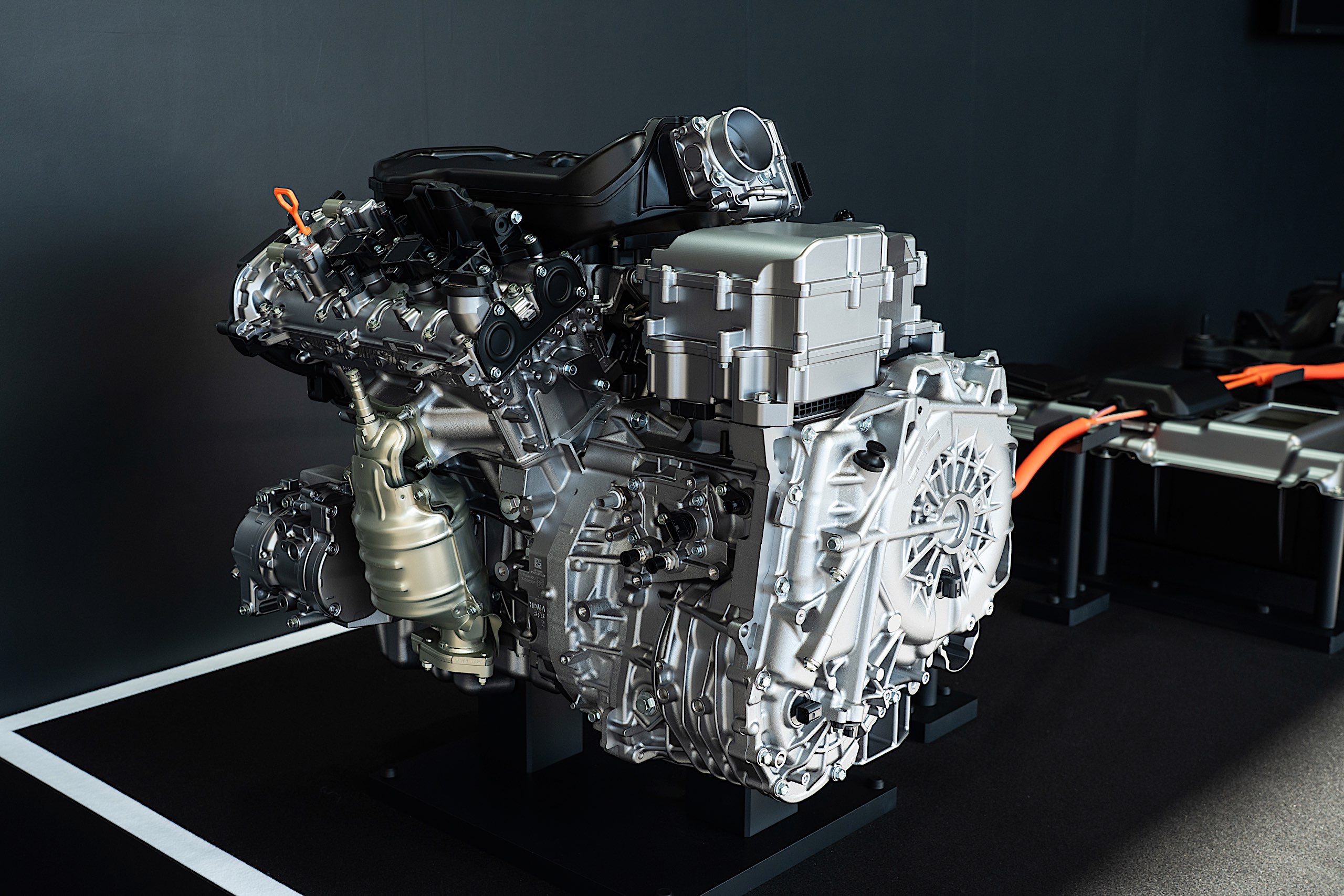
The the engine for Honda's "Large" next-gen hybrid system
Tim Stevens for Engadget
These platforms encompass things like chassis, engines, electric motors and electronics, plus the wonderful web of software required to tie it all together. Reducing weight is a huge focus here, with Honda's engineers coming up with a way to maintain crash safety while dramatically reducing the size of the front and rear subframes. This alone equates to a weight savings of some 90 kilograms (about 200 pounds) in a vehicle the size of a Honda Civic.
Lighter weight means more efficiency and better fuel economy. There's also a commensurate reduction in cost of 10 percent for manufacturing versus the company's current platforms, plus promises of increased grip and reduced road noise.
The smallest of Honda's new platforms is destined for Honda's smallest cars, including ultra-minis that swarm Japanese streets but have rarely found much success in the United States. For now, at least, we won't be getting any cars based on that platform.
The Medium and Large platforms, though, will be tucked in neatly throughout many next-generation cars from the brand. Medium will be suitable for four-cylinder machines like the Civic and crossover SUVs like the HR-V. The Large platform, meanwhile, will be used for bigger V6 machines, like the Ridgeline and Passport.
Each system ties that engine to a pair of electric motors, plus an optional third electric motor at the back for all-wheel drive. A revised, more compact battery provides the high-voltage current to power the system. It's tucked in beneath the rear seat.
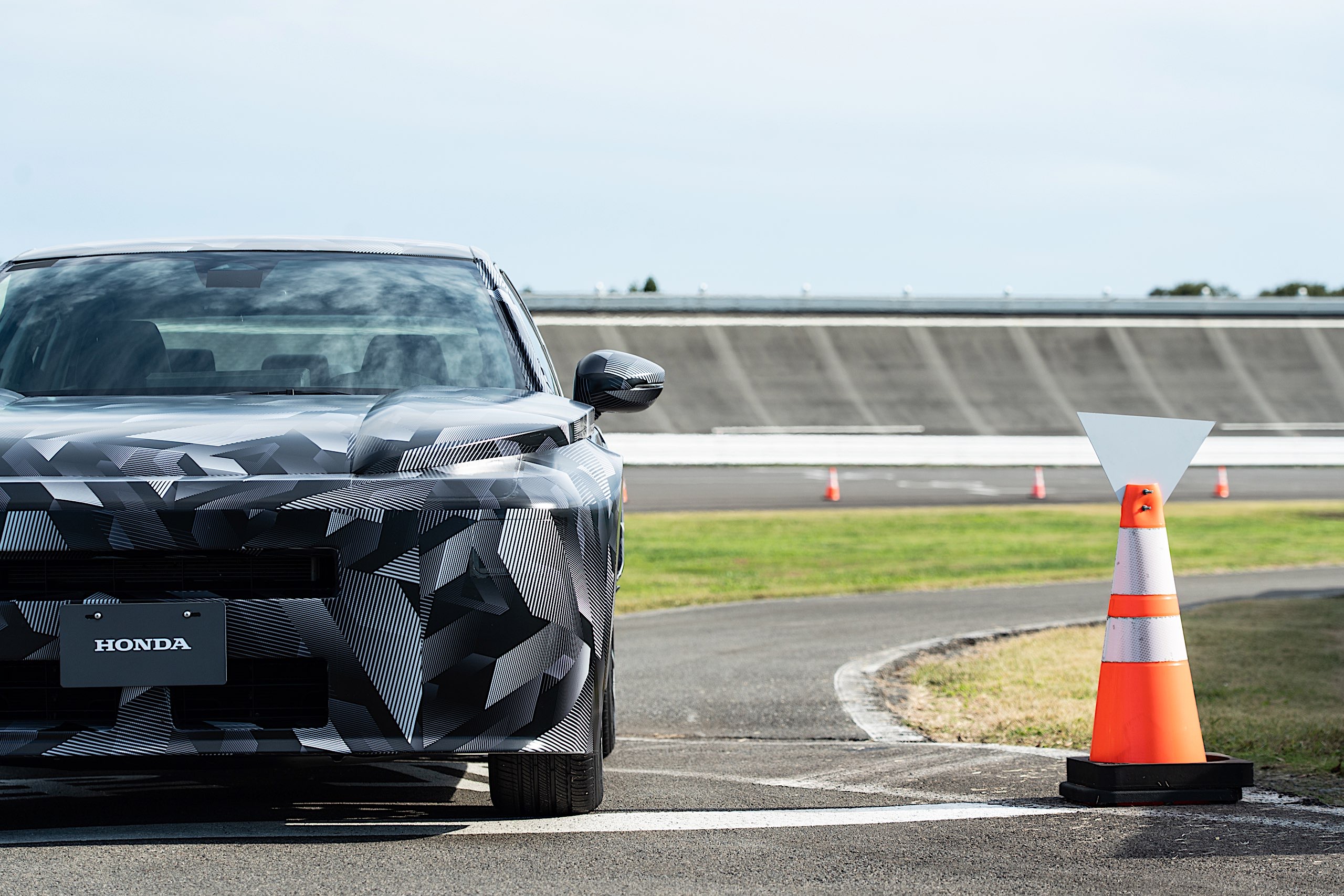
A next-gen prototype on track at Honda's facility near Tochigi, Japan
Tim Stevens for Engadget
None of that is radically different from what can be found in Honda's current hybrids. And, like those, these new hybrids will be able to run in an effective series hybrid mode, where the engine just charges the battery and the car drives exclusively using the electric motors. Or, step on that throttle harder at higher speeds and the car can directly engage the engine to power the car forward.
That's all familiar, but a few changes could have some significant impacts. On the Large platform, a new transmission enables the car to have both a "hi" and "lo" gear range, which could be a boon for anyone towing their trusty trailer up into the mountains for a weekend getaway.
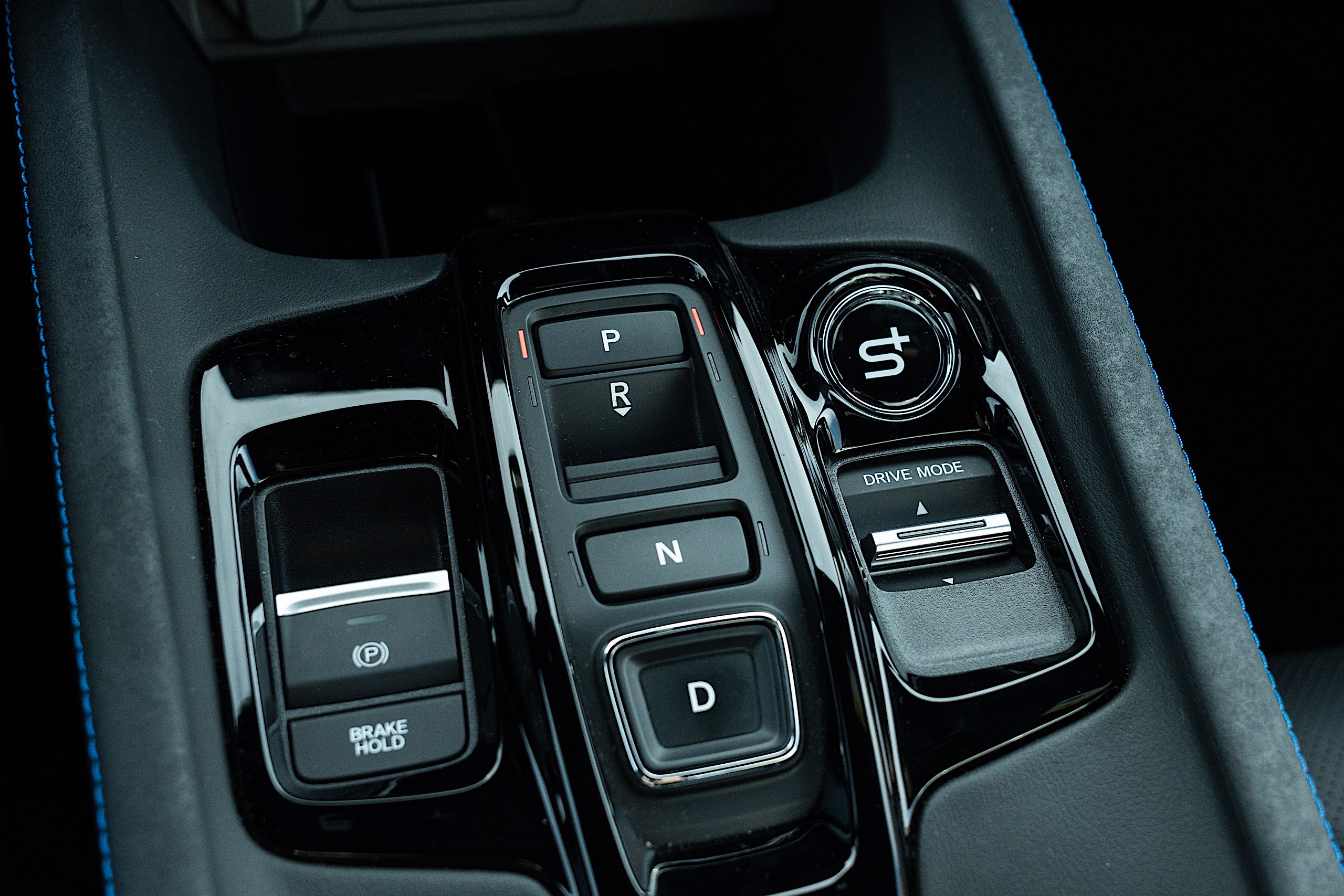
The Medium-sized platform can do some shifting, too, but it's only pretend shifting here using a system called S+ Shift. At the press of a button (conveniently labeled S+), this new technology creates the experience of driving a virtual eight-speed transmission that you can run up or down through by pulling on the shift paddles on the back of the steering wheel.
Since, again, these hybrids are driven by their electric motors, shifting isn't really doing much of anything but making the engine rev more or less. But, by varying the electric motor's output and regeneration, you get a surge of extra resistance on deceleration and a kick of acceleration on upshifts, all to simulate the feeling of a proper transmission.
I confess that I was very skeptical about how this system would really help when I went to Japan, but I was wrong. It's great. Honda prepared a prototype sedan for me to drive, and it looked all the world like a current-gen Civic up top, except with a rather large nose stuck on the front and some decidedly pronounced flared fenders.
Underneath the skin was a completely different machine, built around a front-drive version of the next-gen platform. It sounded great to start, helped by what looked like a sport exhaust at the back, plus no shortage of digital augmentation coming through the speakers.
The S+ button on Honda's upcoming Prelude hybrid
Tim Stevens for Engadget
But the S+ Shift mode really made a compelling difference, too. Even though you're really just needlessly revving that hybrid engine more or less, and actually making the system less efficient, the result is a car that feels responsive and in control, rather than something just droning on as deftly as possible.The way the car responds, aggressively downshifting as you brake for corners and giving you a little kick with every upshift on the way out, it made me smile.
The rest of the car did, too. Honda's test track was far too smooth for me to sample the improved ride quality or reduction in road noise, but the car's handling felt good and its steering sharp, not quite as remarkable as the current Civic Type R but, again, way more fun than today's humble Civic Hybrid.
Honda hasn't announced where this new platform will first appear, but if you want to get an early taste of S+ Shift, it'll be debuting in the upcoming Honda Prelude hybrid. That reborn coupe lacks all the other advancements to be found in Honda's next-gen platform, but it does offer the S+ virtual shifting. It's remarkably effective here, too, and with lots of parts sharing with the Civic Type R, the Prelude was a surprisingly good time.
While the Prelude is hitting dealers soon, to sample cars featuring the next-gen hybrid platform, you'll have to wait a little longer. Honda representatives said it'll start showing up beneath the flesh of its machines starting as soon as next year. Based on the shape of that prototype I drove, I'd say a next-generation Civic will be among the first to sport it.
This article originally appeared on Engadget at https://www.engadget.com/transportation/driving-hondas-lighter-faster-and-more-fun-next-gen-hybrid-prototype-150000472.html?src=rss
Every two years, the Japan Mobility Show gives us a preview of the future of motoring as envisioned by the major Japanese manufacturers. Sadly, for Honda, the resounding message coming from this year's show was that the future is getting a little farther away. That's the case for American drivers, at least, thanks largely to the effects of the Trump administration according to Honda CEO Toshihiro Mibe.
In Tokyo this year, the company unveiled a trio of cool, next-gen electric vehicles at the show, each more compelling than the next. First up is the new 0 Series α, a new addition to the 0 Series of EVs that Honda has been teasing us with for a few years now.
Back in January at CES, the company showed off the evocatively styled 0 Saloon and 0 SUV. Both made quite a stir, particularly the former, which was impossible to admire without picking up strong Lamborghini vibes. Mibe confirmed that those cars are still on track, coming towards the end of 2026 or 2027. However, expected sales have been reduced.
Mibe didn't give specifics there, only saying: "The volume initially will probably be less than we had envisioned earlier."
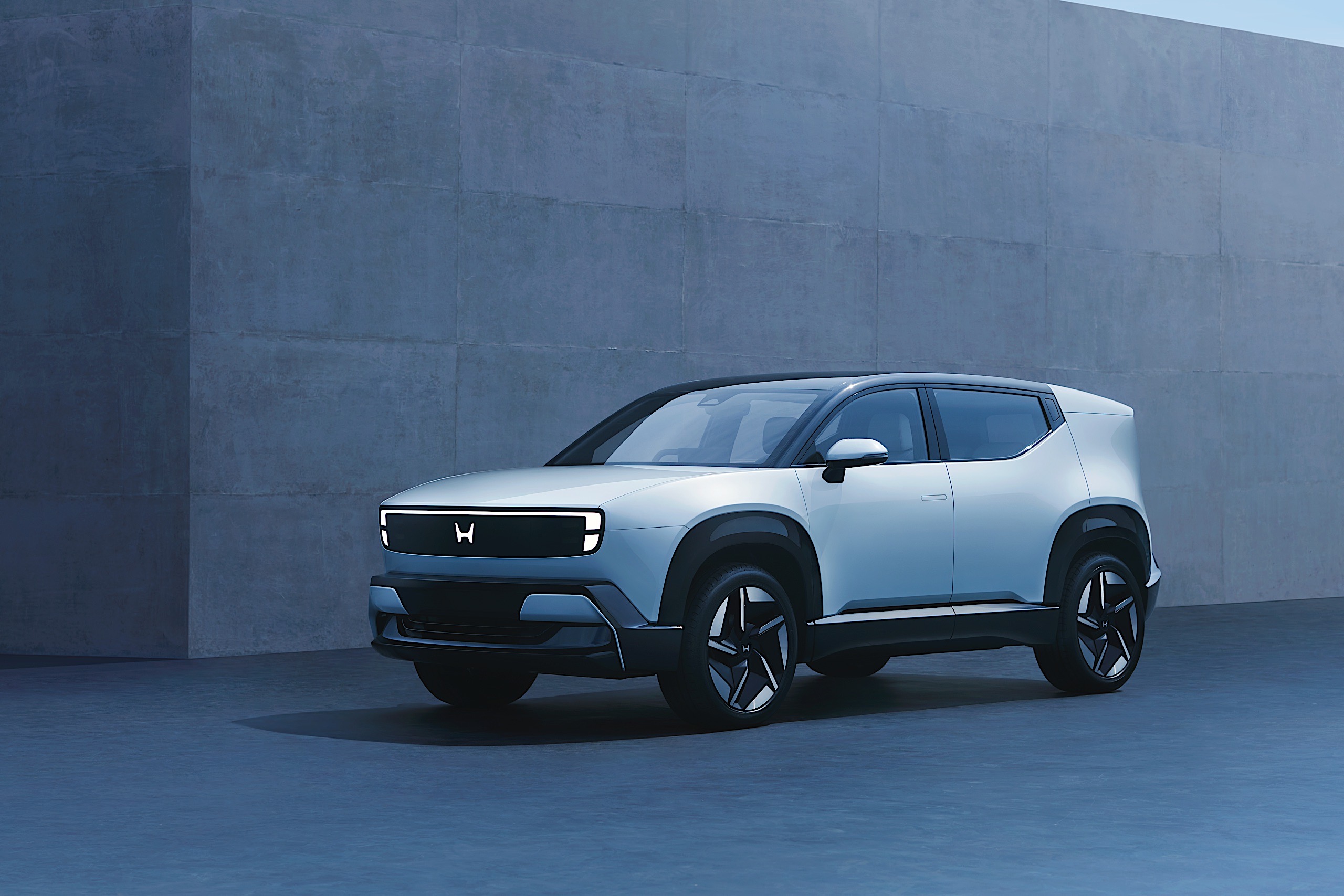
Honda 0 Series α EV looks similar to the SUV prototype from CES 2025
Honda
The newly unveiled 0 Series α is a new, third member of Honda's nascent next-gen EV family. It looks nigh identical to the SUV concept, but in reality, it's significantly smaller. It will be cheaper, too, enabling it to target the Indian market. It has a hope of going elsewhere in the world, including Japan and Europe, but Honda representatives said repeatedly that it's not for the American market. Mibe said it's "probably too small" for the US market.
So, too, the Super-One Prototype. This tiny hatchback made a run up the hill at the Goodwood Festival of Speed earlier this year, wrapped in camouflage to hide its decidedly angular profile. In Tokyo, Honda stripped off the graphics, revealing a cheeky mini-sized machine with big box fenders and endless personality. While Honda didn't quote a power output, it surely won’t be a rocket ship, but with the instant torque of an EV, plus a variety of selectable synthesized engine notes, it should still be a mighty good time.
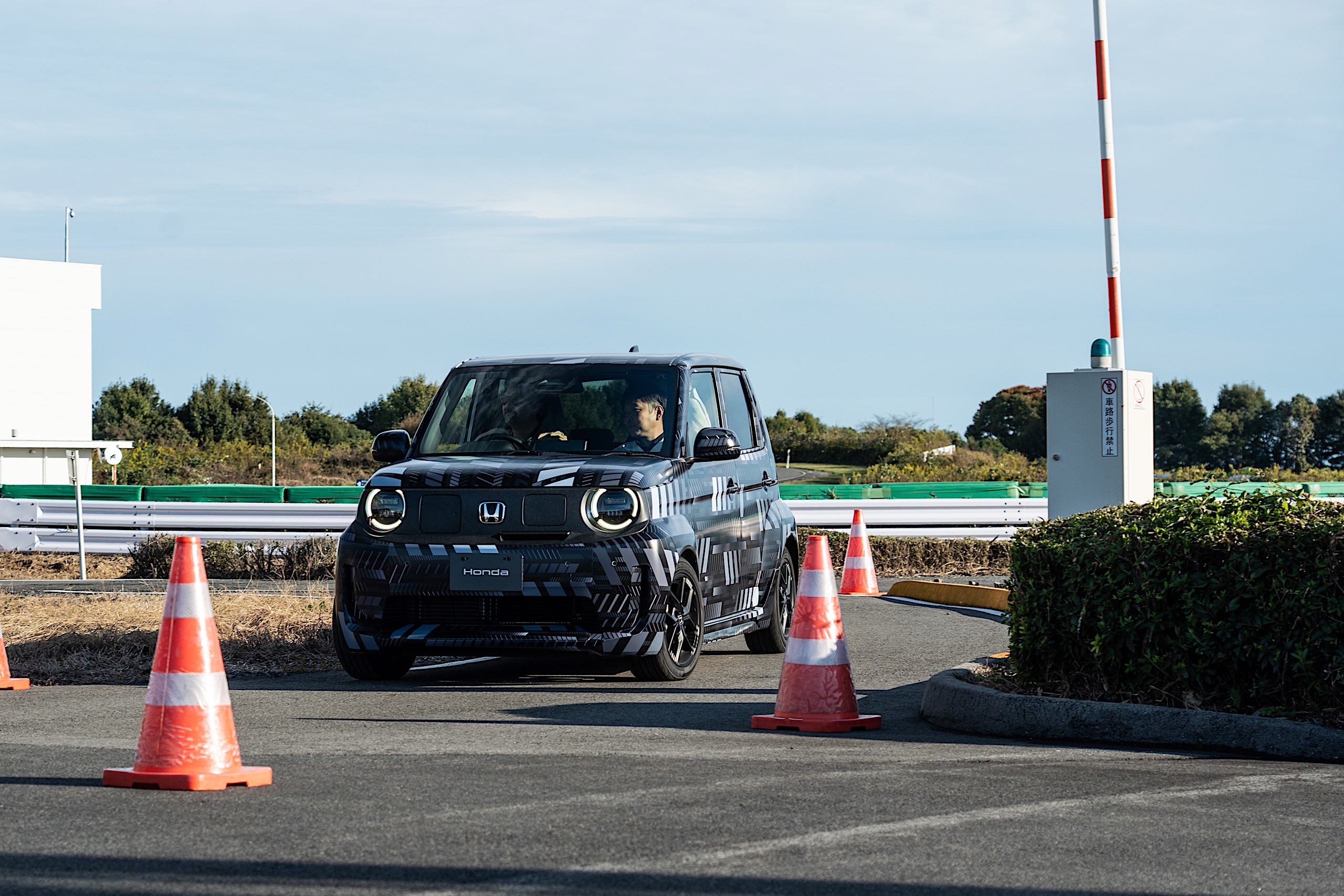
Indeed, it was. I got a brief go behind the wheel of a prototype machine at Honda's proving grounds in Tochigi, Japan. Though it wasn't much for outright speed, the brisk acceleration combined with petite dimensions made me grin ear-to-ear. Sadly, though, that's probably the only chance I'll ever get to drive one. The Super-One is intended for drivers in Japan and the United Kingdom, with potential expansion elsewhere in Europe based on demand.
Driving the Honda Super-One on a test track near Tochigi, Japan
Tim Stevens for Engadget
America has never been a great market for machines of that size, so it shouldn't be a surprise that these two aren't US-bound, but it is part of a more troubling trend. Honda has largely paused its efforts to develop low-cost EVs for the American market, waiting for political headwinds to come around.
"With the Trump administration in place, we have a sense that maybe the EV growth has been moved back out by maybe five years or so into the future. So, the timing for doing anything will be difficult," he said. "2030, at that point in time, maybe we need to provide a wide, broad product range, including EVs. So, we will have to think about future strategy for the US market."
Tellingly, Mibe said that they're actively watching American mid-term elections, to see whether there's any hope of the political climate changing in the future.
Just like in discount furniture stores, volume is the real factor here, particularly when it comes to battery production. The company's partnership with General Motors was an attempt to do just that.
Honda's Super-One prototype isn't much for speed, but that's okay
Tim Stevens for Engadget
"Our first objective in collaborating with GM was to expand the volume to reduce the cost," he said. "I believe the aim there, from on the side of GM, was the same."
That partnership, however, was aborted after just the Honda Prologue and Acura ZDX reached the market, leaving Honda to go its own way for now, at least, bereft of a partner to boost its battery volume.
This could complicate Honda's plans to be totally carbon neutral by 2050, a pledge that Mibe said is still very much in the cards. To start in that direction, the company will push more towards advanced hybrids of the sort we'll get our first taste of starting next year. (I also got to sample that while I was out there, which you can read about here.)
However, while these new hybrids will decrease consumption and further reduce the carbon footprint of a given car, they will not completely eliminate it. So, Honda is working on other means of decreasing the company's effective carbon footprint, including direct air capture (DAC), devices which can suck carbon dioxide straight out of the air — a long-time environmental dream that's always seemed just a few years away.
So small, cheap EVs aren't in the plans for the immediate future, but Honda isn't totally giving up on its US EV aspirations. Again, the 0 Series SUV and Saloon are due next year. Mibe said there's another, even larger EV due for the American market sometime after 2030, but that too could depend on which way the American government swings between now and then.
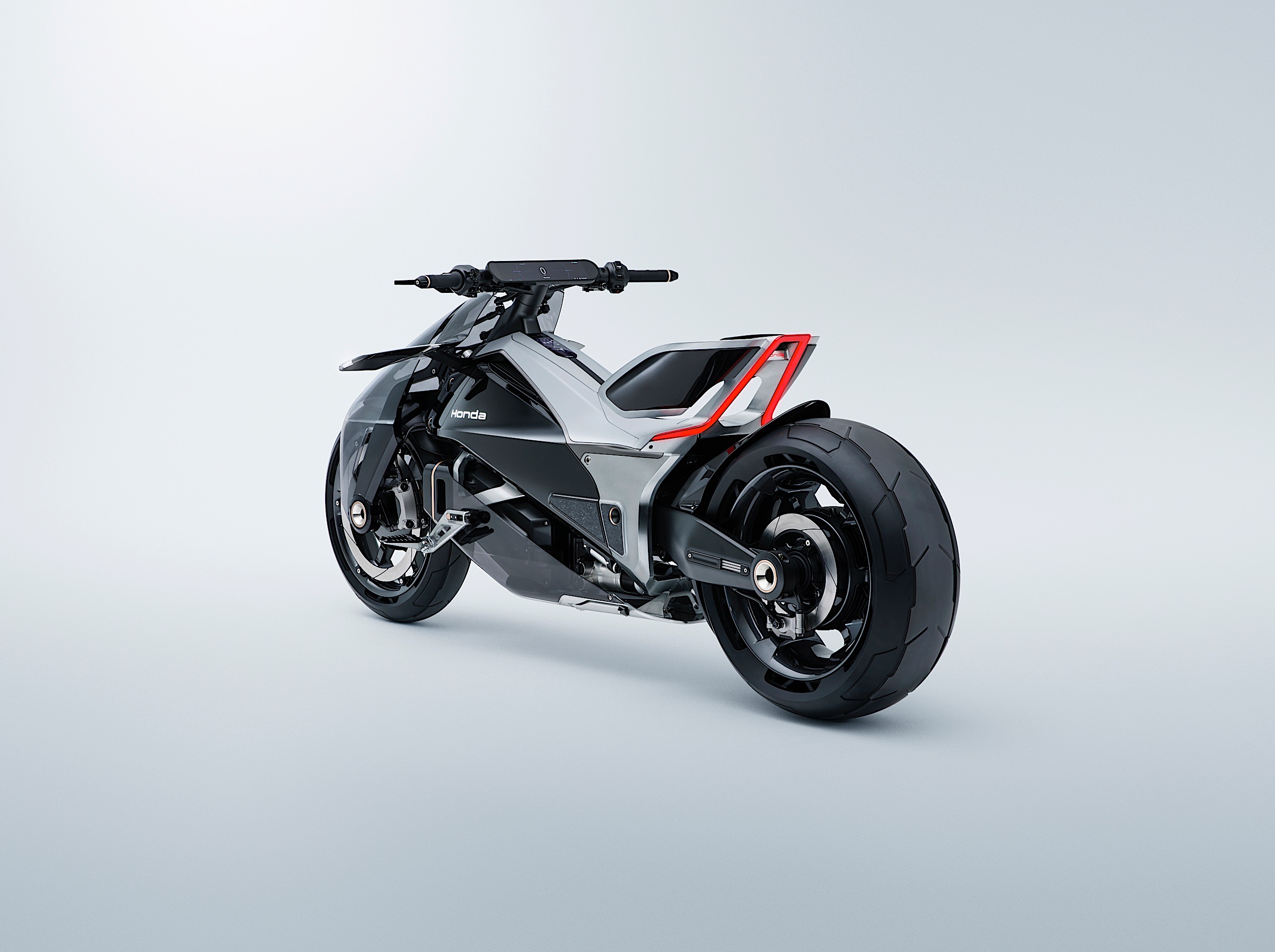
Honda's EV Outlier is an electric motorcycle concept with sci-fi looks
Honda
If all's looking well, we might eventually get a taste of another electric concept that Honda rolled out at the show. Called the EV Outlier, it's an electric motorcycle with a lean, sharp style and a laid-back riding position that is hard not to read as at least partially inspired by that most iconic sci-fi motorcycle of all time: Kaneda's bike in Akira.
This one isn't red and it lacks the distinctive stickers, but like Kaneda's bike, both wheels are driven by electricity. It relies on a pair of integrated hub motors to provide the thrust, and if the width of the rear tire is any indication, there'll be plenty of that.
A sweeping, free-standing digital display serves as the dashboard, and controls are minimalist in a way that only a concept bike can be. Honda said this might be ready for production by 2030, but the svelte packaging here may necessitate next-generation, solid-state batteries to make that a reality.
Those batteries, Mibe said, are still progressing. Honda has a prototype production line in process, so they're actually building the things and trying to turn them into viable products.
But that's only if Honda can overcome some significant engineering challenges between now and then, and if the US government dials back on the EV hate by the end of the decade. Those are two pretty big ifs, and I confess I'm not sure which poses the biggest challenge.
This article originally appeared on Engadget at https://www.engadget.com/transportation/evs/honda-shows-off-three-new-evs-in-tokyo-but-its-us-plans-are-getting-more-tepid-150000775.html?src=rss
What if you could map an entire cityscape in just a day, capturing every detail with pinpoint accuracy, even through dense vegetation or challenging terrains? The DJI Zenmuse L3, a new aerial LiDAR system, promises to do just that. Designed for professionals who demand precision and efficiency, this innovative tool is reshaping the way industries […]
Choosing the right iPad in 2025 can be a challenging task, given the extensive lineup and diverse features Apple offers. Each model caters to specific needs, whether you are a professional seeking top-tier performance, a student balancing productivity and affordability, or a casual user looking for convenience. The video below from That Mark Gilroy explores […]
Most mice and trackballs try to do it all with extra buttons, flashy RGB lights, and complicated software that requires constant updates and configuration tweaks through bloated apps. But sometimes simplicity wins when you just need precise control and reliability without the extras. For anyone who values portability and the freedom to tinker with their gear, finding the right pointing device can be a challenge in a market flooded with gaming-focused options.
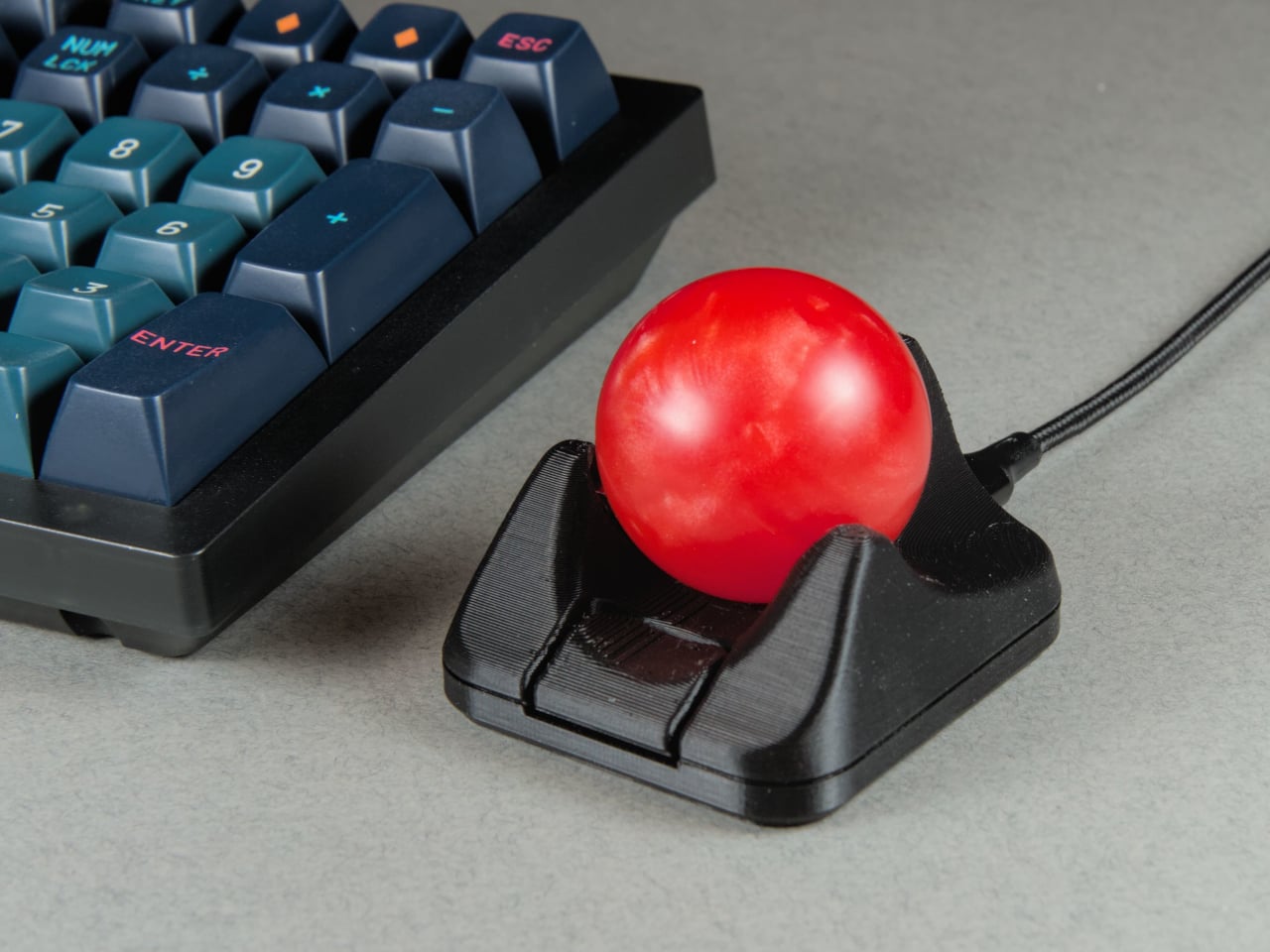
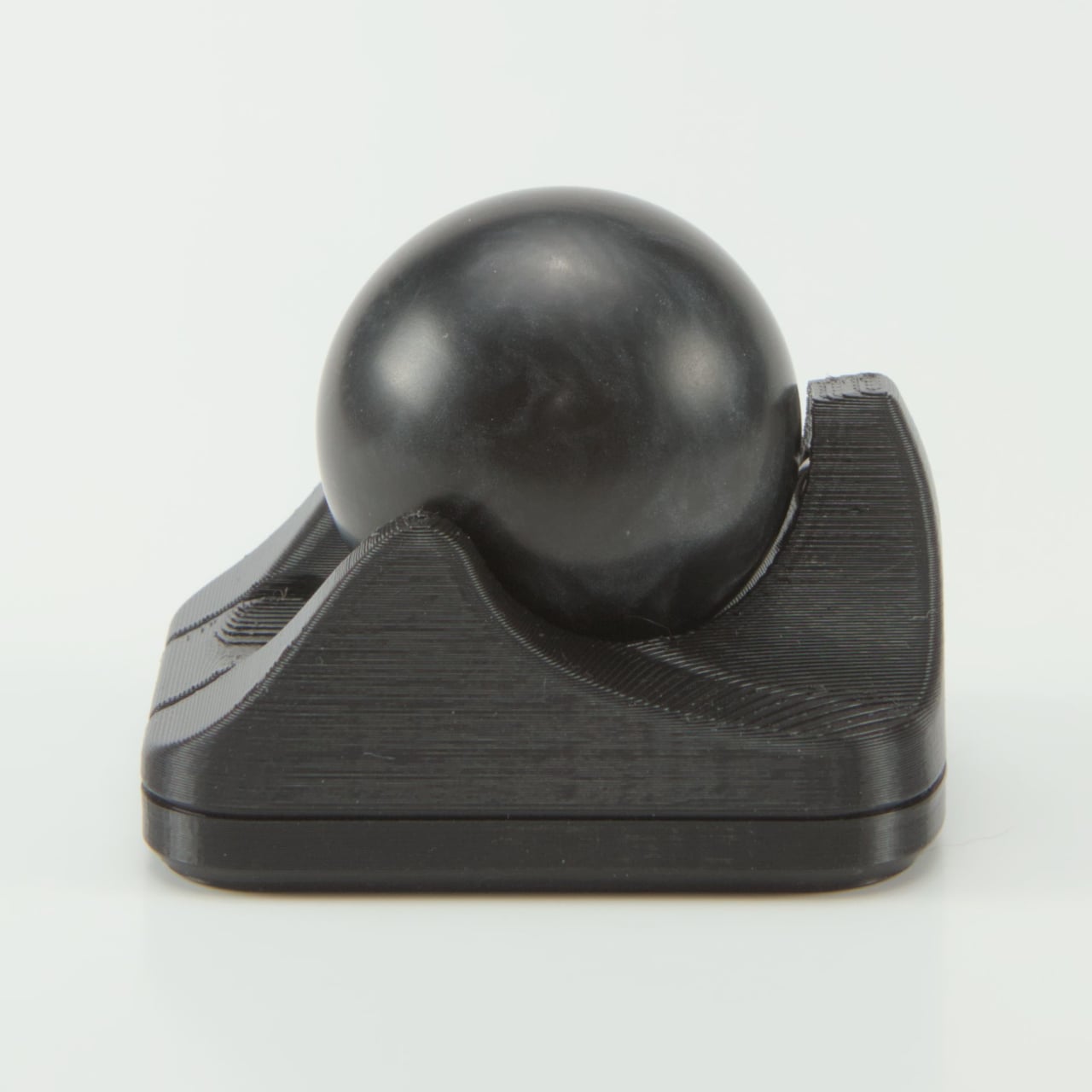
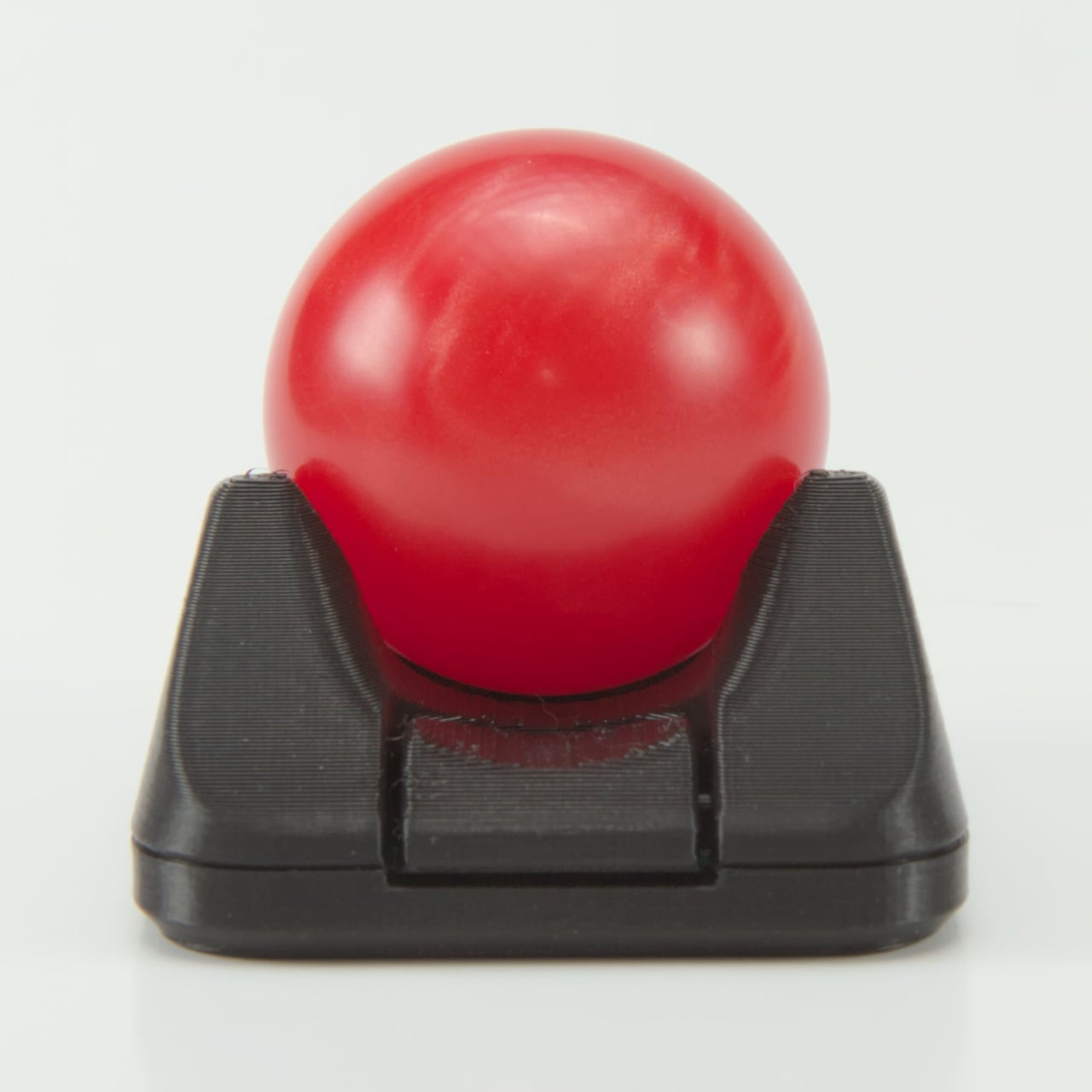
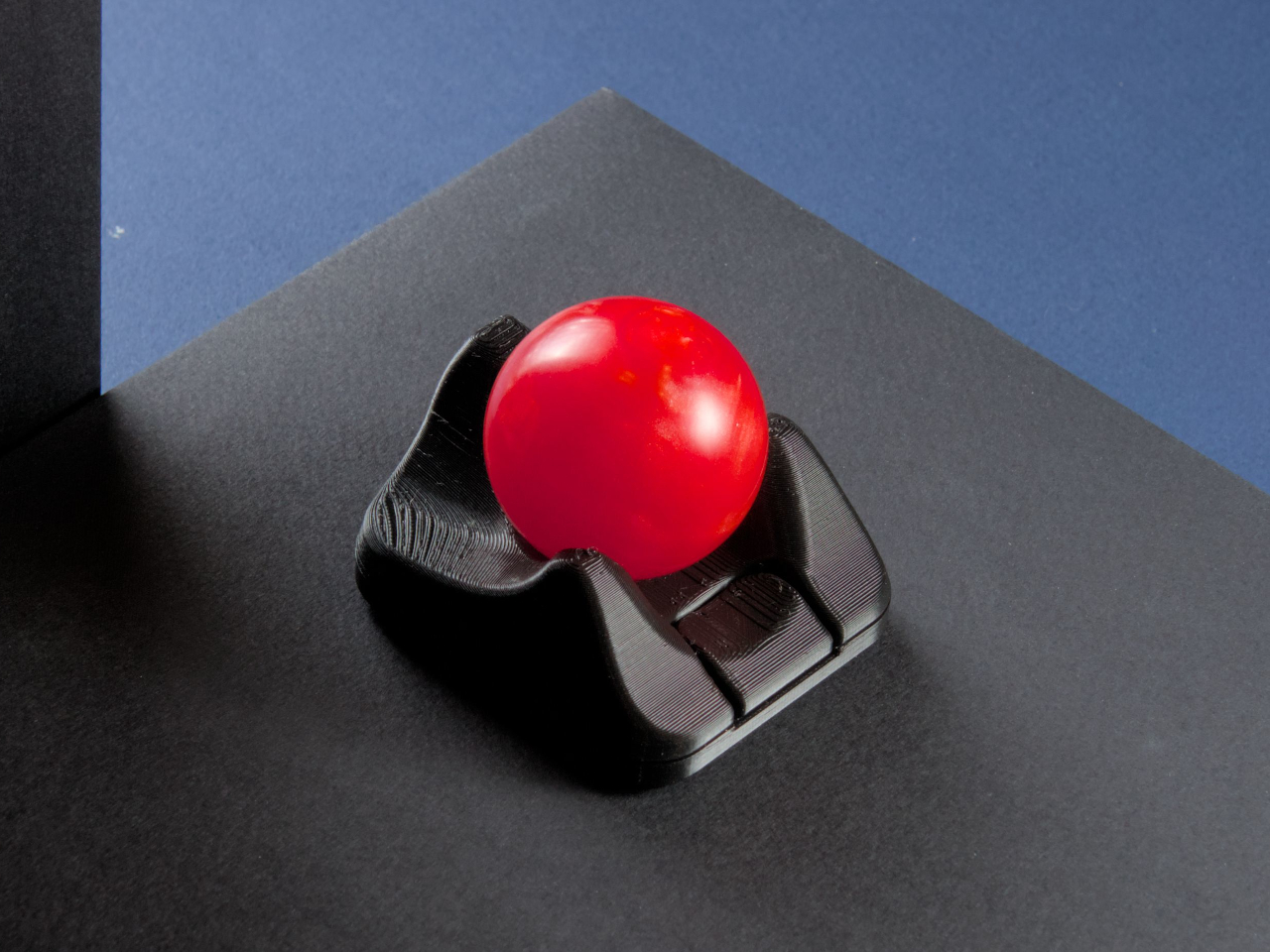
The Ploopy Nano 2 trackball is a refreshing alternative that strips away the unnecessary extras and focuses on what matters. It’s ultra-compact, open-source, and designed specifically for customization by users who want complete control over their tools. Priced at $59.99 CAD, about $43 USD, it’s made for makers, coders, and anyone who wants a mouse that fits their workflow perfectly without forcing adaptation to preset configurations.
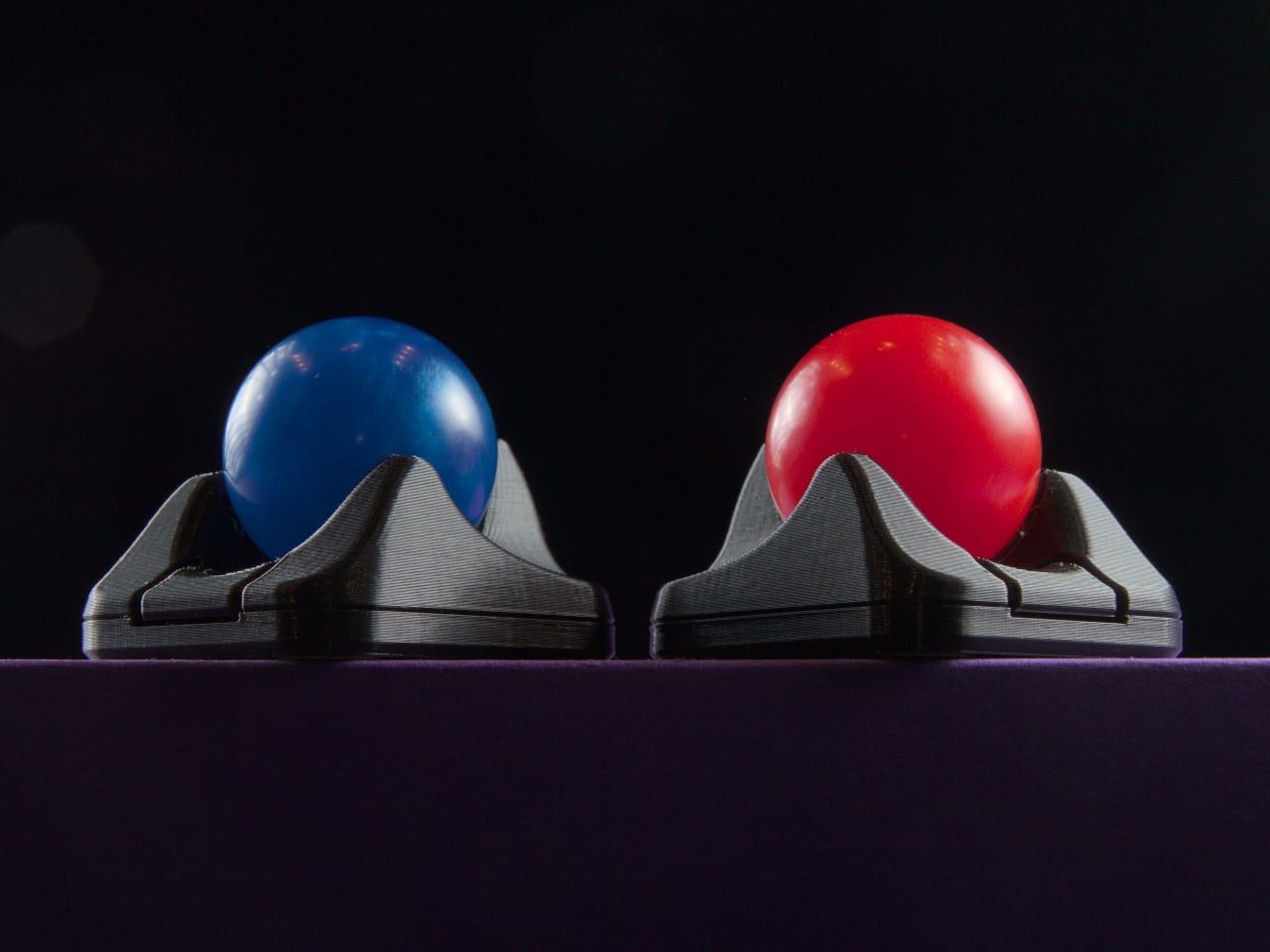
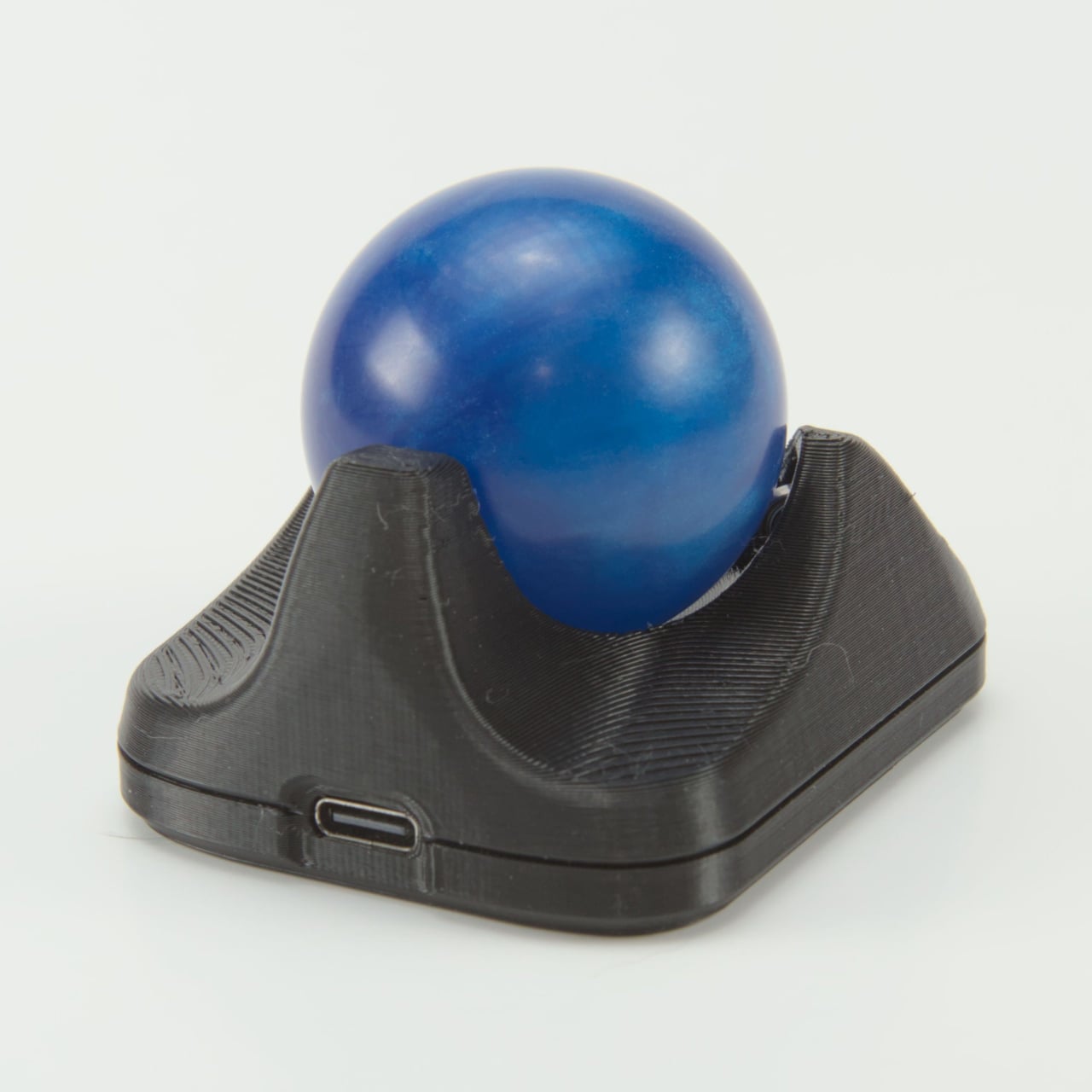
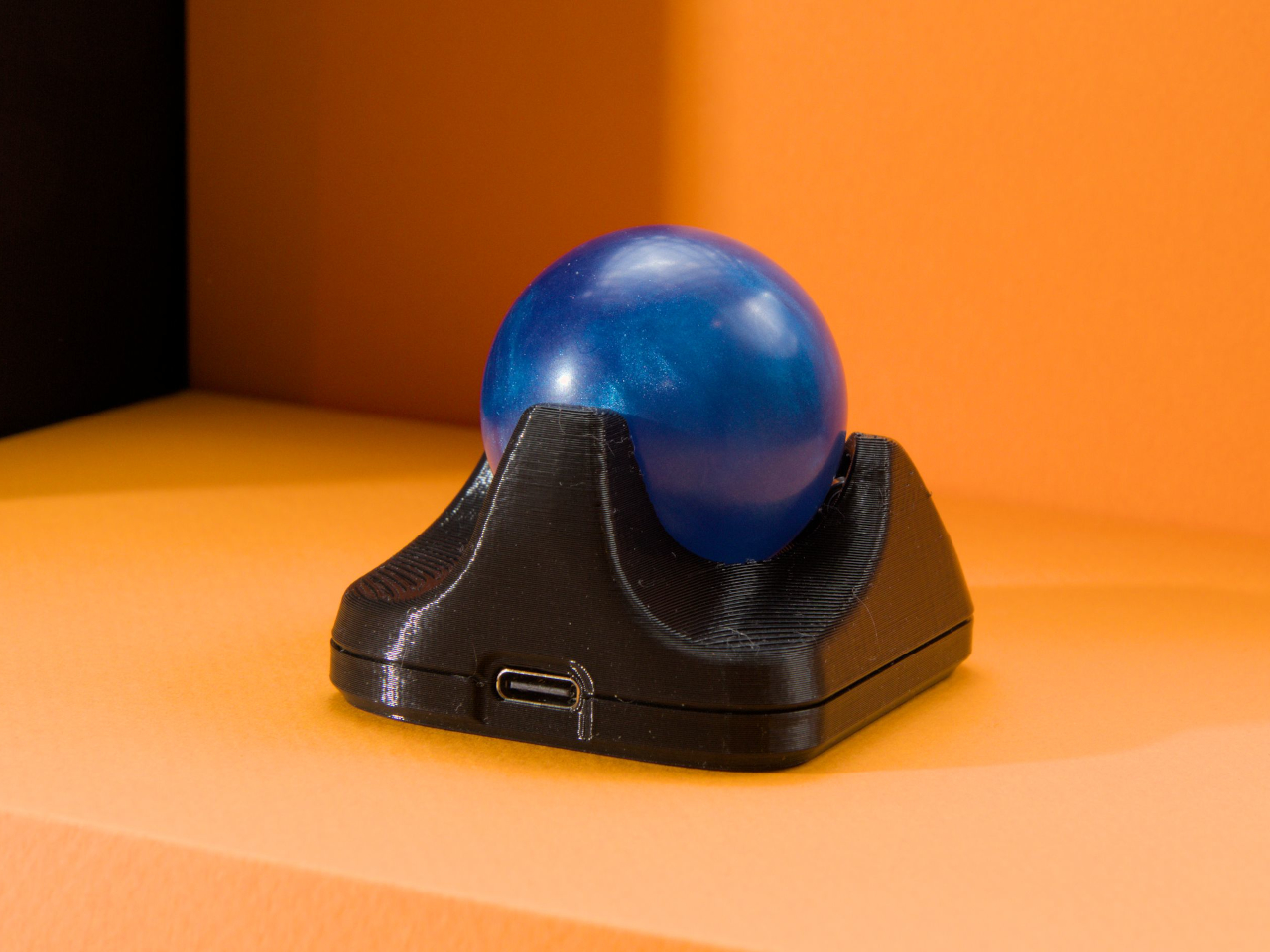
The Nano 2 features a compact footprint that sits easily beside any keyboard without dominating valuable desk space for other gear. The 3D-printed body in opaque black, paired with tracking balls in red, blue, or black for personal preference, feels solid and purposeful in use during extended sessions. The minimalist design and low profile make it easy to integrate into any setup, from home offices to creative studios, without clashing with existing equipment.
Roller bearings give the 1.5-inch ball a satisfying, tactile feel during use, though they do make a scratchy grinding sound that’s part of the Nano’s mechanical character and feedback. Some users love the audible feedback as confirmation of movement, while others may find it distracting in quiet library or office environments. The sound is noticeable but adds to the analog, mechanical feel that distinguishes it from silent optical trackballs.
The big upgrade is the PAW-3222 sensor, which delivers a polling rate over 1,000Hz, up to 4,000 CPI, and 10g acceleration for smooth, precise tracking during demanding design or coding work. The new button triggers drag scrolling by default out of the box, but thanks to QMK and VIA support, you can remap it to anything you need instantly, from click to macro to custom functions.
USB-C replaces the old micro-B port found on the original Nano, improving durability and making charging and programming easier for modern setups with universal cables you already own. As with all Ploopy devices, the Nano 2 is fully open-source, with hardware under the CERN OHL license and firmware under the GPL for complete transparency and user freedom. Assembly guides, modding tips, and all design files live on GitHub.
Whether you’re coding complex projects, designing graphics, or just want a minimalist pointer for your laptop bag during travels and commutes, the Nano 2 brings personality and function to your workspace effortlessly without taking up space. Its compact size, open-source roots, and tactile feel make it a conversation starter and a daily companion for anyone who values control and creativity in their desktop tools.
What happens when innovation collides with corporate control? This is the question at the heart of a growing legal battle between Amazon and Perplexity AI, the developer of the AI-powered browser Comet. Amazon has issued a stern warning to Perplexity AI, demanding it stop allowing users to shop on its platform using Comet’s agentic AI […]
What if the way you interact with technology could feel as natural as a conversation with a friend? OpenAI and legendary designer Jony Ive are quietly working on a device that could make this vision a reality. Slated for release no earlier than 2026, this collaboration isn’t just about creating another gadget, it’s about fundamentally […]