A new Nintendo Switch 2 system update just bricked many third-party docks

The most recent Switch 2 software update looks to have bricked many third-party docks and related accessories, according to users across the internet and a report by Kotaku. We don't know if this was an intentional move by Nintendo or simply an accident. Engadget has reached out to the company for clarification.

The Switch 2 update 21.0.0 brings some much-needed quality-of-life features, like the ability to turn off autoplaying videos in the eShop and new icons that indicate whether a game is digital or physical. However, it also brought along the aforementioned dock hiccup.

Switch 2 owners have reported that these docks either don't work at all or are now much more finicky, often requiring a restart. This doesn't seem to have impacted all third-party docks, but complaints are coming in pertaining to many different products. YouTuber AustinJohnPlays tested out two different Switch 2 dock dongles after the update and reported that both were borked.

Nintendo has responded to these allegations, suggesting that this was an accident that only impacted certain devices. The company wrote that it "does not have any intention to hinder or invalidate legal third-party dock compatibility." Sometimes new console firmware impacts third-party accessories. At the very least, this was something that happened to the original Switch a couple of times. 

The companies that make these accessories will have to perform their own software updates to get things going again. In the meantime, exercise caution when buying a third-party dock. 

Update, November 14 2025, 12:55PM ET: This story has been updated to include Nintendo's response and a likely cause of the issue. 

This article originally appeared on Engadget at https://www.engadget.com/gaming/nintendo/a-new-nintendo-switch-2-system-update-just-bricked-many-third-party-docks-194551477.html?src=rss

Tesla is reportedly testing Apple CarPlay in its vehicles

Tesla may finally be capitulating to the calls of iPhone users wanting what practically every other major automaker offers them, Apple CarPlay. Bloomberg is reporting that the EV giant is working to add Apple’s car infotainment integration to its vehicles, according to the outlet’s sources. The feature has reportedly begun internal testing and could be ready for release in the coming months. Of course, development and testing of the feature is not a guarantee that it sees the light of day.

An about-face of this magnitude would be truly surprising given Tesla’s years of steadfast commitment to its own infotainment solution, which doesn’t require connecting a smartphone. In the past, there has been a somewhat frosty relationship between Tesla CEO Elon Musk and the iPhone maker. Musk once said that he offered to sell Tesla to Apple when the Model 3 program almost bankrupted the company, but said Tim Cook refused to take the meeting. Apple had also previously poached key Tesla employees for its failed Apple Car project.

Tesla will reportedly be including CarPlay in a separate window within its existing software interface, ensuring it won’t be fully replacing the existing Tesla system. Bloomberg also reported that Tesla would be using the standard version of CarPlay, as opposed to the newer CarPlay Ultra that integrates with the vehicle’s instrument cluster.

This would be an interesting time to jump on the bandwagon as Apple CarPlay may be just past its peak. GM recently announced it would be phasing out support for both CarPlay and Android Auto in favor of a system built around Gemini, which seems to go directly against the popularity of the platform. Ford's CEO recently expressed disappointment in Apple's latest beefed up version of the tool. Tesla did not respond to requests for comment on the report, and at the time of publication Elon Musk has not commented either.

This article originally appeared on Engadget at https://www.engadget.com/transportation/evs/tesla-is-reportedly-testing-apple-carplay-in-its-vehicles-192505635.html?src=rss

Black Friday deals include this Roomba robot vacuum for only $130

Robot vacuums can be a huge help, keeping your floors clean regularly without much extra work on your part. Black Friday deals often include some of our favorite robovacs, and this year is shaping up to be no different. iRobot's entry-level Roomba 104 Vac robot vacuum is available for 48 percent off right now, bringing it down to a record low of $130. A number of other Roombas are on sale for Black Friday, too.

In iRobot's lineup of robot vacuums, the Roomba 104 sits on the low end, adept at vacuuming up dust and hair, but without the mopping ability of its more expensive Max, Plus or Combo counterparts. The Roomba 104 Vac makes for a great first robot vacuum all the same, though, because of its four levels of powerful suction, and easy-to-use app. Like iRobot's other vacuums, the Roomba 104 maps and navigates your home with LiDAR, which helps it avoid obstacles. And using the Roomba Home app, you can schedule it to clean specific rooms, and even spot-clean particularly dirty spots.

An earlier version of the Roomba Vac is Engadget's favorite budget robot vacuum, and you'll get the same great performance out of the newer Roomba 104 Vac. That includes a specialized brush for cleaning the hard-to-reach corners of your home, and also a charging dock that the vacuum can automatically return to once it's down charging.

This sale on Roomba vacuums comes at an admittedly difficult time for iRobot at large, with the company dealing with a serious financial shortfall as of its last earning statement. Regardless of what happens to iRobot, though, the Roomba 104 Vac's offline mode should mean that it can clean your home and charge itself without the need of an app or an internet connection. 

This article originally appeared on Engadget at https://www.engadget.com/home/smart-home/black-friday-deals-include-this-roomba-robot-vacuum-for-only-130-191506142.html?src=rss

Red Dead Redemption is coming on December 4 to mobile for Netflix subscribers

Red Dead Redemption will finally be available on mobile devices, but only for Netflix subscribers. This was discovered by prolific news source and deals curator Wario64, who also revealed a release date of December 4. The game will be free to play on both iOS and Android devices and will include the zombie-centric DLC Undead Nightmare.

That same leaker has also discovered an ESRB website with ratings for the PS5, Xbox Series X/S and the Switch 2. Rockstar's open world western is heading to current-gen platforms on December 2. It's already available for the PS4 and the original Switch.

It's worth reiterating that this is the first Red Dead Redemption from 2010, and not the sequel. It's still a great game, despite not quite reaching the highs of Red Dead Redemption 2.

This is just the latest team-up between Netflix and Rockstar. Grand Theft Auto: The Trilogy – The Definitive Edition became available on Android and iOS for Netflix subscribers back in 2023.

Update, November 13 2025, 2:12PM ET: This story has been updated to include the current-gen console release date and trailer. 

This article originally appeared on Engadget at https://www.engadget.com/gaming/red-dead-redemption-is-coming-to-mobile-for-netflix-subscribers-180557451.html?src=rss

Vampire Survivors VR asks what if the bullet hell was on your face?

During my many hours playing Vampire Survivors I often wondered what it would feel like to have the absolutely insane bullet hell action extremely close to my eyeballs. Now my dream is being fulfilled, as there's a VR port for Meta Quest headsets.

The appropriately-named Vampire Survivors VR costs $10 and is available for the Meta Quest 2, 3, 3S and Pro. This isn't a game that puts you in the middle of the action, as you won't have to duck and weave around the living room to avoid incoming hordes. Rather, it gives you a top-down view of the stage and you use a controller to navigate as you would on any other platform. This kind of tactic has worked in the past with VR titles like Demeo.

It can be played seated or standing, which isn't true of all VR games. Also, this is a standalone version and there's no cross-buy with other platforms. That means that save files don't carry over. That's a bummer, but I guess it makes sense given the uniqueness of VR. Developer Poncle has not revealed if this version will feature online co-op, which was recently announced as coming soon to the PC and console builds.

As for DLC, Vampire Survivors VR includes the base game and the Legacy of the Moonspell and Tides of the Foscari expansions. We don't have any information regarding the status of other expansions like the cool Castlevania one or the utterly bizarre Balatro tie-in.

Vampire Survivors VR is available right now, for those willing to risk a massive headache and perhaps a spot of nausea. Poncle currently has no plans to develop it for other VR platforms, like Steam VR or Pico.

This article originally appeared on Engadget at https://www.engadget.com/ar-vr/vampire-survivors-vr-asks-what-if-the-bullet-hell-was-on-your-face-190749256.html?src=rss

Apple halves App Store fees for mini apps

Apple has introduced a new plan for developers who offer mini-apps that could see the commission rate cut in half. Under the App Store Mini Apps Partner Program, devs would pay a reduced rate of 15 percent, compared to the current 30 percent, on qualifying in-app purchases. Apple has a bunch of more detailed explanations and an FAQ about how the partner program will work and what mini apps are eligible. 

Mini apps are "self-contained experiences" — often web-based games — that live within a larger "host" app. Apple has allowed developers to offer these experiences for years, but only allowed mini app developers to support in-app purchases of their own last year.

In order to participate in the Mini Apps Partner Program, developers will need to meet a few additional requirements. To start, developers will need to support both iOS and iPadsOS functionality. They're also required to implement Apple's Advanced Commerce API, as well as the Declared Age Range API. The latter requirement would prevent underage users from circumventing parental controls by accessing a mini app with a higher age rating than the host app.

Apple's fee structure has been an ongoing subject of debate, and the company has faced global pressure from regulators to change its commission policies to prove it isn't engaged in monopolistic, anti-competitive practices. We've already seen some changes at Apple this year, as its legal saga with Epic Games wound towards a conclusion and some of the App Store guidelines were changed to allow for external payment options.

Update, November 13, 2025, 2PM PT: Added additional details about the Mini Apps Partner Program.

This article originally appeared on Engadget at https://www.engadget.com/big-tech/apple-halves-app-store-fees-for-mini-apps-190251153.html?src=rss

Disney+ may start hosting user-generated AI videos

During Disney's latest earnings call, CEO Bob Iger spoke about next steps for the Disney+ streaming service, and he noted that the entertainment giant has had "productive conversations" with potential AI partners. According to The Hollywood Reporter, Disney+ might soon play host to user-generated short-form AI videos. 

"The other thing that we’re really excited about, that AI is going to give us the ability to do, is to provide users of Disney+ with a much more engaged experience, including the ability for them to create user-generated content and to consume user generated content — mostly short-form — from others," Iger said. He didn’t specify which companies Disney has been in talks with or offer any particularly timeline for the arrival of gen-AI features.

There are already a bunch of ways for people to make and share AI slop videos, so this isn't a new concept he's touting. But it is a surprising direction for Disney, which has long been hawkish about protecting both its image and its IP. The company has already made legal moves against multiple different AI platforms, including a cease and desist sent to Character.AI and copyright infringement lawsuits against Midjourney and Hailuo. Iger said he hoped any partnership would "reflect our need to protect the IP," and it would almost certainly be a lucrative deal for Disney. But even within the confines of its own platform, this is still quite an about-face for the company to now encourage gen-AI creations of familiar characters.

This article originally appeared on Engadget at https://www.engadget.com/entertainment/streaming/disney-may-start-hosting-user-generated-ai-videos-185000745.html?src=rss

Something funky is going on at Ubisoft

It's been clear for some time that all is not well at Ubisoft. Between games not meeting the company's sales expectations, studio closures, downsizing elsewhere and sexual misconduct issues, it's been a rocky past several years for the company. 

But now it seems something else may be going on at the publisher. Just before it was set to hold a call with investors on Thursday, Ubisoft said it was delaying its half-year earnings report and halting trading of its shares. It has asked Euronext — the European stock market on which its shares are listed — to halt trading from November 14 until it publishes its earnings results "in the coming days."

This could mean any number of things. Other companies have delayed earnings reports due to things like accounting issues. But halting trading of the company's shares could portend major news, such as a sale or Ubisoft becoming a private entity again. Engadget has contacted Ubisoft for comment. 

It was reported late last year that the founders of Ubisoft were looking to take the company private with the help of Tencent. That hasn't transpired as yet, but Ubisoft (with the help of a Tencent investment) did this year form a new subsidiary called Vantage Studios. That is now overseeing Assassin's Creed, Far Cry and Rainbow Six — three of Ubisoft's most important franchises.


This article originally appeared on Engadget at https://www.engadget.com/gaming/something-funky-is-going-on-at-ubisoft-184058990.html?src=rss

Aqara FP300 Detects You Even When You’re Sitting Perfectly Still

Smart home sensors have gotten pretty good at detecting when you walk into a room, but they’re still terrible at knowing when you’re actually there. Most motion sensors trigger when you move, then assume you’ve left the moment you sit down to read or work at a desk. That means your lights flicker off while you’re still in the room, forcing you to wave your arms like you’re trying to flag down a rescue helicopter. It’s the kind of everyday annoyance that makes smart homes feel less smart and more like they’re making educated guesses.

The Aqara Presence Multi-Sensor FP300 solves this with a combination of PIR and 60GHz mmWave radar sensors that detect both motion and stationary presence. That dual-sensor setup means the device knows you’re there even if you’re sitting perfectly still, which is exactly what presence detection should have been doing all along. The sensor also packs temperature, humidity, and light sensors into its compact body, turning it into a five-in-one device that can automate everything from lighting to climate control based on actual occupancy.

Designer: Aqara

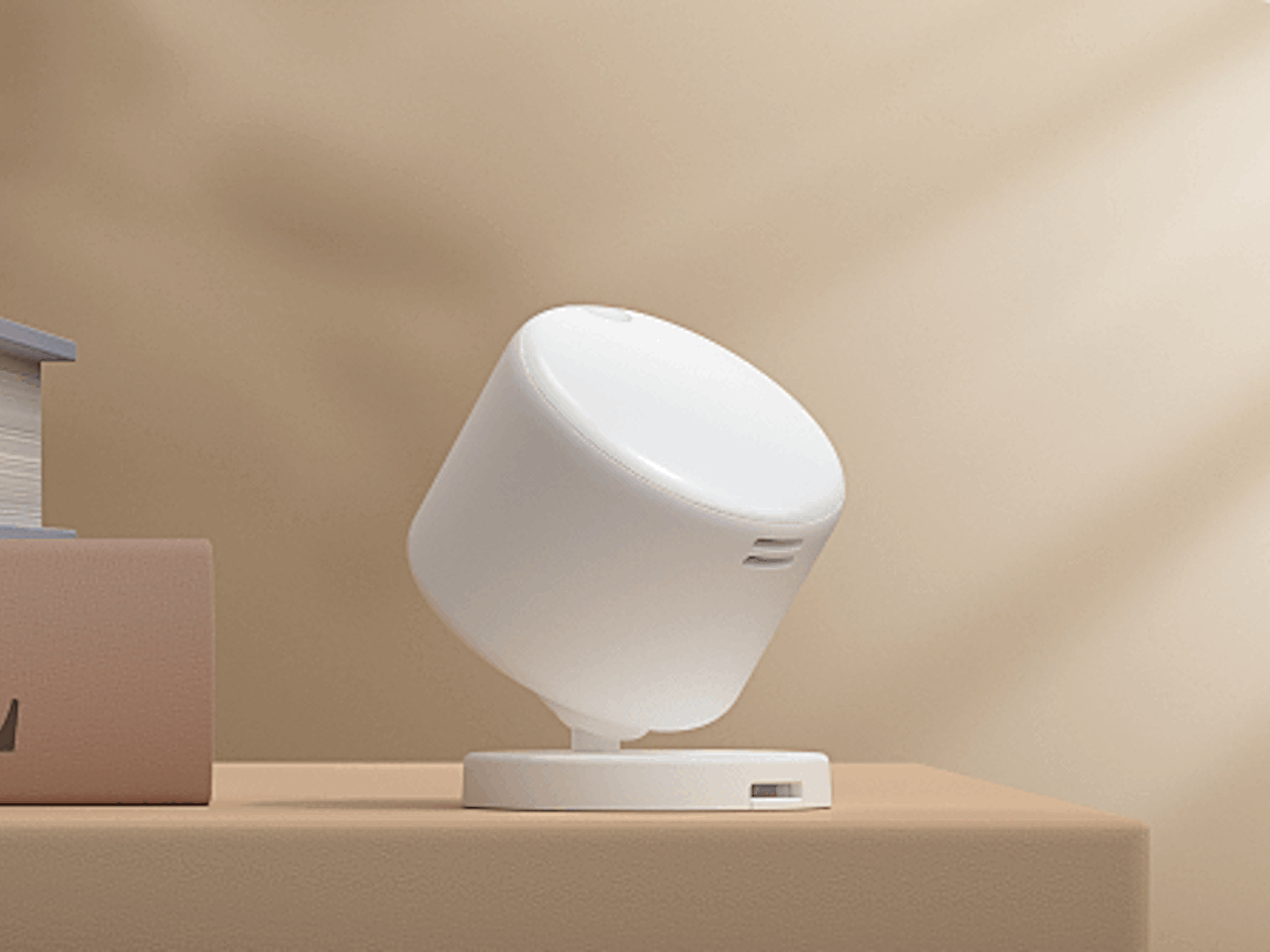
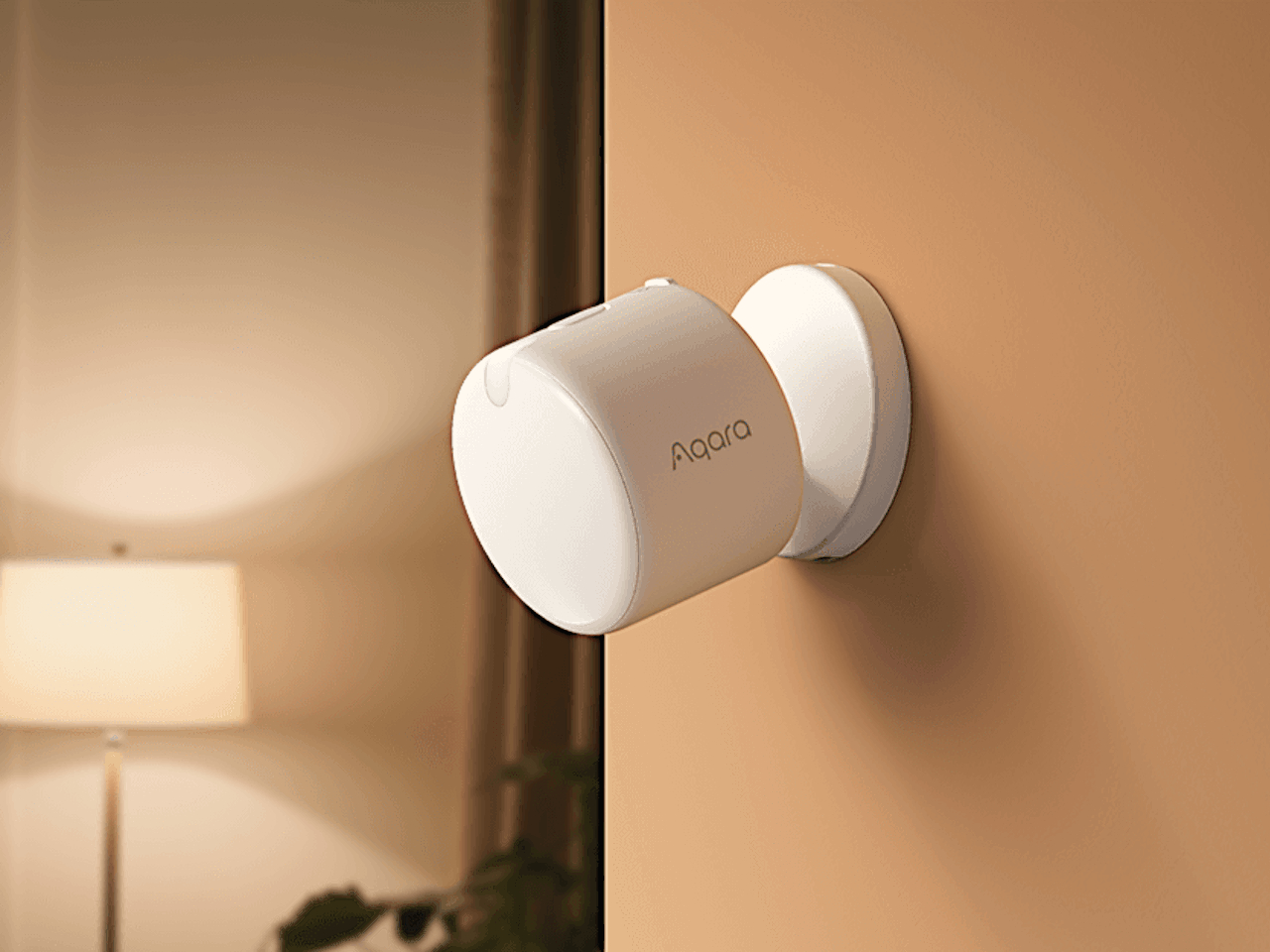
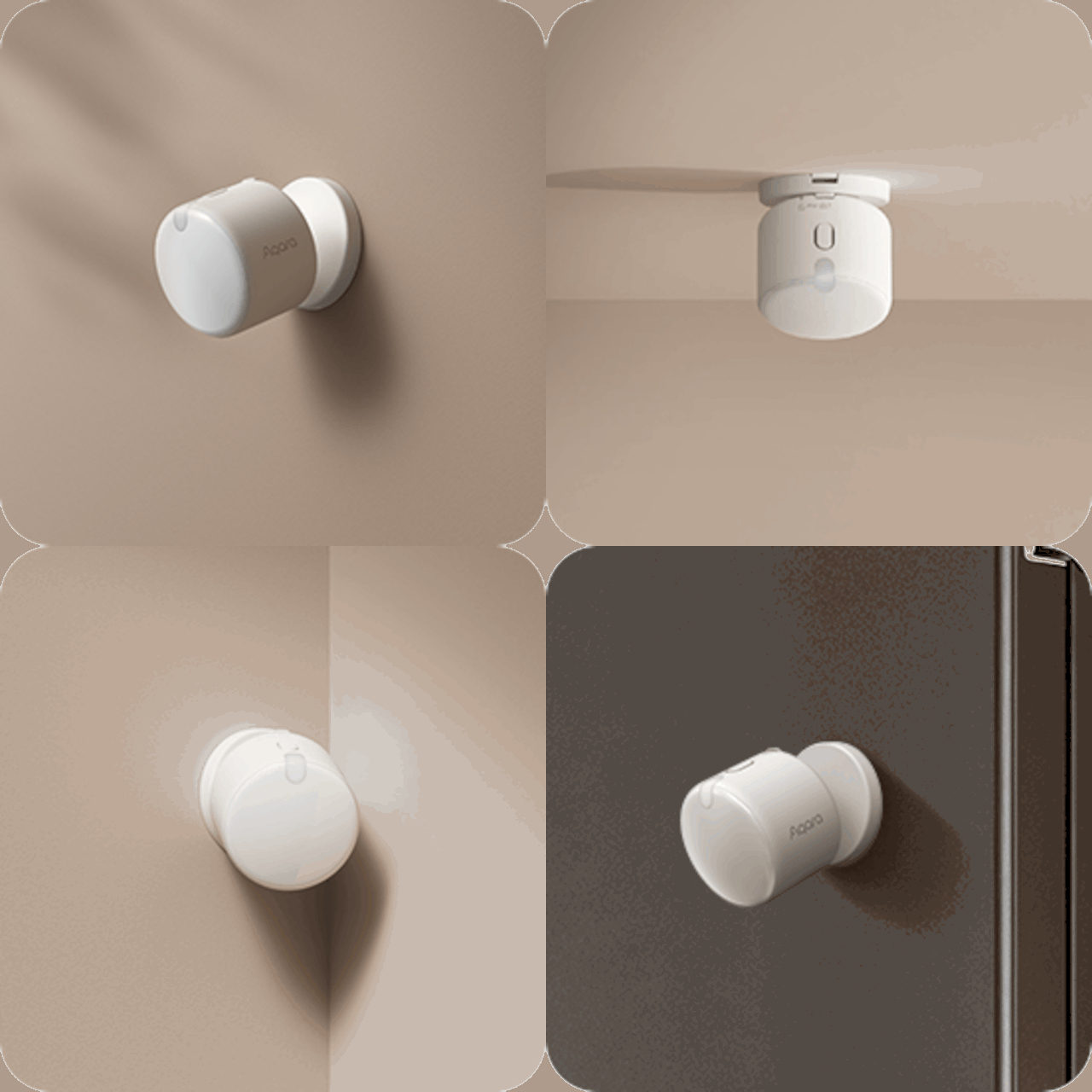
The FP300 itself is a small, cylindrical unit that measures just 42mm on each side and 50mm tall. It’s designed to blend in rather than stand out, with a clean white finish and subtle Aqara branding. The real advantage is how flexible placement can be. You can mount it on walls or ceilings, stick it in corners, attach it to magnetic surfaces like refrigerators, or just set it on a shelf or desk without any mounting hardware at all. That wireless freedom is rare for presence sensors, which usually require wired power or specific mounting positions.

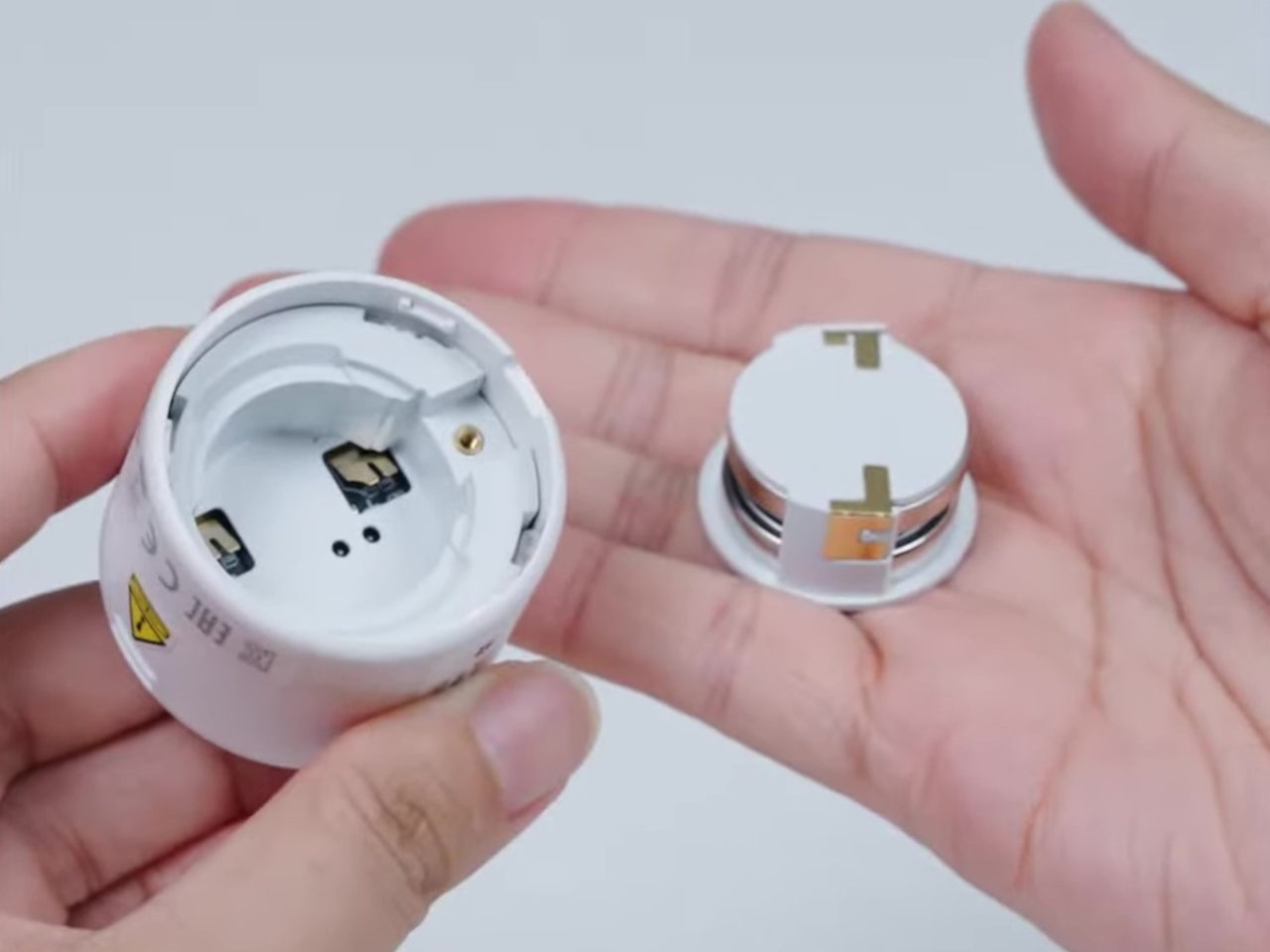
Of course, being battery-powered raises questions about longevity, but Aqara claims up to three years of battery life when using Zigbee, or two years with Thread. That’s running on two replaceable CR2450 coin cells, which is surprisingly long for a device that’s constantly monitoring presence and environmental conditions. You can extend that further by disabling certain sensors or adjusting reporting intervals if you don’t need every data point the device can collect.

The FP300 supports both Zigbee and Thread protocols, which means it works with pretty much every major smart home platform through Matter. Apple Home, Google Home, Alexa, SmartThings, and Home Assistant are all compatible, though you’ll need either an Aqara hub for Zigbee or a Thread border router to get everything working. Using Zigbee unlocks extra customization options in the Aqara Home app, like adjusting detection sensitivity and tweaking reporting intervals.

What makes the FP300 feel genuinely useful is how those five sensors work together. The presence detection ensures lights stay on when you’re in the room, while the light sensor prevents them from turning on during the day. The temperature and humidity data can trigger your HVAC system only when someone’s actually home, saving energy without sacrificing comfort. It’s the kind of layered automation that makes smart homes feel less gimmicky and more practical.

At around $50, the FP300 sits between basic motion sensors that miss half your movements and wired presence sensors that cost more and require professional installation. For anyone building out a smart home without tearing into walls or dealing with complicated wiring, that’s a reasonable trade-off. The fact that you can just plop it on a shelf and have it start working makes the whole setup feel refreshingly simple for once.

The post Aqara FP300 Detects You Even When You’re Sitting Perfectly Still first appeared on Yanko Design.

TikTok’s new ‘bulletin board’ feature lets creators send updates to their fans’ inboxes

TikTok introduced a new "bulletin board" feature for creators that allows them to blast out updates directly to their followers' inboxes. The idea is similar to broadcast channels on Instagram or Telegram's one-way messaging feature. 

People who opt to join a creator's bulletin board will receive updates in their TikTok inbox. Updates can include text, links, polls or photos; as well as other TikTok posts or lives. Followers who join a board can react to messages but won't be able to comment or reply like a typical DM or post. According to TikTok, the feature could be especially useful for musicians and artists, as it allows them to share new songs and give fans a way to "pre-save" an upcoming release.

For creators with a large following, having a bulletin board could help streamline their ability to interact with fans without having to wade through an overloaded inbox or post separate video updates. It also gives them a way to get their work (including links to non-TikTok content) in front of their biggest fans without relying on the whims of the app's recommendation algorithm.  

Bulletin Board is available now to all creators over the age of 18 with 50,000 or more followers. TikTok users can find and join bulletin boards on creators' profiles. 


This article originally appeared on Engadget at https://www.engadget.com/social-media/tiktoks-new-bulletin-board-feature-lets-creators-send-updates-to-their-fans-inboxes-181000448.html?src=rss