The all-new Toyota C-HR+ electric SUV is poised to make a significant impact on the mid-size electric vehicle market. This stylish and technologically advanced vehicle seamlessly combines sleek aesthetics with innovative features, presenting an attractive option for environmentally conscious drivers seeking a practical and efficient mode of transportation. Built on Toyota’s state-of-the-art eTNGA platform, the […]
Apple is preparing to reenter the high-end all-in-one PC market with the highly anticipated iMac Pro 2026. This device, powered by the innovative M5 Max chip, is engineered to deliver exceptional performance, a sleek design, and advanced features tailored for professionals. Nearly a decade after the last iMac Pro, Apple is poised to redefine the […]
From indies like Silksong,to AAAs like Ghost of Yotei, and everything in between, 2025 truly had it all, and is likely to go down in the history books as one of the best years in gaming. But these are the games that felt truly special to the Engadget team.
Arc Raiders
I’m genuinely shocked by how much I love ARC Raiders. I’ve never been very interested in the whole PvE (Player vs. Environment) genre, aside from some brief stints with Destiny, but ARC Raiders's sci-fi post-apocalyptic vibe just works for me. I love the Blade Runner/anime-like aesthetic of its environments, enemies and outfits. I’m a sucker for its synthy soundtrack and immersive soundscape. And somehow, I’ve just fallen for the game’s loop, which involves running out for resources and missions, and hopefully making it back home safe.
Sure, I’ve had a few runs where I’ve lost all my gear, thanks to random online jerks. But even those setbacks kept me motivated to play. You can always head out into the world with free gear, so if you fail, all you really lose is a bit of time. ARC Raiders reminds me of playing Phantasy Star Online on the Dreamcast decades ago, an early multiplayer experience that’s genuinely been hard for me to replicate since then.
I sometimes explore maps just to soak up their architecture and environmental sounds. Sometimes I jump in to help other players, especially when they’re being harassed by others. Through success or failure, I can’t wait to head back in.
— Devindra Hardawar, Senior Editor
Avowed
Obsidian kicked off 2025 with a bang, introducing a fresh and deeply engaging fantasy RPG universe in Avowed. It’s an expertly crafted and narratively rich adventure through mystical lands blighted by a mysterious fungus, set against a backdrop of political scheming, spiritual manipulation, colonization and resistance. The writing is stellar throughout, though the sidequests that reveal your companions’ backstories are particularly poignant. Avowed is gorgeous, its combat systems are fully customizable, its characters are intriguing and its encumbrance limit is generous. There’s a real sense of magic about the entire game — and no, that’s not just the mind-altering mushrooms talking.
— Jessica Conditt, Senior Reporter
Baby Steps
Baby Steps is a true walking simulator: Your left trigger controls your left leg, and your right trigger controls your right. At first, you'll be stumbling and comically falling every few paces, and it’s easy to write the game off as some sort of Octodad affair, where half the fun is dealing with the jank of basic navigation. But before long, you’ll find the rhythm and confidently pace through the game’s open world.
Of course, the challenge ramps up with your skill. Baby Steps has incredibly tight mechanics and a rewarding if punishing difficulty curve. Various surfaces and steeper inclines are introduced, and the game ends with a truly horrific mountain pass. Through it all, you’ll be treated to a light but touching story full of comedic improvisation from the game’s developers, who voice most of the characters themselves.
— Aaron Souppouris, Editor-in-chief
Ball X Pit
I don’t usually go in for roguelike-style games, but my colleague Kris Holt convinced me to try Ball X Pit and, in doing so, ruined my autumn. This is, quite simply, one of the most addictive games I’ve ever played. The base gameplay is rooted in classic Brick Breaker-style games from the ‘80s. Balls bounce from the bottom to the top of the screen, but instead of hitting and breaking bricks you’re bouncing them off a massive series of demonic enemies. There are eight levels and over a dozen different playable characters, each with their own distinct strengths and play styles, and the vast combination of upgrades you can unlock means no run will ever be quite the same.
Perhaps the most fun thing about it is unlocking the different fusions and evolutions you can find along the way. Beyond the basic balls that your character shoots, you have slots for special balls that do things like freeze enemies, deal extra damage or blind enemies so they can’t accurately attack you. You can combine those special balls into even more powerful weapons, and finding the best evolutions that work with each character and each level adds yet another layer to the madness. While you can easily pick it up and play for 20 or 30 minutes, I’ve found it pretty difficult to end a session without whiling away multiple hours. Think carefully about whether you’re ready to ruin your productivity for a few weeks (or months) before you dive into Ball X Pit.
— Nathan Ingraham, Deputy Editor
Blue Prince
My absolute favorite experience in all of gaming is when I'm several hours into a puzzle game and I discover there's more going on than meets the eye. It's the moment where I realize an already-good game is in fact an excellent one, and I want to simultaneously curse the creators' evil brains and applaud their brilliance. I feel fortunate if I have that reaction once during a playthrough. Blue Prince provided me with that experience of total delight many times over.
The biggest downside to a game like Blue Prince is that it's hard to talk about. For starters, it defies categorization. Sure, there are some roguelike elements and obviously plenty of puzzles, but playing it goes beyond a single genre tag. And more importantly, the journey of uncovering its surprises is a big reason why this game is so special. If you haven't tried it yet, I strongly suggest you do so and that you read as little about it as possible before diving in. All you need to know is that if you enjoy burrowing ever deeper into a rabbit hole of mysteries and problem-solving, you must play this game. Blue Prince is a real masterpiece by creative lead Tonda Ros and the whole Dogubomb team. It earns all the hype it gets.
— Anna Washenko, Contributing Reporter
Citizen Sleeper 2: Starward Vector
No game I played this year has stuck with me the way Citizen Sleeper 2: Starward Vector did. At a time when it feels like our governments are failing us and corporate greed is destroying the world, Citizen Sleeper 2 tells a critical story about finding hope and purpose in the people and communities around you. And as great as the original Citizen Sleeper was, the new one is an even better game, with more polished systems that do a great job of reinforcing its narrative themes.
There's a good chance many of you missed Citizen Sleeper 2, seeing as it arrived at the start of the year, but if you're feeling down about the state of the world, I can't recommend it enough. It will change your perspective.
— Igor Bonifacic, Senior Reporter
Clair Obscur: Expedition 33
Clair Obscur made a striking impression when we first glimpsed it in 2024, with its French dark fantasy aesthetic, its wild concept of a god-like Paintress and a turn-based combat system that seemed uniquely cinematic. It instantly became my most anticipated game of 2025. Thankfully, the game itself lived up to my expectations, with a thrilling story, memorable characters and some of the most beautiful visuals I’ve ever seen in a game. Sure, its twists and turns might not feel entirely surprising if you’re an RPG connoisseur, but no other game captures such a specific vibe. It may not fully stick the landing, but Clair Obscur was certainly one of the most fulfilling narrative experiences I experienced this year.
— D.H.
Date Everything!
This dating sim is witty as heck. That's the first reason I loved Date Everything. The writing is equal parts sharp and sensitive, silly and sincere, with a dose of pointed social commentary in between bouts of flirtation with anthropomorphized household items. Even the artwork is witty, transforming everything from a toaster to a treadmill into attractive humans in wildly clever and creative ways.
The second and most important reason I loved this game is that Date Everything is a cavalcade of virtuoso voice acting that must be heard to be appreciated. I've played a bunch of visual novels without voiceover where the writing alone wasn't strong enough to make the characters pop, as well as voiced ones where middling performances detracted from the story. Date Everything's cast of 100 of the best in the business make their dialogue shine (and like I said, the dialogue is really damn good).
There are some endearingly obvious casting choices. The horny clothes dryer? Yeah, it's Neil Newbon, who probably charmed your pants off as Astarion in Baldur's Gate 3. Your D&D dice set? It couldn't be anyone but Matt Mercer. On the flip side, Cherami Leigh as perky Chairemi (yep, your chairs) was unrecognizable from her stellar turn as V in Cyberpunk 2077. Laura Bailey has voiced countless heroines over the years, so the last place I expected to hear her was screaming her lungs out as one half of the toxic relationship playing out in your laundry room. Whether you're looking for love or laughs, Date Everything is a marvelous showcase of talents that often go underappreciated in gaming.
— A.W.
Despelote
Having grown up with grandparents from South America, I'm familiar with a flavor of soccer fanaticism that hasn't quite taken root in the US. What makes Despelote so moving to play in 2025 is how it makes that sports fandom universal. The semi-autobiographical game lets you play your way through narrative vignettes, rendered in a stunning mix of filtered, photorealistic backgrounds and almost comics-inspired characters, primarily with a soccer ball at your feet. There's more to the game than kicking, however.
Despelote asks players to walk, run and kick through the life of the game's lead developer Julian Cordero as he recounts his memories of Ecuador's historic attempt to win the World Cup. It's a personal history and national one, and by the end of the game, not quite what it seems. To put it another way: Despelote is melancholy, humorous and quite possibly the first game to capture what soccer means rather just than what it feels like to play.
— Ian Carlos Campbell, Contributing Reporter
Dispatch
If you miss the heyday of Telltale's multiple choice narratives, like The Walking Dead and The Wolf Among Us, and you aren't tired of superheroes yet, you'll love Dispatch. Developed by AdHoc Studio, which was formed by former Telltale alum, it's essentially a workplace dramedy for superheroes. But the mechanics don't matter as much as the characters, who are all uniquely intriguing, sad and hilarious.
You play as Robert Robertson III, AKA Mecha Man, a former Iron Man-esque hero who can no longer fight crime on his own. He decides to manage a group of former villains for SDN (the Superhero Dispatch Network), hoping to imbue them with his own ideals of heroism. By day, you assign them to deal with crimes around Los Angeles, but through conversations and crucial Telltale decisions, you also encourage them to work as a team and hopefully become better people (or mutants). Buoyed by strong voice acting (including actors like Aaron Paul as the lead, and Jeffrey Wright in a hilarious supporting role), AdHoc's sharp writing, and excellent animation, Dispatch is a reminder of just how powerful adventure games can be.
— D.H.
Donkey Kong Bananza
The Switch 2 had a decent enough first year, but there's only one true killer app so far in my mind. Donkey Kong Bananzais the primary reason to pony up for Nintendo's new console. It's a 3D platforming classic up there with any Mario game, which makes sense given that the team behind Super Mario Odyssey made this one.
It actually reinvents the formula by adding wanton destruction into the mix. Donkey Kong can destroy just about everything in the game and that's not hyperbole. You can literally spend hours absolutely pummelling entire game worlds into dust. This isn't just a stress reliever, as it leads to new kinds of puzzles and platforming ideas. As a bonus, DK is joined by a young Pauline, making this the cutest riff on The Last of Us ever.
— Lawrence Bonk, Contributing Reporter
Fast Fusion
Fast Fusion is a sci-fi arcade racer that wants little more than to bring the oldWipeout and 3D F-Zero games into modern times. Those games ruled. So does this one.
As the name implies, it is seriously fast, and it commits to enhancing that sense of speed with every choice it makes. Whooshing lines drag from the back of your hard-angled, anti-grav ships. Their engines wheeze. The backgrounds blur. Each course is littered with boost pads, and there’s a boost meter you can keep persistently charged by taking turns just right. Because this is what some may call a “video game-ass video game,” you can also make your ship jump, skipping entire turns or launching into a fiery wreck in equal measure.
The courses here aren’t as thematically consistent as those in Mario Kart World. One minute you’re dashing through an Endor-style forest, the next you’re dodging tornadoes on a rainy highway. There are no cute mascots, either. But the tracks are spectacles, and they always give room to keep up your pace. When there is an obstacle to dodge, you tend to just whiz by, furthering the sense of threading the needle. In a year unusually loaded with high-profile arcade racers, few are better than Fast Fusion at keeping you engaged. It makes blinking feel risky.
— Jeff Dunn, Senior Reporter
Ghost of Yōtei
Sucker Punch Productions' return to a feudal Japan setting is another triumph for the studio. In Ghost of Yōtei, the developer crafted a world that I happily got lost in for hours, doing everything and anything but the main story missions until I absolutely had to. There was something to do around almost every corner and some of the game's many secrets were well-hidden. That's not to say the game's plot is anything to sniff at: this is a brutal tale of revenge, featuring rich writing and performances.
The open-world format is a little at odds with protagonist Atsu’s steely desire for vengeance, but Ghost of Yōtei is beautifully orchestrated enough for that to be a minor complaint. The combat is stellar — to be most effective, you’ll need to swap between weapons to counter what your current opponent is wielding. Still, I couldn’t help but use the kusarigama whenever possible, especially to carry out stealthy assassinations from a distance. Strengthening Atsu’s bond with a wild wolf that becomes an ally in combat is also a highlight, while the deeply customizable difficulty settings are very welcome.
Like its predecessor, Ghost of Tsushima, this is a technical masterpiece. Sucker Punch created another lush game that will surely be the source of countless desktop backgrounds. Blood-stained snow has rarely looked this good, especially if you enable the Miike Mode (named after director Takashi Miike and his gory films) to really paint the landscape red.
— Kris Holt, Contributing Reporter
Hades 2
The first thing to know about Hades II is that it's more Hades. It's the standard roguelite RNG grindfest, but with charm and enough detail-oriented flourishes to disguise what is essentially cranking the arm on a slot machine. The second thing to know is that you are no longer Zagreus, but Melinoë, princess of the underworld, and if you are a gay woman this game exists to roast you mercilessly.
Zag was a lovable himbo engaged in a petty dispute against his father and free to romance a variety of Greek gods along the way. By contrast the world around Mel is coming apart at the seams, and her dating options are considerably less satisfying. Several of her in-game relationships with women are written to be warm and reciprocal, but of course they're with the found family of deities who support her. Nemesis and Eris, her two options for romance, seem to actively hate her and, after dozens of runs, are never interested in anything beyond a threadbare situationship.
Juggling two different mission paths with their own distinct enemies and biomes is a treat — as are the new, sometimes brutally hard bosses. If only the rest didn't so closely resemble the indignities of dating in your 30s.
— Avery Ellis, Deputy Editor
Is This Seat Taken?
Every incurable people pleaser has been told, at some point in their life, “you can’t make everyone happy.” Perhaps not in life. But in the sweetly cozy, zero-pressure, logic-puzzle indie game Is This Seat Taken? making people happy is not only possible, it’s the entire point.
The game is set in a line-drawn, sepia-toned Barcelona and other cities. You act as a set of pinching fingers that lifts and places shape-people in their preferred seats — on the bus, in a restaurant, at a movie theater and so on. Each person has preferences (window seat, no bad smells, wants to read) and attributes (forgot to shower, plays loud music) that mesh or conflict.
Tiny accessories and icons not only make each shape more adorable, they help keep track of some of their proclivities. Bubbly smiles or heartbreaking frowns tell you whether you’ve met a seated shape’s needs, and tapping on them tells you exactly what they want. A simple story involving a few of the shapes and an indie film takes form as you advance levels, but for the most part, you’re just checking in on what people want and arranging them to optimize happiness.
I obsessively plowed through the game, soothed by the strummy music, delighted by the plops, bloops and chatters of the sound effects. As more people get on the bus (show up to the coworking space, arrive at the restaurant) it gets increasingly tougher to satisfy everyone — more than once I had to clear everyone off the train and start from scratch — but achieving 100 percent contentment is always possible. And if that’s not true IRL, then at least it is here.
— Amy Skorheim, Senior Reporter
Keeper
Keeper is a surprisingly quiet and soul-soothing experience from Double Fine Productions, a studio best known for sassy, cartoon-style games like Costume Quest, Psychonauts and Brütal Legend. Keeper is a gorgeous and dialogue-free adventure through fantastical lands of deep shadows and vivid pastels, presented in a claymation-like art style that’s a joy to interact with. The game follows a sentient, walking lighthouse and its bird companion as they attempt to reach a mountaintop and cleanse the land of a nasty parasitic presence. Keeper only lasts about four hours tops, but its striking visuals, smooth mechanics and heartwarming story leave a lasting impression.
— J.C.
Kingdom Come: Deliverance II
Kingdom Come: Deliverance IIis a modern-day Morrowind. I mean that as a compliment. It's a game built on a series of complex, interlocking systems that work together to create one of the most immersive worlds I've had a chance to experience in recent years.
As I guided my version of Henry of Skalitz through Warhorse Studios' beautiful recreation of 15th century Bohemia, I spent dozens of hours doing mundane things like blacksmithing, playing dice, foraging for herbs and concocting potions. Each of these activities feels like it could be a game on its own, and they work together to create an experience that feels refreshingly old-school. No one is making RPGs like Warhorse anymore — not even Bethesda — and that's what makes this game feel so special. It's the kind of experience studios used to make when games didn't need to appeal to everyone to recoup their development costs.
— I.B.
Look Outside
Months after its release, Look Outside is still the game I can't shut up about, and it probably will continue to be for the foreseeable future. In Look Outside, your character wakes up to discover that an apocalyptic event has taken place, and anyone who looks outside to observe it is transformed into some sort of abomination. You have to survive two weeks inside your apartment building, gathering resources and, if you're trusting, accumulating allies to fight by your side. There are monsters everywhere, and their designs are wildly creative. It's a joy encountering all of the freakish creatures for the first time.
There are tons of choices to make in Look Outside that will affect the course of your playthrough, and there are both moments of gut-wrenching bleakness and sheer absurdity. It's in a league of its own, blending a multitude of horrors — survival horror, cosmic horror, body horror, psychological horror — and captivating artwork (not to mention an S-tier soundtrack) into a gripping RPG that has enough substance to justify playing it again and again.
— Cheyenne MacDonald, Weekend Editor
Lonely Mountains: Snow Riders
Most games involving mountains are about a heroic climb. Lonely Mountains: Snow Riders is about a series of humbling descents. This is a physics-driven downhill skiing game that, like its predecessor, starts you at the top of various summits and tasks you with racing to the goal in one piece. The way down is filled with interweaving routes and shortcuts, but there are no directional markers to guide you. Nor is there any music to pump you up, just the sounds of skis cutting into powder, winds whipping, birds chirping, nature being nature.
The result is a game that pits you against yourself. You rush down to beat a target time, but you’re always fighting gravity and cold, hard earth. So you crash, again and again, until you manage to survive that one clean run. The mountain becomes something to respect, not conquer. It’s fast, thrilling and total slapstick: Steering your low-poly, literally blockheaded avatar into a tree or off a cliff is always good for a laugh. (Seeing others do it in multiplayer is even better.) It’s also gorgeous, all glistening snow, intimate sounds and serene vistas. More than an enjoyably tense sports game, Snow Riders is a vivid expression of our relationship with nature. Think of it like a more contemplative SSX.
— J.D.
Metroid Prime 4: Beyond
Metroid Prime 4: Beyond is not a perfect game. The story barely hangs together at times, the addition of a squad of companions can really disrupt the atmospheric isolation the series is known for, there are a few unfair difficulty ramps and the open-world desert is a bit of a slog. And yet, it also does so many things right. As with most Metroid games, there are varying biomes to explore, each with a distinct identity and various flora and fauna that do not like intruders. As with most Nintendo games, the design of these levels are excellent across the board, with clever challenges and puzzles that reward continued exploration.
But for me, seeing a Metroid Prime game in 4K was worth the price of admission alone. Beyond doesn’t reinvent the wheel, but it presents an absolutely gorgeous and immersive spectacle the likes of which we haven’t seen in a Metroid game before. Given that Metroid Prime 3: Corruption came out in 2007 on the Wii, a console that maxed out at 480p, seeing the series’ impeccable art style brought to life on modern hardware was a delight. It may have some issues, but Metroid Prime 4: Beyond is still worth experiencing.
— N.I.
Ninja Gaiden Ragebound
I'd somehow never played a single Ninja Gaiden game until this year, but I could hardly have had a better introduction to the series. The Game Kitchen's Ninja Gaiden Ragebound is an old-school, hack-and-slash platformer with top-notch pixel art, an excellent score and slick level design.
The combat helps ensure that everything hangs together. Dual protagonists Kinji Monzu and Kumori (whose souls fuse together) have distinct abilities that work in harmony, and using the right tools to tackle each enemy helps charge up a powerful hyper attack. Ragebound isn't necessarily easy, but it isn't frustrating either — unless you're trying to put it down and do something else, because this is a very absorbing, entertaining game.
— K.H.
Peak
Peak perfectly captures the delightful, simultaneous disasters that can happen when multiple people make stupid decisions at the same time. Ostensibly a multiplayer game about child scouts who crash land on a deserted island and are forced to climb to the top of a mountain to get rescued, Peak's multitude of dangerous biomes, status-affecting consumables and hidden secrets make it fun to get you and your friends killed. The game is an awkward first-person platformer where it's sometimes easier to shoot someone out of a cannon than it is to get them to toddle up a hill, but those obstacles feel good to overcome because the game lets you talk to people while you do it.
The term "friendslop" was coined following the popularity of Peak and games like it, a burgeoning micro-genre where games with deceptively simple virtual tasks are paired with proximity-based voice chat. Unsurprisingly, it's fun to play video games with your friends, but Peak stands out because the ongoing support of developers Aggro Crab and Landfall has managed to keep things interesting in the game for nearly half the year.
— I.C.C.
Oblivion Remaster
There's a comfort in knowing exactly what you're going to get from a game. The Elder Scrolls 4: Oblivion Remastereddelivers all the things I love about Bethesda creations. It's a world I want to get lost in, where the detours are the true point of the journey. I become a stealth archer cat person who can cause chaos or save the day. And I can enjoy the studio's signature open-world RPG experience without suffering through the wonky design ideas that made the original game frustrating. For Bethesda fans, this remaster is a joy whether it's your first time playing Oblivion or your fiftieth.
— A.W.
Öoo
I have a deep appreciation for games that give you a limited set of tools and many ways to use them. Puzzle-platformer Öoo is a brilliantly constructed example of that. It's so thoughtfully crafted that even the name is perfect. The large Ö looks like the caterpillar character you control and the smaller characters resemble the two bombs that you drag around and use to solve a variety of conundrums. Öoo is also the noise I involuntarily made when I solved some of the puzzles.
Nama Takahashi (who made Öoo with help from Tiny Cactus Studio and Tsuyomi) uses deeply clever level design to teach you how to use the bombs and move forward. Takahashi clearly wants you to succeed. Checkpoints are everywhere, so if you die while trying to find a puzzle solution, there's no lengthy runback to worry about. The developer (who previously created ElecHead) even made his own walkthrough video to help you get to the end.
Öoo — which you can complete in a single sitting — respects your time. It looks and sounds wonderful too. The music reminds me a lot of the outstanding Poinpy. While I remain sad that it's not currently possible to play that game, I'm more than happy to have Öoo to return to.
— K.H.
Silksong
It’s such a relief to know that, finally, this is probably the last time I’ll write about Silksong. (Oh no, more is coming.) Seven years in the making, from DLC to standalone game to Reddit meme, Silksong arrived across pretty much every mainstream gaming platform.
The Hollow Knight sequel swaps to a new protagonist, Hornet, who was a recurring boss in the original. She’s faster, she can attack in diagonal dives, and just plays pretty differently from the Knight. Off the back of the slowburn hit of Hollow Knight, Team Cherry have lavished more attention, more fun and more diverse boss battles, ensuring this feels like a better (although possibly more challenging) game.
I prefer the faster, risk-and-reward playstyle too. Hornet uses silk to heal, which, like soul in Hollow Knight, you build up by attacking enemies. However, Hornet does this in bulk, healing three hearts at once. When you die, you’ll leave a bounty of silk behind, making for a tempting health top-up you can grab mid-boss fight. If you don’t die before then.
You can equip Hornet with different weapon and subweapon loadouts, adding a little more variety in this sequel. Heavy, slower weapon swings, or relentless strikes with a much shorter range? Your choice.
When it launched, half the Engadget team were sharing tales of bottlenecks and seemingly impossible boss fights, and we were all exploring the world of Silksong in entirely different directions. That’s the blessing and the curse of a Hollow Knight game.
— Mat Smith, UK Bureau Chief
Silent Hill f
It’s a rare and special thing when a horror game lives up to the gruesome promises of its cinematic teaser trailer, and Silent Hill f accomplishes this and more. Silent Hill f is a heart-pounding survival-horror game set in a rural Japanese village in the 1960s and starring Hinako, a high school student with crappy friends and a tormented home life. Hinako’s town is ravaged by demonic creatures and an infectious botanical fungus, and she has to fight her way through it, shifting among realities and encountering a cast of untrustworthy peers and fox worshippers. The combat starts out great and only gets better as Hinako sacrifices her flesh in the name of salvation, meaning the body horror steadily ramps up as the game progresses. Hinako’s world is filled with terrifying mannequin minions, bulbous pus monsters and disturbing, trypophobic visuals. It’s beautiful.
— J.C.
Subway Builder
Subway Builder
Aaron Souppouris
Subway Builder is an indie transport sim like no other. Creator Colin Miller combined OpenStreet maps of large cities with government data about where people live and work. This creates a complex web of nodes representing residents and workplaces for you to connect. You’ll start with no public transport infrastructure and try to build out a profitable network. In dense cities like New York this is incredibly easy, but freeing even 20 percent of Phoenix's endless sprawl from cars without going bust is very challenging.
The game scratches the same itch for me as Mini Metro, only instead of cutesy vector graphics you're basically working in Google Maps. It's also expanding at a rapid pace: When I first played in October, there were maybe 15 locations, and as of writing there are now 29 US cities and, most recently, five UK options. I spent the first 35 years of my life bouncing around Croydon and Lewisham in London; giving South Londoners a proper tube network (while ignoring anything north of Highbury) has been a real treat.
— A.S.
Sword of the Sea
While the game might always be evoked in the same breath as Journey, the PlayStation classic with which it shares a key creative, Sword of the Sea is more than just another beautiful trek towards a mountain. Combining delectable traversal mechanics from The Pathless and beautiful sea creatures like those in Abzu, the game is a culmination of everything developer Giant Squid is good at. More importantly, though, Sword of the Sea's surfing mechanic just looks and feels damn cool.
I don't know that I ever mastered how to surf on a sword during Sword of the Sea's silent and surprisingly brief narrative, but I do know it didn't take long to care. Carving through sand and snow immediately came easy enough that getting to any of the game's intriguing landmarks and collectibles was a matter of how, not if. That's not to discredit the game's other charms, like a score from Austin Wintory and a photo mode that's perfect for capturing close encounters with dolphins, whales and sharks. If you need a reason to play Sword of the Sea, though, let it be the surfing. It tells you more about the game and what it wants you to feel than any piece of dialogue could.
— I.C.C.
Sworn
Let's get one thing out of the way. Yes, Sworn is a Hades clone, but it's a darned good one. This game swaps out the Olympian gods for characters sourced from Arthurian legend, but the nuts and bolts gameplay is pretty much the same. So why was this one of my favorite games in a year when Hades 2 set the world on fire? The combat is extremely addictive and there are multiple character classes that truly change how everything plays.
Some characters are for up close combat and others are better at dropping turrets and related items that do damage over time. It's super fun to litter a bunch of poison-soaked cannons in a level and just let them do their thing. It also has four-player co-op, which is chaotic in all the best ways. The story is totally forgettable when compared to Hades, but that's not why I play roguelites.
— L.B.
This article originally appeared on Engadget at https://www.engadget.com/gaming/engadgets-favorite-games-of-2025-153000109.html?src=rss
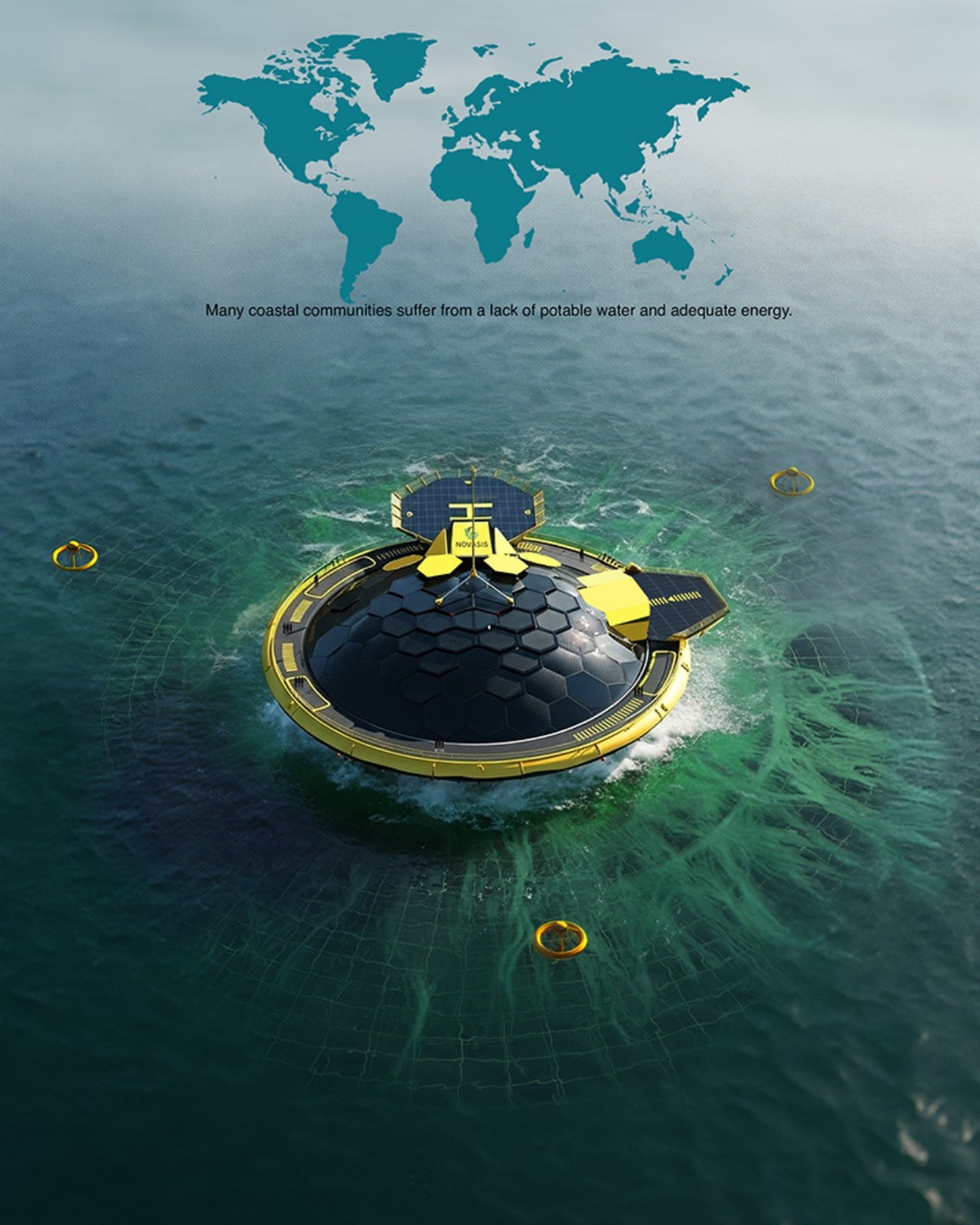
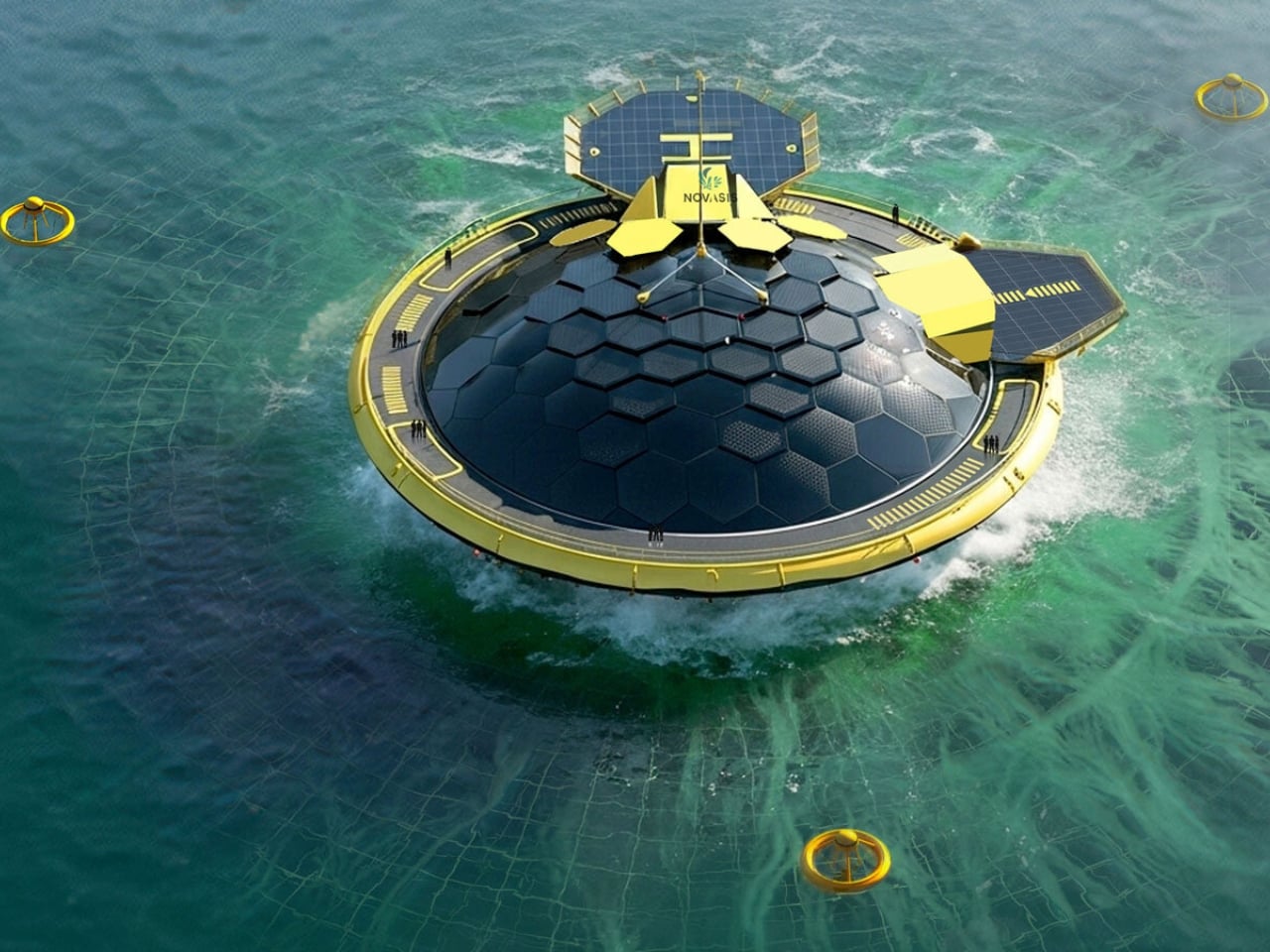
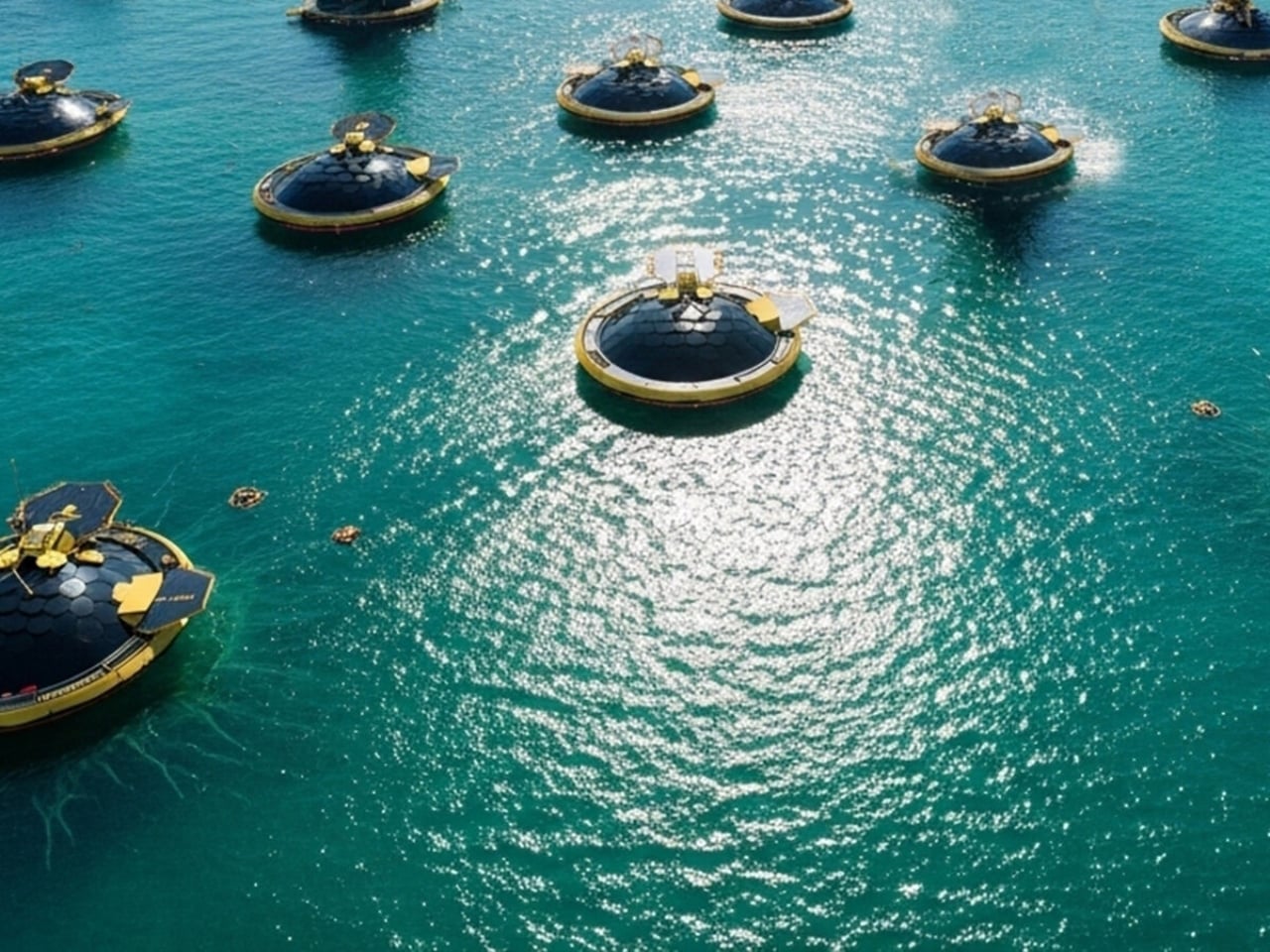
You know that feeling when you see a design concept that makes you go “wait, is this for real?” That’s exactly what happened when I came across Novasis, a floating platform project by designer Mohsen Laei that just won the Grand Prix Architecture and Innovation Award for the Sea 2025. And honestly? It’s not just another futuristic pipe dream. This thing might actually change how we think about living with our oceans.
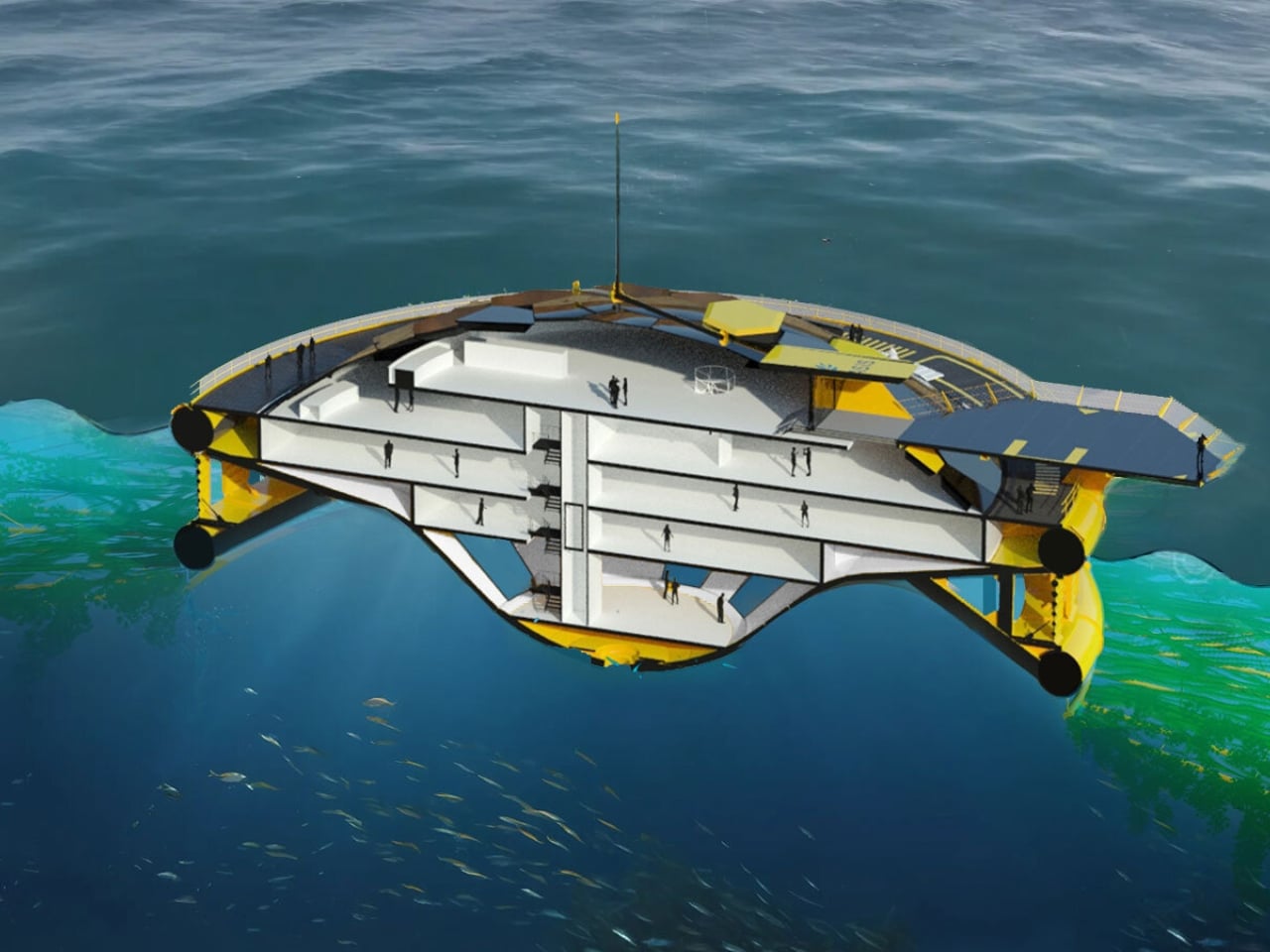
Here’s what makes Novasis so compelling. It’s a scalable floating structure that tackles three massive problems at once: climate change, resource scarcity, and marine ecosystem collapse. Unlike those dystopian visions of humans abandoning land because we’ve wrecked it, this platform is designed for genuine coexistence with the ocean. It cultivates algae on a massive scale, produces renewable energy, creates freshwater, and helps restore marine life, all while being modular, recyclable, and energy independent.
Let’s talk about the algae part, because it’s actually the star of the show. The platform uses floating and submerged nets made from recycled PET to grow both macro and microalgae. Why does this matter? Algae is ridiculously versatile. It can be turned into biofuel, food supplements, pharmaceuticals, and even carbon-neutral materials. Plus, algae cultivation naturally absorbs carbon dioxide from the atmosphere, making this a genuinely climate-positive system. We’re talking about a design that doesn’t just minimize harm but actually reverses it.
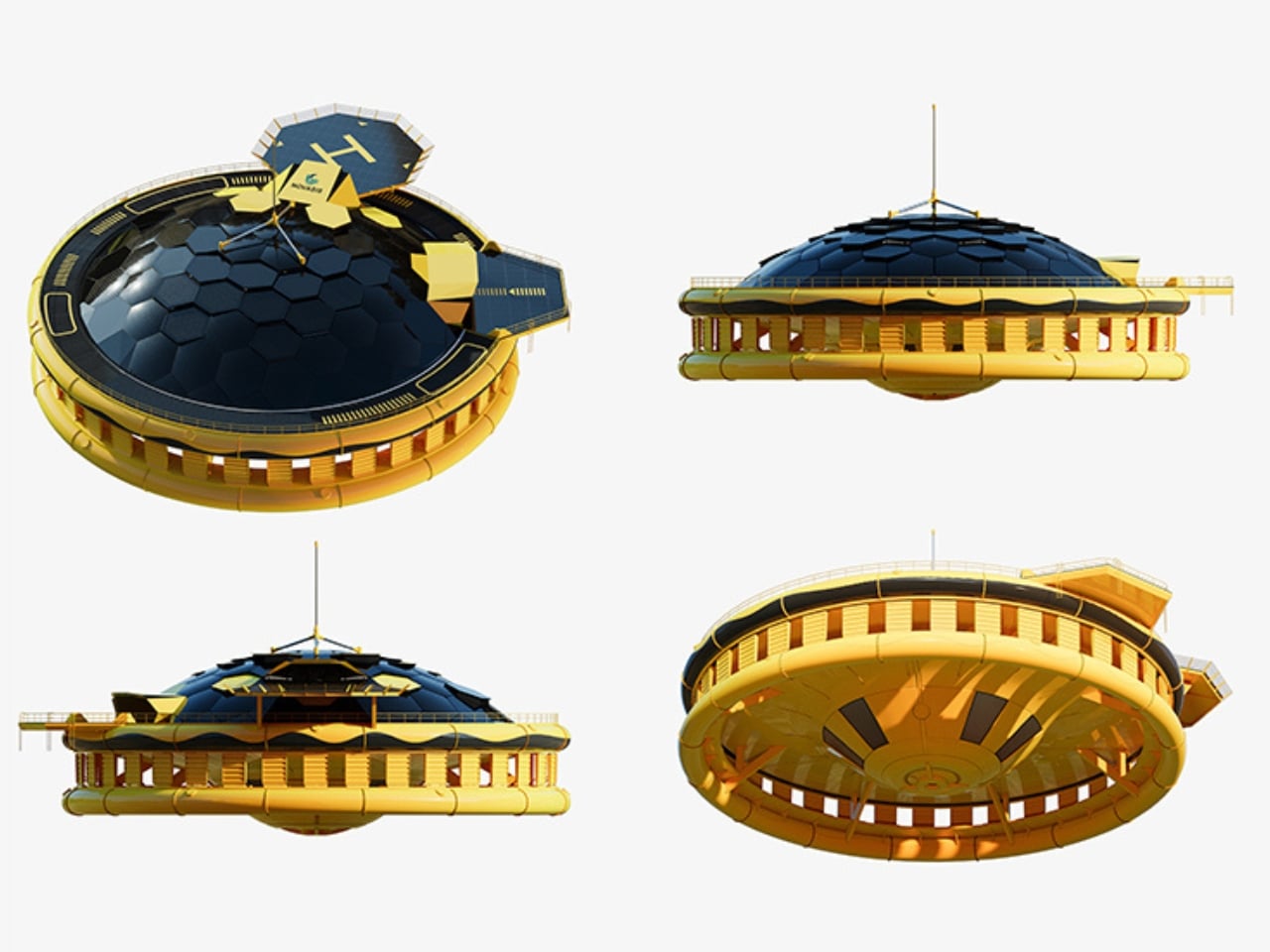
The structure itself is stunning in a practical way. Picture a circular floating platform with a central dome and perimeter walkway that organizes movement across the space. It’s designed to support research facilities, recreational areas, and even habitation. Freshwater gets produced through rainwater harvesting combined with solar and wave-powered desalination, meaning the whole thing functions as a self-sufficient ecosystem. No need to pipe in resources from mainland infrastructure.
What I find most exciting about Novasis is how it reimagines what “development” can look like in coastal and open-ocean contexts. Traditional marine construction tends to be either extractive (oil rigs, commercial fishing) or leisure-focused (luxury resorts, cruise ships). This platform flips that script entirely. It’s designed to be revenue-generating through biomass production and renewable energy, making it economically viable without requiring grants or subsidies.
Laei isn’t new to ambitious ocean-based concepts either. Back in 2021, he proposed Wind Island, another floating structure that combined wind, water, and solar power with residential and research spaces. That project used flag-like blades around a central tower to capture wind energy while creating shade and cooling for the platform below. You can see the evolution of his thinking from that earlier concept to Novasis, where the focus has sharpened on ecosystem restoration and practical resource production.
The timing couldn’t be more relevant. Floating solar farms have been gaining traction as a renewable energy solution, particularly because they preserve land for other uses and can actually help clean nutrient-polluted water. But most floating renewable projects focus on just one function. Novasis integrates multiple systems into one cohesive platform, which makes it far more resilient and useful.
Critics might call this concept too ambitious or unrealistic, but I’d argue we’re past the point where playing it safe makes sense. Our oceans are warming, acidifying, and losing biodiversity at terrifying rates. Coastal cities face rising seas and freshwater shortages. We need solutions that are as complex and interconnected as the problems we’ve created. Novasis offers exactly that: a model for how humans might actually contribute to ocean health rather than just taking from it.
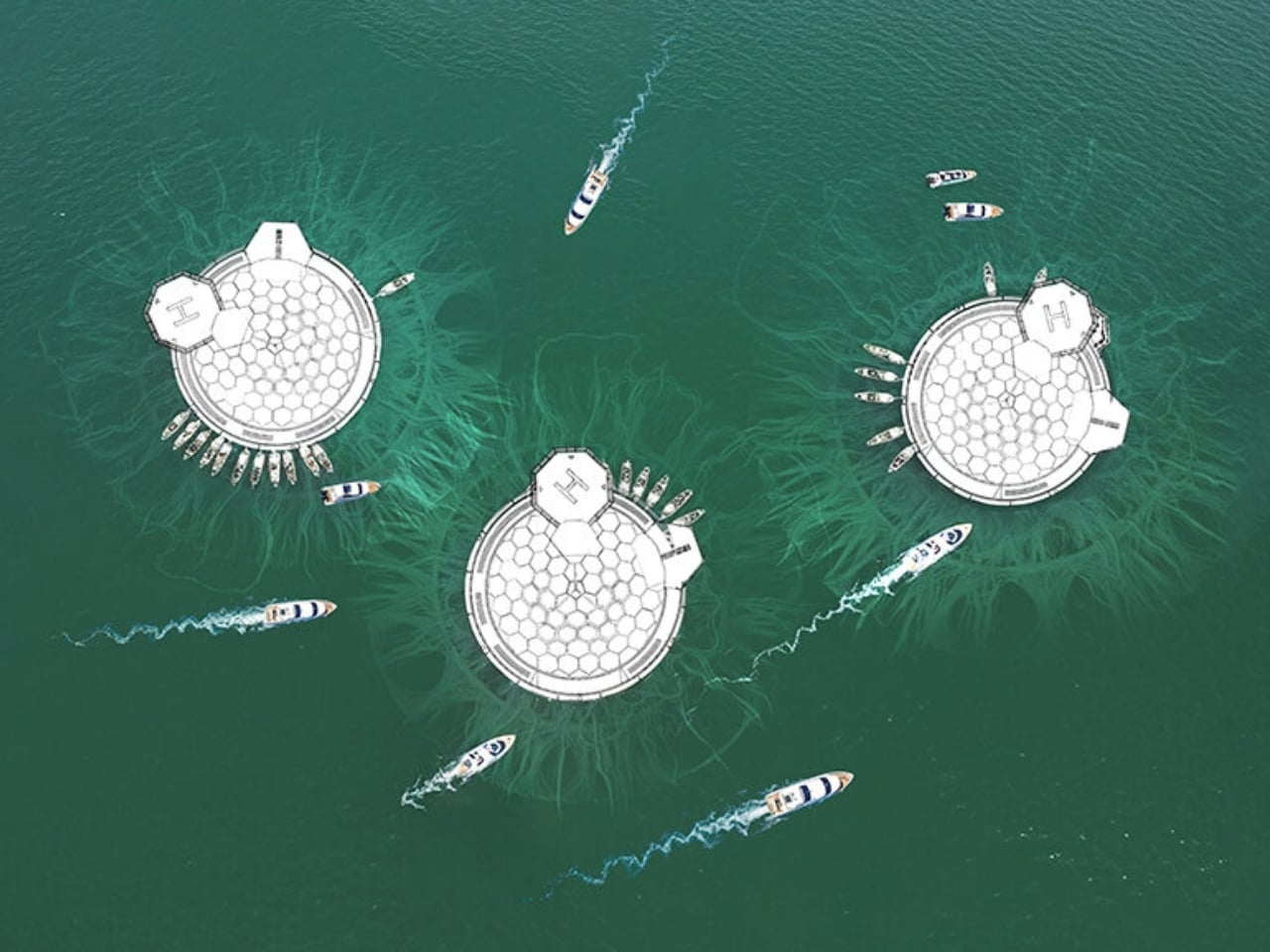
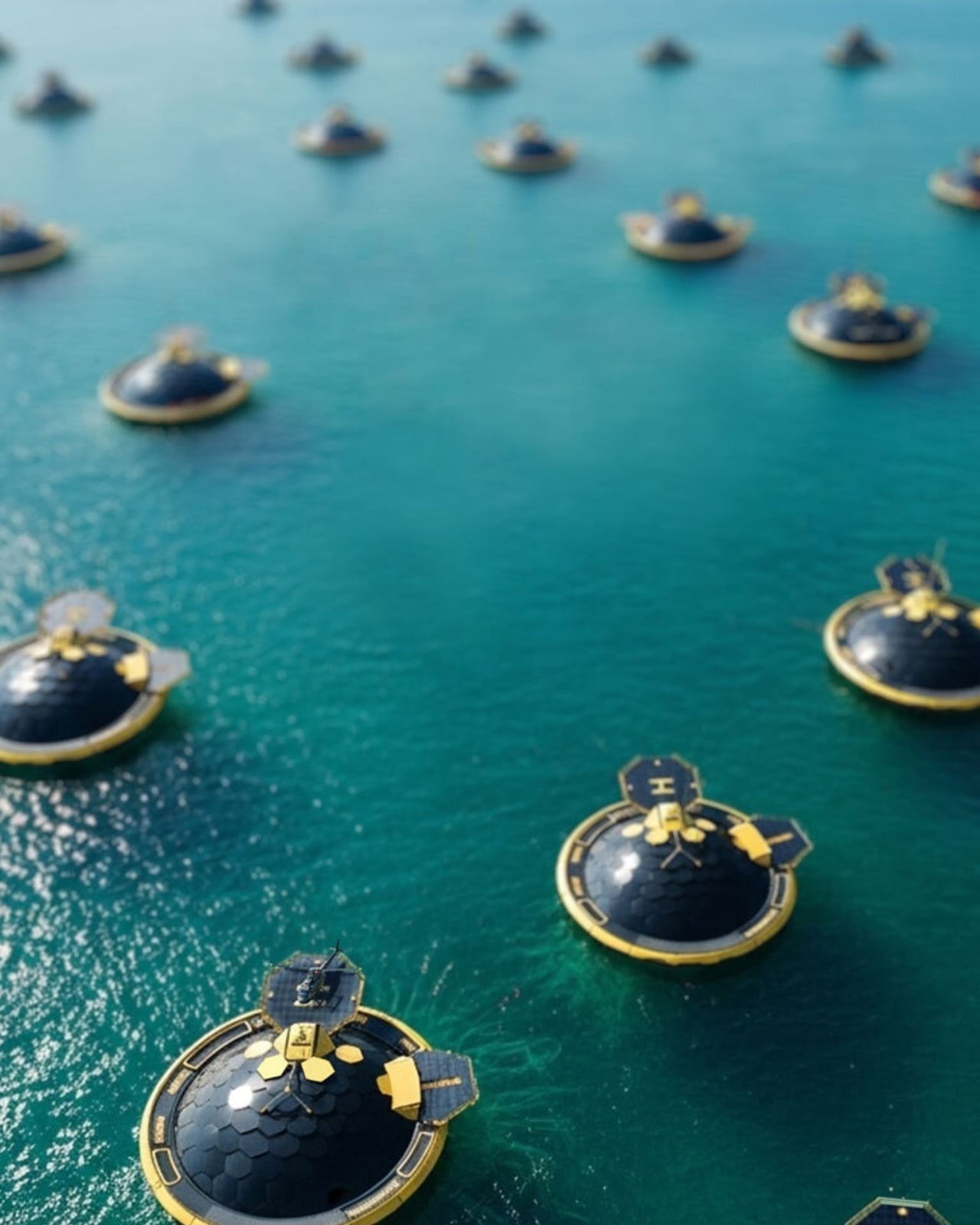
The best part? Because the system is modular, it can scale up or down depending on location and need. Small coastal communities could deploy a single unit. Larger installations could connect multiple platforms into floating networks. The design adapts rather than demanding a one-size-fits-all approach.
I’m genuinely curious to see where this goes. Will we see a working prototype in the next few years? Will governments and private investors recognize the potential here? For now, Novasis stands as proof that design can be both beautiful and functionally revolutionary, that we can build infrastructure that heals rather than harms. And in a world that desperately needs both hope and practical solutions, that feels like something worth getting excited about.
Apple is set to redefine the personal computing landscape with fantastic updates to its Mac lineup. These advancements, driven by next-generation chips, sleek design improvements, and innovative features, aim to meet the needs of a diverse audience. Whether you are a professional seeking high-performance tools or a casual user looking for affordability, Apple’s upcoming […]
Is the Nintendo Switch 2 the gaming revolution it promised to be, or does it fall short of the hype? Six months after its release, this question still sparks heated debates among gamers. In the video, Tech Fowler breaks down the console’s strengths and shortcomings, offering a thoughtful look at whether it’s worth the investment. […]
This week, Engadget Managing Editor Cherlynn Low joins us to look back at some of the highlights (and lowlights) of 2025. We dive into our favorite gadgets of the year, the many ways Big Tech bowed to Trump, the disappointment of AI PCs and the rise of smart glasses. We also learn way too much about our skincare routines.
Our favorite gadgets of 2025: Kindle Scribe Colorsoft, Airpods Pro 3, bluetooth lav mics and more – 2:26
Favorite Media of 2025: Andor, self-improvement via podcast, and a shoutout to your library – 34:30
iRobot declares bankruptcy – 47:29
Warner Bros. Discovery board rejects Paramount’s hostile bid, shareholders yet to vote – 53:47
The Oscars will air on Youtube starting in 2029 – 56:05
Ford to turn its F-150 Lightining into a gas generator EV – 57:41
Around Engadget: smart glasses had a great run in 2025, against social media age verification – 58:20
Credits
Hosts: Devindra Hardawar and Cherlynn Low Producer: Ben Ellman Music: Dale North and Terrence O'Brien
This article originally appeared on Engadget at https://www.engadget.com/social-media/engadget-podcast-2025-was-the-year-of-ai-smartglasses-and-spineless-big-tech-143000338.html?src=rss
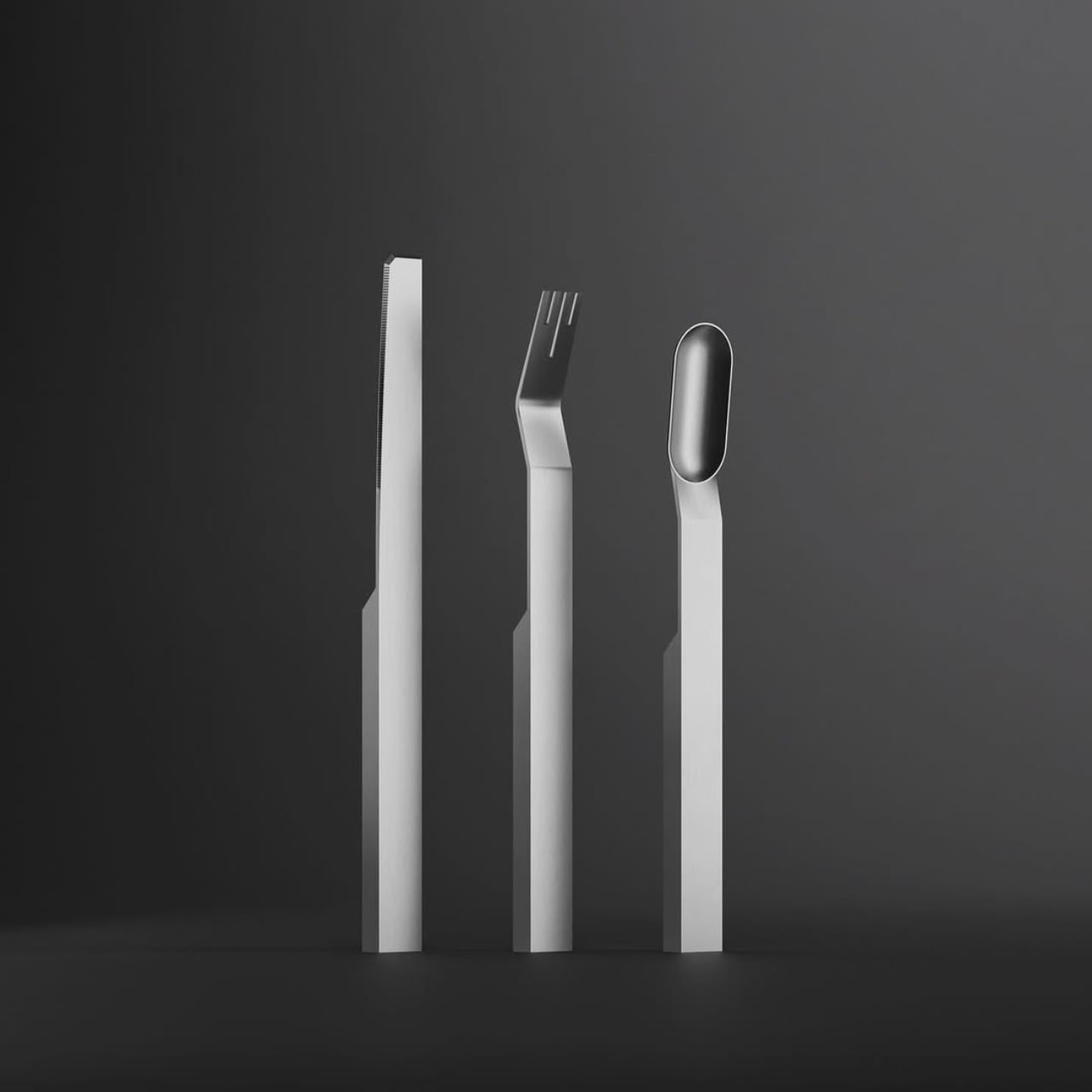
There’s something inherently rebellious about celebrating the process instead of hiding it. But most products are still designed to look effortlessly smooth, polished to perfection, and stripped of any trace of how they came to be. Atelier Andy Carson’s G-Code flatware takes the opposite approach. This cutlery set doesn’t just acknowledge its manufacturing origins, it flaunts them.
The name itself is a clever nod to the digital backbone of modern production. G-code is the programming language that tells CNC machines exactly where to cut, mill, and carve. It’s the invisible blueprint that translates design into reality, one precise coordinate at a time. By naming this flatware collection after that very code, Australian-based designer Andy Carson and his collaborator Sam Collett are making a bold statement: the machine is not just a tool, it’s part of the story.
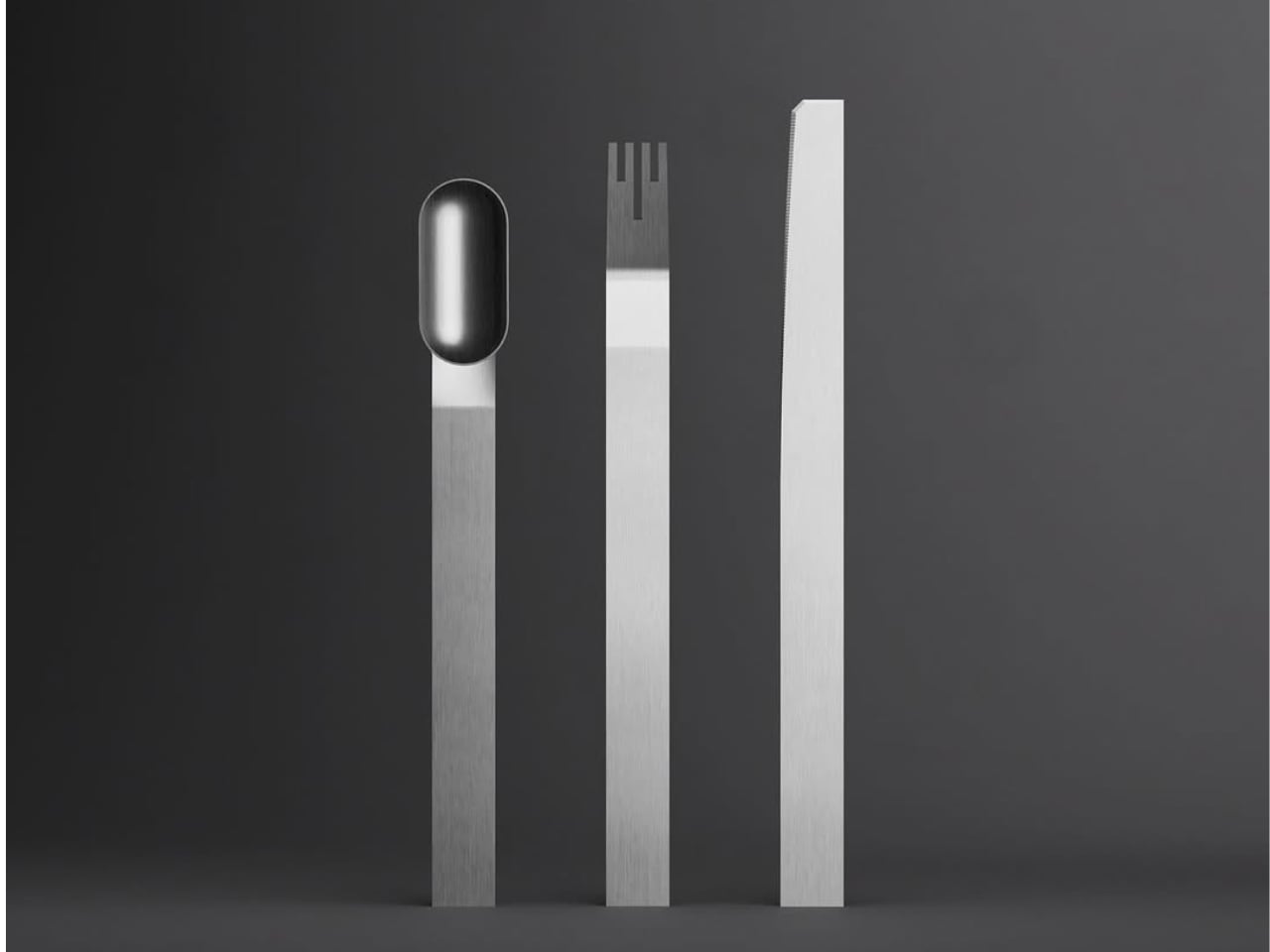
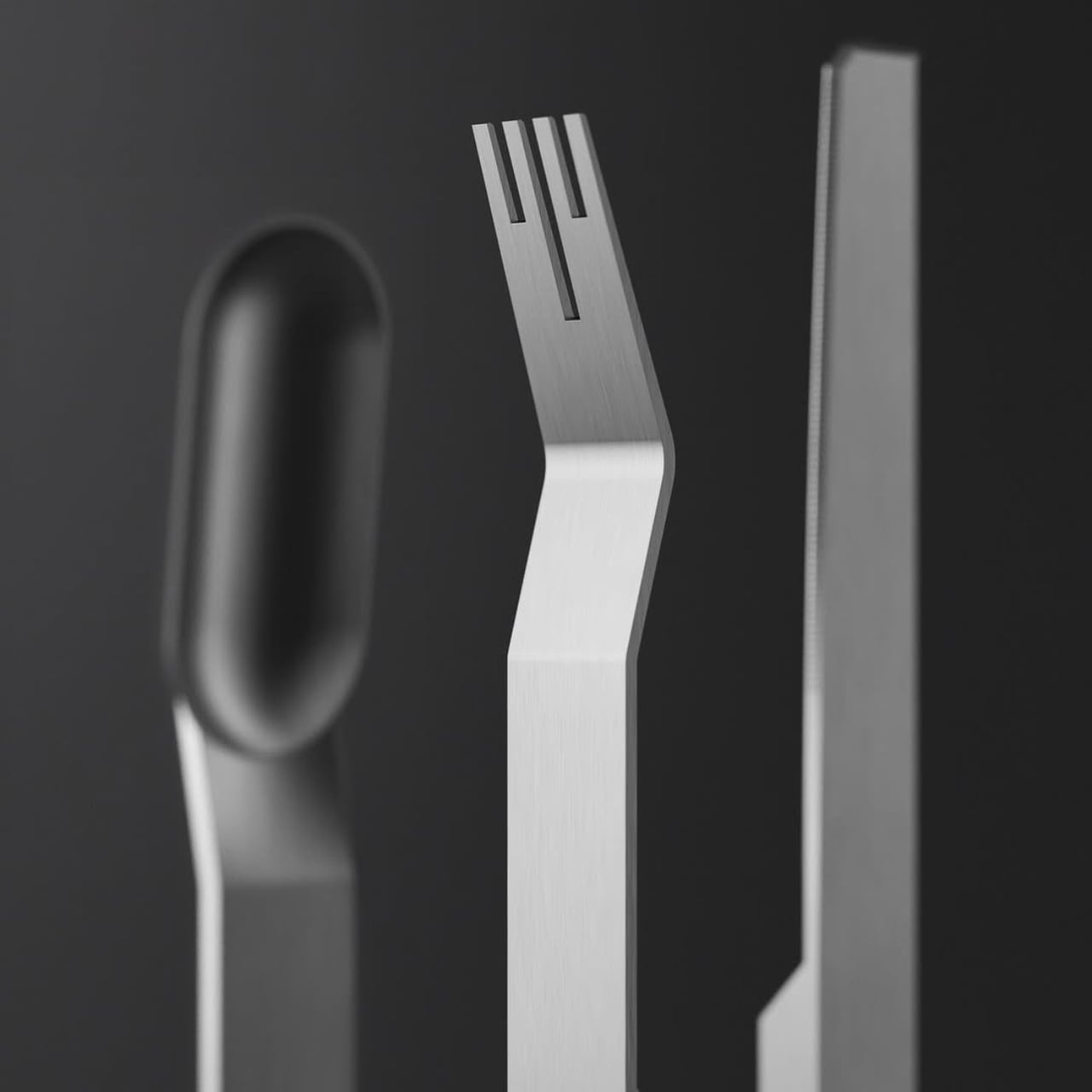
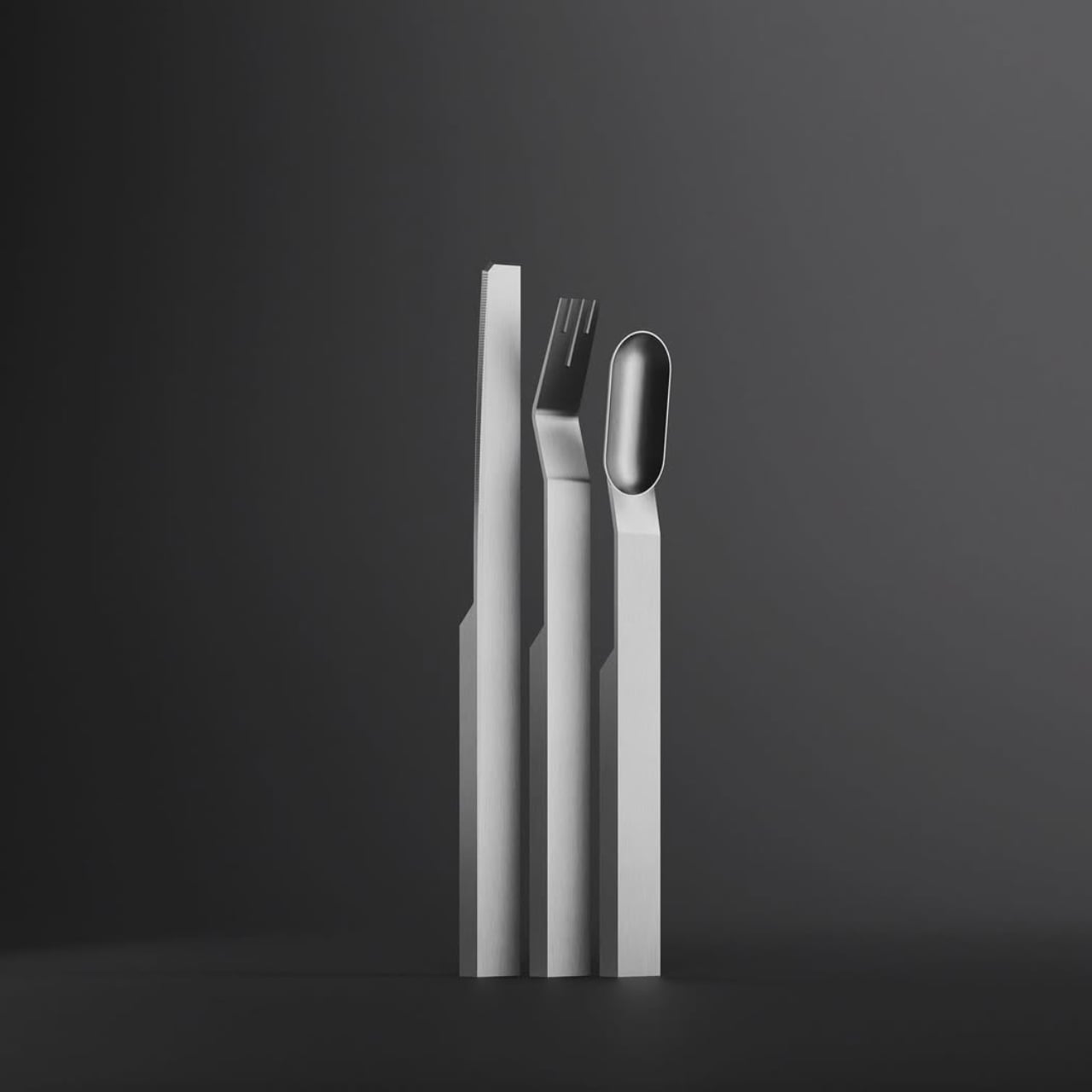
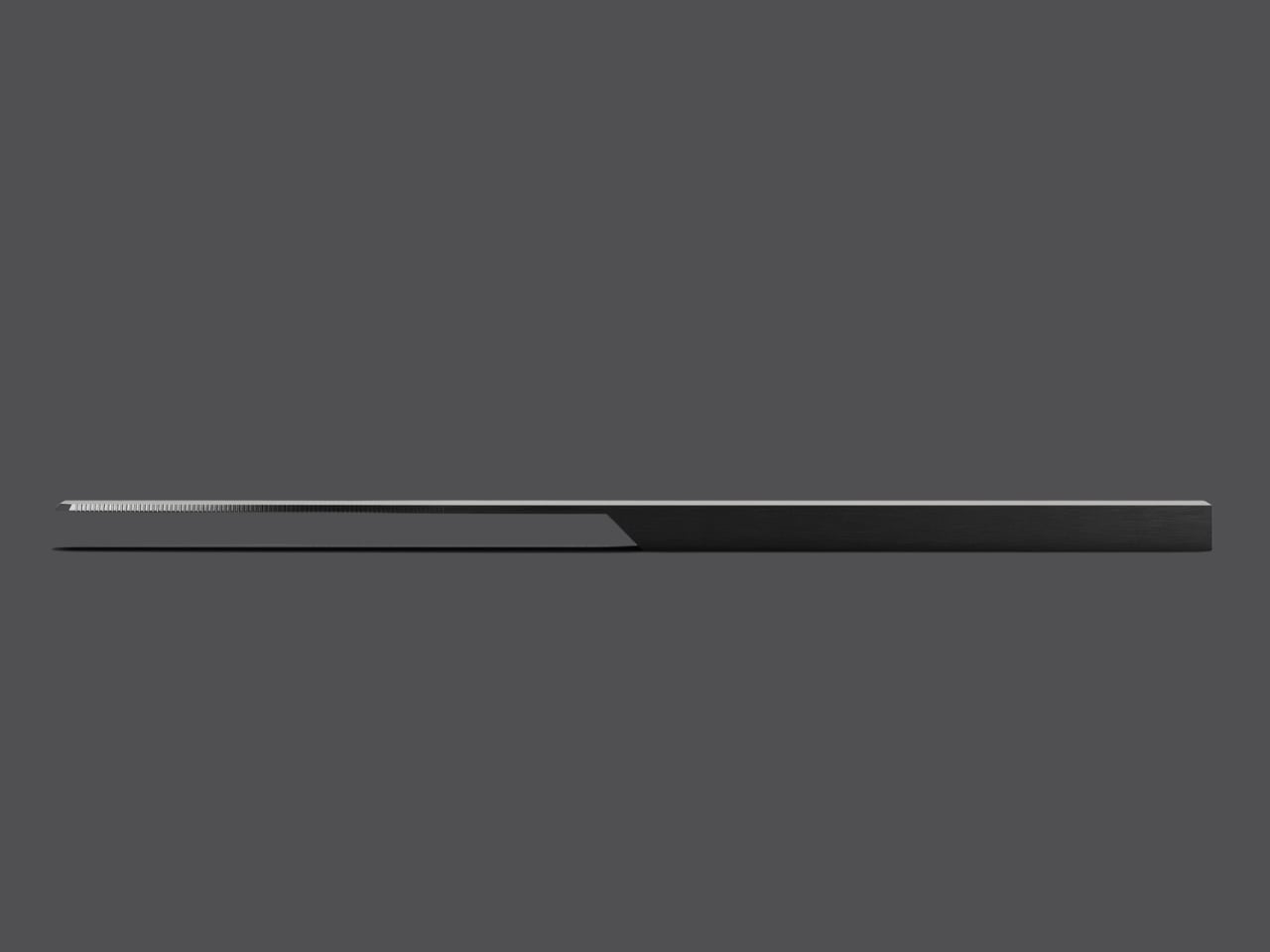
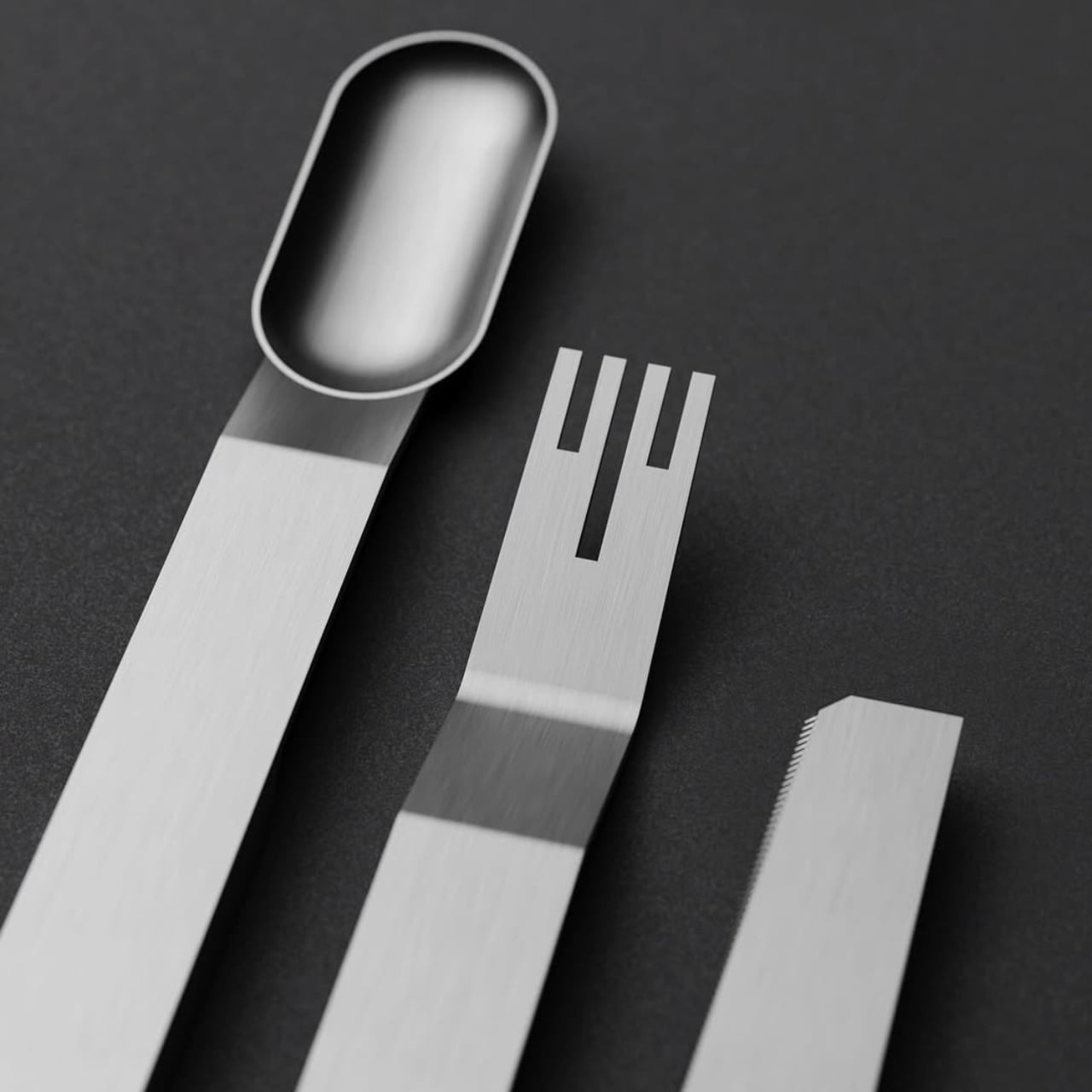
You can see that story in every angle of these pieces. Each implement in the set, a knife, fork, and spoon, is milled from solid stainless steel bar stock. There’s no stamping, no casting, no traditional manufacturing shortcuts that would smooth away the evidence of creation. Instead, what you get are geometric forms with crisp edges, flat planes, and subtle facets that catch the light in unexpected ways.
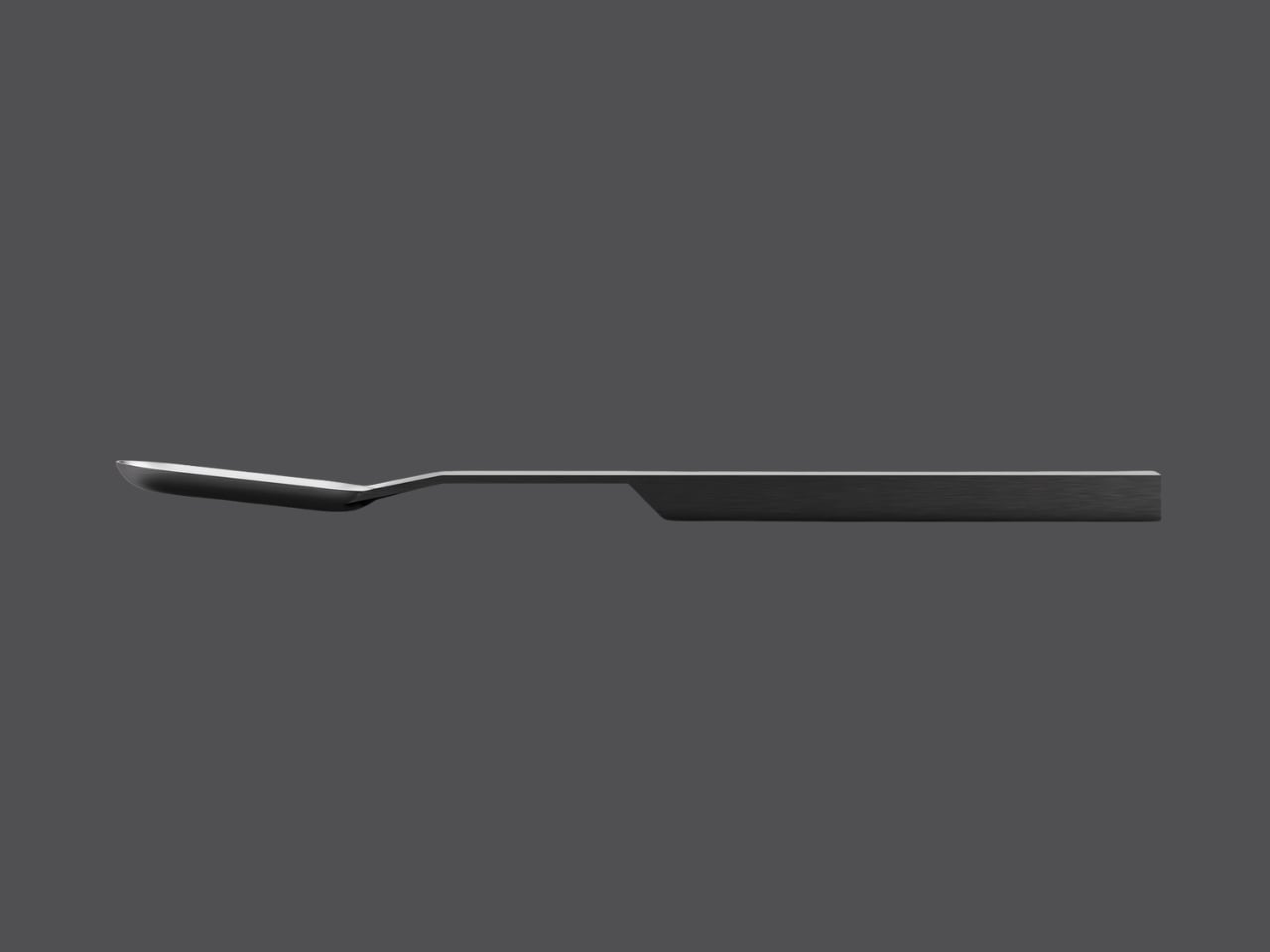
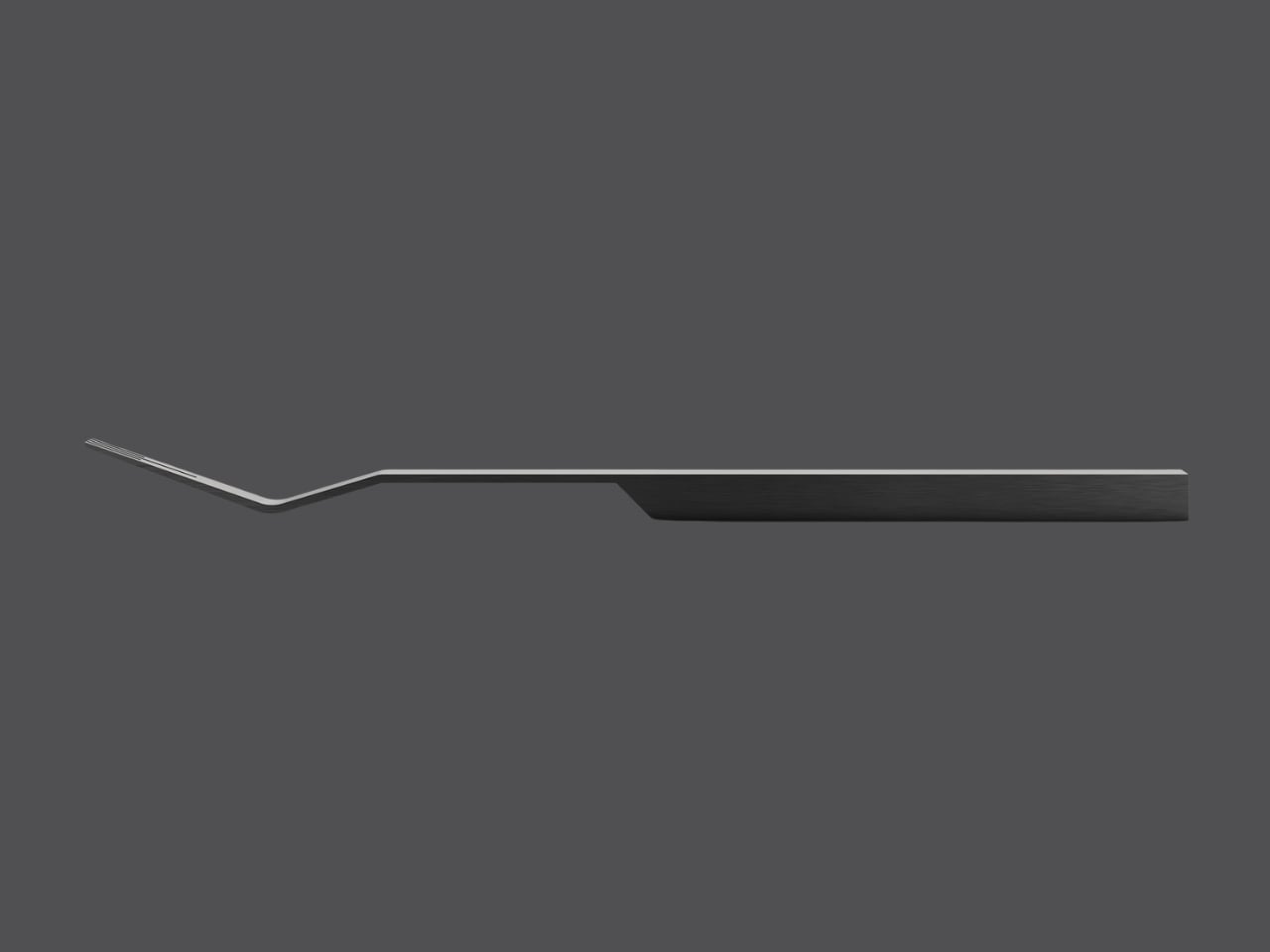
The aesthetic is unapologetically industrial, yet somehow it doesn’t feel cold or impersonal. The handles are rectangular and minimalist, tapering slightly as they extend toward the functional end. The fork features an intriguing angular bend that adds sculptural interest while maintaining perfect balance. The spoon’s oval head sits atop its geometric handle like a carefully considered punctuation mark. Even the knife, with its serrated edge, feels more like a piece of architecture than a simple eating utensil.
What makes this design particularly smart is how form and function work together so seamlessly. The weighted handles aren’t just about aesthetics or that satisfying heft you feel when you pick one up. They serve a practical purpose, ensuring that the head of each utensil hovers above the table surface when you set it down. It’s a thoughtful touch that addresses hygiene without requiring a separate knife rest or worrying about sauce staining your tablecloth. This approach challenges the conventions of how cutlery is typically made and what it’s supposed to look like. Most flatware relies on stamping or casting to achieve smooth, anonymous forms that disappear into the background of a meal. G-Code does the opposite. It asks to be noticed, to be appreciated not just as a functional object but as a celebration of precision manufacturing.
There’s a broader conversation happening here about honesty in design. In an era when so much of what we consume is mass-produced but styled to look artisanal, G-Code takes the reverse path. It’s a product that embraces its machined origins and turns them into a virtue. The flat surfaces, the geometric precision, the visible traces of the milling process, these aren’t flaws to be hidden. They’re features to be celebrated.
The monochromatic photography that accompanies the project only reinforces this philosophy. Shot against dark gray backgrounds, the flatware pieces stand like monoliths, their shadows as carefully composed as the objects themselves. The lighting emphasizes every edge, every transition from one plane to another, revealing the complexity within apparent simplicity. It’s worth noting that this isn’t just an exercise in theoretical design. These pieces are meant to be used, held, experienced. The matte finish on the stainless steel provides just enough grip without feeling rough. The proportions are calibrated for comfort. The balance point of each piece feels natural in your hand.
In a design landscape often dominated by either hyper-ornamentation or bland minimalism, G-Code carves out its own territory. It proves that celebrating manufacturing processes doesn’t mean sacrificing elegance, and that industrial aesthetics can coexist with everyday functionality. It’s flatware that makes you think about how things are made, why certain choices matter, and what it means when a designer decides to show their work rather than hide it. For anyone who appreciates when form, function, and manufacturing philosophy align perfectly, G-Code is a masterclass in intentional design. It’s proof that sometimes the most interesting stories are told not by what we conceal, but by what we choose to reveal.
Imagine spending hours refining an AI-generated output, only to realize the problem wasn’t the AI, it was the way you asked for help. In the video, Robin Ebers breaks down the findings from analyzing 2,236 AI prompts, revealing that 75% of failures stem from vague or poorly constructed instructions. It’s a frustratingly common issue: you […]
The iPhone 18 Pro Max introduces Apple’s most fantastic design and hardware updates in a decade, signaling a bold evolution in the smartphone market. With innovations such as under-display Face ID, a reimagined edge-to-edge display, advanced camera technology, and the next-generation A20 Pro chip, this flagship device is poised to redefine the mobile experience. These […]