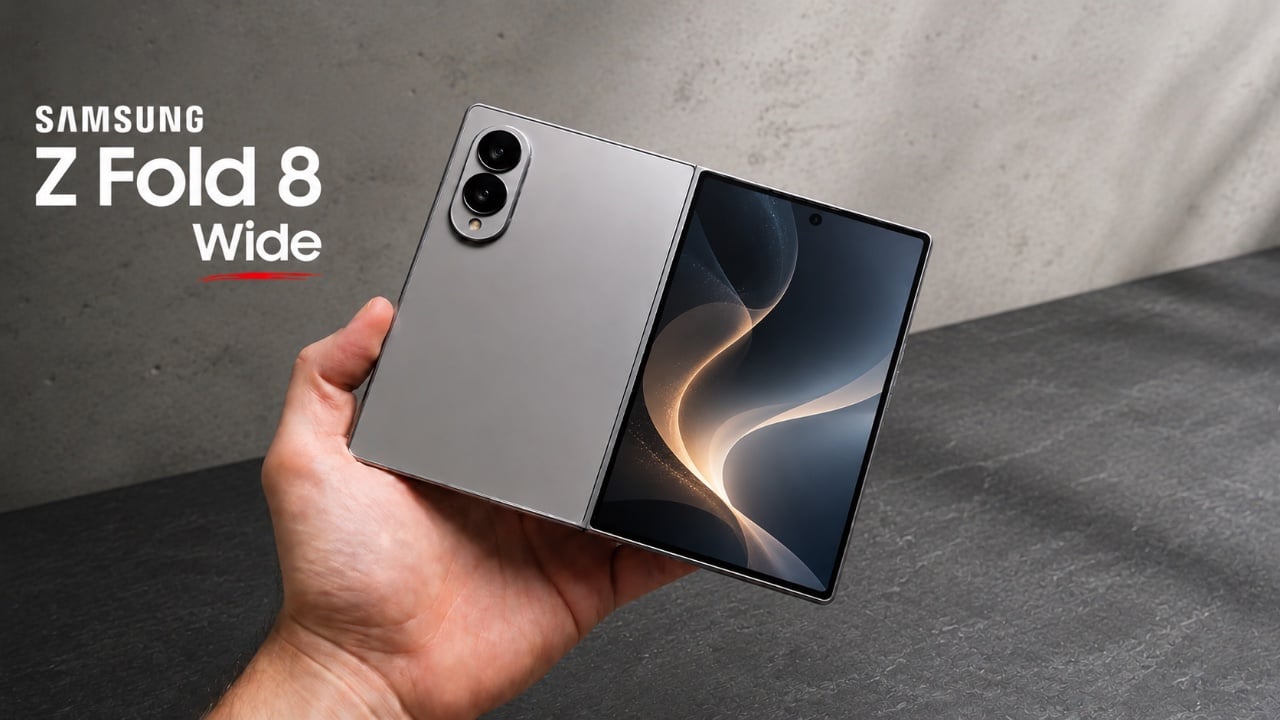
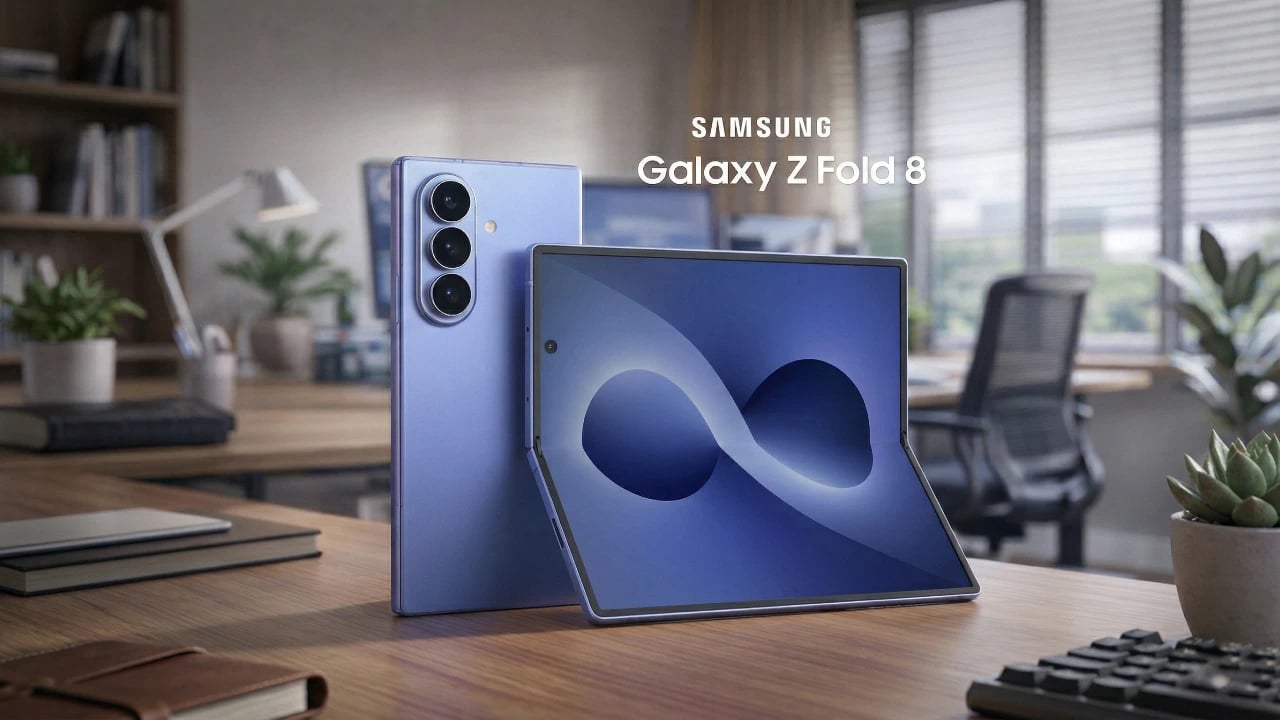
The Galaxy Z Fold 8 WIDE represents a significant leap forward in foldable smartphone technology, combining innovative design with exceptional performance. This latest iteration addresses the growing demand for devices that are both functional and innovative, offering a lighter, more efficient, and feature-rich experience. Below, we explore the nine standout features that set the Galaxy […]
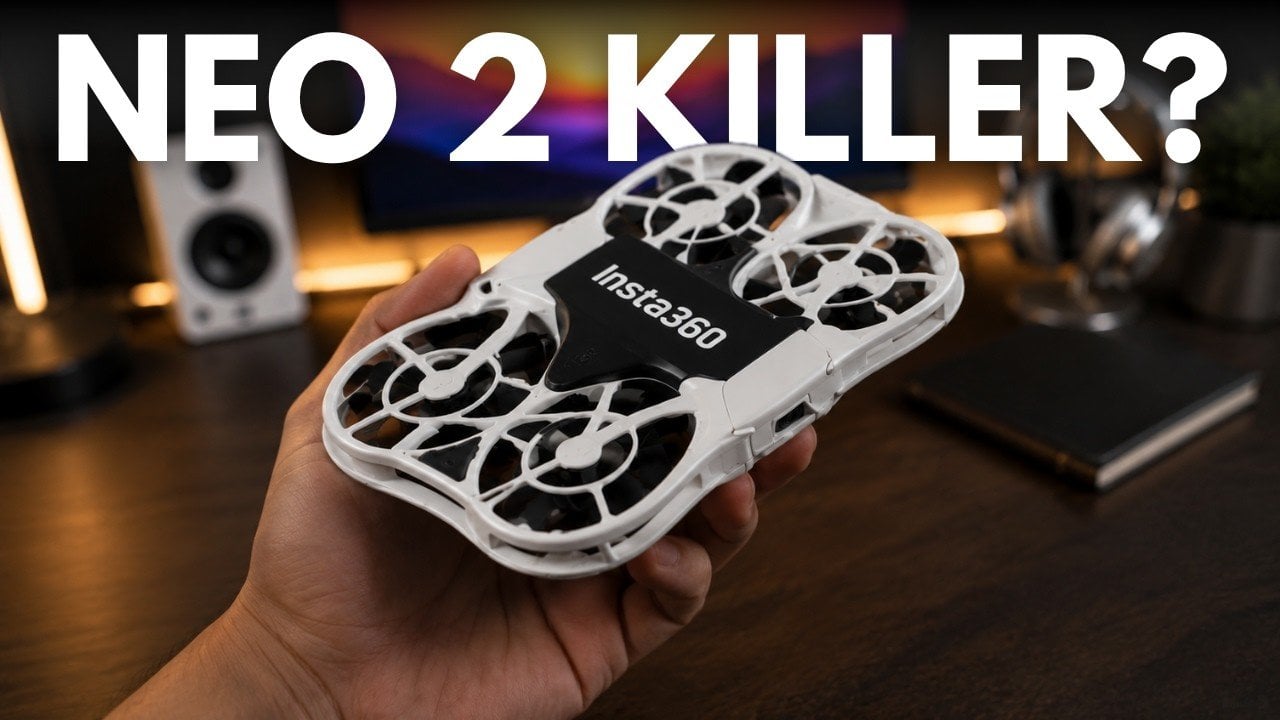
Insta360 is reportedly developing a compact drone that could rival DJI’s Neo 2, focusing on portability and creative functionality. According to Tech Court, early details suggest the drone may include integrated propeller guards and modular accessories, allowing users to customize their setup. This approach aligns with Insta360’s history of prioritizing adaptability and creator-friendly features, potentially […]
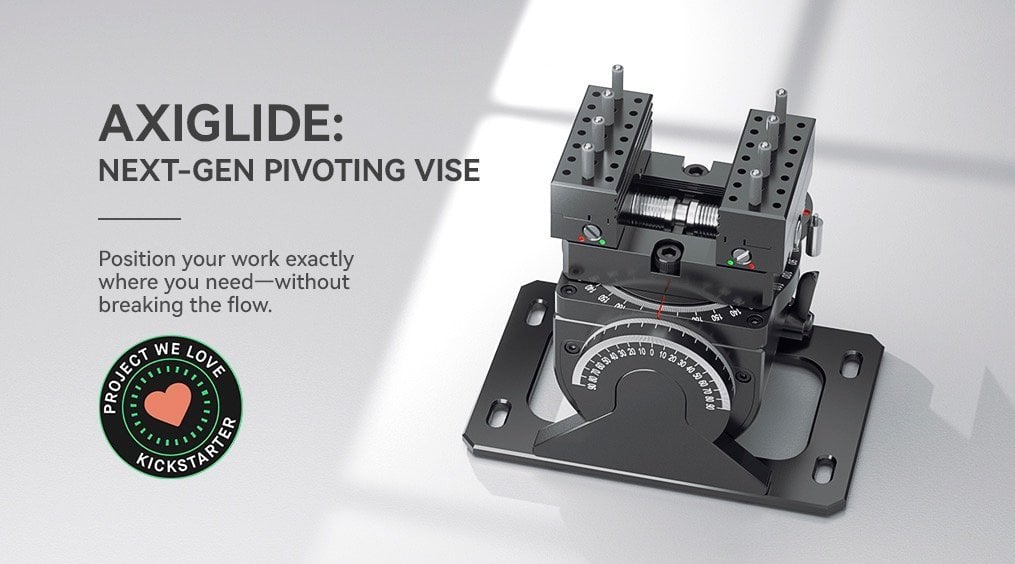
VogueMech has launched the AxiGlide, a dual-axis pivoting vise designed to bring precision and adaptability to a wide range of creative and technical tasks. With 360° rotation, 90° tilt, and three distinct operating modes, it offers a way to handle intricate projects without the constant pause-and-reset cycle of conventional clamping tools. The Indexed Precision Mode, […]
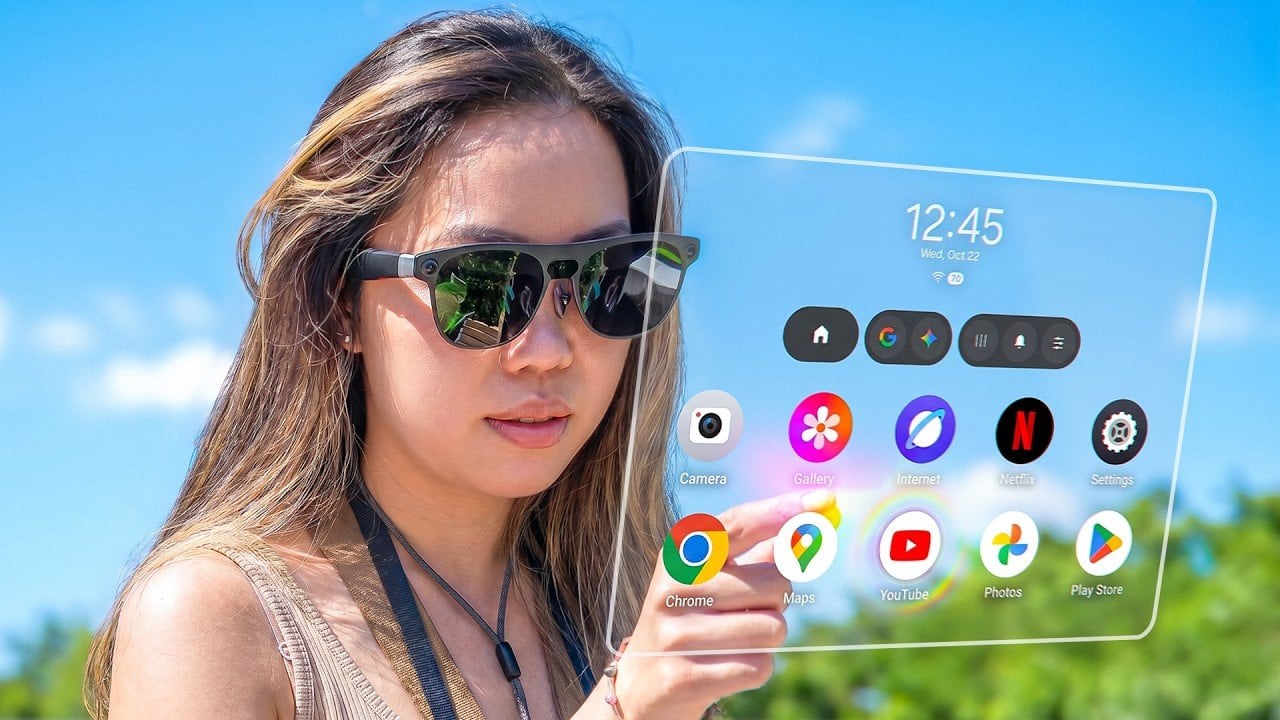
Project Aura represents a collaborative effort by XRO, Google and Qualcomm to create a lightweight XR headset that combines Augmented Reality (AR) and Virtual Reality (VR) into a single device. Weighing under 95 grams, the glasses prioritize portability while maintaining high performance, thanks to an external Snapdragon puck that handles processing. This puck, which can […]
Samsung is poised to redefine the foldable smartphone market with the highly anticipated Galaxy Z Fold 8 series, unveiled during the Samsung Unpacked event on July 22, 2026. This latest lineup introduces two distinct models, the Z Fold 8 Ultra and Z Fold 8 Wide, each designed to cater to specific user preferences. With notable […]
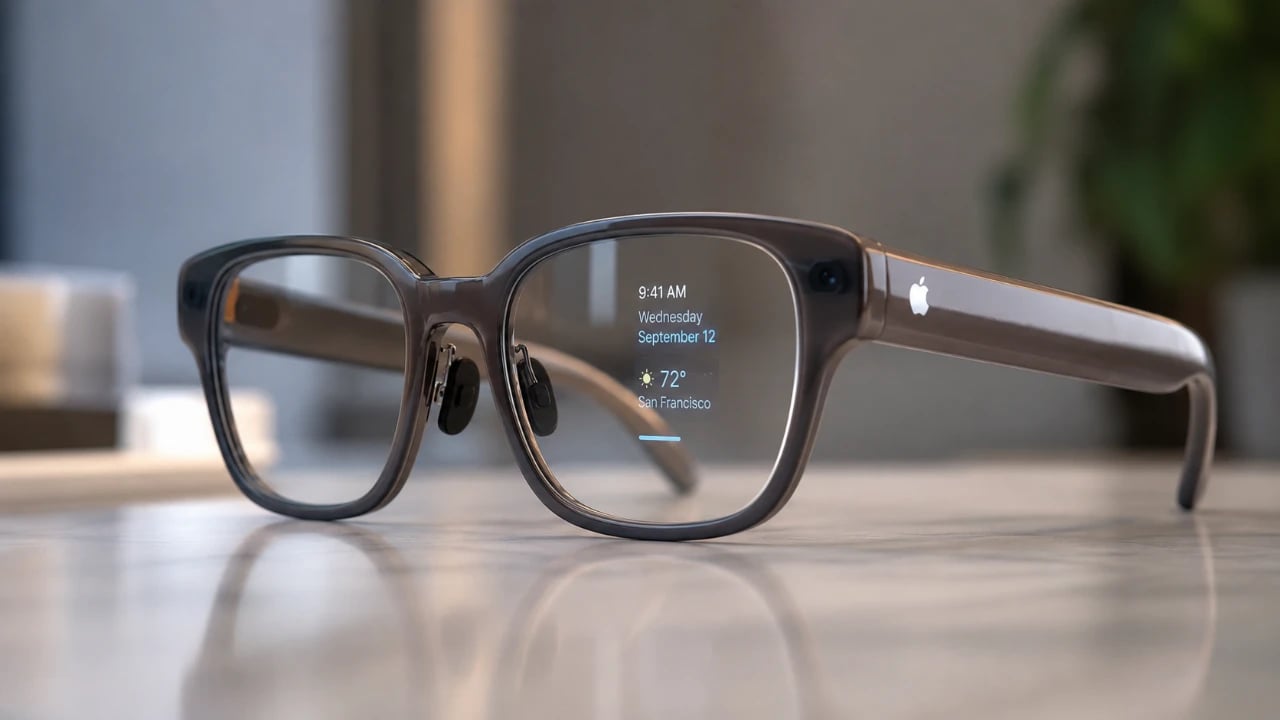
Apple is preparing to make a significant impact on the wearable technology market with its highly anticipated smart glasses, expected to launch in late 2027. By adopting a “glasses-first” design philosophy, Apple aims to seamlessly integrate advanced technology into traditional eyewear, prioritizing aesthetics and functionality. This approach mirrors the success of the Apple Watch, which […]
Are you ready to enhance your Android experience this month? June 2026 brings an exciting lineup of apps that blend functionality, customization, and productivity. These tools are designed to simplify your daily tasks, personalize your device, and help you maintain a balanced digital lifestyle. Let’s explore the top 15 Android apps making an impact this […]
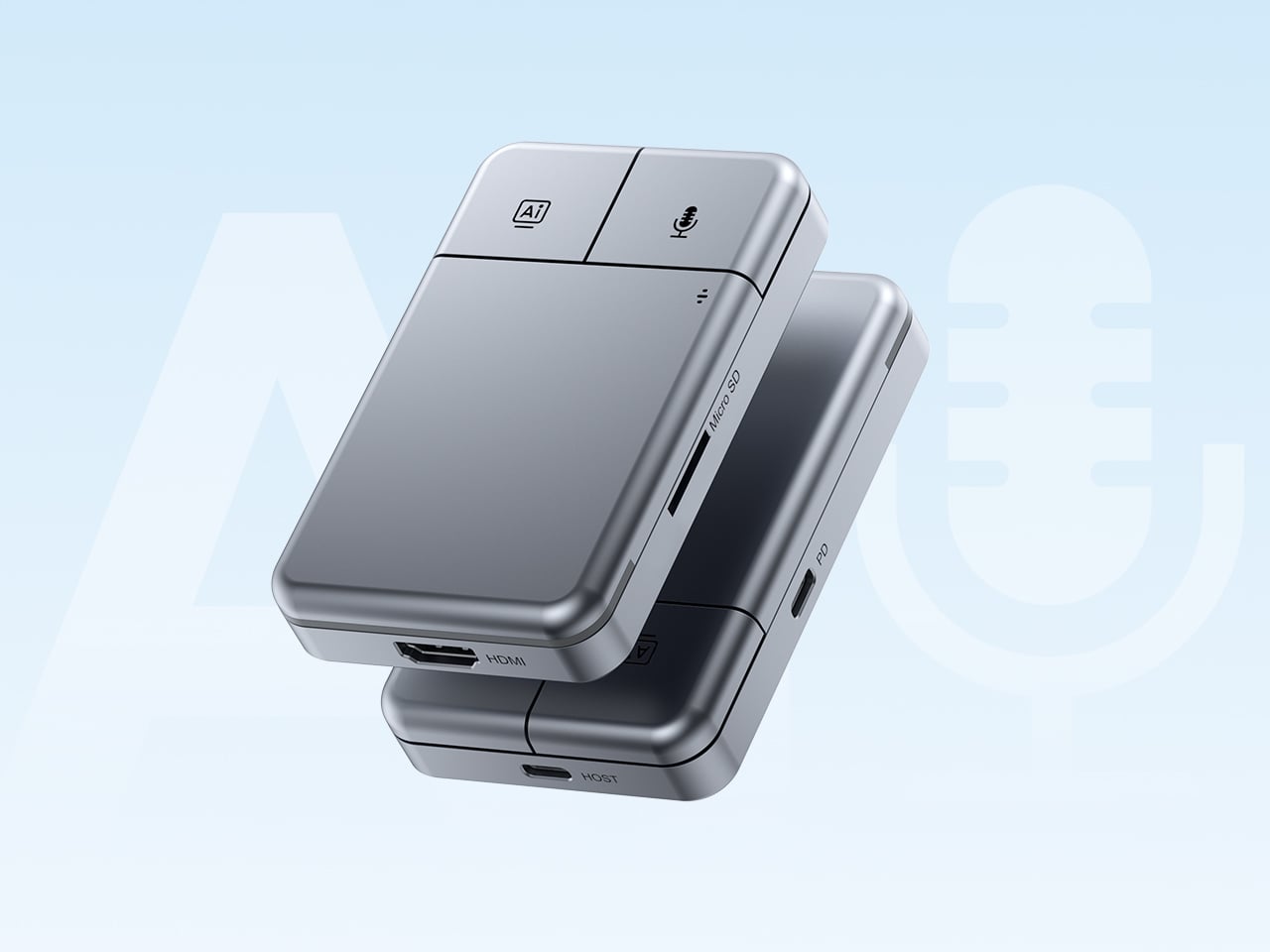
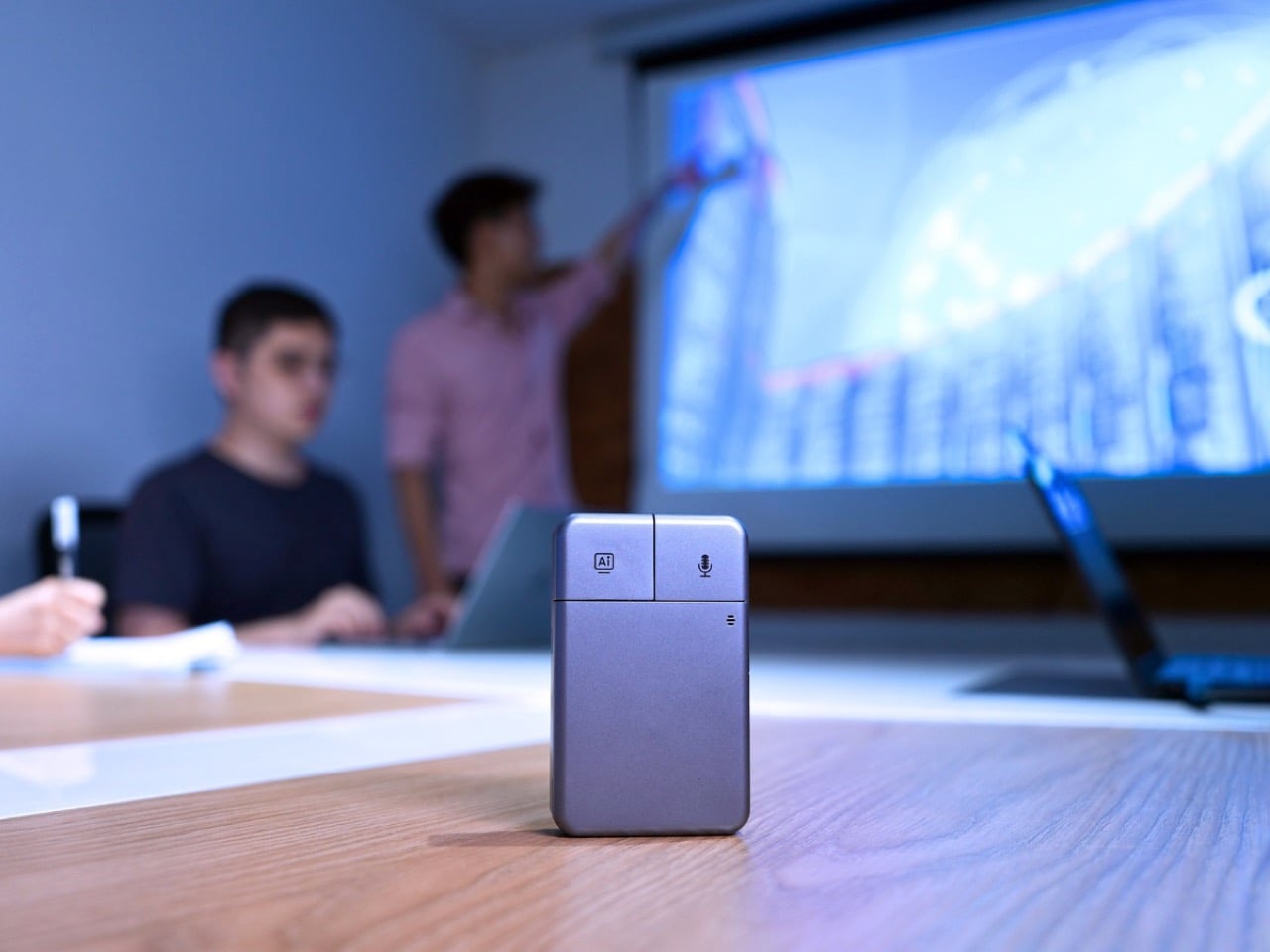
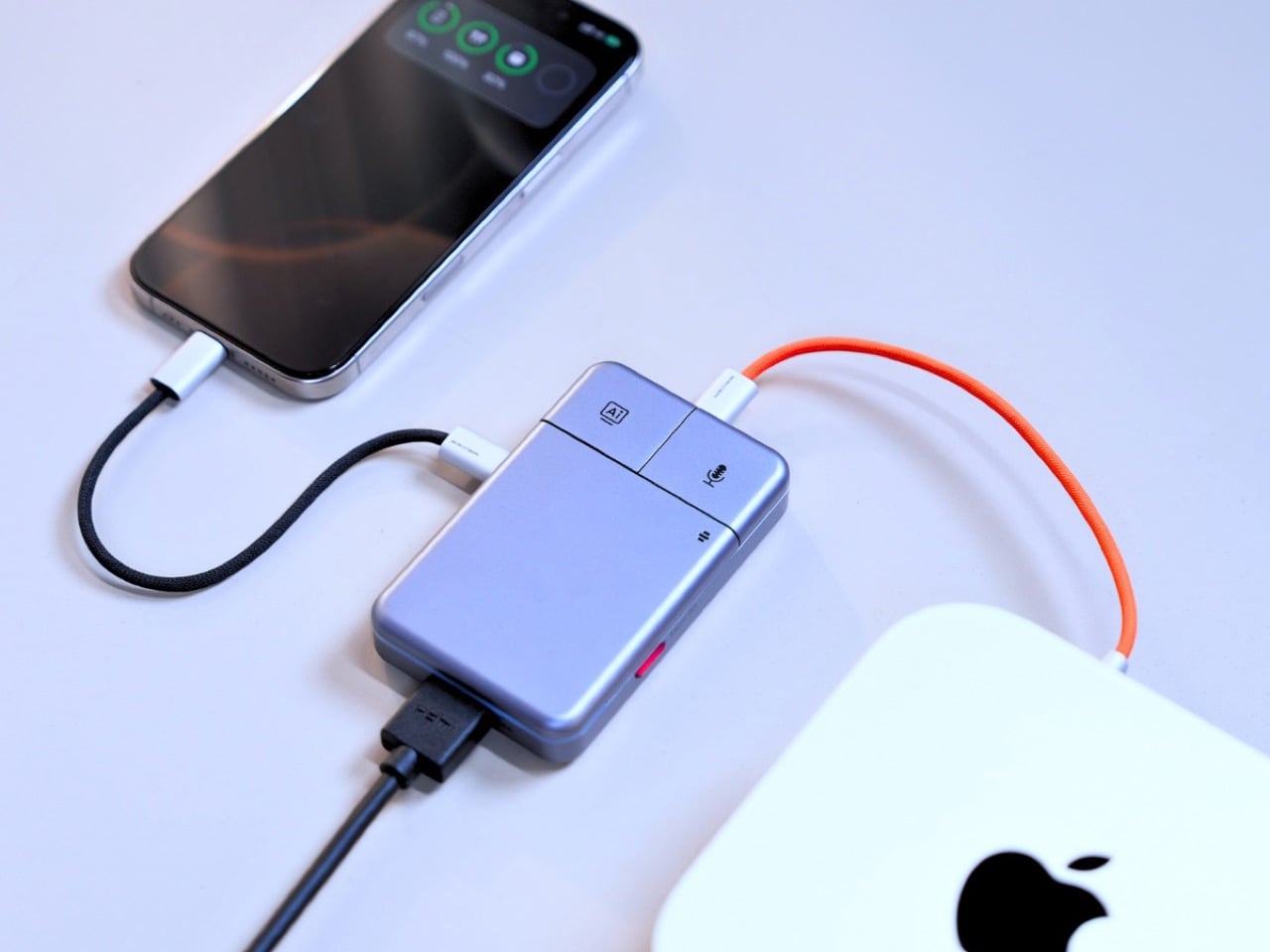
Put the DockOrb A1 on a conference table without context and someone will reach for it expecting a scroll wheel. The gray brushed-aluminum slab, the gently rounded corners, and two physical buttons in familiar left-right symmetry on the top face read entirely as peripheral hardware. What the device actually does is listen, think, and report. Powered by OpenAI GPT-5, Google Gemini 2.5 Pro, and Anthropic Claude Sonnet 4, DockOrb A1 is a professional AI meeting and desktop assistant. The label on the box says meeting assistant; the object in the hand says otherwise.
The category it operates in has been filling up quickly. Plaud built a card-thin wearable that magnetically clips to your phone. HiDock shaped a USB-C hub into a ChatGPT-powered meeting stenographer, and we covered that launch here at YD. DockOrb’s A1 lands somewhere between those two worlds, combining a fully functional multiport dock with a multi-model AI engine, 100W PD, and 4K@60Hz HDMI output. Unlike either of those predecessors, it handles display output and power delivery in the same housing, making the desk real estate argument for a single device considerably more loaded.
The mouse silhouette is instantly familiar, and anyone who’s ever used a computer will be able to navigate the DockOrb intuitively. Two buttons arranged horizontally on a flat top surface is the correct solution for a device that needs to be operated with a single press in a meeting context, no fumbling, no menus, no distraction. With a dedicated AI button and real-time processing, DockOrb A1 analyzes ongoing discussions and provides actionable suggestions and insights, helping teams improve collaboration and make decisions more efficiently without interrupting the meeting flow. LED status is handled by a single indicator, white for idle and blue for active capture, readable from across a conference table without breaking eye contact with whoever is speaking. The problem is that all of this correct ergonomic logic is housed inside a form that the product world has spent two decades teaching people to recognize as a pointing device.
Rather than anchoring to a single AI model, the A1 integrates with Esteno, an advanced AI fusion-processing software platform. Esteno integrates multiple advanced AI models, including OpenAI GPT-5, Google Gemini 2.5 Pro, and Anthropic Claude Sonnet 4. Each model is optimized for tasks such as speech-to-text, summarization, contextual reasoning, and insight generation. By intelligently routing tasks to the most suitable model, the system delivers efficient, flexible, and high-quality meeting intelligence across different use cases. That architectural approach is genuinely unusual in this category, where most competitors commit to a single backbone and build their entire brand identity around it.
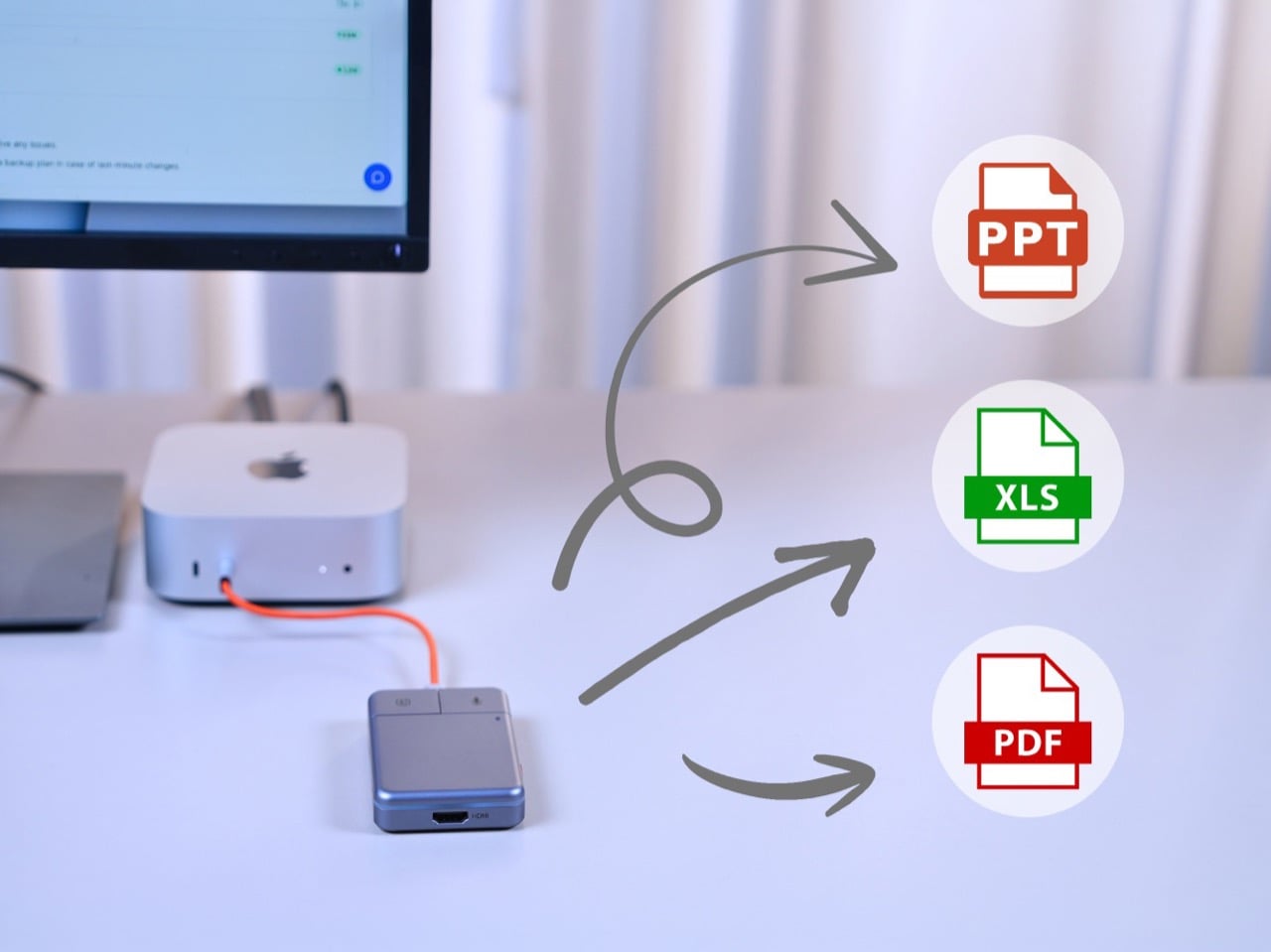
Plaud’s card-thin approach to meeting intelligence, at 2.9mm thick and MagSafe-compatible, is built on the premise that the recorder travels everywhere with you, riding on the back of your phone. The A1 has no such intention, operating through USB power without a built-in battery, with a compact design, dedicated recording button, and AI activation key for stable and simple meeting operation. In exchange for that fixed-desk commitment, it handles 4K video output at 60Hz over HDMI and 100W power delivery over USB-C, turning the dock into the single device your entire workstation routes through. After transcription and analysis, DockOrb A1 automatically generates structured meeting reports highlighting key decisions, action items, and follow-up tasks, which can be exported directly in PDF, Excel, or PowerPoint formats. Getting a properly formatted, structured report out of a recorded conversation without manual reformatting is a genuine subtraction from the post-meeting to-do list, and it’s the kind of output that separates a real workflow tool from a novelty recorder.
Following ISO and SOC data protection standards, DockOrb A1 secures recorded audio and AI-generated content through encrypted storage and processing, allowing users to export, archive, or delete files at any time while ensuring full control over their data. That’s pointed positioning in a market where corporate IT departments are increasingly skeptical about meeting audio being routed through third-party AI servers without accountability. Recordings, transcripts, summaries, and reports from multiple meetings can be stored and organized within a centralized memory archive, with AI-powered indexing and searchable meeting names, content, or dates, so teams can quickly retrieve past discussions, track long-term decisions, and build a continuously growing knowledge base. Built on a platform-independent architecture, DockOrb A1 processes audio from Zoom, Teams, Google Meet, mobile devices, and more, delivering consistent transcription, analysis, and structured outputs. Retrieving a specific discussion from three months prior becomes a search query rather than a manual scroll through unlabeled audio files.
The Kickstarter campaign prices the A1 at $89 for the Super Early Bird tier against an MSRP of $149. Shipping is targeted for August 2026, with production beginning the month prior. Plaud’s Note Pro retails at $169 on the market and handles no dock hardware whatsoever, making the A1’s value calculation sharper for anyone already planning to put a USB-C hub on their desk. The Esteno software platform tiers at $8 per month for Basic, covering 600 minutes of monthly transcription, and $15 per month for Pro, which adds 2,400 minutes, unlimited AI features, and priority processing. That’s a fully loaded meeting intelligence setup, dock and display output included, for a first-year cost that lands well under what most enterprise-grade transcription tools charge for software alone.
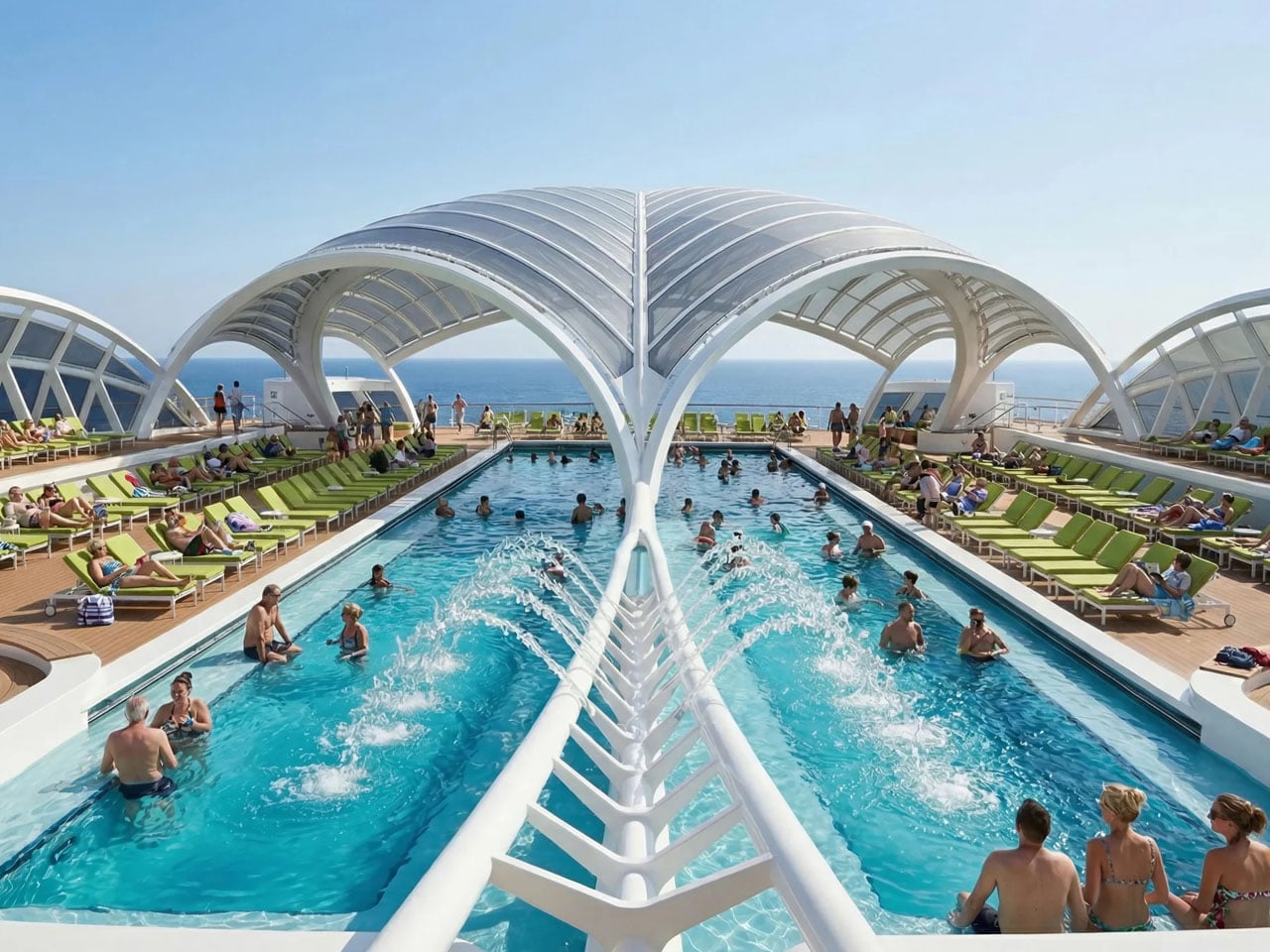
Spending a week or a month at length on an expansive Cruise ship is on many people’s wish list. The Royal Caribbean’s Icon of the Seas, having a maximum capacity of 7,600 passengers, is right up there. It is currently the largest cruise you can book for a very long time, if you’ve got money to spare, of course. If you cannot fathom the size of that cruise ship, wait till you hear what this upcoming cruise ship is capable of.
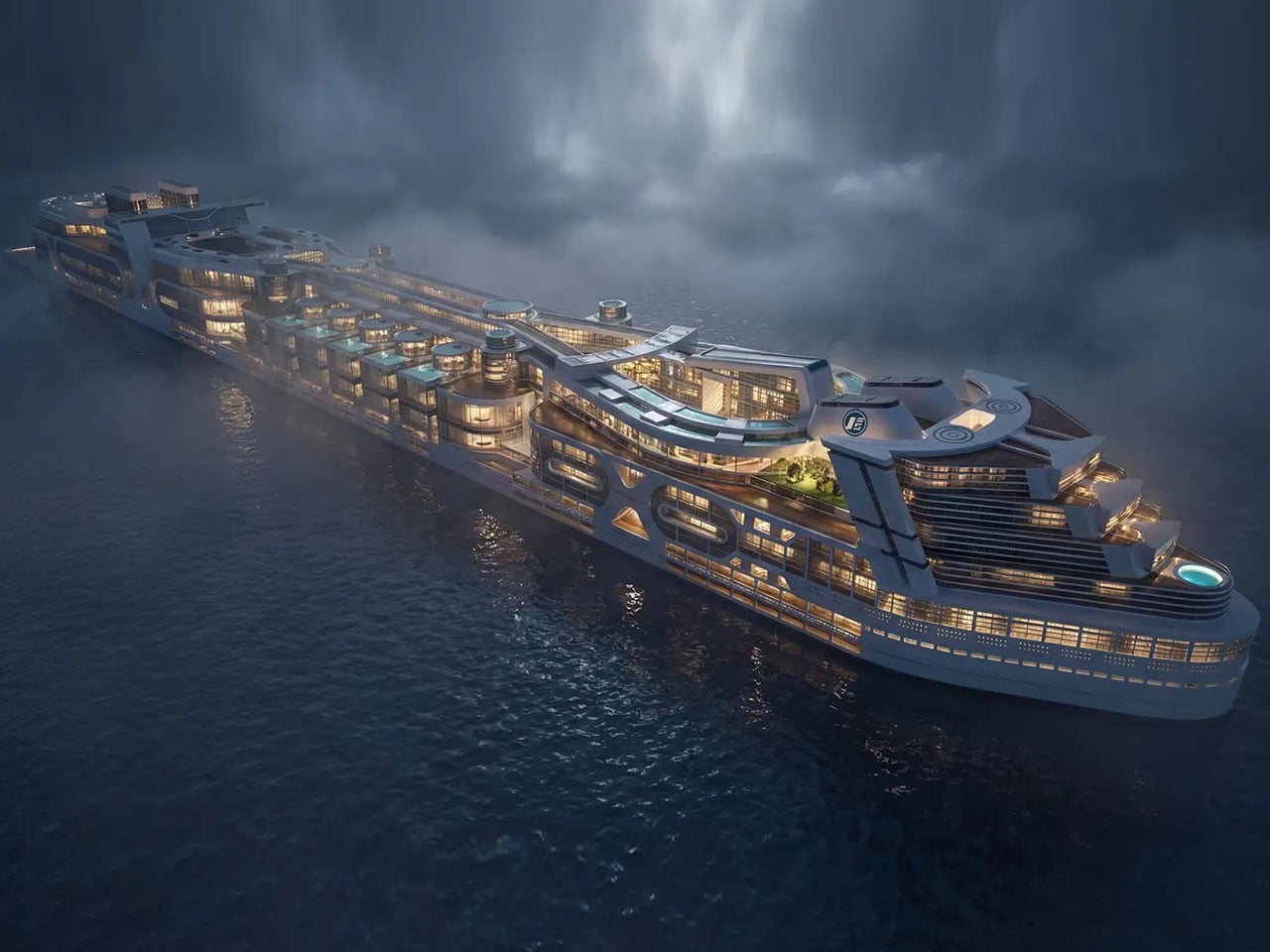
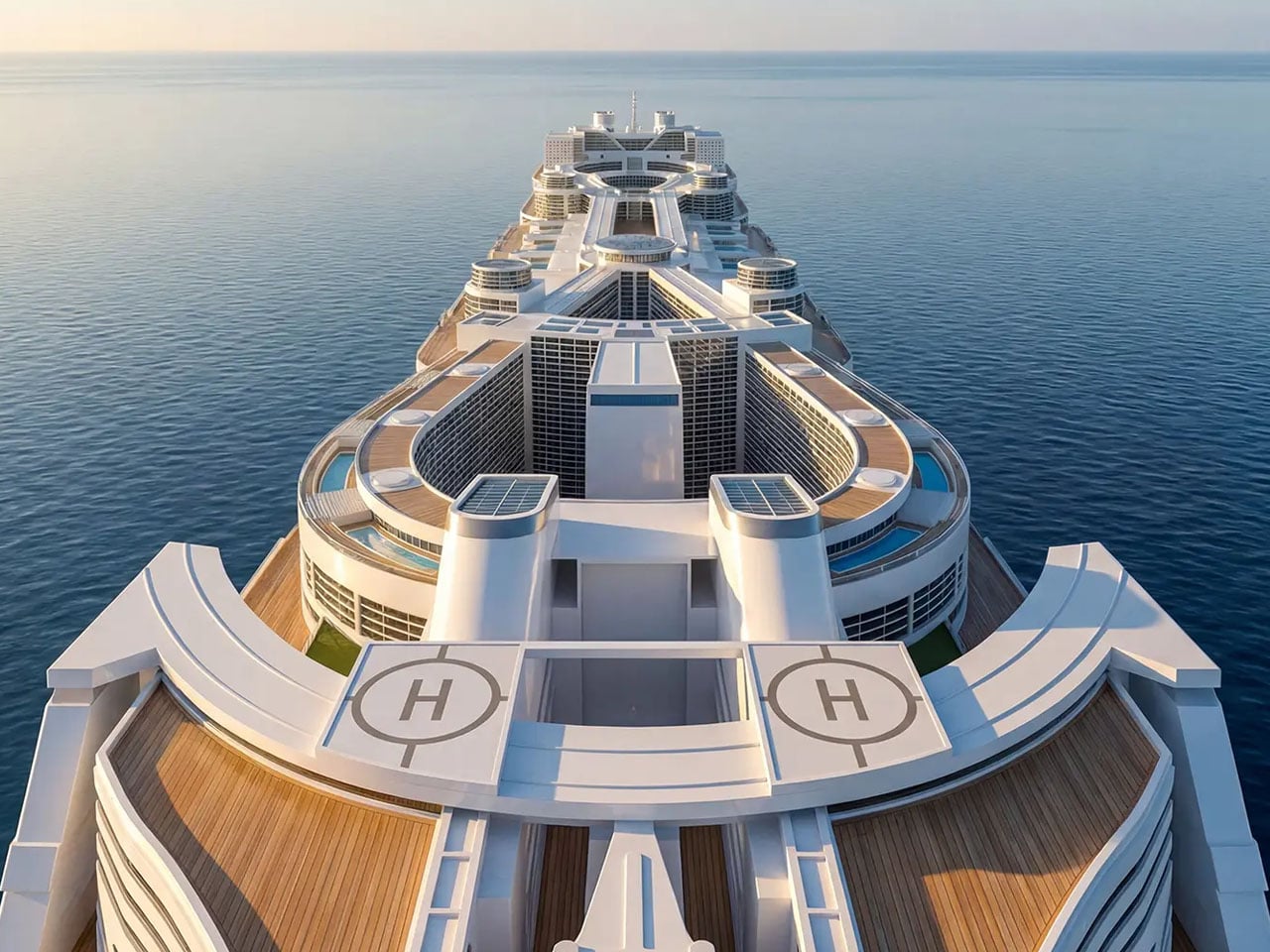
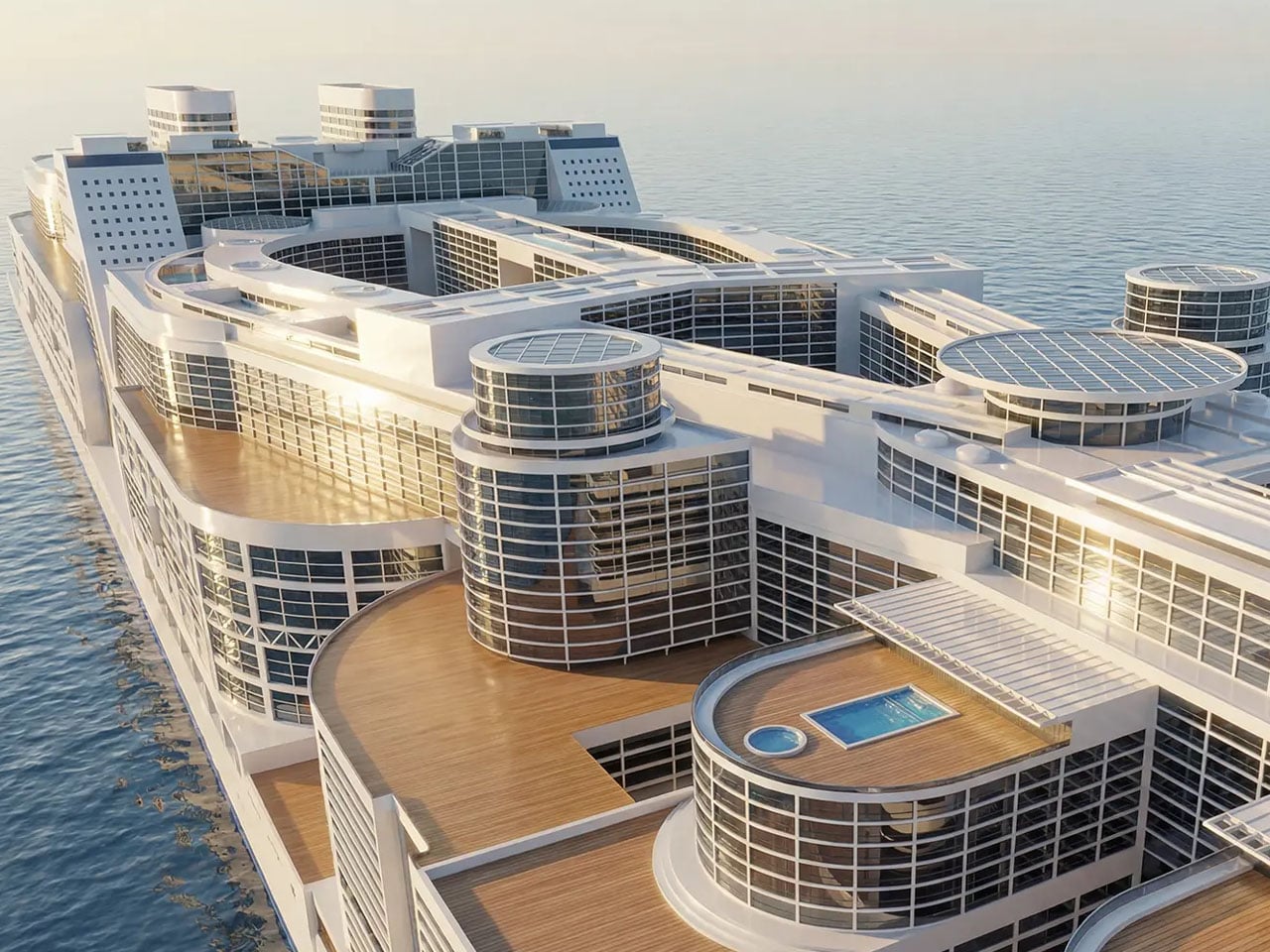
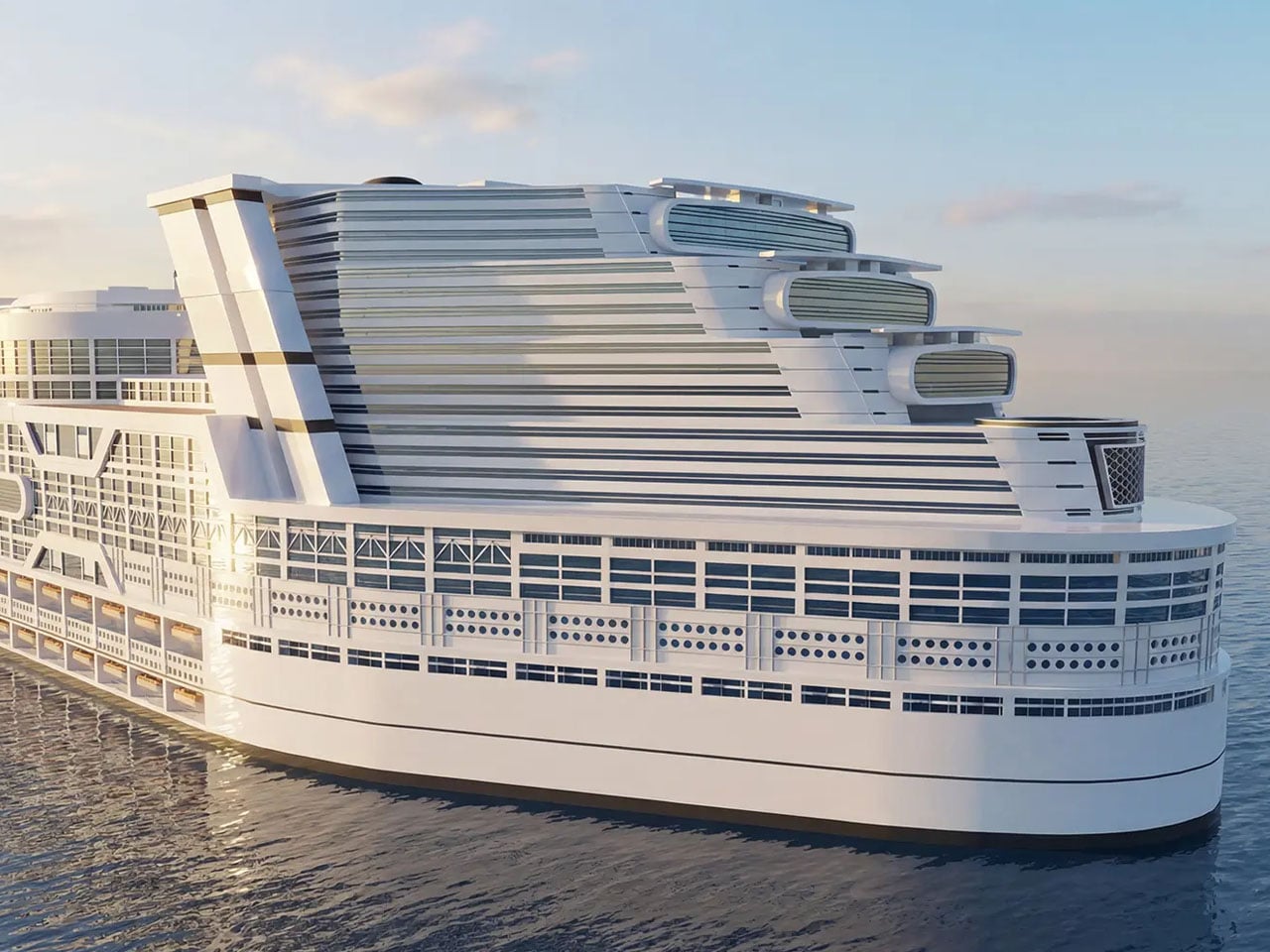
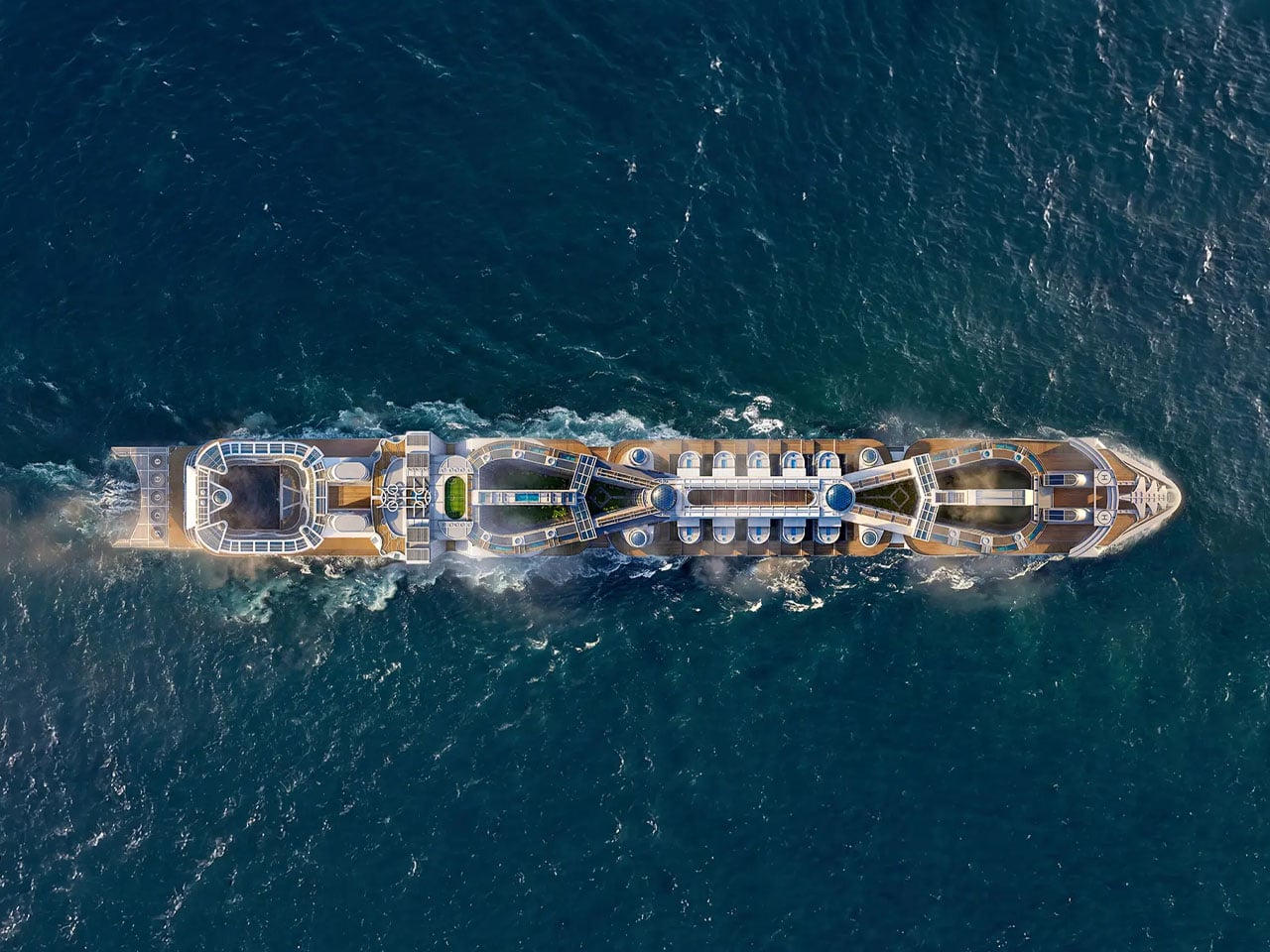
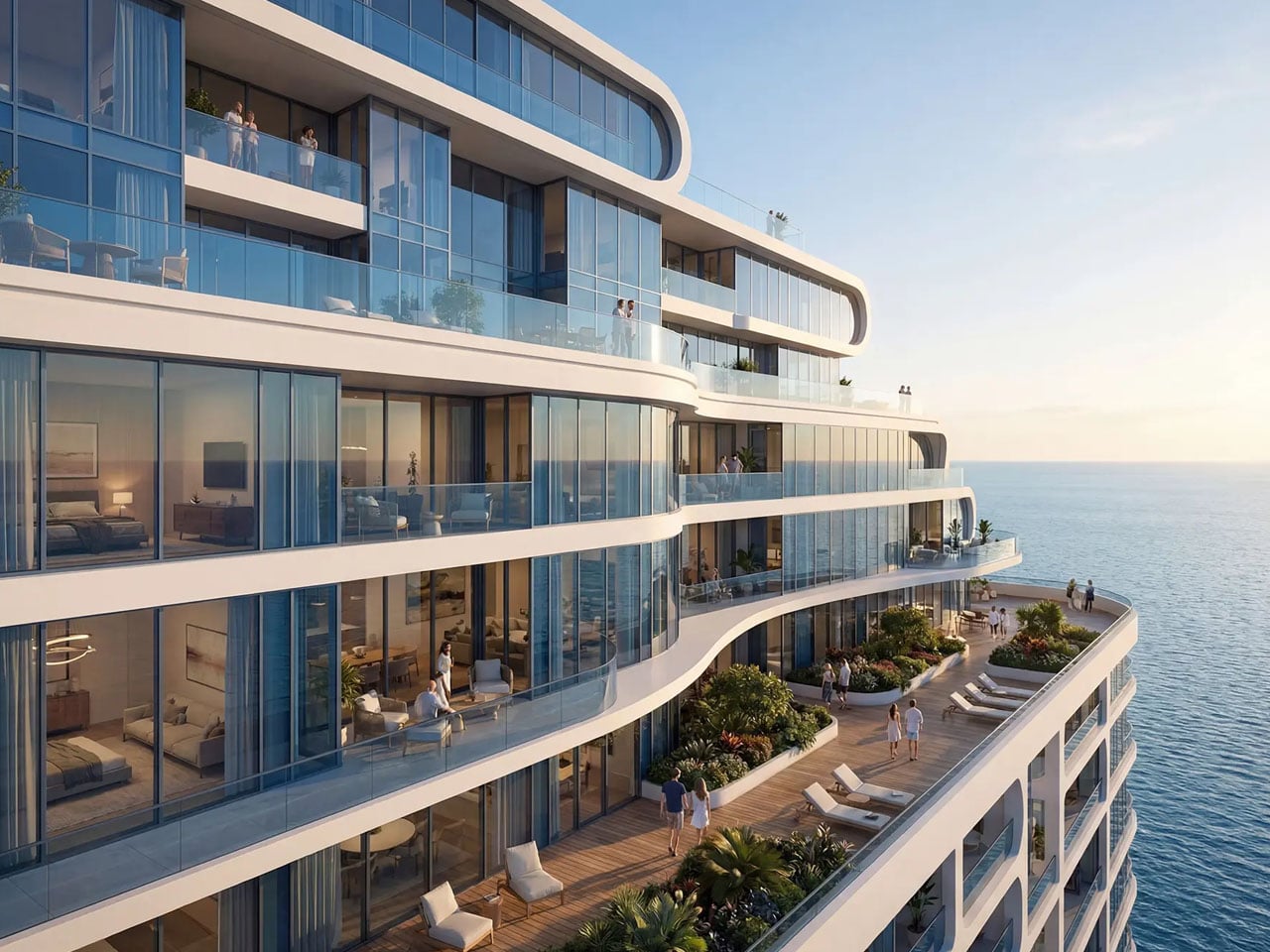
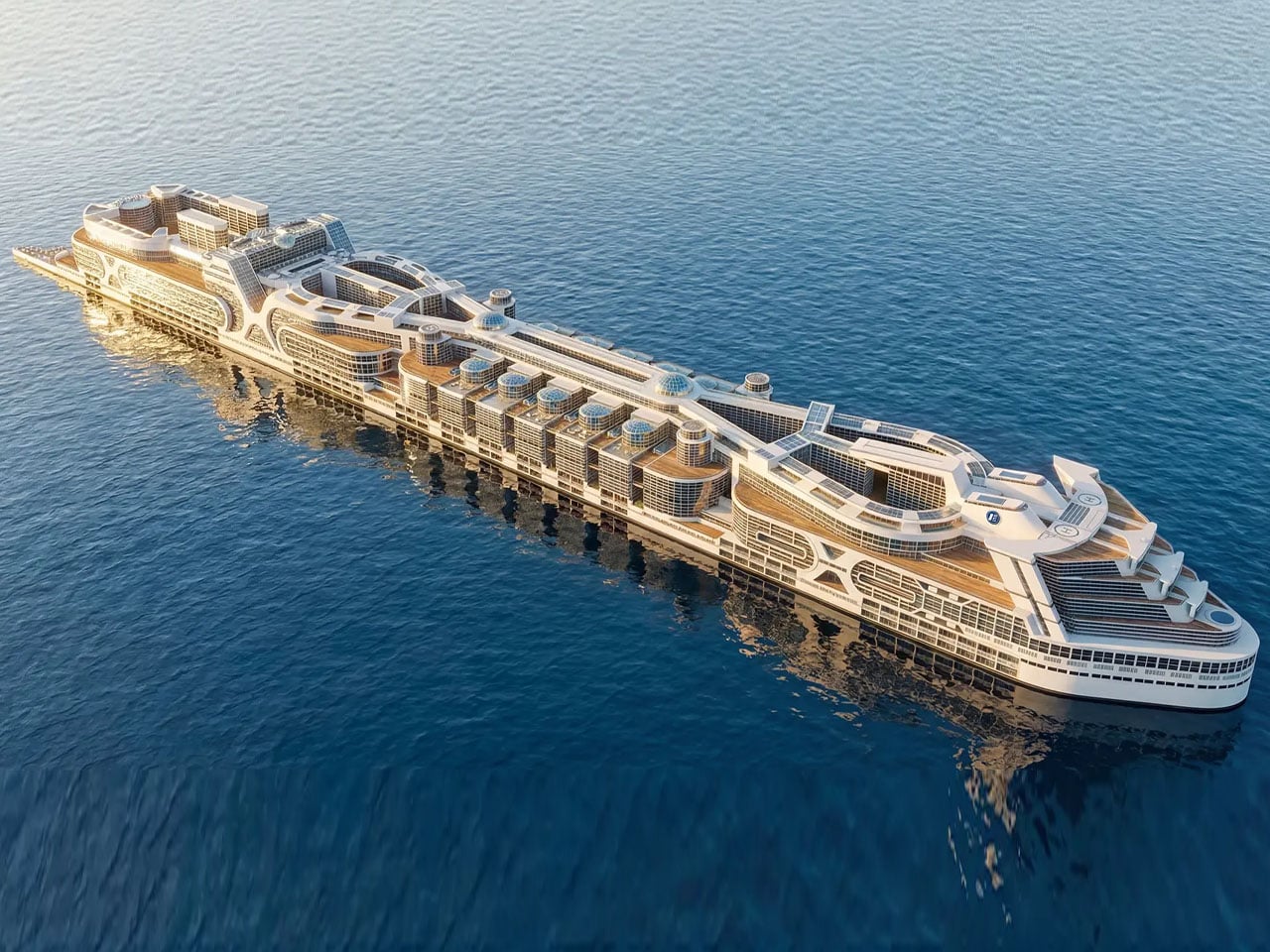
Dubbed the Floating City, the ambitious project by Freedom Ship is destined to haul 80,000 people in total. It’ll be home to 50,000 permanent passengers, 10,000 day visitors, and 20,000 crew members taking care of everything on board. It’ll be powered by nuclear energy and given the colossal size, it will remain in international waters. For now, the Floating City is proposed to circumnavigate the globe every couple of years at a cruise speed of seven knots.
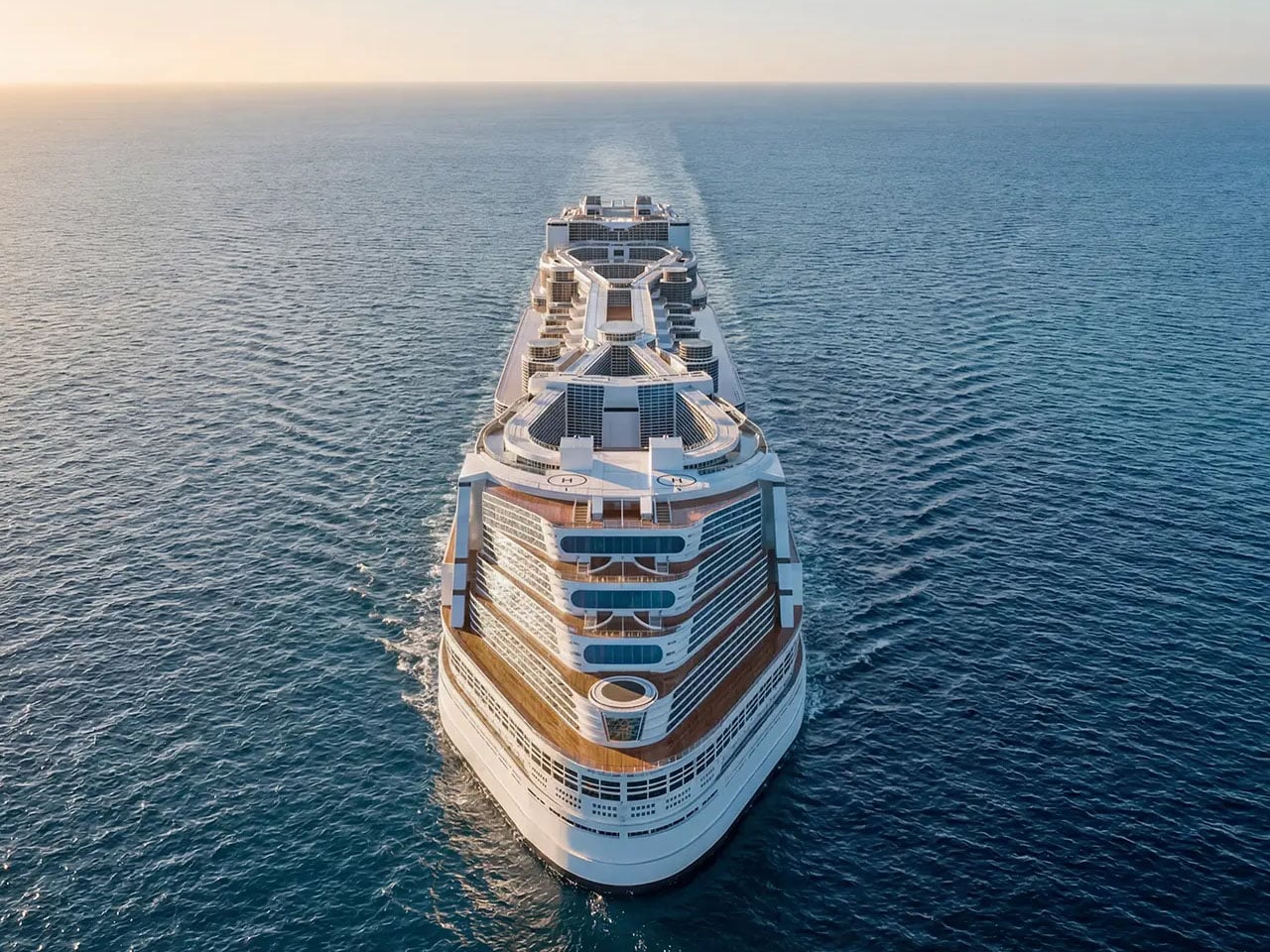
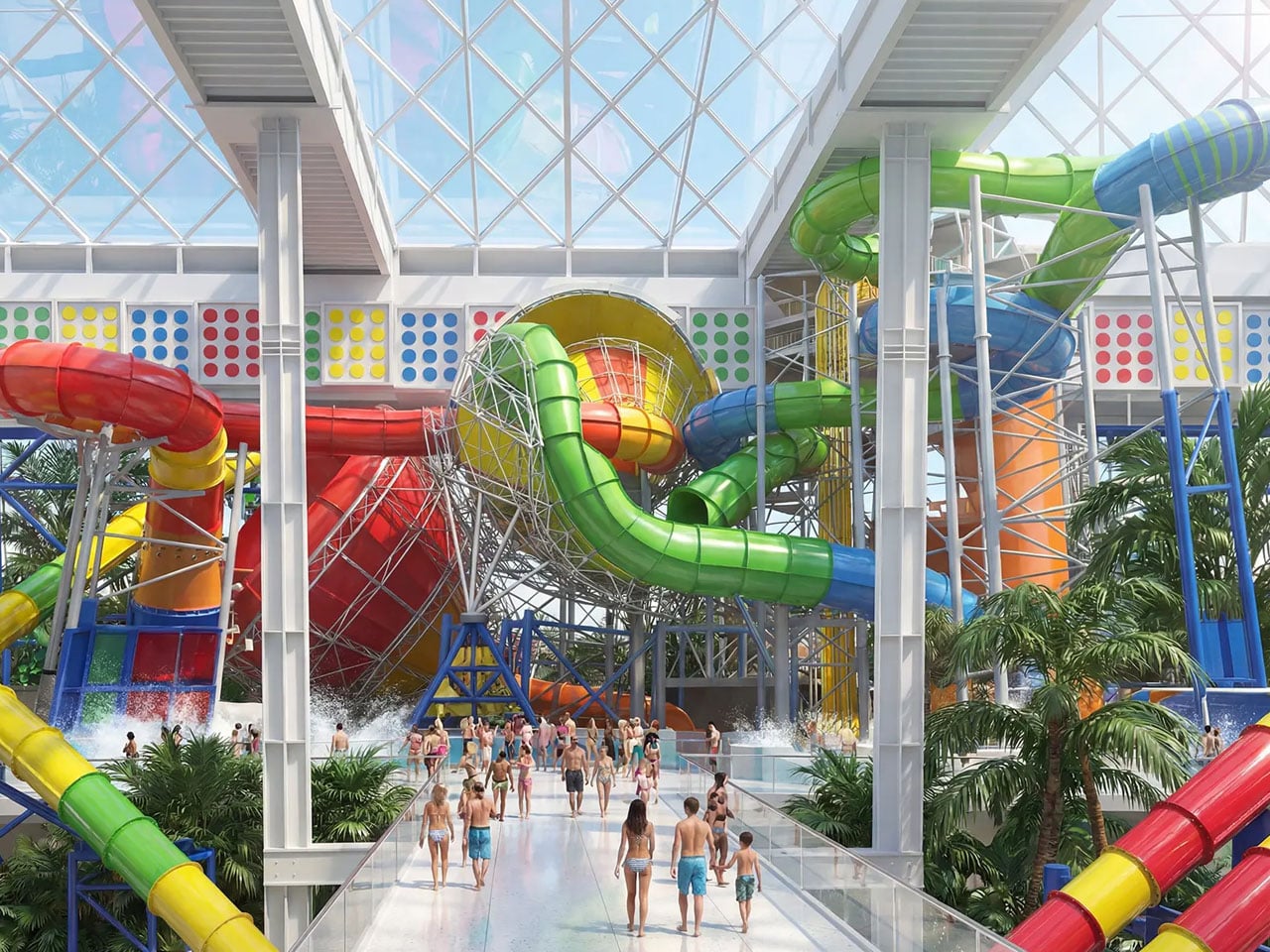
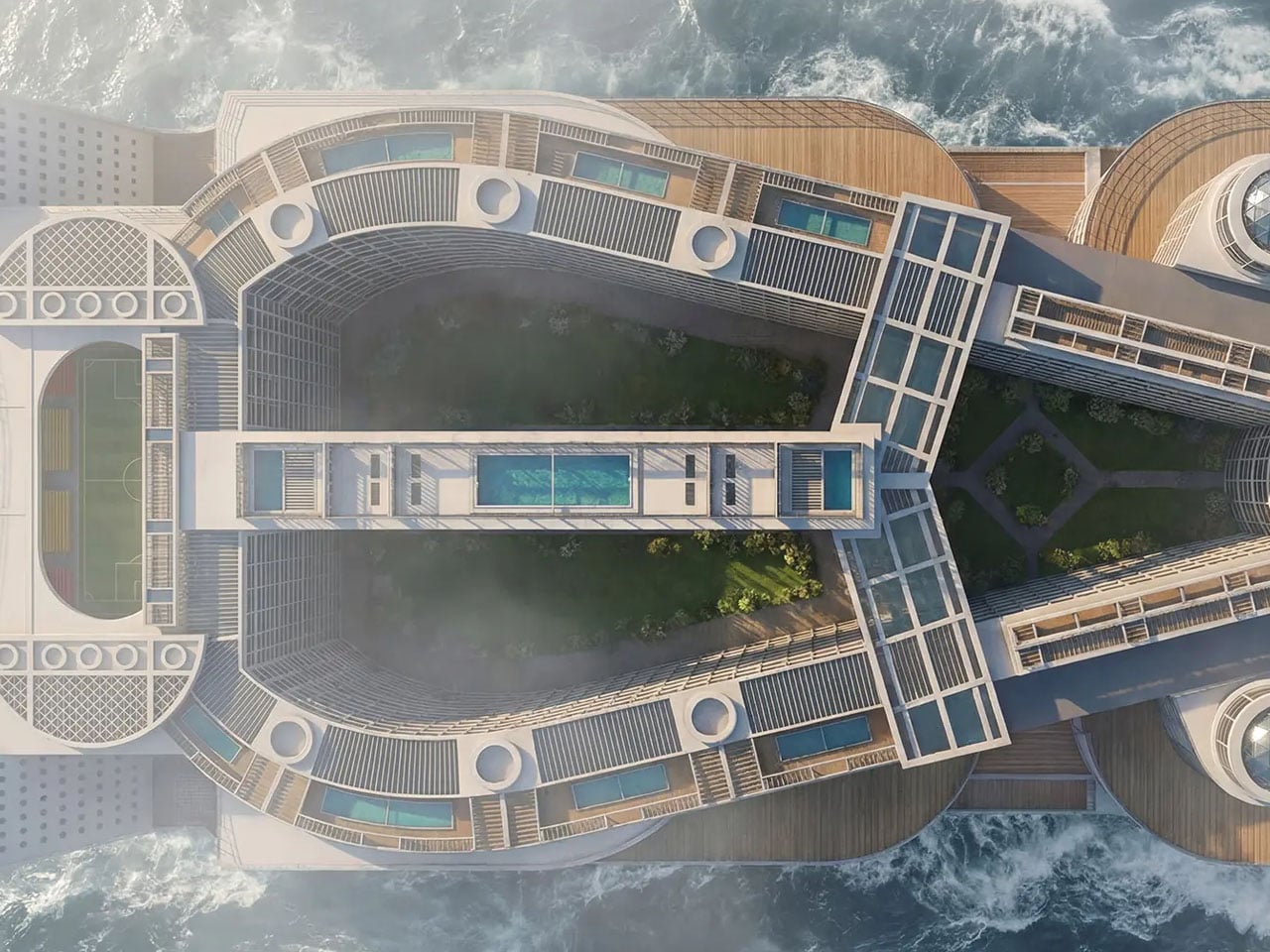
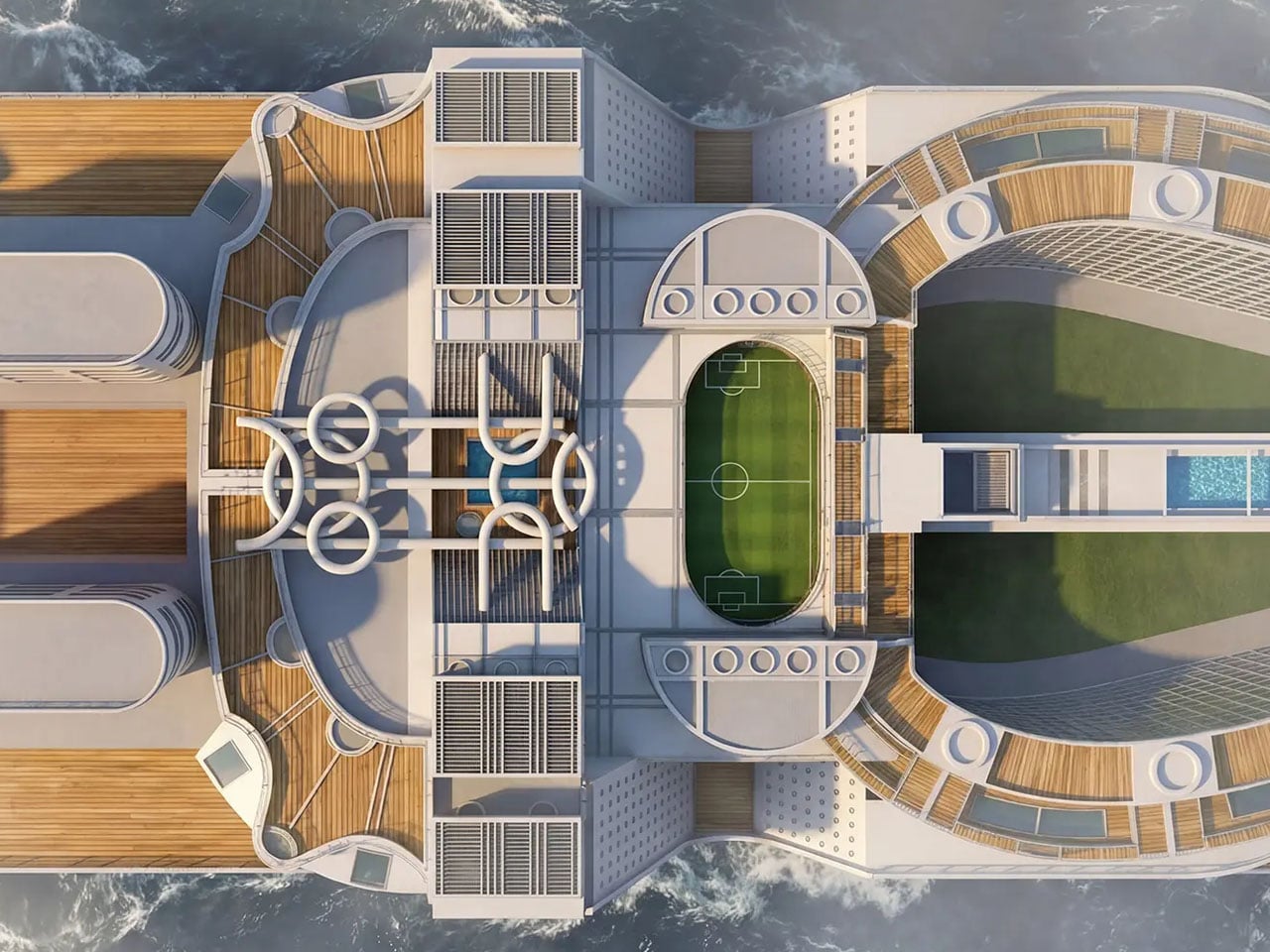
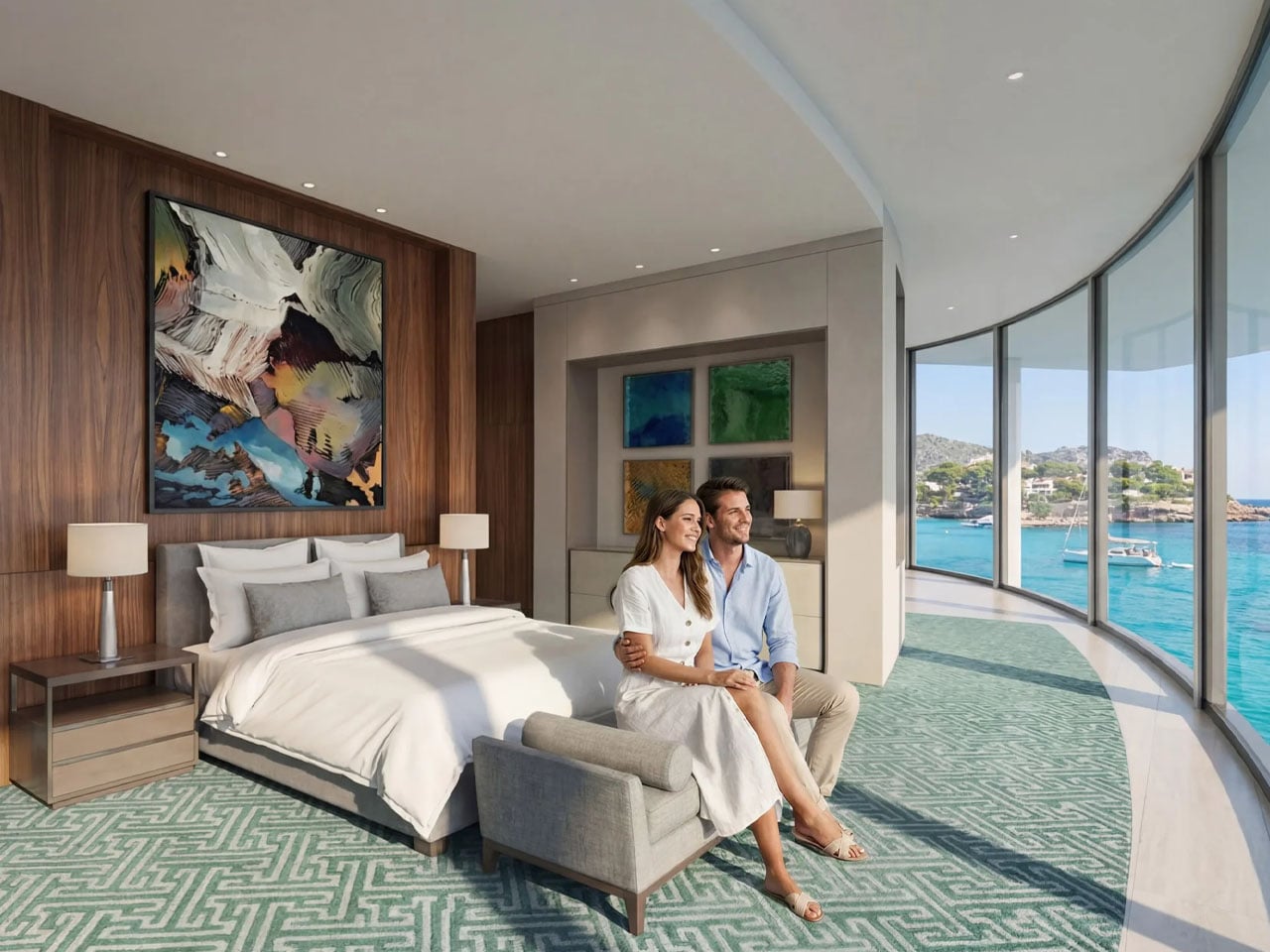
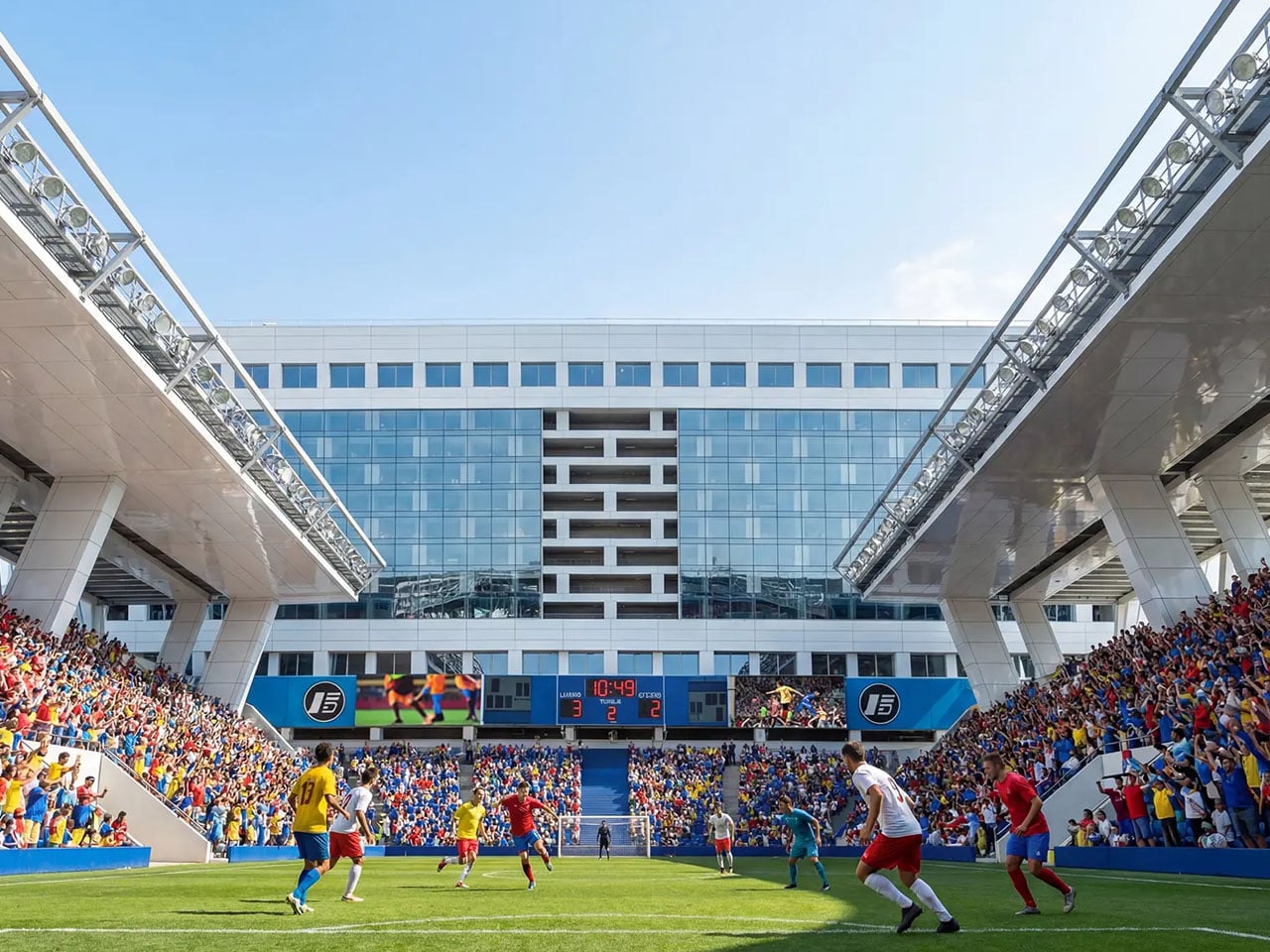
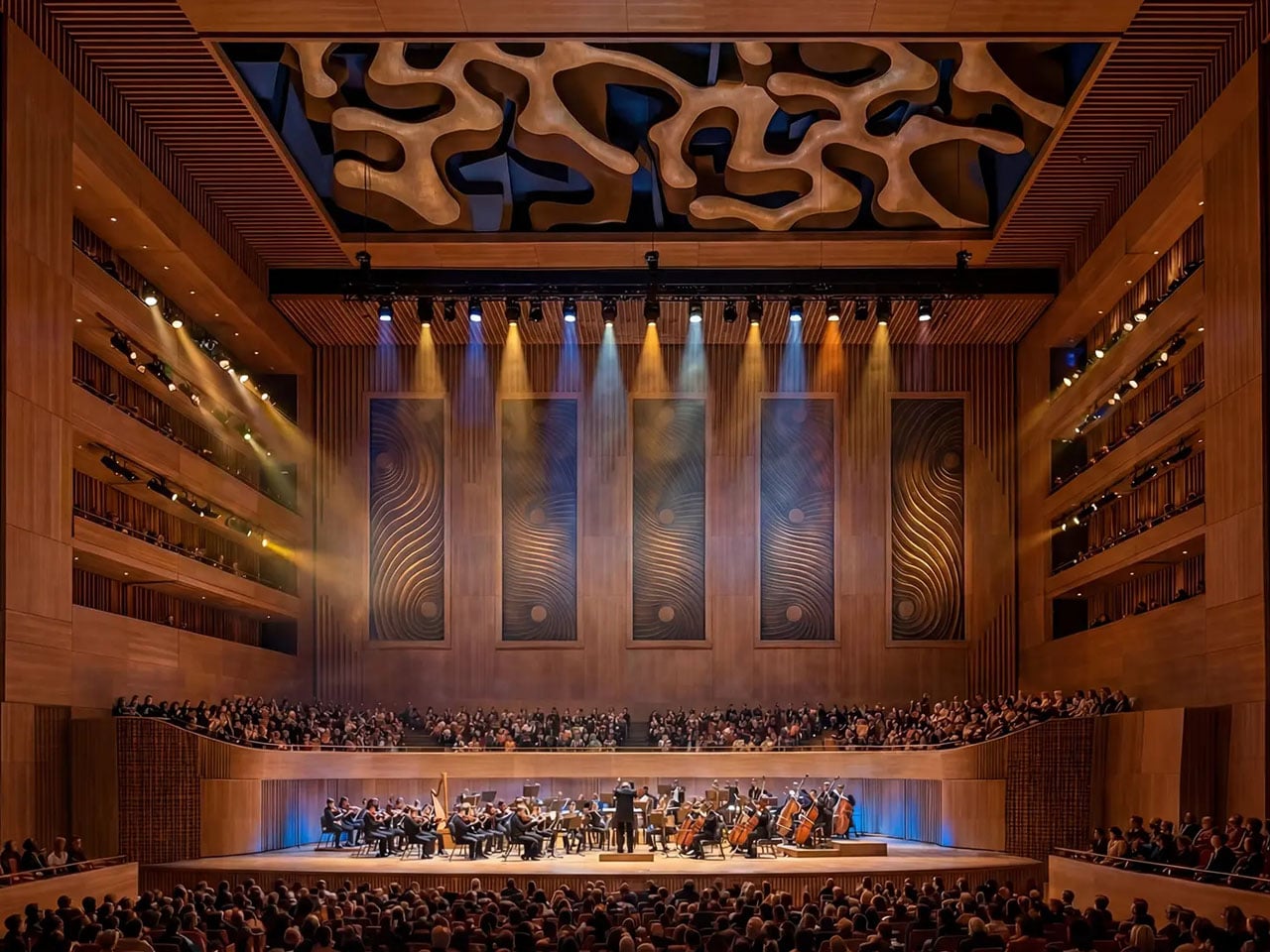
The seed for this nuclear-powered vessel came from American engineer Norman Nixon in 1990. Still, unfortunately, after his demise in 2012, the project was paused for a long period, until it again propped up under the new leadership led by Roger M. Gooch. Measuring almost a mile wide and tall enough to have 30 decks, the cruise ship will be one of the biggest vessels on the open waters by a long stretch. Apart from the living spaces, the ship will have a 15,000-capacity sports stadium, a water park, and two museums. To prevent residents from getting seasick, the vessel will have all the basic amenities, including shops, restaurants, a convention centre, and a symphony hall.
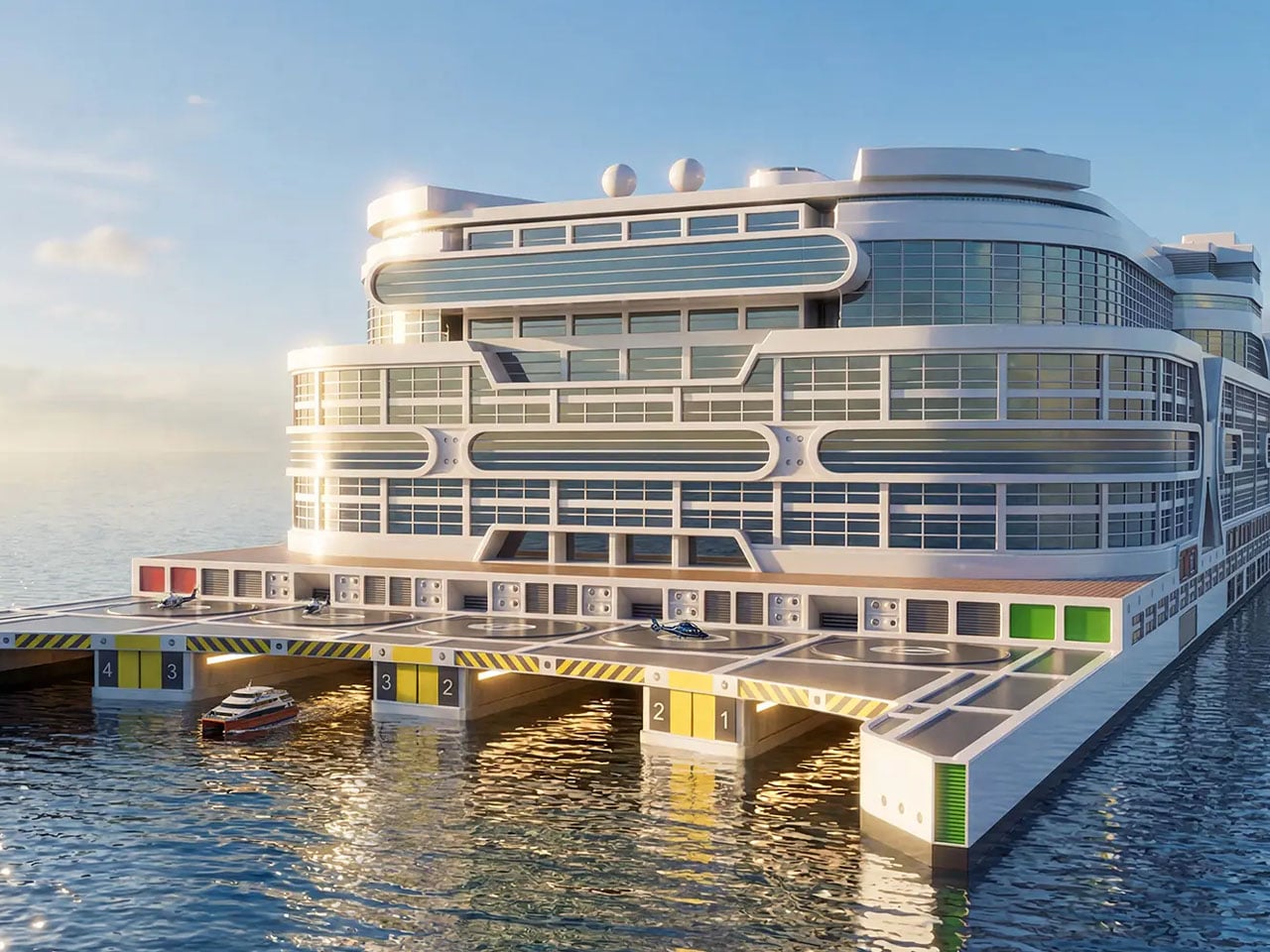
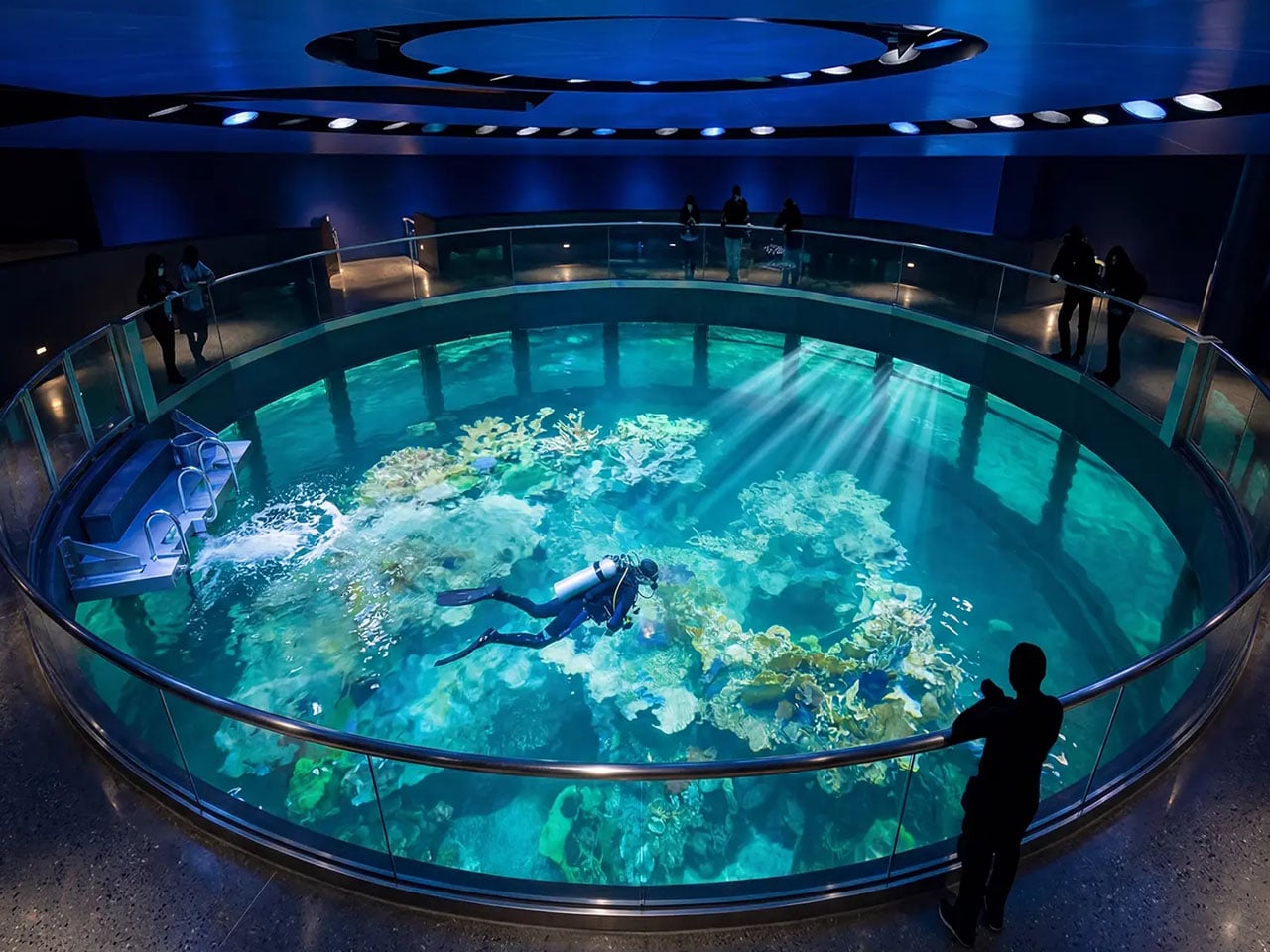
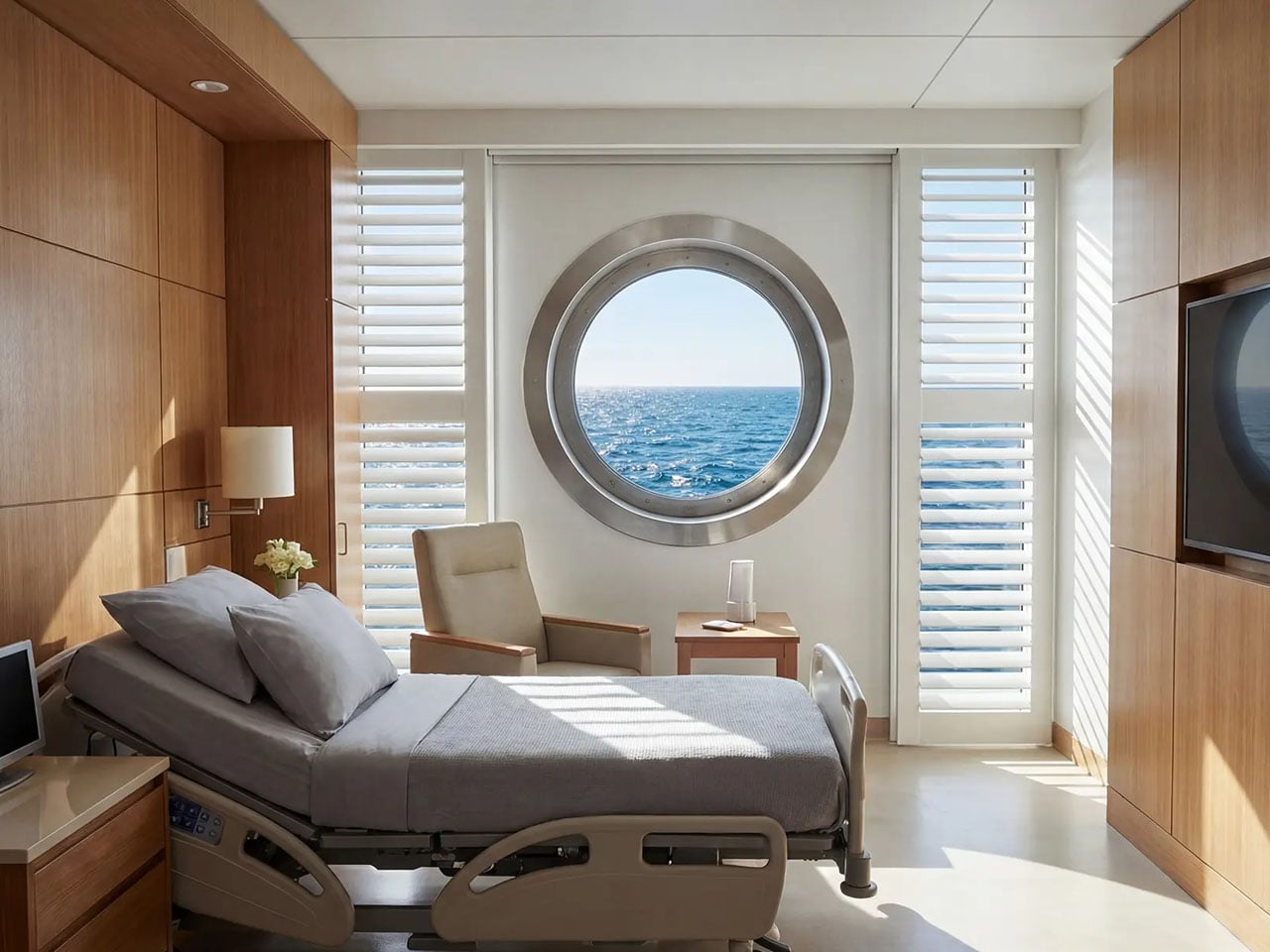
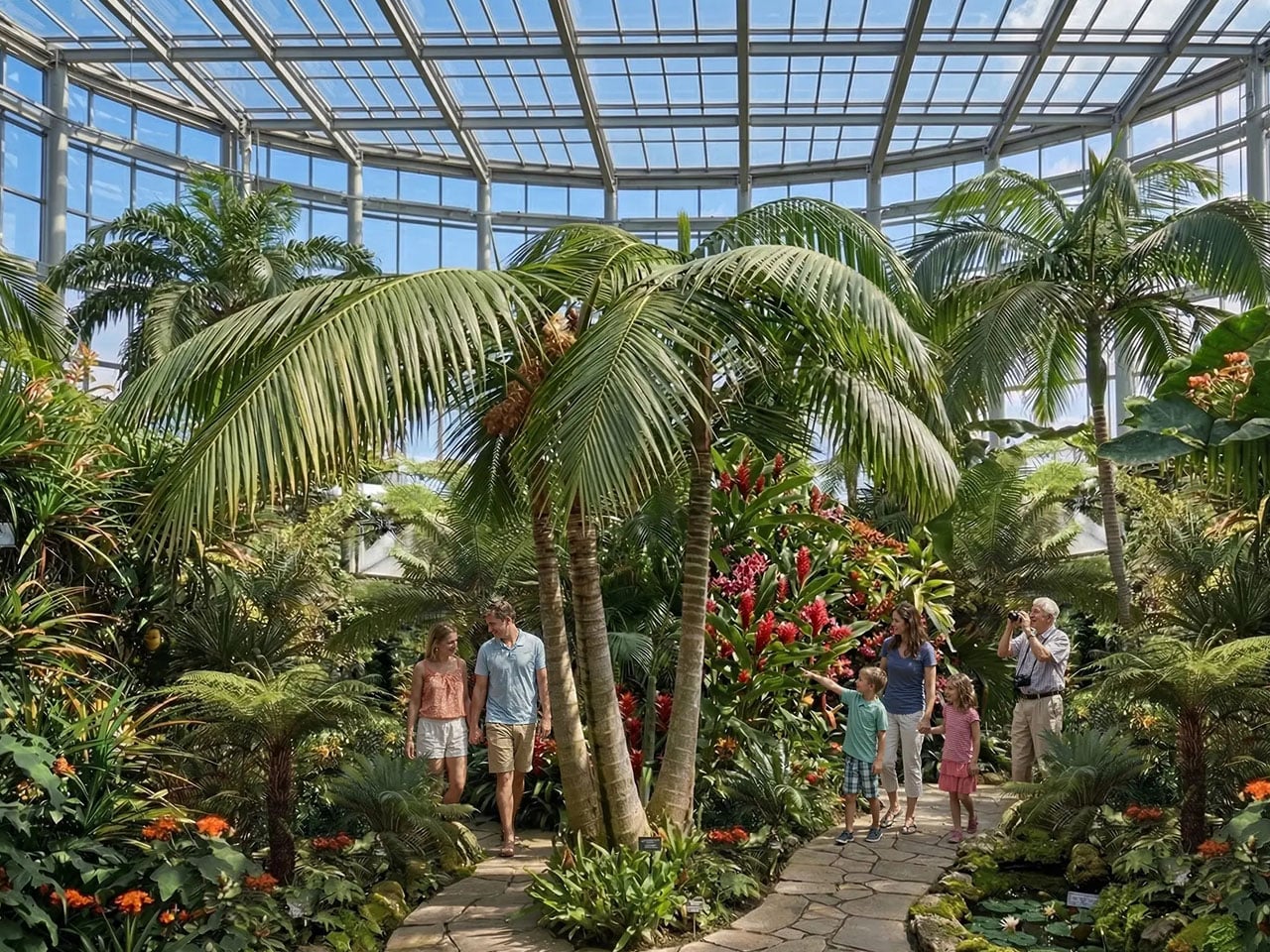
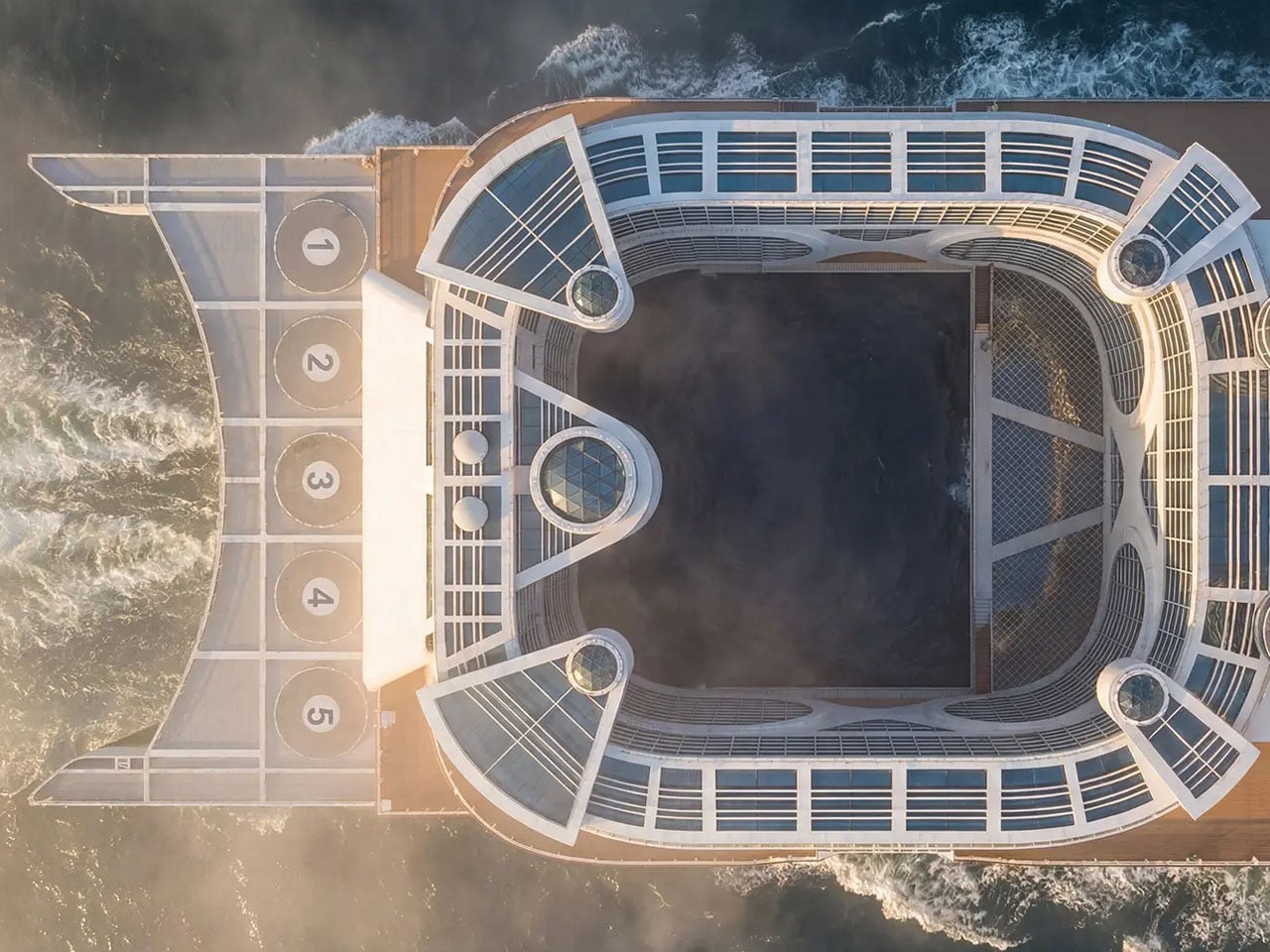
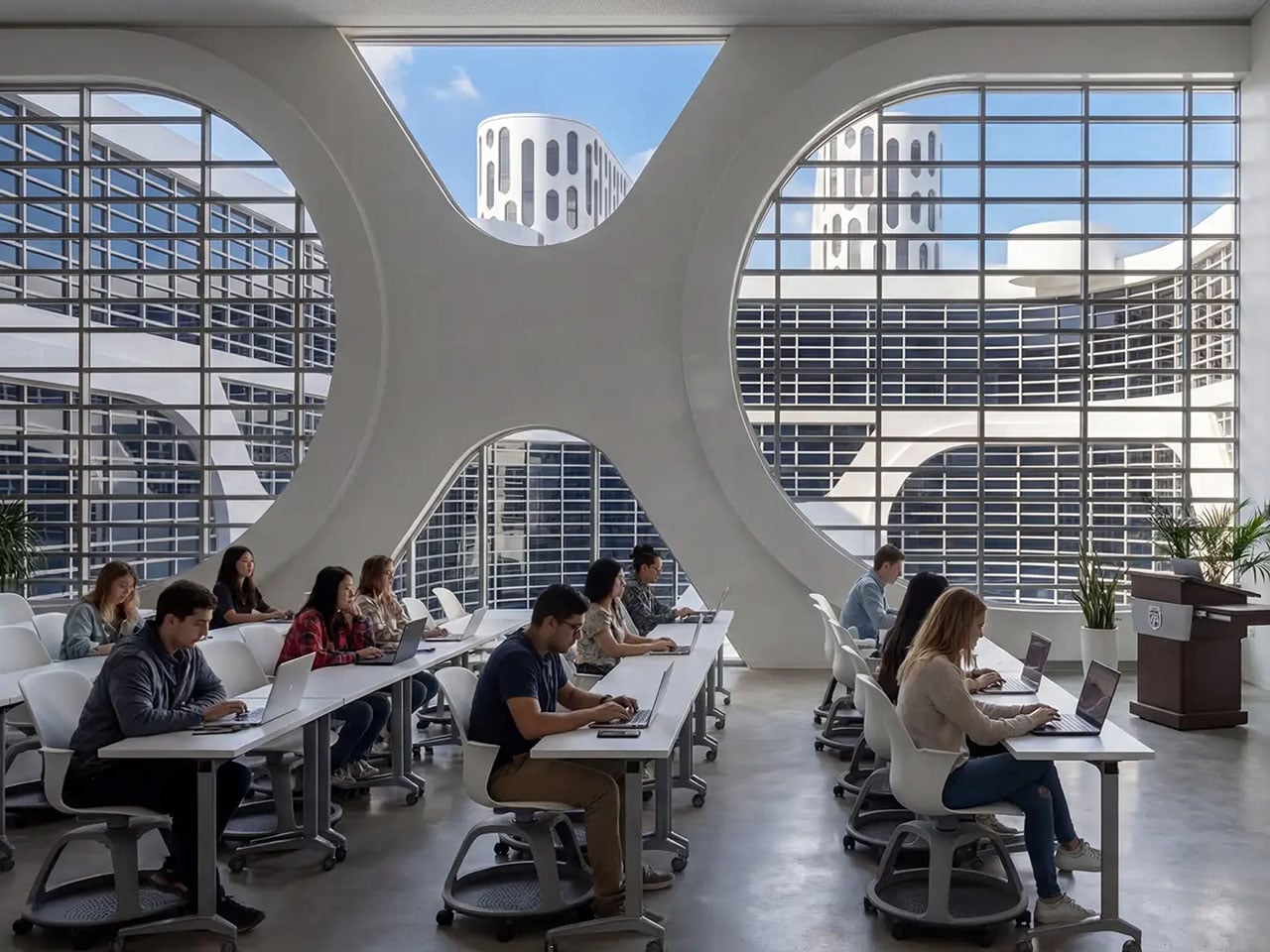
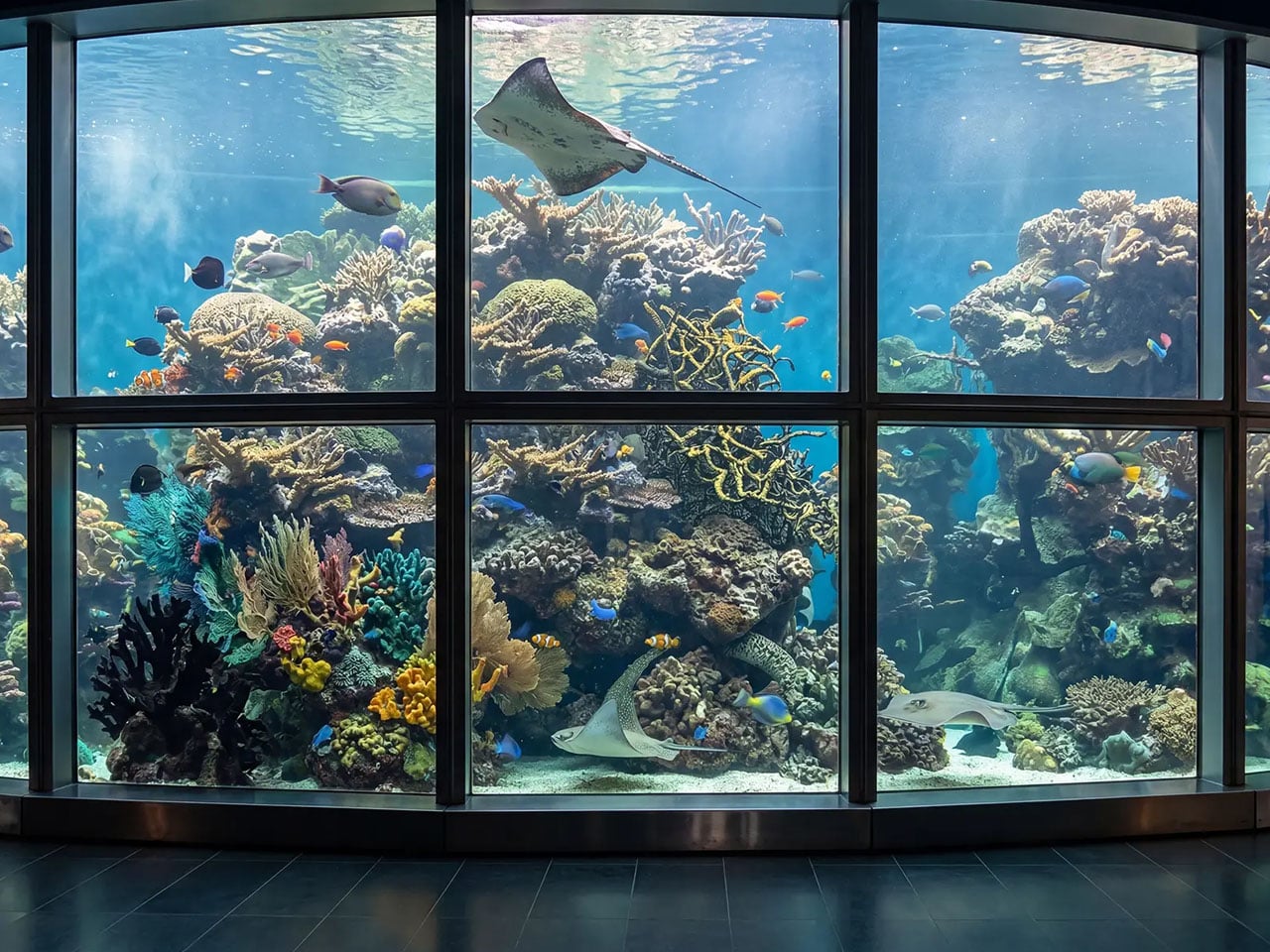
Out of those 30 decks, four will be used for financial branches, retail, banks, and commercial services. Two decks will be designated for a food hall, a shopping mall, a casino, a nightclub, and even a large aquarium. After all, this ship has to feel like a city on its own, which is why it has a 15-mile-long walkway, along with three acres of parks for all onboard to explore. Everything on the decks and the neighbourhoods will be connected in a web of trams and pathways. For emergencies, the city will have eight helipads for quick transfer to land. Basic amenities, including hospital and educational hubs, will facilitate residents in seeing their children pass high school and then opt for further studies in the Floating City bounds.
Given the magnanimity of this larger-than-life project, Gooch has commissioned a 12-person leadership team of designers, architects, and project managers to bring the Floating City to life. Once the required funds are amassed, the vessel is slated to take shape in Indonesia over a period of three to four years. According to Gooch, permanent residents can start living on board mid-way through construction, once the basics are in place. Visionaries can even lease or buy the real estate space on board for a cohesive, self-sustaining economy. As per Kevin Schopfer, the project’s lead, the massive stadium can be used for one-of-a-kind events or concerts. He jokingly said, Taylor Swift was a part of passing discussions, but he wasn’t sure if we could handle that yet!
No matter the scale of the ship, residents are bound to get bored at some point in time. That’s why Floating City will give residents and long-term guests the option to explore various onshore destinations via ferry services, every week or so. Floating City is estimated to be constructed for a total cost of $16 Billion, and construction will commence once the funds are ready at the disposal of the leadership. Till that time, this will remain a visionary concept that’ll have a lot at stake.
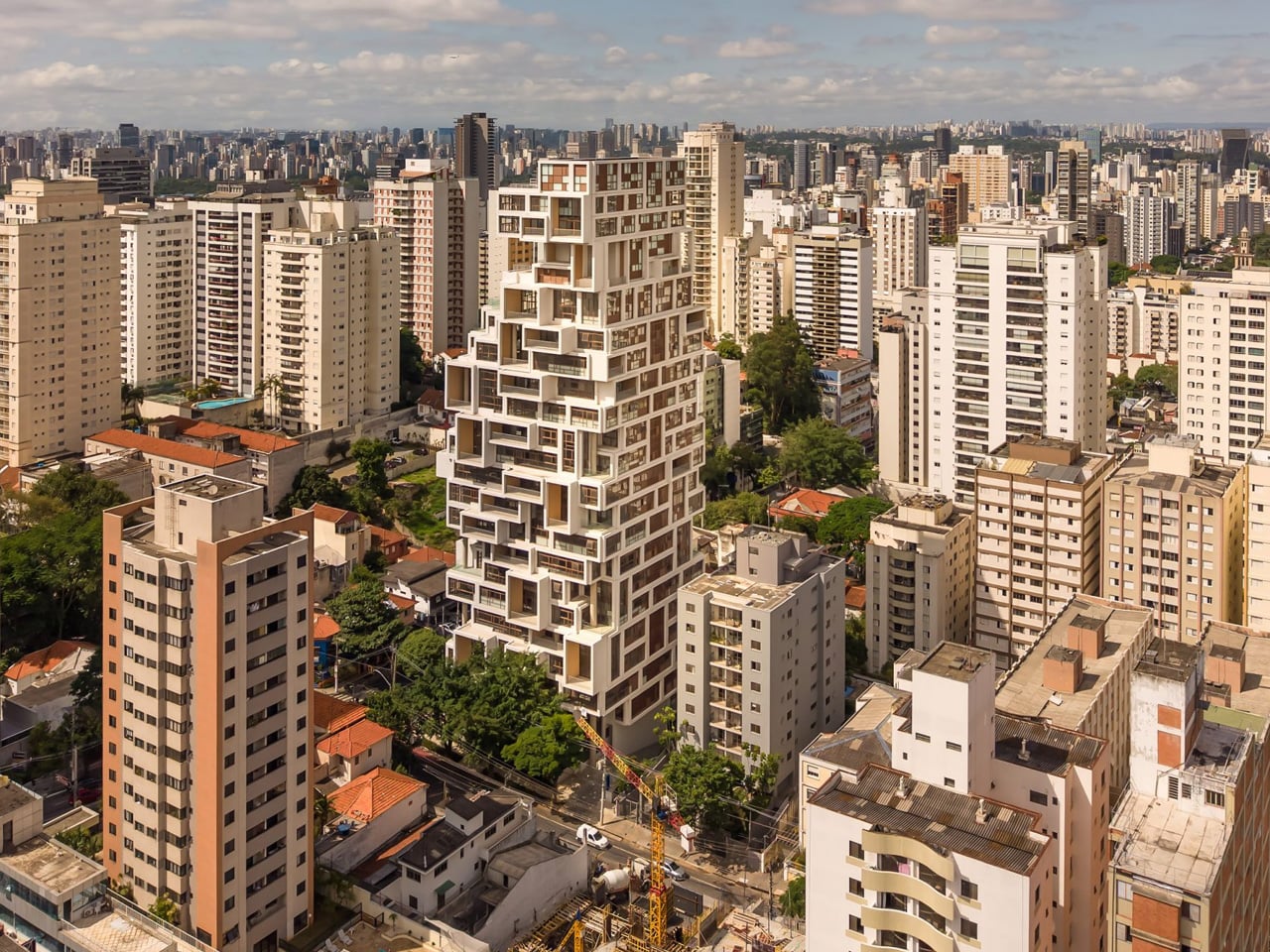
There is a particular challenge that confronts any building asked to stand at a prominent corner in one of São Paulo’s most culturally dense neighborhoods: it has to earn its place visually without performing for the street at the expense of the people inside it. The Valente building, completed by FGMF Arquitetos for developer Idea!Zarvos in the Pinheiros district, resolves that tension in a way that is worth paying attention to.
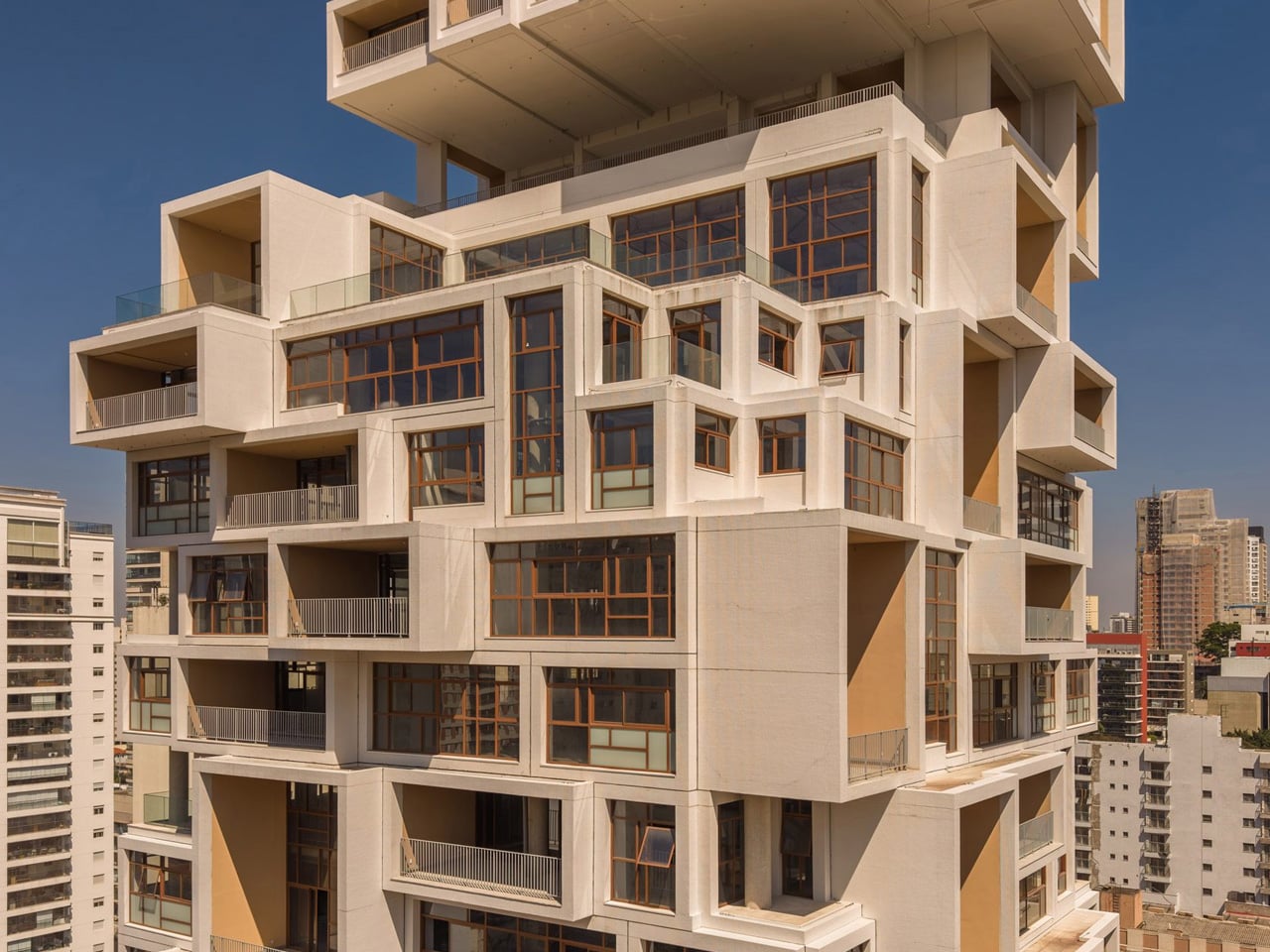
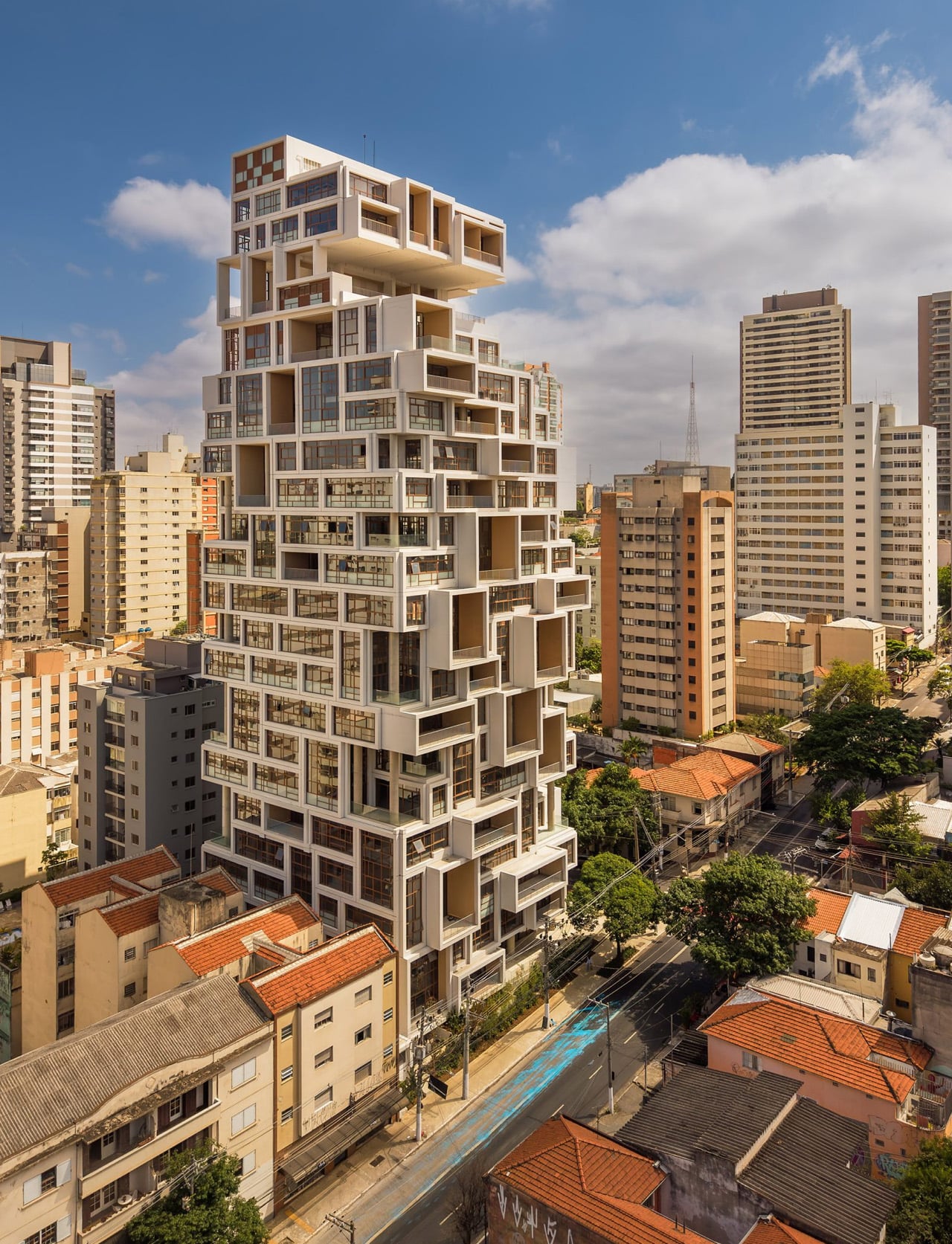
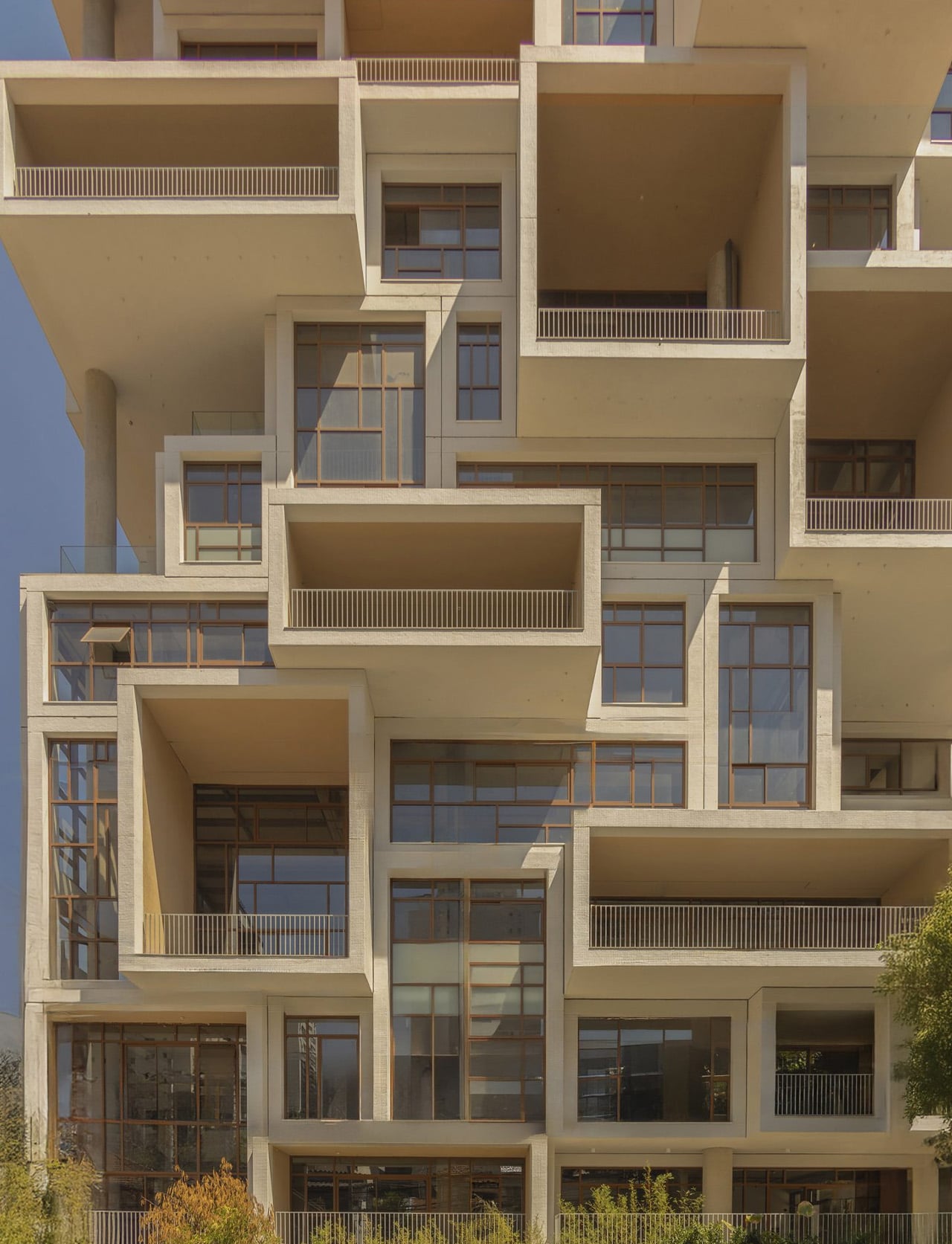
The 21-story mixed-use tower sits at the intersection of Cardeal Arcoverde and Capote Valente streets, right at the heart of a neighborhood known for its historic character, its restaurants, and the particular quality of urban life that makes Pinheiros one of the most sought-after addresses in the city. The building’s façade reads as a pixelated composition of protruding rectangular volumes, white and deliberate, stacked in a configuration that has drawn comparisons to a Jenga tower mid-game. It is immediately recognizable without being theatrical.
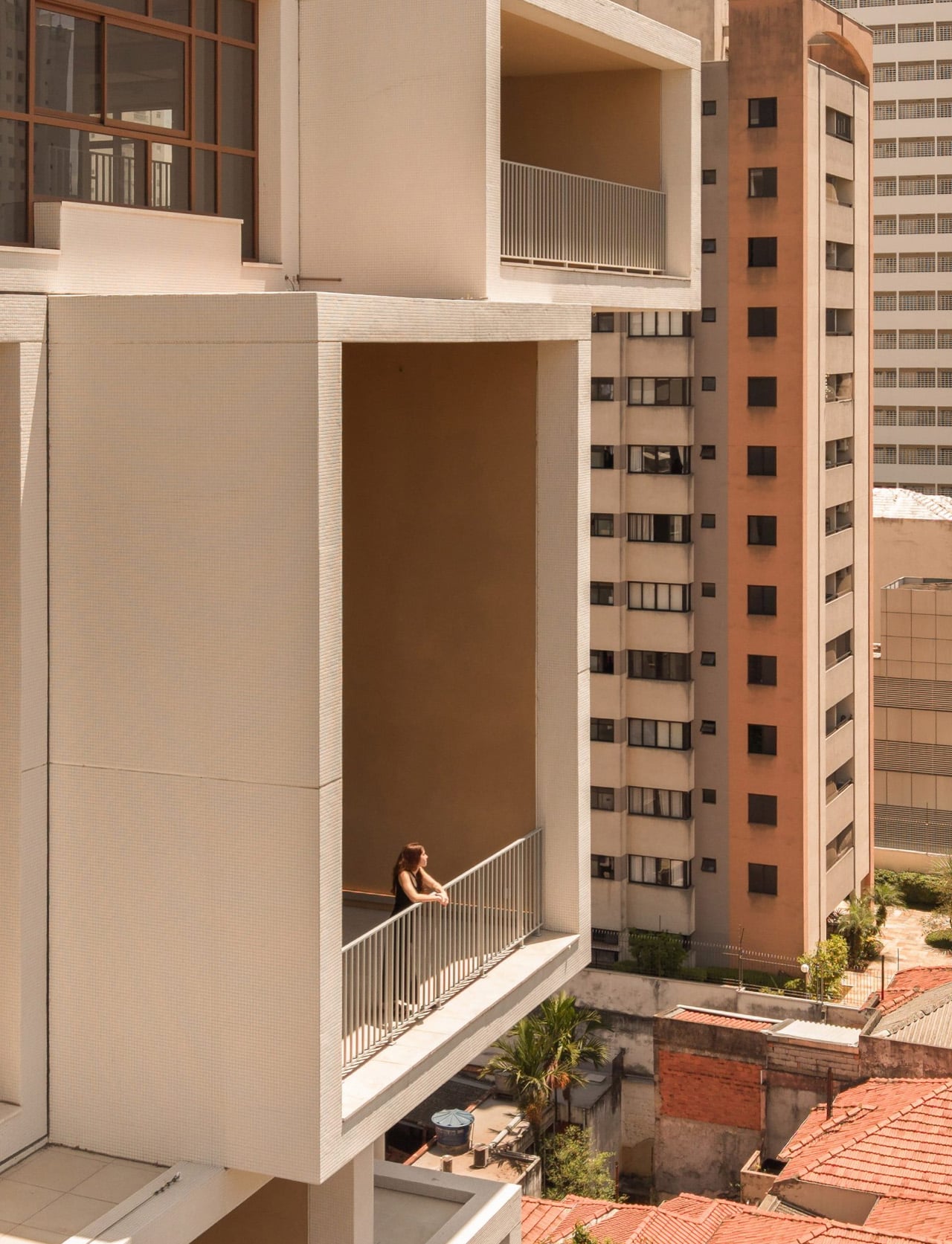
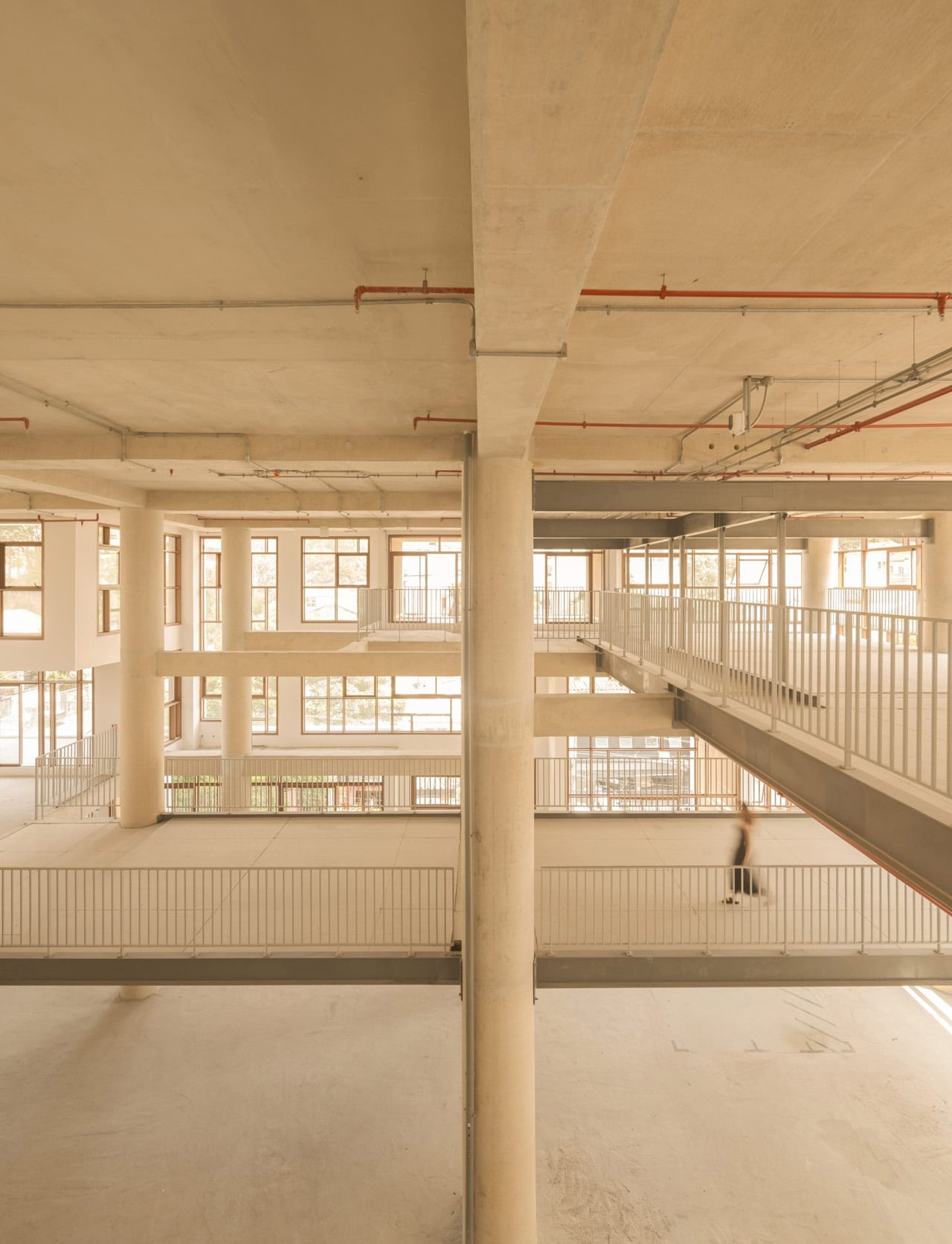
What makes the design worth examining beyond its silhouette is the logic that produced it. “Valente was designed from the inside out,” said FGMF partner Fernando Forte. The concept, developed with Idea!Zarvos, was built around a three-dimensional occupation of corporate space, using triplex and duplex units to create spatial arrangements that the conventional office tower market rarely offers. Flexible, adaptable, and responsive to the way people actually want to work and live rather than the way developers typically expect them to — that design position shows clearly in the result.
This is the third collaboration between Idea!Zarvos and FGMF, following a 2016 building that explored similarly unconventional office layouts. That prior project directly informed the thinking behind Valente, and the continuity shows. The relationship between developer and architect here is genuinely iterative rather than transactional, which is the kind of condition that produces buildings worth discussing. Each project has pushed the brief further than the previous one.
Pinheiros is a neighborhood that can absorb a bold building without being overwhelmed by it, and Valente reads correctly within that context. The pixelated massing creates a rhythm of light and shadow across the façade that shifts through the day without requiring any moving parts. The protruding volumes that define the exterior also define the interior — each one corresponds to a usable space with a specific relationship to the view and the air around it.
Brazilian architecture has been producing some of the most considered mixed-use buildings of the last decade. Valente is a strong addition to that conversation, built from the inside out and unmistakable from every angle.