A Pixelated Tower in One of São Paulo’s Most Beloved Neighborhoods Just Changed What a Mixed-Use Building Can Be

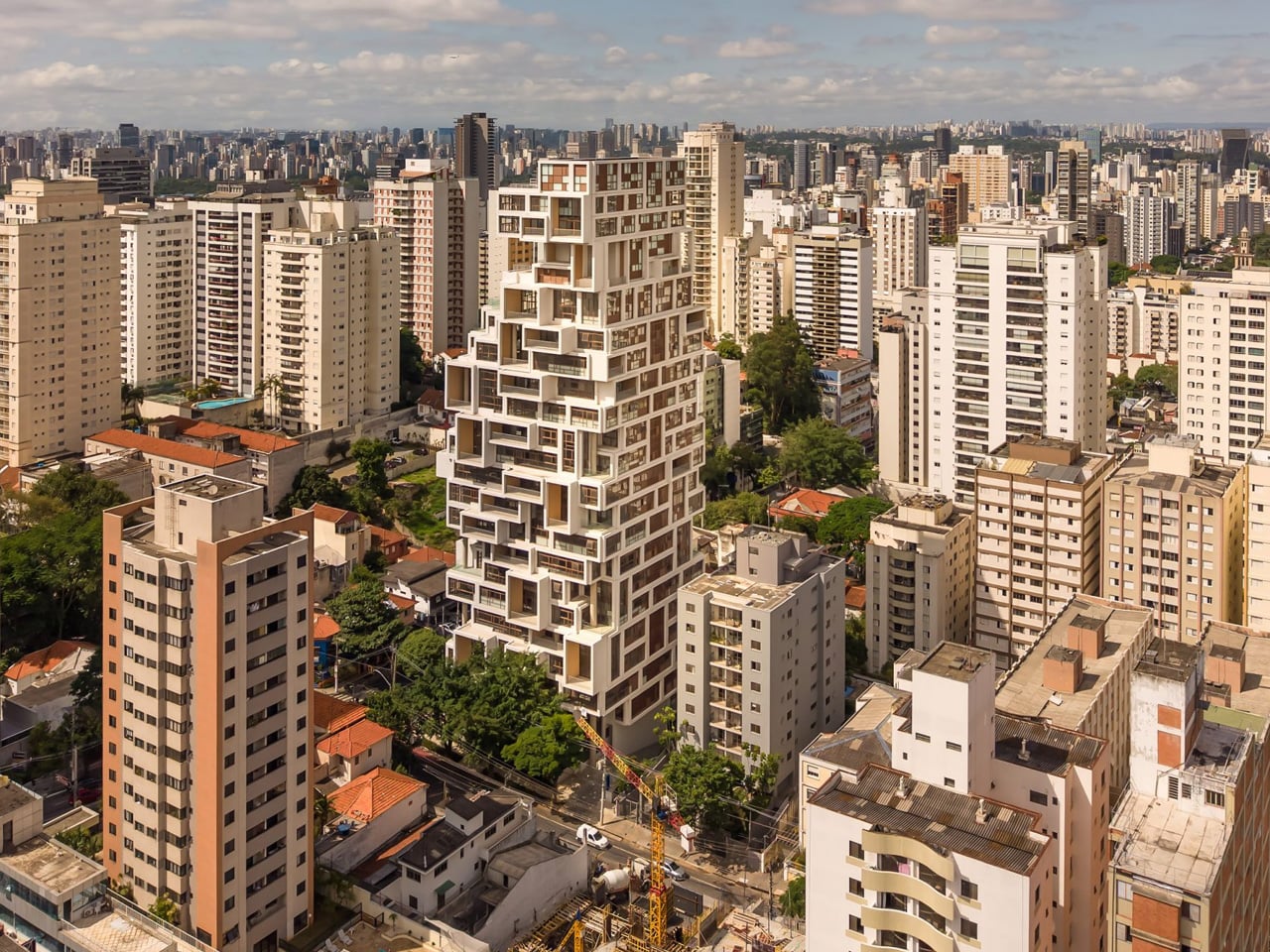
There is a particular challenge that confronts any building asked to stand at a prominent corner in one of São Paulo’s most culturally dense neighborhoods: it has to earn its place visually without performing for the street at the expense of the people inside it. The Valente building, completed by FGMF Arquitetos for developer Idea!Zarvos in the Pinheiros district, resolves that tension in a way that is worth paying attention to.

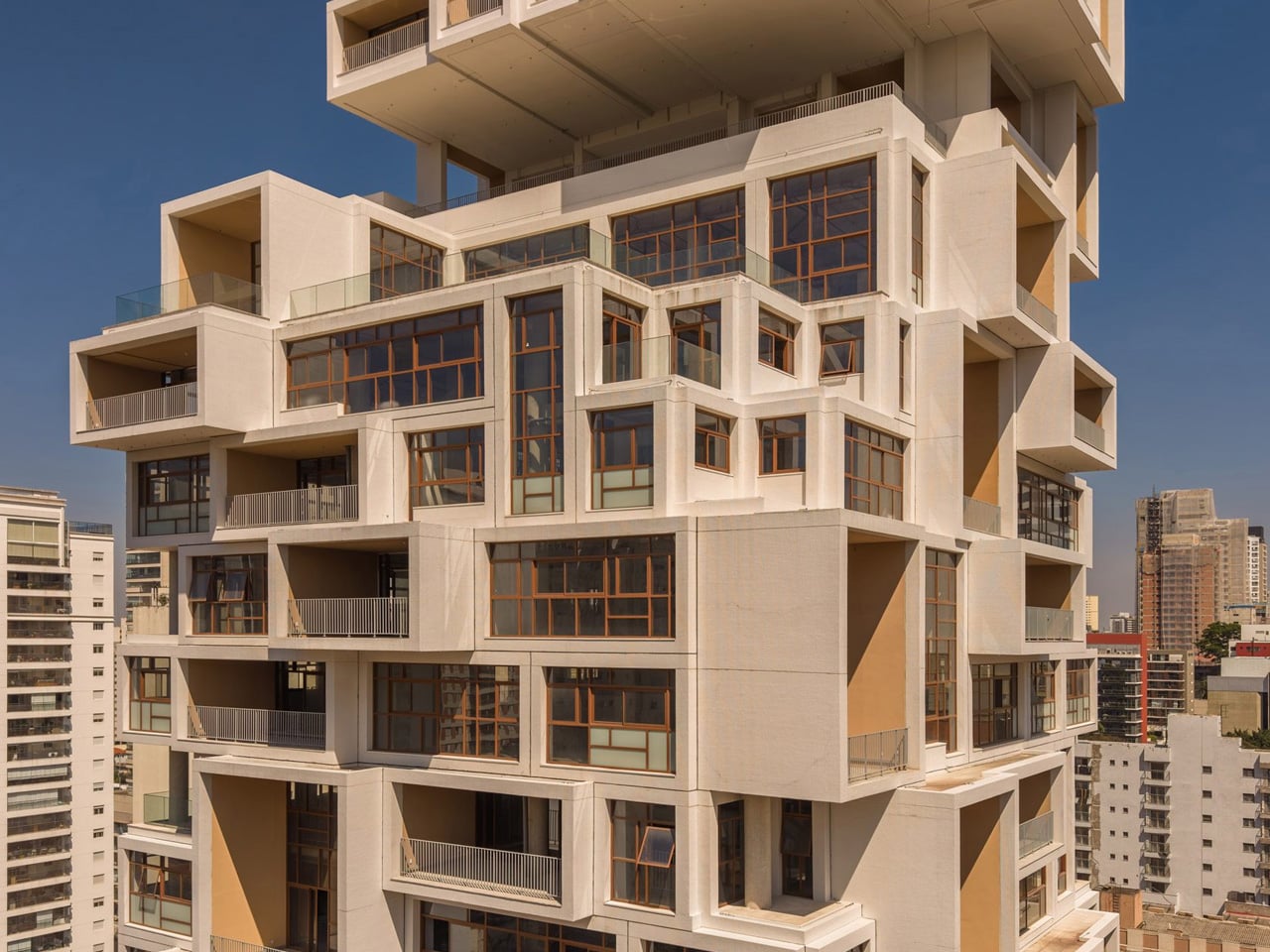
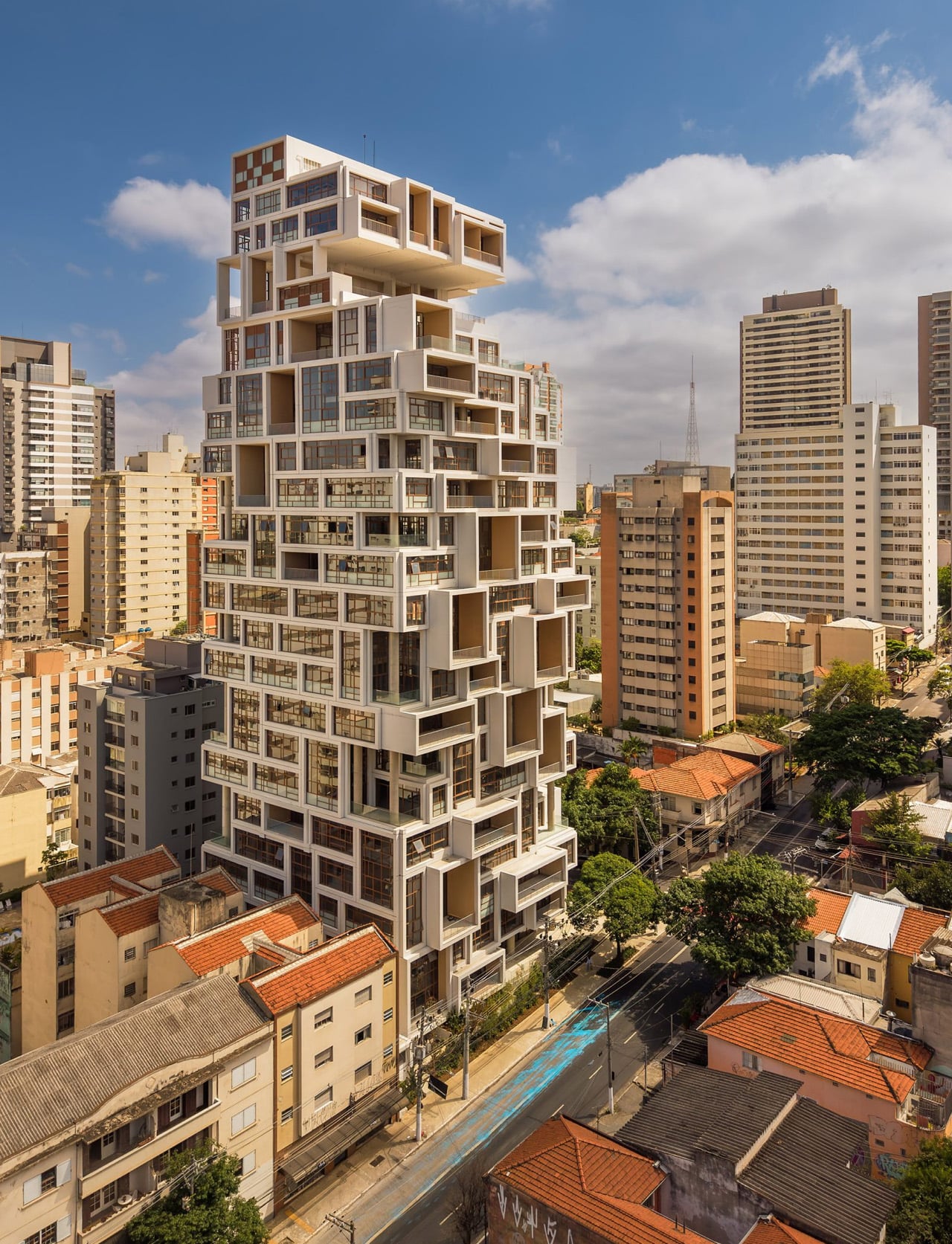
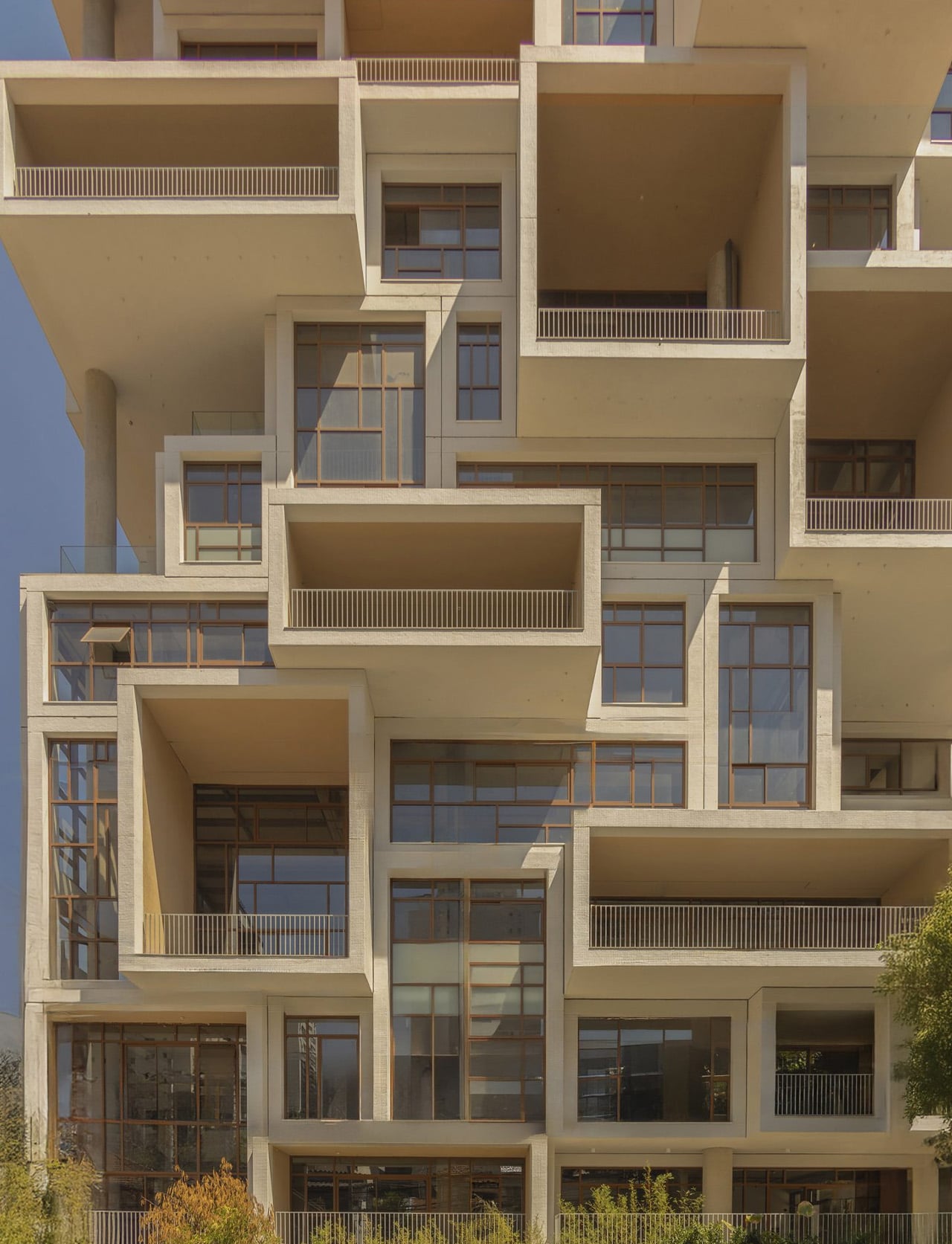
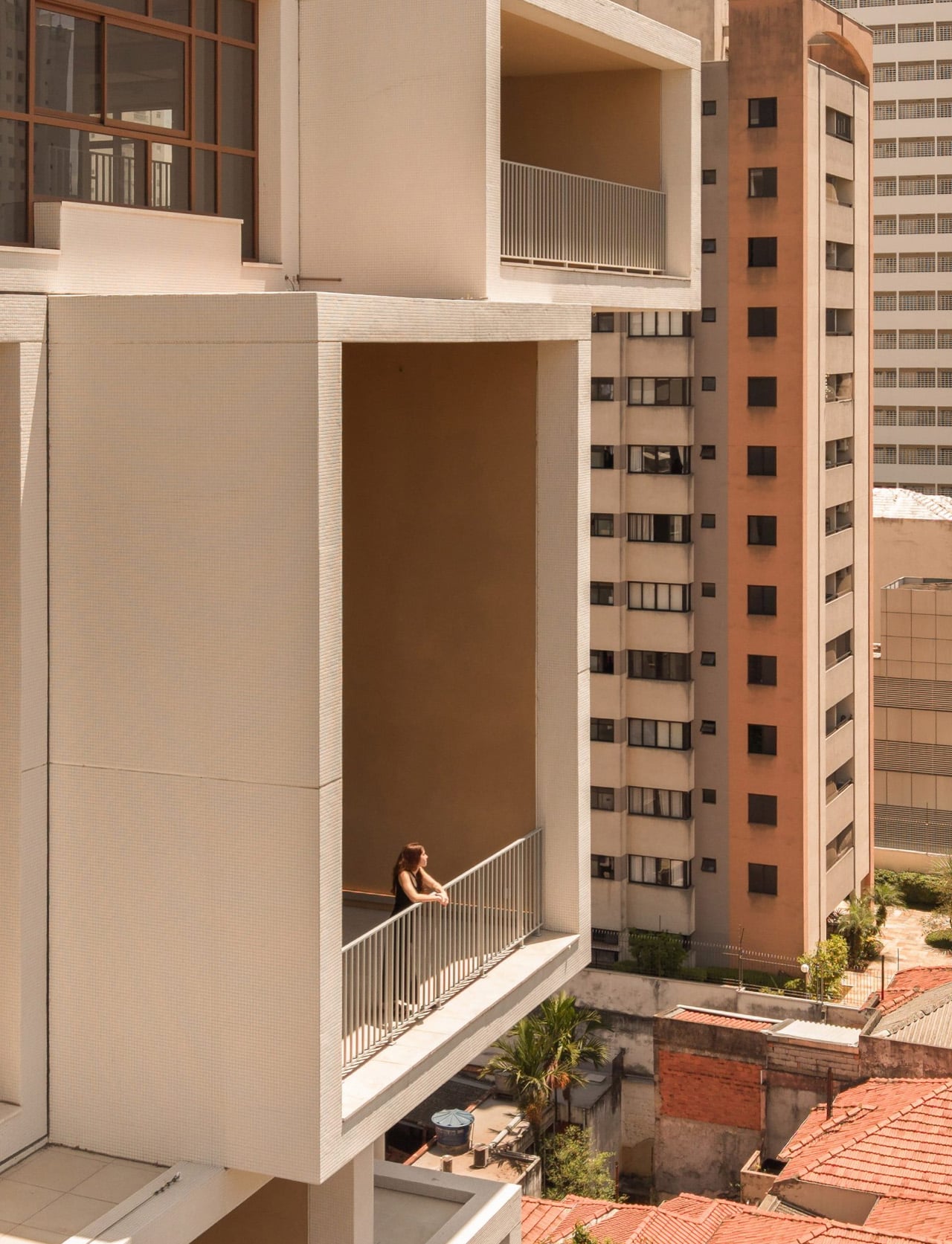
The 21-story mixed-use tower sits at the intersection of Cardeal Arcoverde and Capote Valente streets, right at the heart of a neighborhood known for its historic character, its restaurants, and the particular quality of urban life that makes Pinheiros one of the most sought-after addresses in the city. The building’s façade reads as a pixelated composition of protruding rectangular volumes, white and deliberate, stacked in a configuration that has drawn comparisons to a Jenga tower mid-game. It is immediately recognizable without being theatrical.

Designer: FGMF Arquitetos

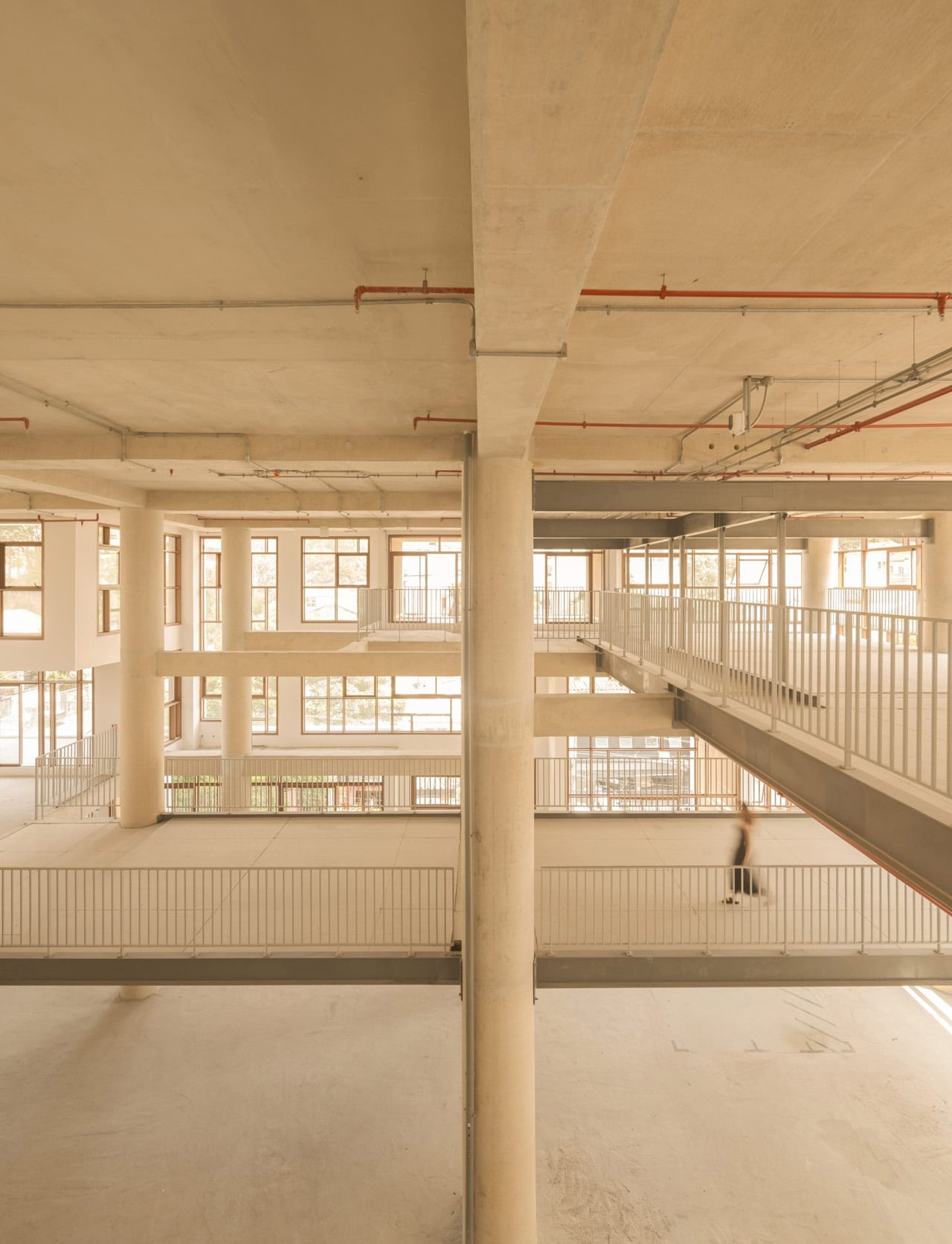
What makes the design worth examining beyond its silhouette is the logic that produced it. “Valente was designed from the inside out,” said FGMF partner Fernando Forte. The concept, developed with Idea!Zarvos, was built around a three-dimensional occupation of corporate space, using triplex and duplex units to create spatial arrangements that the conventional office tower market rarely offers. Flexible, adaptable, and responsive to the way people actually want to work and live rather than the way developers typically expect them to — that design position shows clearly in the result.

This is the third collaboration between Idea!Zarvos and FGMF, following a 2016 building that explored similarly unconventional office layouts. That prior project directly informed the thinking behind Valente, and the continuity shows. The relationship between developer and architect here is genuinely iterative rather than transactional, which is the kind of condition that produces buildings worth discussing. Each project has pushed the brief further than the previous one.

Pinheiros is a neighborhood that can absorb a bold building without being overwhelmed by it, and Valente reads correctly within that context. The pixelated massing creates a rhythm of light and shadow across the façade that shifts through the day without requiring any moving parts. The protruding volumes that define the exterior also define the interior — each one corresponds to a usable space with a specific relationship to the view and the air around it.

Brazilian architecture has been producing some of the most considered mixed-use buildings of the last decade. Valente is a strong addition to that conversation, built from the inside out and unmistakable from every angle.

The post A Pixelated Tower in One of São Paulo’s Most Beloved Neighborhoods Just Changed What a Mixed-Use Building Can Be first appeared on Yanko Design.
Quito’s New Skyscraper Feels Carved, Planted, and Lived In

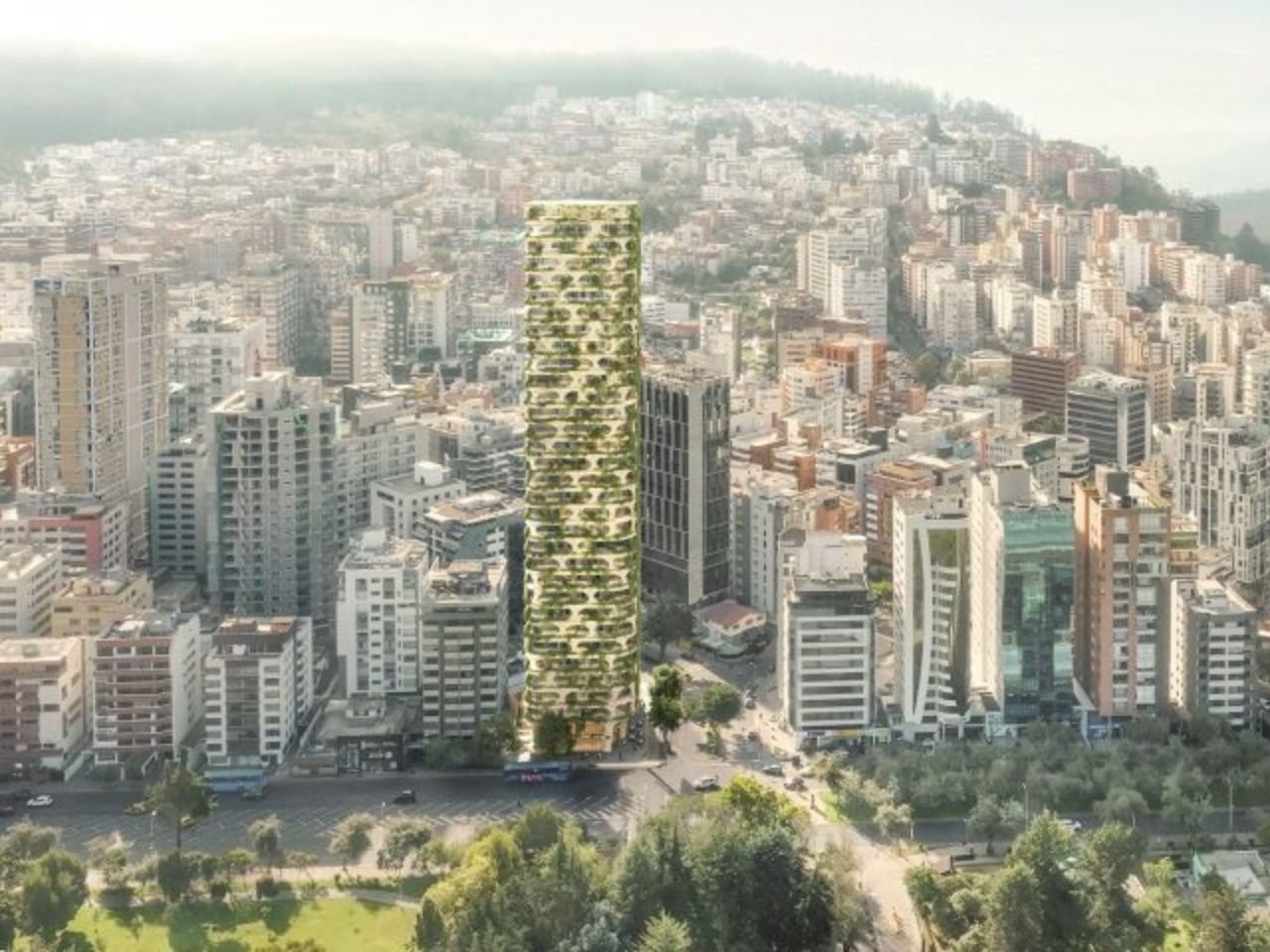
Can’t help but notice something quietly interesting about Qapital, the new residential skyscraper designed by Kengo Kuma and Associates for Quito, Ecuador. At first glance, it has all the ingredients of a contemporary urban tower: compact apartments, shared amenities, a dramatic facade, a strong location, and an international architecture name attached to it. But the more interesting story is not that Quito is getting another high-profile tower. It is that Qapital seems to be asking whether micro-living can feel less like shrinking your life and more like living inside a larger, shared landscape.

The tower will be Kengo Kuma and Associates’ first project in Quito. Planned at 32 storeys and 420 feet tall, it will sit beside La Carolina Park in the city’s central business district. That placement is important because the building is not being dropped into a neutral skyline. It will stand along one of Quito’s major green edges, joining other internationally designed residential projects by studios such as BIG and Safdie Architects, also developed by Uribe Schwarzkopf. In that context, Qapital becomes part of a bigger architectural shift happening in the city: Quito is increasingly using housing towers not only to add density, but to shape a new image of urban life.

Designer: Kengo Kuma and Associates

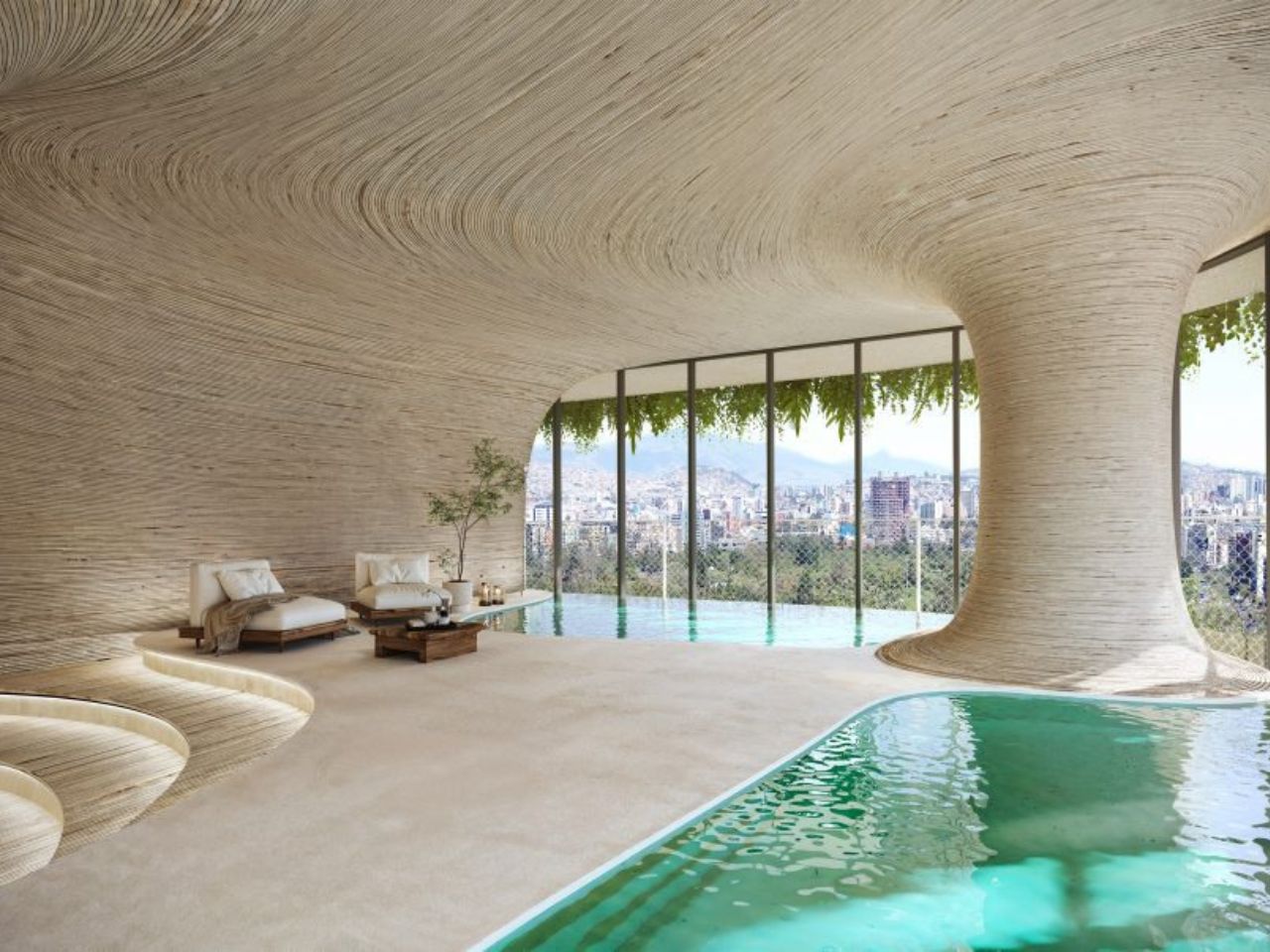
The building will contain 509 micro studio apartments, ranging from 226 to 389 square feet. Those numbers are small, and there is no real way around that. A studio of that size demands discipline from its occupants. Every object has to earn its place. Every surface has to work harder. But the project seems to understand that, which is why the private apartments are only one part of the story. Qapital also includes three commercial floors, a rooftop pool, spa, pet spa, and shared amenity spaces. The pitch is not simply “live in a small apartment.” It is closer to: live compactly, but let the building give you back some of the space your unit cannot hold.

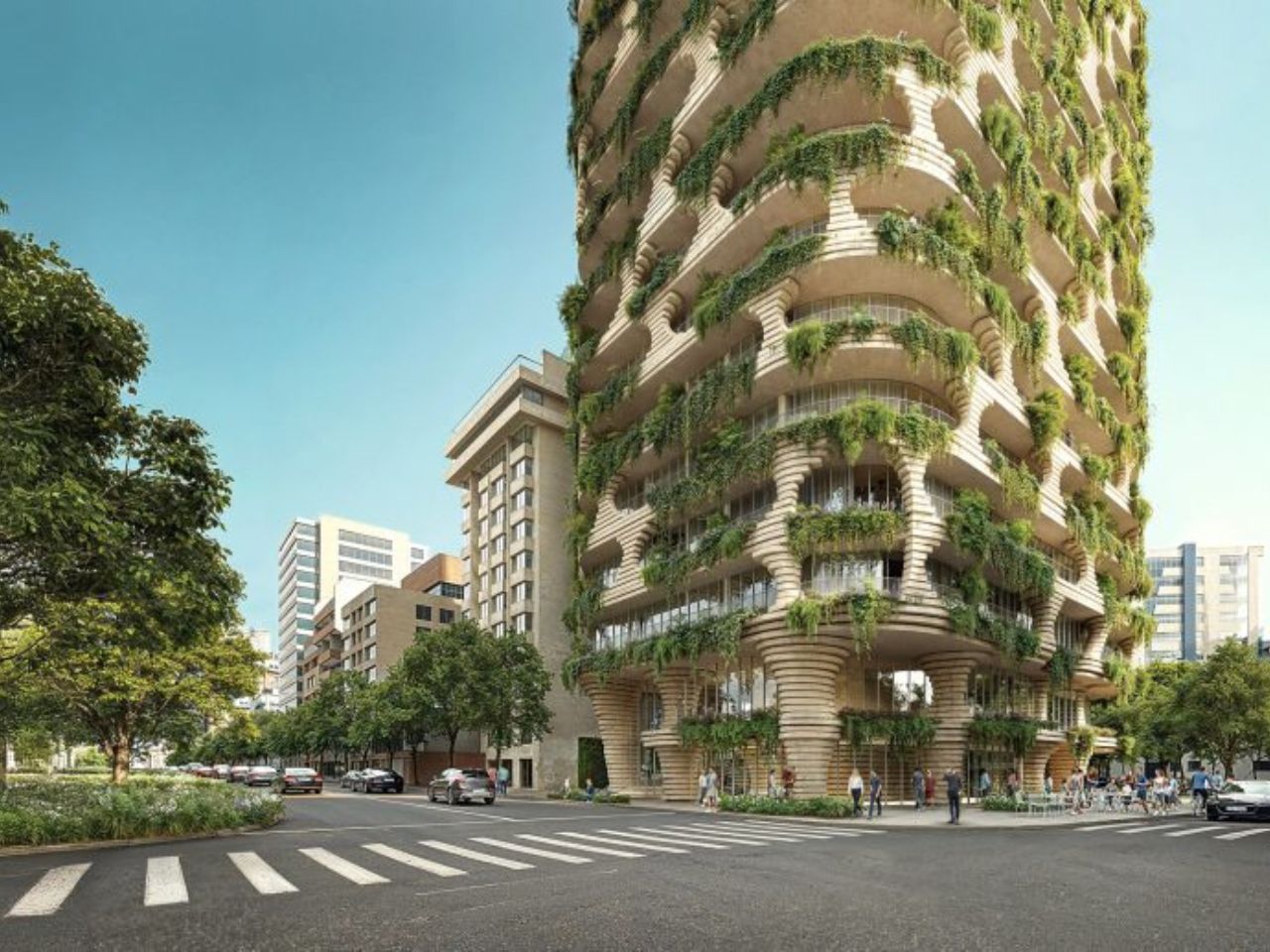
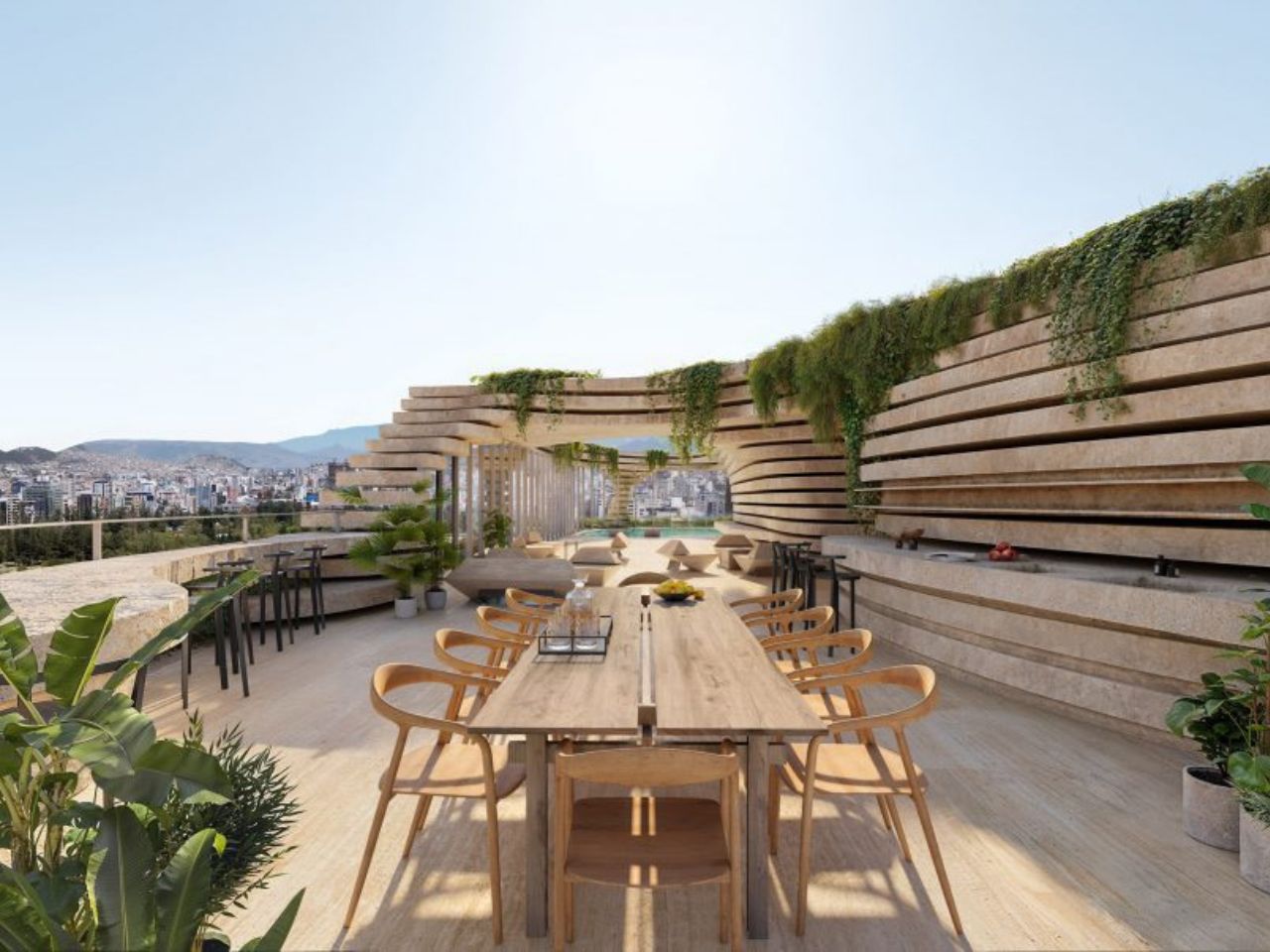
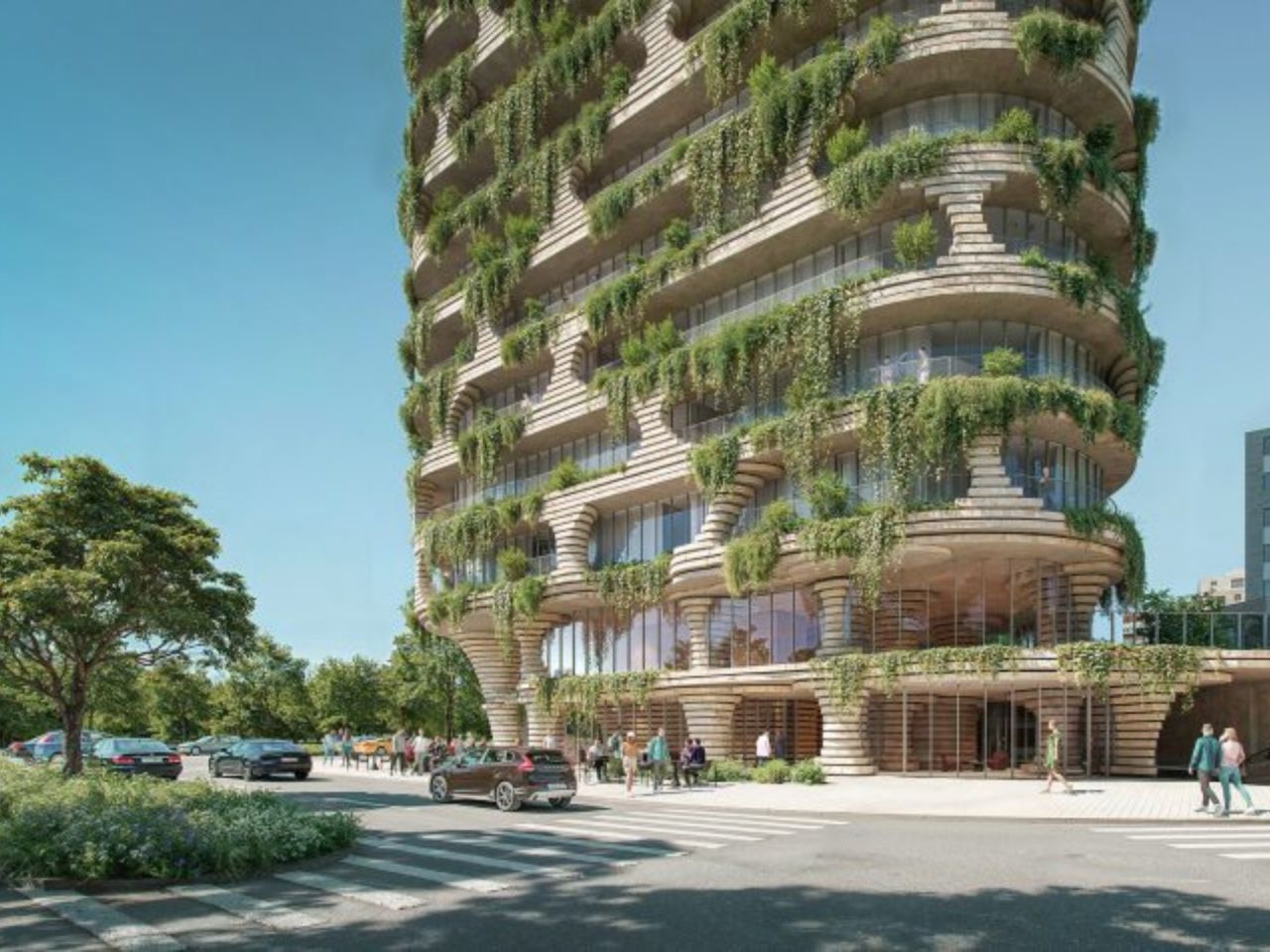
That is where the architecture becomes more compelling. Instead of presenting itself as a sleek glass object, Qapital appears textured, carved, and almost geological. The renders show large openings cut into the facade, with balconies tucked into the building like pockets in a rock face. The exterior is made up of striated stacks of stone, giving it a layered quality that feels much warmer than the usual polished high-rise language. Plants spill out from the balconies, softening the mass of the tower and making it feel less sealed off from the city around it.

The design draws from the landscape of the Andes, which cradles Quito and gives the city such a specific sense of place. But the reference does not feel overly literal. The tower is not shaped like a mountain in the obvious sense. Instead, it borrows from the way rock holds texture, shadow, cracks, and growth. The balconies feel like crevices where plants might naturally take root. That small shift matters. Greenery on buildings can often feel like decoration, something added to make a render look more alive. Here, the plants feel more integrated into the structure, as though the building has been designed to make room for them from the beginning.

There is also a ceramic quality to the project that feels very much in line with Kuma’s broader sensitivity to material. The facade has the feeling of something pressed, layered, and worked by hand, even though it is operating at the scale of a skyscraper. That contrast is one of the tower’s strongest qualities. It takes a typology that is usually associated with repetition and efficiency, then gives it a tactile, almost earthy presence. It is still a tall residential tower, but it does not seem interested in looking weightless or futuristic. It wants to feel grounded.

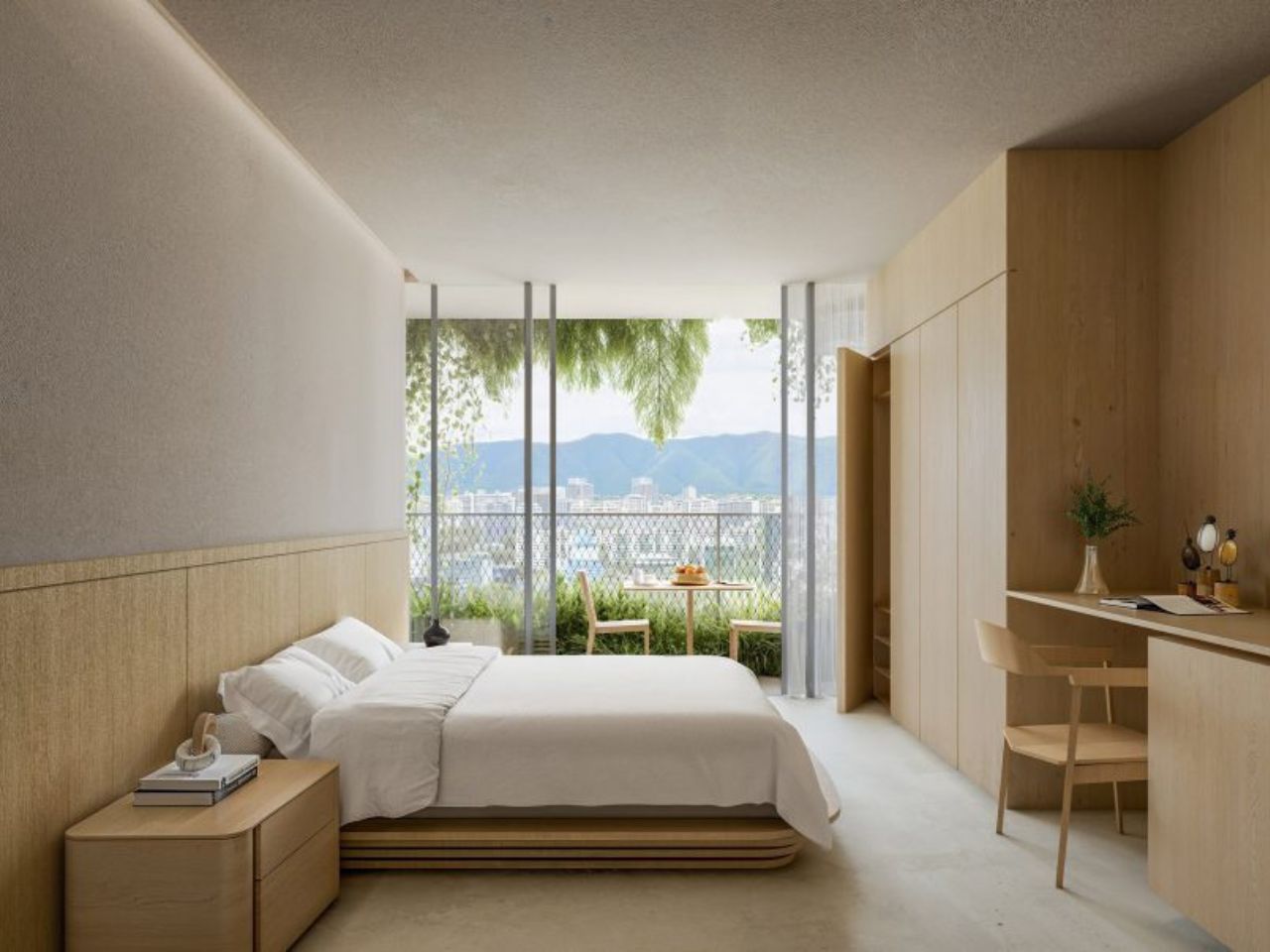
The interiors continue that balance between compactness and atmosphere. The bedroom renderings show small, light wood-lined spaces that feel calm and efficient. The amenity areas, by contrast, are more expansive and organic, with cavernous forms that seem designed to make residents feel like they are stepping out of the compression of the apartment and into something more generous. That contrast could either be the project’s greatest strength or its biggest question mark. If the shared spaces are genuinely useful and accessible, they could make the micro-units feel much more livable. If they become more like visual selling points, the tension between small private space and luxurious shared space will be harder to ignore.

Qapital is also set to include a mosaic by Italian homeware brand Fornasetti, marking the brand’s first work in South America. It adds another layer to the project’s interest in surface, craft, and ornament, all things that feel increasingly refreshing in a world of flat, anonymous towers.

Expected to be completed in 2029, Qapital feels worth watching because it is not just another statement skyscraper. It sits inside a very real urban question: as apartments get smaller and cities grow denser, what can architecture do to make daily life feel richer rather than reduced? The answer here seems to be texture, greenery, shared space, and a stronger relationship to place.

Whether Qapital will fully deliver on that promise will only be clear once it is built and lived in. But as a design idea, it has a strong point of view. It treats the skyscraper less like a machine for stacking apartments and more like a vertical piece of terrain: carved, planted, inhabited, and slowly folded into the city.

The post Quito’s New Skyscraper Feels Carved, Planted, and Lived In first appeared on Yanko Design.
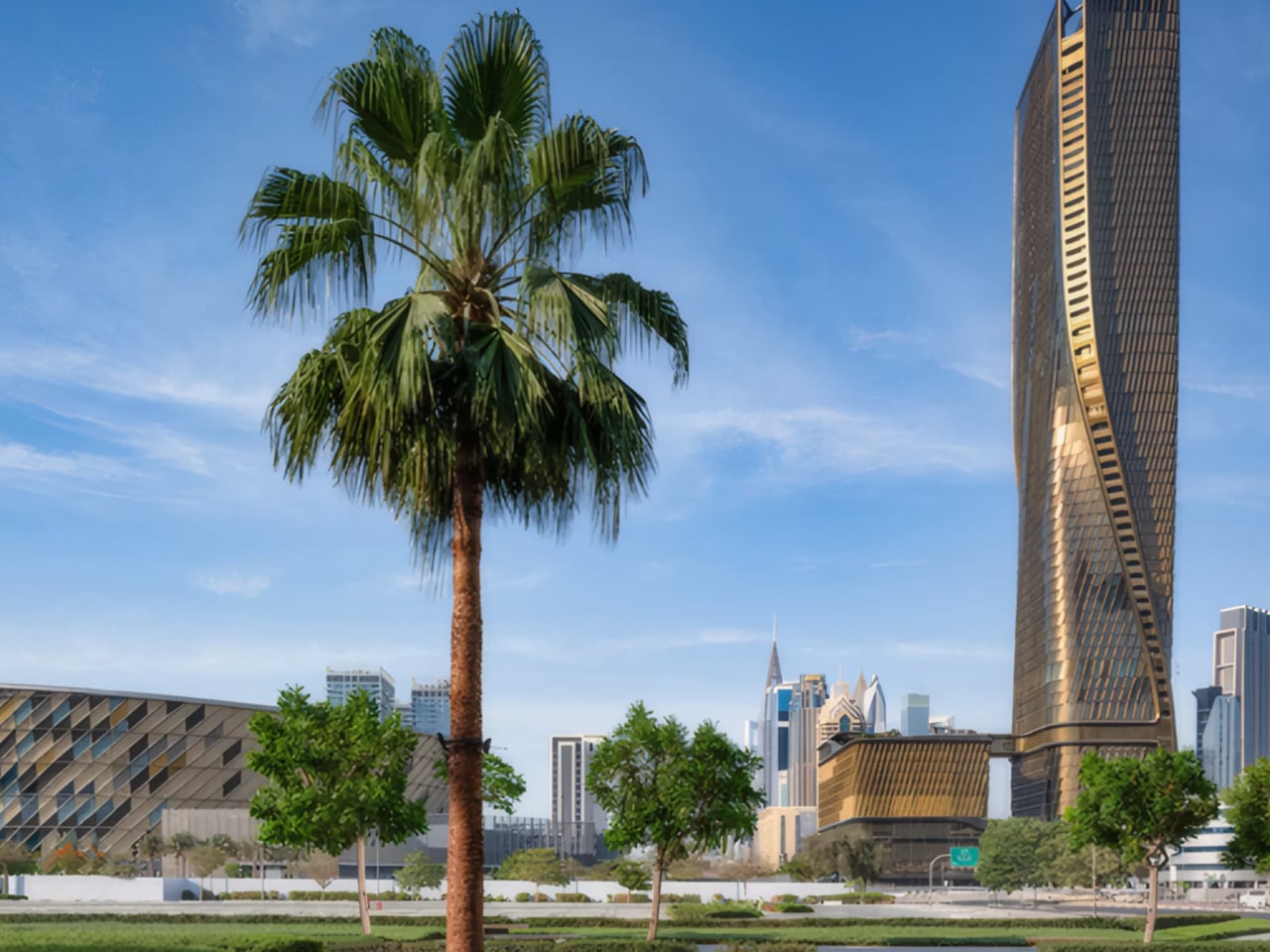
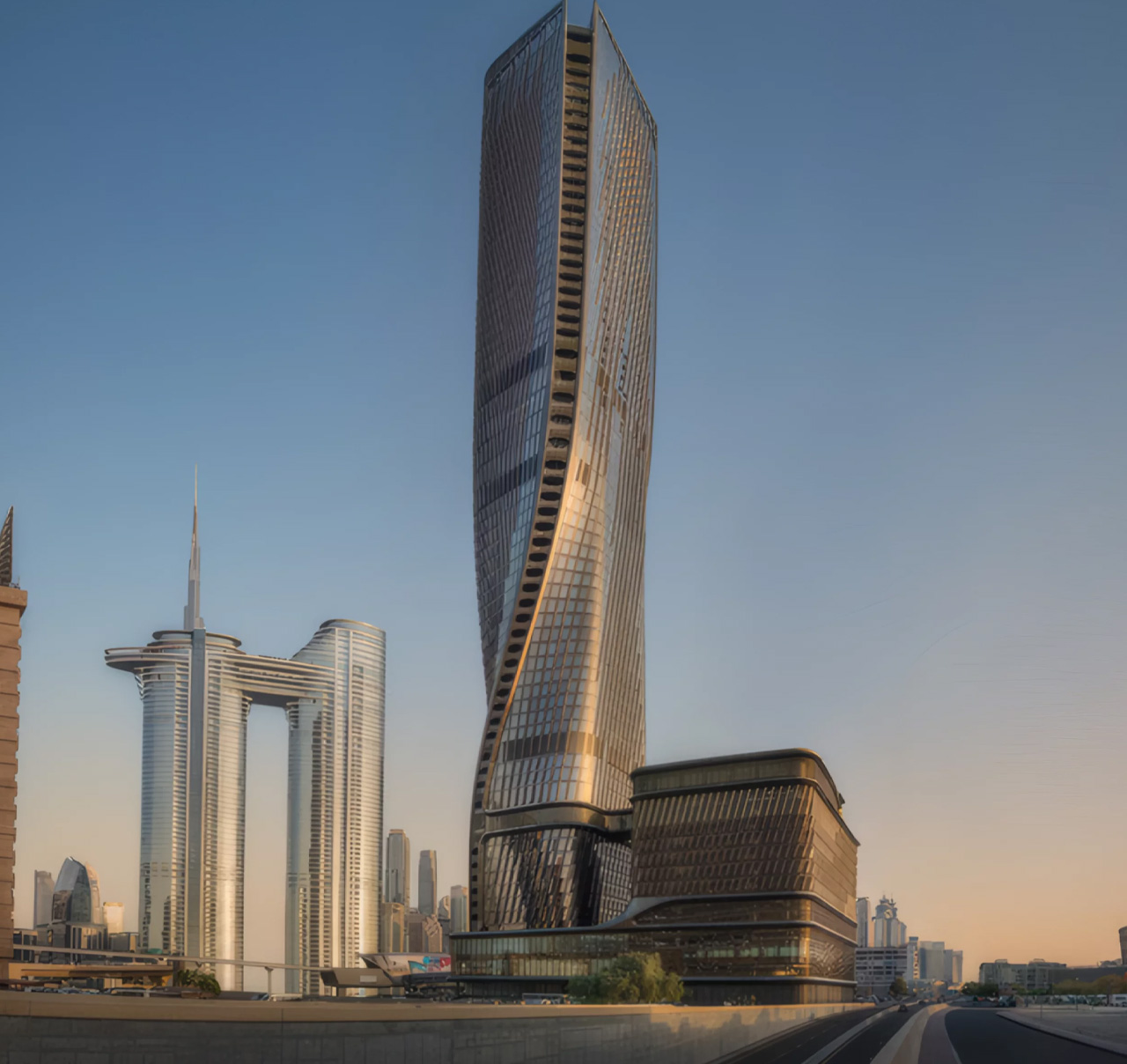
UNStudio’s Wasl Tower Is Dubai’s Most Sculptural Skyscraper Yet

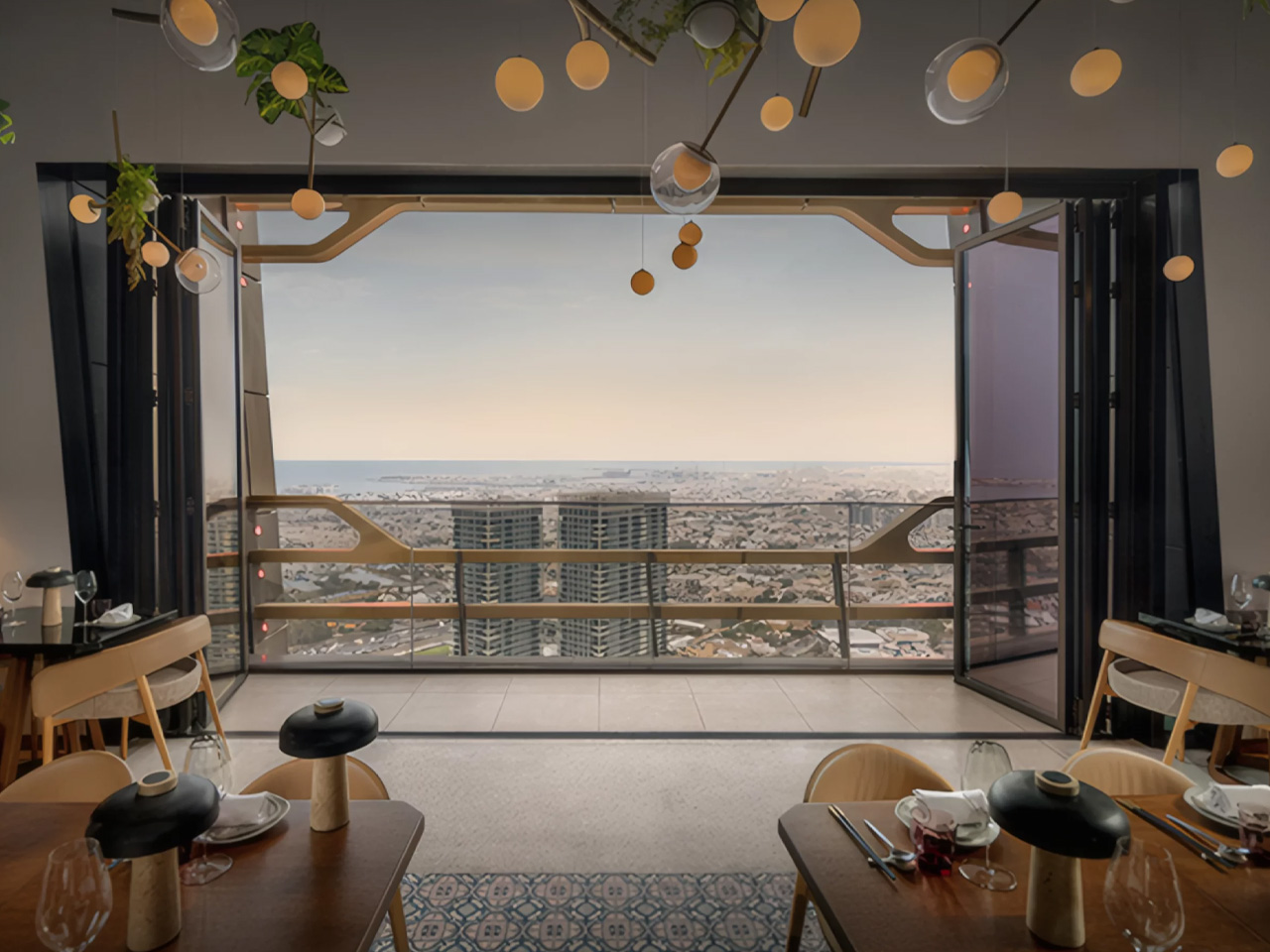
There’s a building rising on Sheikh Zayed Road that isn’t trying to be the tallest thing in the room — it’s trying to be the most alive. The Wasl Tower, designed by UNStudio in collaboration with structural engineers Werner Sobek, stands 302 metres above Dubai and carries with it one of the most thoughtful design narratives in the city’s recent skyline story. Conceived as early as 2014 and nearing completion, the 64-storey supertall is a landmark in the truest sense, not just because of its height, but because of what it means to stand there.

The tower draws its form from classical sculpture. UNStudio looked to the ‘contrapposto’, a Renaissance-era pose in which a figure shifts weight and twists slightly at the torso, suggesting movement mid-stride, and scaled it to 302 metres. The result is a building that appears to rotate as you move around it, its geometry shifting with every vantage point. Structurally, this feat is achieved through three massive 300-metre shear walls linked by four strategic outriggers, a system that allows the building to twist gracefully while still supporting a fully flexible, mixed-use floorplate.

Designer: UN Studio

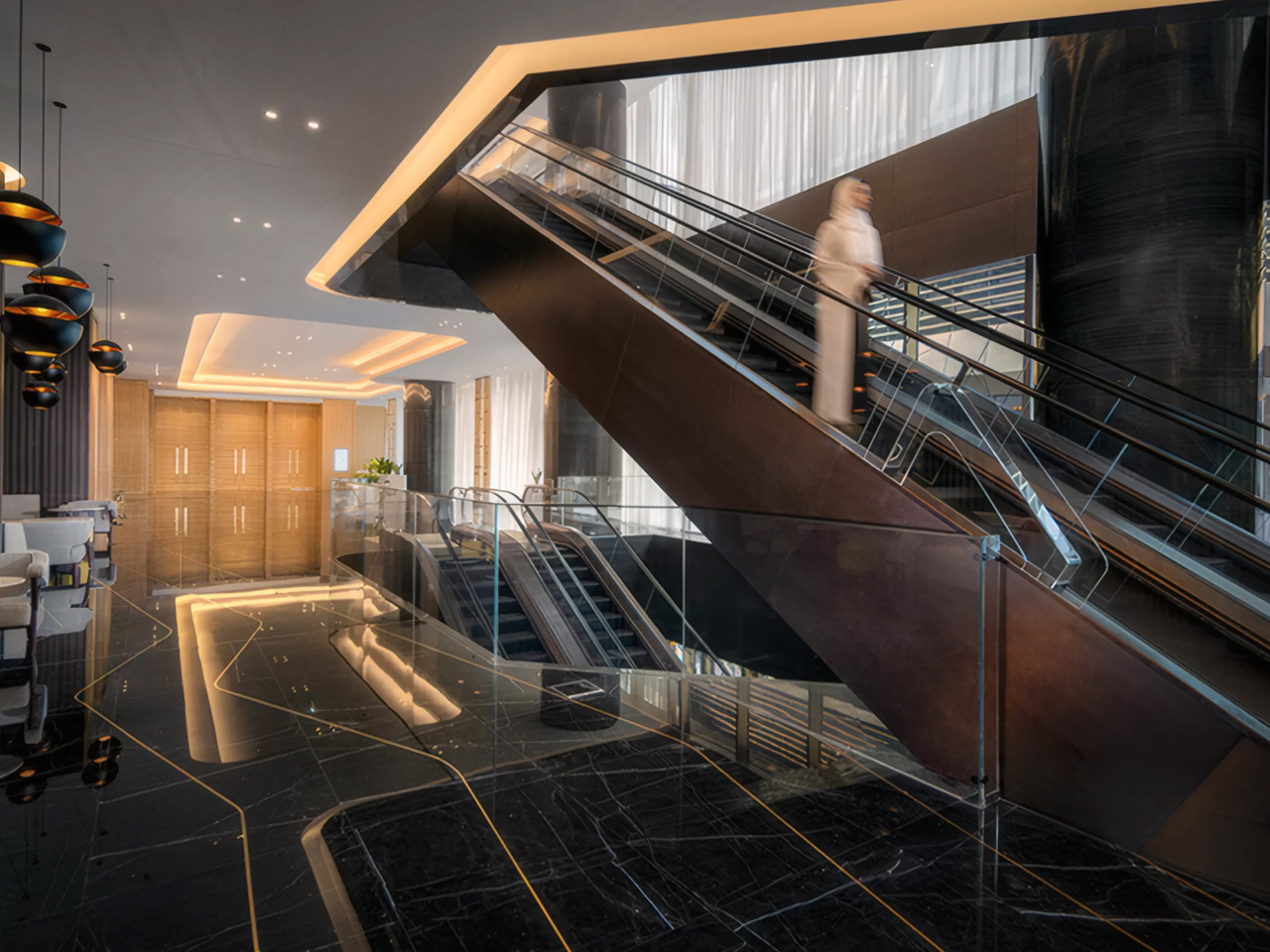
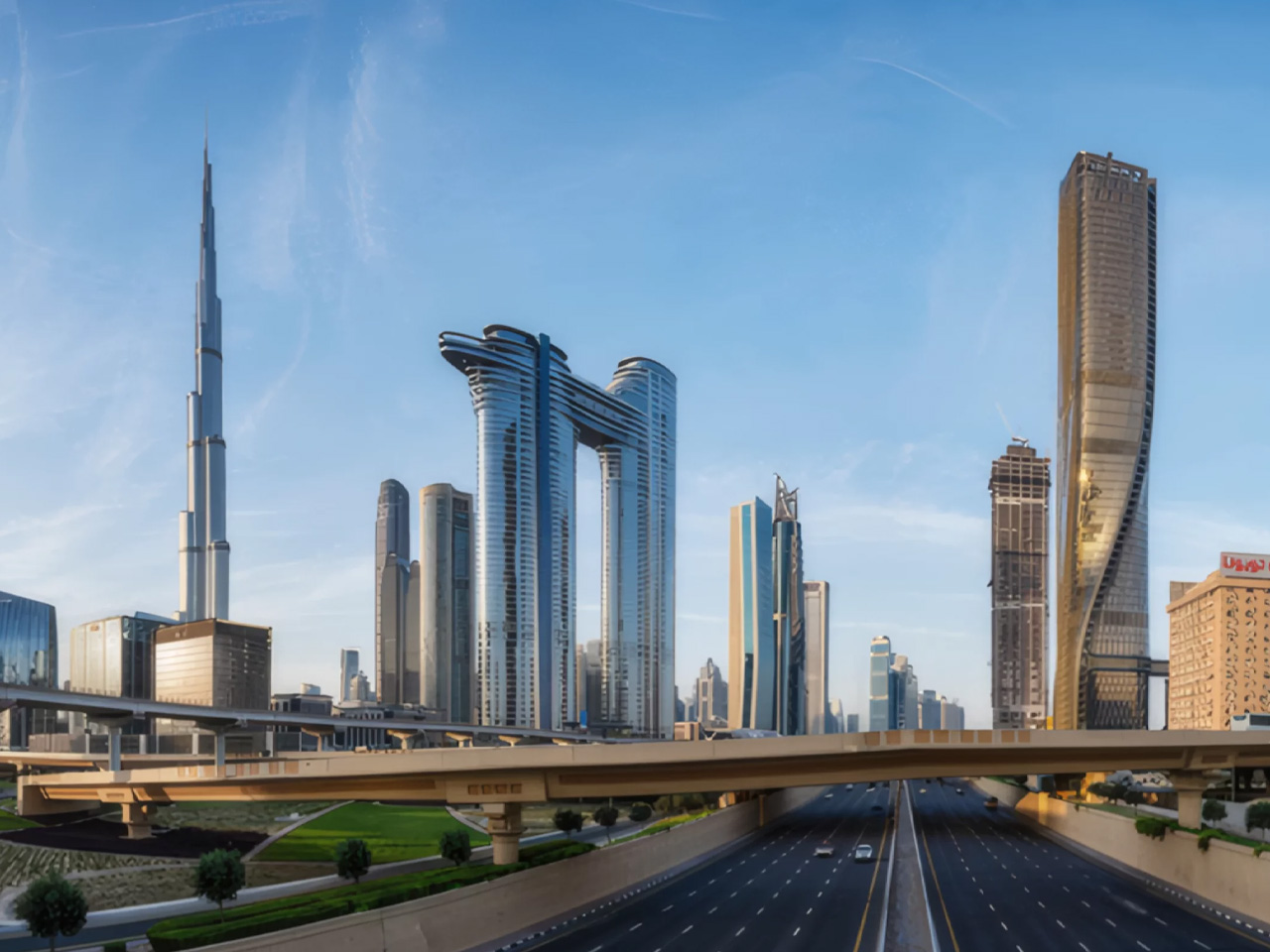
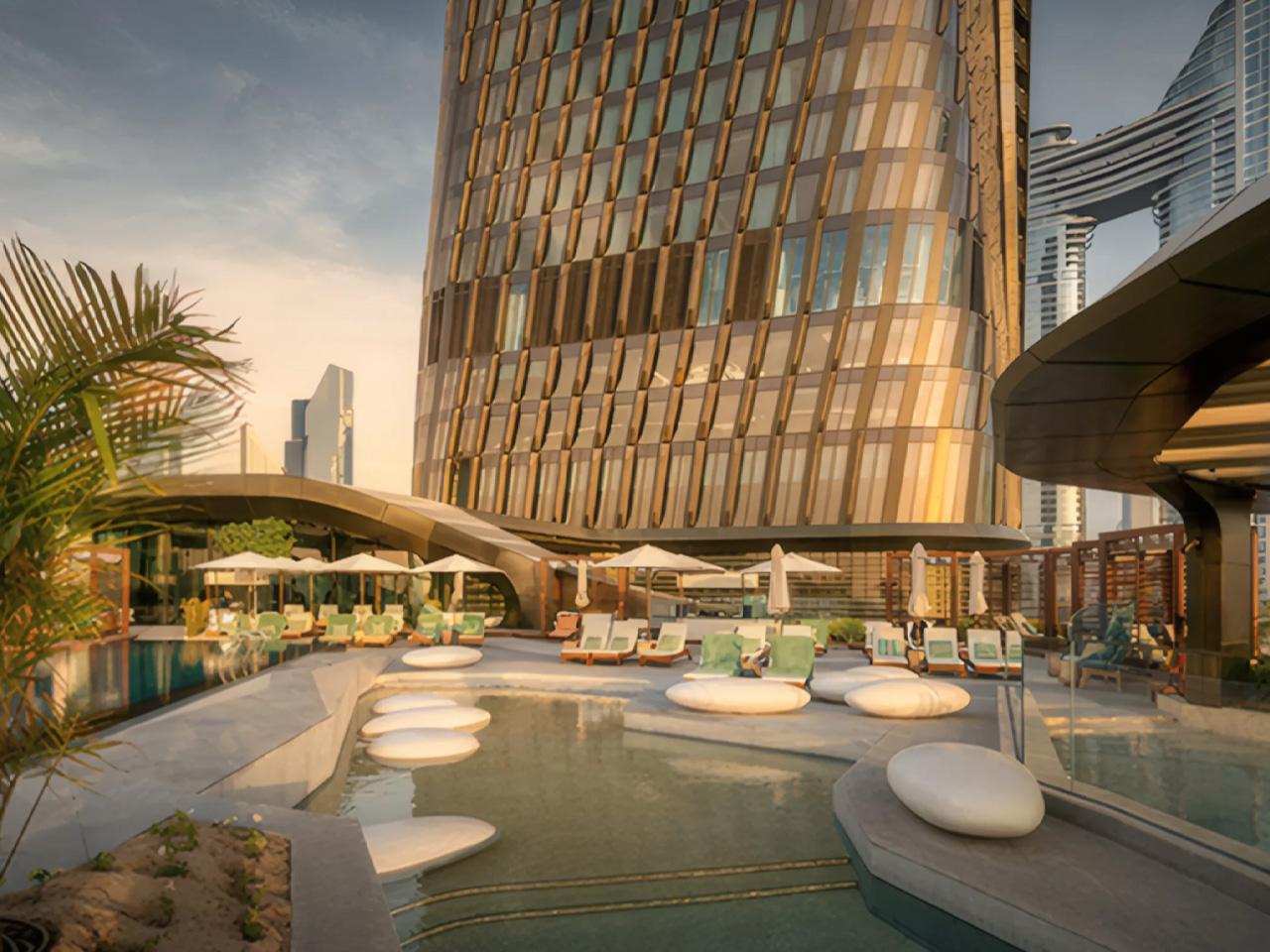
Positioned directly opposite the Burj Khalifa along Dubai’s main north-south artery, the Wasl Tower occupies a site that was previously untouched by high-rise development. A new pedestrian bridge now connects it to the Burj Khalifa metro station, threading the tower into the city’s movement infrastructure and making it a genuine civic node rather than an isolated object. Its programming reflects that ambition — the building houses residential apartments, offices, a hotel, restaurants, and entertainment spaces, with public programming deliberately elevated high above street level.

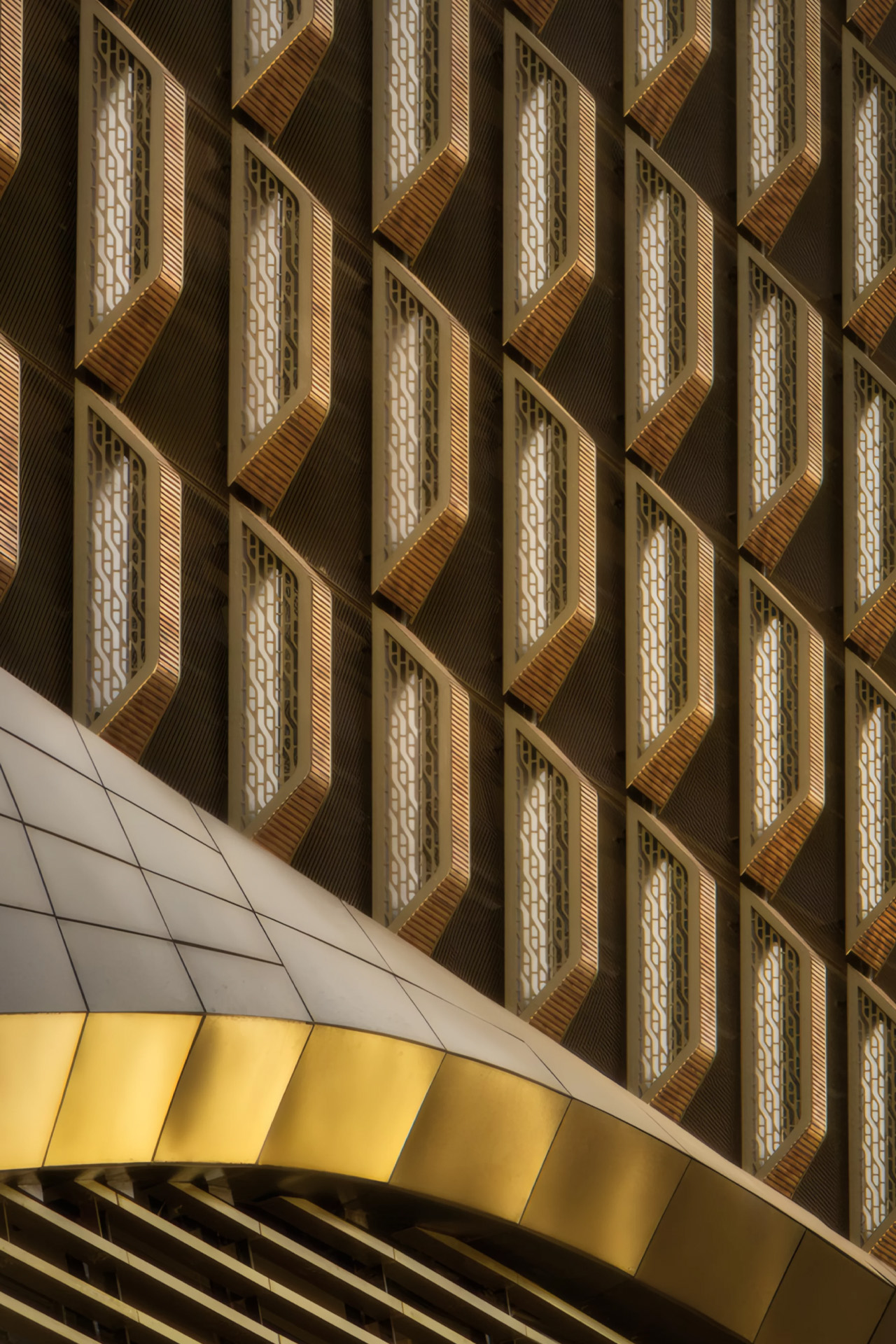
What gives the tower its visual texture is its facade, one of the tallest ceramic facades in the world. UNStudio and Werner Sobek clad the building in a lace-like grid of glazed clay fins, a material choice that is as low-tech as it is clever. The ceramic tiles diffuse and reflect the desert sun, reducing heat gain and eliminating the need for more energy-intensive shading systems. At night, the facade takes on an entirely different quality, illuminated in a way that makes the building appear to breathe.

For a city that has never been shy about spectacle, the Wasl Tower earns its place on the skyline by being something rarer: a building with a rigorous idea behind it. It references art history, responds to climate, and reshapes a stretch of one of the world’s most iconic roads, all at once.

The post UNStudio’s Wasl Tower Is Dubai’s Most Sculptural Skyscraper Yet first appeared on Yanko Design.
Vancouver’s First Supertall Was Inspired by the Ocean Floor

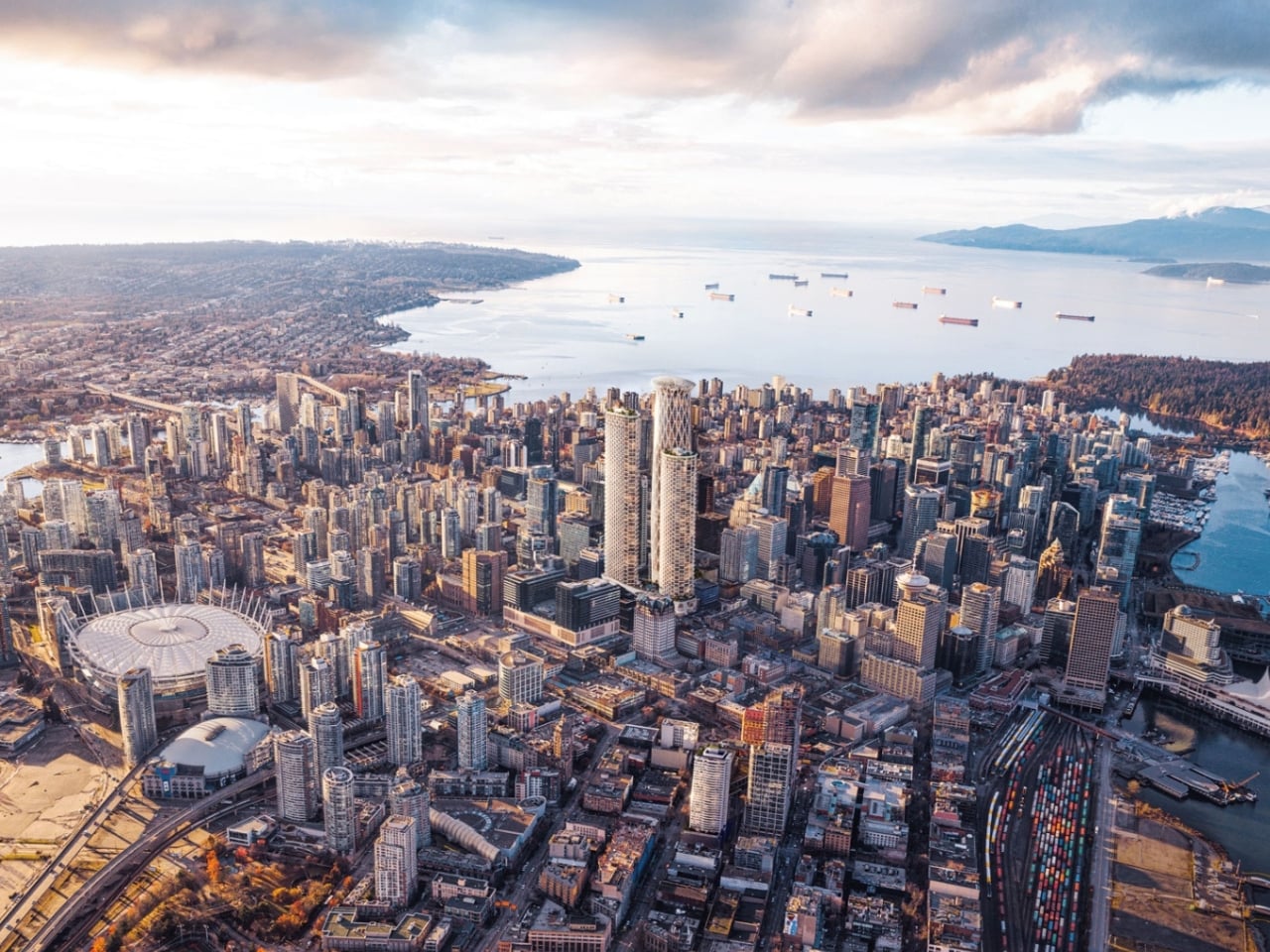
Vancouver has always had good bones. The mountains, the water, the way the city sits between them like it was planned by someone with an eye for drama. But for all its natural beauty, its skyline has played it relatively safe. That’s about to change, and the agent of disruption is, of all things, a sea sponge.

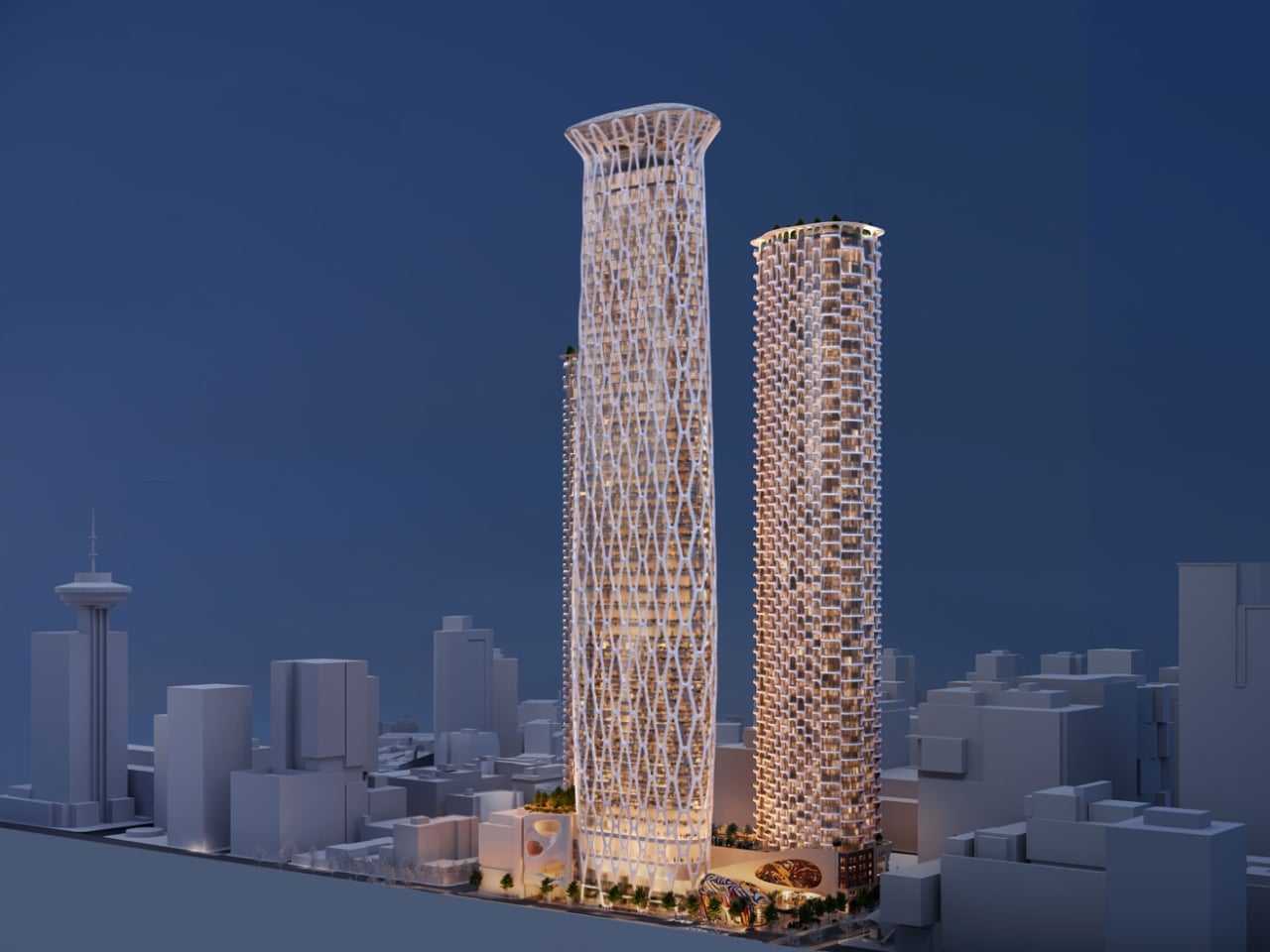
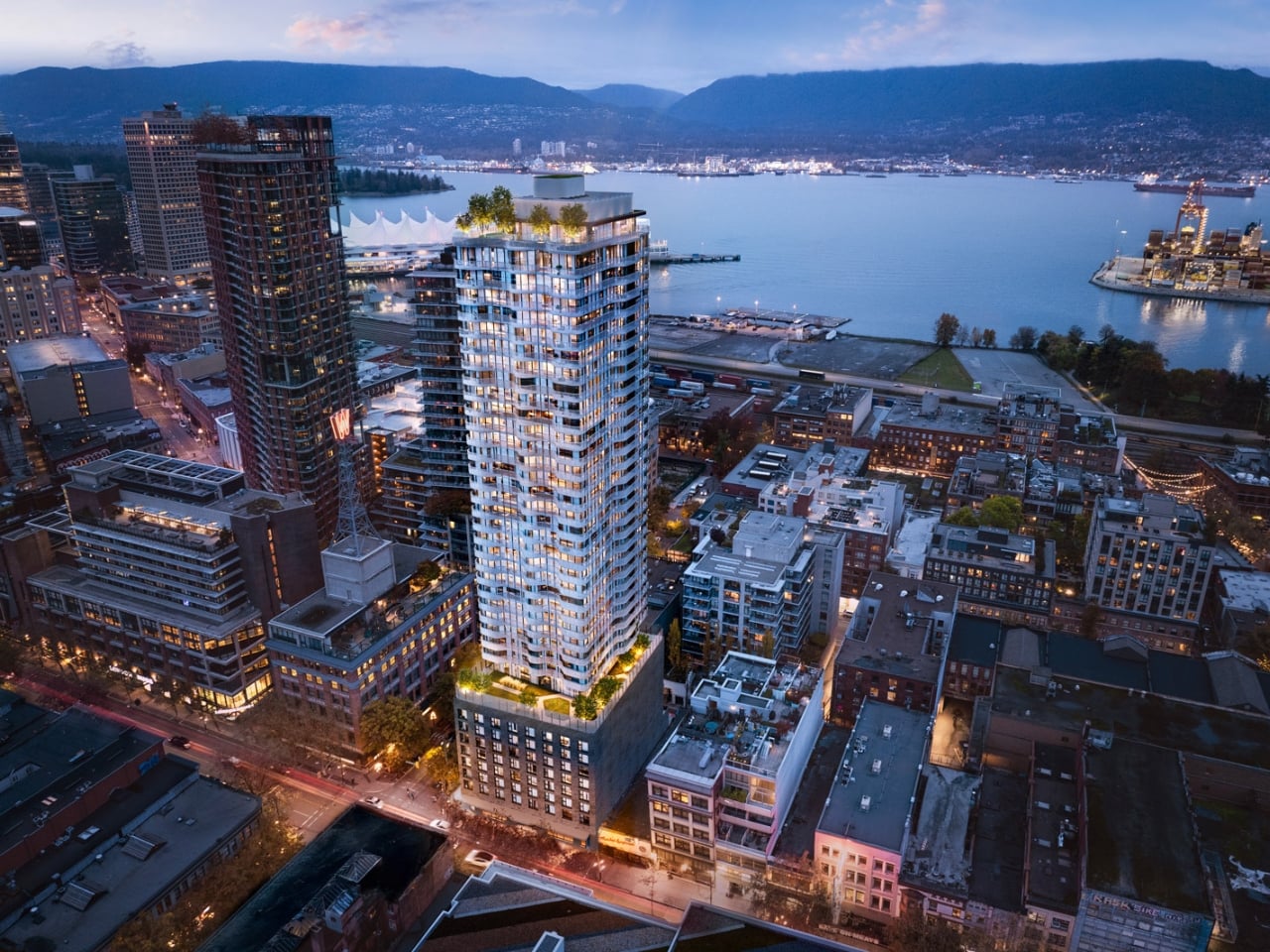
Henriquez Partners Architects, a local Vancouver studio, has unveiled designs for 595 West Georgia Street, a 1,033-foot tower that will become the city’s first-ever supertall skyscraper. To earn that designation, a building has to exceed 984 feet, which puts 595 West Georgia just barely in that club and makes it a landmark before a single floor has been built. It’s the centerpiece of a larger trio called Georgia & Abbott, developed by Holborn Group, but this one is clearly the main event.

Designer: Henriquez Partners Architects

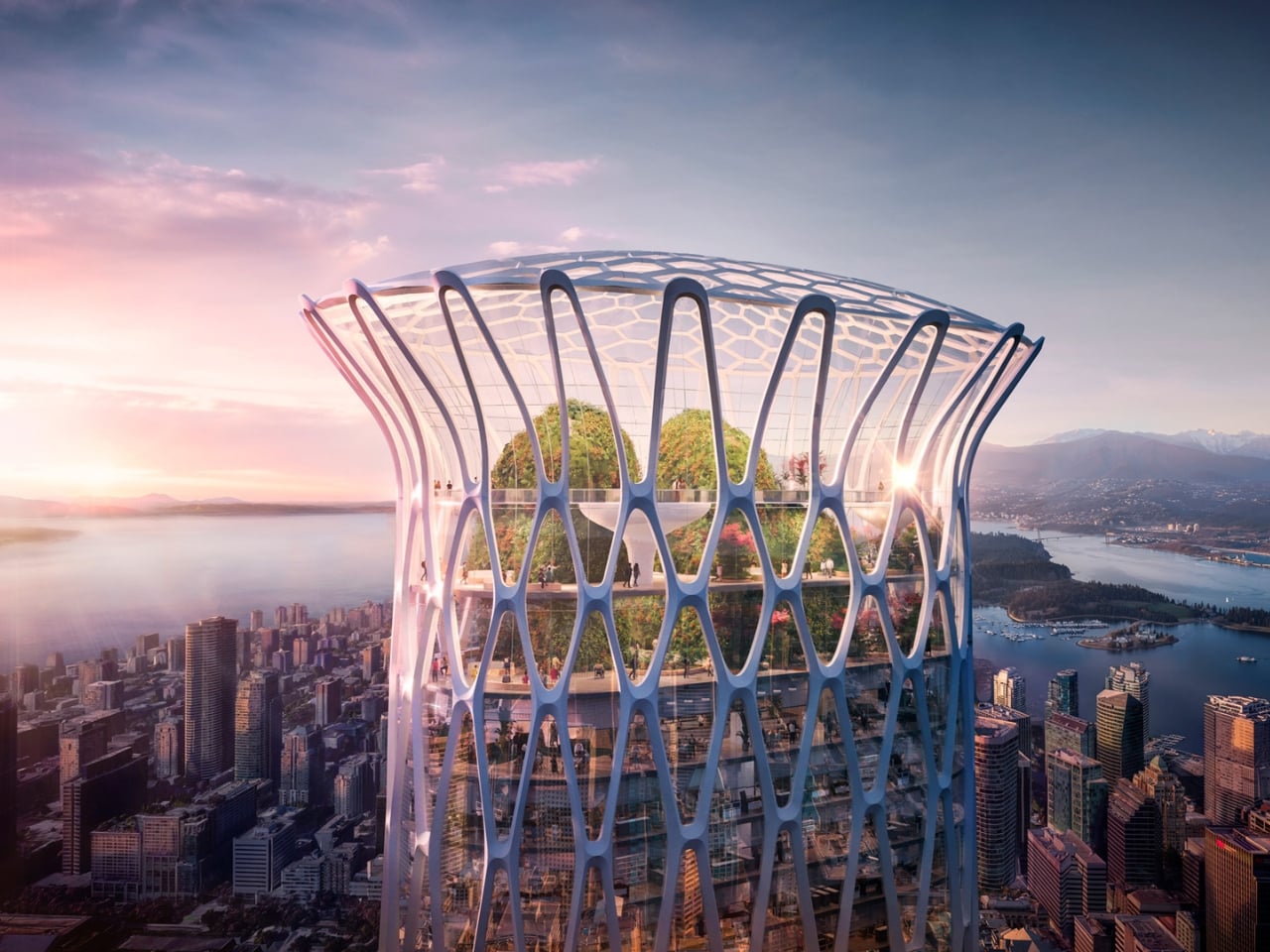
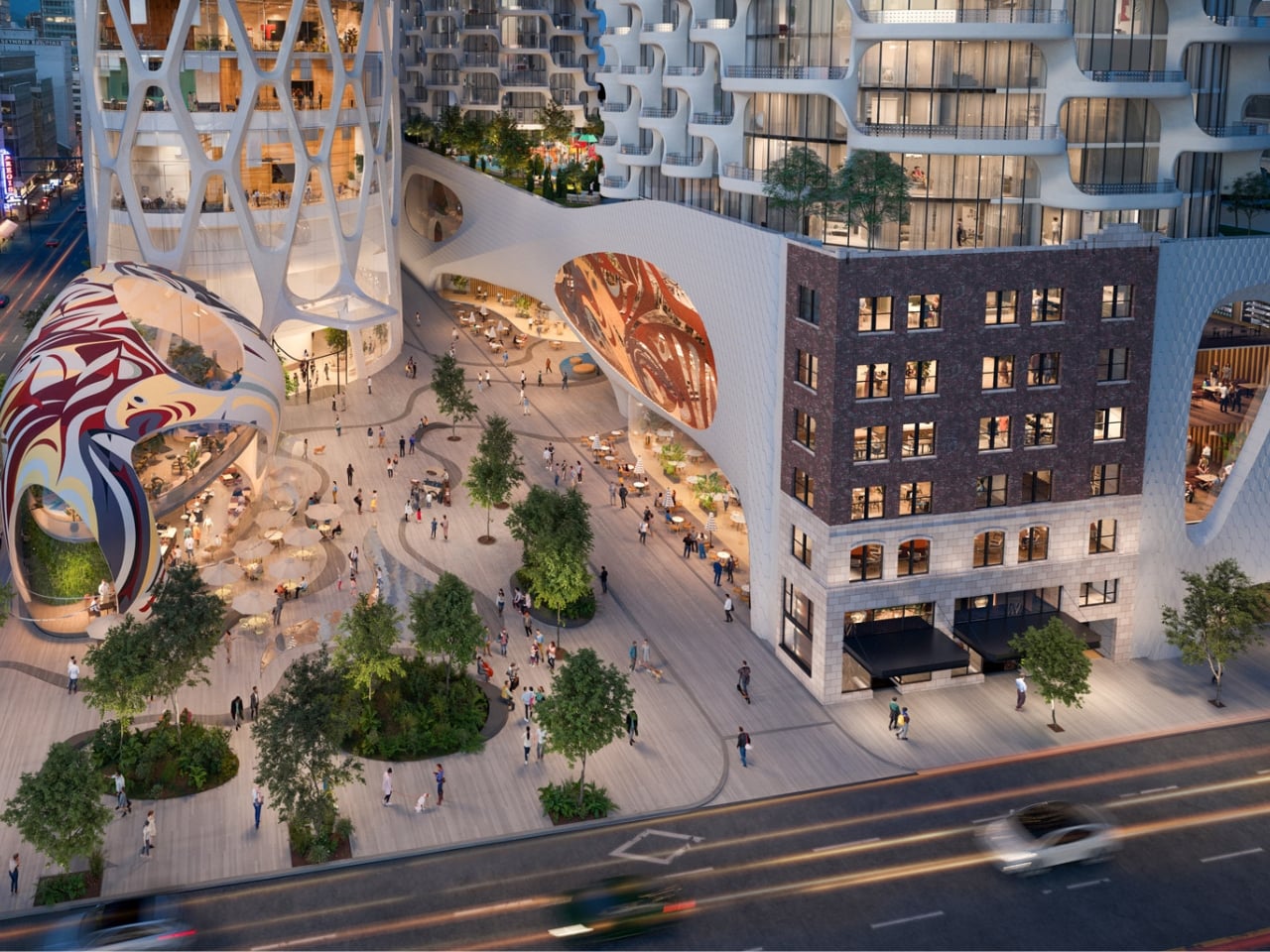
The design draws from the glass sea sponge reefs, specifically hexactinellids, found off the coast of British Columbia. These aren’t the bath sponges you’re picturing. They’re ancient, rare, deep-sea organisms with a crystalline skeletal structure that is simultaneously porous and structurally formidable. Henriquez Partners didn’t just borrow the idea aesthetically; they borrowed it structurally. The building is wrapped in a steel exoskeleton clad in white Glass Fibre Reinforced Polymer panelling, with highly translucent spans of glass filling the rest. That external framework carries the structural loads, which means fewer internal columns, more open floor plates, and a surface that looks woven and textured rather than sealed and flat.

That last distinction matters more than it sounds. Glass-box towers have dominated skylines for decades, and while some are genuinely beautiful, most are just reflective. They bounce light around and blend into each other. 595 West Georgia is going for something different: depth. The lattice of the exoskeleton creates shadows and layers depending on where you’re standing and what time of day it is. It moves, visually, in a way that most modern towers simply don’t, which makes looking at it feel more like watching a living surface than a fixed object.

Henriquez Partners described the design as telling “a story that is unique to British Columbia.” That kind of regional specificity is increasingly rare in architecture, where global firms often produce work that could exist in Dubai just as easily as Dallas. The fact that this building could only make sense in Vancouver, because the glass sponge is native to BC’s coastal waters, gives it a conceptual integrity that goes beyond branding. It’s a building that knows where it lives.

The program is equally considered. 595 West Georgia will function as a hotel tower, with conference facilities, a rooftop restaurant, and a publicly accessible observation deck at the top that will be free for Vancouverites to visit. That detail alone shifts the building’s relationship to the city. A supertall designed to be shared with the public rather than sealed off for guests feels like a genuine gesture, and it suggests that the architects and developer thought about this tower as part of the city’s fabric, not just its skyline profile.

The whole project sits at a compelling intersection of ideas. It’s biomimicry applied at an urban scale, which is a growing conversation in both design and engineering. It’s also a statement about what cities are willing to reach for, literally and figuratively. Vancouver has been measured about its height limits for years, and for good reason. The city’s low-rise character has long been part of its identity. Greenlighting a supertall signals that the city is ready to stretch those boundaries, and having one that can argue its design philosophy this clearly makes that shift feel earned.

Whether 595 West Georgia turns out to be as striking in person as the renderings suggest is something only construction can answer. But the foundational idea, that the most interesting path forward might look like something pulled from the ocean floor, is exactly the kind of thinking that makes architecture worth paying attention to right now. Not every city gets to say its most ambitious tower was modeled after an organism that’s been living quietly underwater for centuries. Vancouver gets to say that.

The post Vancouver’s First Supertall Was Inspired by the Ocean Floor first appeared on Yanko Design.
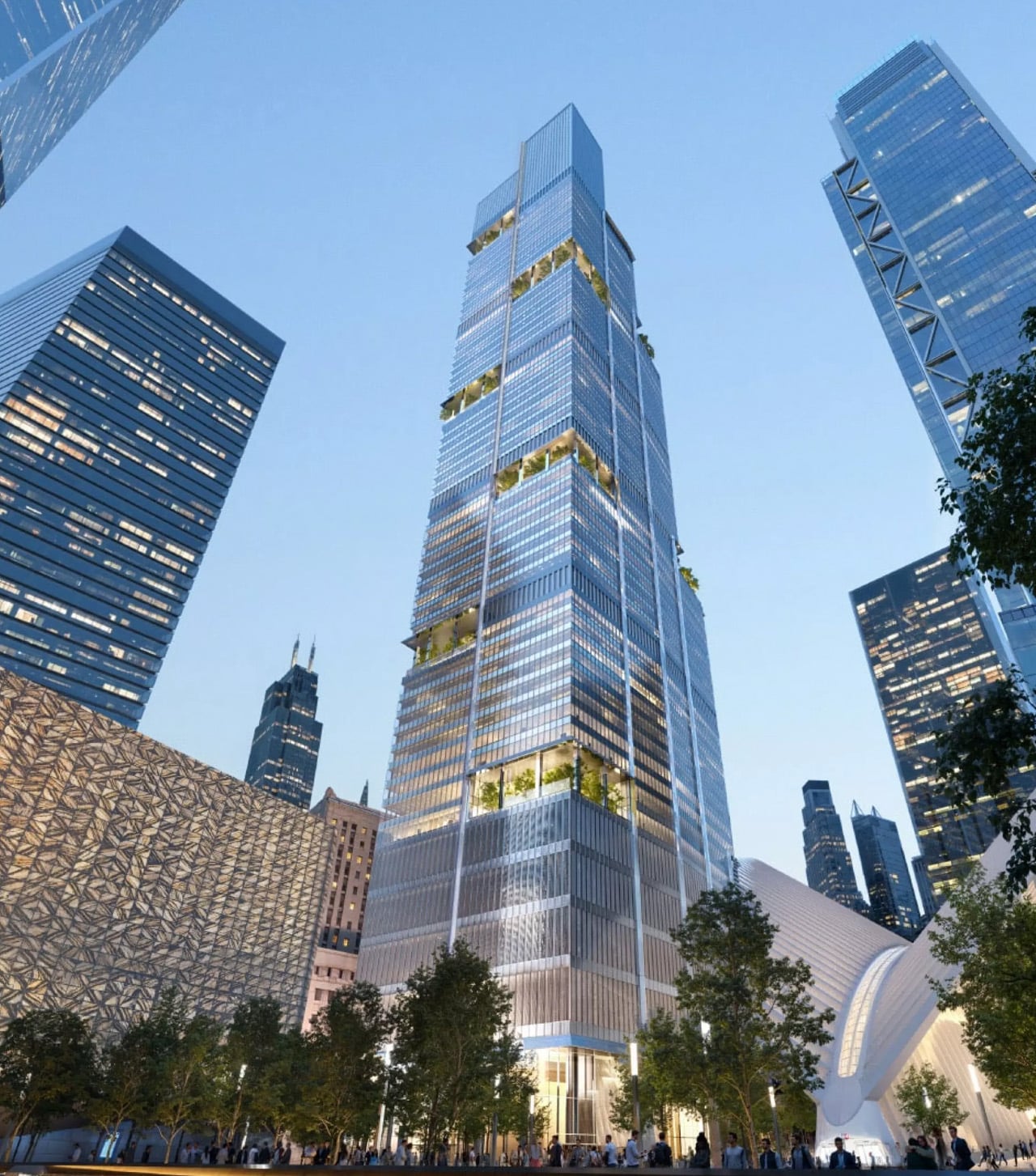
New 2 World Trade Center Will Rise 1,226 Feet Over Manhattan, Finally Completing the Post-9/11 Rebuild

It has been almost 25 years since the September 11 attacks forever changed the skyline of Lower Manhattan, and now the rebuilding of the World Trade Center campus is entering its final stretch. The last major commercial tower on the site, 2 World Trade Center, is expected to break ground in spring 2026 and wrap up construction by 2031. American Express has committed to making the building its new corporate headquarters.

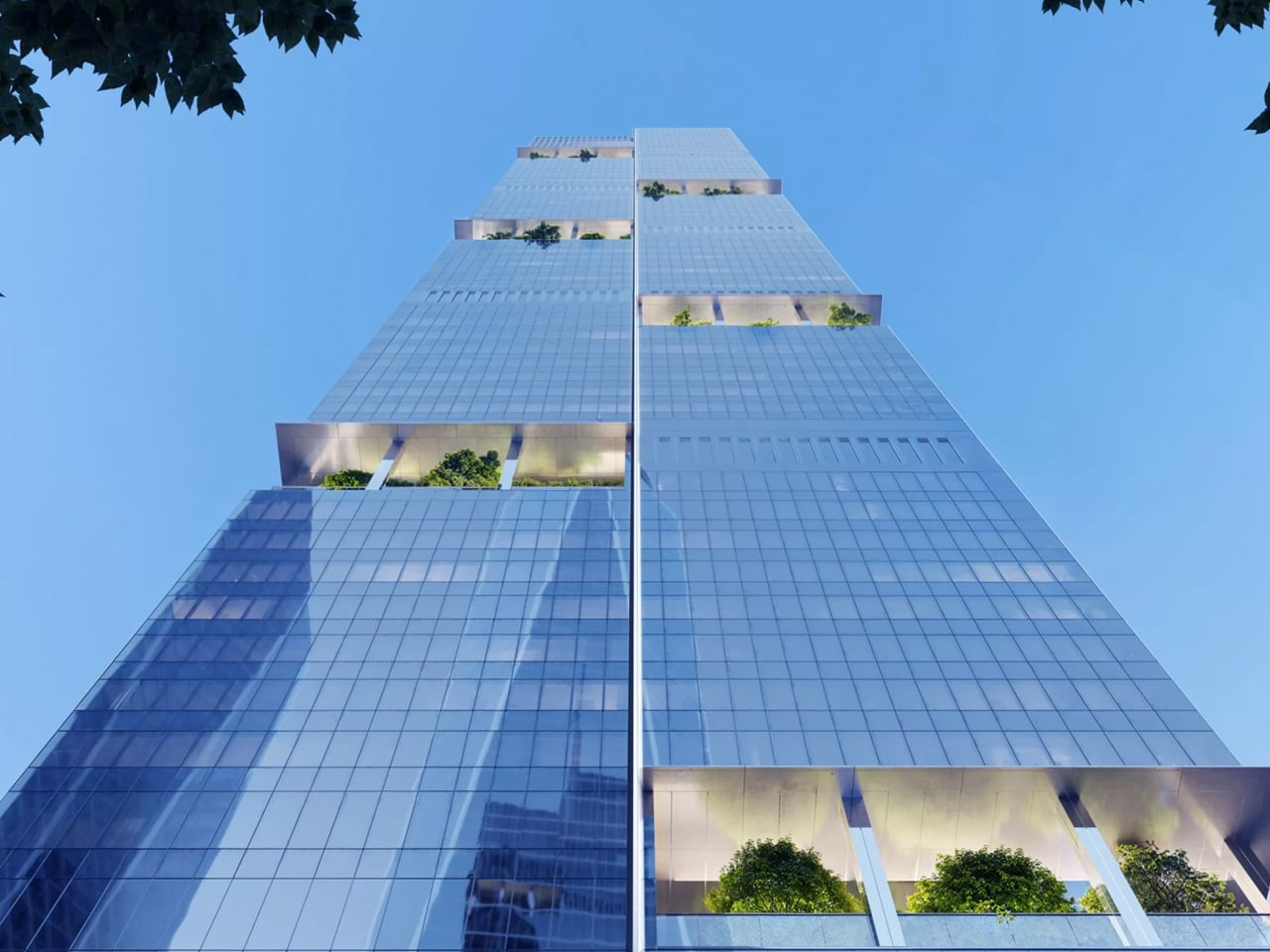
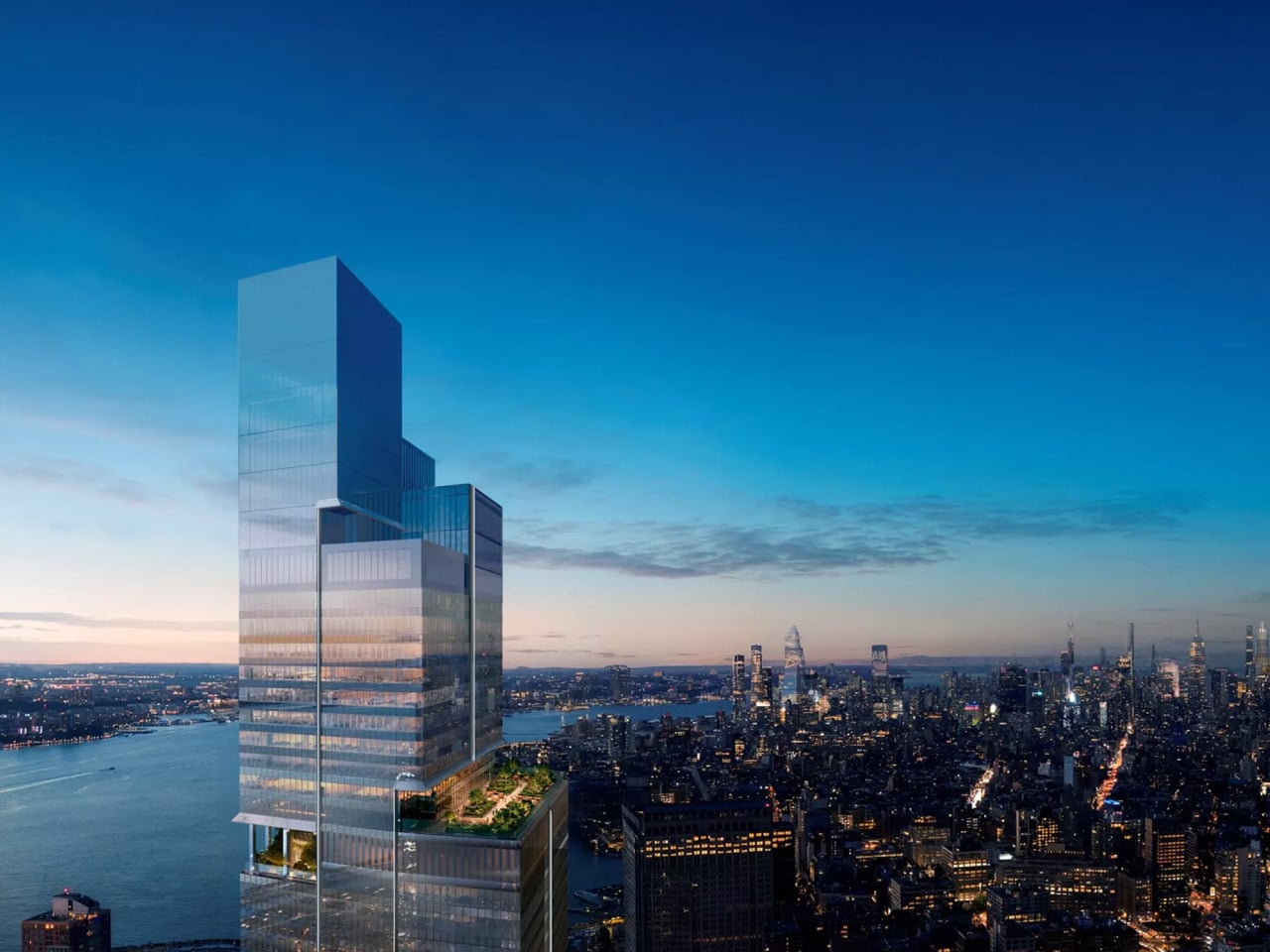
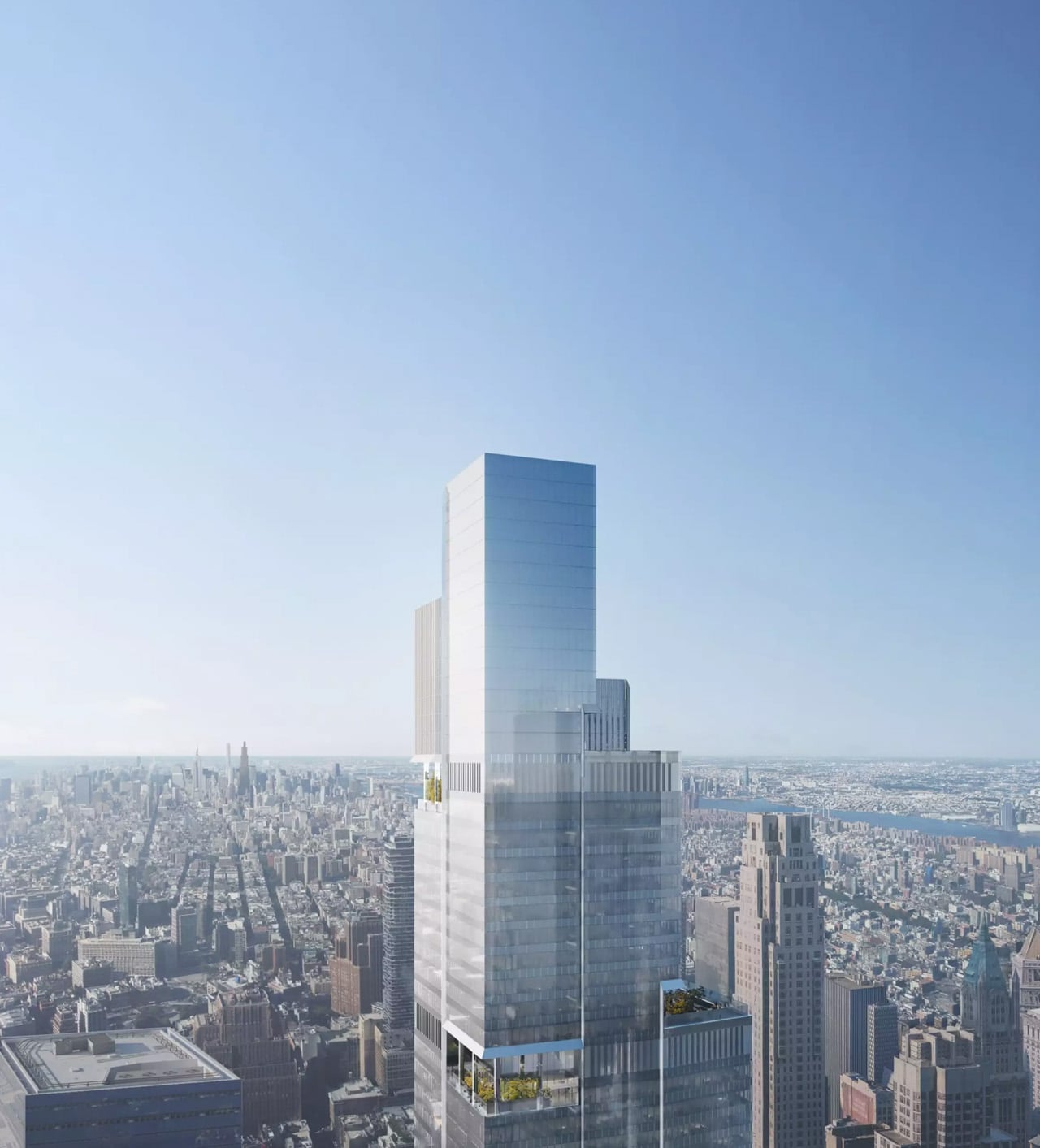
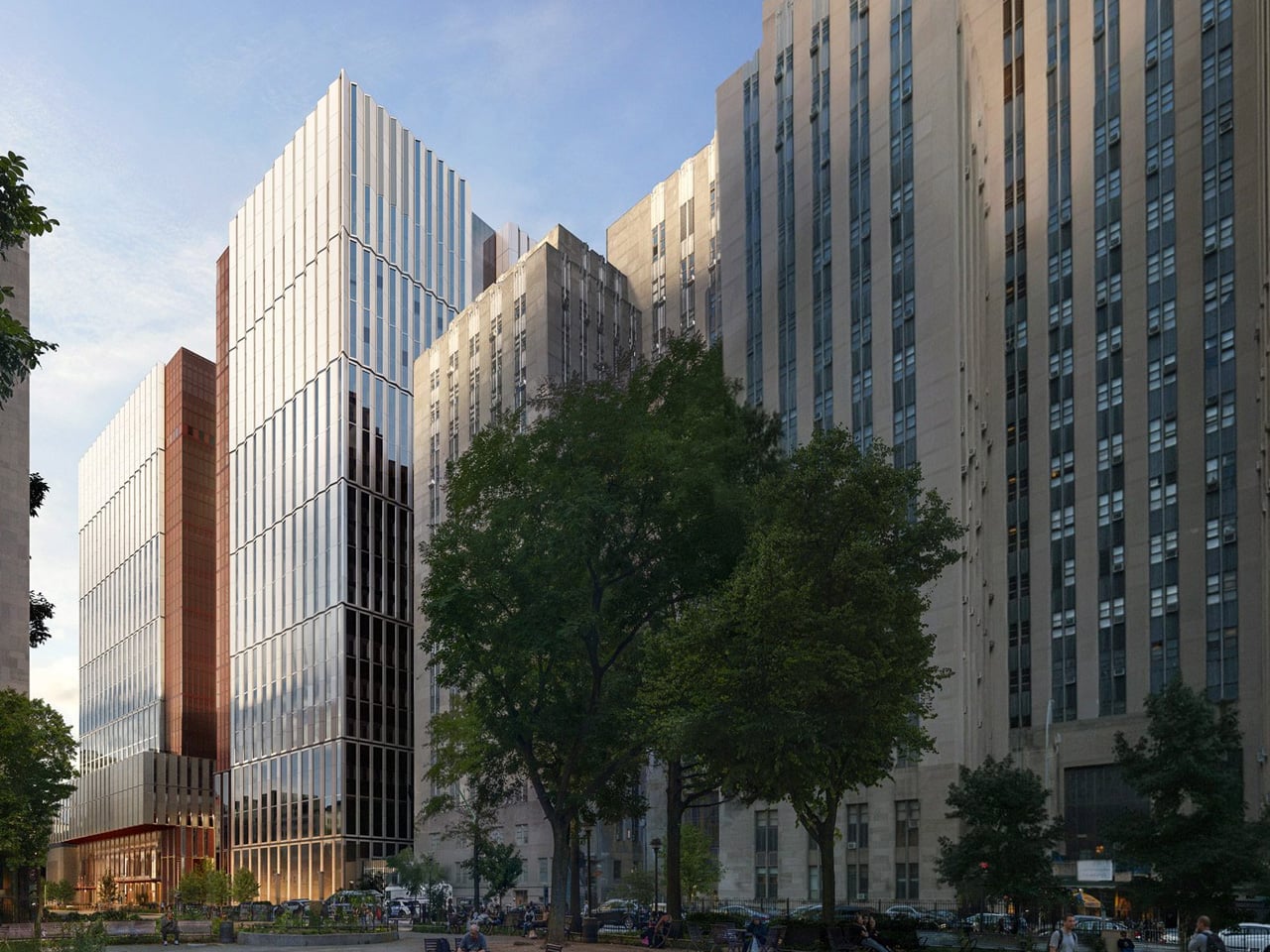
Getting to this point hasn’t been simple. British firm Foster + Partners was originally hired to design the tower, only to be replaced by Bjarke Ingels Group, which put forward a striking terraced concept. That plan was eventually scrapped, and Foster + Partners was brought back to start fresh. The result, based on recently released renderings, is a broad rectangular tower sheathed in glass, with three open-air terraces and six landscaped corner gardens woven into the facade to bring some greenery to an otherwise sleek profile.

Designer: Foster + Partners

The tower will rise to 1,226 feet, comfortably placing it in the supertall category and making it roughly the 11th-tallest building in the United States. It won’t overtake its famous neighbor, though. One World Trade Center still holds the title of the country’s tallest at a symbolically chosen 1,776 feet. Inside, the building will offer close to two million square feet of usable space across 55 stories, with the bulk of that dedicated to offices. When fully occupied, it could house around 10,000 workers.

Specifics are still thin at this early stage, but American Express has said the tower will incorporate smart building technology and energy-efficient systems. The project is also targeting LEED certification, which has become something of a baseline expectation for major commercial developments in recent years.

Kevin O’Toole, Chairman of the Port Authority of New York and New Jersey, called the project a meaningful milestone, both for the campus and for the surrounding region. He pointed to the tower’s role in reinforcing the World Trade Center as one of the country’s most important centers of commerce and transportation, and acknowledged just how much sustained effort it takes to deliver projects on this scale.

Silverstein Properties, the development firm that has overseen much of the site’s post 9/11 transformation, is once again at the helm. When the building finally opens its doors in 2031, it will effectively close the book on one of the most ambitious and emotionally significant urban rebuilding efforts in modern history. More than anything, it will stand as a reminder of what New York City is capable of when it commits to moving forward.

The post New 2 World Trade Center Will Rise 1,226 Feet Over Manhattan, Finally Completing the Post-9/11 Rebuild first appeared on Yanko Design.
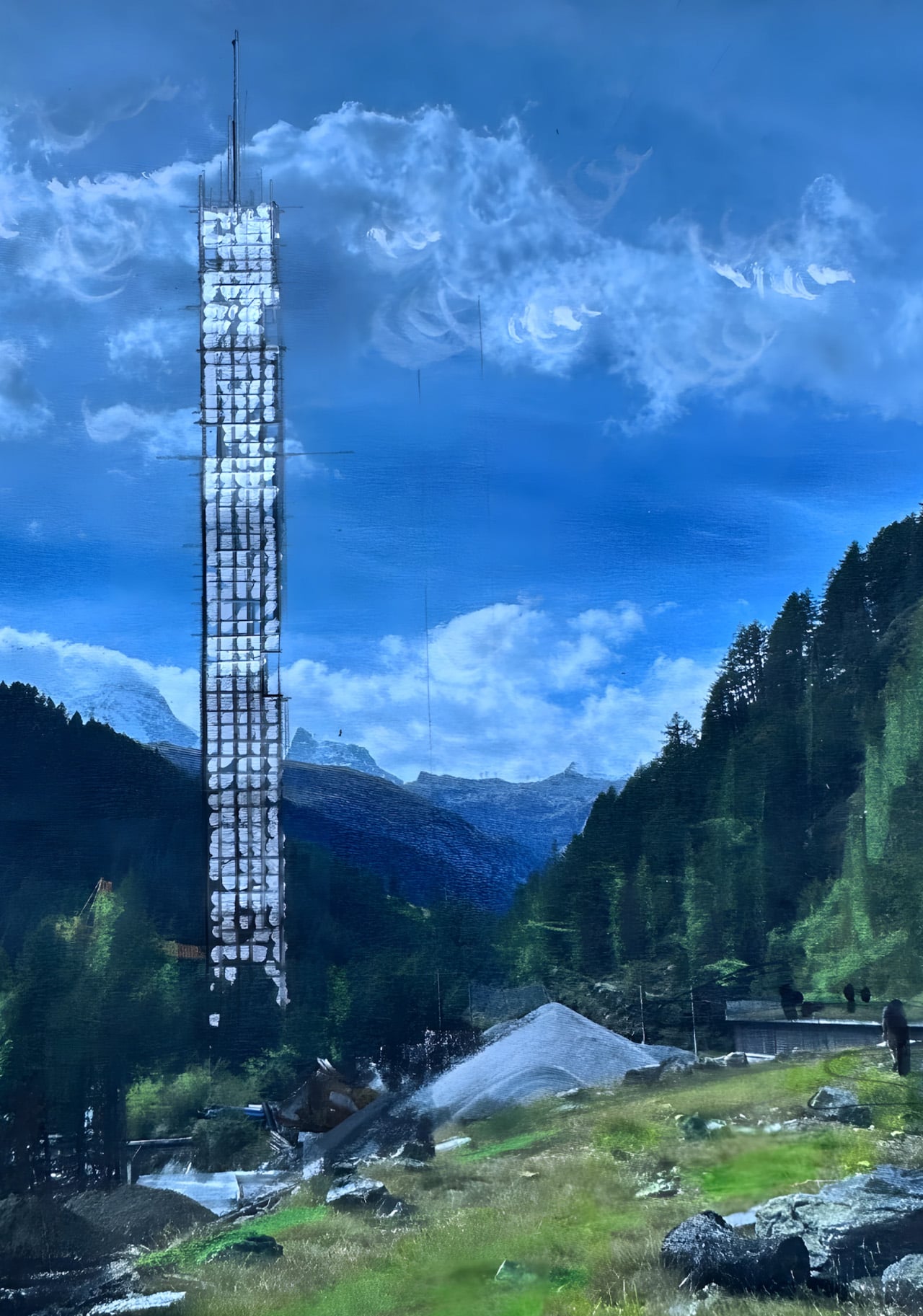
This 260-Meter Skyscraper Is Dividing Switzerland’s Most Iconic Alpine Village

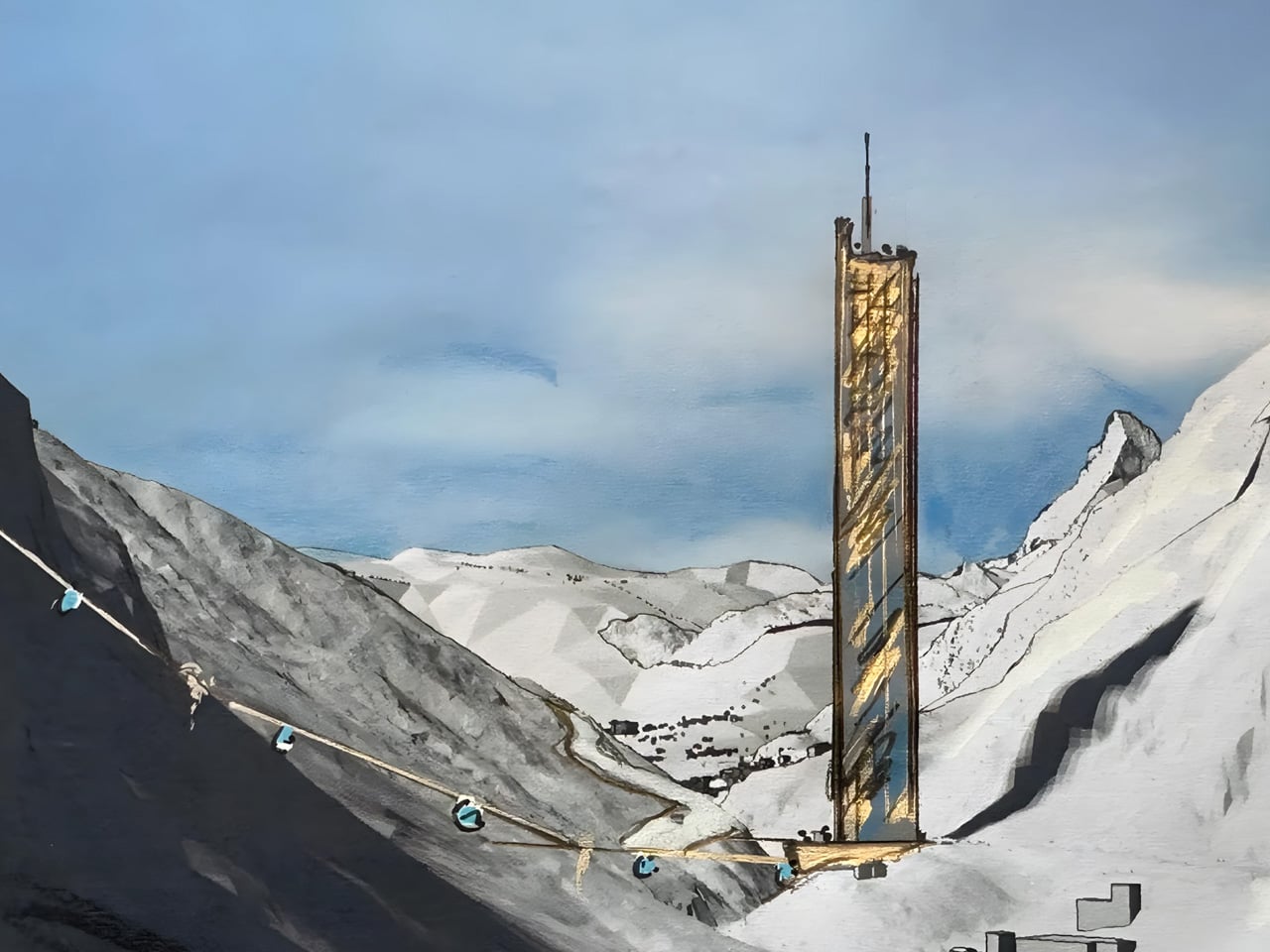
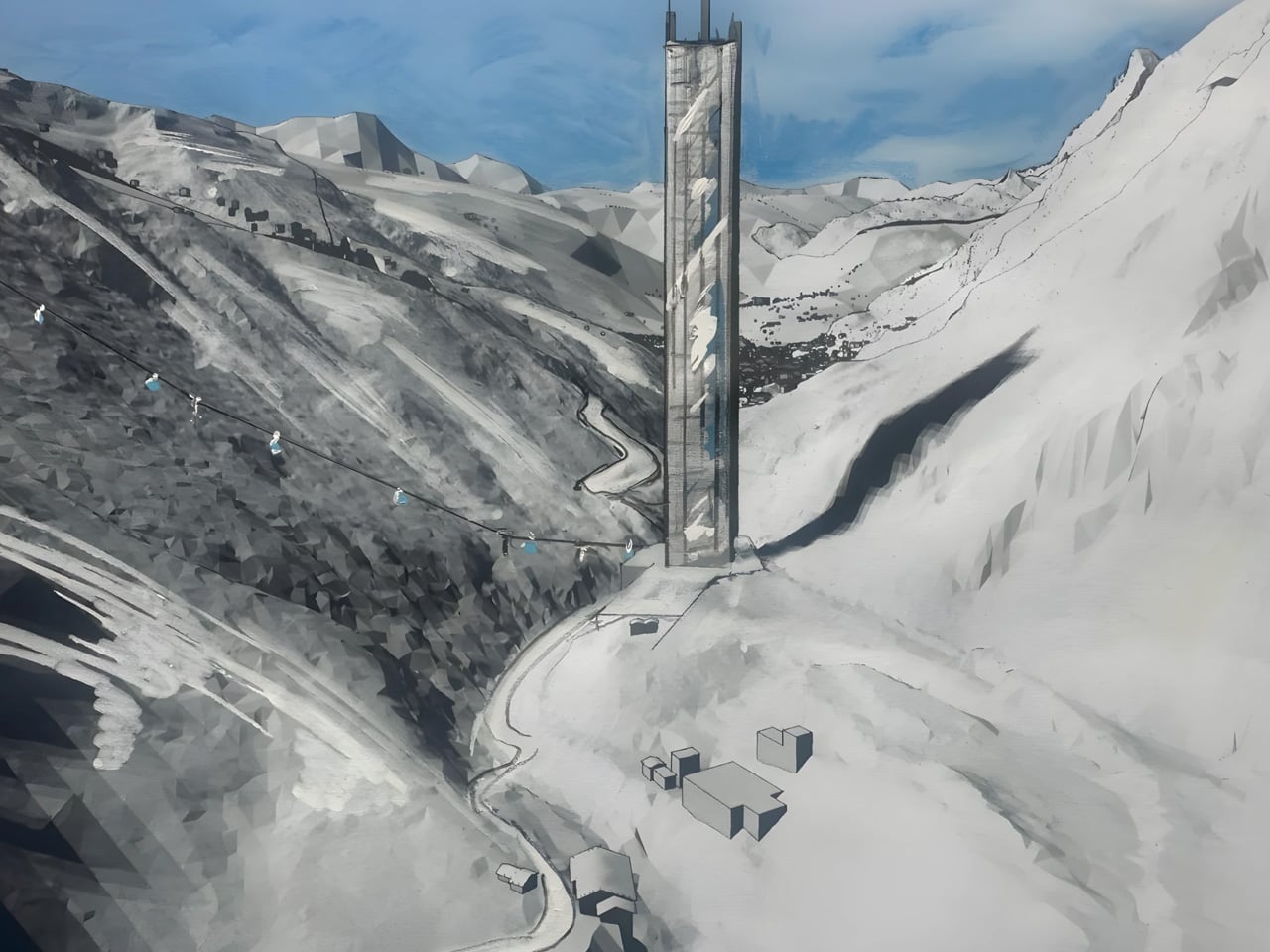
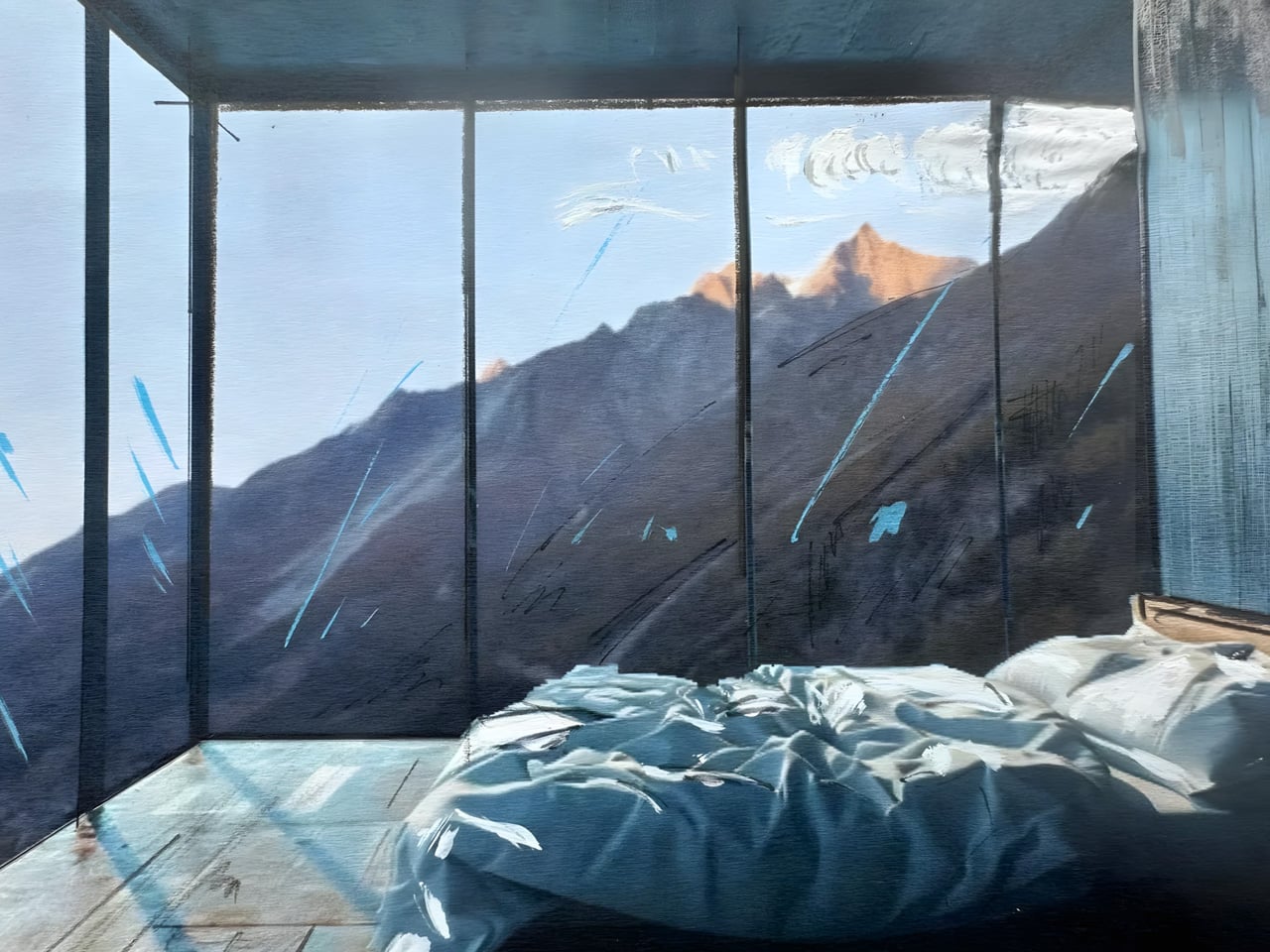
The Swiss alpine village of Zermatt has never seen anything quite like this. Heinz Julen, a local hotelier and designer, has unveiled plans for a 260-meter skyscraper that would pierce the sky just 800 meters from the village entrance. The 65-story tower, called Lina Peak, has sparked fierce debate in a community known for its car-free streets and fiercely protected mountain aesthetic. Julen presented his vision to a packed public meeting in mid-November 2025, revealing a structure that would become Switzerland’s tallest building. The tower would rise from a compact 40-by-40-meter footprint on farmland he already owns, sitting at an elevation of 1,500 meters with uninterrupted views of the iconic Matterhorn.

The project addresses a very real problem. Zermatt’s population swells from 6,000 permanent residents to over 40,000 during peak tourism seasons. Property prices have gone stratospheric, vacancy rates hover near zero, and seasonal workers struggle to find anywhere to live. Julen himself faces this challenge annually as a hotel owner, scrambling to house his staff. Employers in the tourism industry consistently struggle to provide affordable accommodation for seasonal workers, as local real estate is prohibitively expensive and vacancies are almost nonexistent.

Designer: Heinz Julen

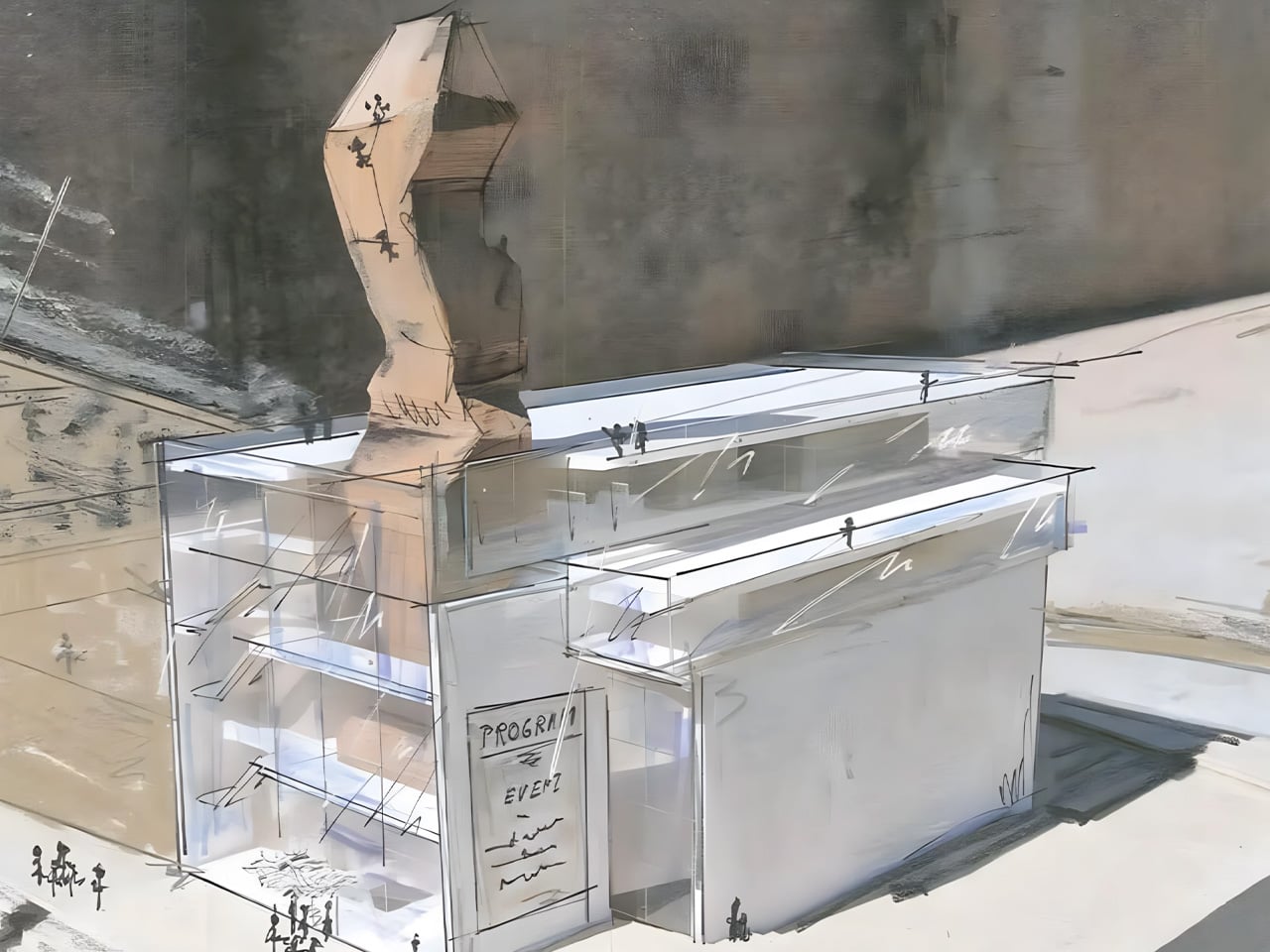
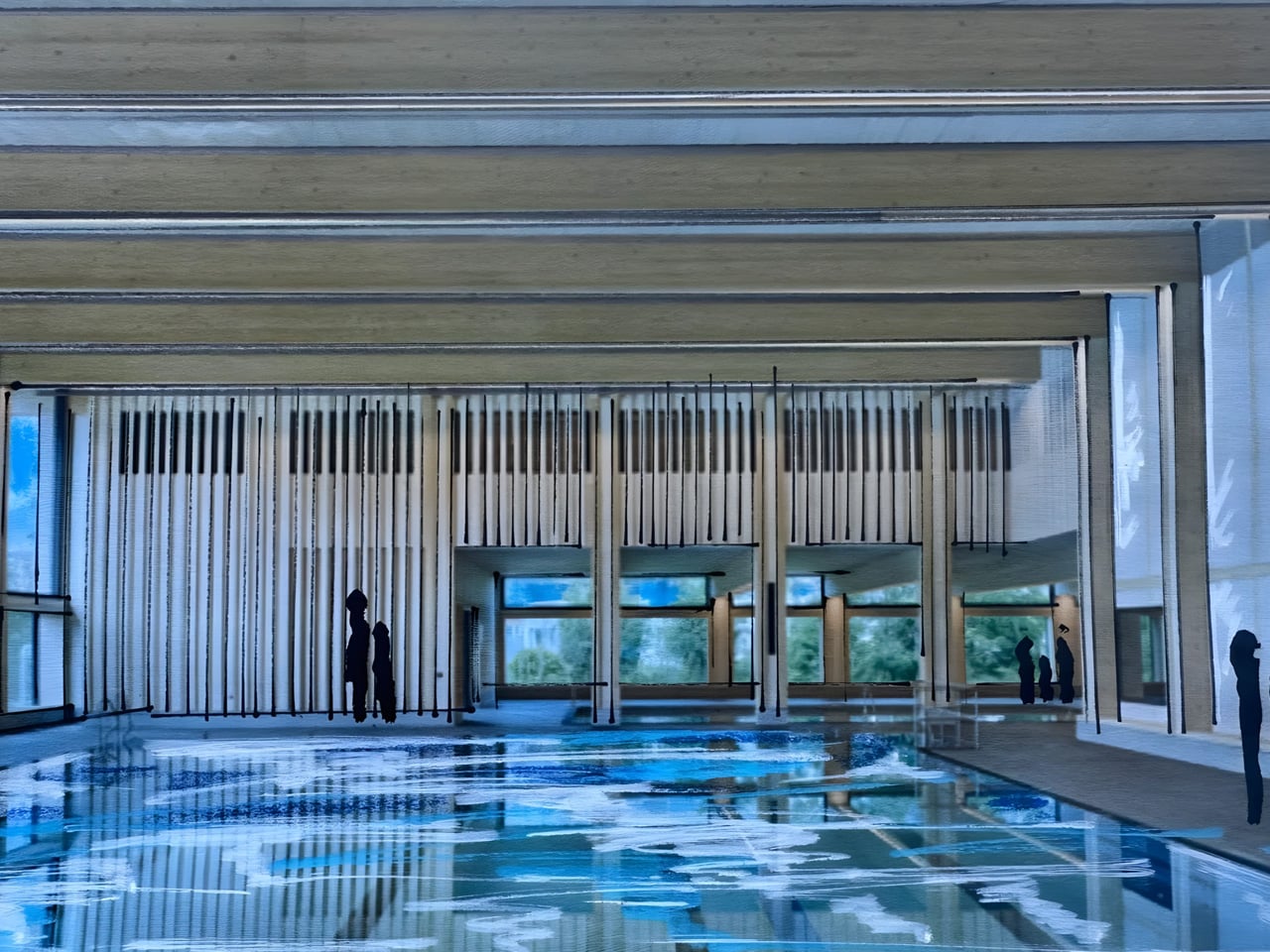
His solution thinks vertically. Floors 2 through 32 would provide affordable housing for locals and seasonal workers, while floors 33 through 62 would contain luxury apartments aimed at wealthy foreign buyers. The ground levels would pack in 1,000 parking spaces, a 2,500-seat concert hall, retail shops, restaurants, a sports center, a swimming pool, and a daycare center. The comprehensive vision transforms what could be a simple residential tower into a multi-functional hub for the entire community.

Julen frames Lina Peak as a “vertical village” that builds up rather than sprawling outward. He argues that compacted construction protects the soil and reduces environmental footprint while giving seasonal workers a fair shot at decent housing. The estimated CHF 500 million project includes price controls designed to prevent speculation, with housing costs expected to rise no faster than two percent annually. From his perspective, concentrating development in one place reduces land occupation and allows better management of local resources.

The controversy centers on whether a towering glass structure belongs in one of Europe’s most picturesque Alpine settings. Zermatt has built its reputation on preserving traditional mountain architecture, and the Matterhorn dominates every postcard. Julen insists the location sits outside direct sightlines from the village or prime viewpoints, claiming it won’t ruin the iconic views. The idea of dropping a skyscraper in the middle of such an open, scenic setting represents a stark departure from everything Zermatt has stood for architecturally.

Critics question whether luxury apartments for foreign buyers truly solve local housing problems or simply fuel further speculation and inflate property values. Past attempts at alpine skyscrapers in Switzerland have failed, including a proposed 381-meter tower at another mountain village that never materialized. Julen has long been known for unconventional designs in the area, and this proposal pushes boundaries further than ever before. Whether Lina Peak will transform Zermatt’s future or remain an ambitious sketch depends on navigating complex planning approvals and winning over a deeply divided community. The vision aims for completion by 2034, though the path forward remains anything but certain.

The post This 260-Meter Skyscraper Is Dividing Switzerland’s Most Iconic Alpine Village first appeared on Yanko Design.
Canada’s Tallest Building Takes Shape as SkyTower Reaches Historic 100-Storey Mark

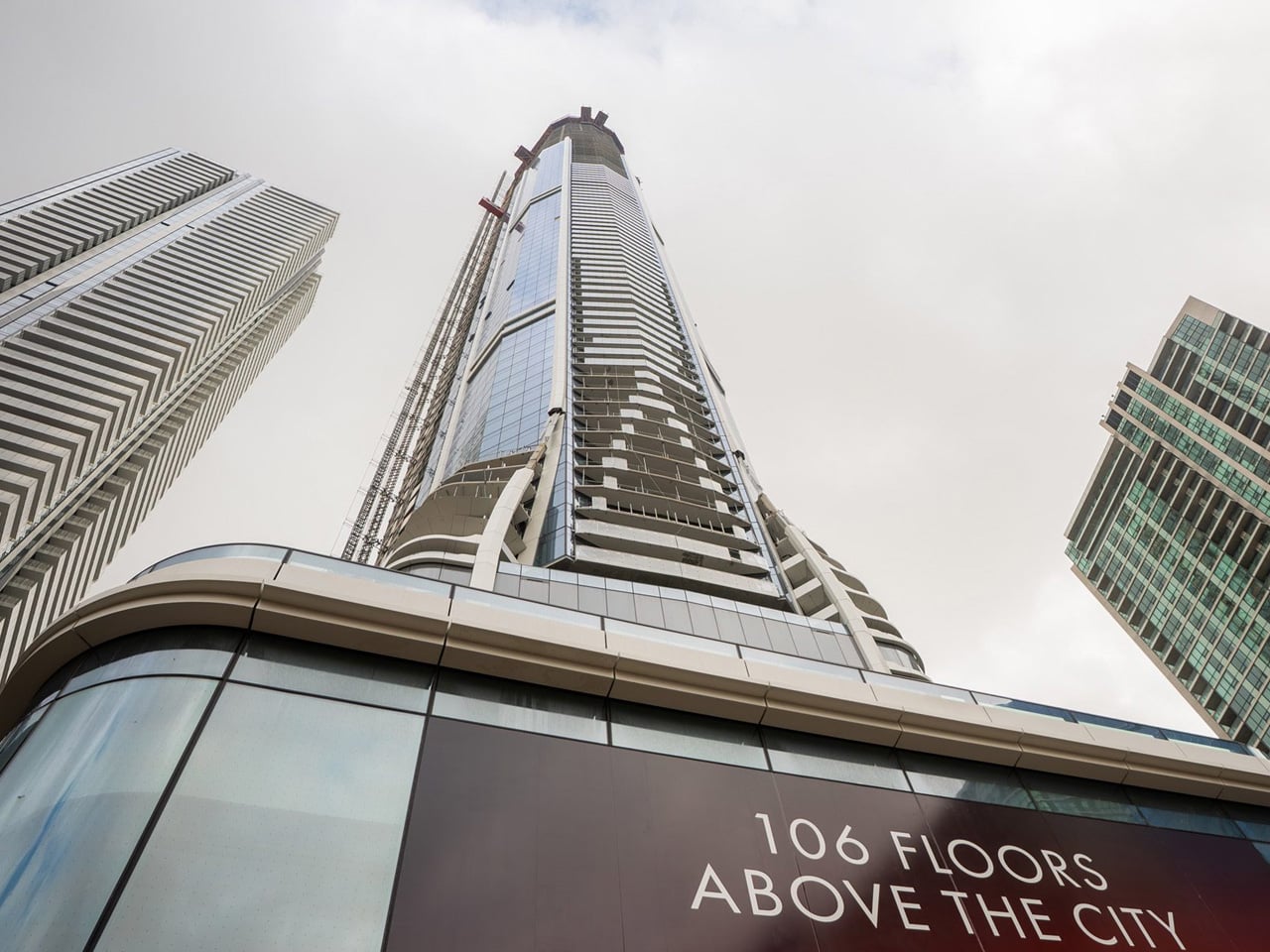
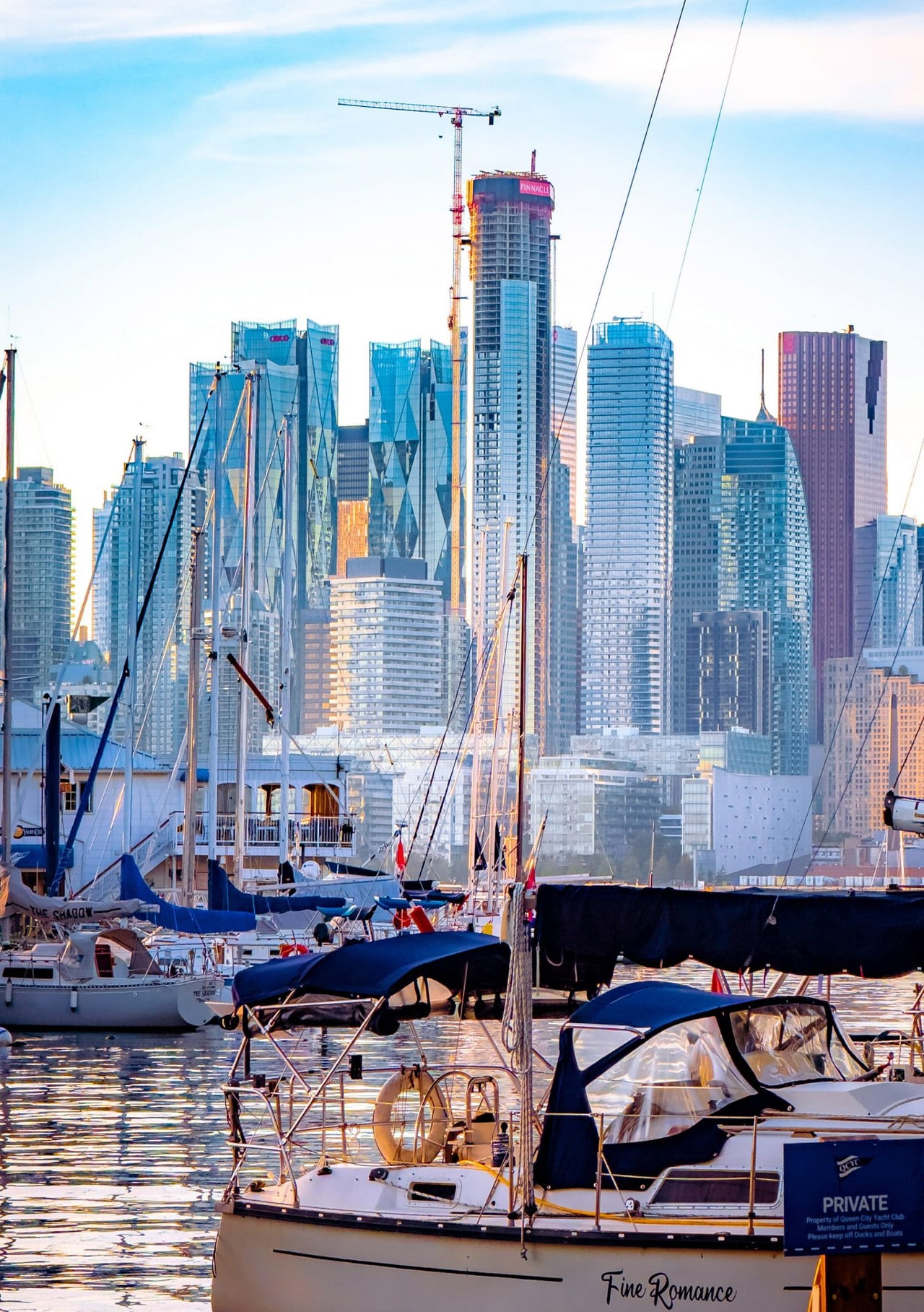
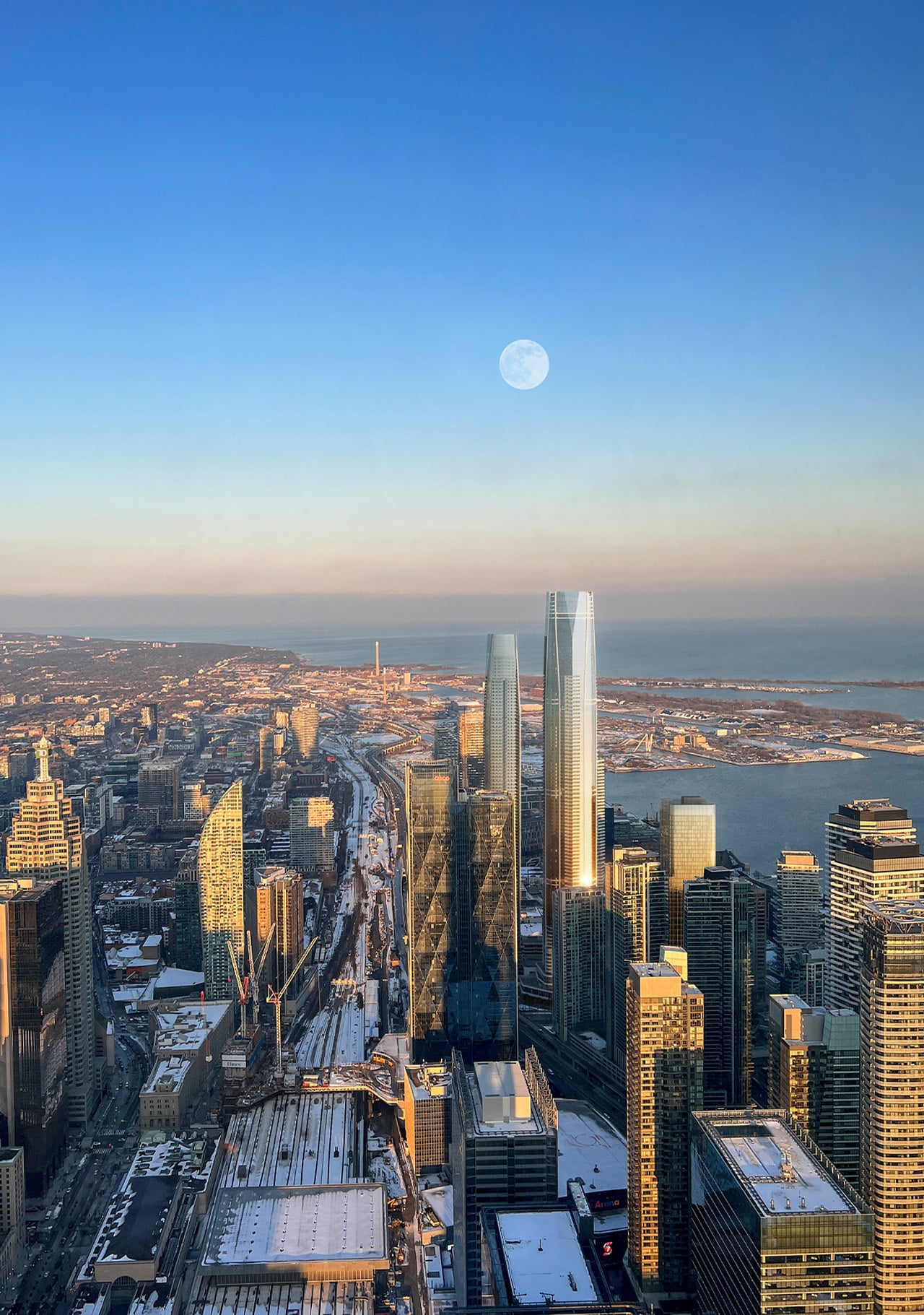
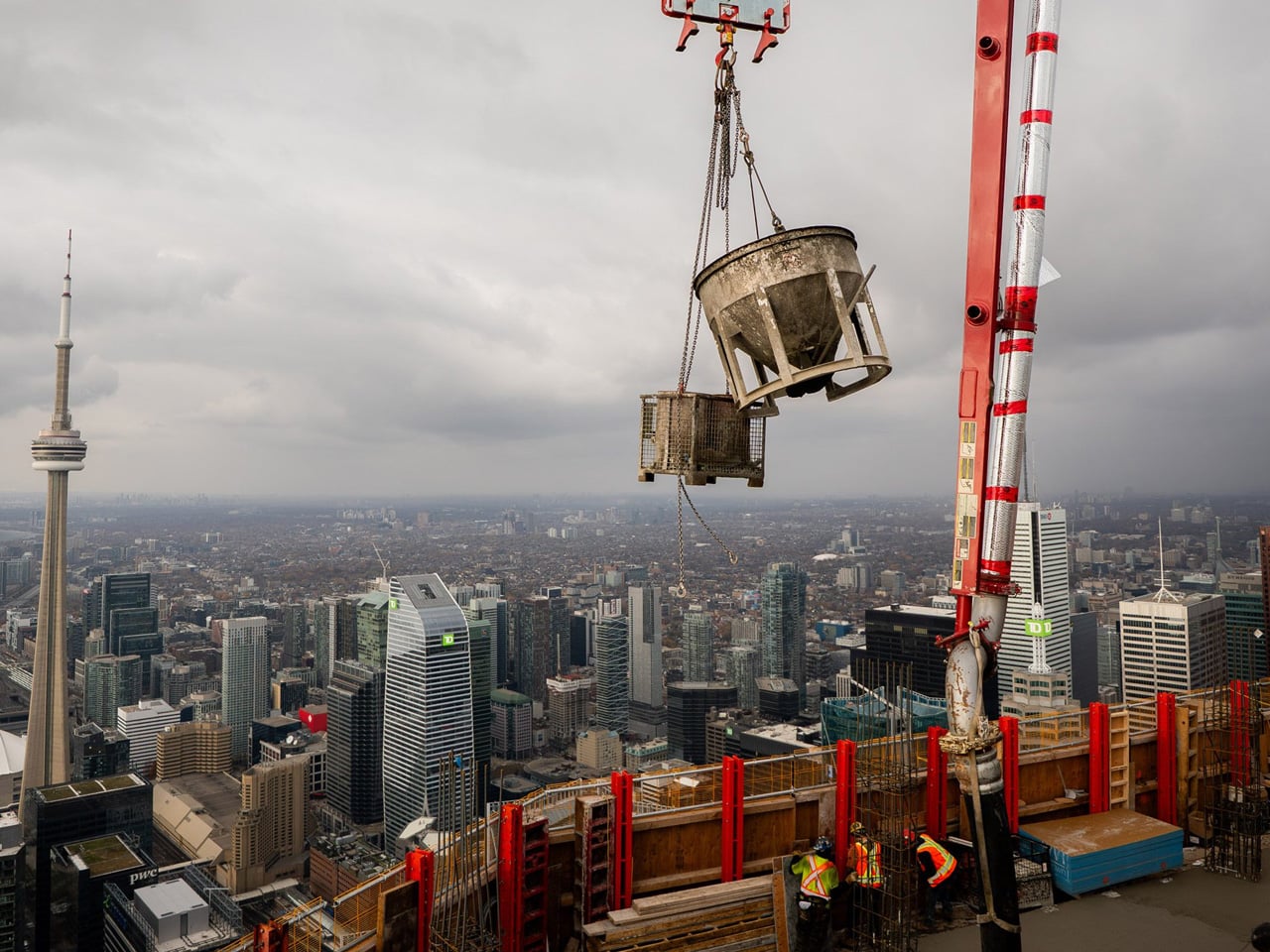
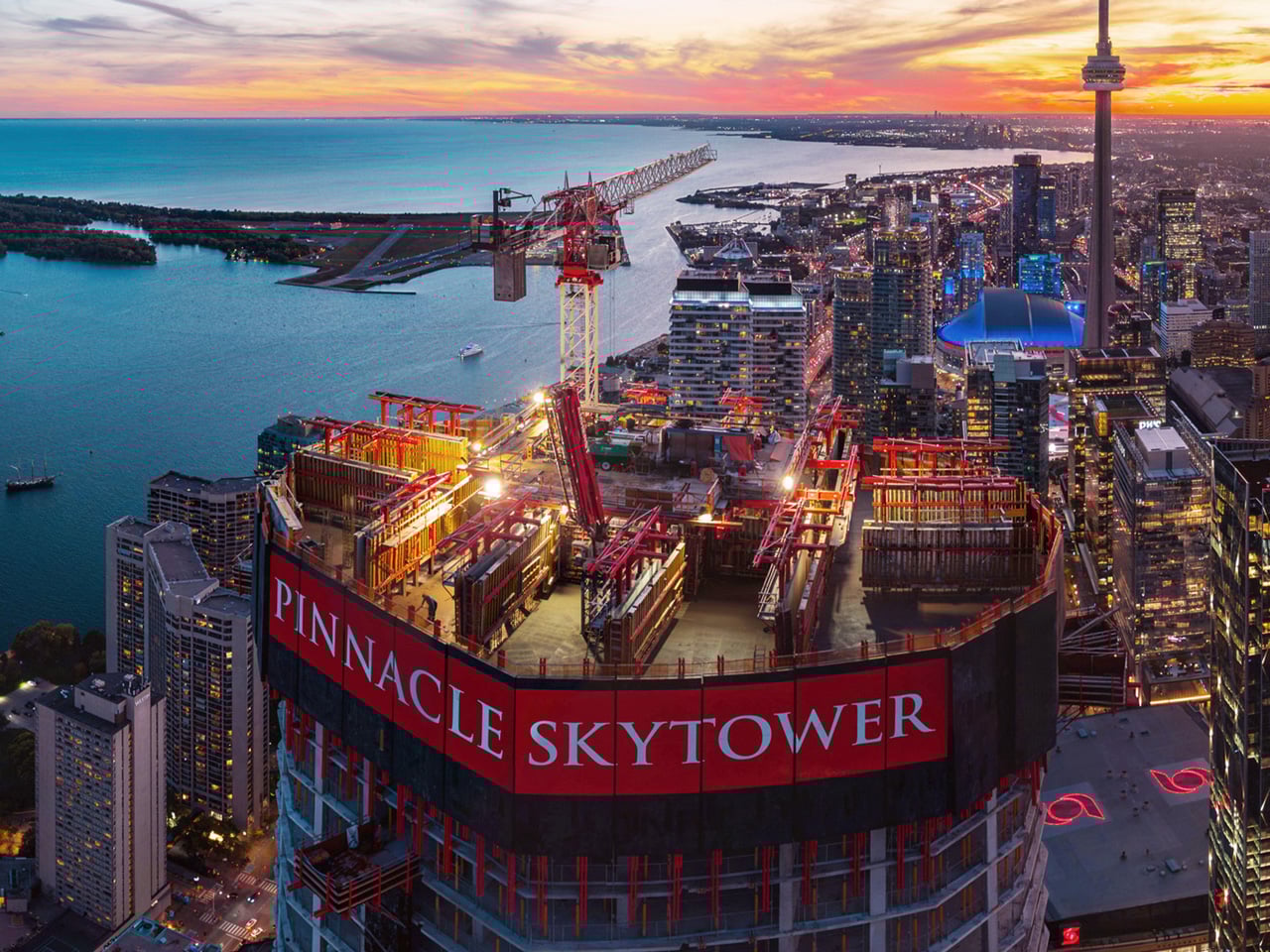
Toronto’s skyline is witnessing a transformation that will redefine Canadian architecture for generations. The Pinnacle SkyTower, designed by Hariri Pontarini Architects, has become the first building in Canada to surpass 100 storeys, marking a pivotal moment in the country’s architectural evolution. When completed in 2026, the supertall will stand at 351.85 metres across 106 floors, claiming the title of Canada’s tallest building.

David Pontarini, founding partner of the Toronto-based firm, envisioned the tower as a direct response to its prominent location at the foot of Yonge Street. The design needed to make a statement worthy of Canada’s longest street while respecting the unique waterfront context. What emerged was a 12-sided crystalline form that catches light from every angle, its glazed surfaces and tapered profile creating a sculptural presence that shifts throughout the day. The geometric complexity serves more than aesthetic ambitions. The dodecahedron shape helps the tower withstand powerful winds sweeping across Lake Ontario, while vertical fins emphasize its soaring height. A distinctive flying buttress connects the tower to its podium base, where horizontal banding creates a visual counterpoint to the vertical thrust above. The podium’s curving form mirrors the natural bend of the lakeshore, anchoring the tower in its surroundings.

Designer: Hariri Pontarini Architects

Engineering a building this tall presented extraordinary challenges. Project architect Nadine El-Gazzar and her team grappled with wind pressure, structural requirements, and the stack effect, which pulls air upward through elevator shafts at tremendous speeds. A custom-designed tuned mass damper will counteract the building’s sway, ensuring comfort for residents on the uppermost floors. These technical solutions remain invisible to observers, allowing the tower’s elegant profile to take center stage.

The mixed-use program reflects contemporary urban living. Over 950 residential units range from intimate 520-square-foot homes to expansive 2,300-square-foot residences. A 220-room Le Méridien hotel occupies the lower twelve floors, while a restaurant on the 106th floor will offer unparalleled views at the same elevation as the CN Tower’s main observation deck. Amenities include a pool, yoga studio, and fitness center, with retail connections to Toronto’s underground pedestrian network at street level.

The project’s ambition grew during development. Originally planned at 95 storeys, a variance request in March 2025 added eleven floors, pushing the design into record-breaking territory. Construction has progressed steadily since groundwork began, with the exterior cladding now substantially complete on the lower sections. The tower rises from the Pinnacle One Yonge development, which transformed the former Toronto Star site into a six-building complex that’s reshaping the city’s waterfront.

Environmental considerations shaped key infrastructure decisions. The development connects to the Enwave Deep Lake Water Cooling system, which draws frigid water from Lake Ontario’s depths for efficient climate control. Pinnacle International president Michael De Cotiis captured the significance: “We have created a landmark, one that is making history not only for Toronto, but for all of Canada.” As SkyTower climbs toward completion, it represents both technical achievement and architectural ambition, a jewel-like form that will anchor Toronto’s skyline for decades to come.

The post Canada’s Tallest Building Takes Shape as SkyTower Reaches Historic 100-Storey Mark first appeared on Yanko Design.
Dubai’s Next Giant: Sobha SkyParks Soars 450 Meters Into The Sky

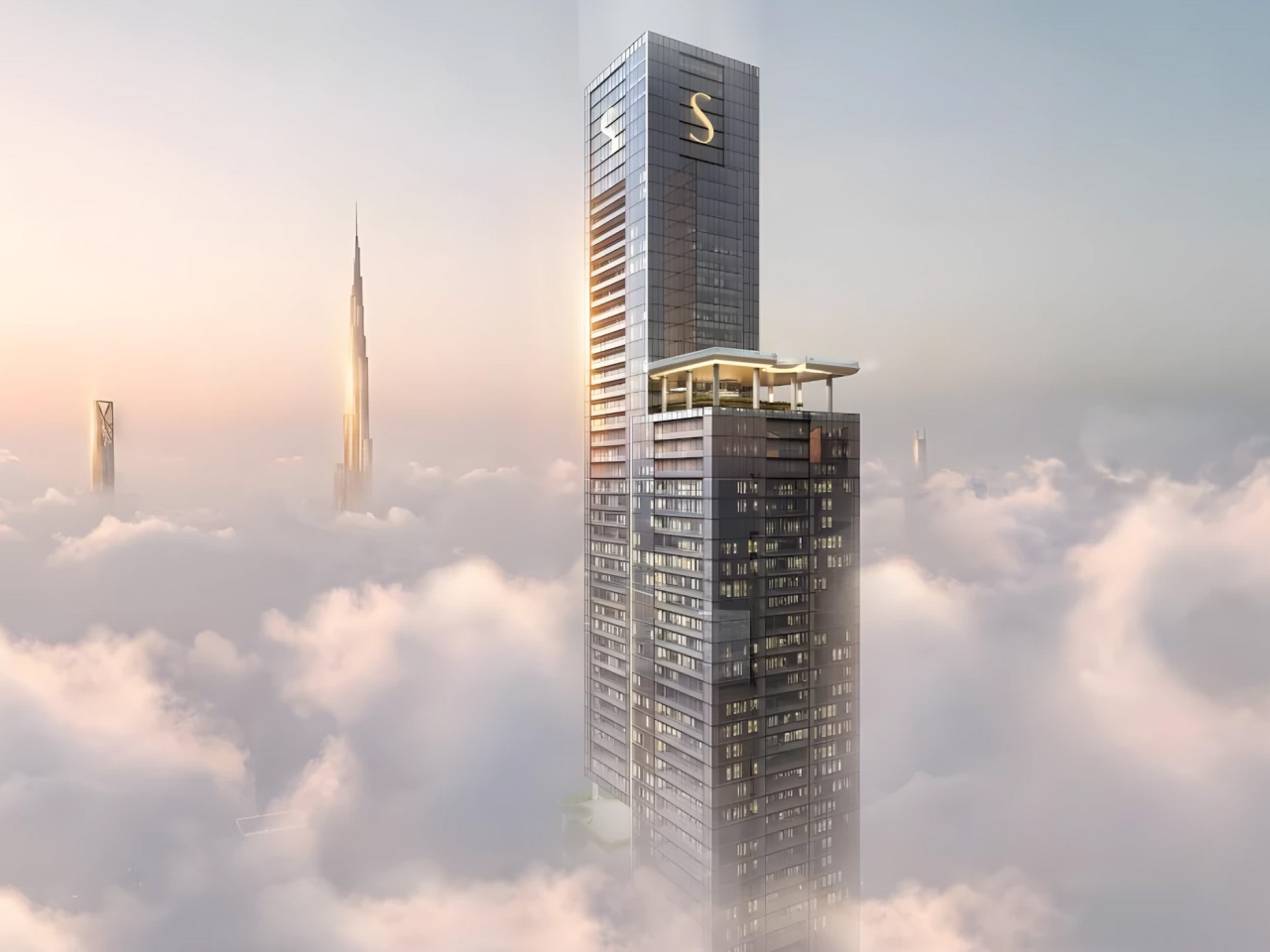
Dubai’s getting another jaw-dropping addition to its skyline, and this one’s a real showstopper. Sobha Realty just unveiled Sobha SkyParks, a massive 109-story tower that’ll stretch 450 meters into the sky. ‌‪‬ When it’s done, this giant will rank among the UAE’s five tallest buildings—quite a feat for any developer. The project comprises 684 luxury apartments across 109 floors, each offering incredible views of the city sprawling below. ‌‪‬ For Sobha Realty, this isn’t just another project—it’s their tallest development yet, pushing them into entirely new territory in Dubai’s competitive luxury market.

The tower’s landing on Sheikh Zayed Road in Business Bay which is about as prime as real estate gets in Dubai. This stretch of road has become synonymous with luxury living, and Sobha SkyParks fits right into that narrative. ‌‪‬ Business Bay’s infrastructure is already well-established, and being so close to Downtown Dubai doesn’t hurt either. The location practically sells itself—residents get easy access to business districts, shopping, and transport links throughout the city. ‌‪‬ Sheikh Zayed Road has this way of making every building along it feel important, and Sobha SkyParks certainly won’t be an exception to that rule.

Designer: Sobha Realty

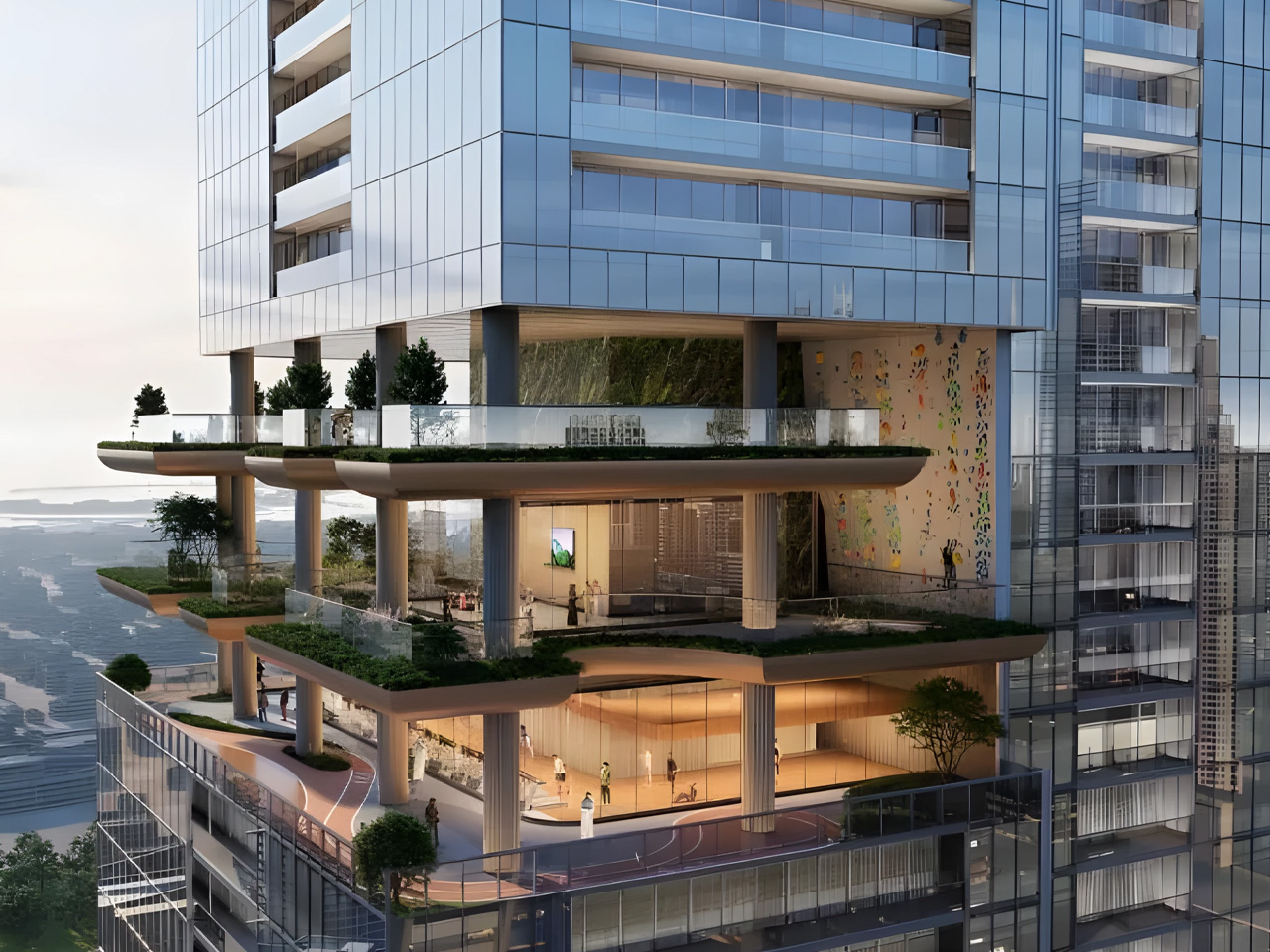
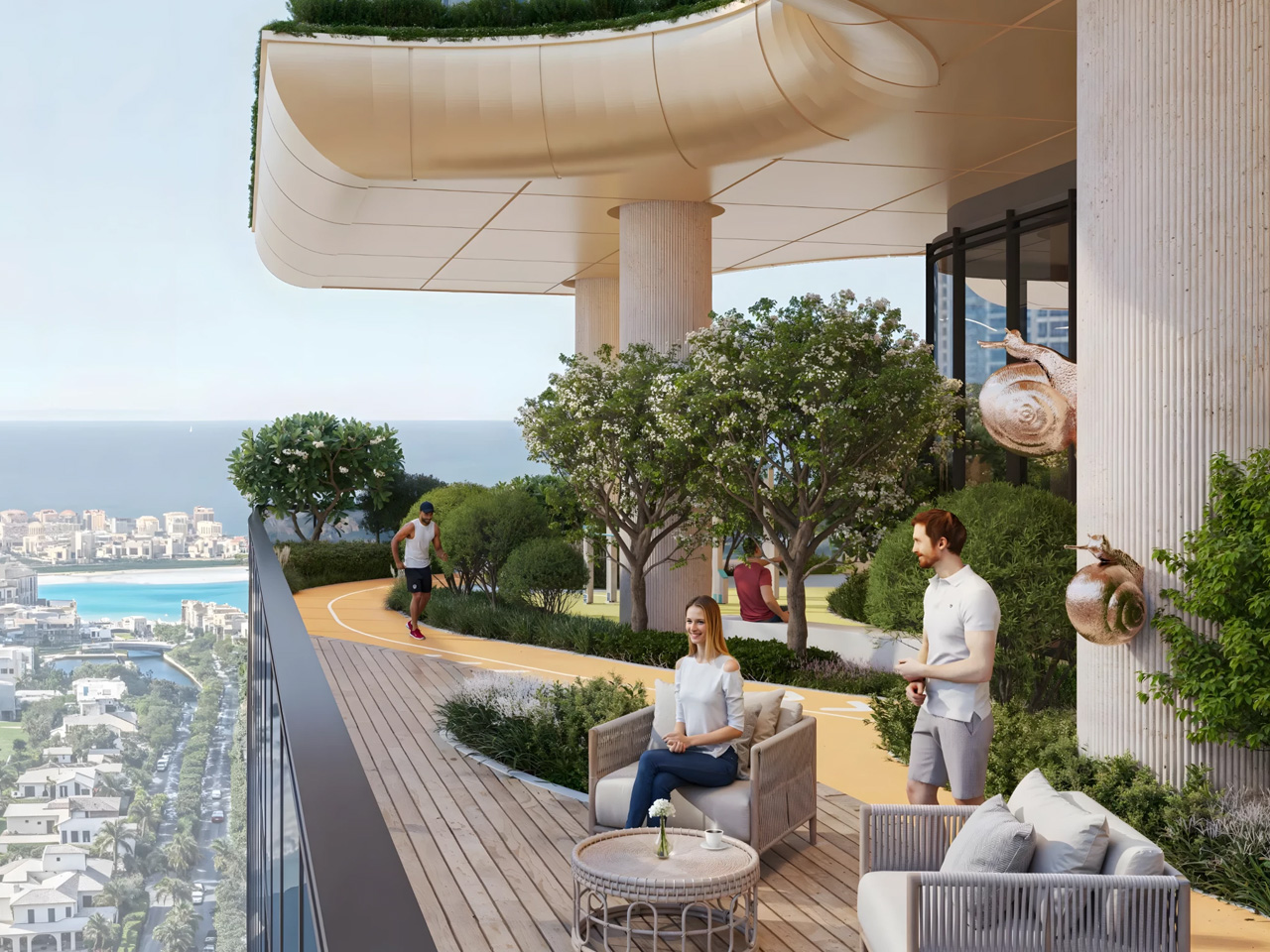
Here’s where things get interesting, though. Instead of just building another tall glass tower, Sobha’s doing something different with four themed sky gardens scattered throughout the building’s height. ‌‪‬ Think about it—actual parks floating hundreds of meters above the street. It’s not just a cool concept; it tackles that age-old problem of urban living where green space feels like a luxury. These aren’t tiny balcony gardens either; we’re talking about proper outdoor spaces that bring nature up to where people actually live. The whole multilevel garden approach is getting attention from architecture circles as a fresh take on sustainable urban development. ‌‪‬

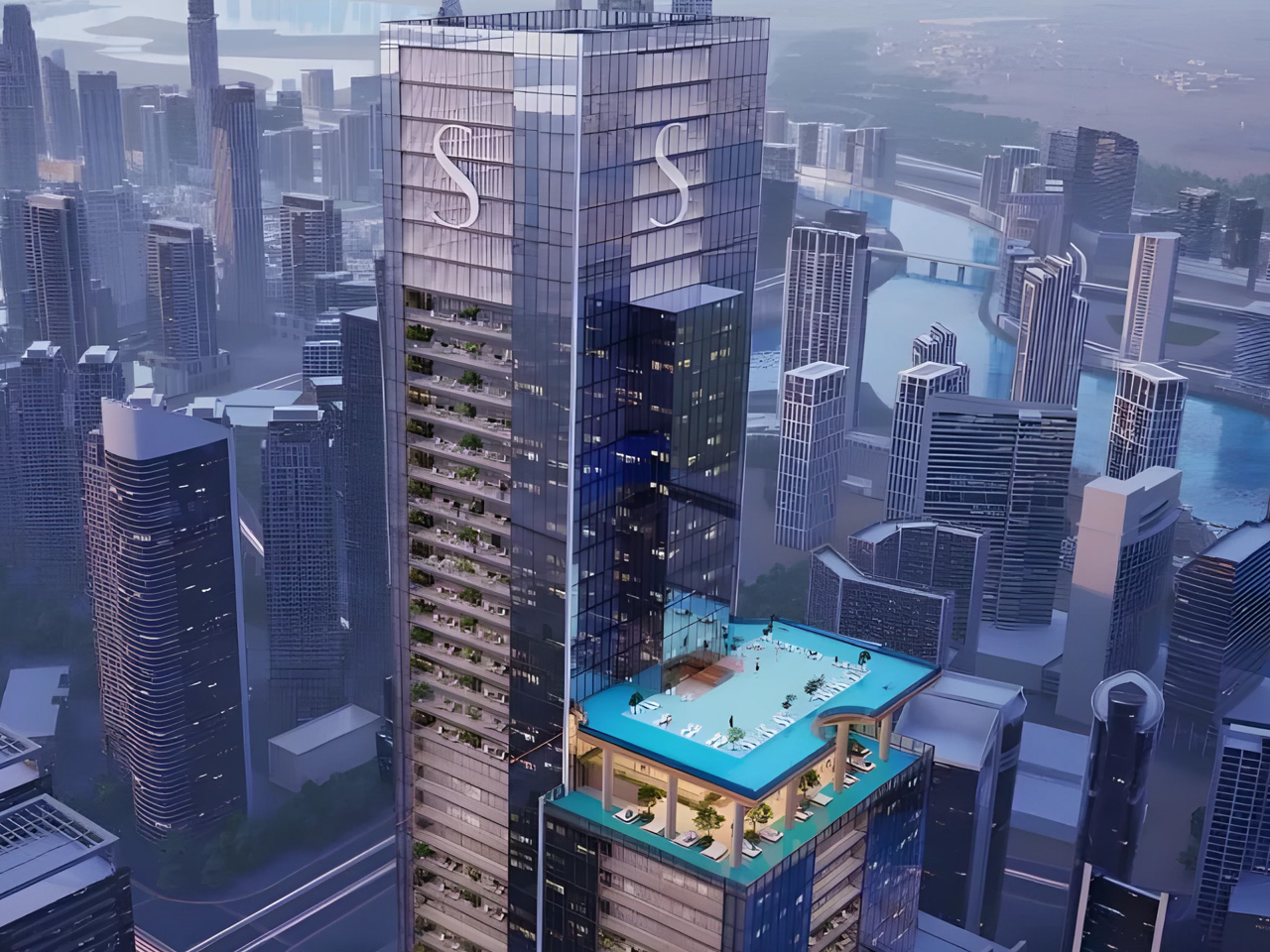
The building’s crown jewel has to be the sky-high infinity pool. Picture swimming laps while looking out over all of Dubai—it’s the kind of amenity that sounds almost too good to be true. ‌‪‬ Francis Alfred from Sobha Realty puts it well, saying they’re trying to “blend art, engineering, and lifestyle into a single masterpiece.” ‌‪‬ That’s not just marketing speak, either. When you combine the elevated parks with amenities like that infinity pool, you’re looking at something that goes way beyond typical luxury housing. It’s more like they’re building a vertical neighborhood where everything you need is stacked up instead of spread out.

The real estate crowd is already buzzing about what this could mean for Dubai’s market. ‌‪‬ Sobha’s built a solid reputation over the years, so when they go big like this, people pay attention. The project’s been making rounds on social media and industry forums, with everyone from investors to architecture enthusiasts weighing in on what it means for the city’s future. ‌‪‬ Dubai keeps attracting international buyers looking for something special, and Sobha SkyParks seems designed exactly for that market. It’s not just about having a nice apartment anymore—people want experiences, views, and bragging rights that come with living somewhere truly unique.

Construction’s underway, and this project represents something bigger for Sobha Realty. ‌‪‬ They’re clearly making a statement about where they want to position themselves in Dubai’s ultra-luxury segment. By the time this tower’s finished, it won’t just be another address—it’ll be a landmark that changes how people think about living vertically in one of the world’s most ambitious cities. Dubai’s always been about pushing boundaries, and Sobha SkyParks fits perfectly into that story. The combination of record-breaking height, innovative design, and those sky-high amenities should set new expectations for what luxury living can look like when you’re willing to think outside the box.

The post Dubai’s Next Giant: Sobha SkyParks Soars 450 Meters Into The Sky first appeared on Yanko Design.
The World’s Largest Building Is All Set To Be Built In Saudi Arabia By 2030

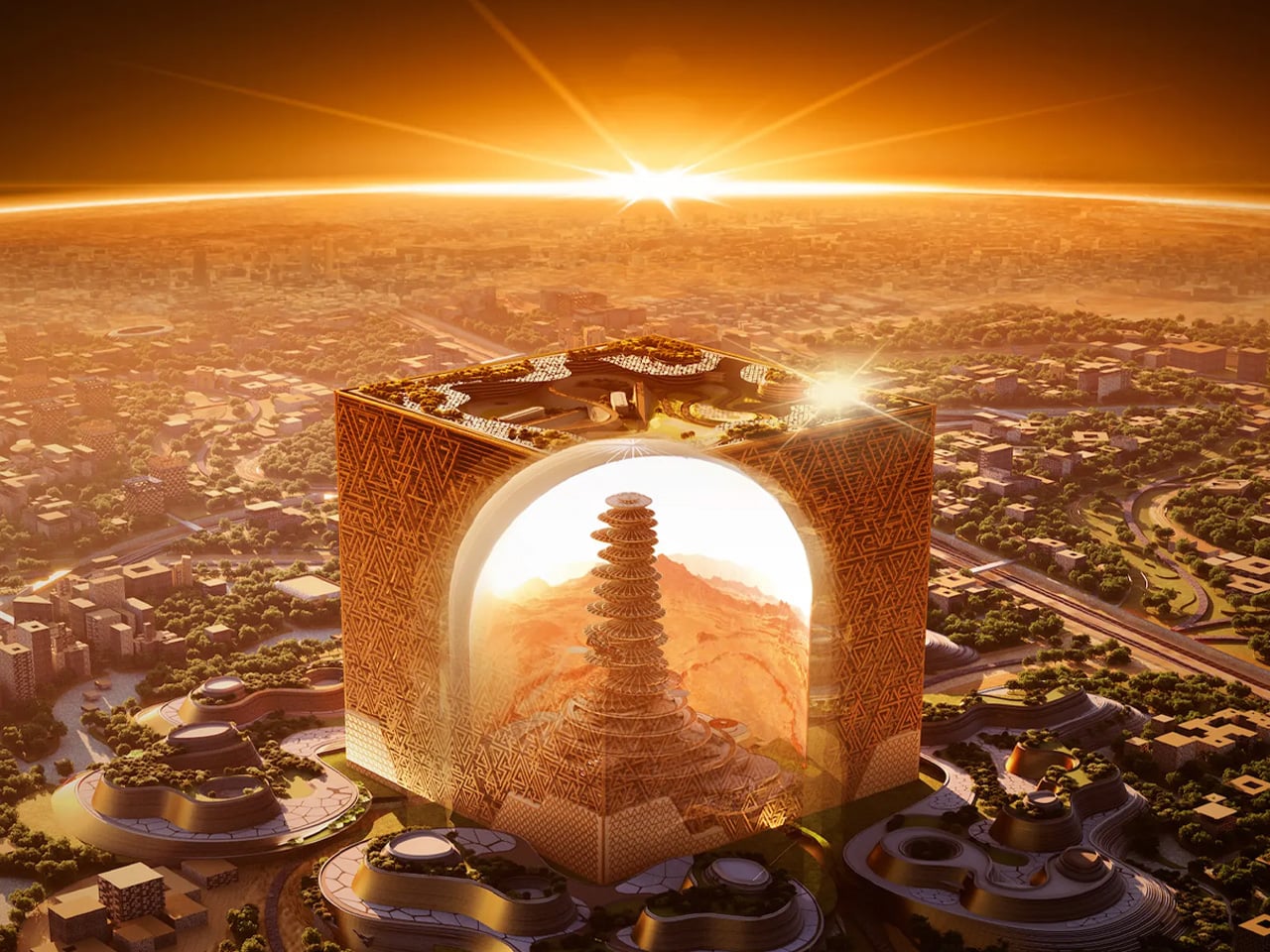
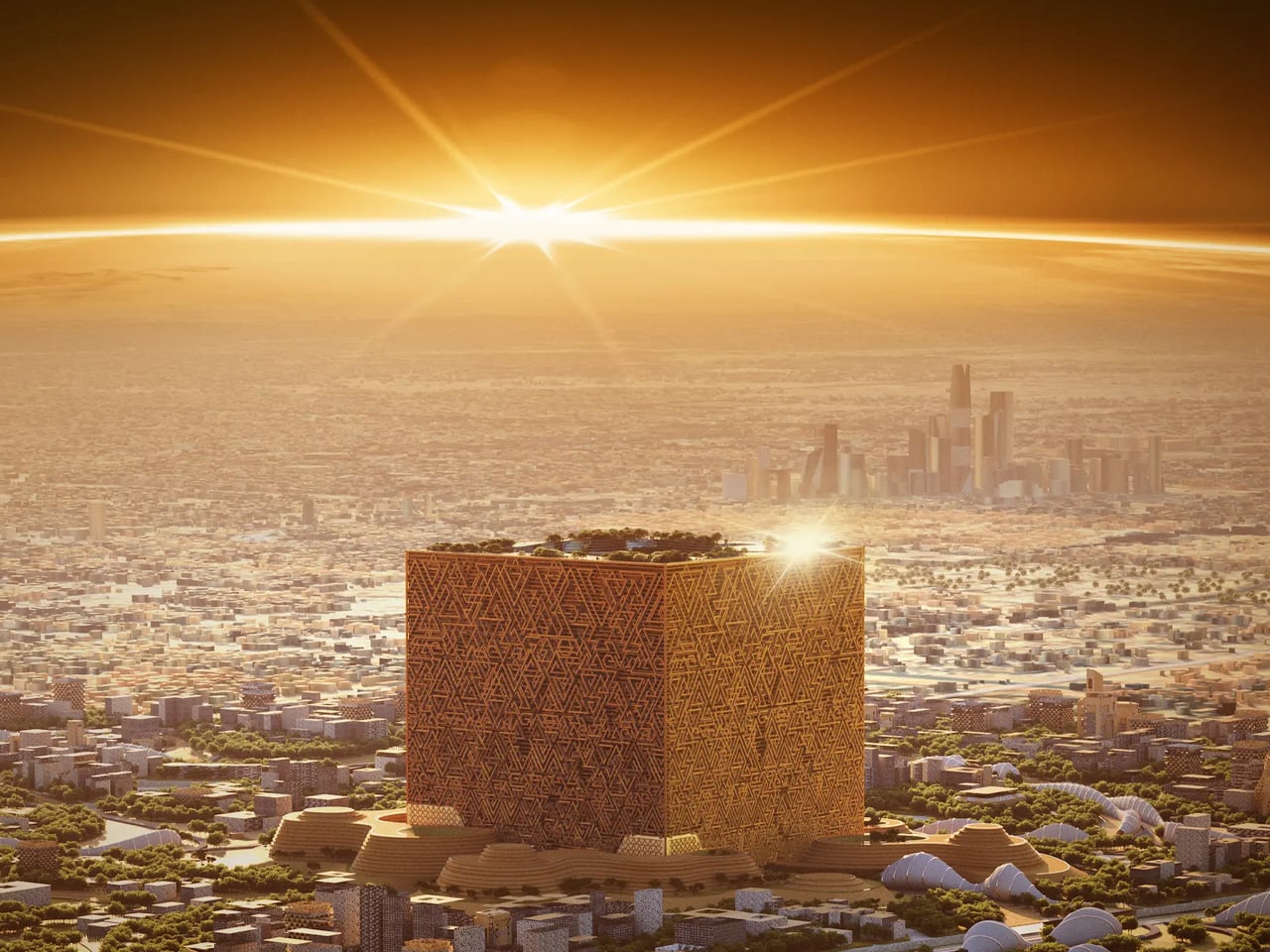
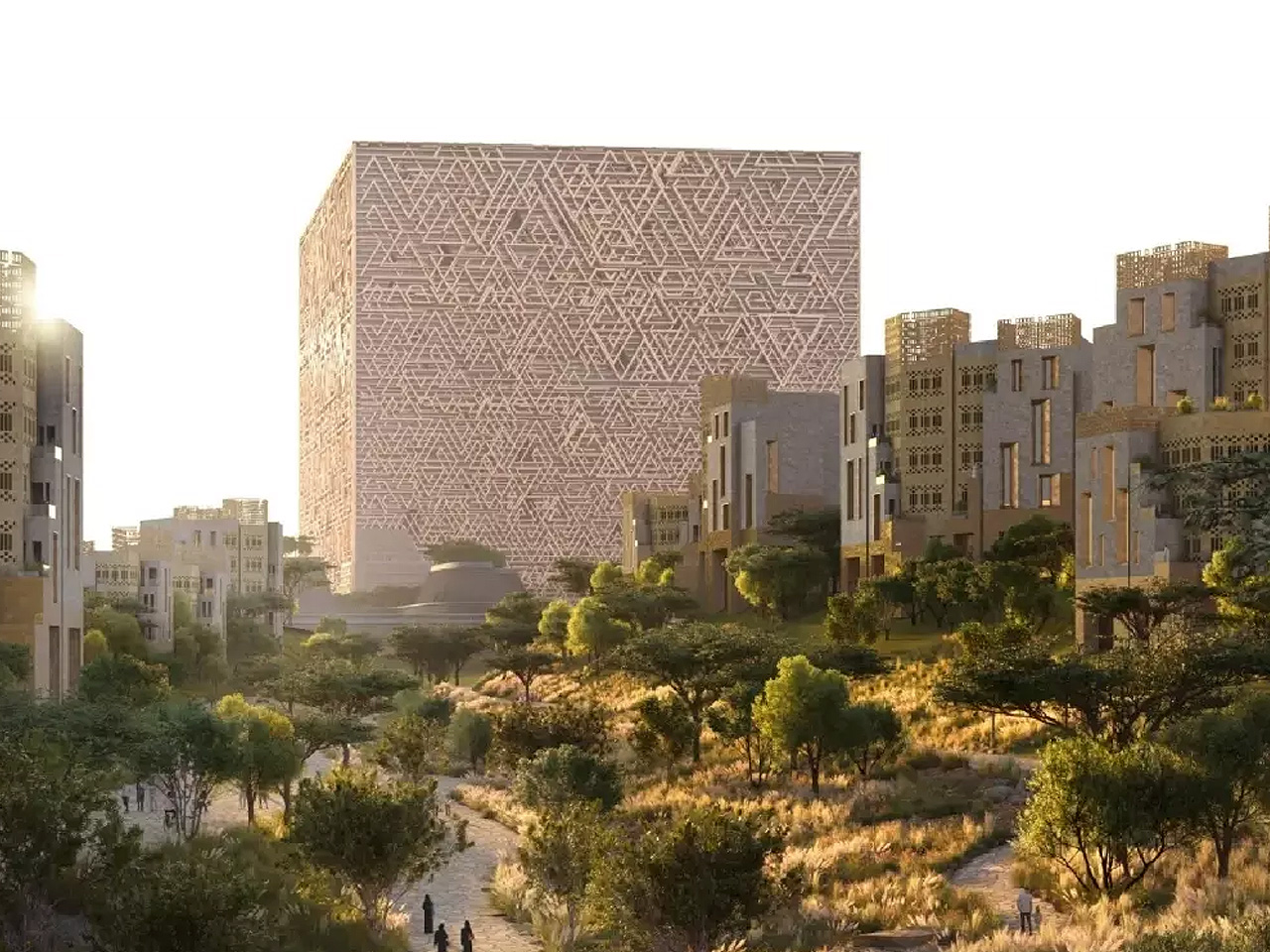
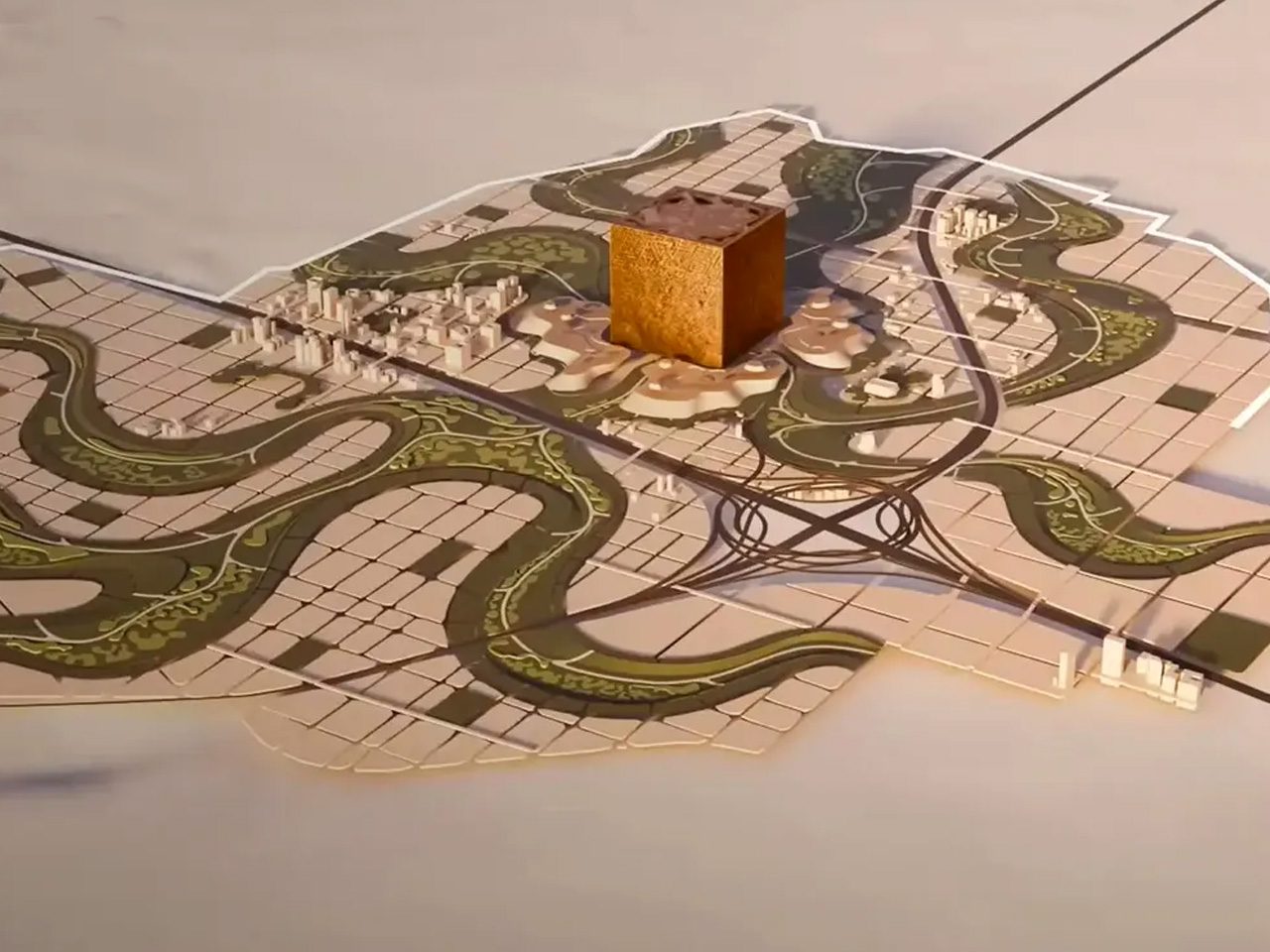
Saudi Arabia is currently constructing a spectacular skyscraper called the Mukaab! The impressive build will adopt the form of a tall cube. It will stand tall at a height of 1,312 feet in the capital of Riyadh. It will also be as long and wide as it is tall and could fit around 20 Empire State Buildings inside of it, according to the Saudi Government’s Public Investment Fund. Bloomberg says it will be the world’s largest building! How incredible!

Designer: AtkinsRéalis & New Murabba

The exterior will be decorative and intricate, drawing inspiration from traditional Islamic architecture. The interior will occupy a floor space of 2 million square meters. The center will include a massive twisting tower, imagine a large box with another large twisting structure within it. It will also feature a holographic system that will showcase underwater and otherworldly scenes within the cuboidal structure. Currently, there aren’t too many details about this feature, but it does sound quite exciting.

“New Murabba will also construct a temporary bridge that will serve as a critical enabler, connecting the construction site by crossing King Khalid Road,” said developer New Murabba’s press release. “This connection will facilitate ongoing development and pave the way for the initiation of Mukaab piling in the coming months. The bridge is expected to reduce approximately 800,000 truck movements on public roads for earthworks alone, showcasing a positive impact on the surrounding infrastructure. With around 900 workers on-site daily, work is advancing rapidly, bringing the destination closer.”

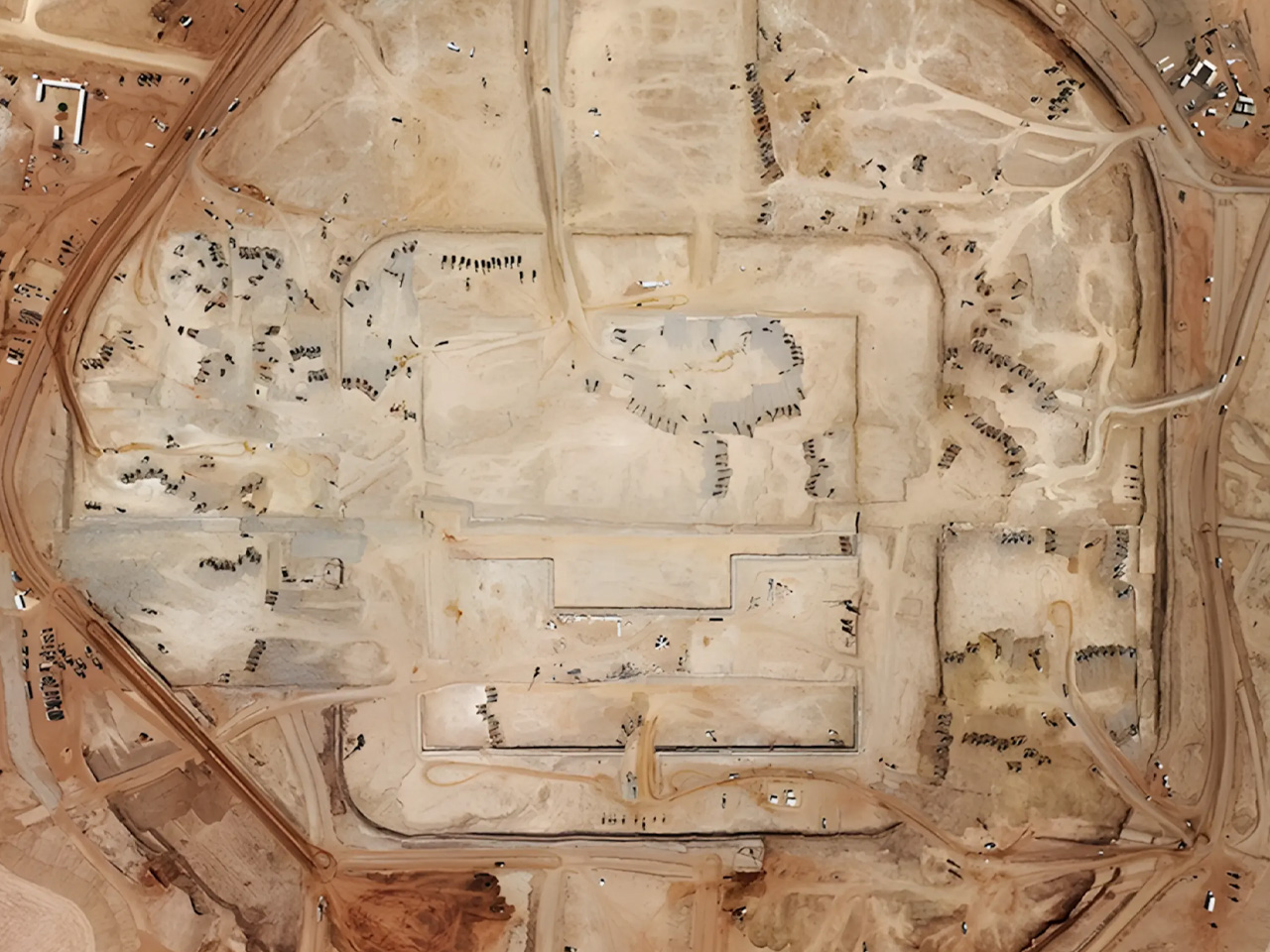
The excavation work for the Mukaab is almost over, and nearly 350 million cubic feet of earth have been removed. This work needed the usage of 250 excavators every day, and around 400 pieces of equipment to handle all the soil. The construction workers devoted nearly 3 million hours of labor. A bridge is also being built to ensure smooth operation and processes. The Mukaab will complete construction in 2030.

The post The World’s Largest Building Is All Set To Be Built In Saudi Arabia By 2030 first appeared on Yanko Design.
This Conceptual Skyscraper Was Optimized By AI To Increase Biodiversity & Ecological Thriving

Dubbed the Eden Tower, this conceptual structure was created by the design studio Oxman. Oxman has come up with a new system called “ecological programming” which is designed to enhance and promote green architecture. The studio utilized the system to create this impressive skyscraper with several planted platforms. The plan was developed in the studio’s newly opened Foster + Partners-designed lab in Manhattan. The plans and models of the skyscraper showcase a bunch of circular forms stacked on top of each other, with a central element offering support to some of the levels, while other levels are suspended from different columns.
Designer: Oxman 

“We are figuring out how to create master plans, building layouts, and building forms that increase biodiversity and resilience and ecological thriving,” said Oxman. “And we have devised a new approach for this called ecological programming.”

Oxman founder Neri Oxman states that the skyscraper is a demonstration of the “ecological programming” technique. This technique employs computation to build layouts that take into consideration different factors such as wind, sunlight, and contamination. By doing so, they create structures that look after the ecosystem and do not adversely affect the environment, and the cities they’re located in. The buildings elevate biodiversity and even improve the urban heat. This is quite an exciting feat since AI was utilized to design “building forms that increase biodiversity”.

The different levels of the skyscraper will feature diverse landscapes and topography. Few of the levels will be open air, while others will be enclosed glass spaces created for human habitation. At the moment, Oxman is putting together and collecting data that will be used in these programs. This data is collected via “capsules” in the on-site wet lab, and they were created with the goal of increasing biodiversity.

“The capsules provide us with physical data that informs a computational design process at the center of Eden. Now, with conventional architectures throughout history, we’ve become very good at designing for humans, because we can talk to humans. We can understand what they need. Nonhumans are not like that. They don’t speak the same language as us, so we need to develop a data-driven approach that allows us to figure out the parameters that they need to thrive if we want to effectively design for them,” said Oxman studio head of ecology Nicolas Lee.

The post This Conceptual Skyscraper Was Optimized By AI To Increase Biodiversity & Ecological Thriving first appeared on Yanko Design.