
The hidden features every Google Maps user should know about
Discover these overlooked Google Maps features that help you plan your route and cut distractions so you can arrive at your destination on time.

Less familiar Excel functions can handle everyday spreadsheet tasks that might otherwise require manual checks or extra calculations. CONVERT, for example, changes 174 miles to about 280 kilometers using the unit codes “mi” and “km”; those codes are case sensitive. The example comes from a freight worksheet demonstrated by My Online Training Hub. Use FORMULATEXT […]
The post Add 255-Character Notes Inside Numeric Formulas with Excel N appeared first on Geeky Gadgets.
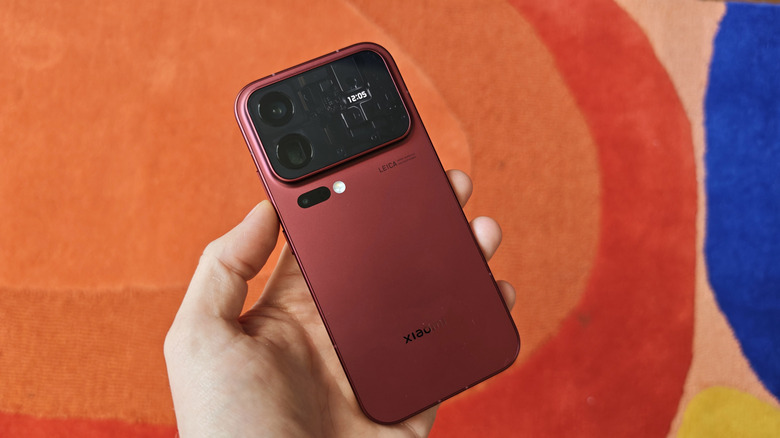
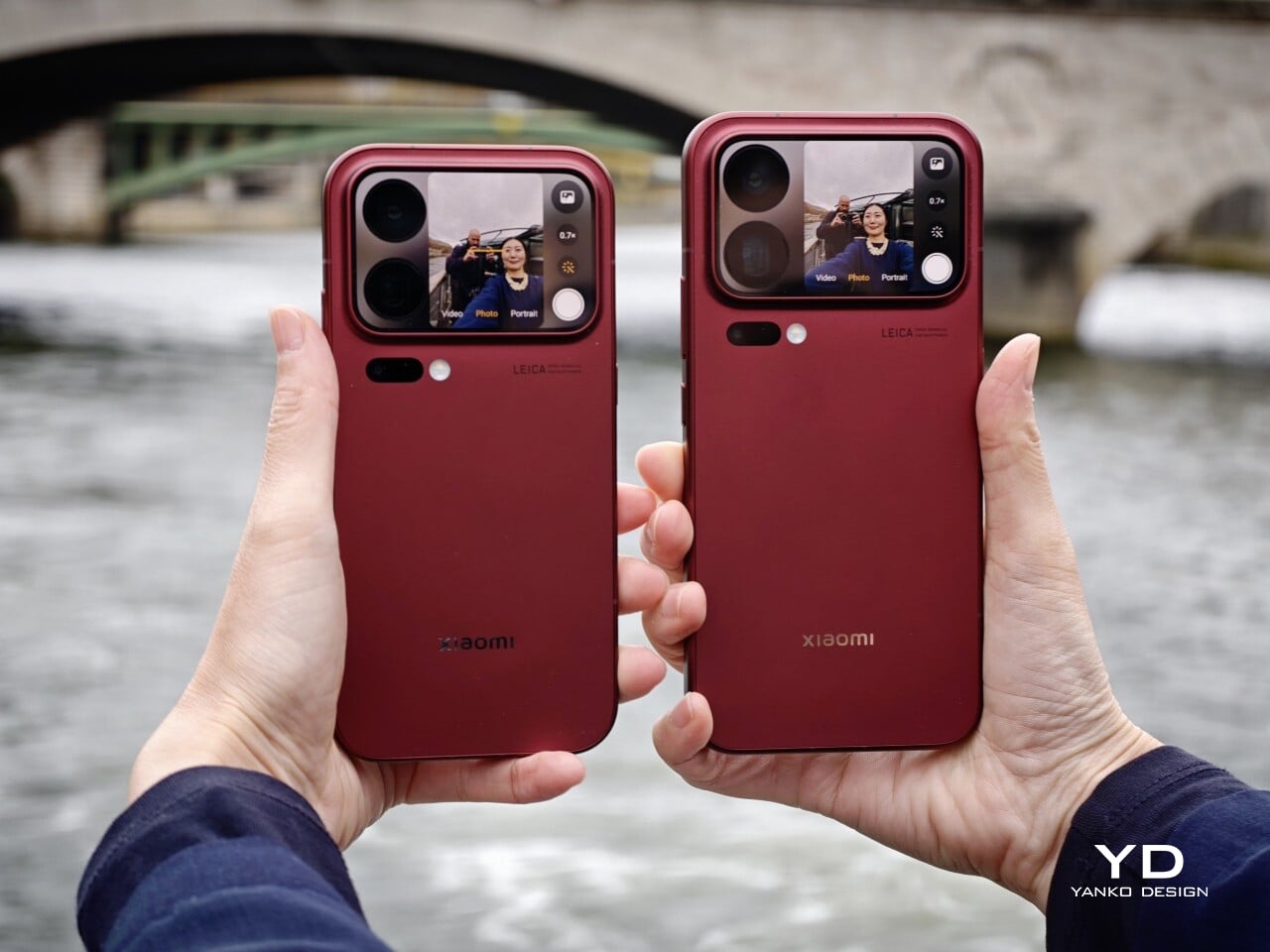
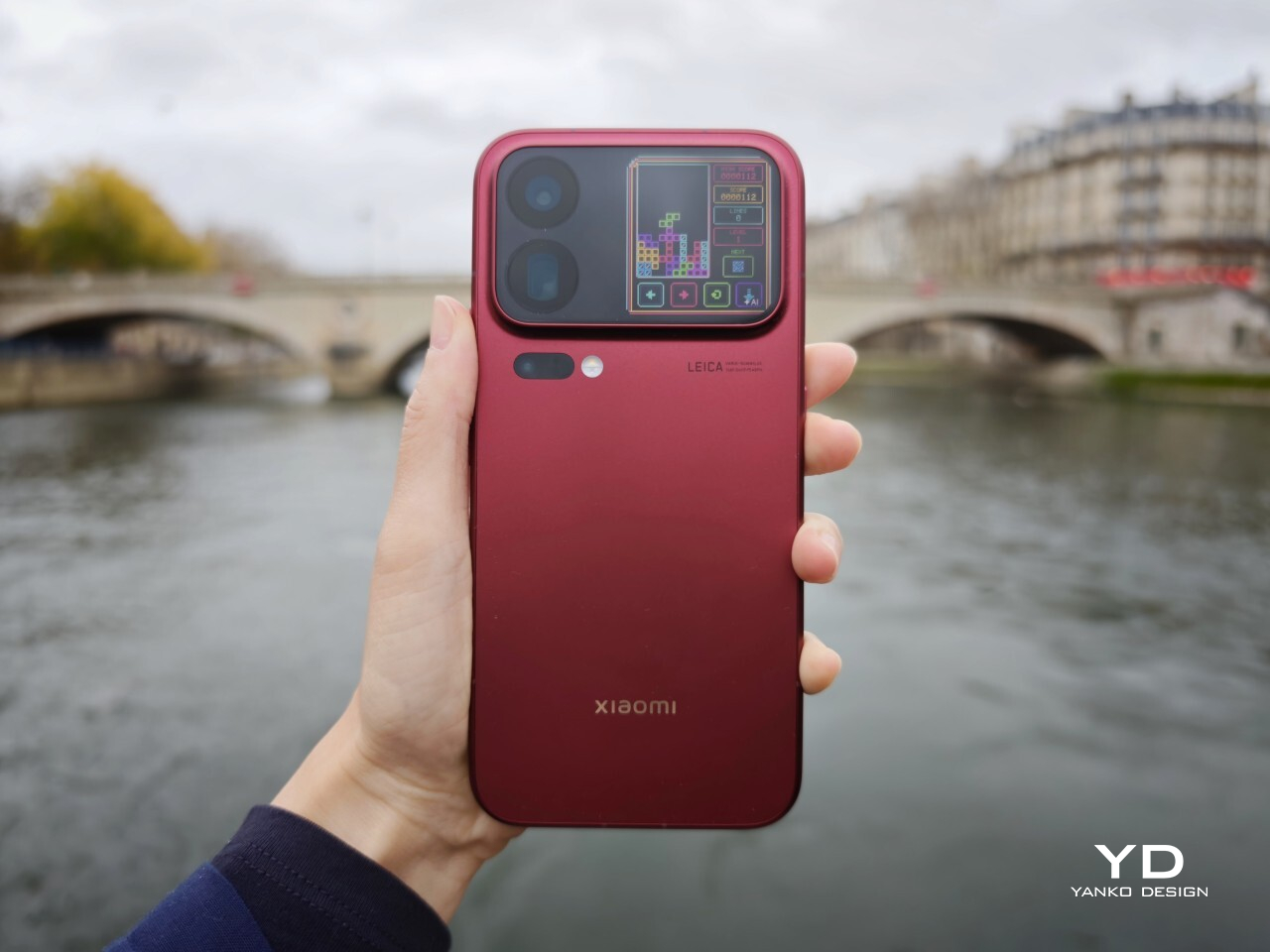
Last year, Xiaomi gave its flagship Xiaomi 17 Pro Max a distinctive twist by putting a display right on the camera plate. It immediately caught my attention, but there was a catch. The phone was officially available only in China, leaving the rest of us looking on from a distance. This time, Xiaomi is bringing the Xiaomi 18 Pro and Xiaomi 18 Pro Max to global markets, and I’m glad more people will get to experience that approach.
The back display is undeniably the defining feature of the Xiaomi 18 Pro series, but there is more here than an attention-grabbing screen. GenAI Apps lets you turn your ideas into mini-apps for that display, while the main screen’s built-in privacy controls help keep what you’re viewing to yourself. These are the kinds of features that make me curious to try a phone rather than simply read its specifications. The bigger question is how well each model brings together design, performance, photography, and battery life, and whether it stays enjoyable once the novelty wears off.
Designer: Xiaomi
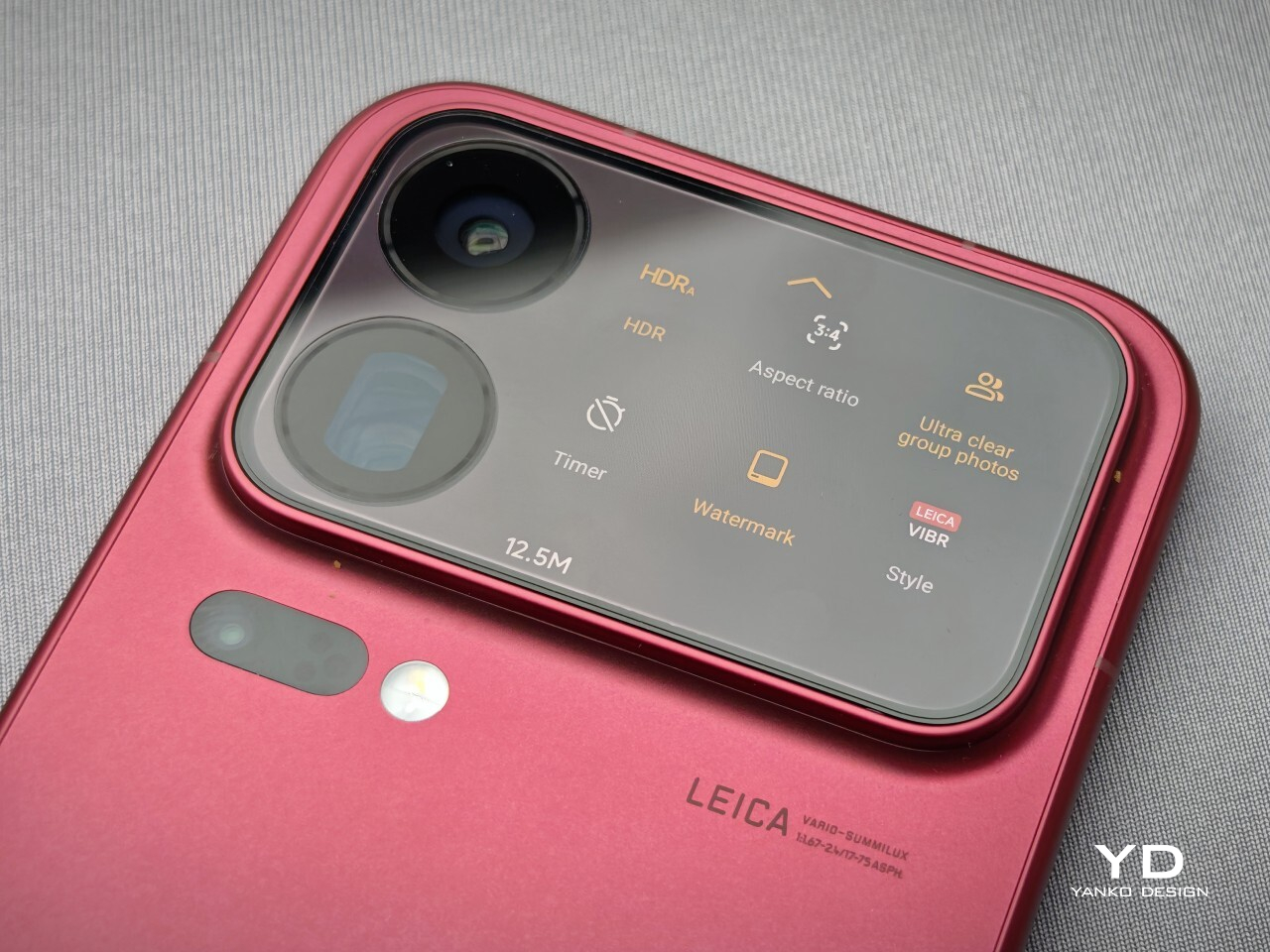
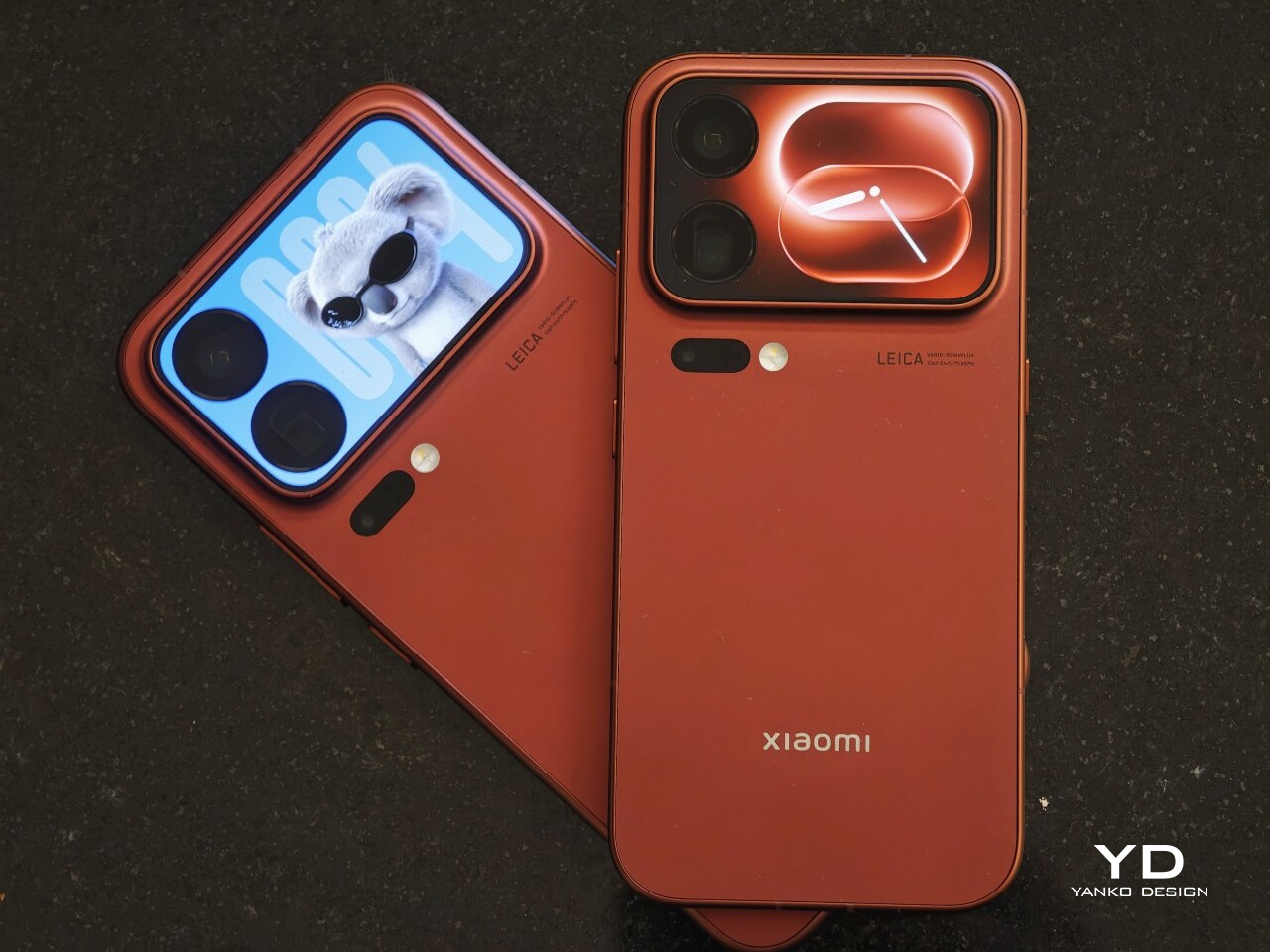
The Xiaomi 18 Pro and 18 Pro Max share the same design, with the Pro offering a more compact take on the Pro Max. On both phones, the camera plateau is the centerpiece. A broad, rounded rectangle stretches across the upper back panel, bringing the back display and two prominent camera lenses together within a dark, glossy surface. The back display also gives the design a more personal touch. Xiaomi’s selection of wallpapers turns this area into something more expressive than a conventional camera surround, letting you change the phone’s character without reaching for a different case.
The four color options bring distinct personalities to that shared design. Cosmic Blue features a glossy back panel scattered with star-like, shimmering speckles, while Velvet Red, Black, and White have a matte texture. Black visually softens the transition between the body and the dark camera plateau, while White emphasizes their contrast. Velvet Red is the more dramatic choice, with a redder tone than the iPhone 18 Pro Max’s Burgundy. The frame and buttons share the back panel’s color, creating a cohesive, monolithic look across all four finishes. That visual consistency brings a welcome sense of restraint to a design whose camera plateau already commands plenty of attention.
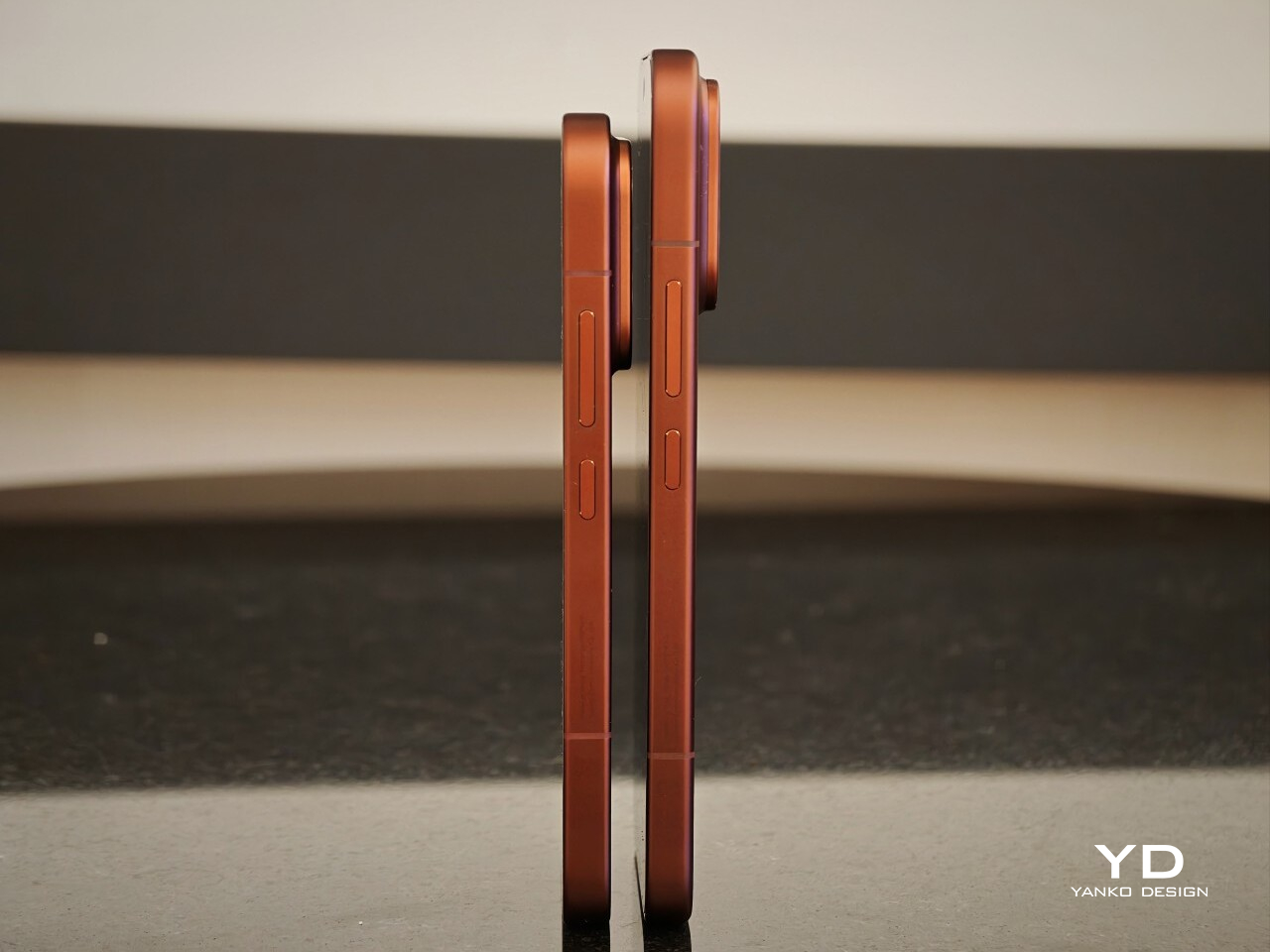
The Xiaomi 18 Pro and 18 Pro Max share the same design, but their size difference has a significant impact on everyday handling. The Pro measures 151.8 × 72 × 8.49 mm (5.98 × 2.83 × 0.334 inches) and weighs 198 g (6.98 ounces). The Cosmic Blue version is slightly thicker and heavier at 8.56 mm (0.337 inches) and 203 g (7.16 ounces). For me, the Pro is the perfect size, sitting comfortably in my hand without feeling cumbersome. Its narrower body makes one-handed use feel natural, and that everyday convenience is a big part of its appeal.
The Pro Max measures 163.39 × 77.6 × 8.39 mm (6.43 × 3.06 × 0.330 inches) and weighs 229 g (8.08 ounces). Cosmic Blue comes in at 8.47 mm (0.333 inches) thick and weighs 234 g (8.25 ounces). Although it is slightly thinner than the Pro, its wider body is a bit too much for me to use comfortably with one hand. It also weighs 31 g (1.09 ounces) more than the equivalent Pro, adding to its overall heft. Both models have the same visual appeal, but the smaller Pro is the better fit for me.
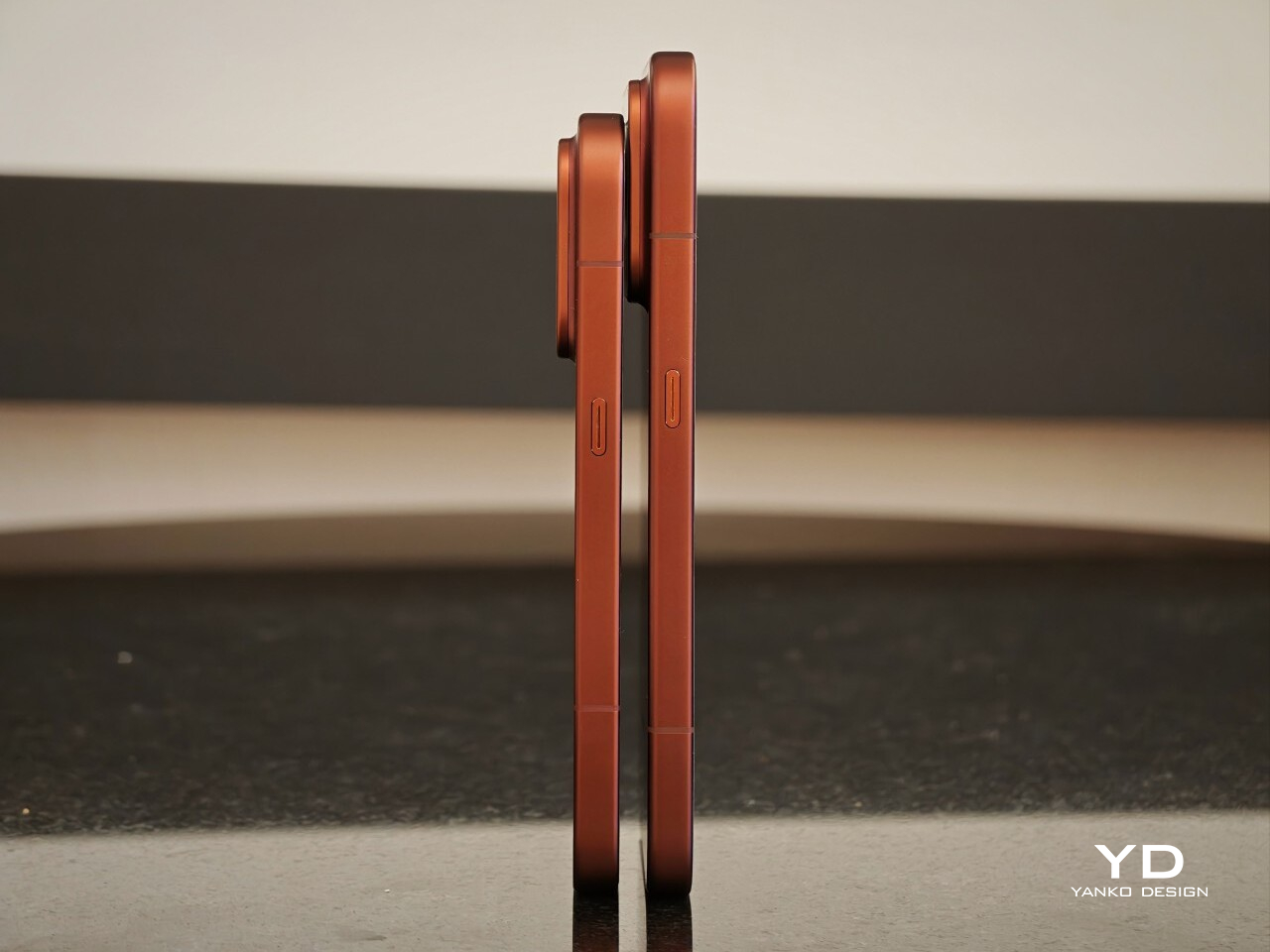
The buttons sit lower than on many other phones, making them easier to reach without shifting my grip. The AI button is on the left, while the power button and volume rocker are on the right. That placement helps with one-handed use, even if it does not entirely overcome the Max’s width. The AI button lets you assign separate actions to a press and a press and hold, but the customization options are fairly limited. The available shortcuts cover silent mode, Do Not Disturb, the device-wide privacy display, voice notes, and AI conversation translation. I would like to see more options to make better use of that dedicated button.
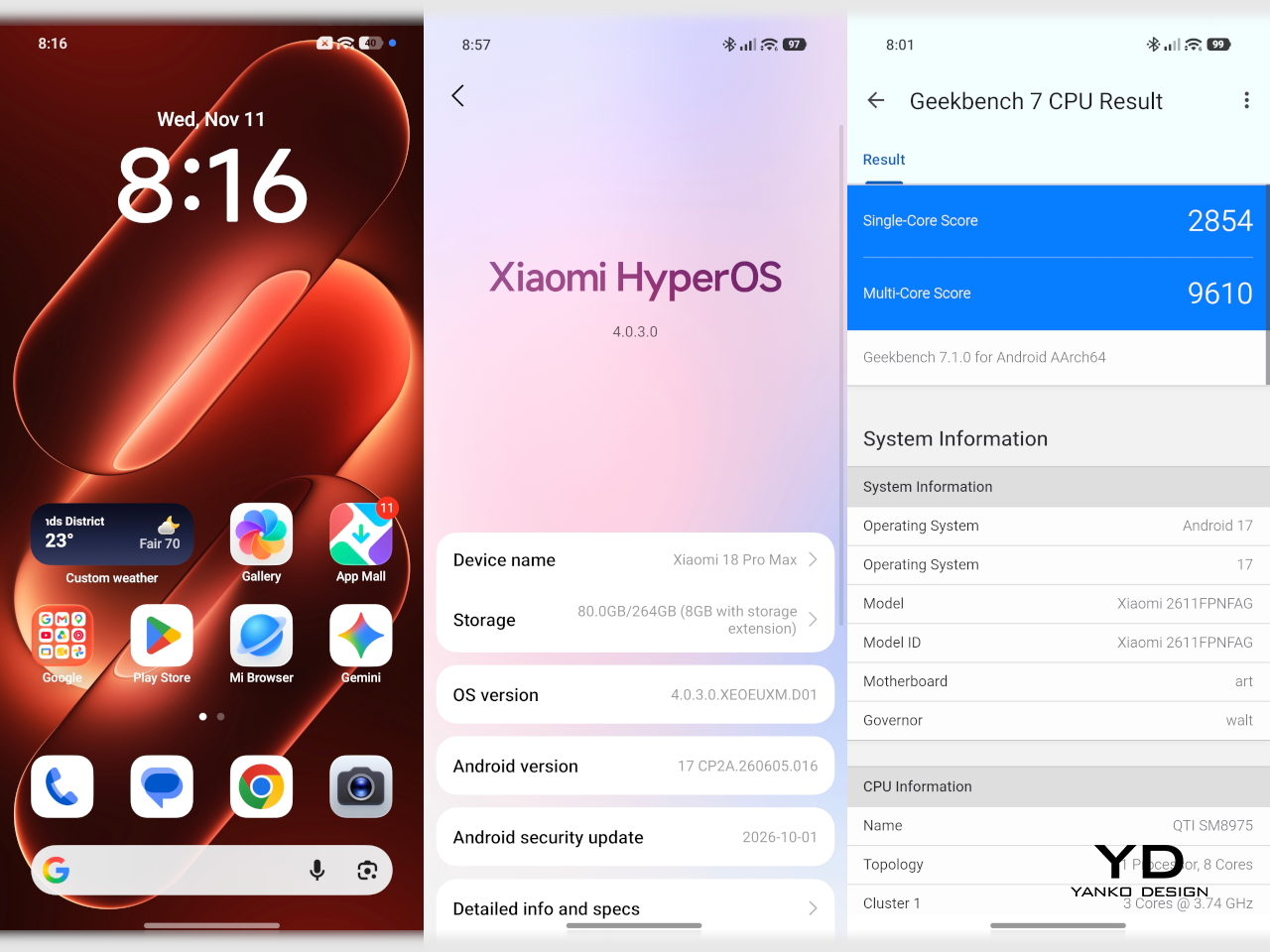
Xiaomi 18 Pro Max
Xiaomi equips both models with Qualcomm’s 2nm flagship processors. The Xiaomi 18 Pro runs on the Snapdragon 8 Elite Gen 6, while the Pro Max gets the Snapdragon 8 Elite Extreme Gen 6. The Pro comes with 12GB of RAM and either 256GB or 512GB of storage, while the Max adds a configuration with 16GB of RAM and 1TB of storage.
In everyday use, both phones felt quick and responsive. They delivered the speed I expect from a flagship, without making me think much about what was powering them. The chipset differences may matter for more demanding tasks, but for my daily use, neither phone left me wanting more.
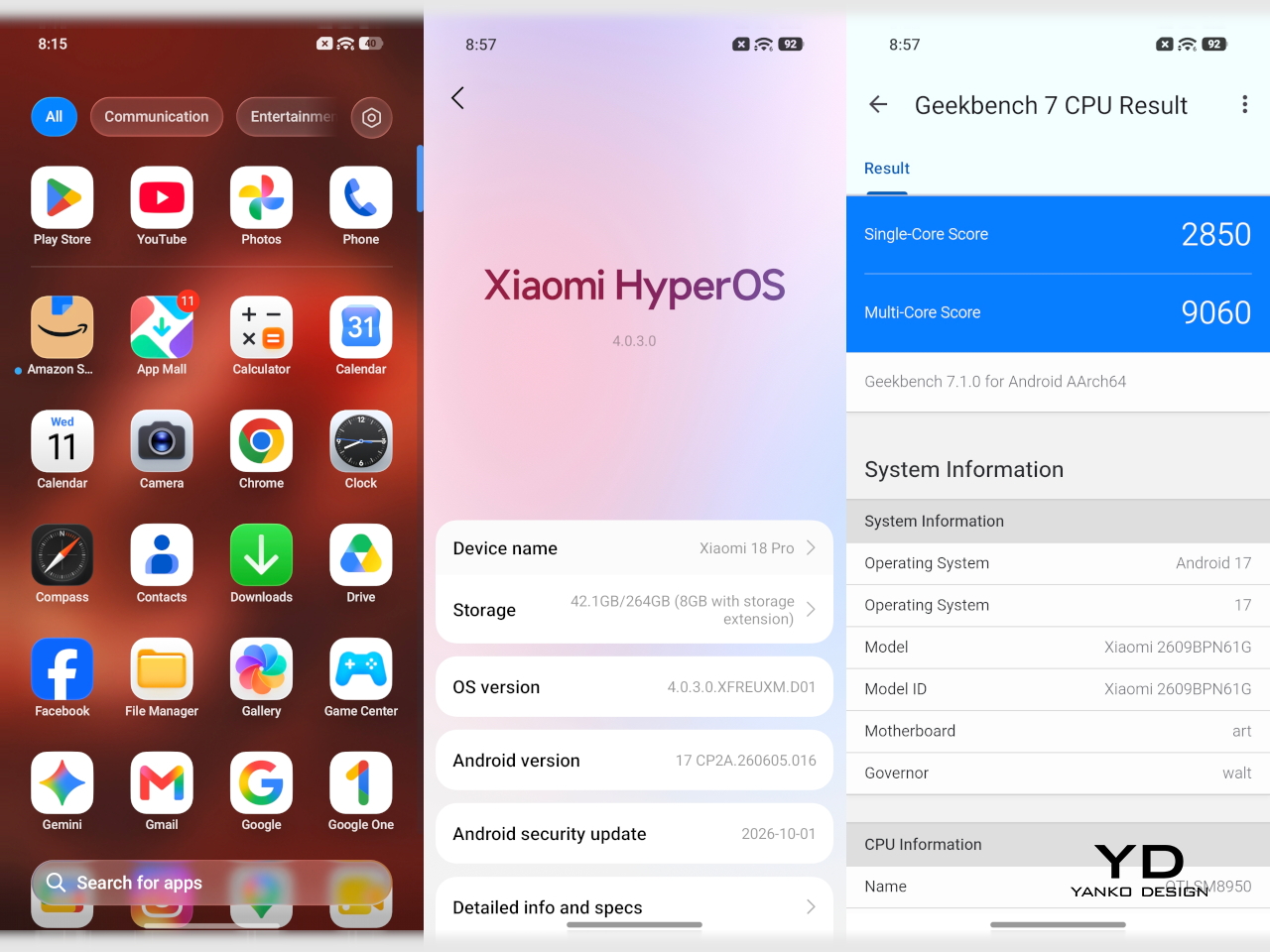
Xiaomi 18 Pro
Both phones run Xiaomi HyperOS 4, which introduces a glass-like appearance that takes a cue from Apple’s interface. Home screen customization is more flexible, with more freedom to adjust app icon and folder sizes. You can also stack widgets, keeping several within reach without having to dedicate a separate spot to each one.
The Xiaomi 18 Pro has a 6.4-inch display with a 2436 × 1120 resolution, while the Pro Max gets a 6.9-inch panel at 2624 × 1208. Both use LTPO AMOLED panels with adaptive 1Hz to 120Hz refresh rates, Dolby Vision, and HDR10+ support. Xiaomi claims up to 4,000 nits of peak brightness. Both screens look bright and vibrant, with slim, symmetrical bezels that make the viewing experience feel more immersive.
Both phones feature Xiaomi Privacy Display, which uses built-in hardware to limit side-angle visibility without a privacy screen protector. You can enable it across the screen, set it to activate automatically for selected apps, or apply it to sensitive notifications and individual split-screen or floating windows. An optional Privacy Notice feature uses the front camera to detect onlookers and alert you. At least that’s the theory. In practice, however, it only ever so slightly darkened the display when looked at from an angle, nothing mind-blowing.
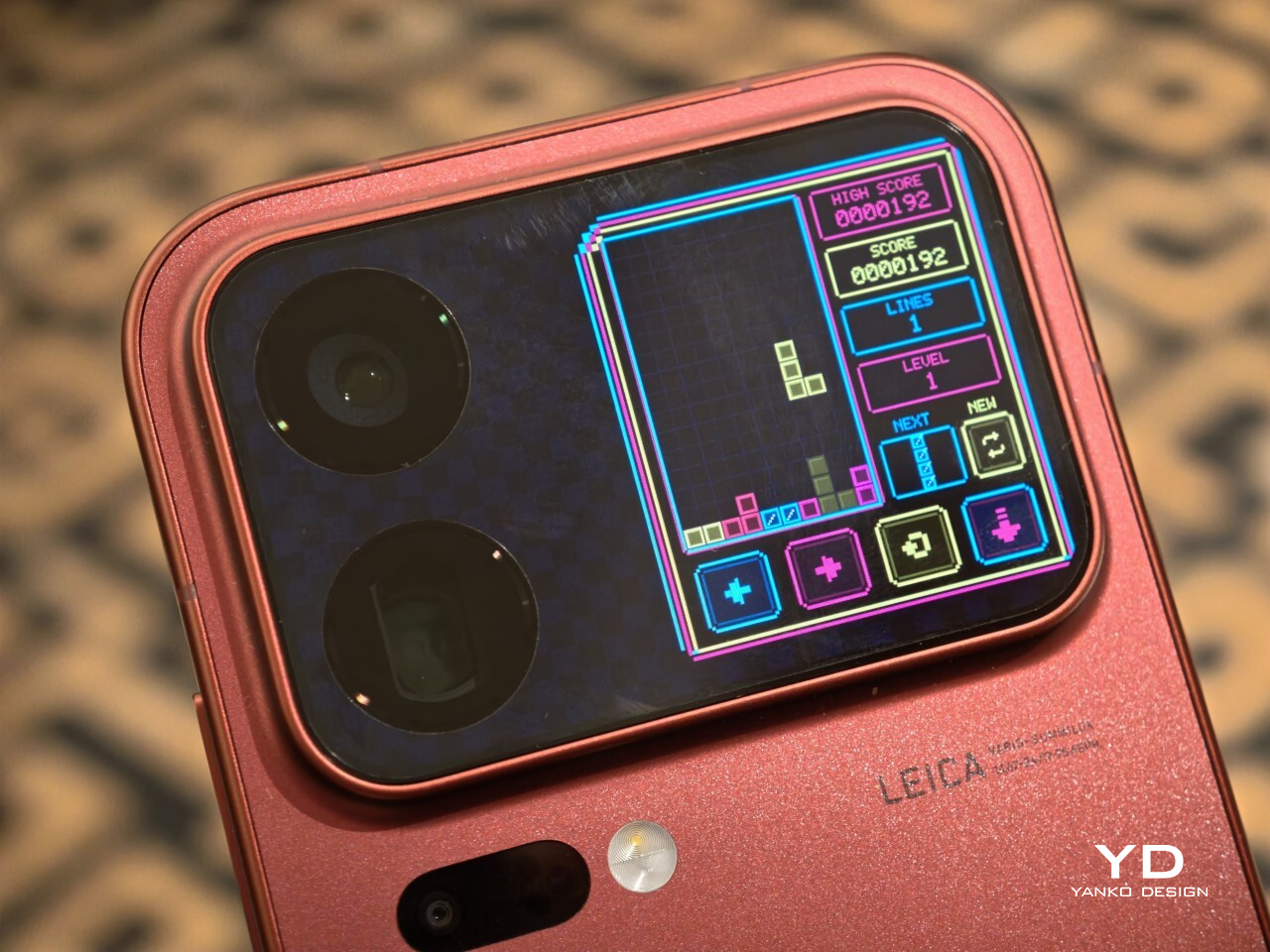
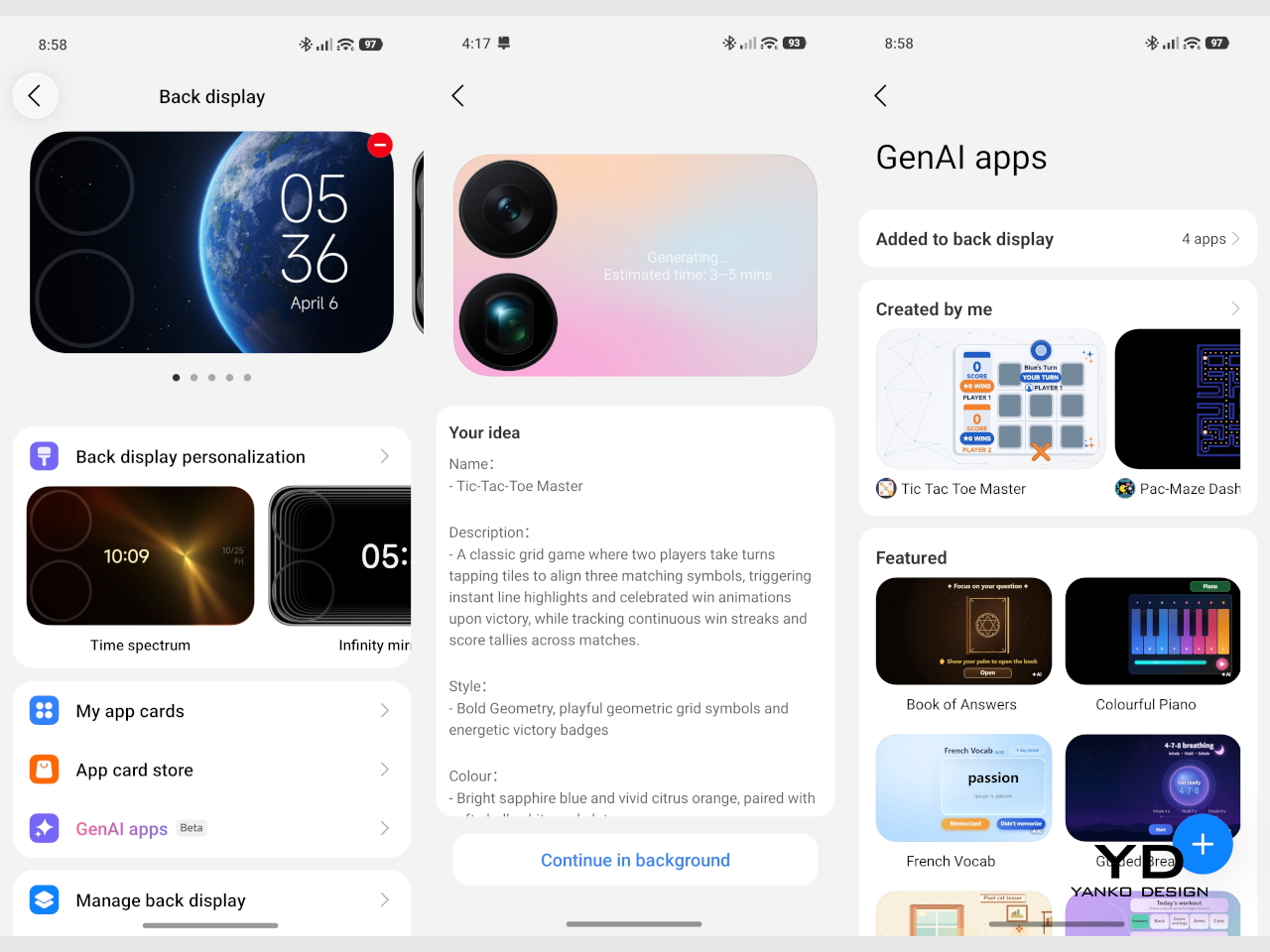
The back displays measure 2.7 inches on the Pro and 2.9 inches on the Pro Max, with resolutions of 912 × 596 and 976 × 596, respectively. Both use LTPO AMOLED panels with adaptive 1Hz to 120Hz refresh rates and always-on display support. They double as rear-camera viewfinders and show music controls, notifications, and pinned content. Notifications disappear rather quickly unless you pin them, however. Xiaomi has confirmed upcoming support for Spotify, Google Maps, and YouTube Music, which should make the screens more useful day-to-day.
GenAI Apps is a highlight for me, making the back display both more fun and genuinely useful. You describe a tool or game in plain language, and it turns your description into a polished prompt before generating a mini-app right on the phone. Among the apps I created were a Tetris-like block game, a Magic 8 Ball, a unit converter, and a currency converter. The feature is still in beta, but it already works very well. Being able to turn an idea into something I can actually use makes me want to keep experimenting with what this little screen can do.
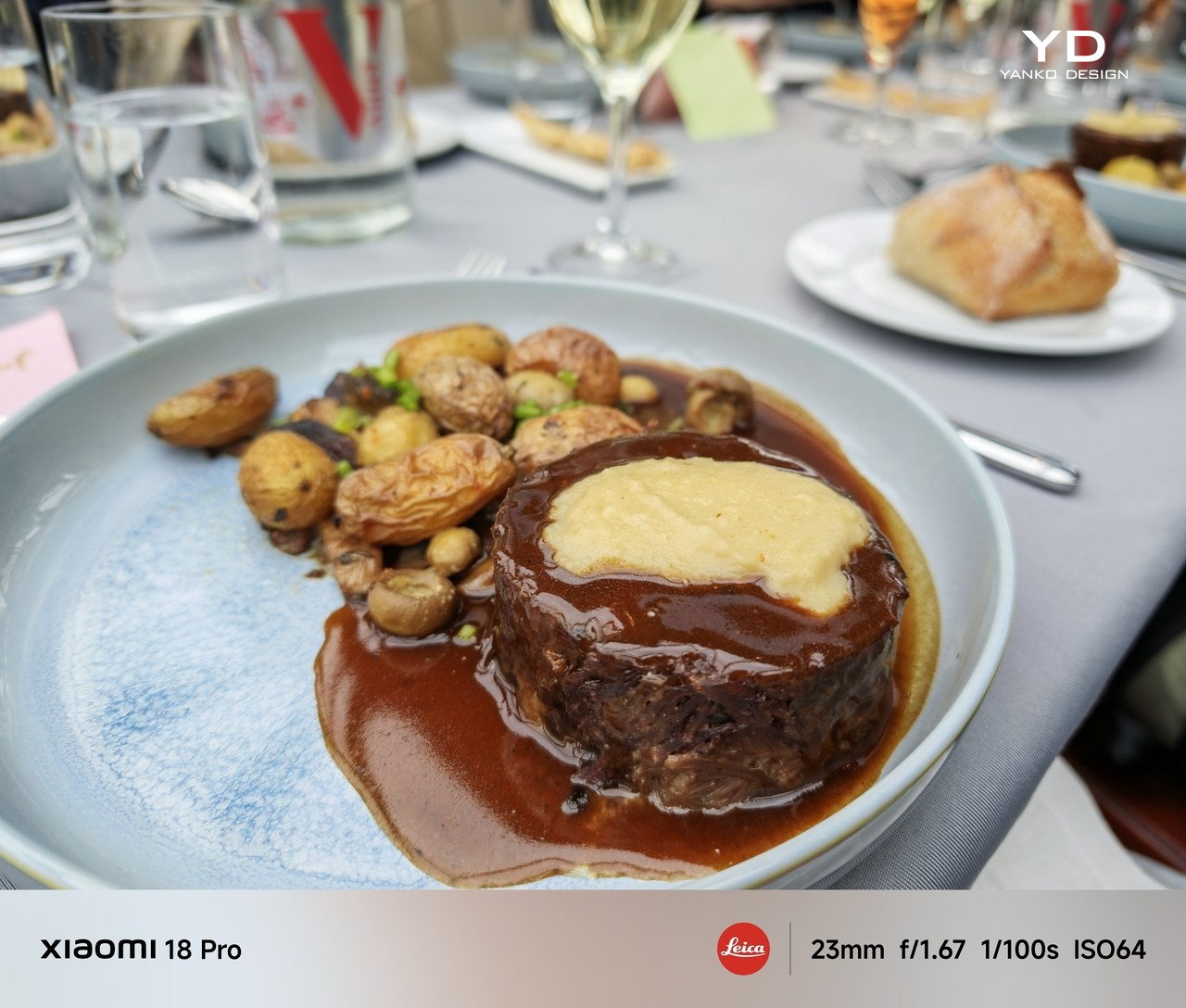
Xiaomi 18 Pro, Main Camera, 1x
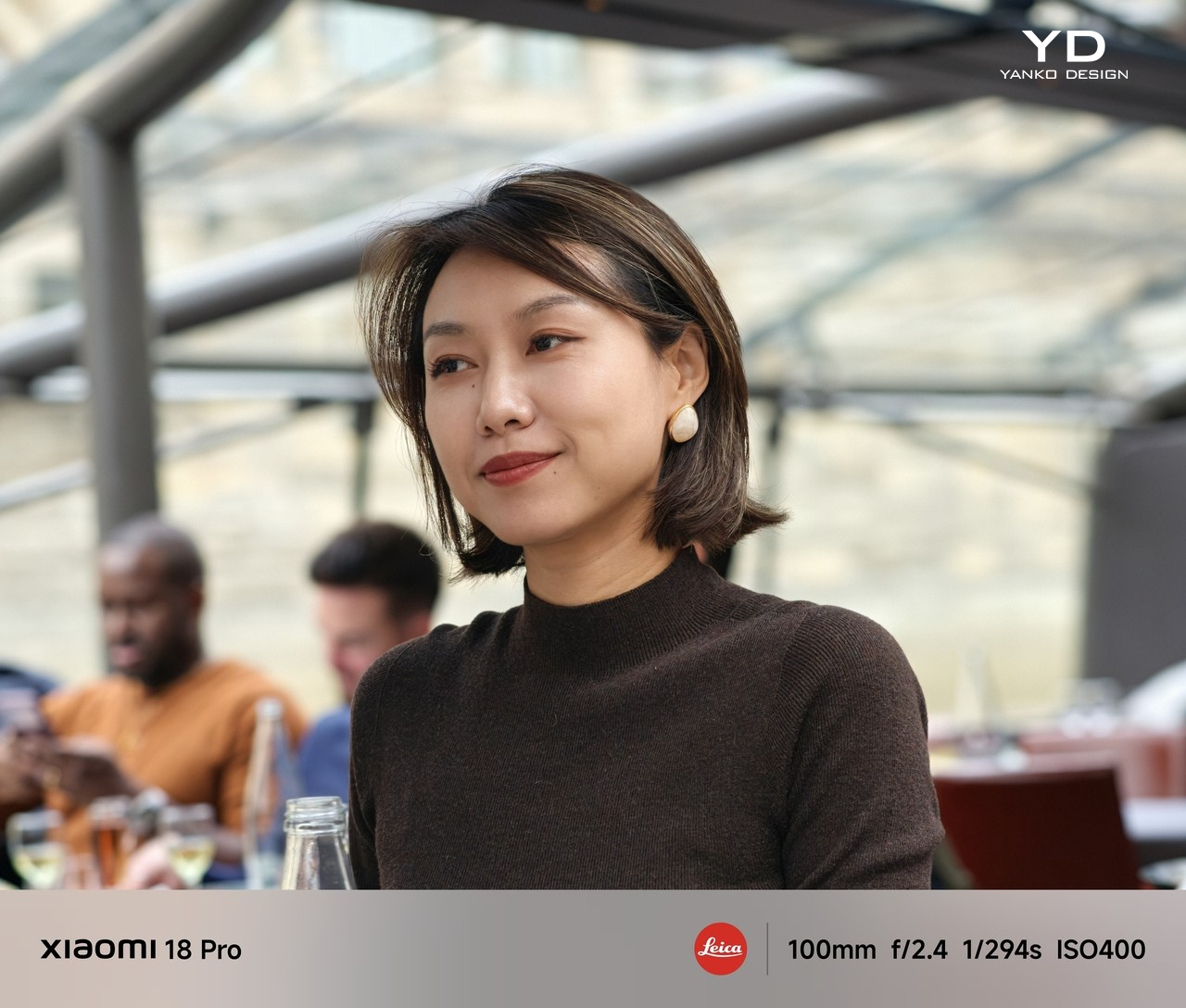
Xiaomi 18 Pro, Portrait Mode, Telephoto Camera, 4.3x
Both phones pair a 200MP 23mm f/1.67 main camera with a 200MP 75mm f/2.4 periscope telephoto, both with optical image stabilization. A 50MP 17mm ultrawide and a 50MP autofocus front camera complete the setup. The main cameras use 1/1.28-inch sensors, with the Pro getting the Light Fusion 960 and the Max using the Light Fusion 960L. The Max adds LOFIC HDR, which Xiaomi says improves highlight and shadow detail in supported modes. The shared telephoto offers 3.2× optical magnification and focuses as close as 12 cm, or about 4.7 inches.
The main and telephoto cameras deliver excellent detail and dynamic range, with vibrant, saturated colors that stop short of looking unnatural. The ultrawide is the weaker link, and its 17mm-equivalent focal length is not particularly wide. It feels like a compromise made to accommodate the back display. Photo mode offers Original, Leica Vibrant, and Leica Authentic styles, while Portrait mode has Original, Master Portrait, and Leica Portrait. You can also choose from a range of filters and adjust parameters such as saturation, tone, and sharpness. There is plenty of flexibility to make the photos your own.
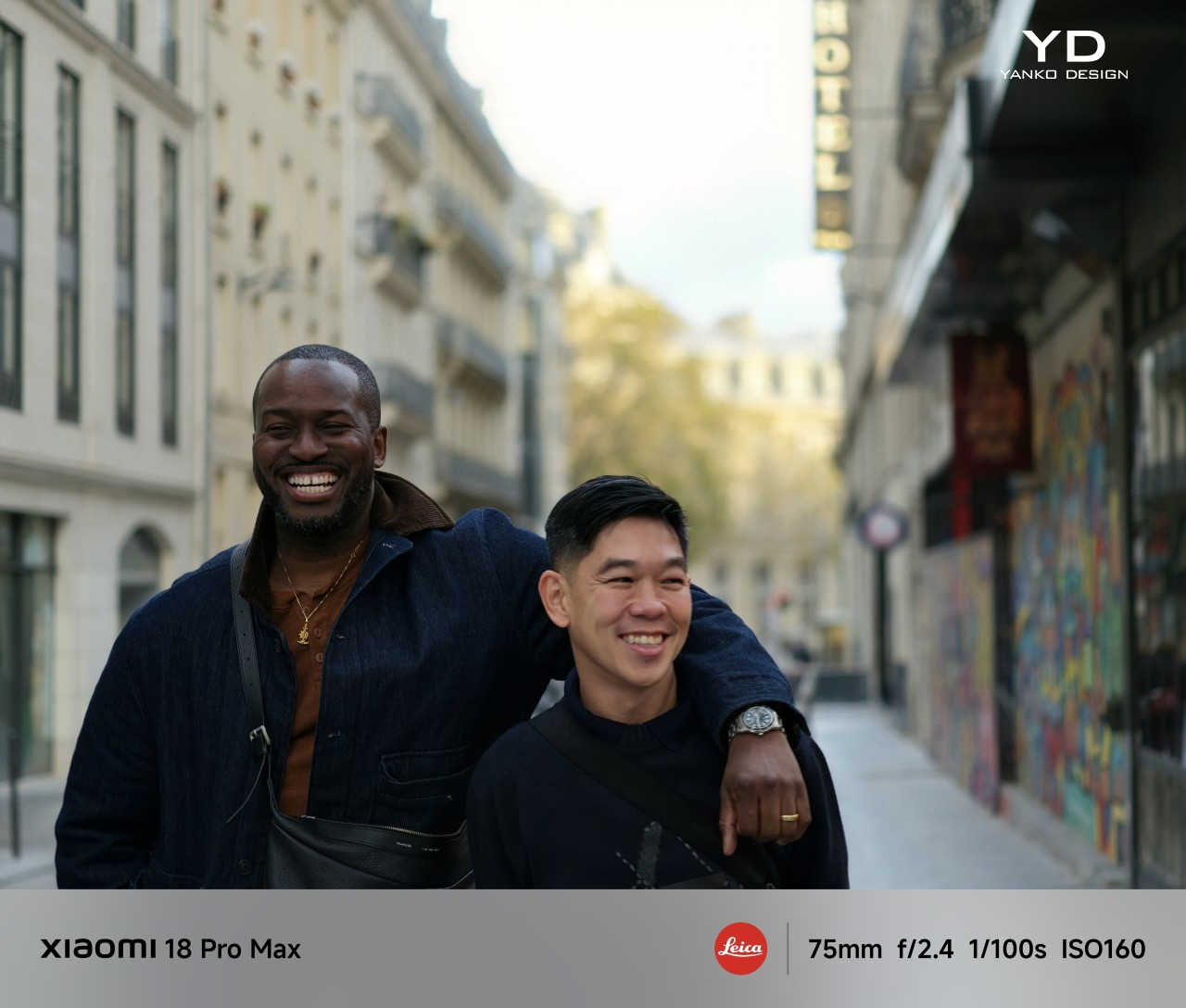
Essential Moment, Modern retro style, 75mm Portrait Lens Effect
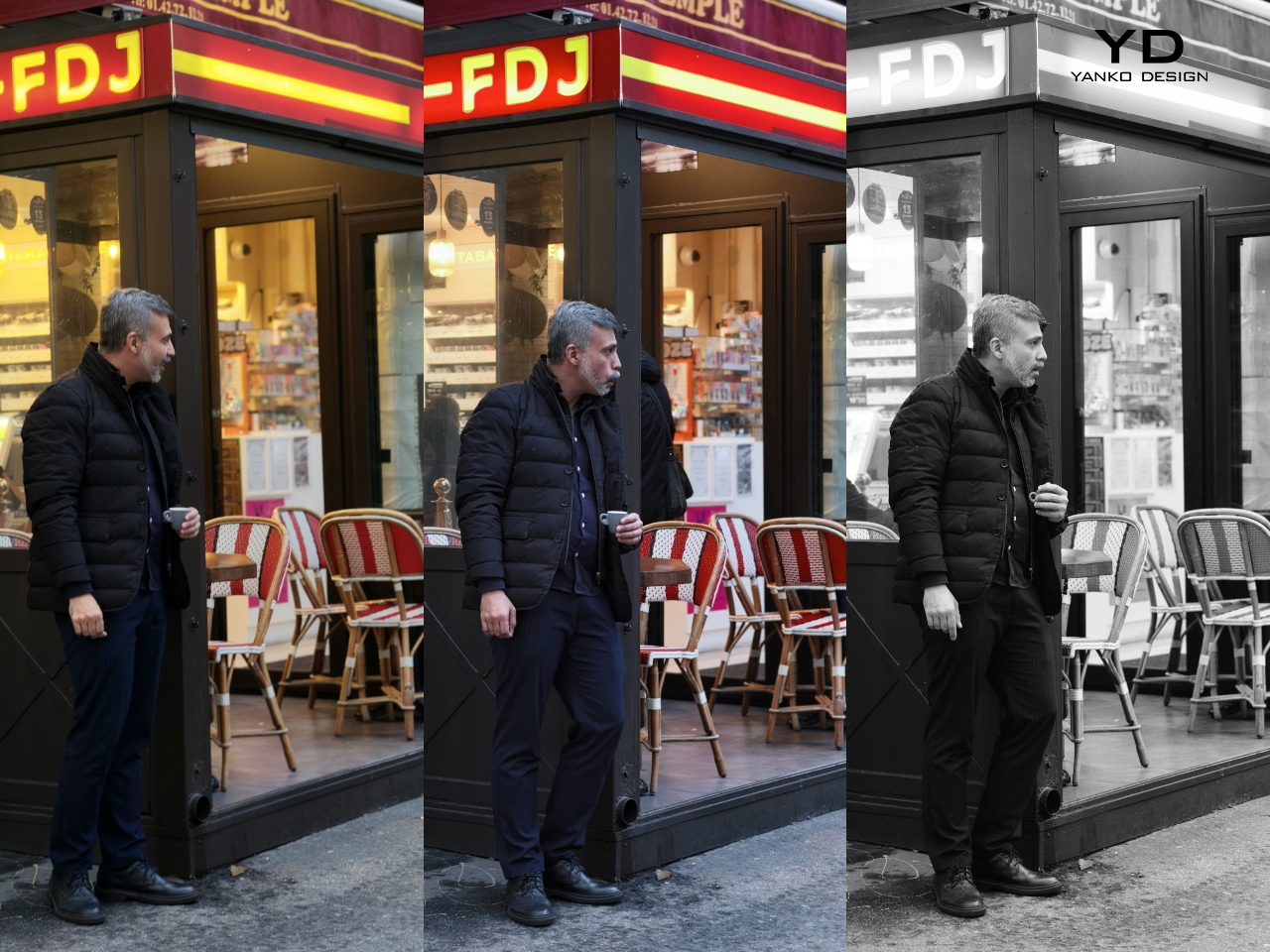
Essential Moment Styles: Modern retro (left), Iconic CCD (center), B&W film (right)
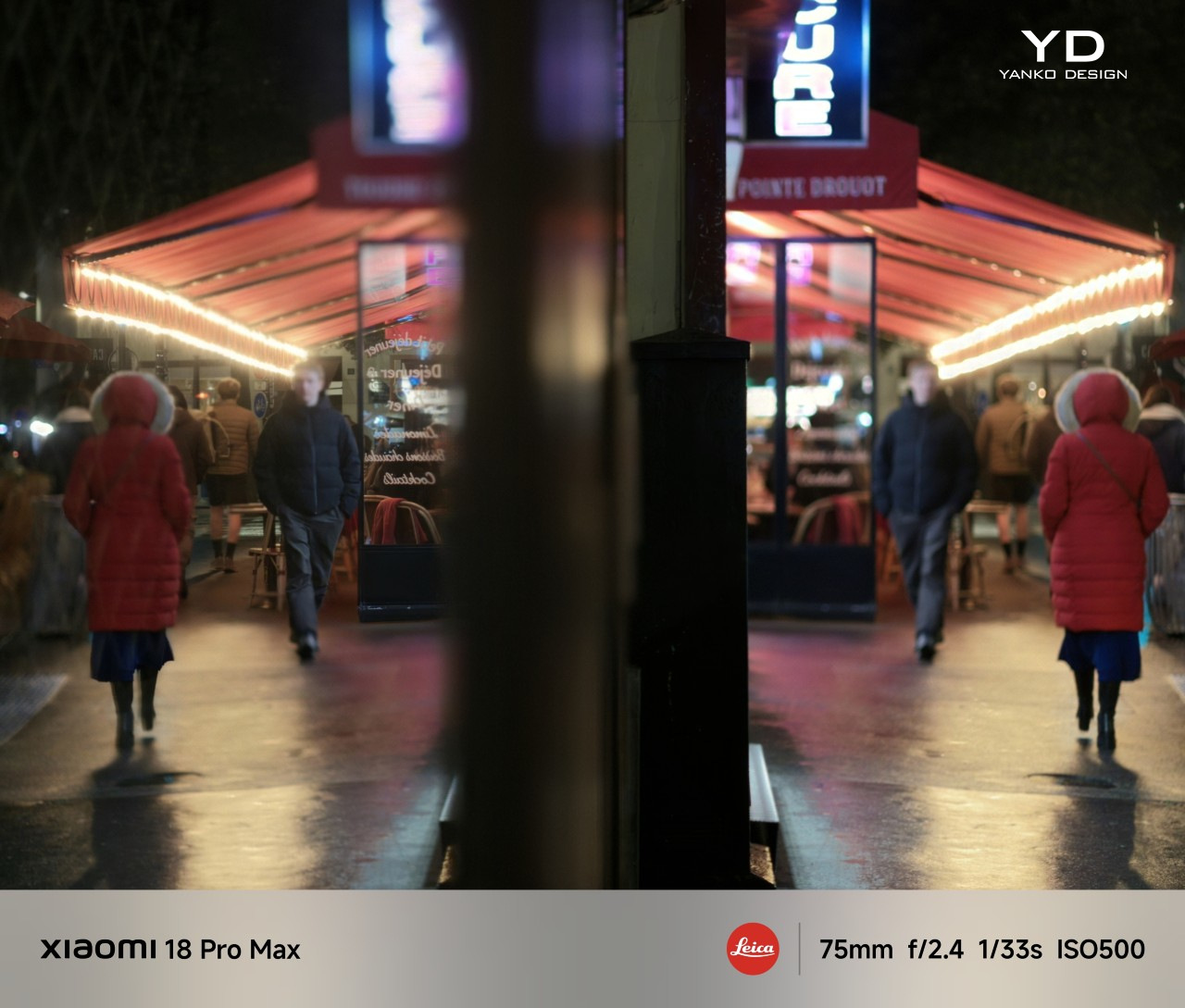
Essential Moment, Modern Retro style, 75mm Portrait Lens Effect (Low Light)
I was initially unsure about Essential Moment, Xiaomi’s latest exploration of computational photography. Its B&W Film, Modern Vintage, and Iconic CCD styles work with or without the optional 35mm Documentary and 75mm Portrait lens simulations, which add pleasant bokeh. The results surprised me with their natural appearance. They had character without looking heavily processed, with styling that complemented rather than overwhelmed the image.
The back display also won me over. I expected it to be too small for photography, especially since I rarely take selfies, even while traveling. Separate remote selfie screens have been useful, but carrying and pairing another device felt cumbersome. With the screen built in, I found myself taking selfies naturally rather than stopping to set them up.

Main Camera, 1x
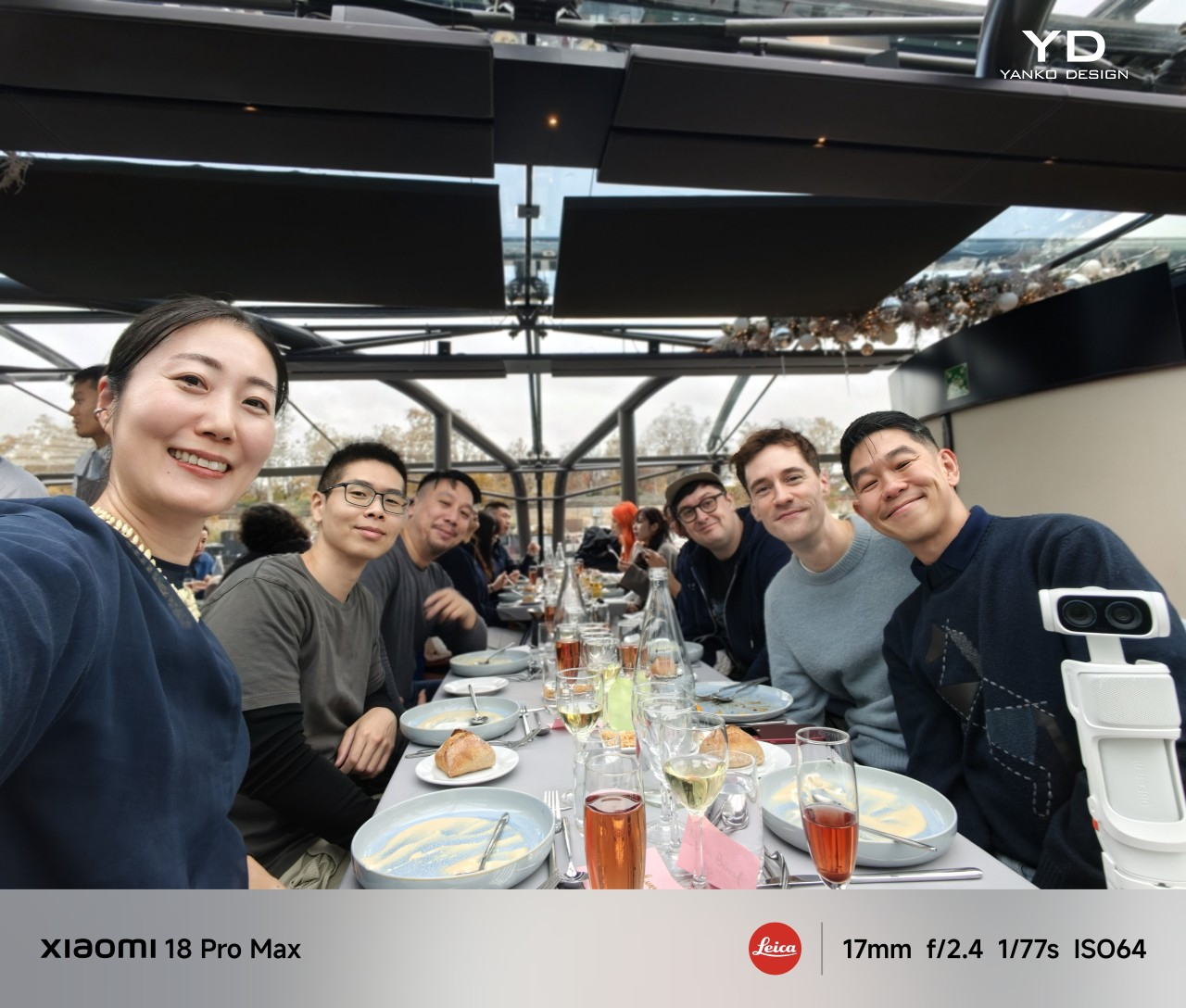
Ultra-wide, 0.7x
You can mirror the main camera interface so your subject can check their framing and expression. Alternatively, launching the camera directly from the back display gives you Video, Photo, Portrait, and Photo Booth modes. When it detects three or more people, the camera can automatically switch to the ultrawide, making group selfies easier. Shooting from the back display also uses independent settings, so your style, filter, and HDR choices can differ from those used on the main display.
Both phones support video recording at up to 8K at 30fps or 4K at 120fps on the main and telephoto cameras. Those recording options remain available when using the back display as a viewfinder. The ultrawide and front cameras top out at 4K at 60fps. Stabilization is excellent, keeping footage steady, and dynamic range is impressive. Exposure can lean a little bright, though.
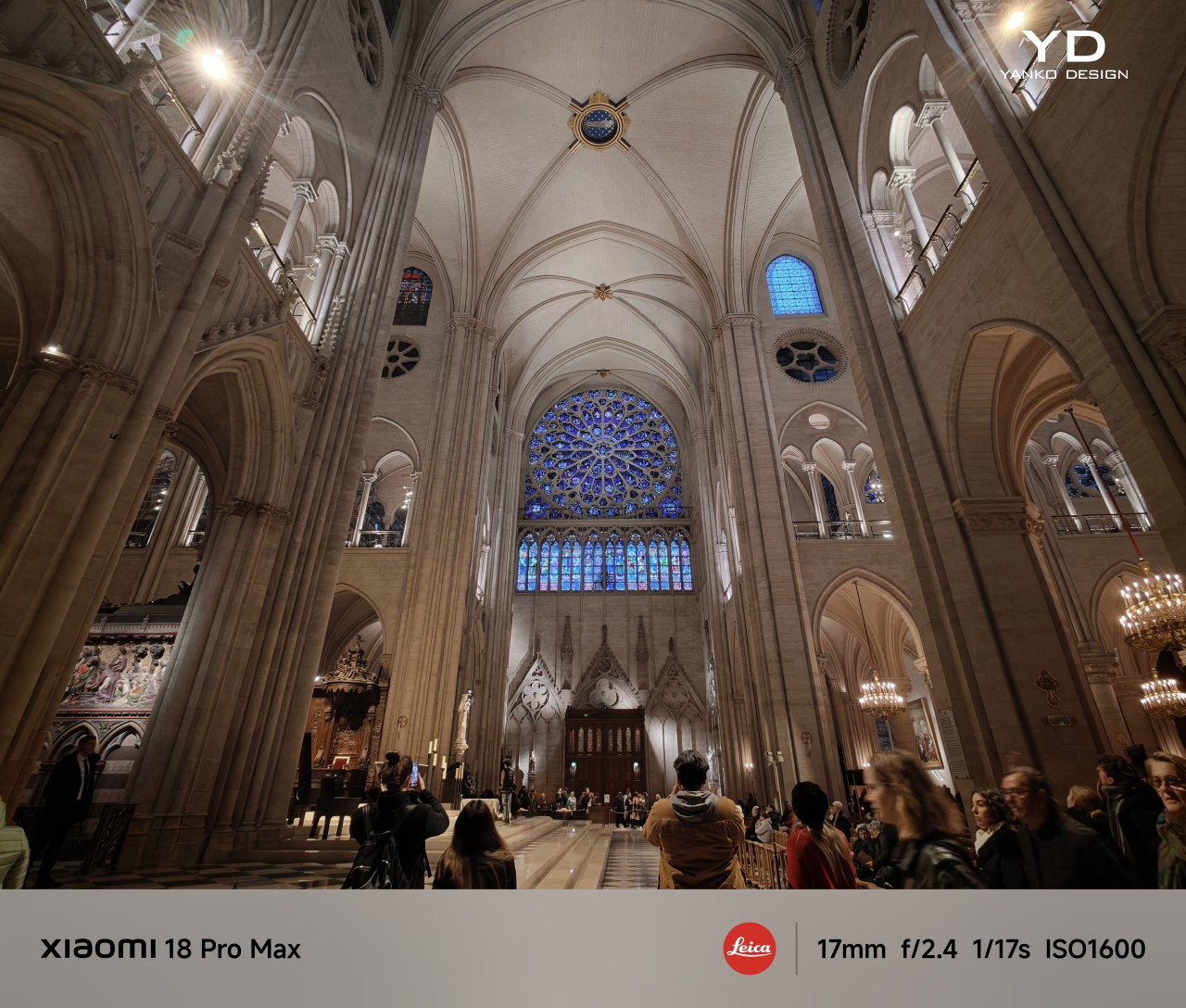
Ultra-wide, 0.7x
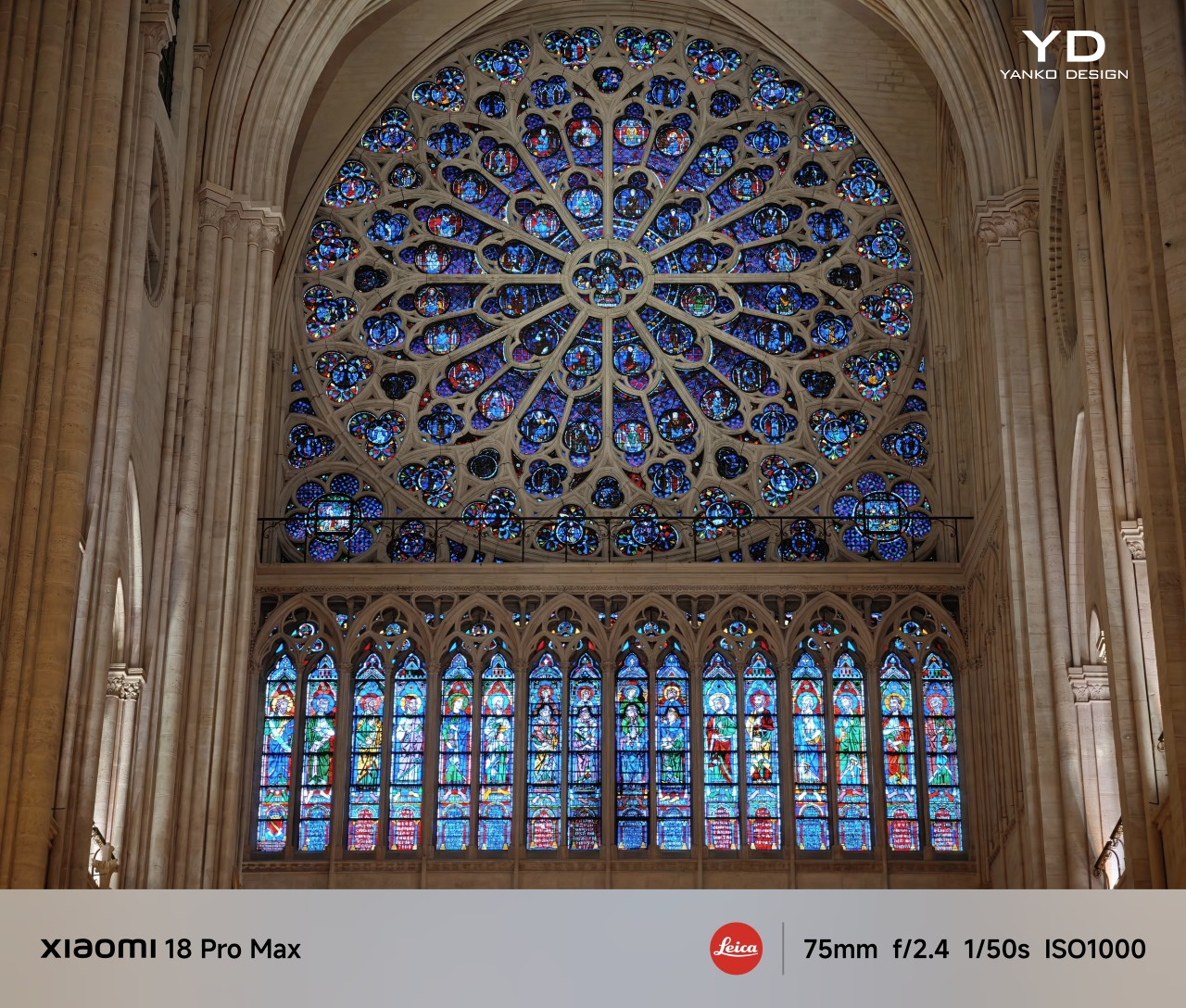
Telephoto camera, 3.2x
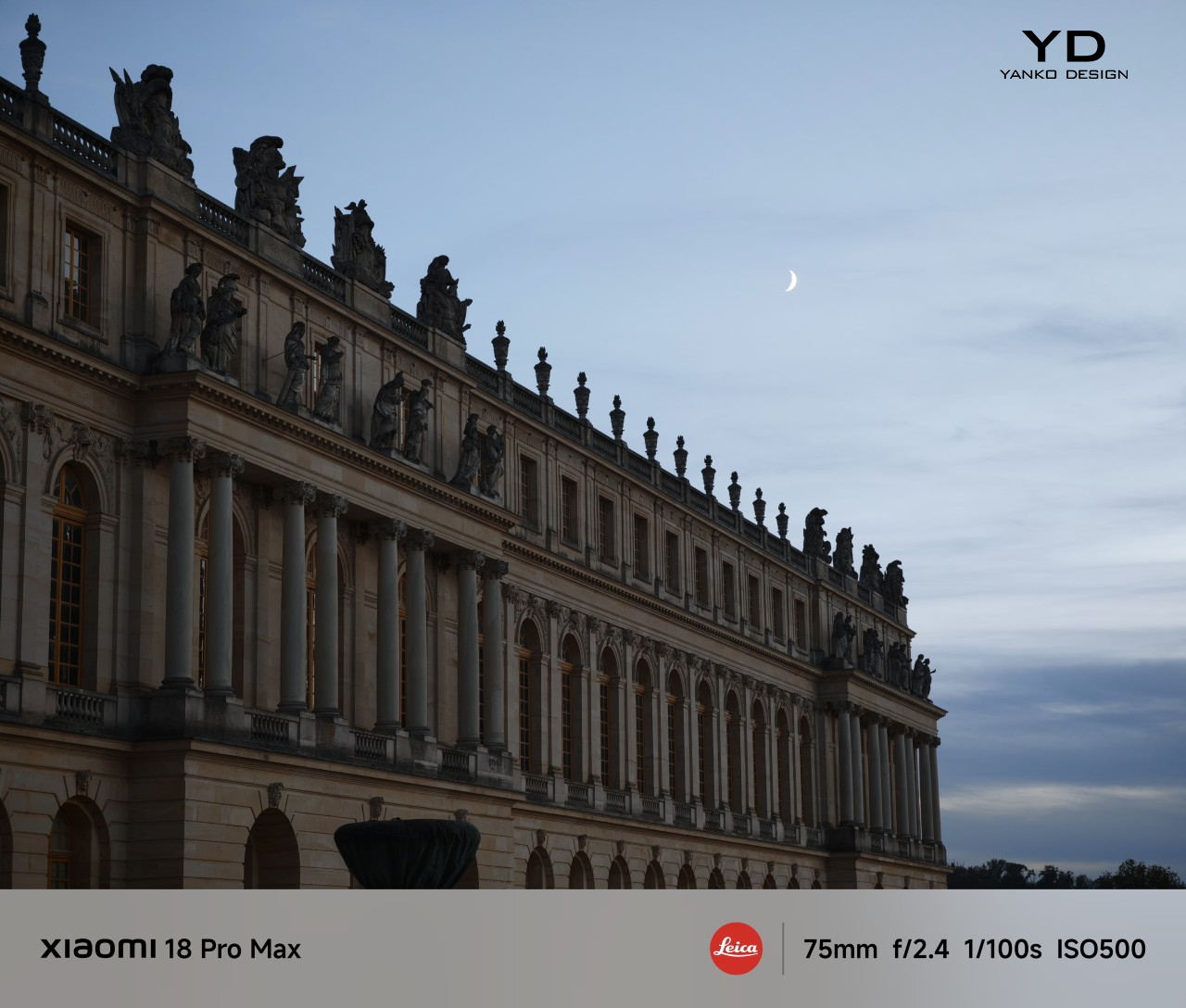
Telephoto camera, 3.2x
The Xiaomi 18 Pro packs a 6,000mAh battery, while the Pro Max steps up to 7,050mAh. Those capacities may not stand out among today’s flagships, but endurance is still solid. Both phones lasted a full day of heavy use, giving me little reason to worry about finding a charger before the evening.
The Pro supports up to 90W wired HyperCharge, while the Pro Max reaches 100W. Both offer up to 50W wireless HyperCharge and support PPS fast charging with compatible third-party USB-C chargers. Reverse wired and wireless charging also let you share power with compatible devices and accessories.
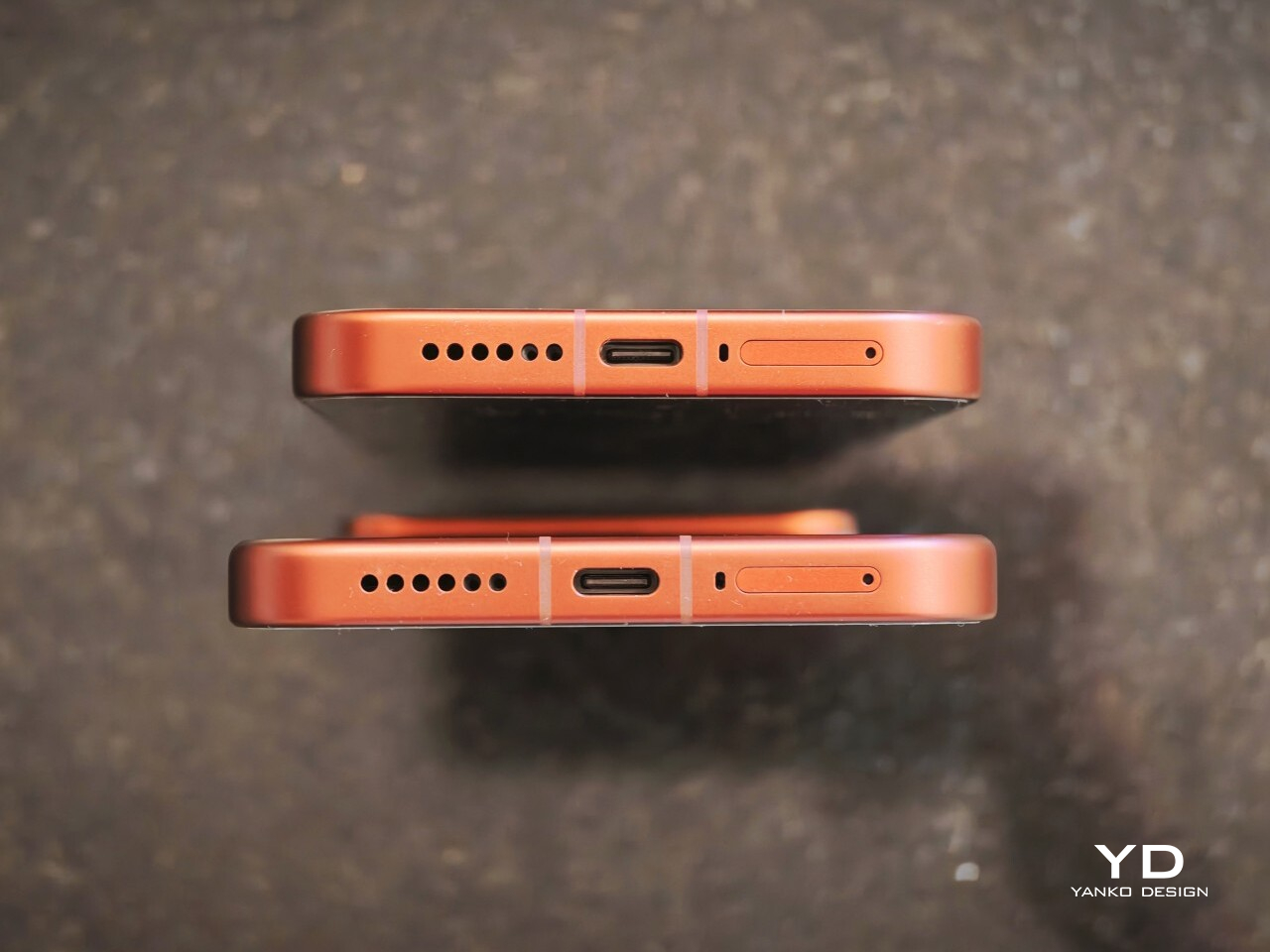
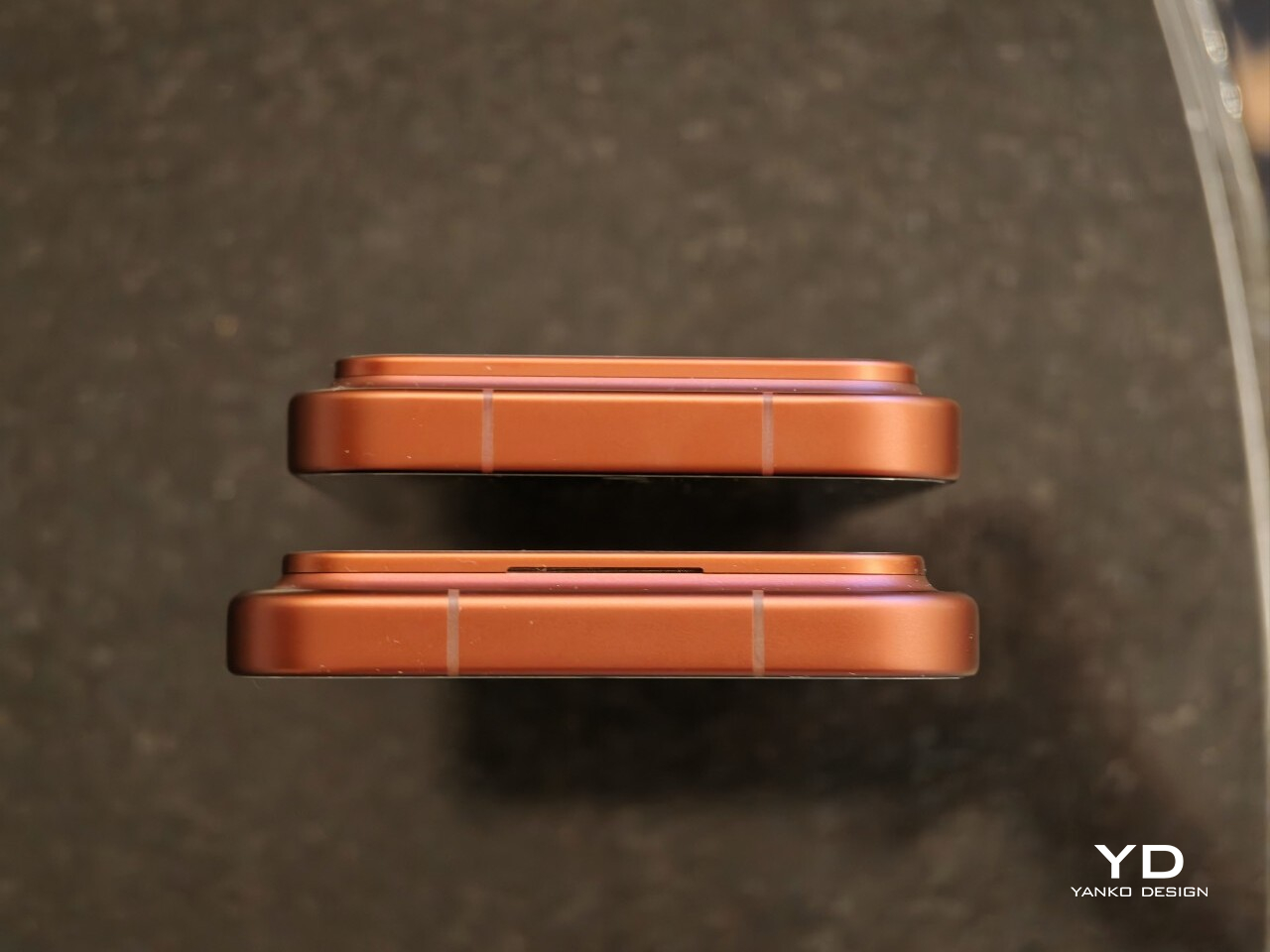
Both phones carry an IP68 rating for dust and water resistance. Xiaomi Shield Glass 3.0 protects the main display, while Corning Gorilla Glass Victus 2 covers the back display. These are welcome protections for phones with screens on both sides, though they do not make either device damage-proof.
Xiaomi promises five years of OS upgrades and six years of security patches, making long-term ownership a practical option. Together, these durability and software commitments are broadly in line with what I expect from a flagship today. As with other flagships, though, I would like to see Xiaomi go further in its use of recycled and other more sustainable materials. Keeping a phone useful for longer matters, but so does what goes into making it.
Like phones from other brands, the Xiaomi 18 Pro series has become more expensive, driven largely by rising RAM costs. The Xiaomi 18 Pro starts at €1,399 (about US1,540)with12GBofRAMand256GBofstorage,whiletheProMaxstartsat€1,599(aboutUS1,760) with the same configuration. That puts the entry-level Pro Max €100 (about US$110) above the Xiaomi 17 Ultra with 16GB of RAM and 512GB of storage, making the price increase particularly noticeable.
At least Xiaomi still offers the Pro Max with 16GB/1TB configuration globally, while many brands reserve their highest-capacity options for China. That is welcome for buyers who want more memory and storage without importing a China-market model, though it does not soften the higher starting prices. Between the two, the €200-cheaper (about US$220) Pro makes the stronger value case for me, delivering much of the same experience in a size I prefer.
The Xiaomi 18 Pro and 18 Pro Max are among the most distinctive flagships I have used, and they are genuinely fun. I expected the back display to be a novelty, but it changed how I used the phone, encouraging me to take selfies I would otherwise have skipped. GenAI Apps made it even more engaging, letting me turn ideas into little tools and games that kept me experimenting. Together with the characterful results from Essential Moment, these features gave me more reasons to pick up the phone beyond my usual routine.
That sense of discovery comes with excellent main and telephoto cameras, responsive performance, and battery life that held up through heavy days. The ultrawide is a compromise, and the higher prices make both phones a substantial investment. For me, the smaller Pro is the better choice, delivering much of what makes the series special in a size I love, while saving €200. The Pro Max makes more sense if you want the larger screen and upgraded hardware, but either way, Xiaomi has made a flagship that feels refreshingly different and keeps being enjoyable after the initial curiosity wears off.
The post Xiaomi 18 Pro and 18 Pro Max Review: Flagships Like No Other first appeared on Yanko Design.

The Steam Machine leads next-generation consoles in reported developer targeting, according to a November 2026 Game Developers Conference survey. Of more than 2,600 developers surveyed, 21% reported targeting Valve’s living room PC, compared with 10% for the next PlayStation and 8% for Microsoft’s Project Helix. The figures measure development targets, not sales, as noted by […]
The post Valve’s Steam Machine Beats Project Helix 21% to 8% in GDC Poll appeared first on Geeky Gadgets.
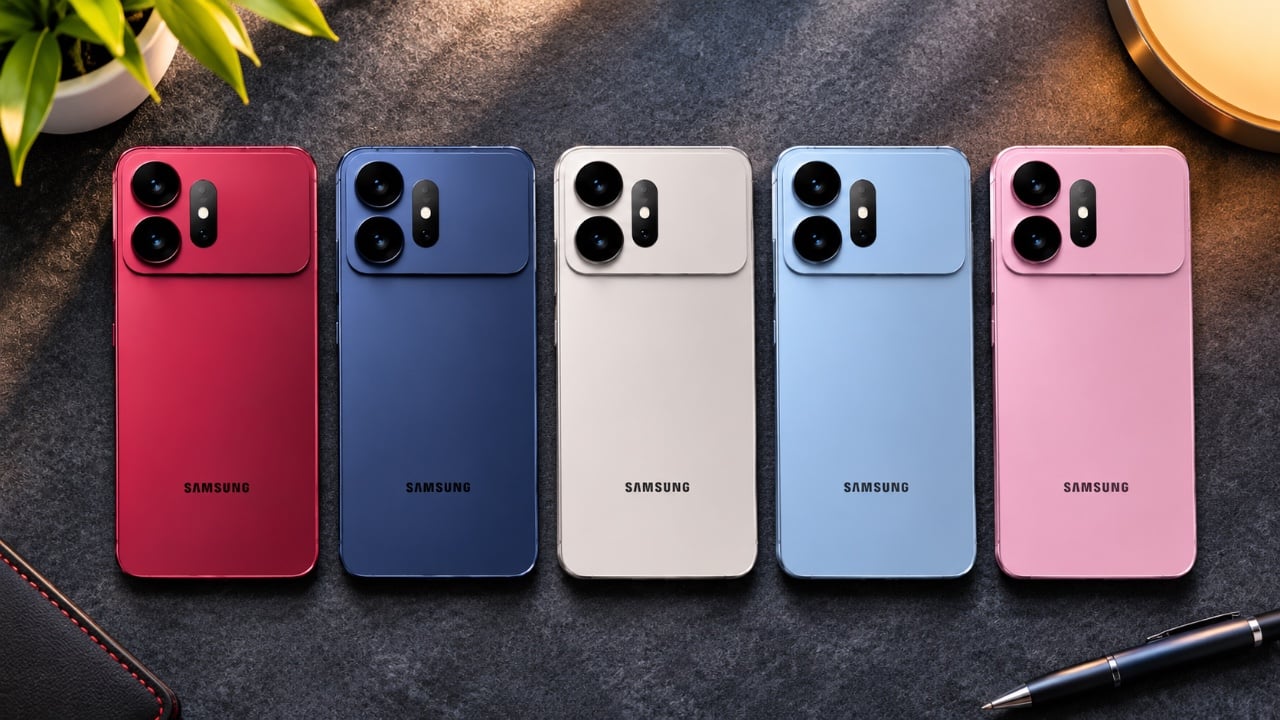
Samsung’s Galaxy S27 series is poised to set a new standard for flagship smartphones, combining innovative design with advanced technology. Leaks and early reports indicate substantial upgrades across the lineup, including a redesigned camera system, next-generation processors, and a variety of display options tailored to different user preferences. The series will include four models: Galaxy […]
The post Is Samsung’s Upcoming Galaxy S27 Series Shaping Up to Be a Massive Leap? appeared first on Geeky Gadgets.
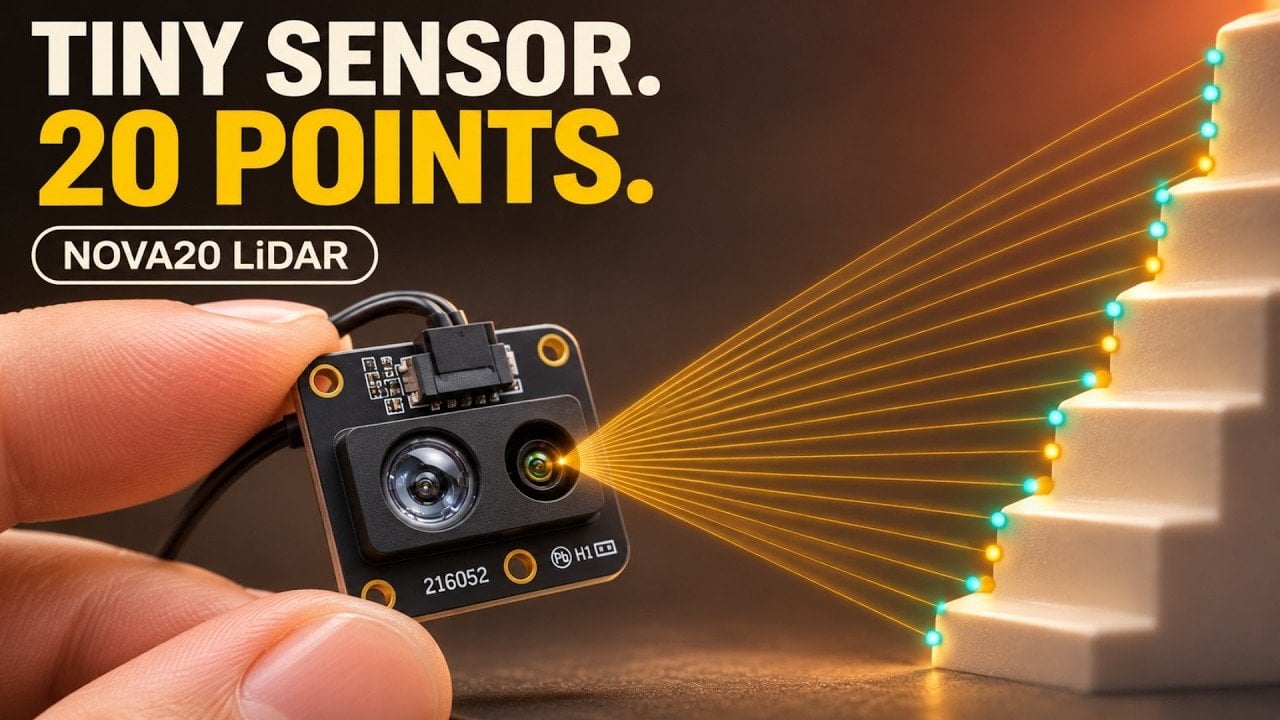
The Benewake NOVA20 uses 20 detection channels across a 40° field of view to measure distance in multiple directions without a rotating scanner. Paired with an ESP32, the sensor can feed an OLED readout and a Wi-Fi dashboard for real-time monitoring. Repeated outdoor tests reached 2 m, below the stated maximum of up to 3 […]
The post Pair the Benewake NOVA20 with an ESP32 for 20-Channel LiDAR appeared first on Geeky Gadgets.

An ice bucket has a pretty straightforward job, but carrying one outside often reveals everything its design forgot. There’s the slippery base, the awkward handle, and the ice that seems to disappear before lunch is over. The YETI Rambler Beverage Bucket, offered in a variety of colors, including Rescue Red through Huckberry, gives this familiar object a more considered set of details for keeping refreshments close by.
At first, the shape is reassuringly ordinary. A broad opening, slightly tapered body, and swinging metal handle preserve the bucket’s familiar silhouette, while the red finish gives it enough personality to leave on the patio table. The exposed stainless-steel rim adds a visual break at the top, keeping the whole bucket from looking like one uninterrupted block of brightly colored outdoor gear.
Designer: YETI x Huckberry
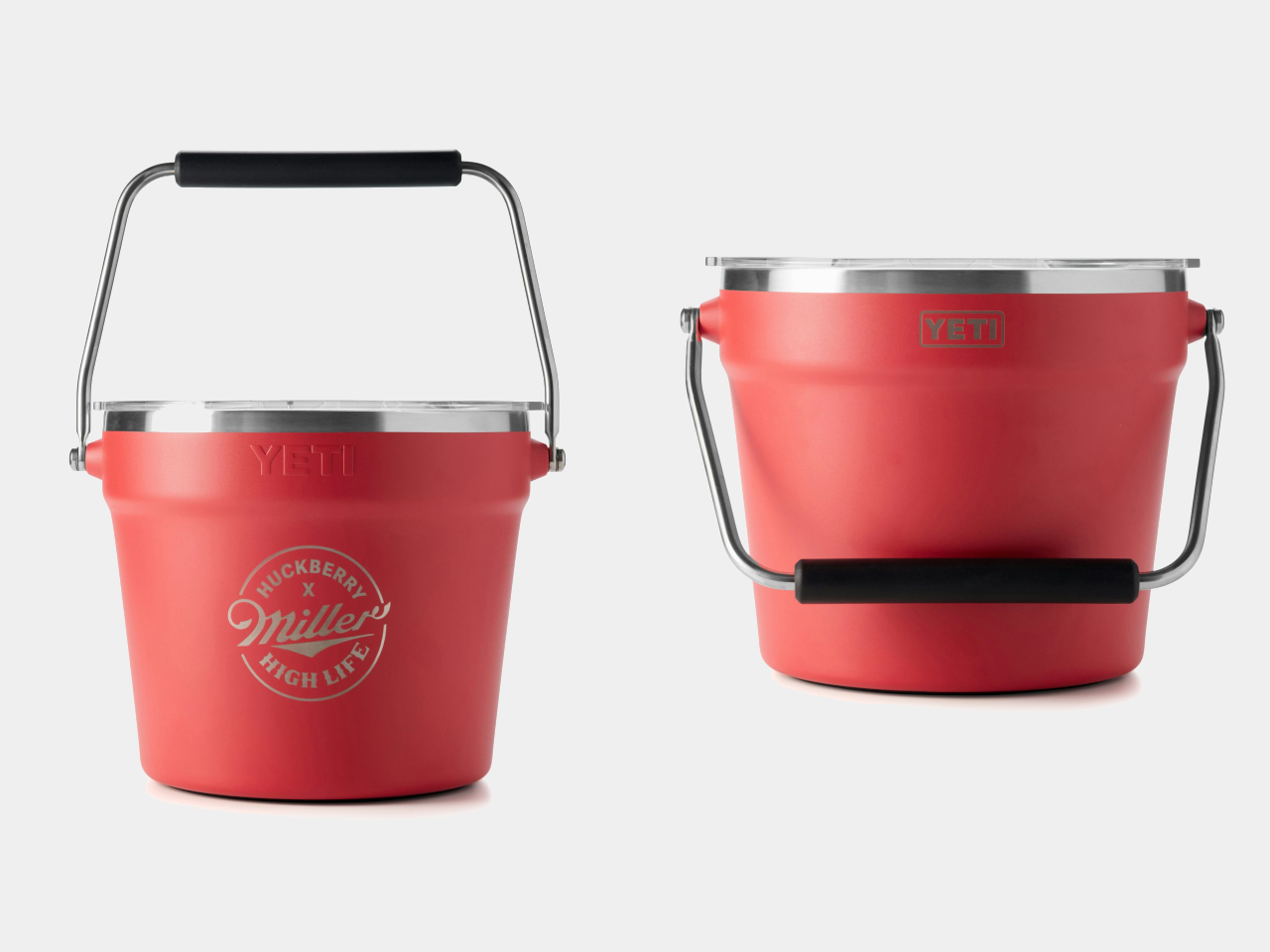
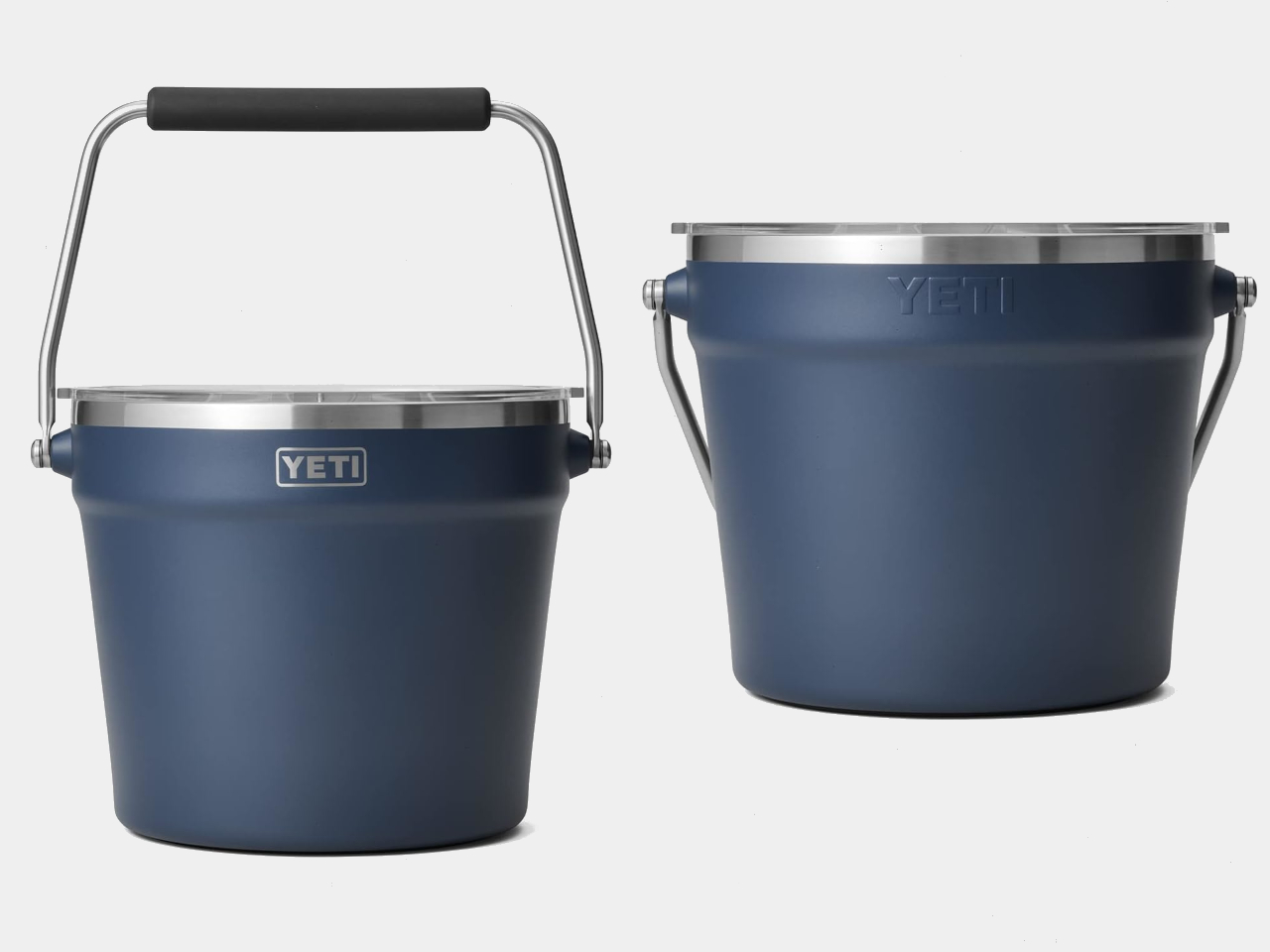
The more important work happens between its walls. Kitchen-grade 18/8 stainless steel provides a durable shell, while double-wall vacuum insulation slows heat transfer to help the ice last longer. For a family lunch outside, that means a dedicated spot for cans of sparkling water or soda without bringing a full-size cooler to the table. There’s no battery to charge or setting to adjust.
A lid is useful outside, but getting a drink shouldn’t require dismantling the setup. The removable lid lifts away to leave the opening accessible, rather than making you fish through a narrow neck. Its clear surface also lets you check the contents without taking it off. It isn’t leakproof, though, so this is something to carry upright, not toss sideways into the car.
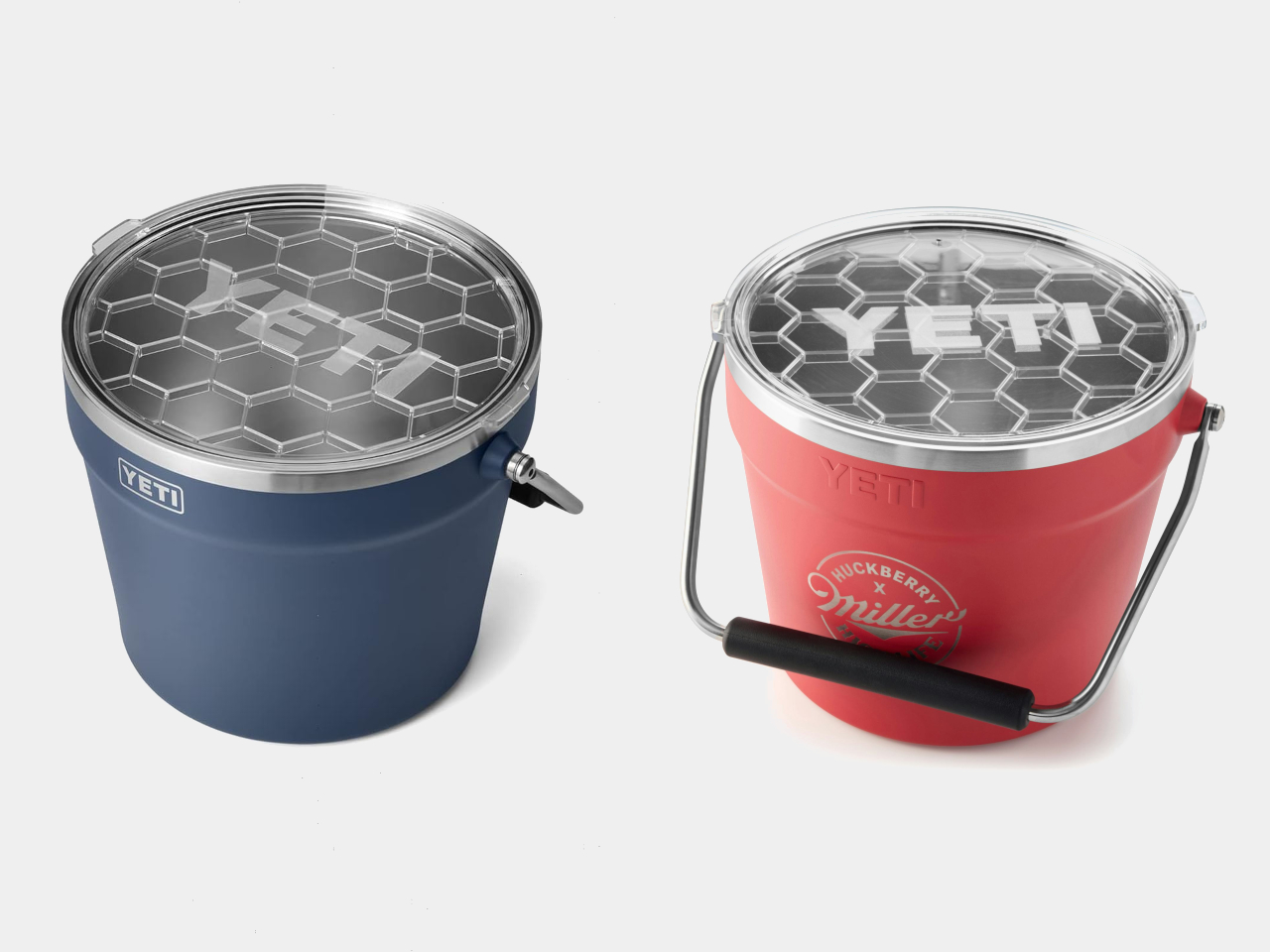
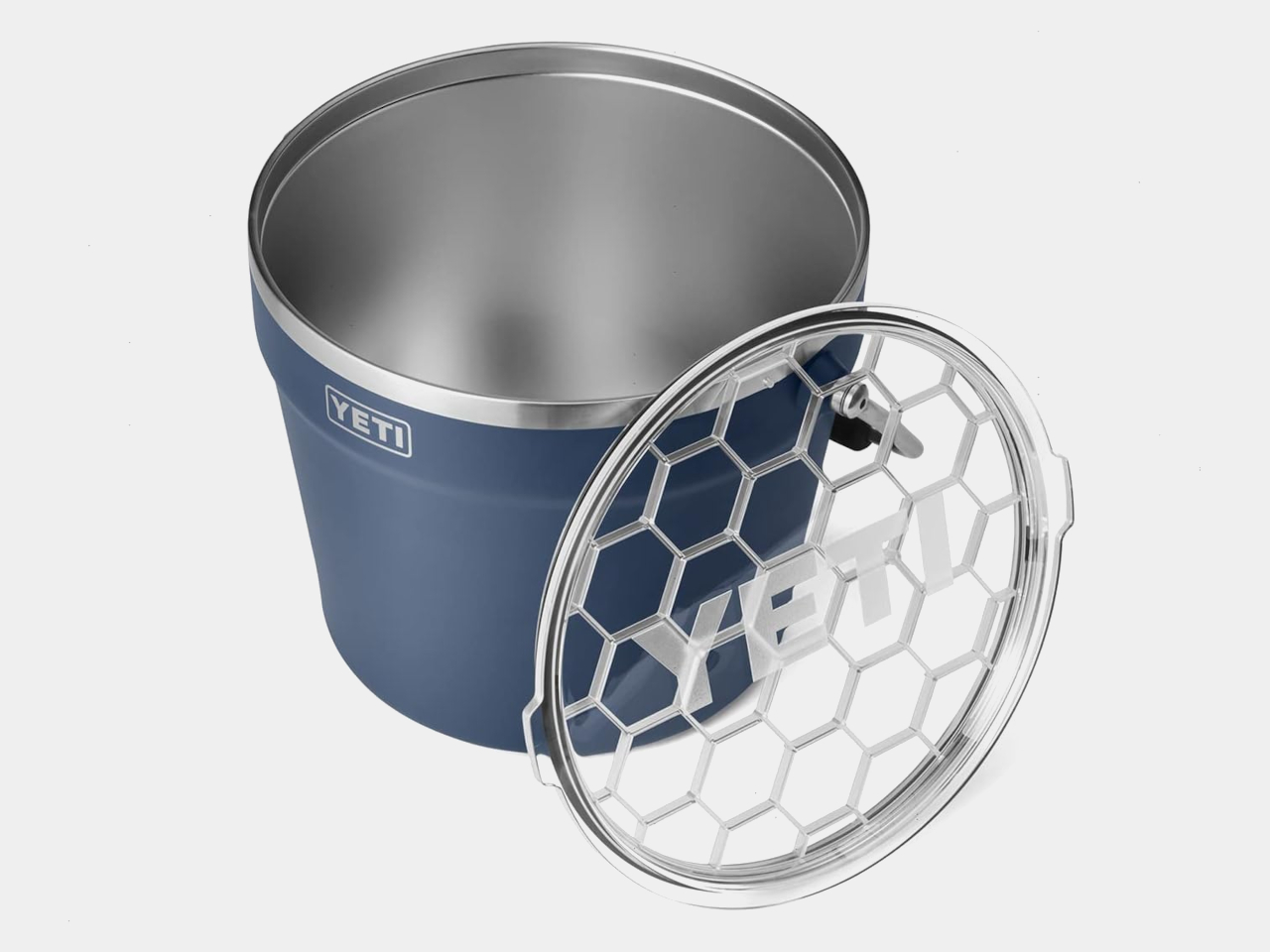
That handle has received some attention, too. It rotates on its side mounts and includes a rubber grip, giving your hand something other than bare metal to hold. Swing it down when the bucket reaches the table, and it stays out of the opening. It’s a simple arrangement that makes sense when you’re moving ice and drinks from the kitchen to the porch.
Underneath, the BearFoot non-slip ring tackles a less glamorous problem. A metal bucket can make an unpleasant entrance when it lands on a hard tabletop, and sliding around doesn’t improve matters. The rubber base is designed to reduce slipping, clattering, and scratches. It’s a small material change at the point where the bucket meets the furniture, rather than another accessory to remember.

With a two-gallon capacity, this is a substantial tabletop container rather than a personal lunch companion. It measures 11.5 inches wide and 8.8 inches tall, and weighs 6.7 pounds empty. Those proportions suit a shared refreshment station, where people can help themselves. Keeping drinks together on the table leaves the larger cooler free for sandwiches, fruit, and the rest of the picnic supplies.
Once lunch is over, the bucket and lid can go in the dishwasher, which is a welcome detail for something filled with sticky cans and melting ice. Remove the lid, and multiple buckets can stack for storage. The handle folds down again, ready for a shelf instead of a tabletop, leaving one less awkward shape to negotiate when everything heads back inside.

The post YETI’s Rambler Bucket Brings Cooler Thinking to the Picnic Table first appeared on Yanko Design.