This Wine Cooler Scans the Label and Sets Its Own Temperature for You

Wine culture has never been more accessible, with good bottles showing up at rooftop dinners, backyard gatherings, and weekend trips just as often as they do at restaurant tables. What hasn’t quite kept up, though, is how we actually serve them once we’re there. Temperature is the detail that most people overlook, and it’s arguably one of the most important variables in how a wine actually tastes.

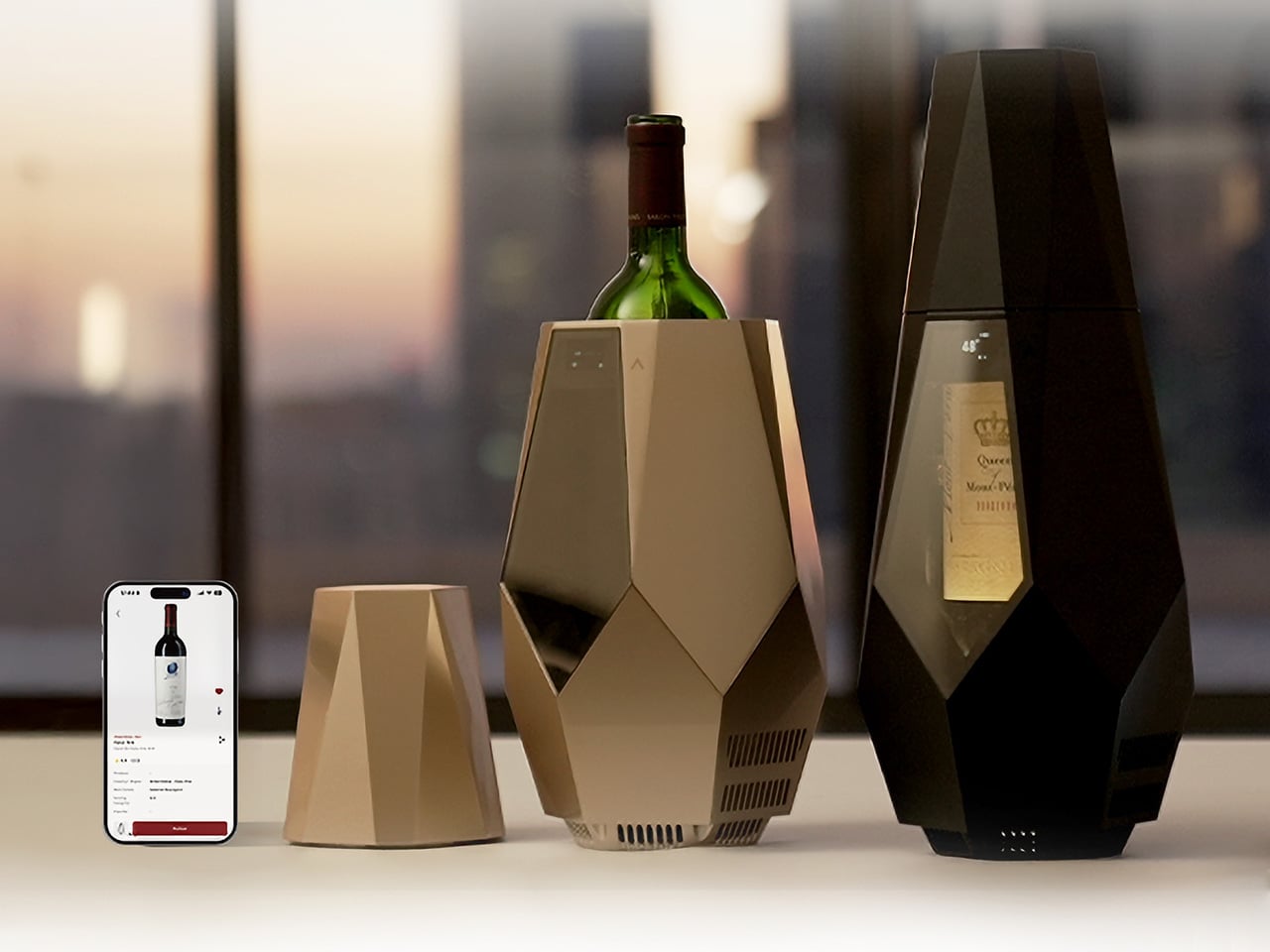
That’s the gap that Porta is designed to fill. It’s a smart, portable wine cooler that keeps a bottle at the right serving temperature without ice, without a power outlet, and without any of the fuss that usually comes with trying to manage these things outside of a dedicated wine space. It’s compact, rechargeable, and built for the kind of drinking occasions that happen well beyond the kitchen.

Designer: Metaproi

Click Here to Buy Now: $249 $599 (58% off). Hurry, only 363/500 off. Raised over $57,000.

A bottle can come from a great producer, be stored perfectly, and still taste flat if it’s poured too warm or too cold. Serve a red too warm, and the alcohol starts to overwhelm everything else. Too cold, and the aromas shut down. There’s a narrow window where the flavors actually show up the way they were intended, and that window closes faster than most people realize.

Cellars and wine fridges solve the storage part just fine. But once the bottle comes out and ends up on the dinner table, or worse, goes into an ice bucket, the situation changes pretty quickly. An ice bucket drops the temperature too far and strips the wine of the very character you chose it for. Porta addresses that moment specifically, which is where it actually matters.

The companion app is where Porta’s smarter side comes in. Pair it with your phone, point the camera at the label, and the app identifies the grape variety and sets the chiller to an appropriate temperature automatically. You can also adjust manually, log wines, add tasting notes, and build a personal wine list, making it quite useful for something that just sits quietly on your table.

There’s also a decanting timer built into the workflow, a small detail that makes a real difference. Once you open the bottle and let it breathe, Porta tracks the time and lets you know when it’s ready to pour. It removes the guesswork from a process that casual drinkers tend to skip entirely, adding a bit of structure to the ritual without making it feel like homework.

What makes Porta genuinely interesting as a design object, though, is how cordless it actually is. It runs on an internal 10,000 mAh battery good for up to eight hours of sustained cooling, and charges via USB in about three and a half hours. That makes it as useful on a terrace or a picnic blanket as it is at a formal dinner table.

The cooling itself is handled by a thermoelectric system that operates without any mechanical movement, which keeps things quiet and vibration-free. The interior circulates chilled air around the bottle while a cork-filled insulating frame holds the temperature steady, even when the ambient conditions outside change. It can bring wine down to 46°F and sustain those conditions throughout a meal without needing you to fuss over it.

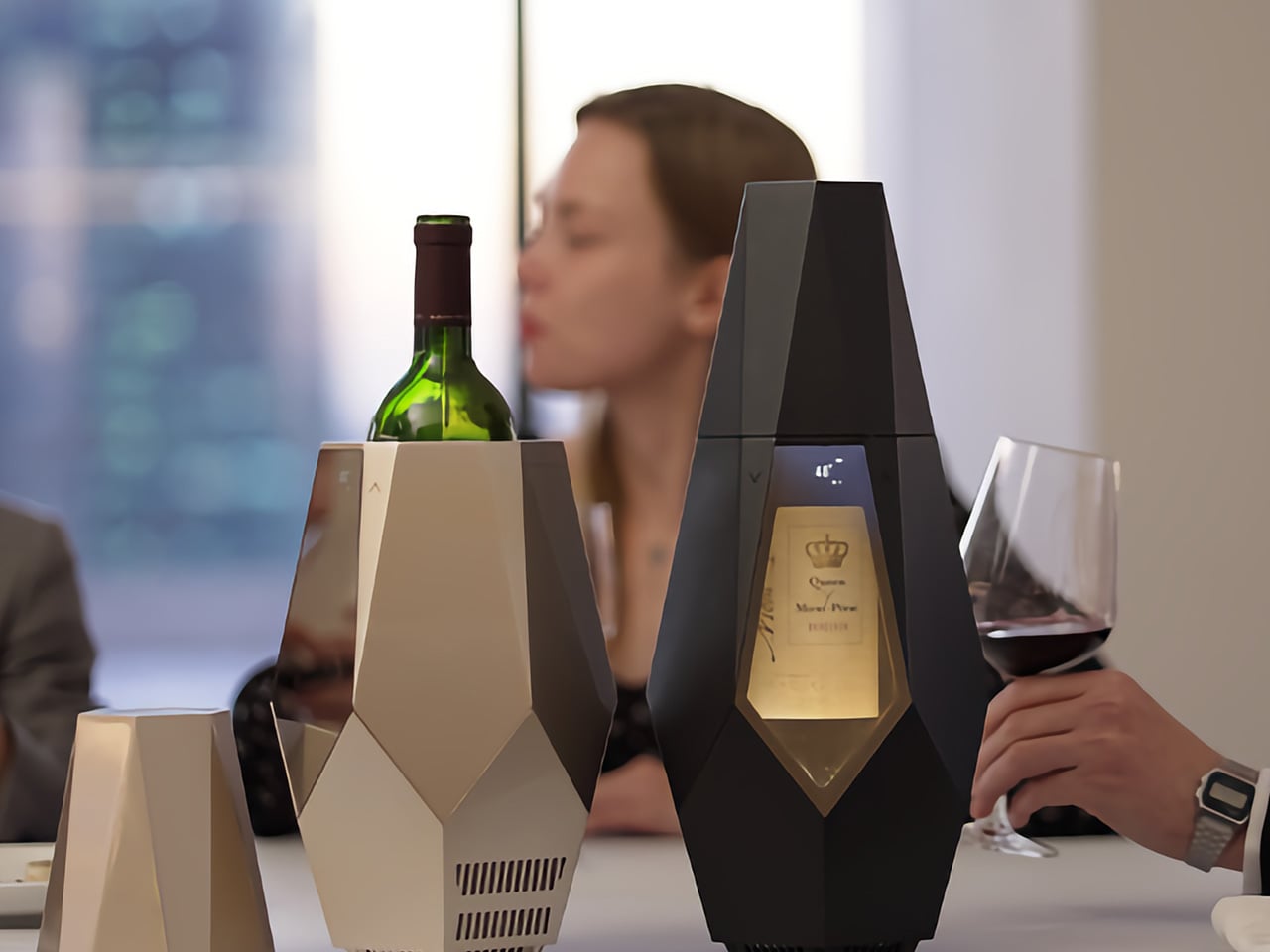
Two angular wine coolers on a table, one holding a green bottle, with a glass of red wine and a blurred person in the background.

The design itself is worth noting separately. Porta comes in Champagne Gold and Matte Black, with a faceted, geometric silhouette that tends to draw attention at the table. That’s intentional. The front window keeps the label visible while the bottle chills, turning it into part of the setting rather than something to be tucked away. It’s the kind of object that actually belongs where the drinking happens.

Click Here to Buy Now: $249 $599 (58% off). Hurry, only 363/500 off. Raised over $57,000.

The post This Wine Cooler Scans the Label and Sets Its Own Temperature for You first appeared on Yanko Design.

Coleman’s $200 Cooler Chills for 2 Days, Folds Flat in 10 Seconds

Coolers are great until the trip ends. Then they become a large, oddly shaped object that takes up the entire trunk on the way home, sits on the garage floor for a month, and eventually gets shoved into whatever corner will take it. For apartment dwellers especially, owning a full-sized hard cooler is less a convenience and more a spatial negotiation that rarely ends well.

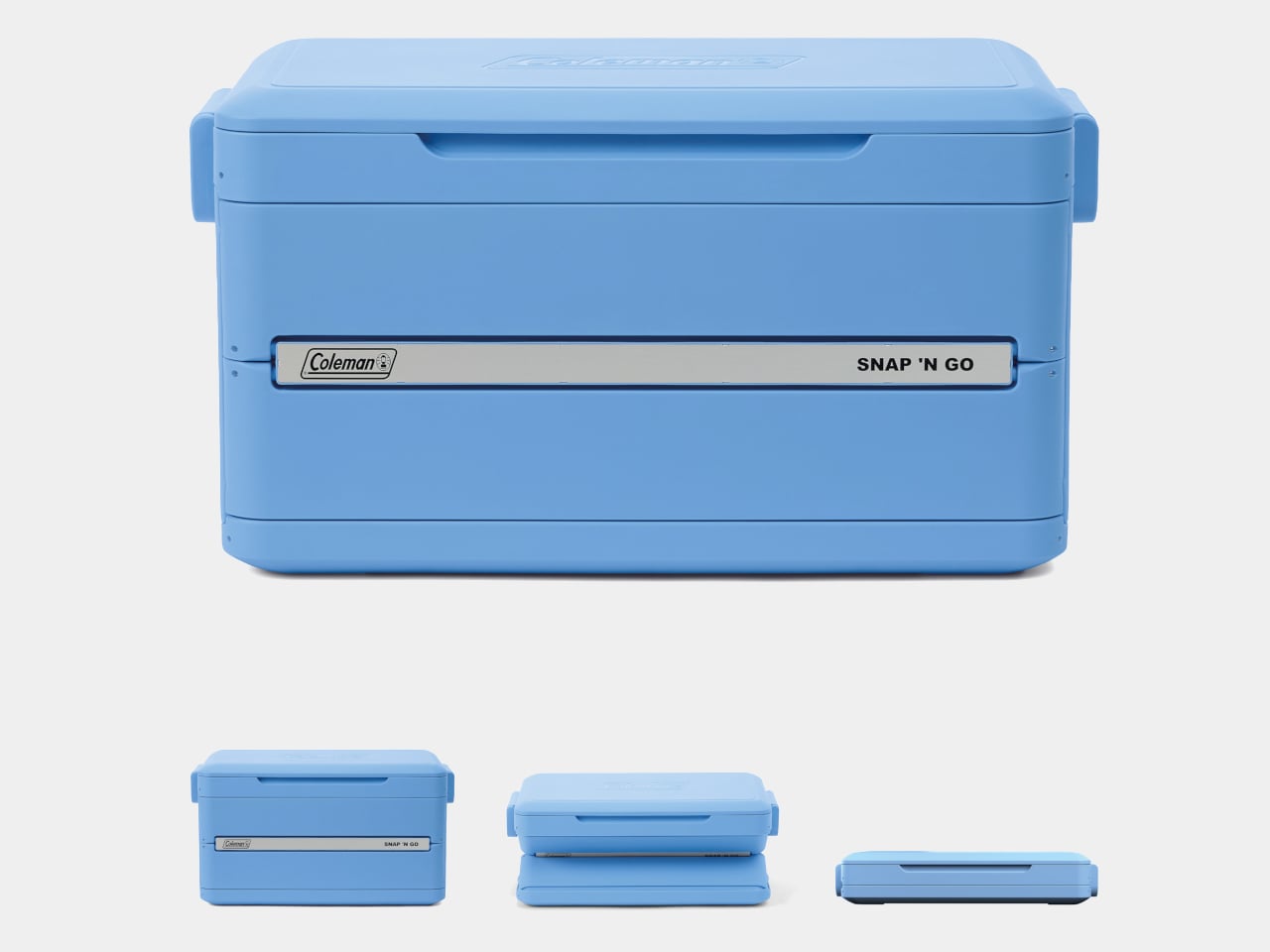
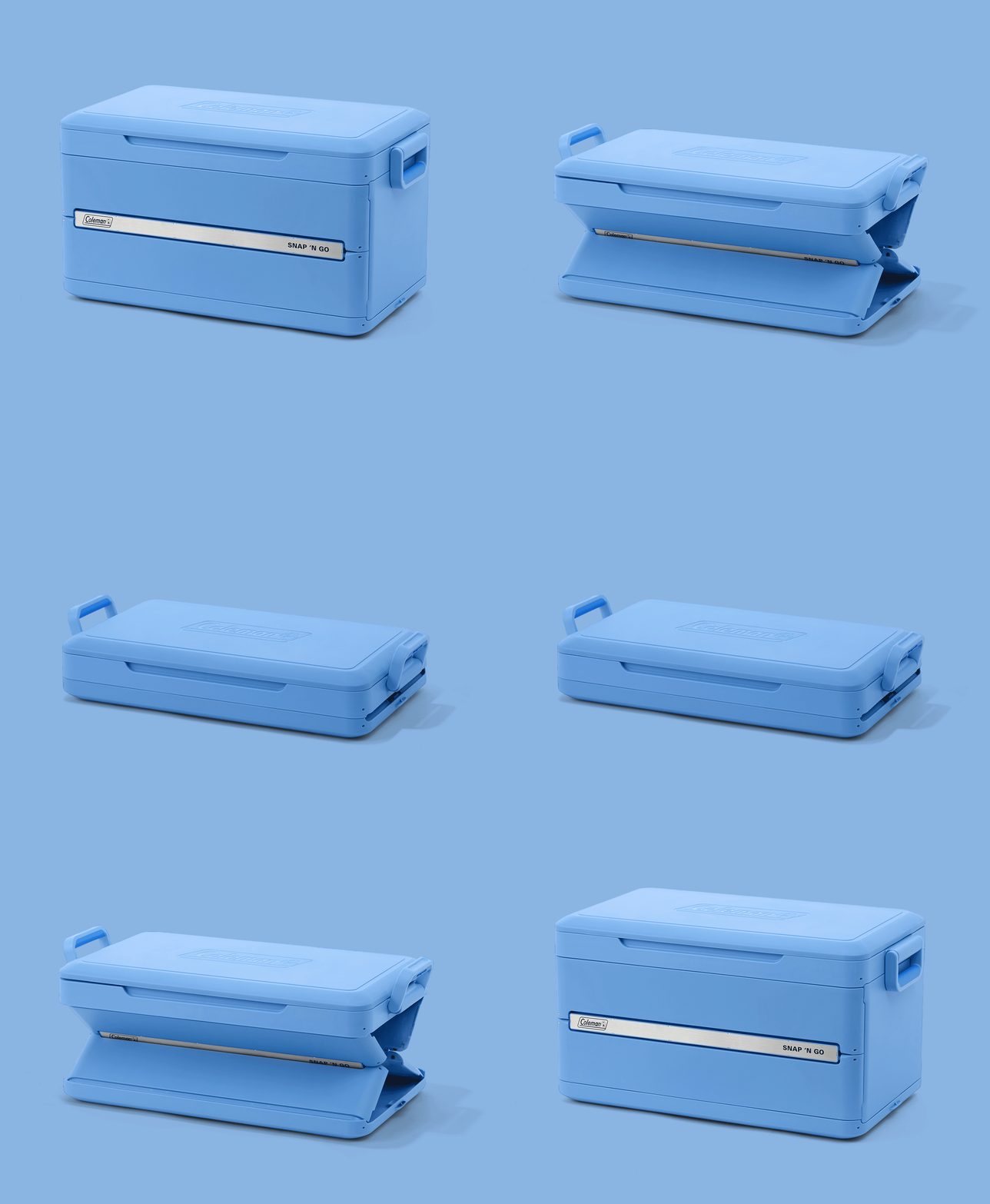
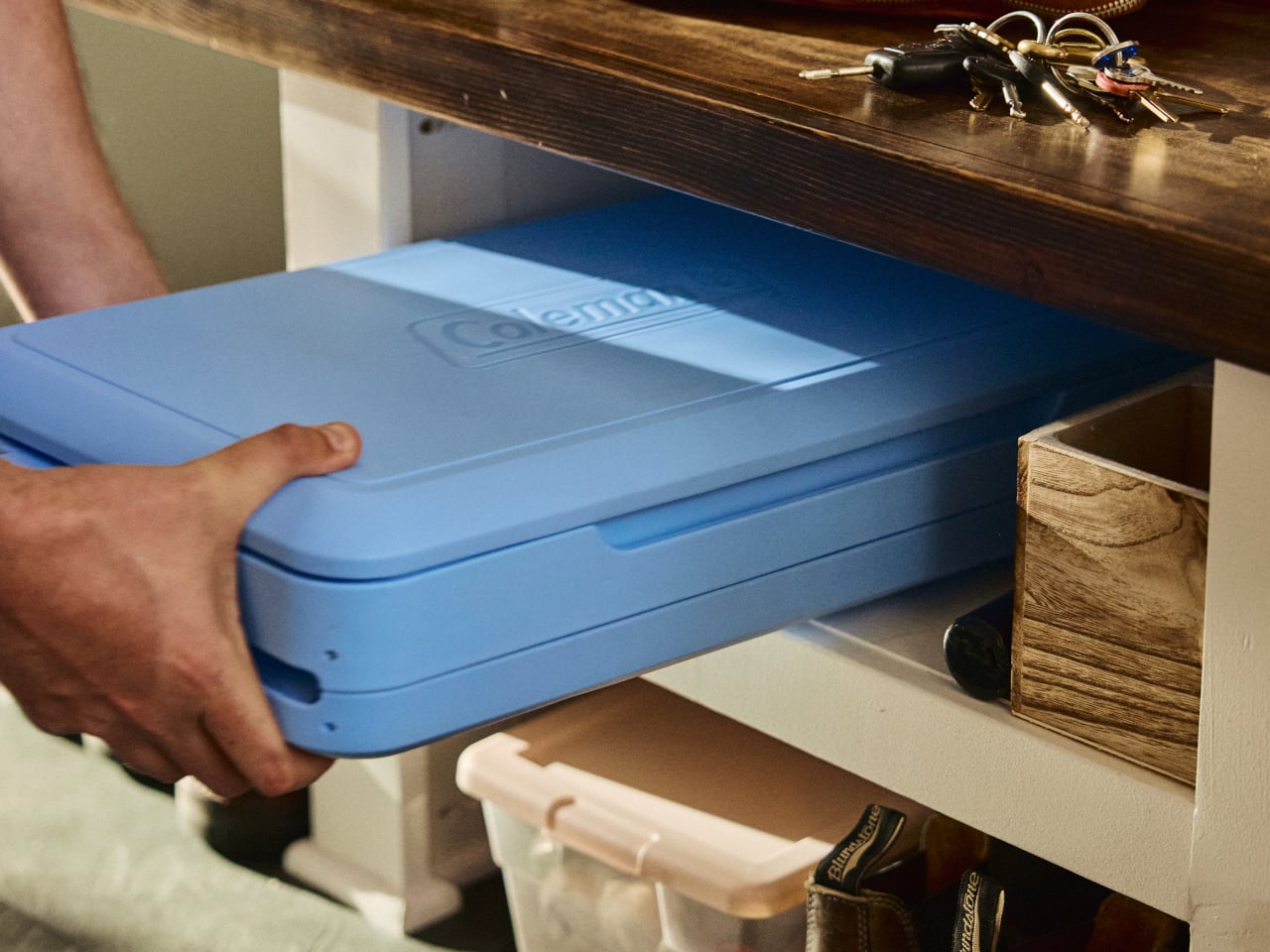
Coleman’s Snap ‘N Go is a hard-sided cooler with a patent-pending collapsible design that compresses to one-third of its open volume in under 10 seconds. The mechanism borrows logic from folding storage crates: the body panels snap down in sequence, and the removable interior liner folds flat and stows inside the lid. What was a full-sized cooler becomes a flat slab thin enough to slide under a bed or stand upright on a shelf between uses.

Designer: Coleman

The construction is hard polypropylene, which matters more than it sounds. Soft collapsible coolers already exist, but they sacrifice insulation to achieve that flexibility. The Snap ‘N Go maintains a fully insulated lid and body, rated to hold ice for up to 64 hours. That’s two full days of cold retention from something that, an hour later, disappears into a closet, which is a combination the soft-sided category has never managed.

1

Setup works in reverse, just as quickly. From flat storage to loaded and latched takes under 10 seconds, and the removable liner handles watertight containment once the body is expanded. The liner also makes post-trip cleanup more manageable, since it pulls out separately rather than requiring the whole cooler to be rinsed out and dried upright somewhere. It’s a small detail, but one that addresses one of the more tedious parts of cooler ownership.

Three sizes cover most group sizes: 35 qt at $200, 45 qt at $220, and 55 qt at $240. The 55-qt model holds up to 93 cans without ice and supports 200 lbs. when expanded, though Coleman is careful to note it isn’t intended as a seat. Handles are designed to accommodate both carry orientations, vertical when the cooler is collapsed flat and horizontal when it’s fully open and loaded.

The one question the design raises, and doesn’t fully answer yet, is how the collapsible mechanism ages. The hinges, panel connections, and liner attachment points are all doing repetitive work that a standard molded cooler body never has to perform. Coleman backs it with a three-year limited warranty, which covers the expected lifespan question in practical terms but doesn’t tell you much about what happens in year four after a few dozen collapse cycles on a tailgate.

The post Coleman’s $200 Cooler Chills for 2 Days, Folds Flat in 10 Seconds first appeared on Yanko Design.

3D printed ceramic cooling tower takes inspiration from termite mounds

They say everything in nature has a purpose for existing, even if their existence is a nuisance to us humans. Scavengers, for example, are nature’s janitors and recyclers, putting dead things to good use. Even termites, whose presence is often a death sentence for homes and structures, are important to the ecosystem, and they can apparently serve as artful inspiration as well. Maybe not the termites themselves but the complex tunnels they create inside their mounds. These patterns are actually meant to facilitate airflow, which makes it the perfect reference for a man-made cooling solution that brings natural design and technology together to create a more sustainable solution to hot temperatures.

Designer: Rameshwari Jonnalagedda

There has been some interest in alternative cooling solutions, especially those that don’t consume too much electricity or none at all. Traditional techniques, particularly evaporative cooling that makes use of clay pots or pipes, have gained a lot of traction, especially because they can become decorative pieces inside modern homes. That said, the old methods don’t exactly scale well to today’s climate, room sizes, and needs, so designers have to think a bit outside the box to come up with a better solution to fit modern needs.

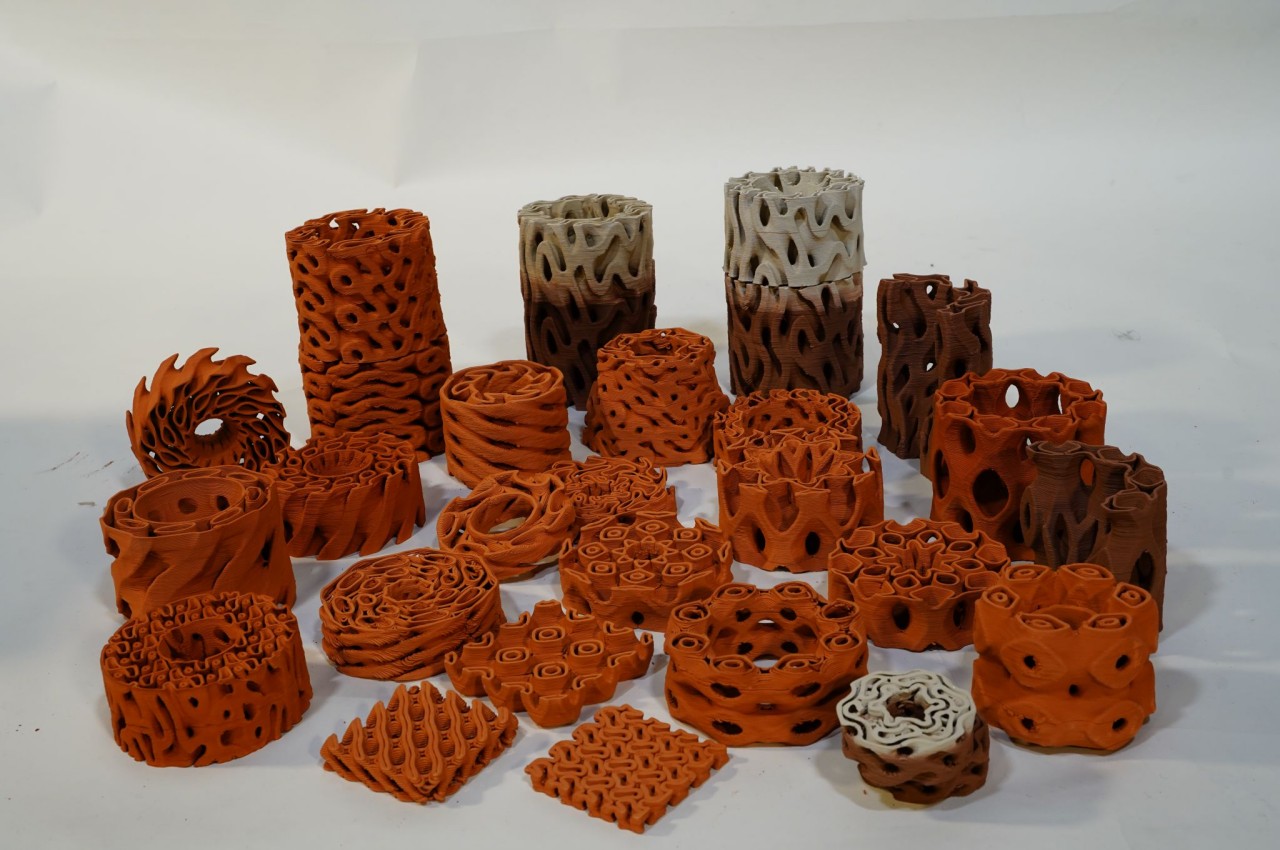
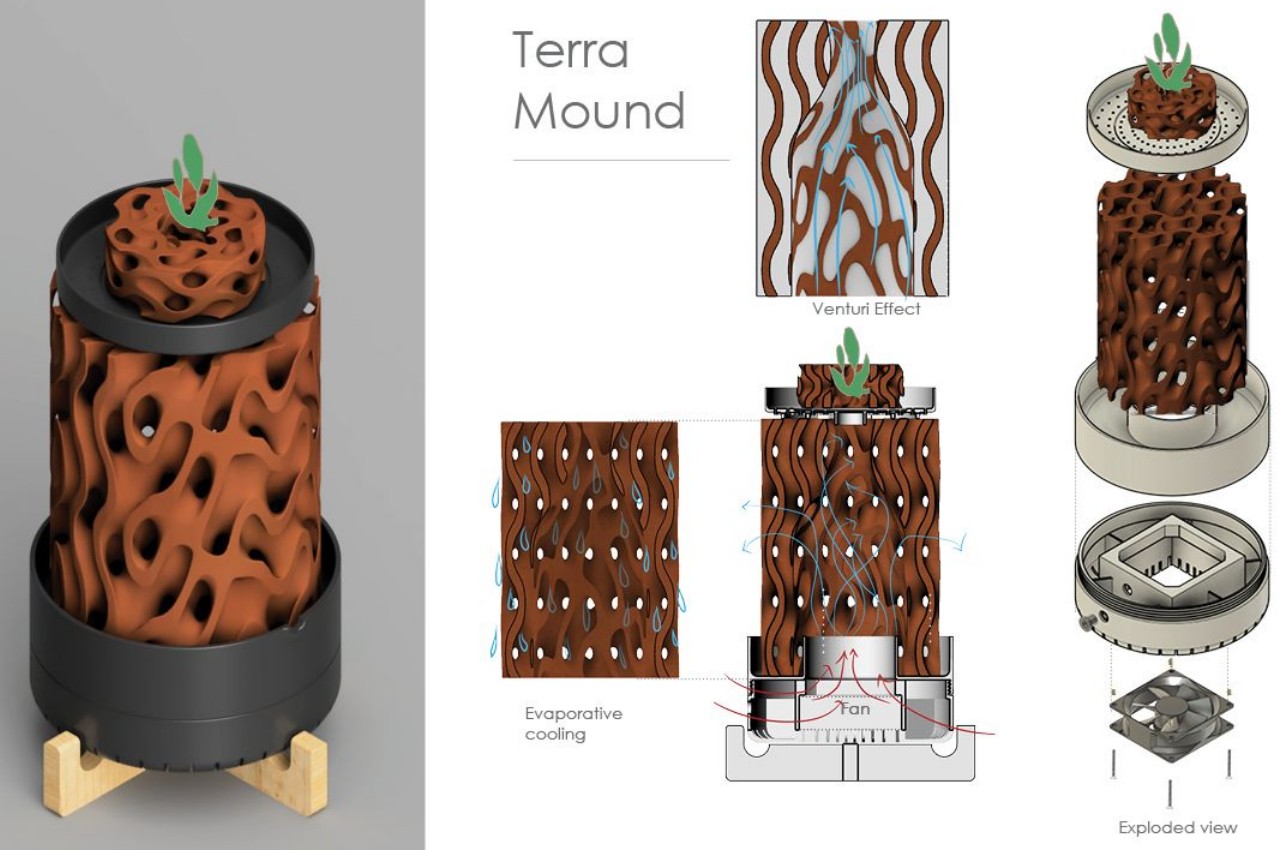
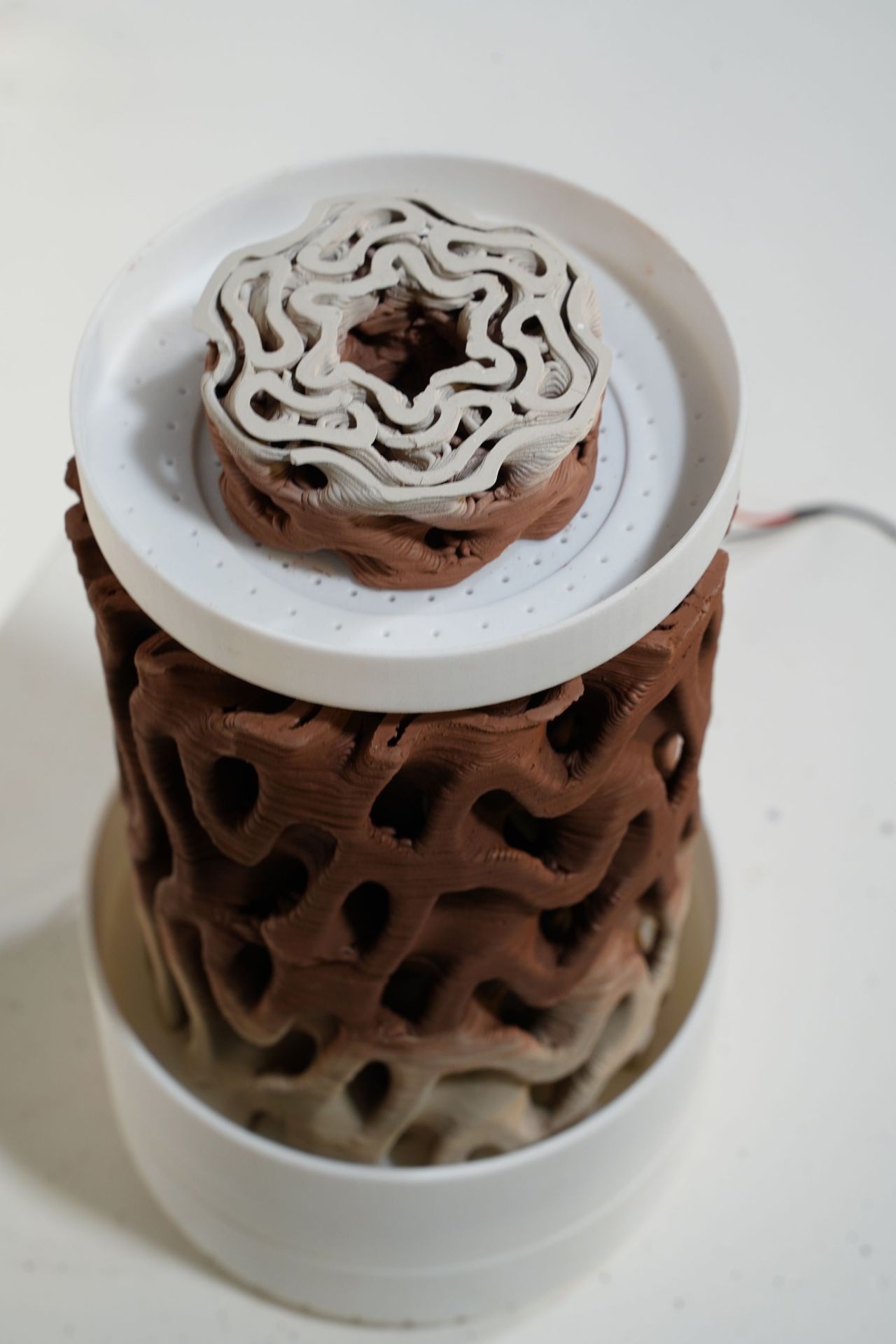
TerraMound looks to termites for one part of the solution, particularly how their shapes exemplify high surface-area-to-volume ratios, meaning how much surface area there is in a compact space. Surface area is one of two critical elements in an evaporative cooler, and that is made possible by utilizing complex geometric patterns that look like artistic versions of termite mounds. Such a design would be impossible to do en masse by hand, which is where 3D printing comes in and where the project’s uniqueness really shines.

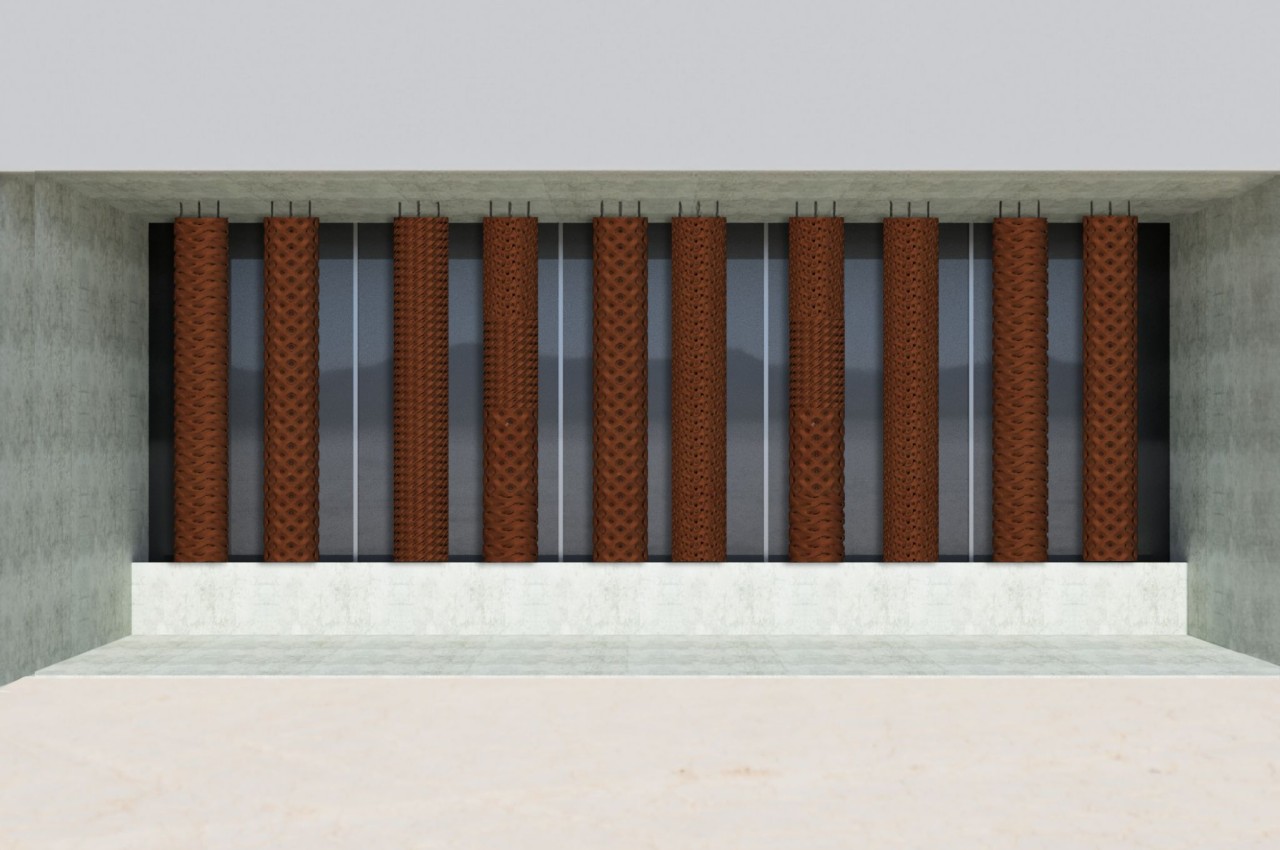
The other critical element to this type of cooling solution is porosity, which is why clay is the preferred material for this kind of cooler. Clay is also not a typical 3D printing material, which is what makes this ceramic cooler design even more special. This method can eventually be extended to large-scale 3D printing technologies, allowing the quick and easy production of facade panels, walls, and other structures that not only look beautiful but can also help improve airflow in buildings.

As a cooler, TerraMound isn’t completely passive, as it has a fan at the bottom to draw air upwards. A planter sits on top as a source of water that trickles down the desktop cooling tower, utilizing the absorbent properties of the terracotta clay to help the evaporation process. It also acts as a distinctive and beautiful piece of table decoration, one that you wouldn’t have guessed was inspired by something we humans consider to be pests.

The post 3D printed ceramic cooling tower takes inspiration from termite mounds first appeared on Yanko Design.