It only seems right that cloud gaming should welcome virtual pilots, and that’s definitely now the case if GeForce Now is your streaming platform of choice. One of the most frequently requested features from its community according to NVIDIA, flight control support has now been added to its GeForce Now offering, meaning you can live your Top Gun fantasies without worrying about your rig buckling under the pressure.
The first compatible peripheral is the Thrustmaster T.Flight HOTAS One — which incidentally NVIDIA is giving away to five winners of a competition it’s currently running, along with a month of GeForce Now Ultimate — with more to be supported over time. A dedicated row in the GeForce Now app will highlight games that you can play with flight controls, one of which will be Team Jade’s Delta Force, which arrives on the service soon.
Last year NVIDIA started using RTX 5080 GPUs to power its $20-per-month GeForce Now Ultimate servers, allowing for 5K streaming up to 120fps. Engadget’s Devindra Hardawar called the update a "cloud gaming revelation" and was blown away by how sharp and smooth the experience was.
This article originally appeared on Engadget at https://www.engadget.com/gaming/pc/geforce-now-adds-support-for-flight-controllers-171047006.html?src=rss
At CES earlier this month, AMD announced the Ryzen 7 9850X3D, a more wallet-friendly take on its $700 9950X3D. The company promised the new chip would be out sometime in the first three months of the year, and it's going to arrive a bit sooner than you might have expected. It can be all yours on January 29 for $499.
AMD says the 9850X3D builds on the 9800X3D with an 400MHz upgrade to the boost clock. It can reach boost speeds of 5.6GHz. The Ryzen 7 9850X3D is an 8-core CPU with 16 threads and 104MB of combined L2 and L3 cache. AMD is employing its 3D V-cache tech so it can vertically stack more cache memory onto the chip.
The 9850X3D also has a 120W TDP. AMD claims the CPU is able to deliver an average 27 percent faster gaming performance than the Intel Core Ultra 9 285k. We'll be able to assess that for ourselves very soon given that the 9850X3D will hit shelves in just a few days.
This article originally appeared on Engadget at https://www.engadget.com/computing/amds-ryzen-7-9850x3d-cpu-will-arrive-on-january-29-and-cost-499-165000446.html?src=rss
The nominees for the 2026 Academy Awards were just announced and Ryan Coogler's vampire-adjacent period drama Sinners received a record-breaking 16 nominations. That's the highest number of Oscar nominations for a single film in the history of the awards, followed by Titanic, La La Land and All About Eve with 14 noms each.
Sinners grabbed a nomination in nearly every major category, including Best Picture, Best Director and Best Original Screenplay. The same goes for the performances, as Michael B. Jordan captured the nomination for Best Actor. Even Delroy Lindo got nominated for Best Supporting Actor, which is his very first Oscar nomination after 50 years in the business.
Paul Thomas Anderson's One Battle After Another walked away with 13 nominations and Yorgos Lanthimos' Bugonia scored four. Apple's F1 actually got nominated for Best Picture, which is unusual for a popcorn-style blockbuster. Netflix scored Best Picture noms for both Frankenstein and Train Dreams.
Netflix also got its flowers for the international animated sensation KPop Demon Hunters. It got nominated for Best Animated Feature and, of course, Best Original Song.
The 98th annual Academy Awards will take place on March 15, with Conan O'Brien returning to host. It'll be broadcast live on ABC. The awards ceremony will be moving to YouTube in 2029.
This article originally appeared on Engadget at https://www.engadget.com/entertainment/tv-movies/netflix-scores-oscar-nominations-for-frankenstein-and-kpop-demon-hunters-163521141.html?src=rss
Waymo’s fully autonomous robotaxis are now accepting passengers in Miami. The city was one of five named in expansion plans last year, and joins the likes of Phoenix, Los Angeles and the San Francisco Bay Area on Waymo’s existing network.
Waymo says that nearly 10,000 Miami residents have signed up so far, and that it will send out invites to new riders on a rolling basis" in the weeks and months to come. The autonomous ride-hailing service will initially cover a 60-square-mile area that includes neighborhoods like the Design District and Wynwood, with Waymo planning to expand to Miami International Airport soon.
Waymo started testing robotaxi rides in Miami in November, without passengers initially, which allows it to spot local potential issues and local quirks, and adjust the driving algorithm so things go smoothly once humans are involved. The company insists that autonomous vehicles are safe and reliable, claiming a "ten-fold reduction" in serious injuries caused by crashes compared to human drivers in its current areas of operation.
Waymo’s Florida expansion will move to Orlando next, with the Texas cities of San Antonio, Houston and Dallas also on the agenda for 2026.
This article originally appeared on Engadget at https://www.engadget.com/transportation/evs/waymo-is-now-available-in-miami-162515070.html?src=rss
Xbox is set to hold the fourth installment of its now-annual Developer Direct showcase on January 22. You’ll be able to watch the 2026 edition at 1PM ET on YouTube (including versions with audio descriptions and ASL), Twitch, Facebook and Steam. Xbox will stream the Developer Direct on its regional channels simultaneously, and it’ll be available on Bilibili on Friday.
The YouTube stream might be the way to go, since that one will be available in 4K and 60 fps. Because we’re so nice, we’ve embedded that stream above, so all you have to do is click the play button when the time is right.
Microsoft has confirmed that it will feature three titles at the Developer Showcase: Fableand Forza Horizon 6 from Playground Games, and Beast of Reincarnation from Game Freak, which is best known for its work on Pokémon games. We should get developer interviews, gameplay footage and (for at least one of those) a release date.
There is a chance that there will be some surprises, of course. The three previous editions of Developer Direct all featured five games — the first one showcased Hi-Fi Rush, which was released on the same day.
This article originally appeared on Engadget at https://www.engadget.com/gaming/xbox/xbox-developer-direct-2026-how-to-watch-and-what-we-expect-to-see-from-fable-forza-horizon-6-and-beast-of-reincarnation-161000242.html?src=rss
After adding Personal Intelligence to Gemini as an opt-in experience, Google has announced that it’s also integrating the feature into AI Mode in Search. What Personal Intelligence does is pull information from your Google apps to tailor its responses based on your history and interests. For Search, in particular, you can allow Personal Intelligence to look for information in your Gmail accounts and Google Photos libraries.
If you use AI Mode to shop for clothes with the new feature enabled, for instance, Google could recommend items or models from a brand you previously purchased from. If it sees plane tickets or other reservations in Gmail, Google could also recommend specific items based on your destination and the season if you’re clothes shopping for that trip.
Personal Intelligence is powered by Google’s Gemini 3 AI model. The company says it doesn’t train its models using information from your Gmail inbox or Google Photos library, but it does use your prompts and AI Mode’s responses. Google also warned that sometimes, the feature’s recommendations could feel inaccurate because it could not fully comprehend the context or could make incorrect connections between separate topics.
At the moment, Personal Intelligence is an experimental feature that’s rolling out in Labs starting today. Google AI Pro and Ultra subscribers in the US, who use the service in English, will automatically have access to it and be able to connect AI Mode to Gmail and Google Photos. It will only be available to personal Google accounts, however, and not for Workspace accounts just yet.
This article originally appeared on Engadget at https://www.engadget.com/ai/ai-mode-in-google-search-can-now-pull-context-from-your-other-apps-160000103.html?src=rss
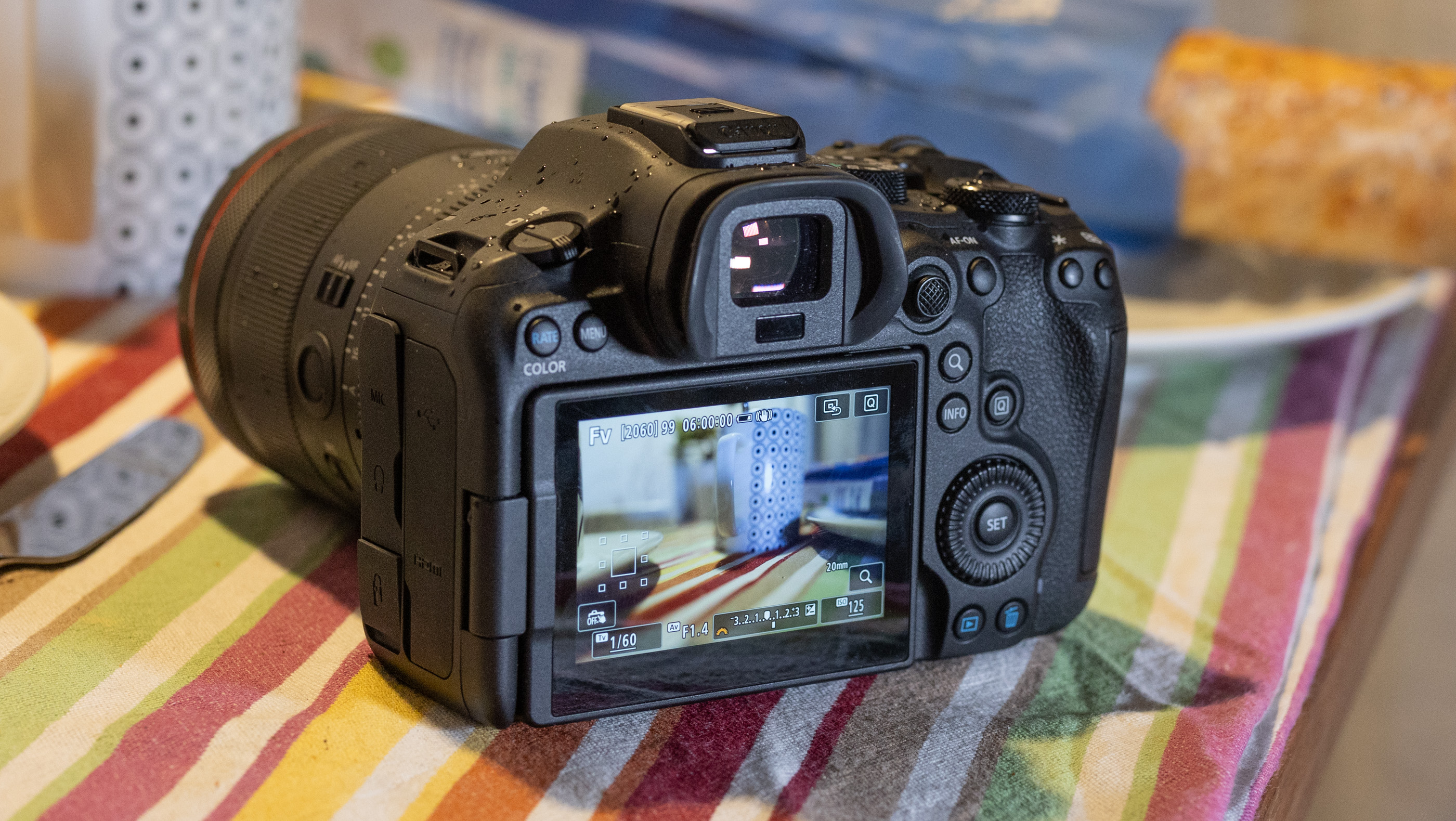
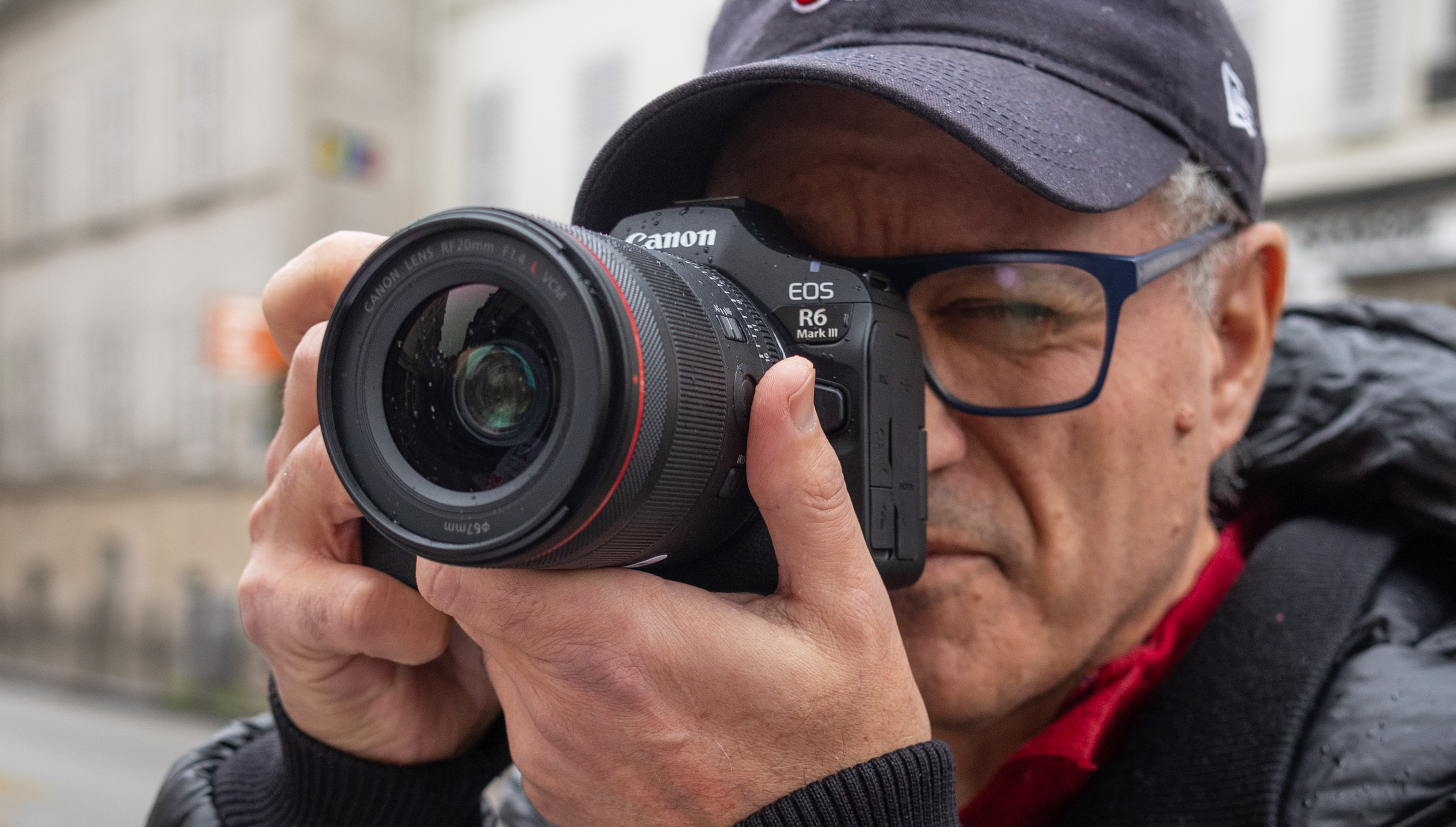
With video features like RAW now the norm on midrange mirrorless cameras, Canon decided not to mess around with its latest model, the 33-megapixel EOS R6 III. It’s a veritable cinematic beast, allowing up to 7K RAW video capture internally with fast and reliable autofocus and rock solid stabilization.
At the same time, it's a solid photo camera with high burst speeds and warm, accurate image quality. The R6 III has stiff competition with Sony’s 33MP A7 V, though, as the latter delivers higher dynamic range. The price could also be an issue for buyers, as the R6 III costs $300 more than its predecessor. Whether it’s worth that extra money depends on what you’re planning to do with it.
Handling and design
Canon EOS R6 III
Steve Dent for Engadget
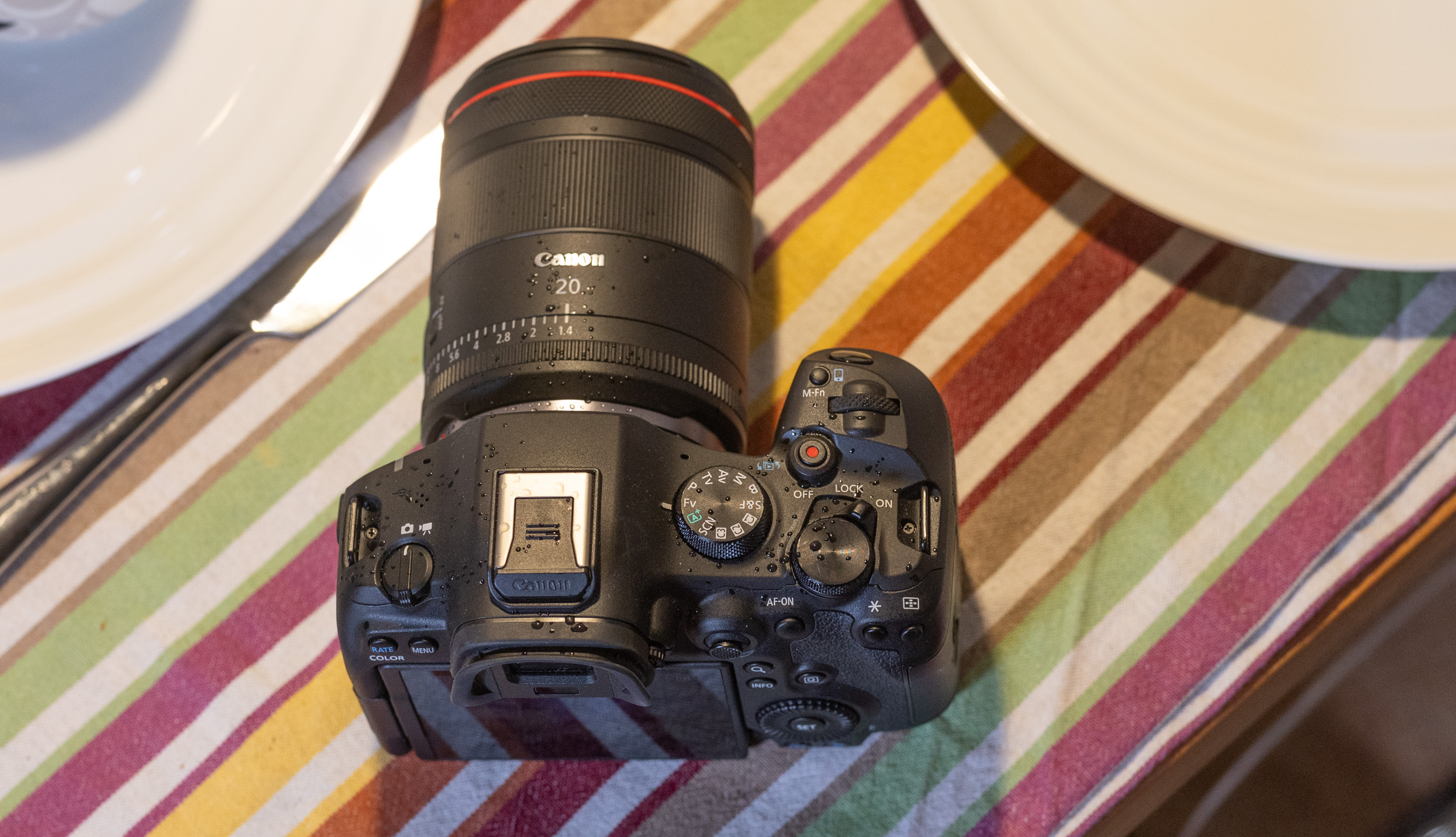
The EOS R6 III is quintessentially Canon in terms of design. It strongly resembles the R6 II and EOS R5 II, with the same button and dial layout at the rear. In terms of functionality, this is a good thing as everything falls perfectly to hand, letting you control it by feel once you’re used to it. However, the R6 III’s design is a bit bland, so if you’re looking for a stylish camera a la Fujifilm, this is not the one.
Holding the R6 III is also a pleasure thanks to the grippy, soft rubber exterior, though at 1.5 pounds it’s a bit heavier than the A7 V. It’s comfortable to hold and use all day, unlike Sony’s A7 V which felt uncomfortable after prolonged usage because of the harder material and sharp crease around the fingertip area.
The R6 III’s 3.69-million dot, 120 fps electronic viewfinder (EVF) worked fine for me to check color and focus, but falls short of the one on the much cheaper Nikon Z6 III. The flip-out 3-inch 1.65-million-dot rear touch display is on par for this category and does the job well. For storage, the R6 III supports CFexpress Type B cards for capturing RAW video, along with SD UHS II for MP4 video and photos.
Other key features include headphone and microphone ports, a full-sized HDMI input (instead of microHDMI as before, thankfully) and a USB-C port for charging and transfers. Battery life is decent for this category with a maximum 510 shots per charge or 620 shots if you engage the power saving mode or about 90 minutes of continuous 4K capture. However, you can roughly double those figures with Canon's optional $150 BG-R20 battery grip.
Performance
Canon's EOS R6 III offers fast burst speeds and skin-tone friendly colors
Steve Dent for Engadget
The R6 III offers a boost in shooting speeds over its predecessor thanks to an all-new 33MP sensor. It has a faster readout speed than the R6 II as well, allowing for faster bursts and lower rolling shutter skew. In comparison, Sony’s A7 V also has a 33MP sensor but it’s partially stacked, so it delivers less distortion when shooting fast-moving subjects.
With that new sensor and a 34 percent faster Digic X processor, the R6 III can shoot bursts at up to 40 fps in electronic and 12 fps in mechanical shutter modes (with continuous AF and AE enabled). That’s second only to the Panasonic S1 II (70 fps) in this price range. You can fill the buffer in about 3.7 seconds at that speed (150 RAW frames), which is a decent amount for a midrange camera.
You usually want to avoid the electronic shutter with fast-moving action due to rolling shutter distortion, but the R6 III’s faster sensor can handle objects that are moving reasonably quickly. I also caught a few photos of babies, bikes and dogs I might have otherwise missed by using the new pre-capture mode that records up to 15 photos before fully declencing the shutter.
The new sensor and processor also make the R6 III’s autofocus system faster and more accurate than before. When shooting bursts for fast moving action like dogs running or biking, less than five percent of my shots were out of focus. And the EOS R6 III can now track animals, birds and vehicles, on top of the faces, eyes and bodies of people.
This camera also has a couple of new autofocus tricks, including one called Register People Priority. That lets you save up to 10 individuals on camera that it can identify and automatically switch to. I found it handy in a large gathering, helping me focus on my niece enjoying her second Christmas. However, the R6 III lacks a few autofocus features found on the R5 II like “action priority” for sports, eye control AF and AI upscaling.
In-body stabilization is also excellent, keeping the sensor rock-steady for handheld shooting with 8.5 stops of shake reduction. With that enabled, I was able to nicely blur action on the streets while keeping the background sharply in focus at shutter speeds down to a full second.
Image quality
With a 33MP sensor instead of a 24MP sensor, the R6 III offers quite a bit more sharpness and a touch more dynamic range than its predecessor. When shooting RAW, I was able to coax a lot of detail out of high contrast shots on sunny days with dark shadows. However, Sony’s A7 V soundly beats the R6 III in terms of dynamic range, thanks to its innovative new sensor.
The R6 III’s high ISO performance isn’t too bad for a higher-resolution camera either, with noise staying under control up to ISO 12,800. As is typical with Canon models, skin tones are warmer and more flattering than on Sony and Nikon cameras, due to the slightly more yellow-biased pink tones. Those pleasing colors were consistent, even at high ISOs, when I shot kids and adults at a couple of indoor gatherings. If you don’t want the hassle of RAW, JPEG rendering is excellent straight out of the camera, with well balanced sharpening and noise reduction.
Note that switching to electronic shutter mode drops the sensor to a 12-bit readout, which helps burst speeds but hurts image quality. This is a pretty big downside compared to the A7 V, which maintains 14-bit quality even when shooting at the camera’s maximum rate at 30 fps. So while on paper the R6 III wins the speed race, the 10 extra fps won’t be worth the drop in quality for many photographers.
Video
Canon’s EOS R6 III
Steve Dent for Engadget
Canon has improved video on the R6 III in every way, putting it nearly on par with the more expensive R5 II. Though it can’t shoot 8K, it can handle 7K RAW video at up to 60 fps (on CFexpress only) and 4K at 120p, with less rolling shutter than the R6 II. It also supports 3:2 “open gate” video that uses the full sensor area so you can output high-res vertical video and other formats.
The R6 III supports 4K 10-bit MP4 shooting at high data rates too if you’d rather save storage space or shoot on SD cards. You also get CLog 2 on top of CLog 3 capability for improved dynamic range. Oddly though, Canon made it a bit of a pain to switch to log modes compared to past models, forcing you to slog through a bunch of menus to do so.
Video autofocus is excellent across all resolutions, with rapid subject acquisition and reliable tracking. Face and eye detection work very well, and I only occasionally noticed slight autofocus lag with fast-moving subjects, particularly when they were moving toward the camera.
As for stabilization, I could smoothly shoot handheld with no crop, provided I didn’t move the camera too aggressively. Digital stabilization allowed even more movement and the enhanced setting let me shoot smoothly while walking (7K doesn’t work in the digital stabilization modes, though). Panasonic’s S5 II is still the best in this regard with slightly smoother stabilization, but the R6 III isn’t far behind.
Video on the EOS R6 III is extremely sharp in RAW and the HQ modes, particularly with supersampled 4K HQ. Other 4K modes are subsampled, but nearly as sharp. Rolling shutter is better managed than before, but you’ll still want to avoid things like whip pans, sudden jolts or rapid subjects like propellers or golf swings.
In a variety of shooting scenarios in bright and dark conditions, Canon’s excellent color science delivered warm skin tones and accurate colors. Shooting RAW video allowed me to widely adjust shots in post, while the CLog 2 mode drastically improved dynamic range while I was shooting in contrasty conditions. For instance, I shot the famous Paris department store windows and was able to extract detail from the very bright and dark parts of the video.
Overheating has been an issue in the past on Canon’s R6 models, but the R6 III never shut down for me, even during a few tests of over 15 minutes. Overall, it reliably delivered outstanding video quality and I actually preferred it to the R5 II due to the smaller RAW file sizes.
Wrap-up
Canon EOS R6 III mirrorless camera
Steve Dent for Engadget
Canon’s EOS R6 III is now the best midrange camera for creators thanks to the RAW video, rapid and accurate autofocus and excellent handling. At the same time, it’s a solid camera for photography with high burst speeds, extra resolution and, again, reliable AF. If it’s mainly photography you’re interested in, though, Sony’s $2,900 A7 V is a better choice. It matches the R6 III’s resolution, price and autofocus but offers superior dynamic range and lower rolling shutter distortion.
Other video-centric options may be more attractive for other reasons — including budget. Nikon’s 24MP Z6 III offers similar capabilities, has a partially stacked sensor and retails for $2,400, but can often be found on sale for less. Panasonic’s S1 II is also a good pick due to its RAW video and creator-centric features, though it costs more at $3,200.
Which one to buy, then, depends on your budget, usage (video or photography) and whether you already have lenses in one system or another. With that said, if it’s a Canon camera you’re after and you lean toward content creation, the EOS R6 III is your best choice.
This article originally appeared on Engadget at https://www.engadget.com/cameras/canon-eos-r6-iii-review-a-video-powerhouse-thats-also-great-for-photography-153000494.html?src=rss
While many of us wait (im)patiently for a brand new Mario platformer for the Switch 2, Nintendo is filling the gap with an upgraded version of the tremendous Super Mario Bros. Wonder for the console. Super Mario Bros. Wonder – Nintendo Switch 2 Edition + Meetup in Bellabel Park(to give the new edition's full name) will arrive on March 26. Those who own the original Switch version of the game will be able to buy an upgrade pack, which costs $20.
There's a lot of new stuff in the Switch 2 version, including co-op and multiplayer features. Bellabel Park, a fresh area of the Flower Kingdom, will open up. You can jump into some multiplayer modes here, such as one where you compete to collect as many coins as possible.
A section that's all about local multiplayer has 17 co-op and versus modes. You can either play those on the same console or use GameShare so that up to three other people in the same physical place as you can join in on their own Switch or Switch 2. The Game Room Plaza, meanwhile, supports local and online play for six minigames — each player will need their own system for those. Up to eight people can play using the local wireless feature, and up to 12 via online multiplayer.
Along with those multiplayer minigame areas, Bellabel Park is home to Toad Brigade Training Camp. Here, you can take on challenges based on levels from the main game. You can tackle these on your own or recruit up to three friends to help (you'll only need one Switch 2 for this).
There are new things to check out in the main game as well. You can take on boss courses that feature all seven Koopalings and (finally!) play as Rosalina.
Nintendo is adding an option in which a second player can control a Luma. They can help out the main player by defeating enemies and collecting coins. You can play as the Luma by using the Switch 2 mouse control feature. That's a great idea, as it could allow, say, a parent or guardian who is not too familiar with a game controller to assist a kid who needs some extra help to get through Super Mario Bros. Wonder.
In addition, there's an assist mode. When this is enabled, you can quickly recover from falling into a pit (with a propeller flower bringing you back into the action) and avoid taking any damage.
That's not all, folks. Also on March 26, you can snag three new amiibo from the game: Elephant Mario (which I'm going to have to buy), Poplin & Prince Florian and Captain Toad & Talking Flower.
A couple of weeks earlier, on March 12, Nintendo will start selling a physical version of the Talking Flower from Super Mario Bros. Wonder. The battery-powered device will talk to you a couple of times per hour, mentioning things like the room temperature and time. It can play music as well. There's a button you can press to hear it talk (or hold to make it shut up). There's support for 11 languages and it can chatter at set times, making it a bit similar to Nintendo's Alarmo. You'll be able to buy Talking Flower from Nintendo's New York and San Francisco stores, its online store and some other retailers, with pre-orders opening today.
This article originally appeared on Engadget at https://www.engadget.com/gaming/nintendo/the-switch-2-version-of-super-mario-bros-wonder-arrives-on-march-26-150916983.html?src=rss
1Password has a new tool designed to counteract the advantages AI has given to phishing scammers. A new feature for the company's browser extension gives you a "second pair of eyes" to help you catch a bogus website before entering your login info.
Before AI, phishing attempts often included telltale signs like obvious typos or rudimentary graphic design. Now that AI makes it much easier to design and code convincingly, scams are on the rise. According to Fortune, 60 percent of companies reported an increase in fraud-related losses from 2024 to 2025. And the advent of AI browsers could make things even worse.
“Our new phishing feature adds an extra layer of protection,” 1Password says. Once the feature is activated, the extension actively watches for suspicious sign-ins. To be clear, even before this feature's arrival, 1Password wouldn't autofill saved credentials for a bogus website impersonating it. But that still left room for people to manually paste their login info, handing it over to those with the worst intentions.
That moment when you try to paste your login manually is where the new feature comes in. "The website you're on isn't linked to a login in 1Password," the feature's warning pop-up reads. "Make sure you trust this site before continuing."
1Password says that's the "breakthrough" moment that can help you avoid a major hassle. "That single moment of pause, that tiny bit of friction, is often all it takes to disrupt the attackers' entire plan."
The new feature is available today. You can enable it in the 1Password browser extension's settings. Under the Notifications section, activate the setting for "Warn about pasted logins on non-linked websites."
This article originally appeared on Engadget at https://www.engadget.com/cybersecurity/1password-adds-an-extra-layer-of-phishing-protection-140000293.html?src=rss
Scarlett Johannsson, R.E.M., Vince Gilligan and over 700 other artists are demanding that tech companies stop “stealing” their work in order to train AI models. A new campaign called “Stealing isn’t Innovation” demands that AI companies take “the responsible, ethical route” through licensing and partnerships, according to the website.
“America’s creative community is the envy of the world and creates jobs, economic growth and exports,” a statement on the website reads. “But rather than respect and protect this valuable asset, some of the biggest tech companies, many backed by private equity and other funders, are using American creators’ work to build AI platforms without authorization for copyright law.”
The group adds that the “illegal intellectual property grab” has resulted in an information ecosystem dominated by “misinformation, deepfakes and a vapid artificial avalanche of low-quality materials [‘AI slop’]… threatening America’s AI superiority and international competitiveness.”
OpenAI once argued that it’s “impossible” to train AI without copyrighted materials, since “copyright today covers virtually every sort of human expression.” However, actors, musicians and authors take issue with that idea, particularly when they see their likenesses or work repurposed as slop or worse by large language models (LLMs).
Johansson, for one, previously threatened OpenAI with legal action in 2024 over a ChatGPT voice assistant that effectively cloned her voice. More recently, Elon Musk’s Grok has been accused of creating millions of sexualized images of real people in just days, according to a report today from The New York Times.
“Big Tech is trying to change the law so they can keep stealing American artistry to build their AI businesses — without authorization and without paying the people who did the work. That is wrong; it’s un-American, and it’s theft on a grand scale,” the group proclaimed.
This article originally appeared on Engadget at https://www.engadget.com/ai/a-list-creatives-sign-up-to-fight-ai-say-it-enables-theft-at-a-grand-scale-140000475.html?src=rss