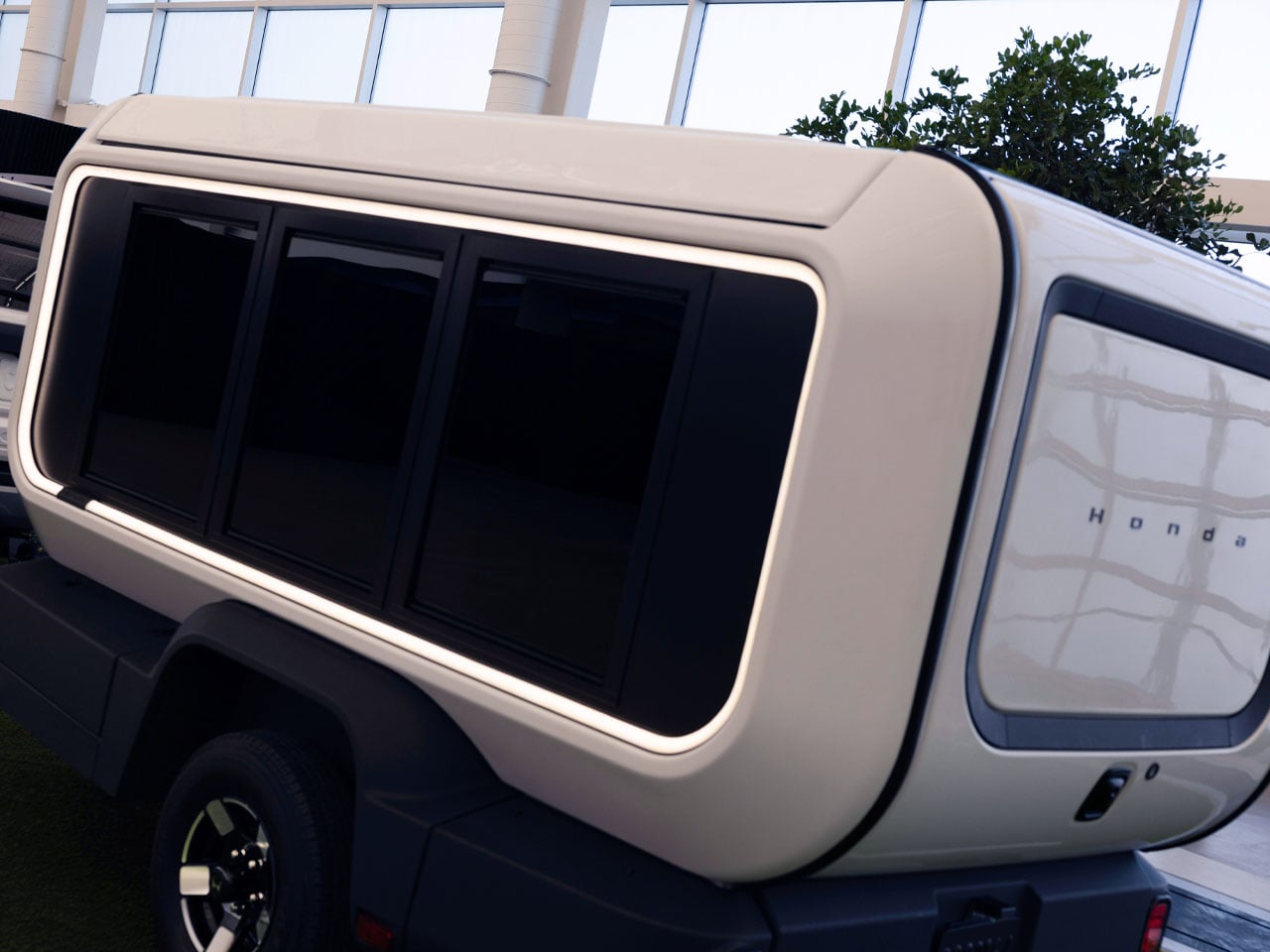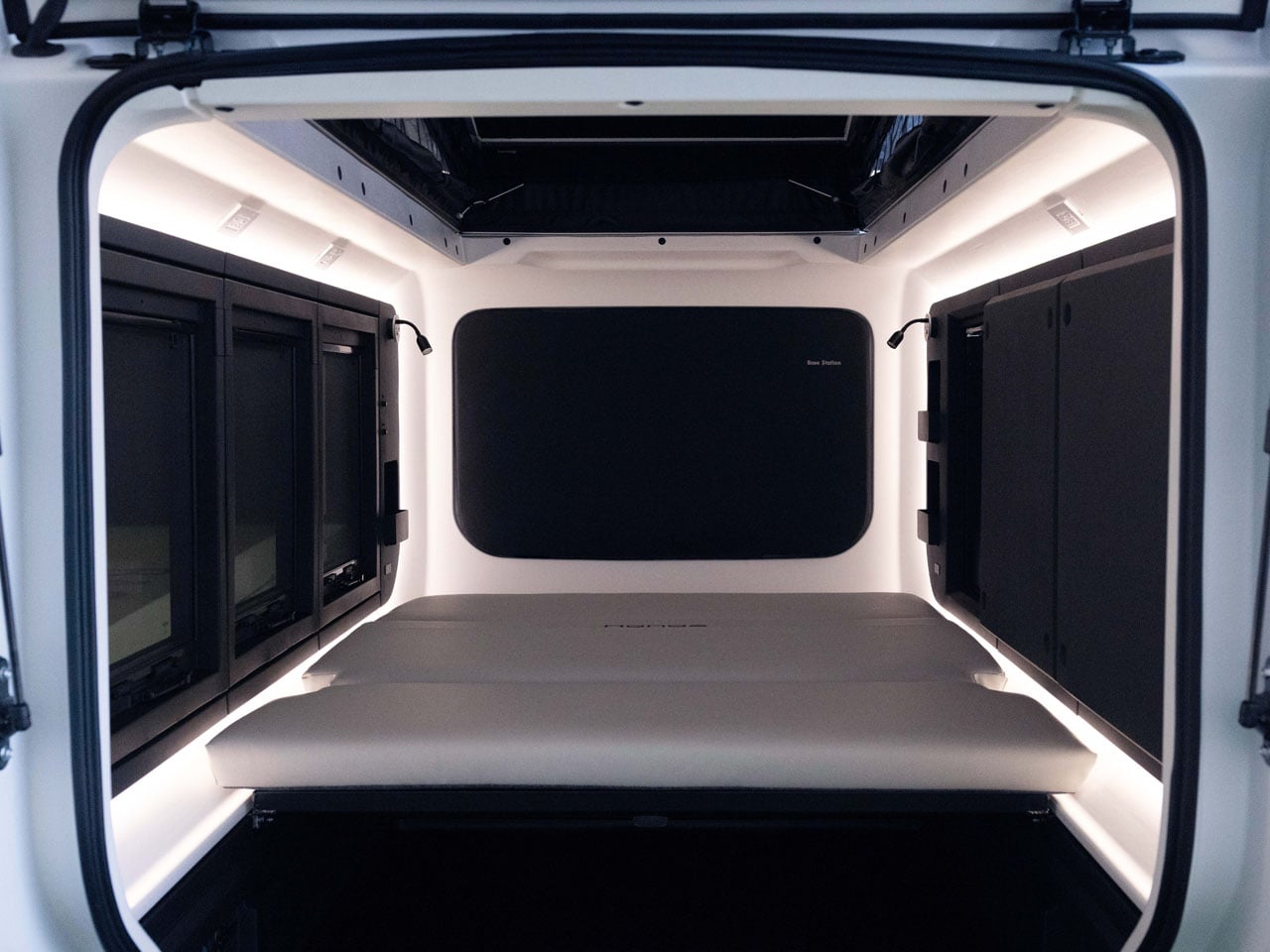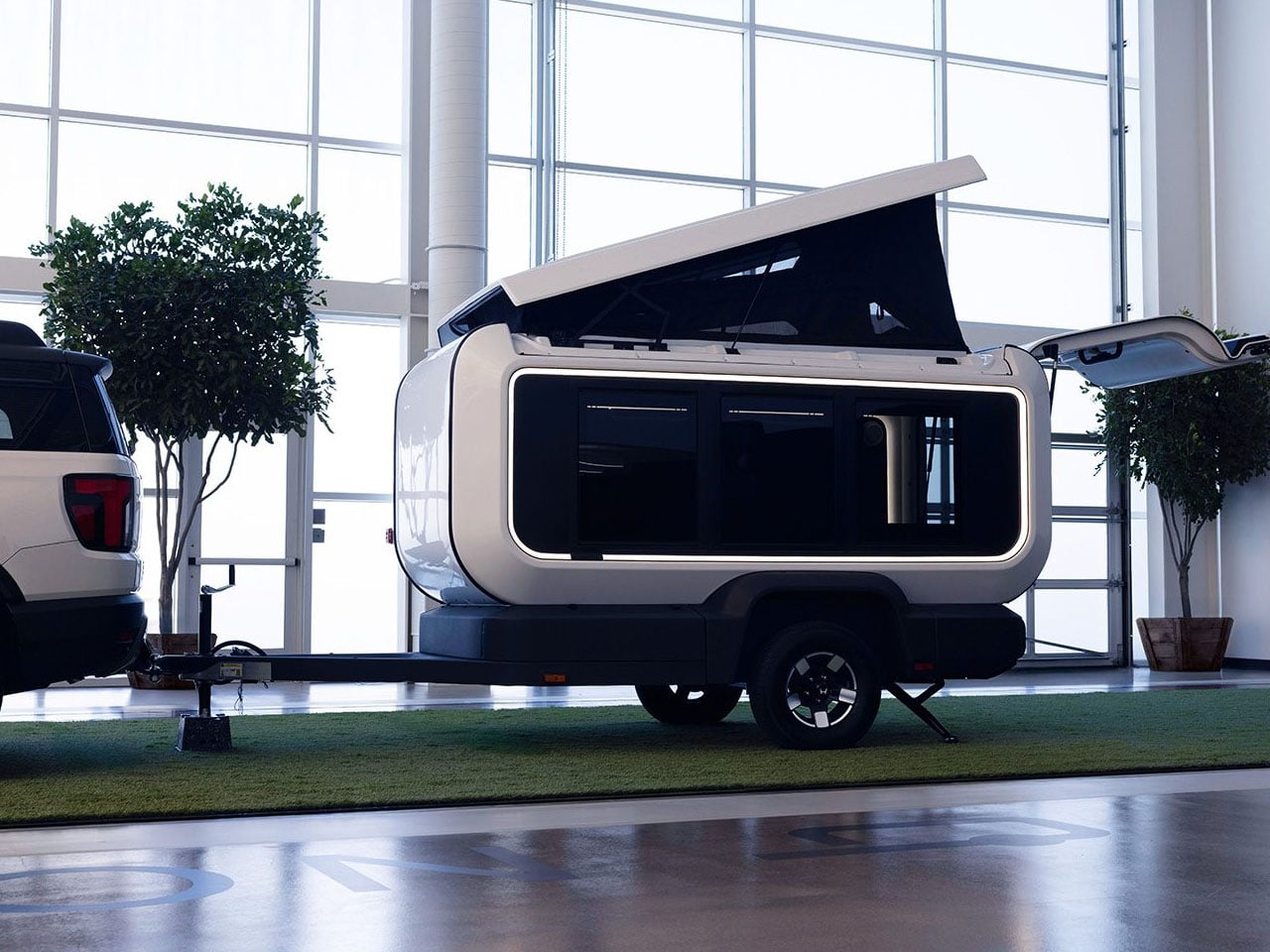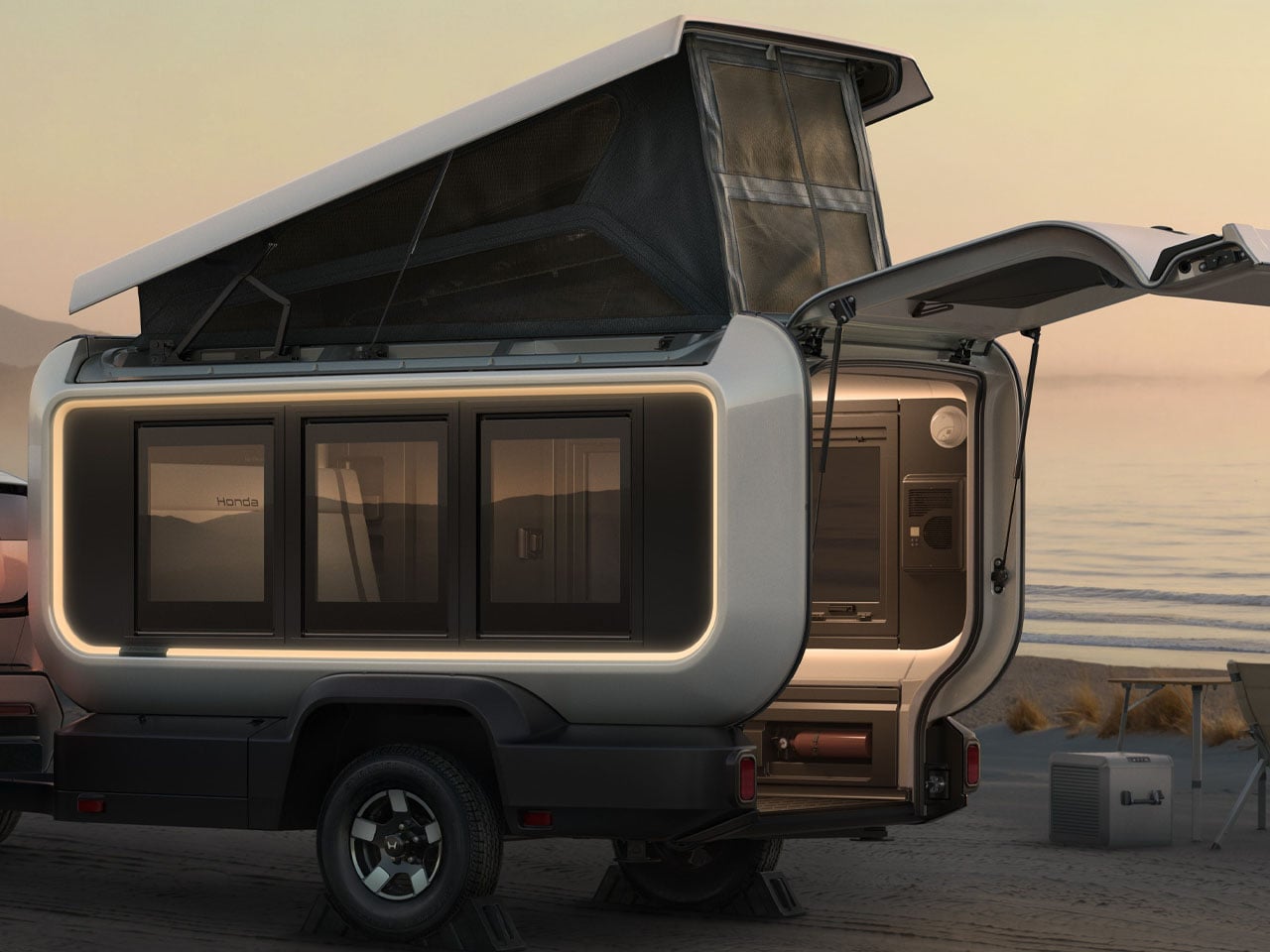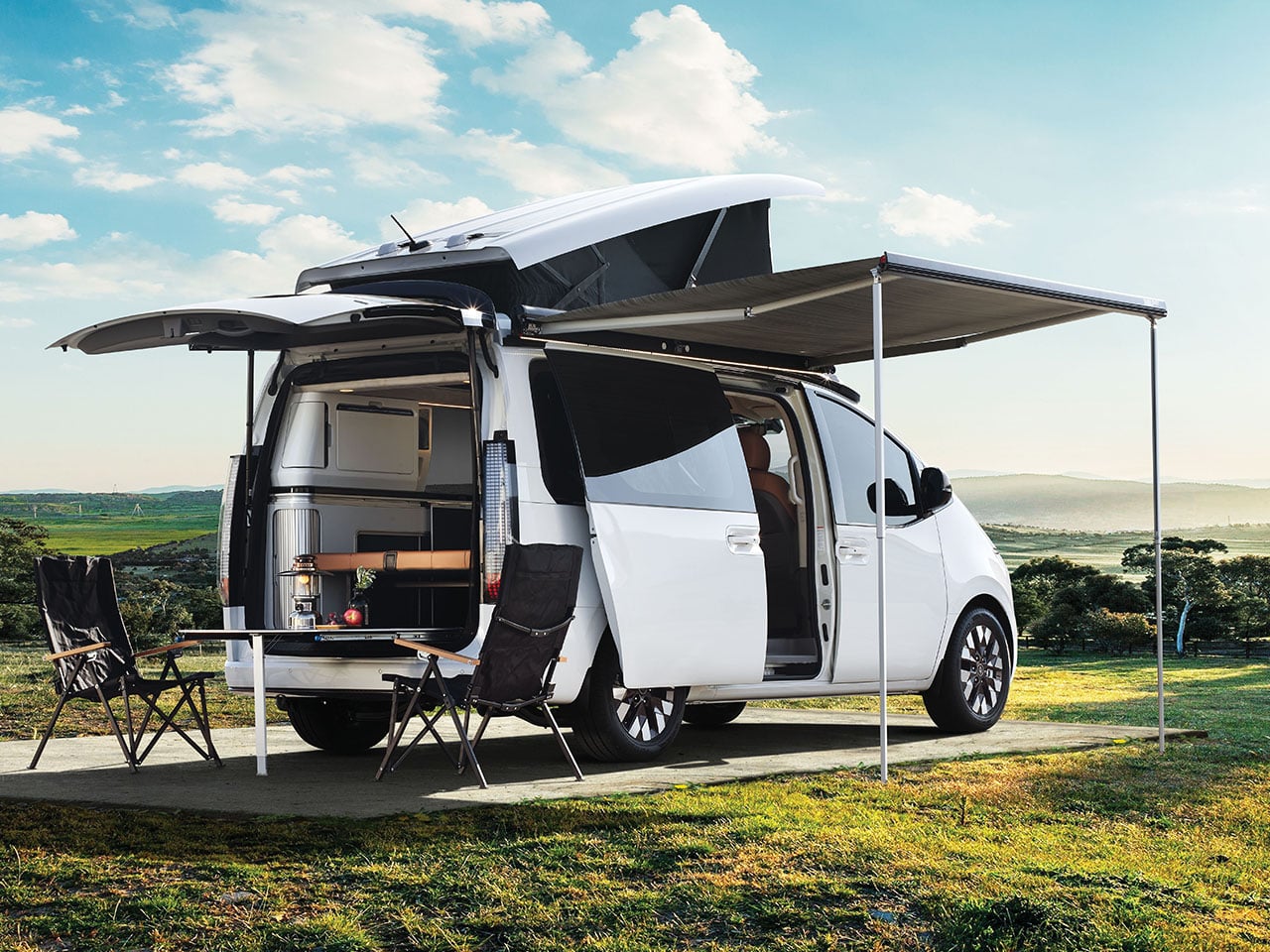
This compact off-road trailer with staircase to the rooftop tent can park in any Aussie garage

It’s an adventurous world full of competition to the brim. When every camping trailer manufacturer is distinguishing itself from the pack by expanding the living space for the better of the occupants; HardKorr, a company from Australia, known for its Xplorer trailer, is trimming the height of the famous model so that its little brother can fit comfortably within a standard size garage of a typical Aussie home.

Fascinatingly, that’s not just the brightest aspect of the Xplorer 2.0, happily called the ‘Shorty.’ Shorty is designed – with all the features and skills of the OG – to allow you to live comfortably in the outdoors for weeks and months with your family, without compromising the comfort and living space, and return home to stow the trailer conveniently in your city apartment garage until it’s required the next time.

Designer: Hardkorr

Of course, Xplorer 2.0 is one of the few garage-compatible trailers down under. It is also one of the very few with an integrated staircase to the rooftop tent. This feature makes it a rooftop camper trailer that’s easily accessible by kids and pets you may have along on your journey. And since the Shorty is not all too small, it gives you enough living space under the awnings and a sizable kitchen area for your culinary escapades on-the-go.

To that accord, the Xplorer ‘Shorty’ 2.0 has a slide-out outdoor kitchen complete with a two-burner stove, a large prep area, and a removable sink. Just behind is the slide-out 96-l fridge with another pull-out tray just underneath it, which creates an additional prep space. On the opposite side of the trailer are two separate hatches for carrying batteries and gear, and above that is a drop-down privacy tent that can be used when taking a shower. The shower here is attached to the kitchen sink and draws water from the instant water heater.

Comprising a lightweight aluminum body, the new Xplorer 2.0 is conveniently towable with any offroad-capable vehicle. It can set up in under five minutes and pack back in almost the same time. On the roof, you have a spacious queen-sized tent, and the trailer itself is loaded with plenty of storage sections, combining to give you upward of 3,450-l of storage space. While the integrated staircase makes it easy for everyone to get up into the bed, the robust off-road suspension, galvanized chassis, and all-terrain tires allow the Xplorer camper trailer to easily handle tough terrains and off-road journeys you want to make by yourself or with your family. These can be extended adventures in the Shorty that comes with a 170W solar panel and 2,000W inverter taking care of the power needs. Retailing for about $24,000 (AUD 35,990), the camper trailer is worth the contention more so as it may be available in the US as well.

The post This compact off-road trailer with staircase to the rooftop tent can park in any Aussie garage first appeared on Yanko Design.
BMW Motorrad x Vagabund electric bike has integrated umbrella and Teenage Engineering speaker

BMW Motorrad Austria has joined forces with design studio VAGABUND to create a custom CE 02 eParkourer ride. The electric bike has a futuristic vibe and retro flair that’ll appeal to Gen-Z and millennials too.

Unlike other electric scooters, this one-off ride gives a sneak peek of where the future of two-wheelers is headed. That’s because it has an integrated BT speaker, hidden umbrella and a strapped skateboard grip tape for all your city riding needs.

Designer: BMW Motorrad

The urban commuter will spark interest in electric bikes that can otherwise have the style and feature-rich element missing. It has a two-tone look which goes perfectly with the needs of the modern crowd. Coming on to the BMW CE 02 bike, it tops at a speed of 59 mph and we expect this special version to have the same 48-volt electric motor and drivetrain. It churns out a peak output of 11 kW and offers a range of 55 miles on a single charge. This bike differs in visual appeal as it has a bit more spark with the contrasted white accents. This white influence is carried onto the half-white wheels.

What makes this electric scooter distinct is the integrated OB-4 Magic Radio by Teenage Engineering and a running board with skateboard grip tape. That cool exhaust that you see is for aesthetics, as well as storing a foldable umbrella for the untimely downpour. All these added elements resonate well with the retro-futuristic vibe of the EV. Mixed with the white and black tones is the lively tan of the saddle.

BMW Motorrad has not detailed a lot about the CE 02 x Vagabund edition, however, it is ultra-exclusive simply because of the $549 TE speaker that has a minimalistic theme.

The post BMW Motorrad x Vagabund electric bike has integrated umbrella and Teenage Engineering speaker first appeared on Yanko Design.

This limited edition 4×4 off road camper van discreetly fits two double beds in the roof

We have been through various iterations of 4×4 off-roading camper vans that adventurers swear by. Yet there is scope for new entrants, not so much because of the market demand, but because of the scope for innovation, which companies try and explore at every given opportunity. The latest in the league is the Vanyx 4×4 off-roader which distinguishes itself with its robust yet lightweight construction, ensuring top-notch performance on any terrain.

Conceived for long-term travelers, the camper allows you to immerse yourself in nature’s beauty while keeping safe and self-sufficient for weeks on the trot. It is therefore designed with the idea of eliminating the reliance on diesel and maximizing self-sufficiency in electricity and water.

Designer: Vanyx

Loosely termed as “A Game-Changer in Camper Vans,” the Vanyx could revolutionize the camper van market with its carbon fiber “Luxury Edition,” of which only 99 units will be produced. Its exclusivity is not in the limited nature, but the ingenious split separate floors design that puts sleeping and living areas on different levels.

This German-built all-wheel-drive van home is packed with sufficient features and impresses especially with spaciousness and comfort on both levels. It allows occupants to explore and live autonomously and sustainably for extended days on the treks off the road. The motorhome comes with the option to choose from three distinct interior styles, comprising wood finish, stone surfaces, leather colors and even different mattress options.

A standout luxury feature is the specially developed underfloor heating. It is coupled with stationary air conditioning, ensuring a comfortable temperature inside the camping van no matter how the elements are behaving outdoors. On the outside, the Vanyx camper van is made to be durable. It features Line X protective coating and is equipped with LED light bar, a snorkel and an electric outdoor awning to stretch the living space further out when need be. For off-roading efficiency the van is provided with automatically leveling full-air suspension, that lifts for up to 15 cm ground clearance, 18-inch forged alloy wheels, and all-terrain tires.

On it inside, on the bed level of the van, you have a living area comprising an L-kitchen kitchen, a bathroom complete with a dry toilet and shower, and a dinette section. On the front is the elaborate cockpit. The sleeping area is sectioned in the high roof, the roof is made from carbon fiber and is designed to accommodate (by splitting in the middle) two double beds of which one is shorter and the other is a standard queen size. The space may seem crampy but the room height is comfortable enough to give you a nice cozy sleep under the starry sky. The off-roading experience in a camper van is incomplete if the ride doesn’t ensure off-grid living. Besides the mentioned conveniences like the complete kitchen and dry toilet; the Vanyx comes with a 1200 Ah LiFePo4 lithium battery, 800W solar panels, and a 700-l fresh water tank. Starting at around a million-dollar mark, the high-luxury camper also includes a 6 kW diesel heater.

The post This limited edition 4×4 off road camper van discreetly fits two double beds in the roof first appeared on Yanko Design.

Honda HP-X Concept revived after forty years has the signature wedge-shape and futuristic vibe

This year’s Pebble Beach Concours d’Elegance will have a head turner in the shape of a classic supercar resurrected to showcase the vision of the future back in the 80s. The Honda HP-X Concept unveiled five decades ago at the 1984 Turin Auto Show is going to debut again at the North American Auto Show.

The mid-engine supercar was designed by Iconic Italian design firm Pininfarina and was marked by its sharp wedge profile. The concept immediately caught attention for its jet-engine-inspired cockpit and Knight Rider-like advanced tech. This will be the first time in more than 50 years that a Japanese vehicle will be showcased at the Pebble Beach event. The prized car restored by the two brands will take on other competing models for the “Wedge-Shaped Concept Cars and Prototypes” class at the 73rd Annual event on August 18, 2024.

Designer: Honda

According to Dave Marek, Acura design executive and honorary Pebble Beach Concours judge, HP-X was more than just a concept as it inspired the design and engineering of future cars like the Acura NSX. Even after so many years, the car is a living proof of Honda and Pinnifarina’s innovative spirit.  Felix Kilbertus, Pininfarina’s chief creative officer rightly stated that the vehicle had a major influence on “subsequent Honda models and the broader automotive landscape is undeniable.”

The mid-mounted 2.0L DOHC 24-valve V6 engine car has a fighter jet-like entry (yes no doors, not even scissor ones) into the cockpit as the Perspex canopy comes off. It also aids in aerodynamics and doubles as an air brake. HP-X was far ahead of its time with a lightweight body crafted out of carbon fiber, Kevlar and honeycomb paneling. All these materials were rare at that time and of course, cost an exorbitant amount.

This restored version retains the two-tone white and navy blue paint job with red accents. The cockpit has a nostalgic red and white suede interior, along with a button-dominated center stack console. Functionality and comfort take precedence as the car had an in-house developed Electronic Drive Support System, for real-time telemetry data, GPS navigation and adaptability to road conditions.

The post Honda HP-X Concept revived after forty years has the signature wedge-shape and futuristic vibe first appeared on Yanko Design.
All-new Audi A6 e-tron: A Bold Vision in Electric Vehicle Design

The Audi A6 e-tron combines advanced technology with striking aesthetics. Both the exterior and interior reflect Audi’s dedication to precision and innovation. From the moment you see the A6 e-tron, its clean, sophisticated lines are evident. The design integrates functionality with a bold visual presence. Here’s a closer look at the details that make this vehicle a remarkable entry into the electric vehicle market.

Designer: Audi

The front design features Audi’s signature inverted single frame, encased in a sleek black mask. This design cleverly integrates the main headlights, ADAS sensors, and air intakes, creating a seamless and functional front end. The slim daytime running lights and wide grille give the A6 e-tron a broad, assertive presence on the road.

Audi S6 Sportback e-tron

The side profile of the A6 e-tron impresses with its dynamic roofline and low ride height, enhancing aerodynamic efficiency and contributing to a sleek, sporty look. The prominent Quattro blisters over each wheel arch emphasize the car’s performance capabilities, giving it a powerful stance. A black insert along the sill area highlights the battery’s placement, stretching visually to the rear and integrating the reflectors for an extended appearance. For those who prefer a more traditional touch, the Avant model features a distinctive aluminum-look trim from the A-pillar to the roof spoiler, adding a unique and stylish element.

At the rear, the A6 e-tron combines sporty elegance with functional aerodynamics. A continuous three-dimensional light strip spans the vehicle’s width, housing the second-generation digital OLED rear lights. With 450 individual segments, these lights offer customizable light signatures and enhance road safety through car-to-X communication. The rear diffuser, designed for optimal aerodynamic performance, and the additional spoiler on the Avant model reduce drag and improve stability at high speeds.

Audi’s aerodynamic excellence shines in the A6 e-tron. The vehicle achieves a low drag coefficient (0.21 for the Sportback, 0.24 for the Avant) thanks to several key features. Air curtains at the front manage airflow around the wheels, reducing turbulence and drag. The slim greenhouse and sloping roofline contribute to a sleek profile that cuts through the air with minimal resistance. Underneath, the car’s underbody is extensively sealed and optimized, including specially adapted wheel trims and 3D bumps ahead of the front wheels to streamline airflow further.

The controllable cool-air intake under the Singleframe grille ensures efficient cooling while minimizing aerodynamic losses. The rear diffuser balances lift and drag, enhancing stability at high speeds. The Avant model includes an additional spoiler on the diffuser and side spoilers at the rear to manage airflow more effectively, contributing to its slightly higher drag coefficient than the Sportback but still maintaining impressive aerodynamic performance.

The second-generation virtual exterior mirrors, now with electrically foldable compact cameras, reduce the vehicle’s front area and improve the drag coefficient. These mirrors enhance the car’s sleek look and provide a practical benefit by lowering aerodynamic drag.


Inside, the A6 e-tron continues to impress with a user-focused design. The digital stage concept features a panoramic display, blending a 14.5-inch MMI touch display with an 11.9-inch virtual cockpit. An optional 10.9-inch MMI front passenger display offers Active Privacy Mode, allowing passengers to enjoy entertainment without distracting the driver. The second-generation augmented reality head-up display provides relevant information directly in the driver’s line of sight.

Comfort and functionality take center stage in the interior design. The “soft wrap” extends door to door, creating a cohesive and enveloping space. High-quality materials cover every surface, differentiating between comfort-oriented and precisely designed control areas. The low-lying, slim air vents blend into the background, emphasizing the interior’s clean lines. Displays for the virtual exterior mirrors are ergonomically positioned inside the doors for easy viewing.

Audi S6 Sportback e-tron

The Audi A6 e-tron seamlessly integrates modern technology. The infotainment system, powered by Android Automotive OS, updates over the air to keep the latest Audi Connect services up-to-date. The Audi Application Store offers a variety of third-party apps, while the enhanced e-tron route planner ensures efficient travel. The Audi assistant, integrated with ChatGPT, provides intuitive voice control for various vehicle functions, enhancing the overall driving experience.

With its curved design and OLED technology, the MMI panoramic display consists of an 11.9-inch Audi virtual cockpit and a 14.5-inch MMI touch display. This digital stage is complemented by the optional 10.9-inch MMI front passenger display, which features Active Privacy Mode. Thanks to intelligent light direction control based on speed and seat occupancy, the front-seat passenger can enjoy entertainment content without distracting the driver.

The interior design emphasizes a homely ambiance with clear structures and spaciousness. The “soft wrap” extends from the doors across the entire width of the control panel, creating a cohesive and enveloping space. Comfort-oriented areas feature generous surfaces and soft materials, while control areas use high-quality, high-gloss black finishes to highlight the interaction points. The low-lying, slim air vents blend seamlessly into the background, maintaining the interior’s clean lines.

Audi S6 Sportback e-tron

The displays for the optional virtual exterior mirrors are positioned ergonomically inside the doors, ensuring they are easily visible without distracting the driver. This thoughtful placement enhances the driver’s ability to monitor their surroundings comfortably.

The Audi A6 e-tron sets new standards in electric vehicle design. Its exterior combines elegance with aerodynamic efficiency, while the interior focuses on user-friendly technology and comfort. Personally, I love the look of the Avant—it’s stylish and incredibly practical. Which model do you prefer?

U.S. Market Specific Information

Audi will launch the A6 e-tron, A6 e-tron quattro, and S6 e-tron Sportback variants in the U.S. market. The offer structure for the A6 e-tron in the U.S. market will differ from the global release.

The A6 e-tron (RWD) Sportback delivers 362 hp and accelerates from 0-60 mph in an estimated 5.2 seconds, with a top speed of 130 mph. The A6 e-tron quattro Sportback offers 422 hp and achieves 0-60 mph in about 4.3 seconds, maintaining the same top speed. The S6 e-tron Sportback has 496 hp, which can be boosted to 543 hp with launch control, reaching 0-60 mph in an estimated 3.7 seconds and a top speed of 149 mph.

Audi A6 e-tron Family

EPA range specifications will be announced closer to the U.S. on-sale date. The European drag coefficient of 0.21 Cd is based on a specific wheel offering. Unfortunately, virtual exterior mirrors are unavailable in the U.S.

The A6 e-tron features a 100 kWh battery (94.4 kWh net), with AC charging at 9.6 kW (240V/40A) and DC fast charging at 270 kW HPC at 800 volts, capable of reaching 10-80% SOC in 21 minutes. Available colors for the U.S. models include Magnetic gray (solid), Glacier white metallic, Mythos black metallic, Plasma blue metallic, Malpelo blue metallic, and Typhoon gray metallic. The S6 e-tron also offers a Siam beige metallic and Daytona gray pearl effect.

The A6 and S6 e-tron offer up to eight customizable light signatures. However, due to U.S. regulations, certain lighting functionalities—such as adaptive matrix LED headlights, car-to-X communication, and active digital light signatures—will not be available. More detailed information will be announced closer to the U.S. on-sale date, including final U.S. market-specific product information, performance specifications, pricing, and EPA-rated range/emissions information.

The post All-new Audi A6 e-tron: A Bold Vision in Electric Vehicle Design first appeared on Yanko Design.
2025 Ducati Panigale V4: A Revolutionary Leap in Superbike Engineering

We really did get a new Ducati Panigale before we got GTA 6…

The all-new Ducati Panigale V4 storms onto the scene for 2025, boasting a sharper design and a performance edge honed to perfection. This seventh-generation evolution brings a dramatic facelift nearly 7 years after its last iteration in 2018, featuring a 916-inspired headlight and integrated winglets that scream MotoGP heritage. Underneath the redesigned bodywork, a lighter double-sided swingarm replaces the signature single-sided unit, contributing to a significant weight reduction. While the heart of the beast remains the Ducati-derived Desmosedici Stradale V4 engine, it now meets Euro 5 regulations while maintaining its exhilarating power.

Designer: Ducati

The visual transformation of the Panigale V4 is immediately apparent. The new fairing, characterized by a shorter, more compact profile, pays homage to the iconic Ducati 916 while exuding a modern, aggressive aesthetic. The integrated winglets, directly inspired by Ducati’s MotoGP race bikes, enhance aerodynamic efficiency and contribute to the bike’s imposing stance. The overall design strikes a perfect balance between heritage and cutting-edge style.

Beneath the sleek exterior lies a meticulously engineered chassis. Ducati has made the bold decision to replace the signature single-sided swingarm with a double-sided unit. While this departure from tradition may surprise some, it’s a move driven by performance considerations. The new swingarm contributes to a significant weight reduction, enhancing agility and responsiveness. The aluminum monocoque chassis, now paired with the double-sided swingarm, forms a rigid and lightweight foundation for the motorcycle.

At the heart of the 2025 Panigale V4 is Ducati’s MotoGP-derived Desmosedici Stradale 90° V4 engine. This Euro5-compliant engine delivers the same impressive power as its predecessor while weighing less. The 1,103cc liquid-cooled four-cylinder engine produces 209 horsepower and 89.5 ft-lbs of torque. When equipped with the optional Akrapovič track-only race exhaust, the engine’s output can reach up to 228 horsepower. This engine is paired with a top-tier suspension setup, featuring a fully adjustable 43mm Showa BPF fork and a Sachs mono-shock. The bike also replaces its previous Brembo Stylema braking system with new four-pot Hypure calipers and 330mm discs, shedding more than two ounces of unsprung weight.

For those seeking even more performance, Ducati offers the Panigale V4 S variant. This model includes a third-generation version of Öhlins’ SmartEC suspension, lightweight forged wheels, and a race-ready Lithium-ion battery. These enhancements make the V4 S even more capable and track-ready. Ducati is expected to release an R-spec or Superleggera version in the future, further expanding the Panigale V4 lineup with even more specialized models.

The 2025 Ducati Panigale V4 and V4 S will roar into dealerships next month, with starting prices of $25,995 and $33,895 respectively.

The post 2025 Ducati Panigale V4: A Revolutionary Leap in Superbike Engineering first appeared on Yanko Design.
Office on wheels car concept lets you take your work anywhere

A large majority of future car concepts that we keep hearing about revolve around self-driving cars that seem to turn every ride into some sort of a party. You have people engaging with each other or at the very least kicking back to relax, idyllic situations that might not exactly match the priorities or needs. Rather than just chilling, some people might actually prefer to be able to work anywhere without having to race for an empty table or socket or, worse, bring a whole RV with them. This two-passenger car concept tries to envision a future where you can bring your office with you, including the comfortable furnishings that let you work productively. It even has room for a houseplant!

Designer: Amiparn Mudgal

This moving workspace is definitely not like any car concept you might have seen, even those that cater to having only two people inside. The body, or at least its bottom half, is more like an upside-down trapezoid and is very boxy and almost clinical in its shape. Of course, the chassis could be any form, including the smooth and sleek designs of luxury cars. That said, the core focus of the design is having enough space inside more than a fashionable style. After all, you are trying to fit an office inside.

The main mechanism that makes this possible is the sliding foldable seats. The passenger seat, for example, folds down and slides inside to get out of the way, while the driver’s seat can scoot over and turn around to face the front or the back of the car that are actually desks. This kind of design, unfortunately, means that only one person can actually be inside when the interior is in “office mode,” so your passenger might have to step out for a bit if they’re sticking around until after you’re done with your work.

Another key element to this rather unusual concept is the sliding tabletops that extend the working space that you have. There’s one in front on the opposite side of the steering wheel, while the one at the back transforms the rectangular desk into an L-shaped corner desk. Whichever way you turn, you’ll have all the table space you need for work, food, and maybe even playing.

One intriguing part of the concept is the idea of this moving workspace as a collaboration between a car manufacturer and a furniture company like IKEA, famed for its modular and flat-packed product. It applies accents and details that you’d rarely find in cars but are common in office furniture, like fabric-covered surfaces or wooden panels that act as tables. There will definitely be some who will scoff at the idea of bringing your work with you on your travels rather than taking a timeout, but there will also always be situations when you can’t afford that luxury and just need to park somewhere to get stuff done.

The post Office on wheels car concept lets you take your work anywhere first appeared on Yanko Design.
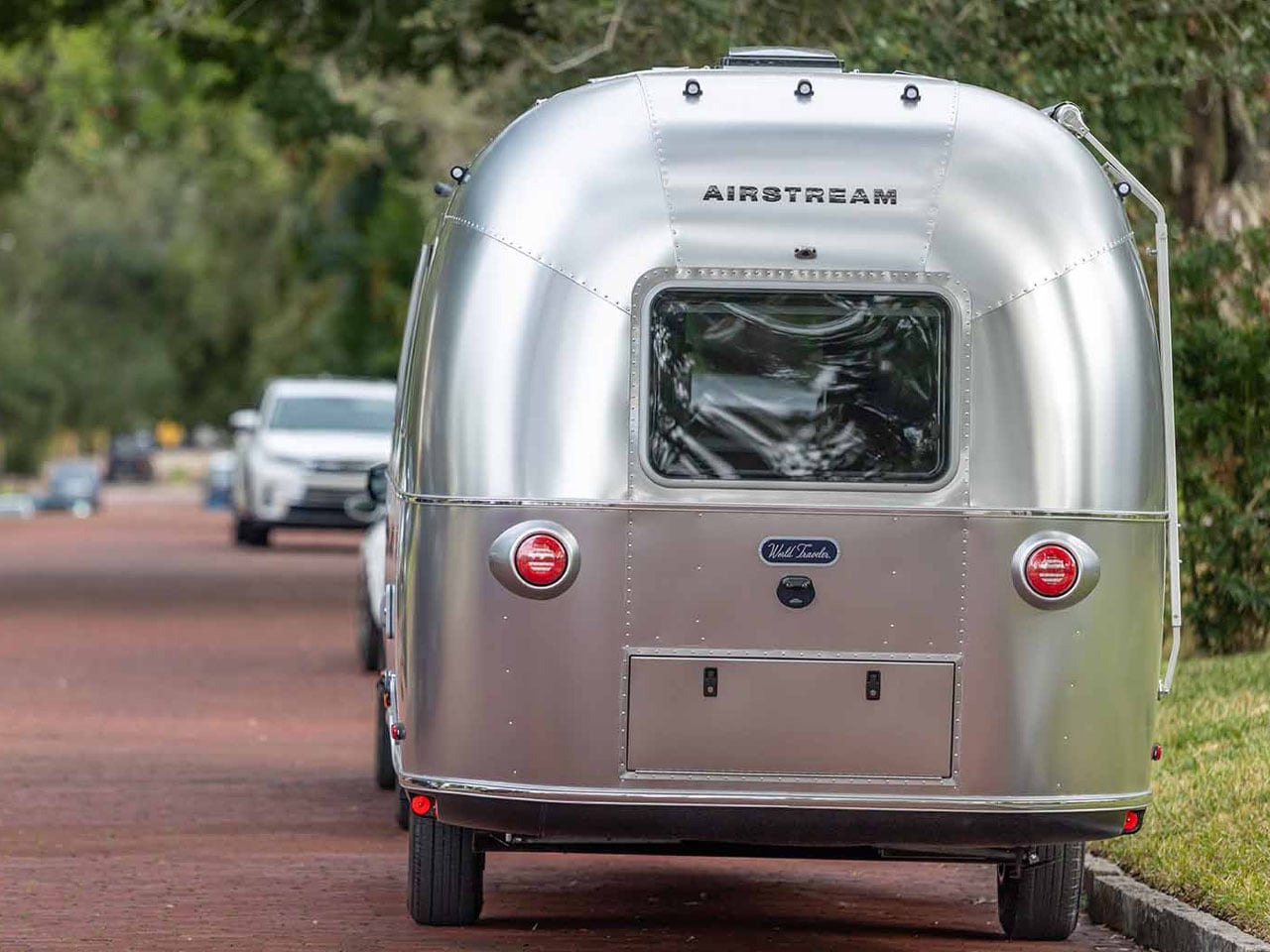
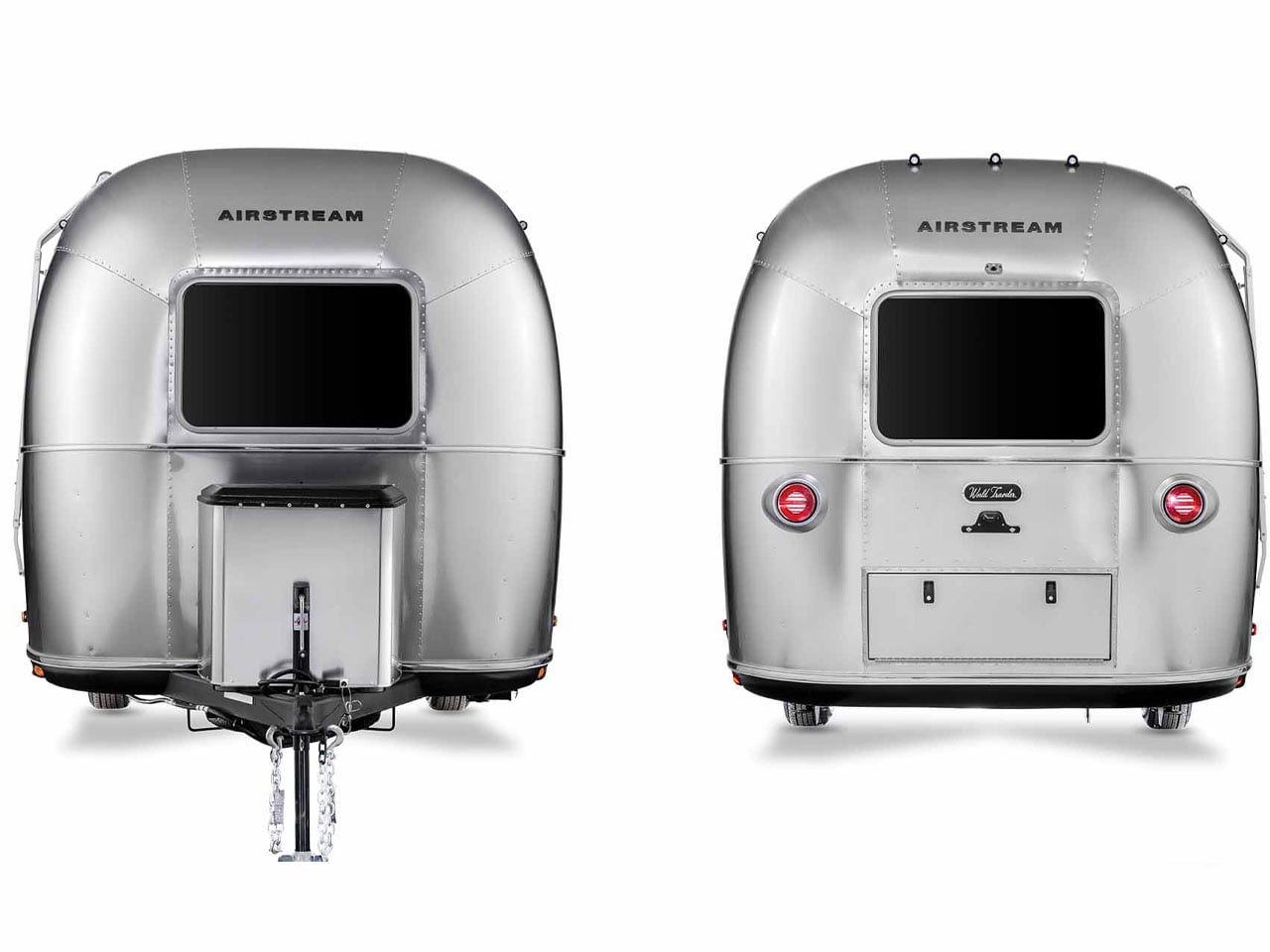
Goliath Campers G-47 teardrop trailer makes Aussies ready for safe and comfortable off-road camping

We don’t live in a perfect world, but everyday we strive to create a world for ourselves that’s as perfect as it can be. And then when we want to venture out of the flawless living environment, into the wilderness where nature could heel the faults in us, we need a perfect partner that can ride without drag behind our daily driver, pull up where the heart wishes, and allow us to hop into the bed without having to move another finger for set up.

Welcome to the perfect Aussie creation that does this bit alongside allowing us to open the hatch and cook up a feast. We are talking about the G-47 teardrop trailer by Queensland-based marine-grade mobile home builders, Goliath Campers.

Designer: Goliath Campers

Every trailer builder has some distinction to their credit. For Goliath, it is their off-road camper trailers, carefully constructed with top-quality marine-grade material and finished in eye-catching hues. G-47 model is no different: it’s a hard-shelled living unit that features off-grid capability – water storage, 200Ah lithium battery, solar panel, and 2000W inverter – a swing-out grill for barbeques on the go, and a flip-up rainfall shower for hot baths in the cold wilderness.

All this and more fits within a compact 15.4-foot-long trailer that rides on a Cruisemaster independent suspension system and twin shock absorbers to accord it off-roading ability. Regarded as a teardrop trailer, despite its unique body crafted from foam core fiberglass, the G-47 features a hatch kitchen accessible from the outside. It includes an induction cooker, Weber BBQ grill, wine rack, sink, 65-litre fridge with freezer, 300-litre cupboard, and diesel hot water system.

Size and style matter when it comes to extending the outdoor space with an ensuite awning that can additionally provide privacy for using the portable toilet. When it comes to retiring for the day, climb onto the double bed under an overhead stargazing hatch and send yourself into slumber. On cold wintery evenings, when you don’t want to move a hand, the onboard Redarc Red Vision TVMS System lets you control the trailer functions by turning on the lights, the outdoor stereo, the fridge, and the water pump from your smartphone. Like all good things come for a price, the Goliath Campers G-47 camping trailer retails for AUD 69,500.

The post Goliath Campers G-47 teardrop trailer makes Aussies ready for safe and comfortable off-road camping first appeared on Yanko Design.

Pint-sized Jeep Dune buggy is tailored for cities and casual off-roading escapades

There’s something about dune buggies that fits the bill, both for urban and off-roading scenarios. Citroën’s My Ami Buggy concept proved that right and now yet another one from the house of Jeep gives us a glimpse of an electrified city car plus an off-road vehicle. Dubbed Jeep Dune concept the vehicle derives inspiration from My Ami Buggy, and it shows from the renders.

The rugged mini vehicle is crafted for Gen-Z by acclaimed French designer Emmanuel Klissarov who’s worked for GM, Mercedes-Benz and Renault. This collaboration comes as a result of the effort by Jeep and Citroën (both owned by Stellantis automotive group) to comply with the in-house vision of making advanced electric vehicle concepts.

Designer: Emmanuel Klissarov

Both the buggies have a lot in common, right from the open-air design and unique styling to the rugged exteriors keeping in mind off-roading needs. In fact, the Dune gets its platform from Ami which is a front-wheel drive configuration. The car is tailored for short urban commutes and off-roading day trips to the outskirts. It will be powered by a 8 hp motor and 5.4 kWh battery mated to the powertrain. Given its size and the battery capacity, the promised 46 miles per charge range is not bad.

Other details of the two-seater Dune buggy include customizable exterior options, perforated fabric doors, a built-in cooler, and even space to fit a DJ booth.  These unique features ensure the general perception of EVs is revisited to being something that is more fun and practical. Other than the usual city and off-road trail escapades, the vehicle is perfect for beach explorations and resort scouting. This makes it a good option for commercial settings as well.

The raw weight of the vehicle is 1,00 pounds which is less than Ami, owing to the plastic body panels. The size of the buggy is comparable to an ATV at just 95 inches long, 55 inches wide and 60 inches tall. So you can call it an all-electric UTV. While the Ami costs $5,500 in Europe, we should expect a slightly lower price tag for this one when and if it eventually hits the roads.

The post Pint-sized Jeep Dune buggy is tailored for cities and casual off-roading escapades first appeared on Yanko Design.
Self-driving pod helps mobility-impaired pedestrians cross dangerous roads

Plenty of new automotive technologies and concepts are naturally being made for the benefit of drivers and passengers, but they are supposed to also indirectly help pedestrians as well, at least in theory. With AI at the driver’s wheel, the promise of safer roads is being made, though we seem to still be far from achieving that ideal future. In the meantime, pedestrians crossing urban roads and highways are still at risk, especially the elderly, people with disabilities, and basically anyone who might not be able to cross fast enough before the light turns green again. Current solutions like footbridges are obviously not designed for these people as well, so this concept mobility device tries to take the fight to cars’ own turf by giving pedestrians their very own self-driving vehicle.
Designer: Jiseon Ju, Gawon Min

Roads are, of course, made for vehicles, and sidewalks and footbridges are for pedestrians. That said, there will always be places where these paths meet, appropriately called crosswalks, and people outside of vehicles are always at a disadvantage and at risk. Traffic lights seem to never give pedestrians enough time to cross safely, or make the presumption that everyone can walk at top speed, presuming they can walk at all. These systems are obviously not very accessible and alienate a large portion of the population, and it’s in dire need of a better and smarter solution.

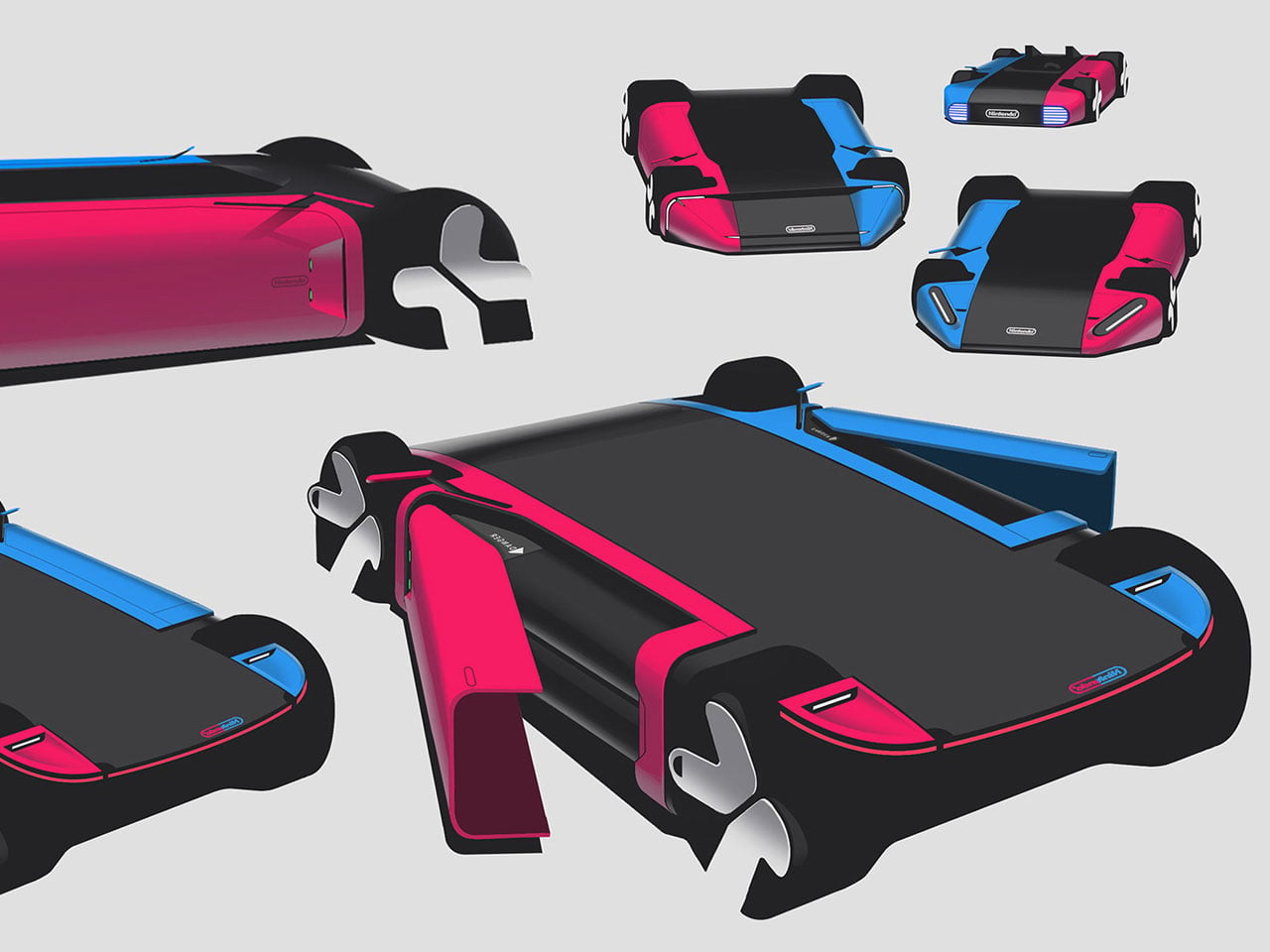
Crosswalk Mobility is a concept for a cubicle on wheels that ferry people from one side of the street to another. It’s basically designed for people with mobility impairments, from the elderly to the injured. Given its enclosed design, it can also be used by parents with toddlers who are prone to suddenly running off while crossing streets. Of course, you can’t have a permanent driver for such a pod, so it naturally uses self-driving technologies to move.

What makes the concept even more interesting is that it works in conjunction with what should be a smart traffic system. In a nutshell, it communicates with traffic lights so that it can extend the red light duration until it safely reaches the other side. Ideally, traffic lights should allocate enough time for people to safely cross, but this system leaves nothing to chance.

The mobility device itself is designed to be powered using solar energy, ensuring its continued operations 24/7. Instead of regular wheels, it proposes using ball-type wheels that can turn more smoothly as needed. The boxy shape has spacious room even for people in wheelchairs and their companions, and the floor-to-ceiling glass panels increase visibility not only for drivers but also for the people inside. It’s definitely an interesting idea that will significantly increase pedestrian safety, but it unfortunately won’t work unless the traffic system on those roads is also upgraded to work with these self-driving boxes.

The post Self-driving pod helps mobility-impaired pedestrians cross dangerous roads first appeared on Yanko Design.