When it comes to selecting the perfect Apple Watch, the choice between the Series 10 and the Ultra 2 can be a challenging one. Both models offer a range of features and benefits, catering to different user preferences and needs. To make an informed decision, it’s essential to understand the key differences between these two […]
It’s pretty amazing how much computing power can be crammed into a small space these days. After all, our smartphones are very capable computers themselves, but we also have handheld gaming PCs and single-board computers or SBCs that are no larger than (very thick) credit cards. The latter, popularized by the super-affordable Raspberry Pi, blasted wide open the doors to creative projects and gadgets, from mirrors that act as your smart home console to fictional cyberdeck computers brought to life. This latest design is one of the latter, offering a handheld computer with modern features and an aesthetic that seems to come from an alternate 80s timeline.
Despite its size, the Raspberry Pi is a complete computer, one that can run desktop operating systems, including a trimmed-down version of Windows. With just the right peripherals, it can be used as a normal computer, and some have even turned the SBC into a laptop or even a desktop, complete with liquid cooling. These, however, don’t take full advantage of the Raspberry Pi’s small and portable size, a form that’s perfect for a handheld computer.
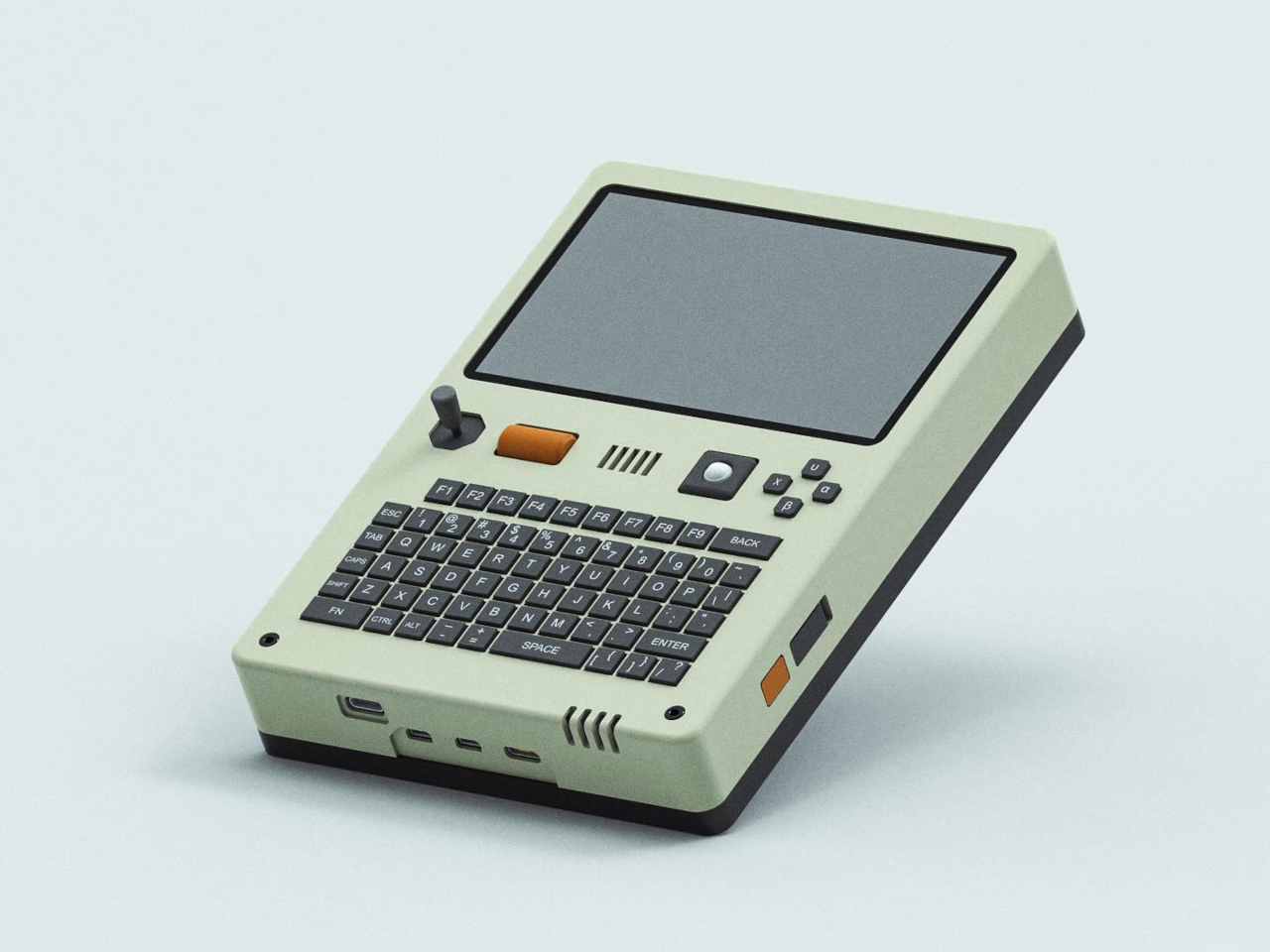
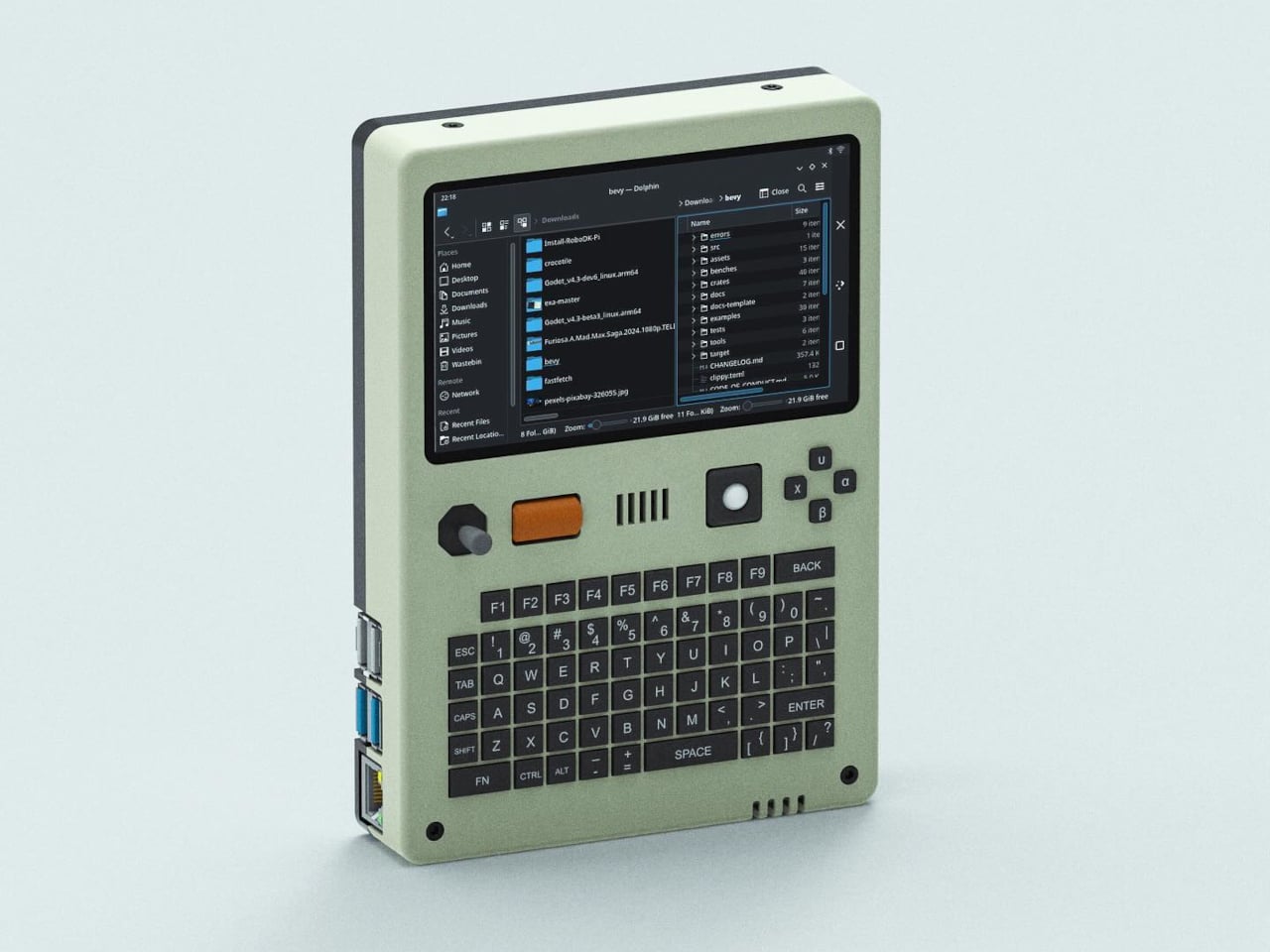
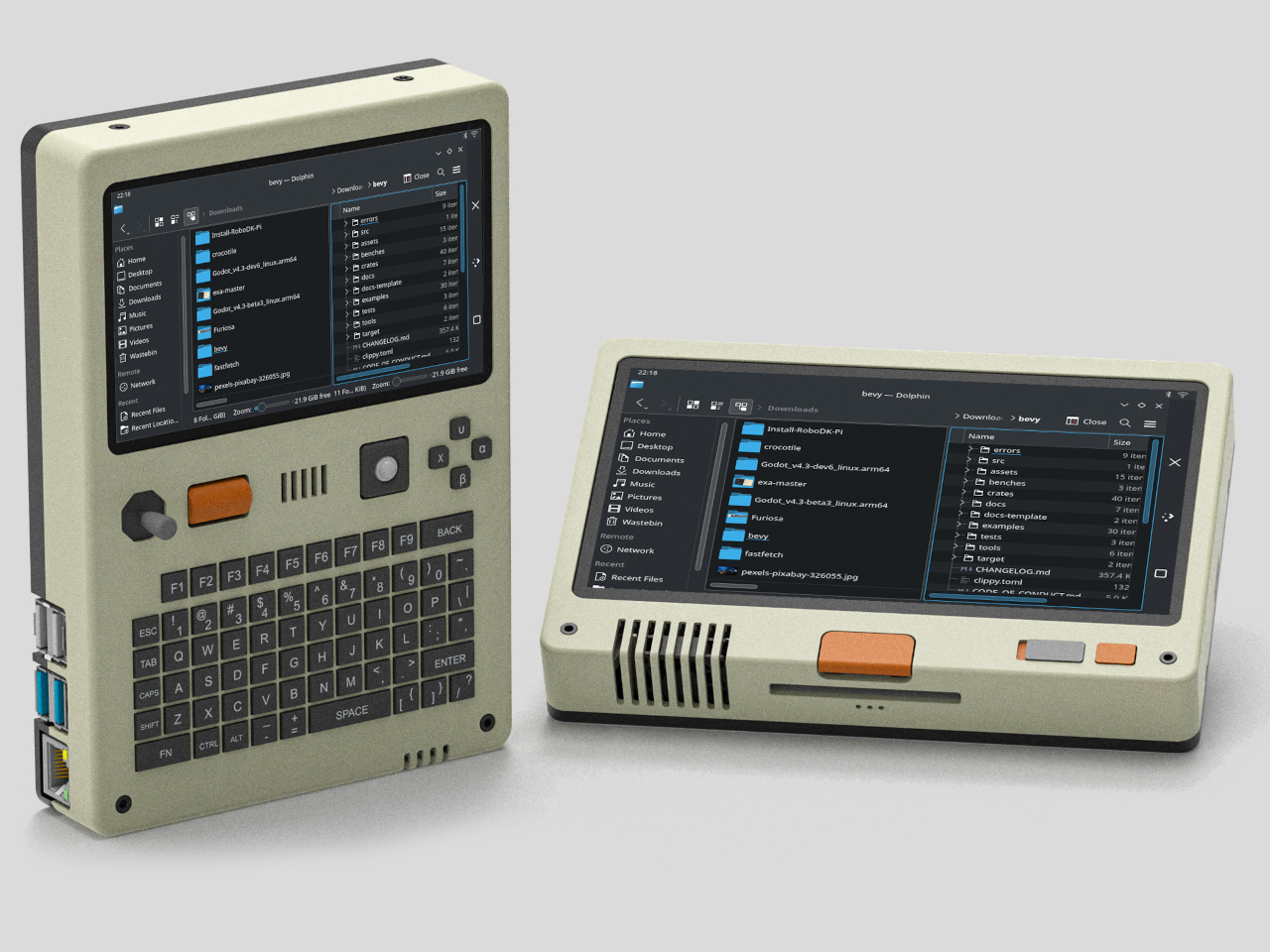
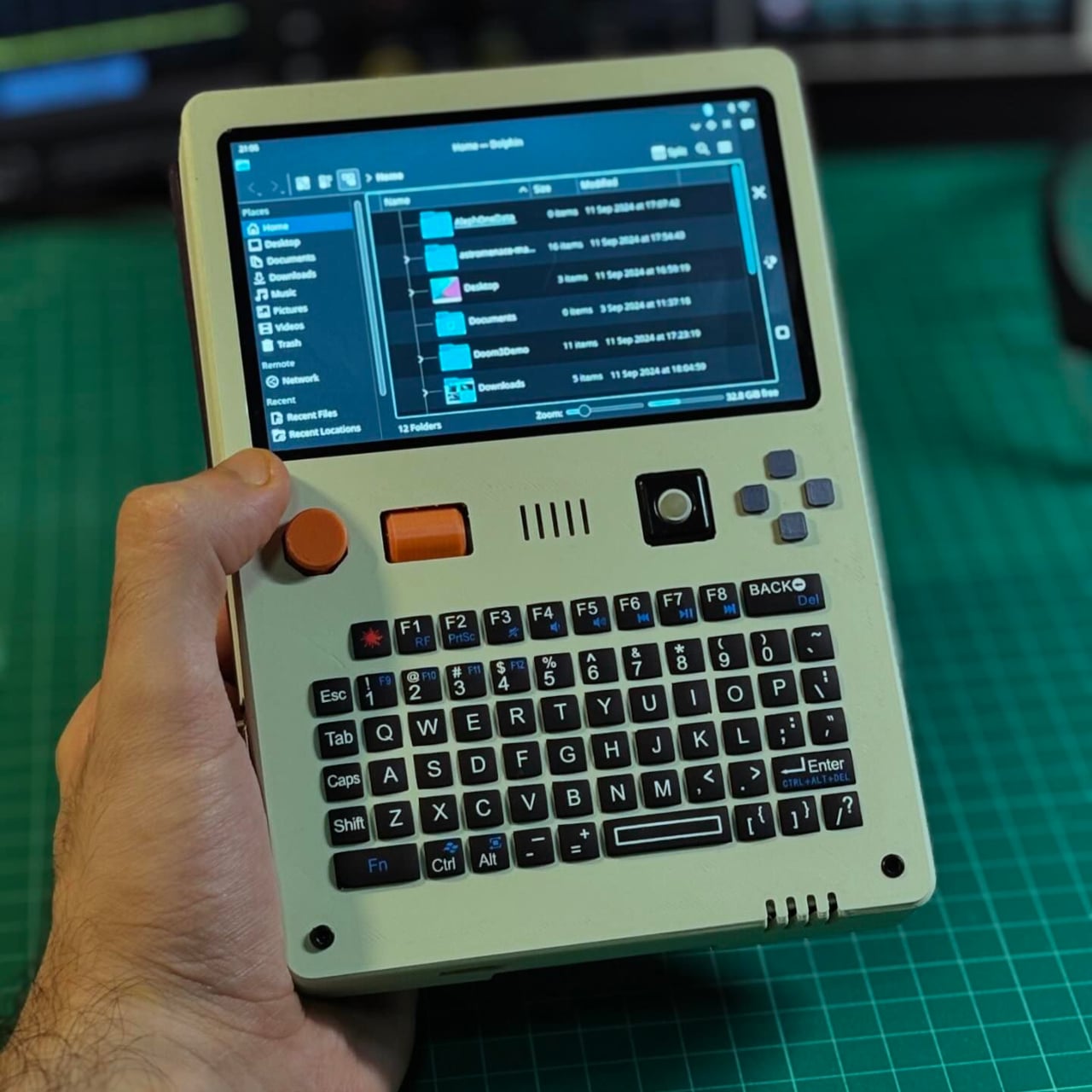
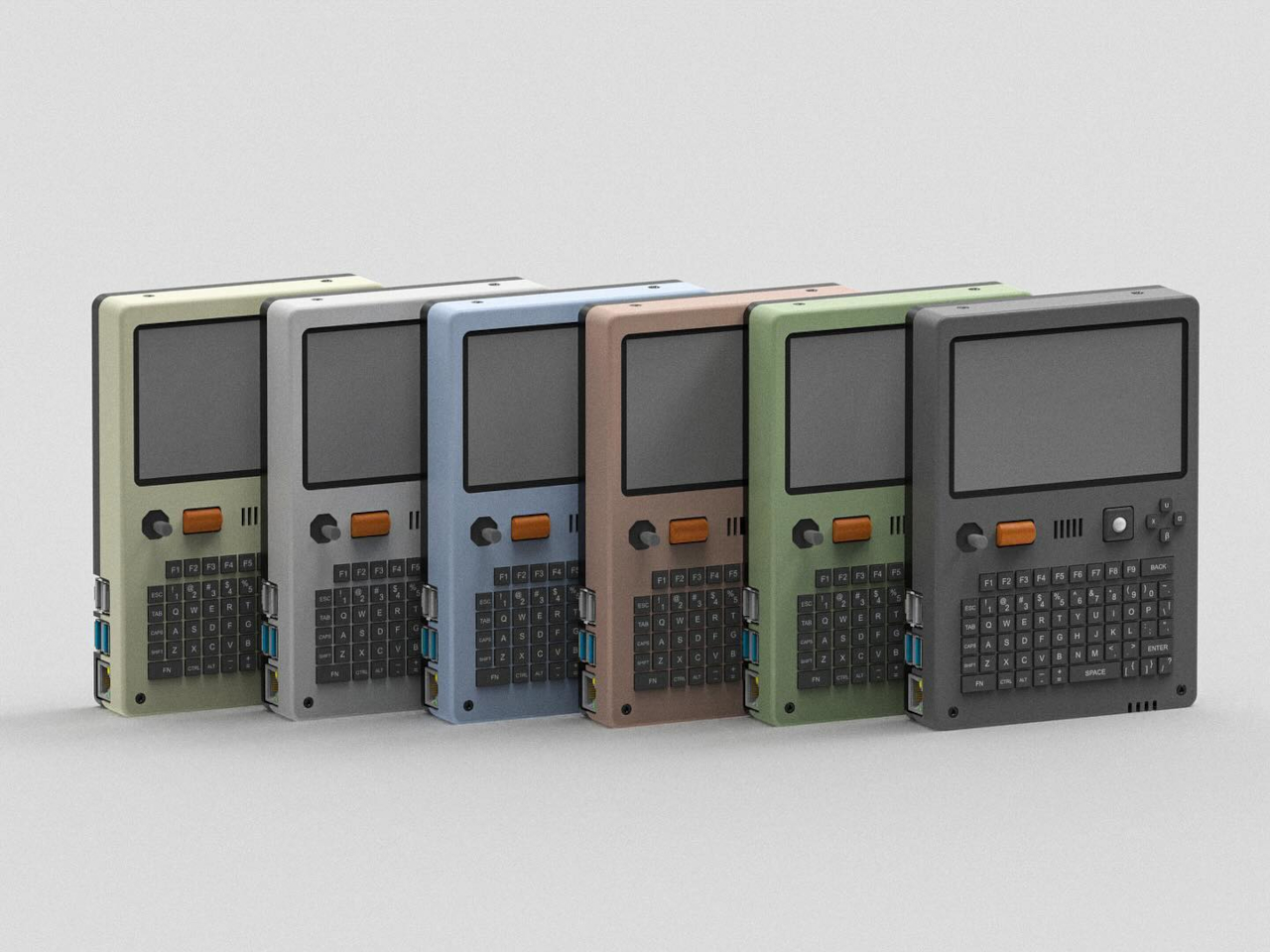
The Pilet 5 handheld console adds those essential missing parts to the barebones computer, turning it into a finished product that is usable the moment you turn it on. This form takes the shape of a rather chunky box with a 5-inch screen at the top and a QWERTY keyboard on the bottom half. This isn’t the first BlackBerry-like design powered by a Raspberry Pi and it definitely won’t be the last, but there are a few details that makes this project a bit interesting.
In addition to the keyboard, Pilet 5 has a four-direction D-pad as well as a tiny trackball on the right side of the device, while the opposite side has a joystick and a scroll wheel. These would definitely be more than enough to move the mouse, if the touchscreen still wasn’t enough, and they open up more use cases, like gaming for example. The aesthetic of the design is also less grungy and raw, unlike typical cyberpunk-inspired “cyberdecks.” The beige motif, gray buttons, and minimal colors give it a vibe similar to the consoles and computers from the late 80s and early 90s.
Just like the Pilet 7, formerly known as Consolo, the more compact Pilet 5 still promises a 7-hour battery life thanks to dual 8,000mAh batteries, just in a smaller and more complete form. That said, it does lose out on the appeal of a modular design that can adapt to almost any use case, which is what the Pilet 7 will bring to the table once it’s actually out.
Inflection AI, in collaboration with Intel, has unveiled a groundbreaking enterprise AI system, Inflection for Enterprise. This innovative solution is designed to accelerate the adoption and impact of AI for businesses and developers. Powered by Intel Gaudi and Intel Tiber AI Cloud, Inflection for Enterprise offers empathetic, conversational, and employee-friendly AI capabilities. It provides the […]
Last week Ring announced a feature that will you to capture video 24/7 so you don't miss anything if a motion alert wasn't triggered. The challenge is that if you'll then need to wade through hours of footage to find an event. Now, the Amazon-owned company has introduced Smart Video Search, an AI feature for subscribers of the upcoming $20 Ring Home serivce that makes it faster and easier to find specific moments in your video history.
The system is powered by Ring IQ, a combination of Ring AI technology and in-house expertise. It uses Visual Language Modeling (VLM) to match text to images and show results. That way, you can type specific queries into the Ring app to figure out why your garbage cans were knocked over, rather than scrolling through hours of video footage.
For instance, you could search for "raccoon in the backyard last night" to see if it was one of those critters that upended your trash. Ring cites other examples, like typing "red bicycle in the driveway" and seeing footage that shows one of your kids teaching the other how to ride a bike. You could also use the feature to find out who took the last of the ice cream, according to Ring.
It might seem a bit icky to spy on your own family that way, but Ring does say that it's a "leader in developing privacy features" and is committed to developing responsible AI. The system also uses a "sophisticated input moderation technique to prevent searching for offensive, inappropriate or harmful content."
If you believe Ring's privacy claims (the company has a checkered history in that regard) and trust having more Amazon AI tech in your house, Smart Video Search is rolling out to select customers in public beta starting today. The feature will work on all ring video doorbells and cameras, and will roll out widely with the new $20 Ring Home subscription service on November 5th.
This article originally appeared on Engadget at https://www.engadget.com/home/smart-home/ring-adds-ai-enabled-smart-video-search-as-part-of-its-upcoming-20-subscription-service-130049585.html?src=rss
Apple has released the latest iteration of tvOS, version 18.1 Beta 4, identified by build number 22J55678. This update, following Beta 3, is designed to enhance the stability and performance of your Apple TV, ensuring a seamless and enjoyable user experience. While some users might have anticipated the introduction of major new features, tvOS 18.1 […]
Kensington has launched its new SD5900T EQ Thunderbolt 4 Quad 4K 40 Gbps Dock, designed to elevate the productivity of MacBook users. Tailored for professionals who require a seamless multitasking experience, the MacBook dock support for up to four external displays and 40 Gbps data transfer speeds. With its sleek design and robust functionality, the […]
Gaming Peripheral manufacturer Razer has announced the expansion of its innovative yet somewhat controversial feature, Razer Snap Tap, across a wider range of devices. Initially introduced with the Razer Huntsman V3 Pro line, Snap Tap is now available on additional Razer keyboards, including the BlackWidow V4 Pro 75%, and for the first time, on Razer […]
Google may have to break off parts of its business, such as Chrome and Android, and share users' search data with its competitors, based on the proposed remedies the US Justice Department has submitted in a court filing. The DOJ said it's "considering behavioral and structural remedies that would prevent Google from using products such as Chrome, Play, and Android to advantage Google search and Google search-related products and features" after Judge Amit Mehta ruled in August that it illegally abused its monopoly over the search industry. That ruling was the result of a 2020 antitrust lawsuit filed by the DOJ and several states, accusing Google of "unlawfully maintaining monopolies" over search and search-related products.
The department is also considering limiting or prohibiting Google from signing contracts with other companies to make its search engine the default option for their browsers and phones. In his ruling, Judge Mehta said that paying Mozilla, Apple, Samsung and other device makers to make Google as their default search engine was an illegal act meant to maintain its dominant position in the market. A Google executive previously revealed during a trial for the lawsuit that the the company paid Apple $26 billion. One of the department's other proposals is to restrict Google from being able to use search results to train its generative artificial intelligence models.
In a blog post, Google's VP of Regulatory Affairs, Lee-Anne Mulholland, called the DOJ's proposals "radical and sweeping." She said the government "seems to be pursuing a sweeping agenda that will impact numerous industries and products" and proceeded to enumerate how the proposals would affect consumers. Mulholland argued that forcing Google to share users' search queries and results with competitors could create major privacy and security risks, since the company protects them with its "strict security standards." She also said that splitting off Chrome or Android would break them, jeopardize their security and make patching bugs harder. It will "change their business models, raise the cost of devices, and undermine Android and Google Play in their robust competition with Apple’s iPhone and App Store," she explained.
Mulholland also argued that "hampering Google’s AI tools risks holding back American innovation at a critical moment." Finally, she said that the government's "unreasonable restrictions" on Google's distribution contracts that make its search engine "easily available" would "create friction for people who just want to easily search for information." It could reduce revenue for companies like Mozilla and other Android smartphone makers, as well, leading to the lack of funds for further development and pricier smartphones overall.
The DOJ has until November 20 to file a more refined set of remedies, while Google has until December 20 to propose its own fixes to the court.
This article originally appeared on Engadget at https://www.engadget.com/big-tech/the-justice-department-could-force-google-to-break-itself-up-123041161.html?src=rss
Thundercomm has unveiled its latest innovation, the RUBIK Pi, a pioneering development tool designed to transform the landscape of AI application development. Built on Qualcomm’s System on Chip (SoC) platforms, the RUBIK Pi is set to lower the barriers for developers by providing high-performance, easy-to-deploy AI research and development tools. This microcomputer, compact yet powerful, […]
The gaming world is abuzz with speculation and anticipation surrounding the potential release of the Nintendo Switch 2. As a dedicated gamer, you may find yourself immersed in a whirlwind of rumors, leaks, and fan interpretations that have taken the internet by storm. This video below from Nintendo Prime delves into the various factors contributing […]