Google AI Studio 2.0 Update Adds Antigravity Full-Stack Coding

Google AI Studio 2.0 Update Adds Antigravity Full-Stack Coding Developer view of AI Studio 2.0 configuring Firebase Authentication and Cloud Firestore with guided setup steps.

Google AI Studio 2.0 offers a structured approach to full-stack development, combining features like context-aware coding and backend automation to support the creation of production-ready applications. A key component is the Antigravity Coding Agent, which minimizes repetitive tasks by intelligently adapting to the coding context. For example, when building user-facing features such as leaderboards, the […]

The post Google AI Studio 2.0 Update Adds Antigravity Full-Stack Coding appeared first on Geeky Gadgets.

Posted in Uncategorized

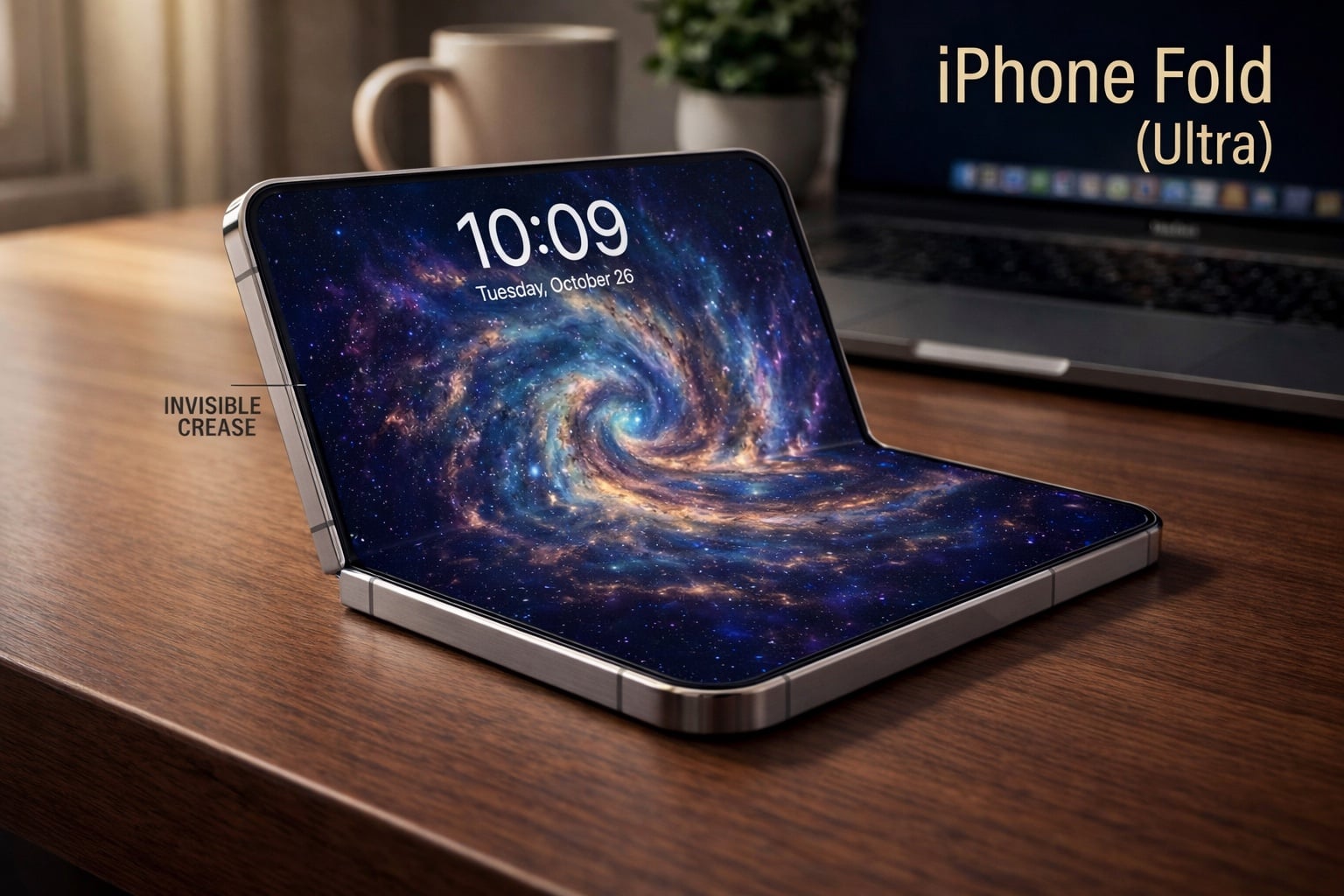
iPhone Fold Display Leaked: Apple’s ‘Invisible Crease’ Might Finally End the Foldable War

iPhone Fold Display Leaked: Apple’s ‘Invisible Crease’ Might Finally End the Foldable War iPhone Fold

Apple is reportedly preparing to make its mark in the foldable smartphone market with the highly anticipated iPhone Fold. Industry leaks and reports suggest that this device could address some of the most persistent challenges in foldable technology, such as crease visibility, durability, and overall design. If successful, Apple’s entry could reshape the foldable smartphone […]

The post iPhone Fold Display Leaked: Apple’s ‘Invisible Crease’ Might Finally End the Foldable War appeared first on Geeky Gadgets.

Posted in Uncategorized

NemoClaw Review: Strong Security Design, Rough Setup Experience

NemoClaw Review: Strong Security Design, Rough Setup Experience Diagram showing NVIDIA NemoClaw components, including OpenClaw, OpenShell sandbox, and policy controls for agent actions.

NVIDIA’s NemoClaw introduces a security-first approach to managing autonomous AI agents, addressing critical vulnerabilities in AI workflows. Built on an open source foundation, it incorporates features like real-time monitoring, declarative security policies, and sandboxing to enhance operational safety. Better Stack highlights how NemoClaw builds upon its predecessor, OpenClaw, by introducing stricter security protocols and a […]

The post NemoClaw Review: Strong Security Design, Rough Setup Experience appeared first on Geeky Gadgets.

Posted in Uncategorized

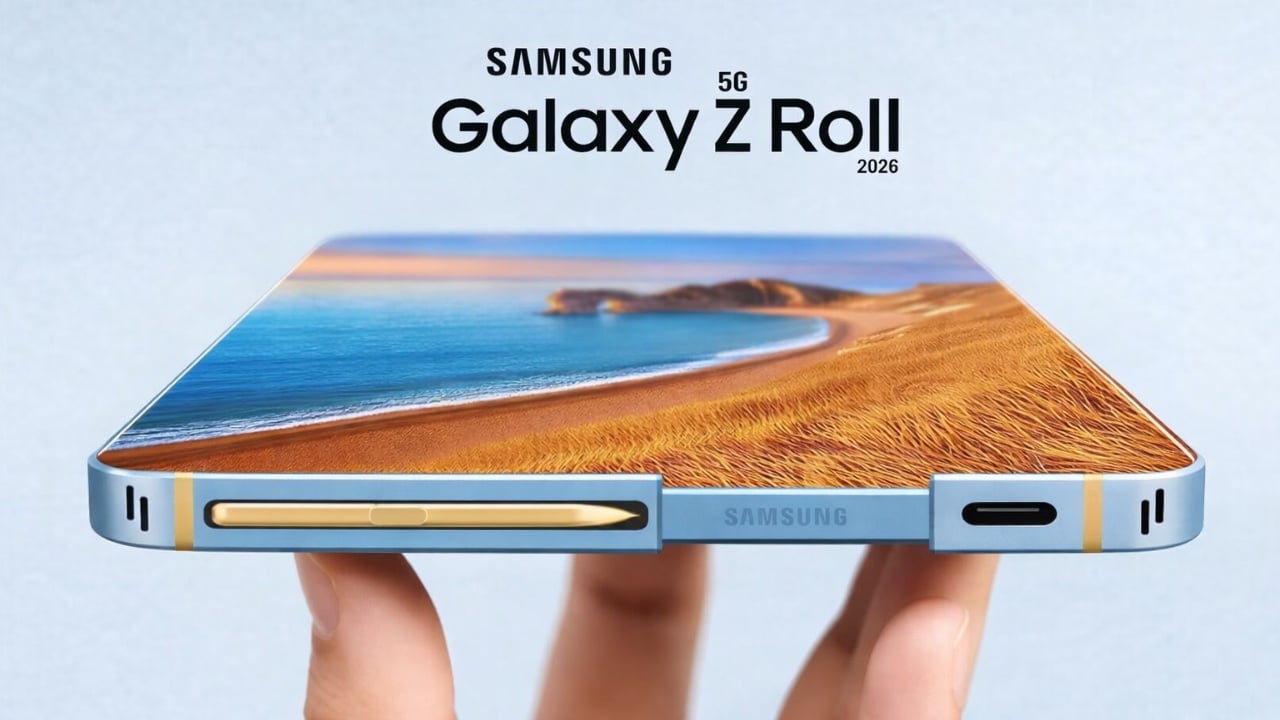
The $2,799 Superphone: Everything we know about Samsung’s Galaxy Z Roll 5G launch

The $2,799 Superphone: Everything we know about Samsung’s Galaxy Z Roll 5G launch Samsung Galaxy Z Roll 5G

Samsung is preparing to make a bold leap in the smartphone industry with the highly anticipated Galaxy Z Roll 5G, its first rollable smartphone, set to launch in 2026. This device combines innovative technology with a dynamic, adaptable design, aiming to transform how you interact with your phone. From its innovative rollable display to its […]

The post The $2,799 Superphone: Everything we know about Samsung’s Galaxy Z Roll 5G launch appeared first on Geeky Gadgets.

Posted in Uncategorized

Apple Blocks Updates to Vibe Coding Apps Under App Store Rules

Apple Blocks Updates to Vibe Coding Apps Under App Store Rules App Store policy page emphasizing self-contained apps and limits on executing code that changes functionality.

Apple’s recent enforcement of App Store policies has put AI-driven “vibe coding” platforms like Vibe Code and Replit under significant scrutiny. These platforms use advanced AI models to translate natural language descriptions into functional software, a process that has gained traction for its potential to provide widespread access to app development. Wes Roth examines Apple’s […]

The post Apple Blocks Updates to Vibe Coding Apps Under App Store Rules appeared first on Geeky Gadgets.

Posted in Uncategorized

iOS 26.4 – Apple is FINALLY Bringing AI Playlists to Your iPhone

iOS 26.4 – Apple is FINALLY Bringing AI Playlists to Your iPhone Featured image for iOS 26.4 - Apple is FINALLY Doing it !

Apple has officially unveiled iOS 26.4 RC (Release Candidate), marking a pivotal step forward in the ongoing evolution of its mobile operating system. This update is set to address longstanding user concerns while introducing a suite of new features aimed at improving performance, usability, and accessibility. Scheduled for public release on March 23, 2026, iOS […]

The post iOS 26.4 – Apple is FINALLY Bringing AI Playlists to Your iPhone appeared first on Geeky Gadgets.

Posted in Uncategorized

The Shargeek 300 is a Cyberpunk-style Power Bank that can charge two MacBook Pros

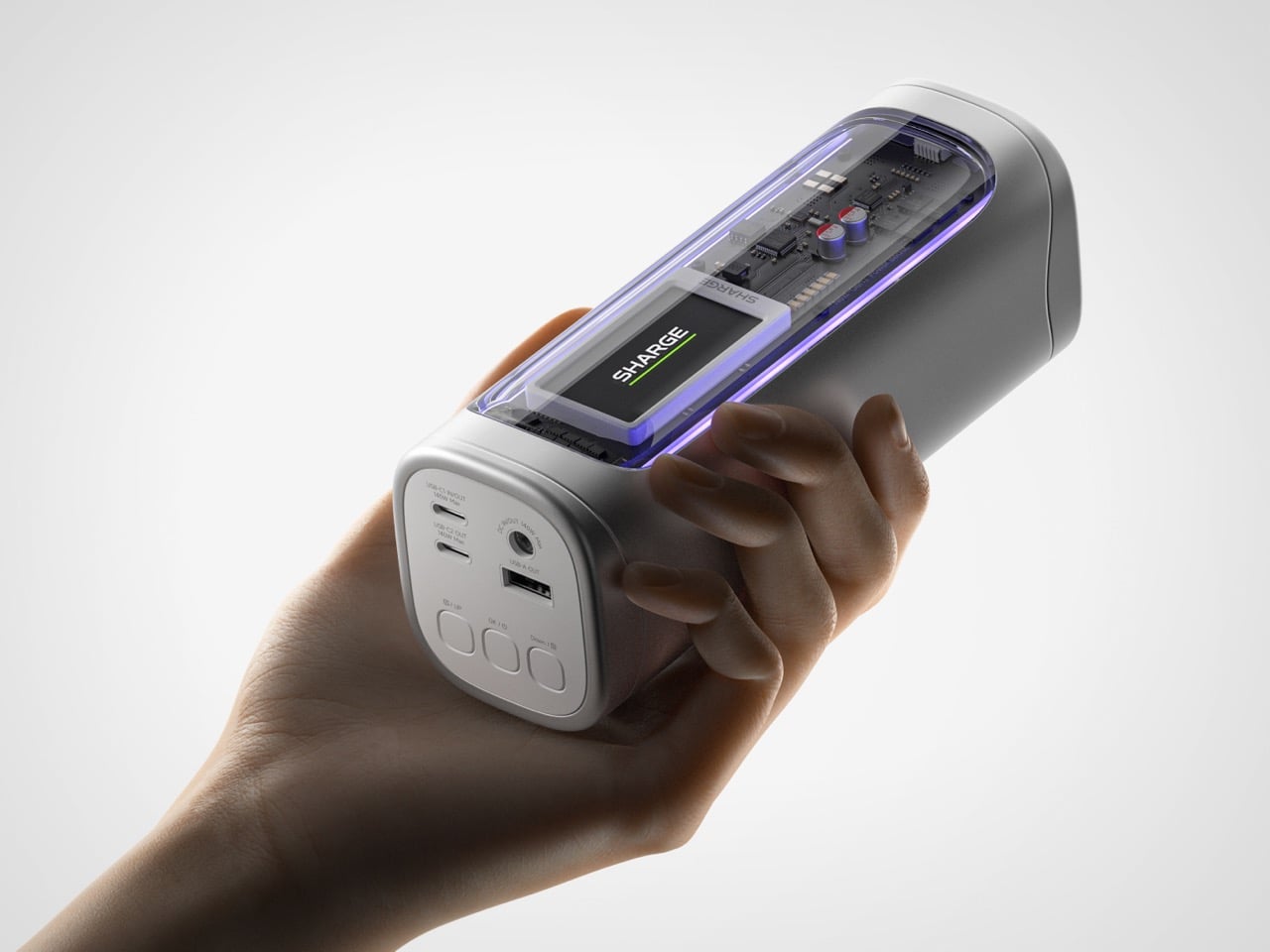
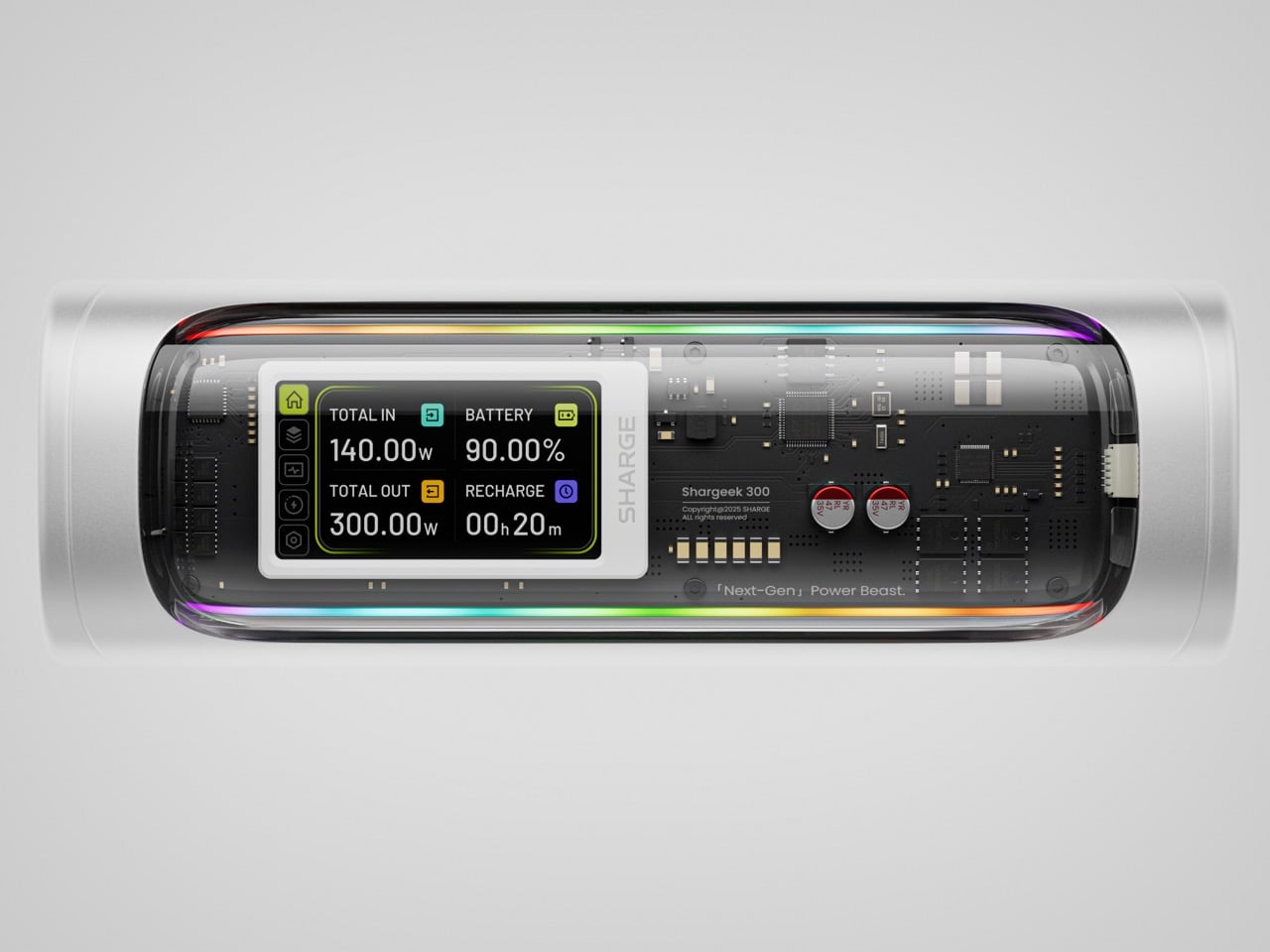
Power banks have spent years being boring on purpose. Black rectangles, white rectangles, the occasional textured finish. The category settled into a kind of utilitarian invisibility, as if the industry collectively decided that anything carrying electrons should look like a bar of soap. SHARGE never got that memo. The Shargeek 300 looks like a prop from a near-future thriller, with transparent panels revealing glowing circuitry beneath, RGB light bars running along its flanks, and a CNC aluminum body that catches light the way expensive things tend to. It belongs on a desk you’d actually want to show people.

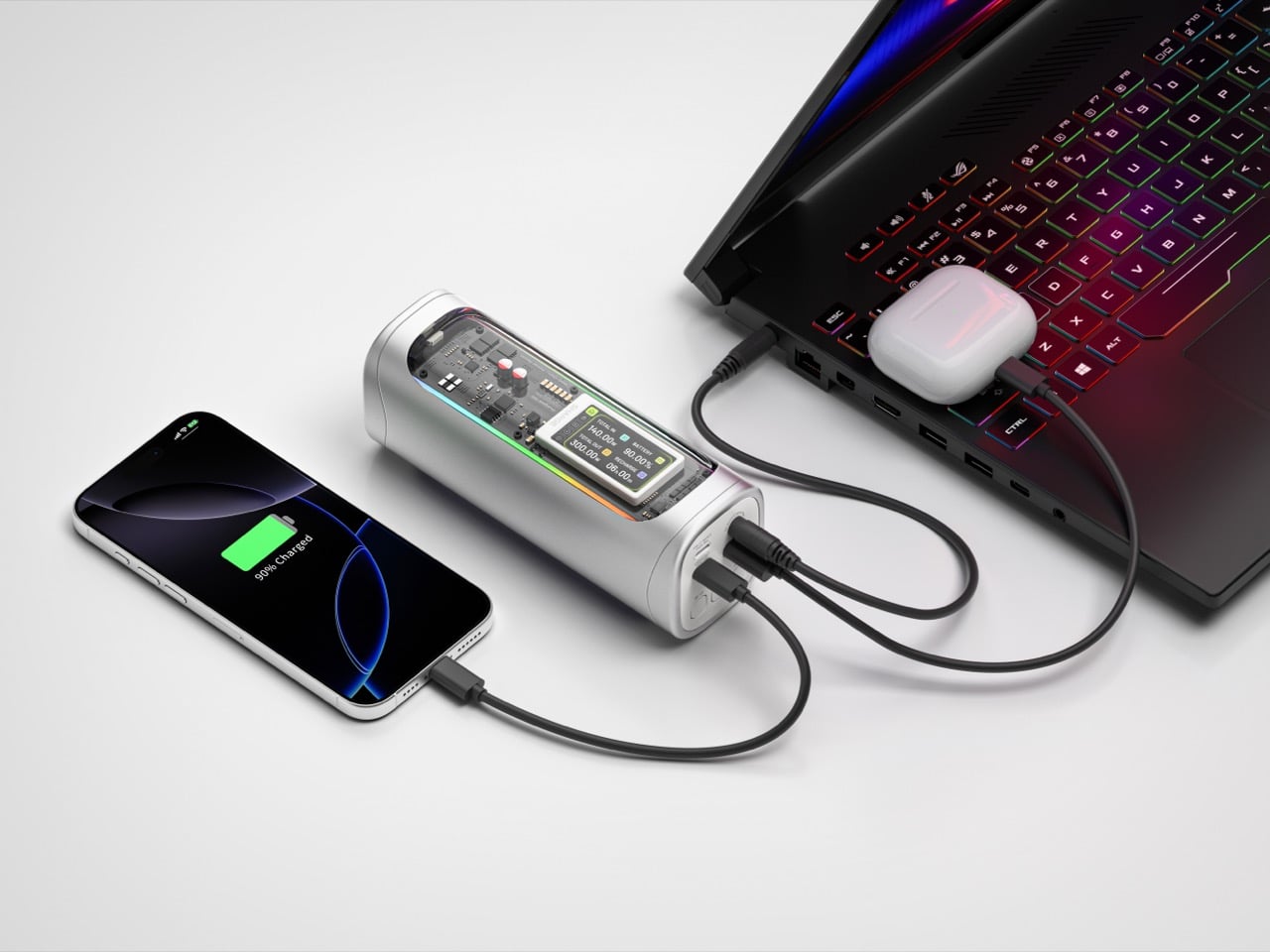
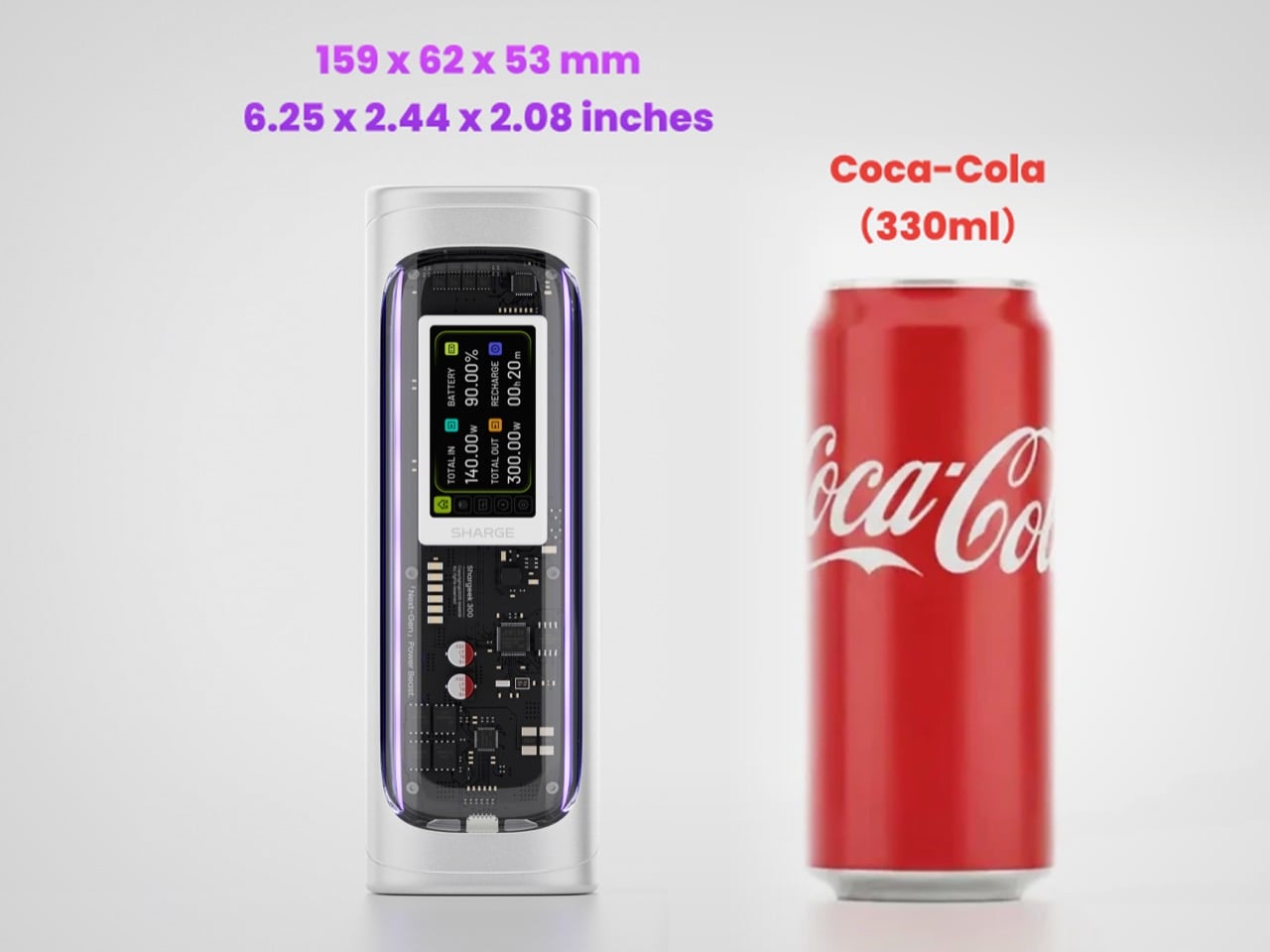
Founded in 2020, SHARGE built its identity around the conviction that charging hardware deserves the same design attention as the devices it powers. The original Shargeek 100, launched in 2021, was the proof of concept: a transparent, display-equipped power bank with DC charging that found a devoted audience almost immediately. The Shargeek 300 is what four years of that bet looks like fully cashed in. It pushes 300 watts of total output, enough to charge two 16-inch MacBook Pros simultaneously while still fast-charging a smartphone on a third port. The 24,000mAh battery lands at 86.4Wh, sitting just under the 100Wh threshold airlines enforce for carry-on batteries. Recharge time from flat to full is 75 minutes with a 140W input. The whole unit is roughly the size of a 330ml can of cola. SHARGE spent 40 months getting here, and the result makes most rivals in the category look underprepared.

Designer: Sharge

Click Here to Buy Now: $159 $199 ($40 off) Hurry! Only 6 days left.
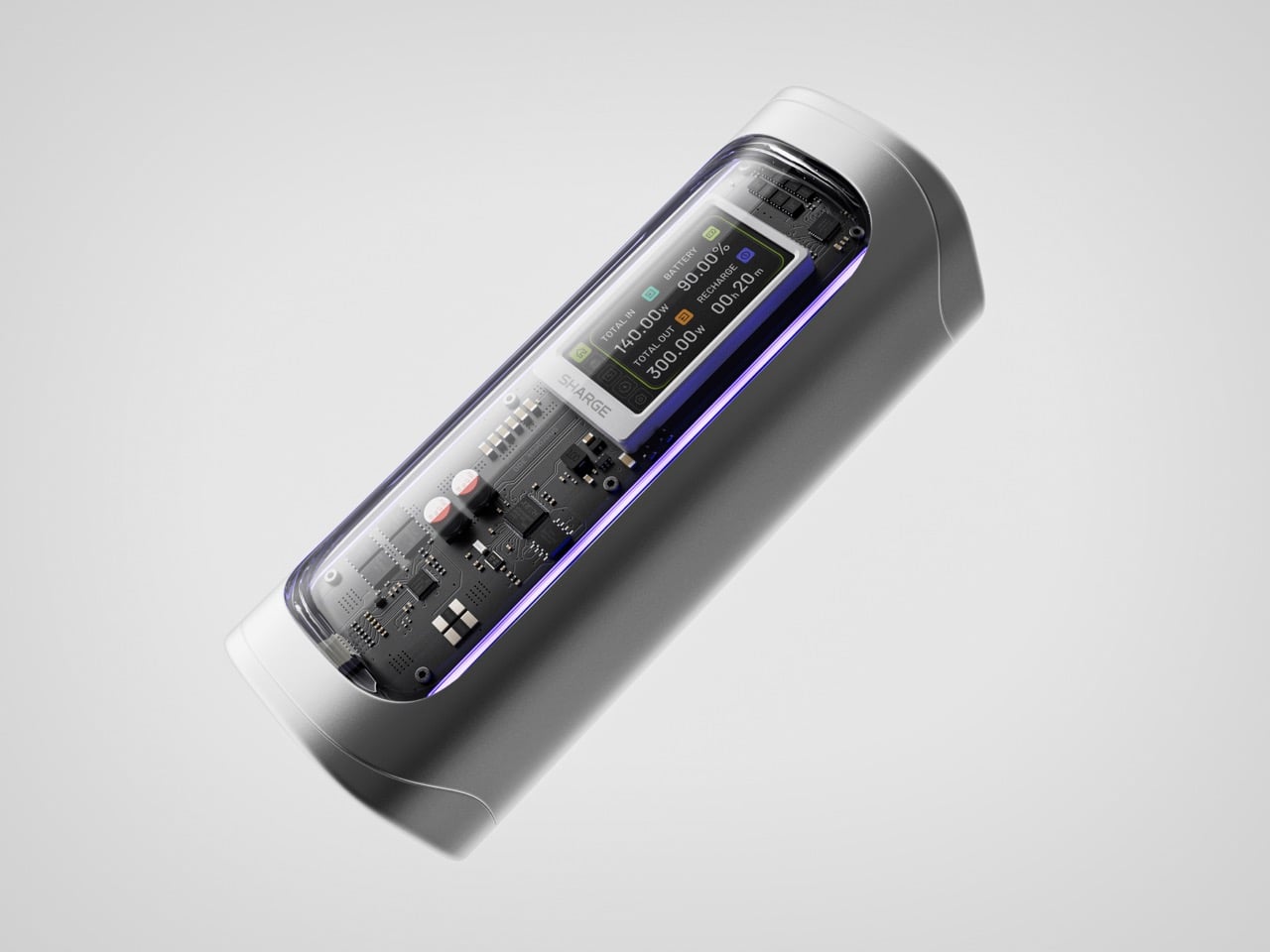
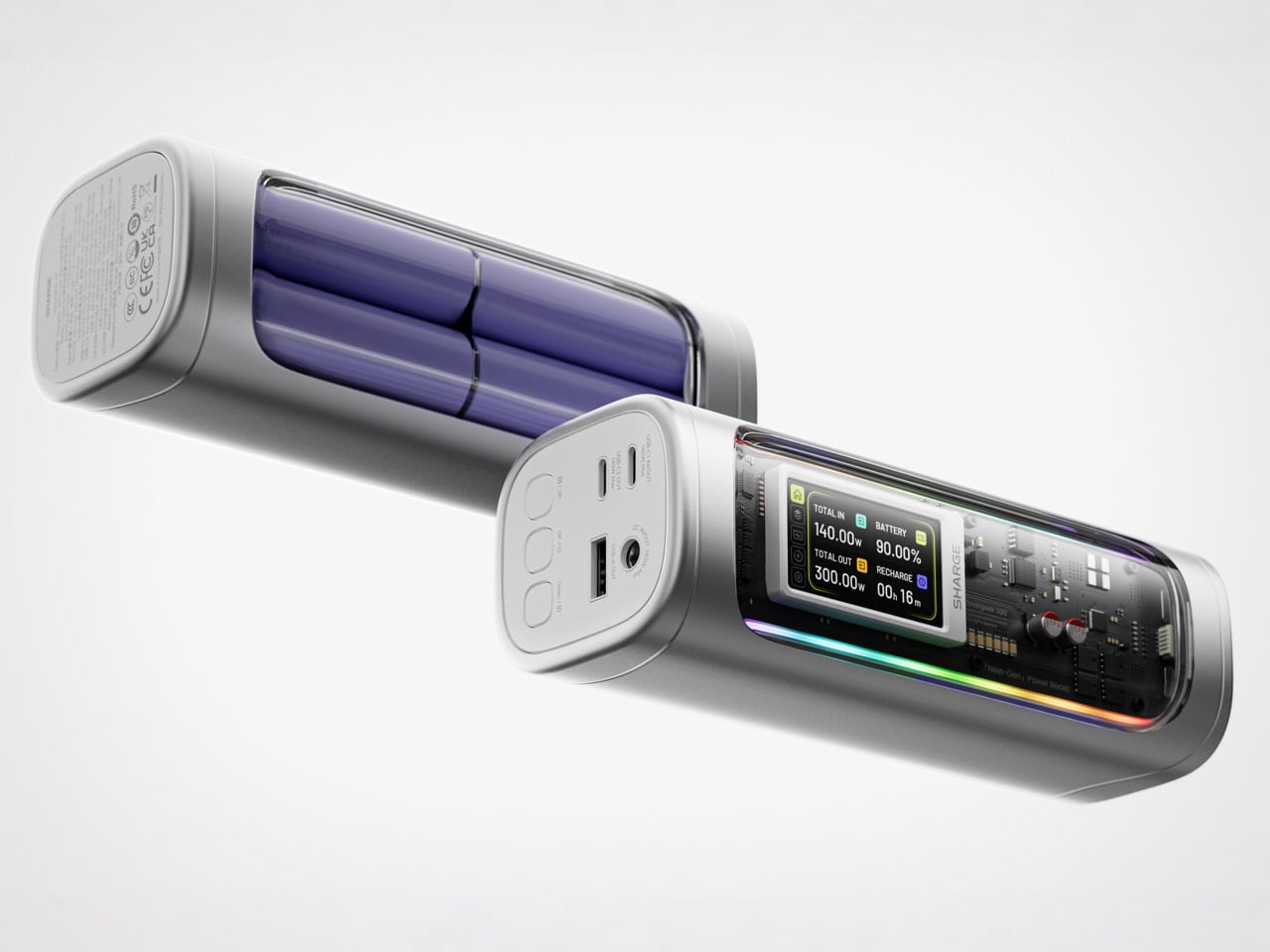
That meticulous attention to detail is most obvious in the physical construction. The main body is a matte silver CNC aluminum frame, which is then given a 180-grit sandblasted, anodized finish for a smooth, premium feel. The company’s head of production is even quoted as personally comparing the feel of every unit to an iPhone to ensure they are equally premium. The signature transparent casing is not just a window, but a piece of safety equipment, made from V0 flame-retardant, UL94-certified polycarbonate that resists both scratches and heat. The dual RGB light bars are fully customizable, allowing users to adjust brightness, change colors, and cycle through effects via the onboard display, turning a functional object into a piece of personalized desk art.

Inside that striking shell is technology that sets a new benchmark for portable power. The Shargeek 300 is the first power bank to use the same Full-Tab Battery Cell technology pioneered by Tesla. This design significantly lowers internal resistance compared to conventional cells, a change that unlocks faster charging speeds, higher sustained output, and superior heat dissipation. This internal efficiency is the key to how a device this compact can safely manage a 300W total output without overheating or degrading quickly. The advanced battery structure results in a longer-lasting, more stable power source that can handle the demanding, continuous power draws required by high-performance laptops and other professional equipment, putting truly next-generation power in your hands.

This power is routed through a versatile array of four output ports designed to handle nearly any device. The stars of the show are the two USB-C ports, both of which support the Power Delivery 3.1 standard to deliver a massive 140W of power each. This is what allows the Shargeek 300 to simultaneously fast-charge two 16-inch MacBook Pros at their maximum charging speed. A third USB-A port provides up to 20W for legacy devices and smartphones. The fourth and most unique port is the adjustable DC barrel port, a feature carried over from the Shargeek 100. It now supports up to 140W and its voltage can be manually set between 5V and 28V, unlocking compatibility with a world of gear that USB-C cannot serve, from professional camera equipment to high-performance drones. The 24,000mAh capacity provides enough energy for approximately one full charge of a modern MacBook Pro, six charges for an iPhone 16 Pro, or two charges for an iPad Pro.

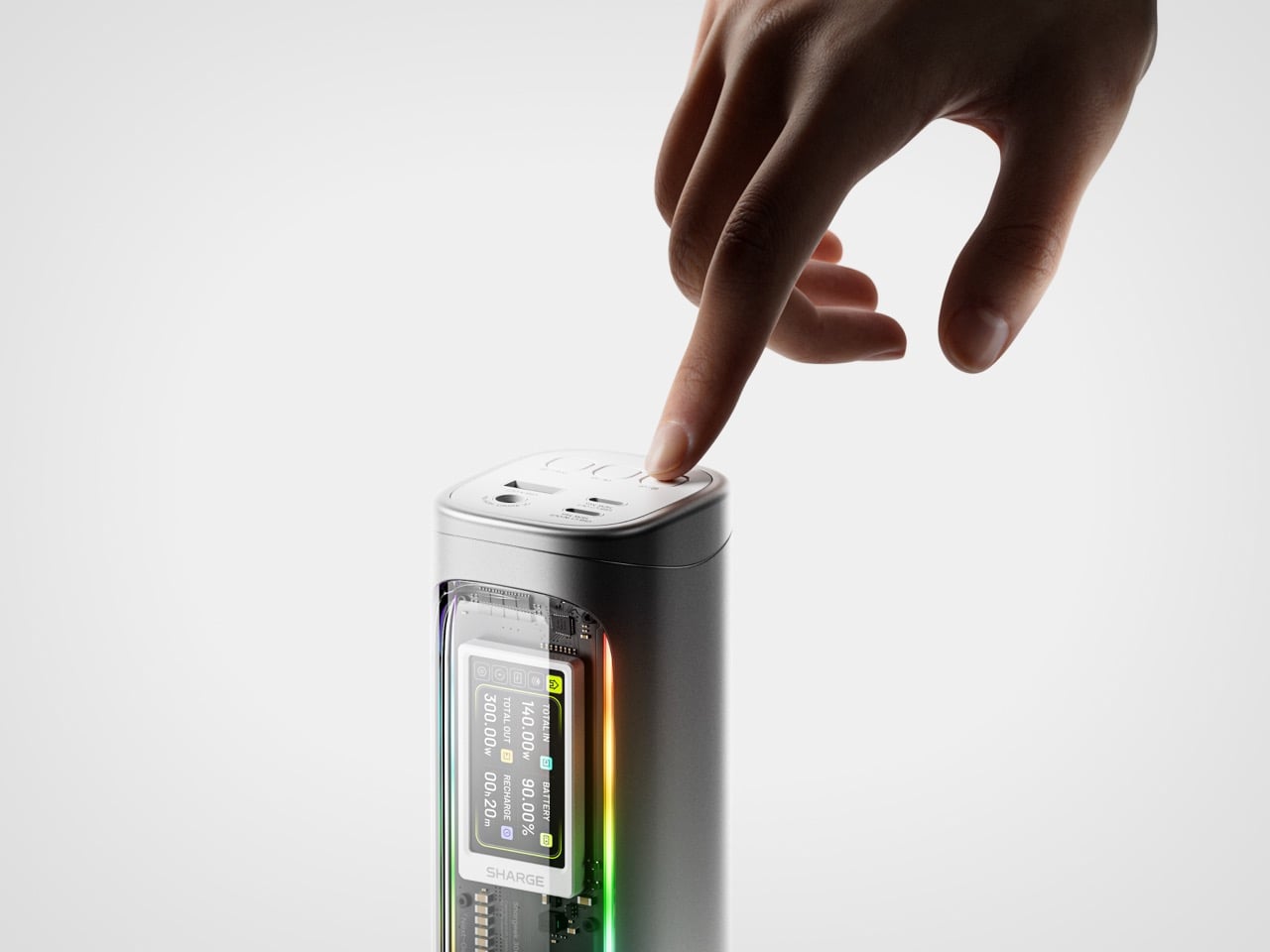
The user experience is managed through a 1.9-inch IPS display, which is 60% larger than the screen on the previous model. It provides a level of control that is unheard of in this category. Beyond showing real-time input and output wattage, the display allows you to monitor battery health, track charging cycles, and check internal temperatures. You can use it to precisely adjust the DC output voltage, set a custom welcome message, and configure the RGB lighting. This smart display transforms the power bank from a simple battery into an intelligent power hub. This intelligence extends to its handling of delicate electronics. A dedicated Low-current Mode ensures that devices like earbuds, smartwatches, and fitness trackers receive a safe, optimized charge, preventing the overcharging that can damage the small batteries in those devices.

This combination of raw power and intelligent control is backed by a comprehensive suite of safety features, including overvoltage, undervoltage, short-circuit, and real-time temperature protection. This commitment to safety extends to its travel-readiness. Crucially, the power bank’s 24,000mAh capacity is engineered to a rating of 86.4Wh, keeping it comfortably under the 100Wh limit imposed by airlines for carry-on luggage. This makes it one of the most powerful charging solutions that can be legally carried onto a plane, a critical detail for mobile professionals. The low standby power consumption is another practical benefit, allowing the Shargeek 300 to retain over 90% of its charge after 15 days of inactivity. For anyone who has pulled a power bank from a bag after weeks only to find it unexpectedly dead, this is a genuinely valuable feature.

The Shargeek 300 starts at $199 but is available at a discounted $159 price for earlybird backers. Cobble together $209 and you can get the power bank along with its companion Pixel 140W PD 3.1 wall charger from Sharge with its adorable pixel-matrix display. The Shargeek 300 comes with a 12-month warranty, and ships globally as early as May 2026.

Click Here to Buy Now: $159 $199 ($40 off) Hurry! Only 6 days left.

The post The Shargeek 300 is a Cyberpunk-style Power Bank that can charge two MacBook Pros first appeared on Yanko Design.

When Your Speaker Is Also a Puzzle, Music Hits Different

Most speaker designs ask a pretty simple question: how do we make this thing louder and smaller? Merge asks a completely different one. How do we make music something you can actually take apart?

Created by a five-person design team, Junchuan Shi, Junhao Lv, Xiangzhao Meng, Ping He, and Genghao Ma, from a cross-institutional collaboration across Sichuan Vocational and Technical College, CityU Macau, TUT, and QZUIE, Merge is a conceptual speaker system that just picked up a 2025 European Product Design Award in the Consumer Electronics category. It’s the kind of student concept that makes you wonder why no major brand has thought of it first.

Designers: Junchuan Shi, Junhao Lv, Xiangzhao Meng, Ping He, Genghao Ma

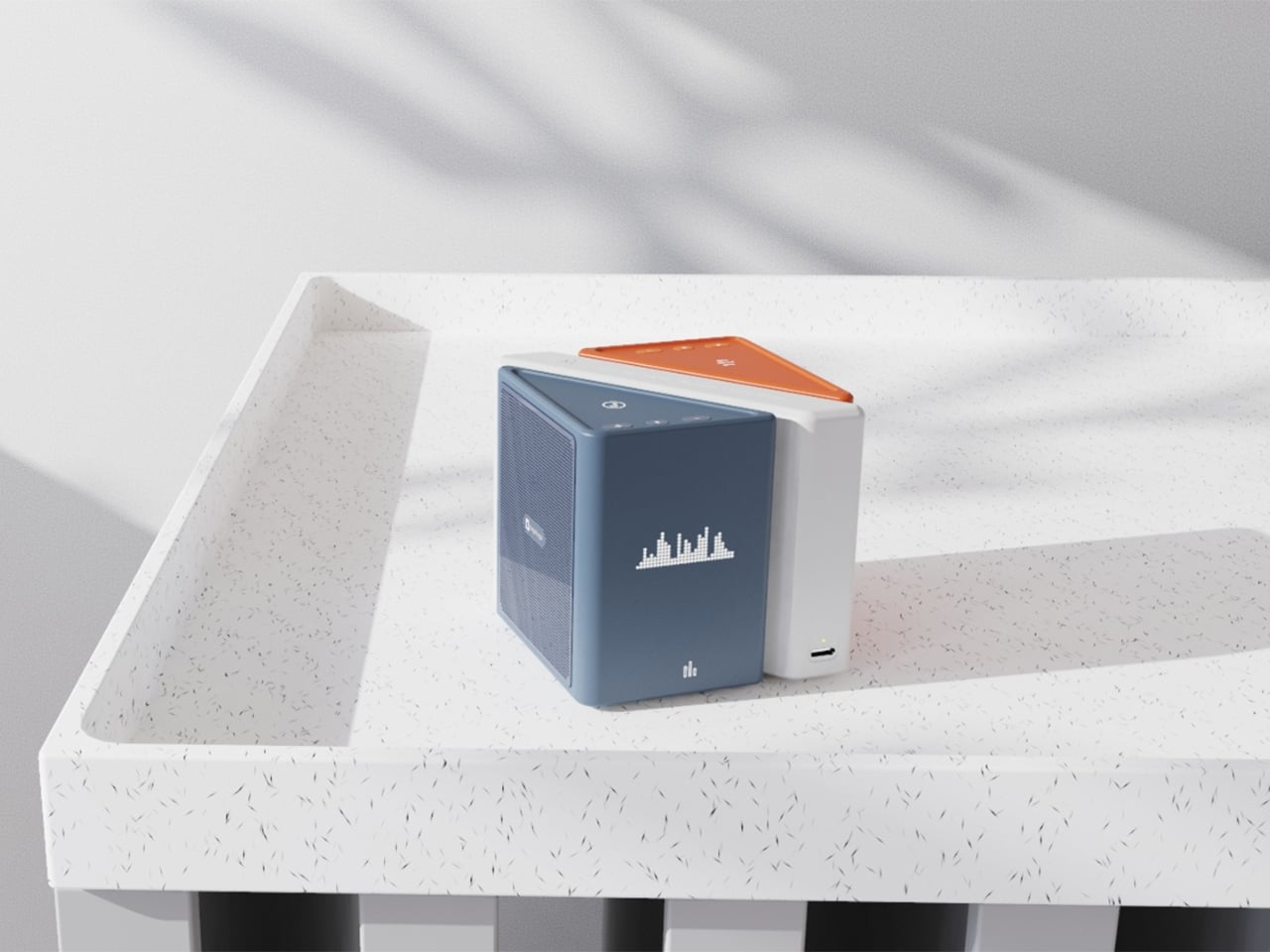
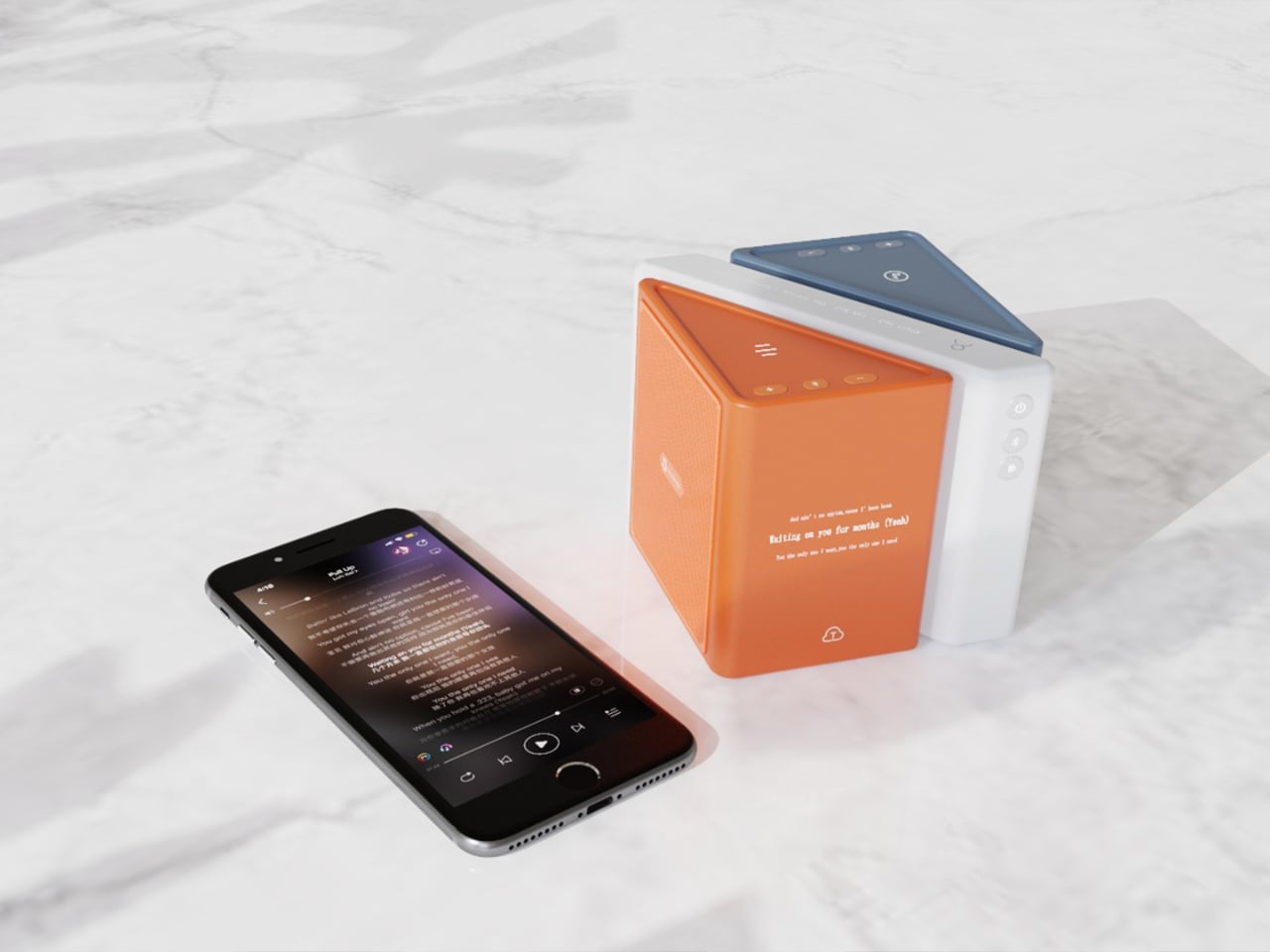
The central idea is deceptively clever. Merge physically separates music into its component layers: the accompaniment on one module, the vocals on another, and the full combined sound handled by the complete assembly. You choose what you hear depending on how the pieces are arranged. Pull the vocal module away, and you’ve got an instant karaoke track. Keep just the vocal module, and you hear a singer stripped back from all the production. Snap everything together and you get the whole song. It sounds gimmicky when you describe it that way, but it really isn’t. It’s an intuitive way to interact with music that streaming apps, for all their data and algorithms, still haven’t cracked with the same sense of physical satisfaction.

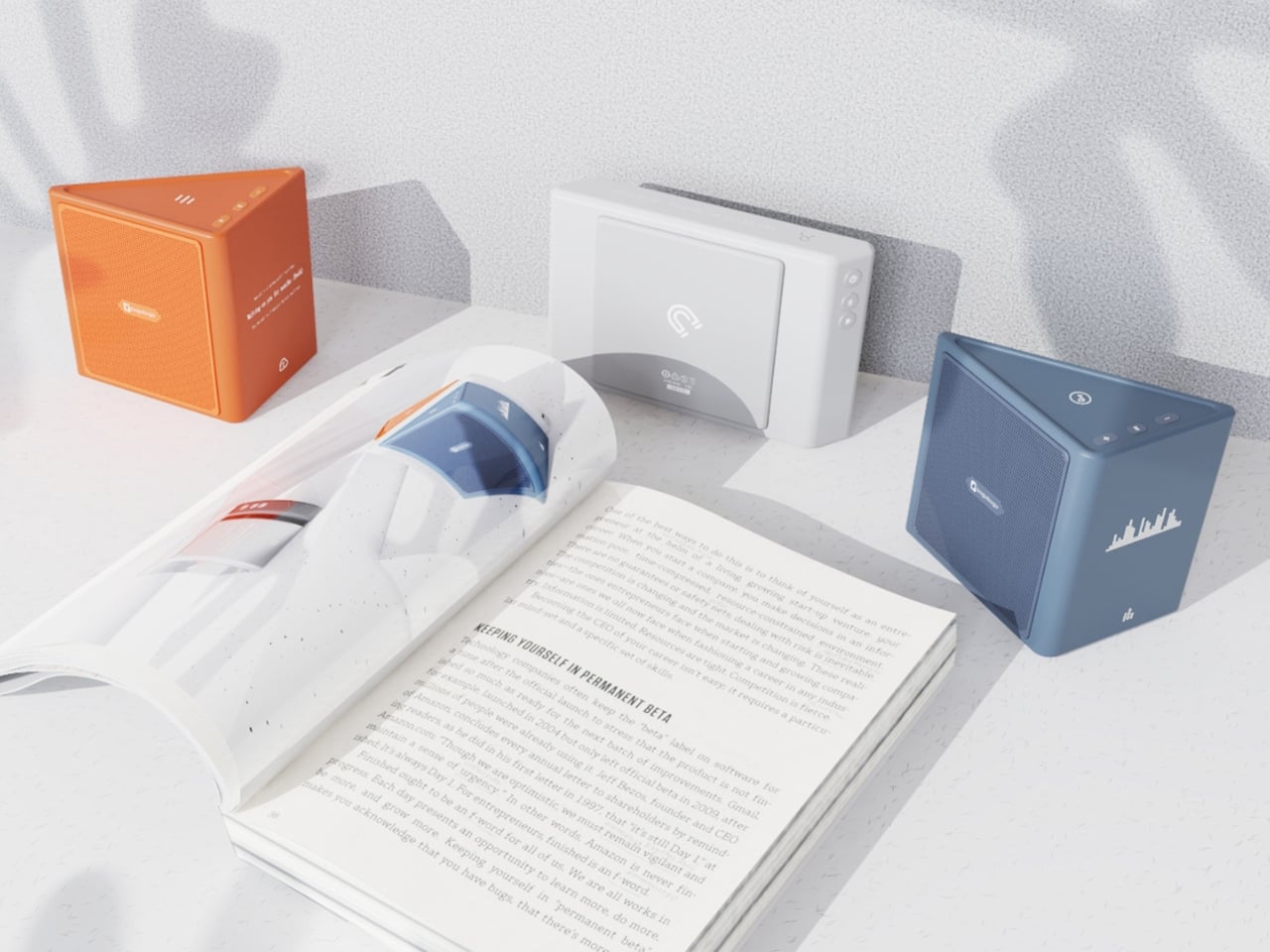
The three modules connect via electromagnetic induction, which also handles charging between units. That detail matters more than it sounds. It means the product doesn’t rely on fiddly clips or pins; the connection is seamless and the experience stays clean. When you hold all three pieces assembled, they sit together like a solid little object. When you pull them apart, you’re not wrestling with latches. You’re just… separating music.

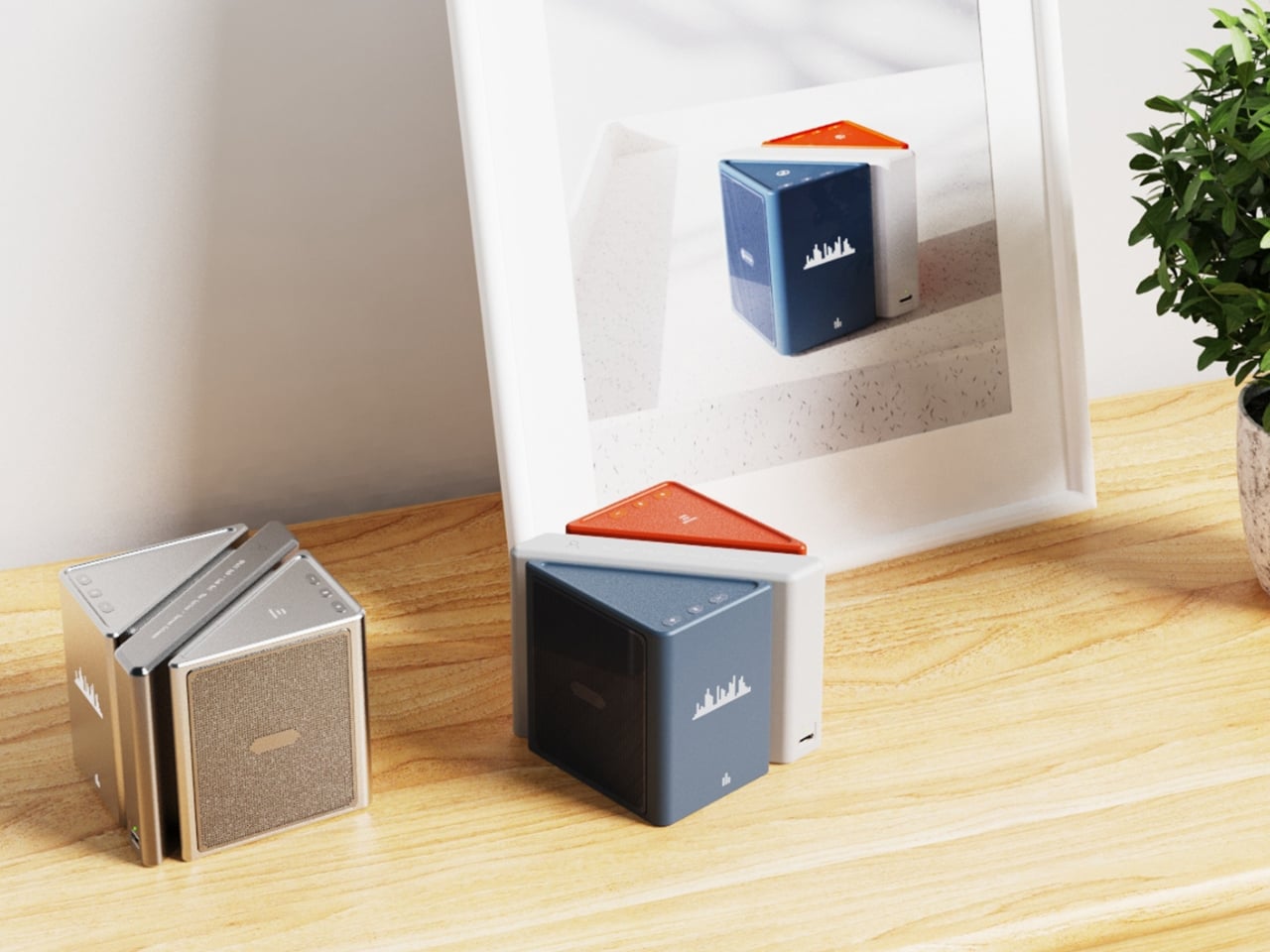
Visually, the design is confident without being loud. The modules are geometric and compact: a rectangular flat piece, a squared speaker body, and a triangular wedge that caps the top when assembled. The whole thing sits in your palm like a premium toy, which is very much the point. The team describes the tactile experience of rearranging the modules as analogous to playing with building blocks, and that framing is spot on. Listening becomes a physical act rather than a passive one. You’re not adjusting a slider on an app; you’re literally picking up a piece of the song and putting it somewhere else.

The color language is considered too. The renders show options in slate blue, orange-coral, silver metallic, and white-grey, each colorway with its own character but all sharing the same graphic vocabulary: pixel waveform icons and quiet typography showing floating lyrics directly on the module surface. It reads like something between a well-designed toy and a serious piece of consumer electronics, which is an interesting space for a speaker to occupy.

I’ll be upfront: Merge is still a concept. It won in the EPDA’s conceptual category, and it hasn’t crossed into production territory yet. That’s a long road, and the audio technology behind splitting tracks in real time at the hardware level would require serious engineering. The images are renders and physical prototypes, not retail-ready products. But the best conceptual design has always worked like that. It shows an industry where something should go, even when the technology and the business case haven’t fully caught up yet.

What makes Merge genuinely compelling is that it treats the listener as someone with curiosity rather than just convenience-seeking habits. The assumption baked into most audio product design is that people want everything done for them, simplified, smoothed over. Merge assumes the opposite: that people might actually enjoy engaging with the layers of a song, touching them, moving them around. Given how obsessed the current cultural moment is with stems, remixes, and stripped-back sessions, that assumption feels exactly right.

Whether it ever becomes a product you can buy, Merge is already doing the thing good design is supposed to do. It makes you look at something ordinary and ask why it was never done this way before.

The post When Your Speaker Is Also a Puzzle, Music Hits Different first appeared on Yanko Design.

Snøhetta Built a Metro Station in Riyadh That Reflects the Entire City Back at You

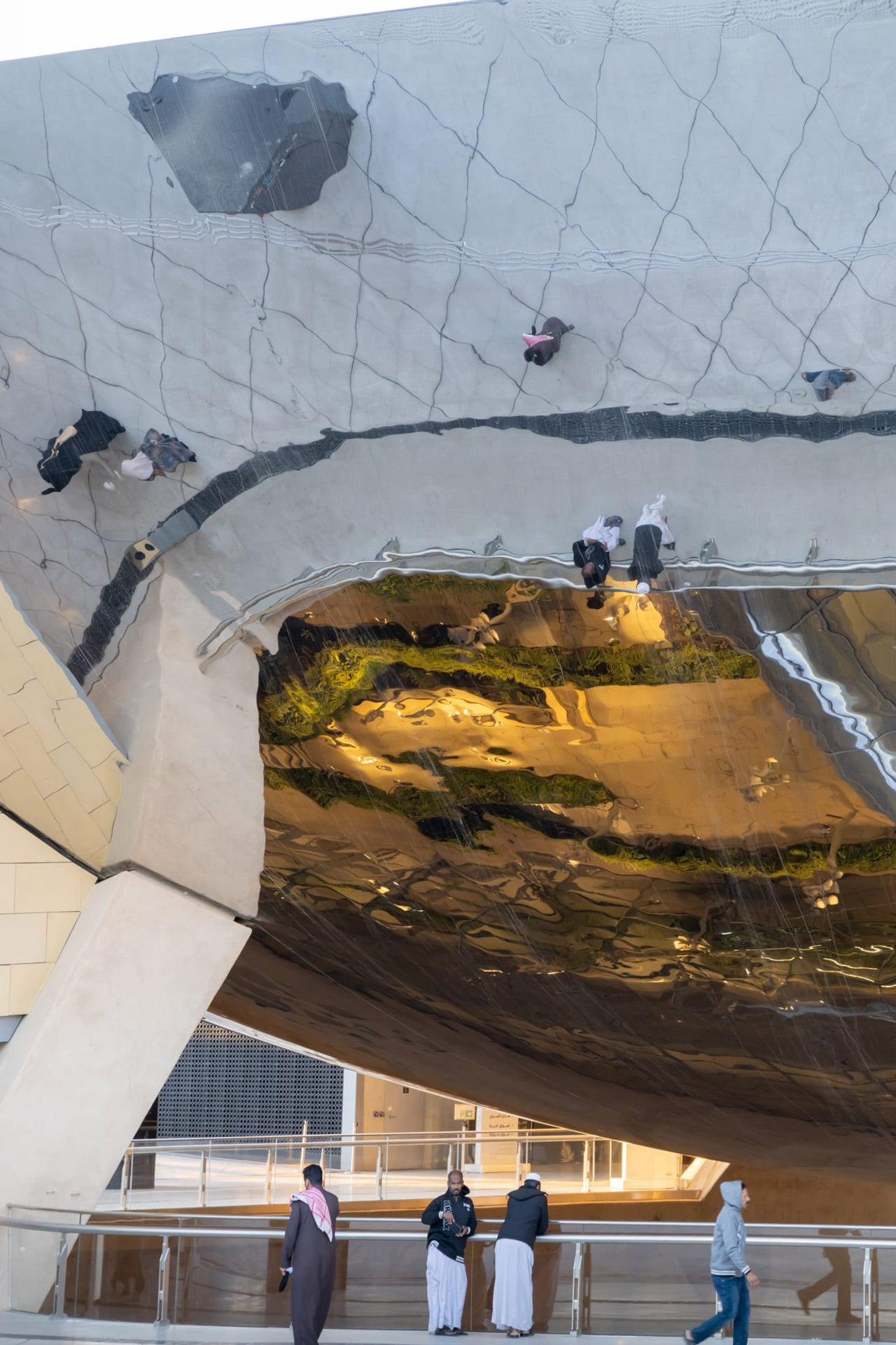
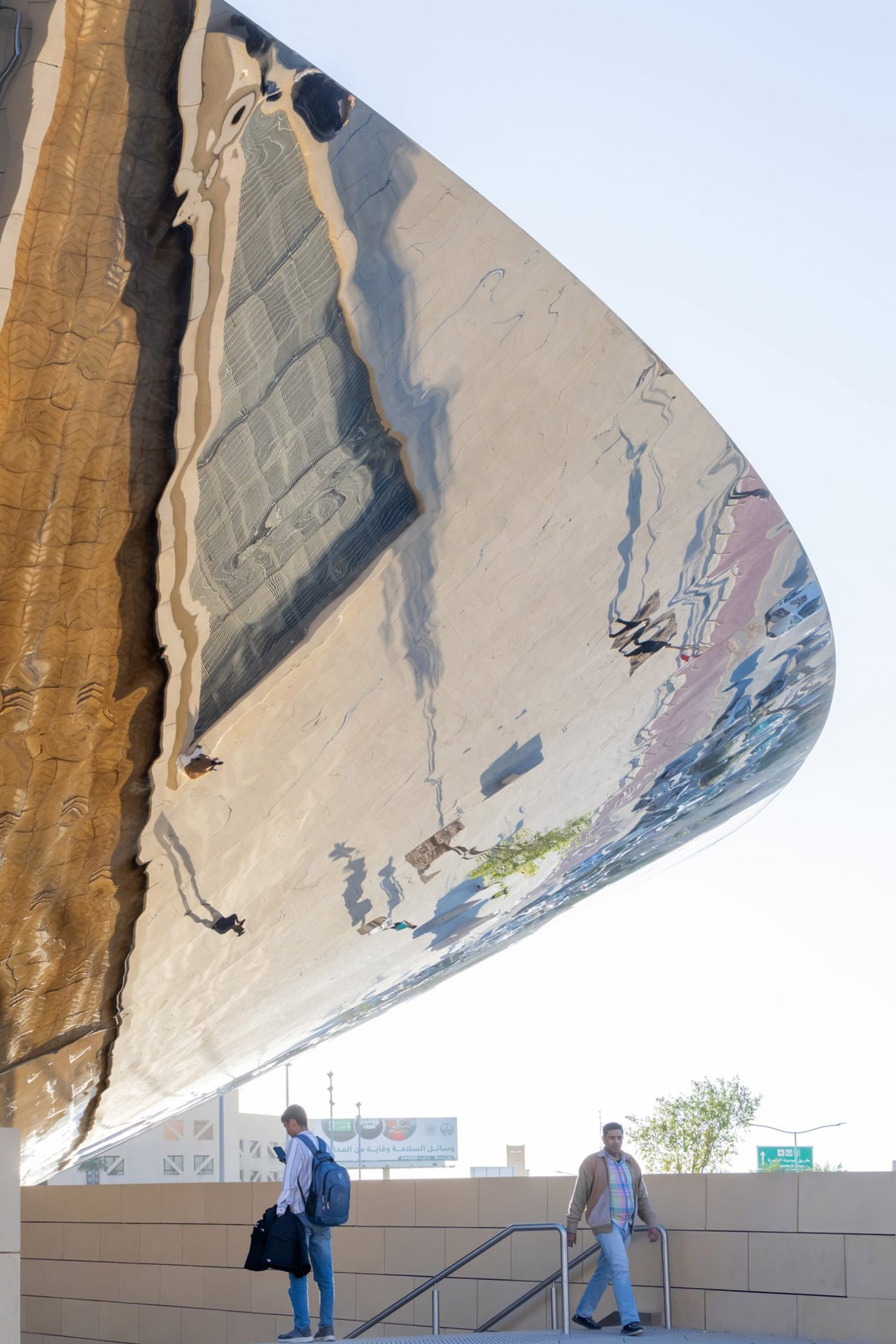
There is a moment, the architects at Snøhetta will tell you, when you step off the train at Qasr AlHokm and look up, and the entire city of Riyadh looks back at you. That is not a metaphor. It is exactly what happens beneath the station’s sweeping, mirror-polished stainless steel canopy, where a 360-degree reflection of the surrounding cityscape floats above commuters like a living panorama. It is disorienting in the best possible way, and entirely intentional.

Completed in 2025, the Qasr AlHokm Metro Station is one of four primary hubs within Riyadh’s expansive new metro network, a system now carrying up to 3.6 million passengers daily since it entered full operation in January 2025. The station sits in the heart of the historic Al Qiri district, adjacent to an Eid prayer field and a mosque, and within walking distance of the old palace grounds, a location that demanded both architectural sensitivity and civic ambition.

Designer: Snøhetta

Snøhetta, working in collaboration with One Works and Cremonesi Workshop (Crew), first won the competition brief in 2012. The central concept remained remarkably consistent from that early vision: a transit station designed as an open urban plaza, where the threshold between city and subway is dissolved rather than defined. The bowl-shaped canopy, its underside ground to a flawless mirror finish, acts as what the team describes as an urban periscope. From above ground, the city is reflected downward into the station. From below, the underground world is projected back out. “Likewise, if you’re coming from the city, you look up into the canopy, and it mirrors everything that happens below,” explained Snøhetta partner Robert Greenwood.

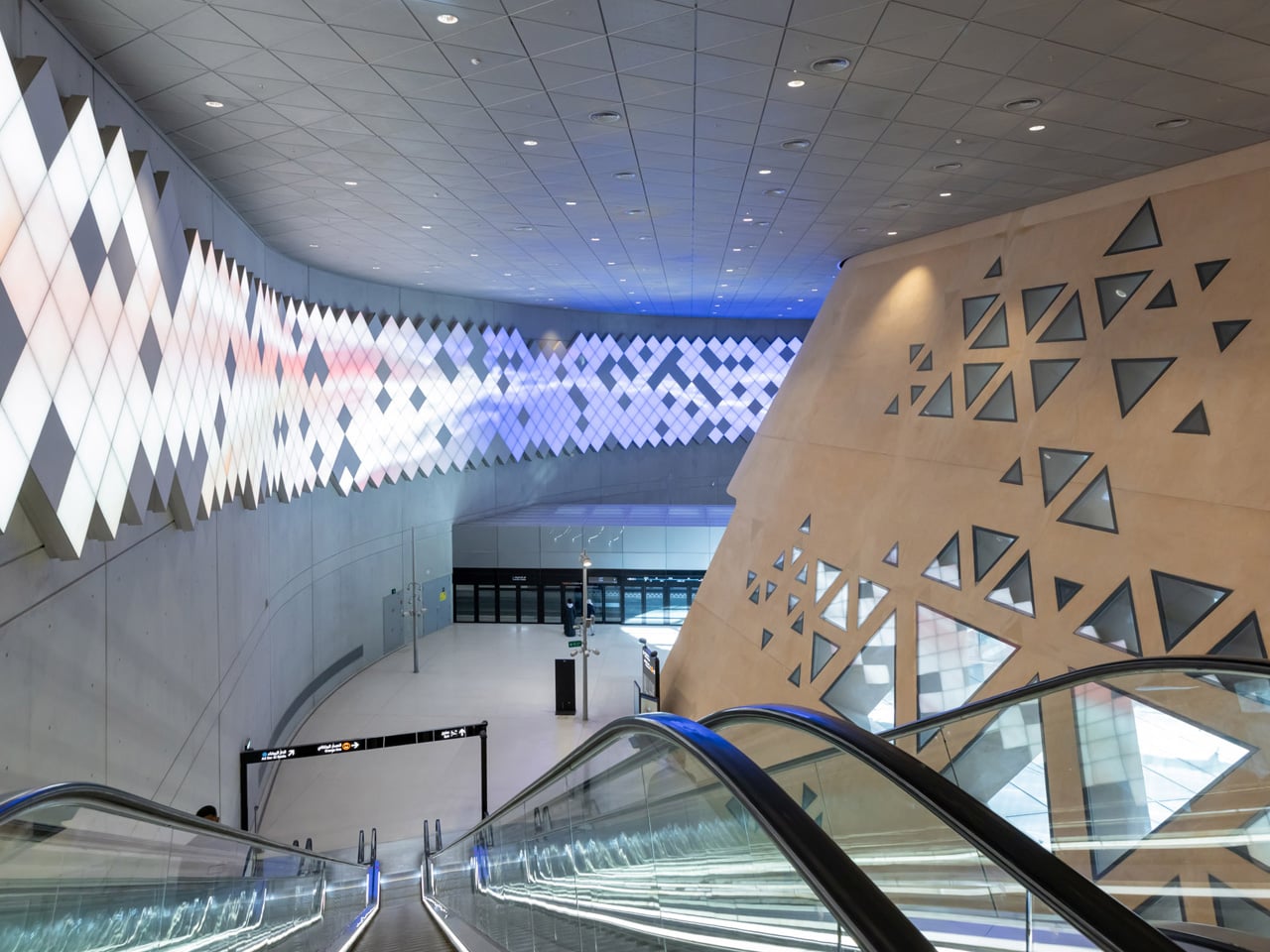
Sloped terrazzo floors draw visitors naturally under the canopy and into the station’s layered interior. There, a truncated cone-shaped atrium wall, its surface perforated by triangular openings drawn from the regional Najdi architectural tradition, encloses one of the station’s most unexpected gestures: a lush underground garden. In a city defined by heat and aridity, this green pocket offers genuine respite. Indigenous tree planting, natural ventilation, and photovoltaic panels complete a sustainability framework that goes well beyond a token gesture.

The building has not gone unrecognized. In November 2025, the Prix Versailles, presented under the patronage of UNESCO and the International Chamber of Commerce, named Qasr AlHokm one of the seven most beautiful train stations in the world, placing it alongside some of global architecture’s most celebrated transit spaces. What Snøhetta has built here is more than a station. It is a civic room, a place where infrastructure earns the right to be called architecture.

The post Snøhetta Built a Metro Station in Riyadh That Reflects the Entire City Back at You first appeared on Yanko Design.
Elon Musk misled investors during his Twitter takeover, jury finds

A group of former Twitter investors have prevailed at a federal civil trial over Elon Musk's actions amid his $44 billion acquisition of the social platform in 2022. A jury in San Francisco found Friday that tweets made by Musk about fake accounts on the platform had defrauded investors in the company. The jury sided with Musk on other allegations in the case. 

It's not yet clear how much Musk will owe in damages as a result of the case but, as the Associated Press reports, it could amount to billions of dollars. Jurors calculated that shareholders should get "between about $3 and $8 per stock per day." 

The class action lawsuit, one of several brought against Musk in the months following his takeover of the company, cited Musk’s tweets about fake accounts on the platform. Facing a sinking Tesla share price in the days after announcing he would buy Twitter for $54.20 a share, the suit said Musk made tweets and statements that were intentionally meant to drive down Twitter's share price in an attempt to renegotiate or exit the deal. 

The suit called out Musk's May 13, 2022, tweet that claimed the Twitter deal was "temporarily on hold" due to the number of fake accounts and bots on the platform, as well as one a few days later that suggested fake accounts might account for more than 20 percent of users. Twitter's stock dropped significantly following the May 13 tweet.

During the trial, Musk said the tweets were him "speaking his mind" and maintained that Twitter executives had "lied" about the number of bots on the platform, according to KQED. Former Twitter shareholders, on the other hand, said "they sold shares at deflated prices amid Musk’s public waffling." 

Musk faced several lawsuits during and after his $44 billion takeover of the company. That includes other shareholder lawsuits related to his delay in disclosing his stake in the company, as well as one from former executives related to unpaid severance benefits (Musk later settled those claims). He also narrowly avoided a trial over his attempts to back out of the deal. 


This article originally appeared on Engadget at https://www.engadget.com/social-media/elon-musk-misled-investors-during-his-twitter-takeover-jury-finds-232033028.html?src=rss