Ugreen launches a smart home security platform at CES

Ugreen makes plenty of things, but you’re probably familiar with the name in the context of its NAS systems (should that be NASes? Who knows). Naturally, the company has turned up to CES 2026 with the former, but it’s also branching out into home security. It’s announcing SynCare, an AI infused all-in-one surveillance platform which, it rather boldly claims, will become an “attentive, integrated guardian” of your home.

Leading the pack is the SynCare Video Doorbell with head-to-toe 4K video, intelligent detection and 24/7 recording — especially if you’ve got it hooked up to your Ugreen NAS. That works in tandem with SynCare cameras offering 4K video on a pan-tilt base and, of course, AI to recognise “people, pets and key events.” Ugreen is also offering a tablet, the SynCare Smart Display, a “home hub” to let you manage your cameras from a single place in your home. 

The company is quick to highlight the major benefit of an at-home system like this, which is no need to pay for a monthly subscription. And, of course, that the footage from your home stays inside your home at all times, making it a better option for those folks who value their privacy. Sadly, Ugreen isn’t ready to share pricing or availability information for the series, saying it’ll be available in the back end of 2026.

This article originally appeared on Engadget at https://www.engadget.com/wearables/ugreen-launches-a-smart-home-security-platform-at-ces-130000389.html?src=rss

Segway launches two more e-bikes at CES

I’m no psychologist, but I get a sense Segway turned up to CES 2026 with something to prove after last year. Certainly, it’s gone out of its way to prove its micromobility bona fides with the press, who perhaps were a bit too sniffy that scooter people were launching an e-bike. This year, Segway’s not just launching two more mainstream e-bikes, but an electric dirt bike, all of which are crammed with the sort of tech that might just make everyone halt their sniffiness.

First up, there’s the Myon, a chunky step-through with a decent-sized pannier rack for folks who want to go far and carry a bit of luggage as they go. That’s hardly an eye-catching proposition given so many e-bikes fit within the same template, but Segway is hoping its tech will make a difference here. Myon is equipped with electronic gear shifting (tied to a Shimano CUES chain drivetrain), electronic motor optimization and the company’s proprietary Intelligent Ride System. 

The latter, along with Segway(TM) TurboTuned(TM) will automatically optimize motor and battery performance while under way. The company adds that the bike’s built-in gyros, cadence and torque sensors will meter out performance according to road conditions. So if you’re going up hill, the power will gently increase before you have to think about it. Additionally, if you stop at the lights, the system won’t just turn on the power to whatever you’ve set it at as soon as it senses the tiniest ounce of pressure on the pedal, removing the jerky start action you see in other bikes.

Segway’s broader pitch is that its bikes will also feature a whole host of smart features, including integration with Apple’s Find My network, GPS tracking, remote locking, integration with your health and fitness app of choice, and smartphone pairing. 

Muxi
Muxi
Segway

Muxi (pronounced moo-shee) is a more interesting piece of hardware, since it’s been built like a longtail cargo bike, but with the long tail chopped off. Even so, the focus is on cargo, with the bike getting an optional passenger seat with foot pegs, and an optional middle basket. Plus, the bike comes with a beverage cup holder (although given it has a direct drive motor, I’m not sure I’d want to cruise around at low speed while trying to sip my morning latte). To ensure you don’t struggle with your load, the bike comes with Hill Start Assist, Hill Descent Control, regenerative braking and traction control. Plus the aforementioned suite of added value features, like Find My integration, remote locking, GPS and the app integrations. 

Rounding out the announcements is the Xaber (say-br) 300, an electric dirt bike geared toward off-roading. It has three power modes, letting you learn on the equivalent of a 150cc engine, then dialing that up to 200cc, before topping out at 300cc. If you still want a greater sense of control, you can activate an electronic clutch, and if you want to cede more of it to the bike, you can set the maximum wheelie angle. If you want to enjoy all of that dirt bikin’ action, it’ll set you back $5,300 when it arrives.

As for Myon, it’s available to buy today from Segway’s official site and via its dealer network, priced at $2,000. Muxi will be available through those same channels in March, setting you back $1,700. 

This article originally appeared on Engadget at https://www.engadget.com/transportation/segway-launches-two-more-e-bikes-at-ces-130000152.html?src=rss

Google Antigravity Guide 2026 : Plan, Code & Host Apps Online

Google Antigravity Guide 2026 : Plan, Code & Host Apps Online

What if building your first app didn’t require years of coding experience or hours of frustration? Imagine having an AI-powered assistant that not only writes your code but also helps you test, debug, and customize your project, all while you stay in control. In this breakdown, Teacher’s Tech walks through how Google Antigravity is transforming […]

The post Google Antigravity Guide 2026 : Plan, Code & Host Apps Online appeared first on Geeky Gadgets.

Posted in Uncategorized

HP Eliteboard G1a keyboard is a next gen AI PC in disguise

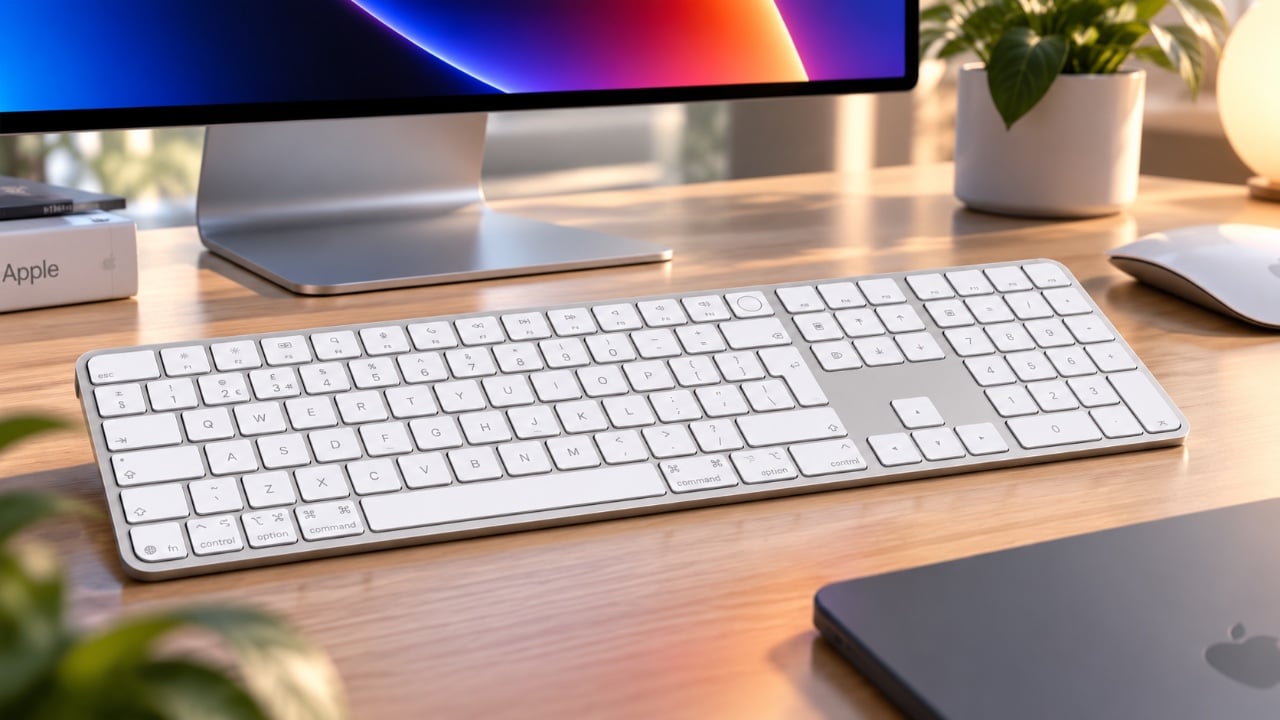
It’s CES time, and we’re not expecting anything short of extraordinary at the event. The other day, we saw the Pentagram x Caligra c100 keyboard, which houses computing hardware inside. Now, HP has announced its own version of a keyboard PC, and it looks even better, with practicality at the forefront. At first glance, you might not realize the desktop keyboard has computing power inside, but that’s where the surprise lies.

According to HP, the Eliteboard G1a is “the first and only AI keyboard PC,” and is capable of doing most of the day-to-day tasks you desire while being mobile. Rather than going the AIO route (slamming a PC into the screen), HP chooses a piece of hardware that goes portable with you. The screen PC idea is novel, but it restricts you to one place. A keyboard PC is a more practical idea, and I’m glad it’s here.

Designer: HP

The EliteBoard G1a keyboard is a tad thicker than normal peripherals, and it’s completely understandable as computing hardware requires space. Measuring 58 x 118 x 17 mm and weighing just 726 grams (with the battery included), the keyboard is ideal for tasks like browsing the internet, opening the odd survey form for input, listening to music, and more. The spill-proof peripheral has 93 keys, including the number pad. In retrospect, it makes the Bapco mechanical keyboard that houses a working PC inside look bulky.

If you’ve used the HP Elitebook range, the keyboard has the same tactile typing experience, with the key travel (2mm) fine-tuned for desktop space. The keyboard PC comes with the choice of AMD Ryzen AI 300 Pro mobile processors, capable of a maximum of 50 NPU TOPS, making it a Copilot+ equivalent PC. You can connect up to two 4K monitors (running at 60Hz) since it has an integrated Radeon iGPU. Memory capacity is capped at 64GB DDR5-6400, which should be enough to handle sizeable tasks on the fly. The user can install up to 2 TB PCIe Gen4 NVMe SSD, while the Ryzen AI 7 350 SKU variant can be configured for 32GB of eMMC storage.

The Windows 11-powered EliteBoard G1a has a built-in 32 Wh battery that can be charged at speeds of up to 65 Watts. You can connect monitors via the USB4 and USB-C ports on the back, or any other compatible hardware. The keyboard has a claimed 3.5 hours of battery run time on a single charge, but that’ll vary depending on usage and connected devices. There are vents to channel airflow, and the keyboard even comes with stereo speakers for a holistic setup. The keyboard comes in two models, with the high-end version having an optional fingerprint reader and a detachable USB-C cable.

HP is slated to release the keyboard PC in March 2026, and there’s no word on the pricing yet.

The post HP Eliteboard G1a keyboard is a next gen AI PC in disguise first appeared on Yanko Design.
Birdbuddy’s new smart bird feeder can ID birds by their songs

I’m seeing a ton of smart bird feeders again this year at CES — and I’m inexplicably drawn to them. Perhaps because the idea of birds nibbling on seeds and flying away represents a natural purity and freedom that doesn’t exist within the halls of CES. Birdbuddy was one of the first smart bird feeder brands, with a wildly successful Kickstarter back in 2020. And this year, they’ve added birdsong to their species identification capabilities.

Two new feeders, the Birdbuddy 2 and the Birdbuddy 2 Mini both have the new feature, but the latter is a more affordable, starter version. The Bird Buddy 2 is solar-powered with built-in panels. It’s slightly larger and has a bigger seed capacity, too. Both have HD cameras you can manually position either vertically or horizontally and both have a mic to help with birdsong IDs.

Upgrades to the cameras include a faster wake-up time when a bird lands and the housing for the seed and camera has a more modular design that makes the feeder easier to clean. The lens is now protected by Gorilla Glass, which may seem excessive, but Rhian Humphries, Birdbuddy’s senior PR manager, said curious birds often peck at the camera looking for more food.

The AI Birdbuddy uses was trained on real bird visits and at the end of each day, you’ll get a “postcard,” a curated look at the birds that visited your feeder that day. Of course, the app can also alert you each time you have a feathered customer in your yard so you can tune into nature’s live feed and soothe your soul for a few.

The Birdbuddy 2 goes for $199. It sold out during the pre-order phase, and those units will ship in February, but more will be available in mid 2026. The Birdbuddy 2 Mini costs $129 with pre-orders opening in summer.

This article originally appeared on Engadget at https://www.engadget.com/home/smart-home/birdbuddys-new-smart-bird-feeder-can-id-birds-by-their-songs-122000692.html?src=rss

Build Faster Excel Workflows Using FILTER, IFS, XLOOKUP, and LET for Real-World Data

Build Faster Excel Workflows Using FILTER, IFS, XLOOKUP, and LET for Real-World Data

What if you could transform hours of tedious spreadsheet work into just minutes of streamlined efficiency? Simon Sez IT takes a closer look at how Excel’s most powerful functions can transform the way you handle data, from basic calculations to advanced analysis. Whether you’re a seasoned Excel user or just dipping your toes into its […]

The post Build Faster Excel Workflows Using FILTER, IFS, XLOOKUP, and LET for Real-World Data appeared first on Geeky Gadgets.

Posted in Uncategorized

Meta has delayed the international rollout of its display glasses

Meta is pausing release of its Ray-Ban Display smart glasses to the UK, France, Italy and Canada due to "unprecedented demand and limited inventory," the company said on Monday at CES 2026. There's no new date for the expansion that was originally set for early 2026. "We'll continue to focus on fulfilling orders in the US while we re-evaluate our approach to international availability," Meta wrote on its blog.

Since Meta's display glasses first went on sale, acquiring them has been a challenge. They're not available online and can only be found in a limited number of retail outlets including select Ray-Ban, Sunglass Hut, LensCrafters and Best Buy locations in the United States. To buy them, you need to book an appointment for a demo at one those stores via Meta's website. Ahead of launch, Meta said it saw "strong" demand for demos with locations booked ahead for several weeks. 

There was optimism that availability would increase as the company expected buying options to "expand" the longer they were on sale. However, with the delay of the planned international launch, it appears that the company still has a mismatch between supply and demand. 

Meta's $799 Ray-Ban Display glasses are its first to incorporate a heads-up display and are also equipped with a camera, stereo speakers, six microphones, WiFi 6 and a finger tracking Neural Band controller. In her review, Engadget's senior reporter Karissa Bell noted that the Ray-Ban display "enables wearers to do much more than what's currently possible with [other] Ray-Ban or Oakley models" — provided you don't mind the look of the chunky, chunky frames. 

This article originally appeared on Engadget at https://www.engadget.com/social-media/meta-has-delayed-the-international-rollout-of-its-display-glasses-120056833.html?src=rss

Meta has delayed the international rollout of its display glasses

Meta is pausing release of its Ray-Ban Display smart glasses to the UK, France, Italy and Canada due to "unprecedented demand and limited inventory," the company said on Monday at CES 2026. There's no new date for the expansion that was originally set for early 2026. "We'll continue to focus on fulfilling orders in the US while we re-evaluate our approach to international availability," Meta wrote on its blog.

Since Meta's display glasses first went on sale, acquiring them has been a challenge. They're not available online and can only be found in a limited number of retail outlets including select Ray-Ban, Sunglass Hut, LensCrafters and Best Buy locations in the United States. To buy them, you need to book an appointment for a demo at one those stores via Meta's website. Ahead of launch, Meta said it saw "strong" demand for demos with locations booked ahead for several weeks. 

There was optimism that availability would increase as the company expected buying options to "expand" the longer they were on sale. However, with the delay of the planned international launch, it appears that the company still has a mismatch between supply and demand. 

Meta's $799 Ray-Ban Display glasses are its first to incorporate a heads-up display and are also equipped with a camera, stereo speakers, six microphones, WiFi 6 and a finger tracking Neural Band controller. In her review, Engadget's senior reporter Karissa Bell noted that the Ray-Ban display "enables wearers to do much more than what's currently possible with [other] Ray-Ban or Oakley models" — provided you don't mind the look of the chunky, chunky frames. 

This article originally appeared on Engadget at https://www.engadget.com/social-media/meta-has-delayed-the-international-rollout-of-its-display-glasses-120056833.html?src=rss

Samsung Galaxy Z TriFold Durability: Is 3.9mm Too Thin to Survive?

Samsung Galaxy Z TriFold Durability: Is 3.9mm Too Thin to Survive?

The Samsung Galaxy Z TriFold represents a bold step forward in foldable smartphone technology, combining innovative design with advanced engineering. Its unique tri-folding mechanism allows the device to transition effortlessly from a compact smartphone into a 10-inch tablet, offering unparalleled versatility. However, this ambitious design introduces significant durability concerns, raising questions about its long-term reliability […]

The post Samsung Galaxy Z TriFold Durability: Is 3.9mm Too Thin to Survive? appeared first on Geeky Gadgets.

Posted in Uncategorized

Meta’s EMG wristband is moving beyond its AR glasses

Meta has been experimenting with EMG technology for years. In 2025, the company commercialized it for the first time in its Meta Ray-Ban Display glasses, which users control via a dedicated neural band that is able to interpret subtle muscle movements in the wrist.

Now, at CES 2026, the company is offering its first look at how its neural band could be used to control devices outside of its smart glasses lineup. Meta has teamed up with Garmin, as well as a handful of research partners, to explore some intriguing use cases for its wrist-based controller.

The social media company has previously worked with Garmin on fitness integrations for its glasses. But at CES, the companies were showing off a very early demo of how Meta's neural band inside of a car to control the built-in infotainment system. 

The experience is part of Garmin's "Unified Cabin" concept, which explores a bunch of AI-centric in-car experiences. The demo I tried was fairly limited: while wearing a neural band, I was able to navigate two apps on a touchscreen display in Garmin's cockpit setup. In one, I used pinch and swipe gestures to manipulate an onscreen model of a car, much like how I would use the band to zoom in and out of an image while wearing the display glasses. The second demo, somewhat bizarrely, was a game of 2048. I used the same swipe gestures to move the tiles around. 

Neither of those are the kinds of experiences you immediately think of when you imagine "in-car entertainment," but Garmin, which works with a number of major car brands on infotainment systems, seems to be thinking about some more practical use cases too. The company told me that it will explore using the neural band to control vehicle functions like rolling down windows or unlocking doors. 

Elsewhere, Meta also announced a research collaboration with the University of Utah that will explore how its EMG tech can be used to help people who have ALS, muscular dystrophy and other conditions that affect the use of their hands.

Researchers will work with Meta to test gestures that could enable people to control smart speakers, blinds, thermostats, locks and other household devices using the neural band.  "Meta Neural Band is sensitive enough to detect subtle muscle activity in the wrist — even for people who can’t move their hands," the company explains in a blog post. Researchers will also look at using the band for mobility use cases, like the University of Utah's TetraSki program, which currently uses a joystick or mouth-based controller to help participants ski.

Update, Tuesday, January 6, 2026, 3:40PM PT: Added a video from garmin’s demo.

This article originally appeared on Engadget at https://www.engadget.com/wearables/metas-emg-wristband-is-moving-beyond-its-ar-glasses-120000503.html?src=rss