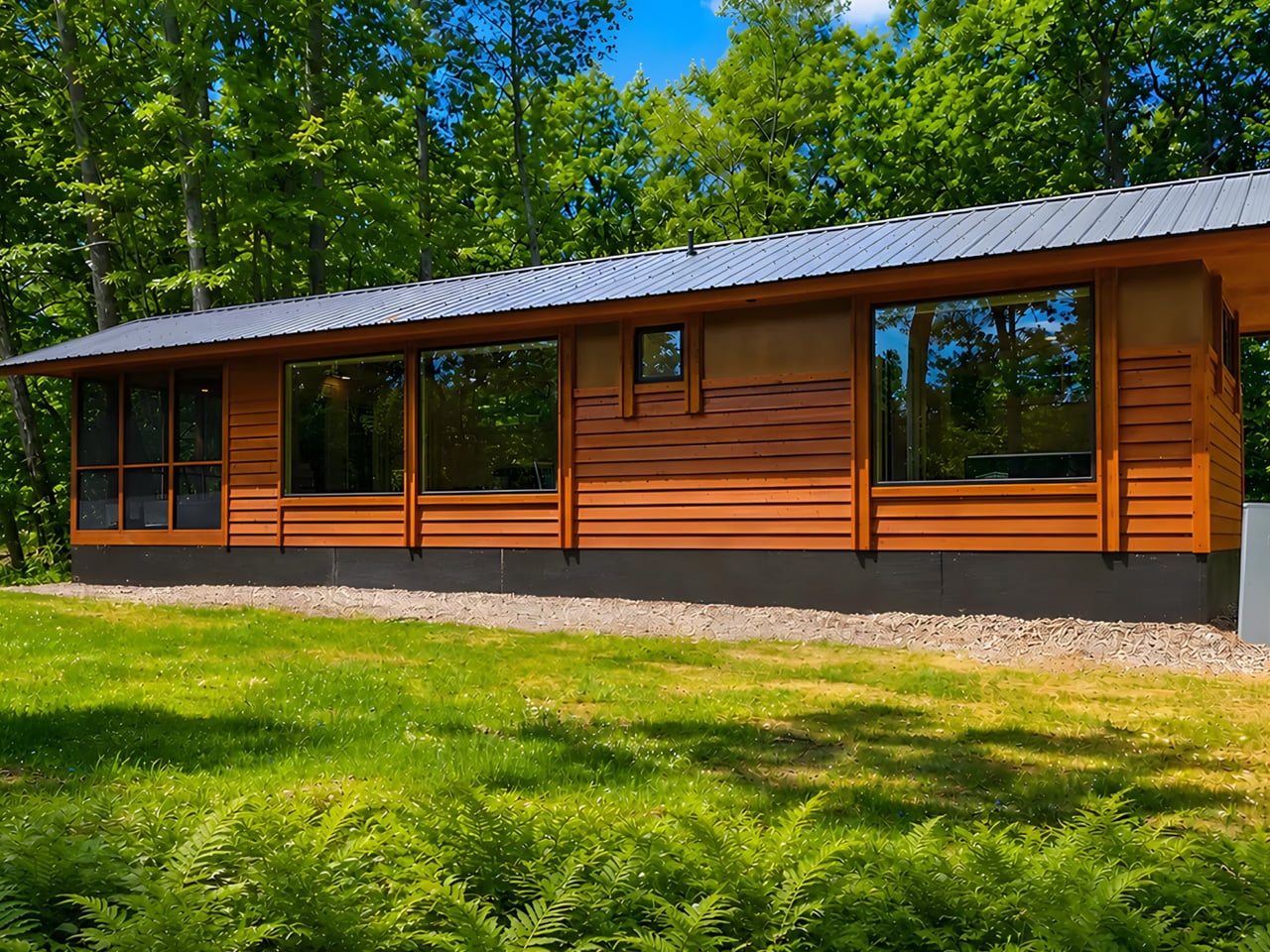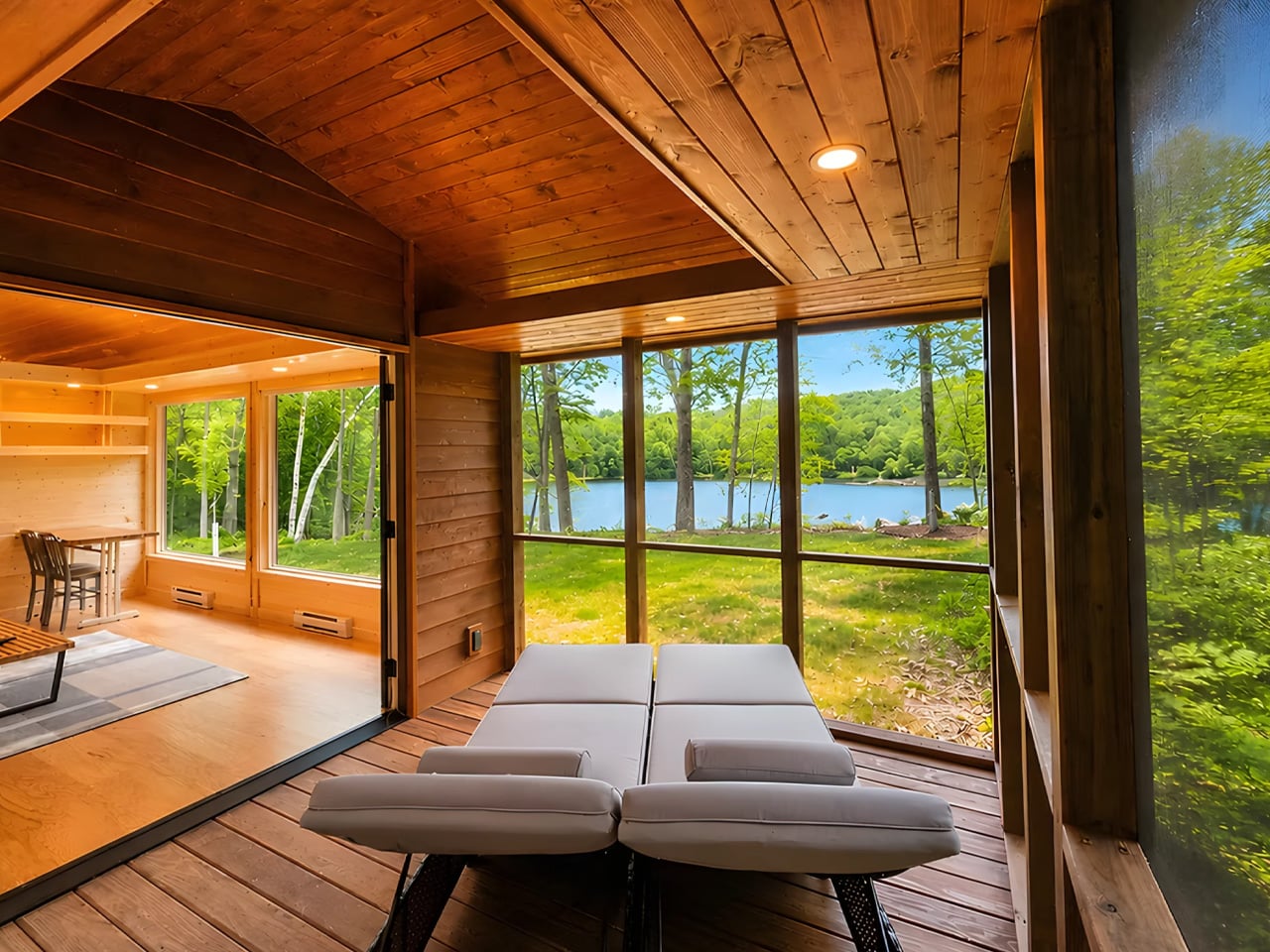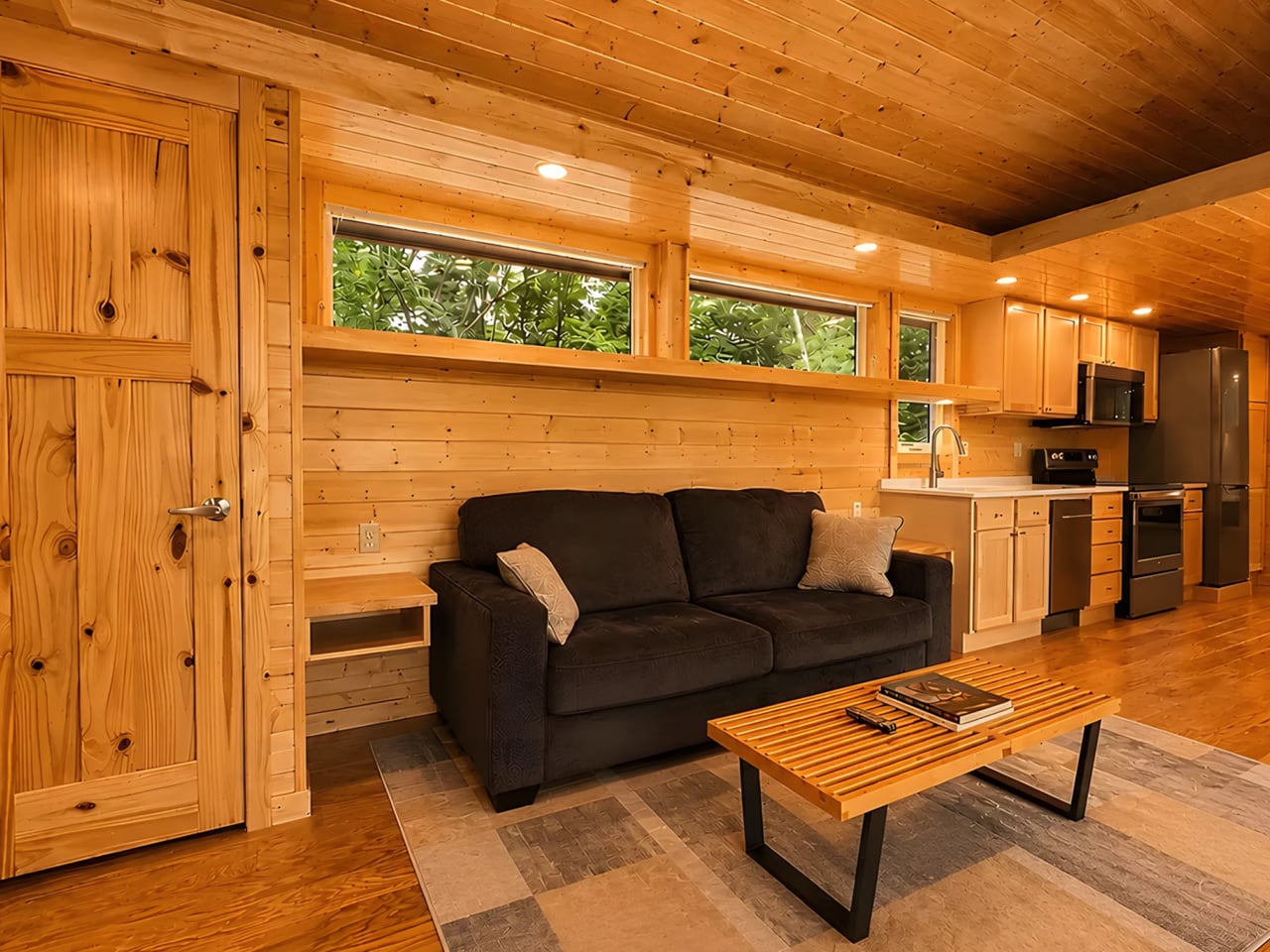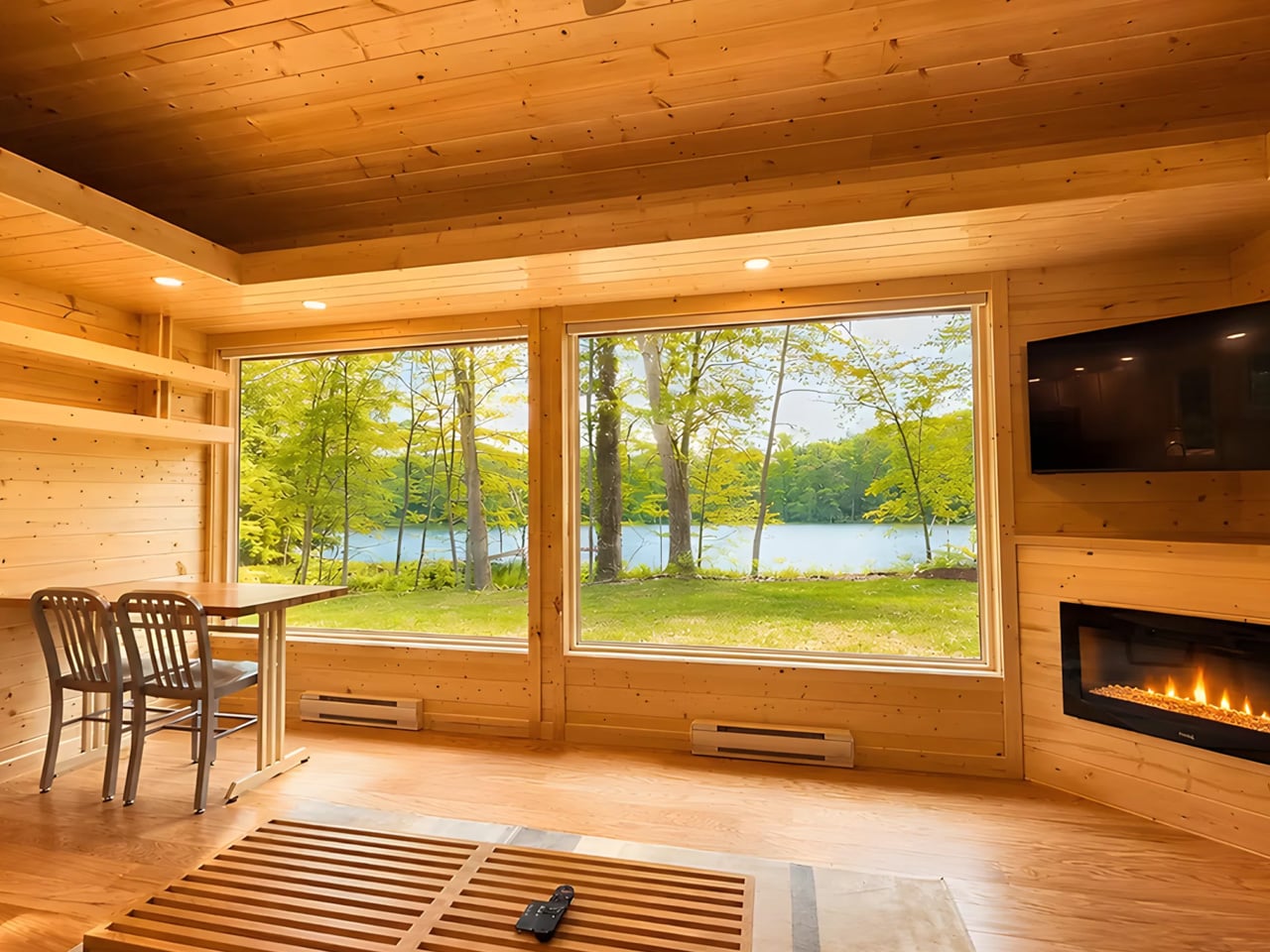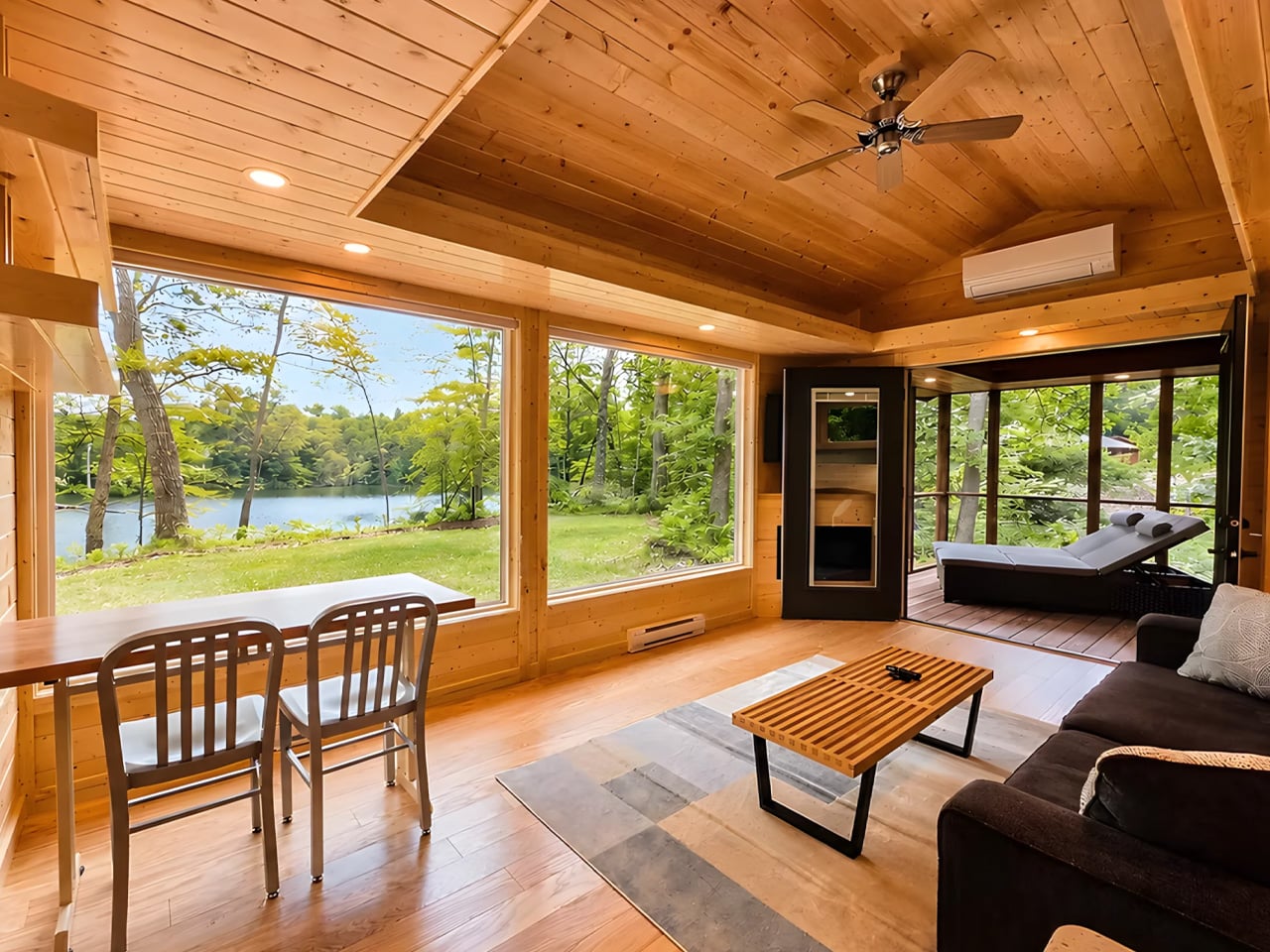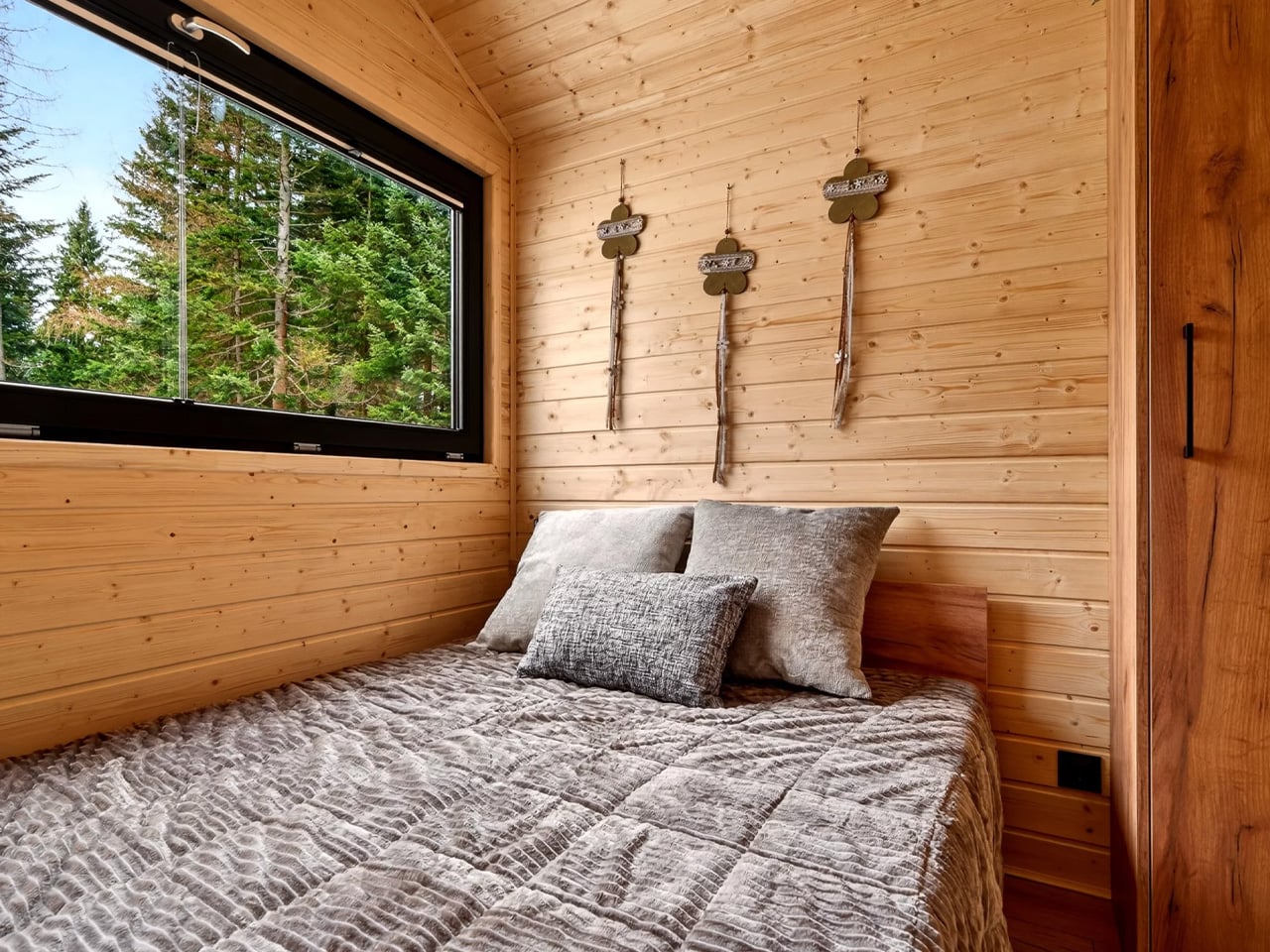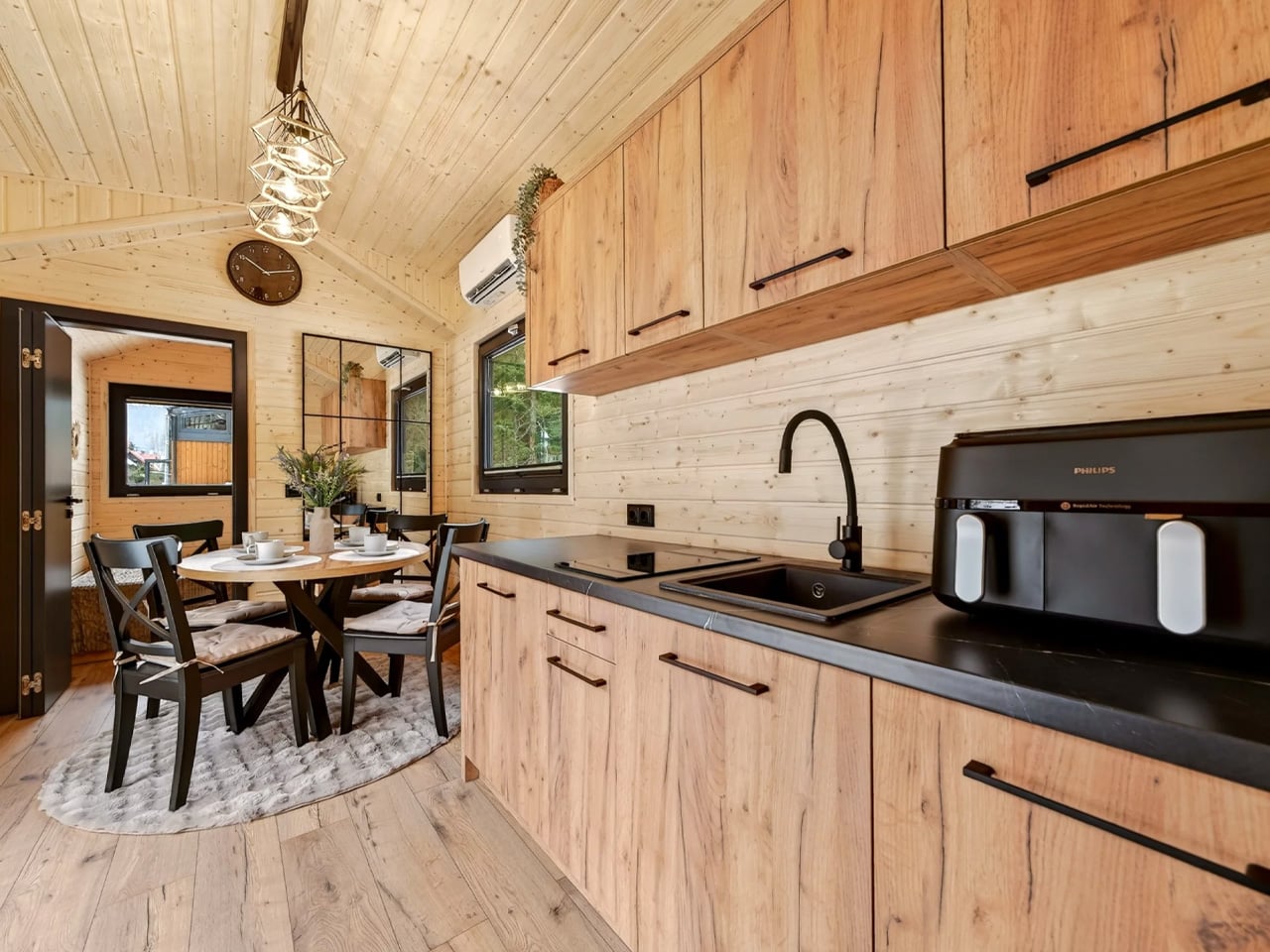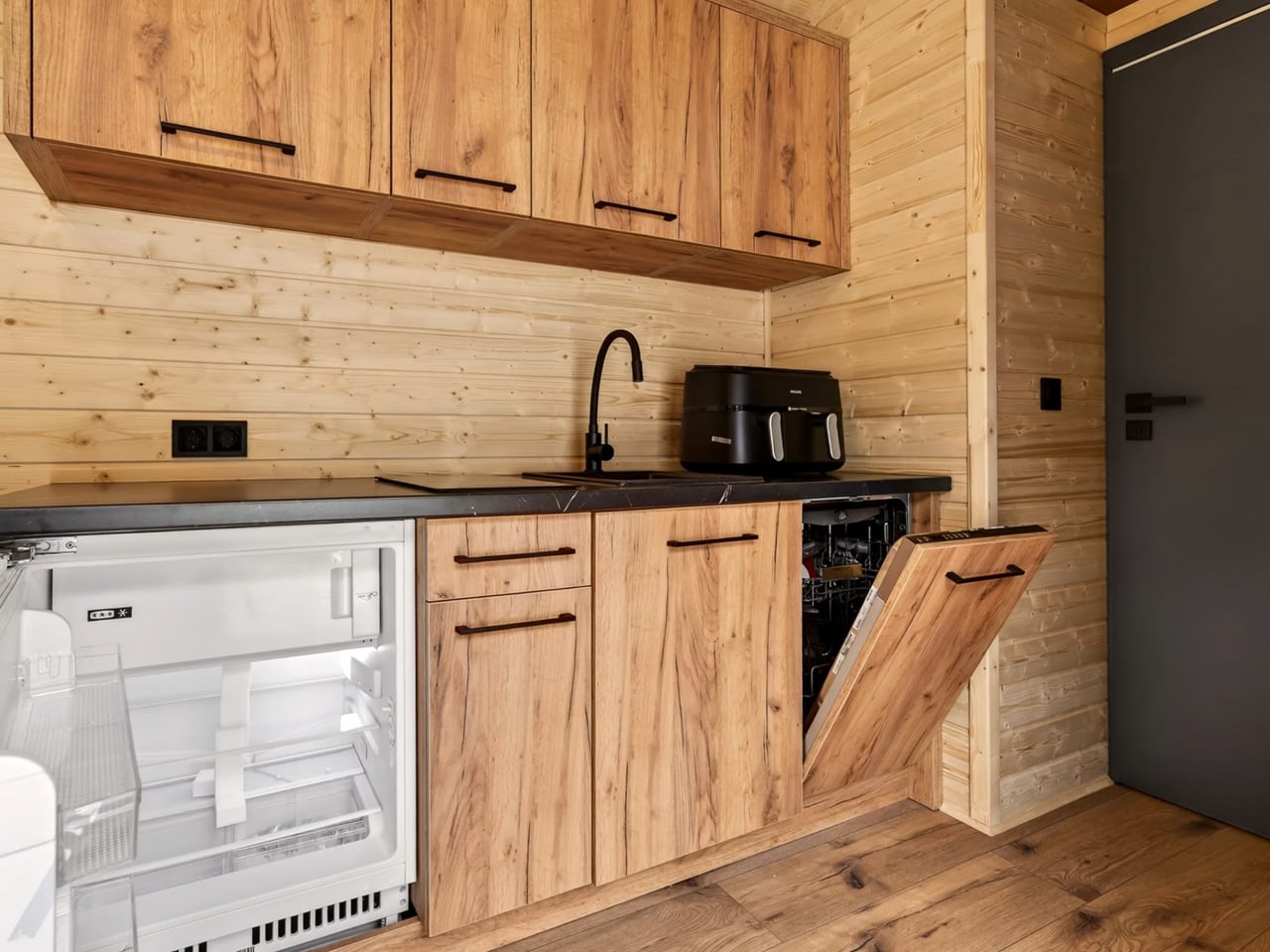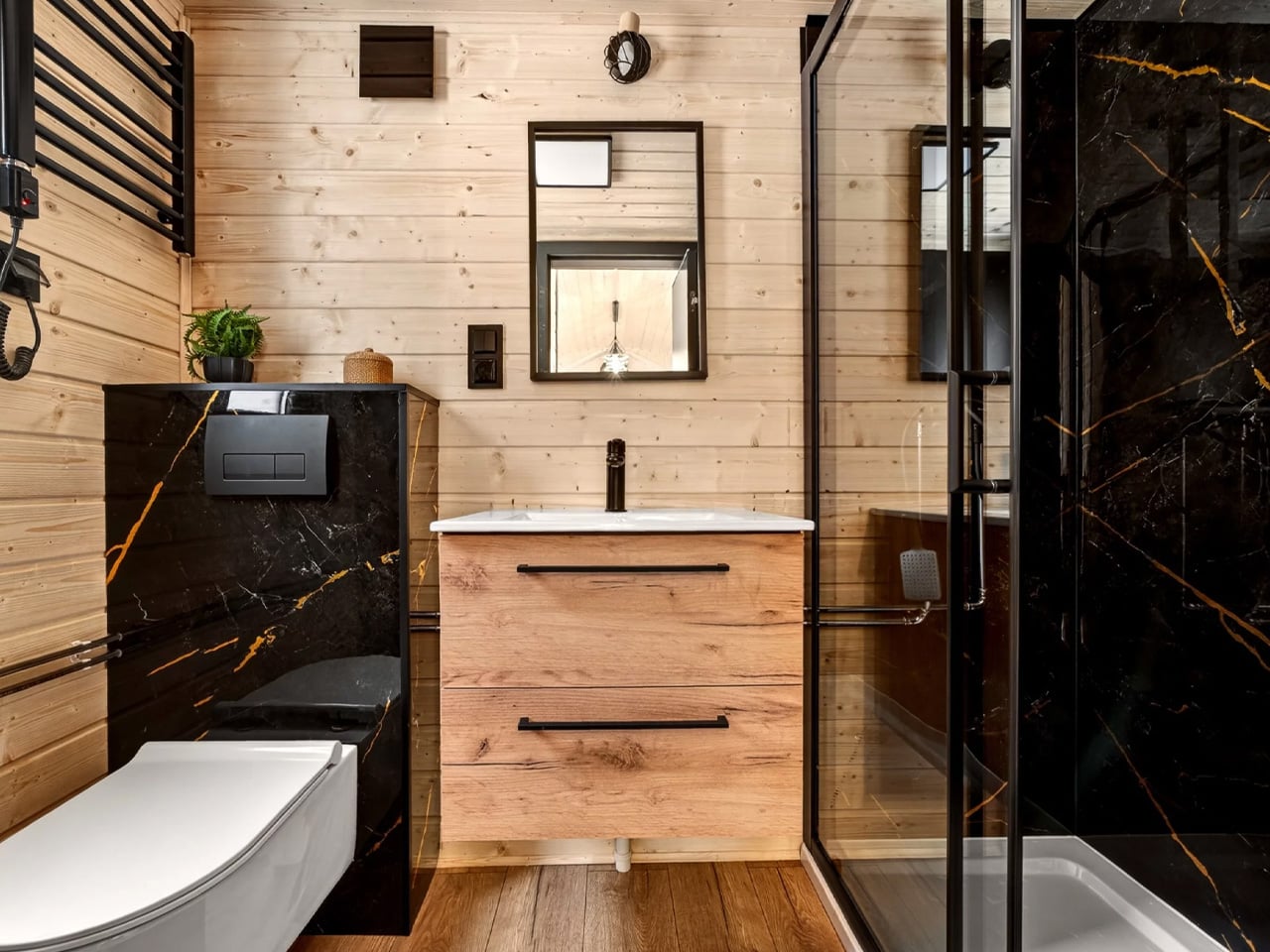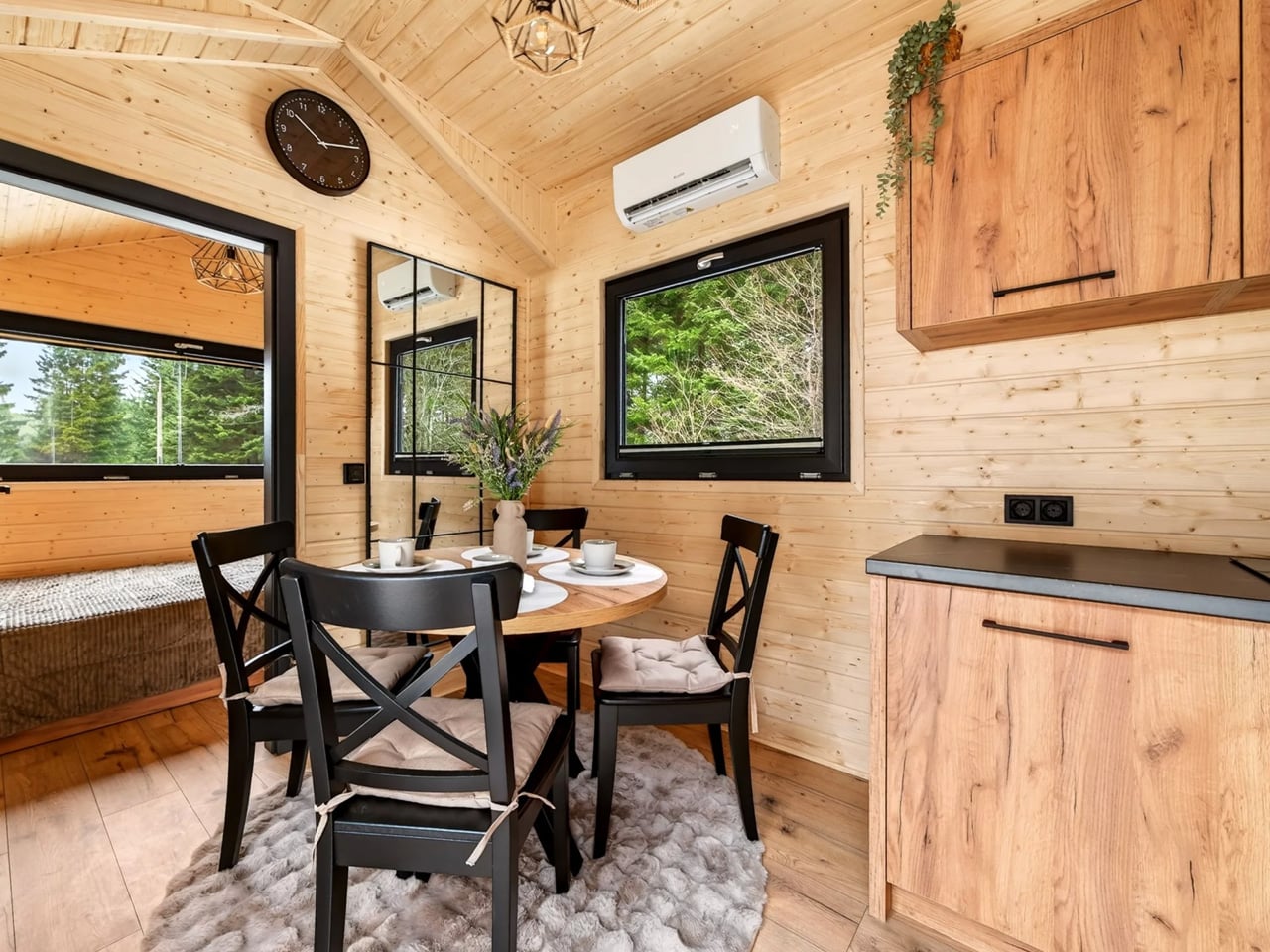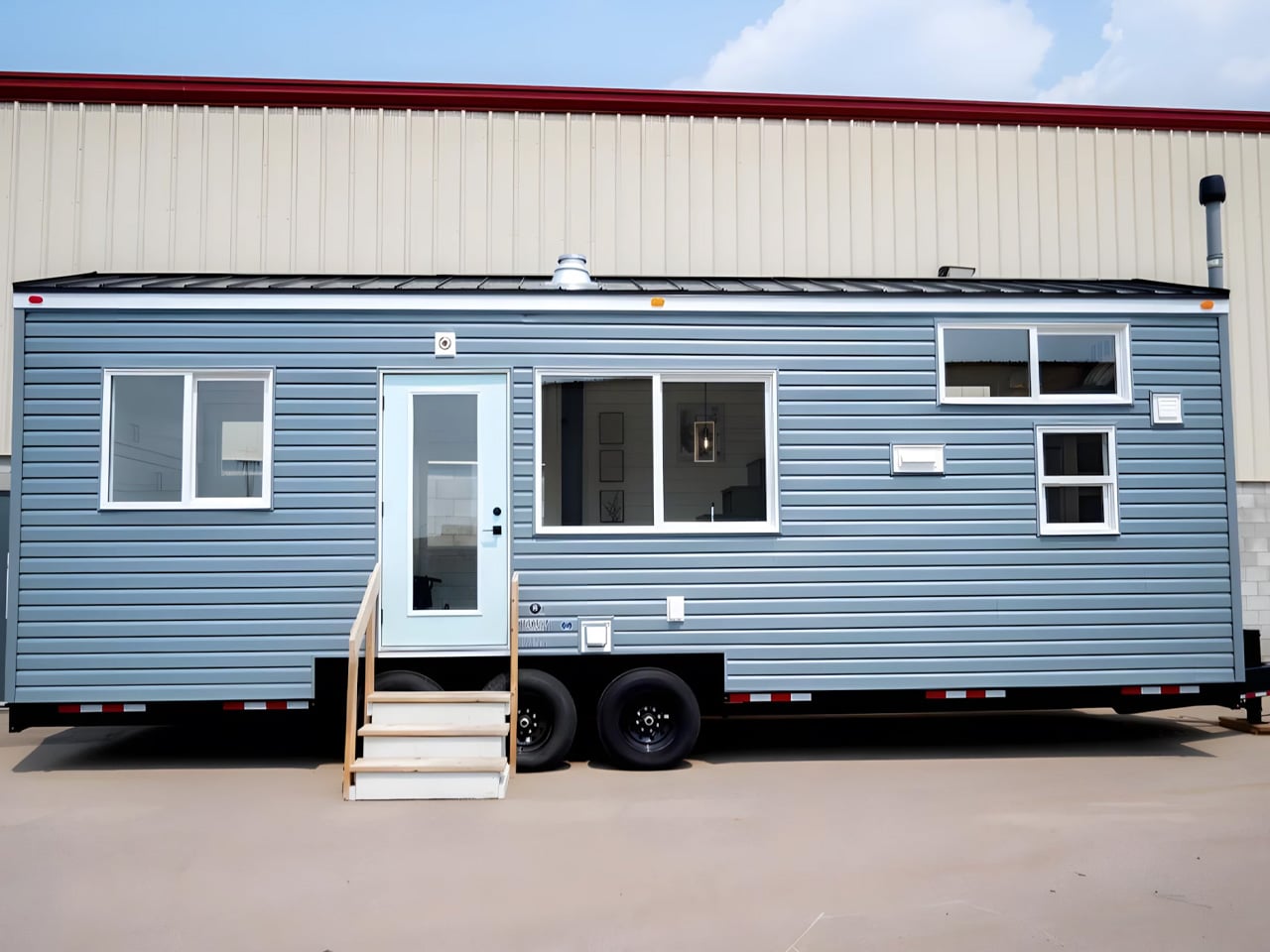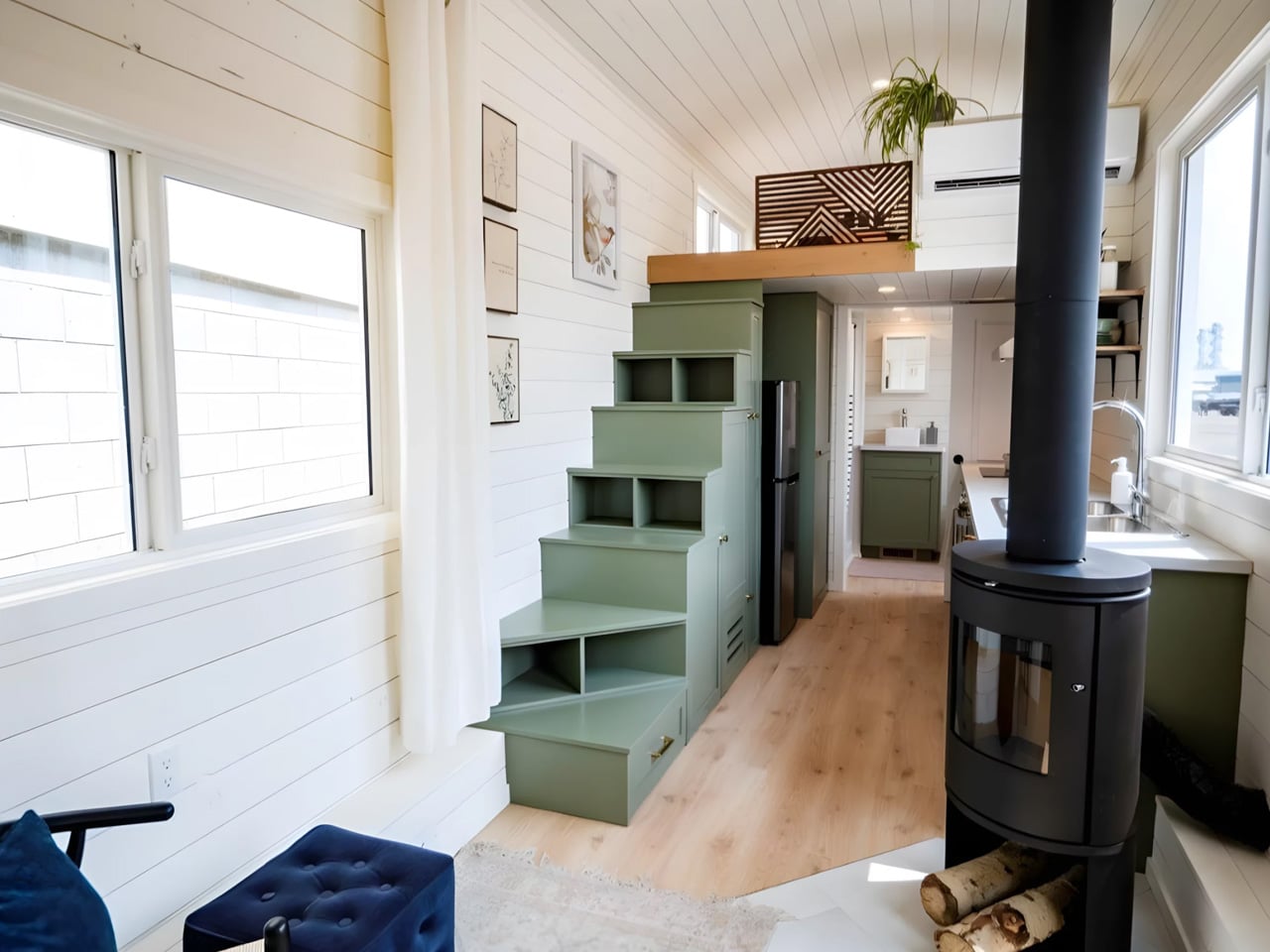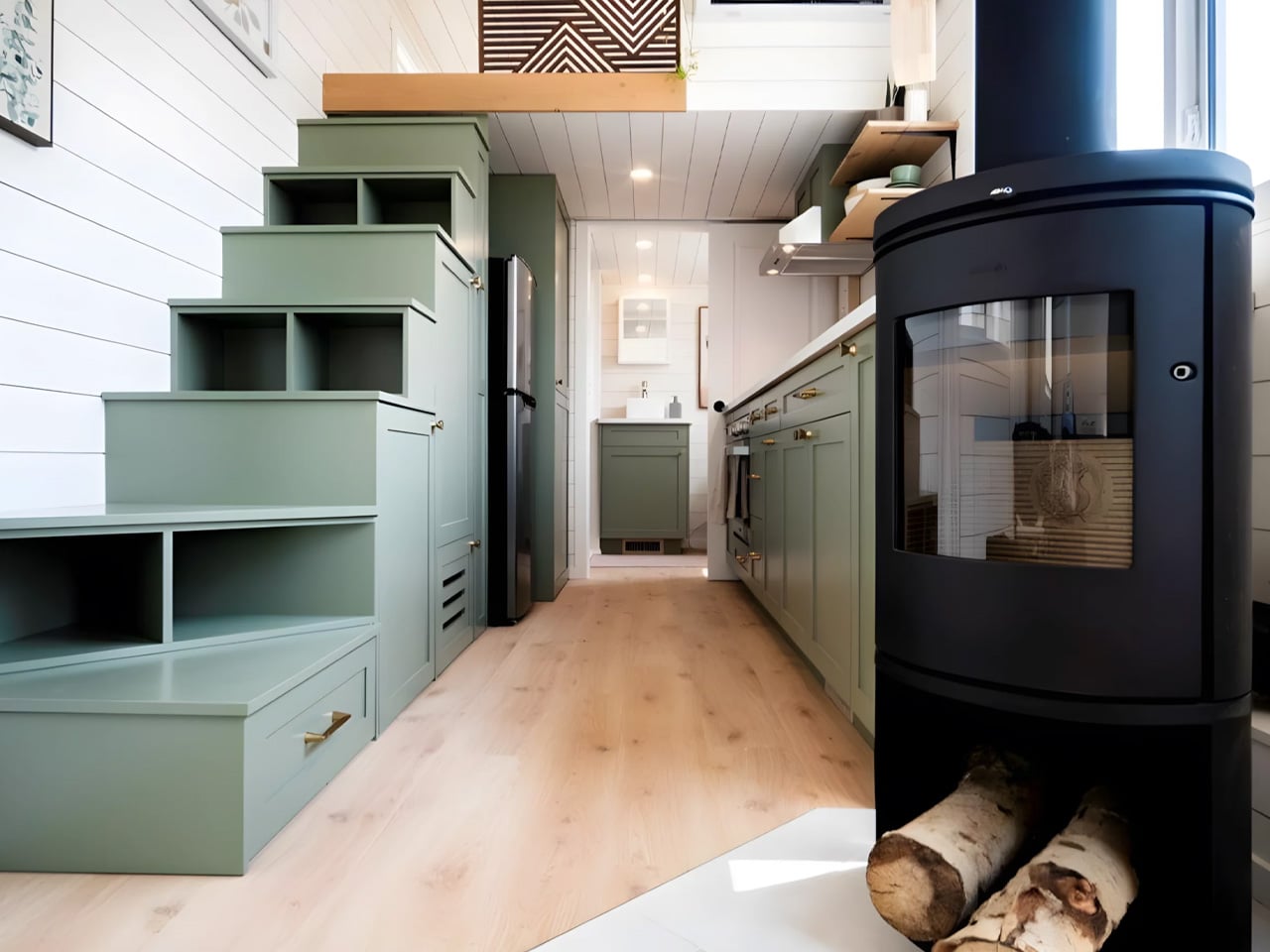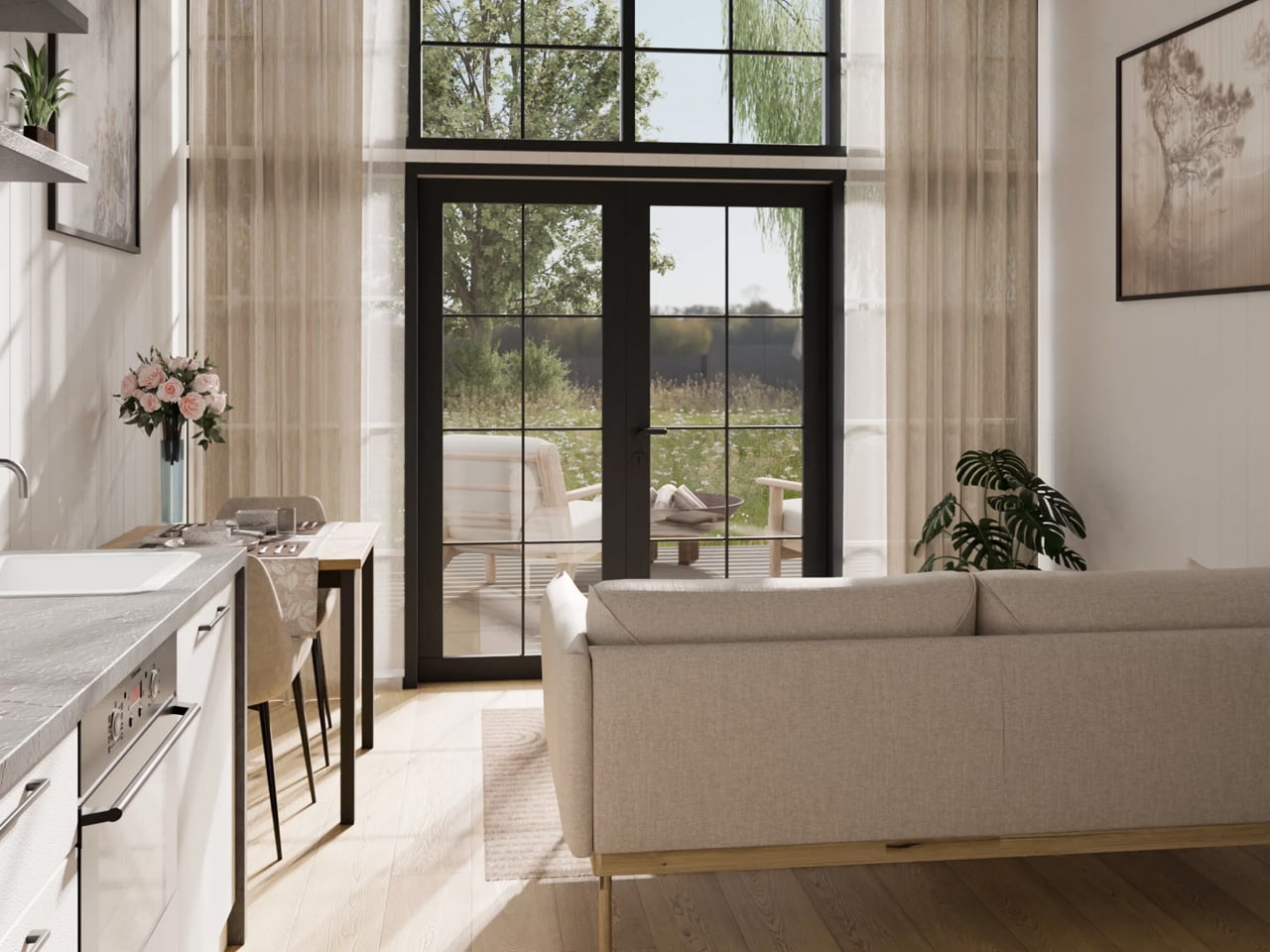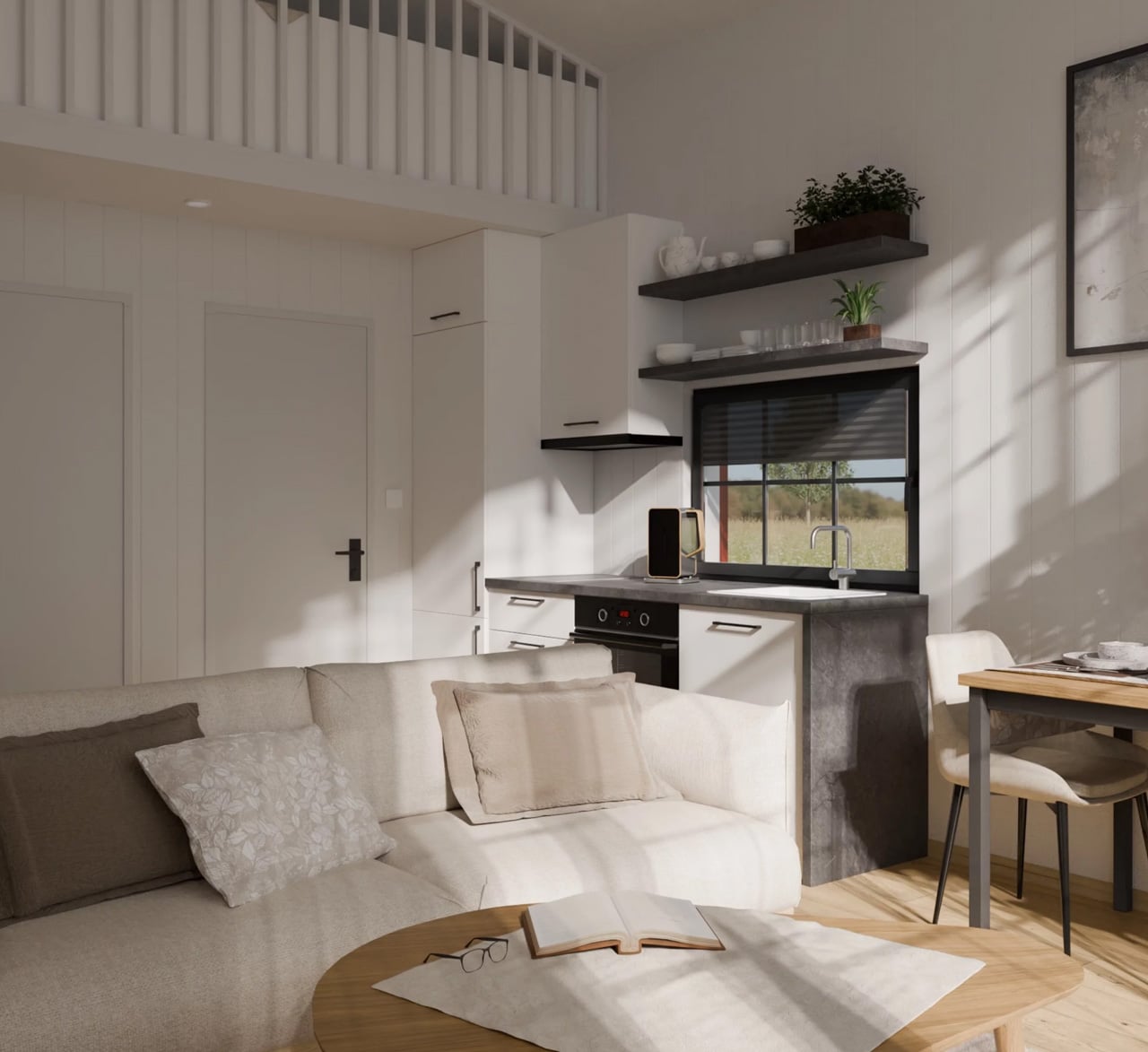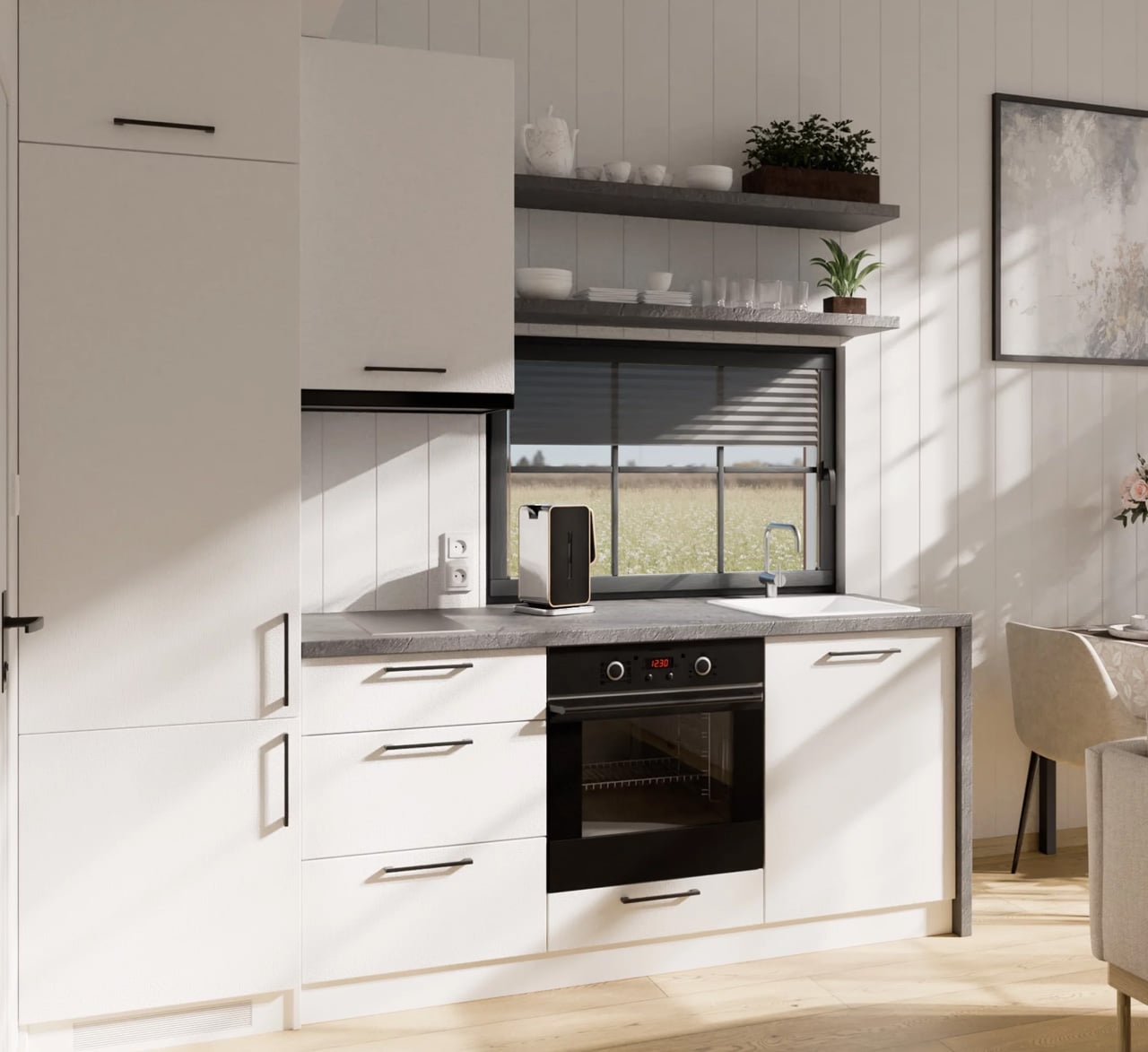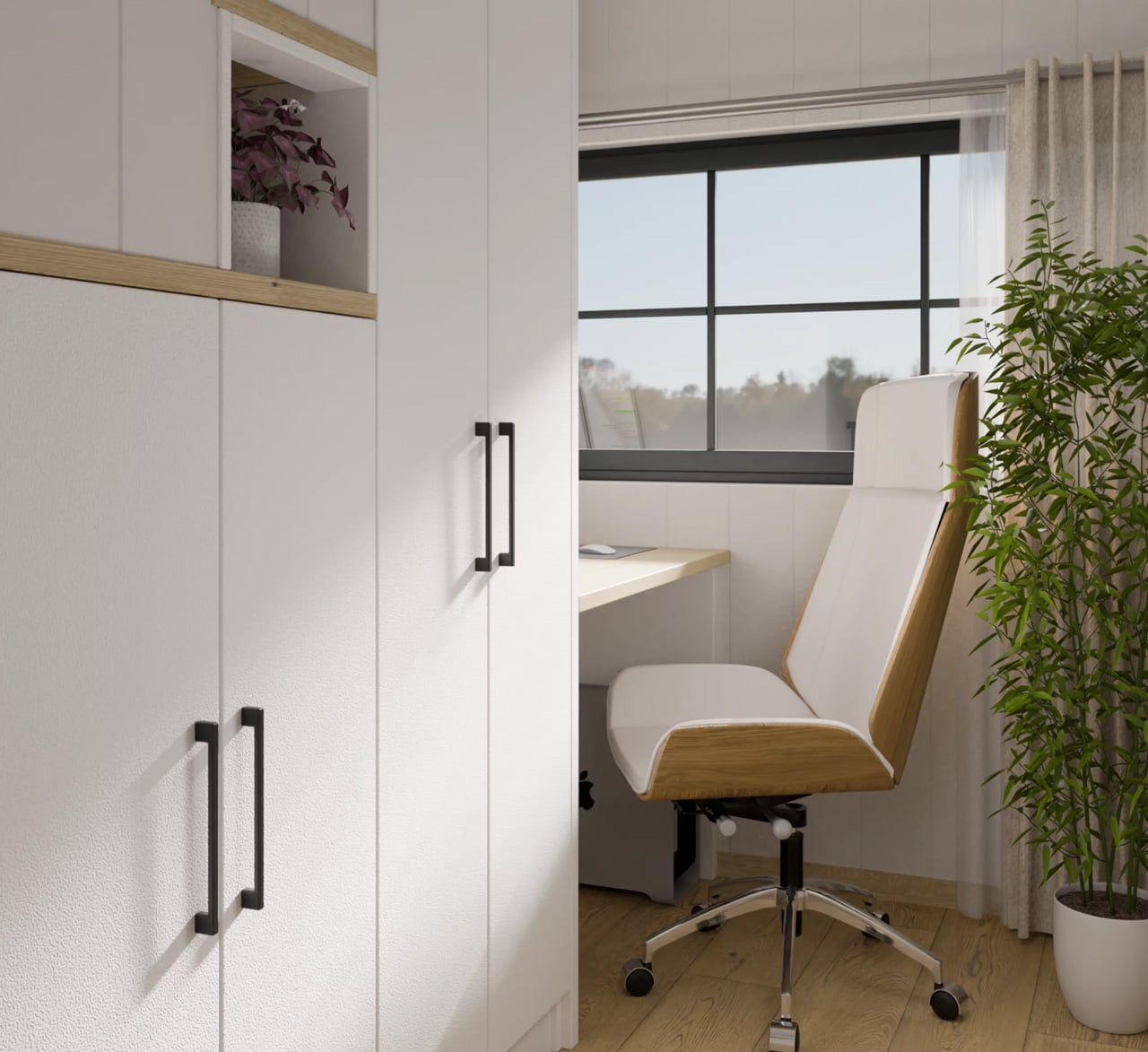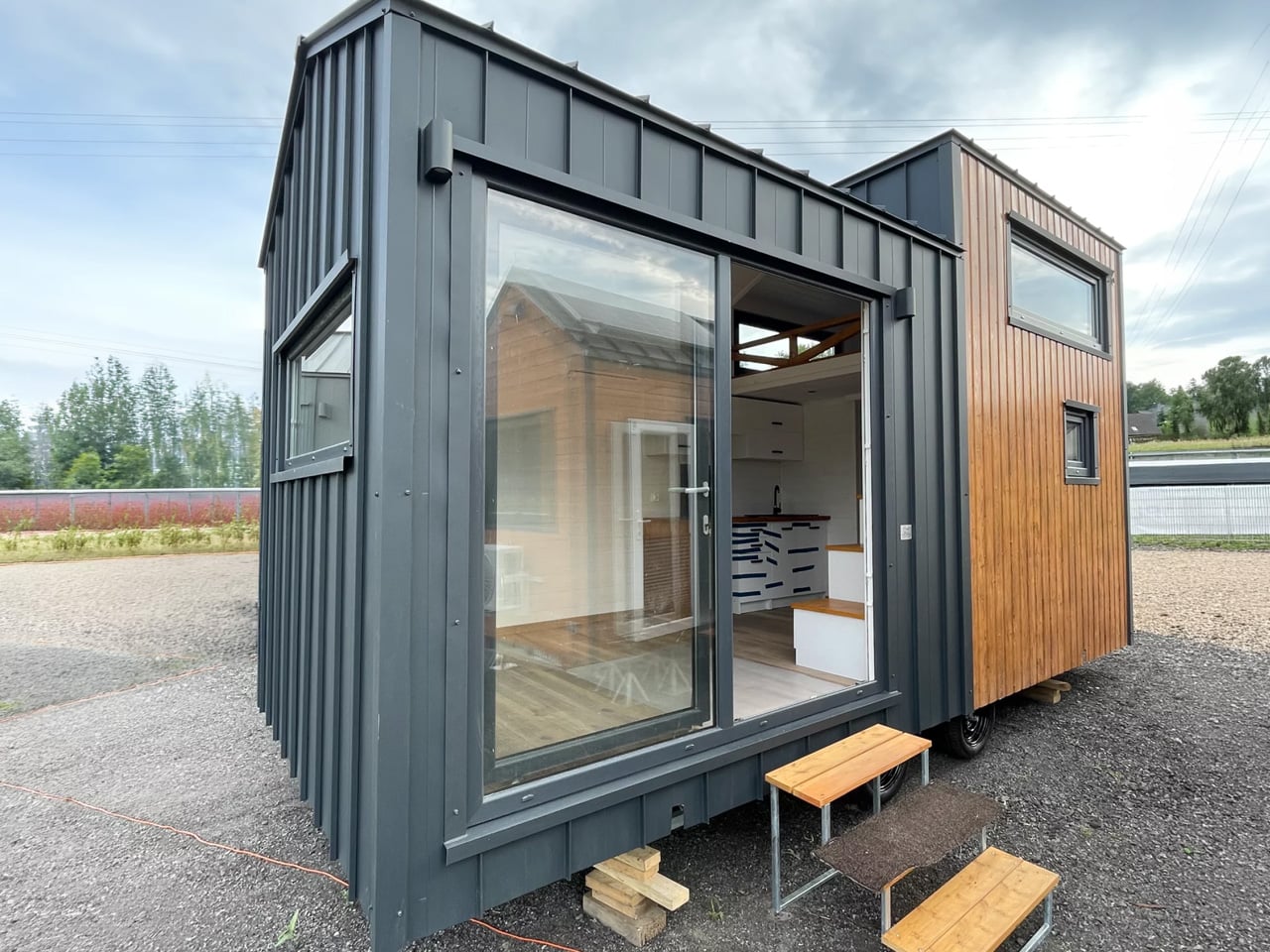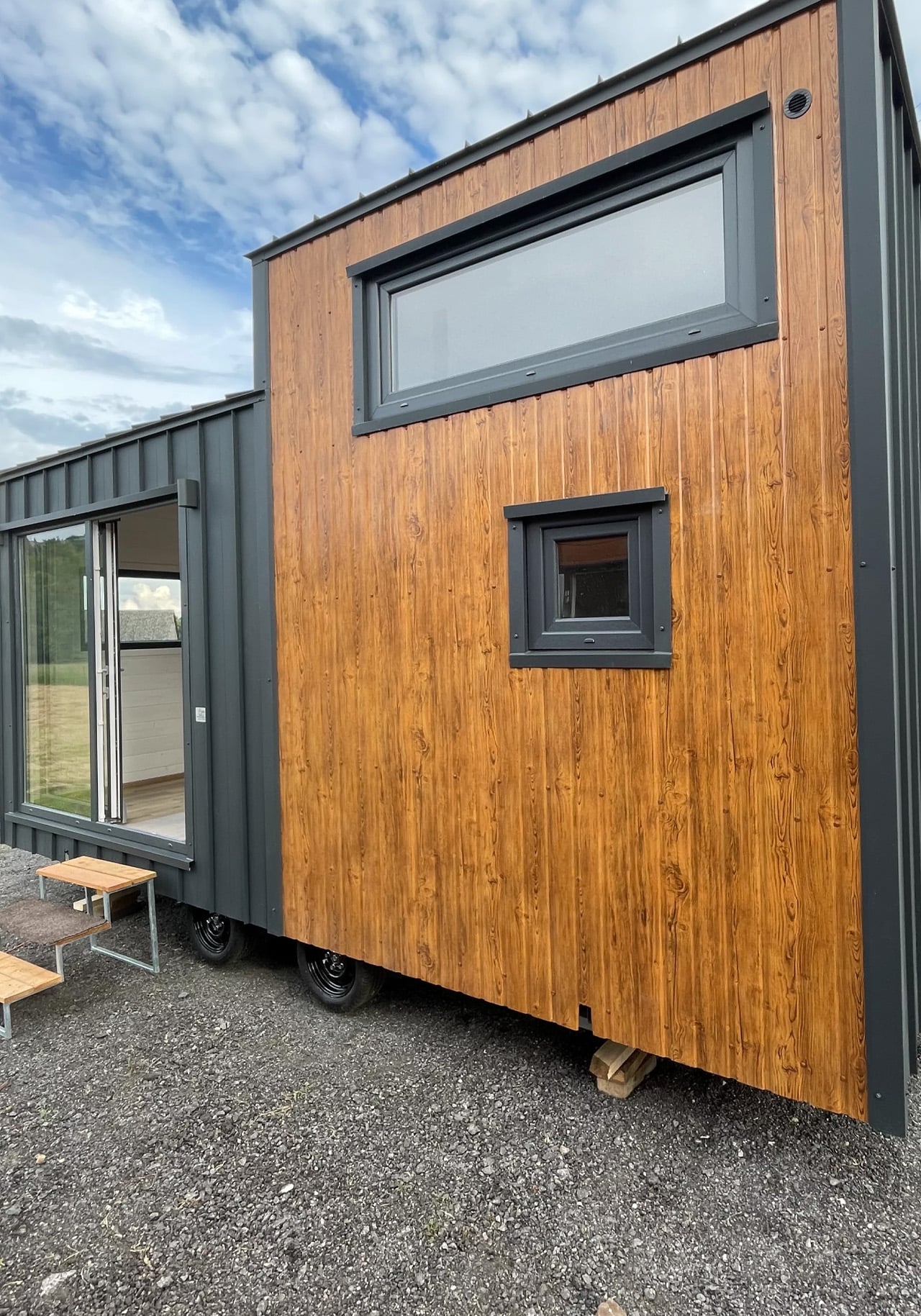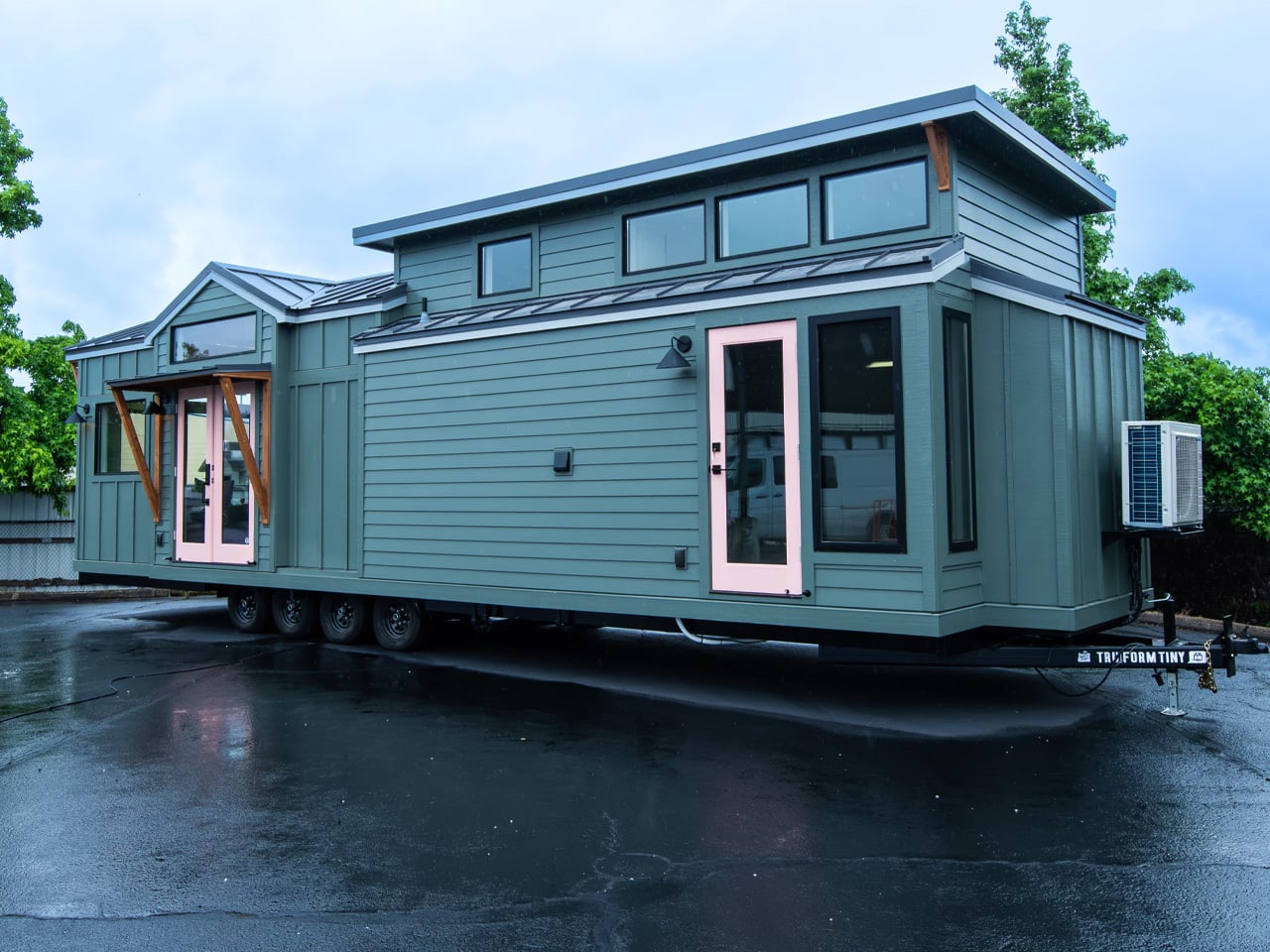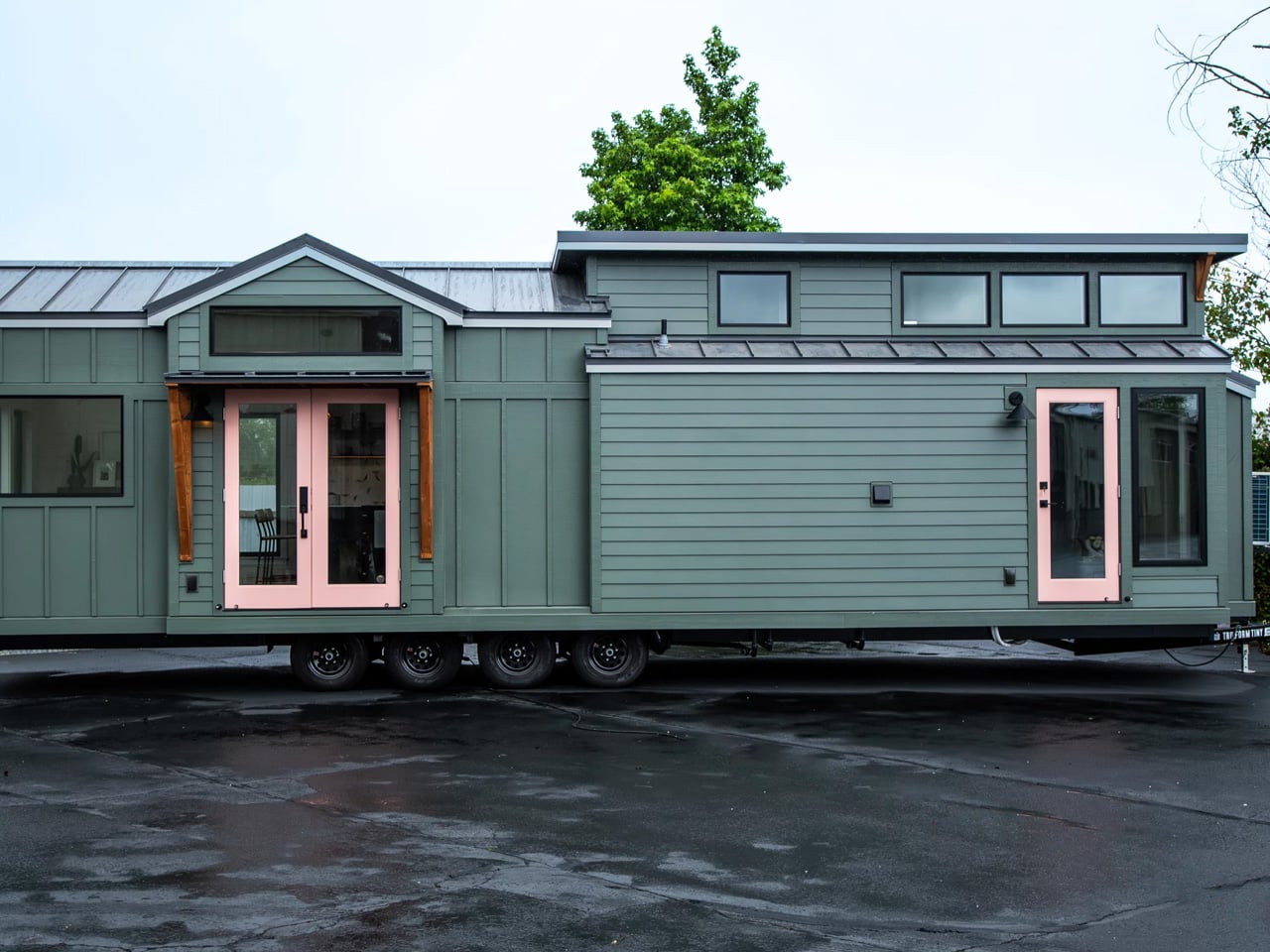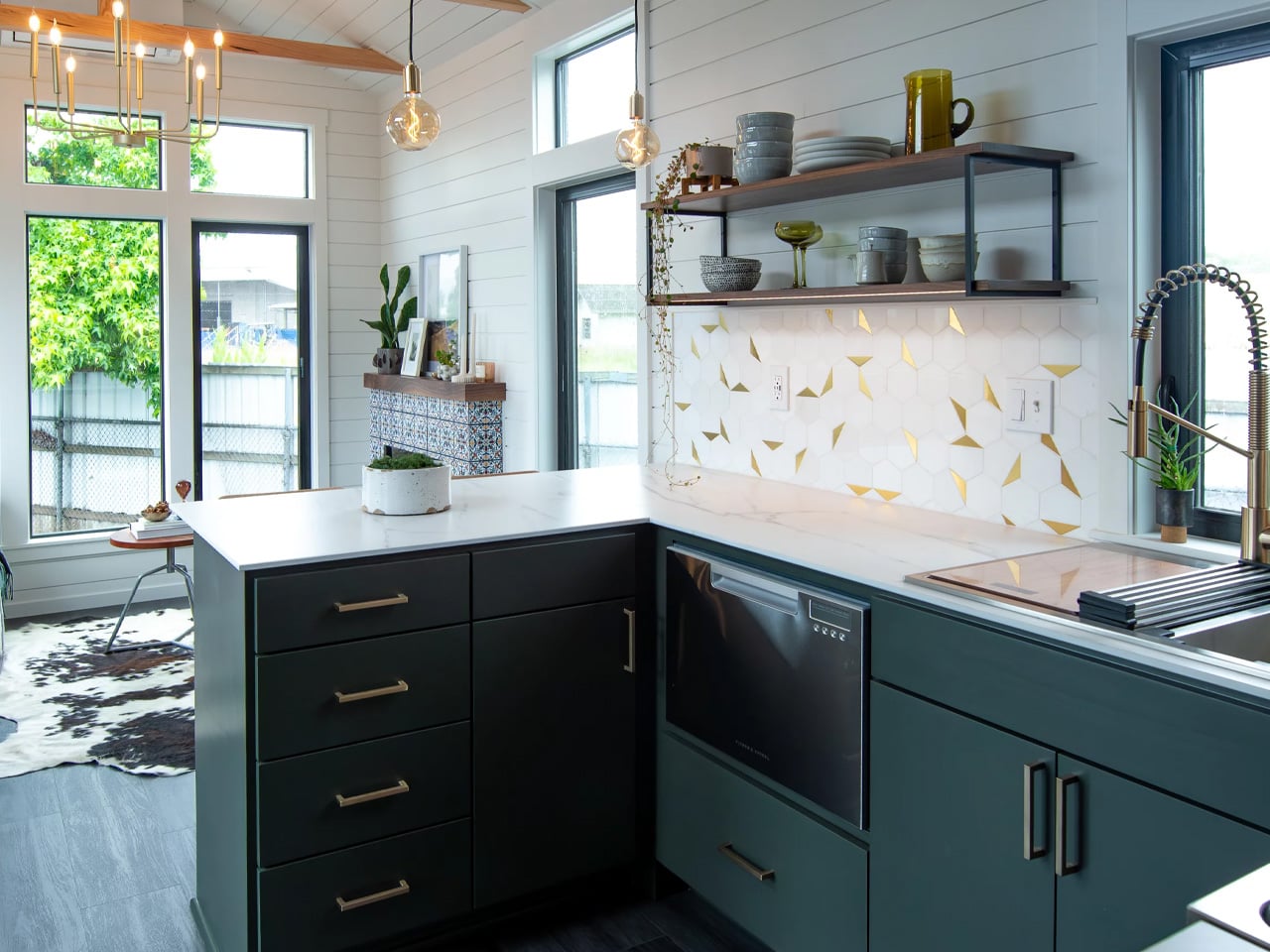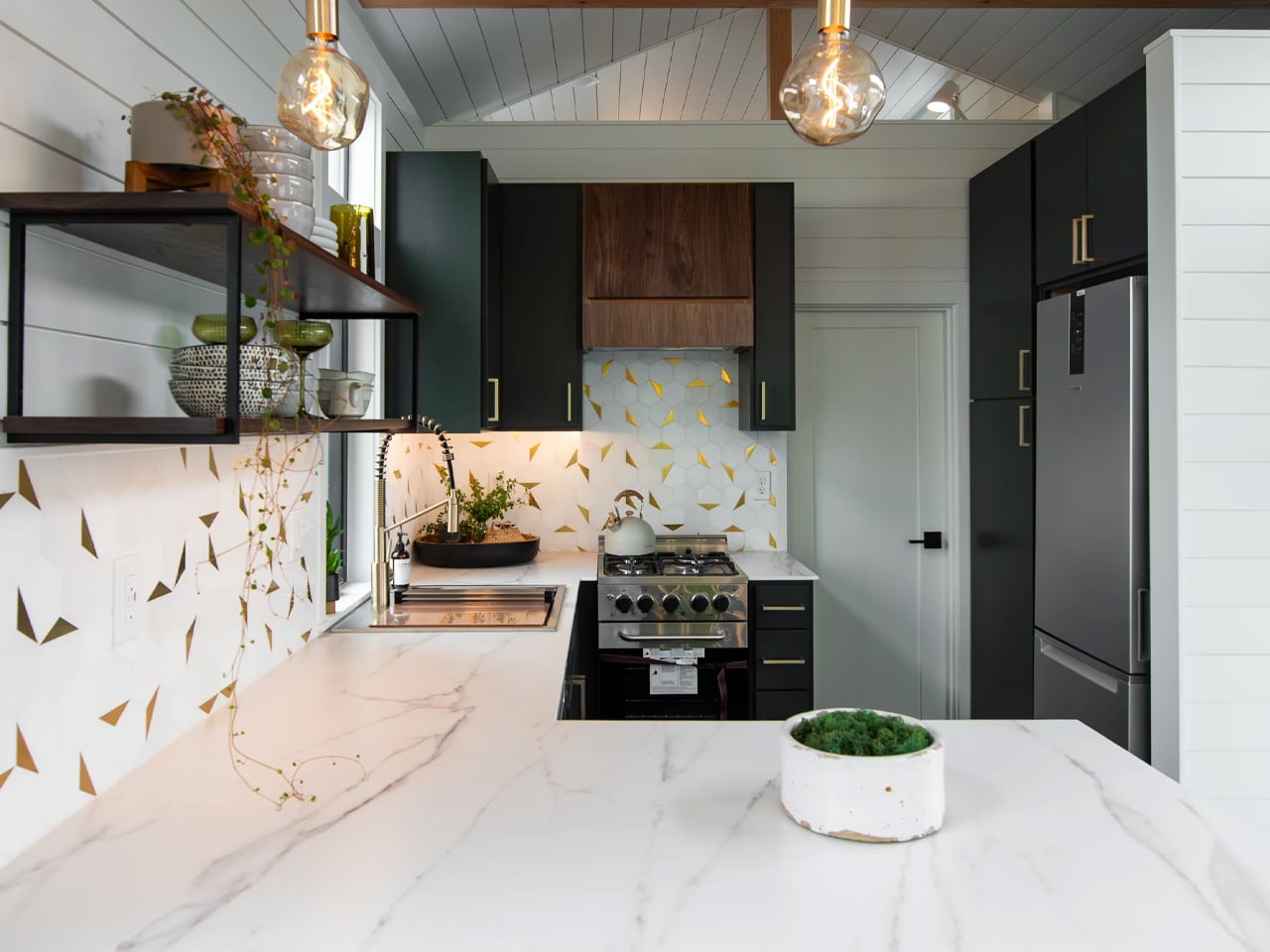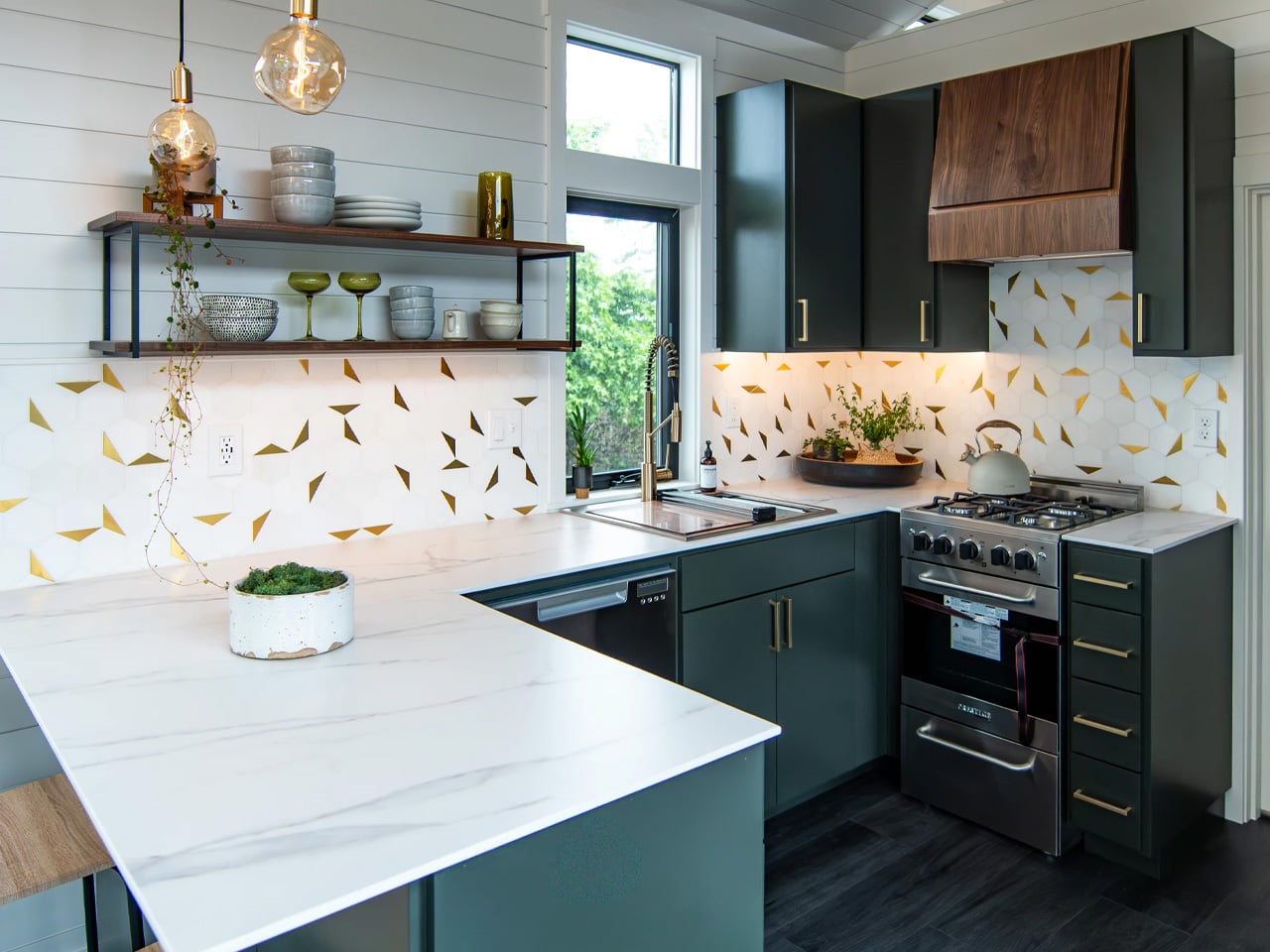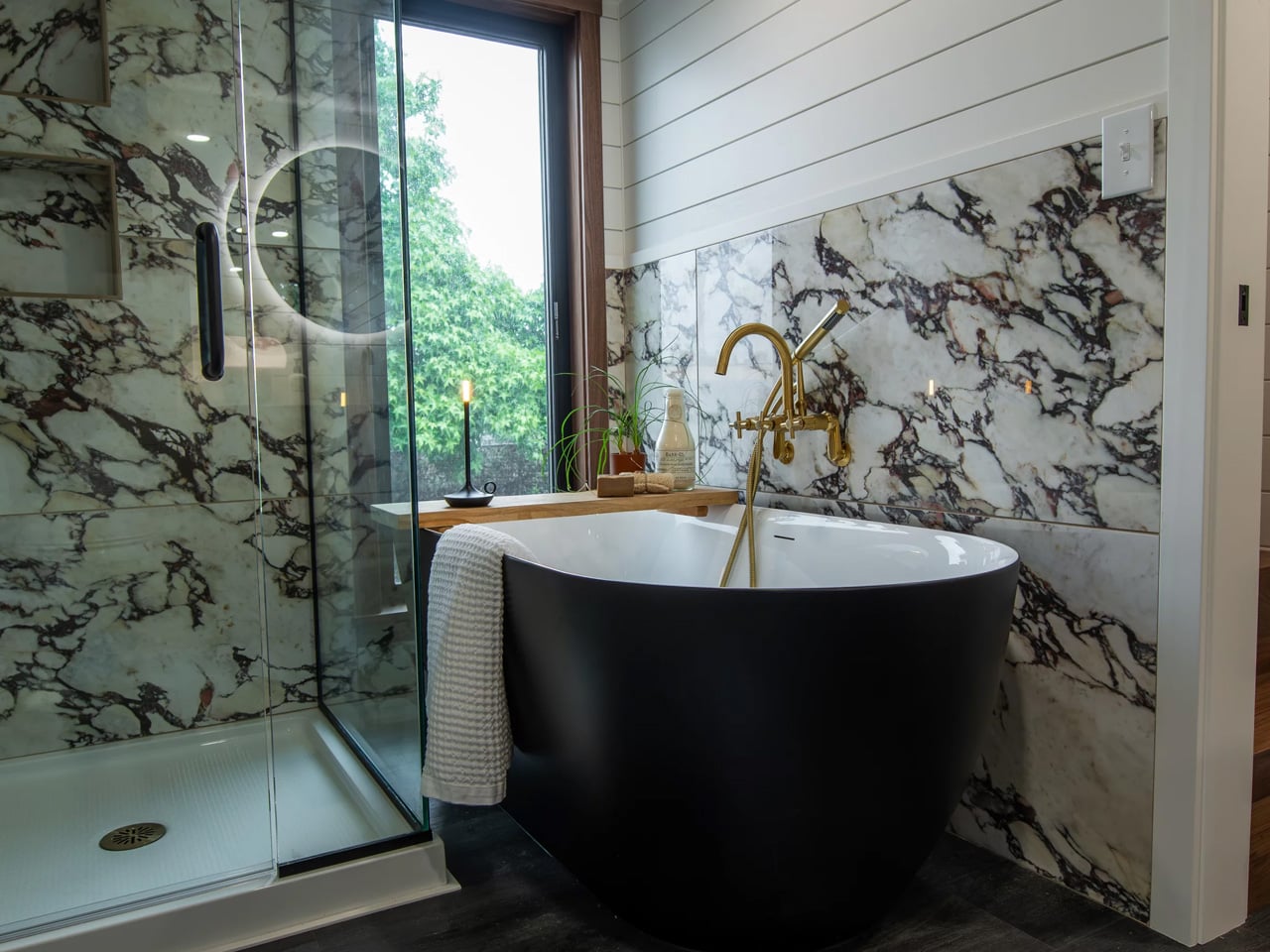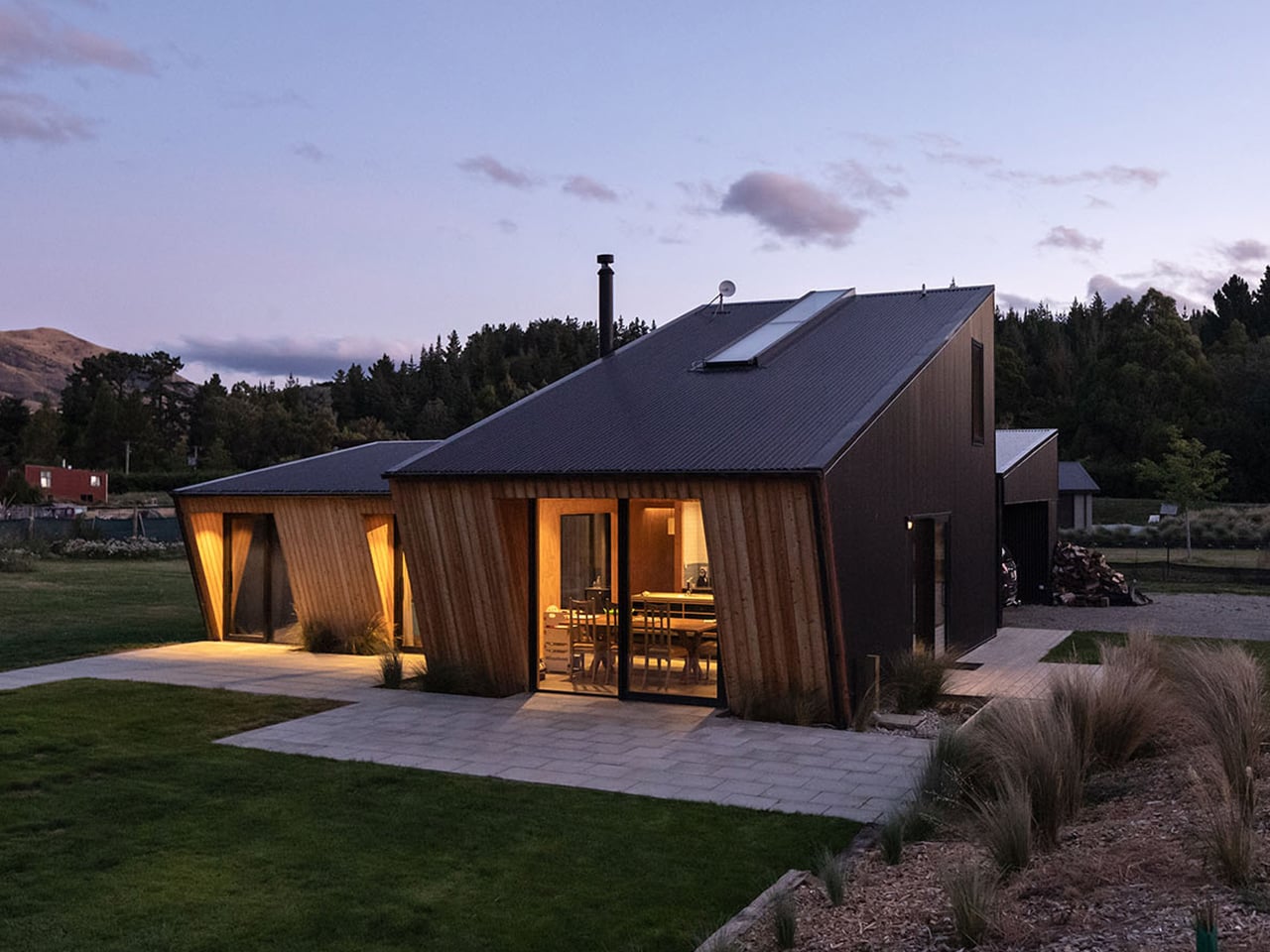
Named Tellico, this is truly one of the biggest home on wheels I’ve seen. Measuring 45 feet, this massive family home is designed to be a spacious and free-flowing residence with an apartment-like interior. The home is accompanied by an impressively-sized porch on the outside. Designed by Wind River Tiny Homes as a Park Model, the Tellico isn’t intended to be towed around a lot, and since it has a width of 12 feet, it will need a permit to be allowed transportation on a US Road.
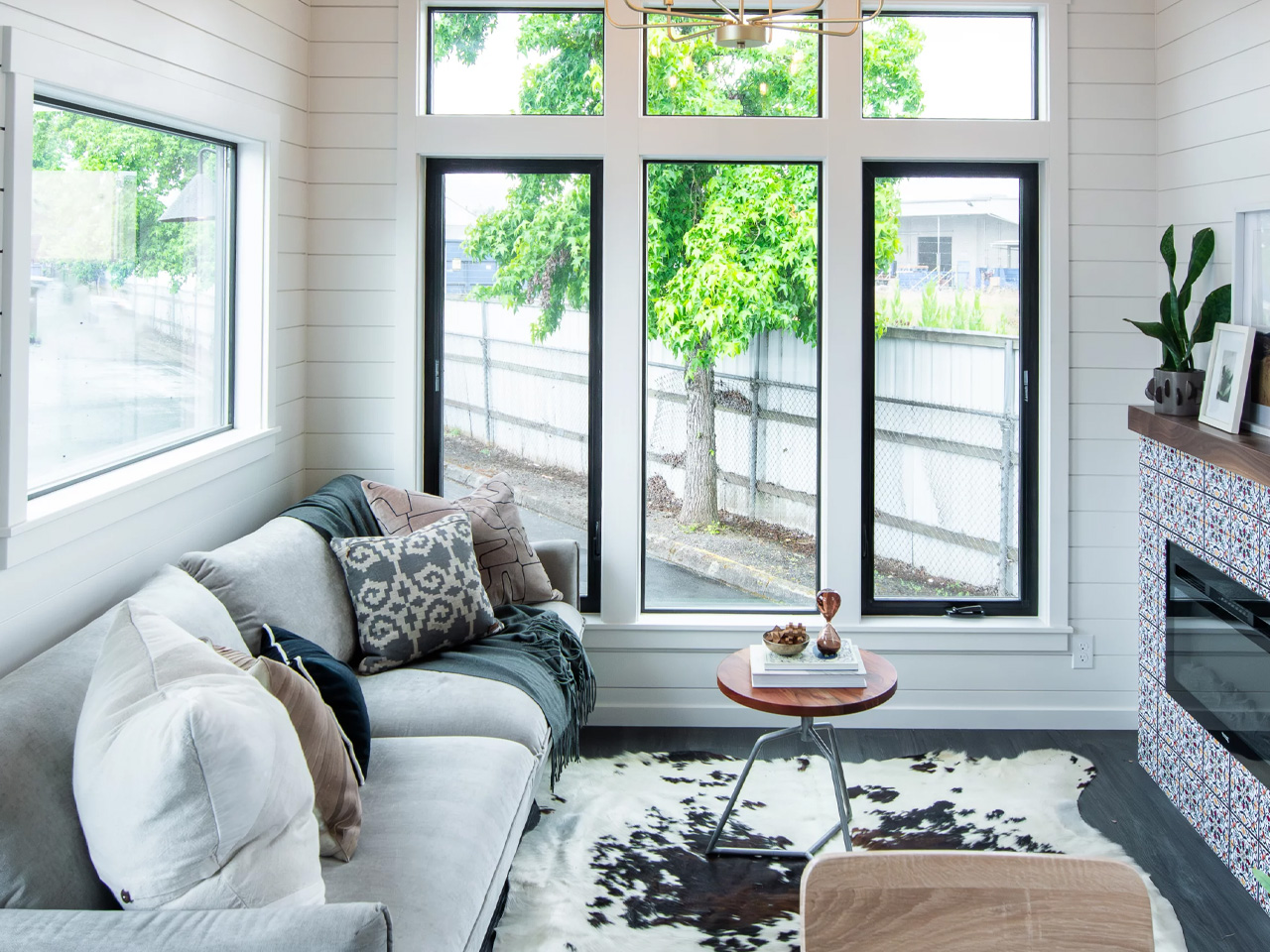
The Tellico is finished in engineered wood siding and can be entered via a 10-foot-long porch. The interior of the home measures almost 400 square feet, of which a major portion is occupied by an open-plan living room. The living room takes up a lot of space in the home, with a sofa and small coffee table placed near the door. A mini-split air-conditioning unit has been placed atop the door and works in tandem with a ceiling fan to maintain a pleasant and comfy temperature in the house.
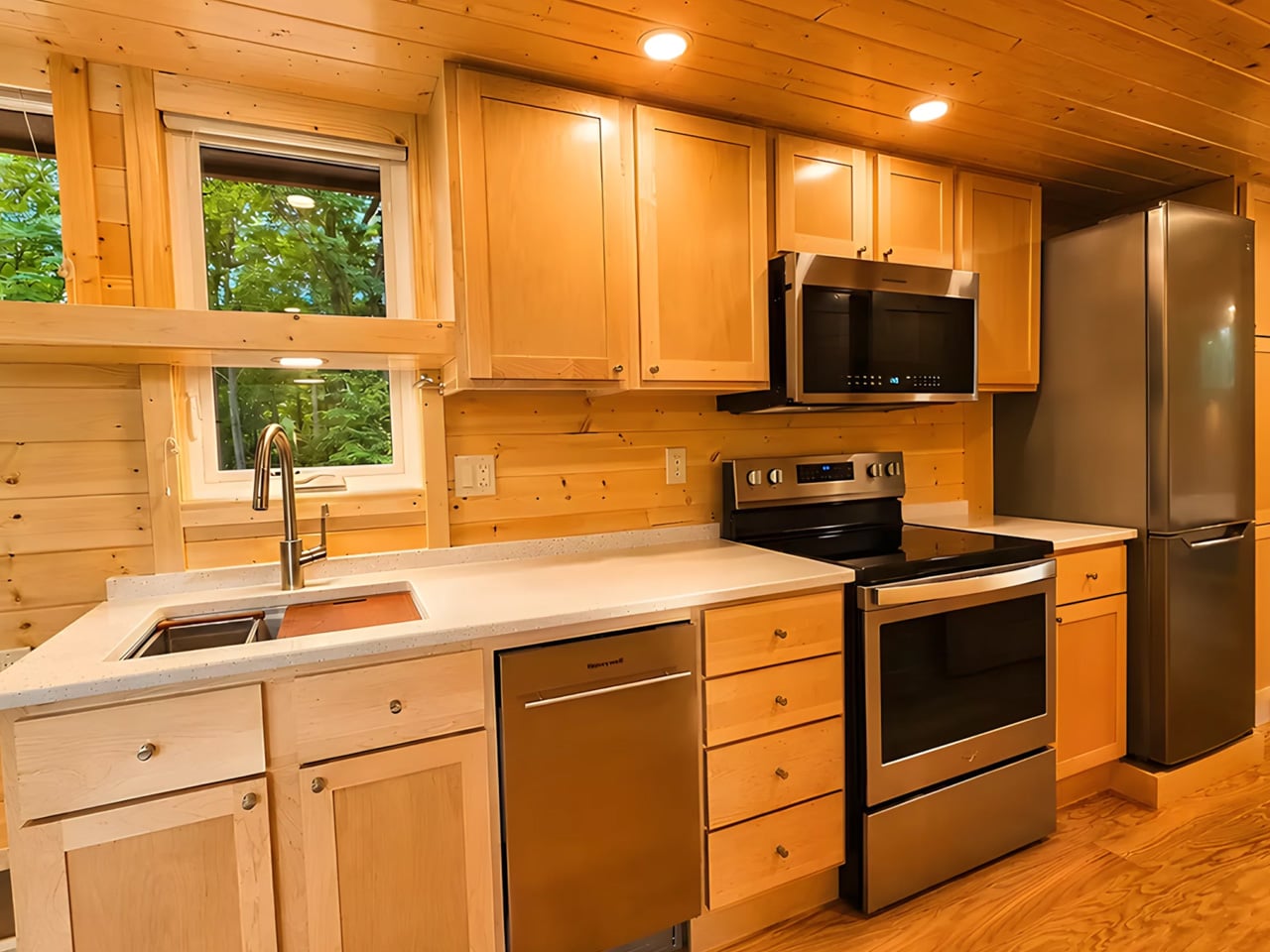
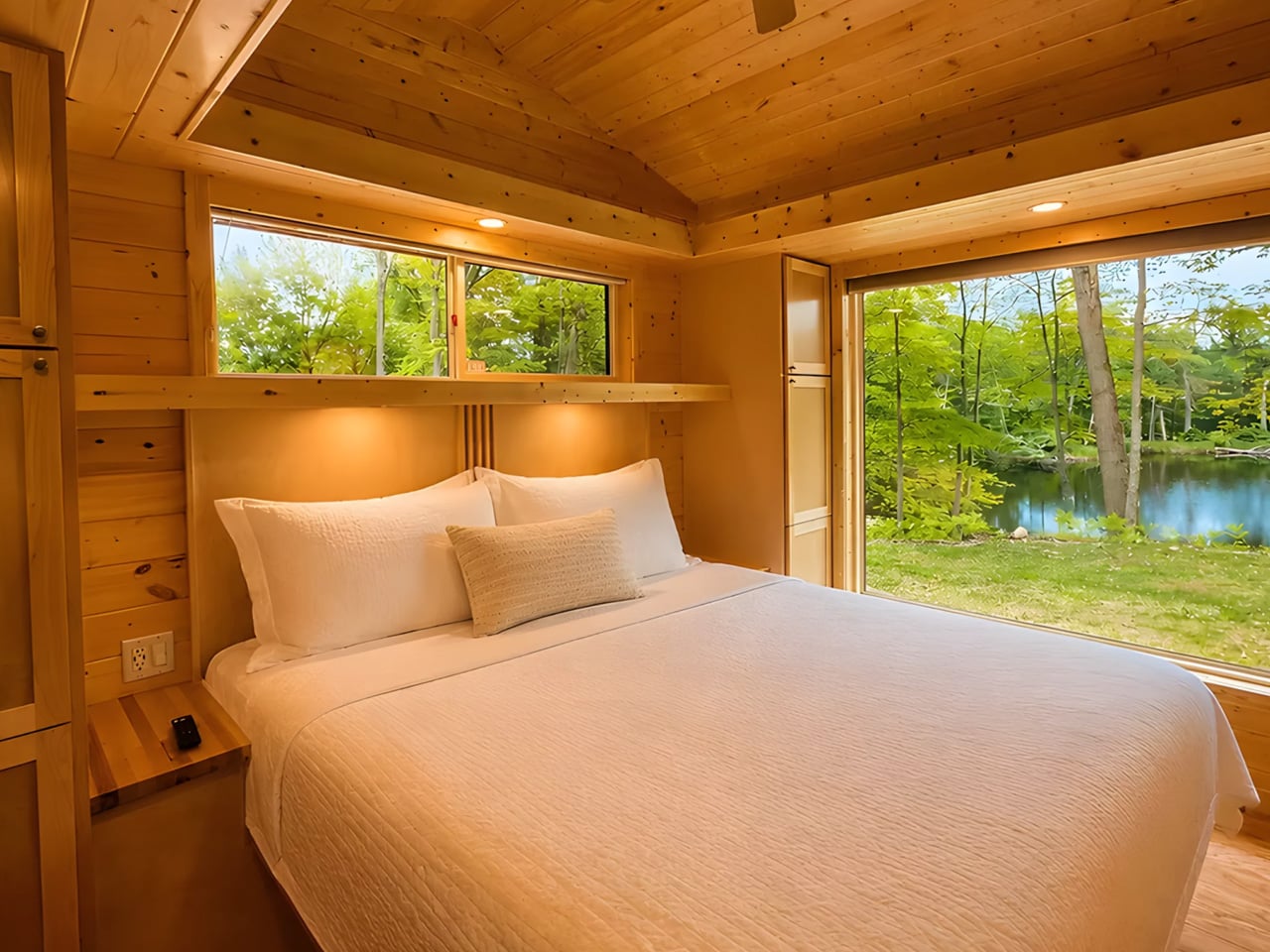
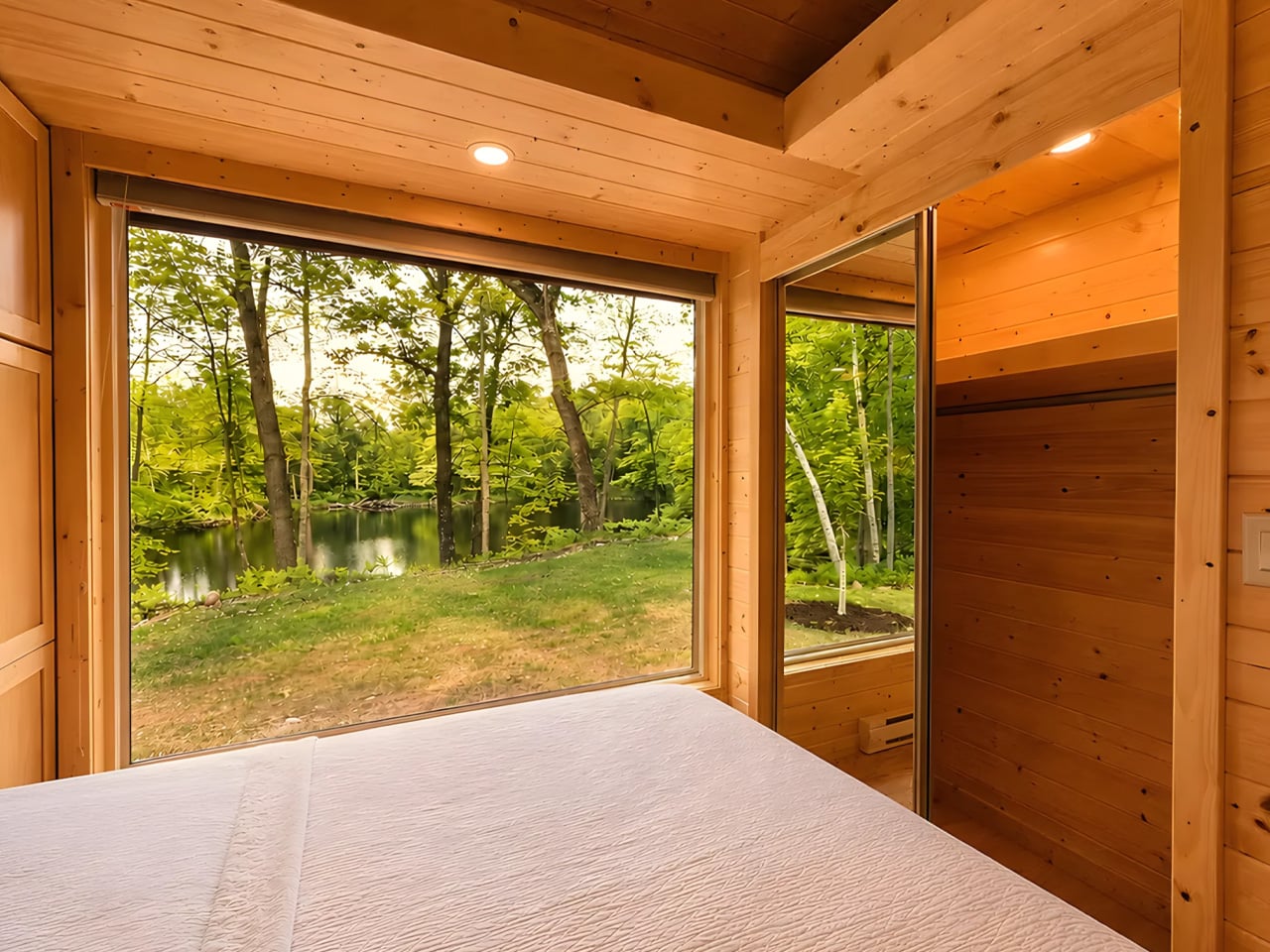
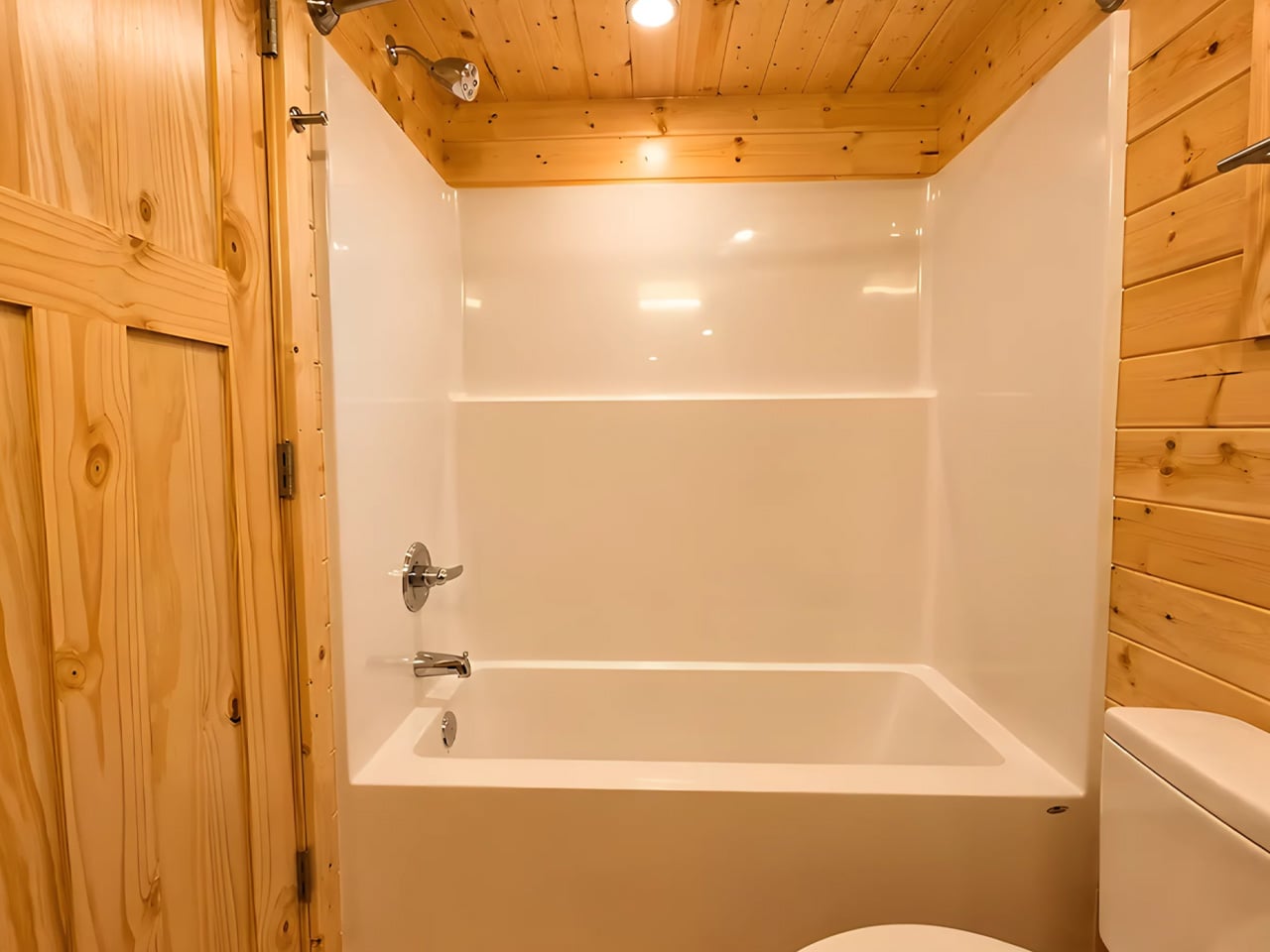
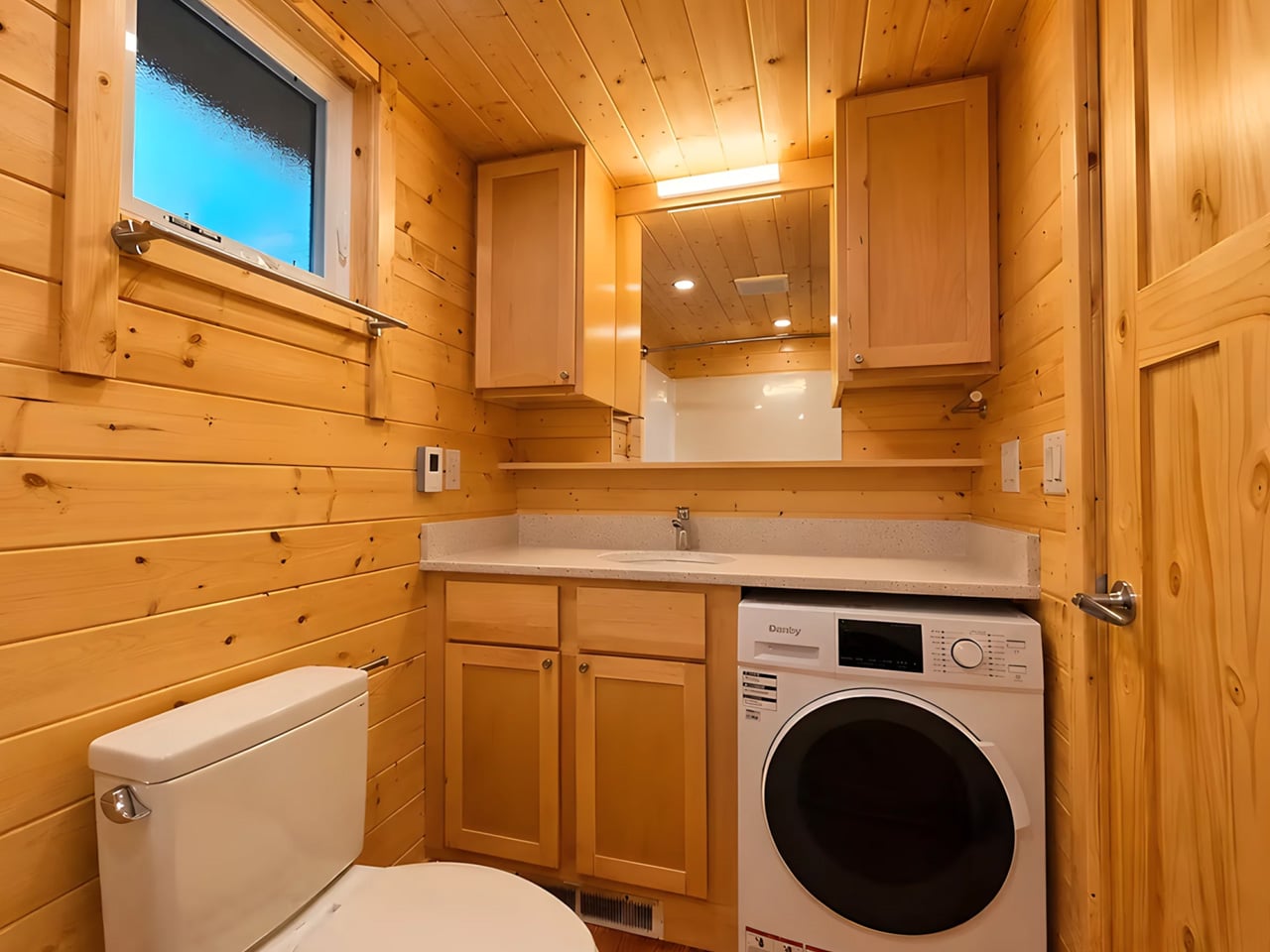
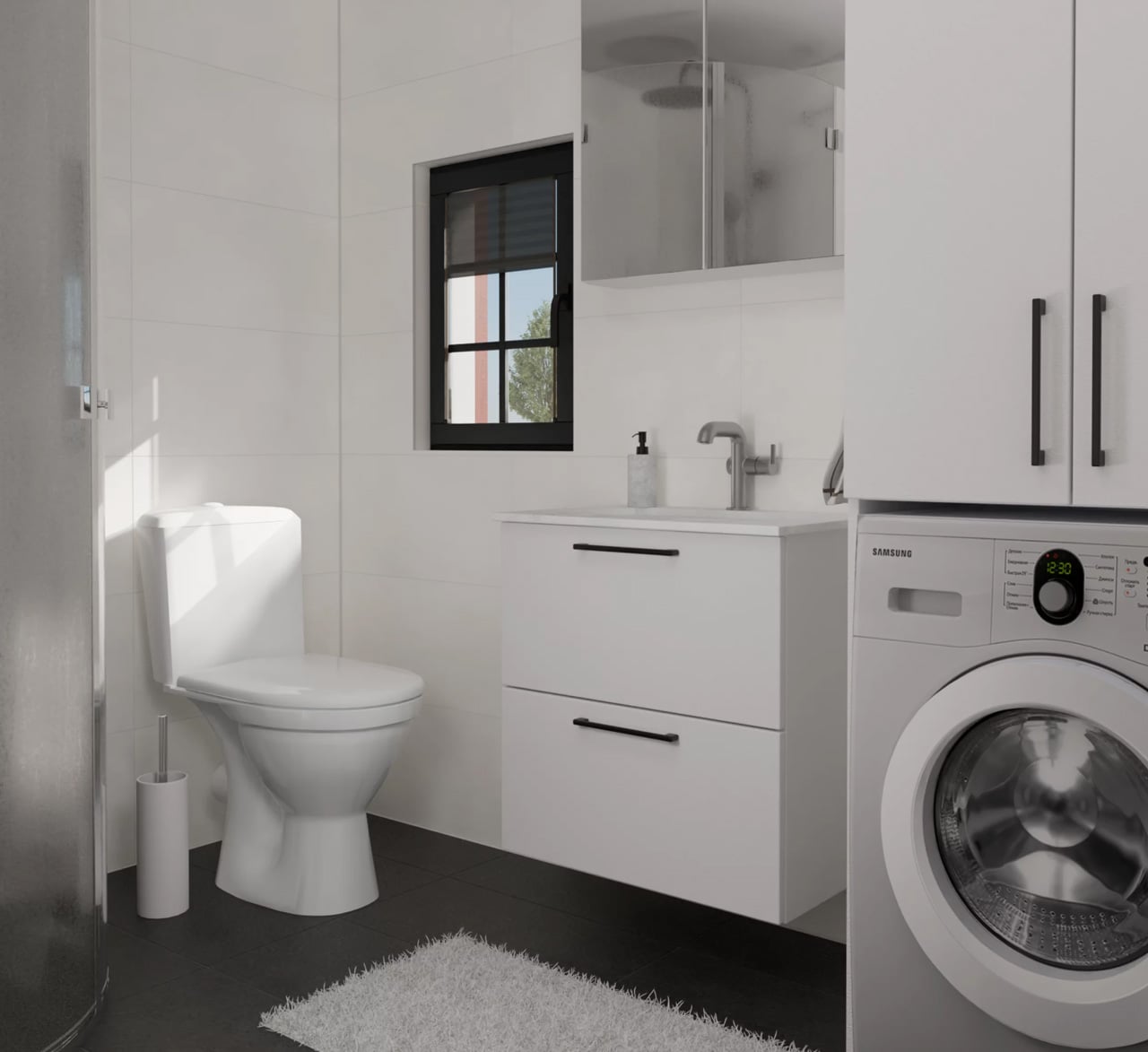
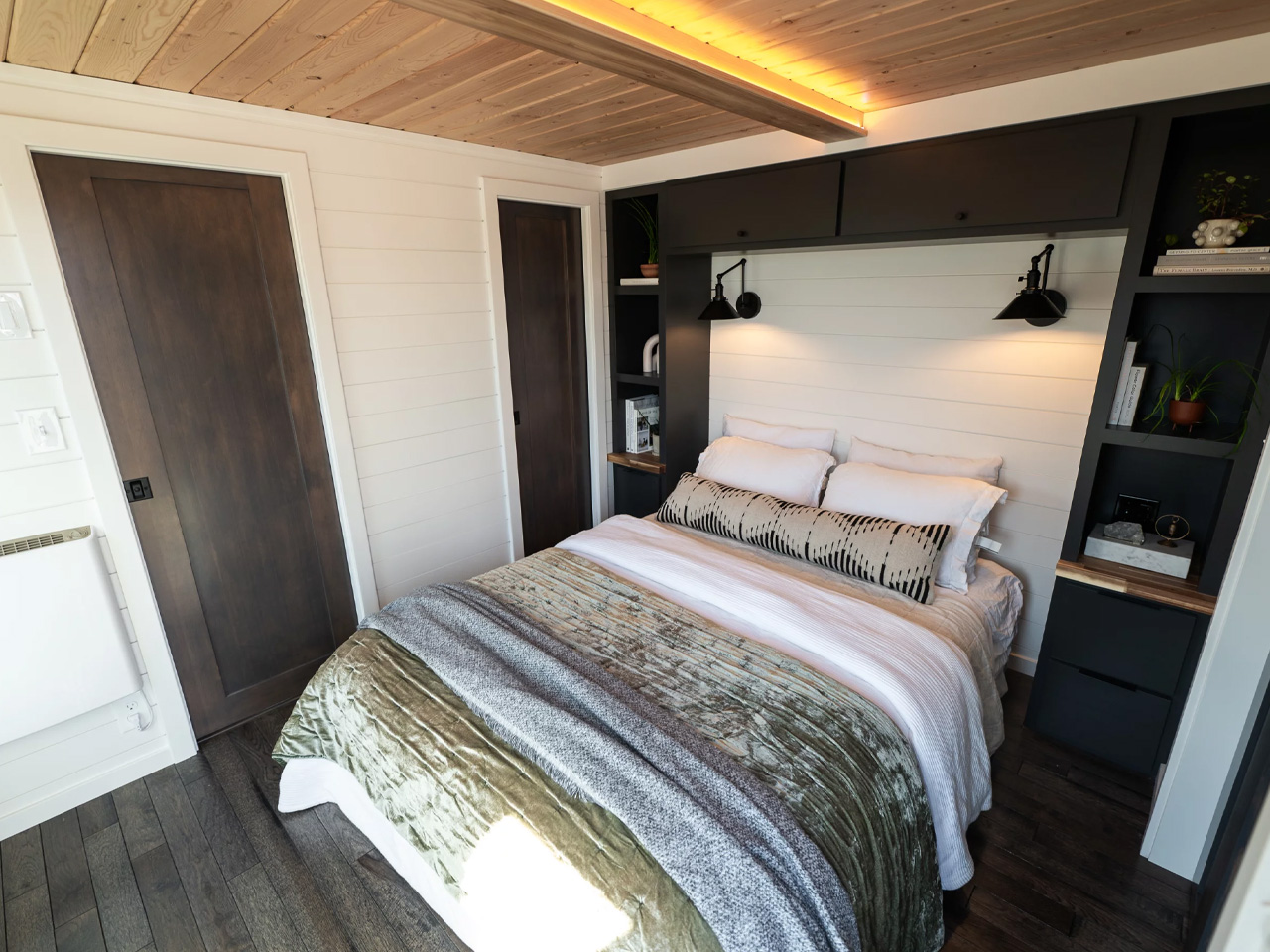
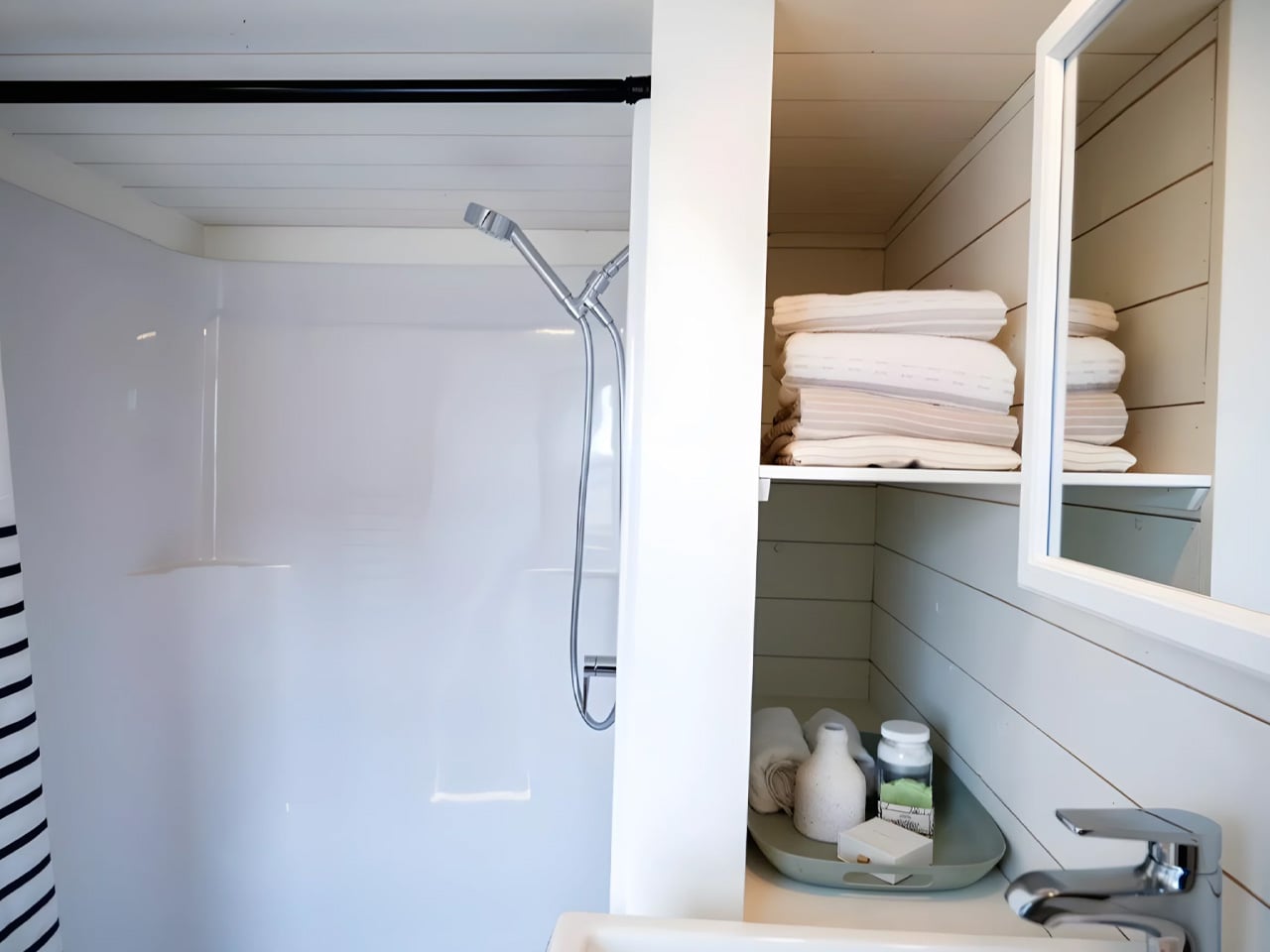
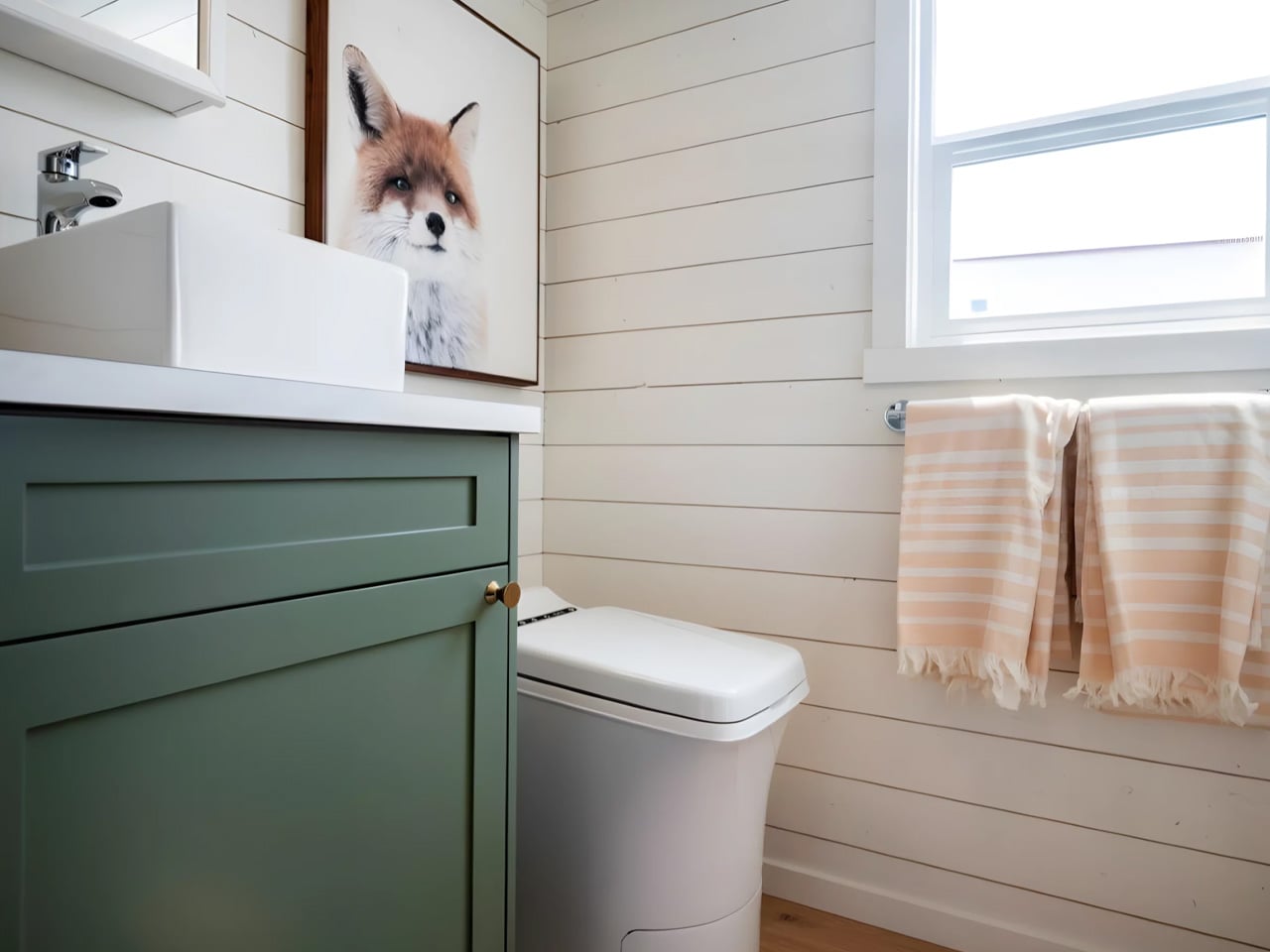
As you walk deeper into the home, you are greeted by a kitchen that contains a fridge/freezer, cooktop, built-in dishwasher, oven with a hood vent, space for a microwave, as well as some cabinetry. There is also a coffee nook, as well as a separate washer and dryer. A compact hallway connects the kitchen to the bathroom, which is equipped with a shower, flushing toilet, vanity sink, as well as some storage space. The home features two bedrooms, with the main bedroom located downstairs, near the bathroom. This room is spacious with plenty of headroom, allowing residents to walk upright. The room accommodates a double bed, wardrobes, and integrated storage space.
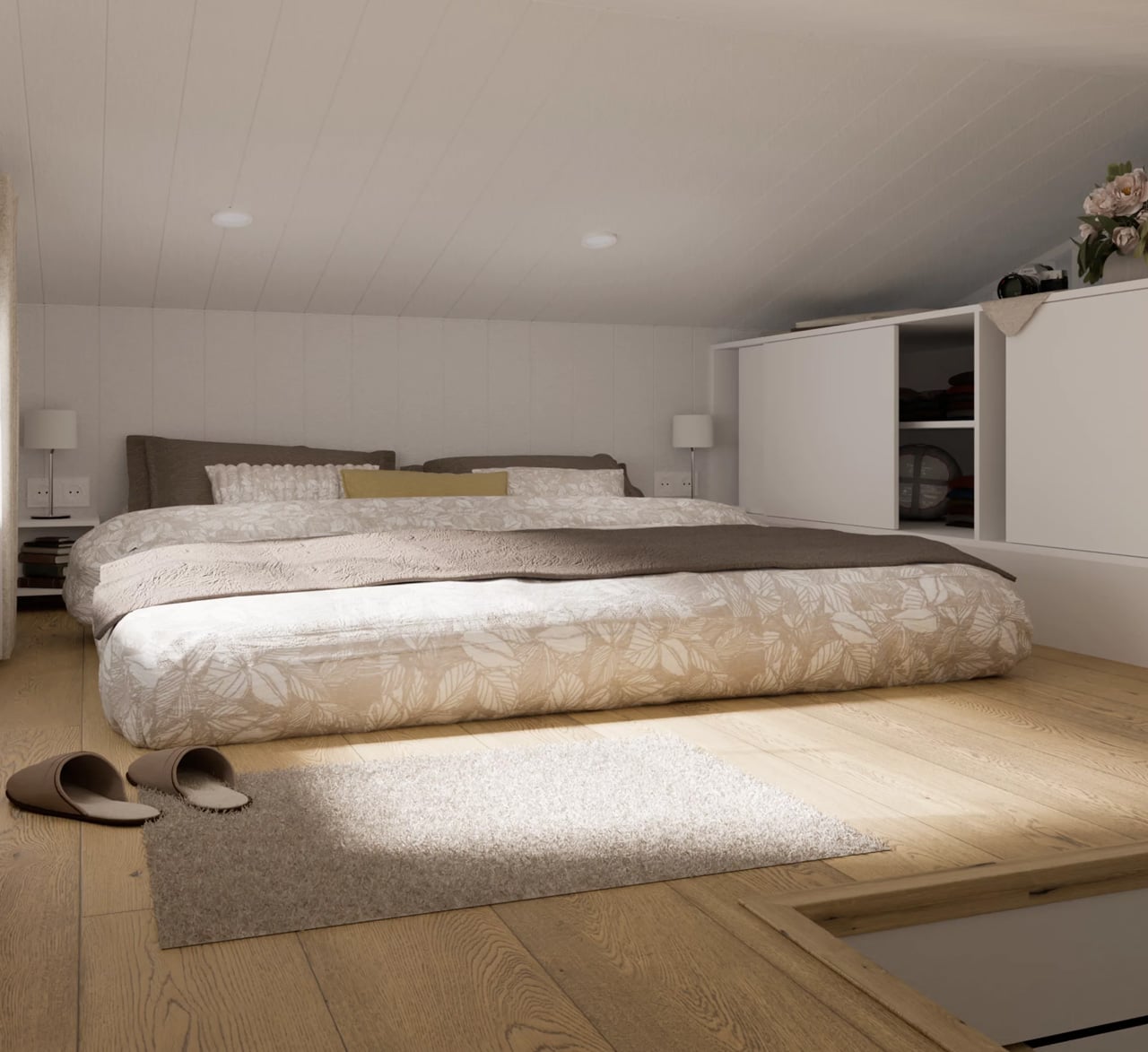
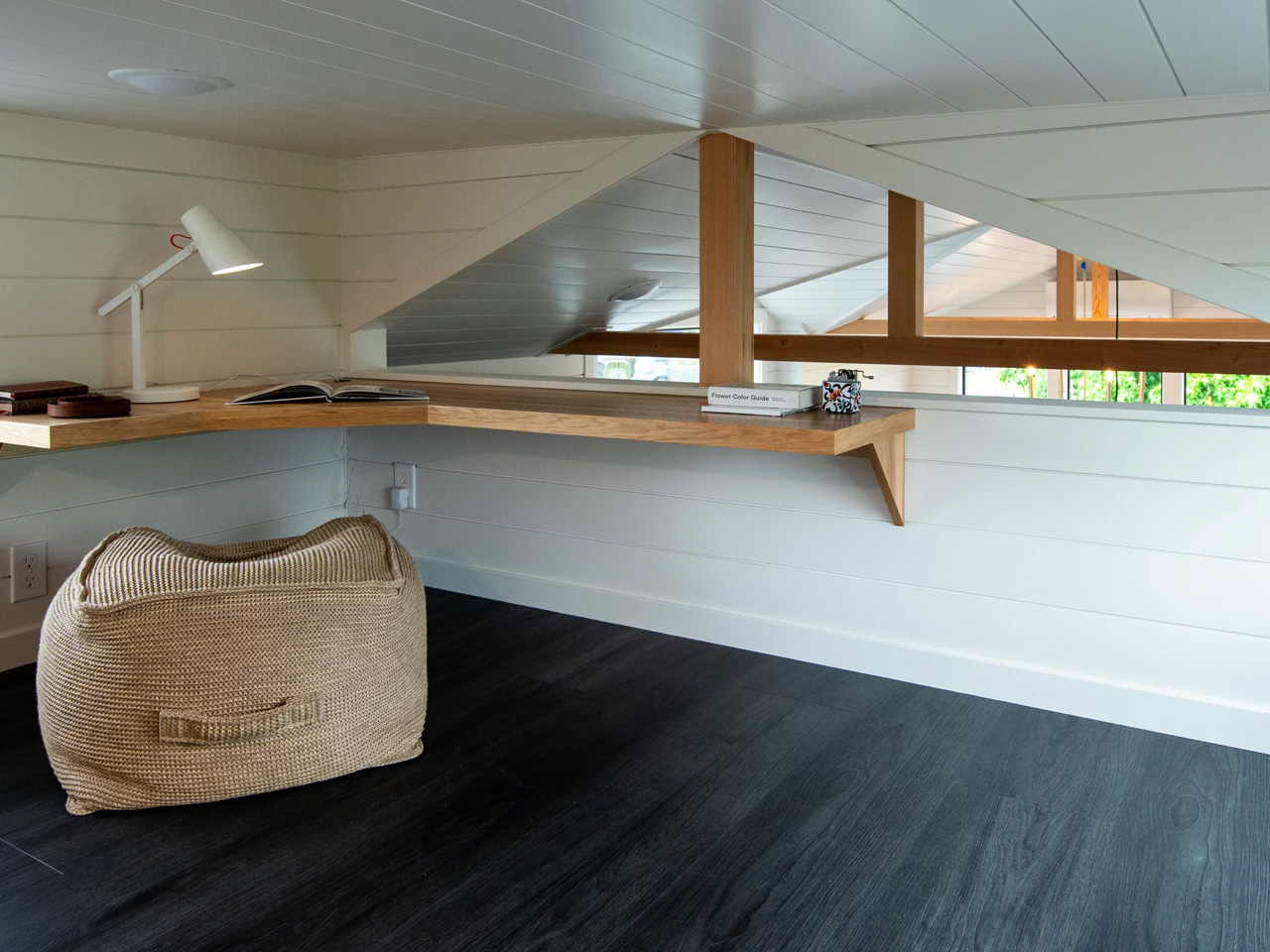
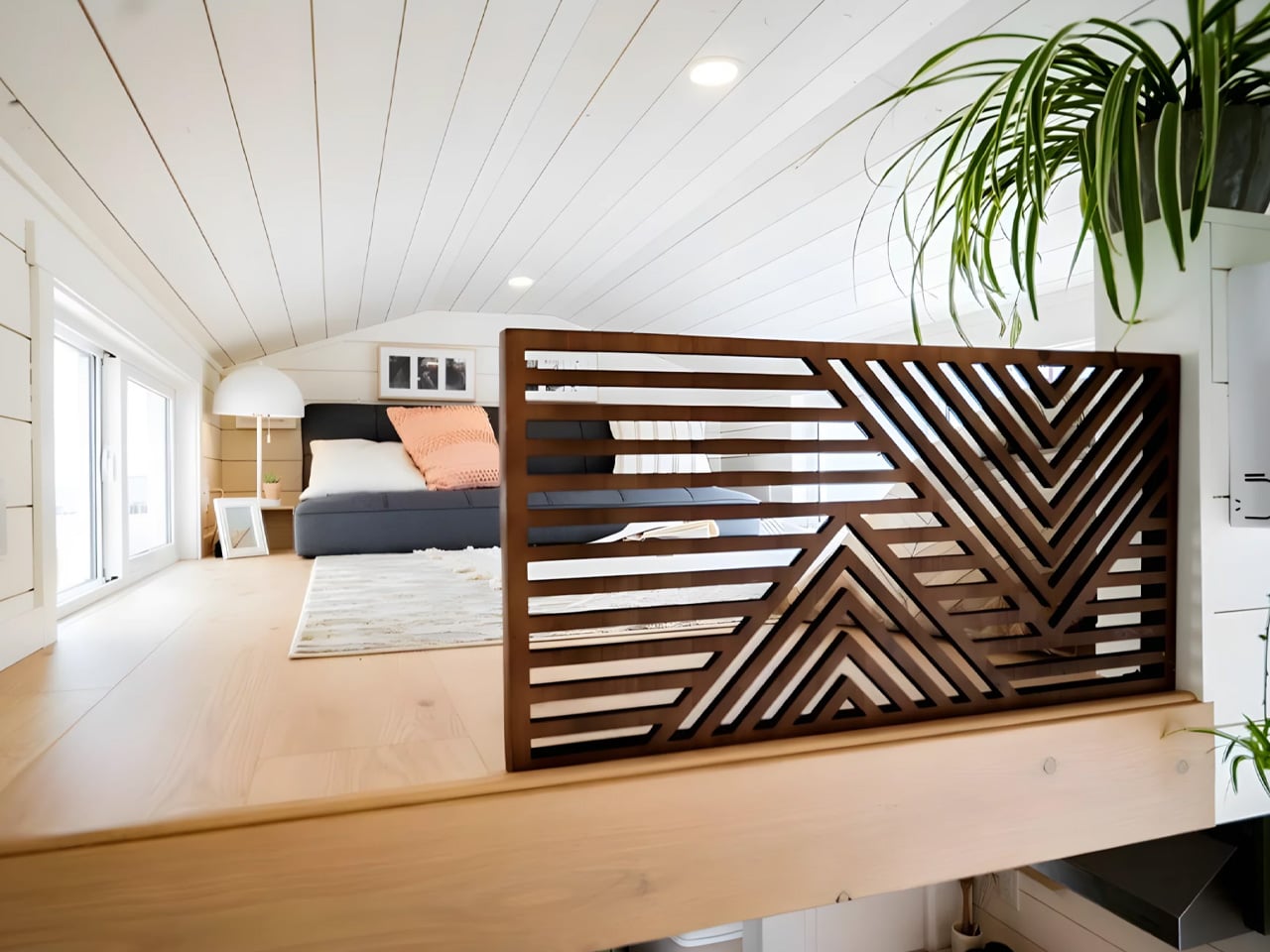
The hallway is followed by a staircase that leads you to the secondary loft room. The second bedroom has a double bed, but a low ceiling, although the firm claims that the ceiling is higher than most other models, so the room should be more comfortable compared to most tiny homes.
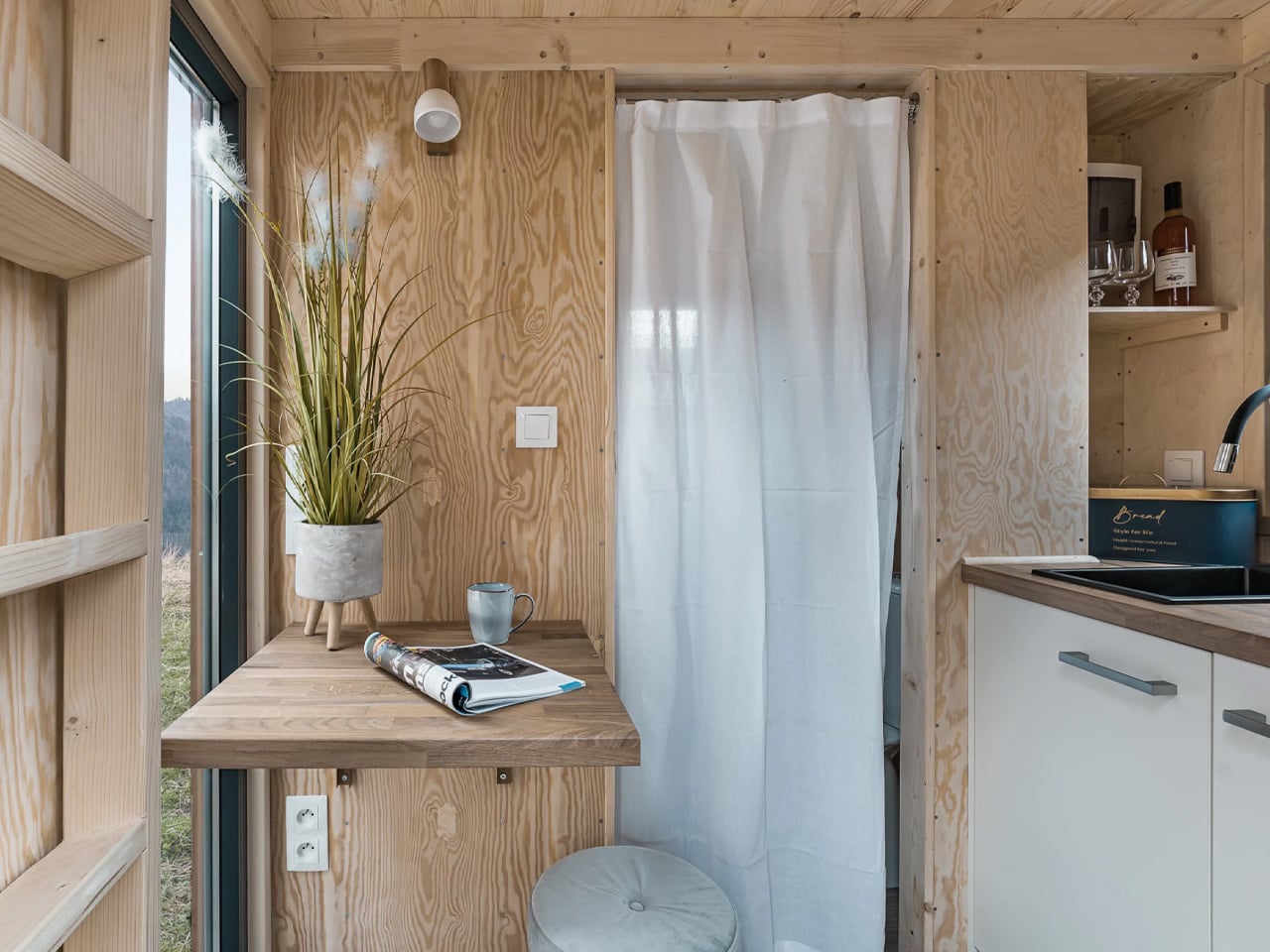
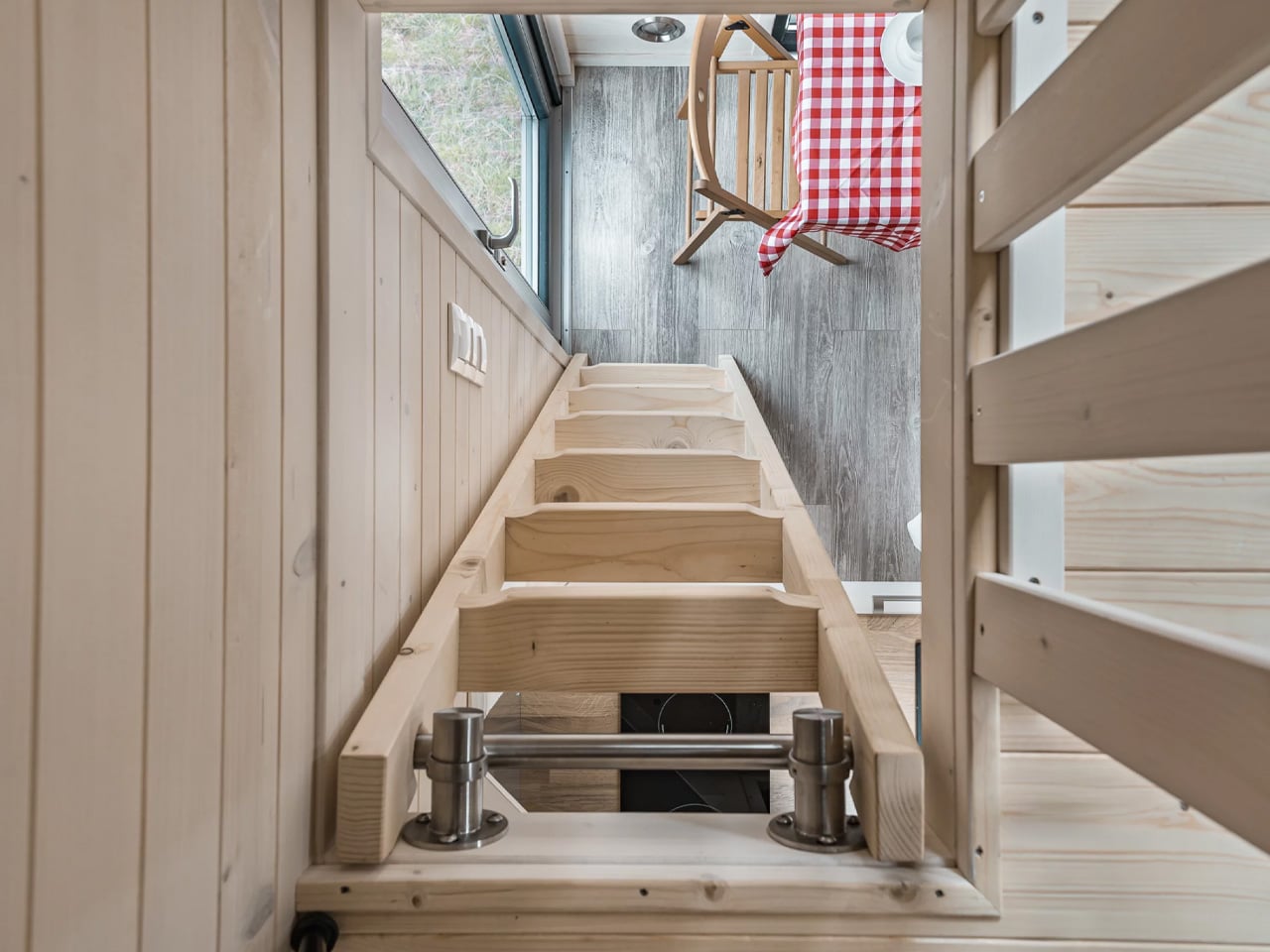
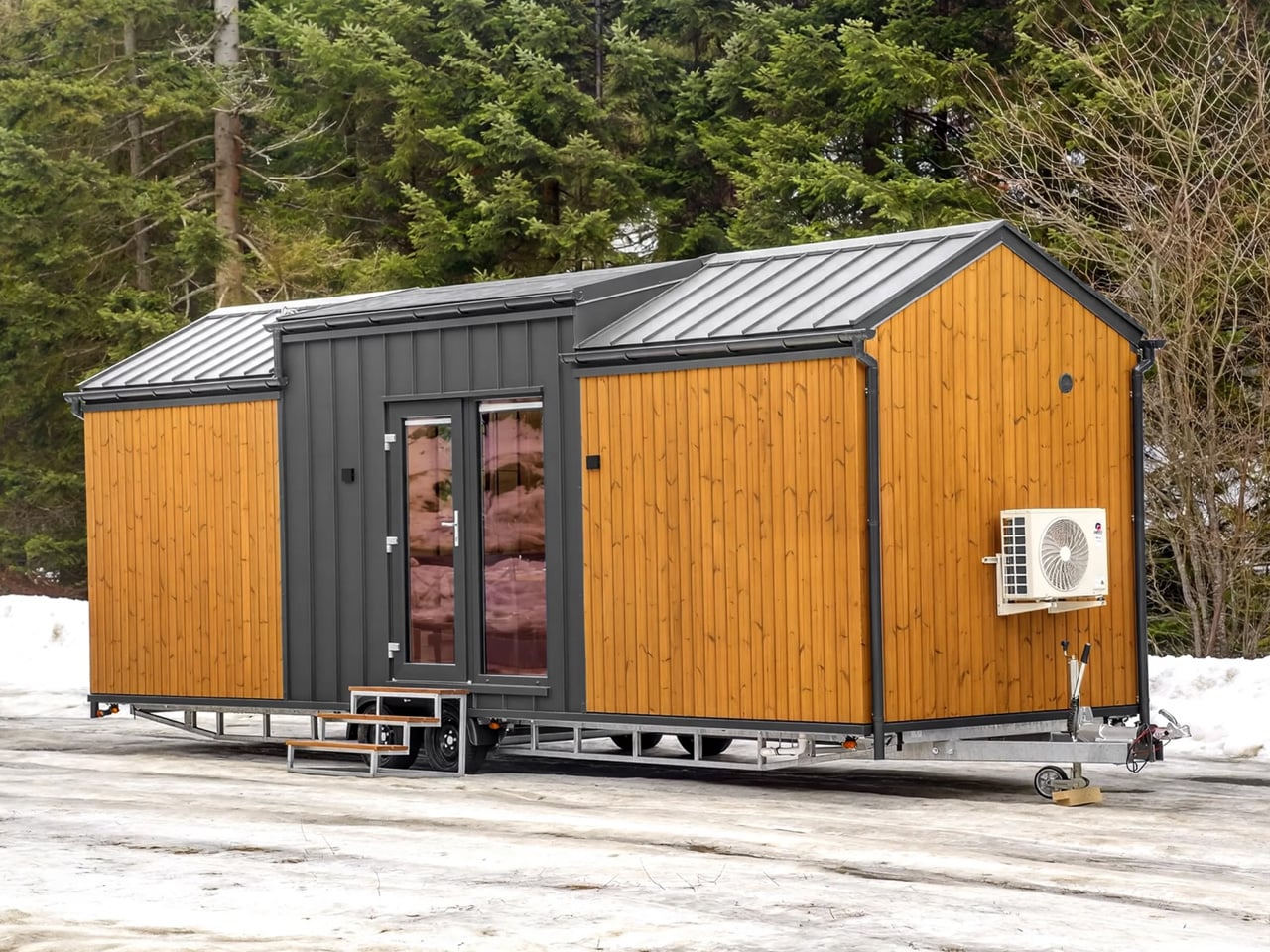
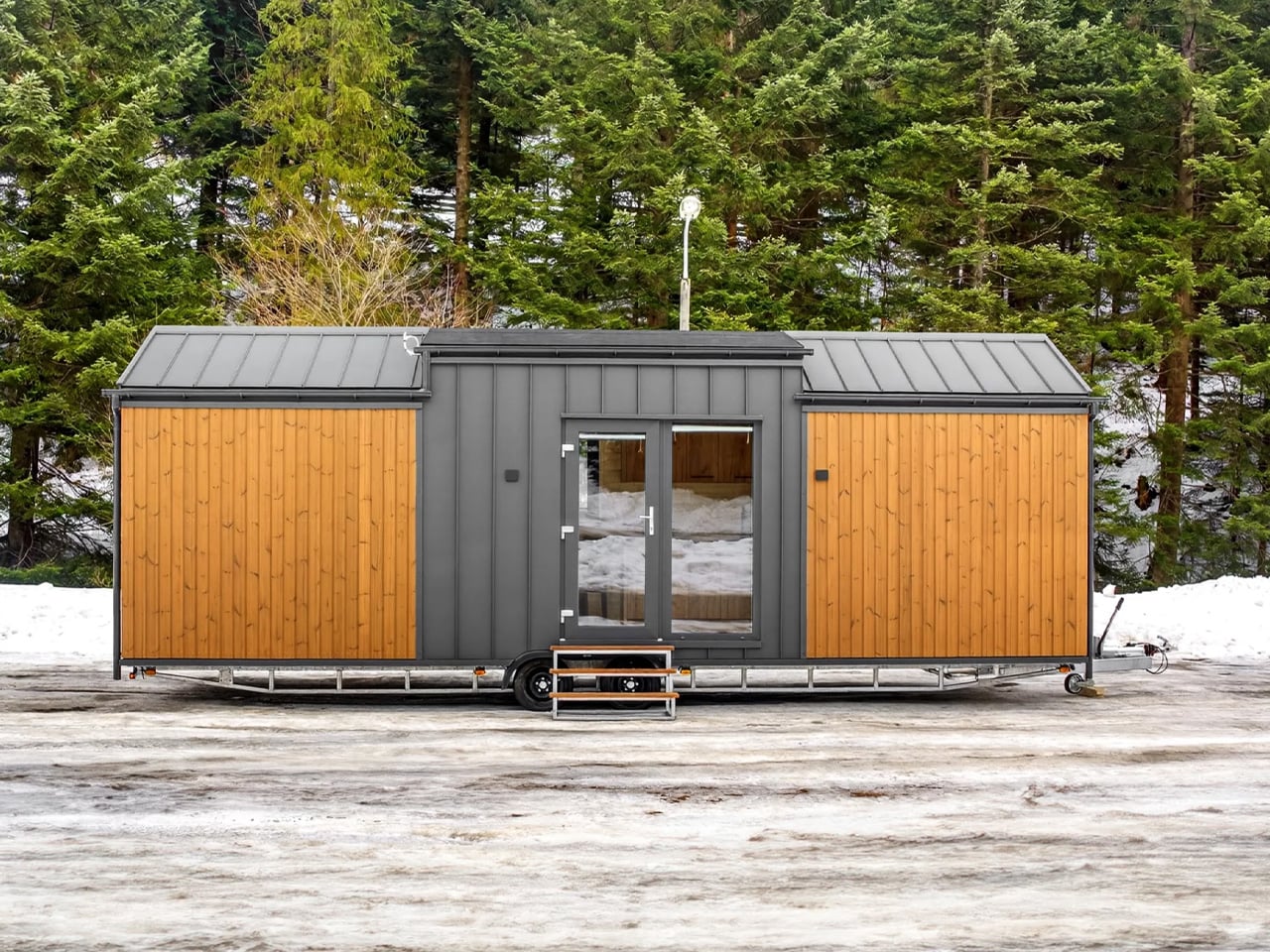
Dubbed the Eucalyptus, this thoughtfully designed tiny home is one of Baluchon’s latest tiny homes. It is based on a double-axle trailer and features a length of 22 feet, which is almost 3.2 feet longer than Baluchon’s typical models. Most tiny homes today feature storage-integrated staircases and loft-style bedrooms with low ceilings, Baluchon has instead designed a home with everything tucked away into one level, which makes everything accessible, but also means that everything had to be snugly fit together.
Since the Eucalyptus does not have a loft-style bedroom, this allows the home to have some extra length in comparison to most of Baluchon’s models. But it is still not considered extremely long. The compact little home is clad in red cedar, and has a spruce frame, with insulation made from linen, hemp, and recycled cotton. As you enter the home via double glass doors, you are welcomed into the kitchen, which forms a major section of the center of the home. The kitchen includes an oven, a propane-powered two-burner stove, a small fridge, a sink, and custom cabinetry. A dining table is also located close to the kitchen, and it can be moved aside to free up floor space when needed.
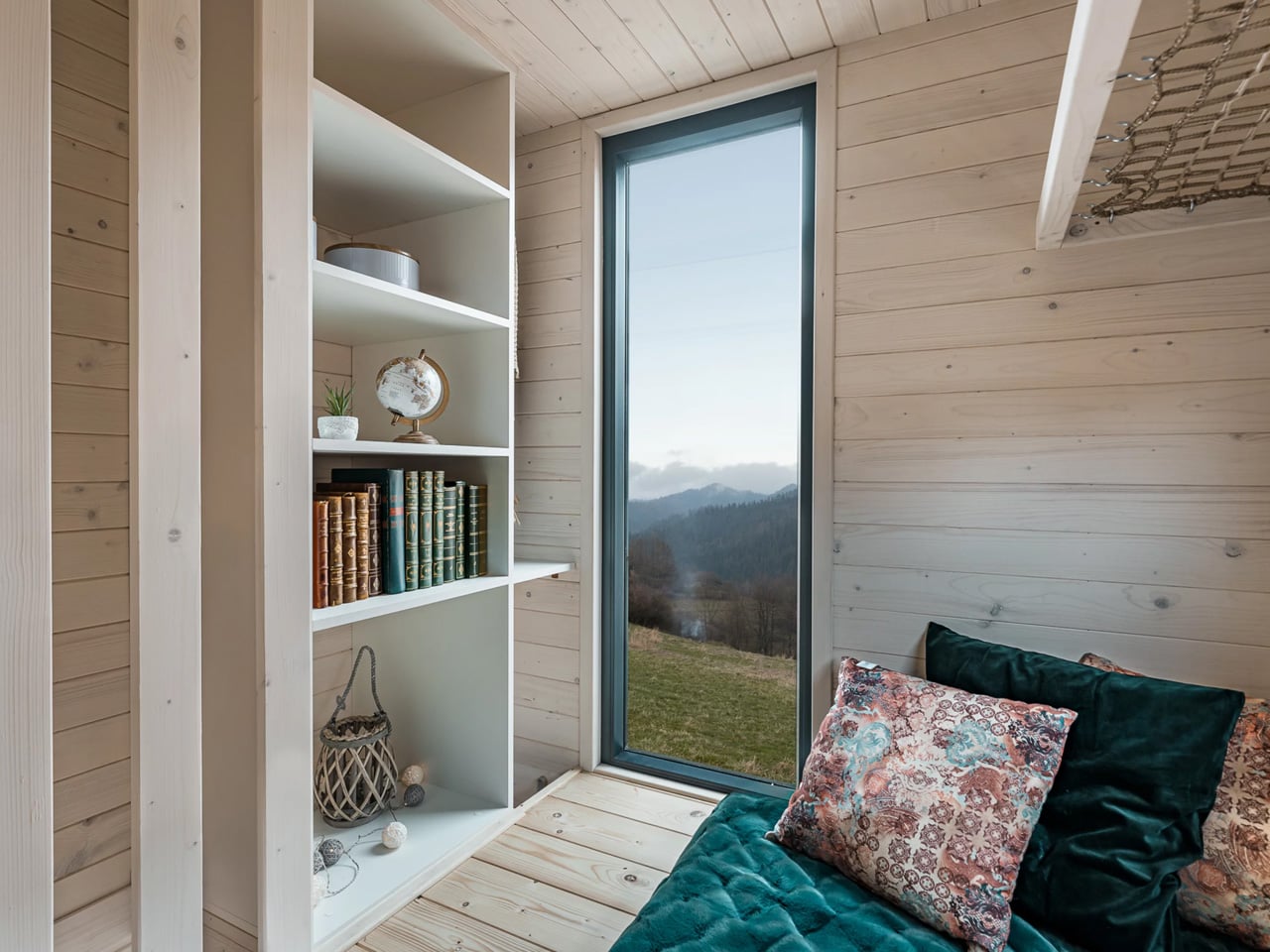
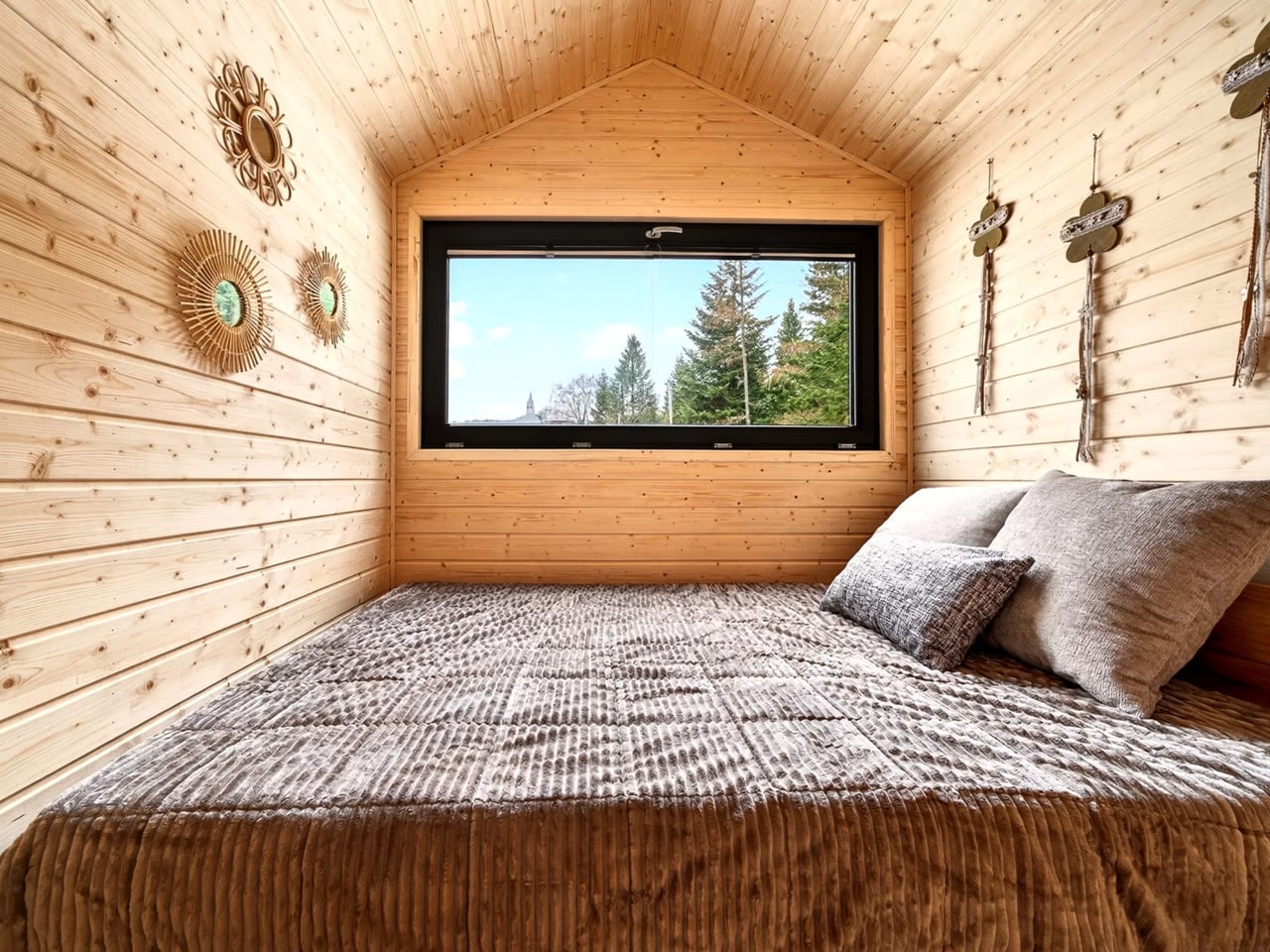
The bathroom is placed next to the kitchen, and you can enter it via a sliding wooden door. The bathroom contains a shower, toilet, and storage units to hold clothing. It also features a large operable window, allowing fresh air into the space. The other side of the house holds the living room, which accommodates shelving, an electric radiator, and a sofa bed, allowing the space to also double up as a bedroom. The living room is also adorned with blackout blinds, which offer privacy.
The Eucalyptus was built for an owner in Normandy, Northern France, and it was designed to function as his main home. We’re unaware of the tiny home’s exact pricing, however, Baluchon homes usually start around US$84,000, so you could take that as a ballpark figure.
There are no signs that our population will stop growing any time soon, and the amount of livable space continues to shrink. We need more space-efficient residences that aren’t just towering skyscrapers, which is part of the appeal of tiny home trends. The majority of the designs for these petite residences seem to be made from wood or repurposed trailers and aluminum vans, mostly because these are the easiest foundations to work with. In the future, however, we don’t have to be restricted to these materials and plain rectangular shapes, like this compact capsule that definitely looks the part of a futuristic residence both from the outside and especially inside.
A capsule is admittedly not the most efficient shape if you’re considering either stacking houses on top of each other or joining them from end to end in a grid. But while space considerations are definitely important in an ever-shrinking planet, it is equally or perhaps even more important to consider the human factors. After all, humans will be living inside that space and they need to feel comfortable, safe, and, well, at home.
The ONCO Capsule House concept tries to deliver all those while also paying close attention to aesthetics. They say beauty is in the eye of the beholder, but it’s hard to deny that the capsule’s shape is interesting and pleasing thanks to the absence of sharp edges and corners. The white exterior of the capsule gives it a clean appearance, though it will probably be difficult to maintain as time goes by, and this motif extends inside the capsule.
The interior of the capsule looks like a sci-fi movie set, with plenty of strip lights lining the walls and door frames as well as screens and panels everywhere you turn. Of course, other interior designs can also be used, though the capsule seems to lend itself perfectly to minimalist furniture with lighter color schemes. Although a capsule will technically have less space inside than a straightforward box shape, the circular interior actually gives the illusion of having more.
The design concept also includes provisions for having parts of the capsule actually transparent, like having floor-to-ceiling windows built directly into the design. Ideally, these would be tint-controllable windows so you can maintain your privacy when you need to but also enjoy the view when you want to. Constructing such a capsule house won’t be easy or cheap, but in a future where tiny homes are the norm, this could very well become a standard design anyway.
Minimaliste originally designed Nomad – an all-weather tiny home with a small and easy-to-tow package. And recently they unveiled a newer version – the Nomad 30. The Nomad 30 is an upgraded tiny home with a newly improved interior layout and an adventure-ready off-grid design. This tiny home is perfect for those who want to adopt an off-grid lifestyle and have an adventurous life on the road.
As its name quite aptly signifies, the Nomad 30 has a length of 30 feet. It is founded on a double-axle trailer that is adjustable, hence the wheels can easily be moved forward or backward on the trailer, allowing the weight to be balanced effectively, making the home quite easy to tow. The tiny home has a sleek yet warm appeal to it, and it is finished in steel sheets and faux wood steel, which is intended to be low maintenance.
You can access the cozy home via a folding deck, and steps at its rear which can be operated with a winch and a remote control. A double glass door leads you from the living room to the outside. The living room in the Nomad 30 is more spacious as compared to previous Nomad models, and it contains a lot of storage space, as well as a sofa bed and a wall-mounted TV. The space also includes a mini-split-air-conditioning system and a heat recovery air exchanging system.
Adjacent to the living room is a kitchen, and it accommodates a dining area that can seat up to four people. The dining area also includes integrated storage space. The kitchen is amped with a propane-powered oven, a four-burner stove, a washer/dryer, a double sink, and a fridge/freezer. The cabinetry also locks up to facilitate safer travel, and a folding extending countertop is also included. The tiny home has a bathroom as well, lined with a composting toilet, a small bathtub and shower, and a sink.
The Boho Duplex is truly a one-of-a-kind tiny home, as it is actually two homes combined in one. You tend to see a lot of innovative tiny homes on the market, some that extend upwards, while some extend downwards, but Boho is the first of its kind, which combines two houses into one. It is designed by Escape and includes two separate dwellings combined in one shell, complete with separate front doors, and self-contained interiors.
Boho Duplex consists of two Vista Boho models that have been harmoniously merged together, end to end. The home is finished in cedar and has a length of 42 feet. This is quite long for a tiny home, although it is not the largest home we’ve come across. When you enter the first home, you are welcomed by a multipurpose living space. A majority of this room is occupied by a bed, integrated storage, and a wall-mounted TV. The space also includes a small sofa and a kitchen area. The kitchen area holds an induction cooktop, fridge/freezer, sink, cabinetry, and washer/dryer, as well as a drop-down desk area to work and dine in. It also includes a well-designed bathroom with a shower, a flushing toilet, and a small sink.
The other section of the tiny home can be accessed via its door. Unfortunately, there is no interior connecting door, which does seem a bit inconvenient. The layout is mirrored, perfectly reflecting the other tiny home, featuring the same multipurpose room with a bed, seating, kitchen, and a bathroom nearby. The Boho Duplex’s layout and design are truly unique and could lead to a whole new genre of tiny homes being created.
Currently, there is no information on the Boho Duplex’s overall price, but information can be gathered by contacting Escape directly. It seems like an unconventional, yet exciting option for those who want to hop onto the tiny home bandwagon, but are tired of the typical over-saturated designs on the market. The Boho Duplex could be a refreshing change, one that doesn’t sacrifice functionality, utility, and practicality.
Canada’s Acorn Tiny Homes recently launched an innovative tiny home design that is expanding the concept of small living. Dubbed the True North Retreat, this thoughtfully designed home can squeeze up to seven people and will feature all the amenities and comfort you can expect from a tiny home. But it does have one exciting addition – a barbecue area that can be accessed from the outside.
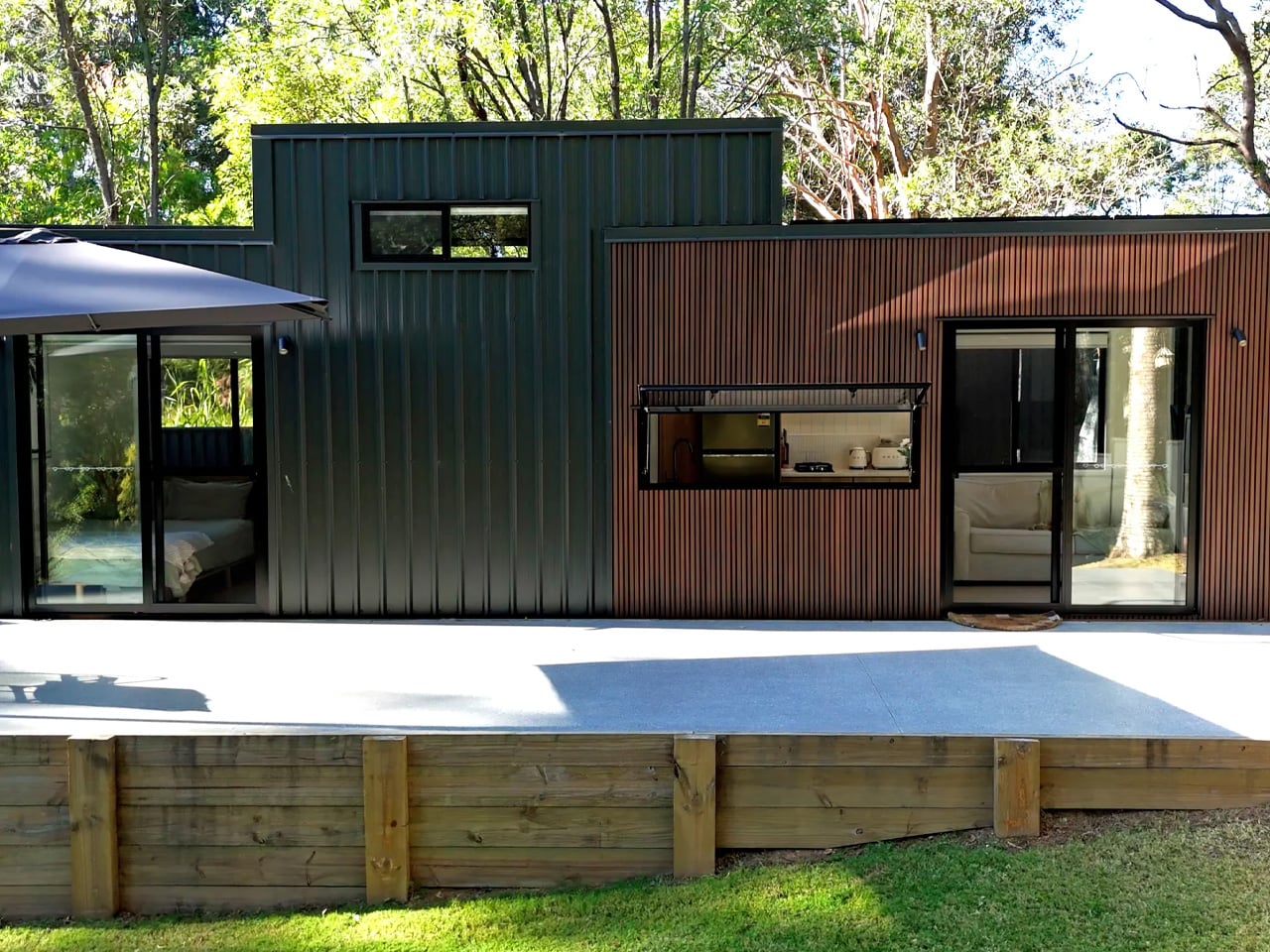
Based on a quadruple-axle trailer, and measuring 38ft in length, the True North Retreat has an increased width of 10.6 ft, which means it will need a permit to be towed on a public road. The tiny home is finished in faux stone and metal siding, and roofing, with interesting green wall sections. The dedicated BBQ station can be accessed from the outside through a section of operable facade, and this will accommodate the gas barbecue itself, as well as a sink, fridge, and cabinetry.
You can enter the home through a standard door or glazed sliding doors. The interiors measure 546 square feet, and it houses a living room at the center, equipped with a sofa, mini-split air-conditioning system, and a coffee table. The living room seems quite spacious and comfortable, owing to the extra width. It will also feature generous glazing which allows natural light to stream in throughout the day. The kitchen is located adjacent to the living room. It has an interesting U-shape and will accommodate a quartz countertop, a fridge/freezer, an oven, a sink, a breakfast bar, and custom cabinetry.
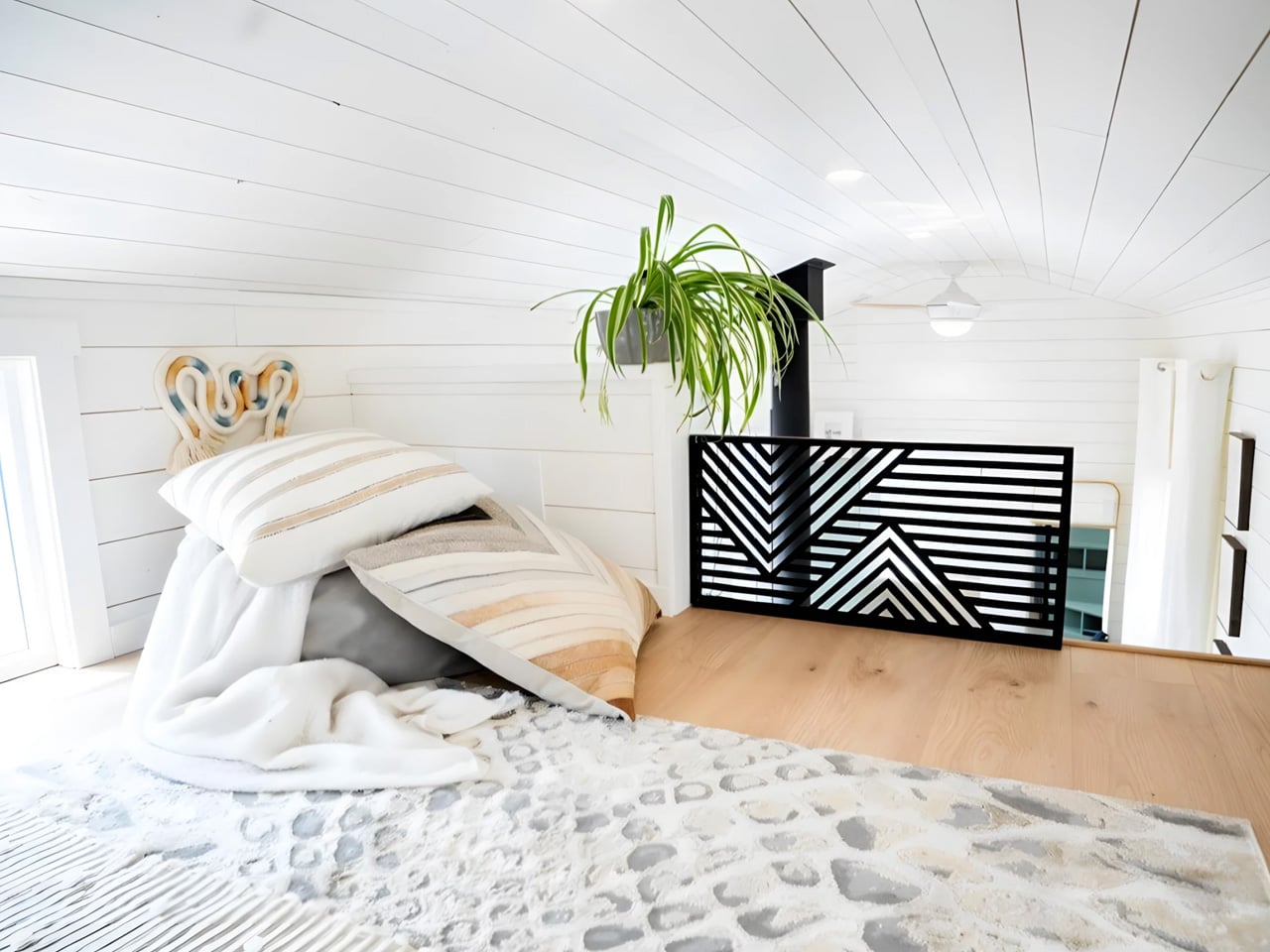
The bathroom is located on the other side of the living room, and it includes a toilet, sink, shower, washer, and dryer. The master bedroom is situated in the raised section of the trailer and can be accessed via stairs. It has plenty of headroom to stand straight, which isn’t commonly seen in tiny homes. It also includes a double bed with integrated storage space, glazing, and wardrobe space. The home also includes two secondary bedrooms, although they are the typical loft-like spaces with low ceilings you see in traditional tiny homes. The bedrooms can be equipped with double beds or can be utilized for storage.
French firm Baluchon is known for its elegant, well-designed, and functional tiny homes that look super adorable on the outside while managing to be ingenious and efficient on the inside. And their latest model dubbed Bonzai is no exception! In a world where tiny homes are reigning supreme, the Bonzai is a smartly designed and lovely-looking little entrant. And trust me, this tiny home is quite little, even by tiny home standards. Measuring only 4.5 meters, the Bonzai tiny home is equipped with Japanese-inspired styling both internally and externally. Its compact and diminutive size also signifies that it is quite portable, and a space-saving structure.
Based on a double-axle trailer, the Bonzai tiny home is finished in a warm red cedar, accentuated by an aluminum roof, and spruce inside. The insulation for the home is a mixture of linen, hemp, and cotton, and there’s also a handy ladder attached to the exterior to offer quick access to the compact-sized rooftop deck. If you’re still unable to grasp the tininess of Bonzai, then you may like to know that it is half the length of a conventional North American tiny house, for example, the Raven – check it out for some perspective!
The entry point of the home is into the bathroom which is quite simple and amped with basic amenities such as a toilet and a shower. Adjacent to the bathroom is the kitchen, which is also quite compact, and equipped with a sink, a two-burner stove unit, and a fridge. Although, it is commendable that the kitchen has more storage space than anticipated for a small kitchen such as this. It also contains a pantry drawer and a pull-out table. The tiny home includes only one other room which can be entered via a shoji-style sliding door, and this room functions as a multipurpose living room and includes a generous amount of storage such as underfloor drawers and overhead lockers.
The room also includes a drop-down dining table, a wood-burning stove, and some shelving. A unique feature of the home is a home cinema setup with a soundbar, projector, and pull-down screen that makes a great space for some cozy movie nights. Sadly, there is no bedroom in the Bonzai, and nor does it accommodate a bed. This can be quite inconvenient. However, the owner rolls out a futon on the floor when he’s ready for bed.
One of the most tedious things that I experienced more than once is moving houses. Well for one thing, I have so much stuff so packing them all up and then unpacking them at my new place can be such a pain. So sometimes I wonder if I could just have all of my things and furniture in just one box that I can move from one place to another if I need to not stay in one place. Well, there are now tiny houses that can do just that, provided you can fit everything you own in that space.
There are a lot of tiny houses already available out there but this one is truly portable and high-tech. The Grande S1 is a pre-fabricated tiny home that can be packed up in a huge box and can be transported to where you need to go. And once you’re ready to settle down in that place, it can unpack itself and expand to a 20-foot-wide living space, complete with furniture and all the stuff that you can fit in that place. Once completely expanded, it has a full width of 20 feet and 364 square feet and it’s “street legal” which is an important requirement for those that need to actually live in that house.
To open up the house, you need to fold out the awning and the stairs and lower the stabilizing posts first. After that, you just press the button and it will unfold in all its mechanical glory. Inside, you have a dining space, living room, kitchen, bathroom, home office, and bedroom. All of the furniture can be folded in and out or stowed away into compartments because, of course, you need to put them somewhere when the house will fold into itself. For example, the queen-sized Murphy bed and the office desk can be stowed into the wall while the dining table can be folded on both sides and the chairs inserted into it.
If you’re getting ready to move again, you just need to stow away the desk, bed, and dining table and then put the sofa in the front entry area while the office chair and coffee table can fit into the bathroom. Then you remove the stabilizing posts and then with another press of a button, the house will then fold itself up and you’ll be ready to move in just 10 minutes. Oh and this tiny house can go off grid as it powered by a1,400-watt array solar panels connected to a 5-kilowatt Lycan power box.
We discovered the beauty and magic of tiny homes a couple of years ago, and we’re happy to see it was an excellent discovery. Since then, tiny homes have gained immense popularity, and been experimented with to create even better, more beautiful, and functional designs. We saw a torrent of ingenious and thoughtfully designed tiny homes in 2023, and we’ve curated some of our favorites for you. These unique tiny homes are space-saving and eco-friendly, reducing the load on Mother Earth, while also managing to look as cute as a button. From a 3D-printed tiny home that has the same price tag as a car to the world’s smartest tiny home that expands up to 3 times its original size – these tiny homes will have you swooning!
1. Nestron’s Tiny Homes
Nestron’s range of tiny homes is pretty sleek and futuristic with a highly customizable and aesthetically pleasing prefab design. The range includes the – Cube One (C1), Cube Two (C2), and Cube Two X (C2X) homes that cost from $42.2k to $126.6k, depending on the configuration you choose at Nestron’s online showroom.
Why is it noteworthy?
The futuristic homes include solar electricity (or local electricity), heating, and a fully-equipped bathroom with a smart toilet. The interiors can be customized, and they’re quite stunning and ideal for sci-fi fans who want their own futuristic homes!
What we like
Almost everything is handled by Nestron – from logistics and transport to unloading
Built from recyclable materials
What we dislike
They’re not very spacious, even the most expensive option, Cube Two X, only offers 398 square feet of space
2. Pod Studio
Meet the world’s smartest tiny home called Pod Studio! Designed by California-based Podform, the Pod Studio is an innovative and one-of-a-kind tiny home that can expand up to three times its original size. It is built using steel and aluminum and features a solar awning energy system
Why is it noteworthy?
The original size of the Pod Studio is 161 square feet, and it can be converted to 454 square feet within 15 minutes! It is easily transportable and portable and doesn’t need any foundation, because of its built-in hydraulic legs.
What we like
Equipped with solar panels and smart technology that can be easily controlled through an app
What we dislike
It’s not out on the market yet, so we’re not sure what the final home will be like
3. Vagabundo Flex
This special little home is called the Vagabundo Flex, and it extends over two levels, thanks to an innovative automated lifting root system that provides the home with enhanced comfort and functionality. The unique home is constructed using timber framing, wood fiber insulation, and double-glazed aluminum windows.
Why is it noteworthy?
It features an innovative and unique design that supports the roof, allowing it to rise to a height of 20.3 feet, which creates a spacious and expansive interior that occupies 300 square feet.
What we like
Bulky elements have been smartly hidden in corners and cupboards
Equipped with essential amenities, including panoramic windows and timber furnishings
What we dislike
Hefty price tag as compared to other tiny homes on the market
4. Fujitsubo
Japanese construction startup Serendix unveiled ‘Fujitsubo’ – a small home priced at 5.5 million yen or around $37,600! Serendix says it takes almost 44.5 hours to print and assemble the home.
Why is it noteworthy?
This compact home is called the Fujitsubo, or “the barnacle”, and it occupies only 538 square feet, which is quite small when compared to the average American home, which happens to be five times large. The home is 3D-printed and houses one bedroom, a bathroom, and an open living room connected to a kitchen.
What we like
Costs as much as a car while offering essential amenities and features
What we dislike
It’s still in the conceptual phase, so we’re not sure how the final structure will turn out to be
5. Câpsula
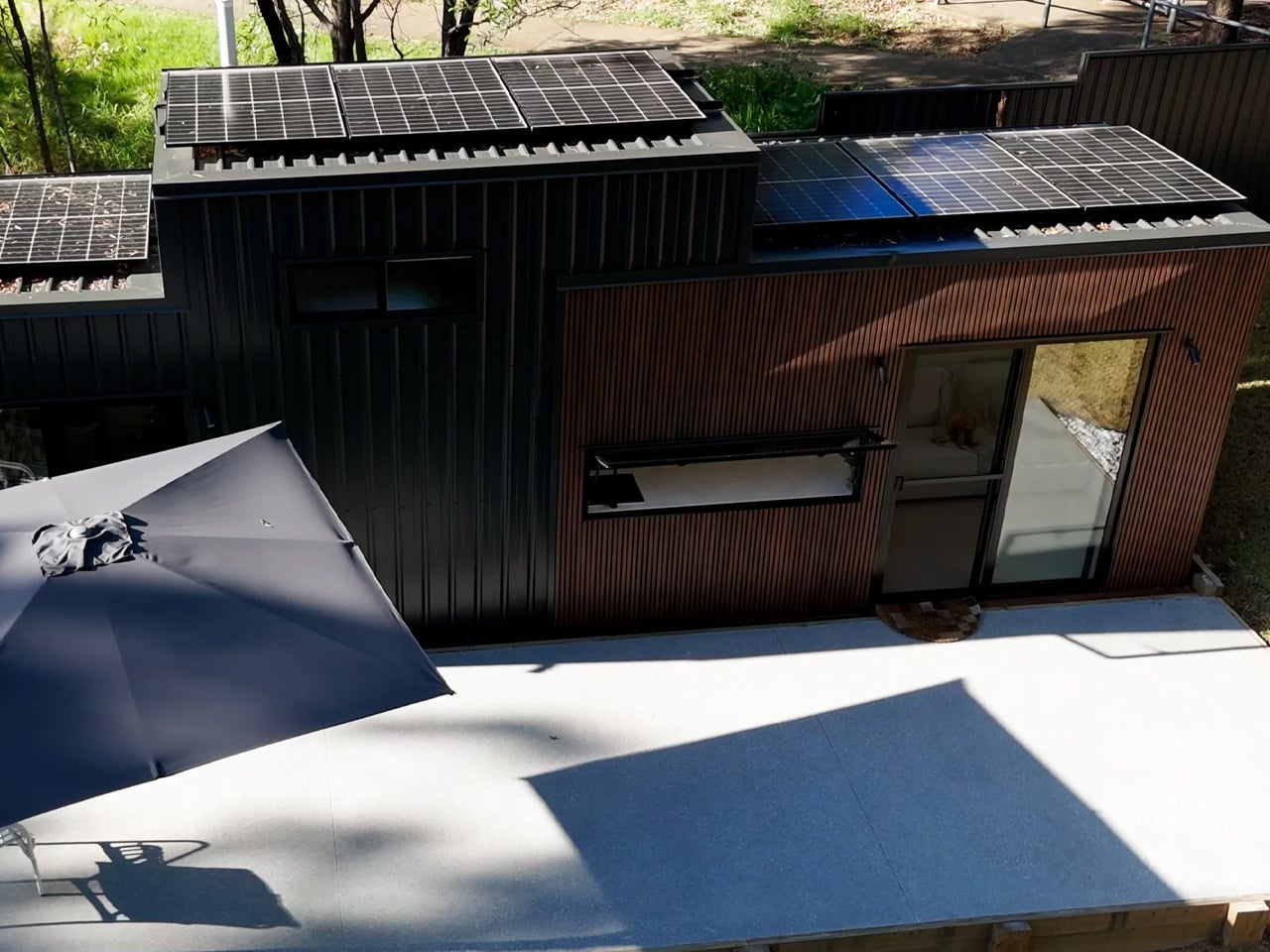
This tiny homes concept is called Câpsula, and it is designed by architecture studio i29. Launched during Dutche Design Week 2023, these prefabricated cabins and tiny homes are inspired by design-led thinking and aim to be simple yet functional.
Why is it noteworthy?
The project is pretty small-scale but the plans and ambitions for it are quite large. The goal and intention behind the project is to promote slow living, and create the ideal cabin architecture with a couple of amazing options.
What we like
Influenced by the minimalist style of architecture
Equipped with top-notch amenities and features
What we dislike
The small footprint of the homes may be considered too small for some
6. Ecocapsule NextGen
A few years ago, Ecocapsule launched a unique egg-shaped off-grid tiny home which was a major hit! And, now they’ve released a new and improved version called the Ecocapsule NextGen. The Ecocapsule NextGen promises to be an upgraded and elevated version of the tiny home.
Why is it noteworthy?
The Ecocapsule NextGen is larger than the previous home, it has been expanded to 5.2m from 4.67m, which makes it bigger than the original version, while also allowing it to maintain a compact and efficient form.
What we like
Features a gull-wing door that makes the home more open to the outdoors
What we dislike
It’s not released on the market, so we don’t know what the actual final product will be like
7. The Nest
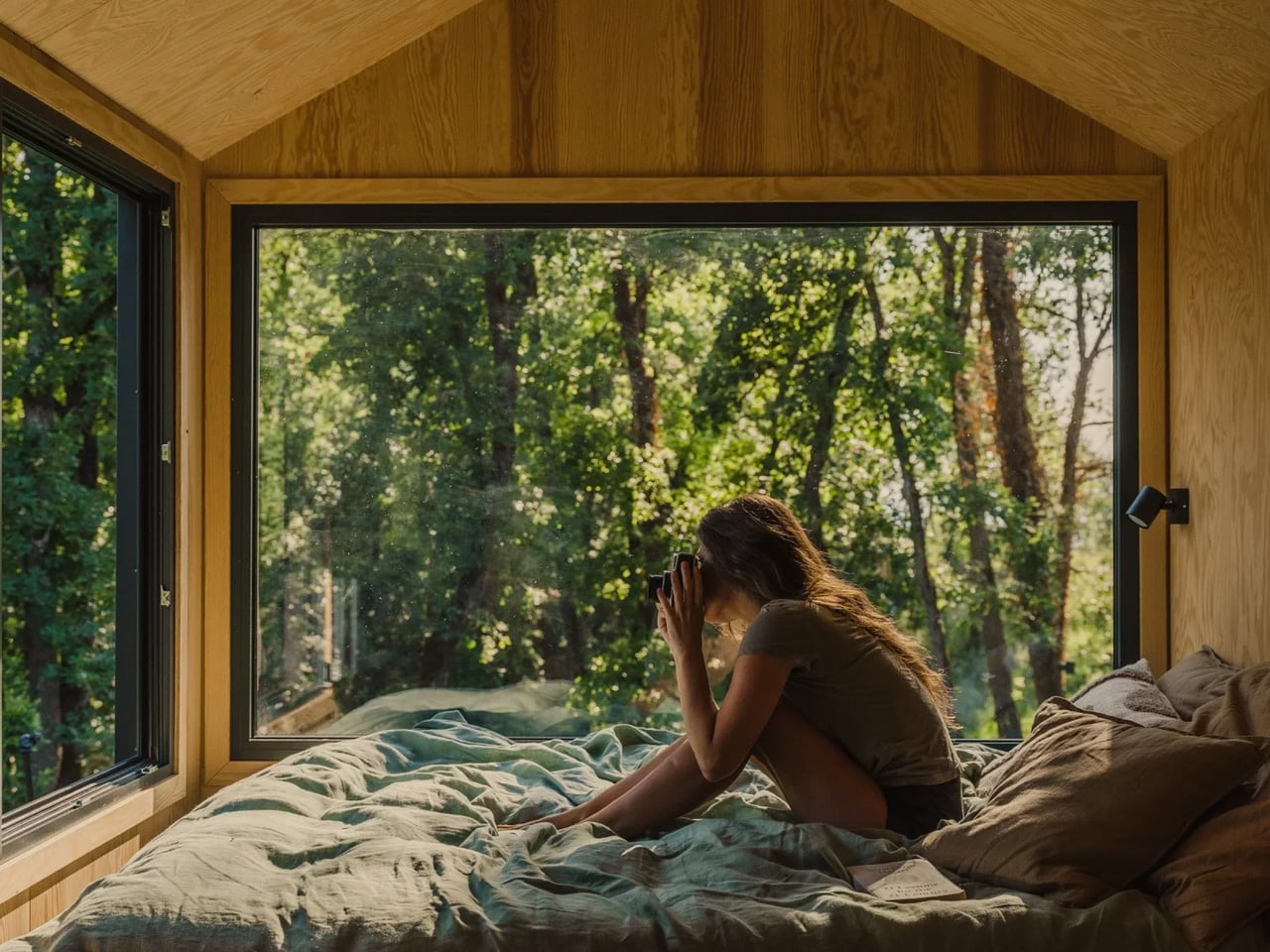
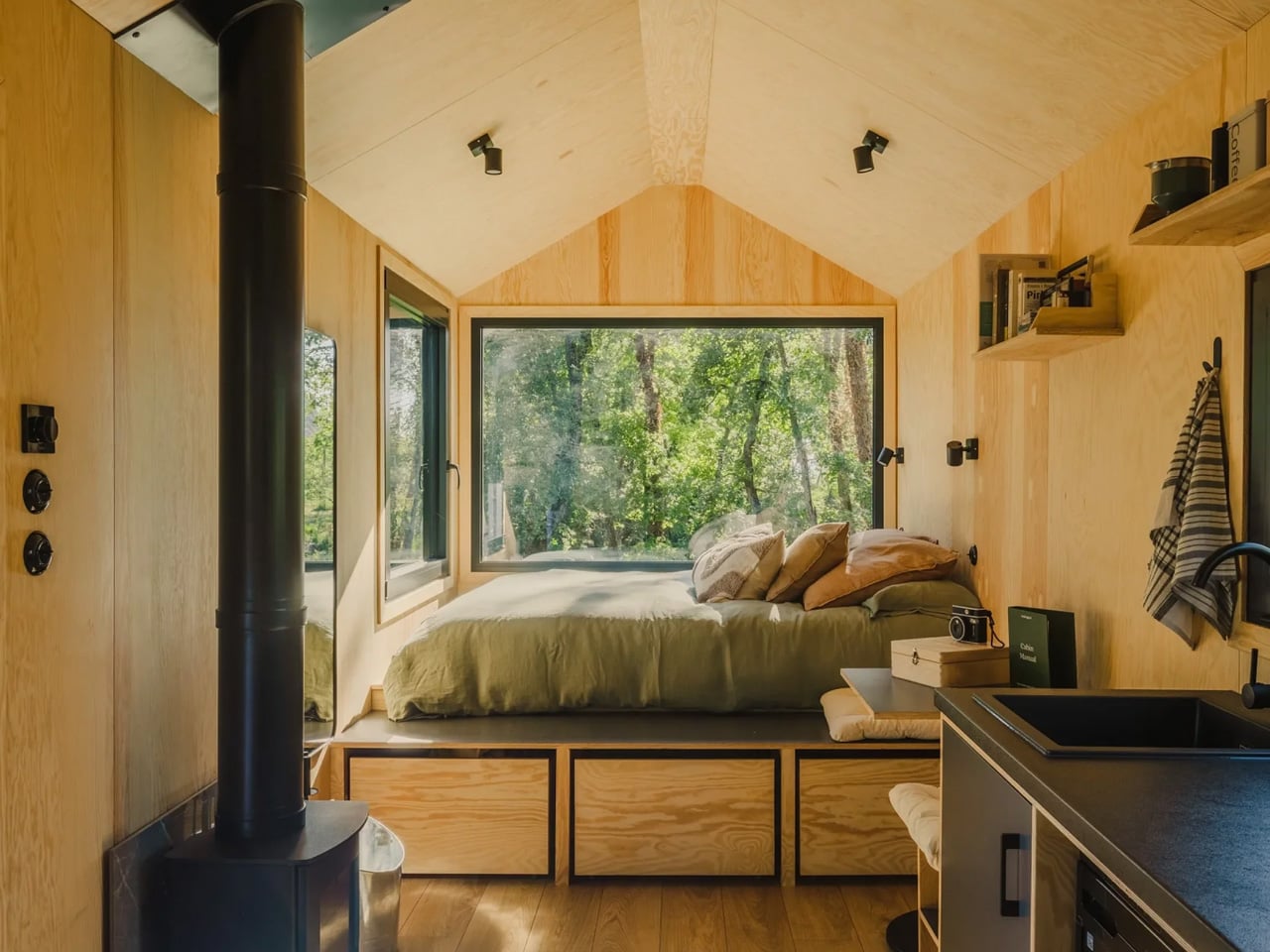
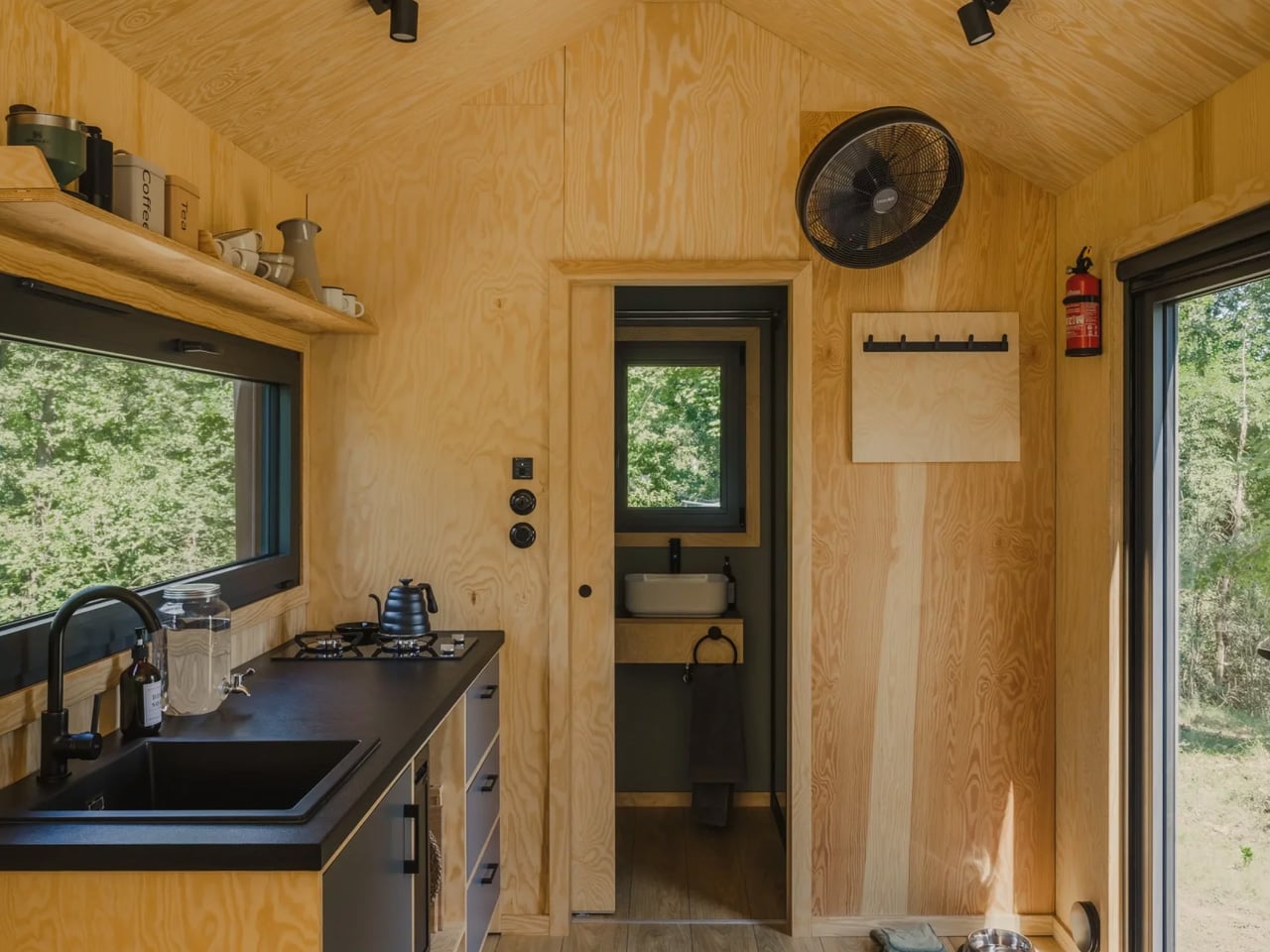
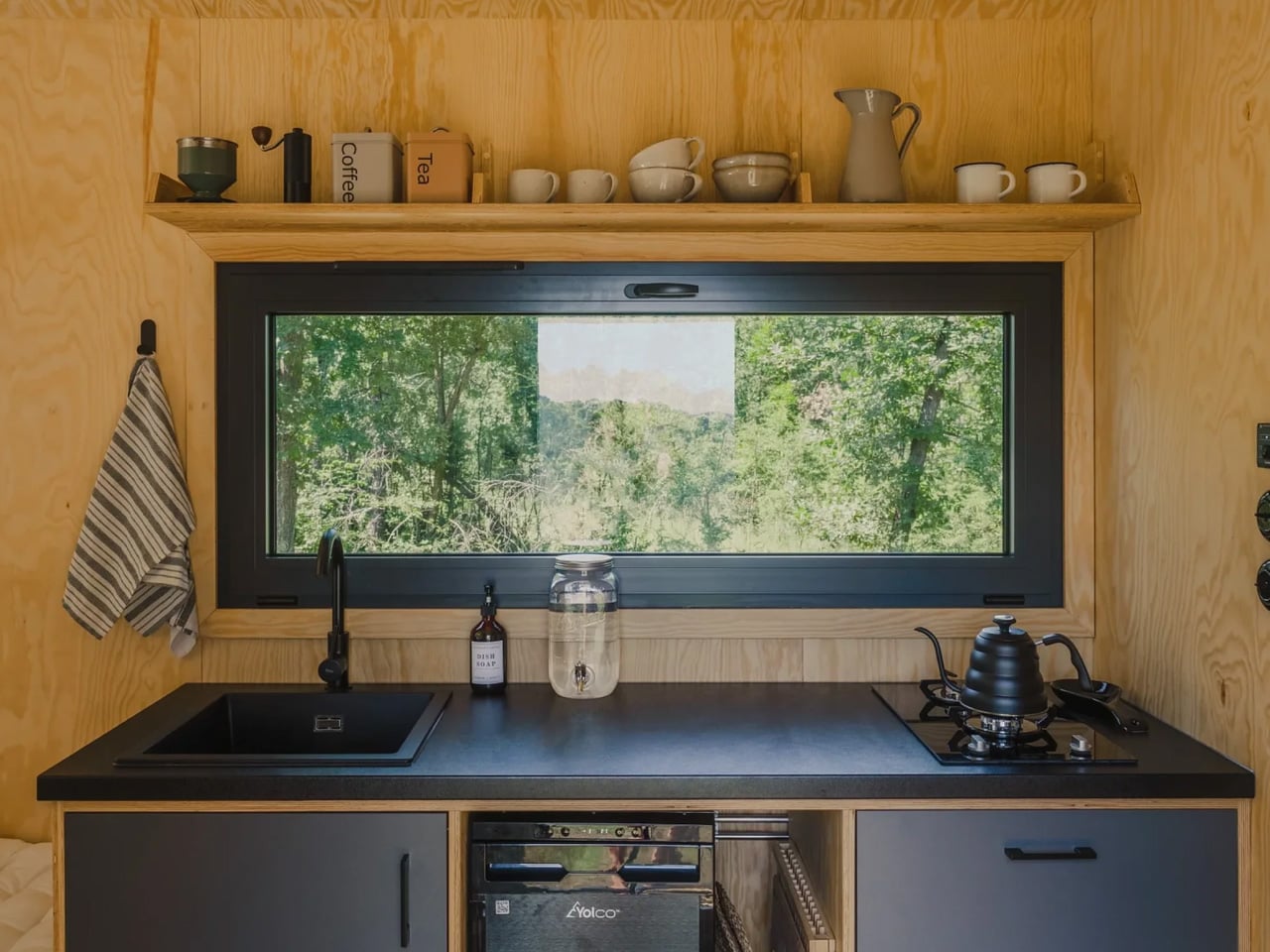
Dubbed the Nest, this tiny cabin is one of the short-term rental properties available at ReWild Rentals. Nestled in Hocking Hills, Ohio, the cabin displays the stunning beauty of the location to the guests. It features a unique layout that makes it feel much bigger than it is!
Why is it noteworthy?
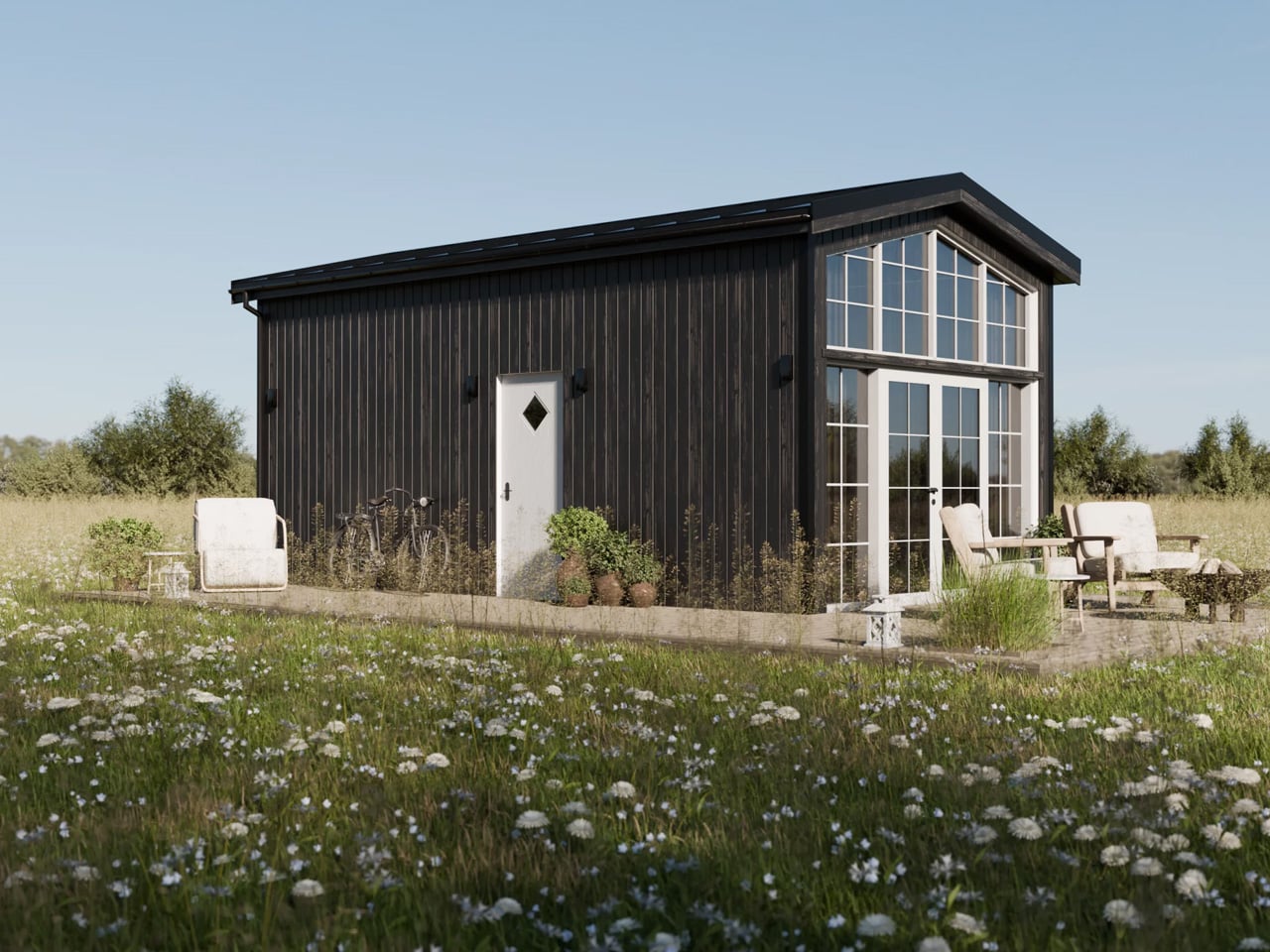
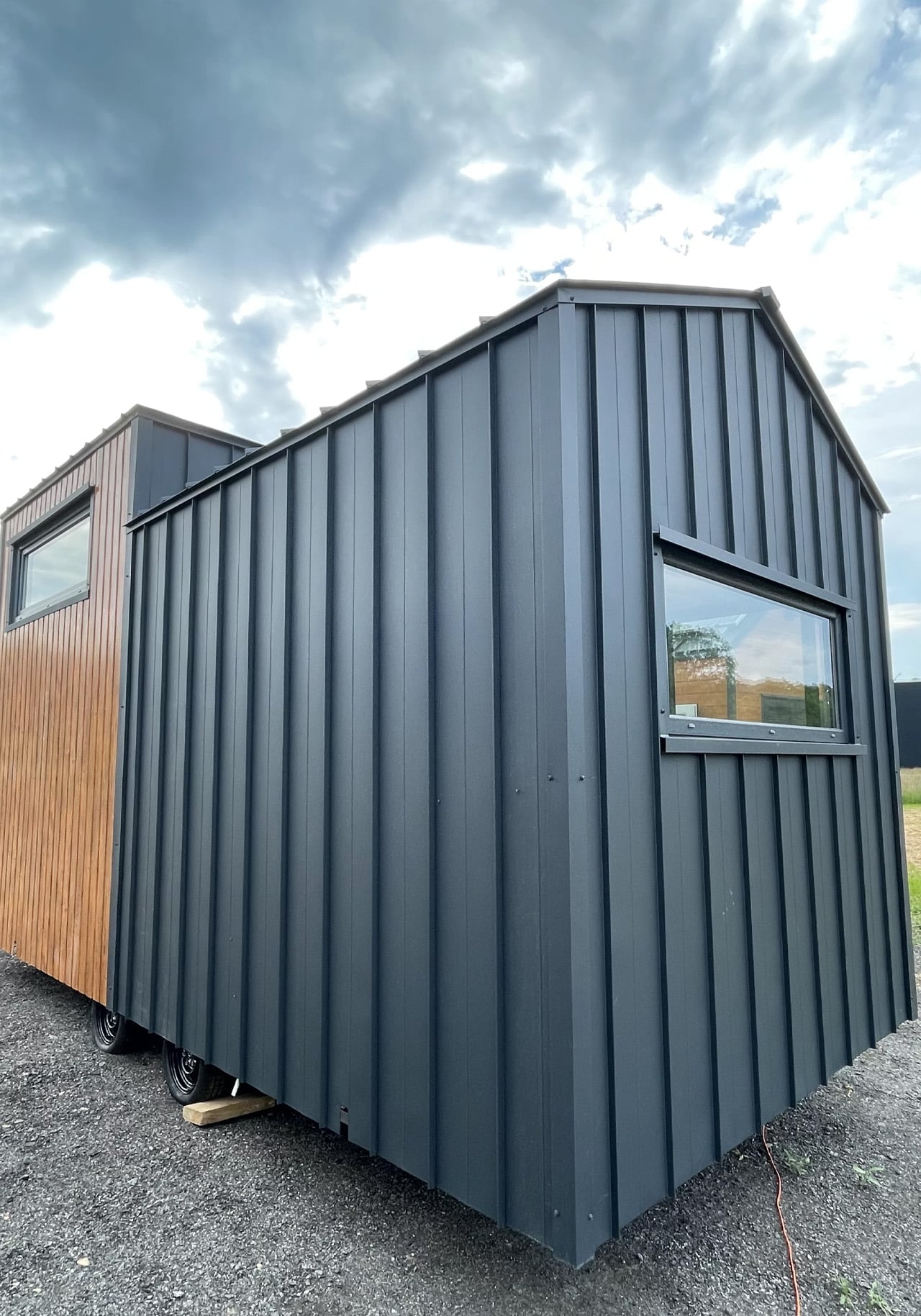
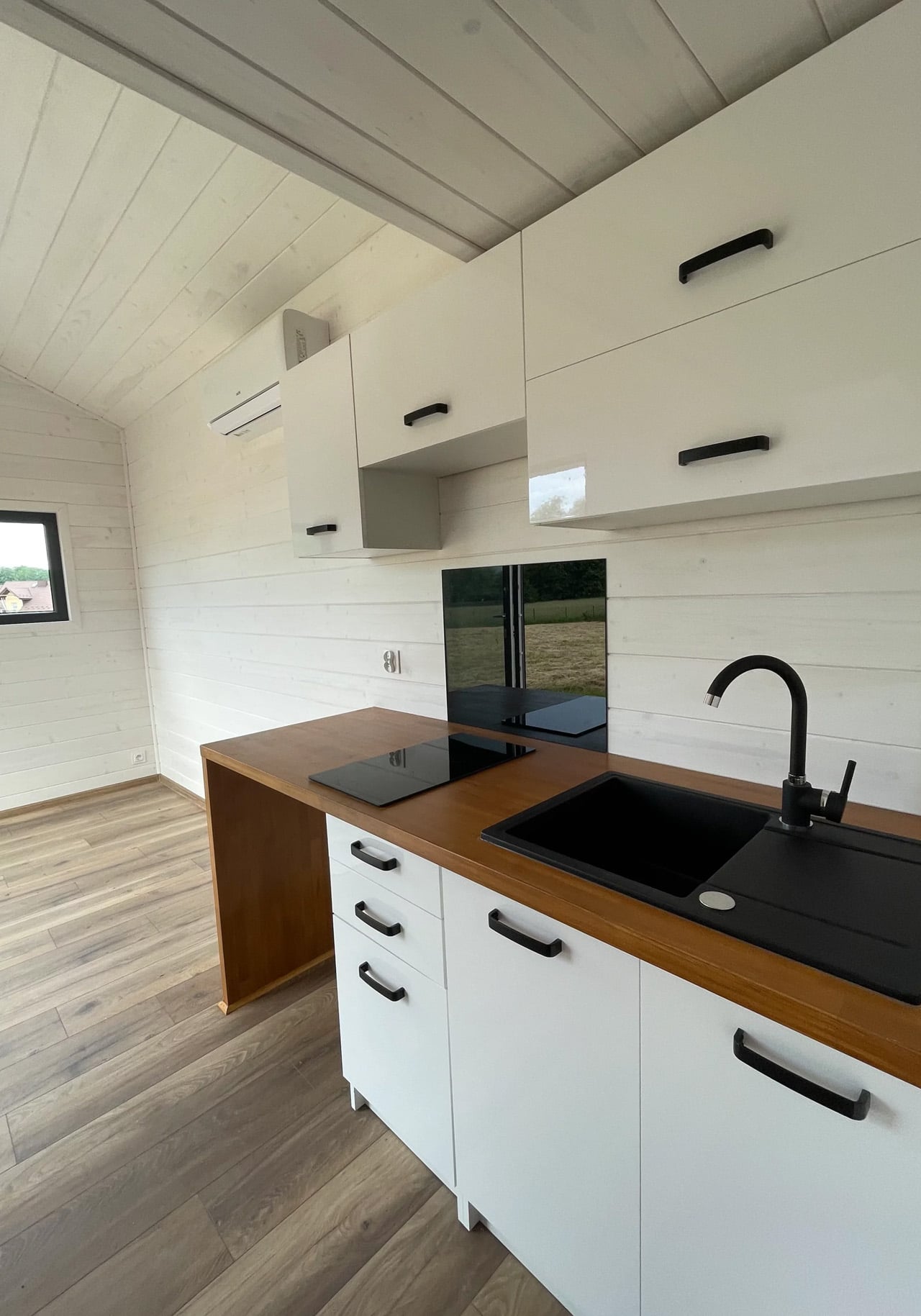
The small house is clad in black board-and-batten wood siding, providing it with a modern and contemporary vibe which is further defined by a long sloping roof on one side, which also offers shelter to the outdoor patio.
What we like
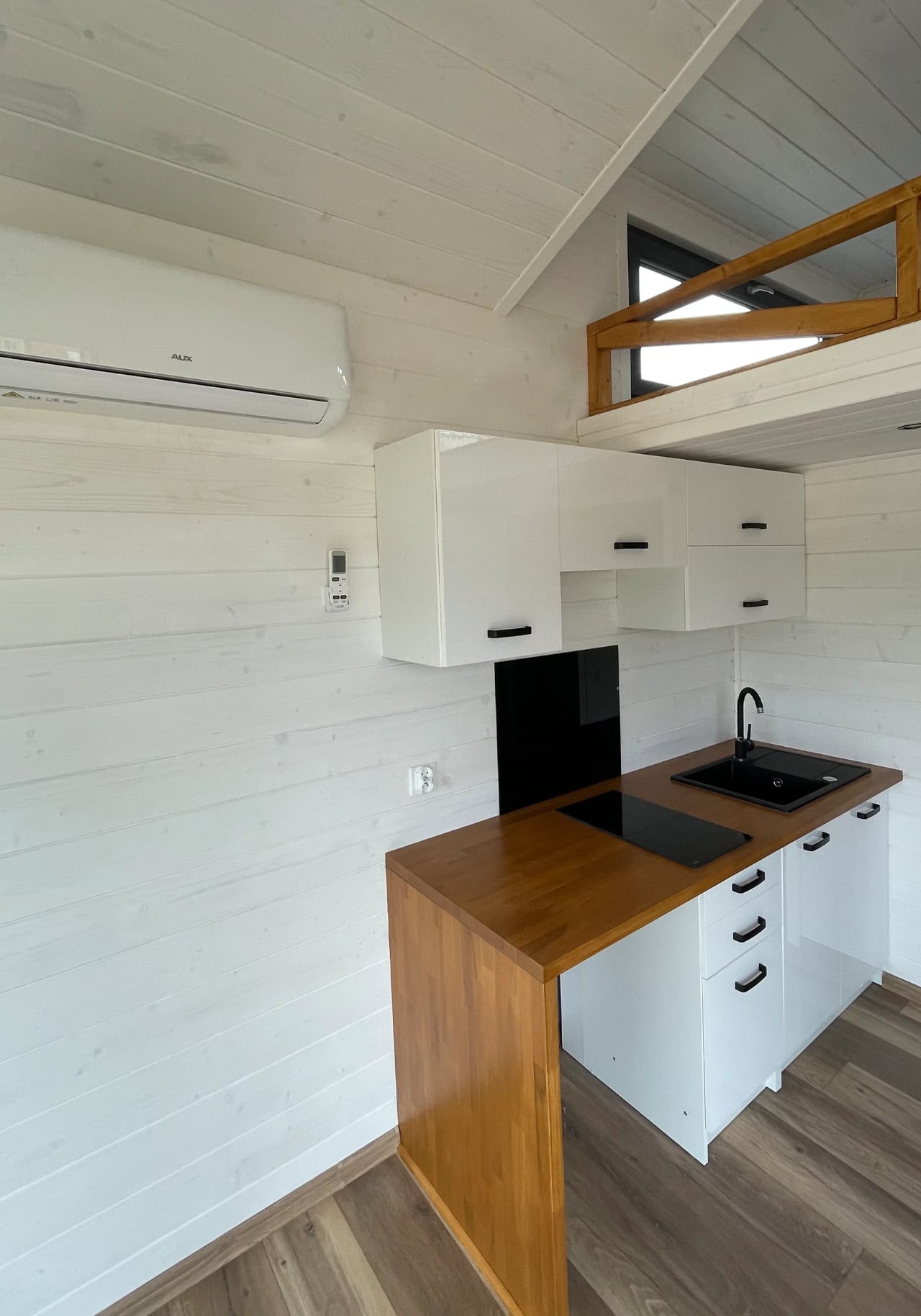
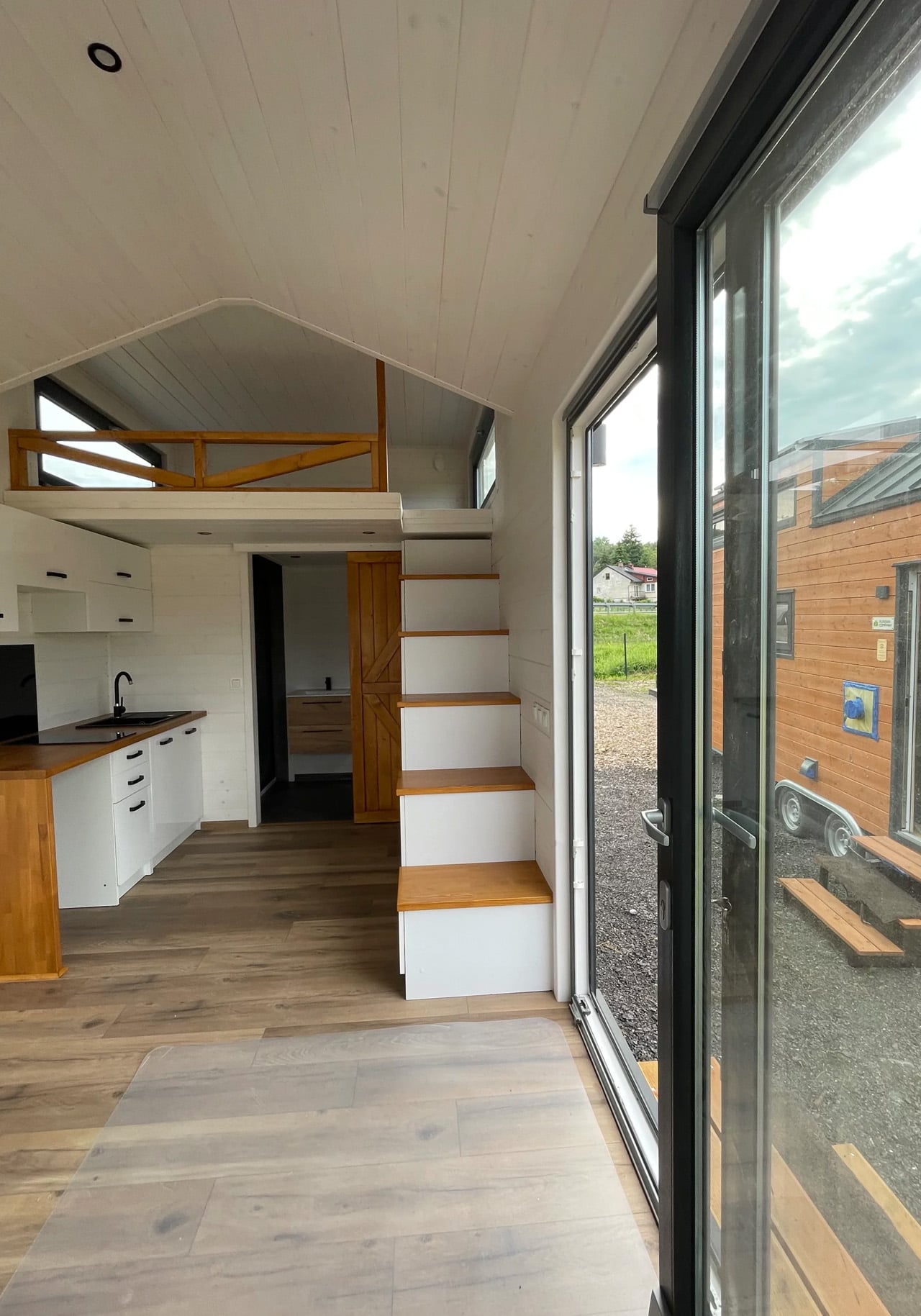
Unique layout unlike the typical tiny homes, which makes it feel much larger than it is
What we dislike
The barn-style door can be considered a bit old-fashioned and doesn’t provide much privacy in the bathroom, which is inconvenient for residents
8. Sakura Tiny House
Designed by Canada-based Acorn Tiny Homes, the Sakura tiny house is intended to be a game-changer compared to typical tiny homes on the market. It doesn’t feature wheels, but instead is equipped with an innovative space-saving interior which includes a transforming bedroom and kitchen.
Why is it noteworthy?
The Sakura tiny home is breaking ground in the tiny home arena, by taking this popular housing style to a whole new and upgraded version. It is inspired by popular Japanese design trends, which can be even witnessed in its name.
What we like
Heavily inspired by Japanese design holistically
Features a flexible multipurpose space, making it truly one-of-a-kind
What we dislike
It can accommodate two residents and only two guests, and it could be a tight fit. Not the best option for families who like to host people
9. Browny
Coined Browny, this adorable-looking tiny home ranks high on versatility, as it can effortlessly and efficiently house a home office, exercise area, and a guest bedroom within a length of 6 meters, while also proving to be quite comfortable.
Why is it noteworthy?
The Browny is supported by a double-axle trailer and finished in red cedar, which is further accentuated by aluminum accenting and a roof. It is a great-looking tiny home with a generous amount of glazing to maximize natural light within the home.
What we like
Accommodates multiple amenities in a small space
Features integrated storage space
What we dislike
Doesn’t feature a proper kitchen and bathroom, which can be inconvenient for users
10. Samara and James’ Tiny Home
This 16-foot-long tiny home was designed by a lovely couple Samara and James, and is home to them. It features all the design ideas and moves you usually wouldn’t execute in a small space, making this tiny home a truly unique one.
Why is it noteworthy?
Although the interior and exterior have a dark theme, and there aren’t a lot of windows in the house, the home still manages to be quite spacious with a certain balance to it, while maintaining a serene connection to the site it is located on.
What we like
Inspired by Japanese design, especially by shou sugi ban
Features three modules, that can be moved and reconfigured if the home ever needs to be expanded
What we dislike
It only features an outdoor shower, which some people may not be comfortable with
Dubbed the Sakura Tiny home, and designed by Canada-based Acorn Tiny Homes, this quaint little house is designed to be a game-changer as compared to typical homes. It breaks the norm of traditional tiny homes, and although it doesn’t feature wheels, it is equipped with an innovative space-saving interior consisting of a transforming kitchen and bedroom. In an era, where tiny homes are the most popular housing style out there, the Sakura tiny home takes this genre to a whole new and interesting level.
The Sakura tiny home is inspired by popular Japanese design trends. Sakura means cherry blossom in Japanese, showcasing an overall Japanese influence on the structure. The roof is built from metal, and the siding is available in varied finishes such as wood, metal, and faux stone. The home will occupy 21.5 x 10.5 ft, and it isn’t as large as North American tiny homes and is quite similar to European models. The interior has a floorspace of 225 square feet and can accommodate two people, as well as a pair of guests, although it may be a tight fit.
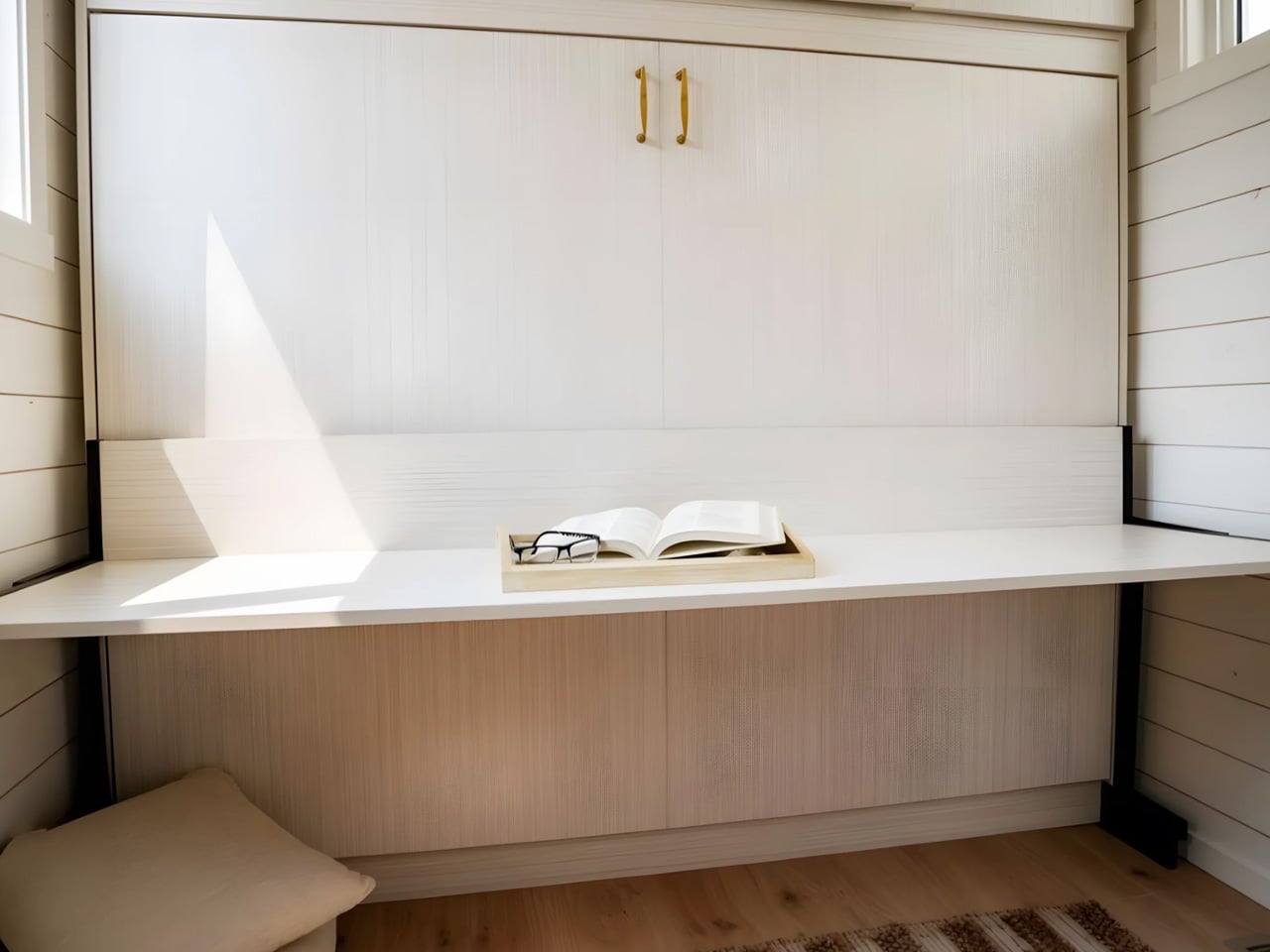
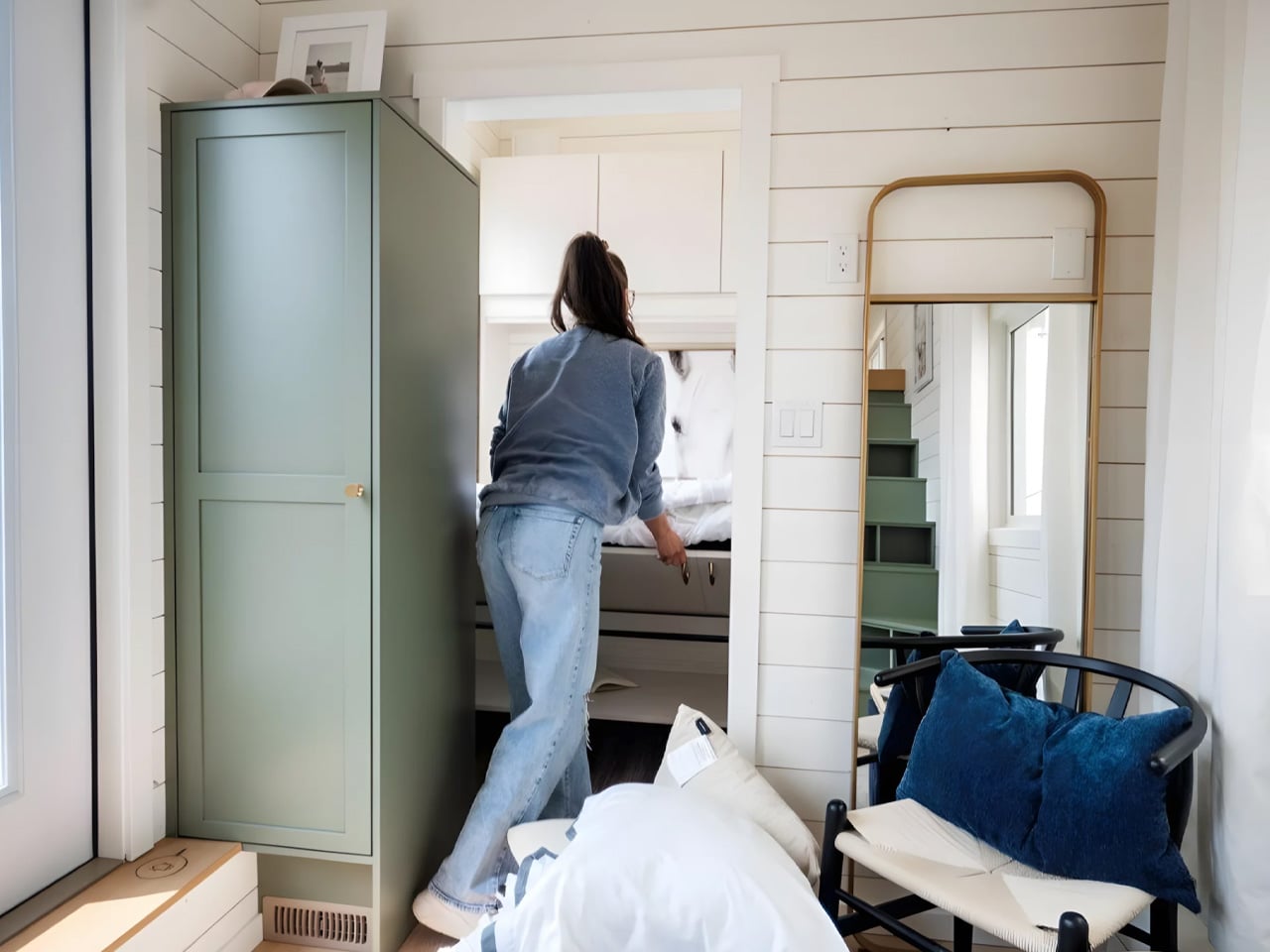
The layout and interior of this home are quite unlike other homes. As you enter the home, you are welcomed by a flexible multipurpose space that occupies a lot of the floor space. This main living space transforms into a bedroom, when you slide out the double bed from underneath the nearby living room floor. The cabinetry conceals a fully functional kitchen, and it consists of an induction stove, microwave, oven, fridge/freezer, dishwasher, and a washer/dryer/. The kitchen also features a pull-out kitchen counter that provides some extra prep space.
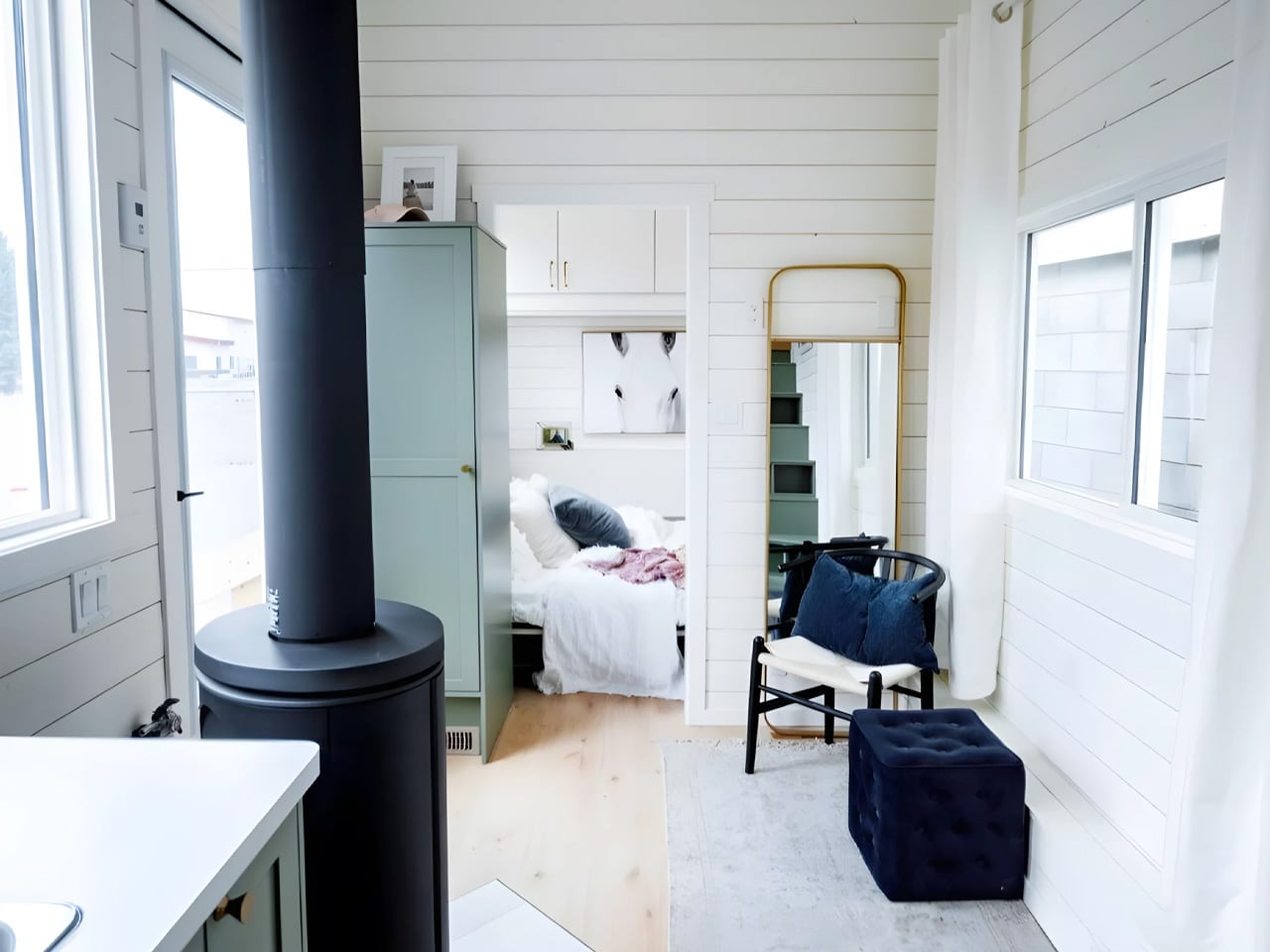
This multipurpose kitchen/entrance/bedroom is connected to other rooms in the house. One room is the bathroom, which will hold a wet room, shower, skylight, and a novel toilet with an integrated sink that is supplied by greywater. The other room is the living room, which will be elevated to make space for the sliding bed, and will include a pull-out desk area, sofa bed, and a massive entertainment center.