The only thing worse than ‘Floor is Lava’ is probably ‘Floor is LEGO Brick’. LEGO bricks are famously torturous to step on. The studs, the sharp corners, the unforgiving plastic, all of these combine into creating something that feels like modern day torture. Step on a lego brick with enough body-weight and that thing practically digs into your tissue, causing probably one of the most painful experiences according to the internet. However, what if there was a ‘right’ way of stepping on LEGO bricks?
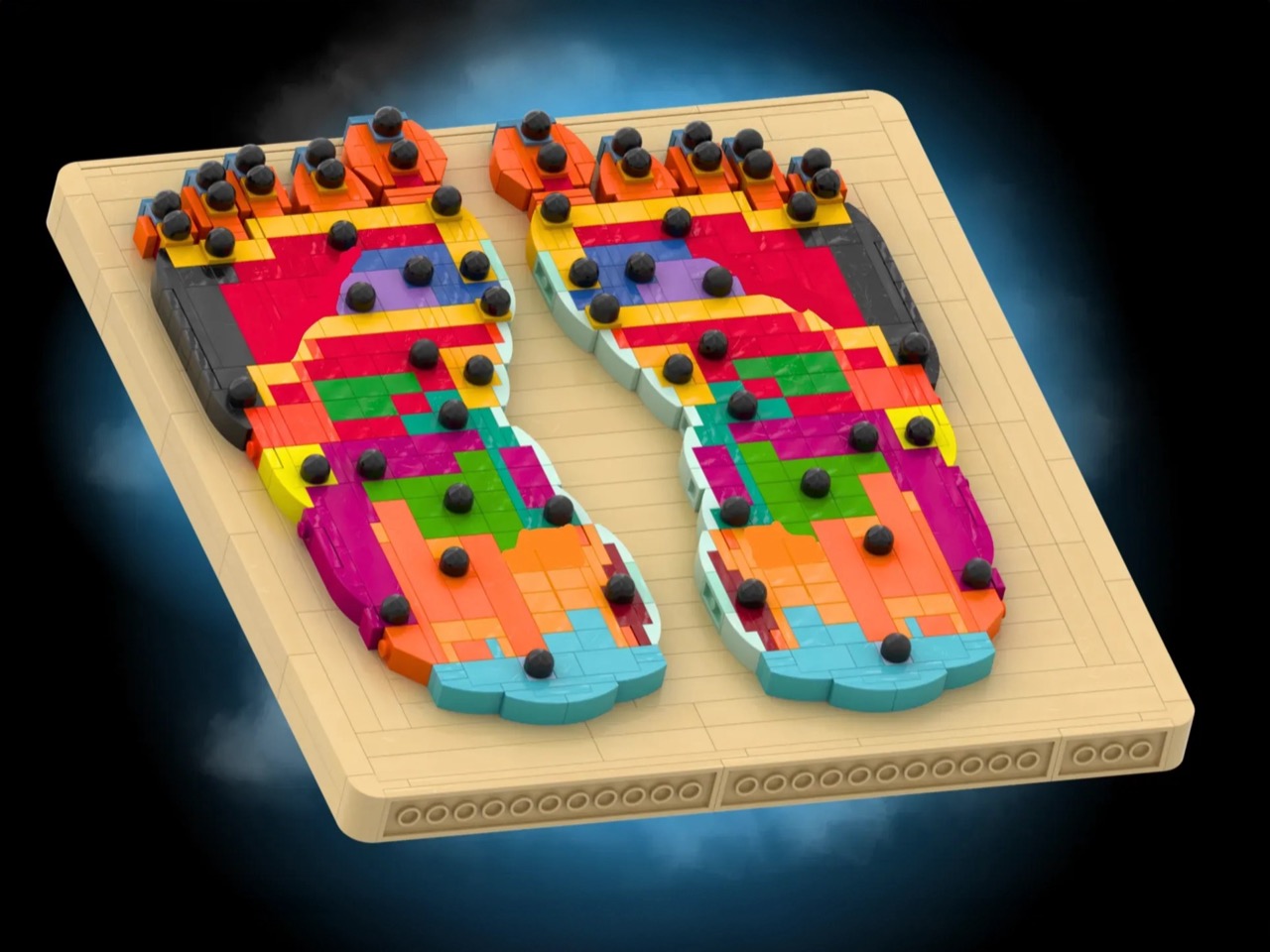
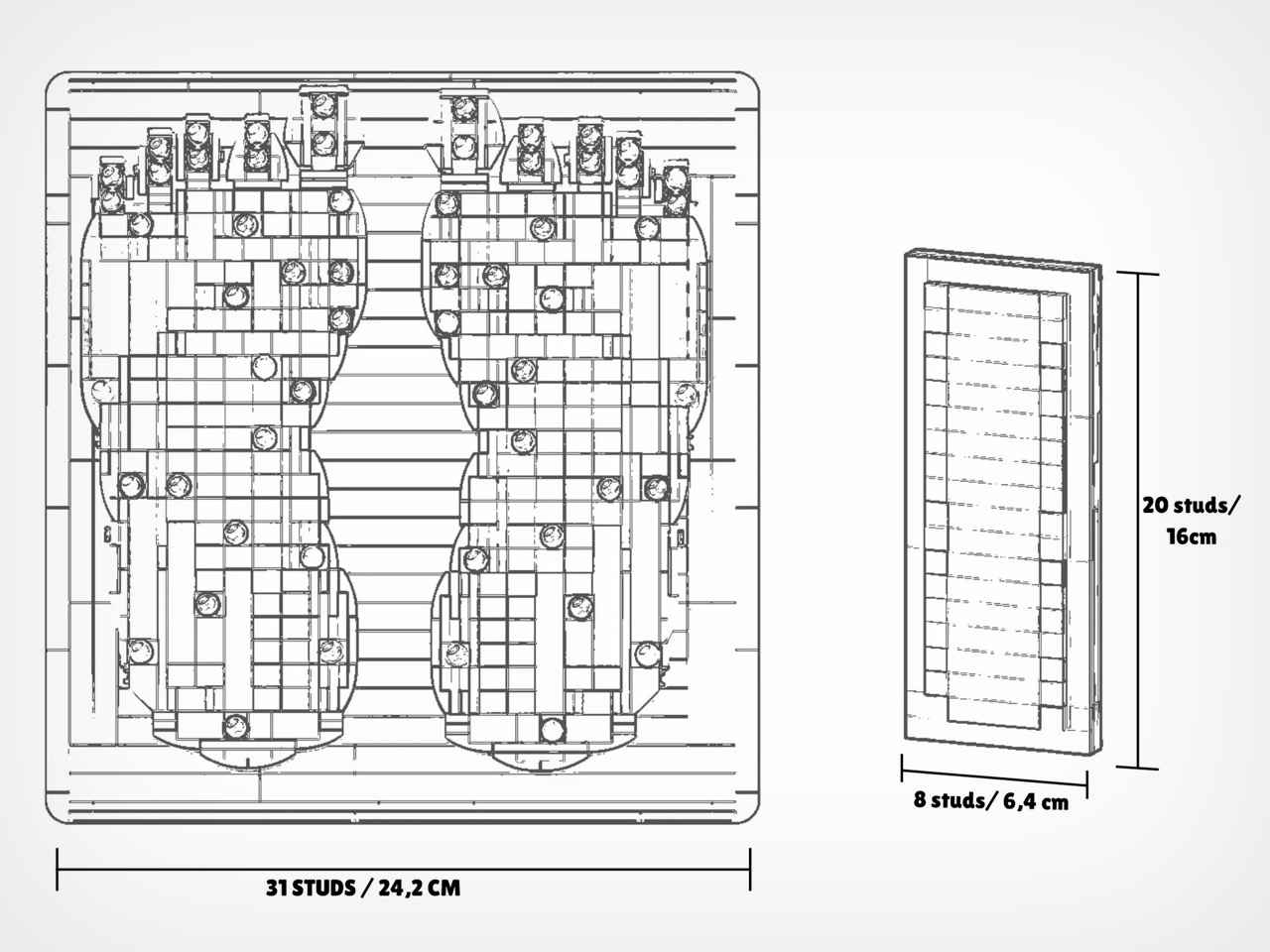
No, I’m not talking about some mind-over-body nonsense where you overcome your ability to feel pain. LEGO builder eat.sleep.build.repeat. designed a foot reflexology mat using just LEGO bricks, tapping into ancient eastern healing techniques to create a stimulating mat that helps you boost blood flow to your legs and to even other parts of the body. Made from just 820 bricks, this piece, titled ‘How to Step on a LEGO Brick?’ is a rather fun and informative hat-tip to old culture, using modern-day plastic bricks. One might say it puts the LEG in LEGO!
Designer: eat.sleep.build.repeat.
“Foot reflexology is an ancient practice, extremely common in China, where people step on mats with pressure nodes that practitioners believe produce beneficial effects elsewhere in the body,” says eat.sleep.build.repeat. “Decades later, their popularity remains strong as people continue to embrace simple, natural methods for daily wellness.”
The 820-brick MOC comes with the foot mat itself, color coded to perfection with different zones that supposedly stimulate different parts of the body. Each kit also comes with a coded legend that lets you see which color is assigned to which body part. Not that we’re medical professionals (please don’t take this as medical advice), but standing on the mat while having pressure applied (thanks to the LEGO studs) on different parts of the foot is known to be able to cure diseases and boost recovery. Who knew standing on LEGO bricks could be this therapeutic?!
The MOC (My Own Creation) is currently gathering steam on the LEGO Ideas website, an online forum dedicated to enthusiasts who build and vote for their favorite LEGO creations. If this particular build sounds enticing to you (apart from the prospect of stepping on LEGO bricks of course), head down to the LEGO Ideas website and cast your vote for this build!
“Today we cancel the apocalypse.” With just five words, Idris Elba’s Stacker Pentecost became the rallying cry of a generation – the gruff, determined voice that turned Guillermo del Toro’s Pacific Rim from a spectacular mecha-vs-kaiju brawl into something more: a tribute to human resilience, teamwork, and the unyielding belief that we’re stronger together. His speech before the final assault on the Breach remains one of the most quoted moments in modern sci-fi cinema, right up there with the Jaegers themselves – those towering mechanical defenders that became instant icons the moment they lit up the screen in 2013.
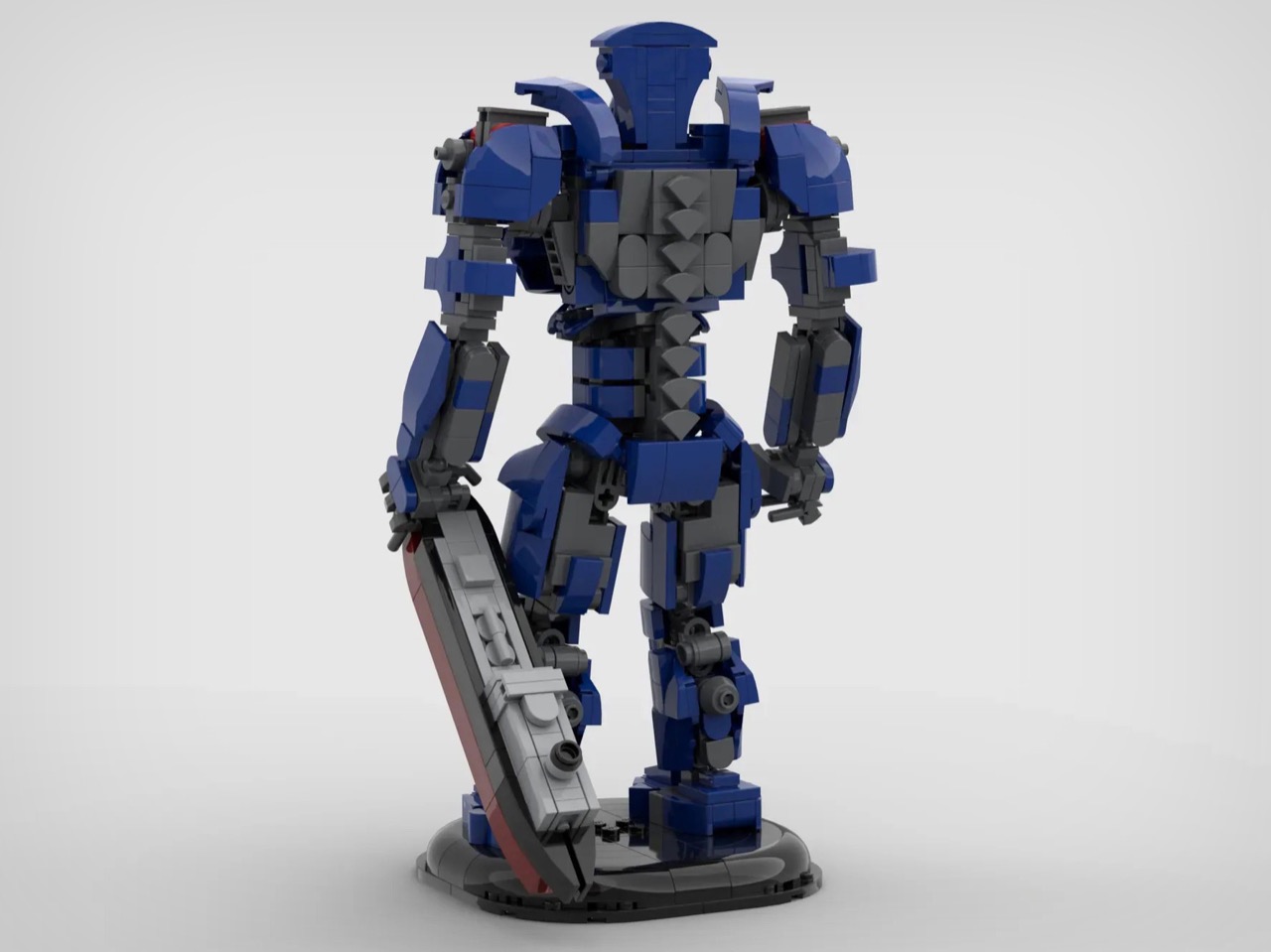
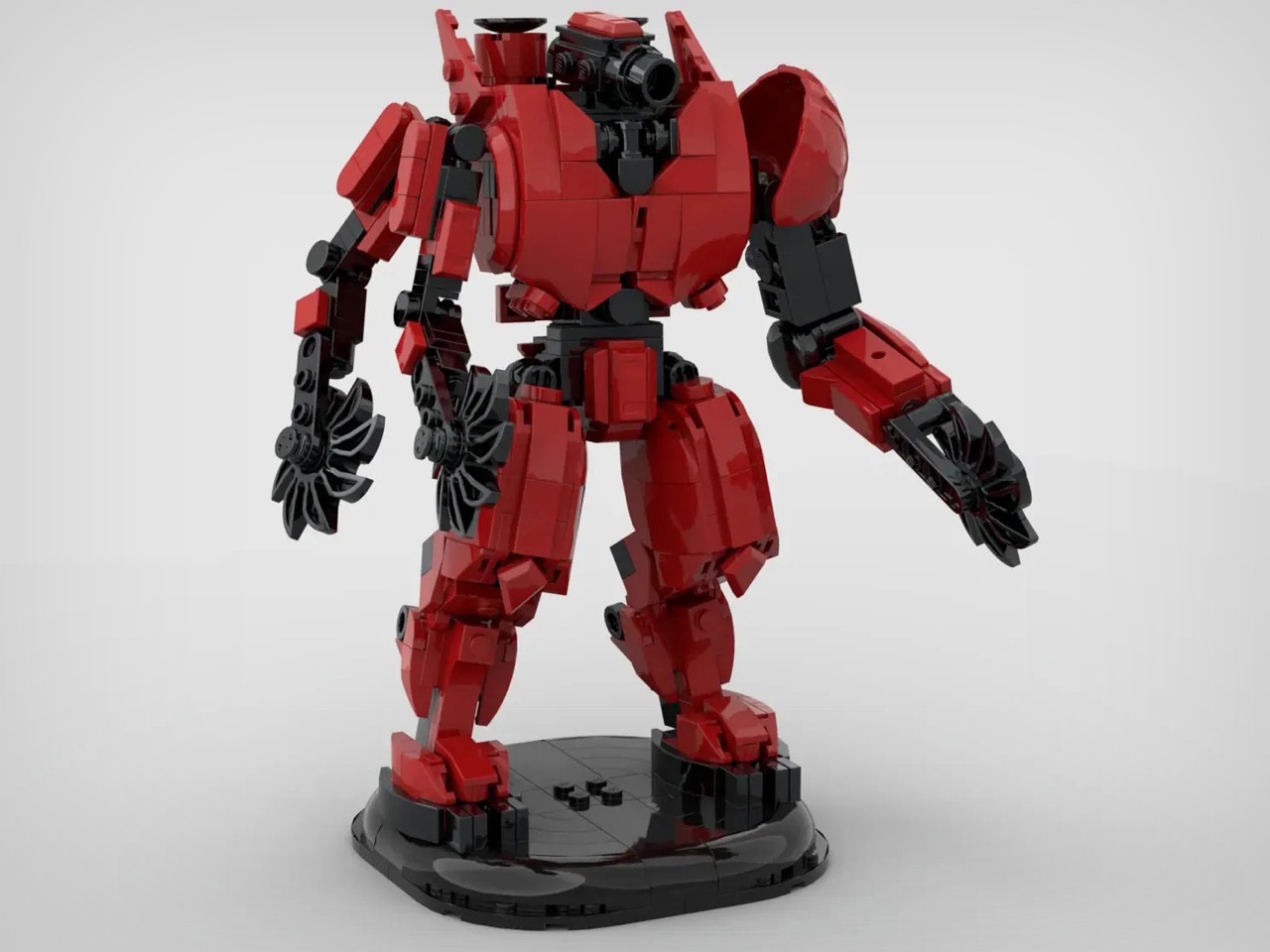
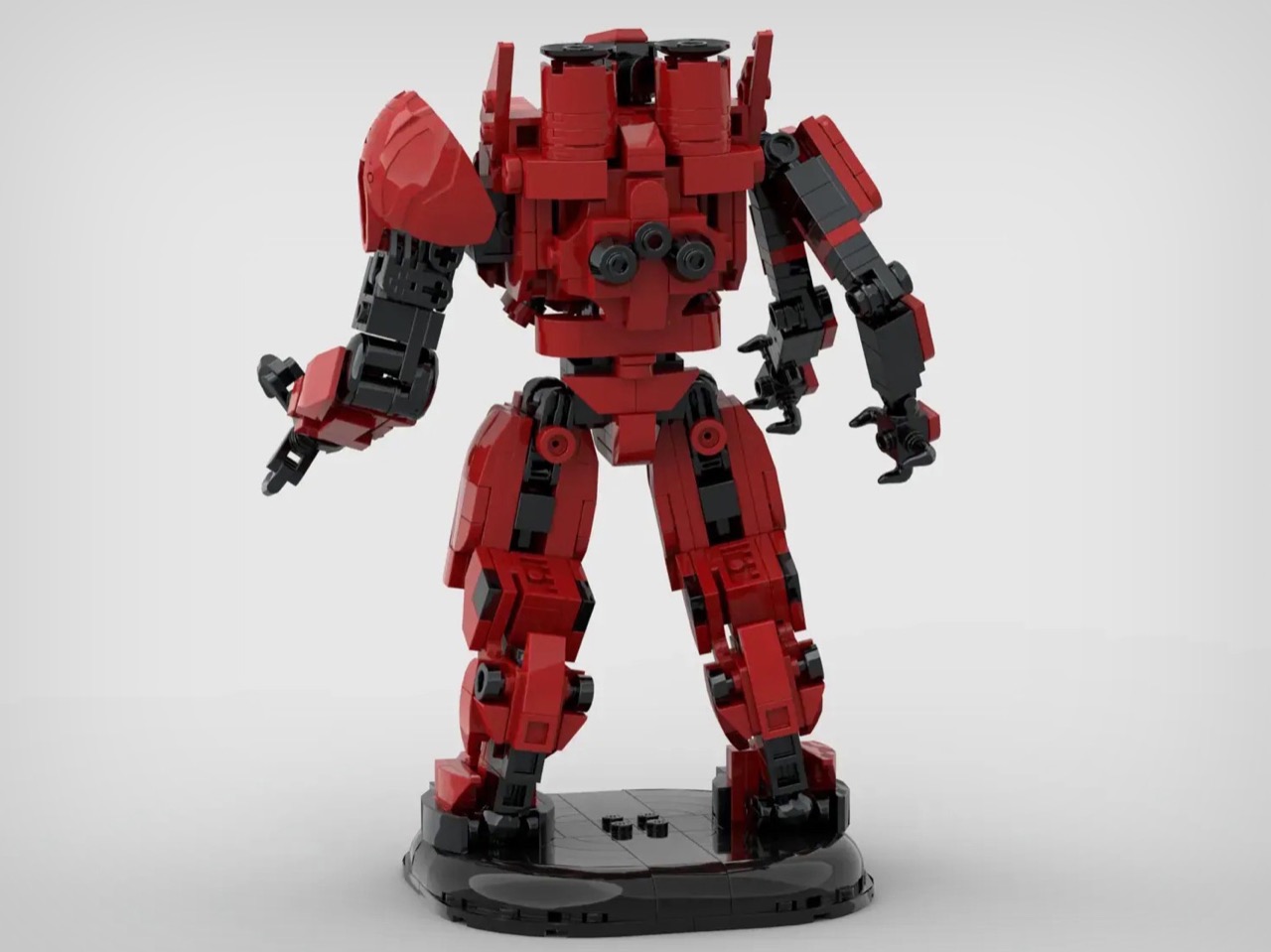
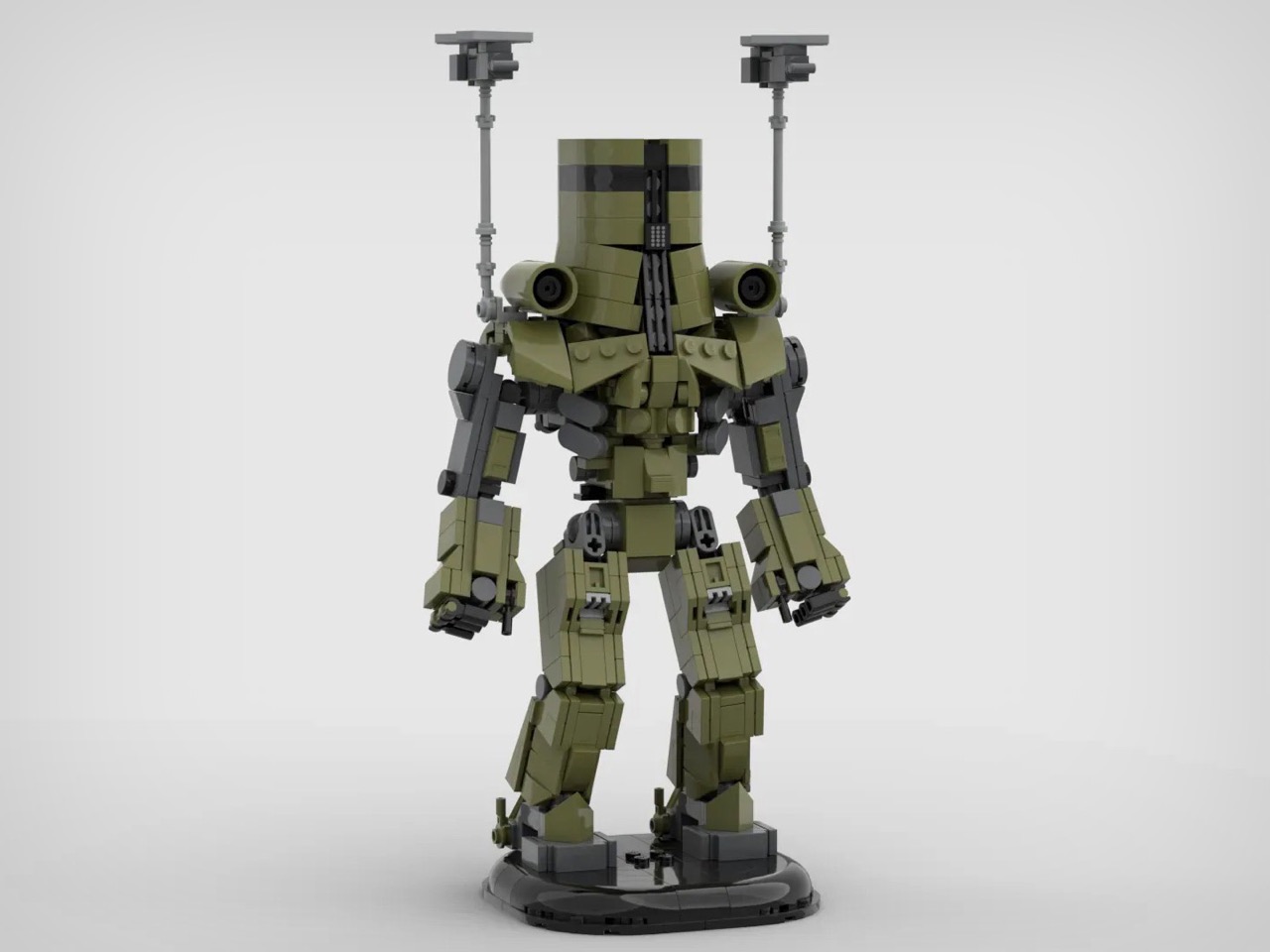
Now, nearly a decade later, one passionate LEGO builder is bringing the Jaeger program home. Din0Bricks’ stunning fan-made tribute to the film’s most iconic mechs – Gipsy Danger, Crimson Typhoon, and Cherno Alpha – has earned a coveted Staff Pick on LEGO Ideas, and with 661 supporters already rallied to the cause, these titans of engineering might just march onto store shelves. Featuring 2,218 pieces of screen-accurate detail, from retractable swords to rotating saw blades and support helicopters, this isn’t just a fan project – it’s a love letter to del Toro’s iconic film as well as the power of LEGO creativity. The question is: are you ready to suit up (or brick up) and help make it a reality?
Designer: Din0bricks
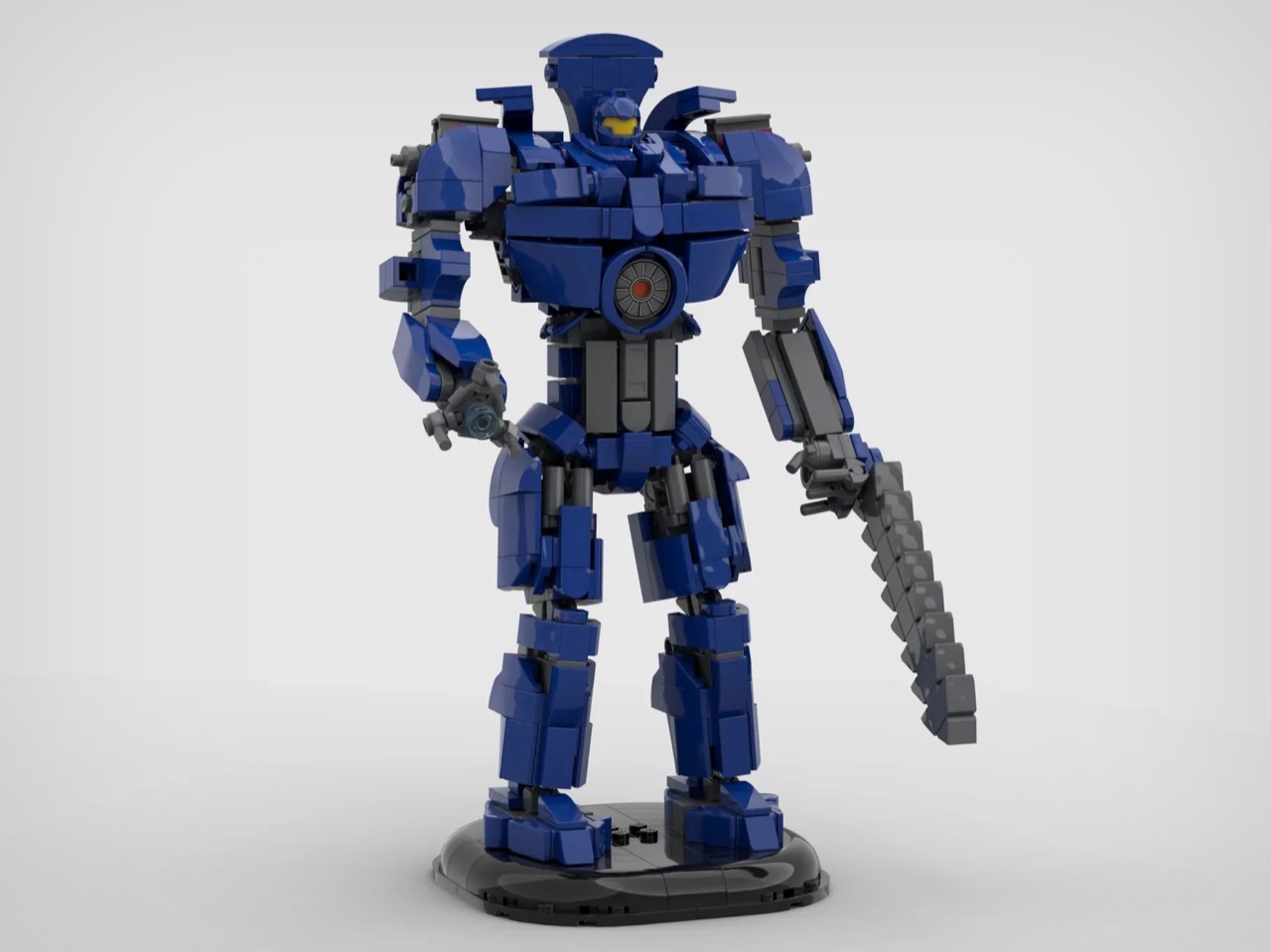
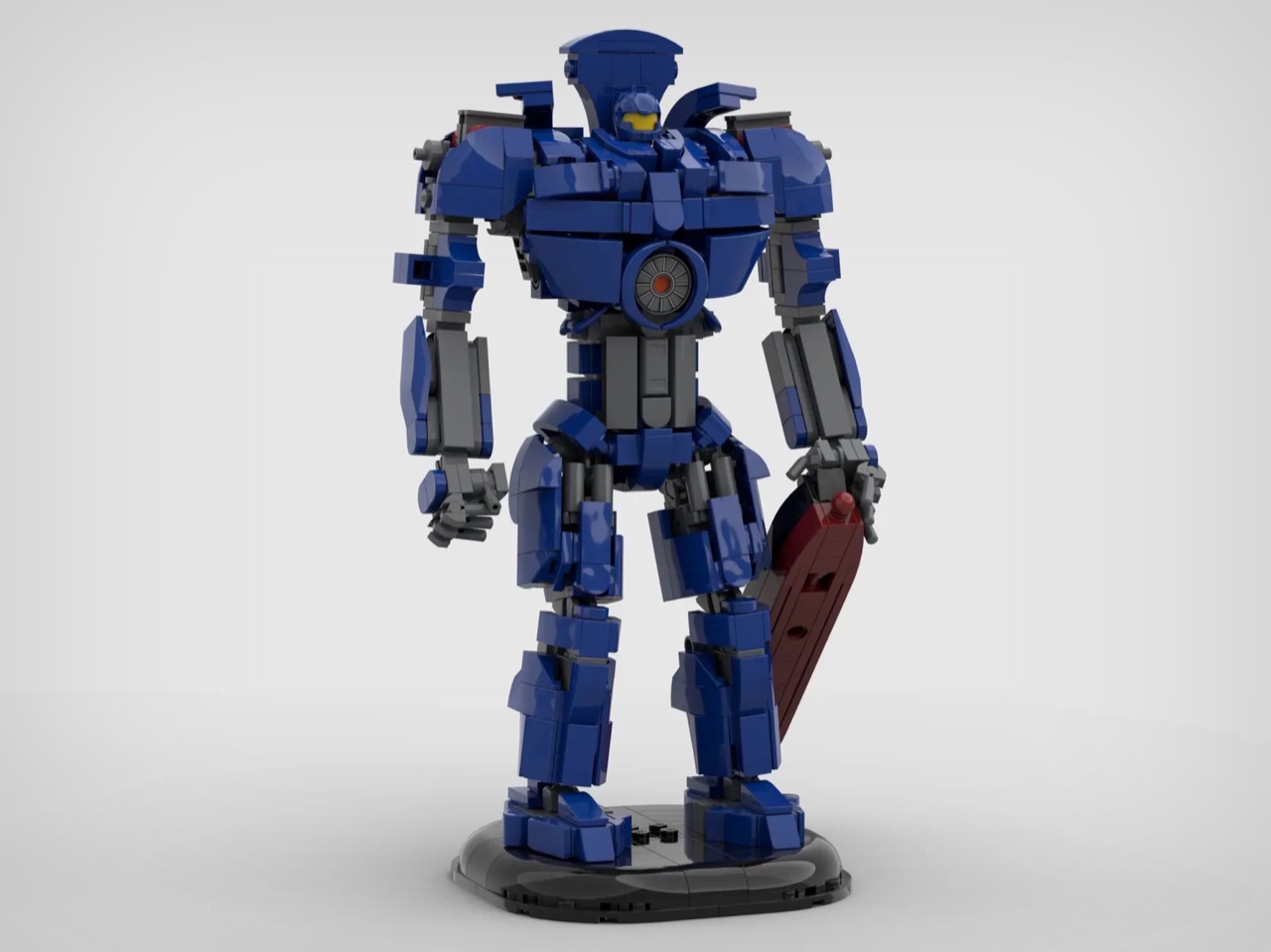
At first we’ve got Gipsy Danger, a personal favorite because honestly, if you’re going to lead with anything, it’s the Mark-3 American Jaeger that punched a Category 4 kaiju with a cargo ship. At 807 pieces and standing 8.8 inches tall, this blue beast captures everything that made the hero mech memorable. The broad shoulders, that distinctive head design with the yellow visor, the nuclear reactor core prominently displayed on the chest – Din0Bricks nailed the proportions.
It comes with its iconic retractable sword (which becomes a chain whip of sorts when expanded), but you could ditch the sword for the aforementioned cargo ship, which does come included in this MOC (My Own Creation!). The articulation appears robust too, with visible ball joints at the shoulders, elbows, hips, and knees. This thing can actually pose, which matters more than most people realize when you’re displaying an 800-piece mecha on your shelf.
Next meet the Crimson Typhoon. The Chinese Jaeger’s triple-arm configuration was always going to be the toughest to pull off in LEGO form, and at 630 pieces, this is actually the smallest of the three builds. That makes sense when you consider the original design philosophy: Crimson was built for speed and agility, not brute force. The red and black color blocking works beautifully here, and those rotating saw blade hands are exactly the kind of detail that separates a good fan build from something worth producing. The regular pincer hands are included too, and you can merely swap out weapons, which I personally love.
What impresses me most is how Din0Bricks managed to engineer three functional arms while maintaining structural integrity. Anyone who’s built complex LEGO mechanics knows that adding a third articulated limb to a bipedal figure is asking for stability problems. The fact that this thing can stand at 7.6 inches tall without looking like it’s about to collapse tells me the internal skeleton is solid.
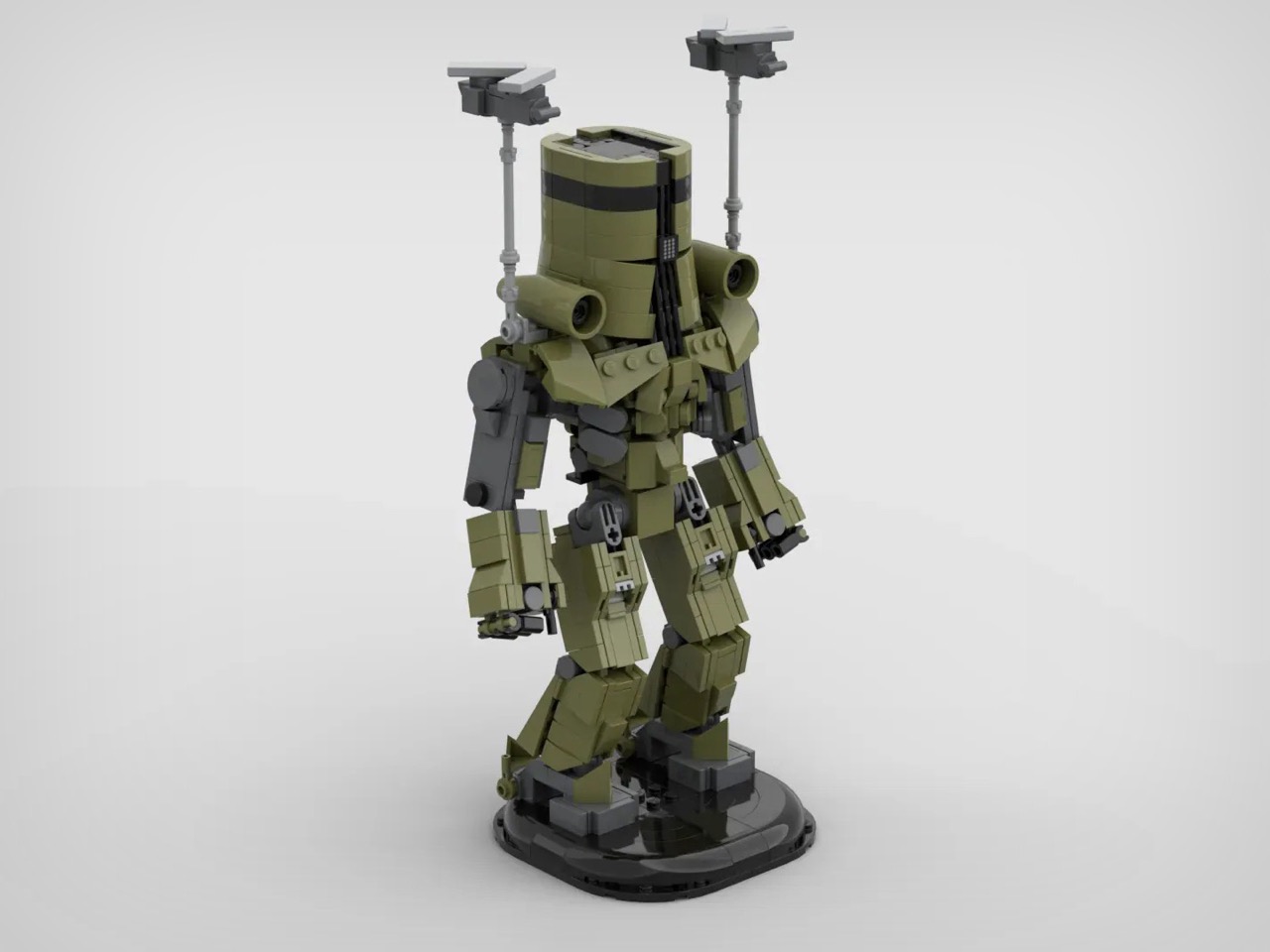
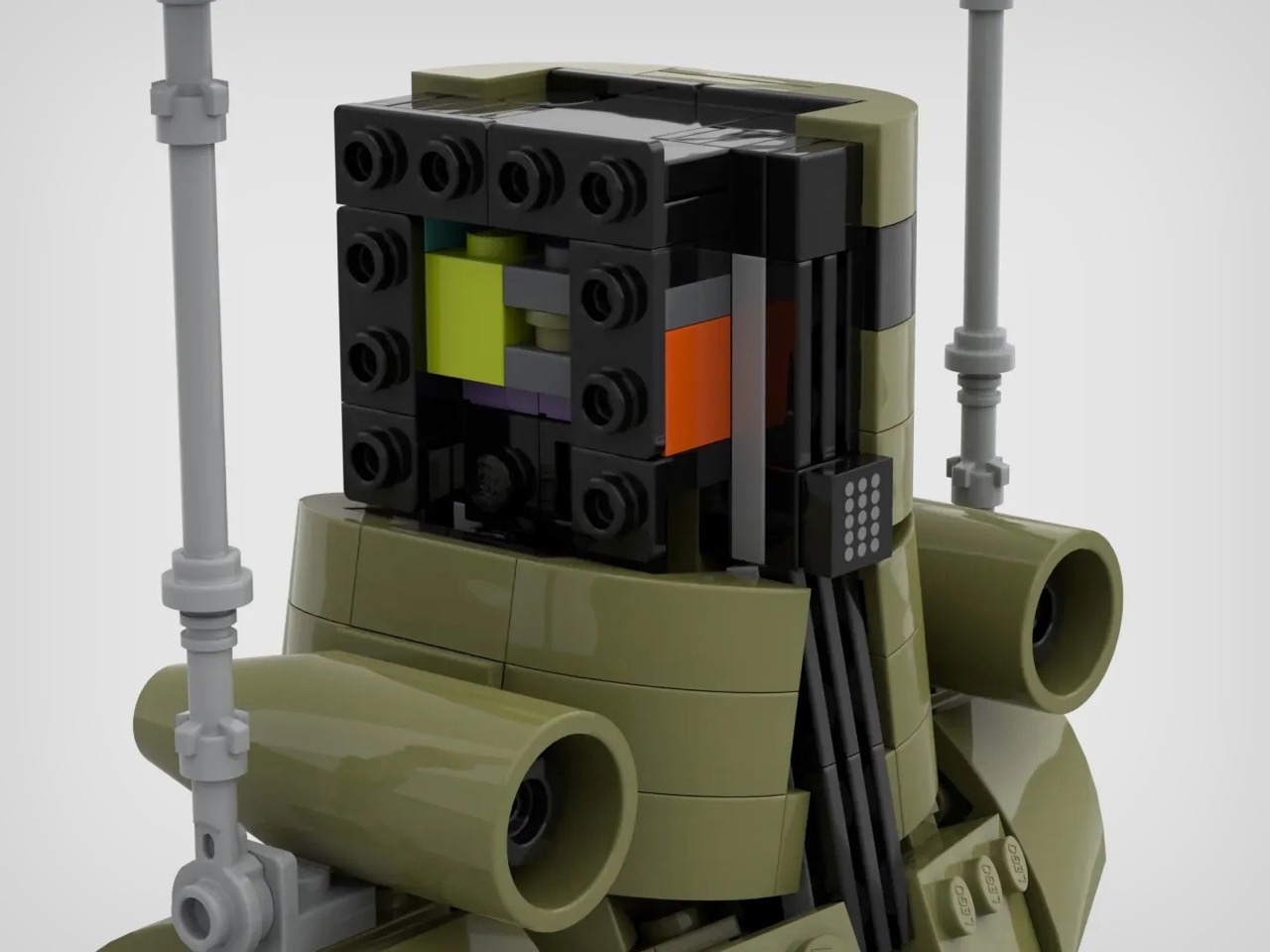
Then there’s Cherno Alpha, the true underdog in the series. The Russian Jaeger always had that brutalist, Cold War aesthetic that screamed “Soviet engineering will outlast your fancy technology,” and this 781-piece build captures that perfectly. Standing 10.5 inches tall, it’s the biggest of the three, which tracks given Cherno’s status as the oldest and most heavily armored Mark-1 still in active service. The olive green and grey color palette gives it that military hardware vibe, and the boxy, industrial frame looks like something that was built to take a beating and keep swinging.
While the Cherno Alpha doesn’t come with external weapons (this thing was a spring-loaded punching machine), it does have optional helicopters that attach to its shoulders, as a call-back to how these jaegers were deployed on the battlefield. Sure, a jaeger could merely walk to the scene of the crime, but it’s faster (and honestly safer for the city) to have these massive bots deployed via air. Each jaeger would be carried by at least two copters, and unleashed into the waters (or on land) to exact revenge on the kaijus.
The beauty of this project existing on LEGO Ideas is that it actually has a shot at becoming real. For those unfamiliar with the platform, LEGO Ideas is basically crowdfunding meets product development. Fans submit their original designs, other fans vote by supporting the project, and if a submission hits 10,000 supporters, LEGO’s review board considers it for official production. Din0Bricks currently sits at 661 supporters with 405 days remaining to hit that 10K threshold. Given that the film’s been criminally underserved in the collectibles market compared to other genre properties, this feels like the moment to actually make something happen. If you’ve ever wanted to own a piece of the Jaeger program, head over to the LEGO Ideas website and throw your support behind this thing. Sometimes the apocalypse doesn’t cancel itself; sometimes you need 10,000 people and a lot of Danish plastic to get the job done.
It’s hard not to smile when you think about E.T. the Extra-Terrestrial. Whether it’s the heartwarming friendship between Elliot and his otherworldly guest or the unforgettable image of them soaring across the moonlit sky, the movie’s magic feels timeless. That same magic now finds itself meticulously captured in KoalaBrick’s 2,204-piece LEGO set proposal—a tribute to the iconic “across the moon” scene, combined with a diorama-like display of key elements from the film.
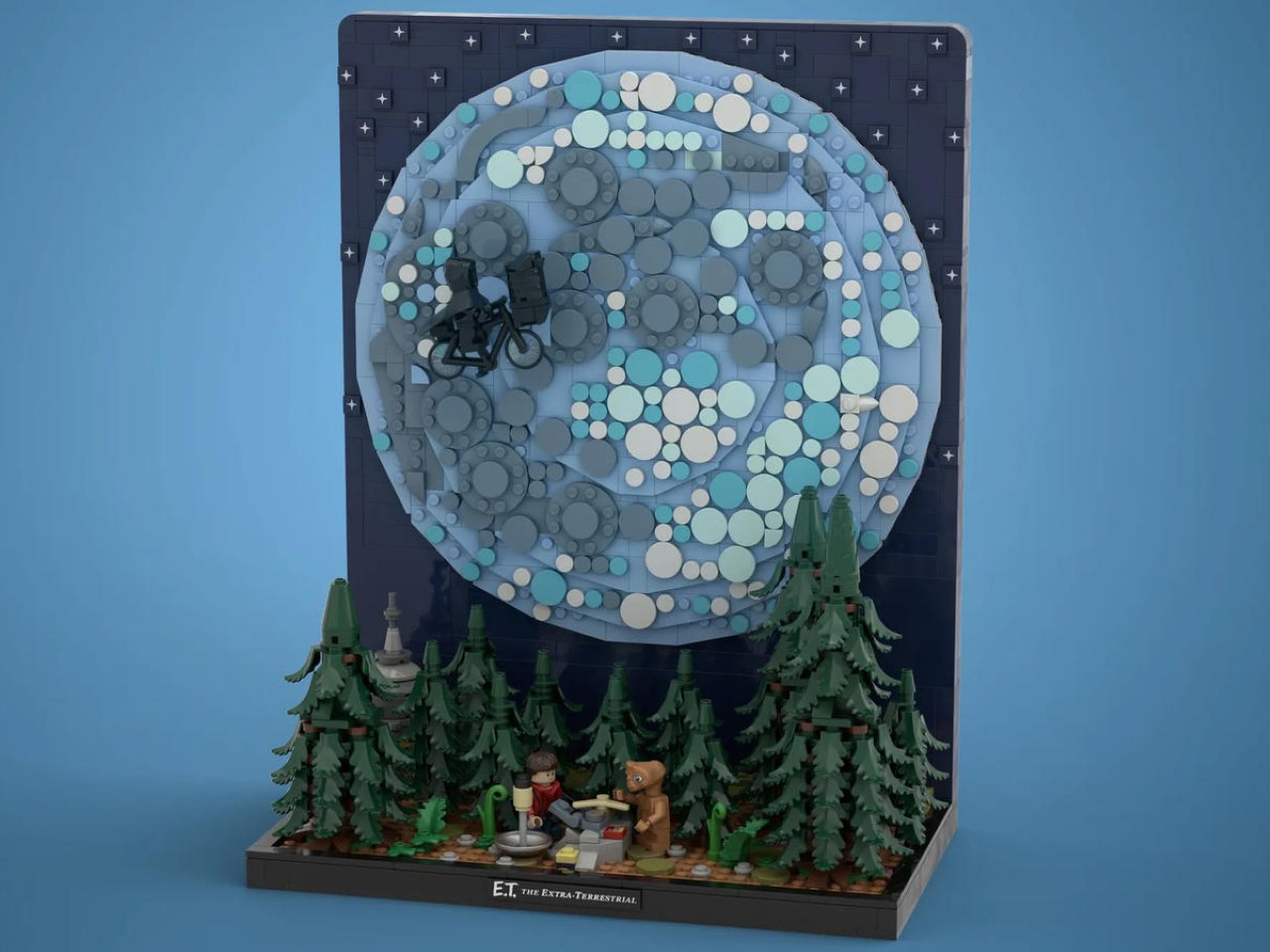
This build is as much about artistry as it is about nostalgia. The silhouette of Elliot and E.T. against a crescent moon forms the centerpiece, with the lunar glow carefully contrasting the dense, detailed forest below. As your eyes wander through the scene, smaller touches, like the flower pot and the communication device, bring a delightful sense of recognition. Even E.T.’s spaceship makes an appearance, cleverly scaled to keep the diorama cohesive. You can almost hear John Williams’ sweeping score as you imagine putting the final pieces together.
Designer: KoalaBrick
What makes this design stand out isn’t just the clever use of LEGO elements; it’s how it balances playability with display-worthy craftsmanship. The forest, for instance, is layered with texture and depth, making it look lush without overwhelming the centerpiece. Peer into the forest and you notice minifigures of Elliot and E.T. standing around the comms device, along with a scaled-down model of the UFO and even the iconic flower pot that E.T. carries around. Yet, when you step back, the build feels more like a cinematic moment frozen in time—a LEGO version of the iconic frame pulled straight from Spielberg’s classic.
The moon backdrop isn’t merely a flat surface but a structure with depth and detail, thanks to the use of LEGO art bricks that help mimic the cratered surface of the moon. Not that a cratered moon is great for scientific authenticity, but rather this helps recreate the very textured detail seen on the poster. These design decisions ensure the set appeals to a wide range of LEGO enthusiasts, from casual fans who admire its display potential to skilled builders eager to create similar artpieces.
Few movies elicit the kind of universal fondness that E.T. does, making this set an instant crowd-pleaser. Whether you watched the film as a child, shared it with your kids, or simply appreciated its influence on pop culture, this build taps into those feelings effortlessly. It’s a love letter to a story that transcends generations. The film’s set around Halloween, but given that we’re a month late, I won’t judge you for re-watching it on Thanksgiving instead!
KoalaBrick’s creation is a heartfelt tribute that reimagines one of cinema’s most iconic scenes in brick form. Currently a submission on the LEGO Ideas website, KoalaBrick is accepting votes from the broader LEGO community to help turn this one-off artpiece into a retail box set that movie buffs and LEGO-nerds can buy and own. Vote for the E.T. – The Extra-Terrestrial set on the LEGO Ideas website here.
As a plant-lover myself, this set gives me nothing but sheer joy. Botanical gardens had their moment in the 19th and 20th centuries, with their massive overarching cast iron structures, coupled with glass facades that made the building essentially look like a bubble-shaped oasis of nature in a concrete jungle. The art-deco stylings, the habitat-esque design, the chlorophyll, it all makes me truly happy, so seeing something as wonderful as that shrunken down to a tiny set big enough to keep on my bookshelf? It feels like a thing of true beauty!
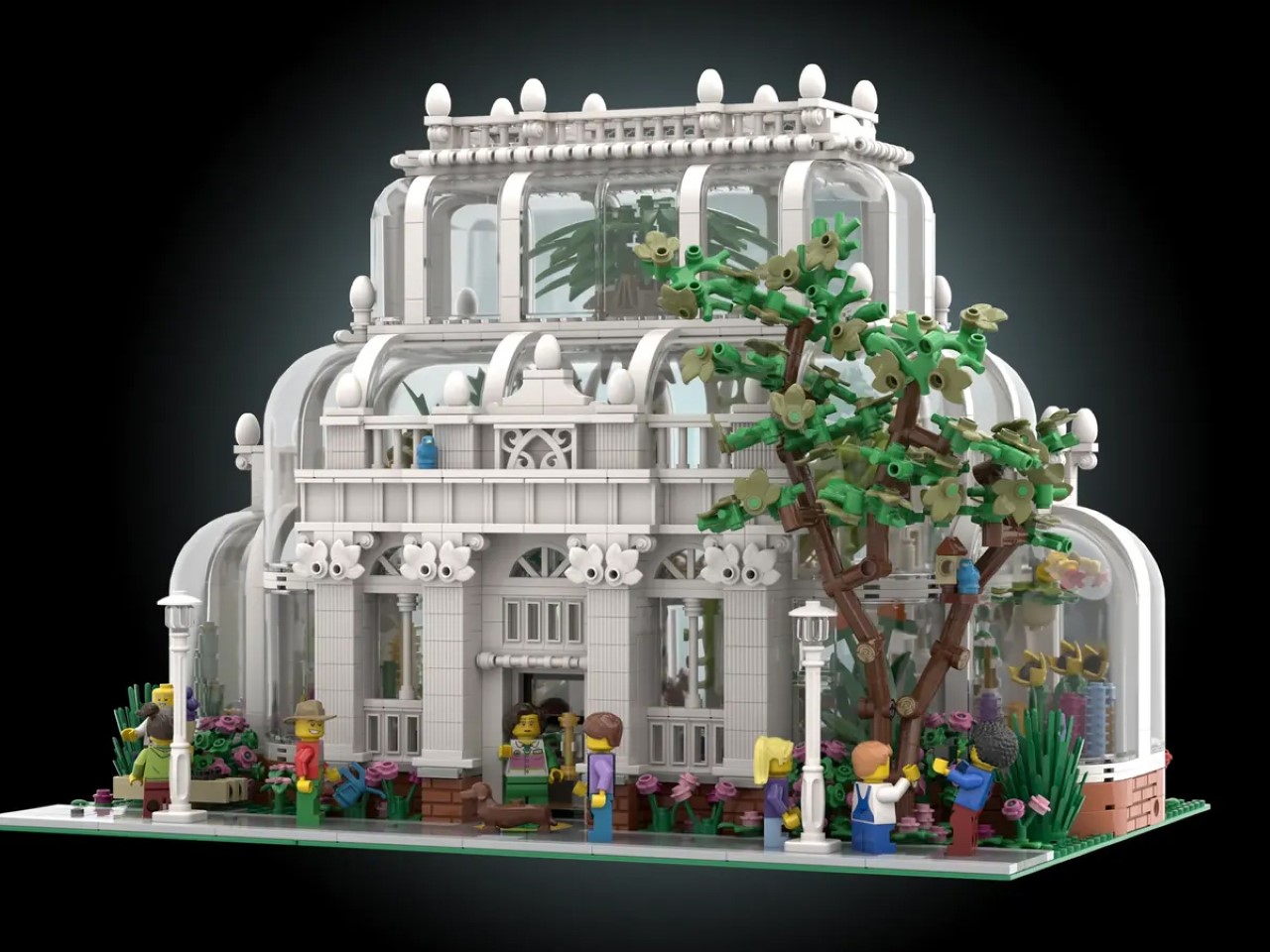
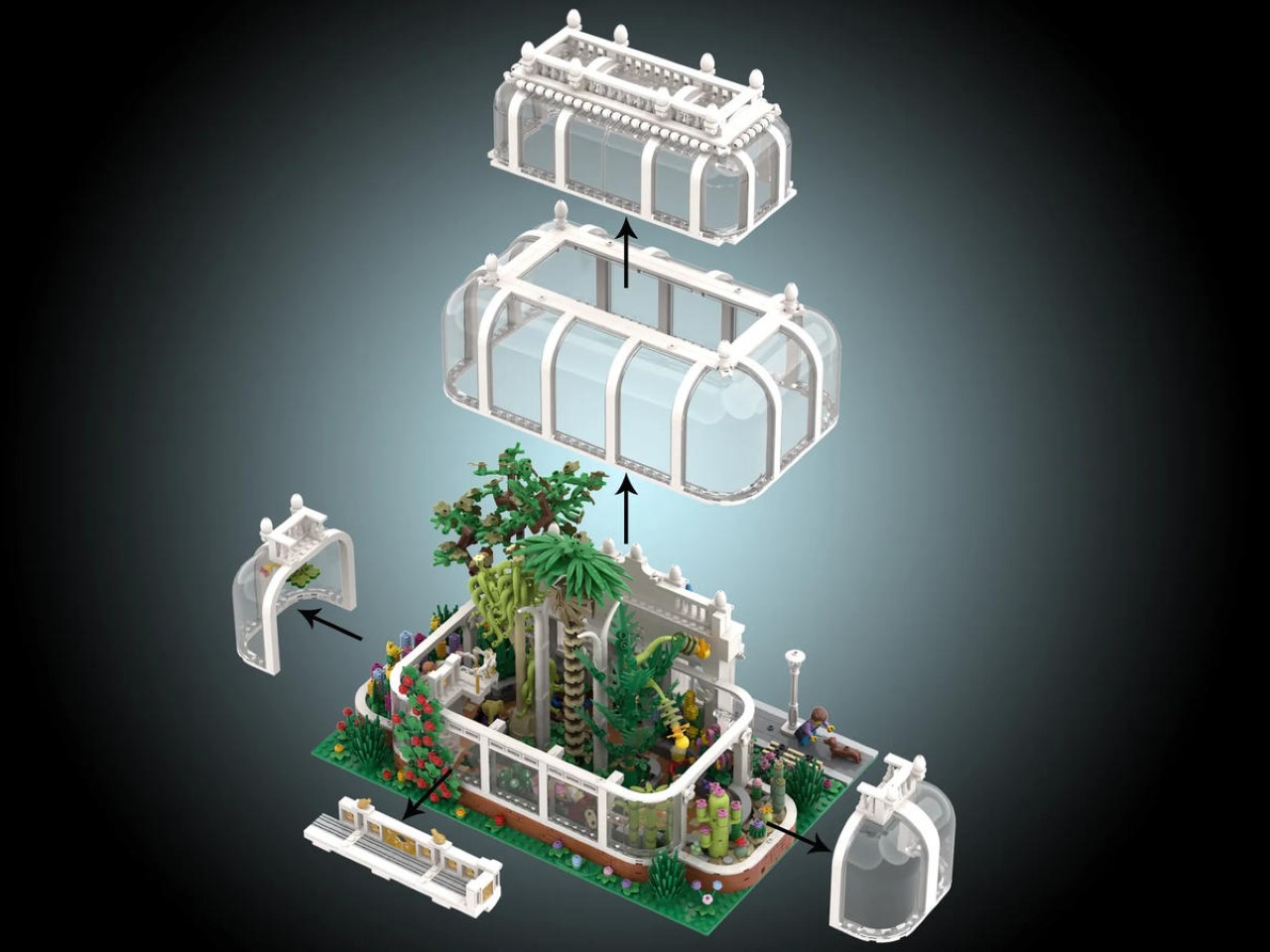
Meet the Botanical Garden LEGO Ideas set. Envisioned by LEGO user Goannas89, this 3000-brick set is perhaps one of the most intricate I’ve ever seen, with an interior that’s even more detailed than the exterior. The set comes with a white outer structure, revealing the greenery peaking out from within. Pop the top open and you get to adore the Botanical Garden even more, with plants in every nook and corner, and minifigures enjoying them – just like I do when I visit the botanical garden in my own city!
Designer: Goannas89
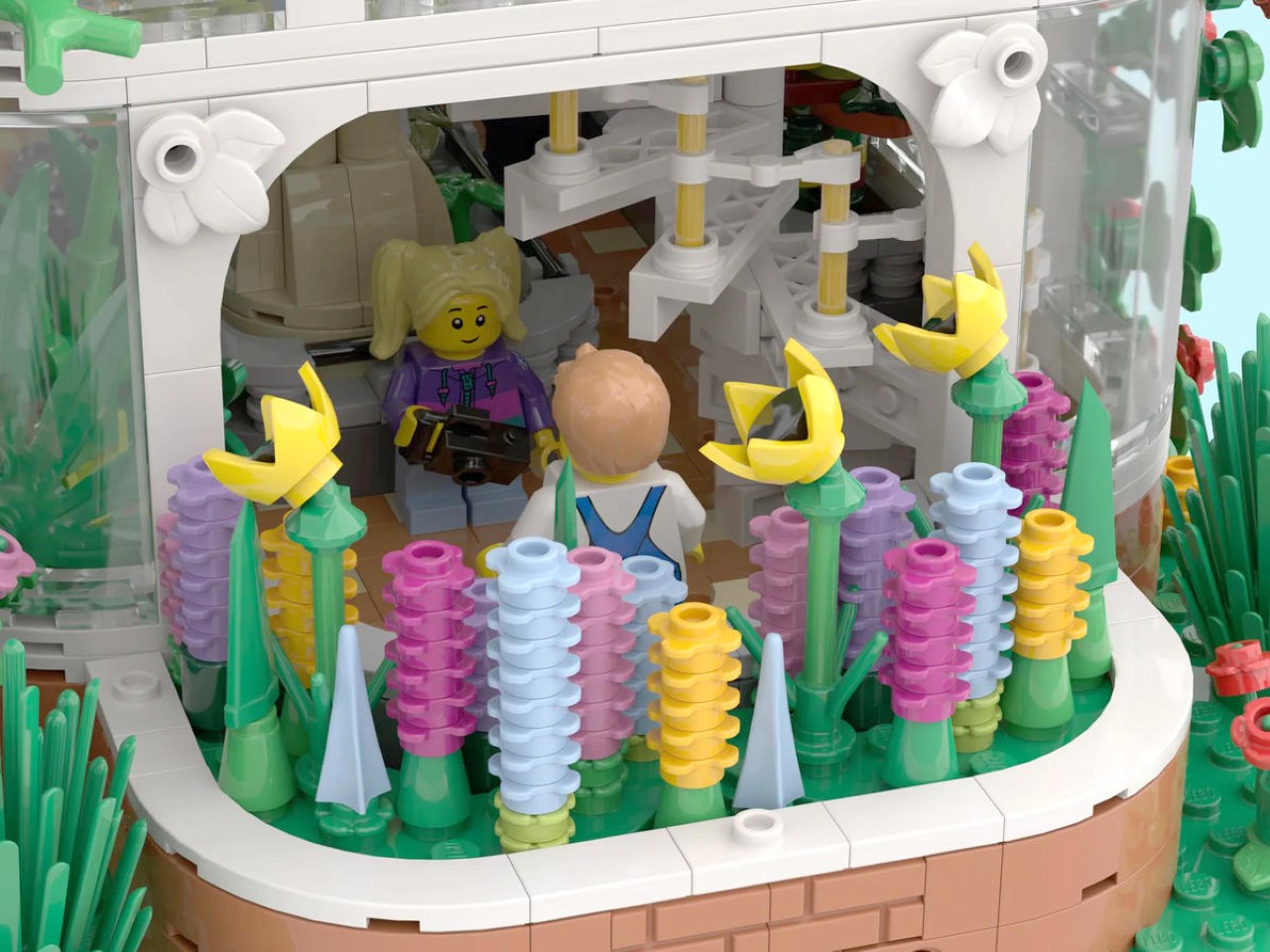
Inspired by the grand cast-iron greenhouses of the 19th and early 20th centuries, the set brings a historical charm to its modern modular design. The neoclassical entrance is the first hint of the detail inside, its stately architecture standing as a gateway to a lush interior. Step through the doors, and you’re greeted by an open and accessible space filled with botanical delights. A banana tree and a palm anchor the central atrium, surrounded by exotic plants like Anthurium, Bamboo, and the whimsical Begonia Maculata. Each species is thoughtfully placed to create a layered effect of foliage, color, and texture.
Step inside the build, and the experience gets even better. The central atrium greets you with towering green life—a banana tree, a palm, and a Beaucarnea recurvata. Around them, succulents and exotic flowers like Anthurium and Strelitzia add bursts of color. The left and right apses house their own botanical surprises, while a spiral staircase leads to a balcony where you can get up close to the treetops. Every element feels purposeful, whether it’s the clever placement of windows to maximize light or the removable skylight roof for added playability.
With over 3,000 pieces, this build is as rewarding as it is detailed. The structure’s layout—spanning 32×48 studs—makes it versatile enough to integrate into a cityscape or stand alone as a park centerpiece. Measuring 11.3 inches tall, it commands attention without overshadowing nearby builds. The use of transparent elements for the greenhouse’s glazing adds a layer of realism, catching light and creating dynamic reflections that elevate the overall presentation.
What sets the Botanical Garden apart is its careful attention to detail. The plants aren’t just generic greenery; each one is meticulously crafted to reflect real-world species. The banana tree’s textured leaves, the palm’s graceful fronds, and the patterned foliage of the Caladium bicolor all showcase the thoughtful artistry that went into the set’s design. It’s a build that rewards careful observation, with little surprises like succulents tucked into corners and a balance of vibrant and earthy tones that mimic nature itself.
Beyond its visual charm, the set feels like a love letter to urban green spaces. It captures the magic of stepping into a real-life botanical garden—those rare places where city life slows down and nature takes center stage. Whether it’s a child marveling at the flowers or a LEGO botanist tending to rare plants, the set brings that same sense of wonder and tranquility to the world of bricks. It’s a reminder of the importance of such spaces in our lives, even if they’re scaled down to fit on a tabletop.
There’s something undeniably captivating about seeing a greenhouse—traditionally a place for nurturing growth—brought to life in LEGO form. It’s a set that not only celebrates the art of building but also the beauty of the natural world. Whether it’s the intricate spiral staircase, the removable balcony, or the interplay of light through the glazed panels, every piece works together to create a space that feels alive and inspiring.
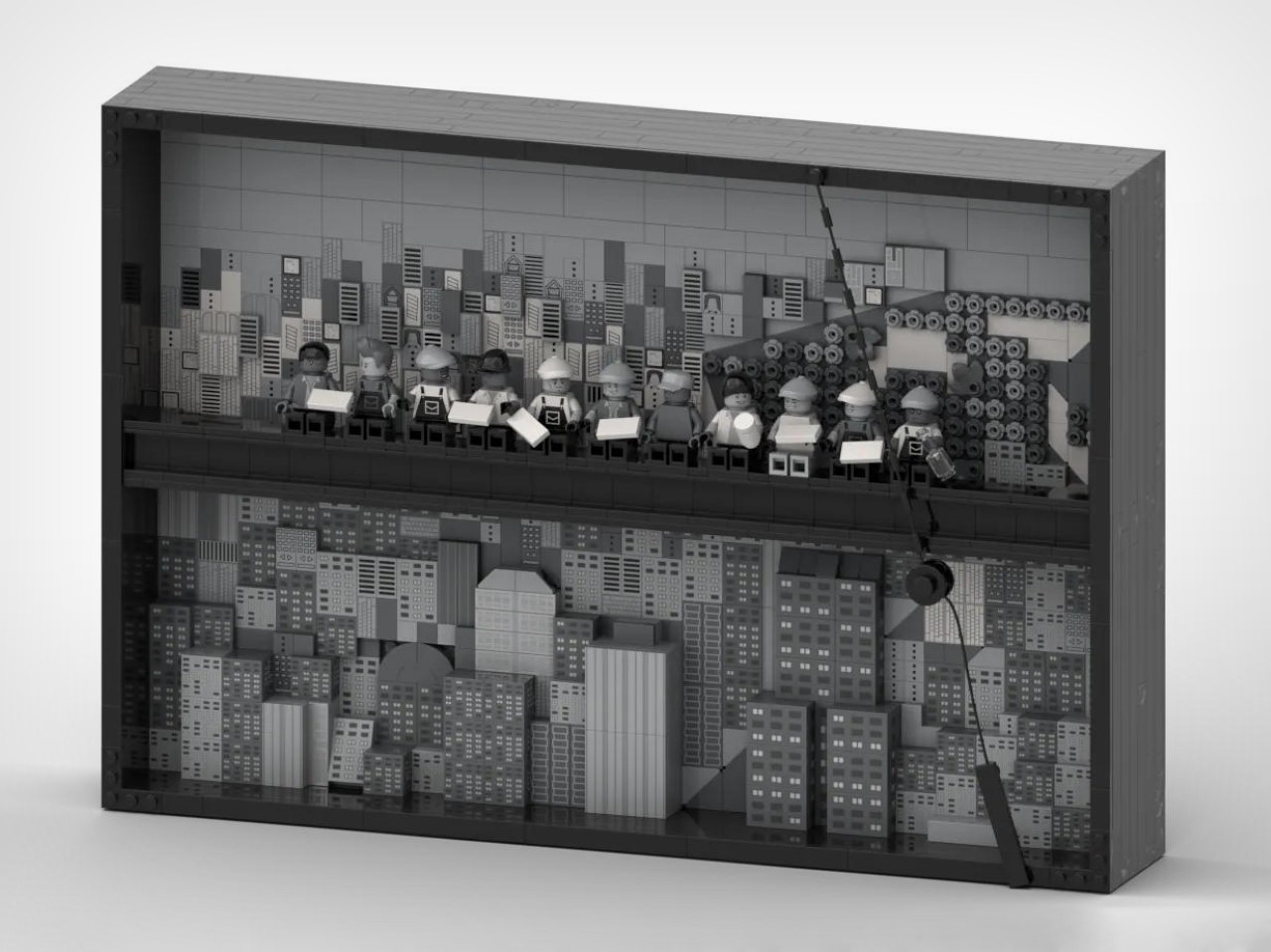
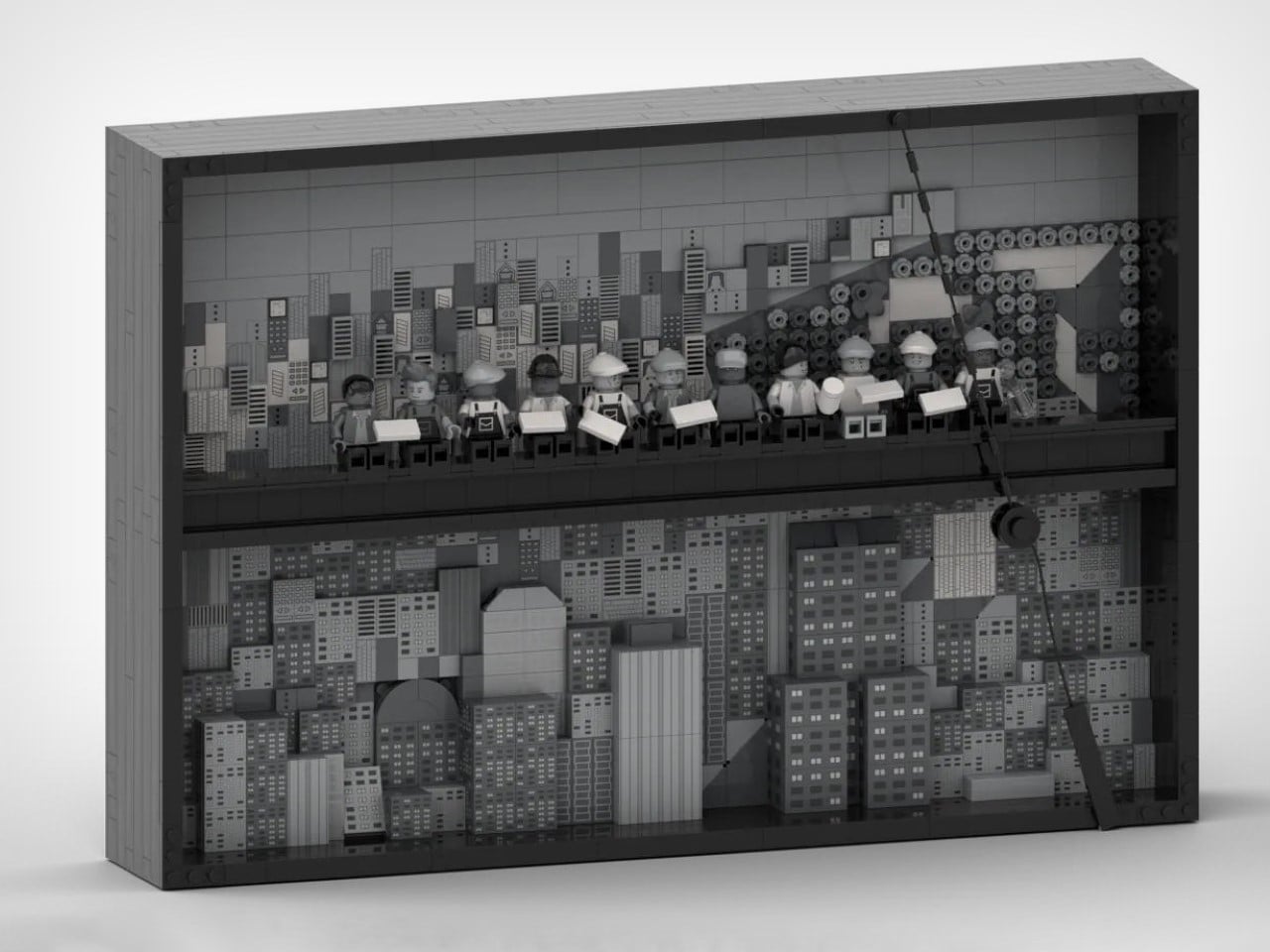
A brick recreation (brickreation, if you will) of an iconic classic, the “Lunch Atop A Skyscraper” LEGO Ideas kit captures the essence of the American dream. The original photograph, shot in 1932, features eleven New York construction workers casually eating lunch on a steel beam, suspended 260 meters (853 feet) above the ground. Built by LEGO maker DallasBricks, this LEGO rendition pays tribute by turning the famous photo into a brick-based artpiece that can be hung on a wall or placed on a bookshelf.
Designer: DallasBricks
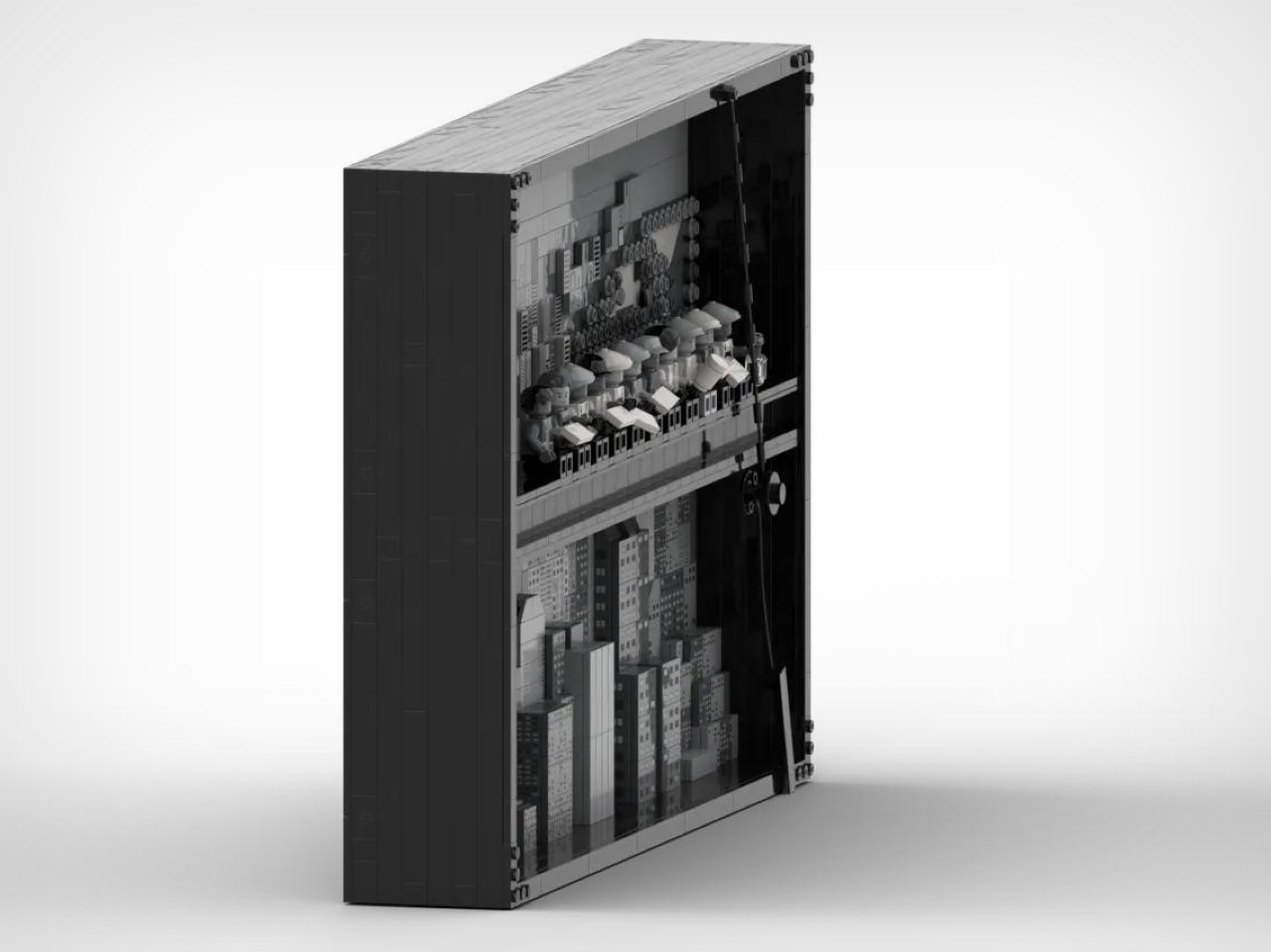
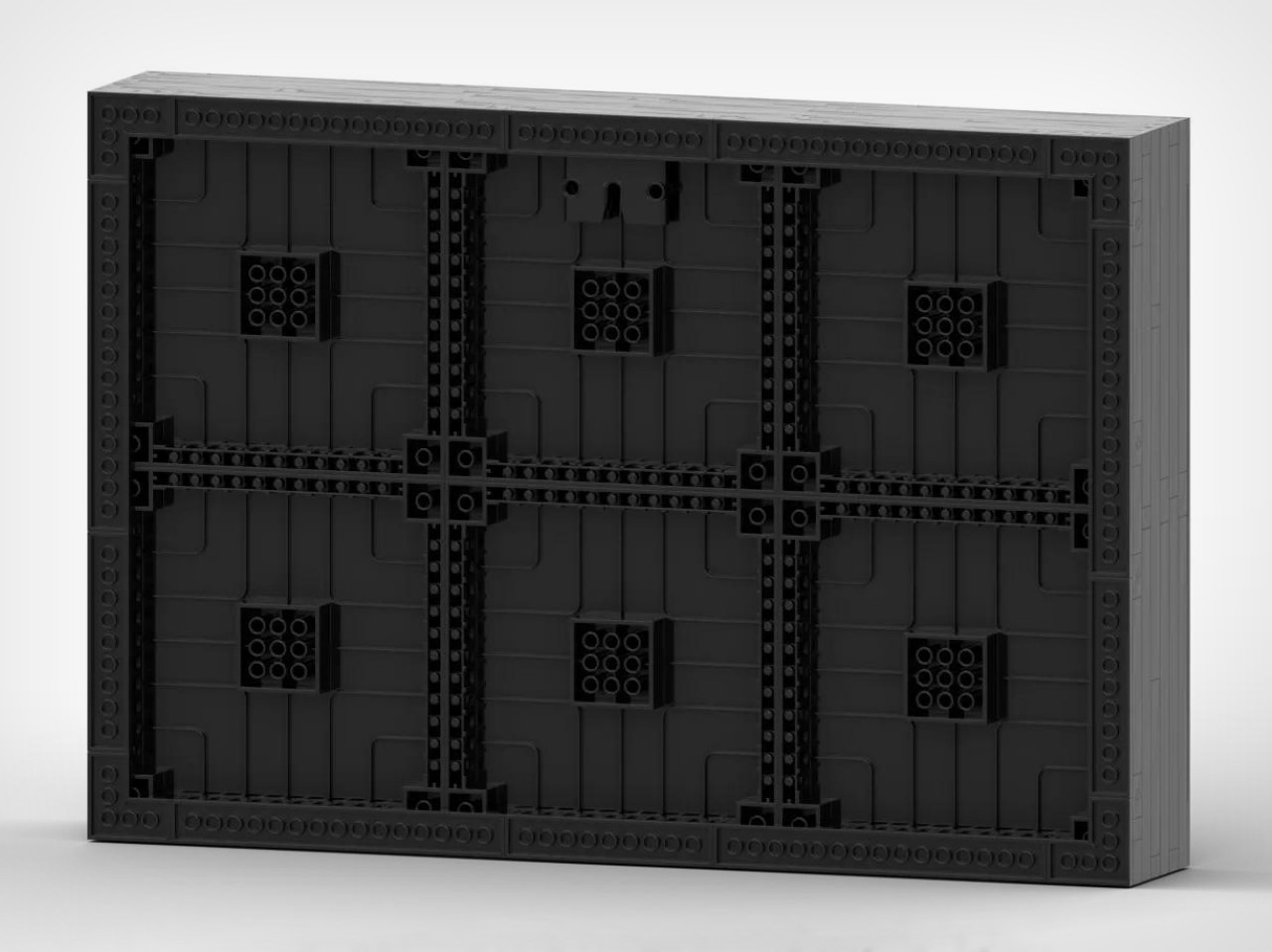
At its core, the set uses a flat design style, similar to LEGO’s art series, but it incorporates thoughtful 3D construction methods to create the illusion of a suspended steel beam. The minifigures are carefully posed to reflect the relaxed yet precarious nature of the workers in the photograph. Each figure contributes to the scene’s energy, making it feel dynamic and alive, as if frozen in a moment of real life.
Although DallasBricks doesn’t specifically mention how many pieces are used in this build, it’s safe to estimate there are quite a few, given the skyscraper details in the background. Look closer and you’ll notice the skyscrapers aren’t all buildings, they’re actually a mix of LEGO tech and hardware pieces like keyboards, phones, remote controls, and screens, along with a few building window pieces. This creative use of different flat bricks gives the skyline its uniqueness, allowing each building to have a different character instead of looking all the same.
The original photo wasn’t just a depiction of the American dream, it was that of celebrating all the people who got together to make this dream happen. The photo features builders of different races, enjoying a meal together while rather casually hanging off a steel girder. The LEGO MOC (My Own Creation) has 11 minifigures too, just like in the photo, all enjoying a meal together before they get back to work.
The LEGO Ideas Lunch Atop A Skyscraper kit is currently a fan-made submission on the LEGO Ideas website, an online forum where LEGO enthusiasts create their own builds and share them with the LEGO community. With 2,790 votes as of writing this article (and with 560 days of voting left), DallasBricks’ LEGO MOC is well on its way to gathering enough votes to reach the 10,000 vote mark, following with the design will get reviewed by LEGO’s internal team and hopefully turned into a retail kit!
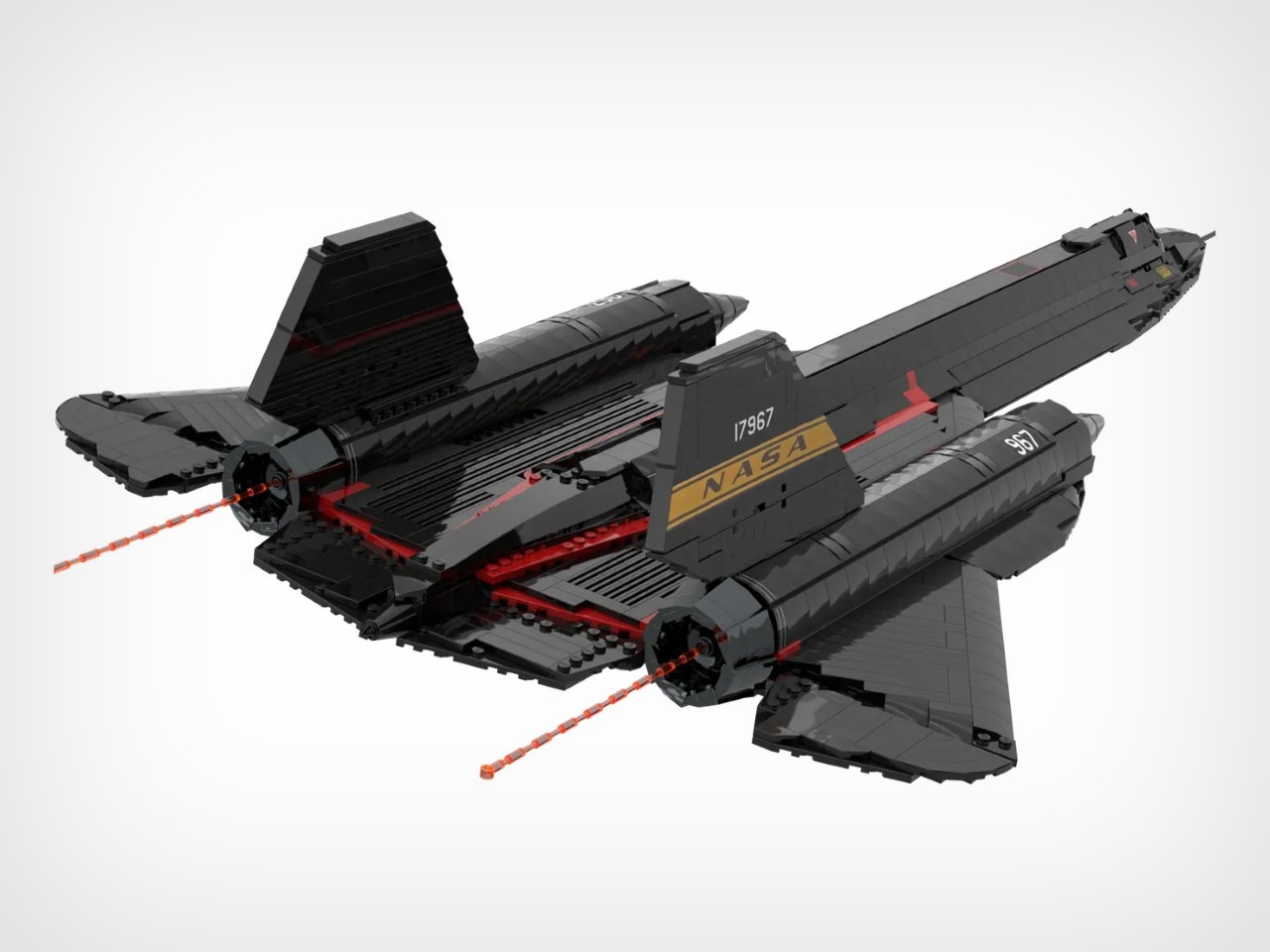
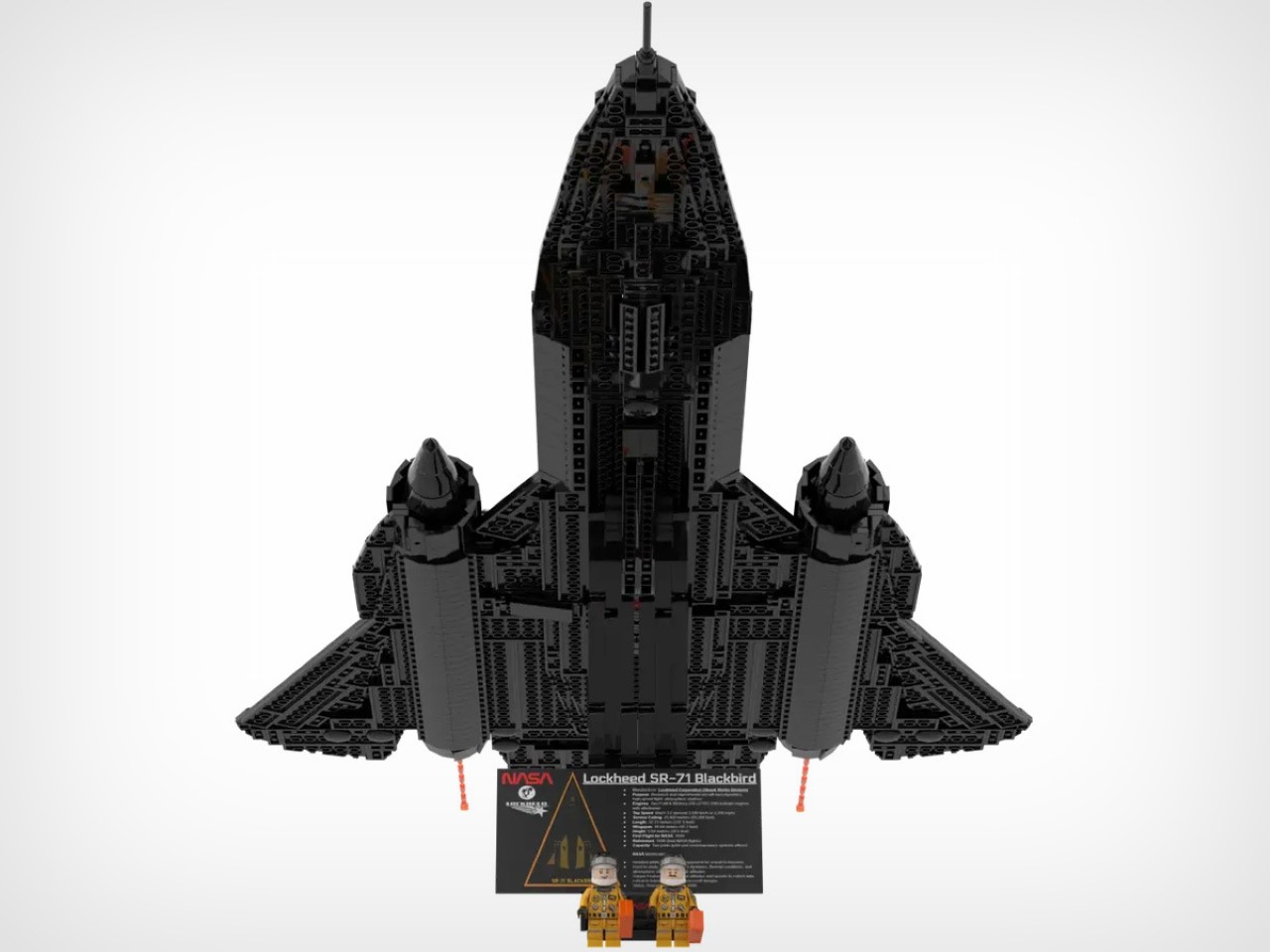
The Lockheed SR-71 Blackbird is a true aviation legend. Developed in the 1960s, this reconnaissance jet set the bar for speed and stealth, cruising at Mach 3 and reaching altitudes over 85,000 feet. Engineered primarily for high-speed, high-altitude intelligence gathering, it quickly became an icon of the Cold War era, untouchable by enemy missiles and outpacing everything else in the skies. Its titanium skin and advanced aerodynamics embodied the cutting-edge technology of its time, pushing the limits of engineering and daring. Now, this iconic aircraft has been reimagined in a completely different medium: LEGO bricks. A detailed, fan-made LEGO model of the SR-71 Blackbird is making waves for its impressive recreation of this iconic plane.
Designer: Buds 234
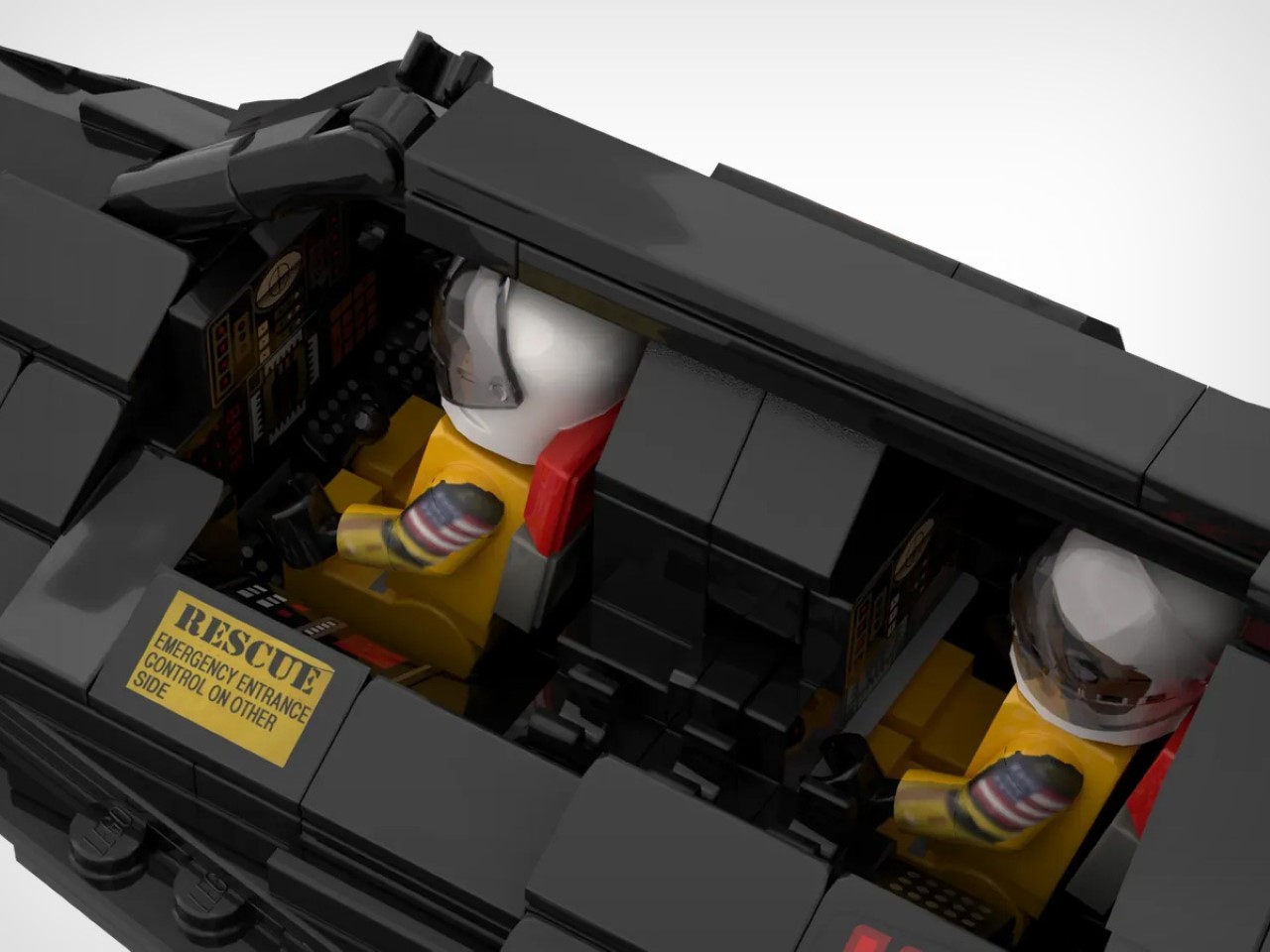
This LEGO model of the SR-71 distills the original aircraft’s spirit perfectly. With every detail meticulously crafted, the model captures the SR-71’s sleek, elongated form, its sharply defined nose, and its sweeping wings. The LEGO model includes functional flaps, retractable landing gear, and a fully realized cockpit, each piece integrated to honor the original’s groundbreaking design. This project, created by aerospace engineering student by the name of ‘Buds 234’, reflects both technical appreciation and a keen eye for detail—details that ensure this MOC (My Own Creation) goes beyond a typical LEGO build, bringing a model that’s both captivating and technically faithful to the real SR-71.
Designing a model with this level of complexity in LEGO form isn’t easy. Capturing the SR-71’s aerodynamic design with limited brick options requires an advanced understanding of both LEGO techniques and aviation engineering. The builder succeeded in creating a miniature that’s structurally sound while visually true to the original. While Buds 234 doesn’t detail how many bricks were used in the final build, he does mention adding several stickers and intricate features and details to retain the Blackbird’s authenticity.
The completed model stands on a supportive base with a plaque detailing the SR-71’s key specifications, offering an extra layer of historical and educational value, along with two suited minifigures that can even be fitted into the plane’s cockpit.
Rather than a simple exterior, the LEGO build includes a fully realized cockpit, retractable landing gear, and working flaps, giving it a touch of mechanical authenticity. Aside from merely capturing the Blackbird’s shape, it allows fans to explore its functional design too – making it a must-have for aerospace enthusiasts.
In a touching nod to the people behind the plane, this model includes a tribute to Marta Bohn-Meyer, NASA’s first female SR-71 pilot and flight engineer. Bohn-Meyer’s contributions to high-speed flight testing were instrumental in expanding knowledge of aerodynamics, and she left a lasting impact on the program.
The LEGO Ideas Lockheed SR-71 Blackbird is currently a fan-made submission on the LEGO Ideas forum – an online community where LEGO enthusiasts share their own creations. With over 1400 votes in just 3 days, the SR-71 Blackbird is well on its way to hitting the 10,000 vote mark, following which the MOC will be reviewed by LEGO’s internal team and hopefully turned into a retail box set! You can vote for the LEGO Ideas Lockheed SR-71 Blackbird on the LEGO Ideas website here.
It’s Wristwatch Wednesday on Yanko Design again, and today, I’m digging into a playful yet intriguing topic: LEGO luxury watches. Yes, you read that right. Imagine the iconic Rolex Submariner or Audemars Piguet Royal Oak in LEGO form. The world of fine timepieces meets the playful, nostalgic charm of LEGO blocks, resulting in creations as captivating as they are creative. It’s a topic that merges two worlds with a surprisingly big crossover—watch collectors and LEGO enthusiasts. Today, I’m taking you on a journey through these brick-built renditions and their real-life counterparts, showing what sets each apart and why they resonate deeply with LEGO enthusiasts and watch collectors.
The Art of LEGO and Horology: Why They Come Together So Well
There’s something surprisingly satisfying about seeing a luxury watch replicated in LEGO form. A luxury timepiece’s inherent precision and design complexity seem like an impossible fit with LEGO’s chunky, colorful blocks. Yet, that’s precisely what makes these LEGO versions so compelling. The real challenge is capturing the essence of luxury craftsmanship with plastic bricks that were never intended to mirror the intricate details of watchmaking. This playful paradox is why I, along with other fans of both LEGO and watches, find this concept so exciting.
Building miniature versions of real-life objects has always been a key appeal for LEGO enthusiasts. From cars to skyscrapers, the challenge lies in translating smooth, complicated forms into brick-like constructions. On the other hand, watch collectors appreciate the fine details—down to the way light catches the beveled edges of a Rolex or how an Audemars Piguet Royal Oak bracelet wraps around the wrist with a certain fluidity. So, how do these two seemingly different audiences come together here? For me, it’s the shared passion for craftsmanship—whether through the intricate mechanics of haute horology or the creative joy of a child’s building toy. Personally, I love seeing how both worlds strive for perfection in their own unique ways.
The LEGO Rolex Submariner vs. The Real Rolex Submariner
Let’s start with one of the most iconic watches: the Rolex Submariner. The real Submariner is famous for its black dial, rotating bezel, and robustness as a dive watch. It’s the timepiece you could wear while exploring underwater wrecks or dressed up for a night out. Crafted with surgical-grade steel, the real Submariner exudes quality, with precision engineering that ensures it’s waterproof to a depth of 300 meters.
AI-Generated LEGO x Rolex Submariner
Now compare this to its LEGO version. The LEGO Submariner isn’t going anywhere near water—its construction relies on plastic pieces snapping together, and no LEGO piece in the world is waterproof to 300 meters! But that’s not really the point, is it? What makes the LEGO version so charming is how it captures the silhouette, the bezel’s ridges, and even the dial layout—albeit in a chunky, exaggerated way. It’s a caricature, a playful homage to a watch that has come to define what a dive watch should be.
Rolex Submariner Date Oystersteel 41 mm
The authentic Rolex Submariner feels weighty and precise on the wrist, with decades of refinement packed into its Oyster case. The LEGO version, meanwhile, is like a desktop conversation piece. If you’re thinking functionality, forget it; it’s about capturing the spirit of an icon in a different, more approachable way. Whether you’re an experienced diver or someone who’s never set foot near a dive tank, there’s something whimsical about seeing this watch, renowned for its utility, transformed into a plastic brick sculpture.
LEGO Daytona vs. Real Rolex Daytona: Revving Up in Different Ways
Next is the Rolex Daytona, a watch synonymous with racing, speed, and precision. The genuine Daytona emphasizes chronograph functionality, tachymeter bezels, and its deep connection with the fast-paced world of motorsports—famously tied to Paul Newman and the thrilling 24 Hours of Le Mans. It’s a timepiece that measures milliseconds with ease, and the quality of its movement, the Caliber 4130, sets it apart as one of the best chronographs in the market.
AI-Generated LEGO x Rolex Daytona – Oystersteel
So what happens when you translate this into LEGO? The LEGO Daytona doesn’t have an automatic movement or sub-dials that actually work, of course. What it does have is a beautiful attention to aesthetics—each button, the ridged bezel, and even the tachymeter markers are cleverly depicted in plastic bricks. It’s not functional in the horological sense, but its form still captures the essence of the Daytona—a nod to its role as a tool for timing races, now transformed into a playful, stationary model.
In comparing the two, the genuine Daytona is like a precision tool—built for racing and made to the highest standards. The LEGO version is like a trophy for the shelf of someone who adores both motorsports and creative LEGO projects. It’s a piece for those who are in on the joke and who appreciate the paradox of recreating a serious, high-precision device with something as low-tech as LEGO.
Day-Date in Gold: LEGO vs. The Real Presidential Timepiece
The Rolex Day-Date, often referred to by enthusiasts as the ‘President,’ earned this nickname because numerous world leaders, including U.S. Presidents like Lyndon B. Johnson, have famously worn it. However, it’s important to note that Rolex officially calls it the Day-Date, while the ‘President’ specifically refers to the style of the bracelet. Introduced in 1956, it was the first wristwatch to display the day and the date in windows on the dial. It is a watch that exudes luxury. Its gold finish, complete with diamond-studded dials and a fluted bezel, is the kind of thing that screams sophistication. The real Day-Date is often the timepiece of choice for world leaders and celebrities—a statement of power, elegance, and success. Imagine the President of the United States sporting a Rolex Day-Date Presidential watch made from LEGO—it’s a whimsical image that perfectly captures the playful spirit of these brick-built renditions.
AI-Generated LEGO x Rolex Day-Date
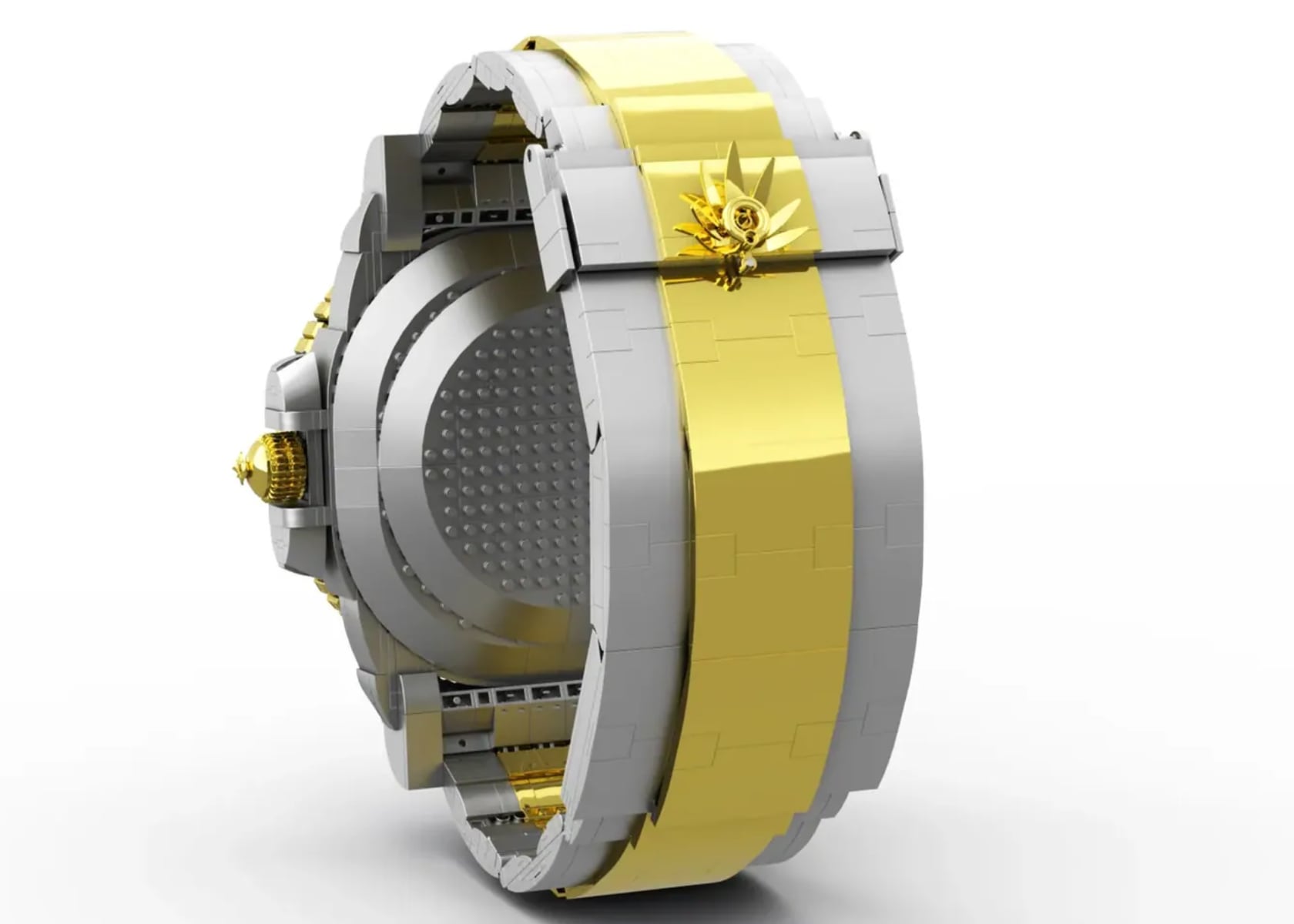
Now imagine that luxury recreated in LEGO bricks. The LEGO version retains the gold—at least visually. It captures the blingy bezel, the iconic President bracelet, and even the day and date windows. Of course, it’s not solid gold; it’s just carefully chosen yellow and white bricks snapped together. But somehow, it captures the essence—the LEGO Day-Date feels playful yet fancy, almost as if it’s poking fun at its own luxury. It’s for the person who loves the Day-Date’s symbolism and has the sense of humor to appreciate it in LEGO form.
Image: Icebox, ROLEX DAY DATE 40MM 18K YELLOW GOLD (228238) – 19.50CTW FULLY ICED OUT
The Audemars Piguet Royal Oak: A Blocky Tribute
Few watches are as iconic as the Audemars Piguet Royal Oak, with its octagonal bezel and exposed screws. The actual Royal Oak is famous for its industrial elegance—designed by Gérald Genta, it’s a game-changer that brought the luxury sports watch category to life. Crafted from stainless steel, it highlights the juxtaposition of polished and brushed surfaces, giving it a distinctive look that’s rugged and refined.
AI-Generated LEGO x Audemars Piguet Royal Oak
The LEGO Royal Oak, on the other hand, trades brushed steel for grey bricks. It still maintains the unmistakable octagonal bezel and the integrated bracelet, but the intricacy is reduced to geometric simplicity. The Tapisserie pattern on the dial, which usually involves meticulous craftsmanship, is represented with flat studs—it’s rudimentary, but that’s the beauty of it. Instead of the weighty presence of stainless steel, you get the lightweight, almost comical feel of stacked plastic. The LEGO Royal Oak pays tribute in the best way it can, with a bit of playful irreverence.
Royal Oak Perpetual Calendar “John Mayer” Limited Edition
Cartier Santos in LEGO Form: Squaring Elegance with Fun
The Cartier Santos is another classic—a watch designed for aviation pioneer Alberto Santos-Dumont. Its square face and exposed screws make it instantly recognizable. The real Cartier Santos epitomizes refined French elegance, with Roman numerals and a heritage that goes back over a century.
AI-Generated LEGO x Cartier Santos
The LEGO version plays with these elements, keeping the shape, the exposed screws, and the Roman numerals but doing so with bright plastic that is anything but elegant in the traditional sense. It’s a tongue-in-cheek recreation, one that delights in its blocky squareness, almost as if Cartier’s first wristwatch were reimagined for a child’s toybox. It takes something meant to be worn as a marker of luxury and turns it into a fun, decorative piece—a way for fans of both brands to connect in a quirky, unexpected way.
SANTOS DE CARTIER WATCH
Why LEGO and Luxury Watches Work So Well Together
So why does this concept work? What makes these LEGO versions resonate with both watch collectors and LEGO fans? The answer lies in the intersection of craftsmanship and creativity. Authentic watches like the Submariner or the Daytona are meticulously crafted, precision-engineered, and timeless in their design. Conversely, LEGO thrives on creativity, turning complex real-life objects into simple yet evocative forms.
For watch collectors, seeing a LEGO version of a favorite timepiece is like viewing it from a fresh perspective—celebrating its form rather than its function. There’s also an undeniable element of nostalgia; many collectors grew up with LEGO, and these models bring a sense of childlike wonder while respecting the original design. For LEGO fans, the challenge of recreating an intricate watch demonstrates the versatility of LEGO bricks, proving that simple blocks can capture something incredibly sophisticated.
This crossover appeal transforms these watches from wearable precision instruments into decorative conversation starters. The actual versions are meant to be worn and experienced for their craftsmanship and mechanical precision. The LEGO versions, however, are displayed as celebrations of design, transforming a high-end object into an accessible, humorous, and charming representation. They bring the luxury and accuracy of timepieces into a more playful light, making them resonate deeply with both communities.
A Challenge to Watch Brands: LEGO Sets the Bar
Don’t get me wrong, the LEGO versions of these watches aren’t replacements for the real thing—far from it. They don’t have the sapphire crystals, the precise movements, or the finely engineered components that make luxury watches so remarkable. But what if they did? Imagine a collaboration between LEGO and the finest watchmakers in the world. If brands like Bugatti, McLaren, and even Formula 1 teams can create real machines with LEGO, why can’t luxury timepiece brands do the same? This is a challenge to the watch industry—bring the craftsmanship, the detail, and the imagination together. Let’s see a working luxury watch created in partnership with LEGO—a true celebration of both worlds.
For LEGO fans and watch collectors alike, these models celebrate design—both the intricate, sophisticated design of the original timepieces and the imaginative, blocky reinterpretations in LEGO form. It’s a concept that brings people together, transcending the boundaries between childhood nostalgia and adult appreciation for craftsmanship. And at the end of the day, isn’t that what great design—whether in LEGO or luxury watches—is all about?
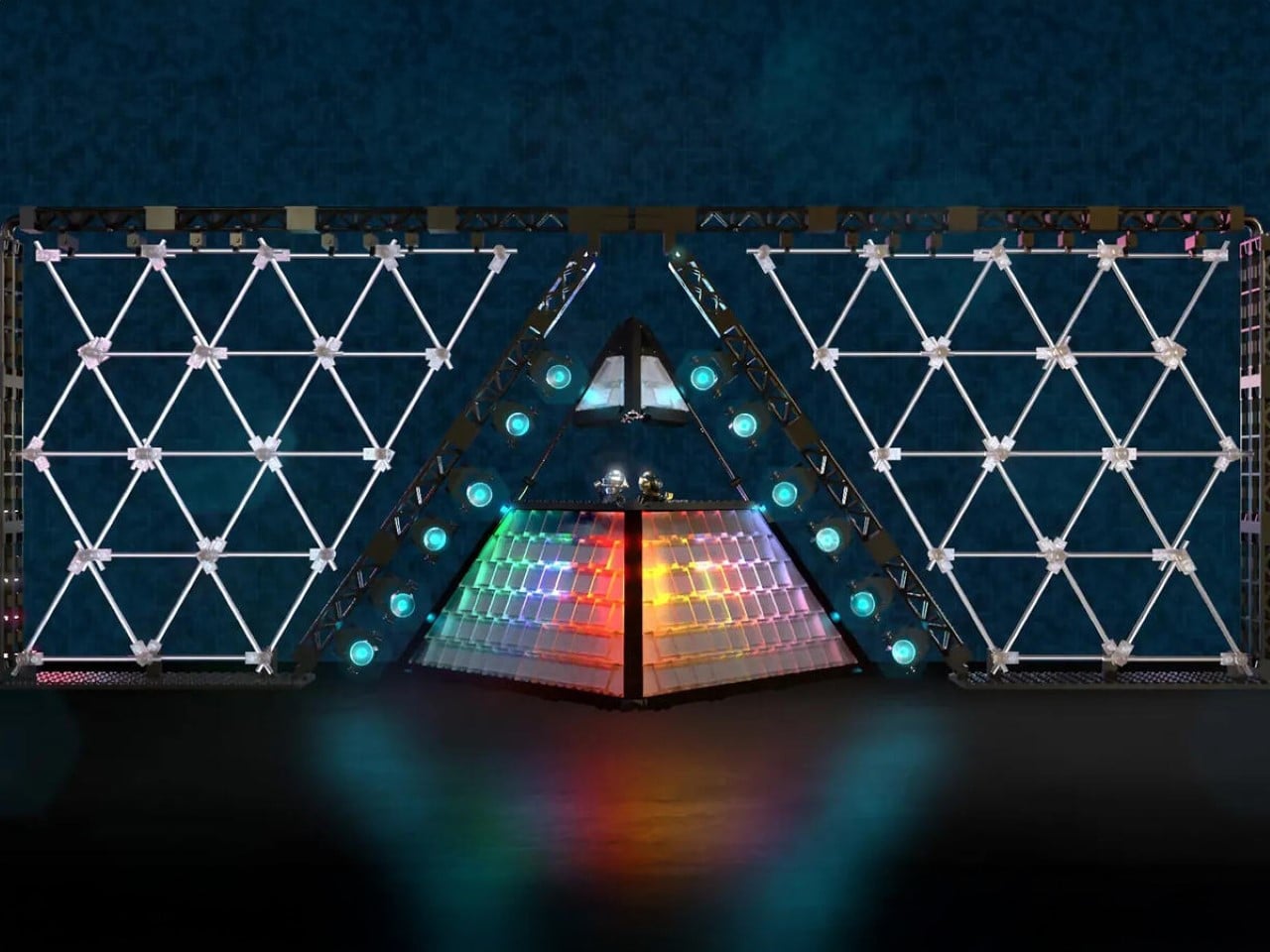
Four years ago, a father-son duo won the Grand Prize in the global LEGO competition Music To Our Ears! for their LEGO rendition of the Daft Punk Pyramid Stage from Coachella 2006. Although the MOC (My Own Creation) won the award, it wasn’t selected by LEGO’s internal team to be turned into a box set. However, the duo responsible for the design are hoping to Get Lucky by submitting this entry One More Time, and they’re banking on support from Around The World to help turn this one-off piece into a set that LEGO and music enthusiasts can buy and play with!
Designer: Robotrock
Not many people knew that Daft Punk’s 2006 Coachella set would be the last time they headlined the event. When the duo took the iconic pyramid-shaped stage back in 2006, they set what’s still considered a gold standard in Coachella performances – something that even nearly 2 decades later is difficult to match. However, being the elusive robots they are, Daft Punk never really decided to pull off such a feat again, and they disbanded in 2021, after 28 years together. The Coachella Pyramid is an iconic part of music history, and Robotrock – the moniker behind the LEGO set – did full justice to it with their 2,000-brick recreation of this moment.
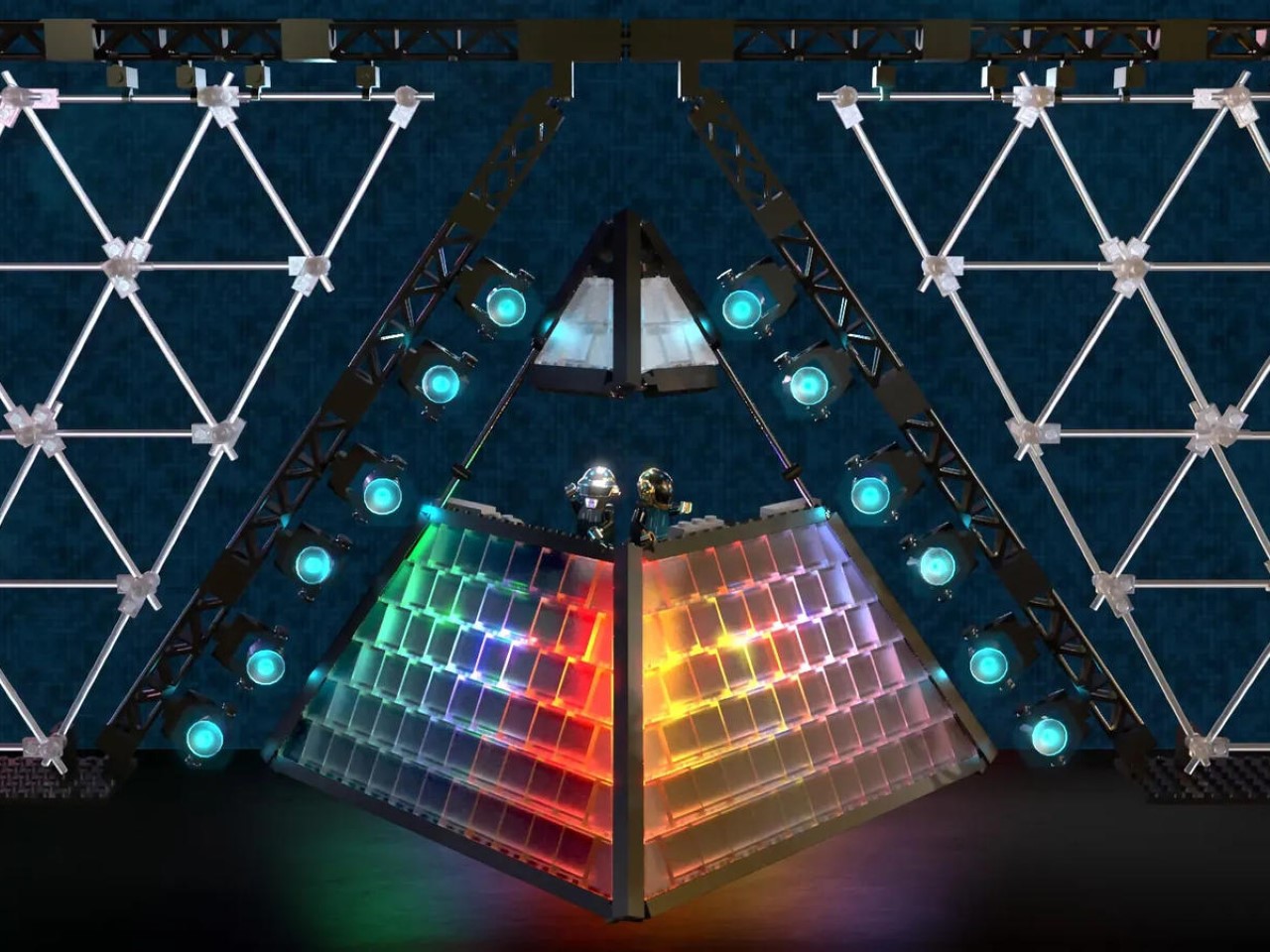
The set features the two artists on a colorful pyramid-shaped stage, with lights inside the pyramid glowing as the duo performed music. The two artists are perched on their platform, dressed in their robot-shaped garb, while working on the mysterious electronic console that helps them produce, remix, and perform their music.
“This project began in 2020 as a fun father-son collaboration, growing into something epic as we found ourselves needing a creative escape during lockdown,” says Robotrock. “Both huge Daft Punk fans, this build is a fusion of 2 passions. I spent my teenage years listening to Homework on my Walkman, while my son’s 1st favorite baby song was Get Lucky. It felt only natural to blend our love for Daft Punk’s music with our love for LEGO. My then 8-year-old son started with a prototype built from the bricks we had at home, and I expanded on it digitally.”
The centerpiece of the design—a rotating box of transparent bricks inside a pyramid—is powered by a motor, with a set of lights dangling inside to recreate that iconic Daft Punk Alive 2007 pyramid. This 2000-piece set was a real challenge. Lego bricks aren’t typically used to create triangular shapes, so we had to get creative in finding ways to make all those angles fit together.
LEGO builders are very meticulous, and abide by a strict code of conduct to ensure bricks aren’t used in ‘illegal’ ways to create MOCs or My Own Creations. Here, Robotrock points out that LEGO doesn’t have an official Daft Punk retail set, which means the helmets being shown in the MOC can’t be bought off the shelf. Although this would mean they’re an ‘illegal’ creation, Robotrock points out that there’s a technical legality in their design since Pharrell’s upcoming LEGO biopic, Piece By Piece, features LEGO minifigures of Daft Punk too!
The LEGO Ideas Daft Punk Coachella Pyramid is currently a submission on the LEGO Ideas forum, where fans and enthusiasts can vote for their favorite fan-made LEGO creations. With enough votes, the LEGO Ideas team reviews the design and decides whether to turn it into a retail box set or not. As a massive Daft Punk fan myself, I sincerely hope they do! You too can vote for the LEGO Ideas Daft Punk Coachella Pyramid on the LEGO Ideas website here.
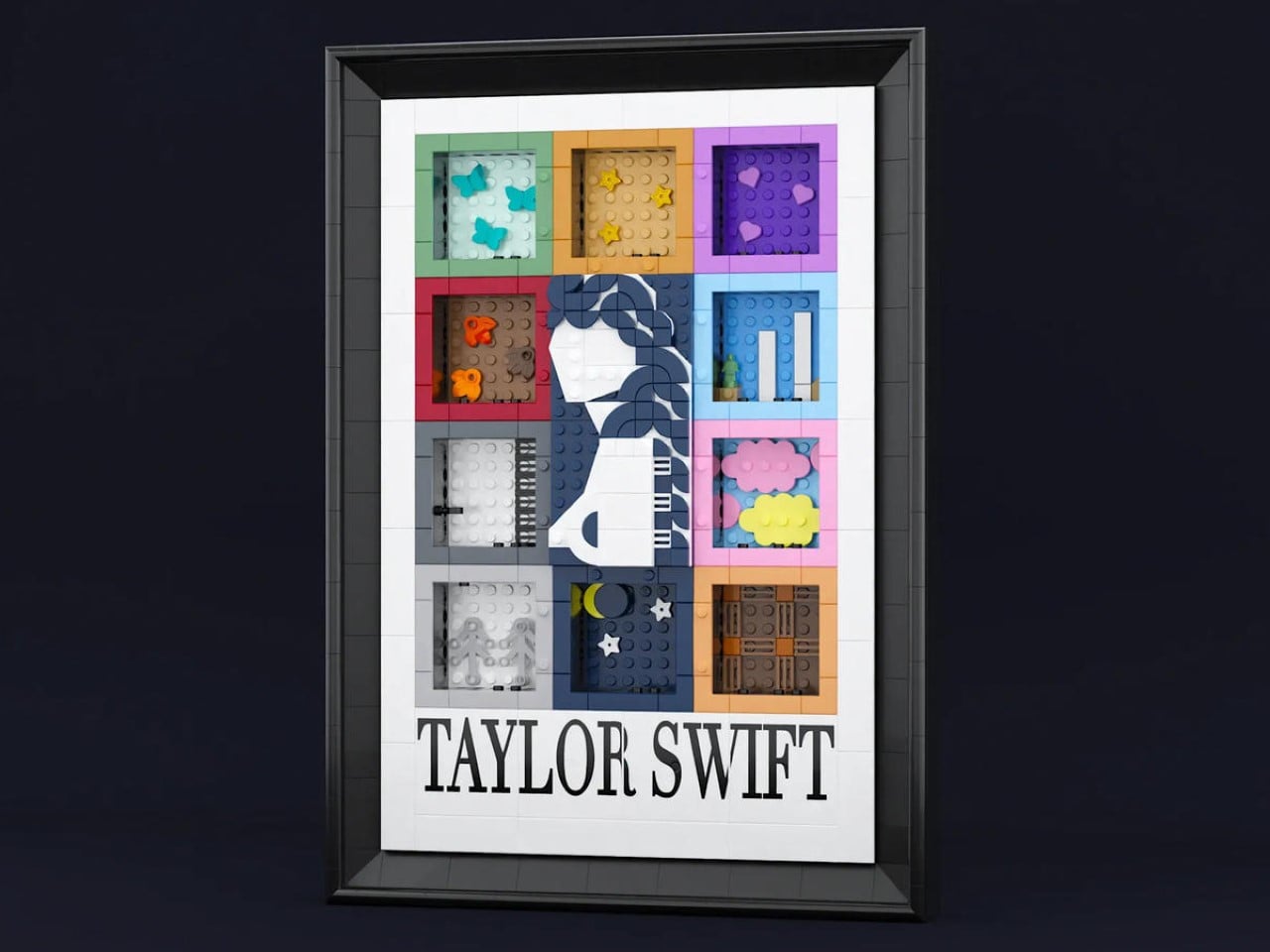
Now the richest woman in the music business (and the second richest musician lagging only behind Jay-Z), Taylor Swift deserves everything she’s attained. Sure, you might not love her music, you might not care for her entirely – but Taylor’s built an entire empire solely on her music skills. While other artists have diverged into building streaming platforms and record labels like Jay-Z, starting cosmetics businesses like Rihanna and Selena Gomez, or even working for fashion brands like Pharrell and Kanye West, Taylor’s net worth is SOLELY tied to her music. With her successful Eras Tour coming to a grand conclusion this year after 2 full years of back-to-back touring, it’s only fitting that she gets her own LEGO kit – even if it’s only fan-made. Designed by the folks at Minibrick Productions, the LEGO Ideas Eras Tour Poster is a seemingly flat piece of LEGO artwork modeled on the Eras Tour poster… but remove each individual thumbnail from the artwork and you’re greeted by a minifigure of Taylor dressed for that era! The poster contains 10 eras with 10 dedicated Taylor Swift minifigures.
The entire LEGO Ideas set comes made from 1,410 bricks, featuring a minimalist yet instantly recognizable depiction of the Eras poster. You’ve got all the eras on it, from Taylor’s debut album ‘Taylor Swift’ to the last album to debut before her tour, ‘Midnights’. It’s a fairly simple build, to be honest, with quite a few bricks going towards the artwork, as well as the frame. The result, however, is both intricate AND interactive, as pulling apart the thumbnail for any of the given eras reveals a tiny diorama featuring mama Swift herself.
The dioramas are all ‘taylor’-made to fit each era. It starts with her in her Teal dress for her debut album and era, moving onto icons like the casual outfit for Red, a black-donned Taylor with a snake for Reputation, Taylor in her iconic bodysuit for the Lover era, and the ‘bejeweled’ suit for Midnights. All the dioramas have tiny icons of the eras too, from clocks to guitars, snakes, and even the plaid pattern seen in the Evermore era.
“This brick-built poster will earn its rightful place on any LEGO lover and Swiftie’s wall!” says Minibrick Productions, who’s also responsible for other iconic LEGO sets like the LEGO Polaroid One-Step SX-70 camera, and even the LEGO Interstellar Miller’s Planet scene. Minibrick Productions’ current submission is gathering votes on the LEGO Ideas forum, where enthusiasts can vote for their favorite fan-made creations. With nearly 6,000 votes as of writing this, the LEGO Ideas Taylor Swift Eras Poster is well on its way to hitting the 10,000 vote mark, following which it’ll be reviewed by LEGO’s internal team and hopefully turned into an official box-set! If you’d like to see that happen, cast your vote on the LEGO Ideas website now!
The year, 1936. The Allied powers were facing certain defeat at the hands of a vastly more powerful and capable Germany, which had developed the Enigma Machine to send encrypted messages during the 2nd World War. Alan Turing, an English mathematician, was tasked with cracking the Enigma code to help the British decode Germany’s messages. If you’ve seen the 2014 thriller The Imitation Game, you’re familiar with how Alan Turing ended up building essentially the world’s first computer (if you haven’t seen the film I highly recommend it). The Turing Machine was the theoretical predecessor to that computer (called the Bombe), which helped the Allied powers win World War II. Turing machines theoretically describe any machine capable of processing algorithms, and while you’d expect these machines to be fairly advanced – a LEGO genius managed to build the first operational Turing Machine entirely using LEGO bricks. No no… this isn’t a sculpture or decorative model of a Turing Machine, it’s an actual device capable of ‘computing’ algorithms – and here’s the kicker – it does so without electricity.
Designer: The Bananaman
The concept behind the Turing Machine might feel like it’s pulled straight from a cryptographer’s textbook, but this model makes it strikingly tangible. The idea is simple yet profound: a machine that can compute any algorithm, as long as it’s provided with the right instructions. Turing’s original concept relied on a tape, infinitely long in theory, with symbols written on it. The LEGO version mimics this setup with a physical tape and a moveable “head” that reads, writes, and moves across the tape based on the machine’s current state. There are four possible symbols and eight possible states, which gives us 32 potential symbol-state combinations. The instructions for each combination are packed into 7 bits, taking up 224 bits overall. For context, that’s 14 bytes—a strikingly small memory footprint in the world of modern computing, yet capable of running nearly limitless programs.
What’s truly fascinating here is how the model works entirely without electricity. This is a purely mechanical construction, powered by the simplest of human inputs: turning a crank. The intricate system of gears and linkages drives the machine’s operations, enabling the head to move, read symbols, and switch states according to the instructions. Over 2,900 LEGO pieces come together to make this possible, most of which contribute to the functionality or structural integrity of the build. Each piece plays a part, whether it’s part of the working system or providing crucial support to ensure that the delicate mechanisms remain precise.
The LEGO Ideas Turing Machine is an intriguing blend of play and education. On one hand, it’s an engaging mechanical puzzle, but on the other, it’s a powerful tool for learning. By simulating Turing’s model, users can experiment with basic computational programs and see first-hand how the machine processes information. It bridges the gap between abstract computational theory and real-world interaction, offering a hands-on approach to understanding the origins of modern computing. It’s a feat of design engineering that stays true to Turing’s vision while making it approachable for a modern audience, using the universally beloved medium of LEGO.
At nearly 3,000 pieces, the LEGO Ideas Turing Machine pushes the boundaries of what’s possible within the LEGO Ideas format, but it remains entirely purposeful. The sheer complexity of the build is undeniable, but so is its elegance. The model’s mechanical design requires both precision and durability, meaning many of the pieces are dedicated to supporting the delicate balance between function and form. It’s a model that feels like an achievement both in what it does and how it does it, all while maintaining a visually compelling and structurally sound design.
For designers and tech enthusiasts alike, the LEGO Ideas Turing Machine offers a rare opportunity to dive into a physical representation of one of the most significant developments in computational history. It’s currently a fan-made build on the LEGO Ideas website – an online forum for enthusiasts to share their creations, with the entire community voting for their favorite ones. With over 3,600 votes, this particular MOC (My Own Creation) is well on its way to hitting the 10,000 vote mark, following which the entry will be reviewed by LEGO’s internal team and hopefully turned into a box set that people can buy and build. It would make a phenomenal STEM toy, wouldn’t it?! You can vote for the LEGO Ideas Turing Machine on the LEGO Ideas website here.