Bugatti’s Iconic C Line Just Got Replaced by a U in This Fan Concept

Bugatti’s most famous design trick started life as a paint border. The company says the Bugatti line, that big C carved into the side of the Veyron and Chiron, was inspired by the color split lines on the Type 41 Royale. So a multimillion-dollar identity began with someone deciding where one color should stop. I find that charming, because it makes the brand’s signature move basically very fancy masking tape. The Tourbillon has since wedged the line forward, but it’s still a C at heart.

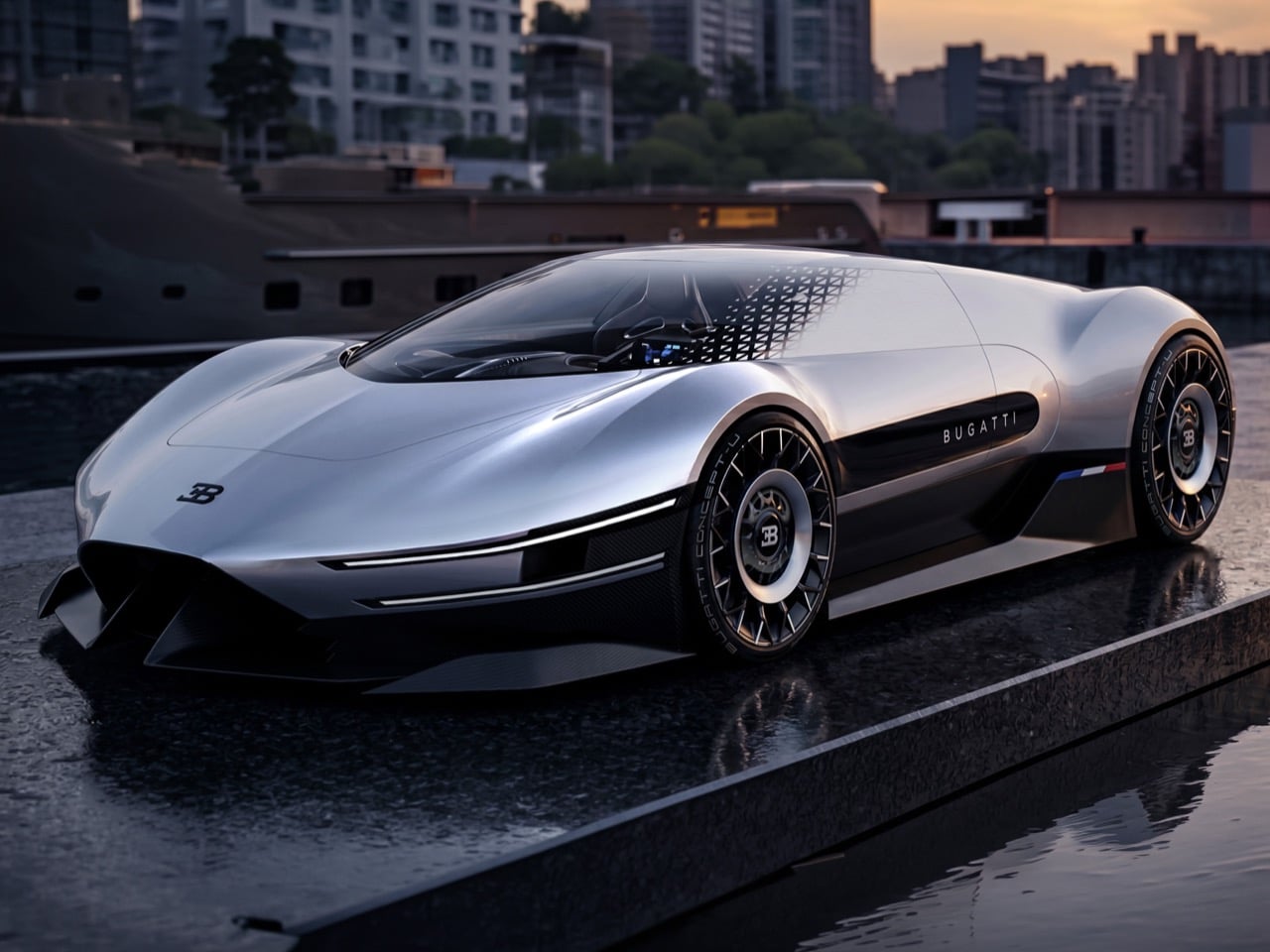
Designer Jenphy Zheng Jianhui looked at that C and wondered what happens if you trade it for a U. The result is Bugatti Concept-U, a personal project he posted on Behance on June 10, 2026. It started as a pile of sketches, moved into a Blender rough model, and ended up as a full set of glossy renders. Bugatti never asked for any of it. The fun part is that it still looks like a Bugatti from fifty feet away, which is the real test for a fan concept.

Designer: Jenphy Zheng Jianhui

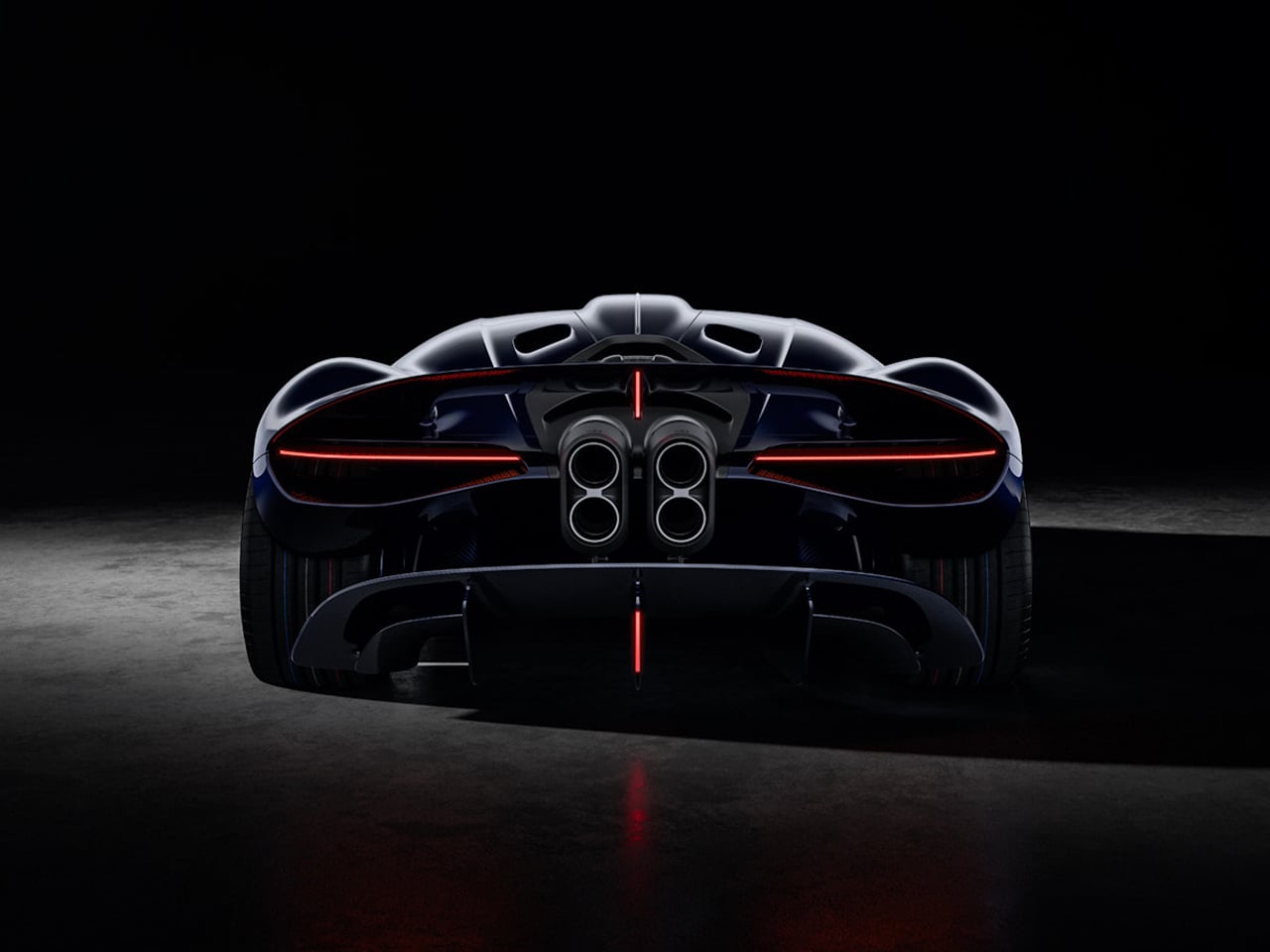
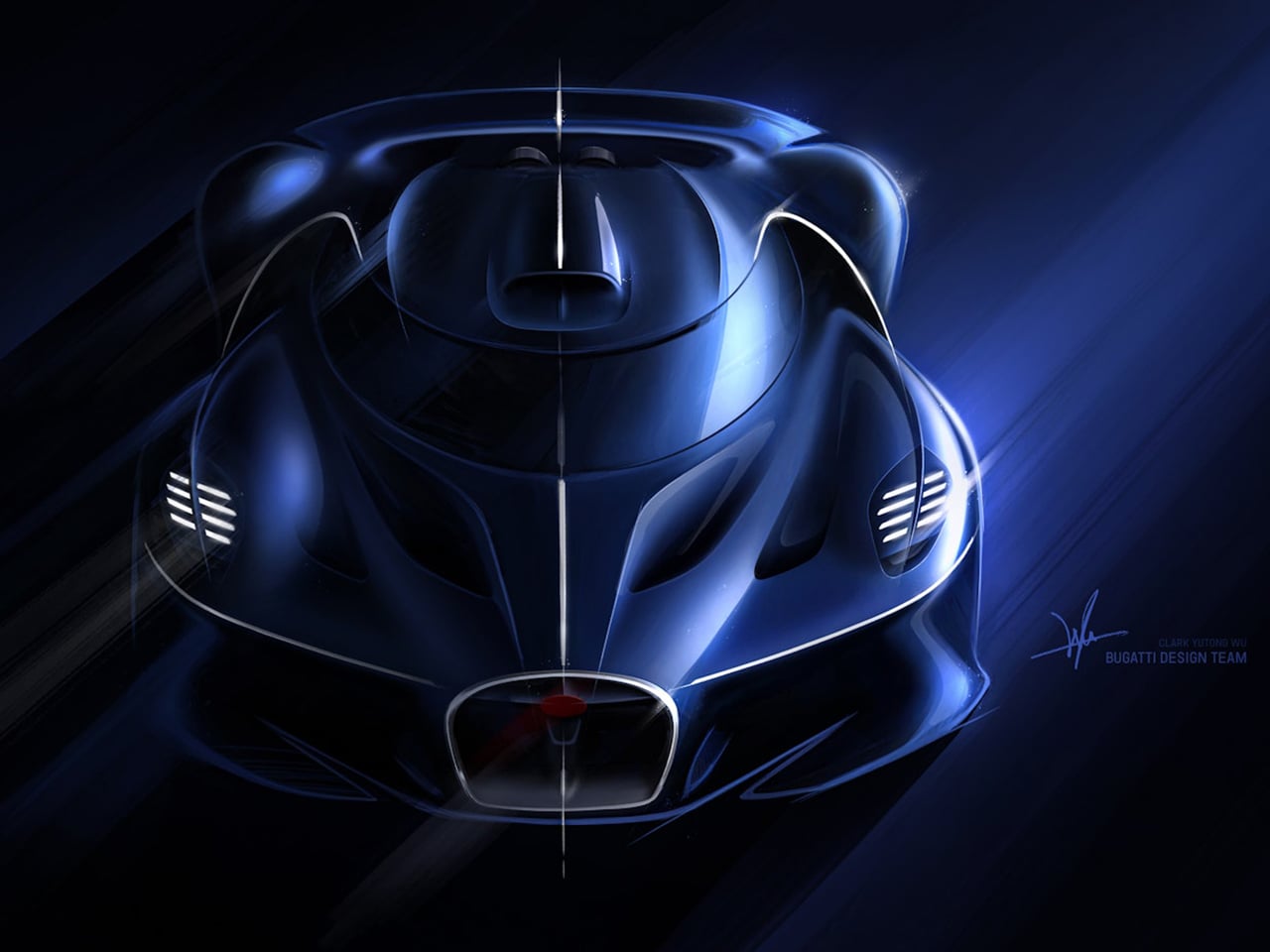
Here’s my confession: I can’t find the U from the side. Look at the car from above and it clicks, with a smooth tub that wraps around an open rear and shows off the engine like a display case. The frame sketches back it up, with two U-shaped structures joined together. That open rear is the car’s best trick, since most hypercars hide their hardware under a lid. The U may hide in profile, but the engine display gets my vote.

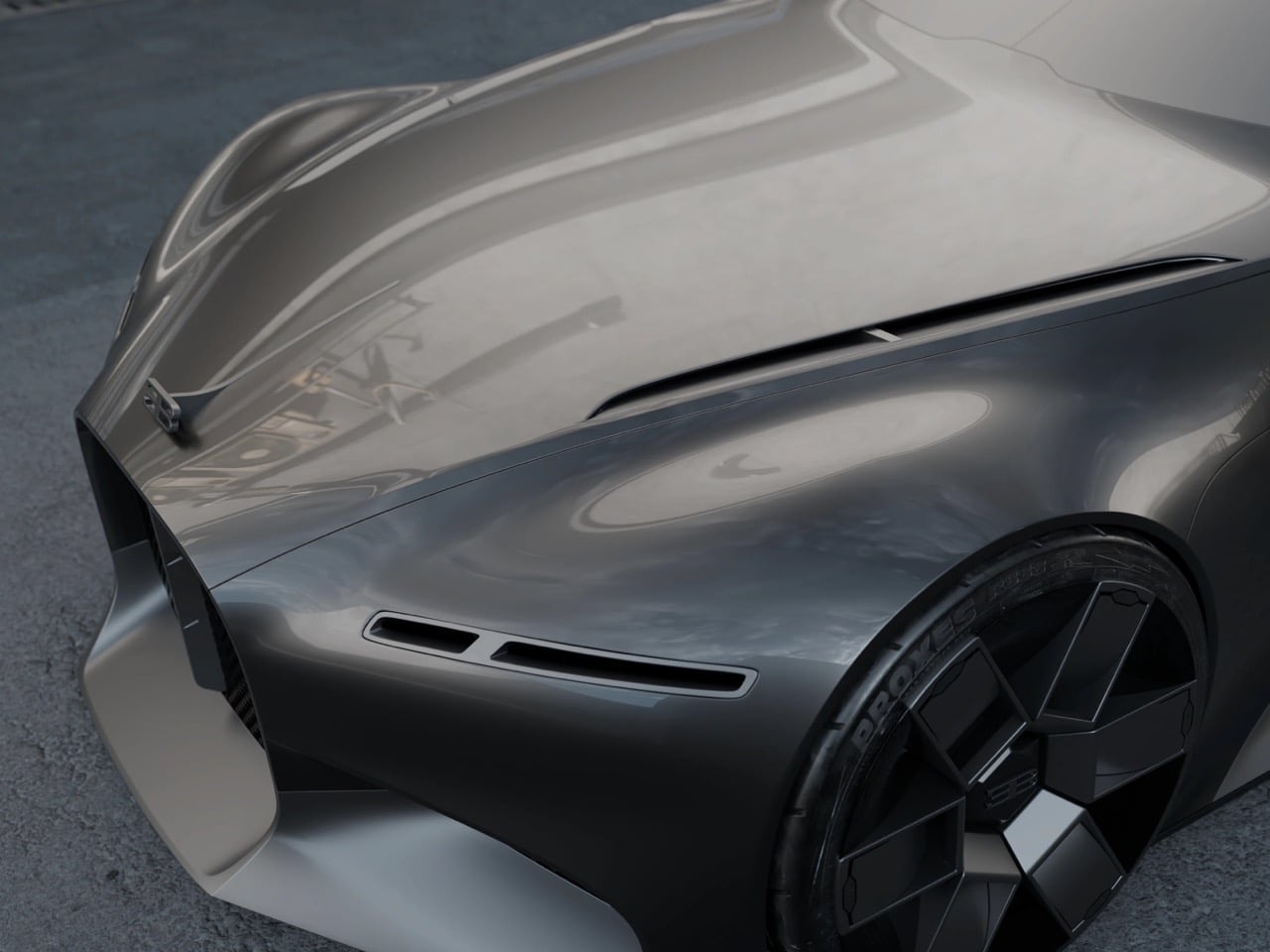
From the side, this is pure EB110. The designer’s own caption says the stance comes from that 1990s Bugatti, with an extremely low front end and a very short rear overhang. The EB110 helped bring the brand back from dormancy, though it never became a sales hit. Concept-U keeps that low nose and tucked tail but melts everything into one smooth silver surface. Up front, the nose scoops down into little splitter fins, with slim light bars wrapped across the face. It looks fast while parked, which is rude.

The vintage cues come from the Type 57SC Atlantic. The designer says the raised front fenders, flowing back from the grille and hood, continue that car’s language, and the tail borrows its symmetry with a central split down the middle. The Atlantic’s riveted dorsal seam exists because the body material couldn’t be welded, and only four cars were built. One vanished around World War II, which inspired the black one-off La Voiture Noire. Concept-U skips the rivets and keeps the symmetry, which is a smart way to say the same thing.

The small stuff is where this project has the most fun. A black capsule inlay with the Bugatti name runs along the flank, like a very fancy name tag. The wheels get a four-layer breakdown with a low-drag transparent cover, using a 57SC wheel as the reference. The headlights are labeled a “double lightsaber module” and drawn as an exploded stack of lens, crystal, and frame. I’d happily read a whole comic book about that headlight. Even the tire sidewalls print the project name, which is a designer’s wink.

The final renders go full museum field trip. The car parks beside a black Type 57 coupe, then a blue Grand Prix racer, then shows up in French racing blue wearing number 34, a nod to the 1994 Le Mans EB110. A Centodieci owner commissioned that exact livery on a real car, so the idea has street cred. The photoreal scenes look AI-assisted to me, since the sponsor lettering turns into gibberish up close. Still, seeing the car sit next to its ancestors is a neat way to argue it belongs in the family.

Concept-U joins a nice little run of fan love for the marque, including Type Sigma, Edouard Suzeau’s take on the Atlantic as pure sculpture. Where Sigma goes smooth and floaty, this one goes for structure, with an engine on display and a frame you can actually read. I can’t say the U jumps out at me, but the car around it works. It pulls pieces from three eras and still looks like it rolled out of Molsheim. I guess the most important letter here is still the B sitting on the hood, am I right?

The post Bugatti’s Iconic C Line Just Got Replaced by a U in This Fan Concept first appeared on Yanko Design.

Bugatti Residences Miami Is the Most Ambitious Branded Tower to Ever Hit the Miami River

Bugatti has never done anything quietly — and its first American residential project is no exception. On the Miami River, Brandon Haw Architecture is designing a 60-story tower that carries the weight of one of the most storied names in automotive history, and the pressure to deliver is very much part of the brief.

Bugatti Residences Miami is the French marque’s first foray into the American residential market, following the announcement of its Dubai skyscraper in 2023. The site sits at 75 SW Miami Avenue Road in Brickell, commanding over 300 feet of Miami River frontage with sight lines toward Biscayne Bay. Developed by Prosper Group and Belgium’s Versluys Group, the $650 million tower will house 183 residences and four signature penthouses — a deliberately limited collection that keeps the exclusivity intact.

Designer: Brandon Haw Architecture

What Brandon Haw Architecture has pulled off visually is genuinely interesting. The tower is split into four distinct blocks with double-height spaces punctuating the vertical stack — a move that breaks the monotony of the typical glass curtain-wall high-rise and gives the building a sculptural, segmented rhythm that reads as kinetic from the street. The formal language draws from Bugatti’s C-line motif, a design element that has appeared on the brand’s cars since the 1930s, reinterpreted here in the building’s profile and detailing rather than applied as decorative branding.

Inside, Yabu Pushelberg handles the interiors — a pairing that makes immediate sense. The Toronto and New York-based studio brings a sensibility that is simultaneously refined and spatially generous, qualities that align with what Bugatti’s residential arm is chasing. According to Bugatti International managing director Wiebke Ståhl, the vision extends well beyond aesthetics: “every aspect, from exquisite design to seamless service and operations” is considered part of the experience. Rhodium has been named the residential operating partner, reinforcing that the project is being built as much around lifestyle delivery as an architectural statement.

What makes this project worth watching isn’t the brand name — it’s the combination of players. Brandon Haw Architecture has shown a consistent ability to work at the intersection of high design and urban context, and Miami’s river corridor is one of the few remaining sites in the city with genuine spatial drama. The Brickell location gives residents immediate access to one of Miami’s most active neighborhoods, but the river sets a different tempo — quieter, more considered, more architectural.

The residential offering is expected to launch in 2027. Between now and then, the anticipation alone will do exactly what Bugatti has always understood: make people wait for something worth waiting for.

The post Bugatti Residences Miami Is the Most Ambitious Branded Tower to Ever Hit the Miami River first appeared on Yanko Design.

Bugatti Destrier shaves off Bolide’s bodywork for a one-off hypercar meant to be felt with the heart

Bugatti had set a high benchmark with the track-only Bolide, released in 2020, and was later followed by the Brouillard and F.K.P. Hommage. Now, as a part of the French marque’s bespoke Solitaire programme, a new coachbuilding performance car has emerged inspired by the Type 57G and Type 57C Tank. Adapting the same carbon-fiber monocoque as the Bolide, the machine, christened Destrier (after a medieval warhorse), has a flatter front end to shed the performance hypercar image.

The grille on this new beauty has gone wider, and the LED headlights get a more 2026 aesthetic. In fact, from the side profile, the car gives off a longtail vibe, extenuated by the massive flared wheel arches on the C-line. That wing and splitter on the Bolide have been stripped away to make it road legal, a more toned-down version of the original. That said, the 8.0-litre quad-turbocharged W16 engine (producing 1,600 PS), the mechanical heart, has been retained to have the same performance.

Designer: Bugatti

Destrier was unveiled online just before its slated global public appearance on August 16, 2026, at the Pebble Beach Concours d’Elegance. At first glance, the hypercar’s shaved-off bodywork is evident, giving it a streamlined waistline curving inwards behind the forward-hinged doors, and then again widening out at the rear with a muscular tone. Just 1 meter tall, the hypercar’s cabin is sandwiched between the front wings and the bigger wheels measuring 20 inches up front and 21 inches on the back. Clearly this one is meant for purists who are not going to complain about the difficulty of getting in. According to Bugatti’s Director of Design, Frank Heyl: “Destrier is not a car you understand with your head; it is a car you feel with your heart.”

A chrome trim goes across the bonnet and onto the roof at the back, followed by a wing-shaped spoiler positioned above the skinny taillights. Complementing the muscular rear is the large diffuser with four exhausts. Highlight among all this mesmerizing aura is the Sapphire Celeste paintwork, which is produced in multiple layers to achieve a diamond sparkle that changes color depending on the ambient light falling on it. Aluminum parts on the car stand out against the bodywork, and the engine compartment is completely hand-hammered to give the medieval plate armor finish. This supports the brand’s claim that “Destrier’s story is one of proportion and craftsmanship, not outright performance.”

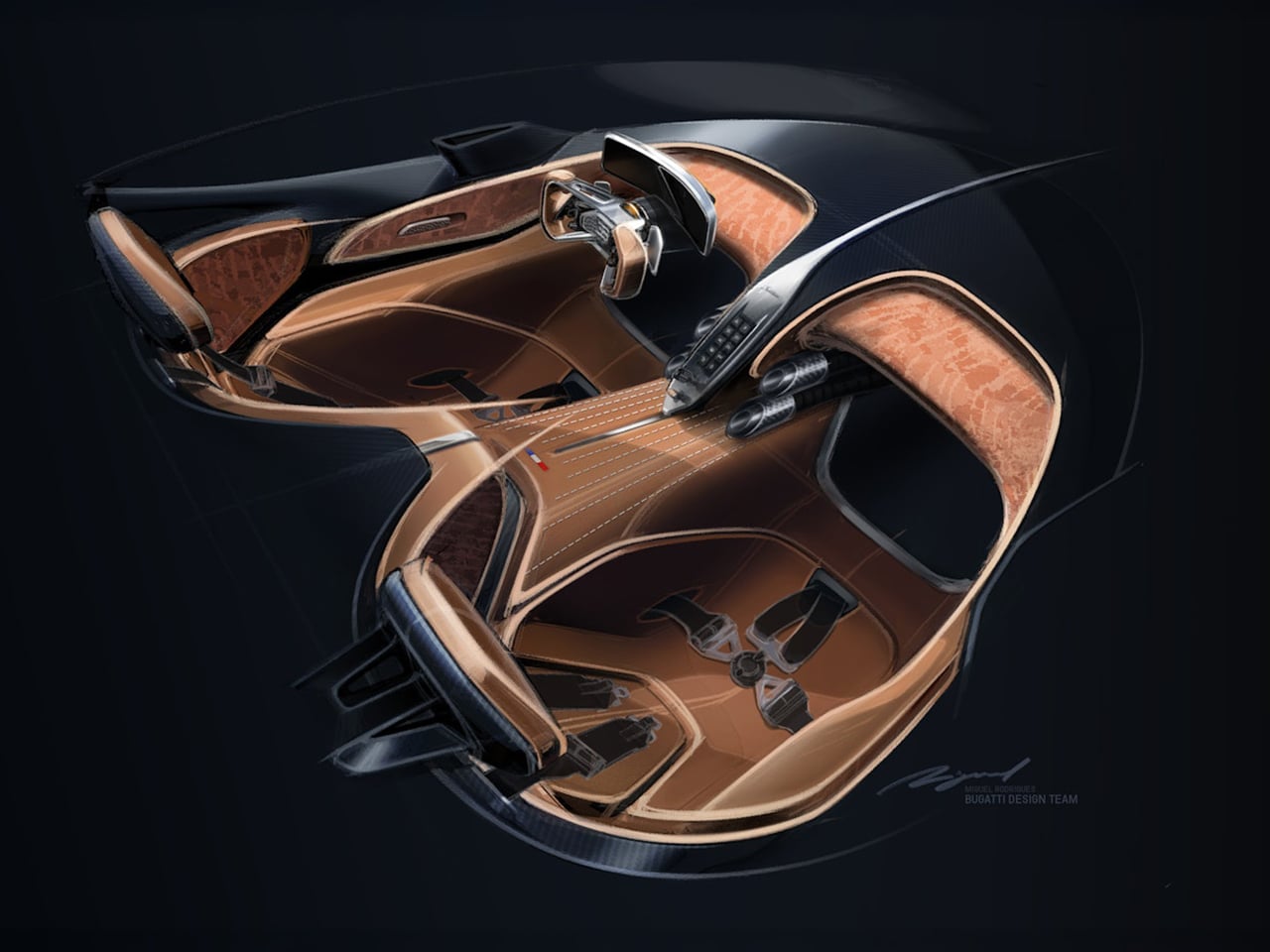
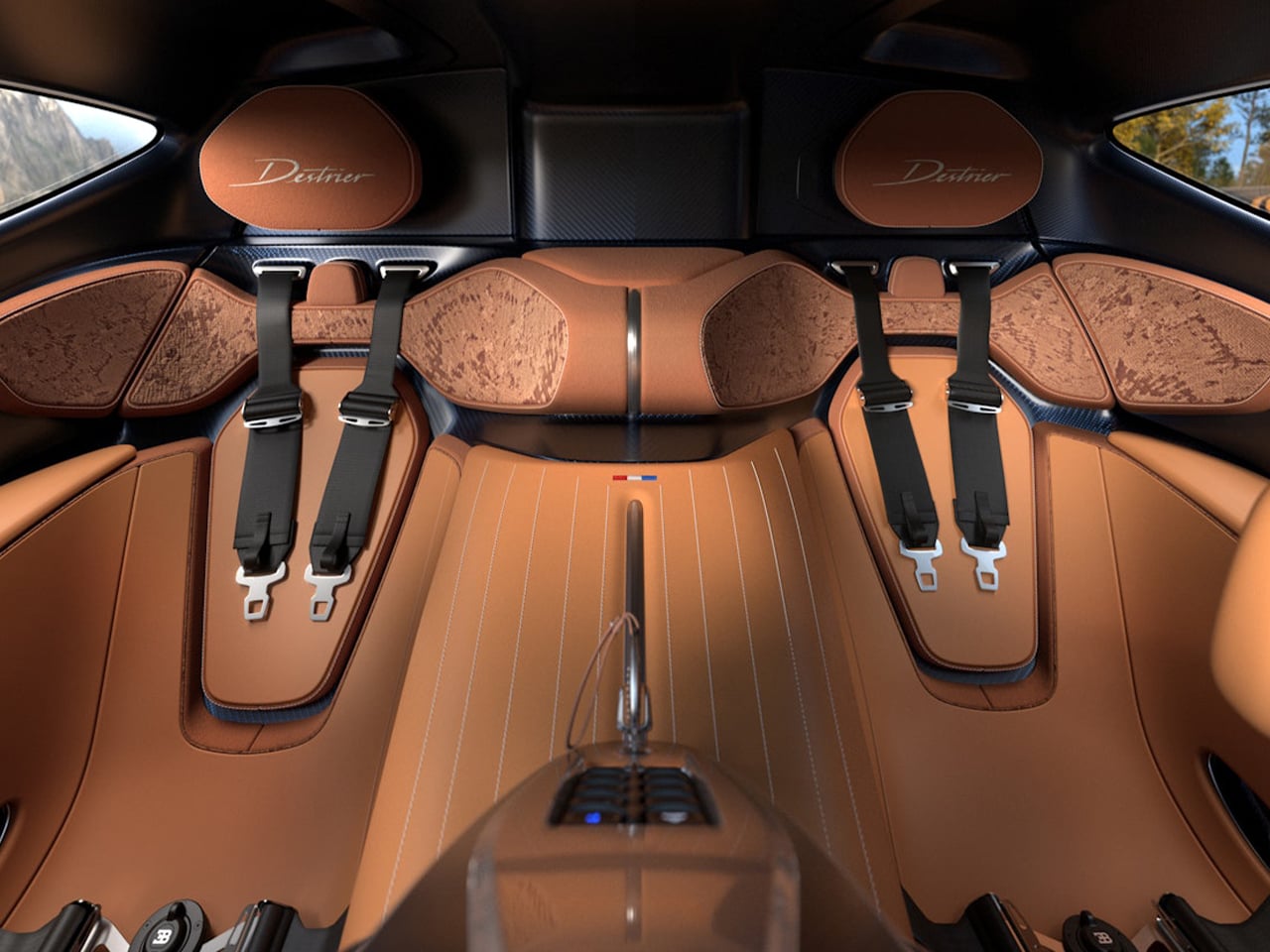
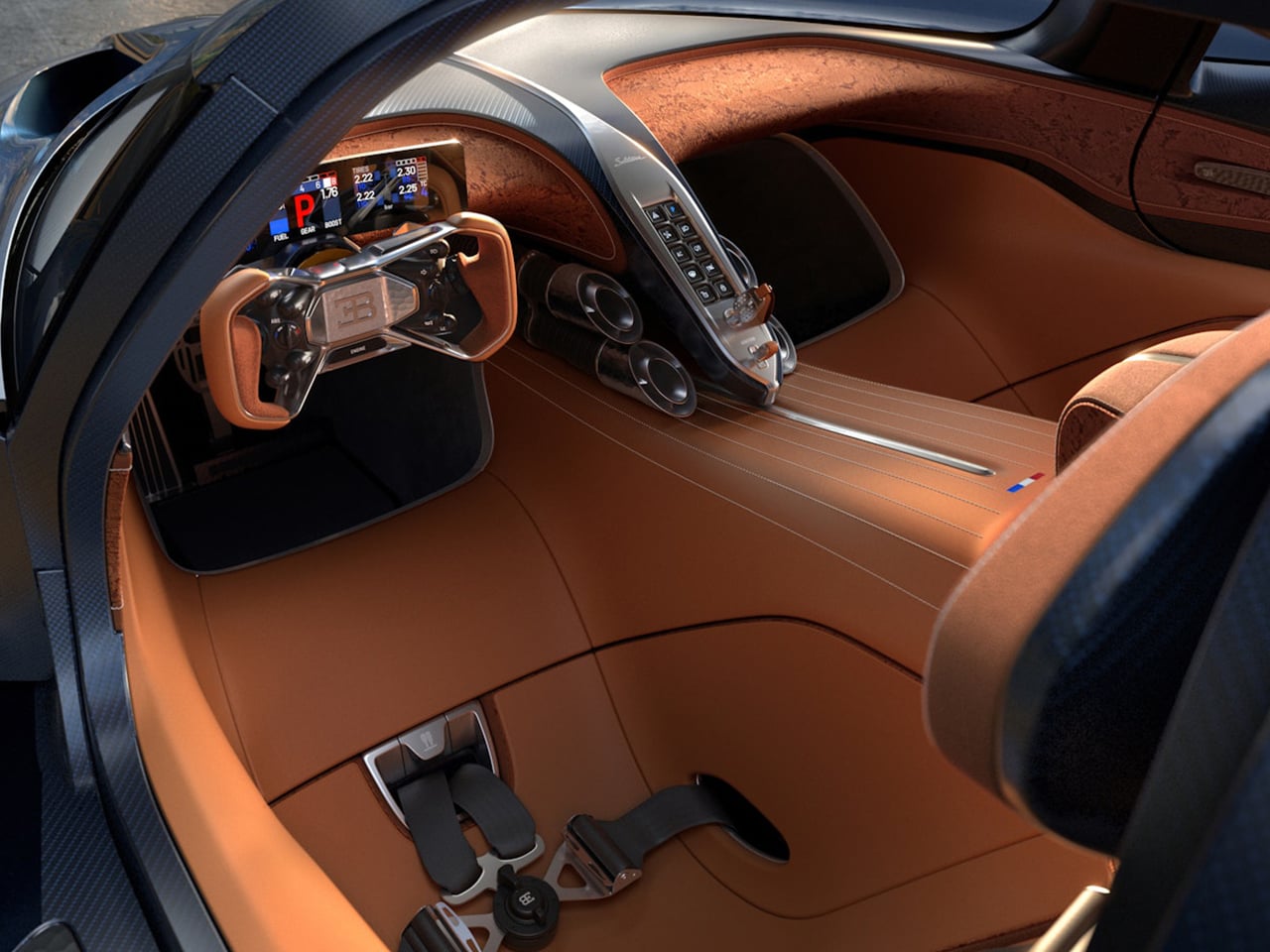
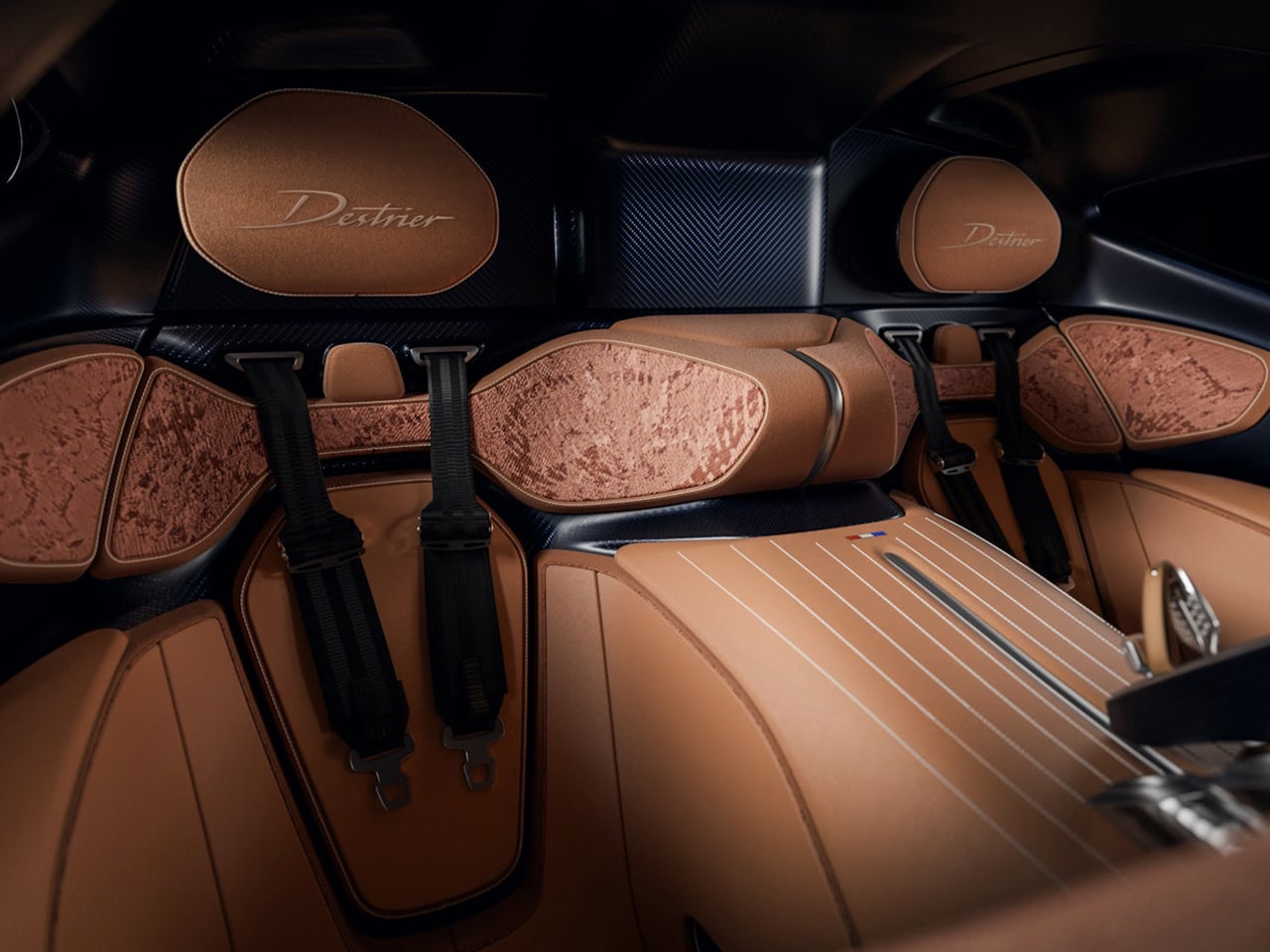
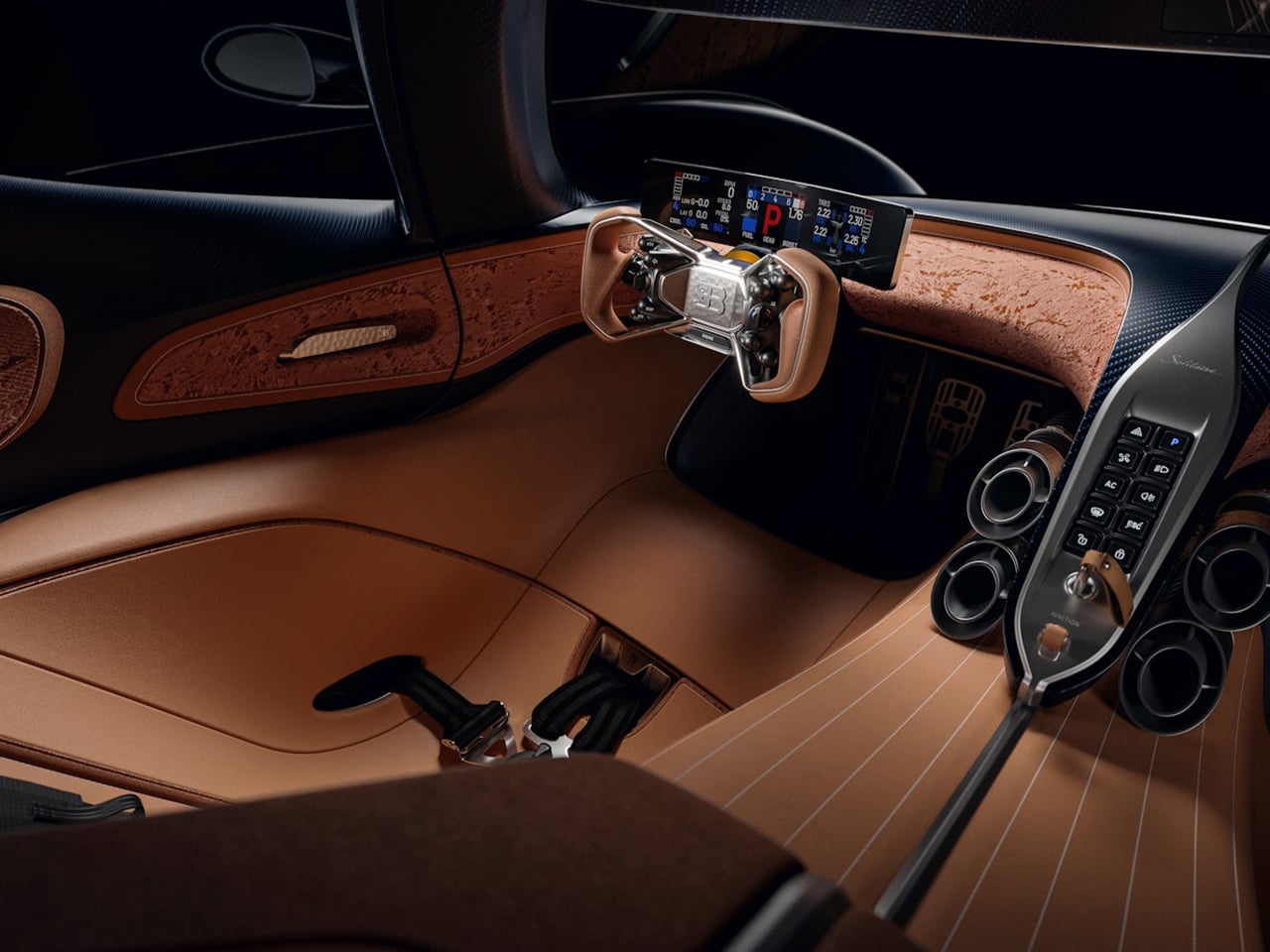
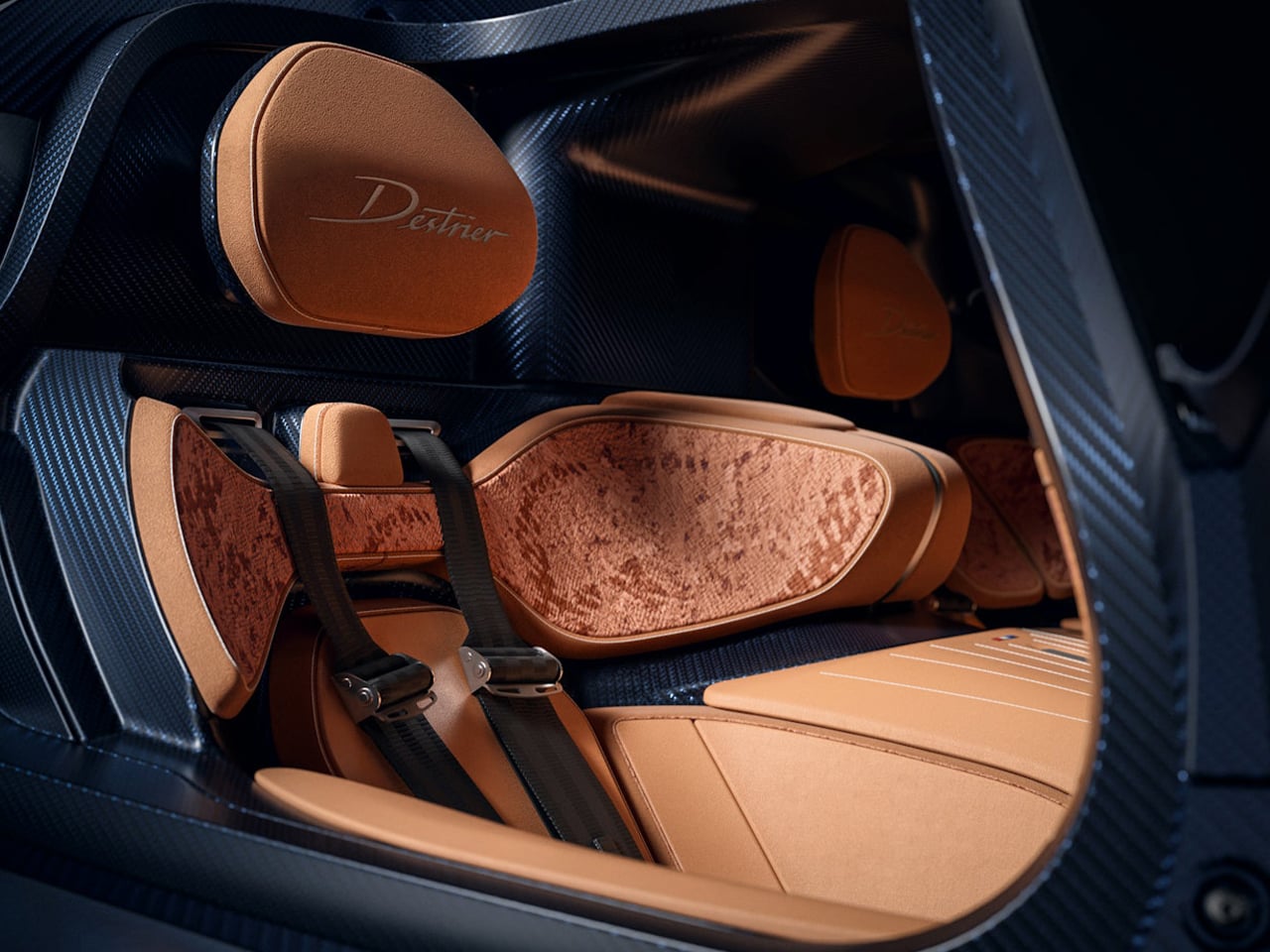
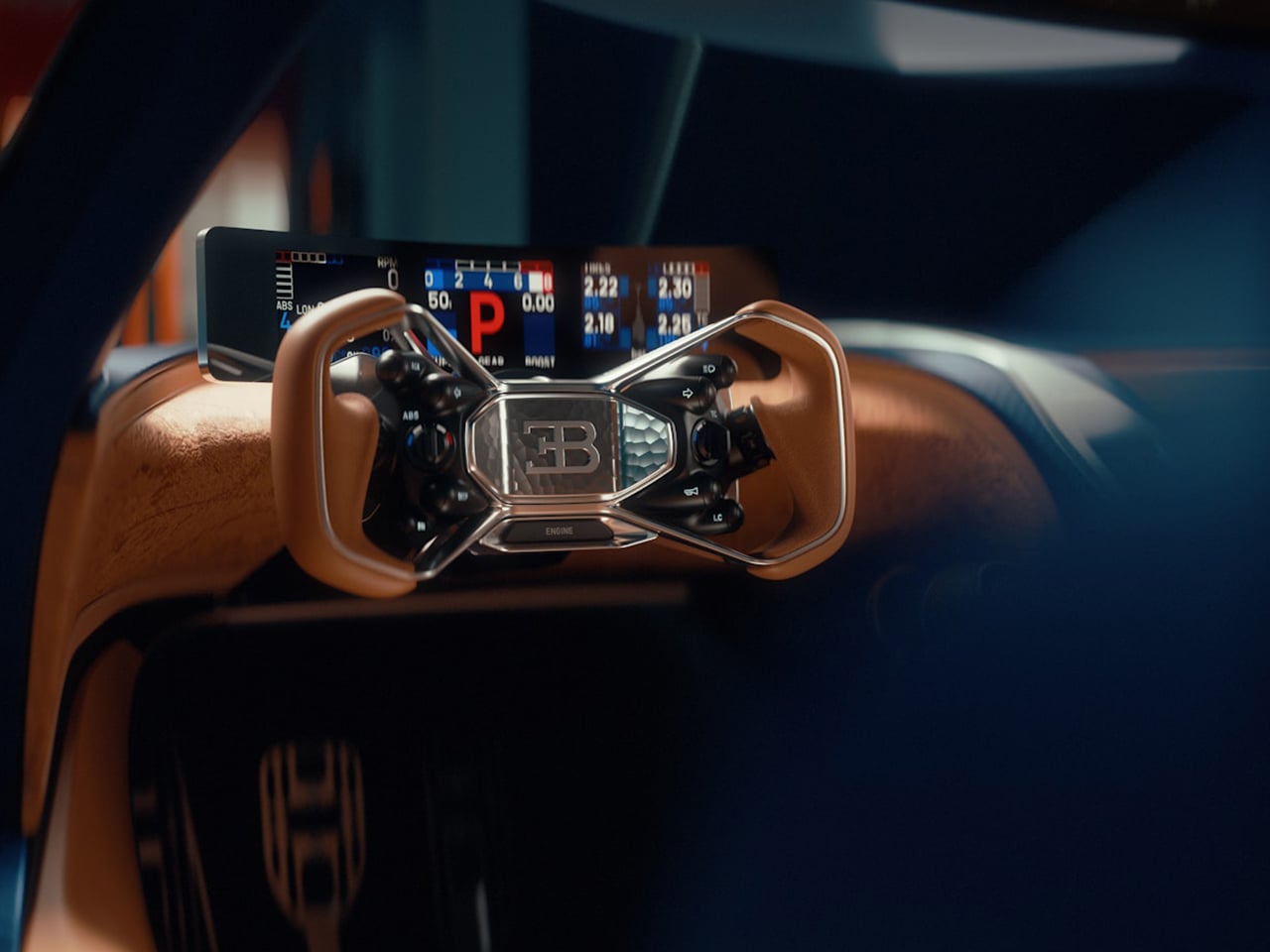
Move to the inside, and the motorsport cockpit is quite fashion-forward, contrasting the crystalline exterior. The attention to detail is apparent from the advanced 3D-knitted technical fabric resembling snake skin, paired with the smooth leather and velvety nubuck, both finished in warm brown Ambre Voyageur shade. The flying yoke-style steering wheel is paired with the infotainment system that is a part of the single large screen offering relevant information, both for driving and entertainment when parked. There’s no word on the price yet, but considering the Bolide costs $4.8 million each for the 40 limited edition models, this one could cost a couple of million more!

The post Bugatti Destrier shaves off Bolide’s bodywork for a one-off hypercar meant to be felt with the heart first appeared on Yanko Design.

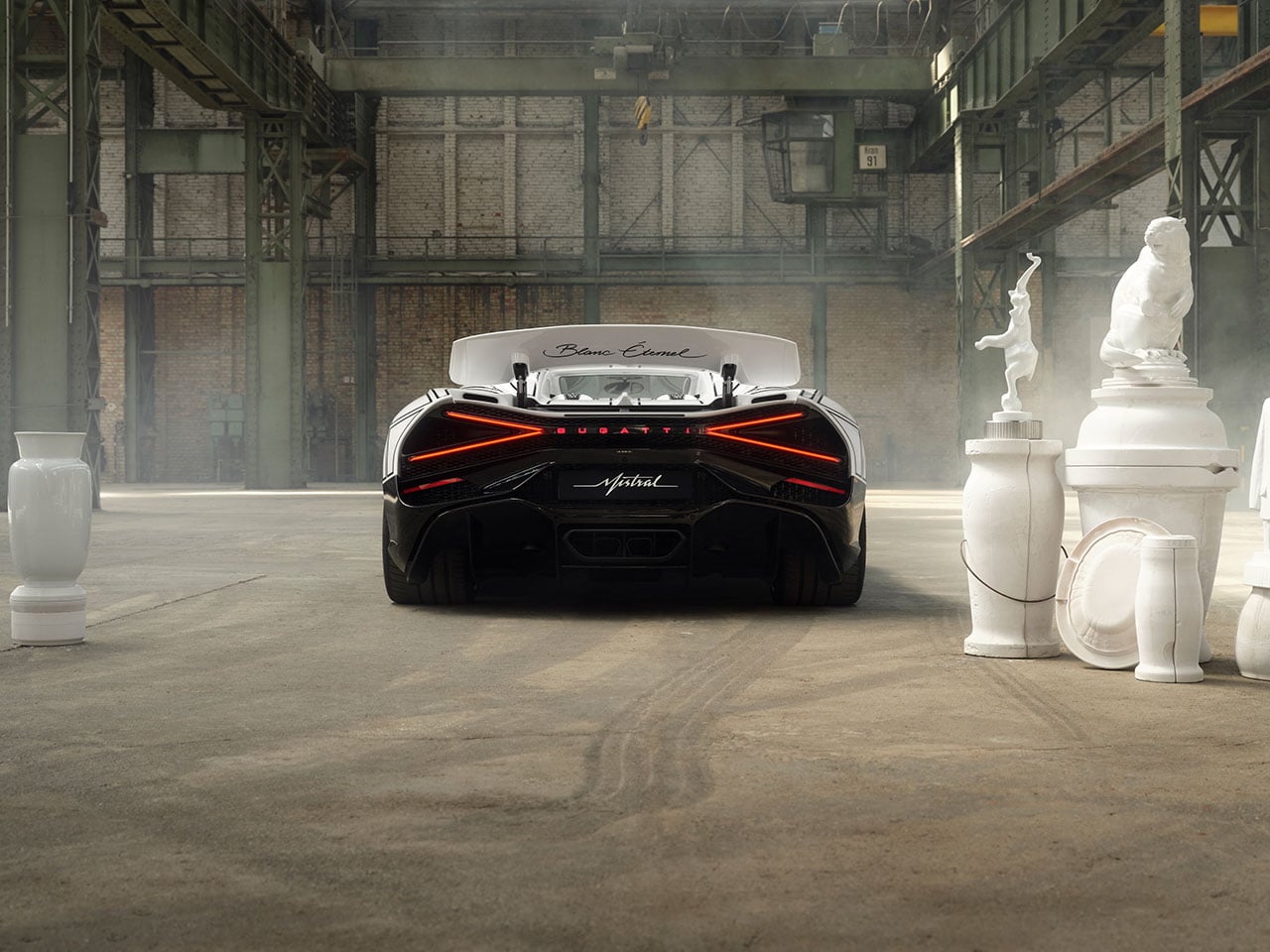
Bugatti’s one-off W16 Mistral Blanc Éternel is a 1,578-HP hypercar wrapped in royal porcelain

For Bugatti, one-off commissions have long been an opportunity to blur the line between automotive engineering and collectible art. From the porcelain-adorned Veyron L’Or Blanc to today’s bespoke Sur Mesure creations, the French marque has repeatedly demonstrated that its hypercars can be canvases for extraordinary craftsmanship. The new W16 Mistral Blanc Éternel continues that legacy while serving as one of the most distinctive tributes yet to Bugatti’s legendary W16 engine.

Created as a one-of-one commission through Bugatti’s Sur Mesure personalization program, the Blanc Éternel reunites the automaker with Königliche Porzellan-Manufaktur Berlin (KPM), the historic porcelain manufacturer it first partnered with in 2011 for the Veyron Grand Sport L’Or Blanc. Rather than revisiting the flowing cobalt-blue artwork that defined the earlier car, Bugatti has embraced a contemporary interpretation inspired by the digital modeling process behind its latest hypercars.

Designer: Bugatti

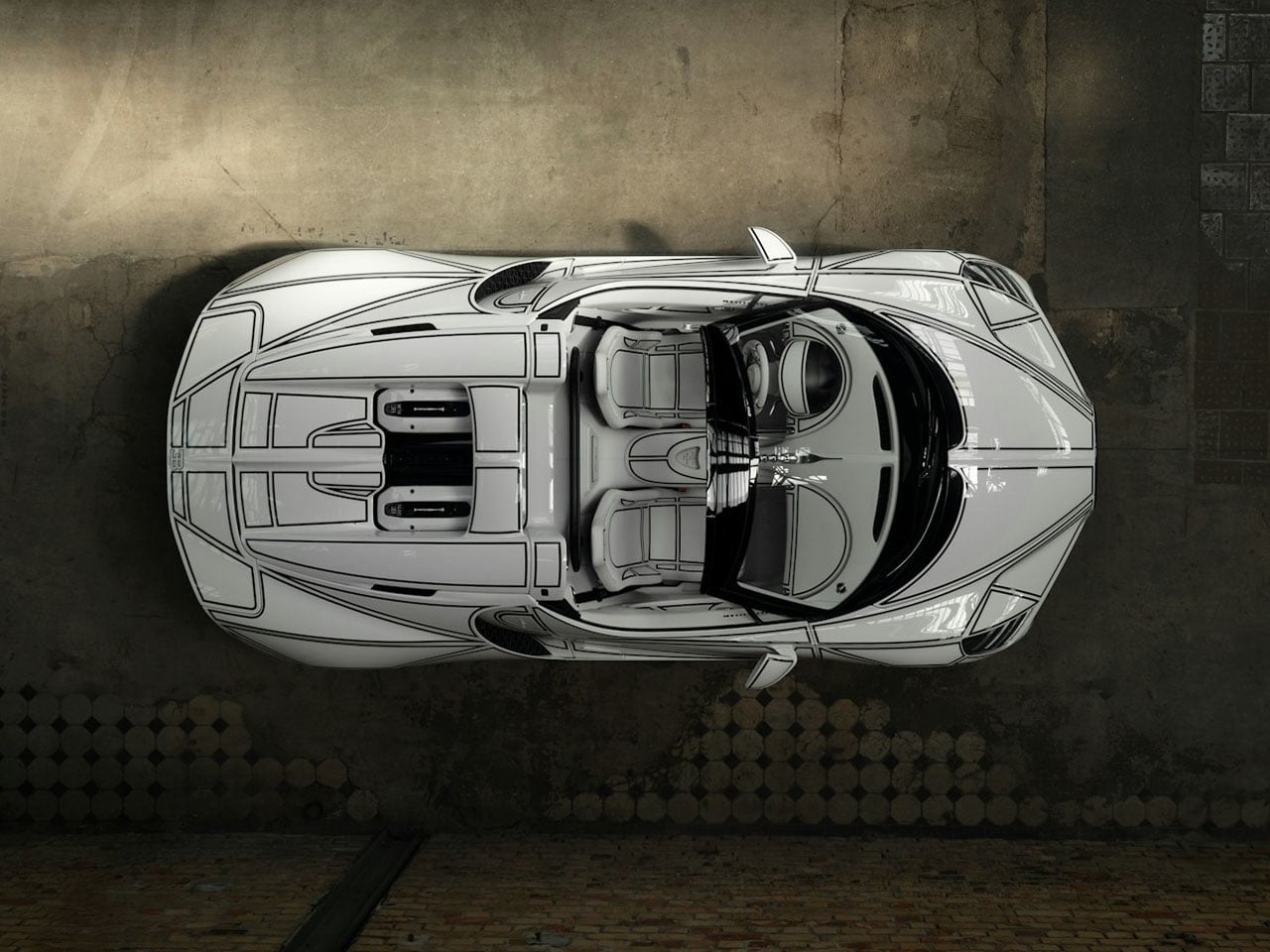
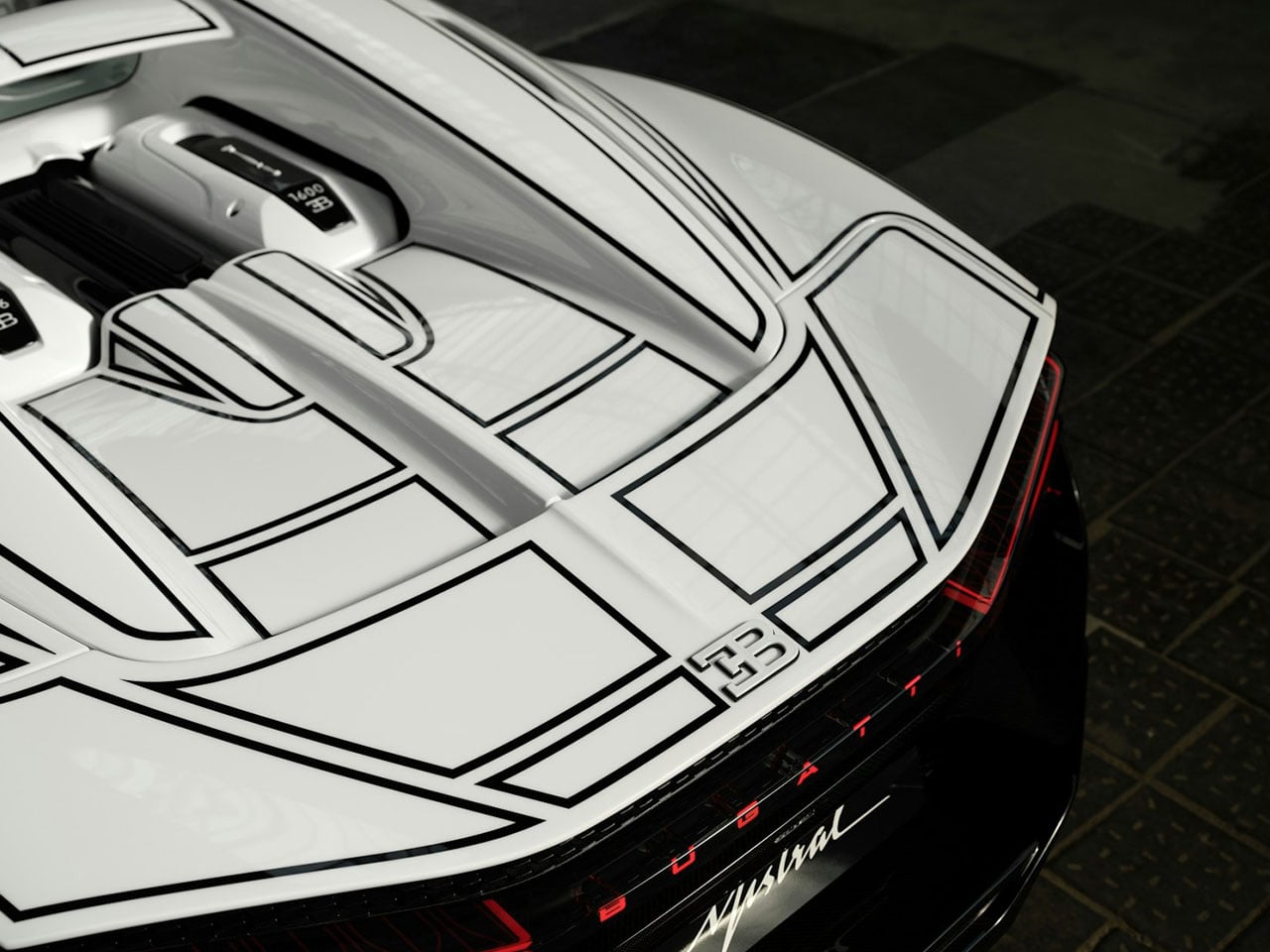
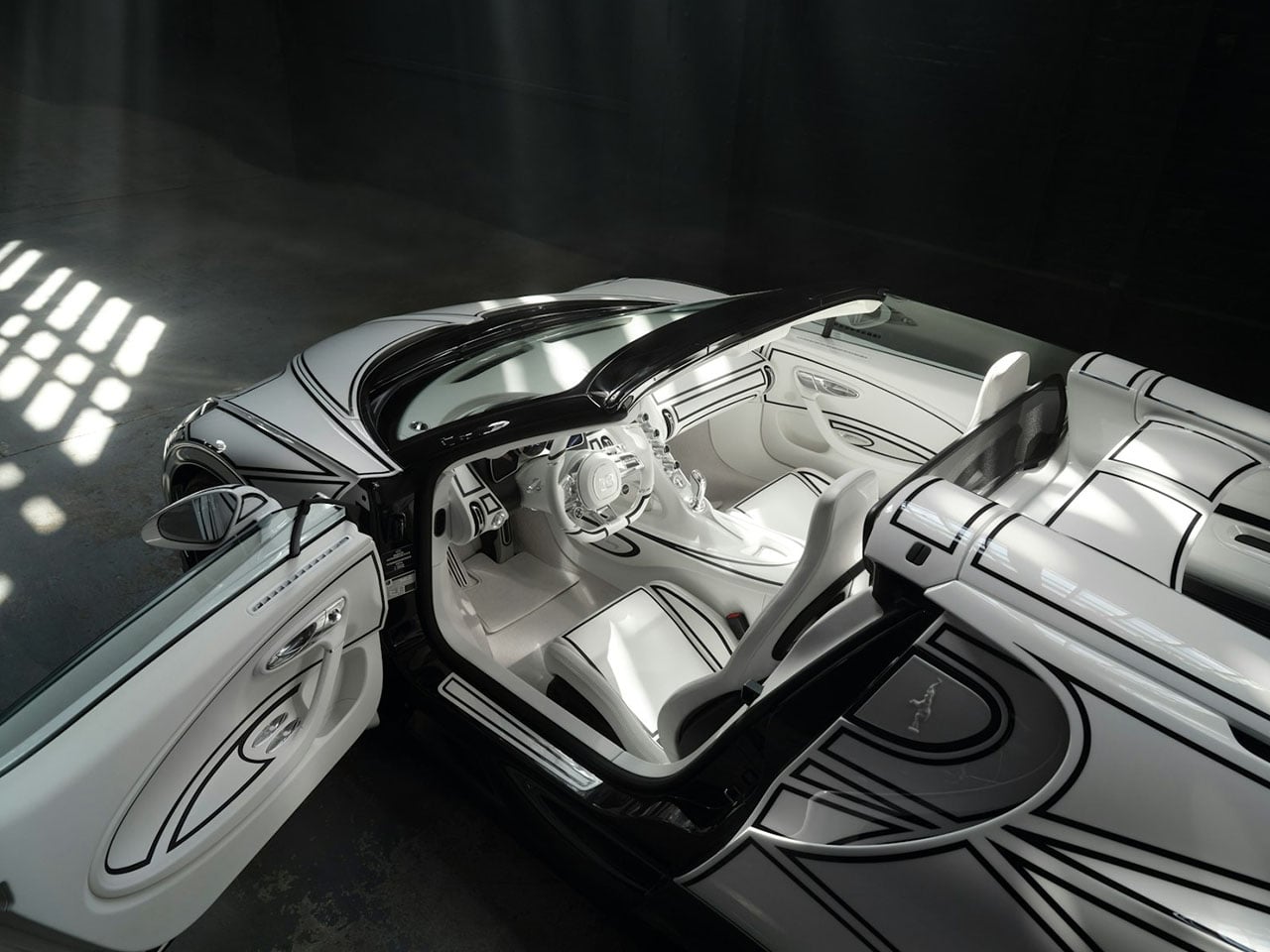
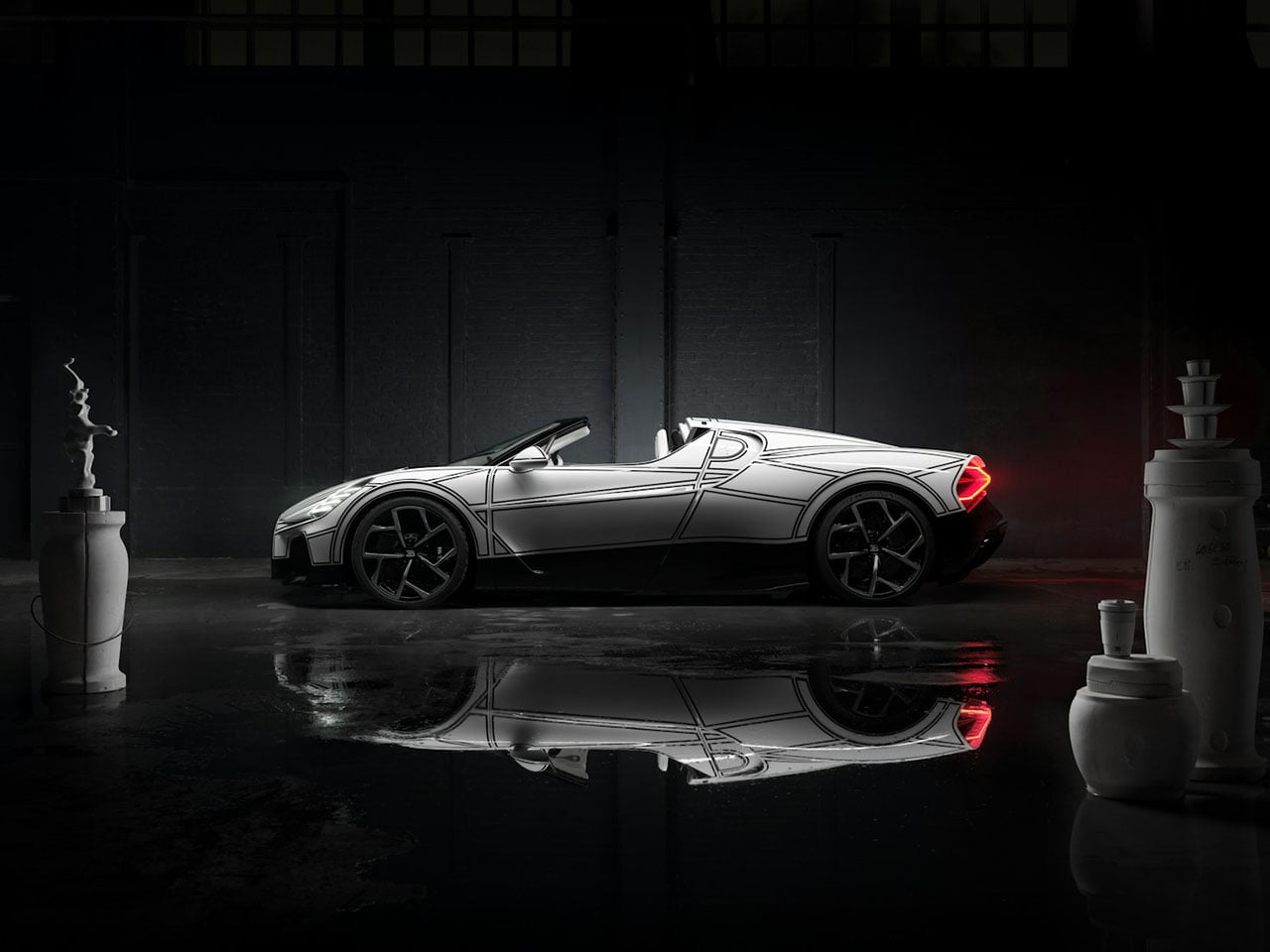
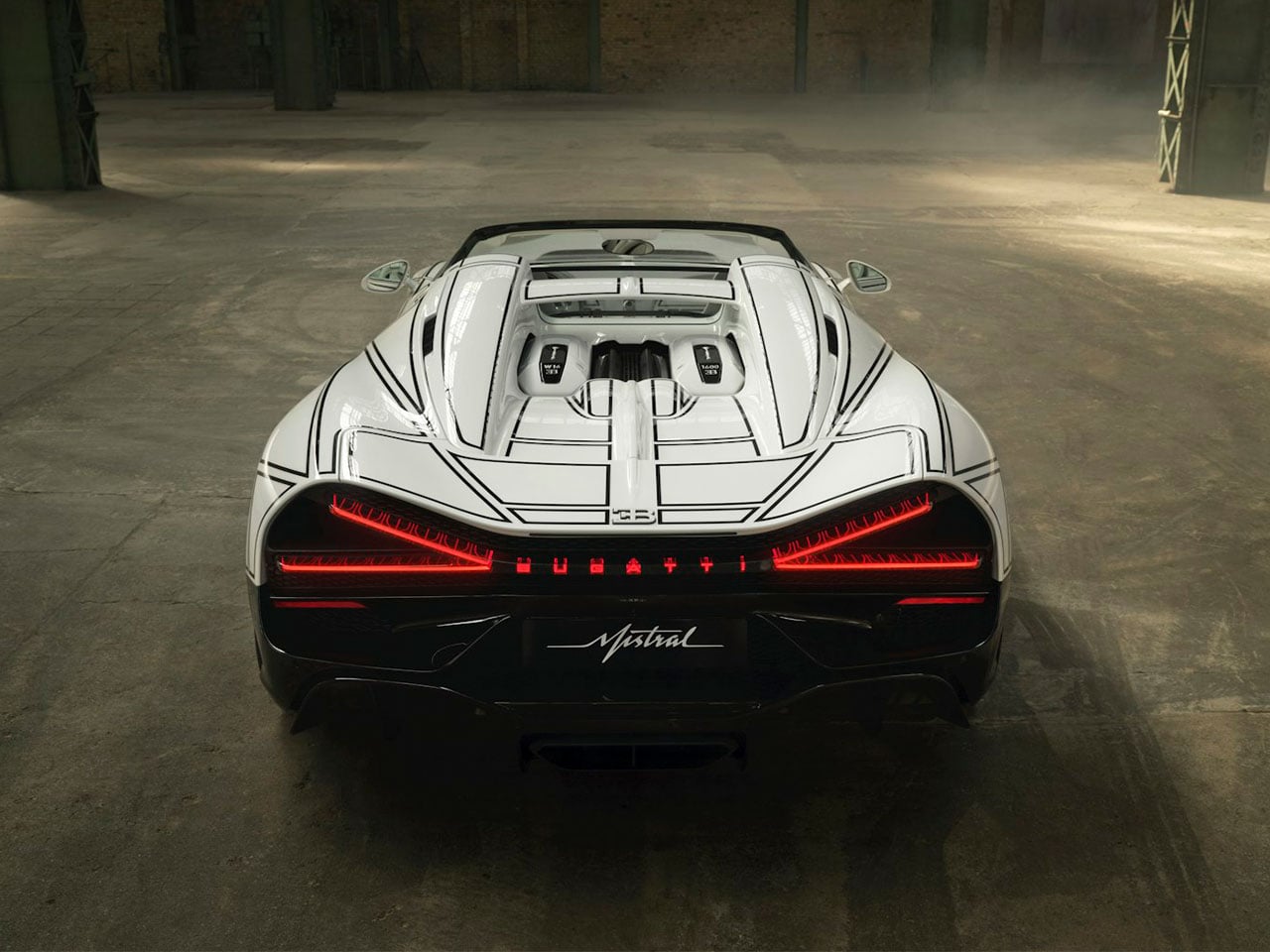
Finished in Brilliant White, the W16 Mistral performance roadster is wrapped in intricate hand-painted black graphics that resemble the digital wireframe of a 3D CAD model brought to life. Instead of functioning as decorative stripes, the intersecting lines reveal the invisible geometry that shapes the roadster’s sculpted bodywork, creating a visual effect that shifts depending on the viewing angle. Every line was individually masked and painted by hand, underscoring the painstaking craftsmanship required to transform a digital design language into a physical work of art.

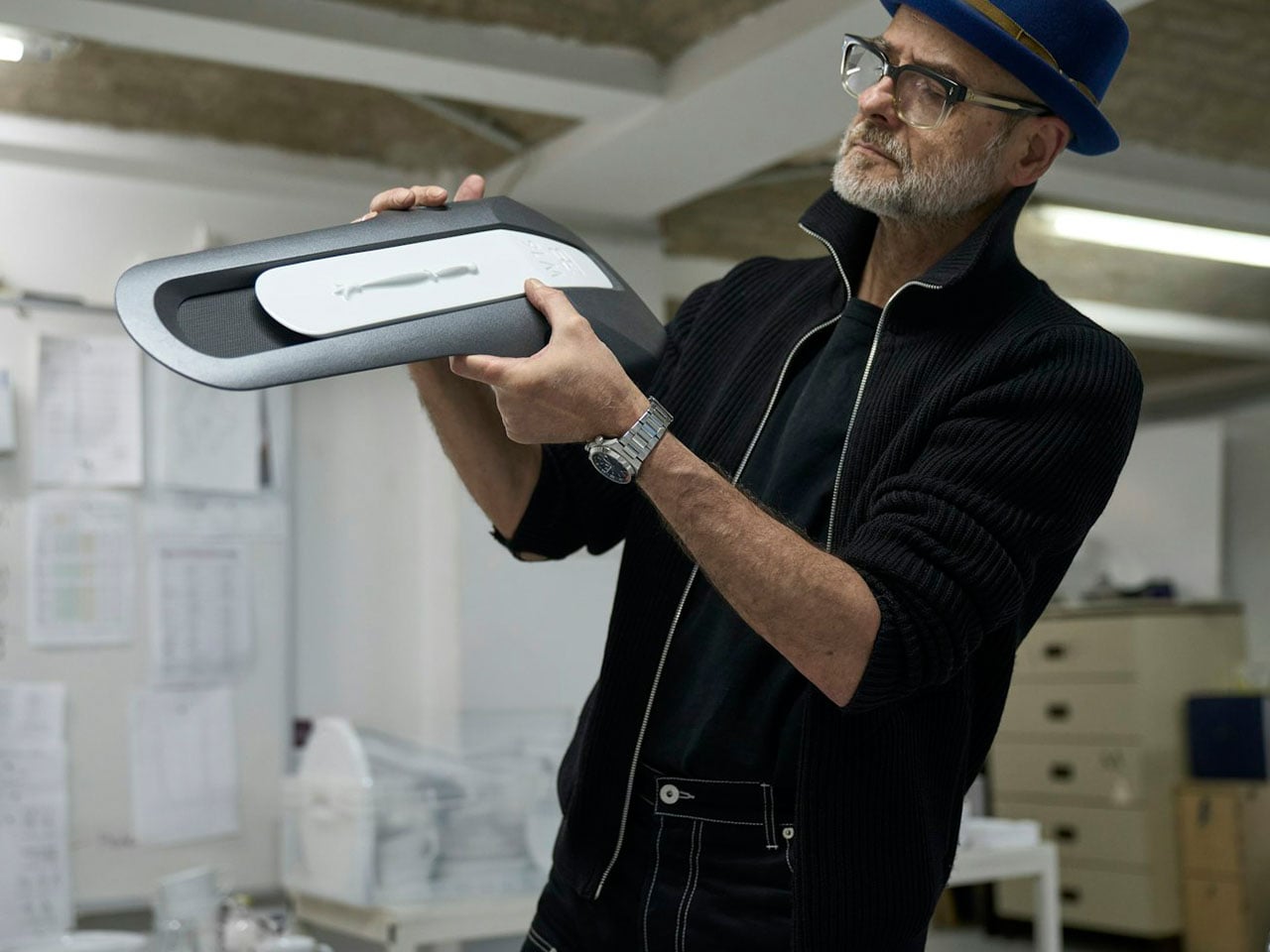
Bugatti Design Director Frank Heyl said the objective was never to recreate the celebrated Veyron L’Or Blanc. Instead, the team wanted to “move the idea forward,” reflecting how Bugatti’s creative process has evolved while preserving the spirit of its earlier collaboration with KPM. As he explains, Blanc Éternel represents “the beginning and culmination” of the W16 era, connecting Bugatti’s past and present through a shared appreciation for craftsmanship, innovation, and timeless design.

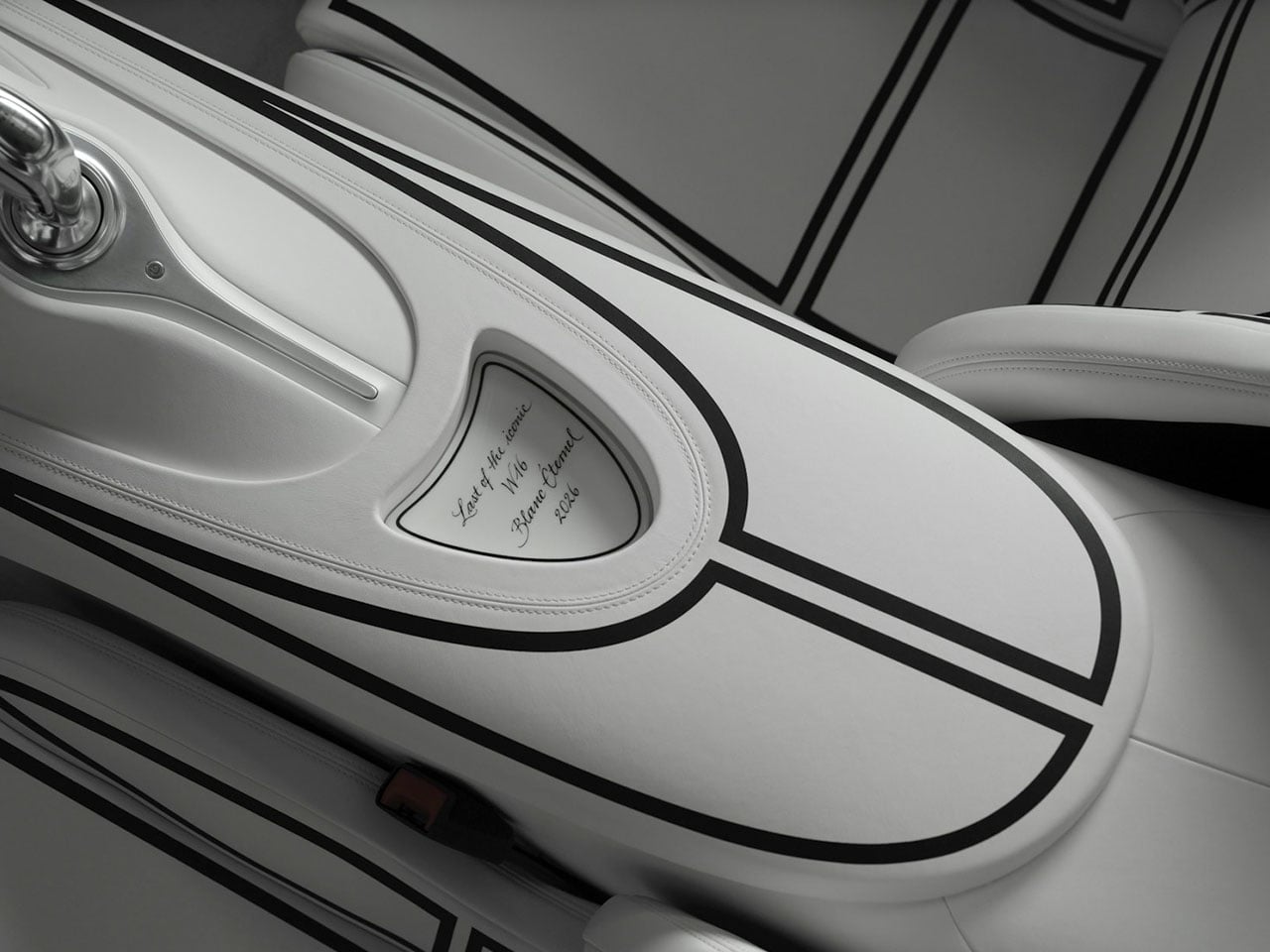
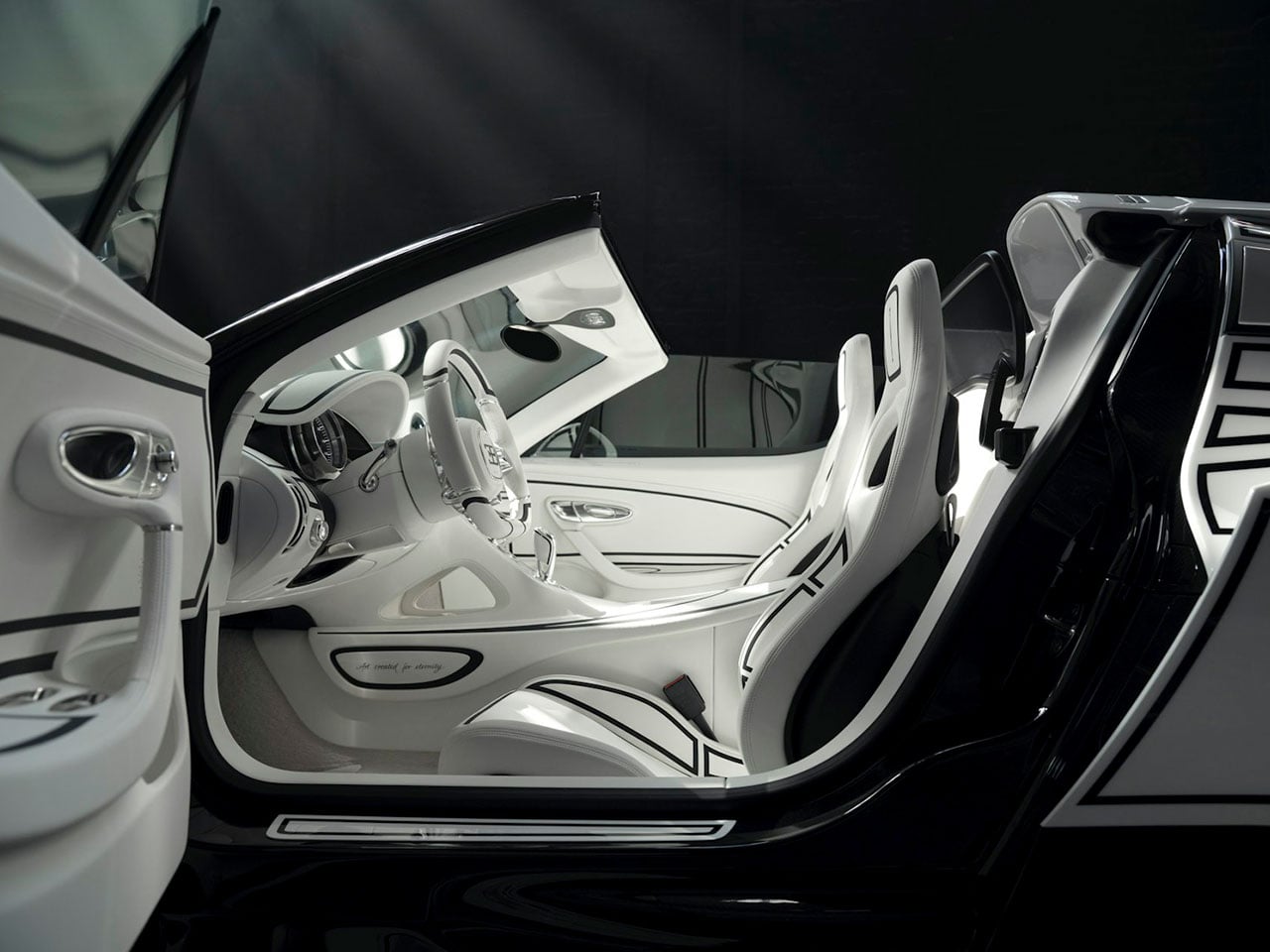
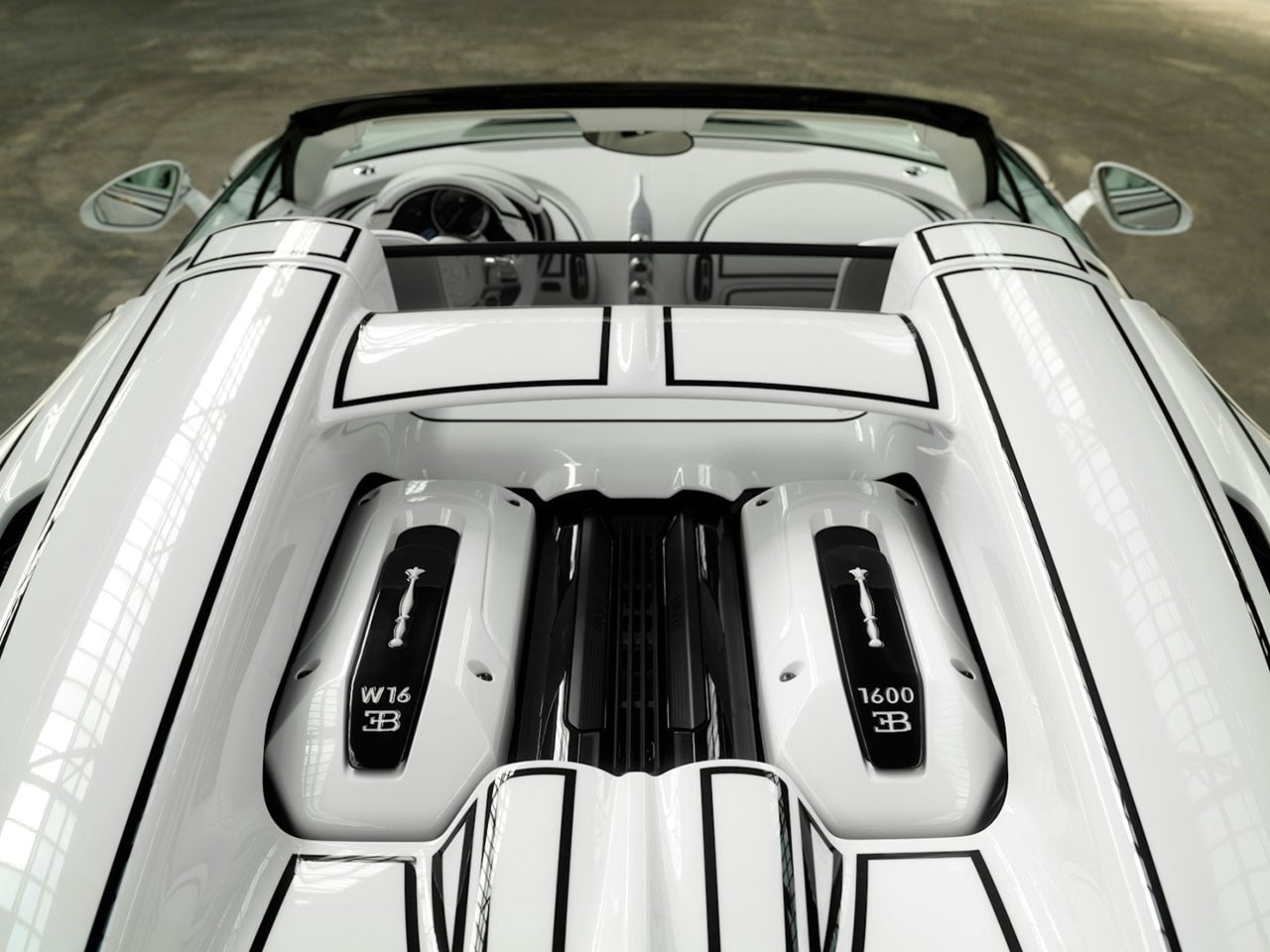
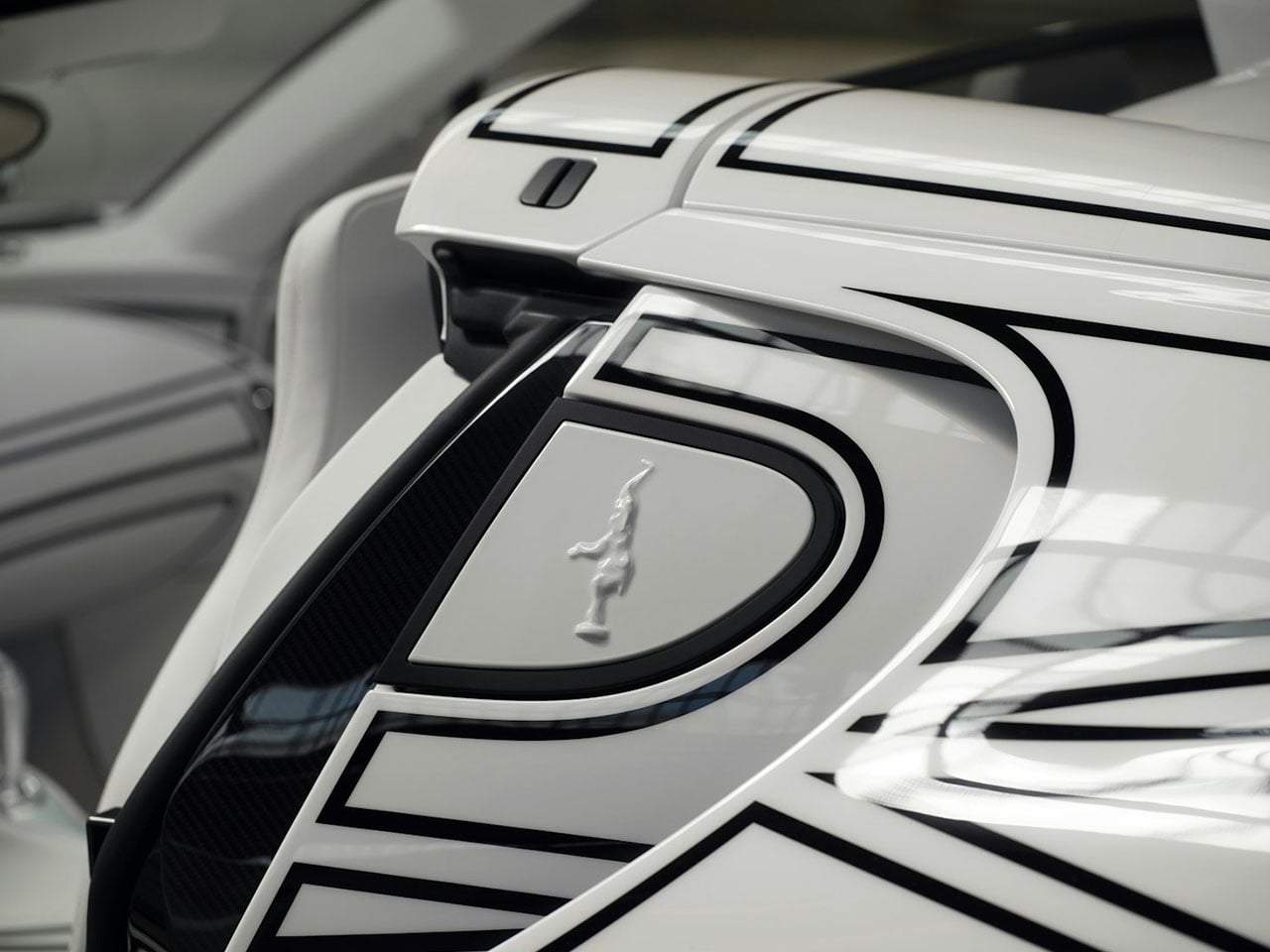
Porcelain remains at the heart of the project, but its application extends far beyond decorative accents. Handcrafted by KPM artisans, the material appears on the iconic EB emblem, the fuel and oil filler caps, the gear selector, window controls, speaker grilles, center console, and engine cover inserts. The cabin also features a delicate porcelain sculpture of Rembrandt Bugatti’s famous Dancing Elephant, reinforcing the artistic heritage shared between the two historic brands. Because porcelain shrinks considerably during firing, every component required meticulous engineering to ensure a flawless fit once completed.

The interior continues the exterior’s graphic theme with white leather upholstery overlaid by the same hand-painted black pattern. To achieve this, Bugatti developed an entirely new process that allows paint to bond with leather while maintaining the durability expected from a road-going hypercar, ensuring the intricate artwork withstands years of use without compromising quality.

Beneath the artistic exterior lies the engineering masterpiece that defines every W16 Mistral. The open-top hypercar is powered by Bugatti’s quad-turbocharged 8.0-liter W16 producing 1,600 PS (1,578 horsepower), making it the final roadster to showcase the brand’s iconic 16-cylinder engine before Bugatti transitions to its new hybrid V16 era with the Tourbillon. Limited to just 99 examples, the Mistral was already destined to become one of Bugatti’s rarest models, but the one-off Blanc Éternel occupies an even more exclusive space.

Subtle finishing touches, including Blanc Éternel lettering beneath the active rear wing, complete a commission that feels as much like a gallery piece as a hypercar. More than simply celebrating exclusivity, the W16 Mistral Blanc Éternel demonstrates how centuries-old porcelain craftsmanship, modern digital design, and one of the greatest automotive engines ever built can come together in a farewell worthy of Bugatti’s W16 legacy.

The post Bugatti’s one-off W16 Mistral Blanc Éternel is a 1,578-HP hypercar wrapped in royal porcelain first appeared on Yanko Design.

C Seed’s Sculptural Bugatti N1 folding TV carries dynamic flair of the Tourbillon supercar

Modern display technologies have come a long way in the last couple of decades, and so have the viewing experiences. Talking of the latter, no one does it better than C Seed, even though at a steep price. The Austrian high-end design brand has awed us with the 165-inch 4K MicroLED TV that disappears into the floor when not in use, and later with a TV that folds into itself within a metallic structure.

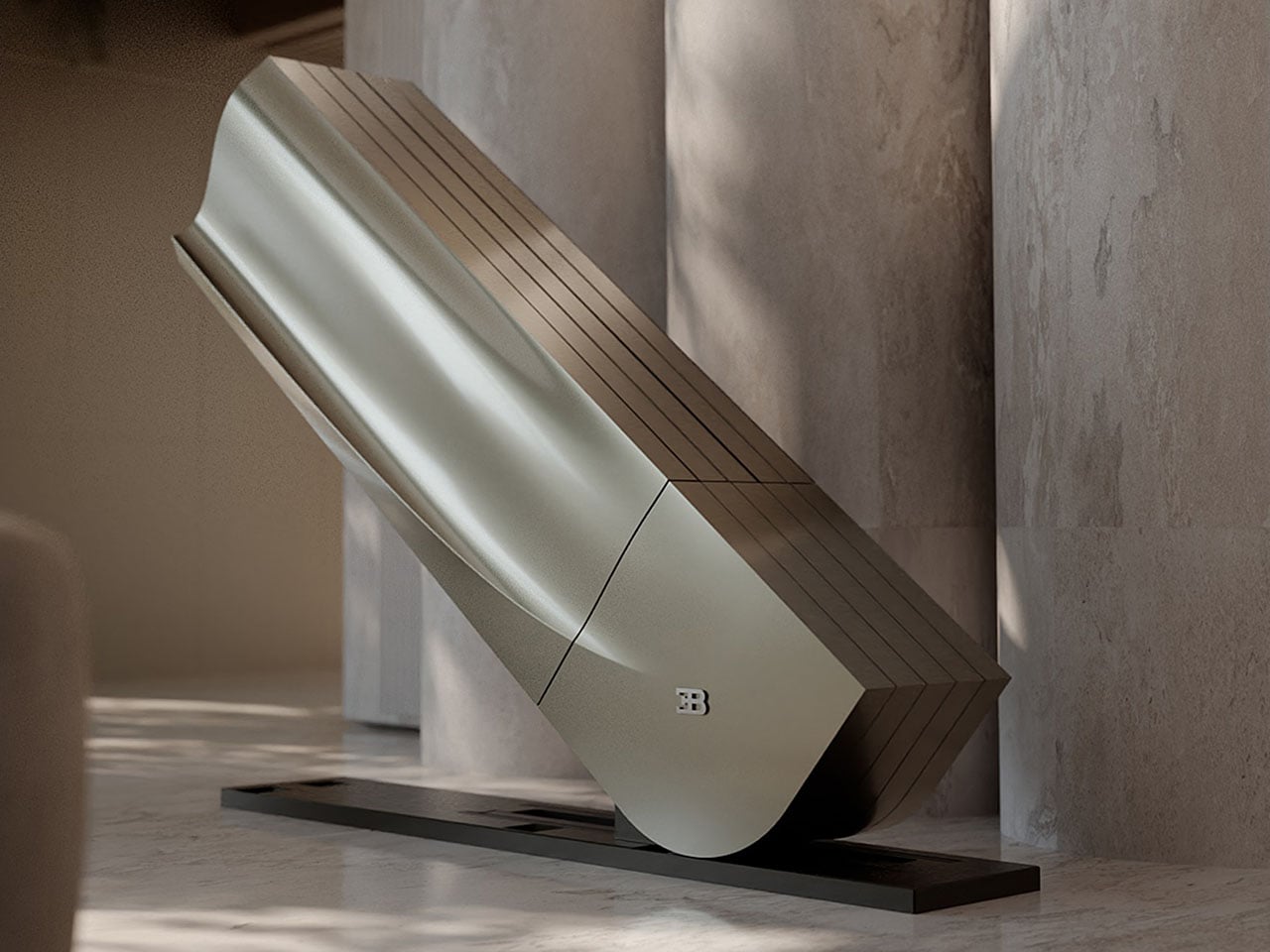
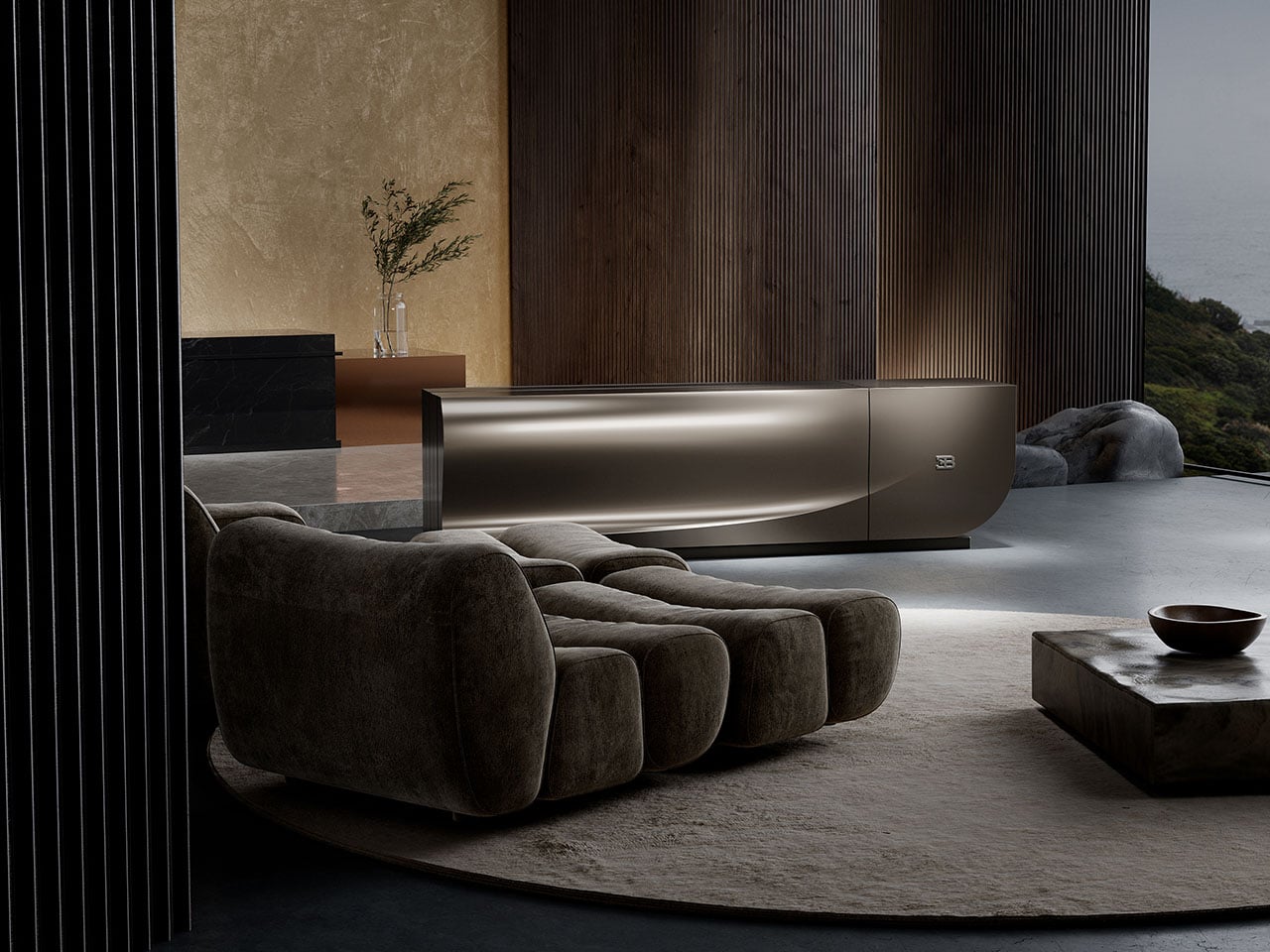
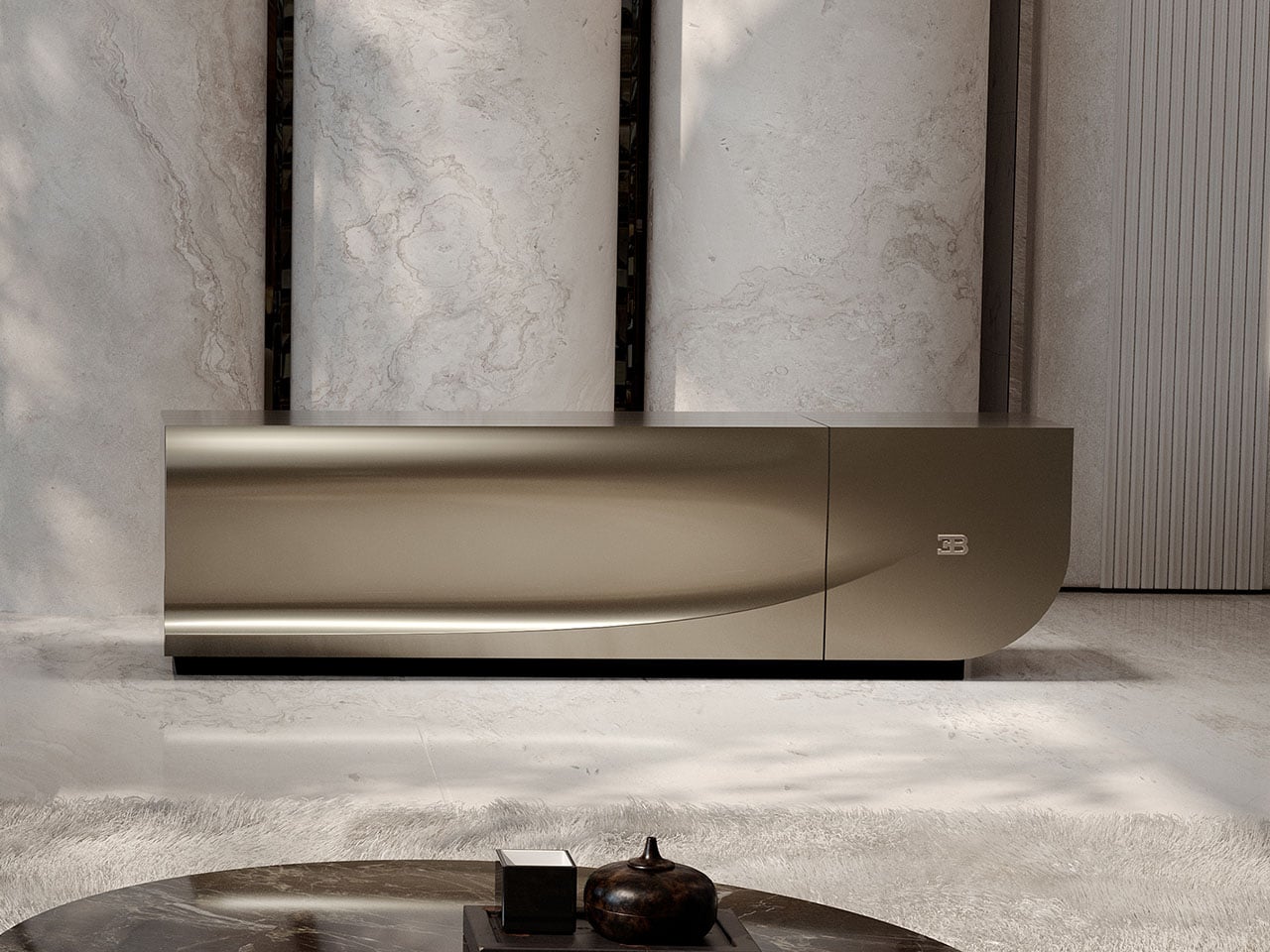
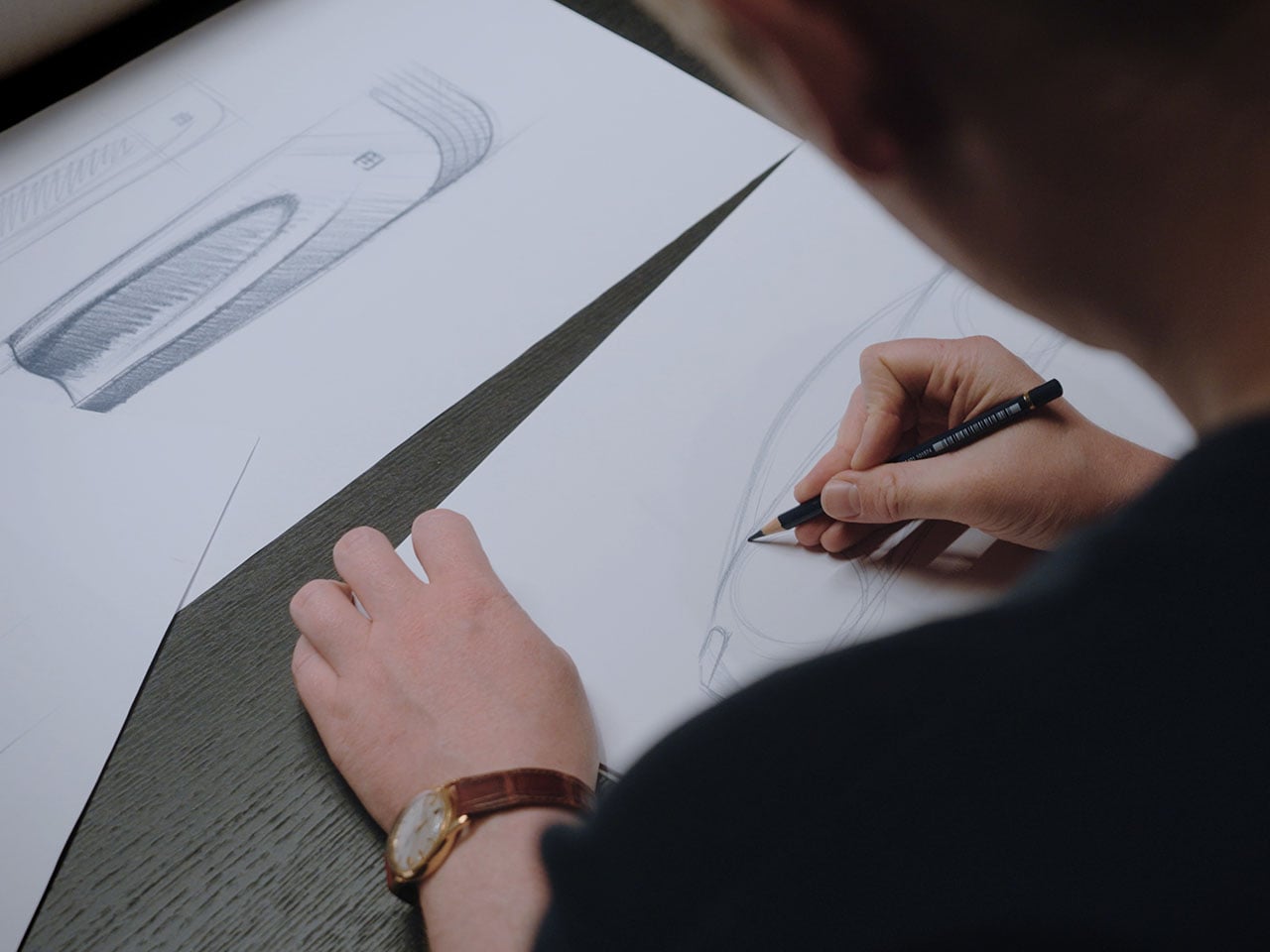
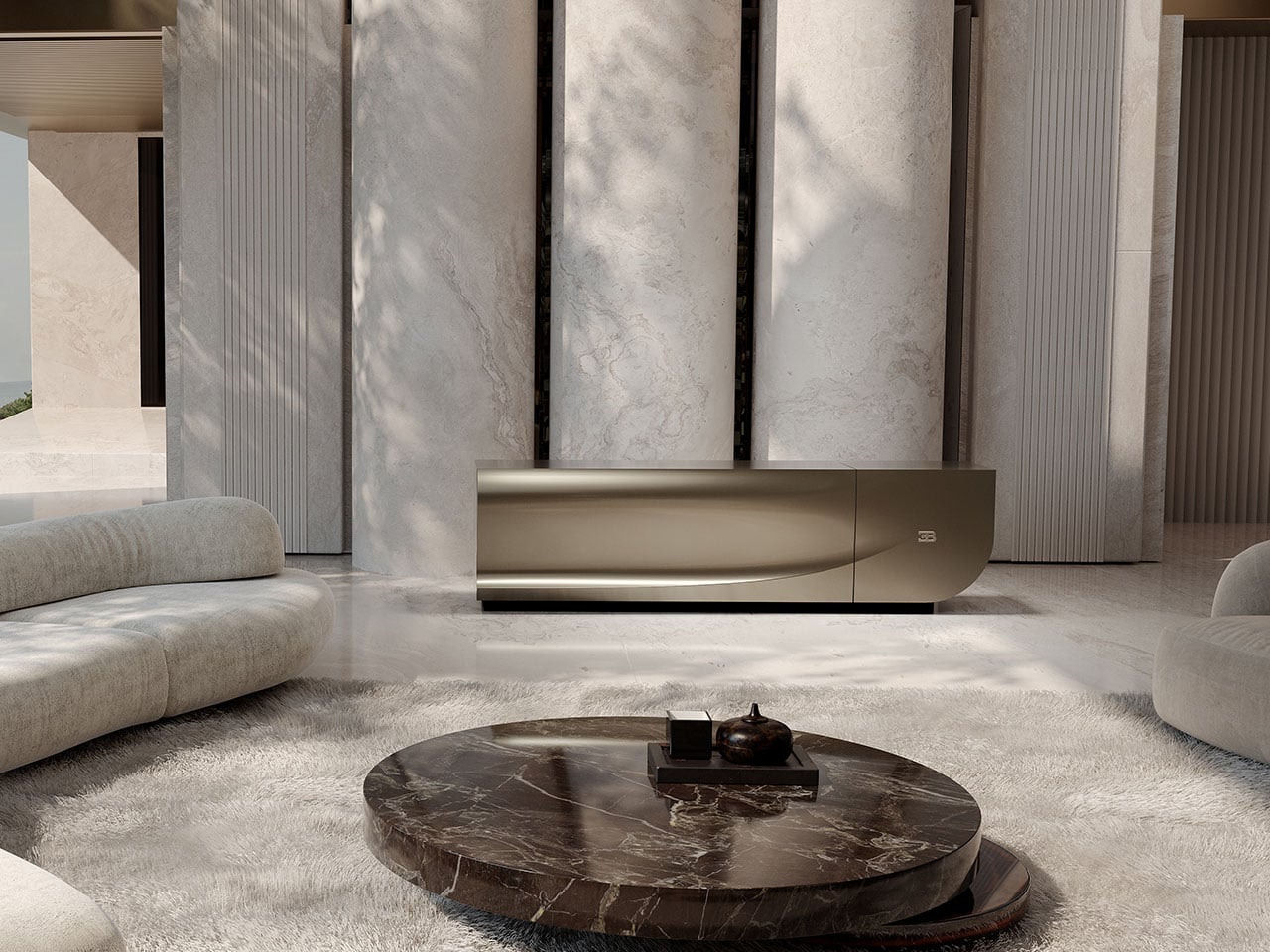
Anything new coming from them is deemed to be at the epitome of modern tech design, and that’s what the C Seed x Bugatti collaboration has materialized into. This is the Bugatti x C Seed N1 TV designed for purists who swear by the Tourbillon hypercar’s magnetism. The very same dynamic flair and emotional connection are now reflected in this sculptural C Seed folding TV.

Designer: C SEED x Bugatti

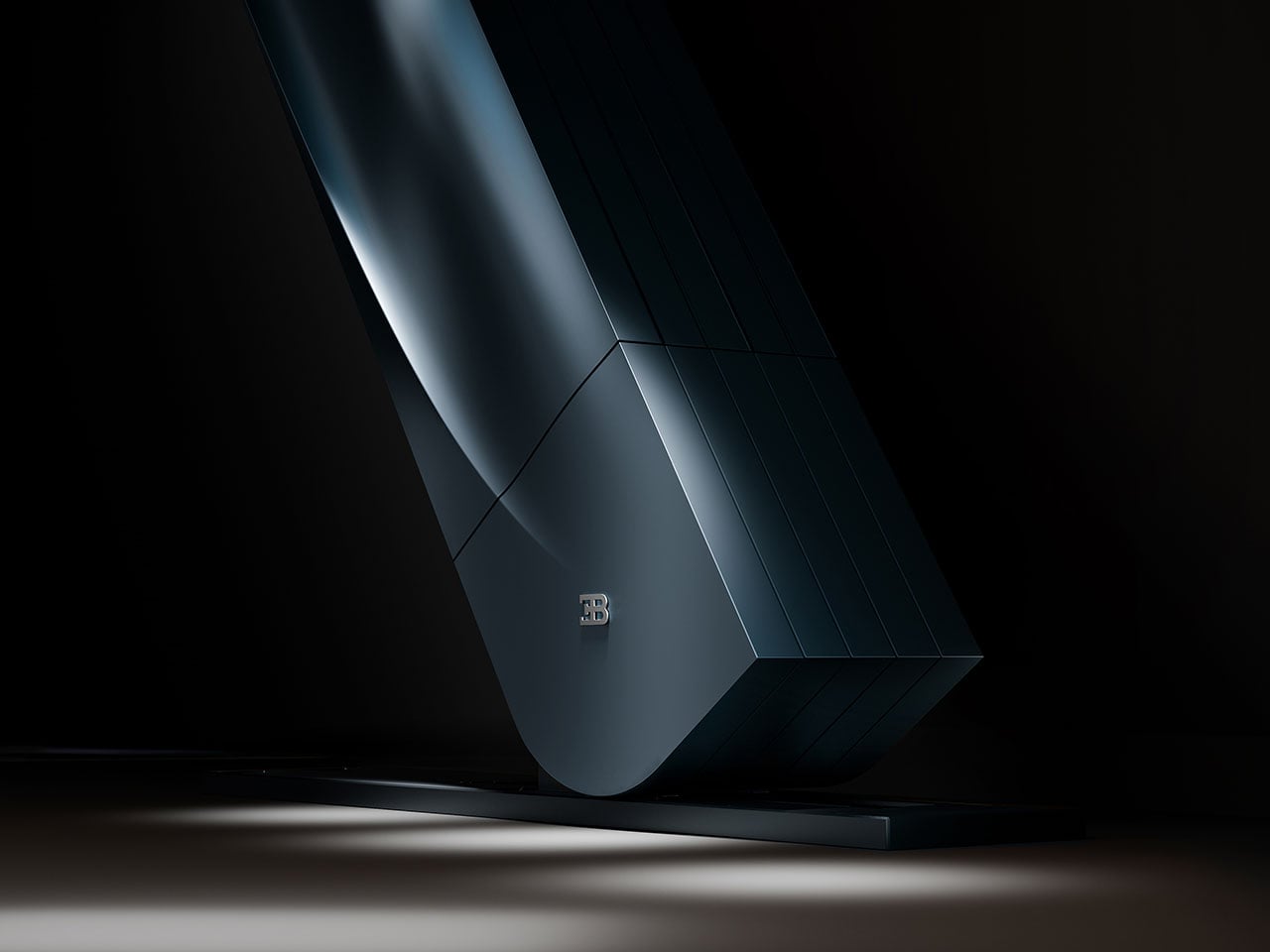
The car’s flowing contours and the precise measurements bring this colossal display into a league of its own. But it’s the calming Sierra of the display folding down into the Tourbillon’s distinct shape and then sliding off horizontally into the stand’s nest that sets this thing apart. It virtually turns into an architectural marvel in this configuration, and then when it’s time for a movie night, the N1 can open up over the course of 45 seconds with the push of a button. Depending on the sitting arrangement in the room, the TV can rotate 180 degrees like a smooth operator. Everything is effortless and creates an emotional connection, both when it is not in use and when it’s time for some cinematic entertainment with friends and family.

C Seed Bugatti N1 requires no structural integration and sits in your living room just like a luxury furniture piece. According to C Seed, the TV is “shaped by a commitment to precision engineering and uncompromising craftsmanship.” Every single detail, right from the silently unfolding MicroLED technology to the aluminum body in its finest form, is designed keeping in mind elegance, performance, and precision reminiscent of the world of automotive engineering. To keep the overall weight down, C Seed turned to carbon fiber, which speaks volumes about the ultimate refinement of the design.

The classy form of the TV is complemented by the sound system designed by Wisdom Audio. The housing has planar magnetic speakers that target a specific frequency range for perceived depth and clarity, no matter where the listener is positioned. Since we are talking about C Seed wizardry here, the speakers also retract into the sculptural housing when not in use. The display is also top of the line, incorporating the latest and greatest 4K MicroLED tech. Along with the Adaptive Gap Calibration for seamless panel transition for the perfect final unified picture, the stunning visuals match the audio for an immersive experience as a whole.

N1 TV is offered in either 110-inch or 137-inch size, and the patented folding display panel tech creates a single continuous screen even with multiple folding cycles. C Seed very rhetorically describes it as an engineered multi-stage movement that turns technical performance into a choreographed visual experience.”

There is no word about the pricing of this tech-infused kinetic sculpture for your living room, but coming from C Seed, it should carry an eye-watering price tag. One thing is clear: the folding display will come in bespoke colors and sizes for demanding users.

The post C Seed’s Sculptural Bugatti N1 folding TV carries dynamic flair of the Tourbillon supercar first appeared on Yanko Design.

Bugatti Type Sigma Concept Ditches the Chiron’s Maximalist Design for Pure Sculptural Form

Bugatti built the Type 57SC Atlantic in the 1930s using a technique called riveted construction, where aluminum panels were joined with raised seams that became the car’s defining visual feature. That central spine running from nose to tail was both structural necessity and sculptural flourish, a detail so elegant it’s been referenced in automotive design for nearly a century.

Edouard Suzeau’s Type Sigma concept channels that same philosophy but inverts the execution. Where the Atlantic celebrated its construction method, the Type Sigma hides every seam, every panel gap, every hint of how it might actually be built. The body looks like a single piece of fabric pulled taut over a frame, finished in matte gray that emphasizes form over finish. The surface is so clean, so deliberately unadorned, that it forces you to focus on proportion and gesture rather than details and embellishments.

Designer: Edouard Suzeau

The design carries Bugatti’s genetic code but translates it through a contemporary filter. The horseshoe grille sits vertically integrated into the nose, maintaining brand identity without dominating the composition. The C-shaped rear pillar flows from cabin to tail as a surface rather than a graphic, tracing lineage back to the Atlantic while pushing the language forward. The long hood and fastback roofline recall the grand tourers Ettore Bugatti built for covering continents, cars that prioritized elegance and comfort alongside speed. Suzeau’s concept explores what Bugatti’s design language looks like when stripped of the Chiron’s dual-tone drama and the Tourbillon’s hyper-complex surfacing. The Type Sigma proves that sometimes the most challenging design exercise is knowing what to leave out, and the result is a car that feels both historically grounded and refreshingly modern.

The matte metallic finish is pretty new to Bugatti, which has relied on glossy finishes like blue and black in the past. Where gloss black or bare carbon fiber would create hard reflections that break up the surface into geometric shards, this matte gray lets light pool and stretch like mercury on glass. Reflections become soft gradients that emphasize the underlying form, making the car read as a single sculptural mass rather than an assembly of panels. The choice to avoid dual-tone treatment is equally deliberate. Recent Bugattis have relied on contrasting materials to create visual drama, splitting the body into upper and lower sections or using exposed carbon to telegraph performance intent. The Type Sigma abandons that strategy entirely, trusting that the purity of the form will carry enough visual weight on its own.

The proportions position this firmly in grand tourer territory rather than mid-engine hypercar land. The hood stretches forward in the classic front-engine GT tradition, creating that long, muscular stance that defined Bugatti’s pre-war icons. The cabin sits far back on the wheelbase, with a greenhouse that tapers gently rearward into the fastback deck. The roofline has an almost shooting-brake quality to it, extending further back than a traditional coupe but stopping short of full estate proportions. This creates a unique silhouette that feels both familiar and fresh within Bugatti’s portfolio.

The wheels appear to be modern interpretations of classic Bugatti spoke patterns, possibly referencing the Type 35’s iconic wheels but rendered with contemporary multi-spoke turbine detailing. The fender arches are muscular but smooth, defined by surface curvature rather than hard character lines. Side vents behind the front wheels are so subtly integrated they’re almost invisible in this matte finish, revealed only by shadow and surface transition rather than chrome trim or aggressive surfacing. The horizontal DRL bars sit flush with the front fascia, clean and minimal, avoiding the overwrought lighting signatures that plague most modern concept cars.

A full-width lighting signature spans the tail, likely incorporating Bugatti script or the EB logo as part of the illuminated graphic. Below, the diffuser is aggressive but integrated, its fins and channels carved into the lower body rather than appearing as tacked-on aerodynamic furniture. The way the C-shaped pillar terminates at the rear deck is particularly elegant, flowing seamlessly into the tail rather than stopping abruptly or requiring a visual full stop. Horizontal slats in the rear glass echo the Chiron’s central spine but abstracted into functional venting, maintaining visual continuity with the current lineup while pushing the aesthetic somewhere quieter.

Production viability was clearly never the point here. Suzeau’s renders show a car with shut lines that would be impossible to engineer, glass areas that would never pass certification, and aerodynamic surfaces that exist purely to please the eye rather than cheat the wind. The Type Sigma lives in the same realm as the Atlantic did when it debuted in 1936, a piece of rolling sculpture built to prove that a car could be art. Only four Atlantics were ever made, and they remain among the most valuable automobiles ever auctioned. The Type Sigma will never be built at all, but it accomplishes something harder than production feasibility. It makes you reconsider what a modern Bugatti could look like if the brand decided to prioritize elegance over aggression, sculpture over decoration, whisper over shout.

The post Bugatti Type Sigma Concept Ditches the Chiron’s Maximalist Design for Pure Sculptural Form first appeared on Yanko Design.

The Bugatti Veyron Turns 20 and Gets a 1,578 HP Makeover Nobody Saw Coming

In 2005, Bugatti unleashed a machine so audacious that even today it commands respect. The Veyron arrived with 1,000 horsepower, four turbochargers, and a top speed that left competitors speechless. Two decades later, one collector decided that anniversary celebrations and museum pieces weren’t enough tribute for such a revolutionary achievement.

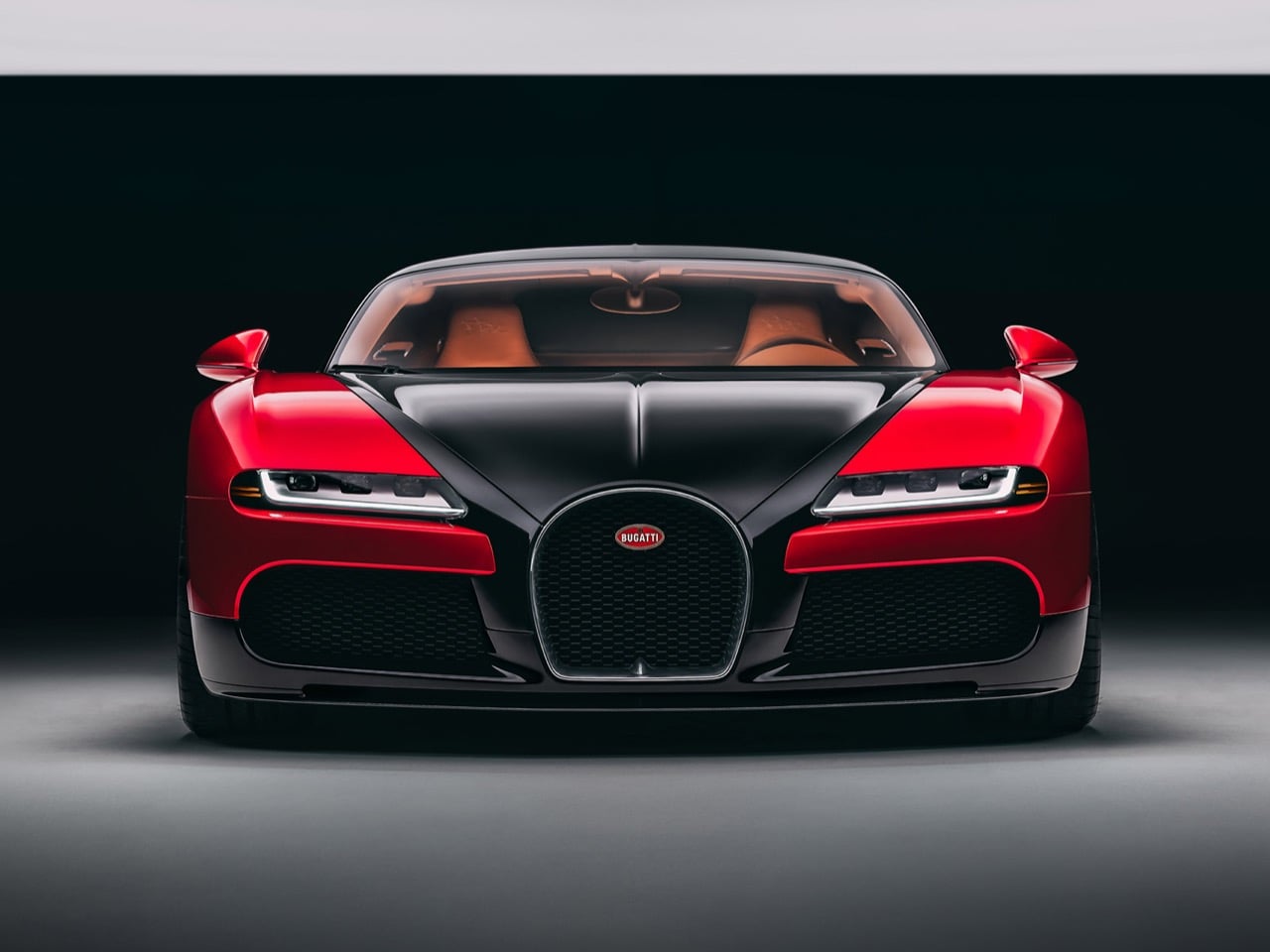
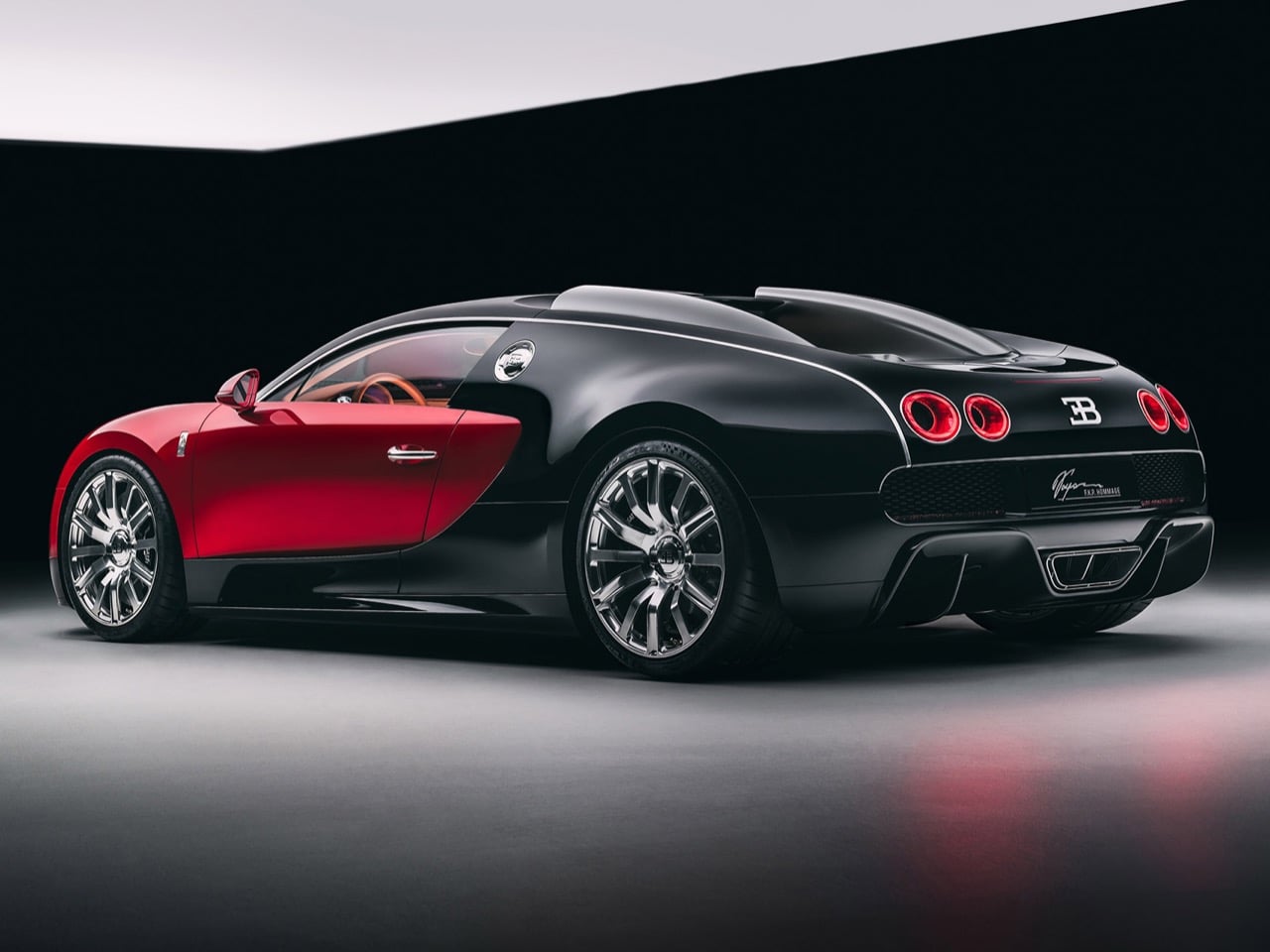
The result is the F.K.P. Hommage, a one-off hypercar that channels the Veyron’s iconic silhouette while hiding Chiron Super Sport mechanicals beneath its red and black bodywork. Named for Ferdinand Karl Piëch, the Volkswagen Group patriarch who championed the original project, this creation incorporates design elements from an abandoned Veyron facelift that never reached production. It’s automotive archaeology meeting cutting-edge engineering, wrapped in a package that costs north of €10 million.

Designer: Bugatti

This is the second car from Bugatti’s Programme Solitaire, their bespoke division that handles exactly two ultra-custom builds per year. The first was the Brouillard, which took the Mistral roadster platform and wrapped it in equestrian-inspired design language. The F.K.P. Hommage takes a different approach entirely. It asks a simple question: what if Bugatti had kept refining the Veyron on the Chiron’s platform instead of replacing it? Chief designer Frank Heyl actually had sketches for a Veyron facelift back in 2008, concepts that never materialized because Piëch wanted something more radical. Those sketches became the foundation for this car. The headlights, those hollowed-out “light tunnel” taillights, even the adjusted proportions all stem from that unrealized project.

The exterior proportions mirror the original Veyron almost exactly, though it sits about an inch and a half wider. Every single body panel was designed specifically for this car. Nothing got copy-pasted from the parts bin. The horseshoe grille stands more upright now, three-dimensional and aggressive in ways the original never attempted. Those L-shaped LED headlights give the front end what Heyl calls a “concentrated stare,” which sounds like marketing speak until you actually look at the thing head-on. The side intakes got tightened up, the twin roof intakes lean forward more dramatically, and the rear diffuser flares outward at sharper angles. The taillights grew slightly larger on the outboard sections, creating better visual balance. Even the fuel filler got repositioned for better aerodynamic flow.

The red and black scheme matches the first production Veyron from 2005, but Bugatti couldn’t just spray it red and call it done. The base is actually silver, with red pigment incorporated into the clearcoat to create depth and luminosity that straight red paint never achieves. It’s the kind of obsessive detail that adds weeks to the build process and thousands to the cost, which matters zero percent when your budget already exceeds €10 million.

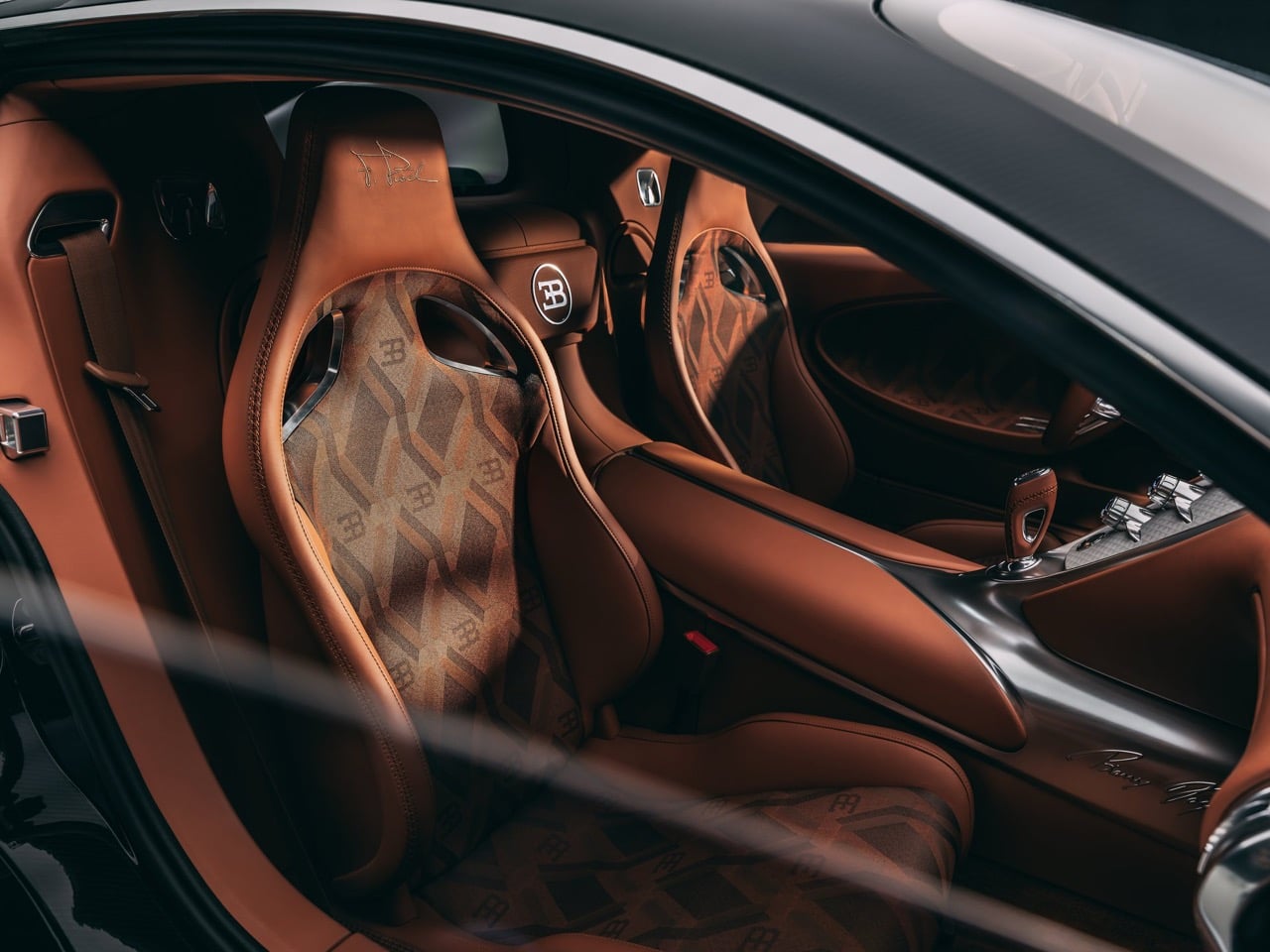
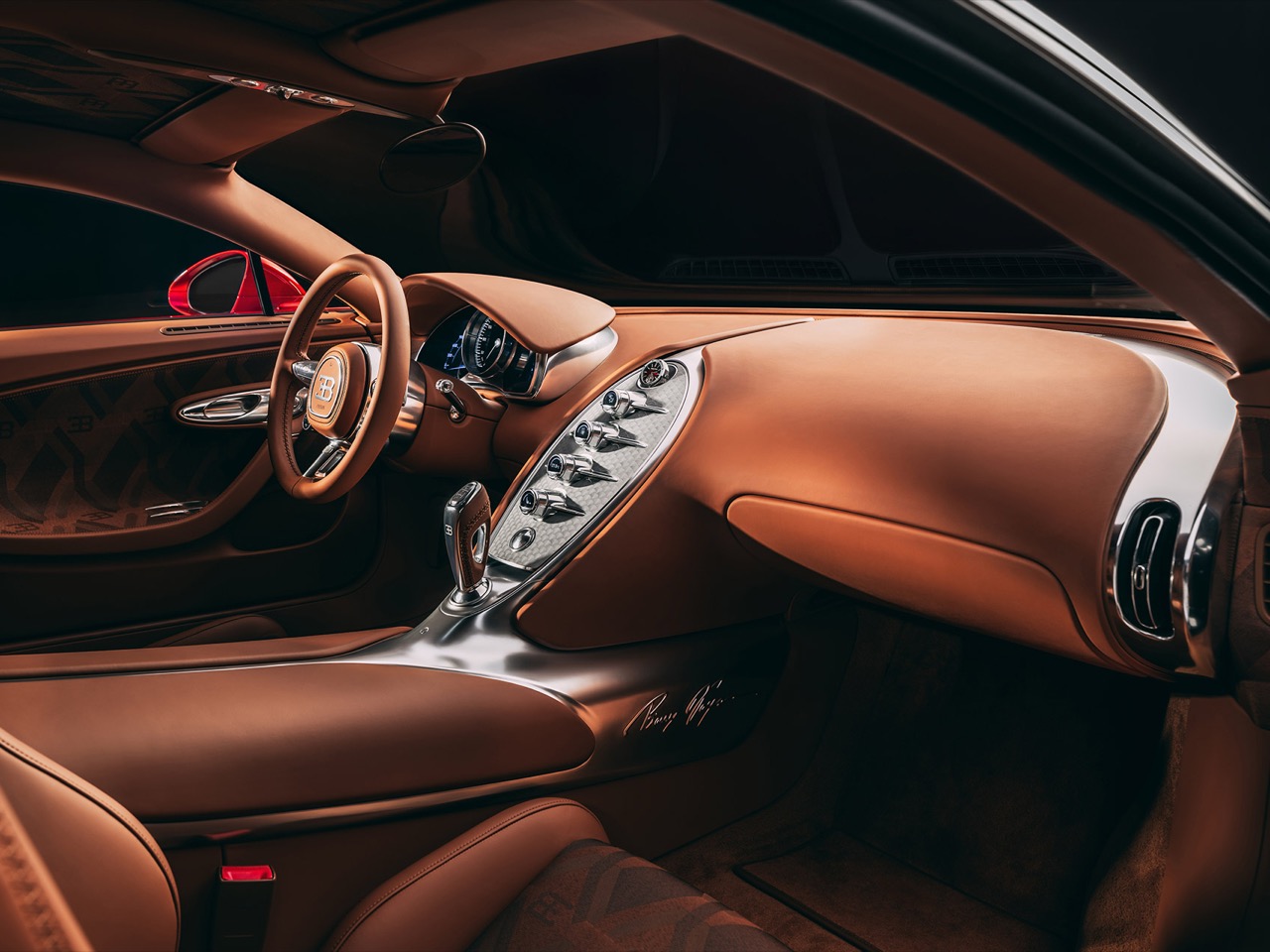
Then you open the door and realize the exterior was just foreplay. The cabin blends Chiron architecture with Veyron soul, keeping the newer car’s instrument cluster while introducing a completely redesigned steering wheel and a wider center console. That console gets machined from a single block of aluminum, which sounds impressive until you remember they’re putting a $200,000 Audemars Piguet Royal Oak Tourbillon inside it. The 43mm watch sits in a rotating mount that serves double duty. It hides the timepiece when the car’s off, protecting it from opportunistic smash-and-grab artists, and it spins the watch several times per hour to keep the automatic movement wound. No mechanical connection to the car, just a motorized gondola doing its thing on a timer.

The seats wear custom couture fabrics woven by a Parisian textile house, because apparently Italian leather alone doesn’t sufficiently communicate exclusivity. Piëch’s signature gets stitched into each headrest, with his initials and birthday embossed into the leather by your right knee. These details matter in the rarefied world of eight-figure automotive commissions, where differentiation comes down to whose signature adorns your headrest.

Under that engine cover sits the Chiron Super Sport’s 1,578-horsepower W16, complete with upgraded cooling, enhanced intercoolers, and a reinforced gearbox. The wheels measure 20 inches up front and 21 inches out back, significantly larger than the Veyron’s original 18/20 setup but necessary to accommodate modern Michelin rubber and the massive brake calipers hiding behind those spokes. The owner reportedly already possesses a matching Veyron, which means they’ll soon park both side by side and spend entirely too much time explaining the differences to confused onlookers.

The F.K.P. Hommage debuts at Rétromobile Paris before embarking on the typical hypercar show circuit, hitting Monaco, Pebble Beach, and whatever other gatherings attract people wealthy enough to consider €10 million reasonable for a car. Delivery happens in 2027, giving Bugatti’s craftspeople enough time to obsess over every stitch and surface. By then, the W16 engine will be completely retired from production, making this one of the final expressions of Piëch’s original vision before Bugatti transitions to the V16 hybrid powertrain in the Tourbillon.

The post The Bugatti Veyron Turns 20 and Gets a 1,578 HP Makeover Nobody Saw Coming first appeared on Yanko Design.

Bugatti Baby II Tourbillon Edition is a miniature version of the brand’s latest hypercar

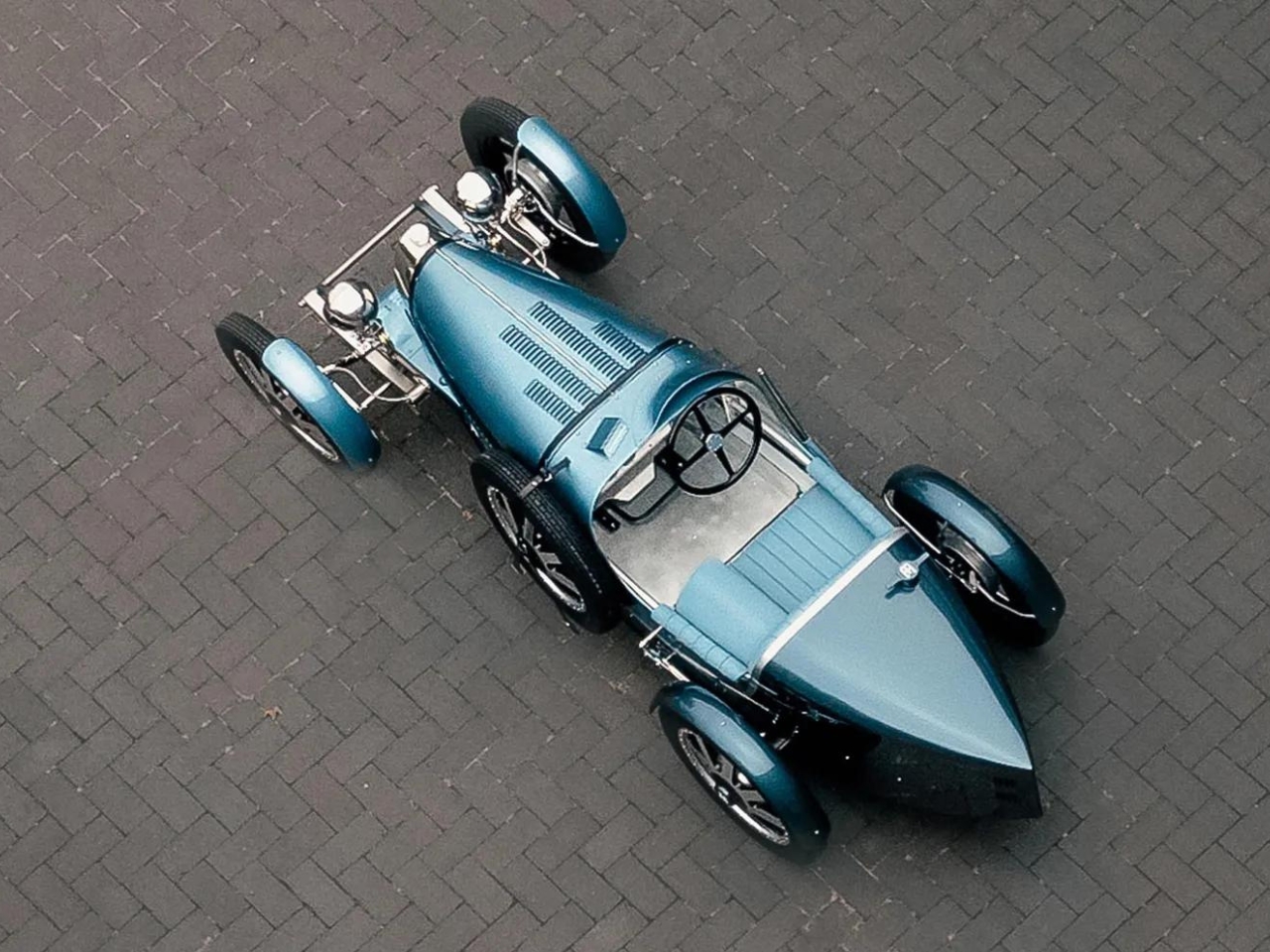
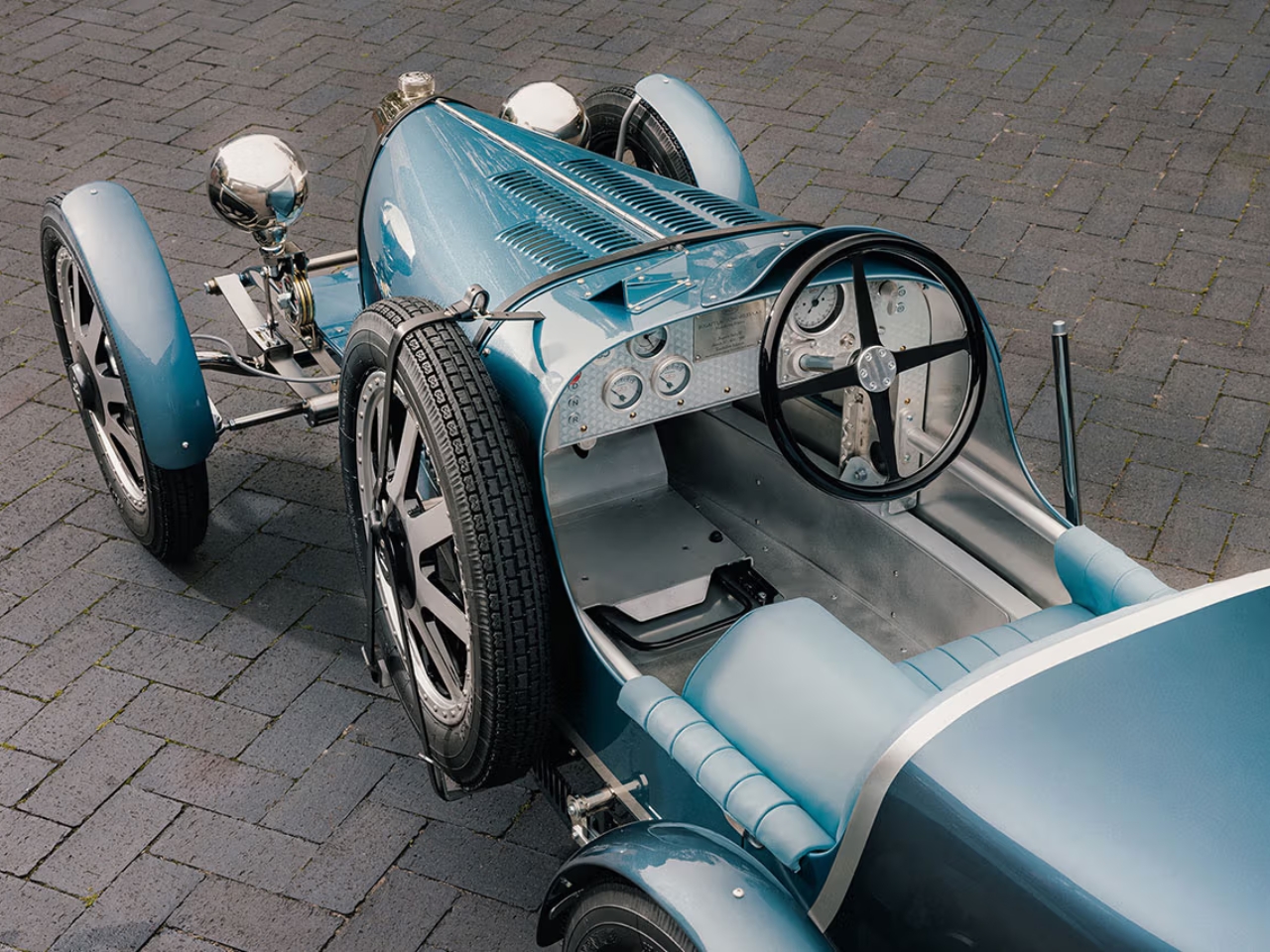
What kind of person buys a replica of a high-end and very expensive luxury car that they won’t be able to drive on public roads anyway? Apparently, there is a market out there for this kind of luxurious purchases for what we assume are already super rich fanboys of the Bugatti brand. Even before price and availability details are released, it’s most likely to be sold out already.

Designer: Bugatti

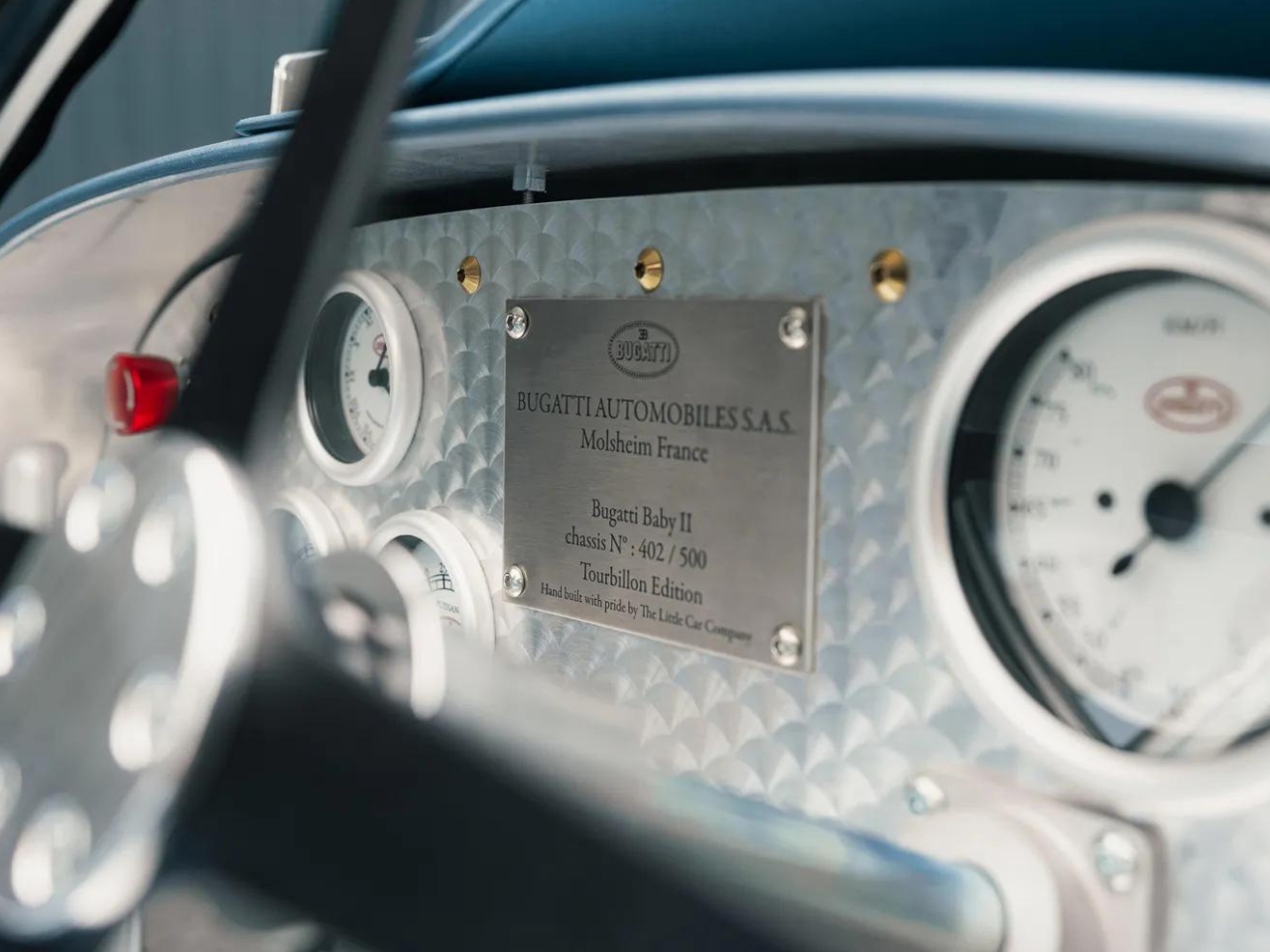
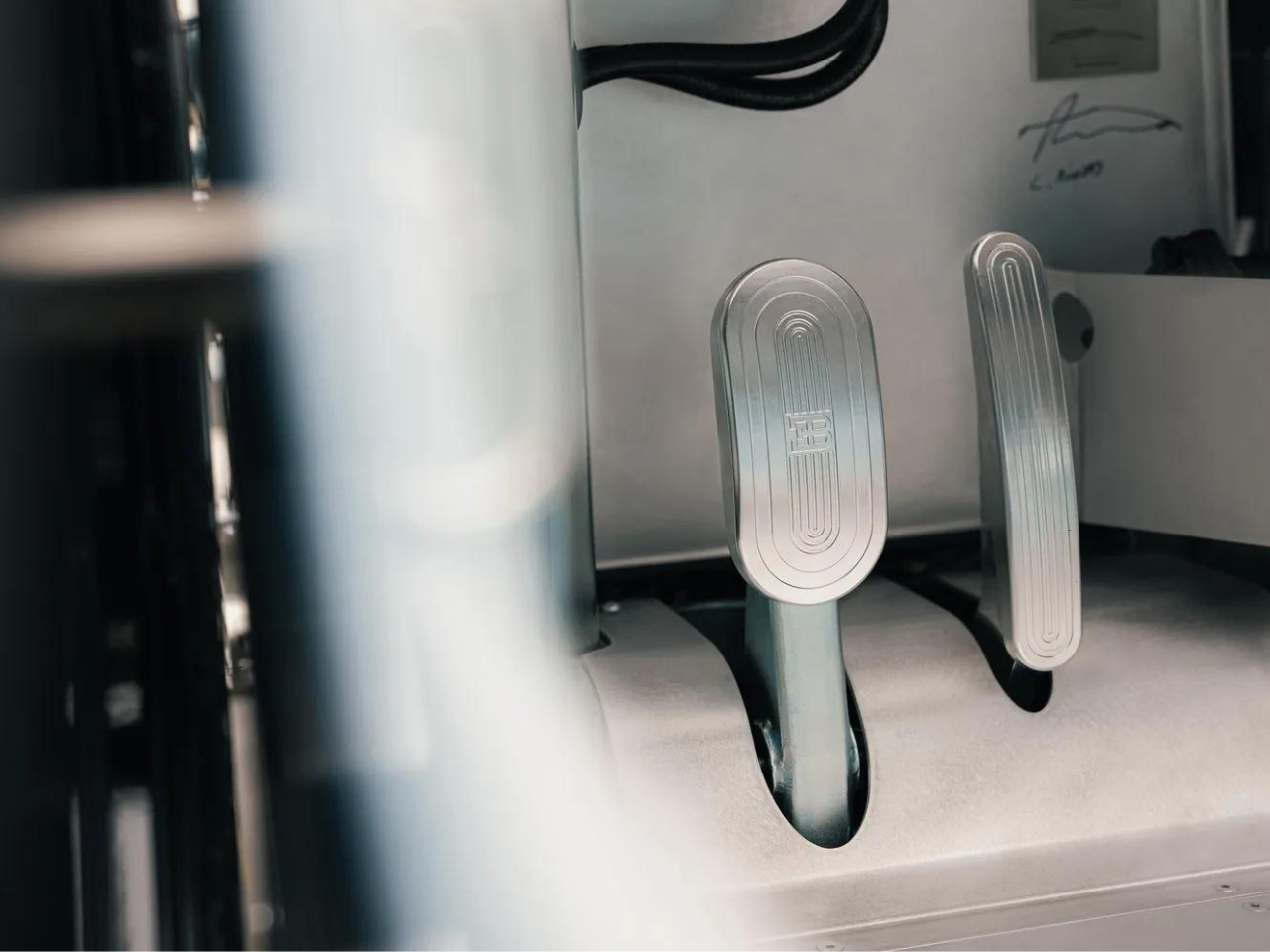
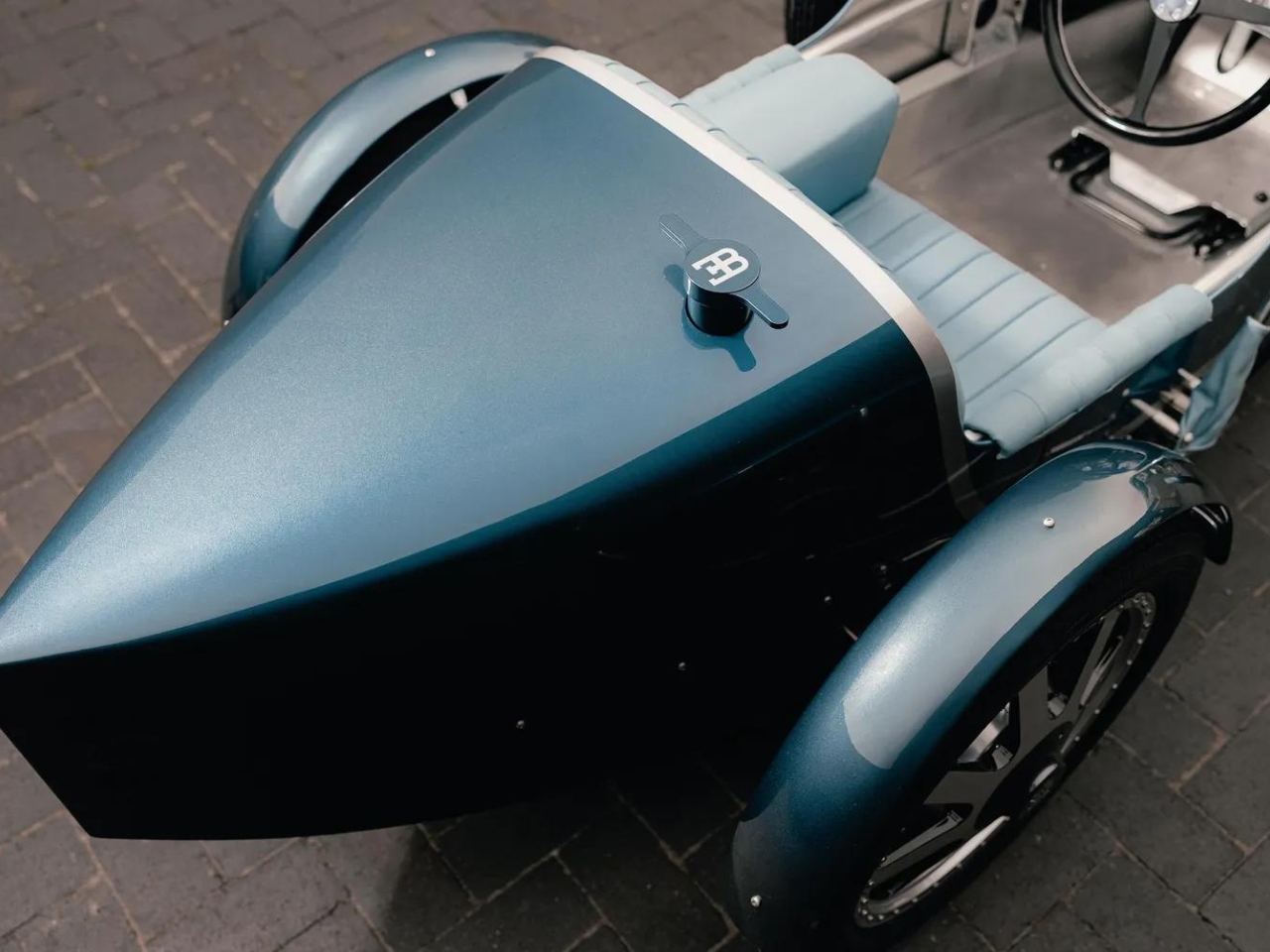
The Bugatti Baby II Tourbillon Edition is a limited-edition miniature version of the brand’s latest Tourbillon hypercar. For those not familiar with the Baby editions, they would probably assume it’s a miniature version for kids or a toy version that collectors can put on their shelves. But while it’s a miniature version, it’s not exactly that as a fully grown person can drive this, just not on public roads.

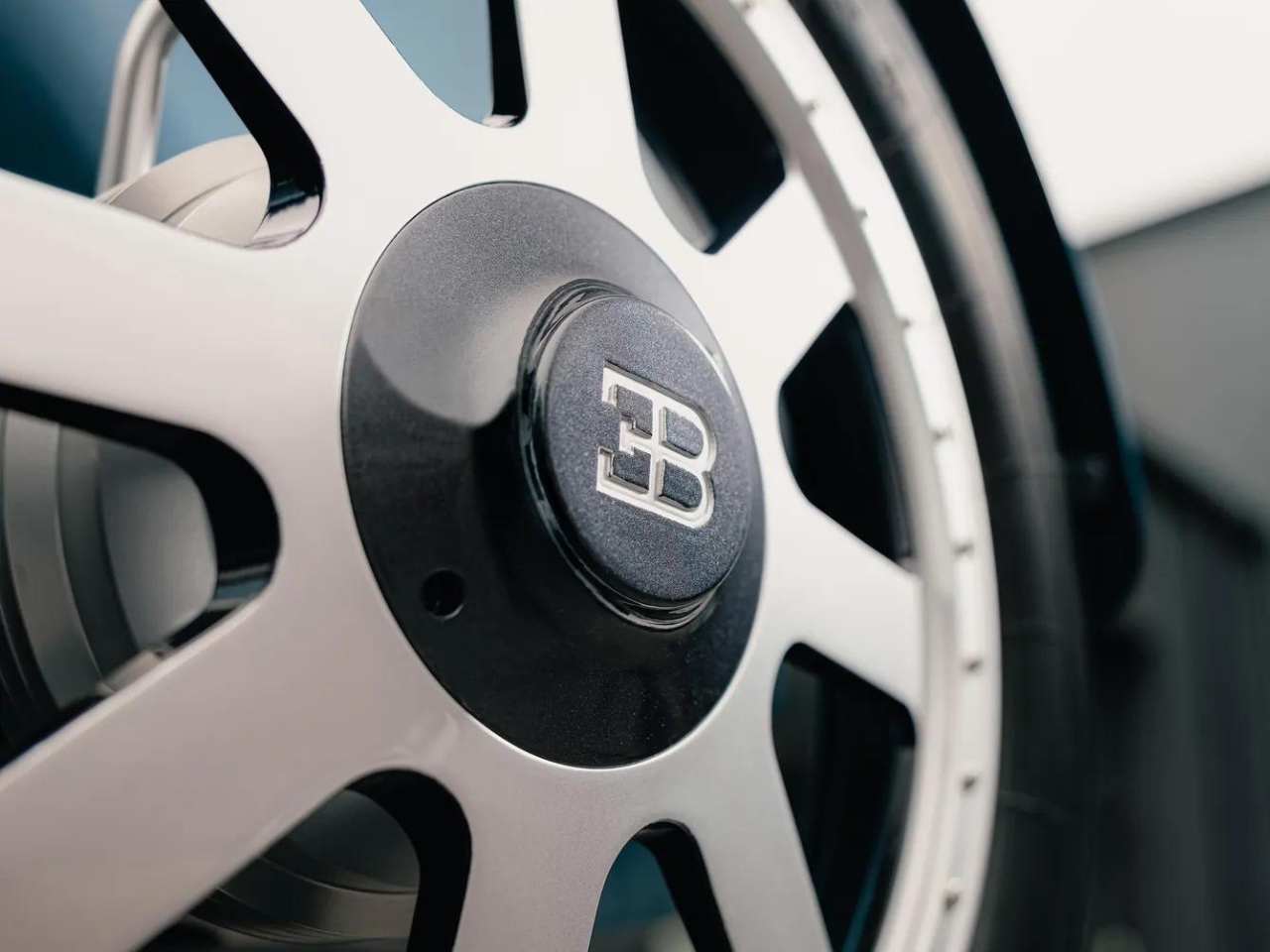
The latest Baby edition is a 75% scale all-electric vehicle and mirrors the aesthetic of the latest V16 hybrid sports car. It has the signature Aerolithe colorway and C-line curve of a Bugatti with the Light Aerolithe leather inside and with Nocturne Black Rims and Gunmetal Grey Carbon accents. Instead of the traditional fuel gauge, you have a battery gauge since this is of course an electric car.

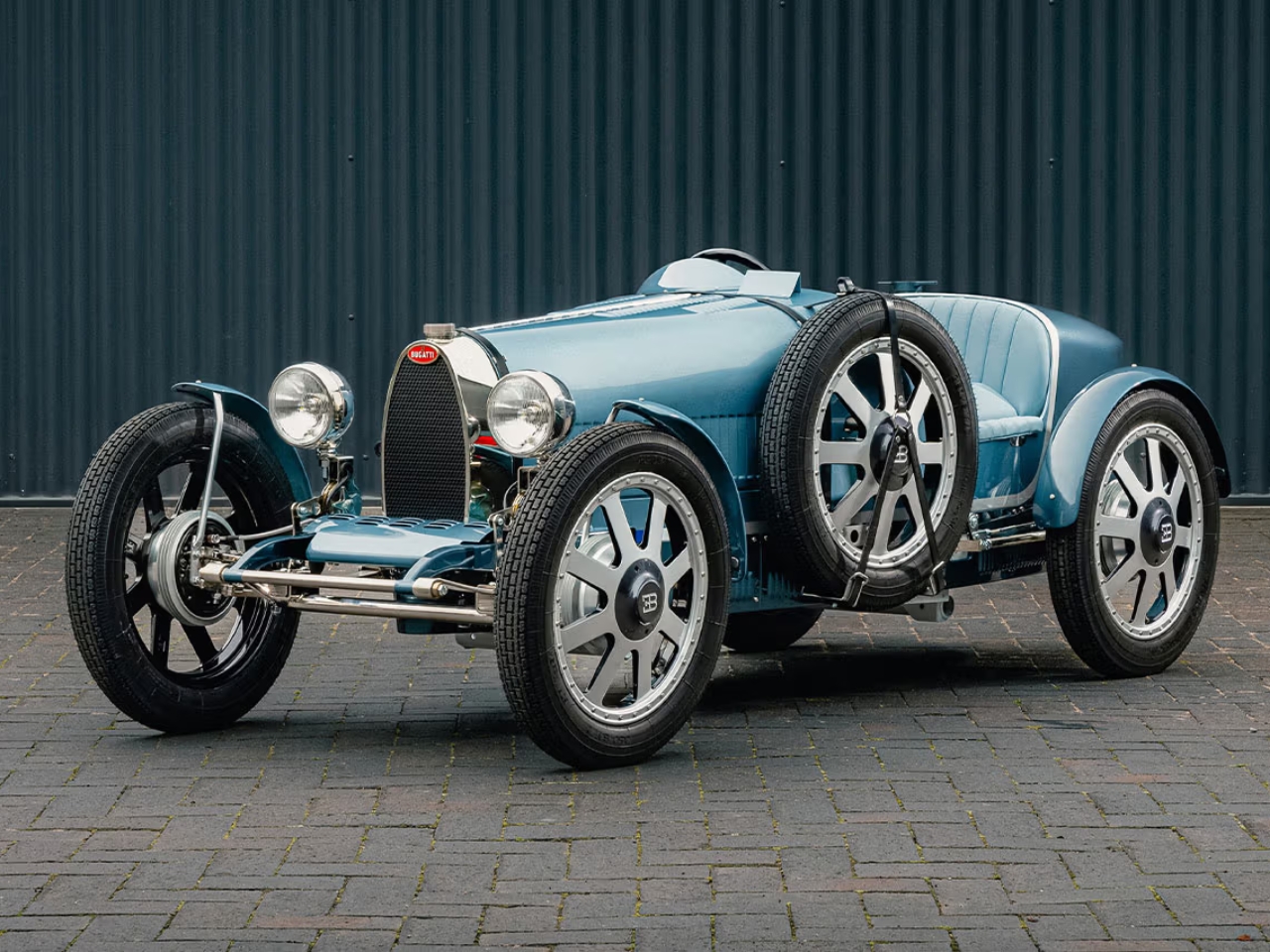
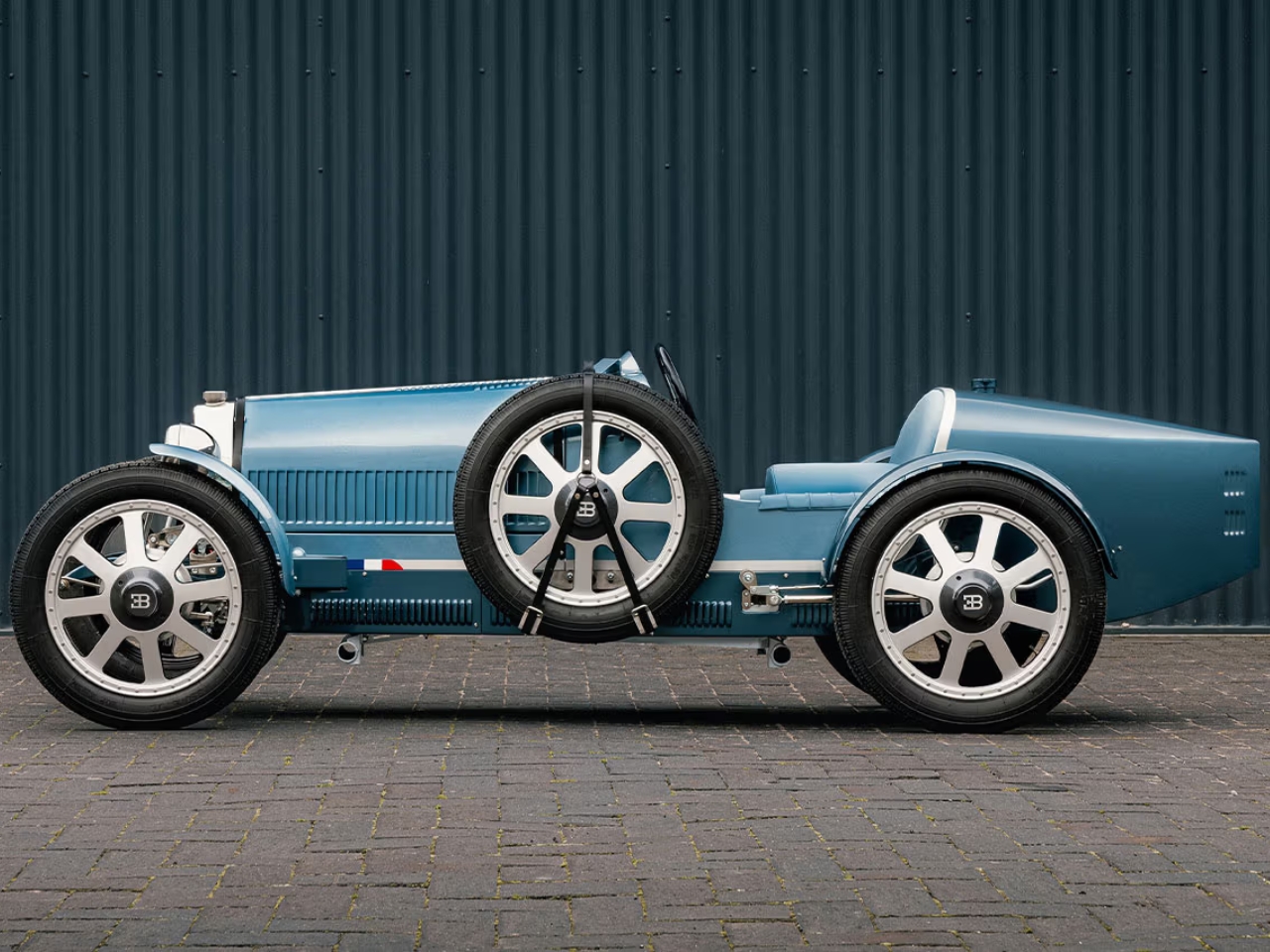
The car is crafted by Hedley Studios and the original Baby editions were inspired by the legendary Bugatti Type 35. It takes 200 hours to assemble one as it is made up of hand-beaten aluminum body panels so there is usually only around 500 cars produced. No details yet for its release but you can be assured that it will sell out, no matter what the price tag is.

The post Bugatti Baby II Tourbillon Edition is a miniature version of the brand’s latest hypercar first appeared on Yanko Design.

Timeless Triumph: 1934 Bugatti Type 59 Sports Wins Best in Show 2024, Crowned with Rolex 1908

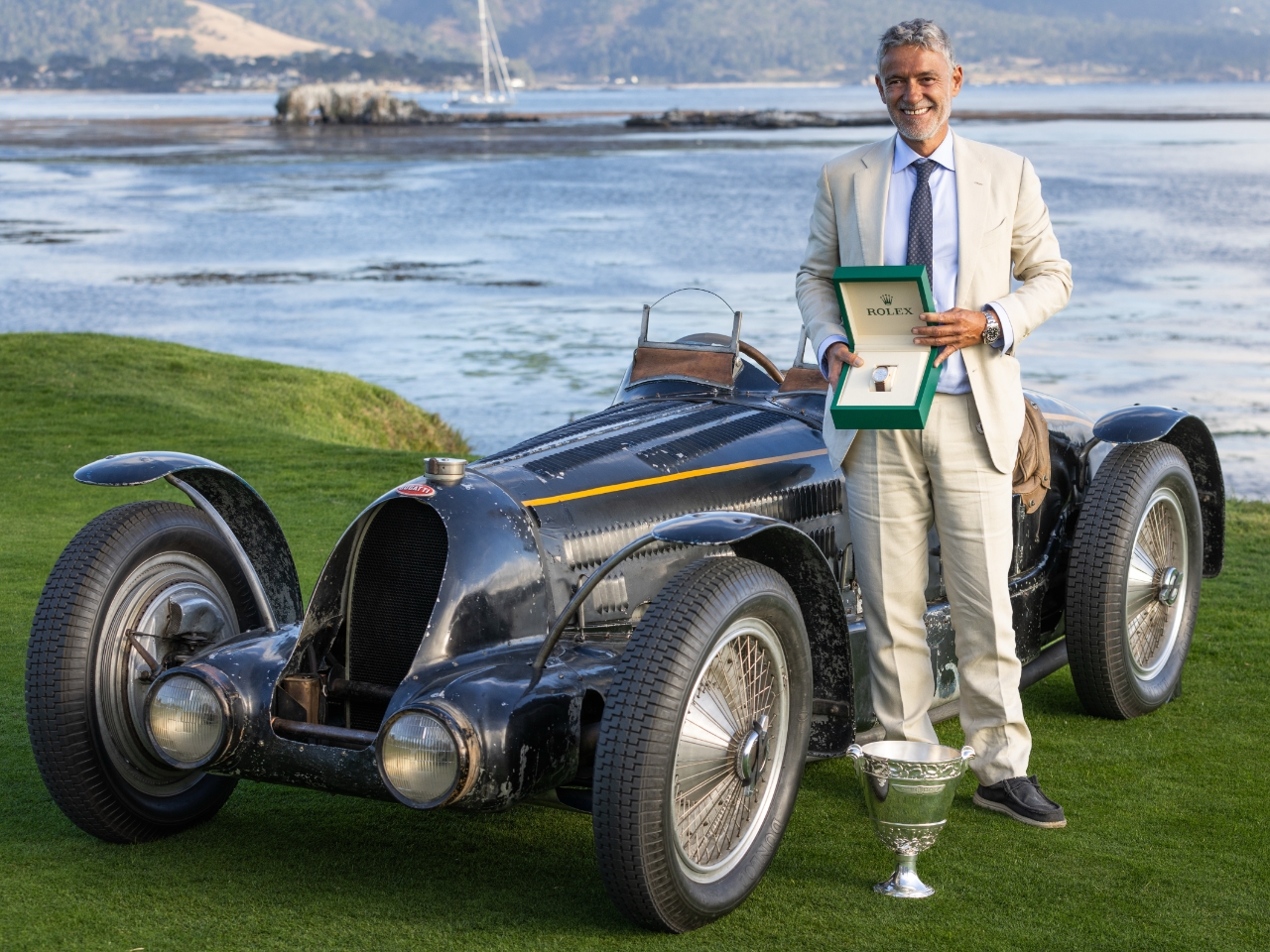
Good morning, everyone! Today’s Mobile Monday and Wristwatch Wednesday converge into a celebration of two timeless icons. We’re featuring the elegant 1934 Bugatti Type 59 Sports, which recently claimed Best of Show at the 73rd Pebble Beach Concours d’Elegance, alongside the exquisite Rolex 1908 timepiece awarded to the winner. Both of these masterpieces capture the essence of what’s old and new, seamlessly blending the past and present.

1934 Bugatti Type 59 Sports Wins Best in Show 2024

Designers: Bugatti and Rolex

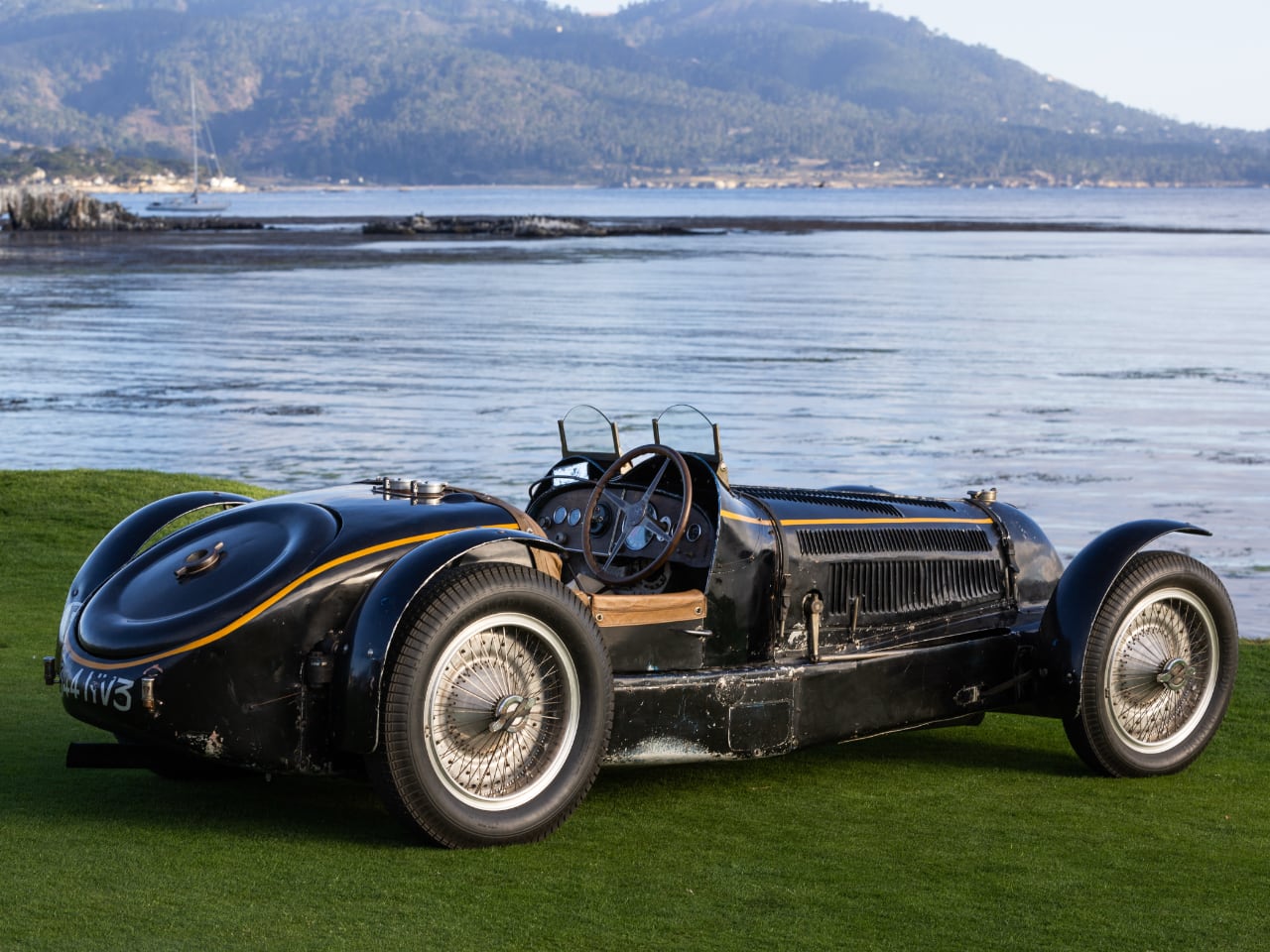
1934 Bugatti Type 59 Sports with chassis number 57248

The 1934 Bugatti Type 59 Sports and the Rolex 1908 have histories stretching back to when craftsmanship was paramount and every detail mattered. Though from different worlds—automotive and horology—these two icons share a narrative that speaks to the pursuit of perfection and the appreciation for timeless beauty.

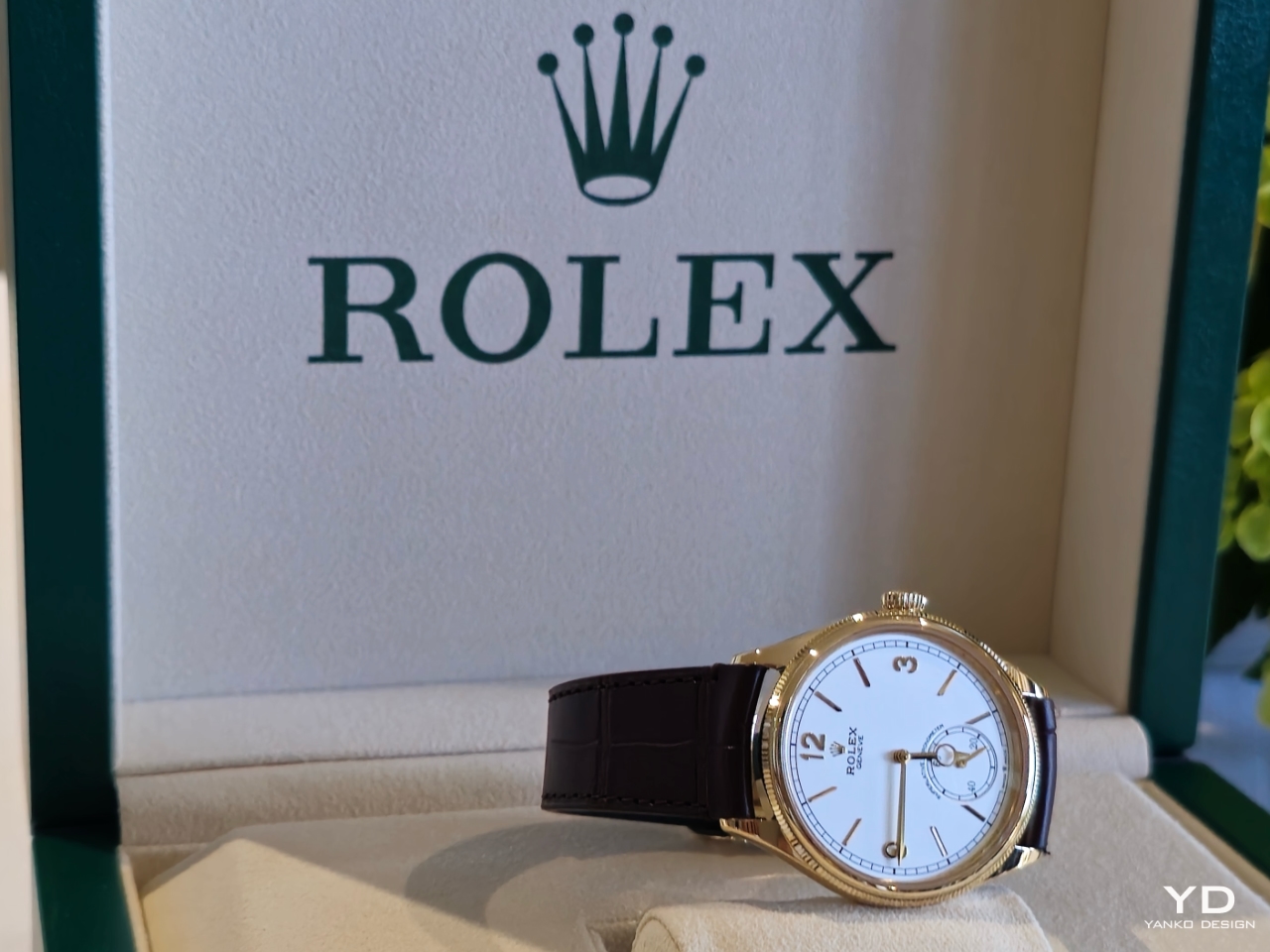
Rolex 1908 reference 52508

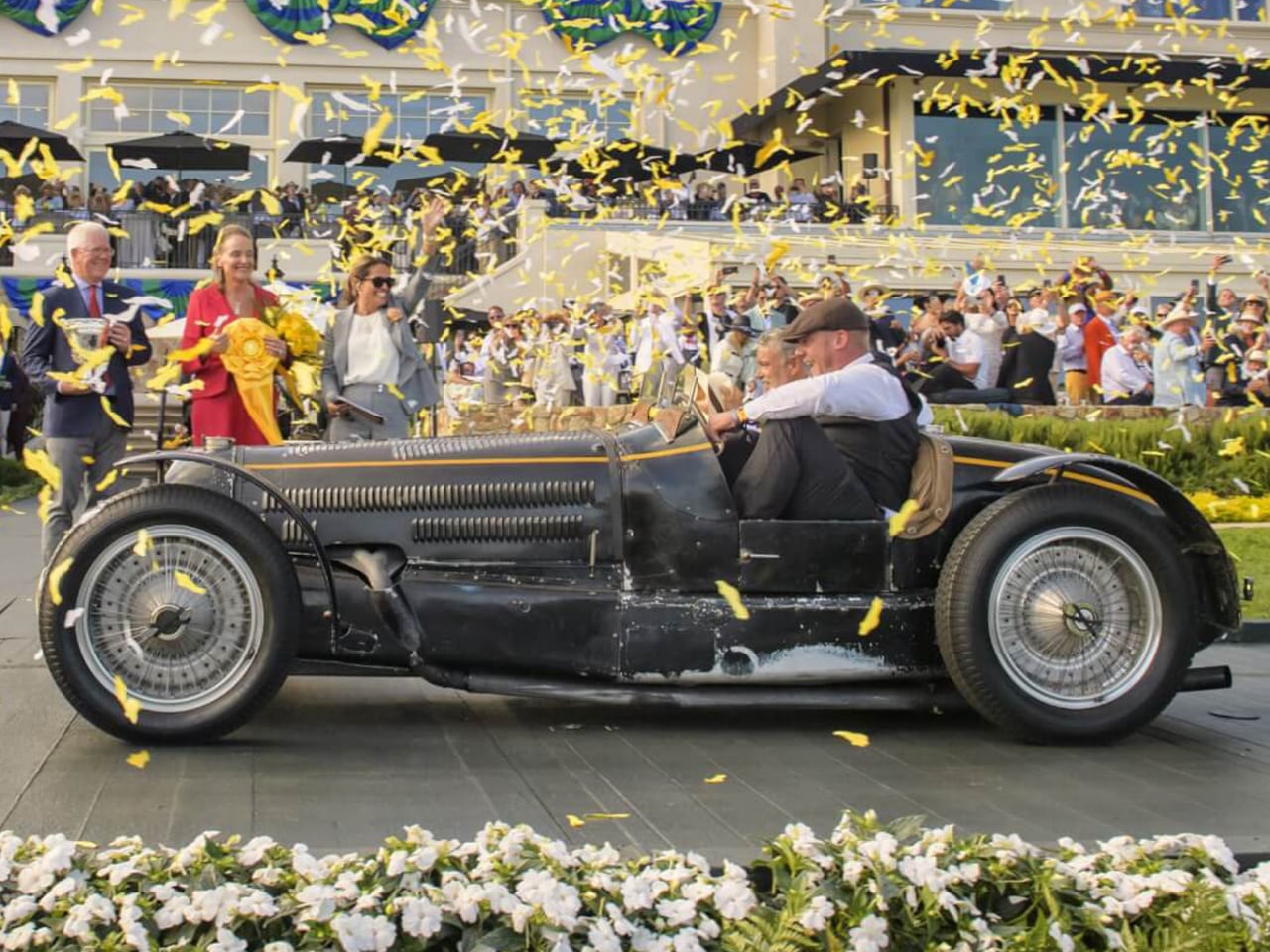
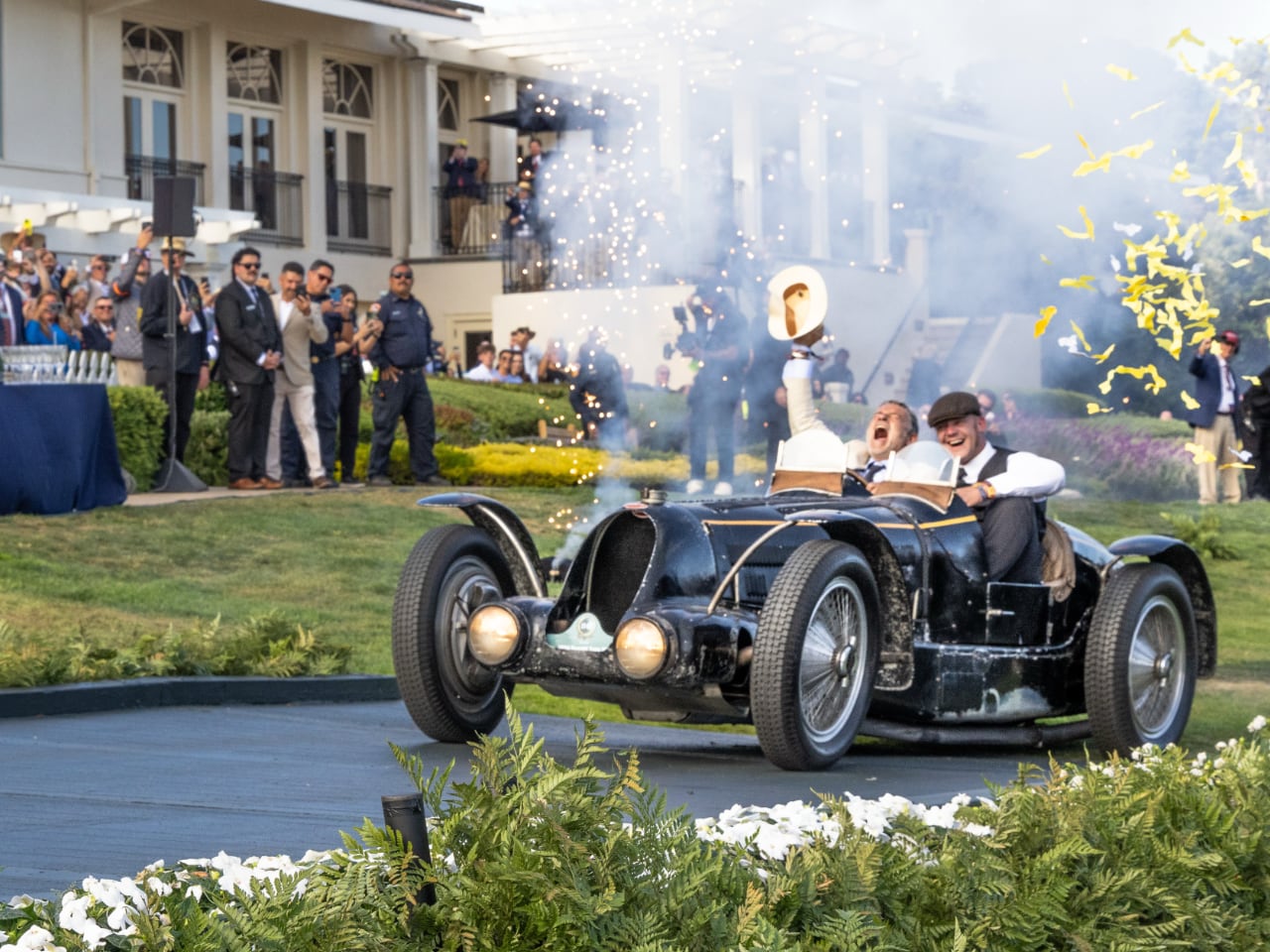
For the first time in the Pebble Beach Concours d’Elegance history, Best of Show was awarded to a preservation car—a remarkable distinction that adds another layer to the Bugatti Type 59’s storied past. This year, 214 cars from 16 countries and 29 states pulled onto the competition field, but the 1934 Bugatti Type 59 Sports, presented by Fritz Burkard of The Pearl Collection in Zug, Switzerland, claimed the spotlight.

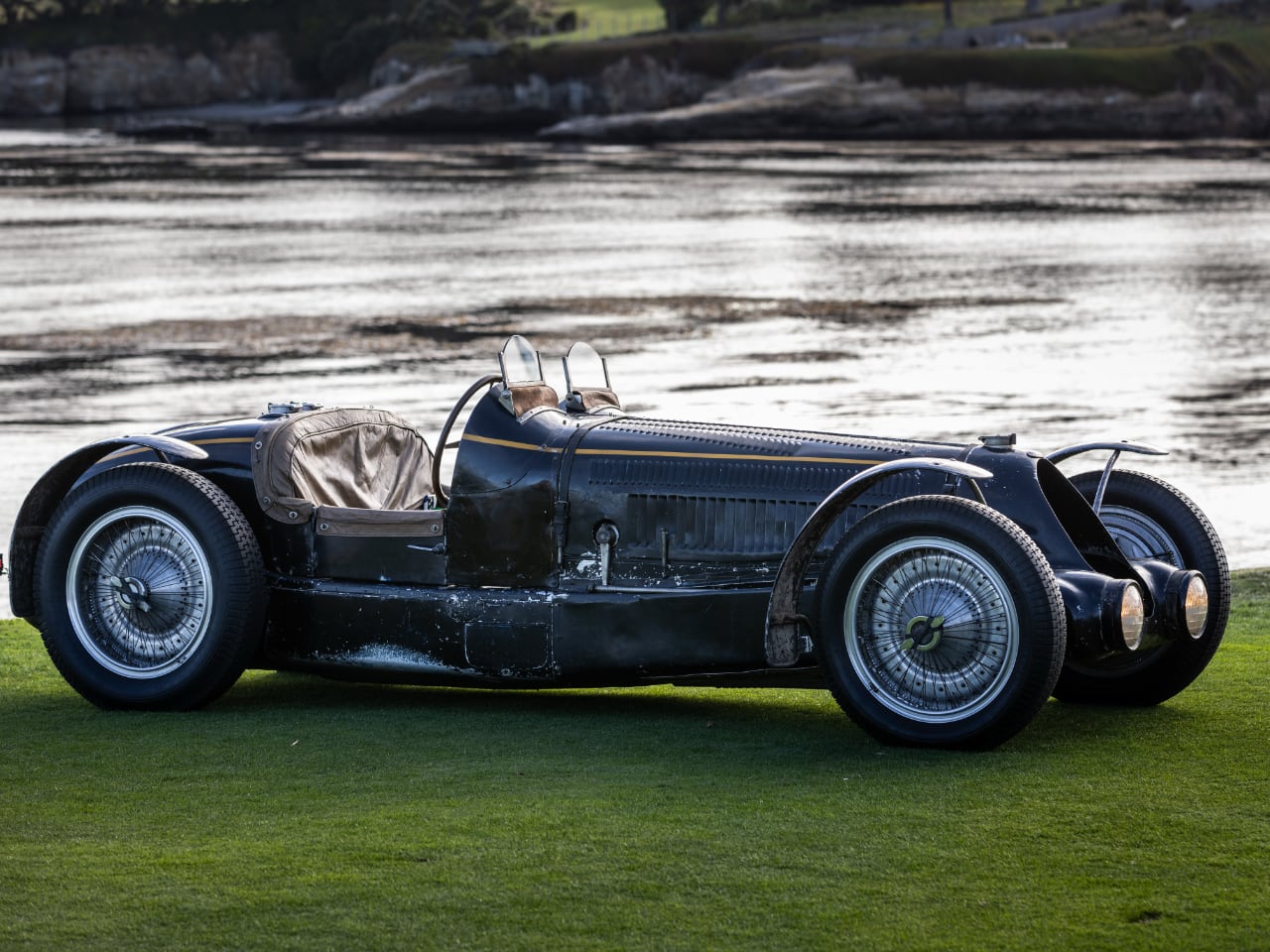
Rolex: 1934 Bugatti Type 59 Sports with chassis number 57248

Concours Chairman Sandra Button highlighted the significance of this victory, noting that this particular Type 59 is a rare factory race car with multiple Grand Prix victories to its name. This car has connections to some of the greatest racing legends and even ties to royalty. What makes it even more extraordinary is that it remains preserved in the livery given to it by King Leopold of Belgium, showcasing its authentic and original character.

The Bugatti Type 59 Sports stands as a masterpiece of automotive artistry. Bugatti, renowned for its pursuit of excellence, crafted the Type 59 as a sublime blend of elegance and power. Its design exudes refined style, boasting a low-slung body, intricate wire wheels, and the distinctive growl of its 3.3-liter engine. This vehicle exemplifies the pinnacle of collaboration between engineers and designers. Its triumph as a preservation car at Pebble Beach highlights the enduring value of originality and historical authenticity in the world of classic automobiles.

A living symbol of racing legacy, this vehicle bears the marks of its illustrious history in every scuff and scratch. From its leather seats to its wooden steering wheel, each imperfection tells a story. Pre-war legends like René Dreyfus and Jean-Pierre Wimille piloted this machine through some of the most prestigious Grand Prix events of the 1930s, cementing its racing pedigree.

Later, the car found its way into the hands of King Leopold III of Belgium, who added his own touch by repainting it in his signature black and yellow livery. As the first of only six ever produced, this Type 59 Sports is a powerful reminder of Bugatti’s enduring impact on automotive history.

Throughout the years, the car has been in the care of various collectors who have all respected its original state. The current owner, Fritz Burkard, has prioritized keeping this historical piece untouched as much as possible, preserving its patina to honor its rich past. This win at Pebble Beach underscores the car’s historical importance and highlights the significance of maintaining the authenticity of classic automobiles.

Rolex

The Rolex 1908, awarded to the Best of Show winner, mirrors the Bugatti’s commitment to preserving history while celebrating precision and elegance. Rolex, a brand synonymous with reliability and craftsmanship, introduced the 1908 model as a nod to its rich heritage. The 1908’s design is understated yet undeniably elegant, reflecting the brand’s focus on timeless design rather than fleeting trends. The watch’s movement, with its meticulous attention to detail, ensures that it doesn’t just tell time—it honors it.

Rolex 1908 reference 52508 Awarded to Best of Show at the 73rd Pebble Beach Concours d’Elegance

This particular Rolex 1908 model, paired with a traditional brown alligator leather strap, is crafted in 18-karat yellow gold and features an intense white dial. The strap is distinguished by its green calfskin lining and tone-on-tone stitching, adding to its luxurious look and feel. The timepiece is also notable for its transparent sapphire case back, which reveals the intricate Caliber 7140 movement, showcasing Rolex’s dedication to precision and aesthetics. The engraving “Best of Show 2024” is discreetly placed on the Dualclasp, a double folding clasp made of 18-karat yellow gold, that sits perfectly centered on the wrist, showcasing the meticulous design and craftsmanship for which Rolex is renowned.

Earlier in the day, before the start of the Concours, Rolex was kind enough to give me a fleeting moment with the 1908, and it’s truly breathtaking. Combining classic elements with cutting-edge technology makes the Rolex 1908 a fitting award for such a prestigious event, perfectly complementing the legacy and elegance of the 1934 Bugatti Type 59 Sports.

When the Bugatti Type 59 Sports won Best of Show at the 73rd Pebble Beach Concours d’Elegance, it marked more than just a victory for a car—it was a recognition of the enduring appeal of something beautifully crafted. The Rolex 1908, awarded to the winner, complements this achievement perfectly, representing a piece that, like the Bugatti, is treasured for its significance and what it symbolizes.

Both the Bugatti Type 59 Sports and the Rolex 1908 showcase the pinnacle of craftsmanship from their respective eras, blending timeless elegance with cutting-edge engineering. The Bugatti, with its sleek lines and powerful engine, represents the golden age of automotive design, while the Rolex 1908 embodies the precision and sophistication of early 20th-century horology. They remind us that true innovation stands the test of time, inspiring enthusiasts and collectors alike.

Rolex

The post Timeless Triumph: 1934 Bugatti Type 59 Sports Wins Best in Show 2024, Crowned with Rolex 1908 first appeared on Yanko Design.

The Jacob & Co. Bugatti Tourbillon: Where Precision Watchmaking Meets High-Performance Automotive Design

Jacob & Co. and Bugatti blend the precision of watchmaking with the high-performance essence of automotive design in their latest creation. The Jacob & Co. Bugatti Tourbillon Watch showcases the meticulous craftsmanship and innovative spirit of both brands. This watch transcends mere timekeeping, standing as a testament to the pinnacle of luxury and engineering excellence.

Designer: Jacob & Co. + Bugatti

Jacob & Co. and Bugatti: Masters of Precision and Excellence

Jacob & Co., established by Jacob Arabo in 1986, has become renowned for its unique and innovative timepieces. The brand has consistently pushed the boundaries of traditional watchmaking, introducing groundbreaking complications and bold designs. Each watch transcends mere timekeeping, serving as a true expression of art and engineering, crafted with the utmost attention to detail and quality.
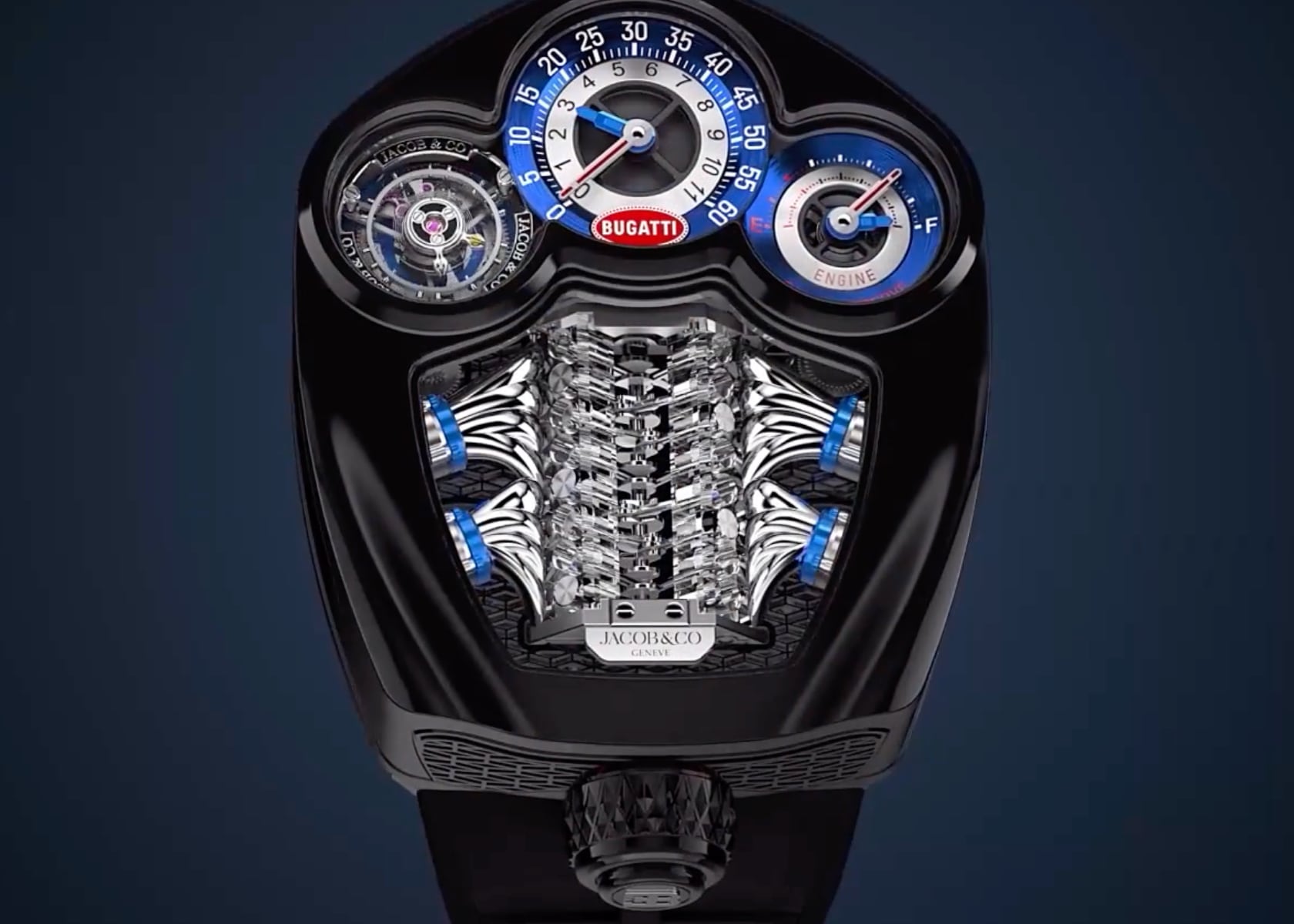
Jacob & Co. Bugatti Tourbillon

Their previous collaborations with automotive brands, especially the Bugatti Chiron Tourbillon, highlight their ability to seamlessly merge the worlds of horology and high-performance cars. This partnership has produced timepieces that are both visually stunning and technically advanced, captivating both watch enthusiasts and car aficionados alike.
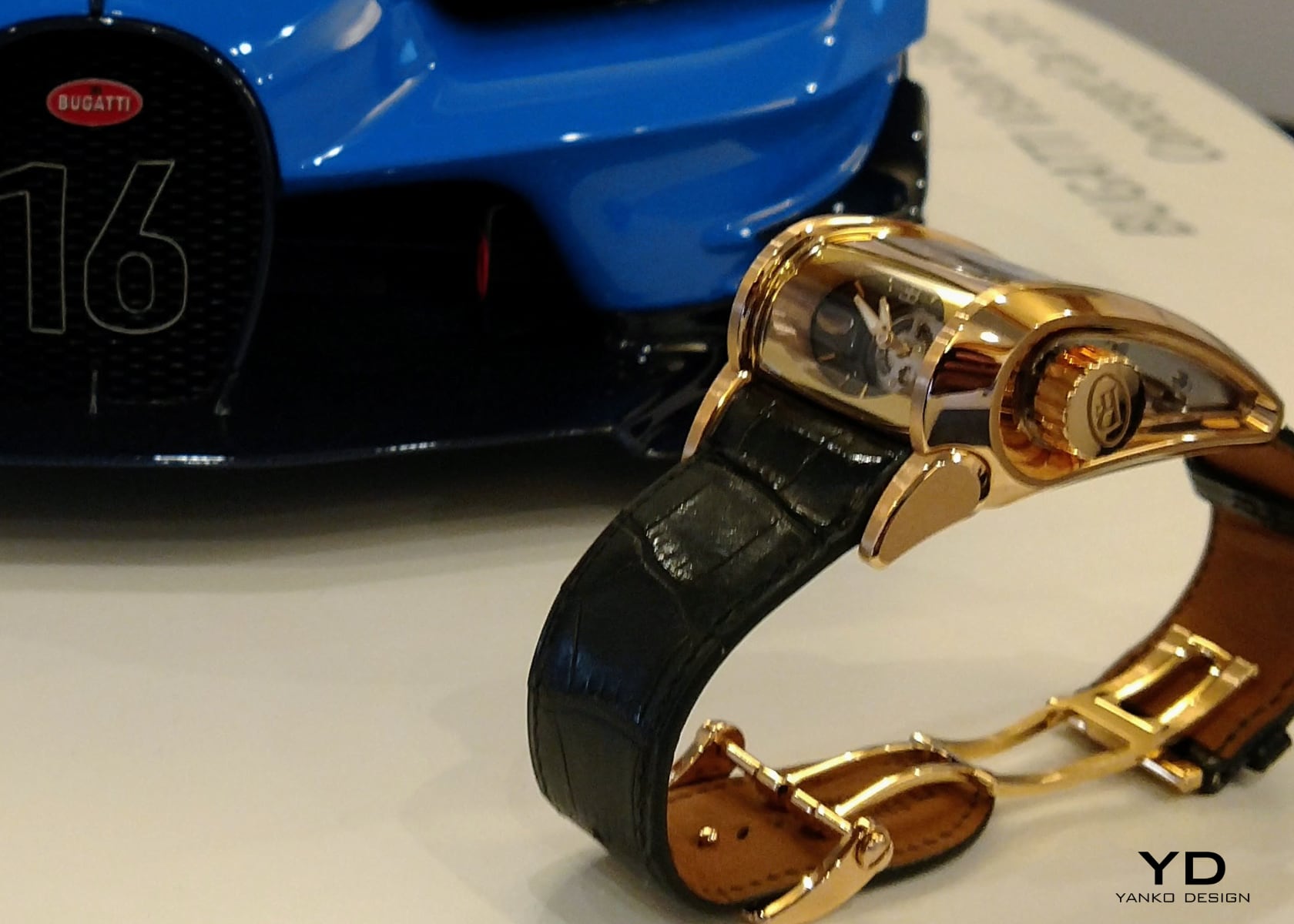
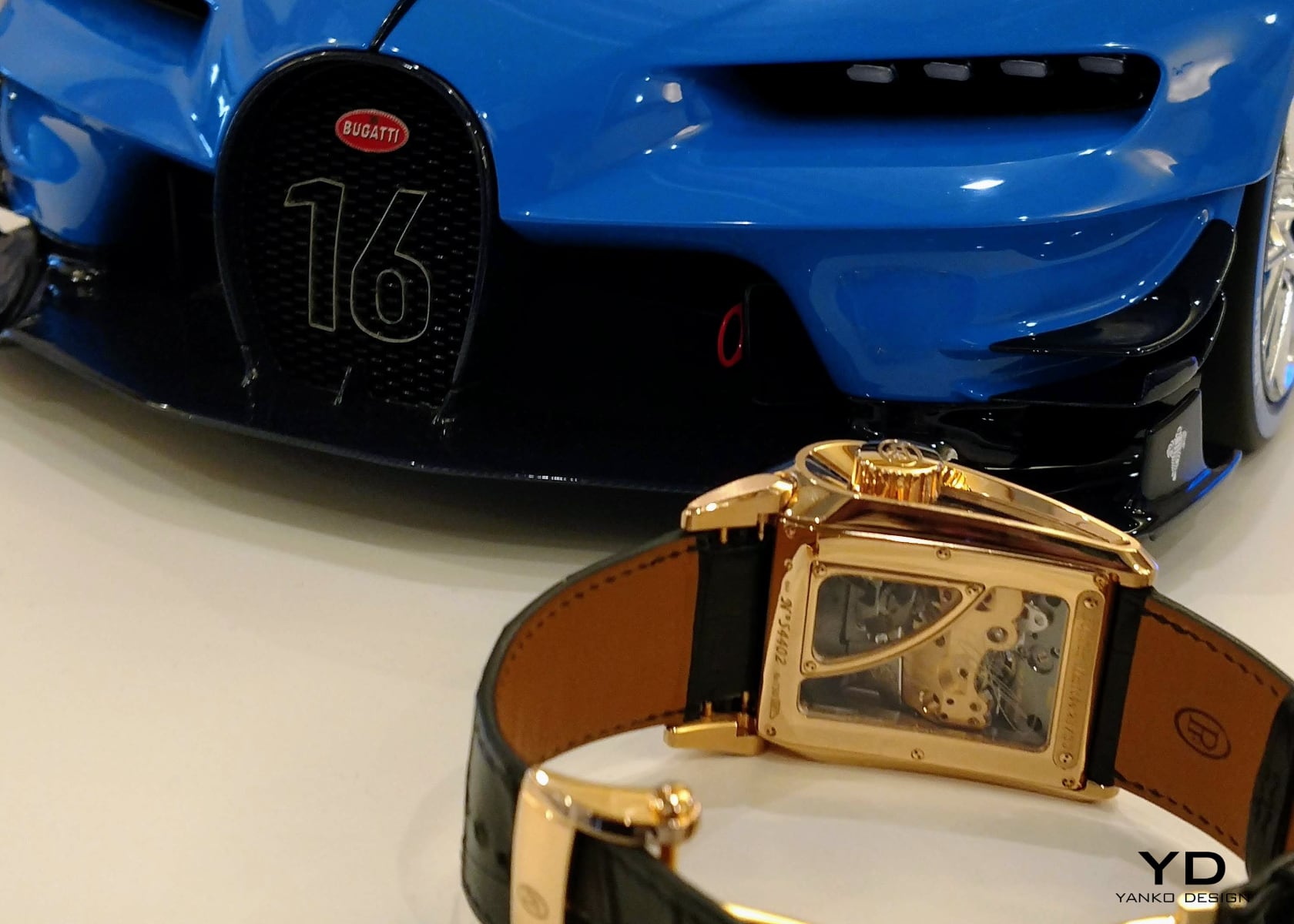
Synonymous with high performance and luxury, Bugatti has a storied history of producing some of the world’s most advanced hypercars. Known for pushing the limits of speed and design, their vehicles are engineering marvels that combine cutting-edge technology with unparalleled craftsmanship. The latest addition to their lineup, the Bugatti Tourbillon V16 Hybrid, embodies both technological innovation and exquisite design.
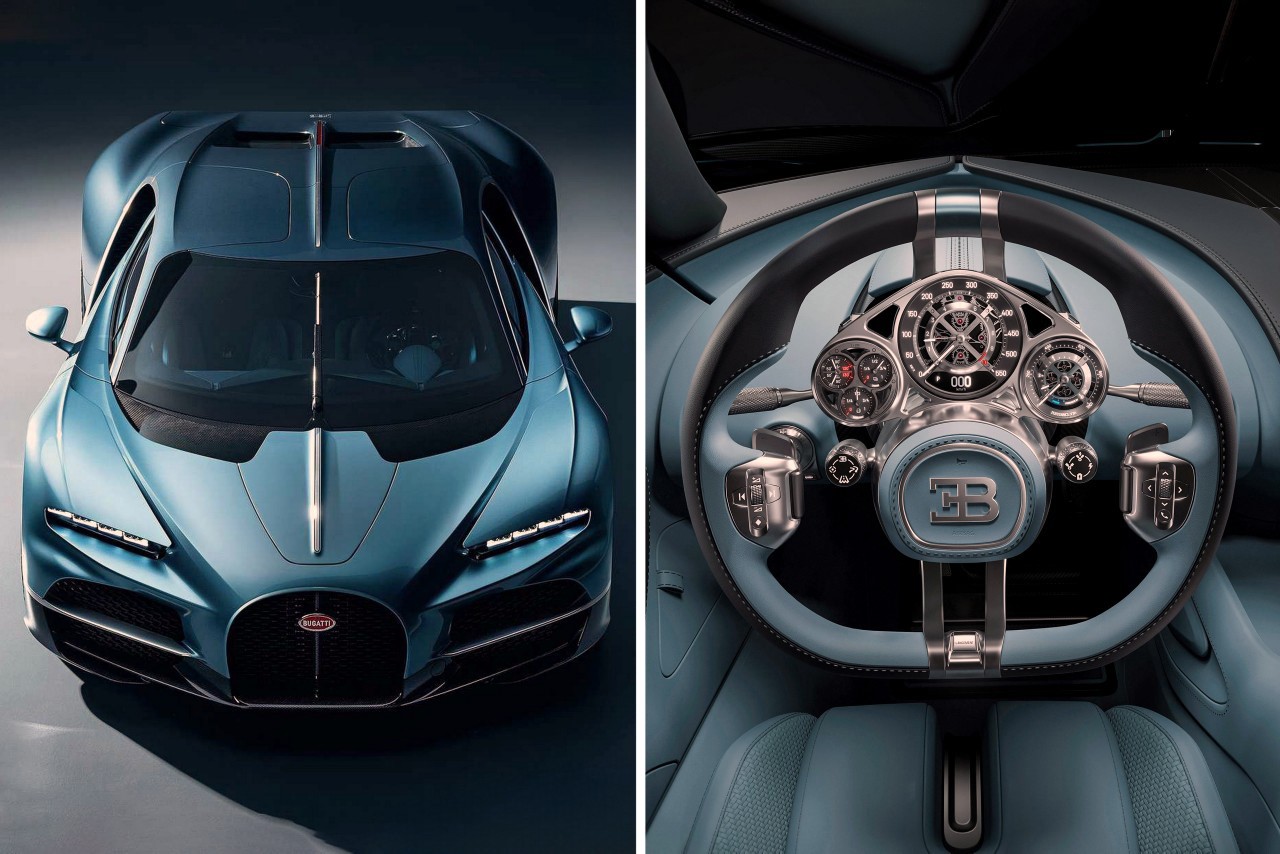
Bugatti Tourbillon

Bugatti’s relentless pursuit of excellence is evident in its cutting-edge engineering and luxurious interiors. The new Bugatti Tourbillon V16 Hybrid, featuring a naturally aspirated V16 engine, exemplifies the brand’s drive to push the boundaries of automotive innovation and performance.

Together, Jacob & Co. and Bugatti have created masterpieces that reflect their shared commitment to precision, innovation, and luxury. This collaboration showcases the best of both worlds, resulting in creations that are not only functional but also works of art.

Bugatti Dashboard and Engine Design

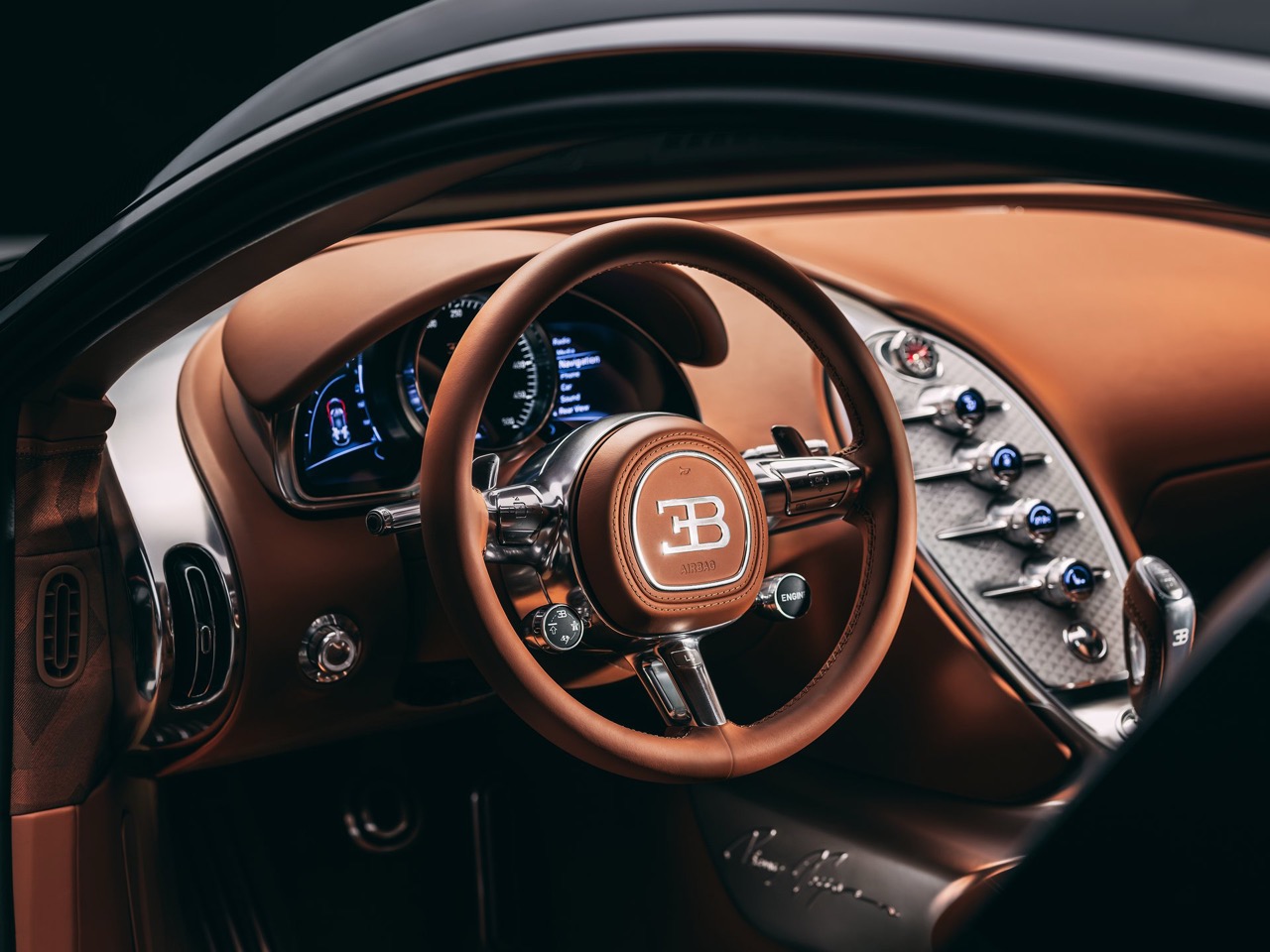
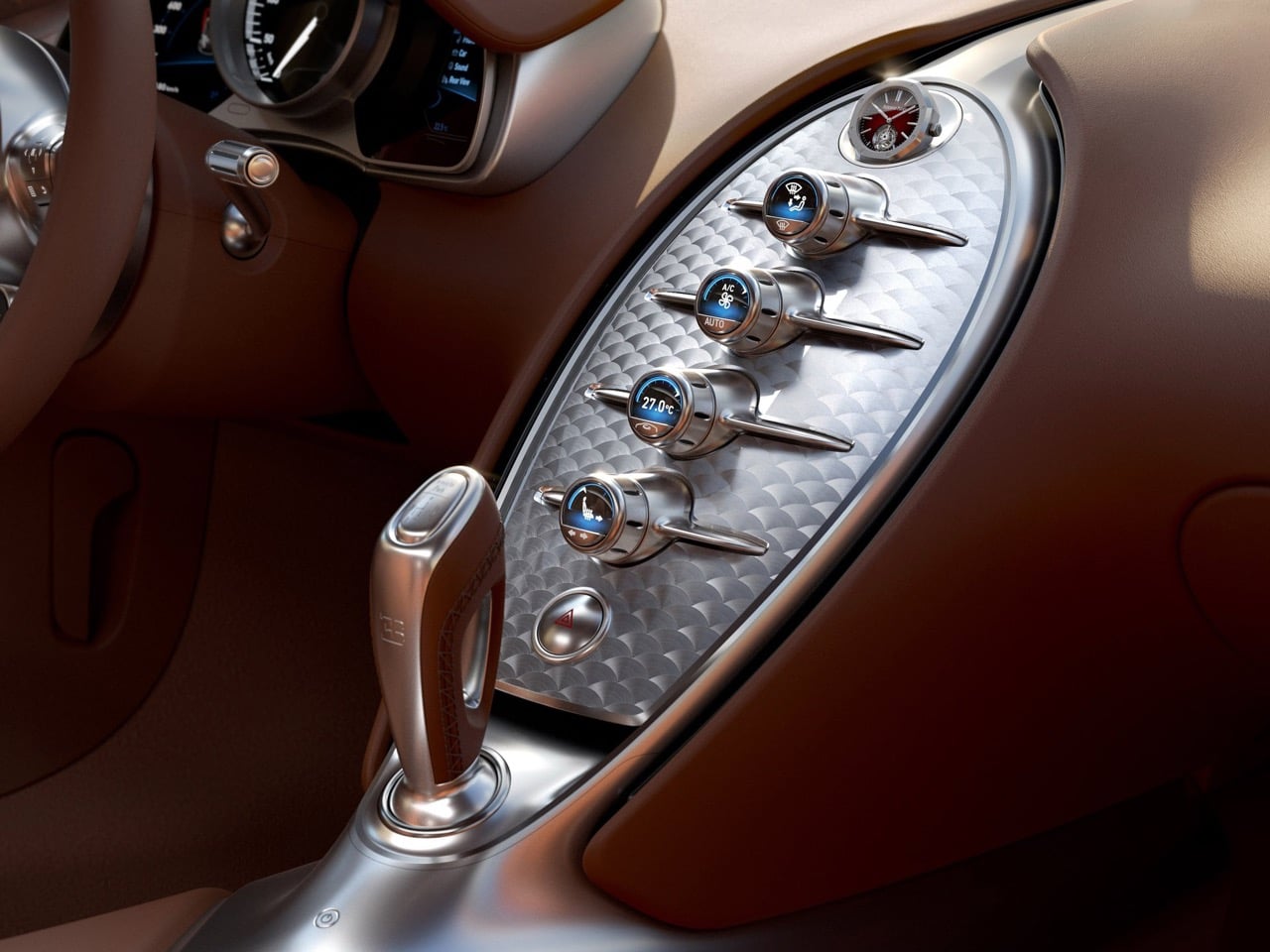
The Bugatti Tourbillon V16 Hybrid exemplifies modern engineering excellence, both in its dashboard and engine design. The dashboard integrates multiple analog dials and digital readouts, all crafted with precision. This layout is functional and visually impressive, providing drivers with clear and concise information about the car’s performance metrics at a glance.
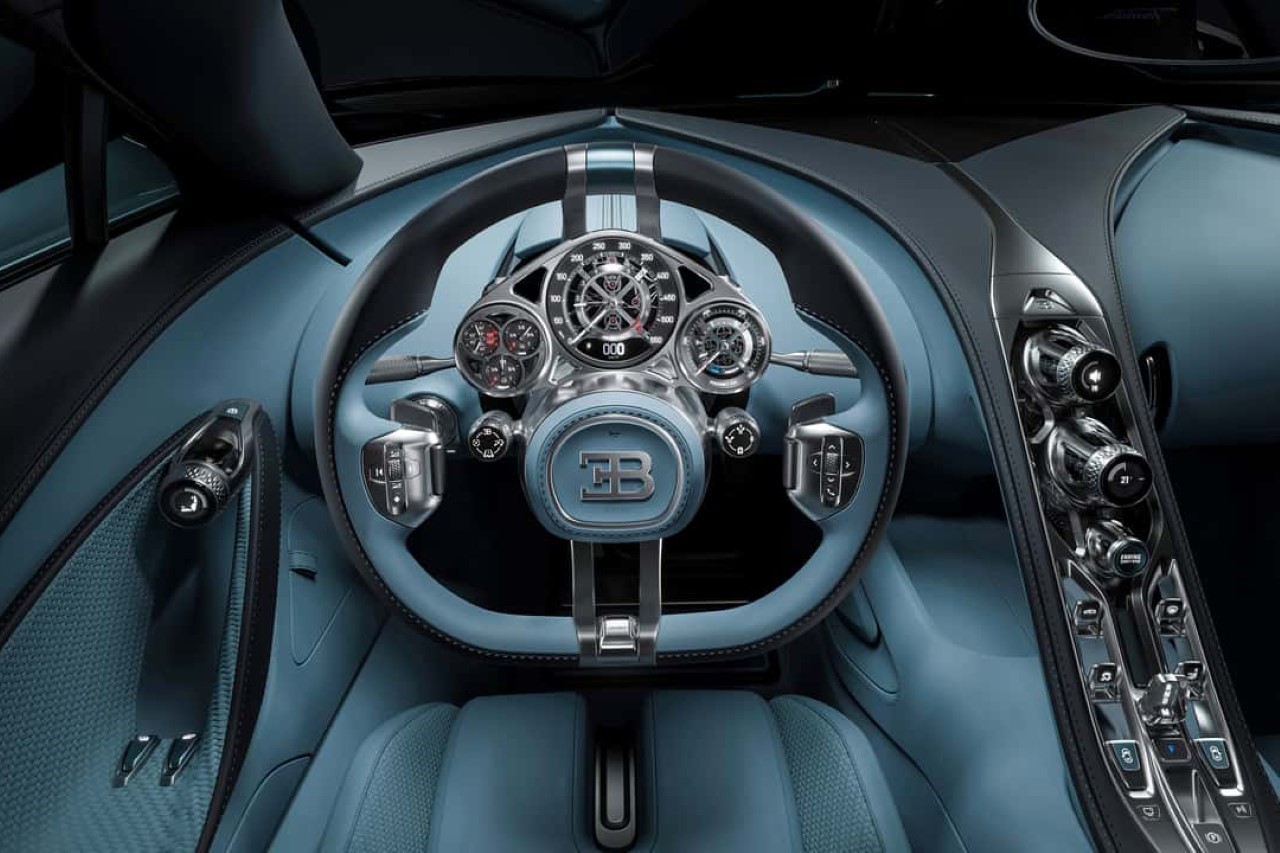
Bugatti Tourbillon V16 Hybrid

The analog and digital displays enhance the driving experience by offering comprehensive data in an intuitive format. This blend of form and function highlights Bugatti’s commitment to innovation and quality, ensuring that drivers receive both aesthetic pleasure and practical benefits.
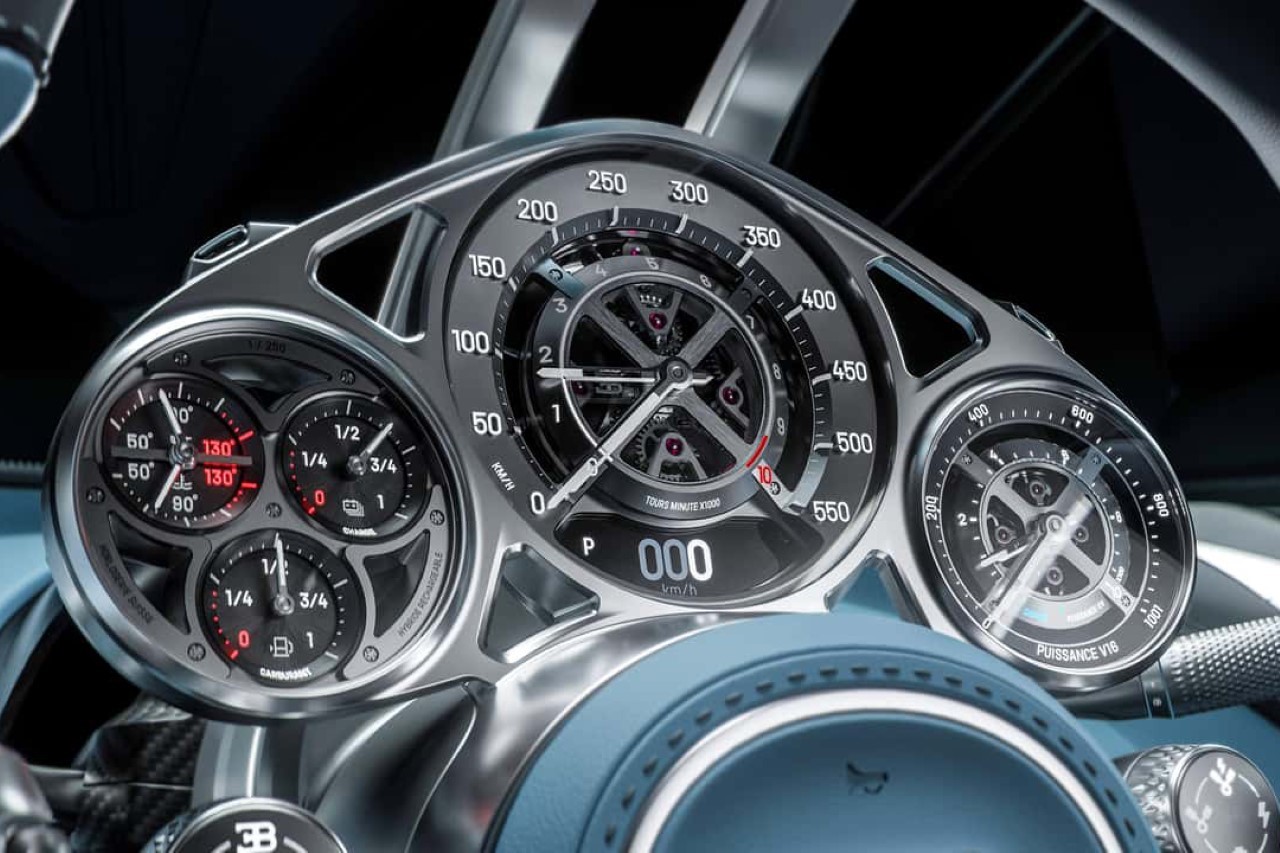
Bugatti Tourbillon V16 Hybrid

At the heart of the Bugatti Tourbillon V16 Hybrid lies a naturally aspirated V16 engine, a true masterpiece of engineering. This engine, unlike its W16 quad-turbo predecessor, is designed for peak performance and efficiency. The meticulous craftsmanship of the engine’s layout and components ensures optimal performance and longevity. The V16 engine, with its 16 cylinders arranged compactly, delivers immense power while maintaining a sleek and aerodynamic profile.
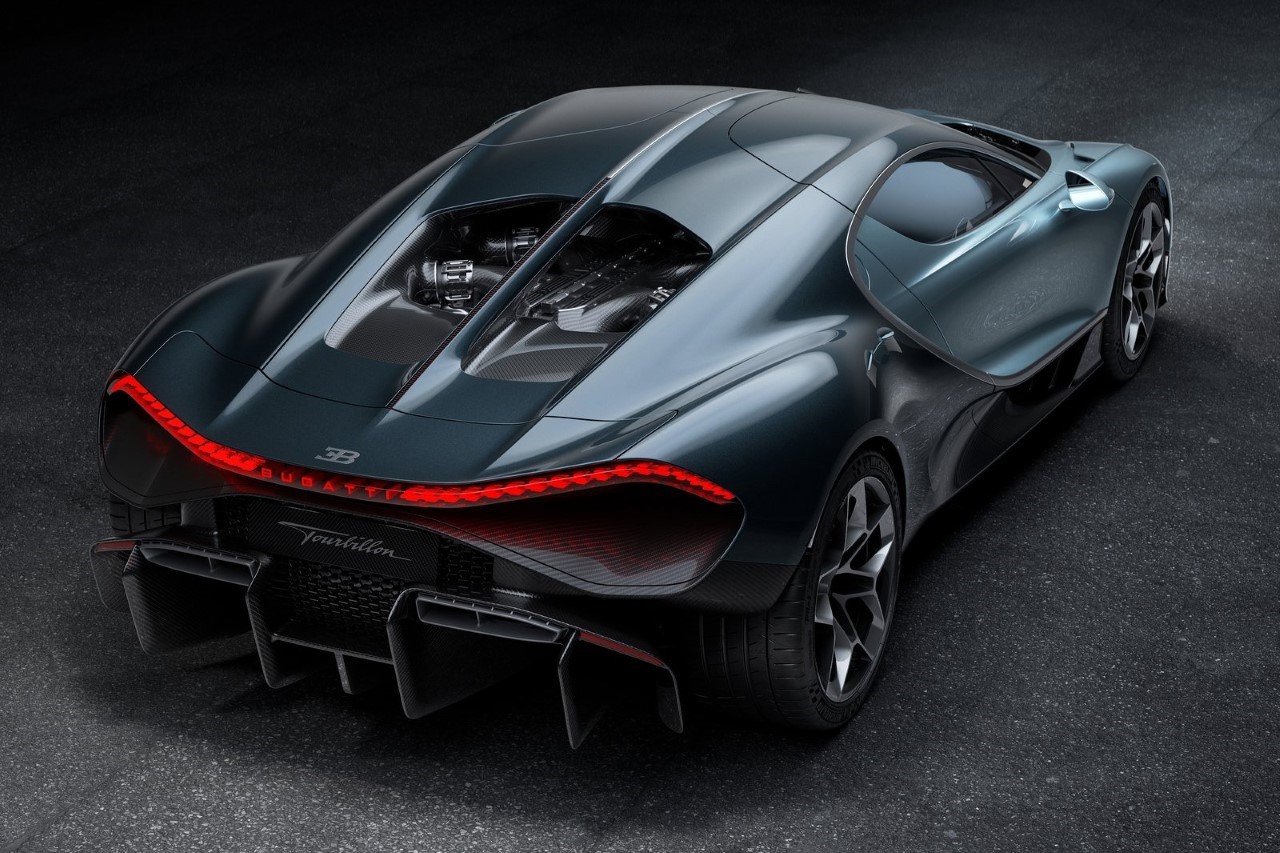
Bugatti Tourbillon V16 Hybrid

The attention to detail in the engine’s construction is evident in every component, from the titanium pistons to the sapphire crystal block. This design not only showcases Bugatti’s engineering prowess but also serves as a visual centerpiece, reflecting the brand’s relentless pursuit of excellence.

Watch Design and Replication Details

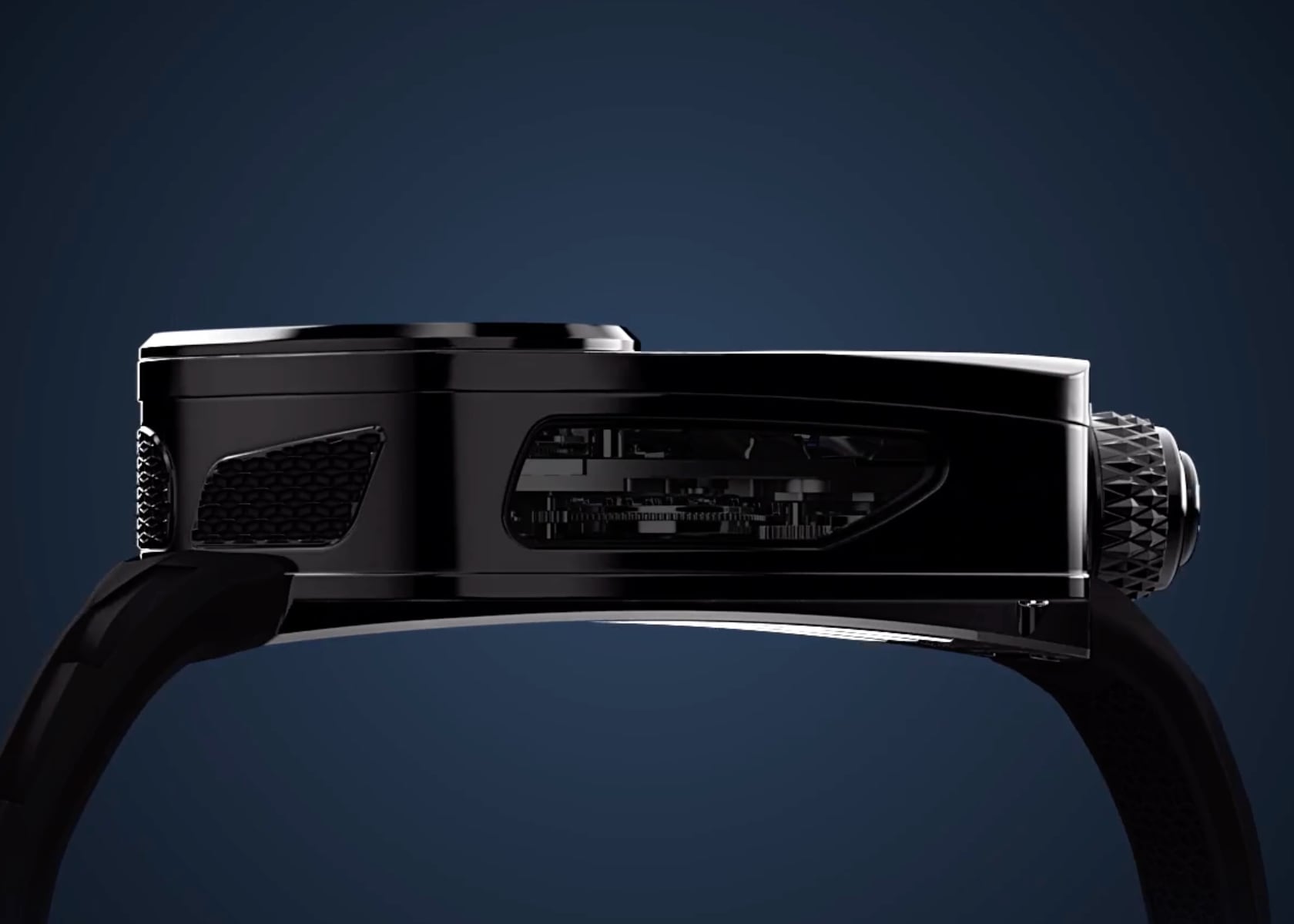
The Jacob & Co. Bugatti Tourbillon Watch captures the essence of Bugatti’s automotive excellence, mirroring the engineering marvels of their high-performance vehicles. The watch features a bold and sophisticated black PVD titanium case, measuring 52mm by 44mm. Inside, it houses an intricately crafted engine block made from sapphire crystal, complete with 16 titanium pistons driven by a single-axis crankshaft.
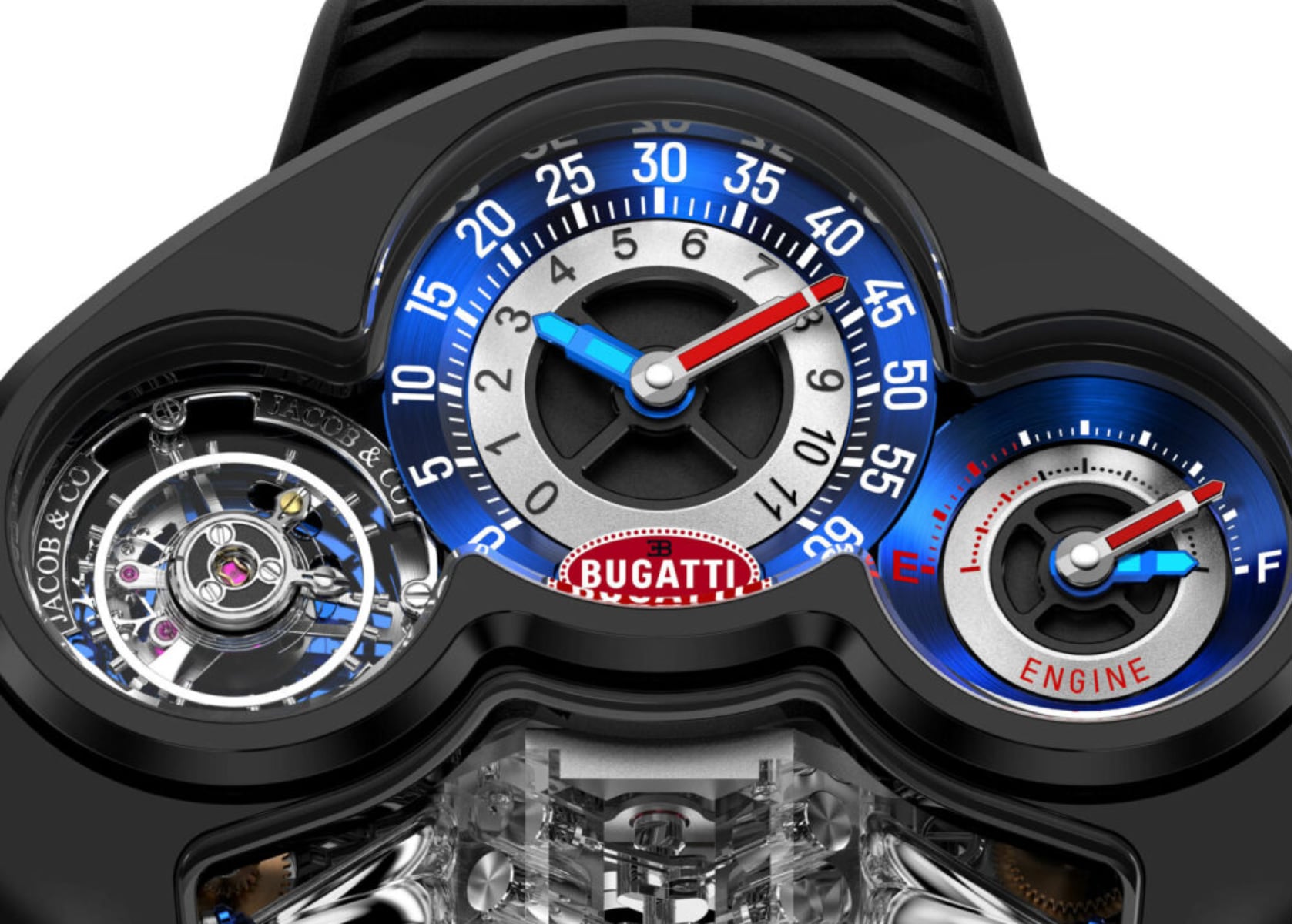
Inspired by the Bugatti Tourbillon V16 Hybrid, the watch incorporates design elements that pay homage to the car’s sleek lines and powerful engine. The durable and lightweight black PVD titanium case ensures it is the perfect companion for the discerning watch enthusiast.
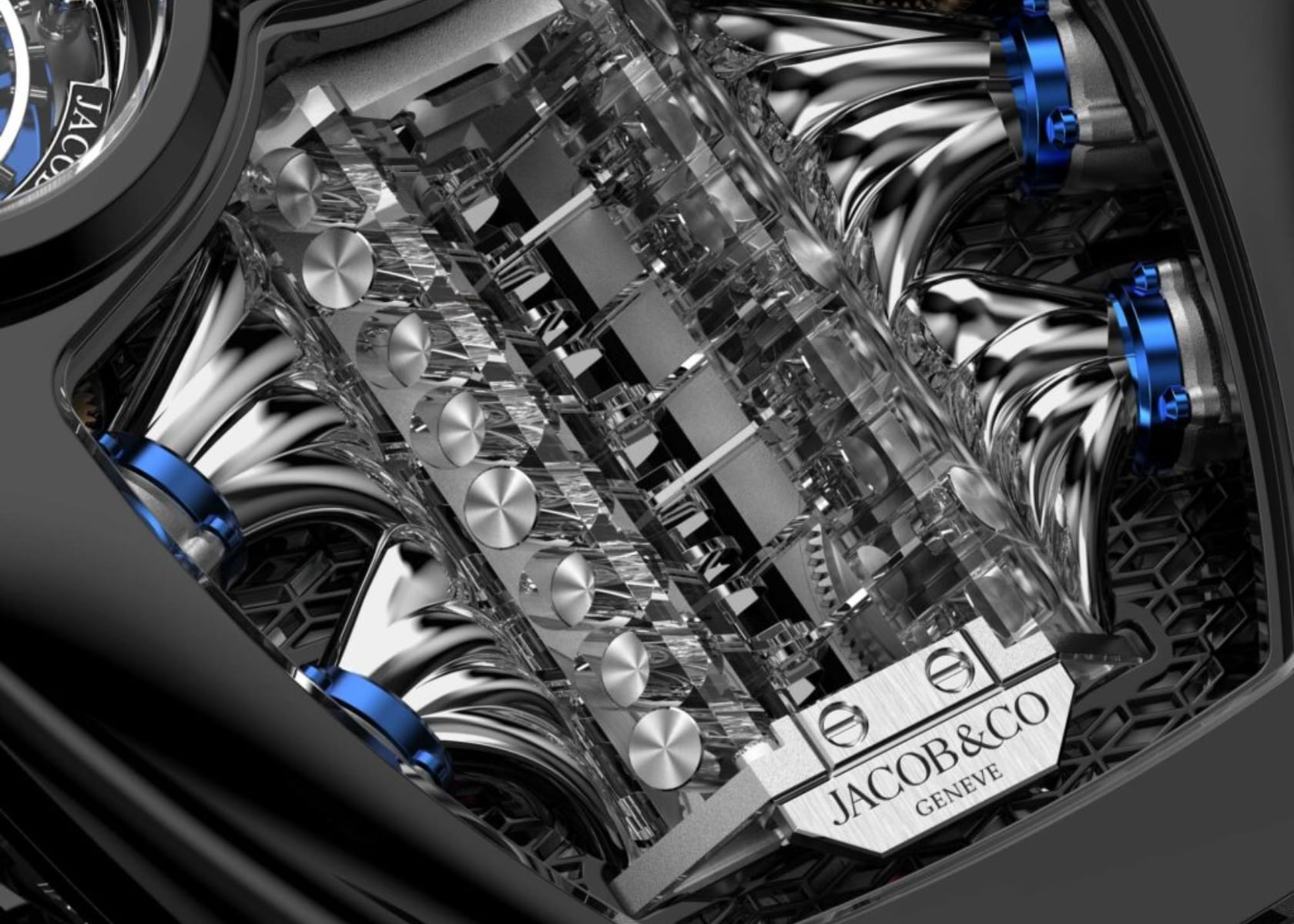
Every detail of the Jacob & Co. Bugatti Tourbillon Watch showcases the meticulous craftsmanship that defines both Jacob & Co. and Bugatti. This timepiece stands as a true statement of luxury and performance, reflecting the high standards of engineering and design synonymous with these iconic brands.

Close-up of the Engine Block on the Watch

This timepiece is truly remarkable for its detailed replication of the Bugatti V16 engine. The sapphire crystal engine block, with its 16 meticulously crafted titanium pistons, mirrors the real engine’s complexity and precision. Every component is crafted to perfection, showcasing an astonishing level of detail.
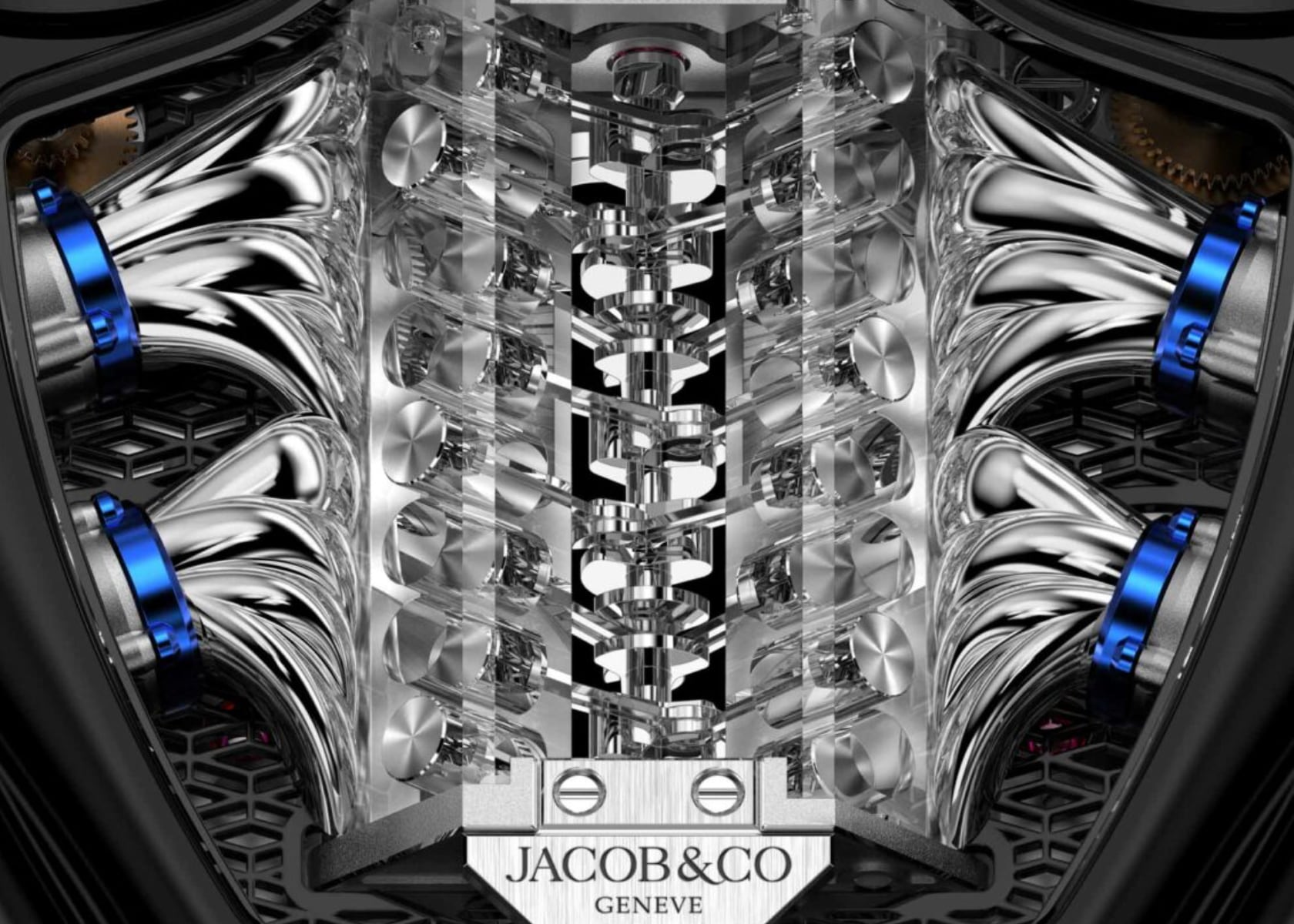
The sapphire crystal offers a clear view of the engine’s inner workings, much like peering into a miniature version of the Bugatti engine itself. This transparency is visually appealing and highlights the sophisticated engineering behind the watch. The use of sapphire crystal enhances durability and scratch resistance, ensuring the watch remains pristine over time.

Rear View of the Watch Showing the Crankshaft

Turn the watch over, and you’re greeted with the intricate mechanics that make this timepiece tick. The rear view highlights the precision engineering of the single-axis crankshaft. This view really showcases the meticulous craftsmanship that goes into each Jacob & Co. timepiece.

Jacob & Co. Bugatti Tourbillon: caseback

Seeing the movement through the caseback emphasizes the complexity and ingenuity of the design. The intricate gears and mechanisms mirror the functionality of a high-performance engine, drawing a direct connection to Bugatti’s automotive heritage. It’s like having a piece of Bugatti’s engineering marvel on your wrist, in miniature form.
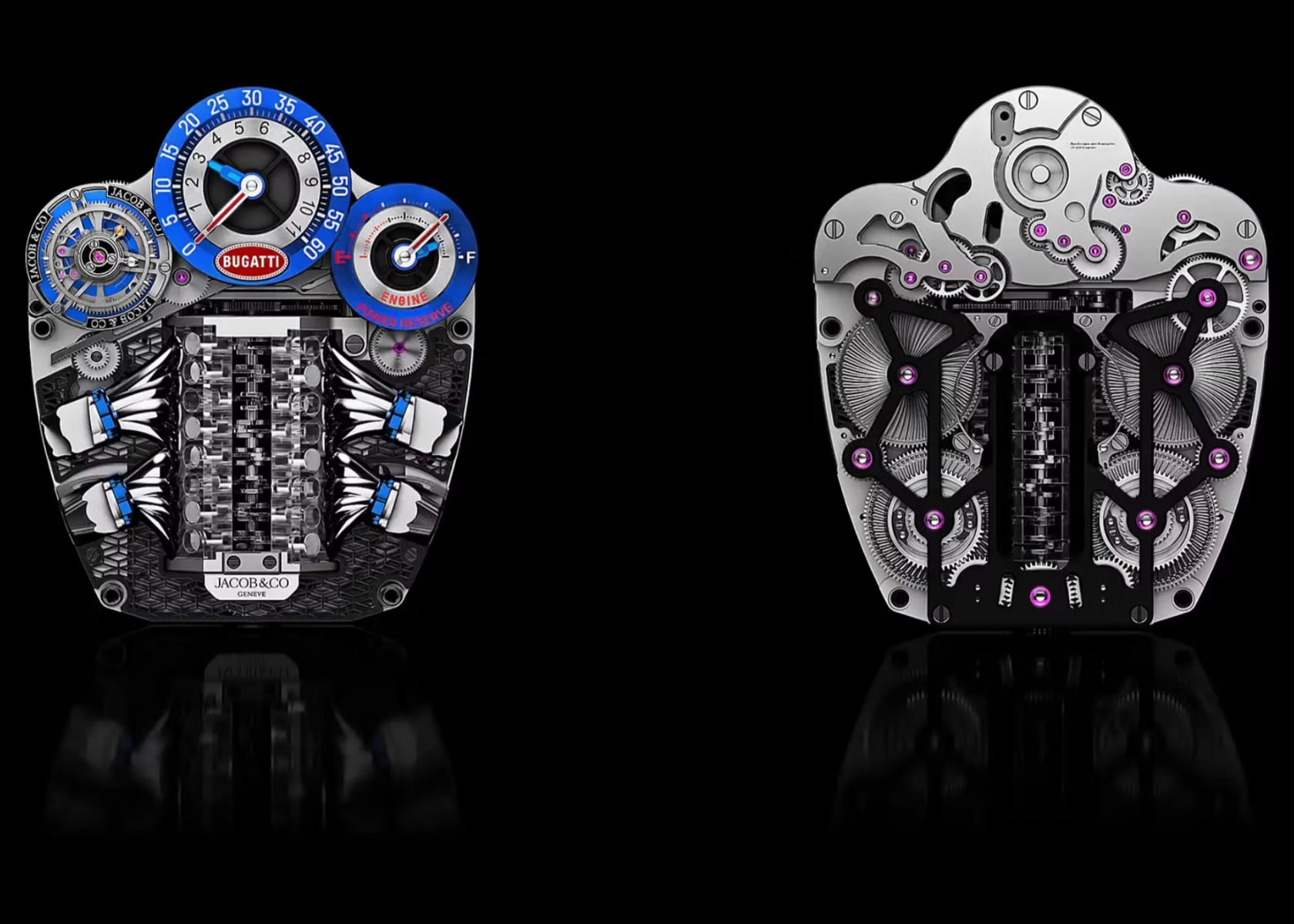
Jacob & Co. Bugatti Tourbillon: movement

Watch on Wrist

When you wear this watch, expect it to command attention. Despite its complexity, the watch remains wearable and stylish. The design is both bold and elegant, making a statement on your wrist without being too flashy.
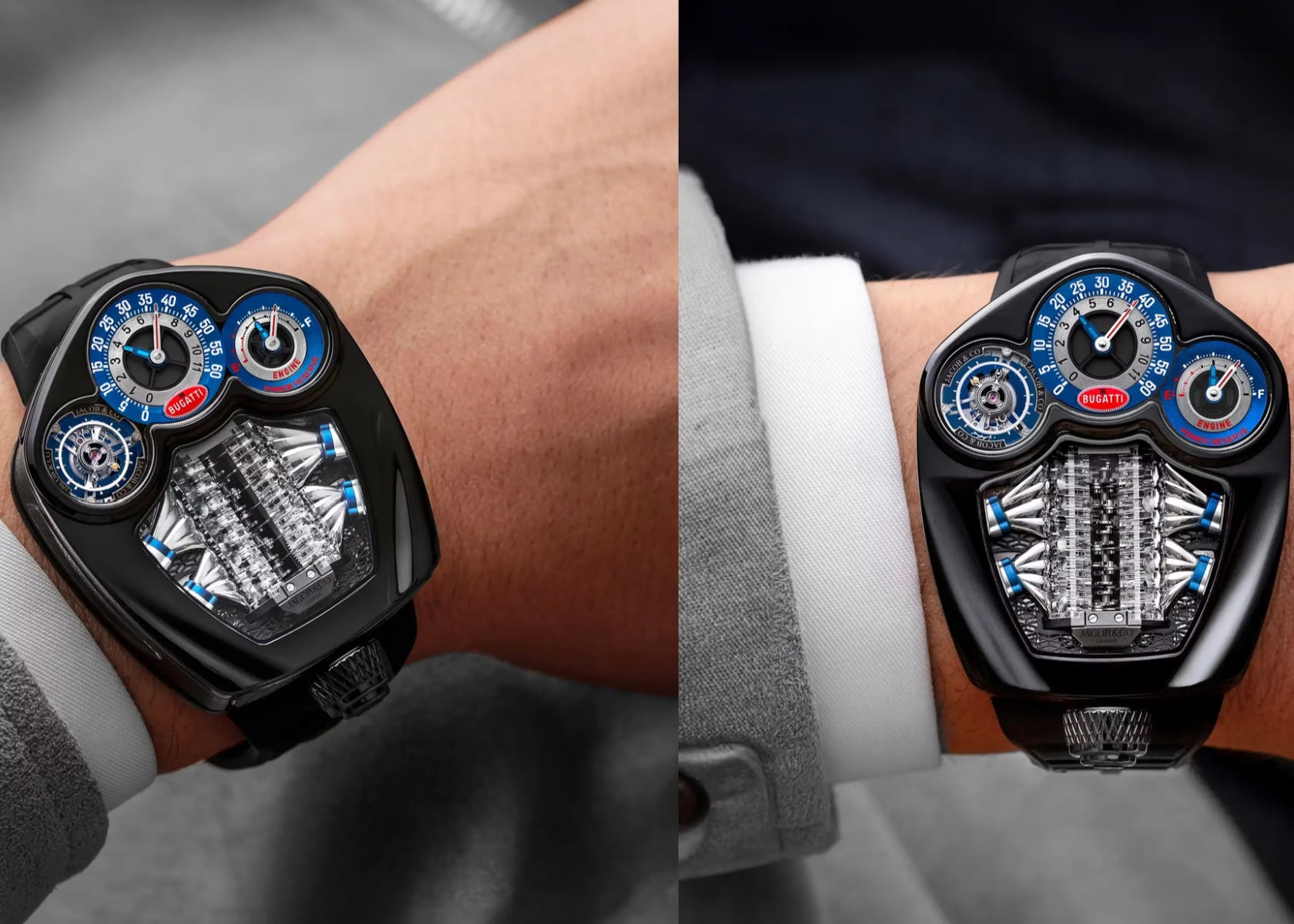
The watch’s ergonomic design ensures that it sits comfortably, making it suitable for everyday wear. Its sophisticated aesthetics make it perfect for both casual and formal occasions. The black PVD titanium case adds a modern touch, aligning with Bugatti’s contemporary design ethos.

Dashboard-like Display on the Watch

One of the standout features is the dashboard-like display. It mimics the Bugatti dashboard, complete with a 30-second flying tourbillon, retrograde hour and minute indicators, and a power reserve indicator. This design element enhances the watch’s automotive connection, providing a visual link to the Bugatti Tourbillon V16 Hybrid.

The dashboard-like display nods to the car’s interior, blending horological expertise with automotive design. The flying tourbillon, with its rapid 30-second rotation, adds a dynamic visual element. Meanwhile, the retrograde indicators echo the instrumentation found in Bugatti’s hypercars, making the watch as engaging to look at as it is to wear.

Side View of the Watch’s Casing

A side view of the watch reveals design elements directly inspired by Bugatti’s iconic car features, such as the distinctive grille and aerodynamic lines. This meticulous attention to detail reinforces the watch’s strong connection to its automotive counterpart, showcasing a seamless blend of watchmaking and automotive design.
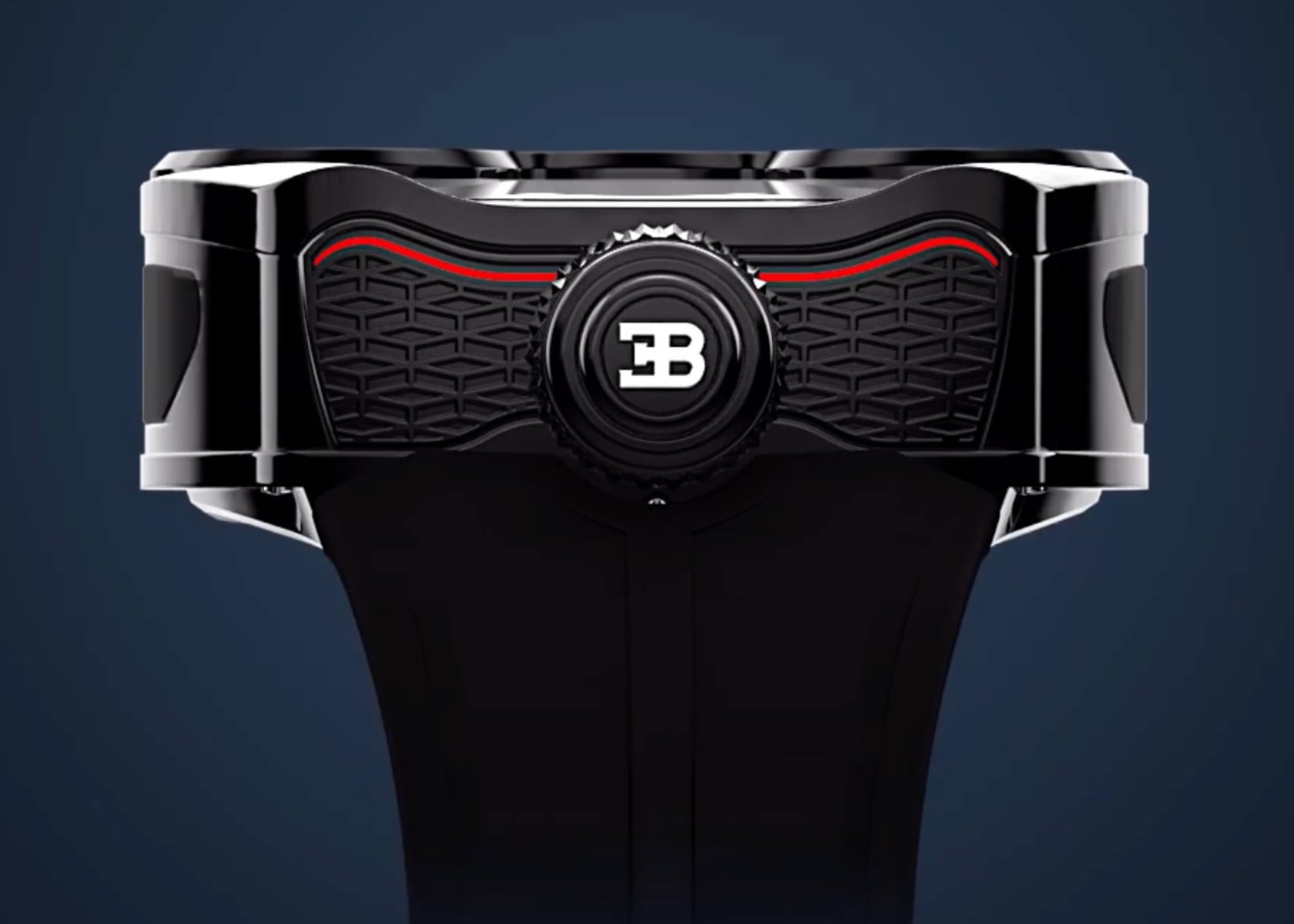
The case’s aerodynamic lines echo the sleek contours of Bugatti’s vehicles, creating a harmonious aesthetic that bridges these two worlds. The robust construction not only provides durability but also ensures longevity. High-quality materials and precision engineering guarantee that the watch withstands daily wear while maintaining its elegant and sophisticated appearance.
Harmony of Craftsmanship

The Jacob & Co. Bugatti Tourbillon Watch and the Bugatti Tourbillon V16 Hybrid both showcase precision and excellence. The watch’s detailed replication of the car’s engine and dashboard highlights the meticulous craftsmanship of both brands. While the watch offers a compact and wearable version of Bugatti’s engineering marvels, the car itself represents the pinnacle of automotive performance and design.
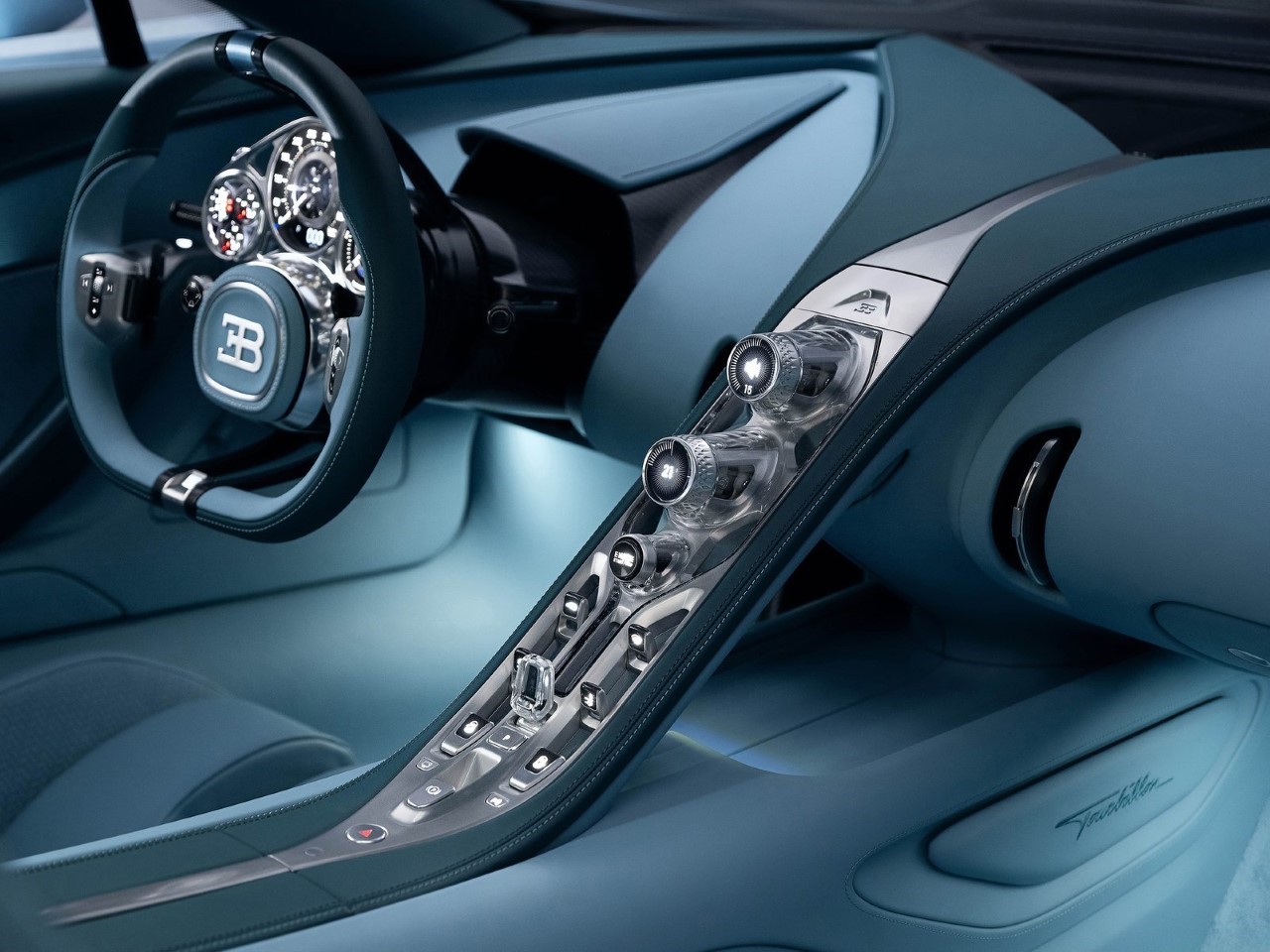
Together, they create a harmonious blend of luxury and innovation. The synergy between the watch and the car is evident in every detail, from the intricate engine replication to the dashboard-inspired display. This collaboration underscores the shared values of both brands, highlighting their dedication to pushing the boundaries of their respective fields. The result is a timepiece that tells a story of precision, luxury, and unparalleled craftsmanship.

The attention to detail in both the watch and the car speaks volumes about the dedication of Jacob & Co. and Bugatti to their crafts. Every aspect, from the tiny titanium pistons in the watch to the powerful V16 engine in the car, is executed with precision and care. This level of craftsmanship is what sets these two brands apart in their respective industries, making their collaboration something truly special.
The post The Jacob & Co. Bugatti Tourbillon: Where Precision Watchmaking Meets High-Performance Automotive Design first appeared on Yanko Design.