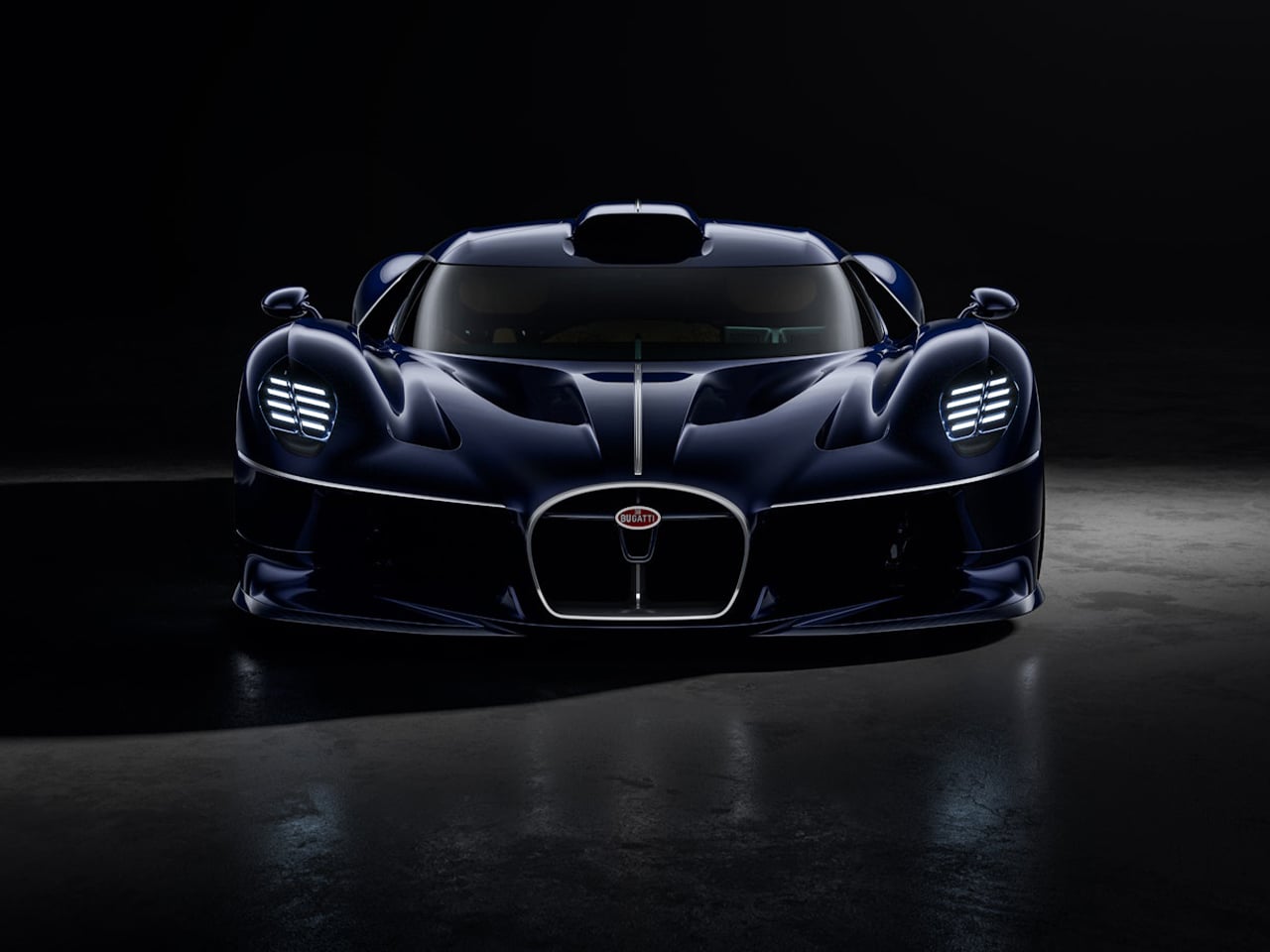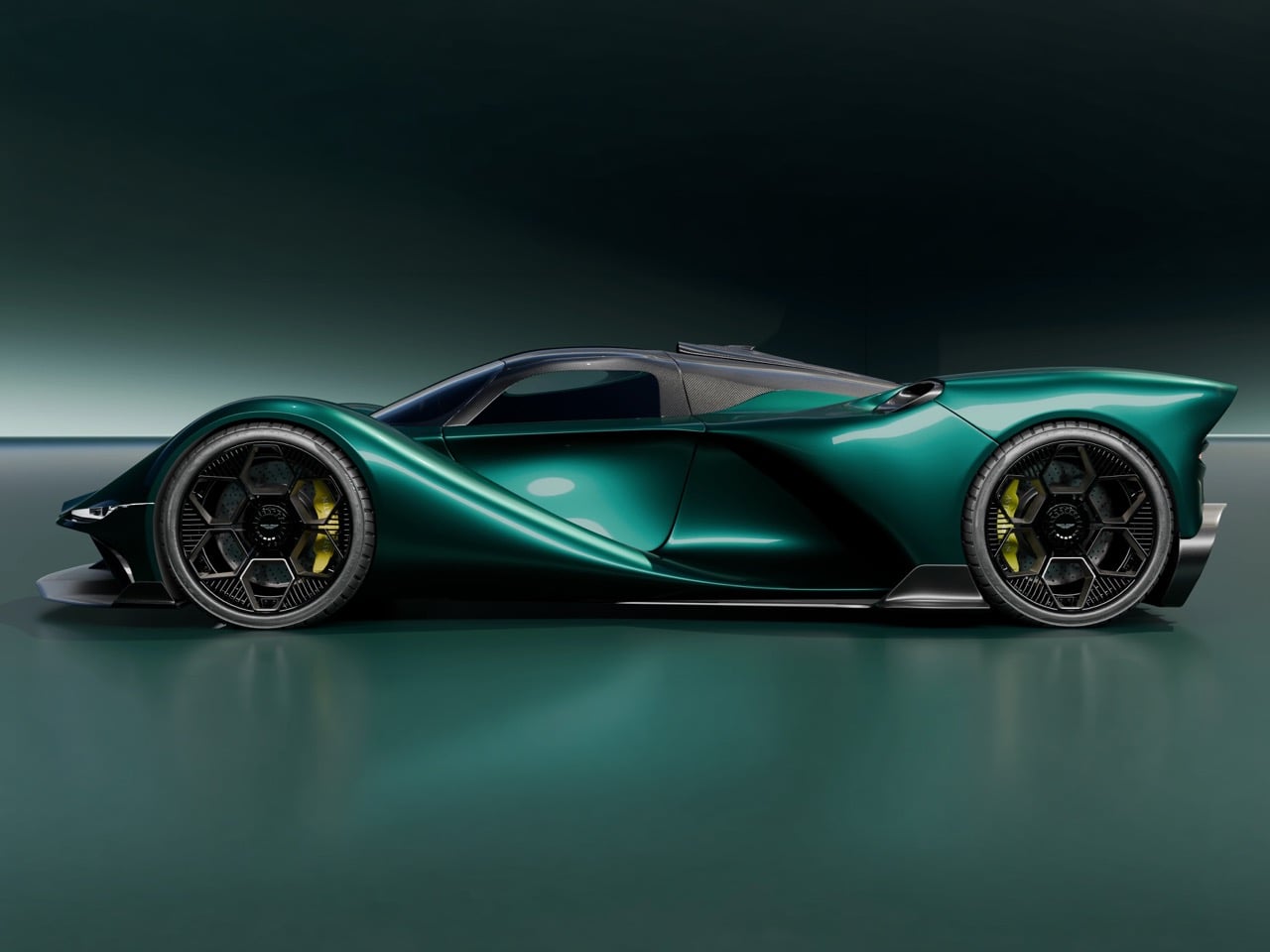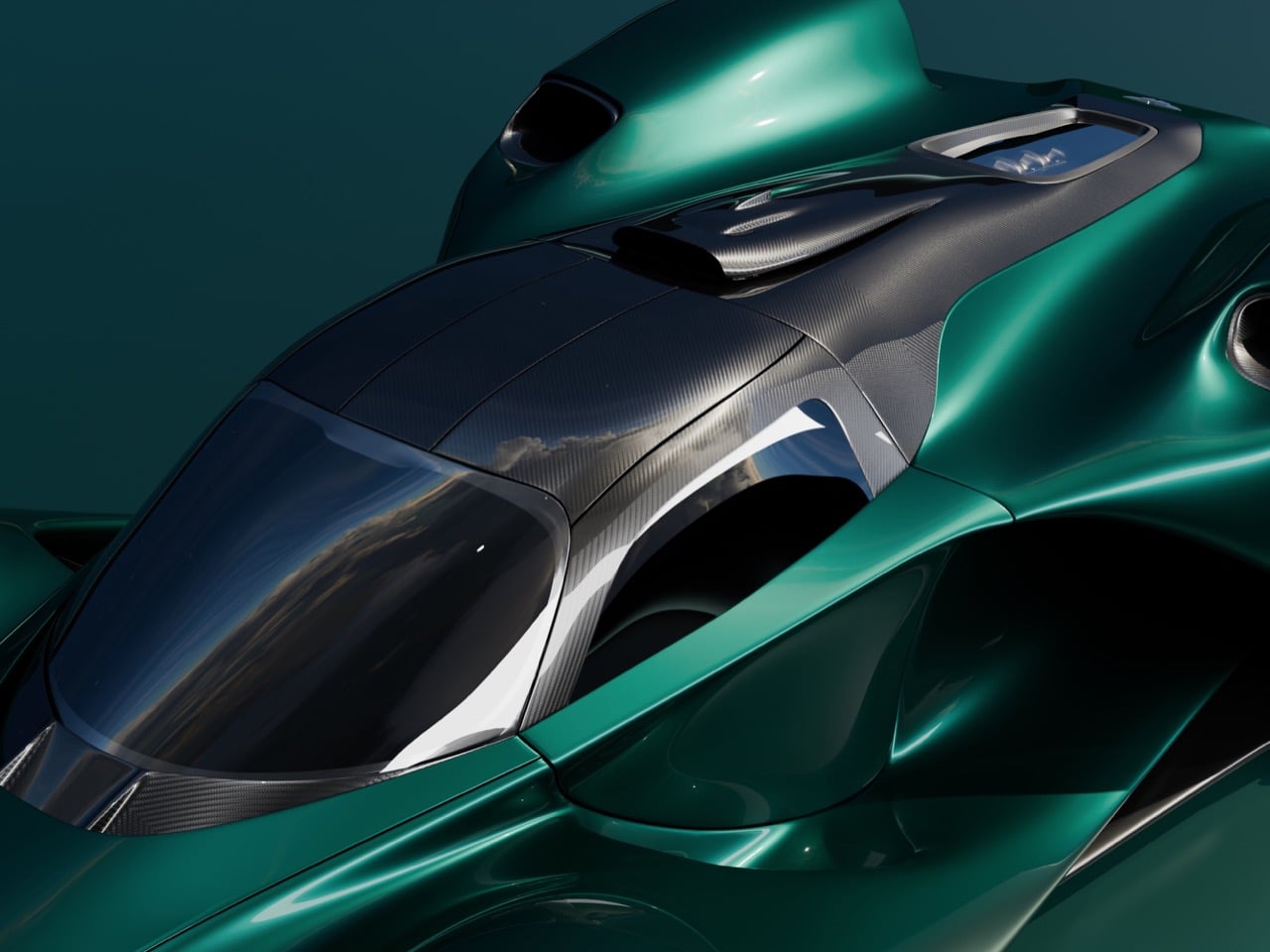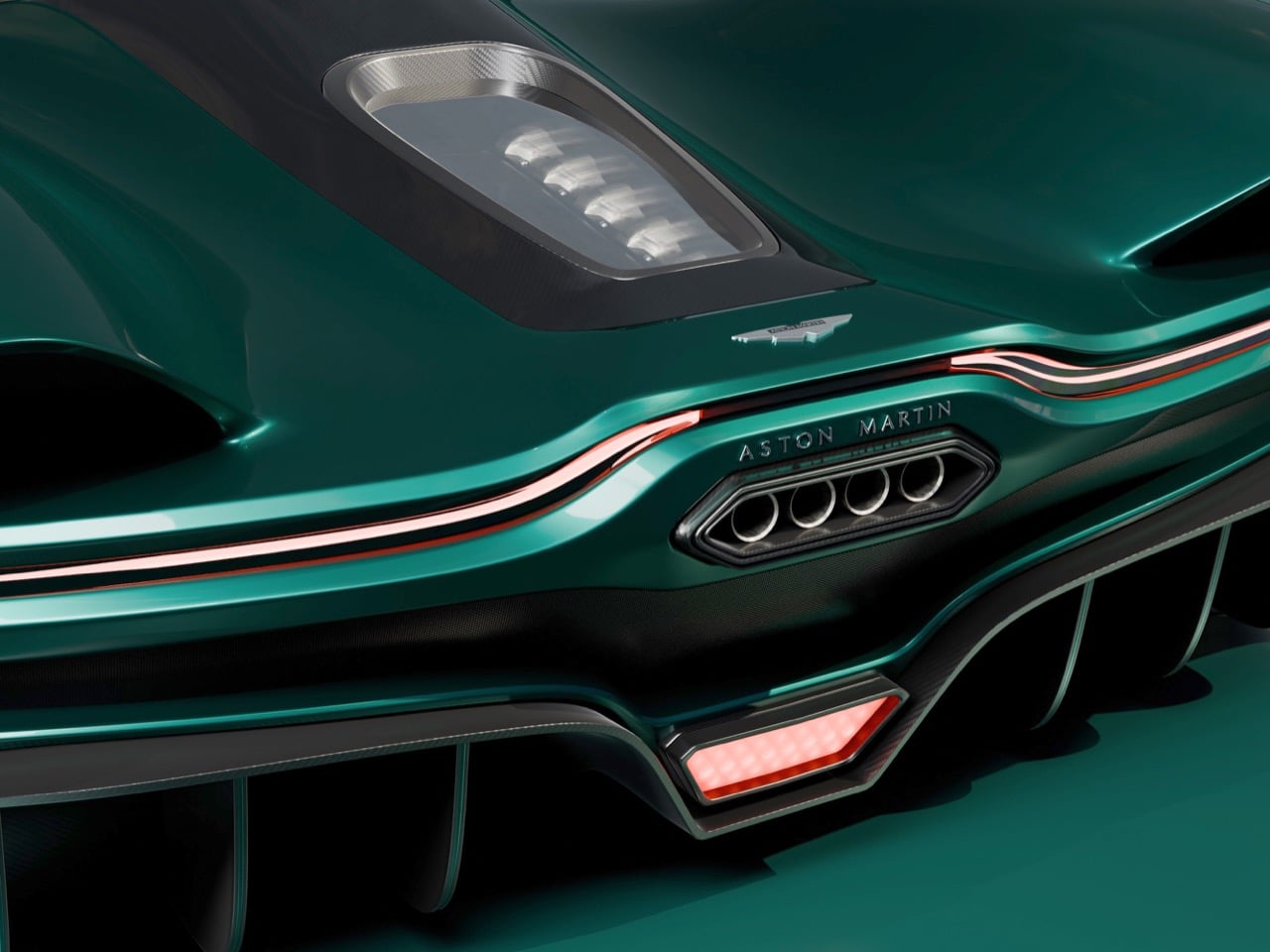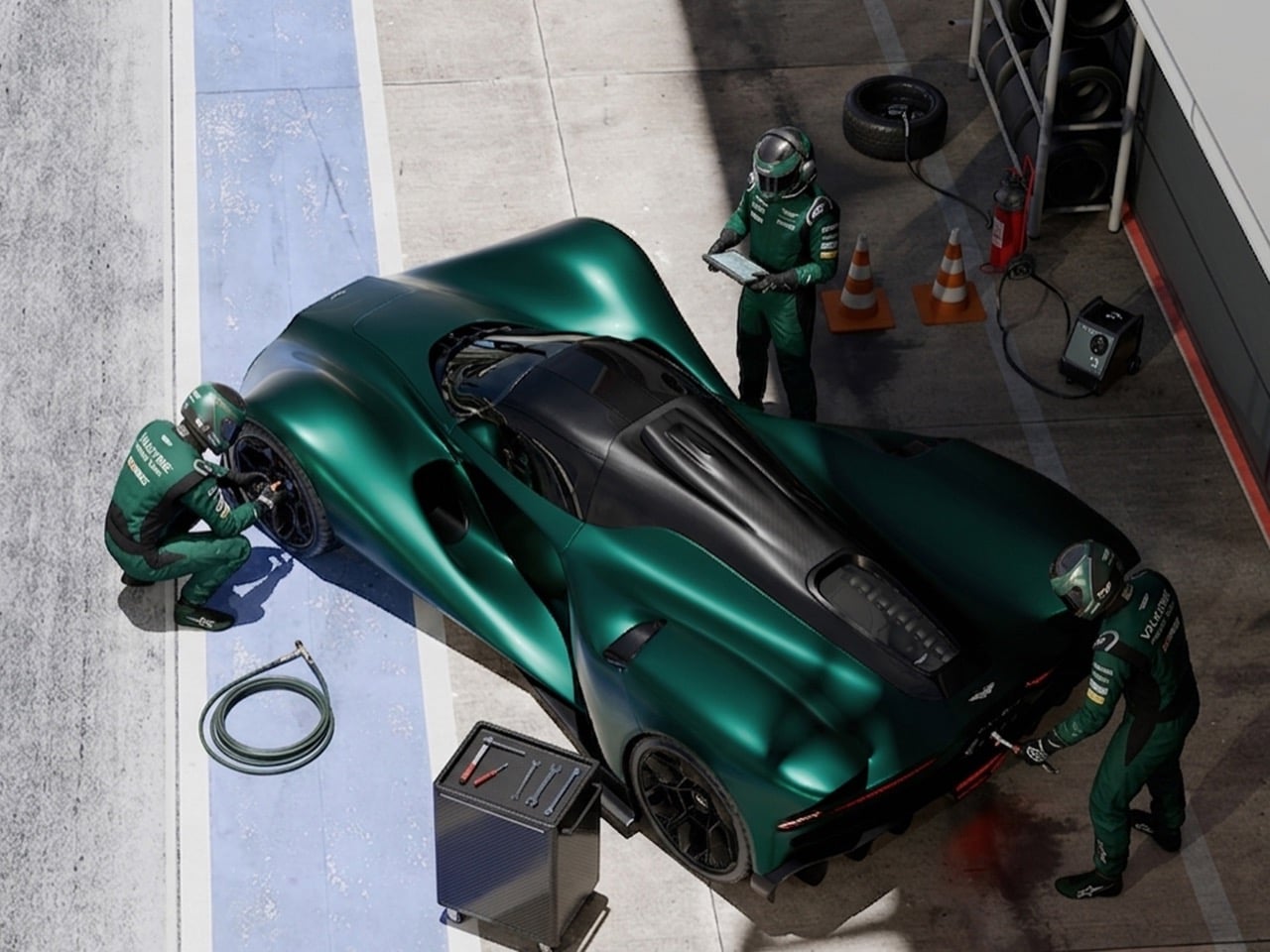
You can finally own the upside down driving Spéirling Pure electric hypercar

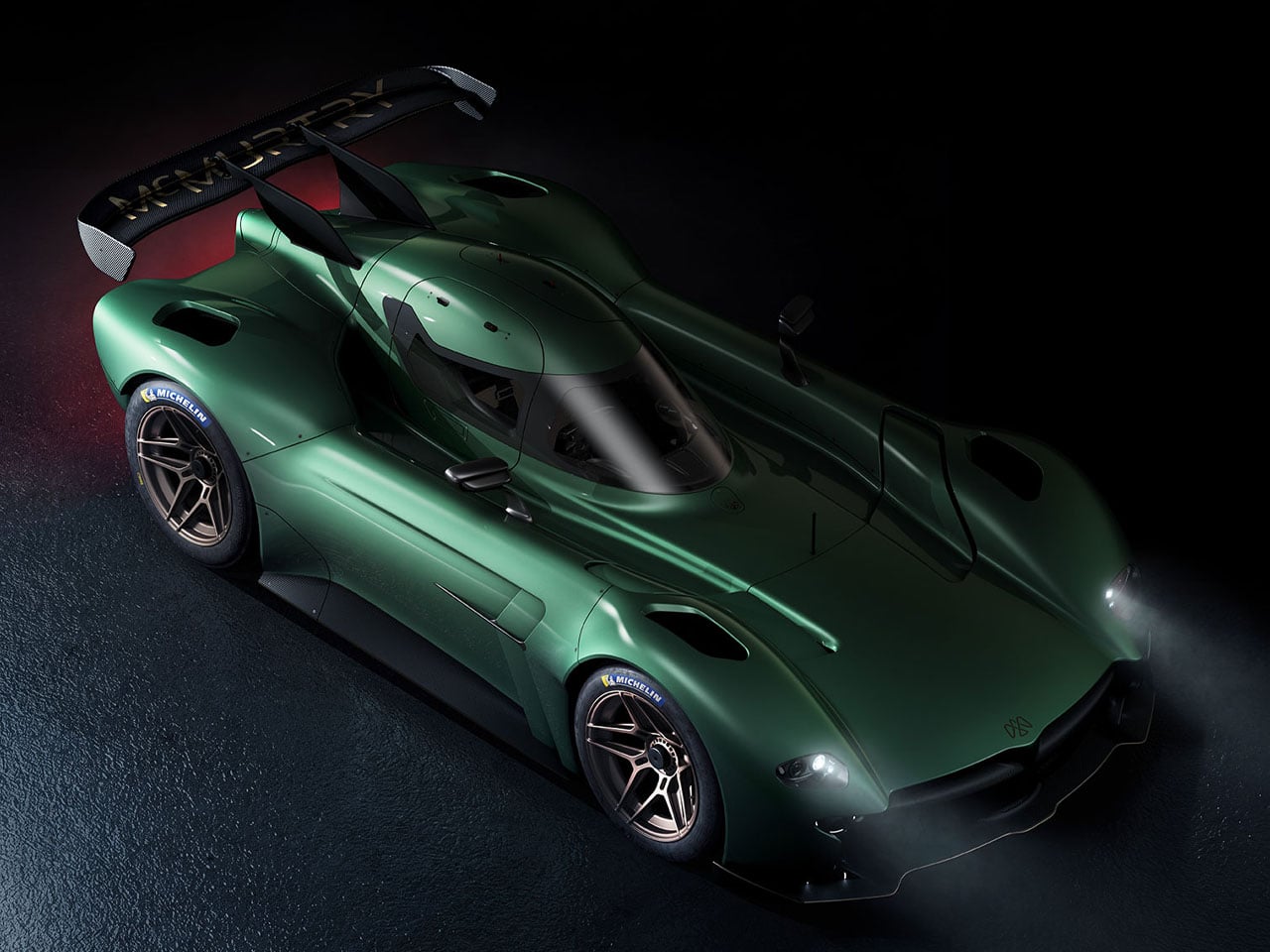
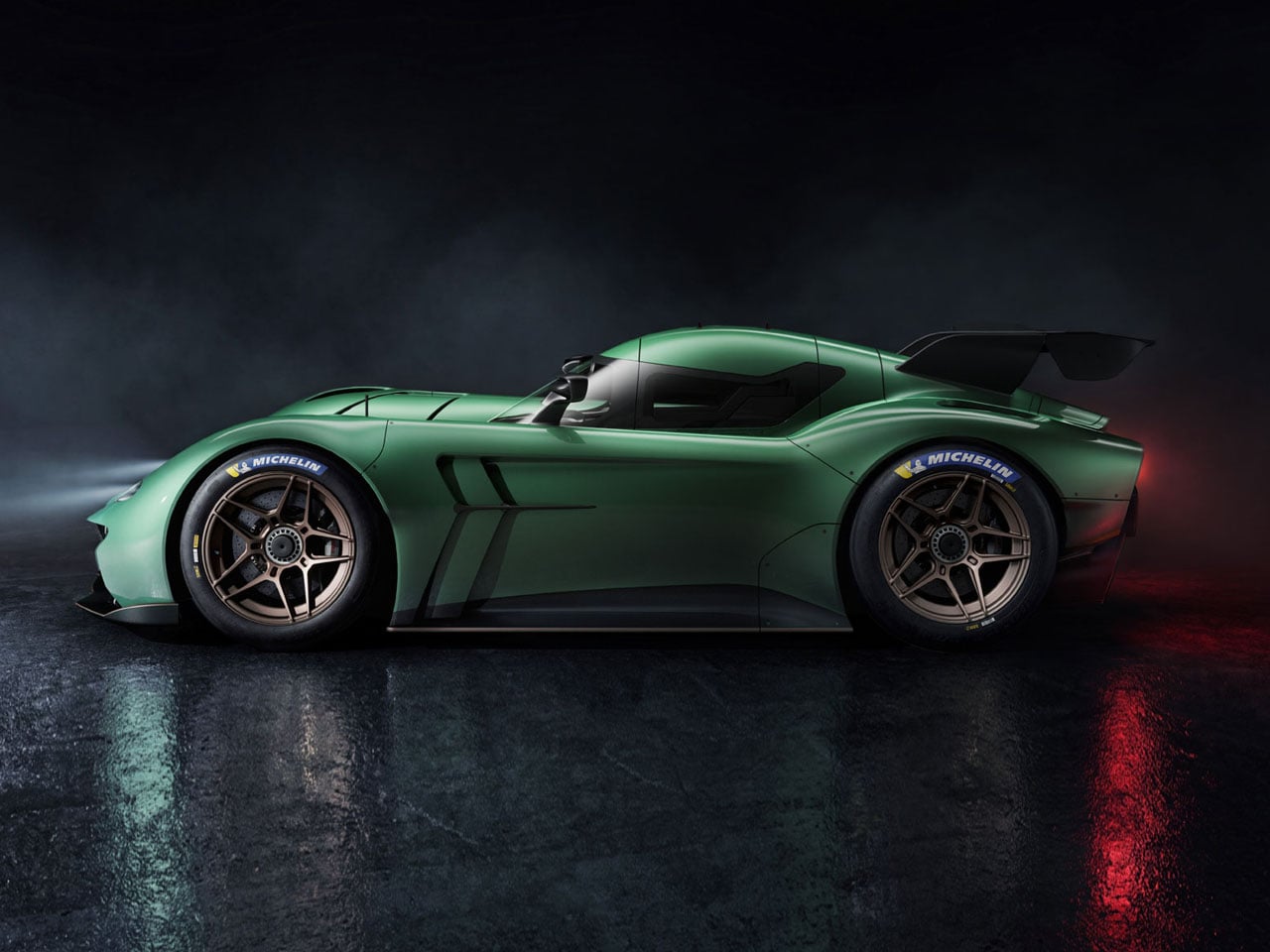
McMurtry Automotive has been showing off its prototype electric car for some years now. The record-breaking Spéirling hyper track car, capable of racing upside down like a Formula-1 car, really turned eyeballs and caught much attention. Now, the thing is legit for the public roads, as the British electric hypercar manufacturer has revealed the production version of the electric version of the car. Called the Spéirling Pure, this hypercar is slated to cost around $1.3 million when it goes on sale later this year.

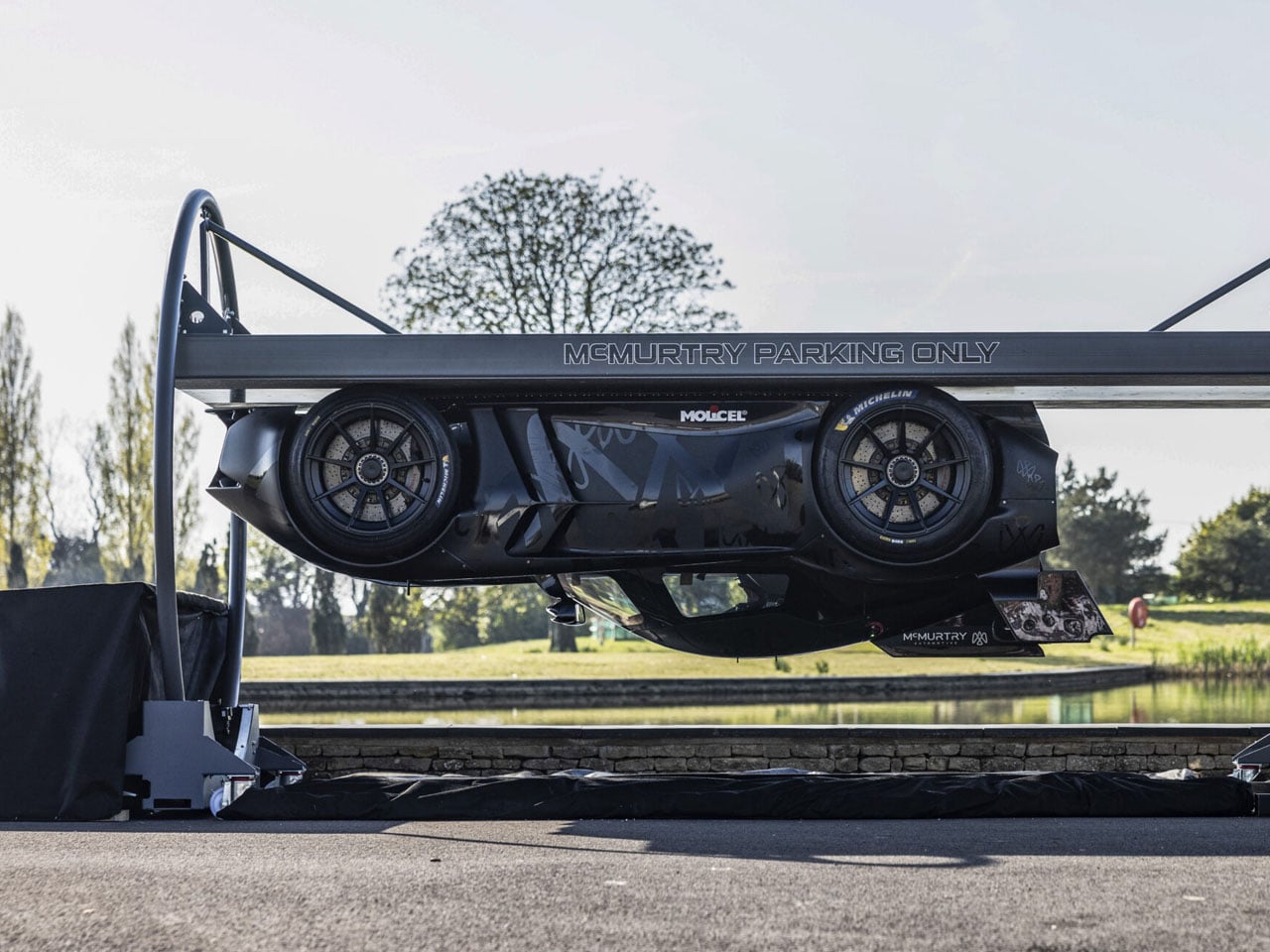
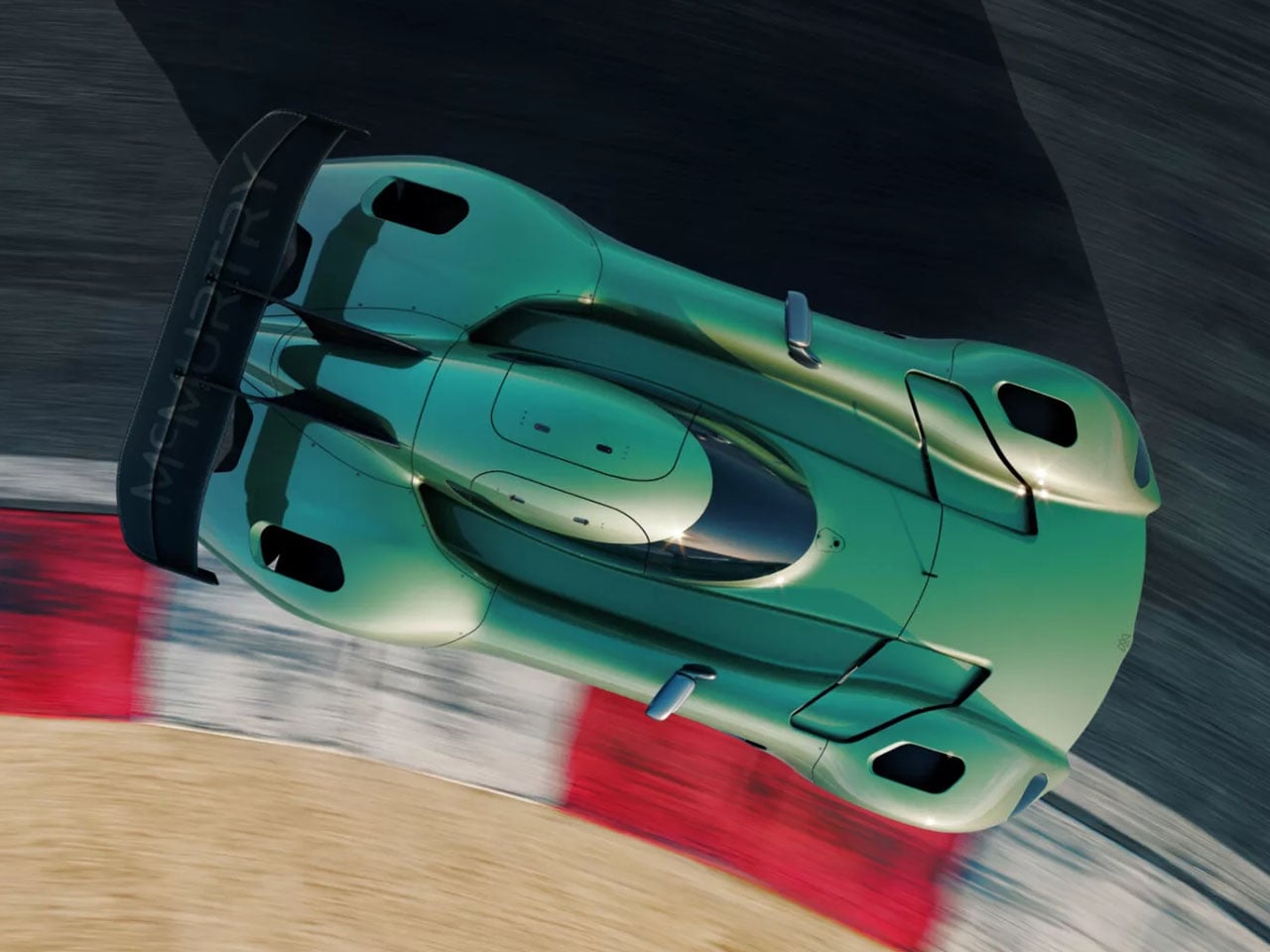
This production version has some valid changes to make it road legal and, more importantly, road viable for purists who want to experience the thrill of driving a powerful EV. Just like the prototype version, the Spéirling Pure EV can drive upside down thanks to the Downforce-on-Demand fan-based system, which can produce a surprising amount of downforce courtesy of the high-speed fans running at up to 23,000 rpm. This is assisted by the underbody extended skirt system that keeps the car glued to the surface like a vacuum pump.

Designer: McMurtry Automotive

Since the car has more downforce than the dry weight of 4,409 lb (even though 665 lb heavier than the prototype), it can literally be upside down like a bat in the standing position. That’s a very rare trick you can show off in the real world if you find a setting to make the car turn upside down. The massive 3G downforce comes in handy in tight chicanes and corners, virtually lending the hypercar superior traction control to carry more speed out of corners. On the production version of the car, the fan motor is improved with new blades, and the air compressor also gets an upgrade. Other major upgrades include the new 100-kWh battery pack (compared to the 60-kWh pack on the prototype) and a wider wheelbase, increased to 8 inches to 86.6 inches to make space for the larger battery unit.

Spéirling Pure feeds the battery power to the pair of electric motors that drive the rear wheels. The enhanced transmission translates all the energy into 986 horsepower for an acceleration to 60mph in just 1.6 seconds. The top speed hits 190 mph, and that downforce system helps keep the vehicle stable. This also helps in braking at high speeds as the suction power creates enough friction. The production version will also get a flexible suspension system, adaptive dampers, and a 20 percent higher ride height to conquer most motorable roads. The electric hypercar can be charged from 20 percent to almost full capacity in a mere 20 minutes, depending on the outlet it is being plugged into.

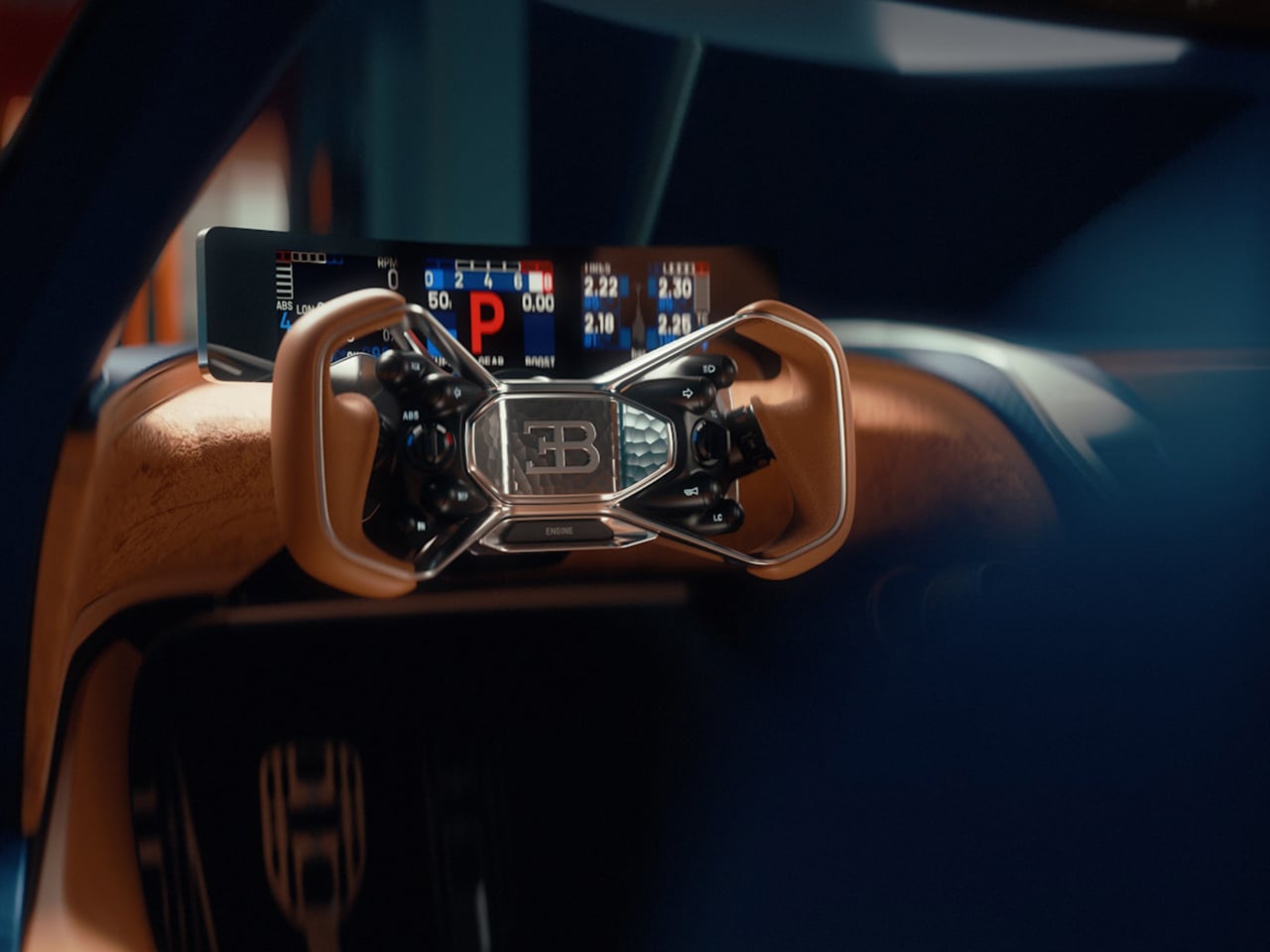
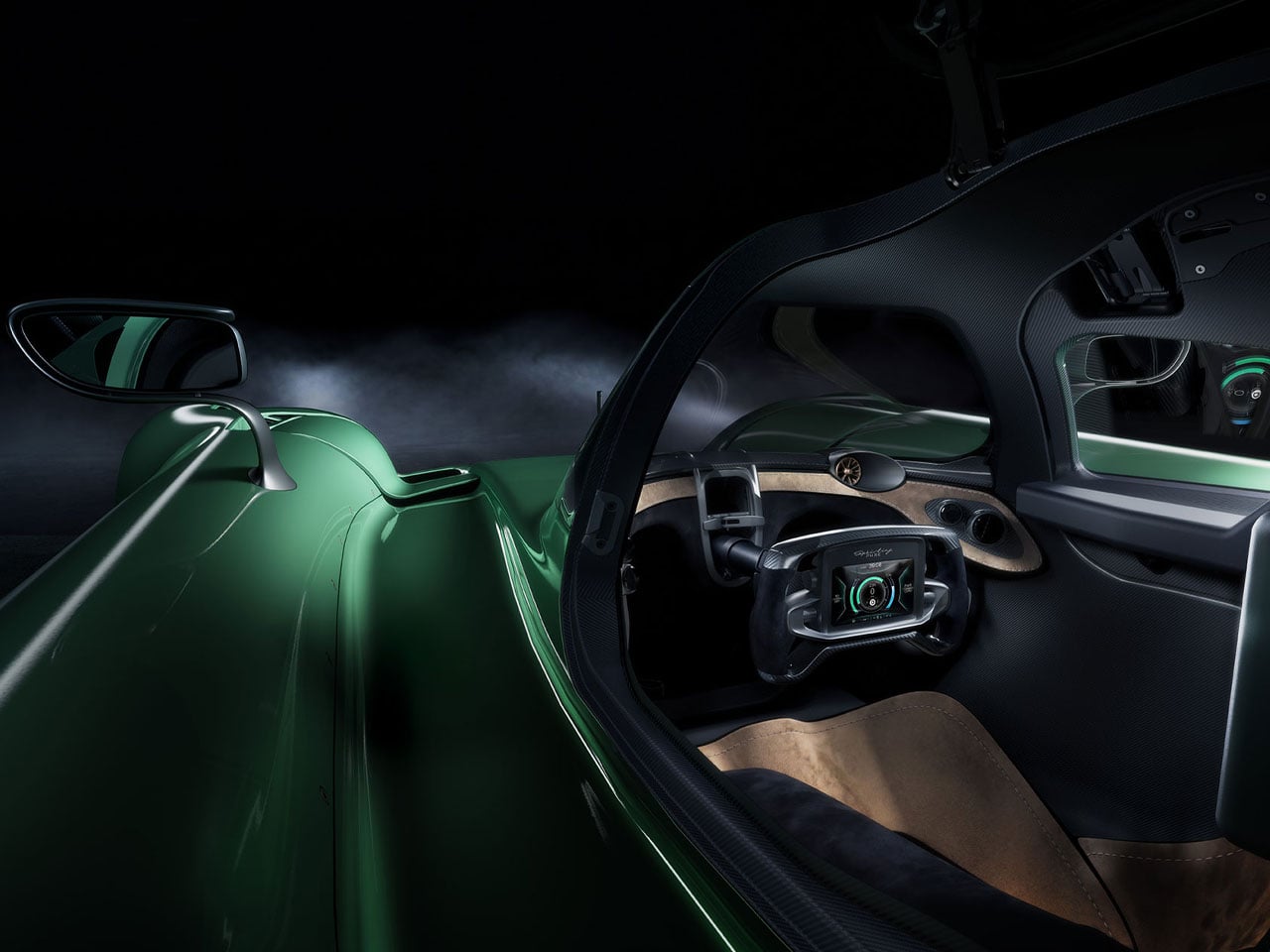
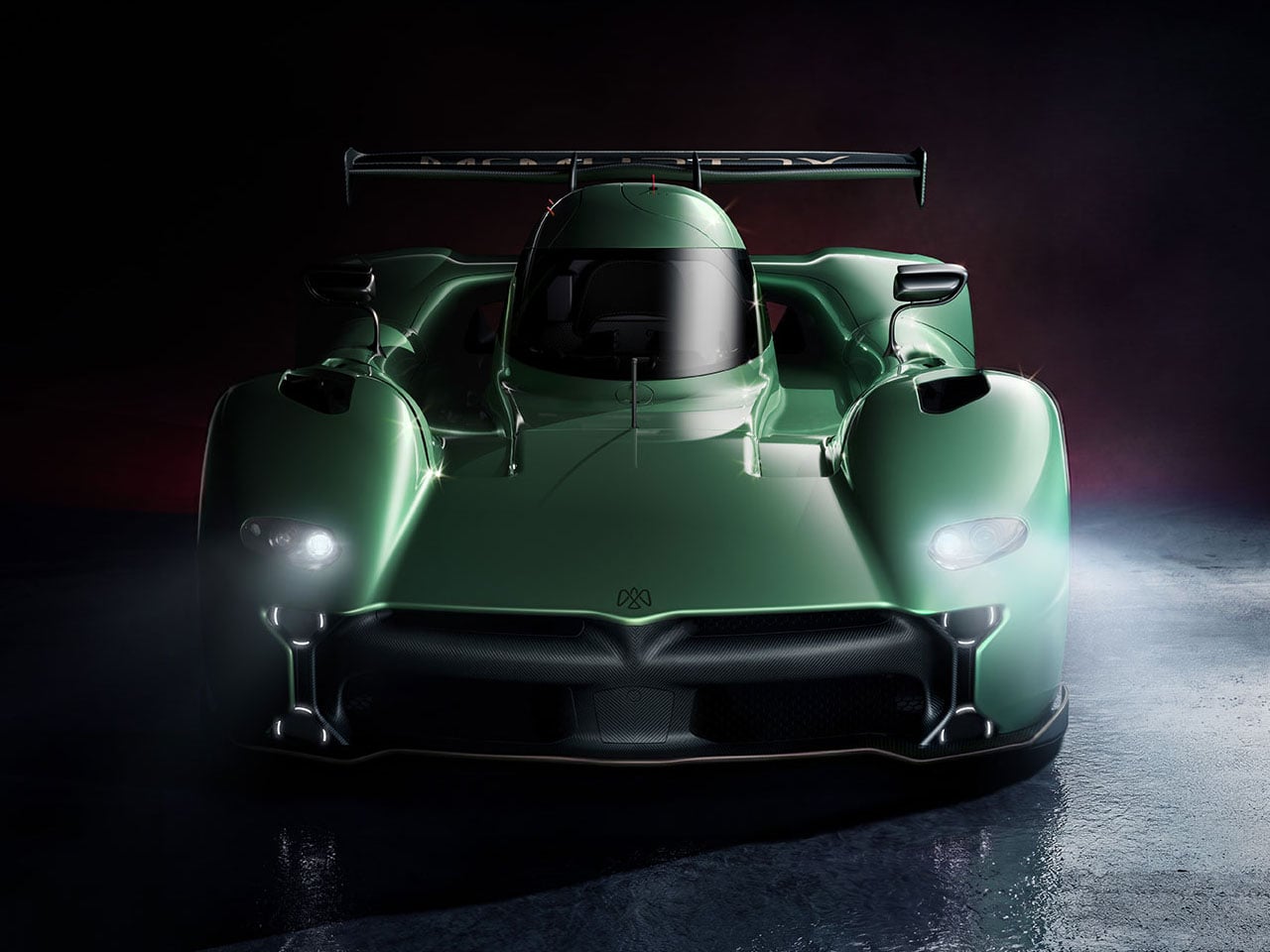
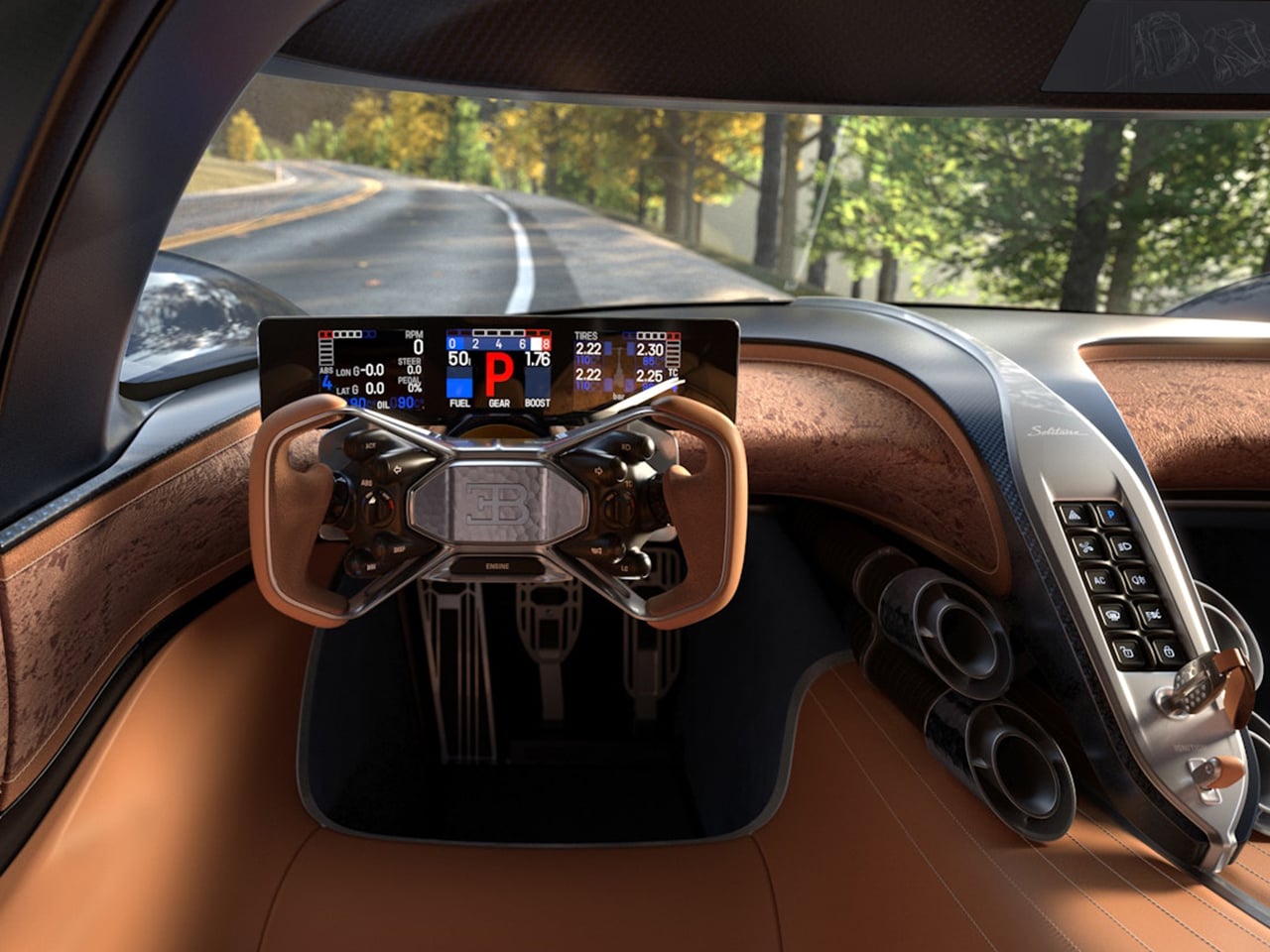
The upgrades follow on the inside with a motorsports-grade carbon-fiber monocoque for premium safety. Bodywork also gets a bump up in the form of a swan-neck rear wing above the trunk, refined headlight design, a second hinged door, and space for keeping a helmet or HANS device. The interior can be customized by the buyers in a plethora of options. For the thrill of experiencing racing, the hypercar comes with a F1-styled steering wheel and an instrument cluster on the digital display.

The post You can finally own the upside down driving Spéirling Pure electric hypercar first appeared on Yanko Design.

Bugatti’s one-off W16 Mistral Blanc Éternel is a 1,578-HP hypercar wrapped in royal porcelain

For Bugatti, one-off commissions have long been an opportunity to blur the line between automotive engineering and collectible art. From the porcelain-adorned Veyron L’Or Blanc to today’s bespoke Sur Mesure creations, the French marque has repeatedly demonstrated that its hypercars can be canvases for extraordinary craftsmanship. The new W16 Mistral Blanc Éternel continues that legacy while serving as one of the most distinctive tributes yet to Bugatti’s legendary W16 engine.

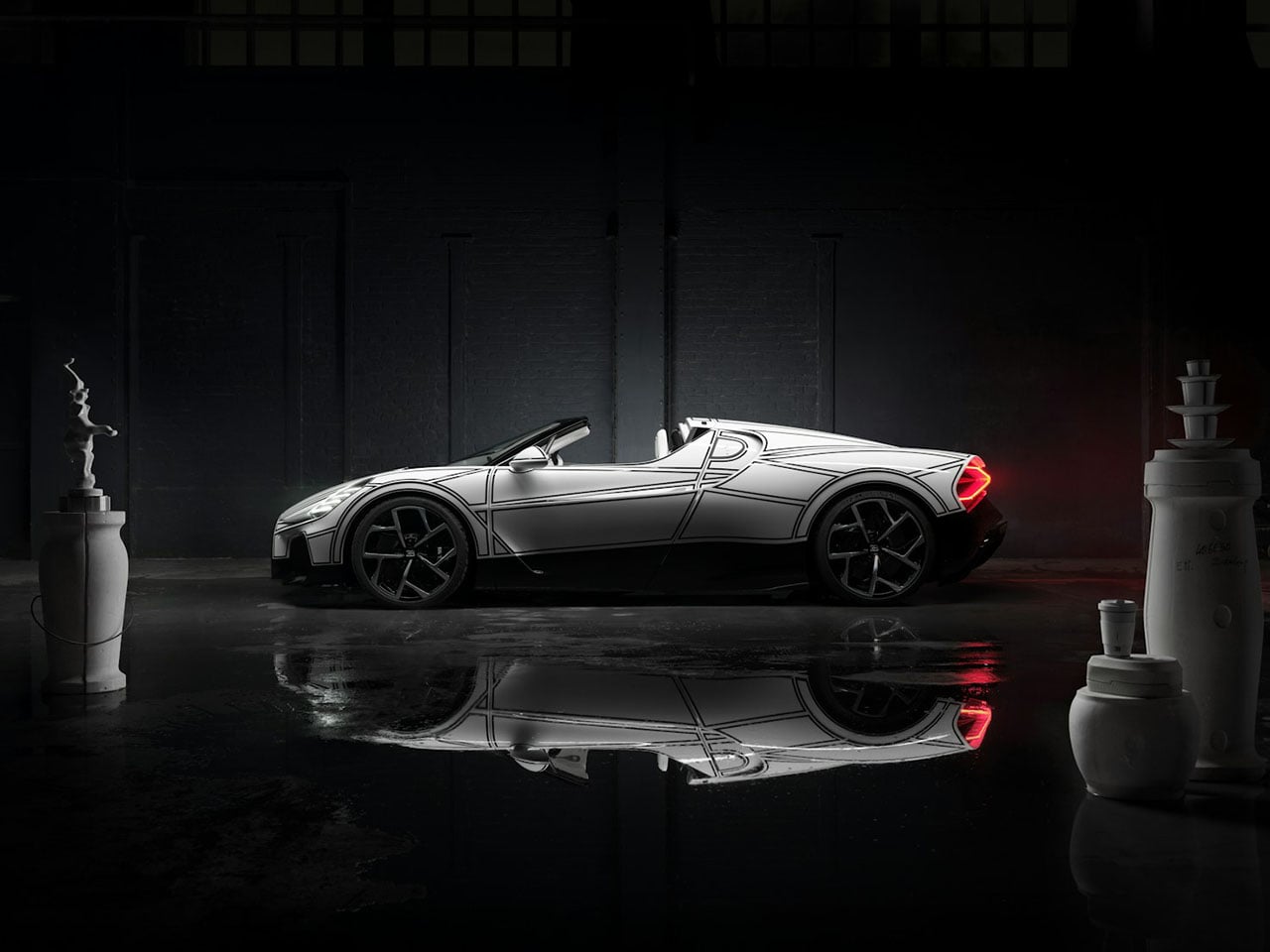
Created as a one-of-one commission through Bugatti’s Sur Mesure personalization program, the Blanc Éternel reunites the automaker with Königliche Porzellan-Manufaktur Berlin (KPM), the historic porcelain manufacturer it first partnered with in 2011 for the Veyron Grand Sport L’Or Blanc. Rather than revisiting the flowing cobalt-blue artwork that defined the earlier car, Bugatti has embraced a contemporary interpretation inspired by the digital modeling process behind its latest hypercars.

Designer: Bugatti

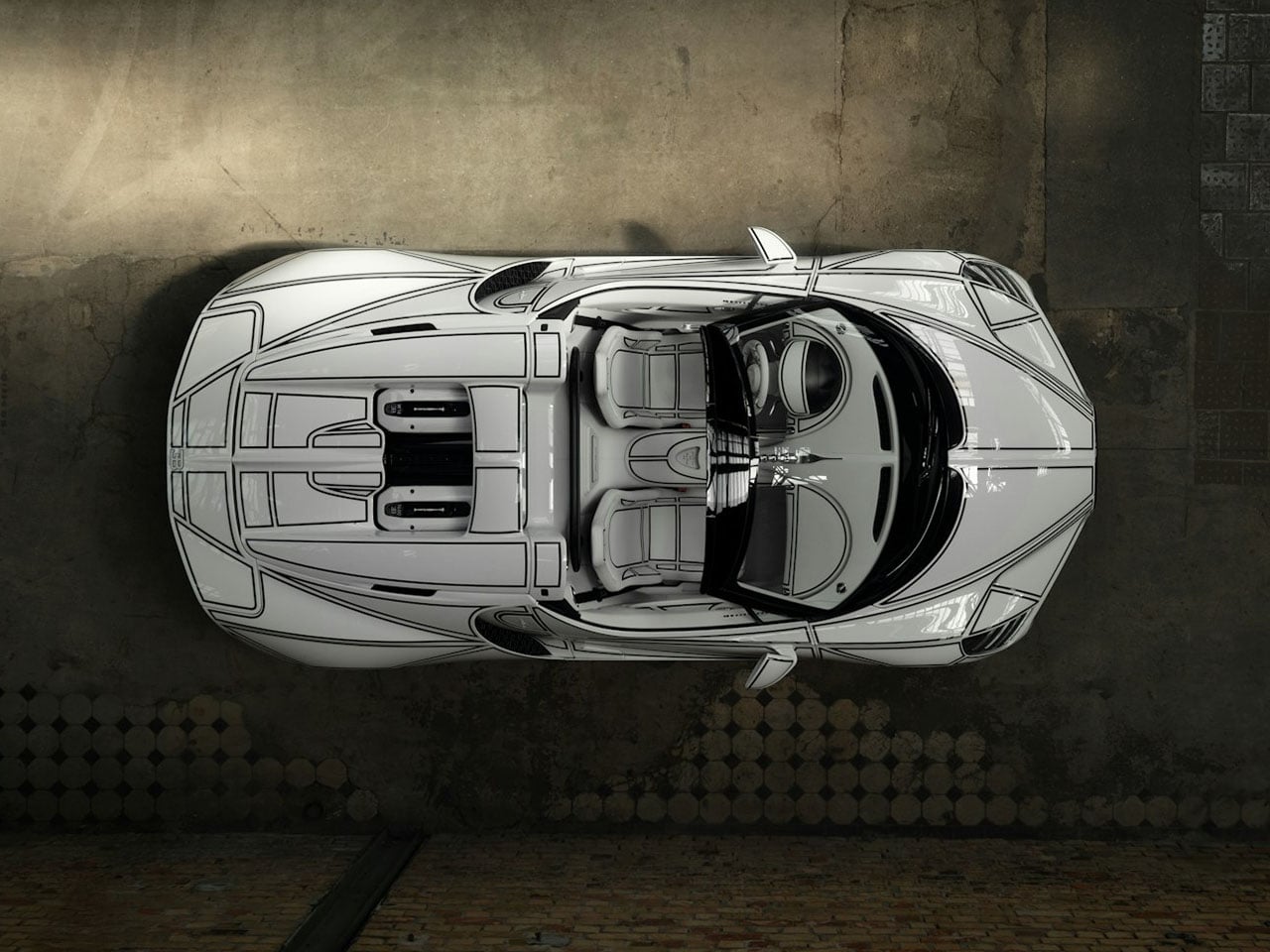
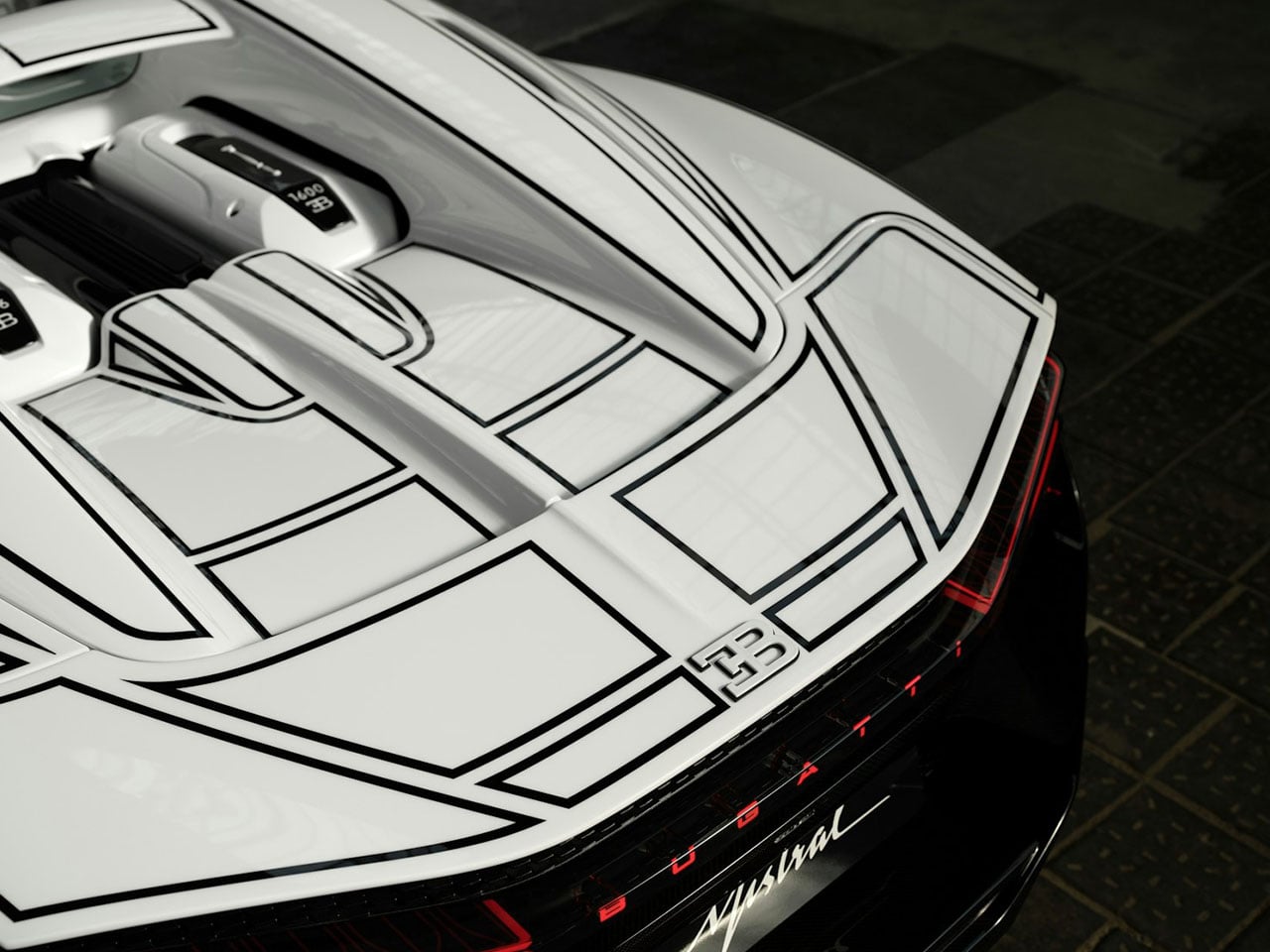
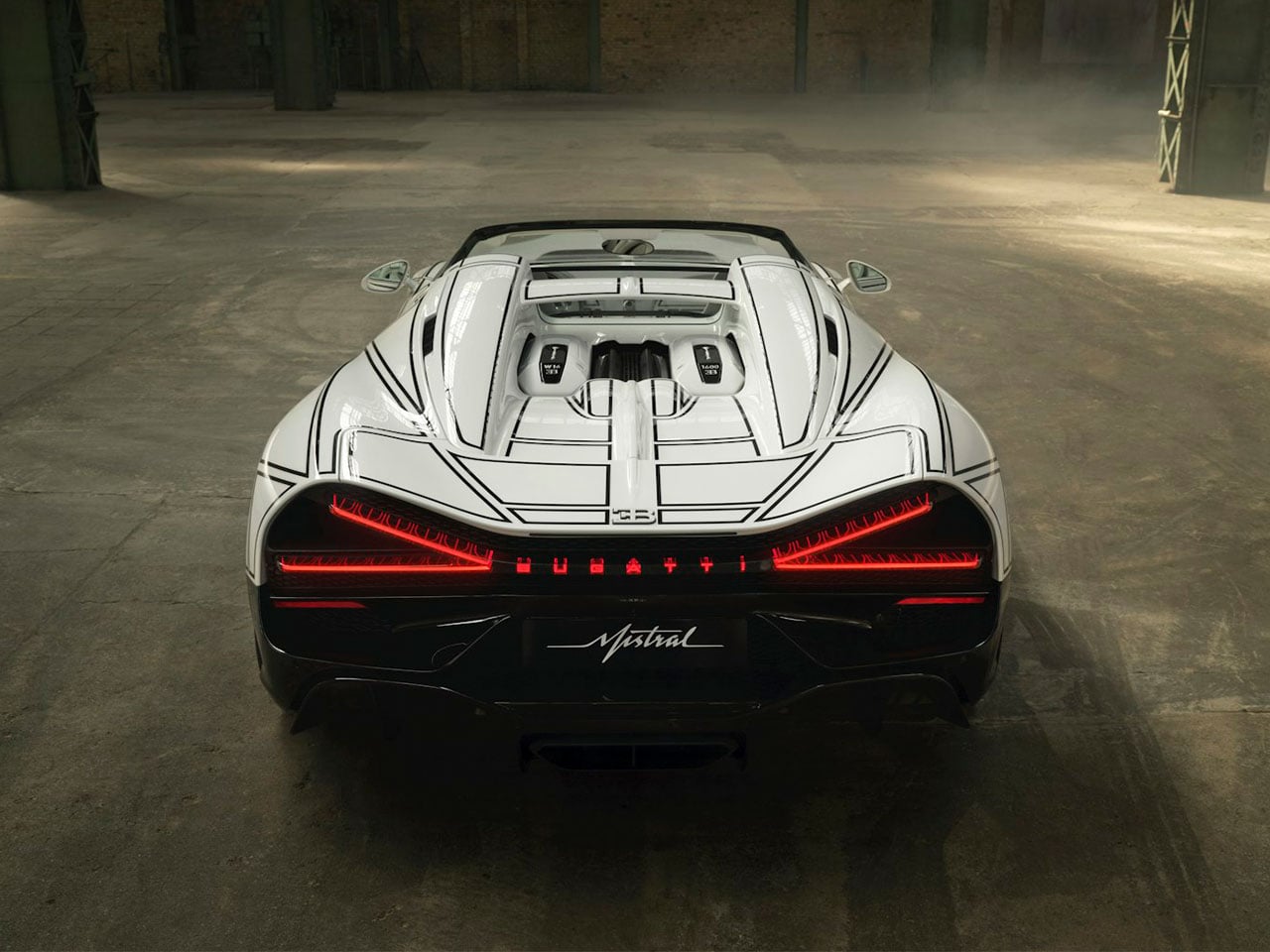
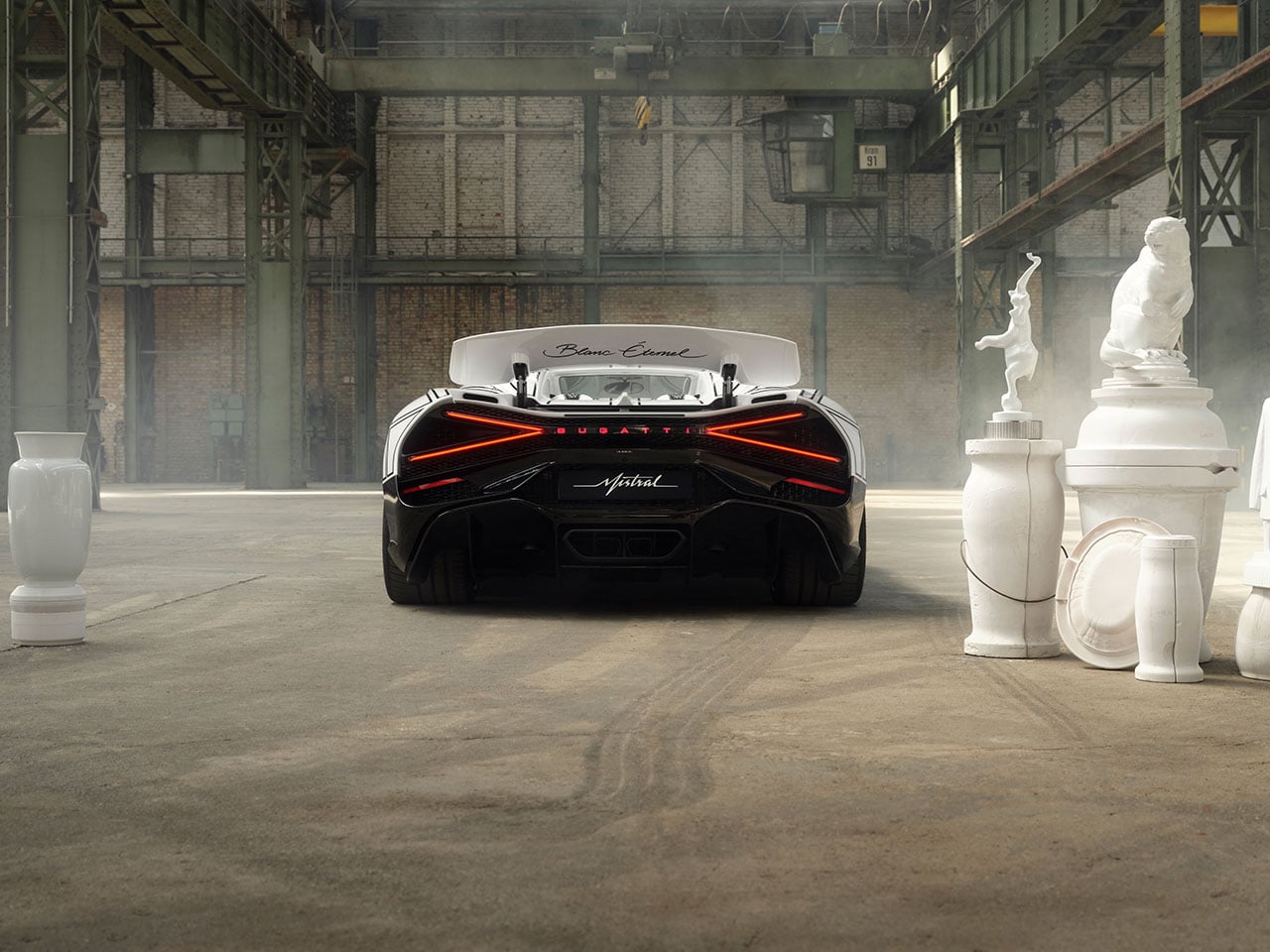
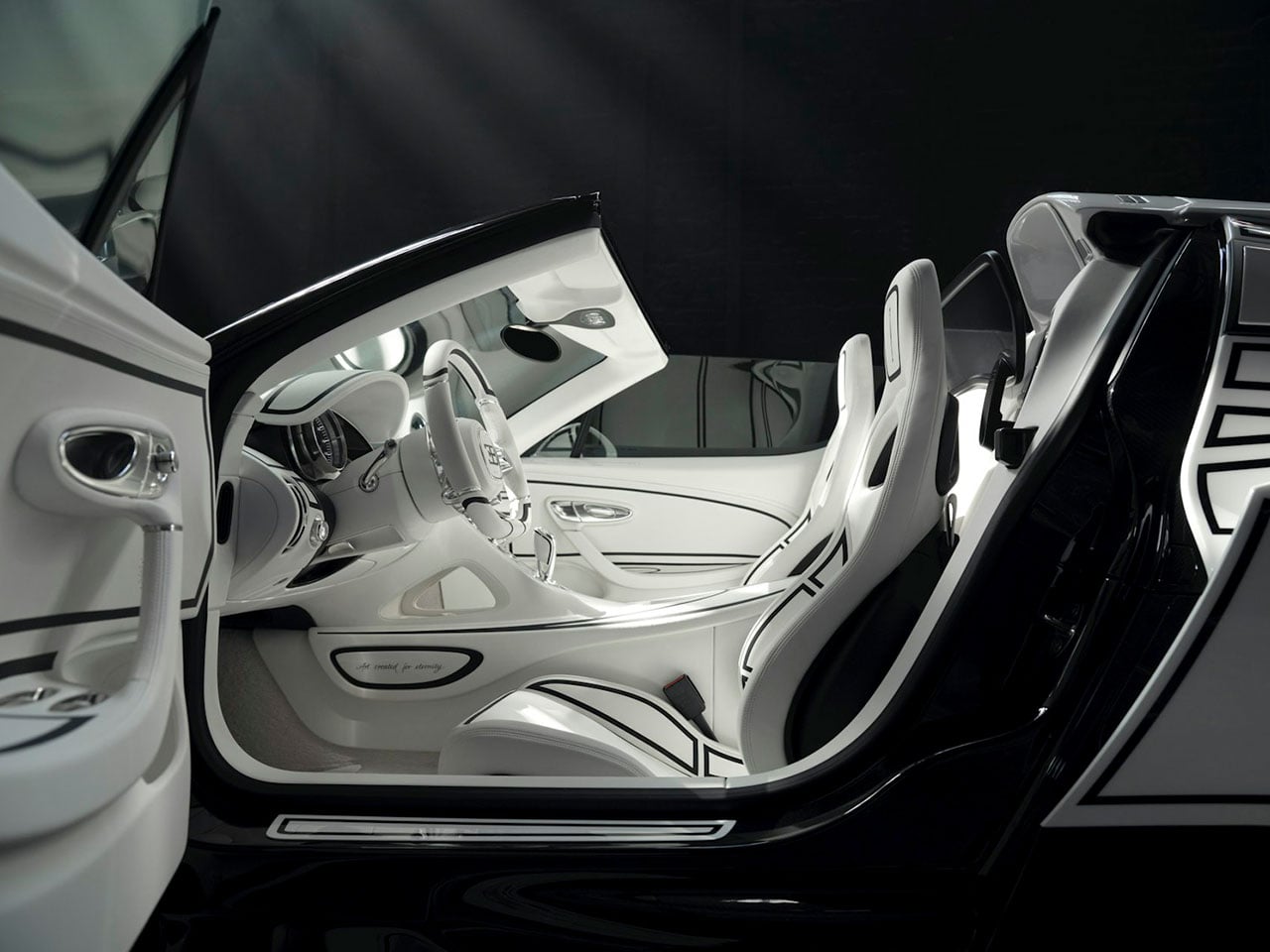
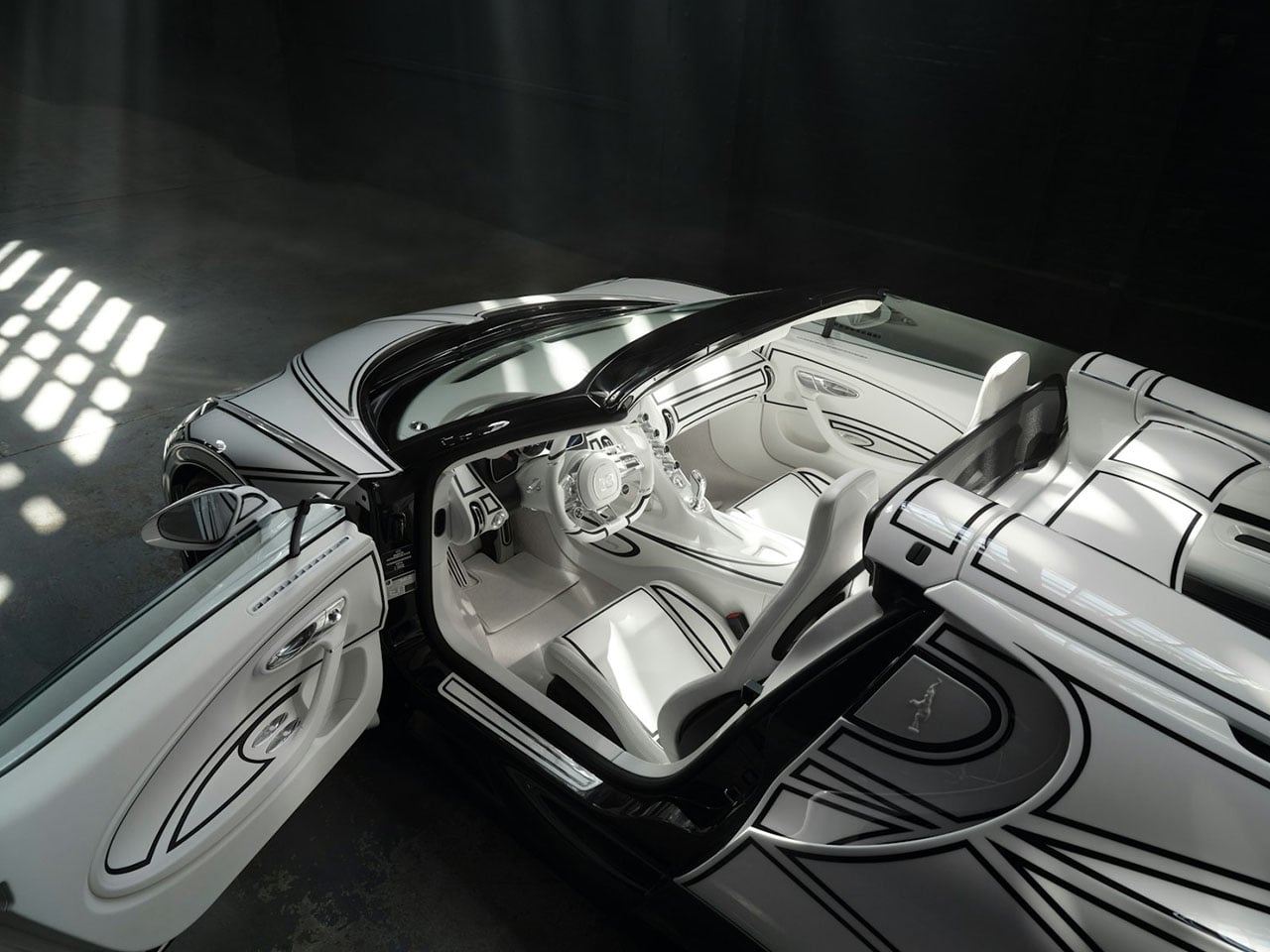
Finished in Brilliant White, the W16 Mistral performance roadster is wrapped in intricate hand-painted black graphics that resemble the digital wireframe of a 3D CAD model brought to life. Instead of functioning as decorative stripes, the intersecting lines reveal the invisible geometry that shapes the roadster’s sculpted bodywork, creating a visual effect that shifts depending on the viewing angle. Every line was individually masked and painted by hand, underscoring the painstaking craftsmanship required to transform a digital design language into a physical work of art.

Bugatti Design Director Frank Heyl said the objective was never to recreate the celebrated Veyron L’Or Blanc. Instead, the team wanted to “move the idea forward,” reflecting how Bugatti’s creative process has evolved while preserving the spirit of its earlier collaboration with KPM. As he explains, Blanc Éternel represents “the beginning and culmination” of the W16 era, connecting Bugatti’s past and present through a shared appreciation for craftsmanship, innovation, and timeless design.

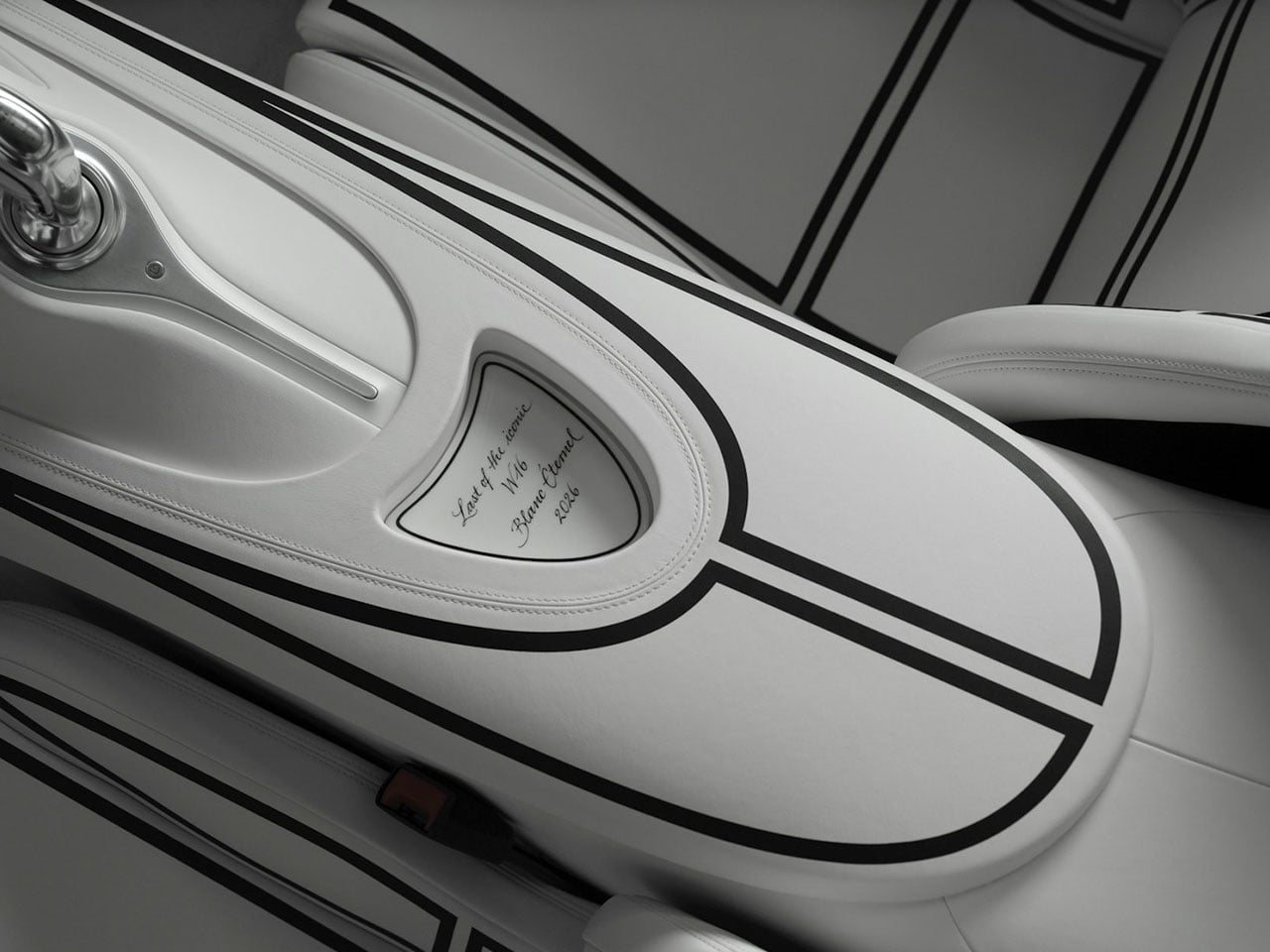
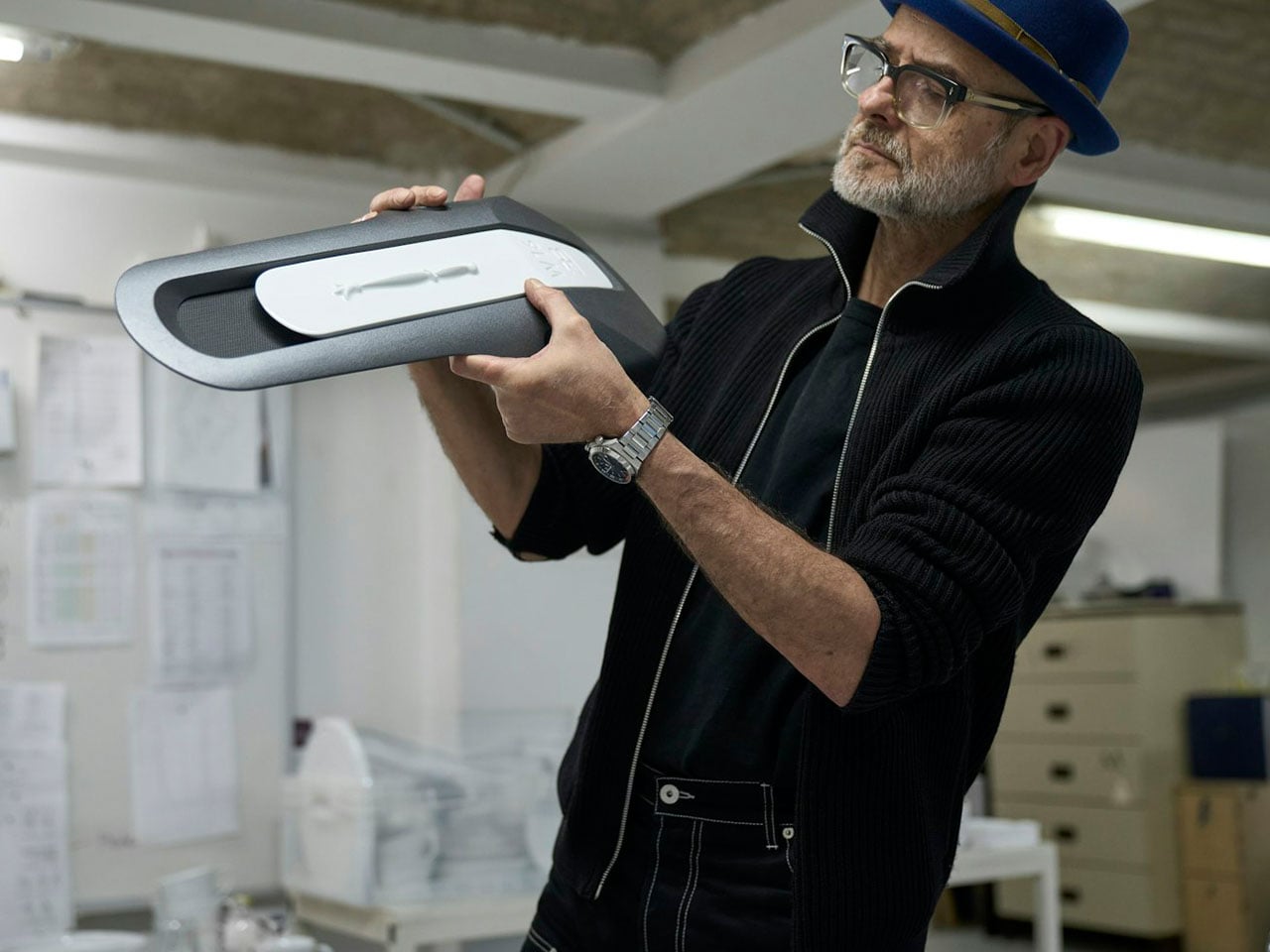
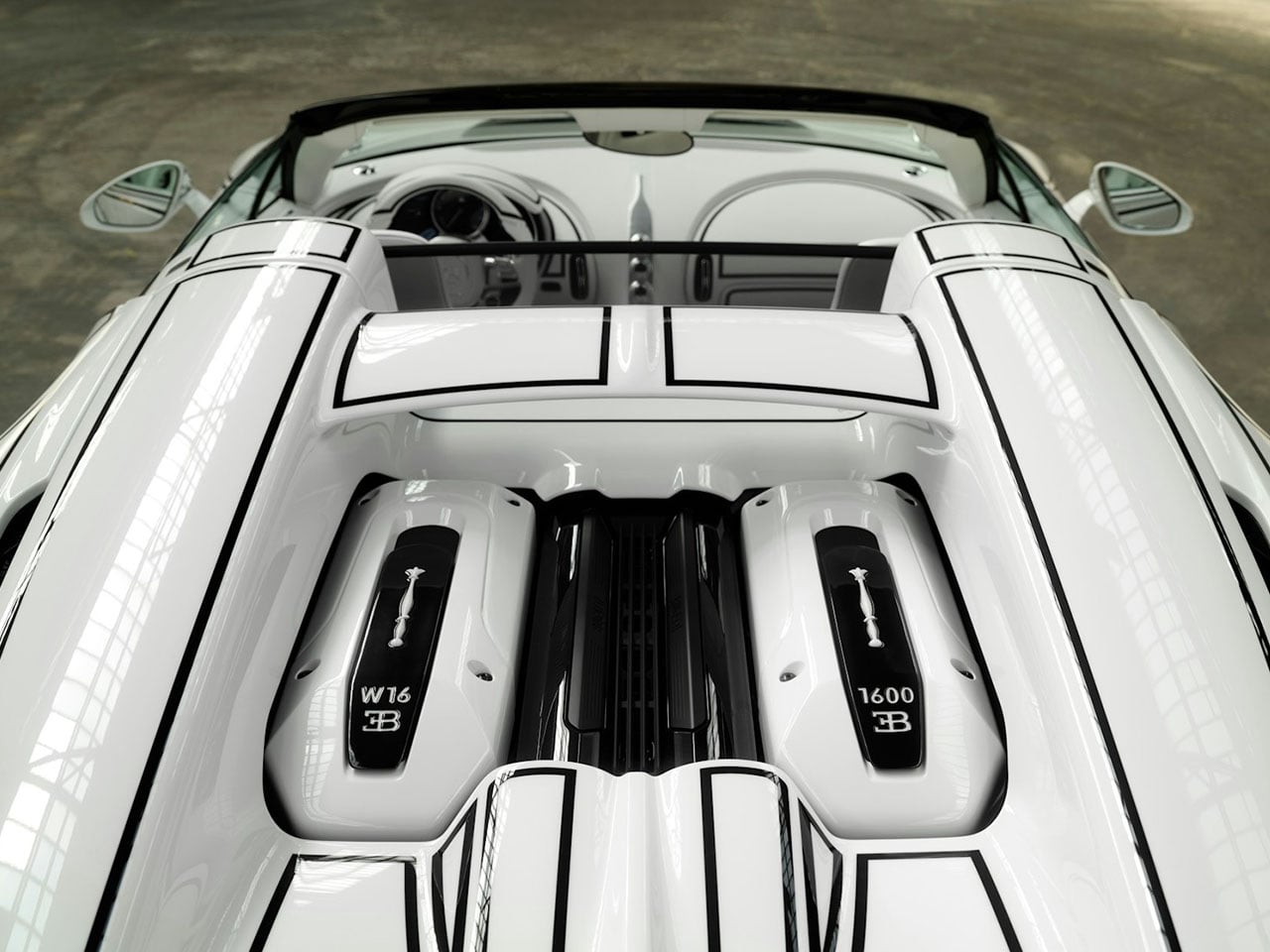
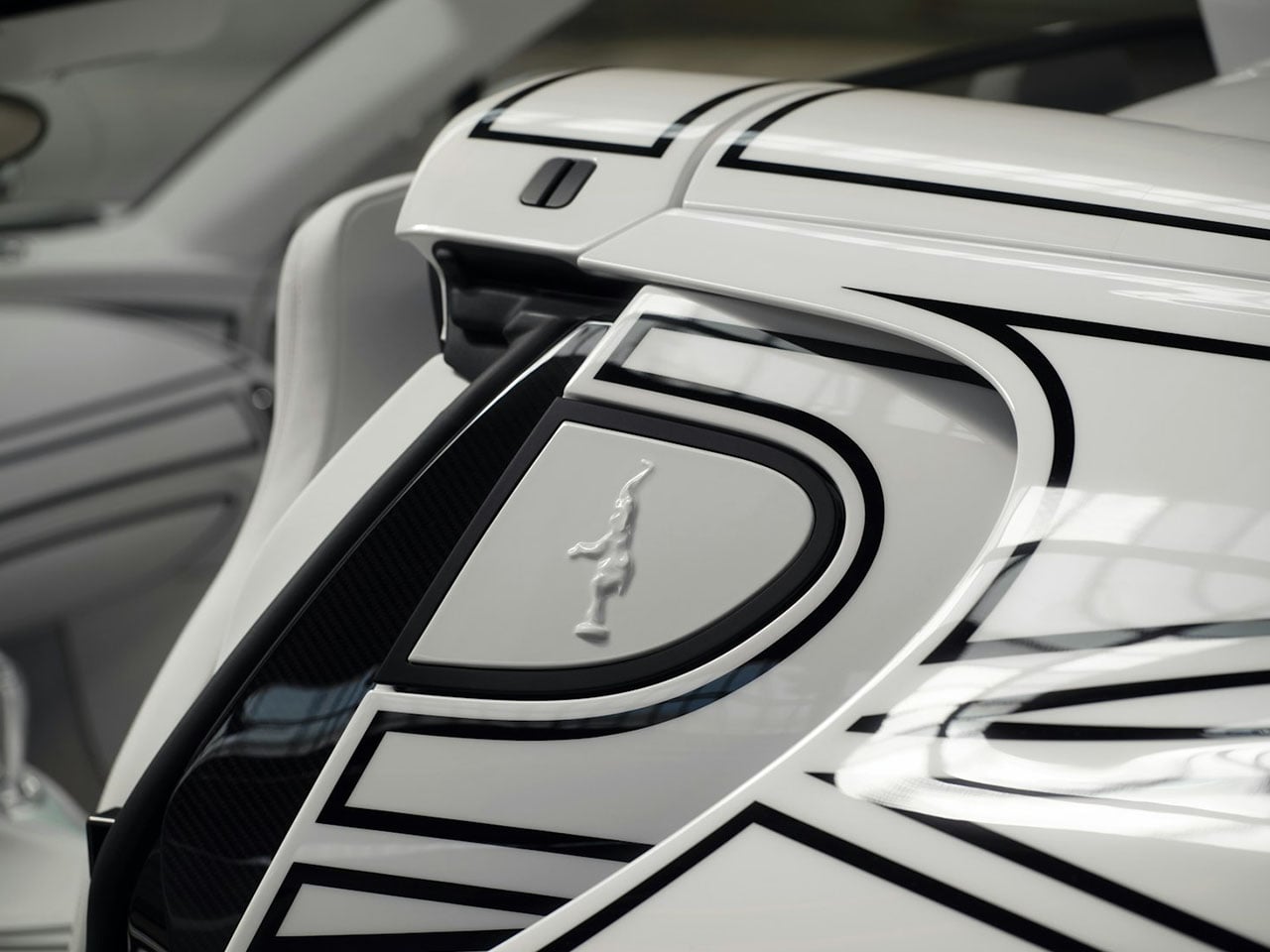
Porcelain remains at the heart of the project, but its application extends far beyond decorative accents. Handcrafted by KPM artisans, the material appears on the iconic EB emblem, the fuel and oil filler caps, the gear selector, window controls, speaker grilles, center console, and engine cover inserts. The cabin also features a delicate porcelain sculpture of Rembrandt Bugatti’s famous Dancing Elephant, reinforcing the artistic heritage shared between the two historic brands. Because porcelain shrinks considerably during firing, every component required meticulous engineering to ensure a flawless fit once completed.

The interior continues the exterior’s graphic theme with white leather upholstery overlaid by the same hand-painted black pattern. To achieve this, Bugatti developed an entirely new process that allows paint to bond with leather while maintaining the durability expected from a road-going hypercar, ensuring the intricate artwork withstands years of use without compromising quality.

Beneath the artistic exterior lies the engineering masterpiece that defines every W16 Mistral. The open-top hypercar is powered by Bugatti’s quad-turbocharged 8.0-liter W16 producing 1,600 PS (1,578 horsepower), making it the final roadster to showcase the brand’s iconic 16-cylinder engine before Bugatti transitions to its new hybrid V16 era with the Tourbillon. Limited to just 99 examples, the Mistral was already destined to become one of Bugatti’s rarest models, but the one-off Blanc Éternel occupies an even more exclusive space.

Subtle finishing touches, including Blanc Éternel lettering beneath the active rear wing, complete a commission that feels as much like a gallery piece as a hypercar. More than simply celebrating exclusivity, the W16 Mistral Blanc Éternel demonstrates how centuries-old porcelain craftsmanship, modern digital design, and one of the greatest automotive engines ever built can come together in a farewell worthy of Bugatti’s W16 legacy.

The post Bugatti’s one-off W16 Mistral Blanc Éternel is a 1,578-HP hypercar wrapped in royal porcelain first appeared on Yanko Design.

Life-sized LEGO Koenigsegg Sadair’s Spear shatters speed records for brick-built cars

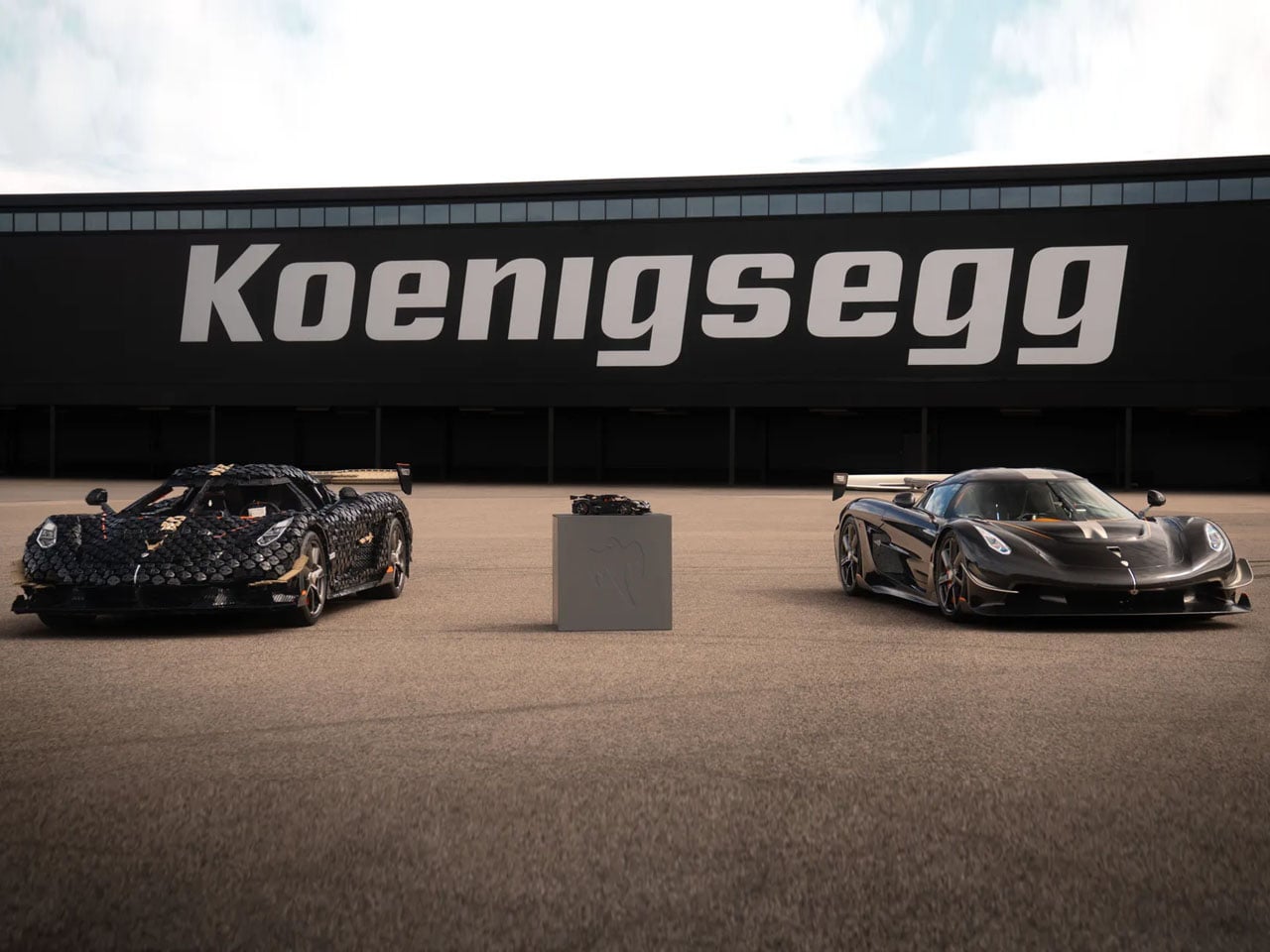
Last year, Koenigsegg Saidair’s Spear, driven by the brand’s official test driver, set the record in the reverse-course configuration of the Goodwood Hill course. Now the Swedish hypercar manufacturer has brought the laurels back with a life-sized LEGO Saidair Spear to break the record for the fastest brick-built car in the reverse configuration of the circuit.

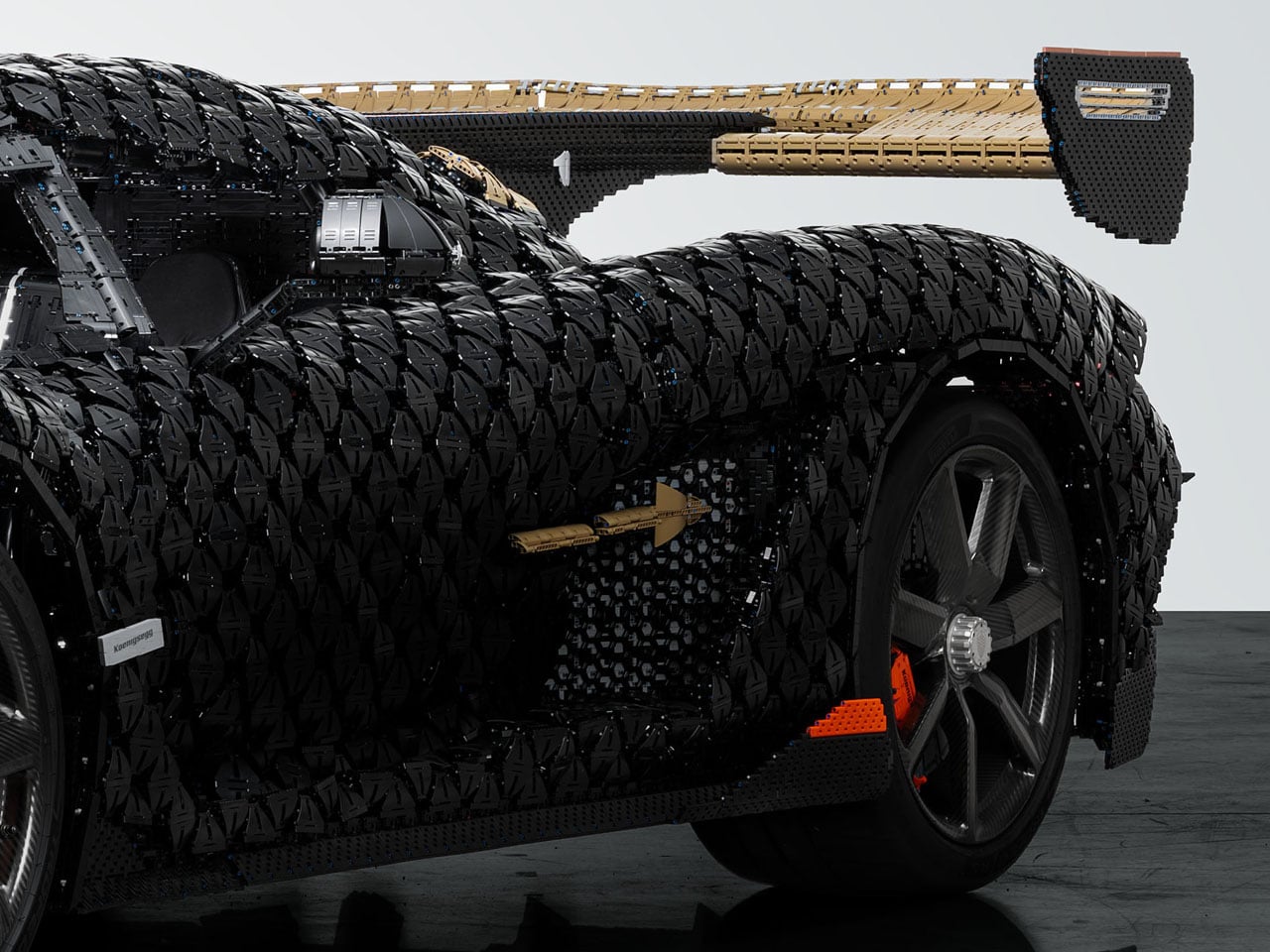
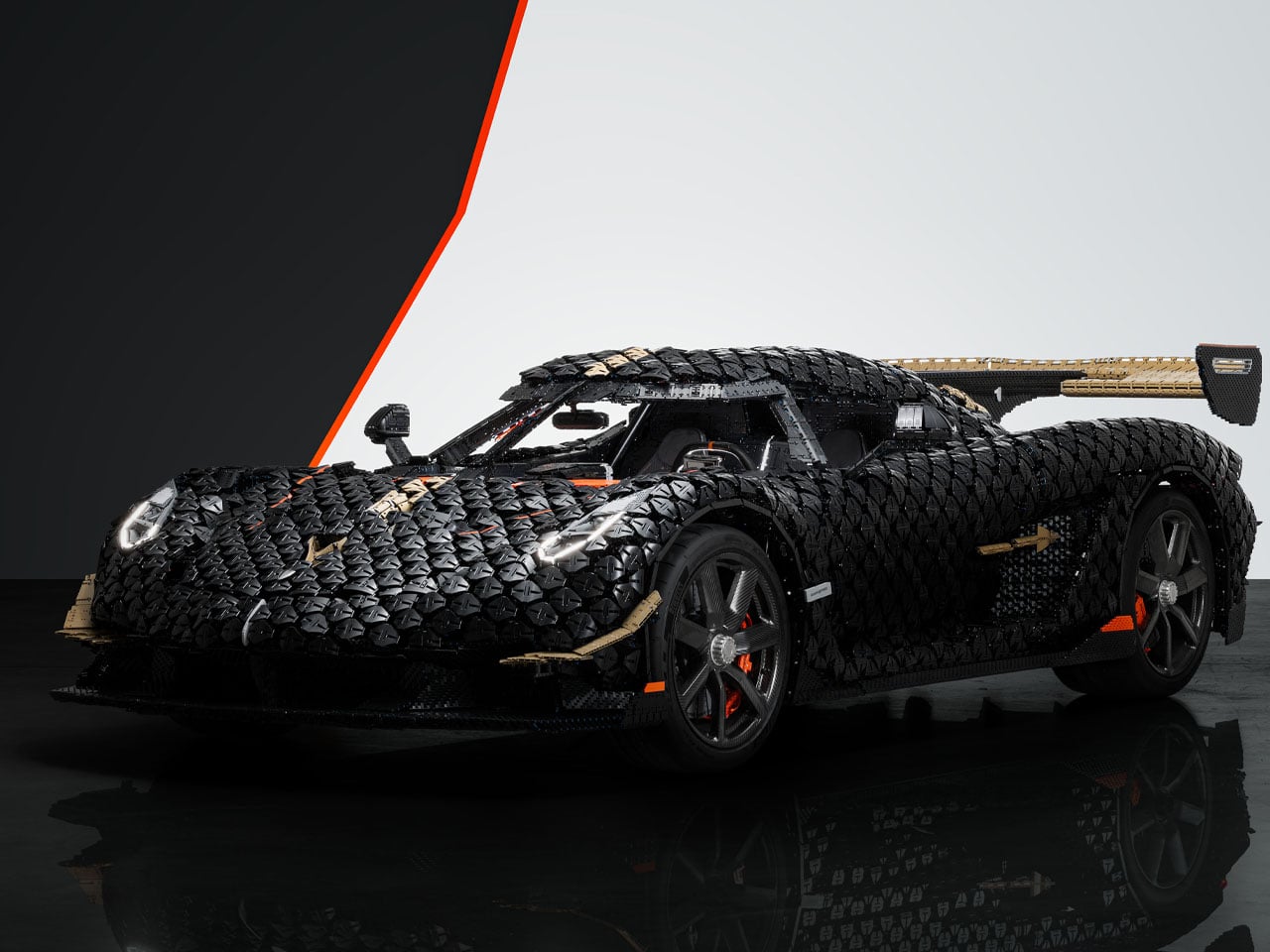
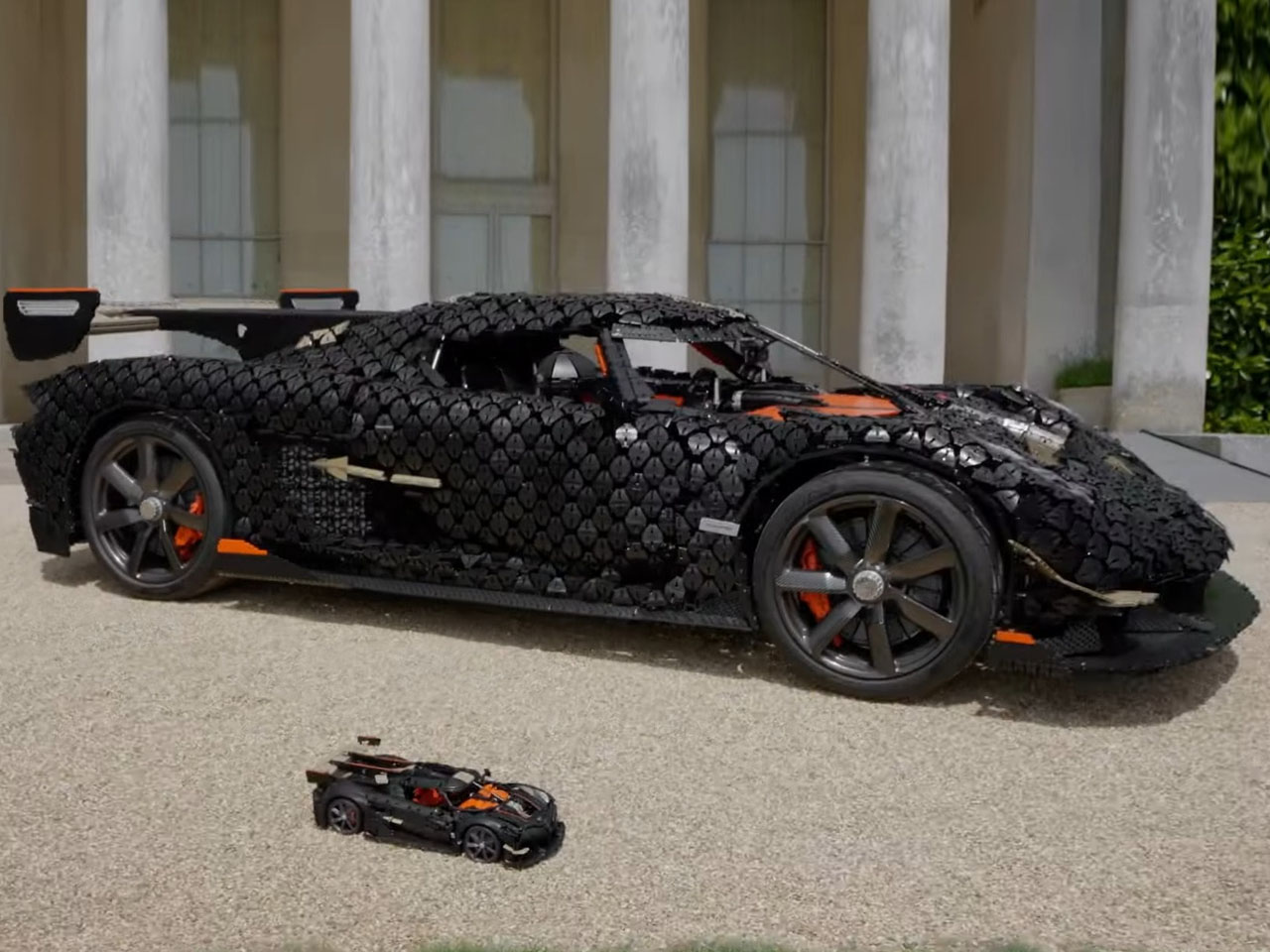
The elusive hypercar limited to just 30 production units has got the 1:1 replica in LEGO form, courtesy of the Danish toy maker, who have impressed everyone with its life-sized version of the real cars. The one-off creation is built under the Ultimate Car Concept Series, which has seen the likes of Bugatti Chiron and Ferrari Monza SP1. This driveable LEGO Saidair’s Spear celebrates the release of the 1:8 LEGO Technic set of the hypercar consisting of intricate 4,104 pieces, which is ultimately for the 23.2 inches long, 5.9 inches tall, and 11.0 inches wide hypercar for display on the wall.

Designer: LEGO Group

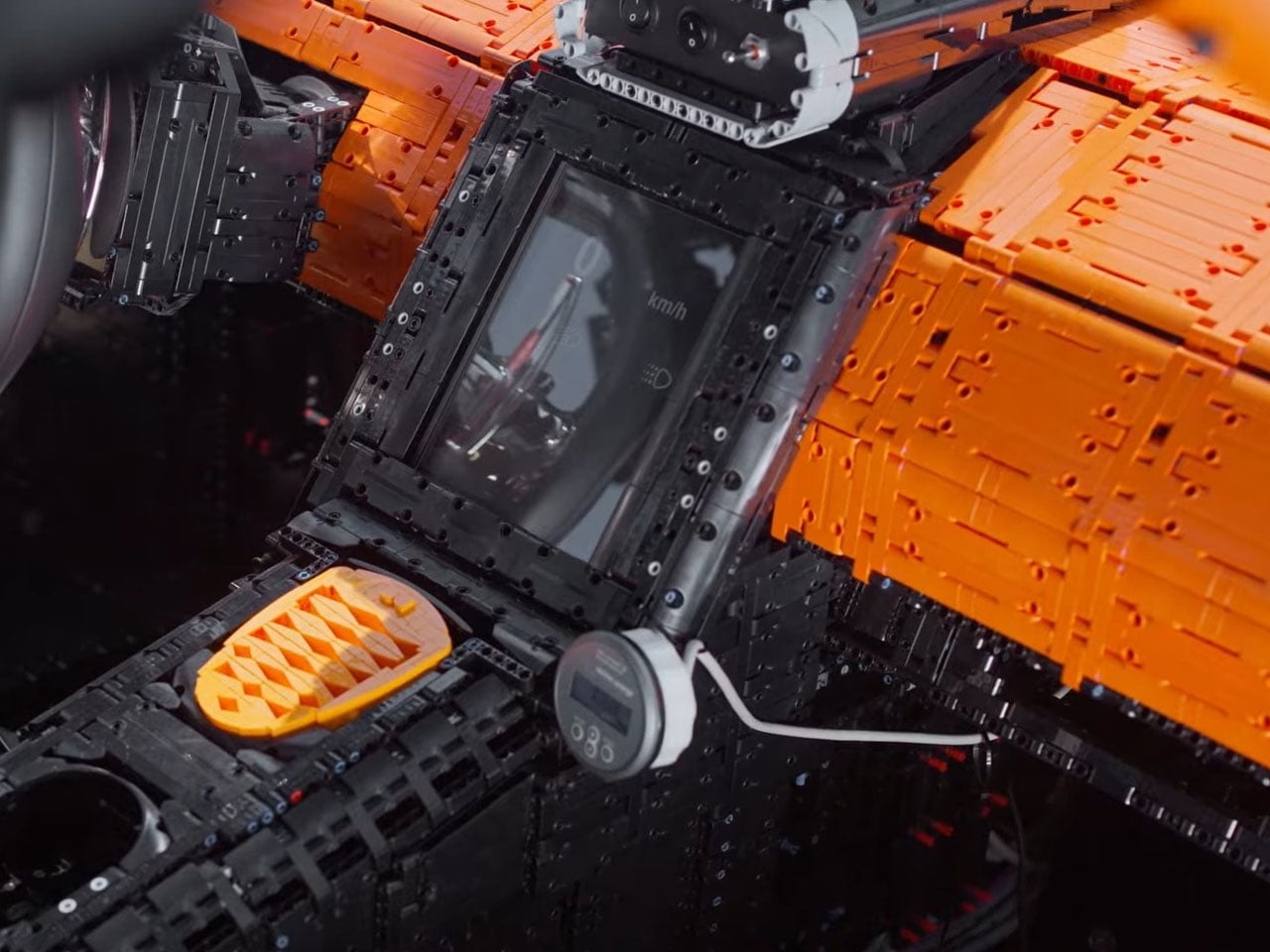
Breaking the previous record of 31 mph set by the LEGO McLaren P1, the intimidating hypercar trundled at 69 mph, the winding course known for its unforgiving drivability. Much like the LEGO Ferrari 12Cilindri Spider which is powered by a naturally aspirated V12 engine, this has a piston-style V8 engine mated to a nine-speed sequential gearbox. That said the powerful engine is too much for the hypercar, so it gets a rear wheel-powered electric motor that thrusts it forward. Keeping the element of automotive engineering going, the car has a paddle-mounted steering wheel, Triplex suspension for the front and rear, and a cool rotary display showing the selected gear. It even gets the working Ghost mode that the real version touts. In this setting, activated with a button, the hypercar’s rear body section lifts up, those dihedral synchro-helix doors swing out automatically, and the mirrors retract flat.

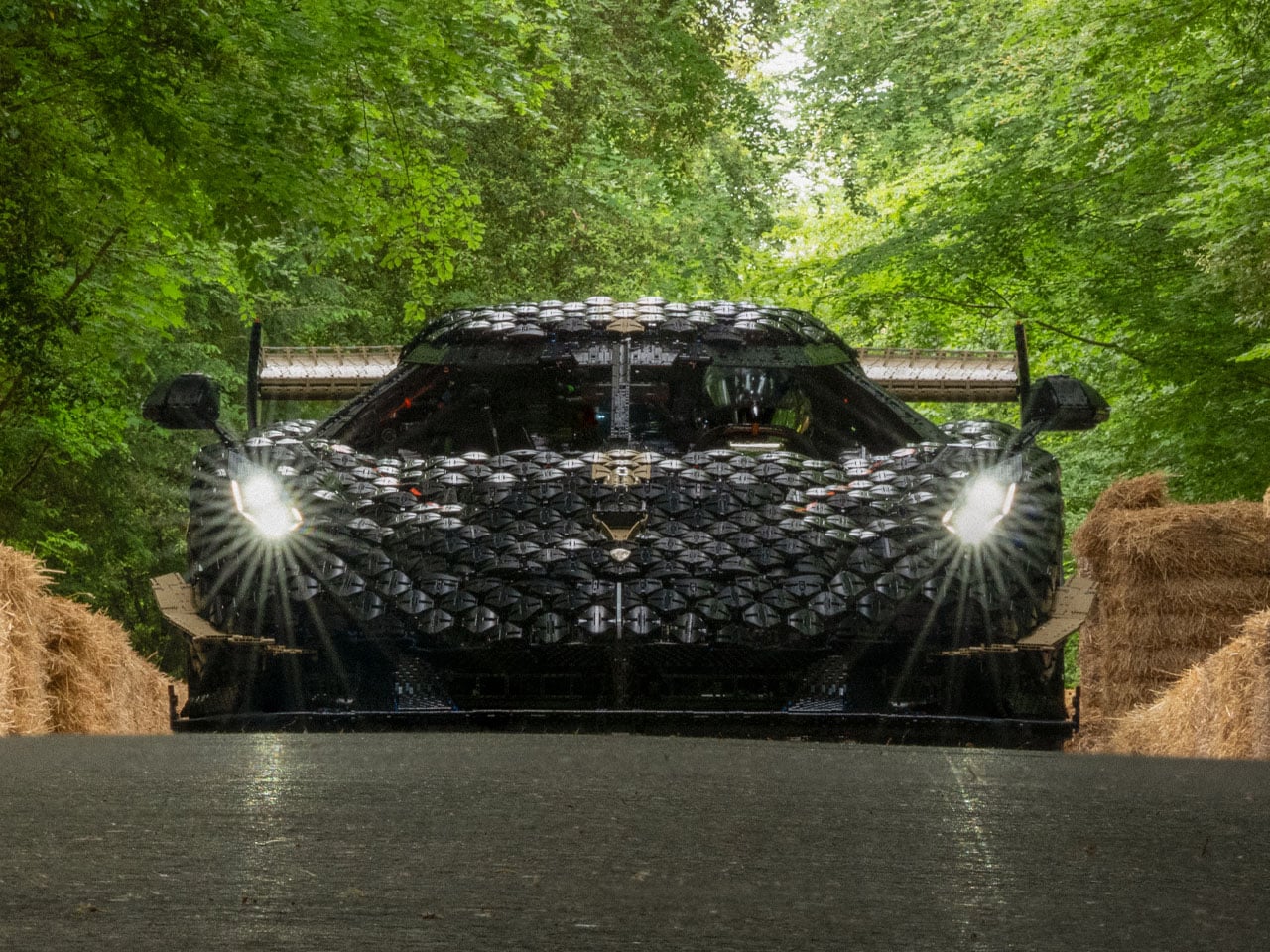
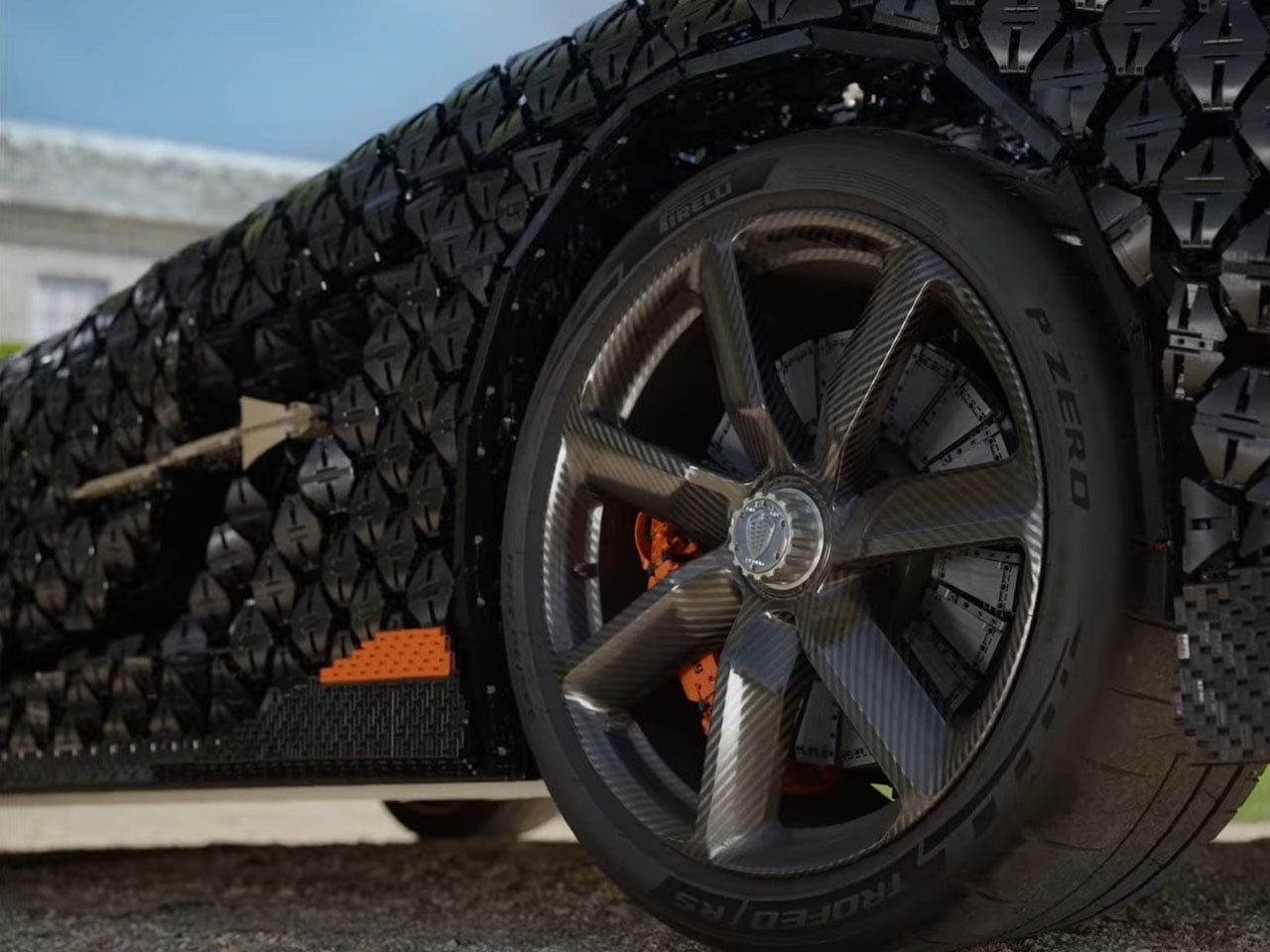
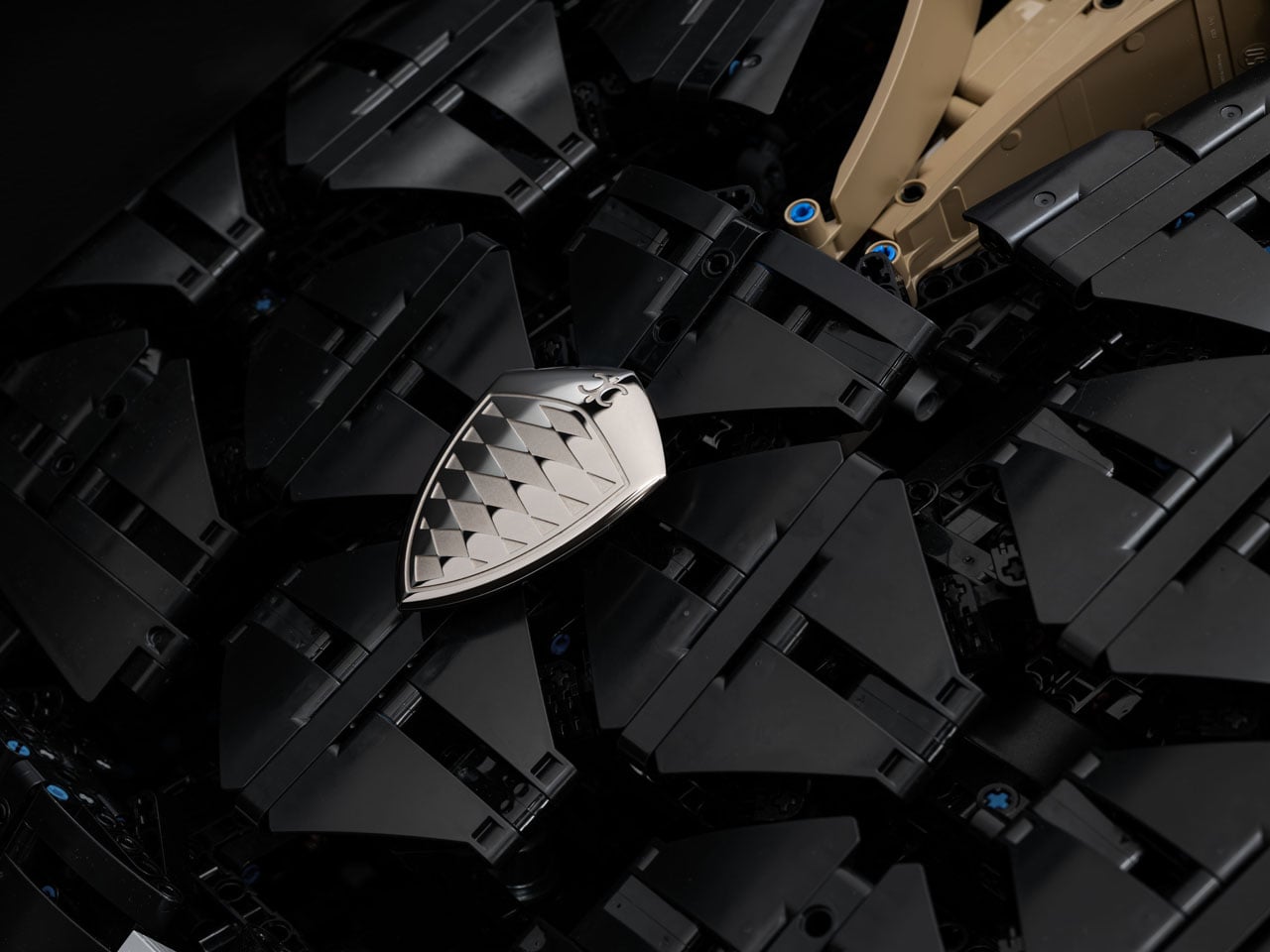
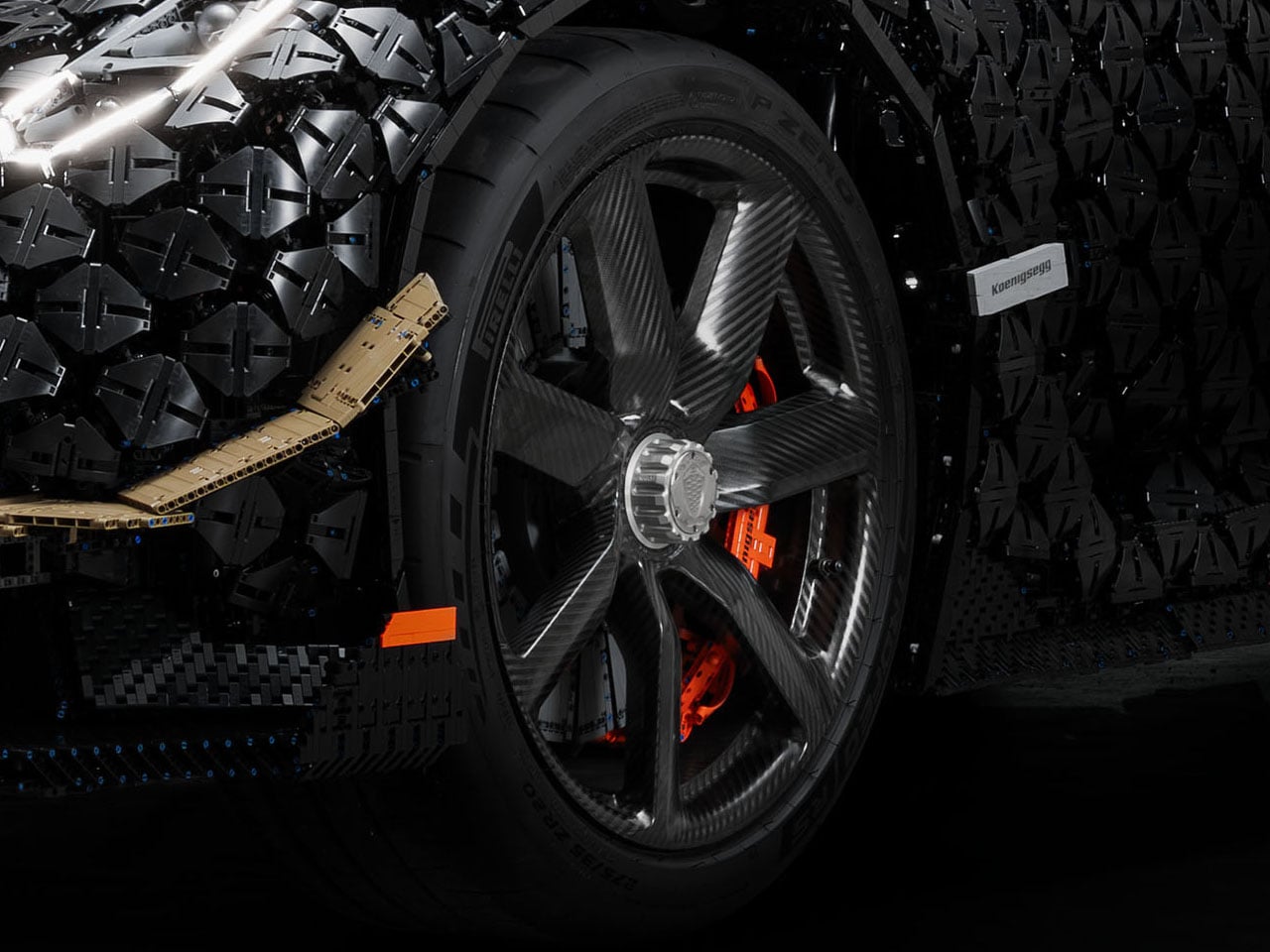
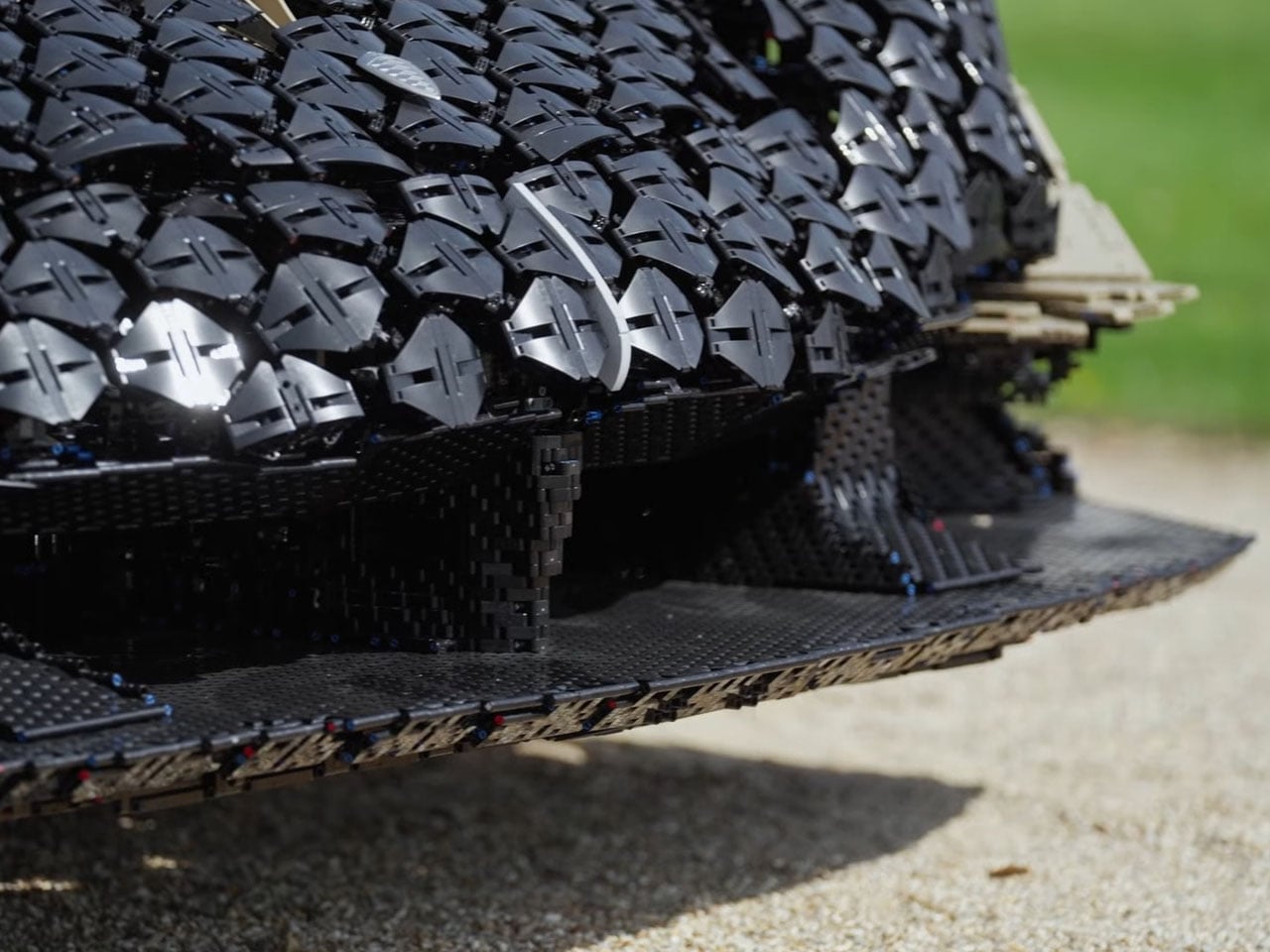
The form factor is nothing short of jaw-dropping in deep black hue, as the full-size Koenigsegg is made up of 327,000 Lego Technic elements, taking up 9,400 man hours to carefully put together. According to LEGO, the highly detailed car took around 18 months to create, with some LEGO elements created specifically for the project. The all-black finish of the car was hard to achieve as the makers had to figure out crafting the connectors and bodywork. Underneath the car is a metal chassis and an FIA-certified roll cage to complete the details. Non LEGO elements on the car include the Koenigsegg carbon wheels wrapped in Pirelli tyres and motorsports grade disc brakes with the Technic callipers.

The four-wheeler weighs 1,800 kg in total, out of which 1,200 kg is just the dry engine weight. To make things interesting, the creation is loaded with easter eggs. As per Lego’s design lead Lubor Zelinka, who got in conversation with Top Gear, “Parts of the front headlights are little canopies from Star Wars ships. The rear lights use house or train windows. The brake lights are emergency lights from police vehicles. We’ve used part of a wheel arch for a curved section of exhaust, and there’s another wheel arch from our C8 Corvette set on the brake callipers.”

Although this LEGO hypercar isn’t going to be anyone’s play toy, no matter how much money you have, it can still be seen for real when it sets out for a global promotional tour.

The post Life-sized LEGO Koenigsegg Sadair’s Spear shatters speed records for brick-built cars first appeared on Yanko Design.

A New Electric Hypercar Just Packed 3,154 HP and a 550km/h Top Speed Into a Prototype GT

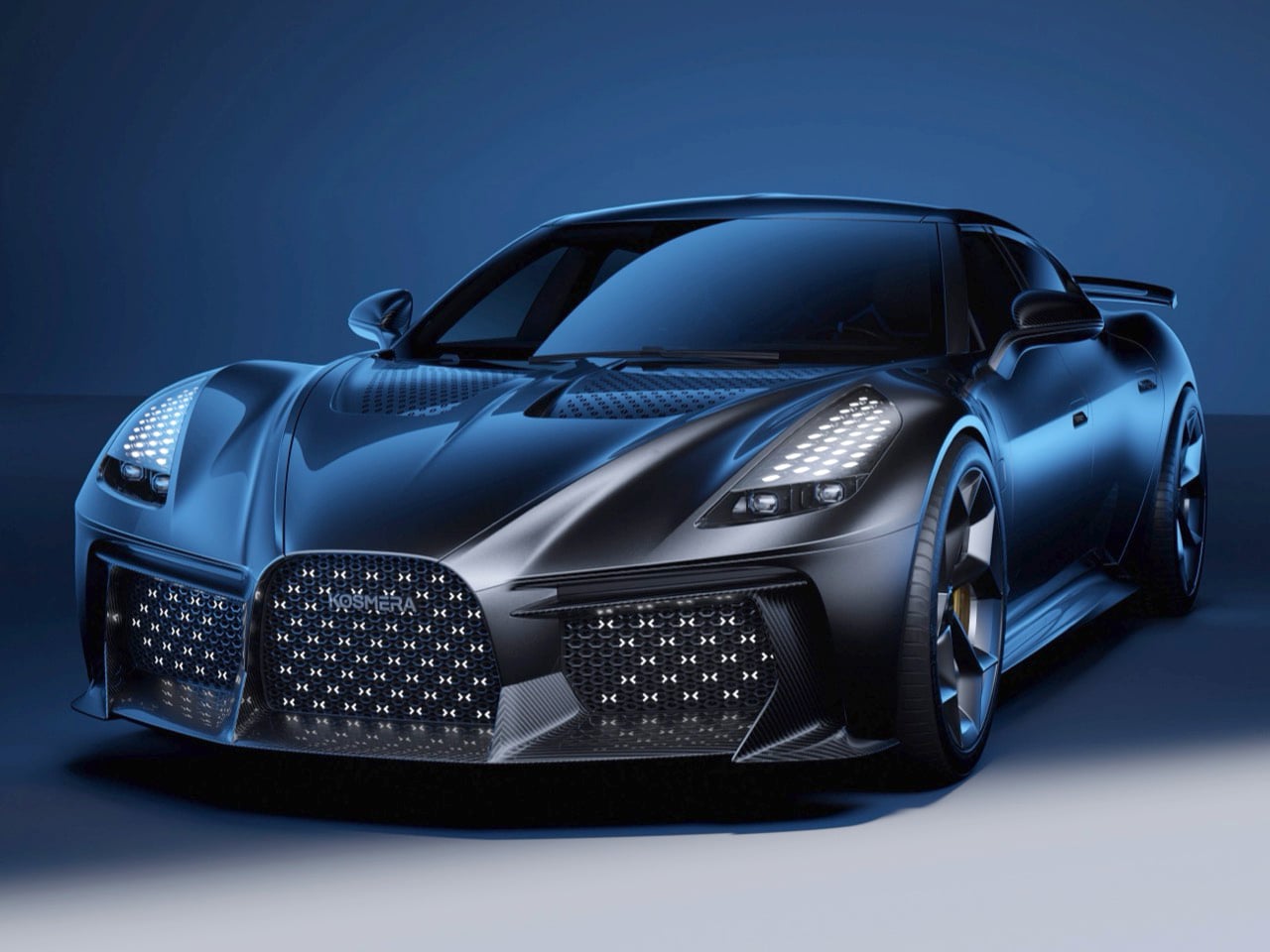
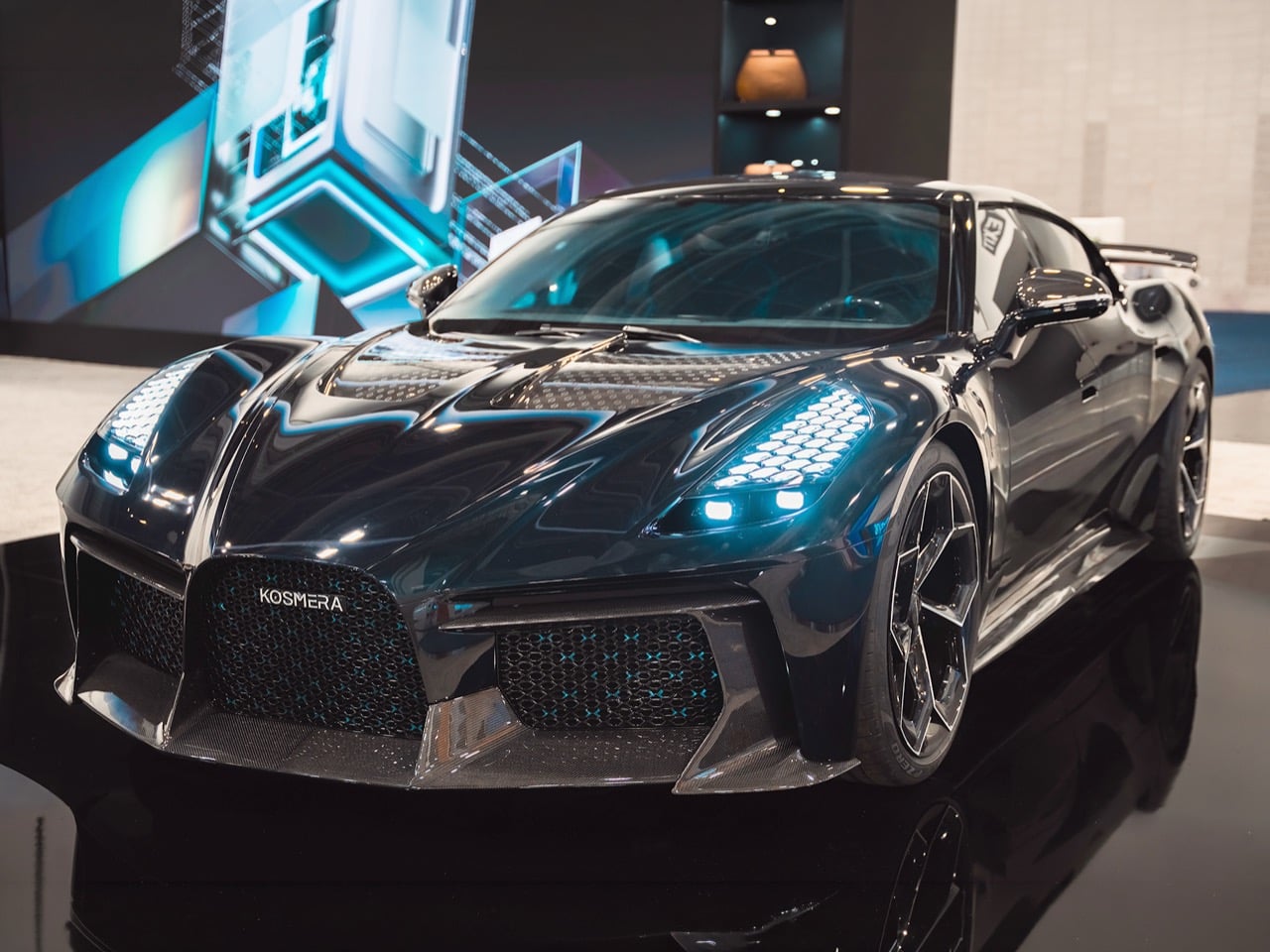
WIRED called them the brands that stole the show, and at CES Las Vegas in January 2026, KOSMERA arrived with a four-door high-performance GT prototype wearing a blue-black finish that New Atlas described as magnificent in person, noting its low-sloping hood, big rear wing, and dual-layer diffuser. SupercarBlondie’s verdict was equally direct: “a race car from the year 2199.” For a company that almost no one in the room had encountered before that week, the response was the kind that established brands spend decades trying to manufacture. KOSMERA’s founders, whose engineering lineage runs from China’s earliest quad-rotor UAV programs through 100,000 RPM-class digital motors and autonomous chassis research, had spent years building toward this moment. The car on the floor was proof that the preparation had translated.

The company calls itself “born global by design,” combining Chinese speed of innovation, American AI ambition, German engineering discipline, and Italian emotional design language into one evolving brand vision. R&D centers sit across Beijing, Suzhou, Shanghai, Shenzhen, and Los Angeles, with the design studio operating out of Turin and manufacturing anchored in Brandenburg, Germany. From hypercars and high-performance GTs to luxury all-terrain SUVs, KOSMERA is building a product portfolio powered by a shared foundation of performance, intelligence, and software-defined mobility. That portfolio breaks down into a collector-series hypercar called The Hypera, a pair of high-performance GTs in the Star Matrix and Star Razer, and a luxury all-terrain SUV called Terra. At the center of every vehicle is a quad-motor AWD system targeting 3,154 horsepower, a 0-100 km/h time of 1.7 seconds, and a top speed of 550 km/h.

Designer: KOSMERA
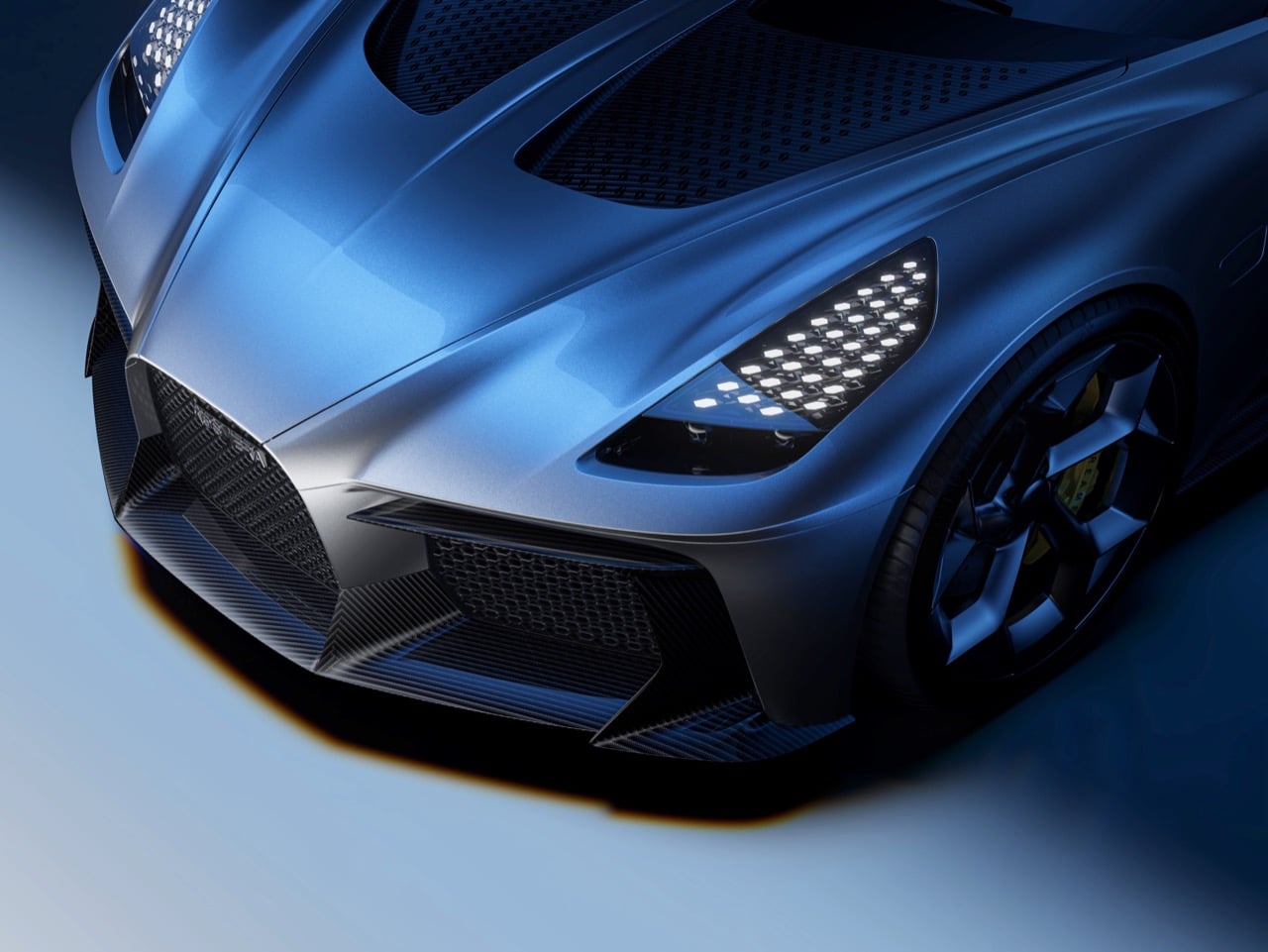
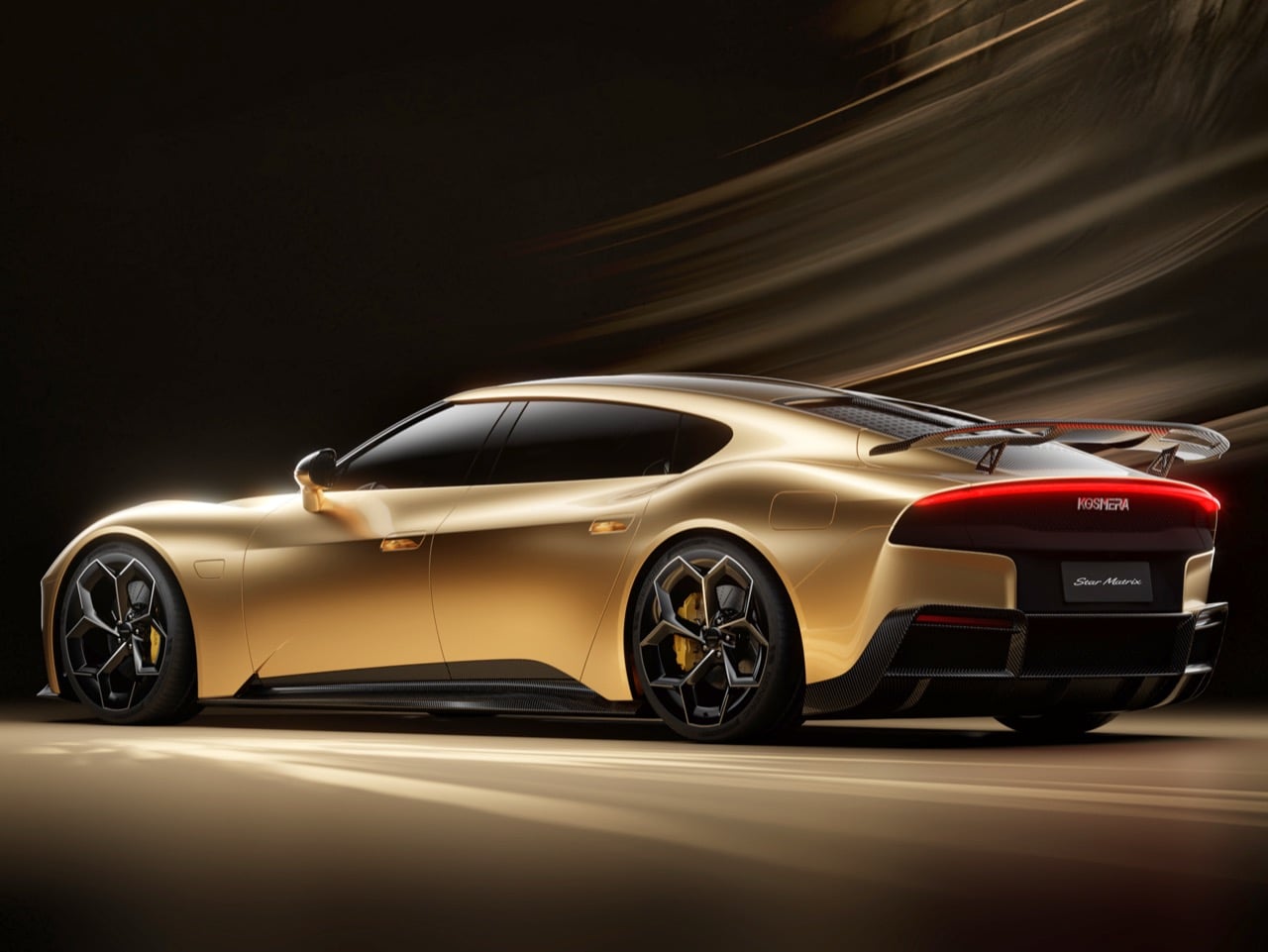
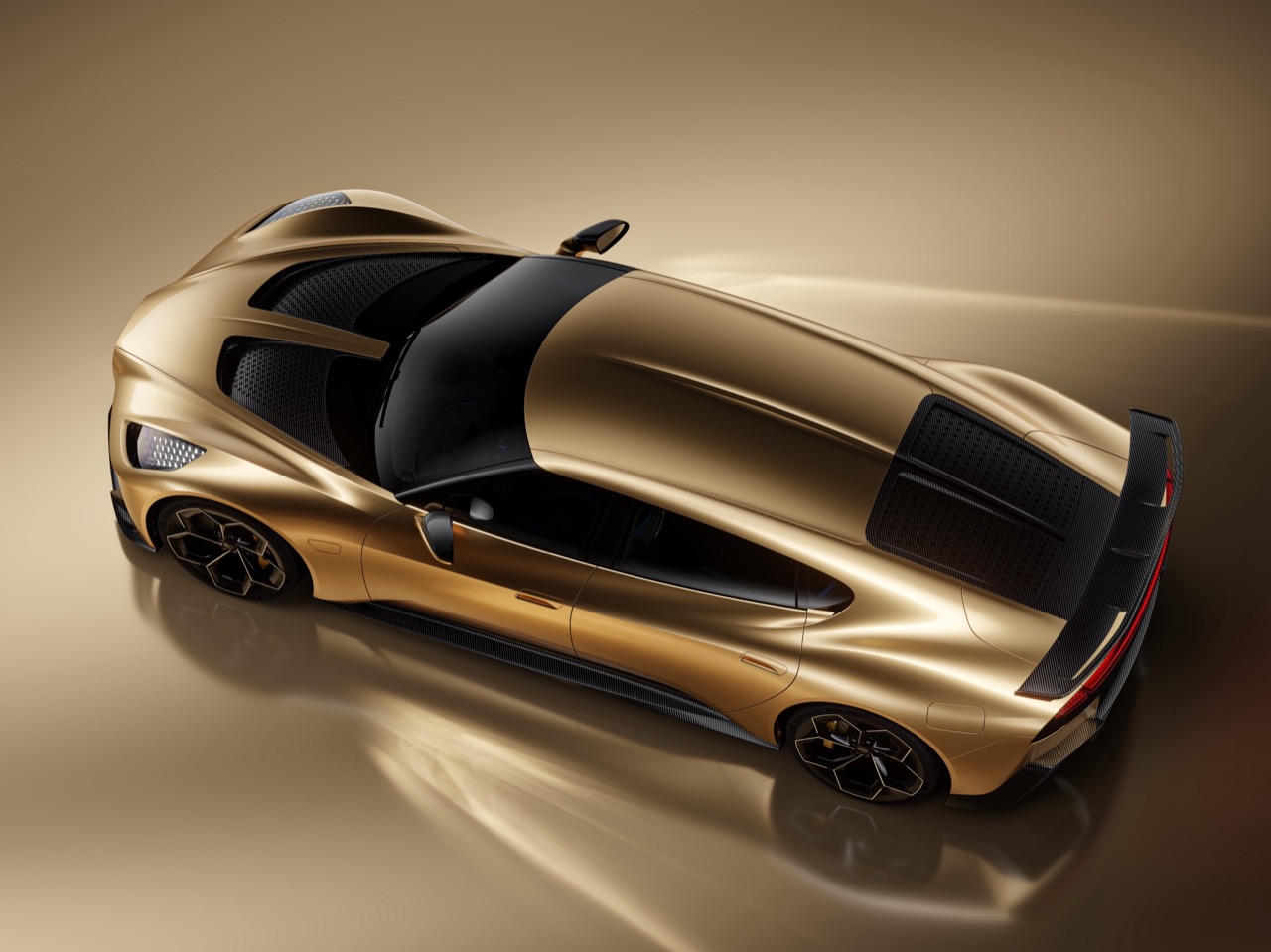
The Star Matrix is KOSMERA’s interpretation of intelligent performance built around balance, with an aluminum spaceframe wrapped in carbon-fiber panels, starburst rear lighting with a speed-responsive dynamic flow animation, and an acceleration pulse effect that makes the tail of the car feel alive at night. Designed as a next-generation high-performance GT, it combines extreme electric performance with aerodynamic efficiency and driver-focused ergonomics. Physical controls inside are reduced by 80 percent, leaving a driver environment of carbon fiber, aerospace textiles, and Alcantara with an AI Coach display projecting real-time racing lines and blind-spot alerts into the driver’s eyeline. The Star Razer carries the same architecture into wilder territory, arriving in Quantum Violet with frameless doors, a lower and wider stance, a breathing light bar, and a Cd of 0.20 achieved through aero blade lines and rear wheel channels. Where the Star Matrix reads as precision, the Star Razer reads as provocation.
Kosmera Star Matrix

Axial-flux motors redirect magnetic flow along the rotation axis rather than radially, producing a shorter magnetic path and better torque leverage in a far more compact package, and the HyperDrive quad-rotor layout delivers up to 1,578 PS on a single shaft, achieving nearly twice the power density of conventional motors. The quad-rotor configuration targets 1,160 kW per axle, 7,500 Nm of peak wheel torque, and wheel-end speeds above 4,000 rpm. The power electronics use a full silicon-carbide inverter architecture, reducing conduction loss by approximately 40 percent compared to conventional silicon systems. Four independent motors deliver per-wheel torque vectoring, shaping cornering through real-time torque redistribution rather than braking intervention, a more precise and faster-reacting control philosophy. KOSMERA describes each axle as comparable to two Ferrari V12 engines combined, and for once the metaphor and the physics actually align.
The HyperCore battery’s cell-to-pack architecture eliminates the module layer, pushing pack efficiency to 85 percent and enabling peak discharge above 2,500 kW on a 1,200-volt, 6C platform. Charging targets 10 to 80 percent in under seven minutes, a figure that starts collapsing the practical gap between an EV charge stop and a combustion fuel stop. KOSMERA’s HyperPilot Vision-Language-Action stack runs on a 2,000-TOPS compute platform with LiDAR, millimeter-wave radar, cameras, IMU, and HD mapping feeding a physics-based World Model architecture capable of predictive reasoning. The system covers predictive track mapping, an AI racing coach, AR headset integration, highway L3 assisted driving, and urban Navigate-on-Autopilot. The Star Razer extends the ecosystem further, adding an onboard drone interface that deploys autonomous UAVs for last-mile logistics, emergency delivery, and aerial capture, functioning as a mobile mothership for intelligent mobility. That prediction layer shifts the system from reactive driver assistance to genuinely anticipatory control.
FlexBase integrates drive, braking, steering, and suspension into a fully by-wire architecture with a closed-loop response time under 10 milliseconds, a latency figure that approaches the point where human perception cannot distinguish digital from mechanical control feel. A maximum steering angle of 90 degrees enables zero-radius turning and crab-walk capability that conventional suspension geometry cannot approach. Four-wheel independent control includes automatic compensation for single-wheel failure, and the ASIL-D safety certification aligns the platform with L4 autonomy requirements. KOSMERA claims the electrified integration reduces overall system cost and weight by 30 percent by eliminating components rather than replacing them. The modular chassis is designed to scale across the entire vehicle lineup, from The Hypera to Terra, meaning each model shares a validated foundation rather than developing bespoke hardware from scratch.
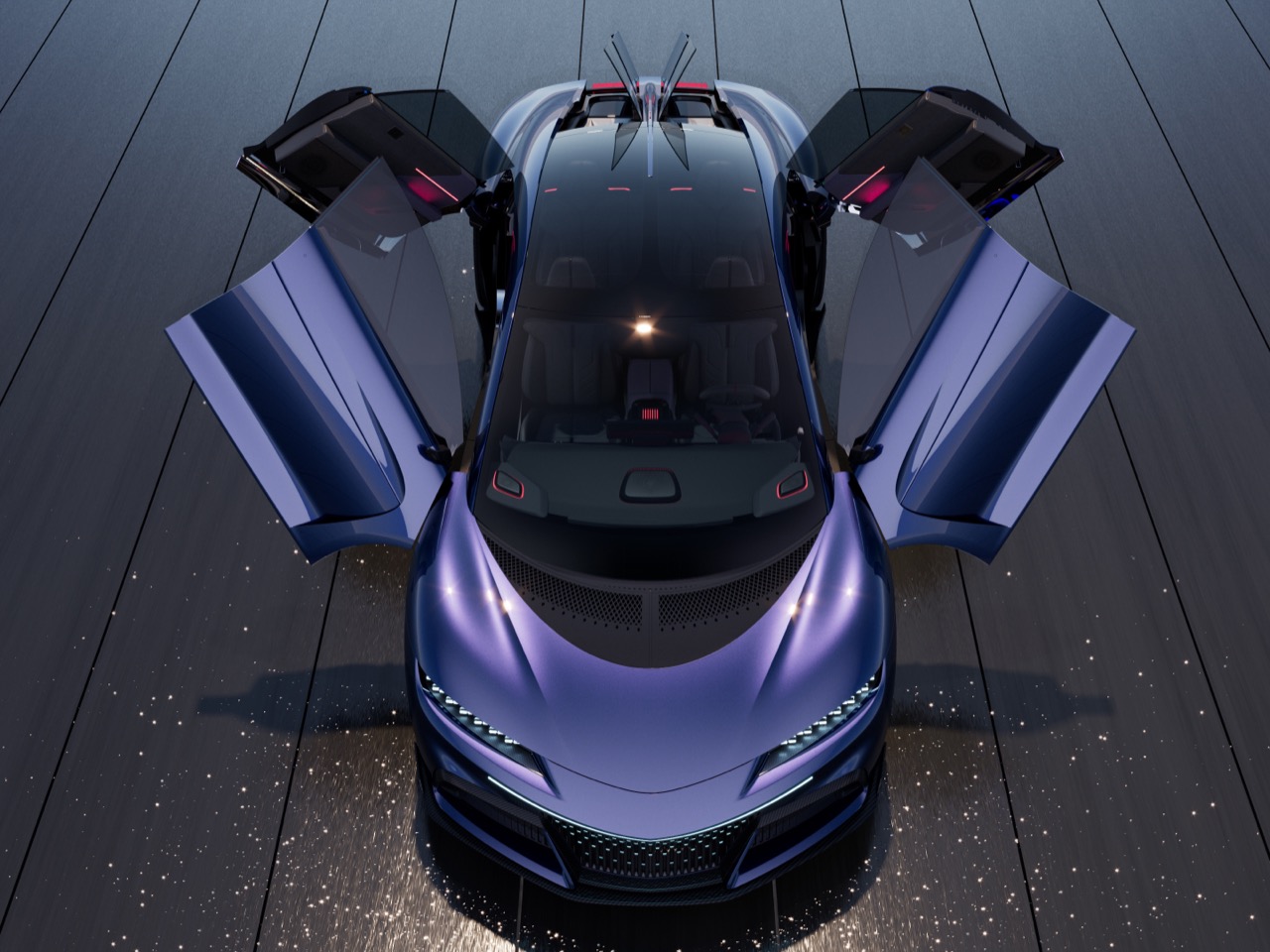
Kosmera Star Razer
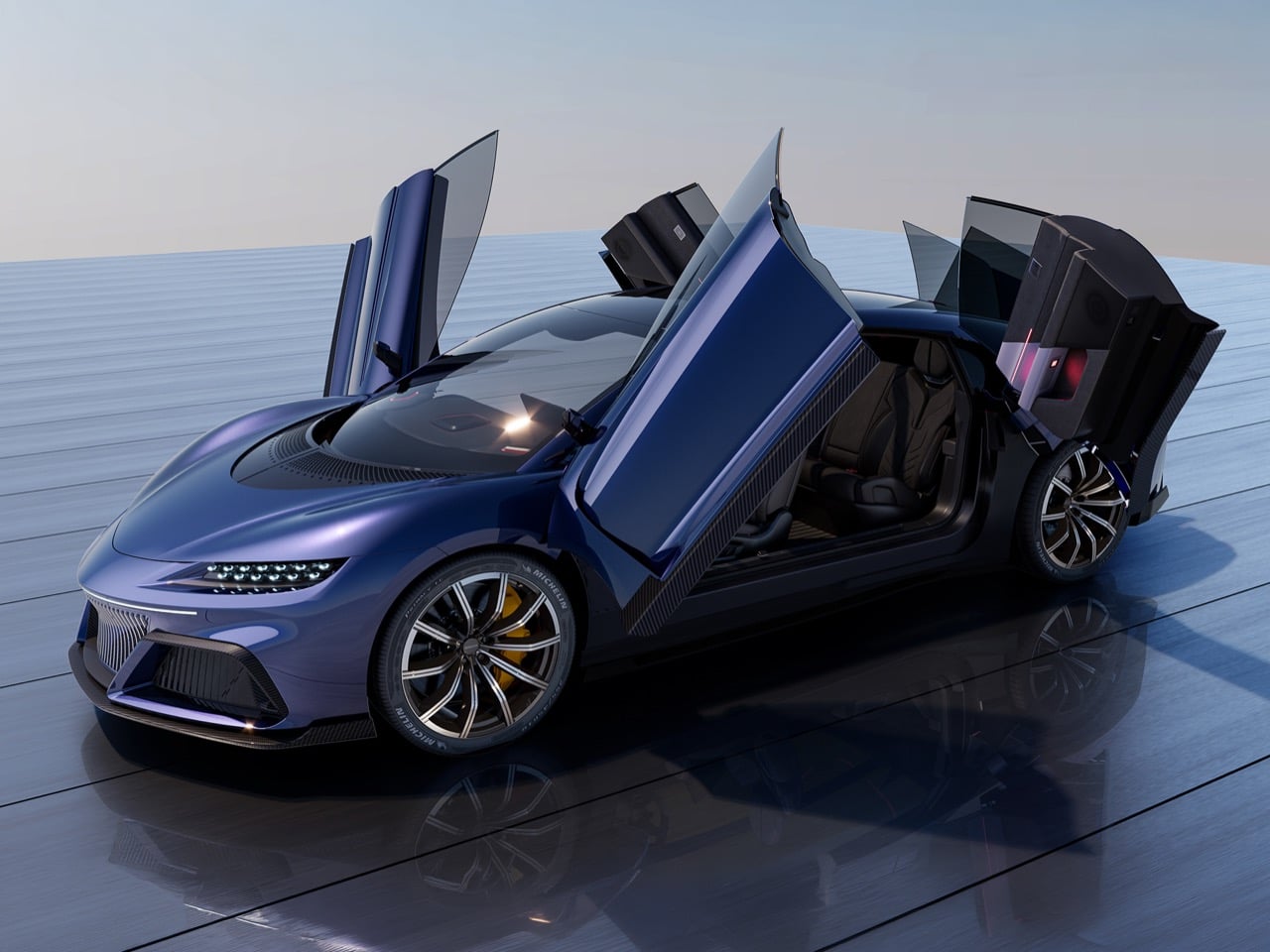
Kosmera Star Razer

AutoEvolution placed KOSMERA’s 1.7-second 0-60 claim squarely in “a league where Rimacs and Koenigseggs have been making the rules for years,” and that is the competitive frame the brand has chosen for itself. The Axion Power propulsion division confirmed in June 2026 that the 3,000-plus horsepower system remains in pre-development and patent application review, a qualifier worth holding onto when reading the headlines. What exists today is a technically serious platform grounded in axial-flux motor engineering, 1,200-volt battery architecture, AI-driven chassis control, and software-defined mobility. The founding team’s background spans decades of experience in AI, robotics, autonomous systems, and high-speed motor engineering, which means the ambition carries real engineering DNA behind it. Whether KOSMERA can close the gap between concept-stage intensity and production-validated performance will be the story worth watching through the rest of the decade.

The post A New Electric Hypercar Just Packed 3,154 HP and a 550km/h Top Speed Into a Prototype GT first appeared on Yanko Design.

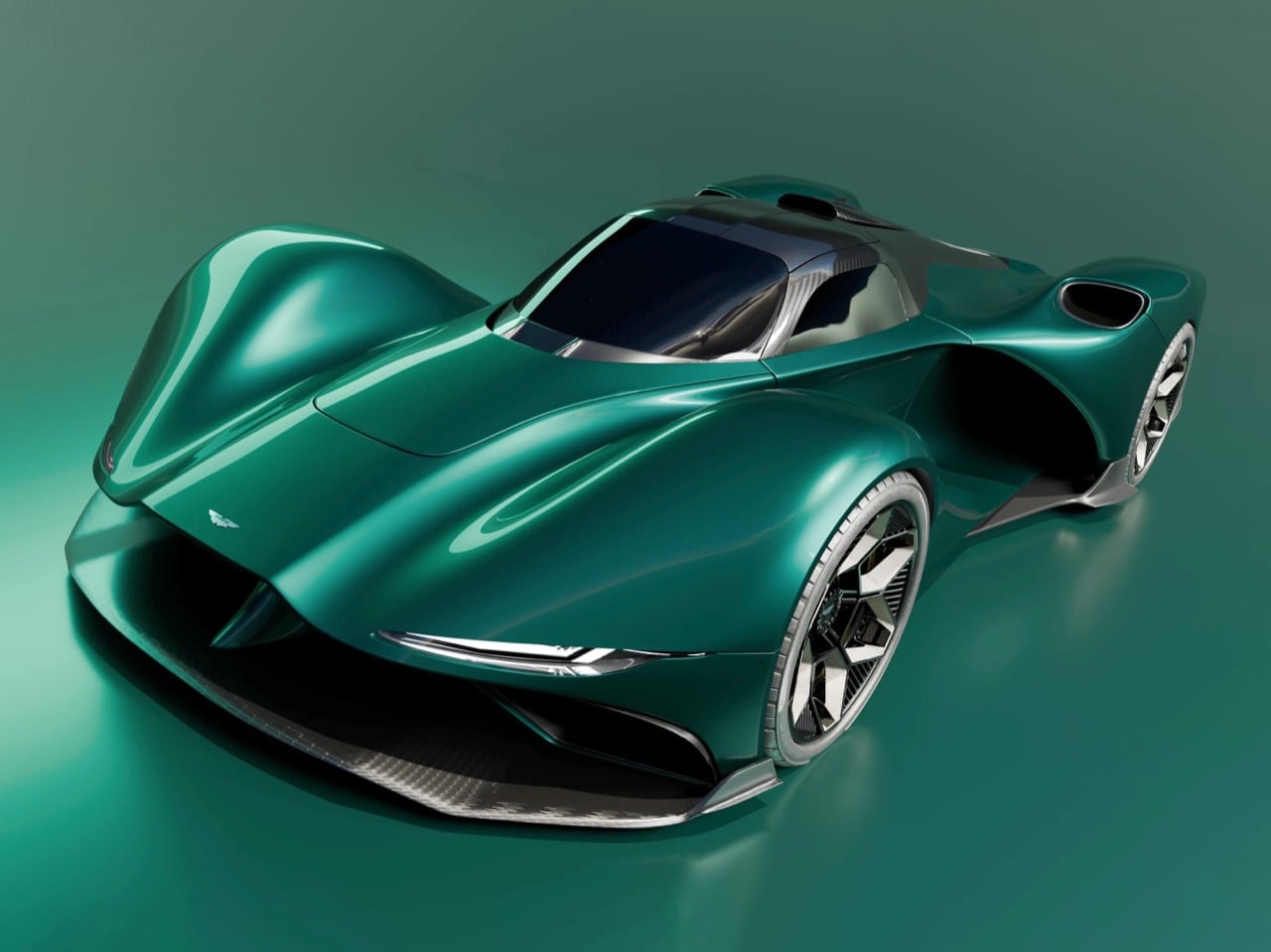
Aston Martin Veil Concept Reimagines What Comes After the Valkyrie Hypercar

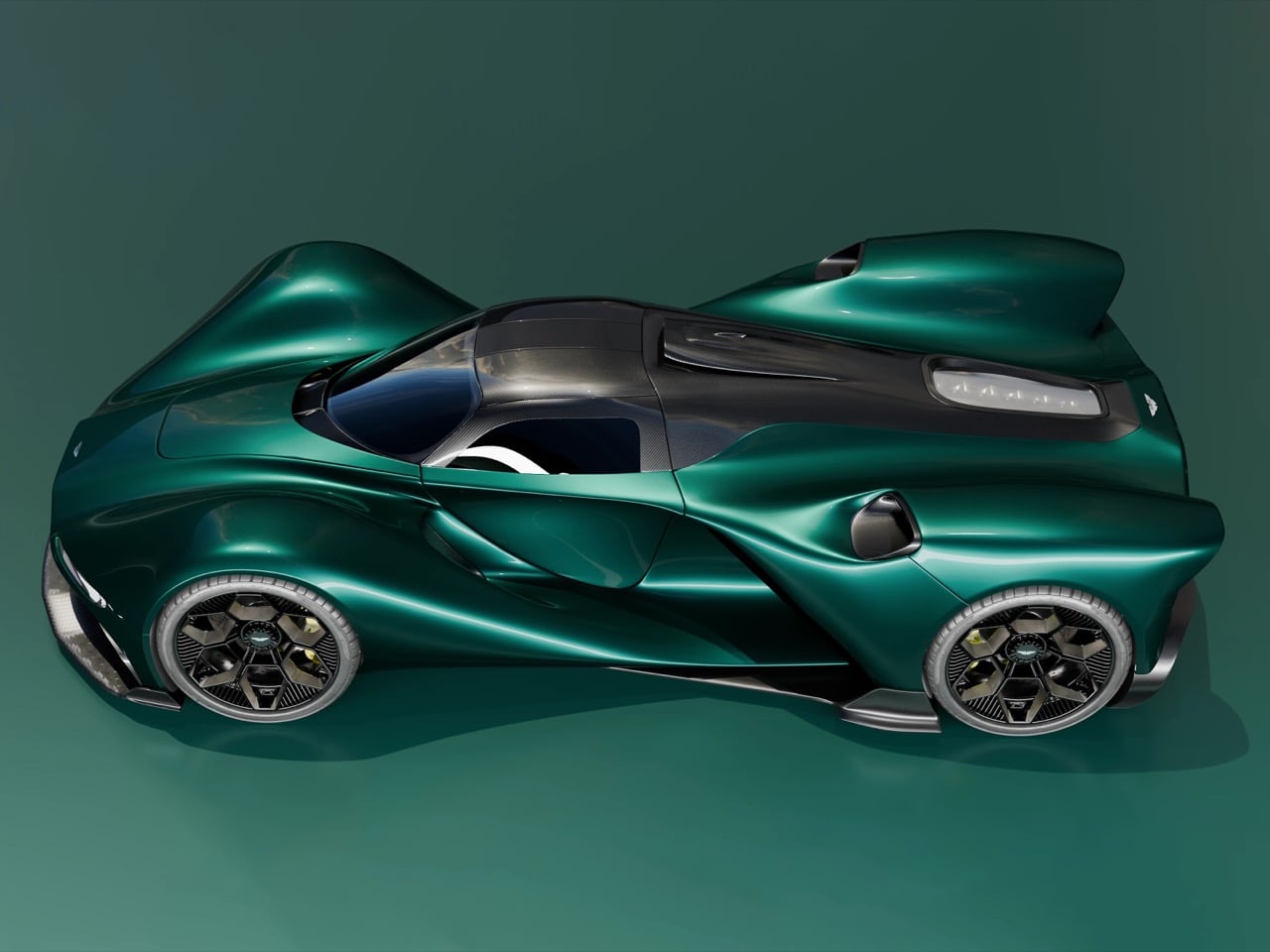
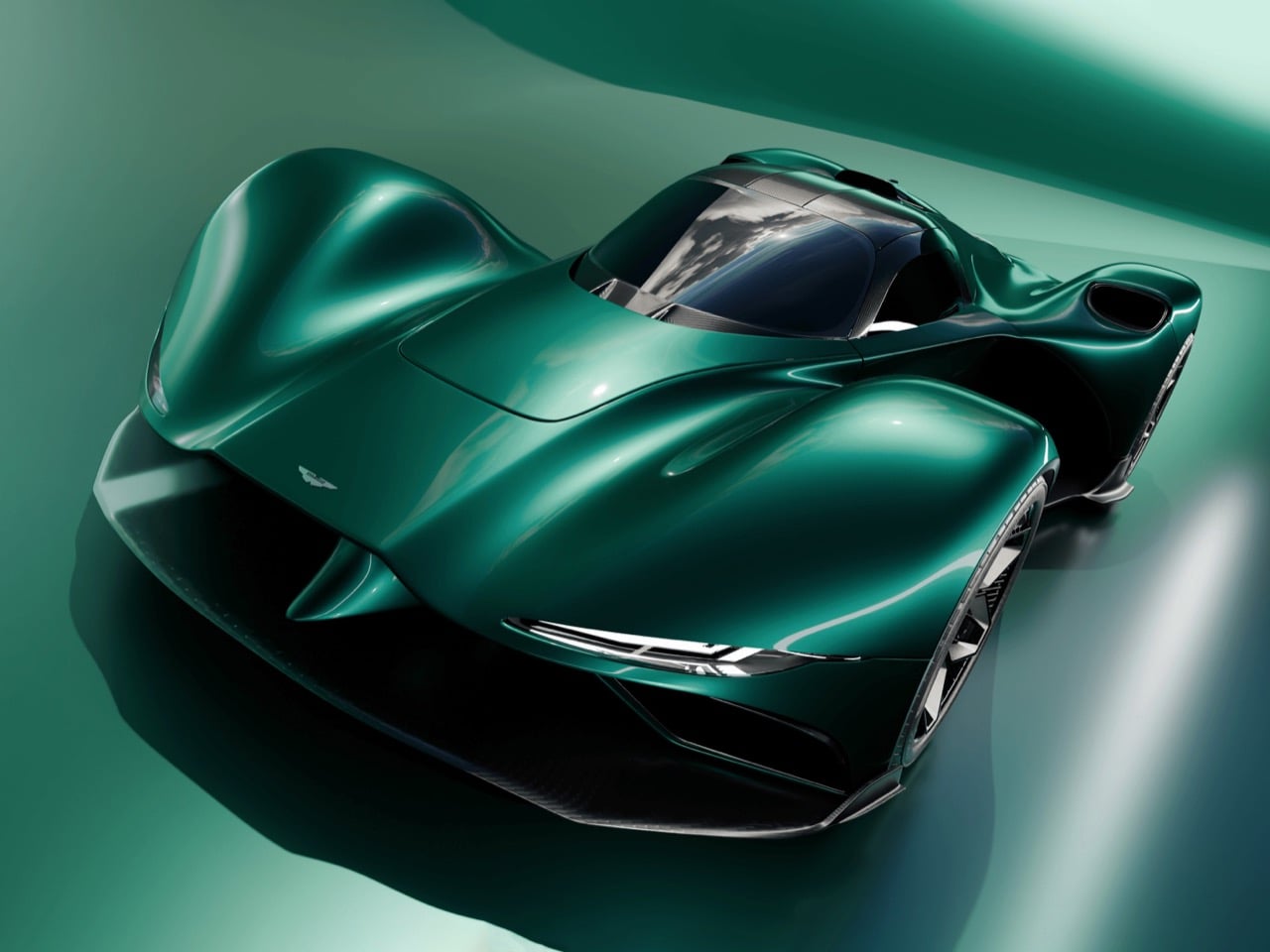
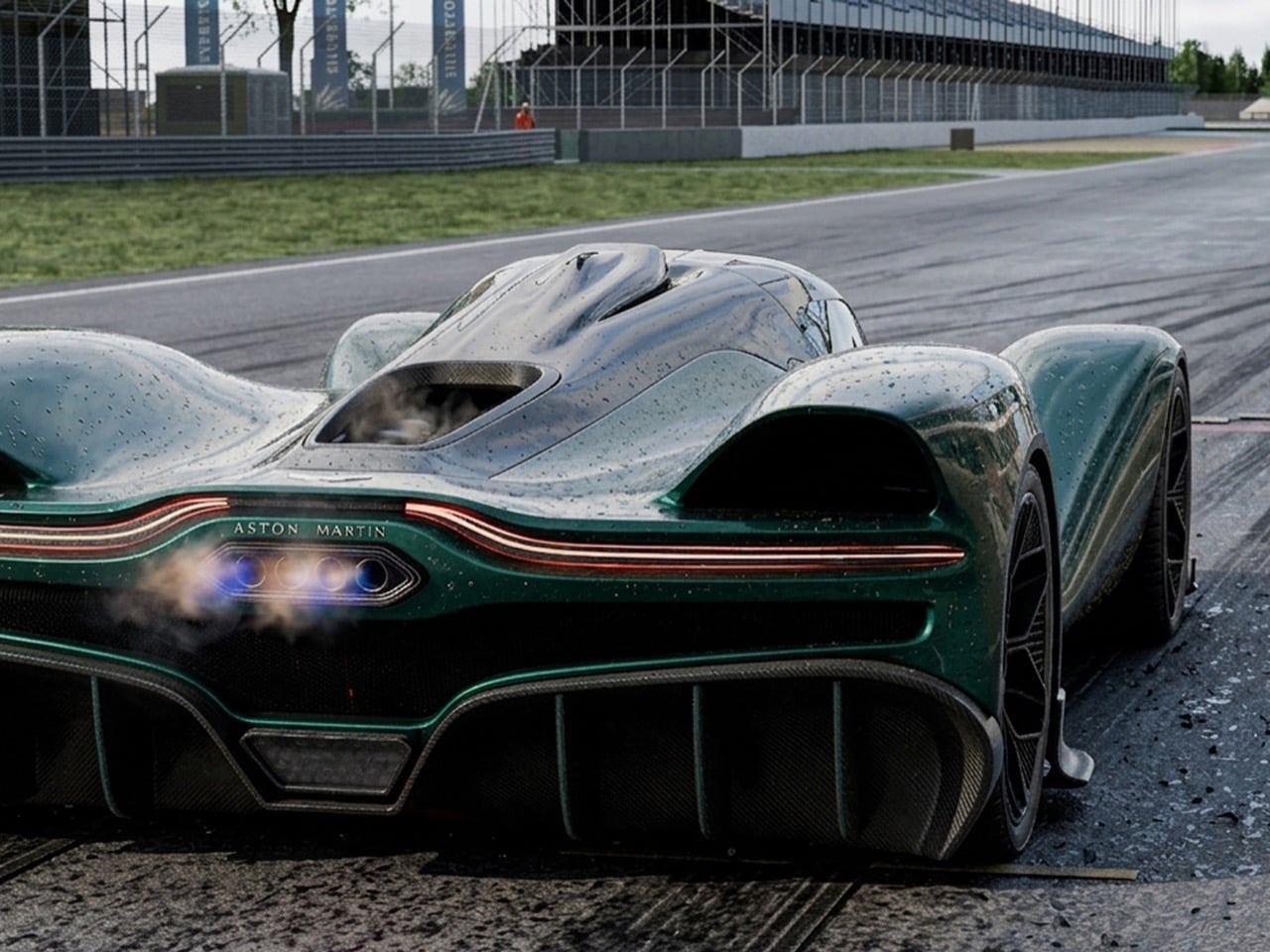
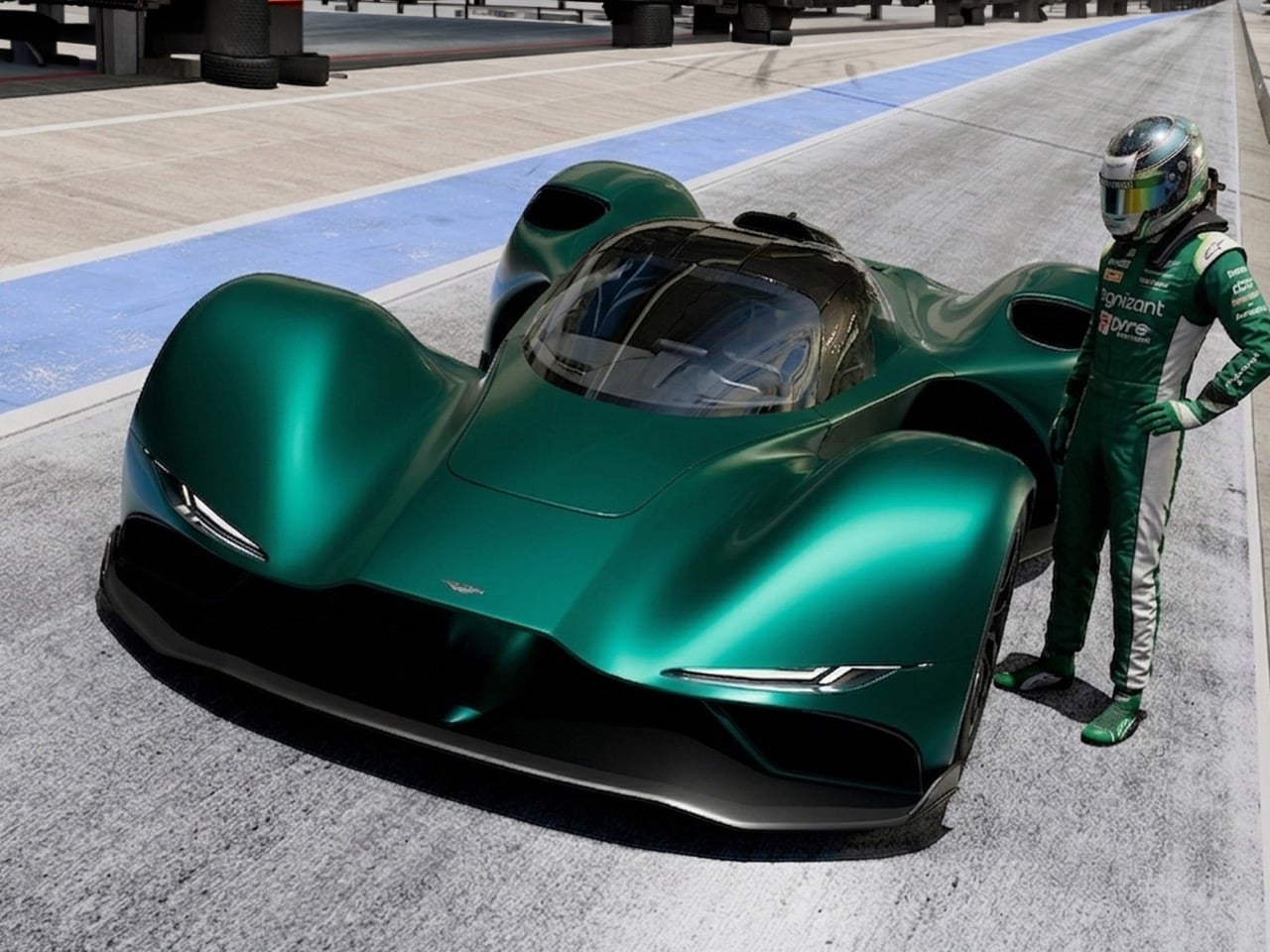
Aston Martin’s hypercar trajectory over the past decade has followed a clear arc: the Valkyrie brought F1 aerodynamics to road car design, the Valkyrie AMR Pro pushed that concept to track-only extremes, and the Valhalla promised a more accessible (relatively speaking) interpretation of the same philosophy. Hyunwoo Kim’s Veil concept asks a different question entirely. What if you took that same performance intent but wrapped it in surfaces that flow like liquid metal rather than faceted carbon fiber? The result is a hypercar concept that trades the Valkyrie’s angular muscularity for something closer to organic sculpture, where every surface transition happens so smoothly you’d need calipers to find the break points. The teal paint, a near-perfect match for Aston’s current F1 team livery, catches light like water, emphasizing the continuous curves that define the entire form language.

Kim developed the concept through an unusual process that started with paper mock-ups, physically exploring three-dimensional forms before committing to digital modeling. The approach paid off in ways that pure CAD work rarely does, producing proportions and surface relationships that feel discovered rather than designed. From above, the Veil reads like a manta ray or a fighter jet, with massive rear fender volumes extending from a central spine that bisects the cockpit. The track photography showing the concept alongside Aston Martin F1 team members suggests this caught someone’s attention at Gaydon, which makes sense. This is the kind of design exploration that belongs in a manufacturer’s advanced studio, where production constraints can be temporarily suspended in service of pushing the brand’s visual language into new territory.

Designer: Hyunwoo Kim

The cockpit architecture is pure Le Mans Hypercar, with a central spine running the length of the cabin that appears to house structural elements while creating a visual separation between driver and passenger space. The canopy looks like a single piece of formed glass, which would be a nightmare to federalize but makes perfect sense for a track-focused prototype where visibility and weight reduction matter more than crash regulations. That spine continues rearward past the cabin, creating a vertical stabilizer element that would provide high-speed stability without the drag penalty of a traditional rear wing. It’s smart aero thinking disguised as sculptural drama.

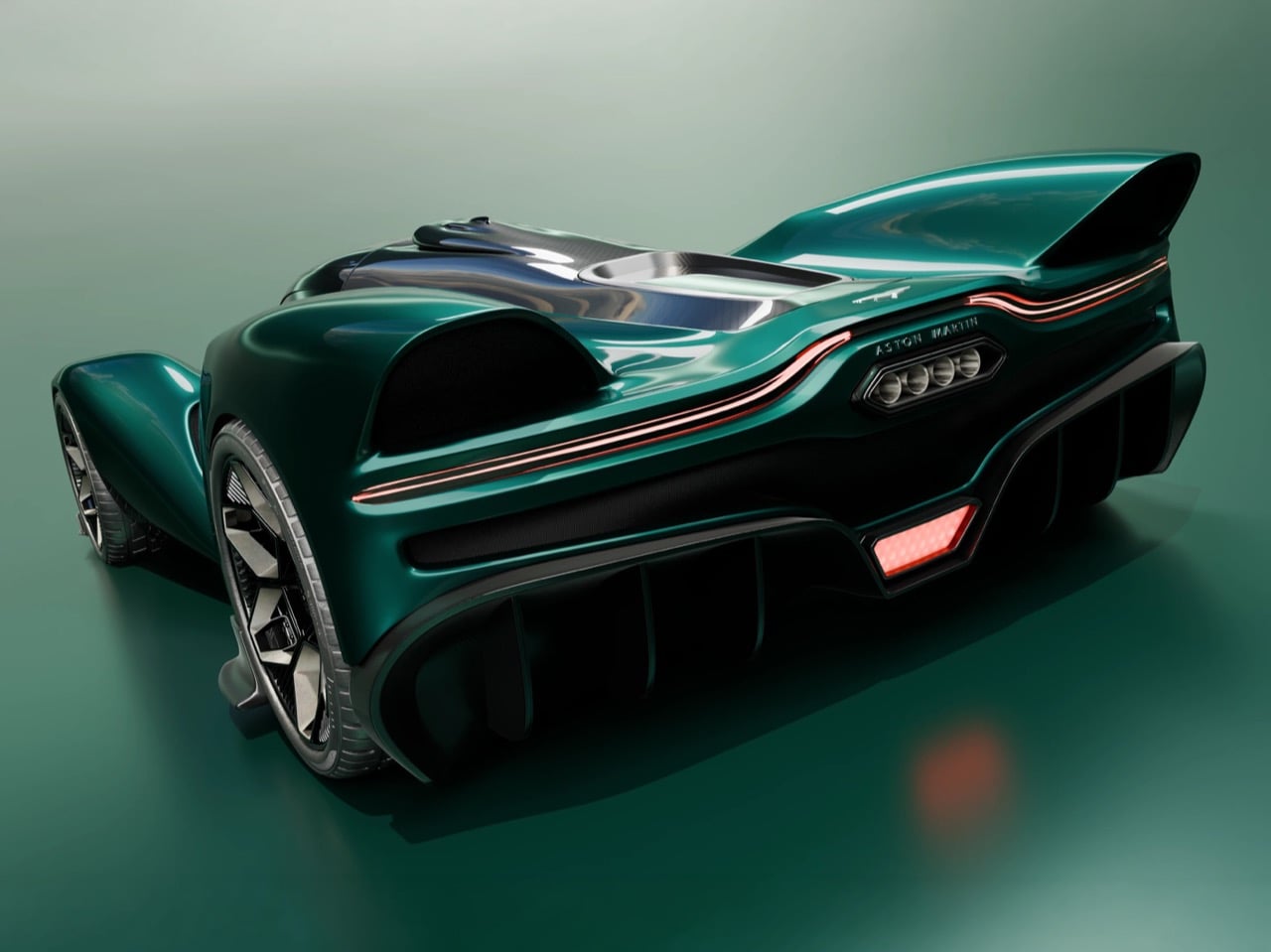
The rear fender volumes are doing the heavy lifting here, both literally and aerodynamically. They’re not just aesthetic flourishes but functional channels that guide air along the body sides and over the rear diffuser, creating the kind of ground-effect downforce that current regulations are pushing Le Mans prototypes toward. The negative space carved between those fenders and the central body creates tunnels that would accelerate airflow underneath the car, feeding the diffuser with high-velocity air for maximum suction. You can see diffuser strakes underneath, multiple elements suggesting active management of that airflow to prevent stall at different speeds and ride heights.

From above, the silhouette becomes even more dramatic. A central spine runs from the nose through the cockpit and terminates at the rear, bisecting the car into two distinct halves. This isn’t purely stylistic theater. That spine likely houses a vertical stabilizer fin, the kind of element you’d find on the Valkyrie AMR Pro or the Mercedes-AMG One, designed to provide high-speed stability without the drag penalty of a massive fixed rear wing.

The front end is deliberately minimal, almost to the point of being featureless. There’s no traditional grille, because there’s likely no traditional front-mounted radiator. Cooling has been pushed to the side intakes, which are substantial enough to handle serious heat rejection from what would presumably be a mid-mounted hybrid powertrain. The headlights are slim horizontal elements that emphasize width rather than aggression, a departure from the angry-eye aesthetic that dominates the current hypercar segment. It’s a more mature approach, one that prioritizes visual cleanliness over intimidation.

The diffuser dominates the rear view, with multiple vertical strakes channeling air from underneath the car. This suggests the Veil relies heavily on ground effect for downforce, using the floor as a giant wing to generate vertical load without the drag penalty of traditional aero elements. It’s the same philosophy underpinning the current generation of F1 cars and Le Mans prototypes, where managing airflow underneath the car has become more critical than what happens above it. The exhaust outlets are integrated into the diffuser structure, which is both aesthetically cleaner and functionally smarter than the typical quad-pipe arrangements you’d find on a Lamborghini or Pagani.

What makes the Veil genuinely compelling is how it navigates the tension between heritage and innovation. Aston Martin’s design language has always leaned heavily on elegance, even when building something as unhinged as the Valkyrie. The Veil preserves that elegance while acknowledging that the next generation of hypercars will be shaped more by aerodynamics and electrification than by nostalgic callbacks to DB5s and vintage racers. The form is contemporary without being aggressively futuristic, a balance that’s harder to strike than it looks. If Aston’s internal advanced design studio isn’t already exploring something similar, they should be.

The post Aston Martin Veil Concept Reimagines What Comes After the Valkyrie Hypercar first appeared on Yanko Design.
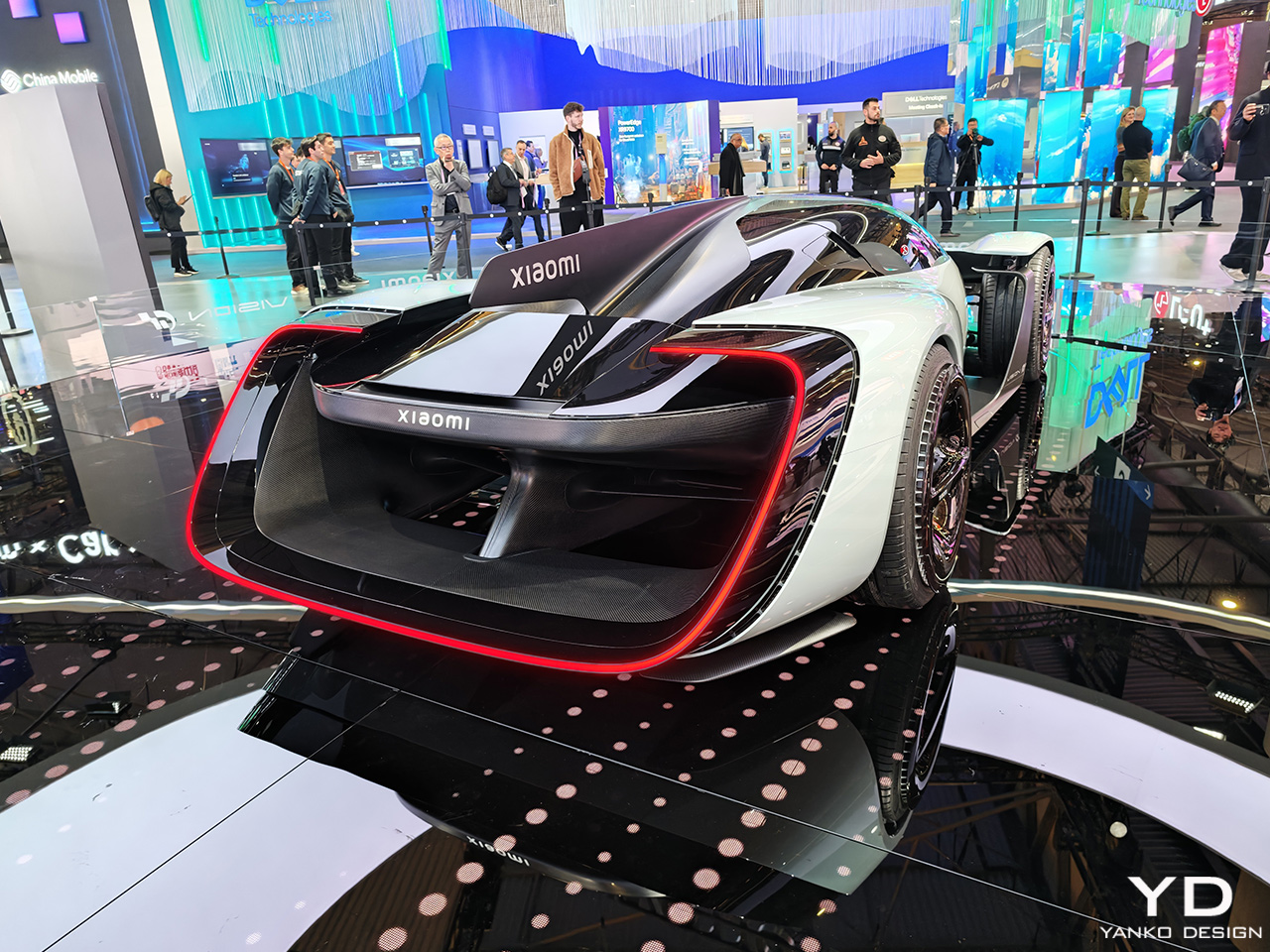
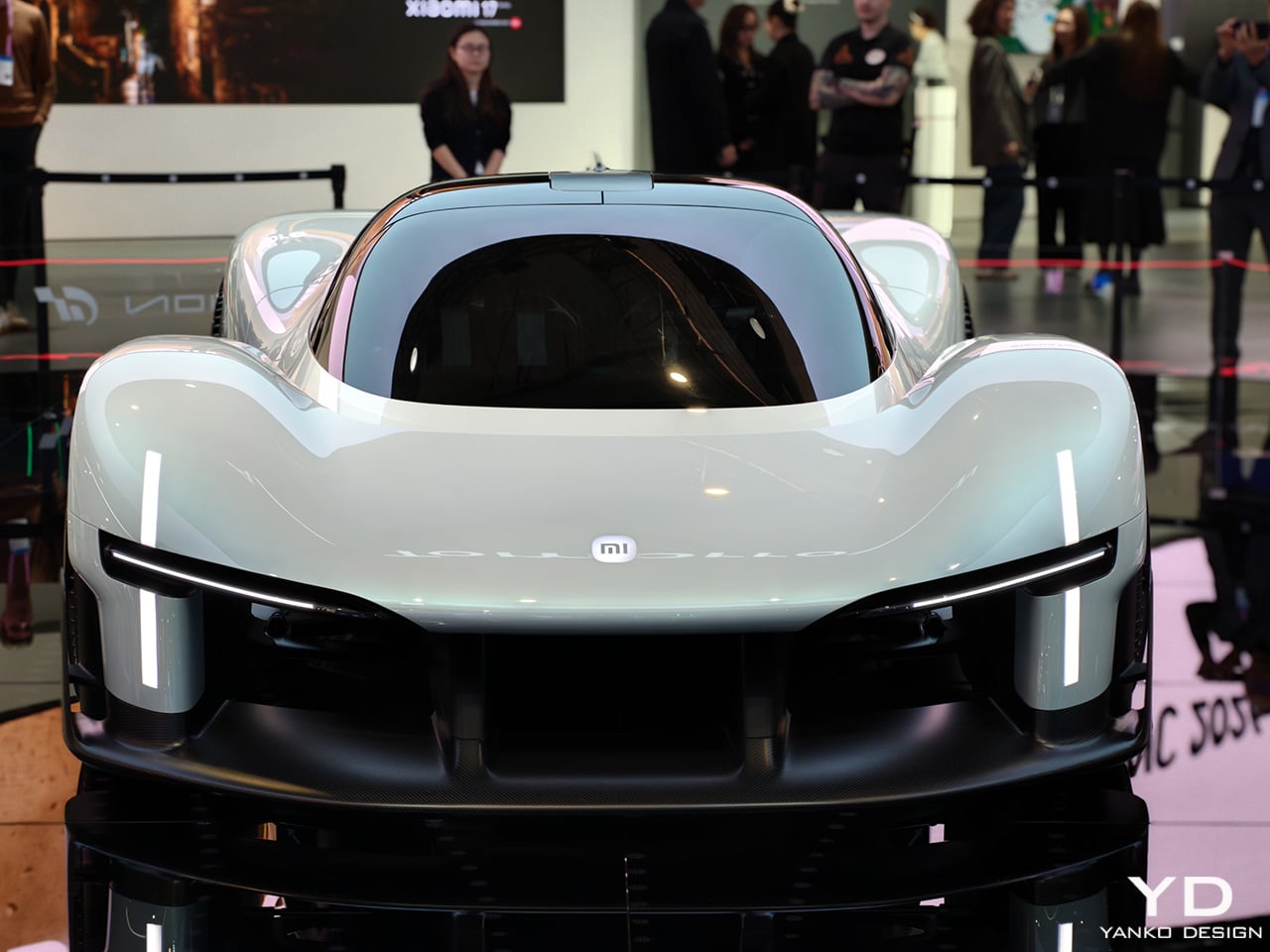
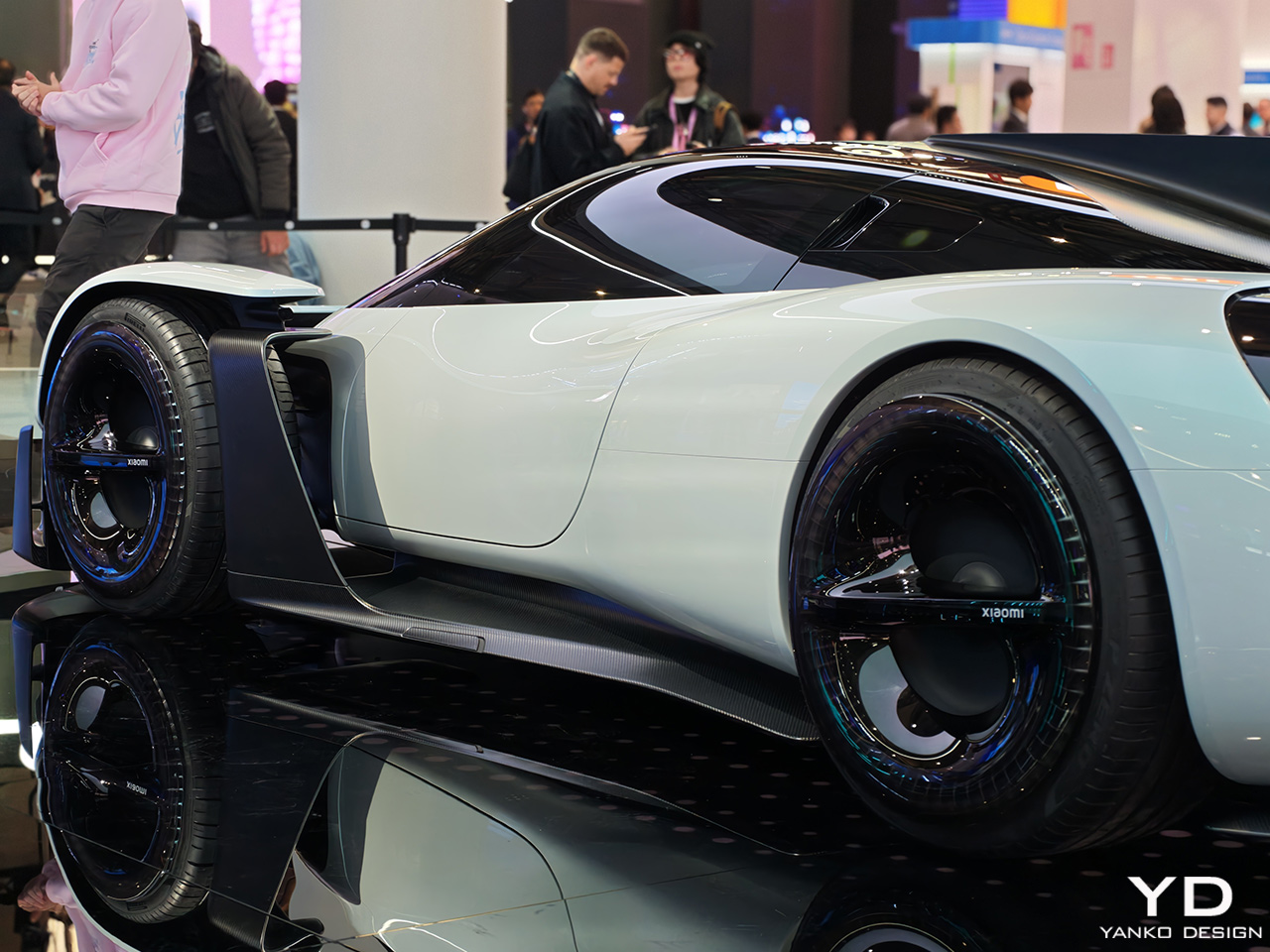
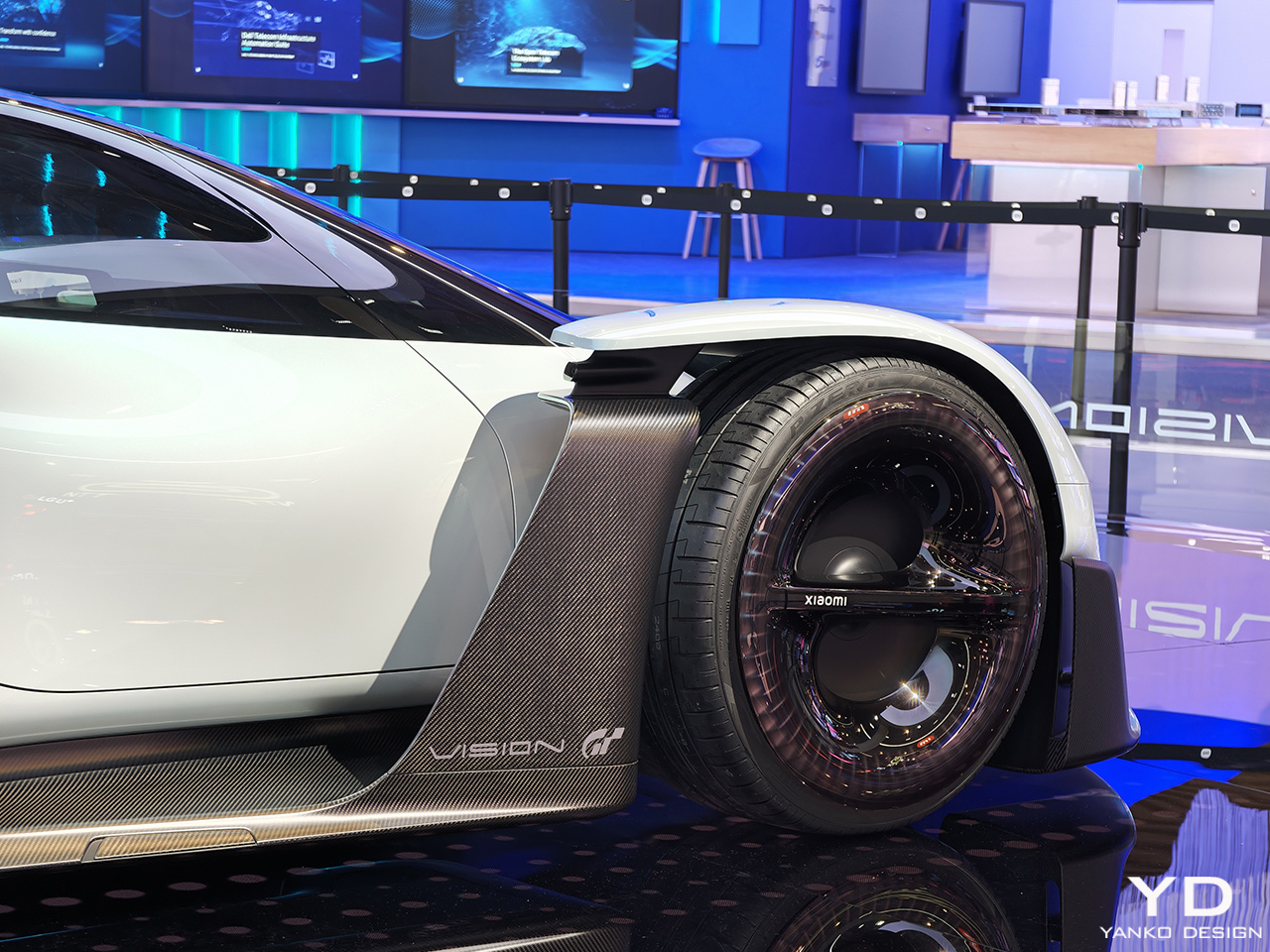
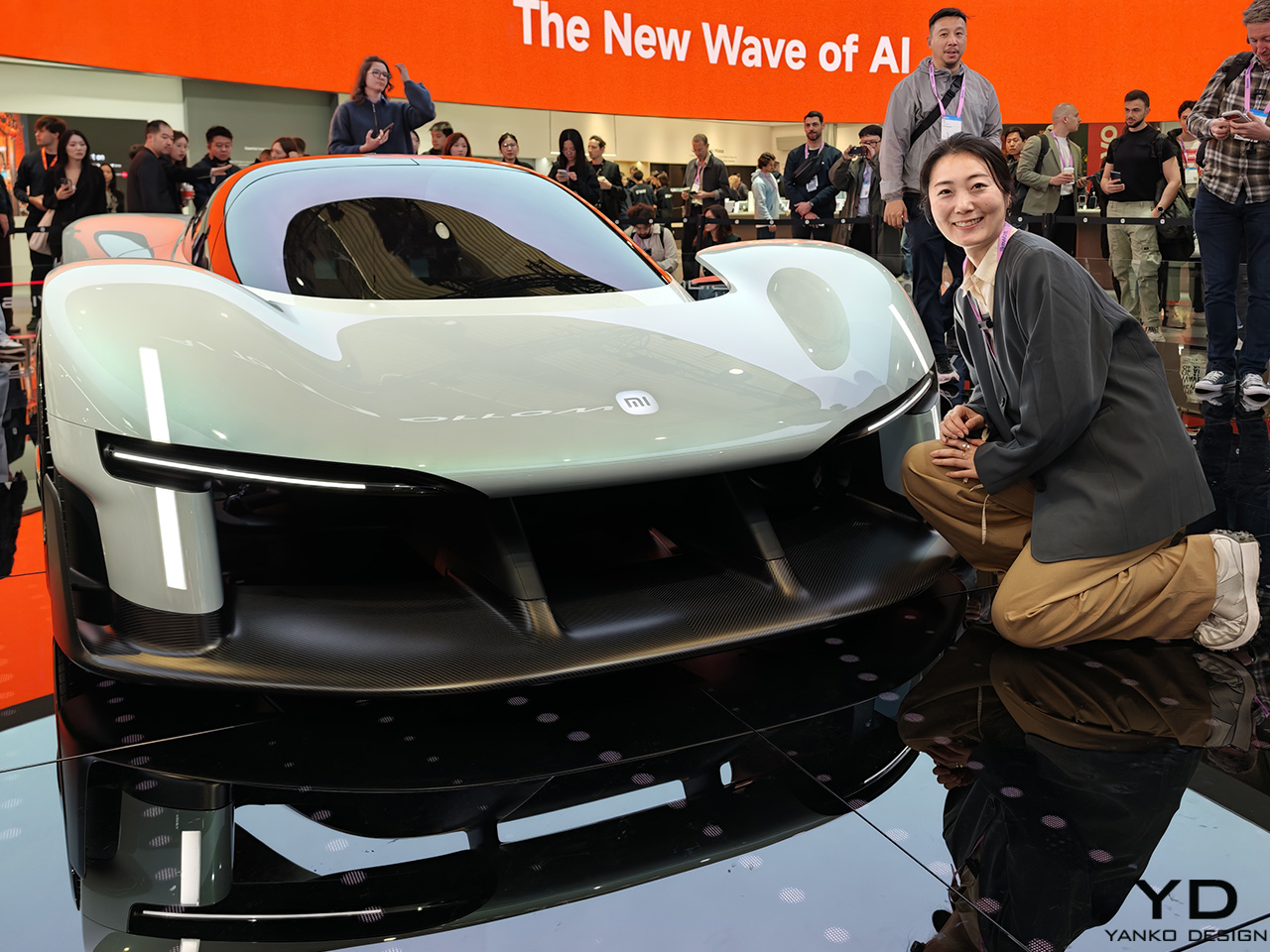
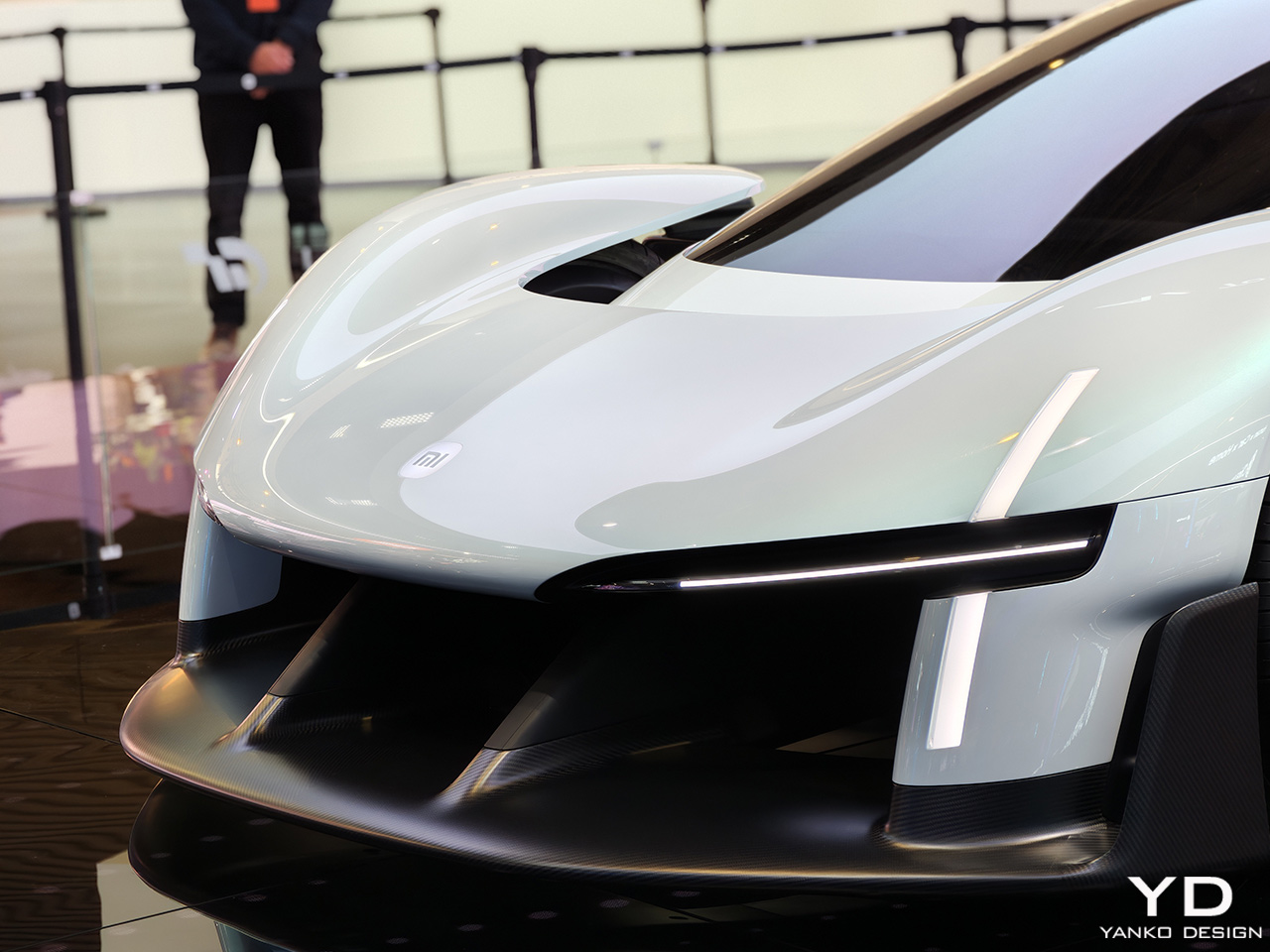
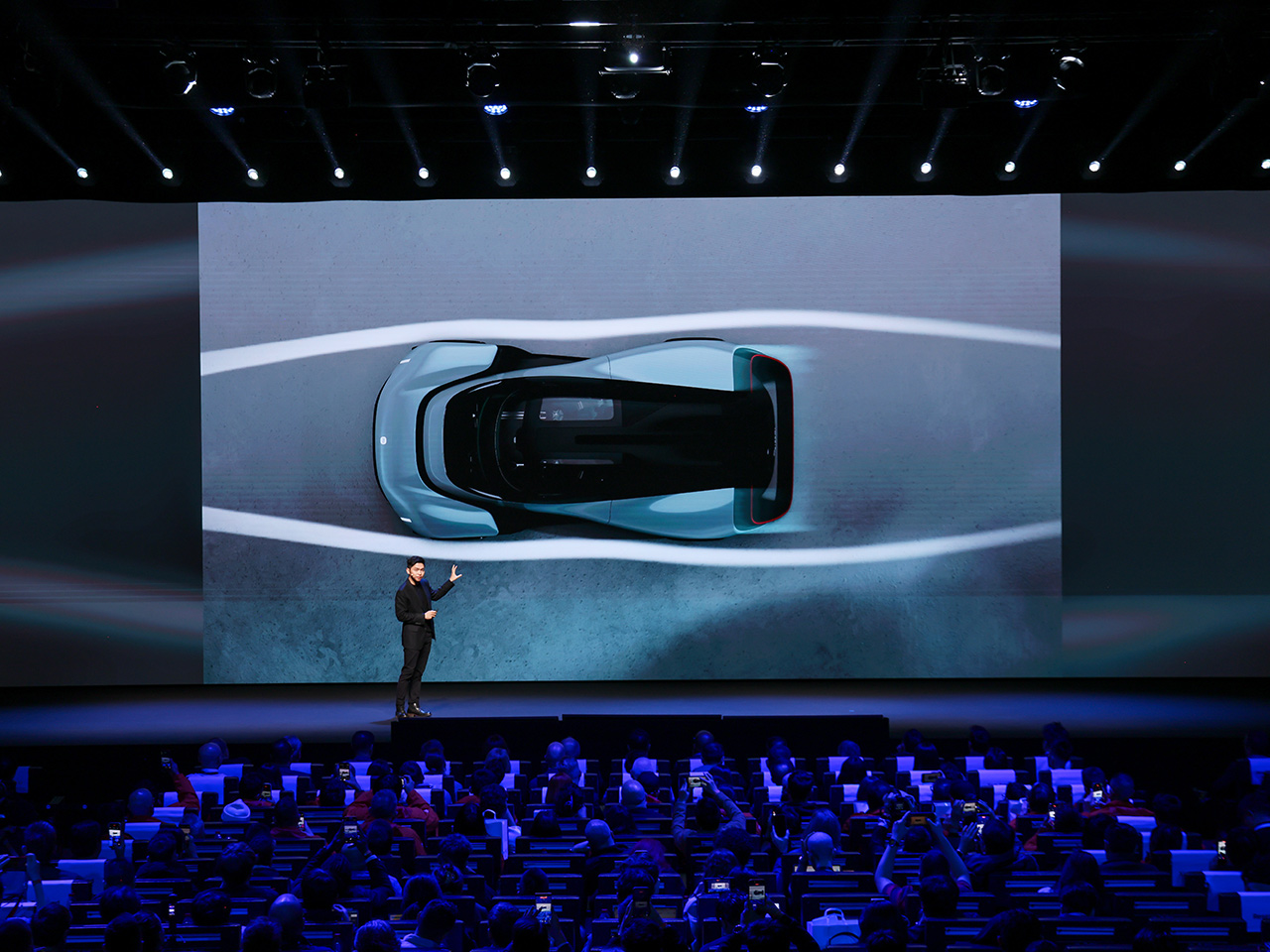
Xiaomi unveils power-laden Vision Gran Turismo electric hypercar concept at MWC 2026

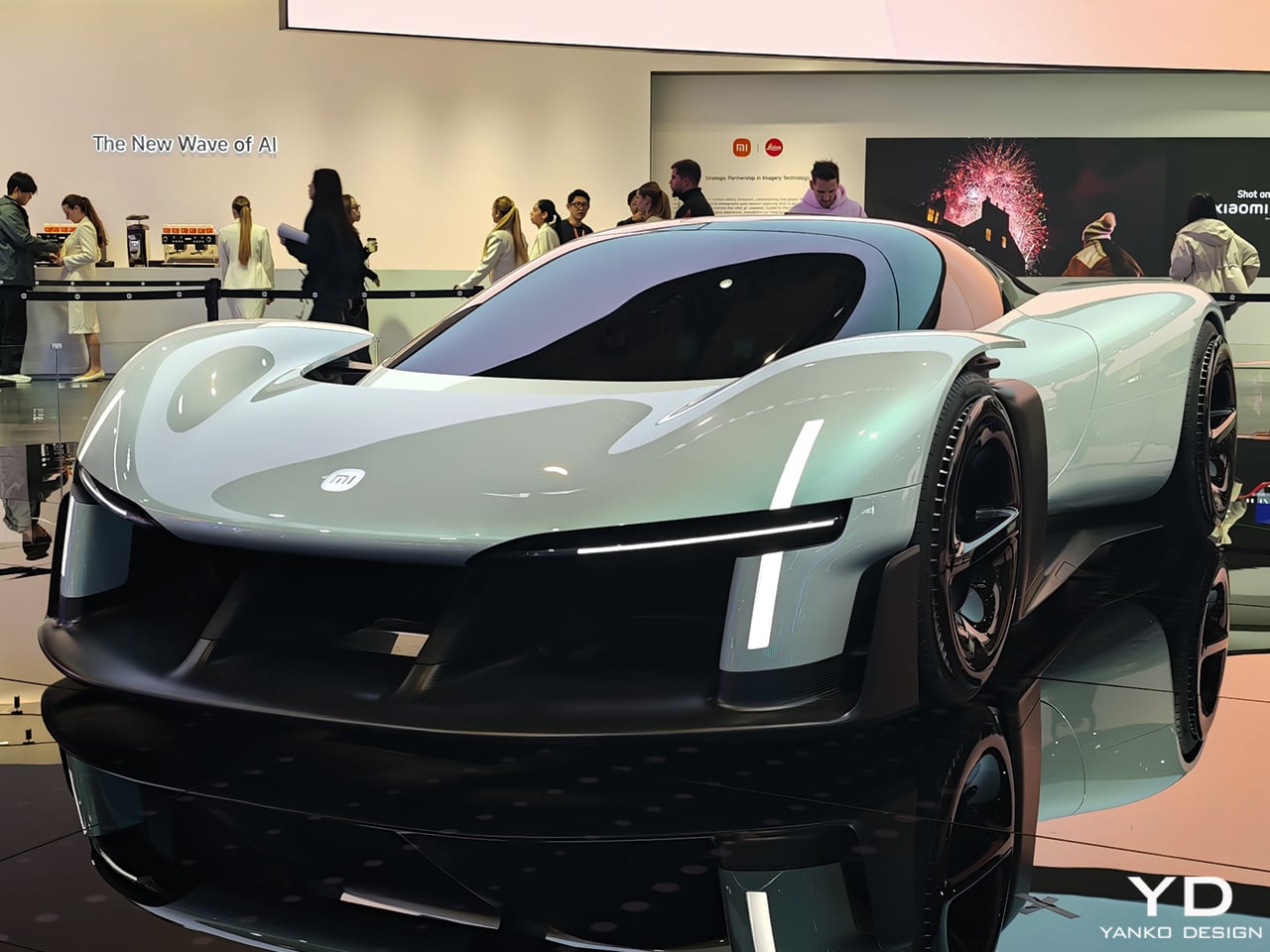
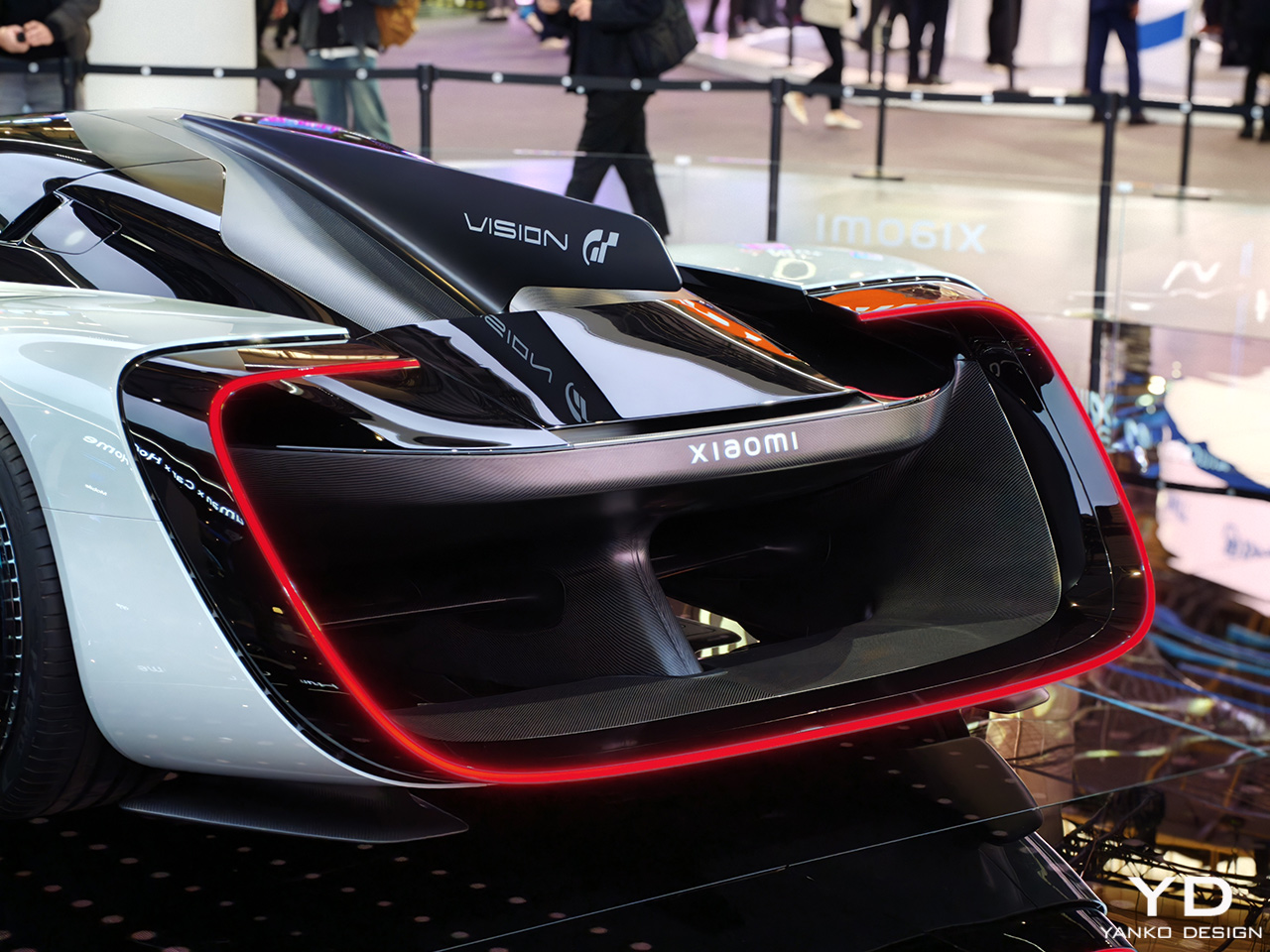
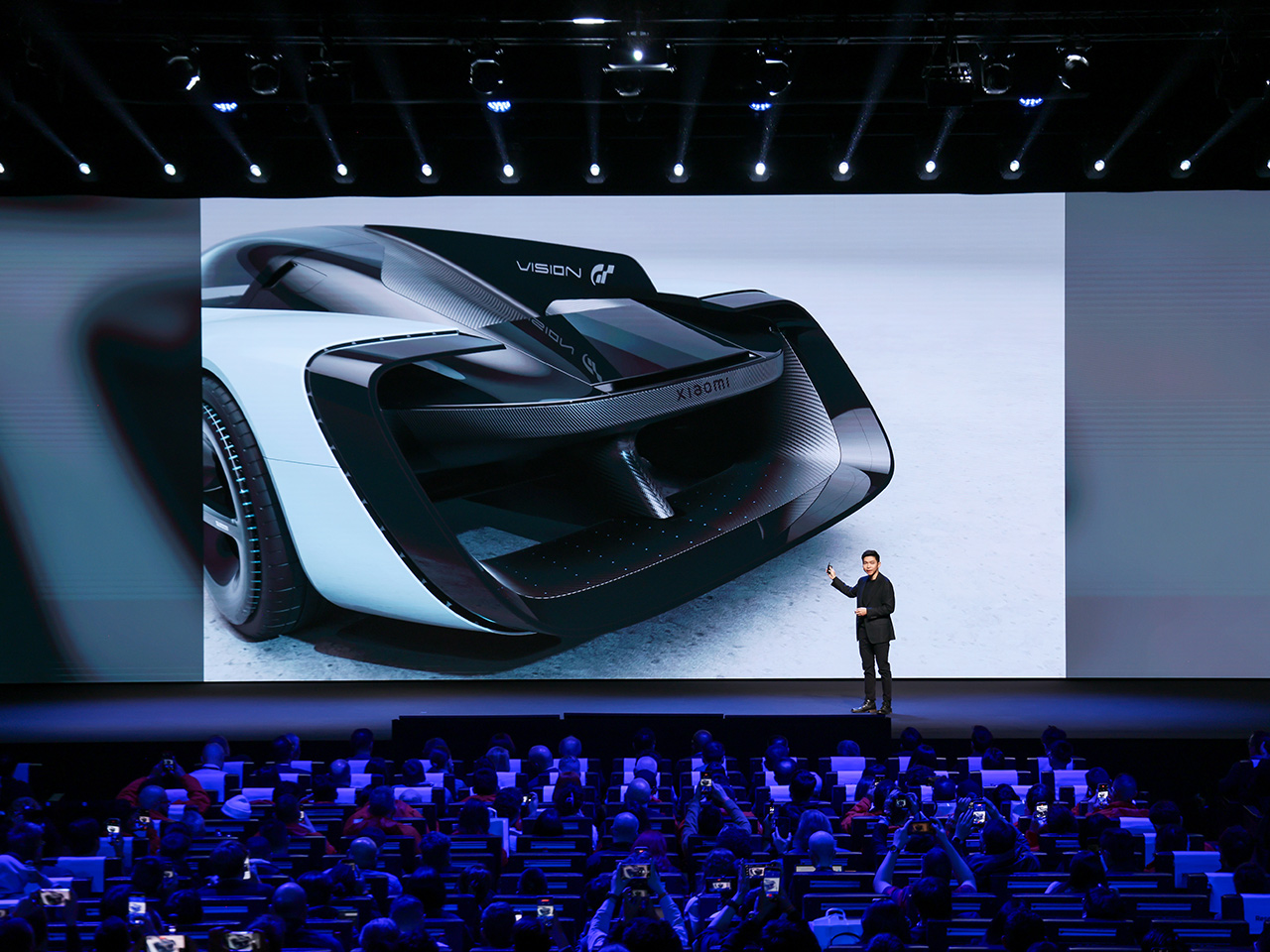
Xiaomi has just entered the Gran Turismo world with its Vision Gran Turismo (VGT) concept car at Mobile World Congress 2026. This electric hypercar follows the reveal of the SU7 Ultra supercar that was developed last time around. This year’s event saw the hypercar, which Xiaomi claims is sculpted by the wind. The idea is to make the performance vehicle aerodynamically tuned with airflow channels and moving parts to achieve optimal efficiency. We got our first glimpse of the hypercar at Mobile World Congress, and it does impress on the outside and inside.

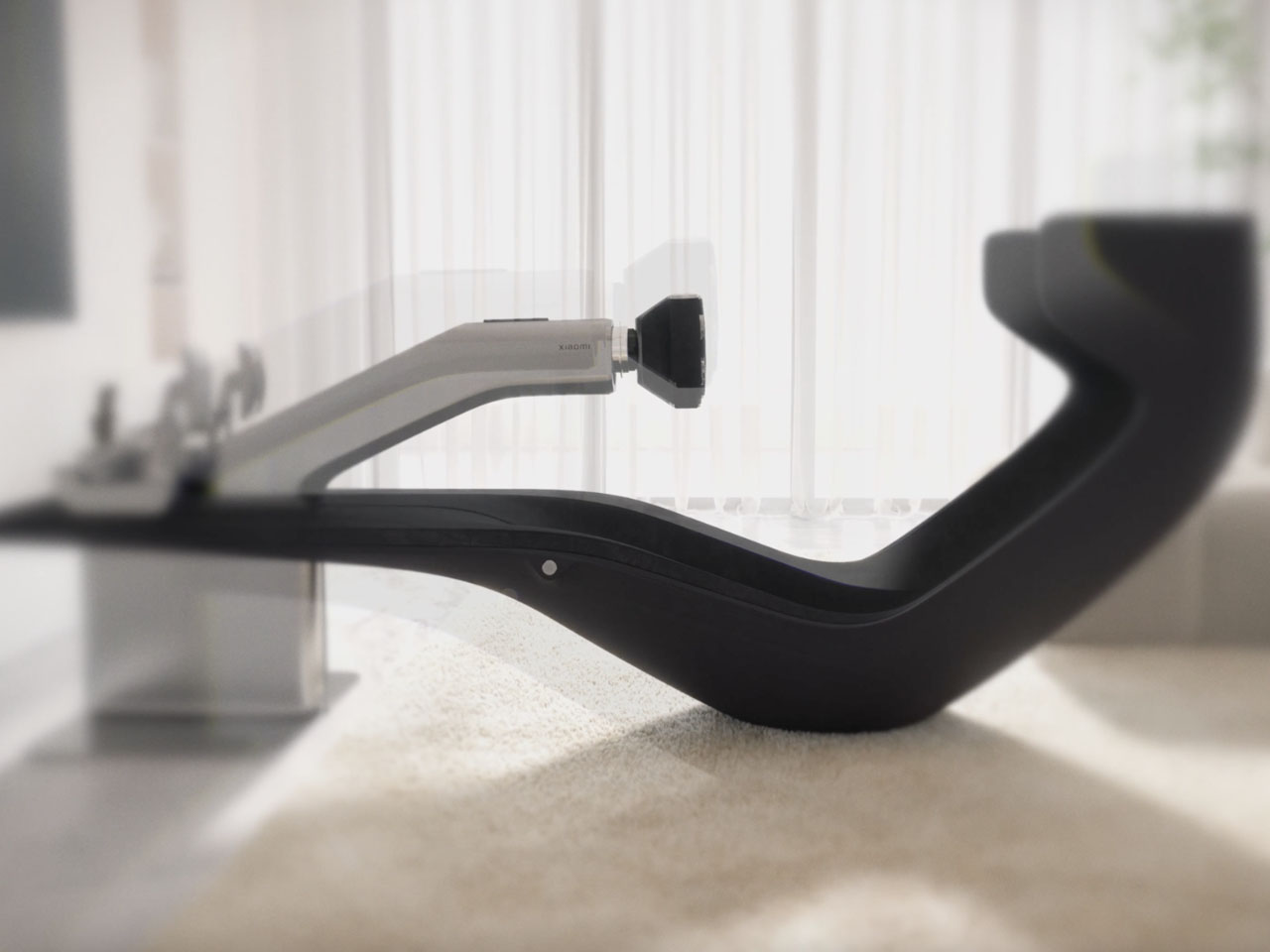
This is the first-ever Chinese Gran Turismo performance racer to be materialized, and the air flow obsession goes beyond everything you would imagine. Although one cannot drive it for real anytime soon, you can explore the two-door performance car in Gran Turismo 7, using the company’s dedicated simulator with exact racing seats as the concept car. With the VGT hypercar, Xiaomi joins an elite list of automakers like Porsche, Ferrari, and Mercedes-Benz that have their futuristic concept cars designed for Gran Turismo.

Designer: Xiaomi

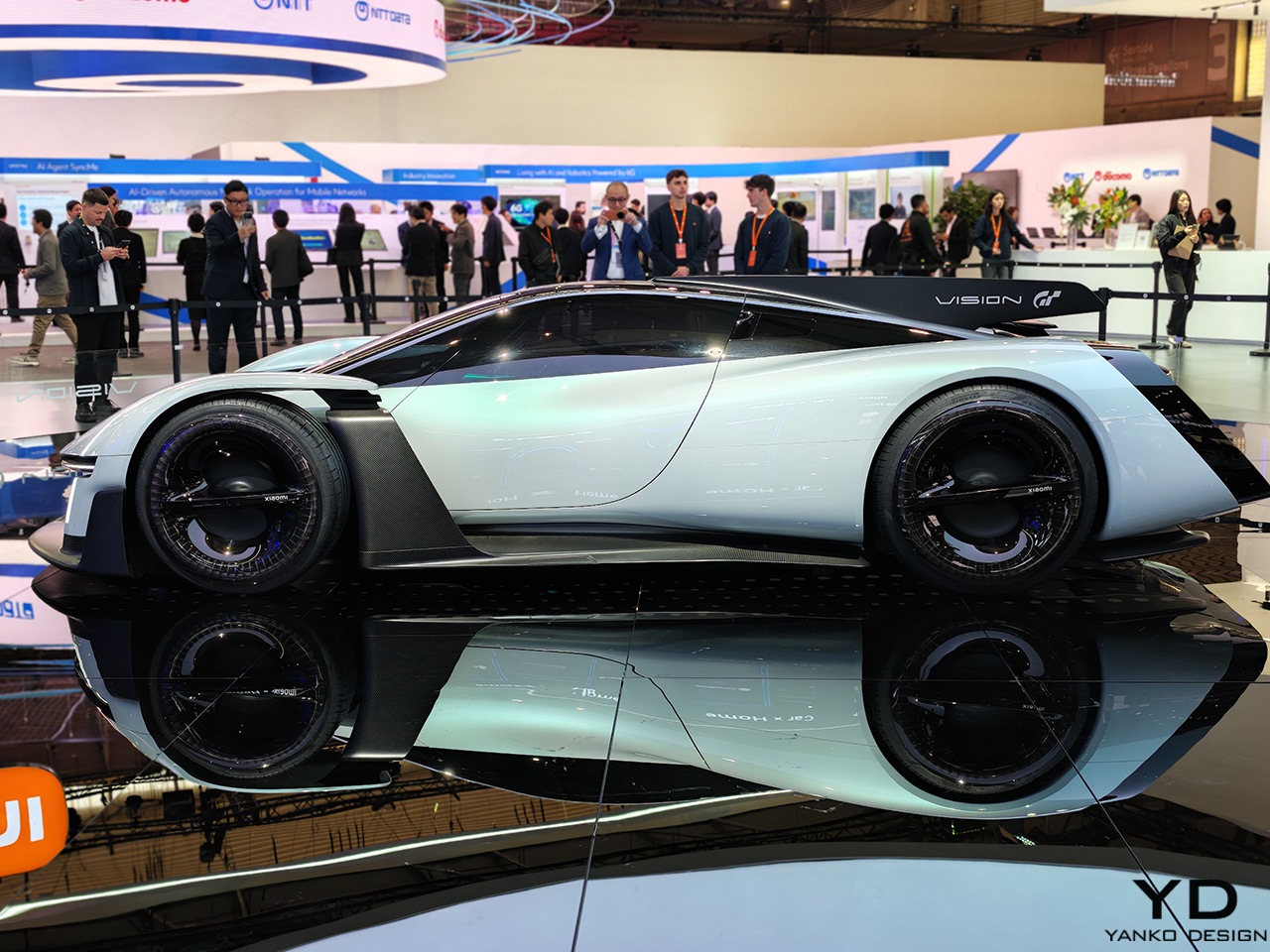
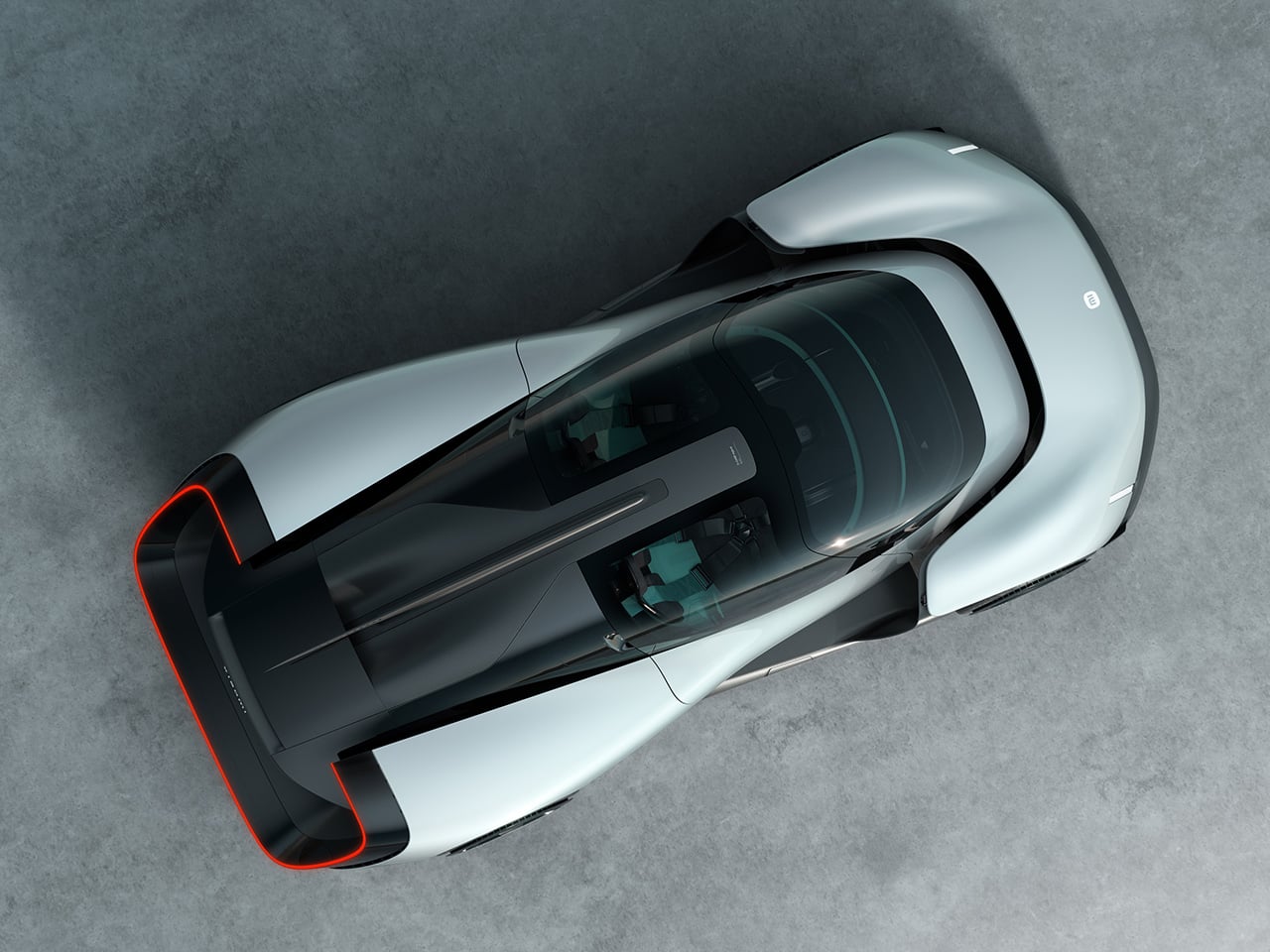
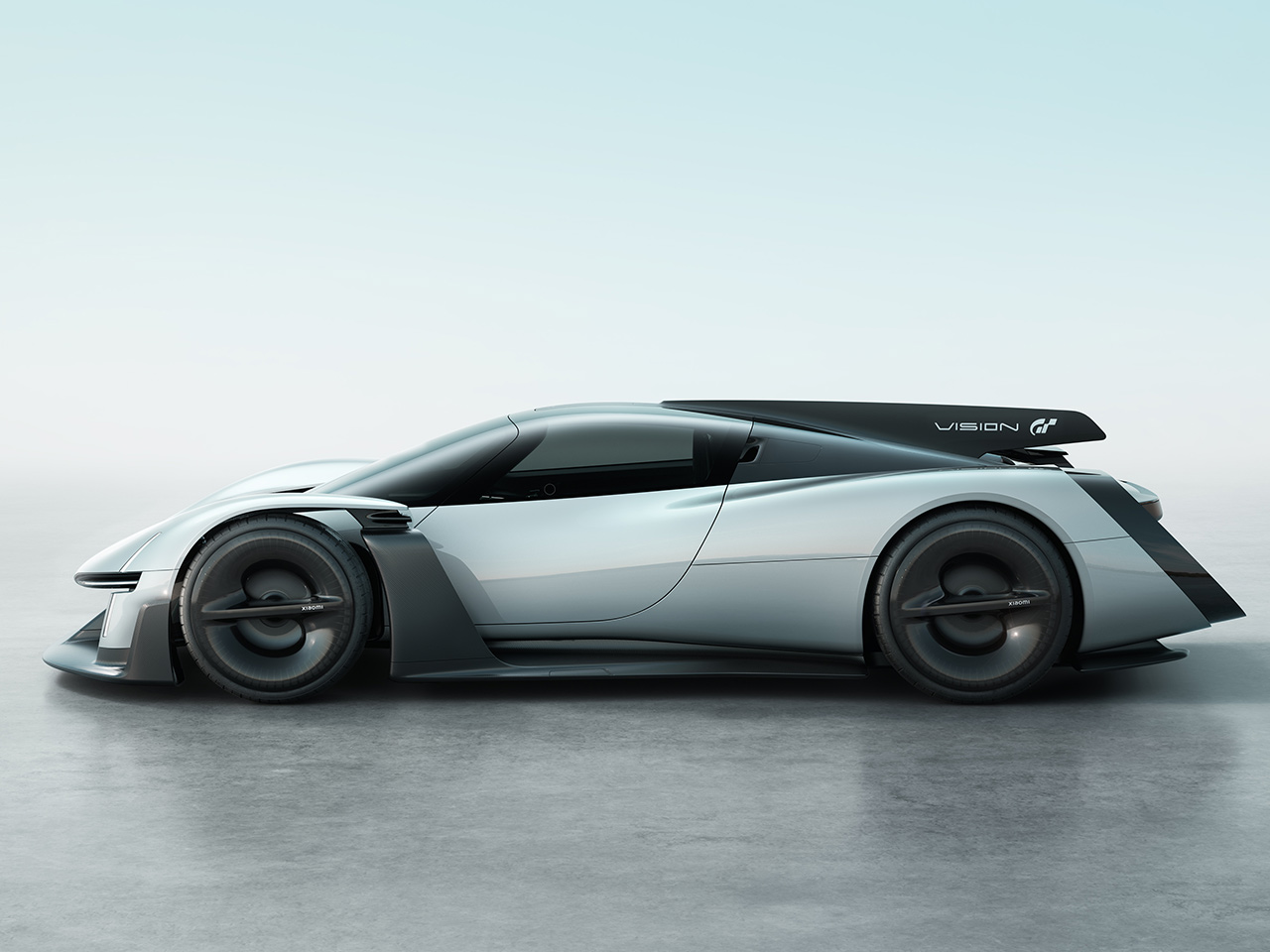
Given it is a concept, the technical aspects are wild – there’s a 900V Silicon Carbide (SiC) platform which ultimately delivers 1,900 horsepower. To handle that amount of power at high speeds, the car gets advanced components, including carbon-ceramic brakes and center-lock wheels. The two-door hypercar has a very linear profile with a very low ride height and only the cabin’s teardrop-shaped cockpit, with only the encapsulating bubble disrupting the aerodynamic performance. The shark-fin roofline architecture balances out things, though.

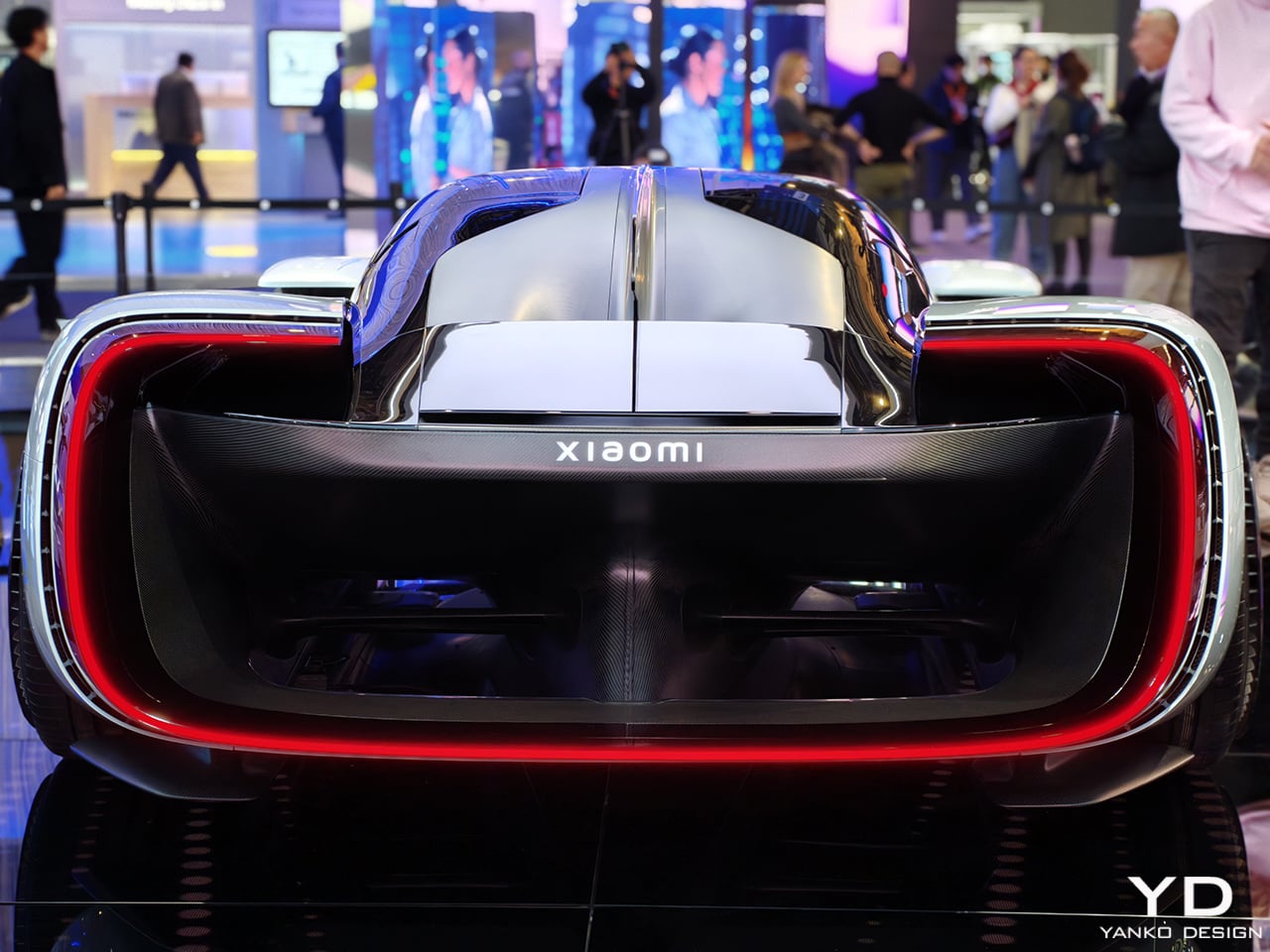
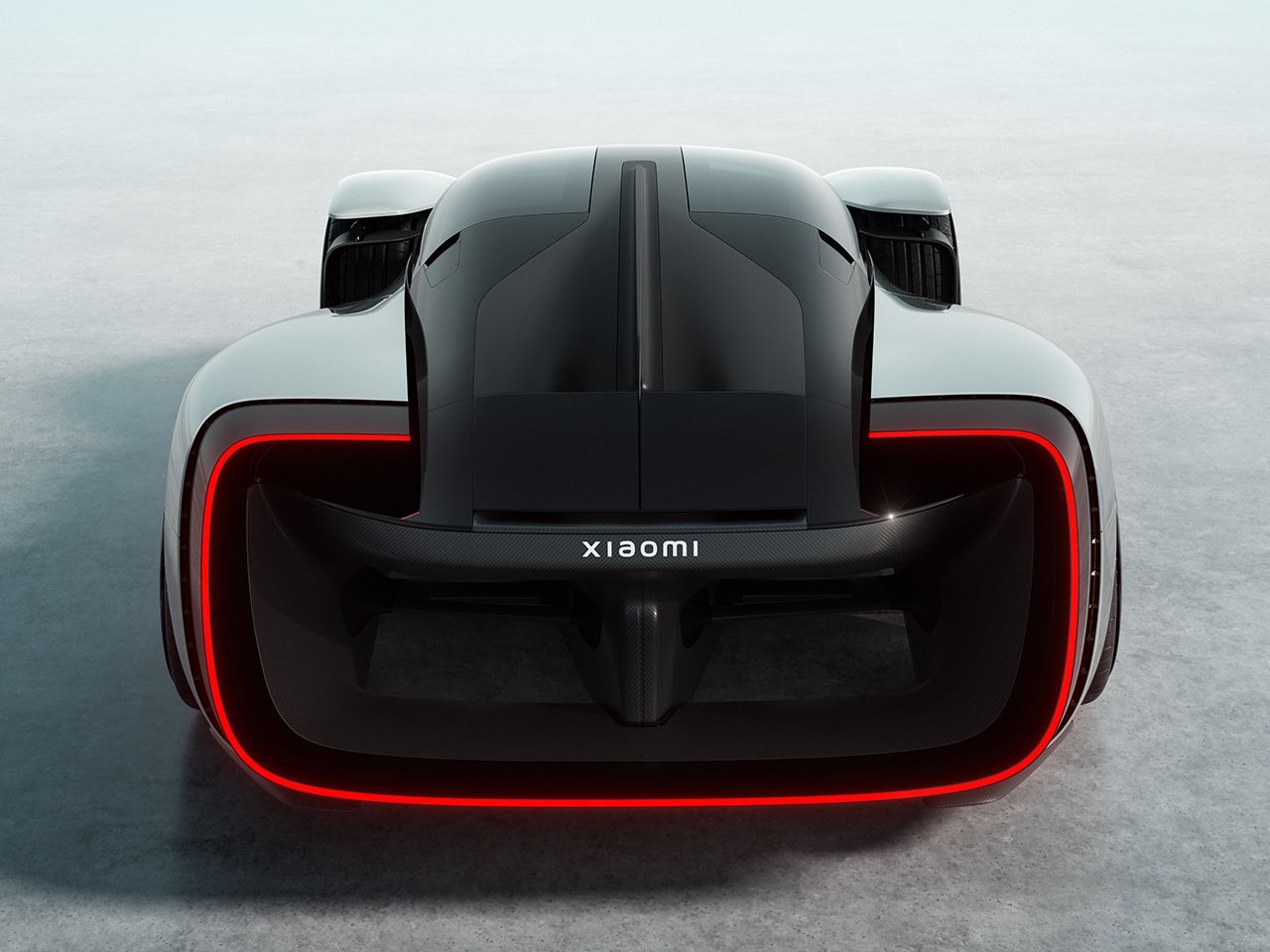
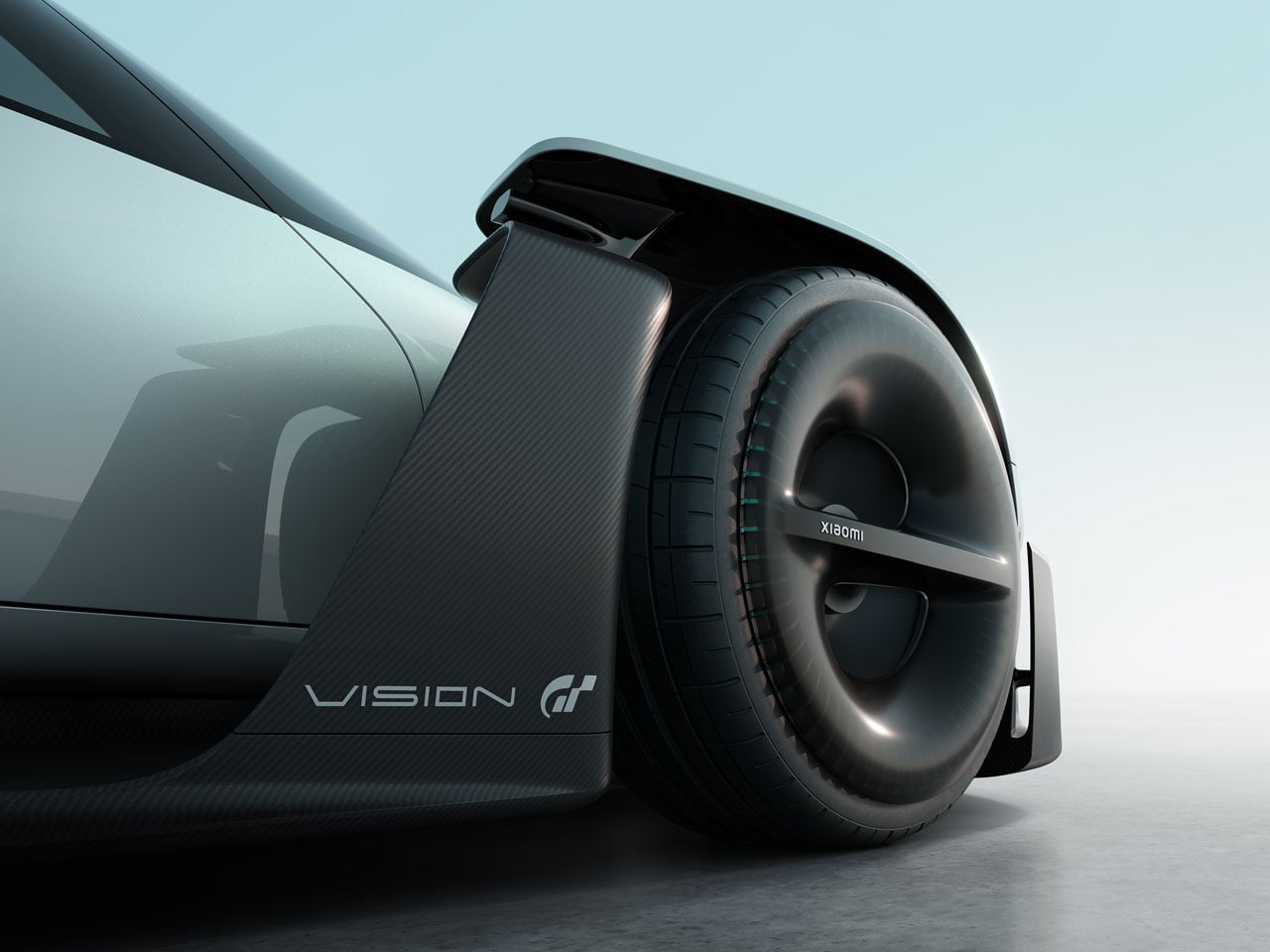
VGT has wheel covers that are magnetically attached (a.k.a. Accretion Rims) so that they don’t rotate when the car moves forward, reducing drag. The halo-style taillights are straight out of the TRON universe as they also double as an air outlet for aerodynamic performance, along with the large rear diffuser, which levels up the futuristic appeal. All this aerodynamic engineering results in a drag coefficient of 0.29 and downforce of -1.2.

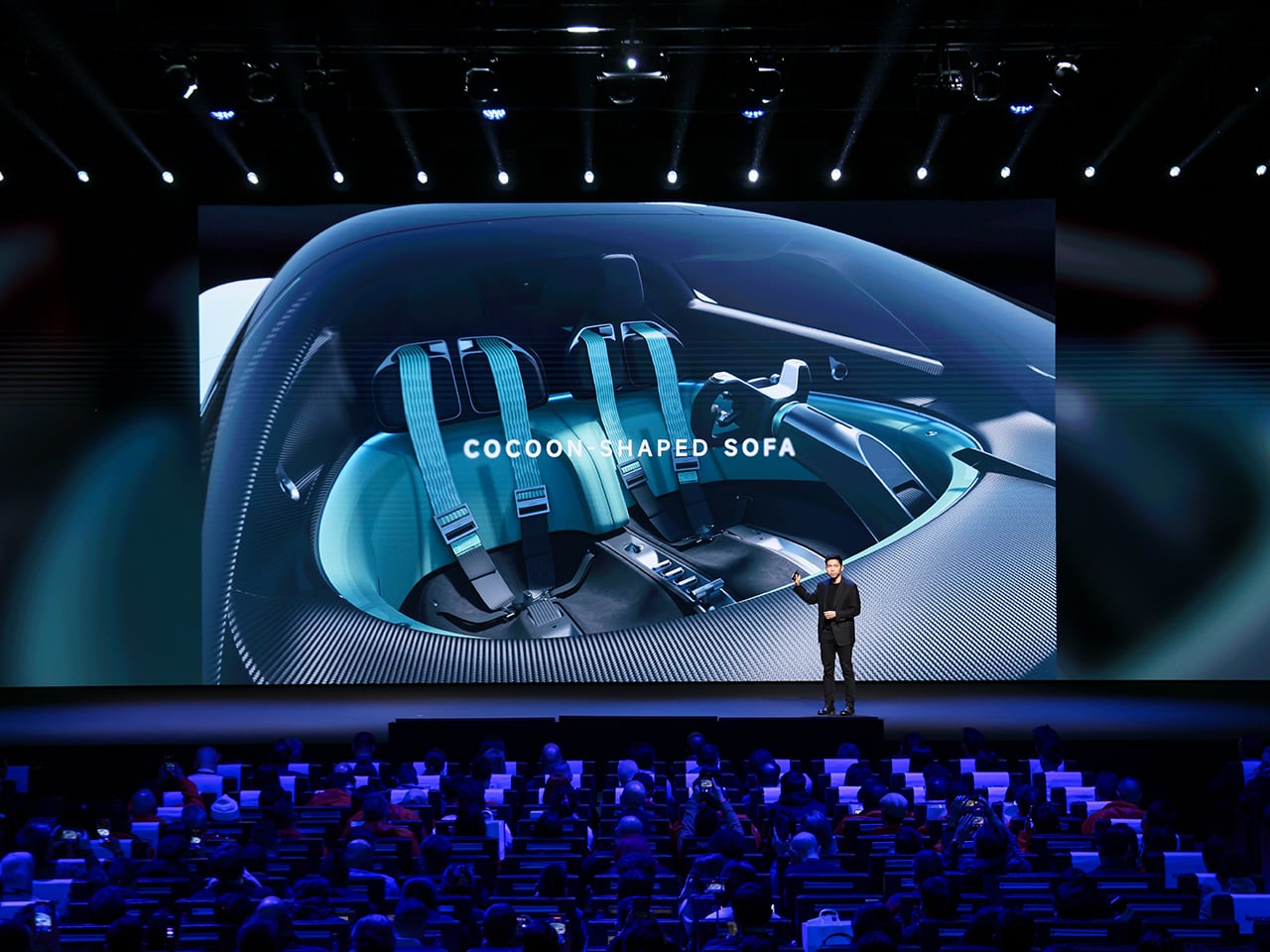
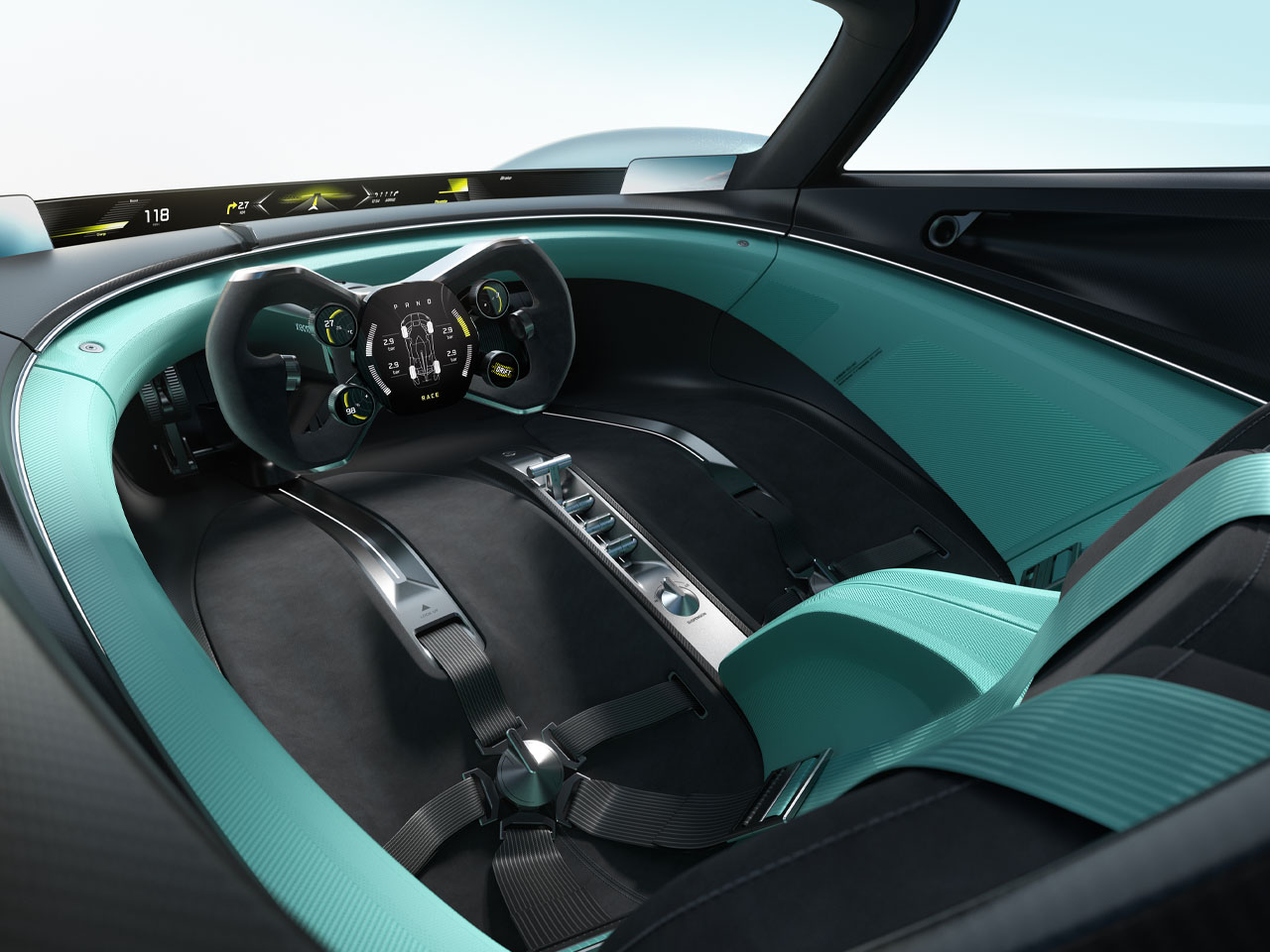
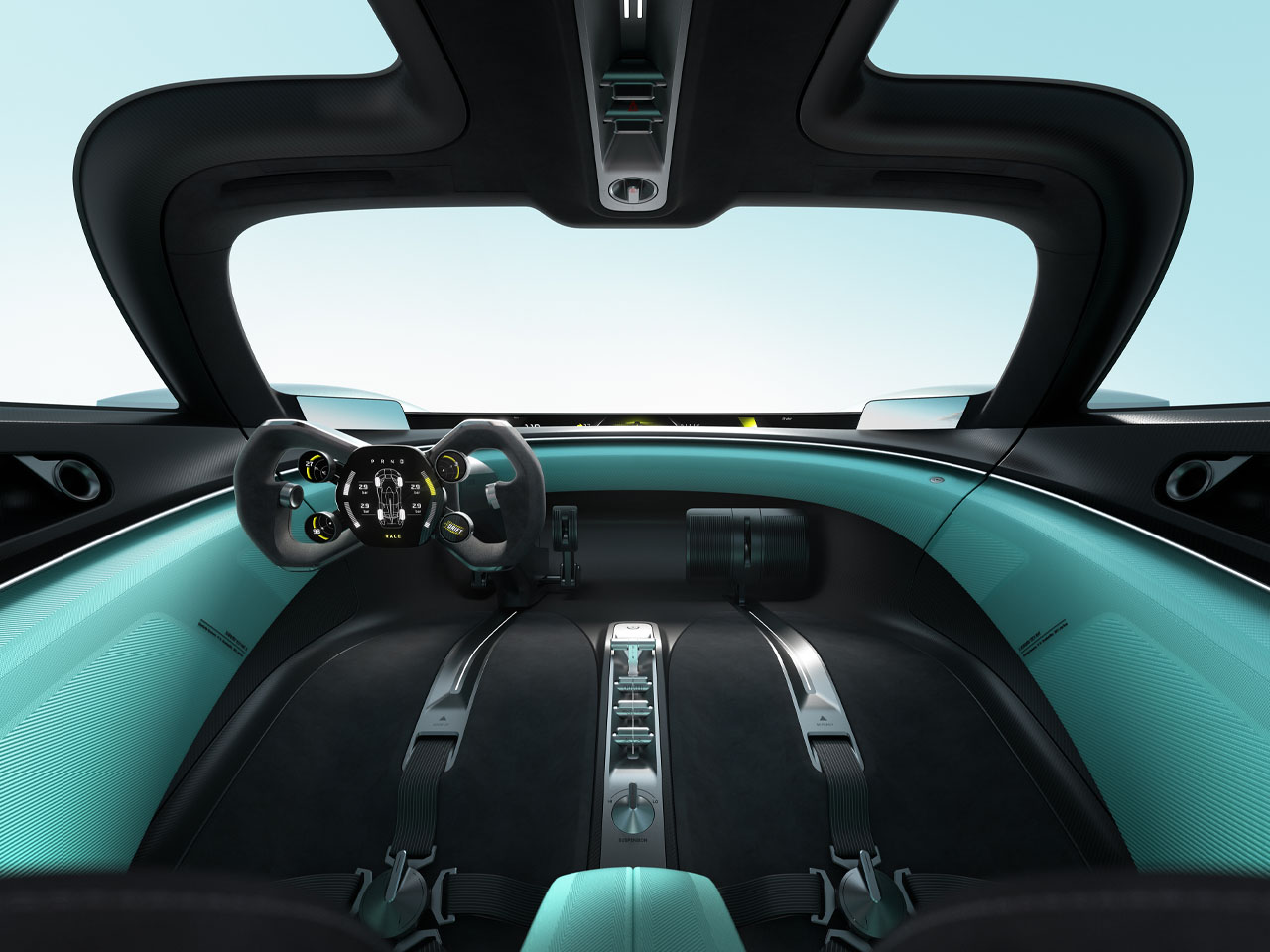
On the inside, Vision GT is a nest of tech-laden comfort and luxury. It has a cocooned Sofa Racer cabin, which holistically blends the dashboard, seats, and the scissor doors into one. The butterfly steering wheel is designed for maximum driver precision, and the overlaying display has a panoramic screen and the Xiaomi Pulse system that utilizes light and sound for interaction. The central console on the two-seater GT has physical button controls, a circular pointer knob, and a shifter mostly seen on an aircraft throttle.

Since this hypercar is a top-of-the-line creation by the Chinese tech giant, it seamlessly integrates the in-house Human x Car x Home ecosystem for a personalized experience depending on the rider’s mood and current state of mind. Although the Vision Gran Turismo is only a virtual hypercar that you may not drive in the real world, it shows Xiaomi’s growing confidence in the highly technical automotive world. If those horsepower figures are true, the hypercar could be one of the most powerful Gran Turismo creations, overshadowing the likes of Ferrari, which churns out 1,337 hp.
For racing fanatics who want to experience the VGT in a virtual world, it’ll soon be available in Gran Turismo 7, and Xiaomi’s dedicated driving simulator for a more immersive experience.

The post Xiaomi unveils power-laden Vision Gran Turismo electric hypercar concept at MWC 2026 first appeared on Yanko Design.

Polestar Kairos unifies space travel and daily commutes into one intriguing concept

We all know that space is the next major frontier that remains to be conquered by humans, sparked by Elon’s ambitions to colonize Mars. Previously, NASA and now SpaceX are spearheading the dreams of space tourism and ultimately moving beyond planet Earth’s nurture. These developments have triggered inspiration for countless concept vehicles that envision what the future could be like.

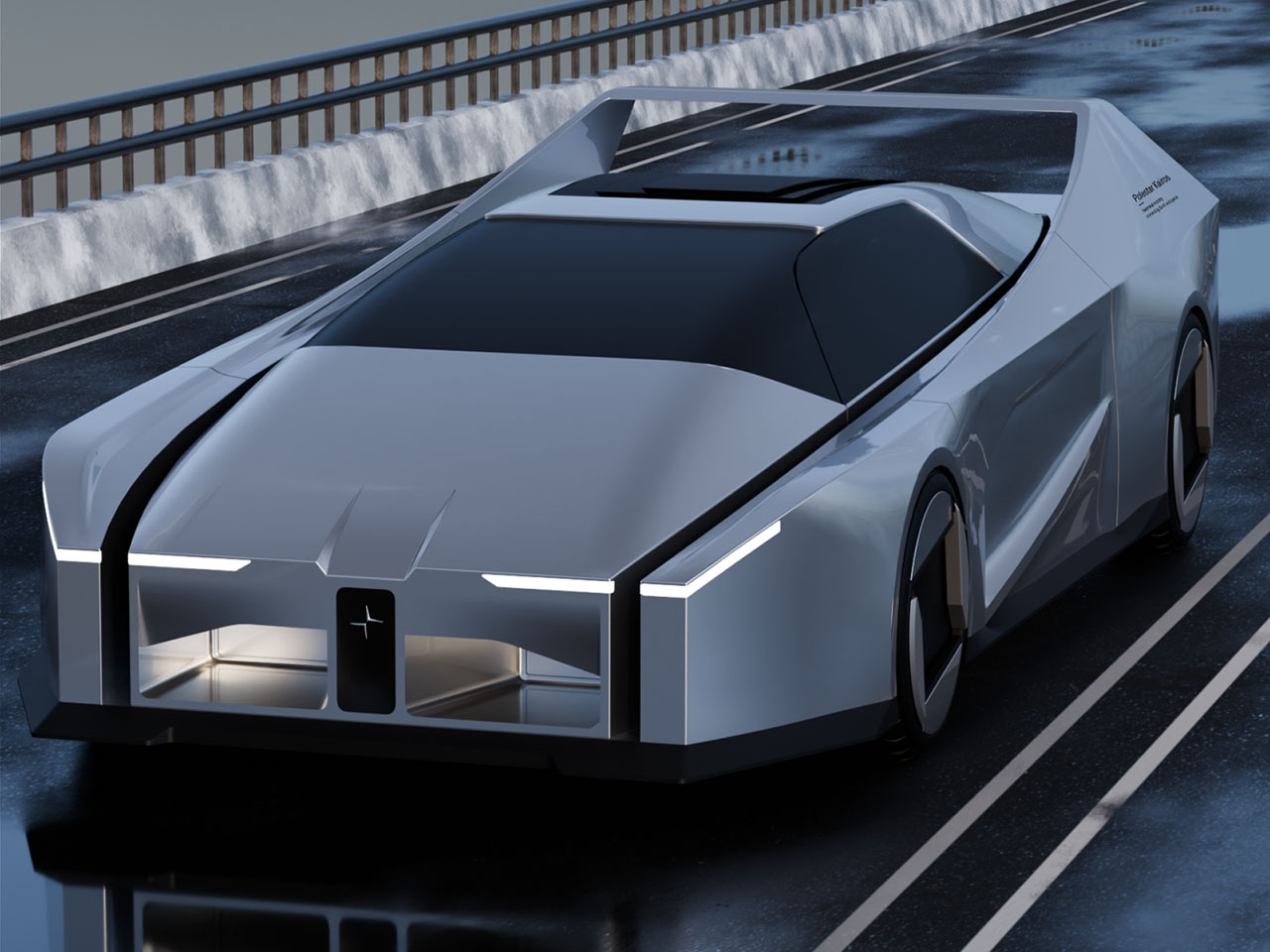
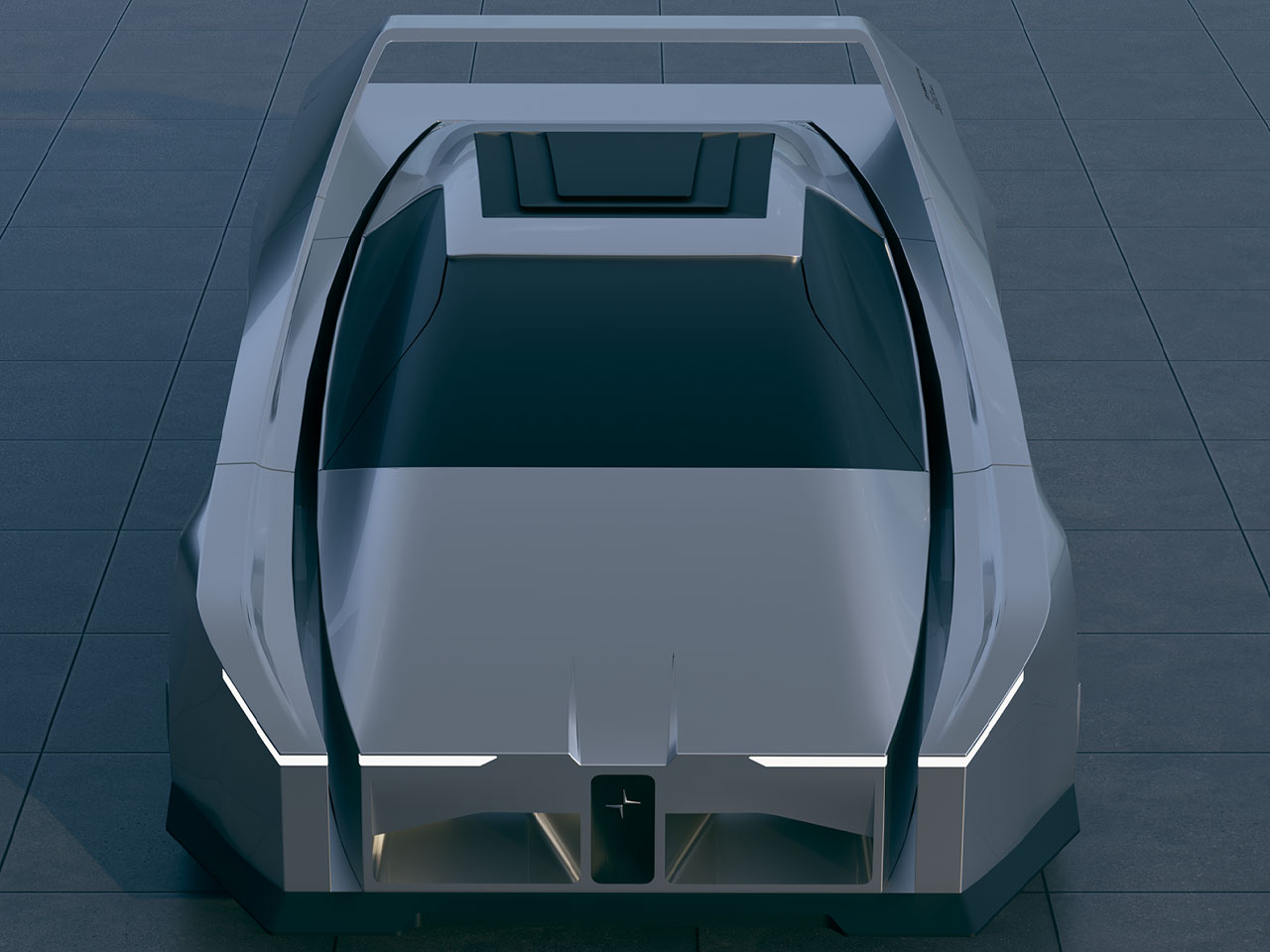
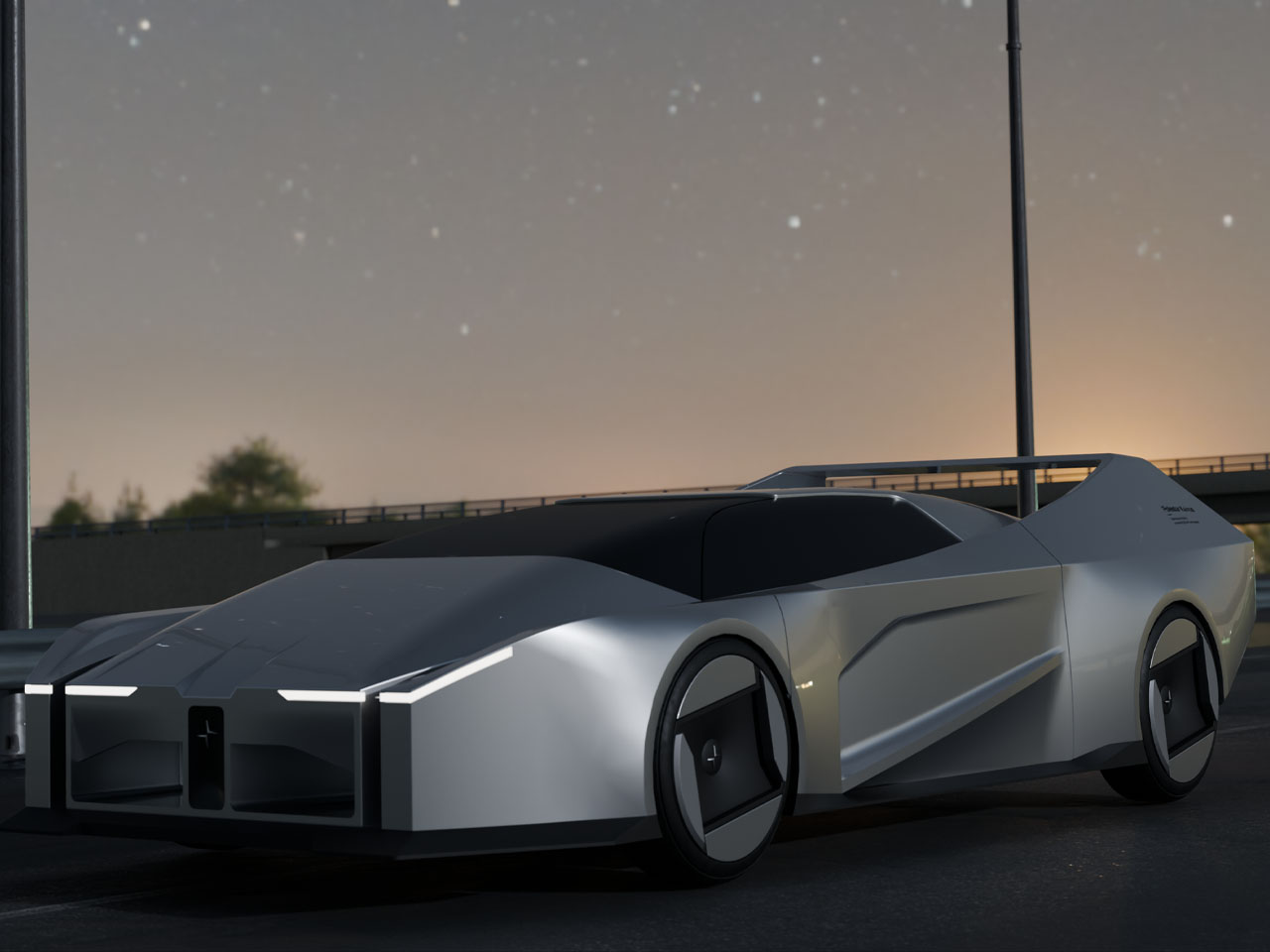
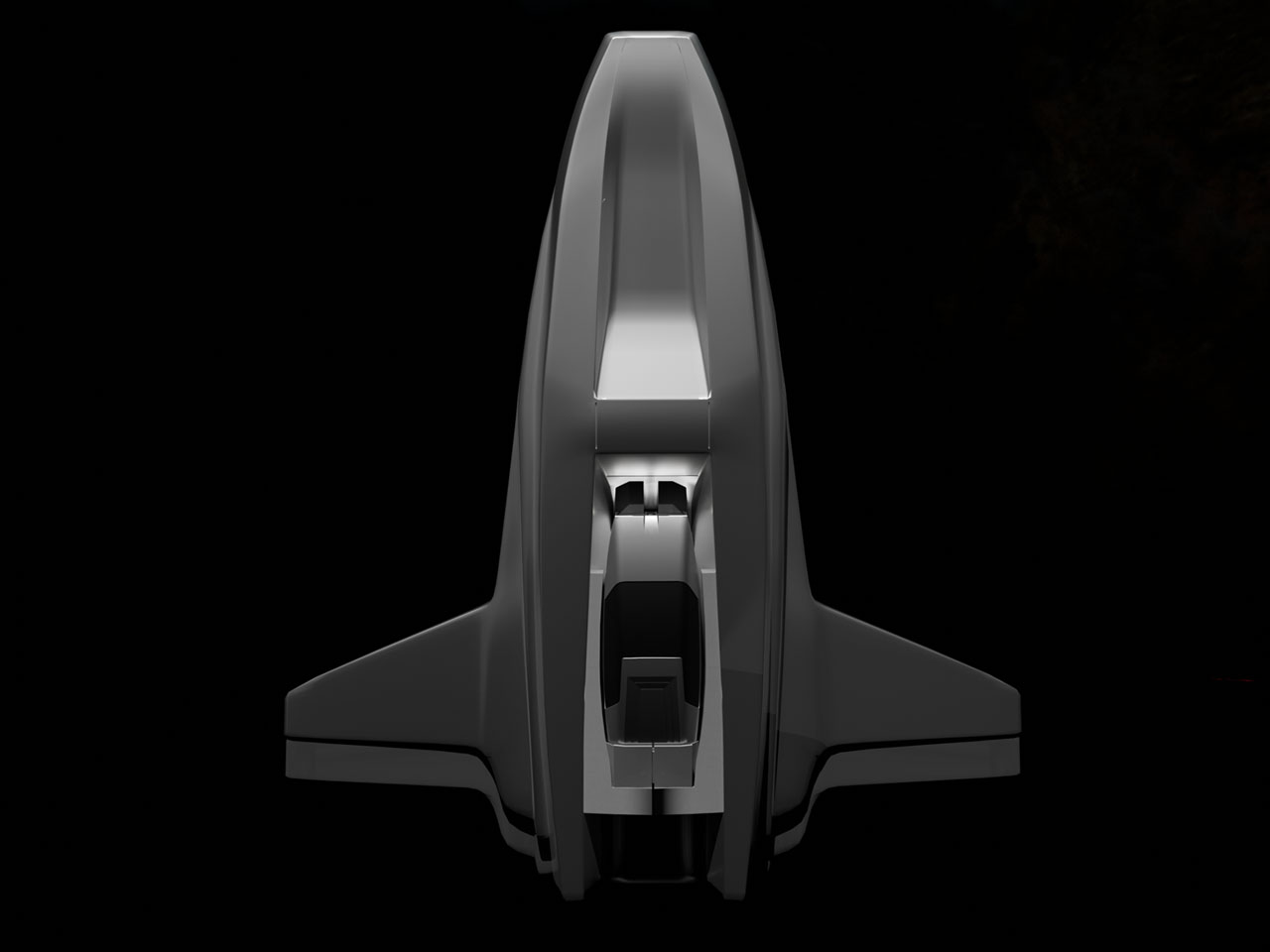
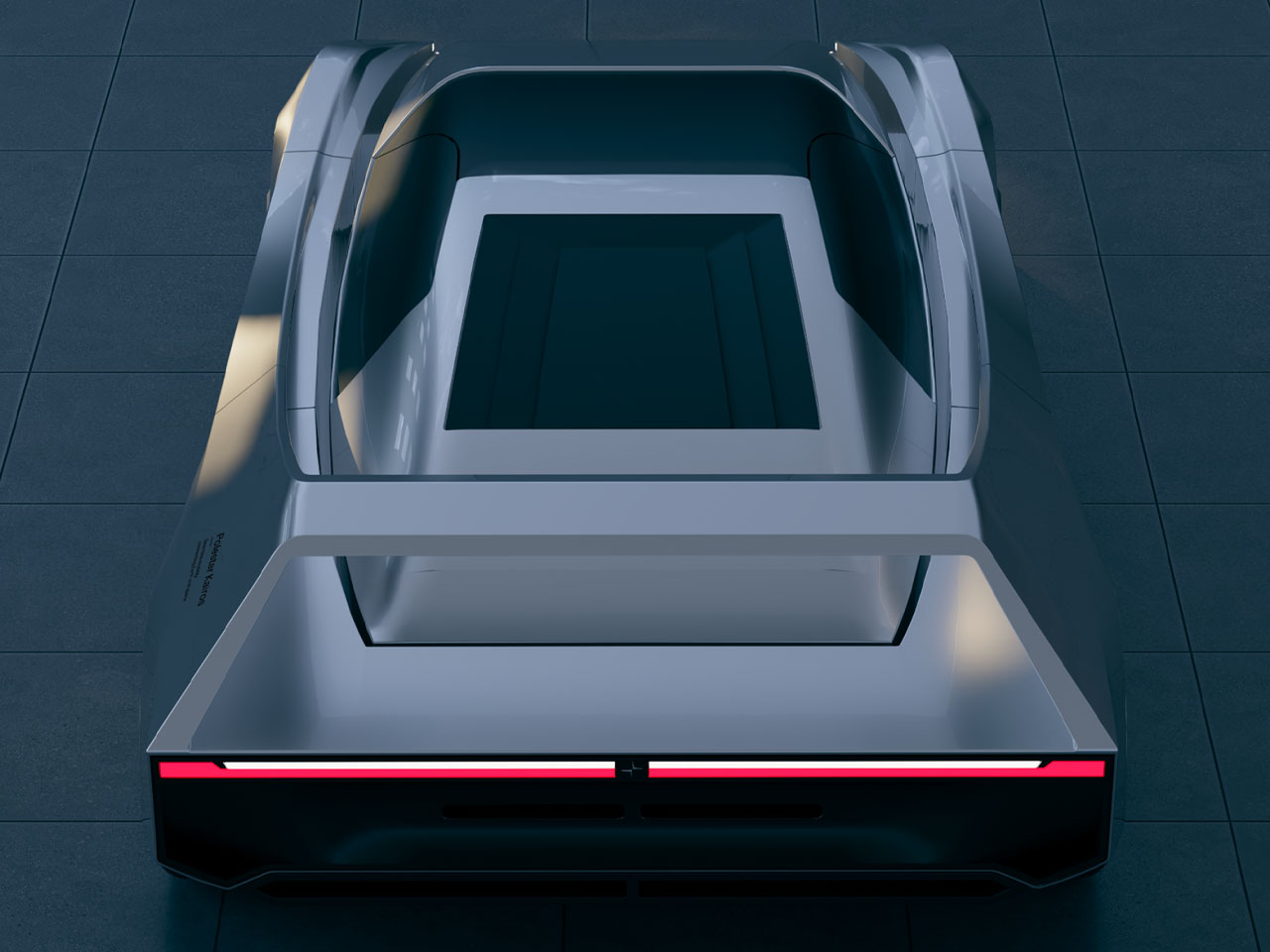
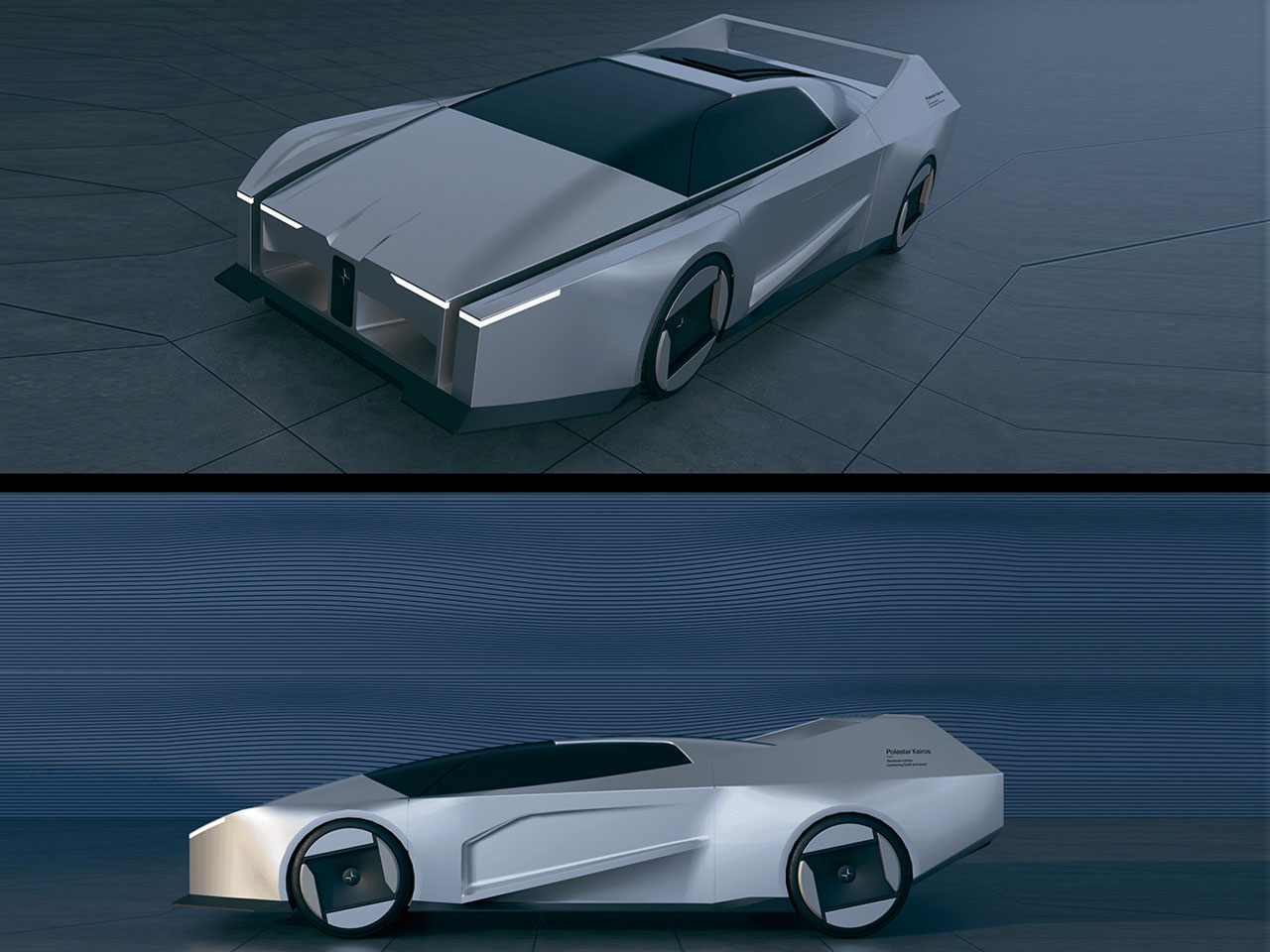
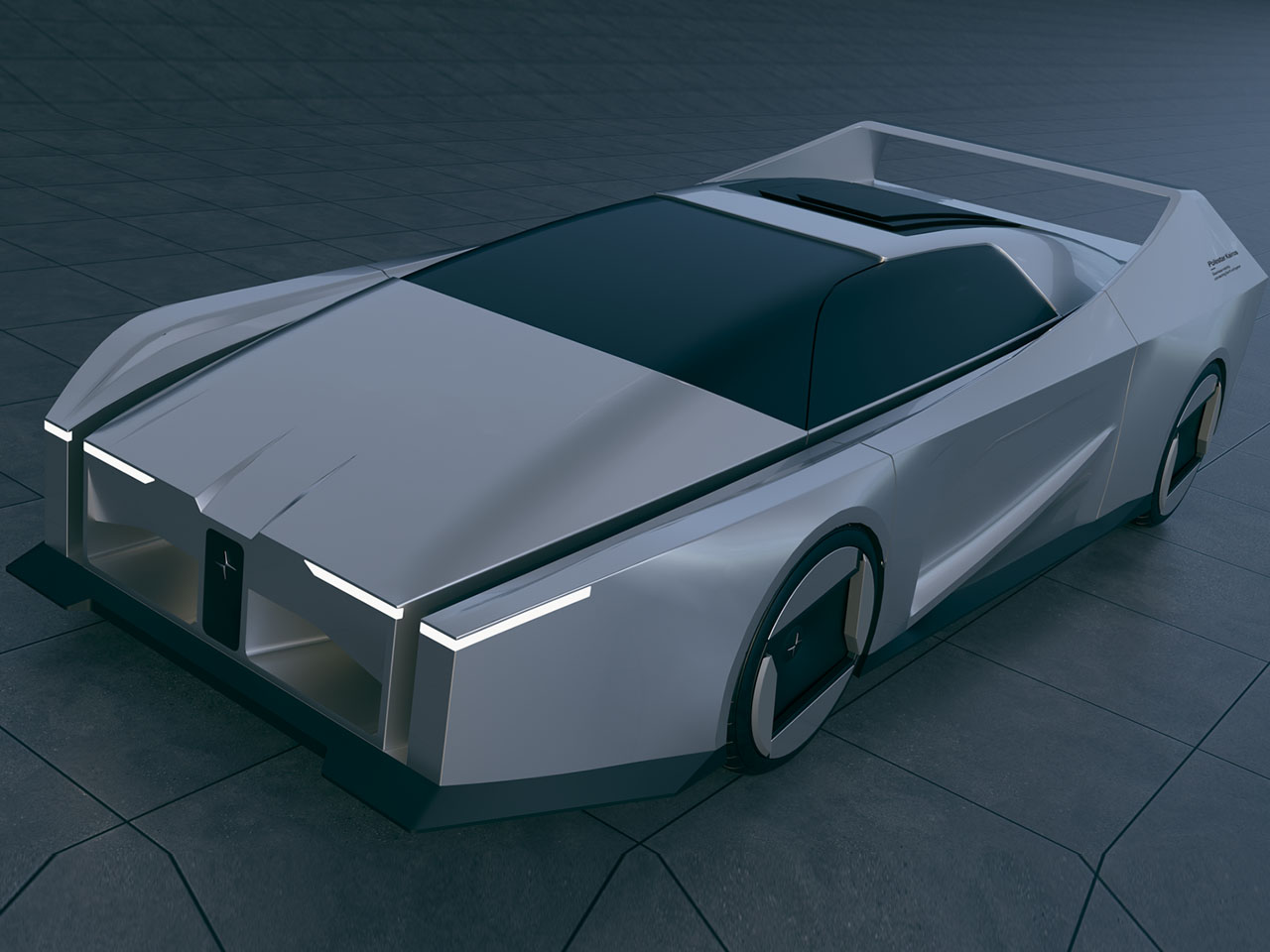
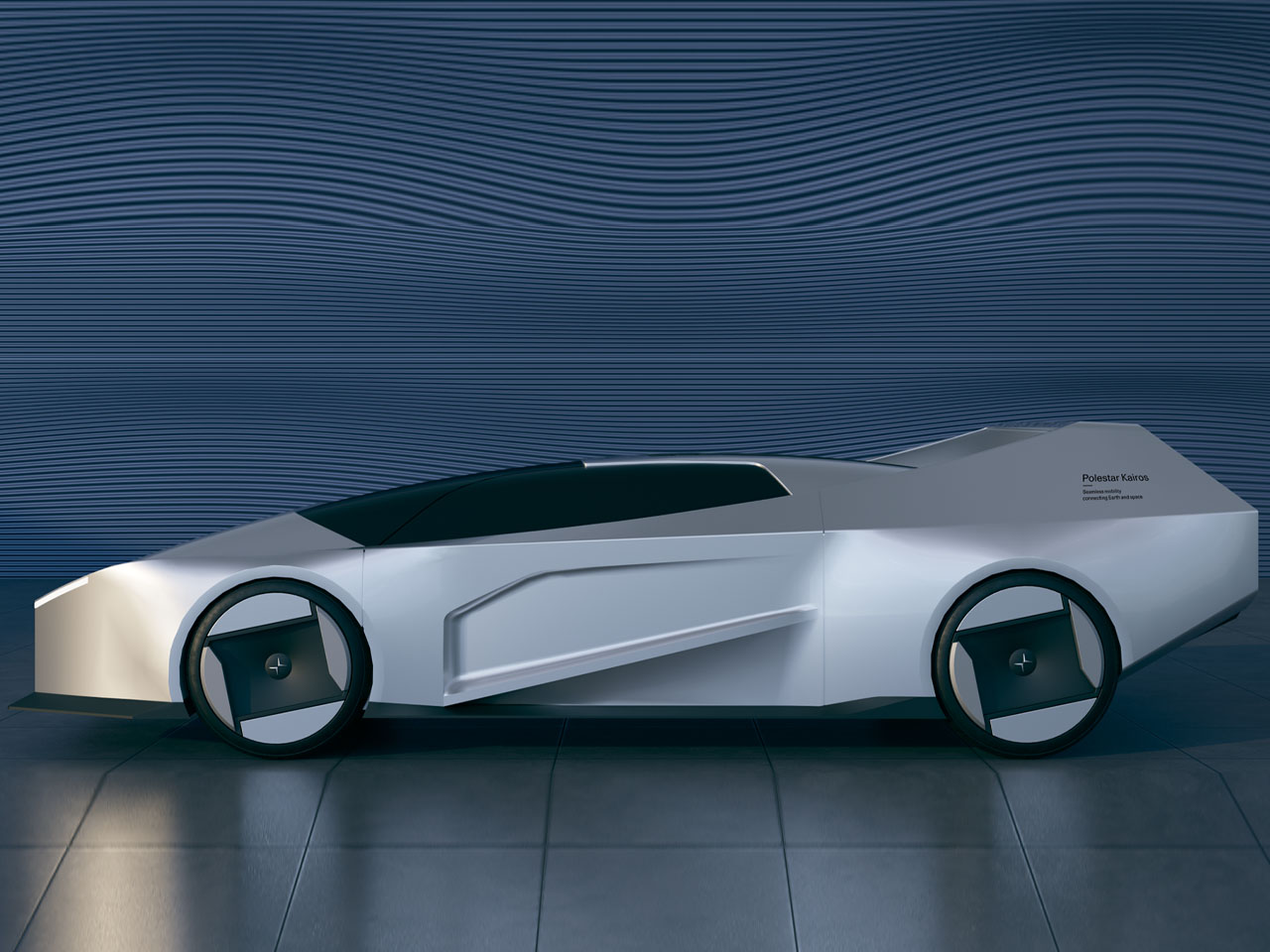
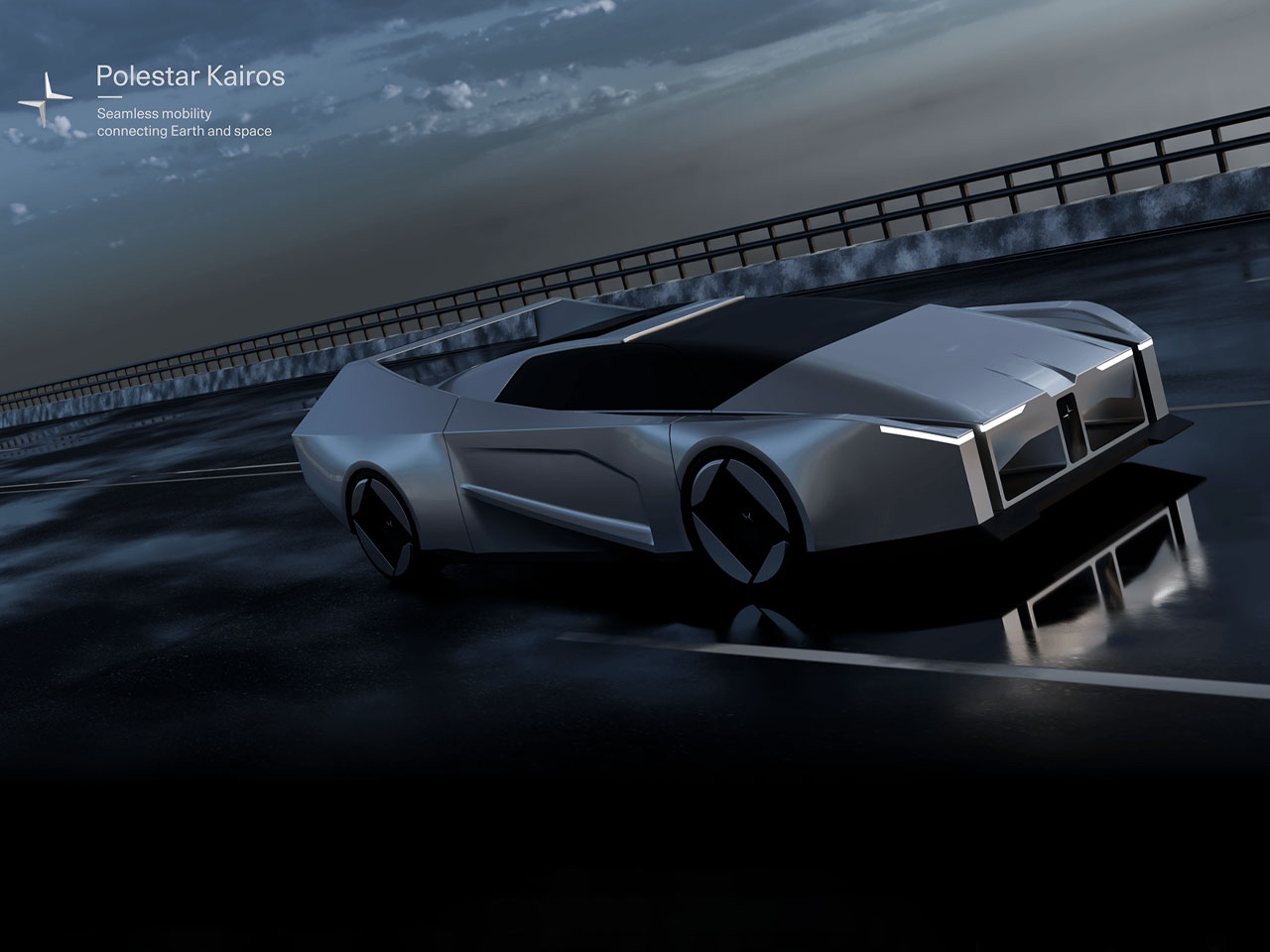
This future-forward concept overshadows most of them with its unique idea of connecting Earth and space travel without all the strings attached. The idea is to make a seamless transition from driving on the highways to traveling beyond the stratosphere within just a few hours. Meet the Polestar Kairos, a hypertravel vehicle that comes with a normal driving mode and a space transfer mode to dock with a spacecraft that’s destined for space.

Designer: Kim Ye-rin

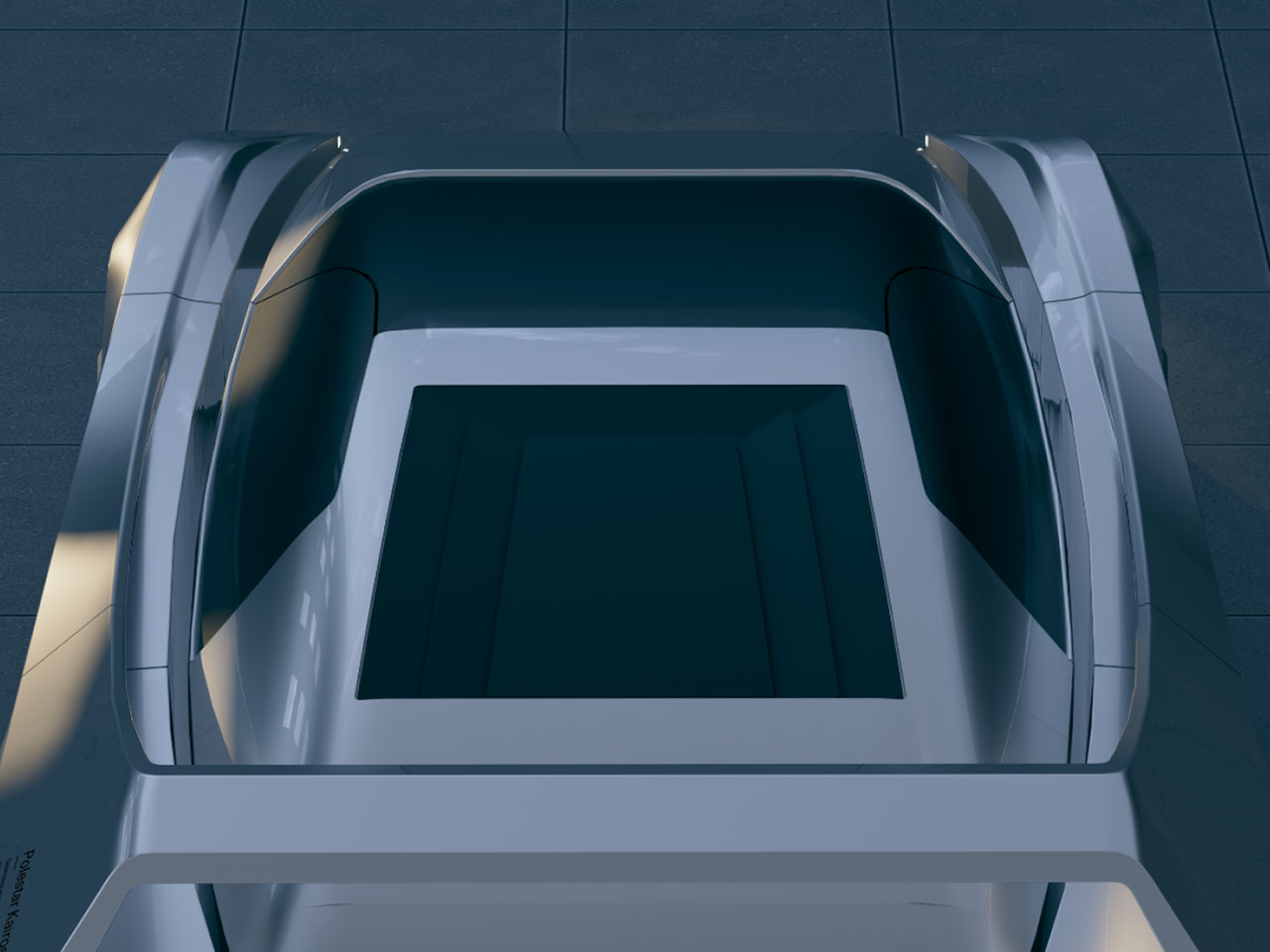
The front section of the hypercar, made out of reinforced lightweight material, is stronger than the fuselage of an airplane for structural integrity. Transition from the car mode to the docked spacecraft version is seamless, indicating how we could travel in space in the coming decades. Sure, it sounds like science fiction, but we are talking of a time ten years down the line when traveling to Mars would be a usual affair. This concept is based on the Polestar’s DNA and design physics, thereby explaining the industrial look.

The compatible spacecraft will be capable of docking two Kairos hypercars, transporting them to the other habitable planet in the solar system. When docked with the spacecraft, the hypercar unit transforms into an ultra-low temperature sleep chamber. This chamber is loaded with amenities for life maintenance during extended space trips. Since space travel can have a toll on mental and physical conditioning, the module is equipped to handle that too. The spacecraft will essentially be a carrier for people who want their loved ride to stay with them even beyond the limits of Earth.

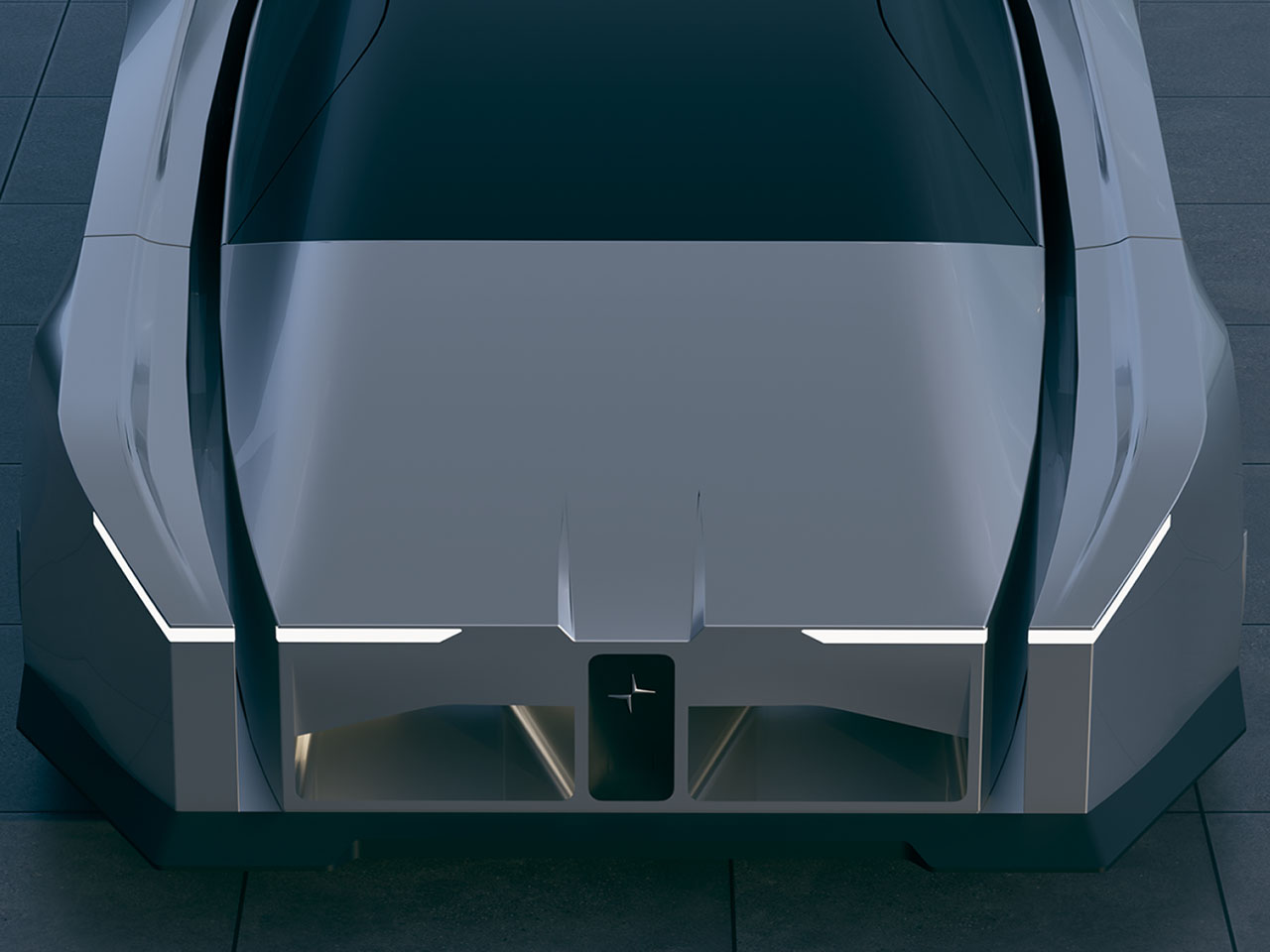
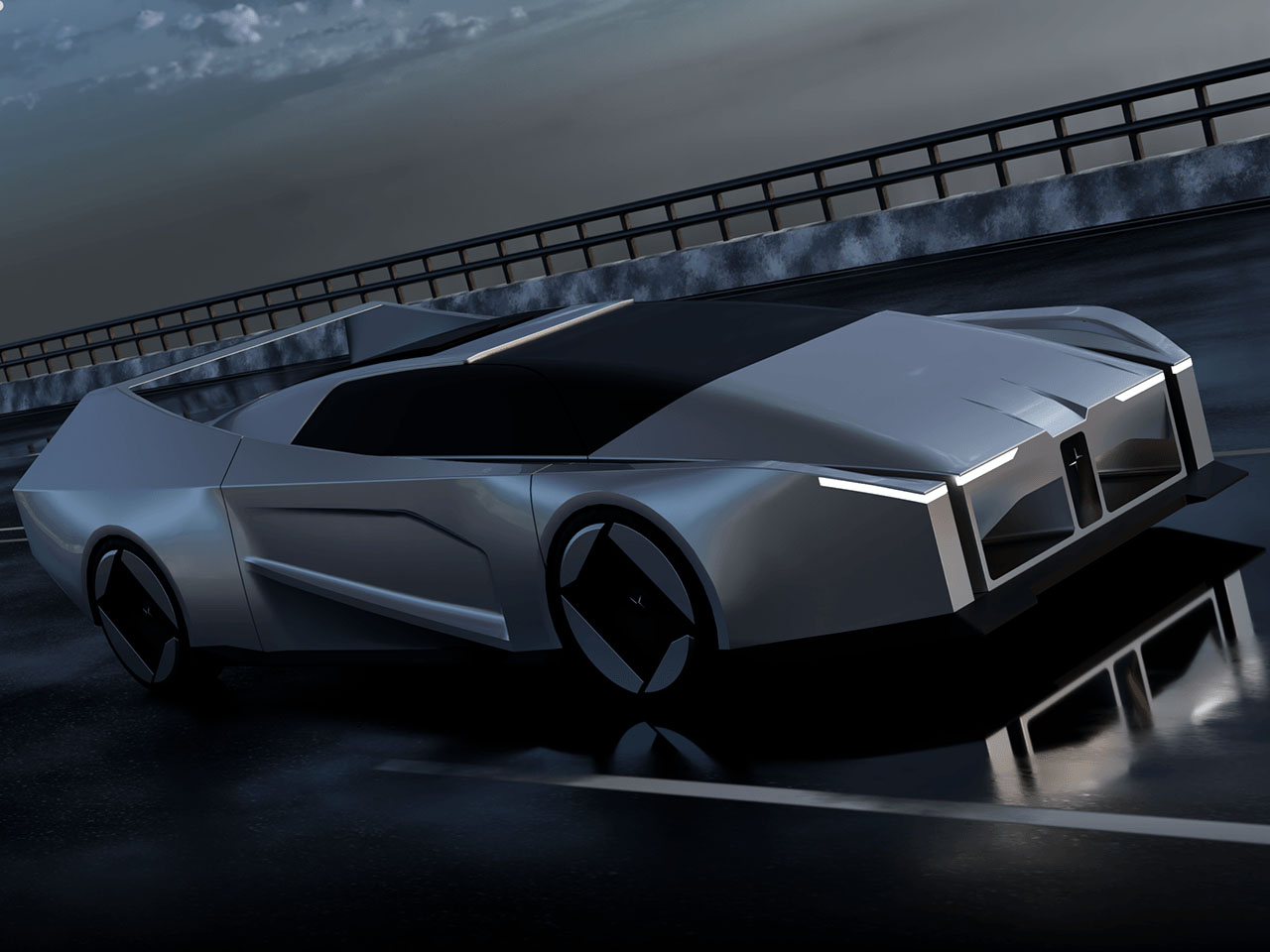
From a pure four-wheeler perspective, the Kairos concept arrives at a time when Polestar is sharpening its focus on electric mobility and design-led sustainability. While the brand’s recent concepts, such as the Precept, have already charted its future direction, Kairos brings new aesthetic and experiential ideas to the table, melding dynamic proportions, refined materials. The Hypercar is low, wide, and sculpted, with crisp surfaces that emphasize tension and purity. The roofline sweeps seamlessly into the rear haunches, giving the car an almost coupe-gravity despite a potentially four-door or high-performance nature. The front face carries Polestar’s signature front “Thor’s Hammer” lighting graphic while a stubby profile reinforces a performance posture.

Inside, the Kairos concept highlights the brand’s commitment to premium yet sustainable materials. Natural-fiber composites, recycled textiles, and minimalist interfaces dominate. The cabin layout puts the driver firmly in command: clean surfaces, clear lines, and a restrained palette convey calm focus rather than techno-clutter. The floating center console, integrated display architecture, and expansive glazing underline a sense of openness and precision.

The post Polestar Kairos unifies space travel and daily commutes into one intriguing concept first appeared on Yanko Design.
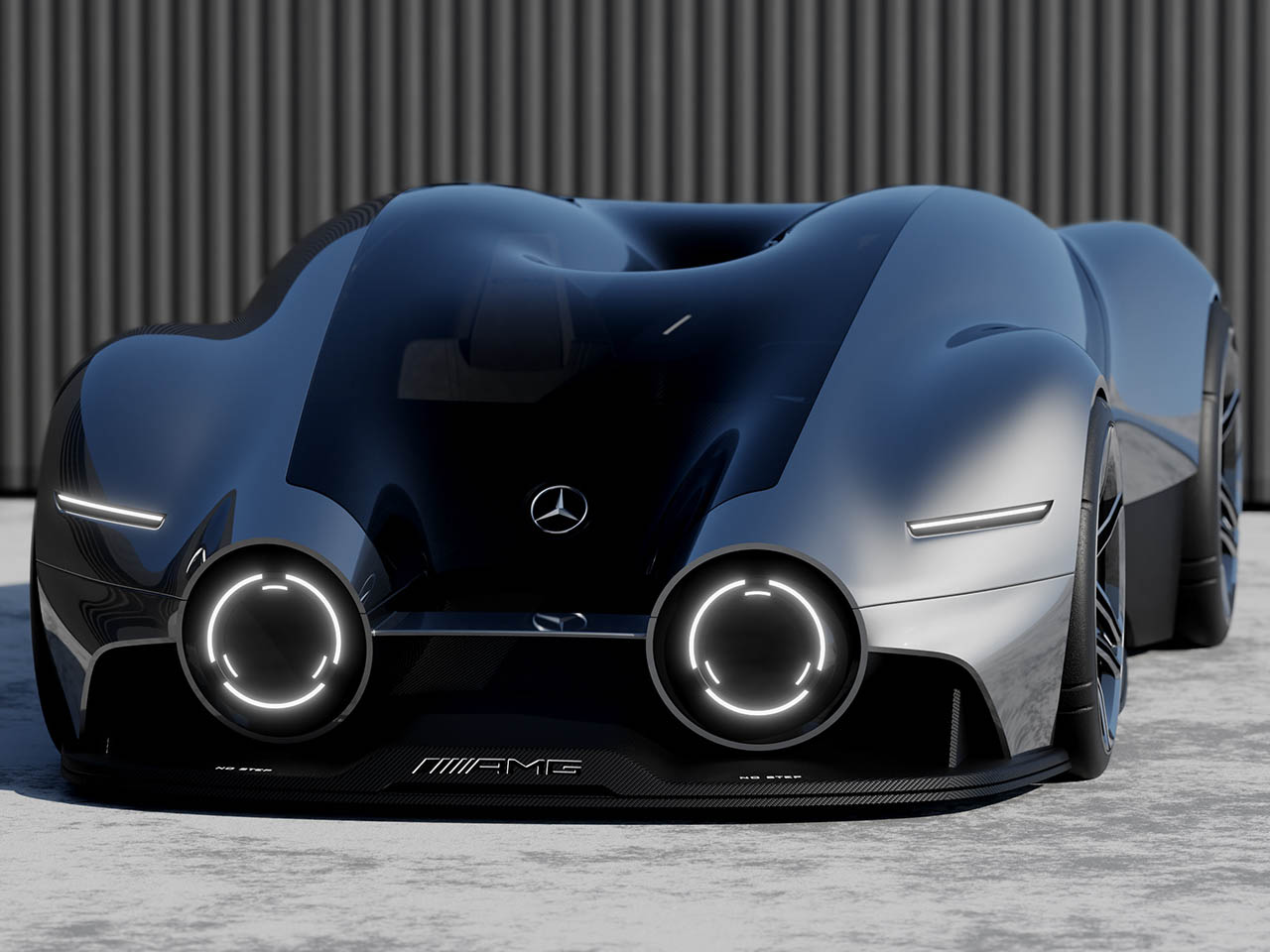
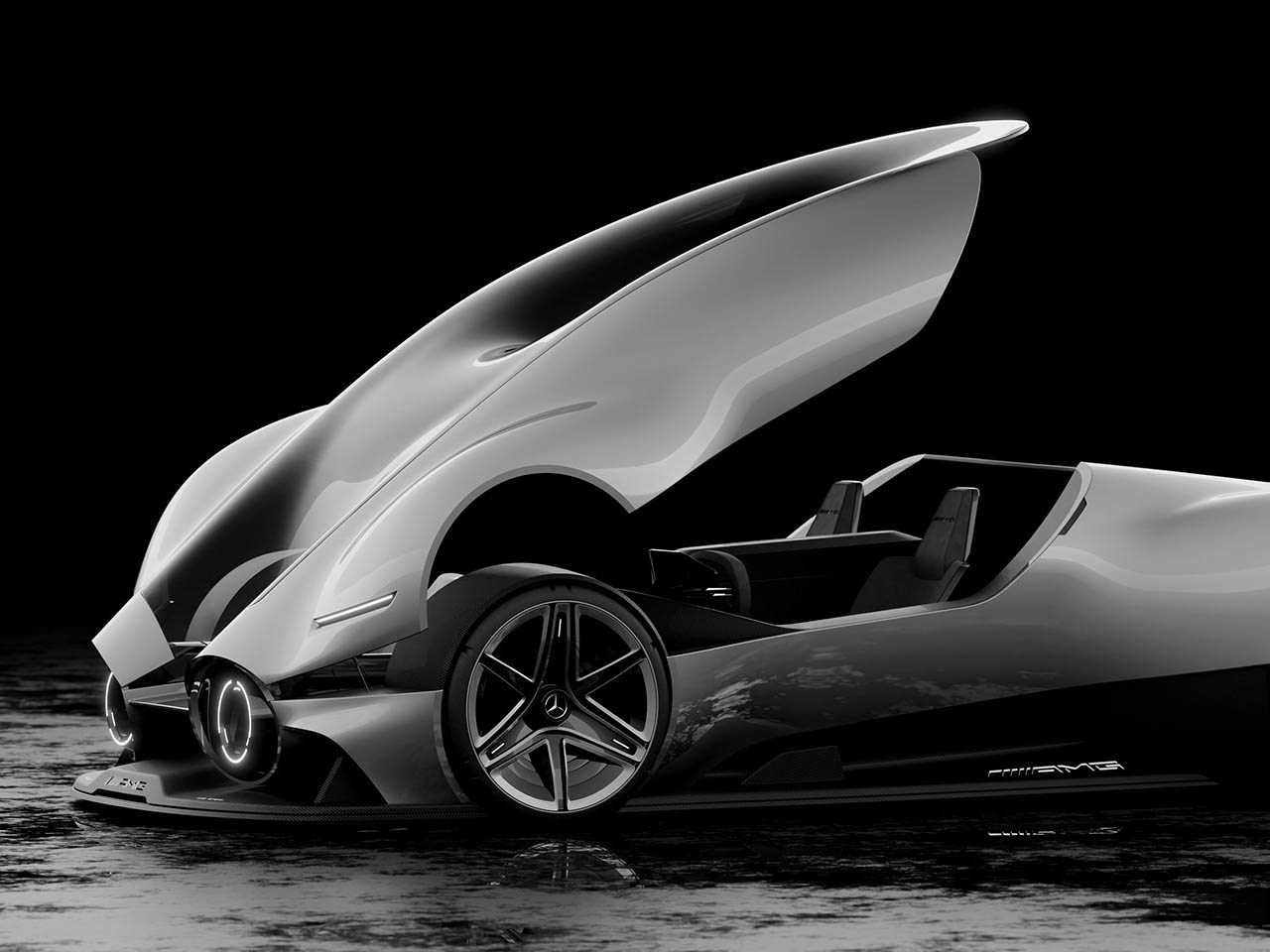
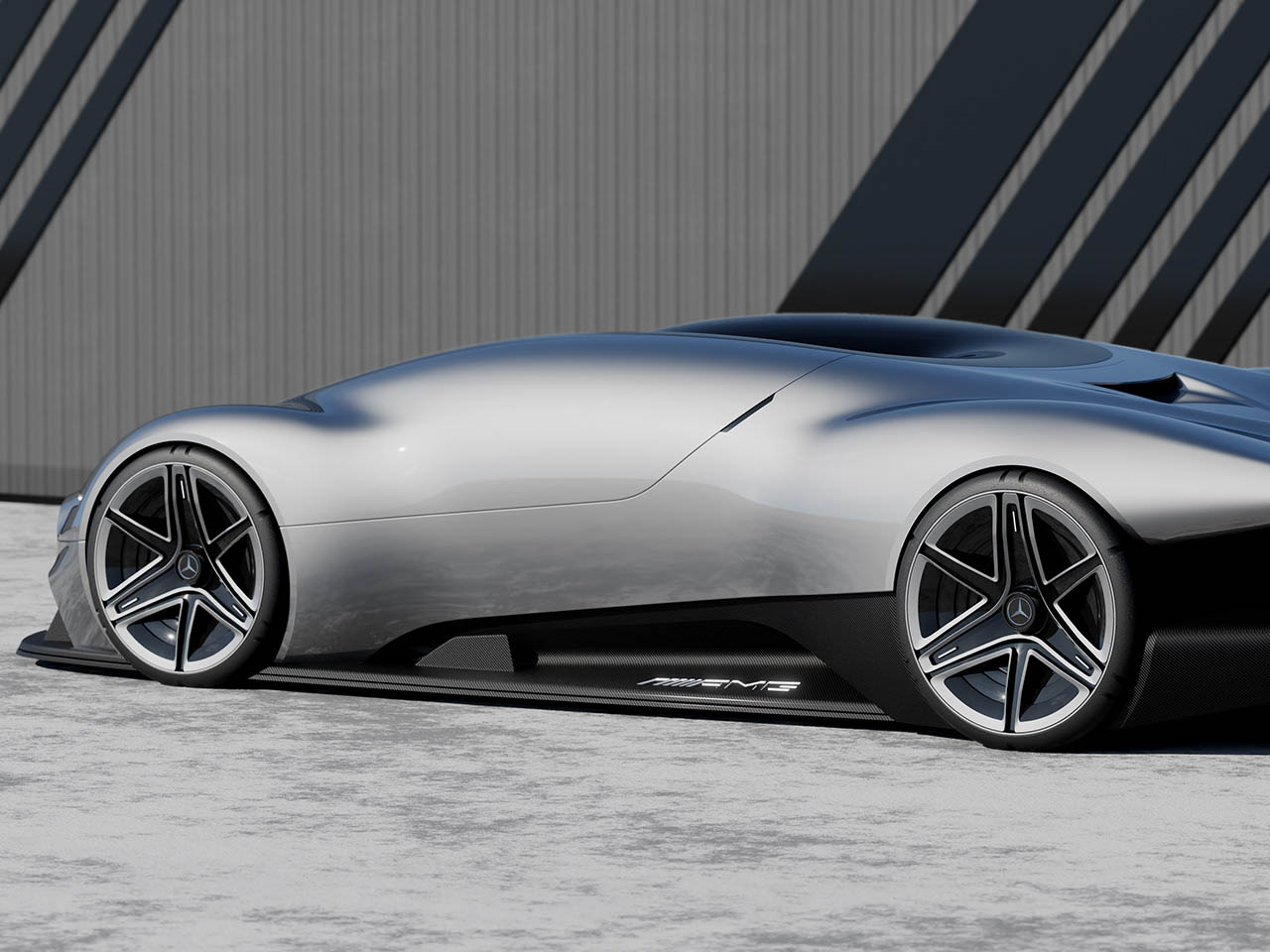
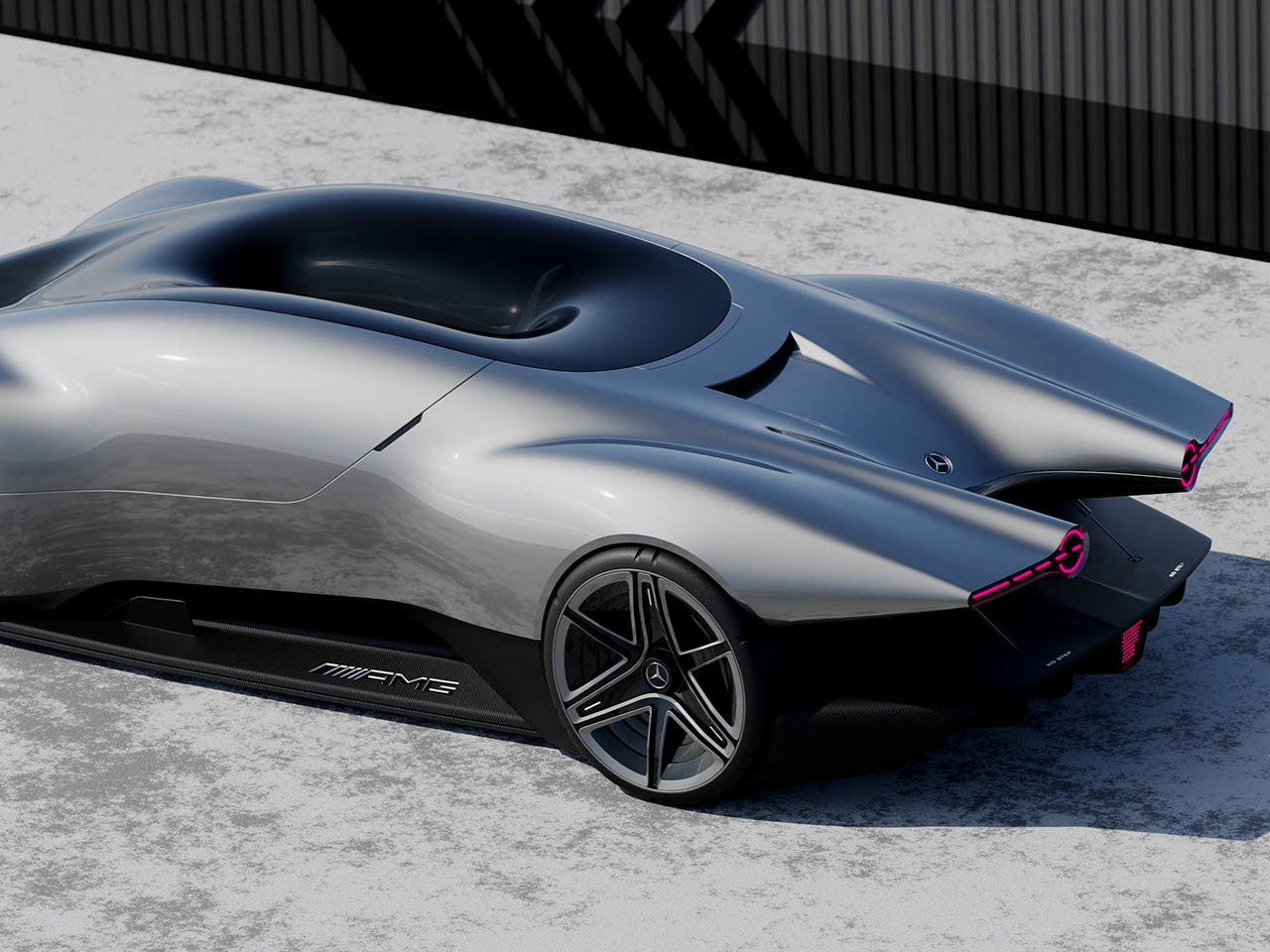
Mercedes-AMG ONE-ONE is future-ready hypercar concept that deserves more than a glance

The Mercedes-AMG ONE hypercar is an extraordinary piece of automotive engineering, designed to bring Formula 1 technology to the road. The ONE features a 1.6-liter V6 hybrid powertrain borrowed from Formula 1, and this engine is coupled with four electric motors, delivering a combined output of over 1,000 horsepower. The hybrid system includes a battery pack that supports an electric-only range, though it’s primarily designed for high-performance driving.

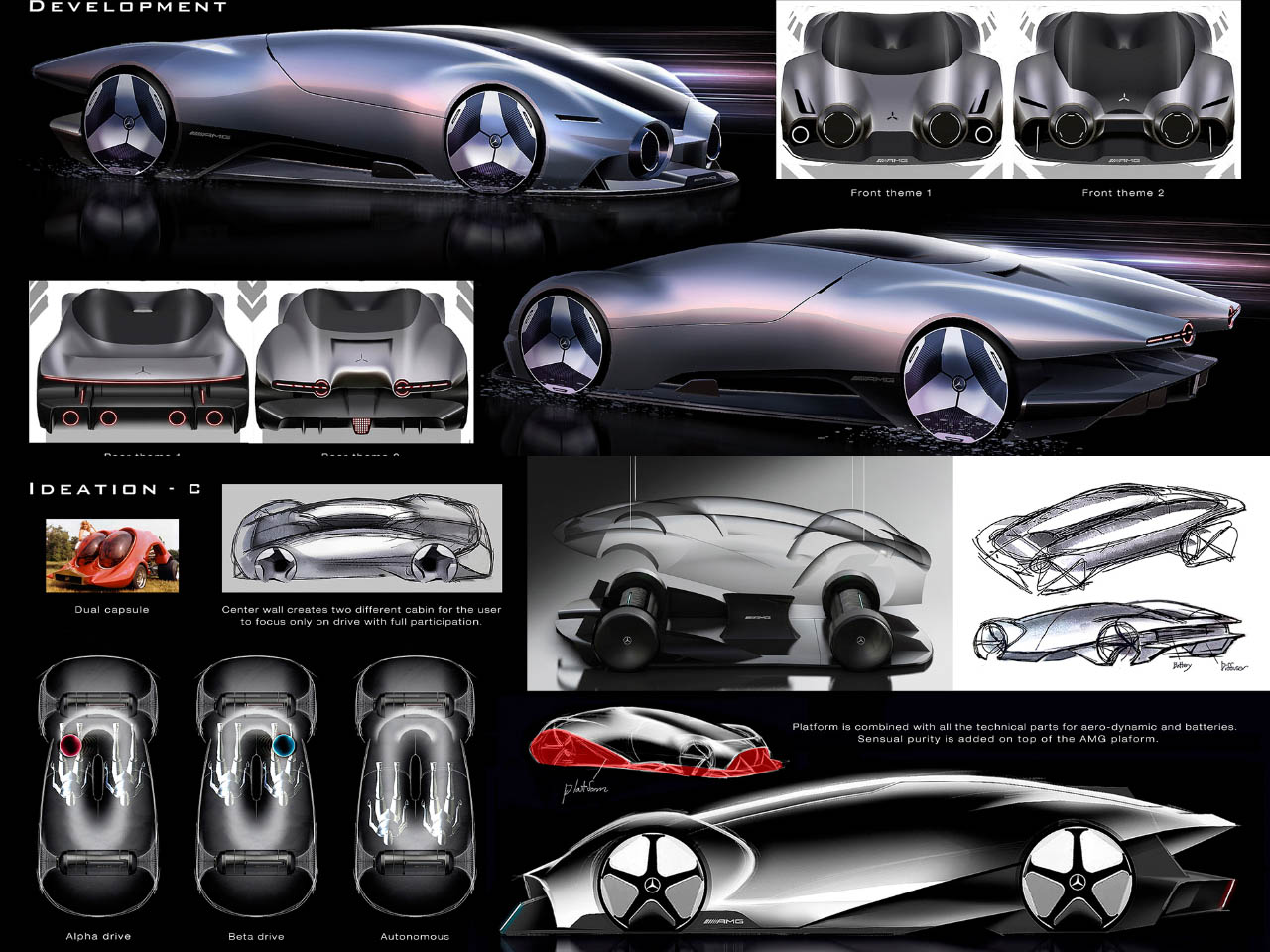
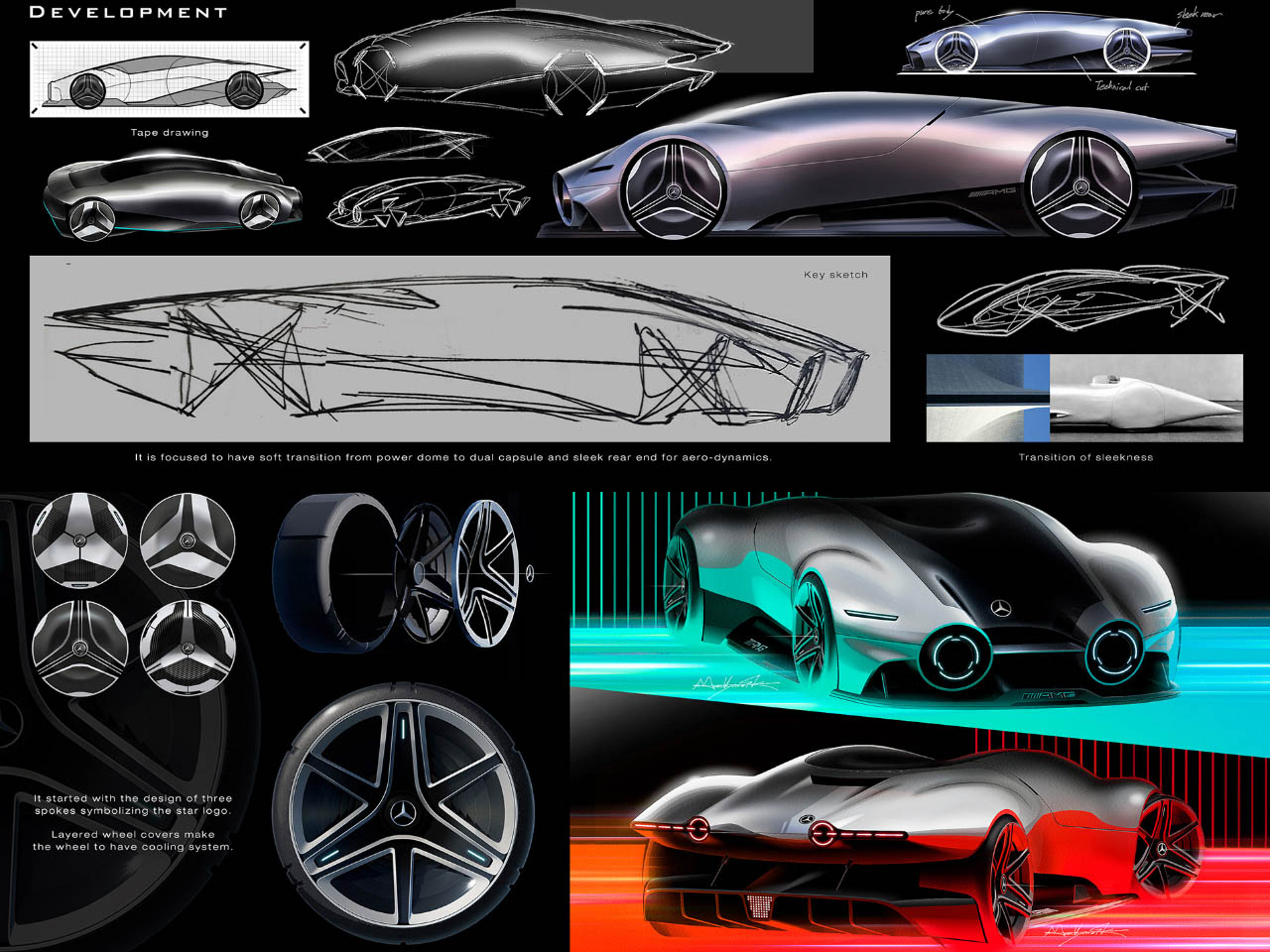
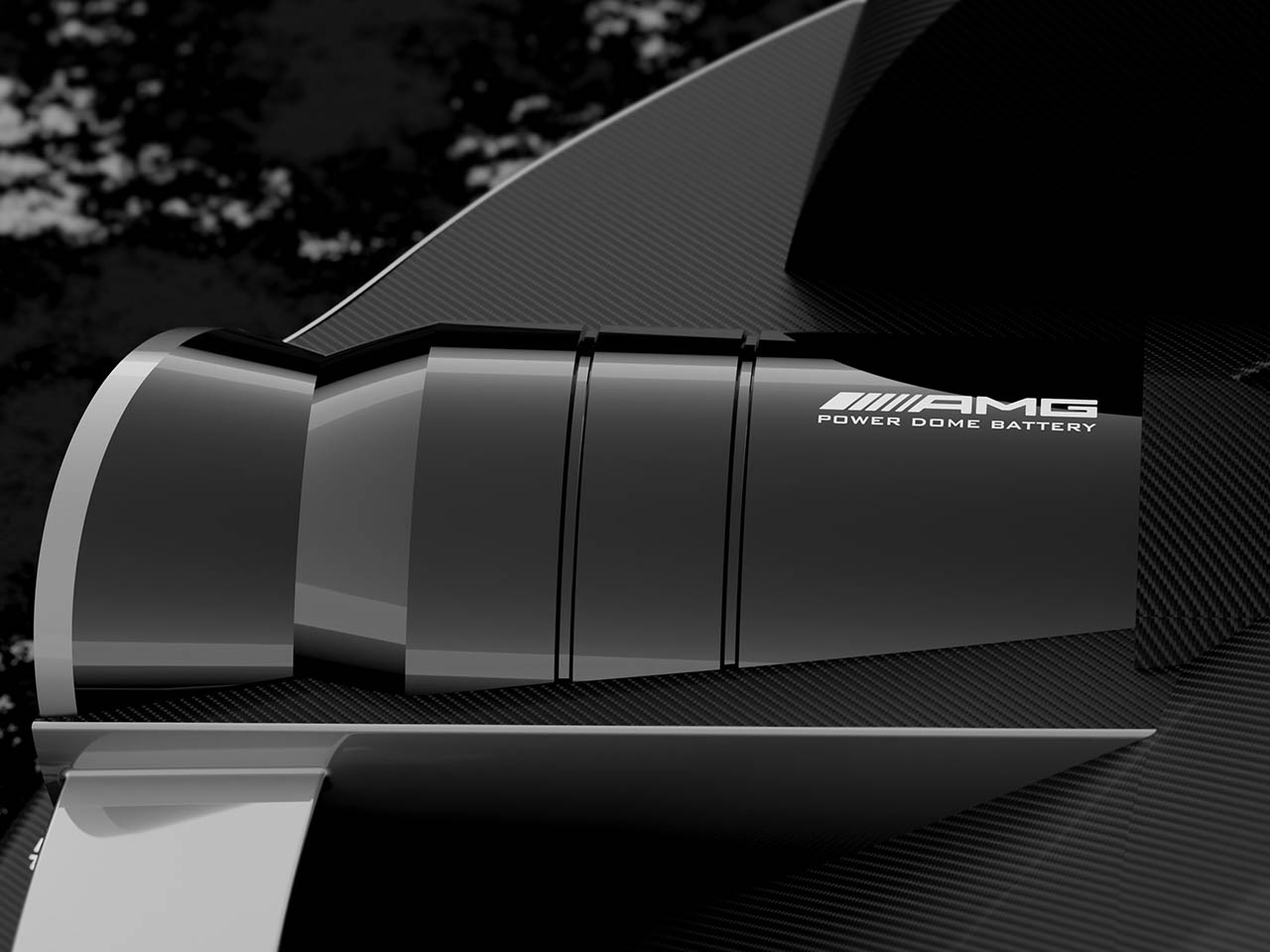
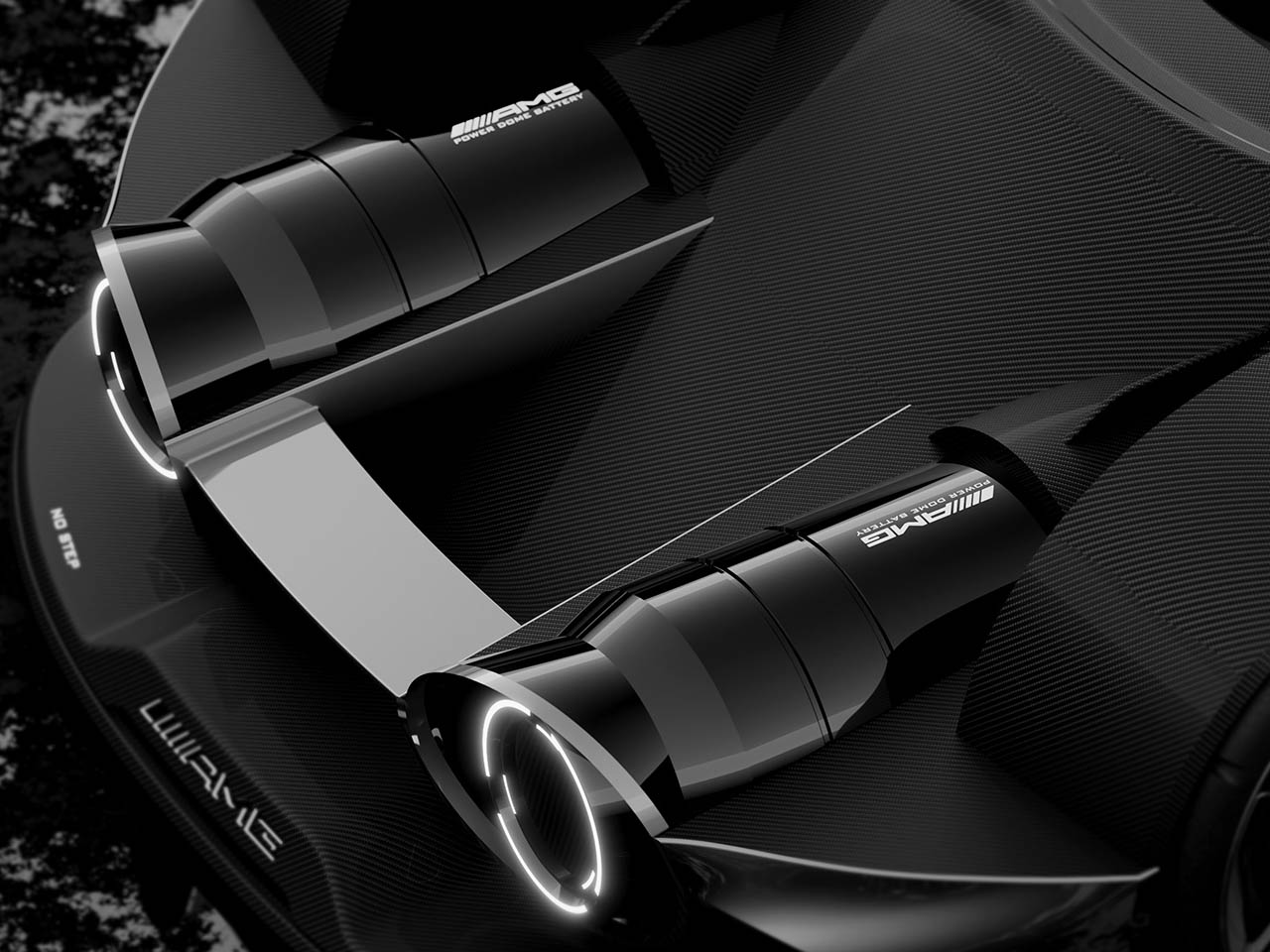
Now a concept envisions an AMG ONE that carries the brand’s heritage into the pure electrified future. The idea is to connect the driver and the vehicles for driving dynamics that naturally let the driver focus on the road for peak performance. Exploring the different ways in which EV skateboard platforms will be built, the concept gets a dual compressed battery for balanced weight.

Designer: Hyunsik Moon

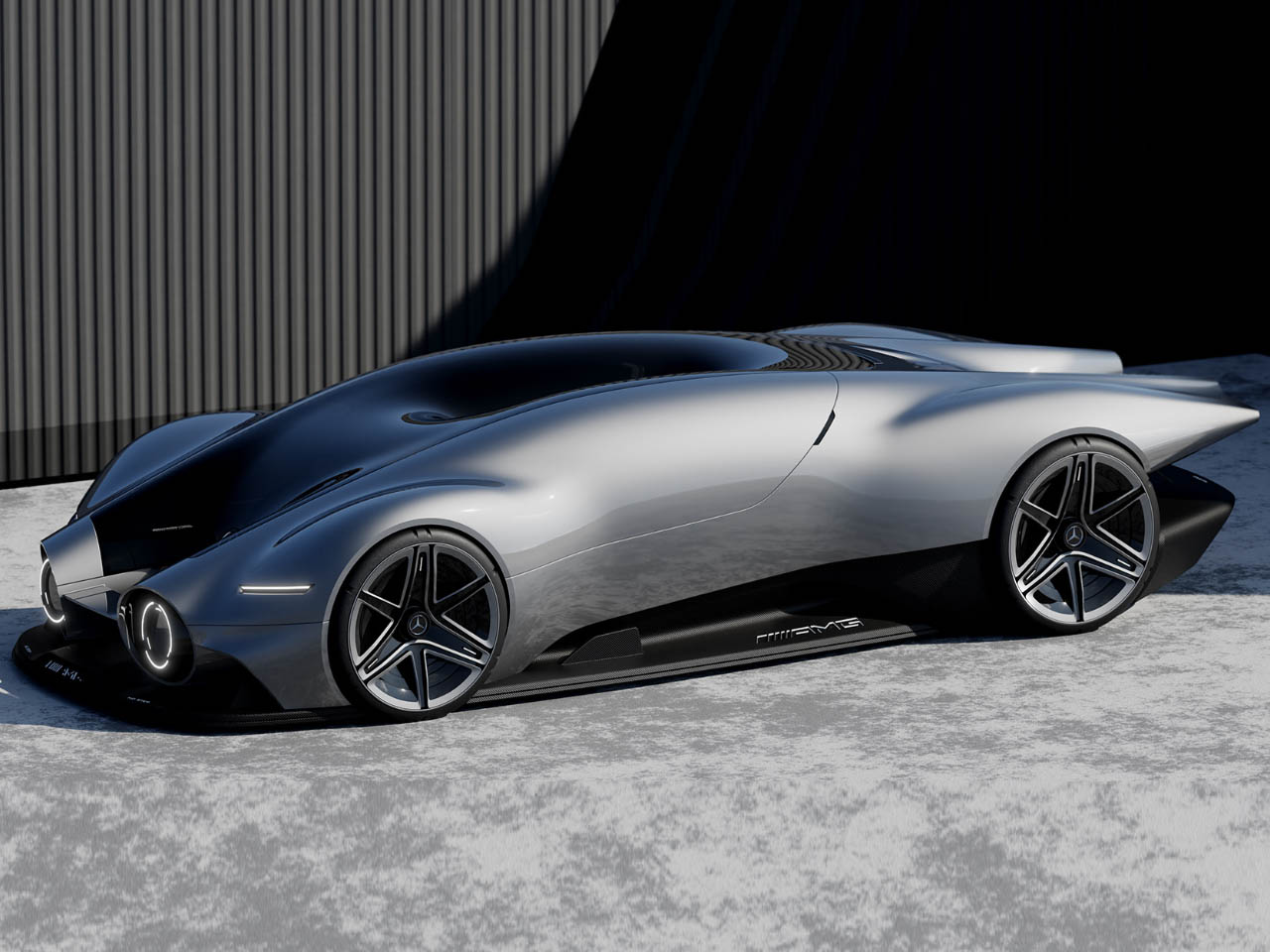
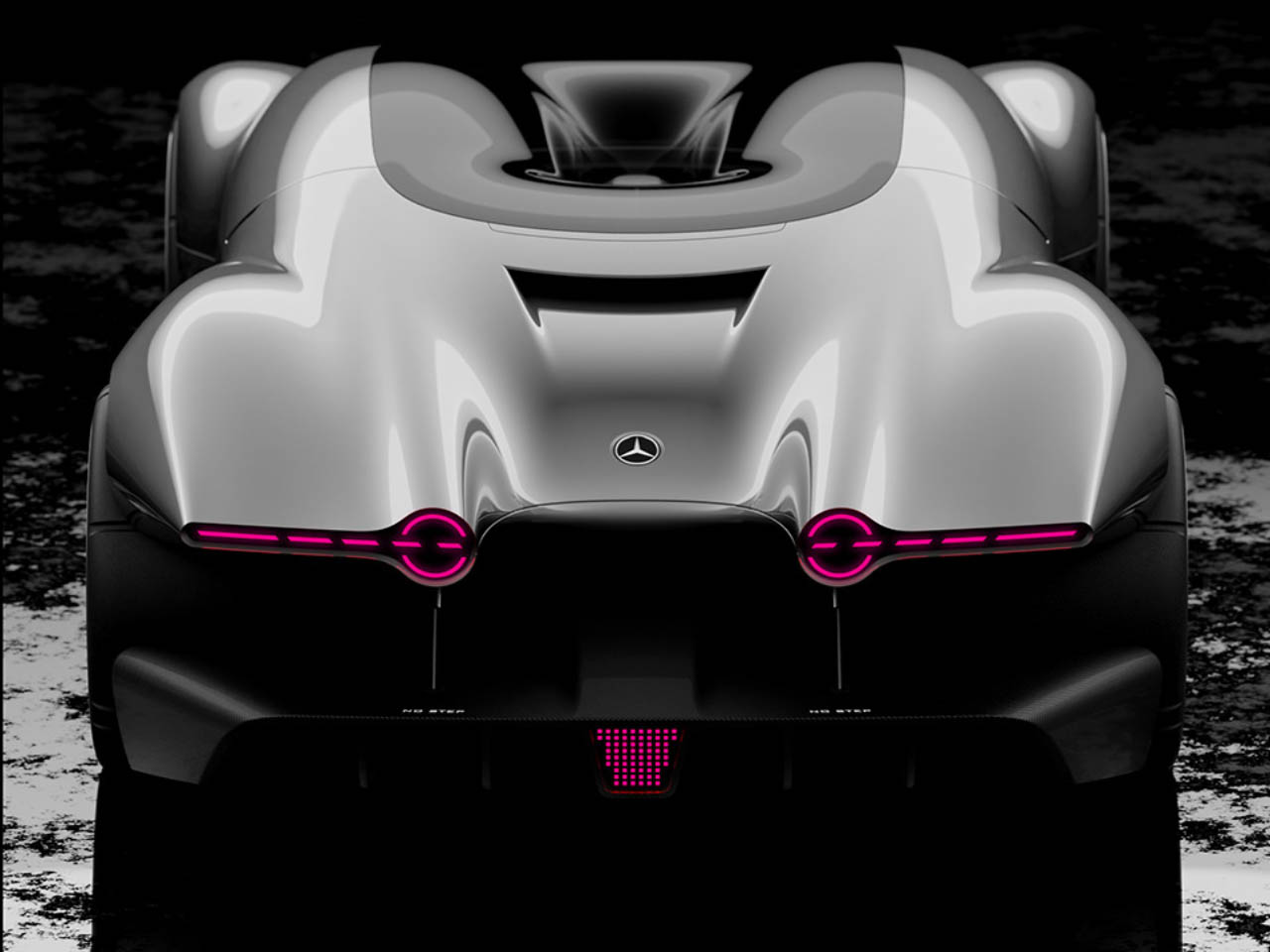
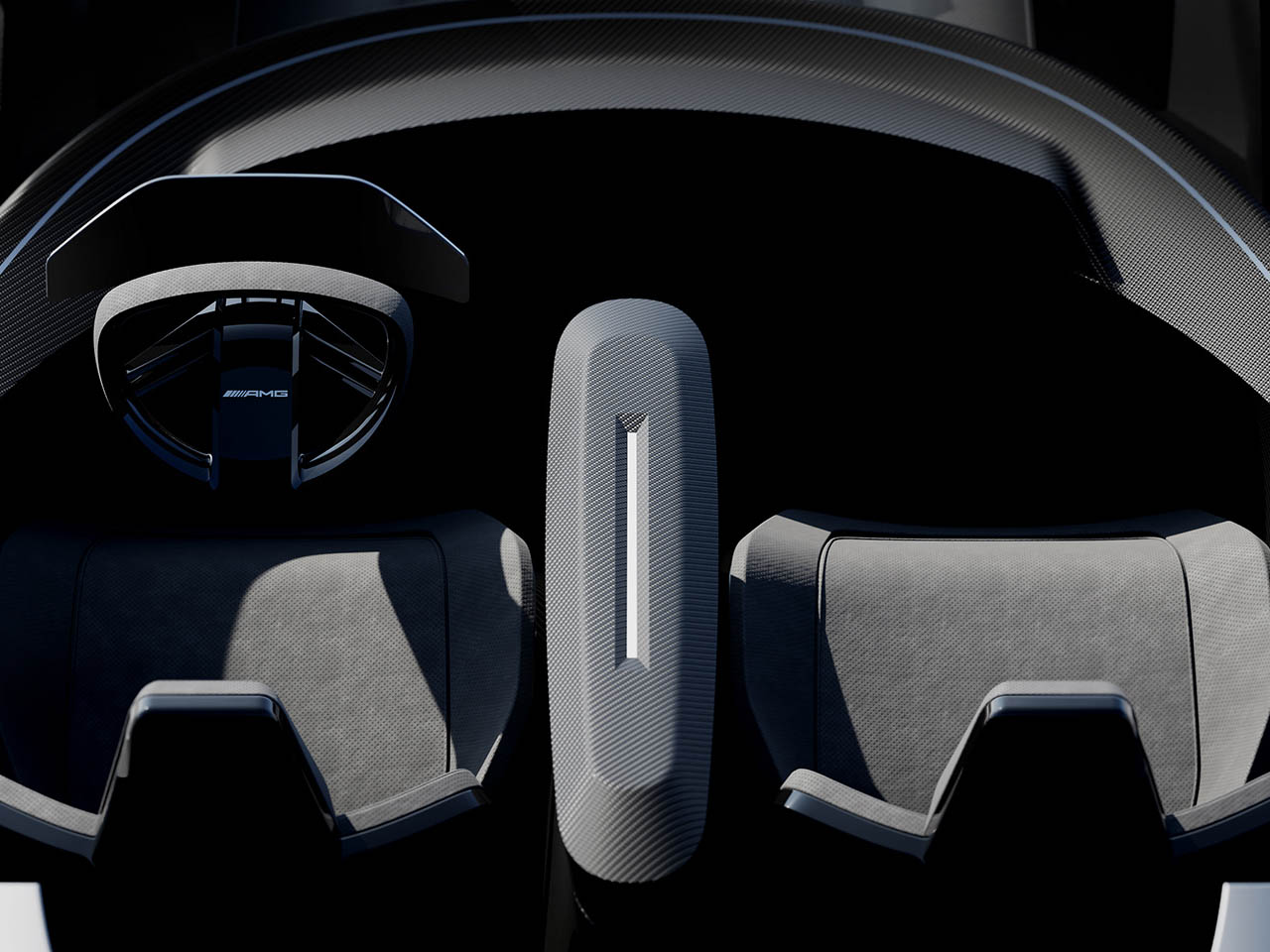
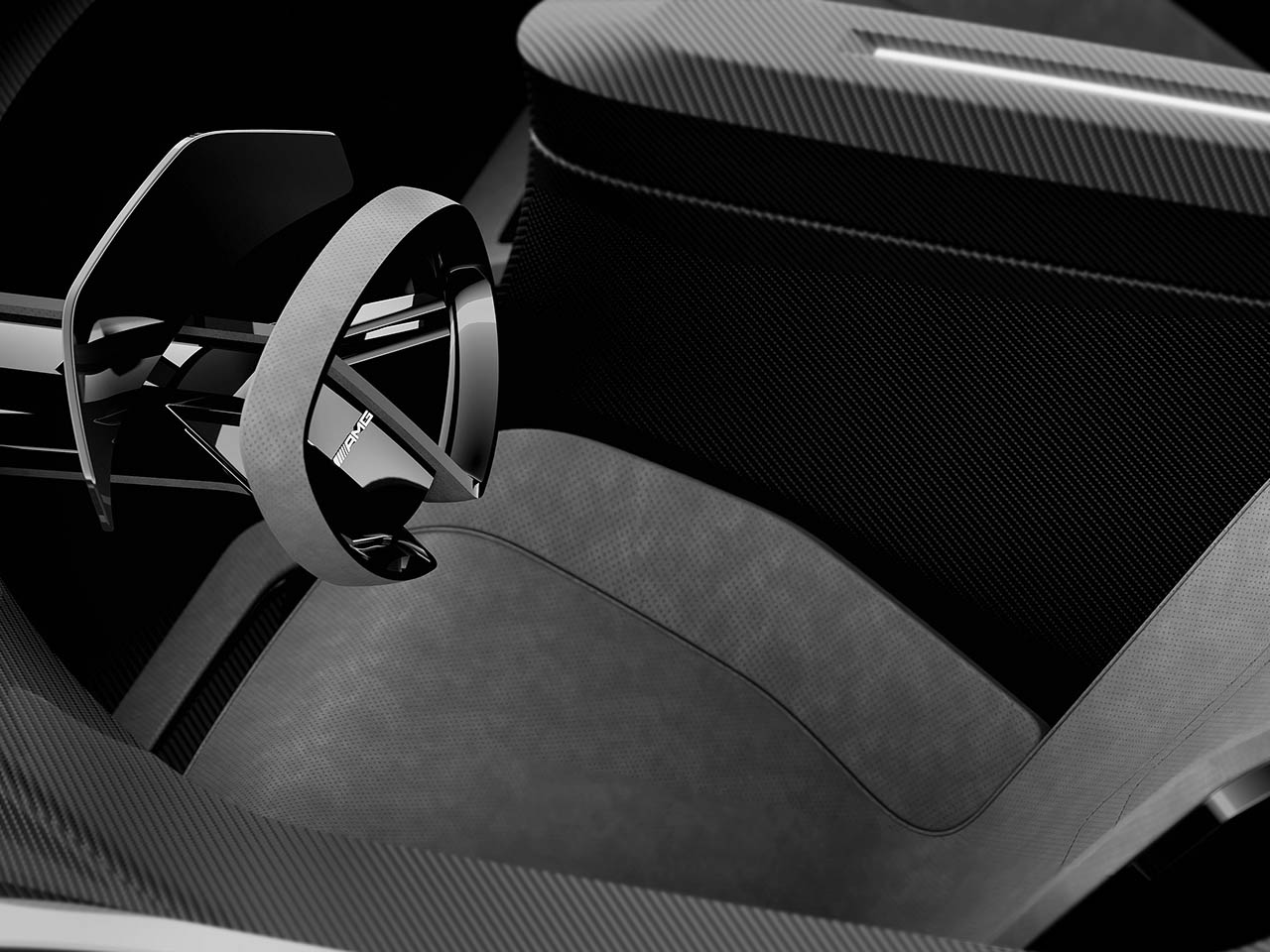
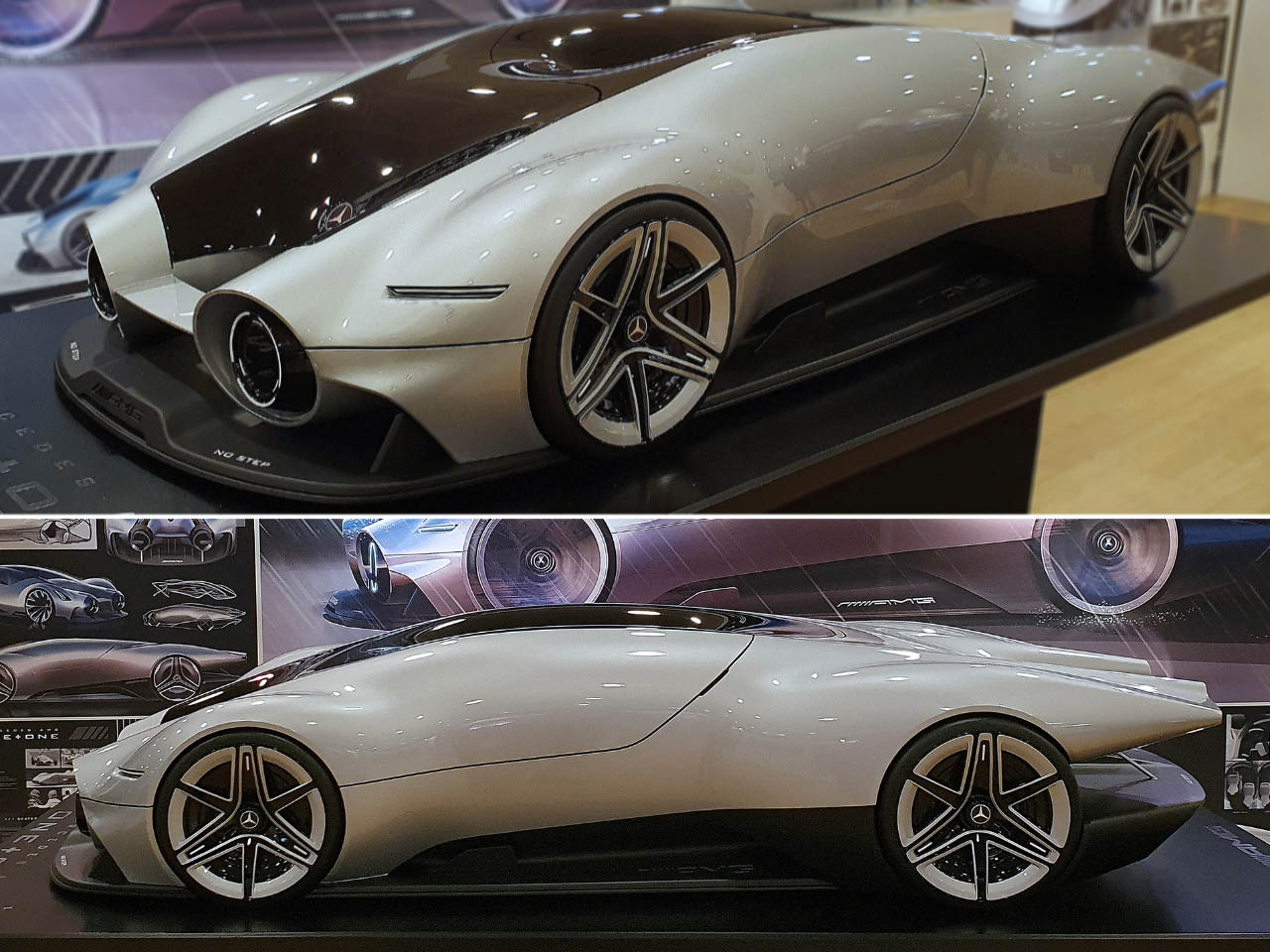
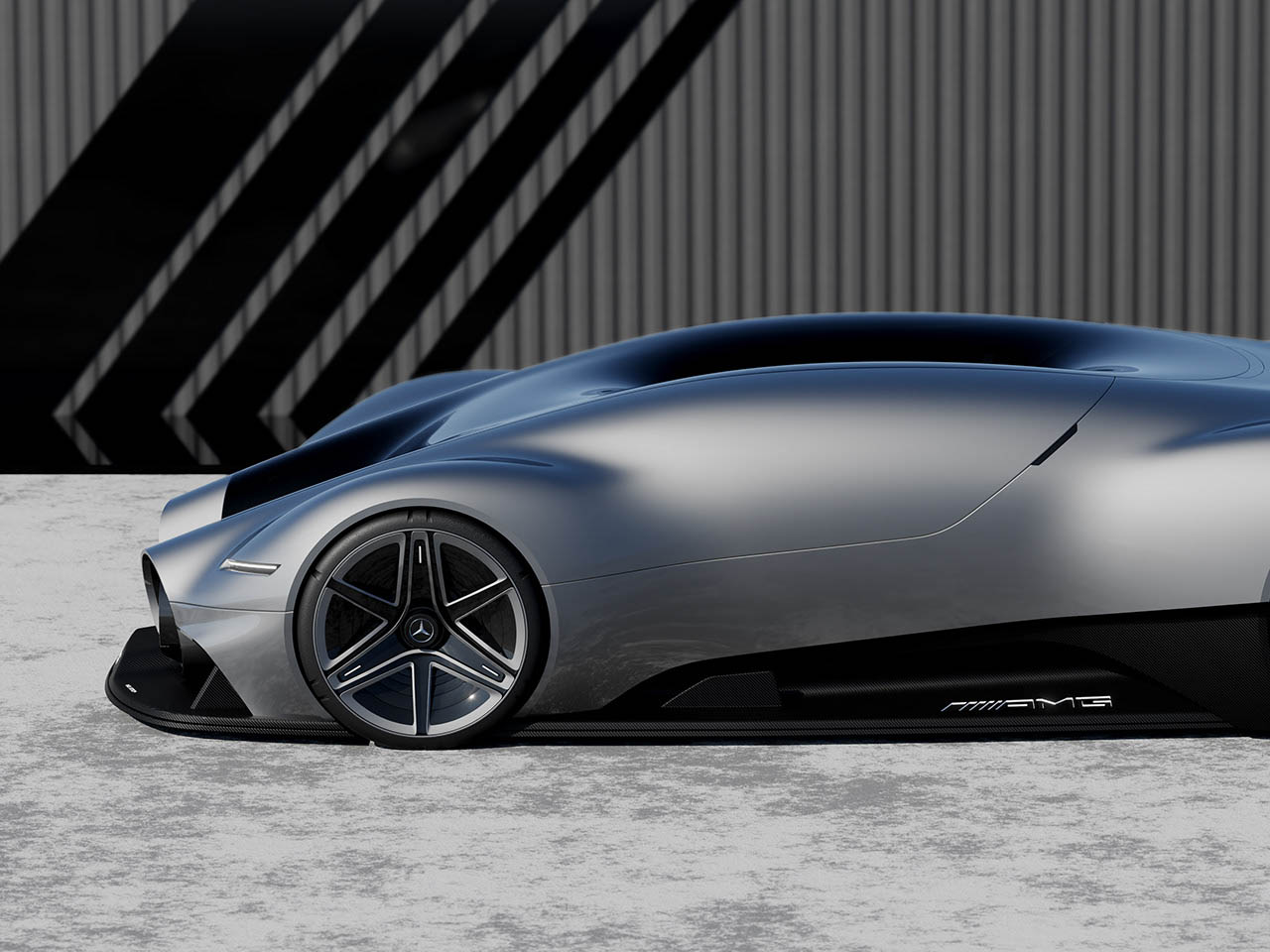
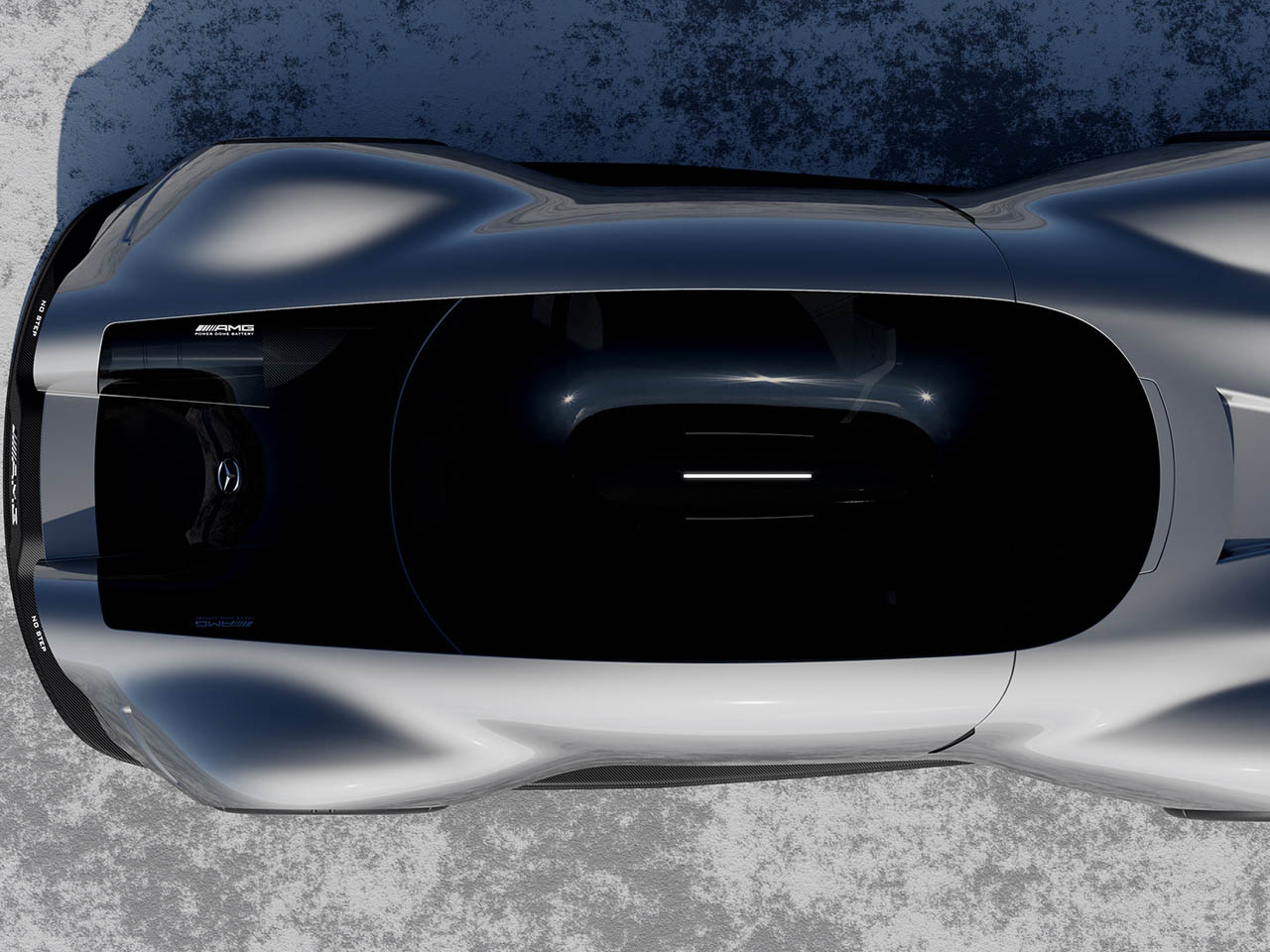
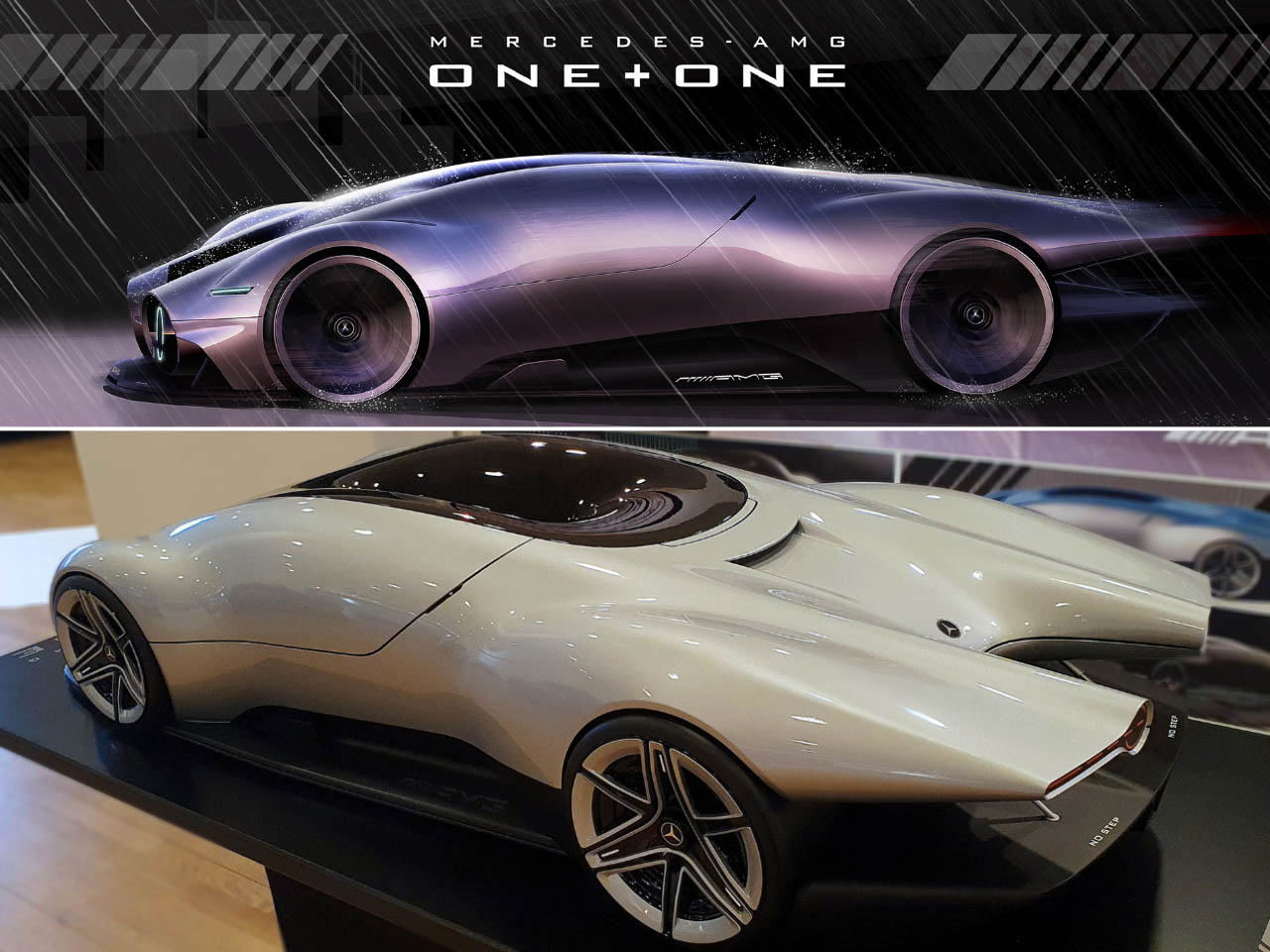
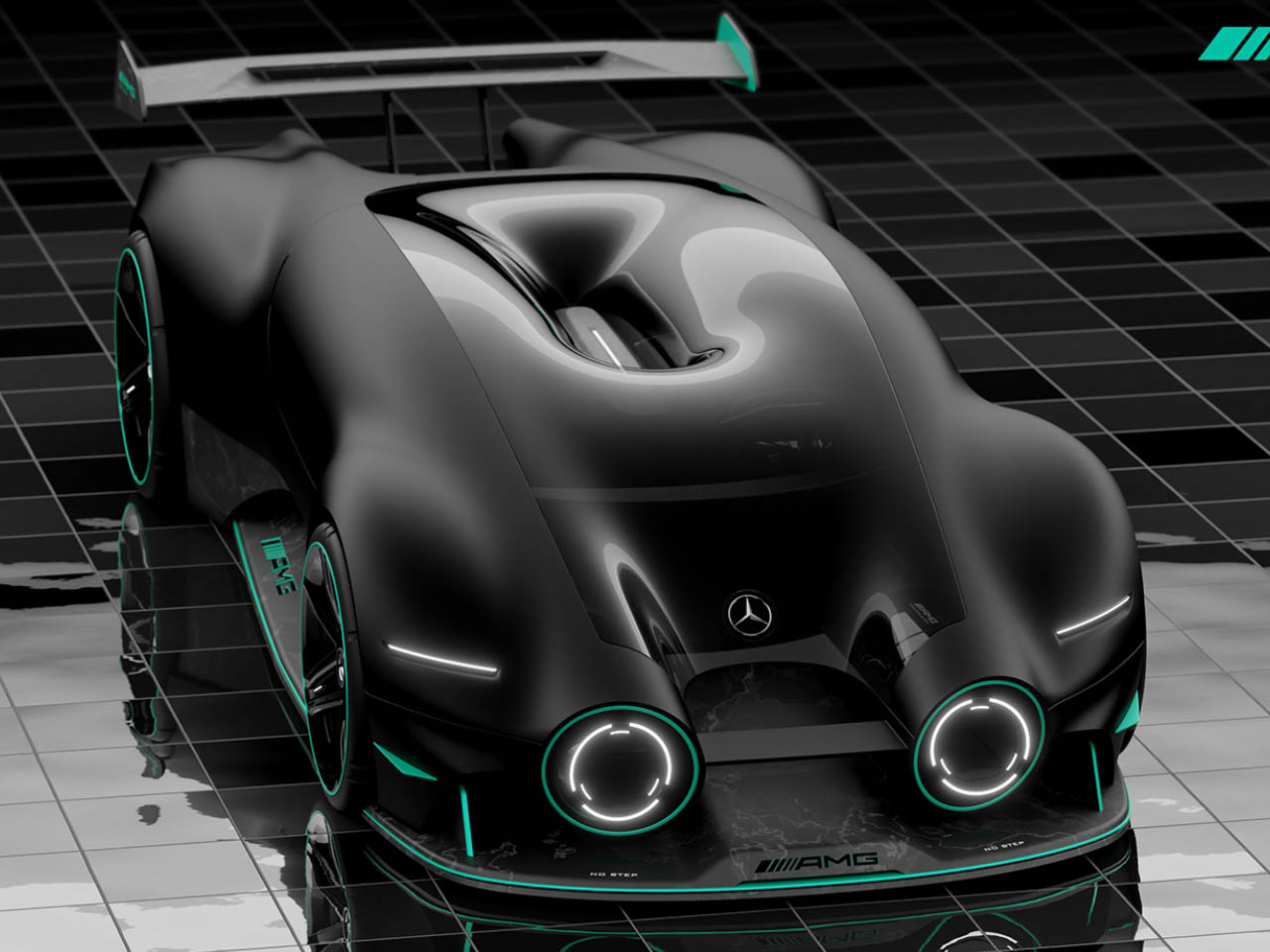
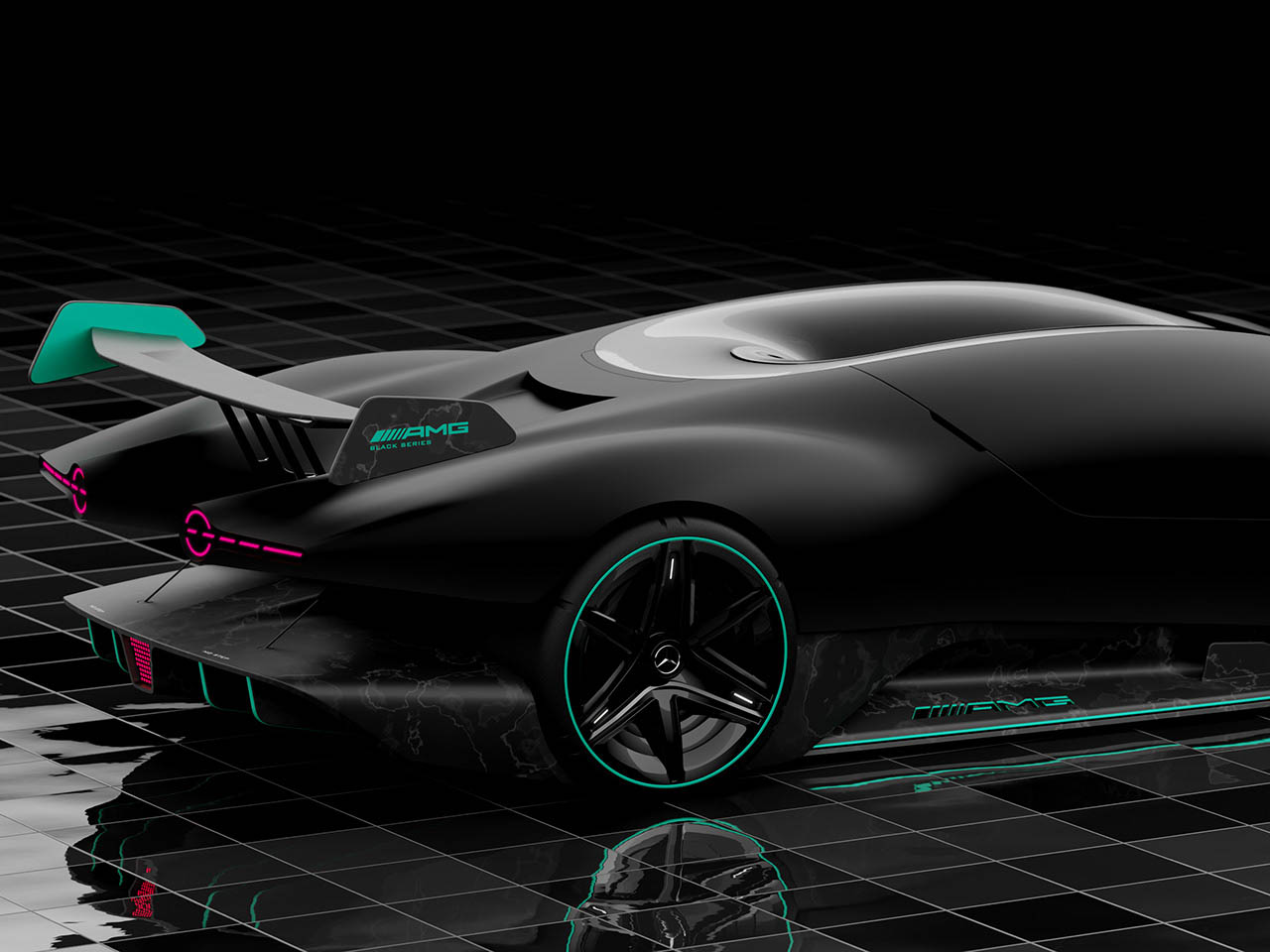
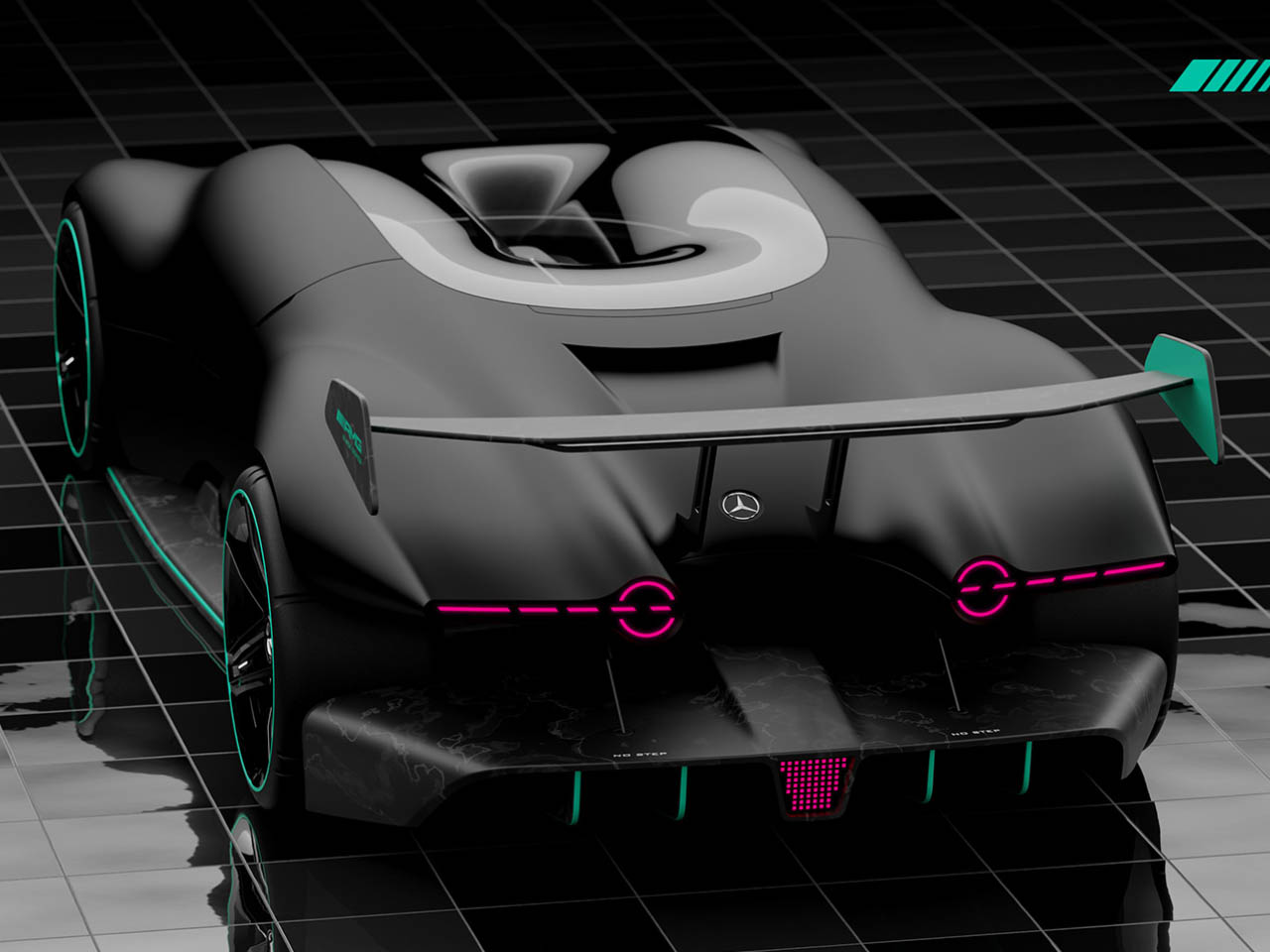
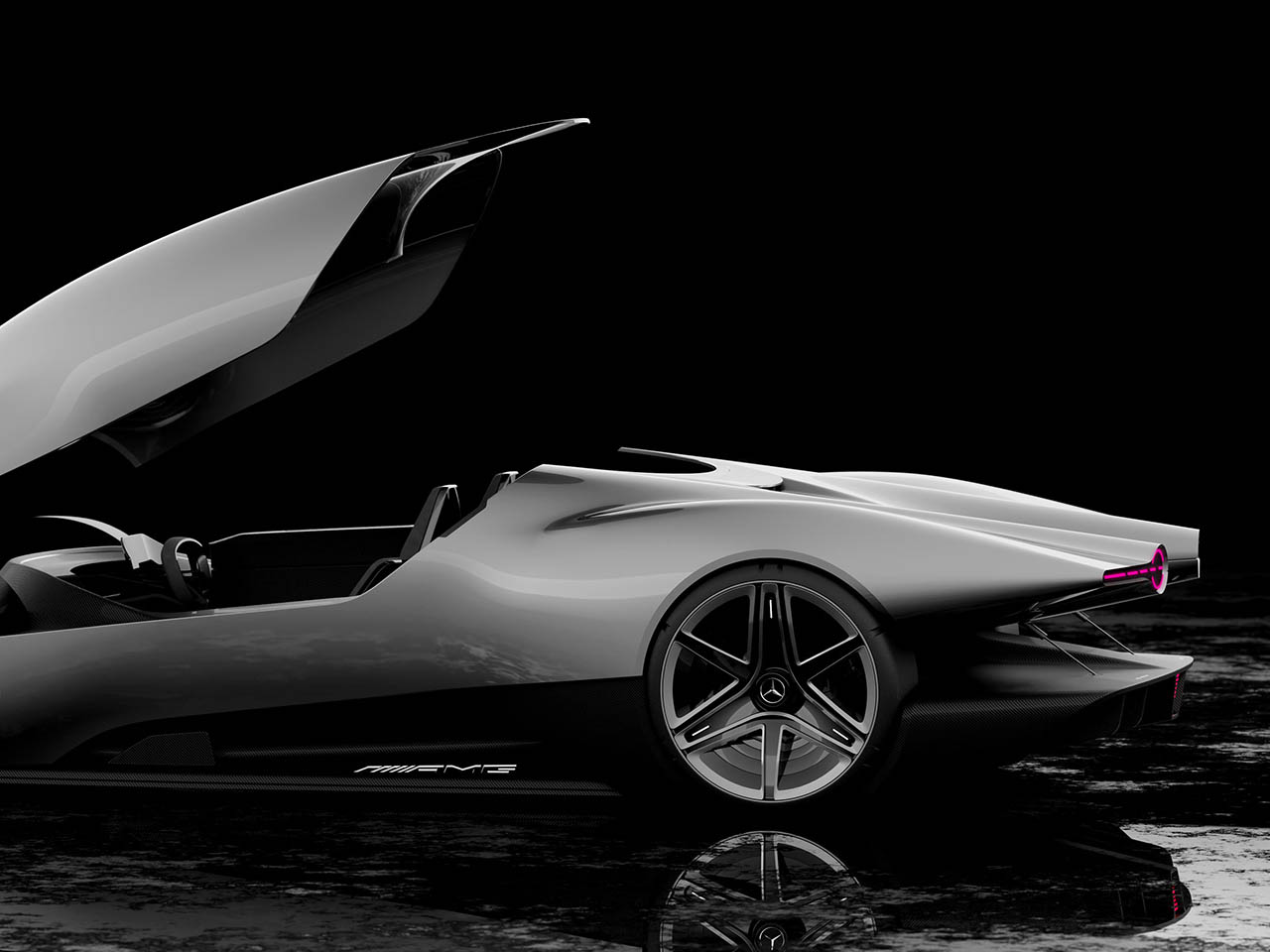
The four batteries are connected directly to each wheel for optimized power delivery. The cabin also focuses on the independent positing of the driver and the co-driver, so that the latter can take over in case the driver wants to relax during hard chases. Visually this Mercedes concept has a flowy aerodynamic design that personifies the union of man and machine at the next level. Those headlights are positioned low for a hunter look and gradually the hypercar gains a bold profile at the center and then flows ever so gradually to the rear which sports a futuristic shape. The curvacious positioning of the taillights eventually contrasts the skirting down low which has the F1-inspired battery charging light.

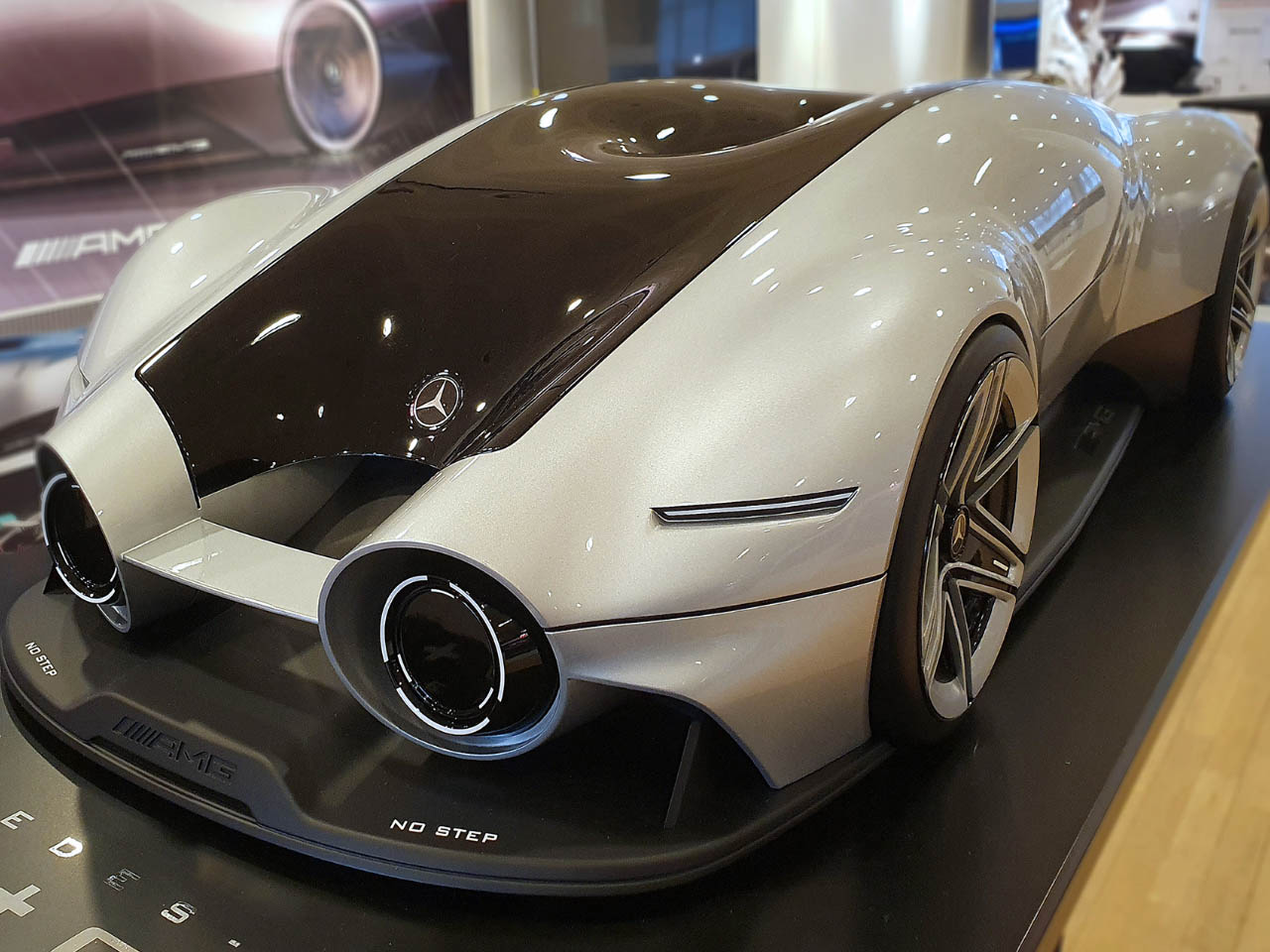
The low ground clearance of the Mercedes-AMG-ONE-ONE signifies it’s made for street circuits and racing tracks. The whole front opens up like the classic racecars, so you’d want to keep this thing limited to the race circuits for the pure adrenalin rush. Just like other elite Mercedes cars, this one comes in the silver arrow hues of either glossy silver or pure black. The designer has crafted a detailed scaled-down version of the hypercar in bright silver contrasted with the black which I love to the core.

The post Mercedes-AMG ONE-ONE is future-ready hypercar concept that deserves more than a glance first appeared on Yanko Design.
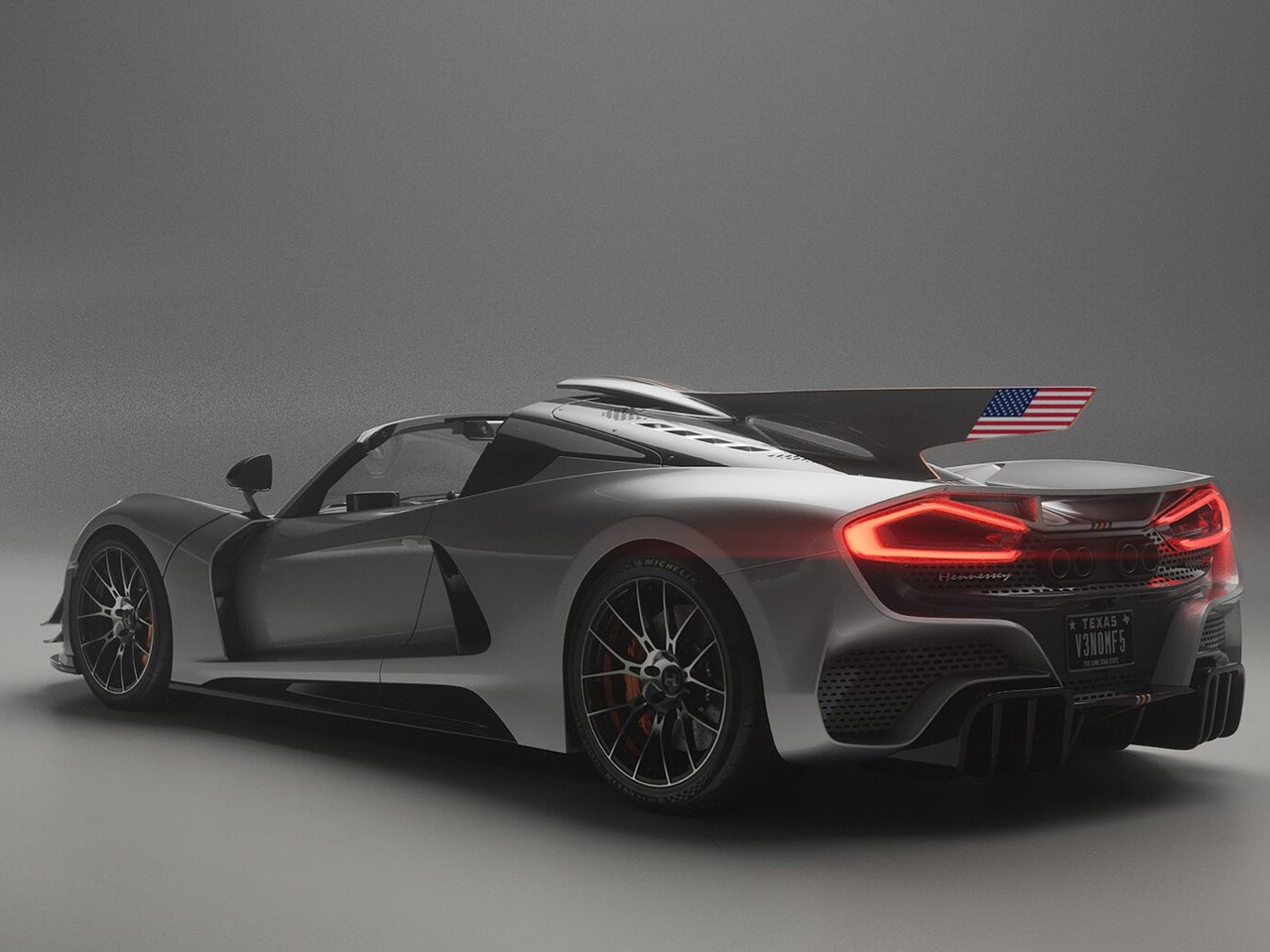
Hennessey Venom F5-M roadster is the fastest manual transmission roadster that purists will love to drive

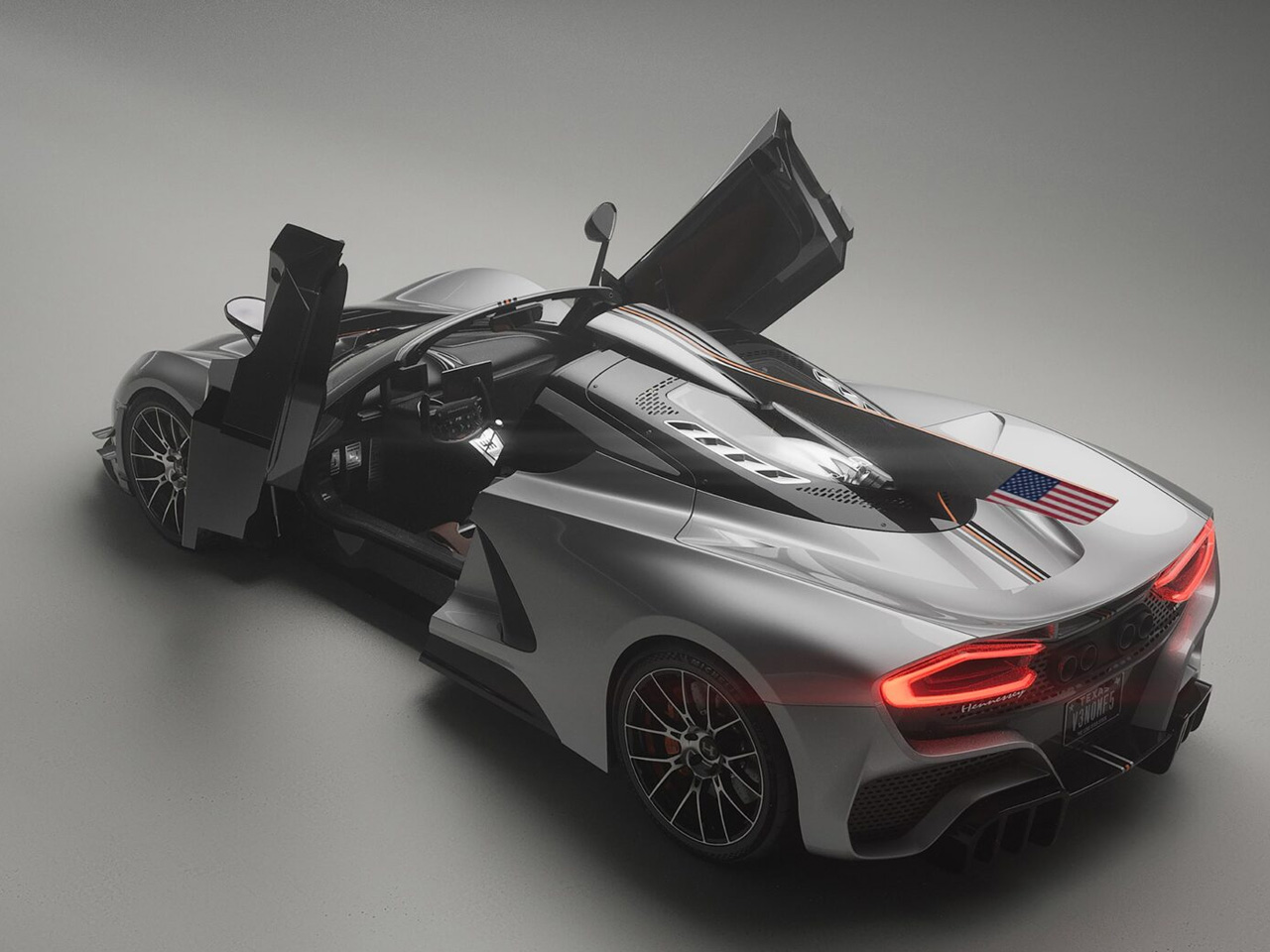
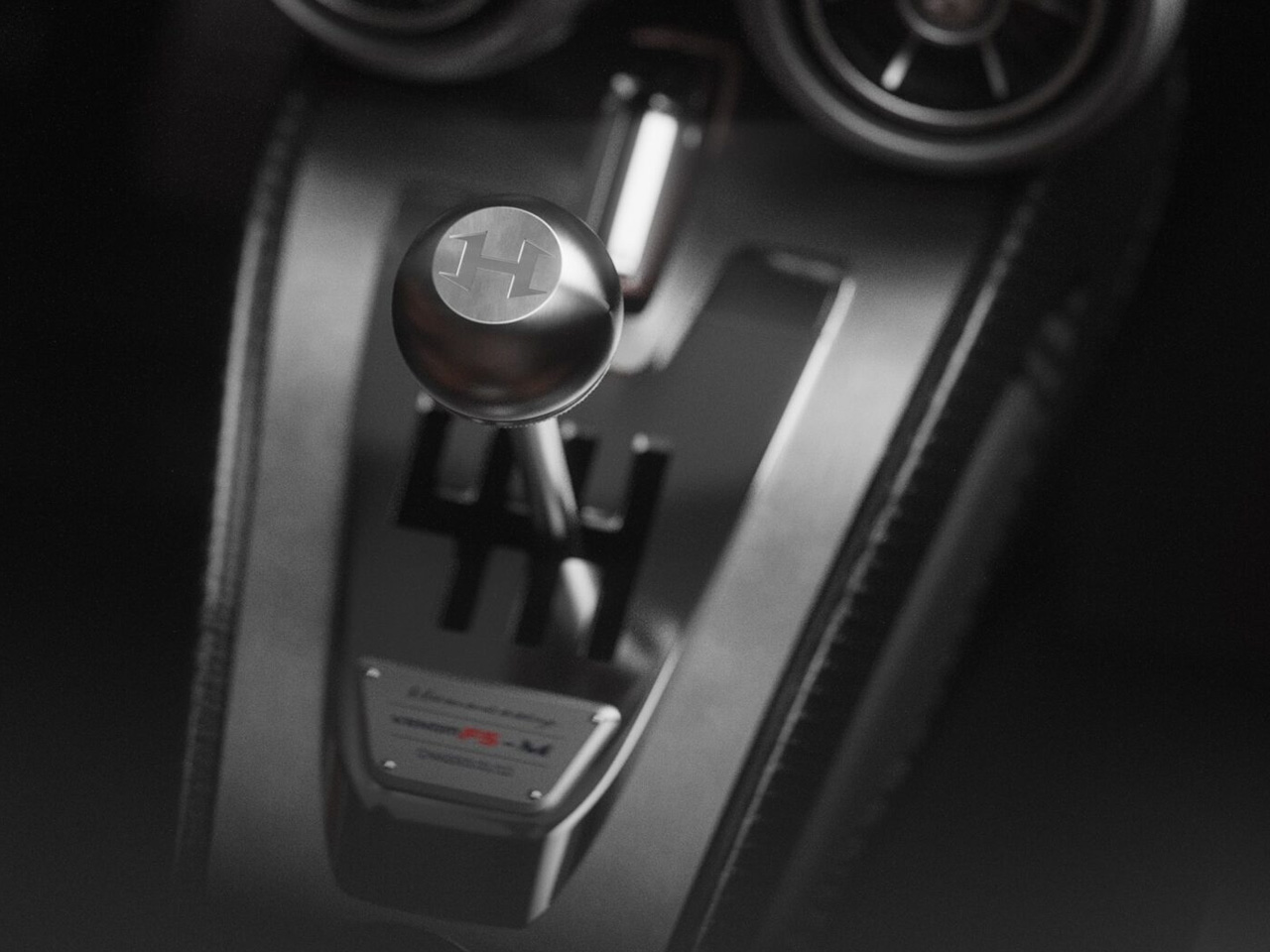
If you’ve got The Need for Speed then Hennessey has created the most powerful manual transmission hypercar for the ultimate adrenaline rush. The Texas-based tuner has introduced the Venom F5-M roadster with a manual gearbox that’s gated. For motorheads who get their kick from something extraordinary, the car comes with a stick shift gear. Infact, this is the first ever hypercar by the brand with manual gearshift option.

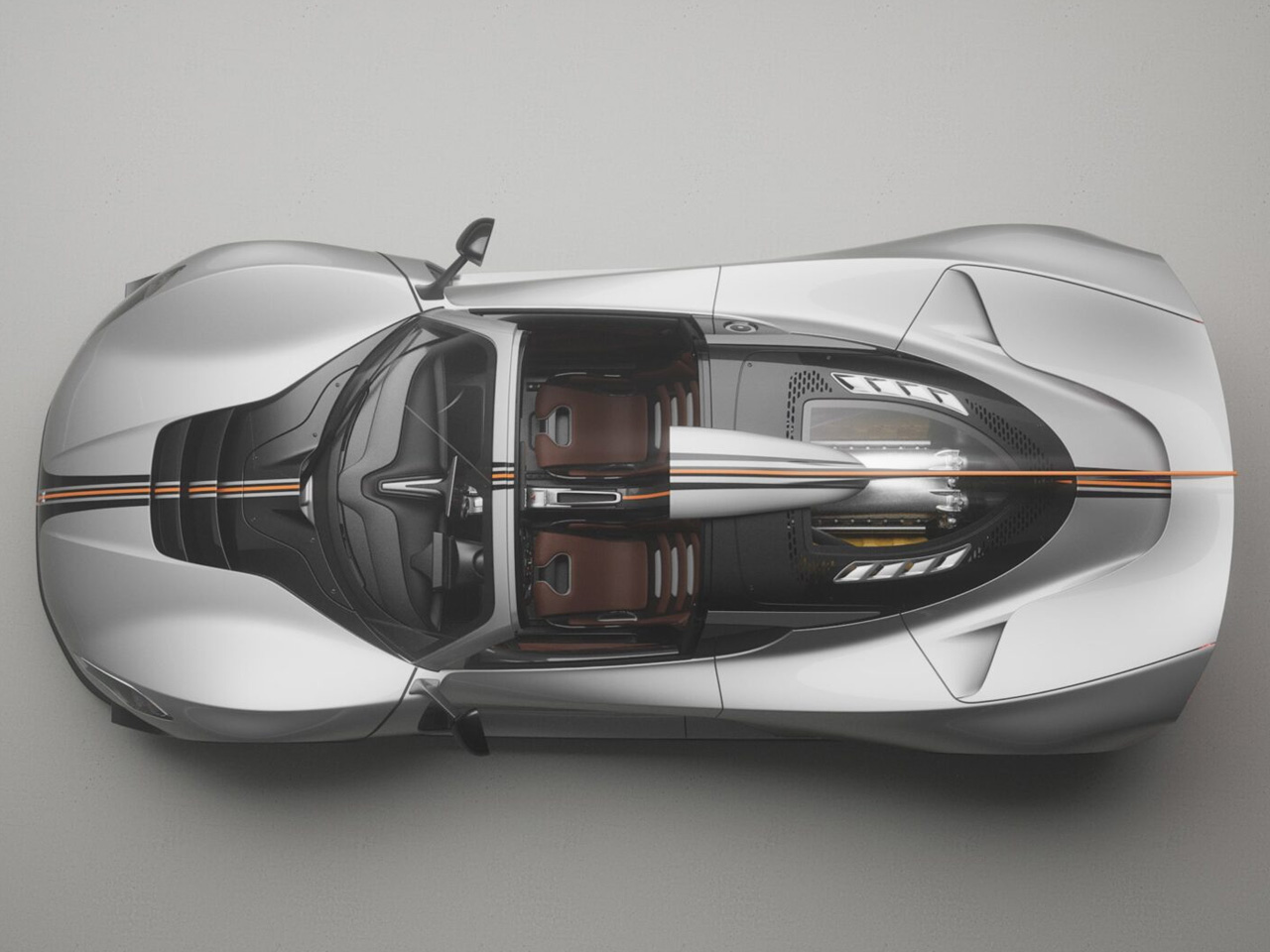
The performance car is based on the droptop roadster revealed recently, and it gets minor tweaks inside out. All the performance capabilities have been retained for peak acceleration and top speed. The speed monster gets an in-house developed twin turbocharged 6.6-liter Fury V8 engine. The M in the name denotes the 6-speed manual transmission gearbox for a very analog driving experience for die hard racing fans.

Designer: Hennessey

According to John Hennessey, the model is a true manual in every sense since it gets a clutch connected to the transmission via a cable. So, no modern day computer controlled interface for smoother gear shifts, which will please purists who want to feel every little mechanical change of the vehicle. The car can generate 1,817hp and 1,617ft-lbs of torque which is very similar to the automatic version. Considering it can hit speeds of 0-6- mph in just under 3.5 seconds, if you have the driving flair to shift gears at the right time, makes it the fastest manual transmission hypercar you can get hands on.

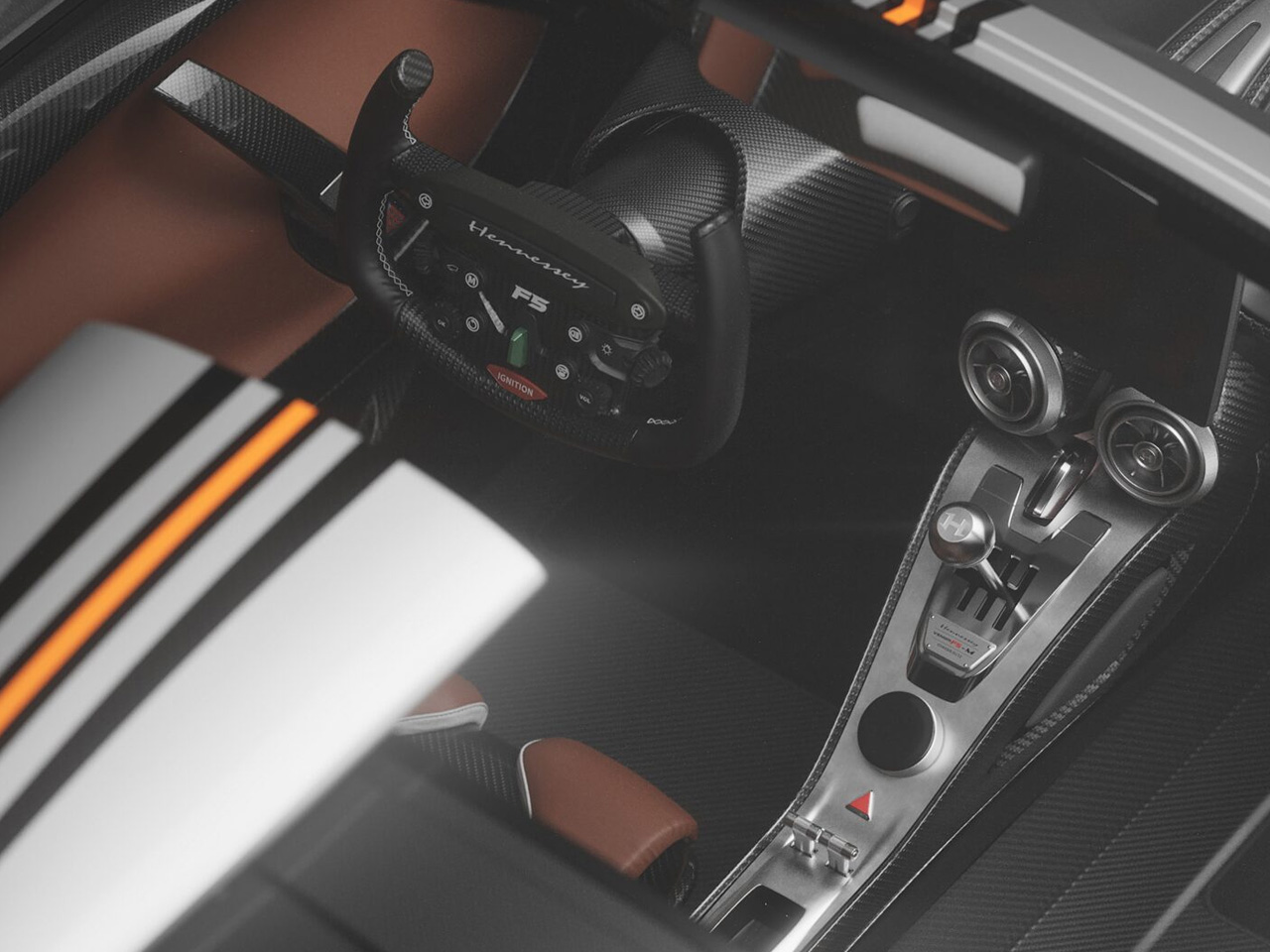
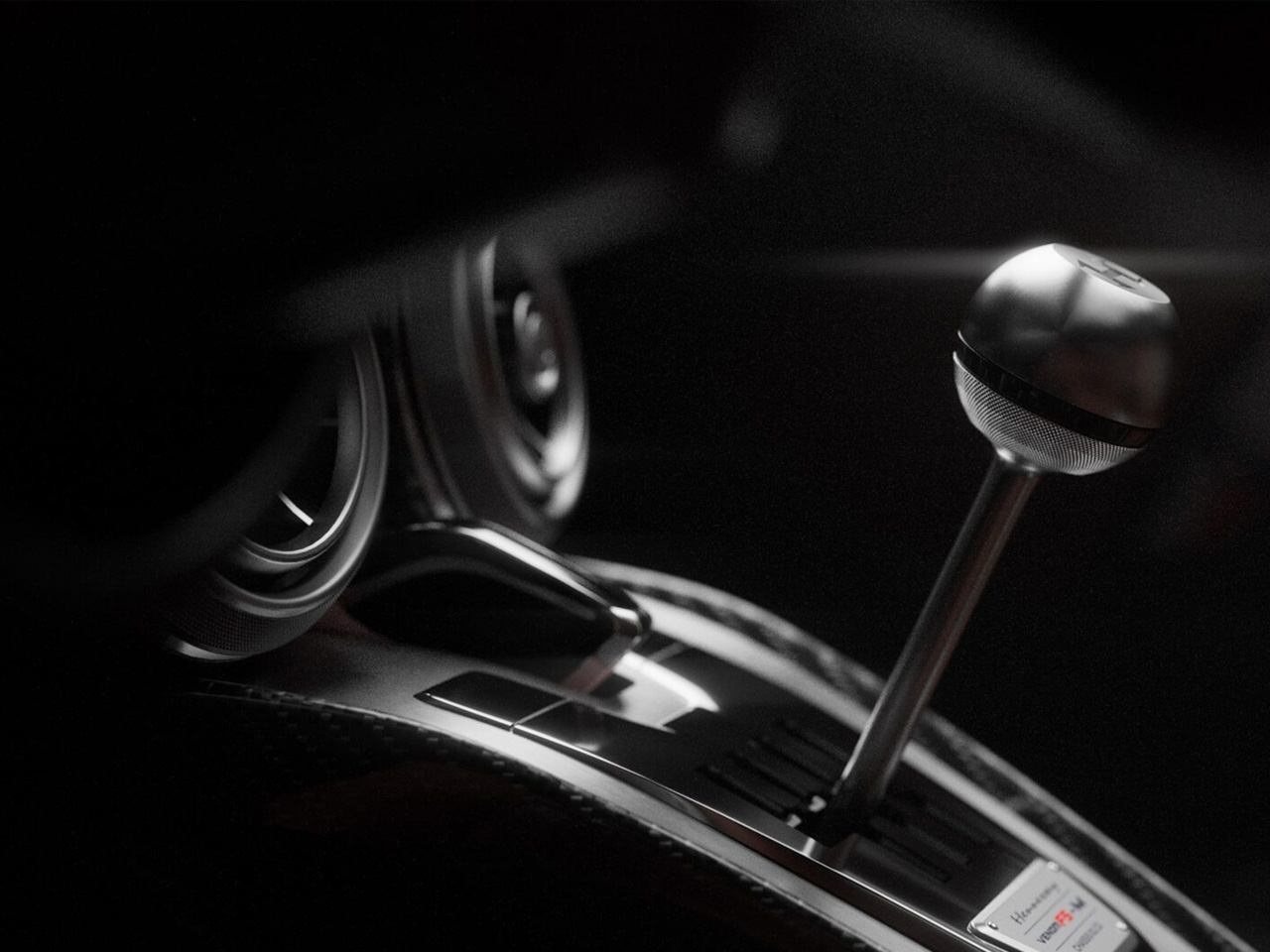
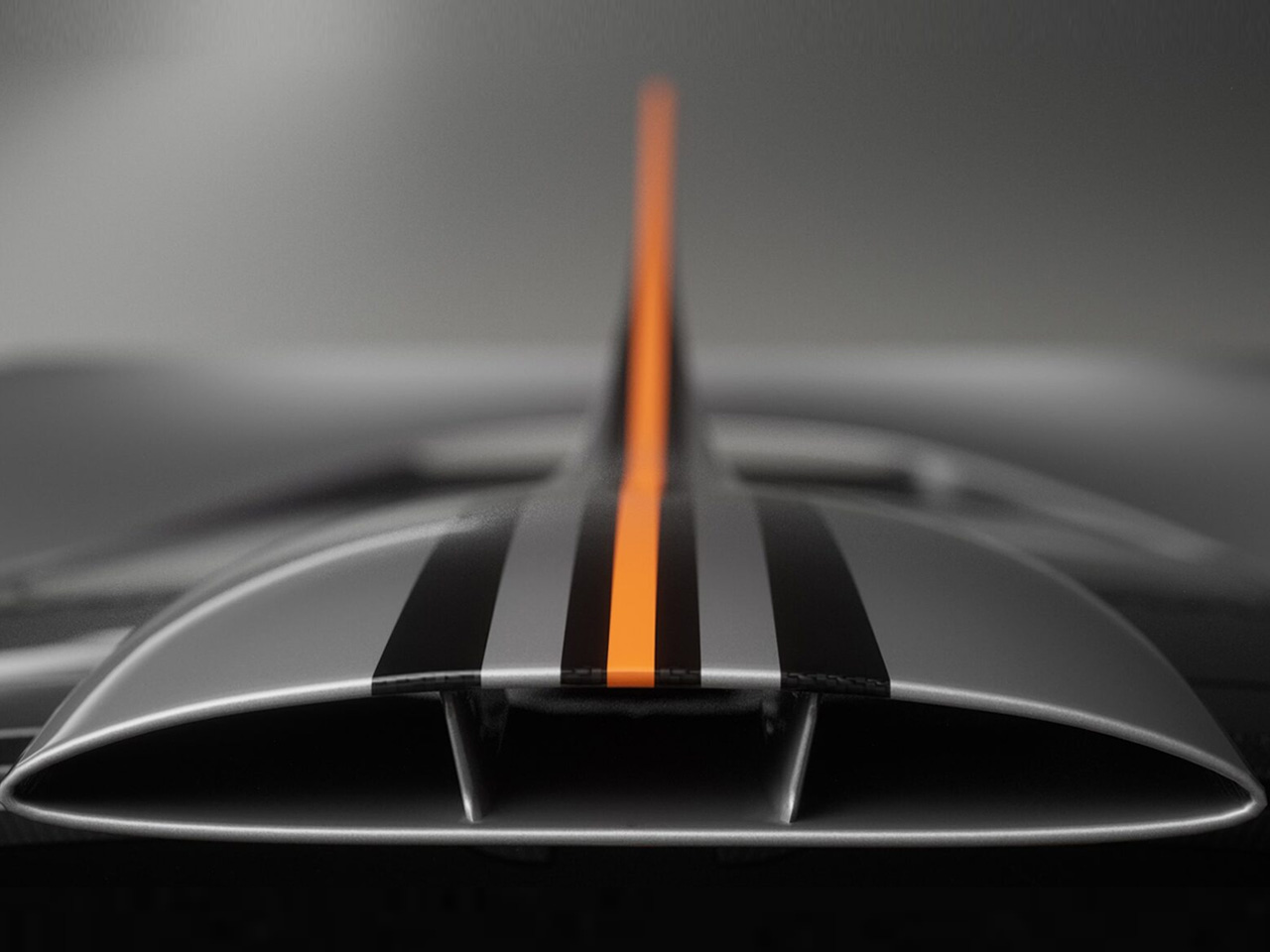
The subtle differences in performance compared to the USA-made version come in the form of aero elements including the carbon fiber bodywork, front canards, and dorsal fin spanning 55-inch from the roof scoop to the rear deck. This helps in achieving stability at top speeds in excess of 300 mph. To make space for the manual transmission, the interiors have also been tweaked. Theirs is an updated central console with horizontal air vents and a redesigned air conditioning control system. Classic car lovers will love the jet-inspired toggle switches for windows positioned behind the carbon fiber shifter and aluminum shift gate.

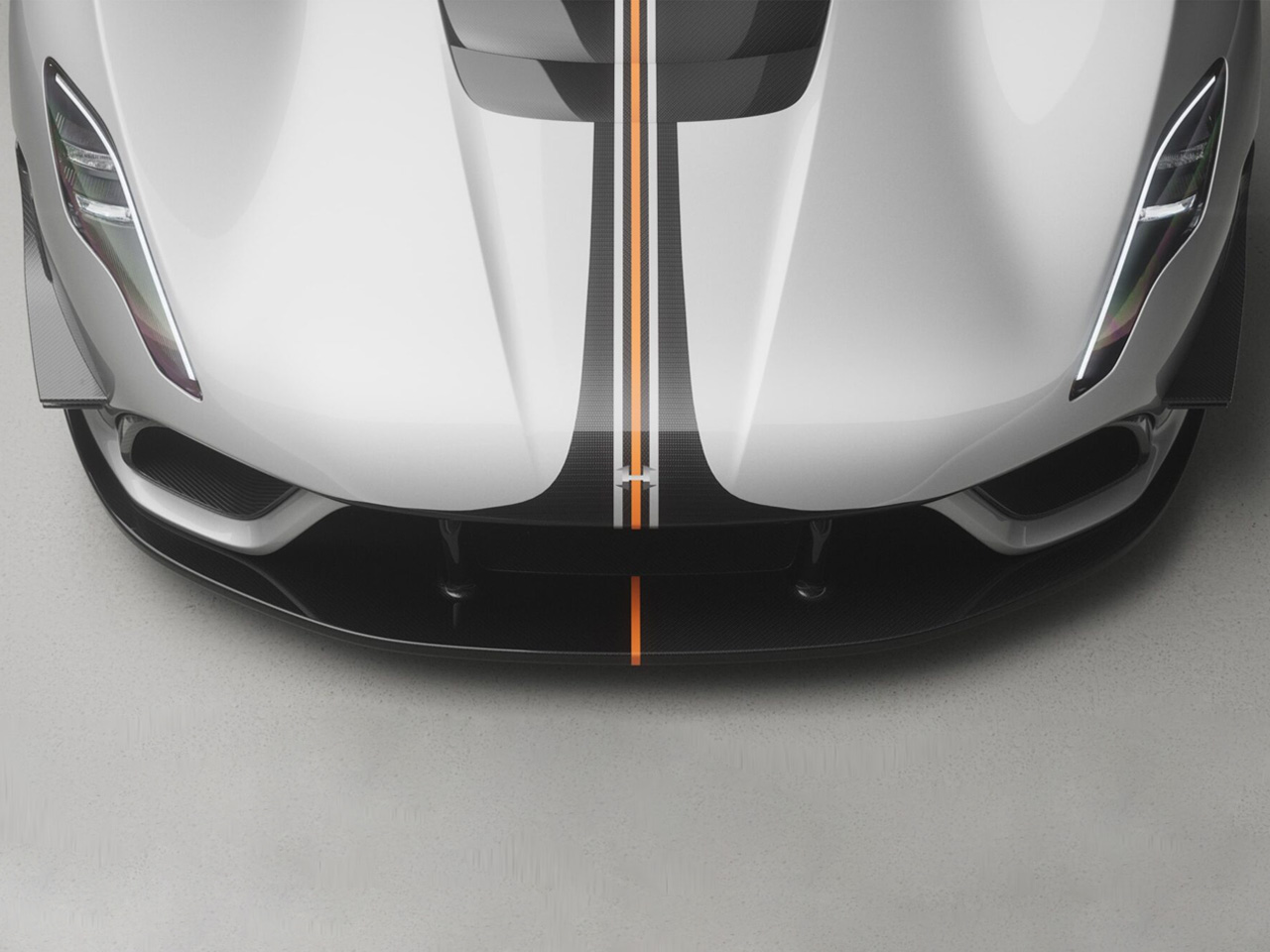
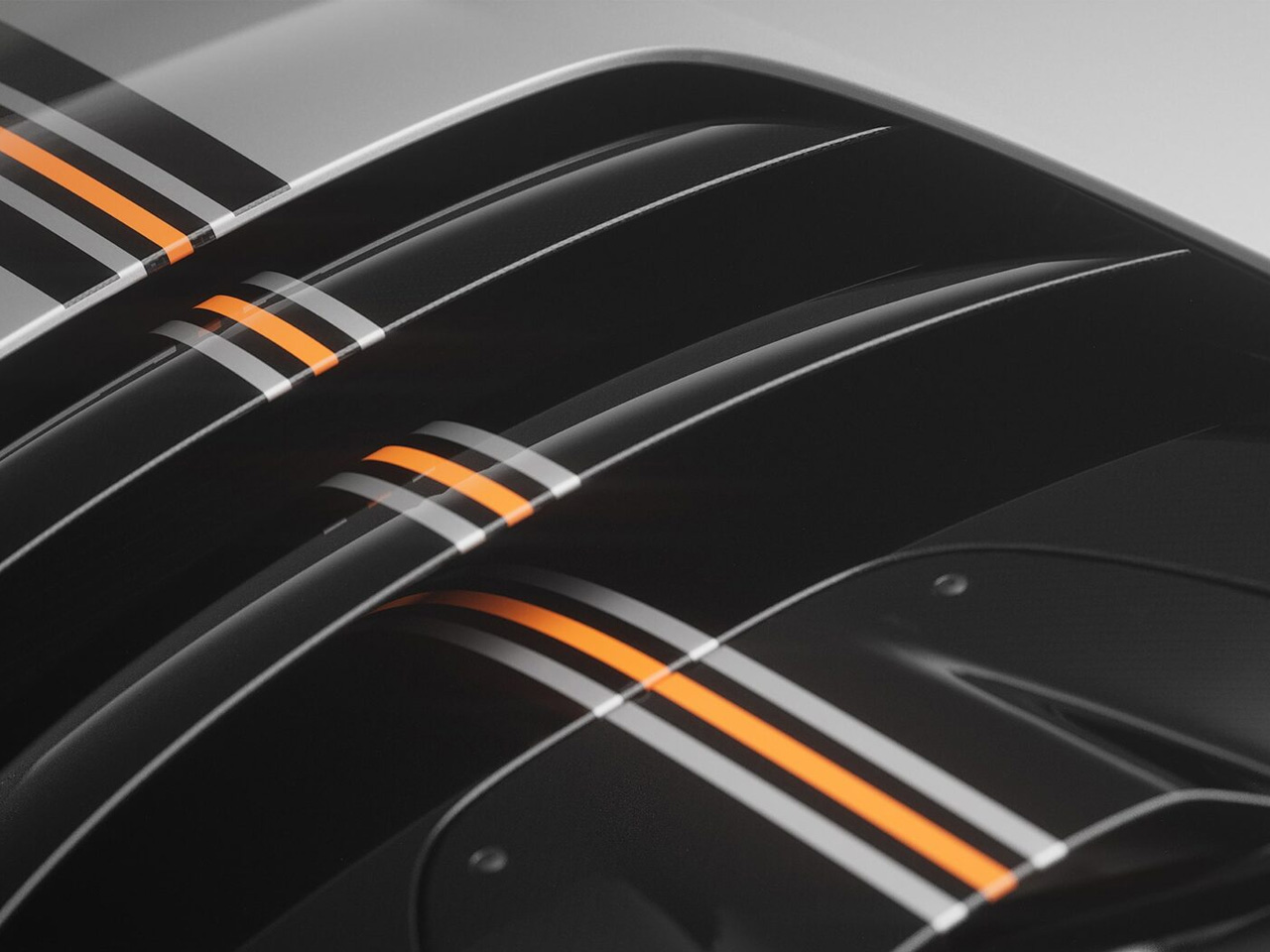
Lucky buyers will also get the privilege to choose the custom livery that pairs the exposed carbon fiber elements to the spine. The selection of bespoke colors will be deleted from the Hennessey configurator once chosen. Such is the exclusivity of this hypercar. It’s not surprising that the Hennessey Venom F5-M Roadster will only be made in 12 examples worldwide. For a passionate car lover who’s got $2,650,000 to spare on his collectibles, this one should be on the bucket list without an iota of doubt.


The post Hennessey Venom F5-M roadster is the fastest manual transmission roadster that purists will love to drive first appeared on Yanko Design.
The Jacob & Co. Bugatti Tourbillon: Where Precision Watchmaking Meets High-Performance Automotive Design

Jacob & Co. and Bugatti blend the precision of watchmaking with the high-performance essence of automotive design in their latest creation. The Jacob & Co. Bugatti Tourbillon Watch showcases the meticulous craftsmanship and innovative spirit of both brands. This watch transcends mere timekeeping, standing as a testament to the pinnacle of luxury and engineering excellence.

Designer: Jacob & Co. + Bugatti

Jacob & Co. and Bugatti: Masters of Precision and Excellence

Jacob & Co., established by Jacob Arabo in 1986, has become renowned for its unique and innovative timepieces. The brand has consistently pushed the boundaries of traditional watchmaking, introducing groundbreaking complications and bold designs. Each watch transcends mere timekeeping, serving as a true expression of art and engineering, crafted with the utmost attention to detail and quality.

Jacob & Co. Bugatti Tourbillon

Their previous collaborations with automotive brands, especially the Bugatti Chiron Tourbillon, highlight their ability to seamlessly merge the worlds of horology and high-performance cars. This partnership has produced timepieces that are both visually stunning and technically advanced, captivating both watch enthusiasts and car aficionados alike.

Synonymous with high performance and luxury, Bugatti has a storied history of producing some of the world’s most advanced hypercars. Known for pushing the limits of speed and design, their vehicles are engineering marvels that combine cutting-edge technology with unparalleled craftsmanship. The latest addition to their lineup, the Bugatti Tourbillon V16 Hybrid, embodies both technological innovation and exquisite design.

Bugatti Tourbillon

Bugatti’s relentless pursuit of excellence is evident in its cutting-edge engineering and luxurious interiors. The new Bugatti Tourbillon V16 Hybrid, featuring a naturally aspirated V16 engine, exemplifies the brand’s drive to push the boundaries of automotive innovation and performance.

Together, Jacob & Co. and Bugatti have created masterpieces that reflect their shared commitment to precision, innovation, and luxury. This collaboration showcases the best of both worlds, resulting in creations that are not only functional but also works of art.

Bugatti Dashboard and Engine Design

The Bugatti Tourbillon V16 Hybrid exemplifies modern engineering excellence, both in its dashboard and engine design. The dashboard integrates multiple analog dials and digital readouts, all crafted with precision. This layout is functional and visually impressive, providing drivers with clear and concise information about the car’s performance metrics at a glance.
Bugatti Tourbillon V16 Hybrid

The analog and digital displays enhance the driving experience by offering comprehensive data in an intuitive format. This blend of form and function highlights Bugatti’s commitment to innovation and quality, ensuring that drivers receive both aesthetic pleasure and practical benefits.

Bugatti Tourbillon V16 Hybrid

At the heart of the Bugatti Tourbillon V16 Hybrid lies a naturally aspirated V16 engine, a true masterpiece of engineering. This engine, unlike its W16 quad-turbo predecessor, is designed for peak performance and efficiency. The meticulous craftsmanship of the engine’s layout and components ensures optimal performance and longevity. The V16 engine, with its 16 cylinders arranged compactly, delivers immense power while maintaining a sleek and aerodynamic profile.

Bugatti Tourbillon V16 Hybrid

The attention to detail in the engine’s construction is evident in every component, from the titanium pistons to the sapphire crystal block. This design not only showcases Bugatti’s engineering prowess but also serves as a visual centerpiece, reflecting the brand’s relentless pursuit of excellence.

Watch Design and Replication Details

The Jacob & Co. Bugatti Tourbillon Watch captures the essence of Bugatti’s automotive excellence, mirroring the engineering marvels of their high-performance vehicles. The watch features a bold and sophisticated black PVD titanium case, measuring 52mm by 44mm. Inside, it houses an intricately crafted engine block made from sapphire crystal, complete with 16 titanium pistons driven by a single-axis crankshaft.

Inspired by the Bugatti Tourbillon V16 Hybrid, the watch incorporates design elements that pay homage to the car’s sleek lines and powerful engine. The durable and lightweight black PVD titanium case ensures it is the perfect companion for the discerning watch enthusiast.

Every detail of the Jacob & Co. Bugatti Tourbillon Watch showcases the meticulous craftsmanship that defines both Jacob & Co. and Bugatti. This timepiece stands as a true statement of luxury and performance, reflecting the high standards of engineering and design synonymous with these iconic brands.

Close-up of the Engine Block on the Watch

This timepiece is truly remarkable for its detailed replication of the Bugatti V16 engine. The sapphire crystal engine block, with its 16 meticulously crafted titanium pistons, mirrors the real engine’s complexity and precision. Every component is crafted to perfection, showcasing an astonishing level of detail.

The sapphire crystal offers a clear view of the engine’s inner workings, much like peering into a miniature version of the Bugatti engine itself. This transparency is visually appealing and highlights the sophisticated engineering behind the watch. The use of sapphire crystal enhances durability and scratch resistance, ensuring the watch remains pristine over time.

Rear View of the Watch Showing the Crankshaft

Turn the watch over, and you’re greeted with the intricate mechanics that make this timepiece tick. The rear view highlights the precision engineering of the single-axis crankshaft. This view really showcases the meticulous craftsmanship that goes into each Jacob & Co. timepiece.

Jacob & Co. Bugatti Tourbillon: caseback

Seeing the movement through the caseback emphasizes the complexity and ingenuity of the design. The intricate gears and mechanisms mirror the functionality of a high-performance engine, drawing a direct connection to Bugatti’s automotive heritage. It’s like having a piece of Bugatti’s engineering marvel on your wrist, in miniature form.
Jacob & Co. Bugatti Tourbillon: movement

Watch on Wrist

When you wear this watch, expect it to command attention. Despite its complexity, the watch remains wearable and stylish. The design is both bold and elegant, making a statement on your wrist without being too flashy.

The watch’s ergonomic design ensures that it sits comfortably, making it suitable for everyday wear. Its sophisticated aesthetics make it perfect for both casual and formal occasions. The black PVD titanium case adds a modern touch, aligning with Bugatti’s contemporary design ethos.

Dashboard-like Display on the Watch

One of the standout features is the dashboard-like display. It mimics the Bugatti dashboard, complete with a 30-second flying tourbillon, retrograde hour and minute indicators, and a power reserve indicator. This design element enhances the watch’s automotive connection, providing a visual link to the Bugatti Tourbillon V16 Hybrid.

The dashboard-like display nods to the car’s interior, blending horological expertise with automotive design. The flying tourbillon, with its rapid 30-second rotation, adds a dynamic visual element. Meanwhile, the retrograde indicators echo the instrumentation found in Bugatti’s hypercars, making the watch as engaging to look at as it is to wear.
Side View of the Watch’s Casing

A side view of the watch reveals design elements directly inspired by Bugatti’s iconic car features, such as the distinctive grille and aerodynamic lines. This meticulous attention to detail reinforces the watch’s strong connection to its automotive counterpart, showcasing a seamless blend of watchmaking and automotive design.

The case’s aerodynamic lines echo the sleek contours of Bugatti’s vehicles, creating a harmonious aesthetic that bridges these two worlds. The robust construction not only provides durability but also ensures longevity. High-quality materials and precision engineering guarantee that the watch withstands daily wear while maintaining its elegant and sophisticated appearance.
Harmony of Craftsmanship

The Jacob & Co. Bugatti Tourbillon Watch and the Bugatti Tourbillon V16 Hybrid both showcase precision and excellence. The watch’s detailed replication of the car’s engine and dashboard highlights the meticulous craftsmanship of both brands. While the watch offers a compact and wearable version of Bugatti’s engineering marvels, the car itself represents the pinnacle of automotive performance and design.
Together, they create a harmonious blend of luxury and innovation. The synergy between the watch and the car is evident in every detail, from the intricate engine replication to the dashboard-inspired display. This collaboration underscores the shared values of both brands, highlighting their dedication to pushing the boundaries of their respective fields. The result is a timepiece that tells a story of precision, luxury, and unparalleled craftsmanship.
The attention to detail in both the watch and the car speaks volumes about the dedication of Jacob & Co. and Bugatti to their crafts. Every aspect, from the tiny titanium pistons in the watch to the powerful V16 engine in the car, is executed with precision and care. This level of craftsmanship is what sets these two brands apart in their respective industries, making their collaboration something truly special.

The post The Jacob & Co. Bugatti Tourbillon: Where Precision Watchmaking Meets High-Performance Automotive Design first appeared on Yanko Design.