Compact gaming tablets often struggle to balance performance with portability, but the Lenovo Legion Tab Gen 5 takes a significant step forward in this category. As highlighted by ETA Prime, this 8.8-inch device features a 165 Hz IPS display with over 600 nits of brightness, making sure vibrant visuals even in bright settings. Powered by […]
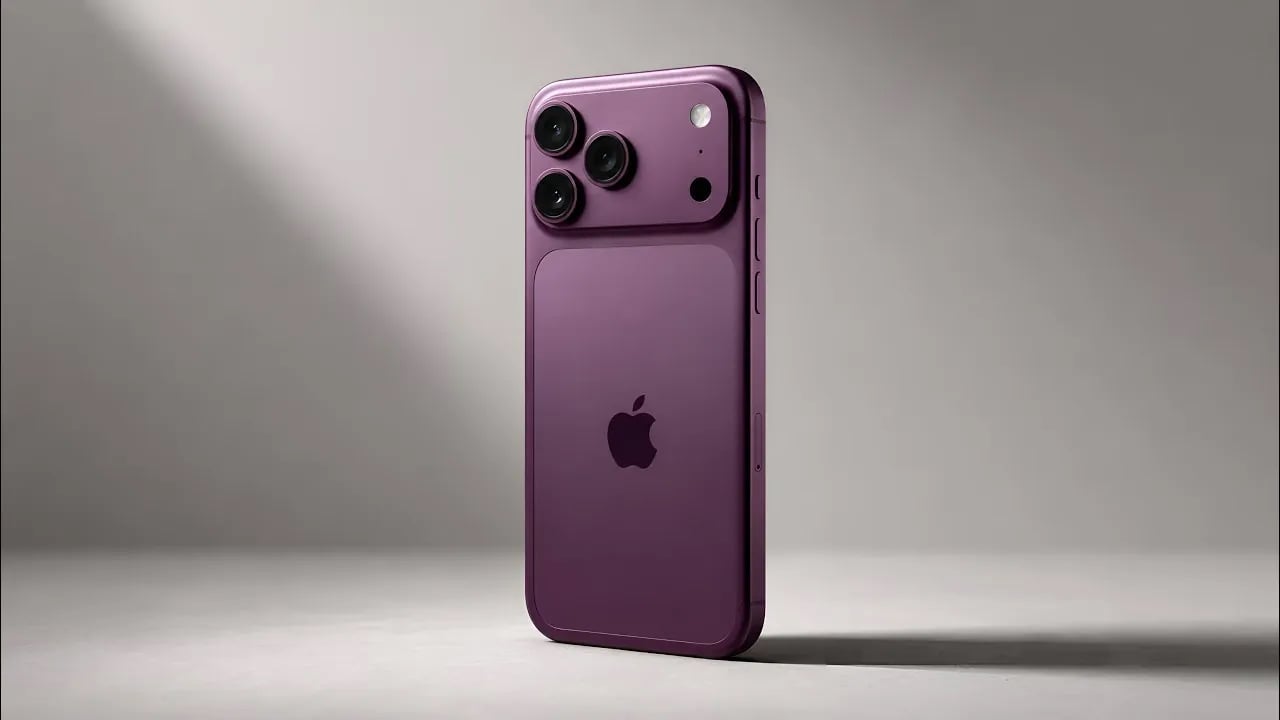
Apple’s 2026 iPhone lineup introduces two flagship models that redefine its approach to premium smartphones: the iPhone 18 Pro and the iPhone Ultra, Apple’s first foldable device. While the iPhone 18 Pro focuses on refining established features, the iPhone Ultra ventures into new territory with its foldable design. Both models reflect Apple’s commitment to innovative […]
Samsung has rolled out a noteworthy update to its Phone app, incorporating advanced AI-driven features designed to enhance the user experience for millions of Galaxy smartphone owners. This update, which includes tools such as call screening, AI call assistance and text-based call handling, is being gradually released through the Galaxy Store. If you own a […]
Apple’s latest iOS 27 update introduces over 200 new features, redefining how you interact with your iPhone. With a focus on advanced AI capabilities, enhanced customization, and improved app integration, this update transforms your device into a more intuitive, personalized, and efficient tool. Whether you’re a casual user or a tech enthusiast, iOS 27 offers […]
The modern smartphone has set a remarkably high baseline for video quality, and its built-in microphone is surprisingly capable for casual use. But for creators who need their voice to cut through ambient noise, reach across distance, or maintain consistent clarity on the move, phone audio quickly reveals its physical limits. This is the complex mindset of the budget-conscious creator: they won’t spend money on a dedicated camera unless it’s dramatically better than their phone, and they certainly won’t carry a separate microphone unless it delivers a sound that is fundamentally impossible to capture with the device already in their pocket. It has to solve a problem, not just offer a marginal improvement.
This is the precise challenge the Saramonic Air SE is designed to meet. It justifies its space in a creator’s bag by breaking the physical limitations of a smartphone. Its core function is to get the microphone off the camera and place it exactly where it needs to be: clipped discreetly to a collar, just inches from the speaker’s mouth. Thumb-sized and weighing just 5 grams, the mic wears almost unnoticed on camera. It operates across 200 meters of wireless range, delivering crystal-clear, detailed 48kHz/24-bit audio while an AI engine actively removes up to 40dB of background noise. Snap it back onto the charging bar and it instantly becomes a handheld mic, ready for interviews. At $49 for the USB-C version, it’s positioned squarely as an entry-level system built for mobile-first creators and content teams who need professional capabilities without the professional price tag.
The impossibly compact design makes it a marvel of engineering but also a testimony of how much discreetness matters to Saramonic’s core audience. The transmitter measures 28.5 x 17 x 13.4 millimeters, roughly thumb-sized, and weighs 5 grams. That makes it among the most compact in its class—significantly smaller than most entry-level wireless systems. When clipped to a collar or shirt, it genuinely disappears on camera, solving one of the oldest visual compromises in video production. The modular charging bar is the real design story here, sized like a lighter and engineered to magnetically house two mics and a receiver for easy carry. Everything you need for a two-person recording setup fits in your pocket. Dock a transmitter onto the bar, power it on, and it doubles as a handheld interview mic. Two form factors, one object, no adapters or workflow interruptions. The magnetic connection is strong enough that the bar feels natural to hold, weighted specifically for that second use case. Saramonic calls it “Clip It. Hold It.” and the simplicity of that statement captures exactly what makes this system different.
The Air SE’s noise cancellation represents Saramonic’s first-ever true AI system, trained on over 700,000 noise samples across 20,000 hours of audio. Unlike traditional ENC (electronic noise cancellation), which only handles steady ambient sounds like air conditioners or distant traffic, this AI engine identifies and separates voices from complex or sudden noise in real time. It runs in two modes: Weak at -15dB for natural-sounding environments where you still want some atmosphere, and Strong at -40dB for genuinely loud scenes like street shoots or crowded events. A single press on the receiver toggles the feature on and off. The companion app handles three EQ presets (Vocal Boost, High Boost, and Bass Boost) that let you fine-tune your vocal tone effortlessly, plus mono or stereo output selection and gain control. It’s plug-and-play simplicity with easy controls, approachable enough that a beginner can use it without touching settings, and flexible enough that someone with audio experience can dial in exactly what they need.
The technical fundamentals are solid in ways that matter for real-world use. The Air SE captures 48kHz/24-bit high-resolution audio with an 80dB signal-to-noise ratio and 120dB max SPL, preserving details with an ultra-low noise floor. The built-in limiter with -12dB safety track prevents distortion in unpredictable situations, recording a backup channel the whole time. If your main track clips because someone suddenly shouts or laughs too close to the mic, the safety track has you covered. The transmitter runs for about 6 hours on a single charge, and with charge-while-record capability through the modular bar, you get up to 28 hours of total runtime. That’s enough for a full day of street interviews or event coverage. The receiver draws power directly from your phone via USB-C or Lightning, so there’s no separate battery to manage. The plug-and-play design means seamless smartphone use from the moment you connect.
Saramonic is offering two configurations – the Air SE-01 at $49 includes a USB-C receiver and works with modern iPhones, Android devices, computers, and select action cameras like the DJI Osmo Pocket 3 and DJI Action 4. The Air SE-02 at $69 adds a Lightning receiver for older Apple hardware. Both kits include two transmitters, the charging bar, furry windshields, magnetic clips, a carry bag, and a USB-A to USB-C cable. That’s a complete field recording setup in one box, no additional purchases required. Competitors like the DJI Mic 3 and Hollyland Lark systems start around $150, making the Air SE’s price positioning genuinely aggressive for mobile content creators, streamers, and interviewers who need affordable wireless audio with outstanding value.
The Air SE is available now through Saramonic’s official store with free worldwide shipping, a 15-day return window, and a 2-year warranty. For creators who have been making do with phone audio and wondering if a dedicated wireless mic is worth the investment, this is a system designed to answer that question definitively. Pure, natural-sounding voice with powerful noise cancellation, ultra-light portability, and broad compatibility with mainstream smartphones and tablets, all in a package that fits in your pocket and costs less than most creators spend on a single camera accessory.
Somewhere out there is a version of you who was eight years old in 1992, watched Cyclops fire an optic blast through a Sentinel’s chest on Saturday morning television, and immediately needed that visor on their face. That version of you did not get it, because it did not exist, because the toy industry of the early 90s was not making premium LED light-up 1:1 scale roleplay props for children who deserved them. That version of you had to use their imagination, which is a polite way of saying they held a ruler over their eyes and made beam sounds with their mouth in the backyard. Adult you, the one with income and a deep and slightly embarrassing knowledge of X-Men lore, has finally been handed the thing that child deserved. The tragedy is that you are no longer a child. The consolation is that you are also no longer supervised.
The Marvel Legends Series X-Men ’97 Cyclops Premium Roleplay Visor arrives July 1, 2026 at $89.99, and Hasbro built it for exactly that person. The 1:1 scale yellow shell curves across the full width of the face, the recessed red lens sits in a slot that gives the sculpt genuine mechanical credibility, and the LED optic blast effect, activated by a side dial with beam-width control via double tap, delivers the one feature no 90s toy could have managed. Spring-loaded ear pieces and a swappable nose piece handle fit across different face geometries. A removable display stand and colored lens insert handle the dignified adult shelf-display use case, which is how most of us are going to justify this to ourselves and to anyone who notices it on our desk.
Cyclops’ visor is one of the most recognizable accessories in the Marvel universe precisely because it reads as functional rather than decorative, a containment device with a job to do, engineered to hold back something genuinely dangerous. Translating that into a wearable prop means balancing cartoon faithfulness with enough physical presence to feel premium at $89.99. Looking at the product images, Hasbro threaded that needle well. The gloss yellow shell has a sculptural confidence to it, the kind of clean, rounded geometry that echoes the X-Men ’97 animation without tipping into caricature. The red lens is properly recessed within the frame rather than sitting flush, which gives the whole thing a layered, architectural quality that cheaper props almost always skip. The circular activation dial on the temple is prominent without being ungainly, and the interior reveals a dark gray structural frame that makes the thing feel engineered rather than hollow.
The LED effect is truly the centerpiece. A single button press illuminates the lens to simulate the optic blast charging up, and the double-tap beam-width adjustment is a detail that will mean everything to the right buyer, the one who already knows that Cyclops can narrow his blast for precision targeting or open it wide for area suppression. Hasbro clearly knows who is reading the spec sheet. The LEDs auto-off after two minutes, which is a practical battery-conservation decision that also means you will be pressing that button approximately forty additional times per session just to keep the glow going. This is a feature, not a flaw.
The X-Men ’97 animated series, which premiered on Disney+ in 2024 as a direct continuation of the beloved 1992 original, gave Cyclops one of his strongest character arcs in decades, and the show’s Emmy win confirmed what fans already knew: this IP still has serious cultural weight. Hasbro releasing this visor in 2026 is timed well, catching the long tail of that cultural moment while the emotional investment is still warm. The Hulk Hands set the bar for what a Marvel roleplay prop could become in the broader cultural imagination, but this visor is aimed at a more specific and more serious buyer, one who wants something that works as cosplay, as a Halloween costume anchor, and as a display piece simultaneously.
At $89.99, the Cyclops visor sits in that precise pricing zone where adult collectors can rationalize the purchase and children cannot access it without a parent’s help, which is either poetic justice or the cruellest possible joke depending on how old you were in 1992. You can pre-order it on Amazon now. Your eight-year-old self would be furious that it took this long. Buy it anyway.
The tiny house movement has long promised a life unburdened by excess — but few models deliver on that promise as quietly and confidently as the Kanuka by Tiny Timber Homes. Named after a native New Zealand tree, the Kanuka is a compact dwelling that earns its place not through spectacle, but through craft, warmth, and a clear design philosophy that puts livability above everything else.
Founded in 2014 by craftsman Phil Edwards, Tiny Timber Homes has spent over a decade refining what it means to build small without building less. The Kanuka is arguably the clearest expression of that ethos — a home that feels considered at every turn, from the choice of materials to the way it engages with the landscape around it.
Sitting on a triple-axle trailer, the Kanuka measures 8.1 meters (26.5 ft) long and 2.6 meters (8.5 ft) wide — compact, but not cramped. Its exterior pairs durable metal cladding with warm timber accents, a combination that manages to feel both modern and rooted in something older. What sets the façade apart is its dual-door design: two glass entry doors open the interior directly to the outside, blurring the line between indoor and outdoor living in a way that larger homes often fail to achieve. Multiple windows reinforce the openness, pulling in natural light and keeping the interior feeling airy despite the tight footprint.
Inside, the Kanuka leans into a Scandi-inspired aesthetic — clean lines, natural materials, warm tones, and a timber-lined ceiling that gives the space genuine coziness rather than the clinical minimalism that plagues so many compact interiors. The layout is a simple one-loft configuration, well-suited to a solo resident or a couple, though a convertible couch in the living area can stretch capacity to four when needed. The kitchen is functional and well-appointed, while the bathroom — accessed through a sliding barn door — keeps things clean with a black-and-white palette and modern fixtures.
Throughout, locally sourced timber does the heavy lifting, lending the Kanuka the warmth of a rustic cabin without sacrificing the precision of modern construction. Tiny Timber Homes has always leaned into sustainable building practices, and the Kanuka reflects that commitment at every level — the materials, the craftsmanship, and the intentional restraint in the design itself.
The Kanuka doesn’t try to be everything. It is a home for people who have already decided what matters — and who want a space that reflects that clarity without apology. In a market increasingly cluttered with over-designed micro-dwellings, that kind of honesty is quietly radical.
If you told most architects to design a residential gate, you’d probably end up with something clean, understated, and entirely forgettable. A nice water feature, maybe. Some carefully shaped hedges. Wutopia Lab looked at the same brief and decided the answer was a whale. A full, mid-leap, cobalt blue whale, placed at the entrance of a residential complex in Shangqiu, Henan, China. It is one of the most confidently strange things built in recent memory, and I mean that as the highest possible compliment.
The project is called Whale Gate, and it serves as the entrance structure for Golden Island, a development by Jinsha Group. The masterplan for the entire site is built around an archipelago concept, with residential buildings that appear to float across a landscape of water and greenery, as if scattered across a private sea. The client’s stated goal was to create the feeling of entering a different world when residents came home. Wutopia Lab took that mandate seriously, perhaps more literally than anyone expected.
Architect Yu Ting froze the exact moment a whale breaches the ocean surface and translated that image directly into architecture. The result spans 242 square meters and weighs sixty tons, covered in 1,170 double-curved aluminum panels, not one of which is identical. The exterior is that deep, specific cobalt blue that reads instantly as oceanic. The entry point cuts through the belly of the structure as a golden vertical opening, giving the whole composition a two-act quality: the whale from the outside, a golden threshold from within. Perforated white aluminum panels above suggest water spray mid-exhale. It works on every level it is trying to work on, and the total absence of subtlety feels like a feature rather than a flaw. Most architecture of this scale tries to keep its options open. This one doesn’t.
What gets me about Whale Gate isn’t the strangeness of it, though that’s certainly part of the appeal. It’s the clarity of conviction behind it. The design doesn’t hedge. There’s no half-measure where it almost looks like a whale but could also be read as a biomorphic abstraction. Wutopia Lab made an animal, and they committed. The studio has been explicit that symbolism is a function, that arriving home deserves the kind of architecture willing to acknowledge what that moment actually means to people.
That position is worth sitting with. So much of what gets labeled “landmark architecture” in residential design is really just scale. Big things that feel important because they are big. Whale Gate earns its presence differently. The structure runs on a six-layer construction system with nearly 4,000 individual components, and every steel and aluminum member was custom-fabricated to account for varying curvatures and torsions across the form. The engineering involved in making a sixty-ton whale look like it’s mid-leap is genuinely extraordinary. But the engineering serves the story, which is the right order of operations.
There’s also a viewing platform at the top, accessible exclusively to residents via a golden staircase that climbs through the whale’s head. From up there, the entire compound unfolds below: water, cypress trees, buildings still under construction. The platform transforms the gate into something more than a threshold. It’s a place that belongs specifically to the people who live there, a reward for the commute home, a brief moment of elevation and perspective. One that quietly asks you to look at where you live and actually feel something about it.
I know biomorphic architecture has a complicated history of landing closer to spectacle than to substance. Plenty of “iconic” gateway designs end up aging like novelty; the initial wow gives way to “why, though?” within a decade. Whale Gate sidesteps that trap because the symbolism isn’t arbitrary. The whale connects to the water, the water connects to the archipelago layout, and the archipelago connects to the mythological idea of arriving at an island realm. The logic holds all the way down.
Whether or not you’d want to drive through a whale every morning is a fair question. But few people would argue it’s worse than a security booth and a speed bump.