How waterproof are AirTags? Here’s what to know
AirTags end up attached to all kinds of important items, and sometimes those items get wet. Let's talk through what to expect.
Most laptop sleeves are built around a simple promise: keep the bad stuff out. Padded walls, tight zippers, and water-resistant fabrics form the standard playbook for protecting a device on the move. That approach works until it doesn’t, because moisture doesn’t always announce itself. It seeps through aging seals, collects inside ports, and builds up from humidity alone, long before any obvious wet encounter has even occurred.
The UAG 16-inch Ultimate Laptop Sleeve with DRYOUT® Active Moisture-Removal Technology treats that gap as its entire reason for existing. Rather than focusing only on keeping moisture away, it’s built to actively remove it after exposure has already happened. It’s a fundamentally different premise for a laptop sleeve, and one that makes more sense given how unpredictable daily carry actually is.
Designer: UAG (Urban Armor Gear)
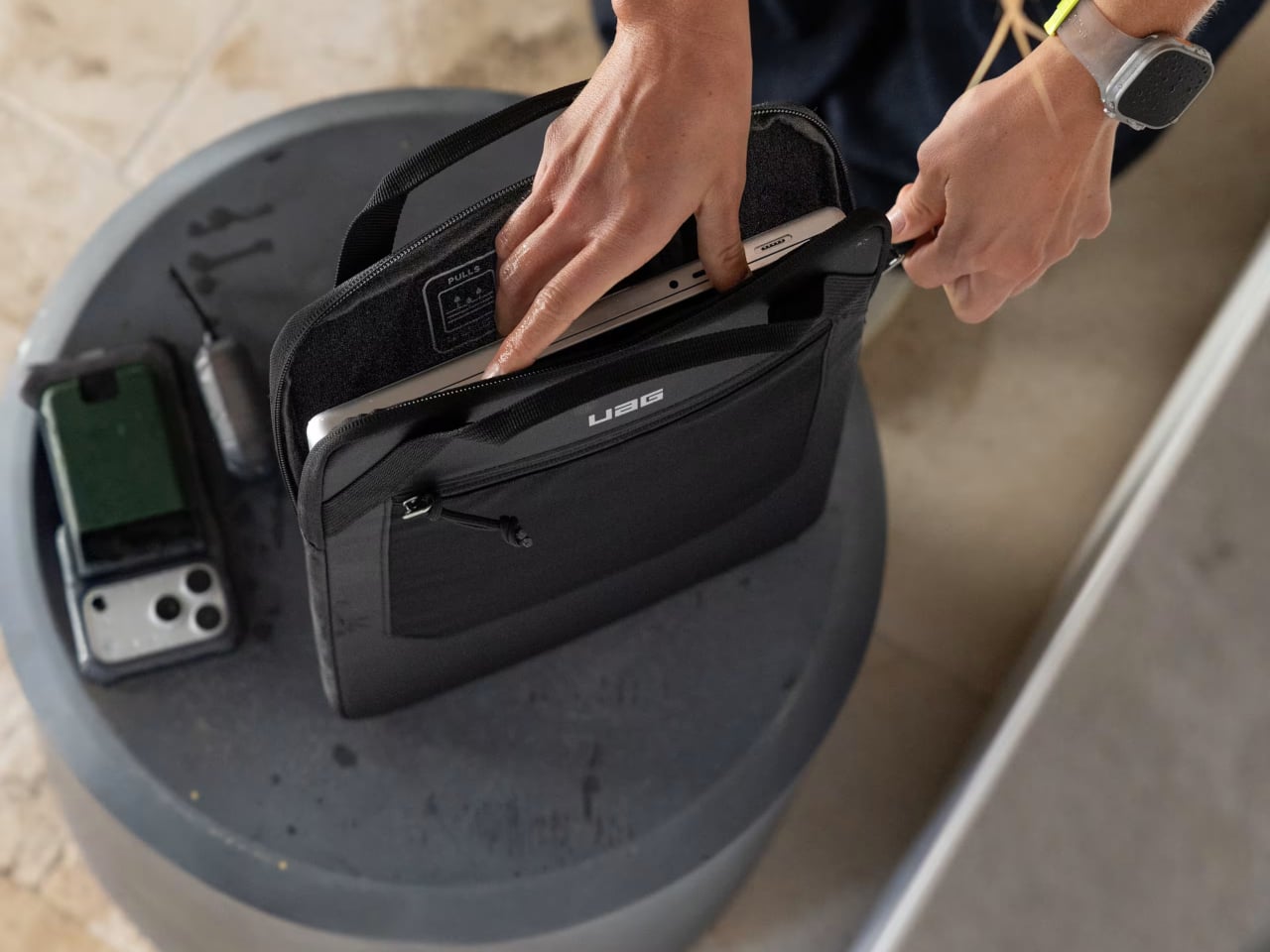
DRYOUT® is the patented technology woven into the sleeve’s lining, and it works more actively than the name suggests. Rather than simply blocking moisture, it pulls it from the device directly into an absorbent core where it’s trapped until the panel resets. Sunlight, direct heat, or forced airflow recharges the system, making it reusable. Independent testing puts its absorption capacity at more than 10 times that of rice.
What that means in practice is that the sleeve doesn’t stop working the moment the threat passes. Slide a damp laptop in after a downpour, or a condensation-covered device after moving between climates, and the lining starts drawing out moisture from ports and seams that still hold water long after the surface looks dry. It’s dealing with moisture that conventional bags, by design, can’t reach.
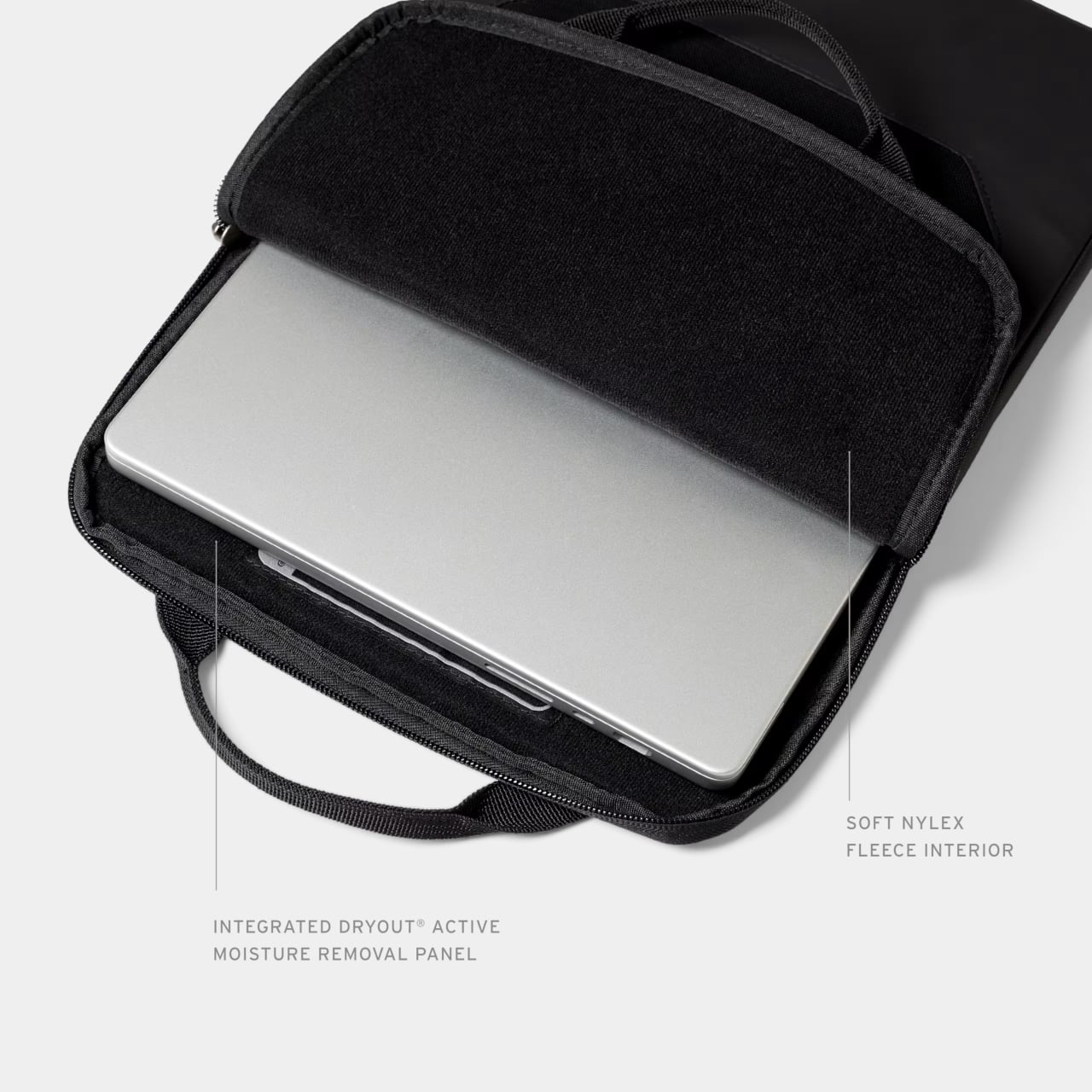
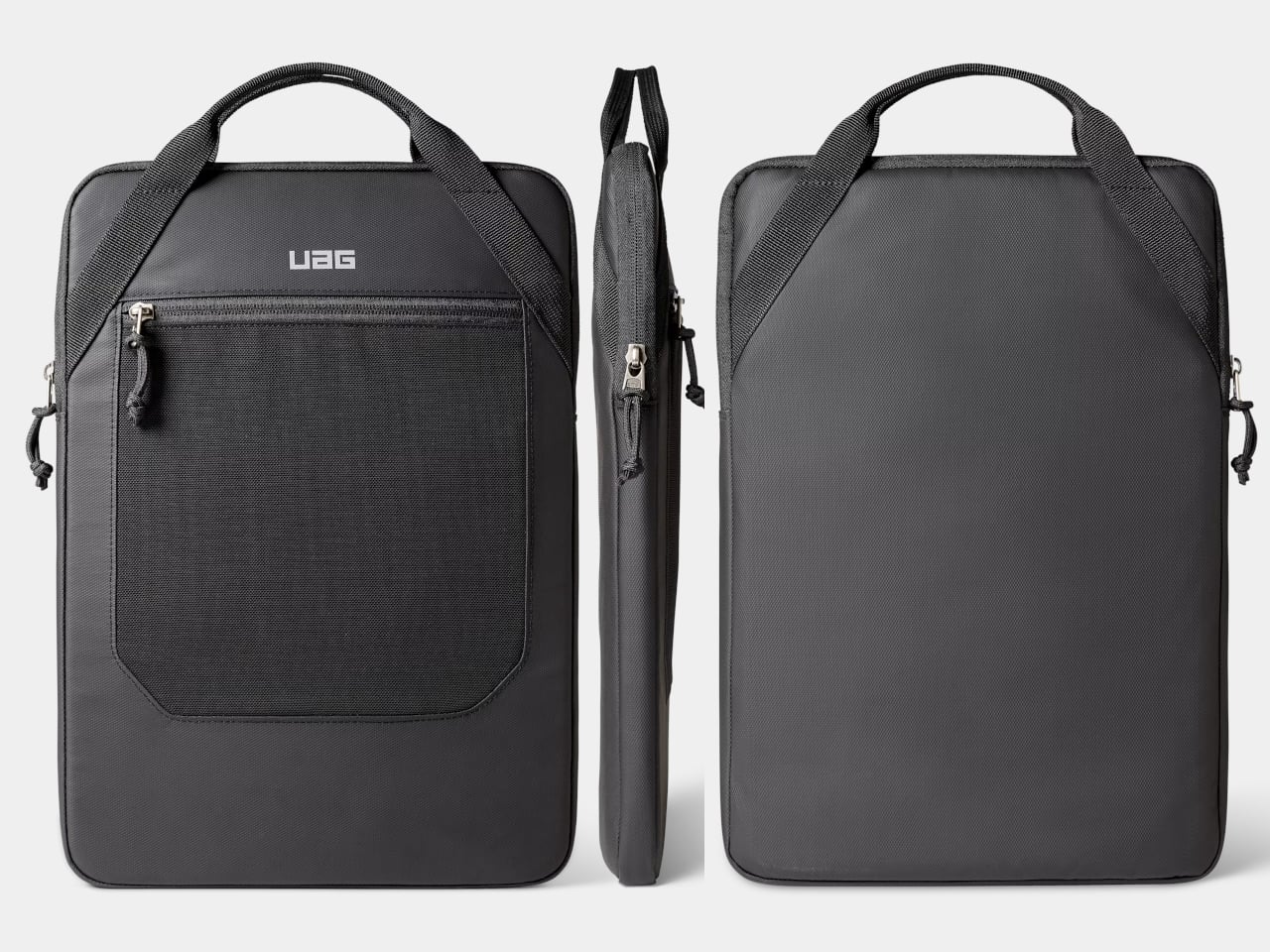
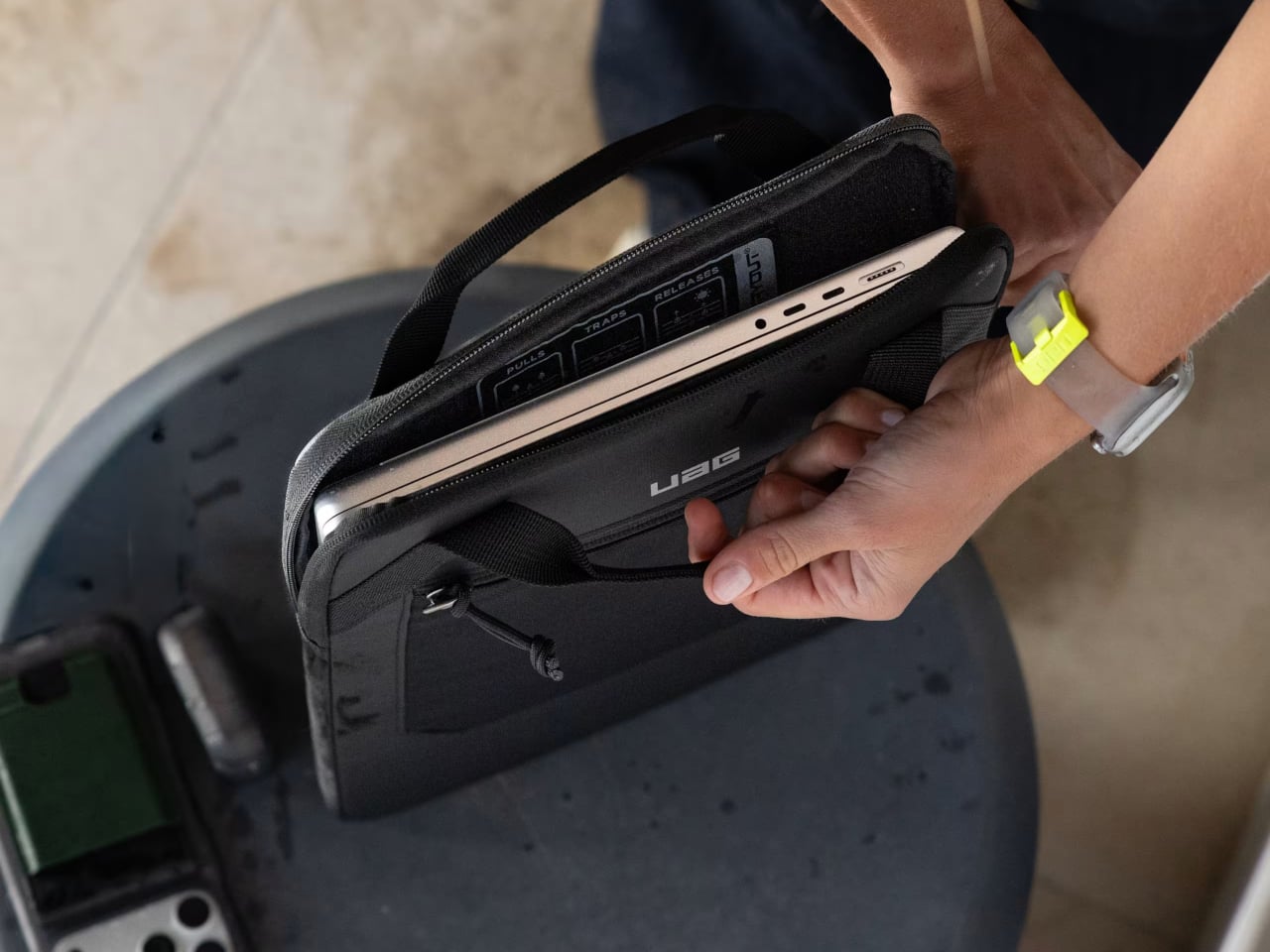
The sleeve doesn’t neglect the physical side either. A 600D PU-coated exterior houses an Atilon foam layer and a soft Nylex fleece interior, handling impacts and scratches the way a rugged sleeve should. It accommodates laptops up to 16 inches as well as tablets, detachable keyboards, and other similarly sized electronics. A stretch front pocket covers accessories, and low-profile tote handles make it manageable to carry on its own.
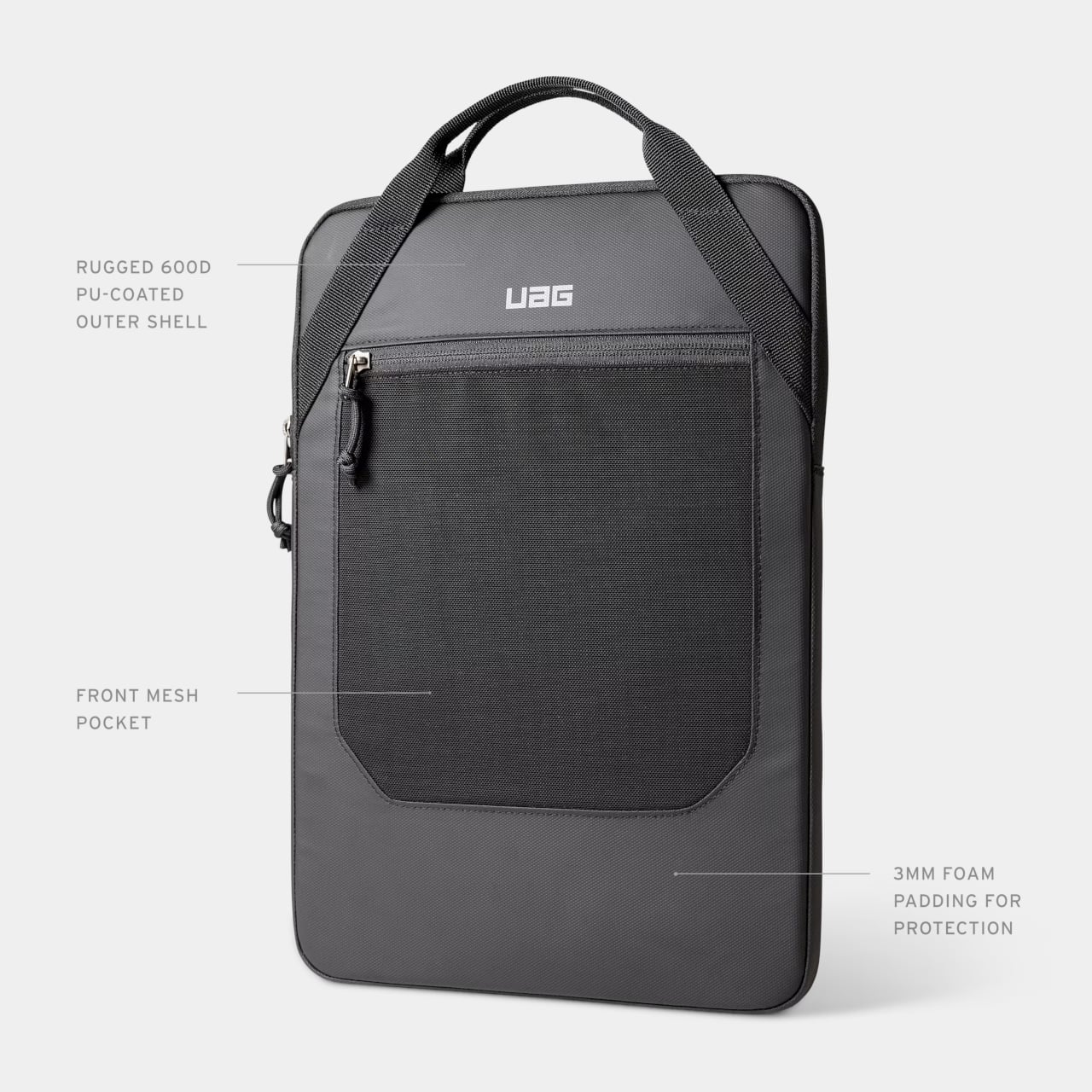
Recovery time depends on the severity of exposure. After light contact with rain or humidity, the DRYOUT panels need two to five hours to pull moisture out. After full submersion, that window extends to three to 12 hours. Neither is quick, but the process is passive; there’s nothing to do except let the sleeve work. That’s a different kind of reassurance from merely hoping a seal held.
The laptop sleeve is part of a broader UAG x DRYOUT collection that launched in late July 2026, which also includes a 22L backpack, a roll-top backpack, a tech tote, a crossbody sling, and dedicated recovery pouches for phones and earbuds. The DRYOUT technology runs through every product in the line, making moisture recovery an integrated feature rather than an emergency afterthought.
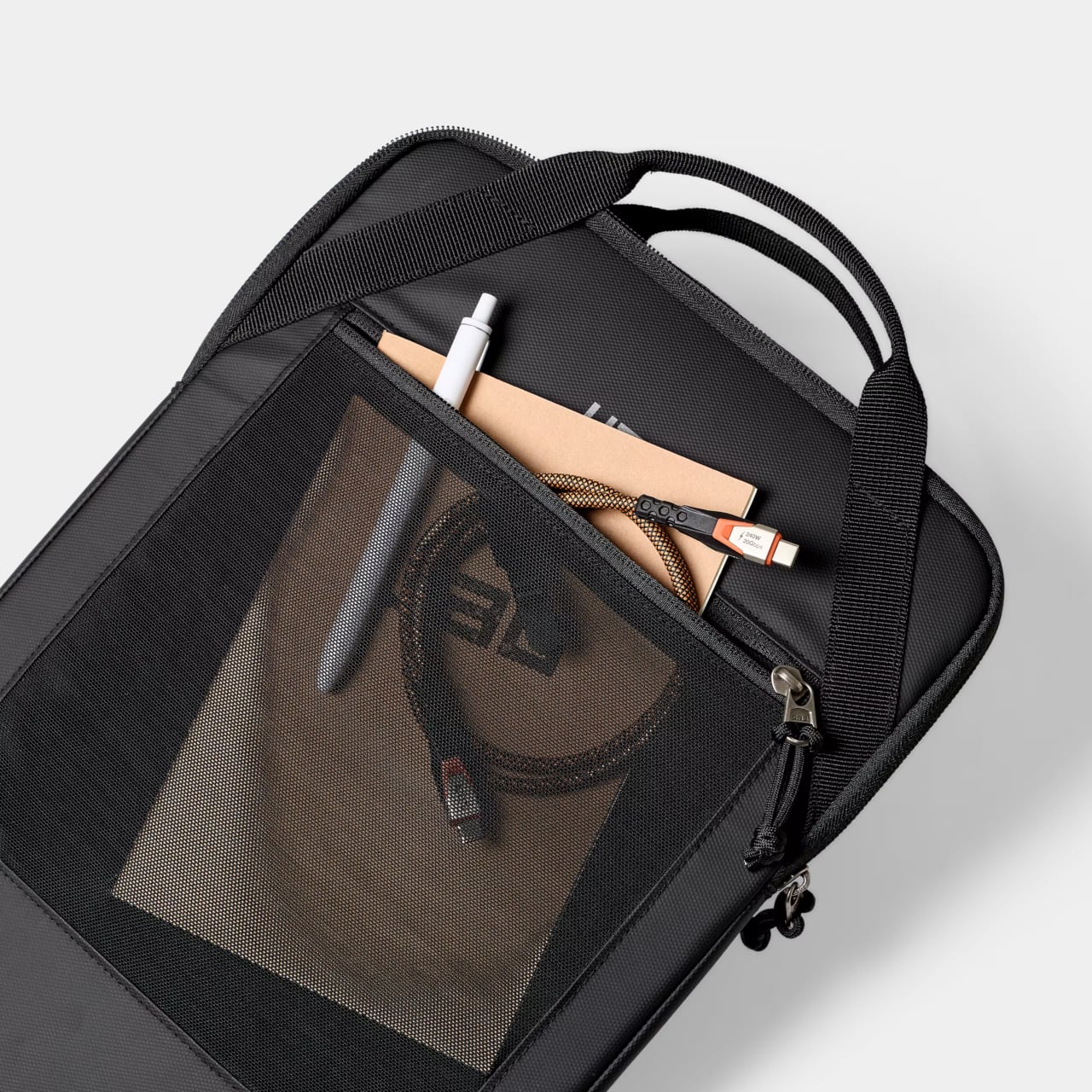
The sleeve retails for $69.95, which is firmly on the premium end for laptop carry accessories. That’s easier to justify once you account for what the padding alone can’t do; conventional sleeves don’t actively pull moisture from a device’s ports or internal seams. For daily commuters, frequent travelers, and anyone who’s ever pulled a laptop out of a wet bag, the distinction matters.
The post This $70 Laptop Sleeve Absorbs Moisture 10x Better Than a Bag of Rice first appeared on Yanko Design.

DeepSeek is making waves in the AI coding space with its focus on affordability and accessibility. Priced at just $0.14 per million tokens, the model eliminates subscription fees and allows users to self-host its open weights under an MIT license. This approach challenges traditional pricing structures, offering a cost-effective alternative for developers and organizations with […]
The post DeepSeek Lowers AI Coding to $0.14 per Million Tokens appeared first on Geeky Gadgets.
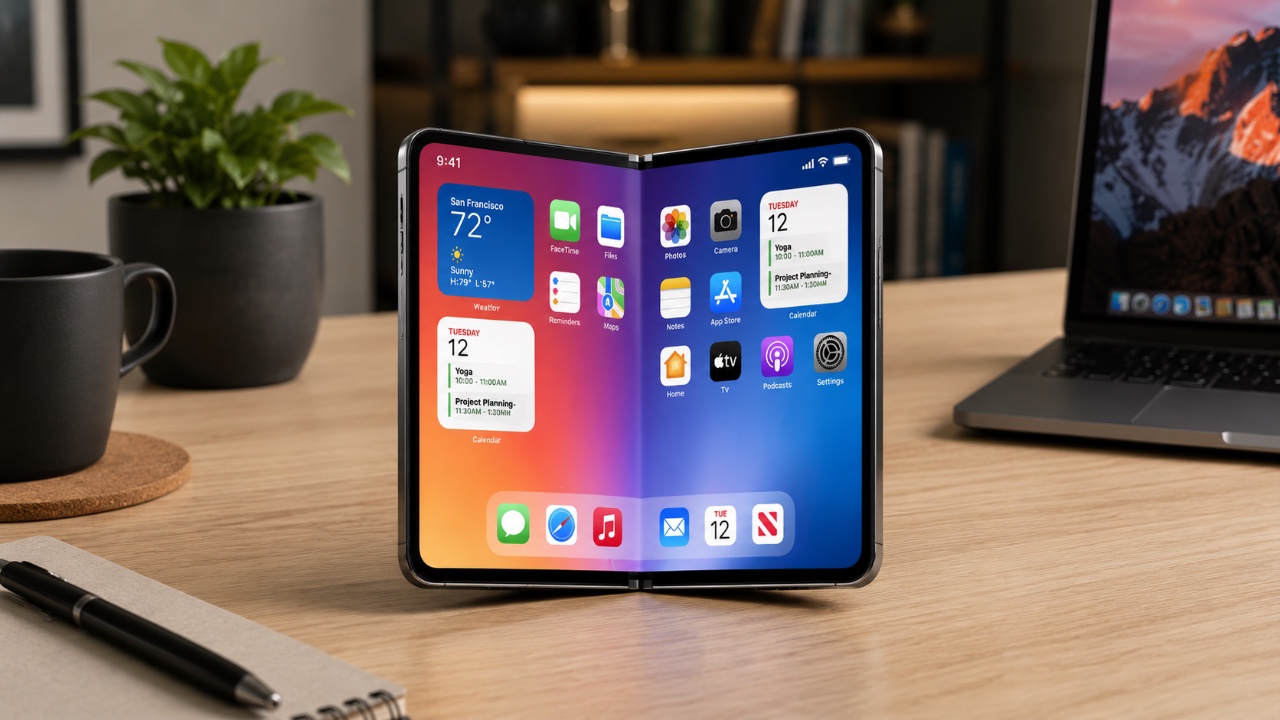
Apple is reportedly preparing to make its debut in the foldable smartphone market with the highly anticipated iPhone Ultra. This move could mark a significant milestone in the evolution of mobile technology, as Apple seeks to redefine the foldable segment with its signature focus on design, functionality, and user experience. Known for its ability to […]
The post Why the Leaked iPhone Ultra Fold Could Change Everything appeared first on Geeky Gadgets.

Augmented reality is becoming more accessible and the AOC Air Mega AR glasses are a prime example of how entry-level devices are shaping this space. Priced at just $159, these glasses feature a sleek aviator-style design and a lightweight build, making them practical for casual use. Steven Sullivan explores their capabilities, highlighting features like the […]
The post $159 AOC Air Mega AR Glasses Focus on Casual 1080P Gaming appeared first on Geeky Gadgets.
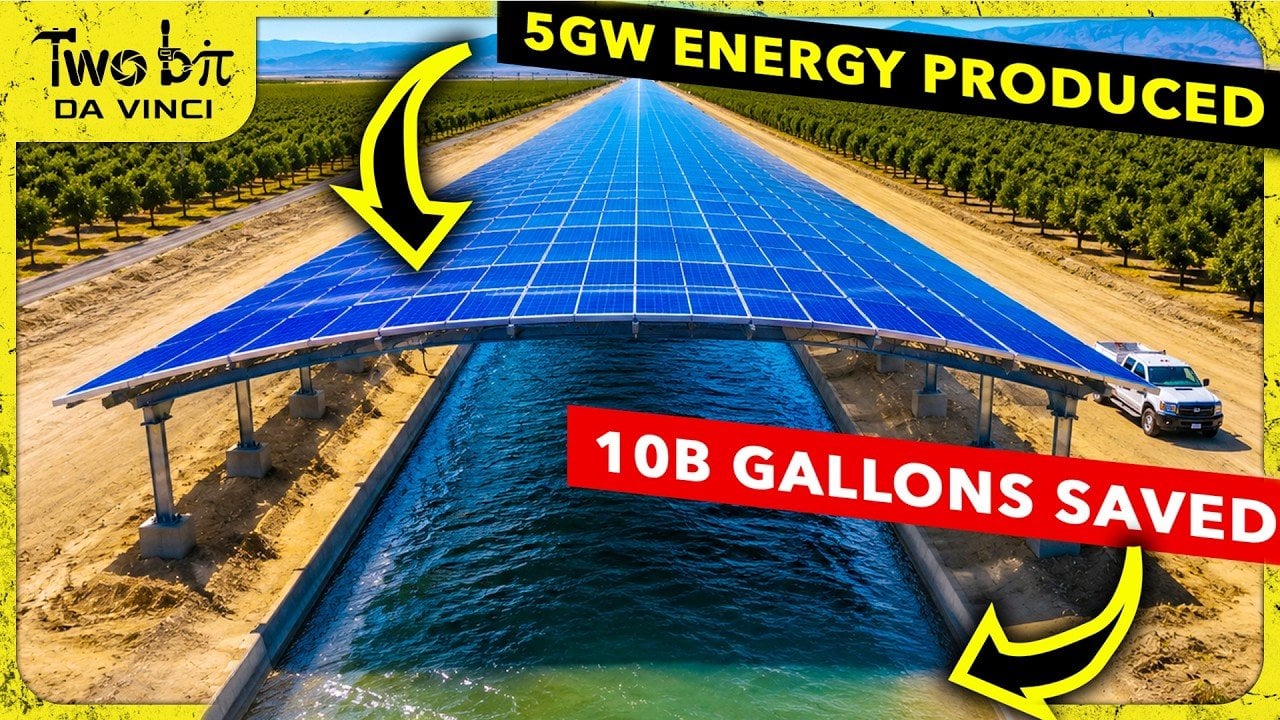
Solar energy has been a critical part of the renewable energy transition, but its implementation often faces challenges related to land use and efficiency. Two Bit da Vinci examines California’s Project Nexus, a pilot initiative that integrates solar panels with irrigation canals in the Central Valley. This approach generates 1.6 megawatts of electricity while reducing […]
The post How Project Nexus Cuts Irrigation Water Evaporation By 82% appeared first on Geeky Gadgets.

As the highly anticipated launch of the Google Pixel 11 draws closer, leaks surrounding the Pixel 11 Pro XL have captured widespread attention. These early insights suggest that Google’s upcoming flagship device could set new standards in design, performance, and functionality. With a combination of innovative hardware and thoughtfully integrated software, the Pixel 11 Pro […]
The post Google Pixel 11 Pro XL Leaks Ahead of Official Reveal appeared first on Geeky Gadgets.