OpenAI became the nexus of the technology world in 2023

We’re just over a year since it burst onto the scene and OpenAI’s ChatGPT program is somehow even more everywhere than it was in February. Our capability to regulate generative AI and mitigate its myriad real-world harms, on the other hand, continues to lag far behind the technology’s state-of-the-art. That makes 2024 a potentially pivotal year for generative AI in particular and machine learning in genera. ill AI continue to prove itself a fundamental revolution in human-computer communication, on par with the introduction of the mouse in 1963?, Or are we instead heading down yet another overhyped technological dead-end like 3D televisions? Let’s take a look at how OpenAI and its chatbot have impacted consumer electronics in 2023 and where they might lead the industry in the new year.

OpenAI had a great year, all things considered

“Meteoric” doesn’t do justice to OpenAI’s rise this year. The company released ChatGPT on November 30, 2022. Within five days, the program had passed 1 million users; by January, 100 million people a month were logging on to use it. It took Facebook four and a half years to reach those sorts of engagement numbers. ChatGPT outpaced the launches of both TikTok and Instagram to become the most quickly adopted program in the history of the internet in 2023. Heading into 2024, OpenAI (with billions in financial backing from Microsoft) stands at the forefront of the generative AI industry — whether the company can stay there, while billions more are being poured into its rivals’ R&D coffers, remains to be seen.

The company’s sudden success this year also launched its CEO Sam Altman into the media spotlight, with the 38-year-old former head of Y-Combinator basking in much of the praise formerly heaped upon Elon Musk. For a while, Altman was everywhere, repeatedly making appearances before Congressional committees and attending the Senate’s AI Safety Summits. He also conducted a 16-city world tour to Israel, India, Japan, Nigeria, South Korea, across Europe and to the UAE to help promote ChatGPT to developers and policy makers.

Even his termination at the hands of OpenAI’s board of directors in November ended up being a net positive. Fired on a Friday, Altman’s ouster set off 72 hours of panic in Silicon Valley with multiple OpenAI leaders resigning in solidarity, some 95 percent of rank and file staff threatening to walk without his reinstatement, the installation and removal of two interim CEOs in as many days and, ultimately, an indirect intervention by Microsoft. In the end, Altman is still CEO of OpenAI, now with a more compliant and agreeable board, and the tacit understanding throughout the industry that if you strike him down, Sam Altman will become more powerful than you can possibly imagine.

Keeping pace proved a challenge for OpenAI’s competition

A significant contributor to ChatGPT’s immediate and overwhelming success is that it was the first AI of its kind to market. Image generators like DALL-E and Midjourney were already popular diversions, and the public had long acclimated to more mundane machine learning tasks like language translation, but OpenAI was the first with a generative AI program that conversed naturally with its user. That novelty proved an invaluable advantage as even tech titans like Google and Amazon with their massive R&D budgets were caught unprepared for such demand and were slow to respond with competing products of their own.

Google was the most ignoble example of such imitators this year. Following ChatGPT’s debut, Google dedicated the vast majority of its I/O Developers Conference in March to a raft of brand new generative AI models and platforms, including the debut of the Google Bard chatbot. Bard was Google’s answer to ChatGPT, just not a particularly reliable one to start. Even before its public release, Bard made an embarrassing first impression when in February it confidently recited incorrect information about the James Webb Space Telescope in a Twitter ad.

Throughout the year, Google steadily added features, capabilities and access to Bard, eventually shunting the entire platform in December to its newly released foundational model, Gemini, which had been billed as Google’s “most capable and general model” built to date. Google was, of course, then immediately caught misrepresenting the system’s capabilities during a video demonstration. Even without once again getting caught in an easily disprovable lie, Gemini’s demo did little to quiet critics of Google’s stilted and frantic response to ChatGPT.

As a recent Bloomberg op-ed points out, yes, Gemini beat out ChatGPT in a majority of the industry’s standard performance benchmarks. However, Google used the as-yet unreleased Gemini Ultra model to earn its scores and the model only bested GPT-4 so by exceedingly narrow margins. GPT-4 came out nearly a year ago and Google’s best effort barely topped it in middle school-level algebra tasks. That’s not a great look from a corporation that boasts research budgets which rival the GDP of small nations.

Bing is doing just fine, thanks for asking. Microsoft dropped $10 billion on OpenAI in January as part of an ongoing multi-year partnership so now Bing — and literally everything else in the MS ecosystem — is being augmented with algorithmic intelligence. If there was one company that had a better 2023 than OpenAI, it’s Microsoft, which is reportedly set to receive 75 percent of all OpenAI’s profit until those invested billions are recouped.

Amazon placed its $4 billion generative AI bet on Anthropic’s Claude LLM, and made significant headway in leveraging the technology for use in its sprawling empire in 2023, from its Echo Frames smart glasses to Alexa with Generative AI to NFL Thursday Night Games. The company introduced its Bedrock foundational model platform (which will offer AI-generated text and images as a cloud service), launched a series of free AI Ready developer courses and an accelerator program to fund genAI startups, debuted generative tools for filling backgrounds and product listings and now offers a standalone image generator AI to rival DALL-E.

"Inside Amazon, every one of our teams is working on building generative AI applications that reinvent and enhance their customers' experience," CEO Andy Jassy said during the company’s Q2 earnings call in August. "But while we will build a number of these applications ourselves, most will be built by other companies, and we're optimistic that the largest number of these will be built on [Amazon Web Services]. Remember, the core of AI is data. People want to bring generative AI models to the data, not the other way around."

We’re still not ready for the age of AI

Even when it's not being used for obviously nefarious purposes like defrauding the elderly and amplifying political misinformation, generative AI technology has proven immensely disruptive to numerous industries and institutions from logistics and manufacturing to education and healthcare. It has been touted as a replacement for humans in professions ranging from medical imaging, computer programming and accounting to journalism and digital visual arts — in many cases, layoffs have been quick to follow.

This year also saw labor strikes by the Writers Guild of America and the Screen Actors Guild, in part, to prevent their works and likenesses from being used to train future AI models. Independent artists, whose intellectual property has been shamelessly scraped by disreputable firms for model training (looking at you, Stability AI), have had far less success in protecting their works — leading some creators to take drastic and damaging countermeasures.

Data privacy has proven a sticking point for AI companies in 2023. A ChatGPT bug found in March had apparently been sharing chat history titles (and potentially payment data). A trio of Samsung employees inadvertently divulged company secrets when they used ChatGPT to summarize the events of a business meeting in April. Microsoft AI researchers accidentally uploaded 38TB of company data to an open access Azure web folder in September, right around the time it was discovered that Google had been unknowingly leaking users’ Bard conversations into its general search results. As recently as November security researchers were finding that even “silly” attacks like telling ChatGPT to repeat the word “poem” ad infinitum would trick the system into revealing personally identifiable information.

The institutional response to these growing issues was tepid to start the year, mostly school districts, government agencies and Fortune 500 companies restricting use of chatbot AIs by their employees (and students). These initial efforts proved largely ineffective, due to the difficulty in actually enforcing them. The federal government's regulatory efforts are expected to have far more teeth.

The Biden White House has made AI regulation a centerpiece of its administration, developing a “blueprint” for its AI Bill of Rights last October, investing millions into new AI R&D centers for the National Science Foundation, wringing development guardrail concessions from leading AI companies and launching an AI Cyber Challenge, among other efforts. The administration’s most ambitious action came in October when the President issued a sweeping executive order establishing broad protections and best practices regarding user privacy, government transparency and public safety in future AI development by federal contractors. The US Senate and House have both been busy as well this year, holding congressional hearings on federal oversight rules for the AI industry, hosting a pair of AI Safety Summits and drafting legislation (which has yet to receive a vote).

Looking ahead to OpenAI’s 2024 and beyond

It’s OpenAI’s lead to lose heading into the new year. CEO Sam Altman holds firmer control over the company than ever, all dissenting voices on the board calling for caution have been silenced and the company is poised to further expand its operations in 2024 as the technology continues its global advance. I expect to see OpenAI’s competitors make a better showing in the new year with Google, Meta and Amazon spending freely on AI research in order to catch up and surpass the GPT platform.

And even though the entire ChatGPT craze got started with individual users, Paul Silverglate, vice chair of Deloitte LLP, sees the largest gains in 2024 coming from enterprise applications. “Expect to see generative AI integrated into enterprise software, giving more knowledge workers the tools they need to work with greater efficiency and make better decisions,” he wrote in a recent release.

A recent study by McKinsey & Company estimates that the current generation of conversational AI systems “have the potential to automate work activities that absorb 60 to 70 percent of employees’ time” thanks to rapid advancements in natural language processing technology with “half of today’s work activities" potentially being automated away from human hands "between 2030 and 2060." That’s a decade sooner than previously estimated.

This article originally appeared on Engadget at https://www.engadget.com/openai-became-the-nexus-of-the-technology-world-in-2023-143010513.html?src=rss



10 Most Innovative Designs of 2023: Cabins

2024 is around the corner, and we’re having a look at some of the exceptional architectural designs we covered in 2023. If you’re searching for a cozy and quaint cabin to get away to and relax, then you’ve reached the right spot. Cabins are by far the best type of vacation I’ve come across. They’re a peaceful and tranquil option to abandon your urban life and woes, and simply unwind in nature. If you’re wondering where to head for your next cabin retreat, then you can refer to this collection of beautiful and super cozy cabins that we’ve gathered. They’re the perfect haven nestled amid nature, providing you a break from your everyday hectic life – and we’ve curated our best cabin designs from 2023 for you!

1. Space of Mind Cabin

Dubbed the Space of Mind cabin, this 100-square-foot prefab cabin was designed by the Finnish architecture studio Studio Puisto during the pandemic. It is an adaptable cabin that can be built almost anywhere and used as a garden office, or an off-grid holiday retreat.

Why is it noteworthy?

What makes the Space of Mind cabin unique is that it is modular, and can be used as a garden office or an off-grid holiday retreat as mentioned earlier. It is a flexible space designed to offer people a home away from home, making them feel comfy no matter what.

What we like

  • It features a modular structure that can be utilized for various functionalities

What we dislike

  • There isn’t any option or alternative to customize the interior of the cabin

2. Kjerringholmen Cabin

Called the Kjerringholmen Cabin, this unique cabin in the Hvaler archipelago occupies 63 square meters and has a cozy and spacious appeal that instantly makes you feel at ease. As you enter the cabin, you are welcomed by an airy and calming vibe that is rarely seen in homes.

Why is it noteworthy?

Kjerringholmen is proof “that large houses don’t necessarily mean more quality of life. In just 63 square meters, with smart planning, it still has plenty of usable space,” said the studio. Although it occupies only 63 square meters, it is a spacious home supported by steel pillars, while being surrounded by a dusky rocky landscape.

What we like

  • The cabin perfectly merges with the natural landscape, which offers a surreal ambiance
  • The cabin is designed to support a smart way of living

What we dislike

  • The home may go unnoticed by birds, and they could crash into it since it merges so well with its surroundings

3. The Romotow

Dubbed the Romotow, this one-of-a-kind trailer features a fixed chassis that supports the rotated closing living unit. The trailer can swivel around at a full 90 degrees to form a fully functioning cabin with an extra outdoor living space.

Why is it noteworthy?

During transit, the 30.5ft Romotow remains closed, however, when it is stationed for overnight camping, the main living unit with panoramic glass windows on both sides can be swiveled, creating two sections – a large deck, and a sleeping/living cabin.

What we like

  • Equipped with a 395W solar panel on the roof which supports an off-grid lifestyle

What we dislike

  • The trailer needs to rotate a complete 90 degrees, and that free space may not always be available, which can be inconvenient

4. Shiship Cabin

Dubbed Shiship, this stunning seasonal cabin is built from a repurposed shipping container. Designed by Repère Boréal, this cabin is located in Quebec, Canada, and the name translates to ‘duck’ in the indigenous Innu language.

Why is it noteworthy?

The cabin is a modern and contemporary version of a wilderness cabin, and it is equipped with space-saving custom-made furniture designs, and other smart features. It is 31 feet in length and 8 feet wide and is clad with durable cedar wood planks, which form a thick frame, and offer the space a natural and contemporary aesthetic.

What we like

  • The kitchen and bed are connected via a built-in wine rack, which also doubles up as a night table, uniting the two space

What we dislike

  • The cabin is a bit cramped, and not well-suited for bigger families

5. The Nest

Called the Nest, this stunning property in Hocking Hills, Ohio is designed to enjoy and experience the natural beauty of the hills. The cabin is quite comfortable and cozy, specifically the living room, which is excellent for movie nights with your family and close friends!

Why is it noteworthy?

The cabin features an outdoor patio with a DIY suspended bed which is made with a recycled trampoline, that is an excellent spot to lounge about in. The Nest features a unique layout that gives the impression that the space is bigger than it is. This makes the cabin stand apart from other tiny homes on the market.

What we like

  • Features a unique and innovative layout that makes it seem much more spacious and airy than it is

What we dislike

  • Not everyone may like the barn-style door since it is quite old-fashioned and doesn’t provide much privacy

6. Hideaway House

Called the Hideaway House, this lovely little home is tucked away amid nature, providing a surreal and secluded cabin that is ideal for a weekend getaway. You can only access the home through a tucked-away road at the base of the mountain, hence making it a bit difficult to reach.

Why is it noteworthy?

Nestled on a 52.7-acre private mountain, the Hideaway House is a blackened timber cabin that is surrounded by lush green ancient forests, creating a living space with a vibrant and enticing connection to nature, making it the perfect fit for a peaceful vacation.

What we like

  • The home has access to stunning views of British Colombia’s Gulf Islands
  • It has a lovely indoor-outdoor connection to nature

What we dislike

  • The home is quite difficult to get to since only a tucked-away road leads to it

7. White Rock Cottage

Dubbed the White Rock Cottage, this stunning elevated cabin is nestled on a forested hillside in Nova Scotia. It is a cozy cabin that is wrapped in corten steel and occupies almost 1500 square feet in a lush green five-acre property in Gaspereau River Valley.

Why is it noteworthy?

This surreal cottage is blessed with views of the valley as if it is neatly perched on a steep incline. You can enter the home via a tight driveway, and a grave footpath, but you may need to climb it slowly, and it can take quite some time to reach.

What we like

  • Functions as a serene space for residents to connect with nature

What we dislike

  • It is an elevated cabin, hence it might be inaccessible for some people with physical disabilities

8. Trakt Forest Hotel

The Trakt Forest Hotel in Småland is a collection of five lovely and cozy suites that are supported by five stilts, which gives the visitors the impression that they’re chilling amongst the tree canopy! It is designed to “put nature in focus”, and the cabin is accompanied by a restaurant and sauna in the complex.

Why is it noteworthy?

While building the cabins, the studio wanted to create minimal disturbance to the surrounding landscape, and hence they positioned the suites on steel columns placed on concrete plinths. The cabins were constructed using locally-grown wood.

What we like

  • Allows you to chill amongst the tree canopy
  • Built using locally sourced wood

What we dislike

  • Deserves a gallery/balcony to improve the experience

9. Casa Monoculo

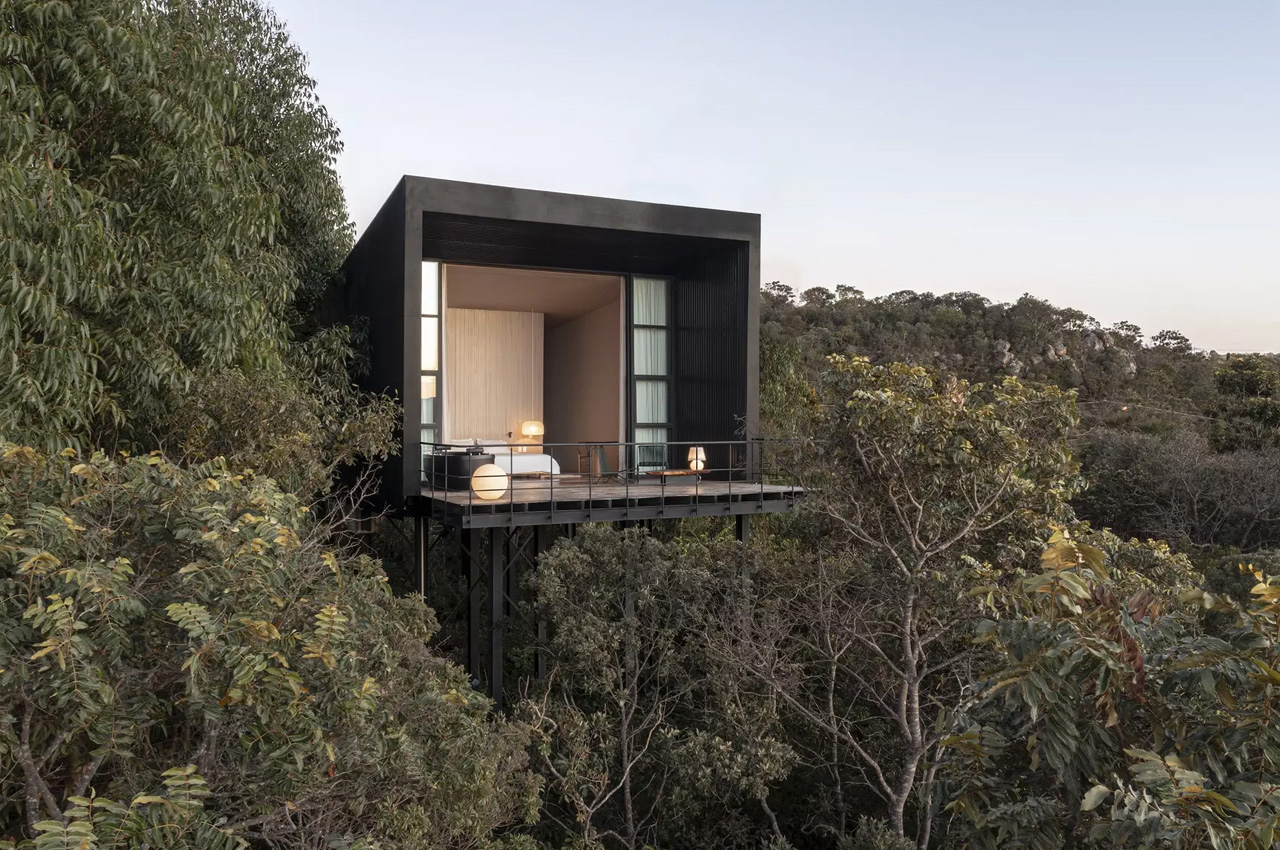
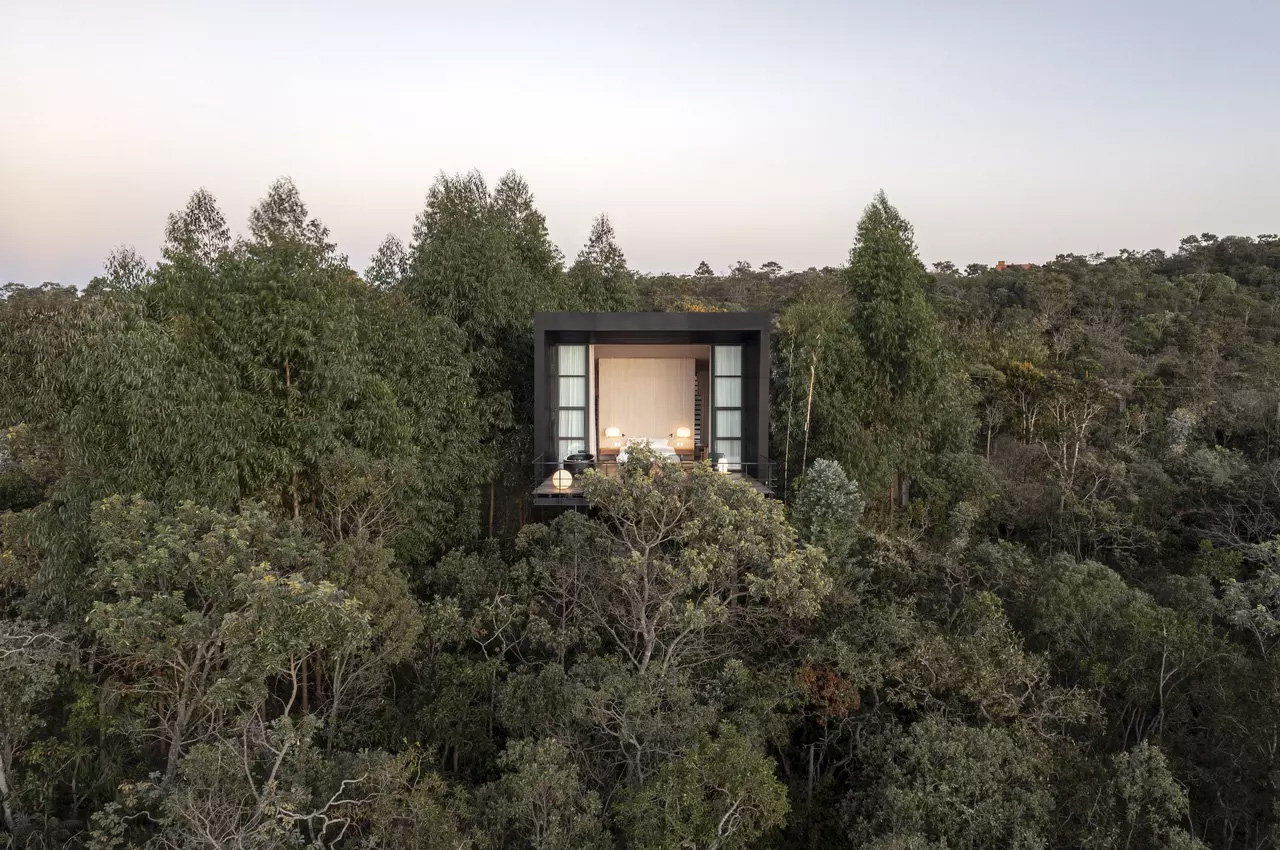
This stunning contemporary home is called the Casa Monoculo and was designed by Alan Chu. It is nestled above a densely forested area of Eldorado and is elevated above the ground, providing a unique and innovative twist to the concept of treetop living.

Why is it noteworthy?

It is not simply an ordinary treehouse, it is spacious and modern, no different than any of the finely done villas you see today. It provides expansive views of the beautiful surroundings while creating a luxurious living experience.

What we like

  • Provides a luxurious and cozy treetop living experience with a unique twist

What we dislike

  • It doesn’t seem like the house can accommodate a large number of guests, better suited for smaller parties

10. NKN-18 Cabin

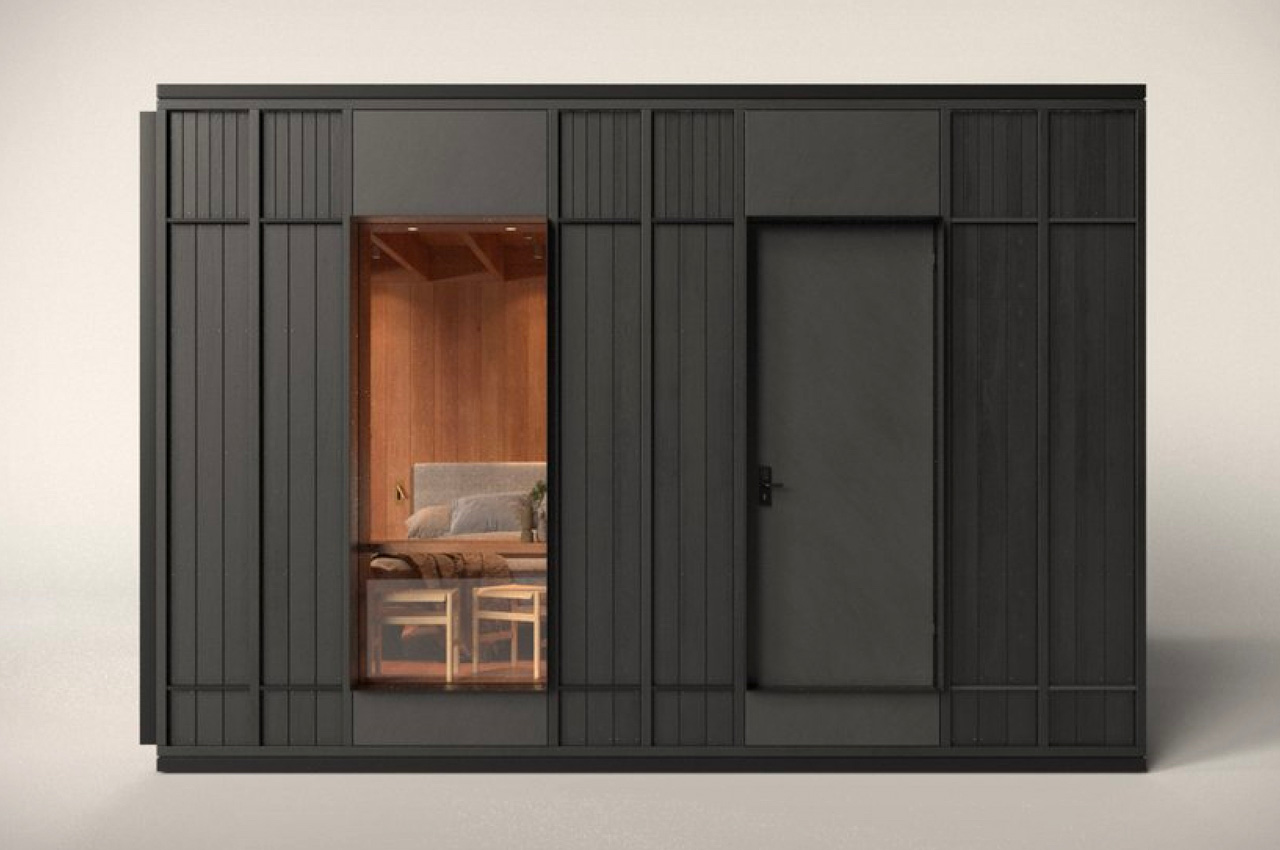
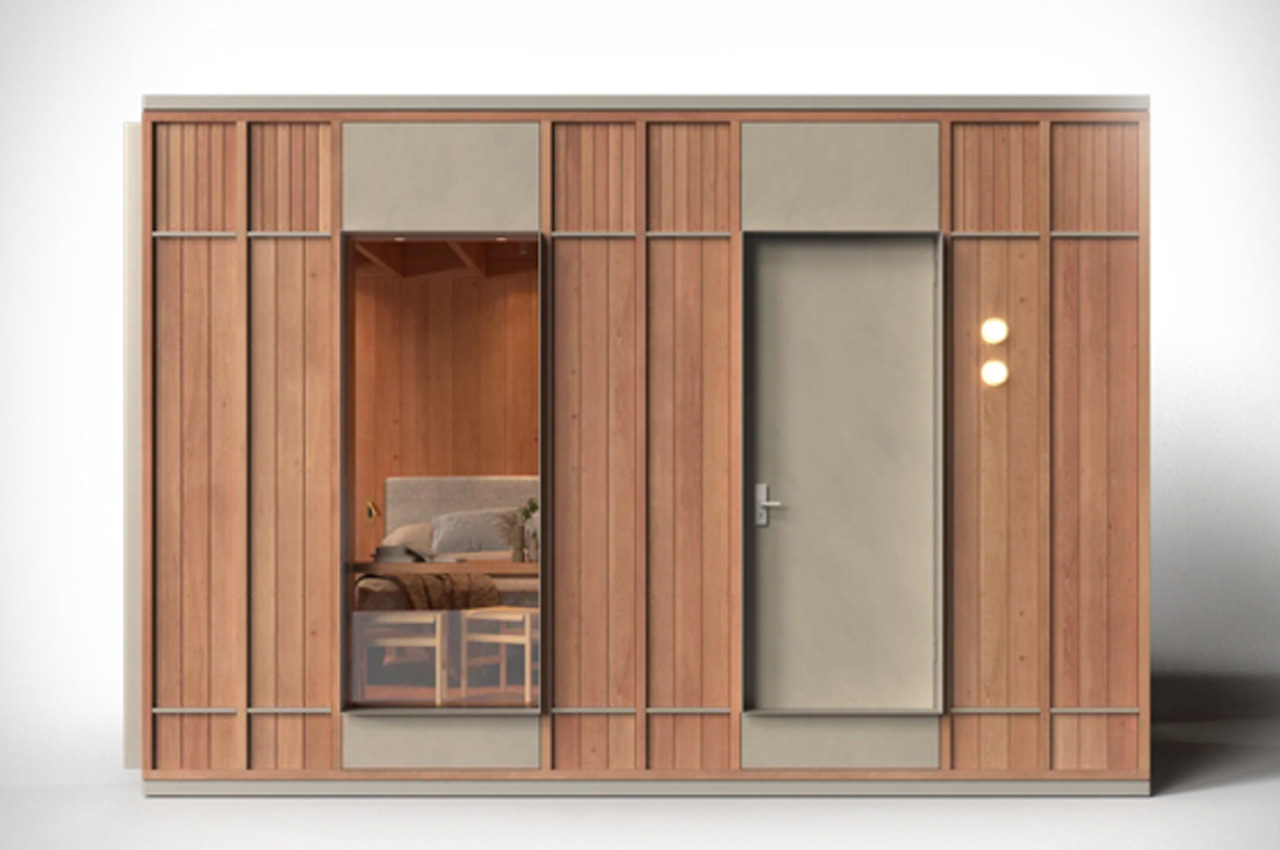
Nokken recently introduced the NKN-18 – a cutting-edge and revolutionary 18 sqm that provides versatility in the form of customizable options and accessories.

Why is it noteworthy?

The NKN-18 Cabin by Nokken is created for various configurations and features co-branded bespoke designs. The cabin is designed to be a plug-and-play solution that can meet the diverse needs and requirements of people.

What we like

  • The exterior can survive harsh climatic conditions
  • Robust and durable design

What we dislike

  • A minimal and simple cabin, so not very well-suited for those who prefer more amenities

The post 10 Most Innovative Designs of 2023: Cabins first appeared on Yanko Design.

LG’s 2024 TV lineup includes a giant 98-inch QNED model

LG is best known for its OLED range when it comes to TVs, but it's expanding its 2024 QNED-branded LCD lineup as well. For CES 2024, the company has unveiled a 98-inch QNED LCD TV, while updating the previous models including its 8K lineup with a new version of its webOS smart TV system, built-in Chromecast, AI-enhanced video and more. 

This year, LG has four QNED ranges (QNED = quantum dot and nanocell): the 8K miniLED QNED99T, 4K miniLED QNED90T, QNED85T LCD, and the QNED80T range at the bottom. The top QNED99T models will use LG's Alpha 9 processor that can enhance video and audio using AI, while the the QNED90T and QNED85T lineup will feature an updated Alpha 8 processor with improved processing, graphics and AI performance. The QNED80T will use LG's lower-end Alpha 5 Gen 7 chip. 

All models offer LG's webOS 24, with individual profiles that allow for personalized recommendations and voice recognition for each individual user. It also has Chromecast built in, so you'll be able to watch content from Android and iOS devices via AirPlay 2 and Chromecast, respectively. And starting next year, all of LG's QNED TVs will receive 4 years of webOS upgrades. In addition, some of its previous high-end models (namely, the 8K models launched in 2022 and some others yet to be named), will also get webOS updates for free.

The 98-inch model is part of the LG QNED85T lineup, which means it's a mid-range 4K LCD set with local dimming but not miniLED tech. That means it's likely to be priced more reasonably than miniLED TVs, but will lack the precise dimming found on those models. It will have the latest webOS 24 smart TV features, but LG didn't reveal any other specs or the price. LG will also offer 50-, 55-, 65-, 75- and 86-inch models in that range. 

LG will offer two 8K models (QNED99T) in 75- and 86-inch sizes. No specs or prices are available, but the previous models (that are no longer stocked in the US) cost around $4,800 and $6,500 at launch, respectively. You can also expect very high brightness levels up to 3,000 nits, Dolby Vision HDR support, Dolby Atmos and 120Hz or higher refresh rates for gaming. The QNED90T 4K TVs will also use miniLED and come in 65-, 75- and 86-inch sizes. 

The bottom end of the lineup (QNED80T) will appeal to budget minded buyers, but still offer the latest smart TV features, Dolby Vision, etc. It'll be available in 43-, 50-, 55-, 65-, 75- and 86-inch sizes. Expect more details and pricing for the new lineup sometime next year.

We're reporting live from CES 2024 in Las Vegas from January 6-12. Keep up with all the latest news from the show here.

This article originally appeared on Engadget at https://www.engadget.com/lgs-2024-tv-lineup-includes-a-giant-98-inch-qned-model-123551975.html?src=rss

How to Navigate the AI Era with Google Bard in 2024

Google Bard

This guide is designed to show you how to navigate the AI era with the help of AI tools like Google Bard. The year 2024 stands poised on the precipice of a new era, one where Artificial Intelligence (AI) ceases to be a futuristic buzzword and firmly embeds itself into the fabric of our lives. […]

The post How to Navigate the AI Era with Google Bard in 2024 appeared first on Geeky Gadgets.

Posted in Uncategorized | Tagged

The Morning After: The best games of 2023

It was an amazing year for games. While there were no new consoles, we did get new VR headsets and a wave of new handheld PCs offered even more options for playing games on the go (or at least on the couch). That’s reflected in many of our picks for best games of the year, with several PC-only choices.

The year kicked off with a fantastic remake of space horror Dead Space and the breakout success, Pizza Tower. But there were so many more. Obvious selections? Yes: the latest Zelda epic is there, as is Baldur’s Gate 3. If you’ve got some time between Christmas and New Year, there may be no better way to spend it than with one of these games. I’ve got Cocoon waiting for me.

— Mat Smith

​​You can get these reports delivered daily direct to your inbox. Subscribe right here!

The biggest stories you might have missed

The Right to Repair movement won its biggest victories in 2023

Deathloop is free on PC for Amazon Prime members

The first EV with a lithium-free sodium battery hits the road in January

The Apple Watch import ban is paused — for now

What happens next depends on the ITC's response.

Urgh, tech news whiplash. A federal appeals court in Washington D.C. has allowed Apple to continue importing the Apple Watch Series 9 and Apple Watch Ultra 2 models. This was just a day after Apple filed its appeal against the International Trade Commission’s decision to ban imports of both models of the Apple Watch due to a patent dispute. But you probably read all about that – multiple times.

Continue reading.

The New York Times is suing OpenAI and Microsoft for copyright infringement

The AI companies used the newspaper's articles for training.

The backlash against AI companies and their tools continues to grow. The New York Times is suing OpenAI and Microsoft for using its news articles to train its artificial intelligence chatbots without an agreement that compensates it for its intellectual property. It alleges that more than 66 million records, ranging from breaking news articles to op-eds, published across the NYT websites and other affiliated brands were used to train the AI models. The Times also says these AI products can generate output that “mimics its expressive style.” This mirrors complaints from comedians and authors like Sarah Silverman and Julian Sancton.

Continue reading.

Swedish Researchers develop ‘electronic soil’ that speeds up plant growth

‘eSoil’ is here.

TMA
Thor Balkhed/Linköping University

Researchers from Linköping University in Sweden have developed a "bioelectronic soil." It can apparently speed up the growth of plants in hydroponic spaces, or farms that grow plants in environments made up of mostly water. After integrating the engineered ‘eSoil’ into the framework where seedlings grow, researchers discovered that sending electrical signals through the soil made barley plants grow 50 percent more on average.

This is done through a conductive polymer within the soil and applying a voltage as small as 0.5V on the eSoil to stimulate the roots electrically.

Continue reading.

This article originally appeared on Engadget at https://www.engadget.com/the-morning-after-the-best-games-of-2023-121548149.html?src=rss

Russia will assist NASA with ISS space flights through 2025

Russia and the United States have had a strained relationship, at best, in recent years. However, the pair are still working together in one regard: getting crews to the International Space Station (ISS). Roscosmos, Russia's federal space agency, has announced that the two countries will continue partnering on "cross-flights until 2025 inclusive."

Cross-flights involve putting crews from multiple countries onto the same spacecraft. Roscosmos intends always to have at least one of its own representatives in the Russia section of the ISS and at least one NASA representative in the US section. The agency added that the decision was made "to maintain the reliability of the ISS as a whole." The ISS, launched in 1998, is a symbol of US-Russia cooperation after the Cold War and the space race ended.

The news follows NASA's April 2023 announcement that Russia will remain aboard the ISS until 2028. The Director General of Roscosmos, Yuri Borisov, had previously said Russia would pull out of the ISS "after 2024" to focus on creating its own space station. NASA had been preparing for Russia's departure with plans ranging from pulling astronauts from the ISS to figuring out how to control the ISS if Russia took away its thrusters. The US agency has committed to maintaining the ISS until at least 2030.

This article originally appeared on Engadget at https://www.engadget.com/russia-will-assist-nasa-with-iss-space-flights-through-2025-115533326.html?src=rss

Setting up a custom AI large language model (LLM) GPU server to sell

Build up a custom AI LLM GPU server to resell

Deploying a custom language model (LLM) can be a complex task that requires careful planning and execution. For those looking to serve a broad user base, the infrastructure you choose is critical. This guide will walk you through the process of setting up a GPU server, selecting the right API software for text generation, and […]

The post Setting up a custom AI large language model (LLM) GPU server to sell appeared first on Geeky Gadgets.

Apple’s AirTag 4-pack is just $79 right now

A bundle of four Apple AirTags is currently on sale at Amazon for a price that's even lower than what it sold for during the website's Black Friday sale. You can get the four-pack right now for only $79, 20 percent lower than its retail price of $99 and just a few bucks more than its all-time low. It's a great buy if you've been looking to grab a few AirTags to keep track of several belongings, such as bags and suitcases that airlines could accidentally leave at your connecting airport, or your wallet and keys that you could misplace.

AirTags can link up with your iPhone and iPad in one tap, and you can use it to find the items it's tracking through the Find My app. It can help you find lost items by sending out Bluetooth signals that can be tracked by nearby Apple devices also connected to the Find My network. Since some of the top-selling phones in the world are iPhones, you'll have more than a decent chance of finding any lost belongings.

If you think the item you're tracking could be nearby, you can play a sound through the AirTag's built-in speaker so that you could easily locate it. On the latest iPhone models, you can even use the Precision Finding feature to get the direction to and know the distance between you and your AirTag. But if it has truly been lost or misplaced, you can put your AirTag in lost mode so that you can instantly get a notification when it's been detected by devices on the Find My network.

At the moment, a single AirTag will set you back $24 at Amazon, where it's also selling for 17 percent less than its retail price. It's a good deal if you really only need one AirTag, but the bundle price is unbeatable if you think you may need a few. 

Follow @EngadgetDeals on Twitter and subscribe to the Engadget Deals newsletter for the latest tech deals and buying advice.

This article originally appeared on Engadget at https://www.engadget.com/apples-airtag-4-pack-is-just-79-right-now-111042621.html?src=rss

Hyundai’s IONIQ Pixel Toy Illuminating the Future and the Evolution of EV Design

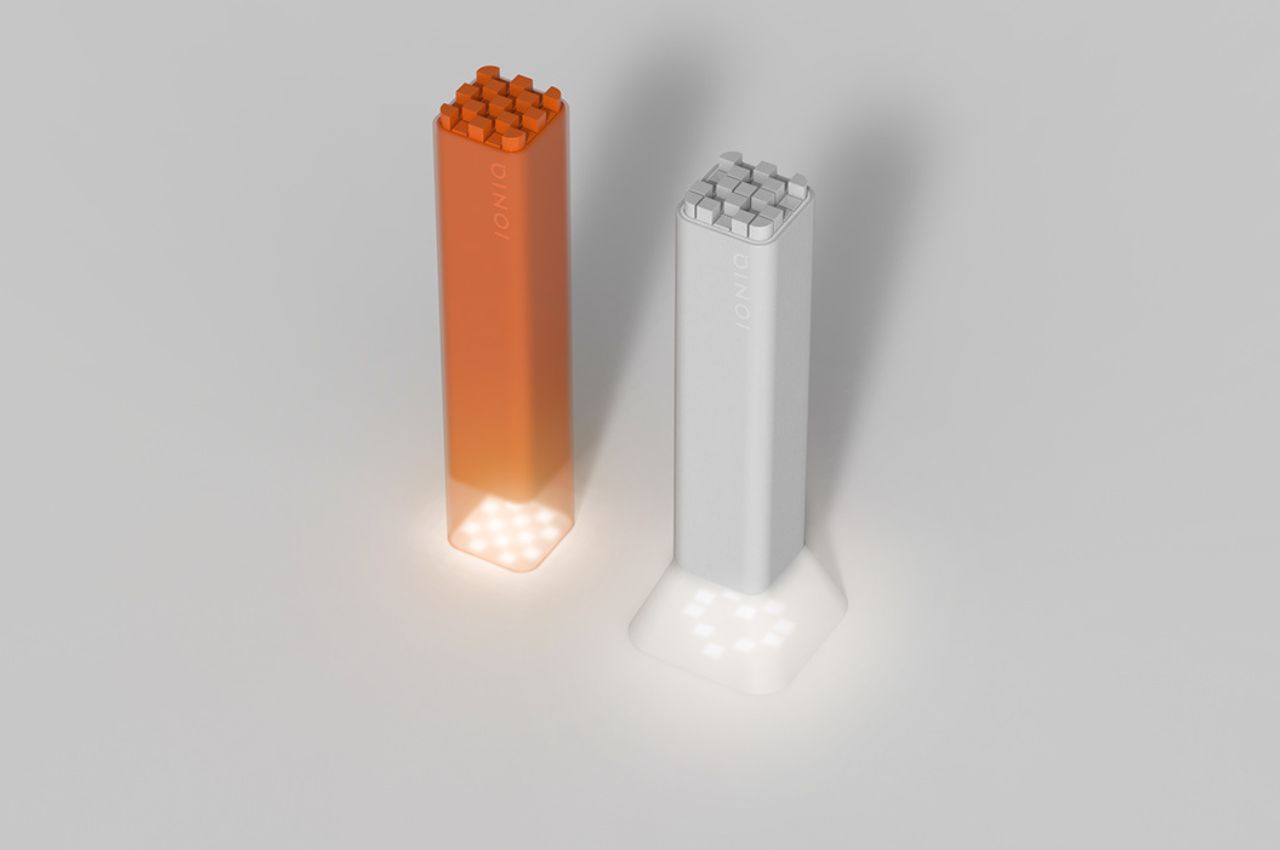
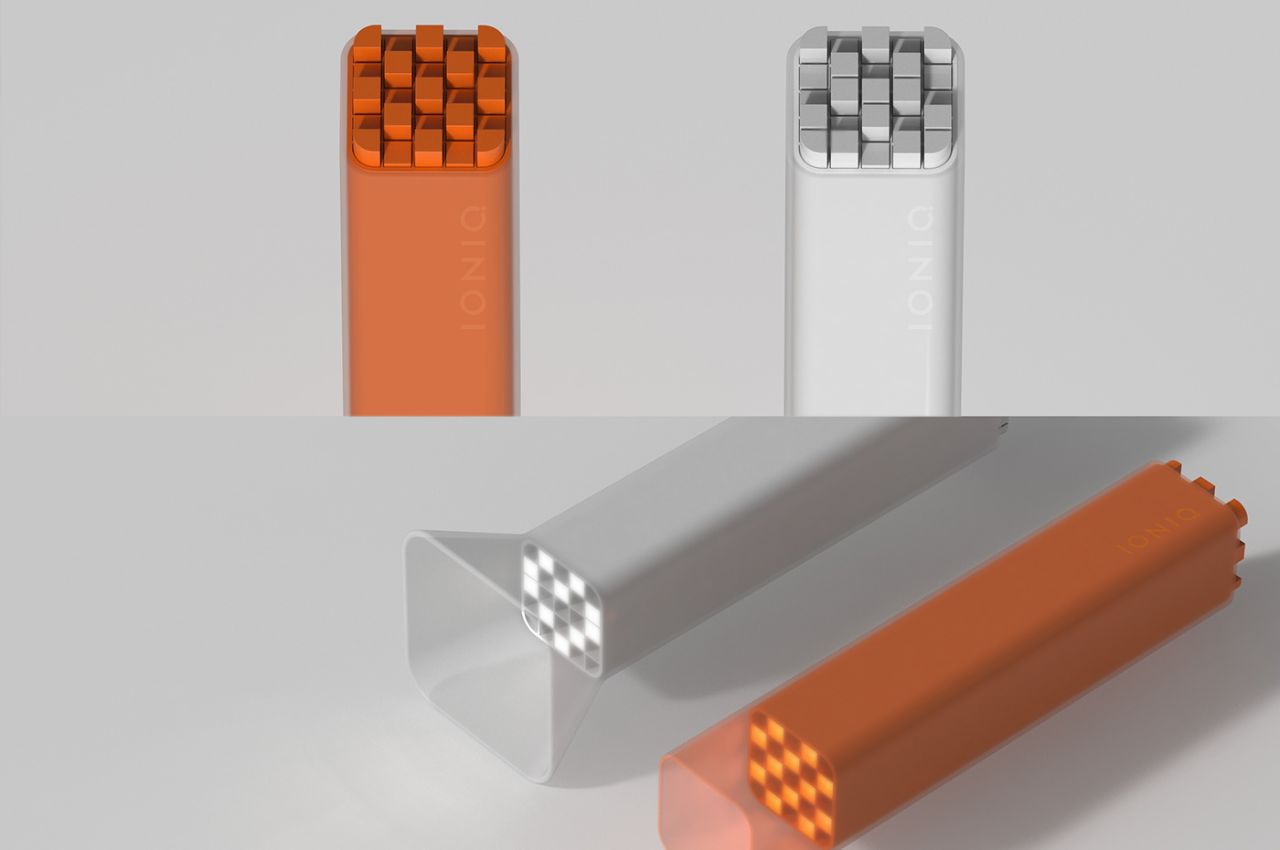
In a dynamic era of electrified mobility, Hyundai Motor Company has embarked on a groundbreaking journey with the launch of its dedicated electric vehicle brand, IONIQ. Committed to redefining the automotive landscape, Hyundai’s vision for the future is not only reflected in its state-of-the-art electric vehicles but also in the innovative and visually captivating accessories that accompany them. One such standout item is the IONIQ Pixel Toy Flashlight, a creation by Citrus that seamlessly encapsulates Hyundai’s commitment to pushing the boundaries of design and technology.

Designer: Citrus design

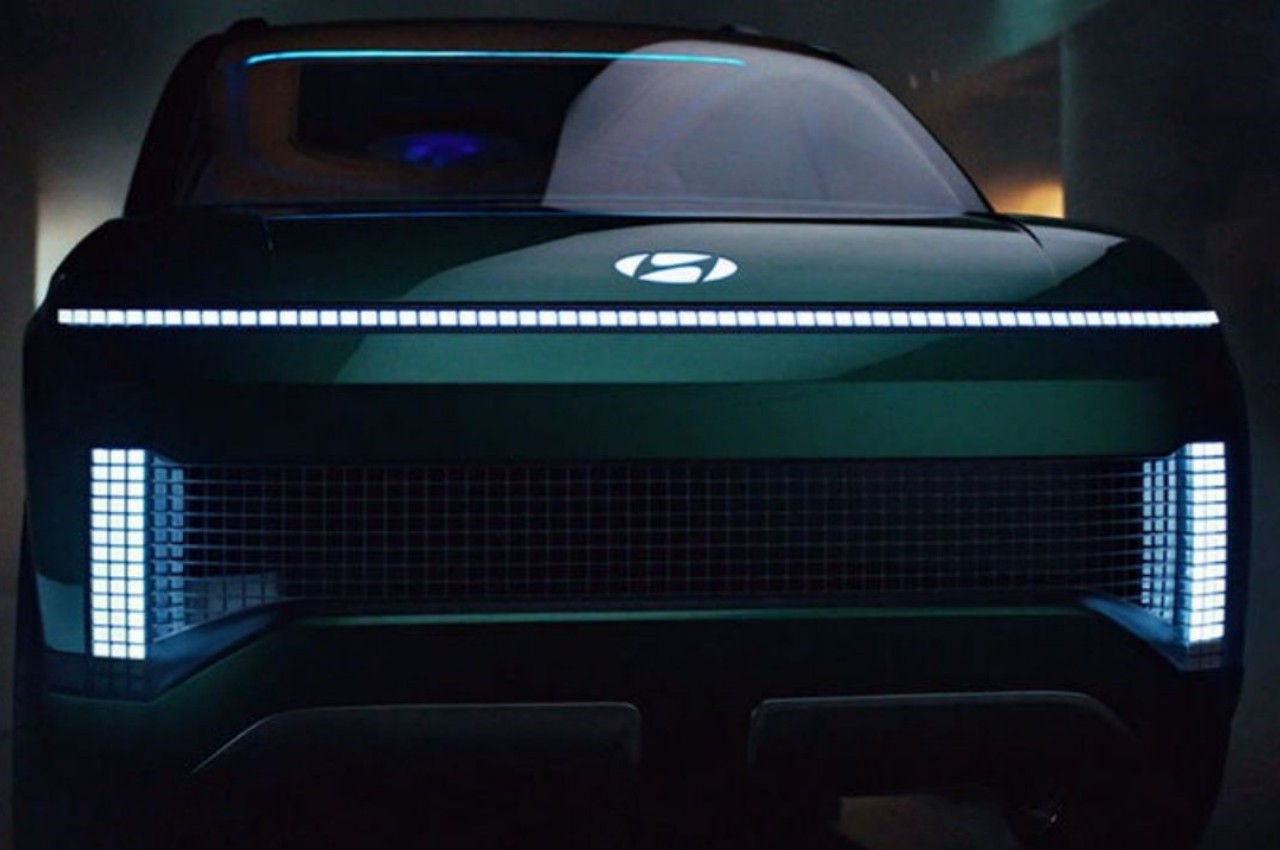
At the heart of the IONIQ Pixel Toy Flashlight lies the inspiration drawn from Hyundai’s main design theme, Pixel. The company has ingeniously utilized parametric pixel lights as a design signature across its award-winning electric vehicles. This unique design language is not just a visual delight but symbolizes a journey that connects the past (analog), present, and future (digital). This common thread is integral to Hyundai’s EV design philosophy, signifying a harmonious blend of heritage and futuristic innovation.

The distinctive front pixelated lights of Hyundai’s electric vehicles are not merely a design choice; they represent a unique and unmistakable signature for the IONIQ series. These small cubic light clusters showcased prominently on the ’45’ concept EV and IONIQ 5, have become synonymous with Hyundai’s commitment to innovation. These pixel lights aren’t confined to the exterior; they also make an appearance inside the charging door, providing illumination regarding the charging status and the amount of charge.

As Hyundai Motor Company continues to shape the future of electric mobility, the Pixel Toy Flashlight serves as a tangible representation of the brand’s dedication to creating a cohesive and visually stunning ecosystem around its electric vehicles.

In the world of electric mobility, Hyundai’s IONIQ Pixel Toy Flashlight stands out as more than just an accessory; it’s a symbol of innovation, design excellence, and a bridge between the past and the future. As Hyundai Motor Company continues to lead the charge in the electric vehicle revolution, the Pixel Toy Flashlight serves as a shining example of how cutting-edge design and technological advancements can be seamlessly integrated into everyday products, bringing the future of mobility into the hands of consumers.

The post Hyundai’s IONIQ Pixel Toy Illuminating the Future and the Evolution of EV Design first appeared on Yanko Design.

Amazon’s third-generation Echo Show 8 falls to a new all-time low of $90

The new year is almost here, and not many purchases say fresh start more than an upgrade to your smart home tech. Thankfully, getting one of the latest smart home gadgets won't cost too much right now, thanks to a 40 percent discount on Amazon's new third-generation Echo Show 8. The device is down to $90 from $150 — an all-time low. 

Amazon announced the third-gen Echo Show 8 at an event in September, showing off the device's new edge-to-edge front glass and nice, softer curves. The latest model has quite a few upgrades, but one of the most notable is an Adaptive Content feature. When you're far away from the device — say, sitting across the room — it will display information like the weather and time in a large font. However, the Echo Show 8 will show more personalized content like playlists or news articles when you step closer. Amazon also designed this feature for the second-gen model and other Echo Show devices. 

As for the third-gen Echo Show 8, it has spatial audio and room calibration, which should be especially obvious through bass and clarity. It also handles Alexa requests on-device with a new processor and should give you a 40 percent faster response time. Amazon also gave the device a 13MP camera and microphones that are more effective at minimizing background noise.  

Follow @EngadgetDeals on Twitter and subscribe to the Engadget Deals newsletter for the latest tech deals and buying advice.

This article originally appeared on Engadget at https://www.engadget.com/amazons-third-generation-echo-show-8-falls-to-a-new-all-time-low-of-90-100547738.html?src=rss