New AI powered Samsung Ballie Robot appears at CES (Video)

Samsung Ballie

We first saw the Samsung Ballie Robot at CES back in 2020, and now at CES 2024, Samsung has unveiled an updated Ballie robot and this one comes with some upgrades over the original version. The new Samsung Ballie robot is powered by AI and ti comes with a built-in projector, the device is designed […]

The post New AI powered Samsung Ballie Robot appears at CES (Video) appeared first on Geeky Gadgets.

Watch Sony’s CES 2024 keynote in under 6 minutes

As it often does in Las Vegas, Sony focused its CES 2024 keynote on some of the company's more esoteric products. To start with, it rolled out the Afeela electric car first introduced last year at CES, but did it with some gaming panache by driving it using a PlayStation DualSense controller. Otherwise, it mostly talked about how the in-vehicle experience is getting smarter thanks to our old friend, artificial intelligence (AI). 

Sony also unveiled something else we weren't expecting, namely a new mixed reality headset. Unlike the PlayStation VR 2 consumer model, though, this one is designed for "spatial content creation," so it's designed more for developers, creators and artists than users. 

It's powered by Qualcomm's Snapdragon XR2+ Gen 2 chip (so it doesn't need to be tethered to a computer) and comes with a controller wand and a smaller ring-sized peripheral. It also sports dual 4K OLEDS microdisplays for a "crisp viewing experience" and allows for "user and space tracking" for mixed reality experiences. There's no word on price, but we should know more when it goes on sale later in 2024. 

The company also discussed its latest offerings from Sony Pictures entertainment, some PlayStation stats and more. The press conference went on for 46 minutes, but we've cut it down to just six so you can get the gist as quickly as possible.  

We're reporting live from CES 2024 in Las Vegas from January 6-12. Keep up with all the latest news from the show here.

This article originally appeared on Engadget at https://www.engadget.com/watch-sonys-ces-2024-keynote-in-under-6-minutes-110037656.html?src=rss

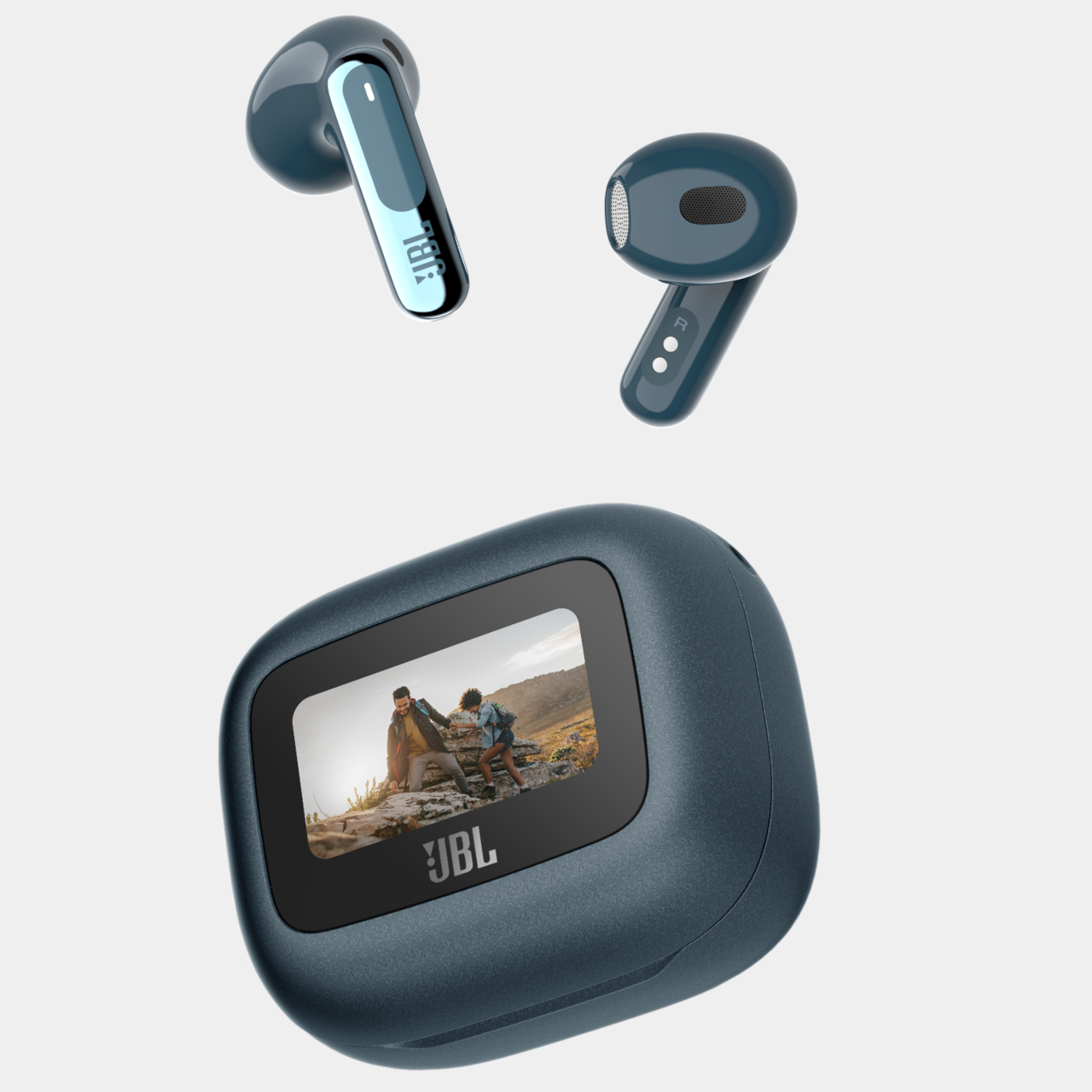
JBL Launches The Live 3 Series Of Touchscreen Earbuds For Personalized Audio Experience

JBL, a renowned name in audio technology, has made a splash at CES 2024 with the introduction of its latest generation of wireless earbuds, the Live 3 series. Comprising three distinct models – Live Buds 3, Live Beam 3, and Live Flex 3 – this lineup is designed to cater to diverse user preferences while offering a seamless and personalized audio experience. Let’s delve into the key features of these earbuds, showcased in a sleek touchscreen charging case.

Designer: JBL

One of the standout features of the Live 3 series is the inclusion of a 1.45-inch LED touch display on the charging case, a technology first introduced in JBL’s Tour Pro 2. This touchscreen functionality allows users to manage calls, view texts, control music playback, and even receive social media alerts directly from the case. Ideal for situations where users prefer not to handle their phones with sweaty hands like in the gym or when you’re out for a run, this innovative addition brings a new level of convenience to the earbud experience.

The Live 3 series introduces three unique models, each finely tuned to suit different preferences and situations. Let’s dive into what each has to offer:
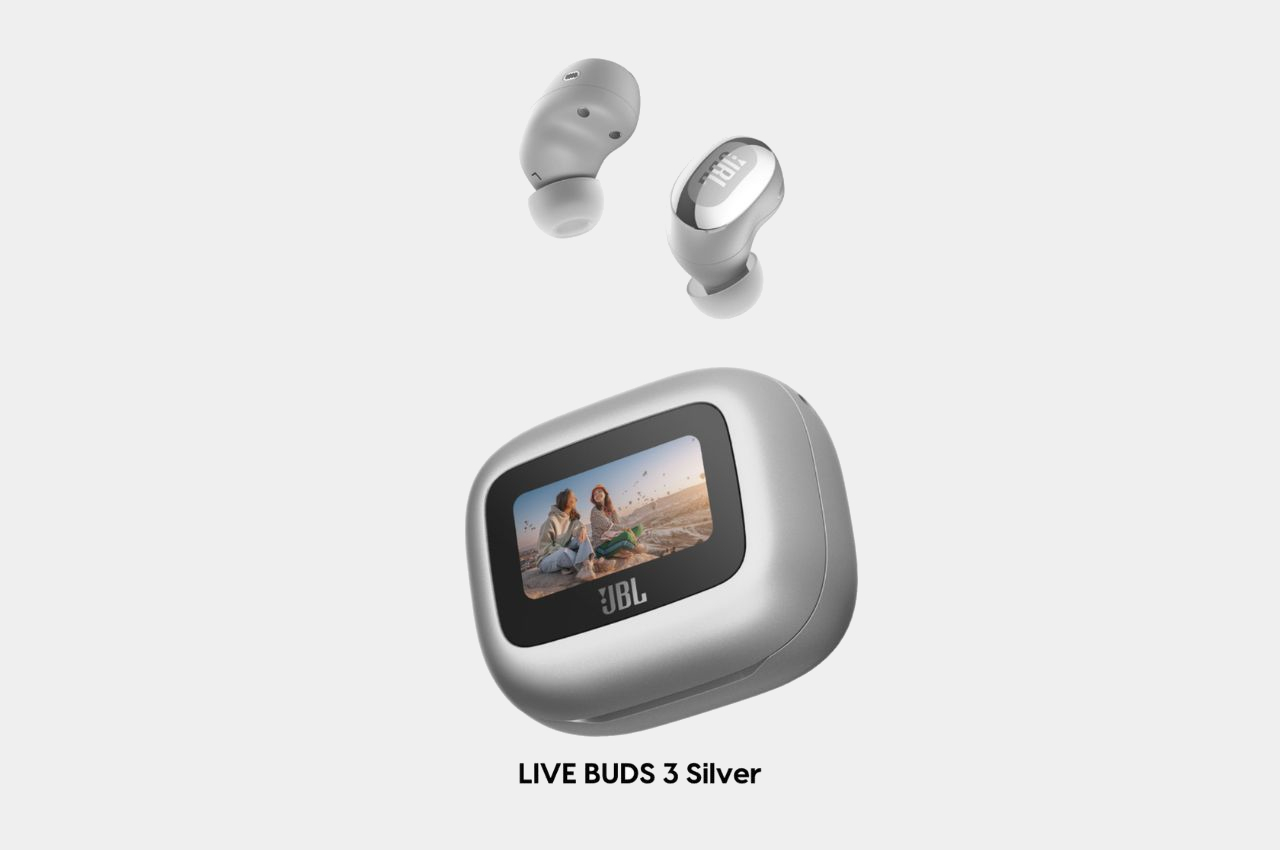
First, the Live Buds 3:
Its sporting a classic bud-style design with a comfy fit. You get a solid 10 hours of playtime outside the case with ANC (active noise cancellation) off, plus an extra 30 hours of juice from the case. Perfect for those who want a laid-back, immersive audio experience.

Then, we have the Live Beam 3:
It’s JBL’s answer to AirPods Pro 2. These closed-type stick earbuds feature a noise-isolating design, giving you 12 hours of playtime with ANC off and an additional 36 hours of charge from the case. It’s all about that premium audio experience.

Lastly, the Live Flex 3:
It’s the open-type stick headphones for the AirPods 3 enthusiasts. Offering 10 hours of playtime with ANC off and an extra 40 hours from the case, these are designed for those who appreciate an open design and longer battery life.

Here’s the cool part; all of them share some awesome features. Think IP55 (for Buds and Beam) and IP54 (for Flex) dust and water resistance, Smart Charging Case tech with a 1.45-inch LED touch display, Hi-Res Audio, JBL Signature Sound, Bluetooth 5.3 support with LE Audio (via OTA update) for multipoint connectivity, and compatibility with top-notch Android phones like Google Pixel 7/8 and Samsung Galaxy S23.

This lineup isn’t just about earbuds; it’s about tailoring your audio experience to fit your style. So, whether you’re into classic buds, Pro-level sound, or an AirPods vibe, the Live 3 series has you covered.

All three models of the JBL Live 3 series are priced at $199.95 and are expected to hit stores later this summer. They will be available in black and silver, these earbuds aim to deliver a premium audio experience for users with diverse preferences and lifestyles. As the market eagerly awaits their arrival, JBL’s Live 3 series promises to redefine the standards of wireless earbuds in 2024.

The post JBL Launches The Live 3 Series Of Touchscreen Earbuds For Personalized Audio Experience first appeared on Yanko Design.

Leonardo Motion AI video creator let’s you make 180 videos a month for free

Leonardo Motion AI video creator

Imagine being able to breathe life into your still images, turning them into captivating, animated videos with ease. This is now possible with Leonardo Motion AI, a cutting-edge tool that blends the artistry of image creation with the latest in technology. With this platform, you can animate your pictures without any hassle, and you have […]

The post Leonardo Motion AI video creator let’s you make 180 videos a month for free appeared first on Geeky Gadgets.

OpenAI admits it’s impossible to train generative AI without copyrighted materials

OpenAI and its biggest backer, Microsoft, are facing several lawsuits accusing them of using other people's copyrighted works without permission to train the former's large language models (LLMs). And based on what OpenAI told the House of Lords Communications and Digital Select Committee, we might see more lawsuits against the companies in the future. It would be "impossible to train today's leading AI models without using copyrighted materials," OpenAI wrote in its written evidence (PDF) submission for the committee's inquiry into LLMs, as first reported by the The Guardian.

The company explained that it's because copyright today "covers virtually every sort of human expression — including blog posts, photographs, forum posts, scraps of software code, and government documents." It added that "[l]imiting training data to public domain books and drawings created more than a century ago might yield an interesting experiment, but would not provide AI systems that meet the needs of today's citizens." OpenAI also insisted that it complies with copyright laws when it trains its models. In a new post on its blog made in response to the The New York Times' lawsuit, it said the use of publicly available internet materials to train AI falls under fair use doctrine. 

It admitted, however, that there is "still work to be done to support and empower creators." The company talked about the ways it's allowing publishers to block the GPTBot web crawler from being able to access their websites. It also said that it's developing additional mechanisms allowing rightsholders to opt out of training and that it's engaging with them to find mutually beneficial agreements. 

In some of the lawsuits filed against OpenAI and Microsoft, the plaintiffs accuse the companies of refusing to pay authors for their work while building a billion-dollar industry and enjoying enormous financial gain from copyrighted materials. The more recent case filed by a couple of non-fiction authors argued that the companies could've explored alternative financing options, such as profit sharing, but have "decided to steal" instead.

OpenAI didn't address those particular lawsuits, but it did provide a direct answer to The New York Times' complaint that accuses it of using its published news articles without permission. The publication isn't telling the full story, it said. It was already negotiating with The Times regarding a "high-value partnership" that would give it access to the publication's reporting. The two parties were apparently still in touch until December 19, and OpenAI only found out about the lawsuit on December by reading about it on The Times.

In the complaint filed by the newspaper, it cited instances of ChatGPT providing users with "near-verbatim excerpts" from paywalled articles. OpenAI accused the publication of intentionally manipulating prompts, such as including lengthy excerpts of articles in its interaction with the chatbot to get it to regurgitate content. It's also accusing The Times of cherry picking examples from many attempts. OpenAI said the lawsuit filed by The Times has no merit, but it's still hopeful for a "constructive partnership" with the publication. 

This article originally appeared on Engadget at https://www.engadget.com/openai-admits-its-impossible-to-train-generative-ai-without-copyrighted-materials-103311496.html?src=rss

Rigetti Novera QPU Quantum computer CPU processor launches

Rigetti Novera QPU Quantum processor

In the rapidly evolving world of quantum computing, Rigetti Computing, Inc. has taken a bold step forward with the introduction of their latest innovation, the Novera Quantum Processing Unit (QPU). This new 9-qubit processor is a testament to Rigetti’s commitment to pushing the boundaries of what’s possible in quantum technology. The Novera QPU emerges from […]

The post Rigetti Novera QPU Quantum computer CPU processor launches appeared first on Geeky Gadgets.

DisplayPort 2.1a specifications updated for longer cable support

DisplayPort specifications for longer cable support

The world of digital connectivity is constantly evolving, and the latest update from the Video Electronics Standards Association (VESA) is a testament to this continuous progression. VESA has recently announced an update to the DisplayPort standard, now at version 2.1a, which introduces enhancements that are poised to elevate the user experience in both consumer electronics […]

The post DisplayPort 2.1a specifications updated for longer cable support appeared first on Geeky Gadgets.

10 ChatGPT custom GPTs designed for AI image creation

10 Custom GPTs designed for AI art

Even after the release of AI art generator is such as Midjourney and OpenAI’s DallE 3 the digital art world is on the brink of a significant transformation with the introduction of custom Generative Pre-trained Transformers. OpenAI will soon be launching their new and highly anticipated custom GPT Store. Allowing anyone to create custom AI models […]

The post 10 ChatGPT custom GPTs designed for AI image creation appeared first on Geeky Gadgets.

15 Hidden iPhone Settings You Should Change (Video)

15 Hidden iPhone Settings

Are you an iPhone user looking to enhance your device’s functionality and security? You’ll be pleased to know that there are several under-the-radar settings you can adjust to optimize your experience. The video below from iReviews delves into 15 essential iPhone settings that, while often overlooked, can significantly improve your daily interaction with your device. […]

The post 15 Hidden iPhone Settings You Should Change (Video) appeared first on Geeky Gadgets.

Speck Tagimals hands-on at CES 2024: Adorable AirTag holders that attach to kids’ shoes!

Part cute character, part serious parenting tool, Speck’s latest AirTag case may be a literal lifesaver.

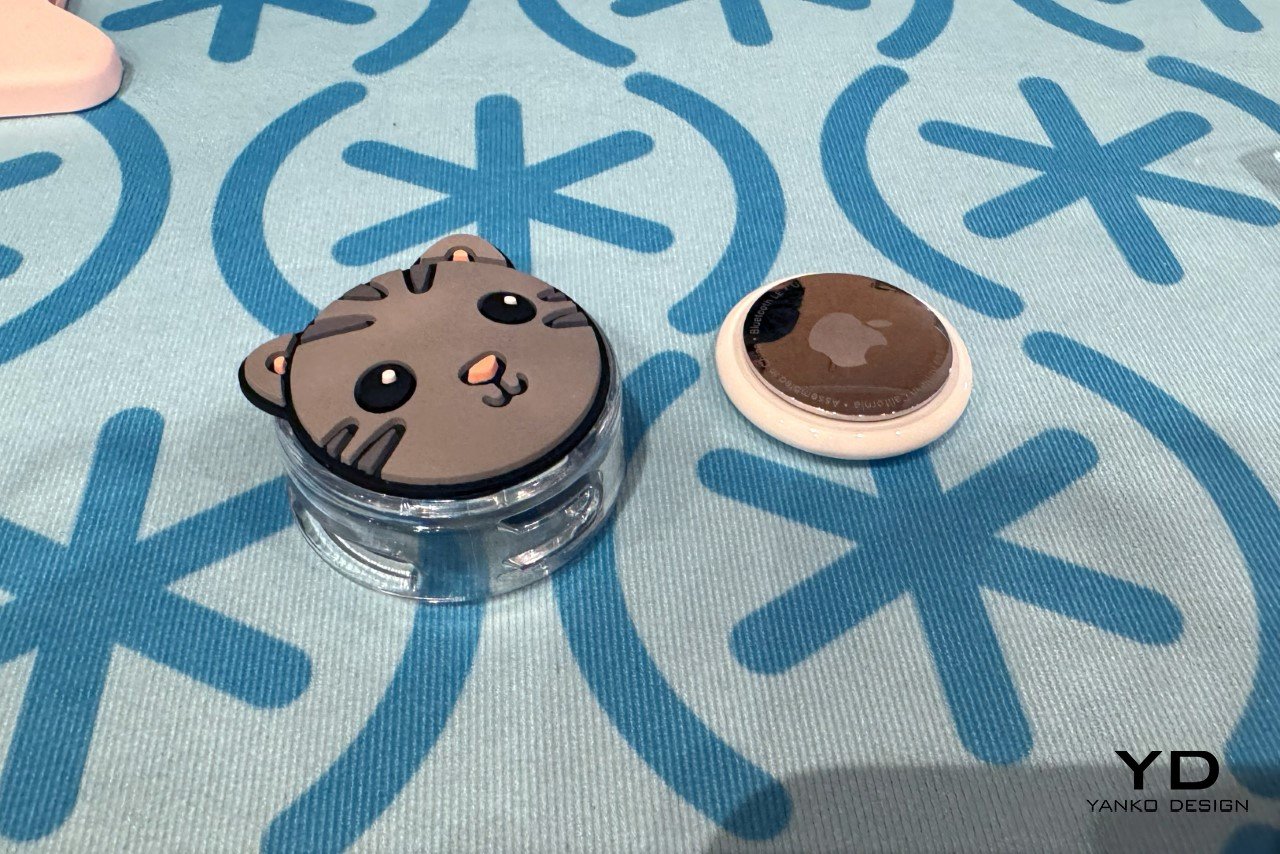
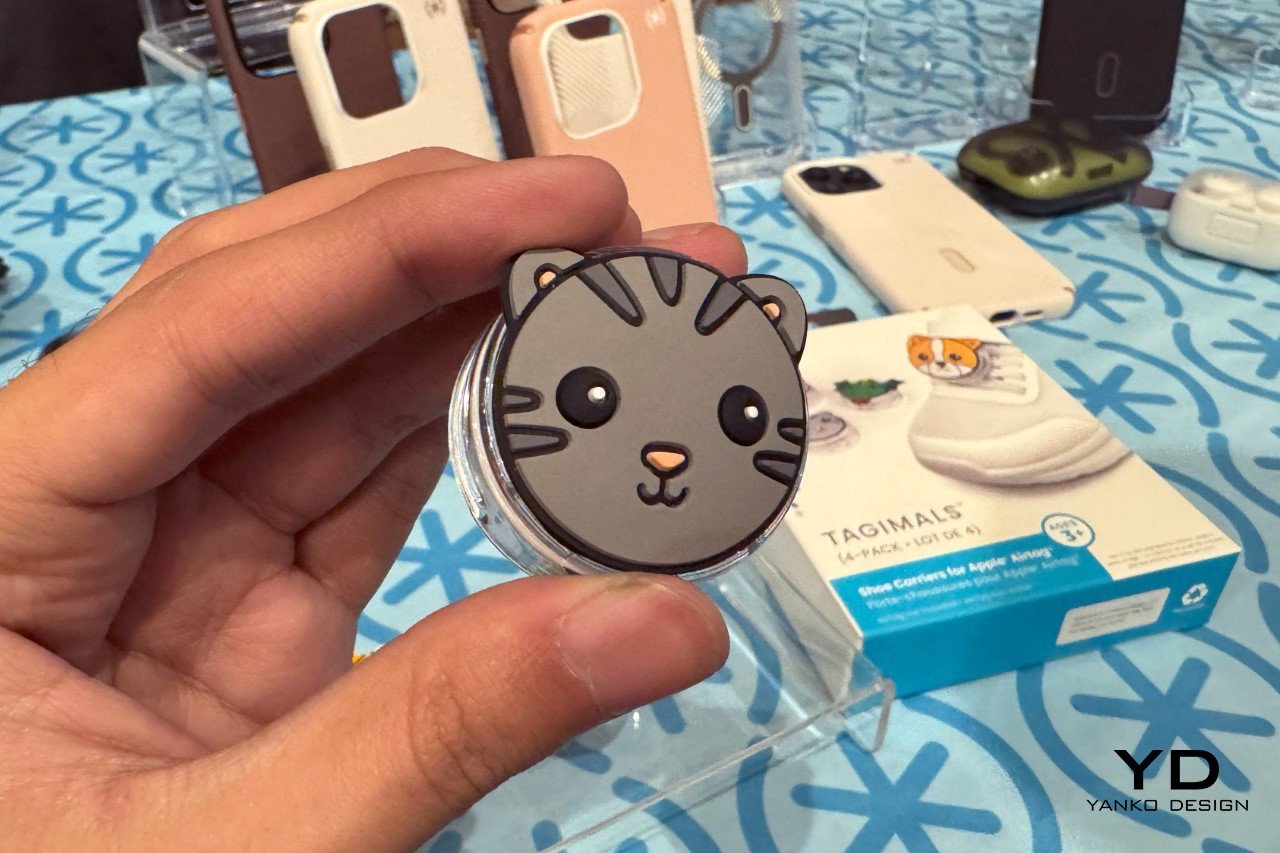
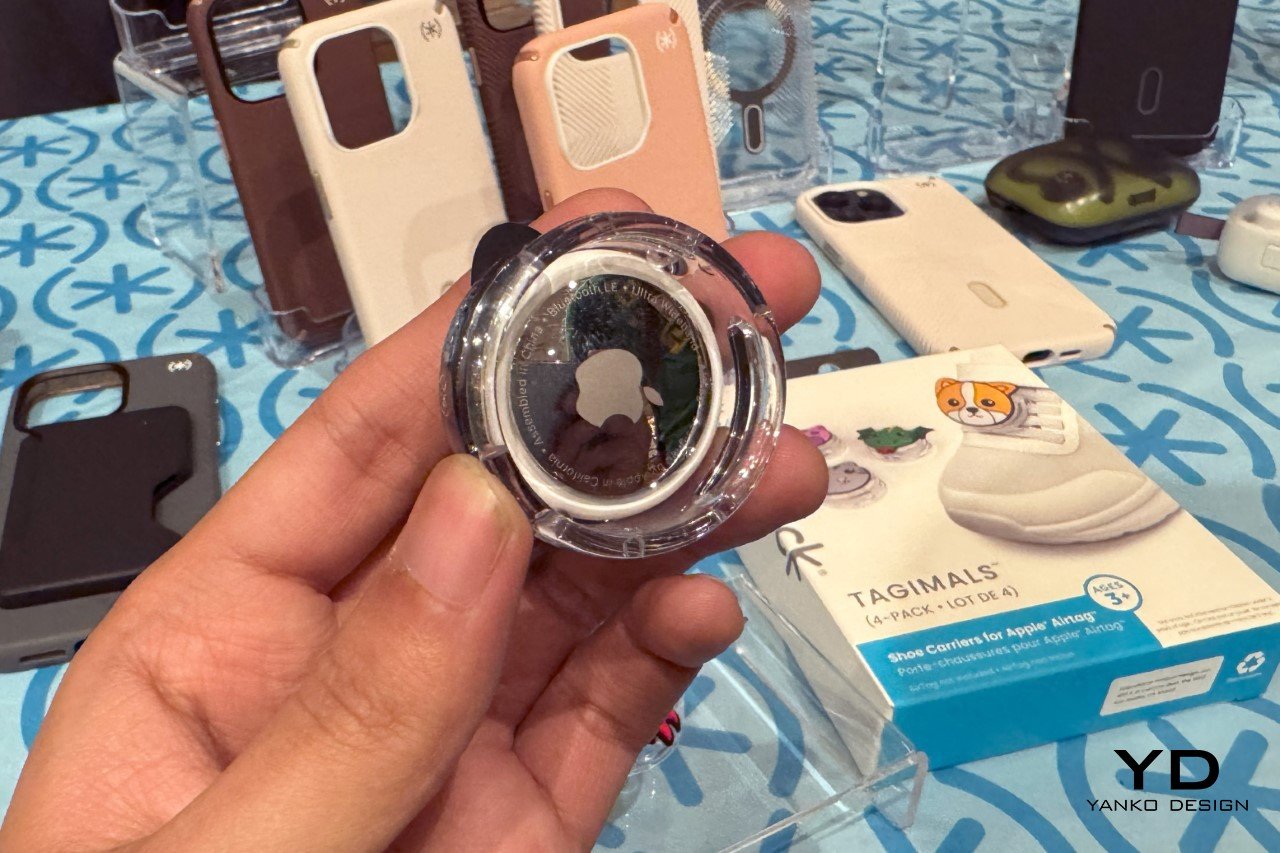
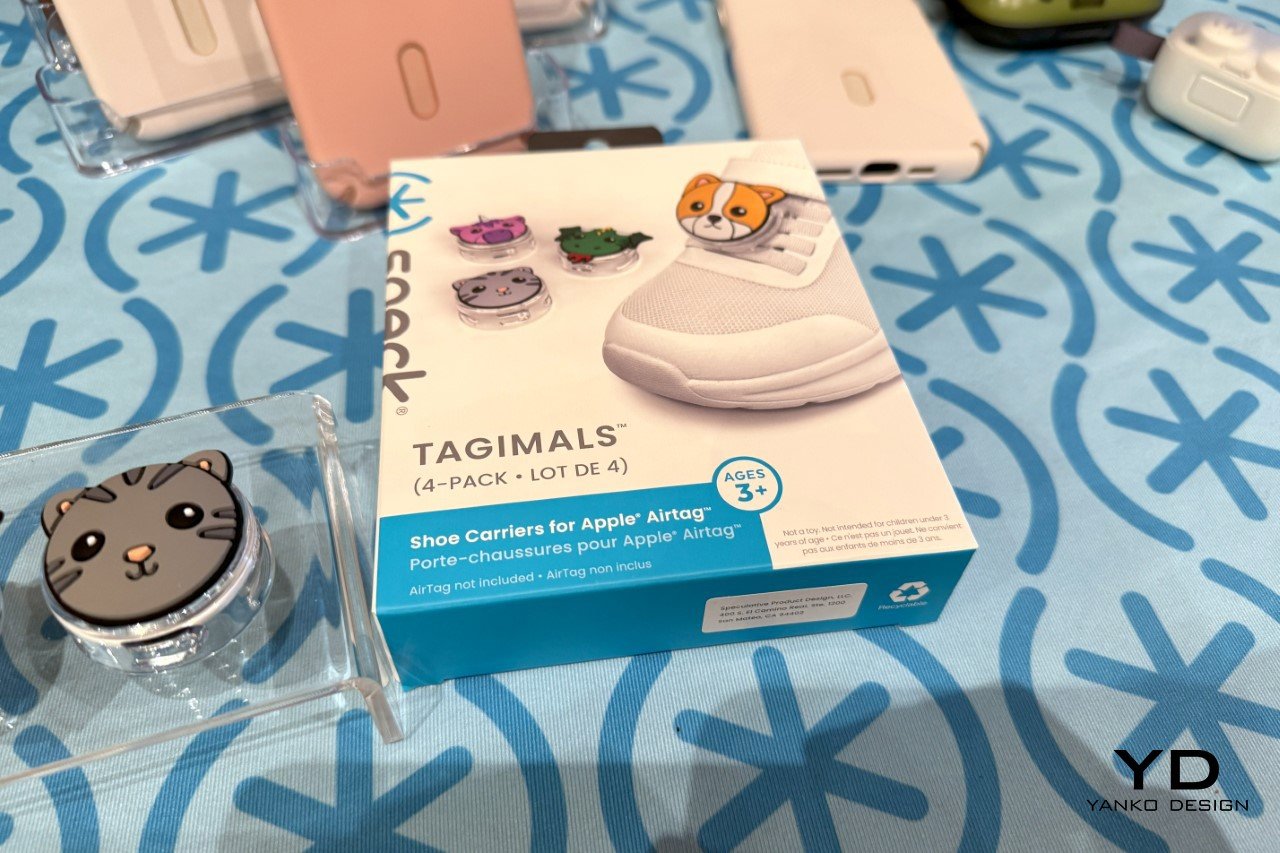
Dubbed the Tagimals, these AirTag covers come with slots that let you strap them to kids’ shoes, letting parents keep tabs on the whereabouts of their young ones. Each Tagimal sports a unique character (with its own name), and houses a single AirTag within. It works with kids’ shoes as well as pet collars, going above and beyond what Apple envisioned for its mere ‘keys and wallet tracking device’.

Designer: Speck

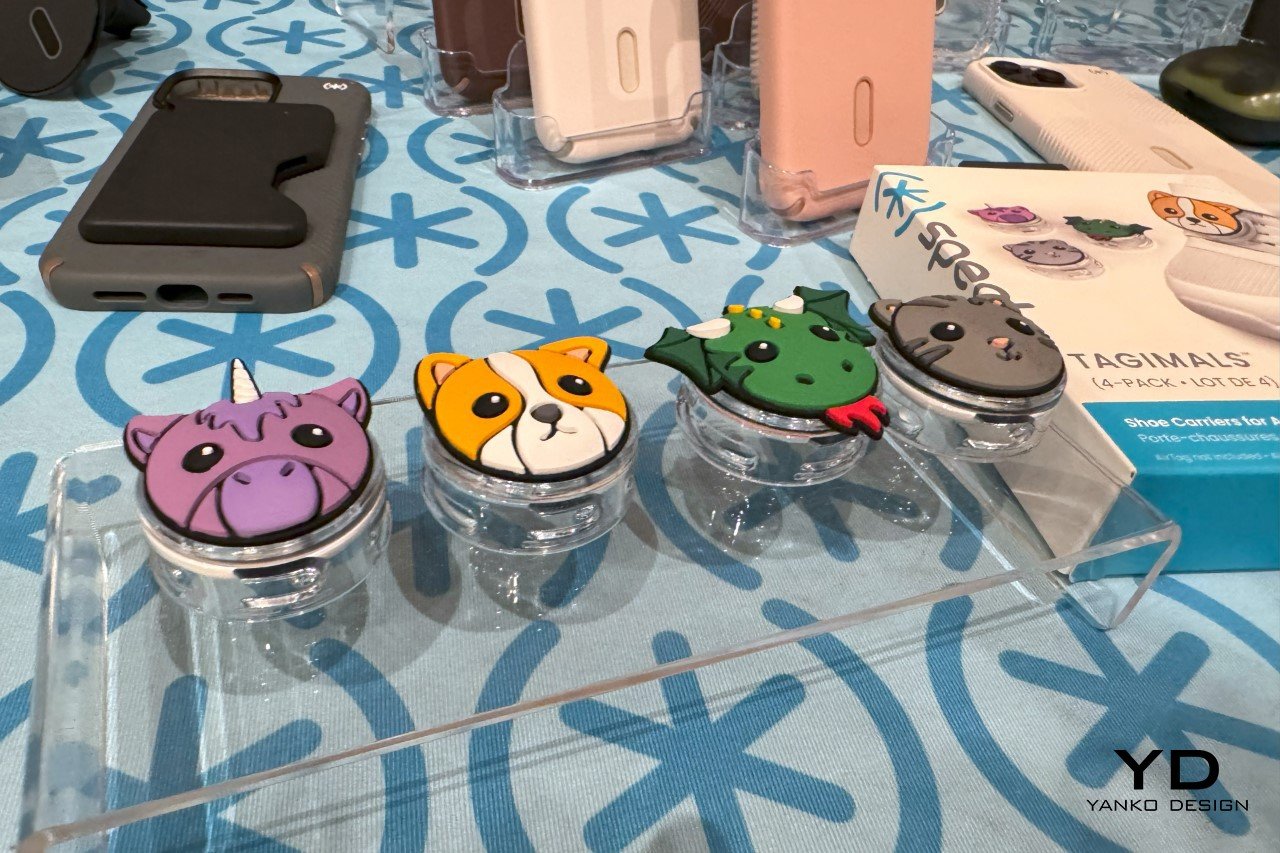
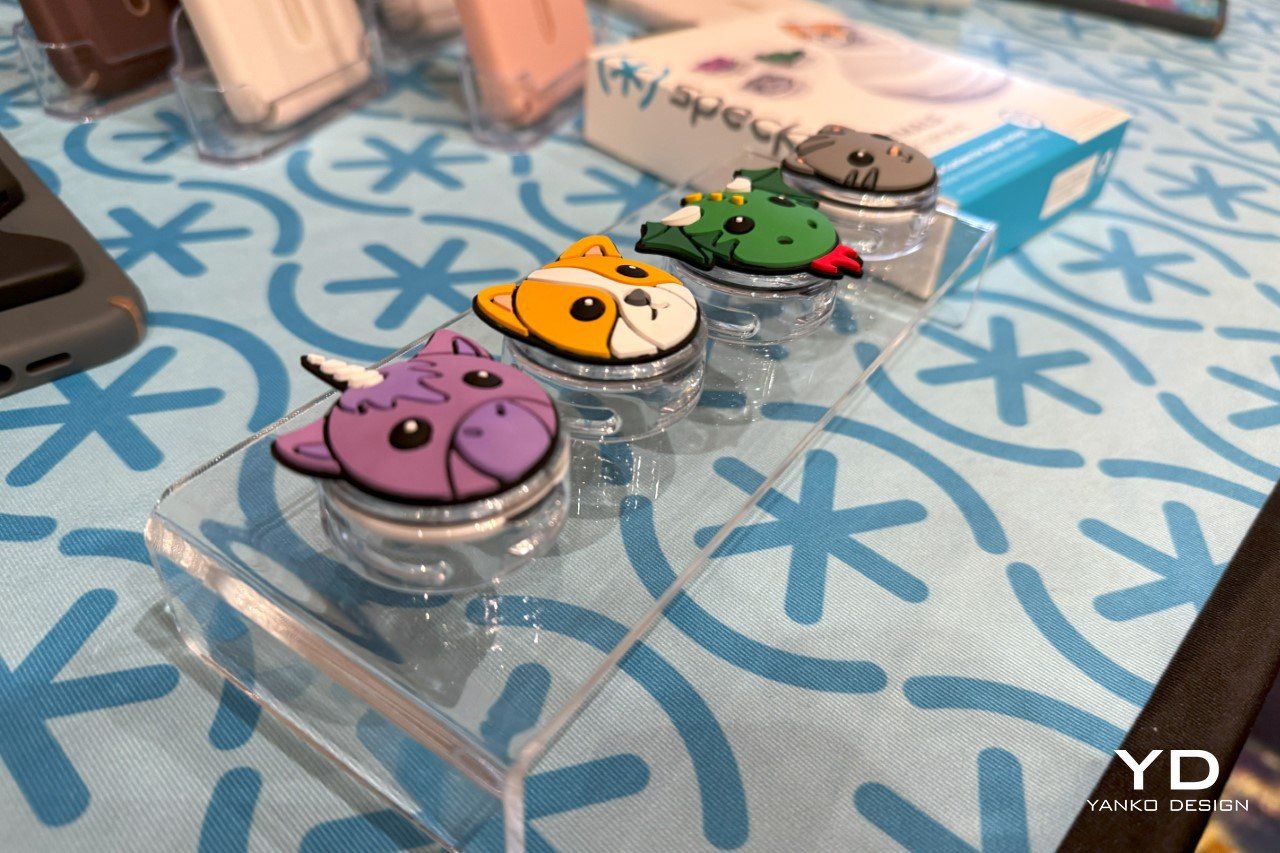
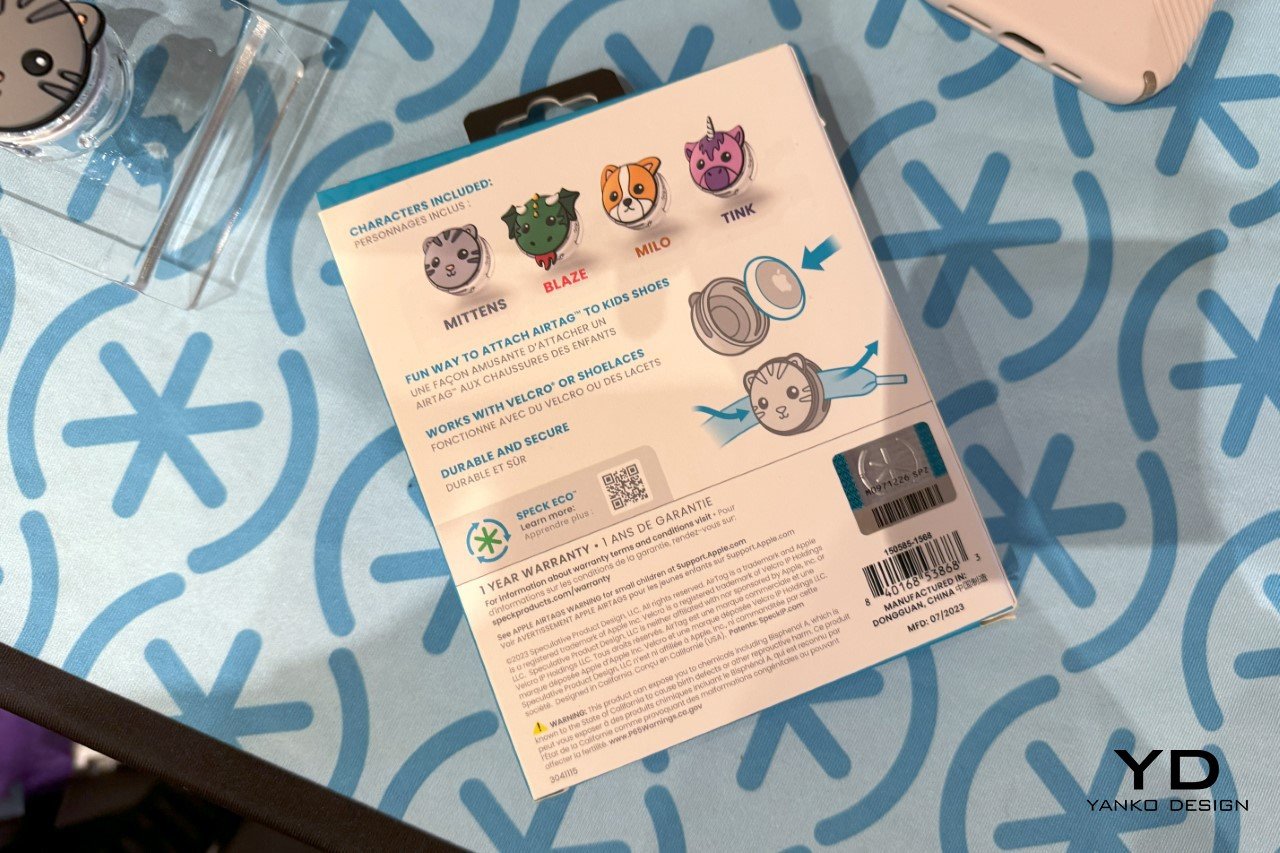
The Tagimals (a portmanteau of Tag and Animal) come in four styles, each with their own animal character. Children can choose the animal they love the best and strap/secure them to their shoes, sort of like Crocs Charms. A wide slot allows parents to string the Tagimals onto laced shoes, slide them into velcro shoes, or even secure them around pet collars.

You’ve got four adorable creatures to choose from – ‘Milo’ the dog and ‘Mittens’ the cat make for the most obvious Tagimals, but you’ve even got whimsical creatures like ‘Blaze’ the dragon and, ‘Tink’ the unicorn for kids with a sense of wonder and curiosity.

Attaching an AirTag to a Tagimal is as easy as pushing it in as the tag then secures within with a satisfying click. To remove the AirTag, simply press down on the silicone animal face and it forces the AirTag out, allowing you to replace it, or put the AirTag in a new character because maybe your kid feels like a dragon on some days and a cat on others!

The Tagimals come in a set of four, featuring the motley crew of animal characters. The kit starts at $34.95, which works out to be vastly cheaper than Apple’s own AirTag holder… while offering features that most parents and pet-owners will absolutely love!

The post Speck Tagimals hands-on at CES 2024: Adorable AirTag holders that attach to kids’ shoes! first appeared on Yanko Design.