Meta explains how third-party apps will hook into Messenger and WhatsApp

Meta has revealed more details about how third-party messaging apps can be interoperable with WhatsApp and Messenger. The company is being required to open up its apps to a certain extent to comply with the Digital Markets Act (DMA), a new European Union law that comes into effect this week.

"We think the best way to deliver interoperability is through a solution which builds on Meta’s existing client/server architecture," Meta wrote in a blog post. "The approach we have taken in terms of implementing interoperability is the best way of meeting DMA requirements, whilst also creating a viable approach for the third-party providers interested in becoming interoperable with Meta and maximizing user security and privacy."

Meta says it has been working on interoperability with the European Commission for nearly two years. To begin with, interoperability will need to support text-based messages and the ability to share images, voice notes, videos and other files. In the future, Meta will need to enable group chats and calling between WhatsApp and Messenger and third-party apps.

For the time being, third-party developers will likely have to use the Signal protocol to hook into Messenger and WhatsApp. Meta uses that protocol for end-to-end encryption (E2EE) on both apps, "as it represents the current gold standard for E2EE chats." Developers will have the option of using a compatible protocol, but only "if they are able to demonstrate it offers the same security guarantees as Signal."

Meta notes that when it comes to messaging entirely within the WhatsApp and Messenger ecosystems, it controls both the sending and receiving clients. In such cases, it can affirm that only the sender and intended recipients will be able to see messages. 

However, it added that "while we have built a secure solution for interop that uses the Signal protocol encryption to protect messages in transit, without ownership of both clients (endpoints) we cannot guarantee what a third-party provider does with sent or received messages, and we therefore cannot make the same promise." As such, Meta is indicating that messages that originate from or are sent to a third-party app may not be as secure as those that stay completely within its own ecosystem.

Developers who connect their apps to WhatsApp and Messenger will have to host media files that they send to Meta's platforms on their own servers. WhatsApp or Messenger will then download the media from the media via a Meta proxy service.

To enable interoperability, makers of third-party messaging apps will need to sign an agreement with Meta. The company notes that it needs to be ready to turn on interoperability with another service within three months of receiving a request, though "it may take longer before the functionality is ready for public use."

This article originally appeared on Engadget at https://www.engadget.com/meta-explains-how-third-party-apps-will-hook-into-messenger-and-whatsapp-192532065.html?src=rss



Apple bans Epic’s developer account and calls the company ‘verifiably untrustworthy’

Epic’s plan to launch its own iOS storefront in the EU could be in serious jeopardy. Apple terminated the company's developer account just one day after iOS 17.4 finally allowed for third-party app stores in Europe to comply with the Digital Markets Act (DMA). Epic says that, thanks to the ban, it "cannot develop the Epic Games Store for iOS" and called the move a "serious violation of the DMA." In other words, the biggest beef in tech continues.

The Fortnite developer published a blog post on the matter and shared a letter sent by Apple’s lawyers that called Epic Games “verifiably untrustworthy," suggesting the reason behind the ban was due to fear on Apple’s part that Epic would not comply with the contractual agreements inherent to obtaining a developer’s account. It’s worth noting that Apple granted Epic a developer’s account at the beginning of this year, so the company didn’t have any compliance fears back then.

So what changed? Epic Games CEO Tim Sweeney has been particularly vocal regarding Apple’s EU App Store changes, calling them “a devious new instance of malicious compliance.” Sweeney says that Apple technically complies with the DMA, but severely undercuts third-party app stores in a number of ways, calling it an “anticompetitive scheme rife with new junk fees on downloads and new Apple taxes on payments they don’t process.”

These claims aren't entirely without merit, although Sweeney and his company are far from disinterested parties."Third-party app stores must meet Apple’s Notarization requirements, with all of its tight rules regarding moderation, piracy, fraud and payment disputes. Apple has the right to shut down any app if it finds anything that skirts these rules. Additionally, developers must pay a Core Technology Fee once an app has been downloaded more than a million times, which breaks down to around 54 cents per install each year. Would-be developers must also share a letter from a top financial institution with proof it has access to at least $1.1 million in credit to handle potential financial disputes. There’s also a flat commission on every transaction, which ranges from 15 to 30 percent.

After Sweeney complained openly about the new app store rules, Apple’s Phil Schiller sent Epic Games an email on February 23 to ask for “written assurance” that the company would honor its commitments. “In plain, unqualified terms, please tell us why we should trust Epic this time,” the letter concludes.

Sweeney responded that “Epic and its subsidiaries are acting in good faith and will comply with all terms of current and future agreements with Apple, and we’ll be glad to provide Apple with any specific further assurances on the topic that you’d like.” This didn’t seem to satisfy Apple, as it went on to pull the developer’s account this week.

Epic responded that the move undermines its “ability to be a viable competitor” and that Apple’s “showing other developers what happens when you try to compete” or are “critical of their unfair practices.” The developer calls the ban a simple retaliation “against Epic for speaking out against Apple’s unfair and illegal practices.”

Apple has a different take on things. It laid the blame on “Epic’s egregious breach of its contractual obligations” in a statement published by 9to5Mac. The iPhone manufacturer went on to say it has “the right to terminate any or all of Epic Games’ wholly owned subsidiaries, affiliates, and/or other entities under Epic Games’ control at any time and at Apple’s sole discretion. In light of Epic’s past and ongoing behavior, Apple chose to exercise that right.”

Despite all of this bad blood, the developer still plans on bringing Fortnite to iOS, likely via an unaffiliated third-party storefront. It’s also bringing experimental support for the Unreal Engine to Apple Vision Pro.

Today’s development involves the DMA, a law that designates large companies as "gatekeepers" and specific services, like Apple's App Store, as "core platform services." The law forces these services to become interoperable with competing products to remain in compliance. This is why Apple’s allowing third-party app stores in the first place.

However, the bad blood between the two companies goes back years, long before the DMA was a glint in the EU's eye. Epic Games has been fighting against Apple’s developer transaction fee policy since 2020, taking an antitrust case all the way to the Supreme Court. California’s Ninth Circuit ruled in favor of Epic, stating that Apple had broken the state’s Unfair Competition law, though it stopped short of calling Apple a monopoly. SCOTUS declined to hear appeals from both Apple and Epic, so that’s where it stands right now. The Department of Justice, however, is reportedly considering its own antitrust case against Apple.

This article originally appeared on Engadget at https://www.engadget.com/apple-bans-epics-developer-account-and-calls-the-company-verifiably-untrustworthy-191316210.html?src=rss

Apple bans Epic’s developer account and calls the company ‘verifiably untrustworthy’

Epic’s plan to launch its own iOS storefront in the EU could be in serious jeopardy. Apple terminated the company's developer account just one day after iOS 17.4 finally allowed for third-party app stores in Europe to comply with the Digital Markets Act (DMA). Epic says that, thanks to the ban, it "cannot develop the Epic Games Store for iOS" and called the move a "serious violation of the DMA." In other words, the biggest beef in tech continues.

The Fortnite developer published a blog post on the matter and shared a letter sent by Apple’s lawyers that called Epic Games “verifiably untrustworthy," suggesting the reason behind the ban was due to fear on Apple’s part that Epic would not comply with the contractual agreements inherent to obtaining a developer’s account. It’s worth noting that Apple granted Epic a developer’s account at the beginning of this year, so the company didn’t have any compliance fears back then.

So what changed? Epic Games CEO Tim Sweeney has been particularly vocal regarding Apple’s EU App Store changes, calling them “a devious new instance of malicious compliance.” Sweeney says that Apple technically complies with the DMA, but severely undercuts third-party app stores in a number of ways, calling it an “anticompetitive scheme rife with new junk fees on downloads and new Apple taxes on payments they don’t process.”

These claims aren't entirely without merit, although Sweeney and his company are far from disinterested parties."Third-party app stores must meet Apple’s Notarization requirements, with all of its tight rules regarding moderation, piracy, fraud and payment disputes. Apple has the right to shut down any app if it finds anything that skirts these rules. Additionally, developers must pay a Core Technology Fee once an app has been downloaded more than a million times, which breaks down to around 54 cents per install each year. Would-be developers must also share a letter from a top financial institution with proof it has access to at least $1.1 million in credit to handle potential financial disputes. There’s also a flat commission on every transaction, which ranges from 15 to 30 percent.

After Sweeney complained openly about the new app store rules, Apple’s Phil Schiller sent Epic Games an email on February 23 to ask for “written assurance” that the company would honor its commitments. “In plain, unqualified terms, please tell us why we should trust Epic this time,” the letter concludes.

Sweeney responded that “Epic and its subsidiaries are acting in good faith and will comply with all terms of current and future agreements with Apple, and we’ll be glad to provide Apple with any specific further assurances on the topic that you’d like.” This didn’t seem to satisfy Apple, as it went on to pull the developer’s account this week.

Epic responded that the move undermines its “ability to be a viable competitor” and that Apple’s “showing other developers what happens when you try to compete” or are “critical of their unfair practices.” The developer calls the ban a simple retaliation “against Epic for speaking out against Apple’s unfair and illegal practices.”

Apple has a different take on things. It laid the blame on “Epic’s egregious breach of its contractual obligations” in a statement published by 9to5Mac. The iPhone manufacturer went on to say it has “the right to terminate any or all of Epic Games’ wholly owned subsidiaries, affiliates, and/or other entities under Epic Games’ control at any time and at Apple’s sole discretion. In light of Epic’s past and ongoing behavior, Apple chose to exercise that right.”

Despite all of this bad blood, the developer still plans on bringing Fortnite to iOS, likely via an unaffiliated third-party storefront. It’s also bringing experimental support for the Unreal Engine to Apple Vision Pro.

Today’s development involves the DMA, a law that designates large companies as "gatekeepers" and specific services, like Apple's App Store, as "core platform services." The law forces these services to become interoperable with competing products to remain in compliance. This is why Apple’s allowing third-party app stores in the first place.

However, the bad blood between the two companies goes back years, long before the DMA was a glint in the EU's eye. Epic Games has been fighting against Apple’s developer transaction fee policy since 2020, taking an antitrust case all the way to the Supreme Court. California’s Ninth Circuit ruled in favor of Epic, stating that Apple had broken the state’s Unfair Competition law, though it stopped short of calling Apple a monopoly. SCOTUS declined to hear appeals from both Apple and Epic, so that’s where it stands right now. The Department of Justice, however, is reportedly considering its own antitrust case against Apple.

This article originally appeared on Engadget at https://www.engadget.com/apple-bans-epics-developer-account-and-calls-the-company-verifiably-untrustworthy-191316210.html?src=rss

41 state attorneys general tell Meta to fix their customer support for hacking victims

A group of 41 state attorneys general are demanding that Meta step up its support services for users who have been victims of hacks and account takeovers. “We refuse to operate as the customer service representatives of your company,” the group writes in a letter addressed to Meta’s chief legal officer. “We request Meta take immediate action and substantially increase its investment in account takeover mitigation tactics, as well as responding to users whose accounts were taken over.”

The letter, which was first reported by Wired, pushes Meta to deal with an issue that has long been a source of frustration to Facebook and Instagram users: the difficulty in accessing support after you lose access to your account. Though the company has taken steps over the years to make it easier for people to recover lost accounts, Meta largely relies on automated systems and there are still many people who fall through cracks.

As the letter highlights, this can be especially devastating for people who lose access to business accounts and pages. Even high-profile creators can find themselves unable to get support from a human employee of the company unless they have a personal connection to someone who works at Meta. Other users sometimes resort to legal services or hiring their own hackers to get their accounts back.

While it may seem surprising that state law enforcement officials would get involved in this issue, Reddit and other online forums for hacking victims often advise people to lodge complaints with their local AG’s office as a last resort. Some users have reported regaining access to their accounts after a state attorney general’s office intervened on their behalf.

Now, AGs are apparently flooded with such requests. “Our offices have experienced a dramatic and persistent spike in complaints in recent years concerning account takeovers that is not only alarming for our constituents but also a substantial drain on our office resources,” the letter states.

In addition to putting more resources into customer service, the letter asks Meta to provide more details on “the number of account takeovers over the past five years; suspected causes of the increase in account takeovers; safeguards currently in place to prevent account takeovers; current policies and procedures related to Meta’s response to account takeovers; and staffing related to safeguarding the platforms against account takeovers as well as responding to complaints.”

In a statement, a Meta spokesperson said that “scammers use every platform available to them and constantly adapt to evade enforcement” from the company. “We invest heavily in our trained enforcement and review teams and have specialized detection tools to identify compromised accounts and other fraudulent activity. We regularly share tips and tools people can use to protect themselves, provide a means to report potential violations, work with law enforcement and take legal action."

In 2022, Bloomberg reported that Meta was in the “early stages” creating a customer service division that would be able to help users with account issues. It's unclear what became of the plan. Later that year, the company laid off thousands of employees. In their letter, the state AGs notes that they saw an uptick in complaints “around the same time Meta announced a massive layoff of around 11,000 employees in November 2022, which reportedly focused on the ‘security and privacy and integrity sector.’”

This article originally appeared on Engadget at https://www.engadget.com/41-state-attorneys-general-tell-meta-to-fix-their-customer-support-for-hacking-victims-184709904.html?src=rss

41 state attorneys general tell Meta to fix their customer support for hacking victims

A group of 41 state attorneys general are demanding that Meta step up its support services for users who have been victims of hacks and account takeovers. “We refuse to operate as the customer service representatives of your company,” the group writes in a letter addressed to Meta’s chief legal officer. “We request Meta take immediate action and substantially increase its investment in account takeover mitigation tactics, as well as responding to users whose accounts were taken over.”

The letter, which was first reported by Wired, pushes Meta to deal with an issue that has long been a source of frustration to Facebook and Instagram users: the difficulty in accessing support after you lose access to your account. Though the company has taken steps over the years to make it easier for people to recover lost accounts, Meta largely relies on automated systems and there are still many people who fall through cracks.

As the letter highlights, this can be especially devastating for people who lose access to business accounts and pages. Even high-profile creators can find themselves unable to get support from a human employee of the company unless they have a personal connection to someone who works at Meta. Other users sometimes resort to legal services or hiring their own hackers to get their accounts back.

While it may seem surprising that state law enforcement officials would get involved in this issue, Reddit and other online forums for hacking victims often advise people to lodge complaints with their local AG’s office as a last resort. Some users have reported regaining access to their accounts after a state attorney general’s office intervened on their behalf.

Now, AGs are apparently flooded with such requests. “Our offices have experienced a dramatic and persistent spike in complaints in recent years concerning account takeovers that is not only alarming for our constituents but also a substantial drain on our office resources,” the letter states.

In addition to putting more resources into customer service, the letter asks Meta to provide more details on “the number of account takeovers over the past five years; suspected causes of the increase in account takeovers; safeguards currently in place to prevent account takeovers; current policies and procedures related to Meta’s response to account takeovers; and staffing related to safeguarding the platforms against account takeovers as well as responding to complaints.”

In a statement, a Meta spokesperson said that “scammers use every platform available to them and constantly adapt to evade enforcement” from the company. “We invest heavily in our trained enforcement and review teams and have specialized detection tools to identify compromised accounts and other fraudulent activity. We regularly share tips and tools people can use to protect themselves, provide a means to report potential violations, work with law enforcement and take legal action."

In 2022, Bloomberg reported that Meta was in the “early stages” creating a customer service division that would be able to help users with account issues. It's unclear what became of the plan. Later that year, the company laid off thousands of employees. In their letter, the state AGs notes that they saw an uptick in complaints “around the same time Meta announced a massive layoff of around 11,000 employees in November 2022, which reportedly focused on the ‘security and privacy and integrity sector.’”

This article originally appeared on Engadget at https://www.engadget.com/41-state-attorneys-general-tell-meta-to-fix-their-customer-support-for-hacking-victims-184709904.html?src=rss

SME smartphone concept aims to aid the visually impaired

Smartphones are mostly created for those of us that are seeing or at least not visually impaired. But for those that want to be more inclusive, there are not that many similar products in the market that would cater to those that have some sort of visual impairment. Good thing that there are product designers out there who are thinking of such things and if their concepts are viable, I really hope that they get the funding to produce devices like this or at least major telecom brands adopt these ideas and create product lines for those that may need smart devices to communicate but are unable to use the usual ones.

Designer: Eslam Shafik

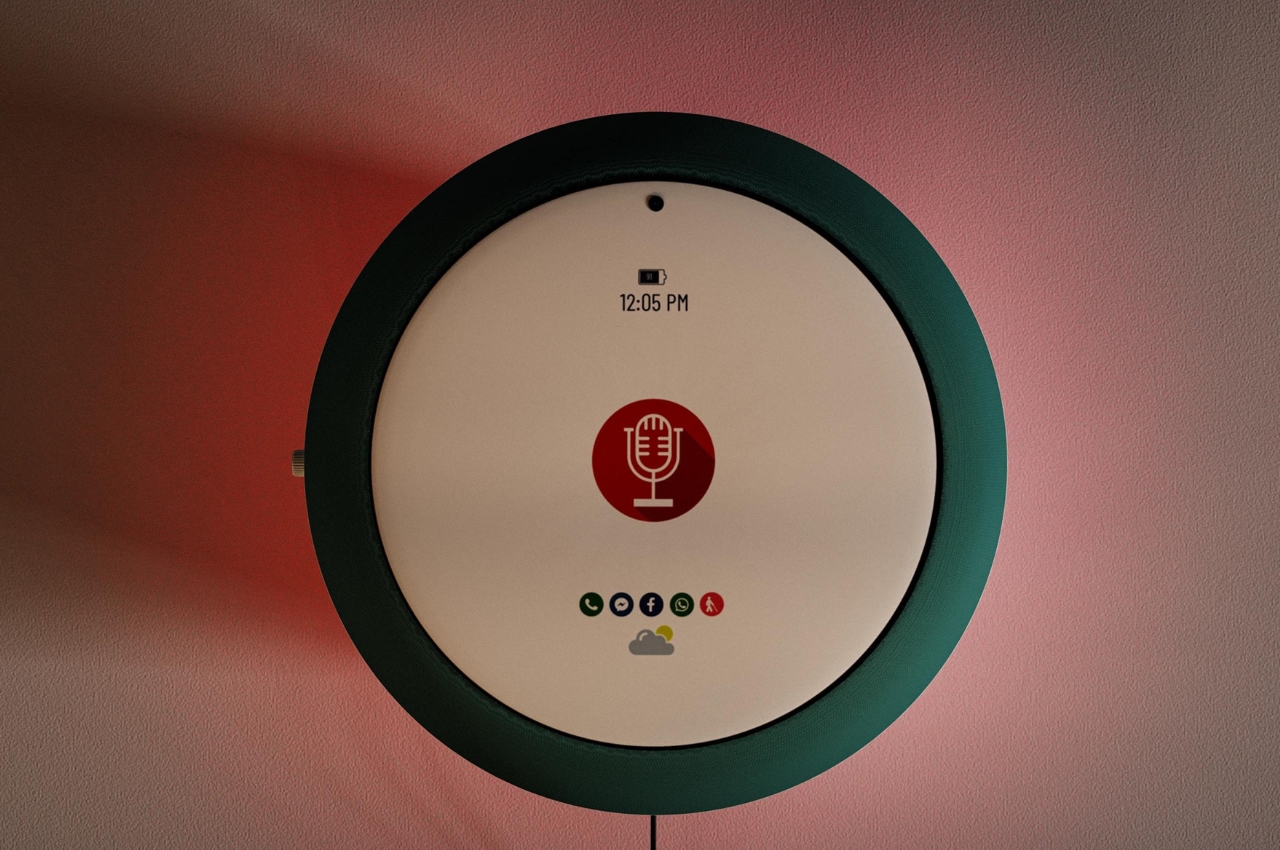
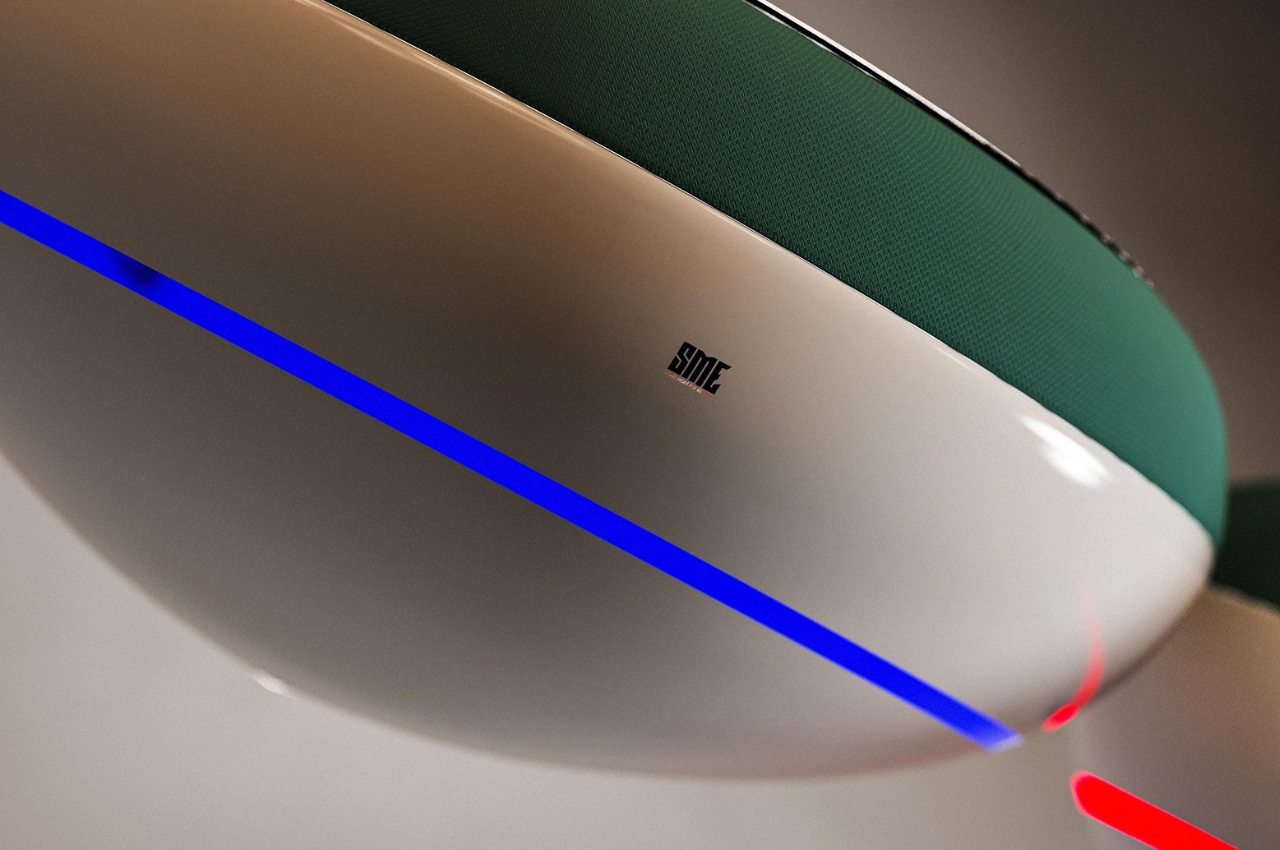
The SME is one such concept for a smart phone for the visually impaired. Unlike regular smartphones that are usually in a rectangular or square-ish shape, this one looks more like a smart speaker or a smart home hub. This a specific design direction that will make it easy for them to carry it around on the palm of their hand without a concern for its orientation. It also has a fabric mesh so you get a tactile grip on the smartphone and the materials used do not conduct heat so it’s comfortable for the user.

It even has a walking mode so the built-in high-quality camera will be able to guide the visually impaired as they’re walking. The voice assistant, Loutaz, can issue warnings when there are obstacles at a distance of not less than 50 centimeters. This assistant, powered by ethical AI, can also read out messages, social media posts, and other digital assistance you may need. It has a base for charging and to dock it when you’re not moving so it can still act like a smart home hub when you’re at home.

If further developed, this can be a pretty interesting, not to mention, useful device for those who need something like this. The 3D modeling seems to have dealt with the ergonomics and design aspect of the SME so what needs to be enhanced are the actual features and functions that will be truly helpful for the visually impaired.

The post SME smartphone concept aims to aid the visually impaired first appeared on Yanko Design.

SME smartphone concept aims to aid the visually impaired

Smartphones are mostly created for those of us that are seeing or at least not visually impaired. But for those that want to be more inclusive, there are not that many similar products in the market that would cater to those that have some sort of visual impairment. Good thing that there are product designers out there who are thinking of such things and if their concepts are viable, I really hope that they get the funding to produce devices like this or at least major telecom brands adopt these ideas and create product lines for those that may need smart devices to communicate but are unable to use the usual ones.

Designer: Eslam Shafik

The SME is one such concept for a smart phone for the visually impaired. Unlike regular smartphones that are usually in a rectangular or square-ish shape, this one looks more like a smart speaker or a smart home hub. This a specific design direction that will make it easy for them to carry it around on the palm of their hand without a concern for its orientation. It also has a fabric mesh so you get a tactile grip on the smartphone and the materials used do not conduct heat so it’s comfortable for the user.

It even has a walking mode so the built-in high-quality camera will be able to guide the visually impaired as they’re walking. The voice assistant, Loutaz, can issue warnings when there are obstacles at a distance of not less than 50 centimeters. This assistant, powered by ethical AI, can also read out messages, social media posts, and other digital assistance you may need. It has a base for charging and to dock it when you’re not moving so it can still act like a smart home hub when you’re at home.

If further developed, this can be a pretty interesting, not to mention, useful device for those who need something like this. The 3D modeling seems to have dealt with the ergonomics and design aspect of the SME so what needs to be enhanced are the actual features and functions that will be truly helpful for the visually impaired.

The post SME smartphone concept aims to aid the visually impaired first appeared on Yanko Design.

Post-apocalyptic city builder Frostpunk 2 arrives on July 25

Frostpunk's sequel finally has a release data, giving fans of the post-apocalyptic city-building survival game something to look forward to in the coming months. 11 Bit Studios has announced at the Xbox Partners Showcase that Frostpunk 2 will be available for Windows PCs starting on July 25. PC Game Pass subscribers will also be able to play it from day one. It's a full-fledged sequel to the original game, set 30 years after its events, where oil has taken over steam as society's main energy source. 

Players take on the role of the city's leader and will have to guide its citizens while facing the world's increasingly harsh, icy climate. In the sequel, they will get the chance to build larger cities divided into districts, with each one serving a specific purpose. One district could be in charge of food production, for instance, while another could serve as people's shelter. 

Similar to the game before it, Frostpunk 2 is expected to throw problems at the player that will force them to make some difficult decisions and challenge their morals. Players will meet various factions of citizens with ideals conflicting their own as their city grows, and they have to navigate the consequences of their decisions after siding with one faction over the rest. If it truly is like its predecessor, then players can expect a moody, somber experience that could be quite depressing at times. 

Both standard and Digital Deluxe editions of the game are now available for pre-order. The Digital Deluxe version comes with a seven-day beta access to parts of the game in April, exclusive access to story mode 72 hours before official release, thee post-release DLCs, a digital novella, an artbook and the game's soundtrack. Frostpunk 2 will also be making its way to consoles and will be coming to the Xbox Game Pass subscription service at a later date. 

This article originally appeared on Engadget at https://www.engadget.com/post-apocalyptic-city-builder-frostpunk-2-arrives-on-july-25-190018322.html?src=rss

Post-apocalyptic city builder Frostpunk 2 arrives on July 25

Frostpunk's sequel finally has a release data, giving fans of the post-apocalyptic city-building survival game something to look forward to in the coming months. 11 Bit Studios has announced at the Xbox Partners Showcase that Frostpunk 2 will be available for Windows PCs starting on July 25. PC Game Pass subscribers will also be able to play it from day one. It's a full-fledged sequel to the original game, set 30 years after its events, where oil has taken over steam as society's main energy source. 

Players take on the role of the city's leader and will have to guide its citizens while facing the world's increasingly harsh, icy climate. In the sequel, they will get the chance to build larger cities divided into districts, with each one serving a specific purpose. One district could be in charge of food production, for instance, while another could serve as people's shelter. 

Similar to the game before it, Frostpunk 2 is expected to throw problems at the player that will force them to make some difficult decisions and challenge their morals. Players will meet various factions of citizens with ideals conflicting their own as their city grows, and they have to navigate the consequences of their decisions after siding with one faction over the rest. If it truly is like its predecessor, then players can expect a moody, somber experience that could be quite depressing at times. 

Both standard and Digital Deluxe editions of the game are now available for pre-order. The Digital Deluxe version comes with a seven-day beta access to parts of the game in April, exclusive access to story mode 72 hours before official release, thee post-release DLCs, a digital novella, an artbook and the game's soundtrack. Frostpunk 2 will also be making its way to consoles and will be coming to the Xbox Game Pass subscription service at a later date. 

This article originally appeared on Engadget at https://www.engadget.com/post-apocalyptic-city-builder-frostpunk-2-arrives-on-july-25-190018322.html?src=rss

Leaked Rivian R2 specs include a 330-mile range and $47,000 starting price

Specs for the Rivian R2 leaked this week ahead of Thursday’s unveiling. Found by “internet sleuths” who tipped off Electrek, its specifications were buried in source code for the EV’s teaser website (briefly visible to anyone in the public using a web inspector). The code suggests the R2 will have up to a 330-mile range and a $47,000 starting price when it arrives in 2026.

The R2 allegedly has a three-second 0 to 60 mph acceleration time, but it’s probably wise to expect that only in the top-tier models. The code lists the compact SUV as a five-seater with a 115.6-inch wheelbase. Other details include a length of 185.6 inches, a width of 75 inches (84.4 inches with mirrors) and a height of 66.9 inches.

The code says it will have a NACS chargeport but adds that it can also charge at CCS stations. The leak also lists powered rear glass and a bike mount that “snaps into the rear accessory ports.” (It mentions that no tools are needed.) The bike mount allegedly fits in the R2’s frunk when not in use. “We design our vehicles to maximize storage throughout,” the marketing copy from the source code reads. “The roomy front trunk offers plenty of space to stow large items — from weekend gear to weekly grocery haul.”

Other details from the source code include a maximum ground clearance of 9.8 inches, a 32-inch wheel and tire diameter, a 25-degree approach angle and a 27-degree departure angle.

Rivian confirmed last month that it will officially unveil the R2 on March 7. The automaker’s CEO, RJ Scaringe, had previously said the vehicle would be smaller and cheaper than the R1. Its $47,000 starting price (the code also lists $47,500 in other places) would put it squarely within the $40,000 to $60,000 range CFO Claire McDonough previously promised.

Unfortunately, news of more layoffs at Rivian emerged ahead of Thursday’s launch event. Crain’s Chicago Business (via Quartz) first reported that the EV maker laid off “about 100” employees at its Normal, IL factory. That’s about one percent of the plant’s total workers. The cuts follow (or are perhaps part of) those announced in February when Rivian said it would lay off 10 percent of its workforce.

This article originally appeared on Engadget at https://www.engadget.com/leaked-rivian-r2-specs-include-a-330-mile-range-and-47000-starting-price-181927644.html?src=rss