Leaked Rivian R2 specs include a 330-mile range and $47,000 starting price

Specs for the Rivian R2 leaked this week ahead of Thursday’s unveiling. Found by “internet sleuths” who tipped off Electrek, its specifications were buried in source code for the EV’s teaser website (briefly visible to anyone in the public using a web inspector). The code suggests the R2 will have up to a 330-mile range and a $47,000 starting price when it arrives in 2026.

The R2 allegedly has a three-second 0 to 60 mph acceleration time, but it’s probably wise to expect that only in the top-tier models. The code lists the compact SUV as a five-seater with a 115.6-inch wheelbase. Other details include a length of 185.6 inches, a width of 75 inches (84.4 inches with mirrors) and a height of 66.9 inches.

The code says it will have a NACS chargeport but adds that it can also charge at CCS stations. The leak also lists powered rear glass and a bike mount that “snaps into the rear accessory ports.” (It mentions that no tools are needed.) The bike mount allegedly fits in the R2’s frunk when not in use. “We design our vehicles to maximize storage throughout,” the marketing copy from the source code reads. “The roomy front trunk offers plenty of space to stow large items — from weekend gear to weekly grocery haul.”

Other details from the source code include a maximum ground clearance of 9.8 inches, a 32-inch wheel and tire diameter, a 25-degree approach angle and a 27-degree departure angle.

Rivian confirmed last month that it will officially unveil the R2 on March 7. The automaker’s CEO, RJ Scaringe, had previously said the vehicle would be smaller and cheaper than the R1. Its $47,000 starting price (the code also lists $47,500 in other places) would put it squarely within the $40,000 to $60,000 range CFO Claire McDonough previously promised.

Unfortunately, news of more layoffs at Rivian emerged ahead of Thursday’s launch event. Crain’s Chicago Business (via Quartz) first reported that the EV maker laid off “about 100” employees at its Normal, IL factory. That’s about one percent of the plant’s total workers. The cuts follow (or are perhaps part of) those announced in February when Rivian said it would lay off 10 percent of its workforce.

This article originally appeared on Engadget at https://www.engadget.com/leaked-rivian-r2-specs-include-a-330-mile-range-and-47000-starting-price-181927644.html?src=rss
Sleight of Hand is a new noir game from the creator of Framed

Framed creator Joshua Briggs is back with another mystery game, and, this time, it has a supernatural element. RiffRaff Games has announced the upcoming release of Sleight of Hand, a "third-person card-slinging occult noir stealth sim" — a collection of words that alone have us very intrigued. 

Sleight of Hand follows Lady Luck, a former occult detective who must track down and defeat her former coven. Yes, excitingly, a woman is the noir protagonist, and she comes to Steeple City with a cursed deck (necessary, given she lost her left hand the last time she saw her fellow witches). Each card has a unique ability, such as the Hex card, which latches onto a hidden enemy, and the Peekaboo card, which thrusts them into view. Another useful sounding one is called the Chain Smoker card: it ties the fates of multiple adversaries together so Lady Luck can use one card to stall them all. 

Gameplay also includes solving puzzles to use secret passageways and interrogating coven members, all in hopes of getting to the leader. The entirety of Sleight of Hand is grounded in the very relatable reason Lady Luck puts herself back in danger: she has overdue bills and old debts to settle. Lady Luck herself is voiced by Debi Mae West, who you might recognize as Metal Gear Solid's Meryl Silverburgh, and should make her arrival on Steam and through a day one Game Pass launch for Xbox Series X|S and Windows PC in 2025. 

This article originally appeared on Engadget at https://www.engadget.com/sleight-of-hand-is-a-new-noir-game-from-the-creator-of-framed-180934026.html?src=rss

Sleight of Hand is a new noir game from the creator of Framed

Framed creator Joshua Briggs is back with another mystery game, and, this time, it has a supernatural element. RiffRaff Games has announced the upcoming release of Sleight of Hand, a "third-person card-slinging occult noir stealth sim" — a collection of words that alone have us very intrigued. 

Sleight of Hand follows Lady Luck, a former occult detective who must track down and defeat her former coven. Yes, excitingly, a woman is the noir protagonist, and she comes to Steeple City with a cursed deck (necessary, given she lost her left hand the last time she saw her fellow witches). Each card has a unique ability, such as the Hex card, which latches onto a hidden enemy, and the Peekaboo card, which thrusts them into view. Another useful sounding one is called the Chain Smoker card: it ties the fates of multiple adversaries together so Lady Luck can use one card to stall them all. 

Gameplay also includes solving puzzles to use secret passageways and interrogating coven members, all in hopes of getting to the leader. The entirety of Sleight of Hand is grounded in the very relatable reason Lady Luck puts herself back in danger: she has overdue bills and old debts to settle. Lady Luck herself is voiced by Debi Mae West, who you might recognize as Metal Gear Solid's Meryl Silverburgh, and should make her arrival on Steam and through a day one Game Pass launch for Xbox Series X|S and Windows PC in 2025. 

This article originally appeared on Engadget at https://www.engadget.com/sleight-of-hand-is-a-new-noir-game-from-the-creator-of-framed-180934026.html?src=rss

Anker’s Nebula Solar HD portable projector is nearly half off right now

The Anker Nebula Solar HD portable projector is on sale at Amazon for $250. That matches a previous low and represents a 46 percent discount off the current $460 list price. Wshen it first came out in 2021, it went for $600. We give the Nebula Solar a shout out in our buyer's guide to projectors as a notable budget option, noting that you get a lot of features for the price. 

It's a 1080p HD projector that emits 400 lumens for reasonably bright outdoor use. The battery is included, which isn't always the case with portable projectors, so that's another relevant savings. You'll get up to three hours of play from a charge (depending on how bright you set the output) and sound comes courtesy of dual three-watt speakers with support for Dolby Digital Plus. 

Android TV is preloaded and the projector is Wi-Fi enabled to access that content. You can also connect via HDMI, USB or Bluetooth, and it can mirror content from your phone using Miracast. Since it's a projector, the screen size depends on how far away you place it from the wall or other projection surface. This one can deliver up to 120 inches of movie or TV visuals and has a built-in stand to help you adjust the angle. 

Of course, as a portable projector, the Nebula Solar isn't going to be as bright as its corded cousins, but if you want to try out watching a movie under the stars once the weather warms up, this is a pretty inexpensive way to do it. 

Follow @EngadgetDeals on Twitter and subscribe to the Engadget Deals newsletter for the latest tech deals and buying advice.

This article originally appeared on Engadget at https://www.engadget.com/ankers-nebula-solar-hd-portable-projector-is-nearly-half-off-right-now-173027922.html?src=rss

Anker’s Nebula Solar HD portable projector is nearly half off right now

The Anker Nebula Solar HD portable projector is on sale at Amazon for $250. That matches a previous low and represents a 46 percent discount off the current $460 list price. Wshen it first came out in 2021, it went for $600. We give the Nebula Solar a shout out in our buyer's guide to projectors as a notable budget option, noting that you get a lot of features for the price. 

It's a 1080p HD projector that emits 400 lumens for reasonably bright outdoor use. The battery is included, which isn't always the case with portable projectors, so that's another relevant savings. You'll get up to three hours of play from a charge (depending on how bright you set the output) and sound comes courtesy of dual three-watt speakers with support for Dolby Digital Plus. 

Android TV is preloaded and the projector is Wi-Fi enabled to access that content. You can also connect via HDMI, USB or Bluetooth, and it can mirror content from your phone using Miracast. Since it's a projector, the screen size depends on how far away you place it from the wall or other projection surface. This one can deliver up to 120 inches of movie or TV visuals and has a built-in stand to help you adjust the angle. 

Of course, as a portable projector, the Nebula Solar isn't going to be as bright as its corded cousins, but if you want to try out watching a movie under the stars once the weather warms up, this is a pretty inexpensive way to do it. 

Follow @EngadgetDeals on Twitter and subscribe to the Engadget Deals newsletter for the latest tech deals and buying advice.

This article originally appeared on Engadget at https://www.engadget.com/ankers-nebula-solar-hd-portable-projector-is-nearly-half-off-right-now-173027922.html?src=rss

Ghost of Tsushima is coming to PC on May 16

Another tentpole PlayStation game is coming to PC. This time around, it's Ghost of Tsushima, the PlayStation 4's brilliant swansong. The director's cut of the open-world adventure will hit Steam and the Epic Games Store on May 16.

Nixxes, a Sony studio that's highly regarded for its PC ports, spent the last year working to bring Sucker Punch's game to another platform. Along with the Iki Island expansion and Legends co-op multiplayer mode, Ghost of Tsushima has all the bells and whistles fans have come to expect from PC ports of PlayStation games, such as unlocked framerates, expansive graphics settings and customizable mouse and keyboard controls. Plug in a DualSense controller and you'll get the same haptic feedback and adaptive trigger support that you would on PlayStation 5.

There's support for ultrawide monitors and Nixxes has fully optimized the game for 21:9 and 32:9 formats. You'll even be able to play at a ratio of 48:9 if you have a triple-monitor setup. You can use NVIDIA DLSS 3, AMD FSR 3 and Intel XeSS upscaling tech to boost the performance and visuals. NVIDIA's Reflex and AI-based DLAA anti-aliasing tool are supported too.

One other interesting thing to note is that Sony is promising more authentic lip sync if you choose to play with Japanese audio enabled, as your PC will render the cinematics in real time. Along with the black-and-white Kurosawa mode, that could help make the game feel even more cinematic.

Ghost of Tsushima is already a stunning game on PS5 and it's likely to look even more remarkable on a high-end PC (Sony notes it'll run on portable PC gaming devices too). More details, including system specifications, will be revealed ahead in the coming weeks.

This article originally appeared on Engadget at https://www.engadget.com/ghost-of-tsushima-is-coming-to-pc-on-may-16-171130401.html?src=rss

Ghost of Tsushima is coming to PC on May 16

Another tentpole PlayStation game is coming to PC. This time around, it's Ghost of Tsushima, the PlayStation 4's brilliant swansong. The director's cut of the open-world adventure will hit Steam and the Epic Games Store on May 16.

Nixxes, a Sony studio that's highly regarded for its PC ports, spent the last year working to bring Sucker Punch's game to another platform. Along with the Iki Island expansion and Legends co-op multiplayer mode, Ghost of Tsushima has all the bells and whistles fans have come to expect from PC ports of PlayStation games, such as unlocked framerates, expansive graphics settings and customizable mouse and keyboard controls. Plug in a DualSense controller and you'll get the same haptic feedback and adaptive trigger support that you would on PlayStation 5.

There's support for ultrawide monitors and Nixxes has fully optimized the game for 21:9 and 32:9 formats. You'll even be able to play at a ratio of 48:9 if you have a triple-monitor setup. You can use NVIDIA DLSS 3, AMD FSR 3 and Intel XeSS upscaling tech to boost the performance and visuals. NVIDIA's Reflex and AI-based DLAA anti-aliasing tool are supported too.

One other interesting thing to note is that Sony is promising more authentic lip sync if you choose to play with Japanese audio enabled, as your PC will render the cinematics in real time. Along with the black-and-white Kurosawa mode, that could help make the game feel even more cinematic.

Ghost of Tsushima is already a stunning game on PS5 and it's likely to look even more remarkable on a high-end PC (Sony notes it'll run on portable PC gaming devices too). More details, including system specifications, will be revealed ahead in the coming weeks.

This article originally appeared on Engadget at https://www.engadget.com/ghost-of-tsushima-is-coming-to-pc-on-may-16-171130401.html?src=rss

Microsoft engineer who raised concerns about Copilot image creator pens letter to the FTC

Microsoft engineer Shane Jones raised concerns about the safety of OpenAI’s DALL-E 3 back in January, suggesting the product has security vulnerabilities that make it easy to create violent or sexually explicit images. He also alleged that Microsoft’s legal team blocked his attempts to alert the public to the issue. Now, he has taken his complaint directly to the FTC, as reported by CNBC.

“I have repeatedly urged Microsoft to remove Copilot Designer from public use until better safeguards could be put in place,” Jones wrote in a letter to FTC Chair Lina Khan. He noted that Microsoft “refused that recommendation” so now he’s asking the company to add disclosures to the product to alert consumers to the alleged danger. Jones also wants the company to change the rating on the app to make sure it’s only for adult audiences. Copilot Designer’s Android app is currently rated “E for Everyone.”

Microsoft continues “to market the product to ‘Anyone. Anywhere. Any Device,’” he wrote, referring to a promotional slogan recently used by company CEO Satya Nadella. Jones penned a separate letter to the company’s board of directors, urging them to begin “an independent review of Microsoft’s responsible AI incident reporting processes.”

An image of a banana bed.
A sample image (a banana couch) generated by DALL-E 3 (OpenAI)

This all boils down to whether or not Microsoft's implementation of DALL-E 3 will create violent or sexual imagery, despite the guardrails put in place. Jones says it’s all too easy to “trick” the platform into making the grossest stuff imaginable. The engineer and red teamer says he regularly witnessed the software whip up unsavory images from innocuous prompts. The prompt “pro-choice," for instance, created images of demons feasting on infants and Darth Vader holding a drill to the head of a baby. The prompt “car accident” generated pictures of sexualized women, alongside violent depictions of automobile crashes. Other prompts created images of teens holding assault rifles, kids using drugs and pictures that ran afoul of copyright law.

These aren’t just allegations. CNBC was able to recreate just about every scenario that Jones called out using the standard version of the software. According to Jones, many consumers are encountering these issues, but Microsoft isn’t doing much about it. He alleges that the Copilot team receives more than 1,000 daily product feedback complaints, but that he’s been told there aren’t enough resources available to fully investigate and solve these problems.

“If this product starts spreading harmful, disturbing images globally, there’s no place to report it, no phone number to call and no way to escalate this to get it taken care of immediately,” he told CNBC.

OpenAI told Engadget back in January when Jones issued his first complaint that the prompting technique he shared “does not bypass security systems” and that the company has “developed robust image classifiers that steer the model away from generating harmful images.”

A Microsoft spokesperson added that the company has “established robust internal reporting channels to properly investigate and remediate any issues”, going on to say that Jones should “appropriately validate and test his concerns before escalating it publicly.” The company also said that it's “connecting with this colleague to address any remaining concerns he may have.” However, that was in January, so it looks like Jones’ remaining concerns were not properly addressed. We reached out to both companies for an updated statement. 

This is happening just after Google’s Gemini chatbot encountered its own image generation controversy. The bot was found to be making historically inaccurate images, like Native American Catholic Popes. Google disabled the image generation platform while it continues to work on a fix.

This article originally appeared on Engadget at https://www.engadget.com/microsoft-engineer-who-raised-concerns-about-copilot-image-creator-pens-letter-to-the-ftc-165414095.html?src=rss

Microsoft engineer who raised concerns about Copilot image creator pens letter to the FTC

Microsoft engineer Shane Jones raised concerns about the safety of OpenAI’s DALL-E 3 back in January, suggesting the product has security vulnerabilities that make it easy to create violent or sexually explicit images. He also alleged that Microsoft’s legal team blocked his attempts to alert the public to the issue. Now, he has taken his complaint directly to the FTC, as reported by CNBC.

“I have repeatedly urged Microsoft to remove Copilot Designer from public use until better safeguards could be put in place,” Jones wrote in a letter to FTC Chair Lina Khan. He noted that Microsoft “refused that recommendation” so now he’s asking the company to add disclosures to the product to alert consumers to the alleged danger. Jones also wants the company to change the rating on the app to make sure it’s only for adult audiences. Copilot Designer’s Android app is currently rated “E for Everyone.”

Microsoft continues “to market the product to ‘Anyone. Anywhere. Any Device,’” he wrote, referring to a promotional slogan recently used by company CEO Satya Nadella. Jones penned a separate letter to the company’s board of directors, urging them to begin “an independent review of Microsoft’s responsible AI incident reporting processes.”

An image of a banana bed.
A sample image (a banana couch) generated by DALL-E 3 (OpenAI)

This all boils down to whether or not Microsoft's implementation of DALL-E 3 will create violent or sexual imagery, despite the guardrails put in place. Jones says it’s all too easy to “trick” the platform into making the grossest stuff imaginable. The engineer and red teamer says he regularly witnessed the software whip up unsavory images from innocuous prompts. The prompt “pro-choice," for instance, created images of demons feasting on infants and Darth Vader holding a drill to the head of a baby. The prompt “car accident” generated pictures of sexualized women, alongside violent depictions of automobile crashes. Other prompts created images of teens holding assault rifles, kids using drugs and pictures that ran afoul of copyright law.

These aren’t just allegations. CNBC was able to recreate just about every scenario that Jones called out using the standard version of the software. According to Jones, many consumers are encountering these issues, but Microsoft isn’t doing much about it. He alleges that the Copilot team receives more than 1,000 daily product feedback complaints, but that he’s been told there aren’t enough resources available to fully investigate and solve these problems.

“If this product starts spreading harmful, disturbing images globally, there’s no place to report it, no phone number to call and no way to escalate this to get it taken care of immediately,” he told CNBC.

OpenAI told Engadget back in January when Jones issued his first complaint that the prompting technique he shared “does not bypass security systems” and that the company has “developed robust image classifiers that steer the model away from generating harmful images.”

A Microsoft spokesperson added that the company has “established robust internal reporting channels to properly investigate and remediate any issues”, going on to say that Jones should “appropriately validate and test his concerns before escalating it publicly.” The company also said that it's “connecting with this colleague to address any remaining concerns he may have.” However, that was in January, so it looks like Jones’ remaining concerns were not properly addressed. We reached out to both companies for an updated statement. 

This is happening just after Google’s Gemini chatbot encountered its own image generation controversy. The bot was found to be making historically inaccurate images, like Native American Catholic Popes. Google disabled the image generation platform while it continues to work on a fix.

This article originally appeared on Engadget at https://www.engadget.com/microsoft-engineer-who-raised-concerns-about-copilot-image-creator-pens-letter-to-the-ftc-165414095.html?src=rss

Apple Pencil Number 2 skin is a perfect homage with a big caveat

Despite what its founder once said, Apple has wholeheartedly embraced the stylus, at least for its iPads. In fact, you could even say it innovated an accessory that hasn’t seen much change in years, introducing magnetic charging and invisible touch-sensitive buttons to the design. Its minimalist aesthetic and familiar shape have also made it more open to custom designs and skins that allow owners to express themselves beyond a simple white or black stick. Of course, this also presented an opportunity for accessory makers to establish a new market segment made especially just for this Apple stylus. Skin manufacturer Colorware is just the latest to jump on that bandwagon, but its Apple Number 2 Pencil is quite unique in more ways than one.

Designer: Colorware

The first Apple Pencil was pretty much a smooth and slippery cylinder that forced some people to put on grips or skins just to be able to securely hold the stylus. The second-gen Pencil improved the design with a somewhat hexagonal body that gave it a better grip but also inspired even more skins to embellish the Apple Pencil’s appearance. After all, with that familiar shape and generic name, it’s almost a dead knocker for the iconic Number 2 pencil known by people of all ages throughout the world.

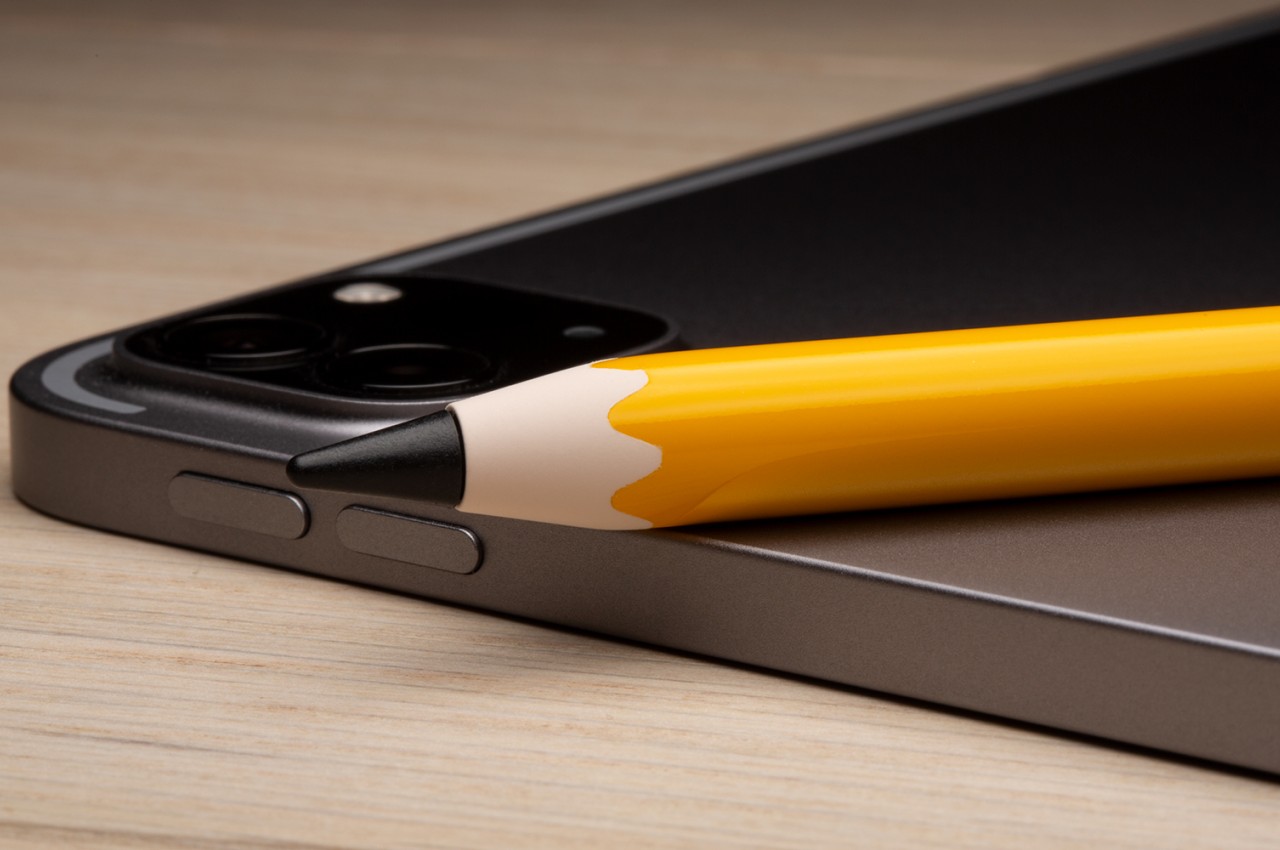
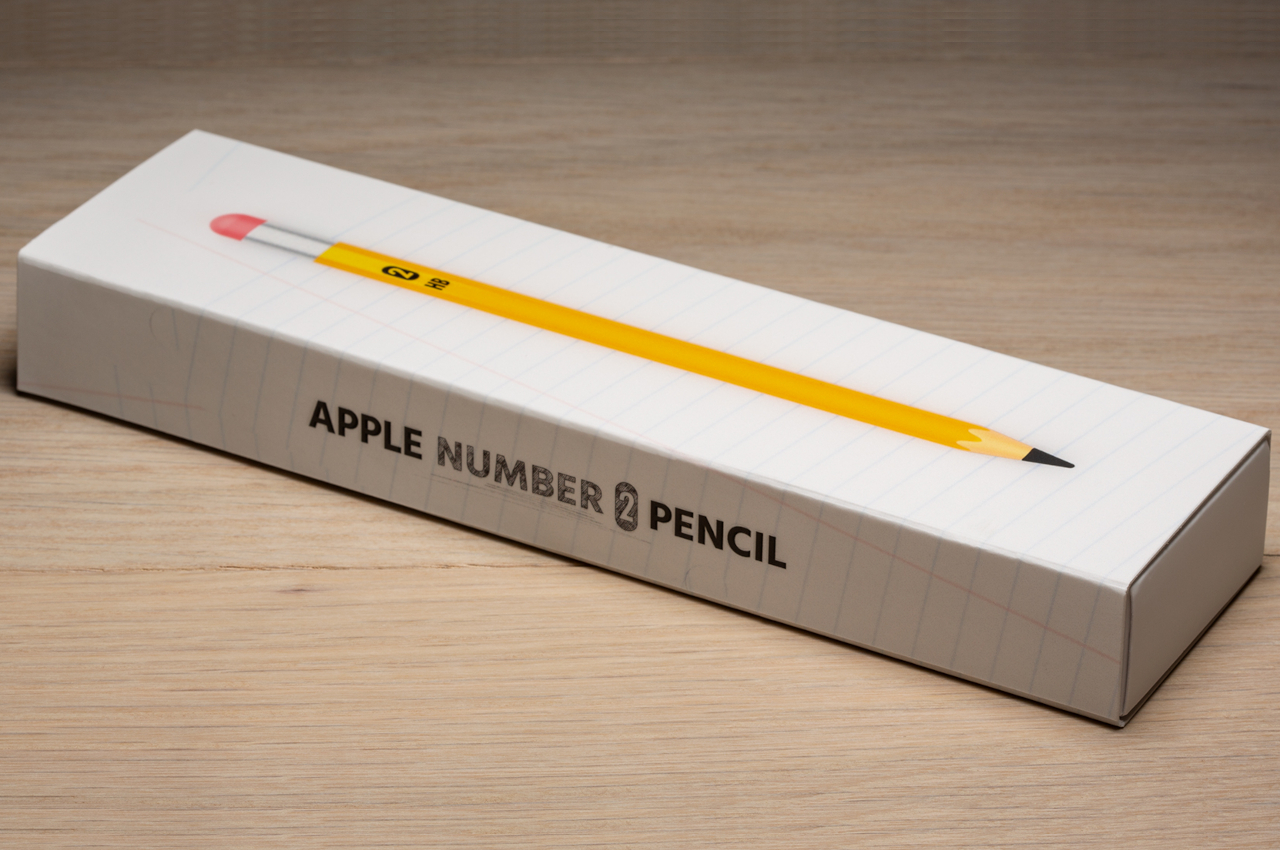
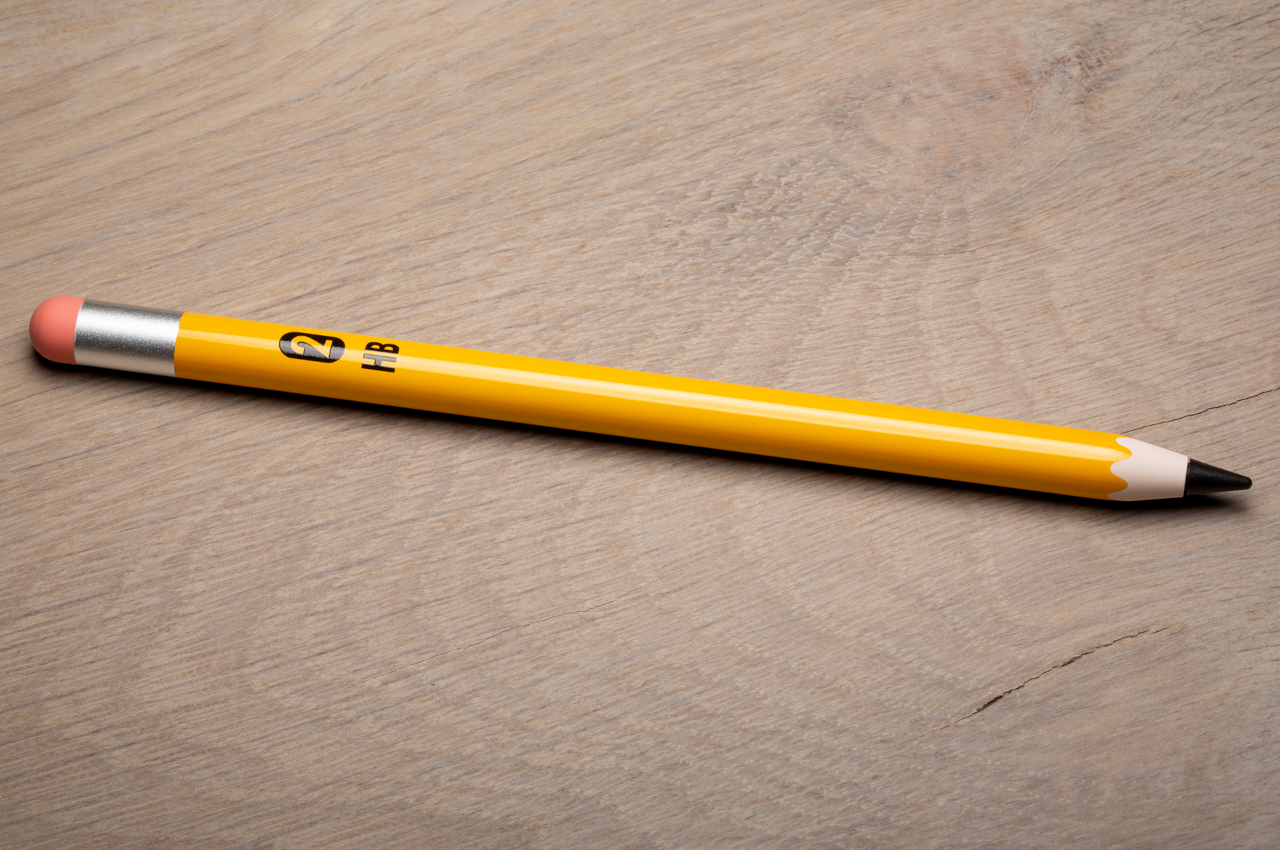
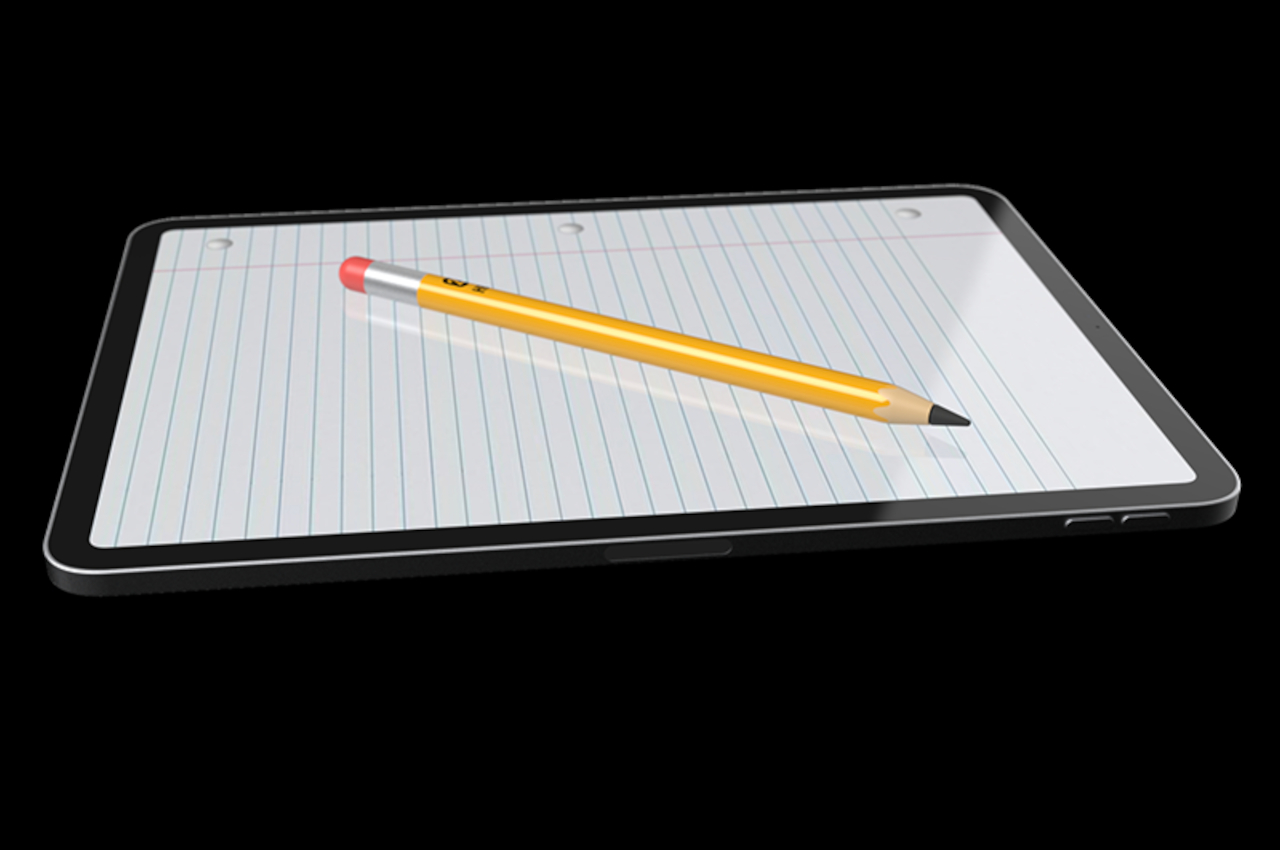
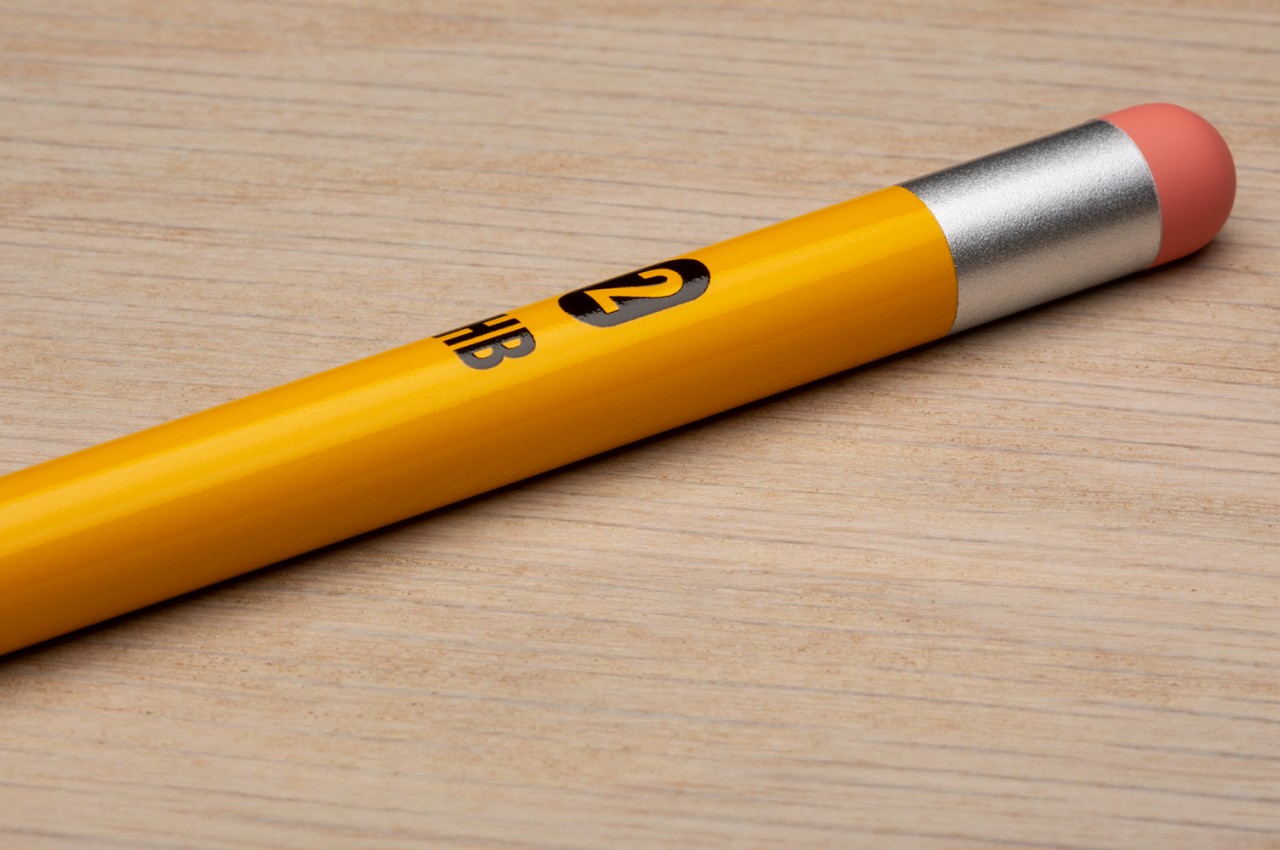
The Colorware Apple Number 2 Pencil is one such makeover for Apple’s current stylus, but it takes the modification to the extreme. It definitely looks like the Number 2 or HB pencil with its glossy yellow body, orange eraser, and silver band that connects these two parts. Colorware, however, takes the homage one step further: even the tip is black, like a typical graphite pencil.

The nib of the Apple Pencil is, of course, white, and almost all skins stop at covering the barrel only. That’s because you can’t really cover the nib and expect its performance to be unaffected. The manufacturer naturally doesn’t divulge what it used to coat the nib, so you’ll have to trust that the Apple Number 2 Pencil will still remain as functional as a regular Apple Pencil.

The catch to this almost faithful recreation of the classic HB pencil is that it costs a whopping $215. Considering the 2nd-gen Apple Pencil retails for $129, that’s not a small cost added on top. A regular skin would only set you back $13 or so, though you’d also have to look for unofficial black nibs if you want to get the complete look. It also doesn’t indicate if that price includes extra nibs, so you might find yourself at a loss when this special black tip needs to be replaced.

The post Apple Pencil Number 2 skin is a perfect homage with a big caveat first appeared on Yanko Design.