Apple’s M2 MacBook Air drops back down to a record low of $799

Our pick for the best budget MacBook is back at its all-time low price. Right now, you can get the 13-inch MacBook Air with an M2 chip for its Prime Day price of $799, down from $999. The deal is available on the 256GB models in Silver, Space Gray or Starlight, but doesn't include AppleCare+.

We dubbed this MacBook Air a "near-perfect Mac" when it debuted in 2022, giving it a 96 in our review. Some of the features that stood out to us included the M2 chip, which has eight CPU cores and up to 10 GPU cores. Apple might be up to the M4 chip now, but if you're looking for a device that can do all the basics without struggling, then an M2 is plenty strong enough. 

Apple's 2022 MacBook Air also offers a Liquid Retina Display with a 60Hz refresh rate and 500 nits of brightness. The entire device is also slimmer and sleeker than its predecessor. Plus, it has a quad-speaker system, compatibility with Dolby Atmos and Spatial Audio and a three-mic array.

Follow @EngadgetDeals on Twitter and subscribe to the Engadget Deals newsletter for the latest tech deals and buying advice.

This article originally appeared on Engadget at https://www.engadget.com/apples-m2-macbook-air-drops-back-down-to-a-record-low-of-799-135526109.html?src=rss

Zenbook S 16 AMD Ryzen AI 9 laptop review

Zenbook S 16 AMD Ryzen AI 9 laptop

The new Zenbook S16 from Asus features the latest AMD Ryzen AI 9 processor, offering a blend of premium design, advanced performance, and a competitive price point. If you are interested in learning more Max Tech has published a insightful Zenbook S 16 review. Asus Zenbook S16 Key Takeaways : Asus Zenbook S16 features the […]

The post Zenbook S 16 AMD Ryzen AI 9 laptop review appeared first on Geeky Gadgets.

This 40-MW Floating Wind Turbine Features A Mega-Array Of Smaller Rotors

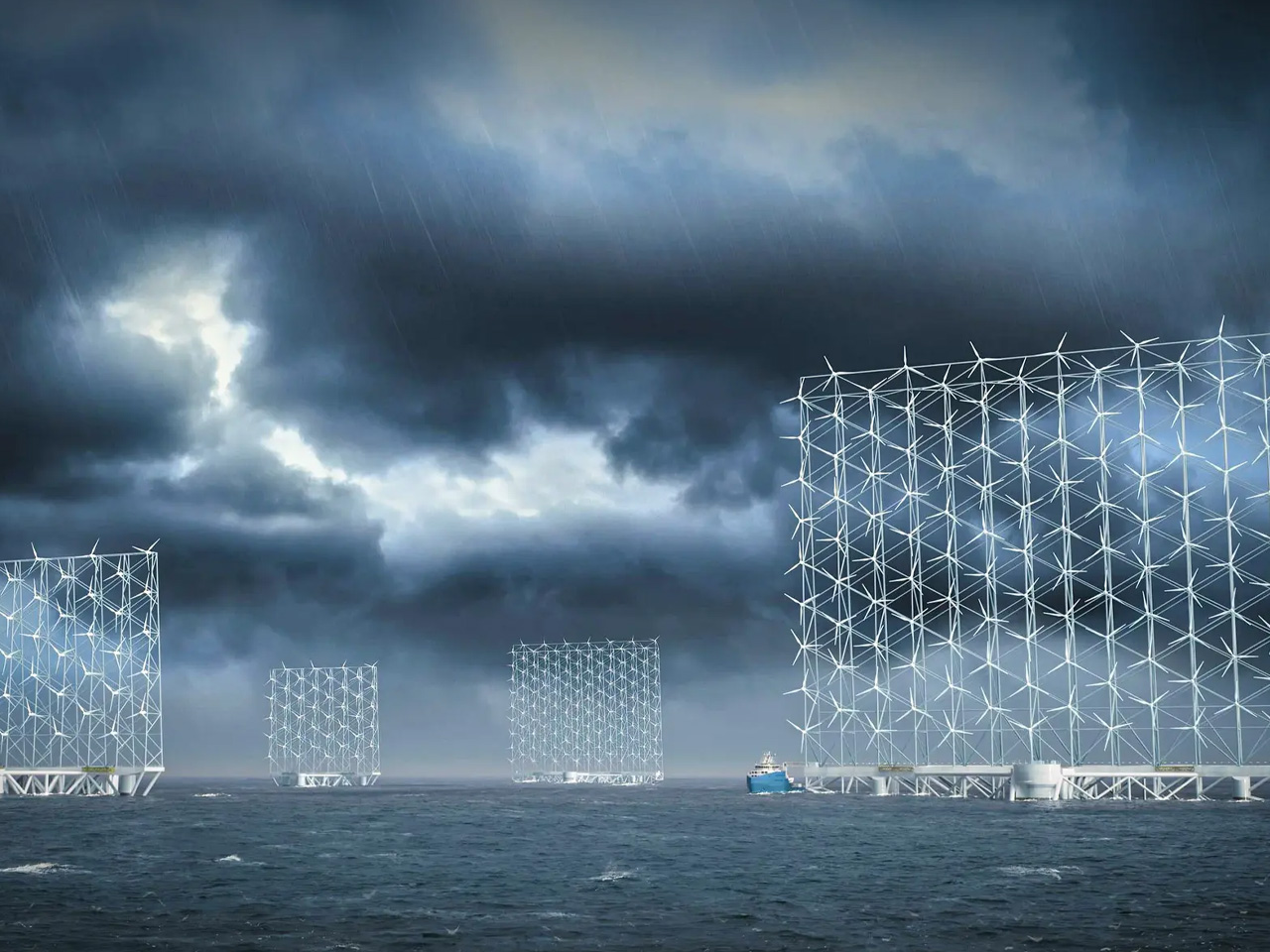
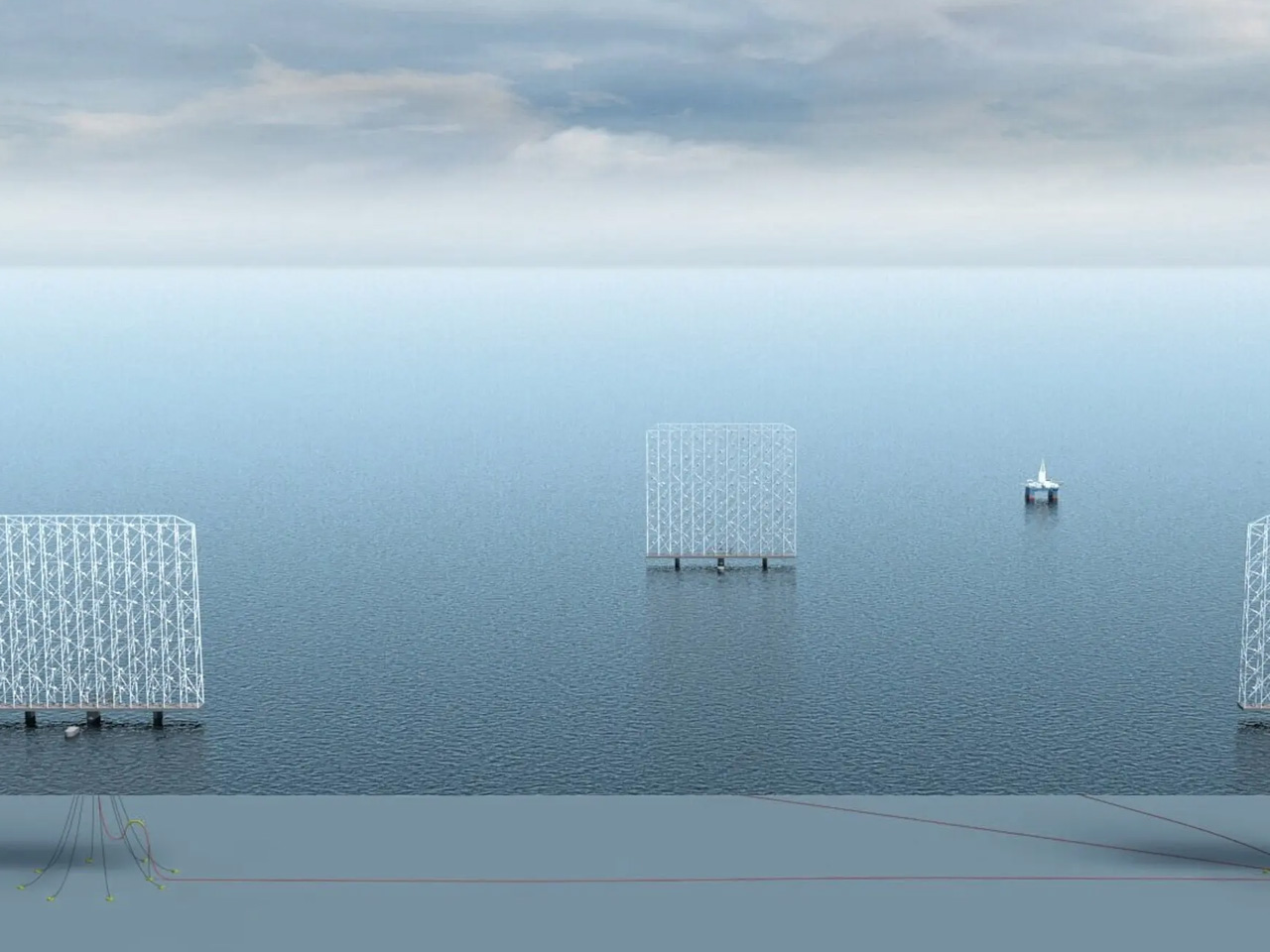
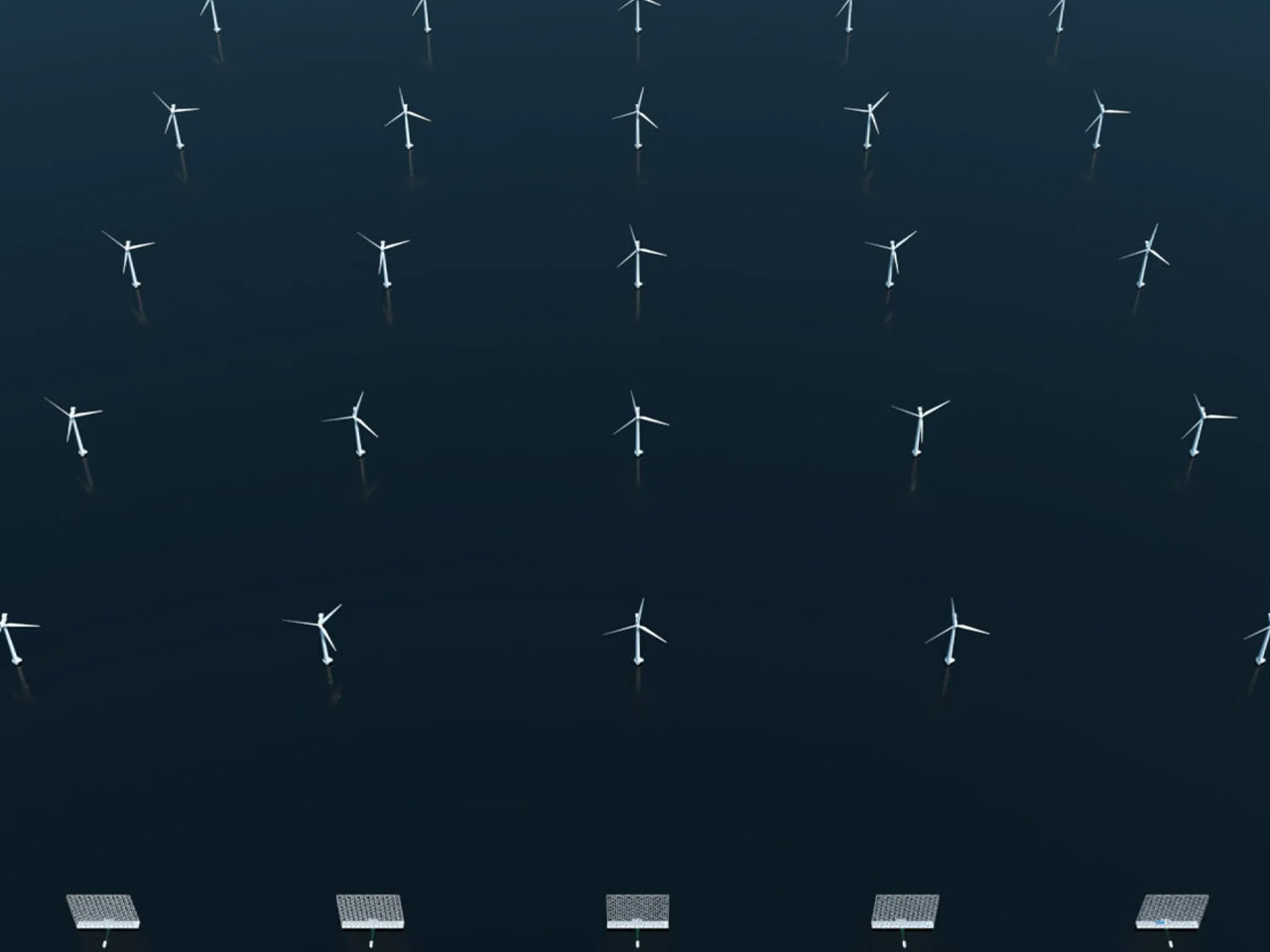
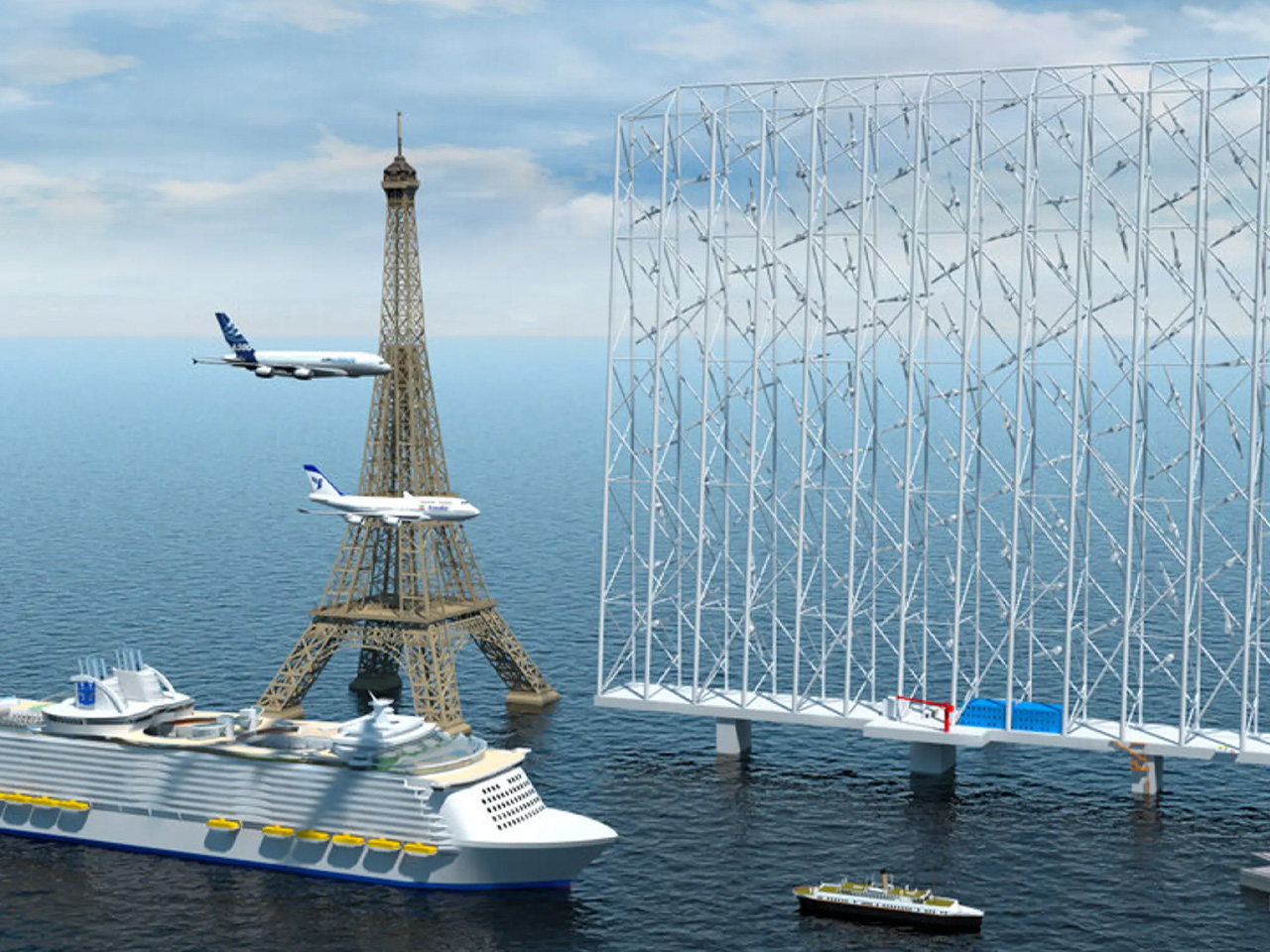
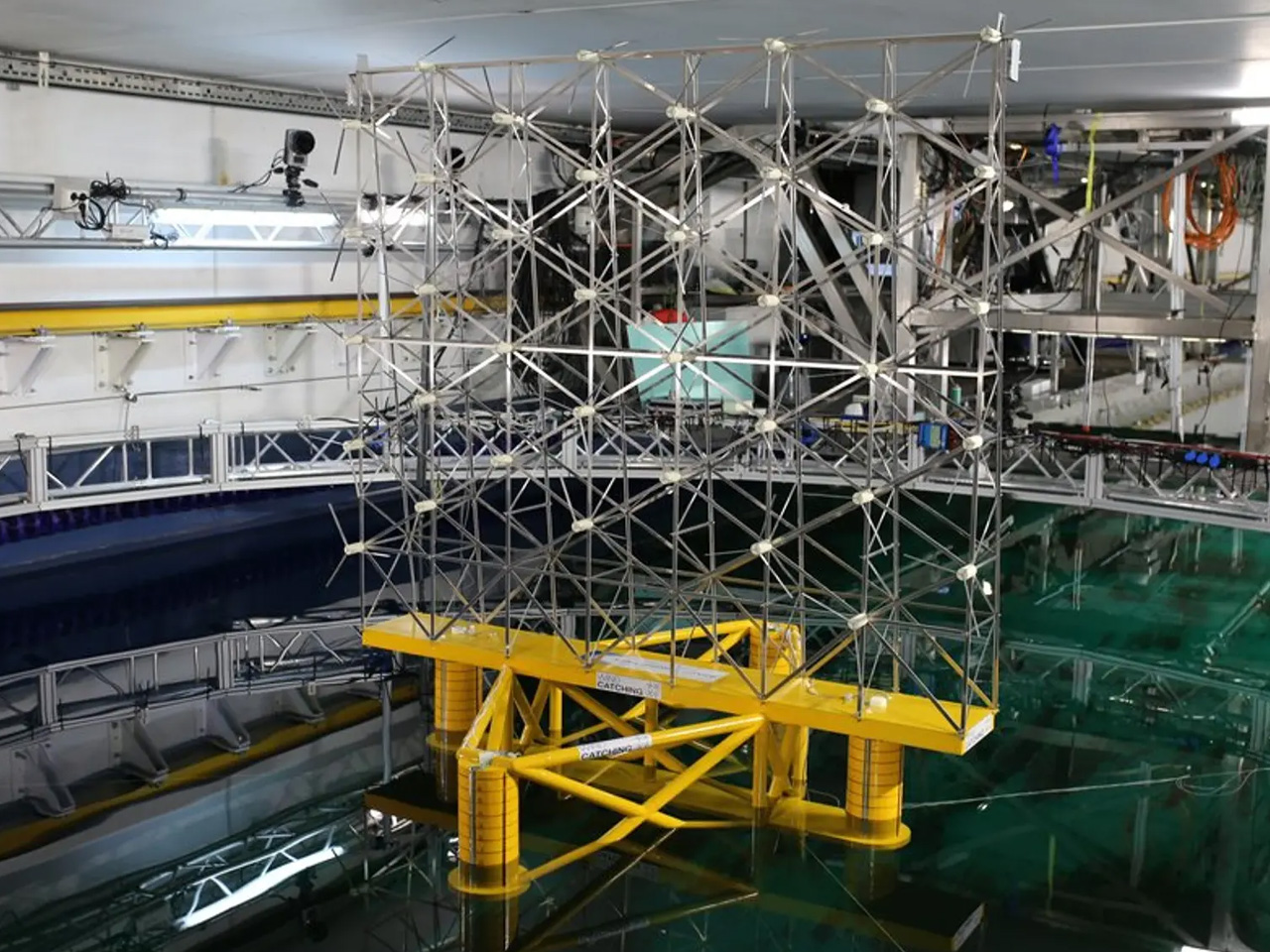
Norway’s Wind Catching Systems (WCS) have created an impressive array of small rotors arranged in a neat grid to achieve up to 126 MW, or five times the energy of a 15-MW single-rotor turbine in the North Sea conditions. Usually, wind turbines are designed to be larger with bigger rotors to pull in more megawatts, but WCS went for a more subtle and functional approach. Besides offering a superior energy output, the innovative Windcatcher design facilitates simpler installation than typical wind turbines, offering easier maintenance and simpler scalability. It also has a longer life service of around 50 years compared to the 30-year life cycle of bigger single-turbine units.

Designer: Wind Catching Systems

The Windcatcher includes floating supports that are shared between a bunch of small and lightweight turbines that have been tied up in large arrays of structural scaffolding. This distributes the weight of the turbine fans and generators, and the force supplied by the wind between a larger area. The scaffolding serves as the ultimate foundation for small installation and maintenance elevators, which slowly run up and down the generators. Once the main structure has been built, the various working parts will be installed and then maintained with total ease. The system won’t need large generators and massive blades, as it will be logistically easier to build.

WCS gathered a lot of support in the past couple of years. In 2022 it secured almost US$10 million from GM Ventures and also received grants of NOK22 million (US$2.1 million) and NOK9.3 million (US$0.9 Million), respectively. These grants were provided by Enova SF – a Norwegian government enterprise committed to reducing greenhouse gas emissions and discovering novel and clean energy technologies. The design has also received a stamp of approval from DNV (Det Norske Veritas) – an internationally accredited registrar and classification society that offers services for different industries including maritime, oil, gas, and renewable energies.

The post This 40-MW Floating Wind Turbine Features A Mega-Array Of Smaller Rotors first appeared on Yanko Design.

More Details on the New M4 Mac Mini

M4 Mac Mini

The highly anticipated M4 Mac Mini models are poised to transform the compact desktop computer market with their innovative features and significant improvements over their predecessors. These upcoming models aim to cater to a wider audience by offering enhanced performance, increased memory capacity, advanced connectivity options, and a sleek design, potentially reducing the need for […]

The post More Details on the New M4 Mac Mini appeared first on Geeky Gadgets.

Perplexity will put ads in its AI search engine and share revenue with publishers

When people type a question into Perplexity, the two-year-old search engine scours the internet and uses information from multiple sources, including online publishers, to synthesize an answer using AI. Soon, Perplexity will start sharing revenue with some publishers as part of an advertising platform it plans to launch around the end of September, the company announced on Tuesday.

The initiative, known as the Perplexity Publishers’ Program, comes less than two months after the San Francisco-based startup backed by investors like Jeff Bezos and NVIDIA, and valued at $3 billion, came under fire from Forbes, Wired, and Condé Nast for allegedly scraping content without permission and ignoring robots.txt, a type of file that websites use to block page-crawling bots.

Perplexity’s initial partners include TIME, Fortune, The Texas Tribune, Der Spiegel and Automattic, the company behind WordPress.com. It’s not clear exactly how much revenue Perplexity will share with publishers. Dmitry Shevelenko, the company’s chief business officer, declined to reveal numbers but told Engadget that it would be a “meaningful double-digit percentage shared back with the publishers that contributed source input to the answer." He also said that the partnership would extend across multiple years without specifying how many. What this wasn’t, Shevelenko insisted repeatedly, was a response to the critical press coverage in the last few months. “We’ve been talking to publishers since January,” he claimed. “No aspect of this program is reactive to these recent accusations.”

For months, publishers around the world have been concerned about the potential of AI-powered search engines and chatbots to decimate traffic by simply sucking up their content and using it to provide people with answers directly instead of having to actually visit their websites. Google has followed suit too — the company now sources answers from search results and displays AI-generated versions at the top of the page. But so far, it doesn’t compensate publishers.

“[Our revenue share] is certainly a lot more than Google’s revenue share with publishers, which is zero,” Shevelenko said. “The idea here is that we’re making a long-term commitment. If we’re successful, publishers will also be able to generate this ancillary revenue stream.” Perplexity, he pointed out, was the first AI-powered search engine to include citations to sources when it launched in August 2022, although the company reportedly redesigned its user interface to show them more prominently after being called out by Forbes in June.

AI companies like OpenAI have struck deals with major publishers including TIME, News Corp, Vox, Axel Springer, the Financial Times and others to use their content to train AI models, writing checks ranging from $5 million to $250 million. Perplexity’s revenue-sharing program, however, is different: instead of writing publishers large checks, Perplexity plans to share revenue each time the search engine uses their content in one of its AI-generated answers. The search engine has a “Related” section at the bottom of each answer that currently shows follow-up questions that users can ask the engine. When the program rolls out, Perplexity plans to let brands pay to show specific follow-up questions in this section. Shevelenko told Engadget that the company is also exploring more ad formats such as showing a video unit at the top of the page. “The core idea is that we run ads for brands that are targeted to certain categories of query,” he said.

Perplexity
Perplexity

This makes sense for Perplexity because it does not train its own AI models. Instead, it lets users choose from leading AI models like OpenAI’s GPT-4o, Anthropic’s Claude 3.5 Sonnet and Meta’s Llama 3.1 to summarize answers from the web. “It’s very simple,” Shelevenko said, “if we’re making money and a publisher’s content was used on that ad impression, the publisher will get a cut of that revenue.”

But without knowing how much percentage of ad revenue Perplexity plans to split with publishers, it’s unclear whether the move will help publishers make up for any revenue lost due to declining traffic as AI-generated search engines and chatbots become more popular. And breaking into an online advertising business dominated by Google and Meta isn’t easy. “Setting up an ads business takes time,” Toshit Panigrahi, founder of Tollbit, a startup that lets publishers monetize content by offering it to AI companies for a fee they can set themselves, told Engadget. “Publishers are expected to hand over content today in the hopes that Perplexity sets up a successful ads business and cuts them in.”

Shevelenko refused to comment on the recent controversies that Perplexity has been involved in with publishers but acknowledged that onboarding them had become harder in the last few months. “Some [of our conversations] were in a great place,” he said, “and then the bad press hit and then they kind of, you know raised more questions.”

This article originally appeared on Engadget at https://www.engadget.com/perplexity-will-put-ads-in-its-ai-search-engine-and-share-revenue-with-publishers-130052289.html?src=rss

Tesla recalls 1.8 million vehicles over risk of detached hoods

Tesla has issued a recall on 1.8 million vehicles across the United States, Reuters reports, a sizeable number even for a company that is no stranger to this turn of events. The National Highway Traffic Safety Administration (NHTSA) announced the recall due to a risk of software failure to notify individuals of a detached hood.

A hood that isn't properly secured could detach while a person is driving and block their view. Tesla has issued an over-the-air software update that should fix the issue. The recall is on select Model 3, Model S and Model X vehicles from 2021 to 2024. It also impacts Model Y vehicles from 2020-2024.

This year has already seen a range of Tesla recalls. In January, 200,000 cars were recalled because of a malfunctioning backup camera, and in February, the number beat even this recall, with two million vehicles flagged for too small warning light text. May saw 125,000 vehicles with seatbelt issues, and June brought faulty windshield wipers and trim for 12,000 of Tesla's Cybertrucks.

This article originally appeared on Engadget at https://www.engadget.com/tesla-recalls-18-million-vehicles-over-risk-of-detached-hoods-140049560.html?src=rss

Arm Mbed platform end of life set for July 2026 – Arduino plans

Arm Mbed end-of-life

The recent announcement by Arm that the Mbed platform and OS will reach end of life in July 2026 has significant implications for the embedded development community. This development particularly affects brands like micro:bit, Raspberry Pi, and Arduino, which have all benefited from Arm’s support over the years. These platforms have gained momentum in educational […]

The post Arm Mbed platform end of life set for July 2026 – Arduino plans appeared first on Geeky Gadgets.

Basic Element of Interior Design: Color

Color theory guides the use of light and color for interior designers, helping them create attractive and functional homes. Understanding the basics, like the color wheel and combinations, is crucial for enhancing aesthetics and it enables designers to create visually pleasing, cohesive, and harmonious spaces. This theory also aids in developing effective color schemes without overwhelming the space.

Designer: Snappy Living

What is the importance of Color Theory?

Color theory is an invaluable tool in home design, aiding in the creation of a visually appealing space. Designers use it to select color combinations that bring rooms to life. Additionally, color theory helps balance warm and cool tones, create contrast, and introduce a sense of drama or calmness using different colors. It also guides the choice of lighting for each space, considering how different lighting types affect color perception in specific environments.
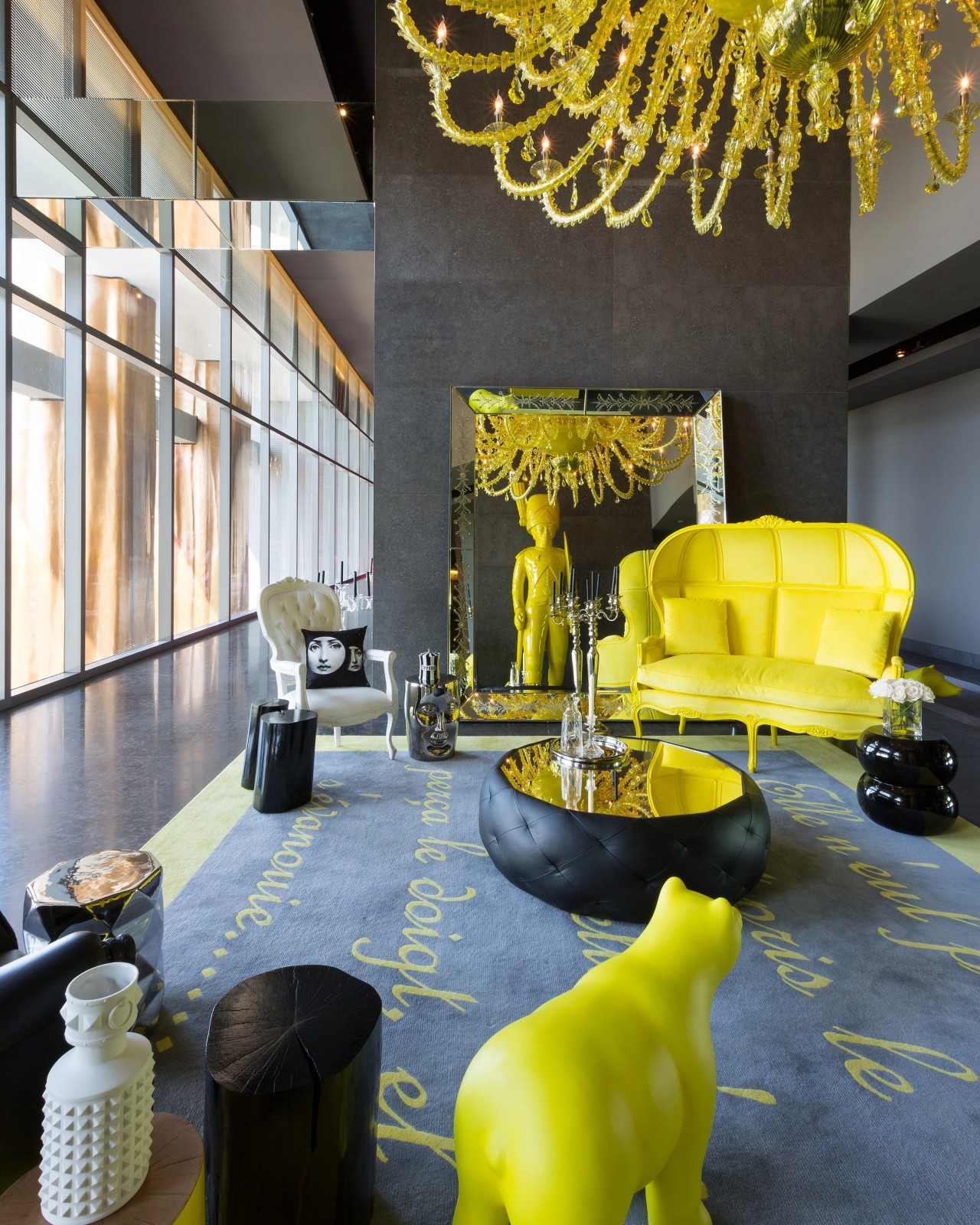
Designer: Philippe Starck

Eight fundamental principles of color theory can be incorporated into interior design.

1. Color Wheel
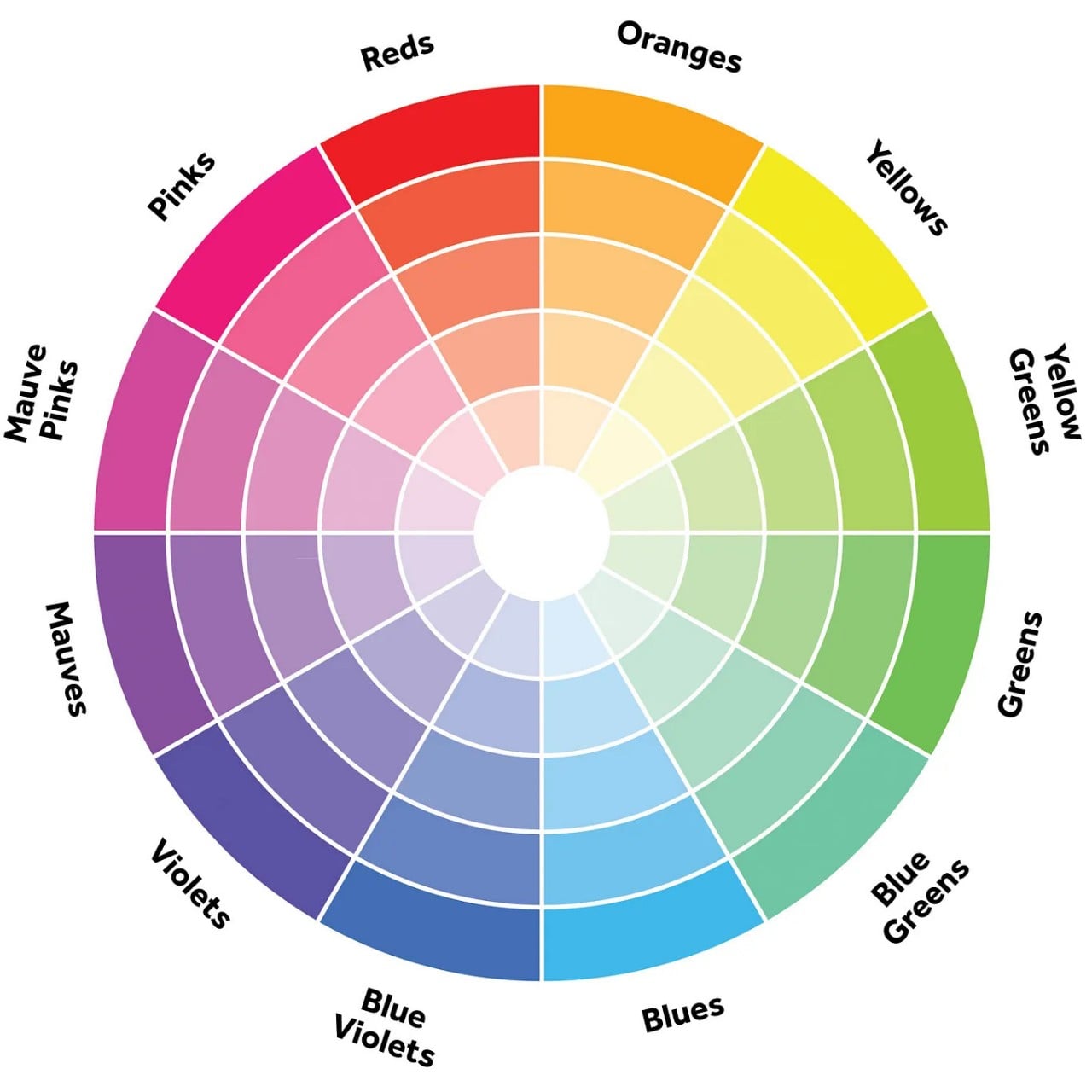
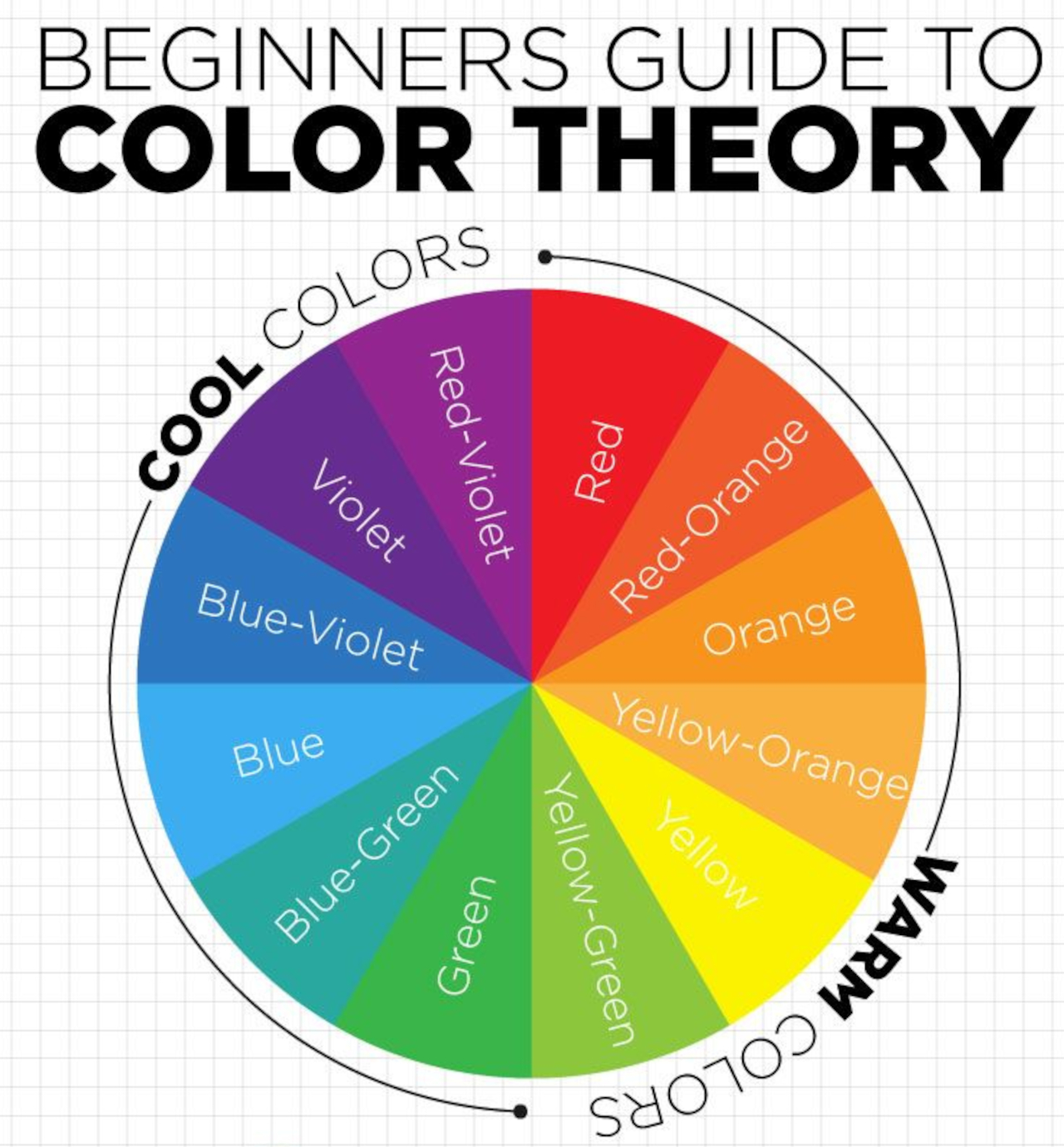
The color wheel serves as a visual depiction of the entire color spectrum, illustrating the interactions between different colors. The conventional color wheel comprises 12 segments, each corresponding to one of the primary hues like red, orange, yellow, green, blue, purple, and their respective shades. Grasping the fundamentals of color theory enables the creation of breathtaking compositions that mirror the beauty and grace found in nature.

The different types of colors include:
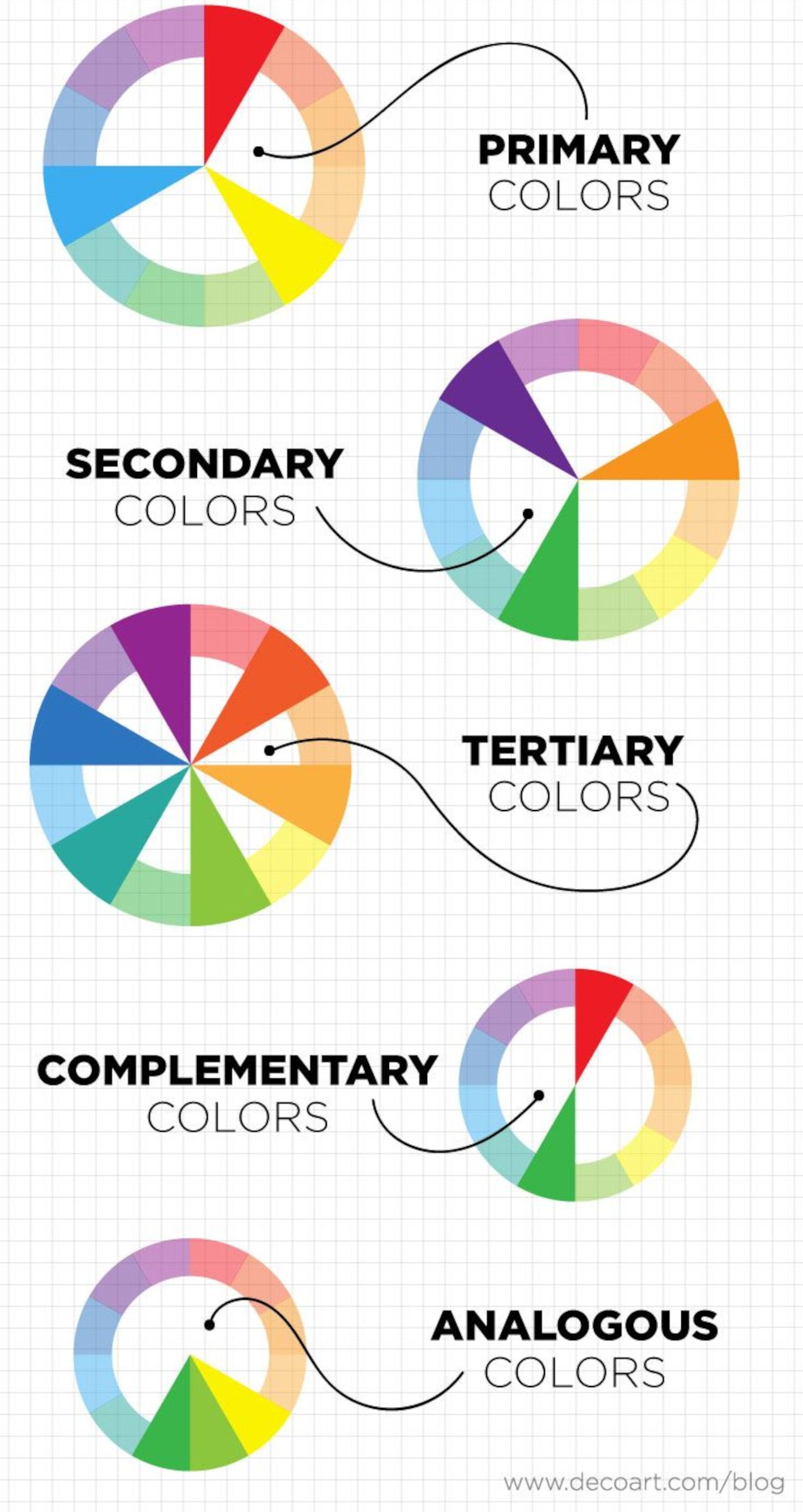
Designer: DecoArt

• Primary Colors:

The primary colors are red, yellow, and blue which cannot be produced by blending other colors.

• Secondary Colors:

The Secondary colors include hues of orange, green, and purple which results from the combination of two primary colors.

• Tertiary Colors:

Tertiary colors emerge by blending one primary color with one secondary color.

• Complementary Colors:

These colors are situated opposite each other on the color wheel and yield a striking contrast when used together in design.

• Split Complementary Colors:

Just like complementary colors, split complementary colors include two additional hues from either side of their complement, for instance, hues of orange, yellow, and blue.
• Analogous Colors:

Harmonious in nature, analogous colors are adjacent to each other on the color wheel, producing a pleasing effect when incorporated into home decorating designs.

• Monochrome Colors:

Monochrome colors employ different tints and tones within a single hue and are primarily used to establish a serene ambiance in various room decor schemes.

• Neutral Colors:

Colors like white, black, grey, beige, and brown serve as neutral elements that can be incorporated throughout an entire room or utilized as accent pieces to infuse a sense of balance into an already vibrant color palette.

2. Dimensions of Color

To precisely describe colors, one must consider these attributes of color.

• Hue
Designer: Maggie Maggio

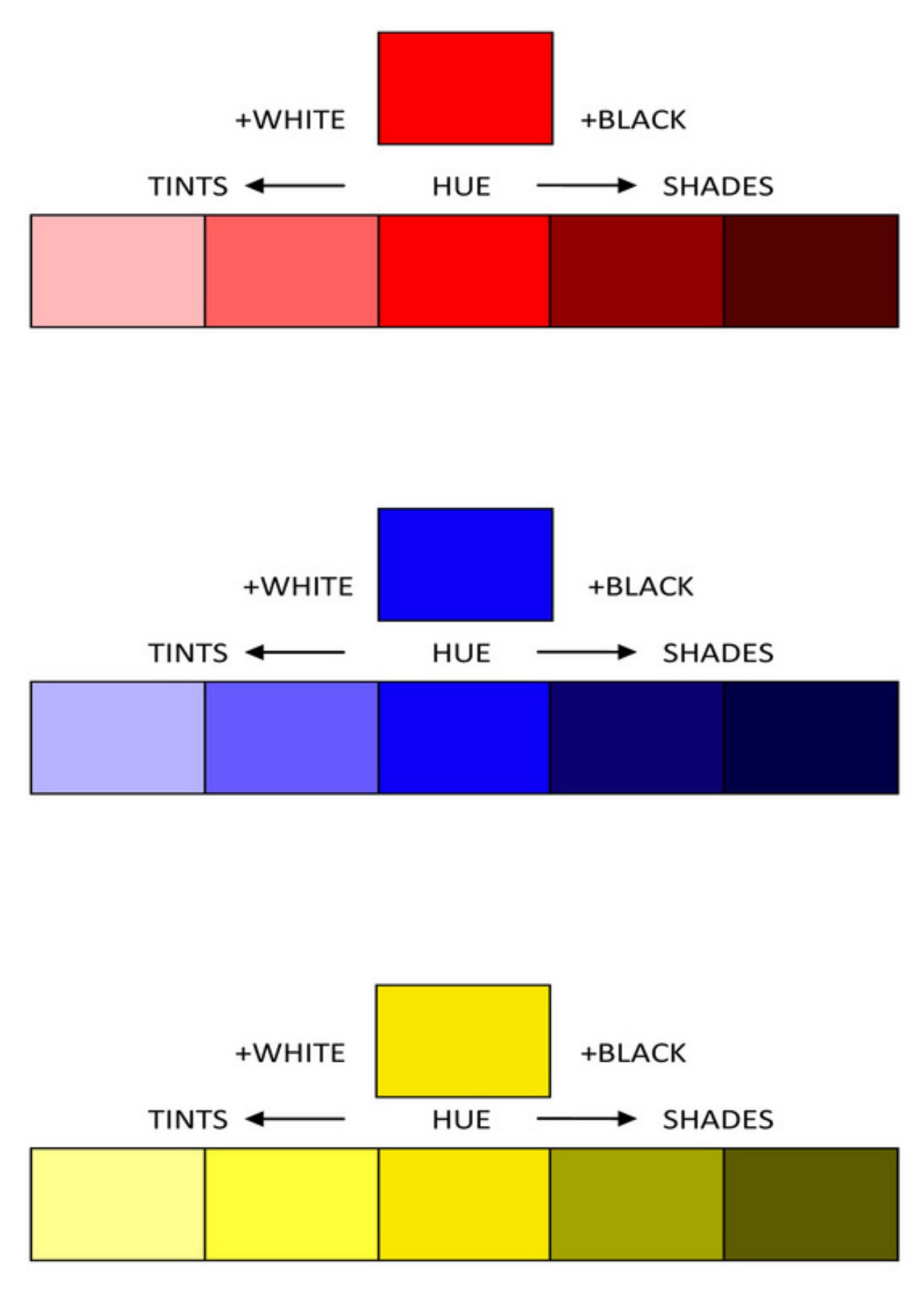
Hue, the most noticeable characteristic, is determined by the color’s position on the visible spectrum, with an infinite variety represented on the color wheel as pure colors without tint or shade.

• Value

Value, the lightness or darkness of a color, is determined by adding black or white to the pure hue. Tints (lighter values) and shades (darker values) result from this adjustment. These variations impact the perceived size and character of a space, with bright values creating spaciousness and dark values evoking coziness.

• Tints
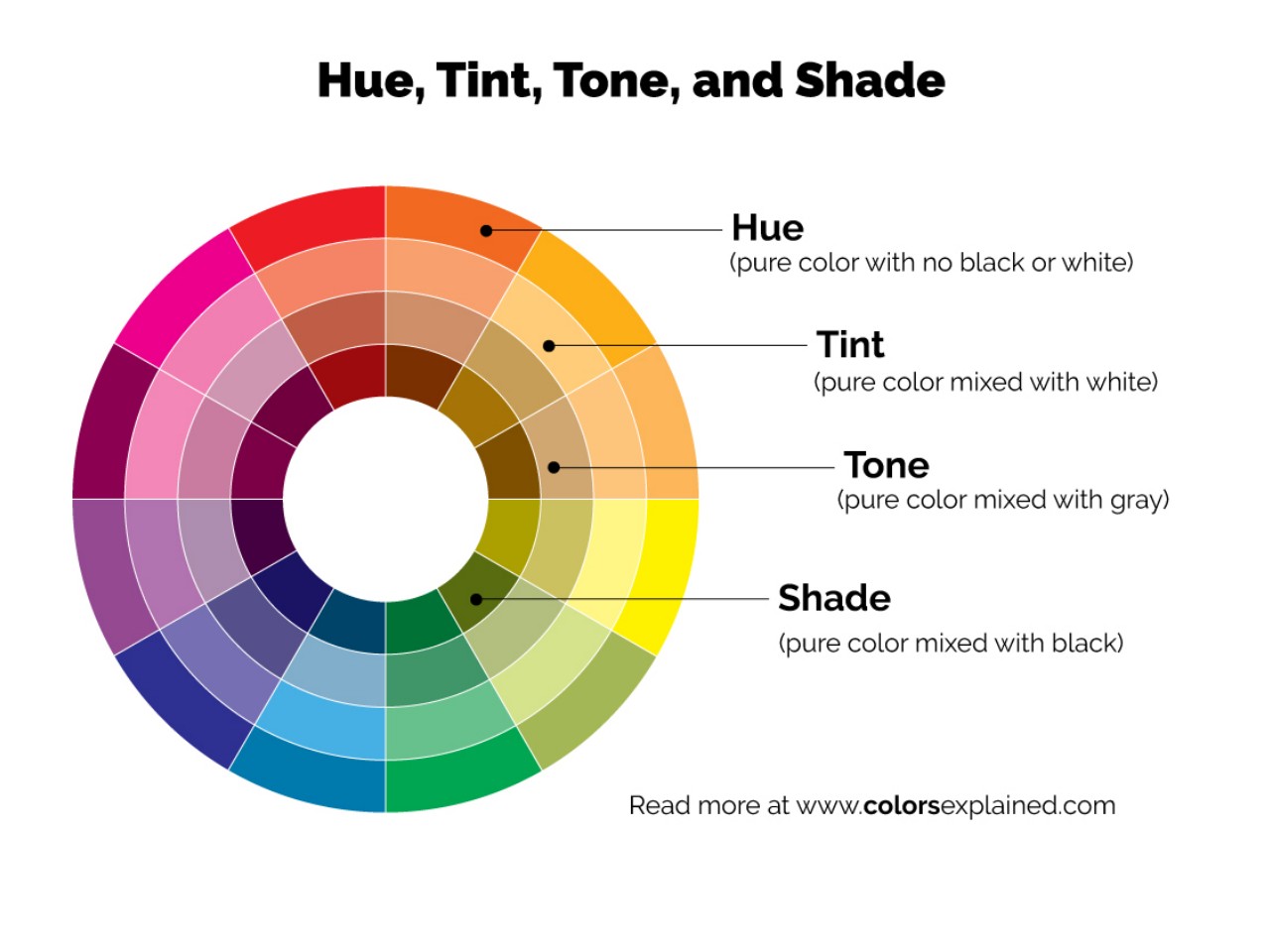
Image courtesy of: Colors Explained

A tint is a color lighter than the normal value of pure hues on the color wheel, created by mixing a pure chromatic color with white or a lighter hue. While the color wheel illustrates hues with 50% white added, a room dominated by light tints may feel cold unless skillfully handled.

• Shades

Shades are darker tones created by mixing pure chromatic colors with black or darker hues. The color wheel illustrates normal value hues with 50% black added to produce shades. However, a room dominated by dark hues might feel gloomy and confined unless handled skillfully. Like tints, incorporating value contrasts and skillful transitions can enhance a dark color scheme.

• Intensity

Intensity, also known as saturation or chroma, indicates the purity of a color. A color with high intensity appears bright, while a low-intensity color is more neutral or muted. Colors are at their purest in their unmixed state, straight out of the tube.

• Tones

Tones, often linked with intensity, refer to a subdued or neutralized version of a hue. Created by combining white and black, tones can be lighter or darker than the original hue, possessing a more nuanced quality than tints and shades. Vibrant colors are called “jewel tones,” while subdued colors are known as “muted tones.”

3. Color Temperature
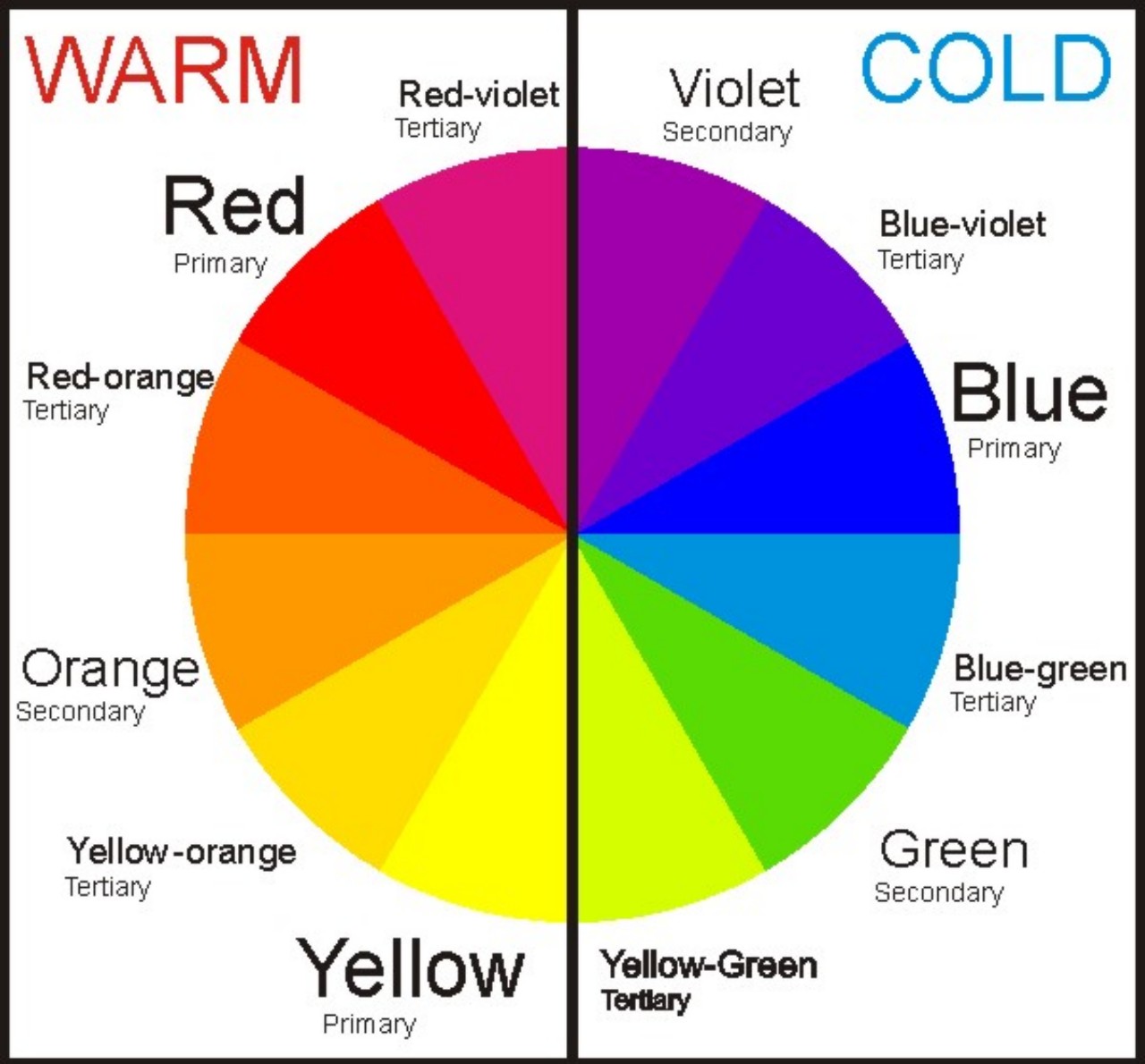
Image courtesy of: beata

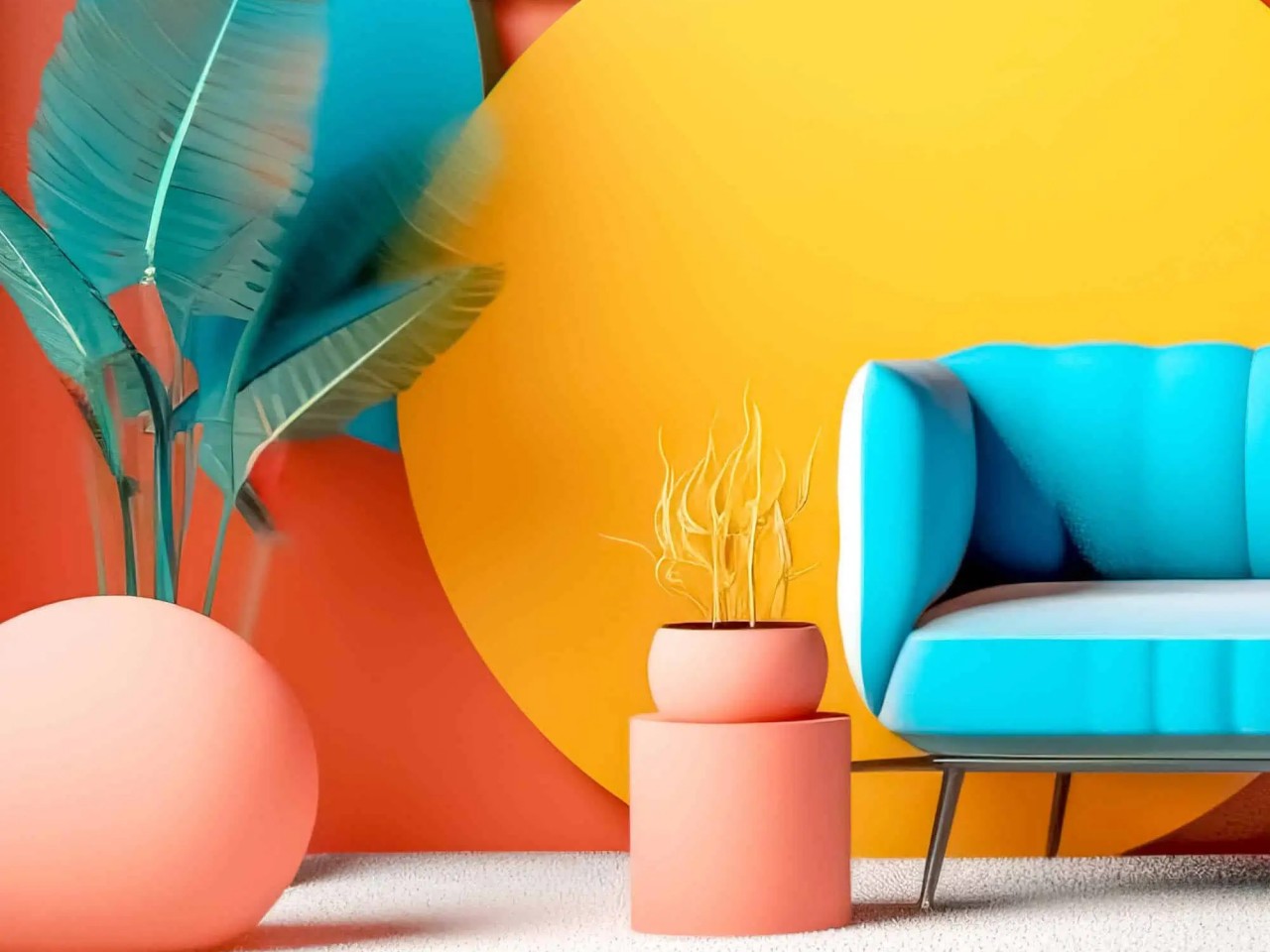
The color temperature plays a crucial role in interior design, influencing the ambiance of a space. Cool tones, such as blues and greens, contribute to a serene atmosphere, whereas warm hues like reds, oranges, and yellows infuse warmth and energy into the interiors. Neutral shades, like beige or gray, serve as a harmonious middle ground between these contrasting extremes. Designers can attain the desired effects in their projects by skillfully blending tints and shades with varying temperatures.

4. Color Combinations
Designer: DearCustomDesigns

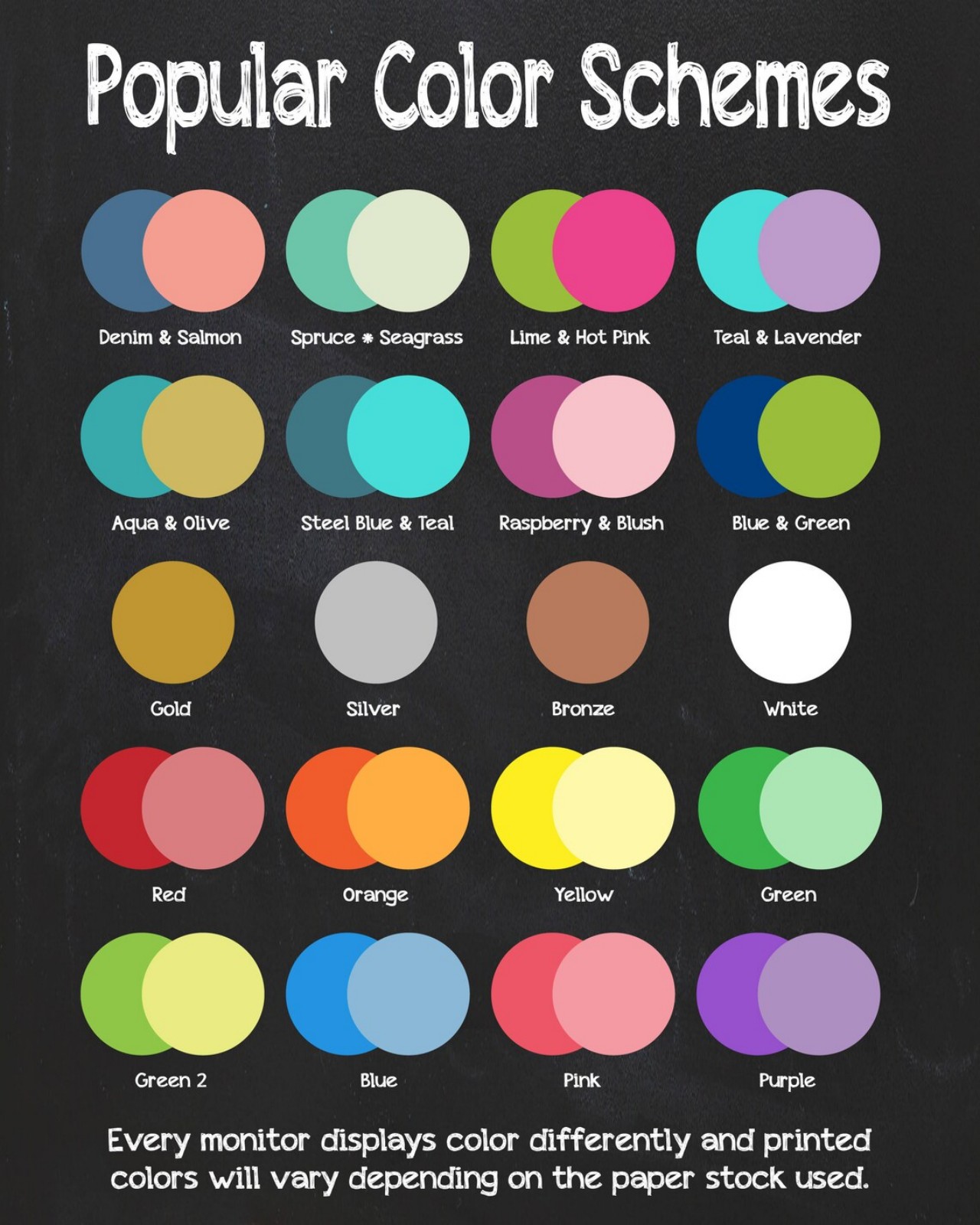
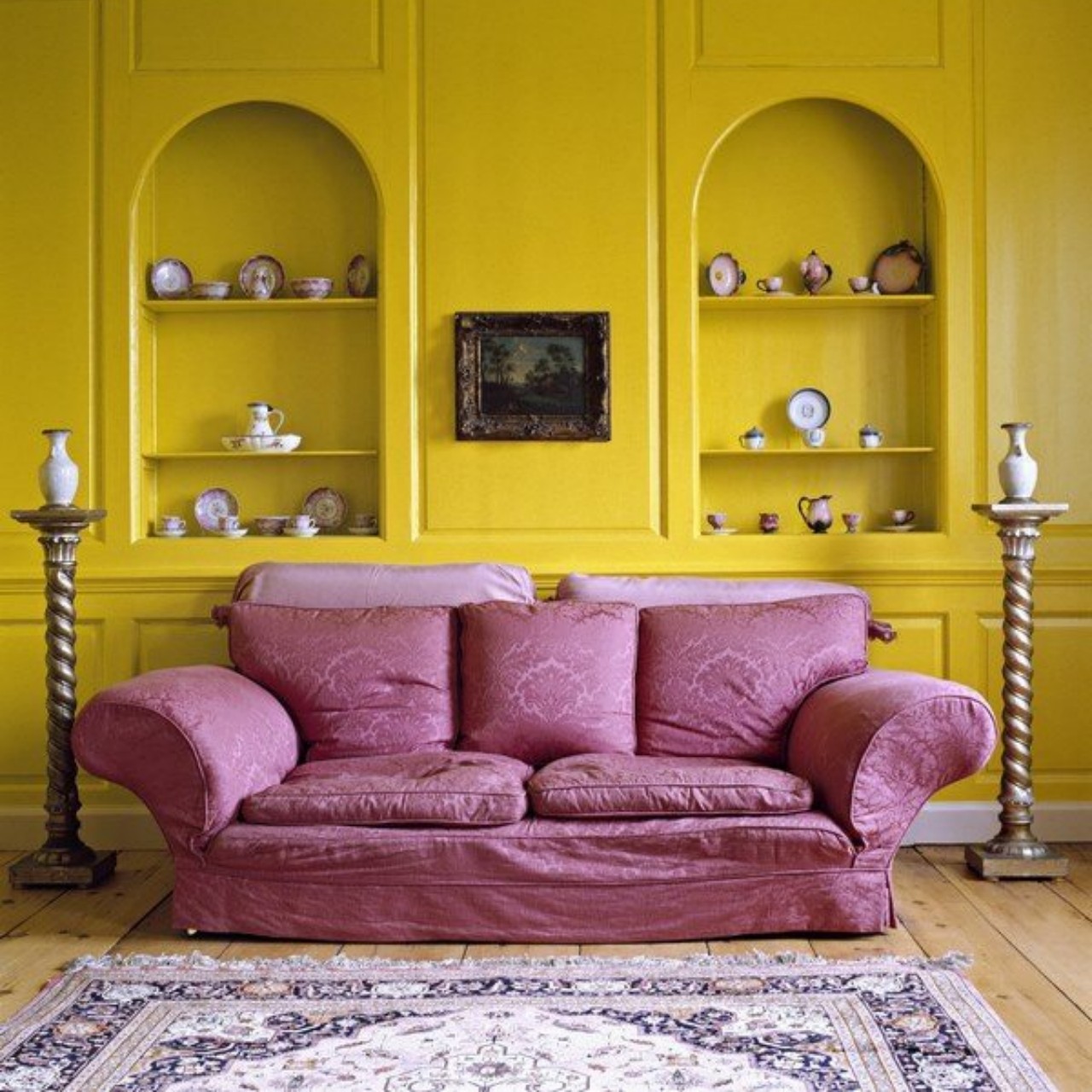
By blending colors of varying temperatures, designers can create visual interest and a unique atmosphere in any home project. Cooler and warmer tones can be contrasted, and complementary pairs like pink and green or yellow and purple can add vibrancy. Neutral shades provide a balance between extremes. With careful consideration, designers can use color combinations to achieve their desired atmosphere.

5. Color Mixing

Color mixing is the art of combining primary colors (red, blue, and yellow) to create a range of secondary and tertiary shades. In interior design, color theory is essential for stylishly blending hues and crafting visually appealing compositions. Mastering color mixing allows designers to optimize their palettes, leading to the creation of unique and distinctive color combinations.

6. Color Scheme

Different color schemes evoke various moods, from lively to calming.

• The monochromatic scheme uses tones of a single hue, creating a unified and timeless look.
• The analogous scheme combines three similar hues for balanced contrast.
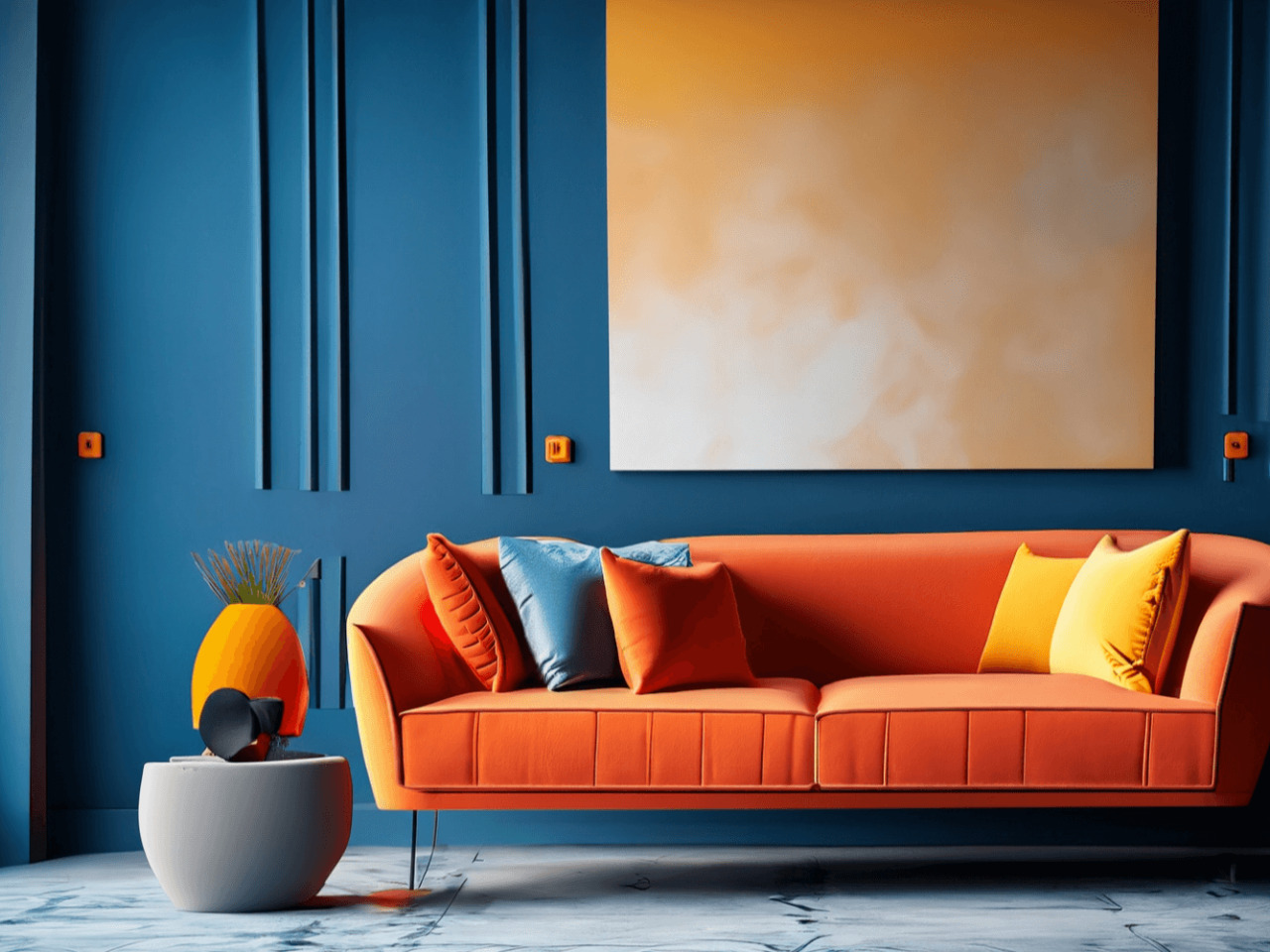
• The complementary scheme pairs colors opposite on the wheel for high contrast without overwhelming.
• The triadic scheme blends three evenly spaced colors, adding energy without overpowering.
• Tetradic color schemes encompass four distinct hues, forming two pairs of complementary colors equally spaced on the color wheel.
• Square color schemes, on the other hand, consist of four separate hues positioned at 90-degree angles from each other on the wheel.
• Split-complementary combines three hues, consisting of a base hue and two adjacent opposites.
Designer: Inside Decors

7. Contrast Colors

The contrast in design involves opposites, adding visual interest through distinctions in color, values, or intensities. Sharp or vivid contrast signifies large differences, while low contrast indicates small variations. Achieved through complementary colors or value contrast, it emphasizes light and dark without progressing through middle values. This dynamic element contributes balance, relief, and drama to a scheme, best when paired with restraint in color variety.

8. Psychology of Color

Colors profoundly affect our moods and emotions. Cool hues bring relaxation, while warm hues generate energy. Reds signify excitement, blues induce calmness, oranges suggest creativity, and yellows increase optimism. Designers can create tailored atmospheres in home projects by carefully selecting colors to meet clients’ unique needs.
Designer: Deavita

Designers can leverage these color theory principles to create beautiful and functional home designs.

The post Basic Element of Interior Design: Color first appeared on Yanko Design.

Apple Rumored to Launch a Folding iPhone in 2025

Folding iPhone

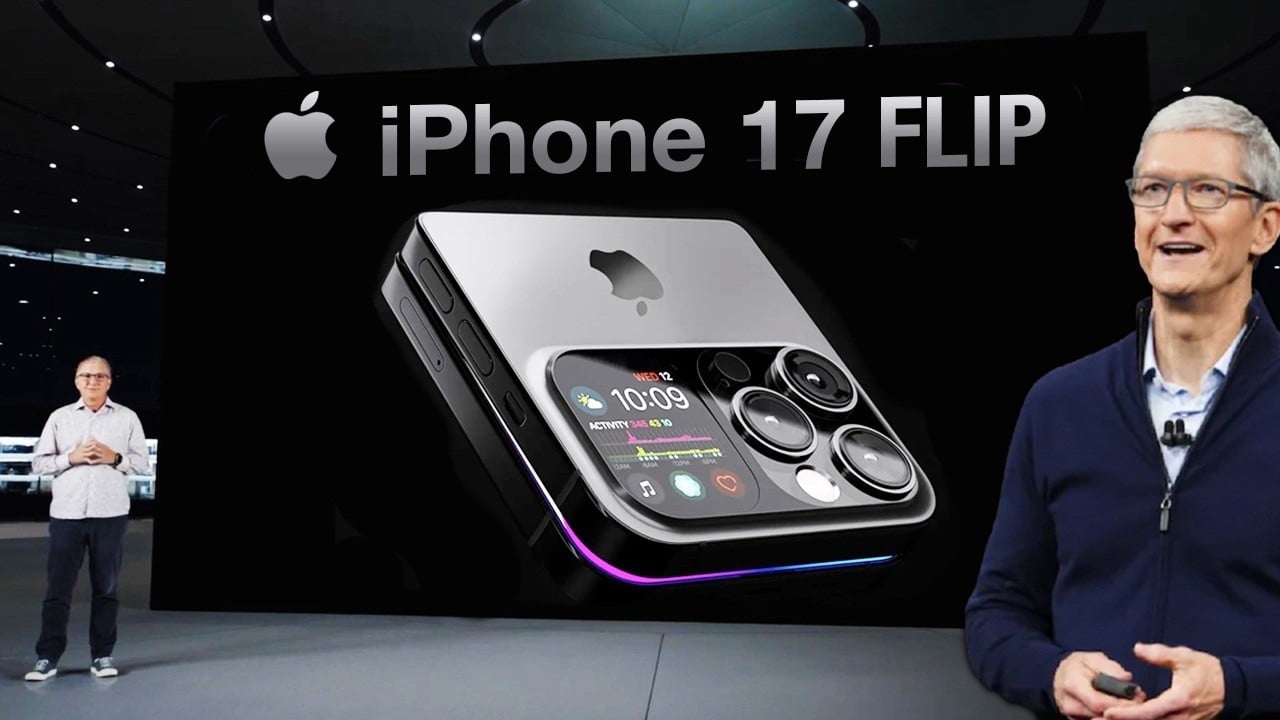
In a highly anticipated move, Apple is reportedly developing a folding iPhone that could potentially launch as early as 2025. This groundbreaking device is expected to transform the smartphone industry, offering users a unique blend of innovation, practicality, and the signature Apple user experience. As the foldable smartphone market continues to evolve, Apple’s entry into […]

The post Apple Rumored to Launch a Folding iPhone in 2025 appeared first on Geeky Gadgets.

NASA will shut down NASA TV on cable to focus on NASA+

NASA TV is shutting down in August. The space agency is saying goodbye to its cable channel, which is available on Dish, DirecTV and similar services, as well as on local television providers. Going forward, it will put all its focus on NASA+, its on-demand streaming service that will serve as home to all its documentaries and live event coverage.

NASA+ has apparently gained four times more viewership than the agency's traditional cable channel since it was launched in November last year. "In a universe where the way we consume information is rapidly changing, NASA+ is helping us inspire and connect with our current generation of explorers: the Artemis Generation," said Marc Etkind from NASA's Office of Communication

The agency's streaming service is completely free and doesn't have ads. Viewers can access it via the official NASA app for iOS and Android when they're on mobile devices, but they can also get the agency's app for Roku, Apple TV or Fire TV if they want to watch on a bigger screen. To watch NASA's coverage and shows on a computer, users can visit the official NASA+ website on their browsers. 

In addition to announcing its cable channel's closure, NASA has also revealed its upcoming lineup for new shows, episodes and live event coverage. One of the upcoming documentaries entitled Planetary Defenders tackles humanity's efforts at asteroid detection and planetary defense, while Our Alien Earth will show NASA scientists' field work in the most extreme environments all over the world to aid in the discovery of extraterrestrial life in the universe.

This article originally appeared on Engadget at https://www.engadget.com/nasa-will-shut-down-nasa-tv-on-cable-to-focus-on-nasa-120015334.html?src=rss