These Anker earbuds we love are cheaper than they were during Prime Day

Are you looking for a pair of earbuds that will let you enjoy music on your commute without costing so much you have to cut out your daily iced coffee? Well, Anker's Soundcore Space A40 wireless earbuds are 40 percent off right now, dropping to $48, down from $80. This deal brings the earbuds to a record-low price — by $1, but, hey, we'll take it. 

We named Anker's Soundcore Space A40 as our choice for best budget wireless earbuds in 2024 for quite a few reasons. For starters, the earbuds offer the quality and features — including active noise cancellation — that you typically need to spend way more money to get. They offer wireless charging, an IPX4 water-resistance rating and the ability to connect to two devices at once. The battery lasts about 10 hours on its own and 50 hours with the case. You can also get about four hours of juice after just ten minutes of charge. 

The sound quality isn't going to be the same level as what you'd get from Bose or Sony, with a slight dulling of finer details. However, the Soundcore Space A40 earbuds do offer custom EQ tools through the Soundcore app, so you can tweak it a bit. Overall, between offering ANC and pretty good comfort, these earbuds are a steal at this price. 


October Prime Day 2024 is around the corner, serving as Amazon’s (un)official kickoff to the holiday shopping season. If you’re eager to snag some early holiday deals for those on your list (or yourself), here’s what we know so far about the next Prime Day shopping event.

When is October Prime Day 2024?

Amazon has not announced the dates of fall Prime Day 2024 yet, but we do know it will be returning sometime in October.

What is October Prime Day?

October Prime Day is an extension of the regular Prime Day sale held annually in July. It features exclusive deals on Amazon for Prime members, although not quite on as big of a scale as the main summer Prime Day.

How long is October Prime Day?

In years past, October Prime Day has been two days long, just like Prime Day in July.

This article originally appeared on Engadget at https://www.engadget.com/deals/these-anker-earbuds-we-love-are-cheaper-than-they-were-during-prime-day-135034318.html?src=rss

Minimax AI Video Generator creates realistic character movements and more

Minimax AI Video Generator

The Minimax AI Video Generator has quickly established itself as a premier tool for creating AI-generated videos, garnering attention for its impressive output quality. With its ability to produce high-fidelity animations and realistic character movements, Minimax has become a go-to choice for creators seeking professional-grade results without the need for extensive manual work. TD;LR Key […]

The post Minimax AI Video Generator creates realistic character movements and more appeared first on Geeky Gadgets.

Setting the Stage: How Design Shapes the Dynamics of Presidential Debates

It’s that time in human history again when the world turns its attention to a country whose political outcome could also affect the rest of the world, one way or another. Presidential debates are pivotal moments during this period, offering candidates a highly publicized platform to present their policies, challenge their opponents, and connect with voters. These events have become quite sensational shows even, and just like any other show, there is one unsung hero: stage design. The layout and design of the debate stage are fundamental in shaping how these encounters are perceived by both the live audience and viewers at home. So we take a closer look at the role stage design plays in presidential or any other debate, and how various elements such as visual hierarchy, backdrop aesthetics, and camera angles can influence the overall dynamics.

Designer: Clickspring Design

Visual Hierarchy and Focal Points

Just like in any stage design, the placement and interaction of various elements play a critical role in guiding people’s attention, especially for those watching at home whose views are largely determined by the camera. Here are some of those elements that establish a visual flow that could very well change the narrative or impact the audience.

The Central Placement of Podiums

Image courtesy of: Pressmaster

The podiums where debaters stand are naturally the center of attention on stage and have a direct impact on its design. Typically, podiums are positioned centrally on the stage to ensure that candidates are the main visual focus. They are also distributed evenly across the center to maintain an equal visual weight between candidates, promoting an unbiased viewing experience. It is also a strategic arrangement as it facilitates a smoother debate flow, allowing candidates to engage directly with each other and the moderators, regardless of their position on the stage.

Backdrop Design

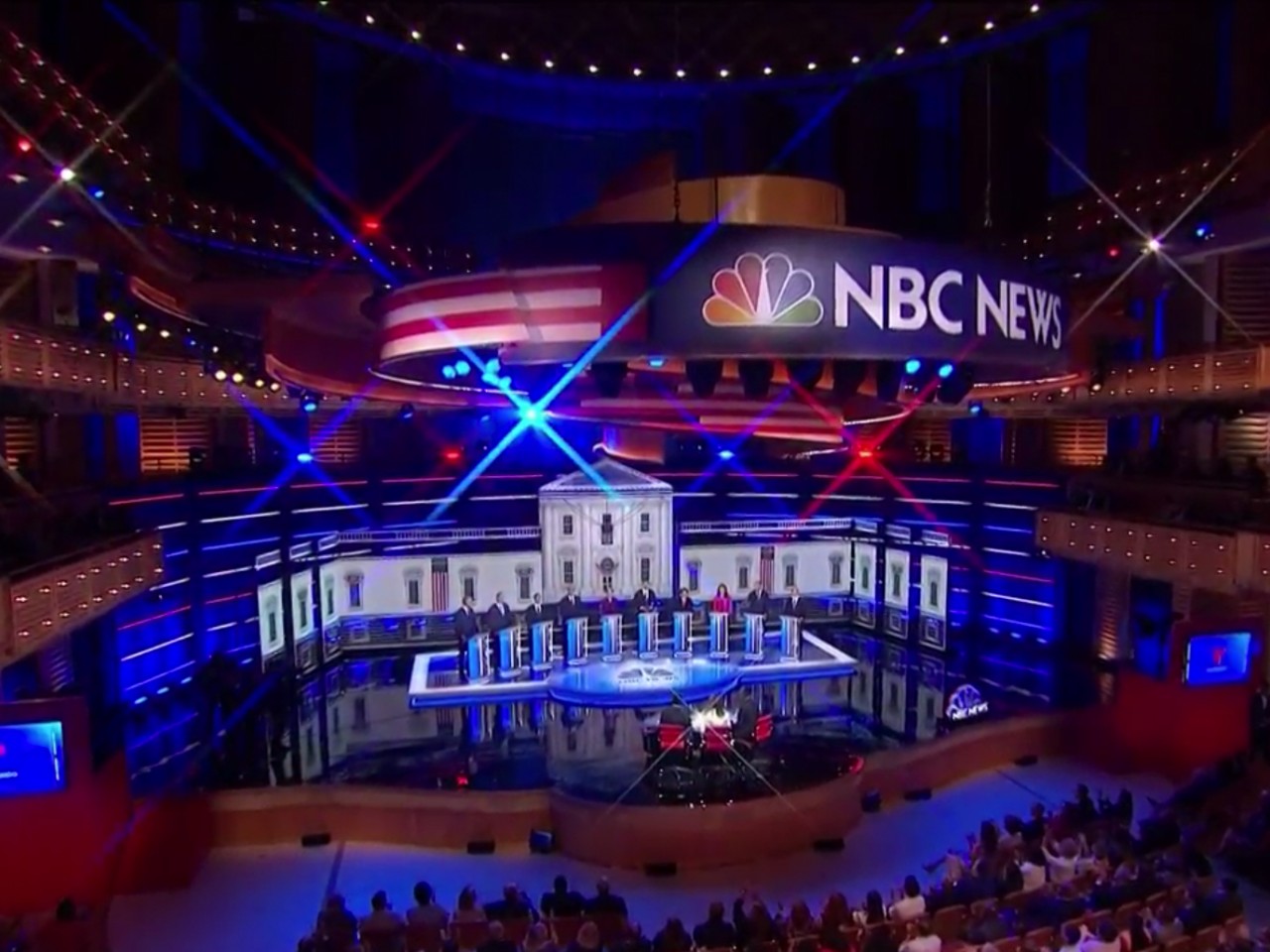
Although treated as a decorative element, the backdrop plays a more important role in setting the atmosphere and even diverting focus toward or away from the speakers. In political debates, it’s a canvas that can incorporate national symbols such as flags or seals, as well as national landmarks that paint a larger picture of what the event is about. The choice of color scheme is an important matter to consider, as too many hues can end up distracting or even straining the eyes. Neutral and muted tones are generally best to keep the emphasis on the candidates rather than the design.
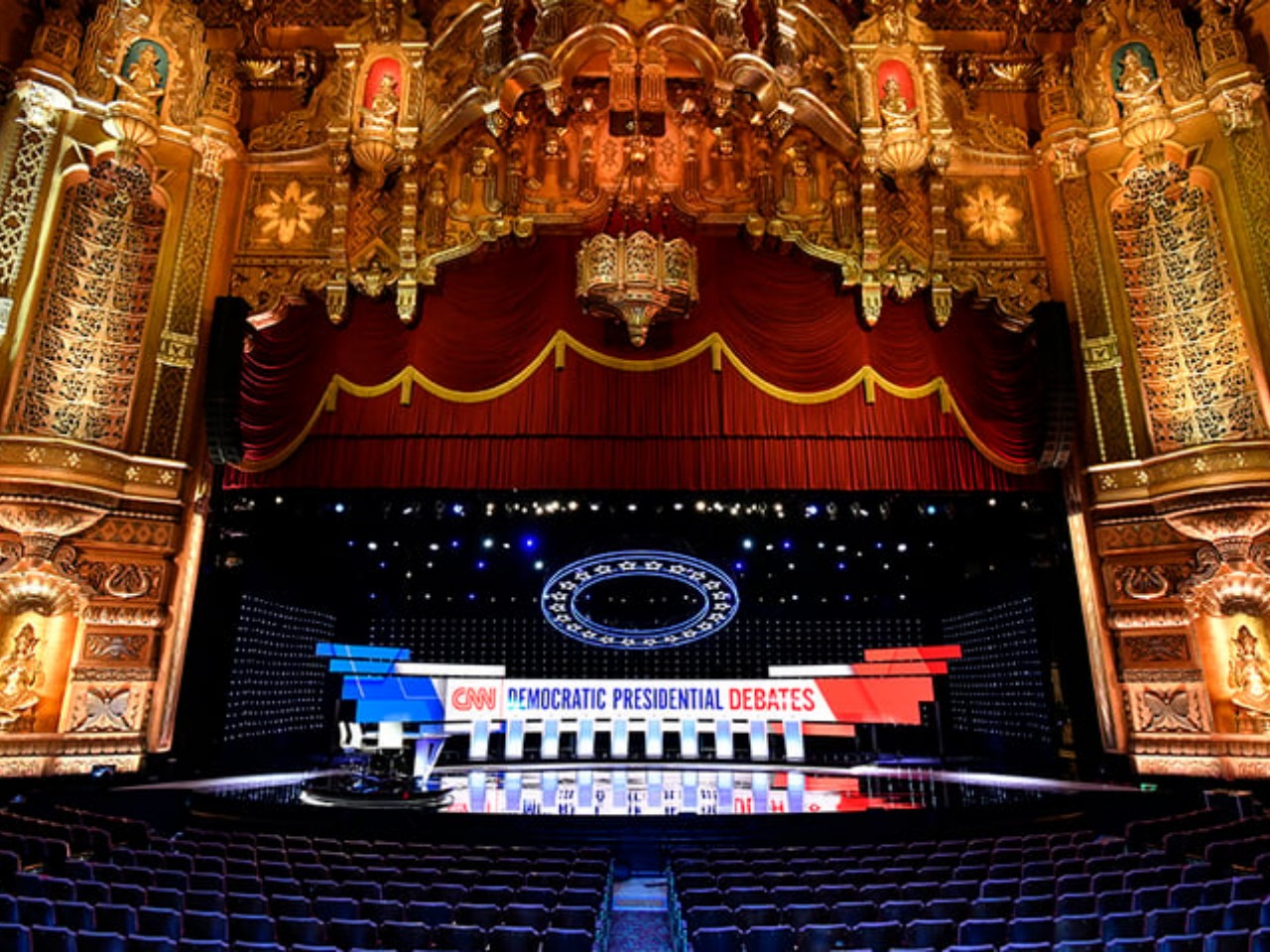
Image courtesy of: Live Design Online

Camera Angles and Lighting

Considering presidential debates have always been televised or, more recently, projected on large screens in the venue, camera angles and lighting have become even more essential and can either enhance or detract from the debate experience. Wide-angle shots capture the entire stage, providing context and showing the physical dynamics between candidates. Close-ups, on the other hand, capture facial expressions and gestures, adding an emotional dimension to the proceedings. Lighting isn’t just a matter of putting a spotlight on people, especially since it has to be done in a way that doesn’t look biased, like casting shadows on some candidates but not others. Balanced and soft lighting helps to create a polished and professional visual atmosphere, keeping the focus squarely on the candidates, while extravagant and showy lighting effects tend to make the event and the stage look cheap and superficial.

Ensuring Equality and Focus

The layout and design of a presidential debate stage isn’t something that is planned haphazardly. Visual elements like the central placement of podiums, backdrop aesthetics incorporating national symbols, and strategic lighting all work together to highlight the candidates. The visual hierarchy created by these elements helps direct the viewers’ attention to the key players and enhances the overall impact of their messages. The most important point to remember is that the design should ensure that candidates are given equal visual weight, reducing any implicit bias. Stage design should also keep the audience focused on the content of the debate rather than the setting, though some more recent stages seem to go in the opposite direction and become spectacles themselves.

Image courtesy of: AnnaStills

The Evolution of Stage Design in Presidential Debates

While debates have been around since the time of the ancient Greeks, televised presidential debates are a more recent phenomenon that only started in the US in the 60s. Thanks to technology, this integral part of the US election system went beyond geographical borders and became something that other countries have come to follow. Of course, the design of the stages in these debates has also evolved along with human history and trends, reflecting not only the aesthetic tastes of the generation but also their concerns.

Historical Context

The first televised debate between John F. Kennedy and Richard Nixon in 1960 already highlighted the importance of visual elements. Kennedy’s youthful and composed appearance contrasted with Nixon’s pale, sweaty demeanor and the poor stage lighting and camera angles that didn’t do the latter any favors. This debate marked the beginning of an era where stage design would become an integral part of political strategy. The design of presidential debate stages has evolved significantly over the years as technologies improved and audiences have become more sophisticated.
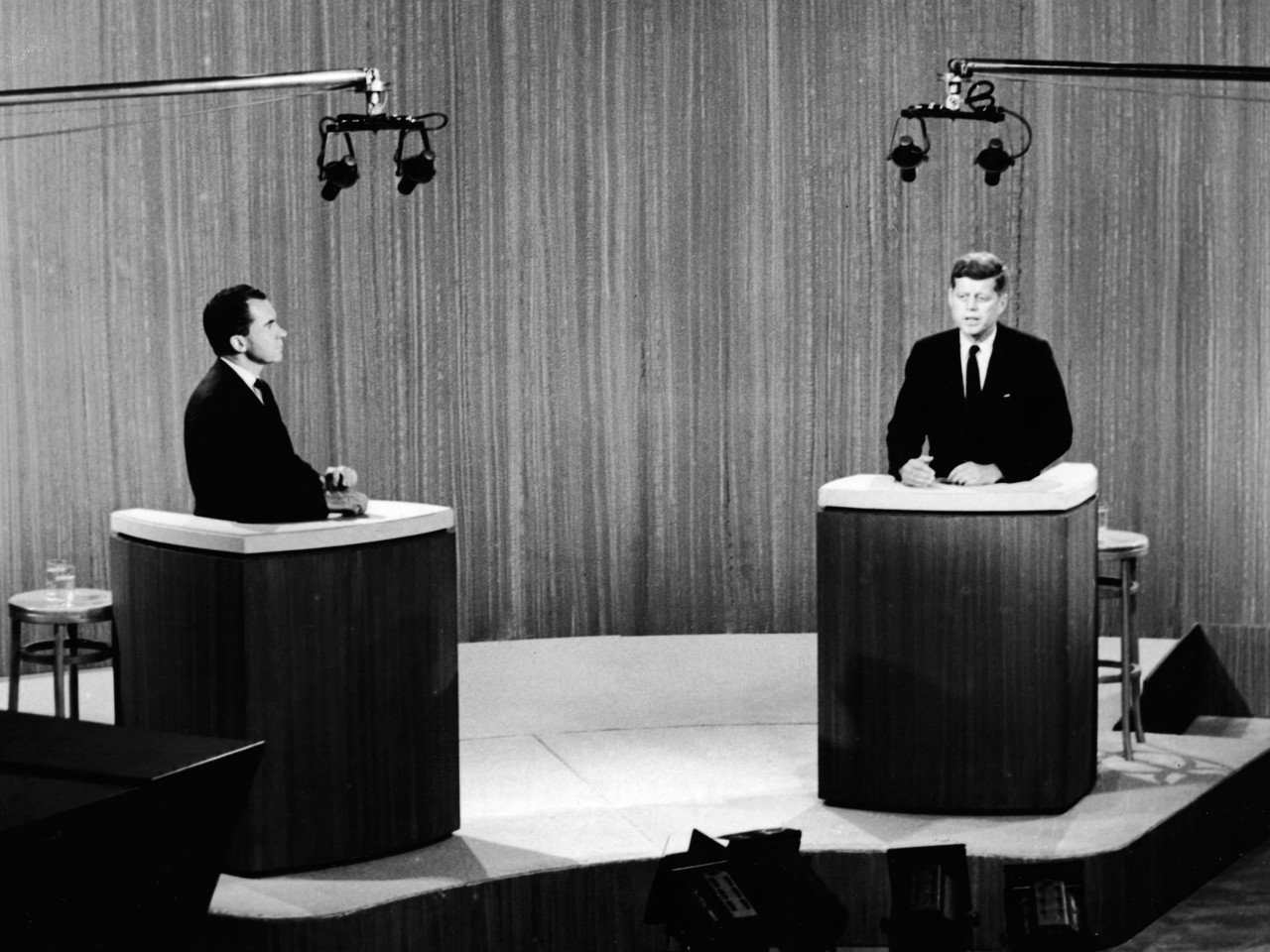
Image courtesy of: Getty Images

Modern Innovations

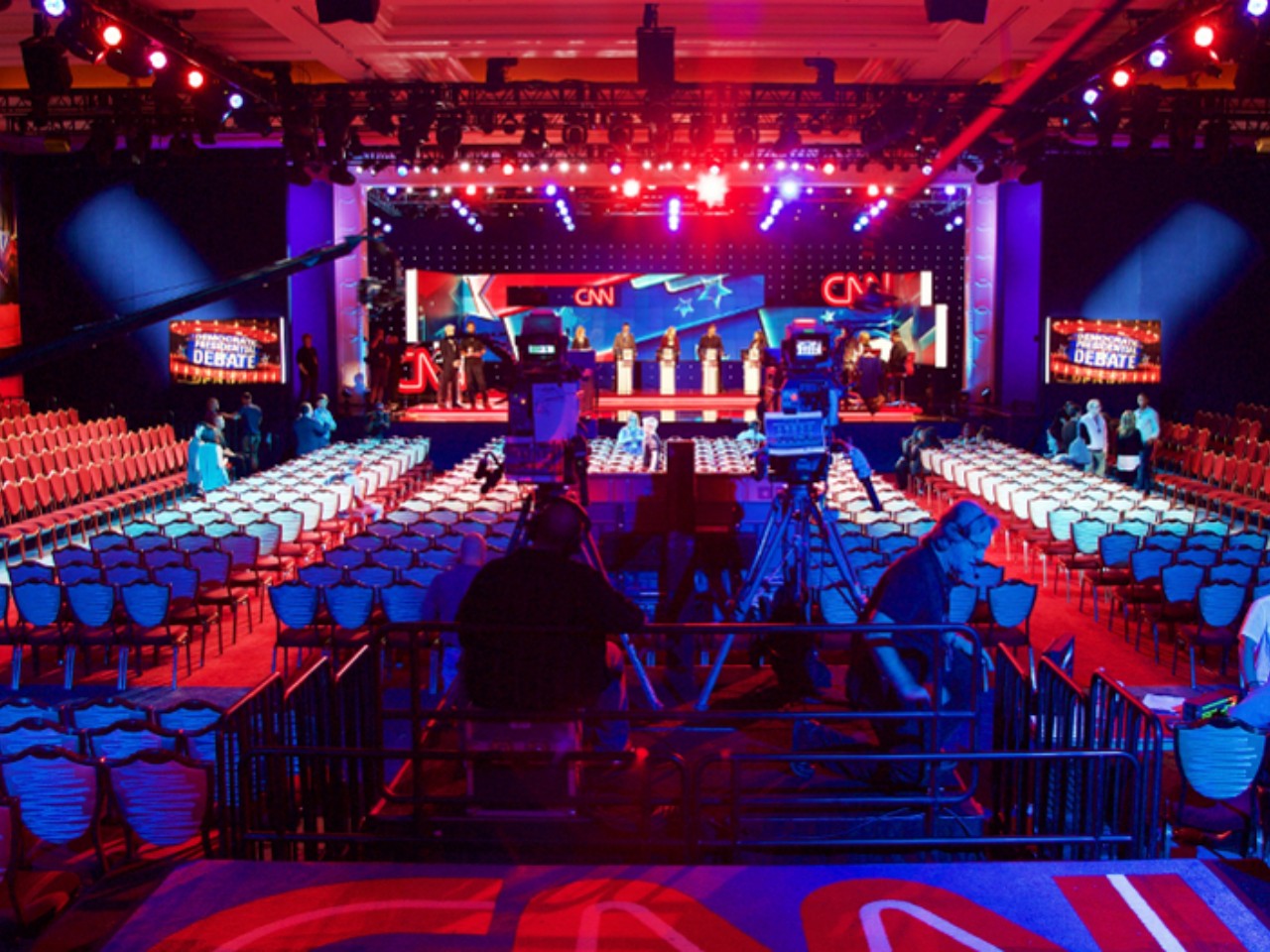
Recent technological advancements have allowed for more complicated stage designs that go beyond simple podiums and plain backgrounds. High-definition screens, 3D projections, and even augmented reality have been integrated to create more engaging and dynamic environments. These innovations not only enhance the aesthetic appeal but also offer new ways to present data and statistics, making complex topics more accessible to the audience. That said, there is also a tendency to go overboard with these innovations, resulting in stages with distracting elements and presentations that turn the debates into entertainment shows.

Image courtesy of: CNN

The Psychological Impact of Stage Design

Stage design might seem like more of an audiovisual matter, but like any kind of design, they have underlying and sometimes subtle psychological effects as well, intended or otherwise. Even the mere placement of elements or choice of colors can have an impact on viewer perception, often subconsciously even.

Perception of Authority

Stage design can subtly influence the perception of a candidate’s authority and competence. For instance, elevated podiums can give candidates a commanding presence, while their placement on the stage can make them feel emotionally distant or close. Symmetrical designs and balanced lighting contribute to a perception of fairness and impartiality, indirectly boosting the candidates’ credibility. Lighting and camera focus can literally change how a candidate looks, making them seem gloomy, happy, suspicious, or trustworthy.

Image courtesy of: adme

Audience Engagement

The stage itself captures and retains the audience’s attention, and a well-designed one has stronger holding power. Strategically placing elements and tasteful use of visuals Engaging visuals ensure that viewers are not distracted and remain focused on the candidates’ messages. Elements such as movement on stage, transitions between camera angles, and interactive elements like audience reactions contribute to a dynamic viewing experience and can be potent tools to create a more meaningful connection with the audience, especially with the Internet that can include the participation of home viewers as well.

The Role of Technology in Enhancing Stage Design

While the first televised presidential debates relied solely on studio cameras and terrestrial TV networks, we have a broader range of technologies today to add flavor to the debate or, conversely, spin a different narrative. Just like any other tool or design element, these have to be used wisely and judiciously to put the focus on the most important part of the event: the candidates’ messages.

High-Definition Screens and Projections

High-definition screens and projections are now standard in modern debate stages as they can let live audiences see a closer look even when they’re at the bleachers. These can also display real-time data, enhance visual graphics, and even simulate different environments. This technology allows for a more comprehensive presentation of complex issues, making it easier for the audience to grasp the nuances of each candidate’s argument.

Image courtesy of: MUS_GRAPHIC_

Augmented Reality

Augmented reality (AR) has started to make its way into stage design, adding an immersive layer to the debate experience. Just like screens, AR can be used to visualize data, project interactive maps, or even recreate significant historical moments, except at a more personal distance. It can make viewers feel like they’re really “on the scene,” but like any other AR experience, it needs to be used in moderation so as not to exclude the majority of people who don’t have AR equipment to use.

Lighting and Sound Design

Advanced lighting and sound systems are crucial in creating the desired ambiance and ensuring clear communication. Programmable LED lights can highlight specific moments or shift focus between speakers, while high-quality sound systems ensure that every word is heard clearly. Conversely, they can also be sources of distraction or even physical discomfort when overused.
Designer: Clickspring Design

Challenges and Considerations in Stage Design

Stage design for presidential or any debate has the same elements as most stage designs, but they carry even more weight in ensuring an impression of impartiality and fairness. To some extent, this kind of stage design has a more serious overtone, presenting unique challenges to designers and architects.

Balancing Aesthetics and Functionality

Like with any kind of design, balancing aesthetics with functionality is one of the most important hurdles to overcome. While it’s essential to create a visually appealing environment, it’s equally important to ensure that the design does not interfere with the debate’s primary purpose: to provide a platform for meaningful discourse. Overly elaborate designs can be distracting, while overly simplistic designs might actually be counterproductive and bore viewers to the point of losing interest.
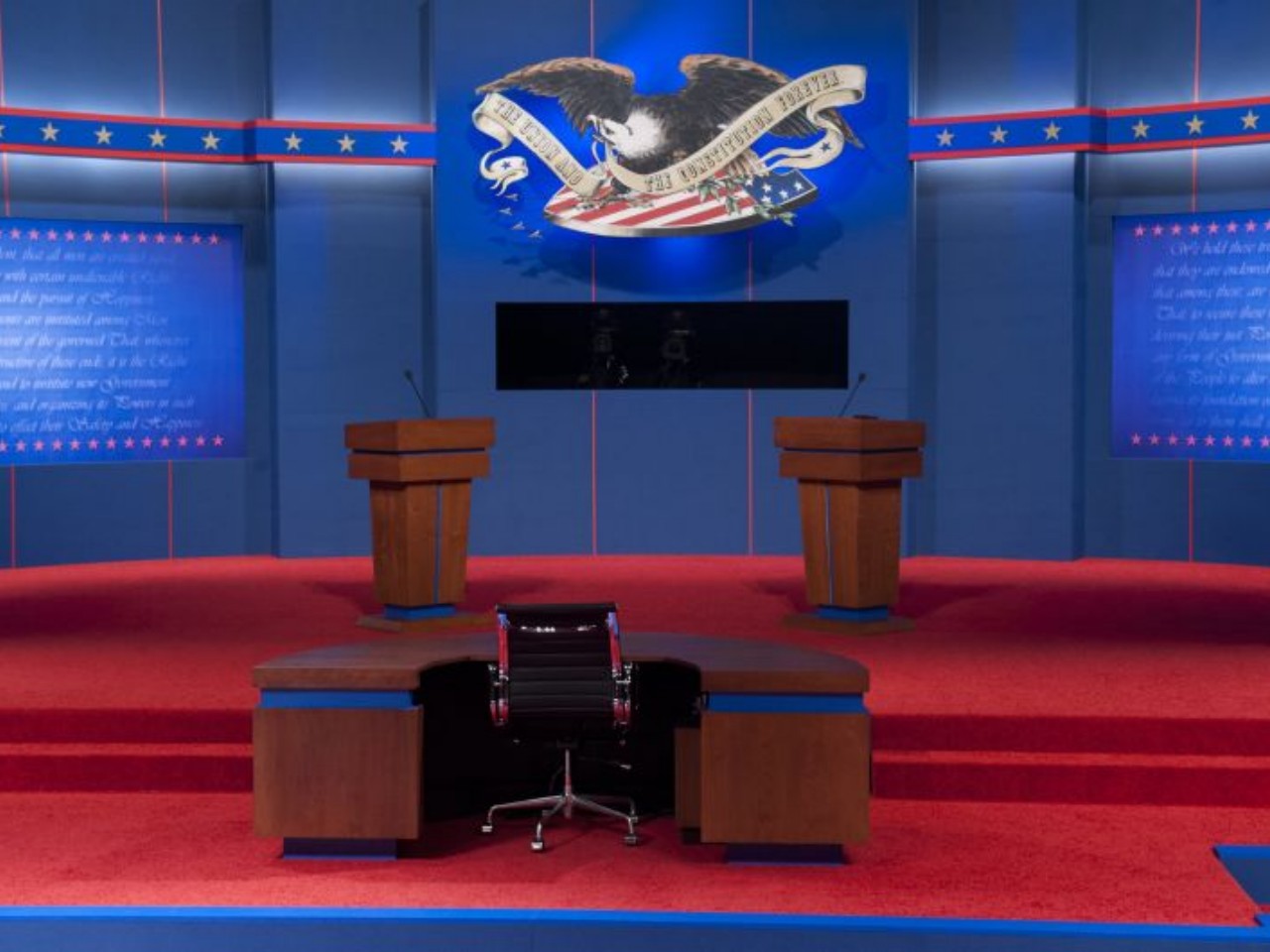
Image courtesy of: CNN

Ensuring Impartiality

To some extent, ensuring impartiality is probably the most critical consideration that guides the overall design. Every element of the stage must be scrutinized to avoid any potential bias, visual or otherwise. This includes equal lighting, symmetrical podium placement, and unbiased camera angles. Even subtle elements, such as the candidates’ color schemes, must be carefully managed to maintain a neutral environment.

Final Thoughts

Stage design for presidential debates is a complex interplay of art and science. It requires a deep understanding of visual hierarchy, psychology, and technology to create a setting that enhances the candidates’ messages and engages the audience. As technology continues to evolve, so too will the possibilities for innovative and impactful stage designs, further elevating the importance of this often-overlooked aspect of presidential debates. It shapes perceptions, influences engagement, and ultimately contributes to the political process by providing a fair and engaging platform for candidates to present their visions for the future. After all, the role of stage design in presidential debates cannot be overstated, for it is indeed a silent yet powerful player in the theater of politics.
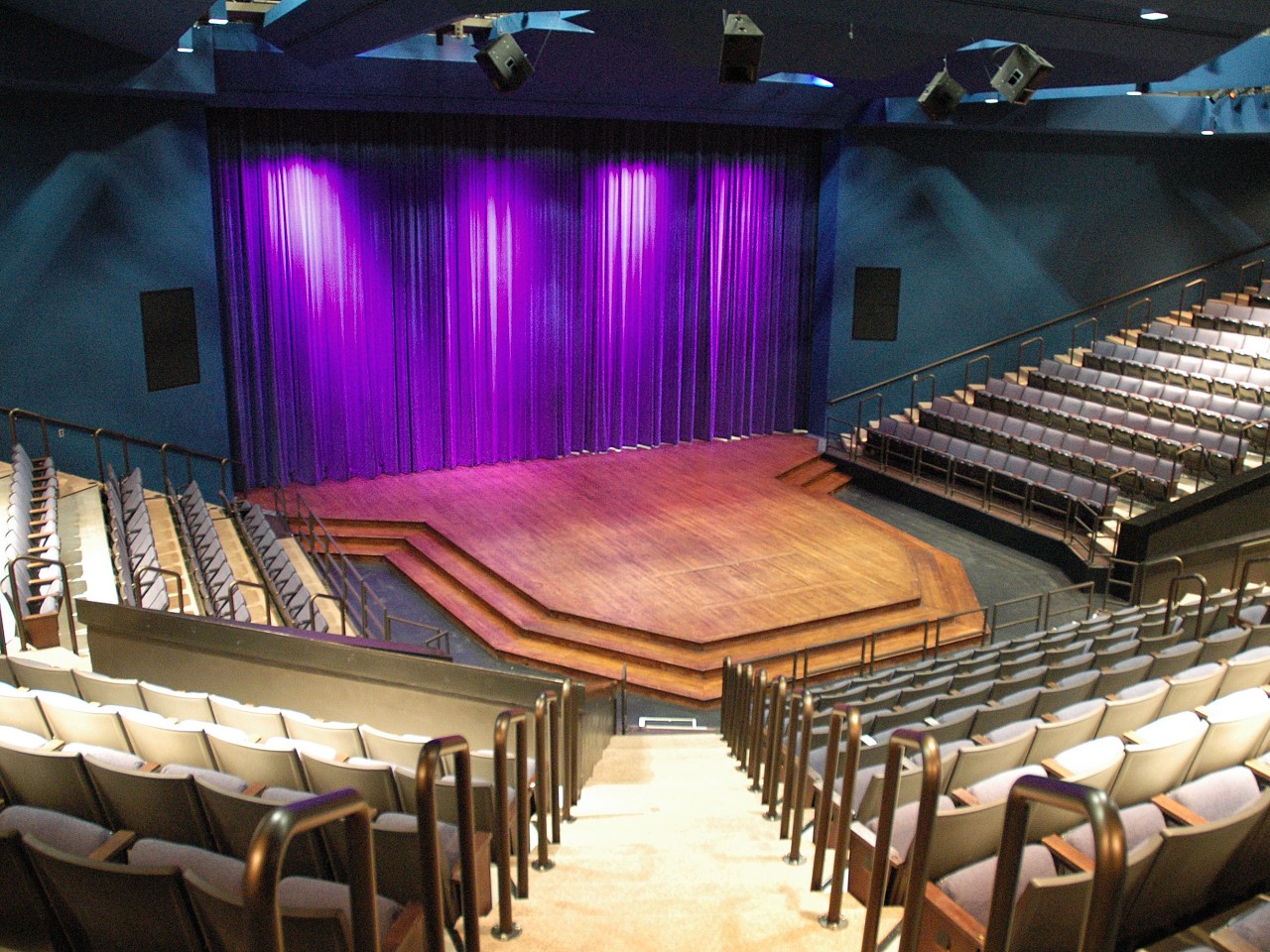
Pasant Theatre, Wharton Centre

The post Setting the Stage: How Design Shapes the Dynamics of Presidential Debates first appeared on Yanko Design.

How to easily create book illustrations using AI

AI illustrations for your book

Authors looking for an easy and cost-effective way to generate illustrations for their next book or story might be interested in a new simple method that utilizes AI image generators. By using a simple single prompt you can use AI to help you select prominent sections of your book and create illustrations to bring them […]

The post How to easily create book illustrations using AI appeared first on Geeky Gadgets.

Posted in Uncategorized | Tagged ,

iPhone 16 vs 16 Pro: 32 Things You Need to Know

iPhone 16 Pro

The iPhone 16 and iPhone 16 Pro are the latest additions to Apple’s lineup of smartphones, offering a range of advanced features and capabilities. While both models share several common features, the Pro versions stand out with their enhanced specifications and exclusive functionalities. The video below from ZONEofTECH looks into the key differences and similarities […]

The post iPhone 16 vs 16 Pro: 32 Things You Need to Know appeared first on Geeky Gadgets.

iFixit wants to fix the soldering iron

iFixit embodies the spirit of “screw it, I’ll just do it myself” that has always been a trait of some tech enthusiasts. As one of the Right to Repair movement's proponents, the company is now flexing its muscles with an electronics product of its very own. FixHub is a USB-C powered soldering iron designed to help fix whatever's on your workbench (and be easily fixable itself). The iron is joined by a 55Wh battery pack which acts as a stand and temperature control, ensuring you can fix things wherever you go.

Founder Kyle Wiens explained FixHub was born of frustration with soldering irons, and their limits. He was annoyed that he had to drag an extension cord out on the street to fix his car stereo. So the iFixit team set about looking for a way to improve what has traditionally been an unsophisticated tool. That includes making it smarter, more flexible and easily repairable.

The 100 watt iron can reach your desired soldering temperature in just five seconds. Nestled inside the iron’s body is an accelerometer which can detect if the iron is idle and in its holder. If it does, it will automatically set it to cool down — hopefully wringing extra life out of the tip of the iron. And if the iron falls out of your hand it’ll cut power to hopefully prevent any nasty accidents. There’s also an LED ring on the body that’ll tell you when the iron is cool enough to touch, warming up, or ready to go.

Image of iFixit's Fix Hub soldering iron and battery pack.
Photo by Daniel Cooper / Engadget

You can use the iron with any USB-C power source that can output 20W, but it’ll stay set at the factory default temperature of 660f/350c. For more control (and portability), you’ll need to grab the FixHub Power Station, the company’s new 55Wh battery pack. It’ll output up to 100W at once, with enough juice to run two irons simultaneously, or one iron while recharging another USB-C device. Up front, you’ll get a display and a turn dial to let you control the iron’s temperature should you need to tweak it.

This being iFixit, both products are modular and repairable, with the usual commitment to ensuring easy serviceability. The packaging even contains an iFixit screwdriver that will let you disassemble both products as and when required. The hope is that you’ll still be fixing your electronics with one of these in hand for decades to come.

iFixit will begin shipping its FixHub products on October 15 in the US, Canada, Australia and Europe. The Smart Soldering Iron will set you back $80, while the Soldering Station, which includes the soldering iron and the battery pack, costs $250. You can also pick up the Soldering Toolkit for $300, which will include the above, plus lots of accessories and materials.

This article originally appeared on Engadget at https://www.engadget.com/ifixit-wants-to-fix-the-soldering-iron-130040690.html?src=rss

Solving the Battery Problem

Solving the Battery Problem 2024

The transition to a zero-carbon economy is heavily dependent on the development and implementation of effective energy storage solutions. Wind and solar energy, currently the most affordable forms of primary energy, are crucial in driving this shift towards sustainability. However, the intermittent nature of these renewable sources presents a significant challenge, necessitating the deployment of […]

The post Solving the Battery Problem appeared first on Geeky Gadgets.

Posted in Uncategorized | Tagged

Meta and the Mental Health Coalition launch a data-sharing program to reduce violating suicidal content

September marks Suicide Prevention Month, a time to recognize the people impacted by suicide and suicidal thoughts, as well as the importance of working together to raise awareness and take preventive steps. A new collaboration aims to fulfill the latter, with Meta teaming up with the Mental Health Coalition to create Thrive, a signal-sharing program. Thrive should allow participating companies to send signals about content focused on self-harm or suicide to each other, thus locating and investigating the same or similar posts more easily. Snap and TikTok join Meta as founding members.

Thrive will initially work through companies providing hashes (codes corresponding to the violating content). Each one will only provide information about the image or video and shouldn't include specific information about users or the account. Meta says it will prioritize content that is graphic or depicting or promoting viral challenges around suicide or self-harm.  

Meta announced the news in a statement and shared it's providing Thrive's technical infrastructure. The company, which has been far from a shining example in preventing harm on its site, also acknowledged the need for cross-platform collaboration. "Unfortunately this content isn't limited to any one platform — especially when it comes to viral challenges — and it's imperative that the technology industry works together to help prevent it from spreading," said Antigone Davis, vice president of Global Safety at Meta. 

Thrive's director, Dr. Dan Reidenberg, will oversee the program, stating, "The integration of signal sharing, coupled with cross-industry collaboration and moderated by an independent and neutral intermediary, represents a major breakthrough in industry collaboration and public protection on the global, public health crisis of suicide and ultimately save lives."

In the US, the National Suicide Prevention Lifeline is 1-800-273-8255 or you can simply dial 988. Crisis Text Line can be reached by texting HOME to 741741 (US), 686868 (Canada), or 85258 (UK). Wikipedia maintains a list of crisis lines for people outside of those countries.

This article originally appeared on Engadget at https://www.engadget.com/social-media/meta-and-the-mental-health-coalition-launch-a-data-sharing-program-to-reduce-violating-suicidal-content-124446825.html?src=rss

Microsoft lays off another 650 Xbox employees as part of its Activision deal

After slashing 1,900 jobs across Xbox and Activision earlier this year, Microsoft is laying off another 650 employees, according to an internal memo seen by The Verge. The cuts are again related to its Activision Blizzard acquisition and will mostly affect corporate and supporting functions, Xbox head Phil Spencer told employees. 

"We have made the decision to eliminate approximately 650 roles across Microsoft Gaming... to organize our business for long term success," Spencer wrote. "No games, devices or experiences are being cancelled and no studios are being closed as part of these adjustments today." 

Microsoft completed its $68.7 billion purchase of Activision Blizzard in October 2023, following a 21-month battle with regulators in the US and UK. To clear the deal with the UK's Competition and Markets Authority, Microsoft agreed to sell its cloud gaming rights to Ubisoft so that titles will appear on multiple game-streaming services. 

Since then, the company has closed multiple game studios, including Redfall developer Arkane Austin, Tango Gameworks, Alpha Dog Games and Roundhouse Games. 

This article originally appeared on Engadget at https://www.engadget.com/gaming/xbox/microsoft-lays-off-another-650-xbox-employees-as-part-of-its-activision-deal-123042523.html?src=rss

Polaris Dawn astronauts successfully perform the first commercial spacewalk

Polaris Dawn astronauts Jared Isaacman and Sarah Gillis have successfully exited the confines of their Crew Dragon vehicle to perform the first ever commercial spacewalk on September 12. SpaceX and the Polaris crew started preparing for the event at 6:01AM Eastern time, checking that all their gear was in order and putting on the SpaceX extravehicular activity (EVA) suits that all four of them have to wear, because opening the Dragon's hatch will expose them to outer space. Pure oxygen was pumped into the suits to check for leaks before all the air was let out of the vehicle and before Isaacman opened the hatch. 

A few minutes before 7AM Eastern, Isaacman went through the hatch and exited the vehicle, with the Dragon's camera capturing his silhouette against our planet as the backdrop. He then performed a series of mobility exercises as planned — the whole point of the spacewalk was to test SpaceX's new EVA suits — before going back into the capsule. "Back at home, we all have a lot of work to do," he said as he emerged from the vehicle. "But from here, it looks like a perfect world."

After he went back to his seat, SpaceX engineer Sarah Gillis geared up for her turn. She had to deal with the hatch seal bulging out a bit, but she was ultimately able to climb out of the hatch and do a series of mobility exercises like Isaacman did. Once she was done, the team closed the hatch and started repressurizing Dragon to equalize the atmosphere inside before checking the cabin for any leaks. By 7:55AM, Dragon's repressurization was complete, marking the completion of today's spacewalk. 

This article originally appeared on Engadget at https://www.engadget.com/science/space/polaris-dawn-astronauts-successfully-perform-the-first-commercial-spacewalk-120048616.html?src=rss