Alien: Earth has been renewed for a second season

The Alien franchise has been decidedly hit and miss since the near-universally beloved first two movies, but it’s in a very good place at the moment. 2024’s Alien: Romulus was a magnificent return to form, and this year that good run of form continued in the series’ first TV show, Alien: Earth, which has been renewed for a second season.

The first season wrapped up in September and ended on a pretty dramatic cliffhanger, so while it seemed pretty obvious that more episodes would be coming, it’s good to have it confirmed. Noah Hawley is once again heading up the project, and according to The Hollywood Reporter the Fargo creator has signed a multi-year deal with Disney that will see him work on the ever-expanding entertainment empire's other channels and services, including ABC and Hulu Originals, as well as continuing to produce shows for FX.

Variety reports that season two of Alien: Earth will start production in London in 2026, a pretty significant change from the debut season, which was shot in Thailand. Presumably that means we’ll be heading to some new locations in the show too, but we’ll have to wait for a trailer to find that out.

Set two years before the original Alien, Alien: Earth sees a retro-futuristic shipping vessel carrying some ominously familiar-looking extra-terrestrial cargo crash-land on Earth, where we meet a terminally ill girl who becomes the first human-synthetic hybrid. The season one cast includes Sydney Chandler, Alex Lawther, Timothy Olyphant, Essie Davis, Samuel Blenkin, Babou Ceesay, David Rysdahl, Adrian Edmondson, Adarsh Gourav, Jonathan Ajayi, Erana James, Lily Newmark, Diem Camille, and Moe Bar-El.

This article originally appeared on Engadget at https://www.engadget.com/entertainment/alien-earth-has-been-renewed-for-a-second-season-144124743.html?src=rss

The Super Mario Galaxy Movie trailer confirms Rosalina and Bowser Jr. are in the sequel

Following a teaser in September that confirmed the movie’s title, Nintendo and animation studio Illumination unleashed the first proper trailer for The Super Mario Galaxy Movie in a dedicated Nintendo Direct. The sequel to The Super Mario Bros. Movie, the highest-grossing movie based on video games, will hit theaters in the US on April 3.

The trailer opens with Bowser engaging in a little art therapy, which, honestly, could be really great for him. Mario can’t help put put down Bowser’s artwork, though. What a jerk. From there, the action riffs on Super Mario Galaxy as Peach and Toad use launch stars to travel to a different planet. I don’t want to give away everything that happens, so just watch the trailer. The visuals, as you’d expect from Illumination, look terrific.

The trailer also confirms the addition of two fan-favorite characters this time around: Rosalina (who takes out a giant robot with her abilities) and Bowser Jr, who is taking his father’s place as the sequel’s villain. Rosalina is played by Brie Larson, while Benny Safdie voice Bowser Jr.

An extra clip after the trailer shows Rosalina reading a story about Princess Peach to a group of Lumas. Another features Bowser Jr. promising that “the Bowser name shall be feared once more.” Ominous!

However, the Direct didn’t include any indication of Yoshi appearing in the film. An Easter egg at the end of the first movie showed Yoshi’s egg cracking. Plus, a Pillsbury cookie box — of all things — all but confirmed Yoshi would be in the movie, while hinting at the inclusion of Princess Rosalina and Bowser Jr. We’ll perhaps have to wait until the next trailer to get a glimpse of Mario’s dino pal, who’ll probably be green even though everyone knows in their heart blue Yoshi is the best Yoshi.

This article originally appeared on Engadget at https://www.engadget.com/entertainment/tv-movies/the-super-mario-galaxy-movie-trailer-confirms-rosalina-and-bowser-jr-are-in-the-sequel-142815627.html?src=rss

AeroPress Made a Coffee Grinder That Fits Inside the Plunger

Manual grinders designed for travel usually give up something important to stay portable. Compact versions use cheaper burrs that grind unevenly, producing bitter coffee no matter how carefully you brew it. Premium grinders with Italian burrs deliver consistent results but end up too bulky for backpacks, forcing you to choose between bringing mediocre equipment or leaving the grinder at home and buying pre-ground beans that taste stale before the bag even opens.

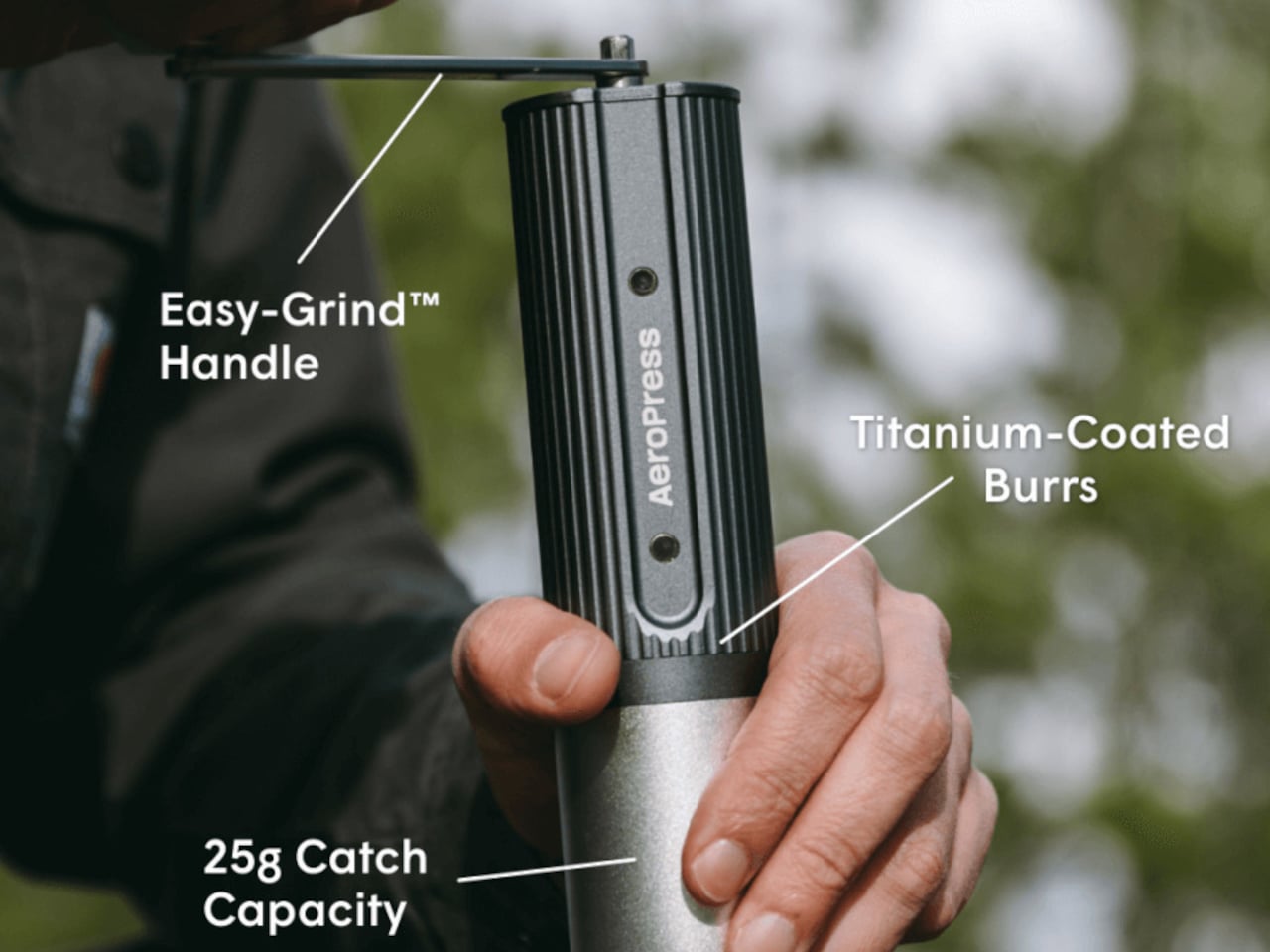
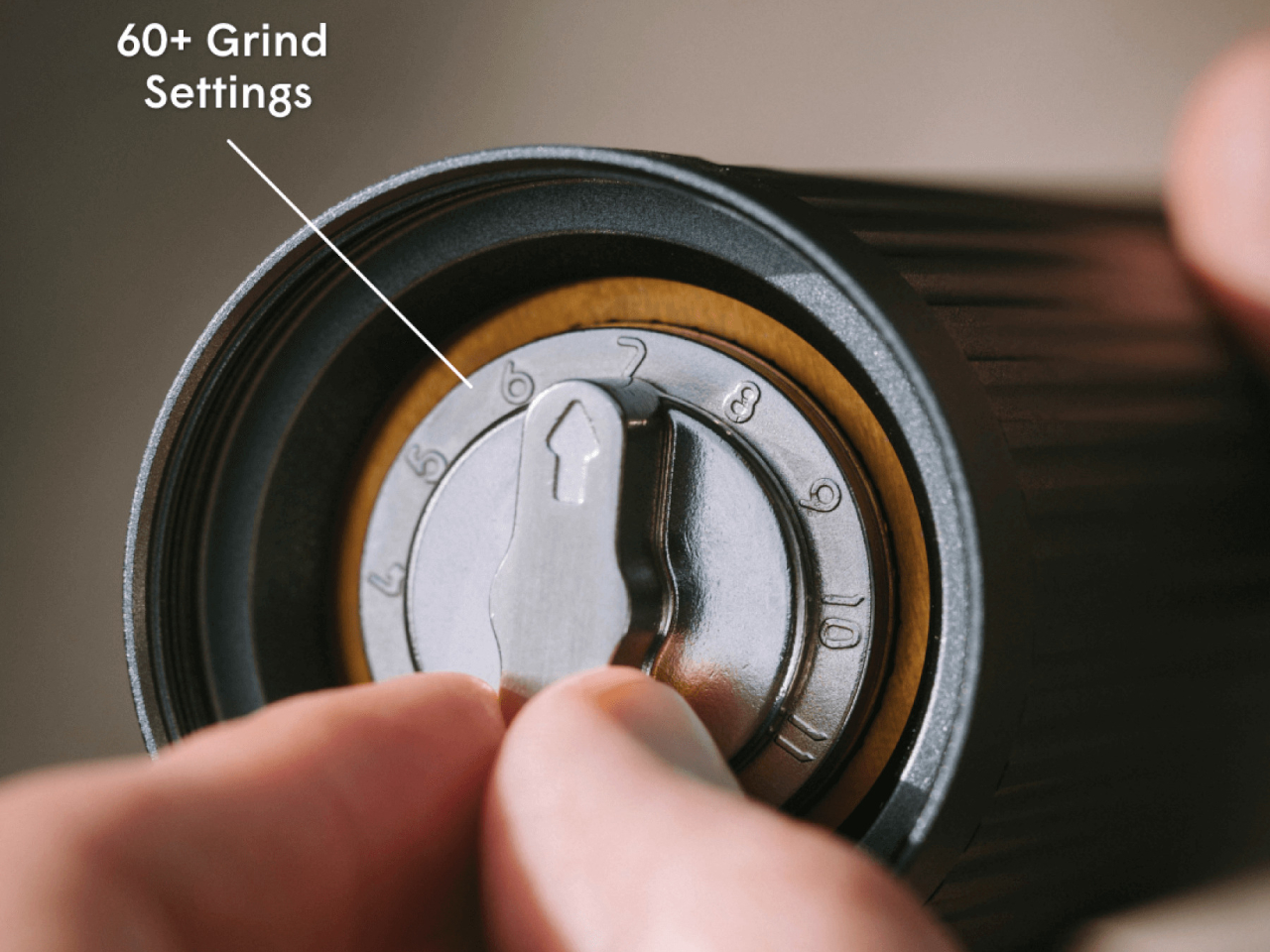
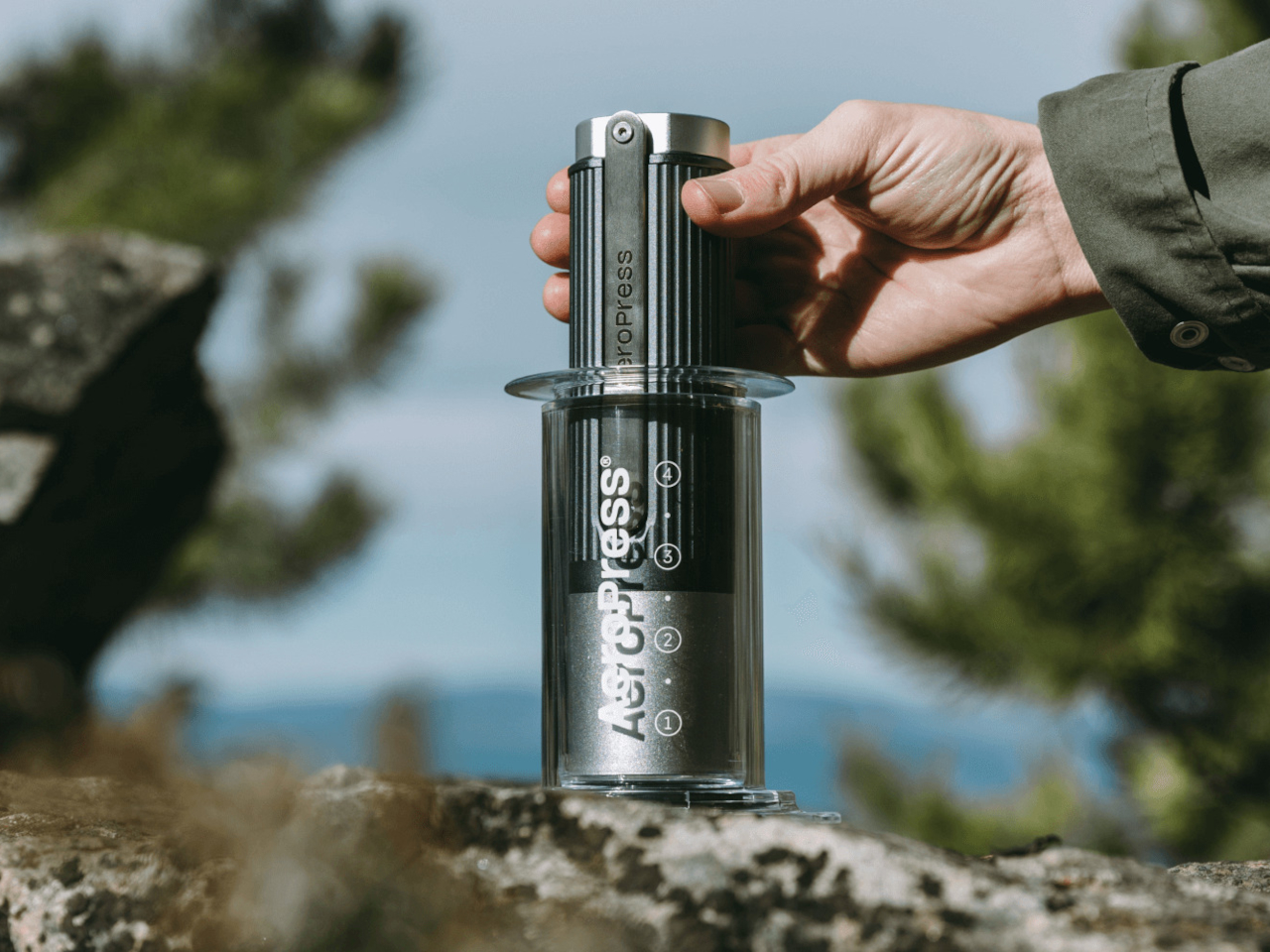
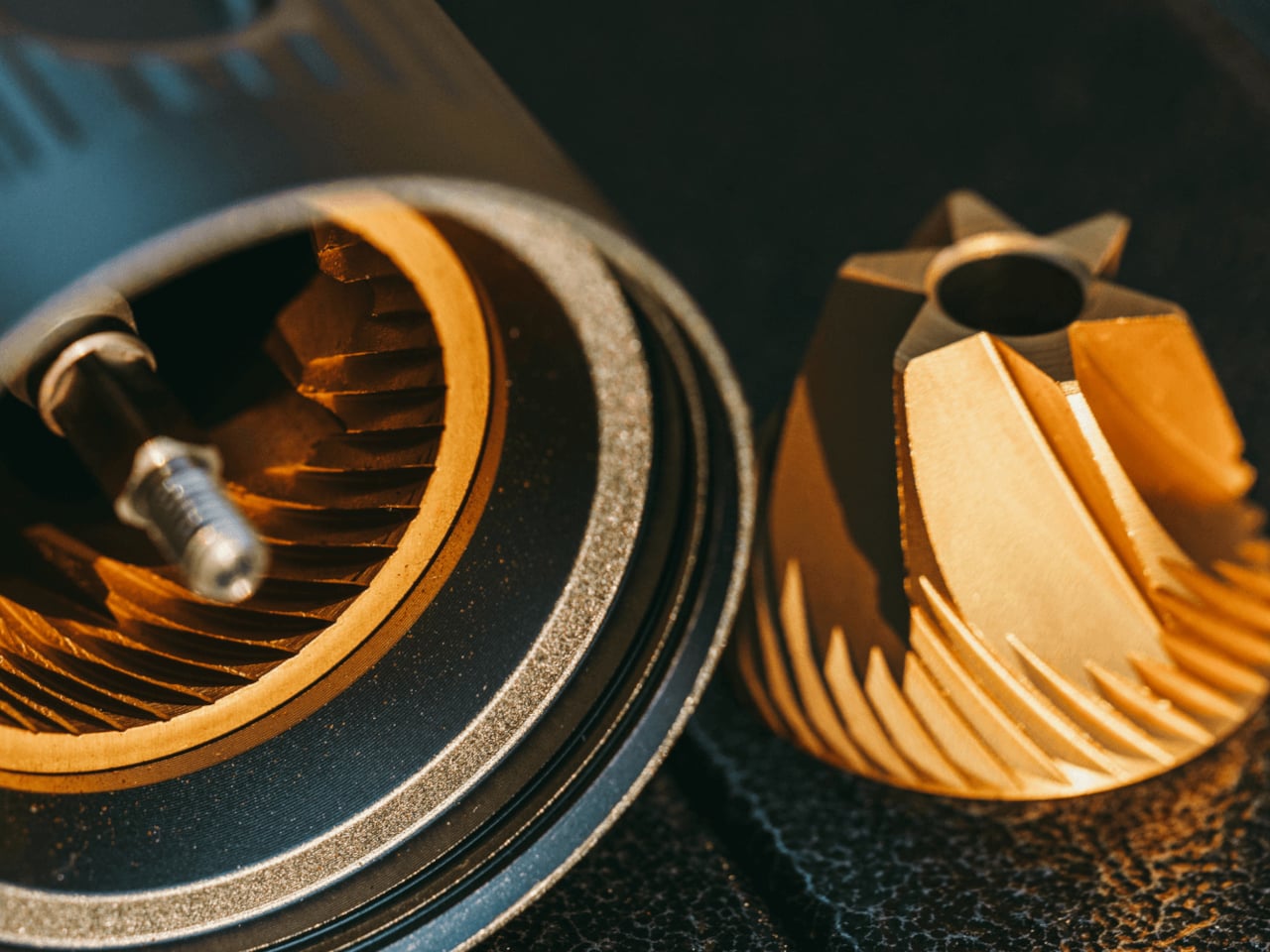
AeroPress’s new manual grinder fits completely inside the AeroPress plunger without any parts sticking out or requiring disassembly beyond detaching the magnetic handle. Italian titanium-coated burrs handle everything from espresso-fine to French press coarse across sixty distinct settings. The all-metal construction weighs enough to feel serious without becoming awkward to pack alongside other camping gear or travel essentials that compete for limited bag space.

Designer: AeroPress

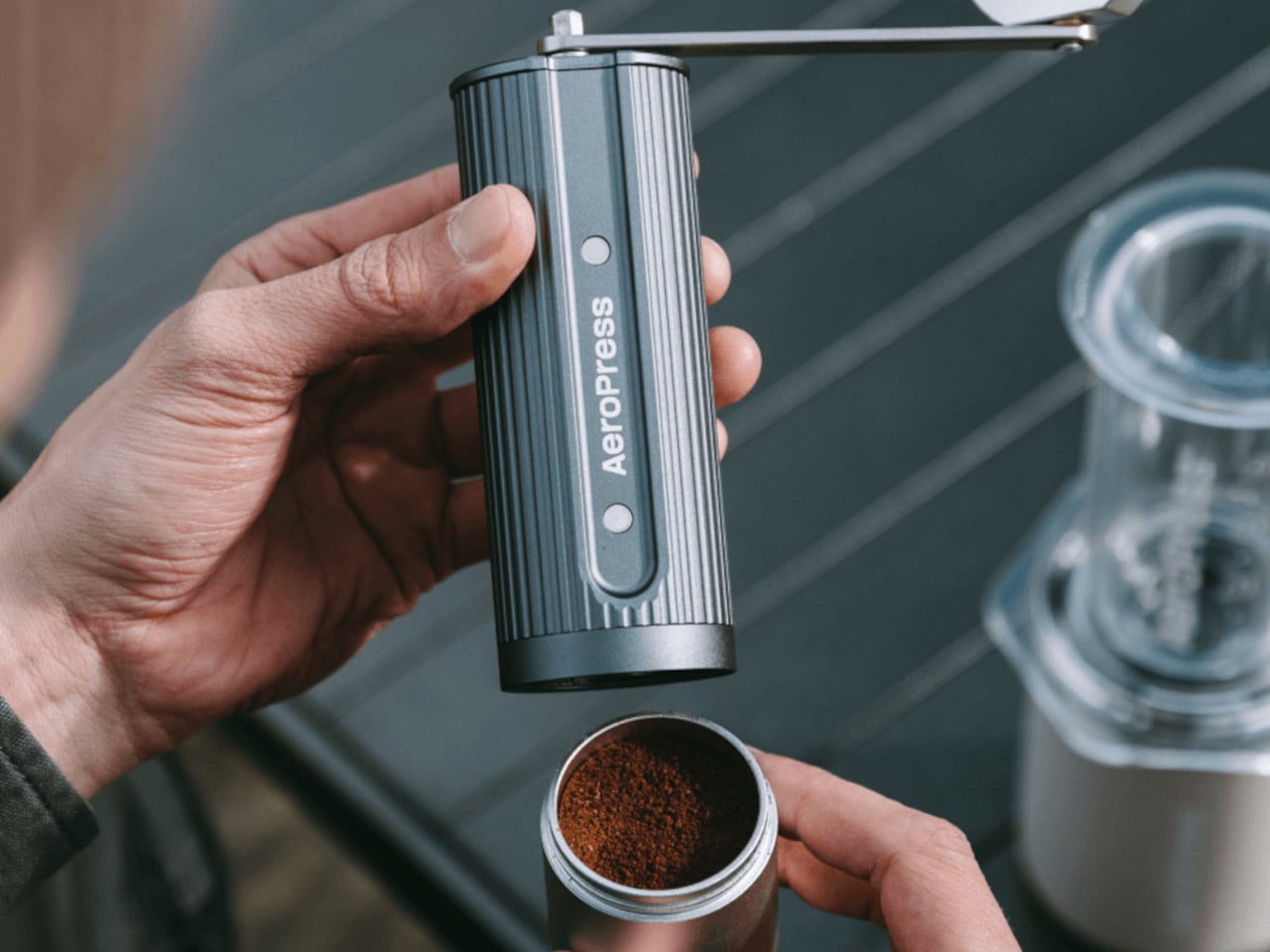
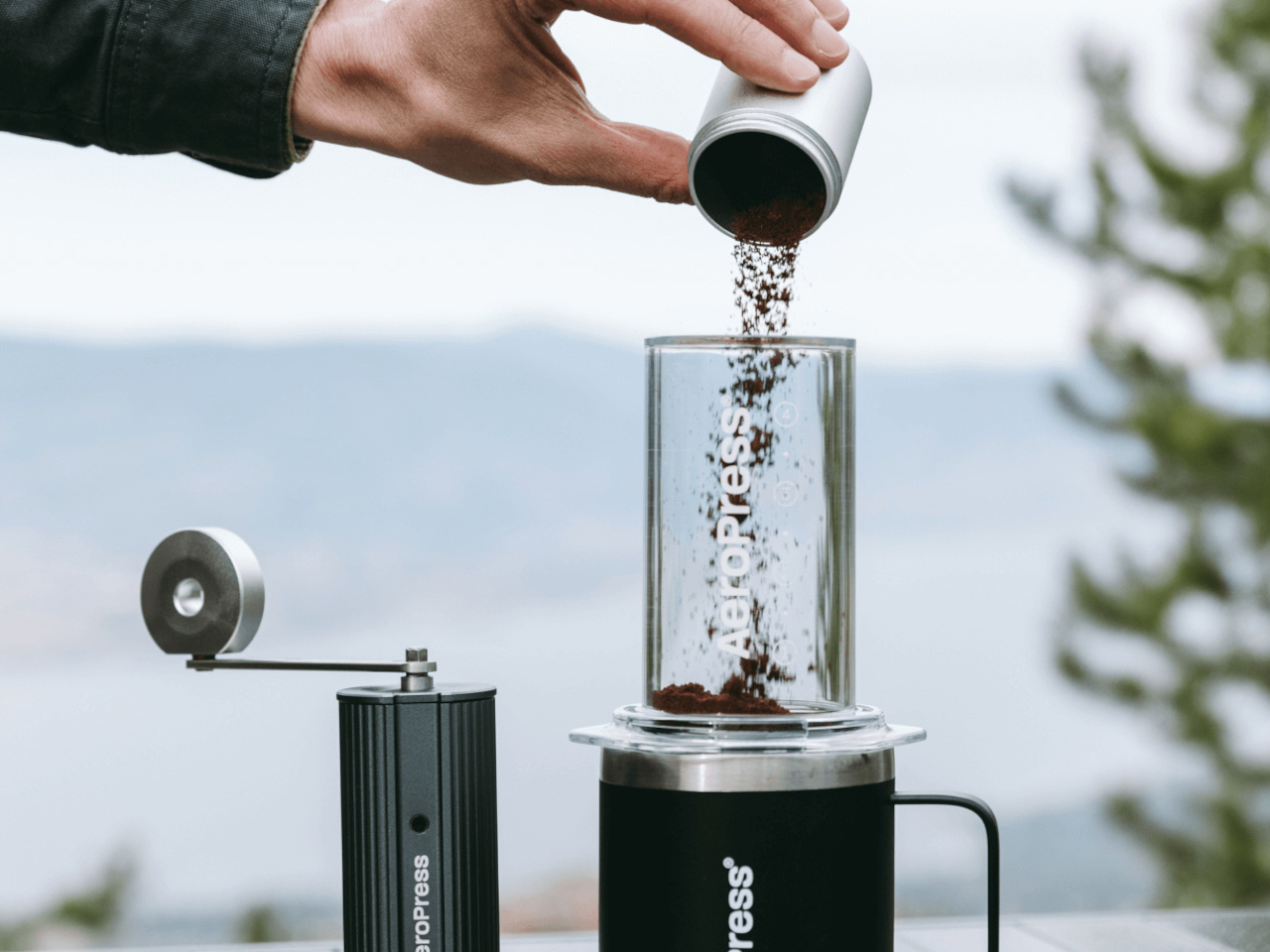
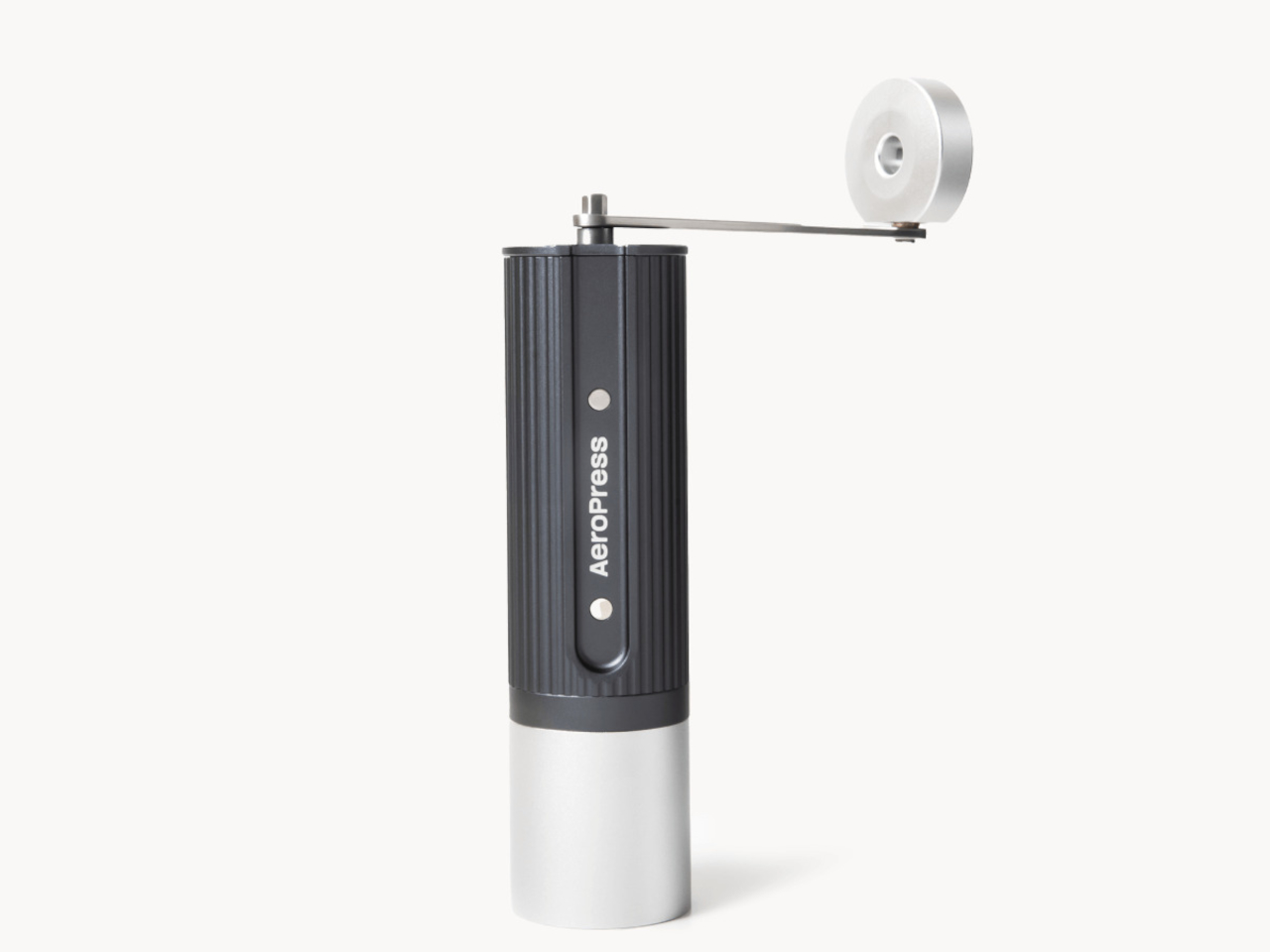
The body uses knurled aluminum with vertical ridges that provide grip when your hands are cold or slightly damp from washing beans. Dark gray metal keeps it looking professional instead of cheap. The catch holds twenty-five grams, which matches single-dose brewing perfectly and eliminates the waste that comes from grinding more coffee than you actually need for one cup or pot.

Grind adjustment happens through a numbered dial that clicks between sixty settings spanning the full range from powder-fine espresso to chunky cold brew. The grinder ships preset to medium-fine, which works immediately for AeroPress without fiddling with settings first. Twist coarser for French press. Dial finer for moka pot or espresso. The changes happen quickly without tools or confusing calibration steps that make adjusting grind size feel like solving a puzzle.

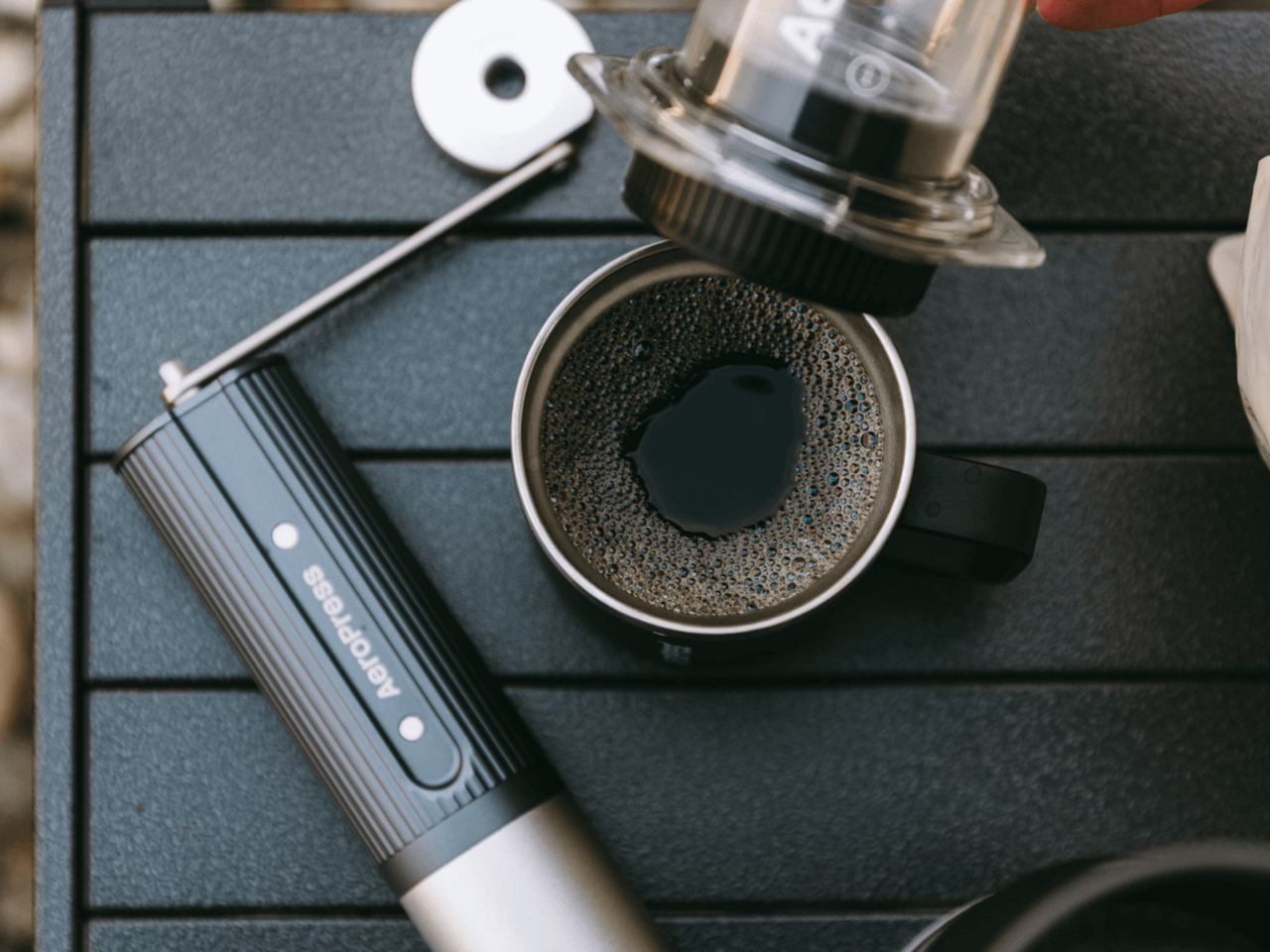
The handle attaches magnetically when you’re grinding and slides into a groove along the body when you’re done, where magnets hold it flat against the metal surface. This lets the entire grinder collapse into a cylinder that fits inside the AeroPress plunger without anything jutting out awkwardly. Pull it out, snap the handle on, grind your beans, and brew using two pieces of gear that nest together the whole trip.

Dual bearings inside the crank mechanism keep grinding smoothly enough that your arm doesn’t tire halfway through processing a full dose. The long handle provides leverage that makes each rotation easier compared to compact grinders with short cranks that require more effort and more turns to process the same amount of beans. This matters early mornings when you’re not fully awake yet or outdoors when cold air makes everything feel harder.

Cleaning requires no tools beyond the included brushes that sweep out residual grounds from the burr chamber and catch. The all-metal construction handles temperature swings and outdoor conditions better than grinders with plastic parts that crack when cold or warp inside hot cars. The lifetime warranty on the burr set suggests AeroPress expects this grinder to last years of regular use without degrading performance.

The grinder extends what AeroPress does well into the grinding stage, giving users who already trust the company’s brewers a matching tool that shares the same design priorities around portability, build quality, and making excellent coffee. The combination of premium burrs, thoughtful engineering, and genuine compactness makes it one of the few manual grinders that actually delivers on portability claims without compromising the grind consistency serious coffee brewing demands daily.

The post AeroPress Made a Coffee Grinder That Fits Inside the Plunger first appeared on Yanko Design.

The Truth About DSM 7.3’s Data Tiering : Is It Worth the Hype?

The Truth About DSM 7.3’s Data Tiering : Is It Worth the Hype?

Synology’s DSM 7.3 introduces data tiering, a feature that promises to transform how we manage storage by automating the movement of files between high-performance “hot” storage and budget-friendly “cold” storage. But as with any innovative technology, the devil is in the details. Is this beta feature ready to deliver on its bold claims, or does […]

The post The Truth About DSM 7.3’s Data Tiering : Is It Worth the Hype? appeared first on Geeky Gadgets.

Posted in Uncategorized

Samsung Galaxy ZFold 8: The Foldable Phone Revolution You Can’t Miss

Samsung Galaxy ZFold 8: The Foldable Phone Revolution You Can’t Miss

Samsung is poised to make significant strides in the foldable smartphone market with the upcoming Galaxy Z Fold 8, expected to debut in the latter half of 2026. This device is designed to address key limitations of its predecessor while introducing innovative features that could reshape the industry. With competitors like Apple rumored to enter […]

The post Samsung Galaxy ZFold 8: The Foldable Phone Revolution You Can’t Miss appeared first on Geeky Gadgets.

Posted in Uncategorized

New streaming app Coda Music is rolling out tools for labeling and blocking AI-generated tunes

At this point, the streaming music landscape feels pretty well settled. Giants like Spotify, Amazon, Apple and YouTube duke it out at the top, while plenty of other players like Qobuz, Tidal, Deezer try their best to stand out from the pack. Somewhat surprisingly, though, a new player emerged in September. Coda Music used the recent backlash around Spotify co-founder Daniel Ek as a way to differentiate itself from the number one streamer, calling out Ek’s controversial funding of defense technology firm Helsing earlier in the year. (Spotify’s refusal to stop airing ICE recruitment ads certainly hasn’t helped the platform, either.)

Today, the fledgling service is announcing a new feature that feels designed to answer another of the recent Spotify controversies: AI slop music flooding the platform. In response, Coda Music is launching AI identification tools with the purpose of finding and labeling songs that weren’t composed by actual humans.

There are a few prongs to Coda’s approach. For starters, any artist added to Coda will be reviewed for AI origins, and their profile will be labeled “AI Artist” so that listeners know what they’re getting into. Coda is also letting users flag profiles of artists if they suspect the music is AI-generated; the company will then review them and label them if necessary.

Finally, there’s a toggle in settings that just lets you turn off AI artists entirely. Obviously, how useful this setting is will depend on how good Coda gets at labeling AI-created music as such, but I can definitely see the appeal in just flipping that to “off” and avoiding as much slop as possible.

Besides its stance on AI and the assurance that the company does not “invest in war,” there are a few other differentiators about Coda Music. The company says that it currently paying the “highest per-stream rate” in the industry — while at the same time, it acknowledges that no one is paying enough to artists. “The real problem isn’t how much is paid per stream, it’s that streaming alone doesn’t pay enough,” the company’s website says. “And minor improvements to a fundamentally flawed per stream model will not help.”

To that end, the company also lets users pick an “independent or qualifying artist” who gets $1 of their monthly subscription fee. Sure, it’s only a dollar, but it’s the kind of thing that sweetens the pot at least a little bit for musicians.

And Coda has good reason to want to make itself visible to users and artists alike. The last major differentiator for Coda is the company’s ambitions to turn its app into a social, music-sharing feed where you get recommendations from humans rather than algorithms. To that end, users can share anything from the app in their feed, and it also allows you to share external links and photos as well (go ahead and post your blurry images from that NIN concert!).

The app’s home page prominently features fan-made playlists and recommended users to follow in addition to the usual suggestions based on what you’re listening to already. And there’s a social tab where you can see posts from people you follow; share songs, artists or albums; and see posts from artists you follow. That last part is key, as Coda wants artists interacting and sharing as well as just end users.

It reminds me a little bit of the Fan Groups feature that Amazon Music just announced — and as with that feature, the problem facing Coda is getting people to start contributing to a new network rather than just posting things on whatever app they’re already using. Fortunately, music nerds love a community, so it’ll be interesting to see if this takes off at all.

As for the new features for reporting and filtering out AI music, Coda says they’re available as of today in its iOS and Android apps. The company doesn’t have a web interface yet, but says it is coming soon. If ducking AI-generated tunes is something that catches your attention, Coda currently costs $11 a month, or $17 per month for a family plan with up to four listeners.

This article originally appeared on Engadget at https://www.engadget.com/entertainment/music/new-streaming-app-coda-music-is-rolling-out-tools-for-labeling-and-blocking-ai-generated-tunes-140000530.html?src=rss

Why Your AI Feels Dumber? Its Not the Model

Why Your AI Feels Dumber? Its Not the Model

Why does it sometimes feel like the tools we rely on are getting worse, not better? Imagine asking a innovative AI model a question, only to receive a response that feels oddly incoherent or incomplete. You might instinctively blame the model itself, assuming it’s “dumber” than before. But here’s the surprising truth: the issue often […]

The post Why Your AI Feels Dumber? Its Not the Model appeared first on Geeky Gadgets.

Posted in Uncategorized

Google Pixel 11 Pro XL Google’s Biggest Upgrade Yet

Google Pixel 11 Pro XL Google’s Biggest Upgrade Yet

The Google Pixel 11 Pro XL is poised to set a new standard in the flagship smartphone market with a series of significant upgrades. This device introduces a carefully crafted combination of hardware advancements, enhanced connectivity, and improved performance. By integrating MediaTek’s M90 modem with Google’s in-house Tensor G6 chip, the Pixel 11 Pro XL […]

The post Google Pixel 11 Pro XL Google’s Biggest Upgrade Yet appeared first on Geeky Gadgets.

Posted in Uncategorized

Google sues group running massive SMS scam operation

Google has filed a lawsuit against a group of Chinese hackers running a platform called “Lighthouse” that sells phishing services for a monthly fee. The group offers clients its services to launch massive phishing and smishing (SMS phishing) campaigns. Google says the bad actors typically send out emails or text messages that link to fake websites pretending to be legitimate pages of established brands like USPS and E-Z Pass, in order to trick people into keying in their log-ins and other sensitive details. The company found at least 107 sign-in screen templates with Google branding, designed to steal people’s log-in information.

In its announcement, Google said that one million people from 121 countries have fallen victim to the online scams that used Lighthouse and that the bad actors have already stolen $1 billion. In the US alone, they’ve gotten their hands on between 12.7 million and 115 million credit card numbers. The most popular scheme involves pretending to be the USPS and telling victims that they’d have to pay for the redelivery of a package stuck at the post office.

As The Financial Times reports, Google cited data from cybersecurity company Silent Push in its lawsuit as an example, stating that Chinese criminal group “Smishing Triad” used Lighthouse earlier this year to create 200,000 fake websites. Those websites apparently received 50,000 visits a day and compromised millions of US credit cards within a 20-day period. The company is bringing claims under the US Racketeer Influenced and Corrupt Organizations Act, the Lanham Act, and the Computer Fraud and Abuse Act. If the company wins, it would allow Google to work with carriers and website hosts to take down the operation’s domain and servers.

In addition to filing the lawsuit, Google is also backing bipartisan bills in Congress that take aim at foreign cybercriminals. One bill would enable state and local law enforcement to use federal grant funding to investigate financial fraud targeting retirees. Another aims to establish a task force to block foreign robocalls in the US. The last one targets scam compounds, or centers that serve as bases for scam operations, and intends to provide support to the survivors who were trafficked and forced to work for those centers.

This article originally appeared on Engadget at https://www.engadget.com/big-tech/google-sues-group-running-massive-sms-scam-operation-133000168.html?src=rss

Minisforum MS-R1 Review : ARM Home Lab Power or Power-Hungry Detour?

Minisforum MS-R1 Review : ARM Home Lab Power or Power-Hungry Detour?

What if you could fit an entire home lab into a device no larger than a hardcover book? The Minisforum MS-R1, an ARM-based compact desktop, promises to do just that, offering a unique blend of power, expandability, and innovative connectivity. Designed for tech enthusiasts and tinkerers, it’s a bold attempt to redefine what small-form-factor computing […]

The post Minisforum MS-R1 Review : ARM Home Lab Power or Power-Hungry Detour? appeared first on Geeky Gadgets.

Posted in Uncategorized