Lawsuit accuses ChatGPT of reinforcing delusions that led to a woman’s death

OpenAI has been hit with a wrongful death lawsuit after a man killed his mother and took his own life back in August, according to a report by The Verge. The suit names CEO Sam Altman and accuses ChatGPT of putting a "target" on the back of victim Suzanne Adams, an 83-year-old woman who was killed in her home.

The victim's estate claims the killer, 56-year-old Stein-Erik Soelberg, engaged in delusion-soaked conversations with ChatGPT in which the bot "validated and magnified" certain "paranoid beliefs." The suit goes on to suggest that the chatbot "eagerly accepted" delusional thoughts leading up to the murder and egged him on every step of the way.

The lawsuit claims the bot helped create a "universe that became Stein-Erik’s entire life—one flooded with conspiracies against him, attempts to kill him, and with Stein-Erik at the center as a warrior with divine purpose." ChatGPT allegedly reinforced theories that he was "100% being monitored and targeted" and was "100% right to be alarmed."

The chatbot allegedly agreed that the victim's printer was spying on him, suggesting that Adams could have been using it for "passive motion detection" and "behavior mapping." It went so far as to say that she was "knowingly protecting the device as a surveillance point" and implied she was being controlled by an external force.

The chatbot also allegedly "identified other real people as enemies." These included an Uber Eats driver, an AT&T employee, police officers and a woman the perpetrator went on a date with. Throughout this entire period, the bot repeatedly assured Soelberg that he was "not crazy" and that the "delusion risk" was "near zero."

The lawsuit notes that Soelberg primarily interfaced with GPT-4o, a model notorious for its sycophancy. OpenAI later replaced the model with the slightly-less agreeable GPT 5, but users revolted so the old bot came back just two days later. The suit also suggests that the company "loosened critical safety guardrails" when making GPT-4o to better compete with Google Gemini.

"OpenAI has been well aware of the risks their product poses to the public," the lawsuit states. "But rather than warn users or implement meaningful safeguards, they have suppressed evidence of these dangers while waging a PR campaign to mislead the public about the safety of their products."

OpenAI has responded to the suit, calling it an "incredibly heartbreaking situation." Company spokesperson Hannah Wong told The Verge that it will "continue improving ChatGPT's training to recognize and respond to signs of mental or emotional distress."

It's not really a secret that chatbots, and particularly GPT-4o, can reinforce delusional thinking. That's what happens when something has been programmed to agree with the end user no matter what. There have been other stories like this throughout the past year, bringing the term "AI psychosis" to the mainstream.

One such story involves 16-year-old Adam Raine, who took his own life after discussing it with GPT-4o for months. OpenAI is facing another wrongful death suit for that incident, in which the bot has been accused of helping Raine plan his suicide.

This article originally appeared on Engadget at https://www.engadget.com/ai/lawsuit-accuses-chatgpt-of-reinforcing-delusions-that-led-to-a-womans-death-183141193.html?src=rss

Huawei’s Dubai Trio: A Foldable That Disappears, Earbuds That Double Down, and a Router Disguised as a Mountain

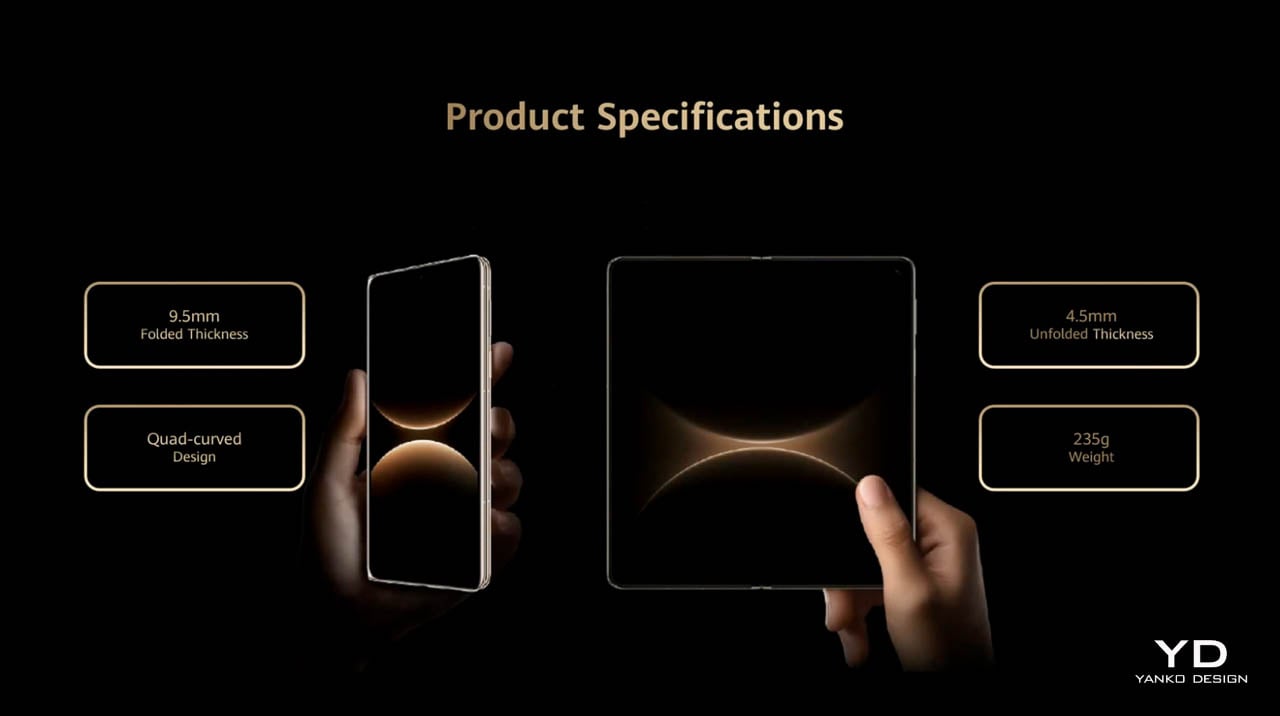
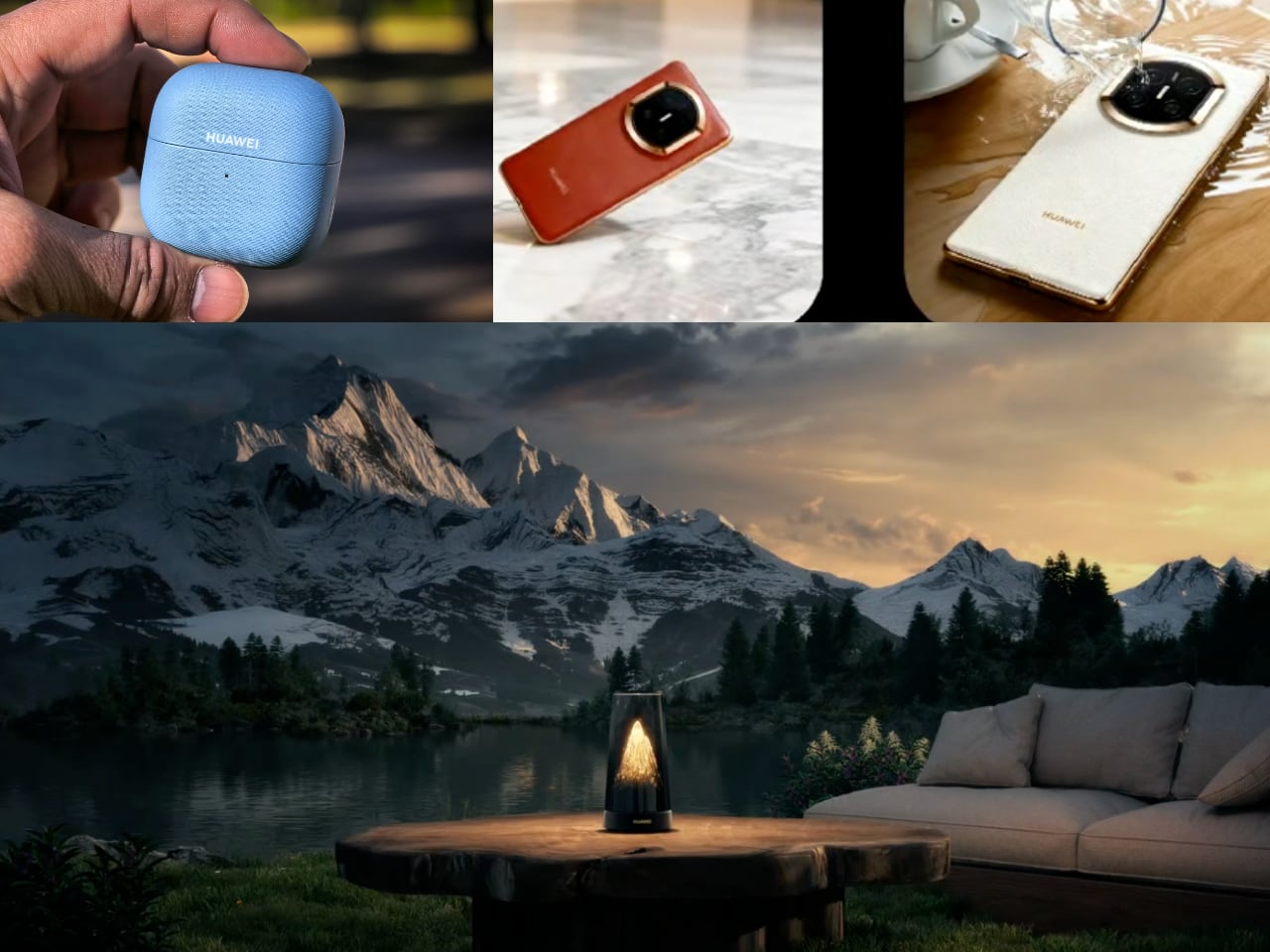
Five years into the foldable smartphone experiment, thinness remains the singular obsession. Huawei just crossed a threshold that reframes the conversation. The Mate X7, unveiled today at the company’s Dubai global launch alongside the FreeClip 2 earbuds and a Wi-Fi 7 mesh router, measures 4.5mm when unfolded. That figure matters less as specification than as experience: the fold becomes incidental to use rather than the defining characteristic of handling.

The Mate X7: Engineering the Fold Away

Huawei traces its foldable lineage to 2019, positioning itself as the category’s original commercializer. Six generations later, the design philosophy has crystallized into something specific and unambiguous: make the fold invisible to daily interaction. Quad-curved edges. A 4.5mm unfolded profile. Under 10mm closed. These dimensions place the Mate X7 closer to conventional smartphone territory than any previous book-style foldable has achieved. The engineering ambition centers not on what the fold enables, but on eliminating what the fold disrupts.

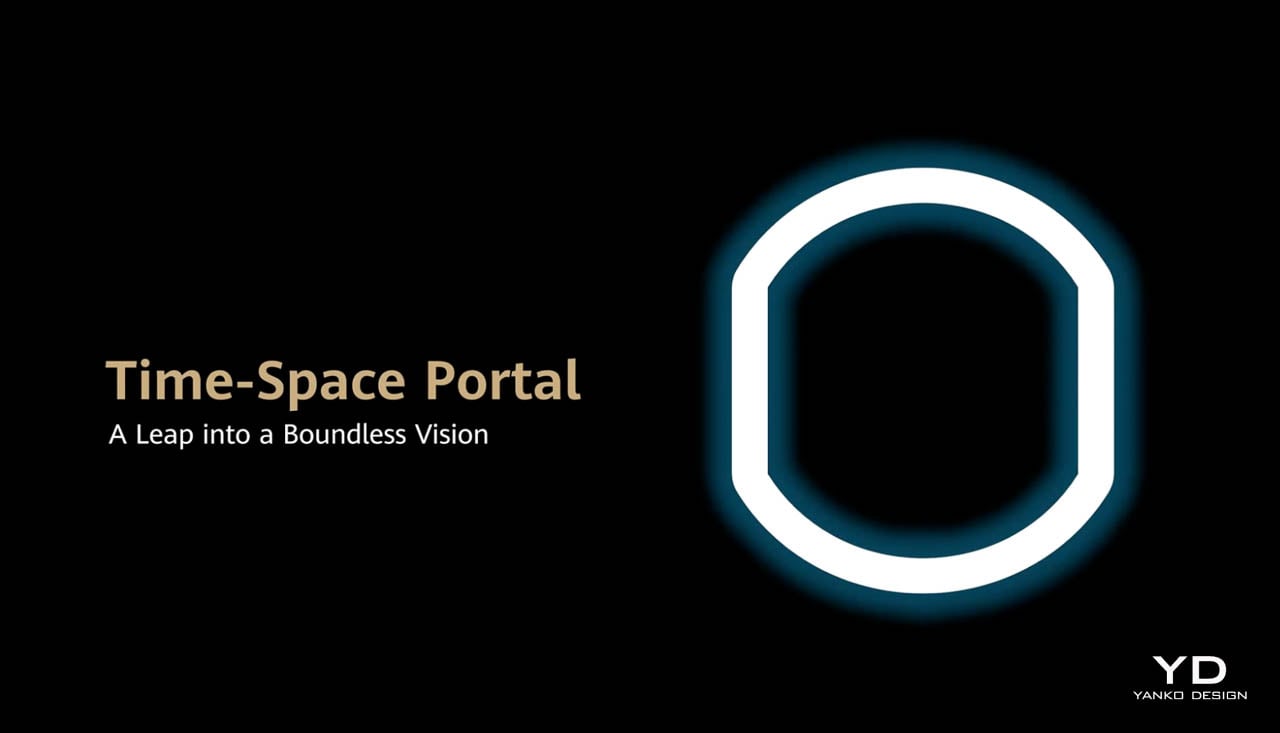
Where previous generations housed cameras in circular modules, the Time-Space Portal introduces flat edges to the protrusion. Huawei weaves between 900 and 1,700 threads into the finish, creating a textile-like visual texture that catches light across micro-patterns. This thread-woven treatment ships exclusively in China. Global variants arrive in standard colorways. The material strategy treats the camera bump as design opportunity rather than engineering compromise, an approach that signals continued investment in tactile differentiation where competitors minimize and apologize.

Both displays run at 2.4K resolution. Adaptive refresh spans 1Hz to 120Hz. The outer screen peaks at 3,000 nits while the inner reaches 2,500 nits, and high-frequency PWM dimming addresses the eye strain concerns that have plagued OLED panels since their adoption. These specifications alone would be unremarkable in any conventional flagship. Achieving them across two flexible panels within a 4.5mm envelope represents the actual engineering story, the quiet difficulty hidden beneath familiar numbers.

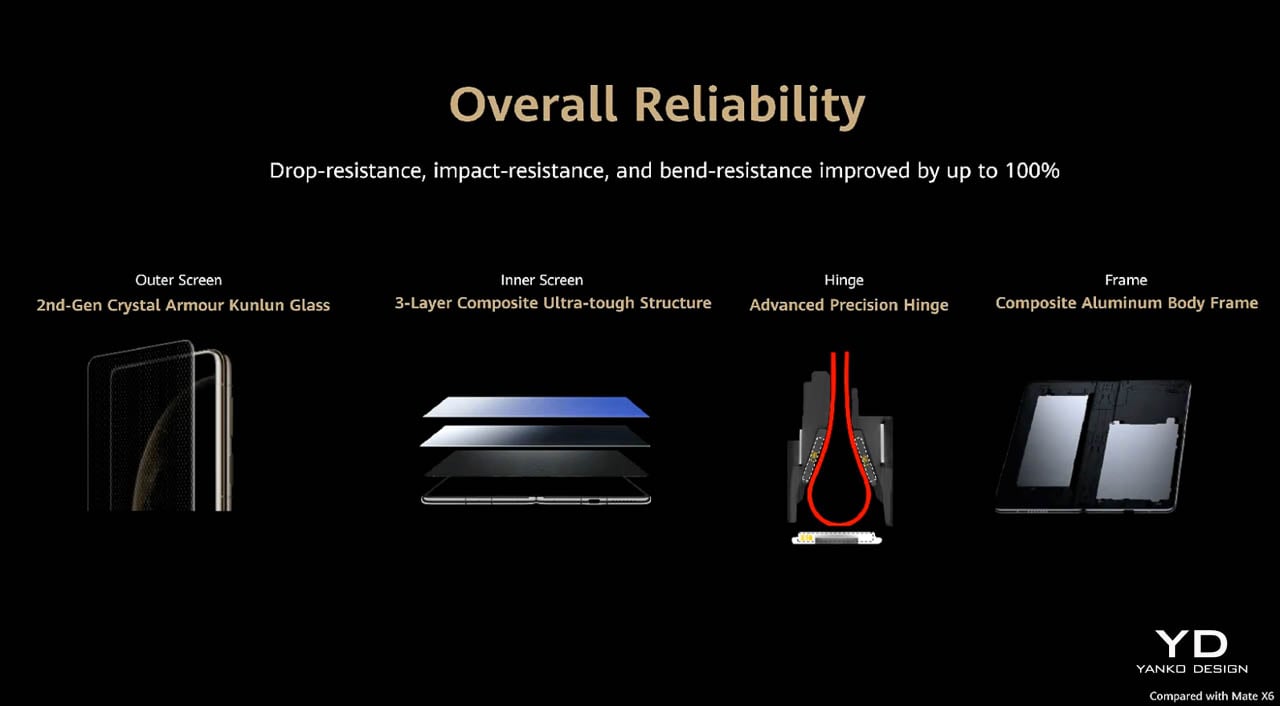
Durability targets the foldable’s historical weakness with measurable aggression. Drop resistance improved 100% over the previous generation according to Huawei’s internal testing. Impact resistance matched that improvement. The outer glass uses second-generation crystal armor technology. The inner screen employs a three-layer composite structure including a non-Newtonian fluid layer, material that increases rigidity under sudden impact pressure while remaining flexible during normal operation. Hinge redesign contributes over 100% improvement in bend resistance. IP59 certification covers high-temperature and water-jet resistance when open, with IP8 rating when the device closes.

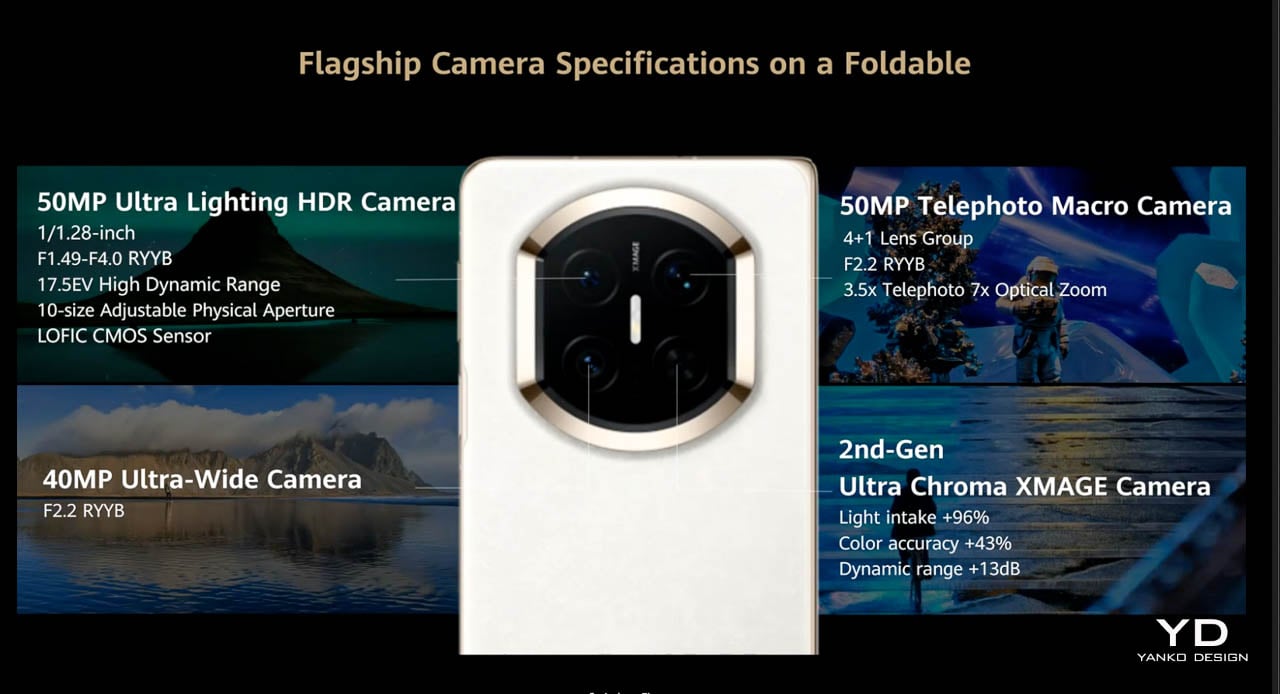
Camera architecture compresses flagship-grade optics into 26% less volume than equivalent modules. A 50MP main sensor pairs with variable mechanical aperture reaching f/1.49. The 50MP telephoto deploys a vertical periscope structure, a first for the foldable category, achieving 3.5x optical zoom within constrained depth. Light intake improved 127% through these spatial optimizations. Second-generation ultrachroma sensors handle color science while LOPIC technology extends dynamic range for stills and video alike.

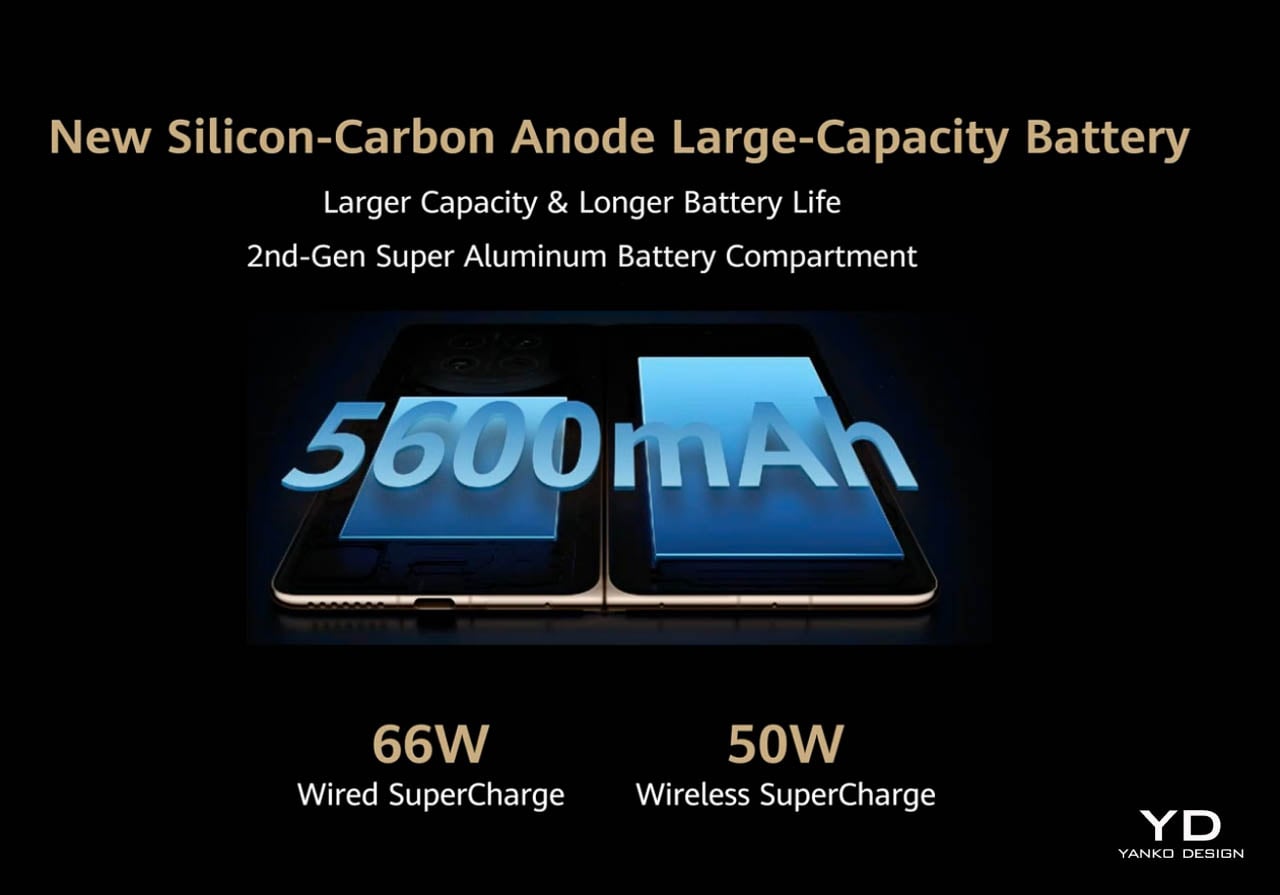
Battery capacity reaches 5,300mAh for global markets. The Chinese variant ships at 5,600mAh, the difference attributed to European import regulations that cap certain cell chemistries. Wired charging supports 66W. Wireless reaches 50W. Thermal management relies on an 18% larger vapor chamber paired with graphene-based loop dissipation. Additional antennas distributed around the device edges address connectivity challenges arising when folding reorients internal components relative to cell towers and Wi-Fi access points.

Wi-Fi 7 Mesh: Infrastructure as Object

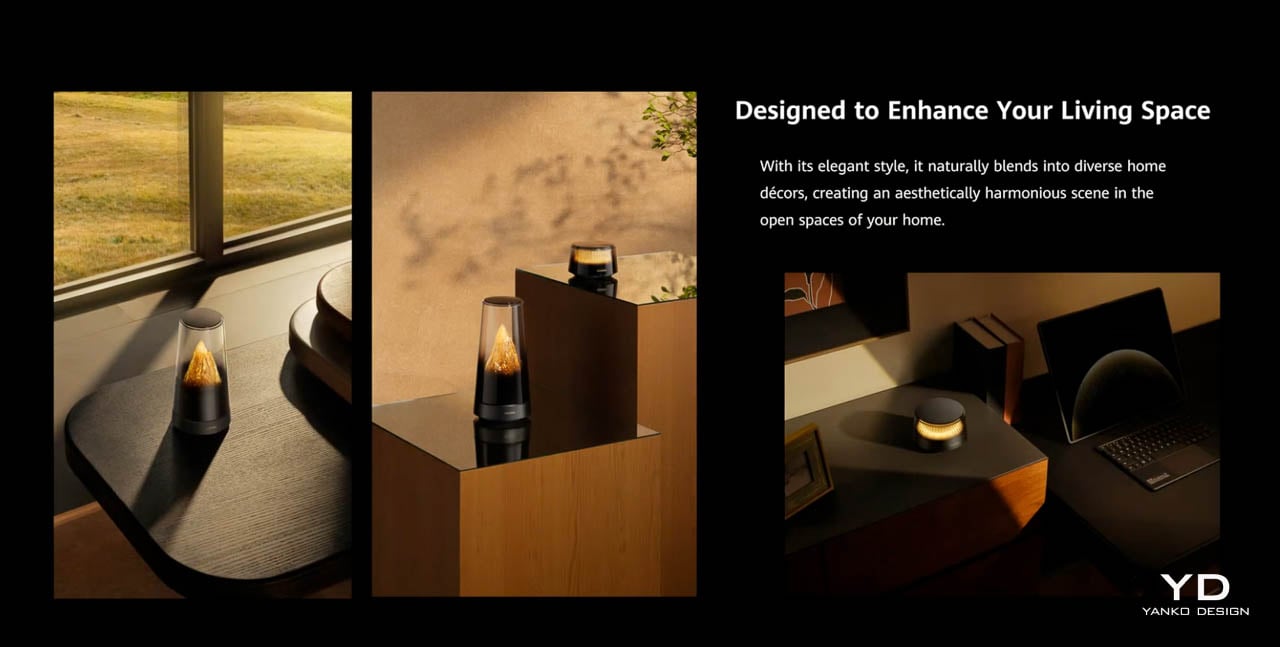
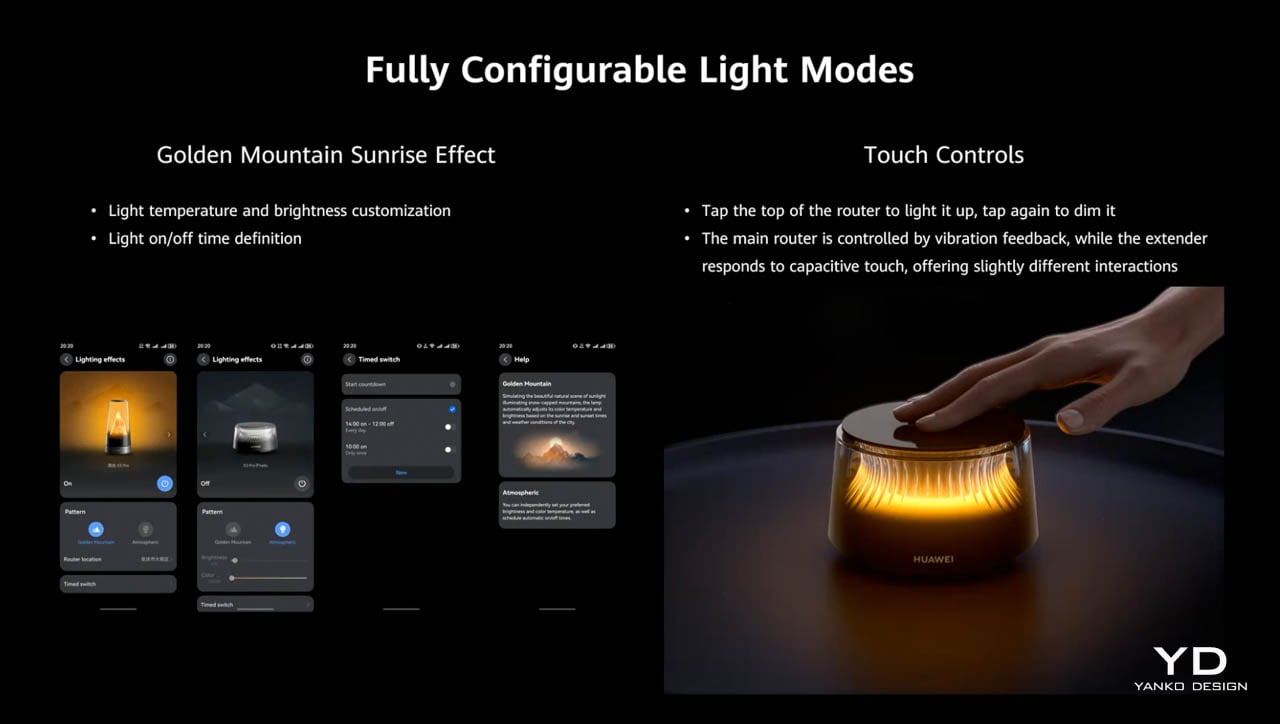
Router design typically optimizes for invisibility. Mesh systems tuck behind furniture or blend into wall-mounted anonymity. Huawei inverts this assumption entirely. The main unit mimics a mountain range enclosed within a transparent dome. Extender units feature indirect lighting resembling whisky glasses set on a shelf. Touch controls on each surface adjust lighting modes and network settings. The design explicitly treats network infrastructure as decorative object rather than functional necessity demanding concealment.

Technical specifications support the visual ambition without contradiction. Wi-Fi 7 operates with six antennas, three at 2.4GHz frequency. 4K SQAM and Multilink Operation enable simultaneous connections across frequency bands for devices supporting the standard. The main router includes active cooling via internal fan for sustained high-throughput scenarios. Up to two extenders pair with each base unit.

This approach acknowledges domestic reality: mesh routers occupy visible positions in living spaces. Huawei treats that visibility as opportunity for intentional form rather than problem requiring solution.

FreeClip 2: Iteration on a Proven Form

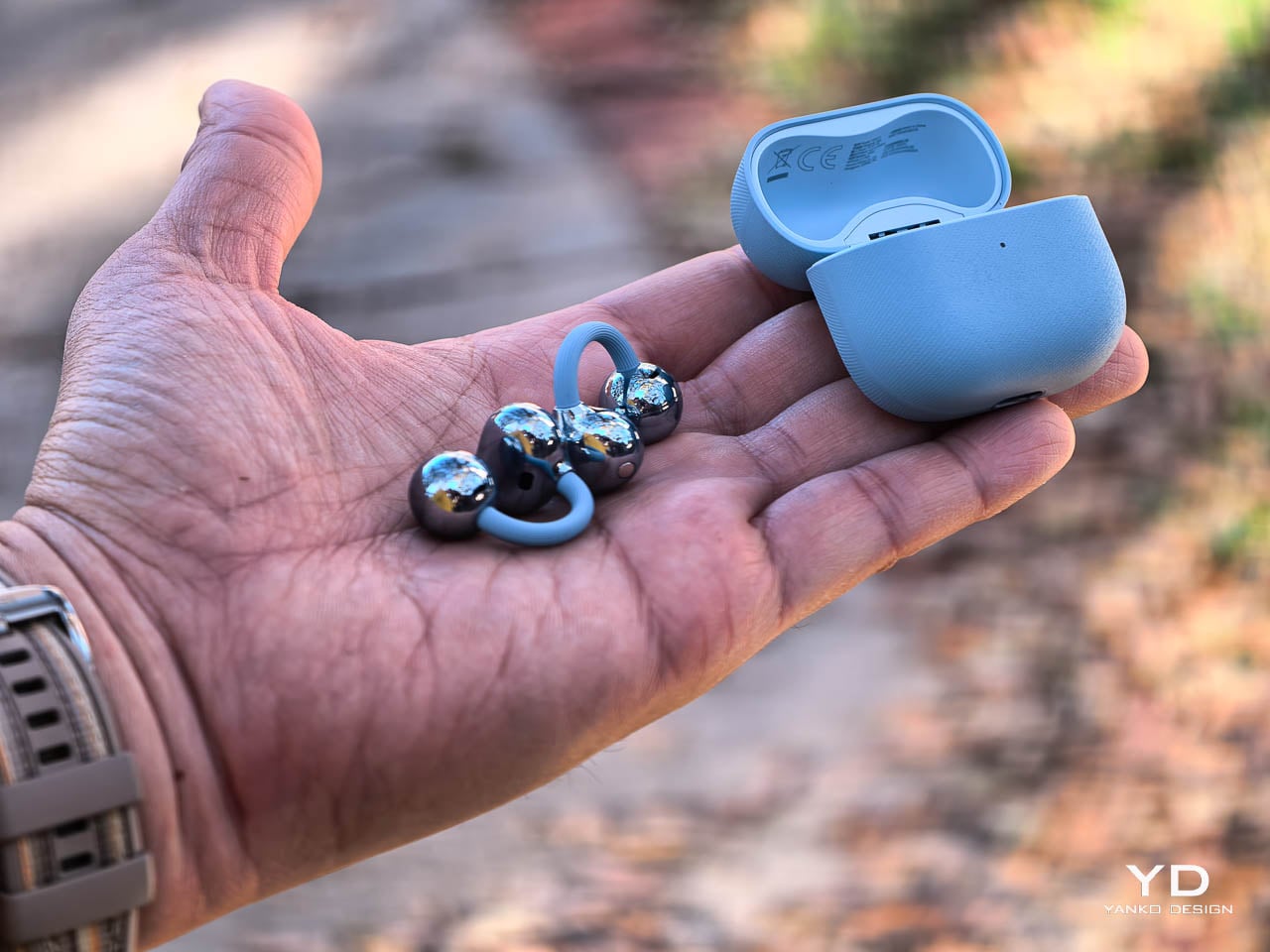
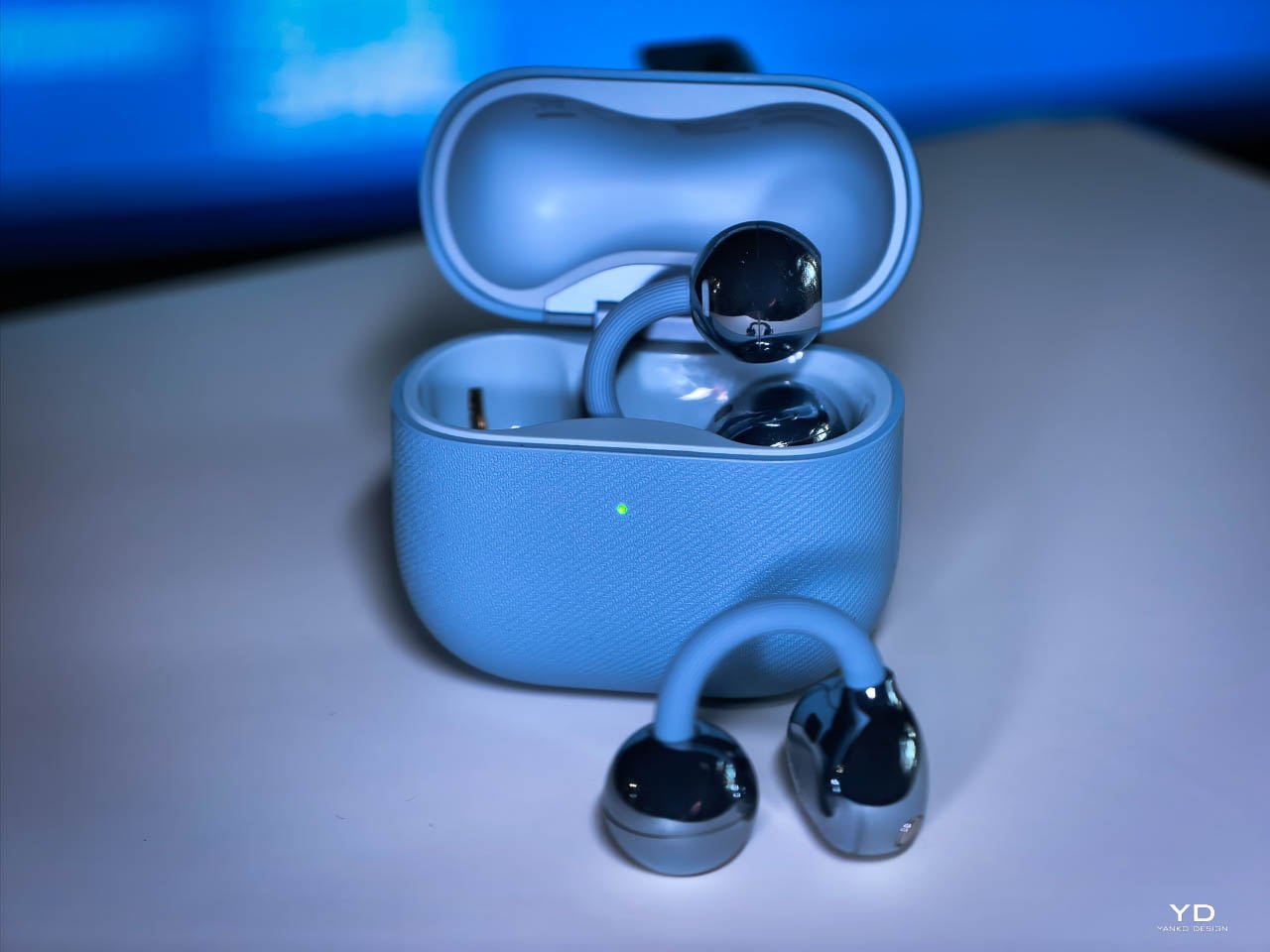
Three million first-generation FreeClip units shipped, establishing category viability that justifies continued investment. Open-ear designs occupy a specific niche: awareness of surroundings traded against audio immersion. The sequel addresses the original’s primary limitations through incremental refinement. Weight dropped 9% to 4.1 grams per earbud. Case dimensions shrank 11% while narrowing 17%. The redesigned Seabridge improves comfort across extended wear sessions where the previous generation began to fatigue.

Dual 11mm diaphragms share a single magnetic circuit, an engineering choice that doubles bass output compared to the previous generation while reducing acoustic ball size by 11%. The architecture trades spatial efficiency for low-frequency presence that open-ear designs historically lacked. Battery life extends to 9 hours per earbud and 38 hours total with case, improvements of one and two hours respectively. IP57 certifies the earbuds while the case carries IP54.

For deeper examination of the FreeClip 2’s material execution and acoustic performance, my full review covers the dual-diaphragm engineering and comfort improvements in detail.

Automatic left/right detection, swipe volume controls, and head gesture support complete the interaction model. Huawei Audio Connect supports iOS and Samsung devices, with no Google Play availability announced. Color options span Denim Blue, Feather Sand White, Modern Black, and Rose Gold.

Market Position

Global launch proceeds December 11, 2025 from Dubai. Pricing remains unannounced. Product configuration suggests premium positioning matching or exceeding the previous generation’s placement.

For the foldable category broadly, the Mate X7’s dimensional achievements demonstrate that thinness progression continues regardless of engineering complexity. The mesh router and FreeClip 2 complete an ecosystem play: smartphone, audio, and home networking under unified design language. Huawei signals capability breadth alongside flagship ambition, using Dubai as statement of global market re-entry after years of constraint.

The post Huawei’s Dubai Trio: A Foldable That Disappears, Earbuds That Double Down, and a Router Disguised as a Mountain first appeared on Yanko Design.

Google Disco is an experimental web browser that builds AI widgets based on your tabs

The latest experiment emerging out of Google Labs is Disco, which is the company's AI-driven approach to web browsing. The first feature for Disco is called GenTabs, built on Google's Gemini 3 model. 

GenTabs are interactive widgets created from a mix of user prompts, open tabs and chat history. The preview examples demonstrate how GenTabs can create a model to demonstrate entropy as a study aid, or collect trip ideas into one screen for building an itinerary. The GenTab can be further refined with natural language requests, and it will also offer contextual suggestions for additions that may be helpful. Google's blog post announcing this concept notes that information given in a GenTab will include links to its sources. 

Google has a waitlist for people who want to try out Disco and GenTabs, although for now it's only on macOS. Google Labs projects don't always go the distance to an official public release, and the company even acknowledged that GenTabs will likely have some wonkiness at this experimental stage. But it's been clear for months that big tech companies are gunning for the best and fastest ways to put their AI tools into browsers, so it seems likely that there will be more features in this vein coming up soon.

This article originally appeared on Engadget at https://www.engadget.com/ai/google-disco-is-an-experimental-web-browser-that-builds-ai-widgets-based-on-your-tabs-180000701.html?src=rss

Rivian goes all in on ‘universal hands-free’ driving at its first Autonomy and AI day

EV automaker Rivian just held its inaugural Autonomy and AI day which, unsurprisingly, focused extensively on hands-free driving. An upcoming software update promises the introduction of "universal hands-free" driving. The company says its vehicles will be able to autonomously navigate more than 3.5 million miles of roads in North America, "covering the vast majority of marked roads in the US."

This is coming to the R2 line of EVs, but also Gen 2 R1 vehicles like the recently-released Rivian R1S. The service will be locked behind a subscription for something called Autonomy+ that includes self-driving, but also offers access to forthcoming and unannounced autonomous features. Rivian customers can pay $2,500 for lifetime access to the platform or $50 per month.

The R2 is getting LiDAR sensors, which will presumably help enable some of those upcoming autonomous features, in addition to a new chip called the Rivian Autonomy Processor. The processor has been designed for multimodal applications and runs the company's proprietary neural net engine. Both of these features are expected "to ship on R2 models starting at the end of 2026."

Today's event wasn't just about hands-free driving. Many of the company's vehicles will soon be given access to the AI-powered Rivian Assistant, which uses LLMs and can connect to apps like Google Calendar. This assistant will be model-agnostic, as it will "orchestrate different models and choose the best one for the task."

In addition to the upcoming R2, the company is prepping the R3 and R3X. A Rivian offshoot just introduced an extremely expensive, but modular, electric bike called the TM-B.

This article originally appeared on Engadget at https://www.engadget.com/transportation/evs/rivian-goes-all-in-on-universal-hands-free-driving-at-its-first-autonomy-and-ai-day-172004733.html?src=rss

Disney has accused Google of copyright infringement on a ‘massive scale’

Disney has accused Google of copyright infringement on a "massive scale," alleging that the tech giant is training its AI tools on protected materials as well as allowing those tools to generate infringing images and videos. Variety reports that Disney attorneys sent a cease-and-desist letter to Google on Wednesday.

“Google is infringing Disney’s copyrights on a massive scale, by copying a large corpus of Disney’s copyrighted works without authorization to train and develop generative artificial intelligence (‘AI’) models and services, and by using AI models and services to commercially exploit and distribute copies of its protected works to consumers in violation of Disney’s copyrights,” reads the letter, which Variety reviewed.

The letter includes examples of images from several Disney properties including Deadpool, Moana, Star Wars and others, reproduced by Google's AI tools. Disney is demanding that Google implement guardrails within all its AI products to prevent further infringement. The media giant sent a similar letter to Character.AI in September, and is currently suing Hailuo and Midjourney over alleged copyright infringement.

Copyright enforcement has become more challenging in the face of AI-created imagery, and companies are increasingly taking an "if you can't beat them, join them" approach. Today Disney announced a deal with OpenAI to license its characters for use in Sora, OpenAI's video generator. The deal will see Disney invest $1 billion in OpenAI (a paltry sum by some standards), with the option to purchase additional equity at a later date.

This article originally appeared on Engadget at https://www.engadget.com/ai/disney-has-accused-google-of-copyright-infringement-on-a-massive-scale-163737642.html?src=rss

The Kia Seltos: Redefining the Compact SUV

The Kia Seltos: Redefining the Compact SUV

The all-new Kia Seltos is transforming the compact SUV market with its bold design, innovative technology, and exceptional functionality. Designed under Kia’s innovative “Opposites United” philosophy, the second-generation Seltos seamlessly blends the rugged strength of an SUV with the refined elegance of modern design. This unique combination makes the Seltos an ideal choice for urban […]

The post The Kia Seltos: Redefining the Compact SUV appeared first on Geeky Gadgets.

Posted in Uncategorized

Huawei FreeClip 2 Review: Open-Ear Audio at Its Best

PROS:


  • Featherlight 5.1g design disappears on your ears within minutes

  • Dual-diaphragm drivers deliver bass that open-ear rarely achieves

  • Nod to answer, shake to reject: head gestures feel futuristic

  • Intelligent Volume Adaptation matches audio to your environment automatically

  • 38-hour battery and IP57 durability: built for all-day adventure

  • Perfect, secure fit stays locked through runs, shakes, and sleep

CONS:


  • No ANC means loud environments will always win

  • Huawei Audio Connect app unavailable on Google Play Store

RATINGS:

AESTHETICS
ERGONOMICS
PERFORMANCE
SUSTAINABILITY / REPAIRABILITY
VALUE FOR MONEY

EDITOR'S QUOTE:

FreeClip 2 is proof open-ear audio doesn't have to compromise.
award-icon

Three million units. Huawei’s original FreeClip proved open-ear audio could sustain mainstream adoption, not simply exist as a design curiosity for early adopters willing to sacrifice bass for situational awareness. The FreeClip 2 is the engineering-driven response to that market validation.

Designer: Huawei

Refinements. Huawei’s engineering team reworked acoustic design, material selection, ergonomic architecture, and battery systems, each adjustment responding to friction points that first-generation users identified during extended daily wear cycles. These aren’t incremental changes. They required rejecting constraints the open-ear category had normalized as acceptable trade-offs.

Ergonomics & Design: Solving Gen 1’s Friction Points

The original FreeClip launched in Dubai, December 2023. Three million units later, Huawei knows exactly where it succeeded and where users pushed back. The FreeClip 2 arrives two years later, same city, same month, with a focused brief: fix the comfort complaints without abandoning what worked.
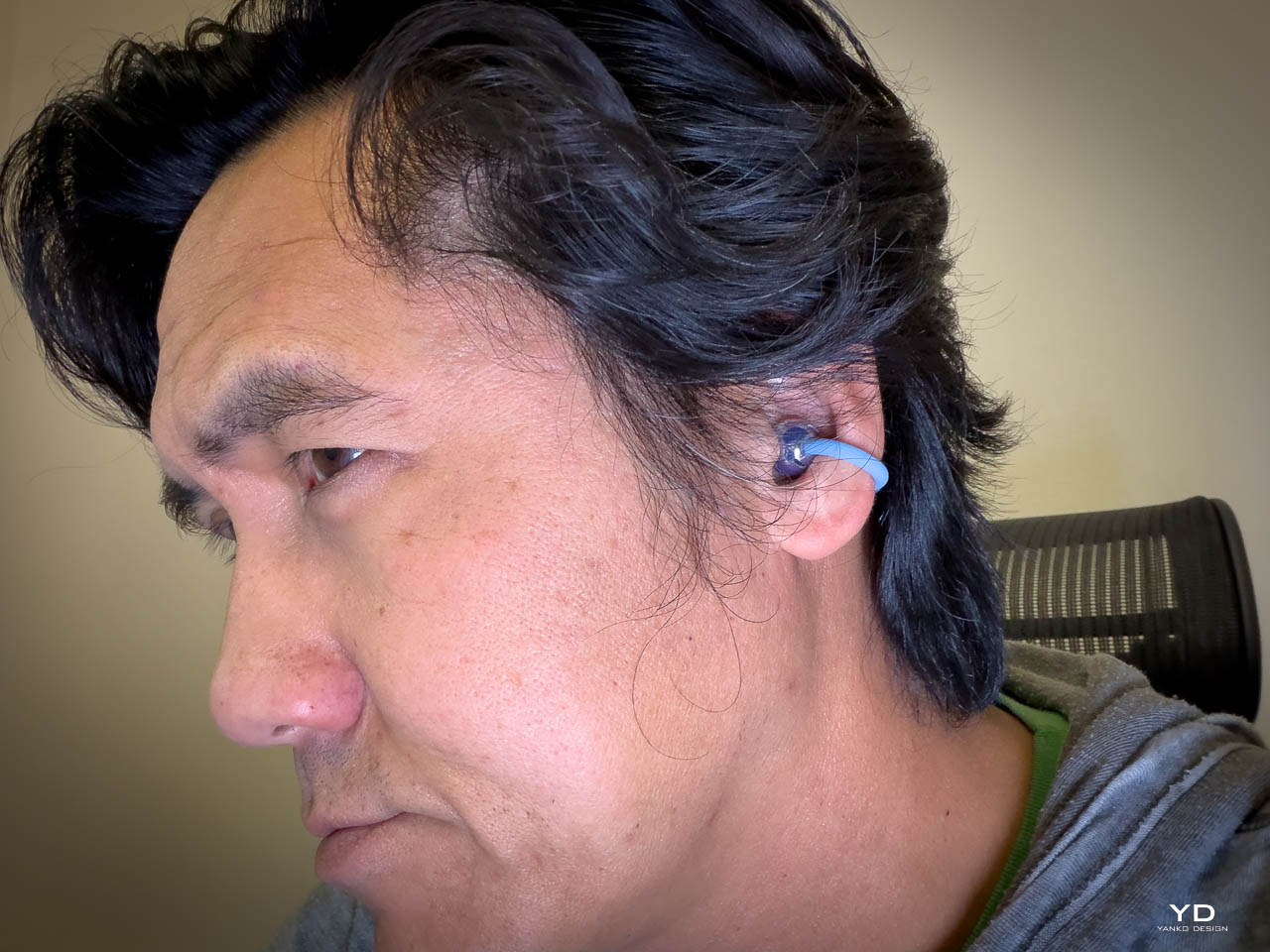
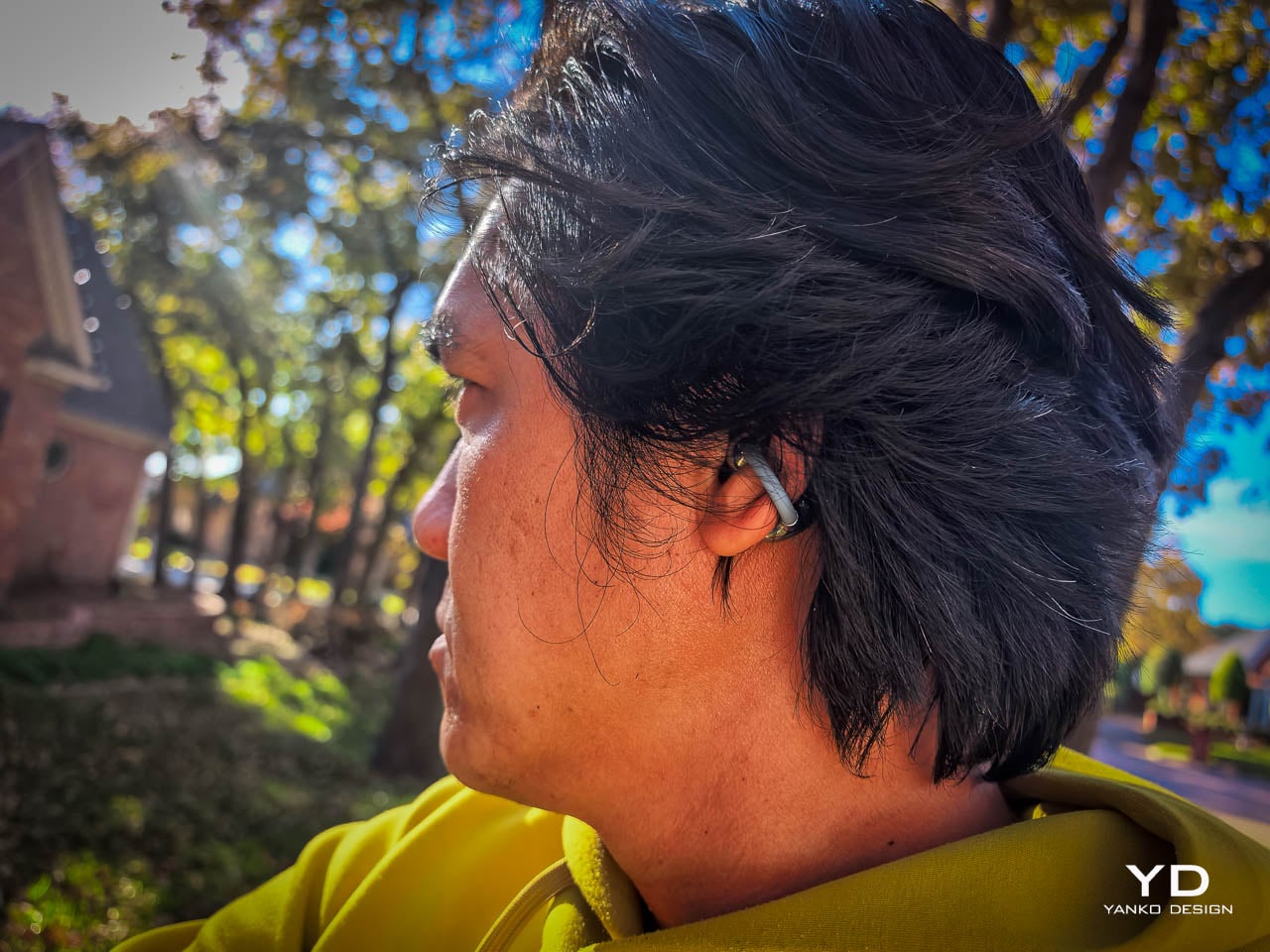
I’ve never worn open-ear earbuds before. My entire audio life has revolved around AirPods. The moment I clipped the FreeClip 2 on? Comfortable. Secure. It felt like they weren’t going anywhere, regardless of what I threw at them.

The architecture stays familiar: C-bridge, acoustic ball, comfort bean. Three components working as a unified clip mechanism. What changed is the material stack and dimensional tuning underneath.

The C-Bridge

Gen 1’s bridge gripped well but created pressure hot spots during extended wear. Huawei’s fix: a hybrid construction pairing skin-friendly liquid silicone over a shape-memory alloy core. The silicone adds 25% more flexibility. The alloy maintains consistent clamping force across temperature swings. No summer loosening. No winter tightening.
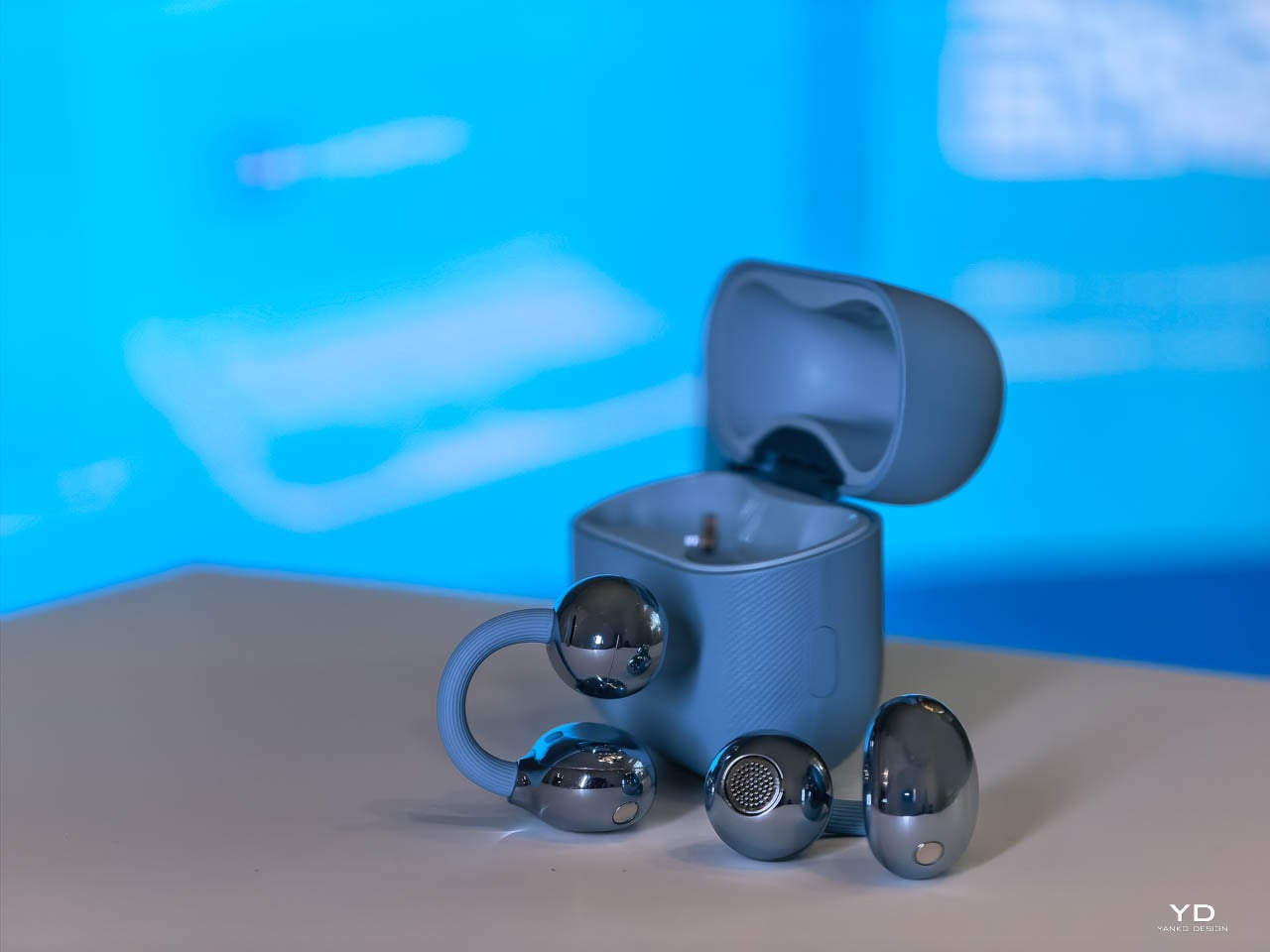
The new C-bridge doesn’t pinch. It doesn’t squeeze. It just… holds. Against my ear cartilage, the pressure distribution feels even rather than concentrated at specific contact points. “Cloud-like softness” sounds like marketing fluff until you’re six hours into a workday and realize you haven’t adjusted them once.

Huawei validated the design through 25,000 flex cycles. That’s lab durability. Real-world durability means the bridge returns to form after months of daily clipping and pocketing.

Acoustic Ball & Comfort Bean

The acoustic ball shrank by 11% in volume while achieving 95% internal space utilization. That’s engineering density: dual diaphragms, microphones, and acoustic venting packed tighter without adding visual bulk. The glossy finish on Denim Blue contrasts deliberately with the textured bridge.

The comfort bean, the counterweight behind the ear, reduced by 12.5% in volume. Huawei’s 10,000+ global ear scan database informed micrometer-level adjustments, expanding ear shape compatibility by 12.3%.
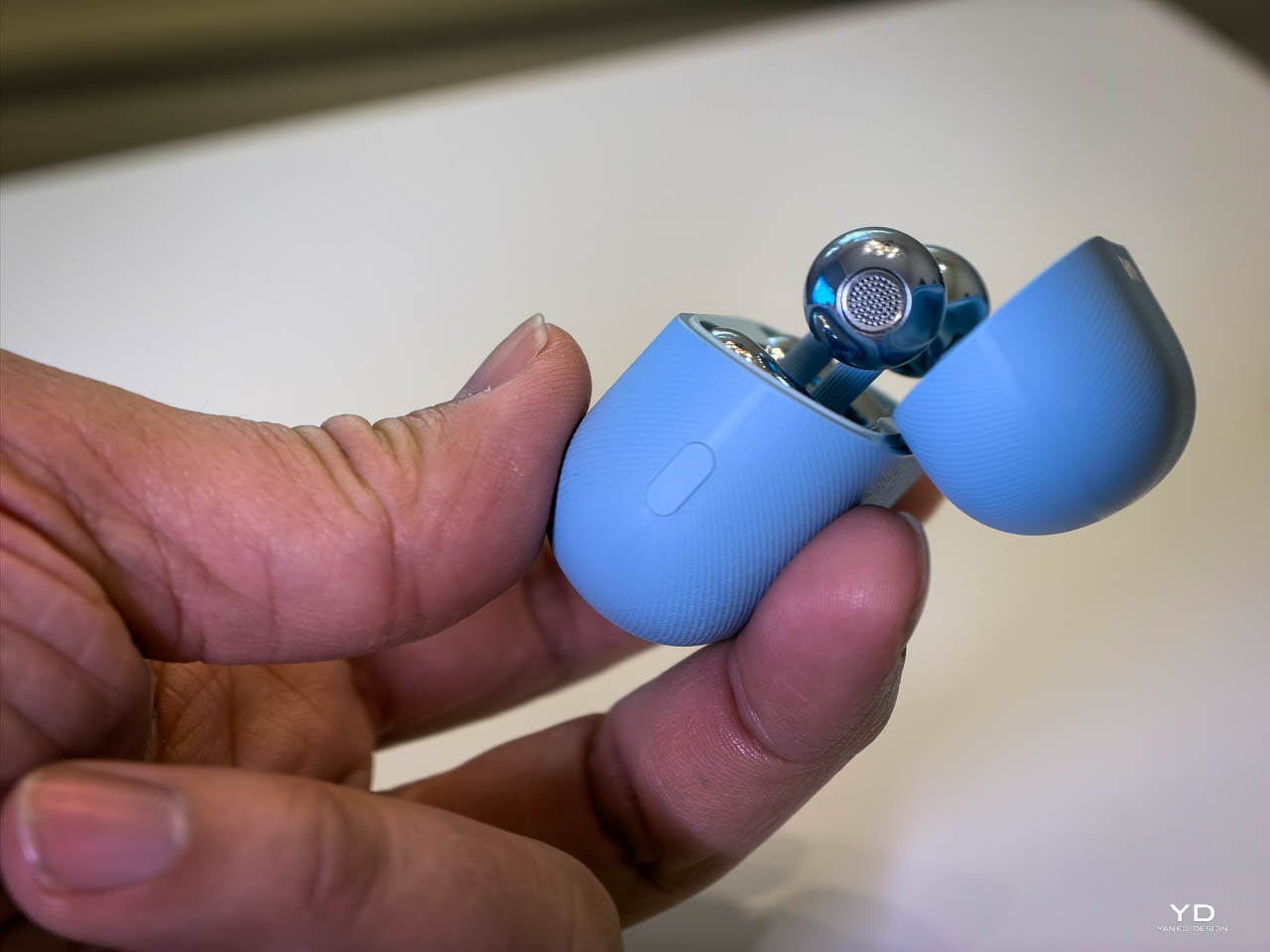
The bean tucks neatly into the anti-helix hollow, that curved ridge of cartilage behind your outer ear. It doesn’t fight for space or create awkward pressure points. The smaller footprint means it sits where anatomy intended rather than forcing the ear to accommodate the hardware. During head turns, it stays planted. During vigorous movement, same story.

Weight: The Competitive Edge

5.1g per earbud. Down from 5.6g. Half a gram matters because open-ear designs concentrate all mass on the helix rather than distributing it across the ear canal. At 5.1g, the FreeClip 2 is the lightest in its competitive set:

  • Bose Ultra Open: 6.5g
  • Shokz OpenDots One: 6.5g
  • SoundCore AeroClip: 5.9g

Glasses wearers gain the most. The softer bridge and smaller footprint reduce interference with temple arms.

Extended Wear Reality

After three to six hours, I forget I’m wearing them. That’s not hyperbole. That’s the actual experience. They disappear into background awareness the way a comfortable watch does.

Here’s where the open-ear advantage becomes obvious: car trips. The FreeClip 2 lets road noise through. Conversation reaches you unfiltered. But your podcast, your music, your navigation prompts, they’re all there too, layered on top of environmental audio rather than replacing it. Huawei’s “wear and forget” positioning isn’t aspirational marketing. It’s describing what actually happens.

The Sleep and Travel Test

Flying with AirPods is a gamble. Lean back in a business class seat, drift off, and wake up to find one earbud has slipped into the crevice where cushions meet armrest. Gone. The FreeClip 2’s clip mechanism eliminates that anxiety entirely. I wore them through an international flight, slept in them, and never once worried about losing a $200 earbud to upholstery.

They’ve become a sleep aid. For anyone managing tinnitus, the ability to wear comfortable earbuds to bed, playing low ambient audio to mask the ringing, is genuinely life-improving. Most earbuds create pressure points that make side-sleeping impossible. The FreeClip 2’s open design and featherweight construction don’t.

Case & Colorways

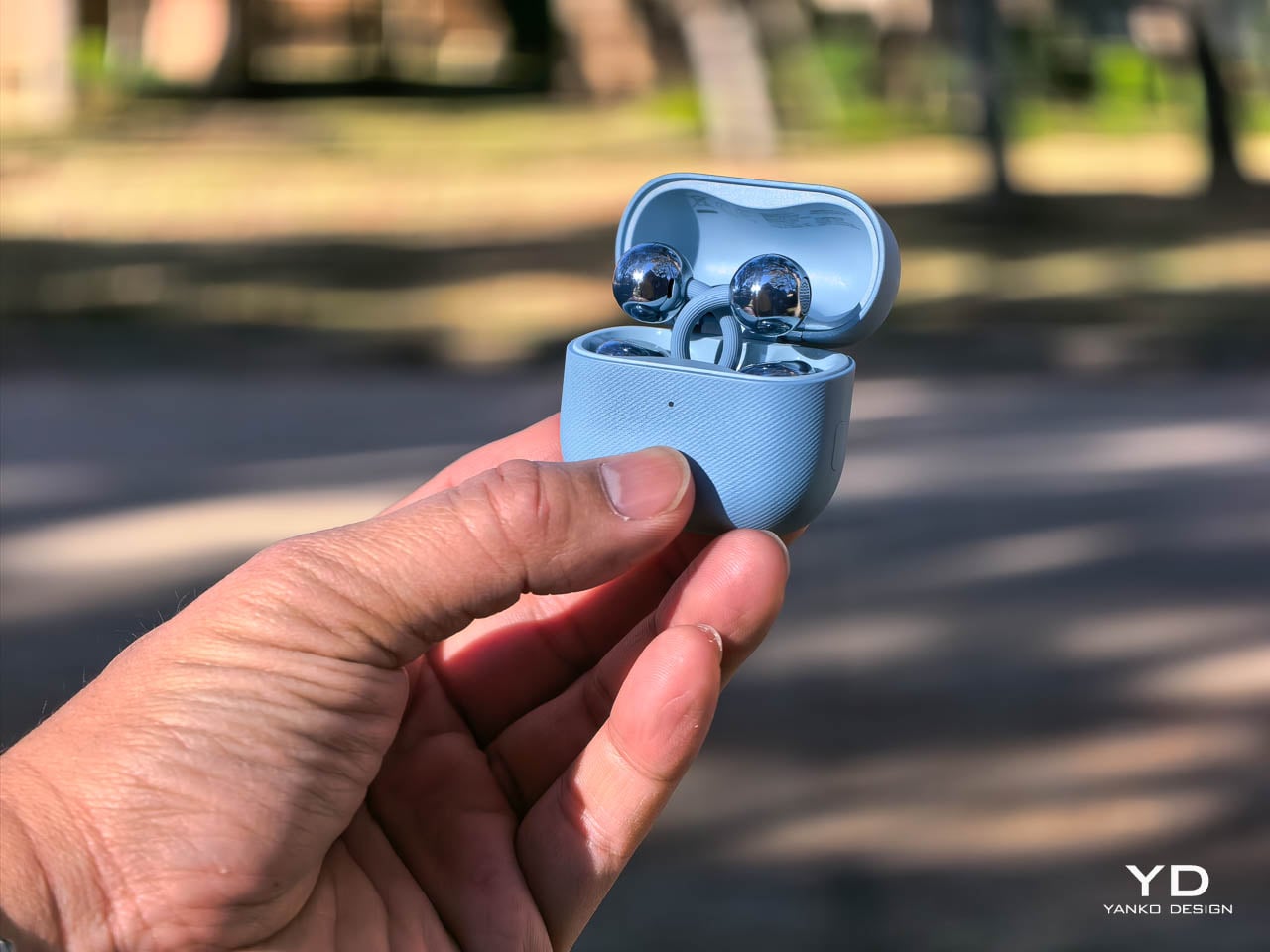
The case redesign matters for pocket carry. Crossed C-bridge arrangement inside achieves 17% narrower grip width and 11% smaller footprint. Case weight dropped 14%, from 45.5g to 37.8g. The larger 537mAh battery fits despite the shrinkage.

I love this form factor. The case slots perfectly into my jeans coin pocket, that small fifth pocket most people forget exists. It sits there all day without demanding attention. Always with me. Always ready.
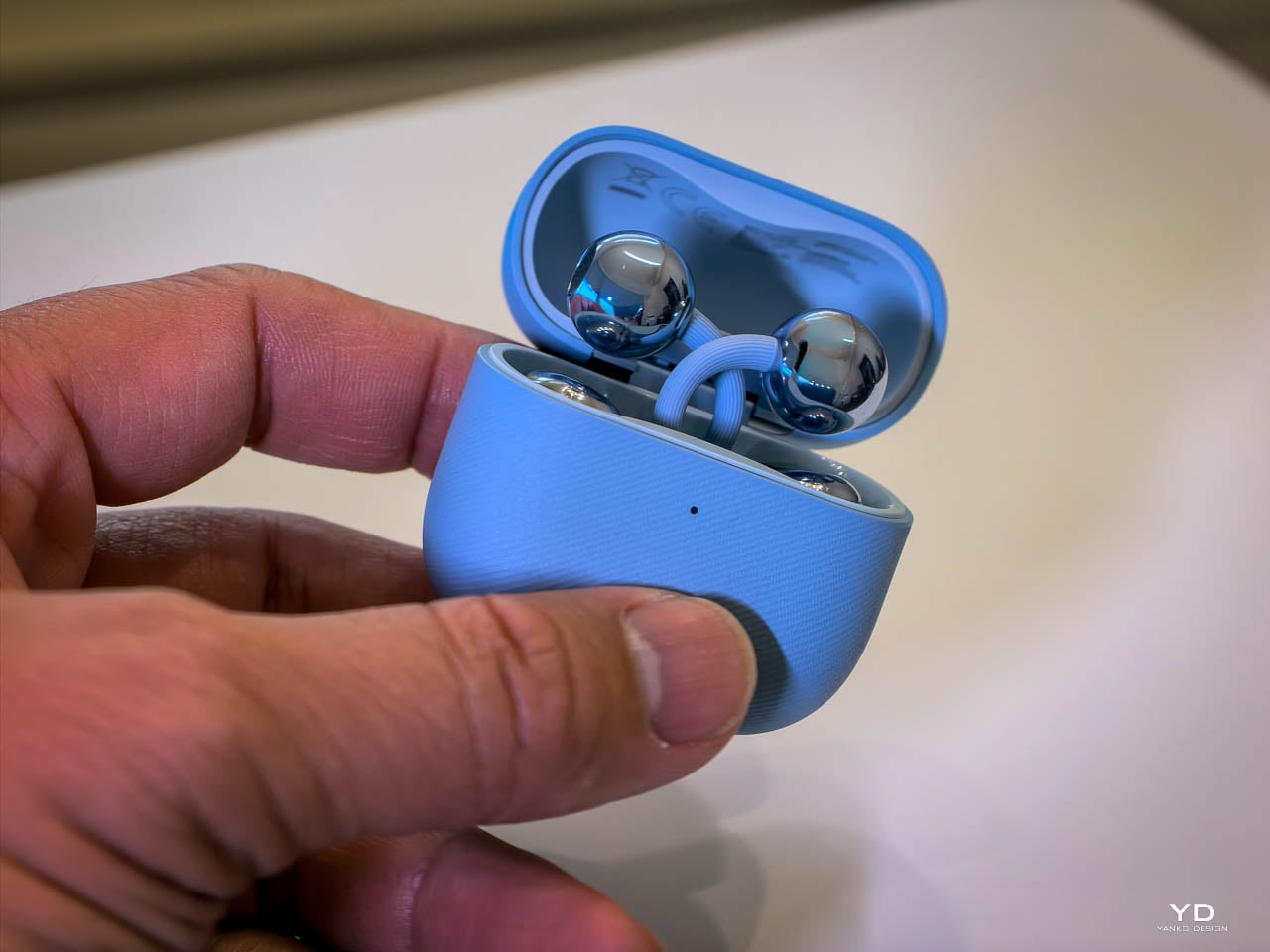
Here’s an unexpected bonus: the slight bulge it creates actually works as a physical gate, preventing my phone from sliding up and out. The AirPods case does the same thing, but the FreeClip 2’s narrower profile makes it less intrusive while still providing that pocket security. It’s a small detail, but it means I don’t fish around wondering where I left them. They’re just – there. The compactness isn’t just a spec sheet flex. It translates directly to daily carry confidence.

Huawei offers four colorways: Denim Blue, Feather Sand White, Modern Black, and Rose Gold. I’d have picked Modern Black, but Huawei didn’t have one available for review. The Denim Blue unit I received turned out to be fine. It’s clearly the hero color, the one Huawei leads with in every press image, and after wearing it everywhere for weeks, I don’t mind it at all. The blue reads as understated rather than attention-seeking.
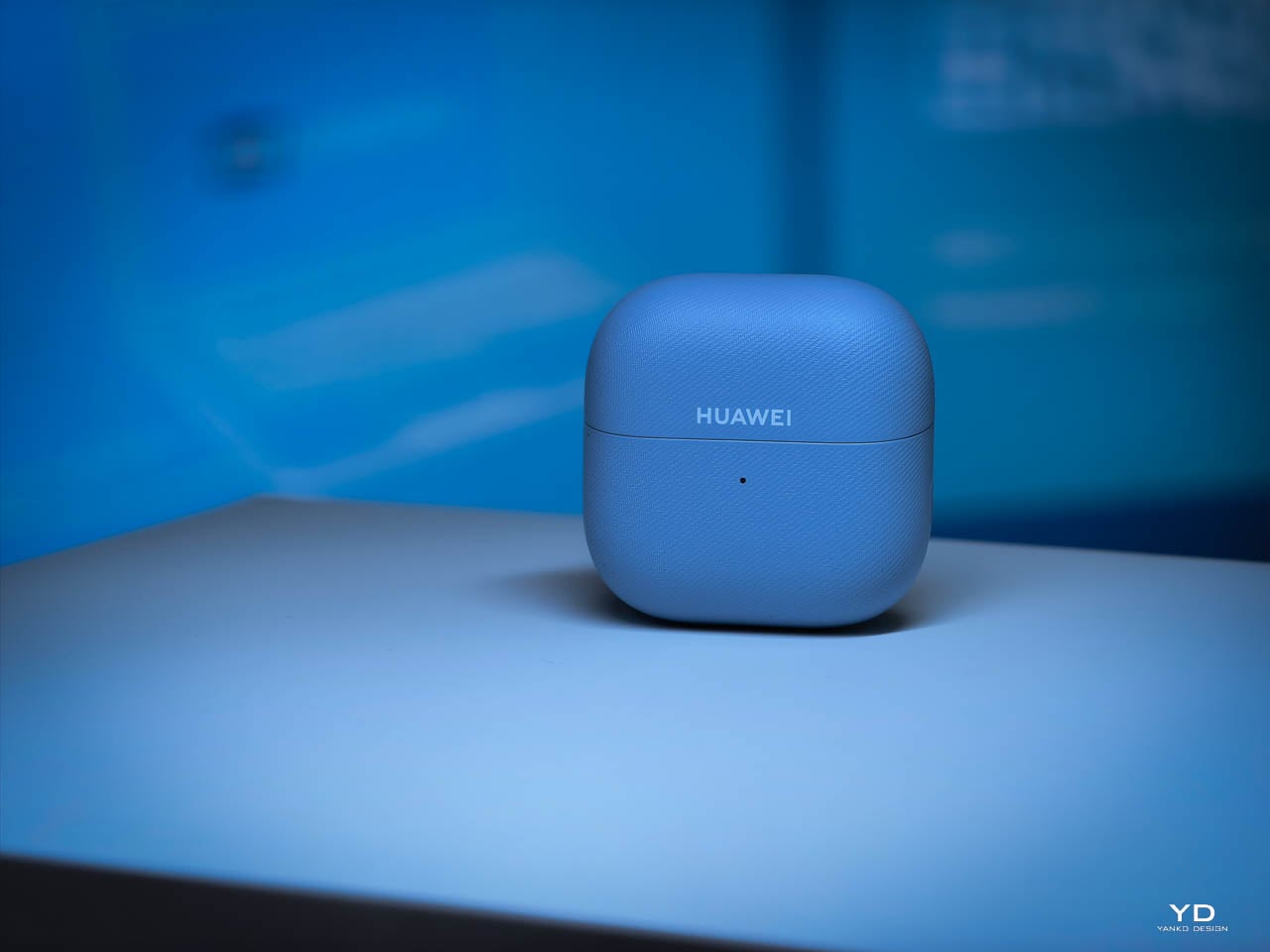
The Denim Blue and Feather Sand White cases feature micrometer-level molded denim weave texture, replicated from actual fabric. It’s stain-resistant (18 tests passed) and genuinely pleasant to the touch. The fabric-like surface adds grip without feeling gimmicky or cheap. Modern Black and Rose Gold ship with smooth matte finishes instead, trading the tactile detail for a more traditional premium look.

Durability

IP57 for the earbuds, up from IP54. The “7” rating certifies immersion to one meter for 30 minutes. Rain, sweat, accidental sink drops won’t end them. The case holds at IP54.

The Foundation

Here’s the thing about earbuds, headphones, any wearable audio that lives on your body: comfort isn’t a feature. It’s the prerequisite. Performance specs can dazzle on paper, but if the hardware pinches, slips, or annoys you into taking it off, none of those numbers matter. You won’t use them. They’ll collect dust in a drawer while you reach for something that actually feels right.

The FreeClip 2 nails this. Comfortable. Secure. Easy to forget you’re wearing them. Huawei got the foundation right, which means the performance conversation actually matters now. It’s worth having because you’ll actually wear these long enough to experience it.

So. How do they sound?

Performance: What Two Years of Engineering Buys You

Open-ear earbuds have always come with an asterisk. The form factor that keeps you connected to your environment also means no ear canal seal, no passive isolation, and historically, compromised bass. The first FreeClip accepted this trade-off. The FreeClip 2 challenges it.

The Dual-Diaphragm Difference

Huawei’s solution to open-ear bass limitations is architectural, not just algorithmic. The FreeClip 2 stacks two 11mm diaphragms inside the acoustic ball, sharing a single magnetic circuit. Think of it like a drum that can be struck from both sides simultaneously. The result: 100% more loudness and 100% more low-frequency power compared to Gen 1, all within a housing that’s actually 11% smaller.

On paper, that sounds like marketing. In practice, it translates to bass you can feel, not just hear. Electronic tracks have actual sub-bass presence. Podcast voices carry weight without sounding thin. The dual-diaphragm setup delivers what Huawei claims is the equivalent air volume of a 14mm driver, and my ears agree. Coming from AirPods, I expected the FreeClip 2 to sound hollow by comparison. It doesn’t. The bass extension surprised me, layered rather than boomy, with enough definition to distinguish kick drums from bass lines.

That said, let’s be realistic. These aren’t going to match the isolation and bass response of sealed in-ear monitors. They’re not trying to. The FreeClip 2 optimizes for a different use case: audio that coexists with your environment rather than replacing it. Within that constraint, the dual-diaphragm architecture delivers the best bass I’ve experienced from an open-ear design. And here’s the thing: these are on par with AirPods 4. Coming from someone who’s lived in Apple’s ecosystem for years, that’s not a statement I make lightly. The FreeClip 2 matches Apple’s latest in clarity, balance, and overall listening satisfaction. Different form factors, different philosophies, but the same tier of audio quality.

The elephant in the room: ANC. The FreeClip 2 doesn’t have it. It can’t, really. The open-ear clip form factor doesn’t create the seal needed for traditional active noise cancellation to work effectively. Huawei’s Intelligent Volume Adaptation compensates by boosting audio in noisy environments, but that’s fundamentally different from reducing ambient noise.

If you need to block out the world, the FreeClip 2 isn’t the answer. But here’s the thing: Huawei already makes that answer. The FreeBuds Pro 4 stays in the same ecosystem, uses the same Huawei Audio Connect app, and shares the same audio tuning philosophy. The difference is memory foam tips that create a proper seal and Ultra ANC mode that actually blocks external noise. I tested them on a Dubai-to-Dallas flight and they handled crying babies and engine drone beautifully. For Apple users, the AirPods 4 with ANC offers similar isolation in an open-ear-adjacent form factor.

The FreeClip 2 isn’t competing with those products. It’s serving a different need. Situational awareness first, isolation never. If that trade-off doesn’t work for your use case, Huawei has you covered with the FreeBuds Pro 4. Different tools, same ecosystem.

Sound Signature Across the Spectrum

Clarity over warmth. That’s the tuning philosophy here, and it works. Vocals sit forward with high stereo separation, positioned like you’re standing in front of a concert stage rather than lost in the crowd. High frequencies stay bright without crossing into harshness. Rich detail, zero sibilance. The mids avoid that muddy congestion that plagues open-ear designs trying to compensate for weak bass by boosting everything else.
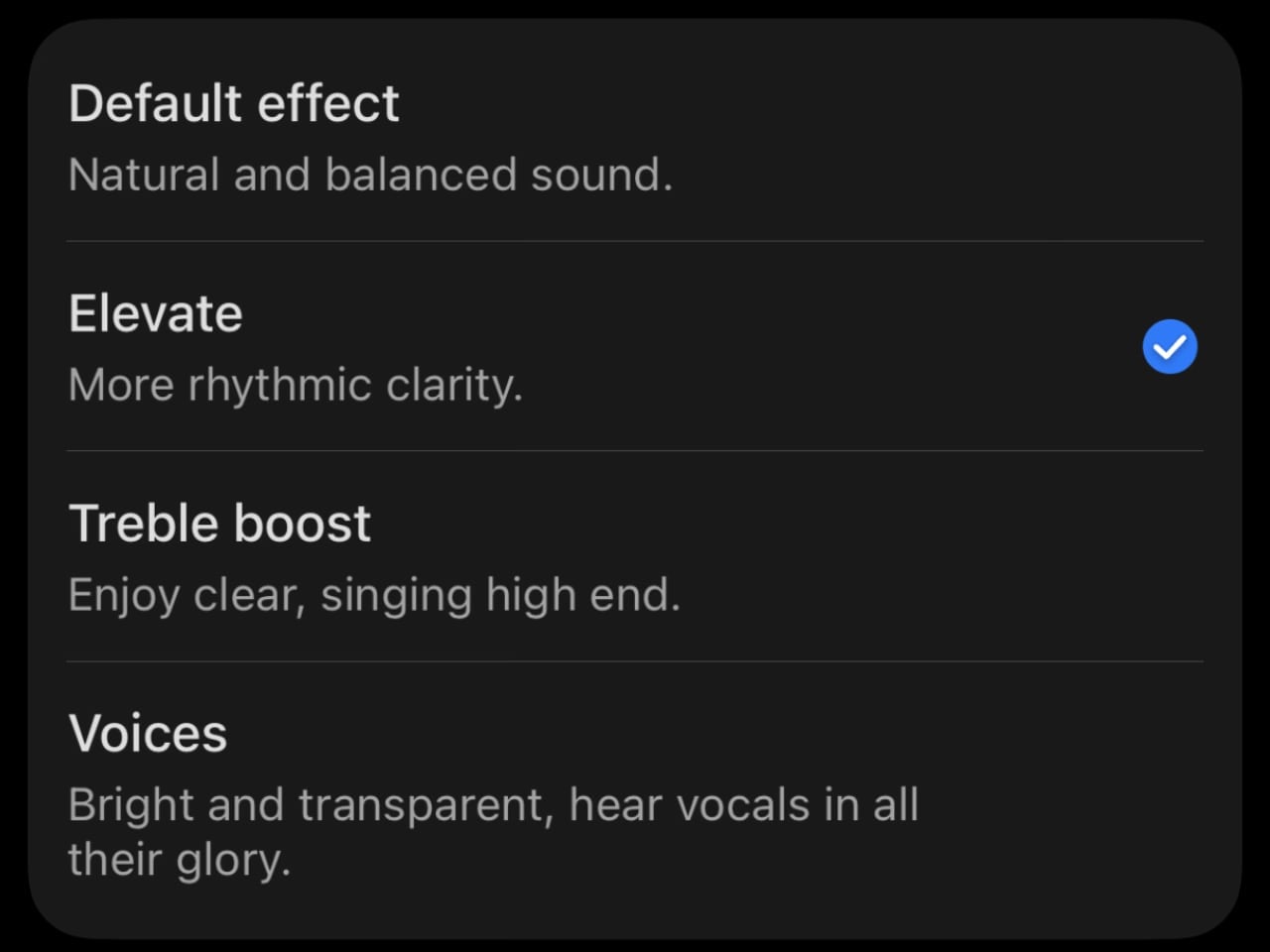
How does this translate to actual listening? Electronic tracks stay layered. Individual synth lines remain distinct even when the producer stacks fifteen of them. Podcast voices sound full rather than thin. Acoustic guitar has actual body to the low strings.

I’ve spent time with the competitors, and they all make different tuning choices. The Bose Ultra Open leans warm with emphasized bass, which some listeners prefer for relaxed listening. The Shokz OpenDots One delivers strong low-end impact, though complex tracks can get congested. The SoundCore AeroClip emphasizes treble detail, which works well for acoustic content but may feel bright on certain recordings. The FreeClip 2 takes a different approach: balanced across all three frequency bands with no obvious peaks or valleys. Whether that’s “better” depends on your preferences, but for my listening habits, the neutral tuning works.

The NPU and Adaptive Audio

This is where the FreeClip 2’s third-generation audio chip with NPU AI processor starts to matter. The chip delivers 10x the processing power of Gen 1, and Huawei uses that headroom for something genuinely useful: Intelligent Volume Adaptation.

Enable it, and the FreeClip 2 continuously monitors environmental noise and adjusts volume in real-time. Quiet office? Volume drops to comfortable levels. Step onto a busy street? It ramps up automatically. Enter a subway car during rush hour? The system not only increases volume but activates voice frequency enhancement, boosting the specific frequencies that help speech cut through ambient noise.

I was skeptical. Automatic volume adjustment sounds like the kind of feature that would constantly annoy you with unexpected changes. But Huawei’s implementation is subtle enough that I stopped noticing it was happening. The transitions feel gradual rather than jarring. After a few days, I realized I was no longer manually adjusting volume when moving between environments. The earbuds just – handled it.

Call Quality: The VPU Advantage

Open-ear earbuds have traditionally struggled with calls. No seal means environmental noise bleeds into your voice pickup. The FreeClip 2 addresses this with a three-microphone system plus a VPU, a Voice Pickup Unit that uses bone conduction to capture your voice directly. It’s the first implementation of this technology in the open-ear category.

The DNN noise reduction algorithm running on the NPU has 9x the parameters of Gen 1. What does that mean in practice? I took calls from a coffee shop, from the street during traffic, from my home office with the window open. Every time, the person on the other end reported my voice was clear, not competing with background noise. The VPU captures vocal vibrations through bone contact, which the algorithm blends with the microphone feed to isolate your voice from everything else.

This isn’t the same as noise-canceling earbuds creating a bubble of silence around you. You still hear your environment. But the person you’re calling doesn’t, or at least not as much. That distinction matters for the always-in use case. You can take a work call while walking through an airport and remain aware of gate announcements while your colleague hears you clearly.

Controls: Swipe Volume Changes Everything

Gen 1 offered tap gestures. Double-tap for play/pause, triple-tap for next track. The FreeClip 2 keeps those but adds something I didn’t know I needed: swipe volume control on the comfort bean.

Slide your finger up or down, and volume adjusts accordingly. AirPods 4 introduced the same capability with swipe gestures on the stem, so this isn’t a differentiator. It’s table stakes for premium earbuds now, and both execute it well. The FreeClip 2’s larger touch surface on the comfort bean makes the gesture slightly easier to hit accurately during movement, but the difference is marginal. What matters is that both get the job done without forcing you to reach for your phone.

Head motion control is the feature I didn’t expect to love. Nod to answer calls, shake to reject. AirPods 4 has the same capability with Siri interactions, nodding for “yes” and shaking for “no.” I use it constantly on both. When your hands are full, carrying groceries, mid-workout, cooking dinner, the ability to manage calls with a simple head movement feels like the future arriving quietly. The FreeClip 2 matches AirPods here, not exceeds it. Both implementations work reliably, and both have become muscle memory.

Auto L/R Detection

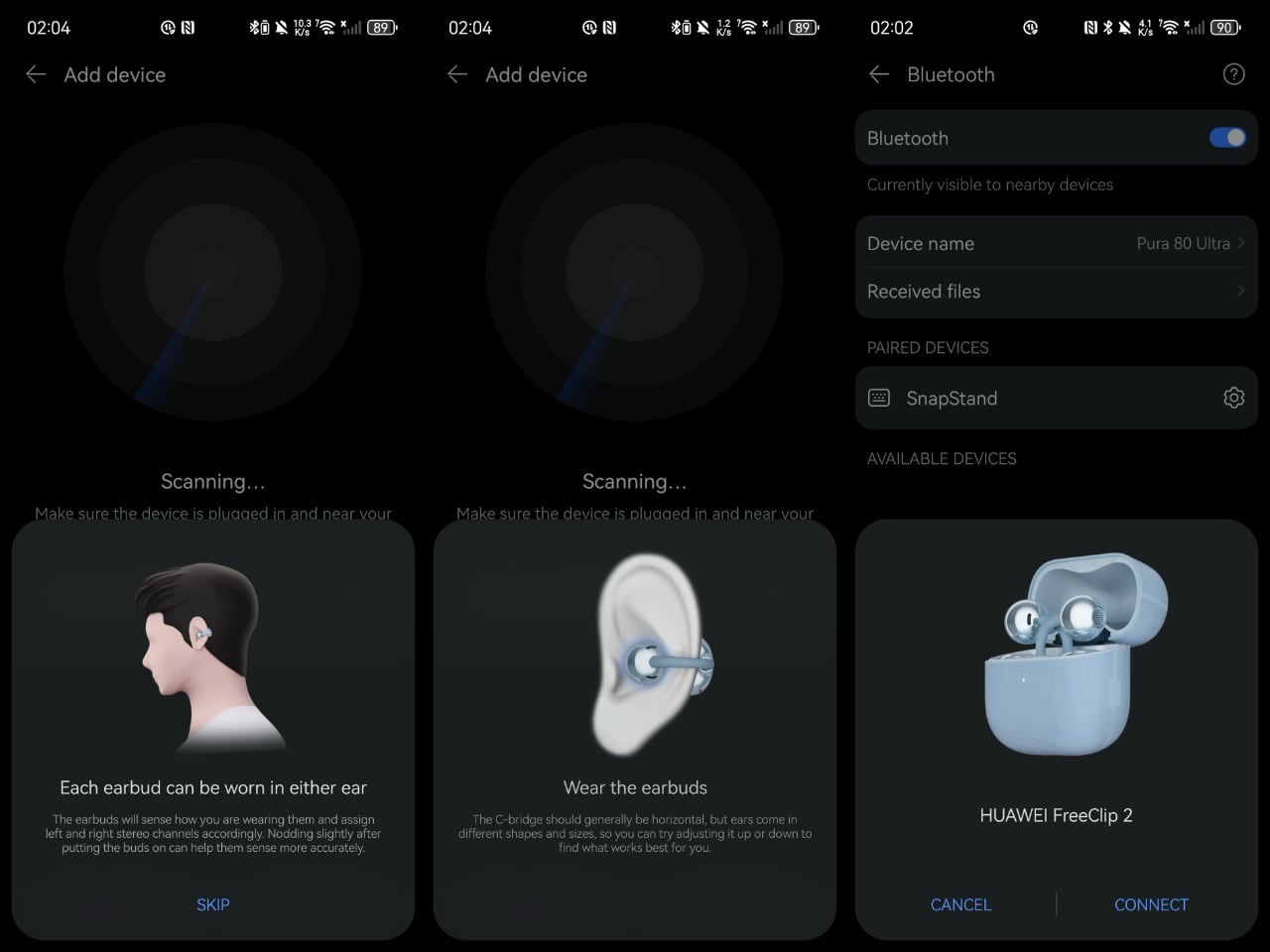
Thanks to a six-axis attitude sensor and intelligent channel correction, either FreeClip 2 earbud works in either ear. Pop them on however you grab them from the case. The system detects orientation and assigns left/right channels automatically.

This sounds like a convenience feature until you’ve lived with it. No more squinting at tiny L and R markings. No more swapping buds when you realize you’ve got them reversed. Just clip and go.

Battery: Incremental but Meaningful

Gen 1 delivered 8 hours per earbud and 36 hours with the case. Gen 2 pushes to 9 hours and 38 hours respectively. Not a dramatic leap, but notable given that Huawei also increased loudness by 100%. More power output with longer battery life means meaningful efficiency improvements in the audio chain.

Quick charging remains at 10 minutes for 3 hours of playback, which covers most emergency situations. The case now supports wireless charging and, in an industry first for open-ear earbuds, can charge from a smartwatch charger. That last detail probably won’t matter to most people, but for Huawei ecosystem users who travel with a watch charger anyway, it’s one fewer cable to pack.

In practice, I’ve been getting through full workdays without needing a case top-up. The 9-hour claim holds if you’re not pushing volume to maximum constantly. At moderate listening levels, I’ve stretched past the rated time.

The App Situation

Huawei replaced the AI Live app with Huawei Audio Connect, a dedicated audio app for pairing, device management, EQ presets, and custom sound profiles. It’s available on the Apple App Store and Samsung Galaxy Store.
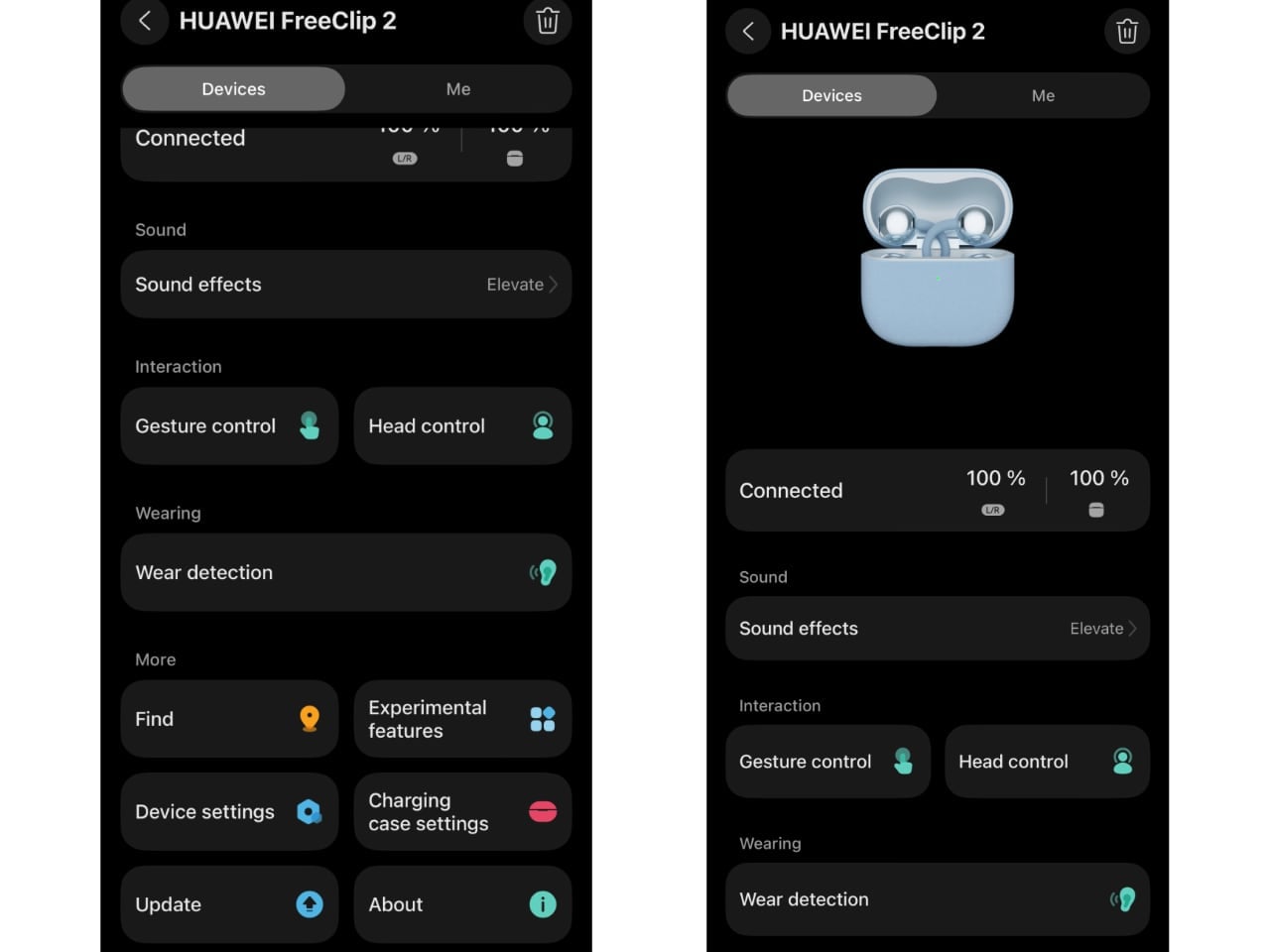
It’s not on Google Play.

For Pixel users or anyone running stock Android without Galaxy Store access, this means sideloading the APK or managing without the app entirely. The earbuds work fine via standard Bluetooth pairing, but you lose access to EQ customization, gesture configuration, and firmware updates. It’s not a dealbreaker, but it’s a friction point worth knowing about.
Spatial Audio 3.0 and Privacy Features

Two features worth mentioning, even if they won’t matter to everyone.

Spatial Audio 3.0 adds head tracking with 40% lower latency than Gen 1. Turn your head, and the soundstage adjusts. Three modes: Head Tracking, Fixed, and Off. The catch? You need compatible content. Huawei Music has a spatial audio library. Some streaming apps support Audio Vivid. But Spotify? Apple Music? The spatial features sit dormant. If you’re deep in the Huawei ecosystem, it’s a genuine enhancement. For everyone else, it’s a checkbox feature you’ll probably never activate.

More interesting: the reverse sound field system. Open-ear earbuds have always had a leakage problem. Your music becomes everyone’s music. Huawei’s solution uses openings at the rear of the acoustic ball to emit reverse sound waves that cancel what would otherwise leak outward. Does it work? Better than expected. At moderate volumes in a quiet room, someone sitting next to me couldn’t make out what I was listening to. Crank the volume in a silent library, and yeah, people will hear something. But for normal use? The privacy concern that plagued earlier open-ear designs feels mostly solved.

One more connectivity detail: dual-device connection. Pair to your laptop and phone simultaneously, switch between them without re-pairing. Useful if you’re bouncing between Zoom calls and mobile notifications. It’s table stakes for premium earbuds at this point, but worth confirming it works as expected. It does.

Performance Reality Check

The FreeClip 2 doesn’t rewrite the laws of physics. Open-ear audio will never isolate like sealed buds. In extremely loud environments, like a packed concert or a construction site, you’re going to struggle to hear your audio regardless of how much the NPU boosts volume.

But within the design constraints of the category, Huawei has pushed further than I expected. The dual-diaphragm architecture delivers bass that actually satisfies. The adaptive volume system works without being annoying. Call quality genuinely improved. The control additions, especially swipe volume, make daily use smoother.

For the always-in use case, situational awareness plus audio, the FreeClip 2 represents the most complete package I’ve tested in the open-ear space.

The Bottom Line

The FreeClip 2 lands in a category that’s still finding its identity. Open-ear earbuds don’t compete with AirPods Pro or Sony’s noise-canceling flagships. They serve a different need: audio without isolation. For runners who need to hear traffic. For office workers who can’t miss their name being called. For parents who want music but also want to hear if the kids are tearing the house apart.
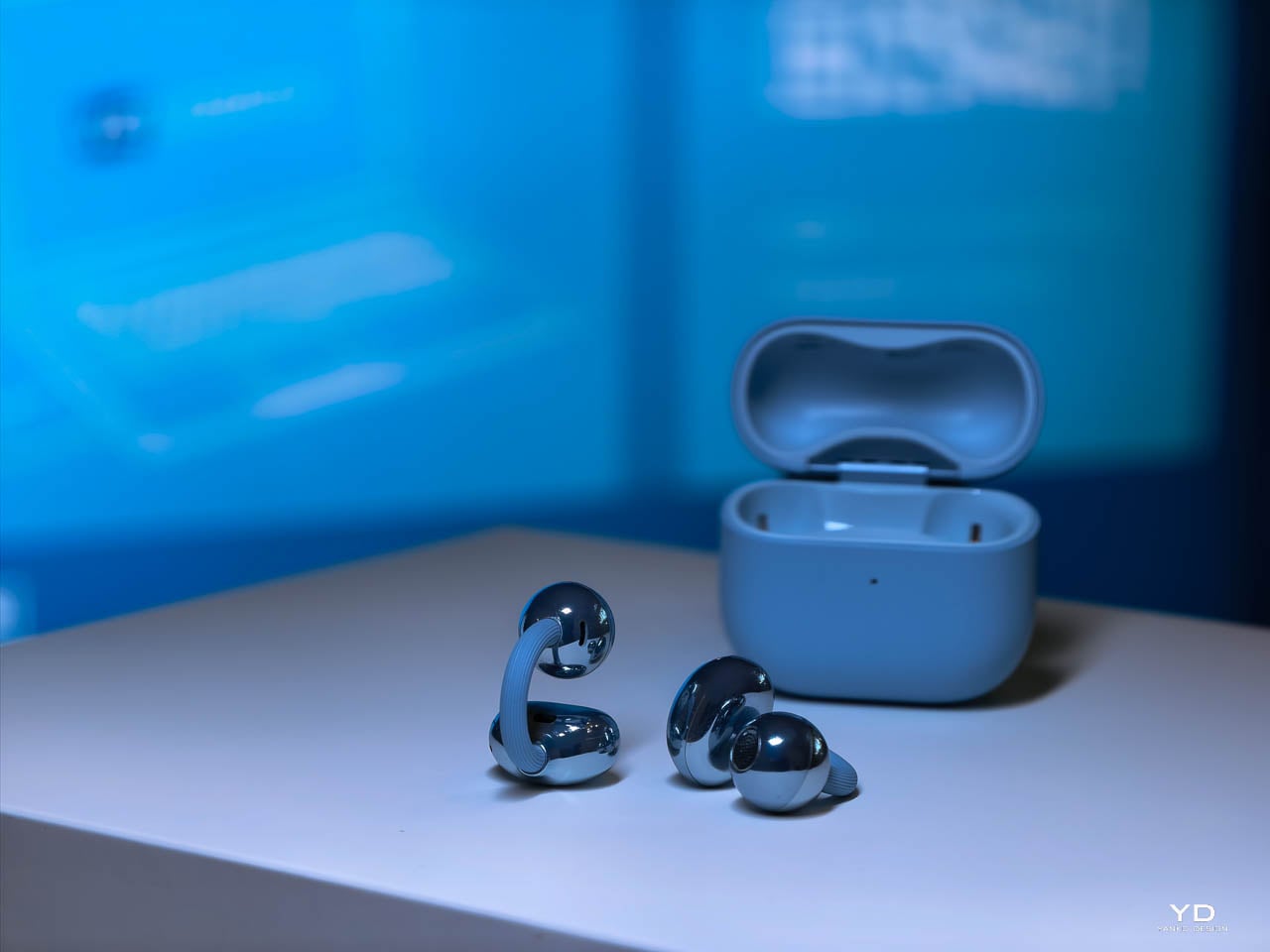
Within that category, Huawei built something that feels genuinely refined rather than merely iterated. The comfort improvements matter because this form factor lives or dies by wearability. The dual-diaphragm architecture matters because open-ear bass has always been the weak point. The VPU matters because calls are half the reason people wear earbuds in the first place. The adaptive volume matters because open-ear listening happens in chaotic, shifting environments.

What works: Comfort across multi-hour sessions. Bass that actually shows up. Call quality that doesn’t embarrass you. Swipe volume control. Auto L/R detection. IP57 durability. The case size.

What doesn’t: No ANC (physics, not laziness). Spatial Audio limited to Huawei ecosystem content. The app isn’t on Google Play, which creates friction for Pixel users. Spatial audio content remains limited outside Huawei’s ecosystem.

Who should buy this: Anyone who wants all-day audio without cutting themselves off from their environment. Runners. Cyclists. Office workers. Parents. People with tinnitus who need sleep audio. Glasses wearers frustrated by traditional earbuds competing for ear real estate.

Who shouldn’t: Anyone who needs isolation. Loud environment workers. People who primarily listen in quiet spaces where open-ear leakage becomes more noticeable. If that’s you, consider the Huawei FreeBuds Pro 4 instead. Same ecosystem, same app, same Huawei audio tuning philosophy, but with memory foam tips that create a proper seal and Ultra ANC mode that actually blocks the world out. I tested them on a Dubai-to-Dallas flight and they handled crying babies and engine drone beautifully. For Apple users, the AirPods 4 with ANC offers similar isolation in an open-ear-adjacent form factor. Different tools for different jobs.

Three million Gen 1 units proved the market exists. The FreeClip 2 proves Huawei is serious about owning it. For the always-in use case, this is the most complete open-ear package available. It’s not perfect. Nothing is. But it’s the first open-ear earbud I’ve tested where the trade-offs feel worth making.

The post Huawei FreeClip 2 Review: Open-Ear Audio at Its Best first appeared on Yanko Design.
One of our favorite budgeting apps is 50 percent off right now

If you have a resolution in the new year to get more acquainted with your finances, a good budgeting app can help with that. One of our favorites is a bit cheaper to sign up for right now: Monarch Money is offering 50 percent off annual subscriptions for new users. Use the code MONARCHVIP at checkout to get half off, so you'll pay just $50 for one year of access.

Monarch Money was the runner-up in our guide to the best budgeting apps in 2025, and it was definitely a grower. Initially we found the experience of using the app to be needlessly complicated compared to some of its rivals, but get over that hurdle and it’s impressively fully-featured. There are plenty of customization options, a helpful “goals” feature and a thorough month-in-review recap that beats out similar features from some of its competitors. We also like how you can grant account access to others.

Besides the steep learning curve, we also noted that the mobile app is less intuitive to use than the web version, which might pose a problem if you were hoping to do most of your accounting on the go. We also had some issues with the app failing to distinguish between bills and other recurring expenses, as well as a few bugs along the way.

All things considered, Monarch is definitely one of our favorite budgeting apps, only being beaten out by Quicken Simplifi. As you might expect, the biggest strength of Simplifi is its simplicity, and how it eases you into using its various features. If you value that kind of user experience, it might be a better choice for you, but there’s unfortunately no free trial to take advantage of.

Follow @EngadgetDeals on X for the latest tech deals and buying advice.

This article originally appeared on Engadget at https://www.engadget.com/deals/one-of-our-favorite-budgeting-apps-is-50-percent-off-right-now-154056703.html?src=rss

RC Outdoor Supply Made a Sacoche Bag for Actual Hiking

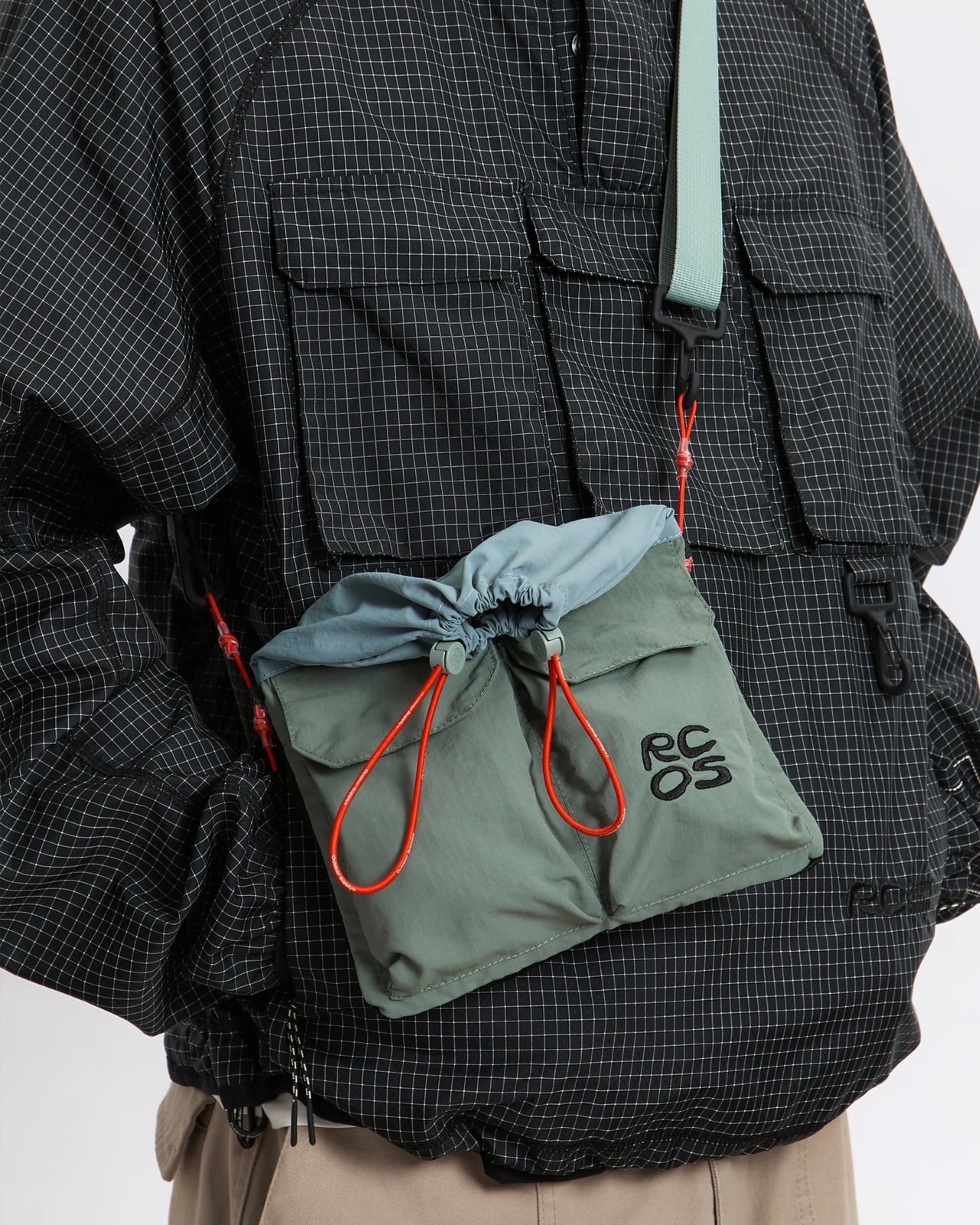
You know that feeling when you’re torn between bringing your sleek crossbody for a coffee run and a clunky backpack for a day hike? RC Outdoor Supply just solved that dilemma with their Trail Sacoche Bag, and honestly, it’s about time someone did.

For those not in the sacoche know, these compact bags have been having a major moment in streetwear circles. Originally a French term for a simple shoulder bag, the sacoche has become the go-to for minimalists who refuse to lug around more bag than they need. But here’s the thing: most sacoches are designed for urban jungles, not actual ones. RC Outdoor Supply flipped the script by taking this city slicker silhouette and giving it proper trail credentials.

Designer: RC Outdoor Supply ca

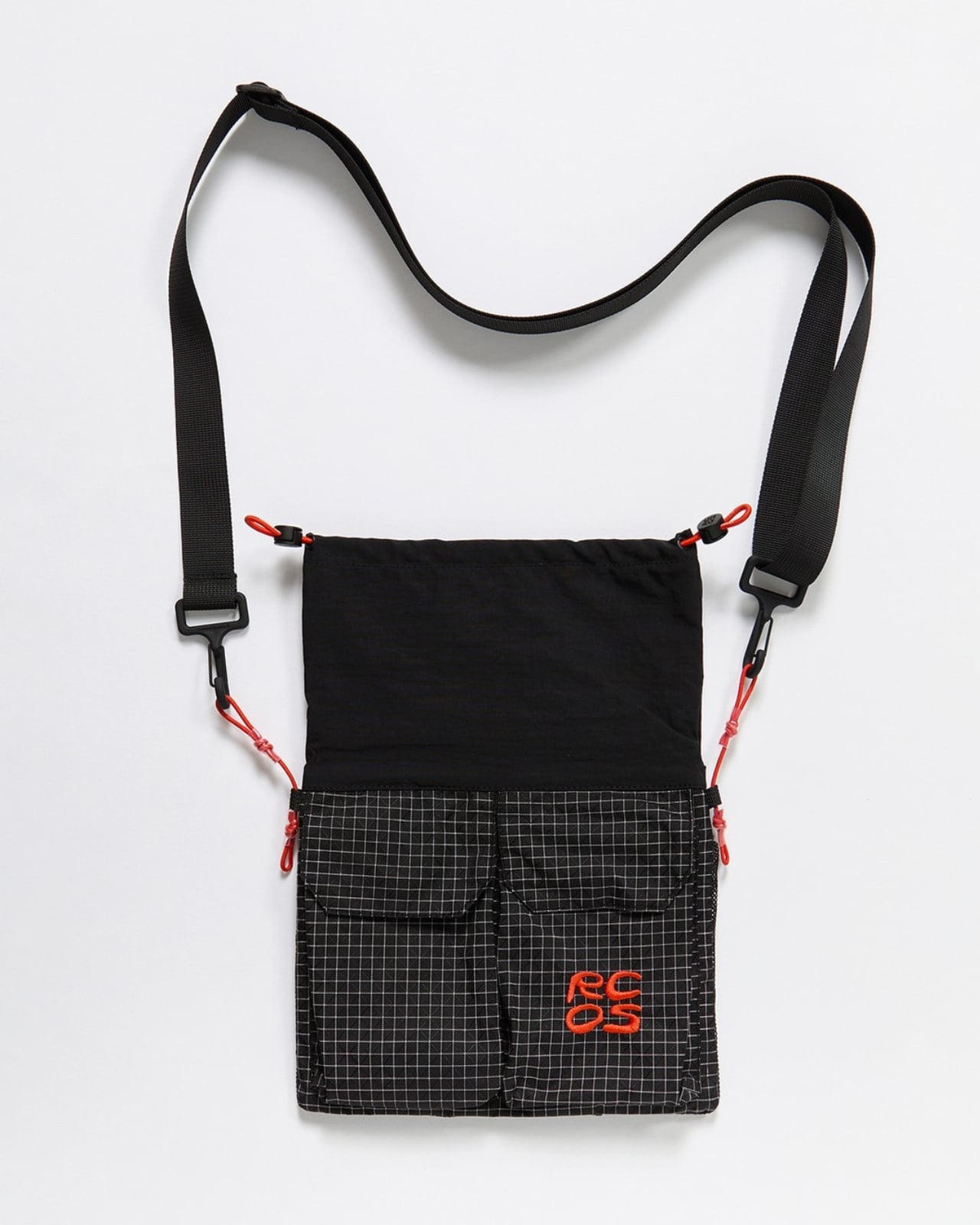
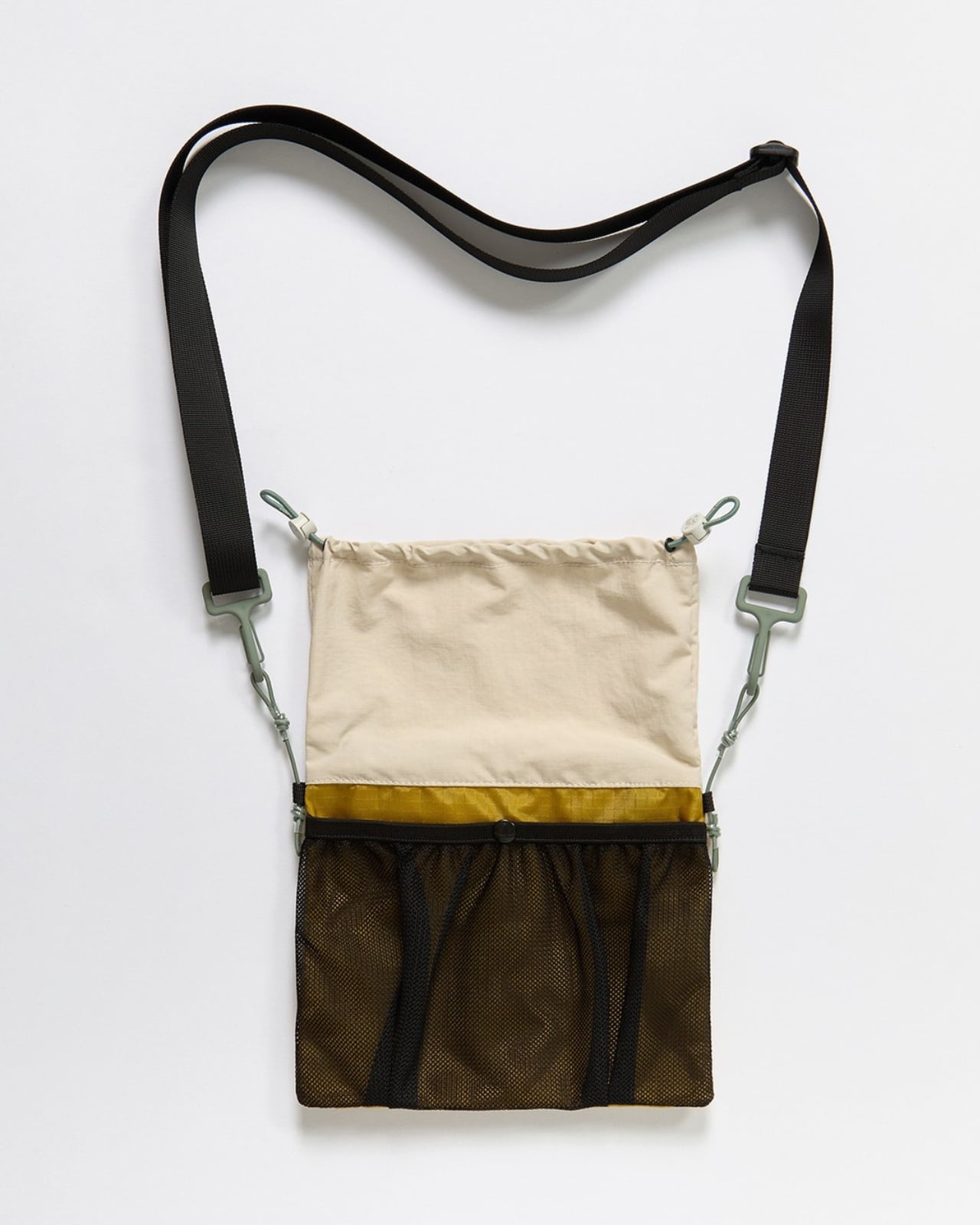
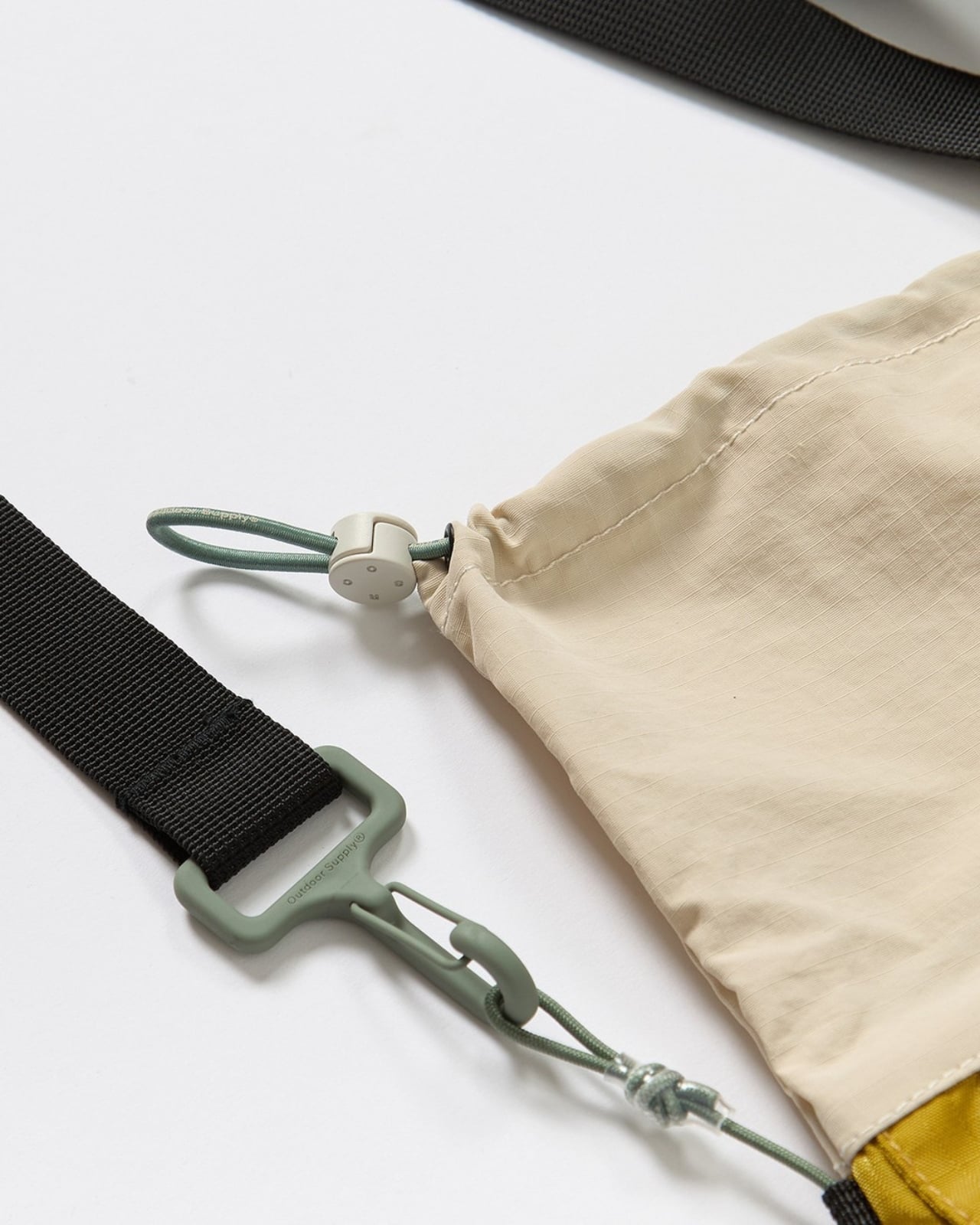
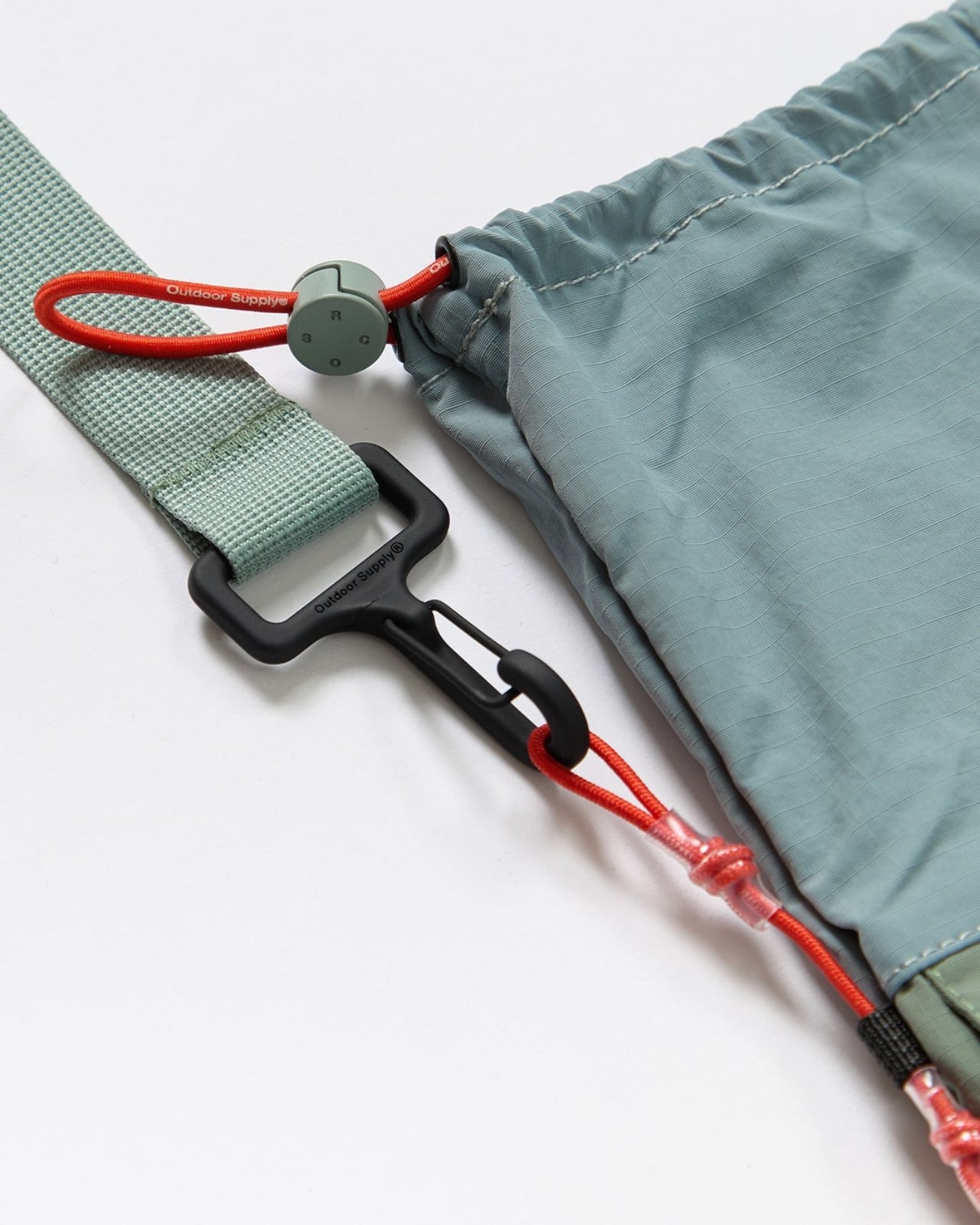
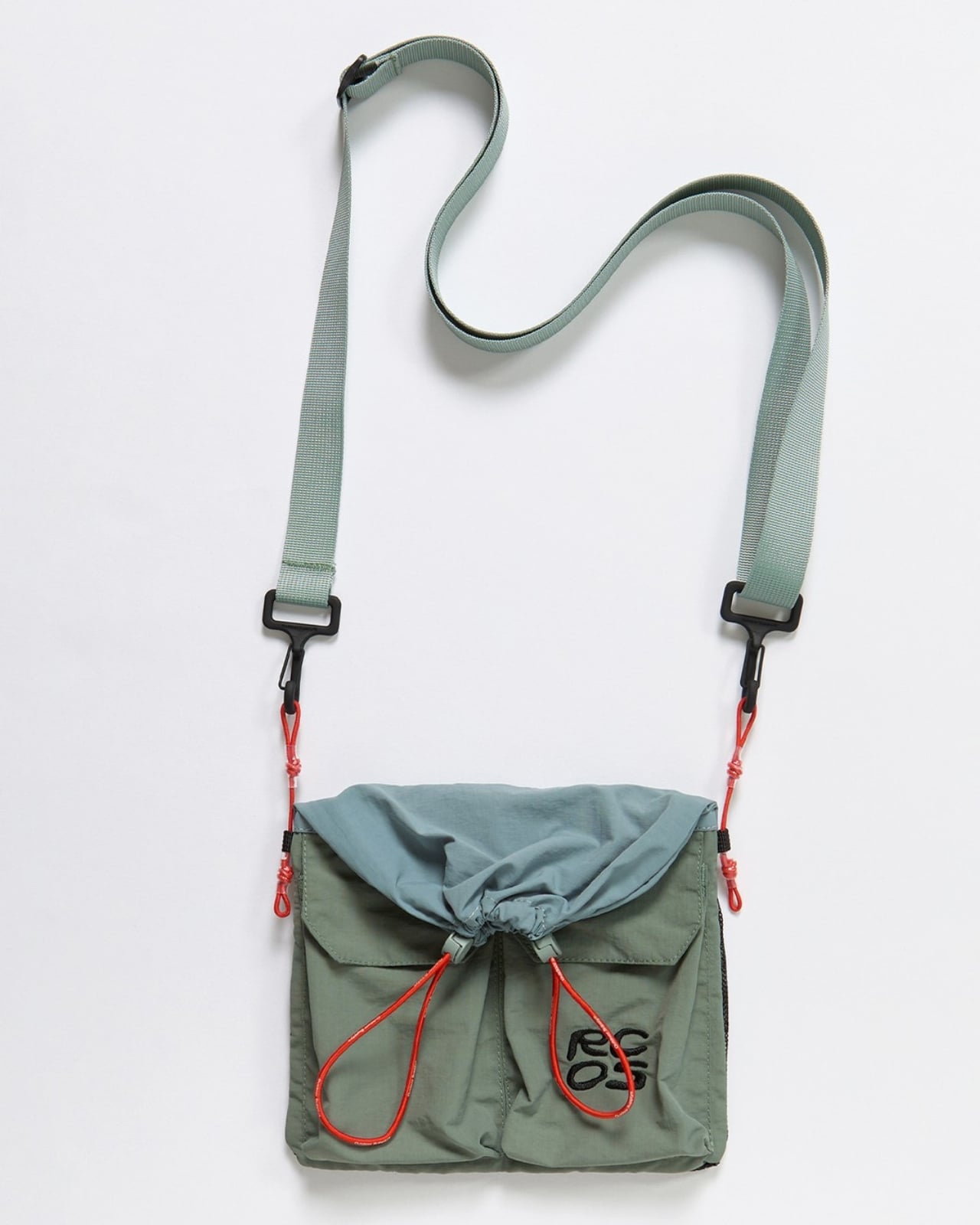
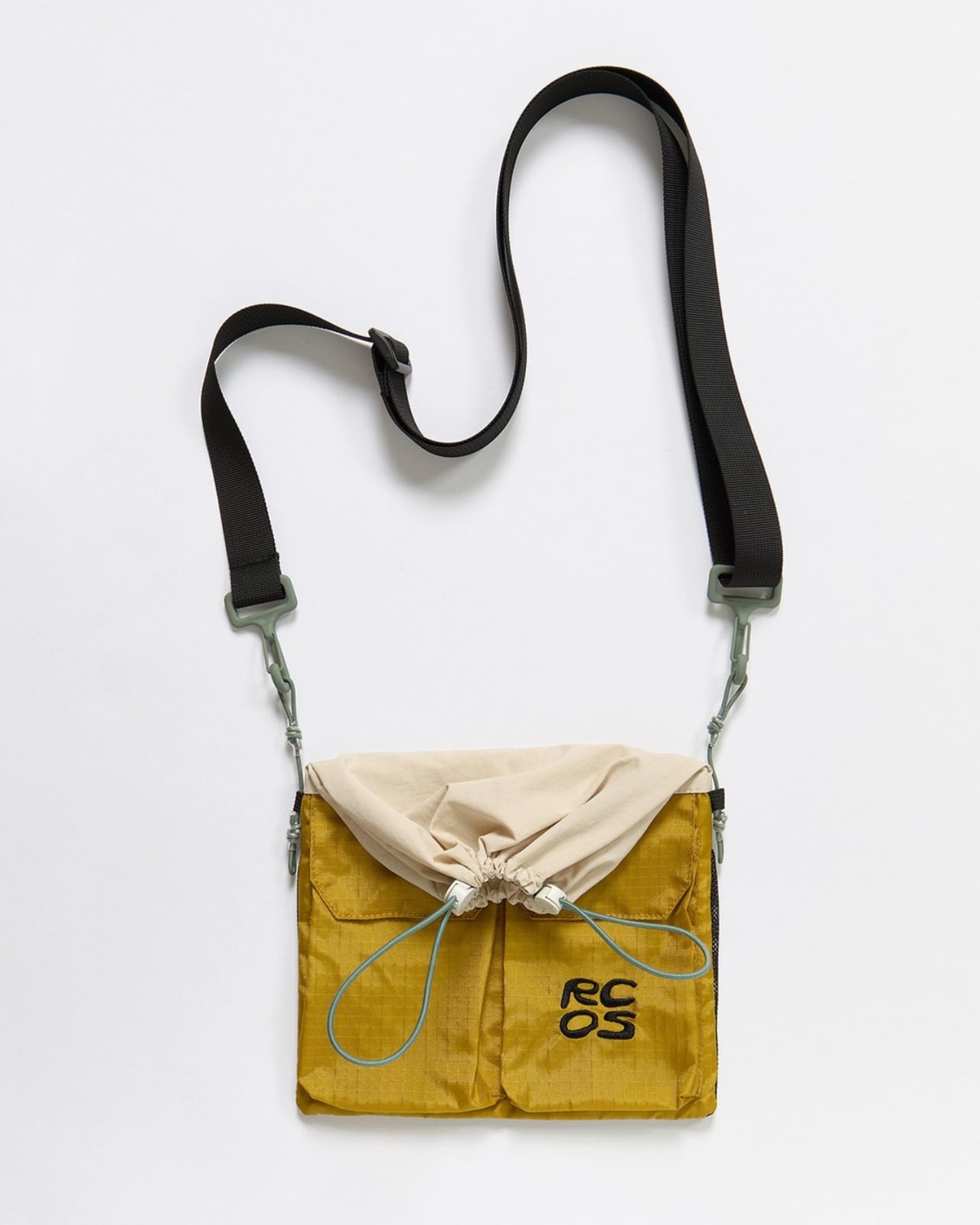
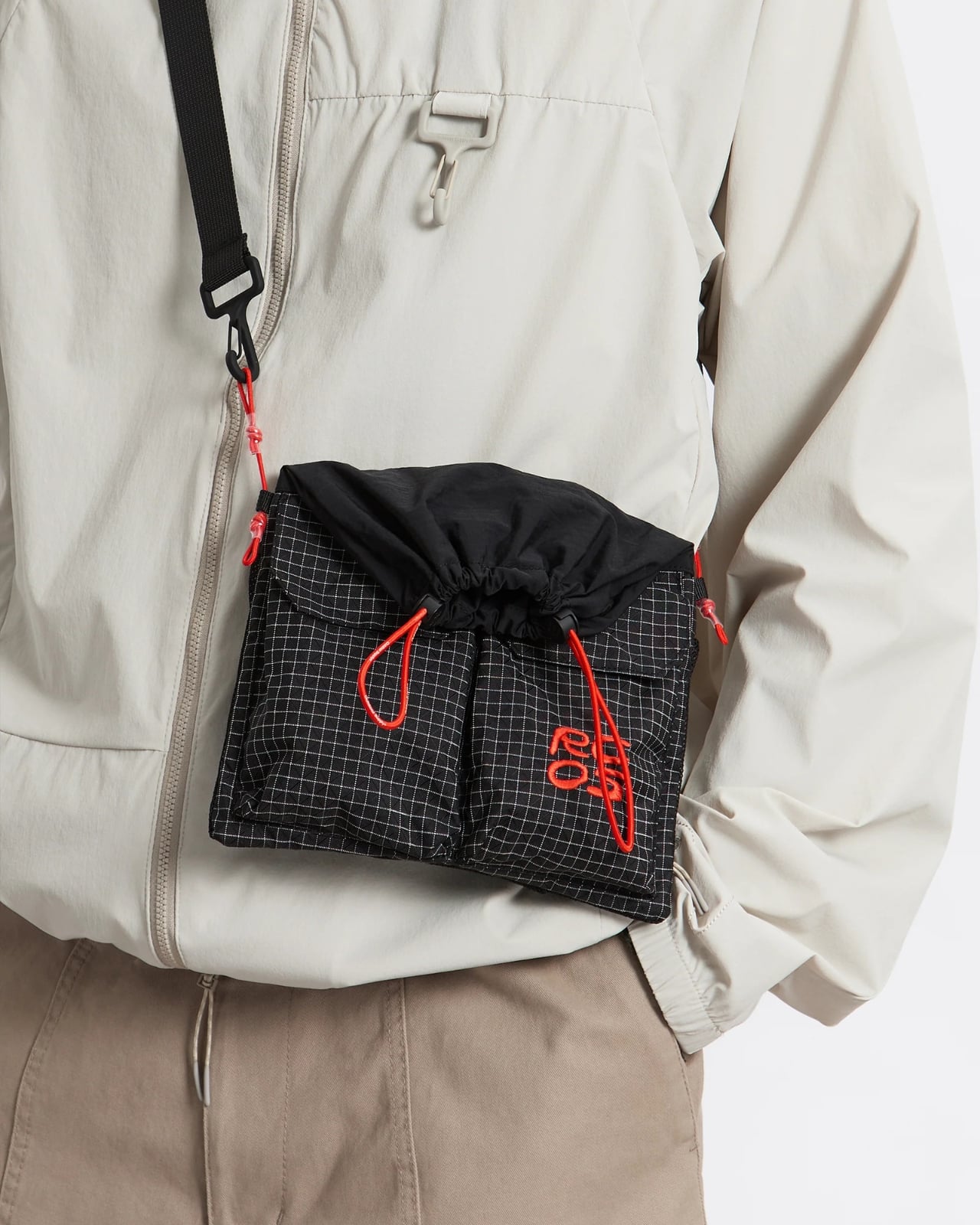
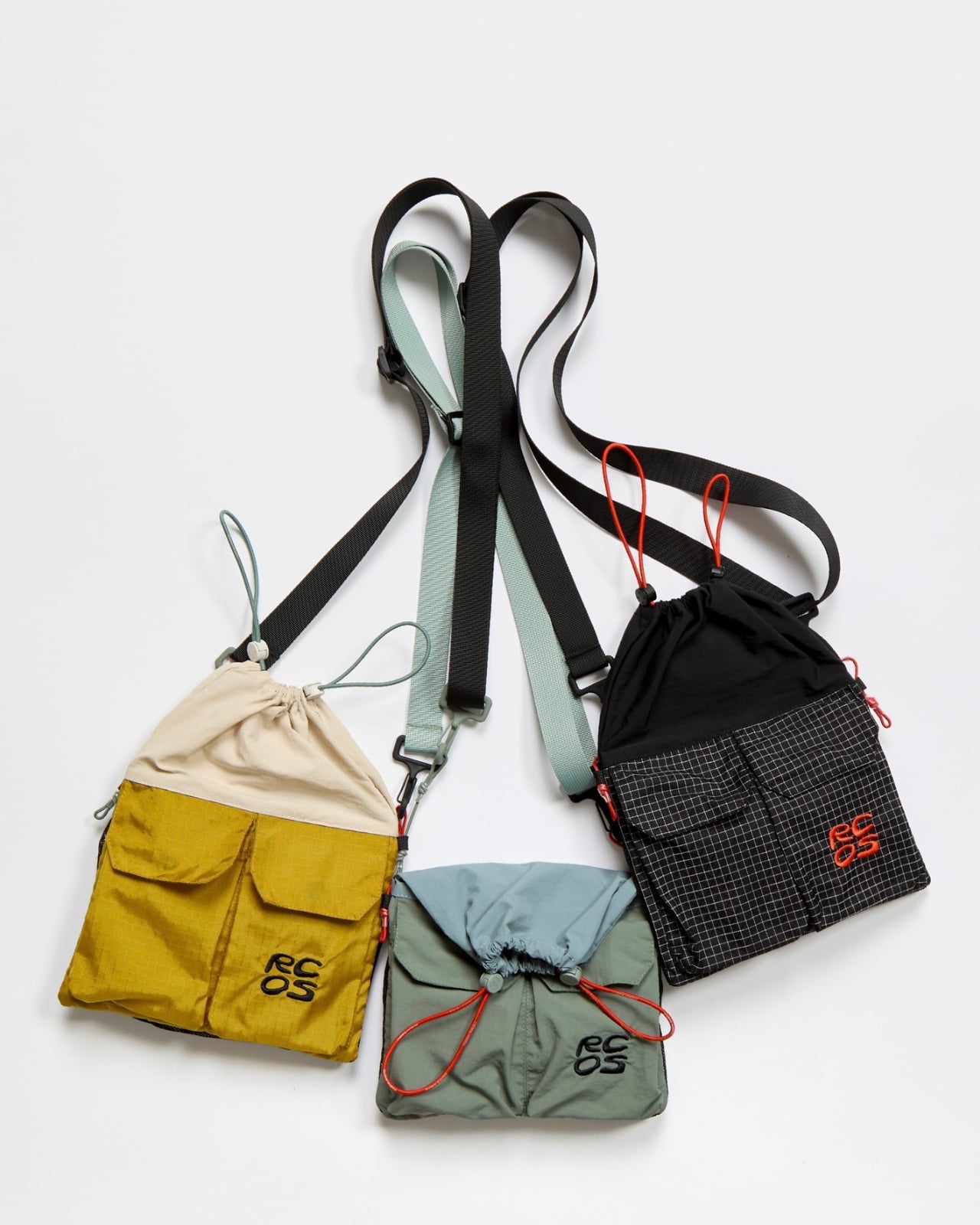
The Trail Sacoche hits that sweet spot of being compact without feeling restrictive. Made from durable nylon ripstop (the same stuff that keeps parachutes intact, no big deal), this bag laughs in the face of branches, rocks, and whatever else nature throws at it. The dimensions are clever too. At 11.5 by 8 inches when fully opened and 6.5 by 8 inches when folded, it’s like getting two bags in one depending on how much stuff you’re hauling around.

What really sets this apart from your average crossbody is the thoughtful pocket situation. There are two exterior cargo pockets on the front for quick-grab items (phone, trail snacks, that chapstick you’re always losing), plus a mesh pocket on the back that’s perfect for things you want visible but secure. The top closure uses bungee cording, which might sound casual but is actually genius for uneven terrain where you need flexibility and security at the same time. Inside, there’s a key ring because nobody wants to dig through their entire bag to find their car keys after a long hike. It’s these tiny details that show RC Outdoor Supply actually tested this thing in the wild rather than just sketching pretty pictures in a studio.

The brand, founded in California, has a specific philosophy: create clothing and gear that transitions seamlessly from the trail to the city. With the Trail Sacoche, they’ve nailed that brief. The bag comes in three colorways that work equally well on a mountain trail or a city street: Lichen (a muted green-gray), Saffron (a warm golden yellow that adds a pop without screaming for attention), and classic Black. Priced at $62, it sits in that reasonable middle ground where you’re not wincing at checkout but you’re also getting quality materials and construction. In a market flooded with either cheap fast-fashion bags or designer pieces that cost more than a weekend trip, this feels refreshingly honest.

What’s interesting is how this bag represents a larger shift in outdoor gear design. For years, the outdoor industry was stuck in a rut of aggressively technical-looking gear that screamed “I own expensive hiking equipment!” Now brands like RC Outdoor Supply are proving you can make functional gear that doesn’t look like it belongs exclusively on a summit attempt. The sacoche format itself is proof of this evolution, borrowing from fashion while adding legitimate outdoor functionality.

The versatility is the real selling point. Morning farmers market? Trail Sacoche. Afternoon hike? Same bag. Evening concert? Still works. This is exactly the kind of multifunctional design that makes sense for how people actually live, especially if you’re someone who refuses to be boxed into either “outdoorsy person” or “city person” categories. If there’s a critique, it’s that at this size, you’re definitely packing light. This isn’t replacing your daypack for serious hikes. But for short trails, urban exploring, travel, or just running around town with more style than a tote bag offers, it hits perfectly.

RC Outdoor Supply might not have the name recognition of legacy outdoor brands yet, but pieces like the Trail Sacoche Bag show they understand something crucial: the best gear works everywhere, looks good doing it, and doesn’t require a manual to figure out. Sometimes innovation isn’t about adding more features. It’s about doing something simple, exceptionally well.

The post RC Outdoor Supply Made a Sacoche Bag for Actual Hiking first appeared on Yanko Design.
Samsung Galaxy S26 Ultra: Redefining Battery Tech & Performance

Samsung Galaxy S26 Ultra: Redefining Battery Tech & Performance

The Samsung Galaxy S26 Ultra is poised to reshape the smartphone industry with its new advancements in magnetic technology, wireless charging, and hardware performance. As a leader in foldable displays and reverse wireless charging, Samsung continues to push the boundaries of mobile technology. However, challenges with Exynos chip production could influence global availability. Expected to […]

The post Samsung Galaxy S26 Ultra: Redefining Battery Tech & Performance appeared first on Geeky Gadgets.

Posted in Uncategorized