What if upgrading your home with smart technology didn’t have to cost a fortune? A Smarter House takes a closer look at how IKEA’s new smart home lineup is reshaping the market by offering affordable, user-friendly devices that rival premium brands. From customizable lighting to advanced environmental sensors, these products promise to make home automation […]
Apple is preparing to make its highly anticipated debut in the foldable smartphone market with the rumored “iPhone Fold.” This device has the potential to redefine industry standards by addressing the persistent challenges faced by current foldable phones. While companies like Samsung and Huawei have led the way in foldable technology, Apple’s approach appears to […]
What happens when the systems you swear by are completely ignored, and the result is something undeniably better? In this walkthrough, Nate B Jones shows how stepping away from rigid methods and embracing adaptable principles can lead to breakthroughs in AI system design. Imagine a setup where the specific platforms you use, whether it’s Notion, […]
Samsung is getting ready to unveil the Galaxy Buds 4 Pro, a next-generation wireless earbud designed to enhance your audio experience. With a focus on refined design, extended battery life, and innovative features, these earbuds aim to set a new benchmark in the competitive wireless audio market. Scheduled for release during Samsung’s Unpacked event on […]
Have you ever felt like your to-do list is running your life instead of the other way around? With countless tasks competing for your attention, staying organized can feel like an impossible challenge. In this walkthrough, Peter Akkies shows how to transform Todoist into a seamless system for managing your daily responsibilities, whether you’re juggling […]
The Samsung Galaxy Z Fold 8 is set to elevate the foldable smartphone market, reinforcing Samsung’s position as a leader in mobile innovation. Scheduled for release in July 2026, this flagship device promises a lighter, more advanced, and user-friendly experience. As Apple prepares to enter the foldable smartphone space, Samsung is responding with significant design […]
Most utility knives live in junk drawers until you need to open a box. You dig out something with a flimsy plastic slider, a rattling blade, and a body that feels like it costs exactly one dollar. They are treated as disposable, even though you use them constantly for packages, tape, and workshop tasks. There is room for a small knife that feels as considered as the rest of your desk or carry.
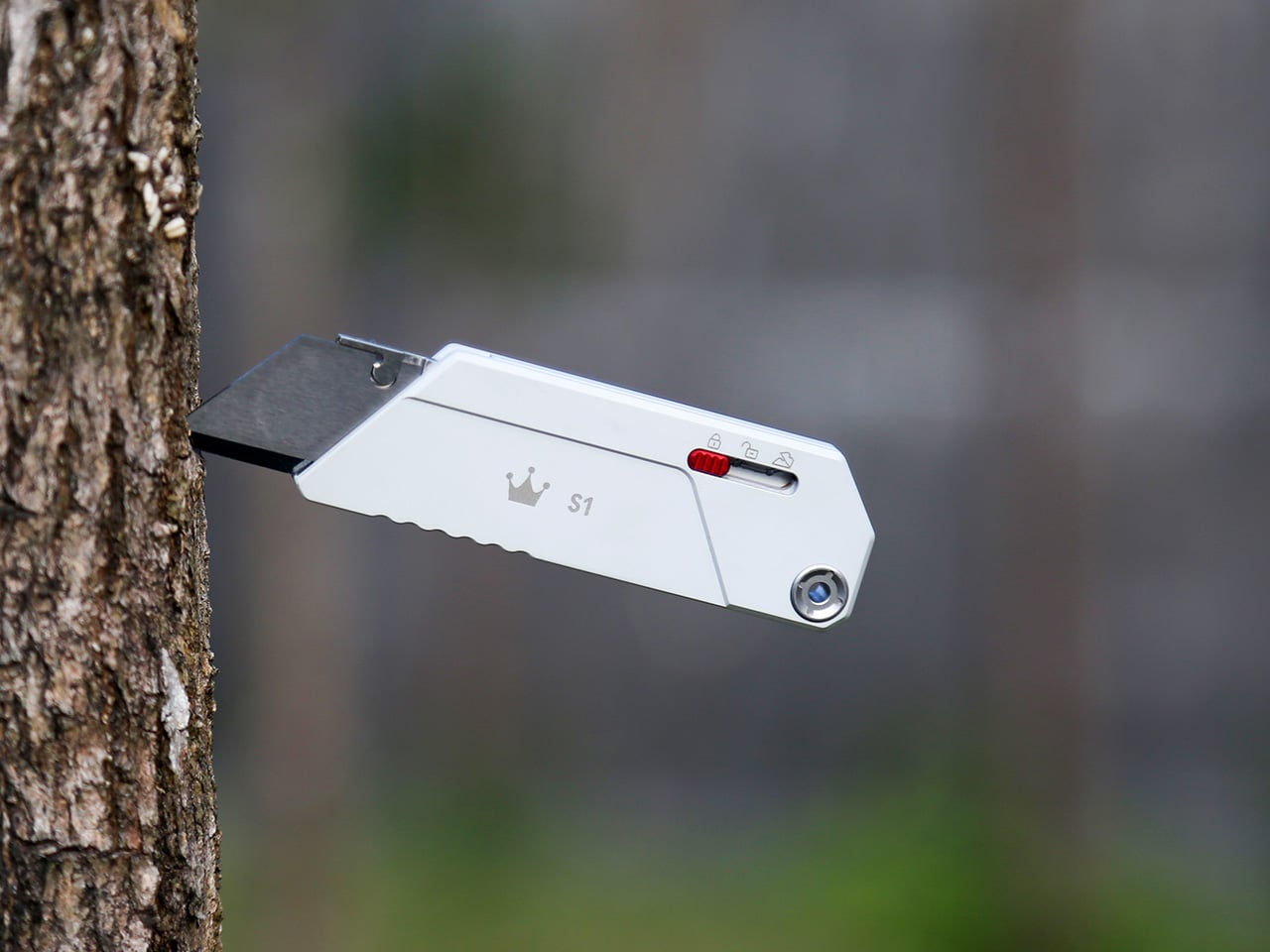
BQ S1 is a compact gravity-slide utility knife built around a simple intention: a tool that looks clean, feels natural, and works flawlessly. The flat, CNC-machined metal body hides a gravity-assisted blade mechanism inside, with no aggressive tactical styling or gimmicks. It is designed to make everyday cutting feel deliberate rather than disposable, turning deployment into a motion that is actually satisfying instead of frustrating.
The S1 uses a gravity-assisted slide mechanism instead of a traditional linear slider. A sideways thumb swipe makes the internal plates pivot, and the blade glides out under its own weight, then locks securely in place. The motion and sound are tuned to feel instinctive and precise, creating a satisfying click and slide rather than a sticky, two-handed struggle with a plastic track that catches every time.
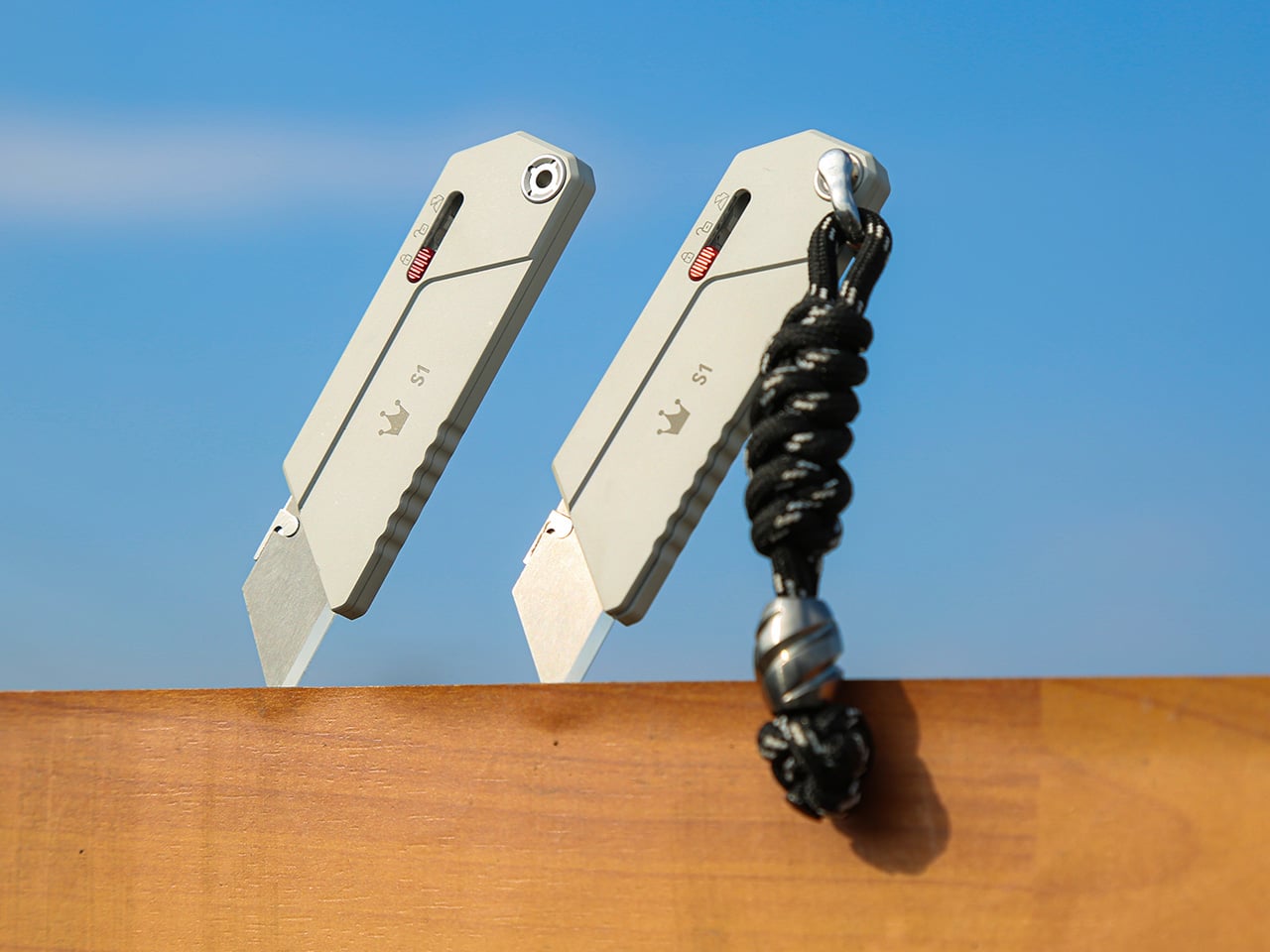
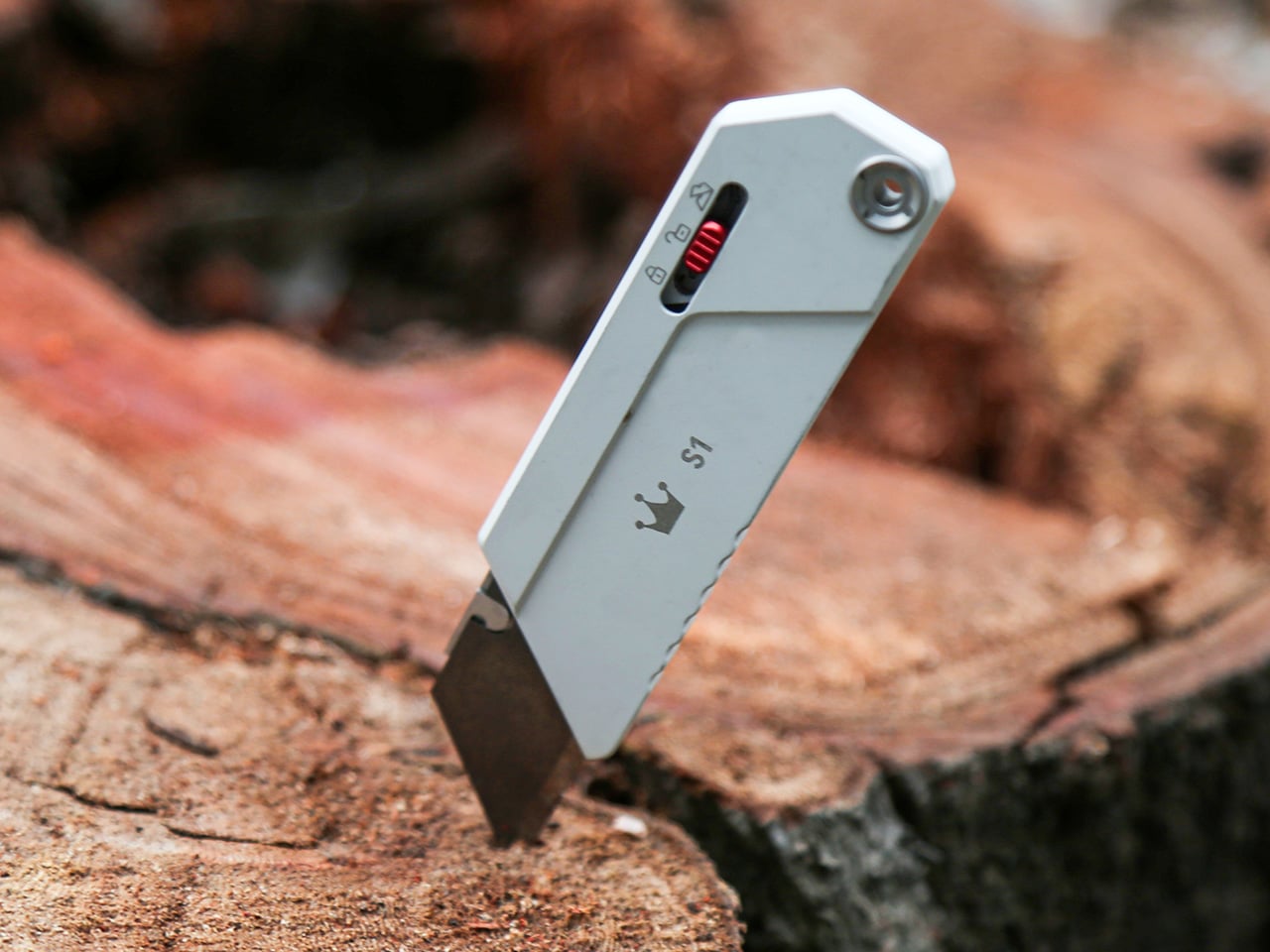
The body is machined from aluminum or titanium with tight tolerances, giving you sharp exterior lines, smooth chamfered edges, crisp blade guides, and defined side texture for grip. The layout is lefty-friendly, with every angle and surface shaped to enhance control, comfort, safety, and precision. It feels equally natural in either hand when cutting cardboard, trimming tape, or opening packages at your desk or in a workshop.
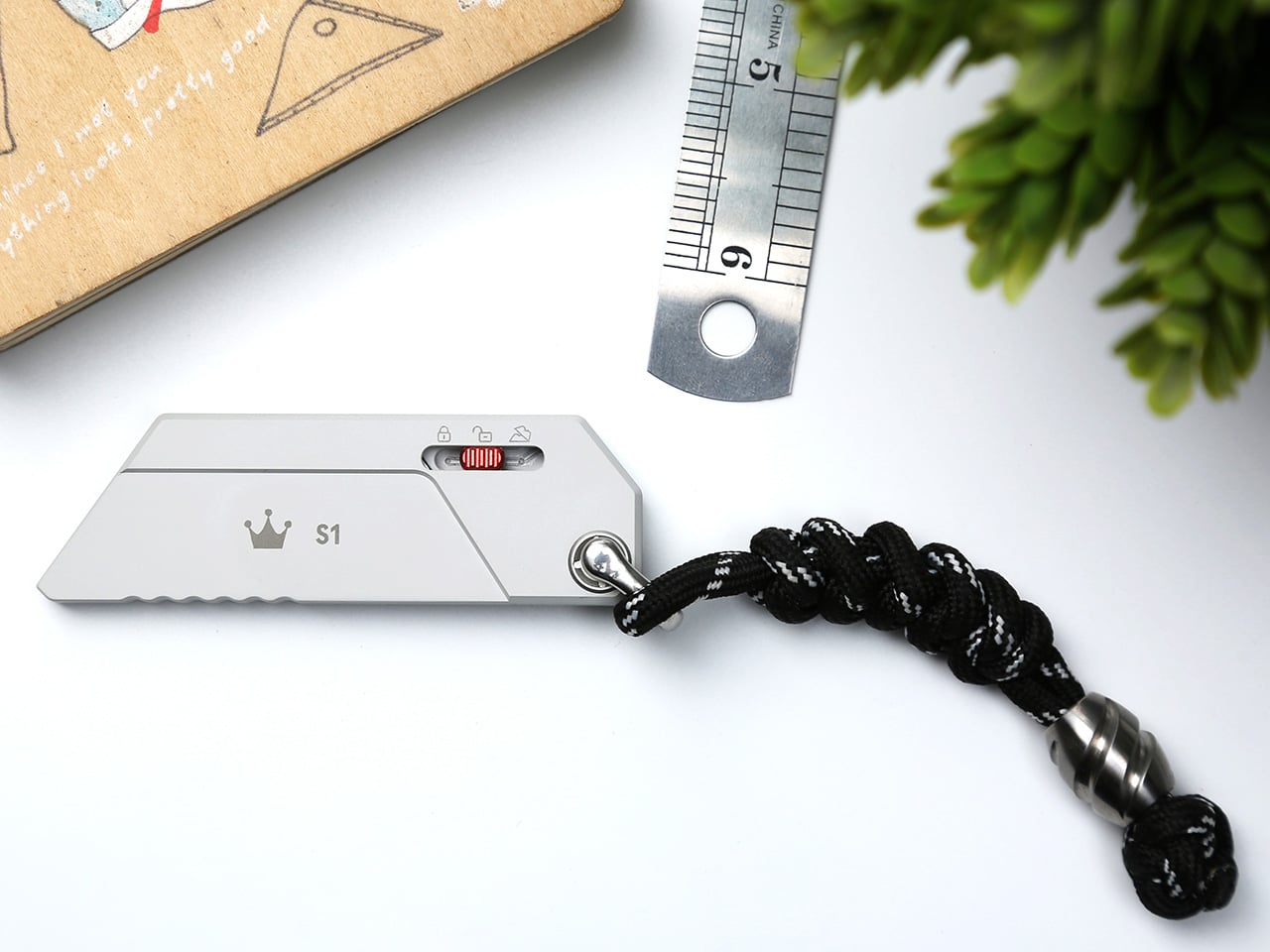
A bright red safety lock sits at the top, offering tactile feedback when engaged and making it obvious when the blade is secured. The compact 80mm length, lightweight build, and reinforced lanyard hole make it easy to carry on a keychain, in a pocket, or clipped to a bag. It is small enough to disappear when not in use, solid enough that you do not worry about it falling apart.
The S1 uses standard utility blades you can find almost anywhere, steel, tungsten-coated, or ceramic, with no proprietary refills. Blade changes are handled by a simple slide button sequence: slide to release, swap the blade, slide back, done. That choice keeps running costs low and makes it easy to keep a sharp edge without hunting for special cartridges or depending on a single supplier.
Opening deliveries, cutting packing tape, trimming cardboard for prototypes, these are small routine tasks that most people handle with whatever dull knife is within reach. The BQ S1 is designed to turn those moments into clean, precise actions where the blade extends smoothly, locks with confidence, and cuts without tearing or snagging. It is not trying to be a survival knife or a fidget toy, just a well-made cutter.
For people who care about the details of the tools they touch every day, a utility knife that feels cool to use instead of something you hide in a drawer starts to make sense. The gravity-slide motion, the CNC-machined body, the red safety lock, and the universal blade compatibility all add up to a tool that quietly earns its place in your pocket or on your keychain, not because it does anything wildly different, but because it does everyday things better.
Most utility knives live in junk drawers until you need to open a box. You dig out something with a flimsy plastic slider, a rattling blade, and a body that feels like it costs exactly one dollar. They are treated as disposable, even though you use them constantly for packages, tape, and workshop tasks. There is room for a small knife that feels as considered as the rest of your desk or carry.
BQ S1 is a compact gravity-slide utility knife built around a simple intention: a tool that looks clean, feels natural, and works flawlessly. The flat, CNC-machined metal body hides a gravity-assisted blade mechanism inside, with no aggressive tactical styling or gimmicks. It is designed to make everyday cutting feel deliberate rather than disposable, turning deployment into a motion that is actually satisfying instead of frustrating.
The S1 uses a gravity-assisted slide mechanism instead of a traditional linear slider. A sideways thumb swipe makes the internal plates pivot, and the blade glides out under its own weight, then locks securely in place. The motion and sound are tuned to feel instinctive and precise, creating a satisfying click and slide rather than a sticky, two-handed struggle with a plastic track that catches every time.
The body is machined from aluminum or titanium with tight tolerances, giving you sharp exterior lines, smooth chamfered edges, crisp blade guides, and defined side texture for grip. The layout is lefty-friendly, with every angle and surface shaped to enhance control, comfort, safety, and precision. It feels equally natural in either hand when cutting cardboard, trimming tape, or opening packages at your desk or in a workshop.
A bright red safety lock sits at the top, offering tactile feedback when engaged and making it obvious when the blade is secured. The compact 80mm length, lightweight build, and reinforced lanyard hole make it easy to carry on a keychain, in a pocket, or clipped to a bag. It is small enough to disappear when not in use, solid enough that you do not worry about it falling apart.
The S1 uses standard utility blades you can find almost anywhere, steel, tungsten-coated, or ceramic, with no proprietary refills. Blade changes are handled by a simple slide button sequence: slide to release, swap the blade, slide back, done. That choice keeps running costs low and makes it easy to keep a sharp edge without hunting for special cartridges or depending on a single supplier.
Opening deliveries, cutting packing tape, trimming cardboard for prototypes, these are small routine tasks that most people handle with whatever dull knife is within reach. The BQ S1 is designed to turn those moments into clean, precise actions where the blade extends smoothly, locks with confidence, and cuts without tearing or snagging. It is not trying to be a survival knife or a fidget toy, just a well-made cutter.
For people who care about the details of the tools they touch every day, a utility knife that feels cool to use instead of something you hide in a drawer starts to make sense. The gravity-slide motion, the CNC-machined body, the red safety lock, and the universal blade compatibility all add up to a tool that quietly earns its place in your pocket or on your keychain, not because it does anything wildly different, but because it does everyday things better.
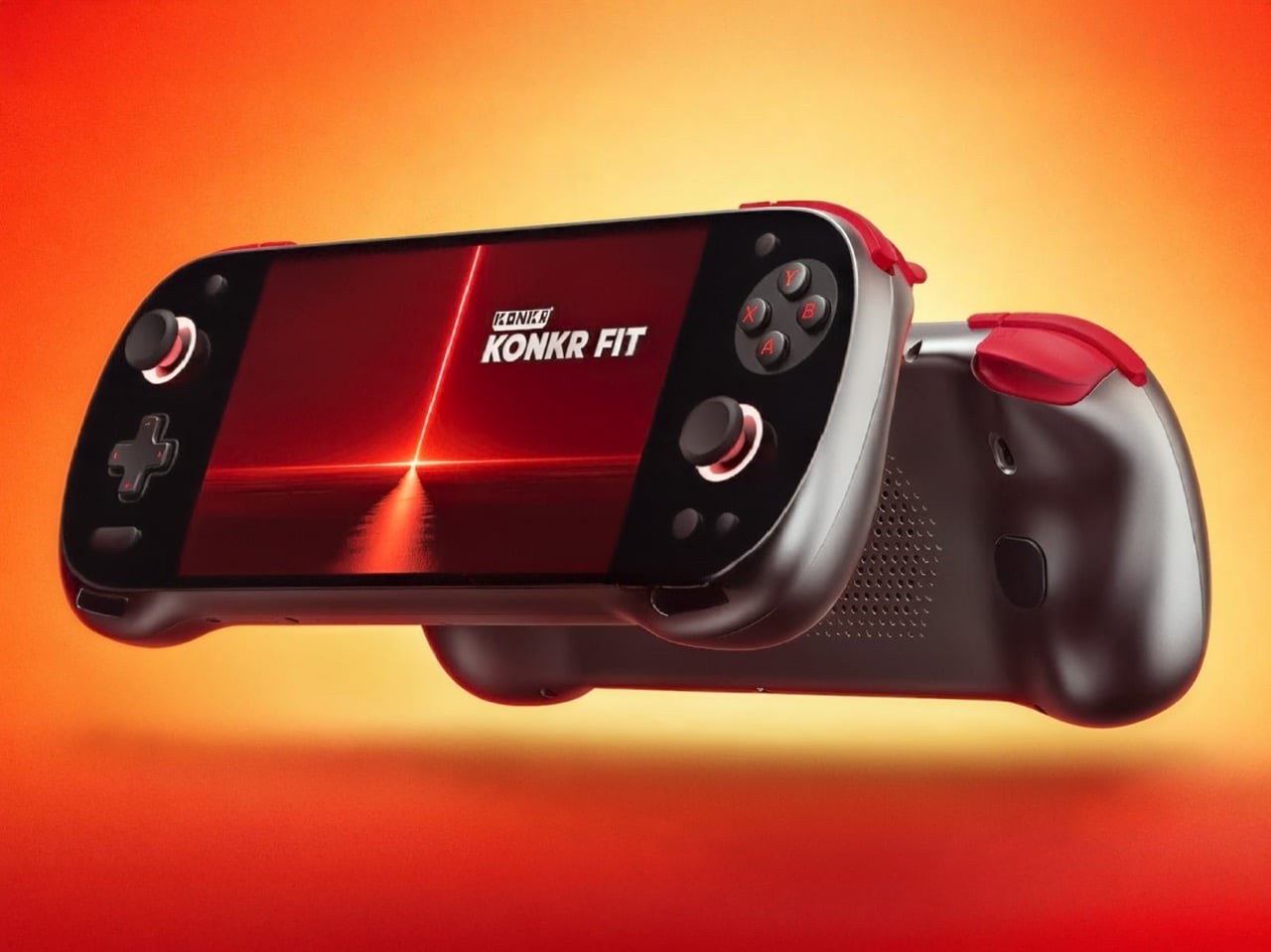
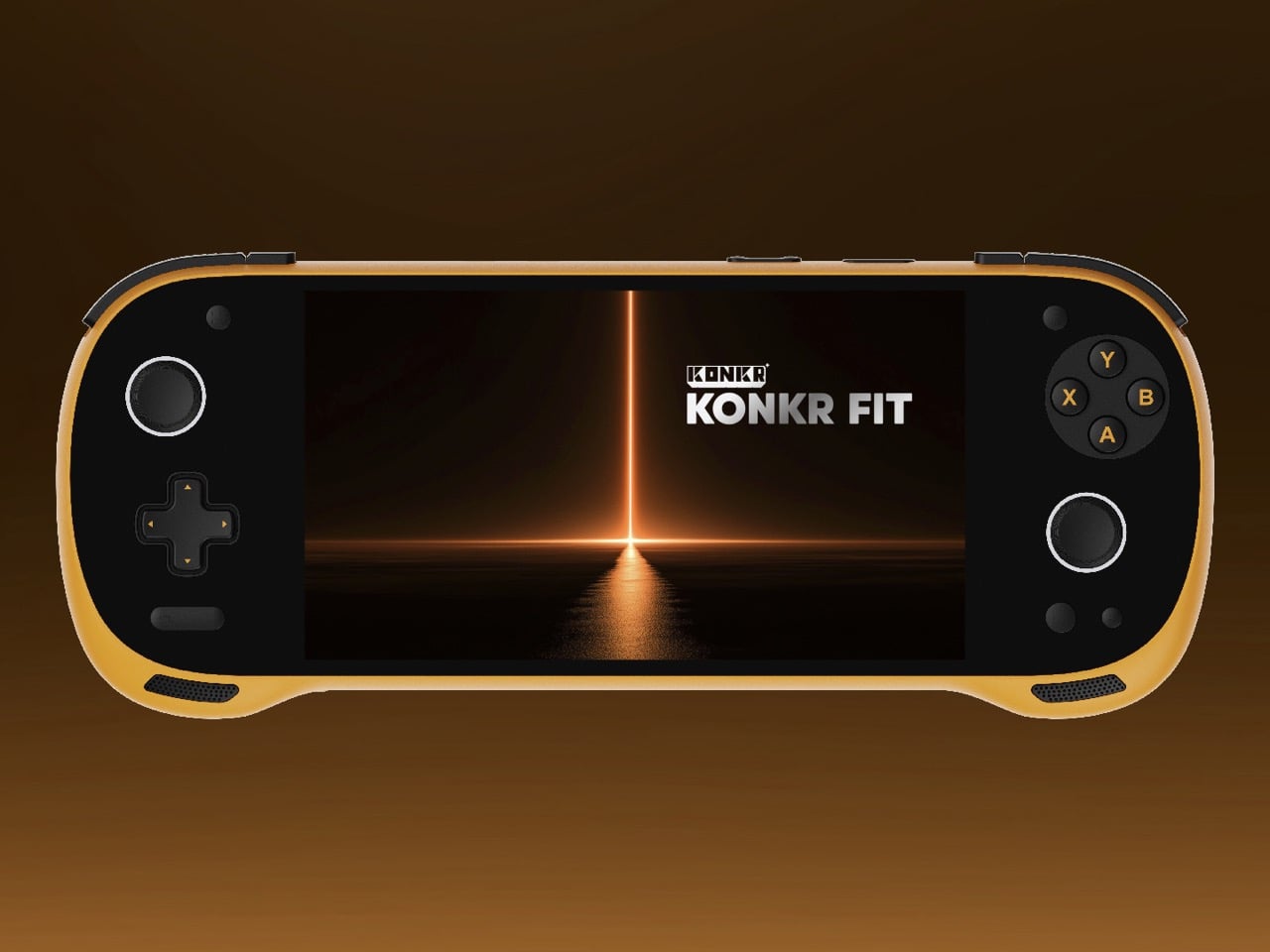
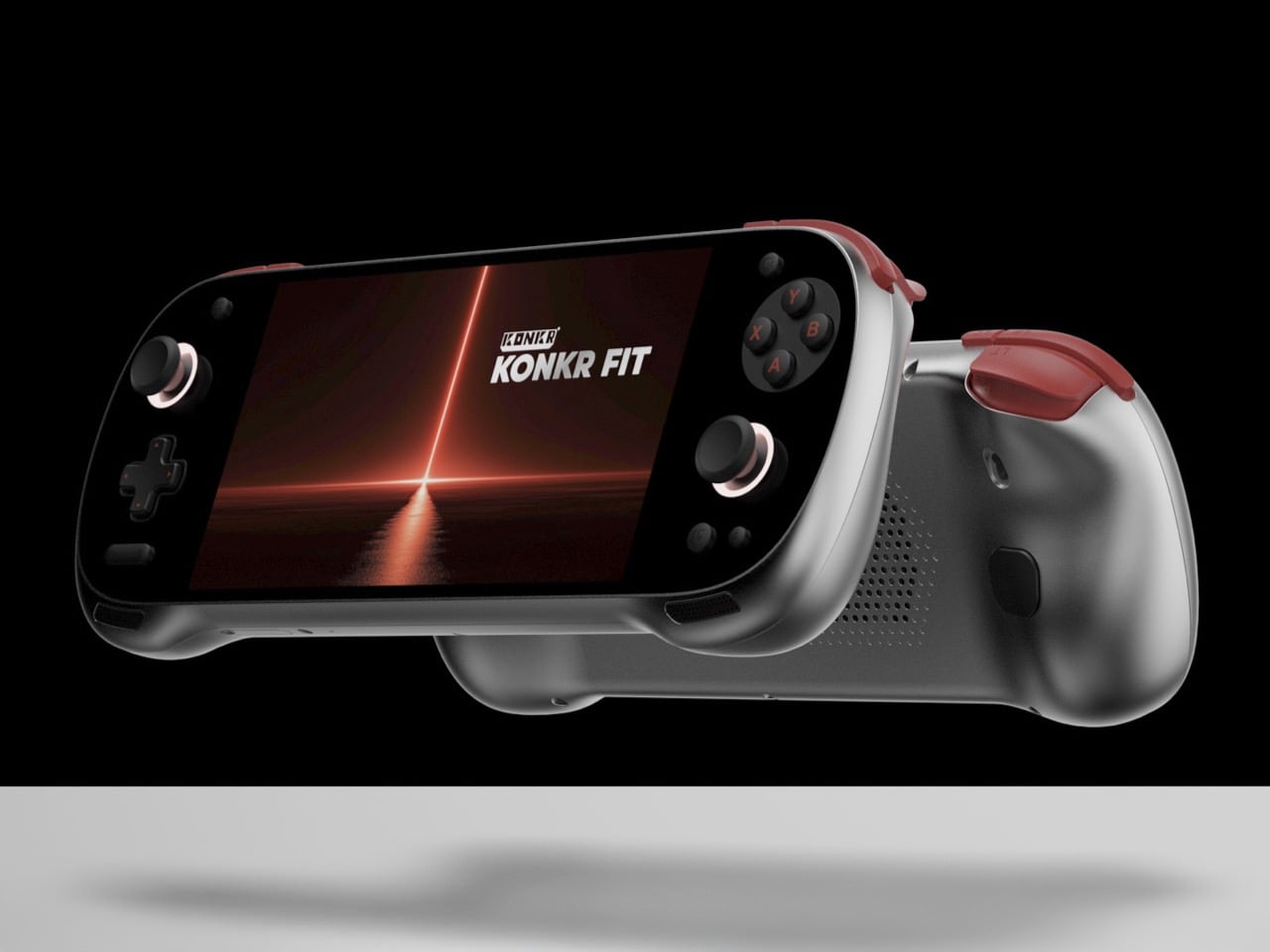
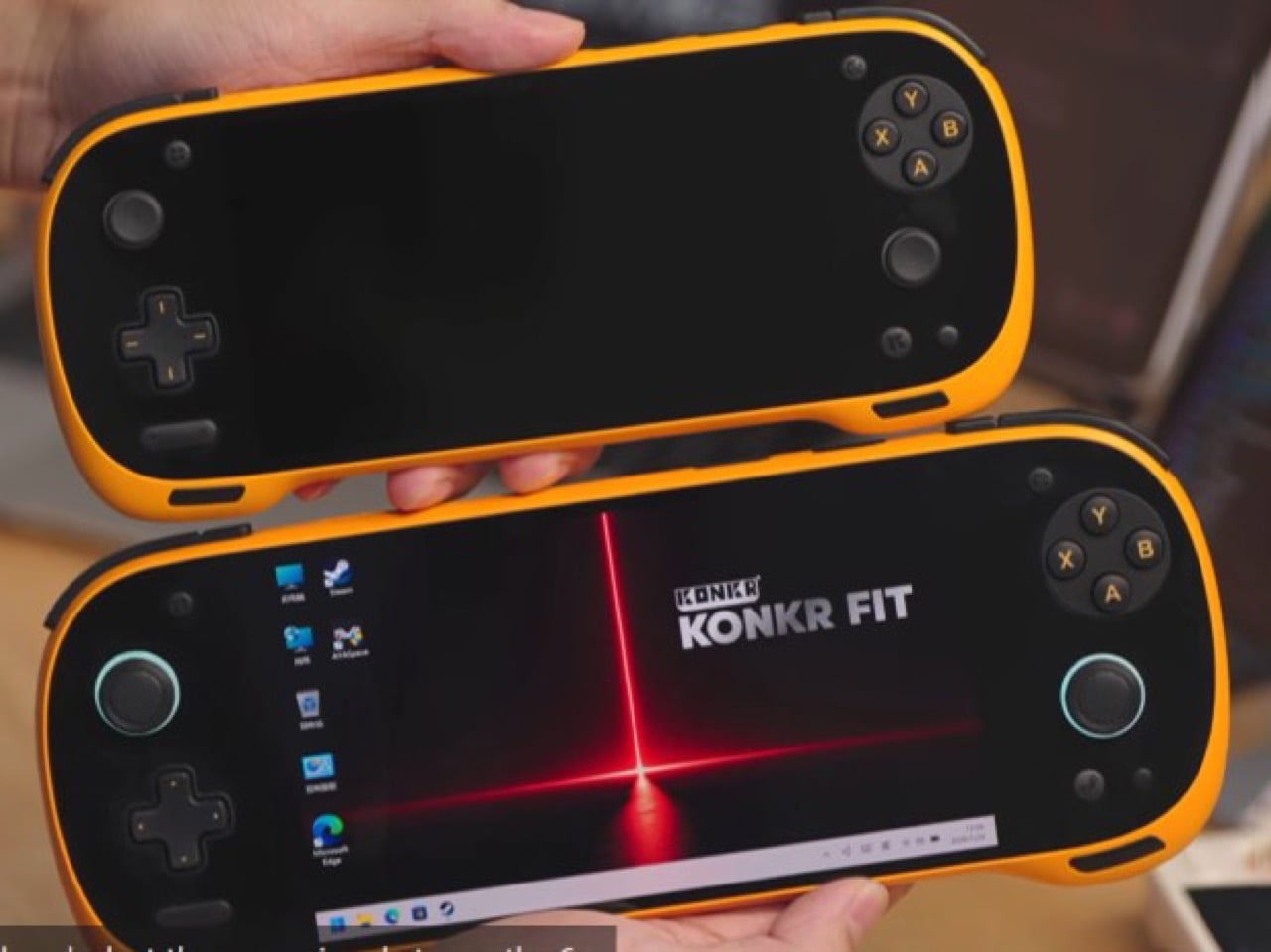
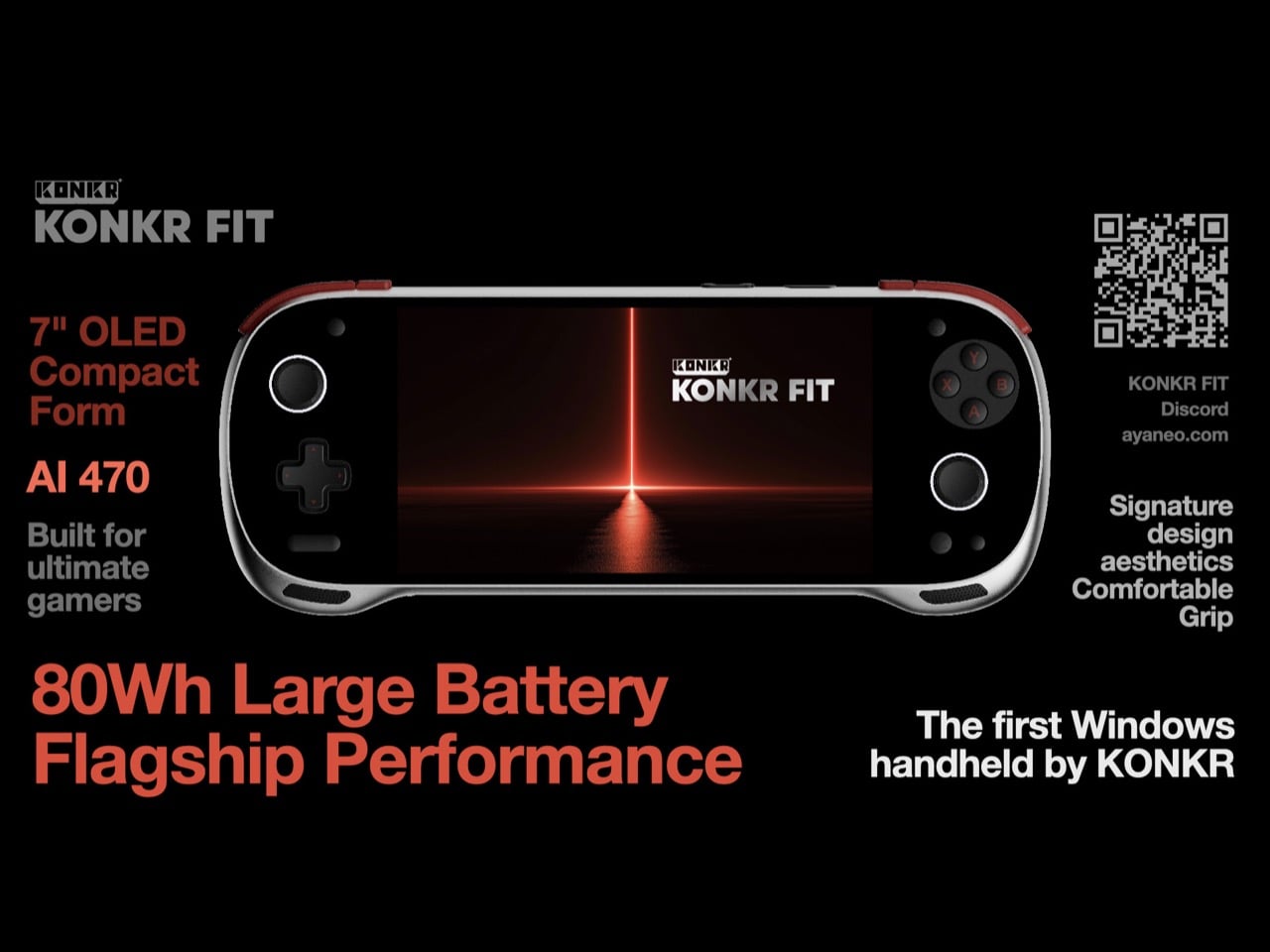
Ayaneo’s budget Konkr brand is expanding beyond Android. After launching the Pocket Fit with Snapdragon G3 Gen 3 and the more powerful Pocket Fit Elite with Snapdragon Elite 8, the company has unveiled its first Windows handheld under the Konkr name. The new device drops “Pocket” from its title for good reason.
The Konkr Fit features a 7-inch OLED display, significantly larger than the 6-inch screens on its Android siblings. Powering this Windows handheld is an AMD Ryzen AI 9 HX 470 processor, marking a departure from Snapdragon mobile chips. The device also packs an impressive 80Wh battery, dwarfing the capacity found in competitors like the Lenovo Legion Go S and even the Legion Go 2.
Designer: Ayaneo
80Wh in a handheld gaming device puts the Konkr Fit in genuinely rare company. The Legion Go S limps along with 55.5Wh, while even Lenovo’s newer Legion Go 2 only manages 74Wh. We’re talking about potentially game-changing longevity here, especially considering Windows handhelds typically drain batteries faster than their Android counterparts. The Ryzen AI 9 HX 470 is a hungry chip, sure, but you’re still looking at a device that might actually survive a cross-country flight without searching desperately for an outlet. Battery anxiety has plagued this entire product category since the Steam Deck launched, and Ayaneo seems to understand that cramming in more capacity solves more problems than any amount of software optimization ever will.
The HX 470 belongs to AMD’s Strix Point lineup, the same family powering proper gaming laptops. You’re getting Zen 5 cores and RDNA 3.5 graphics, which means AAA titles at respectable settings become genuinely playable. Compare that to the Snapdragon Elite 8 in the Pocket Fit Elite, which excels at emulation and Android titles but starts sweating with demanding PC games. Ayaneo clearly wants this positioned as a real PC gaming device, not just an emulation box with delusions of grandeur. The processor alone tells you they’re betting on people who want to run their Steam libraries natively, not folks content with streaming or playing mobile ports.
Borrowing heavily from its Android siblings makes sense when you consider the Pocket Fit’s design already works. Hall Effect joysticks handle the analog inputs, which means drift shouldn’t plague these controllers the way it does cheaper alternatives. Adjustable triggers and dual back buttons carry over unchanged. The company offers two colorways: Retro Gray with red accents and a straight Yellow option. Both feel very much in line with the broader handheld gaming aesthetic that’s emerged, though the gray and red combo has some Steam Deck vibes whether Ayaneo wants to admit it or not.
Two USB-C ports now sit at the top edge, giving you actual flexibility for charging while gaming or connecting accessories without blocking your hands. Larger inlet vents dominate the back panel compared to the Pocket Fit, addressing what will inevitably become thermal challenges with a chip this powerful. Even the screws holding the backplate are exposed, suggesting Ayaneo expects enthusiasts to crack this thing open for maintenance or upgrades. These aren’t cosmetic flourishes. Windows gaming generates serious heat, and pretending otherwise is how you end up with a handheld that thermal throttles ten minutes into Cyberpunk 2077.
The OLED panel upgrade from the Pocket Fit’s LCD matters beyond the obvious visual improvements. Response times eliminate the ghosting issues that plague cheaper LCD panels during fast-paced gaming. Deep blacks mean better contrast in dimly lit game environments, which basically describes half of modern AAA titles. At 7 inches, you’re getting enough screen real estate that Windows UI elements remain readable without squinting, though whether Windows 11 plays nicely with a 7-inch touchscreen remains an open question. Microsoft has never really figured out how to make their OS work elegantly on small displays, and I doubt Ayaneo’s custom launcher will magically solve decades of interface design problems.
Pricing remains a company secret, but simple math suggests this slots above the $399 Pocket Fit Elite. The Ryzen AI 9 HX 470 costs more than Snapdragon chips, Windows licensing adds expense that Android avoids, and that 80Wh battery doesn’t come cheap. My gut says somewhere between $500 and $600, which plants this squarely in Steam Deck OLED territory. That’s awkward positioning for a brand that built its identity on being the affordable alternative to Ayaneo’s own thousand-dollar flagships. Then again, Ayaneo could just drop the details and prove me wrong.
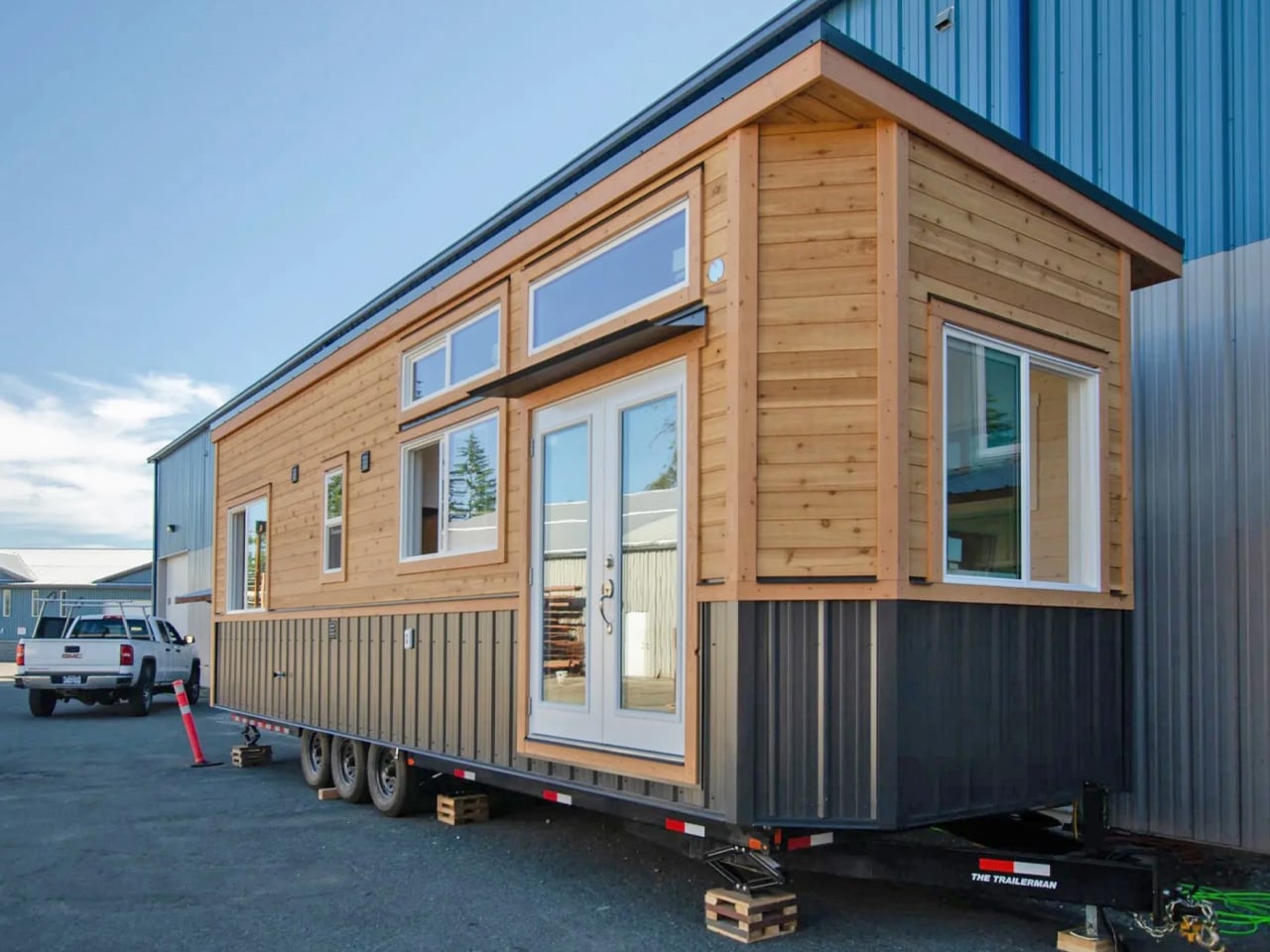
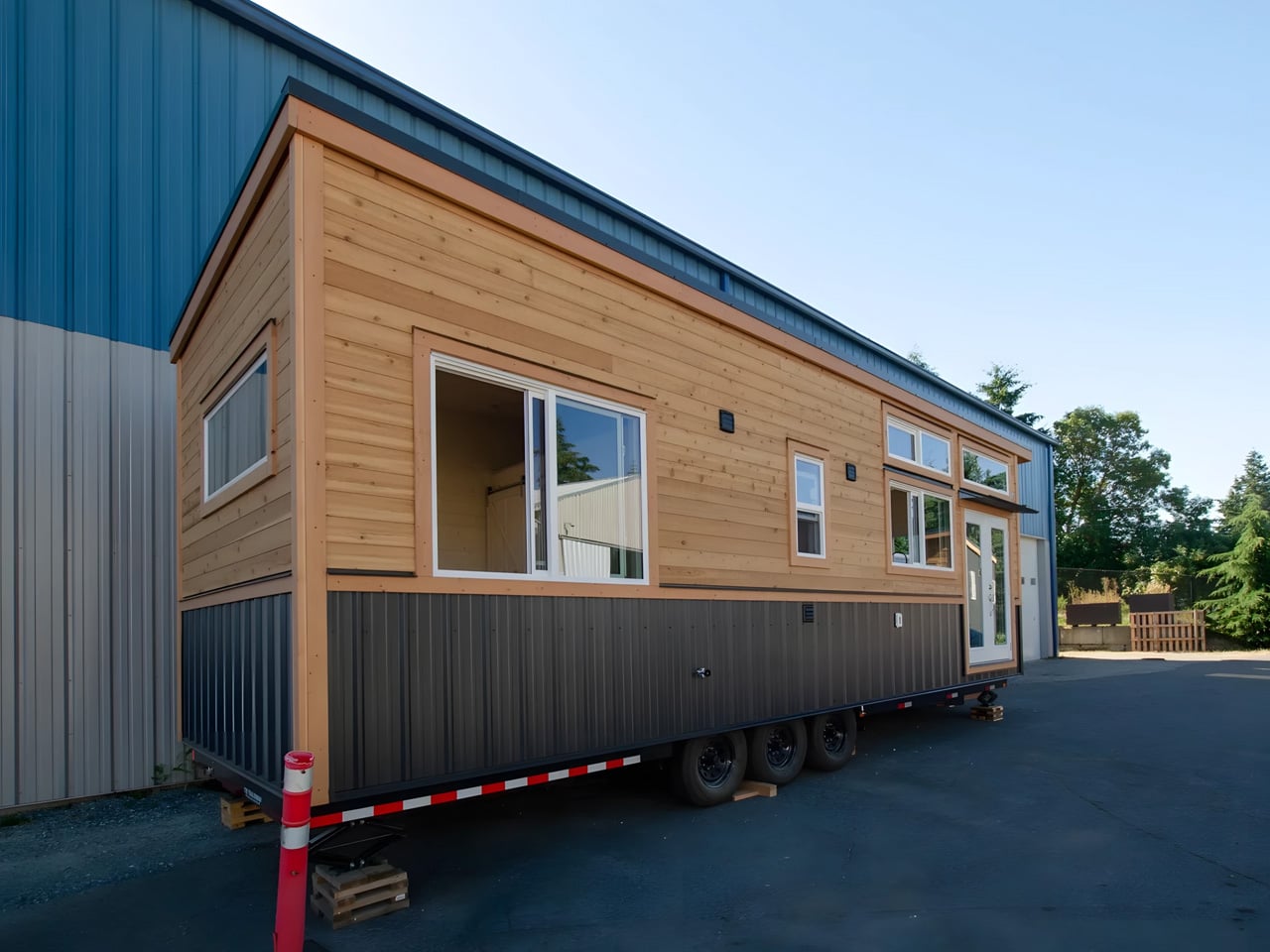
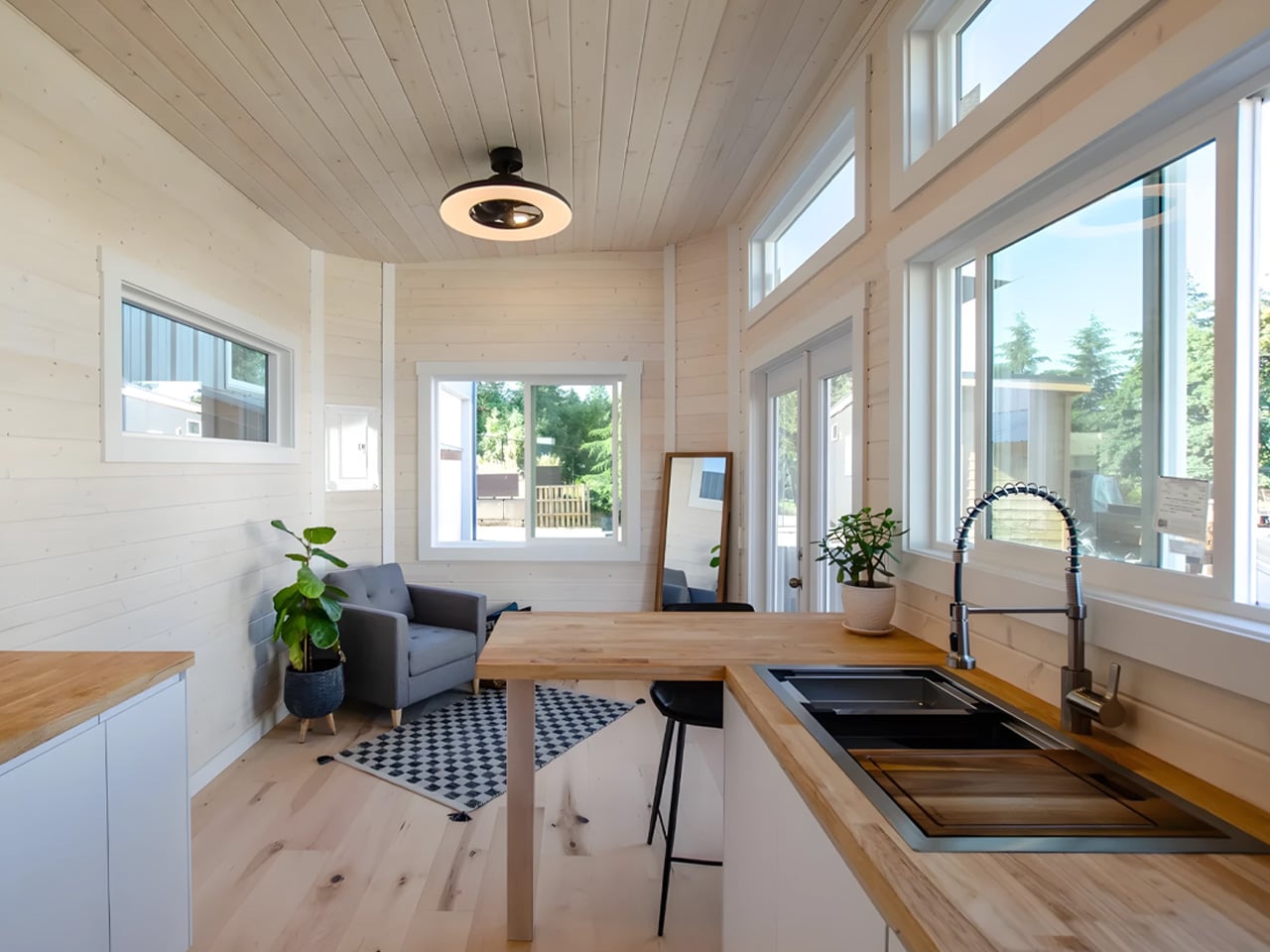
Vancouver Island’s Rewild Homes has introduced the Dove, a single-storey tiny house that breaks away from conventional dimensions to offer full-time residents a more spacious living experience. Measuring 30 feet long and 10 feet wide, the Dove sits on a triple-axle trailer and challenges the standard 8’6″ width typically seen in tiny homes. That extra width makes a remarkable difference in creating an interior that feels genuinely livable rather than cramped, positioning the Dove as a serious option for those considering permanent downsizing.
The exterior showcases a West Coast aesthetic with durable metal siding accented by cedar trim, topped with a sloping metal roof. This material choice balances longevity with visual warmth, creating a home that looks equally at home in rural settings or more developed tiny house communities. The design maintains a clean, modern profile while nodding to traditional cabin architecture, giving the Dove a timeless quality that should age well both structurally and stylistically.
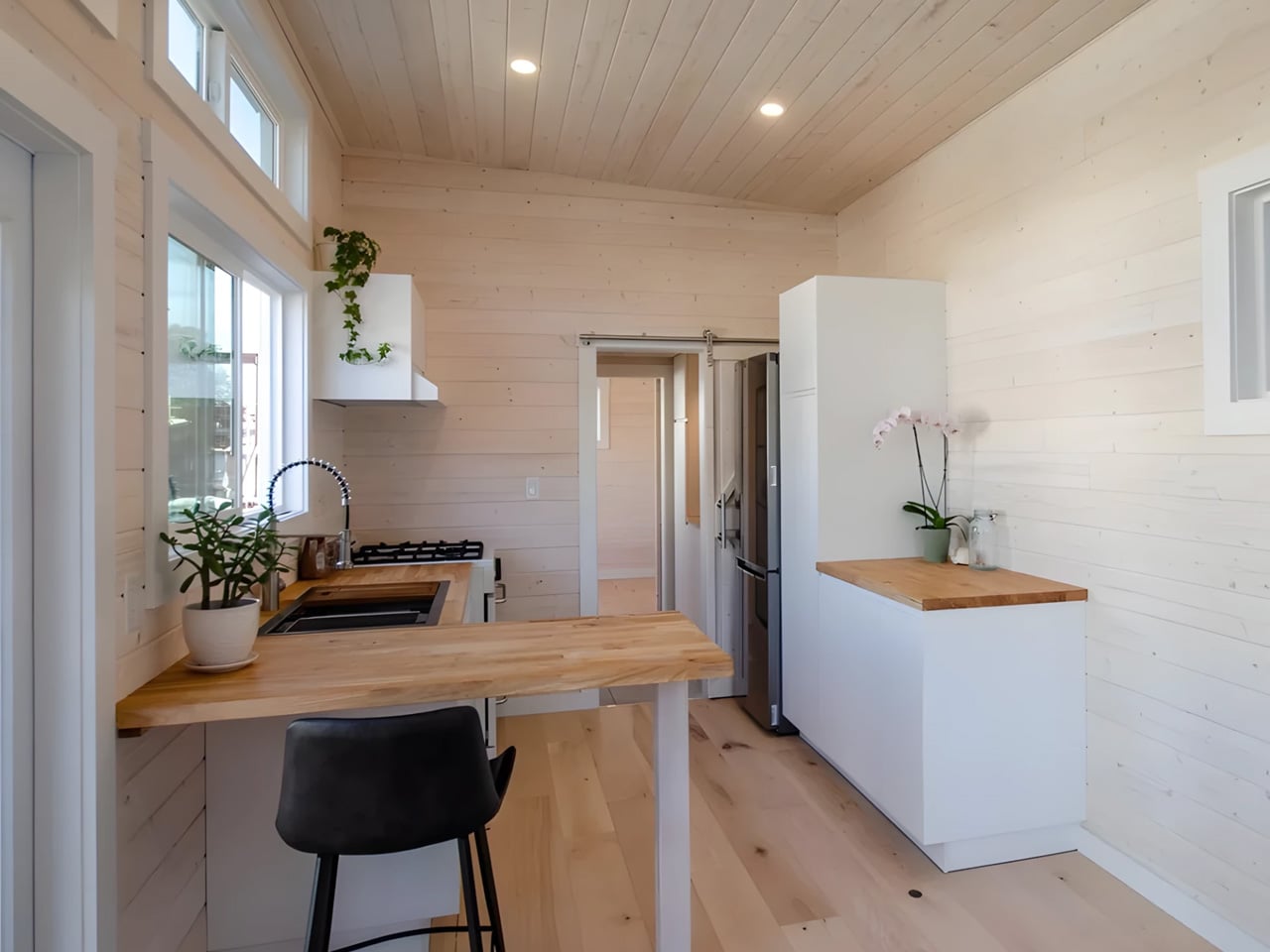
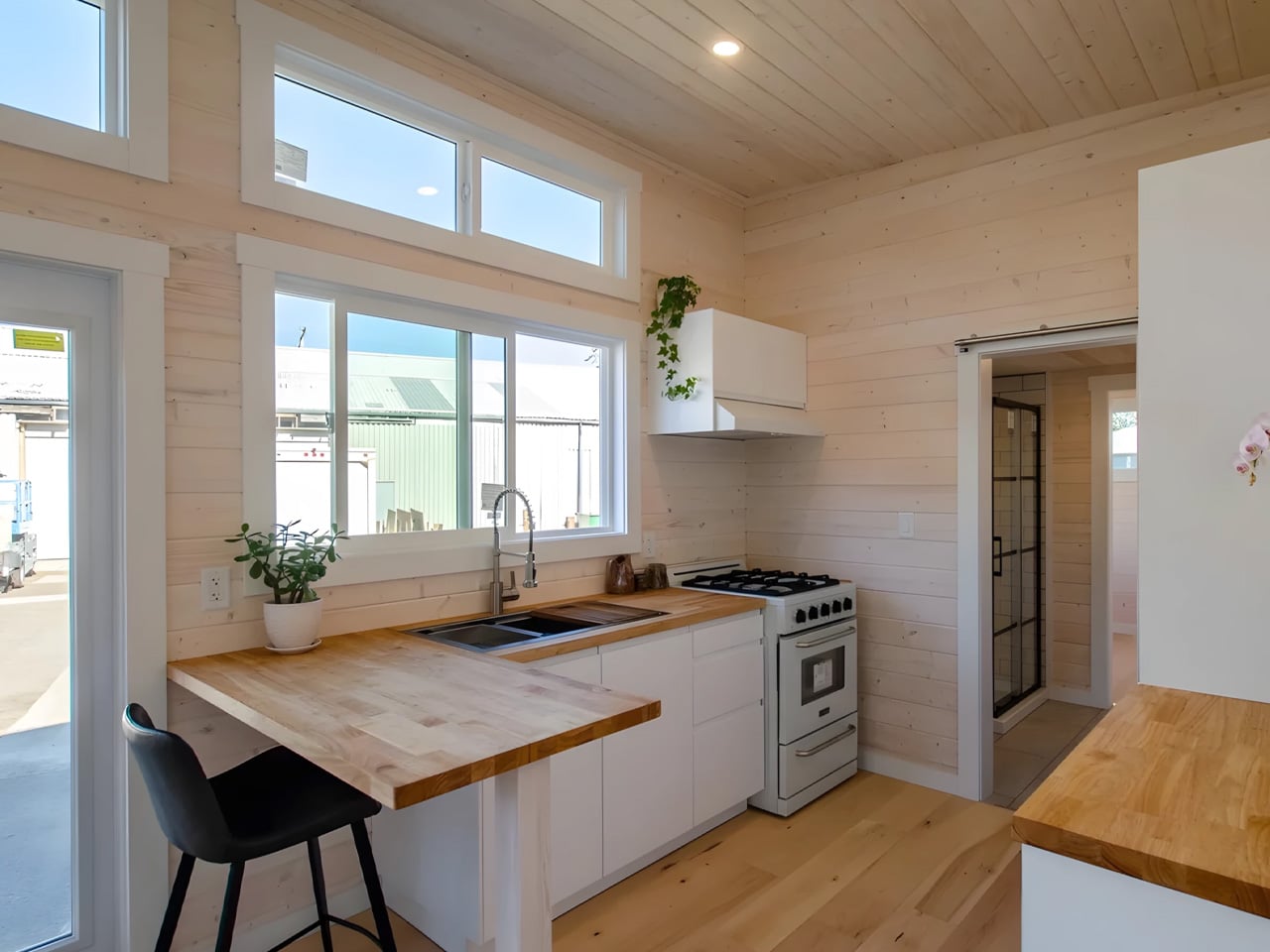
Inside, the single-floor layout eliminates the ladder-accessed lofts that many find impractical for daily living. The kitchen area features ample butcherblock counter space, including a designated eating bar that creates a proper dining zone without requiring a separate table. This setup works particularly well for the Dove’s intended capacity of two people, allowing one person to cook while the other sits comfortably nearby. The open floor plan takes full advantage of that 10-foot width, creating sightlines that make the 30-foot length feel more generous than the square footage might suggest.
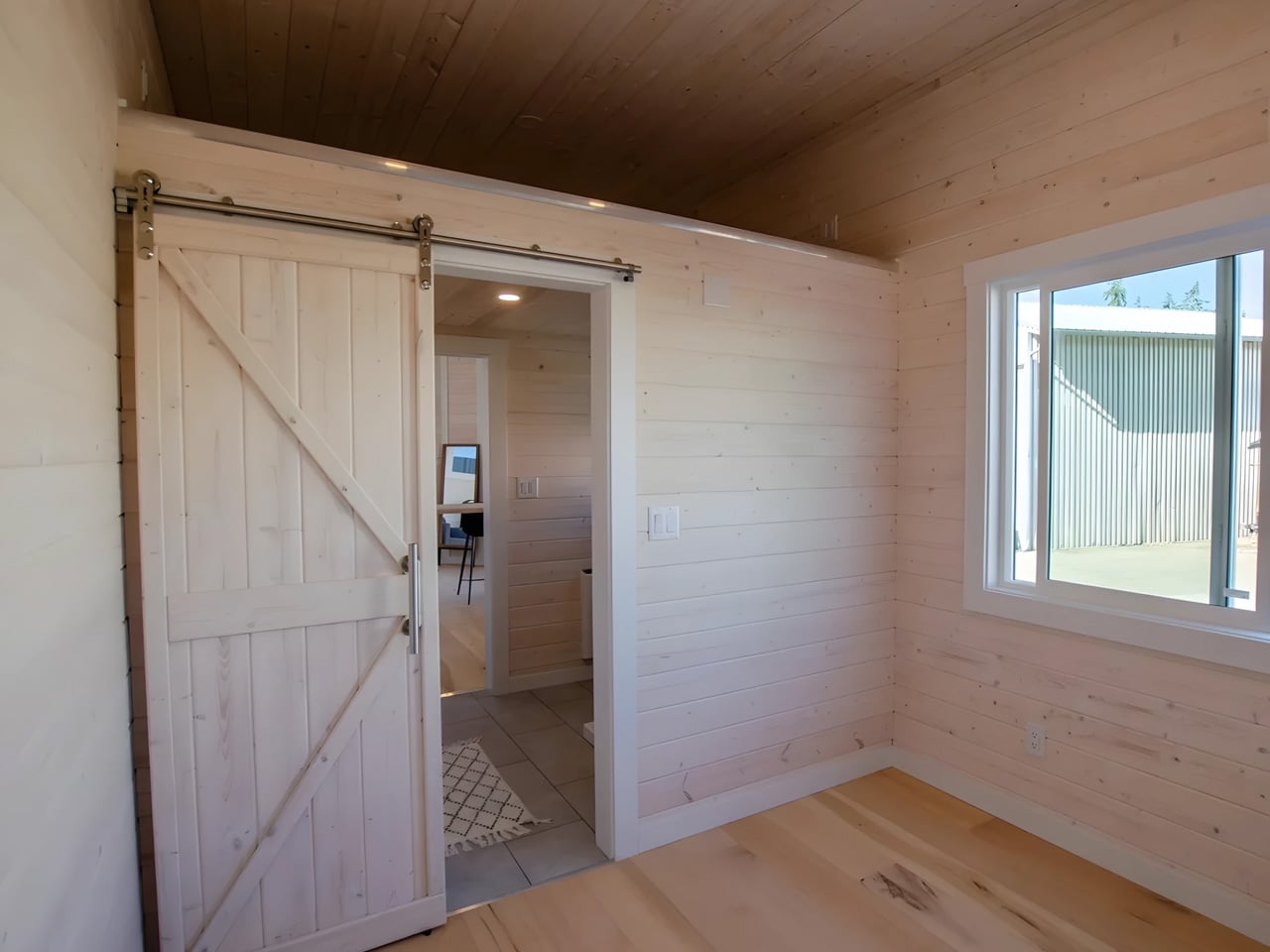
The walk-through bathroom stands out as a genuine luxury in the tiny house category. A beautiful tiled shower occupies a substantial portion of the space, large enough to feel like a proper bathroom rather than an afterthought. The walk-through design connects different zones of the house while maintaining privacy, a layout choice that reflects thoughtful planning rather than simply fitting fixtures wherever they might squeeze in.
The ground-floor bedroom eliminates the need to climb to a sleeping loft each night, a feature that significantly improves accessibility and aging-in-place potential. Rewild Homes equipped the Dove with practical appliances, including a combination washer/dryer unit, a propane range, and propane on-demand water heating. These choices support off-grid capability while maintaining the conveniences most people expect from a permanent residence.
Built in Nanaimo, British Columbia, the Dove represents Rewild Homes’ commitment to quality materials and custom construction. The extra-wide frame and single-storey design create a home that accommodates full-time living without the compromises that make many tiny houses feel like temporary solutions. For couples or individuals seeking a properly scaled-down home rather than a novelty dwelling, the Dove delivers functional space within a compact footprint.