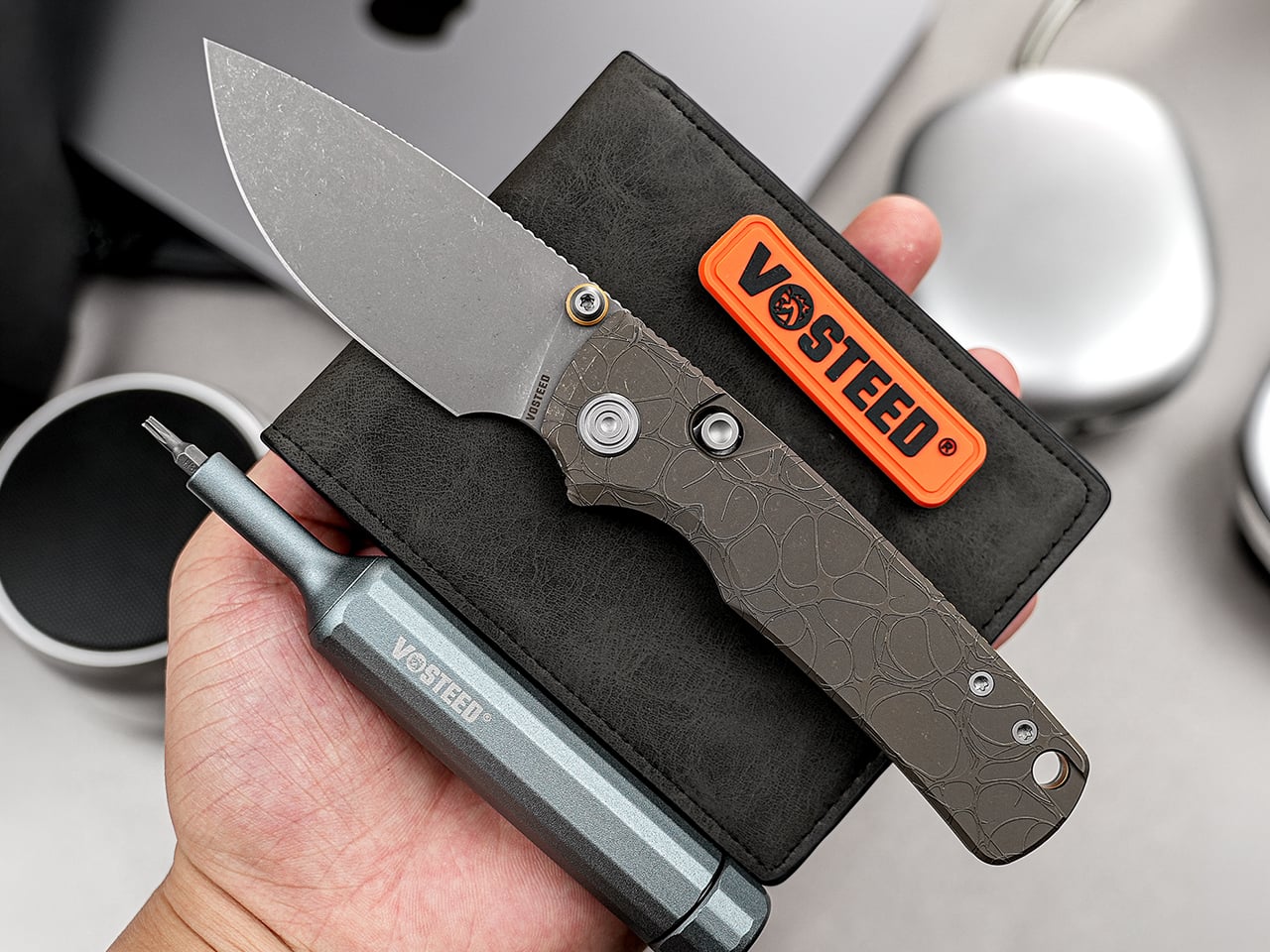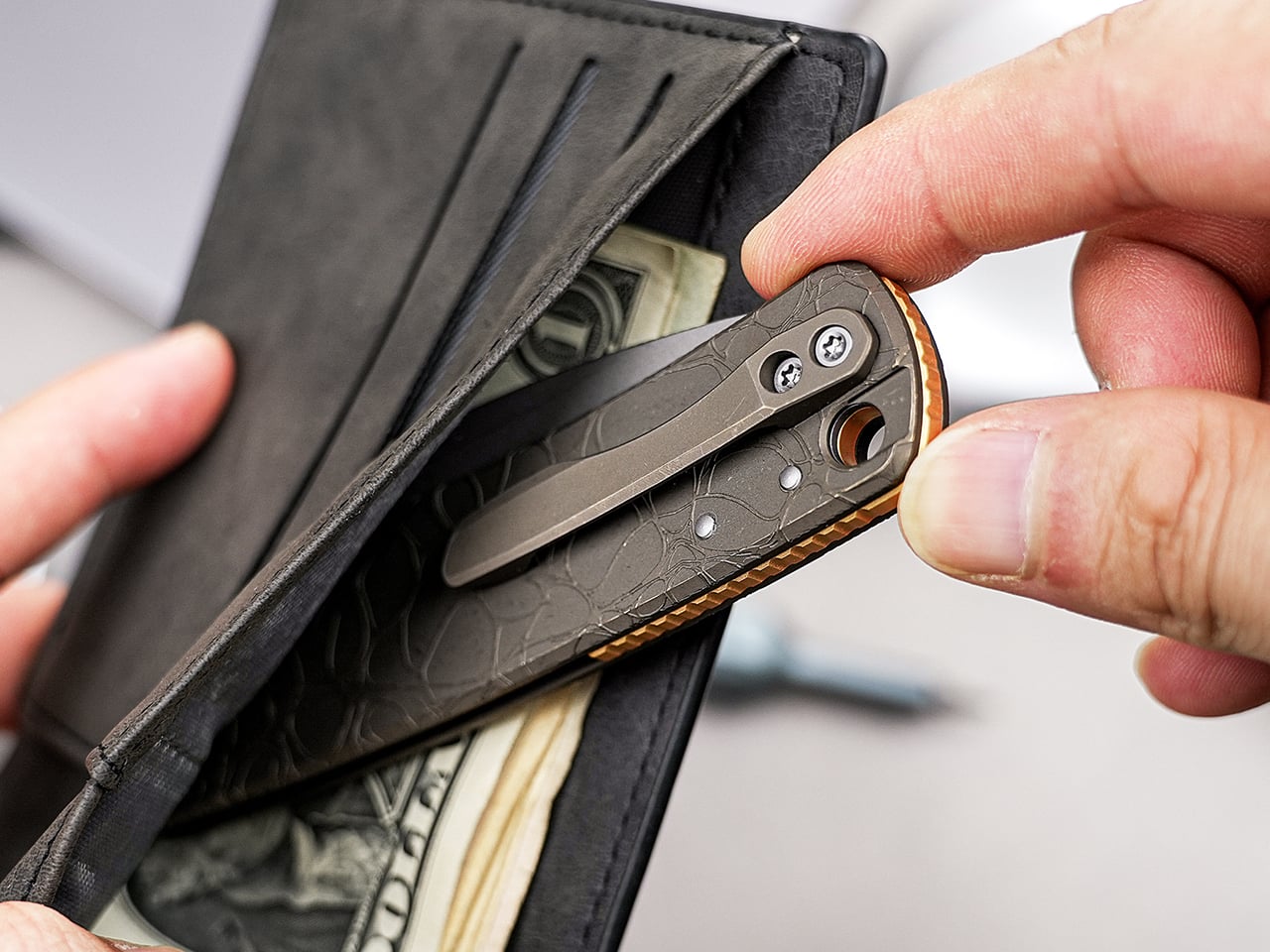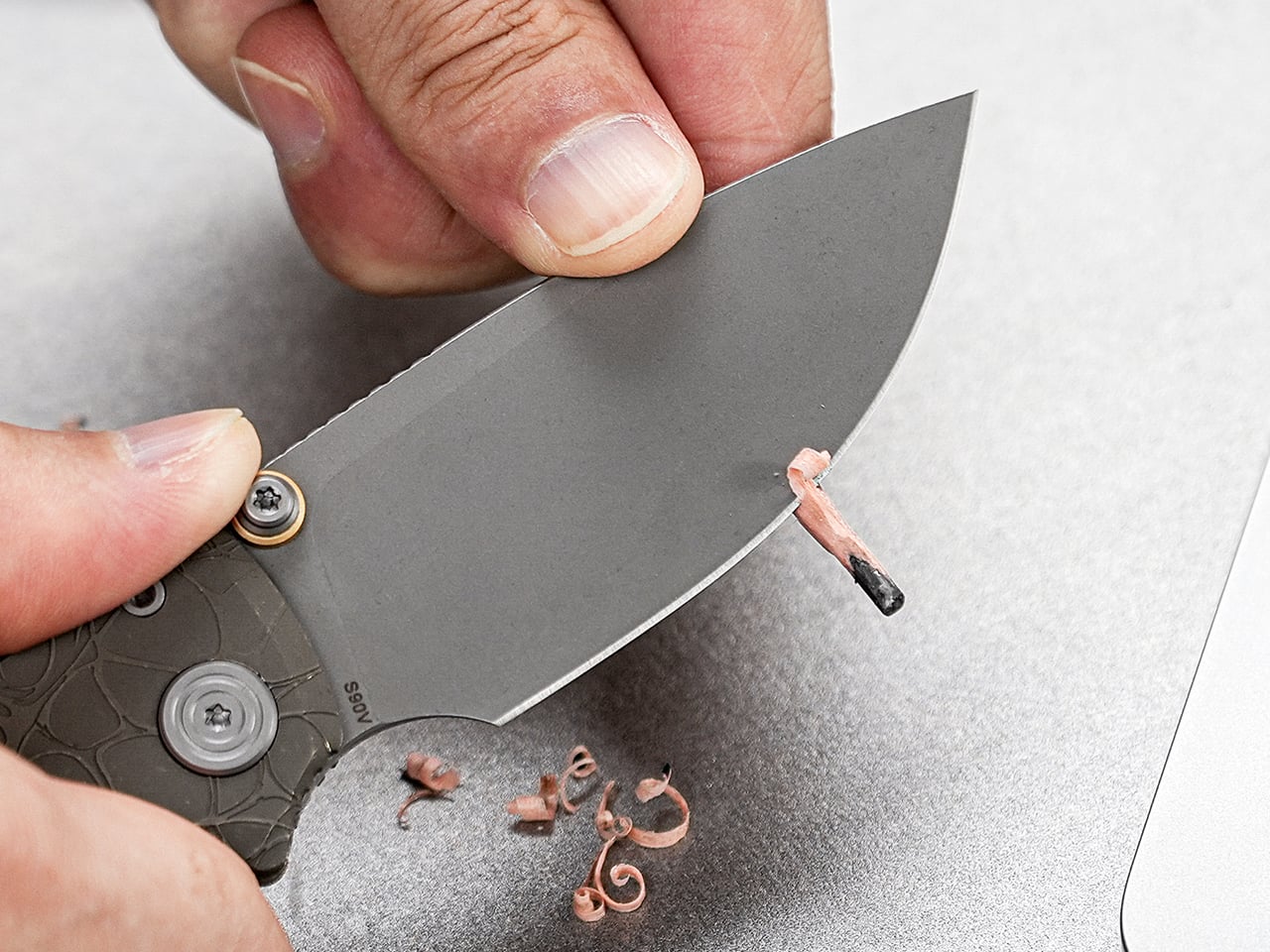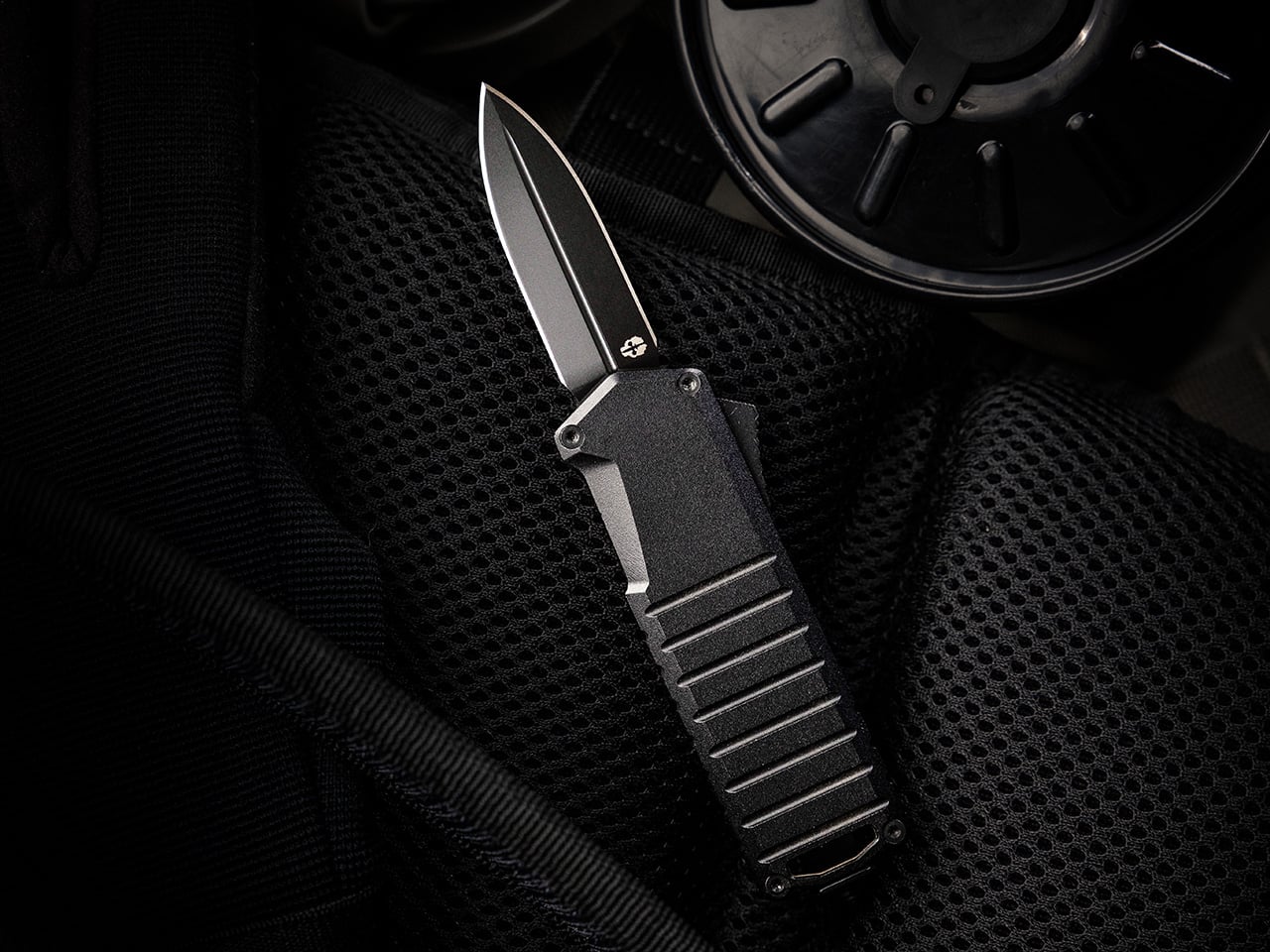
Why OTF Knives are Objectively Better than Folding Knives

Speed settles a lot of arguments. Ask anyone who carries a knife daily and they’ll eventually get around to the deployment question: how fast can you get the blade out, how cleanly, and with how many fingers occupied. Folders demand a pivot, a swing, and depending on the locking mechanism, a deliberate wrist motion before the blade is truly ready. OTF knives skip all of that. One thumb movement sends the blade straight out the front in a single linear motion, and it locks automatically. There’s no arc, no fiddle factor, and no grip position the hand needs to be in before deployment works. That mechanical simplicity is a genuine advantage that compounds across every use case, whether it’s emergency cutting, utility tasks, or the kind of one-handed operation that makes a real difference when your other hand is occupied.

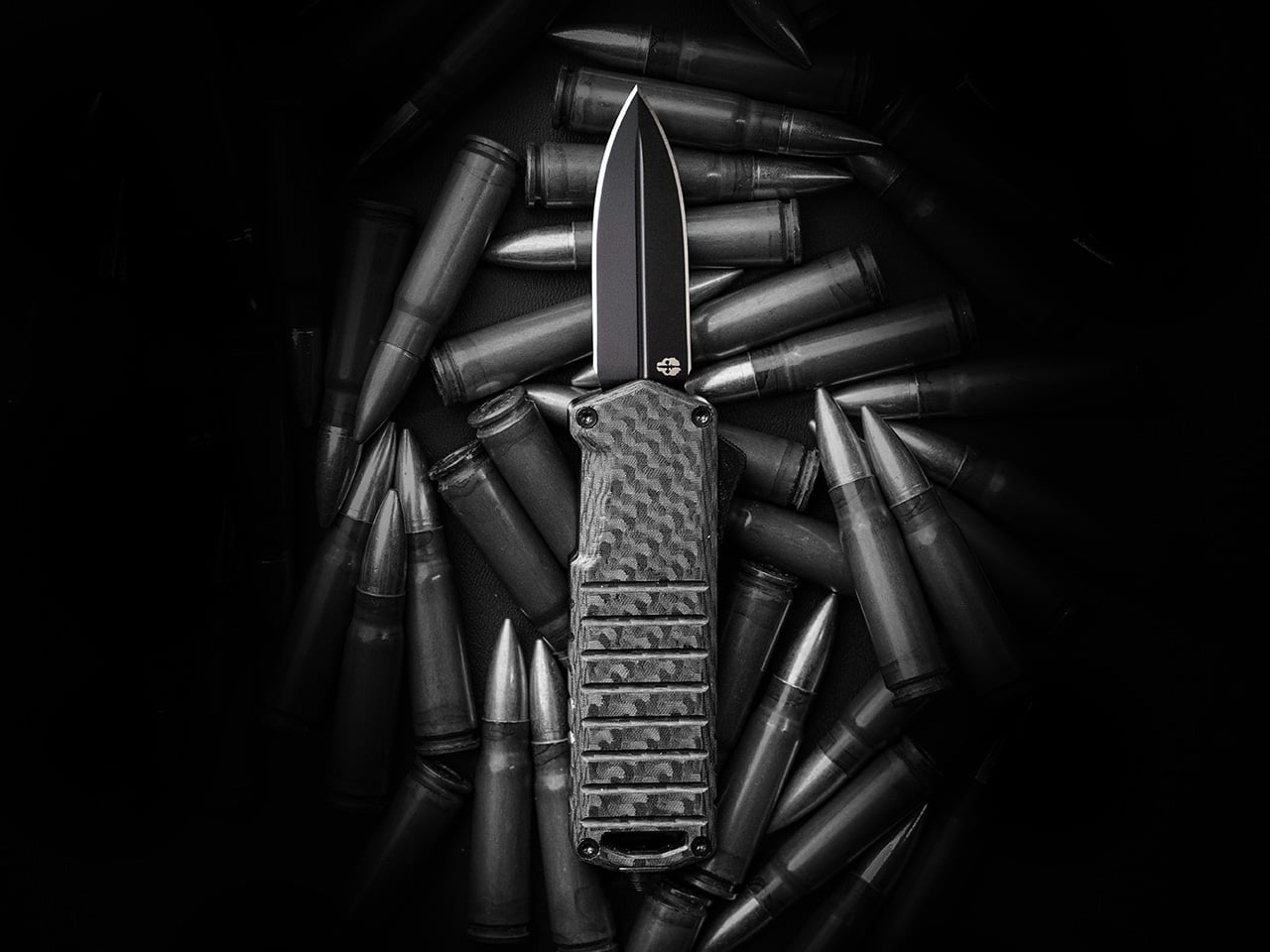
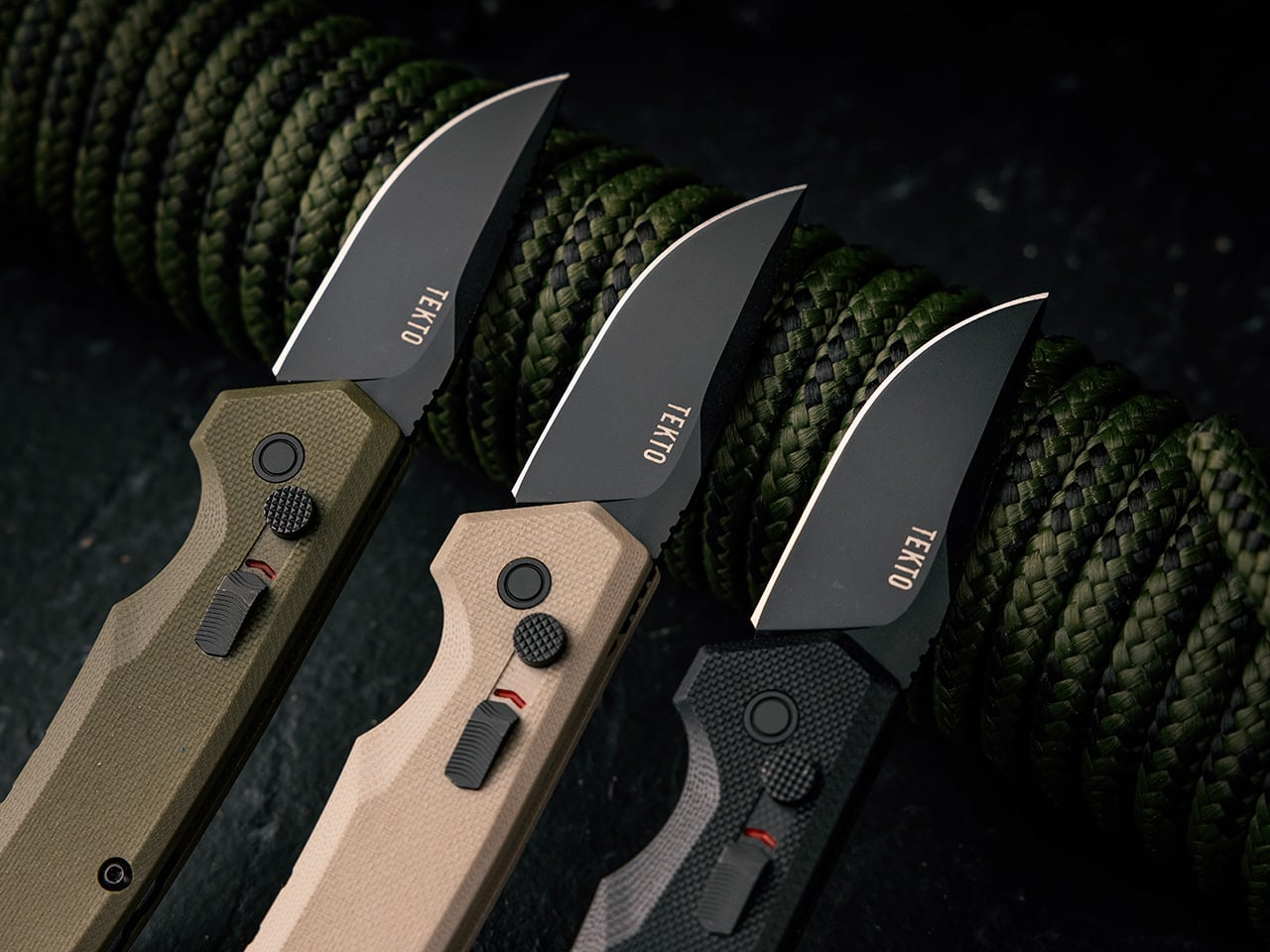
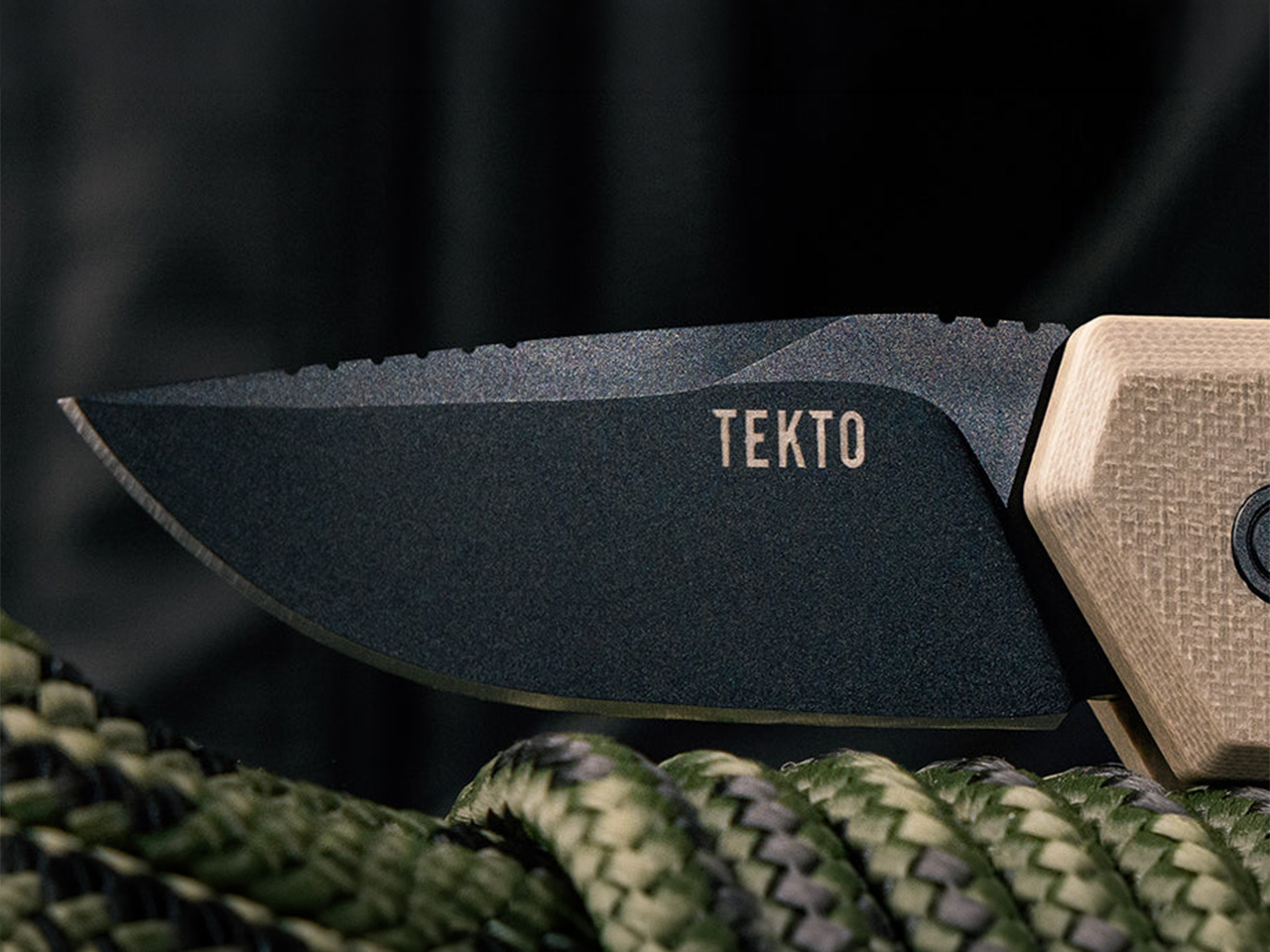
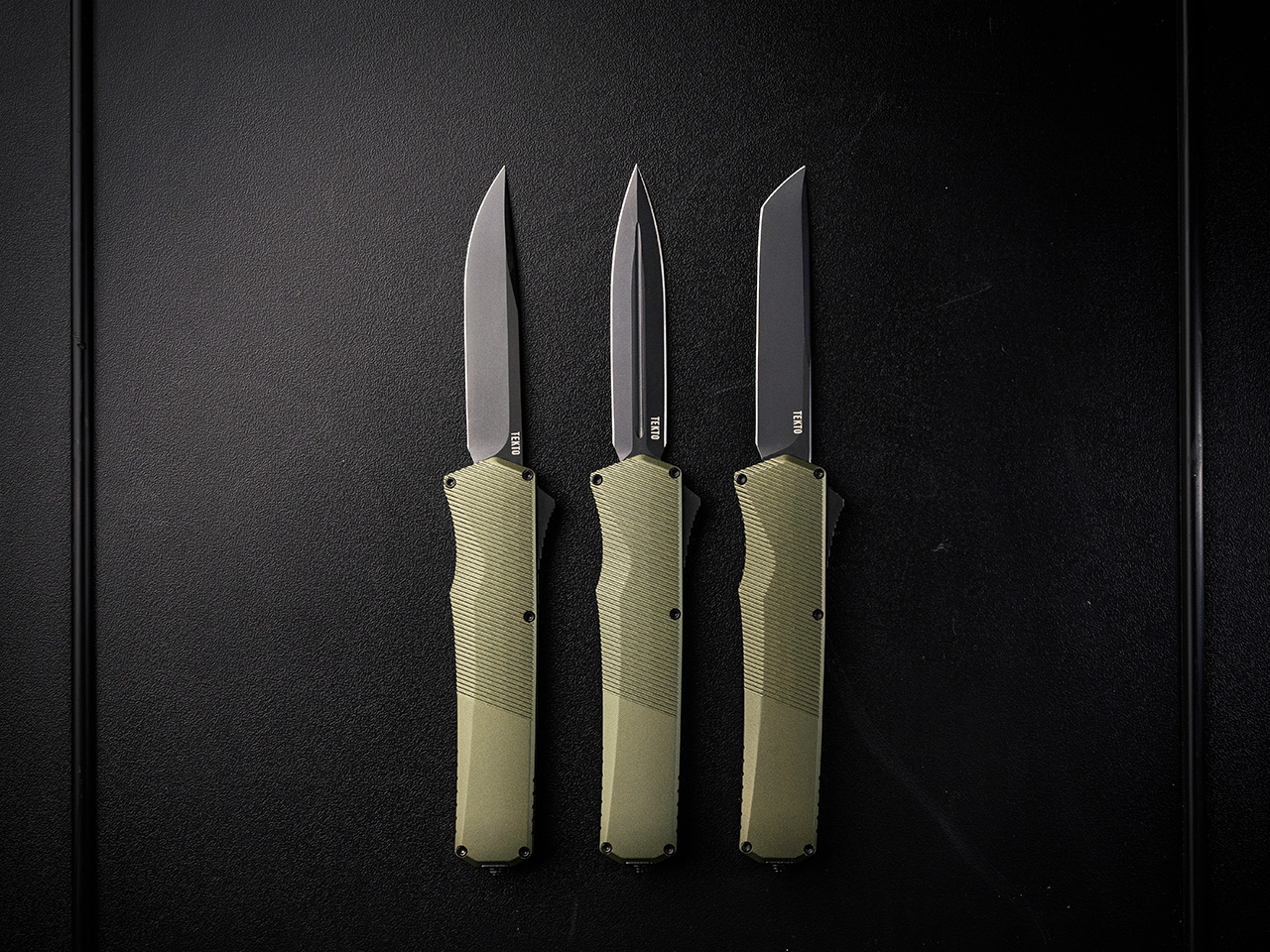
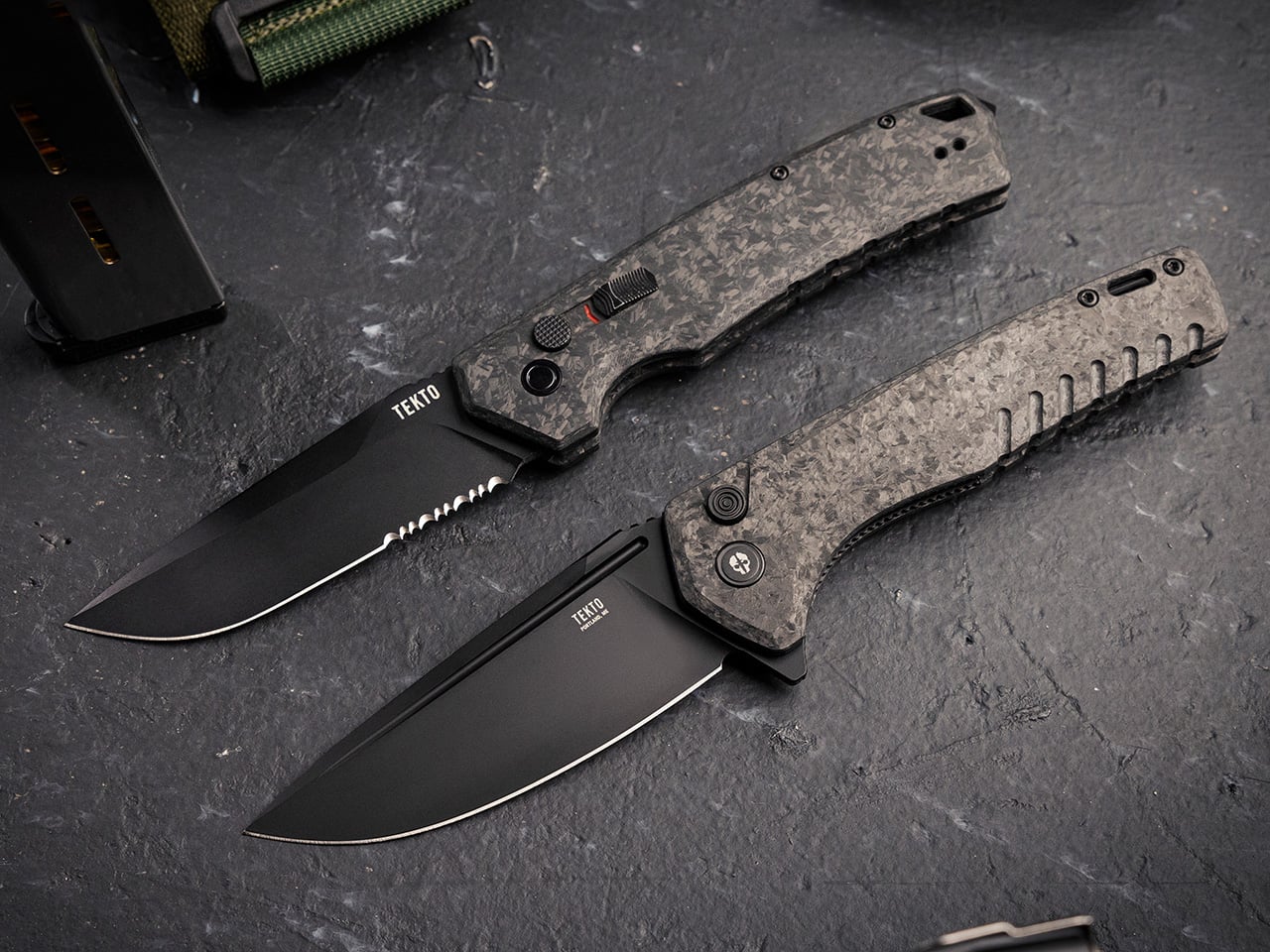
The A3 Delta, the A5 Spry, and the Spry Mini all operate on that same core principle: forward, fast, locked. Tekto’s folder range earns its place as refined everyday carry, but the OTF models are engineered around the reality that access speed and single-hand operation are non-negotiable for a tool you actually rely on. The A5 Spry, carrying an S35VN blade in a precision-contoured handle, represents the tactical end of that thinking. The A3 Delta Mini takes the same OTF discipline and packages it into a compact, California-legal form. The through-line across the range is a commitment to the mechanism itself, treating the out-the-front action as a feature worth designing around, a mechanical conviction rather than a marketing angle.

Click Here to Buy Now: 15% off, use coupon code “YANKO”. Hurry, deal ends in 48-hours!

Single-Motion Deployment Changes the Entire Calculation

The A3 Delta

The core mechanical difference between a folder and an OTF comes down to the number of steps involved in getting the blade ready. A folder, even a fast one with ball bearings, requires the user to find a stud or flipper, apply pressure in a specific direction to initiate a pivot, and wait for the lock to engage. That sequence takes a fraction of a second for a practiced user, but it’s still a sequence. An OTF knife reduces that sequence to a single linear push. The thumb finds the switch and moves it forward; the knife does the rest. This removes the pivot, the swing, and the lock engagement from the user’s list of responsibilities.

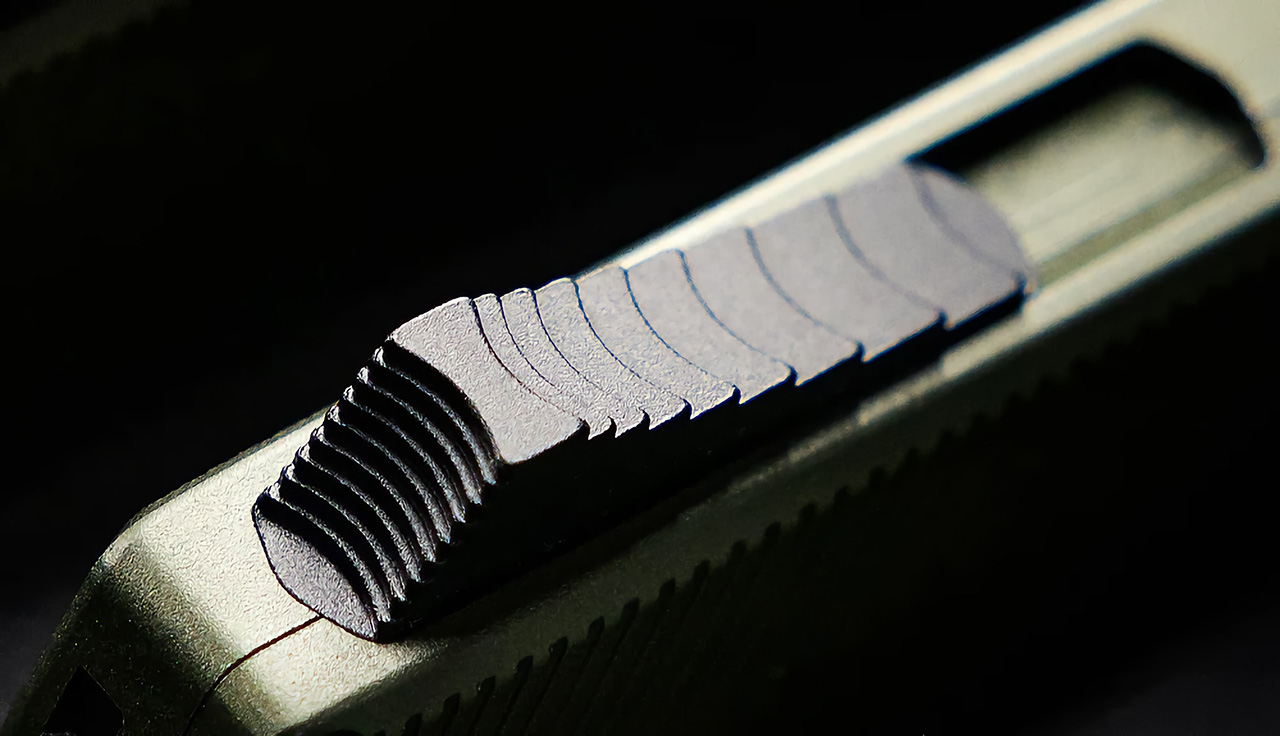
This single-motion system translates to a higher degree of real-world reliability. When one hand is busy holding something in place, there’s no need to adjust your grip or use a second hand to get the blade out. The best OTF designs place the deployment switch exactly where the thumb naturally falls, making the act of gripping the knife and deploying it part of the same fluid motion. It’s a small ergonomic detail that makes a huge operational difference, turning the knife into an extension of the hand in a way a folder’s more complex mechanics can’t quite match.

Grip Position Has No Bearing on Whether the Knife Opens

The A5 SPRY

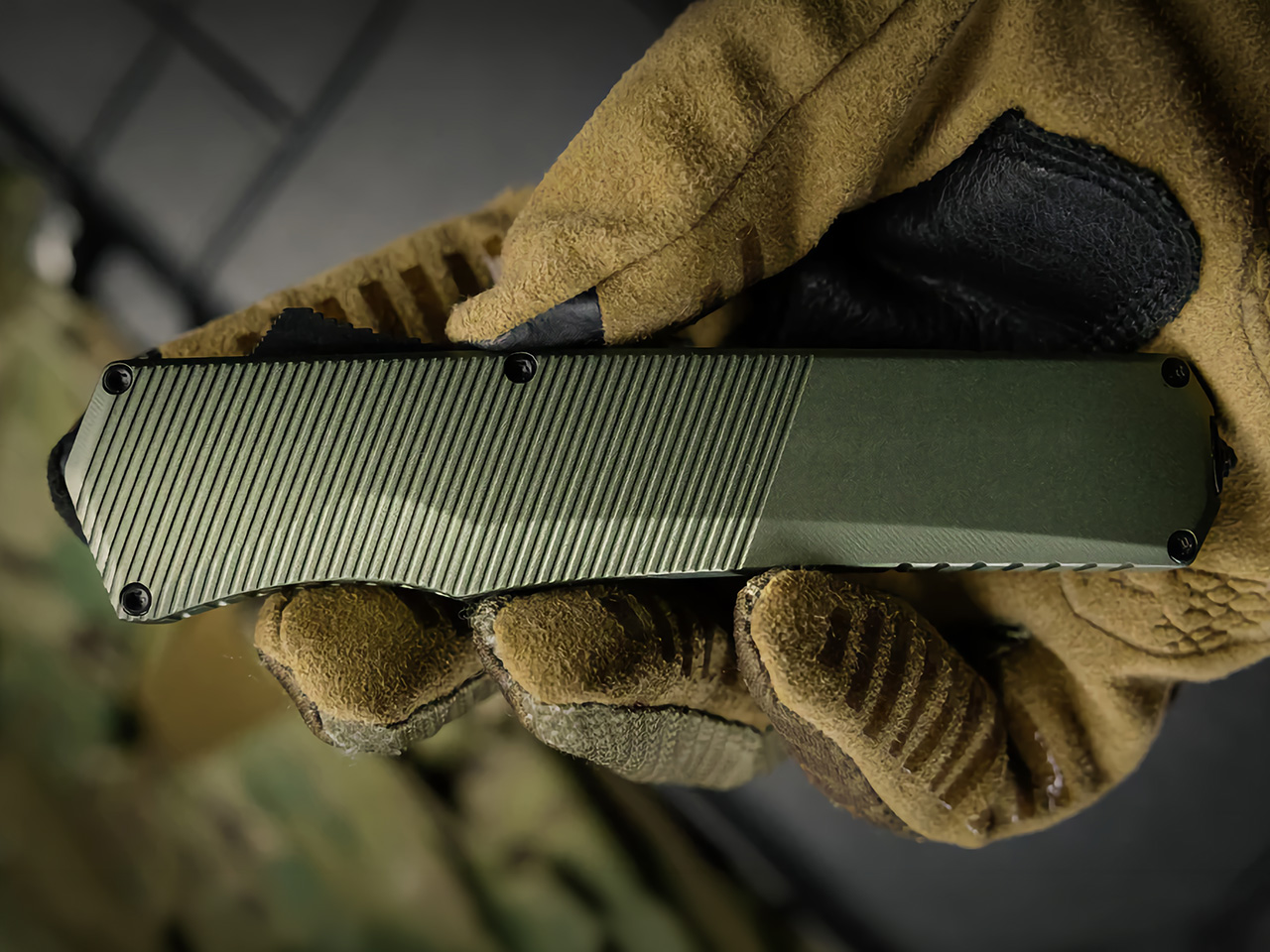
Folders have a specific vulnerability that rarely gets acknowledged: they require a deliberate, practiced grip to open reliably. The thumb has to find its target, and the wrist needs to be oriented correctly for the blade to swing out without obstruction. In calm, controlled conditions, this is a minor point of practice. But in a hurry, or when wearing gloves, or when your hands are wet or cold, that small dependency becomes a legitimate failure point. OTF knives are functionally immune to this problem. Because the blade travels on an internal, linear track, the mechanism doesn’t care how the handle is being held.

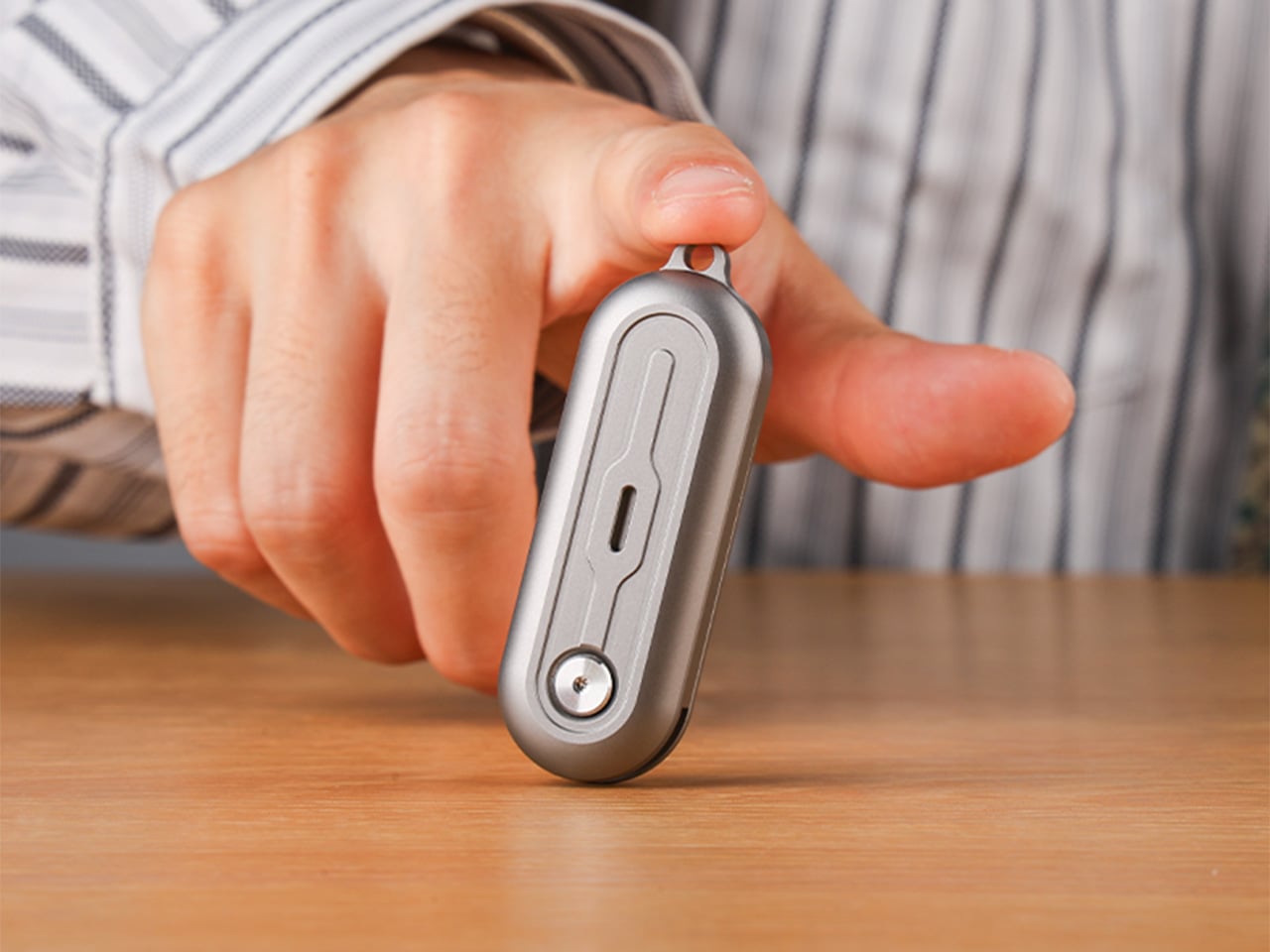
This operational consistency is one of the strongest arguments for the OTF format, and it becomes even more apparent in smaller knives. Compact folders can be notoriously fiddly, with tiny thumb studs and short handles that are hard to manage. A compact OTF, however, deploys with the same authority as its full-sized counterpart. Models with blade lengths under two inches still offer an excellent blade-to-handle ratio and a full, confident grip, proving that the mechanism scales down without losing its inherent mechanical advantage.

Retraction Is as Fast as Deployment, and That Actually Matters

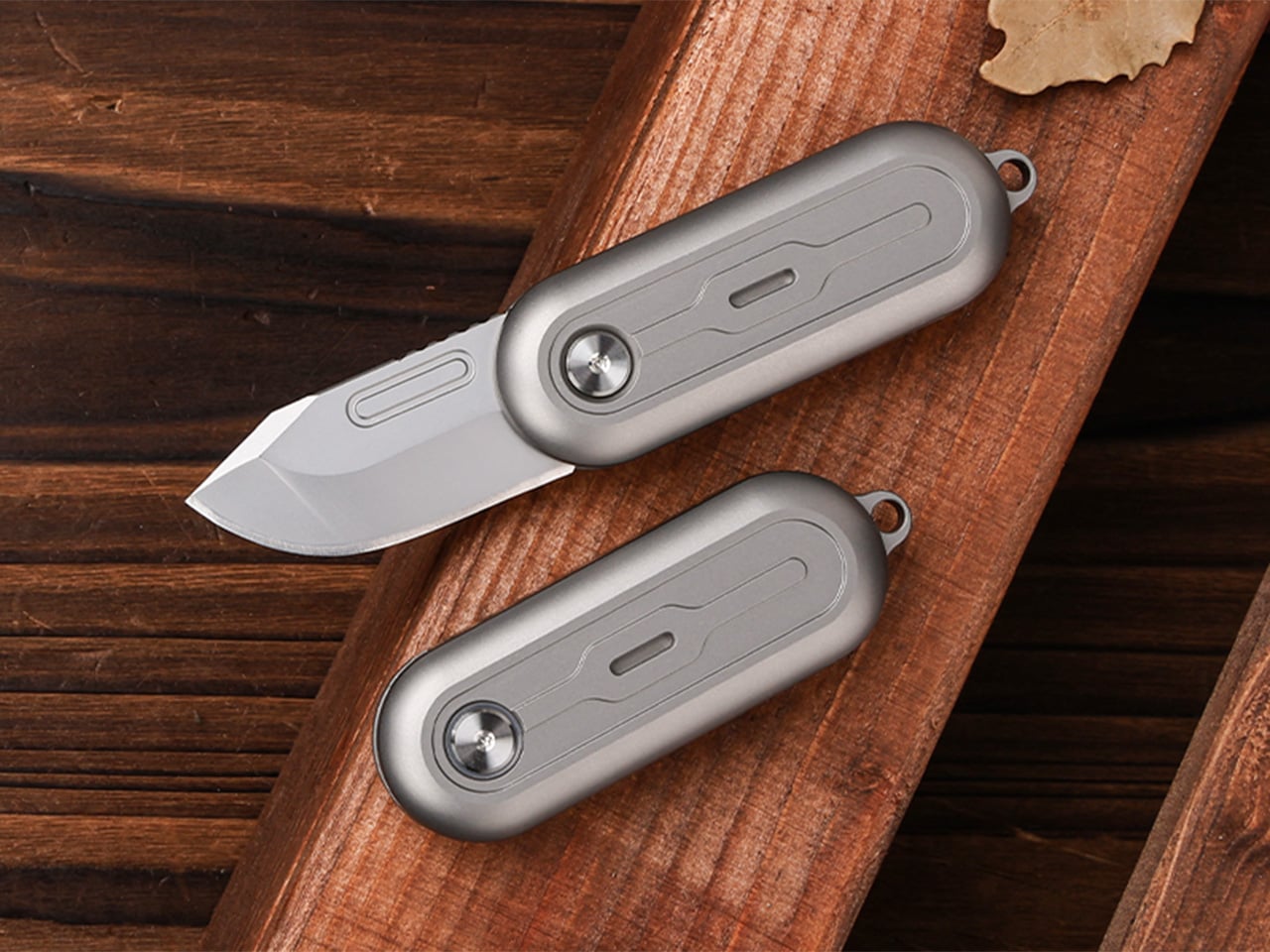
The A5 SPRY MINI

Closing a folding knife is a deliberate act. You have to consciously disengage the liner lock, frame lock, or button lock, then carefully fold the blade back into the handle, making sure your fingers are clear. On a well-made folder, it’s a secure process, but it requires your full attention. An OTF knife retracts with the same speed and simplicity as it deploys. A single pull on the switch sends the blade back into the handle, where it locks just as securely as it does when open. The knife is either fully engaged or fully stowed, with no hazardous in-between state.

This bidirectional action has practical value in any scenario where a tool needs to be put away quickly and safely. It also introduces a level of safety that folders can’t offer. A half-closed folder is a risk; a retracted OTF is a mechanically secured object. The confidence this provides is tangible for anyone who uses their knife frequently throughout the day. The crisp, reliable action of modern OTF mechanisms, both in and out, is a testament to how mature the engineering has become.

The Slim Profile Comes Without Mechanical Trade-offs

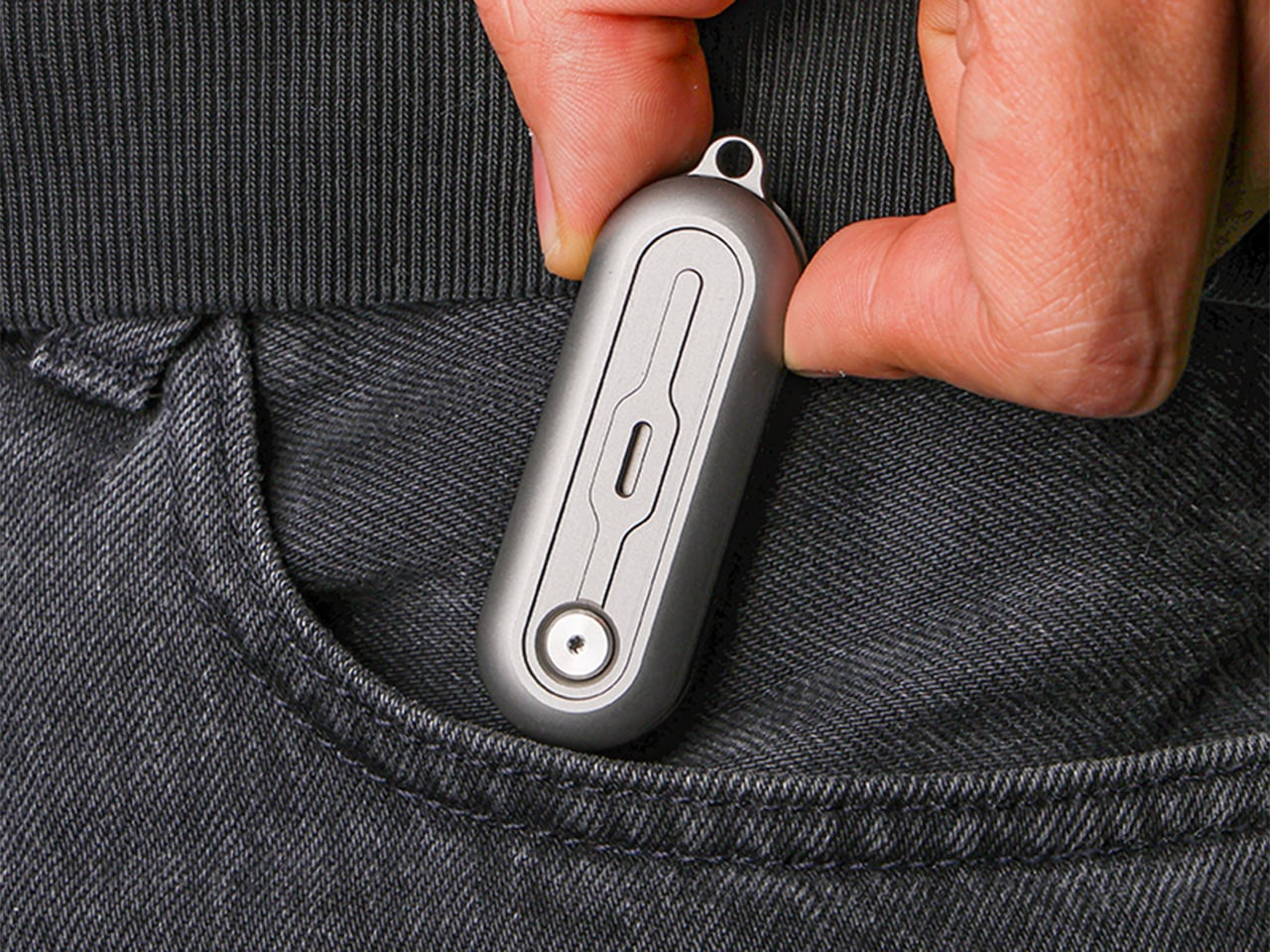
The A3 DELTA MINI

Many thin folding knives make compromises to achieve their slim profile. The pivot area is often a point of weakness, and a thin handle can make a strong locking mechanism difficult to integrate. OTF knives, by their very nature, are built on a linear chassis. The internal mechanism runs along the length of the handle, not across its width. This means the design can be inherently slim and narrow without sacrificing the strength of the lock or the reliability of the deployment. Thinness is a natural byproduct of the OTF’s structure, not an afterthought achieved by removing material.

This structural advantage allows for knives that are remarkably easy to carry while still being built from robust, high-performance materials. It’s common to see OTF models with a handle width of less than half an inch that are still equipped with premium steels like S35VN, rated for exceptional hardness and edge retention. These builds demonstrate that a slim, pocket-friendly profile and genuine, hard-use strength are not mutually exclusive concepts. The OTF format delivers both, proving you don’t have to choose between a comfortable carry and a capable tool.

The Blade Style Options Are No Longer an OTF Limitation

One of the oldest criticisms leveled against OTF knives was a perceived lack of versatility in blade shapes. For a long time, the market was dominated by a few basic drop point or dagger styles. That criticism is now completely outdated. The modern OTF category has evolved to a point where it offers the same full spectrum of blade geometries available in the high-end folder market. Whether you need the piercing capability of a tanto, the slicing efficiency of a drop point, or the specialized profile of a dagger, there is an OTF knife built for the task.

This expansion of options has effectively eliminated the last significant advantage that folders held. It is now common for a single, popular OTF model to be offered in multiple blade configurations, and even in both full-size and compact versions. This allows users to select the precise tool they need without having to abandon the superior mechanical advantages of the OTF platform. Blade selection used to be a compelling reason to stick with a folder; today, it’s just another area where OTF knives have achieved, and in some cases surpassed, parity.

Click Here to Buy Now: 15% off, use coupon code “YANKO”. Hurry, deal ends in 48-hours!

The post Why OTF Knives are Objectively Better than Folding Knives first appeared on Yanko Design.

8 Best EDC Knives To Choose Based on Your Outdoor Personality

The gear people carry tends to reflect how they move through the world. A minimalist packs light and intentionally. A tactical thinker layers redundancy into every outing. A weekend adventurer just wants something dependable when the trail gets interesting. Knives fall into that same pattern, and picking the right one has less to do with blade length or steel grade than most people assume. It has everything to do with knowing who you are when you step outside.

Tekto has quietly built one of the more interesting EDC knife lineups available right now, spanning OTF automatics, side-opening folders, and premium button-lock builds. Their range runs from sub-2-inch pocket knives to full tactical folders with Zastava Arms collaborations, and the gap between those two endpoints tells you a lot about how wide the brand’s reach actually is. Seven of those knives, each matched to a distinct outdoor personality, make a strong case that the best EDC knife is simply the one built for the way you already carry yourself.

A3 Delta: The Tactician
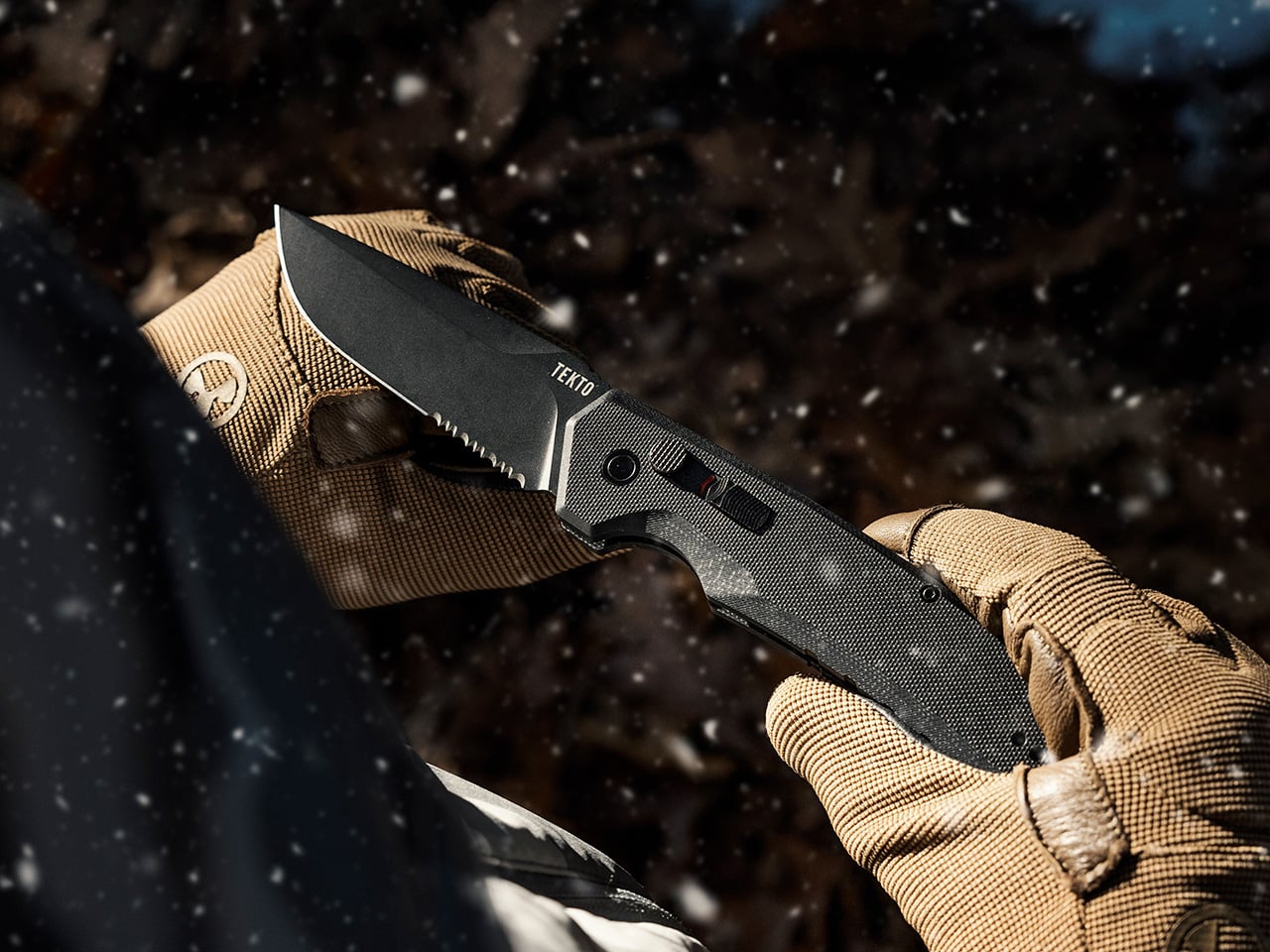
“Always has a plan B, and a plan C.”

There is a type of person who checks their gear before leaving the house, not out of anxiety but out of habit. They might work in security or construction, or they might simply live by a readiness mindset refined over years of outdoor experience. The A3 Delta fits naturally into that carry philosophy. What makes it work for that person is the specific combination of automatic speed and deliberate safety design. When speed matters, the spring-activated side-opening mechanism delivers. When the knife needs to sit in a pocket for hours without incident, the button lock and safety switch handle that too.

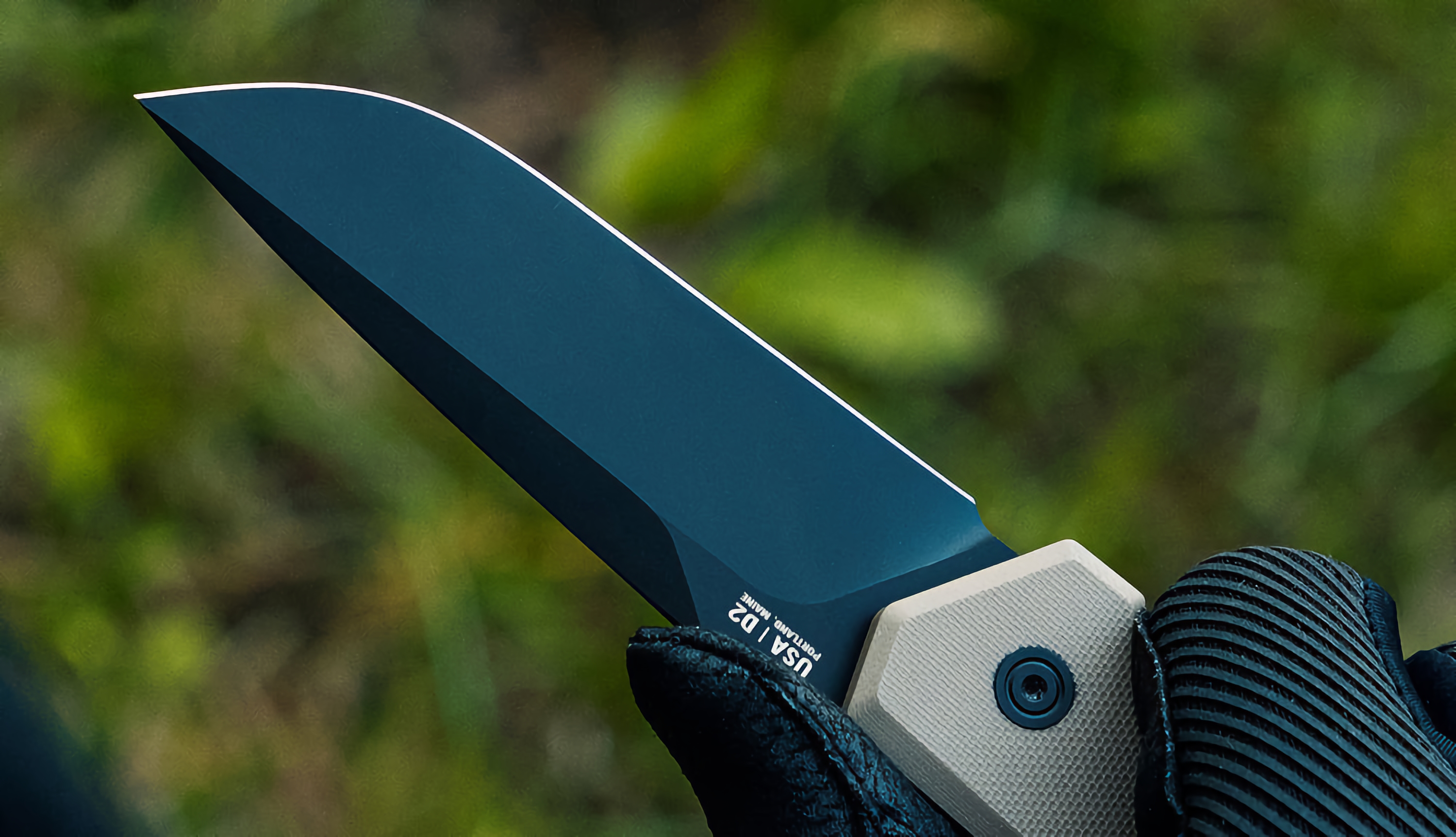
A crimson red indicator on the rear signals when the blade is ready to fire, while a forward shift on the lock reinforces closure against accidental deployment. The blade runs 3.60 inches of titanium-coated D2 steel in a drop point profile, hardened to 60-62 Rockwell, a range that holds an edge through sustained working use. G10 and forged carbon handle scales keep things grippy without adding unnecessary bulk, though at 5.96 ounces this is a knife with real presence. Glass breaker, ambidextrous pocket clip, and lanyard hole round it out at $179.99.

Click Here to Buy Now: $153 $179.99 (15% off, use coupon code “YANKO”). Hurry, deal ends in 48-hours!

A5 Spry: The Backcountry Hunter
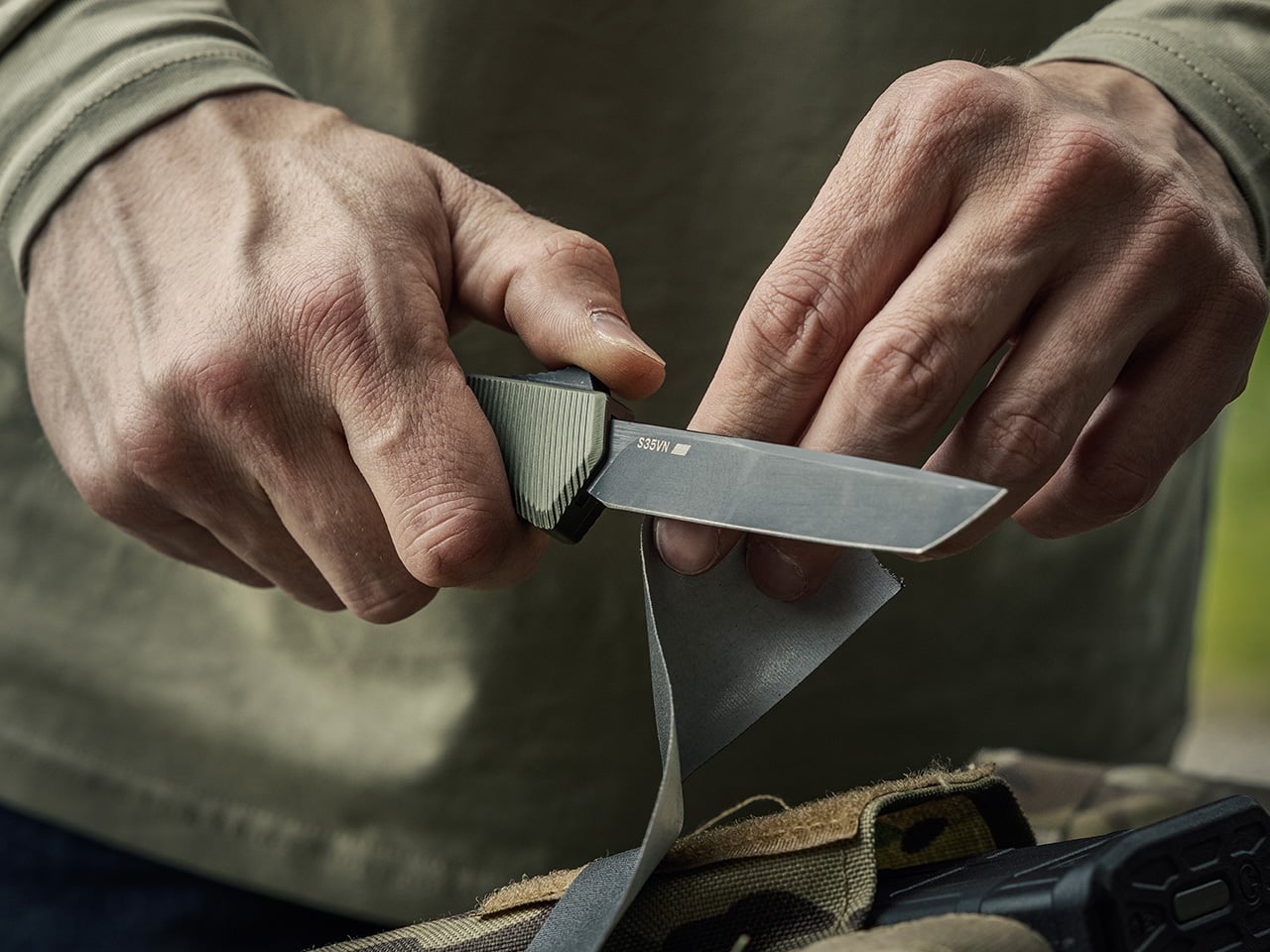
“Doesn’t talk about their gear. Just uses it.”

The A5 Spry suits the kind of outdoors person who values performance that shows up in the field rather than on a spec sheet screenshot. This is the backcountry hunter, the hard-use camper, the person who wants every tool in their pocket to feel fast, capable, and dependable under pressure. Its out-the-front automatic action gives it a clean, direct deployment style that fits someone who likes efficiency and precision in equal measure. The A5 Spry feels most at home with users who spend long days outside and want a knife that carries slim, draws quickly, and handles repeated tasks without fuss.

Tekto built the A5 Spry around a premium S35VN steel blade, a major step up for buyers who care about edge retention, toughness, and corrosion resistance. The blade measures 3.50 inches, and the precision-contoured handle is shaped for a secure, slip-free grip during active use. Its OTF thumb-slide mechanism keeps deployment quick and intuitive, while the overall profile stays compact, light, and easy to pocket for an automatic of this class. The design leans tactical, but the utility is broad enough for daily carry, trail work, and demanding outdoor use.

Click Here to Buy Now: $212.50 $249.99 (15% off, use coupon code “YANKO”). Hurry, deal ends in 48-hours!

F1 Alpha: The Pragmatic Workhorse
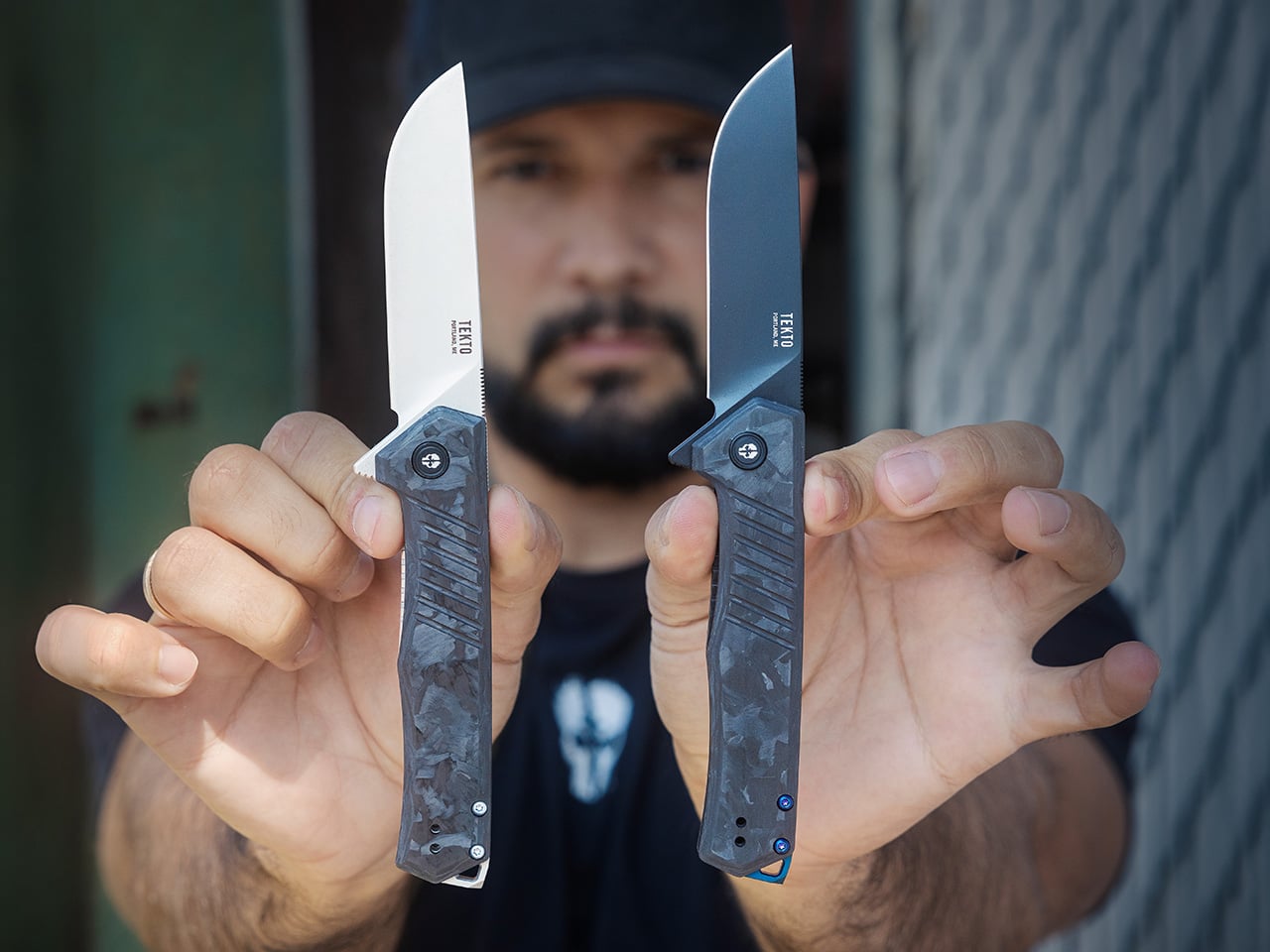
“Carries one knife, uses it for everything.”

The F1 Alpha lines up with the person who actually uses their knife throughout the day, whether that means campsite prep, cutting cordage, opening feed bags, or handling the small repetitive jobs that pile up outdoors. This is the pragmatic nomad, the weekend camper, the trades-minded carrier who values reliability over flash and prefers gear that earns its place through use. The F1 Alpha makes sense for someone who wants one knife to cover a wide range of situations without overthinking the choice. It has the kind of rugged, all-around personality that fits people who carry every day and expect their blade to move easily from routine chores to rougher tasks.

Its 3.1-inch blade is made from titanium-coated D2 steel with a fine edge and full flat grind, which gives it clean slicing ability and solid durability for repeated work. The liner lock keeps operation familiar and straightforward, while ceramic ball bearings help the knife open with quick, smooth action. Tekto also gives the F1 Alpha an ergonomic handle built for comfort and grip, plus a reversible deep-carry pocket clip for easy everyday carry. A glass breaker and lanyard hole add emergency and utility value, rounding out a folder designed to stay useful in real-world conditions.

Click Here to Buy Now: $119 $139.99 (15% off, use coupon code “YANKO”). Hurry, deal ends in 48-hours!

F2 Bravo: The Urban Professional
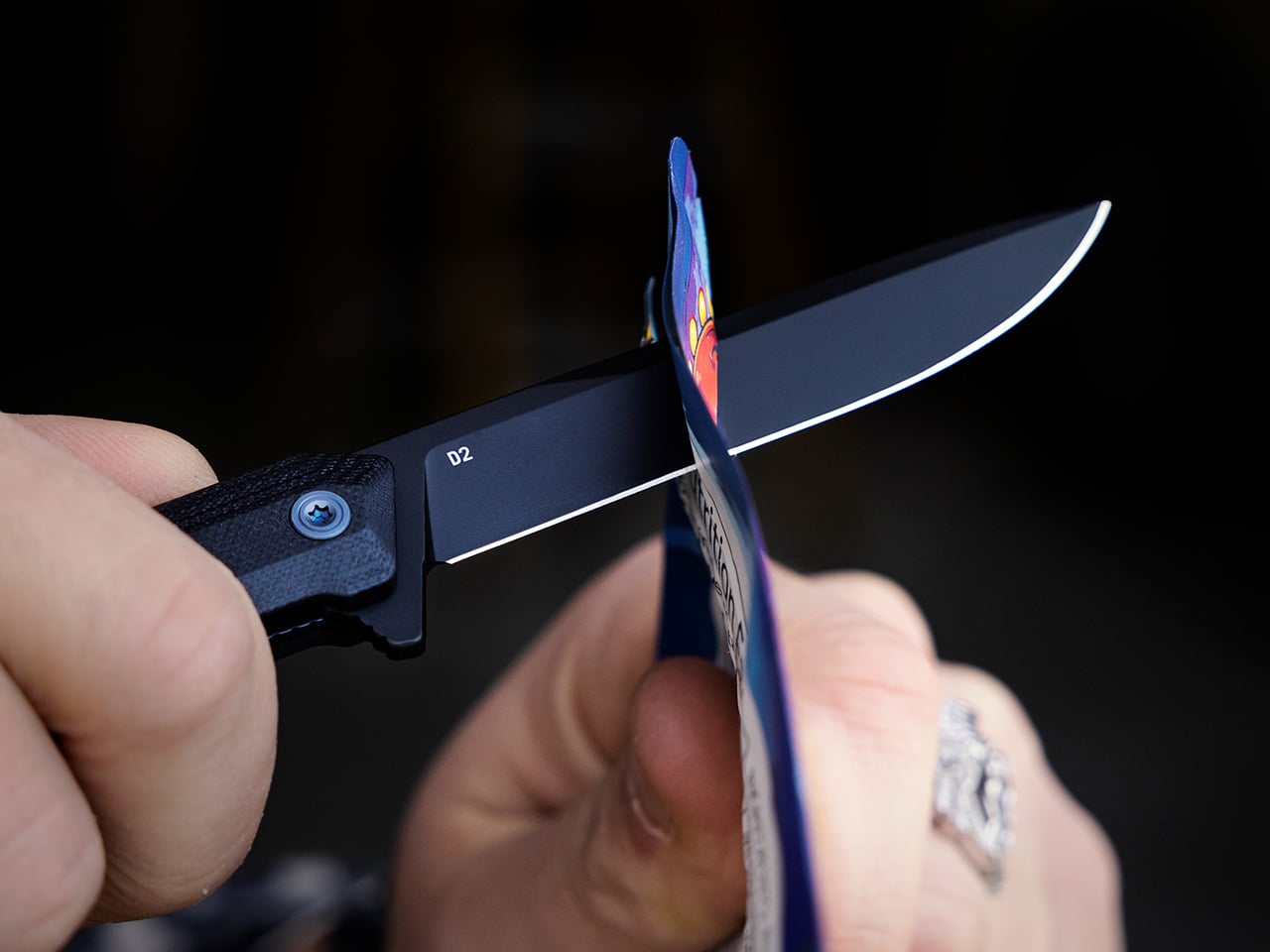
“Dresses well. Carries smart.”

The F2 Bravo is easy to picture in the pocket of someone who wants their EDC to feel intentional, refined, and easy to live with every day. This is the urban professional, the minimalist commuter, the person who appreciates good design and prefers gear that fits seamlessly into a polished routine. They still want utility, of course, but they are not looking for an oversized statement piece clipped to the pocket. The F2 Bravo works for someone who moves between desk, car, coffee shop, and weekend outing without ever needing to swap knives. It has the kind of clean, low-profile presence that suits a thoughtful daily carry style.

At just 2.4 ounces, the F2 Bravo is one of the lightest knives in Tekto’s lineup, which immediately makes it appealing for daily pocket carry. Its slim frame pairs with a titanium-coated D2 steel blade and a liner lock, giving it a straightforward build that stays practical without feeling bulky. The blade length sits in the sweet spot for everyday cutting tasks, while the handle comes in lightweight, durable materials like G10 and forged carbon. Tekto shaped the Bravo with a simpler, more refined silhouette than the chunkier Alpha or Charlie, which is exactly why it lands so well as a gentleman-style folder.

Click Here to Buy Now: $127.50 $149.99 (15% off, use coupon code “YANKO”). Hurry, deal ends in 48-hours!

F3 Charlie: The Heavy-Use Outdoorsman
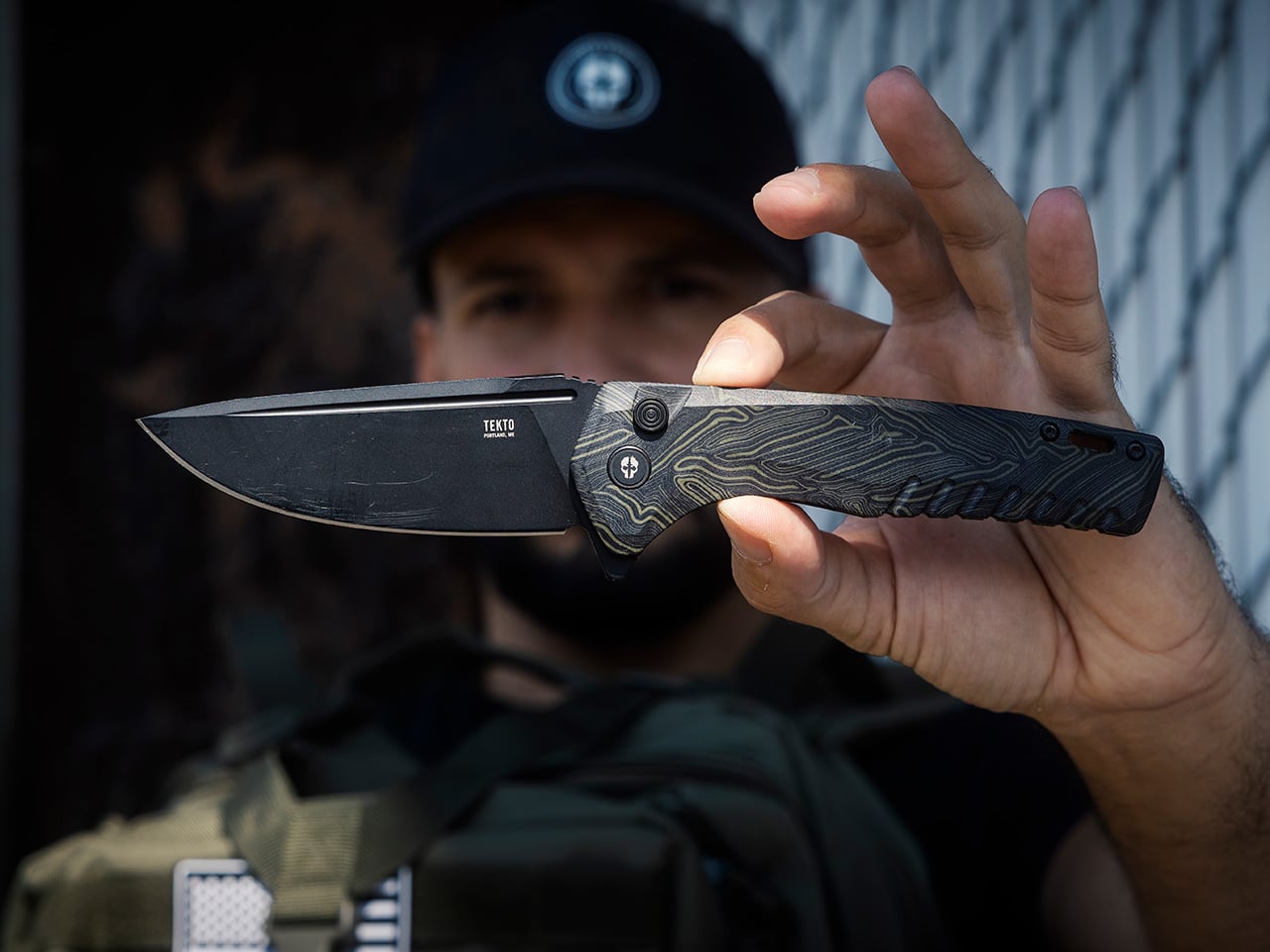
“Puts every knife through its paces.”

The F3 Charlie belongs with the kind of person who expects a folder to do real work and never feels fully convinced by anything too slim, too polished, or too precious. This is the heavy-use outdoorsman, the rugged camper, the hunter who wants a knife that feels substantial in hand and ready for long days outside. They want grip, blade length, and confidence, especially when the task stops being light-duty. The F3 Charlie fits that mindset well because it carries like a folder but behaves like something built for harder use. It is the natural pick for someone who would rather have extra capability on hand than wish they had brought a bigger knife.

The design leans into that role with a 3.80-inch titanium-coated D2 steel blade, a button lock, and a larger overall frame than the rest of Tekto’s folding lineup. At 4.5 ounces, it still stays relatively light for its size, which gives it a nice balance between carry comfort and in-hand authority. Ceramic ball bearings help keep the action smooth, while the oversized blade and ergonomic handle contours support stronger cutting tasks and longer use sessions. G10 and forged carbon handle options add durability and grip, and the pocket clip and lanyard hole keep it practical for everyday field carry.

Click Here to Buy Now: $127.50 $149.99 (15% off, use coupon code “YANKO”). Hurry, deal ends in 48-hours!

F4 Echo: The Collector/Adventurer
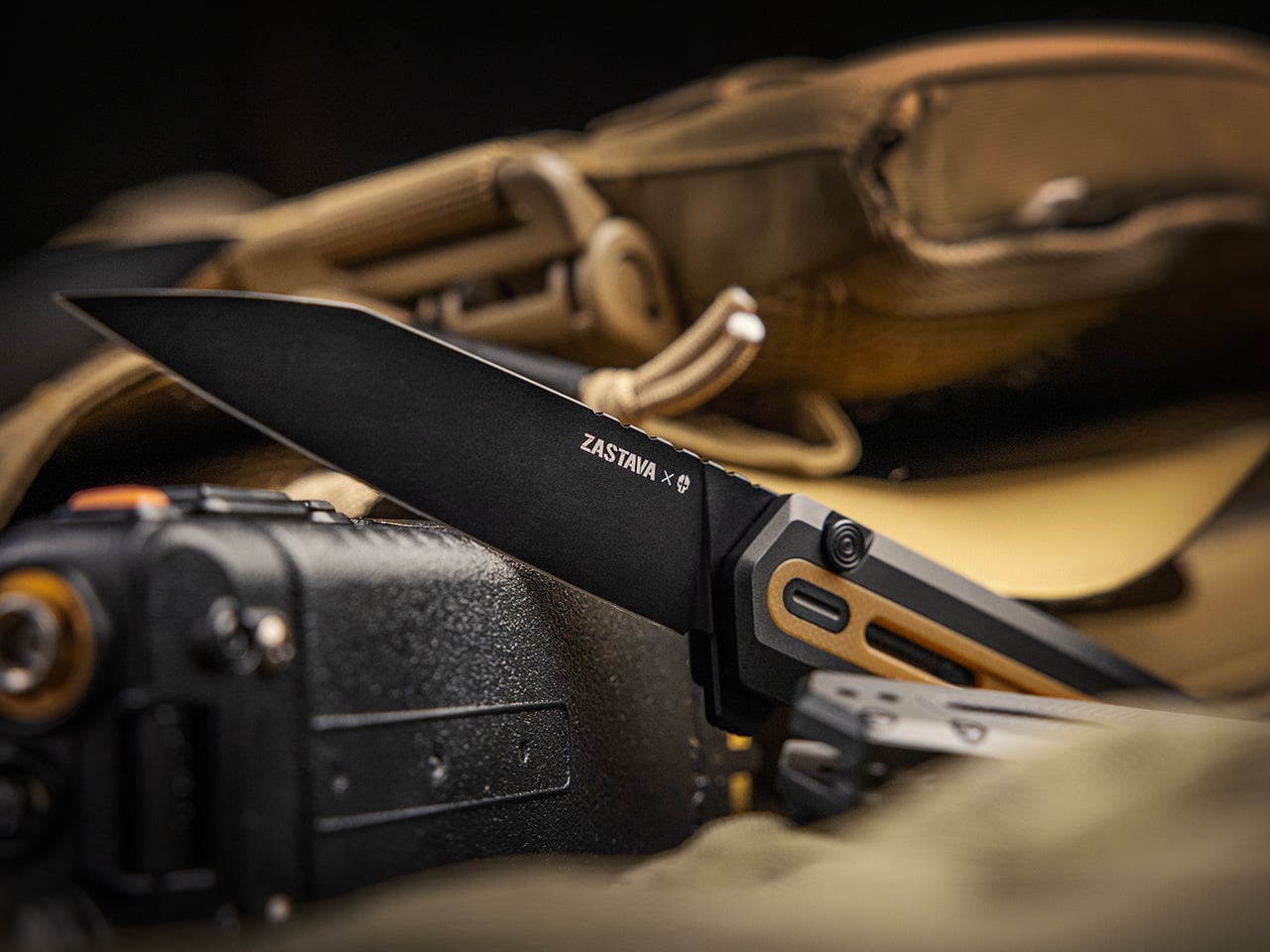
“Appreciates the story behind the steel.”

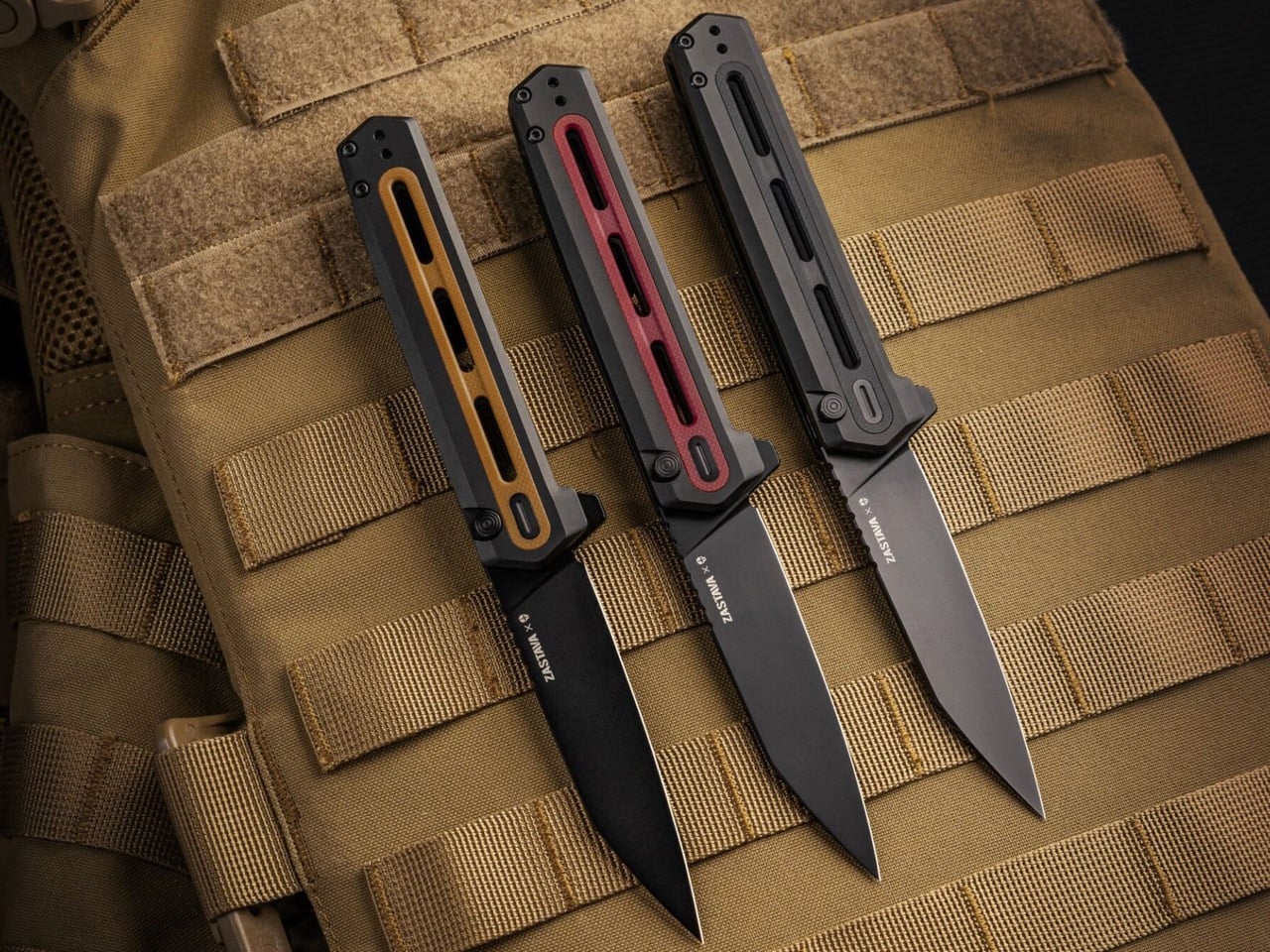
The F4 Echo feels tailored to the person who wants their everyday carry to have character, heritage, and a little more presence than the average folder. This is the collector-adventurer, the gear enthusiast, the person who notices collaboration details and actually cares where a design language comes from. With its Zastava connection and more elevated finish, the Echo speaks to someone who enjoys utility but also values the narrative built into the object. It suits a user who might spend one weekend at the range and the next out on the trail, carrying the same knife because it satisfies both performance instincts and collector taste.

Tekto gave the F4 Echo a titanium-coated S35VN blade in a reverse tanto profile, which immediately places it near the premium end of the lineup. The button lock adds fast, easy operation, while the aluminum and G10 handle construction keeps the knife light without making it feel insubstantial. Design details tied to the Zastava collaboration give it a more distinctive visual identity, especially in the different colorways inspired by rifle heritage. The result is a folder that blends edge retention, corrosion resistance, and cutting strength with a look that feels deliberate and memorable.

Click Here to Buy Now: $170 $199.99 (15% off, use coupon code “YANKO”). Hurry, deal ends in 48-hours!

A3 Delta Mini: The Urban Minimalist
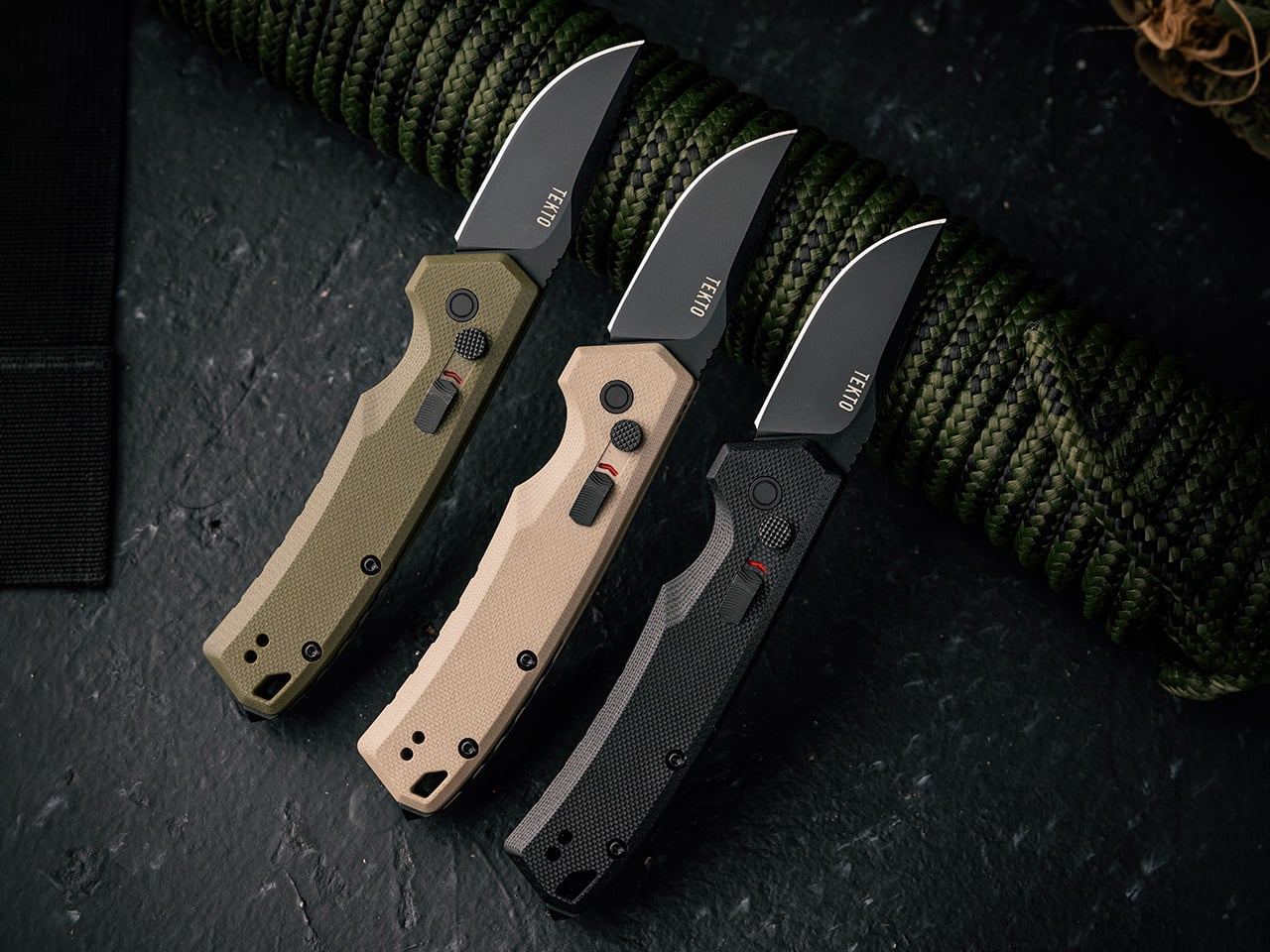
“Doesn’t need a big knife. Just needs the right one.”

The A3 Delta Mini fits the kind of person who wants automatic deployment and tactical confidence in a smaller, easier-carry package. This is the urban minimalist, the light-packing commuter, the outdoorsy type who still pays attention to pocket space and carry comfort. They want a knife that feels capable when called on, but never overbuilt for the rhythm of everyday life. The A3 Delta Mini works well for someone who likes the quick response and mechanical satisfaction of a side-opening automatic, yet prefers a tool that stays compact and controlled throughout the day. It feels like the right match for first-time automatic buyers too, especially those who want utility without stepping straight into full-size territory.

The Mini carries the same core design language as the larger Delta, including the button lock and safety switch that help manage automatic deployment with a little more peace of mind. Tekto positions it as a more compact version of the same spring-activated side-opening formula, giving users a smaller footprint without abandoning the tactical styling. That makes it easy to slip into lighter pockets, smaller carry setups, or daily routines where bulk becomes the first thing people notice. It is the Delta concept, trimmed down for users who value precision, portability, and quick access.

Click Here to Buy Now: $119 $139.99 (15% off, use coupon code “YANKO”). Hurry, deal ends in 48-hours!

A5 Spry Mini: The Stealthy Pocket Carrier
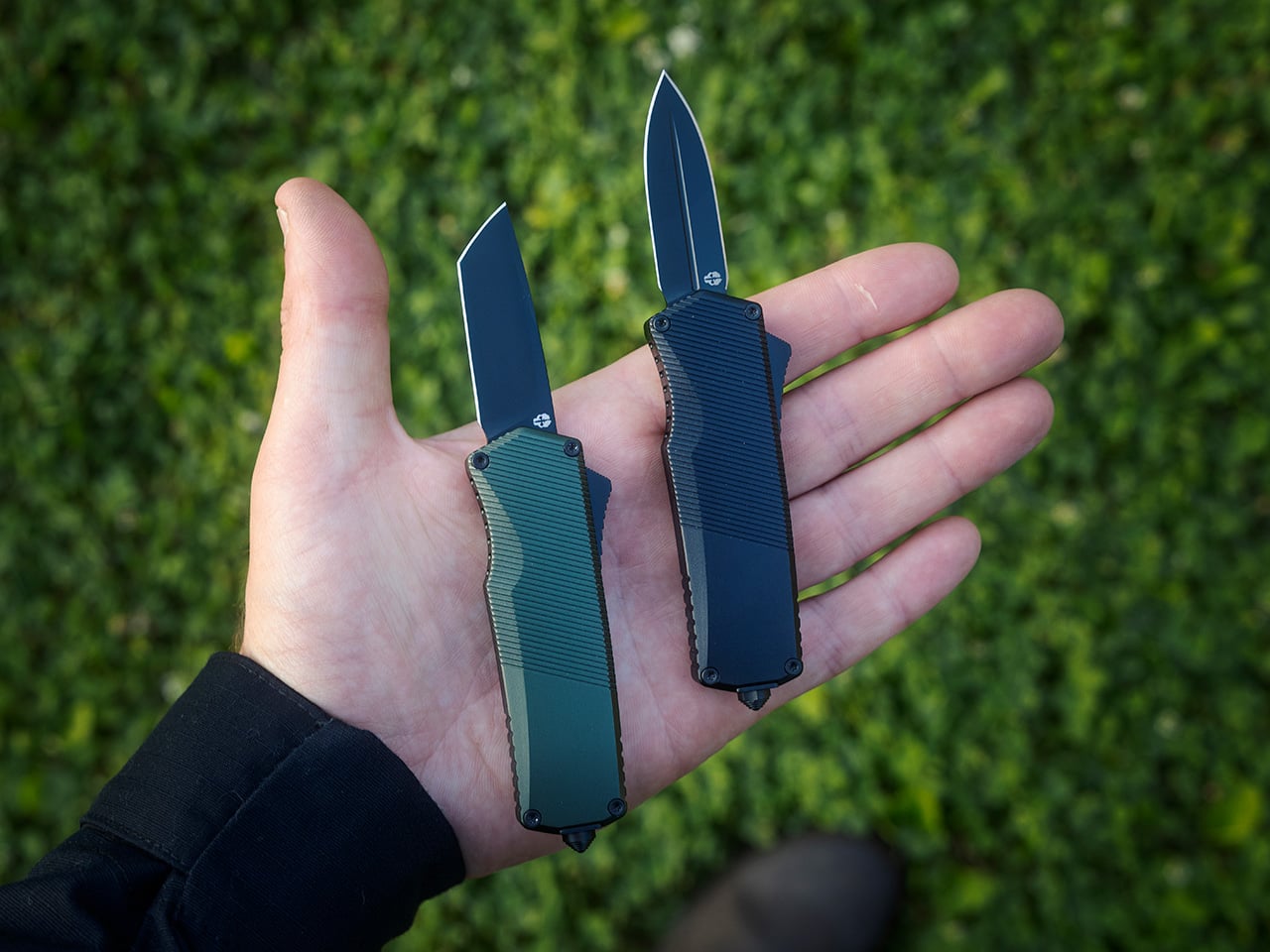
“Barely notices it’s there until they need it.”

The A5 Spry Mini makes the most sense for someone who wants their knife to disappear into a pocket and stay out of the way until the exact moment it is needed. This is the stealthy pocket carrier, the city dweller, the traveler, the person who values discretion as much as performance. They like the speed and clean action of an OTF automatic, but they do not want the size or visual presence that usually comes with that format. The Spry Mini suits people who keep their carry lean, efficient, and highly intentional, especially those who want a premium-feeling tool that can live comfortably in lighter clothing, smaller pockets, or minimalist setups.

Its appeal starts with scale. The blade measures 1.85 inches and the knife weighs about 2.15 ounces, which puts it firmly in micro-EDC territory while still preserving the quick thumb-slide deployment that defines the Spry line. Tekto equips it with S35VN steel and a titanium-coated blade, giving this compact automatic stronger edge retention and corrosion resistance than its size might suggest. The handle is contoured for grip and built to stay light, which helps the knife feel controlled and easy to carry throughout the day. For people in stricter markets, the sub-2-inch blade also gives it added relevance as a California-legal OTF option.

Click Here to Buy Now: $153 $179.99 (15% off, use coupon code “YANKO”). Hurry, deal ends in 48-hours!

The post 8 Best EDC Knives To Choose Based on Your Outdoor Personality first appeared on Yanko Design.
Stop Hunting for 4 Tools: This Designer’s Multitool Does It All

Model-making has a rhythm, and it is surprisingly easy to break out of the zone. You pull out the tape measure, get your reading, set it down, hunt for the caliper, check a dimension, reach for the cutter, and by the time you’ve touched four separate objects, you’ve lost track of where you were in the build. It’s a minor friction, but it compounds quickly across a studio session into something genuinely disruptive.

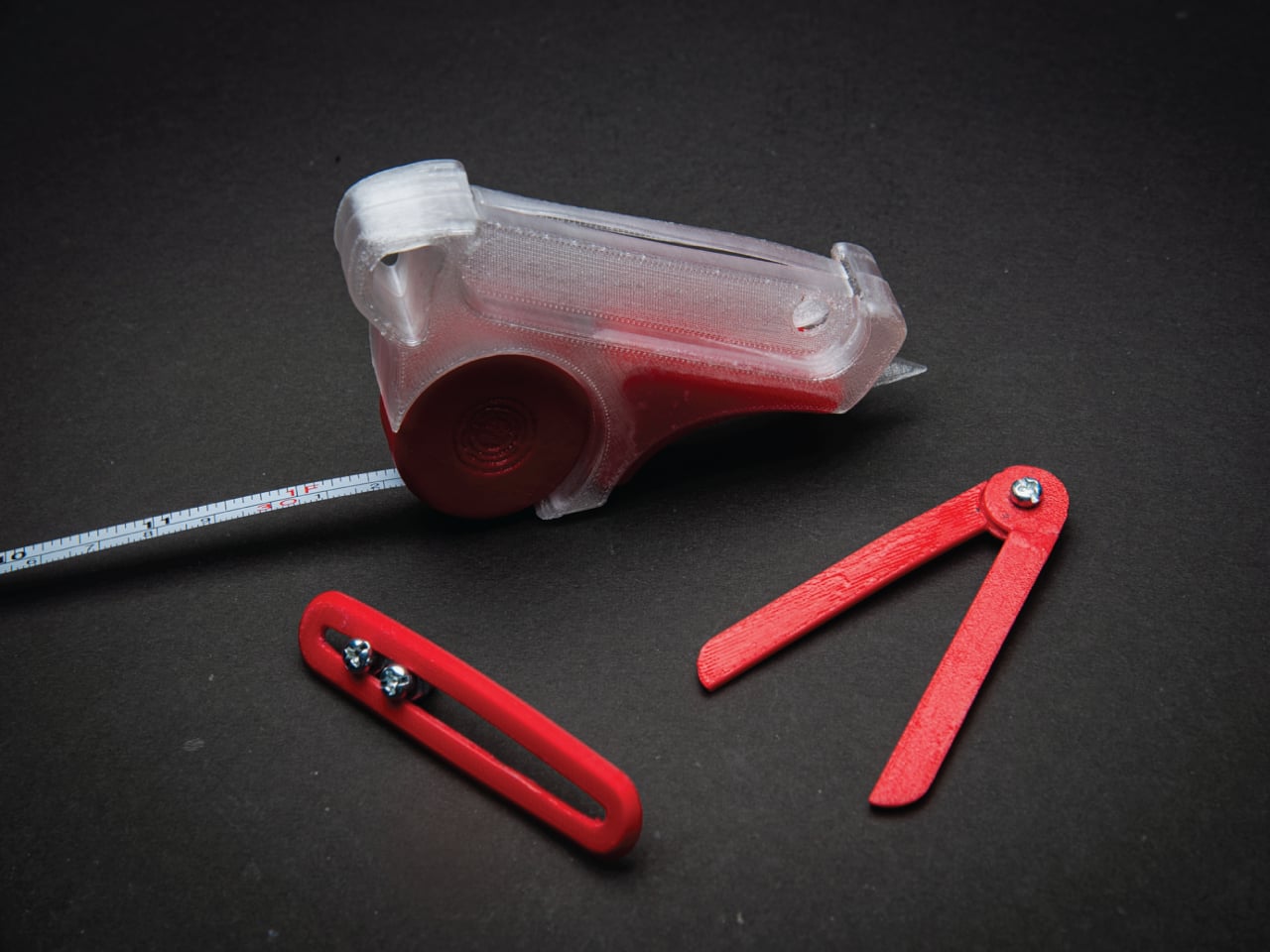
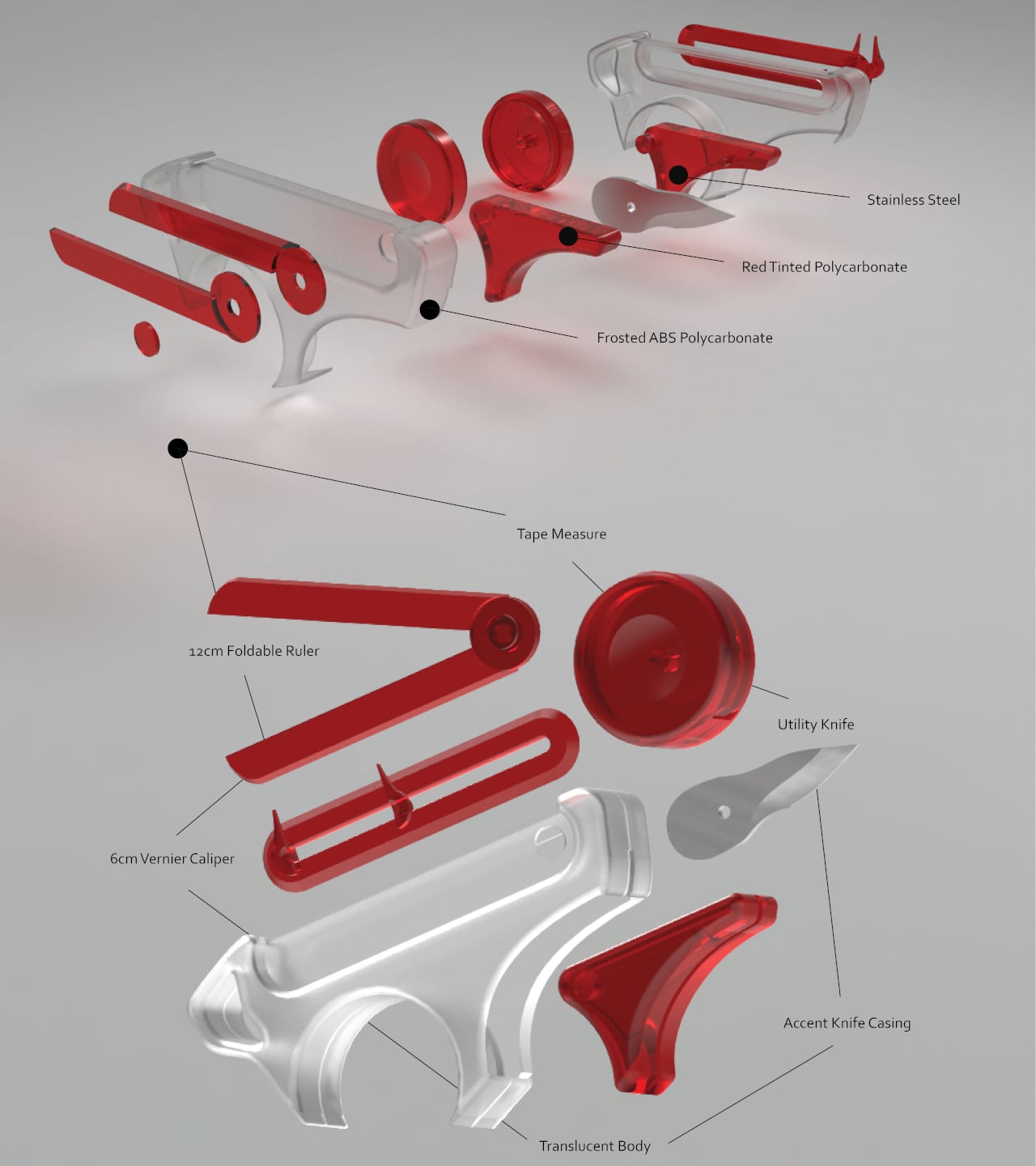
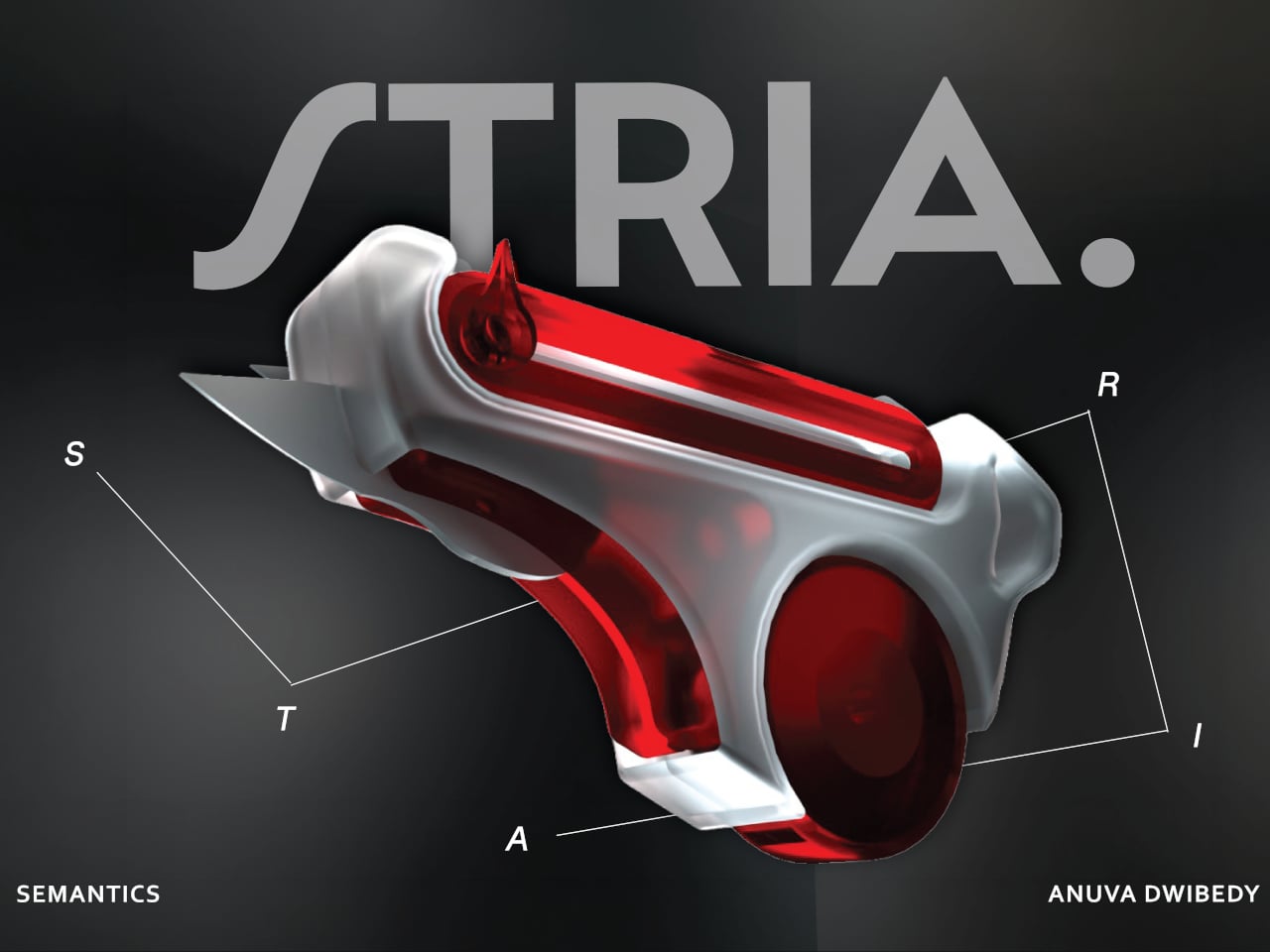
That friction is the exact problem STRIA was designed to address. The concept starts from a straightforward observation: the actions that make up physical prototyping, measuring, checking dimensions, and cutting materials, are tightly connected in practice but spread across a handful of unrelated objects. It combines four of the most essential tools that designers and architects reach for, creating a Swiss Army knife for any kind of physical creative work.

Designer: Anuva Dwibedy

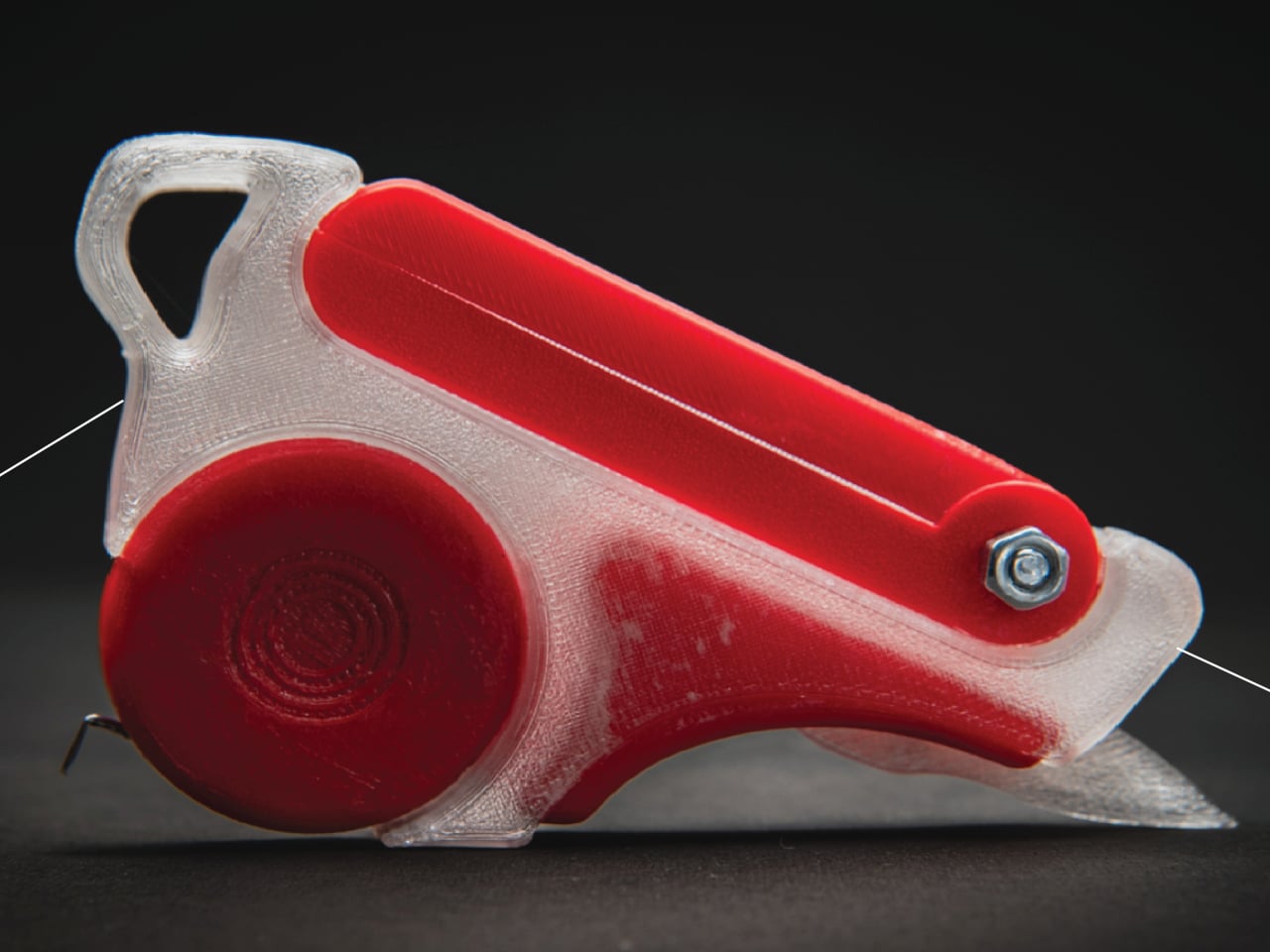
Those four are a tape measure, a 12 cm foldable ruler, a 6 cm vernier caliper, and a utility knife, all integrated into a single handheld device. The body is frosted ABS polycarbonate, with red-tinted polycarbonate accents and stainless steel for the blade and hardware. The translucent construction lets you see the internal components at a glance, which feels appropriate for a tool aimed at designers who spend a lot of time thinking about how things fit together.

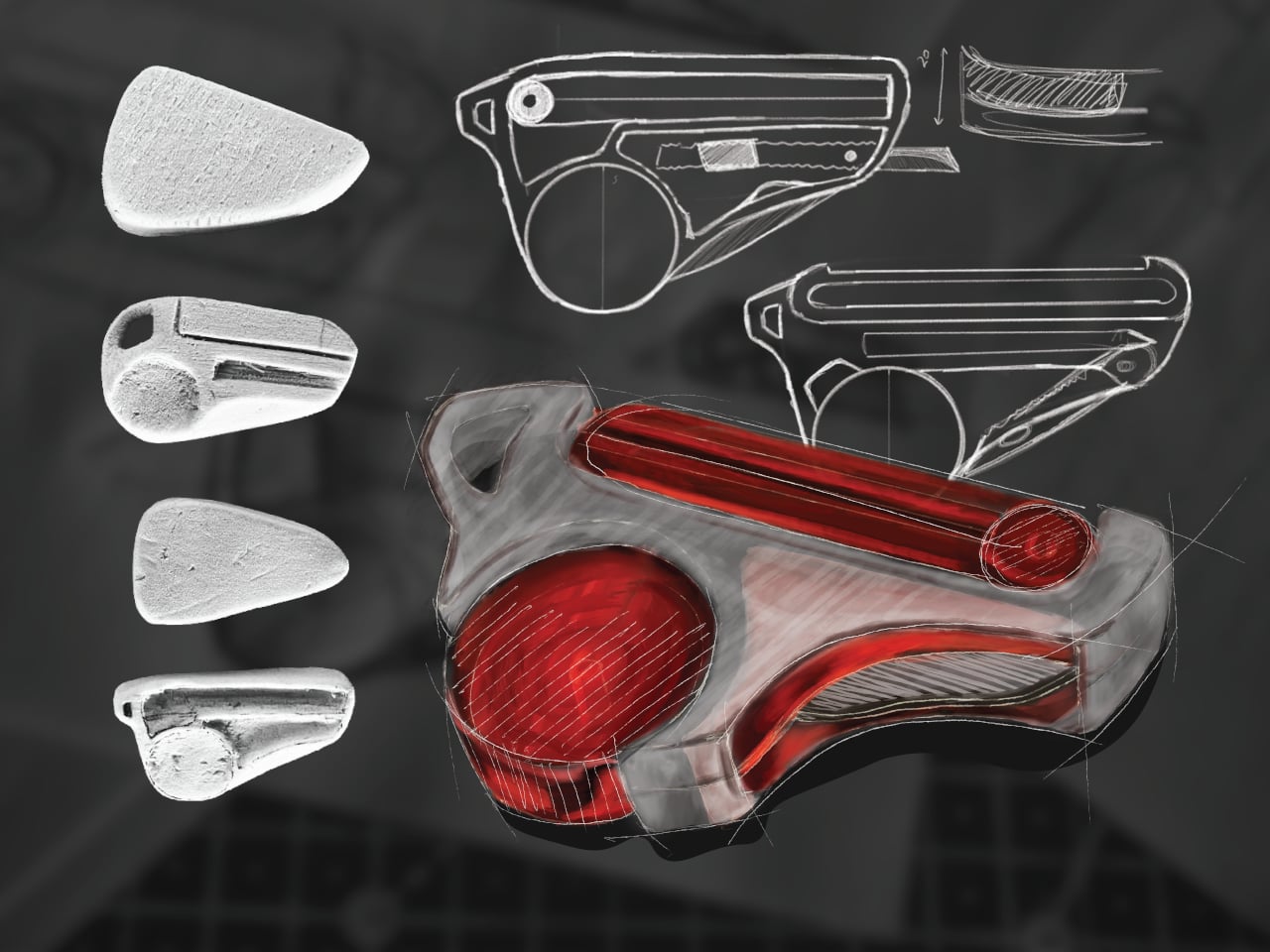
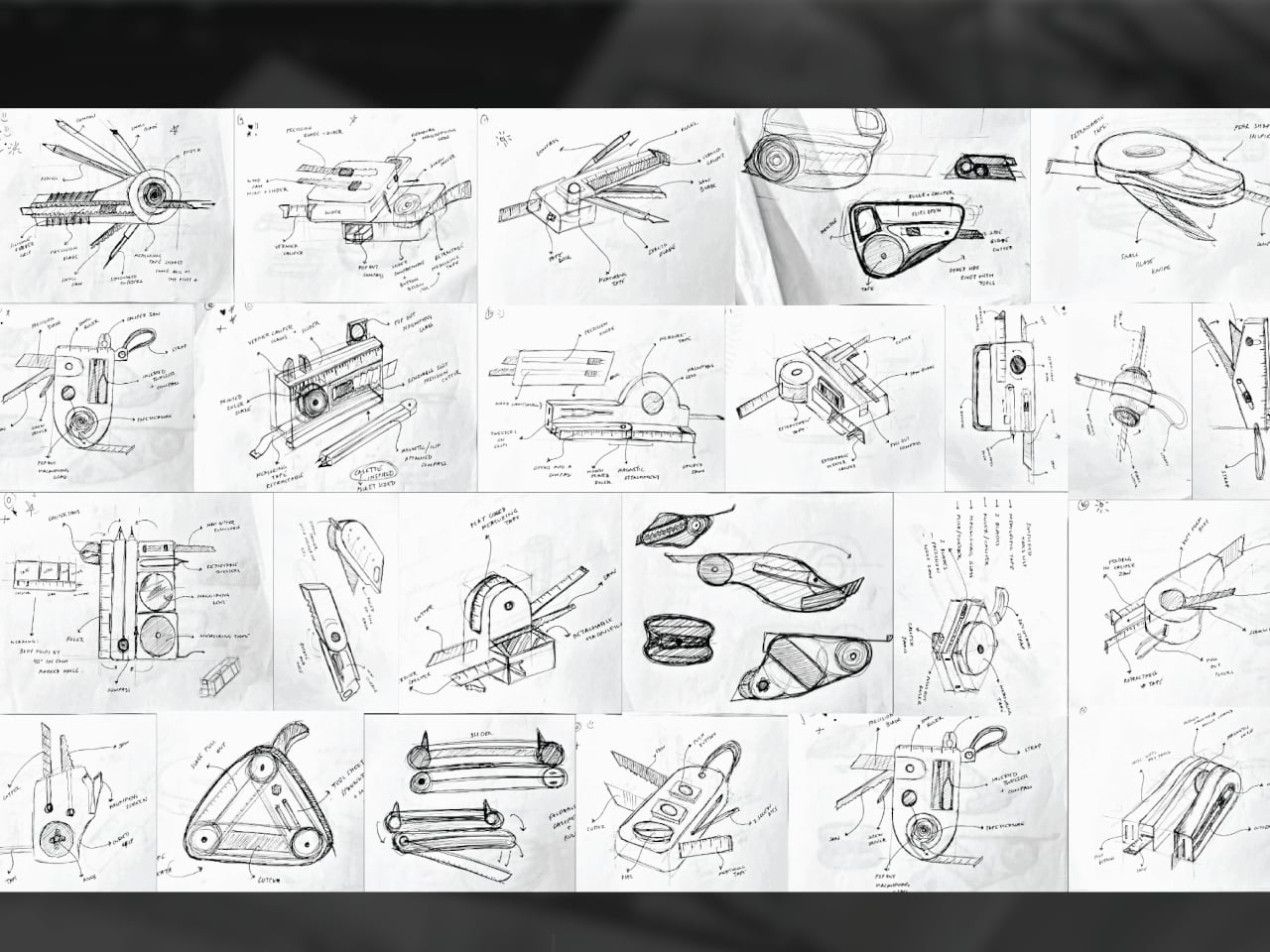
The form went through extensive iteration, with dozens of sketched directions and physical grip studies preceding the final shape. That process matters because fitting four tools into something pocket-sized is a mechanical problem as much as a visual one. Each function needs a deployment mechanism that doesn’t compromise the others, and the grip has to stay comfortable when you’re switching between them repeatedly during a long session.

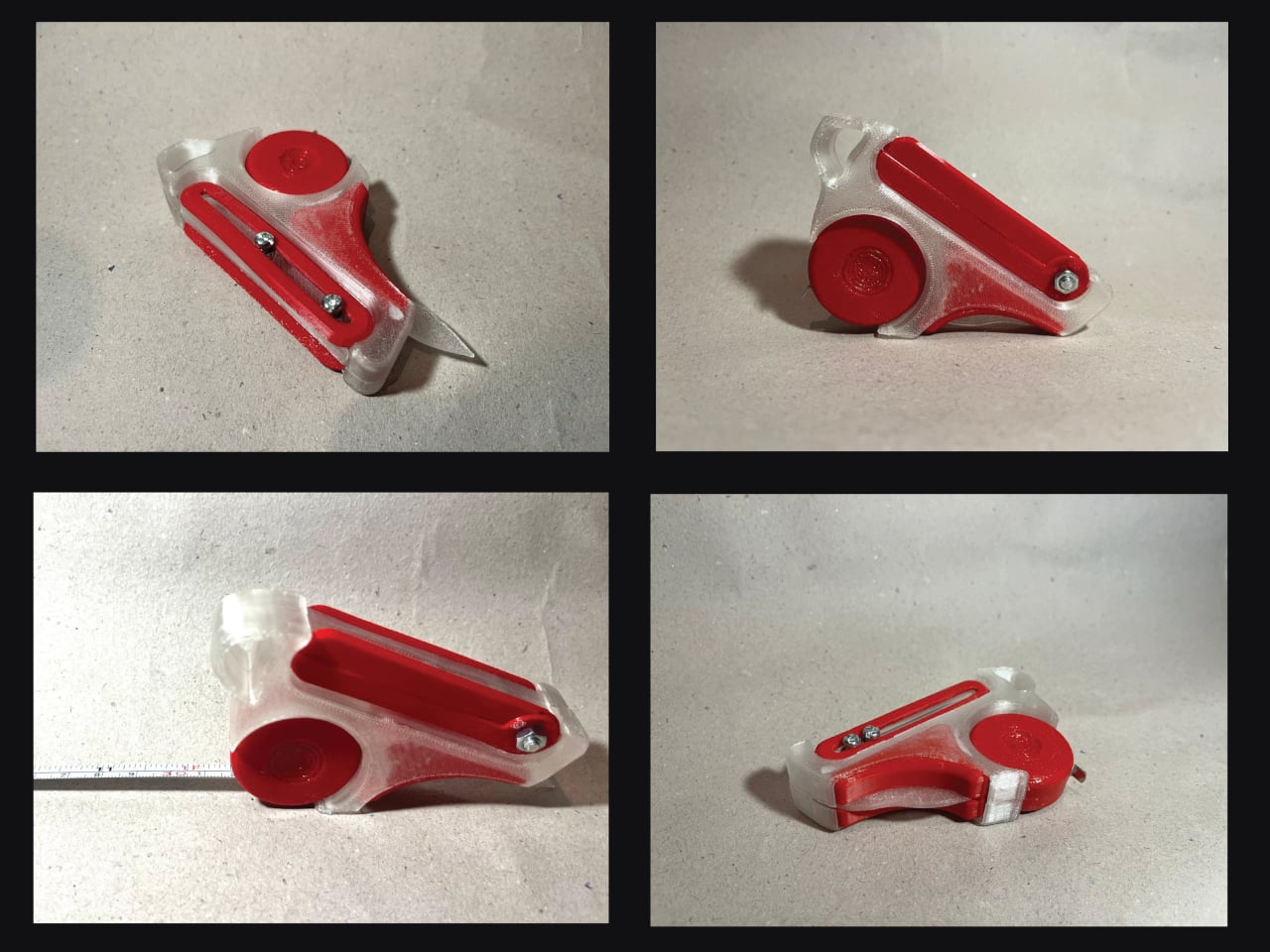
What STRIA gets right in concept is treating workflow continuity as a design constraint rather than an afterthought. Its five stated goals, compact, precise, durable, ergonomic, and integrated, read less like marketing language and more like a checklist for something that needs to survive a studio environment. A 3D printed prototype has already been produced, so the integration challenges aren’t purely theoretical at this stage.

Whether every mechanism holds up to the repetitive, sometimes rough handling that model-making actually demands is what a finished version would need to prove. And there’s a subtler question underneath that: consolidating tools changes how you reach for them, and it’s worth asking whether that’s always an improvement or occasionally a trade-off.

The post Stop Hunting for 4 Tools: This Designer’s Multitool Does It All first appeared on Yanko Design.
This Hollow-Handle Titanium Kitchen Knife Actually Shifts Its Own Balance Point Toward the Blade

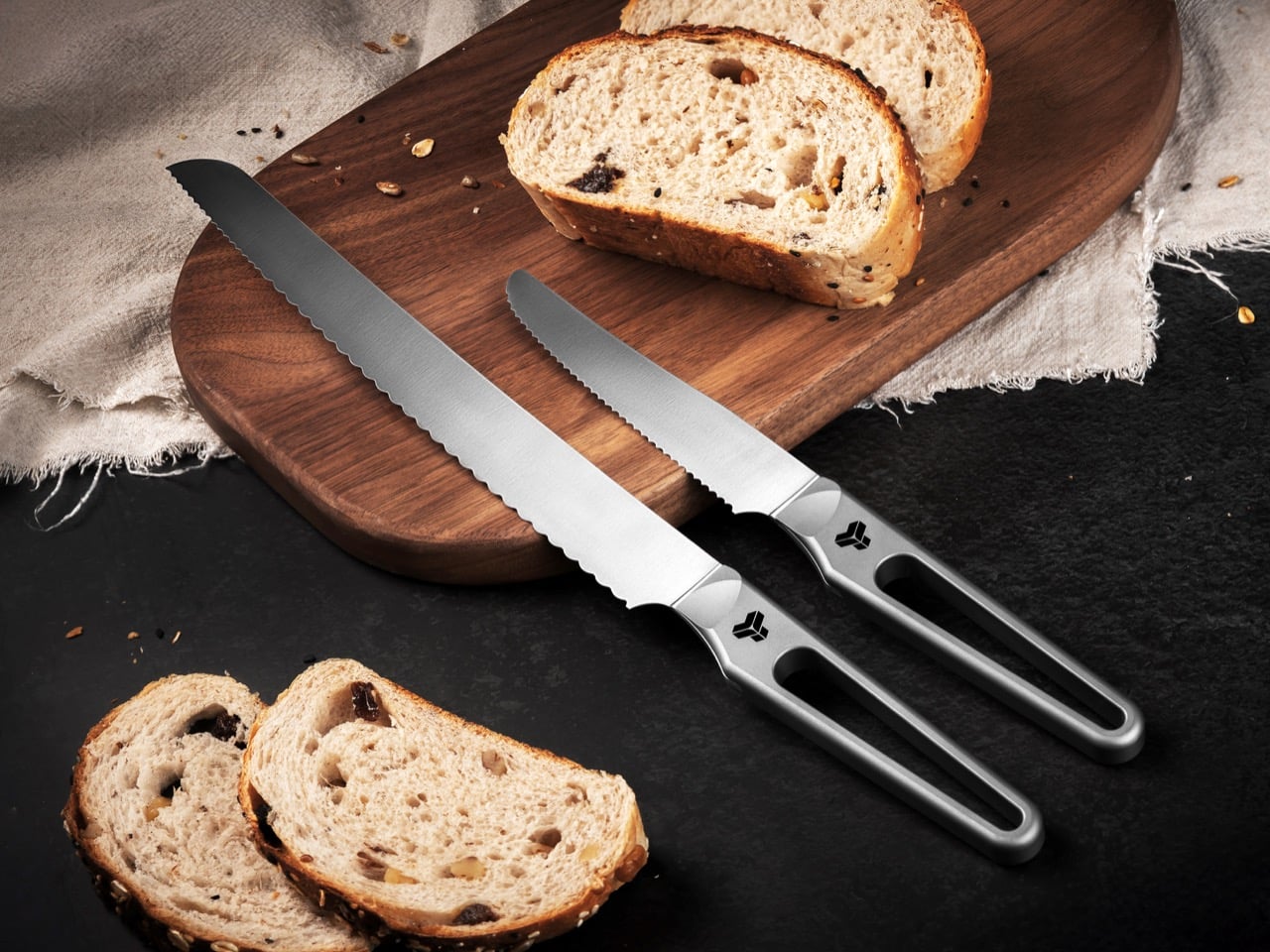
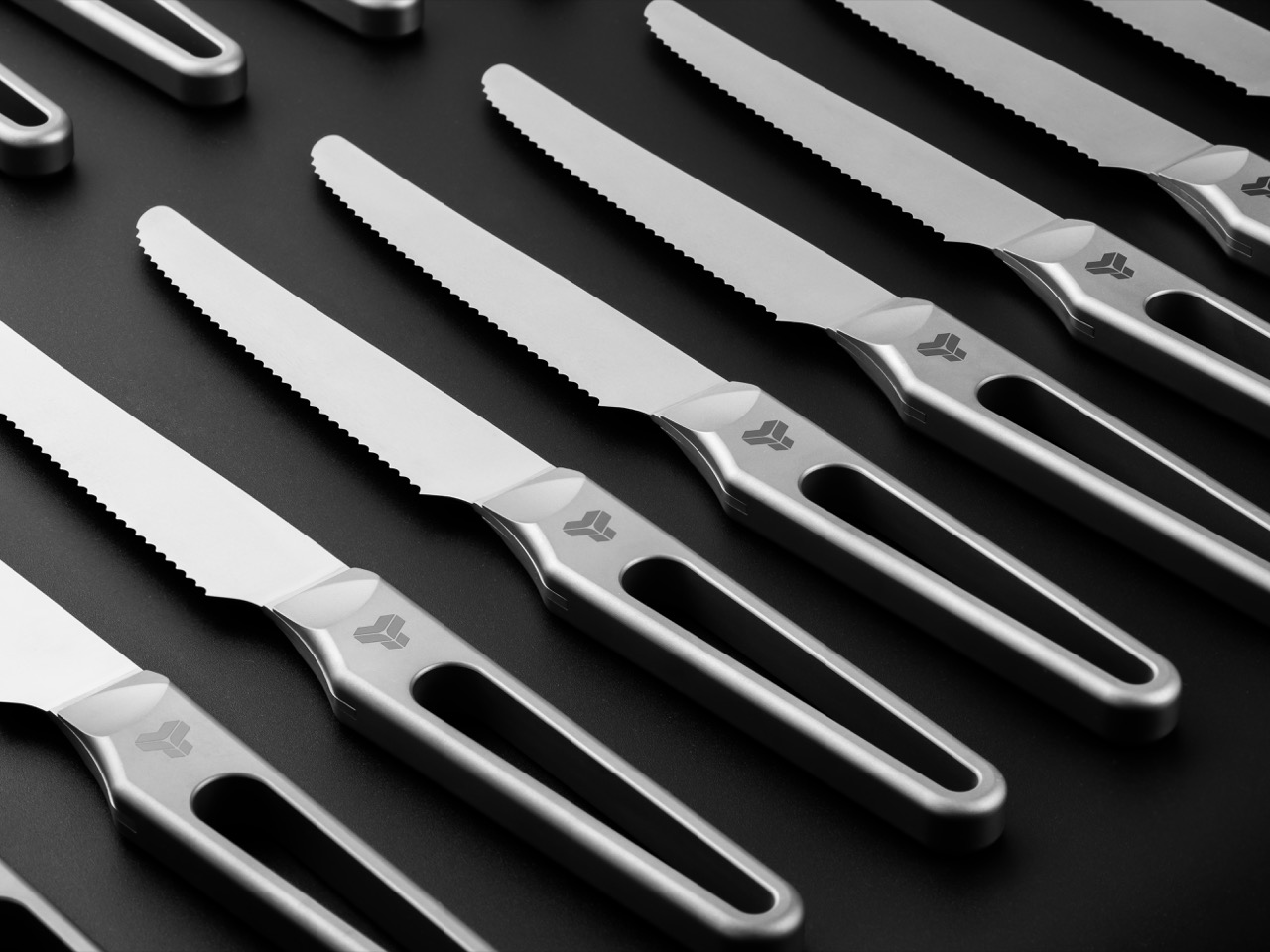
That elongated oval cutout running through the handle of the Titanion APEX catches attention first. It reads almost like a tuning fork, or a beautifully machined piece of industrial hardware that ended up on a cutting board. The form is deliberate on multiple levels: it trims weight from the handle end, which naturally shifts the balance point forward toward the blade. For cooks who prefer that blade-forward feel, the shift is immediately noticeable. And because the whole knife is machined from a single continuous piece of TC4 titanium alloy, there are no separate components, no rivets to rust, no scales to loosen over years of daily use. The result is a full-tang construction by default, which, in a knife made from one of the strongest lightweight metals on the planet, makes for an exceptionally robust tool.

Titanion is a Hong Kong-based brand with three years of focused research into bringing aerospace-grade titanium materials into everyday kitchen use. Their previous tools have already attracted over 5,000 professional chefs and dessert masters as loyal users. The APEX series is their most knife-forward move yet: two serrated blades, a Titanium Bread Knife and a Titanium Multifunctional Serrated Knife. The blade is forged from high-performance 10Cr15MoV steel with precision serrated edges, boasting outstanding hardness, wear resistance, and long-lasting sharpness. Titanion claims this is the first serrated kitchen knife on the market to feature a titanium alloy handle.

Designer: Byron Ho

Click Here to Buy Now: $81 $116 (30% off). Hurry, only a few left!

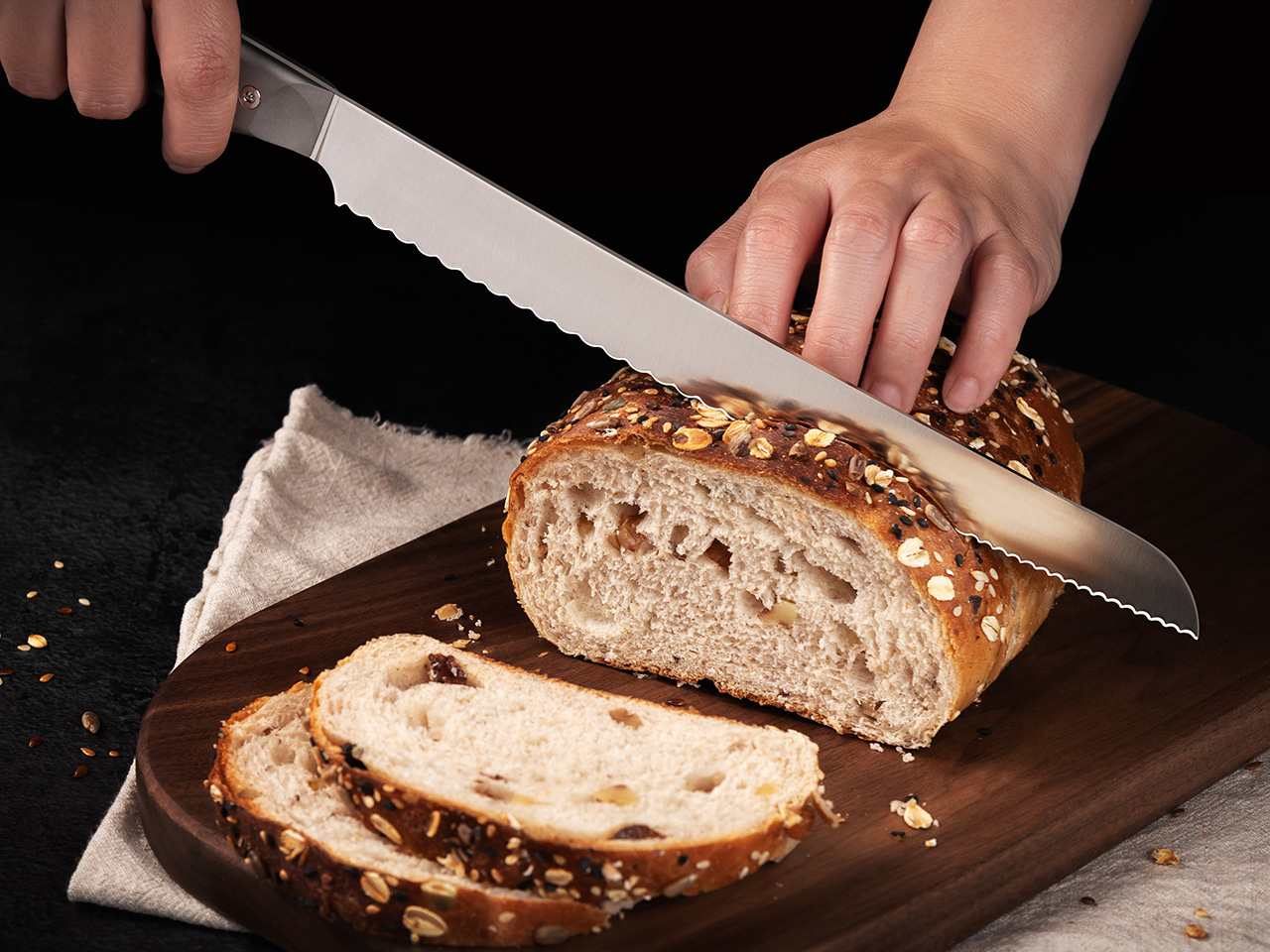
The bread knife runs 13.98 inches (35.5cm) total, sitting on the longer end of the bread knife category, which means more stroke per pass and fewer awkward repositions on a large loaf. Titanion uses a segmented serration pattern: larger wavy serrations on the main cutting area for smooth strokes without crushing the crumb, and finer serrations at the tip for piercing hard outer crusts, croissant shells, and thick-skinned fruit. That dual-geometry setup sounds like marketing until you’ve worked through a dense sourdough and realized the tip teeth were doing actual work before the wavy section ever takes over. Blade thickness sits at 0.06 inches (0.15cm), keeping the profile lean enough for clean slicing without wedging. The longer format also makes it useful beyond bread, handling anything that benefits from a long, smooth sawing stroke.

The utility knife at 9.45 inches (24cm) takes a completely different approach: consistent serration from base to tip, the same tooth geometry across the entire blade for stable and uniform cutting performance on whatever it’s working through. That uniformity makes it a genuine generalist, handling root vegetables, steaks, small pastries, and protein foods with equal confidence. Roughly half the length of the bread knife, it’s maneuverable enough for intricate prep but substantial enough for harder cuts, and the compact size pairs well with the ergonomic titanium handle during active cooking. Consistent serration also makes future sharpening more predictable, something the bread knife’s dual-geometry complicates. The two knives fill completely different roles and work as actual complements in daily kitchen use.

TC4, or Grade 5 titanium alloy, runs about 40% lighter than stainless steel while combining superior strength, corrosion resistance, and heat tolerance. The same alloy shows up in aircraft structural frames and orthopedic implants, both of which make the kitchen counter look like a retirement post for the material. In a culinary context, the relevant properties are direct: no moisture absorption, no odor retention, no degradation over time, and full corrosion resistance against acidic ingredients like citrus or vinegar. The 10Cr15MoV steel on the blade side is a high-carbon, high-chromium martensitic stainless that maintains stable sharpness and holds its edge under heavy use significantly better than standard stainless steel options. Together, the materials spec reads closer to precision tooling than kitchen cutlery.

The hollow-out handle is an ergonomic device as much as a visual one. It enhances tactile feedback through the grip, ensures a secure hold even in damp or greasy environments, and significantly reduces fatigue during use. Titanion built in distinct finger grips and a thumb support area, with a flowing contour that allows users to naturally position their thumb and index finger close to the blade’s balance point for a comfortable and precise grip. The oval opening doubles as a hanging point for wall or rail storage, with no extra hardware required. On a knife that gets reached for multiple times a day, small ergonomic decisions like that compound quickly into meaningful quality of life.

Pricing runs $100 for the bread knife, $75 for the utility knife, and $175 for the twin set at the Super Early Bird tier, amounting to a 30% discount on the original price. A discount you should absolutely grab if you’ve made it this far. International shipping is a flat $15 worldwide, with knives delivering starting August 2026. That’s because machining single-piece titanium knives individually takes way more time than snapping components together with glue and rivets. Also, Titanion doesn’t necessarily provide a warranty on the knives, because they don’t need to. Rest assured your GR5 titanium knife will probably outlast you, and then your grandkids too. Wait, why are you still reading? The link’s down below!

Click Here to Buy Now: $81 $116 (30% off). Hurry, only a few left!

The post This Hollow-Handle Titanium Kitchen Knife Actually Shifts Its Own Balance Point Toward the Blade first appeared on Yanko Design.
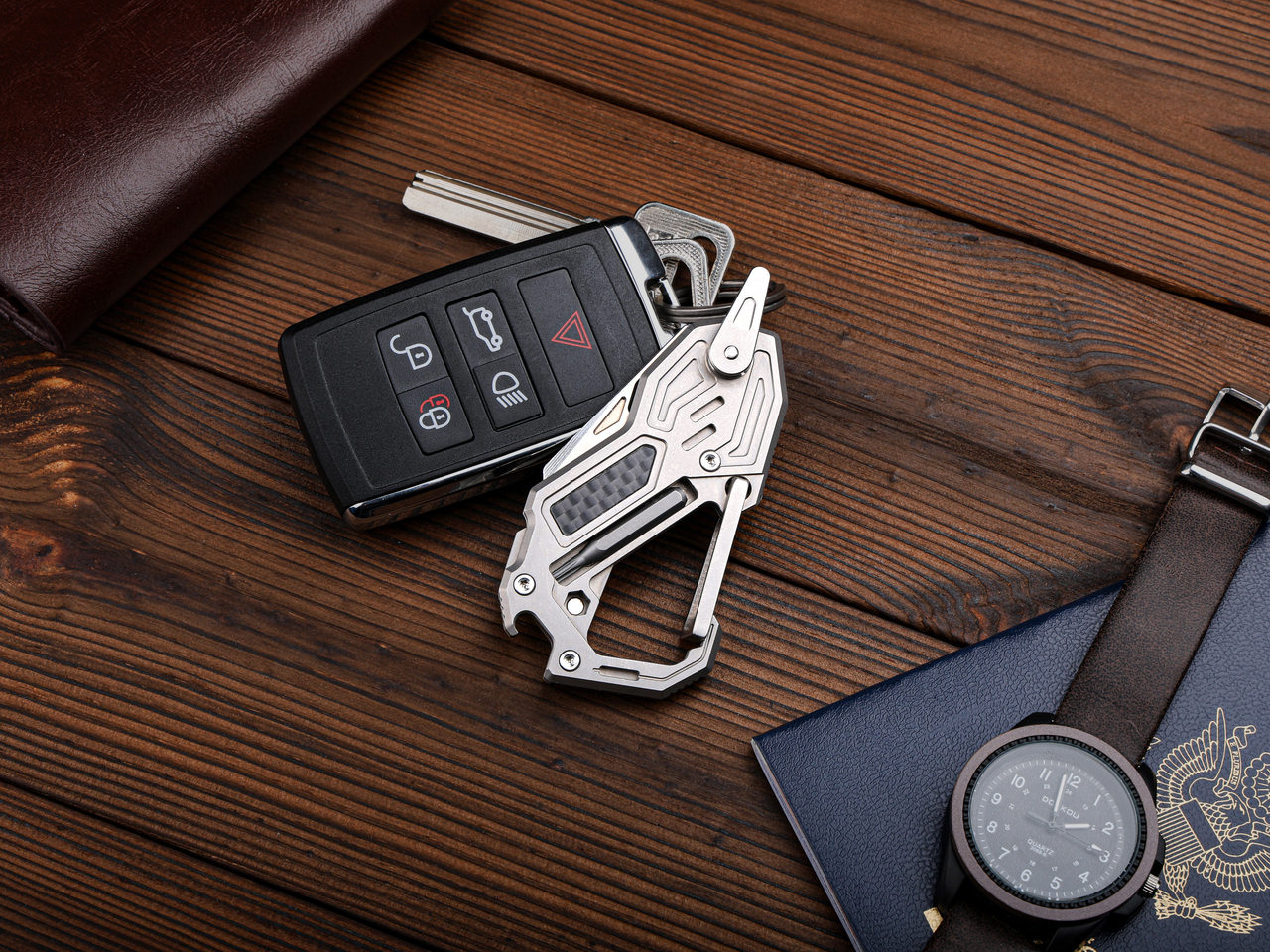
Edrin 6-in-1 Carabiner-Knife Lives on Your Belt, Not in Your Bag

You technically own the right tools: a knife in a bag pocket, a small driver in a drawer, a keychain gadget somewhere under receipts. But when something needs cutting or tightening, the moment passes while you are still searching. The real problem isn’t capability but access, and the tools you actually use are the ones that live where your hand already goes instead of being buried at the bottom of a pack.

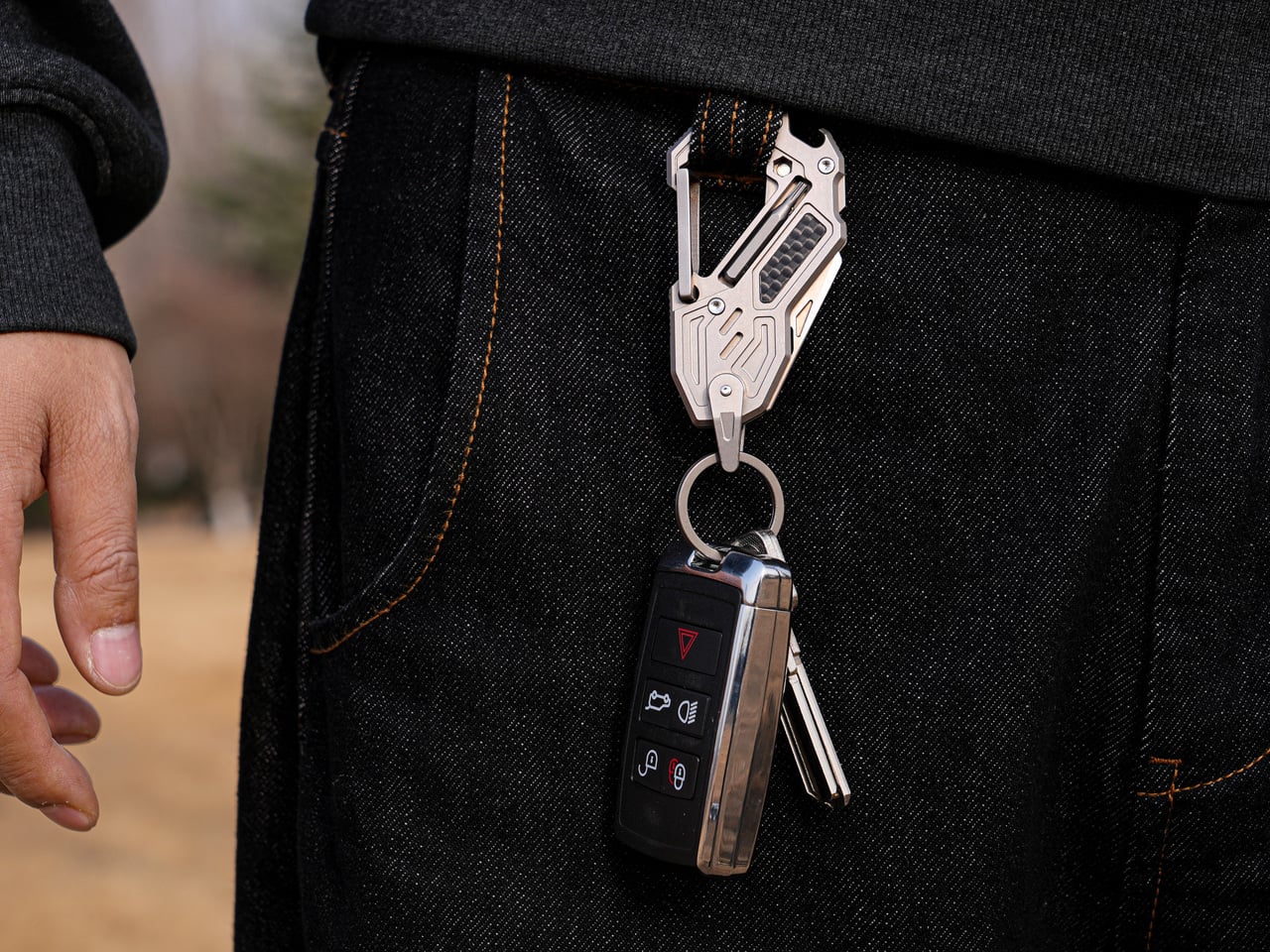
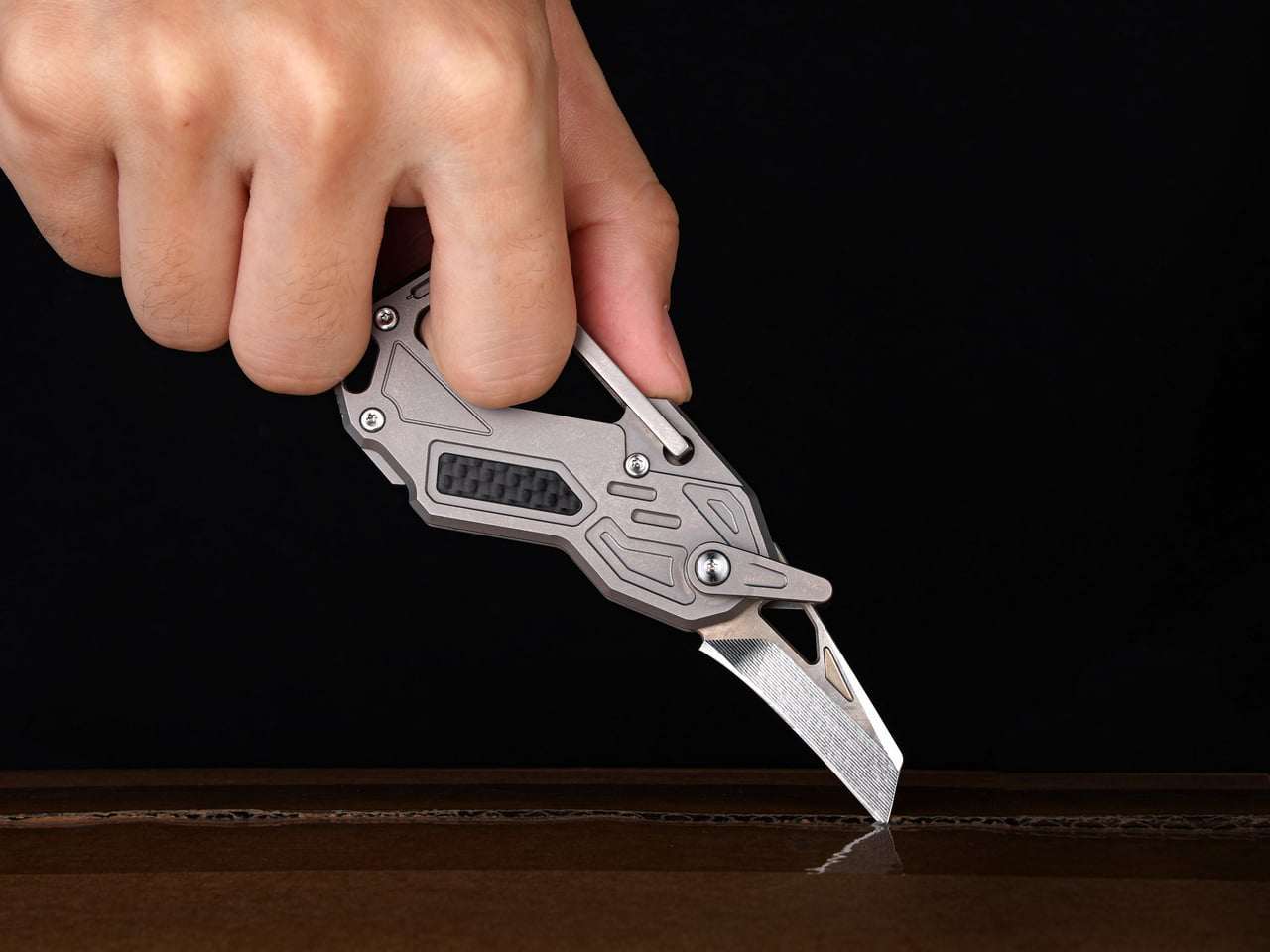
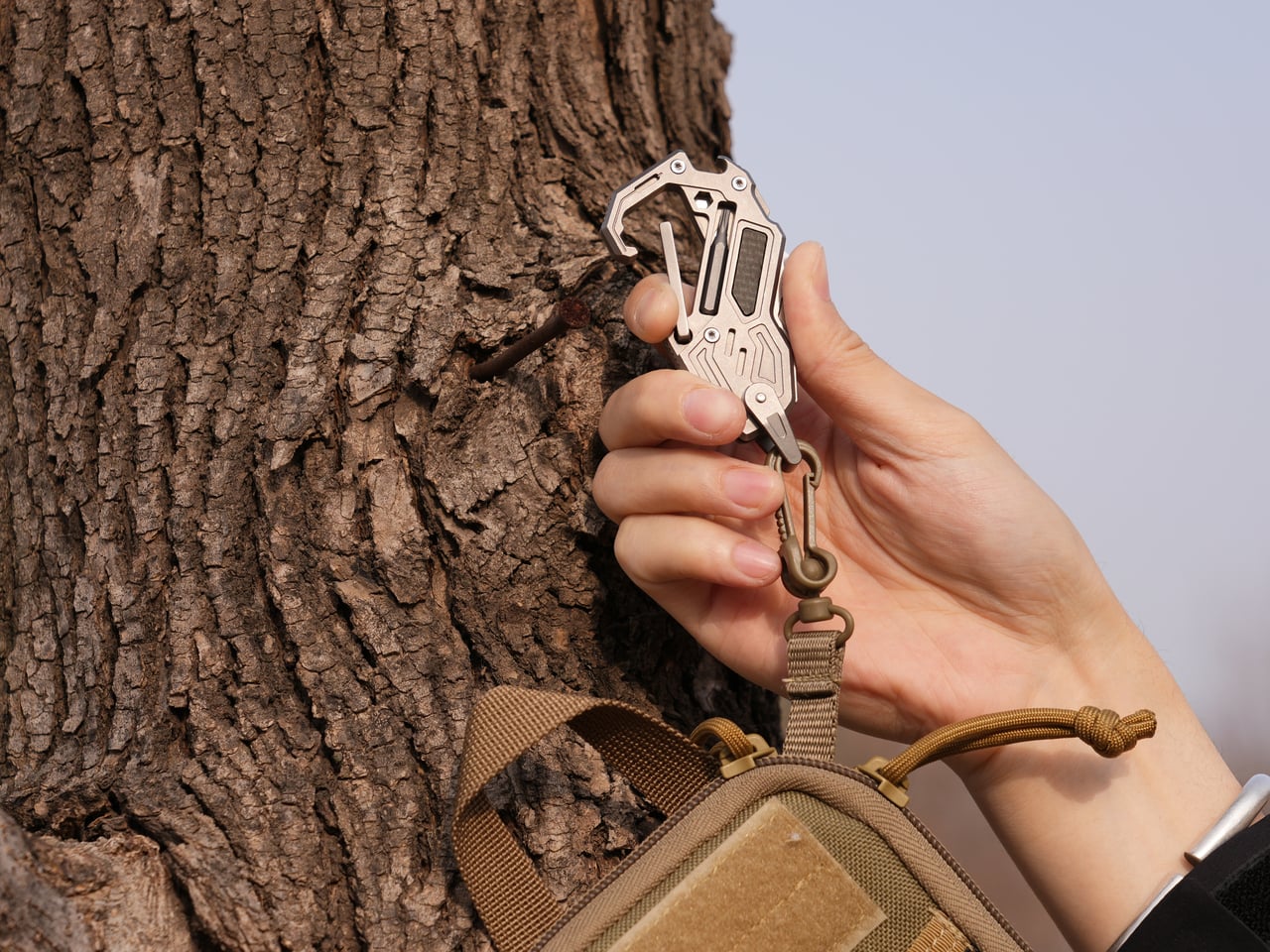
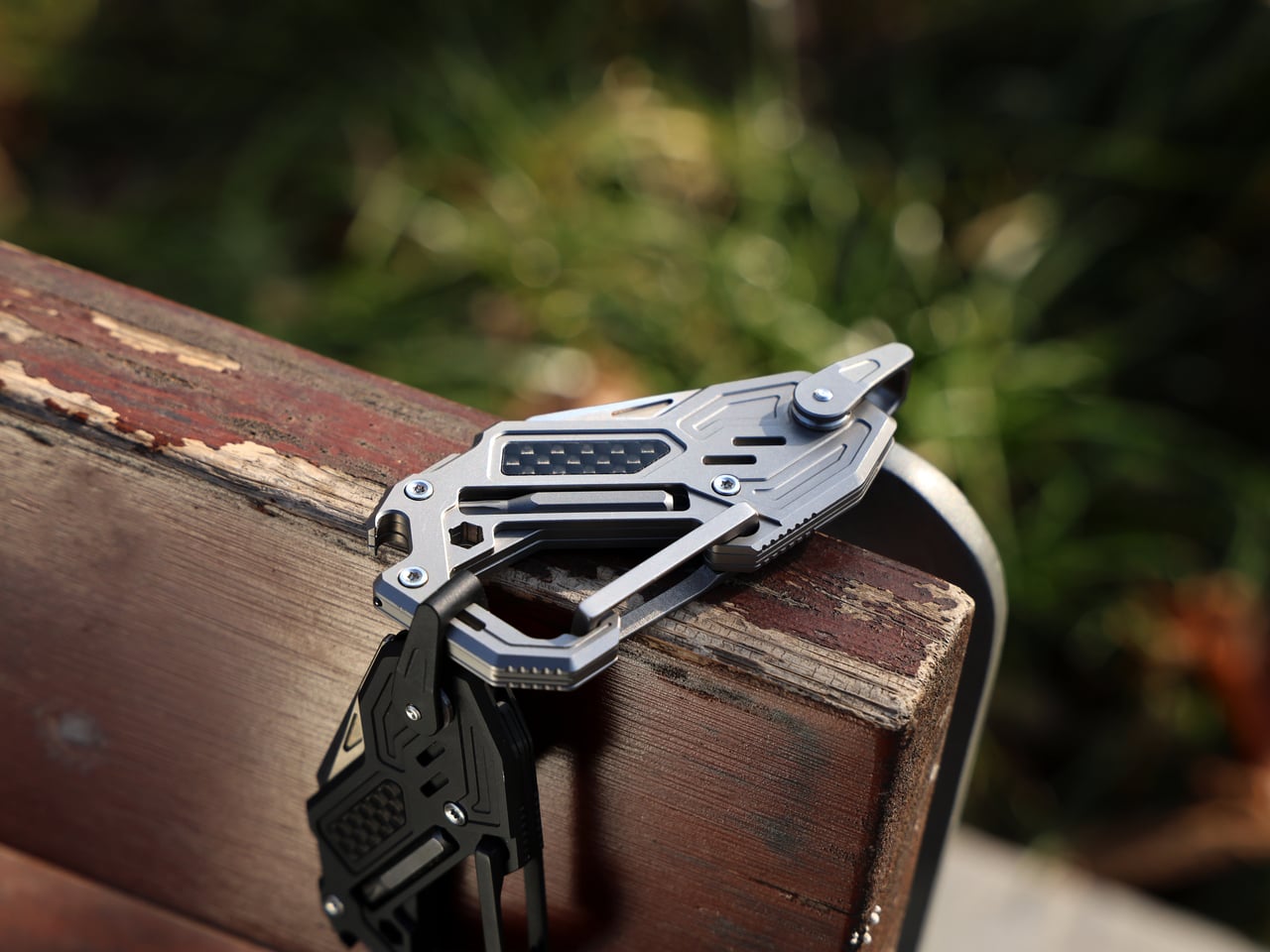
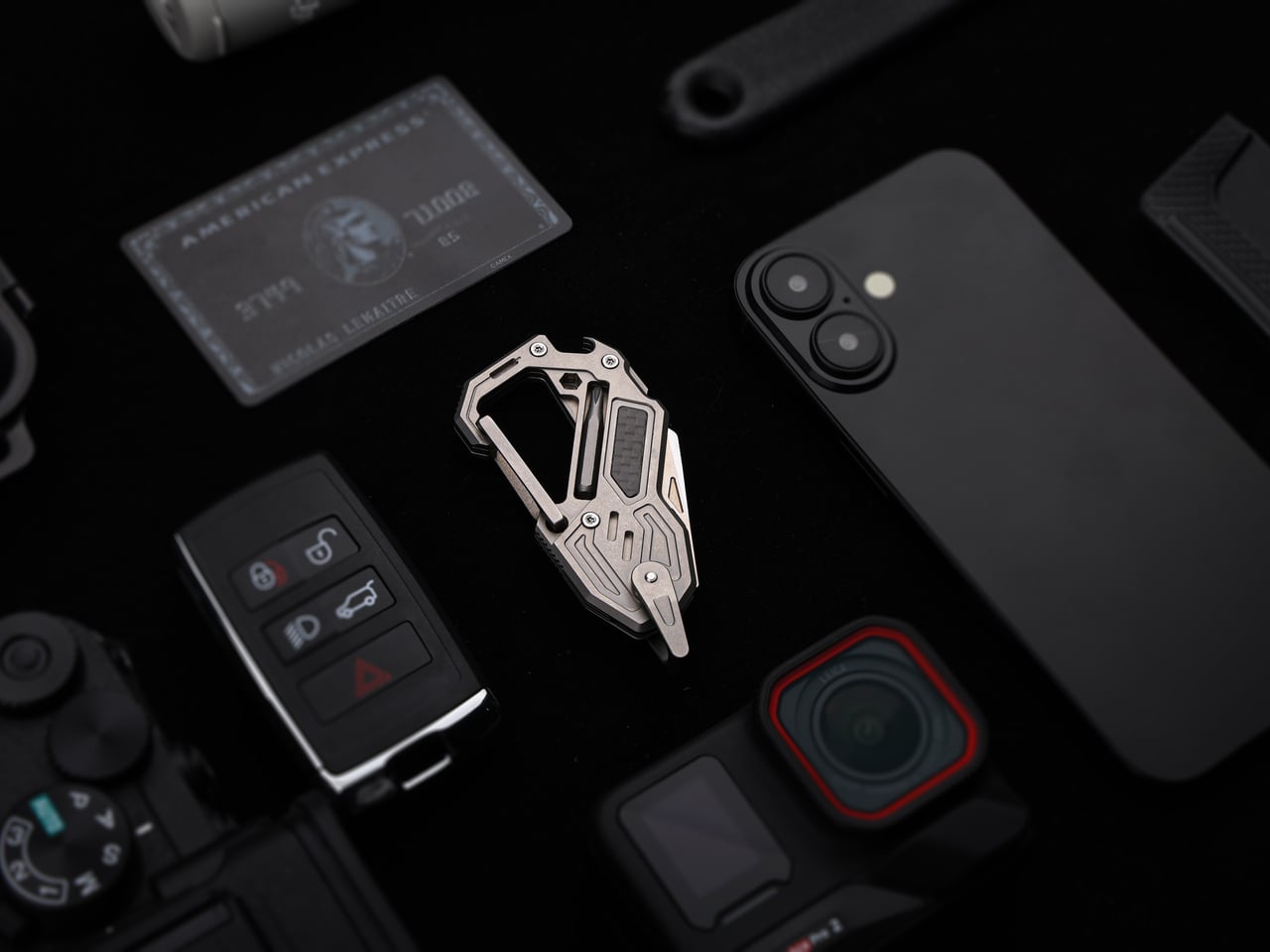
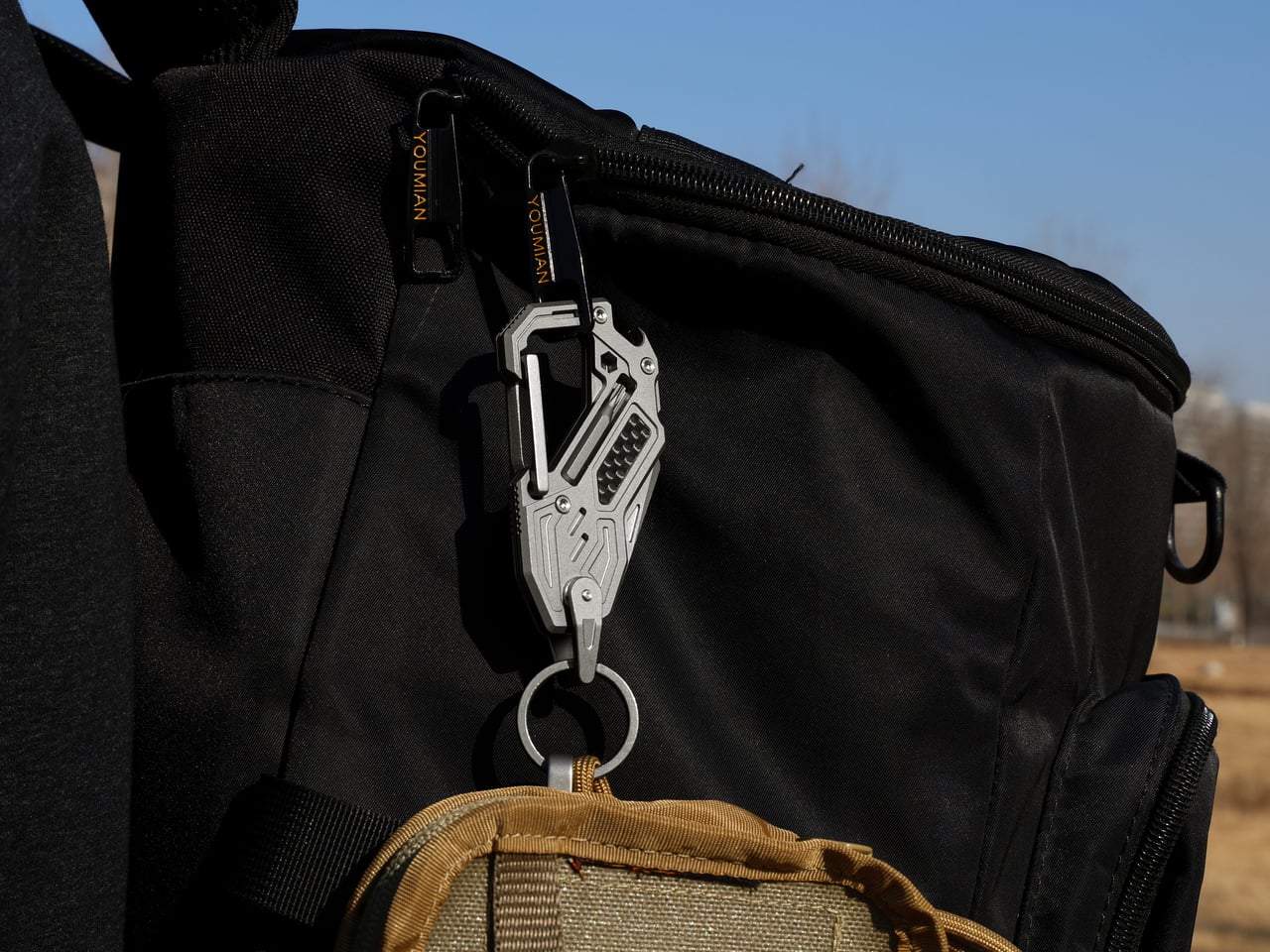
Edrin is a titanium carabiner-first knife that treats the clip, not the blade, as the starting point. It is a compact 6-in-1 tool built around a GR5 titanium frame with an integrated carabiner, a separate D-ring for keys, and a folding D2 blade tucked into the side. The goal is simple: it stays clipped to your belt loop, pack strap, or pocket edge all day, instead of disappearing into a bag.

Designer: MR. GADGET

Click Here to Buy Now: $75 $109 (31% off). Hurry, 88/100 left!

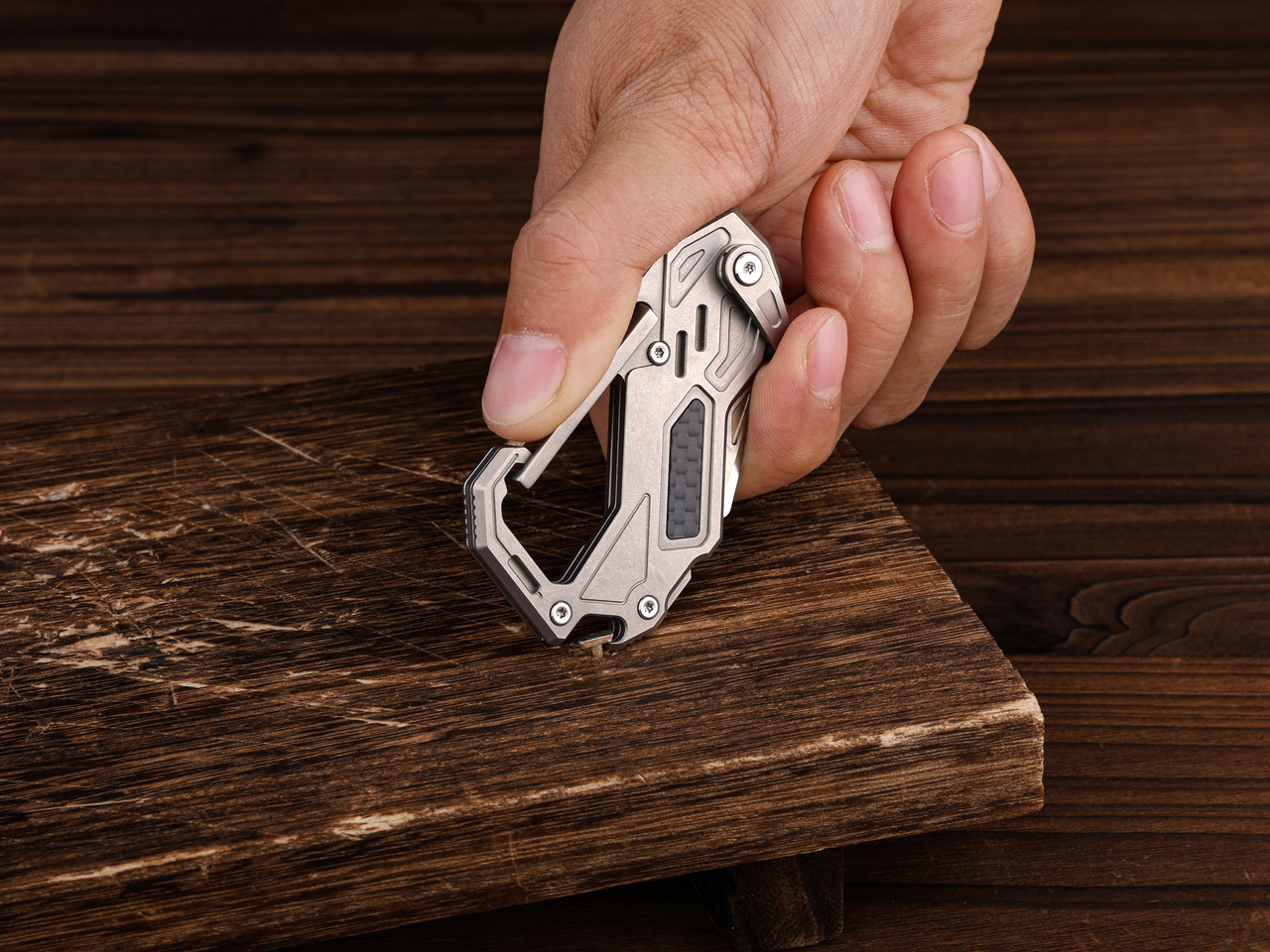
The body is CNC-machined from Grade 5 titanium, which keeps weight down to around 1.54oz while staying rigid and corrosion-resistant. Carbon fiber inlays add grip and a bit of contrast without bulk. At about 3.29 inches long and just over half an inch thick, it feels more like a small piece of industrial jewelry than a lump of hardware, which makes it easier to justify keeping it on you every day.

1

The blade is a compact D2 steel folder designed for control rather than drama. It opens with either hand, locks in place with a dedicated mechanism, and is meant for the kind of cutting you actually do: opening boxes, trimming cord, slicing tape, or cutting a loose thread. High-hardness D2 holds an edge well, so you are not constantly babying it, and the short length keeps it precise.

1

1

The magnetic 4mm bit driver is built into the frame, with a slot that stores the bit under strong magnets so it does not rattle or fall out. Day after day, it is the same little jobs: a loose screw on a tripod, a battery cover that needs a quarter turn, a handle that is starting to wobble. Having a bit driver literally hanging off your belt means those fixes happen in the moment instead of becoming another mental note.

1

The bottle opener and nail puller are integrated into the skeleton of the carabiner, so popping a cap or lifting a small nail does not require digging for another tool. The emergency glass breaker sits quietly at one end, a hardened point that you hope never to use but that is always there if a car window or barrier needs to go in a hurry. Best of all, none of these functions adds much size.

Six tiny tritium slots are machined into the body, ready for optional vials that glow on their own without batteries or charging. In a dark car, a tent, or a hallway, that steady, low-level glow makes it easier to find the tool and orient it without fumbling for a flashlight. It is a small detail, but it reinforces the idea that Edrin is meant to be found and used quickly.

A tool like this quietly changes your routine. Instead of asking whether you should bring a knife or a multi-tool, you clip one titanium carabiner to your usual spot and forget about it until something needs cutting, opening, adjusting, or breaking. The combination of GR5 titanium, carbon fiber, D2 steel, magnets, and tritium sounds overbuilt for a 3.29-inch object, but that is exactly what makes it feel like a small, reliable anchor in a pocket full of temporary things that change every season.

Click Here to Buy Now: $75 $109 (31% off). Hurry, 88/100 left!

The post Edrin 6-in-1 Carabiner-Knife Lives on Your Belt, Not in Your Bag first appeared on Yanko Design.
This Folded Knife Design Challenges 400 Years of Tableware

Sometimes the best designs come from asking a simple question nobody bothered to ask before. For designer Kathleen Reilly, that question was: why does a knife always have to lie flat on the table? The answer came in the form of Oku, a table knife that literally hangs around the edges of your plates and boards thanks to a unique folded handle that defies centuries of Western tableware convention.

When Reilly first arrived in Tsubame-Sanjo, a region in Japan’s Niigata Prefecture known for over 400 years of metalworking tradition, she wasn’t planning to revolutionize the humble dinner knife. The Scottish metalworker had been awarded a Daiwa Scholarship in 2019 and was eager to immerse herself in the legendary craftsmanship of Japanese artisans. What emerged from this cultural exchange was something that bridges East and West in a way that feels both natural and unexpected.

Designer: Kathleen Reilly

The genius of Oku lies in that distinctive bent handle. Instead of resting horizontally like every other knife you own, it hooks over the edge of a plate or wooden board, elevating the blade and creating this almost sculptural presence on your table. It’s a design choice inspired by traditional Japanese place settings and arrangement principles, where every object has intention and purpose. But it’s not just about aesthetics. That elevated position means the blade never touches the table surface, keeping things cleaner and adding an element of interaction between the knife and whatever it’s sitting on.

The project brought together some serious talent from Japan’s craft world. The metal work came from skilled craftspeople in Tsubame-Sanjo, using techniques passed down through generations. The wooden boards that pair with the knives are made by Karimoku Furniture, Japan’s leading wooden furniture manufacturer known for both quality and sustainability. Every piece of wood is sustainably sourced from Japanese forests managed to promote conservation, and the high-quality stainless steel is domestically produced. The whole project operates under Japan’s Ministry of Foreign Affairs Sustainable Development Goals, which gives it some serious environmental credentials.

What makes Oku particularly interesting is how it challenges assumptions. Western tableware has followed basically the same template for centuries, but Reilly looked at those conventions through fresh eyes informed by Eastern design philosophy. The result is functional yet unconventional, introducing what she describes as a refined aesthetic that breathes new life into dining spaces. Dezeen Awards judges agreed, naming Oku the Homeware Design of the Year in 2022. Their comments captured something essential about the design: “Oku has a certain humour to it while being beautiful and innovative. It is a beautiful, honest and delicate design, the way the knife and the block work together has a kind of unified function that is expressed through the form of each.”

There’s something playfully subversive about a knife that refuses to behave like other knives. It perches rather than lays, it interacts rather than just existing. The form tells a story about craft traditions meeting contemporary design thinking, about respecting heritage while pushing boundaries. It’s the kind of object that makes you reconsider other everyday items you’ve taken for granted.

For anyone interested in how design can create dialogue between cultures, Oku offers a compelling case study. It demonstrates that innovation doesn’t always mean adding more features or technology. Sometimes it means looking at something familiar from a completely different angle, informed by traditions that value mindfulness and intentionality in daily rituals. The collaboration between Scottish creativity and Japanese craftsmanship produced something neither culture would have created alone, and that’s where the magic happens.

The post This Folded Knife Design Challenges 400 Years of Tableware first appeared on Yanko Design.
This Utility Knife Has a Satisfying Click-and-Slide Instead of a Rattle

Most utility knives live in junk drawers until you need to open a box. You dig out something with a flimsy plastic slider, a rattling blade, and a body that feels like it costs exactly one dollar. They are treated as disposable, even though you use them constantly for packages, tape, and workshop tasks. There is room for a small knife that feels as considered as the rest of your desk or carry.

BQ S1 is a compact gravity-slide utility knife built around a simple intention: a tool that looks clean, feels natural, and works flawlessly. The flat, CNC-machined metal body hides a gravity-assisted blade mechanism inside, with no aggressive tactical styling or gimmicks. It is designed to make everyday cutting feel deliberate rather than disposable, turning deployment into a motion that is actually satisfying instead of frustrating.

Designer: Mario Lee from BQEDC

Click Here to Buy Now: $49 $70 (30% off). Hurry, only 14/270 left! Raised over $70,000.

The S1 uses a gravity-assisted slide mechanism instead of a traditional linear slider. A sideways thumb swipe makes the internal plates pivot, and the blade glides out under its own weight, then locks securely in place. The motion and sound are tuned to feel instinctive and precise, creating a satisfying click and slide rather than a sticky, two-handed struggle with a plastic track that catches every time.

The body is machined from aluminum or titanium with tight tolerances, giving you sharp exterior lines, smooth chamfered edges, crisp blade guides, and defined side texture for grip. The layout is lefty-friendly, with every angle and surface shaped to enhance control, comfort, safety, and precision. It feels equally natural in either hand when cutting cardboard, trimming tape, or opening packages at your desk or in a workshop.

A bright red safety lock sits at the top, offering tactile feedback when engaged and making it obvious when the blade is secured. The compact 80mm length, lightweight build, and reinforced lanyard hole make it easy to carry on a keychain, in a pocket, or clipped to a bag. It is small enough to disappear when not in use, solid enough that you do not worry about it falling apart.

The S1 uses standard utility blades you can find almost anywhere, steel, tungsten-coated, or ceramic, with no proprietary refills. Blade changes are handled by a simple slide button sequence: slide to release, swap the blade, slide back, done. That choice keeps running costs low and makes it easy to keep a sharp edge without hunting for special cartridges or depending on a single supplier.

Opening deliveries, cutting packing tape, trimming cardboard for prototypes, these are small routine tasks that most people handle with whatever dull knife is within reach. The BQ S1 is designed to turn those moments into clean, precise actions where the blade extends smoothly, locks with confidence, and cuts without tearing or snagging. It is not trying to be a survival knife or a fidget toy, just a well-made cutter.

For people who care about the details of the tools they touch every day, a utility knife that feels cool to use instead of something you hide in a drawer starts to make sense. The gravity-slide motion, the CNC-machined body, the red safety lock, and the universal blade compatibility all add up to a tool that quietly earns its place in your pocket or on your keychain, not because it does anything wildly different, but because it does everyday things better.

Click Here to Buy Now: $49 $70 (30% off). Hurry, only 14/270 left! Raised over $70,000.

The post This Utility Knife Has a Satisfying Click-and-Slide Instead of a Rattle first appeared on Yanko Design.

This Utility Knife Has a Satisfying Click-and-Slide Instead of a Rattle

Most utility knives live in junk drawers until you need to open a box. You dig out something with a flimsy plastic slider, a rattling blade, and a body that feels like it costs exactly one dollar. They are treated as disposable, even though you use them constantly for packages, tape, and workshop tasks. There is room for a small knife that feels as considered as the rest of your desk or carry.

BQ S1 is a compact gravity-slide utility knife built around a simple intention: a tool that looks clean, feels natural, and works flawlessly. The flat, CNC-machined metal body hides a gravity-assisted blade mechanism inside, with no aggressive tactical styling or gimmicks. It is designed to make everyday cutting feel deliberate rather than disposable, turning deployment into a motion that is actually satisfying instead of frustrating.

Designer: Mario Lee from BQEDC

Click Here to Buy Now: $49 $70 (30% off). Hurry, only 14/270 left! Raised over $70,000.

The S1 uses a gravity-assisted slide mechanism instead of a traditional linear slider. A sideways thumb swipe makes the internal plates pivot, and the blade glides out under its own weight, then locks securely in place. The motion and sound are tuned to feel instinctive and precise, creating a satisfying click and slide rather than a sticky, two-handed struggle with a plastic track that catches every time.

The body is machined from aluminum or titanium with tight tolerances, giving you sharp exterior lines, smooth chamfered edges, crisp blade guides, and defined side texture for grip. The layout is lefty-friendly, with every angle and surface shaped to enhance control, comfort, safety, and precision. It feels equally natural in either hand when cutting cardboard, trimming tape, or opening packages at your desk or in a workshop.

A bright red safety lock sits at the top, offering tactile feedback when engaged and making it obvious when the blade is secured. The compact 80mm length, lightweight build, and reinforced lanyard hole make it easy to carry on a keychain, in a pocket, or clipped to a bag. It is small enough to disappear when not in use, solid enough that you do not worry about it falling apart.

The S1 uses standard utility blades you can find almost anywhere, steel, tungsten-coated, or ceramic, with no proprietary refills. Blade changes are handled by a simple slide button sequence: slide to release, swap the blade, slide back, done. That choice keeps running costs low and makes it easy to keep a sharp edge without hunting for special cartridges or depending on a single supplier.

Opening deliveries, cutting packing tape, trimming cardboard for prototypes, these are small routine tasks that most people handle with whatever dull knife is within reach. The BQ S1 is designed to turn those moments into clean, precise actions where the blade extends smoothly, locks with confidence, and cuts without tearing or snagging. It is not trying to be a survival knife or a fidget toy, just a well-made cutter.

For people who care about the details of the tools they touch every day, a utility knife that feels cool to use instead of something you hide in a drawer starts to make sense. The gravity-slide motion, the CNC-machined body, the red safety lock, and the universal blade compatibility all add up to a tool that quietly earns its place in your pocket or on your keychain, not because it does anything wildly different, but because it does everyday things better.

Click Here to Buy Now: $49 $70 (30% off). Hurry, only 14/270 left! Raised over $70,000.

The post This Utility Knife Has a Satisfying Click-and-Slide Instead of a Rattle first appeared on Yanko Design.
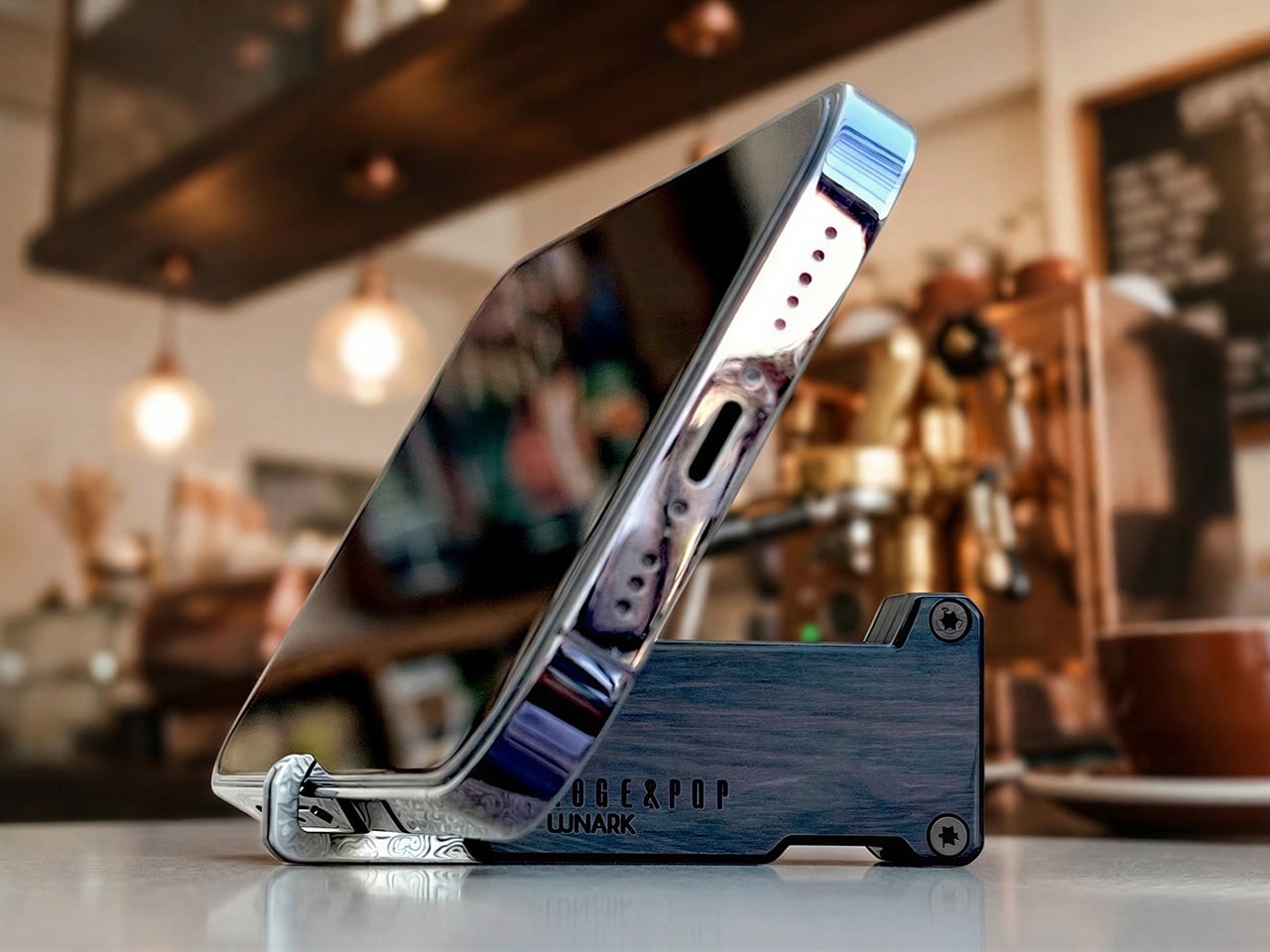
This 11g Keychain Knife Has a Tungsten Tip You Swap, Never Sharpen

Most keychain cutters feel like afterthoughts. Plastic shells with soft blades that struggle with packing tape, bend on zip ties, and disappoint when needed. The gap between how often a small sharp edge would be useful and how rarely those tools work is frustrating. Small does not have to mean flimsy, but most micro knives settle for exactly that, leaving you hunting for scissors or borrowing someone else’s blade when boxes arrive.

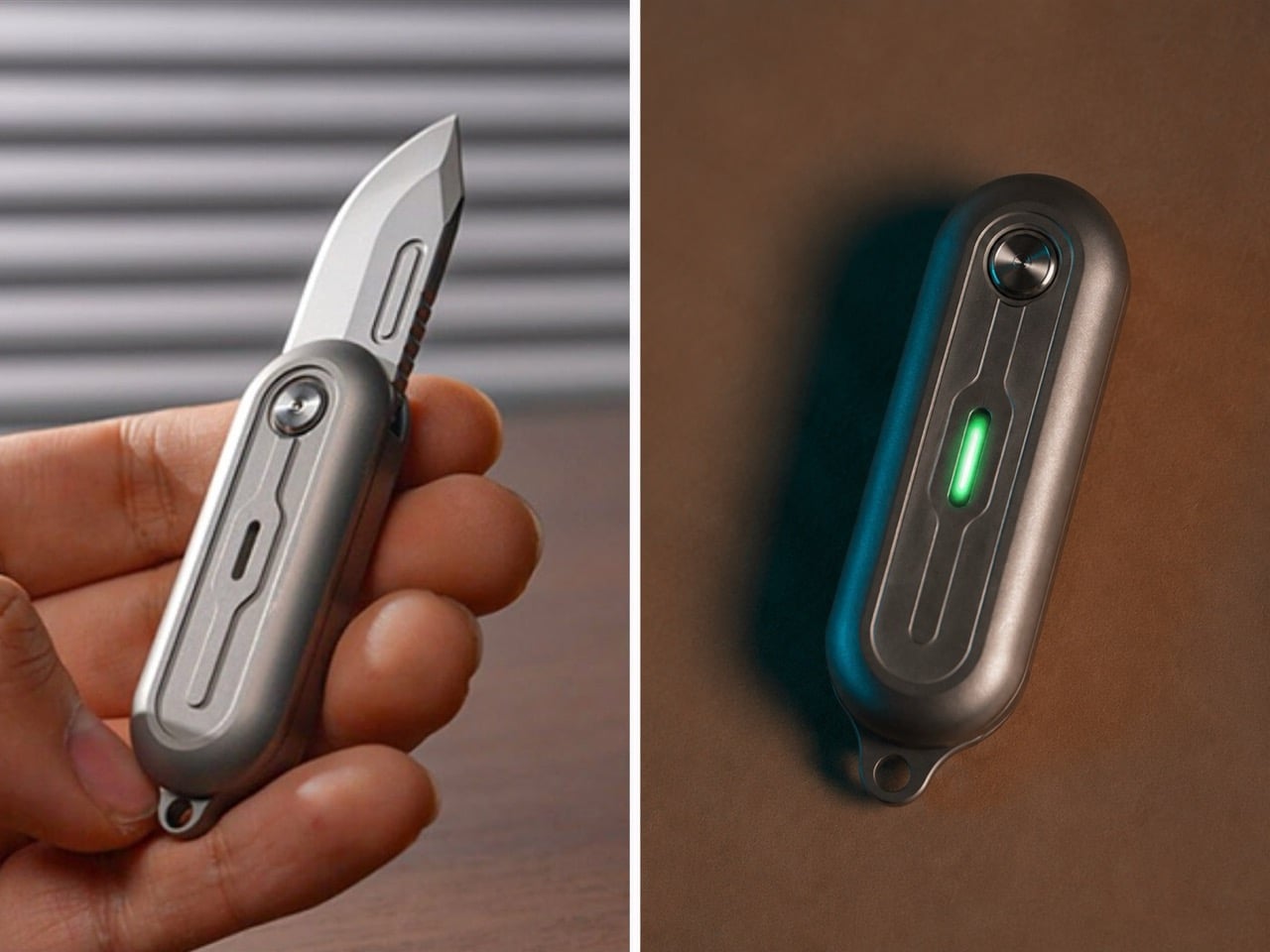
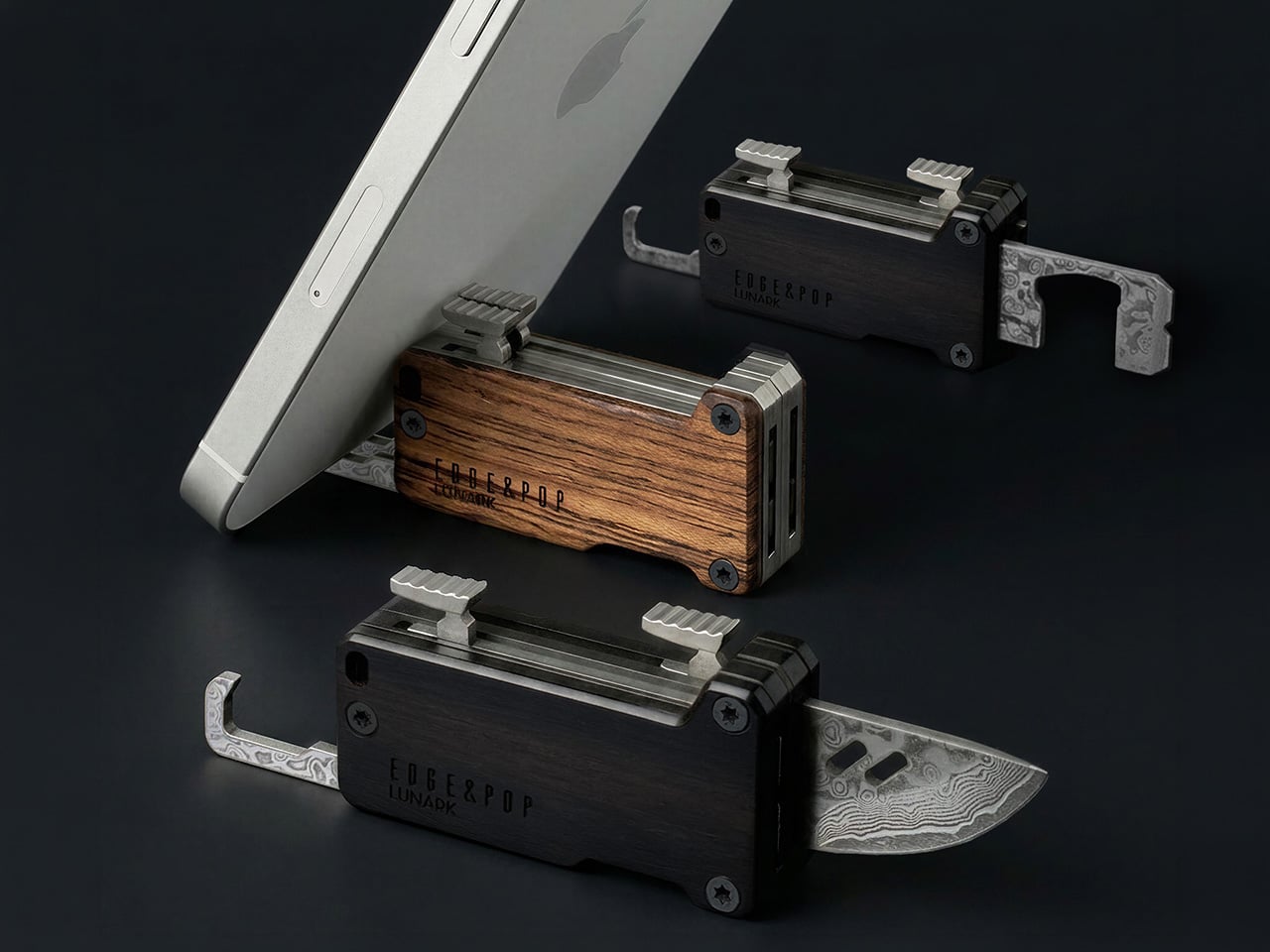
The Z3RO mini knife rebuilds the category from the materials up. It weighs 11g, measures around 5cm, and combines a tungsten cutting tip, carbon fiber body, and titanium backbone in a package that fits on a keychain without feeling like a toy. Instead of plastic or aluminum, Z3RO feels closer to pocket tech or minimalist jewelry, something you notice when you pick it up rather than ignore until it breaks.

Designer: YSMART Design Team

Click Here to Buy Now: $74 $120 (38% off). Hurry, only a few left!

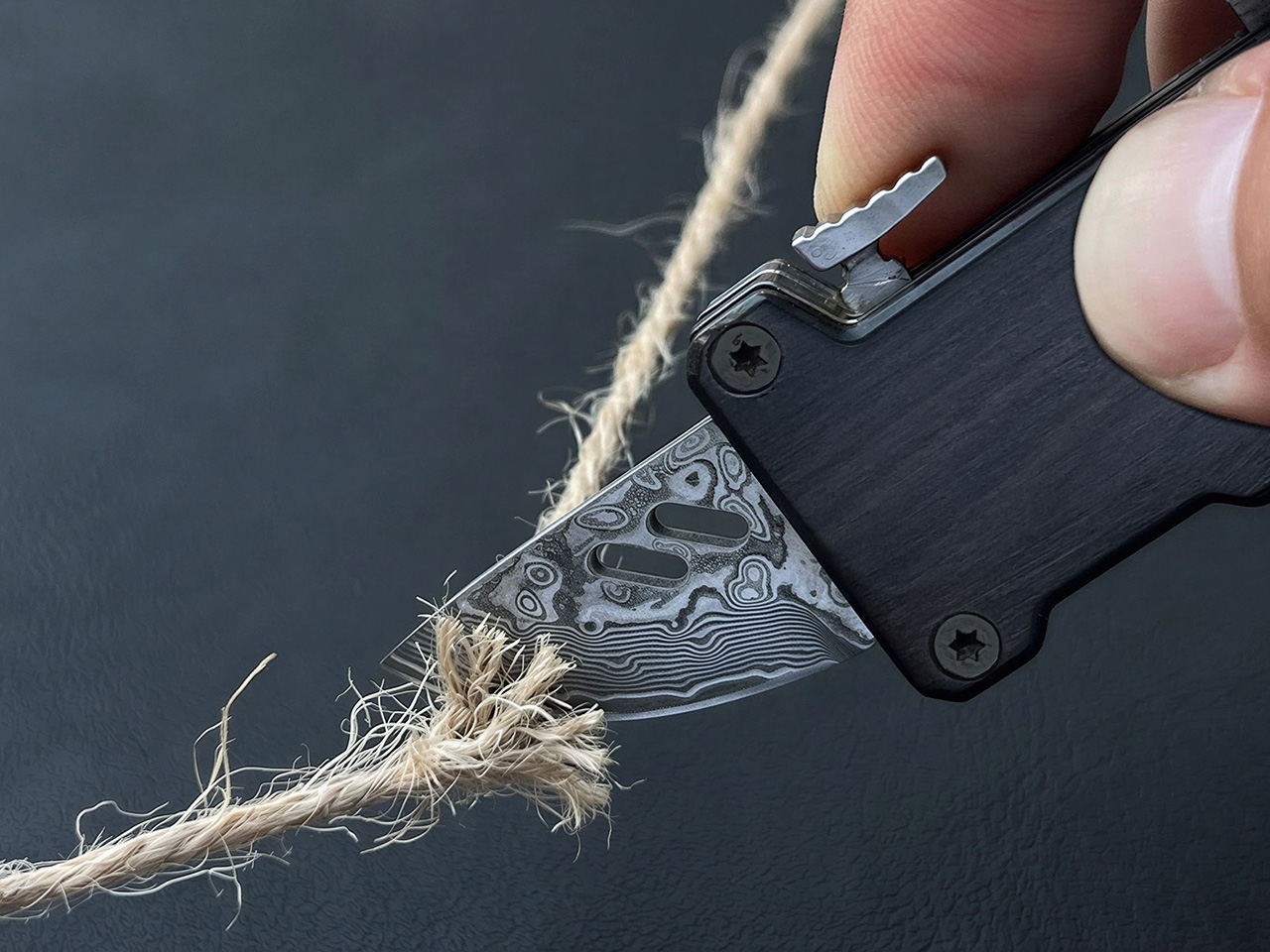
The cutting tip is tungsten alloy, the same material used in surgical blades and industrial cutters, rated at Mohs hardness nine. It shrugs off cardboard, cord, plastic tags, and thick tape without dulling quickly or chipping like softer steel. It handles tasks that show up constantly, opening boxes, slicing cable ties, trimming threads, and cutting shrink wrap. Sharp enough to feel precise, hard enough to stay that way through months of daily cutting and abuse.

Instead of sharpening a tiny, ultra-hard edge, Z3RO uses a replaceable cutter head that swaps out in seconds without tools. When the tip eventually loses its bite, you pop in a fresh one. The body becomes a long-term object while the working edge is treated like a precision consumable. You replace the blade, not the tool, and the carbon fiber shell ages gracefully without looking worn after weeks of heavy pocket carry.

Most small knives lean on plastic or aluminum to save weight. Z3RO goes for woven carbon fiber wrapped around a titanium core, keeping the weight at eleven grams while still feeling solid. The material combination offers natural resistance to rust, sweat, moisture, and impacts, so it does not corrode in damp pockets or degrade from drops. It is the kind of material choice expected in high-end gear, not something dangling from house keys.

The mechanism is a magnetic quick-release using internal neodymium magnets instead of fiddly sliders. One firm pull separates the body, the cutter snaps into position with a click, and it is ready. The magnets hold everything with zero wobble, so it feels precise rather than loose. This matters when your other hand is holding a box, rope, or bag you do not want to drop while fumbling for a blade.

Everyday moments shift when a sharp, instantly accessible cutter lives on your keychain or neck lanyard. Cutting packing tape becomes one motion instead of clawing at it. Freeing a stuck zipper pull takes seconds. Trimming a cable tie or slicing shrink wrap happens without hunting for scissors. The tool turns minor annoyances into quick actions, and that quiet utility adds up, making it something you reach for multiple times daily without thinking.

The carbon fiber sheen, titanium accents, and slim silhouette make Z3RO look more like gear art than a utility blade. Color options like Stealth Black, Neo Blue, and Volt Green add personality without sacrificing the minimalist shape. It is the sort of object people notice when you set keys down, even if they do not immediately realize it cuts. The woven texture and metal details read as intentional design rather than generic hardware fare.

Z3RO exists because everyday carry has matured past cheap freebies into a space where materials, mechanics, and longevity matter. A tiny knife built from tungsten, carbon fiber, and titanium, with a magnetic quick-release and replaceable head, feels like a natural evolution. It reminds you that even the smallest tools can be designed with the same care as big ones, and sometimes the best gear is what you forget you are carrying until you actually need it.

Click Here to Buy Now: $74 $120 (38% off). Hurry, only a few left!

The post This 11g Keychain Knife Has a Tungsten Tip You Swap, Never Sharpen first appeared on Yanko Design.
CIVIVI Elementum II EDC Knife Opens With One Hand for Holiday Wrapping Madness

Holidays mean wrapping presents, slicing tape, and trimming ribbons, and your fingers pay the price. The CIVIVI Button Lock Elementum II makes these tasks effortless with a sharp, pocket‑friendly blade that opens with one hand. It is the kind of tool that disappears in your pocket until the moment you actually need something sharper than a house key.

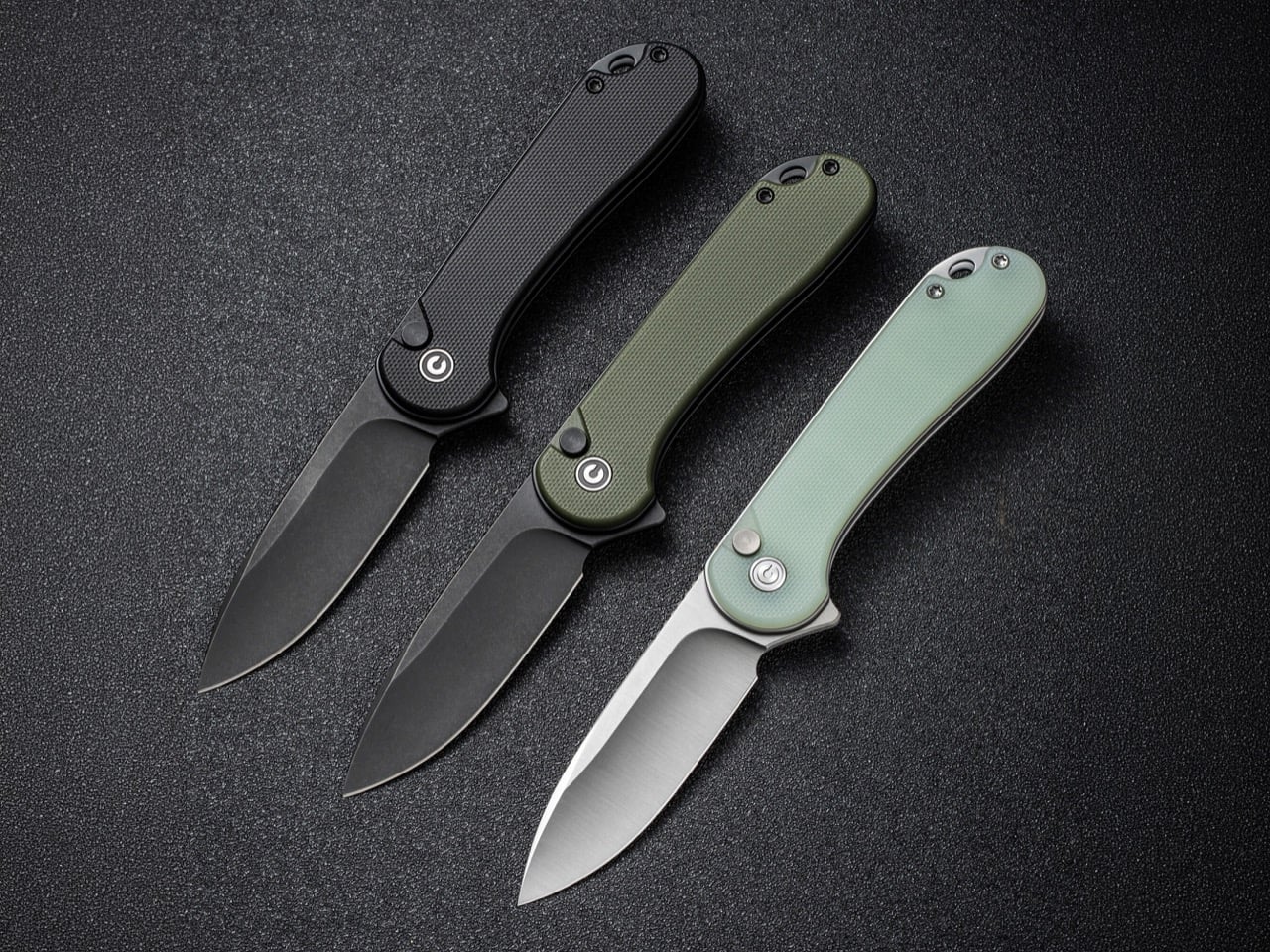
This flipper knife is built for those small frictions. It is a compact everyday carry folder with a blade just under three inches, a button lock mechanism that feels intuitive, and G10 handles that stay friendly rather than aggressive. The design stays approachable, with rounded lines and a drop point blade that does not announce itself across a room or make anyone uncomfortable at the office or a family gathering.

Designer: CIVIVI

Click Here to Buy Now: $57.38 $76.50 (25% off). Hurry, get a free Christmas Stocking with order over $29! Deal ends in 48-hours.

What gives the knife its practical edge is Nitro V blade steel. It is a nitrogen-enriched stainless that balances toughness, corrosion resistance, and edge retention without becoming fussy to maintain. You can slice an apple, cut wet cardboard, or trim paracord without worrying about rust. It makes for a great gift that will be used daily, not forgotten in a drawer.

Here’s a quick look at what you’ll be getting with the CIVIVI Button Lock Elementum II:

  • Overall Length: 7.06 inches
  • Knife Weight: 3.12 oz
  • Blade length: 2.96 inches
  • Blade steel: Nitro-V
  • Blade shape: Drop Point
  • Blade Grind: Hollow
  • Blade Hardness: 58-60 HRC
  • Pocket Clip: Tip-Up, Right Carry

The proportions feel right for daily carry. The blade measures 2.96 inches, the overall length sits around seven inches open, and the handle thickness is slim enough to ride comfortably in a pocket without printing through fabric. G10 scales on variants like the OD green model offer textured grip, while stainless liners add structure. A deep carry pocket clip keeps it low profile, so it disappears until needed at a desk or outdoors.

The button lock is the centerpiece. Paired with a pivot running on caged ceramic ball bearings, the action feels smooth and fidget-friendly. A press of the button releases the blade, letting it swing closed with a light shake of the wrist, making one-handed use genuinely easy. The spring under the button resists accidental opening, staying secure in the pocket while still satisfying to deploy when wrapping presents or cutting rope.

Everyday moments and holiday tasks blur together naturally with a knife like this. Slicing packing tape on deliveries, trimming threads on a sweater, cutting twine for wreaths, or sharpening a pencil all benefit from a sharp, accessible blade and hollow grind that handles both fine slicing and light utility. The drop point shape stays versatile, and the black stonewashed finish on some variants hides scratches, so it does not look worn after a few weeks.

What makes the CIVIVI Button Lock Elementum II work as a gift is how approachable it feels. The design stays simple and functional, with controls that make sense even to someone whose only knife has been a keychain multitool. CIVIVI offers a range of handle materials and colors, from G10 to carbon fiber and Damascus variants, so matching it to a personality is straightforward. This season feels like the right moment for something that earns its pocket space daily rather than sitting unused by February.

Well-designed tools change how you move through small moments, especially during busy times when everything from gift wrapping to cooking feels slightly more frantic. The CIVIVI Button Lock Elementum II feels like the result of quiet decisions about steel, mechanics, and ergonomics, all aimed at making a knife people actually enjoy carrying. That mix of practicality and satisfaction is what turns it from another folding blade into something that becomes part of the routine, in your pocket or someone else’s.

Click Here to Buy Now: $57.38 $76.50 (25% off). Hurry, get a free Christmas Stocking with order over $29! Deal ends in 48-hours.

The post CIVIVI Elementum II EDC Knife Opens With One Hand for Holiday Wrapping Madness first appeared on Yanko Design.