
Crazy Taxi World Tour reboots the series in 2027
Get ready to yell "Yah yah yah yah yah" all over again.

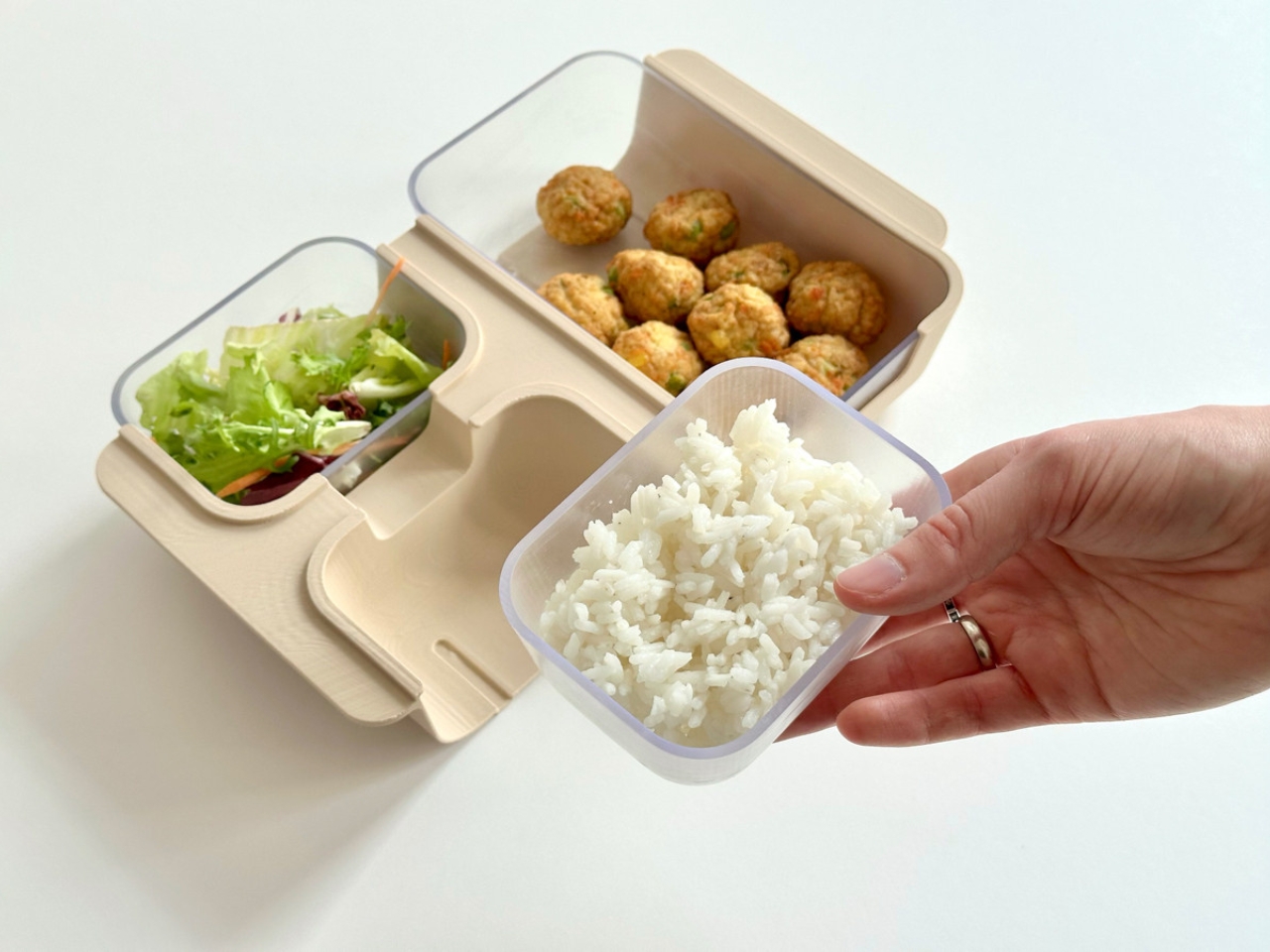
Every time I order food delivery, I already know what’s coming before I open the bag. A stack of plastic containers, lids that barely seal, and that guilty beat when I toss everything in the trash about five minutes after eating. It’s a ritual nobody talks about but everyone performs. It happens millions of times a day.
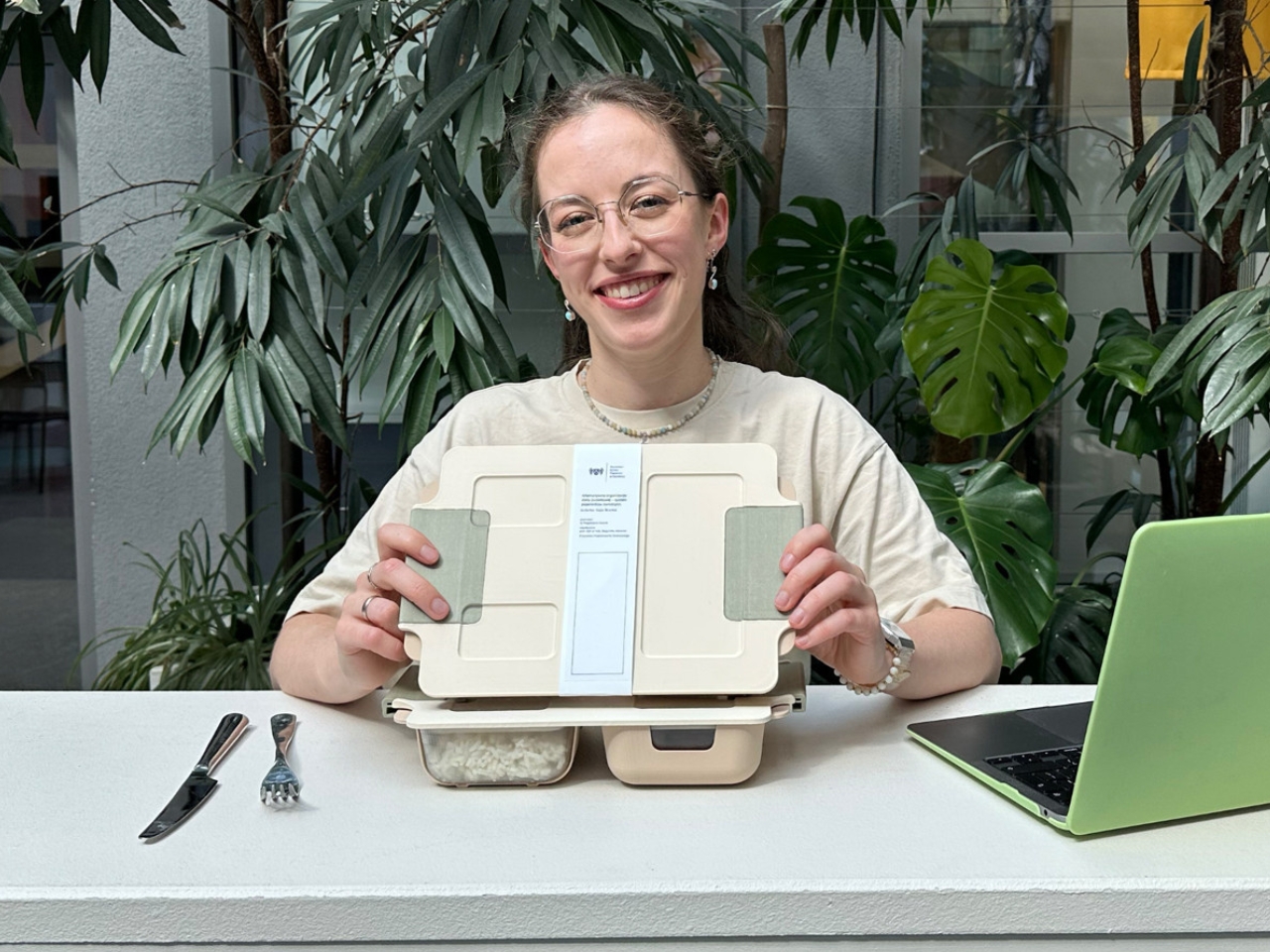
That’s the problem Kaja Brunke decided to sit with. The Polish designer, who earned her Master’s from the Academy of Fine Arts in Gdańsk, didn’t approach meal delivery packaging with the usual sustainability playbook. She didn’t swap the plastic for bamboo and call it done. She asked a harder question: what if the container was never meant to be thrown away at all?
Designer: Kaja Brunke
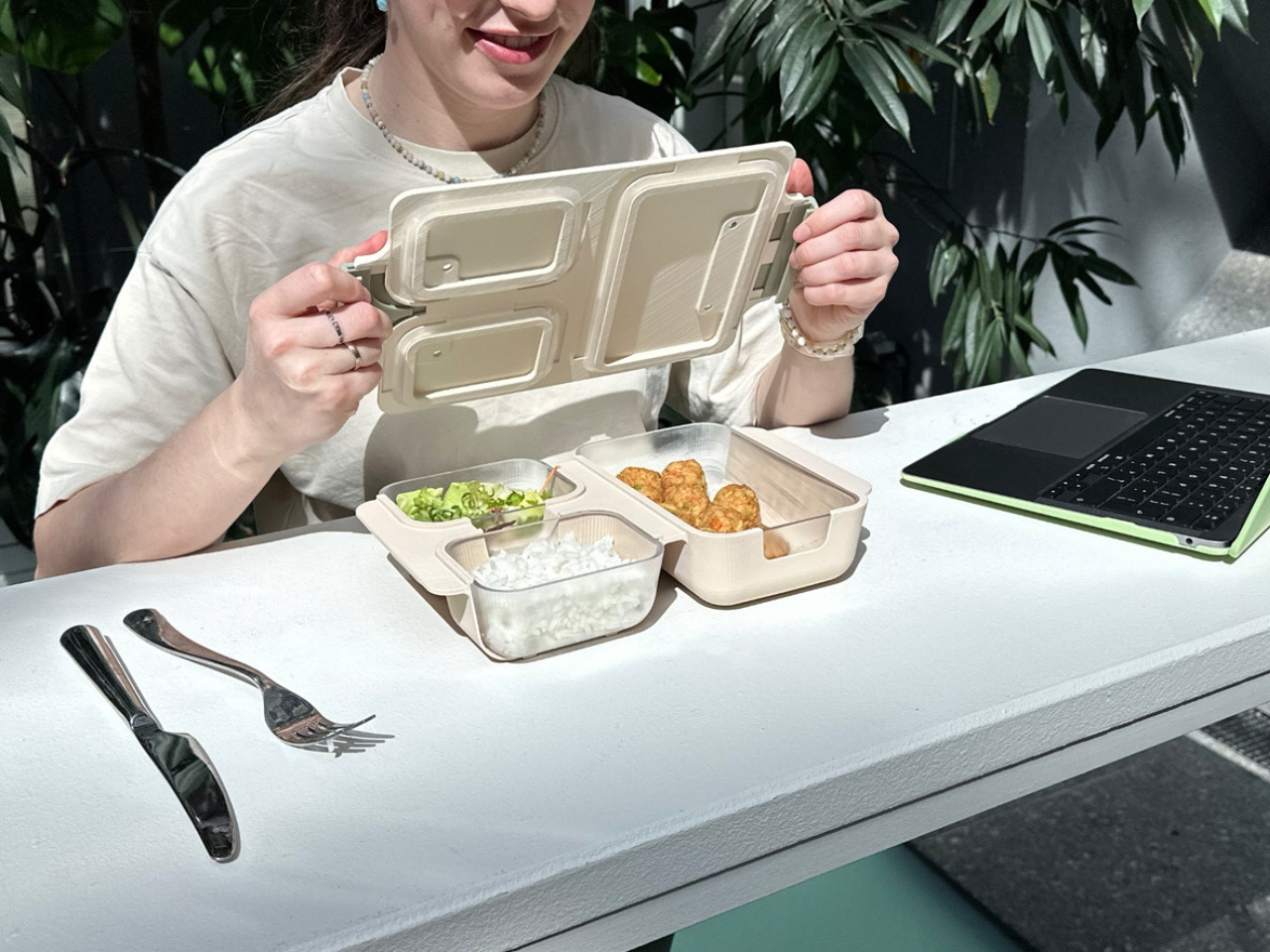
The result is ReBento, a returnable, reusable container system designed specifically for subscription meal delivery. It just won the Packaging category at the Green Product Award 2026, and once you understand what it’s actually doing, it’s hard to unsee how obvious the solution feels, and how long it took for someone to build it properly.
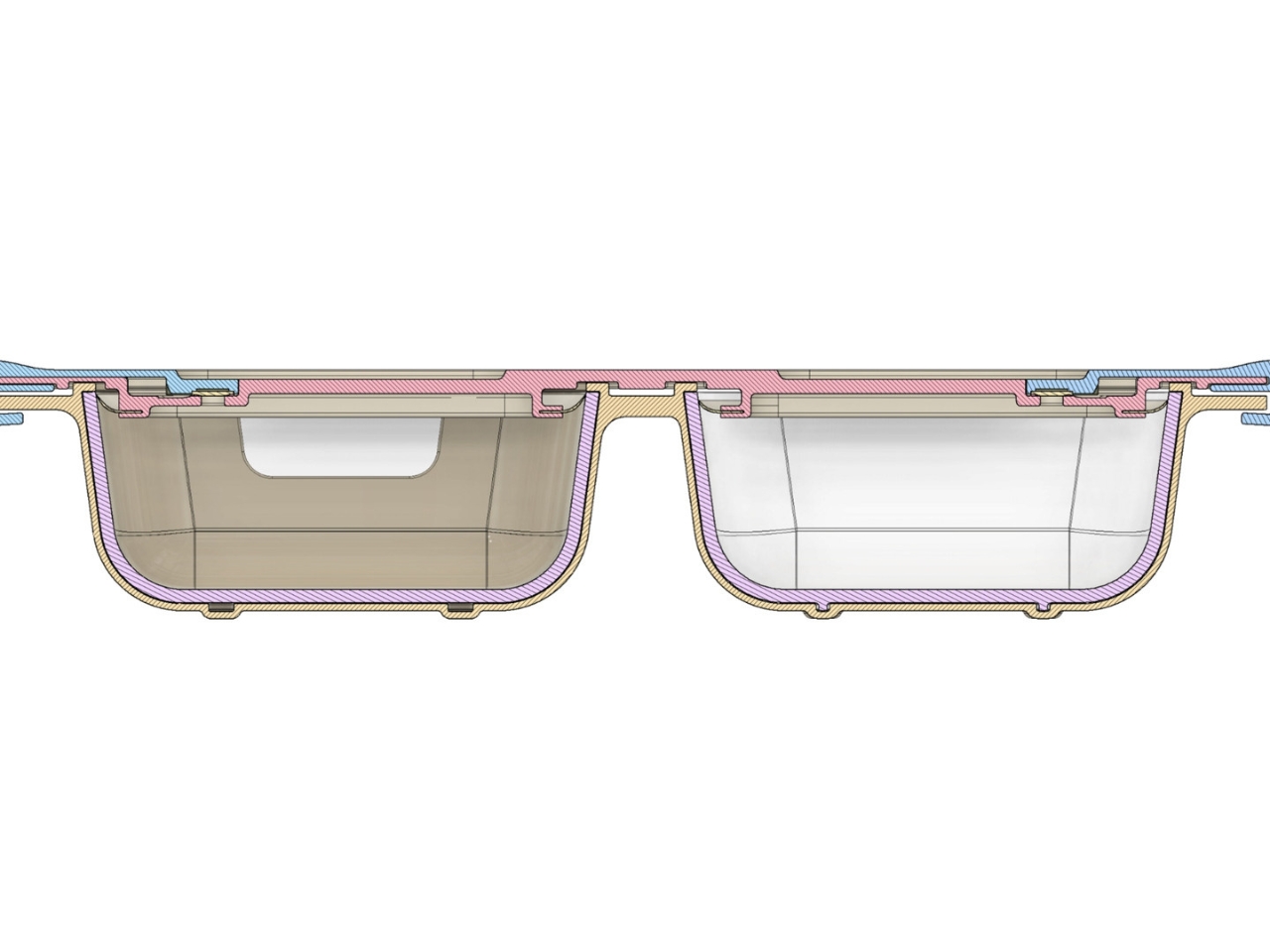
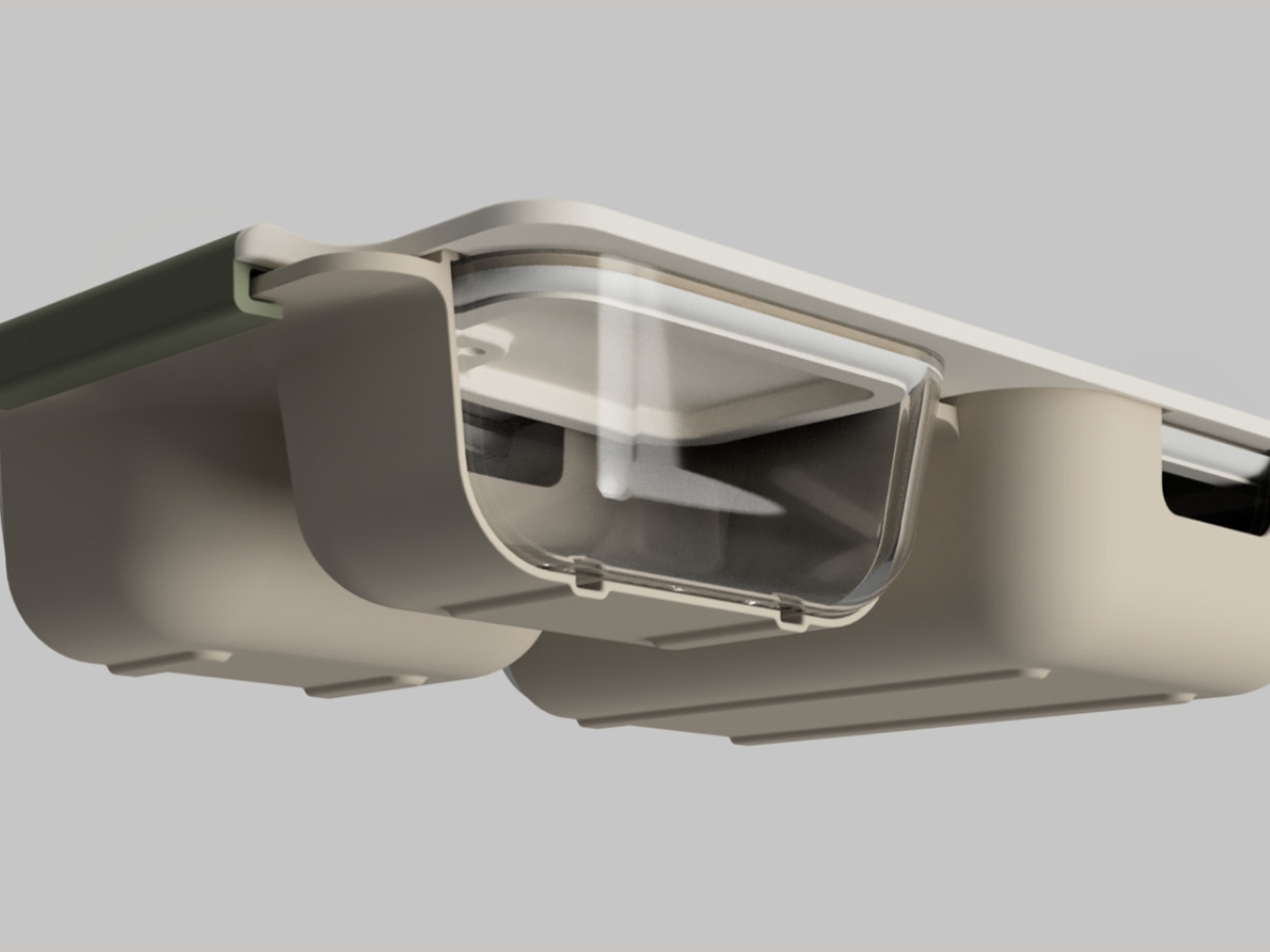
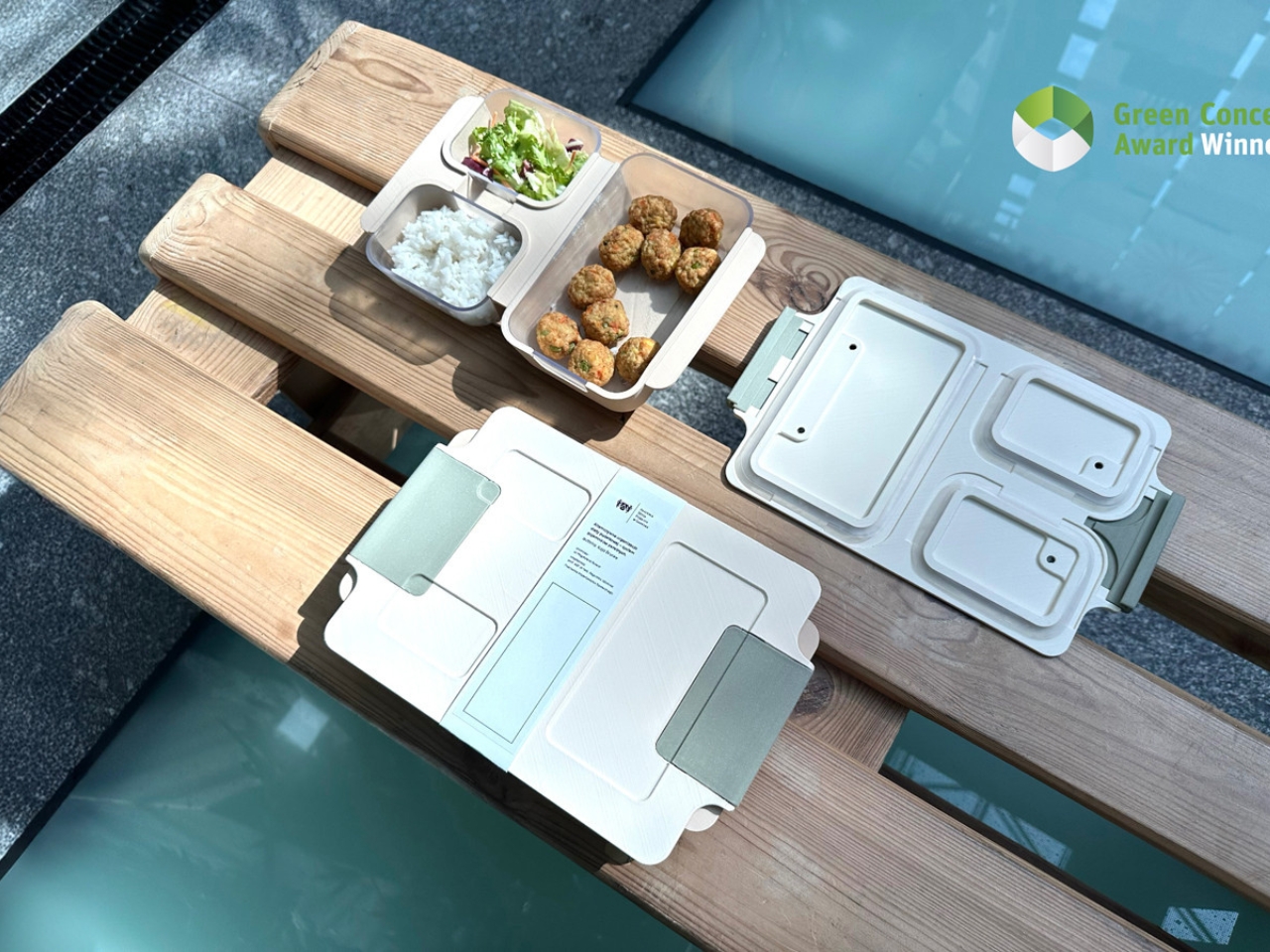
ReBento works like this: meals are delivered in durable, leak-proof containers. Inside, removable glass compartments let you separate and reheat food directly in the box, no transfer required. After you’re done, empty containers are collected by couriers on their next delivery run and cycled back into the system. No secondary logistics chain to build. No complicated drop-off points. It integrates into the delivery infrastructure that already exists.
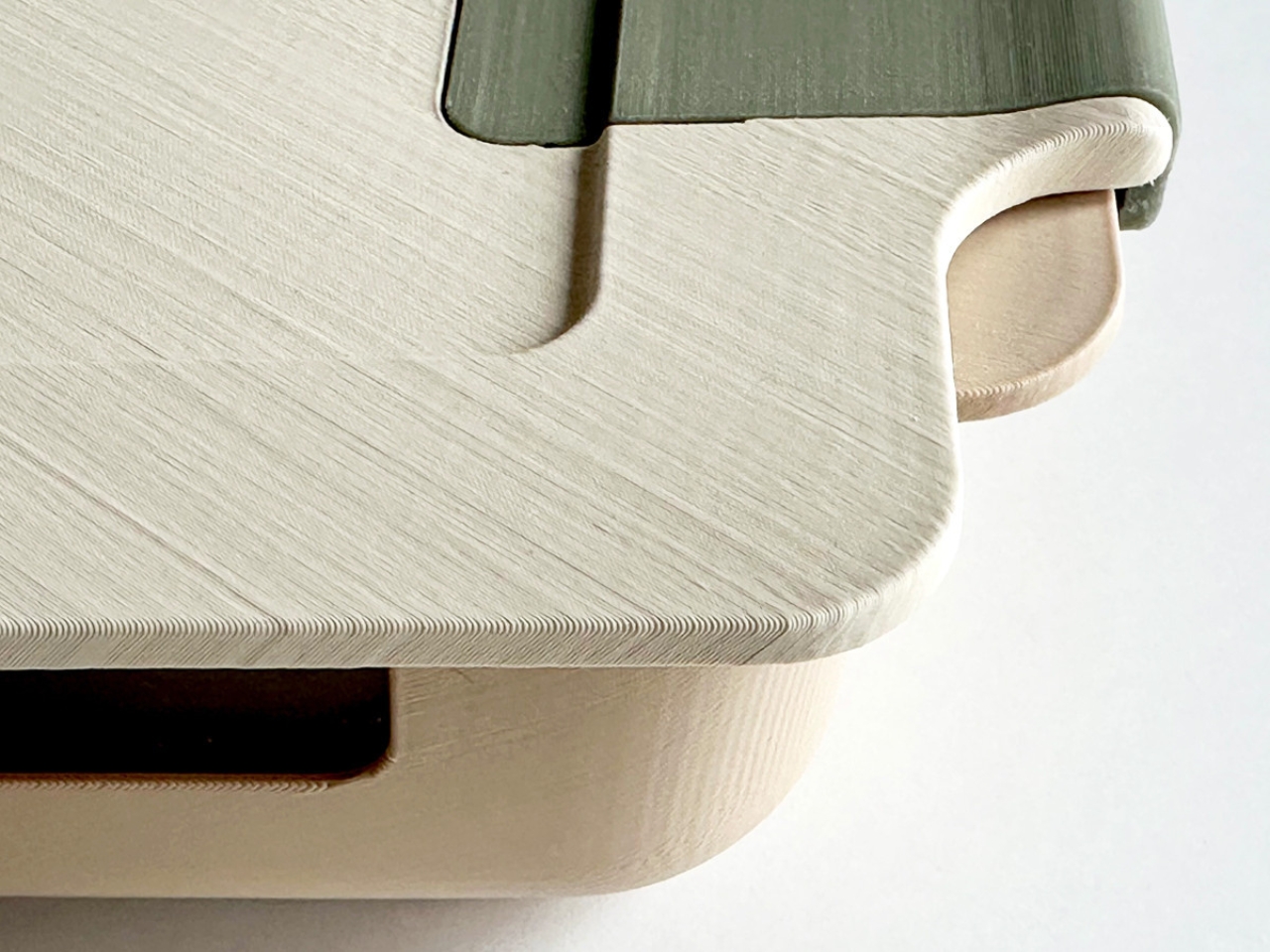
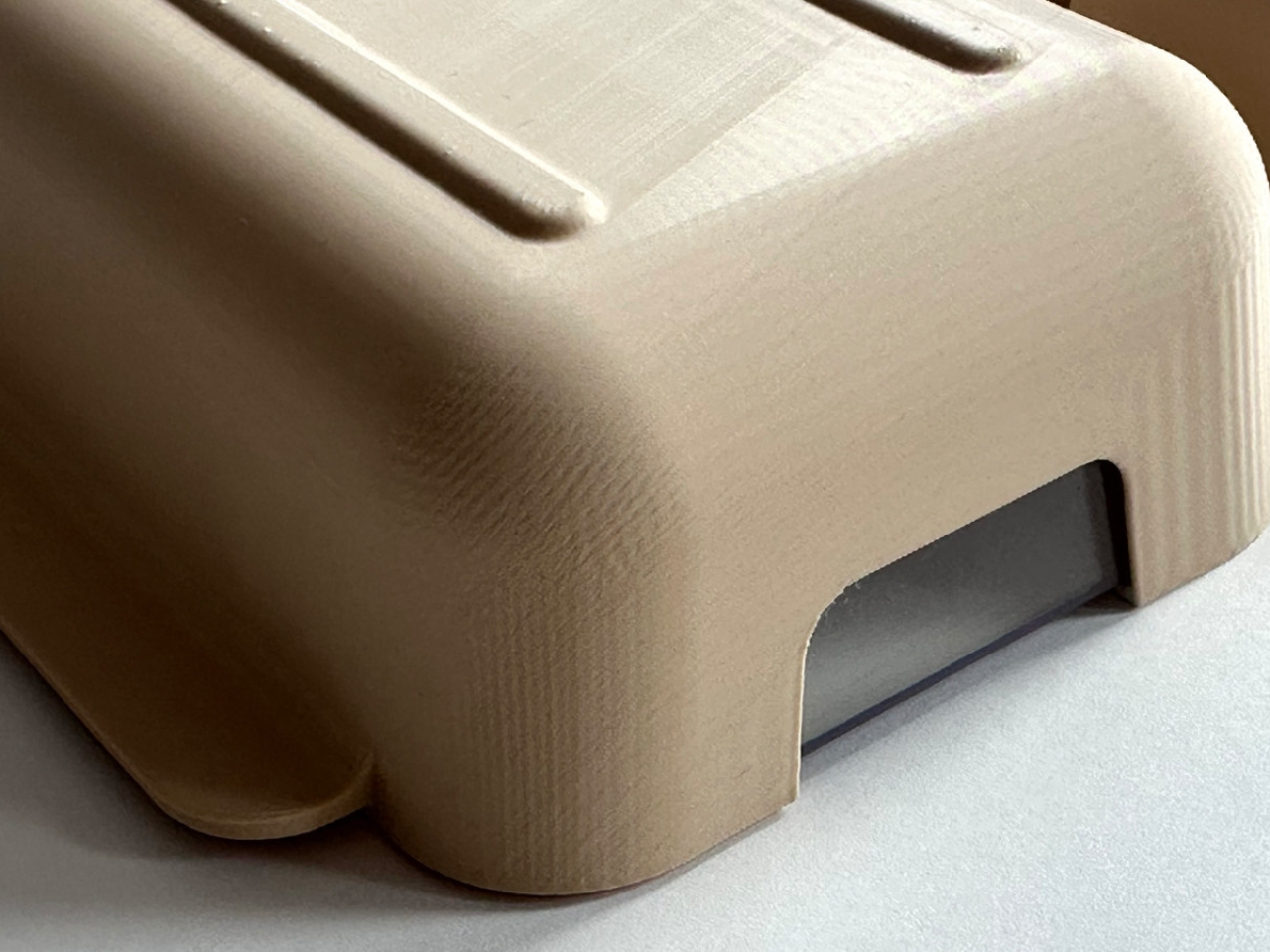
That last part is what makes it genuinely clever. Most sustainable packaging concepts are designed in isolation, as if the supply chain is a blank canvas waiting to be reimagined. ReBento was designed around the reality that already exists. Brunke clearly understood that a solution only works if it doesn’t require the whole system to change around it. Couriers are already going door to door. Why not have them pick something up on the way back?
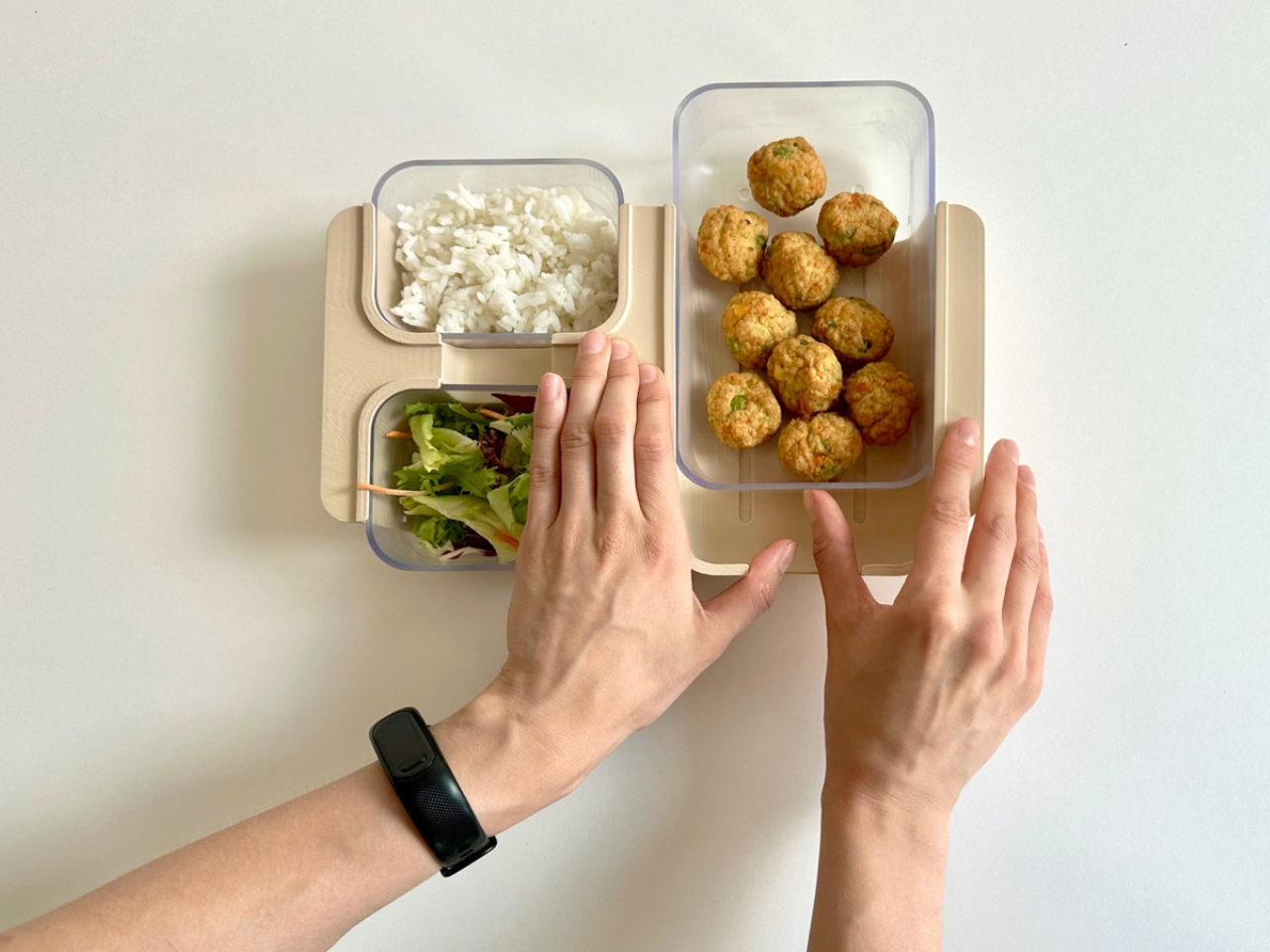
The glass compartments are a thoughtful detail that deserves more attention than they might initially get. Glass is heavy, yes, but it’s also the reason the dining experience actually improves. Food doesn’t absorb the smell of the container. You can reheat without transferring to another dish. The meal arrives as it was meant to be eaten. For anyone who has peeled hot soup-soaked rice out of a soggy paper container, that alone is worth talking about.
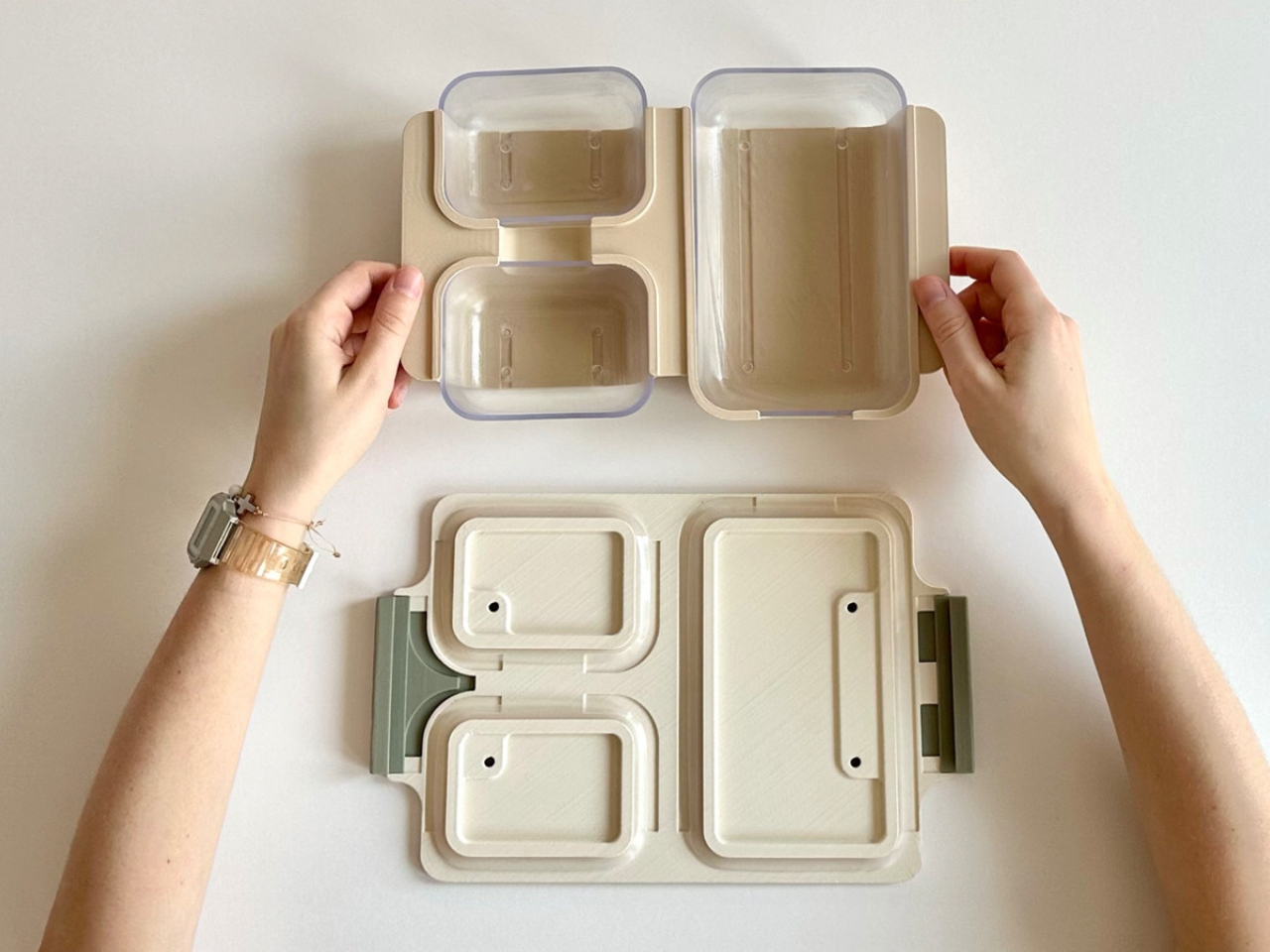
What Brunke has built is not just a product. It’s a framework for how meal delivery could work if the industry decided to take the waste problem seriously, rather than paper over it. The sector has largely settled for greenwashing: compostable containers that require industrial composting facilities most cities don’t have, or “recyclable” plastic that rarely makes it through the actual recycling process. ReBento sidesteps the whole debate by making durability the point.
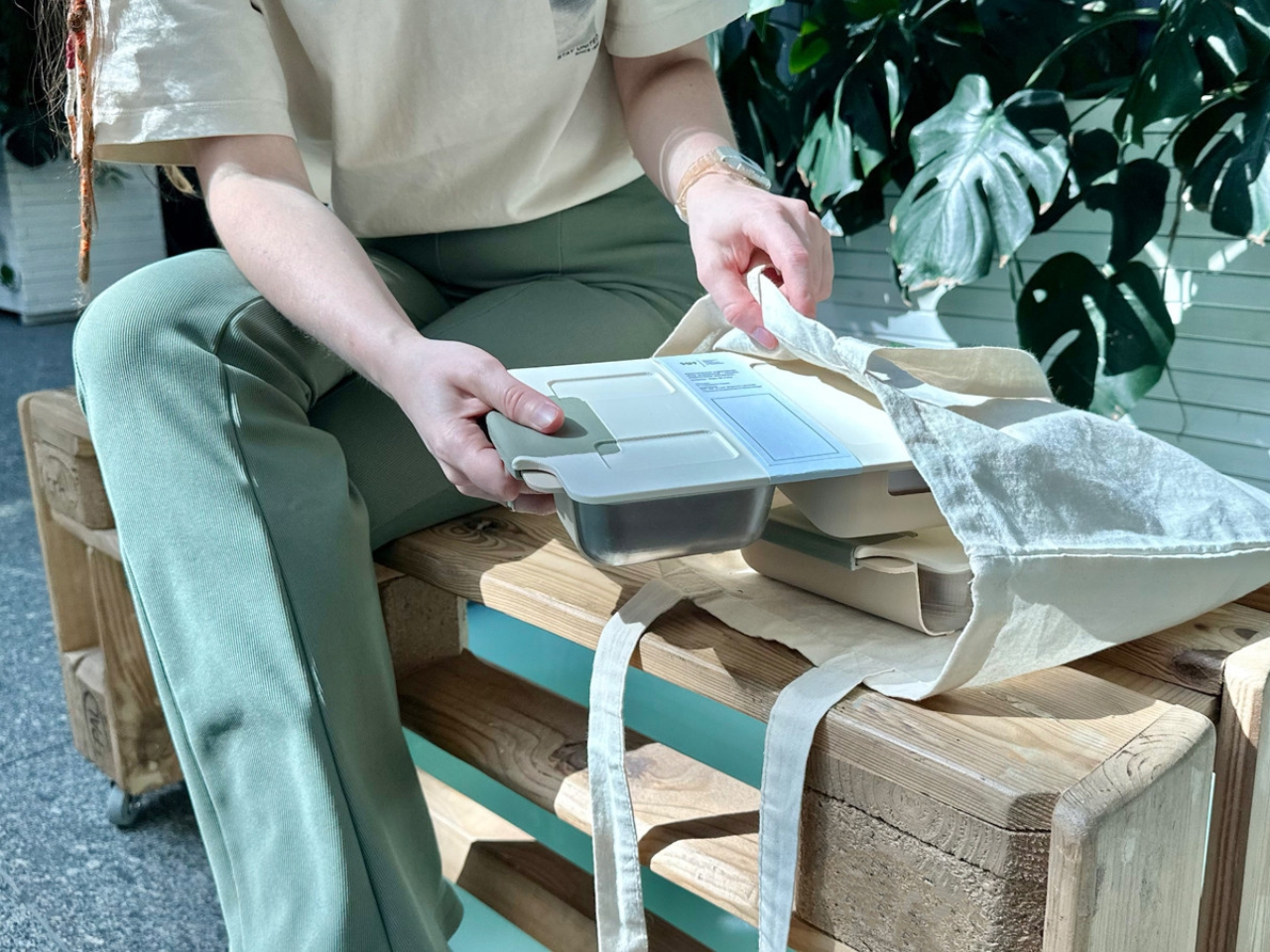
I’ll be honest: I’m a little impatient for something like this to reach the mainstream. Subscription meal delivery is one of the fastest-growing segments of the food industry, and the packaging waste it generates is staggering. The irony is that the subscription model is actually the ideal environment for a returnable container system. The logistics are already in place. The customer relationship is already ongoing. The pieces are all there.
Brunke came to design through an unusual path: advanced math and physics in high school, a year on exchange in Illinois, and a degree grounded in solution-based thinking. You can feel that background in ReBento. It’s not a conceptual piece that looks beautiful in a portfolio and stops there. It’s a system that has been thought through to the point of asking: how does this actually get picked up, cleaned, and sent back out again?
That’s the kind of design thinking that doesn’t always get the recognition it deserves, because it’s not flashy. A returnable bento box won’t stop traffic the way a concept car does. But the best design isn’t always the loudest. Sometimes it’s the kind that makes you wonder why it took this long.
The post The Bento Box Built to End Takeout Waste for Good first appeared on Yanko Design.



Every design exhibition ends the same way. The crowds leave, the lights go out, and someone starts breaking things down. Usually, all that carefully curated architecture gets tossed, trucked away, or scrapped with minimal ceremony. It’s a pattern so common we barely register it anymore. Most temporary pavilions are built to impress, not to last, and that’s always felt like an uncomfortable contradiction for an industry that increasingly talks about sustainability.
UNFOLD, a thematic pavilion designed by Bangkok-based Unknown Surface Studio for aluminum brand Aluframe, takes direct aim at that contradiction. Not loudly, not with a manifesto, but through the logic of how it was designed and what it’s made of. The premise is deceptively simple: build a temporary structure that isn’t actually temporary in the way we’ve come to accept.
Designer: Unknown Surface Studio for Aluframe
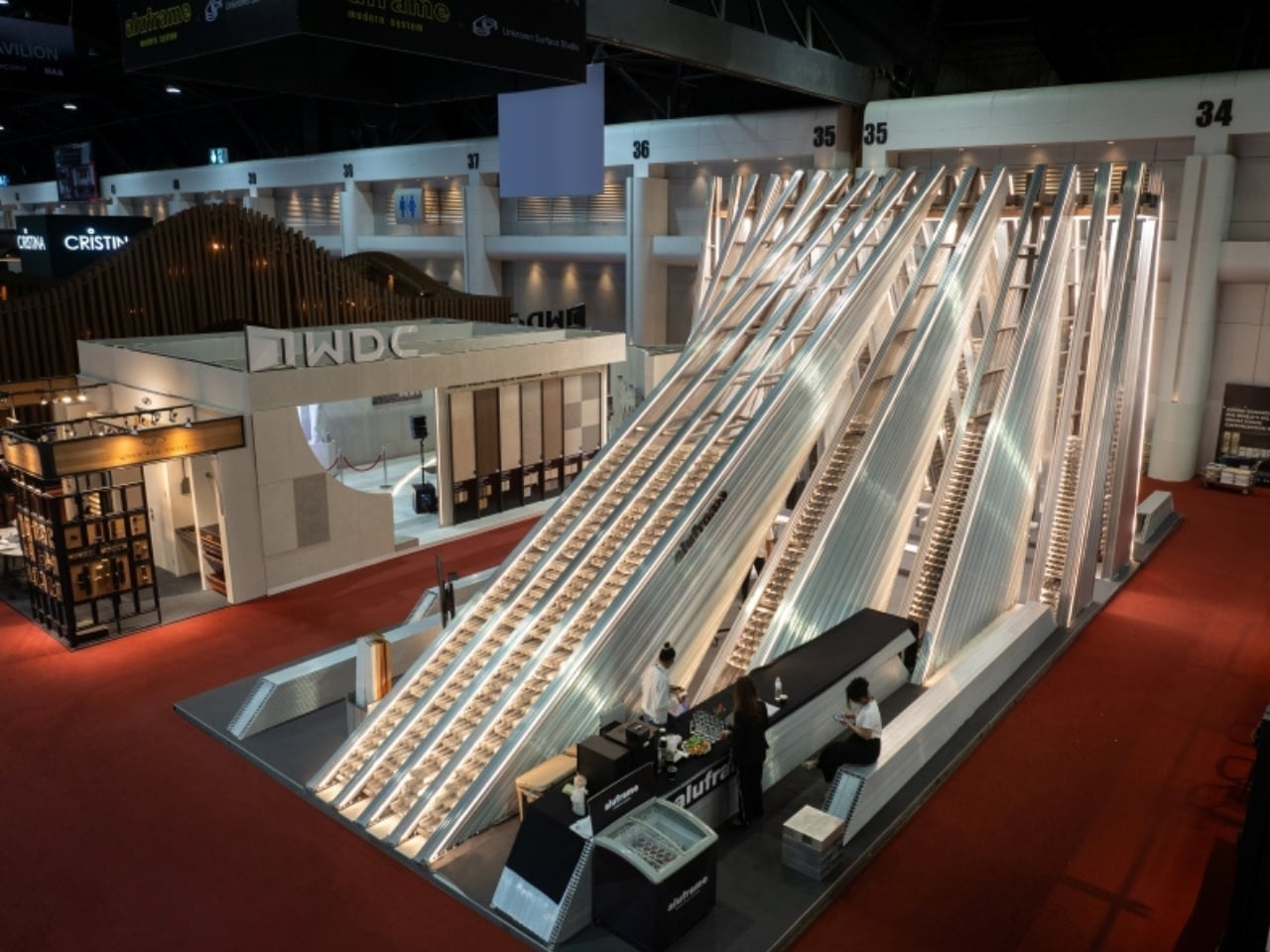
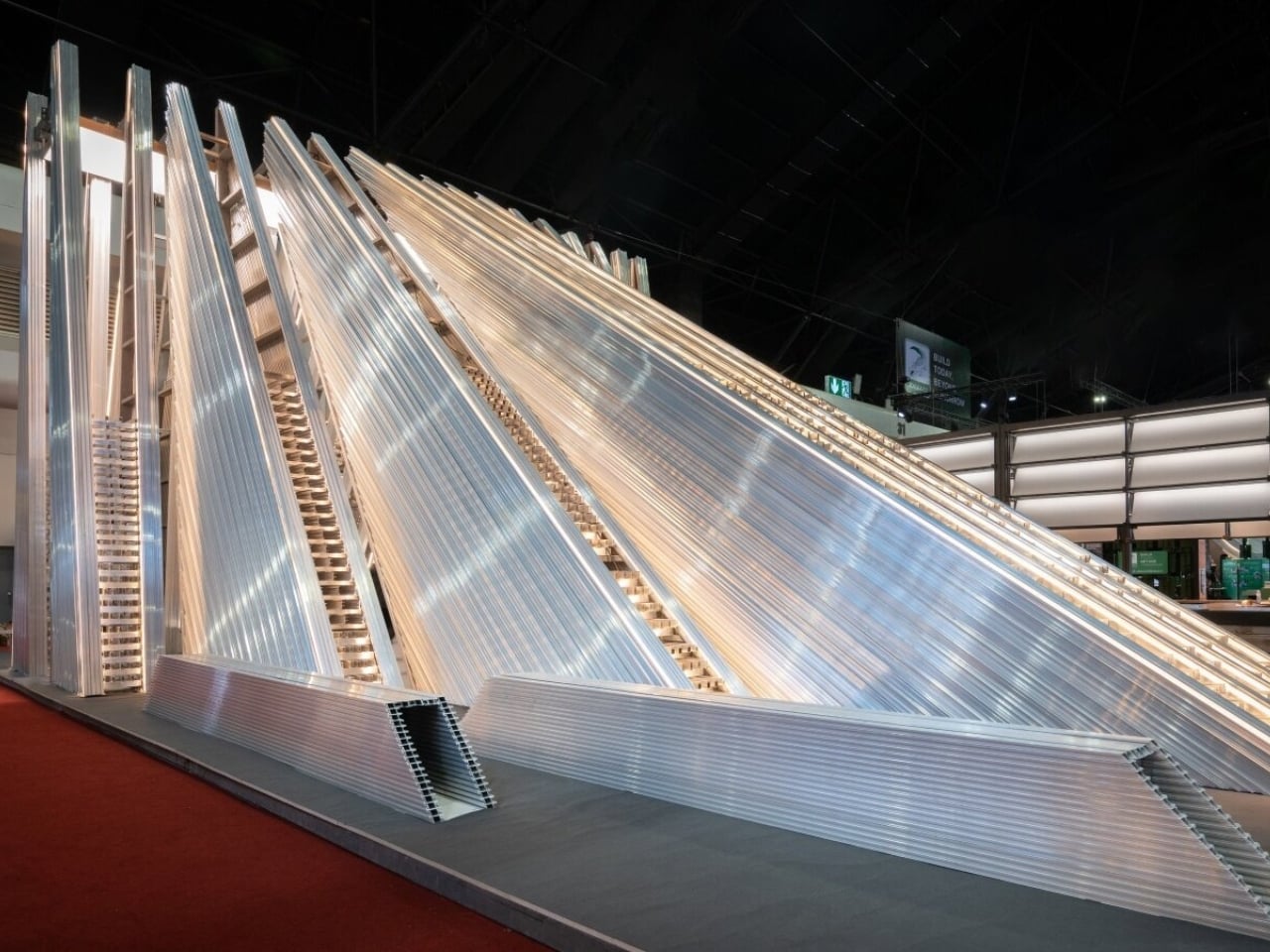
The pavilion is made entirely from industrial aluminum profiles, the kind you’d find stacked and organized in a warehouse, not draped over a building or polished beyond recognition. Unknown Surface Studio didn’t just use the material; they took their cue from the environment it typically lives in. Rows of aluminum in storage, ordered by size and system, become the architectural reference. Repetition, rhythm, and density become the visual language. The warehouse, in other words, becomes a design brief. It’s a bit like deciding to build a library that looks exactly like the factory where the books were printed, and somehow making it feel exactly right.
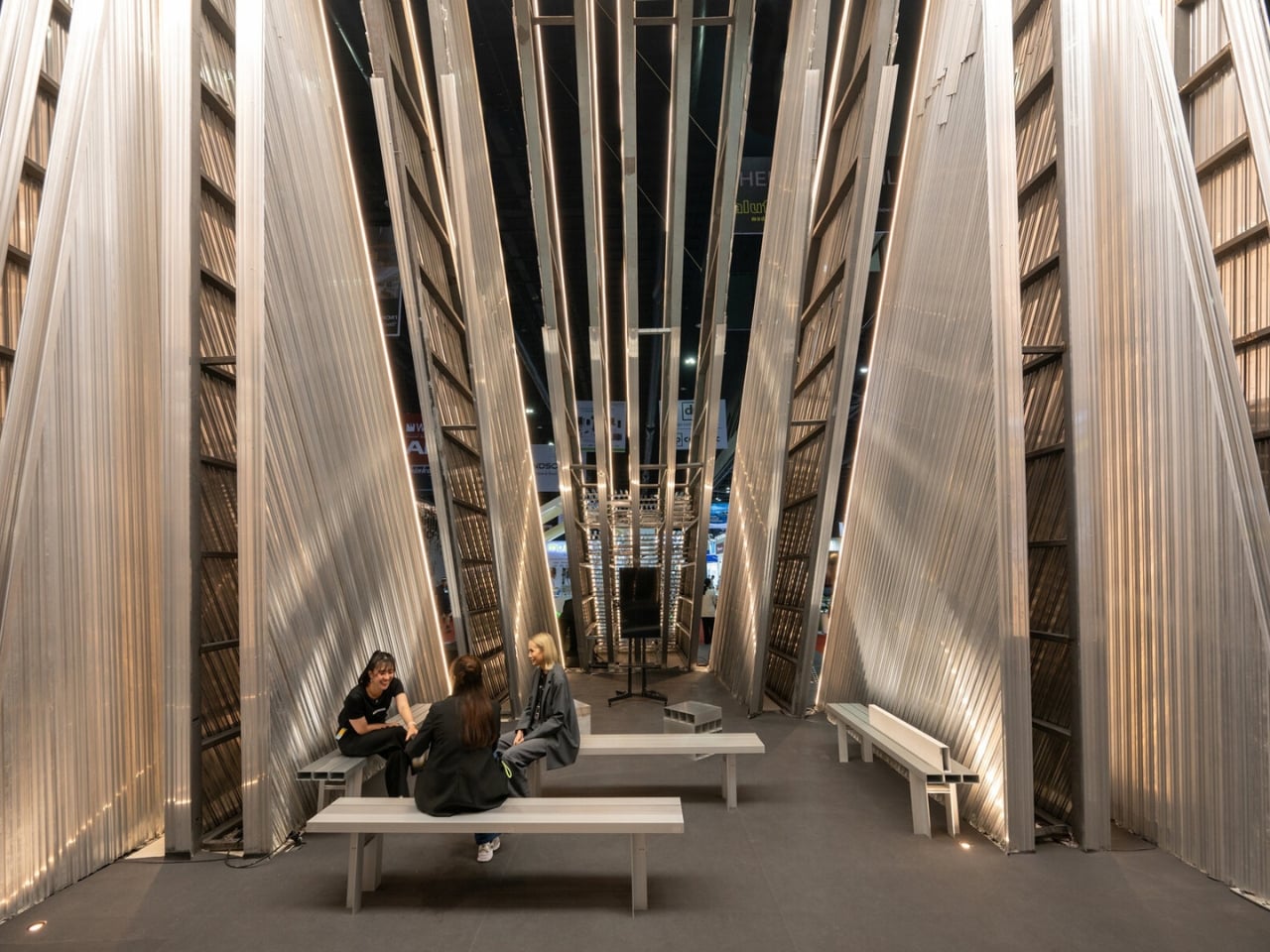
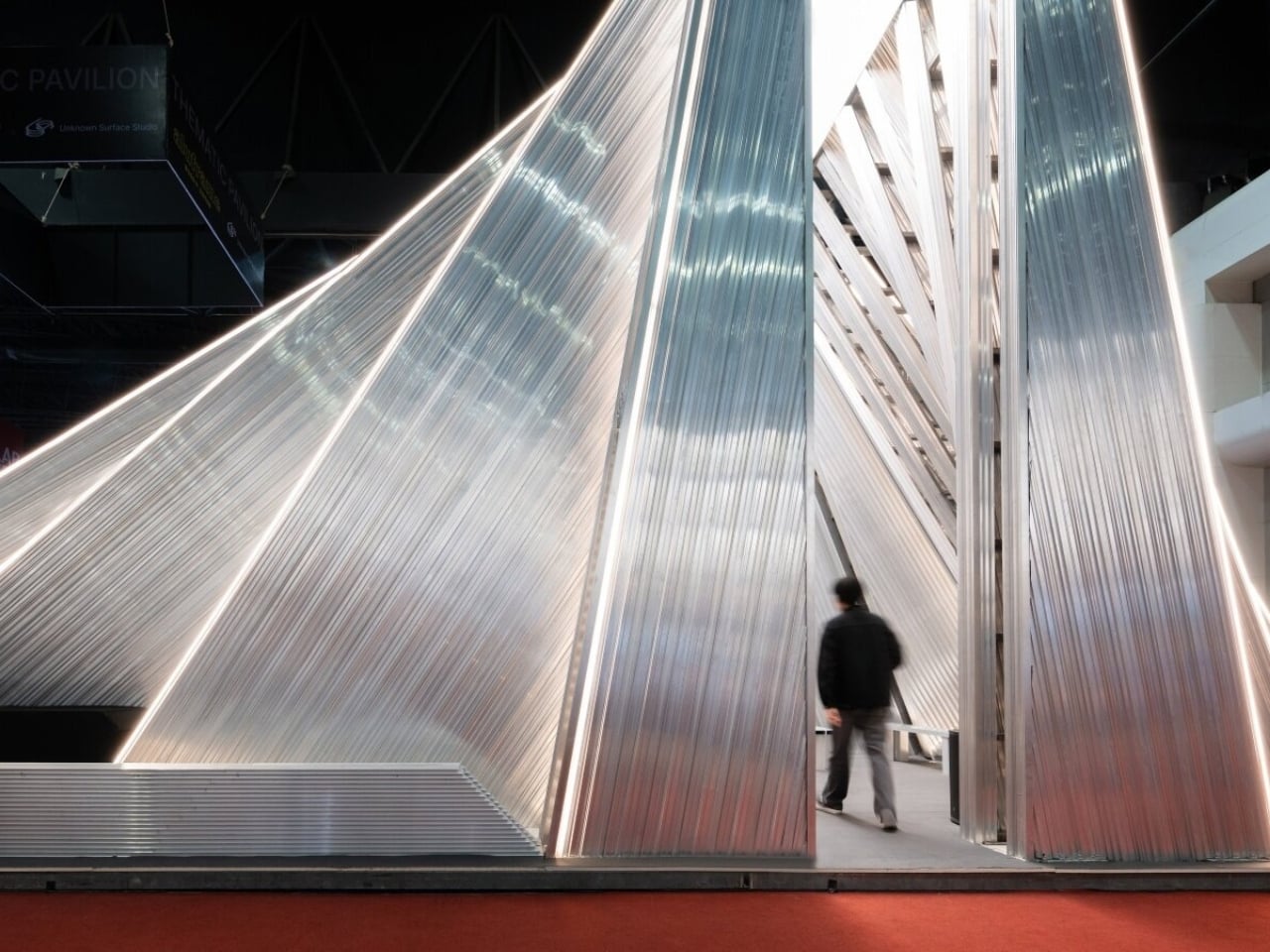
The structure opens in a fan-shaped configuration, layers of aluminum profiles fanning outward to form a semi-open enclosure that does several things at once. It shades. It displays. It frames space. It defines a boundary without becoming a wall. The shifting density of the profiles controls how much you see, how much light filters through, where your eye lands. The form moves from dense to open as you walk around it, creating a different experience at every angle. It’s the kind of spatial trick that feels effortless when done well, and genuinely difficult to pull off.
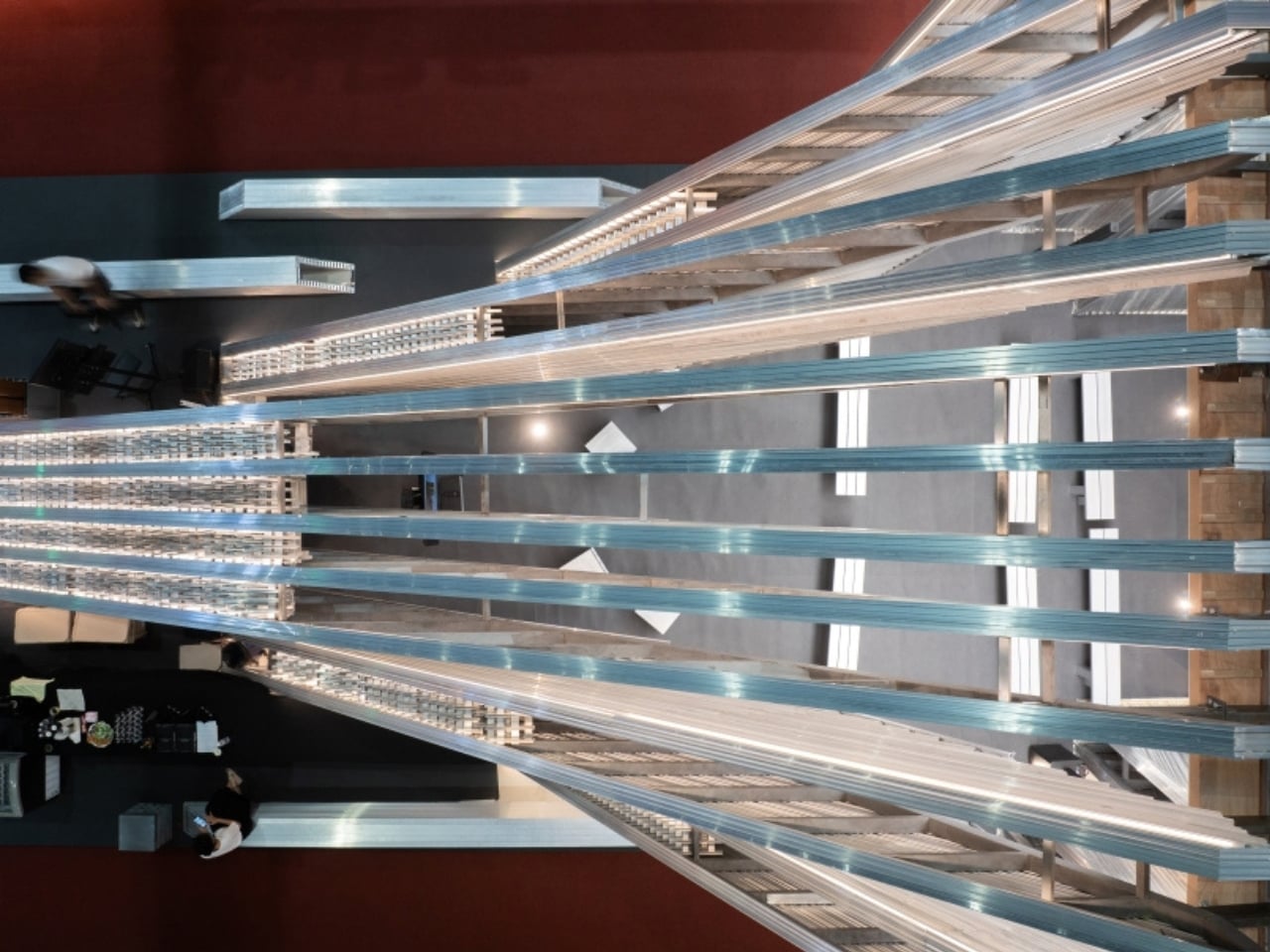
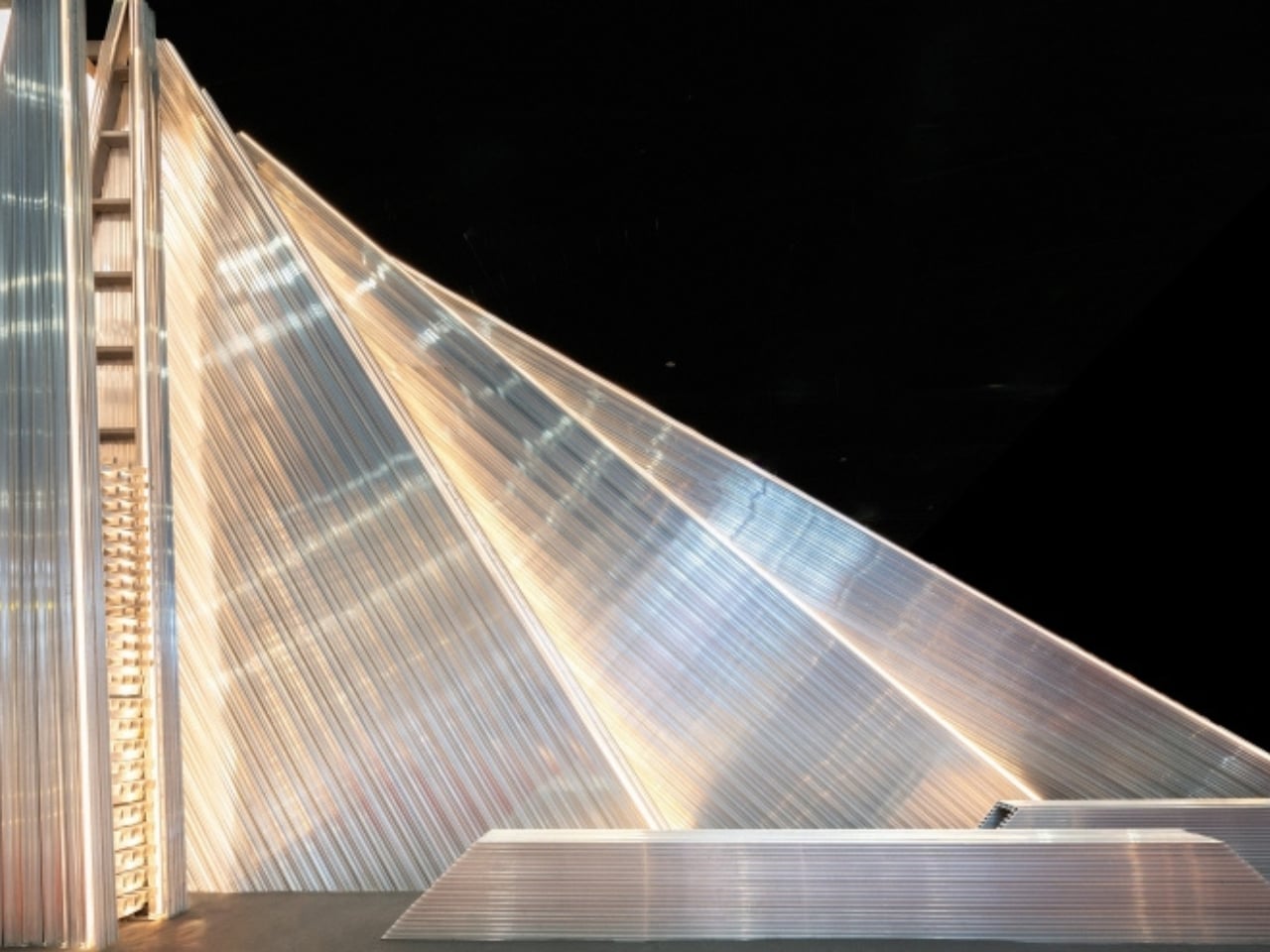
What the designers call a “Living Material Library” is an idea worth sitting with. The pavilion reframes the warehouse as a public experience rather than a backstage operation. All the precision and engineering that usually stays hidden behind polished finishes gets front row treatment here. The exposed profiles, the visible connectors, the honest industrial logic of the whole thing are the aesthetic. It’s not industrial-chic for the sake of a trend. It reads more like an argument that the material is already beautiful, if you’re willing to look at it directly.
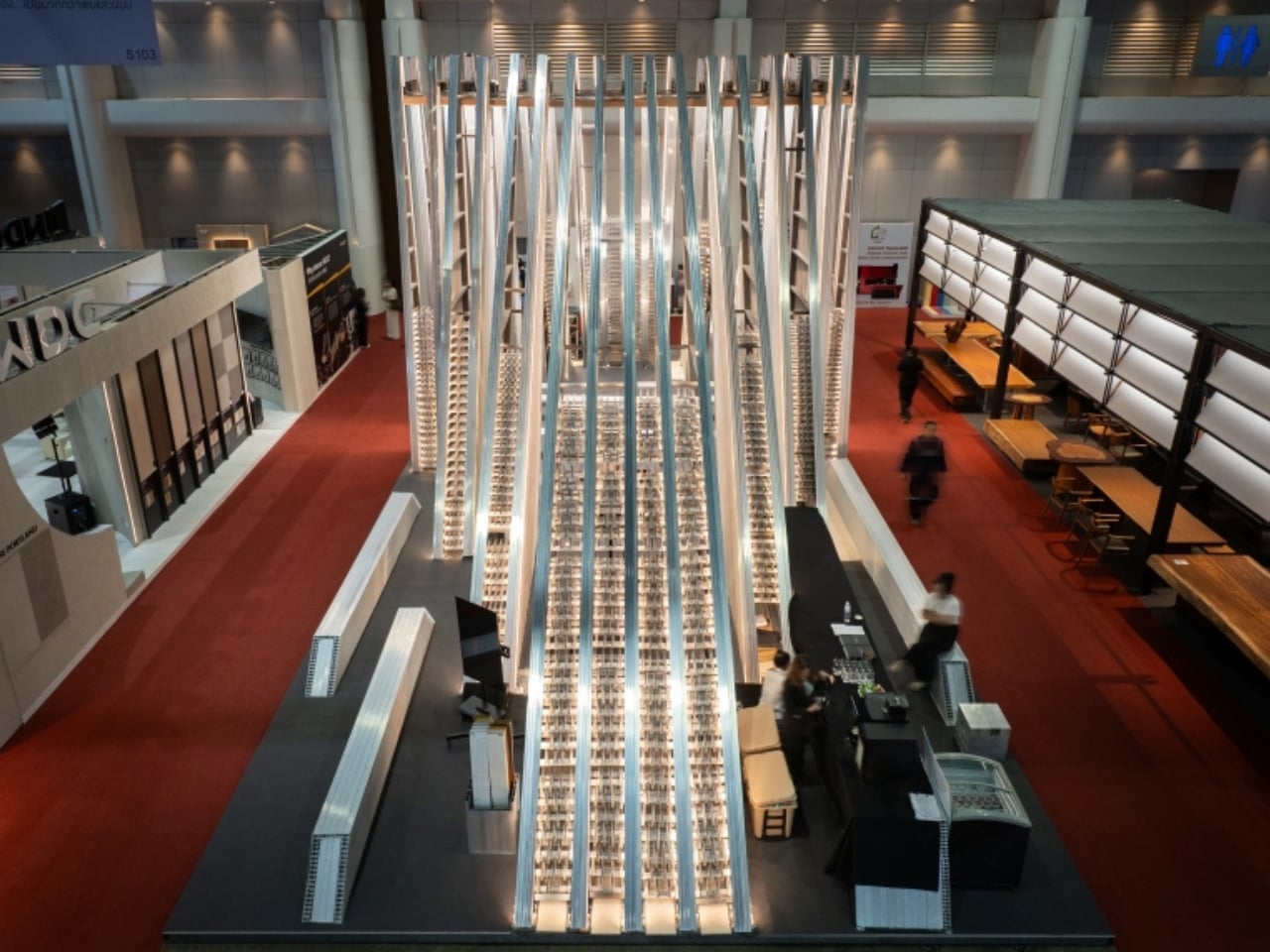
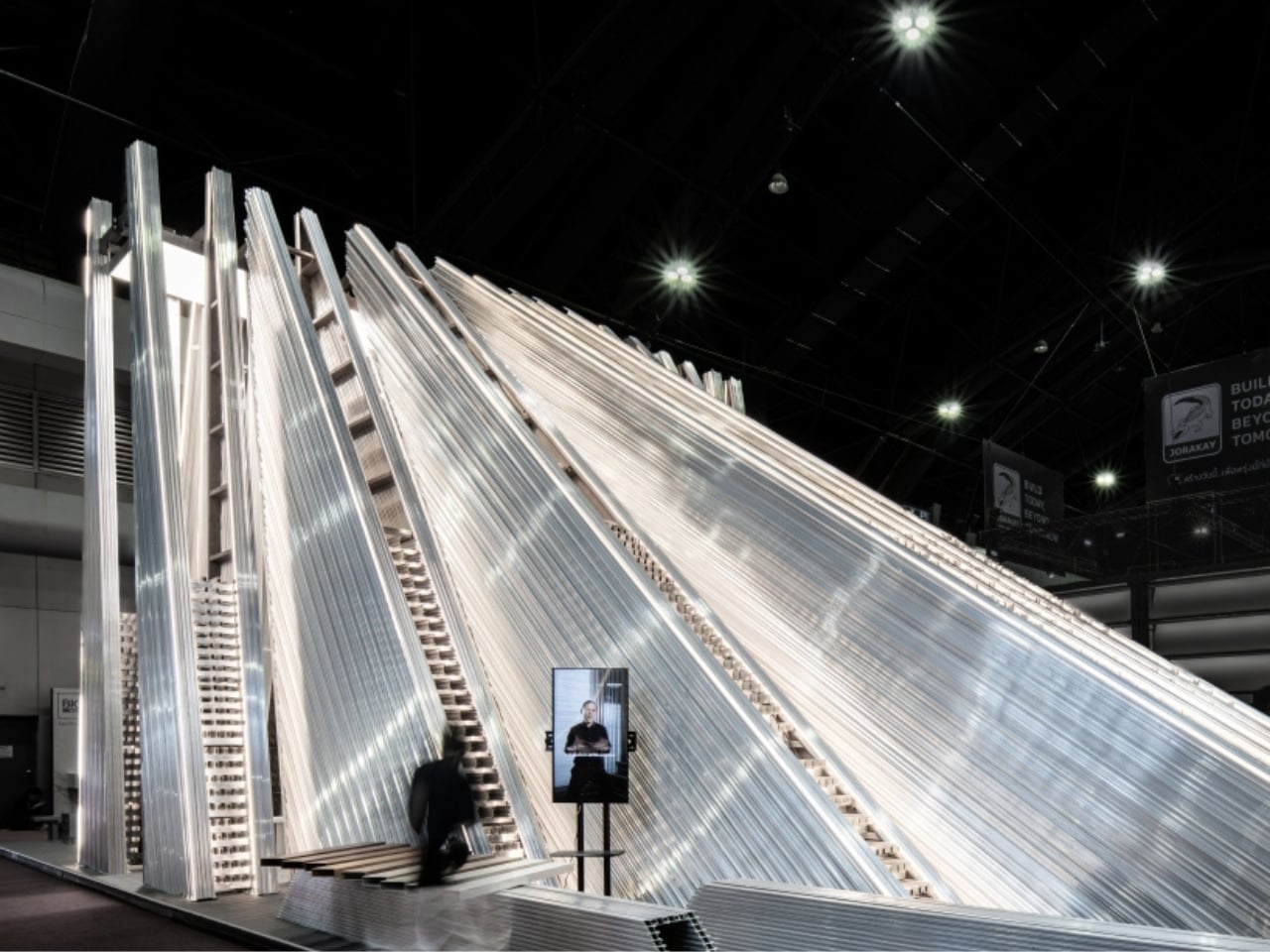
The bigger idea, though, is the circular system the whole thing is built around. When the exhibition ends, UNFOLD doesn’t end. The aluminum components return to use, whether through the same structure reassembled elsewhere, or through the components cycling back into Aluframe’s inventory and flowing into new projects. Nothing goes to a landfill. Nothing gets dismantled into waste. It’s a regenerative model, and it makes the usual approach to temporary exhibition architecture look pretty careless by comparison.
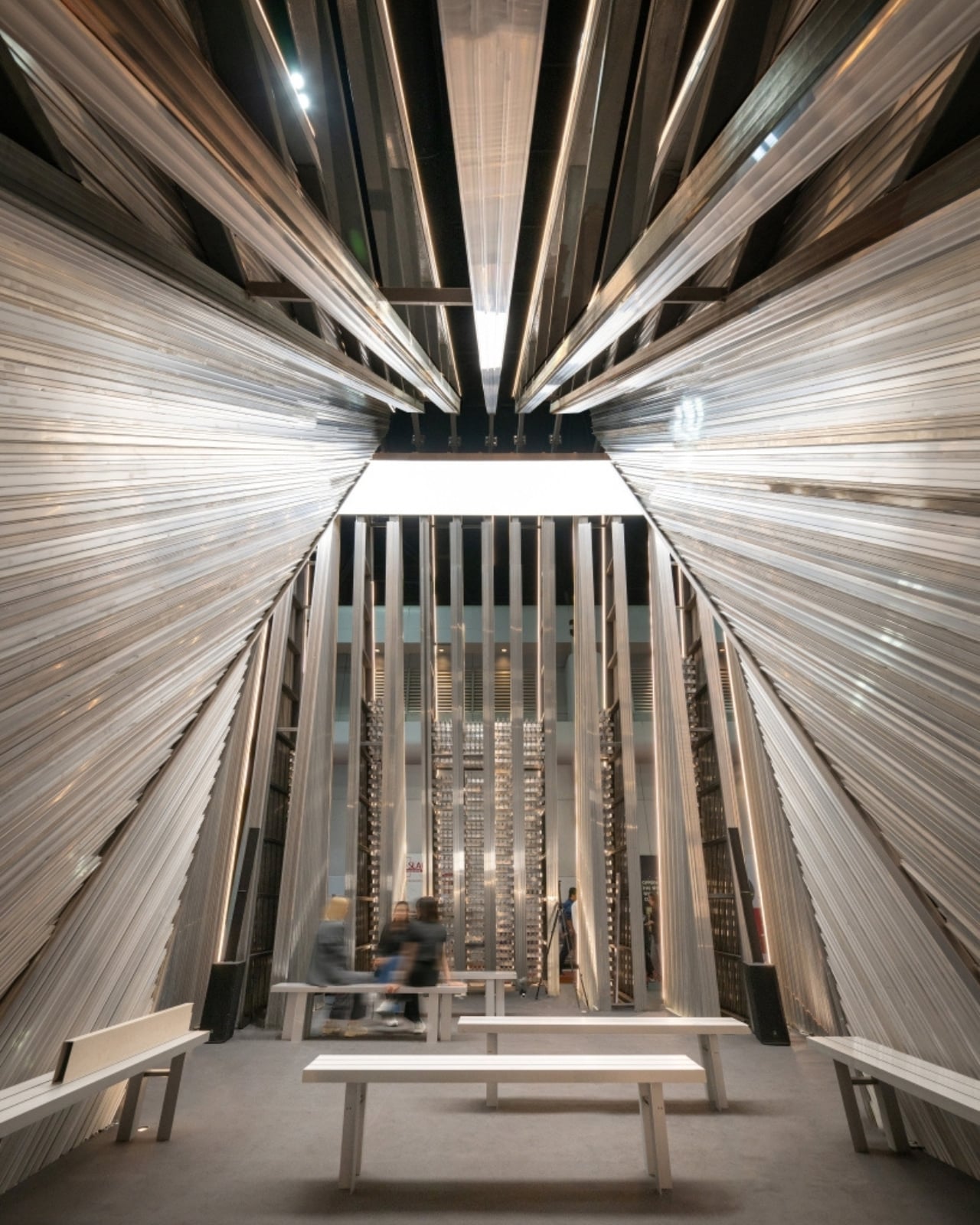
I’ll admit that “circular design” gets thrown around enough that it’s starting to feel like fine print on a product label. But UNFOLD is concrete about it in a way that’s difficult to dismiss. The components are standardized industrial profiles, not custom one-off parts. Demounting isn’t an afterthought; it’s built into the concept from the beginning. The structure was designed to be taken apart and put back together, which means it was designed for a life that extends well beyond its debut.
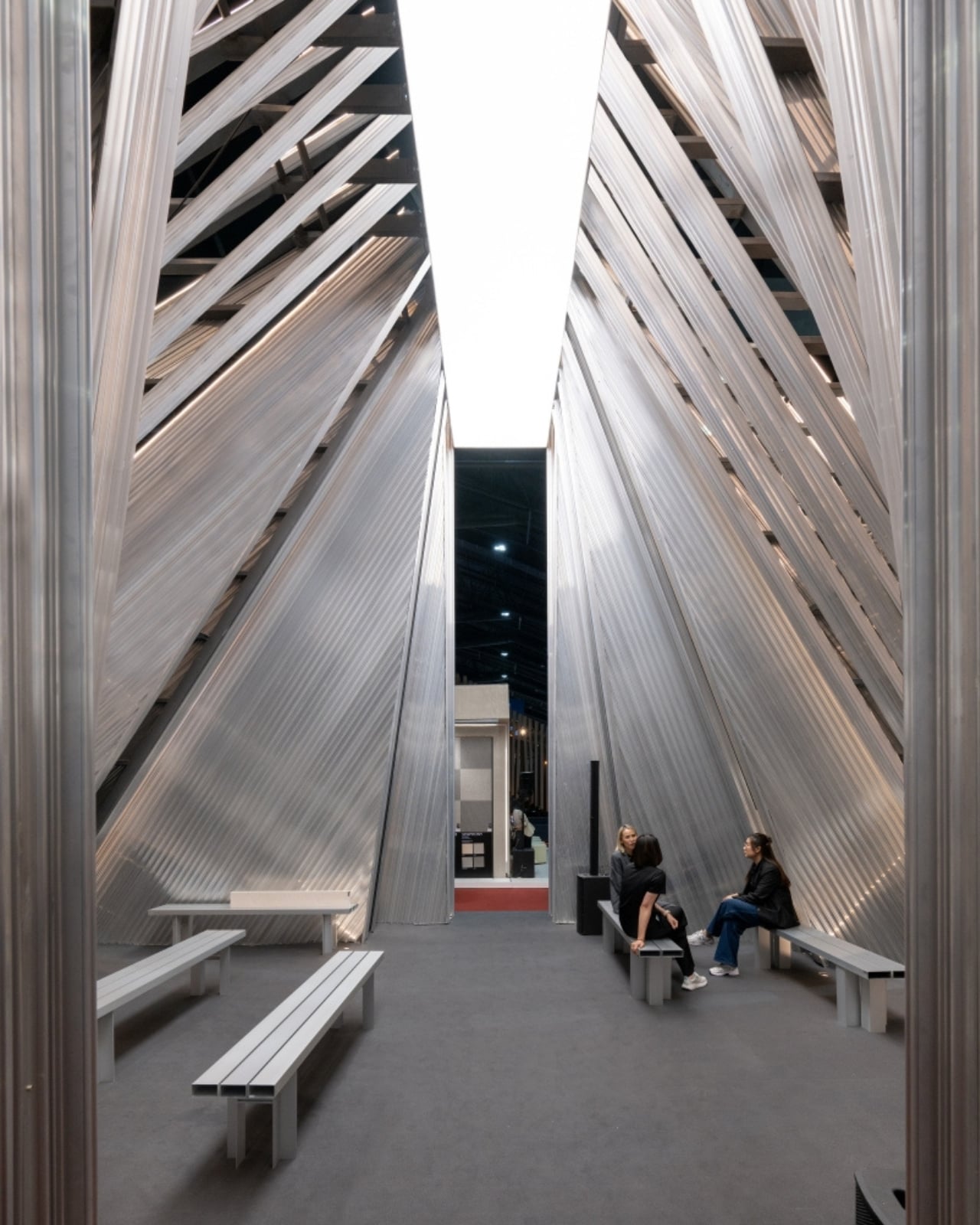
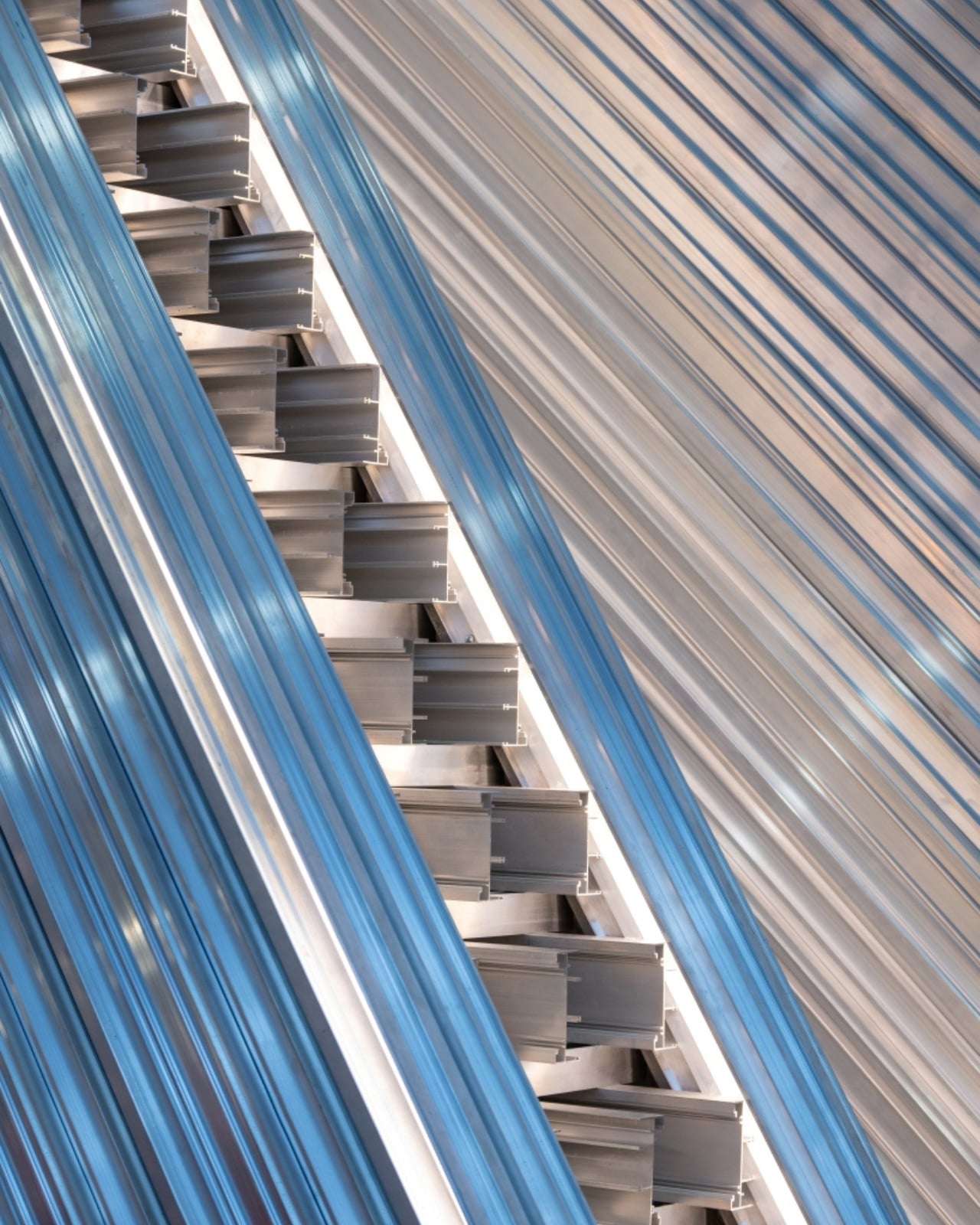
Temporary architecture occupies a strange space in design culture. We expect it to be spectacular enough to photograph and forgettable enough to discard. UNFOLD quietly pushes back against that expectation, and it does so without spectacle or noise, just good thinking at the material level. A structure that returns to use, that borrows from industrial logic and offers it back as something genuinely worth experiencing, doesn’t need to be permanent to be meaningful. It just needs to be thought through. That might be the most quietly radical thing about it.
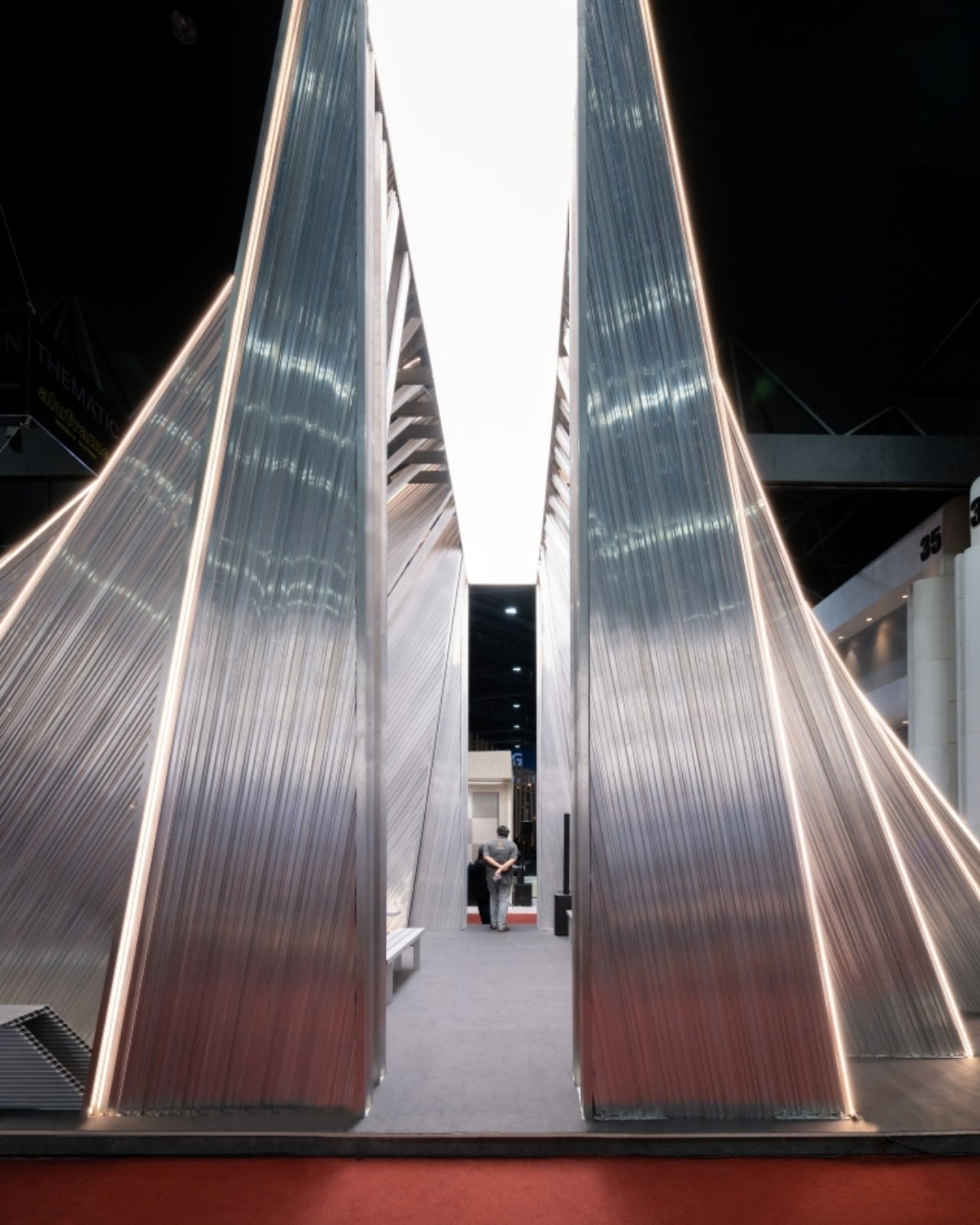
The post The Aluminum Pavilion Built to Never Become Waste first appeared on Yanko Design.
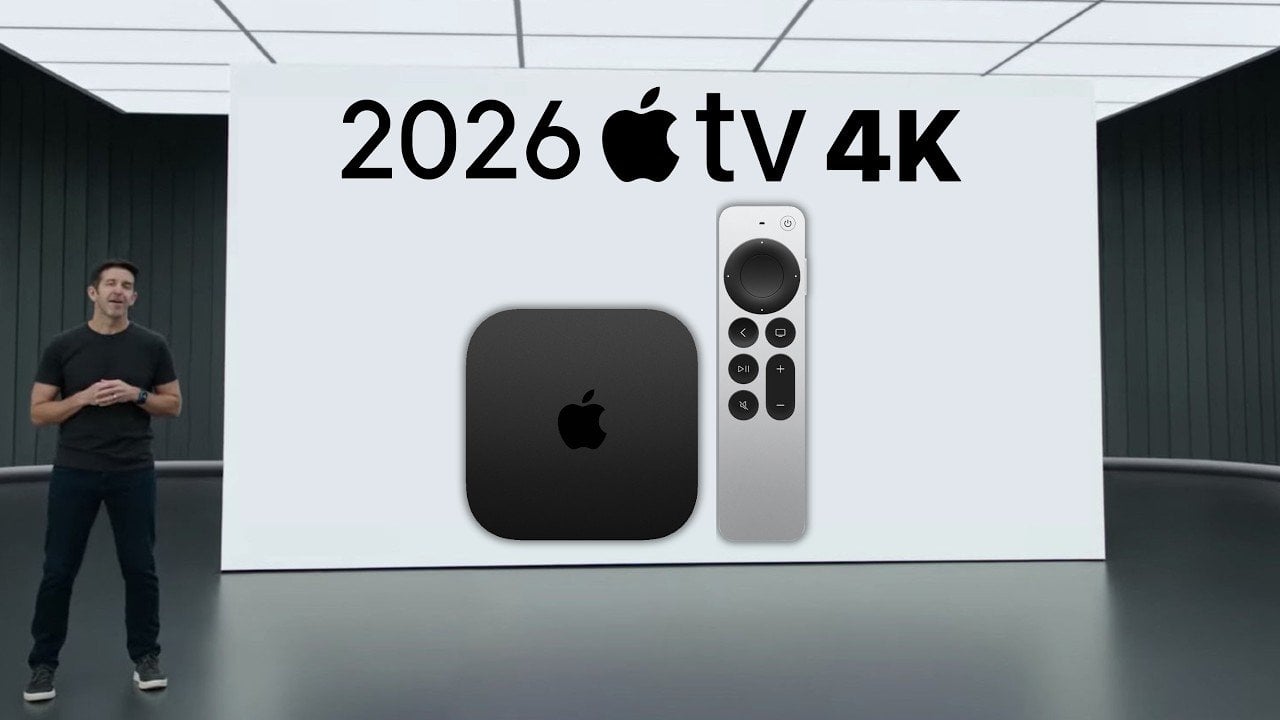
Apple has reportedly finalized the development of its next-generation Apple TV 4K, yet the company has opted to delay its release. This decision appears to be closely tied to the rollout of an AI-enhanced Siri update, expected to debut alongside iOS 17. While the hardware is ready for market, Apple’s strategy to align the device […]
The post Why Apple is Delaying the Finished 2026 Apple TV 4K appeared first on Geeky Gadgets.

The Geekom A5 Pro 2026 can be quickly turned into a custom DIY Steam Machine gaming system by installing Chimera OS, a Linux-based operating system tailored for simplicity and gaming performance. As explained by TechDweeb, Chimera OS delivers a console-like experience and supports a variety of games, from indie releases to retro classics and older […]
The post How to Build a Steam Machine Fast with the Geekom A5 Pro 2026 Mini PC appeared first on Geeky Gadgets.