Apple has officially released iOS 27 Developer Beta 4 alongside the iOS 26.6 Release Candidate (RC), offering a blend of new features, refinements, and critical security updates. These updates are designed to enhance your interaction with Apple’s ecosystem, whether through smarter Siri capabilities, improved home automation, or optimized system performance. As Apple continues to evolve […]
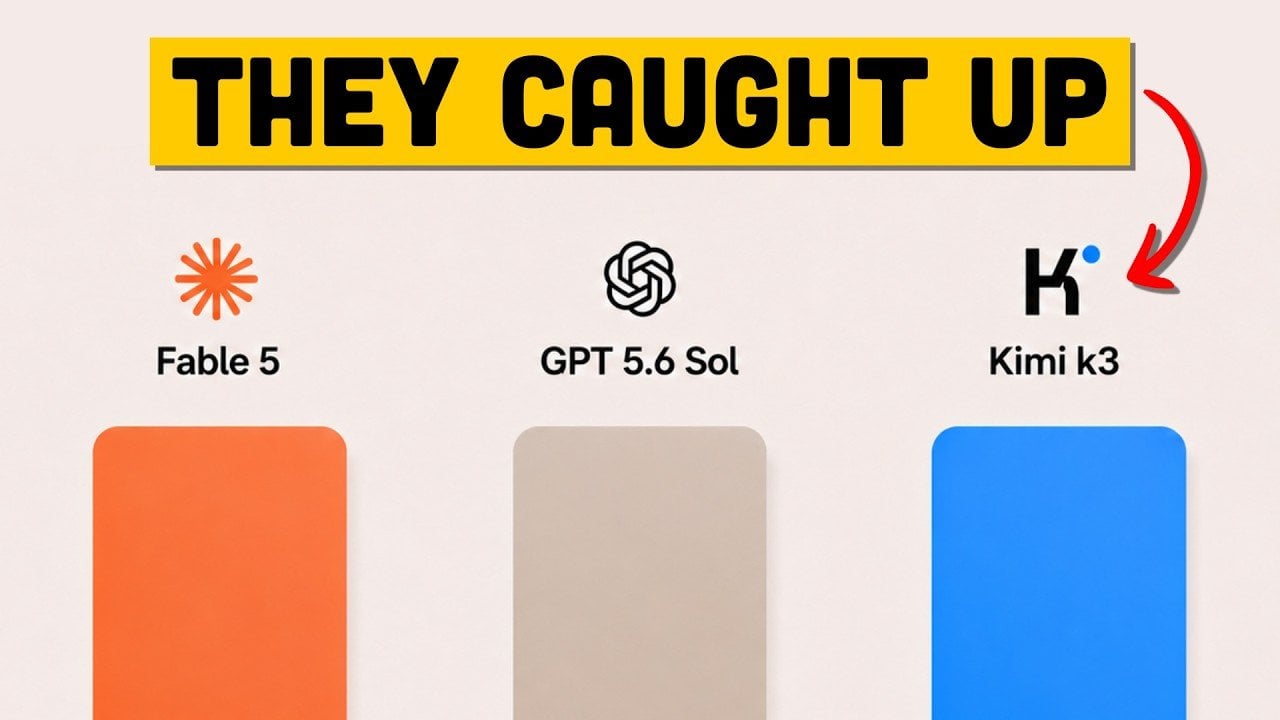
The Kimi K3 is an open source AI model with 2.8 trillion parameters, designed to compete with proprietary systems like Fable and GPT 5.6. It excels in areas such as coding, reasoning and multimodal tasks. A defining feature is its Kimmy Delta Retention, which preserves critical information over time to maintain consistent performance across varied […]
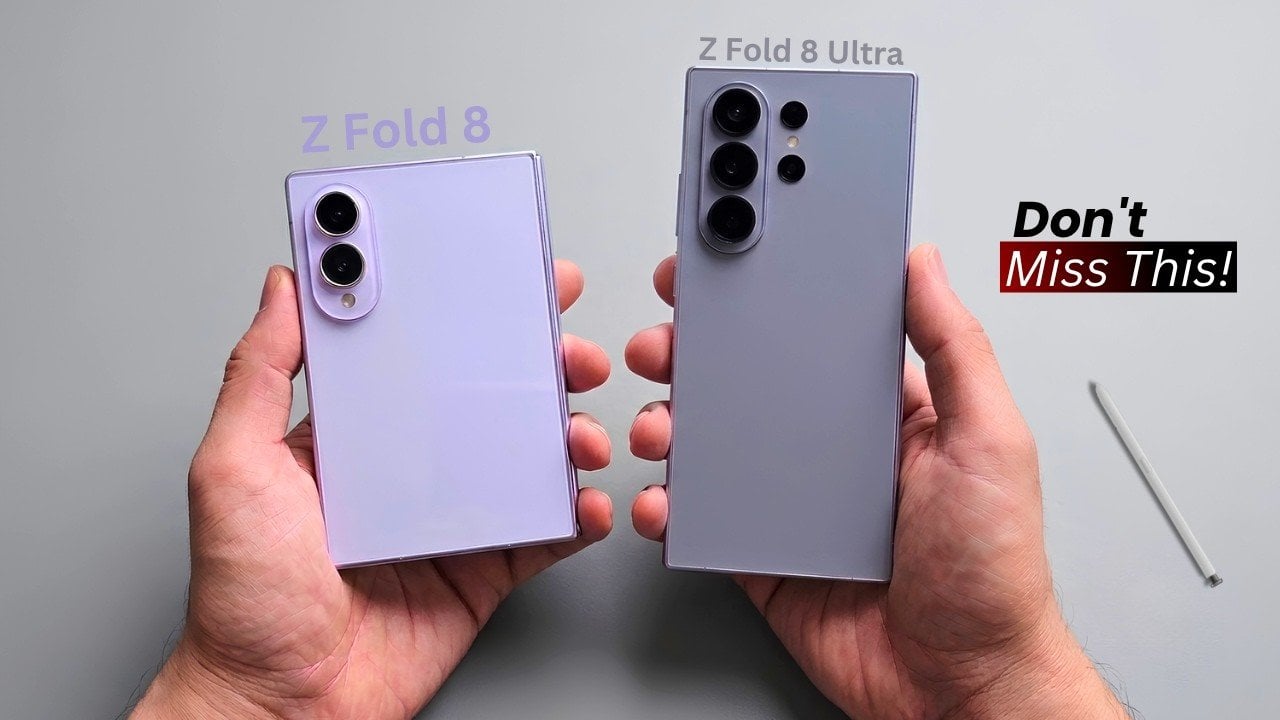
Samsung continues to redefine the foldable smartphone market with the Galaxy Z Fold 8 and Galaxy Z Fold 8 Ultra, two devices that cater to distinct user preferences while delivering flagship performance and innovative features. The Fold 8 Ultra is tailored for productivity-focused users who demand premium capabilities, while the standard Fold 8 appeals to […]
Efficiently managing your iPhone’s storage is crucial for maintaining its performance and making sure a seamless user experience. Over time, temporary files, cached data, and unused content can accumulate, consuming valuable storage space. By following these practical steps, you can optimize your device’s storage, improve its responsiveness, and extend its usability. The video below from […]
The Samsung Galaxy Z Fold 8 has become a central topic of discussion well before its official unveiling, fueled by a series of leaks that have revealed significant details about its design and features. Despite Samsung’s efforts to maintain secrecy, leaked hands-on images, promotional materials and even a brief Instagram story by celebrity Yung-ho Seak […]
Keeping houseplants alive has become something of a modern ambition, especially for those living in smaller spaces where a bit of greenery goes a long way. The problem is that most people have a complicated relationship with plant care. Forgetting to water on time, struggling with repotting, and watching plants suffer because the pot can’t keep pace can make the whole experience feel more discouraging than rewarding.
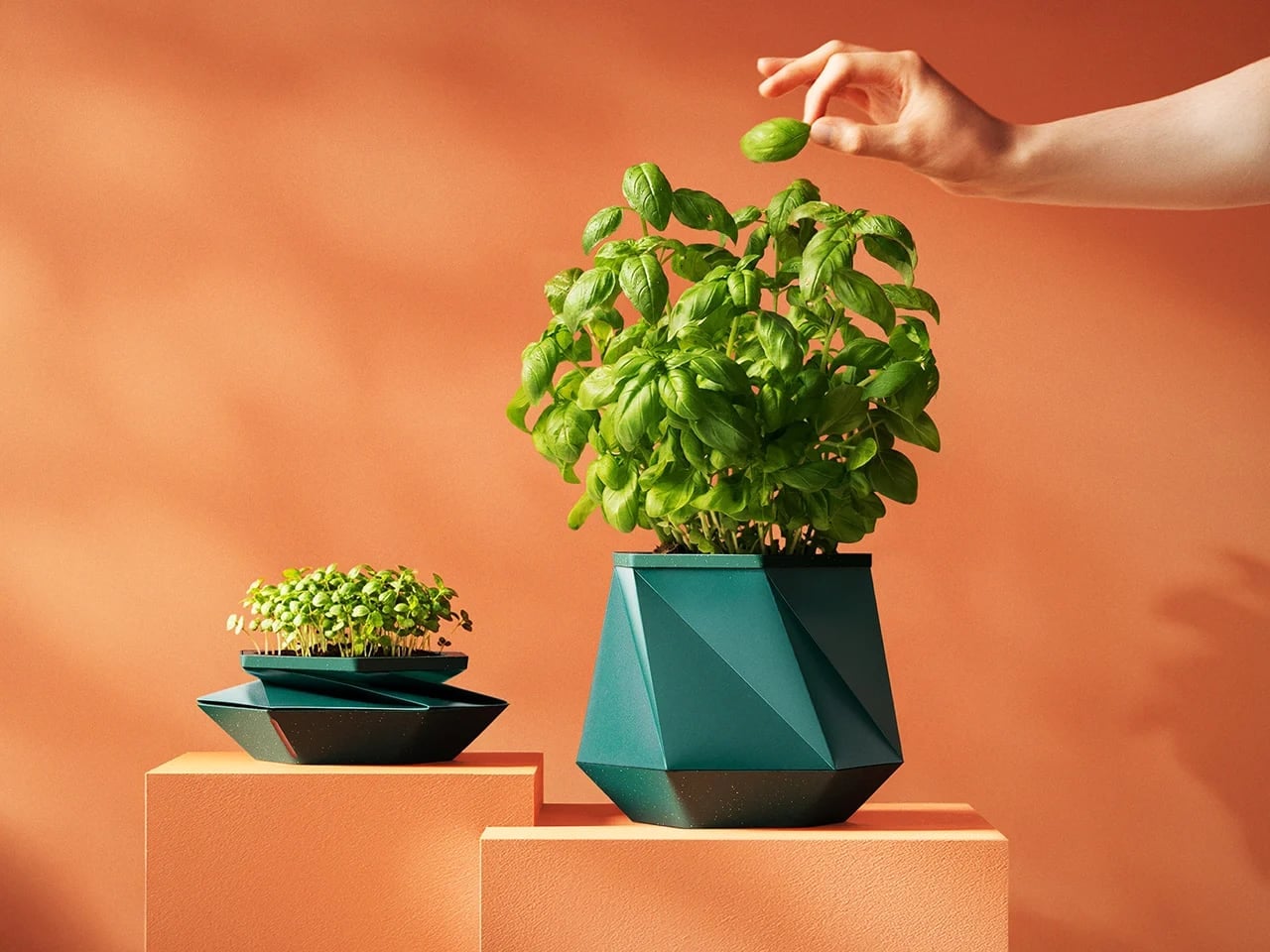
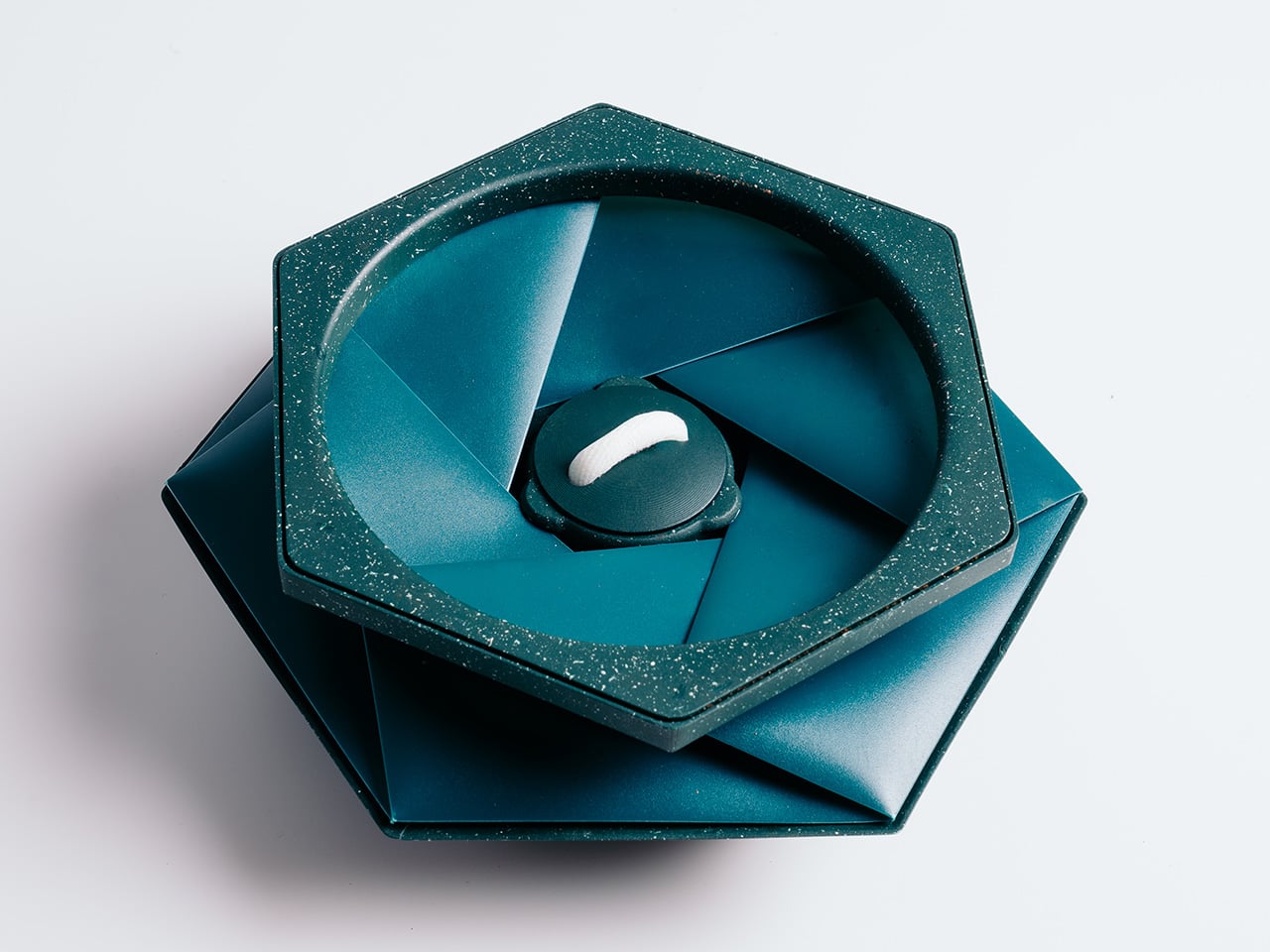
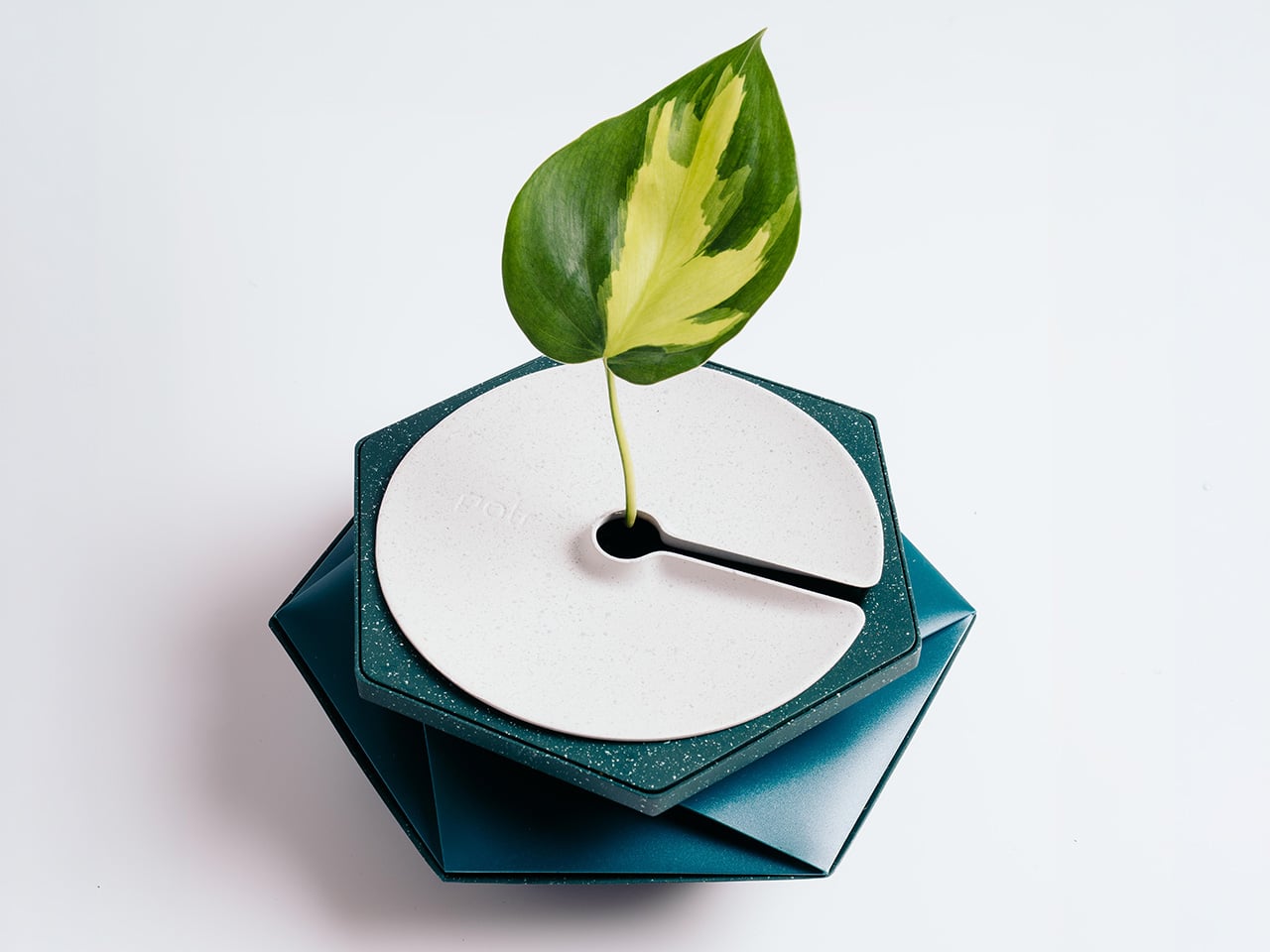
That’s what HELIX was designed to address. Created by Andrew Flynn, former industrial design lead at Dyson and the mind behind the Airwrap, Corrale, and Airstraight, HELIX is what POTR describes as the world’s first self-watering pot that physically grows alongside your plant. Its origami-inspired form isn’t purely decorative; the folds are the functional mechanism that lets the pot expand as roots develop.
At the heart of HELIX is a capillary wicking system tucked into the base. Fill the 300 ml reservoir, and a wick draws moisture steadily upward into the soil, letting the plant absorb exactly what it needs. The result is consistent hydration for up to two weeks between refills, meaning you’re no longer guessing whether you’ve overwatered, underwatered, or simply forgot entirely.
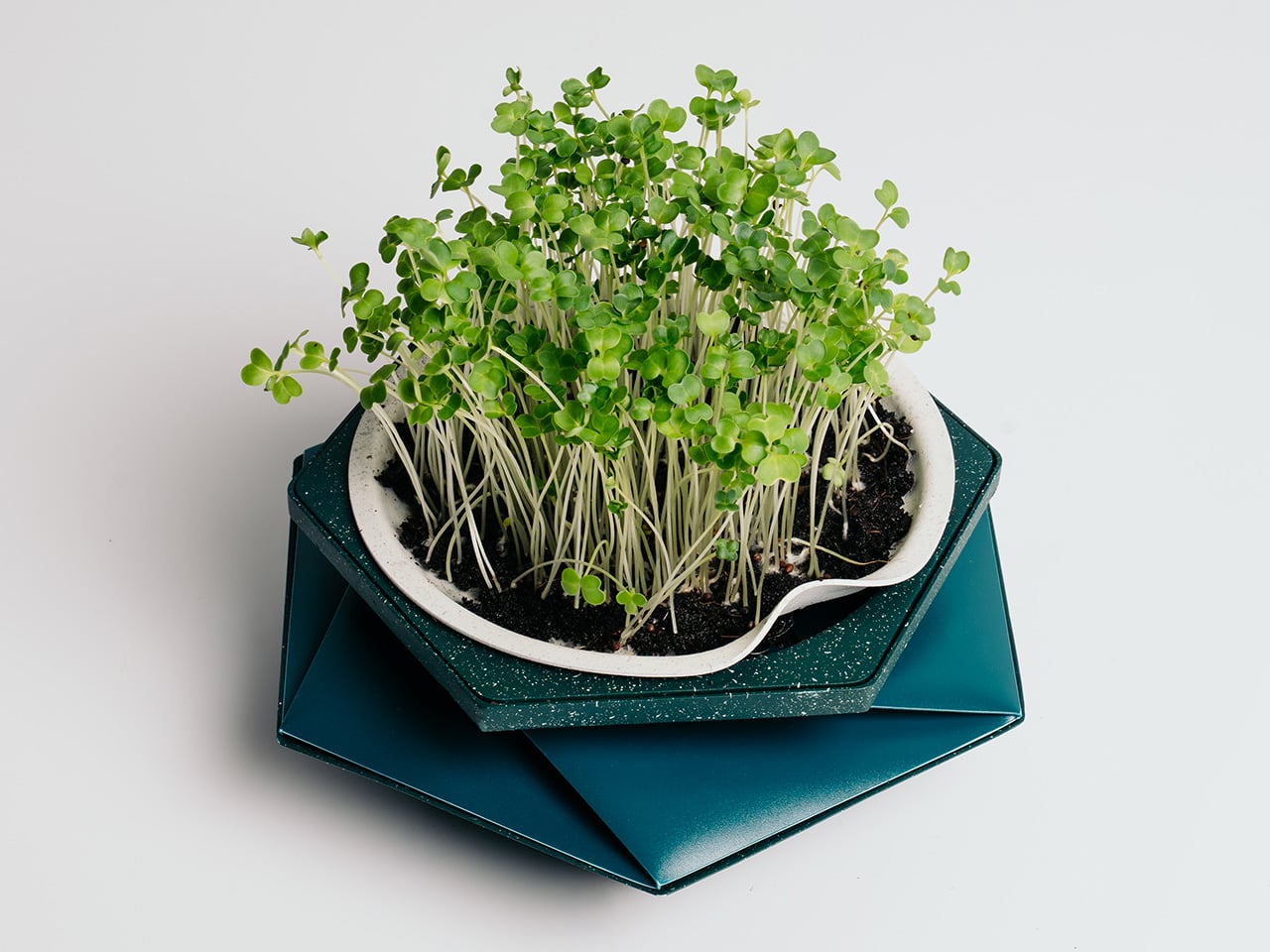
What really sets HELIX apart is what happens when a plant outgrows its space. Rather than pulling it out, cleaning up the mess, and starting over in a bigger container, you simply twist the pot open and add fresh compost around the root ball. The structure expands from 7cm to 16cm tall, accommodating up to 2 litres of soil without disturbing the roots.
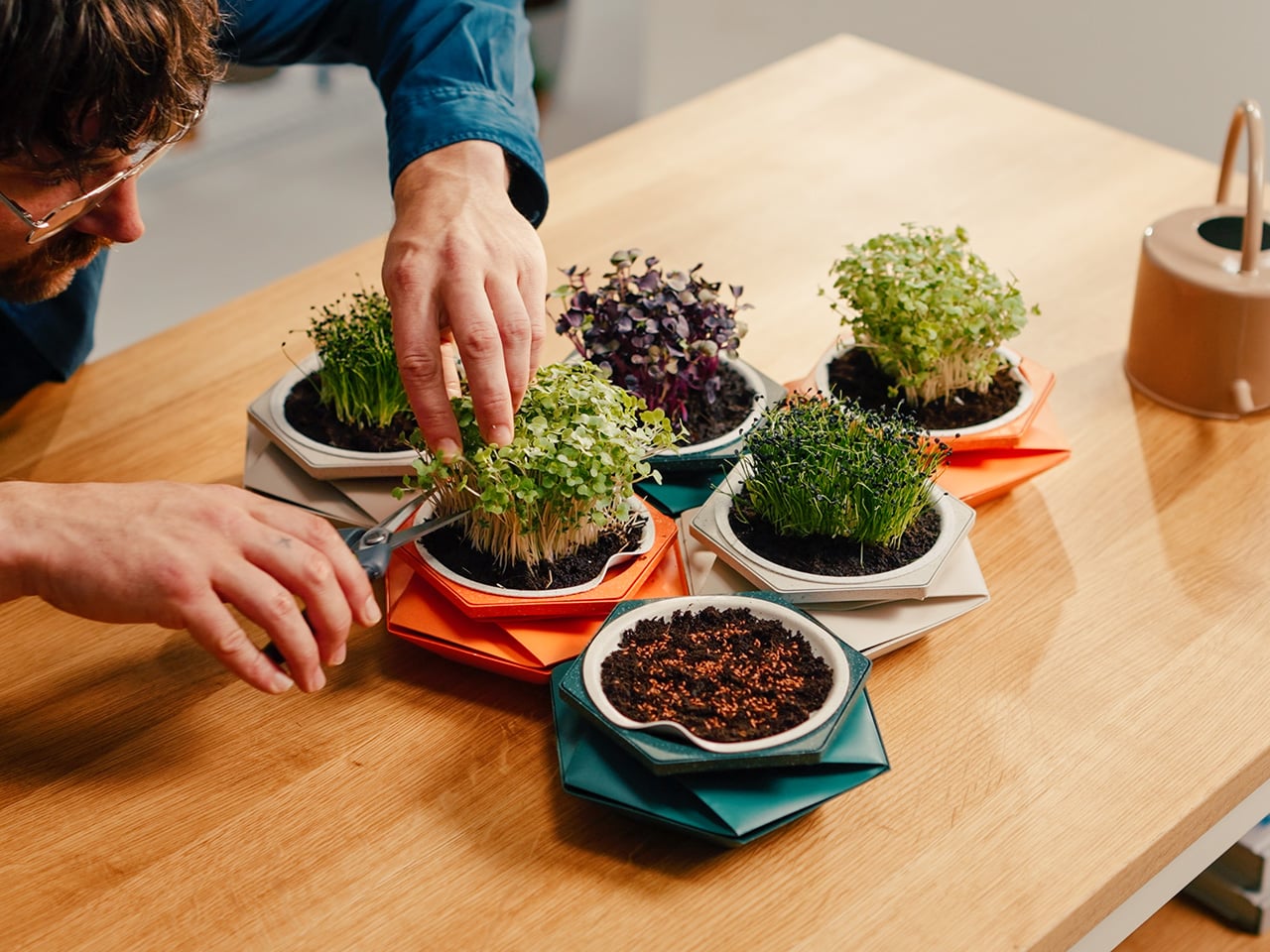
For those who want to start from scratch, the Sprout Plate turns HELIX into a seed-starting setup. It sits inside the pot and works with the self-watering reservoir to keep seeds consistently moist, which is exactly what herbs like basil, mint, coriander, and parsley need to get going. As the seedlings grow taller, the pot simply expands around them, no transplanting required.
The Sprig Plate handles something slightly different. It’s designed for propagating cuttings, holding them above the water reservoir so stems can develop roots before being moved into soil. It works well for popular houseplants like pothos, monstera, and Chinese money plants, and the smart part is that once those roots have taken hold, the same HELIX pot expands to become their permanent home.
Then there are climbing plants, which have their own needs entirely. The Expanding Trellis plugs into the soil and can be extended upward in layers as the plant grows, with stems clipped into the folded origami structure for support. It borrows from the same geometric design language as the pot, turning something aesthetic into a functional vertical guide for climbers like pothos, hoya, or jasmine.
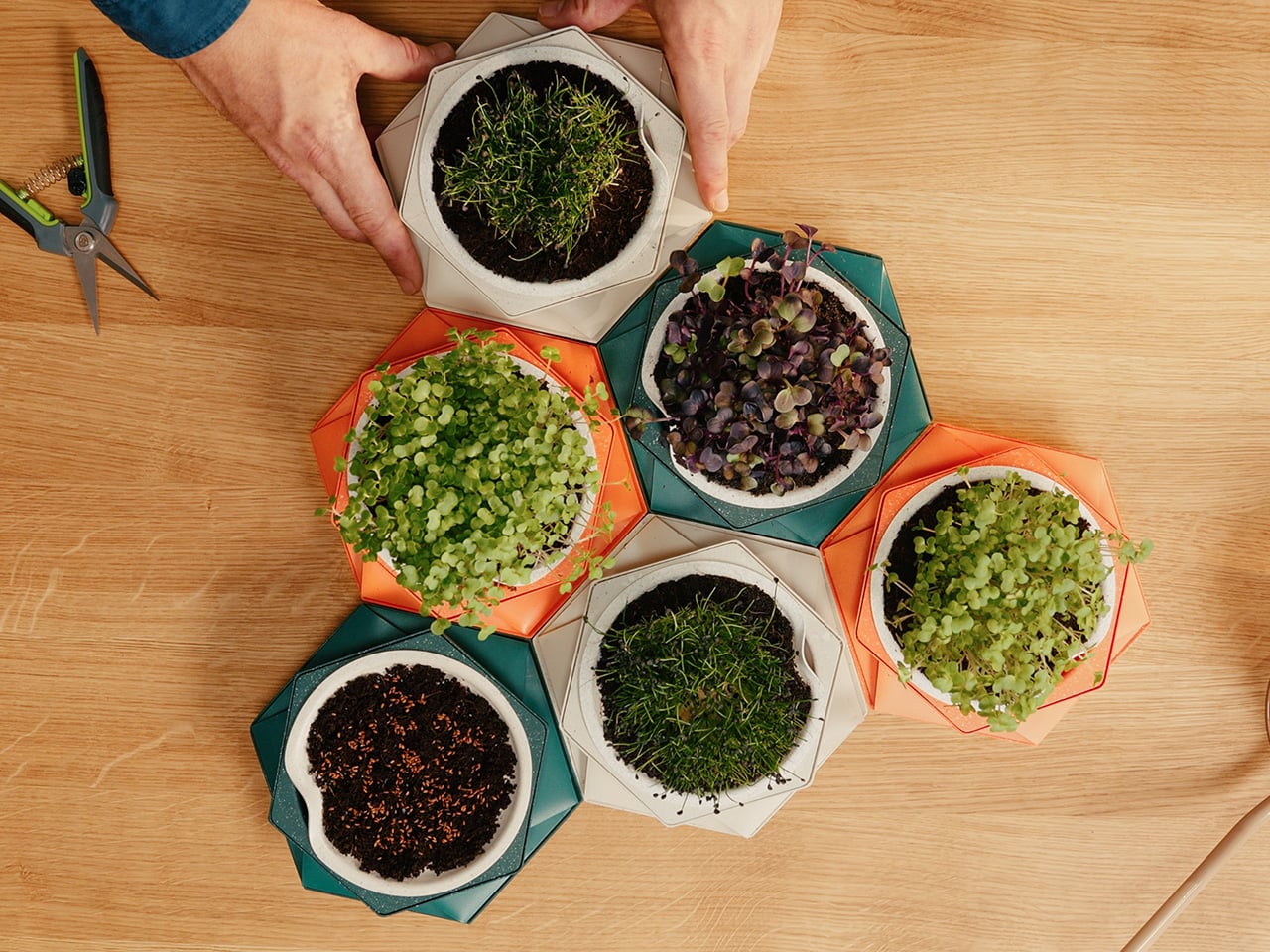
What makes HELIX even more interesting is that its hexagonal footprint lets multiple pots sit flush against each other without awkward gaps. Line up several on a counter or windowsill, each growing a different herb or microgreen, and you end up with a surprisingly coherent indoor herb garden that you can keep adding to. It’s a modular setup that scales with your appetite for growing.
The sustainability angle is woven into the design rather than tacked on as an afterthought. HELIX ships completely flat, which cuts both packaging volume and transport emissions compared to conventional rigid planters. It’s made entirely from recycled polypropylene, a waste plastic that often ends up in landfill, and uses roughly 70% less material than a comparable concrete or ceramic pot, making the eco credentials feel genuinely earned.
Plant care has always been about patience and attention, but it’s rarely been about the pot itself. HELIX shifts that dynamic by asking what a container could look like if it were as invested in a plant’s progress as the person tending to it. Whether you’re growing something you plan to eat, something to look at, or something you simply don’t want to kill, that’s a compelling thought.
Flip phones snapped shut and ended calls. Zippo lighters click open with a sound that somehow feels more satisfying than the flame itself. Laptop lids have woken computers from sleep for two decades without anyone writing a line of tutorial copy about it. Physical gestures that double as commands used to be everywhere in consumer tech, and they disappeared almost entirely once touchscreens and voice assistants convinced designers that every function needed a menu. XGIMI just brought one of those gestures back into a category that badly needed it. The company’s new Elfin Flip 4K turns projector power into a single, tactile motion, no screen tap required.
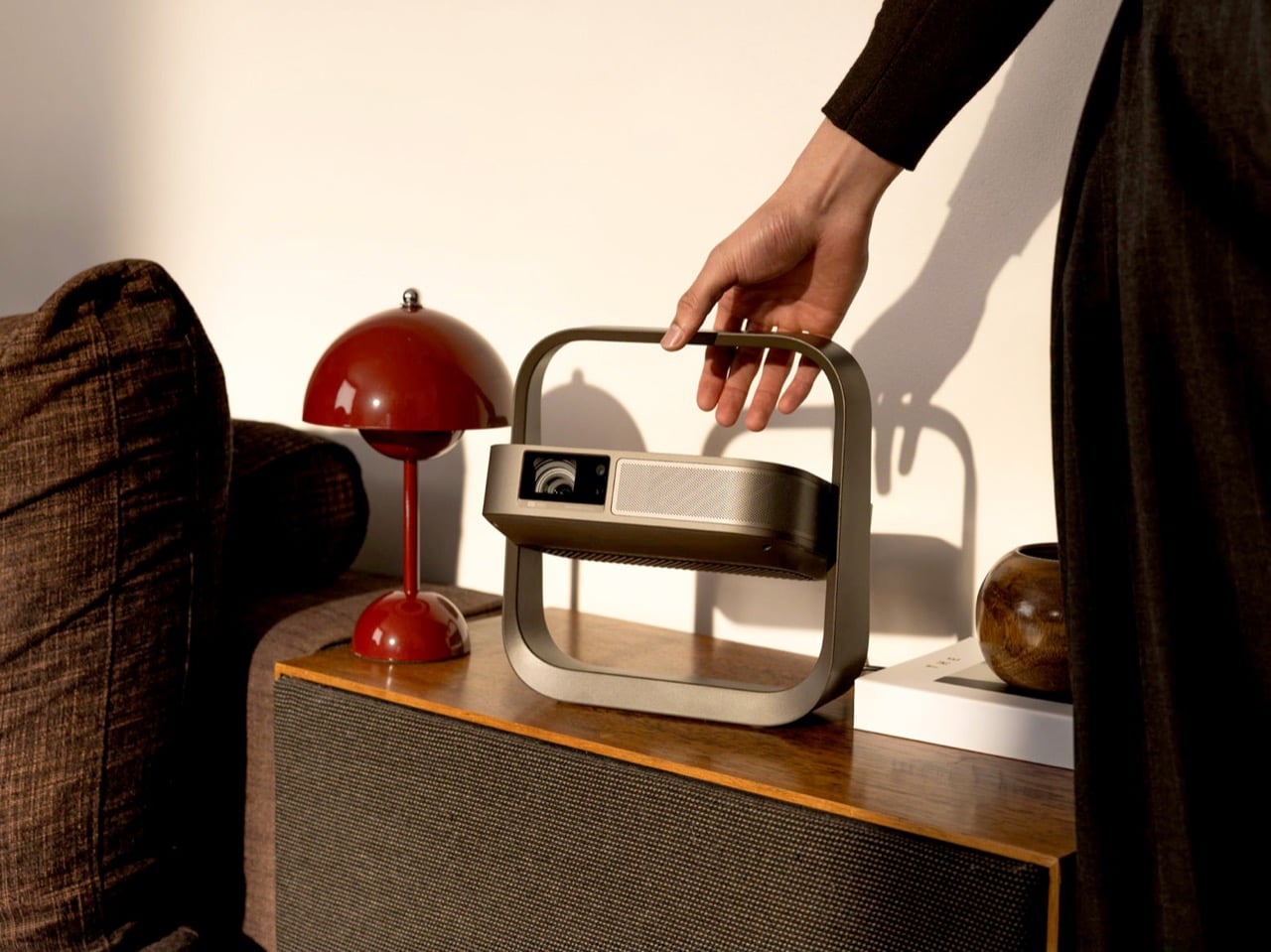
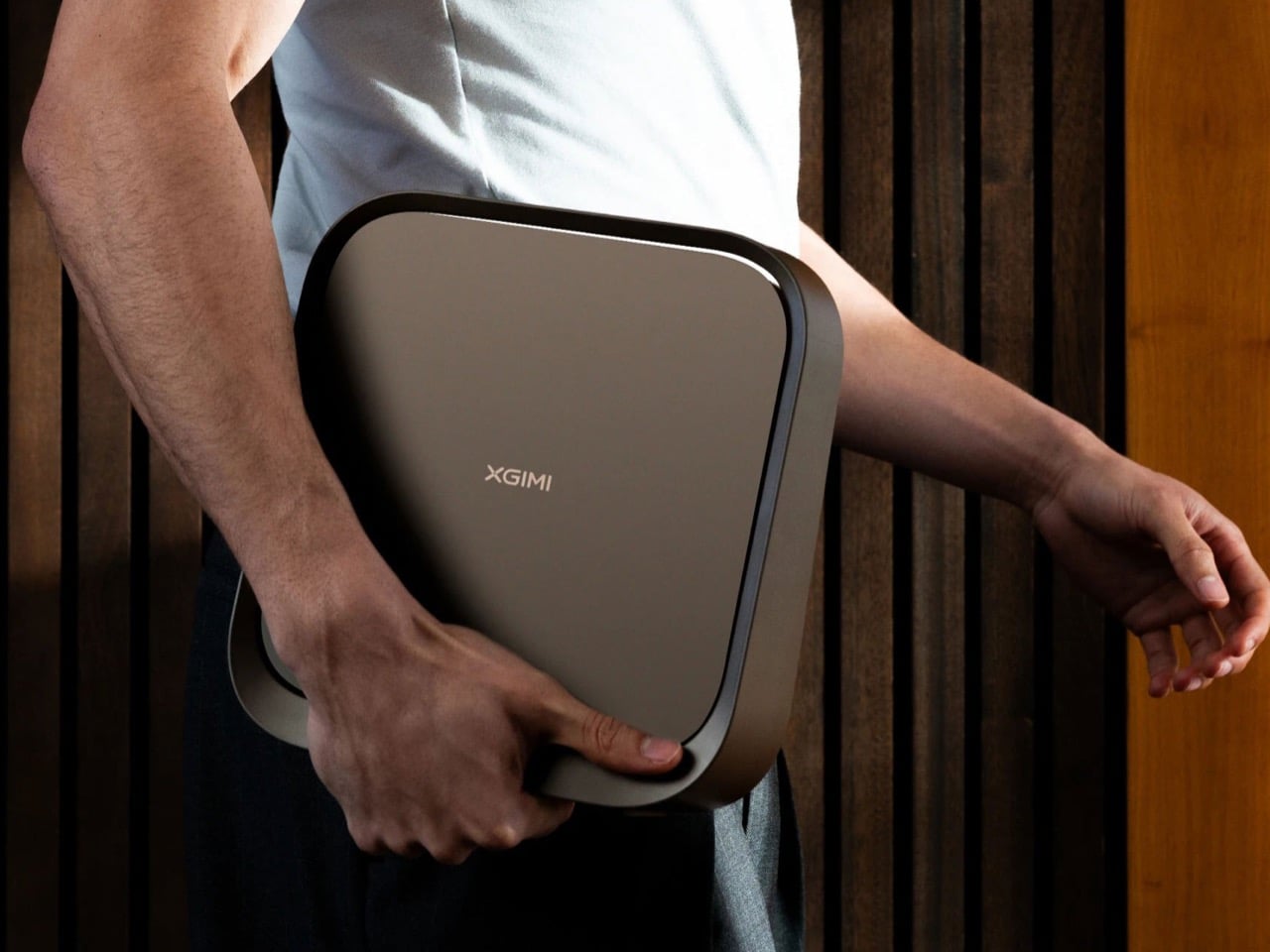
Flip the stand upright on the Elfin Flip 4K and the projector powers on by itself, no remote, no app, no hidden button. Fold the stand back down and the unit shuts off just as automatically, closing the loop on a single continuous gesture. That same stand pulls double duty as a carry handle and rotates up to 150 degrees, letting you redirect the image just by tilting the projector in your hand. XGIMI prices the unit at 999 dollars, positioning it as a projector meant to travel between rooms rather than sit bolted to one shelf. The gesture is small, but it reveals how XGIMI thinks about the relationship between a person and the object they are holding.
Designer: XGIMI
A tilt sensor or magnetic switch built into the stand hinge likely handles the power detection, the kind of component already common in laptop lids and flip phone hinges repurposed for a projector chassis. XGIMI has not detailed which sensor drives the mechanism, and the hinge’s reliability becomes the single point of failure for an otherwise buttonless design. That stand also carries the full weight of the unit whenever someone lifts it by the handle, adding mechanical stress that a purely cosmetic hinge would never face. Repeated flipping over months of use tests durability differently than a static power button ever would. XGIMI is betting real trust in that single moving part.
Portable projectors have multiplied fast over the past few years, with Anker’s Nebula lineup and a wave of similarly sized boxes chasing the same pitch of cinema on the go. Most of that competition still separates carrying, angling, and powering the unit into three distinct actions handled by three distinct parts. XGIMI’s flip mechanism collapses two of those actions into one continuous motion, tying power directly to the act of setting the projector up. That distinction matters more in a crowded category than a marginal bump in lumens or contrast ratio, since shoppers scanning a wall of similar looking boxes respond to a difference they can actually see. A projector that turns on by being picked up travels on social feeds without a spec sheet.
XGIMI clearly built this projector around the idea that setup should disappear into the act of picking the thing up, and that instinct shows real thought about how people actually live with portable tech. A projector priced at 999 dollars competes on plenty of fronts, brightness, contrast, audio, but the small mechanical choices are often what a shopper remembers a year later. This one gets remembered for making power an afterthought instead of a chore. That’s the kind of detail that tends to travel well once people start actually using the thing day to day, long after the spec sheet stops being the selling point.
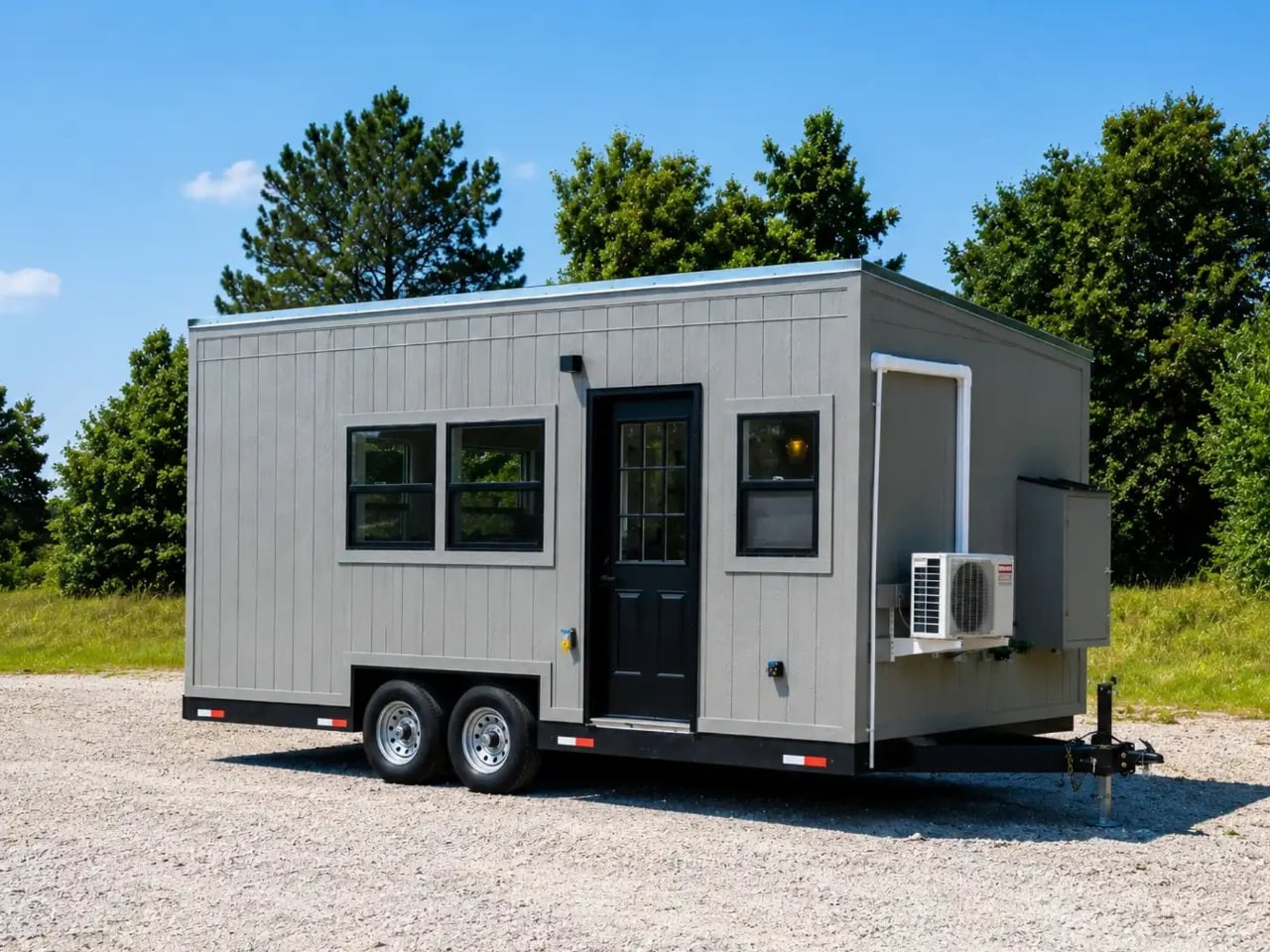
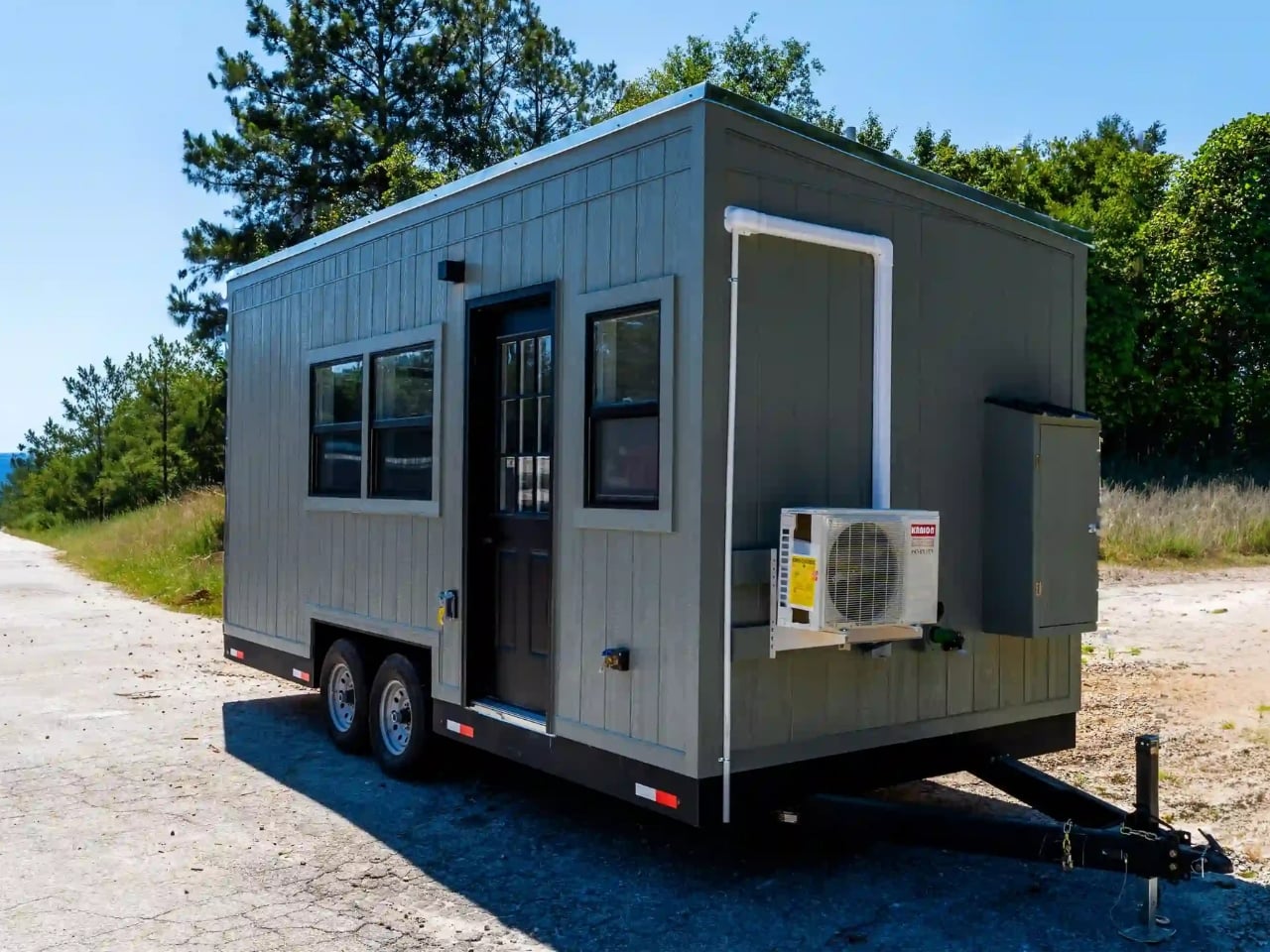
The tiny home movement has been having its moment for years now, and yet every time I think it has peaked, something like the Fairfax 20 shows up and reminds me why people keep choosing to go smaller. Dragon Tiny Homes’ latest model is a 20-foot, single-floor build priced at $33,700, and it’s the kind of design that makes you stop scrolling and actually look.
Let me be clear upfront: I’m not a full-time tiny house convert. I like my closet space too much. But I can recognize good design when I see it, and the Fairfax 20 has it. The whole point of this build is simplicity, and Dragon Tiny Homes committed to that idea without flinching.
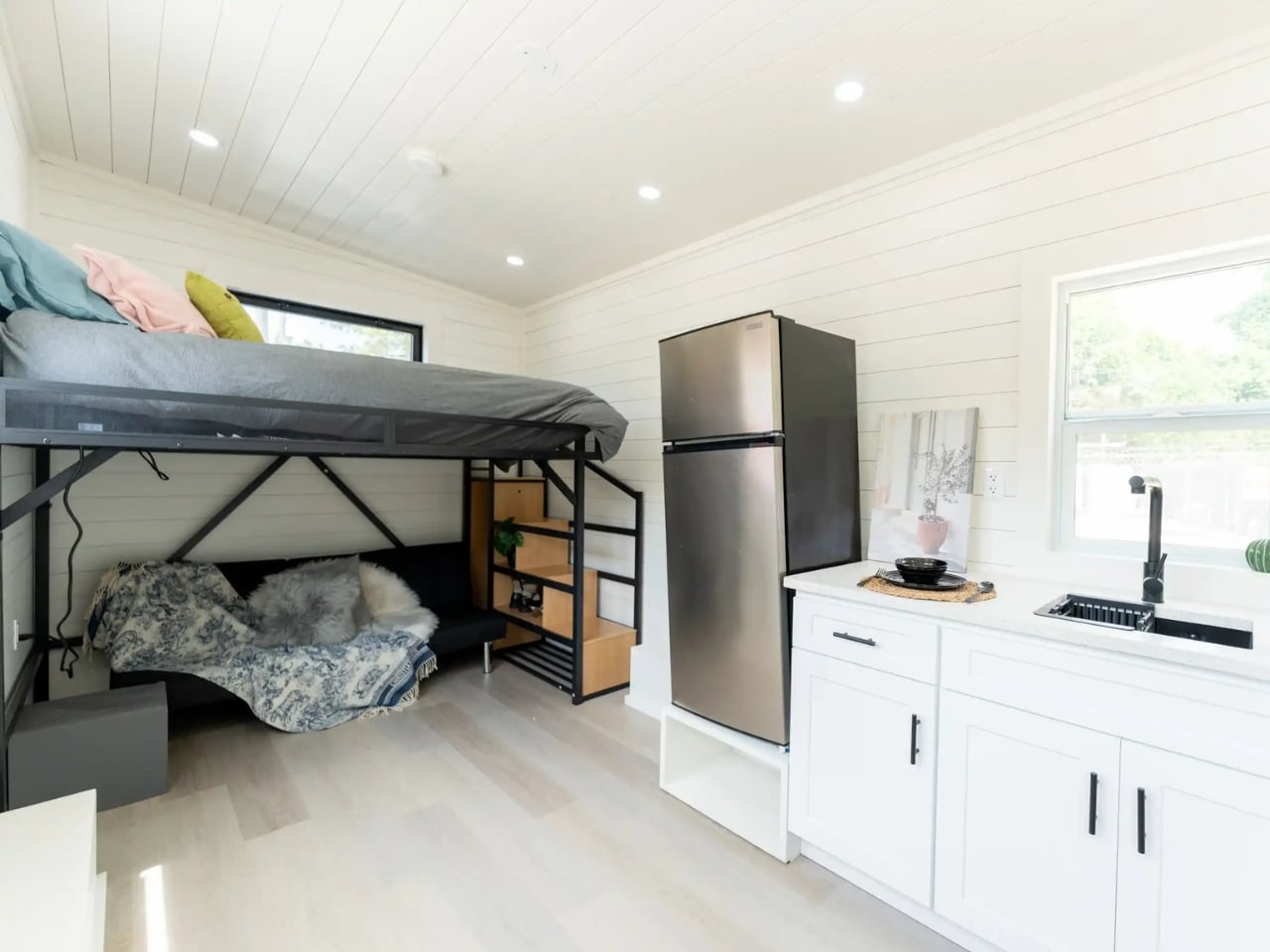
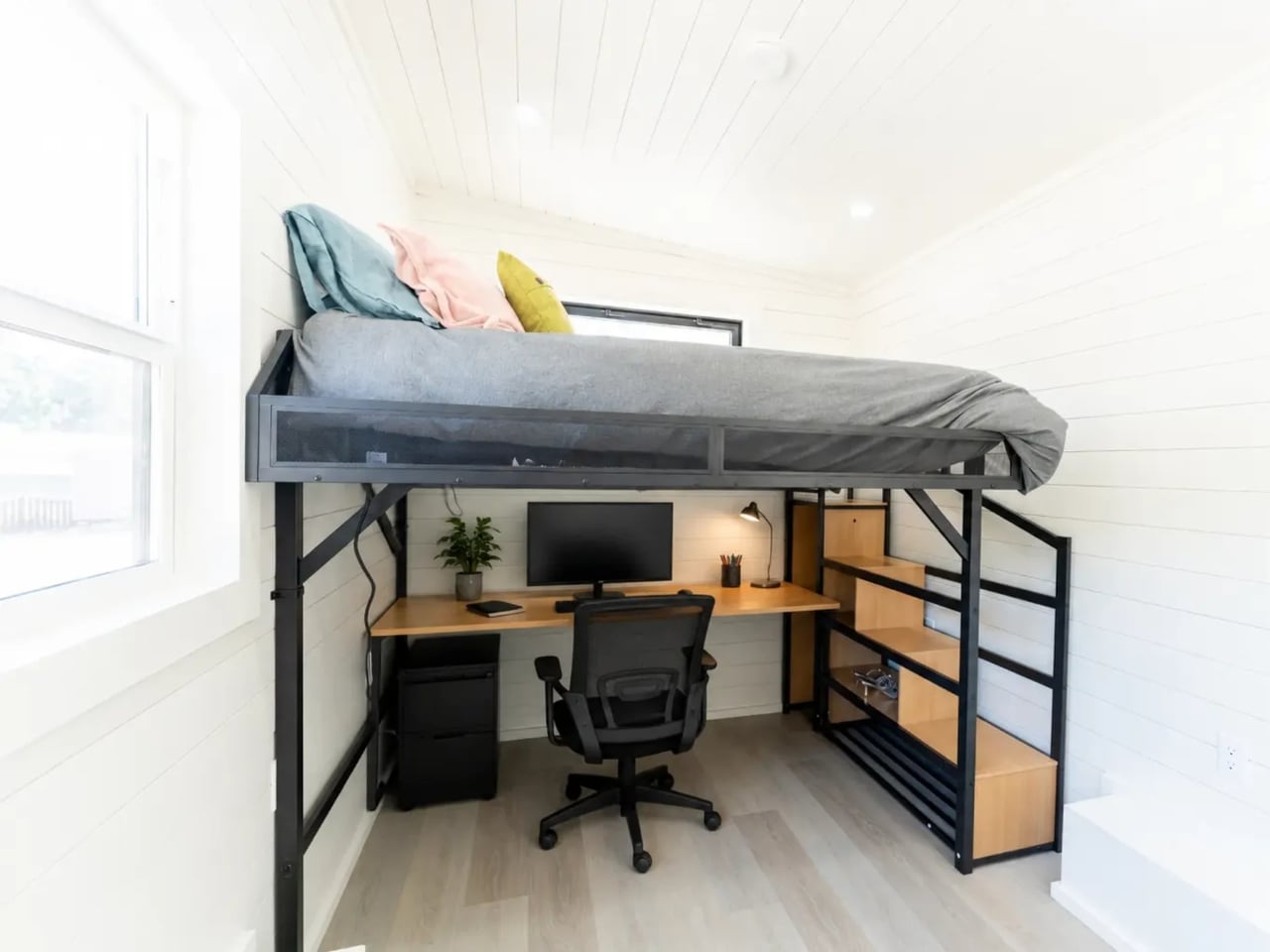
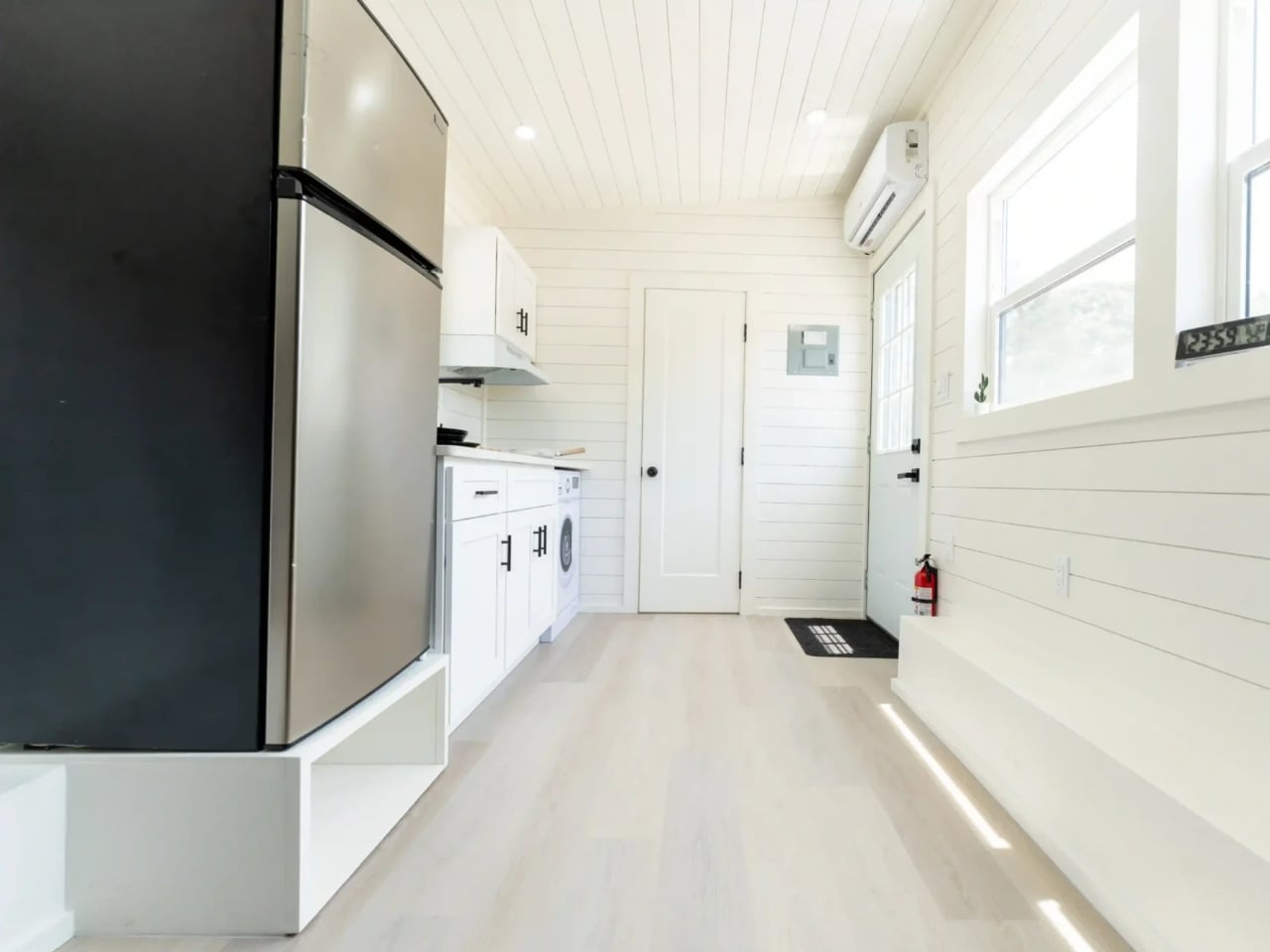
At 170 square feet on a single floor, the Fairfax 20 bets on a layout that feels more intuitive than most compact homes do. There’s a lofted sleeping area, but the overall design resists the urge to stuff extra function into every vertical inch. The flow is horizontal and intentional, which sounds unremarkable until you walk through a tiny home that got it wrong. Many compact builds feel like puzzle boxes where everything is technically possible but nothing is quite effortless to live with. The Fairfax 20 leans into clarity instead, and the space breathes because of it. That’s a harder design problem to solve than it looks.
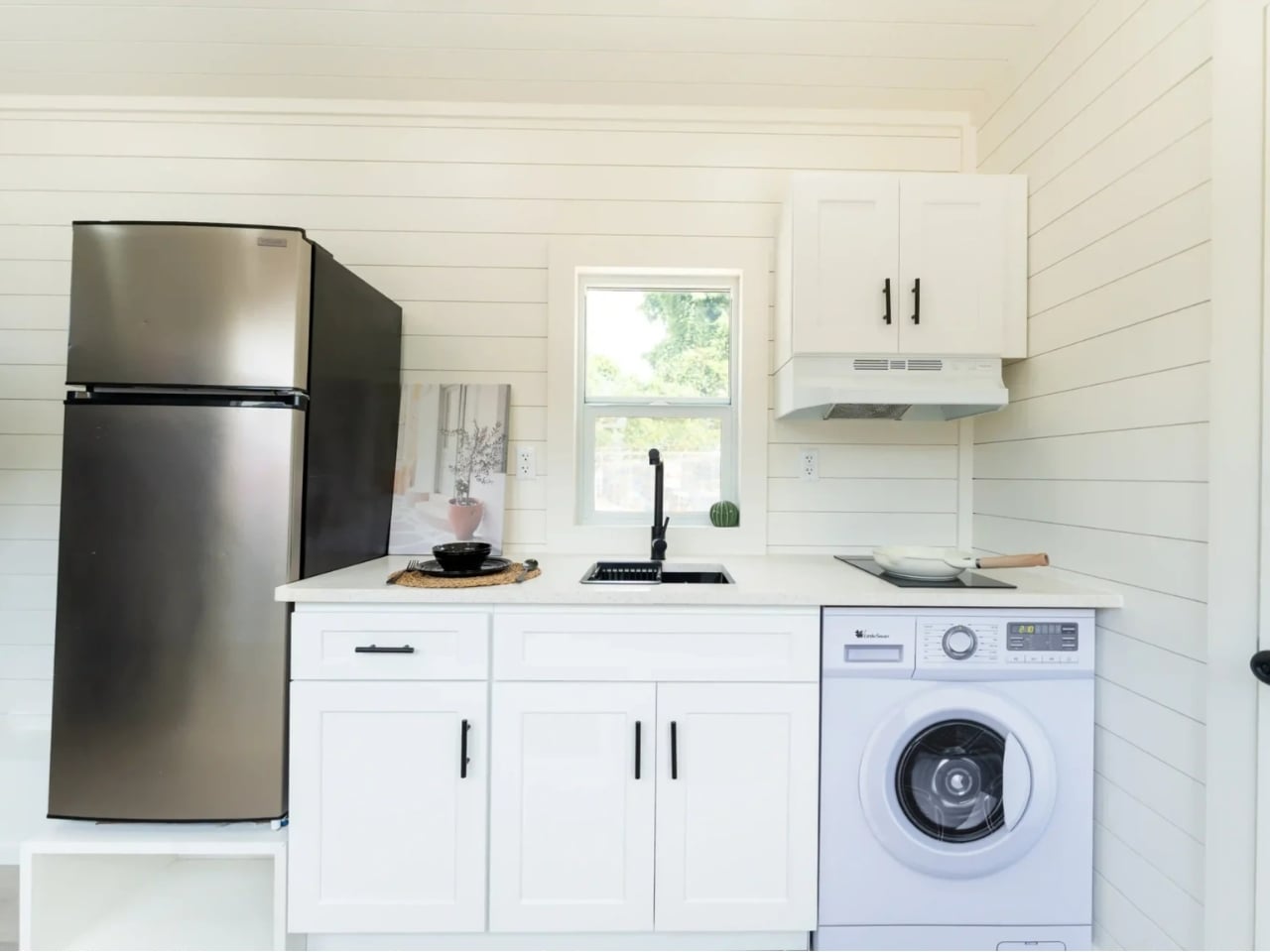
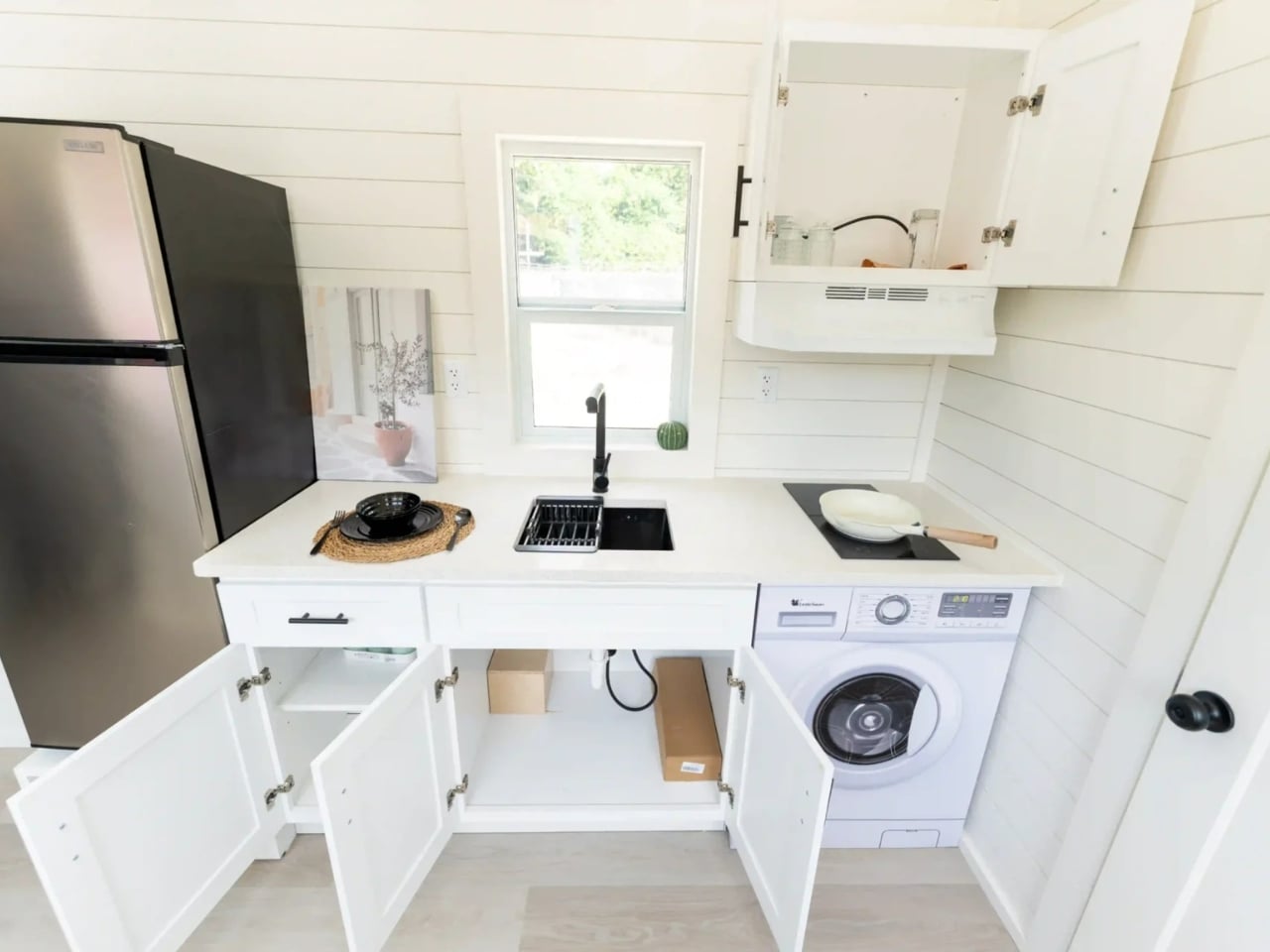
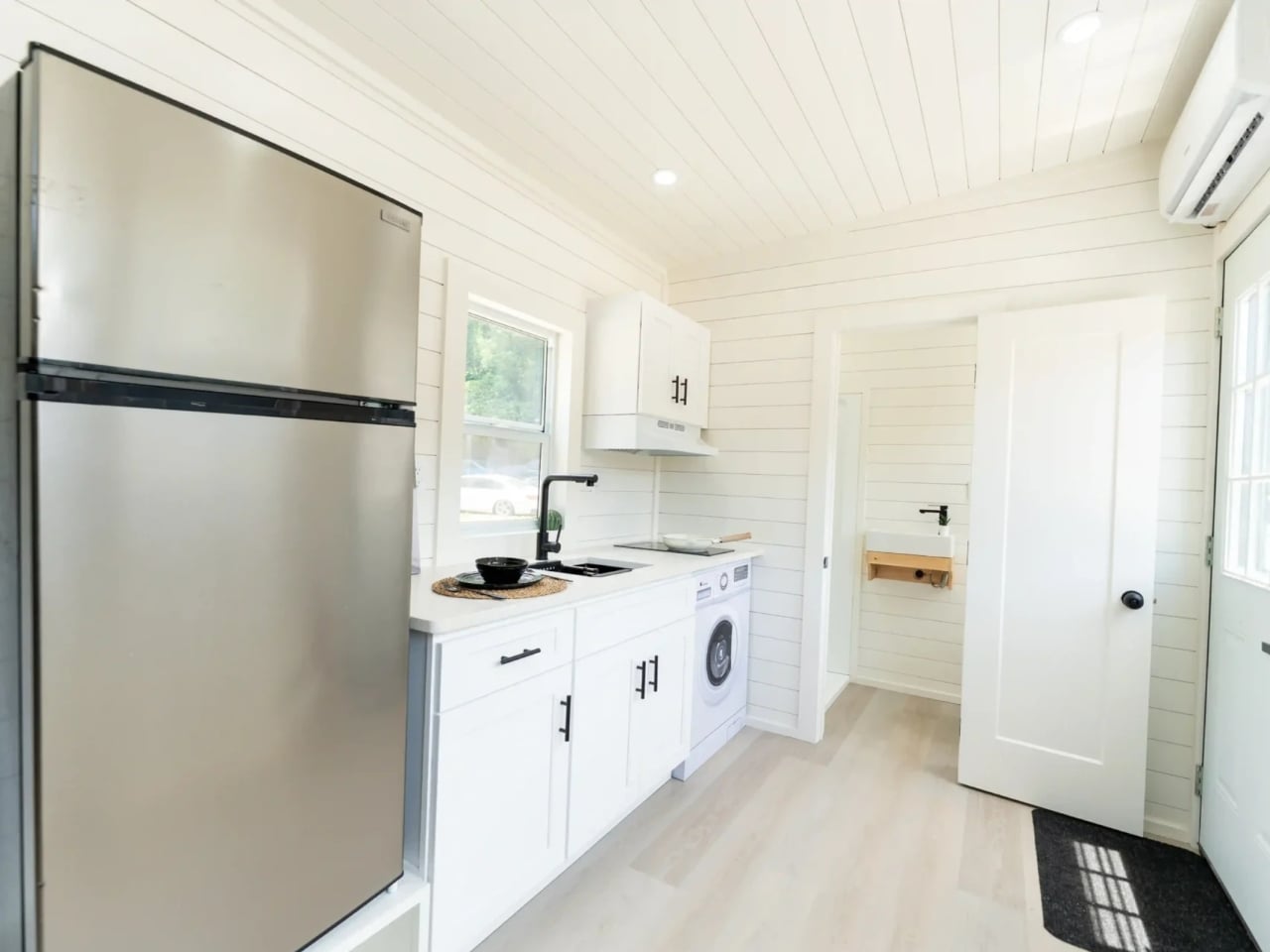
The kitchen is where the design earns its keep. It’s fitted with an induction cooktop, a 7.1 cubic foot refrigerator/freezer, and a washer/dryer unit. That’s not a kitchenette. That’s an actual, functional kitchen compressed into a footprint that forces you to be intentional about how you cook and store. The cabinetry is generous for the size, and the overall layout is clean rather than cluttered, which speaks to how seriously the design team thought about what someone actually needs versus what just looks good in a floor plan render.
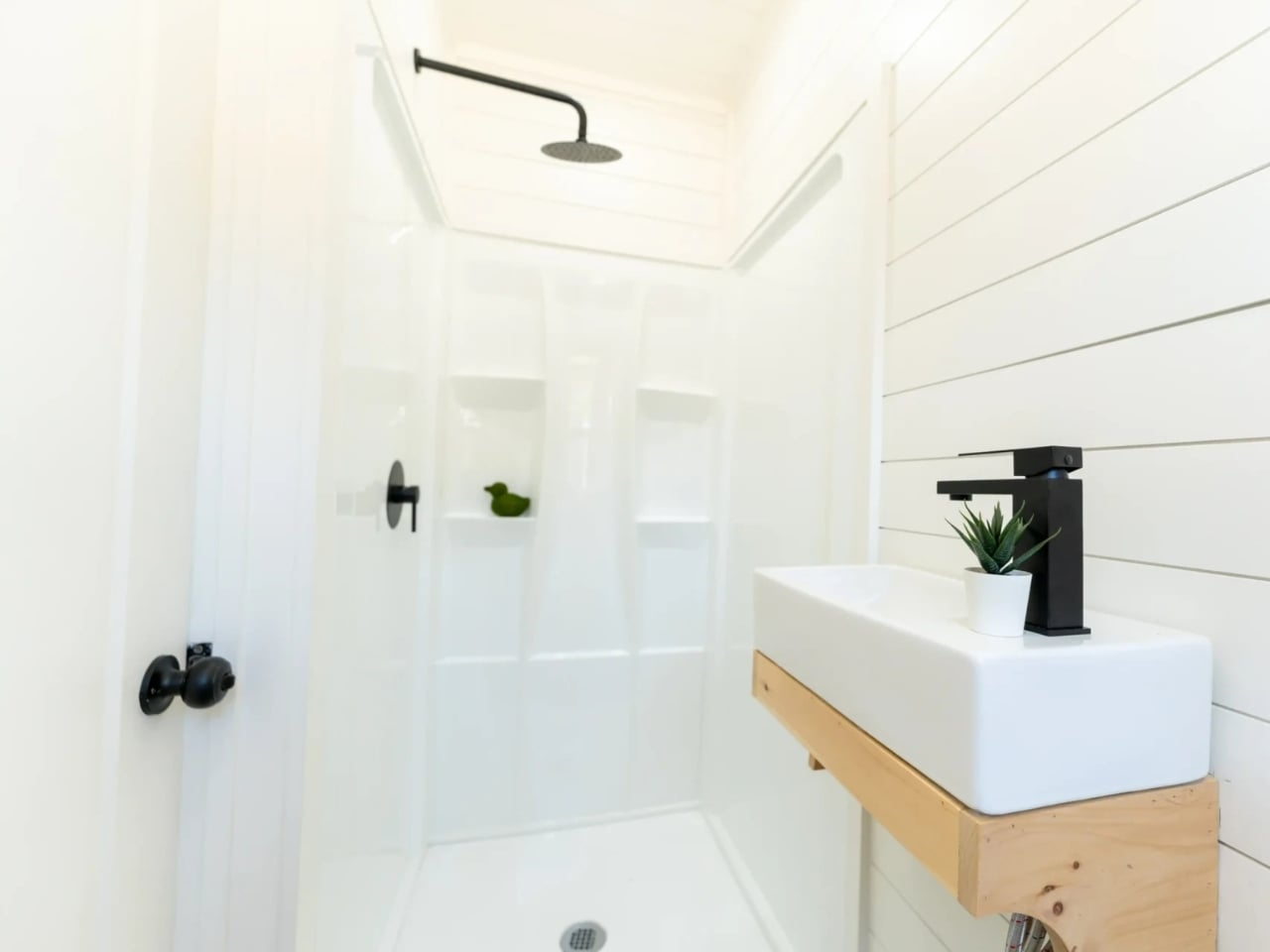
The bathroom follows the same principle: a full bathroom, not a wet room compromise, which matters far more than it sounds when you’re considering whether a space is livable long-term. Six picture windows and two opening windows run throughout the home, and the gray siding with metal roof exterior gives the Fairfax 20 the kind of understated curb appeal that photographs well from every angle.
At $33,700, the Fairfax 20 sits in territory that’s genuinely accessible by current housing market standards. For context, that’s less than a lot of people spend on a car, and significantly less than the average down payment on a traditional home right now. The pricing is one of the more interesting parts of this story because it reframes tiny living not as a lifestyle aesthetic but as a legitimate economic option. That’s a shift worth paying attention to.
The Fairfax 20 also works across multiple scenarios, and Dragon Tiny Homes seems well aware of that. It functions as a primary residence for someone committed to minimalist living, but it’s equally appealing as a backyard ADU, a rental unit, or a guest space. The versatility isn’t incidental. It’s built into the design DNA of the thing.
What makes the Fairfax 20 land differently from the dozens of compact homes that cycle through my feed is the lack of pretension in its design. It’s not trying to make 170 square feet look like 400. It’s not performing luxury. It’s making a clear-eyed case for what’s actually necessary and building it well. The single-floor plan, the full-size appliances, the thoughtful storage, the windows pulling in enough natural light to make the space feel bigger than the measurements suggest. These are all quiet decisions that add up to something that feels considered rather than compromised.
Whether or not tiny home living is for you, designs like the Fairfax 20 have something to say about how we think about space, value, and what we actually need a home to do. And right now, that conversation feels more relevant than ever.