
Is the original Nintendo Switch still worth buying in 2026?
Buying Nintendo's older console used makes plenty of sense, but a one new is much harder to justify.
I have owned exactly four humidifiers in my adult life, and every single one of them looked like a medical device that wandered into my living room by mistake. White plastic, a blinking blue light, and a fine mist that smelled like nothing at all unless I dumped in a capful of essential oil that made the whole apartment smell like a spa that’s trying too hard. That’s the quiet frustration most of us live with. Humidifiers solve dry air, but they rarely solve the fact that they’re ugly, and the aromatherapy add-on usually means synthetic fragrance oils that can irritate sensitive noses or just smell fake after the third use.
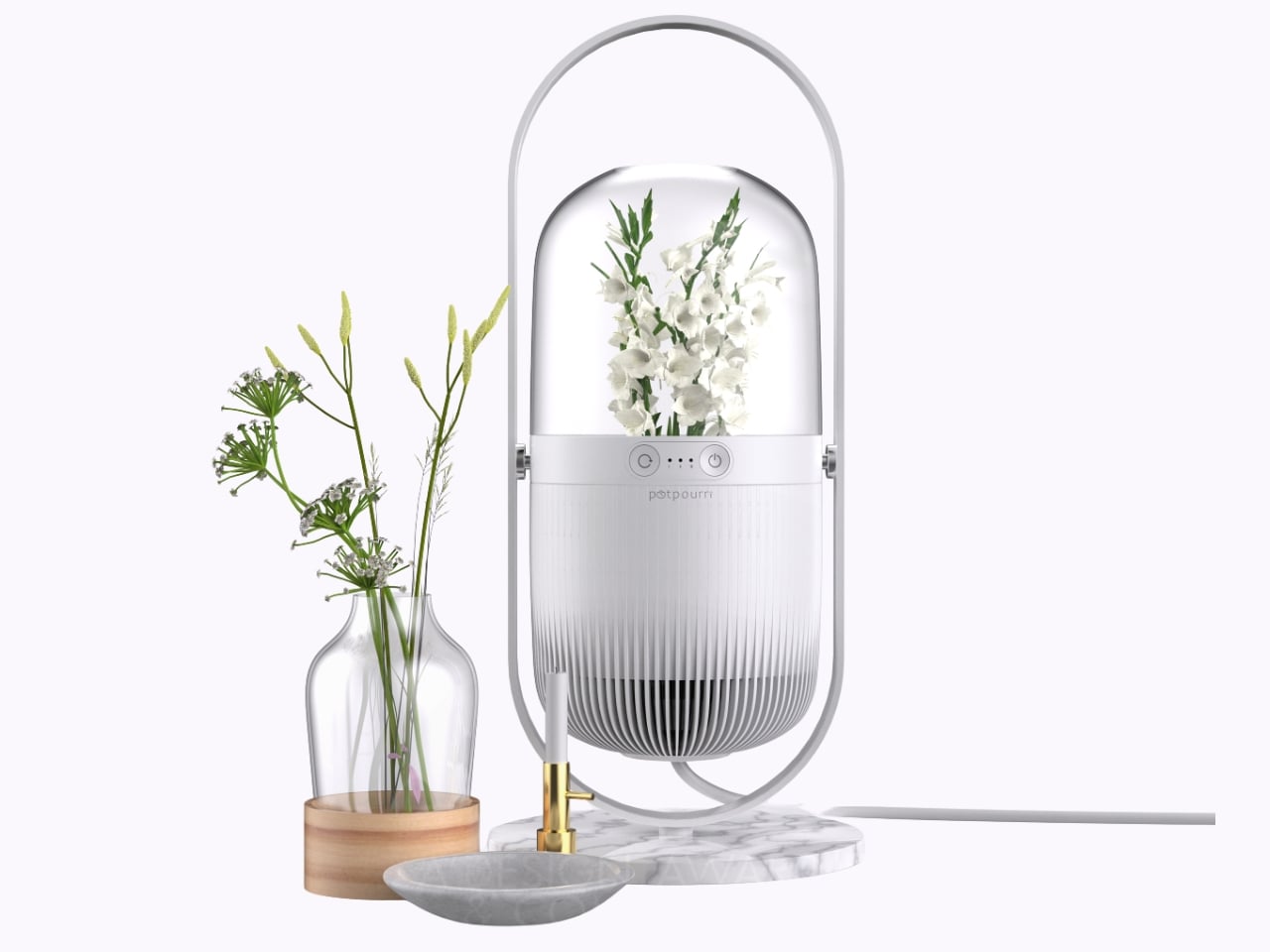
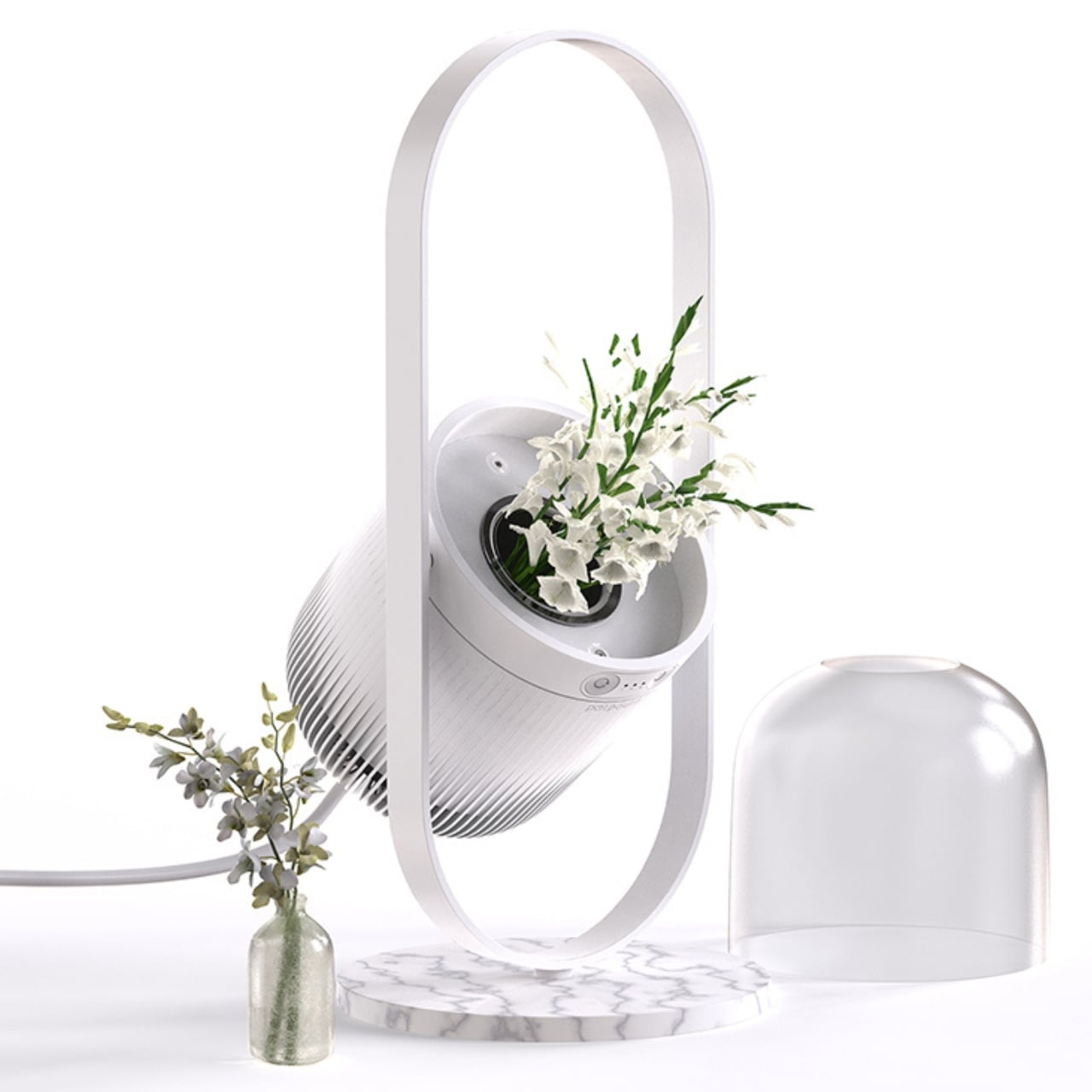
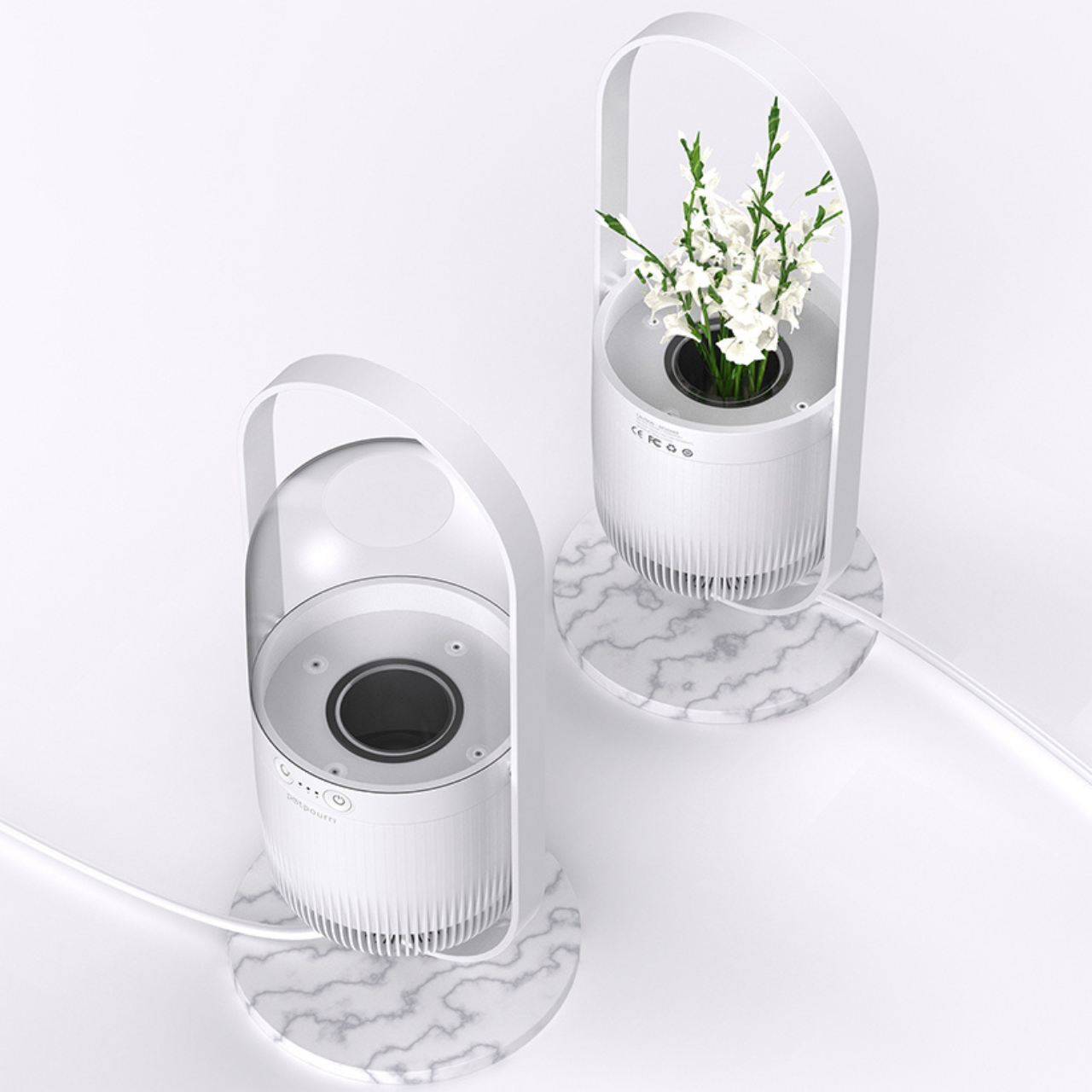
Yong Zhang, an industrial design professor in China, designed something that sidesteps both problems at once. His creation, Potpourri, won an Iron A’ Design Award in the Home Appliances category, and it does something I have not seen another humidifier attempt. Instead of relying on bottled oils to generate scent, it grows actual flowers inside itself, and those flowers are the fragrance source. The device waters the plants, the plants release moisture and natural aroma into the air, and a transparent acrylic dome keeps everything protected while still letting sunlight through.
Designer: Yong Zhang
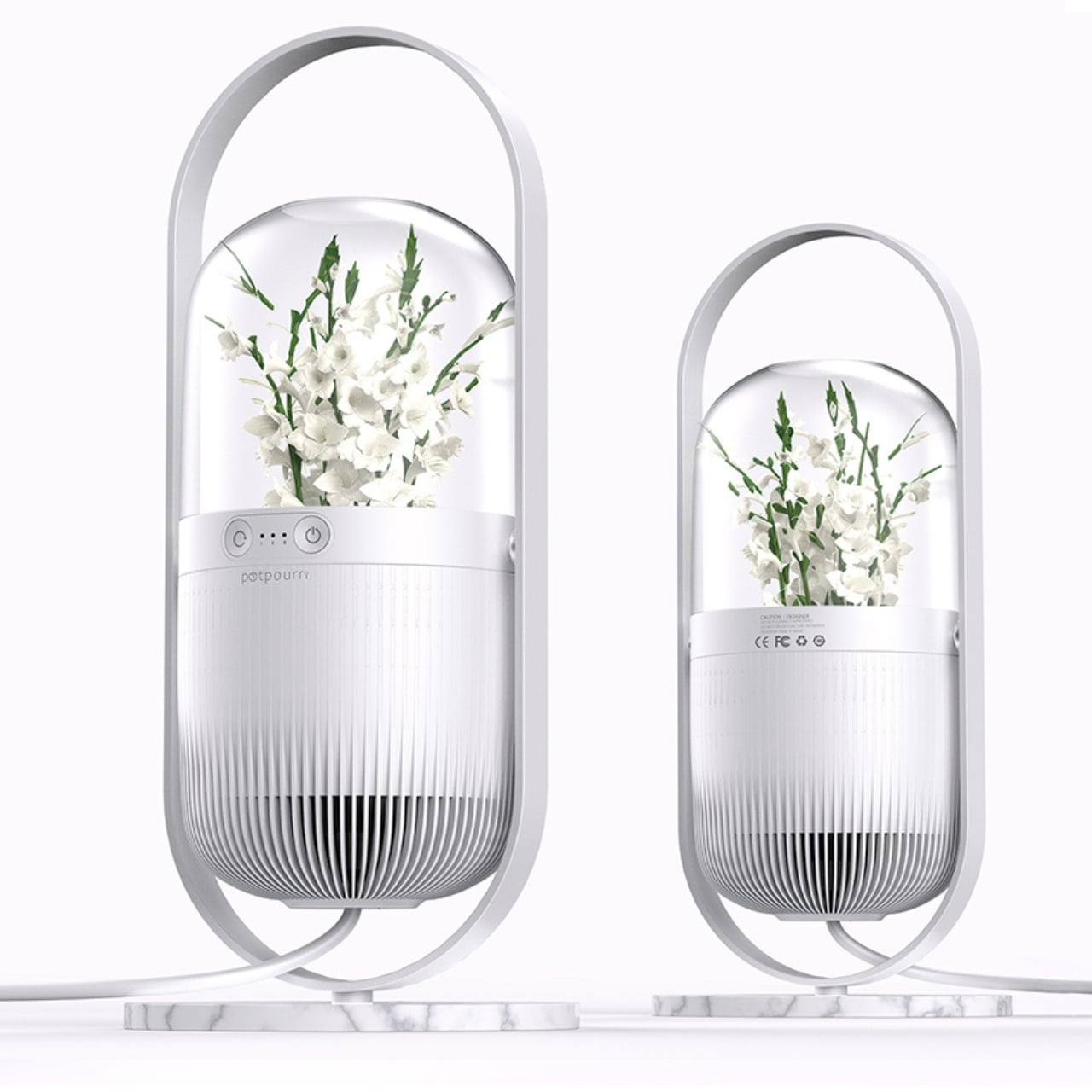
The problem this solves is more personal than it first sounds. Most aromatherapy devices are asking you to trust a manufacturer’s version of what lavender or eucalyptus should smell like. Potpourri asks you to trust an actual lavender plant. There is a meaningful difference between diffusing a synthetic approximation of a scent and standing near the real thing while it blooms. I find that distinction quietly compelling, because it reframes the humidifier from a utility object into something closer to a small ecosystem sitting on your desk.
The engineering challenge here was not trivial either. Getting flowers to actually thrive inside a humidifier, rather than rot from overwatering or wilt from underexposure to light, required Zhang to rethink how the enclosure handles both moisture and airflow. The acrylic cover does double duty: it shields the petals from being knocked around or damaged, and it creates a semi-enclosed microclimate that recycles water more efficiently, which means less refilling for the plant owner. It is a humidifier that also functions as a self-sustaining flowerpot, and I think that dual identity is the smartest part of the whole concept.
What strikes me as an American consumer looking at this design is how well it fits a moment when people are actively trying to remove synthetic fragrance from their homes. Candle warnings, essential oil skepticism, and a general fatigue with “clean scent” marketing have pushed a lot of households toward wanting less artificial stuff in the air they breathe, not more gadgets promising to fix it chemically. Potpourri never asks you to add a fragrance oil at all. The scent is simply whatever the flower produces, on its own schedule, in its own intensity.
I do wonder about the practical realities of living with this thing daily. Flowers die. Petals brown and drop. Someone has to actually tend a living organism instead of just refilling a water tank and forgetting about it for a month. That is a real commitment compared to a standard humidifier, and I suspect it will appeal most to people who already enjoy having plants around and don’t mind the occasional pruning. It is not a low-maintenance gadget pretending to be one, and I respect that Zhang did not try to disguise that tradeoff.
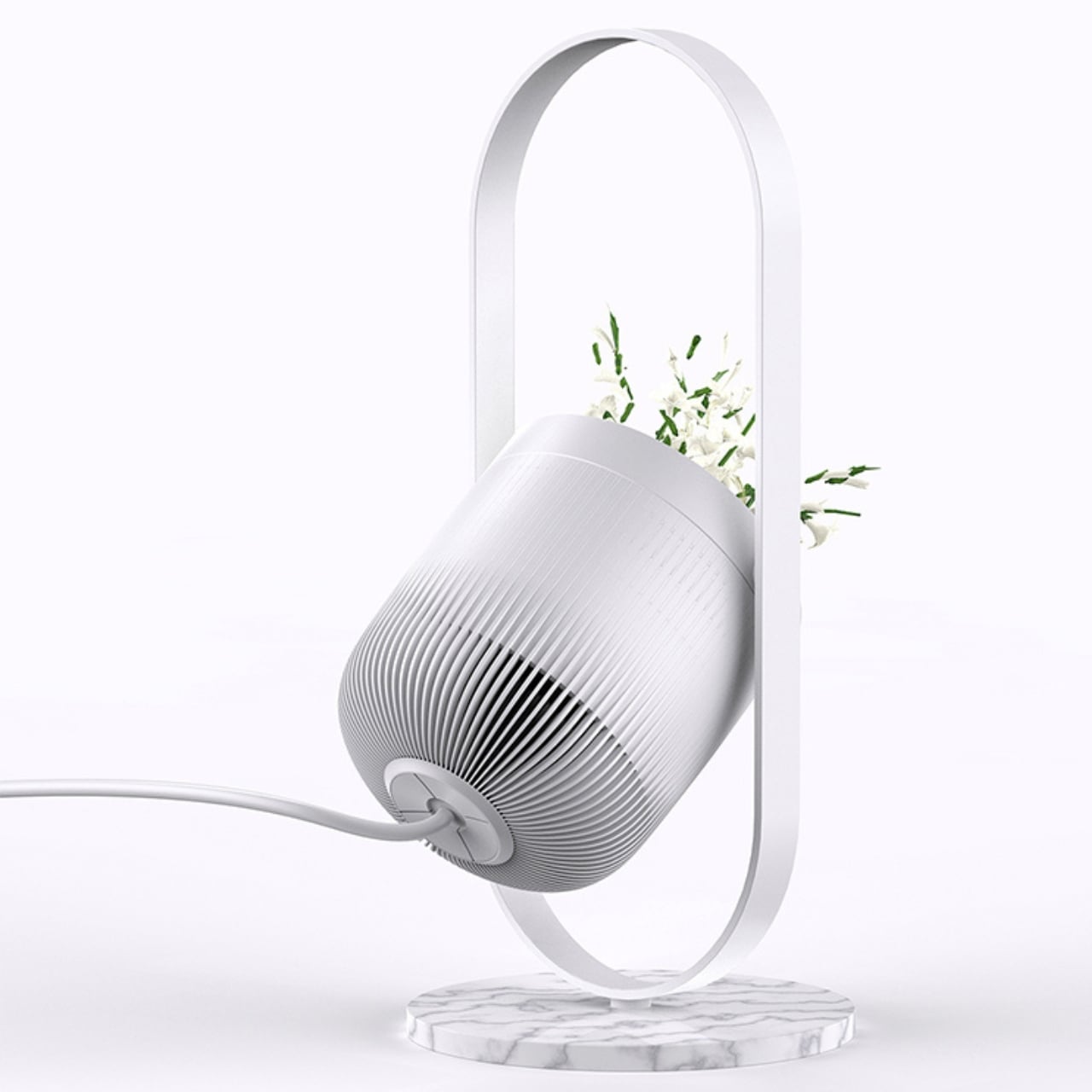
What Potpourri ultimately represents is a small but honest rethink of a category that has gotten stuck in sameness. Home appliances rarely ask us to nurture something in exchange for the function they provide. This one does, and the exchange feels fair. You give it light and water, it gives you humidity and a scent nobody bottled in a factory. In a category full of devices trying to imitate nature, it is refreshing to find one that just invited nature in directly.
The post The Humidifier That Refuses To Use Synthetic Scent first appeared on Yanko Design.


macOS 27 Golden Gate brings a wealth of new features designed to enhance usability, customization, and overall functionality. With over 75 updates, this release caters to a wide range of users, from seasoned macOS enthusiasts to newcomers. The operating system introduces tools that boost productivity, foster creativity, and ensure seamless integration across Apple devices. In […]
The post macOS 27 Golden Gate: the First Things You Need to Do Right Now appeared first on Geeky Gadgets.



Google DeepMind is preparing for the October 2026 release of Gemini 4 Pro, an AI model aimed at advancing content creation and interactive applications. According to Universe of AI, the model introduces capabilities such as SVG generation, 3D modeling, and interactive simulations, making it relevant for industries like digital design and professional training. Early testing […]
The post Google Preps Gemini 4 Pro Content Creation for October 2026 appeared first on Geeky Gadgets.

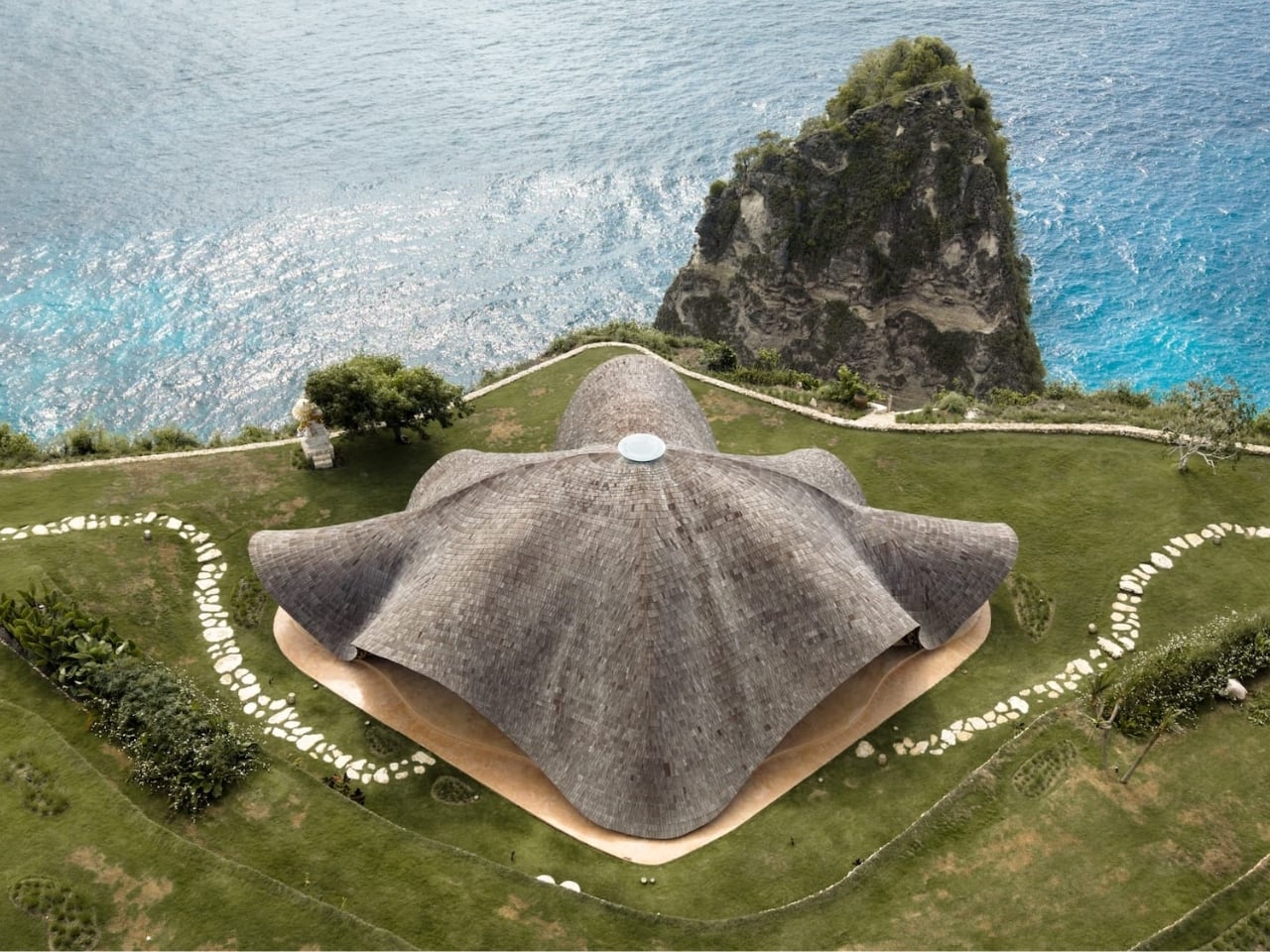
Most wellness architecture makes a promise it can’t keep. Retreat centers market themselves on words like “grounding” and “presence,” then wall you into a climate-controlled box with a playlist of ocean sounds piped through a speaker. The irony rarely gets mentioned: a space built to reconnect you with nature usually spends a lot of energy keeping nature firmly on the other side of the glass.
Pablo Luna Studio, a design firm based in Bali, seems to have gotten tired of that contradiction. Its newest project, the Lotus Yoga Shala in Ubud, doesn’t use air conditioning, doesn’t rely on walls in any conventional sense, and doesn’t try to insulate people from the climate they came halfway around the world to feel. Instead, the building works with the heat, the humidity, and the surrounding jungle rather than against them, which is a much harder design problem than it sounds.
Designer: Pablo Luna Studio
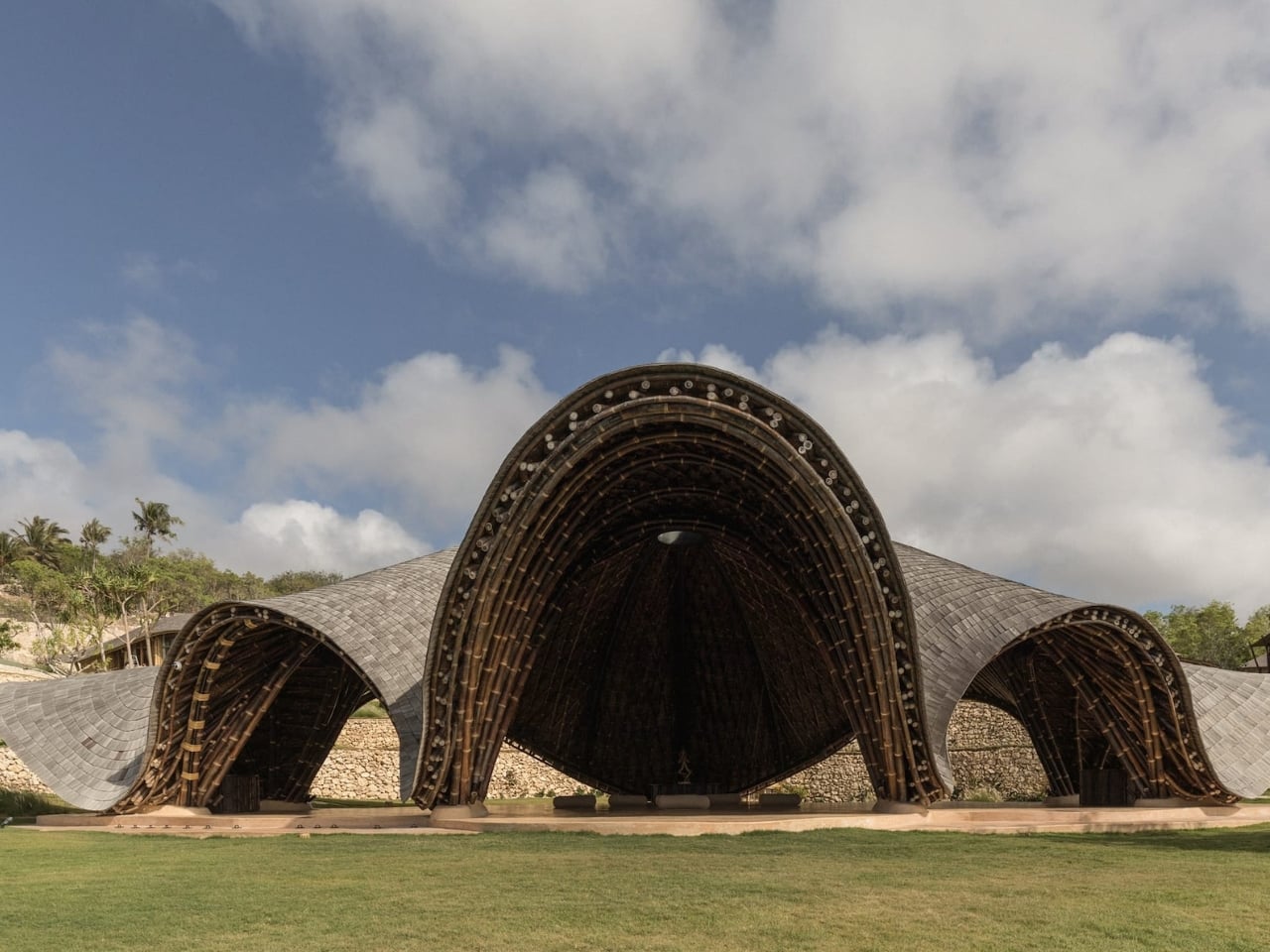
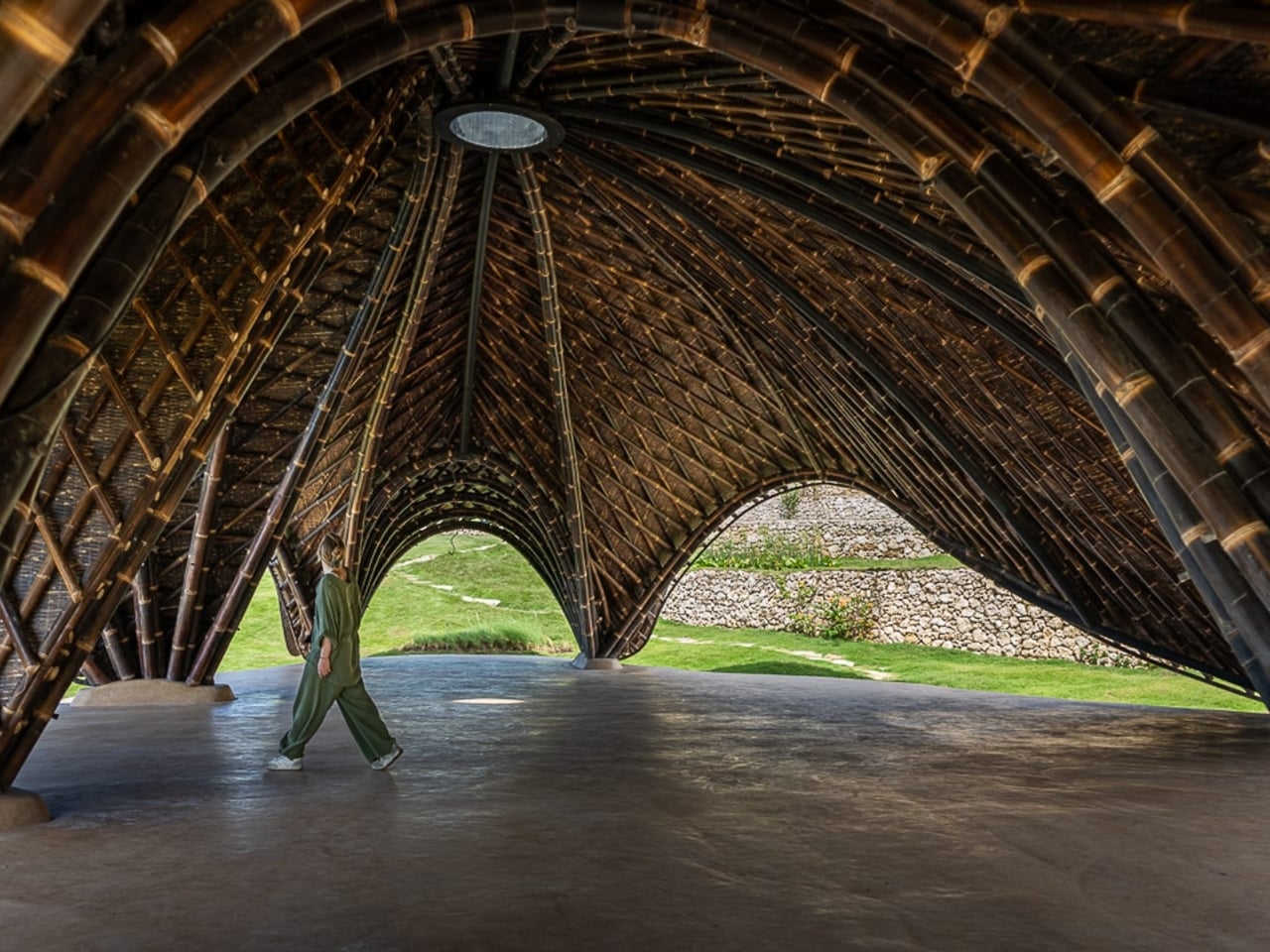
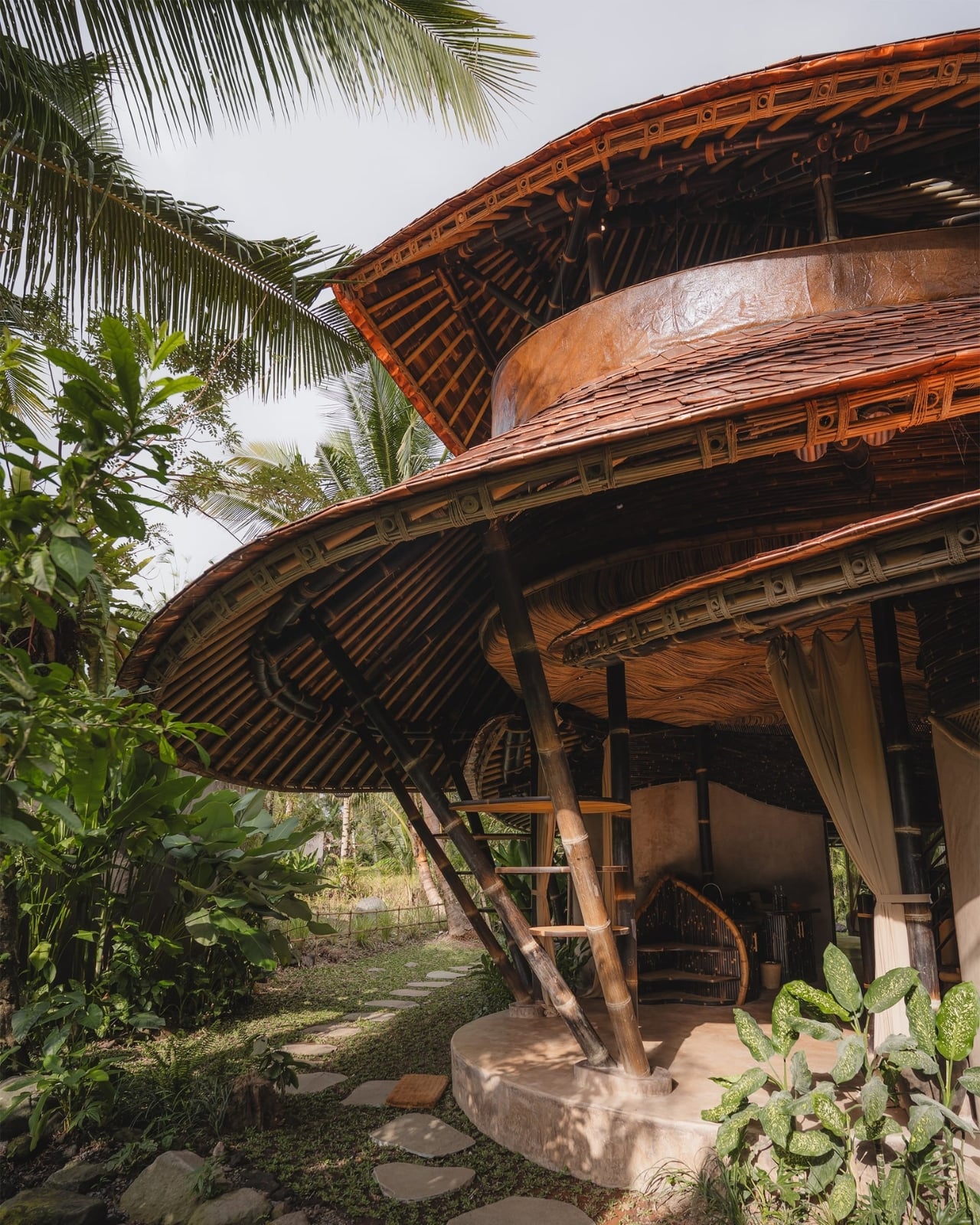
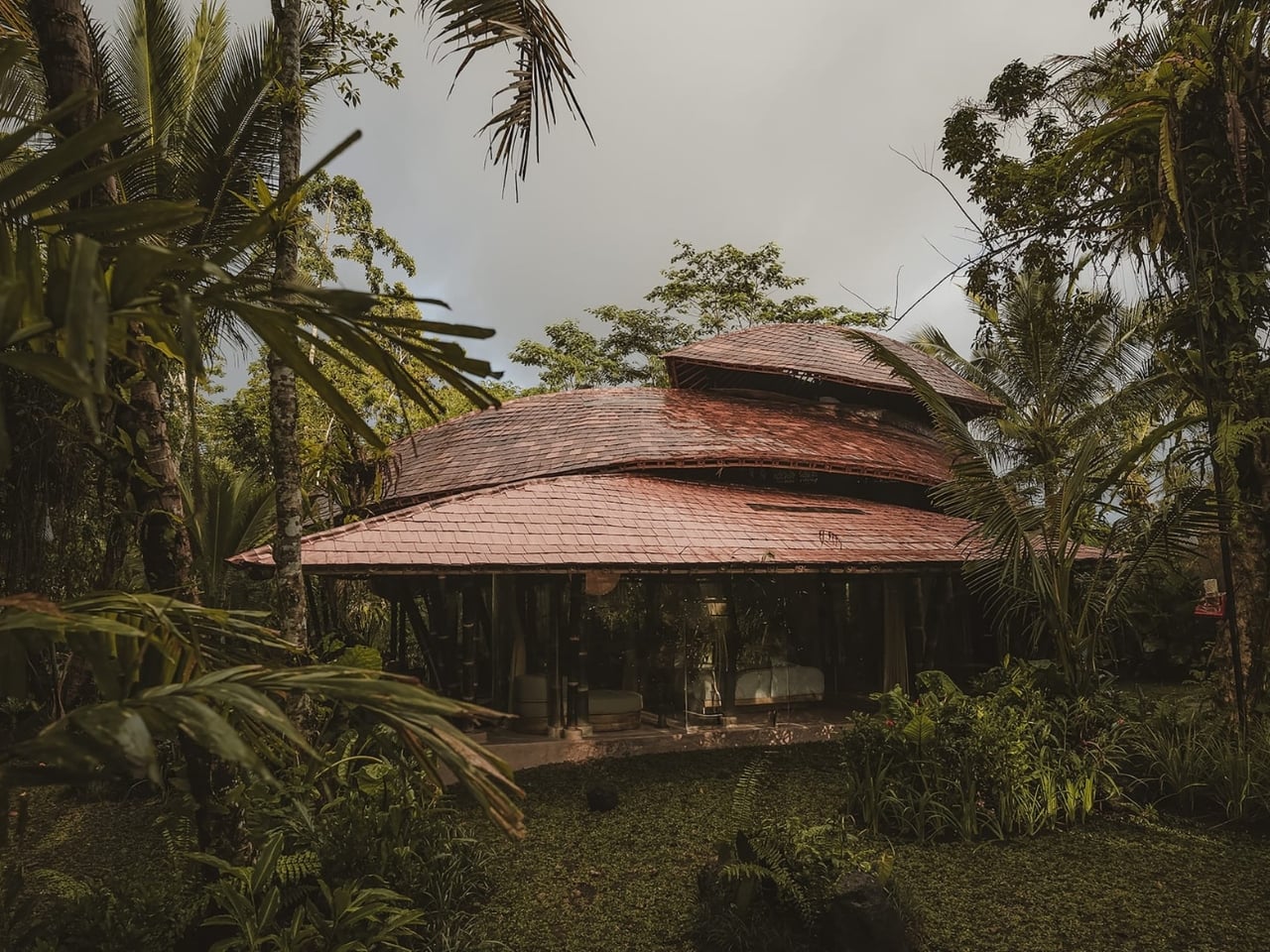
The shala takes its shape from an actual lotus flower, and not in a loose, “inspired by” way that architects sometimes use to justify a pretty rendering. Seen from above, the roof genuinely reads as a bloom, its petals spreading outward and overlapping like the plant it’s named for. The studio started developing the idea back in 2021, and the finished structure is one of the first times the firm has leaned this hard into biomimicry, letting a natural form dictate the actual engineering rather than just the mood board.
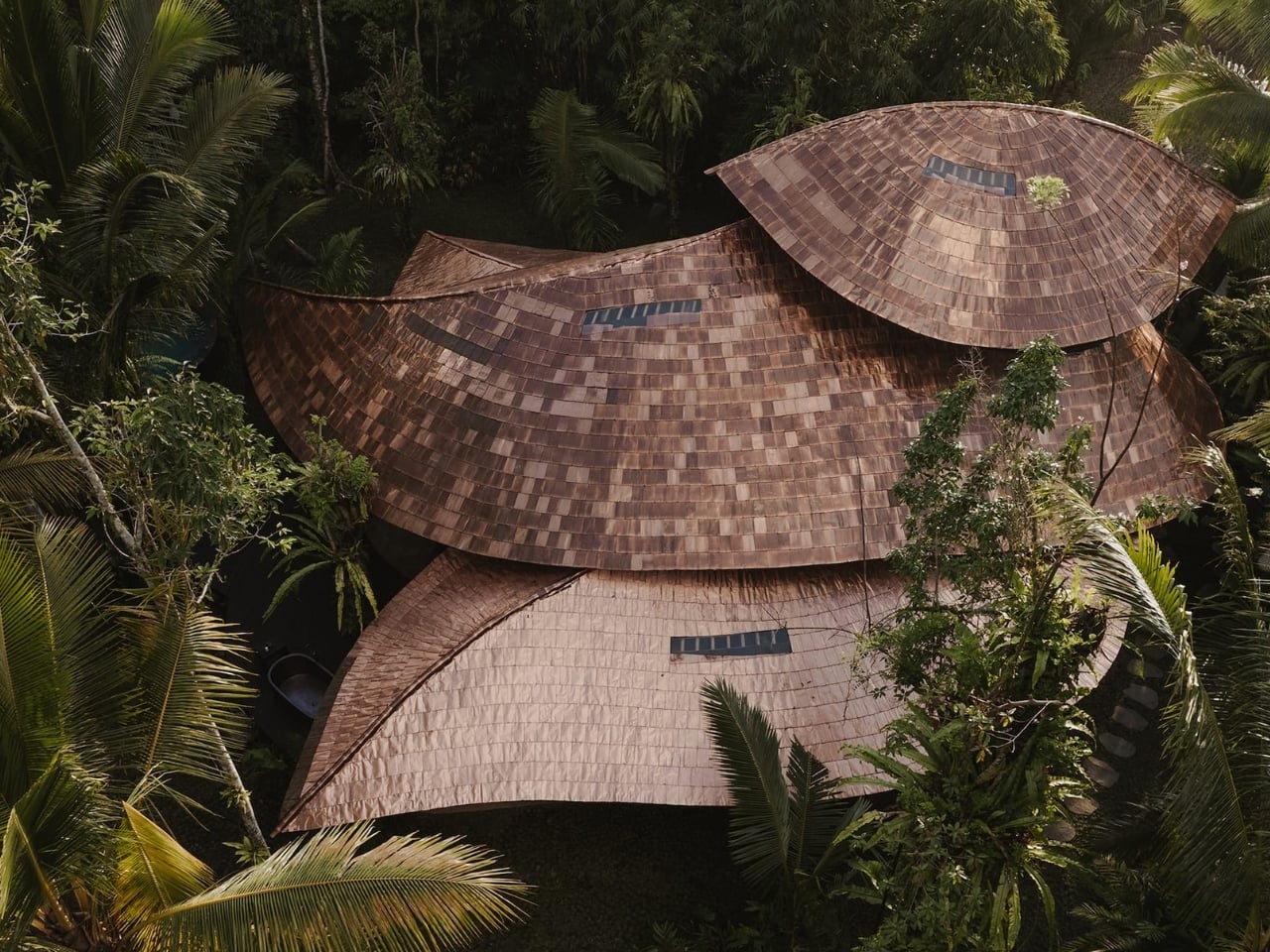
That engineering is where the project earns its credibility. Each petal grows out of a structural system of petung bamboo, with primary arches made by bundling three lengths together and split bamboo woven across them into a gridshell. At the edges, the load gathers into small clusters of three to five poles, which keeps the perimeter open and airy instead of propped up by a dense ring of columns. It’s a genuinely clever piece of structural logic, using a material that bends and flexes to do what steel and concrete would need far more mass to accomplish.
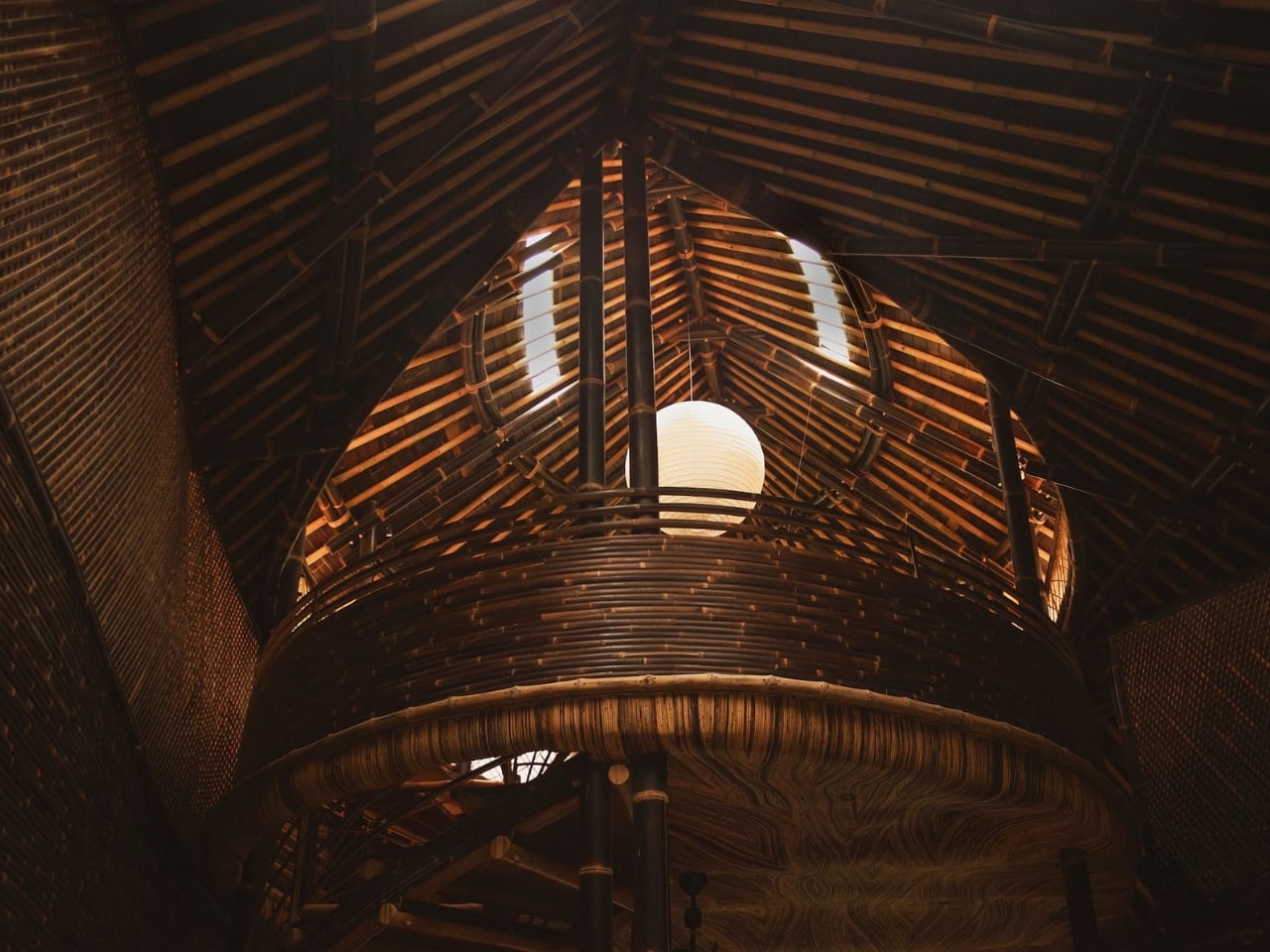
What I appreciate most is the restraint around the ground itself. Rather than flattening the hillside to make construction easier, the platform was raised and shaped to follow the existing contours, limiting how much of the site actually gets disturbed. It’s a small decision that says a lot about priorities. Plenty of developments treat topography as an inconvenience to be graded away. This one treats it as the whole point.
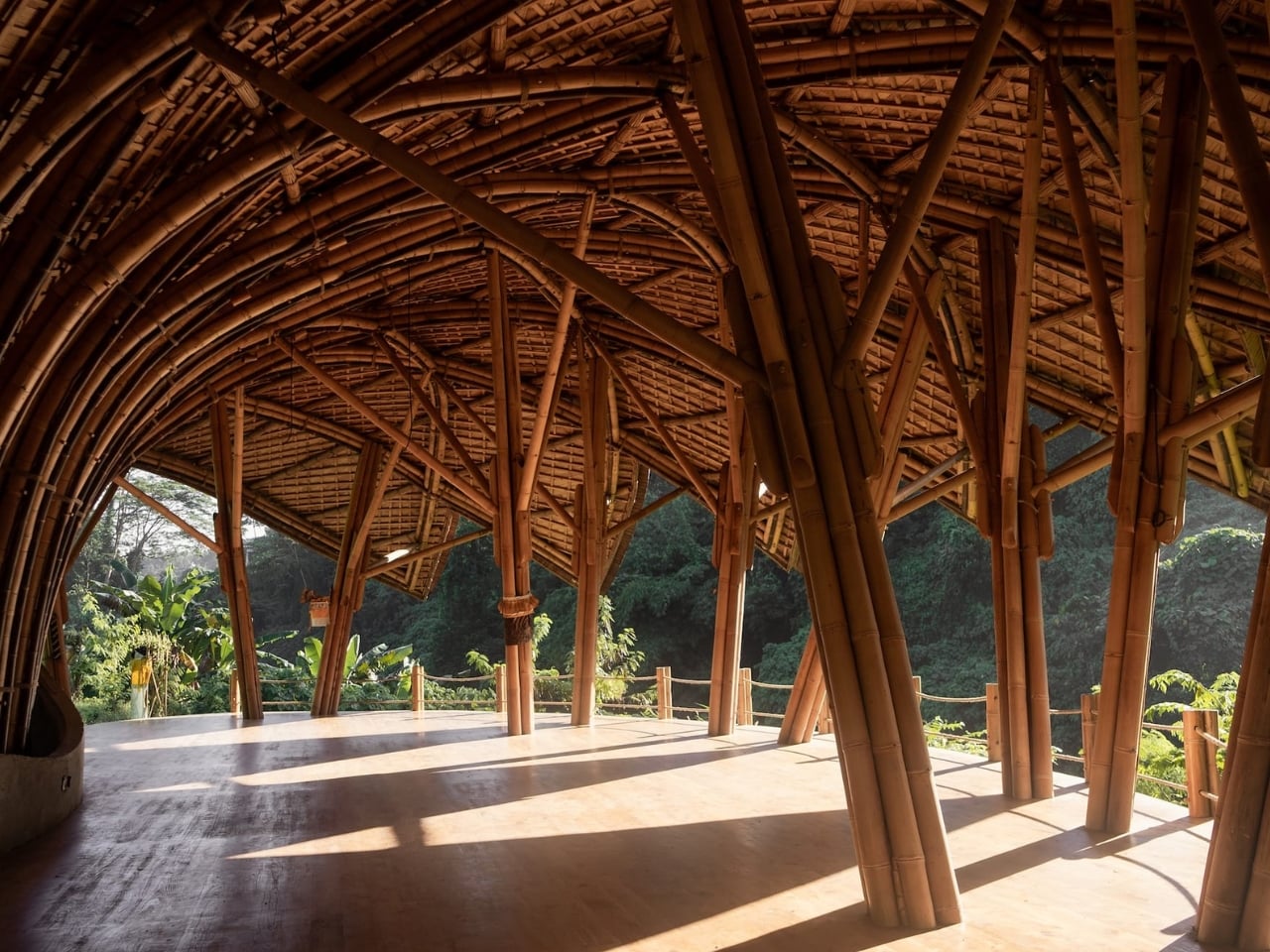
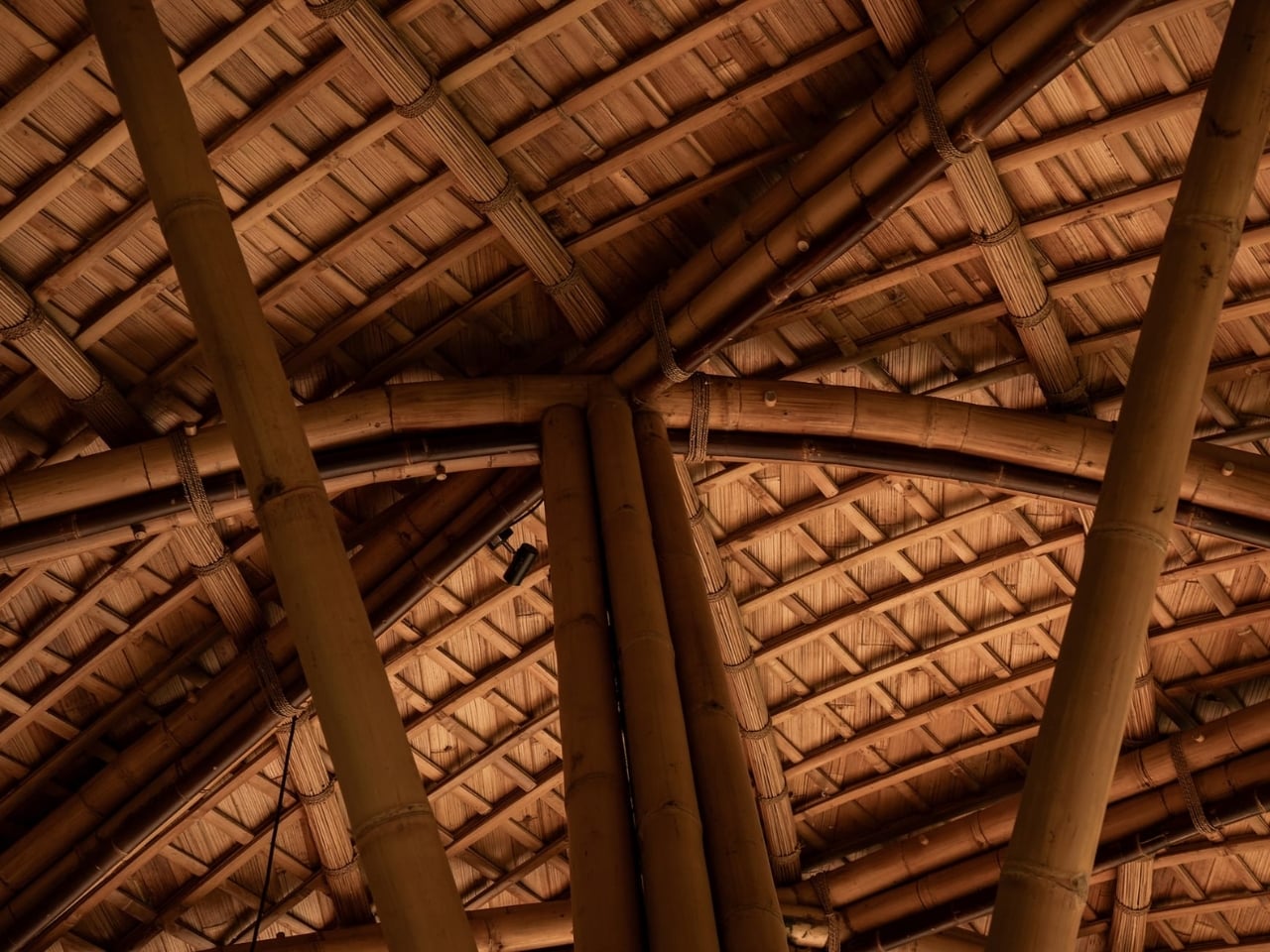
Without walls to define the space, the roof becomes the building’s only real boundary, and even that boundary is porous. Daylight and air move through freely, views stretch out toward the river and the vegetation beyond, and the practice space essentially becomes an extension of the landscape it sits in. For a yoga studio specifically, that openness does more for the experience than any amount of curated interior design could. You’re not looking at a mural of nature. You’re just in it.
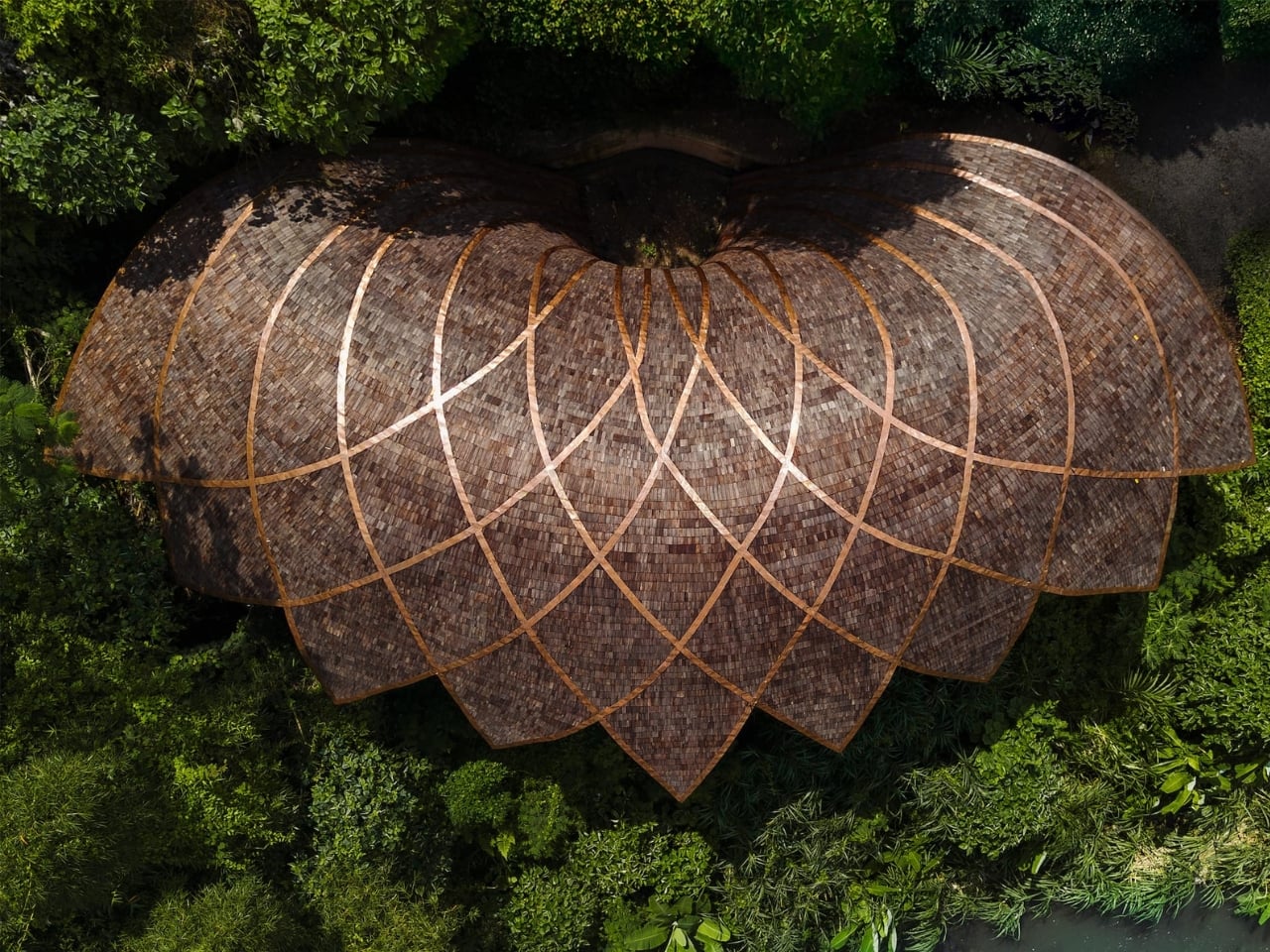
There’s a broader lesson here for anyone paying attention to wellness spaces back home, where the trend has mostly meant adding a live-edge wood accent wall to an otherwise sealed, mechanically cooled room. Actual climate-responsive design asks harder questions about airflow, shade, and material, and it usually produces something that looks less like a spa and more like it grew out of the ground on purpose. Bamboo helps that case considerably. It grows fast, sequesters carbon while it’s alive, and requires none of the energy-intensive processing that concrete or steel demands, which matters more every year as the building industry gets pressed to account for its footprint.
None of this makes the Lotus Yoga Shala a universal template. Bamboo construction at this level requires serious craft, and a project this specific to its site can’t simply be copied onto a lot in Austin or Portland. But it does make a convincing argument that comfort and climate responsibility aren’t opposites, and that a building can refuse the easy fix of walls and refrigerant without asking anyone to sacrifice how good the space actually feels to be in.
The post The Bali Yoga Studio Quietly Refusing to Use Air Conditioning first appeared on Yanko Design.

If you’ve recently upgraded to iOS 27 and noticed rapid battery drain, overheating, or sluggish performance, you’re not alone. These issues are common after major software updates and often arise due to background processes, app incompatibilities, or system bugs. The positive news is that there are practical solutions to address these problems and restore your […]
The post iOS 27 Battery Drain & Overheating? Here’s How to Fix It appeared first on Geeky Gadgets.